XDefiant, the upcoming FPS from Ubisoft led by former Call of Duty boss Mark Rubin, has been delayed in what is the latest chapter of the game’s long and bumpy road to release.
In a social media post, Ubisoft said it hoped to release XDefiant by the end of March. However, there are “still some improvements” the studio has to make before it’s ready. Right now the focus is on an upcoming 12-hour stress test for the game’s servers, and Ubisoft is inviting its early access players to hop in and try to put the servers through their paces.
After this process, Ubisoft said it expects to be able to lock in a public release date and begin to discuss XDefiant’s post-launch content plans.
“Thank you again for standing by us,” Ubisoft said.
Just this week, Insider Gaming published a report containing behind-the-scenes info on XDefiant’s development process. In particular, the report called out a group of executives and directors on the project known internally as “The Boys Club.” These people reportedly “caused constant problems for the game’s development.”
“The Boys Club is a closed group of protected individuals who think they are better than everyone else and do as they please without any repercussions,” one developer said. Another worker said one person in particular “has a history of treating people extremely badly with more HR reports than I’ve ever seen.”
A source told Insider Gaming that the “constant changing of approved features,” among other things, led to the game being delayed “probably a year or so.”
A spokesperson for Ubisoft told Insider Gaming that it is “committed to the well-being and inclusivity of all our team members.” The statement added, “Our preventive approach includes promoting standards of respect and civility, awareness and training, and effective conflict resolution.” Ubisoft added that the company has an anonymous whistleblowing channel to help workers report bad behavior.
GameSpot has contacted Ubisoft for comment.
Previously, Ubisoft said XDefiant might launch in September or October 2023, but issues during the console certification process led to an earlier delay. Later, the game was delayed indefinitely.
Neuroscientists have established in recent decades the idea that some of each day’s experiences are converted by the brain into permanent memories during sleep the same night. Now, a new study proposes a mechanism that determines which memories are tagged as important enough to linger in the brain until sleep makes them permanent.
Led by researchers from NYU Grossman School of Medicine, the study revolves around brain cells called neurons that “fire” — or bring about swings in the balance of their positive and negative charges — to transmit electrical signals that encode memories. Large groups of neurons in a brain region called the hippocampus fire together in rhythmic cycles, creating sequences of signals within milliseconds of each other that can encode complex information.
Called “sharp wave-ripples,” these “shouts” to the rest of the brain represent the near-simultaneous firing of 15 percent of hippocampal neurons, and are named for the shape they take when their activity is captured by electrodes and recorded on a graph.
While past studies had linked ripples with memory formation during sleep, the new study, published online in the journal Science on March 28, found that daytime events followed immediately by five to 20 sharp wave-ripples are replayed more during sleep and so consolidated into permanent memories. Events followed by very few or no sharp wave-ripples failed to form lasting memories.
“Our study finds that sharp wave-ripples are the physiological mechanism used by the brain to ‘decide’ what to keep and what to discard,” said senior study author György Buzsáki, MD, PhD, the Biggs Professor of Neuroscience in the Department of Neuroscience and Physiology at NYU Langone Health.
Walk and Pause
The new study is based on a known pattern: mammals including humans experience the world for a few moments, then pause, then experience a little more, then pause again. After we pay attention to something, say the study authors, brain computation often switches into an “idle” re-assessment mode. Such momentary pauses occur throughout the day, but the longest idling periods occur during sleep.
Buzsaki and colleagues had previously established that no sharp wave-ripples occur as we actively explore sensory information or move, but only during the idle pauses before or after. The current study found that sharp wave-ripples represent the natural tagging mechanism during such pauses after waking experiences, with the tagged neuronal patterns reactivated during post-task sleep.
Importantly, sharp wave-ripples are known to be made up the firing of hippocampal “place cells” in a specific order that encodes every room we enter, and each arm of a maze entered by a mouse. For memories that are remembered, those same cells fire at high speed, as we sleep, “playing back the recorded event thousands times per night.” The process strengthens the connections between the cells involved.
For the current study, successive maze runs by study mice were tracked via electrodes by populations of hippocampal cells that constantly changed over time despite recording very similar experiences. This revealed for the first time the maze runs during which ripples occurred during waking pauses, and then were replayed during sleep.
Sharp wave-ripples were typically recorded when a mouse paused to enjoy a sugary treat after each maze run. The consumption of the reward, say the authors, prepared the brain to switch from an exploratory to an idle pattern so that sharp wave-ripples could occur.
Using dual-sided silicon probes, the research team was able to record up to 500 neurons simultaneously in the hippocampus of animals during maze runs. This in turn created a challenge because data becomes exceedingly complex the more neurons are independently recorded. To gain an intuitive understanding of the data, visualize neuronal activity, and form hypotheses, the team successfully reduced the number of dimensions in the data, in some ways like converting a three-dimensional image into a flat one, and without losing the data’s integrity.
“We worked to take the external world out of the equation, and looked at the mechanisms by which the mammalian brain innately and subconsciously tags some memories to become permanent,” said first author Wannan (Winnie) Yang, PhD, a graduate student in Buzsáki’s lab. “Why such a system evolved is still a mystery, but future research may reveal devices or therapies that can adjust sharp wave-ripples to improve memory, or even lessen recall of traumatic events.”
Along with Drs. Buzsáki and Yang, study authors from the Neuroscience Institute at NYU Langone Health were Roman Huszár and Thomas Hainmueller. Kirill Kiselev of the Center for Neural Science at New York University was also an author, as was Chen Sun of Mila, the Quebec Artificial Intelligence Institute, in Montréal. The work was supported by National Institute of Health grants R01MH122391 and U19NS107616.
With the theme, ‘fasting by day, feasting by night,’ Samco outlets across the city bring the best of Iftar delights. Ibrahim Siraj, one of the owners of the hotel says, “This year’s Iftar box contains water, juice, dates, cut fruits, mandi, shawarma, parotta, chicken gravy, mutton samosa, haleem, BBQ chicken, gulab jamun. Nombu kanji is also included.” These delectable Iftar boxes are available from 4 pm at Samco branches in Alwarpet, Teynampet, Velachery, Anna Nagar, and Mogappair.
Dining, takeout and delivery options are available.
Price: Rs 599 (For more information, visit @hotelsamco on Instagram)
Atti Square
This Ramzan season, the city’s favourite shawarma spot – Atti Square– is bringing out a mouth-watering Iftar box. Starting with its signature shawarma, the delectable menu includes Hyderabadi chicken haleem, dates, grilled chicken, kozhi rice, crispy chicken samosas and roll, with a choice of kubooz, rumali, mayonnaise, Mexican dip, juice and a bottle of water. “This is the second year we are providing the Iftar boxes and people are loving it. This Iftar season has already covered 70-80% of last year’s total sales in the first 14-15 days itself. This is way more than we expected.” says MD Fareedudeen, marketing and branding head. “Also, we have taken special care in cleanliness and safe packaging, so Chennai can have a peaceful Iftar,” he adds.
Packed in an eye-catching yellow box, customers can directly buy this Iftar special from all 13 outlets of Atti Square for Rs 289 or can simply order through Swiggy/ Zomato.
CLAT PG 2025 is all set to be conducted in December 2024. Read this post to know about the syllabus, exam pattern and more!
TABLE OF CONTENTS
CLAT UG 2025 Latest Updates
About CLAT PG Exam
CLAT PG 2025 Exam Date
CLAT PG Highlights
Eligibility for CLAT PG 2025
CLAT 2025 Registration
Steps to Register for CLAT PG 2025
Steps to apply for CLAT PG 2025
Documents to be uploaded with the Application Form
CLAT PG 2025 Exam Pattern
CLAT PG 2025 Detailed Syllabus
CLAT PG 2025 Subjects
CLAT PG Previous Year Question Papers
Latest Updates
Per official notification, the CLAT Consortium announced that the Annual Governing Body Meeting of the Consortium of National Law Universities was held on Saturday, 17th February, 2024 at Silvassa under the Chairpersonship of Prof. (Dr.) Vijender Kumar.
Prof. (Dr.) V.C. Vivekanandan, Vice-Chancellor, Hidayatullah National Law University, Raipur took over as President from the Outgoing President Prof. (Dr.) Vijender Kumar. While Prof. (Dr.) S. Shantha Kumar. Vice-Chancellor, Gujarat National Law University, Gandhinagar was elected as the Vice-President. Prof. (Dr.) Dilip Ukey, Vice-Chancellor, Maharashtra National Law University, Mumbai was elected as Convenor, CLAT 2025.
About CLAT PG Exam
Are you gearing up for the CLAT PG 2025 exam and aspiring to pursue postgraduate law studies in prestigious National Law Universities? The Common Law Admission Test (CLAT) for postgraduate programs is crucial in your journey. This comprehensive post is designed to provide you with all the essential details you need to know about CLAT PG 2025, including the exam date, application process, registration guidelines, syllabus breakdown, exam pattern, and more!
CLAT PG 2025, or the Common Law Admission Test for Postgraduate Courses, is a national-level entrance exam conducted for admissions into various postgraduate law programs offered by esteemed National Law Universities (NLUs) across India. As one of the most competitive exams, CLAT PG evaluates candidates’ aptitude in areas such as Constitutional Law, Jurisprudence, Contract Law, Tort Law, Criminal Law, International Law, and more.
CLAT PG Exam Date
The exam date for CLAT PG 2025 is expected to be announced soon by the Consortium of NLUs. Keep a watch here for the exam date!
CLAT PG Exam Highlights
Name of the Exam
CLAT PG
Conducting Authority
CLAT Consortium
Official Website
https://consortiumofnlus.ac.in/
Mode of the Exam
Online
Medium of the Exam
English
Date of the Examination
December, 2024
Total Number of Questions
120
Total Marks
120
Total Duration
2 hours
Type of Questions
Multiple Choice Questions
Negative Marking
-0.25 per wrong answer
Application Fee
Rs 4000 for General/OBC/OCI/PIO candidates and Rs 3500 for SC/ST/ BPL candidates
Eligibility for CLAT PG 2025
An L.L.B. Degree with a minimum of 50% marks or equivalent grade in case of candidates belonging to General /OBC/PWD/NRI/PIO/OCI categories and 45% marks or its equivalent grade in case of candidates belonging to SC/ST categories.
Candidates appearing for their qualifying examination in April/May 2025 are also eligible to apply.
There is no upper age limit for appearing for the CLAT 2025.
CLAT 2025 Registration
Steps to Register for CLAT PG 2025
The candidates are required to register themselves at the CLAT 2025 website by using their mobile number and e-mail ID.
An OTP will be sent to the registered mobile number for validation upon registration
Once the mobile number has been validated, candidates can log in using the registered mobile number and the password provided at the time of registration.
Steps to apply for CLAT PG 2025
Once you log in using the number and password provided at the time of registration, you can start filling up the application form.
Fill up accurate and relevant information as asked for in the application form.
Submit all relevant documents in PDF format only.
Pay the application fee [Rs 4000 for General/OBC/PwD/NRI/PIO//OCI candidates and Rs 3500 for SC/ST/BPL candidates ]
Documents to be uploaded with the Application Form
Front facing passport size recent photograph with a plain background
Signature of the candidate
Category certificate if you are applying under SC/ST/OBC
Relevant certificate issued by a competent authority if the candidate is applying under P.W.D
Relevant certificate issued by a competent authority if the candidate is applying under the BPL category
CLAT 2025 PG Exam Pattern
Total Number of Questions
120
Total Duration
2 hours
Total Marks
120
Types of Questions
Multiple Choice Questions
Negative Marking
-0.25 per wrong answer
CLAT PG Detailed Syllabus
CLAT PG 2025 will test the comprehension skills of the candidates. The paper will consist of 120 multiple-choice questions based on different subjects taught in law schools.
The candidate will be provided extracts from important court decisions, statutes, or regulations, and each passage will be followed by a series of questions that will test the ability of the candidate to demonstrate the:
Ability to read and comprehend the issues discussed in the passage, as well as any arguments and viewpoints discussed or set out in the passage;
Awareness of the issues discussed in the passage, as well as of legal issues and facts related to and arising out of the passage and the judgment or statute from which it is extracted;
Summarise the passage;
Ability to apply the knowledge of the fields of law discussed in the passage
CLAT PG Subjects
CLAT PG 2025 tests candidates based on the following subjects:
Before we have an anti-aging drug for humans, we’re likely to have one for dogs. Multiple clinical trials are currently underway to test potential anti-aging compounds on dogs, since our best friends have become a popular animal model for human aging. Fido also represents a potentially huge market. (Also read: Nutrition tips to boost mental health and well-being of your pet buddy)
Whether anti-aging supplements for dogs work or not, there’s likely to be demand, said Arthur Caplan, a professor of ethics at New York University.(Freepik)
The science could benefit both species, but premature claims are already causing a credibility problem.
Hindustan Times – your fastest source for breaking news! Read now.
Recently, Harvard University biologist David Sinclair started marketing life-extension supplements for dogs, touting unpublished clinical trial data that others in the field found completely unconvincing. Earlier this month Sinclair, who didn’t respond to requests for an interview, changed the wording of a press release, which originally promised the chewy treats would “reverse aging.” Now it says they reverse the effects of age-related decline.
Sinclair’s trial used dog owners’ subjective assessments of cognitive changes in their older pets — and other scientists say the trials don’t show a consistent enough effect even for this more modest claim. (Sinclair became famous in the 1990s for some highly publicized papers tying aging to proteins called sirtuins — an idea that led to the now widely disputed belief that red wine has anti-aging properties.)
While the FDA is authorized to regulate veterinary drugs, it doesn’t approve supplements for pets or people, so these can be sold without going through tests for safety and efficacy.
Whether anti-aging supplements for dogs work or not, there’s likely to be demand, said Arthur Caplan, a professor of ethics at New York University. In the past, desperate dog owners have had their dead or dying dogs cloned — hoping the clone would be essentially a reincarnation of their dead pet.
Some researchers who study aging fear that the spectacle of a high-level professor hawking dog longevity supplements will further tarnish the reputation of a field already dragged down by self-proclaimed experts pushing fad diets and unproven anti-aging treatments for people.
There’s a lot to gain from a better scientific understanding of aging. Getting older is a risk factor for all the major killer diseases — heart disease, cancer and even severe Covid. And in the US, the ranks of people over 70 will swell within the coming years, creating a vast increase in the number of people suffering from dementia or other age-related problems.
But scientists don’t yet agree on what causes aging or what approach would work best to slow it down. While wear and tear will eventually affect all living things, some organisms live many times longer than others, even among closely related species. Some researchers think an animal’s aging rate is controlled by certain genes. Other experts cite the shrinking of the caps on the end of or chromosomes, called telomers. Others blame the degeneration of the packaging around our DNA — so-called epigenetic markers, which can activate or suppress certain genes. Some scholars blame damage caused by chronic inflammation. Still others, the buildup of cellular waste products.
Some of these possible mechanisms of aging can be altered with drugs in a way that endows worms, fruit flies and mice with longer lives. Which drugs should be tried in humans? Clinical trials to test their effects on longevity in people could take decades — long enough for the study subjects to live out the rest of their lives.
One way to identify the more promising candidates would be to see which ones also work in dogs. Dogs are long-lived enough to serve as a better model for human aging than mice, but short-lived enough that treatment can be tested in a few years.
Matt Kaeberlein, CEO of Optispan and an affiliate professor at the University of Washington, was among the most vocal critics of Sinclair’s dog longevity claims. He’s also in competition as co-director of The Dog Aging Project. That project involves collecting data on thousands of dogs as well as conducting a dog clinical trial with a drug called Rapamycin. It’s currently approved for people who’ve had organ transplants. At high doses, it causes mouth sores and other nasty side effects, he admits, but can extend the lives of mice and — at low doses — might do the same in dogs or humans.
A group of biohacker types is already taking Rapamycin off-label in the hope of life-extension, he said. He’s trying to get data from them, messy as it is, because there might be useable information there. (Caplan, the NYU ethicist, says he thinks it’s unethical for doctors to prescribe this drug off-label for longevity.)
Kaeberlein said the biological data they’re collecting from all those thousands of dogs could lead to an explanation for the fact that big dogs don’t live as long as small ones. “If you compare a Great Dane to a chihuahua on average, it’s at least a twofold difference in life expectancy,” he said.
But his project might be a victim of the field’s wider credibility problem. It had been funded by the National Institutes of Health, but he and his colleagues learned recently that a five-year grant established in 2018 and extended one year probably won’t be renewed. He’s now working to get private money.
Charles Brenner, a biochemist at the City of Hope National Medical Center in Los Angeles, is another vocal critic of Sinclair’s claims regarding dogs and humans. (Like most researchers on the forefront of aging, he has his own supplement ties as chief scientific advisor of a bioscience company called ChromaDex.)
Brenner is also skeptical of those who claim various treatments or drugs can reverse a person’s “biological age” as calculated through proxies measured in blood — including telomeres and epigenetic markers. None of these measure aging as well as walking speed, he said.
When I asked him about the Rapamycin study in dogs, he said it’s “worth a try” because the trial measures actual lifespan rather than some proxy. But he isn’t betting on this particular drug. He’s more optimistic about work done by a company called Loyal, profiled in 2021 by Bloomberg Businessweek.
Brenner says while Loyal has been secretive about the drug, he thinks what they’re now testing inhibits the production or action of growth hormone. Growth hormone, he said, is connected to the faster aging they see in larger dogs compared to smaller ones.
There’s promise in studying how and why animals age — not just dogs but clams that can live to 500, rockfish that survive until 200 and whales that reach 80. Once scientists understand the mechanisms of aging, they’ll be much better able to find ways to help us — and our furry friends — live longer and healthier lives.
But first, they need investors and the public to take them seriously.
This column does not necessarily reflect the opinion of the editorial board or Bloomberg LP and its owners.
F.D. Flam is a Bloomberg Opinion columnist covering science. She is host of the “Follow the Science” podcast.
A large clinical trial has found that a drug commonly used by patients with ALS is not effective at treating the nerve-destroying disease.
The trial enrolled more than 300 patients across 25 sites in Europe and took nearly four years to complete. High-level results released Wednesday show the drug, while generally safe, was no better than a placebo at slowing the disease after a year and a half of treatment.
The study also had a series of secondary goals looking at health measures like lung capacity, survival and the presence of a protein that research suggests is tied to nerve damage. But again, there were no significant differences between the treatment and control groups, according to the research consortium behind the study.
The consortium said it will further analyze the data to understand, among other things, whether there was a difference in how patients with slower- or faster-progressing disease responded to the drug. Those analyses will be presented at a medical meeting in June in Stockholm.
“We are very disappointed to see there was no overall benefit demonstrated,” said Alberto Albanese, the study leader and director of the neurology unit in Italy’s Humanitas Research Hospital. “Given the heterogeneity of ALS, it is important to explore whether the lack of effect was uniform across the whole trial population. Therefore, thorough analysis of subgroups based at intermediate time points is ongoing.”
The study evaluated a chemical known, in short, as TUDCA. In the U.S., it’s approved to treat certain liver diseases, but research indicates that it may also benefit people with neurodegenerative disorders like ALS. It has therefore become commonplace for doctors to recommend and ALS patients to seek out the drug, which can be bought online as a supplement for around $30 per bottle.
To date, the Food and Drug Administration has approved four medicines specifically for ALS. One of them, Relyvrio, is a pairing of TUDCA and another chemical called sodium phenylbutyrate. Relyvrio entered the U.S. market in the fall of 2022 and has generated hundreds of millions of dollars in sales for its developer, Amylyx Pharmaceuticals, which initially priced the medicine at $158,000 for a year’s supply.
By the end of September, nearly 4,000 of the roughly 30,000 ALS patients in the U.S. were on Relyvrio, according to Amylyx’s estimates.
The company may decide in the coming weeks to pull Relyvrio from the market, however, in response to a major setback.
Earlier this month, a large clinical meant to confirm the drug works instead found it no better than a placebo at combating ALS. The results were deeply disappointing to patients and caregivers, many of whom viewed Relyvrio as a source of hope in an area of research rife with failures. Even with available treatments, ALS patients typically live just two to five years following their diagnosis.
Amylyx is still wading through the data. In the meantime, the company has stopped promoting Relyvrio, while doctors have said they will no longer recommend the drug to their patients.
Prior to the study results released Wednesday, some prescribers had planned to switch their Relyvrio-treated patients onto TUDCA alone.
In a statement, the Motor Neurone Disease Association, a U.K.-based charity focused on ALS research and care access, said patients currently taking TUDCA should contact their nurse or neurologist “if they require clinical advice following the release of these findings.”
“This is not the news we hoped for, and we understand that these trial results are extremely disappointing,” the association said.
The Government has designed a Migration Program to address persistent and emerging skills shortages and boost productivity as Australia transitions to net-zero emissions.
While universities and colleges have benefited financially from the student boom, the surge in temporary migration has contributed to overheated rental markets. The government is keen to “import” migrants who will be paying taxes to help fund our ageing population and pension and healthcare systems.
If we cease immigration, Australia’s population could decline to 27.2 million in a decade, which would mean fewer consumers, less entrepreneurial spirit, and a potential decline in cultural diversity that fuels innovation. This would cause a potential crisis in aged care services.
Migration is a vital element of Australia’s identity and future prosperity. Politicians should embrace and manage migration for the benefit of all Australians.
We currently have a shortage of houses for rent or to buy, and this is causing prices to rise and rents to skyrocket and the housing crisis, the likes of which I’ve never seen in my 50 years of investing.
Of course, the main underlying factor leading to this challenge is that we are not producing enough dwellings for the strong demand, much of it related to our strong immigration.
Last year we experienced a record-breaking rate of net overseas migration, estimated to have reached 500,000 people in the year to September 2023.
The Government has designed its Migration Program to address persistent and emerging skills shortages and to attract people with specialist skills that are difficult to find or develop in Australia.
As Australia is building the domestic pipeline of highly skilled workers, the permanent Migration Program will help:
build resilience
boost productivity
support our economy as it transitions to net-zero emissions.
While universities and colleges have benefited financially from the student boom, as already mentioned the surge in temporary migration has contributed to overheated rental markets.
This situation is becoming politically sensitive and has led some people to ask: “Why can’t we just decrease demand by stopping immigration?”
I’ll answer that question in a moment, but first, let’s have a look at…
Population forecasts for the next decade
The federal government plans to fix Australia’s “broken migration system” and to “bring migration back to sustainable, normal levels”.
Having said that, according to the Centre for Population, Australia’s population will still grow by around 370,000 people a year for the next decade.
This means Australia’s population will grow by 14% over the next decade.
Source: Demographer Simon Kuestenmacher in The New Daily
Our government sets immigration targets to control the migrant intake to suit our needs and requirements such as skill shortages, and it is suggested that over the next decade, three-quarters of migrants will be aged between 19 and 39.
We also know that the government is keen to “import” migrants who will be paying taxes to help fund our ageing population as well as the pension and healthcare systems.
We will be adding relatively few children, and even though we will need to add more childcare facilities, schools and sporting infrastructure, this will be at a lower rate than the total population growth.
On the other hand, population growth will be heavily driven by international students, and I can’t see the government closing our borders or stopping them from entering as they are too important as a funding source for our universities.
If we had fewer international students, the fees for local enrolments would need to rise significantly or the government would need to collect more tax dollars from other sources.
Clearly, neither of these options is politically acceptable, which means we should continue to expect significant massive numbers of international students.
We will also be importing many early career professionals aged 25 to 34.
About half of these will be working in “knowledge jobs” located in and around the CBD of our big cities and the majority of these will be renting for the first years of their residency here.
In general, they will want to live centrally for lifestyle reasons and to minimise their commuting time.
Eventually, these people will start to couple up and operate as dual-income households, initially without children, but with a lot of spare cash.
We will also be importing many millennials (aged 35 to 51) who will be of childbearing age.
While they may initially live in apartments, millennial families will likely move to urban fringes where they can find family-size accommodation for sale at an affordable price.
Over the next decade, the proportion of older generations – the Gen X and Baby Boomers – will not grow as much.
Being parents of teenagers, many Gen X’s will need larger homes and want to upgrade however, most Baby Boomers will want to age in place.
What if we cease immigration?
Considering how hard it is to solve the housing shortage while we lack workers to build all the additional housing stock, the zero-migration path might sound appealing.
Of course, our country has been built on immigration, and I can’t see that changing, but it makes an interesting intellectual exercise to see what would occur.
In fact, leading demographer Simon Kuestenmacher tackled this question in a recent column in The New Daily
Kuestenmacher explained that in the High Migration Scenario, ABS statistics suggest our population could be 31.6 million in a decade.
But this growth isn’t just a figure; it’s about expanding urban landscapes, evolving communities, and a growing consumer base driving economic growth.
In the Zero Migration Scenario Kuestenmacher explains the picture shifts dramatically to a population of only 27.2 million.
The decline of 4.4 million might seem advantageous in terms of reduced pressure on resources, but it’s a double-edged sword.
Fewer people mean fewer consumers, less entrepreneurial spirit, and a potential decline in cultural diversity that fuels innovation.
As I’ve explained, Australia’s current demographic makeup skews younger due to our migration policies.
But in a no-migration future, this dynamic changes with several potential consequences according to Kuestenmacher:-
An Elderly Care Crisis: Our reliance on migrant workers for elderly care is glaringly apparent. Without these workers, we face a potential crisis in aged care services. This isn’t just a logistical issue; it’s about the quality of life for our elderly citizens.
Healthcare System Strain: The burden on our healthcare system would increase as our population ages, with fewer caregivers and healthcare professionals, many of whom are typically migrants.
Construction and Infrastructure Sector: Migrants are a linchpin in these industries. Without their contributions, projects could slow down, impacting everything from residential housing to major infrastructure developments.
Labor Market Shifts: Reducing the workforce by 4.4 million would not just shrink the labour pool; it would alter the entire dynamic of the market. It would potentially increase labour costs, impact productivity, and reduce our competitive edge in various industries.
GDP Growth: A smaller, less diverse workforce could lead to lower economic (GDP) growth. This impact goes beyond numbers; it’s about reduced economic resilience and adaptability.
Housing and infrastructure: a complicated equation
While a lower population growth could indeed ease the housing shortage, this comes with its own set of challenges according to Kuestenmacher:
Reduced Economic Activity: Less construction activity means fewer jobs and less economic stimulation.
Urban Development Impact: Smaller cities and towns may face stagnation or decline, impacting local economies and community vibrancy.
Cultural and Social Fabric
Migration enriches Australia’s cultural and social fabric. It brings new ideas, cultural practices, and perspectives. In a no-migration scenario, we risk losing this richness, potentially leading to a more homogenous and less dynamic society.
Embracing a Balanced Approach
As you can see migration is not just a policy choice; it’s a vital element of Australia’s identity and future prosperity.
While managing migration presents challenges, its benefits in terms of economic vitality, cultural richness, and societal dynamism are undeniable.
So politicians’ tasks should not be to retreat from these challenges but to embrace and manage them for the benefit of all Australians.
About Michael Yardney Michael is a director of Metropole Property Strategists who help their clients grow, protect and pass on their wealth through independent, unbiased property advice and advocacy. He’s once again been voted Australia’s leading property investment adviser and one of Australia’s 50 most influential Thought Leaders. His opinions are regularly featured in the media.
Wordle is the daily puzzle that keeps on giving. Despite Wordle having been going for years, many of us still try to beat it every day. Thankfully, we’re here with the answer to Wordle #1016, plus some clues in case you get stuck and don’t want to lose your streak.
SPOILERS AHEAD (CLUES)
Today’s Wordle (Puzzle #1016) Basic Clues
If you just want the answer to the Wordle puzzle for March 31, 2024, scroll down past the clues and the next spoiler warning. Otherwise, here are a set of clues to help you solve today’s Wordle somewhat on your own.
Today’s Wordle contains two consonants and three vowels.
One letter is repeated twice AND in succession.
The first letter is T.
The last letter is O.
Today’s Wordle (Puzzle #1016) Big Clue
The big clue for today’s Wordle is, “The word itself can be uttered openly, but its meaning should not”.
SPOILERS AHEAD (ANSWER)
Today’s Wordle Answer for Sunday, March 31, 2024
If you still haven’t beaten today’s Wordle even with the clues provided above, the answer is below…
The answer to today’s Wordle is “Taboo“.
The word “Taboo” is primarily an adjective, but can also be used as a noun or verb. Regardless, the meaning remains pretty much the same; something that is banned or frowned upon due to morality, taste, or social acceptability. Examples of use include, “this particular subject is taboo,” and “they developed a taboo against it”.
According to the Online Etymology Dictionary, the origin of “Taboo” is somewhat unclear. However, we know that it only entered the English language at the end of the 18th century. Some etymologists believe it comes from the Tongan “ta-bu,” which was used to mark something out as especially sacred.
Our Top Wordle Tips (to Beat It Every Day)
Choose a good starting word. There are plenty to choose from, so pick one from our list of the best Wordle starting words.
Try to eliminate all five vowels early. As there are only a handful of vowels, it’s best to use them all within the first 2-3 guesses.
Use popular letters early. As well as the vowels, letters such as T, S, N, R, H, C, D, and L appear most commonly in English words.
Take your time over your guesses. Wordle isn’t timed, so there’s no rush to complete it. You can even guess on paper first.
Remember that letters can appear twice (and often do). Keep this in mind when guessing, as forgetting it can lead you to mess up.
Now that you have completed today’s Wordle puzzle (with a little help from your friends at MUO), you should check out some of the other free games from the New York Times.
Connections is a fun game that challenges you to find the associations between 16 words, splitting them up into four groups of four. To help combat the challenging nature of the game, check out our tips and tricks to help you beat Connections.
There’s also Strands, the newest addition to the New York Times’ burgeoning list of games. Just like Connections, it’s extremely challenging, but in a unique string-the-letters-together way. We recommend you check out our best tips for beating Strands to give yourself a leg up on the daily challenge.
Or, if you’re a Wordle purist and want more of the same, we recommend trying these awesome Wordle alternatives.
Ramy Youssef, the rising star with a new HBO special “More Feelings” and a starring role in the recent Oscar winner “Poor Things,” flexed his sketch comedy muscles in his first outing as “Saturday Night Live” host. After a strong monologue, Youssef proved a versatile ensemble player, whether as the team captain of a losing basketball team with a pervy coach (Kenan Thompson); a husband on a game show called “Couple Goals” who is terrified he’ll be accused in his wife’s untimely death; or an immigrant dad who dotes on his daughter but disapproves of everything his son does (more on that one in a bit).
Youssef’s sharp timing and even his singing skills helped in sketches like an NPR Tiny Desk spoof in which 35-year-old intern Elliott (Bowen Yang) keeps interrupting, a scene about a homicide detective (Andrew Dismukes) who can’t stop repeating a bad joke, or this week’s Please Don’t Destroy music video, in which the host uses the unfortunate term “Twisted rockin’ ball” before an anxiety-filled night of revelry with Travis Scott.
As with Ayo Edebiri in February, this was an episode led by someone with not only onstage comedy chops but also TV comedy cred — Youssef created and starred in the Hulu series “Ramy.”
Musical guest Travis Scott appeared in and sang on that Please Don’t Destroy music video, as well as performing “My Eyes” and “FE!N” featuring Playboi Carti.
This week’s cold open started as an Easter-themed sketch about three Marys witnessing the Resurrection, but when the resurrected in question appears, it’s actually Donald Trump (James Austin Johnson). After ushering them off — “No more lines, bye bye” — Trump turns the conversation to the new $60 Bible he’s selling, which includes his favorite part: “the ending… how it all wraps up.” (He admits he kept waiting for the bunny to show up during the story of Easter, though). Trump says he’s selling Bibles for the glory of God, the pandering and mostly the money. He shows some illustrations from his edition of the good book, which include a baby Trump in the Moses basket and Trump as Adam, naked except for a fig leaf. Because this version of Trump is always reaching for pop culture references, he shouts out Beyoncé’s new album “Cowboy Carter” and says she’s God, Jesus is Kelly Rowland, and the Holy Ghost is “the Black Michelle Williams” (the singer), whom he says is as important to Black people as the white Michelle Williams (the actress) is to white people. The bit wraps up with a rambling Lord’s Prayer in which Trump asks for us to be led into temptation and to have our automobills paid (a Destiny’s Child reference), in the name of the father, the son and the Easter Bunny.
In his monologue, Youssef also shouted out “Cowboy Carter,” suggesting that with Easter, Ramadan and a new Beyoncé album all in the same week, “There’s just so many religions celebrating all at once.” Youssef, the man behind the first Muslim American sitcom, discussed how open and loving Muslims are; later, he recounted a call he received during the 2020 presidential election campaign asking him to rally Muslims for Joe Biden — and expects it to happen again this year. The host touched on other political topics as well. He joked that many candidates talk about change, but a trans woman president would walk the walk, and noted that the idea of the South as a region of divisiveness and racism isn’t quite accurate. “I don’t believe in ‘the South,’” he said, “The South is 45 minutes away from wherever you are.” (Including upstate New York, where he’s encountered Trump signs: “I went North, but I’m South!”) Lastly, Youssef said he’s often asked by friends to pray for them — including one hoping to get custody back of his pet dog and another wishing for an end to the violence in Gaza. The complicated prayer he ended up with asked, “Stop the suffering, stop the violence. Free the people of Palestine, please,” which got an applause break. He continued, “And please free the hostages, all the hostages… and while you’re at it… free Mr. Bojangles. He’s a beautiful dog.”
Best sketch of the night: Immigrant Dad Talk Show is sponsored by The Belt
Maybe it was the specificity of the sketch or the spot-on impressions from Youssef, Marcello Hernandez and Thompson, but the mock talk show featuring immigrant dads sitting in lawn chairs at a neighborhood barbecue was the funniest of the night. Each dad strongly supports everything his daughter does, even if it’s running up a hilarious $12,000 bill at Sephora (“I don’t even know what Sephora is!”), but can’t accept all the things their sons like that they shouldn’t, including computers, their dogs and paying for coffee. When a non-immigrant dad shows up (Mikey Day), he’s admonished for being too affectionate with his son. Best moment? The show is sponsored by The Belt, available everywhere you buy pants.
Also good: Ozempic for Ramadan is rebranded Ozempic
The pretaped commercial for a Ramadan version of Ozempic touts the benefits of using the diabetes/weight-loss drug to assist in fasting. Youssef, as the lead pitch person for the product, says that he used to struggle with fasting, but now, “As long as I shoot up before sunrise, it’s halal!” The product also works for converts and doesn’t include any pork. And, according to the pitch, if anyone thinks this is just regular Ozempic cynically marketed to a growing Muslim market, “That’s Islamophobic!”
“Weekend Update” winner: A celebrity owl’s widow warms up to Colin Jost
Chloe Fineman played a TikTok star, Piper Dunster, who regrets her badly aging hot takes, but it was Sarah Sherman as the New York widow of a recently deceased celebrity owl Flaco who stole the show. Dressed in full feather gear, Sherman said that she was shocked to learn her dead owl husband had a severe case of pigeon herpes — but maybe it wasn’t so surprising given that he had lots of sex with anything that had wings. “I once caught him dipping tip in a frozen turkey,” she says. As the widow, Sherman teases “Update” co-host Colin Jost about what it’s like being the spouse of a sexy famous person, suggests he has an underage mistress and concludes by suggesting that he’s just her type: “Nocturnal predator!”
Even if you find a study or paper that you can’t access in one of those databases, consider reaching out to the study’s lead author or researcher. In many cases, they’re happy to discuss their work and may even share the study with you directly and offer to talk about their research.
Get a Good Filtering System
For journalist Paulette Perhach’s article on ADHD in The New York Times, she used Epic Research to see “dual team studies.” That’s when two independent teams address the same topic or question, and ideally come to the same conclusions. She recommends locating research and experts via key associations for your topic. She also likes searching via Google Scholar but advises filtering it for studies and research in recent years to avoid using old data. She suggests keeping your links and research organized. “Always be ready to be peer-reviewed yourself,” Perhach says.
When you are looking for information for a story or project, you might be inclined to start with a regular Google search. But keep in mind that the internet is full of false information, and websites that look trustworthy can sometimes turn out to be businesses or companies with a vested interest in you taking their word as objective fact without additional scrutiny. Regardless of your writing project, unreliable or biased sources are a great way to torpedo your work—and any hope of future work.
For Accuracy, Go to the Government
Author Bobbi Rebell researched her book Launching Financial Grownups using the IRS’ website. “I might say that you can contribute a certain amount to a 401K, but it might be outdated because those numbers are always changing, and it’s important to be accurate,” she says. “AI and ChatGPT can be great for idea generation,” says Rebell, “but you have to be careful. If you are using an article someone was quoted in, you don’t know if they were misquoted or quoted out of context.”
Audrey Clare Farley, who writes historical nonfiction, has used a plethora of sites for historical research, including Women Also Know History, which allows searches by expertise or area of study, and JSTOR, a digital library database that offers a number of free downloads a month. She also uses Chronicling America, a project from the Library of Congress which gathers old newspapers to show how a historical event was reported, and Newspapers.com (which you can access via free trial but requires a subscription after seven days).
When it comes to finding experts, Farley cautions against choosing the loudest voices on social media platforms. “They might not necessarily be the most authoritative. I vet them by checking if they have a history of publication on the topic, and/or educational credentials.”
When vetting an expert, look for these red flags:
You can’t find their work published or cited anywhere.
They were published in an obscure journal.
Their research is funded by a company, not a university, or they are the spokesperson for the company they are doing research for. (This makes them a public relations vehicle and not an appropriate source for journalism.)
And finally, the best endings for virtually any writing, whether it’s an essay, a research paper, an academic report, or a piece of investigative journalism, circle back to the beginning of the piece, and show your reader the transformation or the journey the piece has presented in perspective.
As always, your goal should be strong writing supported by research that makes an impact without cutting corners. Only then can you explore tools that might make the job a little easier, for instance by generating subheads or discovering a concept you might be missing—because then you’ll have the experience and skills to see whether it’s harming or helping your work.
US prosecutors charged KuCoin, one of the world’s largest cryptocurrency exchanges, and two of its founders for failing to comply with American anti-money laundering rules.
Since KuCoin’s inception in September 2017, the exchange “willfully failed” to establish and maintain a program to keep the platform from being used for illicit activity, including terrorist financing, federal prosecutors in Manhattan alleged Tuesday. The company also didn’t put proper controls in place to verify customers’ identities or file reports on suspicious transactions on the exchange, according to the US Attorney’s Office for the Southern District of New York.
“In failing to implement even basic anti-money laundering policies, the defendants allowed KuCoin to operate in the shadows of the financial markets and be used as a haven for illicit money laundering,” US Attorney Damian Williams said in a statement. He added that the exchange received more than $5 billion and sent more $4 billion of suspicious and criminal funds.
The Commodity Futures Trading Commission, which oversees derivatives markets, also brought a case against the firm on Tuesday.
The news caused a stampede to pull money from KuCoin. The exchange had a net outflow of $278 million in stablecoins on Tuesday, the most in a day since the November 2022 collapse of FTX, based on data from CryptoQuant data.
“KuCoin is operating well, and the assets of our users are absolutely safe,” the company said in a statement in response to the allegations. “We are aware of the related reports and are currently investigating the details through our lawyers.” KuCoin also said it respects “the laws and regulations of various countries and strictly adheres to compliance standards.”
The prosecutors said the company took steps to conceal that a large number of American customers used the platform in order to claim it was exempt from US requirements, the prosecutors said. “Today’s indictment should send a clear message to other crypto exchanges: if you plan to serve US customers, you must follow US law, plain and simple,” Williams said.
KuCoin is one of the largest spot crypto exchange in the world with a daily trading volume of more than $2 billion, according to CoinMarketCap.
In this article, we’ll explore how schema markup, particularly the use of descriptive markup, linking entities and connecting to external data sources, can establish trust with Google and potentially reduce the chances of being deindexed.
Additionally, we’ll discuss the role of schema markup in increasing the likelihood of inclusion in Search Generative Experience (SGE) and boosting information gain scores, which can be crucial for visibility in conversational search environments.
How schema markup benefits Google and website owners
Google faces escalating costs with the rapid growth of spam and the impending adoption of generative AI in SERPs. Implementing SGE incurs significantly higher costs compared to current methods, potentially impacting ad revenue as searchers’ needs are met more quickly reducing the number of placement opportunities.
One approach to reducing costs I’ve observed is a more stringent policy for what gets included in Google’s index. Anecdotally, clients with complex business models using template pages are seeing more frequent deindexing, even for pages that have been stable for years.
In some cases, JavaScript is the culprit. However, Google has already figured out how to deal with sites with high amounts of injection. Google should identify these pages, add them to the render queue and crawl them after the data has been injected.
So why is this not happening? Could this be another resource that Google is struggling to manage efficiently with the growing amount of spam?
Being deindexed is a nightmare for website owners and SEO professionals. It’s like being taken out of the game entirely.
However, experience has taught me that aligning with Google’s initiatives can significantly benefit our clients’ sites.
The solution is straightforward: schema markup. Aside from aiding search engines in understanding content more efficiently, it can also provide a great cost-saving for Google.
Schema markup aids Google’s crawlers and machine learning algorithms in understanding web content more efficiently and cost-effectively.
It can play a role in reducing Google’s operational costs. The premise is that aiding Google in minimizing the resources needed for crawling, indexing and understanding your site will lead to improved visibility.
Get the daily newsletter search marketers rely on.
Building trust with schema markup
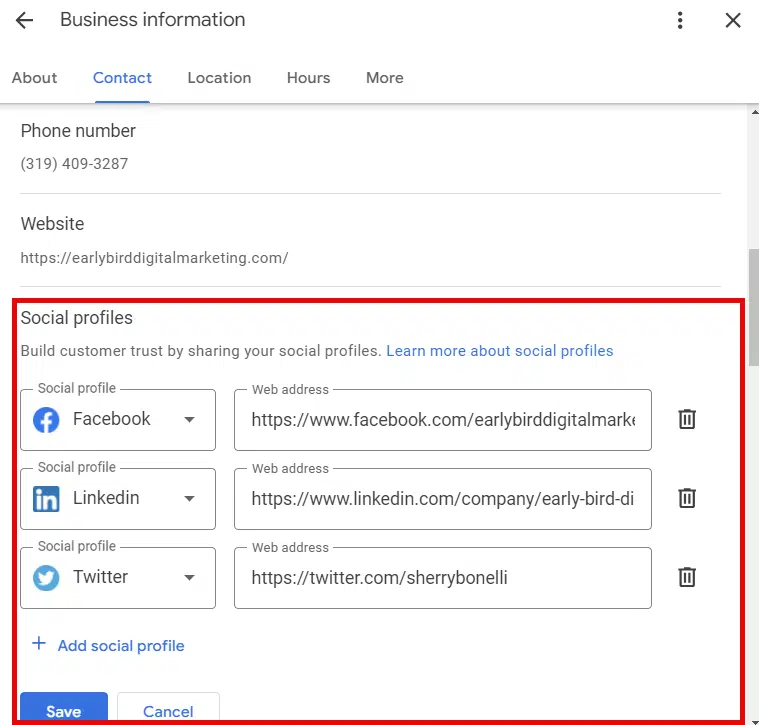
Implementing detailed schema markup, utilizing @id to link entities and connecting these entities to external data through sameAs can establish trust and decrease the cost of data exchange between a business and Google.
Descriptive schema markup: Detailed and accurate schema markup that is not deceitful aids Google by lowering NLP costs, facilitated by defining the entities and their relationships on the page.
Linking entities: With @id, entities are interlinked, enhancing the description of their relationships.
Linking to external data: Using sameAs external data can be connected to entities on a webpage to increase the descriptiveness of the entity and prove its legitimacy.
While there’s a lot of information about writing detailed schema markup and linking entities, I think we’re not paying enough attention to connecting data from external sources.
Utilizing sameAs extends beyond just linking social media profiles to an organization’s schema; it’s pivotal for linking to external data. This has led many SEOs to connect to knowledge bases like Wikidata, Google’s Knowledge Graph and many more.
In the current SERP environment, creating trust is necessary and is one of the easiest ways to prove that you are not spam. This can be done by using the sameAs property to connect entities to trusted and verified data sources.
When thinking about organizations with complex business structures, the Better Business Bureau, City of Chambers Business Directories and EIN numbers are among a few opportunities that SEOs can leverage to prove legitimacy and gain trust.
Ultimately, the goal is to minimize ambiguity, allowing Google to easily verify and trust your content. In the era of generative AI, trust is built on verifiable information. If Google can’t verify it, it won’t trust it, which simply undermines our cost-reduction efforts.
Implementing schema for potential SGE inclusion
Natural language processing (NLP) has come a long way, especially with the addition of LLMs, yet still comprehending the web’s vast amount of information remains challenging for any search engine.
The more structured data that businesses provide Google, the more verified information they will have to train machine learning algorithms like LLMs effectively.
Boosting your chances of inclusion in SGE is a hot topic. However, my perspective is that visibility will increase as more information from a specific source is included in the training data.
Ultimately, simply helping Google understand information is not enough.
If you were compiling a library in your home with limited space, would you buy the same book again just because you found another copy? I certainly wouldn’t and I don’t think Google would either.
To be included in SGE, you must share something new, even if that is simply a new perspective.
This brings us to information gain, a concept used by Google to improve user experience across multiple searches, encouraging the discovery of new information with each query.
This score can be helpful in SGE as conversational search inherently creates a multi-search environment. A high information gain score could boost your content’s chances of being included in SGE results as there is less competition for that information’s inclusion in Google’s machine learning algorithms.
Combining fresh, unique content with schema markup aligns perfectly with Google’s aim to deploy SGE efficiently, which aims for a neutral or positive revenue impact while reducing operational costs.
Opinions expressed in this article are those of the guest author and not necessarily Search Engine Land. Staff authors are listed here.
Nestled amidst the majestic Himalayas, Himachal Pradesh, a state in Northern India, is blessed with pristine natural beauty and abundant biodiversity. Home to a plethora of flora and fauna, the state boasts several national parks that serve as havens for wildlife enthusiasts and nature lovers alike. Let’s embark on a journey to discover the 5 national parks in Himachal Pradesh:
How many National Parks in Himachal Pradesh?
Himachal Pradesh boasts a total of five national parks, each offering a unique and diverse landscape teeming with wildlife and natural beauty. From the UNESCO World Heritage Site of Great Himalayan National Park to the serene ambiance of Simbalbara National Park, these sanctuaries showcase the state’s rich biodiversity and serve as havens for nature enthusiasts and wildlife lovers alike.
List of National Parks in Himachal Pradesh
Himachal Pradesh boasts a total of five national parks, each offering a unique and diverse landscape teeming with wildlife and natural beauty.
Here is the complete list of national parks in Himachal Pradesh:
National Parks in Himachal Pradesh
S. No.
Name
Location
Area
1.
Great Himalayan National Park
Banjaar, Kullu
1,171 square kilometers
2.
Pin Valley National Park
Lahaul and Spiti
807.36 square kilometers
3.
Inderkilla National Park
Kullu
104 sq. km
4.
Khirganga National Park
Kullu
710 sq. km
5.
Simbalbara National Park
Sirmour district
27.88 sq. km
Great Himalayan National Park
Location: Banjaar, Kullu
Area: 1,171 sq. km
Established in 1984 and recognized as a National Park in 1999, the Great Himalayan National Park in Himachal Pradesh is a UNESCO World Heritage Site since 2014. With over 10,000 plant species, it boasts diverse fauna including 31 mammal species and 209 bird species. Popular for its scenic beauty, it offers trekking paths amidst Deodar and Oak trees, attracting numerous visitors annually.
Pin Valley National Park
Location: Lahaul and Spiti
Area: 807.36 sq. km
Pin Valley National Park, established in 1987, sits majestically in the heart of Himachal Pradesh, within the serene confines of the Lahaul and Spiti District. This pristine sanctuary encapsulates a rich tapestry of biodiversity, spanning elevations from 3,500 meters to over 6,000 meters. Within its expanse lies a haven for endangered species, including the elusive Himalayan snow leopard and the noble Siberian ibex. But the park’s significance extends beyond its charismatic inhabitants; it serves as a sanctuary for rare Alpine vegetation and stands of Himalayan Cedar, lending an ethereal charm to its landscape. Furthermore, this sanctuary serves as a guardian for 22 endangered plant species, nurturing them amidst its rugged terrain. In the summertime, the park welcomes a vibrant array of unique bird species, adding a symphony of colors to its already captivating vista.
Inderkilla National Park
Location: Kullu
Area: 104 sq. km
Inderkilla National Park, established in 2010, graces the Kullu district of Himachal Pradesh, a mere 46.1 kilometers from Kullu Manali Airport. Encompassing a vast expanse of 104 square kilometers (40 square miles), it shelters a plethora of native and exotic plant and animal species, thriving within its mountainous terrain. Despite being one of India’s least visited parks, it harbors numerous rare and endangered species, offering a tranquil retreat for wildlife enthusiasts. A central track invites visitors to witness its rich biodiversity firsthand, while also showcasing plants with potent medicinal properties.
Khirganga National Park
Location: Kullu
Area: 710 sq. km
Khirganga National Park, nestled in Kullu, Himachal Pradesh, lies 50.5 kilometers from Kullu Manali Airport, within the sprawling Parvati Watershed spanning 710 square kilometers (270 square miles) at an altitude of approximately 5,500 meters. Established in 2010, it stands as a beacon of natural splendor, revered for its breathtaking beauty. Offering a mesmerizing landscape adorned with lush green hills, dense foliage, towering trees, and rustic rest houses, it hosts a diverse array of biological species. The park beckons adventurers, especially those embarking on the Kheerganga Trek, promising an unforgettable journey through its verdant embrace. Optimal visits occur from April to June or September to November, with October boasting favorable weather and fewer crowds. Encounter wildlife like wild bears in this cherished gem, counted among Himachal Pradesh’s premier national parks.
Simbalbara National Park
Location: Sirmour district
Area: 27.88 sq. km
Simbalbara National Park, nestled in the picturesque Paonta Valley of Sirmour District, Himachal Pradesh, was originally established as the Simbalbara Wildlife Sanctuary in 1958, spanning 19.03 square kilometers. Expanded in 2010 to encompass an additional 8.88 square kilometers, it now sprawls across 27.88 square kilometers of pristine wilderness. Managed by the Himachal Pradesh Travel and Tourism administration, this sanctuary-turned-national park remains a haven for migratory birds and diverse wildlife. Embraced by the natural beauty of the Shivaliks, it features sal woods, verdant grasslands, and meandering streams. Optimal visitation months, October and November, offer glimpses of Indian muntjacs, gorals, sambar deer, spotted deer, Himalayan black bears, and Hanuman langurs.
Xbox has released a dynamic dashboard background of 2006’s Blue Dragon to honor the recent passing of Akira Toriyama.
The dashboard background features artwork much like that from the game’s original cover, with protagonist Shu and his Blue Dragon shadow. Toriyama worked on Blue Dragon’s artwork along with Yoshihito Takahashi. It was the debut game from Mistwalker, co-developed by Artoon.
Honoring a true legend.
We’ve added a new dynamic dashboard background featuring Xbox 360’s Blue Dragon, with art and character designs by Akira Toriyama. pic.twitter.com/ZFj20fX2ed
Toriyama passed away earlier this month from a brain condition at the age of 68. He was one of the most influential artists in the world and was the creator of popular franchises such as Dragon Ball, Dr. Slump, and Sand Land. He also worked on other video games such as Dragon Quest and Chrono Trigger.
Blue Dragon was first released in 2006 in Japan and worldwide in 2007 for Xbox 360. It is also available to play on Xbox One and Xbox Series X|S through backward compatibility. The Blue Dragon series received two more games, Blue Dragon Plus and Blue Dragon: Awakened Shadow, but for the Nintendo DS.
One of last projects Toriyama was involved in before his passing is a Sand Land, an RPG based on the manga of the same name. It will launch on April 26 for PC, PS4, PS5, and Xbox Series X|S.
A single genetic test could potentially replace the current two-step approach to diagnosing rare developmental disorders in children. This shift could enable earlier diagnoses for families and save the NHS vital resources.
Researchers from the Wellcome Sanger Institute, and their collaborators at the University of Exeter and the University of Cambridge, were able to reassess genetic data from nearly 10,000 families from the Deciphering Developmental Disorders study.
In a new study, recently published in Genetics in Medicine, they show for the first time that using exome sequencing — which reads only protein-coding DNA — is as accurate, if not better, than standard microarrays at identifying disease-causing structural genetic variations.
Its adoption offers hope for faster and more accurate diagnoses of rare genetic diseases. It could also deliver substantial cost savings for the NHS, though more training is needed for specialists to generate and analyse the data, say researchers.
Changes in our genetic code can range from single letter changes to the deletion or duplication of larger stretches of DNA. These bigger changes — called copy number variations (CNVs) — can be harder for clinical teams to detect in sequencing data and understand, which is why microarrays are used. While usually harmless, making up one of the major sources of genetic diversity in humans, these large-scale variations can sometimes cause various neurodevelopmental disorders, including Angelman syndrome, DiGeorge syndrome, and Williams-Beuren syndrome.
Currently, children suspected to have genetic diseases arising from these large deletions or duplications of DNA go through a lengthy process of testing and waiting for results from multiple diagnostic approaches, starting with a microarray test before progressing to a broader genome-wide sequencing test (such as exome or genome sequencing). In this new study, scientists set out to develop a single approach to detect these structural changes, using data available from genome-wide exome sequencing assays.
Using data from the Deciphering Developmental Disorders study, the team developed a single-assay approach that combined four algorithms using machine learning methods to analyse exome sequencing data.
Comparison of the new single-assay approach with current standard clinical methods revealed it could reliably detect 305 large-scale pathogenic mutations, including 91 not previously detectable using standard clinical microarrays. The findings suggest it could replace the current methods.
Caroline Wright, Professor of Genomic Medicine at the University of Exeter, and author of the study, said: “Using exome sequencing data to detect clinically important large-scale changes, at the same time as small genetic variants, marks a significant step forward in making genetic testing simpler, cheaper and more accessible.”
Helen Firth, Professor of Clinical Genomics at the University of Cambridge, lead clinician and author of the study, said: “Under the current system, children often endure a lengthy, step-wise process of different genetic tests before reaching a diagnosis. This research brings hope that, in the near future, families might only need one test.”
Professor Matthew Hurles, Director of the Wellcome Sanger Institute and senior author of the study, said: “We are still learning how large-scale genetic variations impact human health. This study proves that with the right computational methods, a single test can accurately detect them. Our findings support its widespread adoption in NHS clinical practice, and the adequate bioinformatics training to support this.”
As you enter the Lindt Home of Chocolate in Zurich, Switzerland, be prepared to be awestruck by the sight of the world’s largest chocolate fountain. Standing tall at 30 ft, it showcases a cascading flow of chocolate, pouring into a colossal Lindor truffle. The magnitude and mesmerising speed of 2.2 pounds per second create an enchanting spectacle. Embark on a delightful journey, immersing yourself in the art of chocolate-making. Don the apron and hat of a chocolatier, uncovering the secrets behind chocolates, and as you mold the truffles, let your creativity run wild.
Before embarking on the actual class, go for a guided museum tour that unveils the fascinating history of this delectable treat. Step into a segment resembling a rainforest, dedicated to cocoa, the key ingredient that forms the heart of chocolate. Explore the origins of chocolate, tracing back to the Mayans in Central America, who enjoyed a cocoa-based drink called ‘xocolatl’. As you journey through the museum, you’ll uncover intriguing facts. For instance, in the 15th century, chocolate made its way to Spain, where it was deemed fit for the Gods after being sweetened with honey or sugar. The drink gained popularity throughout Europe, particularly when French King Louis XIII married Spanish Princess Anne of Austria, divulging the secret recipe.
The next room, named ‘Swiss Pioneers’, reveals the discovery of milk chocolate in 1875 when Henri Nestle collaborated with his neighbour. Check out the exhibits showcasing the technologies used to create the smooth and melt-in-your-mouth chocolate we enjoy today. Discover the evolution of chocolate advertising, and marvel at the packaging of various brands over the years. Along the way, indulge in tastings, adding a delicious touch to your immersive experience.
This unique experiential adventure is a blissful fusion of education and enjoyment, where you and your loved ones create cherished memories. Delight in the joy of being Willy Wonka for a day and savour the sweet rewards of your chocolate-making expertise. As the magical door opens, you step into a chocolate wonderland, adorned with workstations filled with temptation. With anticipation building, you are presented with aprons and chef hats, ready to unleash your creativity. Guided by the Master Chocolatier, you delve into the art of crafting your very own chocolate bunny and lollipops.
Step by step, he demonstrates the intricacies of the process, from molding the chocolate to adding the decorations. It appears effortless when the Master showcases his expertise, but as you begin to create, you realise the precision and skill required, adding an element of challenge and excitement. Throughout the experience, you and your fellow students bond over shared laughter and a mutual determination to craft the perfect chocolate creations. As the day progresses, you find yourself immersed in the world of chocolate-making, discovering new techniques and refining your skills.
As lawyers, finding inspiration and entertainment outside of the courtroom is essential for maintaining a healthy work-life balance. Fortunately, television and streaming platforms offer a plethora of captivating tv lawyers’ shows that not only entertain but also provide valuable insights into the legal profession.
Whether you seek gripping courtroom dramas or thought-provoking legal narratives, here are 11 must-watch TV shows that will keep you hooked and inspire your legal journey.
Created by Aaron Korsh, Suits is a legal drama that revolves around the high-stakes world of corporate law. The series follows the brilliant college dropout Mike Ross (Patrick J. Adams), who, despite lacking a law degree, starts working as a law associate for Harvey Specter (Gabriel Macht), a top attorney at the prestigious law firm Pearson Hardman. Together, they navigate complex legal cases while trying to keep Mike’s secret under wraps.
Throughout the series, Suits explores the complexities of practising law, showcasing the dynamics between lawyers, the intricate strategies employed during negotiations, and the challenges of maintaining personal and professional relationships in a competitive environment. With compelling characters, sharp dialogue, and engaging storylines, Suits offers an entertaining and insightful glimpse into the legal world.
A prequel to the critically acclaimed series Breaking Bad, Better Call Saul serves as an origin story for the morally ambiguous lawyer Saul Goodman, played by Bob Odenkirk. Set in Albuquerque, New Mexico, the series follows Jimmy McGill, a small-time lawyer struggling to make a name for himself.
As the story unfolds, Jimmy faces personal and professional challenges, ultimately transforming into the flamboyant and ethically questionable lawyer known as Saul Goodman.
Better Call Saul delves into the complexities of legal ethics, showcasing the fine line lawyers often walk between upholding justice and succumbing to their own ambitions. The show skillfully explores the intricacies of the criminal justice system and offers a compelling character study, providing valuable insights for lawyers seeking to understand the ethical dilemmas inherent in their profession.
The Good Wife follows Alicia Florrick (Julianna Margulies), a former lawyer who returns to the legal profession after her husband’s political scandal and imprisonment. The series explores Alicia’s journey as she navigates the challenges of resuming her legal career while balancing the demands of family and personal aspirations.
The Good Wife expertly combines courtroom drama, political intrigue, and complex character relationships. Each episode presents engaging legal cases, highlighting the strategies, arguments, and tactics employed by attorneys. The show also touches on important social and political issues, providing a nuanced exploration of the legal profession and the challenges faced by women in the workplace.
Produced by Shonda Rhimes, How to Get Away with Murder is a captivating legal thriller that revolves around Annalise Keating (Viola Davis), a brilliant criminal defence professor and attorney. Keating and her law students become embroiled in a murder plot, testing their moral compasses and pushing the boundaries of the law.
The series offers a gripping exploration of criminal law, ethics, and the complexities of the justice system. Each episode delves into high-stakes legal cases, showcasing the strategies and tactics employed by defence attorneys. How to Get Away with Murder keeps viewers on the edge of their seats with its intricate storytelling and intricate plot twists, shedding light on the realities of criminal law practice.
Boston Legal is a witty and thought-provoking legal comedy-drama that focuses on the personal and professional lives of attorneys at the Crane, Poole & Schmidt law firm. The show centres around eccentric lawyer Alan Shore (James Spader) and his colleague Denny Crane (William Shatner), who tackle challenging legal cases while dealing with their own personal quirks and moral dilemmas.
With its blend of humour and drama, Boston Legal provides an engaging exploration of legal ethics, social issues, and the power of persuasive lawyering. The series tackles a wide range of legal topics, including civil rights, intellectual property, corporate law, and constitutional issues.
Each episode presents compelling courtroom battles and legal arguments, often with a touch of satire and social commentary. Boston Legal offers lawyers a fresh perspective on the legal profession, emphasizing the importance of integrity, compassion, and the pursuit of justice.
Law & Order is a long-running crime procedural series that follows the investigations conducted by the police and the subsequent prosecution of suspects. Each episode is divided into two parts: the first half focuses on the police investigation, while the second half revolves around the trial and legal proceedings.
This iconic series provides a realistic portrayal of the criminal justice system, showcasing the challenges faced by both prosecutors and defence attorneys. Law & Order explores a wide range of legal issues, from murder and assault to complex white-collar crimes.
Lawyers can gain valuable insights into courtroom procedures, evidence gathering, and the ethical dilemmas encountered during the pursuit of justice.
Created by David E. Kelley, The Practice offers a compelling exploration of the professional and personal lives of attorneys at the law firm of Robert Donnell & Associates. The series delves into the complexities of the legal profession, covering a wide range of criminal and civil cases.
The Practice addresses ethical dilemmas faced by lawyers, examines the inner workings of a law firm, and explores the sacrifices attorneys make for their clients. The show presents thought-provoking courtroom battles, legal arguments, and discussions on moral and legal grey areas.
With its realistic portrayal of the challenges and triumphs within the legal system, The Practice provides lawyers with valuable insights into the intricacies of the profession.
Starring Glenn Close and Rose Byrne, Damages is a gripping legal thriller that follows the ruthless lawyer Patty Hewes and her protégée Ellen Parsons. The series delves into complex and high-stakes legal cases, often involving corporate fraud, conspiracy, and power struggles.
Damages expertly weave together multiple timelines and narratives, keeping viewers on the edge of their seats with its intricate storytelling and surprising plot twists.
The show explores the darker side of the legal profession, shedding light on the manipulative tactics, personal sacrifices, and ethical dilemmas that lawyers may face in pursuit of victory. It offers a captivating portrayal of the legal world and the complexities of attorney-client relationships.
The Wire is a critically acclaimed crime drama series that focuses on the city of Baltimore, exploring the interplay between law enforcement, the legal system, and the social fabric of the city. While not solely centred on the legal profession, the show offers a realistic portrayal of how law enforcement and legal institutions interact with the communities they serve.
The Wire presents a nuanced examination of crime, corruption, and the challenges faced by both police officers and lawyers. It explores systemic issues within the criminal justice system, providing insights into the complexities of law enforcement investigations, legal loopholes, and the impact of social and economic factors on the legal landscape.
For lawyers interested in understanding the broader context in which they operate, The Wire offers a unique perspective.
While not a traditional legal drama, Silicon Valley provides a humorous and satirical take on the legal aspects of the tech industry. The series follows a group of programmers as they navigate the competitive and cutthroat world of Silicon Valley startups.
Silicon Valley touches upon various legal issues, including intellectual property disputes, contract negotiations, and corporate law. It humorously highlights the challenges faced by entrepreneurs and their legal advisors in a rapidly evolving technological landscape.
The show offers lawyers a lighthearted yet insightful perspective on legal challenges within the business world, showcasing the importance of legal knowledge and strategy in the realm of technology startups. Lawyers can gain valuable insights into the complexities of intellectual property rights, contract negotiations, and the legal implications of innovation.
Crown Court is a classic British legal drama that recreates realistic courtroom proceedings and explores a range of criminal cases. The series focuses on the trial process, providing an in-depth look at the roles of judges, barristers, solicitors, and witnesses.
Each episode of Crown Court presents a different case, showcasing the preparation and presentation of legal arguments, the examination and cross-examination of witnesses, and the deliberations of the jury. The show offers lawyers a valuable opportunity to observe the dynamics of a courtroom, understand the art of persuasive advocacy, and gain insights into the various elements of a trial.
How to Get Away with Murder – Available on Netflix
Boston Legal – Available on Hulu, Amazon Prime Video
Law & Order – Available on Hulu, Peacock
The Practice – Available on Hulu
Damages – Available on Hulu, Amazon Prime Video
The Wire – Available on HBO Max
Silicon Valley – Available on HBO Max
Crown Court – Not currently available on major streaming platforms; can be found on Youtube.
Conclusion
These 11 TV shows provide lawyers with a diverse range of legal dramas, thought-provoking narratives, and insightful portrayals of the legal profession. From gripping courtroom battles to complex ethical dilemmas and personal struggles, each series offers unique perspectives on the challenges faced by lawyers in their pursuit of justice.
Whether you seek entertainment, inspiration, or a deeper understanding of the intricacies of the law, these shows are sure to captivate and engage. So, grab your popcorn and immerse yourself in the fascinating world of legal dramas on screen. Through these TV shows, lawyers can gain valuable insights, sharpen their understanding of the legal profession, and find inspiration for their own legal journeys. Happy watching!
Note: This article was first published on June 09, 2023. We have republished it on March 30, 2024.
Blackstone Life Sciences will invest as much as $750 million on influenza vaccine research and development by Moderna, announcing Wednesday a private funding deal that gives the private equity firm rights to future payments and royalties.
Moderna has advanced an mRNA-based flu shot into late-stage testing and is also studying a combination flu and COVID-19 vaccine — part of a broad R&D strategy to follow the success of its standalone COVID shot. Later this year, the company intends to submit the flu shot for regulatory approval.
The funding agreement comes one day after Moderna revealed results for a “next-gen” COVID vaccine that it said showed higher immune responses than the biotechnology firm’s current product. This next-gen vaccine is being used in the combination flu and COVID vaccine that’s now in Phase 3 testing.
Dive Insight:
The new trial results and funding were announced alongside a “vaccine day” that Moderna has held for the past five years. The biotech, which was criticized in its early years for investing in vaccine R&D, has now built a large business around infectious disease research.
Sales of the company’s widely used COVID-19 shot have fallen sharply, however, pushing the company to invest in its vaccines for flu and respiratory syncytial virus.
“Our goal is to launch multiple vaccine products in the next few years and deliver the greatest possible impact to people through mRNA medicines,” said Stéphane Bancel, CEO of Moderna. “Achieving this ambition requires substantial investment in late-stage studies and we are excited to welcome Blackstone and their innovative financing model.”
The company’s flu candidate, dubbed mRNA-1010, has delivered mixed results in Phase 3 testing, outperforming existing shots against “A”, but not “B”, strains in one of several trials Moderna has run. Moderna updated the shot’s formula to better address both strains.
Overall, Moderna has five vaccines in Phase 3 testing, and another three that it expects to soon advance into late-stage trials for Epstein-Barr virus, Varicella-Zoster virus and norovirus.
Moderna predicts the market for flu vaccines will be $7 billion in 2024, while it sees the market for RSV shots growing to $10 billion annually. GSK and Pfizer currently sell RSV vaccines in the U.S.
Per the new agreement, Blackstone Life Sciences will receive commercial milestone payments and low-single digit royalties from Moderna on flu vaccine products. The new funding does not change Moderna’s guidance for spending $4.5 billion on R&D this year, the company said.
The investment by Blackstone is one of many the firm has made in life sciences, including a similar deal it struck with Sanofi to provide R&D funding for the French company’s multiple myeloma medicine. It has also invested in Autolus Therapeutics, Ferring Pharmaceuticals, Alnylam Pharmaceuticals and Anthos Therapeutics.
Recently the NAB released a summary of recent business statistics, from interest rates to inflation to business confidence, and had a look at the key numbers affecting Australia’s economy. Here’s what they had to say: First rate cut forecast for November The cash rate remains at 4.35% for now with little chance of further hikes,…
My husband and I have been married for 6 years and have 1 daughter. Our marriage hasn’t been good for a while. It feels like we can’t have a single conversation without it turning into a fight. We both love our daughter and so for her sake, I always believed we would fix things eventually. I just found out that my husband cheated and had a baby with the other woman. Apparently they’ve been having an affair for over a year and it was an accident. My husband’s mistress is 7 months pregnant and she wants him to leave me and start a new family with her before the baby comes. I feel lost and I want to protect myself but I don’t know how. What are my rights if my husband cheated on me? Can I sue my husband for getting another woman pregnant? We already have a family together and I just can’t believe he would be stupid enough to have a baby with his mistress. I don’t even know whether I want him to stay with me or not. Please give me advice on what to do if my husband got another woman pregnant.
Answer:
I’m sorry to hear that you’re going through such a difficult time. I can imagine that the news of your husband’s infidelity, coupled with the fact that he got the other woman pregnant, can be devastating and emotionally taxing. It’s very important for you now to seek support and connection from friends and family. This is not something you should be handling alone.
Take the time out for some self-care as well, especially on the days when you don’t want to. Ironically, those are the days when we need it most. This could be in the form of indulging in your hobbies, spending time with loved ones, spending time in nature, etc.
A good place to start figuring things out from would be to try and understand what it is that you want to do. The decision to stay in the marriage or not is a complex one, so make sure you’re not forcing yourself to lean towards a particular decision. Be as genuine and authentic to your emotional experience as possible. You may consider marriage or couples counseling to figure out what both of you want to do about this marriage.
It would also help to have an open and honest conversation with your husband regarding the entire issue, if you feel up for it. Of course, the conversation could be tense, and may aggravate the hurt you are feeling. But there are certain questions only he can answer for you. It might just give you the insight you need to make your decision. If you do choose to have this conversation, try not to jump into an accusatory place. State your feelings firmly and try to hold out as much empathy for him as you can. That is the only way the conversation will stay on track and won’t make either person defensive.
It is also crucial for you to have some boundaries in place to ensure your well-being and safety. Recognise what it is that you need most, and then ask for it. Whether it be space, or some time to think, or help and support from others. Consider therapy or counseling to help you navigate the jumble of thoughts and emotions you’re dealing with. Whether you have legal grounds to sue your husband for his actions largely depends on the laws in your jurisdiction and the specific circumstances of your situation. In many jurisdictions, infidelity itself is not typically grounds for a lawsuit, as it is considered a personal matter rather than a legal one.
However, if your husband’s actions have resulted in financial harm to you or if there are legal implications related to child custody, support, or division of assets, you may have legal recourse. For example, if your husband’s infidelity and subsequent relationship with another woman lead to the dissolution of your marriage and financial losses, you may be able to pursue legal remedies such as divorce proceedings, spousal support, or a fair division of marital assets.
It’s important to consult with a qualified attorney who specializes in family law in your area to discuss your specific circumstances and explore your legal options. They can provide personalized advice and guidance based on the laws applicable to your situation and help you understand your rights and potential courses of action.
Lastly, do not deny your emotions. All of your emotions, whether it be grief, sadness, anger, envy or frustration, are perfectly valid. Try to hold space for these emotions and avoid suppressing them.
FAQs
1. Should I leave my husband after he had baby with other women?
There is no one-size-fits-all answer to this. However, before you make that decision, there are a few things you should consider: 1. Your feelings on the matter, whether you are able or willing to make this marriage work 2. What would be the best course of action for you? 3. The implications that staying or leaving could have on your child. Often, children end up sustaining more damage from a dysfunctional relationship with parents rather than separated parents. 4. Analyze your marital relationship. Is there a sufficient basis for you to build something upon, or even for the sake of repairing the relationship. If you choose to stay, what is it that you are staying for? 5.Get some legal and financial consultation for how either decision would affect you. 6. Garner support from friends and family who you trust. Consider personal therapy as well.
2. What should i do if my husband got another woman pregnant?
It’s an incredibly challenging and emotionally taxing situation to be in. Here are the following things to consider: 1. Take some time for yourself and give it some thought, trying to understand what you want to do. 2. Communicate with your husband openly and honestly to get clarity about his thought process as well. 3. Seek support from your loved ones and consider therapy or counseling. 4. Assess your options and try to get all the legal and financial information you need. Also assess the state of your marriage 5. and whether you think there is any possibility of recovery and repair. 6. Prioritize self care.
3. Can I trust my husband again after he cheated?
Rebuilding a relationship after infidelity is possible, and there are couples who overcome it. However, whether it is possible for you or not, is something you get to decide for yourself. It takes a lot of work to rebuild the trust that is broken. 1. Consider if you are able to willing to work on this marriage and what are your reasons for doing so 2. It will require your husband to take accountability and make a choice between you and the other person involved. 3. It will take a lot of open and honest communication between both of you, which can be exhausting, but will provide you the clarity you need. 4. Look at your feelings and your emotional experience to decide whether you want to trust him again.
Consider marriage or couples counseling to gain better clarity, establish healthy communication patterns and to help you realize what you want and need.
Only message links in Facebook can be opened in external browser by using privacy settings.
For other links within Facebook, they will automatically open in the app’s built-in browser.
You can exit Facebook’s in-app browser when visiting a website.
The Facebook app opens links in its built-in browser by default. But what if you want to use your own preferred browser app instead? Here’s what you need to know about disabling Facebook’s in-app browser.
Can You Disable Facebook’s In-App Browser?
Facebook used to give app users more control over the links they opened, allowing you to open most links in an external browser. However, when we tested the feature in 2024, we saw that this is no longer the case on both the Android and iOS apps.
Rather, the option to open links in an external browser now only applies to links in Facebook messages. Links that you click on from Facebook pages or posts will automatically open in Facebook’s in-app browser. You will then need to manually open the link in an external browser.
So, while you can turn off Facebook’s in-app browser for message links, other links will continue to open in the app’s browser.
How to Turn Off Facebook’s Mobile Browser
Disabling Facebook’s in-app browser is simple. However, the privacy setting to open up links externally only works for links sent in messages.
If you open a link elsewhere on Facebook, such as on a Facebook page, it automatically uses the app’s built-in browser.
In order to open these types of links in a browser of your choice, you need to tap the three dots at the top of the page and select Open in external browser. This will then open the app in your default mobile browser.
Depending on the browser you use and your privacy settings, using an external browser could result in less tracking as you browse through the website on your phone.
If you want to force Facebook to open up message links in an external browser, follow these steps:
On the home page of the app, tap the hamburger menu (with your profile icon) in the top right. On iOS, this icon is in the bottom right.
Scroll down and select Settings & privacy, then tap on Settings.
Scroll down and tap on the Media option. You will find it under the Preferences section.
In the Media menu, scroll down and check the box that says Open links in external browser. On iOS, you will need to use a toggle button to switch the feature on.
The first time you open a link in a message after applying this setting, Facebook will notify you that you’re leaving messaging. Tap the Continue button to open the link.
There is some convenience to using Facebook’s in-app browser, but privacy-oriented users may want to use an external browser instead. For added privacy, you should also opt out of Facebook’s link history feature.
You can also use the off-Facebook activity tool to reduce the amount of data Facebook collects about you when you’re not using the app.
Unfortunately, the ability to completely disable Facebook’s in-app browser is no longer included in the app. But you can use your privacy settings to disable the built-in browser for message links.
Women everywhere have many reasons to curse a blue streak. Countless reasons. They don’t need excuses, because sometimes cursing is fun. But if you need a movie to explain this to you, over and over, like a potty-mouthed PSA for speaking one’s mind, the breathless British period comedy “Wicked Little Letters,” starring Olivia Colman and Jessie Buckley and directed by Thea Sharrock, is at the ready with its occasionally amusing but ultimately worn-to-the-bone joke.
The film declares up front, “This is more true than you’d think,” and indeed, during the years after World War I, a poison-pen scandal in an English seaside town turned filthy language into national news. Someone’s been sending ornately vicious, profanity-laced, unsigned missives (“foxy-ass old whore” is as nice as this newspaper can print) to the residents of Littlehampton, the brunt of them landing at the doorstep of pious spinster Edith Swan (Colman). While her poor mother (Gemma Jones) weeps and authoritarian father (Timothy Spall) sputters with rage and the police drag their heels, Edith assumes the countenance of brave-faced, sympathy-slurping martyr in a worrisomely godless postwar society.
Of course, everyone knows who the sender must be: Edith’s next-door neighbor (and ex-friend) Rose Gooding (Buckley), a boisterous, barefoot, widowed Irish migrant and single mom who is eventually arrested and put on trial for libel with no evidence save her lower-class status and all-occasions forwardness. (As Rose shrewdly puts it to the authorities, “Do I look like the anonymous type to you?”) The situation doesn’t sit well with police officer Gladys Moss (Anjana Vasan), who must defy her chauvinistic colleagues to take matters into her own hands and see that justice is served.
Not that there’s any real mystery to who the epistolary vulgarian is, despite “Wicked Little Letters” presuming there is until about halfway through, when Johnny Sweet’s sketch-thin screenplay turns toward ho-hum caper mechanics to nab the culprit. It’s no spoiler to say hypocrisy is key to the crime, since the film’s cartoonish binary — free-spiritedness good, repression bad — screams it from the beginning. The blessing is that Buckley, Colman, Spall and Vasan are expert enough that dimensional character work still peeks through the vibe of cookie-cutter idiosyncrasy.
Timothy Spall in the movie “Wicked Little Letters.”
(Sony Pictures Classics)
Even in a role that’s more like a big Irish wink, Buckley is always watchable, although you half expect her expletive-thick lines to lead right into a bawdy musical number. But it’s Colman’s virtuosity with facial nuances — that is, when the camera holds on her long enough to get them — that hint at the more fascinating, thornier, Jamesian character study to be explored: a self-deluder fractured by misogyny both open and internalized.
It’s all briskly paced, benefiting from suitably evocative sets, costumes and the bit-part bite of Eileen Atkins (as one of Edith’s friends). But Sharrock’s approach is frustratingly compartmentalized, set on keeping the wacky part wacky and the serious part serious. There’s also misplaced trust in the entertainment value of squeezing every ounce of shock from the letters (such language!), while counting on knowing nods about what the key message is (female emancipation!).
Not unlike the genre of naughty village quirk that gave us “Calendar Girls,” “Wicked Little Letters” is benignly enjoyable in its take on a true story of hidden feelings, farcical expression and righteous action. But considering the zesty elements in play, it’s a shame we’re so far removed from the heyday of Britain’s Ealing Studios and its oddball comedies like “Passport to Pimlico,” “Whiskey Galore” and “The Ladykillers,” in which eccentricity, the authenticity of human pluck and spiteful black humor were more smoothly brewed.
‘Wicked Little Letters’
Rating: R, for language throughout and sexual material
Voice synthesis has come a long way since 1978’s Speak & Spell toy, which once wowed people with its state-of-the-art ability to read words aloud using an electronic voice. Now, using deep-learning AI models, software can create not only realistic-sounding voices but can also convincingly imitate existing voices using small samples of audio.
Along those lines, OpenAI this week announced Voice Engine, a text-to-speech AI model for creating synthetic voices based on a 15-second segment of recorded audio. It has provided audio samples of the Voice Engine in action on its website.
Once a voice is cloned, a user can input text into the Voice Engine and get an AI-generated voice result. But OpenAI is not ready to widely release its technology. The company initially planned to launch a pilot program for developers to sign up for the Voice Engine API earlier this month. But after more consideration about ethical implications, the company decided to scale back its ambitions for now.
“In line with our approach to AI safety and our voluntary commitments, we are choosing to preview but not widely release this technology at this time,” the company writes. “We hope this preview of Voice Engine both underscores its potential and also motivates the need to bolster societal resilience against the challenges brought by ever more convincing generative models.”
Voice cloning tech in general is not particularly new—there have been severalAI voice synthesis models since 2022, and the tech is active in the open source community with packages like OpenVoice and XTTSv2. But the idea that OpenAI is inching toward letting anyone use its particular brand of voice tech is notable. And in some ways, the company’s reticence to release it fully might be the bigger story.
OpenAI says that benefits of its voice technology include providing reading assistance through natural-sounding voices, enabling global reach for creators by translating content while preserving native accents, supporting non-verbal individuals with personalized speech options, and assisting patients in recovering their own voice after speech-impairing conditions.
But it also means that anyone with 15 seconds of someone’s recorded voice could effectively clone it, and that has obvious implications for potential misuse. Even if OpenAI never widely releases its Voice Engine, the ability to clone voices has already caused trouble in society through phone scams where someone imitates a loved one’s voice and election campaign robocalls featuring cloned voices from politicians like Joe Biden.
Also, researchers and reporters have shown that voice-cloning technology can be used to break into bank accounts that use voice authentication (such as Chase’s Voice ID), which prompted US senator Sherrod Brown of Ohio, the chair of the US Senate Committee on Banking, Housing, and Urban Affairs, to send a letter to the CEOs of several major banks in May 2023 to inquire about the security measures banks are taking to counteract AI-powered risks.
OpenAI recognizes that the tech might cause trouble if broadly released, so it’s initially trying to work around those issues with a set of rules. It has been testing the technology with a set of select partner companies since last year. For example, video synthesis company HeyGen has been using the model to translate a speaker’s voice into other languages while keeping the same vocal sound.
Sam Bankman-Fried was sentenced to 25 years in prison by a judge on Thursday for stealing $8 billion (roughly Rs. 66,678 crore) from customers of the now-bankrupt FTX cryptocurrency exchange he founded, the last step in the former billionaire wunderkind’s dramatic downfall.
US District Judge Lewis Kaplan handed down the sentence at a Manhattan court hearing after rejecting Bankman-Fried’s claim that FTX customers did not actually lose money and finding that he lied during his trial testimony. A jury found Bankman-Fried, 32, guilty on November 2 on seven fraud and conspiracy counts stemming from FTX’s 2022 collapse in what prosecutors have called one of the biggest financial frauds in US history.
Kaplan said Bankman-Fried has shown no remorse.
“He knew it was wrong,” Kaplan said. “He knew it was criminal. He regrets that he made a very bad bet about the likelihood of getting caught. But he is not going to admit a thing, as is his right.”
Bankman-Fried, wearing a beige short-sleeve jail T-shirt, acknowledged during 20 minutes of remarks to the judge that FTX customers had suffered and he offered an apology to his former FTX colleagues – but did not admit criminal wrongdoing.
He has vowed to appeal his conviction and sentence.
Bankman-Fried stood with his hands clasped before him as Kaplan read the sentence. He then spoke with his defense lawyer Marc Mukasey briefly before being led out of the courtroom by members of the US Marshals Service.
The sentence marked the culmination of Bankman-Fried’s plunge from an ultra-wealthy entrepreneur and major political donor to the biggest trophy to date in a crackdown by US authorities on malfeasance in cryptocurrency markets.
“There are serious consequences for defrauding customers and investors,” US Attorney General Merrick Garland said in a statement. “Anyone who believes they can hide their financial crimes behind wealth and power, or behind a shiny new thing they claim no one else is smart enough to understand, should think twice.”
Kaplan found that FTX customers lost $8 billion, FTX’s equity investors lost $1.7 billion (roughly Rs. 14,169 crore), and that lenders to the Alameda Research hedge fund Bankman-Fried founded lost $1.3 billion (roughly Rs. 10,835 crore). He imposed an $11 billion (roughly Rs. 91,682 crore) forfeiture order and authorized the government to repay victims with seized assets.
Federal prosecutors had sought a sentence of 40 to 50 years. Mukasey had argued for a sentence of less than 5-1/4 years.
‘I’m sorry for that’
Addressing the judge, Bankman-Fried said, “Customers have been suffering … I didn’t at all mean to minimize that. I also think that’s something that was missing from what I’ve said over the course of this process, and I’m sorry for that.”
Referring to his FTX colleagues, Bankman-Fried added, “They put a lot of themselves into it, and I threw that all away. It haunts me every day.”
Three former close associates testified as prosecution witnesses that Bankman-Fried had directed them to use FTX customer funds to plug losses at Alameda Research. All three have pleaded guilty to fraud.
Kaplan said Bankman-Fried lied when testified that he did not know Alameda Research had spent customer deposits taken from FTX.
Mukasey sought to distance Bankman-Fried from notorious fraudsters like Bernie Madoff, saying he was “not a ruthless financial serial killer” but rather an “awkward math nerd” who tried to get customers their money back after FTX’s collapse.
“Sam Bankman-Fried doesn’t make decisions with malice in his heart,” Mukasey added. “He makes decisions with math in his head.”
Bankman-Fried’s eyes turned red as he appeared to hold back tears while Mukasey spoke.
His parents, Stanford University law professors Joseph Bankman and Barbara Fried, attended the sentencing. Bankman held a green umbrella as they exited the courthouse into a rainy New York afternoon, their arms around each other.
“We are heartbroken and will continue to fight for our son,” they said in a statement.
‘Power and influence’
A Massachusetts Institute of Technology graduate, Bankman-Fried rode a boom in the values of bitcoin and other digital assets to a net worth of $26 billion (roughly Rs. 2,16,705 crore), according to Forbes magazine, before he turned 30.
Bankman-Fried became known for his mop of unkempt curly hair and commitment to a movement called effective altruism, which encourages talented young people to focus on earning money and giving it away to worthy causes.
He was one of the biggest contributors to Democratic candidates and causes before the 2022 US midterm elections. Kaplan pointed to trial evidence showing Bankman-Fried also donated to Republicans through “straw” donors to hide his involvement.
The judge called Bankman-Fried’s efforts to present himself as a “good guy” an act, adding, “The goal was power and influence.”
Bankman-Fried has been detained at the Metropolitan Detention Center in Brooklyn since August 2023, when Kaplan revoked his bail after finding he likely tampered with witnesses at least twice. Kaplan said he would recommend Bankman-Fried be sent to a prison close to San Francisco.
Does it ever feel like your SEO recommendations and projects get lost in the shuffle or deprioritized by other teams?
If you work in-house, you’ve likely experienced the “fear of missing out” (FOMO) when it comes to getting your optimization work properly resourced and implemented.
The good news is that a project management methodology called “Agile” can help cross-functional teams self-organize and collaborate more effectively.
By understanding the agile ceremonies (meetings) and processes, you can better integrate with and influence the development cycles to ensure your SEO requirements don’t get overlooked.
In this article, we’ll cover the key aspects of the agile methodology, map out the various agile meetings you should aim to participate in and provide tips on how to write effective tickets and acceptance criteria so your SEO changes get prioritized and launched.
Say goodbye to FOMO and start getting your SEO work done through the power of agile processes.
How agile project management stops FOMO
An agile approach makes you part of the process with the teams that get things done.
AI may be trending, but I believe the agile framework is enduring. Unlike AI, which depends on artificial or software intelligence, agile relies on how teams naturally organize to accomplish tasks.
It prioritizes tangible features and improvements. Increasingly, major technology teams are embracing agile for its ability to enhance business value and efficiency in managing complex projects.
A quick overview of the agile methodology
Agile project management is a method of managing your project work in small, incremental segments that can be easily assigned, easily managed and completed within a short period of time called an iteration or sprint.
Traditionally, project management followed a waterfall-style approach. In this method, all the work is completed upfront and customer feedback is gathered afterward.
The process can take months to complete, which is not always ideal, especially when you want to release a product MVP to the market ahead of your competitor. (Sound familiar?)
The agile style is more iterative because work is designed to be completed in short cycles (sprints), where feedback and improvements (to both the product itself and the teams involved) are built into the process.
Agile has its roots in the software development world. The key elements are:
Business people and developers must work together daily throughout the project.
Continuous attention to technical excellence and good design enhances agility.
At regular intervals, the team reflects on how to become more effective, then tunes and adjusts its behavior accordingly.
See that? When teams use agile, everyone along the way becomes part of the team that works on the actual work. Together, everyone accomplishes big things.
Agile principles are inherently about collaboration and continuous improvement. Any organization can use this approach to lean thinking and operating to deliver value to their customers.
In previous articles, I’ve referenced the agile methodology and how it’s executed using a scrum framework.
A scrum-based process is great for handling big or intricate solutions because it’s iterative and allows quick market entry. It enables teams to learn from customer feedback and incorporate on-the-go improvements.
On the other hand, Kanban and waterfall methodologies usually take a more step-by-step, linear approach.
A core agile team typically consists of:
A product manager.
A project/program manager.
Leads from supporting teams like engineering, user experience, QA and SMEs like SEO.
Within this structure, daily and weekly ceremonies (or meetings) help everyone align on the work and move things forward.
The work is designed to be completed in a time-boxed sprint, usually 1-2 weeks. All tickets in a given sprint should be finished in that time for the team to achieve their desired velocity.
Dig deeper: SEO product management: Key framework and fundamentals
Image credit: Sean Morrison, Technology Program Management, Under Armour
It’s a continuous cycle. Incremental improvements are thus achieved using what’s called an Agile Release Train.
For ecommerce sites, these teams improve aspects like product detail pages, the on-site search functionality or the checkout process.
Get the daily newsletter search marketers rely on.
How to integrate with an agile team
Conceptually, this is about understanding the workflow of cross-functional teams using agile. Now, fellow SEO professional Aleyda Solis wrote:
“Aligning SEO with the aims and objectives of your web development, design and product teams helps keep everyone on the same page. This will enable you to identify the best way to prioritize SEO needs and create a plan of action with your counterparts from other teams that keeps everyone on track and moving in the same direction.
For example, if the web development team works in sprints, knowing how long each sprint is can help you coordinate reasonable goals for each one.”
In addition to knowing the sprint duration, understanding when and where to join key meetings is crucial. Business stakeholders participate at different points in the sprint. As such, grasping the broader agile scrum process will provide even more context.
Not taking the time to learn and familiarize yourself with the meeting rituals of teams using agile scrum can perpetuate the feeling of chaos. You don’t know where to be, what to do or how to get other teams to help you get work done.
The key is to spot the pattern.
I’ll guide you in recognizing this pattern so you can figure out who to collaborate with, when meetings happen and what you need to prepare.
Let’s begin with the individuals involved in the agile process.
Find the conductors
First, find the product manager.
If you’re a business stakeholder, you are largely outside of this daily process. This person is your touchpoint to helping you navigate the agile team’s meeting cadence and can advise you on where and how to submit a ticket.
Business owners are primarily brought in at the beginning (to define “the ask” to the team) and at the end (to validate the output).
The second person to find is the release train engineer (basically the lead engineer).
This person facilitates the agile release train execution, managing risks and dependencies along the way. This person will largely be able to guide the technical nuances of how your request gets implemented so that it can be successfully launched.
Tangentially, you’d do well also to identify the project manager. (This role can have different names from scrum master to delivery manager.)
Functionally, they support the product manager in terms of organizing the team’s current sprint and backlog (the lineup of tickets to be worked on) and they typically report to the broader organization as to the ongoing status of the work.
Once you identify these roles in your organization, they can help direct you to the various meetings to attend.
Agile project management ceremonies (meetings)
The second step is knowing what meetings to attend and how you help move the team forward.
In this section, I’ll map out where you as a business stakeholder need to plan to be, the meeting types, when they occur and who will be there. As an SEO product manager, I operate as both a partner in terms of being a subject matter expert and a business stakeholder.
Participating in these meetings that support the agile project management methodology helps me be in the know while partnering with cross-functional teams to get work done.
Since agile allows for teams to self-organize, below is an overview of general meeting terms and types one would see as part of this process.
Stand-up
This is often daily or every other day in a given week. These are typically 15-minute meetings where the agenda is a roundtable of team updates and/or any areas where they’re blocked with their work.
Business stakeholders don’t typically attend stand-ups but it can be helpful to attend a few, especially if it’s been brought to your attention that the team has questions about a ticket they’re working on for your team.
As a business stakeholder, the daily stand-ups are what you want to get invited to. It’s a forum to hear what everyone is working on, where they’re blocked, or if they have questions related to your ticket(s) you can help answer.
Note that standups are not the place to introduce new work. An appropriate time for that is sprint planning.
Grooming
This is typically an hour-long, bi-weekly or weekly meeting, depending upon the sprint cadence. This is where the product manager and project manager talk with the teams (engineering, design/user experience, etc.) about the work and the level of effort involved with each ticket before adding it into a sprint.
Once there’s a sense of the size and scope of each ticket, it gets added to the sprint.
This is a key meeting for business stakeholders to attend because they pitch their ticket to the team working on it, answer questions and provide any additional context like priority or severity. It’s important to come prepared, be brief, helpful and thorough.
In preparation for grooming, create your ticket by identifying the type of ticket you’re bringing to the team. In most cases, it’s either an issue or an enhancement and can be classified as the following:
A bug (i.e., something that worked once but doesn’t work now).
A new feature or functionality.
A regression (i.e., a previous functionality is no longer working as expected).
I cover this in more detail in terms of how SEO teams can write an effective ticket, which you can use as a guide to adapt to integrate your own team’s specifications.
Tip: Use quantitative metrics in your acceptance criteria and provide the source for where the work is to be viewed and approved as complete. (For SEO, it’s often the source code. For other teams, it can be “customer experience will be X”)
As a business owner, when your request and pitch are crystal clear in your ticket, you’re more likely to get work done.
Refinement
These can be hour-long meetings and happen as needed because they can apply to the set of current tickets for a sprint or the tickets in the backlog.
Ongoing refinement meetings aim to bring the team together to align on requirements, adjust ticket level of effort (LOE), QA input, etc.
We all know technology changes quickly. This part of the agile process helps teams plan requirements and adapt based on existing market conditions.
Sprint planning
This is where the team plans the work that will be included in the upcoming sprint. Each sprint is usually time-boxed for 1-2 weeks, during which all tickets (slated work) are completed.
Effective sprint planning results in the entire team scoping the level of effort of each ticket and completing it in the sprint. Ideally, their KPI output of velocity trends up and to the right.
Being present during the sprint planning meeting will help you get a view of what the team will be working on and delivering in the short term.
Having that predictability factor of planned work allows the team to focus on chipping away at either tech debt or growth-related initiatives. Offering a nice balance of an offensive and defensive strategy towards holistic improvement.
Backlog refinement
This meeting can occur as needed when the team needs to organize and/or prioritize the backlog of tickets they have queued up. Typically, this meeting involves the product manager, project manager and an engineering lead.
A big part of the agile scrum methodology is always having a “healthy, groomed” backlog of work for teammates to pick up as capacity allows.
While business stakeholders don’t usually attend this meeting, it can be helpful to ask the project manager about the team backlog to better understand where there are needs or opportunities for the team to take on more work or large projects that can be broken down.
The operative words here are “broken down.” In agile, big projects are always broken down into individual tickets.
Demo/showcase
Occurs when the feature is functional and ready to demonstrate to stakeholders before going into production or a live environment.
The project manager schedules it when the engineering team is ready to share and showcase their progress to a wider audience. Stakeholder attendance is key here as this is a touchpoint where the team validates what is built meets expectations.
As mentioned above, if you did a thorough job of including quantifiable Acceptance Criteria in your ticket, by this point in the development process, it’ll be easy to confirm the ticket is done.
Retrospective (retro)
This meeting is organized by the project manager and occurs after the sprint is completed. Here, the entire team comes together to talk about what went well/what didn’t in the recent sprint and how they can improve for the future.
External stakeholders need to participate in this meeting, especially when their work was part of the sprint, because it’s a time to build camaraderie and help everyone improve.
A great way to do this is to come prepared with 1-2 tickets as examples and the tangible good or bad things that took place. Stick to the facts and highlight how things can be improved. Your feedback should come from a place of collective growth and improvement operating as a team.
The big takeaways here are: when you’re coming to an agile team with an ask for their time and effort, stakeholders should provide clear, concise information in the ticket regarding “what” is needed (not “how,”that’s for the agile team to determine). Be succinct in your replies to help the team decide so they can move forward in architecting a solution.
The FOMO is subsiding, yes? Because you’re becoming part of the solution.
No. More. Fear.
How can I get asked to work with the agile team again?
It’s kind of addictive, you know? Getting things done.
Once you get something implemented, you want more. The FOMO starts actually to subside because you’re collaborating.
You have all the calendar invites of the team’s meeting cadence. You know your POCs that facilitate interlocks and communication and when your ticket is ready to be reviewed and signed off on.
If you play your cards right, you might even get invited to their internal Slack channel!
The best way to ensure you get to work with these teams again is to help the team complete the work they’ve collectively committed to completing in the time-boxed sprint (alliteration is fun). You do this by being engaged and prepared.
How to not let your requirements get missed
Write this down: Make them quantifiable!
At the outset, define the ask in simple terms: here are some examples of effective (and ineffective) tickets and the user story prompt to help you crystalize the issue and the ask.
“Verifying that SEO-related dev requests or tickets have been correctly implemented is a crucial step towards the desired outcome during SEO execution.”
Yes! And you do this by defining clear and quantifiable acceptance criteria (AC) in your ticket.
As a business owner, you can provide the AC to stipulate your expectation of how something functions and/or the desired customer experience.
The more quantifiable you can make it, the easier it is to validate and give the team the thumbs up that the work is done.
A quantifiable output is preferable to a qualitative one because the latter is subjective, and you may not get exactly what you’re looking for.
For example, as an SEO product manager, one of my frequent SEO-related ACs for links is that they are formatted as:
The <a href> must be in view:source.
The <a href> must be without parameters.
That criterion is an easy yes/no response when you see that in the code. It’s either there, in that format, or it’s not. Pass/fail QA.
So, the takeaway is to include quantifiable AC in the ticket. This will allow you to align with the team on the DoD (definition of done) and easily spot-check and verify its completion.
How do I know if my organization is using agile?
Literally, ask. Find someone with the title of product manager and ask them, “Hey, quick question: Are we using the agile method for project management? If so, can I get invited to the daily stand-up meetings to get up to speed with what the team has planned in the current sprint?”
When you get that invite. Show up on time (literally, because these meetings are short). Listen. Take notes. The more you attend the team’s ceremonial meetings, the more it will sink in.
That’s how you get things done
You now have the best-kept secret of how to get things done. I know this is a lot. It might be new or foreign to you. And it’s all in addition to your day-to-day goings on. But finding these teams is worth it. Plugging into the agile process is how you get things done with broader teams.
If you don’t believe me that this works, just continue operating as you have. Don’t engage; just watch as all your tickets get relegated to some team’s backlog. However, if you want to get big projects launched and create change, try it. Implement what I’ve outlined here, take ownership and operate this way. I promise you’ll get results. Agile is designed for output.
As an in-house SEO product manager, I can say firsthand that learning about and operating within the agile framework (and doing so at different companies) has taken a few years to acclimate to. And if I’m being honest, I’m still learning. But, like anything, the more you do it and engage and communicate with your teammates, the easier it gets.
Opinions expressed in this article are those of the guest author and not necessarily Search Engine Land. Staff authors are listed here.
April 2024 arrives with a roster of significant dates, each carrying its own weight of historical, cultural, and social importance. From moments of celebration to occasions for reflection, this month offers a diverse array of observances that resonate globally. Let’s take a journey through the notable days that punctuate the April calendar, highlighting their significance and the themes they represent.
Special Days in April 2024
In April 2024, the month takes its name from the Greek goddess Aphrodite and the Latin term Aprilis, bestowed by ancient Romans. Known for its meteor showers under clear skies, April’s unpredictable weather may not please everyone. Nonetheless, as temperatures rise, the month offers a platform for observing both national and international events alongside regional festivals. From Odisha Foundation Day to Baisakhi and Chaitra Navratri, April boasts a rich tapestry of celebrated occasions, including World Health Day, World Hemophilia Day, Ayushman Bharat Diwas, and Cultural Unity Day.
Important Days in April 2024, List of National and International Days
April, the fourth month of the year, carry various important days from Odisha Foundation Day to Baisakhi. In April 2024, significantnational and international days include World Health Day on April 7th, Earth Day on April 22nd, and International Jazz Day on April 30th. These observances raise awareness about global health, environmental conservation, and cultural diversity, encouraging collective efforts towards positive change.
Here is the list of important days in April 2024, national and international days:
Important Days in April 2024
Date
Important Day
April 1, 2024
April Fool’s Day
April 1, 2024
Nature Day
April 1, 2024
Odisha Foundation Day
April 1, 2024
Prevention of Blindness Week
April 2, 2024
World Autism Awareness Day
April 3, 2024
Independent Artist Day
April 3, 2024
National Walking Day
April 4, 2024
International Day of Mine Awareness
April 5, 2024
National Maritime Day
April 6, 2024
National Handmade Day
April 6, 2024
National Library Day
April 7, 2024
World Health Day
April 8, 2024
Baby Massage Day
April 8, 2024
International Feng Shui Awareness Day
April 8, 2024
International Pageant Day
April 9, 2024
Tamil New Year
April 10, 2024
Chaitra Navratri
April 11, 2024
National Safe Motherhood Day
April 11, 2024
National Pet Day
April 13, 2024
Baisakhi
April 13, 2024
Jallianwala Massacre
April 14, 2024
BR Ambedkar Remembrance Day
April 15, 2024
World Art Day
April 15, 2024
McDonal’s Day
April 16, 2024
World Semicolon Day
April 17, 2024
National Banana Day
April 17, 2024
Ram Navami
April 17, 2024
World Circus Day
April 18, 2024
Adult Autism Awareness Day
April 18, 2024
National Exercise Day
April 19, 2024
National Garlic Day
April 20, 2024
Husband Appreciation Day
April 21, 2024
International Hemp Day
April 21, 2024
Mahavir Jayanti
April 21, 2024
Chickpea Day
April 21, 2024
National Tea Day
April 22, 2024
Earth Day
April 22, 2024
April Showers Day
April 23, 2024
National Lover’s Day
April 23, 2024
Shakespeare Day
April 23, 2024
World Book Day
April 23, 2024
World Table Tennis Day
April 24, 2024
National Skipping Day
April 25, 2024
World Malaria Day
April 25, 2024
National DNA Day
April 25, 2024
World Penguin Day
April 26, 2024
National AI Day
April 27, 2024
World Design Day
April 27, 2024
World Healing Day
April 27, 2024
World Veterinary Day
April 28, 2024
National Superhero
April 29, 2024
International Dance Day
April 29, 2024
World Wish Day
April 30, 2024
International Jazz Day
Important Days in April 2024 – Details
In April 2024, notable days include April Fool’s Day on the 1st, celebrated with practical jokes and hoaxes. Earth Day on the 22nd raises awareness about environmental issues. Additionally, Easter Sunday falls on the 14th, commemorating the resurrection of Jesus Christ, observed with religious services and festive gatherings. Let’s know about these significant days in April 2024 in brief:
April 1 – April Fool’s Day
April Fools’ Day, celebrated annually on April 1st, is characterized by playful pranks and hoaxes. Participants delight in tricking others, often revealing their antics with a triumphant cry of “April Fools!” Mass media frequently partake in these jests, sometimes disclosing the deception the next day. It’s a lighthearted tradition fostering laughter and good-natured fun among friends and communities.
April 1 – Odisha Foundation Day
Odisha Foundation Day, celebrated on April 1st, commemorates the formation of the state of Odisha in India. This significant occasion marks the establishment of Odisha as a separate province on linguistic grounds in 1936. It’s a day of pride for Odias, reflecting on the rich history, culture, and contributions of the state while embracing its diverse heritage.
April 1 -Prevention of Blindness Week
Prevention of Blindness Week, observed from April 1st to April 7th, aims to raise awareness about blindness prevention and the importance of eye health. This week-long campaign educates communities about preventive measures, regular eye check-ups, and access to eye care services, ultimately striving for a world with improved vision health for all.
April 2 – World Autism Awareness Day
World Autism Awareness Day, observed on April 2nd, promotes understanding and acceptance of autism spectrum disorder (ASD). Through educational initiatives and advocacy efforts, it seeks to foster inclusivity and support for individuals with autism, promoting their rights and highlighting the unique talents and contributions of those with ASD.
April 3 – Independent Artist Day
Independent Artist Day, celebrated on April 3rd, honors the creativity and passion of artists who pursue their craft outside traditional structures. It recognizes their entrepreneurial spirit, resilience, and contributions to culture and society, encouraging support and recognition for independent artists across various mediums worldwide.
April 4 – International Day of Mine Awareness
The International Day of Mine Awareness and Assistance in Mine Action, observed on April 4th each year, highlights the global efforts to eradicate landmines and support survivors. This day raises awareness about the devastating impact of landmines on communities and underscores the importance of mine clearance, risk education, and victim assistance programs in achieving a safer world.
April 5 – National Maritime Day
National Maritime Day, celebrated on April 5thin the United States, commemorates the inaugural voyage of the SS Savannah in 1819, marking the dawn of the modern era of maritime commerce. This day honors the contributions of the maritime industry to the nation’s economy and security, while also recognizing the sacrifices and achievements of seafarers throughout history.
April 7 – World Health Day
World Health Day, observed on April 7th annually, promotes global health awareness and initiatives. Led by the World Health Organization (WHO), it focuses on raising awareness about pressing health issues and advocating for universal healthcare access to improve people’s well-being worldwide.
April 9 – Tamil New Year
Tamil New Year, also known as Puthandu or Varusha Pirappu, marks the beginning of the Tamil calendar year. Celebrated in mid-April, it is a time for family gatherings, traditional rituals, feasting, and seeking blessings for prosperity and happiness in the year ahead.
April 11 – National Safe Motherhood Day
National Safe Motherhood Day, observed on April 11th in India, aims to raise awareness about the importance of maternal health and reduce maternal mortality. It emphasizes access to quality healthcare, safe delivery practices, and support for expectant mothers.
April 13 – Baisakhi
Baisakhi, celebrated on April 13th, marks the Sikh New Year and commemorates the formation of theKhalsa Panth byGuru Gobind Singh in 1699. It’s a vibrant festival featuring prayers, music, dance, and community feasts, symbolizing renewal and unity.
April 14 – BR Ambedkar Remembrance Day
B.R. Ambedkar Remembrance Day, observed on April 14th in India, honors the legacy of Dr. B.R. Ambedkar, the architect of the Indian Constitution and a champion of social justice and equality. It serves as a reminder of his contributions to nation-building and empowerment of marginalized communities.
April 15 – World Art Day
World Art Day, celebrated on April 15th, promotes awareness of creative endeavors worldwide. Inspired by Leonardo da Vinci’s birthday, it encourages artistic expression, cultural diversity, and appreciation of the transformative power of art in society.
April 16 – World Semicolon Day
World Semicolon Day, observed on April 16th, raises awareness about mental health struggles and suicide prevention. The semicolon symbolizes resilience and hope, encouraging individuals to keep going despite life’s challenges, just like in a sentence where the author chooses to continue instead of ending it.
April17 – National Banana Day
National Banana Day, celebrated on April 17th, highlights the nutritional value and versatility of bananas. It promotes awareness about the health benefits of this fruit, including its rich potassium content, and encourages creative ways to incorporate bananas into daily meals and snacks.
April 18 – Adult Autism Awareness Day
Adult Autism Awareness Day, observed on April 18th, sheds light on the experiences and needs of adults on the autism spectrum. It aims to increase understanding, acceptance, and support for individuals with autism, emphasizing their strengths and promoting inclusivity in society.
April 19 – National Garlic Day
National Garlic Day, celebrated on April 19th, honors the culinary and medicinal significance of garlic. It recognizes this versatile ingredient’s flavor-enhancing properties and its potential health benefits, including immune-boosting and anti-inflammatory effects.
April 21 – International Hemp Day
International Hemp Day, observed on April 21st, celebrates the versatility and sustainability of hemp as an eco-friendly resource. It raises awareness about the various uses of hemp, from textiles to food, and advocates for its legalization and widespread adoption for a greener future.
April 21 – Mahavir Jayanti
Mahavir Jayanti, celebrated on April 21st, marks the birth anniversary of Lord Mahavir, the 24th Tirthankara of Jainism. Devotees commemorate this day with prayers, processions, and charitable acts, reflecting on Lord Mahavir’s teachings of non-violence, compassion, and spiritual enlightenment.
April 21 – National Tea Day
National Tea Day, observed on April 21st, celebrates the cultural and social significance of tea worldwide. It honors this beloved beverage’s diversity, from traditional teas to herbal blends, and promotes tea appreciation through events, tastings, and educational activities.
April 22 – Earth Day
Earth Day, observed annually on April 22nd, promotes environmental awareness and action to protect the planet. It encourages individuals and communities to engage in sustainable practices, advocate for conservation, and address pressing environmental challenges for a healthier and greener future.
April 22- April Showers Day
April Showers Day, observed on April 22nd, celebrates the rejuvenating power of rainfall and its role in nourishing the earth. It encourages appreciation for the beauty of rain and reminds us of its importance in sustaining life and ecosystems.
April 23 – National Lover’s Day
National Lover’s Day, celebrated on April 23rd, honors romantic relationships and expressions of love. It’s a day for couples to cherish their bond, share special moments, and express affection through gestures, gifts, and heartfelt messages.
April 23 – World Book Day
World Book Day, observed on April 23rd, celebrates the joy of reading and promotes literacy worldwide. It encourages people of all ages to discover the magic of books, fostering a love for literature, imagination, and lifelong learning.
April 24 – National Skipping Day
National Skipping Day, observed on April 24th, encourages people to embrace skipping as a fun and effective form of exercise. It promotes the benefits of skipping for cardiovascular health, coordination, and overall fitness, inspiring individuals to jump rope and stay active.
April 25 – World Malaria Day
World Malaria Day, observed on April 25th, raises awareness about the global efforts to combat malaria and prevent its spread. It advocates for increased funding, research, and interventions to reduce malaria-related illness and deaths worldwide.
April 25 – World Penguin Day
World Penguin Day, celebrated on April 25th, honors these charismatic birds and raises awareness about their conservation needs. It highlights the unique behaviors and habitats of penguins, inspiring efforts to protect them and their environments.
April 26 – National AI Day
National AI Day, observed on April 29th, celebrates advancements inartificial intelligence (AI) technology and its impact on society. It recognizes the contributions of AI researchers, engineers, and innovators, fostering awareness and dialogue about the opportunities and challenges of AI.
April 27 – World Design Day
World Design Day, celebrated on April 27th, honors the power of design in shaping a better world. It highlights the role of design in addressing social, environmental, and economic challenges, promoting creativity, innovation, and sustainable solutions for a brighter future.
April 29 – International Dance Day
International Dance Day, observed on April 29th, celebrates the artistry and cultural significance of dance worldwide. It promotes dance as a universal language of expression, fostering appreciation for diverse dance forms and their role in connecting communities and enriching lives.
April 29 – World Wish Day
World Wish Day, observed on April 29th, commemorates the anniversary of the founding of Make-A-Wish Foundation. It honors the organization’s mission to fulfill the wishes of children with critical illnesses, spreading hope, joy, and strength around the world.
April 30 – International Jazz Day
International Jazz Day, celebrated on April 30th, honors the rich history and cultural significance of jazz music. It promotes peace, diversity, and intercultural dialogue through jazz performances, concerts, and educational programs worldwide, fostering appreciation for this uniquely American art form.
Rockstar’s upcoming sandbox Grand Theft Auto VI still has a way to go until its planned release sometime next year, and multiple reports speaking to the game’s launch schedule–including possible delays–are now in conflict.
According to Kotaku, Rockstar was afraid GTA VI may miss its 2025 release window, forcing the studio to consider pivoting to a 2026 release date. Following that, the Kotaku report updated its story, saying that “while early 2025 was at one point possible, it’s no longer the target for Grand Theft Auto VI’s launch.”
Size:
Want us to remember this setting for all your devices?
Sign up or Sign in now!
Please use a html5 video capable browser to watch videos.
This video has an invalid file format.
Sorry, but you can’t access this content!
Please enter your date of birth to view this video
Now Playing: GTA 6 (Grand Theft Auto VI) Official Trailer
Earlier this week, Bloomberg pointed out that Rockstar’s parent company, Take-Two, had its stocks fall by 5.2% because the report stated that GTA VI is behind schedule and could be delayed to 2026. The Bloomberg report explained that even though GTA VI is behind schedule, it’s to be expected given how massive the game is supposed to be. “Video games,” the report suggested “are always behind schedule.”
Most recently, however, Insider Gaming has reported that sources close to the project believe GTA VI is “on schedule,” and any signs pointing to a delay right now are “pure conjecture.”
As conflicting reports come in for what is bound to be one of the biggest video game launches of all time, don’t be surprised if a delay happens down the line, given Rockstar’s long history of delays. For example, GTA V was initially scheduled to come out in the Spring of 2013 but was delayed until September of that year. The same thing happened with its most recent game, Red Dead Redemption II. The game was initially supposed to drop in 2017 but was delayed until Spring 2018 and again to its ultimate launch date in Fall 2018.
For more GTA news, check out our story covering how an analyst said that GTA VI is the most important game release in the industry’s history.
Over the past 30 years, Australia’s Tasmanian devil population has been afflicted with an infectious cancer that has pushed the species to near extinction. The marsupials are highly susceptible to devil facial tumor disease, which is almost always fatal to their species. The genomic interactions between the disease and its host correlate with how quickly a susceptible animal becomes infected after exposure to the pathogen.
Through DNA sequencing of the animals and their tumors, University of South Florida Assistant Professor of Integrative Biology Mark Margres and doctoral student Dylan Gallinson have tracked the genomic interactions between the devils and the cancer. Their findings are published in a coauthored paper, “Intergenomic signatures of coevolution between Tasmanian devils and an infectious cancer,” in the Proceedings of the National Academy of Sciences.
“A big question in biology is the genetic basis for disease. The classic way to determine this is through genome studies and regression analysis that matches genes with disease risk,” Margres said. “Previously there hadn’t been a technique to study the interactions between both genomes.”
Using a recently developed joint genome-wide association study, Margres and Gallinson assessed 960 genomes and 15 years of data on captured devils to track the co-evolution of the devils and the cancer.
“Our collaborators in Tasmania have been monitoring the spread of the disease and collecting tissue samples,” Gallinson said. “We sequenced the DNA of both the tumors and the devils to find the mutation that contributes to the manifestation of the disease.”
Their findings can inform both epidemiological models that track infectious diseases and devil management strategies that focus on saving the endangered species.
International 2nd Annual Comparative Animal Law Virtual Postgraduate Workshop is inviting Abstracts – Opportunity of having their work peer-reviewed for potential publication in the Journal of Comparative Animal Law.
About the Centre
Animal Law Centre was established in 2018 with the aim to develop and further the cause of animal laws in India. The organization upholds and cherishes the values of equality, cooperation, and mutual learning, among others. The members of the team at ALC find passion and motivation in furthering the cause of animal welfare beyond the scope of legal efforts, towards transforming it as a social movement. Under the aegis of NALSAR university, the Centre aspires to develop an interdisciplinary environment within the animal protection movement.
ALC primarily focuses on legal research but is also involved in policy, advocacy, awareness campaigns, sensitization workshops etc. The areas of work range from an analysis of existing laws and policy to proposals and advisories on framing new legal instruments.
About the Workshop
The Workshop will be free and open to the public and will operate virtually and simultaneously on Pacific Time, UK, and European clocks. Each day will begin with an opening keynote from a distinguished scholar in animal law including Professor (Dr) Upendra Baxi.
This will be followed by general discussion. The remainder of the Workshop will feature up to 8 presentations by LLM, MSL, PhD candidates and post-doctoral research fellows. Each presentation will benefit from constructive recommendations by experts in animal law and comparative law.
Aim
This Workshop pursues various aims:
to promote innovative research on animal law from a comparative perspective;
to provide postgraduate students with an opportunity to discuss their current research on comparative animal law with their peers and a team of experts; and
to allow for the creation of networks between young researchers from a wide range of cultural backgrounds having an interest in comparative animal law.
Submission
The Workshop is seeking 250-word abstracts from current LLM, MSL, PhD candidates, and post-doctoral research fellows from around the world working in the field of comparative animal law broadly understood. Up to 8 selected participants will benefit from the opportunity to present their work at our 2nd Annual Postgraduate Workshop on Comparative Animal Law on June 20-21, 2024; as well as have their work peer-reviewed for potential publication in the Journal of Comparative Law (JCL)*.
Candidates selected to present will be advised by April 15, 2024 and will be given the opportunity to submit a longer summary of their work of no more than 750 words by June 1, 2024; which will then be circulated to the discussants joining the Workshop.
Participants are invited to reflect on a variety of topics pertaining to comparative animal law such as:
histories of animals in law;
the constitutionalization of animal rights;
tensions between animal rights and local cultures;
interpretation and translation issues in animal law;
epistemological and methodological aspects of animal law research;
the economics and politics of animal law;
the transferability of legal rules related to animals;
conflicts between animal rights and human rights;
intersections between animal law and environmental law;
the inadequacies of regional and international animal rights protection regimes;
the challenges of global animal law;
the future of comparative animal law.
This list is not exhaustive, and other topics regarding comparative animal law are also welcome.
How to Submit?
Interested candidates can submit entries via the link given at the end of the post.
Disclaimer: WEF April, 2021, Lawctopus will not publish any ‘Call for Papers/Blogs’ by journals that charge money at the time of submission. If you find any journal doing so, please intimate us at tanuj.kalia[at]lawctopus.com
From multivitamin to Omega-3 fish oil, here are four supplements that can help in losing weight.
/
View Photos in a new improved layout
Published on Mar 30, 2024 06:48 PM IST
PCOS is a condition where the ovaries start to produce an abnormal amount of Androgen, leading to cyst formation in the ovaries. Some of the symptoms of PCOS are menstrual irregularity, pain in lower abdomen and obesity. In PCOS, it can get tricky to lose weight. “Between going gluten and dairy free, adding supplements, and everything else we do for our PCOS journeys…it’s all about balance,” wrote Dietitian Tallene Hacatoryan.(Pixabay)
/
View Photos in a new improved layout
Published on Mar 30, 2024 06:48 PM IST
Omega-3 fish oil helps in improving metabolism and energy for women with PCOS. This can lead to faster weight loss. (Shutterstock)
/
View Photos in a new improved layout
Published on Mar 30, 2024 06:48 PM IST
Consumption of Curcumin for at least three months can demonstrate weight loss in women with PCOS. It also helps in reducing inflammation and improving insulin sensitivity. (Freepik)
/
View Photos in a new improved layout
Published on Mar 30, 2024 06:48 PM IST
COQ10 helps in improving metabolism and hormonal balance of the body. It is also a strong antioxidant and helps in reducing inflammation. (imago images/Science Photo Library)
/
View Photos in a new improved layout
Published on Mar 30, 2024 06:48 PM IST
In PCOS, nutrient gaps are common. Hence, having multivitamins helps in filling the nutrient gaps and keeping the body healthy. (Photo by Suhyeon Choi on Unsplash)
When the Food and Drug Administration expanded approval of Novo Nordisk’s weight loss medicine Wegovy to also protect heart health, the Danish drug giant had already made a pipeline commitment to developing new cardiovascular treatments.
The March 8 approval was followed by news this week that Novo plans to buy German cardiovascular specialist Cardior Pharmaceuticals for north of $1 billion. “The heart is back,” Cardior CEO and co-founder Claudia Ulbrich told PharmaVoice. “It’s back for venture capital, and it’s back for the pharma industry.”
As revenue from Wegovy sales pour in, Novo Nordisk is in position to bolster its pipeline further. The deal to buy Cardior, whose lead candidate CDR132L is a RNA-based treatment for heart failure, serves that purpose.
Cardior is a 2016 spinout from Germany’s Hannover Medical School, building on the work of Professor Thomas Thum, now the company’s chief scientific and medical officer. Rather than turning to messenger RNA, Cardior’s approach makes use of non-coding RNAs that aren’t translated into proteins, but regulate processes like cardiovascular function, Ulbrich said. CDR132L is an antisense oligonucleotide.
“Overall, the compound targets heart failure, and under this joint collaboration, we can address a large patient population,” Ulbrich said.
The cardiovascular drug field hasn’t advanced as quickly in recent decades as has oncology and immunology. “Over the last 20 years, we haven’t really seen innovation in the cardiovascular space — we had only symptomatic treatments [like] ACE inhibitors, beta blockers or diuretics,” Ulbrich said.
GLP-1 drugs like Wegovy, and their ability to reduce cardiovascular risk, give physicians new options for certain people and could lay the foundation for new combinations.
“It’s too early to state whether there is potential for our drug to be a combination product because we have a unique and completely different mode of action,” Ulbrich said. “But Novo is clearly striving to strengthen its pipeline in cardiovascular disease coming from diabetes and obesity.”
Novo said in a statement that the acquisition is “an important step forward” for the company to “establish a presence in cardiovascular disease.” The biotech has invested in other pipeline assets as well, including a $1.3 billion dollar investment for a hypertension drug developed by KBP Biosciences last October. Across Novo’s pipeline, the company is developing cardiovascular treatments that range from monoclonal antibodies to immunotherapies to cell therapy.
For Cardior, the deal provides a way to reach more patients, Ulbrich said.
“Our first trial was in post-myocardial heart failure, and this is a niche gap where there aren’t any causal treatments — where patients would clearly fit our treatment,” Ulbrich said. “But now, we will pursue development in a chronic situation, which is a large patient population.”
Cardior expects results from a Phase 2 trial by the end of the year or the beginning of 2025, Ulbrich said.
While the success of mRNA vaccines for COVID-19 didn’t directly influence Cardior, Ulbrich said companies like Germany’s BioNTech improved the industry’s understanding of RNA technology, particularly among large pharmaceutical companies.
Although not all the details of the transaction are set in stone, Cardior “will stay as is” for the moment, Ulbrich said.
“I want to oversee the transition and the next development steps because, having worked seven years for this company and for this program, it affects me personally,” Ulbrich said. “Overall, this looks like the right partnership and the right deal at the right point in time.”
Are you an expat considering buying an investment property in Australia?
Well… you’re not alone.
Since the pandemic lockdowns eased (remember those?) and our international and domestic borders reopened there has been a shift in demand across all our property markets.
Buyer interest has jumped from expats flocking to Australia to escape rising social and political unrest, crumbling financial markets, and out-of-control inflation and cost-of-living costs in overseas countries.
And, many of these expats are looking into buying an investment property.
Australia has always been an attractive destination for expats looking to invest in real estate, thanks to our stable economy, resilient property market, and stable banking system.
Of course, whether you’re an expat or not, when you’re preparing to buy an investment property it’s vital that you do your research and due diligence and come up with a plan of how much you can spend and how to get financing.
So here, I’ve put together a guide with the step-by-step process for expats with everything expats need to know about how to buy an investment property in Australia.
Note: Just to be clear… the following steps assume you have already determined your investment goals and developed a sound property investment strategy based on your budget, available funds, and your planned end game.
At Metropole, we firmly believe you should start with the end in mind, and that’s why before even talking about a property we always help our clients build a customised personalised strategic property plan.
Then here are the steps expats should take….
Step 1: Find out if you’re eligible for a home loan with an Australian lender
The first step before looking to buy an investment property as an expat would be to ensure that you can finance the purchase with a loan from an Australian bank or lender.
Expats are currently having more difficulty securing finance and that’s why it’s critical to complete this step first.
The problem is lenders tend to assess your expat home loan application from a pessimistic, conservative angle to ensure you can still service the loan even in dire situations.
This means your foreign income will generally be converted back to AUD and shaded back.
Typically, lenders will consider only 80% of your gross income, instead of 100% as they would for Australian residents. This reduction is due to currency risk, which means that the lender perceives some currencies as more volatile than others.
The amount your income is discounted for loan servicing, will depend on the type of currency and also the lenders credit policy.
Most lenders will use Australian tax rates to assess your income, regardless of the country you live in.
This can be a disadvantage if you live in a low tax rate country such as Singapore, Hong Kong, or the UAE.
However, some lenders will allow you to use your local country’s tax rates, which can have a significant positive impact on your borrowing power.
Some key steps you’ll need to consider are :
Assess your financial position: Determine your borrowing capacity based on your income, assets, and liabilities.
Choose a lender: Research various banks and lending institutions, comparing interest rates, fees, and loan features. Many Australian banks offer home loans specifically for expats.
Pre-approval: Secure pre-approval for your home loan, which provides a clear idea of your borrowing capacity and allows you to make offers with more confidence. But just to be clear… pre-approvals always have conditions attached to them such as a subject to valuation, or that it needs to be the right type of property or in the right suburbs.
Step 2: Look into the legal requirements
Just to make things clear…Australian expats can purchase a property and apply for a mortgage just like a citizen who is residing in Australia.
If you are a non-resident purchasing property in Australia from overseas, you are required to obtain approval to purchase from the Foreign Investment Review Board (FIRB) prior to purchasing a property. This is an Australian Government entity that regulates the sale of Australian property to overseas persons and corporations.
The problem is, many Australian expats have a spouse who is a non-citizen yet they wish to purchase a property together.
This means many expats looking to buy property for investment will need to look at the legal requirements with the Australian Taxation Office (ATO) and the Foreign Investment Review Board (FIRB).
You will need to confirm the definition of a foreign person with the FIRB (Foreign Investment Review Board) at a federal level as well as from a state based level, as every state has their own definition on additional foreigner surcharge and important to be across these rules.
The Australian Government has pulled the welcome mat out from under foreign Investors and they have introduces harsh tax legislation for Australian Expats who own property in Australia including:
The removal of the CGT 50% discount for non-residents
The ending of the 6 year CGT Main Residence Exemption for non-residents
The applied withholding taxes on property sales for non-residents
The increase in State Land Taxes for non-residents
The general reluctance by Australian banks to lend to non-residents
Step 3: Assemble your professional team
Seek professional guidance to ensure a smooth investment process.
Key professionals include:
Finance broker: to help you find the most appropriate loan products and negotiate with lenders.
Buyer’s agent: who will assist in identifying suitable properties and provides insights into the local market.
Solicitor or conveyancer: to handle the legal aspects of the property transaction.
Property manager: The team at Metropole Property Management helps many expats by looking after their investment properties, including finding tenants, collecting rents, overseeing maintenance, and ensuring all compliance requirements are completed.
Step 4: Find an investment-grade property
The key here is to find A-grade property in an investment-grade location.
Not all properties make a good investment – in fact, in my mind, less than 4% of the properties on the market currently are what I call “investment grade”.
Here it pays to do your thorough research and due diligence about what makes the best investment option for you.
Of course, you can’t really do this from overseas, and that’s why more and more expats are turning to Metropole’s buyer’s agency services to help them with their property research and acquisition.
Using your investment strategy as a guide, your buyer’s agent will search for properties that meet your criteria and consider factors such as:
The local demographics
Potential for capital growth that will outperform the averages.
Proximity to amenities (e.g., public transport, schools, and shops).
Rental demand and vacancy rates in the area.
Property condition and required maintenance.
They will also conduct appropriate due diligence including:
Inspections: Attend property inspections to assess the condition of the property.
Organise a building and pest inspection to ensure the property you are buying is in sound condition.
Legal checks: Your solicitor or conveyancer should conduct searches to uncover any legal issues, such as outstanding taxes or easements.
And then they will recommend a negotiating strategy based on:
Your budget and pre-approval limit.
The property’s market value, based on comparable sales in the area.
The seller’s motivation and any terms or conditions they may have.
Whether the property is selling at auction or private sale.
Step 5: Purchase the property
Your buyer’s agent will then negotiate the purchase of your property.
Whether you’ve won at auction or your buyer’s agent has negotiated and agreed on a purchase price with the seller’s agent, you’re now at the point of committing to buy your investment property by signing a contract of sale with the help of your buyer’s agent as well as your conveyancer or solicitor.
After your offer is accepted, exchange contracts with the seller. Your solicitor or conveyancer will manage this process, which includes:
Reviewing the contract: Ensuring all terms and conditions are accurate and favourable.
Paying the deposit: Typically, a 10% deposit is required to secure the property.
Cooling-off period: Depending on the state, there may be a cooling-off period during which you can cancel the contract, though penalties may apply.
Settlement: This is the final stage where the remaining balance is paid, and ownership is transferred to you. Settlement usually occurs between 30 and 90 days after exchanging contracts.
In this sale contract, you may need to state that the property sale will only go ahead after ATO and (if required) FIRB approval.
You should also organize property insurance – as the buyer, it’s your responsibility to arrange for property insurance effective from the date of settlement, but most brokers would recommend you insure the property as soon as the contract of sale is unconditional to ensure that the property is covered in case of any damage or loss.
Step 6: Time to apply for your ATO and FIRB and pay the required fee
Depending on the type of property you want to buy and your residency status you may need to get approval from the ATO and the FIRB in order to complete the property investment purchase.
Step 7: Finalise your property loan
Once you have your ATO and FIRB approvals you’ll need to send these to your mortgage broker who will then formally apply for your home loan approval, which you’ll then need to sign and return.
Step 8: Pre-settlement inspection
But as explained, the settlement period could be anywhere between 30 and 90 days, and that’s a long time.
So you shouldn’t assume that the property is in the same condition in the week leading up to settlement as when you exchanged contracts; so your buyer’s agent must conduct a pre-settlement inspection, sometimes also called a final inspection, which gives them the opportunity to check that everything listed in the sales contract is still there and that the property is in the same condition as when you signed the contract.
This can be as simple as checking that the owner, or tenant, hasn’t vacated the property and taken something like the oven or the carpets with them.
Or that the lawn hasn’t died or the pool turned green.
It’s also helpful when obligations arise from special conditions contained in the contract.
For example, the seller has agreed to fix a leak in the roof, in which case you’re entitled to check that it has been done before the settlement date.
If the property is not in the same state as when you signed the contract then you’re entitled to ask the vendor to make repairs before property settlement.
Step 9. Final settlement and pay your stamp duty
Final settlement is when the buyer pays the agreed settlement sum to the seller and title documents are exchanged.
You must then pay stamp duty on the purchase of your investment property – the fee for which increases depending on the property’s value and differs in each state.
If you are an Australian citizen purchasing a property with a foreign national in joint names, be aware that Foreign buyers Stamp Duty surcharge will apply to half of the property’s value.
To avoid this surcharge, one alternative is to purchase the property solely in the name of the Australian spouse, resulting in only the standard Stamp Duty being levied.
Australian citizens living overseas are not subject to any penalty or surcharge.
Step 10: Set Up Property Management
Once you’ve purchased the property, engage a property manager to oversee its management. Their responsibilities may include:
Advertising the property for rent.
Conducting tenant screenings and reference checks.
Preparing lease agreements and handling bond payments.
Step 11: Understand the tax implications and your obligations
As an expat property investor in Australia, it’s essential to understand your tax obligations.
If you’re a non-resident, owning an investment property means that you will have to keep filing those Australian tax returns.
Any income, including income from rental returns or from the sale of a property, will need to be noted with the ATO during tax time.
You will also still be subject to capital gains tax if the asset qualifies as a ‘taxable Australian property’.
Some key aspects to consider are:
Rental income: Australian-sourced rental income must be declared on an Australian tax return, regardless of your residency status.
Negative gearing: If your property expenses exceed your rental income, you may be eligible to offset the loss against your other Australian income.
Capital Gains Tax (CGT): When you sell your investment property, you may be liable for CGT on any profit made. However, the CGT discount may be unavailable for non-residents.
Foreign Investment Review Board (FIRB) approval: Non-residents may require FIRB approval before purchasing an investment property in Australia.
You should also keep track of tax obligations our ongoing tax obligations and keeping good records for potential capital gains tax liabilities in the future.
Of course you’ll need to consult a tax advisor to ensure compliance with all Australian tax laws and regulations.
The legal requirements
Non-residents, temporary residents, and eligible visa holders are all classified as foreign persons, which means that if you fall in this category but want to invest in Australian residential real estate, you need to lodge an application with the ATO.
Residential real estate includes new dwellings, off-the-plan properties, vacant land, and existing properties.
Expat owners are liable to pay an annual vacancy fee if their investment property is not residentially occupied or rented out for 183 or more days (6 months) in a year.
Depending on the type of property and your residency status, you may also be legally required to apply for permission from the FIRB.
Under the Foreign Acquisitions and Takeovers Regulation 2020, you’ll have to pay the correct fee amount at the time of lodging your application.
How to get financing
Expats in Australia can apply for a home loan, and in most cases can borrow as much as an Australian citizen.
Tighter lending conditions mean a non-resident and expat will need to have a larger deposit or down payment for the investment property they want to buy, but it is still possible to secure financing.
Each of Australia’s big four banks – ANZ, Commonwealth Bank, Westpac, and National Australia Bank – offers options for expats looking to buy an investment property in Australia.
Specialist lenders can also offer more flexible policies to allow expats living in Australia to secure some financing.
Meanwhile, banks such as ANZ or even HSBC also allow Australians living overseas to buy and invest in the property market using their overseas income.
Note: Australia’s property market makes for an attractive investment opportunity, even for overseas migrants living in Australia as expats.
The good news is, even if you’re not an Australian (or New Zealand) citizen, temporary residents and visa holders are able to get onto the property ladder in Australia and invest.
The most important steps are to ensure you thoroughly research all the legal requirements and implications of making a property purchase as an expat… and that you can meet each of those requirements.
Then, of course, your next focus should be on locating investment-grade property in the best locations to make sure your property investment is best placed to succeed.
About Brett Warren Brett Warren is National Director of Metropole Properties and uses his two decades of property investment experience to advise clients how to grow, protect and pass on their wealth through strategic property advice.
In the world of dating and romance, words can be like magic spells, casting a spell of attraction and desire. But what are those special 3 words to make a woman want you? In this article, we’ll explore 51 phrases that can make her heart flutter and draw her closer to you.
From genuine compliments about her intelligence to sweet words about her smile, each phrase is like a little love potion designed to make her feel special and wanted. We’ll dive into the power of words and body language, discovering how simple words can have a big impact on how she feels about you. So, get ready to learn the secrets of seduction through the right words. Whether you’re looking to spark a new romance or deepen an existing connection, these magical words for girlfriend are sure to make her want you more.
What Are The 3 Words To Make A Woman Want You? 51 Ideas
In the dating game, small words go a long way. But there’s a big question: What are those three words to make a woman want you? We’re going to explore 51 ideas that might just do the trick. These words are like little secrets to make her feel special and want to be with you.
Running out of romantic things to say to a woman? Not anymore. From saying nice things about how she looks to telling her how smart or kind she is, each idea is a way to show her how much you admire and like her. This is your one stop for three word love sayings, and we’ll see how using the right words can make her feel amazing and draw her closer to you. Get ready to learn about some magic words to attract a woman and the power of right words in making someone like you more. Whether you’re starting a new relationship or want to make your current one stronger, these simple words can help you express your feelings and make her really want you:
Related Reading: 100 Heartfelt Thinking Of You Messages To Brighten Someone’s Day
1. I love you
The classic three magical words are “I love you.” When it comes to using magic words to attract a woman, this is a no-brainer. Saying these three straightforward yet impactful words is the most genuine way to demonstrate commitment and dedication. They communicate your true feelings.
2. You’re the one
Are there any 3 words more powerful than “I love you”? Of course! You’re telling her that she is special to you and cannot be replaced, by using this statement. It’s a positive way to convey that she is the only person in your life who truly matters in your opinion.
3. You inspire me
“You inspire me” is one of the best combinations of 3 words to make a woman want you, as you are letting her know that she has had a good impact on your life. It conveys your admiration for her intelligence, charm, and general aura, in addition to her attractiveness.
4. You understand me
These words convey your gratitude for her ability to recognize, embrace, and relate to the true you. Telling her that you’re understood says that she genuinely “gets” you.
Related Reading: 19 Signs Of True Love From A Woman
5. I adore you
This expression is something all the girls love to hear. Telling her that she has a special place in your heart and touching on a level of adoration that transcends simple attraction makes it much stronger than simply saying “I like you.”
You are my sunshine!
6. Trust in us
This expression suggests a strong sense of unanimity and common destiny. Demonstrating your belief in the strength of your long-term relationship and your perception of the two of you as a team reassures her of your commitment. These words will make her understand that it’s not just some mere attraction that you feel for her.
7. You impress me
There has never been a better combination of three words to make a woman want you. Saying this to her shows how much you value her exceptional traits. You can describe what you find remarkable about her by saying that she impresses you.
Related Reading: 25 Deeply Emotional Love Letters For Her That’ll Make Her Cry
8. You fascinate me
You are completely captivated by her charm — body, mind, and spirit. Through these 3 words to make a woman want you, you will make her understand that she has hooked you completely.
9. You’re my sunshine
These heartfelt words will help you in expressing love, and make her realize how she brightens, warms, and delights your life. It tells her that, like the sun, her disposition brightens and cheers you up every day.
10. Forever with you
These 3 words to make a woman want you guarantee an ongoing commitment. They demonstrate to her that you two have a lasting future together and that you are not just in it for the short-term rush. These words can make any woman’s heart melt.
11. You exude elegance
Saying something like this draws attention to her grace, poise, and charm in a subtle way that will deepen her love for you. This expression also states that her elegant sensuality contributes to her seductive appeal.
12. You’re very pretty
So, how do you make a woman want you? Saying “You’re very pretty” to her lets her know that you find her beauty remarkable and inspiring. It’s a strong compliment for women that goes above and beyond the ordinary, conveying the idea that her appearance is strikingly significant. Don’t skip that eye contact though!
13. You shine bright
In order to highlight her brilliant and lively personality, use vivid imagery when you say these words. These magical words for girlfriend convey the idea that she exudes a strong glow from within that draws people’s notice and admiration. This will have a positive impact on her, giving her a sense of confidence and appreciation.
Related Reading: 250 Serious Questions To Ask Your Girlfriend | Deepen Your Bond
14. You glow within
Honor her feminine energy that illuminates her personality as well as her outward beauty. Saying this is a way for you to celebrate her kindness, spirit, and character, while also acknowledging that her inner beauty is just as evident as her outward features.
15. Your style rocks
Wondering what are those 3 words to make a woman want you? Honor the ways she wears her clothes to express who she is by saying “Your style rocks.” Tell her that you think her style stands out from the crowd because it is not only appealing but also audacious, creative, and unique.
16. You’re so glamorous
Looking for some magic words to attract a woman? Telling her that she’s gorgeous and glamorous expresses your admiration for her remarkable elegance and charm. These are words that any girl would love to hear, as they can boost her confidence.
17. You look fantastic
Take a look at these three words to make a woman want you: “You look fantastic.” This simple but effective statement lets her know how much you value her appearance. You’re essentially praising her physical appeal and the time and effort she puts into her appearance. It’s a universal expression that works in any circumstance.
18. You’re so hot!
Here’s a direct, audacious, and seductive method to let her know you’re attracted to her physically. It tells her that you find her enticing, which boosts her self-confidence regarding her beauty. Compliment her sexy dress and her shiny hair, and watch her melt for you.
19. You’re my vision
These magical words for girlfriend offer a creative and poetic way to acknowledge her beauty. This expression implies that she looks so amazing and breathtaking that she resembles an enthralling scene or a picture, almost like something out of a dream.
Related Reading: 27 Ways To Tell Someone You Love Them Without Saying It
20. I’m in awe
Tell her how much her beauty has impressed you and how it caught you off guard. These are powerful words that convey your fascination with her — not just your admiration for her beauty, but also your overwhelming sense of gratitude that this amazing woman is yours.
21. What stunning legs!
Tell her you are aware of and grateful for the little details in her appearance. Tell her that you’ve noticed her amazing legs if she flaunts them in a fancy dress or a cute pair of shorts and you simply find her irresistible. She will adore you for this.
22. You are mine
Looking for 3 words to make a woman want you? This is a direct and daring way to tell her how much you want her. This expression conveys not only sensual but also mental and emotional attraction. Tell her how much you miss her company, your physical closeness with her, and her presence. The more masculine energy you exude, the better.
23. You’re so yum
Go ahead, make her feel sexy and desirable. This is a playful, flirtatious compliment that implies that her charm and beauty are so alluring that they’re on par with something delicious. These words show her how much you appreciate her senses, which gives your conversations a spicy and enjoyable vibe.
Related Reading: The 36 Questions That Lead To Love
24. You’re so ravishing
Check out these three words to make a woman want you. Remark on how her beauty occupies your mind all the time and make her feel confident about her demeanor and physical attractiveness. Tell her how much you adore her and how captivating and alluring she is.
25. Let’s make love
If you’re still asking yourself, “How do you make a woman want you?”, then use these 3 words. This expression is a seductive, intimate way of begging for a passionate, in-depth relationship. It expresses both emotional and physical intimacy, indicating your desire for a shared experience that transcends the material world.
26. Let’s go upstairs
Seize the moment by saying these 3 words and spend some time alone with her, as this expression suggests an invitation for intimacy and seclusion. It alludes to a desire to enhance the passionate and sensual energy between you two by going deeper in your relationship in a more exclusive and intimate setting.
27. Come here now
Has she done anything especially tender and seductive? Your command expresses how much you want her. It expresses your desire to be near her and piques your genuine interest in her, escalating the passion for one another.
28. Your body’s exquisite
Take a look at these three words to make a woman want you. By uttering these seductive words, you are respectfully and artistically praising her physical attractiveness. They show reverent appreciation for her body, recognizing its special qualities and the attraction it has for you.
29. I crave you
Women love this one! Tell her how much you’ve been missing her, and let her know how much you want to be near her, touch her, and be with her. This charming expression takes your love to a deeper level.
30. Kiss me now
Wanna make that woman obsess over you? Then bring out that masculine energy. This audacious order expresses a strong yearning for her love. By letting her know how much you want her close and intimate, you’re creating a sense of urgency and intimacy in your relationship.
Related Reading: 15 Cute Ways To Prove To Your Girlfriend That You Love Her
31. You smell nice
Most women love to hear that they smell good. Go ahead and praise her fragrance, which is a very private and intimate feature. Prove to her that you are attracted to her not just because of the way she looks but also because of the way she smells. This can make her feel valued and incredibly desirable.
32. I’ll cook dinner
Trust us, this is easily one of the most romantic things to say to a woman. Preparing a surprise dinner becomes more than just a mundane chore when you say this. It becomes a deliberate act of love and care that makes room for enjoyment and relaxation. She’ll believe you to be the man of her desires.
33. You’re quite generous
Searching for 3 words to make a woman want you? Check this one out. This one does wonders in the initial stages of the relationship. Tell her that her radiant kindness makes a lasting impression, making her stand out and exhibiting a charming quality that is greatly admired.
34. You’re my soulmate
This is practically one of the most romantic things to say to a woman. Being soulmates is something beyond ordinary. It creates an unbreakable link that unites two souls in a meaningful and rewarding dance of life. Every woman wants to hear these words.
35. Let’s get married
Say it only if you truly mean it. A marriage proposal is more than just a conventional commitment. It is a deeply personal proclamation of true love and a pledge to ride out life’s ups and downs together.
36. I’m so lucky
How do you make a woman want you? By telling her how lucky you are to have her in your life! This overwhelming sense of luck indicates not only good fortune but also the deep happiness and thankfulness brought about by her steadfast love.
37. Wanna move in?
This is high up on the list of grand declarations. Proposing to live together becomes more than just a suggestion. It expresses a desire to start a life together and make a lot of memories.
38. You got this
This is easily one of the best combinations of 3 words to make a woman want you because encouragement becomes more than just a pick-me-up. It’s a powerful declaration of your unwavering belief in her resiliency and competence. Your faith in her is crucial.
Related Reading: 15 Ways A Woman Wants To Be Treated
39. I appreciate you
Who wouldn’t want to feel important and acknowledged? Make her feel appreciated, as it goes beyond genuine compliments. It’s an acceptance of her for who she is, what she’s done, and the good she’s done.
40. I trust you
Any romantic relationship starts with trust. It’s not just a word, but an unwritten agreement that emphasizes your complete confidence in her honesty and dependability.
You’re extremely impressive
41. I’m here, always
This assurance of unfailing support in the relationship can turn into a lifeline for her. One of the best combinations of three word love sayings, it is a reliable source of consolation she can always rely on.
42. I’ll tidy up
Grand gestures are nice, sure, but offering to clean up after dinner is a small but meaningful gesture to lessen her burdens and help with domestic responsibilities. This goes beyond simply keeping things organized. A woman wants to see that her man takes care of her well-being and is willing to take over when it comes to household chores.
Related Reading: How To Connect With Your Partner On A Deeper Level – Expert Helps
43. You complete me
Never miss an opportunity to make her feel cherished. This statement emphasizes the contentment and harmony she provides, demonstrating how her presence gives life a delightful twist. Who knows, she might even stop considering you a red flag.
44. I’m paying attention
It’s not enough to just listen to what she says, you also need to comprehend her feelings, experiences, and ideas. This commitment entails getting to know her stories, empathetically responding to her, and exhibiting a sincere curiosity about her world. Simply listening to her will make a significant difference in the quality of your relationship.
45. You’re extremely impressive
With these 3 words, you can tell her that she stands out for having an unmatched combination of traits, displaying an amazing blend of grace, strength, and intelligence that is genuinely captivating. This admiration highlights her remarkable uniqueness and captures the special essence that makes her who she is.
46. Do not worry
This statement is an offer of consolation and confidence in the face of difficulties and is more than just reassurance. It conveys a willingness to share responsibilities in relationships and to offer assistance in getting through any turbulence together.
47. I’m here babe
Here are 3 words more powerful than I love you: “I am here.” This statement is a promise of emotional availability and unwavering support, not just physical proximity. It acts as a constant reminder of unwavering allegiance and a promise to be there during happy, sad, or trying times.
Related Reading: 21 Uncommon Romantic Gestures For Her
48. I miss you
This is an admission of the yearning felt when she’s gone. It represents her influence and how her presence improves daily life by elevating commonplace moments to extraordinary ones.
49. You’ll rock it
It’s more than just a catchphrase meant to inspire. It’s evidence of your confidence in her abilities. This statement emphasizes your strong belief in her ability to succeed, recognizing her skill and confirming her ability.
50. You are safe
Show her that you’re a real man by giving her emotional security in addition to physical safety. This statement promises a respectful, loving, and trusting environment, where she can be herself without worrying about being judged or hurt.
51. Just be yourself
This is an affirmation of her uniqueness rather than a straightforward directive. It honors her individuality and exhorts her to follow her heart and embrace who she really is, without reservation or question.
To sum up, we’ve learned that words work like magic and can have a big impact on relationships. From expressing love to appreciating someone’s qualities, our words can make someone from the opposite sex feel valued and wanted. By being sincere and open with our feelings, we can strengthen our connections with our partners and even start new relationships.
So, let’s keep using words to show our love and appreciation, and let’s make sure to be honest and genuine in our expressions. After all, building strong relationships is all about communication and making each other feel special.
9 Heartwarming Actions Of Love That Speak Louder Than Words
Romantic Attraction — Meaning, Signs And More
121 Words Of Affirmation For Her That Will Steal Her Heart
Wordle is the daily puzzle that keeps on giving. Despite Wordle having been going for years, many of us still try to beat it every day. Thankfully, we’re here with the answer to Wordle #1015, plus some clues in case you get stuck and don’t want to lose your streak.
SPOILERS AHEAD (CLUES)
Today’s Wordle (Puzzle #1015) Basic Clues
If you just want the answer to the Wordle puzzle for March 30, 2024, scroll down past the clues and the next spoiler warning. Otherwise, here are a set of clues to help you solve today’s Wordle somewhat on your own.
Today’s Wordle contains three consonants and two vowels.
No letters are repeated twice.
The first letter is F.
The last letter is E.
Today’s Wordle (Puzzle #1015) Big Clue
The big clue for today’s Wordle is, “Often a synonym for strength, the police boast this”.
SPOILERS AHEAD (ANSWER)
Today’s Wordle Answer for Saturday, March 30, 2024
If you still haven’t beaten today’s Wordle even with the clues provided above, the answer is below…
The answer to today’s Wordle is “FORCE“.
The word “force” is both a verb and a noun with several different meanings. The collective connection between both is strength and the display of it. Examples of real-world use include “the force of nature,” “the force of the argument,” and “force your way through traffic”.
According to the Online Etymology Dictionary, “Force” derives from Latin (“fortia” and “fortis”) via old French (“force” and “forcer”). The word has always meant strength, power, and compulsion, and the Latin word also gave us “fort” and “fortress” meaning a castle or stronghold.
Our Top Wordle Tips (to Beat It Every Day)
Choose a good starting word. There are plenty to choose from, so pick one from our list of the best Wordle starting words.
Try to eliminate all five vowels early. As there are only a handful of vowels, it’s best to use them all within the first 2-3 guesses.
Use popular letters early. As well as the vowels, letters such as T, S, N, R, H, C, D, and L appear most commonly in English words.
Take your time over your guesses. Wordle isn’t timed, so there’s no rush to complete it. You can even guess on paper first.
Remember that letters can appear twice (and often do). Keep this in mind when guessing, as forgetting it can lead you to mess up.
Now that you have completed today’s Wordle puzzle (with a little help from your friends at MUO), you should check out some of the other free games from the New York Times.
Connections is a fun game that challenges you to find the associations between 16 words, splitting them up into four groups of four. To help combat the challenging nature of the game, check out our tips and tricks to help you beat Connections.
There’s also Strands, the newest addition to the New York Times’ burgeoning list of games. Just like Connections, it’s extremely challenging, but in a unique string-the-letters-together way. We recommend you check out our best tips for beating Strands to give yourself a leg up on the daily challenge.
Or, if you’re a Wordle purist and want more of the same, we recommend trying these awesome Wordle alternatives.
Time increases the monetary value of certain objects we leave behind. What was once brand new the years turn into antiques — like the Etruscan artifacts exhumed after being hidden for millennia in Alice Rohrwacher’s “La Chimera,” a film of incandescent beauty, both aesthetically and in its thematic liminality. As with Rohrwacher’s previous movies, there is an exquisite blurring between the tangible and the ethereal, the urban and the pastoral, life and death, past and present — all of it overlapping with the same ease as the hues of a twilight sky.
But Rohrwacher, an Oscar-nominated writer-director who lives in Italy disconnected from the spotlight of the entertainment industry, cares little for the price attached to these ancient worldly possessions. Their significance, she suggests, lies in what they represented for those who first created them: a fervent belief in a glorious afterlife, and how that resonates with our own mortal yearning for meaning.
For Arthur (Josh O’Connor of “The Crown”), a wayward British archaeologist living in 1980s small-town Tuscany, a dream anchors him to his own elusive sense of purpose: Beniamina (Yile Vianello), the woman he loved and lost. But most of the time, he’s plying an illegal trade, using his otherworldly talent to find sites where long-buried treasures await. Arthur commands a band of bohemian misfits making a meager living as tombaroli or grave-robbers. Their ill-obtained “grave goods” will grace museums or private collections.
Speaking Italian for most of his performance, O’Connor transmits an enigmatic, sorrowful melancholy. Like a wounded boy desperate for an embrace but who refuses to verbalize his need, he wanders penniless through town, a handsome flesh-and-blood specter in a dirty white suit.
Carol Duarte and Josh O’Connor in the movie “La Chimera.”
(Neon)
Still, there’s a lifeline for him in the industrious Italia (radiant Brazilian actress Carol Duarte), a young mother of two working for Beniamina’s mother Flora (the legendary Isabella Rossellini). While Arthur remains haunted by sundrenched visions of Beniamina, Italia is occupied with what’s in front of her, namely the search for a place to call home and a chance at a future. Even after they become romantically involved, they each inhabit opposite planes of existence.
Rohrwacher carries out her soulful excavation with a sense of playful perspective. Halfway through the film, a troubadour sings a ballad recounting the misadventures of the poor thieves we’ve been watching, pointing out Arthur’s adrift state. The tune plays over a montage that features cops-and-robbers chases in sped-up frames for comic effect — an amusing wink to bygone cinema tricks. But these fanciful flourishes never read superfluously, instead reaffirming Rohrwacher’s comfortable straddling of the real and the fantastical.
The gifted French cinematographer Hélène Louvart (“Never Rarely Sometimes Always”) alternates aspect ratios and film stocks to accentuate the in-between quality of “La Chimera.” The earthy texture of the movie’s craft, which could fool us into thinking it’s being projected from a once-believed lost and recently found old reel, aligns with the humble ethos of a storyteller concerned with people who won’t be remembered in the history books, but who nonetheless lived ferociously.
By design, O’Connor never entirely blends in with Rohrwacher’s other characters. Arthur’s foreign point of view is partly what makes him tragic, garnering puzzled looks from locals. It’s not only that he came from another country in Europe, but that he has accepted citizenship in the land of the dead, so much so that the dead speak to him in his nightmares, asking after their stolen goods, the only proof that they existed. It’s not difficult to empathize with their worry. Isn’t everything we do an attempt to assert that we matter?
Rohrwacher stays focused on the people who lend property its real significance. An empty train station becomes a refuge for the homeless in Italia’s caring hands, while wealthy Flora’s mansion falls in disrepair as her daughters sack its contents with the intention of putting their matriarch in a nursing home. By the time Arthur becomes a buried relic himself, his only escape is a ray of sun and the slippery red string representing Beniamina that brings the story full circle.
Mournful yet exuberant, “La Chimera” is a towering work of art presented with the unassuming invitation of a warming summer morning. In a way, it allows the viewer to traverse time and space, one luminous image at a time. A staunch humanist, Rohrwacher makes movies that are primed for immortality. If her latest is somehow discovered 2,000 years from now among the ruins of what we once called civilization, it would be an astoundingly flattering portrait of us.
‘La Chimera’
Not rated
In Italian and English with English subtitles
Running time: 2 hours, 13 minutes
Playing: Now at Landmark’s Nuart Theatre, West Los Angeles
New Delhi, March 30: Ather Energy is preparing up for the upcoming launch of its new electric scooter, the Ather Rizta on April 6. The Ather Rizta pre-booking is now open for Rs 999 and the token amount is also refundable. The Ather Rizta is said to be a family-oriented electric scooter and is expected to offer the latest specifications and updated features for its customers.
According to reports, the Ather Rizta will be unveiled at the upcoming Ather Community Day event in Bengaluru. It is expected that the Ather Rizta will compete with auto manufacturers such as Ola, TVS, Honda and Bajaj. It is anticipated that the Rizta will have a price tag ranging from Rs 1.22 lakh to Rs 1.40 lakh (ex-showroom). Xiaomi SU7 EV Launched in China: From Specifications To Design and Price, Know Everything About Newly Launched Xiaomi All-Electric Sedan.
Ather Rizta Pre-Booking is Now Open
There’s space for all your family’s big little things. Ather Rizta, unveiling on 6th April.
Ather Rizta Specifications and Features (Expected)
As per a report of English Jagran, the Ather Rizta is expected to be built on a brand-new platform, one that’s larger than the 450 series, indicating more space for riders. The e-scooter is expected to come with complete all-LED lighting and a touchscreen instrument cluster that boasts over-the-air updates. The Ather Rizta is expected to feature a telescopic front fork, a wide front tire and expanded rearview mirrors. In an earlier teaser, Ather highlighted the Rizta’s ability to navigate flooded areas without compromising its essential components. A separate teaser emphasised the durability of the Rizta’s battery by successfully enduring a 40-ft. drop test. Skoda Superb To Be Re-Launched in India on April 3; Check Expected Price, Specifications and Features.
The upcoming Ather Rizta will likely to feature a spacious seat, which is expected to be the longest in its category for a comfortable riding experience. Additionally, the Rizta electric scooter is set to enhance its storage capacity. The current Ather 450X model provides 22 litres of under-seat storage, and the Rizta EV is anticipated to be larger than this capacity, offering even more storage space.
(The above story first appeared on LatestLY on Mar 30, 2024 01:14 PM IST. For more news and updates on politics, world, sports, entertainment and lifestyle, log on to our website latestly.com).
The Financial Action Task Force (FATF) has expressed concerns that not many nations have implemented the rules it had laid down to regulate the virtual digital assets sector. In a report issued by the FATF, the delay in deploying and adoption of these crypto-related rules is leaving room for criminal activities to take shape. The organisation has analysed 12 months of data to prepare a list of nations, detailing the rules adopted by each nation.
“In February 2023, the FATF Plenary agreed on a roadmap to strengthen implementation of the FATF Standards on virtual assets and virtual asset service providers (VASPs). Many countries have yet to fully implement the FATF’s requirements on virtual assets and virtual asset service providers to prevent their misuse for illicit finance,” the organisation said in an official post.
The Paris-based global financial watchdog has been trying to resolve issues tied to the misuse of crypto assets by criminals for money laundering or terror financing. Back in November 2022, the FATF had unofficially mandated countries to abide by its anti-money laundering (AML) regulations to avoid being ‘grey listed’.
Among other rules, the FATF has directed all countries to only allow licenced firms to deal with crypto assets. The FATF have also instructed nations to collect details about senders and receivers of crypto assets, especially about suspicious transactions. In the list that the FATF has compiled, it has marked the nations that have or haven’t fulfilled certain criteria laid out by the FATF around crypto activities.
These criteria includes conducting risk assessment, enacting licencing regime, and conducting supervisory inspection of VASPs among others.
“Virtual assets are inherently international and borderless, meaning a failure to regulate VASPs in one jurisdiction can have serious global implications. This is particularly concerning,” the organisation said. “The purposes of this table are to enable the FATF network to encourage jurisdictions with materially important VASP activity to fully implement Recommendation 15 in a timely manner.”
India has seemingly deployed all of the rules laid out by the FATF. Some nations like Australia, Finland, Greece, Malaysia, and Portugal on the other hand, are still in the process of deploying FATF rules.
Ashish Singhal, the Co-founder at India’s CoinSwitch crypto exchange has reacted to FATF’s concerns.
“We commend India’s proactive approach in conducting a risk assessment of VASPs and implementing the Travel Rule. India’s Mutual Evaluation was carried out last year and a possible plenary discussion is slated for June this year,” Singhal wrote in a LinkedIn post.
Affiliate links may be automatically generated – see our ethics statement for details.
Reddit Ads Manager has been updated to simplify the process of creating and tracking campaigns more efficiently.
The platform now offers six new automated features designed to provide advertisers with easy access to creative best practices.
Why we care. These updates offer advertisers simpler ways to build campaigns and receive creative support, which could be particularly beneficial for small and medium-sized businesses (SMBs) with limited resources.
Smart headlines. This new tool automatically generates a variety of ad copy headlines tailored to Reddit’s unique audience. To utilize it, advertisers only need to input their website URL.
Creative asset cropper. This new tool enables advertisers to crop images to fit Reddit’s ad format specifications, making the upload process simpler.
Lowest cost automated bidding strategy. This new tool is designed to help advertisers maximize campaign results within their budgets by automatically setting an ad cost amount. Initially used by advertisers focusing on Traffic and Simple Create, it’s now available for those with Conversions and Installs objectives.
Average daily budgets. This update automates advertisers’ daily budgets to align with their total spend for the week, reducing the need for manual adjustments to accommodate spending fluctuations.
Updated campaign management. Reddit has enhanced its duplication and bulk edit functionalities to now allow advertisers to duplicate existing campaigns, ad groups, or ads, and use them as a blueprint for new ones. Additionally, the bulk edit tool features a new user interface, facilitating faster edits and optimizations for campaigns.
Reporting improvements to Reddit Dashboard. Reddit has updated its Dashboard UI to enhance clarity for advertisers tracking their campaign performance in real time. The updates offer improved usability, new graphs displaying performance metrics, and additional report filtering options for customized tracking.
Get the daily newsletter search marketers rely on.
What Reddit is saying. Reddit’s EVP of Business Marketing and Growth, Jim Squires, said in a statement:
“Every campaign on Reddit is unique, and we’re focused on serving our advertisers’ needs while providing best practices on creative, strategy, and campaign management,”
“Through automation, our aim is to make it easy to create the best and most relevant ad experiences for advertisers and users alike. Smart Headlines, for example, is an intuitive tool that all Reddit advertisers can leverage to effectively connect with their audience.”
Bank of India (BoI) has disclosed the receipt of an order from the Income Tax Department, Assessment Unit, concerning the Assessment Year (AY) 2018-19. The order imposes a penalty of ₹564.44 crore on various disallowances made by the bank.
Penalty Details
The Income Tax department has levied a penalty of ₹564.44 crore on Bank of India.
The penalty pertains to disallowances made during AY 2018-19.
Appeal Process
Bank of India is initiating an appeal process before the Commissioner of Income Tax, National Faceless Appeal Centre (NFAC) against the order.
The bank believes it has adequate factual and legal grounds to substantiate its position in the matter based on precedence/orders of appellate authorities.
Expected Outcome
The bank anticipates the entire demand to subside.
Bank of India asserts that there will be no impact on its financial, operational, or other activities due to this penalty.
Susanne Gilliam, 67, was walking down her driveway to get the mail in January when she slipped and fell on a patch of black ice.
Pain shot through her left knee and ankle. After summoning her husband on her phone, with difficulty she made it back to the house.
And then began the run-around that so many people face when they interact with America’s uncoordinated health care system.
Gilliam’s orthopedic surgeon, who managed previous difficulties with her left knee, saw her that afternoon but told her “I don’t do ankles.”
He referred her to an ankle specialist who ordered a new set of X-rays and an MRI. For convenience’s sake, Gilliam asked to get the scans at a hospital near her home in Sudbury, Massachusetts. But the hospital didn’t have the doctor’s order when she called for an appointment. It came through only after several more calls.
Coordinating the care she needs to recover, including physical therapy, became a part-time job for Gilliam. (Therapists work on only one body part per session, so she has needed separate visits for her knee and for her ankle several times a week.)
“The burden of arranging everything I need — it’s huge,” Gilliam told me. “It leaves you with such a sense of mental and physical exhaustion.”
The toll the American health care system extracts is, in some respects, the price of extraordinary progress in medicine. But it’s also evidence of the poor fit between older adults’ capacities and the health care system’s demands.
“The good news is we know so much more and can do so much more for people with various conditions,” said Thomas H. Lee, chief medical officer at Press Ganey, a consulting firm that tracks patients’ experiences with health care. “The bad news is the system has gotten overwhelmingly complex.”
That complexity is compounded by the proliferation of guidelines for separate medical conditions, financial incentives that reward more medical care, and specialization among clinicians, said Ishani Ganguli, an associate professor of medicine at Harvard Medical School.
“It’s not uncommon for older patients to have three or more heart specialists who schedule regular appointments and tests,” she said. If someone has multiple medical problems — say, heart disease, diabetes, and glaucoma — interactions with the health care system multiply.
Email Sign-Up
Subscribe to KFF Health News’ free Morning Briefing.
Ganguli is the author of a new study showing that Medicare patients spend about three weeks a year having medical tests, visiting doctors, undergoing treatments or medical procedures, seeking care in emergency rooms, or spending time in the hospital or rehabilitation facilities. (The data is from 2019, before the covid pandemic disrupted care patterns. If any services were received, that counted as a day of health care contact.)
That study found that slightly more than 1 in 10 seniors, including those recovering from or managing serious illnesses, spent a much larger portion of their lives getting care — at least 50 days a year.
“Some of this may be very beneficial and valuable for people, and some of it may be less essential,” Ganguli said. “We don’t talk enough about what we’re asking older adults to do and whether that’s realistic.”
Victor Montori, a professor of medicine at the Mayo Clinic in Rochester, Minnesota, has for many years raised an alarm about the “treatment burden” that patients experience. In addition to time spent receiving health care, this burden includes arranging appointments, finding transportation to medical visits, getting and taking medications, communicating with insurance companies, paying medical bills, monitoring health at home, and following recommendations such as dietary changes.
Four years ago — in a paper titled “Is My Patient Overwhelmed?” — Montori and several colleagues found that 40% of patients with chronic conditions such as asthma, diabetes, and neurological disorders “considered their treatment burden unsustainable.”
When this happens, people stop following medical advice and report having a poorer quality of life, the researchers found. Especially vulnerable are older adults with multiple medical conditions and low levels of education who are economically insecure and socially isolated.
Older patients’ difficulties are compounded by medical practices’ increased use of digital phone systems and electronic patient portals — both frustrating for many seniors to navigate — and the time pressures afflicting physicians. “It’s harder and harder for patients to gain access to clinicians who can problem-solve with them and answer questions,” Montori said.
Meanwhile, clinicians rarely ask patients about their capacity to perform the work they’re being asked to do. “We often have little sense of the complexity of our patients’ lives and even less insight into how the treatments we provide (to reach goal-directed guidelines) fit within the web of our patients’ daily experiences,” several physicians wrote in a 2022 paper on reducing treatment burden.
Consider what Jean Hartnett, 53, of Omaha, Nebraska, and her eight siblings went through after their 88-year-old mother had a stroke in February 2021 while shopping at Walmart.
At the time, the older woman was looking after Hartnett’s father, who had kidney disease and needed help with daily activities such as showering and going to the bathroom.
During the year after the stroke, both of Hartnett’s parents — fiercely independent farmers who lived in Hubbard, Nebraska — suffered setbacks, and medical crises became common. When a physician changed her mom’s or dad’s plan of care, new medications, supplies, and medical equipment had to be procured, and new rounds of occupational, physical, and speech therapy arranged.
Neither parent could be left alone if the other needed medical attention.
“It wasn’t unusual for me to be bringing one parent home from the hospital or doctor’s visit and passing the ambulance or a family member on the highway taking the other one in,” Hartnett explained. “An incredible amount of coordination needed to happen.”
Hartnett moved in with her parents during the last six weeks of her father’s life, after doctors decided he was too weak to undertake dialysis. He passed away in March 2022. Her mother died months later in July.
So, what can older adults and family caregivers do to ease the burdens of health care?
To start, be candid with your doctor if you think a treatment plan isn’t feasible and explain why you feel that way, said Elizabeth Rogers, an assistant professor of internal medicine at the University of Minnesota Medical School.
“Be sure to discuss your health priorities and trade-offs: what you might gain and what you might lose by forgoing certain tests or treatments,” she said. Ask which interventions are most important in terms of keeping you healthy, and which might be expendable.
Doctors can adjust your treatment plan, discontinue medications that aren’t yielding significant benefits, and arrange virtual visits if you can manage the technological requirements. (Many older adults can’t.)
Ask if a social worker or a patient navigator can help you arrange multiple appointments and tests on the same day to minimize the burden of going to and from medical centers. These professionals can also help you connect with community resources, such as transportation services, that might be of help. (Most medical centers have staff of this kind, but physician practices do not.)
If you don’t understand how to do what your doctor wants you to do, ask questions: What will this involve on my part? How much time will this take? What kind of resources will I need to do this? And ask for written materials, such as self-management plans for asthma or diabetes, that can help you understand what’s expected.
“I would ask a clinician, ‘If I chose this treatment option, what does that mean not only for my cancer or heart disease, but also for the time I’ll spend getting care?’” said Ganguli of Harvard. “If they don’t have an answer, ask if they can come up with an estimate.”
We’re eager to hear from readers about questions you’d like answered, problems you’ve been having with your care, and advice you need in dealing with the health care system. Visit kffhealthnews.org/columnists to submit your requests or tips.
Nintendo of America is currently in the process of laying off an undisclosed number of contractors who help with testing games and hardware. It’s unclear how many workers will be affected by this but it’s estimated to be over 100 contractors.
In a statement given to Kotaku, a Nintendo spokesperson said, these changes “will involve changes will involve some contractor assignments ending, as well as the creation of a significant number of new full-time employee positions.” The report explains that some contractors working alongside Nintendo of America feel as if they’ve been exploited and underpaid for some time, as they sought full-time employment with the company. Although some testers are being hired and moved out of software testing, the rest will be let go. Nintendo has stated that those impacted will receive severance packages.
The full statement given to Kotaku reads:
“Nintendo of America (NOA) has reorganized its Product Testing functions to drive greater global integration in game development efforts. The changes will also better align NOA with interregional testing procedures and operations.
These changes will involve some contractor assignments ending, as well as the creation of a significant number of new full-time employee positions. For all assignments that are ending, the contractors’ agencies, with NOA’s support, will offer severance packages and provide assistance during their transition.
For those contractor associates who will be leaving us, we are tremendously grateful for the important contributions they’ve made to our business, and we extend our heartfelt thanks for their hard work and service to Nintendo.”
The report goes on to explain that three contractors speaking to Kotaku noticed a “lull,” during which time no new first-party games had been tested. In addition, none of them had tested the upcoming Switch 2, which was initially suspected to drop during the second half of this year. Due to these cuts, some contractors have voiced concern about being able to adequately test Nintendo’s bigger games.
Unfortunately, layoffs continue to be a trend this year. Just recently, Certain Affinity laid off 25 of its employees and last month, Sony laid off 900 of its employees.
Researchers at Karolinska Institutet, in collaboration with JLP Health and others, have identified how the tick-borne Crimean-Congo haemorrhagic fever virus enters our cells. The results are published in Nature Microbiology and are an important step in the development of drugs against the deadly disease.
Crimean-Congo haemorrhagic fever virus (CCHF virus) is spread through tick bites and can cause haemorrhagic fever. The disease is serious and has a mortality rate of up to 40 per cent depending on the health status of the person infected. Common symptoms include fever, muscle pain, abdominal pain, joint pain, vomiting and haemorrhaging that can cause organ failure.
The disease has spread to Europe
The virus is present in around 40 countries, including Central Asia, the Middle East and parts of Africa. In recent years, the disease has spread to new geographical areas as a result of climate change, including Spain and France. The tick species that can spread the disease has also been observed in Germany and Sweden. There are currently no effective treatments for the disease.
In a new study, researchers at Karolinska Institutet in Sweden and others have found that the virus enters our cells via a protein on the cell surface, the so-called LDL receptors that regulate blood cholesterol levels.
To identify the protein, the researchers used human mini-organs grown in test tubes and an advanced stem cell library from JLP Health. The same platform has previously been used to identify how the Ebola virus enters cells.
The results were also confirmed in tests on mice, which showed that mice lacking the LDL receptor did not get as sick as others.
Researchers want to trick the virus
The discovery is an important step towards developing drugs for Crimean-Congo haemorrhagic fever, according to Ali Mirazimi, adjunct professor at the Department of Laboratory Medicine, Karolinska Institutet, and one of the researchers behind the study.
“Once we know which receptor the virus uses, we can produce the receptor in test tubes and administer it as a drug,” he says. “Then we can trick the virus into binding to those receptors instead of to the cells and thus stop the virus from spreading in our bodies.”
This knowledge is essential if the disease were to become more common and spread to new areas. Normally it takes many years to develop a drug, but the COVID-19 pandemic and the development of the SARS-CoV-2 vaccine showed that it can be done much faster if everyone decides it is a priority.
Ticks are spread by migratory birds
“This is an important step in our preparedness for the disease,” says Ali Mirazimi. “Crimean-Congo haemorrhagic fever is a disease we would rather not have. The ticks are spread by migratory birds and have already been found in Sweden. If the disease starts appearing in more places, we may already have a drug that we can take into clinical trials.”
The research was conducted in collaboration with the Medical University of Vienna, Austria, Helmholtz Centre for Infection Research, Germany, the National Institutes of Health, USA, and the company JLP Health. It was financed mainly by the Swedish Research Council and the EU. No conflicts of interest have been reported.
School of Law, the NorthCap University, Gurugram, is organizing an IX National Moot Court Competition in offline mode from April 19-20, 2024, and is accepting registrations for the same.
About the Organizer
The vision of the School of Law is to be ranked amongst some of the best law schools in India and the most preferred private university destination for law aspirants. School of Law at The NorthCap University provides the highest quality professional legal education to equip students for transnational practice and to face the challenges posed by the internationalization of the legal profession.
The School has continually strived to achieve excellence in legal education through interactive teaching-learning processes, clinical opportunities, exposure to the legal profession through internships and externships, industry-ready curricula and innumerable opportunities to interact with the stalwarts in the legal profession. The faculty at the School grooms the knowledge, skills and values of all the students to make them not only competent legal professionals but also complete human beings.
Apart from a team of competent and dedicated law teachers, a host of other legal professionals like judges, eminent lawyers, in-house general counsels, activists, bureaucrats, and leaders of the bar and the bench regularly groom our students on layering and critical legal thinking skills. Integration of the study of Law with Management subjects not only assists in developing our law students to excel as Lawyers but also as great Managers.
About the Competition
This edition of the National Moot Court Competition at the School of Law, NorthCap University, features the Republic of Tokugawa, which has been classified as a developing country by various international organizations. The current government intends to accelerate infrastructure growth, and the various state governments are also promoting it.
Taking the same vision ahead, the State of Pawainam invited a building company to develop an IT Park on the outskirts of the city, which will feature a residential complex, a shopping mall, a school and a playground. One concern of a tribe residing in the vicinity of the proposed IT Park is with respect to the access to a lake which they consider to be sacred.
The problem features issues pertaining to the Environment Impact Assessment, Rights of Tribal populations, concerns regarding compensation, wetlands management along with the violation of the fundamental rights of the citizens.
Eligibility
Students pursuing their full-time 3-year LLB or 5-year LLB program (1 team per program per institute) from a university or Institute recognized by the Bar Council of India are eligible to apply.
Mode of Event
Offline Mode.
Awards
Winning Team Award: Cash Prize of Rs. 15,000/- Along with Winner’s Trophy.
Runners-up Team Award: Cash Prize of Rs. 10,000/- Along with Runner’s-Up Trophy.
Best Mooter Male: Cash Prize of Rs. 5,000/- Along with Memento.
Best Mooter Female: Cash Prize of Rs. 5,000/- Along with Memento.
Best Memorial: Cash Prize of Rs. 5,000/- Along with Memento.
How to Register?
Interested candidates can apply through the link given at the end of the post.
Registration Fees
Registration Fee Per Team: Rs. 4000/- (Without Accommodation).
Important Dates
Date of Event: April 19-20, 2024.
Last Date to Register: April 10, 2024.
Important Links
Contact Information
In case of any queries, write an email to: [email protected] or contact
From pregnant and breastfeeding women to vegetarians, here are people who need to pay extra attention to their zinc needs.
/
View Photos in a new improved layout
Published on Mar 30, 2024 06:00 AM IST
Ensuring sufficient zinc intake is important for various groups, including pregnant and breastfeeding women, growing children, vegetarians, and individuals with certain health conditions. Here’s why these populations require extra attention to meet their zinc needs. “Zinc is a powerhouse nutrient crucial for various bodily functions. Here are 6 groups who often need to pay extra attention to their zinc intake,” says Nutritionist Bhakti Arora Kapoor.
/
View Photos in a new improved layout
Published on Mar 30, 2024 06:00 AM IST
Vegetarians and vegans: Plant-based diets may lack zinc-rich animal sources, so focus on seeds, nuts, legumes, and whole grains. (Shutterstock)
/
View Photos in a new improved layout
Published on Mar 30, 2024 06:00 AM IST
The elderly: Aging can impair zinc absorption, leading to deficiencies. Prioritize zinc-rich foods like fortified cereals, dairy, and lean meats. (Shutterstock)
/
View Photos in a new improved layout
Published on Mar 30, 2024 06:00 AM IST
Pregnant and lactating women: Zinc needs increase during pregnancy and breastfeeding. Include zinc-rich foods like chickpeas, tofu, and dairy for a healthy pregnancy. (Getty Images/iStockphoto)
/
View Photos in a new improved layout
Published on Mar 30, 2024 06:00 AM IST
Women on/off birth control: Hormonal changes can affect zinc levels. Ensure adequate intake through foods like spinach, mushrooms, and seafood. (Freepik)
/
View Photos in a new improved layout
Published on Mar 30, 2024 06:00 AM IST
Those fighting illness: Zinc supports immune function, crucial when battling sickness. Load up on zinc-rich foods like poultry, eggs, and beans. (Unsplash/@foodiesfeed)
/
View Photos in a new improved layout
Published on Mar 30, 2024 06:00 AM IST
Individuals with digestive disorders: Conditions like Crohn’s or celiac disease can impair zinc absorption. Opt for zinc-fortified foods and consider supplements under guidance. (ISTOCK)
Bristol Myers Squibb’s cancer pill Krazati helped people with a certain kind of non-small cell lung cancer live longer without their disease progressing and shrank tumors at a higher rate than those given chemotherapy, the company said Thursday.
The data could help Bristol Myers persuade the Food and Drug Administration to convert Krazati’s conditional approval into a full clearance, potentially giving it an advantage over Amgen’s rival drug Lumakras. Amgen’s bid to gain confirmatory approval was unsuccessful, and the company has four years to complete another trial testing its pill.
Both Krazati and Lumakras target tumors harboring a mutation in a gene called KRAS — a long-sought goal of drugmakers. While their uptake is currently modest, both Bristol Myers and Amgen are working to expand their use into earlier lines of treatment and other types of cancer.
Dive Insight:
KRAS mutations are one of the most common in non-small cell lung cancer. People whose tumors are positive for the mutation have poorer prognosis than those who don’t. For years, developers tried and failed to come up with a targeted KRAS therapy, leading some to consider it “undruggable.” That changed when Amgen was able to quickly push Lumakras through clinical trials and onto the market.
Yet the two drugs aren’t selling that quickly. Amgen reported Lumakras sales of $280 million in 2023, a slight decline from the year earlier. Krazati’s original developer, Mirati Therapeutics, reported $36 million in sales through the first nine months of 2023. Bristol Myers’ $4.8 billion acquisition of Mirati closed in January.
Under Mirati, Krazati won conditional, or “accelerated,” FDA approval on the basis of a trial that measured response but didn’t compare Krazati to another treatment or placebo. In 112 patients who had progressed following treatment with chemotherapy and an immunotherapy like Merck & Co.’s Keytruda, Krazati spurred partial remissions in 42%.
In the KRYSTAL-12 trial for which Bristol Myers reported results Thursday, Krazati was compared to treatment with docetaxel in more than 400 patients. The company didn’t disclose full results, but said Krazati met the study’s primary goal of improving progression-free survival over docetaxel, as well as a key secondary goal of response rate. The trial is continuing so researchers can test whether the people who received Krazati will live longer overall than those given docetaxel.
Because the trial is in the same population for which Krazati already has conditional approval, it probably will not expand the number of patients eligible to receive the drug. However, it could give regulators and physicians more confidence Krazati is a better choice than chemotherapy — depending on how the full data looks.
Bristol Myers has submitted an application to the FDA to use Krazati in combination with chemotherapy in people whose KRAS-mutated colorectal cancer has returned after treatment. The FDA’s deadline decision is June 21.
Also on Thursday, Bristol Myers reported negative results for a study of its immune disease drug Zeposia in Crohn’s disease. Along with Krazati, Zeposia is one of several drugs Bristol Myers is counting on to grow sales.
The words “chocolate” and “disappointment” don’t often go together.
But you may have experienced some disappointment if you’ve ever unwrapped the bright foil of an Easter egg to discover white, chalky chocolate inside.
What is this white substance?
Is it mould? Bacteria? Is it bad for you?
Can you still eat it?!
The answer is yes, you can! It’s called “bloom” and it’s caused by fats or sugar from the chocolate.
To understand why it forms, and how to avoid it forming, we need to consider the chemistry of chocolate.
The right stuff
Easter egg chocolate is made up of a relatively small number of ingredients: cacao beans, sugar, milk solids, flavourings, and emulsifiers to keep it all mixed together.
Fermenting and roasting cacao beans triggers many chemical reactions which develop delicious flavours.
Much, in the same way, peanut butter can be made from peanuts, the roasted cacao beans are ground into a paste known as cocoa liquor.
The liquor is mixed with the other ingredients, and ground together with heating (known as conching) to form liquid chocolate.
Fat crystals
The fluidity of the cocoa liquor comes from the fats released when the beans are ground.
These fat molecules are known as triglycerides, and they resemble the letter Y with three long zigzagging arms connected to a central junction. The triglyceride arms can vary, but they tend to be a mixture of saturated and unsaturated fatty acids.
An example of a typical chocolate triglyceride with saturated and unsaturated fatty acids. Author provided
When the melted chocolate cools, these triglyceride fats assemble into highly ordered structures that are crystals at the molecular scale.
Depending on how well the temperature is controlled, the fats can take on one of six different crystal structures.
These different crystal forms are called polymorphs.
Control your temper
The most desirable crystal form gives the chocolate a smooth, glossy appearance, a clean snap and a melt-in-your-mouth texture.
Achieving this requires careful temperature control from liquid to solid through a process known as “tempering”.
Poorly controlled cooling of the melted chocolate results in other crystal forms, which tend to have a less pleasing look and mouth feel – often chalky or gritty.
These less desirable forms can convert during storage.
And as the underlying crystal structure of the fats changes, some of the triglycerides separate.
These separated fats collect at the surface as colourless crystals, giving the chocolate a white fat bloom.
This is especially noticeable if the chocolate is poorly stored and goes through melting and re-solidification.
The ingredients can also affect fat bloom.
Cheap chocolate tends to use less cocoa butter and more milk solids, which introduce more saturated fats.
Saturated fats are also common in nuts, and can migrate from the nut to the chocolate surface.
So a chocolate-covered hazelnut is more likely to show fat bloom than a nut-free version.
Sugar or fat crystals?
Sugar bloom is less common than fat bloom, although they can look very similar. It occurs when sugar crystals separate from the chocolate, particularly under humid storage conditions.
You can tell the difference with a simple test.
Sugar bloom will dissolve in a little water, while fat bloom will repel water and will melt if you touch it for a while.
Unfortunately, chocolate bloom can’t be reversed unless you completely melt the chocolate and recrystallise it at the correct temperature.
The easiest ways to avoid bloom on your Easter eggs is by choosing a brand with a high cocoa butter content, transporting and storing your eggs in a low temperature and humidity, and making sure you eat them before their best-before date – assuming they last that long!
About Guest Expert Apart from our regular team of experts, we frequently publish commentary from guest contributors who are authorities in their field.
Switching from one operating system to another isn’t as difficult as it used to be, but what you miss are the little things. The apps on this list helped make my move from macOS to Windows much more comfortable.
1 Flow Launcher
The Windows start menu got much more useful in Windows 10 than it had been in previous versions. The bad news was that the start menu took a step backwards in Windows 11, at least for certain workflows.
Flow Launcher takes strong cues from macOS’s Spotlight, as well as aspects of the Windows start menu and other launchers like Alfred. Hit a predefined key combination, and a text window pops up letting you search apps, files, and even the web all from one place.
Of course, Flow launcher doesn’t stop there. You can run system commands like Shutdown, run shell programs, and run your own scripts. The launcher even functions as a simple calculator without having to open another app.
You can easily customize the look and feel of the app, helping it blend in with your system or just stand out. The app also supports community-made plugins, so you can expect more features to come in the future.
There is a fairly powerful clipboard manager built into Windows 11. Simply press the Windows key + V key combination, and you pull up a history of everything you’ve copied recently. For most people, this works perfectly.
That said, if you’re looking for a more powerful clipboard manager, Ditto is the app you’re looking for. This can keep clipboards in sync across multiple computers, display thumbnails of copied images in the clipboard list, and other useful features.
There are plenty of apps available to expand snippets into larger text fragments or even full-blown paragraphs. If all you need is some minor snippets expanded, the text replacement built into macOS is fairly powerful. This is less true of Windows.
The good news is there’s an easy fix for this in AutoText. This is a simple free app (though a commercial license is available) that makes for easy to use text expansion, perfect for everything from quick email replies to code snippets.
If you require extensive templating or other similarly advanced features, you may need to turn to a pricier alternative like TextExpander. For simple uses, though, AutoText works like a charm.
Windows 11 has built-in screen tinting features it calls Night Light to make your screen easier on your eyes at night. Unfortunately, unlike similar offerings from mobile operating systems and macOS, you can’t do much to customize this feature.
For years, f.lux has been at the top of the game when it comes to precisely controlling your screen tint. Not only will f.lux let you apply much more extreme settings to the tint than you’ll typically find, but you can get quite granular about when and how your screen changes.
While the built-in Windows Night Light abruptly changes your screen tint at the scheduled times, f.lux changes the tint so gradually that you barely notice the color of your screen changing. I typically find that I only really notice if I get up and leave my desk and return.
This isn’t a feature many people will use, but f.lux even lets you control certain Philips Hue lights to control your in-home lighting with the app. Not a feature for everyone, but still handy to have available.
Windows (and, to be fair, most other operating systems) can be very aggressive about dimming and shutting off the display. If you’re on a laptop and looking to save battery life, this can be handy. Assuming you’re sitting or standing at a desk most of the day, this can quickly get annoying.
On macOS, I used an app called Caffeine to keep my screen awake. That app isn’t available on Windows, but there is an app built into Microsoft’s PowerToys utility simply called Awake that does the same thing.
It’s a simple app, sitting in your System Tray and quietly running in the background. Simply right-click on the app to tell it how long to keep your computer running for a set amount of time, or simply indefinitely.
This is a great utility if you want to keep your screen on occasionally, but not all the time, as you don’t have to touch your display or battery settings.
Windows 11 is absolutely great out the box, and it may stand the test of time as one of the best Windows releases. That said, if you’re used to certain workflows and ways of doing things from another operating system, it can take some getting used to.
I found these few simple tools and utilities made my move incredibly easy. If you’ve already made the move, and you’re looking for more powerful tools, take a look at our roundup of the best utilities for Windows power users.
Sorry, Swifties: That sought-after Beyoncé-Taylor Swift collaboration isn’t anywhere to be found on “Cowboy Carter.”
As Beyoncé delivered her eighth solo album late Thursday, fans set social media ablaze, reacting to and sharing theories about the release’s 27 tracks. Among the “Cowboy Carter” fan claims that went viral on Friday was speculation that fellow superstar Swift lent her vocals to the album, specifically on the eighth track, “Bodyguard.”
Early Friday morning, an audio clip of someone singing backup on the Beyoncé song made the rounds on X (formerly Twitter), sending fans searching for confirmation. “Is it realllll????,” one X user replied to the snippet.
“That ahhhhhh part does sound like her lowkey ugh,” another user observed Friday.
Some fans of the “Anti-Hero” singer were incredulous, but a screenshot allegedly from the lyric website Genius further fueled the frenzy. “TAYLOR SWIFT IS CREDITED AS BACKING VOCALS ON BEYONCE’S SONG BODY GUARD,” X user @allswifted captioned a photo of the screenshot.
According to the screenshot, Genius had given Swift credit for background vocals. A community note was later added to the @allswifted tweet, clarifying that the “general public” can contribute to “Genius” information. As of Friday afternoon, Swift’s name was no longer on the Genius page.
Amid the speculation, The Times confirmed on Friday that Swift had no part in either the song “Bodyguard” or on “Cowboy Carter” as a whole.
The album may not include a Swift feature, but “Cowboy Carter” boasts collaborations with other major music stars including Dolly Parton, Willie Nelson, Post Malone and Miley Cyrus. Weeks before releasing the album, Beyoncé teased on Instagram that she worked “with some brilliant artists who I deeply respect,” but didn’t list any names at the time.
“I hope that you can hear my heart and soul, and all the love and passion that I poured into every detail and every sound,” she added.
Despite confirmation that Swift had no part in “Cowboy Carter,” some fans are holding out hope that the divas will work together soon.
“ALL IS NOT LOST,” one fan tweeted Friday. “I’m manifesting a bodyguard remix with taylor swift.”
“Beyoncé please we need bodyguard (remix) ft. Taylor Swift now now,” wrote a second.
For some listeners, “Cowboy Carter” doesn’t have to be the only avenue for a Tayoncé collaboration. “What if beyoncé does background vocals on the tortured poets department,” wrote a fan, referencing Swift’s new album due in April.
Beyoncé released “Cowboy Carter” two years after inviting her fans to her glitzy disco “Renaissance” era. While the 27-track album features some of country music’s most notable names, the 32-time Grammy winner declared, “This ain’t a Country album. This is a ‘Beyoncé’ album.”
New Delhi, March 29: Skoda Auto is expected to bring back its luxury sedan, the Skoda Superb in India on April 3. The reintroduction of the Skoda Superb will likely have a sense of excitement and anticipation for many auto enthusiasts in India. Skoda Auto might reintroduce Skoda Superb with enhanced features, performance and luxury for its customers.
As per a report of English Jagran, Skoda might soon reintroduce its sedan, the Skoda Superb, in India. The Skoda Superb facelift version was unveiled globally last year. The Skoda Superb, which had to be discontinued due to the strict BS6 Phase II emissions norms, is now making its return to India. Lamborghini Launches New Corporate Look, Revamps Its Iconic Logo After 20 Years (Watch Video).
The Skoda Superb, which used to be available in India at a price range of Rs 34.19-37.29 lakh (ex-showroom), might come back as a completely built unit (CBU). The CBU unit might lead to an increase in the price of Skoda Superb in India. Rumours suggest that the upcoming price for the Skoda Superb is expected to fall within the range of Rs 45 – Rs 55 lakh (ex-showroom).
The Skoda Superb is expected to be equipped with a powerful engine that might deliver both power and efficiency. It is also anticipated that the car will include features to improve performance and economical fuel consumption. The Skoda Superb is expected to continue offering a luxurious and high-tech interior for passengers to travel in comfort, luxury and with advanced features including multiple airbags. Xiaomi SU7 EV Launched in China: From Specifications To Design and Price, Know Everything About Newly Launched Xiaomi All-Electric Sedan.
Skoda Superb Specifications and Features (Expected)
The Skoda Superb is expected to be powered by a BS6 Phase II-compliant 2.0-litre, four-cylinder turbo-petrol engine with 7-speed DSG automatic gearbox. The engine might be capable of delivering power up to 190bhp and 320Nm of torque and will likely be capable of reaching a top speed of 210 km/h. The sedan is anticipated to boast new features such as park assist with a 360-degree camera, Advanced Driver Assistance Systems (ADAS), adaptive cruise control and lane-keeping assist.
(The above story first appeared on LatestLY on Mar 29, 2024 07:36 PM IST. For more news and updates on politics, world, sports, entertainment and lifestyle, log on to our website latestly.com).
Ever since the rollout of ChatGPT in November 2022, many people in science, business, and media have been obsessed with AI. A cursory look at my own published work during that period fingers me as among the guilty. My defense is that I share with those other obsessives a belief that large language models are the leading edge of an epochal transformation. Maybe I’m swimming in generative Kool-Aid, but I believe AI advances within our grasp will change not only the way we work, but the structure of businesses, and ultimately the course of humanity.
Not everyone agrees, and in recent months there’s been a backlash. AI has been oversold and overhyped, some experts now opine. Self-styled AI-critic-in-chief Gary Marcus recently said of the LLM boom, “It wouldn’t surprise me if, to some extent, this whole thing fizzled out.” Others claim that AI is mired in the “trough of disillusionment.”
This week we got some data that won’t resolve the larger questions but provides a snapshot of how the US, if not the world, views the advent of AI and large language models. The Pew Research Center—which did similar probes during the rise of the internet, social media, and mobile devices—released a study of how ChatGPT was being used, regarded, and trusted. The sample was taken between February 7 and 11 of this year.
Some of the numbers at first seem to indicate that the LLM controversy might be a parochial disagreement that most people don’t care about. A third of Americans haven’t heard of ChatGPT. Just under a quarter have used it. Oh, and for all the panic about how AI is going to flood the public square with misinformation about the 2024 election? So far, only 2 percent of Americans have used ChatGPT to get information about the presidential election season already underway.
More broadly, though, data from the survey indicates that we’re seeing a powerful technology whose rise is just beginning. If you accept Pew’s sample as indicative of all Americans, millions of people are indeed familiar with ChatGPT. And one thing in particular stands out: While 17 percent of respondents said they have used it for entertainment and an identical number says they’ve tried it to learn something new, a full 20 percent of adults say that they have used ChatGPT for work. That’s up dramatically from the 12 percent who responded affirmatively when the same question was asked six months earlier—a rise of two-thirds.
When I spoke to Colleen McClain, a Pew research associate involved in the study, she agreed that it seems to track with other huge technological shifts. “If you look at our trend charts over time on internet access, smartphones, social media, certainly some of them show this uptick,” she says. For some technologies there had been a leveling off, she adds. But in the ones she mentioned, the plateau came only when so many people came on board that there weren’t many stragglers left.
What’s crazy about that sudden jump in ChatGPT business use from 12 percent to 20 percent is that we’re only at the beginning stages of humans collaborating with these models. And the tools to fully make use of ChatGPT are in a nascent status. That’s changing fast. OpenAI, ChatGPT’s creator, is going full tilt, and AI giants Microsoft and Google are still in the process of diverting their workforces to redesign every product line to integrate conversational AI. And startups like Sierra, which is building agents for corporate customers, are enabling bespoke usages that take advantage of multiple models. As this process continues, more people will use AI tools. And since the foundation models are getting exponentially better—am I hearing that GPT5 will show up this year?—that will make them even more compelling. This raises the possibility that the quality of virtually all work will reside in how well one can draw out the talents of a robot collaborator.
What past technology can help us understand the trajectory of the rocket ship we’re on? While the near limitless ceiling of AI makes it hard to find an analog, I suggest the uptake of spreadsheets. Dan Bricklin and Bob Frankston invented them in 1978, and a year later the concept was embodied in VisiCalc, which at the time ran only on Apple computers. Spreadsheets had a phenomenal and disruptive effect on the business world. More than mere accounting tools, they triggered an era of business innovation and shook up the flow of information inside companies. Yet it took a few years before the business world widely adopted spreadsheets. The turning point came with a new and more powerful product called Lotus 1, 2, 3, which ran on the IBM PC. The current and near-future startups in the AI world, like Sierra, are all hoping to become the Lotuses of our era—but also to be much more consequential and lasting. Spreadsheets are largely limited to the business domain. LLMs can seemingly mess with anything.
Google, in a crypto-supportive move, has decided to show balances of crypto wallets through a simple Google search. The balance information for wallets based on the blockchains of Bitcoin, Arbitrum, Avalanche, Optimism, Polygon, and Fantom will now be shown on Google once the wallet address is correctly typed into the Search bar. Heavily visited web platforms like Google easing out the process of engaging with digital wallets could rope-in more members to the digital wallets space.
The balances that Google will show may not be updated in real-time and would only show balances in the native tokens of the blockchains that are eligible for this Google feature. Screenshots of the feature have already begun floating on social networking platforms.
It is, however, noteworthy that blockchain transactions are saved on public domains. A wallet address does not reveal the identity of the wallet holder. The control of each wallet is stored in its private key, that is possessed by the wallet holder.
This development comes at a time when the crypto sector is sprinting on a bull run. Bitcoin, for instance, recently touched its new all-time high of over $73,000 (roughly Rs. 60.8 lakh). Standard Chartered predicts that Bitcoin is projected to reach the price mark of $200,000 (roughly Rs. 1.66 crore) by 2025.
Thanks to the bull run in the crypto market, along with the introduction of ETFs in the US and ETNs in the UK, more investors could join the crypto sector in the coming days subsequently leading to more visits on Google for wallet balance check.
This is not the first time, that Google has integrated such a pro-crypto service to Search. Earlier this month, Google Search started showing wallet balances for active holders of the Ethereum Name Service (ENS). The ENS compresses complex wallet addresses into humanly readable, short addresses.
Affiliate links may be automatically generated – see our ethics statement for details.
Facebook and Instagram advertisers filed a class-action lawsuit against Meta for $7 billion in San Francisco.
They claim that the social media giant exaggerated ad viewership figures by up to 400%, leading them to pay inflated premiums for ad placements on its platforms.
Potential Reach metric. The advertisers suing Meta allege that the Potential Reach metric used by the company to determine advertising costs relies on the total number of social media accounts rather than individual users. They argue that this approach is problematic because it could include bot and fake accounts, resulting in advertisers paying more money for their ads to be served to bots.
What Meta is saying. Meta denied the allegations, explaining that the price advertisers are charged is based on performance metrics – not the Potential Reach metric as claimed in the lawsuit. A Meta spokesperson told AdWeek:
“These allegations are baseless, and we will defend ourselves vigorously.”
What the advertisers are saying. Geoffrey Graber, partner at Cohen Milstein and lead counsel representing the advertisers, said:
“We look forward to continuing to litigate this case on behalf of Meta’s advertising customers and to presenting the evidence to a jury that Meta knew about its inflated Potential Reach and refused to fix the issue due to revenue concerns.”
Why we care. The lawsuit represents millions of advertisers who may have overpaid to serve their ads on Instagram and Facebook. Should this case proceed to trial, more affected advertisers could potentially come forward to claim compensation.
Legal details. Former Meta advertisers DZ Reserve and Cain Maxwell initiated the case in 2018. Following the filing of the complaint, DZ Reserve ceased operations with Meta and it is not know if Maxwell’s business is still operational.. Fast-forward to 2024 the 9th U.S. Circuit Court of Appeals in San Francisco ruled that the company could pursue legal action against Meta for monetary damages.
Next steps. The case will either go to trial or will be resolved through a settlement involving financial compensation for the plaintiffs.
Get the daily newsletter search marketers rely on.
Deep dive. Read the court documents in full for more information.
The International Hockey Federation (FIH) has appointed former Indian men’s hockey team captain and goalkeeper PR Sreejesh and Chile’s Camila Caram as co-chairs of the FIH Athletes Committee. This announcement was made by the FIH on March 27, 2024.
Roles and Responsibilities
Camila Caram has been assigned as the co-chair and athlete committee representative on the executive board.
PR Sreejesh, as the co-chair, will lead the planning and meetings along with Caram.
Sreejesh, aged 35, was first elected as a member of the FIH Athletes Committee in 2017 and has now been appointed as co-chair for the first time.
FIH Athletes Committee: Bridging Players and Governing Body
The FIH Athletes Committee comprises former and current hockey players.
It acts as a link between the players and the international governing body for hockey.
The committee makes recommendations to various FIH bodies, including the Executive Board, Committees, Advisory Panels, and others, for the development and betterment of hockey worldwide.
It liaises with the Athletes’ Commission of the International Olympic Committee (IOC) and other sporting organizations to share information and research to develop the game of hockey.
PR Sreejesh: Hockey Star from Kerala
PR Sreejesh was born into a family of farmers in Kizhakkambalam village, Ernakulam district of Kerala.
He made his Indian debut at the 2006 South Asian Games in Sri Lanka.
Sreejesh has represented India in three Summer Olympics.
He was part of the Indian team that won gold at the 2014 Asian Games and bronze at the 2015 FIH Hockey World League Final.
Sreejesh received the Arjuna Award in 2015 and the Padma Shri in 2017.
He was appointed as the captain of the Indian hockey team in 2016.
FIH: The Governing Body of Hockey
The Fédération Internationale de Hockey sur Gazon (FIH) was founded by Paul Léautey on January 7, 1924.
In 1982, the International Federation of Women’s Hockey Associations merged with the FIH.
After the merger, the FIH became the world governing body of men’s and women’s hockey.
The FIH has 140 member countries.
Its headquarters is located in Lausanne, Switzerland.
The current FIH President is Tayyab Ikram.
The appointment of PR Sreejesh and Camila Caram as co-chairs of the FIH Athletes Committee is a significant development, ensuring the voices of hockey players are represented at the highest levels of the sport’s governing body.
Bart Klion, 95, and his wife, Barbara, faced a tough choice in January: The upstate New York couple learned that this year they could keep either their private, Medicare Advantage insurance plan — or their doctors at Saratoga Hospital.
The Albany Medical Center system, which includes their hospital, is leaving the Klions’ Humana plan — or, depending on which side is talking, the other way around. The breakup threatened to cut the couple’s lifeline to cope with serious chronic health conditions.
Klion refused to pick the lesser of two bad options without a fight.
He contacted Humana, the Saratoga hospital, and the health system. The couple’s doctors “are an exceptional group of caregivers and have made it possible for us to live an active and productive life,” he wrote to the hospital’s CEO. He called his wife’s former employer, which requires its retirees to enroll in a Humana Medicare Advantage plan to receive company health benefits. He also contacted the New York StateWide Senior Action Council, one of the nationwide State Health Insurance Assistance Programs that offer free, unbiased advice on Medicare.
Klion said they all told him the same thing: Keep your doctors or your insurance.
With rare exceptions, Advantage members are locked into their plans for the rest of the year — while health providers may leave at any time.
Disputes between insurers and providers can lead to entire hospital systems suddenly leaving the plans. Insurers must comply with extensive regulations from the Centers for Medicare & Medicaid Services, including little-known protections for beneficiaries when doctors or hospitals leave their networks. But the news of a breakup can come as a surprise.
In the nearly three decades since Congress created a private-sector alternative to original, government-run Medicare, the plans have enrolled a record 52% of Medicare’s 66 million older or disabled adults, according to the CMS. But along with getting extra benefits that original Medicare doesn’t offer, Advantage beneficiaries have discovered downsides. One common complaint is the requirement that they receive care only from networks of designated providers.
Many hospitals have also become disillusioned by the program.
“We hear every day, from our hospitals and health systems across the country, about challenges they experience with Medicare Advantage plans,” said Michelle Millerick, senior associate director for health insurance and coverage policy at the American Hospital Association, which represents about 5,000 hospitals. The hurdles include prior authorization restrictions, late or low payments, and “inappropriate denials of medically necessary covered services,” she said.
“Some of these issues get to a boiling point where decisions are made to not participate in networks anymore,” she said.
An Escape Hatch
CMS gives most Advantage members two chances to change plans: during the annual open enrollment period in the fall and from January until March 31.
But a few years ago, CMS created an escape hatch by expanding special enrollment periods, or SEPs, which allow for “exceptional circumstances.” Beneficiaries who qualify can request SEPs to change plans or return to original Medicare.
According to CMS rules, there’s an SEP patients may use if their health is in jeopardy due to problems getting or continuing care. This may include situations in which their health care providers are leaving their plans’ networks, said David Lipschutz, an associate director at the Center for Medicare Advocacy.
Another SEP is available for beneficiaries who experience “significant” network changes, although CMS officials declined to explain what qualifies as significant. However, in 2014, CMS offered this SEP to UnitedHealthcare Advantage members after the insurer terminated contracts with providers in 10 states.
When providers leave, CMS ensures that the plans maintain “adequate access to needed services,” Meena Seshamani, CMS deputy administrator and director of the federal Center for Medicare, said in a statement.
While hospitals say insurers are pushing them out, insurers blame hospitals for the turmoil in Medicare Advantage networks.
“Hospitals are using their dominant market positions to demand unprecedented double-digit rate increases and threatening to terminate their contracts if insurers don’t agree,” said Ashley Bach, a spokesperson for Regence BlueShield, which offers Advantage plans in Idaho, Oregon, Utah, and Washington state.
Patients get caught in the middle.
“It feels like the powers that be are playing chicken,” said Mary Kay Taylor, 69, who lives near Tacoma, Washington. Regence BlueShield was in a weeks-long dispute with MultiCare, one of the largest medical systems in the state, where she gets her care.
“Those of us that need this care and coverage are really inconsequential to them,” she said. “We’re left in limbo and uncertainty.”
Other breakups this year include Baton Rouge General hospital in Louisiana leaving Aetna’s Medicare Advantage plans and Baptist Health in Kentucky leaving UnitedHealthcare and Wellcare Advantage plans. In San Diego, Scripps Health has left nearly all the area’s Advantage plans.
In North Carolina, UNC Health and UnitedHealthcare renewed their contract just three days before it would have expired, and only two days before the deadline for Advantage members to switch plans. And in New York City, Aetna told its Advantage members this year to be prepared to lose access to the 18 hospitals and other care facilities in the NewYork-Presbyterian Weill Cornell Medical Center health system, before reaching an agreement on a contract last week.
Limited Choices
Taylor didn’t want to lose her doctors or her Regence Advantage plan. She’s recovering from surgery and said waiting to see how the drama would end “was really scary.”
So, last month, she enrolled in another plan, with help from Tim Smolen, director of Washington’s SHIP, Statewide Health Insurance Benefits Advisors program. Soon afterward, Regence and MultiCare agreed to a new contract. But Taylor is allowed only one change before March 31 and can’t return to Regence this year, Smolen said.
Finding an alternative plan can be like winning at bingo. Some patients have multiple doctors, who all must be easy to get to and covered by the new plan. To avoid bigger, out-of-network bills, they must find a plan that also covers their prescription drugs and includes their preferred pharmacies.
“A lot of times, we may get through the provider network and find that that’s good to go but then we get to the drugs,” said Kelli Jo Greiner, state director of Minnesota’s SHIP, Senior LinkAge Line. Since Jan. 1, counselors there have helped more than 900 people switch to new Advantage plans after HealthPartners, a large health system based in Bloomington, left Humana’s Medicare Advantage plans.
Choices are more limited for low-income beneficiaries who receive subsidies for drugs and monthly premiums, which only a few plans accept, Greiner said.
For almost 6 million people, a former employer chooses a Medicare Advantage plan and requires them to enroll in it to receive retiree health benefits. If they want to keep a provider who leaves that plan, those beneficiaries must forfeit all their employer-subsidized health benefits, often including coverage for their families.
The threat of losing coverage for their providers was one reason some New York City retirees sued Mayor Eric Adams to stop efforts to force 250,000 of them into an Aetna Advantage plan, said Marianne Pizzitola, president of the New York City Organization of Public Service Retirees, which filed the lawsuit. The retirees won three times, and city officials are appealing again.
CMS requires Advantage plans to notify their members 45 days before a primary care doctor leaves their plan and 30 days before a specialist physician drops out. But counselors who advise Medicare beneficiaries say the notice doesn’t always work.
“A lot of people are experiencing disruptions to their care,” said Sophie Exdell, a program manager in San Diego for California’s SHIP, the Health Insurance Counseling & Advocacy Program. She said about 32,000 people in San Diego lost access to Scripps Health providers when the system left most of the area’s Advantage plans. Many didn’t get the notice or, if they did, “they couldn’t get through to someone to get help making a change,” she said.
CMS also requires plans to comply with network adequacy rules, which limit how far and how long members must travel to primary care doctors, specialists, hospitals, and other providers. The agency checks compliance every three years or more often if necessary.
In the end, Bart Klion said he had no alternative but to stick with Humana because he and his wife couldn’t afford to give up their retiree health benefits. He was able to find doctors willing to take on new patients this year.
Sure, some of the best and most sought-after weapons in Destiny 2’s long history will be pulled from the vault next month and overhauled, but you can never go wrong with a few Exotics to complement those legendary tools of destruction. Xur is here once again with a refreshed selection of gear, which might come in handy when the Onslaught mode goes live in April. Here’s where Xur is this weekend and what he has for sale.
This week you can find Xur in The Tower, inside the Hangar. For his weapon, Xur is offering BlackTalon. Hunters can pick up Aeon Swift gauntlets; Titans can grab Antaeus Wards leg armor; and Warlocks can buy the Contraverse Hold gauntlets.
Xur Location
Xur’s location in the Tower.
Spawn in using the Courtyard transmat zone in the Tower to find Xur this week. Head left and down the stairs to enter the Hangar section, then hang another left. Make your way to the north end of the area and look for a staircase that will take you onto a catwalk, where Xur is waiting.
Legendary weapons and armor – 50 Legendary Shards, 1,000 Glimmer
Exotic Armor
Aeon Swift (Exotic Hunter gauntlets)
Aeon Swift
These Hunter Exotic gauntlets offer several perks to help improve your efficacy in battle, depending on the Sect mod you have active. They work pretty well if you’re playing in a team of Hunters and everyone else is wearing one of these Exotics with a different mod, making them particularly useful in PvP. The roll on this build this favors mobility, intellect, and recovery, with resilience, discipline, and strength being quite low, so you’ll need to install some armor mods if you’re planning to wear this during your next match in the Crucible.
Mobility: 15
Resilience: 8
Recovery: 11
Discipline: 6
Intellect: 18
Strength: 7
Total: 65
Antaeus Wards (Exotic Titan leg armor)
Antaeus Wards
With the Reflective Vents armor Perk, Antaeus Wards gives your Titan a frontal shield to reflect damage when they slide with full class ability energy. Reflecting damage will deplete your class energy meter, but if you’ve ever run across a Titan wearing these in PvP, you know just how deadly their slide-and-shotgun combo. This Exotic has a high mobility stat, and while that’s something Titans don’t usually prioritize, it works quite well with this armor. Discipline and strength are pretty good as well, but resilience and intellect is quite low so you’ll need to pump these up with some armor mods to get the most out of these fancy boots.
Mobility: 26
Resilience: 2
Recovery: 7
Discipline: 19
Intellect: 2
Strength: 12
Total: 68
Contraverse Hold (Exotic Warlock gauntlets)
Contraverse Hold
For the Warlock who loves hurling Void-energy grenades around, Contraverse Hold will do a pretty good job keeping them alive for a little longer. Charging a Void grenade allows you to resist incoming damage while landing a hit with them will return some grenade energy back to your meter. While this Exotic has a good discipline stat, it also has an unnecessarily high mobility stat and low resilience numbers. Strength is also good on this roll, but intellect takes a big knock. Get it if you don’t already have it, but this version of Contraverse Hold is a little too random with its allocation of stat points.
Mobility: 20
Resilience: 2
Recovery: 12
Discipline: 14
Intellect: 2
Strength: 14
Total: 64
Exotic Weapons
Black Talon (Exotic sword)
Black Talon
Black Talon is a pretty good Exotic sword that Xur doesn’t offer too often. It works great in close-quarters, but you can also fire a heavy projectile attack from it. If you’re playing as a Titan, throw on some Stronghold Exotic gauntlets and run a Strand Banner of War build to get the most out of this sword.
Crow’s Wings
Tempered Edge
Heavy Guard
Tireless Blade
Hawkmoon (Exotic hand cannon)
Hawkmoon
This is a pretty decent roll of Hawkmoon this week, as the Eye of the Storm weapon perk gives you a fighting chance when you’re outgunned in a fight. This is a fairly popular perk in PvP, so pick this hand cannon up if you’re planning to enter that Destiny 2 mode this weekend.
Paracausal Shot
Full Bore
Alloy Magazine
Eye of the Storm
Smooth Grip
Legendary Armor
Titan
Type
Mobility
Resilience
Recovery
Discipline
Intelligence
Strength
Total
Simulator Gauntlets
Titan Gauntlets
10
12
10
12
2
19
65
Simulator Plate
Titan Chest Armor
6
20
6
7
2
23
64
Entanglement Mark
Titan Mark
0
0
0
0
0
0
0
Simulator Helm
Titan Helmet
10
12
10
26
2
6
66
Simulator Greaves
Titan Leg Armor
2
11
18
6
7
18
62
Warlock
Type
Simulator Gloves
Warlock Gauntlets
20
6
6
20
10
2
64
Simulator Robes
Warlock Chest Armor
10
12
10
10
16
6
64
Entanglement Bond
Warlock Bond
0
0
0
0
0
0
0
Simulator Hood
Warlock Helmet
2
18
11
2
19
12
64
Simulator Legs
Warlock Leg Armor
16
16
2
11
10
12
67
Hunter
Type
Simulator Grips
Hunter Gauntlets
10
21
2
10
6
15
64
Simulator Vest
Hunter Chest Armor
20
2
10
2
10
19
63
Entanglement Cloak
Hunter Cloak
0
0
0
0
0
0
0
Simulator Mask
Hunter Helmet
2
15
16
10
6
15
64
Simulator Boots
Hunter Leg Armor
6
20
6
6
2
26
66
Legendary Weapons
False Promises
Kinetic Auto Rifle
Arrowhead Brake / Full Bore
High-Caliber Rounds / Light Mag
Dynamic Sway Reduction
Swashbuckler
Tier 2: Stability
Threaded Needle
Heavy Linear Fusion Rifle
Extended Barrel / Polygonal Rifling
Accelerated Coils / Liquid Coils
Rangefinder
Vorpal Weapon
Tier 2: Reload Speed
Far Future
Energy Sniper Rifle
Arrowhead Brake / Polygonal Rifling
Accurized Rounds / Alloy Magazine
Quickdraw
Frenzy
Tier 2: Stability
Vulpecula
Kinetic Hand Cannon
Polygonal Rifling / Smallbore
Accurized Rounds / Extended Mag
Shoot to Loot
Harmony
Tier 2: Handling
Under Your Skin
Energy Combat Bow
Tactile String / High Tension String
Fiberglass Arrow Shaft / Natural Fletching
Tunnel Vision
Adaptive Munitions
Tier 2: Target Acquisition
Planck’s Stride
Heavy Machine Gun
Arrowhead Brake / Smallbore
Extended Mag / Steady Rounds
Killing Wind
One for All
Tier 2: Reload Speed
Spare Rations
Kinetic Hand Cannon
Full Bore / Polygonal Rifling
Appended Mag / Armor-Piercing Rounds
Moving Target
Kinetic Tremors
Tier 2: Handling
Xur is present every weekend in Destiny 2, starting with the daily reset at 10 AM PT / 1 PM ET each Friday. His exact location is always a mystery when he first arrives, as he is not listed on the map, and for novice players, he can be easy to miss. However, there are a set number of locations where he takes up residence, including the Tower Hangar area, on Nessus in Watcher’s Grave, and in the Winding Cove area of the EDZ.
Everyone indulges in wishful thinking now and again. But when is that most likely to happen and when could it actually be harmful? A new study, led by the University of Amsterdam (UvA), demonstrates unequivocally that the greater the insecurity and anxiety of a situation, the more likely people are to become overly optimistic — even to the point where it can prevent us from taking essential action. The study’s results have now been published in the journal American Economic Review.
‘People aren’t purely truth-seekers — many beliefs are influenced by emotions and driven by what is pleasant or comforting. Like belief in an afterlife or optimism about health outcomes,’ says Joël van der Weele, professor of Economic Psychology at the UvA. Working alongside professor of Neuroeconomics Jan Engelmann and an international team, Van der Weele set out to answer whether people become overly optimistic when facing potential hardships. ‘So far studies haven’t provided clear evidence for wishful thinking, with many not backing up the idea,’ explains Engelmann. ‘But these mainly focused on positive outcomes, like winning a lottery. We examined how both positive and negative outcomes influence biased beliefs.’
Choosing the most pleasant outcome
Understanding self-deception and its causes is difficult in real-world situations. The study involved a set of experiments with over 1,700 participants, conducted in a lab and online. Participants were briefly shown various patterns, such as sets of differently oriented stripes or coloured dots, and were asked what kind of pattern they saw. Some of these patterns were linked to a negative outcome to induce anxiety, either a mild and non-dangerous electrical shock (in the lab) or a loss of money (online). ‘We wanted to see if people make more mistakes in recognising patterns associated with a negative outcome, thinking it was actually a harmless pattern. That would indicate wishful thinking,’ explains Van der Weele.
The study consistently found that participants were less likely to correctly identify patterns associated with a shock or loss. ‘The participants tended to see a pattern that aligned with what was more desirable,’ Engelmann says. ‘Previous research looked at wishful thinking related to positive outcomes and found mixed results, with many studies not finding an effect. Our study demonstrates very clearly that the negative emotion of anxiety about an outcome leads to wishful thinking.’
Making people more realistic
The researchers also tested interventions designed to make people more realistic. The first involved making the patterns easier to recognise. ‘Reducing uncertainty did indeed turn out to reduce wishful thinking,’ says Van der Weele. The second intervention was to offer higher potential earnings for correct pattern recognition. This intervention had little effect, except when participants could gather more evidence about the exact pattern they were shown. ‘When people had more time to collect evidence and were better rewarded for a correct answer, they became more realistic,’ explains Engelmann.
Finally, in the experiments where negative outcomes were replaced by positive outcomes, participants showed no wishful thinking. According to the authors this shows that reducing negative emotions can lessen overoptimism.
Wishful thinking in the ‘real world’
The authors recognise that wishful thinking can be useful because it helps us deal with bad feelings and manage uncertainty. Engelmann: ‘Wishful thinking is important for humans in coping with anxiety about possible future events.’ For Van der Weele and Engelmann, the concern is situations in which too much optimism stops people from getting the information they need or from acting in a way that would benefit them. ‘People can get too hopeful when things are uncertain. We observe this happening with climate change, when financial markets fluctuate, and even in personal health situations when people avoid medical help because they think everything will be fine. We need to know more about when wishful thinking helps and when it hurts.’
Submissions for Papers are invited for VIPS Student Law Review for the year 2024. The last date of submission is May 1.
About VIPS
Vivekananda Institute of Professional Studies-TC (VIPS) is committed to realizing the words of Swami Vivekananda: “Man Making, Character Building and Nation Building”. Dr. S. C. Vats, Chairman, VIPS has set the motto of VIPS as “In pursuit of perfection”. Thus, VIPS is consistently striving for perfection. Prof. Dr. T.V. Subba Rao, Chairperson VSLLS, VIPS, says Education is not information but formation- formation of a complete Human Being.
About the Law Review
VIPS Student Law Review is a student run Peer and Blind Reviewed Journal. It has been established with the objective of becoming a formidable instrument in taking the standard of legal research in country up by several notches. It is an annual, student edited journal focusing on inter-disciplinary and multi- disciplinary approaches towards legal writing.
The Journal aims to publish long articles/ short articles, case comments, book reviews/ legislation review on all aspects of law and related issues. The Journal aims at giving the opportunity to legal academia, research scholars, students, advocates and activists working towards the enhancement of legal scholarship. Hence, the Journal will serve as the platform for innovative thought sharing and will aim at contributing in dynamic growth of legal knowledge.
Submission Categories
The Editorial Committee of VIPS Student Law Review is inviting quality research papers on law and legal policies including its allied branches from the legal fraternity:
Research Scholars
Students
Professionals
The Review seeks to provide a platform for engaging in multi-disciplinary discussions on themes of law, society and justice. Research Articles should have proper research questions and should also reflect the findings. The submission can be sent under the following categories:
Articles: Between 3000 to 6000 words, inclusive of footnotes.
Book Review: Between 2000 to 3000 words, inclusive of footnotes.
Case Comment/Legislative Comment: Between 2000 – 3000 words, inclusive of footnotes.
Submission Guidelines
Submissions should be in Times New Roman, 12 font size with 1.5 line spacing, justified text and 1inch margins on all sides of an A4 sheet. The page number should be center aligned at the bottom of each page.
Footnotes should be in Times New Roman, font size 10 with single line spacing.
Graphics, Charts, Tables, and Diagrams should be numbered consecutively and included in the body of the work. Submission must be compatible with Microsoft Word.
The format for numbering is as follows – Main Heading, Sub Heading, Sub-Sub Heading and Sub-Sub-Sub Heading
Kindly note if formatting guidelines are not adhered to, the manuscript will not be selected.
The research paper should not contain any reference to the identity of the author in order to enable anonymous screening and peer review.
Each submission should be accompanied by an abstract of not more than 300 words.
Each submission should end with a Conclusion.
The submission must be the original work of the authors. Any manuscript above 10% plagiarism will lead to disqualification.
Submitted entries must not have been sent for consideration at any other place for presentation or publication. A declaration to the same effect must accompany each submission. Find attached the Declaration form as Annexure 1.
Co-authorship is allowed. Maximum number of Co-authors for a submission shall be restricted to 2 (two).
Multiple submissions by the same author(s) are not allowed.
VIPS Student Law Review follows the Journal of Indian Law Institute (JILI) citation style. Authors are requested to follow the same. Find attached the Journal of Indian Law Institute (JILI) citation style as Annexure 2.
Copyright of all the submissions shall exclusively vest with VSLLS, VIPS.
One complimentary hard copy of the Journal would be issued to the author after publication. In case of co-authorship, the complimentary hard copy would be issued only to the first author.
Kindly adhere to the deadline after which no submission shall be accepted.
Disclaimer: WEF April, 2021, Lawctopus will not publish any ‘Call for Papers/Blogs’ by journals that charge money at the time of submission. If you find any journal doing so, please intimate us at tanuj.kalia[at]lawctopus.com
Protein is an important component of a balanced diet and its consumption is crucial for muscle repair, hormone production, immune function. Adequate protein intake is advised for sustaining energy levels throughout the day, growth, development and repair. However, consuming too much protein can lead to side effects and cause digestive discomfort and may also put a strain on the kidneys, particularly in individuals with pre-existing kidney conditions. It’s recommended to consume protein within the recommended dietary guidelines and to break down the protein intake evenly throughout the day to support optimal digestion and absorption. (Also read: 7 ways to add protein to your diet in winter)
In today’s sedentary lifestyle, maintaining a balanced diet is crucial for overall health and well-being.(Freepik)
“In today’s sedentary lifestyle, maintaining a balanced diet is crucial for overall health and well-being. While physical activity plays a significant role in determining nutritional requirements, ensuring an adequate intake of protein remains essential for everyone, including those with limited activity levels,” says Dr. Shailesh Gondane, Nephrologist-Renal Specialist, Ruby Hall Clinic, Hinjewadi Pune.
Hindustan Times – your fastest source for breaking news! Read now.
“Incorporating a variety of these protein-rich foods into meals and snacks can help individuals with sedentary lifestyles meet their nutritional needs while supporting muscle health and overall well-being. Remember to balance protein intake with other essential nutrients and maintain a healthy, well-rounded diet to optimize health outcomes,” adds Dr Gondane.
TOP PROTEIN-RICH FOODS FOR PEOPLE WITH INACTIVE LIFESTYLE
Dr Gondane shares top 10 protein-rich foods tailored specifically for individuals leading sedentary lifestyles:
1. Skinless, boneless chicken: Lean and versatile, chicken is a go-to protein source. It boasts high-quality protein content while being relatively low in fat, making it an excellent choice for those watching their calorie intake.
2. Fish: Not only rich in protein, but fish also provides essential omega-3 fatty acids crucial for heart and brain health. Opt for varieties like salmon, tuna, or mackerel to boost your protein intake while reaping the benefits of healthy fats.
3. Eggs: A nutritional powerhouse, eggs are a complete protein source, containing all essential amino acids. Whether boiled, scrambled, or poached, eggs offer a convenient and affordable way to add protein to your diet.
4. Cheese: While indulging in moderation, cheese can be a flavourful addition to meals. It’s low in fat and high in protein, making it a filling and nutritious option for sedentary individuals looking to meet their protein needs.
5. Lentils: As a rich source of plant-based protein, fibre, and various nutrients, lentils are perfect for those seeking vegetarian or vegan options. Incorporate lentils into soups, stews, or salads for a satisfying and protein-packed meal.
6. Beans: Whether black beans, kidney beans, chickpeas, or pinto beans, legumes are a fantastic protein source for sedentary lifestyles. They’re also rich in fibre and complex carbohydrates, aiding in digestion and providing sustained energy.
7. Tofu: Made from soybeans, tofu is a complete protein and a staple in vegetarian and vegan diets. Its versatility allows for various culinary applications, making it an excellent addition to stir-fries, salads, or sandwiches.
8. Nuts and Seeds: Almonds, peanuts, walnuts, chia seeds, and hemp seeds are all nutrient-dense options rich in protein and healthy fats. Snack on a handful of nuts or sprinkle seeds over yogurt or oatmeal to boost your protein intake throughout the day.
9. Greek Yoghurt: Creamy and satisfying, Greek yoghurt is packed with protein, calcium, and probiotics. Choose plain, unsweetened varieties to avoid added sugars and enjoy it as a snack or as a base for smoothies and dips.
10. Quinoa: As a complete protein source, quinoa contains all nine essential amino acids, making it an ideal grain for those seeking plant-based protein options. Use quinoa as a base for salads, stir-fries, or as a nutritious alternative to rice or pasta.
How much protein do you know as per your age, health conditions and kidney function?
It’s important to note that individual factors such as age, hydration status, overall diet, and underlying health conditions can also influence how protein intake affects kidney function.
“Recommendations regarding protein intake should be personalized and consider an individual’s unique circumstances both sedentary and active individuals may experience changes in kidney function in response to protein intake, but the impact can vary depending on factors such as activity level, overall health, and genetic predisposition. While sedentary individuals may need to be cautious about excessive protein intake, physically active individuals generally have higher protein requirements to support muscle health and performance. However, it’s essential for all individuals to maintain balanced diets, stay hydrated, and consult healthcare professionals for personalized nutrition advice, especially if they have concerns about kidney health,” says Dr Gondane.
Gilead Sciences will pay $30 million and invest another $13.5 million in Xilio Therapeutics to access an experimental immunotherapy drug the Massachusetts biotechnology company is developing for cancer.
The deal will give Gilead an exclusive license to the drug, called XTX301 and currently in a Phase 1 clinical trial of people with solid tumors. Xilio could receive as much as $604 million in additional payments and equity investment if certain milestones are met.
Alongside the Gilead agreement, Xilio announced a private placement equity financing Thursday that will give it another $11.3 million in funding for its cancer drug development work. The company will focus on XTX301 and another molecule called XTX101, while discontinuing further investment in a third drug as a monotherapy. Xilio is also laying off 15 employees, or about 21% of its workforce, in the restructuring.
Dive Insight:
With the Xilio deal, Gilead is taking a bet on a drug it hopes could turn “cold” tumors “hot” as a way to stimulate anti-tumor immunity.
XTX301 is a form of the cytokine IL-12 that’s designed to be activated only within the local area surrounding a tumor. IL-12 drugs have been explored for years as a possible cancer immunotherapy, but their track record is mixed. Bristol Myers, for example, paid Dragonfly Therapeutics $475 million in 2020 to license an IL-12 medicine, only to terminate the license and return rights back to Dragonfly three years later. Eli Lilly, AstraZeneca and Merck & Co. have also done IL-12 research.
With XTX301, Gilead is intrigued enough that it is paying nearly three times Xilio’s market value prior to the deal’s announcement. Gilead is in the midst of a second wave of cancer dealmaking, after a series of transactions from several years ago — including the $21 billion purchase of Immunomedics and the $5 billion acquisition of Forty Seven — didn’t pan out as well as the company had hoped.
Shares in Xilio rose by nearly 150% Thursday morning on news of the licensing agreement.
“Xilio’s novel tumor-activation platform naturally complements Gilead’s clinical development program in difficult-to-treat cancers and expands our focus in immuno-oncology,” said Bill Grossman, Gilead’s head of oncology clinical development, in a statement. The company sees potential for XTX301 both as a monotherapy and in combination, Grossman said.
Per the deal, Xilio will handle the ongoing Phase 1 trial of XTX301 through dose expansion. After a certain point, Gilead can choose to take over development responsibilities for an additional $75 million fee.
“Australia’s capital cities grew by a record 517,200 people last financial year, with this growth largely driven by net overseas migration.”
The data from ABS show that Melbourne (up 167,500) and Sydney (up 146,700) had the biggest increase in 2022-23, with Perth and Brisbane each also adding over 80,000 people.
Along with Adelaide (28,100), these five cities had their largest annual population growth since the start of the series in 1971.
The growth rate for the capitals combined was 3.0 per cent, more than double the growth rate for regional Australia (1.4 per cent).
Perth had the highest growth rate (3.6 per cent), followed by Melbourne (3.3 per cent) and Brisbane (3.1 per cent).
ABS data highlights that the largest growth areas were mostly in outer-suburban parts of the capital cities, where net internal migration gains drove population growth.
Over 2022-23 Rockbank – Mount Cottrell in Melbourne’s west grew by 4,300 people. Marsden Park – Shanes Park in Blacktown (3,900 people) and Boronia Heights – Park Ridge in Logan (2,000) grew the most in Sydney and Brisbane respectively.
Meanwhile, outside the capitals, the largest growth areas over 2022-23 were Caloundra West – Baringa and Landsborough (both up 1,700) in Queensland, and Barwon Heads – Armstrong Creek and Delacombe (both 1,100) in Victoria.
ABS also noted that population change at the regional level has three components: natural increase, internal migration and overseas migration:
Natural increase was highest in Sydney followed by Melbourne, Brisbane and Perth.
Brisbane and Perth were the only capitals to have net internal migration gains. Net internal migration loss was the largest in Sydney and Melbourne.
All capital cities experienced net overseas migration gain, which was largest in Sydney followed by Melbourne, Perth and Brisbane.
About Brett Warren Brett Warren is National Director of Metropole Properties and uses his two decades of property investment experience to advise clients how to grow, protect and pass on their wealth through strategic property advice.
The impact of aging on you, your significant other, and your relationship is a common concern. It can be heartbreaking to face the realities of your own limitations as well as your partner’s, as your shared journey veers toward senior years. Worries about debilitating conditions like Parkinson’s, dementia, and heart disease begin to loom large. Not to mention, having to grapple with a diminishing libido that leaves you searching for newer ways to feel connected to your partner.
What if we tell you there is Promising research in peptides explores the impact that these compounds may have in mitigating the impact of aging cells. Studies suggest that GHRP-6, a growth hormone, may stimulate the anterior pituitary gland’s normal growth hormone release in animal models. Along with a small number of analogs of ghrelin that have been produced in the last several decades, GHRP-6 is a growth hormone receptor agonist and ghrelin itself.”
Researchers have speculated that it may positively affect neurons involved in Parkinson’s, brain function correlated to arousal and copulation, memory development, scar formation, and heart muscle cells. GHRP-6 is believed to have moderate to high selectivity and is active. Let’s explore more about what it means for your health and your relationship.
GHRP-6 Peptide And Cognition
Researchers have been trying to pinpoint exactly how physical activity and exertion affect memory and learning for a while now. No one knows for sure how physical stimulation boosts memory and attention but there’s always been a good reason to think it does.
Improvements in blood flow and nebulous mentions of growth hormone (GH) were first attributed to the positive effects of physical activity on cognition. Studies in rats have indicated that GHRP-6 may aid in consolidating freshly acquired memories and converting short-term memories into long-term storage, providing further data that GH may play a significant role in memory formation.
According to the available data, ghrelin/GHRP-6 seems to have a function in spatial learning tasks. It seems that ghrelin and other growth hormone secretagogues may mediate the cognitive advantages of physical activity and that the GH impact is indirect and may be secondary to these peptides.
Related Reading: Best Serum For Aging Skin
GHRP-6 Peptide And Neuroprotection
Researchers use animal models of stroke to study whether GHRP-6 can prevent neurons and other CNS cells from dying due to inadequate blood flow. The GHRP-6 peptide has been theorized to have two functions: first, it is believed it may preserve brain tissue during an acute stroke; second, it might help restore memory loss after a stroke if given at the right time. It seems that ghrelin and its analogs might prevent programmed cell death (apoptosis) and inflammation in the brain, shielding neurons from the effects of their genes and their environment in the aftermath of a stroke.
GHRP-6 Peptide And Parkinson’s Disease
A 2018 research identified ghrelin receptors in the substantia nigra, an area of the brain impacted by Parkinson’s disease, which further refined the speculation of GHRP-6’s potential to preserve brain tissue. The expression of ghrelin receptors on neurons in the substantia nigra has been hypothesized to decrease in research models with established hereditary connections to Parkinson’s disease.
In addition, the presentation of an antagonist is believed to cause Parkinson’s symptoms in rats who have this abnormality. Therefore, research indicated that agonists such as GHRP-6 may have a place in the context of Parkinson’s. By attaching to the reduced receptors, the peptide may lessen apoptosis in substantia nigra neurons, which might delay or avert the start of Parkinson’s disease, as asserted by scientists.
Related Reading: The Silent But Enduring Love Between Husband And Wife
GHRP-6 Peptide And Skin Cells
By decreasing programmed cell death, GHRP-6 has been speculated to promote the survival of several cell types. Additionally, the peptide has been theorized to promote blood vessel formation, especially in wounds, by interacting with the CD36 receptor. In rat studies, GHRP-6 has suggested promising potential in wound healing, including accelerating the closure of wounds, enhancing the production of extracellular matrix proteins like collagen, and disrupting the normal process of scar formation.
Investigations purport that these effects may improve the wound site’s overall structure and reduce the scar tissue’s visibility. Additionally, findings imply that the peptide may inhibit the formation of hypertrophic scars. Incorrect deposition of extracellular matrix proteins causes hypertrophic scars, such as keloids.
GHRP-6 Peptide And The Liver
Researchers have speculated that GHRP-6 may protect cardiac cells from free radical damage in pig models of heart attack by preventing oxidant cytotoxicity. Following a heart attack, it is believed that this discovery will pave the way for the creation of research compounds that may shield fragile yet live cells. A solution like this might have the potential to reduce mortality and enhance survival rates following cardiac dysregulation.
Related Reading: Men Over 50 – 11 Lesser Known Things Women Should Know
GHRP-6 Peptide And Arousal
The central nervous system’s ghrelin receptors influence sexual behavior and drive, according to research in male rats. For example, high ghrelin levels might enhance the desire for sexual intimacy. Scientific investigations using GHRP-6 and a GHRP-6 variant that might block the ghrelin receptor have purported that ghrelin receptors in certain brain areas may contribute to regulating sex behavior and reward-seeking behavior. These results have implications for a variety of motivations, including sex and disorders like hypoactive sexual drive disorder, as well as maybe even hunger.
In addition to its potential impact on motivation, ghrelin may influence mood, according to some studies. Data from rodent studies suggests that GHRP-6 and other ghrelin receptor agonists may alleviate depression and enhance activity in regions of the brain linked to mood, especially under stress conditions. GHRP-6 peptide for sale can be found online; it’s only for research and educational purposes. You must be a licensed researcher to purchase GHRP-6.
References
[i] C.-C. Huang, D. Chou, C.-M. Yeh, and K.-S. Hsu, “Acute food deprivation enhances fear extinction but inhibits long-term depression in the lateral amygdala via ghrelin signaling,” Neuropharmacology, vol. 101, pp. 36–45, Feb. 2016.
[ii] S. Beheshti and S. Shahrokhi, “Blocking the ghrelin receptor type 1a in the rat brain impairs memory encoding,” Neuropeptides, vol. 52, pp. 97–102, Aug. 2015.
[iii] K. Tóth, K. László, and L. Lénárd, “Role of intraamygdaloid acylated-ghrelin in spatial learning,” Brain Res. Bull., vol. 81, no. 1, pp. 33–37, Jan. 2010.
[iv] N. Subirós et al., “Assessment of dose-effect and therapeutic time window in preclinical studies of rhEGF and GHRP-6 coadministration for stroke therapy,” Neurol. Res., vol. 38, no. 3, pp. 187–195, Mar. 2016.
[v] S. J. Spencer, A. A. Miller, and Z. B. Andrews, “The Role of Ghrelin in Neuroprotection after Ischemic Brain Injury,” Brain Sci., vol. 3, no. 1, pp. 344–359, Mar. 2013.
[vi] Y. Suda et al., “Down-regulation of ghrelin receptors on dopaminergic neurons in the substantia nigra contributes to Parkinson’s disease-like motor dysfunction,” Mol. Brain, vol. 11, no. 1, p. 6, 20 2018
[vii] Y. Mendoza Marí et al., “Growth Hormone-Releasing Peptide 6 Enhances the Healing Process and Improves the Esthetic Outcome of the Wounds,” Plastic Surgery International, 2016. [Online]. Available: https://www.hindawi.com/journals/psi/2016/4361702/. [Accessed: 15-February-2034].
[viii] M. Fernández-Mayola et al., “Growth hormone-releasing peptide 6 prevents cutaneous hypertrophic scarring: early mechanistic data from a proteome study,” Int. Wound J., vol. 15, no. 4, pp. 538–546, Aug. 2018.
Best Dark Spot Remover For Face
32 Useful Gift Ideas For Women Over 50
How Our Relationship And Marriage Has Evolved Over Time
Wordle is the daily puzzle that keeps on giving. Despite Wordle having been going for years, many of us still try to beat it every day. Thankfully, we’re here with the answer to Wordle #1014, plus some clues in case you get stuck and don’t want to lose your streak.
SPOILERS AHEAD (CLUES)
Today’s Wordle (Puzzle #1014) Basic Clues
If you just want the answer to the Wordle puzzle for March 29, 2024, scroll down past the clues and the next spoiler warning. Otherwise, here are a set of clues to help you solve today’s Wordle somewhat on your own.
Today’s Wordle contains three consonants and two vowels.
No letters are repeated twice.
The first letter is R.
The last letter is M.
Today’s Wordle (Puzzle #1014) Big Clue
The big clue for today’s Wordle is, “An area or domain of either a subject or a place”.
SPOILERS AHEAD (ANSWER)
Today’s Wordle Answer for Friday, March 29, 2024
If you still haven’t beaten today’s Wordle even with the clues provided above, the answer is below…
The answer to today’s Wordle is “REALM“.
The word “realm” is a noun with several different meanings, all of which are connected. In common parlance, a realm can be a place or a specific area of interest, as in, “This parcel of land is my realm,” or, “This is a new discovery in the realm of medicine”.
According to the Online Etymology Dictionary, “Realm” derives from the old French “reaume,” later “realme”. Several other words share the same origin, including “regal,” regimen,” and “royalty”.
Our Top Wordle Tips (to Beat It Every Day)
Choose a good starting word. There are plenty to choose from, so pick one from our list of the best Wordle starting words.
Try to eliminate all five vowels early. As there are only a handful of vowels, it’s best to use them all within the first 2-3 guesses.
Use popular letters early. As well as the vowels, letters such as T, S, N, R, H, C, D, and L appear most commonly in English words.
Take your time over your guesses. Wordle isn’t timed, so there’s no rush to complete it. You can even guess on paper first.
Remember that letters can appear twice (and often do). Keep this in mind when guessing, as forgetting it can lead you to mess up.
Now that you have completed today’s Wordle puzzle (with a little help from your friends at MUO), you should check out some of the other free games from the New York Times.
Connections is a fun game that challenges you to find the associations between 16 words, splitting them up into four groups of four. To help combat the challenging nature of the game, check out our tips and tricks to help you beat Connections.
There’s also Strands, the newest addition to the New York Times’ burgeoning list of games. Just like Connections, it’s extremely challenging, but in a unique string-the-letters-together way. We recommend you check out our best tips for beating Strands to give yourself a leg up on the daily challenge.
Or, if you’re a Wordle purist and want more of the same, we recommend trying these awesome Wordle alternatives.
Jerry Seinfeld and his all-star cast are “drunk on sugar-power” in the new trailer for “Unfrosted,” a film that chronicles Pop-Tarts’ origin story. That’s how the comedian described the film in a 2018 tweet when it was just a nebulous concept.
“Imagine the drunk on sugar-power Kellogg’s cereal culture of the mid-60’s in Battle Creek, MI,” Seinfeld tweeted. “That’s a vibe I could work with.”
Six years later, the trailer for the film was released Thursday, featuring a star-studded ensemble and Seinfeld’s signature lighthearted humor. The film marks the comedian and actor’s directorial debut.
Seinfeld stars alongside Melissa McCarthy and Jim Gaffigan as Kellogg’s executives trying to compete with rival company Post Cereal’s new shelf-stable breakfast pastry, “Country Squares.” Amy Schumer and Max Greenfield work for Post and the camps compete to hit shelves first.
Hugh Grant, Christian Slater, Bill Burr, Daniel Levy, James Marsden, Jack McBrayer, Peter Dinklage and Fred Armisen round out the cast.
“It’s a huge cast. I don’t know how it got so big,” Seinfeld told Netflix‘s Tudum. “I remember that we had nobody for a long time. And then Hugh Grant called and said he heard about the movie, and he wanted to be Tony the Tiger. Then, the next thing I knew, everybody was in it, and it was incredible.”
The trailer likens the pastry race between the companies to the space race, which was happening during the film’s setting in 1963. The opening of the trailer shows a dramatized close-up shot of a Pop-Tart shooting out of a toaster in a style similar to a spacecraft blasting off.
Seinfeld was a guest on “The Tonight Show Starring Jimmy Fallon” on Wednesday, where he said he and his writers drew stylistic inspiration from the historical drama “The Right Stuff.”
“Remember ‘The Right Stuff,’ which is U.S. versus Russia, who could put a man on the moon first? That is how we tell the story of the Pop-Tart,” Seinfeld said. “Who can make the Pop-Tart is the same as who can land on the moon first.”
Seinfeld, who co–wrote the film with his “Bee Movie” and “Seinfeld” collaborators Spike Feresten, Barry Marder and Andy Robin, also said Kellogg’s had “no idea” they were making the movie, and said that while the basis of the story is true, much of the film is “completely insane.”
“We took all their products, we took all their characters. Snap, Crackle and Pop are in the movie. Tony the Tiger is in the movie, Toucan Sam — we took everything. I didn’t know we had to ask.”
“There could be some serious legal exposure,” he continued. “But if I were to be hauled into court on Pop-Tart charges, that would make my life.”
Oregon governor Tina Kotek yesterday signed the state’s Right to Repair Act, which will push manufacturers to provide more repair options for their products than any other state so far.
The law, like those passed in New York, California, and Minnesota, will require many manufacturers to provide the same parts, tools, and documentation to individuals and repair shops that they provide to their own repair teams.
But Oregon’s bill goes further, preventing companies from implementing schemes that require parts to be verified through encrypted software checks before they will function, known as parts pairing or serialization. Oregon’s bill, SB 1596, is the first in the nation to target that practice. Oregon state senator Janeen Sollman and representative Courtney Neron, both Democrats, sponsored and pushed the bill in the state senate and legislature.
“By eliminating manufacturer restrictions, the Right to Repair will make it easier for Oregonians to keep their personal electronics running,” said Charlie Fisher, director of Oregon’s chapter of the Public Interest Research Group, in a statement. “That will conserve precious natural resources and prevent waste. It’s a refreshing alternative to a ‘throwaway’ system that treats everything as disposable.”
Oregon’s law isn’t stronger in every regard. For one, there is no set number of years for a manufacturer to support a device with repair support. Parts pairing is prohibited only on devices sold in 2025 and later. And there are carve-outs for certain kinds of electronics and devices, including video game consoles, medical devices, HVAC systems, motor vehicles, and—as with other states—“electric toothbrushes.”
Apple opposed the Oregon repair bill for its parts-pairing ban. John Perry, a senior manager for secure design at Apple, testified at a February hearing in Oregon that the pairing restriction would “undermine the security, safety, and privacy of Oregonians by forcing device manufacturers to allow the use of parts of unknown origin in consumer devices.”
Apple surprised many observers with its support for California’s repair bill in 2023, though it did so after pressing for repair providers to mention when they use “non-genuine or used” components and to bar repair providers from disabling security features.
According to Consumer Reports, which lobbied and testified in support of Oregon’s bill, the repair laws passed in four states now cover nearly 70 million people.
Bitcoin on Friday, March 29 saw a loss of 0.18 percent. The value of Bitcoin, at the time of writing stood at $67,034 (roughly Rs. 55.8 lakh). In the last 24 hours, the value of Bitcoin tumbled by $111 (roughly Rs. 9,250). Market experts believe that in the coming days, the most expensive asset could see its price consolidating at the mark of $70,400 (roughly Rs. 58.6 lakh). A bunch of cryptocurrencies followed Bitcoin on the loss-trail.
Tether, Binance Coin, USD Coin, Cardano, Bitcoin Cash, and Polygon followed Bitcoin on the loss-making side of the crypto chart on Friday.
“Both Bitcoin and Ethereum are expected to see some volatility with $15 billion (roughly Rs. 1,25,022 crore) worth of options set to expire. Overall, the market remains extremely greedy,” Edul Patel, CEO of Mudrex told Gadgets360.
Ether managed to see a miniscule gain of 0.86 percent as of Friday. The price of Ether currently stands at $3,390 (roughly Rs. 2.82 lakh).
Solana, Ripple, Dogecoin, Avalanche, Shiba Inu, and Polkadot managed to register minor gains.
The list was further joined by Tron, Near Protocol, Litecoin, Cronos, and Stellar.
“On the market front, most of the top 10 crypto assets by market cap managed to trade in the green in the last 24 hours, with DOGE (+9.4 percent) leading the gains. Technical analysis shows that DOGE’s performance could be attributed to a prolonged reversal,” Parth Chaturvedi, Investments Lead, CoinSwitch Ventures told Gadgets360.
The crypto market is currently witnessing the legal run-ins of several players across different geographical locations. Binance, Coinbase, and KuCoin are already under probe in Nigeria, Philippines, and the US over different issues.
In addition, Sam Bankman-Fried, the CEO of now defunct FTX exchange has been sentenced to 25 years in prison for multi-billion-dollar FTX fraud.
The overall crypto market cap rose by 0.58 percent in the last 24 hours. The valuation of the sector currently stands at $2.65 trillion (roughly Rs. 2,20,87,246 crore), as per CoinMarketCap.
Cryptocurrency is an unregulated digital currency, not a legal tender and subject to market risks. The information provided in the article is not intended to be and does not constitute financial advice, trading advice or any other advice or recommendation of any sort offered or endorsed by NDTV. NDTV shall not be responsible for any loss arising from any investment based on any perceived recommendation, forecast or any other information contained in the article.
Affiliate links may be automatically generated – see our ethics statement for details.
Google has issued a correction from its previous statement in early February that Web Stories no longer showed in Google Image search results, that is not true. What is true is that Google stopped showing the Web Stories icon in the image search results.
Plus, Google Search Console had a reporting glitch with Web Stories in Google Image Search for the past two months.
Correction. Previously, Google wrote, “Web Stories don’t appear in Google Images anymore.”
Google posted a correction today saying, “Web Stories continue to appear in Google Images, just as other web content may appear, but Web Stories no longer appear with the Web Stories icon in Google Images.”
Search Console bug. Google Search Console had a bug during this same time period that did not show any clicks or impressions for Web Stories within Google Image Search. Google posted the bug details over here and wrote:
A logging error prevented Search Console from reporting on Web Stories in Google Images from August 28, 2023 until March 26, 2024. As a result, you may notice a decrease in clicks and impressions during this period for your Web Stories in the Search Console Performance report. This has been resolved and you may start to notice an increase in clicks and impressions, as the data returns to Search Console. This did not reflect a change in actual clicks or impressions, only an issue with data logging.
Why we care. For the past several weeks now we thought Google is no longer showing Web Stories within Google Image Search results. In fact, Search Console data did not report on impressions or clicks on Web Stories within Google Images. But this is not true, it was a miscommunication and now both have been corrected and clarified.
The Index of Eight Core Industries (ICI) witnessed a significant 6.7% increase (provisional) in February 2024 compared to the same month in 2023. This growth was driven by positive performances across various sectors, including Coal, Natural Gas, Cement, Steel, Crude Oil, Electricity, and Refinery Products.
Overall Performance
The ICI measures the combined output of eight core industries: Cement, Coal, Crude Oil, Electricity, Fertilizers, Natural Gas, Refinery Products, and Steel.
These core industries contribute 40.27% of the weight in the Index of Industrial Production (IIP).
The cumulative growth rate of the ICI during April to February 2023-24 stood at an impressive 7.7% (provisional) compared to the corresponding period of the previous year.
Sector-wise Highlights
Cement: Production increased by 10.2% in February 2024 compared to February 2023. The cumulative index rose by 9.1% during April to February 2023-24.
Coal: Production witnessed an 11.6% increase in February 2024 compared to the same month last year. The cumulative index saw a 12.1% rise during April to February 2023-24.
Crude Oil: Production increased by 7.9% in February 2024 compared to February 2023. The cumulative index grew by 0.5% during April to February 2023-24.
Electricity: Generation increased by 6.3% in February 2024 compared to the same month last year. The cumulative index rose by 6.8% during April to February 2023-24.
Fertilizers: Production declined by 9.5% in February 2024 compared to February 2023. However, the cumulative index increased by 4.1% during April to February 2023-24.
Natural Gas: Production increased by 11.3% in February 2024 compared to February 2023. The cumulative index rose by 6% during April to February 2023-24.
Petroleum Refinery Products: Production increased by 2.6% in February 2024 compared to February 2023. The cumulative index grew by 3.8% during April to February 2023-24.
Steel: Production increased by 8.4% in February 2024 compared to February 2023. The cumulative index witnessed a remarkable 12.9% rise during April to February 2023-24.
The robust performance of the core industries in February 2024 is a positive indicator of the overall economic growth and industrial activity in the country.
In its first abortion case since the overturning of Roe v. Wade in 2022, the Supreme Court this week looked unlikely to uphold an appeals court ruling that would dramatically restrict the availability of the abortion pill mifepristone. But the court already has another abortion-related case teed up for April, and abortion opponents have several more challenges in mind to limit the procedure in states where it remains legal.
Meanwhile, Republicans, including former President Donald Trump, continue to take aim at popular health programs like Medicare, Medicaid, and the Affordable Care Act on the campaign trail — much to the delight of Democrats, who feel they have an advantage on the issue.
This week’s panelists are Julie Rovner of KFF Health News, Alice Miranda Ollstein of Politico, Sarah Karlin-Smith of the Pink Sheet, and Lauren Weber of The Washington Post.
Among the takeaways from this week’s episode:
At least two conservative Supreme Court justices joined the three more progressive members of the bench during Tuesday’s oral arguments in expressing skepticism about the challenge to the abortion drug mifepristone. Their questions focused primarily on whether the doctors challenging the drug had proven they were harmed by its availability — as well as whether the best remedy was to broadly restrict access to the drug for everyone else.
A ruling in favor of the doctors challenging mifepristone would have the potential to reduce the drug’s safety and efficacy: In particular, one FDA decision subject to reversal adjusted dosing, and switching to using only the second drug in the current two-drug abortion pill regimen would also slightly increase the risk of complications.
Two conservative justices also raised the applicability of the Comstock Act, a long-dormant, 19th-century law that restricts mail distribution of abortion-related items. Their questions are notable as advisers to Trump explore reviving the unenforced law should he win this November.
Meanwhile, a Democrat in Alabama flipped a state House seat campaigning on abortion-related issues, as Trump again discusses implementing a national abortion ban. The issue is continuing to prove thorny for Republicans.
Even as Republicans try to avoid running on health care issues, the Heritage Foundation and a group of House Republicans have proposed plans that include changes to the health care system. Will the plans do more to rev up their base — or Democrats?
This Week in Medical Misinformation: TikTok’s algorithm is boosting misleading information about hormonal birth control — and in some cases resulting in more unintended pregnancies.
Also this week, Rovner interviews KFF Health News’ Tony Leys, who wrote a KFF Health News-NPR “Bill of the Month” feature about Medicare and a very expensive air-ambulance ride. If you have a baffling or outrageous medical bill you’d like to share with us, you can do that here.
Email Sign-Up
Subscribe to KFF Health News’ free Morning Briefing.
Plus, for “extra credit,” the panelists suggest health policy stories they read this week they think you should read, too:
Julie Rovner: KFF Health News’ “Overdosing on Chemo: A Common Gene Test Could Save Hundreds of Lives Each Year,” by Arthur Allen.
30+ independent studios are teaming up to put on a showcase for their games. Called the Triple-I Initiative, this April presentation will reveal what studios like Mega Crit Games (Slay the Spire), Red Hook Studios (Darkest Dungeon), Heart Machine (Hyper Light Drifter), and Evil Empire (Dead Cells) are working on next, among many others.
The initiative was kicked off by Evil Empire, which first approached many of the studios at last year’s Gamescom to pitch the concept. “The goal is to have a straight-to-the-point show packed with announcements as a collective of studios, to speak directly to players, the people who have been directly supporting us since day one,” Evil Empire COO Benjamin Laulan said in a press release. “The show will run for about 45 minutes, featuring news by the most successful and creative folks out there. No hosting segments, no advertisements, no sponsorships, no extra fluff, just games.”
At GDC, I caught up with Evil Empire marketing director Bérenger Dupré and some of the folks at these other studios to talk about the Triple-I Initiative. First and foremost, with the seemingly rising number of showcases every year, I wanted to know why these studios wanted to make another one instead of preparing material for an existing virtual presentation.
“We’ve been known for the moment for working only on the live ops of Dead Cells for the past five years and–spoiler alert–we are also working on new games, and we had to announce one of these games at some point, and timing-wise, we couldn’t have the leisure to attach this announcement to a showcase because it was not matching with the dates,” Dupré said.
“It also allows us to experiment with visibility and another way of breaking through because sometimes you break through because you’re in the right spot at the right time or your game looks nothing like another game or its mechanics are so hooky that you just get a kind of a nice flashpoint.” Red Hood co-founder Chris Bourassa added. “But you can’t rely on a flashpoint every time you ship and none of us want to be one-hit wonders. So how you reach people and how you sell your game has a lot to say about how successful your game is going to be.
“And some of it’s timing,” Red Hook’s other co-founder, Tyler Sigman, added. “There’s been times in the past where I’m like, ‘Oh, we would consider being part of another showcase.’ But the timing didn’t line up. The common denominator there is you’re ultimately not in control–someone else is going to determine whether [your trailer is shown] and what I liked about this is [it] lets us just make our own [showcase]. If we make our own, no one can force us to turn it off because we are controlling the power button. So that’s good too just because [of] that level of making the opportunity yourself rather than waiting for someone to give it to you.”
In addition to these reasons, Dupré said that it feels like the games that will be featured in the Triple-I Initiative rarely fit anywhere else. “At Gamescom in August, we started meeting some friends [to discuss how] we felt that we could create [a showcase] because when you look at the showcase season, you have the big first party showcases, you have awards, and you have the more niche showcases for [specifically] wholesome games or VR, but you don’t have [a showcase] for the in-between space.”
It’s a sentiment that easily ties back to the idea of “indie” games having a very loose definition in the industry. Some think that so long as a game isn’t tied to a publisher, it’s indie. Others think having a publisher is fine so long as your team and the scope of your game is small enough, but then the definition of “small enough” varies from person to person. Thus the idea of a “triple-I” game and the Triple-I Initiative is born. These are games that aren’t large enough and don’t have the financial backing to contend with Xbox, PlayStation, and Nintendo triple-A first-party titles but they’re a bit bigger in scope and more well-known than a lot of other studios that are considered indie.
“Since using letters seems to be the trend in the industry, we figured that adding a couple of Is to indie was a fair way to describe this new format,” Dupré said. “Also, triple-I just sounds cool.”
“I’m trying to think of when [the term triple-I] first started popping up, but it often gets attributed to some of our games for that reason because it’s like, ‘Well [we’re] not triple-A and double-A is kind of a weird [because] it undersells it because it’s still indie, but how indie?'” Sigman said. “And it’s not a spectrum where there’s a good and a bad side of that. It’s more like we identify in a certain way and I think that often our games get mentioned a lot together by either players or friends and so I think the smart thing that [Evil Empire] did was realizing, ‘Wait, we already kind of work together,’ [and] I think that’s really good and it doesn’t come at the expense of anyone. We all benefit from more heightened awareness of our type of games.”
“It’s not [meant to be] a gatekeeping thing,” Mega Crit Games co-founder Casey Yano added, clarifying that even the triple-I label has nuance to it. But the hope is that fans will tune into the Triple-I Initiative knowing they won’t see trailers for huge games driven by the latest graphics. These are smaller passion projects. “Maybe [it’s a game] made by somebody [who] broke off from a big studio and wanted to do something a little bit smaller scale, or something doing something more experimental without any red tape. We’re all different. It’s not like ‘This is a triple-I, this is not triple-I.'”
Regarding what players can expect to see, all of the studios are currently keeping things close to the chest, but I was told that I can expect to be wowed by some of the announcements. “At least ours is not a small thing,” Bourassa teased. “[Evil Empire] was pretty adamant that these trailers, whether it’s a world premiere or whatever the content is, need to be impactful and noteworthy. Yes, this is an evasive answer, but basically, there’s a standard in terms of the impact.”
The Triple-I Initiative will premiere on April 10 at 10 AM PT / 1 PM ET. You can watch it on YouTube and Twitch.
The intricate dance of electromagnetic waves in the gigahertz range requires a nuanced approach to PCB material selection. The right choice ensures signal integrity, propagation, and overall performance. This guide explores the critical factors that make high-frequency pcb materials different, leveraging extensive experience and trusted specialists to optimize materials for specific end-use applications.
The selection of PCB laminate materials is key when designing boards that operate in the Microwave or Radio Frequency (RF) frequencies. These higher-frequency signals require a PCB construction with low losses to avoid interference and degradation.
While standard FR4 PCB materials have long served as the foundation for electronics manufacturing, new high-speed substrates are offering improved performance, particularly when routing traces at higher speeds. These high-frequency PCB materials typically have lower dielectric constants and dissipation factors, allowing for faster signal transmission. These materials are also characterized by having relatively smooth copper foil and low coefficients of thermal expansion (CTE) to reduce the effects of temperature on copper sheet thickness.
PCBs are typically constructed using multiple layers of conductive metals with a resin between them. Depending on the application, these layers can vary in size and thickness. A key factor in the selection of a laminate for a high-frequency PCB is its electrical properties, including its dielectric constant and dielectric loss tangent (Dk and Df). For the highest-performance PCBs, these values should be as low as possible to minimize RF losses.
What materials are used in the construction of high frequency pcbs?
A material’s dielectric constant can affect signal speed, resonance, and other factors related to the direction of electric polarization within the structure. For this reason, high-frequency PCBs need a substrate material that will provide consistent Dk values along all the axes of the structure.
Besides a low Dk value, a high frequency pcb should also have a good copper surface finish to ensure the best conductivity of copper traces and other components on the board. Ideally, the copper foil should be electrodeposited with a low roughness (normally defined as z-axis RMS roughness) and a low elongation to resistance ratio. This helps prevent the formation of loops during assembly, which can result in short circuits and other problems that compromise performance.
Finally, the PCB laminate should have a CTE and Tg that are comparable to the specified values of the underlying prepreg or core material. These properties are important for preventing delamination between the core and the prepreg sheet during PCB fabrication.
High-frequency PCBs are essential to driving innovation across today’s fast-changing and connected world. These cutting-edge electronic devices can help us stay more informed, entertained, and productive as we delve deeper into the vast frontiers of data and information. By selecting the right materials, manufacturers can ensure that these innovative devices perform at their peak, while also maintaining maximum reliability and safety.
By partnering with a PCB manufacturer that understands these critical requirements, designers can rest assured that their next device will be optimized for performance and longevity. The experienced and trustworthy team at Hemeixin PCB can help you select the perfect materials to meet your design and fabrication needs.
School quality ratings significantly reflect the preparation of a school’s students, not just the school’s contribution to learning gains, according to new research.
School of Law, NMIMS Indore is organising 1st National Mediation Competition 2024 on 12-14 April. The last date of registration is April 3.
About NMIMS
NMIMS University possesses an extensive presence, with multiple campuses across the nation, including Indore, Hyderabad, Bangalore, Chandigarh, Navi Mumbai, Shirpur and Dhule. The academic offerings of School of Law encompass a comprehensive range of undergraduate, postgraduate, and doctoral programs, meticulously designed to cover a broad spectrum of disciplines.
About Samadhan
SAMADHAN- The Alternative Dispute Resolution Committee (ADRC) of the School of Law, NMIMS, Indore, was established with the goal of promoting interest and expertise in the emerging field of ADR. The Committee aims to provide law students with a comprehensive understanding of Arbitration, Mediation, Client Counselling, Negotiation, and Pre-litigation– all integral components of Alternative Dispute Resolution.
About the Competition
Mediation serves as one of the prominent form of alternative dispute resolution (ADR), offering a constructive and voluntary method for parties to resolve conflicts outside traditional court processes. In mediation, a neutral third party, the mediator, facilitates communication and guides the disputing parties toward a mutually agreeable resolution.
This competition is a structured event that offers participants to, engage in mock mediation sessions to develop and showcase their skills in resolving disputes. The competition evaluates participant’s ability to facilitate communication, manage conflicts, and reach agreements, emphasizing key aspects of mediation practice.
Eligibility
Only Law Colleges/Universities recognized by the Bar Council of India are eligible to participate.
Each University may nominate up to 2 teams to participate in the competition.
Only bonafide students pursuing 3-year/5-year LLB degree programs, during the current academic year are eligible to participate.
No Cross University teams shall be eligible to participate in this competition.
Important dates
11th March, 2024: Commencement of Registration
03rd April, 2024: Closing of Registration
03rd April, 2024: Release of Mediation Problem (Preliminary Round)
04th April, 2024: Training session
05th April, 2024: Preliminary Rounds (Online)
06th April, 2024: Preliminary Rounds- Result Declaration
08th April, 2024: Travel Form Submission
08th April, 2024: Problem Release for Quarter, Semi and Final Round
12th April, 2024: Inaugral Ceremony
13th April, 2024: Quarter Final and Semi-Final
14th April, 2024: Final Rounds and Validictory Ceremony
Team Composition
A team is to be composed of three (3) members – a mediator and a client-counsel pair forming the Negotiating Team.
It is important to note that the roles of the mediator and the client-counsel pair cannot be swapped during any round.
Theme
All the problems shall be based on the following subjects:
Contract Law
Civil/Commercial Law
Family Law
Competition Law
How to Register?
Interested candidates can apply online via the link given at the end of the post.
Fee
The registration fee of INR 2,500 for Preliminary Rounds (Virtual Mode) and an additional fee of INR 2,500 (Accommodation & Food) for the qualifying Rounds (Offline Mode) must be submitted. Payment can be made directly to the below-mentioned bank details.
The deadline for registration and payment is 03rd, April, 2024 (EOD). Kindly ensure that both registration and payment are completed before this date to secure your participation in the competition.
From cucumber, watermelon to buttermilk, here’s a list of cooling foods to cope with intense summer heat as suggested by a dietitian.
/
View Photos in a new improved layout
Published on Mar 29, 2024 06:00 AM IST
It’s a matter of days before the gentle warm weather will transform into intense summer heat. There are certain foods that will help cope your body better with the hot weather. Dietitian Manpreet Kalra in her recent Instagram post shares a list of 10 summer superfoods that must be included in the diet in warmer months. (Freepik)
/
View Photos in a new improved layout
Published on Mar 29, 2024 06:00 AM IST
1. Cucumber: With its high-water content, cucumber has everything your body needs to cope with the summer heat. Apart from water, cucumber is also rich in electrolytes, and vitamins such as vitamin C. (Freepik)
/
View Photos in a new improved layout
Published on Mar 29, 2024 06:00 AM IST
2. Gondh Katira: A very popular ingredient that cools stomach and fixes digestive issues, Gondh Katira is a natural gum that is rich in fibre and minerals such as calcium and iron. It can be soaked in water and turned into jelly before being incorporated into drinks and dishes. Have Gondh Katira detox water by soaking 1 tsp of Gondh overnight and add 1 tsp of basil seeds. (Pinterest)
/
View Photos in a new improved layout
Published on Mar 29, 2024 06:00 AM IST
3. Watermelon: If there is any summer superfruit that can provide instant relief from the intolerable summer heat, it has to be watermelon. It is rich in water, electrolytes, and vitamins such as vitamin A, vitamin C, and vitamin B6, and provides your body with all the required nutrients. (Getty Images/iStockphoto)
/
View Photos in a new improved layout
Published on Mar 29, 2024 06:00 AM IST
4. Jowar: Jowar is a grain that is rich in fibre, protein, and vitamins such as vitamin B6 and folate. It also contains minerals such as iron, magnesium, and phosphorus. (Pinterest)
/
View Photos in a new improved layout
Published on Mar 29, 2024 06:00 AM IST
5. Buttermilk: Buttermilk is a fermented dairy product that is rich in probiotics, which help to improve digestion and boost the immune system. It also contains vitamins such as vitamin B12 and minerals such as calcium. (Unsplash)
/
View Photos in a new improved layout
Published on Mar 29, 2024 06:00 AM IST
6. Mint detox water: The cool and refreshing herb is perfect for summer season and can be added in a variety of dishes from chutney, drinks, raitas to curries. Mint detox water is made by infusing water with fresh mint leaves. (Pexels)
/
View Photos in a new improved layout
Published on Mar 29, 2024 06:00 AM IST
Coconut water, when consumed regularly, can lower blood pressure significantly. (Unsplash)
/
View Photos in a new improved layout
Published on Mar 29, 2024 06:00 AM IST
8. Ghia: There are certain vegetables that are extremely light and super nutritious during summer season. Ghia is one such a vegetable that is rich in water, electrolytes, and vitamins such as vitamin C and vitamin K. (Instagram)
/
View Photos in a new improved layout
Published on Mar 29, 2024 06:00 AM IST
9. Sugarcane juice: An instant source of energy and nutrients, sugarcane juice is quite hydrating and full of electrolytes, and minerals such as calcium and magnesium. (Unsplash)
/
View Photos in a new improved layout
Published on Mar 29, 2024 06:00 AM IST
10. Ash gourd juice: Another summer special vegetable, ash gourd juice is rich in water, electrolytes, and vitamins such as vitamin C and vitamin B6. (Unsplash)
The Food and Drug Administration has approved Akebia Therapeutics’ blood-boosting pill Vafseo for people with anemia from chronic kidney disease, the company said Wednesday, reversing a rejection the agency made two years ago over the drug’s safety.
The decision came after a review of safety data from Japan, where Vafseo has been used since 2020, in addition to clinical trials Akebia completed before its initial application. Last year, the regulator approved a similarly acting pill called Jesduvroq from GSK with extensive safety restrictions and warnings.
Vafseo can only be used in kidney disease patients who have been on dialysis at least three months. The label includes a “black box” warning about the risk of cardiovascular complications from blood clots, stating there is no dose, dosing protocol or level of hemoglobin that doesn’t increase the risk.
Dive Insight:
Drug developers have studied pills like Jesduvroq and Vafseo as alternatives to injectable biologic drugs like Amgen’s Epogen in the hopes they would be safer and more convenient. Rather than mimicking a natural blood-boosting protein called erythropoietin as the biologics do, Jesduvroq and Vafseo trick the body into responding as if it were in a high-altitude environment by blocking a protein called HIF-PH. That, in turn, stimulates red blood cell production.
But the FDA has viewed the pills as no safer than biologics, stating in the black box warning that targeting a hemoglobin level above 11 grams per deciliter with Vafseo adds similar risk as with the biologics. Normal hemoglobin levels are 12 to 16 for women and 14 to 18 for men.
Doctors using Vafseo should use a low dose that can reduce the need for blood transfusions, the FDA said.
The FDA’s initial rejection of Vafseo prompted Akebia to lay off 42% of its workers in a restructuring that reoriented the company around marketing its approved drug Auryxia, an iron replacement and phosphorus control agent for people with anemia from chronic kidney disease.
Akebia got a lifeline when the FDA approved Jesduvroq and then accepted a resubmission for Vafseo, known scientifically as vadadustat. With the Jesduvroq approval and the Vafseo resubmission, the agency only considered use for patients on dialysis, as recommended by FDA’s outside experts, and not those patients whose disease hadn’t progressed enough to need dialysis.
The outlook for these drugs in only dialysis patients is unclear. GSK reported sales of only 26 million pounds, or about $33 million, for Jesduvroq in its annual report for 2023.
Akebia shares fell by double digits in morning trading Thursday.
The 2022-23 population update figures (Estimated Resident Population) have just been released by the ABS.
This happens around the end of March every year but is particularly eagerly awaited this year, as we already knew from the state and national ERP released just before Christmas, that in the year to June, Australia piled on an extra 634,000 people or 2.4%.
This is a record number of extra people (but not a record percentage growth) and is largely due to an extremely high Net Overseas Migration of +528,000 (comprised of a high migrant inflow and low outflow).
Natural increase (births minus deaths) now makes up just 17% of our total population growth as a nation.
Return of the cities
After a couple of years during COVID when growth in regional areas outpaced the cities, population growth in 2022-23 returned to “normal” in its distribution; it’s anything but normal in terms of the amount of growth.
As cities gain the most overseas migration, these areas have returned to having the largest and fastest growth in the nation.
The combined capital cities of Australia grew by 517,200 people, or 3.0% for the year.
This is not to say that regional areas aren’t growing – they added 117,300 people (1.4%) – but capital cities accounted for more than 81% of Australia’s population growth in 2022-23.
Greater Capital Cities
Population June 2023
1 year change
1 year % change
Regional Australia
Population June 2023
1 year change
1 year % change
Greater Sydney
5,450,496
146,702
2.8%
Regional NSW
2,891,789
+28,879
1.0%
Greater Melbourne
5,207,145
167,484
3.3%
Regional Vic
1,608,296
+17,326
1.1%
Greater Brisbane
2,706,966
81,220
3.1%
Regional Qld
2,753,454
+58,259
2.2%
Greater Adelaide
1,446,380
28,057
2.0%
Regional SA
405,904
+3,012
0.7%
Greater Perth
2,309,338
81,318
3.6%
Regional WA
571,889
+8,115
1.4%
Greater Hobart
253,654
1,165
0.5%
Regional Tas
319,502
+940
0.3%
Greater Darwin
150,736
1,582
1.1%
Regional NT
101,793
+ 719
0.7%
Canberra/ACT
466,566
9,651
2.1%
Total Greater Capital Cities
17,991,281
517,179
3.0%
Total Regional Australia
8,652,627
+ 117,250
1.4
At a capital city level, Perth had the standout growth of 3.6%, or more than 81,000 people, closely followed by Melbourne with 3.3%, or 167,000.
Tasmania’s huge growth during COVID-19 has evaporated as the state loses population to the mainland again; Greater Hobart was the slowest growing of the capitals, at 0.5% growth.
Among regional areas, Queensland continues to have the stand-out growth of 2.2%, but it’s still below Greater Brisbane at 3.1%.
Population growth in local government areas
This map shows the population by LGA on June 30th, 2023.
Fastest growing LGAs 2022-23
LGA
Population June 2023
% growth 2022-23
Melbourne, Vic
177,396
10.6%
Perth, WA
32,856
7.4%
Upper Gascoyne, WA
201
6.9%
Melton, Vic
206,070
6.6%
Adelaide, SA
27,901
6.6%
Peppermint Grove, WA
1,736
6.0%
Sydney, NSW
231,086
5.9%
Serpentine-Jarrahdale, WA
36,739
5.6%
Camden, NSW
134,811
5.5%
Yarra, Vic
97,448
5.5%
The fastest growing areas are dominated by the inner cities in 2022-23, with the top 10 containing the City of Melbourne (#1) as well as the cities of Perth, Adelaide and Sydney. So 4/10 are capital city LGAs.
Capital cities are often the epicentres for overseas migration and are particularly attractive to students.
The general trend in 2023 is that any area that tends to get a lot of overseas migration is growing strongly.
These areas – Melbourne and Sydney in particular – also recorded the largest declines during the COVID-19 pandemic as students left in 2020 and 2021.
So in a way, this is just the return to normal for the inner city areas.
This table above is in percentage terms, and you can get a high percentage growth from a very small population base.
The typical example is number 3 on this list: the tiny, remote Upper Gascoyne, whose population exceeded 200 in 2023, growing by 6.9% by adding 13 people!
But it’s very small compared to the average-sized LGA, even in rural areas.
Similarly, the tiny (for a metropolitan LGA) and very wealthy Peppermint Grove, comprising just one small suburb in the west of Perth, made the list at #6, with 6.0% growth.
More traditional fringe growth areas such as Melton, Victoria and Camden NSW also made the list.
Other very large growth areas like Blacktown in NSW and Casey and Wyndham Victoria don’t make the top 10 as their populations are very large now.
To see them we need to look at the absolute growth numbers.
Largest growth LGAs 2022-23
LGA
Population June 2023
Absolute growth 2022-23
Brisbane, Qld
1,323,162
39,730
Gold Coast, Qld
666,087
18,909
Melbourne, Vic
177,396
17,068
Blacktown, NSW
426,202
15,258
Logan, Qld
377,773
14,714
Wyndham, Vic
324,087
14,689
Moreton Bay, Qld
510,104
13,332
Casey, Vic
392,110
13,006
Sydney, NSW
231,086
12,811
Melton, Vic
206,070
12,785
Looking at absolute growth by numbers, we exclude the smaller population areas that have had high percentage growth from a low base.
The largest growth is always the City of Brisbane, since it’s the only LGA of more than 1 million people and contains the majority of the population of Greater Brisbane. (Logan and Moreton Bay are also in Greater Brisbane and feature in the top 10.)
Even on this list, the City of Melbourne – with the fastest growth in percentage terms – is in there at #3.
The rest of the list is fringe metropolitan areas with a lot of greenfield growth still happening, such as Casey, Blacktown, Logan and Melton.
Where are the fastest growth and declines happening across Australia’s states and territories?
Growth rates among the states are highly variable, but within each state, there are areas of growth and decline as usual.
This year, the growth is dominated by large metropolitan LGAs.
The decline is primarily in smaller rural areas again, but some rural areas are still growing quite strongly.
New South Wales
The largest growth in our most populous state was Blacktown, adding 15,258 people, or 3.7%, while the fastest was the City of Sydney with 5.9% or 12,811 people.
Another strong growth was found in the outer suburbs and inner city areas of Sydney, including Camden, Randwick and The Hills.
Notably, Randwick and the City of Sydney had the largest population declines just two years before during the pandemic restrictions.
Every LGA in Greater Sydney grew in the 2022-23 year, with just a few small declines in regional areas.
The largest decline was -367 people in Lismore, a consequence of the 2022 catastrophic flooding in this area.
Victoria
It was just two years ago that Victoria’s population declined by more than 50,000 people during COVID-19.
Now it is the second-fastest growing state, and the City of Melbourne is the fastest growing LGA in the country (10.6%) and third-largest growth (+17,068 people).
Melton, on the western outskirts of Melbourne, is the next fastest at 6.6%, followed by two more inner-city areas:
Yarra (5.5%) and
Port Phillip (5.2%).
Again, population declines are confined to a few rural areas.
The largest fall was in the Shire of Campaspe, centred around Echuca on the Murray River, declining by 257 people.
This is also likely to be flooding-related; it contains the town of Rochester, which was heavily impacted in late 2022.
Queensland
The Sunshine State had continuous population growth during COVID-19 and continues to grow strongly, with a lot of interstate migration and an increasing amount of overseas migration.
As we’ve already seen, Brisbane is by far Australia’s largest LGA, with 1.3 million people, about double the size of the second largest.
It always dominates the “largest” growth but rarely the “fastest”.
Adding 39,730 people in one year, the City of Brisbane managed to be the 3rd-fastest growing LGA in Queensland, with 3.1%.
The fastest was on Brisbane’s outskirts (still part of Greater Brisbane):
the cities of Logan (4.1%) and
Ipswich (3.5%).
Queensland’s regional areas grew more strongly than anywhere else in Australia.
Only 3 LGAs recorded population declines in Queensland:
Mount Isa (-101 people),
Torres Shire (-15) and
Balonne Shire (-7)
South Australia
Growth in South Australia continued, but whereas in COVID-19 there was movement from interstate into SA, there is now a return to small net migration out.
Almost all the growth (about 90%) was due to overseas migration, and 90% of the total growth was in the Greater Adelaide region.
The fastest growth was in the City of Adelaide itself, which welcomed back a lot of international students to the inner city, growing by 6.6%, or 1,718 people.
Adelaide Plains was the next highest in percentage terms, adding 4.6% – though this was only 478 people.
Playford, on the northern fringe of Adelaide, was next with 3.5% growth and had the largest growth of 3,668 people.
A few areas in more remote parts of SA had population falls, but these were at most a few dozen people, with Coober Pedy losing 1.5% of its population (23 people) and the largest fall being a loss of 29 people in Port Augusta.
Western Australia
Reclaiming the mantle of the fastest-growing state in Australia, WA grew by 3.2%, or nearly 90,000 people, of which 90% was in Greater Perth.
As with other states, the inner city dominated, with the City of Perth having the largest percentage growth of 7.4% (2,276 people).
This was followed by the tiny Upper Gascoyne, adding 13 people for a growth rate of 6.9%.
The affluent suburb of Peppermint Grove was next – a whole Local Government Area comprised of a single suburb of 1,736 people.
Then it was Serpentine-Jarrahdale, a rapidly growing area on Perth’s south-eastern fringe, with 5.6% growth. (S-J has been the fastest-growing area for many years.)
The largest growth was in the City of Wanneroo on Perth’s northern fringe, adding 8,181 people, or 3.7% for the year.
Tasmania
The Apple Isle is the only state or territory that recorded a lower rate of growth in 2022-23 than it did two years before at the height of the COVID-19 pandemic.
In 2021, the Census “found” about 25,000 extra people in Tasmania, due to people moving in or moving back from the mainland.
In 2022-23, interstate migration turned negative again, as people left for the mainland.
So despite high overseas migration, the state’s population grew by only 0.4% for the year.
The fastest-growing LGA was Brighton at 1.6% (+310 people), followed by Huon Valley at 1.2% (+239).
Both of these are on the fringe of Hobart, north and south respectively.
The largest growth was in the City of Clarence, adding 579 people.
It’s worth noting that even the fastest-growing areas are below the national average growth rate in 2022-23.
Only 6 LGAs in Tasmania recorded a decline, though, with the largest in percentage terms being King Island (-1.6%) and the largest in an absolute number being Glenorchy (-204 people).
Northern Territory
The NT also had a strong migration out of the territory to other parts of Australia but still managed 0.9% population growth for 2022-23.
The fastest growing LGA was West Arnhem (+2.1%, +149 people), while the largest growth was in the City of Palmerston, just outside Darwin, adding 646 people.
East Arnhem lost 97 people or 1%, making it the most significant decline in NT.
Australian Capital Territory
The ACT grew strongly by nearly 10,000 people or 2.1% – but it doesn’t have Local Government Areas.
At the suburban level, new growth areas on the urban fringe of Gungahlin and Belconnen grew the most, such as Taylor, Denman Prospect and Strathnairn.
Nearby Queanbeyan-Palerang LGA in NSW added 1.8% or 1,133 people.
Canberra is the only capital city for whom the Significant Urban Area (which includes Queanbeyan) is larger than the Greater Capital City Statistical Division (just the ACT).
The Significant Urban Area for Canberra-Queanbeyan added 2.0% and exceeded 500,000 people for the first time in 2022-23.
About Glenn Capuano Glenn is a Census expert working at .id Informed Decisions. After ten years working at the ABS, Glenn’s deep knowledge of the Census has been a crucial input in the development of our community profiles. These tools help everyday people uncover the rich and important stories about our communities that are often hidden deep in the Census data. Visit .id Informed Decisions
My husband cheated on me with a man and I just don’t know how to even react. You hear about married men cheating with women, but catching my husband cheating with another man? It feels like a double blow. I found the text messages on his phone. He swears it was a one-night thing, a stupid mistake fueled by work stress and him feeling disconnected from me. Part of me wants to believe him, for our daughter’s sake. But the other part feels so betrayed, like everything I thought I knew about him and our marriage is a lie.
Does this mean he is gay? Or is he just bisexual? I can’t believe I never knew he was attracted to men. If he hid this huge thing from me, it makes me wonder what else I don’t know about him. How can I even consider staying with him after this? It feels like a worse kind of cheating somehow. My daughter is my biggest concern. How do I handle this situation with the least damage to her?
Answer:
Cheating by itself is devastating and painful. The question of your husband’s sexuality complicates things further, as it may feel as though you never really knew him. The mere act of seeing those texts on his phone can be traumatising in and of itself. It would be best if you could seek marriage counselling for both of you, since there can be several nuances to uncover which can only be done for an individual case basis. Marriage counselling can also help you figure out what you need to or want to do next. Outside of seeking professional help, a few things you could stay mindful of would be:
Indulge in self care. This news must have shocked you to your core, and of course, would be very hurtful. In such instances, it becomes important to prioritise your mental and emotional wellbeing. You can do so by: making sure you’re taking good care of your food and sleep (as much as possible), seeking support from someone you trust to not judge and allowing yourself to feel your emotions.
Remind yourself that there is no right or wrong way to feel. Your feelings are valid.
It would be best to establish some boundaries so you can process this enough to think further. Whether that be space and time away from your husband, or reassurance from him.
Consider personal therapy as well, if marriage counselling is not an option, as therapy could help you process and sort through these complex emotions. It can also help you tackle the new uncertainty surrounding your and your daughter’s future.
Make sure you don’t blame yourself for this. There may have been some problems in your marriage prior to cheating, but those in no way excuse such behaviour.
There are many couples who choose to stay together and work things out after infidelity, and come out stronger on the other side. The couples who make through have strong reasons for doing so: they love each other, they love their family and they’re good friends. Reasons stemming from guilt and shame usually don’t hold the marriage together and eventually give rise to resentment. Keeping the marriage together also takes a fair deal of effort from both partners in order to rebuild trust and friendship in the relationship.
So, instead of questioning what you should do, ask yourself if you have it in you to rebuild your marriage and if your husband can provide what you need to make this marriage work. Inversely, it is also important to address if you can provide what he needs.
Your concern for your daughter is well-placed and completely understandable. While it is not right or possible to hide it completely from her that there are problems between her parents, you can take care of a few things to ensure her well-being through this challenging behavior.
Encourage open communication by letting your daughter know that you want to create a safe space for her, and that she could ask you any questions she may have. Children are often more intelligent and perceptive than we give them credit for. Your daughter may be harboring her own questions and worries and needs a safe space to express with her parents.
Keep in mind to share an age-appropriate explanation with her and avoid giving her too many details which may cloud her understanding. Open communication does not mean you need to share every detail with her. Just what she needs to know.
Make sure to reassure her that regardless of what happens between the parents, you and your husband both love her very much. In front of your daughter, it is important to present as a united front. One thing you would share in common with your husband would be concern for your daughter’s well-being. Children often blame themselves for their parents’ problems.
Try to provide as much stability in routine for her as possible. If her routine gets uprooted for any reason, ensure that she is receiving adequate attention and support from you, other family and even her school.
Take care of yourself so you can be emotionally available– to take care of your daughter. If you are not well emotionally, it will get displaced onto your child, and she has done nothing to deserve that. So, if it is hard to look after for your own sake, do it for your daughter.
If you are still concerned, consider arranging a meeting with a child psychologist to cater to your daughter’s emotional and psychological needs.
FAQs
1. If my husband cheated with a man, does that mean he’s gay?
Not necessarily. Sexual orientation is complex and can’t be determined solely based on a single incident or behavior. If your husband engaged in a sexual encounter with another man, it may indicate that he has some level of attraction to men, but it doesn’t necessarily mean that he identifies as gay. People can have experiences or behaviors that don’t align with their sexual orientation or identity, and there can be various reasons for engaging in such behavior, including curiosity, experimentation, or other personal factors.
2. How to know if my husband is bisexual?
It’s crucial to have open and honest communication with your husband about your feelings, concerns, and questions regarding the situation. Seeking support from a therapist or counsellor who is knowledgeable about issues related to sexual orientation and infidelity can also be helpful in navigating this complex and sensitive topic. Ultimately, only your husband can determine and disclose his sexual orientation and identity, and it’s essential to approach the situation with empathy, understanding, and respect for both yourself and your husband.
Finding hidden apps is often as simple as heading to your Android device’s settings. You may also sometimes find hidden apps inside folders in the app drawer.
You can use third-party launchers and file managers to quickly find hidden files.
Look out for trick apps that may hide other sensitive data like photos and important documents.
Smartphones can keep many apps out of the limelight. If you’re wondering how to find hidden apps on Android, whether it’s your phone or someone else’s, there are several ways you can go about it.
Find Hidden Apps Through Settings
The Settings menu in Android is complex enough that you often need tools like the Google Settings app to access hidden features. So, that’s the first place to look for answers to the question, “How do I find hidden apps on my phone?”
Since every device features a full list of its apps, get to know the basic steps to display it. First, tap the Settings icon on your Home screen or app drawer and choose Apps from the menu. If things look different on your device, just go for the tab that deals with your phone’s apps.
From there, you should have access to a See all apps option. Tap it to see all the apps on your device. Just scroll through them to explore the device’s contents.
If you or another user did disable and hide apps, you should also find the option to only see these programs. Look for the All apps button. Tapping it opens a dropdown menu that can show you Disabled apps.
Find Hidden Apps With Special Access
In your Apps menu, you’ll find an option titled Special app access. Here, your apps are broken down by the privileges they have on your phone.
For example, if you go into All files access, it will show you every single app that can use your digital files. You can filter through apps with access to pictures, notifications, VR helper services, Wi-Fi control, and more.
This is a great way to narrow down the kinds of programs you’re looking for, putting a more productive spin on how to find hidden apps on Android.
Find Hidden Apps in App Drawer Folders
As Android devices evolve, they offer better ways to manage your content. Different manufacturers and launchers offer different solutions for hiding apps on Android, but they all have something in common: the app drawer. It’s the scrollable display of apps that you get when you swipe up on your phone’s Home screen.
From here, you can hide and unhide apps on some Android systems via the drawer’s menu button—it usually looks like three dots or a gear icon. Other devices have alternative features, such as folders. To use these, open the menu, select Create folder, type in a title, and choose apps to group together.
When looking for hidden apps, make sure you check for folders, as they can obscure the applications they contain. So, finding hidden apps on an Android device can be as simple as looking more closely.
Find Hidden Apps Through Your File Manager
Another way to sift through the apps on your phone is by using the file manager. All Android devices should come with this feature in one form or another, usually labeled Files.
Tap the file manager icon to open a list of categories and tools. Go into Apps to see all the programs installed on your device along with any APK (Android Package) files. Besides showing hidden and forgotten apps, you can manage each item from here, too, from sharing to uninstalling it.
However, the file manager doesn’t always display system apps that are part of the device’s basic functions. In other words, turn to your file manager only if you want to find hidden apps you previously downloaded.
Another feature to keep in mind is the Safe folder option in many file managers. This is a secure place to store files and needs a PIN or pattern to unlock. It doesn’t deal with apps so much, but it’s a good place to look for hidden data while also exploring the nooks and crannies available on Android devices.
If the file manager you already have doesn’t suit your needs, you can always download a better one. Try out apps like Cx File Explorer to enjoy a cleaner interface, smoother organization of your files, and a lot more detail regarding your phone’s active and hidden apps.
Find Hidden Apps With a New Launcher
If you don’t like the layout of your current Android system, you can install another launcher that fits your workflow. While there are safety concerns about third-party Android launchers, apps like Microsoft Launcher and Nova Launcher are among the best on the Play Store.
Take Microsoft’s software, for example. It adds a Hidden apps tab to your app drawer, displays the device’s most recent apps, and lets you adjust their layout from a vertical or horizontal grid to an alphabetical list.
From your Hidden apps settings, you can even choose a password, set up quick access to the apps via the dock, and make them visible in search results. In other words, you can keep hidden files secure and avoid losing track of them.
Take a look at the best Android launchers for any device and check which ones are the most efficient in spotting hidden apps and files.
Find Hidden Apps Inside Trick Applications
Android users can hide more than apps on their phones, so it’s important to know the many different ways someone can keep materials secret. Trick apps are a popular method for hiding private photos on Android or documents with personal information.
A great example is Calculator Photo Vault, which does everything a calculator should do while hiding a very handy stash along with several security tools. For example, you can protect your hidden pictures, videos, and files behind a disguised icon, password, and intruder selfie.
Trick software affects your search for hidden apps. Even if you use all the methods above, you could completely overlook the innocent calculator icon.
Tackling this problem is a matter of knowledge. Stay up to date on the range of mobile apps around and make a note of specific programs that double as secret vaults.
Now that you know how to find hidden apps on Android devices in the most productive ways, it’s important to understand why people would hide data in the first place. A parent would want to stop their child from using risky programs, while a lawyer—or spy—would hide sensitive information.
You can use these Android tricks to unearth your old apps and files, too. So, getting into your own mindset helps just as much in remembering when and why you put them there, as well as in deciding whether or not to keep them.
AMC Entertainment shares plummeted Thursday after the theater chain indicated in an SEC filing that it might sell up to $250 million worth of its stock.
The Leawood, Kan.-based exhibition giant said it was considering selling the stock to offset its poor box office revenue during the first fiscal quarter of 2024. Hours after the filing came out Thursday morning, AMC stock was down about 15%.
In the filing with the Securities and Exchange Commission, the nation’s largest movie theater company partly blamed the disappointing box office returns on last year’s writers’ and actors’ strikes, which delayed several major theatrical releases and effectively shut down film and TV production for about six months.
AMC Chief Executive Adam Aron previously implored the entertainment unions and the Hollywood studios to end their labor disputes “immediately” to mitigate the “collateral damage from these lengthy work stoppages.”
The exhibitor also cited in the SEC filing “increased seasonal working capital requirements … and the resulting cash burn” it has suffered.
“We intend to use the net proceeds, if any, from the sale … to bolster our liquidity, to repay, refinance, redeem or repurchase our existing indebtedness (including expenses, accrued interest and premium, if any) and for general corporate purposes,” the filing reads.
The beginning of 2024 spelled trouble for AMC and other cinema operator as big-budget studio vehicles such as Sony Pictures’ “Madame Web” and Apple’s “Argylle” tanked and domestic box office revenue fell 20% from the previous year. Scattered titles such as Paramount Pictures’ “Bob Marley: One Love” and “Mean Girls” made decent money. But pickings remained fairly slim until March, when Warner Bros. and Legendary’s “Dune: Part Two” opened with more than $80 million in the U.S. and Canada, the first movie to do so in four months.
The exhibition industry was still recovering from the COVID-19 pandemic — which shuttered theaters worldwide — when members of the Writers Guild of America and the Screen Actors Guild-American Federation of Television and Radio Artists went on strike.
In response to the overlapping work stoppages, studios pushed at least a dozen pictures to 2025 from 2024, including the eighth installment in Paramount’s “Mission: Impossible” franchise and Disney’s live-action remake of “Snow White.” Consequently, this year’s release calendar is thinner than exhibitors had hoped.
Analysts expect full-year box office revenue for 2024 to fall somewhere between $8 billion and $8.5 billion in the United States and Canada, which would be down from 2023’s $9-billion domestic haul — despite a slew of highly anticipated sequels and franchise installments on the horizon.
Still to come in 2024 are Universal Pictures’ “Wicked,” Warner Bros.’ “Furiosa: A Mad Max Saga,” Paramount’s “Gladiator 2,” Sony’s “Venom: The Last Dance,” Amazon MGM’s “Challengers” and Disney’s “Deadpool & Wolverine.”
Data from Fakespot, a service owned by Mozilla that helps consumers spot fake reviews and scams on shopping sites, shows a bizarre rise in the number of listings for bug zappers on Amazon over the past three years. At the same time, Fakespot has logged an increase in the number of negative or unreliable reviews for this product category.
Saoud Khalifah, founder and director of Fakespot at Mozilla, says bug zappers are just one example of the convergence of recent trends in ecommerce: a growing number of listings from third-party sellers on Amazon.com, more merchants seeking to sell low-cost products with high margins, and generative AI tools making it easier for sellers to churn out questionable marketing copy and reviews.
“Right now everyone has a different kind of determination of what ‘fake’ means,” Khalifah says. “In the book category, for example, you might see an author ask their friends and family to leave reviews and some people might see that as disingenuous. But when you look at this particular category, bug zappers, this is game-over territory. It’s one of the favorite products of fraudulent seller farms.”
Khalifah says bug zappers are one of a few categories of hardware products that Fakespot has examined recently on Amazon because it saw a rise both in product listings and unreliable reviews. The bug zapper listings it examined aren’t necessarily flat-out scams—buyers still receive an actual bug zapper—but Fakespot’s analysis says that negative reviews indicate some of the products don’t appear to work as advertised.
Among low-star reviews, buyers frequently complain that a bug zapper is simply a glow light without any real insect-killing capabilities. Fakespot also found errant reviews for different products placed among reviews for bug zappers. One bug zapper had hundreds of reviews, but most were written about a capacitor motor fan; another bug zapper listing had reviews of pens and paper goods.
Amazon spokesperson Maria Boschetti said in a statement that shopping at Amazon is “safe, authentic, and trustworthy.” She added that its store offers a wide selection of items and perspectives and has robust policies and guidelines. “Our technology continuously scans all products for sale for compliance, and if we discover a product was undetected by our controls, we remove the product immediately and refine our controls,” she said.
This week Amazon released a new Brand Protection Report, in which the company says that last year it invested more than $1.2 billion in brand protection and employed more than 15,000 people who were dedicated to thwart counterfeits, fraud, and other forms of abuse in its store. The company says it scans billions of attempted changes to products pages daily to spot signs of abuse.
The report acknowledges that the number of products in Amazon’s store continues to swell, which makes managing brand safety more complex—but says tools like image recognition and forgery detection tech enable it to spot inauthentic or counterfeit goods. Amazon also works with cross-border law enforcement agencies, including law enforcement in China, the company says, to identify and seize counterfeit goods.
Uncannily Similar
Fakespot uses machine learning to scan product details and product reviews on ecommerce sites, then typically assigns a “reliability grade” based on the signals it has pulled in. It might, for example, assign a “D” grade to a product listing and indicate that analysis suggests “68 percent of the reviews are reliable” but “review content quality is low.” It also sometimes shows its own rating for a shopper to compare with the rating on Amazon. A product with a four-star rating from Amazon might get only two stars from Fakespot.
The Fakespot tool has been critiqued in the past for what some see as ambiguity around its methods and the potential for it to unfairly label legitimate sellers. Amazon successfully lobbied Apple to remove Fakespot from the App Store three years ago, alleging that it provided misleading information. Fakespot has since been readmitted to the App Store as Fakespot Pro Browser and Fakespot Lite.
Velar, a Bitcoin-powered liquidity protocol, has announced the launch of its native token that also goes by the same name. The token is being launched into the trading arena through ByBit, touted as the second largest crypto exchange in the world following Binance. The team of Indian developers behind this project claim that this launch is a pivotal moment for the Bitcoin ecosystem now that a Bitcoin project-based token is being listed on an exchange as popular as ByBit.
Starting April 3, the Velar token will be up for trading on ByBit through an initial DEX offering. The company aims to highlight the potential of the Bitcoin blockchain in the Decentralised Finance (DeFi) space. If activities on the Bitcoin blockchain increases, BTC’s investor and developer communities could see bigger returns and more use cases, the firm believes.
In conversation with Gadgets360, Mithil Thakore, the Co-founder and CEO of this project explained why the team chose to launch Velar on the Bitcoin blockchain when other, cheaper, and energy-efficient blockchains are available. Because of its proof-of-work model, Bitcoin is often called out for its energy-intensive nature.
“Choosing to build Velar on top of Bitcoin was about choosing the best, most secure, and proven blockchain. The asset is unparalleled, with its unmatched security, extensive network, and over $1 trillion in dormant capital waiting to be unleashed,” Thakore said. “While alternative blockchains might offer lower costs or higher efficiency, none match Bitcoin’s legacy as the longest-standing and most trusted blockchain.”
In the days to come, Velar plans to bring a Bitcoin native trading platform. This platform will let users trade in 20 times more than their capital holding and hope for bigger returns. It is notable, that this kind of trading could pose risk to investors’ fund. The firm foresees a bright future for its business in India’s web3 market.
“India, with its rapid adoption of digital finance and a growing interest in cryptocurrency, presents a tremendous opportunity. The country’s tech-savvy population and developer community make it a fertile ground for Velar’s innovative Bitcoin DeFi solutions, positioning us for substantial growth in one of the world’s fastest-growing economies,” said Thakore.
The team behind Velor is among a very few that is exploring the use cases of the Bitcoin blockchain. It has invited others from the Web3 developer community also to foray into Bitcoin ecosystem.
“Bitcoin is a robust, secure platform that demands a nuanced understanding of its capabilities and limitations. We encourage developers to dive in with a mindset to innovate within Bitcoin’s unique framework. For those looking to build and explore, we offer our support and guidance, eager to empower builders to contribute to this evolving ecosystem,” the company’s CEO noted.
Affiliate links may be automatically generated – see our ethics statement for details.
Pinterest provided insights into how its algorithm works while warning of the risks of overreliance on user engagement. The platform emphasized that excessive reliance on engagement to rank content can result in a negative user experience, and proposed non-engagement signals as a solution.
To encourage other companies to follow suit and contribute to “building a more inspired Internet,” Pinterest published a new document titled ‘Field Guide to Non-Engagement Signals’.
Why we care. By having a better understanding of how Pinterest’s algorithm works, brands can identify what metrics they should prioritize in order to secure more visibility for their content.
What are non-engagement signals? Non-engagement signals are generated from two primary sources:
In-app surveys: These give users have the opportunity to provide direct feedback about the platform. For instance, Pinterest may conduct surveys within the app to gather user insights.
Independent assessments of content quality: This tends to be generated from manual labeling.
In addition to balancing engagement signals in content ranking, non-engagement signals enable Pinterest to align with its values. For example, Pinterest’s commitment to inclusivity is supported by non-engagement signals. When users specify preferences regarding body type, hair pattern, or skin tone in their feed, Pinterest can prioritize relevant content accordingly.
Field guide. Pinterest teamed up with UC Berkeley and the Integrity Institute to create the Field Guide to Non-Engagement Signals in a bid to help platforms create a better user experiences over time. Pinterest noted that the purpose of the guide is simply to help platforms make informed decisions when it comes to utilizing Non-Engagement Signals, as opposed to tell them what to do.
Key takeaways. The field guide, which is based on practical industry knowledge, offers several practical applications for product development, including:
How to tune for emotional well-being.
Using Generative AI to scale content quality signals.
Improving user retention.
What Pinterest is saying. Leif Sigerson, Pinterest Sr. Data Scientist, and Wendy Matheny, Pinterest Sr. Lead Public Policy Manager, said in a blog post:
“User engagement is a critical signal used by Pinterest and other online platforms to determine which content to show users. However, it is widely known that optimizing purely for user engagement can surface content that is low-quality (e.g., clickbait), or even harmful.”
“Our CEO, Bill Ready, explained that if we’re not careful, content ranking can surface the ‘car crash we can’t look away from’, On the other hand, if you ask somebody after they saw the crash, ‘you want to see another one?’’ the vast majority of people will say ‘Goodness no’.”
“Non-Engagement Signals are a critical component to ensure we don’t optimize for ‘the car crash we can’t look away from.’”
Get the daily newsletter search marketers rely on.
Deep dive. Read Pinterest’s blog in full or download a PDF copy of the field guide for more information.
Nestled in the northeastern region of India, Assam is renowned for its lush landscapes, serene rivers, and abundant natural beauty. Among its many attractions, the lakes of Assam stand out as serene havens of tranquility, offering visitors a chance to immerse themselves in the region’s picturesque surroundings. Let’s embark on a journey to discover some of the most enchanting lakes that adorn the landscape of Assam.
How many Lakes are there in Assam?
Assam, in northeastern India, boasts 16 lakes adding to its picturesque landscape. While an exact count may vary, notable lakes include Chandubi Lake, Haflong Lake, Dipor Bil, and Son Beel, among others. These water bodies serve as tranquil retreats for locals and tourists alike, offering opportunities for boating, birdwatching, and enjoying the serene natural beauty of Assam.
List of Lakes in Assam
Assam, in northeastern India, boasts 16 lakes adding to its picturesque landscape. Here is the complete list of lakes in Assam:
Lakes in Assam
S. No.
Lakes
Location
1.
Chandubi Lake
Kamrup District
2.
Dighalipukhuri
Guwahati
3.
Dipor Bil
Guwahati, Kamrup district
4.
Dora Beel
Kamrup district
5.
Gourisagar Pukhuri
Sivsagar district
6.
Haflong Lake
Dima Hasao
7.
Joysagar Lake
Sivsagar district
8.
Kapla Beel
Barpeta district
9.
Maguri Motapung Beel
Tinsukia district
10.
Mer Beel
Nagaon district
11.
Morikalang Beel
Marigaon district
12.
Samaguri Beel
Nagaon district
13.
Silsako Lake
Guwahati, Kamrup district
14.
Sivasagar Lake
Sivsagar
15.
Son Beel
Karimganj district
16.
Urpad Beel
Goalpara district
Interesting Facts about Lakes in Assam
Here are some interesting facts about lakes in Assam:
Haflong Lake, known as the “Scotland of Assam,” offers stunning views and boating opportunities.
Son Beel transforms from farmland to a picturesque lake during winter, mesmerizing visitors with its night sky.
Chandubi Lake, formed by an earthquake, is surrounded by villages, forests, and tea gardens, offering fishing and rowing activities.
Deepor Beel, a Ramsar site and bird sanctuary, is one of the largest lakes in the Brahmaputra valley, ideal for birdwatching and boating.
Kumri Beel: A natural picnic spot and bird habitat, perfect for boating, located near Goalpara.
Morikalang Beel is a U-shaped lake located in Morigaon district of Assam.
Son Bil is one of the largest lakes in southern Assam in India
When she was in ninth grade, Fiona Lu fell into a depression. She had trouble adjusting to her new high school in Orange County, California, and felt so isolated and exhausted that she cried every morning.
Lu wanted to get help, but her Medi-Cal plan wouldn’t cover therapy unless she had permission from a parent or guardian.
Her mother — a single parent and an immigrant from China — worked long hours to provide for Fiona, her brother, and her grandmother. Finding time to explain to her mom what therapy was, and why she needed it, felt like too much of an obstacle.
“I wouldn’t want her to have to sign all these forms and go to therapy with me,” said Lu, now 18 and a freshman at UCLA. “There’s a lot of rhetoric in immigrant cultures that having mental health concerns and getting treatment for that is a Western phenomenon.”
By her senior year of high school, Lu turned that experience into activism. She campaigned to change state policy to allow children 12 and older living in low-income households to get mental health counseling without their parents’ consent.
In October of last year, Gov. Gavin Newsom signed a new law expanding access to young patients covered by Medicaid, which is called Medi-Cal in California.
Teenagers with commercial insurance have had this privilege in the state for more than a decade. Yet parents of children who already had the ability to access care on their own were among the most vocal in opposing the expansion of that coverage by Medi-Cal.
Many parents seized on the bill to air grievances about how much control they believe the state has over their children, especially around gender identity and care.
One mother appeared on Fox News last spring calling school therapists “indoctrinators” and saying the bill allowed them to fill children’s heads with ideas about “transgenderism” without their parents knowing.
Those arguments were then repeated on social media and at protests held across California and in other parts of the country in late October.
At the California Capitol, several Republican lawmakers voted against the bill, AB 665. One of them was Assembly member James Gallagher of Sutter County.
“If my child is dealing with a mental health crisis, I want to know about it,” Gallagher said while discussing the bill on the Assembly floor last spring. “This misguided, and I think wrongful, trend in our policy now that is continuing to exclude parents from that equation and say they don’t need to be informed is wrong.”
State lawmaker salaries are too high for them or their families to qualify for Medi-Cal. Instead, they are offered a choice of 15 commercial health insurance plans, meaning children like Gallagher’s already have the privileges that he objected to in his speech.
To Lu, this was frustrating and hypocritical. She said she felt that the opponents lining up against AB 665 at legislative hearings were mostly middle-class parents trying to hijack the narrative.
“It’s inauthentic that they were advocating against a policy that won’t directly affect them,” Lu said. “They don’t realize that this is a policy that will affect hundreds of thousands of other families.”
Sponsors of AB 665 presented the bill as a commonsense update to an existing law. In 2010, California lawmakers had made it easier for young people to access outpatient mental health treatment and emergency shelters without their parents’ consent by removing a requirement that they be in immediate crisis.
But at the last minute, lawmakers in 2010 removed the expansion of coverage for teenagers by Medi-Cal for cost reasons. More than a decade later, AB 665 is meant to close the disparity between public and private insurance and level the playing field.
“This is about equity,” said Assembly member Wendy Carrillo, a Los Angeles Democrat and the bill’s author.
The original law, which regulated private insurance plans, passed with bipartisan support and had little meaningful opposition in the legislature, she said. The law was signed by a Republican governor, Arnold Schwarzenegger.
“Since then, the extremes on both sides have gotten so extreme that we have a hard time actually talking about the need for mental health,” she said.
After Carrillo introduced the bill last year, her office faced death threats. She said the goal of the law is not to divide families but to encourage communication between parents and children through counseling.
More than 20 other states allow young people to consent to outpatient mental health treatment without their parents’ permission, including Colorado, Ohio, Tennessee, and Alabama, according to a 2015 paper by researchers at Rowan University.
To opponents of the new law, like Erin Friday, a San Francisco Bay Area attorney, AB 665 is part of a broader campaign to take parents’ rights away in California, something she opposes regardless of what kind of health insurance children have.
Friday is a self-described lifelong Democrat. But then she discovered her teenager had come out as transgender at school and for months had been referred to by a different name and different pronouns by teachers, without Friday’s knowledge. She devoted herself to fighting bills that she saw as promoting “transgender ideology.” She said she plans to sue to try to overturn the new California law before it takes effect this summer.
“We’re giving children autonomy they should never have,” Friday said.
Under the new law, young people will be able to talk to a therapist about gender identity without their parents’ consent. But they cannot get residential treatment, medication, or gender-affirming surgery without their parents’ OK, as some opponents have suggested.
Nor can minors run away from home or emancipate themselves under the law, as opponents have also suggested.
“This law is not about inpatient psychiatric facilities. This law is not about changing child custody laws,” said Rachel Velcoff Hults, an attorney and the director of health of the National Center for Youth Law, which supported AB 665.
“This law is about ensuring when a young person needs counseling or needs a temporary roof over their head to ensure their own safety and well-being, that we want to make sure they have a way to access it,” she said.
Removing the parental consent requirement could also expand the number of mental health clinicians in California willing to treat young people on Medi-Cal. Without parental consent, under the old rules, clinicians could not be paid by Medi-Cal for the counseling they provided, either in a private practice or a school counselor’s office.
Esther Lau struggled with mental health as a high school student in Fremont. Unlike Lu, she had her parents’ support, but she couldn’t find a therapist who accepted Medi-Cal. As the only native English speaker in her family, she had to navigate the health care bureaucracy on her own.
For her, AB 665 will give clinicians incentive to accept more young people from low-income households into their practices.
“For the opposition, it’s just about political tactics and furthering their agenda,” Lau said. “The bill was designed to expand access to Medi-Cal youth, period.”
This article is from a partnership that includes KQED, NPR, and KFF Health News.
Helldivers 2 just received two new stratagems for players to employ against the enemies of managed democracy, and they look to pack quite a punch.
The two stratagems are support weapons: the MG-101 Heavy Machine Gun and the LAS-99 Quasar Cannon. Both weapons have a three-second call-in time by default and a 480-second cooldown timer on call-ins, but can technically be called into battle as many times during a mission as needed (as long as they aren’t on cooldown). The Heavy Machine Gun costs 6,000 Requisition to unlock while the Quasar Cannon costs 7,500.
Helldivers, support has arrived! The LAS-99 Quasar Cannon and the MG-101 Heavy Machine Gun are available now for use against the Automaton horde. pic.twitter.com/EZSzXJWSPn
In-game, the MG-101 Heavy Machine Gun is described as a “very powerful but difficult-to-wield” weapon, and joins the ranks of two other similar weapons, the Machine Gun and the Stalwart. It’s the Quasar Cannon that definitely looks to be the more interesting of the two, as it’s a massive shoulder-mounted weapon that after a charge-up time “fires a powerful, explosive energy burst” but features a long cooldown before it can be fired again. The Quasar Cannon looks to be particularly useful against the heavily armored Automatons, and is even capable of shooting Automaton dropships out of the sky.
Developer Arrowhead Studios has continued to keep Helldivers 2 fresh with the introduction of new Major Orders, Stratagems, and weapons following the game’s launch in early February 2024. Players recently unlocked pilotable mechs after liberating important factories from the Automaton threat, and some players are convinced that the arrival of a third enemy faction is imminent. Arrowhead recently introduced the new Cutting Edge Warbond (battle pass) to the game, which features new weapons, armor, and cosmetics for players to earn.
Helldivers 2 was the best-selling game of February in the US, dethroning Call of Duty Modern Warfare 3, according to Circana. It has continually been among the top-selling and top-played games on Steam since launch, making it the biggest launch ever for a Sony-published game on PC. In GameSpot’s Helldivers 2 review, we said Arrowhead’s shooter manages to carve out a space for itself in a crowded live-service landscape thanks to its “fun narrative tone, punchy combat, intense firefights, and rewarding progression track,” calling it “just a really good time.”
University of Minnesota Medical School researchers have introduced a new, refined method for analyzing brain signals, enhancing our understanding of brain functionality. This research has the potential to improve treatments for neurological conditions such as Parkinson’s disease, pain, epilepsy and depression. The findings were recently published in NeuroImage.
“This breakthrough provides a more detailed understanding of the brain’s complex activity, akin to upgrading from a basic telescope to a sophisticated space observatory,” said David Darrow, MD, MPH, an assistant professor at the U of M Medical School, a neurosurgeon with M Health Fairview and senior author. “This innovation could impact various aspects of everyday life — from education and mental health to artificial intelligence, paving the way for future technological advancements and a deeper understanding of human cognition.”
One of the key findings of this research is the enhanced ability to analyze direct brain recordings — meaning scientists can now better understand how brain activity correlates to different tasks and behaviors. Additionally, this method allows researchers to directly extract patterns of brain activity over time, revealing how different brain areas process stimuli during tasks such as image identification.
“This research represents a significant advance in our ability to analyze neural signals. It opens up new possibilities for understanding the complex dynamics of the human brain, paving the way for future discoveries in neuroscience,” said Alexander Herman, MD, PhD, an assistant professor of psychiatry at the University of Minnesota Medical School, attending psychiatrist with M Health Fairview and co-senior author.
The research team is working on the next iteration of the platform, which will allow them to decode brain signals and apply strategies for integrating them into medical devices and new treatments.
Funding was provided by the National Institute of Drug Addiction [5K23DA050909] and the Brain & Behavior Research Foundation. This research was also supported by the University of Minnesota’s MnDRIVE (Minnesota’s Discovery, Research and Innovation Economy) initiative.
HYDERABAD : Ramzan has now become synonymous with haleem as people enjoy and relish this food—rich in nourishment and exquisite in taste—providing a distinct experience for those fasting. Pista House has been quite popular for its haleem, a go-to place for t food lovers during this month. However, preparing this dish is a 12-hour-long tedious process, and mastering the dish that is served and consumed with love is not easy. We get in touch with Mohd Abdul Mohsi of Pista House, Attapur, who takes us through the haleem—making process.
Speaking about the process that takes most of the time of their employees, Mohsi says, “Firstly, haleem takes a lot of effort, we do not have any kind of technology that can help us find shortcuts for that without compromising on the taste and nourishment. It is a traditional format which has been carried forward by my father for 25 years now. The same process, the same style and protocols have been followed all these years.”
He told CE that they start working from 2am, beginning with the cutting of meat. “When we put mutton into the vessels, it takes around six to seven hours to boil and for it to become tender. Then we add green chilli, ghee and all the spices that are required. We put it for dum (meat put under a mix of pulses) for an hour and mix it slowly so that it tastes good and the mutton should have a good flavour. Then we mash the haleem for about an hour. The total process takes around 10-12 hours, the best thing is that we do not use any kind of machines and it is a man-made process. It takes a lot of strength to make this and our team gets exhausted by the end of the day. We have people working in three shifts here and we have dedicated work given to them. There is no count of vessels of haleem that we make daily. There are more than 100 vessels here and each weighs around 100 to 1000 kg,” he said.
Applications are invited for Internship Opportunity at Center for Gender and Environment, Lucknow for the year 2024.
About the Organisation
The center for gender and environment works on issues of Gender and Environment with a focus on India. Founded on the principles of Gender, Equality and environmental justice, the organization is committed to building initiatives and developing capacities among stakeholders and within communities to articulate issues of Environment and social justice.
Eligibility
Graduate
Good communication skills in English and Hindi
Proficiency with MS Office products, database management and other computer applications
No. of Positions
2 each Legal, Political Science, and Social Science
Location
Lucknow / Remote ( Uttar Pradesh)
Duration of Internship
Twelve Weeks with possible extension.
Job Description
Write, and analyze in-depth research reports /facts sheets relating to socio-legal issues with the right-based approach
Drafting petitions on human rights issues (women’s rights, agriculture, environment, and health)
Conducting legal research on environmental issues.
Data collection at the field level; identify and understand agricultural policies and implementation
Document and draft research reports.
Comfortable in conducting field research in challenging situations in rural settings,and researching socio-legal issues.
How to Apply?
Send an email to[email protected]/ WhatsApp at 9235638688 with the following
Covering letter: Qualifications,suitability for the project
Epilepsy, a neurological disorder characterised by recurrent seizures, can be influenced by various triggers hence, recognising these triggers and implementing strategies to manage them is crucial for individuals living with epilepsy to optimise their seizure control and overall quality of life.
Seizure triggers: Identifying common triggers and ways to manage epilepsy (File Photo)
In an interview with HT Lifestyle, Dr Vinit Banga, Associate Director- Neurology and Head Neuro Intervention at BLK Max Super Speciality Hospital, revealed a list of common triggers that includes –
Hindustan Times – your fastest source for breaking news! Read now.
Lack of Sleep: Sleep deprivation is a well-known trigger for seizures in many individuals with epilepsy. Disrupted sleep patterns or insufficient sleep can lower the seizure threshold, making seizures more likely to occur. Addressing sleep hygiene practices such as maintaining a consistent sleep schedule, creating a relaxing bedtime routine, and avoiding stimulants like caffeine before bedtime can help promote better sleep quality and reduce the risk of seizures.
Stress and Anxiety: Emotional stress and anxiety can trigger seizures in some individuals. Stressful life events, work pressures or interpersonal conflicts may exacerbate seizure activity. Implementing stress management techniques such as mindfulness meditation, deep breathing exercises, progressive muscle relaxation, or engaging in hobbies and activities that promote relaxation can help alleviate stress and reduce seizure frequency.
Alcohol and Substance Use: Alcohol consumption and certain recreational drugs can lower seizure threshold and increase the risk of seizures. Excessive alcohol intake, as well as illicit drug use, can disrupt brain activity and trigger seizures in susceptible individuals. Limiting or avoiding alcohol consumption and abstaining from illicit drugs can help minimise the risk of seizures associated with substance use.
Flashing Lights and Visual Stimuli: Visual stimuli such as flashing lights, flickering screens, or intense patterns can trigger seizures in some individuals, particularly those with photosensitive epilepsy. Taking precautions such as avoiding environments with strobe lights, using screen filters or anti-glare settings on electronic devices, and wearing polarized sunglasses outdoors can help reduce exposure to triggering visual stimuli.
Hormonal Changes: Hormonal fluctuations, such as those occurring during menstruation, pregnancy, or menopause, can influence seizure activity in some women with epilepsy. Tracking menstrual cycles, discussing hormonal management options with healthcare providers, and maintaining overall hormonal balance through lifestyle factors such as regular exercise and a balanced diet may help manage seizures associated with hormonal changes.
Managing Triggers:
Dr Shrey Srivastav, Associate Professor- Internal Medicine at Sharda Hospital in Greater Noida, recommended –
Keep a Seizure Diary: Maintaining a seizure diary can help identify patterns and potential triggers for seizures. Recording details such as seizure frequency, timing, duration, and any associated factors such as sleep patterns, stress levels, and medication changes can provide valuable insights into seizure triggers. Healthcare providers can use this information to tailor treatment plans and recommend personalized strategies for managing triggers.
Medication Adherence: Adhering to prescribed medication regimens is essential for seizure control. Missing doses or inconsistent medication use can increase the risk of breakthrough seizures, especially in individuals with epilepsy. Using medication reminders, establishing a daily routine for medication administration, and communicating openly with healthcare providers about any concerns or side effects can support medication adherence.
Healthy Lifestyle Habits: Adopting a healthy lifestyle can help reduce the impact of potential triggers on seizure control. Regular physical activity, a balanced diet, adequate hydration, and avoiding excessive caffeine and alcohol consumption can contribute to overall well-being and seizure management. Engaging in stress-reducing activities, cultivating social support networks, and seeking professional help for mental health concerns can also enhance resilience to potential triggers.
Environmental Modifications: Making modifications to the living environment can help create a safer space for individuals with epilepsy. This may include removing potential hazards such as sharp objects or hard surfaces, installing seizure alarms or monitoring devices, and ensuring adequate lighting and accessibility.
Dr Shrey Srivastav advised, “Educating family members, friends, coworkers and caregivers about epilepsy and seizure first aid protocols can increase awareness and support for seizure management in various settings. Recognising common triggers for epilepsy and implementing effective strategies to manage them are essential components of seizure management and overall well-being for individuals living with epilepsy.”
By identifying and addressing triggers through lifestyle modifications, medication management, environmental adjustments and stress reduction techniques, individuals with epilepsy can optimise their seizure control and lead fulfilling lives. Working closely with healthcare providers and support networks can provide valuable guidance and resources for navigating the challenges associated with epilepsy management.
News / Lifestyle / Health / Seizure triggers: Identifying common triggers and ways to manage epilepsy
Two years after Art Krieg sold his last biotechnology company to Regeneron Pharmaceuticals, the scientific entrepreneur and industry veteran is quietly building a new drug startup.
Called Zola Therapeutics, the biotech is working on what Krieg claims could be more powerful versions of the types of cancer drugs Regeneron acquired in the 2022 buyout of his previous company, Checkmate Pharmaceuticals.
Unlike most startups, Zola doesn’t intend to pursue venture funding or an initial public offering. Instead it will initially be funded by its own team, and then make money by selling its programs early, Krieg told BioPharma Dive.
The unusual business model is a change of pace for Krieg, a well-known scientist in genetic medicine. Krieg co-founded and helped build three venture-backed startups that eventually went public: Coley Pharmaceutical Group, Translate Bio and Checkmate. Both Coley and Translate were also acquired.
Krieg thought he’d retire after selling Checkmate. The company had lost about two-thirds of its value during its run as a public company and was in danger of running out of money before Regeneron’s deal closed. It sold for less than its IPO price.
“I remember swearing to people I wouldn’t start another company,” Krieg said, in an interview.
His plans changed after some time away, though. Krieg envisioned ways to improve on his work at Checkmate. There, he had packaged a DNA sequence into a type of virus-like particle to create what’s now called vidutolimid, a medicine that stimulates cancer-fighting T cells. It’s now in Phase 2 testing at Regeneron. Afterwards, he designed a new drug containing different genetic sequences — RNA as well as DNA, he said — and stuffed into the fatty shells, or “lipid nanoparticles,” that are used to deliver a variety of other medicines.
Krieg had the drug made in a contract laboratory. Early tests in cells showed it appeared more potent than vidutolimid, driving a broader T cell response that might be useful when paired with other cancer therapies.
“I started thinking, what am I going to do with this?” he said.
Krieg reached out to former Checkmate colleagues and over the summer started Zola. However, venture firms weren’t interested and Krieg was hesitant to give up control. So he and his ex-team came up with a different idea: front the costs of obtaining preclinical results for a drug candidate, sell it to a pharmaceutical company, pocket some of the profits and use the rest to do it all over again.
The company’s existence, along with its plans, were revealed in LinkedInposts by Krieg earlier this month.
Drug development is an expensive and yearslong process, which is why startups usually need substantial funding from private and public investors to survive. The value of a drug also climbs as it’s advanced in testing, leading to larger financial rewards the longer its developer maintains ownership.
What’s more, cancer immunotherapy is a competitive field that has seen many failures over the past decade. Many promising prospects have fallen short and some investors have turned their focus to other areas, making Zola’s pitch more difficult.
Krieg acknowledges the long odds. But he claims he can get the first candidate through an animal study for less than $2 million and expects data this fall. If the results entice a pharma into a deal, Zola could make more molecules that are fine-tuned in different ways — all without seeking money from investors.
“I’d rather our team controls its own destiny,” he said. “I want to see as many patients benefit from this as I can. Even if the economics are not as great as they would be with some other model, they’re going to be good enough that we can accomplish our mission and vision.”
A time of social and political unrest but also a year into a new property cycle – a time when lifetime wealth will be created by some people, but unfortunately not by most.
So as we head into the second quarter of 2024 I’d like to share a series of questions designed to help you evaluate and glean the lessons from the last few months.
We’re living in interesting times, aren’t we?
A time of social and political unrest but also a year into a new property cycle – a time when lifetime wealth will be created by some people, but unfortunately not by most.
So as we head into the second quarter of 2024 I’d like to share a series of questions designed to help you evaluate and glean the lessons from the last few months.
These questions will help you clarify your direction and your plan so that you make any needed course corrections.
And these questions will be particularly relevant considering all the changes we’re experiencing in:
Our property markets
The economic environment
Business
Finance
Then I’d like to explain a little about the importance of your peer group.
Finally, I’m going to give you the opportunity to upgrade your financial outcomes and your peer group.
The Seven Questions to Evaluate Your First Quarter of 2024
What was it you set out to do and accomplish in 2024? And now being honest with yourself, where do you stand on that?
What were the deeper reasons why you set out to accomplish those goals? Are they still important to you? If so, are the reasons they matter still the same? If not, why not?
Do you want to adjust your goals for the rest of the year in any meaningful way?
What do you like best about what’s gone on in the first quarter? What are you proudest of? What were your victories? What are you grateful for?
What are the key lessons for you from the first three months? Which are the hardest for you to hear? What will you DO with these insights for the remainder of the year?
Rewrite your plan of action for the rest of the year… Are there ways to redirect your energies to focus them on the things that really matter to you most?
Have you shared your answers with your spouse or significant other? With your mastermind team? If not, get on it! The real power and juice in life come from our relationships with other people.
How is your peer group going?
If you want to change your outcomes, have you considered upgrading your peer group?
It’s been said that your level of wealth is likely to be the average of your 5 closest friends.
Here are the top three reasons why your peer group matters so much:
Your peer group’s attitudes, beliefs, and behaviours are contagious. This impacts the way you think, your ability to spot and take advantage of opportunities, and your behaviours as you go after (or don’t go after) your financial goals.
Alone you are vulnerable; connected we are strong. We all have blind spots and limitations, but your peers can help you bridge these gaps and share resources that help you make better decisions and financial choices.
It’s a lot more fun to build with other people than in isolation! We live in a world that can be very isolating, but we are social beings. We build better when we have peers to bounce ideas off of, encourage us, and hold us accountable.
With this background, I’d like to give you an opportunity to upgrade your financial knowledge as well as a place where you can meet other successful property investors who are looking to mastermind, share investing ideas, and help each other be more successful.
It’s all going to happen for 85 lucky property investors, business people, and entrepreneurs who chose to join the best faculty I could put together at Wealth Retreat 2024.
Come join a small group of your peers along with Dr. Andrew Wilson, Mark Bouris, Simon Kuestenmacher, Pete Wargent, Ken Raiss, my business coach Mark Creedon, Brett Warren, a finance strategist, me and our faculty of finance and financial planning experts for five concentrated days focused on giving you the core financial and wealth skills you need to create true wealth.
We’ll be helping you create your own private mastermind group right there at the workshop!
Just imagine…
Imagine if you had the opportunity to hang out for 5 days with Robert Kiyosaki, Richard Branson or Warren Buffett.
What would that mean to you?
How would you come out differently?
Well…
I haven’t invited Kiyosaki, Branson, or Buffett to the Wealth Retreat, but I have invited the Australian equivalents and that’s who you’ll hang out with for 5 days.
What could this mean to you?
If you’ve ever wanted to “hang out” with me or Dr. Andrew Wilson, Simon Kuestenmacher, Mark Creedon (my business coach), Ken Raiss, Pete Wargent, Brett Warren or the other members of our faculty in a private setting – knowing that your life would be transformed in the process – this is your opportunity.
What It’s Like to Spend Time With Authentic Individuals of This Caliber…
Sitting down with powerhouses the likes of our faculty during this unique five-day experience will be an exhilarating experience indeed.
They are all very successful in their own fields and comfortable with their achievements.
They know how to get things done.
When they set goals, things happen.
To them, most dreams are easy to accomplish.
In fact, it’s what they do every day.
And it’s one reason why working with mentors at this level will catapult you further and faster than virtually any other approach.
Of course, don’t discount the other attendees you’ll meet at this retreat.
Each year we attract top-level players who you’ll meet and interact with over five empowering days.
Who knows what dreams could be hatched over lunch or as part of the day’s group activities?
This will be different from any other property training you’ve attended.
As you can imagine, working in a private setting like this with me and my faculty is an experience that will be different from any training, seminar or workshop you’ve ever attended.
Why?
This is a unique opportunity – a very rare chance to work with all these great mentors together.
This experience at Wealth Retreat will be unlike any you’ve ever encountered.
And unlike other programs, we understandably must limit the number of participants we can work with ensuring a unique and intensely personal environment.
Just 75 people will get to participate with us at this private retreat in June.
Here’s the best part:
At my annual Wealth Retreat, I give you the blueprint that I have used for successfully building a multi-million dollar property portfolio.
But it’s much much, more than a property seminar – Wealth Retreat will help you design the next five years of your life and ensure that the rest of your life is the best part of your life.
Wealth Retreat was specifically designed so you not only get a concentrated version of everything we know about property, tax finance and property development from our faculty, but you also have the opportunity to network with a group of successful movers and shakers and the result is that you go home with a holistic plan for the next five years of your life – not just in property and wealth, but in seven different areas of your life.
You will get:
Strategic Breakthroughs: At Wealth Retreat we strategize solutions and together we’ll tackle the hurdles that are holding you back and create a roadmap for your next big moves.
Community Over Isolation: Join a select group of other successful property investors, business people and entrepreneurs for five days dedicated to breaking the isolation barrier. Wealth Retreat creates a community where experiences, challenges, and victories are shared.
Diverse Collaboration: In a special setting, you’ll benefit from different perspectives and ideas. The collective intelligence of the group offers insights that can spark innovation and propel your investments, your business and your life in general forward!
Click here now and get all the details, express your interest in joining us and we’ll be in contact with you to have a qualification interview with me.
This year’s Wealth Retreat starts on Saturday, April 27th, and there is still a spot for you.
Just click here now and get all the details, express your interest in joining us and we’ll be in contact with you to have a qualification interview with me.
Don’t count yourself out
I know a number of people I have spoken with have initially thought they weren’t ready to come to Wealth Retreat – they thought it was only for high-net-worth individuals.
Well… about 20% of the 75 attendees tend to be repeat attendees – coming for their second or third time.
About 20% are very high net-worth clients who already have a substantial property investment business and are already financially free.
But the balance of attendees are ordinary property investors with 2 to 8 properties who want to take their property investing to the next level.
If this sounds like you please register your interest.
I urge you to click here now and get all the details, express your interest in joining us and we’ll be in contact with you to have a qualification interview with me.
About Michael Yardney Michael is a director of Metropole Property Strategists who help their clients grow, protect and pass on their wealth through independent, unbiased property advice and advocacy. He’s once again been voted Australia’s leading property investment adviser and one of Australia’s 50 most influential Thought Leaders. His opinions are regularly featured in the media.
It’s become a real occasion, hasn’t it? Thanks to social media, the entire run-up to a wedding starts even before the date has been announced. Now it’s all about the wedding proposal as well. What to say when proposing? Where to say it? How to dress? What sort of ring? How do you document the event? Everything is planned and fine-tuned to the last minute.
Considering my wedding ‘proposal’ consisted of a meaningful look and a casual “Shall we?”, I guess it may be sour grapes speaking. So ignore my Gen-X angst, and let’s dive into the wonderful world of romance! After all, asking someone to spend the rest of their lives with you is no easy feat. So when it comes to what to say when proposing to someone, best be prepared on all fronts and start with the most important thing — the marriage proposal speech.
How To Craft The Perfect Proposal Speech
Yes, you must get down on one knee and produce the engagement ring, but what you say with it must be as meaningful and memorable. Let’s get into a few key things to remember when thinking of ideas on how to propose and what to say when you propose to your partner.
But, first, what is a proposal speech anyway? It’s the way of asking for a person’s hand in marriage, but it’s also so much more. To make this personal moment all the more special, the perfect proposal speech needs to show your vulnerable side as well as sound honest and authentic.
There are no definite rules or a formal structure for this speech, but proposing to your girlfriend/boyfriend does need to present a convincing argument as to why they should agree to marry you. Therefore, it needs to be romantic and passionate for sure. The important thing is to stay calm and start writing from your heart.
Related Reading: 10 Ways To Build Your Relation After Getting Engaged And Before Marriage
Tips on crafting the perfect proposal speech
There’s a very popular Reddit thread asking for tips on what to say when proposing. My personal favorite has to be this user’s personal recommendation: “There is a vocabulary of shared words, meanings, locations, jokes, body language, and other small things between partners. This is your own private method of communication. Use this language to create a way to propose which is private, just between you two, meaningful only to you.”
If your top question continues to be, “How can I propose to the one I love?”, we are here to help. Our top tips to help you craft your perfect proposal speech:
1. Use your own words
The best marriage proposal lines are always the most authentic ones. They don’t need to be poetic (if you are not a poet) or extra dramatic (if you are naturally reticent). What’s more important is that they express your true feelings. Ensure the words and feelings attached are all yours. So, don’t stress about perfection while creating a beautiful proposal for your loved one. You do you!
2. To find the perfect things to say when you propose, dig into your past
“How can I propose in a way that’s memorable?” you ask. Well, I would definitely recommend including some inside jokes that mean a lot to the two of you. You could make the speech a collaborative, fun activity with your friends and family, if that’s what you both are into. Or would you prefer it to be low-key rather than over the top? It’s your day and your rules.
Related Reading: 17 Sure-Shot Signs He Is Going To Propose Soon!
If you need more help in remembering, have a look at the following questions and let the writing process flow:
What was your first meeting like?
What did you think about them, then and now?
What do you love most about them?
What things do you have in common?
How has your relationship altered your life?
I cannot imagine spending one moment without you. Will you marry me?
3. Start your speech with a significant event
If you are worried about what to say when proposing and are lost for ideas on how to propose, an easy beginning refers to a memorable event that both of you shared. It can be a recollection of a funny first date or that big moment when you realized you were in love. If you have any nostalgic memories you can recount, it’s an easy way to set the tone for a beautiful proposal.
4. List out all the things you love about them
When proposing to your girlfriend or boyfriend, you can start writing about everything that makes them special. List out the qualities you adore and that make your relationship special. Some of the best marriage proposal lines are rooted in sincere flattery. A few things to say when you propose to your partner:
You are the most loving person I know
I love the way you love my family
I have never met anyone as generous and patient as you
You are my best friend first
Your enthusiasm is the glue that keeps us together
Related Reading: Surprising Psychological Benefits Of Women Proposing To Men And 19 Ways To Do It Right
5. Tell them why you want to marry them
You’ve set the stage by explaining why they mean so much to you. Now take the lovely proposal to the next level by mentioning why exactly you want to marry them. What are your plans for the future? Why are you sure this is the right person to spend your life with? Get into the details and capture your future spouse with your imagination and authenticity.
As summed up by this Reddit user, “Tell her whatever your heart needs you to say.” And that’s as much of a beautiful proposal as one could want.
6. Keep it short
It may seem like we are asking you to write a tome about your love life. But that’s not the case — In fact, when it comes to romantic things to say when proposing, the shorter the speech, the greater the impact. When proposing to your girlfriend/boyfriend, take that deep breath, go down on one knee, bring out the engagement ring, and utter those three or four lines that will capture the moment and your partner’s heart.
7. One of the most endearing ideas on how to propose: Be yourself
If you are not into formal clothes and over-the-top gestures, we urge you to stay true to yourself and keep it simple. If your partner hates attention, don’t go planning a proposal in front of their friends and family. On the other hand, if you know your partner has been dreaming about this day ever since you started dating, it wouldn’t hurt to give into the romance of the moment and plan a lovely proposal. Just be true to yourselves – in what you say and do – and let the day unfold naturally.
8. Practice your speech
And finally, once you have written your marriage proposal speech, remember to practice it a few times before the big day. One of the best proposal tips, it will help you get more confident with the speech and make it less awkward. It helps to say it aloud in front of a mirror or even to a trustworthy friend. But do not over-rehearse. You don’t want it to sound mechanical either.
Related Reading: 115 Best Engagement Announcement Captions
What To Say When Proposing: 100 Most Romantic Things To Say When Proposing
Now that you have the basic building blocks of what to say when you propose, let us help you with some proposal speech examples. Use these with discretion. You can mix and match. Think of these proposal tips as prompts to get your own creative juices flowing. Or even copy them into a longer, personalized speech. We leave the fun part to you. Here are 100 romantic things to say when proposing to your partner:
Marry me and make my life complete?
I want to be yours forever. Say yes today, and make me the happiest person on the planet
I’ve collected so many special moments with you — Remember our first date? Our first road trip together? Moving into our new home? I want so much more with you
I want to turn our love story into an adventure of a lifetime. Will you be my partner?
My love for you is pure. My heart knows it’s sure. Will you marry me?
The strangest twists of fate brought us together. Say yes, and let’s never take our miracle for granted
My search for perfection ended when I found you
You are my missing puzzle piece. Please complete me and be mine forever
Our love is a masterpiece. All it needs is the perfect frame. Marry me?
I promise to always be your best friend, soulmate, and biggest fan
Every day with you is a dream. Say yes and make it a reality
I never knew what I was missing before I met you. Now that I have found you, let’s never let us go
Let’s write the next chapter of our love story together. I’m ready for it all
Let’s make music together. You and I, we are magic
Nothing would make me happier than waking up next to you for the rest of my life
I never believed in ‘forever’ until we met. Say yes and make my forever dreams come true
Marry me. We’ll make every day a celebration
I cannot imagine spending one moment without you. Will you marry me?
When I prayed for a perfect life partner, you appeared. Marry me and be my everlasting miracle?
I want to be the reason you smile every day
I want my life to be special every day. I only see that happening if you accept me as your life partner
You are what I have been searching for my whole life. I thank God for you every day
You are the answer to my prayers. Will you continue to bless my life with your presence forever?
I want to make you as happy as you make me. Will you marry me?
Let’s keep discovering each other for a lifetime. What do you say?
I promise to be your strength when you are weak, your smile when you are sad, and the person you run to for anything and everything
You love movies. So, I’ve decided to make our love story a blockbuster. The plot twist is that I now need you to marry me
You are my sunshine when it rains. My warmth when it’s winter. I want to spend every season of my life with you. Will you spend the rest of our years together?
In your eyes, I see a future I could only dream of. You’ve given me the impossible
With you, every day is Valentine’s Day. So, imagine a lifetime of love like ours
I promise to cherish you with all my heart. Give me the chance to show you how much I love you
Promise to be my anchor when life gets rough; I will be your safe harbor when you need protection
The rollercoaster of life awaits us. Join me? And then, up we go
You are my today and tomorrow for always and forever
Am I your dream too? You’ve been mine ever since I met you
We are the perfect partners — on the dance floor, on the sports field, while traveling, and even at home. Be mine for life. Please?
I want to be the one who sees you at your best and loves you at your worst
You are my greatest inspiration and strongest motivator. Let’s get married and be each other’s anchors
I promise to stand by you during every storm. Even if you say no, my love is not going anywhere
I want nothing more than for you to be my sunshine for the rest of my life
In your eyes, I can see our future so clearly. Do you see the same?
You are my ride-or-die, am I yours?
In your arms, I have found home
Give me your hand today to hold it through life’s ups and downs
You wanted to get me a present last week. This is it. Marry me, my love?
In this world of chaos, you are the only thing that makes sense to me
I don’t need fairy tales anymore. You are my happily ever after
Let’s share our morning coffee and our good night kisses for the rest of our lives
From the first day we met, I knew we had something special. There is no doubt in my heart that we are meant to be together forever
Accept my ring and my heart, today and forever
Let’s hop aboard this train of life together. The journey starts today and ends at never
There is no other story as sweet as our love story. Be mine, and let’s write a bestseller
There are a million reasons I fell in love with you. I want to spend the rest of my life coming up with more and more
I always thought there was nothing you could do to make me happier. But there is — You can be my partner for the rest of our lives
Accept this ring and you accept my heart. It is yours from this day on
You know how I love logic and science? Well, marrying you is the most sensible and logical thing I could do
You are my greatest blessing. Say you will grow old with me
You will always have the best of me. I am yours to take, marry, and annoy
There is no confusion. I will always choose you. And I will keep choosing you till the end of time
I want to wake up next to you for the rest of my life
Love like ours is a once-in-a-lifetime gift. Say you will be my man so we can cherish it together
Let me make you the most loved woman in the world
Can you hear my heart beating? It gets stronger when you are close to me. Please marry me and be my heartbeat forever
You are everything and more than I ever dreamed possible
Hold my hand, we’ll step into the sunset of our lives together
You are my favorite hello and saddest goodbye; let’s get hitched so we never have to part
I love how we never run out of things to talk about. I love how you always put me first. I love how you love
I want to be a better person, and with you, I know it’s possible. Spending the rest of our lives together can only make things better
How is it that you always know how to make my heart happy?
Your heart is my home
You once asked me if I’ve ever fallen in love. Here’s my answer: Yes, many times, and always with you
The best thing about me is you
You are the reason I now believe in love
From the moment we met, you changed my life in innumerable ways. Today, I ask you to marry me because I cannot imagine a life without you in it
We may have met by chance, but I know we are meant to be together forever
I love the feeling I get when I see you. I want to feel like that every day
Be mine, and let’s build a life we have always dreamed of
In the words of a famous movie, “I’m just a girl, standing in front of a boy, asking him to love her.”
Will you do me the honor and be my bride?
Home isn’t a place. It’s a person. And for me, that person is you
Meeting you made me understand why it never worked out with anyone else
I started writing a list of why I love you, and I still haven’t stopped writing
Do you remember the time when we? That’s when I knew you were the one!
Life is full of challenges, but nothing worries me if I know you are by my side
If fools are the ones that fall in love, will you marry this fool?
My life before you was black and white. After meeting you, I see joy in the little things. Thank you for coloring my life with happiness. Will you marry me?
I can’t paint or sing to save my life. But I can love you till the end of time
Life is too short to make bad decisions. I promise I’ll be the best decision you’ll ever make
Do you have any plans for the next 50 years?
You are perfect. Marry me, and let us create a perfect life together
You are the apple of my eye. Marry me and keep me healthy forever
I can conquer the world with you by my side
I can’t wait to have moments like <mention a specific memory> for the rest of my life
Who would have thought that the stranger I once met on a blind date would be someone I can’t imagine spending my life without?
I love that we both want the same things in life
You were my first love, and you will be my last
Nothing compares to how intensely you care about the world, and still manage to have so much compassion for me
No one else holds my heart the way you do. Will you please marry me?
I have a problem. I have only one life to share with you
You filled a hole in my heart that I never knew I had
Key Pointers
Stumped for ideas about romantic things to say when proposing to your partner? Choose from the 100 lovely proposal ideas in this article to get those creative juices flowing
Our proposal tips will help you craft the most memorable day for both of you. You don’t have to go over the top you just have to be sincere
It’s important to keep it as natural and authentic as possible
Remember, these proposal speech examples should be used only as a framework for your thoughts and memories
Now you know what to say when proposing to your partner. The ‘perfect’ proposal speech is the one that makes your private moment memorable for both of you. While you could possibly get away with “Let’s get married!” (like a certain spouse we shall not name), keep in mind that this is a once-in-a-lifetime opportunity to woo your partner and sweep them off their feet with the most romantic things to say when proposing.
Odds are you and your partner will recount the proposal story to quite a few people, so it pays to be prepared, give it your best, and face the ensuing social media frenzy in style. You got this!
15 Psychological Tricks To Get Your Boyfriend To Propose
How To Say No To A Proposal – 12 Polite Ways
10 Beach Proposal Ideas To Make The Love Of Your Life Say ‘Yes’
A U.S. District judge in Florida sentenced a convicted sex offender to 220 years in federal prison for producing, receiving and possessing child sex abuse material, and for hacking the jumbotron in the Jacksonville Jaguars’ stadium after the team did not renew his contract upon learning that he was a registered sex offender.
U.S. District Judge Brian J. Davis sentenced Samuel Arthur Thompson, 53, for the offenses Tuesday, the U.S. Attorney’s Office for the Middle District of Florida said in a release. A federal jury convicted Thompson in November 2023 of the offenses, as well as of producing child sex abuse material while required to register as a sex offender, violating the Sex Offender Registration and Notification Act (SORNA) and possessing a firearm as a convicted felon.
Thompson was previously convicted of sexually assaulting a 14-year-old boy in Alabama in 1998 and was required to register as a sex offender.
Federal prosecutors said in their release that Thompson was hired by the Jaguars around 2013 to help design and install the stadium’s main screen and was then tasked with running it on game days.
“Thompson’s contract with the Jaguars required him to report his conviction, but he did not. In January 2018, the Jaguars determined not to renew Thompson’s contract after learning of his conviction and status as a registered sex offender,” the release said. “Before the expiration of Thompson’s contract in March 2018, Thompson installed remote access software on a spare server in the Jaguars’ server room. Thompson then remotely accessed computers that controlled the Jumbotron during three 2018 season NFL games, causing the video boards to repeatedly malfunction.”
The Jaguars eventually found a spare server, and during its next game in December 2018 captured the IP address of the intruder attempting to remotely control the jumbotron. The FBI traced the intruder’s IP address to Thompson’s residence, per the release.
In July 2019, the FBI searched Thompson’s home, seizing his computers and a firearm that he was prohibited from possessing as a convicted felon. The FBI found files from Thompson’s devices that showed they were used to remotely access the spare server, as well as thousands of images and hundreds of videos depicting child sex abuse material, according to the release.
“Samuel Thompson repeatedly abused and exploited innocent children, inflicting immeasurable hurt on his victims,” Coult Markovsky, FBI Jacksonville’s acting special agent in charge, said in a statement. “He also abused and exploited his employer by installing malicious software to manipulate their systems, which could have caused significantly more damage if not detected.”
In a statement released in November after Thompson’s conviction, the Jaguars thanked prosecutors for their work on the case.
Wordle is the daily puzzle that keeps on giving. Despite Wordle having been going for years, many of us still try to beat it every day. Thankfully, we’re here with the answer to Wordle #1013, plus some clues in case you get stuck and don’t want to lose your streak.
SPOILERS AHEAD (CLUES)
Today’s Wordle (Puzzle #1013) Basic Clues
If you just want the answer to the Wordle puzzle for March 28, 2024, scroll down past the clues and the next spoiler warning. Otherwise, here are a set of clues to help you solve today’s Wordle somewhat on your own.
Today’s Wordle contains three consonants and two vowels.
No letters are repeated twice.
The first letter is S.
The last letter is K.
Today’s Wordle (Puzzle #1013) Big Clue
The big clue for today’s Wordle is, “Whether ‘up’ or ‘out’, it’s important to express yourself with your voice”.
SPOILERS AHEAD (ANSWER)
Today’s Wordle Answer for March 28, 2024
If you still haven’t beaten today’s Wordle even with the clues provided above, the answer is below…
The answer to today’s Wordle is “SPEAK“.
The word “speak” is a verb with several different meanings, all of which mean to express oneself. Whether using your voice, the written word, or even actions (as in “actions speak louder than words”).
According to the Online Etymology Dictionary, “Speak” derives from the Old English word “specan,” with the same basic meaning having survived. The German (“sprechen”) and Dutch (“spreken”) words share the same origins.
Our Top Wordle Tips (to Beat It Every Day)
Choose a good starting word. There are plenty to choose from, so pick one from our list of the best Wordle starting words.
Try to eliminate all five vowels early. As there are only a handful of vowels, it’s best to use them all within the first 2-3 guesses.
Use popular letters early. As well as the vowels, letters such as T, S, N, R, H, C, D, and L appear most commonly in English words.
Take your time over your guesses. Wordle isn’t timed, so there’s no rush to complete it. You can even guess on paper first.
Remember that letters can appear twice (and often do). Keep this in mind when guessing, as forgetting it can lead you to mess up.
Now that you have completed today’s Wordle puzzle (with a little help from your friends at MUO), you should check out some of the other free games from the New York Times.
Connections is a fun game that challenges you to find the associations between 16 words, splitting them up into four groups of four. To help combat the challenging nature of the game, check out our tips and tricks to help you beat Connections.
There’s also Strands, the newest addition to the New York Times’ burgeoning list of games. Just like Connections, it’s extremely challenging, but in a unique string-the-letters-together way. We recommend you check out our best tips for beating Strands to give yourself a leg up on the daily challenge.
Or, if you’re a Wordle purist and want more of the same, we recommend trying these awesome Wordle alternatives.
Acclaimed artist and sculptor Richard Serra was known for his massive works of steel that live in institutions and public spaces across the world. The influential sculptor died Tuesday at age 85, but his work and his legacy of challenging audience perspectives lives on.
In a 1998 interview with The Times, Serra emphasized that even he couldn’t give an explanation or interpretation of his work.
“I can tell you formally about them. I can’t tell you how to interpret them,” he said. “The subject matter of these pieces is your ability to decipher what is going on, either psychologically or emotionally or formally. I think the content is your ability, or lack of ability, to figure out your relationship to the space.”
Serra’s work can be found all over the world, from New York City to Qatar, but much of the San Francisco native’s art can be found closer to home at museums and galleries. Here is a guide to Serra’s towering structures and artwork in Southern California.
Richard Serra in front of his sculpture “Band” at LACMA in 2007.
(Ken Hively / Los Angeles Times)
Los Angeles County Museum of Art
The Los Angeles County Museum of Art is home to two of Serra’s well-known sculptures, “Band” and “Inverted House of Cards.” “Band,” which was installed in 2006, is a massive structure, standing 12 feet tall and more than 70 feet long. Referred to as Serra’s magnum opus, with its vast and wavy, ribbon-like pattern and 183 tons of steel, “Band” took more than two years to create and install. It has become a popular attraction at LACMA because viewers can walk through its four expansive cavities and explore the sculpture up close, from within.
LACMA also boasts Serra’s “Inverted House of Cards,” which came nearly 40 years before “Band” in 1969. “Inverted House of Cards” is the counterpart of Serra’s “House of Cards,” which he created in the same year. “House of Cards,” displayed at the Museum of Modern Art in New York City, features four steel plates standing in an open, cube-like shape, with the plates leaning against one another to support the structure. “Inverted House of Cards” accomplishes the opposite, with four steel plates forming a cross-like shape and holding each other up with their strategic placement.
Richard Serra, “T.E.U.C.L.A.,” 2006, weathering steel.
(Christopher Knight / Los Angeles Times)
Franciso Pinto, left, and Richard Serra talk inside Serra’s sculpture “T.E.U.C.L.A” at the opening of the Eli and Edythe Broad Art Center on the UCLA campus in 2006.
(Anne Cusack / Los Angeles Times)
Eli and Edythe Broad Art Center at UCLA
Serra’s first public sculpture in Southern California was installed in the plaza of UCLA’s Eli and Edythe Broad Art Center in 2006 as a part of the Franklin D. Murphy Sculpture Garden. The sculpture, titled “T.E.U.C.L.A.,” is a part of one of Serra’s best-known series, “Torqued Ellipse,” and like much of his work, it is welded in Cor-ten steel.
The oval-like shape features an opening large enough for passersby to walk inside the 42.5-ton sculpture’s walls. This makes the sculpture an immersive experience that the campus community can engage in, whether that means going inside to appreciate the sheer volume of the sculpture on a campus walk or hosting a musical performance from within its walls.
Richard Serra’s monumental sculpture “Connector,” far left, as seen from the Renée and Henry Segerstrom Concert Hall.
(Myung J. Chun / Los Angeles Times)
Segerstrom Center for the Arts, Costa Mesa
In 2006, Serra created “Connector,” a 65-feet-high, 360-ton, pentagonal sculpture made of weathered steel. Like many of the steel structures Serra worked with, the five plates composing the structure were fabricated in Germany and shipped to the site of the installation for assembly.
Elizabeth and Henry Segerstrom commissioned the artist to create the sculpture as the focal point for the newly expanded Segerstrom Center for the Arts, formerly known as the Orange County Performing Arts Center. In signature Serra style, visitors are encouraged to walk around and through the towering structure.
Richard Serra, “Santa Fe Depot,” 2004, forged weatherproof steel.
(Museum of Contemporary Art San Diego)
Santa Fe Depot/Museum of Contemporary Art San Diego
In 2004, Serra installed six cube-like structures outside of the historic Santa Fe Depot at the Museum of Contemporary Art San Diego. The structures, titled “Santa Fe Depot,” are staggered on the railroad loading platform, alternating from left to right. The cubes are made of weatherproof steel, weighing a collective 156 tons.
The Museum of Contemporary Art is selling its downtown San Diego location; it is unclear what will happen to the immovable structures.
Museum of Contemporary Art
An untitled piece from 1976 on display at MOCA consists of a trapezoidal plate made of weatherproof steel that weighs 1,300 pounds.
Gemini G.E.L., West Hollywood
Serra worked at the Gemini G.E.L. artists’ workshop for decades and made many of his prints there. A group of eight of his “notebook drawings” are currently on display at Gemini until April 5. The exhibition features etchings that have dark black shapes on white background and speak to his minimalist style. The drawings, created in 2023, are some of Serra’s last works.
New Delhi, March 28: Mahindra Thar 5-door is expected to launch in India for months. Mahindra’s new 5-door Thar will be a new model that might offer better specifications, design improvement, and features than the Mahindra Thar 3-door model. The reports also call it a direct rival to the upcoming Force Gurkha 5-Door SUV car.
Mahindra Thar 5-door will be launched on August 15, 2024, according to a report by ABPLive. The new 5-door model has been one of the most anticipated cars for Indian consumers. Earlier, there were reports about the Mahindra Thar 5-door testing mule being spotted; however, due to the wraps on the car, the design was not visible. However, on August 15, the company will show the complete design of its upcoming Mahindra Thar. Force Gurkha 5-Door Teased, Likely To Launch in Mid-2024; Check Expected Price, Features and New Design Improvements of Upcoming Lifestyle SUV.
Mahindra Thar 5 Door Features and Details
Mahindra Thar 5 door model is expected to have premium interior compared to the previous Thar 3 door model. This time, the company may offer 19-inch alloy wheels for the upcoming 2024 Mahindra Thar Thar Armada 5-door car. The report also said that the upcoming vehicle may have a sunroof, six airbags for the safety of passengers, a rear camera and a fully digital instrument cluster. Additionally, it could also get two bigger screens.
Mahindra Thar 5 Door Design and Engine
Mahindra’s upcoming 5-door Thar is expected to have a more premium design compared to the 3-door Thar. It is expected to have a longer wheelbase, more rear seat space, and likely sit on the chassis of Mahindra Scorpio N. As per the report, the upcoming 2024 Thar 5-door might offer a 2.0-litre turbo-petrol engine or a 2.2-litre diesel engine. Citroen Basalt Vision Unveiled, Will Launch in Second Half of 2024; Check Expected Engine, Transmission and Other Details of New Citroen Coupe SUV.
Mahindra Thar 5 Door Price in India (Expected)
The Mahindra Thar 5 door is expected to launch with a premium design and features, so it could be priced higher than the previous models. The report said that the 2024 Mahindra Thar with the 5-door top variant might be introduced around Rs 25 or 26 lakh. The report also highlighted that the starting price of the upcoming 5-door Thar could be from where the 3-door Thar price ended.
(The above story first appeared on LatestLY on Mar 28, 2024 12:37 PM IST. For more news and updates on politics, world, sports, entertainment and lifestyle, log on to our website latestly.com).
This past Monday, about a dozen engineers and executives at data science and AI company Databricks gathered in conference rooms connected via Zoom to learn if they had succeeded in building a top artificial intelligence language model. The team had spent months, and about $10 million, training DBRX, a large language model similar in design to the one behind OpenAI’s ChatGPT. But they wouldn’t know how powerful their creation was until results came back from the final tests of its abilities.
“We’ve surpassed everything,” Jonathan Frankle, chief neural network architect at Databricks and leader of the team that built DBRX, eventually told the team, which responded with whoops, cheers, and applause emojis. Frankle usually steers clear of caffeine but was taking sips of iced latte after pulling an all-nighter to write up the results.
Databricks will release DBRX under an open source license, allowing others to build on top of its work. Frankle shared data showing that across about a dozen or so benchmarks measuring the AI model’s ability to answer general knowledge questions, perform reading comprehension, solve vexing logical puzzles, and generate high-quality code, DBRX was better than every other open source model available.
AI decision makers: Jonathan Frankle, Naveen Rao, Ali Ghodsi, and Hanlin Tang.Photograph: Gabriela Hasbun
It outshined Meta’s Llama 2 and Mistral’s Mixtral, two of the most popular open source AI models available today. “Yes!” shouted Ali Ghodsi, CEO of Databricks, when the scores appeared. “Wait, did we beat Elon’s thing?” Frankle replied that they had indeed surpassed the Grok AI model recently open-sourced by Musk’s xAI, adding, “I will consider it a success if we get a mean tweet from him.”
To the team’s surprise, on several scores DBRX was also shockingly close to GPT-4, OpenAI’s closed model that powers ChatGPT and is widely considered the pinnacle of machine intelligence. “We’ve set a new state of the art for open source LLMs,” Frankle said with a super-sized grin.
Building Blocks
By open-sourcing, DBRX Databricks is adding further momentum to a movement that is challenging the secretive approach of the most prominent companies in the current generative AI boom. OpenAI and Google keep the code for their GPT-4 and Gemini large language models closely held, but some rivals, notably Meta, have released their models for others to use, arguing that it will spur innovation by putting the technology in the hands of more researchers, entrepreneurs, startups, and established businesses.
Databricks says it also wants to open up about the work involved in creating its open source model, something that Meta has not done for some key details about the creation of its Llama 2 model. The company will release a blog post detailing the work involved to create the model, and also invited WIRED to spend time with Databricks engineers as they made key decisions during the final stages of the multimillion-dollar process of training DBRX. That provided a glimpse of how complex and challenging it is to build a leading AI model—but also how recent innovations in the field promise to bring down costs. That, combined with the availability of open source models like DBRX, suggests that AI development isn’t about to slow down any time soon.
Ali Farhadi, CEO of the Allen Institute for AI, says greater transparency around the building and training of AI models is badly needed. The field has become increasingly secretive in recent years as companies have sought an edge over competitors. Opacity is especially important when there is concern about the risks that advanced AI models could pose, he says. “I’m very happy to see any effort in openness,” Farhadi says. “I do believe a significant portion of the market will move towards open models. We need more of this.”
Majority cryptocurrencies registered losses on Thursday, March 28 in the aftermath of industry players like Binance, Coinbase, and KuCoin facing legal issues in different parts of the world. Bitcoin on Thursday managed to see a miniscule gain of 0.06 percent. With this, the value of Bitcoin has come to the point of $67,145 (roughly Rs. 55.9 lakh). In the last 24 hours, the value of Bitcoin dropped by $143 (roughly Rs. 11,920). Markets experts expect the asset to cross the mark of $70,000 (roughly Rs. 58.3 lakh) in the coming days.
“Technically, BTC is consolidating within a range after an upward movement, finding support at the 20EMA 4 H level, which is robust. The key level remains at $69,000 (roughly Rs. 57.5 lakh), with BTC needing to maintain position above it. Resistance is at the all-time high, which BTC must clear for new highs,” the CoinDCX team told Gadgets360.
Ether recorded a loss of 2.13 percent on Thursday. The asset is currently trading at the price point of $3,360 (roughly Rs. 2.80 lakh).
“ETH continues to underperform BTC, currently hovering slightly above $3,500 (roughly Rs. 2.90 lakh) and below the 20EMA. To see a significant upside move, ETH must first surpass $3,650 (roughly Rs. 3.04 lakh) while $3,450 (roughly Rs. 2.87 lakh) serves as a support level,” the CoinDCX team added.
Tether, Binance Coin, Solana, USD Coin, Cardano, and Avalanche — found themselves following Ether towards the loss-making side of the crypto chart.
Other cryptocurrencies that failed to register any gains on Thursday include Litecoin, Leo, Polkadot, Polygon, and Uniswap.
The overall crypto market cap, as of Thursday, stands at $2.62 trillion (roughly Rs. 2,18,43,778 crore) after the valuation dipped by 1.33 percent in the last 24 hours, showed CoinMarketCap.
Profit-making cryptocurrencies, meanwhile, include Dogecoin, Bitcoin Cash, Leo, Cosmos, and Braintrust.
The market volatility could persist for a while as some of the biggest exchanges in the sector are undergoing legal issues. Binance, for instance, is facing inquiry in Nigeria after a company executive managed to escape custody and fled the nation.
KuCoin has been charged by the US’ CFTC for operating an illegal digital asset derivatives exchange. Meanwhile, a court in the US has reportedly ruled that the SEC has made a plausible argument that Coinbase is operating as an unregistered broker, exchange, and clearinghouse.
Clarity in the resolution of these industrial hurdles could help the crypto sector snap out of its volatility phase.
Cryptocurrency is an unregulated digital currency, not a legal tender and subject to market risks. The information provided in the article is not intended to be and does not constitute financial advice, trading advice or any other advice or recommendation of any sort offered or endorsed by NDTV. NDTV shall not be responsible for any loss arising from any investment based on any perceived recommendation, forecast or any other information contained in the article.
Affiliate links may be automatically generated – see our ethics statement for details.
Google updated its definition of top ads in its Help Center to better reflect how ads can appear in Google Search
A spokesperson told Search Engine Land that this just a “definitional change” and that it would not affect how performance metrics are calculated.
What are top ads? Top ads are ads that appear above the organic result, and also below organic results for certain queries. As explaiend by Google:
“When people search on Google, text ads can appear at different positions relative to organic search results. Top ads are adjacent to the top organic search results. Top ads are generally above the top organic results, although top ads may show below the top organic search results on certain queries. Placement of top ads is dynamic and may change based on the user’s search.”
Why now. Google changed its definition of top ads after testing ads between search results back in October. Patrick Stox, Ahrefs product advisor, technical SEO and brand ambassador, noticed sponsored posts were appearing where the third and fifth organic positions normally run and shared a screenshot on X:
Why we care. This update could indicate that Google is progressing with its idea to insert ads between organic search results, as seen in trials last year. This change could potentially result in more clicks for advertisers in areas of Google Search that have traditionally been reserved for organic content.
Get the daily newsletter search marketers rely on.
See terms.
Deep dive. Read Google’s top ads guide for more information.
The International Labour Organization (ILO) in collaboration with the Institute of Human Development (IHD) has released the ‘India Employment Report 2024,’ shedding light on the challenges faced by the Indian job market as the financial year comes to a close. Chief Economic Adviser V. Anantha Nageswaran unveiled the report, which outlines significant shifts in employment patterns and trends in education levels among the unemployed, spanning two decades up to 2022.
India Employment Report 2024: Key Findings
1. Surge in Unemployed Youth with Higher Education:
The share of unemployed youth with secondary or higher education has nearly doubled from 35.2% in 2000 to 65.7% in 2022.
Youths now constitute nearly 83% of the country’s unemployed workforce.
2. Pandemic Impact on Employment:
Despite a consistent increase in employment and underemployment from 2000 to 2019, the years of the pandemic witnessed a decline.
Long-term deterioration in key labour market indicators until 2018, followed by a post-2019 improvement coinciding with economic distress periods, is noted.
3. Quality and Sustainability of Jobs:
The report raises questions about the quality and sustainability of jobs created during economic slowdowns, despite improvements in labour market indicators.
The paradoxical nature of India’s employment scenario over the past two decades is highlighted, indicating insufficient growth in non-farm sectors to absorb agricultural workers.
4. Challenges in Employment Transformation:
The report underscores ongoing challenges in transforming India’s employment landscape, despite some positive indicators.
Manufacturing, which needs to employ more people, has not grown as strongly as services, leaving approximately 90% of workers informally employed.
Jason George began noticing in September that Medicaid payments had stalled for some of his assisted living facility residents, people who need help with daily living.
Guardian Group Montana, which owns three small facilities in rural Montana, relies on the government health insurance to cover its care of low-income residents. George, who manages the facilities, said residents’ Medicaid delays have lasted from a few weeks to more than six months and that at one point the total amounted to roughly $150,000.
George said the company didn’t have enough money to pay its employees. When he called state health and public assistance officials for help, he said, they told him they were swamped processing a high load of Medicaid cases, and that his residents would have to wait their turn.
“I’ve mentioned to some of them, ‘Well what do we do if we’re not being paid for four or five months? Do we have to evict the resident?’” he asked.
Instead, the company took out bank loans at 8% interest, George said.
Montana officials finished their initial checks of who qualifies for Medicaid in January, less than a year after the federal government lifted a freeze on disenrollments during the height of the covid-19 pandemic. More than 127,200 people in Montana lost Medicaid with tens of thousands of cases still processing, according to the latest state data, from mid-February.
Providers who take Medicaid have said their state payments have been disrupted, leaving them financially struggling amid the unwinding. They’re providing care without pay, and sometimes going into debt. It’s affecting small long-term care facilities, substance use disorder clinics, and federally funded health centers that rely on Medicaid to offer treatment based on need, not what people can pay.
State health officials have defended their Medicaid redetermination process and said they have worked to address public assistance backlogs.
Financial pinches were expected as people who legitimately no longer qualify were removed from coverage. But the businesses have said an overburdened state workforce is creating a different set of problems. In some cases, it has taken months for people to reapply for Medicaid after getting dropped, or to access the coverage for the first time. Part of the problem, providers said, are long waits on hold for the state’s call center and limited in-person help.
The problem is ongoing: George said two Guardian residents were booted from Medicaid in mid-March, with the state citing a lack of information as the cause.
“I have proof we submitted the needed information weeks ago,” he said.
Providers said they’ve also experienced cases of inconsistent Medicaid payments for people who haven’t lost coverage. It can be hard to disentangle why payments suddenly stop. Patients and providers are working within the same overstretched system.
Jon Forte is the head of the Yellowstone County health department in Billings, which runs health centers that provide care regardless of patients’ ability to pay. He said that at one point some of the clinics’ routine Medicaid claims went unpaid for up to six months. Their doctors are struggling to refer patients out for specialty care as some providers scale back on clientele, he said.
“Some have honestly had to stop seeing Medicaid patients so that they can meet their needs and keep the lights on,” Forte said. “It is just adding to the access crisis we have in the state.”
Payment shortfalls especially hurt clinics that base fees on patient income.
Email Sign-Up
Subscribe to KFF Health News’ free Morning Briefing.
David Mark, a doctor and the CEO of One Health, which has rural clinics dotted across eastern Montana and Wyoming, said the company anticipated making about $500,000 in profit through its budget year so far. Instead, it’s $1.5 million in the red.
In Yellowstone County, Forte said, the health department, known as RiverStone Health, is down $2.2 million from its anticipated Medicaid revenue. Forte said that while state officials have nearly caught up on RiverStone Health’s direct Medicaid payments, smaller providers are still seeing delays, which contributes to problems referring patients for care.
Jon Ebelt, a spokesperson for the Montana Department of Public Health and Human Services, said Medicaid can retroactively pay for services for people who have lost coverage but are then found eligible within 90 days. He said the state’s average redetermination processing time is 34 days, the average processing time for applications is 48 days, and, when processing times are longer, it’s often due to ongoing communication with a client.
Ebelt didn’t acknowledge broader Medicaid payment delays, but instead said a provider may be submitting claims for Medicaid enrollees who aren’t eligible. He rejected the idea that individual examples of disruptions amount to a systemic problem.
“We would caution you against using broad brush strokes to paint a picture of our overall eligibility system and processes based on a handful of anecdotal stories,” Ebelt said in an emailed response to a KFF Health News query.
Ebelt didn’t directly answer questions about continued long waits for people seeking help but instead said continued coverage depends on individual beneficiaries submitting information on time.
Federal data shows Montana’s average call center wait time is 30 minutes — putting it among states with the highest average wait times. Mike White, co-owner of Caslen Living Centers, which has six small assisted living facilities across central and southwestern Montana, said some family members allowed the company to manage residents’ Medicaid accounts to help avoid missing deadlines or paperwork. Even so, he said, the company is waiting for about $30,000 in Medicaid payments, and it’s hard to reach the state when problems arise.
When they do get through to the state’s call center, the person on the other end can’t always resolve their issue or will answer questions for only one case at a time.
“You don’t know how long it’s going to take — it could be two months, it could be six months — and there’s nobody to talk to,” White said.
Ebelt said long-term care facilities were provided information on how to prepare for the unwinding process. He said new Medicaid cases for long-term care facilities are complicated and can take time.
Stan Klaumann lives in Ennis and has power of attorney for his 94-year-old mom, who resides in one of Guardian’s assisted living homes. Klaumann said that while she never lost coverage, the state didn’t make Medicaid payments toward her long-term care for more than four months and he still doesn’t know why.
He said that since last fall the state hasn’t consistently mailed him routine paperwork he needs to fill out and return in exchange for Medicaid payments to continue. He tried the state’s call center, he said, but each time he waited on hold for more than two hours. He made four two-hour round trips to his closest office of public assistance to try to get answers.
Sometimes the workers told him that there was a state error, he said, and other times that he was missing paperwork he’d already submitted, such as where money from selling his mom’s car went.
“Each time I went, they gave me a different answer as to why my mother’s bills weren’t being paid,” Klaumann said.
Across the nation, people have reported system errors and outdated contact information that led states to drop people who qualify. At least 28 states paused procedural disenrollments to boost outreach to people who qualify, according to federal data. Montana stuck to its original time frame and has a higher procedural disenrollment rate than most other states, according to KFF.
Stephen Ferguson, executive director of Crosswinds Recovery in Missoula, said the substance use disorder program doesn’t have a full-time person focused on billing and sometimes doesn’t realize clients lost Medicaid coverage until the state rejects thousands of dollars in services that Crosswinds submits for reimbursement. After that, it can take months for clients to either get reenrolled or learn they truly no longer qualify.
Ferguson said he’s writing grant proposals to continue to treat people despite their inability to pay.
“We’re riding by the seat of our pants right now,” he said. “We are unsure what next month or the next quarter looks like.”
A flex circuit manufacturer is an important partner for the success of your Printed Circuit Board (PCB) design. There are several criteria to consider when choosing one, including quality standards, technological capabilities, and industry experience. It is also important to consider the price of the product and the manufacturing timelines. In addition, look for a company that offers proper storage or warehousing after manufacturing to keep the boards free from damage and oxidation.
A PCB is a flat, rigid board with copper traces and plated through holes that connect components and make electrical connections. It also has a non-conductive material such as insulating plastic or polyimide, and it is coated with a protective finish. PCBs can be dynamic or static, and they can be single-layer, double-layer, multi-layer, and a combination of both.
Unlike traditional rigid circuit boards, flex PCBs can be curved or bent. They are often used in applications such as printers, medical devices, and consumer electronics. They have a much smaller footprint and are lighter in weight than conventional PCBs. Additionally, flex PCBs are easier to handle than rigid circuit boards and have higher reliability and flexibility.
PCBs that are designed to flex are known as flex circuits, and the industry has established certain design guidelines and standards for these types of products. These standards help ensure that a flex circuit design works as intended and will be functional and reliable when manufactured in bulk at a high volume.
What Are the Industry Standards for Flex Circuit Manufacturer?
Some of the most important design guidelines for a flex circuit include the minimum bend radius and how many times it can be flexed before degradation occurs. The minimum bend radius is a measurement of how far the copper can be stretched before it starts to lose its conductive properties. This is a critical factor for determining the thickness of a flex circuit and how well it can hold up to shipping and handling.
To minimize stress concentration in the areas of the circuit that will be flexed, designers can add localized rigid materials called stiffeners to the flex PCB. These are often made from FR4 or Kapton and are attached using pressure-sensitive adhesives or acrylic thermally cured adhesives. Stiffeners can be used to address a number of issues, including strain reduction, weight balance, and heat dissipation.
Another important consideration for a flex circuit is the amount of space available for soldering and component placement. To reduce stress in the area around a solder joint, it is recommended to use teardrop shaped vias and copper pads that are larger than the connecting traces. This will decrease the chance of a stress concentration point that could cause failure in the assembly and rework process.
In addition, a flex circuit should be free of discontinuities such as vias, cutouts, and slits in the flex area. This will prevent stress from building up and creating cracks and shorts in the flex area. The drill to copper gap should also be large enough to prevent the flex material from moving or compressing during production.
After months of rumors that Embracer Group was looking for buyers for Borderlands developer Gearbox Entertainment, the studio is now officially being sold to 2K parent company Take-Two Interactive in a deal worth $460 million.
Gearbox was one of Embracer Group’s biggest acquisitions when it bought the company in 2021, in a deal worth up to $1.3 billion. As the deal was based on Gearbox reaching certain milestones, it’s unclear how much of that $1.3 billion Embracer ended up paying out beyond $363 million in guaranteed upfront payments.
Now, as reported by Brian Crecente on X, Take-Two Interactive has purchased Gearbox for $460 million, which will be paid out in Take-Two shares. The purchase includes Gearbox Software in Texas, Gearbox Montreal, and Gearbox Studio Quebec, and will cover Gearbox IP including Borderlands and Tiny Tina’s Wonderlands, Risk of Rain, Brothers in Arms, and Duke Nukem.
The sale doesn’t include Gearbox’s publishing arm in San Francisco, which published Remnant 2, and has publishing rights to the upcoming Hyper Light Breaker and other upcoming titles. The sale also excludes a number of studios purchased by Embracer through Gearbox Software, including Cryptic Studios, Lost Boys Interactive, and Captured Dimensions.
Take-Two has said that Gearbox will operate as a studio within 2K, which has a long history of partnering with Gearbox on the Borderlands series. Gearbox will continue to be led by its founder and CEO Randy Pitchford and his management team.
“My primary interest is always Gearbox, including our talent and our customers,” Pitchford said in a statement. “I want to personally ensure fans of our games that this arrangement will ensure that the experiences we have in development at Gearbox will be the best it can possibly be.”
“We are thrilled to welcome Randy Pitchford and his team of passionate, talented developers to 2K and we look forward to releasing numerous projects in the future as colleagues,” said David Ismailer, president of 2K. “We have loved partnering with Gearbox on every iteration of the Borderlands franchise and are excited to be in active development on the next installment in the series.”
In its own statement, Embracer co-founder and CEO Lars Wingefors refers to the divestment as part of a “transition to becoming a leaner and more focused company,” saying the transaction will “lower business risk and improve profitability.”
After a spree of large-scale acquisitions in the last few years, Embracer has now started downsizing, resulting in company-wide layoffs, cancelled games, and divestment of some of its assets. Last month it was revealed that Saber Interactive, which is currently working on the Star Wars: KOTOR remake, would split off to become an independent company, following a sale to private investors worth $500 million.
St. Jude Children’s Research Hospital scientists reversed an aggressive cancer, reverting malignant cells towards a more normal state. Rhabdoid tumors are an aggressive cancer which is missing a key tumor suppressor protein. Findings showed that with the missing tumor suppressor, deleting or degrading the quality control protein DCAF5 reversed the cancer cell state. These results suggest a new approach to curing cancer — returning cancerous cells to an earlier, more normal state rather than killing cancer cells with toxic therapies — may be possible. The results were published today in Nature.
“Rather than making a toxic event that kills rhabdoid cancer, we were able to reverse the cancer state by returning the cells toward normal,” said senior author Charles W.M. Roberts, MD, PhD, Executive Vice President and St. Jude Comprehensive Cancer Center director. “This approach would be ideal, especially if this paradigm could also be applied to other cancers.”
“We found a dependency which actually reverses the cancer state,” said first author Sandi Radko-Juettner, PhD, a former St. Jude Graduate School of Biomedical Sciences student, now a Research Program Manager for the Hematological Malignancies Program at St. Jude. “Standard cancer therapies work by causing toxicities that also damage healthy cells in the body. Here, it appears that we’re instead fixing the problem caused by the loss of a tumor suppressor in this rhabdoid cancer.”
Drugging the un-targetable
In many cancers, there is no easily druggable target. Often, these cancers are caused by a missing tumor suppressor protein, so there is nothing to target directly as the protein is missing. Loss of tumor suppressors is much more common than a protein gaining the ability to drive cancer. Consequently, finding a way to intervene therapeutically in these tumors is a high priority. The researchers were looking for a way to treat an aggressive set of cancers caused by the loss of the tumor suppressor protein SMARCB1 when they found a new approach to treatment.
The St. Jude group found a little-studied protein, DCAF5, was essential to rhabdoid tumors missing SMARCB1. Initially, they identified DCAF5 as a target, using the Dependency Map (DepMap) portal, a database of cancer cell lines and the genes critical for their growth. DCAF5 was a top dependency in rhabdoid tumors. After the initial finding, the scientists genetically deleted or chemically degraded DCAF5. The cancer cells reverted to a non-cancerous state, persisting even in a long-term mouse model.
“We saw a spectacular response,” Roberts said. “The tumors melted away.”
Removing quality control to reverse cancer
Normally, SMARCB1 is an essential component of a larger chromatin-regulating complex of proteins called the SWI/SNF complex. Unexpectedly, the study found that in the absence of SMARCB1, DCAF5 recognizes SWI/SNF as abnormal and destroys the complex. When DCAF5 degrades them, the researchers showed that SWI/SNF re-forms and maintains its ability to open chromatin and regulate gene expression. While the SWI/SNF activity level in the absence of SMARCB1 was to a lesser extent than usual, it was nonetheless sufficient to reverse the cancer state fully.
“DCAF5 is doing a quality control check to ensure that these chromatin machines are built well,” Roberts said. “Think of a factory assembling a machine. You need quality checks to examine and find faults and to pull it off the line if it doesn’t meet standards. DCAF5 is doing such quality assessments for the assembly of SWI/SNF complexes, telling the cell to get rid of complexes if SMARCB1 is absent.”
“The mutation of SMARCB1 shuts off gene programs that prevent cancer. By targeting DCAF5, we’re turning those gene programs back on,” Radko-Juettner said. “We’re reversing the cancer state because the cell is becoming more ‘normal’ when these complexes aren’t targeted for destruction by DCAF5.”
Future therapeutic opportunities to reverse cancer
“From a therapeutic perspective, our results are fascinating,” Radko-Juettner said. “DCAF5 is part of a larger family of DCAF proteins that have been shown to be drug targetable. We showed that when DCAF5 is absent, mice had no discernable health effects, so we could potentially target DCAF5. This can kill the cancer cells but shouldn’t affect healthy cells. Targeting DCAF5 thus has the potential to avoid the off-target toxicity of radiation or chemotherapy, making it a promising therapeutic avenue to pursue.”
Beyond DCAF5, the findings could have implications for other cancers driven by the loss of a tumor suppressor.
“We have demonstrated a beautiful proof of principle,” Roberts said. “Myriad types of cancers are caused by tumor suppressor loss. We hope we may have opened the door to thinking about new ways to approach targeting at least some of these by reversing, instead of killing, cancer.”
Assar Law Firm is seeking passionate law students for internship roles in their firm.
About Assar Law Firm
Assar Law Firm was set up with a vision to elucidate litigation and advisory matters of its clients with great integrity and achieve new heights in a rapidly changing legal environment. With over years of experience of our firm’s professionals and transparent working culture, our firm has been continuously setting up new benchmarks in the legal field.
About the Opportunity
Assar Law Firm is seeking passionate law students for internship roles in their firm. Gain invaluable experience and contribute to real cases from internships during April, May, and June 2024.
Mode
Physical.
Eligibility Criteria
All Law students.
How to Apply?
Interested candidates should send their resume along with a cover letter outlining their interest in the internship to [email protected] with the subject title “INTERNSHIP APPLICATION”.
Location
Vivekanand Puri, Sarai Rohilla, Near Shastri Nagar Metro Station, Delhi.
You can improve your digestion by fixing your dinner time a little early in the evening. Here’s what happens when you eat dinner at the right time.
/
View Photos in a new improved layout
Published on Mar 28, 2024 06:00 AM IST
Eating early dinner can be a boon for your digestive health as it ensures better utilisation of nutrients, regulation of bowel movement and overall a good gut health. Nutritionist Lovneet Batra in her recent Instagram post talks about many benefits of eating dinner on time. (Freepik)
/
View Photos in a new improved layout
Published on Mar 28, 2024 06:00 AM IST
You can improve your digestion by fixing your dinner time a little early in the evening. Here’s what happens when you eat dinner at the right time. (Unsplash)
/
View Photos in a new improved layout
Published on Mar 28, 2024 06:00 AM IST
1. Improved digestion: It helps with better digestion and reduces bloating, gas and discomfort. (Pixabay)
/
View Photos in a new improved layout
Published on Mar 28, 2024 06:00 AM IST
2. Increased nutrient absorption: Giving your body ample time to digest dinner before sleep enhances the absorption of essential nutrients from the food, ensuring that your body can efficiently utilize vitamins, minerals, and other nutrients for optimal health. (Instagram)
/
View Photos in a new improved layout
Published on Mar 28, 2024 06:00 AM IST
3. Enhanced gut health: An early dinner supports a healthy gut by promoting the growth of beneficial gut bacteria and reducing the risk of digestive disturbances such as dysbiosis, which can occur when food remains in the digestive tract for extended periods. (Photo by WomenH)
/
View Photos in a new improved layout
Published on Mar 28, 2024 06:00 AM IST
4. Regulated bowel movements: Consuming dinner earlier in the evening helps regulate bowel movements by allowing sufficient time for food to move through the digestive system and promoting regularity, which is essential for overall digestive health. (Unsplash)
/
View Photos in a new improved layout
Published on Mar 28, 2024 06:00 AM IST
5. Reduced risk of acid reflux: Eating dinner earlier can help prevent acid reflux by allowing the stomach more time to empty its contents before lying down, minimizing the chance of stomach acid flowing back into the esophagus and causing discomfort or irritation. (Shutterstock)
Boundless Bio, a cancer drug developer backed by Bayer and Arch Venture Partners, has raised $100 million in the biotechnology industry’s ninth initial public offering this year.
The San Diego-based company priced 6,250,000 shares at $16 apiece on Wednesday, meeting projections it set last week. Shares will begin trading on Thursday on the Nasdaq stock exchange under the ticker symbol “BOLD.”
Boundless’ offering is the first in more than a month, ending a short break in biotech IPO activity. Still, new stock issuances have now totaled $1.3 billion in 2024, the most for the sector in three years and suggestive of rising investor interest.
Dive Insight:
Boundless is something of an outlier among the biotechs that have recently gone public. More than half of the drug companies that have priced IPOs since January 2023 have had drugs in Phase 2 testing or later, as do the only three companies from the 2024 class — CG Oncology, Kyverna Therapeutics and Alto Neuroscience — that trade above their offering price, according to BioPharma Dive data.
By comparison, Boundless is earlier in its journey, with a pair of drugs in Phase 1 testing. Similar companies haven’t fared as well with IPO investors, with only six going public since the start of 2023 and raising an average of $63 million. The pattern reflects a trend in biotech as investors have turned to safer bets in the wake of the industry’s recent downturn.
Boundless’ offering shows there is still room for earlier-stage drugmakers, which industry insiders see as critical for the sector to reestablish IPO momentum.
Boundless’ new funds will go toward development of drugs that target extrachromosomal DNA, or ecDNA, which can harbor cancer genes. According to the company, ecDNA can help cancer cells grow and develop resistance to drugs.
One of Boundless’ drugs blocks an enzyme involved in ecDNA replication, while another inhibits an enzyme implicated in its repair. Both are in Phase 1 testing, with results expected later this year and in early 2025, respectively.
Though Boundless’ offering is the sector’s first since mid-February, more may soon follow. Three other biotechs, including Versant Ventures-backed Contineum Therapeutics, revealed offering plans in March. IPO research firm Renaissance Capital wrote in a recent report that it expects more biotechs to IPO in the second quarter.
Industry insiders interviewed by BioPharma Dive have said there are many others waiting to test the market, though some don’t anticipate the pace of new offerings to rise until later this year.
“Improving returns and rumblings in the backlog still signal a clear IPO pickup through the spring and into the summer,” Renaissance wrote in its report.
Boundless raised $254 million in private financing before its IPO. Arch is its largest shareholder, with a 16% pre-IPO stake. Fidelity and RA Capital each held more than 10% of shares prior to the offering, while Bayer owned about 9% of the company.
Why do some people seem to effortlessly grow their wealth while others work hard but continue to struggle?
I’ve got something a bit different for you in today’s episode.
Together with Brett Warren, national director at Metropole and financial whiz Pete Wargent, we give you a sneak peek behind the curtain and help you understand the lessons we learned from Wealth Retreat last year.
While we’re talking about wealth, it’ll be interesting at the end of it when you work out what our emphasis was.
It wasn’t investment and, it wasn’t property.
Listen in as we share with you the biggest lessons we’ve learned.
Expert tips for wealth and personal development
The idea for this masterclass came from a chat I had with Pete and Brett.
We were planning for the Wealth Retreat that’s coming up at the end of April this year, and we were discussing how we each individually achieved and the goals we set ourselves over the last decade that we’ve been going to Wealth Retreat together.
We aim to allow you to take a peek behind the curtains to understand what goes on at our wealth retreat each year and we wanted to share some lessons that we learned.
Wealth is not just about money
Personal growth plays a critical role in achieving true wealth
Crafting a success plan and overcoming limiting beliefs are essential for financial growth
Wealth creation is a process, not an event
The importance of strategic advisors in legacy building and wealth management
Incremental progress in personal and investment strategies leads to significant achievements
The value of a supportive network for personal and financial mastery
Property investment decision-making that’s informed by demographic trends and market dynamics
We hope we’ve shed light on the dance between mastering one’s financial domain and nurturing one’s personal development.
Take the time to reflect on your path to wealth, consider the importance of evidence-based investment strategies, and recognize the value of continuous learning and personal growth in the pursuit of true wealth.
“A t Wealth Retreat one of the things that you learn a lot from the faculty, but you also learn a lot from the people you have breakfast, lunch, and dinner with. And you come out with the list of a set of things you’ve got to start doing, stop doing and continue doing.” – Michael Yardney
“While some people come to Wealth Retreat because they want to get to the next level financially, many actually want to leave a legacy.”– Michael Yardney
“While we’ve got a great faculty, this is not a get rich quicker seminar – it’s designed to emphasize networking because one of the big challenges I find when I speak to people is a feeling of isolation.” – Michael Yardney
PLEASE LEAVE US A REVIEW
Reviews are hugely important to me because they help new people discover this podcast. If you enjoyed listening to this episode, please leave a review on iTunes – it’s your way of passing the message forward to others and saying thank you to me. Here’s how
More than 40 members of Ukraine’s national-team party were spread around the centre circle of Wroclaw’s Tarczynski Arena.
Players, coaches and backroom staff locked their gaze on the 30,000 spectators sporting blue and yellow as they revved up their version of the Viking thunderclap. Iceland, the architects of that celebration during the 2016 European Championship, could only listen in despair having lost this Euro 2024 play-off final to a late strike from Chelsea forward Mykhailo Mudryk.
Strangers embraced. Families posed for photographs draped in Ukraine flags. Others video-called, possibly home to war-torn Ukraine, sharing the moment with others unable to experience first-hand this release of emotion around 600 miles (1,000km) away in south-west Poland.
Ukraine had done it.
Ukraine’s players address the crowd (Sergei Gapon/AFP via Getty Images)
Despite enduring over two years of Russian invasion and indiscriminate bombing with millions of its citizens displaced, a weakened domestic league and home advantage for matches long since diluted, Serhiy Rebrov’s side had come through two tense play-off matches to qualify for this summer’s Euros — a mountain they had failed to climb two years ago when pursuing a World Cup spot, losing to Wales at this final stage.
As Oleksandr Zinchenko, the captain, led his team around the pitch to celebrate a second comeback victory in five days, the 2-1 win over Iceland following a similar late success by the same scoreline away against Bosnia & Herzegovina, a guttural chant reverberated around the arena.
“Z-S-U! Z-S-U! Z-S-U!”
The acronym stands for ‘Zbronyi Syly Ukrainy’ — the Armed Forces of Ukraine. These Ukrainian supporters — almost all draped in the nation’s blue and yellow flag — were reminding the world of why this victory was not just a footballing triumph.
This was not so much a lap of honour as a vignette of how conflicting it is to be Ukrainian today; jubilant at a second major finals qualification via play-offs from seven attempts, yet acutely aware of how small sport seems in the shadow of war. United in a foreign city, but separated from loved ones across the border; grateful for international support, yet fearing that their struggle is fading from the public consciousness.
“I’m all emotioned out — it’s one of the most important, if not the most important, win for Ukraine in its history,” says British-Ukrainian journalist Andrew Todos, founder of Ukrainian football website Zorya Londonsk.
“It is the context of having to make the tournament to give the country a massive important platform. People are going to see the country and hear about the war carrying on during the build-up and the weeks that they are in the tournament.”
English-born drummer Andriy Buniak (bottom) of Ukrainian folk band Cov Kozaks with Andrew Todos (third right) and Myron Huzan (right) (Jordan Campbell/The Athletic)
The Ukraine FA, drawn as the hosts, chose Wroclaw for this play-off final because they knew it would be their best chance of approximating a home advantage. The 1-1 group-phase draw with England here in September attracted a crowd of 39,000 and Wroclaw has been one of the main cities to which Ukrainians have fled over the past two years.
In 2018, there were already suggestions that one in every 10 Wroclaw residents was Ukrainian. The city’s university status means family reunions have driven that number up to around a third of the population. It would have been slightly higher again on Tuesday, with the city transformed into a ‘Little Kyiv’.
Drummers dressed in traditional attire beat a rhythm for jolly sing-alongs and heartfelt rallies in the market square. Every act of joy from the Ukrainian contingent quickly felt like an expression of defiance.
The constant was a sense of unity, captured by the charity match played earlier in the day between a team of former players and the ‘potato soldiers’, a nickname coined by organiser Mykola Vasylkov for the amount of food his team have delivered to the front line thanks to fundraising assistance from national-team players.
“‘No Football Euro without Ukraine’ has been our message — now we’ve done it, ” says Vasylkov, who was part of Andriy Shevchenko’s setup during his five years as Ukraine manager.
Vasylkov helped then manager Shevchenko in the Ukraine setup (Jordan Campbell/The Athletic)
The majority of the Ukrainians in attendance at last night’s play-off had lived elsewhere in Europe for some years before the conflict. Unless they receive special dispensation, males between the ages of 18 and 60 are banned from leaving the country.
Unable to fight for the cause in the conventional sense, this was the day when the diaspora played their part. Goalscorers Viktor Tsygankov and Mudryk, who play for clubs in Spain and England, and an eclectic fanbase combined to put their country on the map at this summer’s tournament in Germany.
“There were amazing emotions and atmosphere in the dressing room — these days wearing the Ukrainian badge on our chest is something special,” says Zinchenko. “The feelings inside are so hard to describe as, today, every Ukrainian was watching our game.
“All the video messages we received before the game from Ukrainians, in the country and abroad, from the military who are staying on the front line fighting for our independence and freedom… they were all supporting us. It was extra motivation for us.”
Zinchenko applauds the fans after Ukraine’s win (Andrzej Iwanczuk/NurPhoto via Getty Images)
It was only last summer that Zinchenko used Arsenal’s pre-season tour in the United States to call for American F-15 fighter jets to be given to Ukrainian forces. He did not want the world to become fatigued and forget his compatriots’ suffering.
“It (Euro 2024) will be so important,” he says. “We all understand that. All the world is going to watch this competition as it’s one of the biggest in the sport. It’s an unreal opportunity to show how good we are as a team and how good it is to be Ukrainian.
“Our people are about never giving up and fighting until the end.”
Iceland’s population of 375,000 is dwarfed by Ukraine’s estimated 34million and their FIFA ranking of 73rd is well below their opponents’ 24th, so Zinchenko and his team-mates were hardly underdogs last night — but Ukraine’s players still have to cope with the mental toil of having family members enduring life in a war zone.
When Ukraine missed out on a place at the most recent World Cup in its June 2022 play-offs, winning 3-1 away to Scotland in their semi-final but then being beaten 1-0 in Cardiff by a Gareth Bale shot that took a big deflection, their domestic-based players had only been able to feature in friendlies against club sides for the previous seven months. That was not the case this time, but four of the starting XI and 11 of the 23-man squad are based in Ukraine.
The domestic league resumed in that summer of 2022 but it has dropped in quality as most of its top foreign players have left, and only in the last month have small crowds been allowed into top-flight games again. They are only able to do so with the provision of air-raid sirens, and with bunkers to shelter in readily available.
Ukrainian fans celebrate qualification (Andrzej Iwanczuk/NurPhoto via Getty Images)
During that play-off final, footage appeared of Ukrainian soldiers in the trenches watching the match on their phones. That connection to home was strong in Wrocław on Tuesday.
“I work in the army and brought a flag that Ukrainian soldiers signed,” says Artem Genne, a London-based fan, holding up the message “Keep up the good work for peace and prosperity in Ukraine”, sporting the signatures of different regiments. “We went to visit the team the day before the game and we got a picture of them with the flag to send back to the troops and boost morale.
“Some family members live near some military facilities and they have been witnessing lots of attacks. Many of my friends live in Kyiv (the capital) and they were sending me footage from their balconies of windows being smashed. It goes on every day and, even though we are not there, it still affects you knowing your friends are in underground shelters.”
Artem Genne and a friend hold up their flag signed by Ukrainian soldiers (Jordan Campbell/The Athletic)
Roman Labunski travelled from Berlin in West Germany, over 200 miles, with his wife and two sons to be at the game.
His eldest son Nathan, 13, has only ever been to Ukraine twice, but was on his father’s shoulders during the 2014 Maidan revolution. He witnessed something en route to the stadium that served as a wake-up call.
“We saw lorries carrying tanks to the border,” Roman says. “It reminded us that we’re still able to do something safe and fun. I sometimes feel guilty that I am not living it, as my cousins came to stay with us after the invasion but went back after they thought it was safe. Now they are facing rockets again.
“It is not just football that we wanted to win for, and the team know that. It is no longer that they are up here and the fans are down there. We feel together with them now. The Euros will bring everyone back home some hope and happiness.”
Aron, Natan and Roman Lanunski travelled to Wroclaw from Berlin (Jordan Campbell/The Athletic)
Although most at the game had moved away from Ukraine years earlier, there are those who only narrowly avoided life on the front line.
Serhii was a 16-year-old living in a village 5km from Kyiv when a column of Russian tanks started moving towards the capital.
“It was the last town not to be occupied. If that had happened, it would have been a big problem for Kyiv,” he says. “Once the war started, I moved west; then to Germany for seven months before going home.
“Now I have been living in Chelm (just over the border from Ukraine in eastern Poland).”
Fedir (centre) and Serhii (right) in Wroclaw’s market square (Jordan Campbell/The Athletic)
His friend Fedir is from Vinnytsia, a city south-west of Kyiv.
“The Polish people have been very kind and welcoming to us,” Fedir says. “We appreciate this support from them, but it is lower than it was two years ago. This war is making everyone tired. Ukrainians, Polish. People are starting to forget about it. We are not.”
Vitaliy is part of the select group of fighting age who has permission to cross the border, due to his work in Denmark dating back to 2010.
“I grew up with the stories of my grandparents not being able to read Ukrainian books, so it was not a surprise to me when war came,” he says.
Vitaliy (left) with his family outside the stadium (Jordan Campbell/The Athletic)
“They try to tell us that western Ukraine is not the same as the east — whether it’s language, culture, history.
“That is why football is so important. Since we got independence, we are more able, as a people, to resist and see things for ourselves. We have our own identity and this summer is our chance to show that to the world.”
Le Chat, an AI chatbot by Mistral AI, shows promise but lags behind ChatGPT in creativity and programming skills.
Le Chat’s coding abilities are inferior to ChatGPT, failing basic tasks, but it excels at common sense reasoning.
While Le Chat may have potential, it needs further refinement before competing with top AI chatbots like ChatGPT.
Mistral’s Le Chat has been gaining traction within the AI chatbot community, with some observers tagging it as a potential rival to ChatGPT.
But is this fledgling AI chatbot really worth the title? Is Mistral’s Le Chat better than ChatGPT?
What Is Mistral AI’s Le Chat?
Le Chat is a conversational AI chatbot developed by French AI startup Mistral AI. It is powered by several Mistral-owned large language models, including Mistral Large, Mistral Small, and Mistral Next, all of which you can choose to use when interacting with the AI chatbot. Although it is a relatively new entrant in the AI chatbot space, it is rated highly because of the performance of its AI models despite their smaller size when compared to industry heavyweights like Gemini and GPT-4.
To understand what this means, imagine you’re playing with building blocks. The more blocks you have, the more complex and detailed structures you can build, right? AI Language models are a bit like that. They come in sizes, usually expressed in parameter counts. So, you might have heard terms like “7B parameters” or “70B parameters” in AI models. The parameter count is like the number of building blocks the model has to understand and generate responses. So, if a language model has more parameters, it can understand and generate more complex and better responses.
Now, while GPT-4 has an estimated 1.76 trillion parameters, Mistral AI’s is estimated to have between 7 and 56 billion parameters. See the size difference? So, Mistral AI’s ability to post decent performance is one of the reasons for the hype.
Although Le Chat doesn’t enjoy the level of publicity enjoyed by ChatGPT nor the brand equity of the likes of Gemini, it has worked its way into the conversation whenever a potential ChatGPT competition is discussed. But does it deserve a place on the table?
I’ve been wondering the same, and to find out, I tested Le Chat extensively to see how it compares to ChatGPT.
Le Chat vs. ChatGPT: Creativity
Creativity is one of the most important metrics for judging the performance of a conversational AI chatbot. Remember, the purpose of an AI chatbot is to replicate or mimic the conversational abilities and creative flair of humans at scale. This makes creativity a very important strength for any AI chatbot. The world has experimented with ChatGPT for over a year, and its creative abilities are undeniable. But how does Le Chat compare? We put both chatbots to a series of creativity tests.
I started off by asking both chatbots, “How would you describe yourself to an artist?” to test their ability to use creative and imaginative words to conceptualize themselves.
Here’s how ChatGPT would describe itself to an artist:
And here’s how Le Chat would describe itself as well:
Both responses were appropriate in their own unique ways. ChatGPT was more invested in using vivid imagery and metaphors to describe itself, demonstrating creative flair. On the other hand, Le Chat’s response is very informational and focused on describing its essence as an AI chatbot. Some may say it lacks the creative flair and artistic approach that ChatGPT’s response exhibits. However, I’ll go out on a limb to say I prefer Le Chat’s easier-to-imagine response to ChatGPT’s abstract description.
I then asked ChatGPT and Le Chat to write a rap song about becoming rich from growing cucumbers—a tricky request we’ve used to test the creativity of other chatbots. How many rap songs can you find about cucumbers on the web?
Here’s ChatGPT’s response:
And here’s Le Chat’s response:
It might be a subjective issue, but ChatGPT’s response seemed like the better option here. Le Chat’s lyrics seemed quite wordy and didn’t really read like something a rapper would put out. To test how both lyrics would sound if they were to be made into music, we used Suno AI music generator to generate music from the lyrics. Three out of three trials, ChatGPT’s lyrics sounded way better. Below are two samples from both AI chatbots, you can be the judge of which chatbot did better.
Samples Generated From ChatGPT’s Lyrics
Sample 1:
Sample 2:
Samples Generated From Mistral Le Chat’s Lyrics
Sample 1:
Sample 2:
I tried a few other creative tasks, like poems, article writing, and drafting tricky work emails with the AI chatbots. Despite showing great promise, Le Chat was clearly outdone by ChatGPT in all instances. It’s important to point out that one area Le Chat was particularly strong in was crafting articles, although with some tricky prompting styles. However, in terms of all-round creativity, the medal goes to ChatGPT.
Le Chat vs. ChatGPT: Programming Skills
Proficiency in coding has become a key requirement for major AI chatbots. Writing decent code is a baseline skill, but to truly stand out among the elite, an AI chatbot must demonstrate its prowess in crafting code that can effectively solve a diverse array of complex problems. We’ve previously built an entire web app from scratch using ChatGPT which demonstrates its remarkable abilities as a programming tool. But how good is Le Chat at writing code?
I tasked both chatbots to write a simple to-do list app using CSS, HTML, and JavaScript. ChatGPT didn’t have any trouble producing good results. I copied the generated code and previewed it on a browser, and here’s what ChatGPT created:
Each time we repeated the prompt, ChatGPT created a functional to-do list app using different styles. In no instance did the generated code fail to work.
When I tried the same prompt with Le Chat, it generated what appeared to be intelligible code, but when we tried running it on a browser, it wasn’t functional. After repeating the prompt three times, no instance produced code that could complete the set task. It failed in one of the most basic coding tasks—red flag!
Of course, I won’t judge Le Chat on one failed test. Next, I asked both chatbots to generate JavaScript and PHP code for encrypting and decrypting text. In this second test, both ChatGPT and Le Chat produced functional code that could perform the set task. However, Le Chat’s version seemed like what an inexperienced entry-level programmer would write. ChatGPT’s code, on the other hand, was more complete and looked like it was written by an experienced programmer.
I repeated a few more programming tests involving finding and fixing bugs, and ChatGPT consistently outperformed Le Chat. In some instances, Le Chat didn’t even know what it was supposed to do. There’s a good chance Le Chat can measure up to ChatGPT in some areas, but coding skills don’t seem to be one of them.
Le Chat vs. ChatGPT: Common Sense and Logical Reasoning
An interesting twist with AI chatbots is their ability to solve complex tasks with ease but fail at simple ones that require basic common sense to complete. Many chatbots, both established ones like ChatGPT and new entrants like Le Chat, struggle when it comes to solving tasks requiring human-style common sense and logical reasoning. So, how do Le Chat and ChatGPT compare on this front?
I asked both chatbots: “If you have a 3-litre bottle and a 5-litre bottle. How can you measure 4 litres of water by using the 3-litre and 5-litre bottles?”
ChatGPT solved the problem with flair:
Le Chat tried the same task and was able to solve the problem, although using a different approach.
Both chatbots performed comparably on this test.
Up next, we asked both chatbots a trick question: “If a spaceship from Mars breaks into two, with one part crashing into the Atlantic Ocean near Brazil and the other into the Pacific Ocean near Japan, where do you bury the survivors?”
ChatGPT saw through the trickery and responded accordingly:
Le Chat was also able to see through the trickery and responded accordingly as well:
I tried more trick questions, and it seemed both ChatGPT and Le Chat are quite adept at dealing with commonsense and logical reasoning prompts. However, with more complex logic questions, only ChatGPT could provide the right responses.
While Le Chat has generated some buzz as a potential “ChatGPT killer,” our testing shows it still has growing to do before it can truly go toe-to-toe with the heavyweights of the AI chatbot world. Though Le Chat demonstrated impressive capabilities in areas like common sense reasoning, its creative output and coding skills lagged noticeably behind ChatGPT. The French AI upstart certainly shows promise, but the hype machine may be getting a little ahead of itself.
Like many aspiring contenders before it, Le Chat needs continued refinement and training before it’s ready for the big leagues. For now, AI chatbots like ChatGPT are still clearly the undisputed kings of the AI chatbot world. But the field of competitors is only getting more crowded, so the leaders can’t afford to rest on their laurels.
The Broad on Wednesday announced a $100-million building expansion that will increase gallery space at one of Los Angeles’ most popular museums by 70%. The sweeping plans could provide a critical boost to downtown L.A., which has seen sluggish recovery since the pandemic and the rise of remote work left the city’s core a shell of what it had once been.
The 55,000-square-foot addition is designed by the New York-based firm Diller Scofidio + Renfro, which designed the original museum — built at a cost of $140 million. It will rise directly behind the existing structure and is expected to break ground in early 2025, with completion anticipated in advance of the 2028 Summer Olympics.
Joanne Heyler, founding director and president of the Broad, said in an interview that the plan has been in the works since late 2022 after it became clear that the Broad had exceeded its expected visitor projections. When the Broad opened in 2015, the museum anticipated hosting approximately 250,000 visitors a year, Heyler said, and by last year more than 900,000 people were walking through the doors annually. To date, more than 5.5 million guests have seen the art inside the building.
“The fundamental mission of the Broad museum is to bring a large audience, and to grow an audience for contemporary art,” Heyler said, referring to Eli and Edythe Broad’s collection dating from the 1950s. Edythe, now 88, is still collecting. Eli died in 2021. “That was what the Broads wanted. It was a large reason for founding the museum to begin with.”
About 200 pieces of art are on display at any given time. The ultimate goal, Heyler said, is to share much more of the museum’s collection of over 2,000 works of contemporary art, including extensive holdings of influential artists such as Andy Warhol, Jean-Michel Basquiat, Jeff Koons, Barbara Kruger, Roy Lichtenstein, Takashi Murakami, Cindy Sherman and Kara Walker.
The addition will take the form of a second building connecting to the original museum via a third-floor door and passageway leading to a courtyard with views of the sky. From there guests can make their way down through the addition, which features large new galleries on the first, second and third floors, as well as a unique grouping of areas on the second floor that acts as an immersive storage vault featuring racks of art from the Broad’s collection.
An exterior rendering of the expanded Broad.
(Courtesy of the Broad / Diller Scofidio + Renfro)
The new building essentially inverts the existing Broad museum’s architectural language, which famously and sometimes controversially features a two-layer design scheme referred to as the veiland the vault. The veil is the building’s bright-white outer shell. It consists of more than 2,500 honeycomb panels made of fiberglass-reinforced concrete, which serves as a kind of peek-a-boo shade for an interior shell made of glass. At the narrowest points, about 36 inches of space exist between the veil and the glass at the front of the building — making window washing a notoriously difficult task. The veil is also prone to streaking in the rain.
The vault is the smooth, sculpted gray core of the building’s interior, which visitors ride up and through as they ascend the escalator to various gallery floors. The addition is more or less the vault without the veil — and renderings show the same smooth, gray architecture on the outside of the building, which sits side by side with the original veiled building.
“The idea is that it adds new facets to the visitor’s journey through the expanded Broad,” says Heyler. “In a way the existing building is always sort of talking to you. And there will be a similar thing happening with the expansion, but just a slightly different conversation, like you’re listening to its sibling.”
Admission will remain free, and the expansion will not change the advance reservation option — which is encouraged — whereby guests can make reservations up to a month in advance. Visitors without reservations must wait in a daily standby line.
The new building will also offer more spaces for guests to relax and gather. There will be two top-floor, open-air courtyards featuring art meant for the outdoors, as well as a number of live programming spaces with built-in light and sound infrastructure where the museum intends to expand on its roster of public programming with live performances, talks, screenings, family-oriented workshops and school programs, as well as concerts and multimedia installations.
“I’m excited to open up a new chapter for the Broad and make possible new and deeper experiences for our visitors,” says Heyler, adding that the museum would like to be able to show, for example, more than just the two or three monographs that it currently displays. “We work hard as a museum to be very welcoming to everyone, no matter how much art knowledge they’ve gained, no matter what their background is or where they’re coming from in L.A. or beyond. And to do that alongside real intellectual rigor in our programs and in our shows.”
Since the Broad opened in 2015, much has changed along Grand Avenue, including the addition of the $1-billion, 45-story Frank Gehry-designed Grand LA, which is situated on a parking lot across from the Broad’s neighbor, Walt Disney Concert Hall, and features more than 176,000 square feet of shops and restaurants. This structure has been considered the cornerstone of the larger Grand Avenue Project, which is a plan to create a thriving civic and cultural corridor including the Music Center, the Broad, the Museum of Contemporary Art and the Colburn School.
A rendering of a future gallery in the expanded museum, featuring artworks from the Broad collection, including works from Amy Sherald, Elliott Hundley, Patrick Martinez and Mark Bradford.
(Courtesy of the Broad / Diller Scofidio + Renfro)
Even with these popular destinations lining its sidewalks, the Grand — and downtown in general — has not transformed into the thriving center of urban living that boosters had hoped for. Many of the restaurants and bars that once attracted the affluent residents of the refurbished lofts that regularly opened in the early 2010s have closed. This January, the ultra-trendy 182-room Ace Hotel near Broadway and Olympic closed its doors, signaling the end of a decade-long era of downtown revitalization hopes. Dense office towers have far fewer workers heading out for lunch, dinner and after-work entertainment. A significant amount of storefronts stand vacant, and complaints about the intractability of problems facing businesses due to a large unhoused population have gone unabated.
In 2020, while the Grand was still being built, Times classical music critic Mark Swed wrote, “Done right, the Grand has the potential to make Grand Avenue the cultural beacon for a city without a center, a place that stands for and is for all of L.A. Done right, Grand Avenue becomes the Grand motivator, elevating a city’s spirit and inspiring it to deal with pressing needs.”
Heyler takes this description of Grand Avenue to heart, and sees the Broad expansion as part of the ongoing progress toward that goal — which has been halting over the years. She points out that the expansion will feature a new covered plaza leading to the recently opened Grand Avenue Arts / Bunker Hill Metro station.
“This building will create a very dynamic experience for those who will approach Grand Avenue or come to attend events at one of the performing venues,” she says. “It will be something of a gateway for all of Grand Avenue, its institutions, its businesses and its restaurants.”
Poissy, March 27: Citroen Basalt Vision, a compact-sized SUV coupe, has been unveiled with a bold design. Citroen announced its new model in India on March 27, 2024, at 4:30 PM Indian Standard Time. In its official post on X, the French automobile company announced that the new Citroen Basalt Vision was developed “especially for the needs and desires of Indian consumers. It confirmed that the car’s first form would be unveiled today.
After launching Citroen C3 Aircross in India, the company’s new model is expected to attract customers who might be searching for a locally produced vehicle with more space and comfort. Citroen’s new Basalt Vision follows a new concept in the B segment, which is associated with small cars that are fuel-efficient and budget-friendly. According to the official post by Citroen-brand owner Stellantis, the new SUV coupe concept will first go on sale in India and then in South America in the second half of 2024. Force Gurkha 5-Door Teased, Likely To Launch in Mid-2024; Check Expected Price, Features and New Design Improvements of Upcoming Lifestyle SUV.
The post said that the Citroen Basalt Vision expresses modernity, robustness, and reassurance. The company claimed that it was made powerful and muscular. Citroen Basalt Vision is said to have all the advantages of a 5-door saloon, including higher ground clearance. The company said that the Citroen Basalt Vision would appeal to young professionals and families due to its comfortable onboard experience. Next-Gen Maruti Suzuki Swift Likely To Launch Soon in India: Check Expected Specifications and Features.
Citroen Basalt Vision Specifications – Engine and Transmission
Citroen Basalt Vision is expected to launch with a 1.2-litre 3-cylinder turbo-petrol engine. The report said the engine could generate up to 108bhp at 5,500rpm and 205Nm of torque at 1,750 to 2,500rpm. It mentioned that the Citroen Basalt Vision might be introduced with a six-speed “torque converter” automatic transmission. It also added that the torque output would fall to 190Nm at 1,750rpm with the six-speed manual transmission. The report highlighted that these features are expected and not confirmed by the Citroen automobile company.
(The above story first appeared on LatestLY on Mar 27, 2024 05:38 PM IST. For more news and updates on politics, world, sports, entertainment and lifestyle, log on to our website latestly.com).
In the early hours of Tuesday morning, the global supply chain and US coastal infrastructure collided in the worst possible way. An enormous container ship, the Dali, slammed into a support of the Francis Scott Key bridge in Baltimore, crumpling its central span into the Patapsco River and cutting off the city’s port from the Atlantic Ocean. Eighteen hours later, at approximately 7:30 pm Tuesday evening, rescuers called off the search, with six missing people presumed dead.
With the wreckage yet to be cleared, the Port of Baltimore—a critical shipping hub—has suspended all water traffic, according to the Maryland Port Administration, though trucks are still moving goods in and out of the area. Baltimore is the ninth busiest port in the US for international trade, meaning the effects of the crash will ripple across the regional, US, and even global economy for however long the 47-year-old bridge takes to fix—a timeline, experts say, that’s still unclear.
This will be a special pain for the auto, farm equipment, and construction industries, because Baltimore handles the most “roll on, roll off” ships on the US east coast—an industry term for those designed to handle wheeled cargo. The port has the special equipment to move these products, workers trained in how to use it, and, critically, a location within an overnight driving distance of the densely populated Eastern Seaboard and heavily farmed Midwest.
Almost 850,000 cars and light trucks came through the port last year. So did 1.3 million tons of farm and construction machinery.
Fortunately for the logistics industry, there are some alternative routes both for ships coming into port and trucks crossing the river. Two tunnels traverse the Patapsco, and could take some of the goods and people that once traveled across the Key Bridge, which was also part of Maryland Route 695. Nearby ports, including Norfolk in Virginia, Philadelphia in Pennsylvania, and Savannah in Georgia, should be able to accept many of the goods usually handled by Baltimore’s port.
But the shipping picture will get more complicated the longer the disaster takes to resolve. Ships haul big, heavy goods in large quantities across oceans, albeit relatively slowly—meaning changes to their routes and destinations can add a lot of time to a journey. If a ship is hauling a bunch of different cargos for a bunch of different industries, a holdup along the way causes a lot of people to be screaming for their supplies.
“Everybody right now is saying, ‘We’re just going to reroute, it’s going to be fine,’” says Nada Sanders, an expert in supply chain management at Northeastern University. “If this lasts a while, it’s not going to be fine. It’s going to impact prices.”
Bigger Ships, Same Bridge
The destruction of the bridge also underlines that boats are getting bigger. Trade transport volume across the seas has tripled in the last three decades. At nearly 1,000 feet long, the Dali is emblematic of the ballooning shipping industry.
The growth of boats is down to simple economics: The more goods you can cram on a ship, the more you save on costs. “The amount of cargo has increased tremendously,” says Zal Phiroz, a supply chain analyst at the University of California, San Diego. “This has been impacted to a great degree by Covid, and after Covid as well. The prices of cargo skyrocketed, the prices of containers skyrocketed. Everything just went through the roof.”
At a time when cryptocurrencies are snapping out of a two-year slumber period to sprint on a bull run, the largest crypto exchange in the world is facing multiple legal crisis in different parts of the world. The government of Philippines, in a fresh development, has announced a ban on Binance citing its lack of an official operational licence. The move comes as another legal battle that Binance has to tackle when it is already under the regulatory scanner in Nigeria.
Binance has not secured a licence to solicit investment from the public, or to create and operate an exchange for the buying and selling of securities from the SEC, as required by Republic Act No. 8799 or The Securities Regulation Code (SRC). This information has been disclosed through an official notice released by the Securities and Exchange Commission (SEC) of the Philippines.
“The SEC has identified that the public’s continued access to (Binance) websites/apps poses a threat to the security of investing Filipinos,” Emilio B. Aquino, the Chairperson of Philippines’ SEC.
The country’s National Telecommunications Commission has been directed to restrict all access to Binance website and app. Residents of the country who were using the platform are distressed about the safety of their funds. Screenshots of Binance-related websites not loading anymore in Philippines are surfacing on social media. People are reaching out to Binance’s current CEO Richard Teng to guide them in this situation.
is binance really being banned in the philippines? any advise for your local customers?
This is not the first time, that the Philippines has expressed its concerns around Binance’s unlicenced operations. The SEC in the country has been raising flags against this subject since November last year. As of now, the exchange has not addressed this development. This incident, however, does spell a major setback for the exchange, that has been aiming to become the most licenced crypto exchange in the world.
Binance, which is licenced in Kazakhstan, Italy, and France — is facing hurdles in Australia, and Abu Dhabi.
Nigeria is also closely examining Binance. Earlier this month, Nigeria’s House of Representatives Committee on Financial Crimes had reportedly summoned its CEO Teng on suspicions of the exchange’s potential involvement in money laundering and terror financing.
Meanwhile, in a shocking development this week, Binance executive Nadeem Anjarwalla managed to escape from the custody of Nigerian authorities. He is reportedly suspected to have fled the nation via a smuggled passport. Nigeria is now on the lookout for Anjarwalla.
In a report released earlier this month, Binance claimed that its user asset holdings surpassed the mark of $100 billion (roughly Rs. 8,33,275 crore).
Affiliate links may be automatically generated – see our ethics statement for details.
Amazon must now share details about the ads it serves in the European Union through a public library.
The retail giant is being forced to provide more transparency about its ad operations under the EU’s Digital Services Act (DSA) after losing an appeal in the Court of Justice of the EU (CJEU) for a temporary suspension.
Why we care. The creation of an Amazon ads library will offer marketers valuable insights into how the retail giant showcases and profits from campaigns. This will empower them to optimize their ads more effectively for better performance on the platform.
What is the Digital Markets Act (DMA)? The DMA is a piece of legislation introduced in 2022 designed to ensure that large online platforms, called “gatekeepers”, behave in a fair way online to create a fair and open environment for online businesses. Only six gatekeepers have obligations under the DMA:
Alphabet (Google’s parent company).
Apple.
Meta.
Amazon.
Microsoft.
ByteDance.
All six companies, none of which are based in the EU, were required to ensure they fully complied with DMA obligations and submit compliance reports by March 7.
DMA violation penalties. The consequences of non-compliance with the DMA includes:
Fines: Up to 10% of the company’s total worldwide annual turnover, or up to 20% in the event of repeated infringements.
Periodic penalty payments: Up to 5% of a company’s average daily turnover.
Remedies: These can include behavioral and structural remedies, such as the divestiture of (parts of) a business.
Amazon contests DSA requirements. Amazon challenged the requirement to follow the ads transparency rule in the DSA in September last year. As a result, the EU General Court temporarily halted the ads library until the issue is resolved.
Decision reversal. This week, the CJEU overturned the decision to temporarily suspend Amazon’s requirement to comply with the ads transparency provision. The court ruled that Amazon must now adhere to publishing an ads library. While the court recognized Amazon’s concerns about compliance, they emphasized the importance of upholding the intentions of EU lawmakers in passing the law. Delaying compliance could undermine the objectives of the DSA, potentially for several years.
What the CJEU is saying. The CJEU said in a statement:
“Suspension would lead to a delay, potentially for several years, in the full achievement of the objectives of the Regulation on a Single Market for Digital Services and therefore potentially allow an online environment threatening fundamental rights to persist or develop, whereas the EU legislature considered that very large platforms play an important role in that environment. “T
“The interests defended by the EU legislature prevail, in the present case, over Amazon’s material interests, with the result that the balancing of interests weighs in favor of rejecting the request for suspension.”
What Amazon is saying. An Amazon spokesperson told Tech Crunch:
“We are disappointed with this decision, and maintain that Amazon doesn’t fit the description of a ‘Very Large Online Platform’ (VLOP) under the DSA, and should not be designated as such.”
“Customer safety is a top priority for us at Amazon, and we continue to work closely with the EC with regard to our obligations under the DSA.”
Get the daily newsletter search marketers rely on.
Deep dive. Read the CJEU’s statement on its decision in full for more information.
India, a land of diversity and contrasts, is home to numerous municipalities that serve as vital administrative units. In this article, we delve into the top 10 largest municipal corporations across the country, each playing a pivotal role in shaping urban landscapes, managing vast populations, and driving economic growth. From the bustling metropolis of Mumbai to the historic city of Jaipur, let’s explore the key features and significance of these dynamic administrative bodies.
What is a ‘Municipal Corporation’?
A Municipal Corporation is a local government body responsible for governing urban areas within a city or town. It manages various aspects of civic administration, including providing essential services like water supply, sanitation, roads, and waste management, as well as overseeing urban planning and development initiatives for the welfare of residents.
Largest Municipal Corporation in India
The Municipal Corporation of Greater Mumbai (MCGM) stands as the largest municipal corporation in India, maintaining its status since 1958 without any alterations to its boundaries. Despite its significant size, its population growth rate has been relatively stable compared to other cities, largely due to its limited expansion. Mumbai City district, forming the core, saw a decline in population from 2001 to 2011, potentially due to the availability of affordable housing in suburban areas. MCGM is often viewed as comprising Mumbai City, the western suburbs serviced by Western Railway, and the eastern suburbs serviced by Central Railway, collectively forming the Mumbai Suburban District (MSD).
List of Top-10 Largest Municipal Corporations in India 2024
Municipal Corporation of Greater Mumbai (MCGM) of Maharashtra stands as the largest municipal corporation in India, followed by Municipal Corporation of Delhi, Great Hyderabad, and Bruhat Bengaluru.
Here is the list of top-10 largest municipal corporations in India 2024:
Largest Municipal Corporations in India 2024
Rank
Name
State/ UT
Population (in lakhs)
1.
Greater Mumbai (MCGM)
Maharashtra
124.4
2.
Delhi (MCD)
NCT of Delhi
110.3
3.
Greater Hyderabad (GHMC)
Telangana
69.93
4.
Bruhat Bengaluru (BBMP)
Karnataka
68
5.
Ahmedabad
Gujarat
55.77
6.
Chennai
Tamil Nadu
46.67
7.
Kolkata
West Bengal
45.80
8.
Surat
Gujarat
44.67
9.
Pune
Maharashtra
31.20
10.
Jaipur
Rajasthan
30.46
Largest Municipal Corporation of India – Municipal Corporation of Greater Mumbai
State: Maharashtra
Population: 124.4 lakhs
The Municipal Corporation of Greater Mumbai (MCGM) stands as the largest municipal corporation in India, maintaining its size since 1958 without any changes to its boundaries. Its population growth rate is comparatively lower due to limited expansion. Interestingly, the population in Mumbai City district decreased from 2001 to 2011, potentially due to the availability of affordable housing in suburban areas. MCGM comprises Mumbai City, western suburbs served by Western Railway, and eastern suburbs served by Central Railway, forming the Mumbai Suburban District (MSD). Comparisons between MCGM and the Municipal Corporation of Delhi (MCD) across the last three censuses underscore its significance as India’s largest municipal corporation.
Second Biggest Municipal Corporation of India – Municipal Corporation of Delhi
State: Delhi
Population: 110.3 lakhs
The Municipal Corporation of Delhi (MCD) holds a unique status of second biggest municipal corporation of India, as it encompasses both urban and rural areas. Formed by merging Municipal Committees, Notified Area Committees, and the Delhi District Board, MCD served as both the Municipal Corporation and Zilla Parishad for Delhi. Despite being smaller than the NCT of Delhi, MCD remains significant, although village panchayats continue to exist.
India’s Third Biggest Municipal Corporation – Great Hyderabad
State: Telangana
Population: 69.93 lakhs
The merger of Hyderabad and Secunderabad Municipal Corporations in 1955 laid the foundation for Greater Hyderabad, which expanded further in 2007 to include 12 municipal councils and 8 village panchayats. This expansion propelled Greater Hyderabad to become the third-largest municipal body in India, showcasing its rapid growth and development over the years.
Christian Espinoza, director de operaciones de una red de clínicas de tratamiento del sur de California, comenzó recientemente a emplear un nuevo asistente poderoso: un algoritmo de inteligencia artificial (IA) que puede realizar exámenes de la vista con imágenes tomadas por una cámara retinal.
Realiza diagnósticos rápidos, sin la presencia de un médico.
Sus clínicas, Tarzana Treatment Centers, son de las primeras en adoptar un sistema de IA que promete expandir drásticamente la detección de retinopatía diabética, la principal causa de ceguera entre adultos en edad laboral y una amenaza para muchos de los cerca de 38 millones de estadounidenses con diabetes.
“Ha sido una bendición para nosotros”, dijo Espinoza, citando los beneficios de un examen rápido y fácil que puede realizarse con poco entrenamiento y que brinda resultados inmediatos.
Y a sus pacientes también les gusta. Joseph Smith, quien tiene diabetes tipo 2, recordó la engorrosa tarea de tomar el autobús hasta el oftalmólogo, dilatar sus pupilas, y luego esperar una semana por los resultados. “Era horrible”, dijo. “Ahora, toma solo unos minutos”.
En medio de todo el revuelo en torno a la inteligencia artificial en la atención médica, la tecnología de exámenes de la vista está surgiendo como uno de los primeros casos de uso probados de diagnósticos basados en IA en un entorno clínico.
Si bien la Administración de Drogas y Alimentos (FDA) ha aprobado cientos de dispositivos médicos basados en la IA, la adopción ha sido lenta mientras los proveedores navegan por el proceso regulatorio, la cobertura del seguro, los obstáculos técnicos, las preocupaciones sobre la equidad y los desafíos de integrarlos en los sistemas de proveedores.
Los exámenes de la vista muestran que la capacidad de la IA para proporcionar resultados inmediatos, así como el ahorro de costos y la conveniencia de no necesitar hacer una cita adicional, pueden tener grandes beneficios tanto para los pacientes como para los proveedores.
De unos 700 exámenes de la vista realizados durante el último año en las clínicas de Espinoza, casi una cuarta parte detectaron retinopatía, y los pacientes fueron remitidos a un especialista para recibir atención adicional.
La retinopatía diabética se produce cuando el alto nivel de azúcar en la sangre daña los vasos sanguíneos en la retina. Si bien el control de la diabetes de un paciente a menudo puede prevenir esta afección, y existen tratamientos para etapas más avanzadas, los médicos dicen que las evaluaciones regulares son cruciales para detectar los síntomas temprano.
Las tres compañías con exámenes de la vista con IA aprobados por la FDA para retinopatía diabética —Digital Diagnostics, con sede en Coralville, Iowa; Eyenuk, de Woodland Hills, California; y la empresa de software israelí AEYE Health— han vendido sistemas a cientos de consultorios en todo el país.
Unas pocas docenas de compañías han realizado investigaciones en este campo específico, y algunas han obtenido autorización regulatoria en otros países, incluyendo gigantes tecnológicos como Google.
Digital Diagnostics, antes Idx, recibió la aprobación de la FDA para su sistema en 2018, después de décadas de investigación y un ensayo clínico que involucró a 900 pacientes diagnosticados con diabetes. Fue el primer sistema de IA totalmente autónomo en cualquier campo médico, lo que hizo que su aprobación fuera “un momento histórico en la historia de la medicina”, dijo Aaron Lee, especialista en retina y profesor asociado de la Universidad de Washington.
Al sistema, utilizado por Tarzana Treatment Centers, puede operarlo alguien con un diploma de escuela secundaria y unas horas de entrenamiento, y solo lleva unos minutos generar un diagnóstico, sin dilatación de los ojos la mayoría de las veces, dijo John Bertrand, CEO de Digital Diagnostics. Se puede instalar en cualquier habitación poco iluminada, y los pacientes apoyan su barbilla en un soporte, y miran fijo a la cámara mientras un técnico toma imágenes de cada ojo.
La Asociación Americana de Diabetes (ADA) recomienda que las personas con diabetes tipo 2 se hagan exámenes de la vista cada uno o dos años; sin embargo, solo alrededor del 60% de las personas con diabetes se los realizan cada año, dijo Robert Gabbay, director científico y médico de la ADA.
Esta representación muestra el lugar en donde un algoritmo ha identificado la retinopatía diabética en la retina de un paciente. La enfermedad está resaltada con círculos.(Digital Diagnostics)
Las tasas pueden ser tan bajas como el 35% para los menores de 21 años con diabetes. En grandes áreas del país, la escasez de optometristas y oftalmólogos puede dificultar la programación de citas, por las que a veces hay que esperar meses. Además, las barreras de viajar a una cita adicional para dilatar los ojos —lo que significa tomar tiempo libre del trabajo o la escuela, y tener transporte— pueden ser particularmente difíciles para pacientes de bajos ingresos, quienes también tienen un mayor riesgo de diabetes tipo 2.
“El 90% de nuestros pacientes son trabajadores manuales y de fábricas”, dijo Espinoza sobre sus clínicas del sur de California, que atienden principalmente a poblaciones minoritarias. “Si no trabajan, no comen”.
Un posible inconveniente de no tener un médico que realice el examen es que el algoritmo solo busca retinopatía diabética, por lo que podría pasar por alto otras enfermedades de cuidado, como el melanoma coroideo, dijo Lee. También los algoritmos generalmente “pecan de precavidos” y mandan demasiado a los pacientes a ver a especialistas.
Pero esta tecnología ha mostrado un gran beneficio: es tres veces más probable que el paciente haga un seguimiento después de un resultado positivo con el sistema de IA, según un estudio reciente realizado por Universidad de Stanford.
Eso se debe a la “proximidad del mensaje”, dijo David Myung, profesor asociado de Oftalmología en el Instituto de Ojos Byers en Stanford. Cuando el resultado se entrega de inmediato, en lugar de en semanas o incluso meses, es mucho más probable que el paciente tome acciones.
Ese mismo año, el National Committee for Quality Assurance amplió su estándar de detección de retinopatía diabética para incluir los sistemas de IA. Myung dijo que llevó alrededor de un año filtrar los sistemas de ciberseguridad y TI del sistema de salud de Stanford para integrar la nueva tecnología.
También se aprendió a tomar fotos de calidad que la IA pueda descifrar, dijo Myung. “Incluso alcanzando nuestro ritmo, siempre hay algo que mejorar”, agregó.
La prueba de IA ha sido reforzada por un código de reembolso de los Centros de Servicios de Medicare y Medicaid (CMS), que puede ser difícil y llevar mucho tiempo obtener para dispositivos innovadores. Pero los proveedores de atención médica necesitan esa aprobación gubernamental para obtener reembolsos.
En 2021, los CMS establecieron la tasa de pago nacional para exámenes de retinopatía diabética con IA en $45.36: bastante por debajo de la tasa promedio negociada de manera privada, que es de $127.81, según un estudio reciente del New England Journal of Medicine sobre IA.
Cada empresa tiene un modelo de negocio ligeramente diferente, pero en general cobran a los proveedores tarifas de suscripción o licencia por su software. Las compañías no quisieron compartir cuánto cobran por el programa.
Las cámaras pueden costar hasta $20,000 y se compran por separado o se alquilan como parte de la suscripción del software.
El mayor cumplimiento de las recomendaciones, junto con las referencias a especialistas, hace que valga la pena, dijo Lindsie Buchholz, líder de informática clínica de Nebraska Medicine, que a mediados de diciembre comenzó a usar el sistema de Eyenuk. “De alguna manera, ayuda a que la cámara se pague por sí sola”, dijo.
Hoy en día, el sistema de Digital Diagnostics se encuentra en alrededor de 600 sitios en todo el país, según la compañía. AEYE Health dijo que a su examen de la vista lo utilizan cientos de proveedores en el país. Eyenuk se negó a compartir detalles sobre su alcance.
La tecnología continúa avanzando, con estudios clínicos para cámaras adicionales —incluyendo un dispositivo portátil que puede examinar a los pacientes fuera de las clínicas— y diagnosticar otras enfermedades oculares, como el glaucoma.
Estas innovaciones ponen a la oftalmología, junto con la radiología, la cardiología y la dermatología, como especialidades en las que la innovación en IA está ocurriendo rápidamente.
“En un futuro cercano va a haber cámaras que se pueden usar en la medicina de calle, y van a ayudar a mucha gente”, dijo Espinoza.
Overwatch 2’s newest DPS hero, Venture, will be excavating their way into the game soon, and Blizzard has now given fans their best look yet at the archaeologists’ game-changing abilities.
Venture is a highly maneuverable DPS who uses their Smart Excavator weapon to both deal damage and overcome enemy defenses. The weapon itself launches seismic charges that explode after a short distance.
Size:
Want us to remember this setting for all your devices?
Sign up or Sign in now!
Please use a html5 video capable browser to watch videos.
This video has an invalid file format.
Sorry, but you can’t access this content!
Please enter your date of birth to view this video
Now Playing: Overwatch 2 – New Hero Venture Gameplay Trailer
The real fun of Venture looks to be using the drill to move around the battlefield in interesting ways. Venture’s Burrow ability allows them to dig underground and emerge underneath enemies, dealing damage when surfacing. While underground, Venture is invulnerable, allowing the ability to serve as both an offensive and defensive tool. Drill Dash allows Venture to, well, dash through the air, pushing enemies who come into contact with the drill back. Taken together, Venture can zip around fights using the two abilities in conjunction.
As for Venture’s ultimate, Tectonic Shock, it sends out large damaging shockwaves in an area in front of Venture. The DPS hero additionally sports two passive abilities. One, Explorer’s Resolve, grants them a temporary shield when activating abilities, while the other, Clobber, increases the damage of Venture’s basic melee attacks.
Venture will be officially arriving in Overwatch 2 with the launch of Season 10 on April 16, but players can take them for a spin early during a trial weekend March 28-31.
Blizzard recently announced some big changes coming to Overwatch 2 alongside Season 10, including making the game more “generous” by making all its heroes free immediately upon release, rather than making players grind to unlock them or pay via the premium battle pass. Moving forward, Overwatch 2 will reward more coins used for purchasing cosmetics and more battle pass XP, and additionally give players a new way to earn the game’s coveted Mythic skins.
Last season brought major changes to Overwatch 2’s gameplay and systems, with a reworked competitive mode, hero HP increases, and new role-wide passives . Blizzard recently introduced a crossover with the legendary anime Cowboy Bebop, adding skins that transform the game’s heroes into members of the Bebop’s crew.
A new analysis involving over 13,000 people has found changes to blood vessels in the brain that can increase the risk of stroke and dementia are common in people with a range of heart conditions, regardless of whether they have experienced a stroke.
The new research, published today in Neurology®, the medical journal of the American Academy of Neurology, is the most comprehensive systematic review of ‘hidden’ brain changes in people with a range of heart conditions to date.
Lead author Dr Zien Zhou from The George Institute for Global Health said that identifying these changes could play an important role in choosing treatments for these patients.
“Although people with heart disease are two to three times more likely than the general population to have changes in their brain’s vascular system, they’re often overlooked, because these patients don’t routinely undergo brain imaging unless they have suffered a stroke,” he said.
“But it can make them more susceptible to the risk of brain bleeds from medications commonly used to treat or prevent blood clots — intracranial hemorrhage is a life-threatening complication with no proven treatment and a survival rate of less than 50 percent.”
Changes to blood vessels in the brain that can only be detected by brain imaging such as silent brain infarction (SBI) and cerebral small vessel disease (CSVD) are known to occur more commonly in older people or those who have hypertension. While not sufficient to cause obvious neurological symptoms, they can result in subtle neurological deficits and increase the longer-term risk of stroke or dementia.
To determine the prevalence of these hidden or covert cerebrovascular changes in adults with atrial fibrillation, coronary artery disease, heart failure or cardiomyopathy, heart valve disease, and patent foramen ovale (a hole in the heart), George Institute researchers conducted a meta-analysis of 221 observational studies published between 1988 and 2022.
The findings showed that in people with heart disease:
approximately one third had any form of SBI
a quarter had lacune (small cavities where neural tissue has died after a previous blockage or leakage from small arteries)
two-thirds had white matter lesions (damage to the protective coating around nerve fibres)
a quarter had evidence of asymptomatic microbleeds in the brain tissue, and
over one half had brain atrophy (a shrinking of the brain due to loss of neurons or connections between neurons).
The prevalence of these brain changes was generally the same between those with and without a recent stroke and there were no apparent sex differences in the results.
Dr Zhou said the study also confirmed that heart disease is one of the main causes of these changes that reflect brain ‘frailty’.
“While several potential mechanisms of the association between heart disease and hidden cerebrovascular injury have been proposed, the two conditions share common risk factors such as ageing, hypertension, type 2 diabetes, hyperlipidaemia, and smoking,” said Dr Zhou.
“It’s possible that a gradual decline in cardiac output in some patients with heart disease might affect how much blood is reaching the brain tissue, contributing to vascular changes and cognitive dysfunction in these patients,” he added.
“It’s also possible that hidden brain changes and cognitive dysfunction are a consequence of tiny blood clots traveling to the brain through the arterial circulation after forming in the heart.”
Dr Zhou said that more research was needed to look at the exact causes of these brain changes and the implications for managing these patients.
“We need to know whether performing an additional MRI in those considered for anticoagulation therapy — which is required for most people with heart disease — would be cost-effective in terms of preventing unwanted side effects,” he said.
“But refining the risks of brain clots and bleeds from anticoagulants and using this information to make the best treatment choice could improve treatment safety for people with heart disease.”
As data collection has improved the true scale of the problem has become much clearer, said Clementine O’Connor from UNEP.
“The more food waste you look for, the more that you find,” she told AFP.
Billion meals binned
The report said that the “billion meals” figure was a “very conservative estimate” and “the real amount could be much higher”.
“For me, it’s just staggering,” Richard Swannell from WRAP told AFP.
“You could actually feed all the people that are currently hungry in the world — about 800 million people — over a meal a day just from the food that is wasted every single year.”
He said bringing together producers and retailers had helped reduce waste and get food to those who need it, and more such action was needed.
Food services like restaurants, canteens and hotels were responsible for 28 percent of all wasted food in 2022, while retail like butchers and greengrocers dumped 12 percent.
But the biggest culprits were households, which accounted for 60 percent — some 631 million tonnes.
Swannell said much of this occurred because people were simply buying more food than they needed, but also misjudging portion sizes and not eating leftovers.
Another issue was expiration dates, he said, with perfectly good produce being trashed because people incorrectly assumed their food had gone off.
A lot of food, particularly in the developing world, was not so frivolously wasted, but instead lost in transportation or spoiling because of a lack of refrigeration, the report said.
Contrary to popular belief, food waste is not just a “rich country” problem and can be observed across the world, the report said.
Hotter countries, too, generated more waste, possibly due to higher consumption of fresh foods with substantial inedible parts.
‘Devastating effects’
Businesses also underestimate the cost of wasting food to their bottom line because it was cheap to dump unused produce in landfill.
“It’s quicker and easier to throw it away at the moment because the waste fee is either zero or very low,” O’Connor said.
Food waste had “devastating effects” on people and the planet, the report said.
Converting natural ecosystems for agriculture is a leading cause of habitat loss yet food waste takes up the equivalent of nearly 30 percent of the world’s farming land, the report said.
“If we can reduce food waste across the entire of the supply chain, we can… minimise the need to have land set aside that’s growing stuff that’s never used,” Swannell said.
It is also a key driver of climate change, generating up to 10 percent of annual greenhouse gas emissions.
“If food waste was a country, it would be the third biggest emitter of greenhouse gas emissions on the planet behind the US and China,” Swannell said.
But people rarely think about it, he said, despite the opportunity to “reduce our carbon footprint, reduce our greenhouse gas emissions, and save money, simply by making better use of the food that we’re already buying”.
Submissions invited for research papers by Multidisciplinary Legal Affairs Journal. Free DOI, Certificate of Publication, Certificate of Excellence, Editorial & Internship Opportunity will be provided. Submit by April 18!
About MLAJ
The Multidisciplinary Legal Affairs Journal (MLAJ) is an online monthly journal that covers contemporary affairs related to law and allied disciplines. The multidisciplinary approach fosters a much-needed growth in legal research. Academics, legal professionals, law students and others across the globe are welcome.
MLAJ is inviting long articles, short articles and case comments, particularly manuscripts having a multidisciplinary approach, for its Volume I Issue I to be released in April 2024.
MLAJ is an open access and double-blind peer-reviewed journal. With experienced and well-known individuals in the Editorial Board of MLAJ, the manuscripts will be in good hands. This journal has been launched to give a perfect medium to express varied viewpoints, and will undoubtedly prove to be an invaluable platform.
Theme
Any topic or issue relating to law or any other related discipline can be sent for publication in MLAJ. The journal fosters a multidisciplinary approach in the field of law and related subjects.
Perks of getting published in MLAJ
Indexing: MLAJ is indexed in reputable databases like Google Scholar, Zenodo and others.
Free DOI (Digital Object Identifier): A DOI is a string of numbers, letters, and symbols used to permanently identify an article or document and its link on the web. All works published in MLAJ are assigned a free DOI which helps readers easily locate a document from the citation.
Certificate of Publication: Each author will be provided with an e-Certificate of Publication. This will serve as proof of publication in the journal.
Certificate of Excellence: The top three authors in each issue will be provided with an e-Certificate of Excellence each, to recognize them for their exceptional effort, and writing skills.
Internship Opportunity: The top authors in each issue will be provided, subject to availability, with internship opportunities as researchers and guest authors for the MLAJ Law Blog section, and other related tasks.
Opportunity to Work as Student Editors: The top authors will be provided with an opportunity to work as student editors at MLAJ based on their qualifications and skills, subject to the availability of slots.
Eligibility
Academics, legal professionals, law students and others, across the globe, with an interest in the field of law and related disciplines can submit their unpublished original works.
How to Submit
Interested persons may submit their works by: Click the “Submit Here” button on the website legalaffairsjournal.com, follow the instructions given, attach files and submit.
In case of any issues in submitting as above, one can mail the manuscript and their CV at [email protected]with the subject “Submission for MLAJ Volume _ Issue _”, along with Title of manuscript, Submission category, Name of Author(s), Designation and Affiliation, Email, Phone (subject to a declaration in the prescribed format; see Authors’ Guidelines on Home page of website).
Submission Deadline
April 18, 2024
Submission Categories
Long Articles: 4000-8000 words including footnotes.
Short Articles: 2000-4000 words including footnotes.
Case Comments: 1000-2000 words including footnotes.
Note: The journal editors may relax the word limit in exceptional cases.
Formatting Guidelines
Send the manuscript as a Word document only (.doc or .docx) and not PDF.
The body of the manuscript should have justified alignment, in Times New Roman style, font size 12, with 1.5 line spacing. Footnotes in Times New Roman Style, Size 10, with 1.0 line spacing. All headings must have uniform formatting.
All footnotes should conform to the Bluebook 20th Edition.
Important Instructions
Long articles and short articles must include an Abstract. The abstract should not exceed 300 words, including 3-5 keywords.
A work may be authored by up to 4 authors (including primary author). Please mention full names.
Any form of plagiarism will result in rejection of the submission (except the accepted level of up to 10%).
Only unpublished original works may be submitted and they must not be pending for review before any other journal. The work should not be submitted anywhere else while in the process of review with MLAJ.
By submitting manuscript to MLAJ, the author(s) agree to the Declaration: “I/we declare that the manuscript is an original and previously unpublished work authored by me/us, and is not pending for consideration elsewhere. I/we would be solely responsible for any dispute arising out of my/our manuscript including copyright, defamation, objectionable content or contempt and agree to face the consequences, if any, caused by any violation of copyright or any other rights by me/us.”
Note: Once the work is published, copyright over the manuscript shall vest with MLAJ.
Publication Charges
INR 800 for a Sole Author Manuscript.
INR 1200 for Co-authored Manuscripts (Max. 2, including the primary author).
INR 1600 for Manuscripts authored by 3 to 4 persons (Max. 4, including the primary author).
For Foreign Authors (outside India): USD 40
Note: The charges are to be paid after acceptance of the manuscript.
Disclaimer: WEF April, 2021, Lawctopus will not publish any ‘Call for Papers/Blogs’ by journals that charge money at the time of submission. If you find any journal doing so, please intimate us at tanuj.kalia[at]lawctopus.com
When we think of Ladakh, we can visualise a heaven on earth with its snow-capped mountains, dusty roads snaking to the hilltops, frozen lakes and a view that only paradise on earth can offer. Ladakh is known for its scenic beauty, fresh air, beautiful locations and stunning landscapes. Another reason why Ladakh is a traveler’s paradise is because of its cuisine. Ladakh has an extremely unique cuisine which can easily become a person’s comfort food. Chutagi is one such comfort food which is regularly consumed in Ladakh and is known for its health benefits. Chu means water and tagi means bread. Chutagi is pasta cooked in a rich vegetable soup consisting of potatoes, carrots and local leafy green vegetables.
Chutagi is a comfort food which is regularly consumed in Ladakh and is known for its health benefits.(Instagram/@nirulchoudhary)
here’s a super easy and fun way of preparing Ladakh’s comfort food at home. Take a look.
Hindustan Times – your fastest source for breaking news! Read now.
Ingredients:
¾ cup whole wheat flour (atta) and for dusting
Salt to taste
4 tbsps oil
200 grams boneless mutton, cut into ½ inch pieces
2 tbsps chopped garlic
2 medium white onions, chopped
2 medium kohlrabies, peeled and cut into ½ inch pieces
2 medium carrots, peeled and cut into ½ inch pieces
2 medium potatoes, peeled and cut into ½ inch pieces
Salt to taste
Crushed black peppercorns
½ tsp red chilli powder
5 cups mutton stock
2 medium tomatoes, chopped
16-20 spinach leaves, roughly chopped
Method:
In a bowl take whole wheat flour, add salt and water and knead into a soft dough and keep aside. Then roll the dough into a semi thick disc, cut into small roundels and make desired shape with it. Then in a pan, heat oil and add mutton and saute for three to four minutes and keep aside. In the pan, add garlic, white onion, kohlrabi, carrots, potatoes, salt, crushed black peppercorns and red chilli powder and mix everything together. Then add three cups of mutton stock and cover and cook for some time. Add mutton, prepared dough pieces, remaining stock and tomato to it and cover and cook. Add spinach and mix well. Transfer into serving bowls and serve hot.
The Food and Drug Administration on Tuesday approved a new Merck & Co. drug to treat pulmonary arterial hypertension. Called Winrevair, the drug is the first treatment that targets the underlying cause of the lung condition, which typically leads to death within a decade of diagnosis.
The FDA’s approval was based on clinical trial data showing Winrevair improved exercise duration and quality of life, as well as delayed death or worsening of the disease.
The shot, known scientifically as sotatercept, blocks proteins that contribute to the thickening of blood vessel walls in the lung and lead to rising blood pressure, an overworked heart and symptoms like shortness of breath, fatigue and chest pain. It’s administered every three weeks.
“Sotatercept is a paradigm shift and a huge step forward in the treatment of PAH,” said Ioana Preston, a study investigator and director of the pulmonary hypertension center at Tufts Medicine, in an interview.
“I’ve had some amazing stories from a few of the patients who I enrolled who went from really impaired and short of breath and very close to being on … rescue therapy, to getting off oxygen and going back to their jobs, and maintaining the improvement for more than a year,” Preston said.
Several types of drugs are are currently used to treat PAH, all of which are vasodilators that help widen blood vessels. Johnson & Johnson’s Opsumit and Uptravi, as well as United Therapeutics’ Tyvaso, are among the products prescribed for the condition.
However, those drugs only curb symptoms, rather than the underlying disease. While they can improve exercise capacity, for instance, they don’t address the biological factors that cause PAH to progress.
“Even with everything that’s out there [these patients] still carry a high mortality rate,” said Joerg Koglin, Merck’s senior vice president of global clinical development.
Winrevair’s approval hinged on a Merck-run trial named Stellar, which enrolled 323 people with PAH who were stable on current medications. The participants were randomized to receive either Winrevair or a placebo once every three weeks. Investigators assessed the drug’s effectiveness based on a commonly used measure in cardiovascular disease called the six-minute walk test.
After six months of treatment, people who received Winrevair walked a median of 34 meters in that test, compared to just 1 meter among those who received a placebo. By one method of estimatation, the difference between the groups in change from baseline was 41 meters — a statistically significant result. Physicians usually consider a difference above 30 meters meaningful.
Winrevair-treated participants also scored statistically better on seven of eight other efficacy measures, including one that evaluated time to death or a “clinical worsening” event. On that score, the relative risk was 84% lower among people who received Merck’s drug instead of a placebo.
The most notable side effect was increased levels of hemoglobin, the oxygen-carrying blood protein. Elevations can lead to blood clots and other health problems. This adverse event was reported in more than 5% of patients, but doctors managed it by interrupting or reducing doses. No participants stopped treatment as a result.
The FDA’s labeling for the drug asks physicians to monitor patient hemoglobin levels before each of at least the first five doses.
People taking Winrevair also experienced other side effects like spider veins and bleeding gums and noses.
Merck acquired Winrevair through an $11.5 billion buyout of Acceleron Pharma in 2021. It’s part of a pipeline that the New Jersey-based drumaker estimates will bring in $35 billion in annual sales by the middle of the next decade.
Citing data company EvaluatePharma, Cantor Fitzgerald analyst Louise Chen expects Winrevair to achieve $2 billion in sales in 2028. Among investors, the range of peak annual sales forecasts ranges as low as $1 billion to as high as $8 billion, Chen wrote in a March 10 note to clients.
A strong launch might reassure investors Merck can overcome the looming loss of exclusivity for its biggest seller, the cancer drug Keytruda. Some of Keytruda’s key patents will expire later in the decade.
Success in two ongoing follow-up studies could be crucial to Winrevair’s market adoption. One, called Hyperion, is evaluating its use in newly diagnosed patients. The other, called Zenith, is testing it in advanced patients who are at elevated risk of death.
Those trials, along with long-term results from Winrevair’s other studies, will be necessary for physicians to understand the drug’s clinical profile, said Preston, of Tufts. “We need to learn more of the long-term effects.”
CoreLogic analysed approximately 90,000 dwelling resales in Q4 2023 and the incidence of profit-making sales nationally increased to 94.0%.
The number of loss-making resales fell 5.1%, to around 5,500.
The median nominal gain was $310,000 in the quarter, and the total nominal resale profit was $29.9 billion.
The median nominal loss was -$40,000, and the total nominal resale loss was $305 million.
Adelaide remained the most profitable capital city market for the fifth consecutive quarter with just 1.5% of transactions recording a nominal loss.
Brisbane had the highest proportion of profitable house resales at 99.3%.
Perth recorded the biggest reduction in the rate of loss-making sales across the capital cities, declining from 9.6% in the September quarter to 8.4% in Q4.
Houses remain more profitable than units, with 97.0% of houses in the December quarter resold for a nominal profit.
The median hold period of resales across Australia was 9.0 years, up from 8.8 years in the September quarter.
The Australian property market continues to demonstrate sustained resilience, with the rate of profit-making sales and number of transactions increasing in the December quarter.
Approximately 90,000 resales were analysed by CoreLogic in Q4 2023, revealing that 94% of transactions recorded a nominal gain.
The median gross profit also saw an uptick to $310,000, marking an increase across all three metrics compared to the previous quarter’s results.
The upward trajectory aligns with the sustained growth in home values observed throughout the year.
Loss-making resales declined to 6.0% of resales in the three months to December, to a median of $40,000, as the volume of loss-making sales also fell by 5.1% in the previous quarter.
The total nominal profit from resales in the December quarter reached $29.9 billion, an increase from $28.7 billion in the previous quarter.
The improvement in the key metrics of this report really highlights the improving profitability in the housing market since the recovery trend began in early 2023.
We’ve observed a decline in the number of loss-making sales, which fell to just 5,500 during the December quarter, even as overall transaction volumes increased.
The broad-based increase in profitability and value across the Australian housing market helps to shore up financial stability at a time of stark increases in mortgage costs for some households.
Short-term resale shift
The December data also indicated a slight easing in short-term, loss-making resale conditions.
The portion of resales within a two-year hold period reduced from 7.9% in the September quarter to 7.5%.
However, there was an uptick in resales with a hold period of between two and four years, from 13.3% in the September quarter to 14.0%.
This change reflects homes that were bought in 2020 and 2021, and it turned out to be the most popular timeframe for reselling properties in the quarter.
While a rise might have influenced some of these sales in mortgage rates, it’s interesting to note that only 3.7% of homes sold during this timeframe ended up making a nominal loss.
Regional market performance
Regional markets outperformed capital cities in terms of profitability, with 95.5% of resales in regional Australia making a nominal gain, compared to 93.2% in combined capitals.
The increase in profitability was also more rapid across regional markets, indicating a strengthening trend outside major urban centres.
Due to the lingering value added of the COVID-boom, regional markets are looking more profitable than capital cities.
Regional markets typically have lower property prices and a different lifestyle appeal and are outperforming capital cities in terms of profitability potentially due to sustained demand, limited housing supply, and a more favourable cost of living environment.
Most profitable markets
Adelaide remained the most profitable capital city market for the fifth consecutive quarter, with more than 98% of resales making a nominal gain in the three months to December.
The Perth market also witnessed significant improvement in line with its high growth in home values, with the rate of loss-making sales reducing to 8.4%, marking its most profitable period since July 2015.
Houses vs. units
Houses continued to deliver higher rates of profit-making sales compared to units, with 97.0% of house resales making a nominal gain, compared to 88.2% of units.
However, the gap in profitability between houses and units narrowed slightly, indicating a potential shift in market dynamics including affordability along with supply constraints.
Underlying land value, scarcity factor and desire for more space through the pandemic have led to a substantially larger rise in house values relative to unit values over the past four years.
The relatively large premium on house values has put them out of reach for many, particularly first-home buyers and lower-income households.
As units become increasingly attractive to buyers, the price gap between detached housing and medium to high-density options will close and profitability of units will improve.
Hold period trends
The median hold period of resales across Australia was 9.0 years in the December quarter, making November 2014 the median initial purchase date for resales through the quarter.
Since that date, national home values have increased 63%.
As noted in previous reports, there are now several markets where the incidence of loss-making sales is associated with relatively short hold periods.
Of the greater capital city and regional house markets, most loss-making sales have been held for less than three years.
Loss-making unit sales were far more likely to be held for longer, due to weaker capital growth performance.
At the national level, loss-making house sales had a median hold period of 5.9 years, whereas loss-making unit resales had a median hold period of 8.4 years.
About Eliza Owen Eliza is head Of Residential Research Australia for Corelogic and a respected property market commentator.
Eliza holds a first class honours degree in economics from the University of Sydney
A nagging suspicion. A late-night text. A business trip that feels…different. If thoughts of infidelity are swirling in your mind, you’re not alone. Many husbands grapple with the question: Is My Wife Cheating?
This quiz has been created by a psychologist and relationship counselor who draws upon her experience, to make this process as simple as possible. Through these 8 multiple-choice questions, you will be able to explore the signs and patterns of cheating behavior. We all know the sinking feeling of suspicion, but pinpointing the root cause can be tricky. Is it a genuine concern, or a fear fueled by past experiences?
Related Quiz: Is My Partner Cheating On Me? Quiz
This isn’t an “infidelity test” that delivers a definitive answer. It is the first step in knowing whether you should seek help. Whether your suspicions are unfounded or there’s something deeper going on, this quiz will be a crucial first step. Use this to have a conversation with your wife about how you’ve been feeling. If both you and your wife are committed to being with each other and willing to put in the work, you will figure it out. So, just remember that knowledge is power. Take the quiz and find the clarity you seek.
Questions
1. How often do you notice unexplained changes in your wife’s behavior or routine?
Frequently
Occasionally
Rarely
2. Have you observed any suspicious or secretive communication between your wife and someone else?
Yes, on multiple occasions
Occasionally, but nothing significant
No, not at all
3. Do you feel like your wife is emotionally distant or disconnected from you lately?
Yes, consistently
Occasionally, but it’s not a major concern
No, we’re still emotionally connected
Related Quiz: Gut feeling he is cheating, no proof Quiz
4. Have there been any unexplained absences or inconsistencies in your wife’s schedule?
Yes, frequently
Occasionally
No, her schedule is consistent
5. Do you notice any changes in your wife’s appearance or grooming habits that seem unusual?
Yes, there have been noticeable changes
Occasionally, but they could be unrelated
No, her appearance is consistent
6. Have you found any suspicious items or evidence that suggest infidelity, such as unexplained receipts or belongings?
Yes, on multiple occasions
Occasionally, but nothing conclusive
No, I haven’t found anything suspicious
7. Do you feel like your wife is defensive or evasive when you ask about her whereabouts or activities?
Yes, consistently
Occasionally, but not always
No, she’s open and honest with me
8. Have you noticed any significant changes in your wife’s attitude towards intimacy or physical affection?
Yes, there’s been a noticeable decrease
Occasionally, but it could be due to other factors
Wordle is the daily puzzle that keeps on giving. Despite Wordle having been going for years, many of us still try to beat it every day. Thankfully, we’re here with the answer to Wordle #1012, plus some clues in case you get stuck and don’t want to lose your streak.
SPOILERS AHEAD (CLUES)
Today’s Wordle (Puzzle #1012) Basic Clues
If you just want the answer to the Wordle puzzle for March 27, 2024, scroll down past the clues and the next spoiler warning. Otherwise, here are a set of clues to help you solve today’s Wordle somewhat on your own.
Today’s Wordle contains four consonants and one vowel.
No letters are repeated twice.
The first letter is S.
The last letter is G.
Today’s Wordle (Puzzle #1012) Big Clue
The big clue for today’s Wordle is, “The past tense of something painful to experience, whether on the skin or in the pocket”.
SPOILERS AHEAD (ANSWER)
Today’s Wordle Answer for March 27, 2024
If you still haven’t beaten today’s Wordle even with the clues provided above, the answer is below…
The answer to today’s Wordle is “STUNG“.
The word “stung” is the past tense of sting, which has two main definitions. The most common and formal means to wound or pierce with a sting. The second, more informal, means being overcharged or swindled out of money. It can also apply to a police operation.
According to the Online Etymology Dictionary, the word “sting” comes from the Middle English “stingen,” which meant to stab or pierce with something pointy. The past tense of the word used to be “stang” but eventually came to be “stung”.
Our Top Wordle Tips (to Beat It Every Day)
Choose a good starting word. There are plenty to choose from, so pick one from our list of the best Wordle starting words.
Try to eliminate all five vowels early. As there are only a handful of vowels, it’s best to use them all within the first 2-3 guesses.
Use popular letters early. As well as the vowels, letters such as T, S, N, R, H, C, D, and L appear most commonly in English words.
Take your time over your guesses. Wordle isn’t timed, so there’s no rush to complete it. You can even guess on paper first.
Remember that letters can appear twice (and often do). Keep this in mind when guessing, as forgetting it can lead you to mess up.
Now that you have completed today’s Wordle puzzle (with a little help from your friends at MUO), you should check out some of the other free games from the New York Times.
Connections is a fun game that challenges you to find the associations between 16 words, splitting them up into four groups of four. To help combat the challenging nature of the game, check out our tips and tricks to help you beat Connections.
There’s also Strands, the newest addition to the New York Times’ burgeoning list of games. Just like Connections, it’s extremely challenging, but in a unique string-the-letters-together way. We recommend you check out our best tips for beating Strands to give yourself a leg up on the daily challenge.
Or, if you’re a Wordle purist and want more of the same, we recommend trying these awesome Wordle alternatives.
A string of recent sexual assault allegations against Sean “Diddy” Combs, the billionaire music mogul and entrepreneur, have damaged the legacy of the man once revered as hip-hop royalty.
Four women, including Combs’ longtime girlfriend Casandra “Cassie” Ventura, filed explosive lawsuits against Combs in November and December, accusing the artist of sexually and physically abusing them. In February, producer Rodney “Lil Rod” Jones filed a similar suit, alleging Combs’ sexually assaulted and harassed him and that several people in his circle engaged in illicit behavior.
On Monday evening, federal agents from Homeland Security raided Combs’ Los Angeles and Miami homes as part of a sweeping sex trafficking inquiry.
Combs has denied all the recent allegations and his lawyer, Aaron Dyer, slammed the execution of the Homeland Security investigation as an “excessive show of force” in a statement to The Times.
“Yesterday, there was a gross overuse of military-level force as search warrants were executed at Mr. Combs’ residences,” Dyer said. “There is no excuse for the excessive show of force and hostility exhibited by authorities or the way his children and employees were treated. Mr. Combs was never detained but spoke to and cooperated with authorities.”
“Despite media speculation, neither Mr. Combs nor any of his family members have been arrested nor has their ability to travel been restricted in any way,” Dyer’s statement added. “This unprecedented ambush — paired with an advanced, coordinated media presence — leads to a premature rush to judgment of Mr. Combs and is nothing more than a witch hunt based on meritless accusations made in civil lawsuits. There has been no finding of criminal or civil liability with any of these allegations. Mr. Combs is innocent and will continue to fight every single day to clear his name.”
Combs — a hip-hop artist, producer and record label executive who built fashion and liquor empires — is facing a dramatic downfall in light of allegations of violence and abuse. Here is a timeline of the allegations against Combs.
1990: In a November 2023 lawsuit, Liza Gardner alleged Combs and R&B singer Aaron Hall sexually assaulted her and her friend in 1990.
1991: In another November 2023 lawsuit, Joi Dickerson-Neal alleged that Combs drugged and sexually assaulted her when she was 19. Combs also allegedly recorded and shared a video of the assault.
1993: Combs founded Bad Boy Records and began discovering and developing hip-hop artists and producing work for musicians including the Notorious B.I.G.
April 1999: Combs was arrested on suspicion of assaulting Interscope Records executive Steve Stoute and pleaded guilty to harassment.
December 1999: Combs was charged with criminal possession of a weapon after police found a gun in his car following a shooting at a club in New York City. He and then-girlfriend Jennifer Lopez were both arrested.
2003: According to a December 2023 lawsuit, Combs, former Bad Boy president Harve Pierre and a third unidentified person allegedly drugged and gang-raped a then-17-year-old girl, only identified in the complaint as Jane Doe. The alleged assault took place at a New York City recording studio after Pierre and the unidentified man flew in with the victim from Detroit.
2005: Combs, then in his mid-30s, met 19-year-old Ventura and expressed interest in signing her to Bad Boy Records.
2006: Ventura signed a 10-album deal with Combs’ label, and alleged in a November 2023 lawsuit that he used this time to “set the groundwork for his manipulative and coercive romantic and sexual relationship” with Ventura.
October 2007: Combs signed a multiyear deal with Diageo, a British beverage company, to develop Ciroc vodka for a 50/50 share in profits.
2007: Combs and Ventura were romantically linked for the first time. In a November 2023 lawsuit, Ventura alleged that Combs took advantage of his position as the head of her record label and convinced her to take illegal drugs before having sex with her for the first time.
She also alleged that over their nearly decade-long relationship, Combs physically and sexually abused her, often with witnesses present. The complaint detailed one incident in which Combs allegedly beat Ventura and repeatedly kicked and stomped her face, only stopping when she vomited. Ventura said in the suit that Combs’ “tremendously loyal network” who witnessed her repeated assaults “were not willing to do anything meaningful” to stop the violence.
2012: At a point when Combs and Ventura were broken up, Ventura briefly dated musician Kid Cudi. According to the November 2023 lawsuit, Combs told Ventura that he was going to blow up Kid Cudi’s car and that “he wanted to ensure that Kid Cudi was home with his friends when it happened.” Around this time, the lawsuit says, the musician’s car exploded in his driveway. A representative for Kid Cudi confirmed the explosion to the New York Times.
2013: Combs launched media company Revolt as a co-founder.
2014: Combs expanded his deal with Diageo to acquire high-end tequila brand DeLeon.
June 2015: Combs was arrested on suspicion of assault with a deadly weapon at a UCLA athletic complex following an altercation with a coach during which police said Combs used a kettlebell. Combs’ son played football at UCLA at the time of the altercation.
August 2015: Ventura alleged in the November 2023 lawsuit that throughout her relationship with Combs, he forced her to perform sexual acts on male sex workers. He allegedly forced Ventura and the hired sex workers to take illegal drugs, as was the case in a 2015 meeting described in the complaint. Combs also allegedly recorded the encounters and threatened violence if Ventura refused to participate, the suit said.
2018: Ventura repeatedly tried to sever ties with Combs and met him for dinner in September 2018, per the November 2023 lawsuit. Combs allegedly forced himself into Ventura’s home after the dinner and raped her “while she repeatedly said ‘no’ and tried to push him away.” Following this alleged assault, Ventura took further steps to “completely separate” herself from Combs.
July 2022: Combs accepted a lifetime achievement award at the BET Awards.
2022-2023: Music producer Jones alleged that Combs sexually assaulted him over a yearlong period when Jones was living on Combs’ properties and working on the production of “The Love Album: Off the Grid.” Jones also alleged in the February lawsuit that Combs tried to groom him into engaging in sex with producer Steven Aaron Jordan, also known as Stevie J.
Other allegations from the explosive federal complaint, which was originally filed in February but amended Monday, include Jones’ claim that Oscar-winning actor Cuba Gooding Jr. sexually harassed and assaulted him and that Combs forced Jones to take illegal drugs and solicit sex workers, some of whom were allegedly underage.
June 2023: Combs sued beverage company Diageo for allegedly treating the brands he co-owned, DeLeon tequila and Ciroc vodka, as inferior “Black brands” or “ethnic brands,” per the racial discrimination lawsuit his company filed. Diageo denied allegations of racism in previous statements to The Times.
September 2023: Combs returned publishing rights to some of the artists and songwriters signed to Bad Boy Entertainment. The surprise move restored the publishing rights back to artists including Mase, 112, the Lox, the Notorious B.I.G. and his widow Faith Evans.
November 2023: Ventura filed a sex trafficking and sexual assault lawsuit against Combs alleging a years-long period of physical and sexual abuse. The complaint says Ventura hoped to “confront her abuser, and to hold him and those who enabled his abuse accountable for their actions.” Through his lawyers, Combs denied the allegations and settled the suit 24 hours after Ventura filed.
Following the news of Ventura’s filing, Dickerson-Neal and Gardner also filed lawsuits alleging Combs sexually abused them.
November 2023: Combs stepped down from his position as chairman at Revolt TV.
December 2023: A fourth lawsuit accusing Combs and former Bad Boy label president Pierre of gang-rape and sex trafficking was filed on behalf of a victim who was 17 years old at the time of the alleged assault. Pierre said in a statement the allegations were “disgusting,” “false” and a “desperate attempt for financial gain.”
January 2024: Combs withdrew his racial discrimination lawsuit against Diageo. In a joint statement to The Times, Combs and Diegeo said the former partners had “no ongoing business relationship, either with respect to Ciroc vodka or DeLeon tequila, which Diageo now solely owns.”
February 2024: Jones became the fifth person to file a lawsuit against Combs alleging that he sexually assaulted them. Jones’ suit names several notable entertainment industry figures, including Combs’ son Justin Dior Combs, Universal Music Group CEO Lucian Grainge, Stevie J, Yung Miami and others.
March 25, 2024: Homeland Security agents searched Combs’ L.A. and Miami mansions as part of a federal inquiry into sex trafficking allegations against him conducted by the prosecutors in the Southern District of New York. The investigation is ongoing.
March 26, 2024:TMZ reported that Combs recently sold off all of his shares in Revolt TV, the company he co-founded in 2013, for an undisclosed amount.
New Delhi, March 26: Maruti Suzuki is set to introduce the next-gen Maruti Suzuki Swift soon in India. The new Maruti Suzuki Swift is expected to arrive with the latest technology and design in the hatchback segment in India. The next-gen Suzuki Swift is anticipated to deliver performance and will likely have advanced safety features for its customers.
As per a report of English Jagran, the fourth-generation Maruti Suzuki Swift is gearing up for its Indian debut following its unveiling in Japan. The Maruti Suzuki Swift is also one of the top-selling cars in India. The next-gen Swift might also continue to maintain its popularity among auto enthusiasts in India. Tata Altroz Racer 2024 Launch in India Expected to Be in Second Week of April; Check Details.
The new Maruti Suzuki Swift might be built based on the HEARTECT platform. The HEARTECT platform offers a lightweight and sturdy frame. The interior of the car might also have improvements by reducing vibration, harshness and noise levels for a comfortable driving experience. The next-gen Suzuki Swift is expected to have LED headlamps, wireless smartphone connectivity, keyless entry and a rearview camera with parking assists.
Next-gen Maruti Suzuki Swift Specifications and Features (Expected)
The next-gen Maruti Suzuki Swift is rumoured to be powered by a new three-cylinder petrol engine that might deliver a power output of 82bhp and 112Nm of torque. The new Suzuki Swift will likely come with two models, which might include manual and CVT versions. The manual variant might accelerate from 0 to 100 KM in 12.5 seconds and the CVT model is expected to reach from 0 to 100 KM in 11.9 seconds. Nissan Upcoming Cars: Japanese Automobile Company To Launch 30 New Models by 2027 To Boost Global Sales Volume, Says Report.
The car might be also equipped with a 12V mild hybrid system with a self-charging feature, which includes a 10Ah lithium-ion battery pack. The new Swift will likely come with Advanced Driver Assistance Systems (ADAS), which is expected to include adaptive cruise control, lane departure warning and blind spot monitoring for safety.
(The above story first appeared on LatestLY on Mar 26, 2024 02:45 PM IST. For more news and updates on politics, world, sports, entertainment and lifestyle, log on to our website latestly.com).
In 2023, Newman says, NCMEC received about 4,700 reports that “somehow connect to generative AI technology.”
“Pathetic Bros”
People who want to create and save deepfake nude images on the site are asked to log in using either a Coinbase, Metamask, or WalletConnect cryptocurrency wallet. Coinbase spokesperson McKenna Otterstedt said that the company is launching an internal investigation into the site’s integration with the company’s wallet. Metamask is owned by Consensys, and while the tech company was unaware of the site prior to WIRED’s reporting, it has now launched an investigation: “We will need to determine how our Terms of Use are implicated and what steps would be appropriate to ensure the safety of our users and the broader web3 ecosystem.”
WalletConnect did not respond to a request for comment.
In November 2022, the deepnude site’s YouTube channel posted a video claiming users could “buy credit” with Visa or Mastercard. Seth Eisen, Senior Vice President for Communications at Mastercard, provided a company statement noting that “Purchases of nonconsensual deepfake content are not allowed on our network,” and that the company investigates allegations of such activity. Visa did not respond to a request for comment.
On OpenSea, a marketplace for NFTs, the site listed 30 NFTs in 2022 with unedited, not deepfaked, pictures of different Instagram and TikTok influencers, all women. After buying an NFT with the ether cryptocurrency—$280 worth at today’s exchange rate—owners would get access to the website, which according to a web archive, was in its early stages at the time. “Privacy is the ultimate priority” for its users, the NFT listings said.
The NFTs were categorized with tags referring to the women’s perceived features. The categories included Boob Size, Country (with most of the women listed as from Malaysia or Taiwan), and Traits, with tags including “cute,” “innocent,” and “motherly.”
None of the NFTs listed by the account ever sold. OpenSea deleted the listings and the account within 90 minutes of WIRED contacting the company. None of the women shown in the NFTs responded for comment.
It’s unclear who, or how many people, created or own the deepnude website. The now deleted OpenSea account had a profile image identical to the third Google Image result for “nerd.” The account bio said that the creator’s mantra is to “reveal the shitty thing in this world” and then share it with “all douche and pathetic bros.”
An X account linked from the OpenSea account used the same bio and also linked to a now inactive blog about “Whitehat, Blackhat Hacking” and “Scamming and Money Making.” The account’s owner appears to have been one of three contributors to the blog, where he went by the moniker 69 Fucker.
The website was promoted on Reddit by just one user, who had a profile picture of a man of East Asian descent who appeared to be under 50. However, an archive of the website from March 2022 claims that the site “was created by 9 horny skill-full people.” The majority of the profile images appeared to be stock photos, and the job titles were all facetious. Three of them were Horny Director, Scary Stalker, and Booty Director.
An email address associated with the website did not respond for comment.
Update 2/26/2024, 1:35 pm EDT: This article has been updated with comment from Mastercard.
Update 3/25/2014, 3:05 PM EDT: This article has been updated to include a comment from Consensys.
Majority of the popular cryptocurrencies are trading in losses as of Wednesday, March 27. Bitcoin on Wednesday registered a price dip of 0.65 percent to trade at $67,288 (roughly Rs. 56 lakh). Over the last 24 hours, the value of Bitcoin dipped by $442 (roughly Rs. 36,830). As per market analysts, the asset saw equal amounts of buying and selling pressure in the last 24 hours as prices see-sawed throughout the day before ultimately consolidating around its current pricing.
“As for Bitcoin’s price action, its next resistance level lies at $70,979 (roughly Rs. 59.1 lakh), while the next support level is at $68,955 (roughly Rs. 57.4 lakh),” Edul Patel, CEO of Mudrex told Gadgets360.
Ether recorded a price dip of 0.62 percent on Wednesday. At the time of writing, Ether was trading at $3,445 (roughly Rs. 2.87 lakh). Over the last 24 hours, the value of Ether reduced by $20 (roughly Rs. 1,666).
“The London Stock Exchange’s announcement to launch Bitcoin and Ethereum exchange traded notes (ETNs) from March 28 added to the positive sentiments in the market as well. In the last 24 hours, Ethereum consolidated around $3,600 (roughly Rs. 2.99 lakh),” Edul Patel, CEO of Mudrex told Gadgets360.
A big number of cryptocurrencies found themselves reeling under losses on Wednesday. These include Tether, Binance Coin, Solana, USD Coin, Cardano, and Avalanche.
Meanwhile, Polkadot, Polygon, Uniswap, Litecoin, Leo also registered price dips.
“Over the past day, the crypto market experienced significant volatility, initially showing strength but turning bearish when the US market opened. Tomorrow’s US final GDP announcement may introduce further volatility to the market,” the CoinDCX Research Team told Gadgets360, commenting on the market momentum.
Among cryptocurrencies that recorded profits on Wednesday, Dogecoin and Shiba Inu registered their names.
Chainlink, Wrapped Bitcoin, Tron, Bitcoin Cash, Uniswap, Litecoin, and Leo also managed to record minor gains.
“Yesterday, biggest altcoin loser remained Fantom’s native token FTM, as after showing 200 percent growth in two weeks, people seem to be booking some profits on the token. Ethereum’s layer 2, Optimisim has also pledged more than $3 billion (roughly Rs. 29,996 crore) in OP tokens for the community developing in the blockchain space,” the CoinSwitch Markets Desk told Gadgets360.
The overall crypto market cap dropped by 0.50 percent in the last 24 hours. The crypto market valuation, at the time of writing, stands at $2.65 trillion (roughly Rs. 2,20,83,642 crore), as per CoinMarketCap.
Cryptocurrency is an unregulated digital currency, not a legal tender and subject to market risks. The information provided in the article is not intended to be and does not constitute financial advice, trading advice or any other advice or recommendation of any sort offered or endorsed by NDTV. NDTV shall not be responsible for any loss arising from any investment based on any perceived recommendation, forecast or any other information contained in the article.
Affiliate links may be automatically generated – see our ethics statement for details.
LinkedIn is launching a new solution for monitoring campaign performance without third-party cookies.
Dynamic UTMs, which will be available to all users globally by the end of March, simplify adding custom tracking elements to campaign URLs, improving tracking accuracy.
Previously, marketers had to manually create UTM parameters for their campaigns, but with Dynamic UTMs, this process is automated.
What are UTMs? UTM parameters, short for Urchin Tracking Module parameters, are small pieces of text added to the end of your ad’s destination URL that can help you track information about the source of an ad click. For example, you can add tracking parameters to help measure how many clicks to your website were from a specific campaign or placement.
Why we care. UTMs are essential for marketers to grasp a campaign’s performance, especially in a privacy-focused landscape, as they don’t rely on third-party cookies or IP addresses for ad measurement. However, creating them manually can be time-consuming, inefficient and prone to errors. This solution looks address these challenges.
Supported URL tracking parameters. You can add both static and dynamic URL parameters to your campaigns (see the screenshot below). When adding a URL parameter, you’ll need to add both the parameter key and value.
Get the daily newsletter search marketers rely on.
Deep dive. Read LinkedIn’s announcement in full for more information.
World Theatre Day is a special day celebrated every year on March 27 to honour the art of theatre. It celebrates the importance of theatre and its role in the entertainment industry. This day is a reminder for everyone to recognize the value of theatre.
History of World Theatre Day
The International Theatre Institute (ITI) started World Theatre Day in 1961. Their aim was to promote World Theatre Day around the world and show how important and impactful theatre is.
Every year on March 27, the ITI asks a famous artist to write a message about theatre. This message shares the artist’s thoughts on the art of theatre and its future. This tradition began in 1962 with a message written by Jean Cocteau.
On this day, the ITI centers and many theatre organizations, theatres, theatre professionals, and universities celebrate in different ways. It also marks the start of the “Theatre of Nations” season in Paris from 1962.
Significance of World Theatre Day 2024
The International Message is translated into over 50 languages. It is given to tens of thousands of people before theatre performances all over the world. It is also published in hundreds of daily newspapers.
People in radio and television help by broadcasting the message to audiences across the five continents.
Theatre has played an important role in human history since ancient Greece. It is an art form that goes beyond language and culture. Theatre can educate, entertain, and inspire people.
The goals of World Theatre Day are:
To promote the art of theatre worldwide
To make people aware of the value of theatre
To allow theatre communities to promote their work widely
To enjoy the art of theatre itself
One key action is sharing the World Theatre Day International Message. A famous person shares their thoughts on “Theatre and a Culture of Peace”. The first message was by Jean Cocteau. The message is translated into many languages and shared widely.
It’s been over ten years since the release of BioShock Infinite and in the time since, developer Ken Levine has been busy. Shortly following the release of the presumably last chapter in the BioShock saga, Levine and the team at Irrational Games began teasing a new game–one that would retain the narrative-driven, first-person gameplay the studio was known for but would experiment with new ideas and what Levine referred to as “narrative Legos.”
In 2017, the studio announced it was ready to formally usher in a new era, trading in its former name for a new one: Ghost Story Games. Then, at the 2022 Game Awards, the studio finally gave fans a first-look at its decade-long endeavor, Judas.
Lucy recently travelled to Ghost Story Games in Boston to visit the studio and played Judas for five hours. In this special episode of Spot On, she discusses the game’s vision with Tamoor, its structure, its surprising rouge-lite twist, how narrative LEGOs works, and how the game is much more than just BioShock in space.
Spot On is a weekly news show in which GameSpot’s managing editor Tamoor Hussain and senior producer Lucy James talk about the latest news in games. Given the highly dynamic and never-ending news cycle of the massive video game industry there’s always something to talk about but, unlike most other news shows, Spot On will dive deep into single topic as opposed to recapping al the news.
Researchers at the New England Regional Center of Vector-Borne Diseases at the University of Massachusetts Amherst have come up with a new, more accurate method for detecting in ticks the emerging Powassan virus, which can cause life-threatening neuroinvasive disease, including encephalitis and meningitis.
This robust, real-time approach reduces the incidence of false positive test results, the NEWVEC researchers found. The team describes the study in a special issue of the journal Viruses, titled “Tick-borne Viruses: Transmission and Surveillance.”
“Powassan has been a growing concern in New England for the past several years and false positives can confound efforts to surveil,” says vector-borne disease expert Stephen Rich, professor of microbiology at UMass Amherst and principal investigator and executive director of NEWVEC. “The development of sensitive detection methods for diagnostics and surveillance is critical.”
Named after the town in Ontario, Canada, where it was first identified in 1958 in a 5-year-old boy who died from encephalitis, Powassan virus is a flavivirus related to West Nile and other mosquito-borne viruses.
Though still rare, Powassan virus is drastically increasing in incidence in the U.S., predominantly in the Northeast and Great Lakes region. More than 10% of the record 290 U.S. cases reported in 2022 (compared to only one case per year from 2004 to 2006) resulted in death, and half of the survivors suffered long-term neurological damage. The virus is transmitted to humans primarily by Ixodes scapularis, the same blood-sucking deer ticks that transmit Lyme disease, babesiosis and other tick-borne illnesses.
The team at NEWVEC — which brings together academic communities, public health practitioners and residents and visitors across the Northeast in an effort to reduce diseases spread by ticks and mosquitoes — developed a triplex real-time PCR test for the simultaneous and quantitative detection of the Powassan virus and Powassan virus lineage II (deer tick virus) in Ixodes scapularis, or deer ticks. (The prototype Powassan virus is found mostly inIxodes cookei and Ixodes marxi ticks that feed almost exclusively on woodchucks in their burrows and rarely bite humans or human pets.)
The NEWVEC team conducted a tick survey in coastal and offshore Massachusetts, focusing on 13 sites from the highly endemic regions of tick-borne diseases in Cape Cod and Martha’s Vineyard. They tested the ticks for Powassan virus, comparing their new triplex PCR method to the standard, commercially available Luminex xMap technology.
“The good news is that ours works as well as the other one. So, in other words, everything that the other one could detect, we could detect,” Rich explains. “The great news is that we also overcame the problem of false negatives, which is what happens when a sample is not of sufficient quality that any test would ever be able to detect the virus in it.”
The new triplex method accomplishes a reduction in false negatives by using a “clever” quality control. Both tests seek to detect the presence of Powassan virus RNA. “But we also had a paired search for the RNA from the tick, which is present in every tick regardless of whether it has the virus or not,” Rich says. “And what that tells us is, if we can amplify tick RNA, then we have some hope of being able to detect the virus RNA. If we don’t detect the tick DNA, then we have no hope of being able to detect the virus RNA.
“And before we developed that method, people would be left to wonder — if they were inquisitive — whether a negative result meant that the virus wasn’t there or that the sample wasn’t testable. So, we’ve ruled out that latter possibility. And now we know with some assurance that when a tick tests negative, it’s a true negative. It’s not that the sample just isn’t good enough.”
In the areas surveyed, “We found pockets of high incidence of this virus,” Rich says.
Powassan virus was detected at four of six sites in Cape Code and two of seven sites in Martha’s Vineyard. Of 819 ticks collected, 33 (4.03%) tested positive for Powassan virus and 752 tested as Powassan negative, using the new triplex method. Thirty-four ticks (4.15%) failed the quality control tick RNA test. That showed that the standard Luminex method underestimated the overall prevalence of Powassan virus because those 34 ticks were found Powassan negative. And only 30 ticks tested positive using the Luminex method, demonstrating that the triplex technique has a higher sensitivity to detect the virus RNA.
Infection rates reached as high as 10.43% at one site in Truro on Cape Cod, and were completely absent at seven other sites. All the ticks that tested positive for the Powassan virus also were positive for the lineage II deer tick virus.
The researchers say they hope this improved triplex PCR test will be useful in transmission studies and as a tool to monitor and prevent Powassan virus infections in Massachusetts and other areas where the virus has been reported.
“Powassan virus is only a threat to people through the bite of tick,” Rich says. “That’s why these highly accurate and sensitive tests of the tick are so valuable in assessing where and when risk of exposure is highest.”
iProbono is seeking applications from highly motivated and qualified candidates for the positions of Junior Program Officer and Program Officer at its offices in Delhi and Bangalore.
About iProbono
iProbono’s mission is to enable people to access their rights in pursuit of a just society. They believe in holistic counsel, representing clients and providing wraparound legal support, capacity building, storytelling, research, and policy advocacy to support social change.
By promoting active citizenship and engaging a holistic model, they:
Advance justice for all by representing people in need.
Strengthen the impact of civil society.
Advocate for policies that promote social equity and end discrimination.
iProbono works on cases involving child abuse, trafficking, women’s rights, disability rights, and housing rights, and engages in advocacy efforts on these subject areas. They also provide support in the form of legal assistance to NGOs across the country working on a range of issues.
About the Role
Junior Program Officer, Delhi
We are looking for a Junior Program Officer to join our team in Delhi. This team member will be responsible for supporting our child protection litigation and working on advocacy and capacity-building projects. They will report to Senior Program Officers leading this work. This position would suit dynamic, early-career individuals who not only possess legal skills but a passion for social justice and child rights. We are looking for individuals who want to build their careers with us and be part of iProbono for the long term.
Successful candidates will possess a sound knowledge of the Indian legal system and must have good communication skills. They should be highly organised, results-driven team players. They need to be able to work independently where required while providing essential support to the Programs Team.
Program Officer, Bangalore
We are looking for a Program Officer in Bengaluru, who will be responsible for managing litigation support and enhancing outreach to our partner lawyers and organisations. The team members will work closely with our Delhi Programs Team on our advocacy and capacity-enhancement projects. This position would suit dynamic individuals who not only possess legal skills but also a passion for social justice. We are looking for an individual who wants to build their career with us and be part of iProbono for the long term.
The candidate must possess a sound knowledge of the Indian legal system and must have good communication skills. They should be highly organised, results driven team players. They need to be able to work independently where required while providing essential support to the program team.
Responsibilities
Junior Program Officer, Delhi
Attending court hearings, coordinating with panel lawyers and keeping notes of follow-up action required.
Documentation (updating the iProbono in-house database, updating and creating case notes, updating litigation management notes and dates of hearings).
Legal research and writing.
Reaching out to NGOs to initiate new partnerships.
Developing and working on advocacy projects and strategic litigation based on an assessment of needs on the ground.
Organising and executing workshops and trainings for our partner organisations and their beneficiaries.
Draft articles and social media posts regarding own program work, as required.
Program Officer, Bangalore
Assisting the Public Prosecutor in Court, coordinating with iProbono panel lawyers and keeping notes of follow-up action required for our casework.
Documentation (updating the iProbono in-house database, updating and creating case notes, updating litigation management notes and dates of hearings)
Legal research, drafting and writing.
Reaching out to NGOs to initiate new partnerships.
Developing and working on advocacy projects and strategic litigation, based on an assessment of needs on the ground.
Organising and executing workshops and trainings for our partner organisations and their beneficiaries.
Eligibility Criteria
Junior Program Officer, Delhi
A bachelor’s degree in law.
1-3 years of court experience while working at an NGO and/or litigation chamber.
Sound knowledge of the Indian legal system, particularly laws related to child rights.
Excellent written and oral communication skills in English and Hindi.
Program Officer, Bangalore
A bachelor’s degree in law.
1-2 years of work experience with an NGO or litigation chamber.
Sound knowledge of the Indian legal system, particularly laws related to child rights.
Effective legal research skills.
Excellent written and oral communication skills in English and Kannada.
Comfortable working independently and as part of a small team.
How to Apply?
To apply, please email [email protected]with your CV and a short cover letter on why you are suitable for the role.
Application Deadline
April 5, 2024.
Location
Junior Program Officer, Delhi
This full-time position is based in Delhi and offers competitive remuneration.
Program Officer, Bangalore
This full-time position is based in Bangalore and offers competitive remuneration.
Note: This is a sponsored post.
Lawctopus regularly helps organisations hire interns and employees. Email the JD at [email protected] for free and paid plans.
Poor sleep can disrupt many body functions and affect well-being. Here are 5 foods that can help improve melatonin production.
/
View Photos in a new improved layout
Published on Mar 27, 2024 06:00 AM IST
Melatonin is an essential hormone that your brain produces in response to darkness. From getting sunlight, sleeping in a dark room, managing your stress and eating foods rich in magnesium can promote its secretion. Dietitian Manpreet Kalra suggests foods that can help boost melatonin secretion. (Shutterstock)
/
View Photos in a new improved layout
Published on Mar 27, 2024 06:00 AM IST
1. Chamomile tea: A cup of chamomile tea before bedtime can aid in relaxation and production of melatonin. It contains apigenin, which interacts with receptors in the brain and reduces anxiety and promoting relaxation (Shutterstock)
/
View Photos in a new improved layout
Published on Mar 27, 2024 06:00 AM IST
2. Nutmeg: A popular spice that is often found in Indian kitchen can play an important role in inducing sleep. It contains myristicin, which might have mild psychoactive effects. (Pinterest)
/
View Photos in a new improved layout
Published on Mar 27, 2024 06:00 AM IST
3. Cardamom: Also known as elaichi, this wonderful spice can aid in ensuring a good night’s sleep for you. It induces sleep and has a pleasant aroma. It also has potential digestive benefits. (Unsplash)
/
View Photos in a new improved layout
Published on Mar 27, 2024 06:00 AM IST
4. Coriander seeds: Dhaniya or coriander seeds contains magnesium that has a calming effect on the nervous system. (Unsplash)
/
View Photos in a new improved layout
Published on Mar 27, 2024 06:00 AM IST
5.Ashwagandha: A potent herb as per Ayurveda, Ashwagandha reduces cortisol levels, a stress hormone produced by the body, by promoting a more relaxed state and improves sleep quality. (Unsplash)
The Supreme Court on Tuesday heard legal arguments in a high-profile case involving the Food and Drug Administration’s expanded approval of the abortion pill mifepristone, nearly two years after the court overturned Roe v. Wade.
Lawyers for the Alliance for Hippocratic Medicine, a conservative group that challenged mifepristone’s approval, made their case, as did mifepristone maker Danco Laboratories and the Biden Administration. At issue is whether the FDA acted lawfully when it loosened regulations on the drug’s use. But justices are also weighing whether the plaintiffs have the legal right to sue, also known as standing. A decision is expected in June.
First approved in 2000, mifepristone is typically taken in combination with another pill, misoprostol, for medication abortions. Between 2016 and 2021, the FDA expanded access to the pill by removing requirements around in-person dispensing, allowing mail-order prescriptions and adjusting how soon in gestation it could be used. These requirements had been laid out in what’s known as Risk Evaluation and Mitigation Strategies, or REMS.
Medication abortion accounts for over half of all abortion procedures and mifepristone’s use has reportedly increased since the reversal of Roe v. Wade, which eliminated constitutional protections for abortion. Many conservative states subsequently imposed abortion bans, pushing some women to mail-order prescriptions for mifepristone. A study from the medical journal JAMA found that the provision of medicines like mifepristone for self-managed abortions rose in the six months following the court’s decision.
On Tuesday, abortion opponents asked the Supreme Court to ratify a lower-court ruling that would limit access of mifepristone, citing numbers they say show an increase in emergency room visits related to abortion as well as alleged conscious harm to doctors who object to performing the procedure.
Elizabeth Prelogar, the U.S. Solicitor General, countered on behalf of the Biden administration, arguing the drug was approved based on the FDA’s scientific judgment and noting it has been safely used by millions of women. The Alliance does not have standing, she argued further, calling for the Supreme Court to “put an end to this case.”
Danco Laboratories lawyer Jessica Ellsworth, meanwhile, said the plaintiffs’ view of the “Federal Food, Drug, and Cosmetic Act is so inflexible it would upend not just [mifepristone], but virtually every drug approval and REMS modification FDA has made for decades.”
A reversal of the FDA’s decisions could undermine the agency’s medical authority, many in the drug industry have warned. Biotechnology leaders have been outspoken on the issue since a conservative district court judge in Texas first ruled last year to invalidate mifepristone’s approval. That decision led to appeals and a more limited ruling by a circuit court that would roll back changes made by the FDA to expand access to the drug.
Justices appeared skeptical of abortion opponents’ arguments and of their standing to bring the case.
Erin Hawley, a lawyer for the Alliance Hippocratic Medicine and wife of Missouri Senator Josh Hawley, argued that the loosening of mifepristone requirements violate doctors’ conscience because they could be called upon in an emergency to perform a procedure they don’t agree with. Hawley cited two cases in which doctors performed surgery after a failed medication abortion.
Under federal law, doctors are protected from having to engage in procedures that infringe on their conscience rights.
But Justice Amy Coney Barrett questioned Hawley on whether the doctors actually suffered “harm” as a result of the FDA’s actions. Justice Elena Kagan also pressed Hawley on the same issue.
“Do we have to entertain your argument that no one else in the world can have this drug or no one else in America should have this drug in order to protect your client?” said Justice Ketanji Brown Jackson.
The hearing Tuesday also touched on the courts’ ability to make scientific judgments. Jackson asked Ellsworth if there were concerns about judges “parsing medical and scientific data,” for example.
In response, Ellsworth cited a retracted study that was noted in the lower district court ruling. “FDA has many hundreds of pages of analysis in the record of what the scientific data showed, and courts are just not in a position to parse through and second guess that,” she said.
Pharmacy chains CVS and Walgreens recently said they would start dispensing mifepristone in states where abortion is legal. Reversal of the FDA’s expanded access could limit use of medication abortion even in states that have legal protections for the procedure in place.
One of the challenges our government is facing in handling the housing crisis is dealing with inaccurate population forecasts.
HIA Chief Economist Tim Reardon recently highlighted a startling fact: “Australia’s population hit 26.8 million in September 2023, surpassing the Australian Government’s forecast by over a decade.”
This revelation came as the ABS released its latest quarterly data, encompassing aspects like births, deaths, and migration across Australia and its states and territories.
Back in 2007, the Intergenerational Report (IGR) predicted that Australia wouldn’t see a population of 26.8 million until around 2034/35.
Mr Reardon points out this significant underestimation, labelling it a “systemic policy failure” that exacerbates our ongoing housing supply challenges.
It’s a bit of a numbers game.
The ABS projected our national population would only reach 26.9 million by mid-2024.
Yet, we had already crossed this threshold when they made their announcement in November 2023.
It’s more than just an interesting statistic – it’s a wake-up call about the accuracy of our forecasting tools.
What does this mean for housing?
According to Mr Reardon, “Essentially, an investment in better ABS data collection, particularly in areas of land use and population, could significantly impact housing supply – potentially more so than other government initiatives.”
It’s about understanding the scale of the issue, so appropriate plans can be made, he said.
He further explained:
“Local and state councils are often criticized for not providing enough homes, but they’re working with incomplete information on population growth.
This isn’t a new problem that just popped up post-pandemic; it’s a longstanding issue.”
The Australian government is already working on addressing housing shortages, with plans to build 1.2 million homes.
Mr Reardon commented:
“A key part of this strategy should be investing in enhancing the quality of housing data.
This investment is crucial in tackling the systemic failures in policy-making.
A focused approach is needed, particularly in national reporting of land supply.
This could enable effective benchmarking of how local councils are performing in terms of delivering new homes.
After all, making sound policy decisions hinges on having accurate, up-to-date data.”
About Sam Alaaeddin With well over a decade’s experience in asset and wealth management, Sam is an Elite Wealth Planner at Metropole and leverages his expertise to help clients achieve their wealth management goals. He holds a bachelor’s degree in law and commerce (Finance) and a Diploma in Financial Planning.
An iMessage sent as a green text message and the absence of read receipts may indicate, but not confirm, that you’re blocked.
Before jumping to conclusions, try to reach your contact through third-party messaging and social media apps.
There isn’t a sure-fire way to find out if someone blocked you on iMessage. You’re only likely blocked if you can’t contact your recipient anywhere.
Sent a couple of iMessage texts but not receiving a reply from your contact? You may get worried and wonder if the other person has blocked you. Here are some signs that may indicate you’re blocked on iMessage.
You’re likely only blocked if you encounter all the listed scenarios. If you see only one or two signs, it’s probably due to other reasons, not because you’re blocked, which we’ll also explain below.
1. Your iMessage Is Sent as a Text Message
Typically, iMessage text bubbles are blue. If your iMessage is sent as a green SMS text message, it’s possible you’re blocked. That’s why your iPhone can’t recognize their Apple device and send an iMessage successfully to them.
However, there are other reasons why your iMessage is sent as a text message as well. For example, if the other person’s Apple device isn’t connected to the internet, the Messages app will fall back to SMS and send your message as a green text bubble.
2. Read Receipts Are Not Appearing
Typically after you send an iMessage, you’ll see a read receipt indicating when the other party opened it. If you’re blocked on iMessage, read receipts won’t appear anymore because the text never reached their device in the first place.
At most, you’ll see a Delivered status if their device received your iMessage before they blocked you.
Still, an innocent reason why read receipts are not appearing is because your contact has disabled them for privacy purposes. It’s a common setting for smartphone users who prefer the privacy of reading and replying to messages at their own pace.
If your target recipient’s internet connection is spotty, a blue iMessage text you sent may also not have a Read or Delivered status for quite a while.
If someone blocked you on iMessage, they would have to block your phone number entirely. It’s impossible for users to block a person on iMessage while still allowing phone calls from them.
Therefore, to test if you’re blocked, try calling your contact. If the call isn’t going through, don’t panic first. It may be because they’re busy at that time or facing issues where they can’t receive calls on their iPhone.
Besides calling, you can also drop them a message on third-party messaging apps such as WhatsApp and Telegram, as well as social media apps like Facebook and Instagram.
If you’re unable to call them and can no longer find their profile on social media platforms, unfortunately, it might mean that they’ve blocked you everywhere to prevent you from reaching out to them.
However, it might not just be you that they’ve blocked. With smartphones becoming increasingly entangled with our lives, people may choose to enable Focus mode and go on a digital detox by deleting their social media to take care of their health and ensure they’re not easily contactable.
If you can send an iMessage and call your contact normally from someone else’s phone, it may indeed mean that the other party has specifically blocked you.
However, before jumping to conclusions, check if the issue lies with your device and its settings. Smartphones act up from time to time, causing iMessage to not work and users to be unable to make phone calls on their iPhones.
Overall, there isn’t one sure-fire way to instantly know whether someone has blocked you on iMessage or not. It’s usually a combination of indicators.
If you’re facing all four issues we listed in this article, it’s safe to assume your contact has blocked you on iMessage. Otherwise, it may be simply that the other person is caught up with work and simply need some time to themselves.
You can send a follow-up text if you haven’t heard from them but avoid double or triple texting incessantly. Then, simply wait for them to reach out to you instead.
Oscar winner Cuba Gooding Jr. has been named as a co-defendant in a lawsuit brought against embattled hip-hop mogul Sean “Diddy” Combs.
The lawsuit, which was brought in February by Diddy’s “Love Album” producer Rodney “Lil Rod” Jones, was amended Monday to list Gooding as a defendant, as well as to include a declaration from former Motown Records chief executive Ethiopia Habtemariam about technical license agreements and to insert additional evidence to the RICO and sex-trafficking section of the lawsuit, Jones’ lawyer Tyrone Blackburn confirmed Tuesday in an e-mail to The Times.
The second amended complaint was filed Monday, the same day that Homeland Security Investigations conducted bicoastal raids on mansions owned by Combs in Holmby Hills and Miami. Federal agents conducted the searches as part of an inquiry into sex trafficking allegations involving the hip-hop mogul and entrepreneur, law enforcement sources said.
Blackburn, Jones’ attorney, said he has not been contacted by federal authorities regarding the Homeland Security investigation.
“Defendant Cuba Gooding, Jr. was a relevant actor who has fallen from grace due to several sexual assault lawsuits and a recent guilty plea for sexual assault,” said the complaint, which was obtained Tuesday by The Times. In it, Blackburn noted that his client — a Chicago-born producer, who produced nine songs on Diddy’s 2023 album — believed Combs “was grooming him to pass him off to his friends” and that “fear became reality” when Combs introduced him to Gooding on his yacht in January 2023.
Jones accused Gooding of fondling his “legs, upper inner thighs near his groin, the small of his back near his buttocks, and his shoulders,” which made the producer “extremely uncomfortable.” Although he allegedly rejected the actor’s advances, Gooding “did not stop until Mr. Jones forcibly pushed him away.”
“As the owner of the property, Mr. Combs had a duty to protect Mr. Jones from the harm he suffered at the hands of Cuba Gooding Jr. Mr. Combs breached his duty when he failed to stop Cuba Gooding Jr from sexually assaulting Mr. Jones,” the complaint said. “In furtherance of this breach, Mr. Combs encouraged Cuba Gooding Jr to continue his assault on Mr. Jones when he said that Cuba Gooding Jr should privately get to know Mr. Jones better. Mr. Jones has suffered immensely because of Mr. Combs’s intentional breach of his duty to him.”
Representatives for Gooding did not immediately respond Tuesday to The Times’ request for comment.
Gooding, 56, who has separately pleaded guilty to forcible touching and settled a rape lawsuit last year., was mentioned in Jones’ initial lawsuit — filed in U.S District Court for the Southern District of New York — with Jones alleging that he was sexually harassed and assaulted by the “Jerry Maguire” star.
The “American Horror Story” actor joins a list of co-defendants in the $30-million lawsuit that includes Combs, his son Justin Dior Combs, Universal Music Group chief executive Lucian Charles Grainge, UMG, former Motown Records executive Habtemariam and Motown Records, Love Records, Combs Global Enterprises, ABC Corporations, Diddy’s chief of staff Kristina “KK” Khorram and several John and Jane Does. That network of alleged involvement, Jones said, amounts to a violation of the Racketeer Influenced and Corrupt Organizations Act (RICO).
In the 105-page complaint, Blackburn said that Jones’ “life has been detrimentally impacted ever since” he agreed to produce the album in August 2022. Jones alleged that he was “under an implied work-for-hire agreement” with Combs and lived with the recording giant for months at a time in Combs’ homes in Los Angeles, New York City and Miami, as well as several weeks on a yacht rented by Combs in the U.S. Virgin Islands.
Britain’s Prince Harry was also mentioned in the new complaint. Although no allegation of wrongdoing on his part was made, the prince was referred to in a section about why Grainge “ignored the numerous red flags about Mr. Combs … to receive financial benefits from Mr. Combs and his sex trafficking venture.” (Sex abuse and sex trafficking claims have dogged Combs over the past year, beginning with a November lawsuit brought by ex-girlfriend Casandra “Cassie” Ventura that was filed and settled within days.)
“Before Cassie Ventura’s lawsuit was filed, Mr. Combs was a popular and highly influential figure in the music industry to whom everyone wanted to connect. Mr. Combs was known for throwing the ‘best’ parties. Affiliation with and/or general business partnerships with Mr. Combs garnered legitimacy, immense success, and access to top and emerging artists, celebrities, famous athletes, political figures, musicians, and international dignitaries like British Royal and Prince Harry.”
Grainge, the complaint said, “knew first-hand the power, influence, and effect attaching themselves to Mr. Combs would have on their bottom-line and, as evidenced by their repeated general business partnership agreements … profited from their affiliation with Mr. Combs and their general business partnership, which came with unmonitored financing that may have supported his sex-trafficking enterprise.”
A representative for Grainge at Universal Music Group did not immediately respond Tuesday to The Times’ request for comment.
Times staff writer Richard Winton contributed to this report.
New Delhi, March 26: Honda is expected to launch its latest scooter, the Honda Activa 7G soon in India. The Honda Activa series has been associated with reliability and performance and the upcoming Honda Activa 7G is also anticipated to continue its legacy with the latest upgrades over its predecessor, the Activa 6G.
As per a report of English Jagran, Honda might launch its upcoming Activa 7G soon in India. As per reports, the launch of the Honda Activa 7G in India might not happen. The current Honda Activa 6G available in India has set a benchmark for scooters in its segment and anticipation for the Activa 7G might be building up among customers. Next-Gen Maruti Suzuki Swift Likely To Launch Soon in India: Check Expected Specifications and Features.
The Honda Activa 7G is anticipated to have a telescopic fork at the front and a preload-adjustable monoshock at the rear for suspension. The scooter is also expected to come with a 12-inch front wheel and a 10-inch rear wheel, which is expected to improve stability and handling. The detailed specifications are yet to be disclosed by Honda, as the current model, the Activa 6G is priced between Rs 76,000 to Rs 82,000 (ex-showroom), the new Honda Activa 7G is speculated to start at around Rs 79,000 (ex-showroom). Tata Altroz Racer 2024 Launch in India Expected to Be in Second Week of April; Check Details.
Honda Activa 7G Specifications and Features (Expected)
The Honda Activa 7G is expected to come with a 109.51cc single-cylinder fuel-injected engine, which has been a part of previous models of the Honda Activa series. This engine is known for its balanced performance and is capable of producing a power output of 7.79bhp and 8.84Nm of torque. The Activa 7G will likely include a semi-digital instrument panel or might a fully digital display with Bluetooth connectivity feature. The scooter is also expected to feature with a front disc brake and an LED headlight.
(The above story first appeared on LatestLY on Mar 26, 2024 04:47 PM IST. For more news and updates on politics, world, sports, entertainment and lifestyle, log on to our website latestly.com).
Apple is among three tech giants being investigated for failing to comply with the European Union’s new competition rules, in another blow to the embattled smartphone maker.
Apple was the primary focus of an EU press conference on Monday morning. But authorities also opened formal investigations into Meta and Alphabet, Google’s parent company. The trio are the first to be subject to formal probes under the EU’s new Digital Markets Act, the bloc’s landmark competition law, which took effect on March 7.
Under the new rules, six of the world’s largest tech companies, known in the EU as “gatekeepers,” were asked to provide evidence that they were not harming competition. “We are not convinced that the solutions by Alphabet, Apple, and Meta respect their obligations for a fairer and more open digital space for European citizens and businesses,” said Thierry Breton, EU industry chief, in a statement on Monday. “Should our investigation conclude that there is lack of full compliance with the DMA, gatekeepers could face heavy fines.” Under the Digital Markets Act, officials can levy fines of up to 10 percent of tech giants’ global revenue or 20 percent for repeat violations.
Following weeks of criticism directed at Apple by developers, the EU’s competition chief Margrethe Vestager said a formal investigation would focus on two elements of the smartphone maker’s business: the limits Apple places on developers trying to link from the App Store to their own websites, and how hard Apple makes it to replace default, native apps like Photos or iCloud with third-party alternatives.
“Gatekeepers have an obligation to enable easy uninstallation of apps and easy change of default settings,” Vestager said in the press conference. “Apple’s compliance model does not seem to meet the objective of this obligation.”
EU officials are also considering another formal investigation into whether Apple’s rules for alternative app stores—allowing users to download apps from places other than the official App Store—comply with the Digital Markets Act rules. Apple is confident its business is compliant, company spokesperson Rob Saunders told WIRED. “Teams across Apple have created a wide range of new developer capabilities, features, and tools to comply with the regulation,” he said in a statement. “At the same time, we’ve introduced protections to help reduce new risks to the privacy, quality, and security of our EU users’ experience.”
Apple has emerged as a focal point for competition officials in both the EU and the US. The EU announcement on Monday follows a lawsuit filed by the US Department of Justice last week that claimed the smartphone maker had established an iPhone monopoly that was suppressing competition and harming consumers.
The lawsuit cited four internal Apple emails that, the DOJ claimed, illustrate how executives knowingly restrict users and developers in unfair ways. In one exchange from 2010, Apple cofounder Steve Jobs and an unnamed Apple executive discussed how a new ad for Amazon’s Kindle gave the impression that it is easy to switch from iPhone to Android. “Not fun to watch,” the executive wrote.
Hong Kong is continuing its efforts to regulate crypto exchanges and crack down on those that are fraudulent and unregistered in the special administrative region (SAR) of China. The cryptocurrency market, currently valued at $2.60 trillion (roughly Rs. 2,16,86,900 crore), has attracted both legitimate entrepreneurs and unscrupulous groups from around the world in recent years. New crypto exchanges have cropped up globally, making it challenging for investors to know whether these platforms are genuine or designed to scam users. Hong Kong aims to ensure that all exchanges operating within the region are legitimate and registered with relevant authorities.
The Securities and Futures Commission (SFC) of Hong Kong recently reminded existing crypto exchanges operating in the region that the deadline to apply for an official operational licence had passed. After May 31, Hong Kong will not allow crypto businesses without this permission to continue.
A total of 22 crypto trading platforms in Hong Kong applied to receive this the licence in recent months. These include Hing Kong BGE Limited, Victory Fintech Company Limited, and DFX Labs among others, according to a CoinTelegraph report.
On the sidelines of authorities increasing oversight over crypto exchanges, the SFC has expressed its concerns with one particular platform — HKCEXP. The authorities have warned people against engaging with this platform as it is suspected to be part of ongoing crypto frauds.
The HKCEP has reportedly misled investors, falsely claiming to be registered with the SFC, the commission stated in a press release on Monday.
The SFC blocked a number of non-compliant crypto platforms in March. In order to keep its citizens aware about licenced platforms, Hong Kong has decided to maintain this list on its website.
The government of India has also incorporated similar measures to safeguard its investor community against scams and financial thefts. In December 2023, the Financial Intelligence Unit India (FIU) issued show cause notices to nine offshore companies asking them to proof that they were following all of India’s rules. These firms include Binance, Kucoin, Huobi, Kraken, Gate.io, Bittrex, Bitstamp, MEXC Global, and Bitfinex.
In India, all crypto-related firms are required to follow the Anti-Money Laundering and Counter-Financing of Terrorism (AML-CFT) framework. Both of these laws fall under the provisions of the Prevention of Money Laundering Act (PMLA) Act.
Affiliate links may be automatically generated – see our ethics statement for details.
In today’s experience economy, customers expect personalized and relevant experiences at every touchpoint. But maintaining that level of personalization at scale is becoming even more challenging with third-party cookies going away.
Join our expert panel to learn how Salesforce allows marketers to unify customer data into a single view – helping you drive true omni-channel personalization without relying on third-party tracking. You’ll see how AI and real-time data activation can help you:
Establish a comprehensive, single view of the customer by using Data Cloud
Deliver personalized experiences across sales, service, and marketing channels through first-party data
Use AI-driven insights to continually optimize and enhance customer experiences
Don’t miss this opportunity to learn from the experts and unlock the full potential of your customer data. Register now to save your spot!
Uttar Pradesh, one of India’s largest states both in terms of area and population, spans over 240,928 square kilometers. With a population exceeding 19.98 crore as of 2011, it holds the distinction of being the most populous state in India. Additionally, it boasts the highest number of districts in the country, some of which are facilitated by municipal corporations for urban governance. In this article, we will delve into the largest municipal corporation within the Uttar Pradesh state.
What is a Municipal Corporation?
Municipal corporations serve as the backbone of urban governance, responsible for an array of essential services crucial for citizens’ well-being. From public health to sanitation, from infrastructure development to property taxation, these bodies are entrusted with multifaceted responsibilities. Typically headed by a mayor, municipal corporations wield significant power in shaping the urban landscape.
Functions of a Municipal Corporation
Municipal corporations are local government bodies entrusted with various responsibilities aimed at ensuring the efficient functioning and development of urban areas. Here are the functions of a Municipal Corporation:
Urban planning and development.
Infrastructure development and maintenance.
Public health and sanitation services.
Environmental conservation and sustainability initiatives.
Property taxation and revenue generation.
Enforcement of regulations and bylaws.
Social welfare and community development programs.
Disaster management and emergency response.
Urban governance and administration.
Promotion of citizen participation and engagement in local governance.
How many Municipal Corporations are there in Uttar Pradesh
With 75 districts and numerous administrative divisions, Uttar Pradesh accommodates a diverse range of municipal corporations. Amidst its urban sprawl, 17 municipal corporations cater to the governance needs of various urban centers. These corporations, distributed across the state, oversee the development and maintenance of crucial urban infrastructure and services.
Municipal Corporations Across Districts
The following districts in Uttar Pradesh host municipal corporations:
Kanpur
Lucknow
Ghaziabad
Agra
Varanasi
Prayagraj
Meerut
Bareilly
Aligarh
Moradabad
Saharanpur
Gorakhpur
Firozabad
Mathura
Ayodhya
Jhansi
Shahjahanpur
Largest Municipal Corporations in Uttar Pradesh
Among these municipal corporations, the largest in Uttar Pradesh is the KanpurMunicipal Corporation. With a recorded population of 29,20,067 as of 2011, it stands as a significant urban center in the state. Established in 1959, Kanpur Municipal Corporation is one of the oldest among the three major municipal corporations in Uttar Pradesh, the other two being Lucknow and Prayagraj.
If you’ve been feeling nostalgic for the ’90s, this new Humble Bundle with a treasure trove of boomer shooters might satiate your hunger for fast-paced action from a bygone era. Games in this genre prioritize speed, precision, and turning enemies into giblets, and with several excellent entries in this growing category, now is a good time to experience exciting love letters to the likes of Doom and Quake.
Pay $18 or more and you’ll get all seven games in this bundle. These are all great games, but the best in this collection are Prodeus, Ultrakill, Turbo Overkill, and Quake 2. Prodeus is a pretty terrific title to go into completely blind, as its mixture of old-school visuals with modern rendering effects creates a very unique effect. It also has non-stop action, co-op gameplay, multiplayer, and a level editor featuring some fun submissions from its community.
Ultrakill is not for the faint of heart, as this game is an ultraviolent old-school first-person shooter that plays like a mix of Doom 2016 and Devil May Cry. It assaults your eyeballs with its retro graphics, throws challenging waves of cannon fodder at you, and every level feels like a delightful meat grinder once you get into the flow of things.
Lastly, Turbo Overkill is an over-the-top homage to the past, one that feels like the child of Tony Hawk Pro Skater and Evil Dead. You’ve got a chainsaw for a leg, the world is conveniently slippery, and legions of enemies to cut down to size when you’re not unleashing a barrage of firepower in their general direction.
Like other Humble Bundles, proceeds from this collection of boomer shooters will go toward supporting various charities. The Childs Play Charity–an initiative to provide gaming opportunities for sick children in hospitals–and The Trevor Project will benefit from sales of this bundle.
Humble also offers a monthly selection of games as part of its Humble Choice subscription service, and this month, you can pick up Nioh 2, Saints Row, and a few more games. Like previous months, these games will be yours to own forever after you claim them, even if you decide to cancel your $12 monthly membership.
Researchers at Goethe University Frankfurt and Kiel University have developed a novel sensor for the detection of bacteria. It is based on a chip with an innovative surface coating. This ensures that only very specific microorganisms adhere to the sensor — such as certain pathogens. The larger the number of organisms, the stronger the electric signal generated by the chip. In this way, the sensor is able not only to detect dangerous bacteria with a high level of sensitivity but also to determine their concentration.
Each year, bacterial infections claim several million lives worldwide. That is why detecting harmful microorganisms is crucial — not only in the diagnosis of diseases but also, for example, in food production. However, the methods available so far are often time-consuming, require expensive equipment or can only be used by specialists. Moreover, they are often unable to distinguish between active bacteria and their decay products.
By contrast, the newly developed method detects only intact bacteria. It makes use of the fact that microorganisms only ever attack certain body cells, which they recognize from the latter’s specific sugar molecule structure. This matrix, known as the glycocalyx, differs depending on the type of cell. It serves, so to speak, as an identifier for the body cells. This means that to capture a specific bacterium, we need only to know the recognizable structure in the glycocalyx of its preferred host cell and then use this as “bait.”
This is precisely what the researchers have done. “In our study, we wanted to detect a specific strain of the gut bacterium Escherichia coli — or E. coli for short,” explains Professor Andreas Terfort from the Institute of Inorganic and Analytical Chemistry at Goethe University Frankfurt. “We knew which cells the pathogen usually infects. We used this to coat our chip with an artificial glycocalyx that mimics the surface of these host cells. In this way, only bacteria from the targeted E. coli strain adhere to the sensor.”
E. coli has many short arms, known as pili, which the bacterium uses to recognize its host’s glycocalyx and cling onto it. “The bacteria use their pili to bind to the sensor in several places, which allows them to hang on particularly well,” says Terfort. In addition, the chemical structure of the artificial glycocalyx is such that microbes without the right arms slide off it — like an egg off a well-greased frying pan. This ensures that indeed only the pathogenic E. coli bacteria are retained.
But how were the scientists able to corroborate that bacteria really were attached to the artificial glycocalyx? “We bonded the sugar molecules to a conductive polymer,” explains Sebastian Balser, a doctoral researcher under Professor Terfort and the first author of the paper. “By applying an electrical voltage via these ‘wires’, we are able to read how many bacteria had bonded to the sensor.”
The study documents how effective this is: The researchers mixed pathogens from the targeted E. coli strain among harmless E. coli bacteria in various concentrations. “Our sensor was able to detect the harmful microorganisms even in very small quantities,” explains Terfort. “What’s more, the higher the concentration of the targeted bacteria, the stronger the emitted signals.”
The paper is initial proof that the method works. In the next step, the involved working groups want to investigate whether it also stands the test in practice. Using it in regions where there are no hospitals with sophisticated lab diagnostics is conceivable, for example.
The School of Law & Public Policy, Avantika University, Ujjain, is organizing an online Faculty Development Program on Recent Innovations in the Legal Field from April 22 to 28, 2024.
About Avantika University
Avantika University, situated in the culturally vibrant city of Ujjain, Madhya Pradesh, is distinguished for its steadfast commitment to delivering transformative education across a spectrum of disciplines, including Design, Law and Public Policy, Management, and Engineering. Renowned for its innovative and interdisciplinary pedagogical approach, the institution is dedicated to fostering holistic development and cultivating future leaders poised to effect positive societal change.
The School of Law & Public Policy, Avantika University stands as a testament to this ethos, empowering students to excel as adept legal professionals and policymakers. Through a blend of rigorous academic training, interdisciplinary engagement, and the cultivation of ethical principles, the school equips its students with the requisite skills and values to make meaningful contributions to society.
About the Event
Avantika University, Ujjain, extends a warm invitation to all academicians, researcher scholars, legal experts, and professionals from various universities, institutes, departments, and colleges to participate in our upcoming virtual Faculty Development Programme on the theme “Recent Innovations in the Legal Field.”
This comprehensive and informative FDP is designed to provide a broad understanding of recent innovations in the legal field. The programme aims to empower participants with knowledge and skills essential for navigating the evolving landscape of law and policy.
General Details
Theme: Recent Innovations in the Legal Field.
Date: April 22 to 28, 2024.
Platform: Virtual (Link will be provided upon registration).
Who is it for?
All academicians, researcher scholars, legal experts, and professionals from various universities, institutes, departments, and colleges are invited to apply and participate.
Registration Details
Interested candidates can apply through the link given at the end of the post.
Among the many silent diseases that make irreversible changes in our body without showing up any symptoms till the later stage is kidney disease. Unlike many other health conditions, kidney issues are hardly detectable in early stages considering it does not lead to any noticeable signs and symptoms. In some of the people who do experiences symptoms, they could be the same as many other illnesses. This is the reason kidney failure comes as a rude shock for many. Loss of appetite is among the common symptoms of kidney disease and something which can lead to malnutrition, weakness and serious health problems. (Also read: 7 morning foods to lower uric acid levels, prevent gout and kidney issues)
Though the kidneys perform the crucial functions, the symptoms in our body are not seen until a significant function of kidneys are lost. (Freepik)
Some of the symptoms that you may notice with kidney disease could be swelling in legs, uncontrolled blood pressure, itching, nausea, sleep issues, less urination, confusion, fatigue all of which could be confused with other diseases. The symptoms may appear due to build up of waste products in the blood, medication side effects and changes in taste and smell.
Hindustan Times – your fastest source for breaking news! Read now.
Why kidney disease is called a silent killer
“Kidneys are an important organ of our body that are involved in maintaining fluid and electrolyte balance and filtering out the uremic toxins. Also, they produce hormones that maintain bone health and maintain an adequate number of red blood cells in our blood. Though the kidneys perform the crucial functions, the symptoms in our body are not seen until a significant function of kidneys are lost. Hence, kidney diseases are often labelled as a silent killer,” says Dr. Mamidi Pranith Ram, Consultant Nephrologist and Renal Transplant Physician, Yashoda Hospitals Hyderabad.
Loss of appetite and other kidney failure symptoms
“Loss of appetite is a common symptom of kidney failure, and often attributed to build up of uremic toxins in blood, medication side effects and dietary restrictions. The onset of this symptom suggests significant disease load in kidney failure. In the initial stages of renal failure, it is managed with medications for improving appetite but in later stages dialysis is warranted to manage the kidney failure symptoms,” adds Dr Mamidi.
The kidney failure symptoms are loss of appetite, nausea, vomiting, increased swelling of body, breathlessness, seizures etc.
“There is no definite chronology for the onset of these symptoms in renal failure but nocturia is seen in earlier stages of chronic kidney disease. Nocturia is defined as an increased frequency of urination during nighttime. And acute kidney failure also presents with similar non-specific symptoms but nocturia is usually not seen,” adds the expert.
It is essential for patients with kidney diseases to work closely with their healthcare providers to manage their symptoms and delay the progression of kidney disease. And, to determine the right time to initiate dialysis or undergo a renal transplant.
Tips to deal with loss of appetite in kidney disease
1. Eat small and frequent meals: To prevent feeling bloated and full, it is advised to break down your meals into multiple small ones so stimulate the appetite.
2. Go for nutrient-dense foods: To ensure you are getting all the essential nutrients, balance your meal with high protein foods such as lean meats, fish, eggs and legumes. These foods can help maintain muscle mass.
3. Make your food more interesting: With kidney disease, one can experience loss in taste and smell which can impact appetite. To resolve this, try different cooking techniques and flavours to make your meals more appealing. Try different spices and ingredients that enhance taste and makes eating more fun.
4. Stay hydrated: As advised by your doctor, stay hydrated as dehydration can reduce appetite further. Herbal tea, low sugar fruit juice are some of the options.
5. Stay physically active: Regular exercise can not only help improve your appetite but also keep stress and anxiety at bay.
Armon Sharei never thought he’d build another biotechnology company.
Sharei toiled for years to turn his Ph.D. research at the Massachusetts Institute of Technology — a way of squeezing material into cells without killing them — into a successful startup.
The company Sharei formed, SQZ Biotechnologies, won a startup competition in 2014, with the magazine Scientific American annointing its technology as one of the year’s top innovations. It raised $167 million from well-known venture investors and signed a partnership deal with Roche, which saw its work as a way to help develop cell therapies for cancer. SQZ went public in 2020, amid a boom in biotech stock offerings.
But from there, SQZ slowly deflated. The company’s priorities shifted from technology to therapeutics. Its clinical work faltered, depressing its stock price and forcing it to scramble to survive. In 2022, Sharei was ousted by the board, and SQZ lost Roche as a partner shortly after.
Late last month, the company was liquidated for about $12 million, little more than what it had in the bank.
The journey scarred Sharei — “so much work and pain and suffering,” he said in an interview with BioPharma Dive. He took a hiatus from biotech, vacationed with his family and dabbled in writing comics about immune cells.
The break was motivating. “I still care way too much about cell therapies,” he said. Instead of stepping back, he formed another biotech startup, Portal Biotechnologies, to pursue a similar type of cell-squeezing technology in a different way.
Rather than develop drugs, Portal has set out to make mechanical tools others could use to deliver complex materials into cells. So far, more than 20 biotechs, pharmaceutical companies and academic institutions have signed up for Portal’s “beta program.” Last week, it raised a $5 million “pre-seed” round from a trio of venture firms led by Pear VC.
Sharei spoke with BioPharma Dive about what he learned from his experience with SQZ. The following conversation has been lightly edited and condensed for clarity.
BIOPHARMA DIVE: What was it like witnessing the end of SQZ from afar?
ARMON SHAREI: It was definitely sad to see SQZ go down because I really cared about what we were doing and thought some of the therapeutic programs had a lot of potential. I went through the hardest parts when I was leaving, because I was nervous this would happen. But in other ways, I’m really glad I went back into this zone of trying to enable cell therapy [delivery], since that’s what my early Ph.D. work was all about.
With SQZ, everything became much more therapeutic down the line, but the origins were the same. Cell delivery is just a major problem. It’s a bottleneck to all kinds of therapeutic applications and implementation but also to the world of drug discovery and understanding biology. If you have a simple solution, it could enable a lot of things.
What are you carrying over from SQZ to Portal?
SHAREI: We thought, ‘What if you could simplify delivery even further than what we had done at SQZ and during grad school in the early days?’ The base of SQZ is essentially 10 years old at this point. That’s where we thought [of] this old work where people had looked at using filters to deliver stuff into cells, and bet we could make better version of it. We simplified delivery to running cells through a fancy filter, for lack of a better word.
Is Portal being built differently because of your previous experience?
SHAREI: One of the motivations for going this way was having lived the experience of being in therapeutics. When you go down that path, everything inevitably starts to depend on what the trial readout is for the first or maybe second thing you did, if you’re lucky. You’re betting the entire validity and potential of the platform on the first things you picked. And those things can go right or wrong for 1,000 reasons that might have nothing to do with the broader platform.
If you want to maximize economics — often, that is the bet people want to make. If you’re right about a therapeutic, that is the biggest outcome from a financial perspective because they’re valued so highly. With tools or reagents, it’s very distributed. It’s a sales game. Valuations aren’t as high.
What makes you comfortable giving up those potential rewards?
SHAREI: Having gone through those other experiences, it’s a shame if a high potential platform dies at the hands of its lead program for many reasons that might have nothing to do with the technology. So if we don’t want that to happen again, let’s just be open from the start and make many bets through others.
If someone uses Portal to cure an autoimmune disease, they’ll get more economics than Portal will, and that’s fine. I’ll live with that. I’d be more than happy that that population is way better off, as opposed to [being upset] Portal didn’t get all the money it could from going down that path. Frankly, business-wise, it makes sense because you’re not taking these binary risks. It’s just a much more distributed risk profile.
What’s difficult about pitching a new platform? Does it remind you of the early days with SQZ?
SHAREI: When you have a new technology, it can be tricky to get early adopters because you don’t know what the field really wants. The field doesn’t understand what you can do yet, so unless you do it yourself, you’re stuck in the middle of nowhere. We faced that in the super early SQZ days, in 2013 and 2014. There were a lot of unique things SQZ could do, but because people weren’t used to being able to do that, it was a problem. It’s hard for the field to adopt a new thing unless you really prove it out. Then everyone starts to catch up.
Why go with a ‘pre-seed’ round as opposed to grant funding or something larger?
SHAREI: As great a resource as grant funding is, it tends to take a while. It’s not the most time-efficient path, even though it can be quite cost-efficient. Going for a pre-seed with some of these aligned investors helps get things moving a lot faster if you can do it. Even though it is still a challenging environment for biotech financing, luckily, what was attractive in our case was our background and [the fact] the approach can be viewed as relatively low risk.
Therapeutics can be viewed as quite high risk, whereas providing platform technology to others, especially if you’re showing you already have traction, is a much less risky proposition and a financial win for the investors. You don’t need to raise $400 million before you ever know you have a drug. In these business models, after $5 million, $10 million or $20 million, you know you’re onto something.
It’s official – housing affordability in Australia is at a crisis point.
A startling report by the Real Estate Institute of Australia reveals that families are now allocating nearly half of their income to mortgage repayments.
Specifically, the average household spends just shy of 48% of their income on home repayments.
The latest Housing Affordability Report released quarterly, indicates a significant decline in affordability—down by 2.7 percentage points as of December 2023.
Leanne Pilkington, REIA President, points to the current cash rate as a key factor in this unprecedented dip.
Since the inception of the REIA’s reporting, this is the lowest affordability has ever been.
Particularly hard-hit are NSW, Victoria, South Australia, Tasmania, and the ACT, where housing affordability is at its lowest in two decades.
Queensland is facing the steepest decline in affordability, with a 2.8% drop in the last quarter alone.
The Reserve Bank of Australia’s decision last month to maintain the official cash rate at 4.35%, a level set in November 2023, plays a significant role in this scenario.
At the same time, rental affordability is also suffering.
The national median rent now consumes a staggering 23.9% of household income.
Except for NSW and the ACT, where rental affordability remained static, all other states and territories experienced a decline in rental affordability.
On a more optimistic note, the report highlights a surge in first-home buyer activity, possibly as a response to the critical rental conditions.
The number of first-home buyers rose to 31,445—an increase of 16.8% over the quarter and 12.8% compared to the same period in 2022.
Additionally, the average loan amount for these buyers climbed to $514,664 in December 2023, marking a 5.5% increase over the past year.
Overall, the total number of loans for owner-occupied dwellings has seen an upswing across all states and territories, ranging from 9.7% to 25.3% over the December quarter.
About Leanne Spring Leanne is a highly experienced Buyers Agent in the Brisbane Real Estate market. Leanne became a passionate lover of property in 2001. Since then, both professionally and personally, she has been involved in all aspects of property including purchasing, negotiating, renovating, and selling.
My boyfriend of 5 years cheated on me. He was away on a trip with his friends and met some girl while they were out. He told me as soon as they came back and I’ve been having a difficult time ever since. I’ve been lonely and I don’t know how to trust him again. Why do I still love him after he hurt me like this? He says it was a mistake and that he regrets it and would never do it. He says he still loves me but is that even possible? Can someone cheat and still love you? I hope so. Part of me feels ashamed because he cheated on me and I still want to stay with him. I’m not sure how to explain this to my friends and family. Please give me advice on how to deal with a cheating boyfriend that I love.
Related Reading: Ways To Punish A Cheating Boyfriend
Answer:
Being cheated on is a painful and emotionally turbulent experience. It is a violation of your trust, and it often leaves you feeling worse about yourself – as a person and as a partner. The most important thing to keep in mind here is that there really is no “right” or “wrong” way of how you choose to deal with infidelity in your relationship. Here are a few things to keep in mind going forward:
Speaking on how you still love him despite the infidelity, it is perfectly natural. The hurt you feel right now, does not undo the love you have been feeling for so long. These two things can be true at the same time. All that love doesn’t just disappear. In fact, under the right conditions, the love you feel can become a protective factor for your relationship which can help you overcome infidelity.
Cheating doesn’t have to mean the end of your relationship. It is possible that your partner does love you, and it is possible for him to continue doing so. Infidelity does not always mean the absence of love. In fact, it can happen in relationships where there is love. Sometimes, it is due to some lack in the relationship, or some needs which aren’t being met.
Your emotions are perfectly valid, so there is no need for you to shame yourself over what you are experiencing. This entire thing is painful and difficult enough already, without internalized shame added on top.
The first priority should be your well-being. Take some time to think about what you need right now – whether that is space, or reassurance from your partner. It’s okay for you to ask for whatever you may need in order to heal from this.
Reach out for support. This could be in the form of loved ones, the people you trust, or even a support group of people who have been cheated on. It would also be helpful to speak to a counselor or therapist about the problems you’re facing, so they can help you navigate this in a healthy manner.
Try not to pressurize yourself into making a particular decision if you don’t feel ready to, just yet.
FAQs
1. What to do when your boyfriend cheated but you want to stay with him?
1. Communicate about your needs, concerns and fears to your partner. Make sure you are also receptive to what he has to say. You will both need to create empathy and understand for each other in order to make this work 2. Be patient with yourself and your partner as you navigate the complex emotions that pop up 3. Consider seeking professional help from a couples therapist 4. Establish clear boundaries and expectations going forward 5. Both of you will need to take accountability for any issues in your relationship. Maintaining the relationship is a shared responsibility. 6. Focus on rebuilding trust and being receptive to your partner’s efforts. Ensure you’re also allowing yourself time to heal.
2. Can I stay with my boyfriend after he cheated?
The decision to stay with your boyfriend or not after he cheated is one you get to make. However, there are a few things you can consider to help you decide: – is your partner remorseful for their actions and genuine in their apologies? – is your partner able to take accountability for their actions? – do you feel that you have it in you to trust them again? there is no shame in either answer – what will it take in order for you to recover? – can your partner provide what you need to get back into the relationship?
3. Do men feel guilty after cheating?
-Men, like people of any gender, can experience a wide range of emotions after cheating, and guilt is certainly one of them. However, the extent to which they feel guilty can vary based on individual factors such as personality, values, and the circumstances surrounding the infidelity. -Some men may feel deeply remorseful and guilty for their actions, especially if they recognize the hurt and betrayal they’ve caused their partner. They may feel genuine regret for violating the trust of someone they care about and may be motivated to make amends and work on rebuilding the relationship. -On the other hand, some men may experience less guilt or attempt to rationalize their actions, particularly if they justify the infidelity to themselves or if they don’t fully empathize with the emotional impact on their partner.
Factors such as relationship dynamics, personal beliefs, and previous experiences can influence how individuals process and respond to feelings of guilt. Ultimately, how someone responds to their guilt and whether they take responsibility for their actions can play a significant role in the healing process and the future of the relationship.
Connections is an addictive puzzle from the geniuses at the New York Times. It requires players to find the connections between 16 words, and place them in four groups of four. We have the solution to Connections for March 26, 2024, along with clues to help you solve it yourself.
SPOILERS AHEAD (CLUES)
Today’s Connections (Puzzle #289) Category Clues
Today, as every day, you need to split the 16 words that make up Connections’ puzzle grid into four groups of four based on specific categories. Which isn’t as easy as it sounds. Fortunately, we’re on hand to help you solve today’s Connections puzzle.
If you want to jump straight to today’s Connections solution, scroll past the next spoiler warning. However, if you’d rather see some category clues designed to help you solve it without giving the answers away first:
Yellow: “Things you play in a band or orchestra”
Green: “Associated with plants”
Blue: “Take care of something young”
Purple: “Things that travel from the Sun to Earth”
SPOILERS AHEAD (SOLUTION)
Today’s Connections Solution for March 26, 2024
If those clues weren’t helpful enough, and you find yourself struggling to beat Connections without running out of mistakes, here are the solutions for all four categories:
Today’s Connections puzzle was especially difficult due to two main things:
The green and blue answers share a lot in common, as growing plants and raising children both require nurturing (though obviously to different degrees).
There are four brands of beer here (Bass, Harp, Bud, and Corona), plus Foster is only one letter away from being a fifth.
Our Top Tips to Beat Connections Every Day
Shuffle the words as many times as you need. Shuffling the words around means you’re more likely to spot the connections.
Look for differences as well as similarities. The NYT is trying to trip you up, so look for what divides the words with similar meanings.
Take your time, and don’t rush into a guess. Connections isn’t a timed challenge, so you have the luxury of planning everything out.
Look for common themes over time. The more you play Connections, the more you’ll spot recurring themes cropping up regularly.
Tune into the NYT editors’ way of thinking. It’s the puzzle setters you’re competing against, so you need to understand their game plan.
Now that you have completed today’s Connections puzzle (with a little help from your friends at MUO), you should check out some of the other free games from the New York Times.
Wordle is the best-known of them all, and challenges you to find a 5-letter word within six guesses. For every letter you find, you get told if it’s in the correct place, allowing you to whittle down the possible options. If you need help with Wordle, check out our tips and tricks to improve your Wordle score.
There’s also Strands, the newest addition to the New York Times’ burgeoning list of games. Just like Connections, it’s extremely challenging, but in a unique string-the-letters-together way. We recommend you check out our best tips for beating Strands to give yourself a leg up on the daily challenge.
Or, if you’re really only into Connections but want more tips than are offered above, check out our longer list of Connections tips and tricks.
The hosts at NBC News’ cable outlet MSNBC continued to pound away at their parent organization’s decision to hire former Republican National Committee chair Ronna McDaniel as an on-air analyst.
The blowback unfolded throughout the day on the progressive cable news network, presenting a highly unusual situation in which well-known TV personalities went directly to viewers to challenge a decision made by their top managers.
The open rebellion could make it difficult for Comcast-owned NBC News to move forward with any plans to use McDaniel, who resigned from the RNC last month. A representative for NBC News said Monday there was no change in her status. But people familiar with the situation who are not authorized to comment publicly said McDaniel will probably be out before she even begins.
Chuck Todd, the ex-“Meet the Press” moderator, opened the door to the criticism when he appeared on his former program Sunday and blasted the network’s decision to make McDaniel a paid contributor, citing her record of supporting former President Trump’s false claims that the 2020 election was stolen.
MSNBC hosts weighed in on Monday, starting with “Morning Joe” co-hosts Joe Scarborough and Mika Brzezinski saying McDaniel will not be welcome on their daily program, a favorite of politicians and opinion leaders in Washington, D.C., and New York.
Rachel Maddow of MSNBC.
(MSNBC)
“We weren’t asked our opinion of the hiring, but, if we were, we would have strongly objected to it for several reasons.” Scarborough said.
Brzezinski said she hoped NBC News management will reconsider its decision to bring McDaniel aboard.
“Deadline: Washington” anchor Nicolle Wallace praised Todd for his Sunday remarks. “He did something really brave,” Wallace told her viewers. “I talked to him yesterday. I said I’m knitting you a cape.”
Wallace, a former George W. Bush White House communications director who has long been anti-Trump, and Joy Reid both devoted lengthy segments critical of the McDaniel hiring. Reid described McDaniel as “a major peddler of the big lie,” referring to the Trump’s election falsehoods. Reid cited how McDaniel was on Trump’s phone calls to GOP officials in Michigan, urging them not to certify the state’s 2020 election results.
MSNBC host Jen Psaki cited a Liz Cheney tweet that noted how McDaniel once described the Jan. 6 insurrection at the Capitol as “legitimate political discourse.”
“This is about truth versus lies,” Psaki, formerly the Biden White House press secretary, said.
Rachel Maddow, MSNBC’s biggest star, also asked NBC News management to reverse the decision.
“The fact that McDaniel is on the payroll at NBC News — to me that is inexplicable,” Maddow said on her program. “You wouldn’t hire a wise guy, you wouldn’t hire a made man, like a mobster to work in a D.A.’s office.”
Former NBC News executives took to social media to chastise the move as well. Cheryl Gould, a producer and executive at the division for 37 years, wrote an open letter on her Facebook page to Carrie Budoff Brown, the senior vice president of politics for NBC News who was involved in McDaniel’s hiring.
“We all make mistakes,” Gould wrote. “This happens to be a colossal one that unfortunately makes the network, your bosses and yourself look misguided at best, craven at worst.”
NBC has a long history of hiring former government and political officials as contributors to its news operation. Such deals are done to get exclusive access to insider knowledge — and to keep prominent talking heads from appearing on the competition.
In 1977, the network gave Gerald Ford a $1-million deal — brokered by William Morris Agency — to be a commentator and contributor to a series of specials about his presidency.
In the same year the network signed a similar deal to former Secretary of State Henry A. Kissinger. The move prompted a top news executive at the network, Richard Wald, to leave the company in protest, as he believed the deal siphoned resources from journalism projects. Wald also believed Kissinger owed it to the country to appear on NBC for free.
Political figures have segued into TV news commentary and lucrative TV anchor roles ever since.
NBC already has another former RNC chair on its payroll in Michael Steele, a co-host on the MSNBC program “The Weekend.” Psaki headed to MSNBC immediately after her departure from the Biden White House. Wallace worked on John McCain’s 2008 presidential campaign after her time in the George W. Bush administration.
All TV news organizations stock up on paid contributors during election season.
But the internal hostility toward McDaniel is linked to her support of Trump’s denial of the 2020 voting results, disqualifying her as a credible source to many inside the news organization. Before her appearance Sunday on “Meet the Press,” she had never acknowledged that President Biden won the election fairly.
McDaniel attributed her previous defense of Trump’s claims to her role in the RNC and said she can be “a little bit more of myself” now that she is no longer a party official. But she continues to say there were problems with the 2020 vote due to the dependence on mail-in ballots.
In a memo sent Friday to NBC News staff that was provided to the Times, Brown said McDaniel would provide a valuable perspective to the division’s coverage of the 2024 election with Trump as the presumptive Republican presidential nominee.
“It couldn’t be a more important moment to have a voice like Ronna’s on the team,” Brown said. “As we gear up for the longest general election season in recent memory, she will support our leading coverage by providing an insider’s perspective on national politics and on the future of the Republican Party — which she led through some of the most turbulent and challenging moments in political history.”
Last week, the Biden administration made it official: American cars are really going electric.
The US Environmental Protection Agency finalized a rule, long in the works, that will require automakers selling in the United States to dramatically boost the number of battery-powered vehicles sold this decade, putting a serious dent in the country’s carbon emissions in the process. By 2032, more than half of new cars sold must be electric.
Automakers will have more leeway in choosing how to reach the government’s new tailpipe emissions goals, thanks to changes made between when the rules were first introduced in draft form nearly a year ago and now. One big, important shift: Plug-in hybrids are part of the picture.
In the draft of the rule, auto companies could only meet the gradually ratcheting zero-emissions goals by selling more battery-electric cars. But after lobbying from automakers and unions, which both argued that the EPA’s proposals were unrealistic, manufacturers will now be allowed to use plug-in hybrids to meet the standards.
This means that now carmakers can satisfy federal rules by ensuring that two-thirds of their 2032 sales are battery electric—or that battery-electric vehicles are just over half of their sales, and plug-in hybrids account for 13 percent.
Expect automakers to take advantage of these types of hybrid vehicles—which are powered primarily by electric batteries but supplemented by a gas-powered engine once the batteries deplete—as they race to meet the nation’s most ambitious climate goals yet.
There will be a lot of these things on the road. But the technology has a climate hitch: It’s only as emission-free as its drivers choose to be.
Gateway EV Drug
In recent months, executives for manufacturers including Audi, BMW, the Chinese EV-maker BYD, General Motors, Mercedes, and Volvo have suggested that the “compromise” cars could be a springboard that launches more cars and customers into the electric transition. And the policy shift could be vindication for Toyota, which has bet that customers will flock to gas-electric hybrids and plug-in hybrids rather than following Tesla down a fully electric path.
Globally, sales of plug-in hybrids are growing faster than battery-electrics (though this is partly because the hybrids have further to climb). Sales of plug-in hybrids jumped by 43 percent between 2022 and 2023, to almost 4.2 million, according to figures provided by BloombergNEF, a market research firm. Sales of battery-electric vehicles increased by 28 percent in the same period, to nearly 9.6 million.
The tech has some powerful upsides. The average US driver only puts in about 30 miles of driving each day, meaning most could get by most days using only a plug-in hybrid’s electric battery, and only using gas on longer trips.
Plug-in hybrids also make some automakers less nervous, manufacturing-wise: They’re more expensive to build than pure battery electrics (the whole two-motor thing), but the tech can sometimes be retrofitted into existing, gas-powered cars. This means less work, short-term, an exciting prospect for an industry that has to rejigger both how it builds its cars and how it sources the materials that will make their batteries go in the next few decades, as they move towards electrics.
The crypto chart reflected gains next to most cryptocurrencies on Tuesday, March 26. Bitcoin stepped into the trading arena on Tuesday, reflecting a profit of five percent. Its current trading value stands at $67,730 (roughly Rs. 56.4 lakh). In the early hours of the day however, Bitcoin did manage to breach the mark of $70,000 (roughly Rs. 58.3 lakh) before receding and consolidating at its current price point. Market analysts are hopeful that Bitcoin could soon see itself pacing towards the $80,000 mark (roughly Rs. 66.6 lakh).
“After days of downsize market movement, BTC changed after a few days of downside and have turned bullish again with its price already crossing the $70,000 (roughly Rs. 58.3 lakh) mark. With inflation levels reaching towards peak levels, retail users using Bitcoin as a way towards monetary debasement has been the number one reason why more and more people have started to invest in Bitcoin,” the CoinSwitch Markets Desk told Gadgets360.
Ether surged in value by 4.24 percent on Tuesday. Its trading value currently stands at $3,465 (roughly Rs. 2.88 lakh).
“Despite enduring considerable volatility, Ethereum finds solace in recent developments such as the Dencun upgrade, the looming possibility of ETF launches, overarching market trends, and the residual impact of Bitcoin halving. On March 21, ETH plunged to a low of $3,086 (roughly Rs. 2.57 lakh). However, there’s a glimmer of hope as Ethereum’s price showed signs of recovery, marked by a notable 10 percent surge in its 24-hour trading volume,” said the ZebPay Trade Desk, commenting on ETH’s market situation.
Following BTC and ETH, majority cryptocurrencies showed profits on Tuesday. These include Binance Coin, Solana, USD Coin, Cardano, Dogecoin, Shiba Inu, Chainlink, and Tron.
Polkadot, Polygon, Near Protocol, Uniswap, and Litecoin are also trading in profits.
The overall market cap of the crypto sector is up by 3.84 percent. The valuation of the crypto sector stands at $2.67 trillion (roughly Rs. 2,22,53,929 crore), as per CoinMarketCap.
A small number of cryptocurrencies are trading in the losses on Tuesday. These include Tether, Ripple, and Leo.
“In the last 24 hours, the crypto market showed resilience, with a notable uptick. Most coins, especially those in the Real-World Assets sector, demonstrated strength, outpacing the overall market after the announcement of $100M (roughly Rs. 833 crore) tokenisation fund by BlackRock,” the CoinSwitch Markets Desk told Gadgets360.
Cryptocurrency is an unregulated digital currency, not a legal tender and subject to market risks. The information provided in the article is not intended to be and does not constitute financial advice, trading advice or any other advice or recommendation of any sort offered or endorsed by NDTV. NDTV shall not be responsible for any loss arising from any investment based on any perceived recommendation, forecast or any other information contained in the article.
Affiliate links may be automatically generated – see our ethics statement for details.
When it comes to local SEO, it’s more important than ever that you optimize your on-site and off-site SEO strategies for clients and customers searching for your local business.
Local competition is hotter than ever, and if you’re not on top of your rankings, you can bet your competitors are.
Here are six local SEO tactics you can use to help your business rank higher for local search terms.
Title and description tags are HTML elements that you can customize to reflect the content of your webpages. The text of your title and description tags is displayed in search results.
Think of this text as a “mini-ad” that you need to craft carefully.
Your title and description are your one shot at grabbing a searcher’s attention and getting them to click on your link in the search results to go to your website – so put careful thought into what you put in these areas on your web pages.
If your title and description tags are missing or Google thinks they’re not good enough, Google often makes something up or “rewrites” them. (And often what Google creates can be less than compelling.)
Both should describe the content of the page and should include keywords so they stand out on the search engine result pages.
The generally acceptable length for title tags is approximately 50 to 60 characters, and description tags can be approximately 160 to 200 characters. Take advantage of this space and use it wisely.
Speak to your audience in these areas. What will stand out to them? What will make them want to click on your link versus all the other links on the page? These are important questions to ask yourself when writing title and description tags.
If you aren’t sure how your title and meta description tags will look or how many characters you can get away with, try using an emulator like Yoast’s SEO Plugin for WordPress, where you can see what your title and description will look like on both a mobile device and desktop:
Writing titles and descriptions is considered an art in the SEO world.
In a sea of competing search results, if this text isn’t unique, compelling and descriptive, your click-through rate will suffer (which can hurt your rankings).
Additionally, too many words or characters could cut off your text with ellipses (…).
Now, this may not be a true tragedy. Some SEOs even encourage you to go over the recommended max character count. But I think this looks unprofessional, especially when it appears in the middle of a sentence, cutting off your thoughts mid-sentence.
The lesson? This space is precious, and every character counts. Here are some tips:
Never waste space on page names or words that don’t provide helpful information to the searcher about what your webpage – or business – is about.
If you want to stand out to local customers, include the name of the city your business is in and/or the area your business serves (e.g., “Serving Iowa City and Cedar Rapids”).
Focus on using one targeted keyword and carefully place that keyword as close to the beginning of the tag as possible.
Remember, if your business shows up in the search results, you have one shot at getting that person to click on your link. Your title and description are the determining factor.
Don’t blow it by wasting characters that won’t help convince a searcher your site is worth visiting.
2. Google Business Profile: Claim and optimize
Google Business Profile (GBP) is one of the best local SEO strategies for local businesses that meet with customers face to face.
If your business qualifies for a GBP listing, you need to claim and optimize your Google Business Profile. (It’s one of the best ways to get your company to rank high on Google!)
Google Business Profile is free, and your business can get incredible exposure if you’re optimized enough to show up in Google’s local three-pack:
To claim your Google Business Profile listing, visit google.com/business. There’s a claiming and verification process you’ll need to go through.
This verification process is necessary because Google wants to confirm that your business is a legitimate, real company. The business owner should claim the GBP listing.
If you’re working with a digital marketing agency on your SEO efforts, you can grant them permission to be a manager of your Business Profile later. This way, you – as the owner of the business – remain in control of your profile if you end your relationship with the agency.
The next step is to optimize – and continue to improve – your GBP listing by:
Selecting categories.
Adding business hours.
Writing a solid description.
Uploading photos and videos.
Creating posts/updates.
Answering questions potential customers ask.
Include any products or services you sell.
Replying to reviews you receive.
And more!
Google Business Profiles/Knowledge Panels are full of information about your business, so make sure you fully populate every relevant section to complete your Google Business Profile.
3. Online reviews matter
Up to 84% of people trust online reviews as much as personal recommendations, according to BrightLocal’s 2023 Local Consumer Review Survey.
Online reviews are like gold to a business – especially when they are 5-star reviews. Generally, you want at least 10 5-star reviews on your Google Business Profile. But your goal is not to stop there.
You want to continually ask your happy customers to leave GBP reviews. Why? Online reviews are a known ranking factor – so getting great reviews should be one of your top priorities!
“High-quality, positive reviews from your customers can improve your business visibility and increase the likelihood that a shopper will visit your location,” Google states.
Two places where you should focus on getting reviews are your Google Business Profile and your Facebook page. These are big ones.
Many people turn to social media to see what their friends and family think about a business, so having good feedback on your business’ Facebook page can help draw prospective customers.
Third-party reviews can even show up on your Google Business Profile.
Whenever a review is left about your business, positive or negative, be sure to respond to it. That shows other people reading the reviews that you, the business owner, care what your customers think.
Get the daily newsletter search marketers rely on.
4. Build out separate service pages
If you run a service-based business, one of the best things you can do is build out individual pages for each service you offer instead of just putting a list of your services on one page.
Creating service pages allows you to optimize for the location you’re targeting and for keywords associated with the specific service you offer in a much more targeted way.
Instead of a line list or only having a short paragraph on a “Services” page, you have an entire page to talk about each service that you offer, which means you have much more room for content and ways to optimize the text to serve your readers and Google (for SEO purposes).
So spend some time creating individual pages for each service you offer – even if you only have time to create the pages one at a time. It will be worth it in the end. I promise!
5. Online directories and citations
You must get your business listed correctly and consistently on top online business directories (a.k.a. citations) like Yelp, Facebook, Merchant Circle, Citysearch, etc.
Why? Because online directories often show high organic search results.
If your business isn’t listed on these directories, when a potential customer clicks on those links in search results, they won’t find your company’s information.
You will also want to try and find high-qualitylocal directories to get your business listed.
Check with your local newspaper’s website and your Chamber of Commerce to see if they have a local business directory you can get listed on.
You can also search for keywords like “[your city] directory” to find other local citation sites or directories.
It’s also essential to get your business’s name, address and phone number (NAP) on the major citation data aggregators like Foursquare, Data Axle and Neustar Localeze.
Data aggregators distribute your company’s information to hundreds of other online directories.
Always ensure your company’s NAP is consistent on as many of these directories and citation sites as possible.
6. Get social
If you’ve been avoiding social media until now, it’s time to get social! Google Business Profiles now allow you to add social media links to your Business Profile.
You can add one social media profile for each of the following platforms:
Facebook
X
Instagram
TikTok
Pinterest
LinkedIn
YouTube
To make things even more interesting, Google recently started showing actual social media posts on Google Business Profiles! (Note: This is a brand-new feature that may not be available in your Business Profile yet.)
Having social media posts on your GBP listing helps build engagement on your Business Profile listing – and Google loves engagement!
These six local SEO strategies are just the tip of the iceberg regarding local SEO. Implementing the six local search tactics above will give you a head start on your competition. Get started today!
Opinions expressed in this article are those of the guest author and not necessarily Search Engine Land. Staff authors are listed here.
The Modi government has allocated Rs 6212.03 crore to Regional Rural Banks (RRBs) as part of the recapitalization scheme on March 6. RRBs, established in 1975 and owned by the Indian government, function at the regional level across various states. They were set up with the objective of offering fundamental banking and financial services to rural regions, specifically targeting small and marginal farmers, agricultural laborers, artisans, and small entrepreneurs.
Notable Improvements in RRB Performance
Capitalization
Consolidated Capital to Risk-weighted Assets Ratio (CRAR) reached an all-time high of 13.83 percent by December 31, 2023, indicating strengthened financial position.
Profitability
Achieved highest-ever consolidated net profit of Rs 4,974 crores in FY22-23 and Rs 5,236 crore by the third quarter of FY 2023-24.
Credit Expansion
Consolidated credit-deposit ratio rose to 72.13 percent as of September 30, 2023, the highest in the past 15 years.
Implementation of Viability Plan (VP)
3-Year Plan
Board-approved viability plan (VP) initiated in the financial year 2022-23 aimed at ensuring sustainable viability.
Mechanism
Well-defined implementation mechanism to support the sustainability of RRBs.
Role and Reach of RRBs
Community Support
Crucial role in extending banking and financial services to rural communities.
Supporting Sectors
Support agricultural activities and nurture small businesses.
Current Status
43 RRBs sponsored by 12 scheduled commercial banks in India.
Skyrim has been ported to just about every modern platform under the sun, with the sweeping RPG available on every home console launched since the Xbox 360 besides the Wii and Wii U. By this point, Skyrim fans have probably played the game multiple times across throughout the last three console generations. But if you still can’t get enough of Skyrim, you should check out the tabletop RPG made by Modiphius Entertainment that launched in 2022. This board game adaptation will appeal to fans of Skyrim and tabletop RPG enthusiasts in general.
To celebrate The Elder Scrolls 30th anniversary, which is March 25, you can get The Elder Scrolls V: Skyrim – The Adventure Game for $112 (down from $140) at Amazon. Bigger deals can be found on a bunch of expansions and the separate Call to Arms RPG.
The Elder Scrolls V: Skyrim – The Adventure Game
Gallery
The Elder Scrolls V: Skyrim – The Adventure Game is a cooperative game that lets you and a few friends explore Tamriel as members of the Blades. It’ll be up to you and your team to stop a new threat from swallowing up the world. You’ll earn treasure, accrue experience, and fight Daedra, Dragons, and Draugr along the way. Modiphius built the game with six chapters of two replayable campaigns, which span 25 years of Tamriel’s history and should give you plenty of reasons to dive back in for another playthrough.
Matches typically run between one and two hours and can be enjoyed by up to four players.
If you want to make the board game more visually appealing, you can snag the Miniatures Upgrade Set. This gets you dozens of updated mini-figures for your journey, including new sculpts for your playable characters. The set is currently on sale for $72 (down from $110).
There are plenty of other great board games and expansions on sale at Amazon right now, including the Elder Scrolls: Call to Arms Core Box RPG for $30 (down from $45). Call to Arms is designed for solo or two-player adventures, making it a great option for a nerdy date night or if you can’t round up the whole crew to play the Skyrim Adventure Game.
Here’s a quick look at the best Elder Scroll board game deals at Amazon. For even more Skyrim, check out The Skyrim Library box set, a gorgeous collection of three hardcover books that’s on sale for $56 (was $110) at Amazon. Elder Scrolls Online players should take a look at the two-volume box set centered on the lore of the MMO. It’s on sale for $44, down from $70.
It’s taboo to consume seaweed soup before exams in Korea since it can lead to failing the exam. The belief is rooted in the idea that the slippery nature of seaweed may cause people to slip and falter during the test. The slick surface of seaweeds such as seaweed and kelp is attributed to alginate, a mucilaginous substance. Notably, an intriguing study exploring the use of alginate for the treatment of retinal detachment has been recently published.
A collaborative effort between Professor Hyung Joon Cha from the Department of Chemical Engineering and the School of Convergence Science and Technology and Dr. Geunho Choi from the Department of Chemical Engineering at Pohang University of Science and Technology (POSTECH), and Professor Woo Jin Jeong, Professor Woo Chan Park, and Professor Seoung Hyun An from the Dong-A University Hospital’s Department of Ophthalmology has resulted in the creation of an artificial vitreous body for treating retinal detachment. This solution is based on a natural carbohydrate derived from algae. The research findings were recently published in Biomaterials, an international journal of biomaterials published by Elsevier.
The vitreous body is a gel-like substance that occupies the space between the lens and retina, contributing to the eye’s structural integrity. Retinal detachment occurs when the retina separates from the inner wall of the eye and moves into the vitreous cavity, leading to detachment and potentially resulting in blindness in severe cases. While a common approach involves removing the vitreous body and substituting it with medical intraocular fillers like expandable gas or silicone oil, these fillers have been associated with various side effects.
To address these concerns, the research team employed a modified form of alginate, a natural carbohydrate sourced from algae. Alginate, also known as alginic acid, is widely utilized in various industries, including food and medicine, for its ability to create viscous products. In this research, the team crafted a medical composite hydrogel based on alginate, offering a potential alternative for vitreous replacement.
The hydrogel, possessing high biocompatibility and optical properties akin to authentic vitreous body, enables patients to preserve their vision post-surgery. Its distinctive viscoelasticity effectively regulates fluid dynamics within the eye, contributing to retinal stabilization and the elimination of air bubbles.
To validate the hydrogel’s stability and effectiveness, the team conducted experiments using animal models, specifically rabbit eyes, which closely resemble human eyes in structure, size, and physiological response. Implanting the hydrogel into rabbit eyes demonstrated its success in preventing the recurrence of retinal detachment, maintaining stability, and functioning well over an extended period without any adverse effects.
Professor Hyung Joon Cha of the POSTECH who led the study remarked, “There is a correlation between retinal detachment and severe myopia and the prevalence of retinal detachment is increasing, particularly in young people. The incidence of retinal detachment cases in Korea rose by 50% in 2022 compared to 2017.” He expressed the team’s commitment by saying, “Our team will enhance and progress the technology to make the hydrogel suitable for practical use in real-world eye care through ongoing research.”
Professor Woo Jin Jeong from the Dong-A University Hospital stated, “The worldwide market for intraocular fillers is expanding at a rate of 3% per year.” He added, “We anticipate that the hydrogel we’ve created will prove beneficial in upcoming vitreoretinal surgeries.”
The research was sponsored by the Korea Medical Device Development Fund and the Mid-Career Research Program of the National Research Foundation of Korea.
Good bars usually have their signature bar snacks that are as much of a draw as the ambience of the place. These are generally regional specialities like the beef and fish preparation in Kerala. But the Toddy Shops in the big cities of Kerala such as Ernakulam have probably carried it too far. Some are now more popular for their food rather than the liquor and have become tourist traps. At honest bars, alcohol is the hero and food is only a supporting cast. They do not allow food to take the centre stage and become a distraction cutting down the consumption of its main revenue earner, namely booze.
The best such example I know of is Shaw’s Bar (more popularly called Chota Bristol) in Kolkata’s Dharmatala, in the lane next to the old Metro cinema. They don’t have a kitchen of their own but let approved street vendors come in with items kept on small paper bowls on a tray. Customers take their pick against cash. The items range from sprouted bean salad, green guava chaat, fried chilli chicken, fish fingers, boiled eggs and, of course, fried liver.
The old colonial clubs too have their traditional bar eats. Though the history of the Bhubaneshwar Club does not date back to the days of the Raj, on a fleeting visit there last week, I discovered the unique Papdi Kabab. These are patties made of chenna or paneer but fried with a coating of crushed Papad. Looking at it another way, they combine the goodness of paneer tikka with the tanginess of papad. However, the heart stealer for me was the bori-chura. Roasted and crumbled sun-dried Dal Vadi (lentil dumplings) mixed with onion, green chillies, garlic and tempered with raw mustard oil. It was reminiscent of the Sukuti Sadheko (smoked and dried meat salad) which one has in Nepal prepared in much the same way. Another equivalent of this could be the Goan or Konkani dried prawn Kismur.
As the younger generation gets more discerning about taste and coarse liquor makes way for Single Malts, Aromatic Gins and fine wines – “touchings” could soon be a part of food nostalgia. On the other hand, they have the potential to be turned into exotoc and nouvelle bar eats like Tapas in the hands of innovative new-age master chefs.
ALSO READ | To Manipuri Meitei food, with love
Subtle and sophisticated, Kashmiri food has all it takes to become a hit
Giving the underrated pulao its due
Whose Butter Chicken is it anyway?
O Pedro: Where the spirit of Julie is alive and well
From the Bengali machher jhaal to the Mangalorean gassi, the pomfret is the star of fish curries
Bacon and ham have caught pork lovers’ fancy in India — but sausages are not far behind
Call it poha, aval or chira, this comfort food’s popularity knows no bounds
A taste of Awadh in Jaipur and Kolkata
Famous in China, duck meat is one of India’s underrated regional dishes
Bhim cooked it, Lord Ram relished it: India’s gift to the world is the humble dal
(Sandip Ghose is an author and current affairs commentator. He tweets @SandipGhose.)
Internship applications opened up at AK Bhambri & Associates with Advocate Akshay Bhambri for the months of April and May.
About Advocate Akshay Bhambri
Advocate Akshay Bhambri is a dynamic legal professional and Founder of AK Bhambri & Associates, a premier law firm located in South Delhi. With a wealth of experience in Cyber Crimes, IT & Cyber Security, Arbitration, Customs, and Criminal & Matrimonial matters he has established himself as a go-to expert in his field and brings years of expertise in these domains to the table.
About the Opportunity
Advocate Akshay Bhambri and AK Bhambri and Associates are looking for legal interns for the months of April and May both virtually and physically.
Recover from the festive indulgence with Ayurvedic wisdom. Explore seven top tips for post-Holi detoxification, designed to rejuvenate your body and mind.
/
View Photos in a new improved layout
Published on Mar 26, 2024 06:00 AM IST
“After indulging in heavy and fatty foods during Holi celebrations, it’s essential to focus on detoxifying the body to restore balance and vitality. Ayurveda recommends a holistic approach to the body’s natural detoxification processes,” says Dr Dimple Jangda, Ayurveda & Gut Health Coach. She further shared top tips for post Holi detoxication in her recent Instagram post. (Pixabay)
/
View Photos in a new improved layout
Published on Mar 26, 2024 06:00 AM IST
Start your day with a glass of warm water mixed with lemon juice to kickstart your metabolism, aid digestion, and alkalize your body, promoting the elimination of toxins and excess water.(Pixabay)
/
View Photos in a new improved layout
Published on Mar 26, 2024 06:00 AM IST
Sonth, or dried ginger powder, when consumed with water, aids digestion by stimulating the digestive fire (agni) and promoting the breakdown and absorption of nutrients.(Shutterstock)
/
View Photos in a new improved layout
Published on Mar 26, 2024 06:00 AM IST
Tikshna foods are those with sharp and pungent tastes, such as spices like ginger, black pepper, and mustard seeds. These help to stimulate digestion and metabolism, aiding in the elimination of toxins.(Pixabay)
/
View Photos in a new improved layout
Published on Mar 26, 2024 06:00 AM IST
Ruksha foods are dry in nature and include items like roasted nuts, seeds, and whole grains like quinoa or barley. These foods help to absorb excess moisture and mucus in the body, promoting detoxification.(Unsplash)
/
View Photos in a new improved layout
Published on Mar 26, 2024 06:00 AM IST
Laghu foods are light and easy to digest, such as steamed vegetables, lentils, and leafy greens. Consuming light foods allows the body to focus its energy on cleansing and rejuvenation.(Pixabay)
/
View Photos in a new improved layout
Published on Mar 26, 2024 06:00 AM IST
Barley: Barley is a commonly consumed cereal grain. It is rich in fiber and many other vitamins and minerals. Individuals who are not accustomed to eating a high fibre diet may face gas issues if they add barley to their diet all of a sudden. Barley also contains gluten, hence people with gluten insensitivity or intolerance may face issues regarding gas.(Shutterstock)
/
View Photos in a new improved layout
Published on Mar 26, 2024 06:00 AM IST
Ragi is rich in fiber, vitamins, and minerals, which supports digestion and promotes detoxification.(depositphotos)
Per the deal, Abbvie will buy Landos for $20.42 per share, or about $138 million. Abbvie has also agreed to pay a so-called contingent value right worth $11.14 per share, or another $75 million, if certain milestones are met. The upfront price represents a premium of about 155% to the closing price Friday of Landos stock.
Landos is currently running a mid-stage trial of its lead drug, dubbed NX-13, in ulcerative colitis. Abbvie is also interested in NX-13’s potential in Crohn’s disease.
Dive Insight:
AbbVie has struck a string of acquisitions as it works to bolster its drug pipeline in the wake of copycat competition to its top-seller Humira in the U.S.
Unlike recent multibillion dollar deals for Cerevel Therapeutics and ImmunoGen, the planned buyout of Landos is small. But it’s in keeping with recent trends favoring developers of new drugs for immune conditions.
New mechanisms of action and strong clinical trial results have attracted large pharmaceutical companies such as Roche, which paid $7.1 billion to acquire an inflammatory bowl disease drug. Sanofi and Merck & Co. have also inked major deals for IBD treatments, while Takeda spent billions on a promising psoriasis medicine. Startups pursuing immune disease research are attracting investor attention, too. Just last week, Mirador Therapeutics launched with the year’s largest private funding round.
Landos gives AbbVie an experimental IBD drug that works in a different way than those acquired or licensed by Roche, Sanofi and Merck. The company’s candidate, which showed some positive signs in early-stage testing, targets a cellular pathway known as NLRX1. A Phase 2 study, dubbed NEXUS, is currently enrolling participants in the U.S. and Europe.
Backed by Xontogeny, the biotech launched in 2017 and later raised $100 million in an initial public offering that valued shares at $16 apiece. Shares have declined since and were worth $8 each before market open Monday, when they rose to trade above $21.
AbbVie already sells two blockbuster drugs that can treat types of IBD: Rinvoq, approved for ulcerative colitis and Crohn’s, and Skyrizi, which is only cleared for ulcerative colitis. Rinvoq has had safety concerns and currently carries a black box warning.
The Landos deal is expected to close in the second quarter.
Joining me today is Ross Elliott, a seasoned urban development commentator whose recent article has stirred the pot by highlighting the consequences of Australia’s population surge, especially in hotspots like Southeast Queensland.
His insights shed light on the pressing issues that come with the significant growth Australia is experiencing.
Our conversation uncovers the historical layers of urban density policies and how these affect the development of sufficient infrastructure, such as schools and utilities.
We also consider the social inequalities that may deepen because of this rapid growth and discuss the government’s plan to construct 1.2 million new homes.
Since you’re most likely interested in the future of the Australian housing market, this is an important topic for you to learn about.
Population pressures and planning with Ross Elliott
Ross Elliott has spent close to 30 years in real estate and property roles, including as a State Executive Director and Chief Operating Officer of the Property Council of Australia, as well as a national executive director of the Residential Development Council.
He has authored and edited many research and policy papers and spoken at numerous conferences and industry events.
So in today’s conversation, we’re going to unpack the realities behind the population growth headlines.
Australia is experiencing a population surge, especially in Southeast Queensland
This leads to a strain on more than just housing – infrastructure issues like hospitals, schools, roads, other means of transport, energy, and potable water are also at issue.
The players behind population growth
Why Southeast Queensland is suffering more than other areas
Melbourne and Sydney are growing at a slower rate per annum than Southeast Queensland
Urban density planning and the federal government’s role in shaping housing and infrastructure demands
The societal divides that may deepen due to uneven growth
The government’s ambition to construct 1.2 million new homes over five years
Urban planning solutions, such as vertical schools and repurposing CBD office spaces
The challenges of urban congestion and potential solutions to traffic management
As we look to the future, it becomes clear that strategic planning and a willingness to adopt new solutions are key to ensuring Australia’s cities thrive in the face of rapid urban growth.
“Density is destiny. I used to say demographics is destiny. But I think you’re right, density is going to affect how we live.” – Michael Yardney
“So, I think the long timeframes in developing infrastructure don’t work in the shorter political cycles of wanting to get reelected again. People in these outer areas probably don’t make up enough of the electorate to spend the money there.” – Michael Yardney
“But it goes beyond that when you sincerely work hard on yourself, you naturally develop a deeper level of confidence, and when your confidence increases, you make bolder choices.” – Michael Yardney
PLEASE LEAVE US A REVIEW
Reviews are hugely important to me because they help new people discover this podcast. If you enjoyed listening to this episode, please leave a review on iTunes – it’s your way of passing the message forward to others and saying thank you to me. Here’s how
This is the first article in a six-part series looking at some of European football’s most innovative up-and-coming managers.
Thiago Motta knows a thing or two about success.
When your CV includes two La Liga titles, one Serie A title, five Ligue 1 titles and two Champions League winners medals, you tend to command instant respect within a dressing room.
That said, few people need reminding that a successful playing career does not directly translate to a successful coaching career — so, what of Thiago Motta, the manager?
The 41-year-old has transformed Bologna from Serie A strugglers to one of the most aesthetically pleasing sides in Italy. With just nine games remaining this season, the Rossoblu sit in fourth place and are within touching distance of a Champions League spot for the first time in 60 years.
Motta’s stock has never been higher, but persistence and endeavour during difficult periods have already shaped his early managerial career.
Life as a top-flight coach got off to something of a false start after Motta was sacked after just nine games at Genoa in December 2019. It was not until the summer of 2021 that he had a full season to fully display his coaching credentials by keeping relegation-favourites Spezia in Serie A in an against-all-odds campaign.
A move to Bologna followed in September 2022, where things did not start according to the script after taking over from much-loved Sinisa Mihajlovic in controversial circumstances. Winless in his first four games, Motta had to gradually earn the trust of the Bologna fans, repaying their faith by leading the club to a ninth-placed finish in 2022-23 — the club’s best for over 10 years.
With the support of Giovanni Sartori (technical director) and Joey Saputo (Bologna’s owner), Motta has been entrusted to put his tactical ideals into place — but what exactly are those tactical ideals?
GO DEEPER
Is Thiago Motta the next great coach? From mocked ideas to transforming Bologna
Motta was not shy in sharing his philosophy during his first coaching role with PSG’s under-19s squad in 2018. It was here that he garnered unnecessary derision for discussing a 2-7-2 formation — which was erroneously interpreted as a structure spanning from back-to-front, rather than his intended left-to-right.
“I count the goalkeeper as one of the seven players in the middle of the pitch,” Motta said. “For me, the striker is the first defender and the goalkeeper the first attacker. The goalkeeper starts the play with his feet and the attackers are the first to put pressure to recover the ball.”
It is fair to say that Motta has since successfully moulded Bologna in his image.
This can be seen in the data below when looking at the Rossoblu’s playstyle evolution, which breaks down a team’s metrics compared with the top seven European leagues.
In specific reference to Motta’s philosophy, you can see a notable uptick in Bologna’s defensive work rate from the front since 2022-23, rarely allowing the opposition to build a sequence of passes before making a tackle (Intensity, 80 out of 99).
As a consequence, Bologna’s defensive foundation is one of the strongest in Europe this season (Chance prevention, 92 out of 99), with just 0.8 non-penalty expected goals conceded — a rate bettered only by Torino, Juventus and Inter Milan in Serie A.
The manner in which Bologna like to build out from the back (Deep build-up) is particularly interesting.
Most commonly setting up in a fluid 4-2-3-1, Motta encourages his centre-backs to push forward and act as a pivot player when in possession — in a similar way you might see Manchester City’s John Stones rolling into midfield.
With goalkeeper Lukasz Skorupski trusted as the “first attacker” within build-up, the core idea is that there should always be a free man to pass to when progressing the ball through the thirds.
An example of this can be seen from the first minute during Bologna’s game with Inter Milan earlier this month. As Jhon Lucumi has possession, fellow centre-back Sam Beukema ventures into a central area ahead of the ball to provide a passing option on a different attacking line. Beukema’s positioning helps Lucumi to receive the returned pass in space before releasing right-back Stefan Posch down the right flank.
Later in the first half, it is Lucumi who pushes into midfield to receive the ball as Bologna form a back three — this time with midfielder Michel Aebischer (20) dropping in. On this occasion, Lucumi does not receive the ball, but his positioning drags an Inter player with him to make space elsewhere, with Bologna continuing to have a free man as they build out.
Where Bologna differ from Pep Guardiola’s Manchester City is that Motta encourages both centre-backs to drift into midfield, with full-backs tucking inside to be… fully back.
Whether it is Lucumi, Beukema, or 21-year-old starlet Riccardo Calafiori, this approach is foundational to the fluidity of Bologna’s play and relies on a strong technical profile among Motta’s centre-backs.
In his UEFA Pro Licence thesis, titled “The Value of the Ball”, Motta discusses collective “technical trust” as a key part of his philosophy, where each player is given the freedom to make decisions that they believe are most beneficial to the team in a given situation.
Unsurprisingly, possession is central to the decisions that are made.
Only Napoli boast a higher share than Bologna’s 58 per cent possession in Serie A this season, with Motta keen for his side to patiently work an opening with their dynamic positional rotations.
As shown by this season’s playstyle wheel, Bologna’s high “Circulate” ranking shows that Motta’s side are not quick to progress the ball forward, but will instead make short, sharp passes to move the opposition structure and bait the press before working an opening — not dissimilar to Roberto De Zerbi’s Brighton.
Motta is also a keen admirer of Marcelo Bielsa’s vast body of work and will frequently focus on third-man combinations and off-ball running as a key part of Bologna’s progression upfield.
One example can be seen during Bologna’s game against Roma this season, where Beukema attracts pressure on the right touchline with team-mates gathering closely. A blindside run from midfielder Remo Freuler sees Beukema thread the ball into the space to transition forward at speed, with winger Dan Ndoye subsequently cutting it back for Nikola Moro to finish the fast break that Bologna have curated for themselves.
Such penetrative runs from Bologna’s forwards are a key theme in Motta’s style. As you can see from their “Central progression” rating (98 out of 99), Bologna are not frequent crossers of the ball — only Frosinone average fewer than their 13.4 crosses per 90 — but will use the pace and trickery of dangerous wingers in Ndoye, Alexis Saelemaekers and Riccardo Orsolini to drive forward and shoot or create from advanced positions.
Ultimately, Bologna’s key attacking threats run through the centre of the pitch, with versatile Scotsman Lewis Ferguson able to drift into a No 10 position behind the technically gifted Joshua Zirkzee.
The pair have forged a potent partnership together and are responsible for over one-third of Bologna’s goal involvements in Serie A this season.
“I play close to Joshua. Technically, he’s really, really good,” Ferguson told The Athletic last year. “He’s strong, fast, powerful. He’s got everything you’d want in an attacker. It’s enjoyable to play with him. We bounce off each other. If he makes one run, I make another.”
GO DEEPER
Lewis Ferguson: The not-so-secret ingredient behind Bologna’s impressive form
While Zirkzee’s 10 Serie A goals (eight non-penalty efforts) lead the way within the Bologna squad, the 22-year-old Dutchman is not your typical No 9. Beyond his technical ability, Zirkzee is more appreciated by his team-mates for his ability to bring others into play — regularly dropping off into a false 9 position or pinning a centre-back to release runners ahead of him.
Judging him on his goals alone — he is yet to register an effort from inside the six-yard box this season — would be to misunderstand his role within Motta’s system.
Bologna’s recent goal against Empoli brings together a lot of the discussed themes in how Motta likes his side to play in the opposition half. As Empoli’s centre-back plays the ball into a central area, Moro pounces to nick the ball away. As it falls to Zirkzee, he pins the defender with his back to goal before flicking the ball to Orsolini making the overlapping run. The Italian drives into the box and converts emphatically.
From regaining possession high up to breaking the deadlock in no more than seven seconds.
If Motta is able to guide Bologna to a top-four spot this season (fifth place may also suffice), the prospect of leading the Rossoblu into their first European Cup campaign since 1964-65 will surely be the highlight of Motta’s early managerial career.
The reality is that Motta’s contract expires in the summer and there are already plenty of top European clubs who are in the market for an exciting young manager ahead of the 2024-25 season. Bologna CEO Claudio Fenucci was understandably deflective at the possibility of losing his coach in the coming months.
“Thiago is very happy in Bologna,” said Fenucci in a radio interview recently. “It’s as if he had a longer contract than he actually has.”
Whatever the outcome in the summer, Motta has shown himself to be one of the most attractive managerial prospects in European football.
If you’re eager to relive your childhood memories by playing all the classic GBA games on your iPhone, you’re in the right place, as we’ll be guiding you through the best Game Boy Advance emulators available for iOS devices.
Using emulators to play games is within legal bounds; however, it’s crucial to note that downloading and installing ROMs for games you don’t own is strictly illegal.
1 Delta
Raghav Sethi/MakeUseOf
Delta is easily one of the best GBA emulators for iOS devices. It’s packed with features like controller support, save states, and the option to speed up gameplay to get through tedious sections.
You can install Delta by sideloading it through AltStore, and it can not only emulate GBA games but also run SNES, Nintendo DS, N64, and Sega Genesis games.
Delta also supports local multiplayer, and it even has full AirPlay support, meaning you can wirelessly connect your iPhone to a TV and mirror the gameplay while using your iPhone as a controller.
Overall, Delta is an excellent option if you’re looking to emulate not just GBA titles but a range of Nintendo’s retro consoles.
Provenance EMU, also available through AltStore, offers features similar to Delta, such as saving progress anywhere you want and controller support.
However, what makes it stand out is that it even has a specific version for tvOS. So, you can install it on your Apple TV, connect a controller, and effectively turn it into a gaming console that can run thousands of retro games.
It even lets you sync your saves using iCloud, making it the perfect option if you want to pick up your progress on another device, like your iPhone.
Provenance EMU also supports a wide range of retro consoles, including Sony’s PlayStation 1, making it more versatile. However, its user interface often feels very clunky and lacks several customization options compared to Delta.
If you’ve tried emulating games on other devices, you must’ve heard of RetroArch. It’s by far the most capable emulator out there and provides a ton of features, such as support for online multiplayer, and you can even use RetroArch’s shaders to emulate the look of a CRT TV.
RetroArch is also the best multipurpose emulator, as apart from the traditional Nintendo consoles, you can even emulate PSP, PS2, DOS games, and more.
It’s worth noting that installing RetroArch can be a bit of a hassle, and there is an even steeper learning curve in setting it up. If you’re only planning on simply emulating GBA games without any massive modifications or tweaks, it’s better to opt for Delta or Provenance EMU instead.
If you’re uncomfortable with sideloading apps on your iPhone, AfterPlay offers a convenient alternative as a browser-based emulator. This means you can play GBA games directly through Safari or any other web browser without having to sideload apps.
You can simply head to the website, load your GBA ROM, and start playing. However, since it’s browser-based, its performance tends to be more sluggish compared to the other emulators we mentioned. A reliable internet connection is essential for a smooth gameplay experience.
AfterPlay also has automatic cloud saves, so you can pick up your progress on any device as long as you’re using the same account. While GBA emulation is free, accessing other consoles like the Nintendo DS or PlayStation 1 and features like fast-forward, cheats, and multiple save slots require a premium subscription.
While none of these GBA emulators for iOS are available on the App Store due to Apple’s policies, you can safely sideload them using AltStore. If you already own a bunch of GBA classics, you can transform your iPhone into a retro gaming powerhouse with the right GBA emulator.
Joni Mitchell can look at Spotify from both sides now: before and after her 2022 boycott.
The prolific “Both Sides Now” singer, 80, reinstated her catalog to the music giant before the weekend, ending her two-year protest over the streamer’s platforming of “The Joe Rogan Experience” podcast and its COVID-19 “misinformation.” She follows rocker Neil Young, who returned his music to Spotify earlier this month.
Scores of fans noticed the Grammy winner’s Spotify comeback last week and celebrated with a range of reaction GIFs and all-caps tweets on X (formerly Twitter). “Suddenly I’m healed and life is actually worth living,” one fan wrote Friday.
“Nature has officially healed,” another X user tweeted.
Despite the internet fanfare, Mitchell’s return to Spotify was quiet, with neither her Instagram nor Twitter accounts announcing the comeback. Young unveiled his decision to return to Spotify in a missive shared to his website.
Representatives for Spotify and Mitchell did not immediately respond to The Times’ request for comment Monday.
In January 2022 on her website, Mitchell proclaimed, “I Stand With Neil Young,” who had withdrawn his catalog from Spotify. Both of the musicians criticized the platform for streaming Rogan’s eponymous podcast, in which he has questioned COVID-19 safety protocols and vaccines and touted coronavirus treatments that have not been approved by medical professionals. Mitchell and Young voiced support for scores of medical experts who penned an open letter to Spotify accusing Rogan of sharing “baseless conspiracy theories” about the pandemic.
“I’ve decided to remove all my music from Spotify,” Mitchell said in post shared to her website on Jan. 28, 2022. “Irresponsible people are spreading lies that are costing people their lives. I stand in solidarity with Neil Young and the global scientific and medical communities on this issue.”
While Mitchell and Young briefly left the platform, Rogan and his podcast remained. The streaming giant continues to publish “Joe Rogan Experience” episodes. Additionally, with a new deal signed in February, it seems he isn’t parting ways with Spotify anytime soon.
Since her Spotify protest began, Mitchell has returned to the stage, picked up an honorary doctorate from the Berklee College of Music and achieved double-digit Grammy Award status, winning her 10th prize in February.
Mitchell returns to Spotify amid the 56th anniversary of her debut album, “Song to a Seagull,” which led the singer to a “a lifetime of poetic and soul-stirring melodies,” according to her Instagram.
In January, Mitchell announced she that would take over the Hollywood Bowl for two nights this fall, Oct. 19 and 20.
Atsugi, March 25: Nissan Motors, a Japanese automobile manufacturer, is popular with its SUVs, sports vehicles, 4X4s, and commercial vehicles in the world. A report said that the company will launch 30 new models in the coming three years to boost global sales. By launching 30 new models, Nissan Motors is said to increase its global sales by 1 million vehicles to improve its profit and cut costs.
Reutersreported that Japan’s third-largest automobile company would target an operating profit margin of over 6% by March 2027, at the end of the financial year. The report also mentioned that Nissan Motors would expect over 30% shareholder returns. Nissan Motors posted in its ‘third-quarter financial highlights’ that it had “3.108 trillion yen” consolidated net revenue for the three-month period ending December 31, 2023. Volkswagen Seeking Tap Demand for Premium Performance-Oriented Vehicles in Tier II and Tier II Cities, Looking To Grow Sale by 15% in India.
The company further stated a consolidated operating profit of “141.6 billion yen”, representing 4.6% of the operating profit margin. As per the report by Reuters, Nissan was a pioneer in the EVs with its Nissan LEAF model. However, Nissan’s electric vehicle efforts have been eclipsed by rival companies like US-based Tesla Motors and China-based BYD Auto, which are currently the world’s most prominent electric car manufacturers.
The report said Nissan Motors expects to gain a competitive edge in the market. It said the company expected an all-battery-powered car to help it about a fifth of its global sales. Vehicles running on its hybrid power system are expected to account for another fifth. The remaining 60% would be comprised of those having only an internal combustion engine.
The report said that the company ‘aims to have electric vehicles’, which would also include hybrids, to make up 60% of global sales by the end of the decade. According to the report by Reuters, 16 out of 30 models would be electrified, and four would be plug-in hybrids. Citroen Basalt Vision, New Compact SUV Coupe Developed for Indian Consumers, Set To Be Revealed on March 27; Check More Details.
Nissan Motors would reportedly consider reducing the cost of the next-gen electric vehicles by 30%, making them comparable to internal combustion engine models by 2030. Nissan is also expected to launch seven new models for its passenger vehicle segment, eight new energy vehicles in China, and six models in Europe, according to the report. More details will be revealed by the company in coming months and years.
(The above story first appeared on LatestLY on Mar 25, 2024 07:17 PM IST. For more news and updates on politics, world, sports, entertainment and lifestyle, log on to our website latestly.com).
Earlier this month, Meta announced that it would be shutting down CrowdTangle, the social media monitoring and transparency tool that has allowed journalists and researchers to track the spread of mis- and disinformation. It will cease to function on August 14, 2024—just months before the US presidential election.
Meta’s move is just the latest example of a tech company rolling back transparency and security measures as the world enters the biggest global election year in history. The company says it is replacing CrowdTangle with a new Content Library API, which will require researchers and nonprofits to apply for access to the company’s data. But the Mozilla Foundation and 70 other civil society organizations protested last week that the new offering lacks much of CrowdTangle’s functionality, asking the company to keep the original tool operating until January 2025.
Meta spokesperson Andy Stone countered in posts on X that the groups’ claims “are just wrong,” saying the new Content Library will contain “more comprehensive data than CrowdTangle” and be made available to nonprofits, academics, and election integrity experts. But Meta did not respond to questions about why commercial newsrooms, like WIRED, are to be excluded.
Brandon Silverman, cofounder and former CEO of CrowdTangle, who continued to work on the tool after Facebook acquired it in 2016, says it’s time to force platforms to open up their data to outsiders. The conversation has been edited for length and clarity.
Vittoria Elliott:CrowdTangle has been incredibly important for journalists and researchers trying to hold tech companies accountable for the spread of mis- and disinformation. But it belongs to Meta. Could you talk a little bit about that tension?
Brandon Silverman: I think there’s a bit too much of a public narrative that frustration with [New York Times columnist] Kevin Roose’ tweets is why they turned their back on CrowdTangle. I think the truth is that Facebook is moving out of news entirely.
When CrowdTangle joined Facebook, they were all in on news and bought us to help the news industry. Fast forward three years later, they are like, “We’re done with that project.” There is a lot of responsibility that comes with hosting news on a platform, especially if you exist in essentially every community on Earth. I think that they made a calculus at some point that it just wasn’t worth what it would cost to do responsibly.
My takeaway when I left was that if you want to do this work in a way that really serves civil society in the way we need it to, you can’t do it inside the companies—and Meta was doing more than almost anyone else. It’s abundantly clear that we need our regulators and elected officials to decide what we, as a society, want and expect from these platforms and to make those [demands] legally required.
What would that look like?
I think we’re at the very beginning of an entire ecosystem of better tools doing this work. The European Union’s sweeping Digital Services Act has a bunch of transparency requirements around data sharing. One of those they sometimes call the CrowdTangle provision—it requires qualifying platforms to provide real-time access to public data.
Over a dozen platforms now have new programs that allow outside researchers to get access to real-time public content. Alibaba, TikTok, YouTube—which has been a black box forever—are now spinning up these programs. It’s been very quiet, because they don’t necessarily want a ton of people using them. In some cases companies add these programs to their terms of service but don’t make any public announcement.
Third Door Media, Inc. is a publisher and marketing solutions provider incorporated in Delaware, USA, with an address 88 Schoolhouse Road, PO Box 3103, Edgartown, MA 02539. Third Door Media operates business-to-business media properties and produces events. It is the publisher of Search Engine Land the leading Search Engine Optimization digital publication.
Bina Agarwal and James Boyce have been awarded the first “Global Inequality Research Award” for their significant contributions to understanding global inequalities, specifically in the areas of social and environmental inequalities. The laureates will be invited to receive their awards and present an overview of their work at conferences in Paris in the fall and spring of 2024. These conferences will be organized in conjunction with Sciences Po’s Social-Ecological Transitions (SET) initiative.
Institutional Announcements
The announcement of the award was relayed by the institutions of the two winners:
The University of Manchester’s Global Development Institute (GDI) for Bina Agarwal.
The University of Massachusetts Amherst’s Political Economy Research Institute (PERI) for James Boyce.
Significance of the Award
The GiRA Award recognizes the importance of addressing global inequalities from diverse perspectives and disciplines. It highlights the need for comprehensive research and collaborative efforts to understand and mitigate the complex challenges posed by economic, social, and environmental inequalities worldwide.
By honoring outstanding researchers in this field, the award aims to inspire further work and promote a deeper understanding of global inequalities, ultimately contributing to the development of effective solutions and policies.
In recent decades, the study of global inequalities has experienced a remarkable growth. Economic, social, and environmental inequalities have become the subject of extensive theoretical and empirical research, with prominent visibility and influence worldwide.
To acknowledge significant contributions to understanding global inequalities, the World Inequality Lab (WIL) and Sciences Po’s Center for Research on Social Inequalities (CRIS) have joined forces to launch the first edition of the Global Inequality Research Award (GiRA).
Objectives of the GiRA Award
The GiRA Award aims to recognize researchers from all disciplines who have made outstanding contributions to the understanding of global inequalities. It will be awarded every two years.
The award seeks to acknowledge major scholarship in the field of global inequality from two key perspectives:
Inequality research being conducted in all corners of the world.
Inequality as a complex issue that requires examination from multiple angles to be fully understood and mitigated.
Sara England was putting together Ghostbusters costumes for Halloween when she noticed her baby wasn’t doing well.
Her 3-month-old son, Amari Vaca, had undergone open-heart surgery two months before, so she called his cardiologist, who recommended getting him checked out. England assigned Amari’s grandparents to trick-or-treat duty with his three older siblings and headed to the local emergency room.
Once England and the baby arrived at Natividad Medical Center in Salinas, California, she said, doctors could see Amari was struggling to breathe and told her that he needed specialized care immediately, from whichever of two major hospitals in the region had an opening first.
Even as they talked, Amari was declining rapidly, his mother said. Doctors put a tube down his throat and used a bag to manually push air into his lungs for over an hour to keep his oxygen levels up until he was stable enough to switch to a ventilator.
According to England, late that night, when doctors said the baby was stable enough to travel, his medical team told her that a bed had opened up at the University of California-San Francisco Medical Center and that staffers there were ready to receive him.
She, her son, and an EMT boarded a small plane around midnight. Ground ambulances carried them between the hospitals and airports.
Amari was diagnosed with respiratory syncytial virus, or RSV, and spent three weeks in the hospital before recovering and returning home.
Then the bill came.
The Patient: Amari Vaca, now 1, who was covered by a Cigna policy sponsored by his father’s employer at the time.
Medical Services: An 86-mile air-ambulance flight from Salinas to San Francisco.
Service Provider:Reach Medical Holdings, which is part of Global Medical Response, an industry giant backed by private equity investors. Global Medical Response operates in all 50 states and has said it has a total of 498 helicopters and airplanes. It is out-of-network with Amari’s Cigna plan.
Total Bill: $97,599. Cigna declined to cover any part of the bill.
What Gives: Legal safeguards are in place to protect patients from big bills for some out-of-network care, including air-ambulance rides.
Medical billing experts said the No Surprises Act, a federal law enacted in 2022, could have protected Amari’s family from receiving the $97,000 “balance bill,” leaving the insurer and the air-ambulance provider to determine fair payment according to the law. But the protections apply only to care that health plans determine is “medically necessary” — and insurers get to define what that means in each case.
According to its coverage denial letter, Cigna determined that Amari’s air-ambulance ride was not medically necessary. The insurer cited its reasoning: He could have taken a ground ambulance instead of a plane to cover the nearly 100 roadway miles between Salinas and San Francisco.
“I thought there must have been a mistake,” England said. “There’s no way we can pay this. Is this a real thing?”
Email Sign-Up
Subscribe to KFF Health News’ free Morning Briefing.
In the letter, Cigna said Amari’s records did not show that other methods of transportation were “medically contraindicated or not feasible.” The health plan also noted the absence of documentation that he could not be reached by a ground ambulance for pickup or that a ground ambulance would be unfeasible because of “great distances or other obstacles.”
Lastly, it said records did not show a ground ambulance “would impede timely and appropriate medical care.”
When KFF Health News asked Cigna what records were referenced when making this decision, a spokesperson declined to respond.
Caitlin Donovan, a spokesperson for the National Patient Advocate Foundation, said that even though Amari’s bill isn’t technically in violation of the No Surprises Act, the situation is exactly what the law was designed to avoid.
“What they’re basically saying is that the parents should have opted against the advice of the physician,” Donovan said. “That’s insane. I know ‘medical necessity’ is this nebulous term, but it seems like it’s becoming a catch-all for turning down patients.”
England says she was stunned when insurance denied coverage for her infant son’s air-ambulance ride on the grounds that it was not medically necessary. “I thought there must have been a mistake,” she says. “There’s no way we can pay this.”(Kevin Painchaud for KFF Health News)
On Feb. 5, the National Association of Emergency Medical Services Physicians said that since the No Surprises Act was enacted two years ago, it has seen a jump in claim denials based on “lack of medical necessity,” predominantly for air-ambulance transports between facilities.
In a letter to federal health officials, the group cited reasons commonly given for inappropriate medical-necessity denials observed by some of its 2,000 members, such as “the patient should have been taken elsewhere” or “the patient could have been transported by ground ambulance.”
The association urged the government to require that health plans presume medical necessity for inter-facility air transports ordered by a physician at a hospital, subject to a retrospective review.
Such decisions are often “made under dire circumstances — when a hospital is not capable of caring for or stabilizing a particular patient or lacks the clinical resources to stabilize a patient with a certain clinical diagnosis,” the group’s president, José Cabañas, wrote in the letter. “Clinical determinations made by a referring physician (or another qualified medical professional) should not be second-guessed by a plan.”
Patricia Kelmar, a health policy expert and senior director with the U.S. Public Interest Research Groups, noted, however, that hospitals could familiarize themselves with local health plans, for example, and establish protocol, so that before they call an air ambulance, they know if there are in-network alternatives and, if not, what items the plan needs to justify the claim and provide payment.
“The hospitals who live and breathe and work in our communities should be considering the individuals who come to them every day,” Kelmar said. “I understand in emergency situations you generally have a limited amount of time, but, in most situations, you should be familiar with the plans so you can work within the confines of the patient’s health insurance.”
England said Cigna’s denial particularly upset her.
“As parents, we did not make any of the decisions other than to say, yes, we’ll do that,” she said. “I don’t know how else it could have gone.”
The Resolution: England twice appealed the air-ambulance charge to the insurer, but both times Cigna rejected the claim, maintaining that “medical necessity” had not been established.
The final step of the appeals process is an external review, in which a third party evaluates the case. England said staff members at Natividad Medical Center in Salinas — which arranged Amari’s transport — declined to write an appeal letter on his behalf, explaining to her that doing so is against the facility’s policy.
Using her son’s medical records, which the Natividad staff provided, England said she is writing a letter herself to assert why the air ambulance was medically necessary.
Andrea Rosenberg, a spokesperson for Natividad Medical Center, said the hospital focuses on “maintaining the highest standards of health care and patient well-being.”
Despite receiving a waiver from England authorizing the medical center to discuss Amari’s case, Rosenberg did not respond to questions from KFF Health News, citing privacy issues. A Cigna spokesperson told KFF Health News that the insurer has in-network alternatives to the out-of-network ambulance provider, but — despite receiving a waiver authorizing Cigna to discuss Amari’s case — declined to answer other questions.
“It is disappointing that CALSTAR/REACH is attempting to collect this egregious balance from the patient’s family,” the Cigna spokesperson, Justine Sessions, said in an email, referring to the air-ambulance provider. “We are working diligently to try to resolve this for the family.”
On March 13, weeks after being contacted by KFF Health News, England said, a Cigna representative contacted her and offered assistance with her final appeal, the one reviewed by a third party. The representative also told her the insurer had attempted to contact the ambulance provider but had been unable to resolve the bill with them.
Global Medical Response, the ambulance provider, declined to comment.
England said she and her husband have set aside two hours each week for him to take care of their four kids while she shuts herself in her room and makes calls about their medical bills.
“It’s just another stress,” she said. “Another thing to get in the way of us being able to enjoy our family.”
England says the insurer’s denial particularly upsets her because she and her husband didn’t make any decisions about their son’s transportation; they were simply doing what doctors told them to do.(Kevin Painchaud for KFF Health News)
The Takeaway: Kelmar said she encourages patients to appeal bills that seem inaccurate. Even if the plan denies it internally, push forward to an external review so someone outside the company has a chance to review, she said.
In the case of “medical necessity” denials, Kelmar recommended patients work with the medical provider to provide more information to the insurance company to underscore why an emergency transport was required.
Doctors who write a letter or make a call to a patient’s insurer explaining a decision can also ask for a “peer-to-peer review,” meaning they would discuss the case with a medical expert in their field.
Kelmar said patients with employer-sponsored health plans can ask their employer’s human resources department to advocate for them with the health plan. It’s in the employers’ best interest since they often pay a lot for these health plans, she said.
No matter what, Kelmar said, patients shouldn’t let fear stop them from appealing a medical bill. Patients who appeal have a high likelihood of winning, she said.
Patients with government health coverage can further appeal insurance denials by filing a complaint with the Centers for Medicare & Medicaid Services. Those who believe they have received an inappropriate bill from an out-of-network provider can call the No Surprises Act help desk at 1-800-985-3059.
Bill of the Month is a crowdsourced investigation by KFF Health News and NPR that dissects and explains medical bills. Do you have an interesting medical bill you want to share with us? Tell us about it!
GameSpot parent company Fandom has released the results of its latest “Inside Entertainment” study that digs into the statistics and trends of people who love video games and entertainment in general. In particular, this newest study shines a light on “switchers,” which are those who are shifting away from watching movies and binging TV shows to play games.
The study found the No. 1 activity that entertainment fans are “switching” to is gaming, at 59%. Beyond gaming, the “switchers” are spending time reading (56%), scrolling through social media (47%), and doing personal hobbies (37%). Given the big numbers for reading specifically, the Inside Entertainment study suggests there may be an opportunity for companies to leverage this by book-to-game or book-to-film adaptations.
Gaming and TV/movies are synergistic, the study found. Watching TV and movies is the No. 1 activity that gamers shift to when taking a break from gaming, the study found. “These industries are inevitably intertwined and could benefit from joint endeavors or conquest/win-back strategies,” the study said.
Some insights from Fandom’s Inside Entertainment study
What’s more, the Inside Entertainment study found that 82% of respondents believe video games are more interactive and engaging than movies and TV. 59% said they felt more accomplished when playing a game versus watching a movie or TV series; 53% said they felt they had more control of the story when playing game; and 45% said they felt more invested in the story when playing a game compared to watching a movie or a show.
Fandom’s Inside Entertainment study is based on replies from 5,500 entertainment and gaming fans aged 13-54. The study also leveraged Fandom’s proprietary first-party data stemming from 350 million monthly unique visitors, 45 million pages of content, and more than 250,000 wikis.
Go to Fandom’s website to read the full Inside Entertainment study.
More than half of all new doctors face some form of sexual harassment in their first year on the job, including nearly three-quarters of all new female doctors and a third of males, a new study finds.
That’s actually down somewhat from the percentage of new doctors who experienced the same five or six years before, according to the paper published in JAMA Health Forum by a team from the University of Michigan Medical School and Medical University of South Carolina.
And today’s new doctors are more likely than their predecessors to recognize that what they experienced qualifies as harassment, whether it was gender-biased comments or jokes, persistent unwanted romantic overtures, or pressure to engage in sexual activity for job-related reasons.
But the new study and another paper published recently in JAMA Network Open suggest that medical schools and hospitals need to do more to educate about, and address, all forms of sexual harassment. Some institutions and specific medical specialties have more work to do than others, the research shows.
That’s especially true for profession-related sexual coercion, which increased across the six years studied, though it was much rarer than gender-based verbal or work environment harassment.
In all, more than 5% of female first-year residents, also called interns, said in 2023 that they had been in a situation where they felt pressured to engage in a sexual activity in order to get favorable professional treatment. That was more than double the percentage who said so in 2017. The rate in men stayed the same, at less than 2%.
“The overall decrease in sexual harassment incidence over recent years suggests a move in the right direction, however rates of sexual harassment experienced by physician trainees are still alarmingly high,” said Elena Frank, Ph.D., lead author of the new study and an assistant research scientist at the Michigan Neuroscience Institute.
The findings come from surveys of thousands of doctors who took part in the Intern Health Study, based at the institute. Each summer, the study enrolls thousands of recent medical school graduates who volunteer to take a variety of smartphone-based surveys and wear activity trackers for their entire intern year.
Recognizing harassment
The new JAMA Health Forum study includes data from nearly 4,000 doctors who finished intern year in 2017, 2018 or 2023. In addition to being asked a general question about whether they had experienced sexual harassment, they were also asked whether and how often they had had specific experiences that qualify as gender-based harassment, unwanted sexual attention and sexual coercion.
That allowed the researchers to measure interns’ recognition of what constitutes sexual harassment. To do so, they analyzed how many interns said they had had at least one of those specific experiences, and compared that with each person’s answer on the general question of whether they’d experienced sexual harassment.
In all, 55% of the interns in the 2023 group had experienced at least one form of sexual harassment. But only about 18% of that group recognized that they had experienced sexual harassment, and there was a big gap between women and men in recognition.
Recognition of what constitutes sexual harassment has improved, the study shows; in 2017 less than 9% of those who had a sexual harassment experience recognized it as such. Recognition improved fivefold in surgical specialties.
“The persistent gap between the experience and recognition of sexual harassment identified in our study illustrates the importance of looking beyond policy compliance, to challenge the deeply entrenched cultural norms that have enabled sexual and gender-based harassment to continue largely unquestioned in medicine for so long,” said Frank, who directs the Intern Health Study team. The society-wide #MeToo movement for sexual harassment awareness and prevention has likely made a difference too.
Variation in experiences
The team explored differences between types and locations of medical training in their JAMA Network Open paper, which is based on 2,000 interns who finished intern year at 28 institutions in 2017.
Interns training in surgery and emergency medicine were 20% more likely than those training in pediatrics or neurology to have experienced sexual harassment in 2017. And interns at some hospitals were 20% more likely to have experienced sexual harassment than those at hospitals with the lowest number of interns reporting any sexual harassment.
Elizabeth Viglianti, M.D., M.P.H., M.Sc., lead author of the JAMA Network Open study and an assistant professor of internal medicine at U-M, notes that the variation between specialties and institutions seen in the study she led suggests that residency programs and hospitals play a key role in combating harassment.
She notes that surgical training programs, which include general surgery and specialties that include surgical training such as gynecology, urology, otolaryngology, neurosurgery, plastic surgery and orthopedic surgery, have the most work to do.
“Until administrators, faculty, and trainees truly understand that sexual harassment is not and should not be an expected or accepted part of the training experience, an equitable and safe learning environment for physicians cannot be achieved,” Frank said.
In addition to Frank and Viglianti, the authors of the two papers include Intern Health Study co-investigator Constance Guille, M.D., of the Medical University of South Carolina; Intern Health Study principal investigator Srijan Sen, M.D., Ph.D., who is also the director of the Eisenberg Family Depression Center and a professor of psychiatry and neuroscience at U-M; other U-M faculty Amy Bohnert, Ph.D., M.H.S., Andrea Oliverio, M.D., M.Sc., and Lisa Meeks, Ph.D. as well as Intern Health Study team members Zhuo Joan Zhao, M.S., Yu Fang, M.S.E., Jennifer Cleary, a doctoral student in psychology at U-M, and Karina Pereira-Lima, a Ph.D. student at the University of Sao Paolo.
The Intern Health Study is funded by the National Institute of Mental Health (MH101459). Additional NIH funding was also used for the two studies.
Chamber of Vinay Kumar Shraff has opened up applications for GST Litigation and Research internships with them.
About Chamber of Vinay Kumar Shraff
Tax Counsel at various High Courts and Supreme Court, FCA, AICWA, ACS, DISA, Advance Diploma in Management Accounting from CIMA( London) with around 20 years of experience.
About the Opportunity
The Chamber of Vinay Kumar Shraff has opened up 2 applications for GST Litigation and Research internships with them.
Hair and nails are regarded by Yoga and Ayurveda as malas or metabolic waste products, which result from metabolic processes that construct the skeletal system. According to experts, a comprehensive approach to hair health with Yoga will help you to enjoy having long, beautiful hair if you combine that with vitamin C and omega-3 fatty acids.
Yoga for hair growth and healthy scalp: 8 exercises that contribute to healthier hair (Photo by Avrielle Suleiman on Unsplash)
In an interview with HT Lifestyle, Himalayan Siddhaa Akshar, Founder of Akshar Yoga Kendraa, suggested, “Add foods like Giloy, amla, methi etc. You should concentrate on maintaining a healthy scalp since it encourages hair growth. The health of your hair can be severely harmed by bad hygiene. Wash your hair thoroughly once or twice a week. Avoid vigorously rubbing your hair as this can loosen the skin on your head and cause hair roots to become weak. Instead use herbal oils to give yourself a gentle massage. This will stimulate the roots of your hair.”
Hindustan Times – your fastest source for breaking news! Read now.
He recommended the following Yoga exercises for hair growth and healthy scalp –
Adho Mukha Svanasana (Downward-Facing Dog Pose): This pose helps improve blood circulation to the scalp, which can nourish hair follicles. Start on your hands and knees, then lift your hips up and back, straightening your legs and forming an inverted V shape. Hold for several breaths, focusing on lengthening the spine and relaxing the head and neck.
Padahasthasana (Standing Forward Bend): Padahasthasana increases blood flow to the scalp and stretches the back of the body, including the spine and hamstrings. Stand with feet hip-width apart, exhale and fold forward from the hips, keeping the spine long. Allow the head to hang heavy, releasing tension in the neck and promoting circulation to the scalp.
Sarvangasana (Shoulder Stand): Sarvangasana improves blood circulation to the scalp and stimulates the thyroid gland, which regulates hormone levels. Lie on your back and lift your legs overhead, supporting your lower back with your hands. Keep the neck long and avoid putting too much pressure on the cervical spine.
Vajrasana (Thunderbolt Pose): Vajrasana helps improve digestion and reduce stress, which can indirectly benefit hair health. Kneel on the floor with your buttocks resting on your heels and your hands on your thighs. Sit up tall and breathe deeply, focusing on relaxation and calmness.
Matsyasana (Fish Pose): Matsyasana stretches the neck and throat, stimulates the thyroid gland, and improves blood circulation to the head. Lie on your back with your legs extended and arms by your sides. Press your forearms and elbows into the floor as you lift your chest toward the ceiling. Keep the weight on your elbows and relax your head back, opening the throat and chest.
Bhujangasana (Cobra Pose): Bhujangasana stretches the spine and chest, stimulates the abdominal organs, and can help alleviate stress and tension. Lie on your stomach with your hands under your shoulders and elbows close to your body. Inhale as you lift your chest off the floor, keeping your lower ribs on the ground. Lengthen the spine and gaze forward, breathing deeply into the chest and abdomen.
Balayam mudra: Balayam yoga involves rubbing the fingernails of both hands together, which is believed to stimulate hair growth by increasing blood flow to the scalp. Sit comfortably and bring your hands together so that the nails of your fingers are touching. Rub the nails against each other vigorously for 5-10 minutes daily.
Kapalabhati Pranayama (Skull Shining Breath): Kapalabhati pranayama is a breathing technique that helps purify the body and increase oxygenation, which can benefit overall health, including hair health. Sit comfortably with a straight spine and take a deep inhale, then forcefully exhale through the nose by quickly contracting the abdominal muscles. Start with a few rounds and gradually increase the duration as you build strength and stamina.
Himalayan Siddhaa Akshar concluded, “In addition to practicing these yoga poses regularly, it’s important to maintain a balanced diet rich in vitamins, minerals, and protein to support healthy hair growth. Adequate hydration, stress management techniques, and scalp massage can also complement your yoga practice and contribute to healthier hair. A healthy scalp promotes hair growth so you need to focus on that. Meditate and exercise regularly to combat stress and anxiety, eat fresh fruits and vegetables to improve hair growth and reduce hair fall.”
News / Lifestyle / Health / Yoga for hair growth and healthy scalp: 8 exercises that contribute to healthier hair
As precision medicine expands into a growing number of therapeutic areas, yesterday’s “one size fits all” approach to drug development is becoming less common. Instead, targeted patient populations for new therapies are shrinking, a trend that’s expected to continue as pharmaceutical and biotech companies race to pursue—and eliminate—the largest opportunities first. In this rapidly evolving landscape, sponsors need to think carefully about how to commercialize each precision medicine therapy’s companion diagnostic (CDx) if they want to maximize their new treatment’s chances of success.
Historically speaking, pharmaceutical sponsors have tended to underinvest in CDx commercialization. This lack of investment has had a major negative impact on how quickly new precision medicine therapies could reach the right patients, delaying access to potentially lifesaving treatments and leading to financial repercussions for sponsors.
Research performed by Diaceutics, for instance, shows an average of 4.5 years will pass between the launch of a new test and its clinical uptake within the biomarker-positive patient population it was meant to identify. The result of this delay: As many as 50% of oncology patients do not have access to the testing they need to find the most appropriate biomarker-guided treatment for their disease. Closing this gap will require sponsors to develop robust CDx commercialization strategies—ones that give equal weight to development and commercialization. Even the world’s most innovative science is useless if it can’t reach real-world patients.
Start with the end in mind
It’s all too common for sponsors to evaluate prospective CDx partners on the basis of their development capabilities and scientific expertise. These are important qualities, to be sure, but it’s also critical to find a partner with deep and far-reaching commercialization experience and extensive market penetration for the technology and therapeutic area that your CDx assay will target.
“We’ve helped to develop dozens of companion diagnostic assays,” says Nigel Clarke, CSO and VP for research and development at Quest Diagnostics. “We’ve also supported multiple late-stage and post-approval projects through imminent go-to-market and commercialization challenges. Several clear patterns have emerged. The most important: when developing and launching a CDx, start with the end in mind when it comes to your assay development. First solve for commercialization—development will follow from there.”
Reimbursement policies often fail to account for the costs and effort associated with CDx development. They may also underestimate the value these diagnostics provide to patients and the downstream savings they’ll create within the health care system overall. As a result, operating companion diagnostic programs is often economically viable only for the lab that was paid to develop the assay. Thus development and commercialization activities are intrinsically intertwined.
“Whomever you select to develop your CDx needs to be the partner who helps you take it to market,” says Clarke. “This might seem obvious, but in fact, very few—if any—of the projects we’ve seen late in development or post-approval were intentionally brought to us as part of a planned strategy. If they had been, we would have seen them at least 12 to 18 months earlier.”
What to look for in a CDx commercialization partner
To maximize the chances of commercialization success, a CDx lab partner must go beyond demonstrating scientific expertise. They should have access to a robust market penetration infrastructure, the ability to navigate a complex regulatory environment and extensive experience gaining support from payers. They should also have well-established physician education programs to drive awareness and adoption of the new tests, and they should maintain integrated systems that ease ordering and sample collection.
“The right companion diagnostic partner is the one who takes the most comprehensive approach,” says Greg Baschkopf, executive director for companion diagnostics at Quest Diagnostics. “This covers all areas—from physician awareness to sample availability, collection and logistics, all the way through timely results delivery and robust reimbursement strategy. Putting all of these things together ensures that the right test will be delivered to the right patient at the right time. This is a foundational principle in precision medicine.”
Such a comprehensive, holistic approach encompasses an array of capabilities. These include a clear strategy for managing the logistics of sample collection and transportation, high-quality lab operations that maintain the integrity of each specimen and streamlined processes for faster test turnaround. A diagnostic testing partner that can consistently deliver results within the clinical decision window will have a significant positive impact on patient care, making it possible for new therapies to reach the populations that need them as quickly as possible.
Would you like to learn more about these capabilities and their importance in advancing access to precision medicine? Download CDx Market Access: The Path to Precision Medicine Success. In this new white paper from Quest Diagnostics, you’ll gain insights into how to evaluate potential CDx partners on the basis of proven ability to effectively commercialize assays.
If a picture paints a thousand words, then this collection of charts should do a pretty good job of painting the landscape as it affects our economy and our property markets.
Australia’s economy doesn’t operate in isolation, so it’s important to keep track of how the economies of our major trading partners are performing.
While only a year ago many economists suggested a number of countries could fall into recession in 2023, this didn’t occur and in fact Australia’s economy is still growing, almost too strongly for the RBA’s liking.
Inflation around the world seems to have peaked and this should make this easier for the RBA to get inflation under control in Australia but it will take longer than they hoped.
So far the impact of the Reserve Bank’s 13 interest rate rises has barely to be felt by many as we’re still spending boldly.
While rising interest rates and inflation have eaten away at the average household budget, in general Aussies have significantly more equity in their homes than they had three years ago and started this rising interest rate cycle with considerably more savings stashed in their savings or offset accounts than they had at the beginning the pandemic, three years ago.
Australia’s residential property market is valued at close to $11 trillion, yet only $2.1 trillion worth of debt is against this large asset base. In fact 50% of homeowners don’t have a mortgage against their homes.
Currently, Australia has a shortfall of housing, and the cost of residential construction has risen substantially in the last few years. This means that most developments on the drawing board are not currently financially viable to get out of the ground.
Consumer confidence remains at very low levels but is likely to rise as more people realise we’re at the peak of interest rates and inflation is falling.
Australia’s business sector is doing well, but the near-term business outlook is one of softening consumption and investment growth, tightening government expenditures, and high debt costs.
The unemployment rate is still low, recently falling to 3.7%, meaning Australians can feel secure about their financial futures.
The labour force participation rate is an estimate of an economy’s active workforce. The participation rate has increased over the last few years, and there are currently over 400,000 jobs advertised, but nobody to fill them.
Wordle is the daily puzzle that keeps on giving. Despite Wordle having been going for years, many of us still try to beat it every day. Thankfully, we’re here with the answer to Wordle #1010, plus some clues in case you get stuck and don’t want to lose your streak.
SPOILERS AHEAD (CLUES)
Today’s Wordle (Puzzle #1010) Basic Clues
If you just want the answer to the Wordle puzzle for March 25, 2024, scroll down past the clues and the next spoiler warning. Otherwise, here are a set of clues to help you solve today’s Wordle somewhat on your own.
Today’s Wordle contains four consonants and one vowel.
One letter is repeated twice, and that letter appears twice in succession.
The first letter is S.
The last letter is Y.
Today’s Wordle (Puzzle #1010) Big Clue
The big clue for today’s Wordle is, “This word is also a first name, with Field and Hawkins being two celebrities who use it”.
SPOILERS AHEAD (ANSWER)
Today’s Wordle Answer for March 25, 2024
If you still haven’t beaten today’s Wordle even with the clues provided above, the answer is below…
The answer to today’s Wordle is “SALLY“.
As well as being a name, “sally” is a verb meaning to rush out or burst forth suddenly. It has its origins in the Latin “salire,” meaning to leap. It shares that origin with the word “salient,” an adjective meaning most notable or important.
Our Top Wordle Tips (to Beat It Every Day)
Choose a good starting word. There are plenty to choose from, so pick one from our list of the best Wordle starting words.
Try to eliminate all five vowels early. As there are only a handful of vowels, it’s best to use them all within the first 2-3 guesses.
Use popular letters early. As well as the vowels, letters such as T, S, N, R, H, C, D, and L appear most commonly in English words.
Take your time over your guesses. Wordle isn’t timed, so there’s no rush to complete it. You can even guess on paper first.
Remember that letters can appear twice (and often do). Keep this in mind when guessing, as forgetting it can lead you to mess up.
Now that you have completed today’s Wordle puzzle (with a little help from your friends at MUO), you should check out some of the other free games from the New York Times.
Connections is a fun game that challenges you to find the associations between 16 words, splitting them up into four groups of four. To help combat the challenging nature of the game, check out our tips and tricks to help you beat Connections.
There’s also Strands, the newest addition to the New York Times’ burgeoning list of games. Just like Connections, it’s extremely challenging, but in a unique string-the-letters-together way. We recommend you check out our best tips for beating Strands to give yourself a leg up on the daily challenge.
Or, if you’re a Wordle purist and want more of the same, we recommend trying these awesome Wordle alternatives.
“Ghostbusters: Frozen Empire” easily froze out the competition at the box office this weekend, topping the charts with a solid if unspectacular $45.2 million debut, according to estimates from measurement firm Comscore.
Directed by Gil Kenan, the latest installment in Sony’s 40-year-old phantasm-fighting franchise came in slightly ahead of its 2021 predecessor, “Ghostbusters: Afterlife.” That film, directed by “Frozen Empire” co-writer Jason Reitman, opened to $44 million.
But the slight uptick for the heavily marketed sequel looks less impressive when considering that “Afterlife” was released at a time when the box office was still struggling to recover from the pandemic doldrums.
Reitman has expressed his determination to preserve the legacy of his father Ivan’s original classic, which opened when Ronald Reagan was still in the White House. “We all want another ride in the [Ghostbusters’] car,” he told The Times in 2021. “We all want to see Indiana Jones put the hat back on. We want to see the DeLorean hit 88 again.”
But the result for “Frozen Empire” suggests that such nostalgia only goes so far and the franchise may be reaching a point of diminishing returns as its core fan base grows older.
Still, the opening for “Frozen Empire” marks the second best debut ever for a “Ghostbusters” film following 2016’s much-maligned all-female reboot and brings the franchise’s total haul to over $1 billion.
Critics never warmed up to “Frozen Empire,” in which the new generation of ghostbusters introduced in the previous film, including Paul Rudd, Carrie Coon, McKenna Grace and Finn Wolfhard, once again unite with the OG team played by Bill Murray, Dan Aykroyd, Ernie Hudson and Annie Potts to fight an ice lord demon who is threatening to unleash a second Ice Age.
Sydney Sweeney in “Immaculate.”
(Neon)
The film earned a 43% score on Rotten Tomatoes, with Tribune News Service reviewer Katie Walsh suggesting that, despite the game cast, “Frozen Empire” “will still never beat the allegations that it’s merely regurgitated nostalgia aimed at a kiddie crowd.” Audiences were similarly underwhelmed, giving the film a B+ CinemaScore.
In its fourth weekend, “Dune: Part Two” continued its impressive run, claiming the No. 2 spot with $17.6 million. To date, director Denis Villeneuve’s acclaimed sci-fi epic has taken in $233 million at the domestic box office and $574 million globally and has become the eighth-highest-grossing Imax release ever.
After two weeks at the top of the charts, Universal and DreamWorks Animation’s “Kung Fu Panda 4” fell to third place with $16.8 million. The film has brought in $133 million in North America and $268 million globally.
The weekend’s only other major release, Neon’s religious-themed psychological horror film “Immaculate,” debuted in fourth place with $5.4 million. The film stars Sydney Sweeney as an American nun who joins a remote Italian convent only to realize that it harbors dark and nightmarish secrets.
Walsh called “Immaculate” “goopy, gross fun, if not entirely terrifying” and audiences felt similarly meh, giving the film a far-from-immaculate C+ CinemaScore.
Rounding out the top five, Mark Wahlberg’s inspirational dog drama “Arthur the King” took in $4.4 million in its second weekend, bringing its total to $14.6 million.
Among specialty releases, IFC Films’ low-budget horror film “Late Night With the Devil” performed strongly, earning $2.8 million, the biggest opening weekend in the distributor’s history.
Overall, however, the domestic theatrical business continues to remain sluggish. This weekend’s total box office came in 12% below the same weekend last year. To date, the cumulative box office for the year is running 9% behind the 2023 tally, a trend that analysts expect to persist throughout the year.
Next week, “Godzilla x Kong: The New Empire” opens in wide release.
Mumbai, March 25: Xiaomi CEO Lei Jun confirmed the launch of the Xiaomi SU7 in the domestic market after globally unveiling it in 2023. The company also confirmed the launch of the SU7 electric sedan on March 28, 2024. According to a report, the company launched a car app on the Apple store ahead of the launch on Thursday, March 28, at 7 PM.
According to a report by Reuters, Xiaomi Founder and CEO Lei Jun, the SU7 would be the best-looking, easiest to drive, and most innovative car in China. As per the report, the CEO also said that the electric sedan would be priced below CNY 5,00,000 (about Rs 58.58 lakh). The report said the company would start taking orders on March 28, the evening of the SU7 model. Indian EV Market To See Large-Scale Invasion of Chinese Companies Due to Renewed Policy To Make India ‘Hub of Electric Vehicle Manufacturing’, Says Report.
Xiaomi SU7 Set To Launch on March 28 in China:
Woke up this morning feeling electric!⚡︎ I’m thrilled to announce that Xiaomi SU7 launches in our domestic market on Thursday, March 28th! Let’s #DrivingForward together! pic.twitter.com/W7y7mlvxH9
The Xiaomi SU7, whose SU stands for Speed Ultra, was unveiled in December 2023, and the company was anticipated to be among the top five automakers. As per the report, Xiaomi CEO Lei Jun said that the SU7 would have a new technology allowing it to accelerate faster than the existing electric vehicle leaders such as Tesla and Porsche.
The report said Xiaomi launched its ‘Xiaomi Car’ app on the Chinese App stores ahead of the official launch of the SU7 electric sedan. The Xiaomi SU7 is set to be launched in two variants with different ranges and specifications. The report highlighted two variants: the SU7 with a range of 668km or 415 miles on a single charge and the other with 800km or 497 miles. Samsung To Drive Growth With Premiumisation in 2024 in India: Senior VP Raju Pullan.
The report by Reuters mentioned that the Chinese smartphone company Xiaomi pledged to invest $10 billion in autos in a decade. The report said that the company was among the few players in the Chinese EV market that gained approval from the authorities. Apple recently scrapped its electric car project, said reports. Huawei is another company from China that launched its first battery-powered electric vehicle in 2021. Another major player, Sony, announced that it would work with Honda to launch EVs before 2030.
(The above story first appeared on LatestLY on Mar 25, 2024 12:50 PM IST. For more news and updates on politics, world, sports, entertainment and lifestyle, log on to our website latestly.com).
Legal experts say this social stigma argument will need much stronger support to hold up in court, because it doesn’t fit with traditional definitions of antitrust. “What is Apple actually precluding here? It’s almost like a coolness factor when a company successfully creates a network effect for itself, and I’ve never seen that integrated into an antitrust claim before,” says Paul Swanson, a litigation partner at Holland & Hart LLP in Denver, Colorado, who focuses on technology and antitrust. “This is going to be an interesting case for antitrust law.”
Regardless, the DOJ’s complaint builds a powerful message from the cacophony of consumer voices that have vented frustrations with iMessage’s lack of interoperability in recent years. And it’s part of a broader, democratizing theme introduced by Jonathan Kanter, the assistant attorney general for the DOJ’s Antitrust Division, says Kovacic, who previously served as chair of the Federal Trade Commission. “Kanter basically said, ‘We’re trying to make this body of law accessible to ordinary human beings and take it away from the technicians,’” Kovacic says. “Storytelling is overstated in some ways, but my sense is that a lot of work went into this filing.”
Apple has rejected the DOJ’s allegations. In an earlier statement to WIRED, Apple spokesperson Fred Sainz said that the lawsuit “threatens who we are and the principles that set Apple products apart in fiercely competitive markets” and added that its products work “seamlessly” together and “protect people’s privacy and security.”
Cultural arguments about the harms of the iPhone’s stickiness will resonate with a lot of consumers, even if they end up being legally indefensible. Blue bubble vs. green bubble messaging has become a much more mainstream debate that transcends the wonky, technical underpinnings of iMessage’s protocol. Apple has also consistently boasted of iPhone and iMessage’s tight security, while seemingly denying third-party apps—such as Beeper—the ability to offer a similar level of security between iPhones and Android phones.
Apple has suggested that the design of iMessage is not anticompetitive, because iPhone users can install and use any third-party messaging app they please, as long as it’s available in the App Store. Apps like Facebook Messenger, WhatsApp, and Signal can all be installed on iPhones and give messages sent from users on Android or iPhone equal treatment.
The DOJ takes aim at that, too, saying that these other apps first require opt-in from consumers on both sides of a conversation because they form closed systems of their own. And the case points out that Apple hasn’t given app developers any technical means of accessing the iPhone messaging APIs that would allow SMS-like, cross-platform, “text to anyone” functions from those apps.
Swanson says he still believes Apple has been careful to take the necessary steps to legally preserve consumer choice, which is one of the fundamental principles in US antitrust law. “You probably can’t do sophisticated messaging on a T9 phone these days,” he says, referencing the predictive text system that dominated before the iPhone popularized touchscreens. “But there are plenty of other options in the market that won’t deprive you of a network effect.”
AltaVista. Lycos. Yahoo. Once upon a time, these were the most popular search engines in the world. Then along came Google. It did Search better.
Since around 2002, Google has been the search engine – and its dominance has only grown year after year. It has ascended to monopoly status and 91.6% of the global search market share in February, per StatCounter. And a lot of “Google killers” have come and gone in the past 20 years.
Ten years ago, Google’s Eric Schmidt (former CEO and Executive Chairman) said a Google killer was inevitable:
“But more important, someone, somewhere in a garage is gunning for us. I know, because not long ago we were in that garage. Change comes from where you least expect it . . . The next Google won’t do what Google does, just as Google didn’t do what AOL did. Inventions are always dynamic and the resulting upheavals should make us confident that the future won’t be static.”
Could OpenAI’s ChatGPT be that unexpected change?
Why we care. OpenAI CEO Sam Altman seems to think it would be “cool” to figure out how to integrate LLMs and search – essentially changing the way people search and think about it. Granted, Google is still in an extremely strong position and is looking to launch a similar experience in Search Generative Experience.
Here’s what Altman had to say about Google, search, LLMs and more in an interview with Lex Fridman, released this week.
A better way. Altman started by essentially calling the current Google search experience “boring.” He doesn’t want to copy Google’s model – he seems to want to reinvent Search (to be specific: the way people find information) as we have known it for 20+ years:
“…if the question is if we can build a better search engine than Google or whatever, then sure, we should go, people should use the better product, but I think that would so understate what this can be. Google shows you 10 blue links, well, 13 ads and then 10 blue links, and that’s one way to find information. But the thing that’s exciting to me is not that we can go build a better copy of Google search, but that maybe there’s just some much better way to help people find and act on and synthesize information. Actually, I think ChatGPT is that for some use cases, and hopefully we’ll make it be like that for a lot more use cases.”
“But I don’t think it’s that interesting to say, “How do we go do a better job of giving you 10 ranked webpages to look at than what Google does?” Maybe it’s really interesting to go say, “How do we help you get the answer or the information you need? How do we help create that in some cases, synthesize that in others, or point you to it in yet others?” But a lot of people have tried to just make a better search engine than Google and it is a hard technical problem, it is a hard branding problem, it is a hard ecosystem problem. I don’t think the world needs another copy of Google.”
Again, think back to Schmidt’s quote I shared earlier – nobody will ever seriously challenge or beat Google by emulating Google Search. Just ask Microsoft (sorry, Bing).
Duane Forrester, VP, Industry Insights at Yext, believes we’re seeing a major shift in the traditional Search model right now:
“Why fight Google in search? Why not simply offer search with no ads. You’re already paying a subscription to use ChatGPT, so included is ad-free search. Easy way to kneecap the entire paradigm – simply change that paradigm.”
LLMs + Search. What would be cooler? Integrating ChatGPT with Search, according to Altman.
As Altman said in the interview:
“…We are interested in how to do that well. That would be an example of a cool thing.”
“I don’t think anyone has cracked the code on yet. I would love to go do that. I think that would be cool.”
There have been rumors that ChatGPT is developing a web search product. As I said at that time, I’m skeptical ChatGPT could compete with Google in traditional search – but what Altman is talking about in this interview is not a new version of Google. It’s something different.
Open AI doesn’t want to do what Google does. But clearly, Altman believes OpenAI isn’t at a point yet where they can do LLMs + Search to a high enough level – but he is clearly signaling interest in getting there.
As a side note, ChatGPT hit a new U.S. traffic high – 1.6 billion visits – in February, according to SimilarWeb.
Altman hates ads. Once upon a time, Google was beloved for its minimal ad experience. Clearly, that is no longer the case according to Altman:
“I kind of hate ads just as an aesthetic choice. I think ads needed to happen on the internet for a bunch of reasons, to get it going, but it’s a momentary industry. The world is richer now. I like that people pay for ChatGPT and know that the answers they’re getting are not influenced by advertisers. I’m sure there’s an ad unit that makes sense for LLMs, and I’m sure there’s a way to participate in the transaction stream in an unbiased way that is okay to do, but it’s also easy to think about the dystopic visions of the future where you ask ChatGPT something and it says, “Oh, you should think about buying this product,” or, “You should think about going here for your vacation,” or whatever.”
“And I don’t know, we have a very simple business model and I like it, and I know that I’m not the product. I know I’m paying and that’s how the business model works. And when I go use Twitter or Facebook or Google or any other great product but ad-supported great product, I don’t love that, and I think it gets worse, not better, in a world with AI.”
Altman said he believes OpenAI has a great business that can pay for its computational needs – without resorting to ads:
“…it feels like there should be many more leaps forward in advertisement that doesn’t interfere with the consumption of the content and doesn’t interfere in a big, fundamental way, which is like what you were saying, like it will manipulate the truth to suit the advertisers.”
But. This is all hypothetical at this point. And as Brett Tabke, CEO of Pubcon, pointed out, Google still has a major advantage over OpenAI – it’s treasure trove of data:
“Take Books. It’s estimated that Google has digitized around 40 million books—that’s an incredible resource for training large language models, and OpenAI doesn’t have access to anything on that scale.”
“Then there’s Maps. As we delve deeper into the world of visual language models, Google’s collection of billions of StreetView photos is a goldmine. Sure, OpenAI could get its hands on satellite imagery like Google does, but Google’s collection is something truly special that nobody else seems to have.”
“YouTube: When it comes to training a new video AI model, Google has all the cards.”
“Android: Google knows everything there is to know about phone usage.”
“Chrome: Like click data, you bet your browser they are using this data in search. It also must scare them watching the massive engagement numbers on ChatGPT.”
“Gmail: They know everything there is to know about email usage, email trends, email content, email everything. There has to be major actionable data coming out of Gmail that could be used to train an AI model.”
The interview. The interview is embedded below. Transcript here.
In a groundbreaking medical achievement, surgeons from Massachusetts General Hospital in Boston have performed the first pig-to-human kidney transplant. A 62-year-old man with end-stage renal disease received a new kidney from a genetically modified pig.
Significance and Interest in Long-Term Results
Experts are keenly interested in the long-term results of this pioneering animal-to-human transplant. Dr. Jim Kim, director of kidney and pancreas transplantation at the USC Transplant Institute in Los Angeles, highlighted the importance of this milestone.
Recipient’s Medical History
The recipient, whose name has not been disclosed, had previously received a human kidney transplant at the same hospital in 2018 after seven years on dialysis. However, the organ failed after five years, and he had to resume dialysis treatments.
Genetically Modified Pig Kidney
The transplanted kidney was provided by eGenesis, a company based in Cambridge, Massachusetts. The pig from which the kidney was sourced had been genetically edited to remove genes harmful to a human recipient and add certain human genes to improve compatibility. Additionally, the company inactivated viruses inherent to pigs that could potentially infect humans.
Previous Successful Transplants in Monkeys
Prior to this human transplant, kidneys from similarly edited pigs raised by eGenesis had been successfully transplanted into monkeys. These monkeys were kept alive for an average of 176 days, with one case lasting for more than two years, according to researchers’ findings published in the journal Nature in October 2022.
Immunosuppressive Drugs and Experimental Antibody
To help prevent rejection of the pig organ by the patient’s immune system, doctors used a combination of immunosuppressive drugs and an experimental antibody called tegoprubart, developed by Eledon Pharmaceuticals.
Progress in Xenotransplantation
This surgery marks significant progress in the field of xenotransplantation – the transplanting of organs or tissues from one species to another. Dr. Robert Montgomery, director of the NYU Langone Transplant Institute, who was not involved in the case, stated that the field “is marching closer to becoming an alternative source of organs for the many hundreds of thousands suffering from kidney failure.”
Organ Shortage and Future Clinical Trials
According to the United Network for Organ Sharing, more than 100,000 people in the U.S. await an organ for transplant, with kidneys being in the greatest demand. Dr. Montgomery expressed that another significant step will be when the FDA authorizes clinical trials to better understand the most effective approaches for patients on waiting lists.
This groundbreaking achievement represents a promising step towards addressing the critical shortage of organs available for transplantation and potentially saving countless lives.
With a game titled Dragon’s Dogma 2, you just know that you’re going to be fighting a lot of overgrown lizards. These creatures are ferocious and deadly, and you need to be on your guard if you want to eliminate them. Here’s our guide on how to defeat Dragons to acquire Wyrmslife Crystals in Dragon’s Dogma 2. Likewise, please be reminded that this article contains spoilers.
How to beat Dragons and get Wyrmslife Crystals in Dragon’s Dogma 2
Collecting Wyrmslife Crystals, formed from the blood of Dragons, becomes one of the main objectives much later in the campaign. Specifically, this occurs once you’ve obtained a quest called Flickering Shadows. You’re tasked with meeting a man named Ambrosius, who’s located along the coast north of Bakbattahl. Ambrosius wants you to obtain at least 15 Wyrmslife Crystals so he can create a powerful weapon. This leads to another quest called A New Godsway.
Ambrosius also asks you to speak with two individuals (both of their locations will be marked on your map). One is the Oracle, who grants an unlockable vocation: the Trickster. The other is the Dragonforged, who sells a few items in exchange for Wyrmslife Crystals (we’ll get to him later).
This shady fella wants you to complete a task.
Potential Dragon locations
Dragons appear in various areas, and they’ll often goad you to fight them. Here are the ones that we’ve encountered during our playthrough:
Let’s put it this way: if you’re not prepared, then fighting Dragons in Dragon’s Dogma 2 will lead to a terrible mauling. Watch out for their devastating abilities:
Melve – You fight this Dragon as part of the Readvent of Calamity quest, which also leads to the Ulrika romance arc.
Vernworth – This Dragon straight up appears at the city’s entrance gate. Watch as a dozen guards start stabbing it, while other citizens flee and panic.
Harve Village – At the ruins northeast of the village.
Guerco Cavern – Sleeping near the campsite.
Ancient Battleground – In the open fields that lead to the Cenotaph (and your first meeting with the Sphinx).
Reverant Shrine – Just outside the Oracle’s temple.
Dragonsbreath Tower – There’s an NPC here named Sigurd, and he has one of the unlockable vocations (in case you missed it beforehand).
Gallery
These are the Dragons that we’ve encountered in the northern (left) and southern (right) portions of the world map.
Fighting and defeating Dragons
Let’s put it this way: You need to be well-prepared if you want to collect Wyrmslife Crystals in Dragon’s Dogma 2. That’s because Dragons have some nasty abilities:
Ground Pound – Trying to climb on a Dragon? Well, if you’re underneath it or on its chest, it might just leap and crush you as it lands back on the ground.
Flame Breath – No self-respecting Dragon would forget to breathe fire. This ability can be used as stream of fire in a straight line, a blazing frontal arc, or a razing attack while flying in the air.
Venomous Breath – Red Dragons (the ones that look corrupted) belch out acidic globs.
Lightning Strike – If the Dragon’s chest pulses blue, it will call on several lightning bolts to strike the ground.
Magma Explosion – If the Dragon’s chest pulses red, orbs will appear around you before dealing tremendous damage via explosions.
Be careful when Dragons breathe fire or cast lightning.
Dragon weak spots and ideal vocations
One thing you need to watch for is when Dragons show their weak spots:
The chest of Green Dragons will light up to reveal their pulsing hearts. Strike this weak point to deal extra damage.
Red Dragons, meanwhile, have pustulent growths all over their bodies.
As for which classes truly excel in these fights, we outlined some options in our best vocations/class tier list. The Thief is a great pick, since Skull Splitter allows you to hit weak spots multiple times. There’s also the Sorcerer due to high-damage spells like Maelstrom and Meteoron. The Magick-Archer, meanwhile, can expend most of its HP to shoot Martyr’s Bolt, which causes projectiles to shred targets in seconds. As for the Mystic Spearhand, it can cast Mirour Vestige to create an impenetrable barrier for the party. Lastly, there’s the Warfarer, which lets you equip all non-ultimate abilities that you’ve unlocked.
Climb up a Dragon’s chest and stab it repeatedly in the heart.
What can you do with Wyrmslife Crystals
The Dragons that you battle drop Wyrmslife Crystals. If they manage to fly away and escape, you might only receive one or two. If you slay them, however, you can obtain anywhere from 10 to 20 in one go.
Wyrmslife Crystals serve two functions. First, and as mentioned earlier, you can give 15 of these to Ambrosius. Once he crafts a particular weapon, you get to advance to the later stages of the campaign. We don’t want to spoil what happens during that part, so it’s up to you to experience it for yourself.
Second, you can use these as currency when purchasing from the Dragonforged, one of the characters whom Ambrosius told you to speak with. The Dragonforged sells the following in exchange for Wyrmslife Crystals (WLC):
Ferrystone – Used to fast travel to Portcrystals; costs 3 WLC.
Portcrystal – This is a reusable variant that can be placed at any outdoor location; costs 20 WLC. You can learn more in our Portcrystal locations/sources guide.
Unmaking Arrow – Instantly kills a target, though the game will automatically save when you use it. Only usable if you have the Archer vocation selected; costs 8 WLC.
You can buy a few goodies from the Dragonforged.
That’s everything you need to know about how to beat Dragons and get Wyrmslife Crystals in Dragon’s Dogma 2. These beasts aren’t just the only ones that you need to contend with, since you may also encounter other monstrous creatures.
Fierce foes and loyal companions await you as you journey onward in Dragon’s Dogma 2. For other tips and strategies, you can visit our guides hub.
On the surface, the movement disorder amyotrophic lateral sclerosis (ALS), also known as Lou Gehrig’s disease, and the cognitive disorder frontotemporal lobar degeneration (FTLD), which underlies frontotemporal dementia, manifest in very different ways. In addition, they are known to primarily affect very different regions of the brain.
However, doctors and scientists have noted several similarities over the years, and a new study in Cell reveals that the diseases have remarkable overlaps at the cellular and molecular levels, revealing potential targets that could yield therapies applicable to both disorders.
The new paper, led by scientists at MIT and the Mayo Clinic, tracked RNA expression patterns in 620,000 cells spanning 44 different cell types across motor cortex and prefrontal cortex from postmortem brain samples of 73 donors diagnosed with ALS, FTLD, or who were neurologically unaffected.
“We focused on two brain regions that we expected would be differentially affected between the two disorders,” said Manolis Kellis, co-senior author of the paper and professor in the Computer Science and Artificial Intelligence Laboratory at MIT. “It turns out that at the molecular and cellular level, the changes we found were nearly identical in the two disorders, and affected nearly identical subsets of cell types between the two regions.”
Indeed, one of the most prominent findings of the study revealed that in both diseases the most vulnerable neurons were almost identical both in the genes that they express, and in how these genes changed in expression in each disease.
“These similarities were quite striking, suggesting that therapeutics for ALS may also apply to FTLD and vice versa,” said lead corresponding author Myriam Heiman, associate professor in The Picower Institute for Learning and Memory and the Department of Brain and Cognitive Sciences at MIT. “Our study can help guide therapeutic programs that would likely be effective for both diseases.”
Heiman and Kellis collaborated with co-senior author Veronique Belzil, then associate professor of neuroscience at the Mayo Clinic Florida, now director of the ALS Research Center at Vanderbilt University.
Another key realization from the study is that brain donors with inherited vs. sporadic forms of the disease showed similarly altered gene expression changes, even though these were previously thought to have different causes. That suggests that similar molecular processes could be going awry downstream of the diseases’ origins.
“The molecular similarity between the familial (monogenic) form and the sporadic (polygenic) forms of these disorders suggests that convergence of diverse etiologies into common pathways,” Kellis said. “This has important implications for both understanding patient heterogeneity and understanding complex and rare disorders more broadly.”
‘Practically indistinguishable’ profiles
This overlap was especially evident, the study found, when looking at the most affected cells. In ALS, known to cause progressive paralysis and ultimately death, the most endangered cells in the brain are upper motor neurons (UMN) in layer 5 of the motor cortex. Meanwhile in behavioral variant frontotemporal dementia (bvFTD), the most common type of FTLD that is characterized instead by changes to personality and behavior, the most vulnerable neurons are spindle neurons, or von Economo cells, found in layer 5 of more frontal brain regions.
The new study shows that while the cells look different under the microscope, and make distinct connections in brain circuits, their gene expression in health and disease is nevertheless strikingly similar.
“UMNs and spindle neurons look nothing alike and live in very different areas of the brain” said Sebastian Pineda, lead author of the study, and a graduate student jointly supervised by Heiman and Kellis. “It was remarkable to see that they appear practically indistinguishable at the molecular level and respond very similarly to disease.”
The researchers found many of the genes involved in the two diseases implicated primary cilia, tiny antenna-like structures on the cell’s surface that sense chemical changes in the cell’s surrounding environment. Cilia are necessary for guiding the growth of axons, or long nerve fibers that neurons extend to connect with other neurons. Cells that are more dependent on this process, typically those with the longest projections, were found to be more vulnerable in each disease.
The analysis also found another type of neuron, which highly expresses the gene SCN4B and which was not previously associated with either disease, also shared many of these same characteristics and showed similar disruptions.
“It may be that changes to this poorly characterized cell population underlie various clinically-relevant disease phenomena,” Heiman said.
The study also found that the most vulnerable cells expressed genes known to be genetically-associated with each disease, providing a potential mechanistic basis for some of these genetic associations. This pattern is not always the case in neurodegenerative conditions, Heiman said. For example, Huntington’s disease is caused by a well-known mutation in the huntingtin gene, but the most highly affected neurons don’t express huntingtin more than other cells, and the same is true for some genes associated with Alzheimer’s disease.
Looking beyond neurons, the study characterized gene expression differences in many other brain cell types. Notably, researchers saw several signs of trouble in the brain’s circulatory system. The blood-brain barrier (BBB), a filtering system that tightly regulates which molecules can go into or come out of the brain through blood vessels, is believed to be compromised in both disorders.
Building on their previous characterization of human brain vasculature and its changes in Huntington’s and Alzheimer’s disease by Heiman, Kellis, and collaborators including Picower Institute Director Li-Huei Tsai, the researchers found that proteins needed to maintain blood vessel integrity are reduced or misplaced in neurodegeneration. They also found a reduction of HLA-E, a molecule thought to inhibit BBB degradation by the immune system.
Given the many molecular and mechanistic similarities in ALS and FTLD, Heiman and Kellis said they are curious why some patients present with ALS and others with FTLD, and others with both but in different orders.
While the present study examined “upper” motor neurons in the brain, Heiman and Kellis are now seeking to also characterize connected “lower” motor neurons in the spinal cord, also in collaboration with Belzil.
“Our single-cell analyses have revealed many shared biological pathways across ALS, FTLD, Huntington’s, Alzheimer’s, vascular dementia, Lewy body dementia, and several other rare neurodegenerative disorders,” says Kellis. “These common hallmarks can pave the path for a new modular approach for precision and personalized therapeutic development, which can bring much-needed new insights and hope.”
In addition to Pineda, Belzil, Kellis and Heiman, the study’s other authors are Hyeseung Lee, Maria Ulloa-Navas, Raleigh Linville, Francisco Garcia, Kyriaktisa Galani, Erica Engelberg-Cook, Monica Castanedes, Brent Fitzwalter, Luc Pregent, Mahammad Gardashli, Michael DeTure, Diana Vera-Garcia, Andre Hucke, Bjorn Oskarsson, Melissa Murray and Dennis Dickson.
Support for the study came from the National Institutes of Health, Mitsubishi Tanabe Pharma Holdings, The JPB Foundation, The Picower Institute for Learning and Memory, the Robert Packard Center for ALS Research at Johns Hopkins, The LiveLikeLou Foundation, the Gerstner Family Foundation, The Mayo Clinic Center for Individualized Medicine, and the Cure Alzheimer’s Fund.
Empathy is the cornerstone of a strong and resilient marriage. Here are five steps to cultivate empathy and deepen your connection with your partner.
/
View Photos in a new improved layout
Published on Mar 25, 2024 06:00 AM IST
“By embracing empathy and understanding in your relationship, you can transform conflicts into opportunities for growth and connection. Remember, acknowledging your partner’s fears, responding with compassion, and building trust are key ingredients for building a healthy and fulfilling relationship,” says Marriage Coach Amanda Twiggs in her recent Instagram post. She further shared five tips for couples to build empathy in their marriage.
/
View Photos in a new improved layout
Published on Mar 25, 2024 06:00 AM IST
Acknowledge your partner’s feelings by saying, “What I think I heard you say is and repeat what you heard them say and then ask, “Did I get that right?”(Pexels)
/
View Photos in a new improved layout
Published on Mar 25, 2024 06:00 AM IST
Have a compassionate perspective: Shift your perspective from seeing your partner as your enemy to seeing them as someone you love and care about who is just doing their best.(Unsplash)
/
View Photos in a new improved layout
Published on Mar 25, 2024 06:00 AM IST
Be Curious and figure out what’s at the bottom of their feelings. Do this by asking, “Why is this important?”, “What does this symbolise to you?”, “What is this really about?”(Unsplash)
/
View Photos in a new improved layout
Published on Mar 25, 2024 06:00 AM IST
Respond with empathy: Think about things from their perspective by imagining yourself in their shoes. Communicate that their feelings make sense based on their experience.(Unsplash)
/
View Photos in a new improved layout
Published on Mar 25, 2024 06:00 AM IST
Build stronger connections: Fostering empathy and understanding in your relationship builds trust, emotional safety, connectivity and intimacy.(Unsplash)
Orchard Therapeutics said Wednesday it will offer a new gene therapy to children with a rare, devastating disease at a record-setting wholesale price of $4.25 million.
The therapy, Lenmeldy, won Food and Drug Administration approval on Monday to treat patients with early-onset metachromatic leukodystrophy, or MLD. The disease, which most often attacks infants between six months and two years of age, robs patients of the ability to walk, talk and function in the world, killing most of its earliest victims within five years of onset.
Lenmeldy’s price tag will leapfrog those of the two most expensive gene therapies available in the U.S. Sarepta Therapeutics sells its Elevidys treatment for Duchenne muscular dystrophy for $3.2 million, while CSL and UniQure’s hemophilia treatment Hemgenix costs $3.5 million.
Dive Insight:
Gene therapy makers like Orchard are counting on insurers to recognize the value proposition of their products. Unlike traditional pharmaceuticals that might be taken regularly for the rest of a person’s life, gene therapies carry the promise of a long-lasting treatment that can alter the course of a disease and offer significant savings for the care needed to treat patients.
The argument doesn’t always work. Difficulty winning reimbursement forced gene therapy maker Bluebird bio to pull out of Europe in 2021. More recently, BioMarin has struggled with the launch of its hemophilia gene therapy, scaling back projections significantly. Orchard itself gave up on a gene therapy called Strimvelis in 2022.
But Orchard sees a different trajectory for Lenmeldy, in part because of its long-term data. Researchers have 12 years of follow-up on the earliest patients treated with Lenmeldy, the longest duration of any gene therapy launched in the U.S. Orchard also plans to develop outcomes- and value-based agreements designed to share risks with payers.
In studies, Orchard found that all patients with pre-symptomatic late infantile MLD treated with Lenmeldy were still alive at age six, compared with just 58% of such children historically. In addition, 71% of treated children could walk at age five without assistance and 85% had normal language and performance IQ scores. That has not been seen with untreated children.
“MLD places an enormous emotional and economic burden on families and caregivers – who face substantial wage loss and added expenses each year as the disease progresses – all while dealing with the unquantifiable anguish of losing their child,” Bennett Smith, Orchard’s senior vice president and general manager of North America, said in the company’s statement. Gene therapy can be “transformative,” he said.
In Wednesday’s release, Orchard highlighted the findings of the Institute for Clinical and Economic Review, which found that Lenmeldy had the highest value-based price of any treatment it has evaluated. Still, Orchard priced its therapy above the $2.3 million to $3.9 million cost-effectiveness threshold determined by that group.
Orchard, which was acquired by Kyowa Kirin this year, is setting up five treatment centers across the U.S. to administer Lenmeldy. The first, in Minnesota, is in the final stages of qualification and has already treated several children on a compassionate use basis. Four others, in Atlanta, Philadelphia, San Francisco and Texas, are in the process of qualification.
Certain suburbs in Sydney and Melbourne have experienced significant increases in property prices, with some exceeding $240,000 over just three months, indicating a strong housing market recovery trend for 2024.
Factors such as improved buyer sentiment, changing interest rate expectations, and anticipated real income increases contribute to the resurgence in property markets. However, economic challenges like decreasing household savings and potential rises in unemployment could impact the sustainability of this growth.
While high-growth suburbs may seem attractive, it’s crucial to prioritize investment-grade properties in the right areas rather than chasing short-term hotspots. Having a strategic property plan tailored to individual goals and circumstances is essential for navigating the market effectively and making informed investment decisions.
There’s a striking surge in property prices in select suburbs of Sydney and Melbourne, with some increases exceeding $240,000 over the short span of three months, recent data from CoreLogic reveals.
This upward trend suggests a significant turning point, indicating a sustained housing market recovery in 2024.
Sydney
In Sydney, the suburb of Longueville stands out, with house prices escalating by $242,189 within just three months.
Eliza Owen from CoreLogic interprets this as a clear sign of burgeoning growth in Sydney’s premium property segments, with implications for the broader market.
Beyond Longueville, other areas in Sydney have shown remarkable growth.
The lower north shore, Central Coast, and inner south-west regions are exemplary, registering price hikes considerably surpassing the city’s average.
Notably, Longueville’s median house price increased by 4.8% to $5.3 million, reflecting a robust demand from wealthy upsizers seeking premium living spaces.
Melbourne
Melbourne’s inner-city suburbs of Carlton North, Abbotsford, and Clifton Hill, along with coastal areas like Sorrento and Portsea, have seen house prices climb by at least 2.8%.
This contrasts sharply with the overall city’s downturn during the same period.
Additionally, areas such as North Melbourne and Carlton, previously underperforming, have shown a strong recovery, particularly in the unit market.
Inner-city units are increasingly sought after, particularly among first-home buyers and city dwellers.
The attraction lies in the value these units present, especially given their relatively stable prices in recent years.
Brisbane
Brisbane’s inner suburb, Kalinga, is also witnessing remarkable growth.
Fueled by demand from interstate buyers, particularly from Sydney and Melbourne, Kalinga’s property market has soared.
Its median house price saw a 10.3% increase, translating to an additional $179,211 in just three months.
This surge reflects the suburb’s appeal, characterized by its larger plots and traditional Queenslander homes.
Underlying Market Drivers
The resurgence in these property markets can be attributed to several factors.
Improved buyer sentiment, a shift in expectations around interest rates, and anticipated increases in real incomes are significant contributors.
However, economic headwinds such as decreasing household savings and a potential rise in unemployment pose challenges to the durability of this market upswing.
A final note for investors
As always, these “short term” high growth suburbs aren’t necessarily the suburbs I would recommend investing in.
That’s because when it comes to property investment, it’s most important to look for an investment-grade property in the ‘right area’ rather than chasing ‘top hotspot’ or growth areas.
But even before looking for the right location, make sure you have a Strategic Property Plan to steer you through the upcoming challenging times our property markets will encounter.
You see…property investing is a process, not an event.
Things have to be done in the right order – and selecting the location and the right property in that location comes right at the end of the process.
The fact is, the property you will eventually buy will be the result of a sequence of questions you will need to ask and answer and a series of decisions you’ll need to make before you even start looking at locations.
Long before we talk about a property or the right location with our clients at Metropole, we look at factors including their age, their timeframes, and the desired end results in other words, what do they really want the properties to do – are they looking for cash flow, capital growth, or a combination of both.
And that’s because what makes a great investment property for me, is not likely to be the same as what would suit your investment needs.
About Brett Warren Brett Warren is National Director of Metropole Properties and uses his two decades of property investment experience to advise clients how to grow, protect and pass on their wealth through strategic property advice.
Samsung Wallet is exclusive to Samsung phones, whereas you can install Google Wallet on any modern Android phone
Google Wallet (formerly Google Pay) is available in a lot more countries than Samsung Pay.
Google Wallet’s broader availability gives it the edge, but it shouldn’t matter much if you already have a Samsung phone and you live in the US.
With contactless phone payments, you can pay for products and services without carrying cards or cash. Two of the biggest contactless payment processors out there today are Google Pay and Samsung Pay. But out of these two options, which one’s right for you?
Interface and Ease of Use
Whether you want to access Google Pay or Samsung Pay, you need the respective app. You can download the Samsung Wallet or Google Wallet app from the Play Store. While Samsung Wallet is a combination of Samsung Pass and Samsung Pay, Google Wallet is a combination of Google Wallet and Google Pay.
On a Samsung phone, the Samsung Wallet app should be installed by default, but you’ll have to head to the Play Store to download the Google Wallet app.
Google Wallet and Samsung Wallet are by no means difficult to use, but some want the most simple, convenient option, especially if you don’t consider yourself very tech-savvy. So, let’s look at the user interfaces of Samsung Wallet and Google Wallet to see which would suit you best.
Once you open Samsung Wallet, you have the option to protect your account with a password, face recognition, or fingerprint login. After setting up a login option, you’ll see a simple home screen with an Add button for quick access. Tap it to add payment cards, loyalty cards, vouchers, digital keys, event tickets, and even boarding passes to your account.
Alternatively, you can tap the Menu option at the bottom of the home screen, where you can view the information you’ve already added to your account and check out promotions, notifications, and your settings. All in all, the app is very straightforward to use.
When it comes to the Google Wallet app, the setup is a little different but not complicated. You’ll see an Add to Wallet option (which may also appear as a simple +) at the bottom right of the home screen, which you can use to add a payment card, transport pass, loyalty card, or gift card.
The process of adding such data is pretty straightforward, though it differs slightly depending on what you’re adding.
The app will also prompt you to turn on NFC (Near-Field Communication? for contactless payments. Activating NFC is essential if you want to use any app for contactless payments or scanning. However, be aware of its security risks, as drive-by NFC hacks are possible.
All in all, both apps are pretty simple to adapt to, and you can navigate either of them easily.
Security
When it comes to the storage of your payment information and other sensitive data, it’s paramount that the app you choose is equipped with adequate security features. So, what do Google Wallet (formerly Google Pay) and Samsung Wallet offer in this respect?
First, let’s look at the login options. As previously mentioned, Samsung Wallet lets you sign in using a password or fingerprint, but on top of that, you can activate facial recognition if available. You can also choose to sync your Samsung Wallet data with Samsung Cloud so that you can back it up.
Samsung also encrypts your payment information when you complete a transaction, sending it via its own servers and then to the card provider for approval. Sometimes, you’ll need to enter a one-time password so that your card provider knows it’s you making the purchase.
Samsung also keeps your funds and data safe during the payment process. When you pay, the vendor will just receive a token representative of your payment, while the money itself is kept safe. Only when your payment is authenticated will the vendor receive the real funds.
Google Wallet also has some useful features that can help protect you. When it comes to accessing your account, Google Wallet gives you various login options, including a PIN, pattern, password, fingerprint, facial recognition, and iris scan (if your device supports it).
While Google Wallet won’t ask for your login credentials for smaller payments, you will need to do so for larger transactions. Google also stores your payment information on its secure private servers.
If you happen to lose the phone that your Google Wallet account is active on, you can lock it remotely using Google Find My Device so that no one else can get their hands on your payment methods.
The contactless payment app you choose needs to support your preferred payment methods. So, how do Google Wallet (formerly Google Pay) and Samsung Wallet fare in that regard?
Let’s start with Samsung Wallet. This app supports the following payment networks: American Express, Visa, MasterCard, and Discover.
When it comes to cards, Samsung supports a wide range of different providers, including:
American Express
Capital One
Bank of America
Chase Bank
Wells Fargo
CITI
USAA
PNC
TD Bank
BBVA Compass
Fifth Third Bank
Navy Federal Credit Union
Sun Trust
Regions
BB&T
Synchrony Bank
But it doesn’t stop there. Samsung Wallet lets you add loyalty cards, boarding passes (for select airlines), event tickets (for select venues), vouchers, and digital keys for your Samsung SmartThings app. So, the app isn’t just useful for direct payments; it allows you to conveniently use passes and coupons, too.
Google Wallet supports the same payment networks as Samsung Pay, which includes American Express, Visa, MasterCard, and Discover. When it comes to cards, it supports a wide range of different providers, according to Google’s support page, including:
BAC
Capital One
Green Dot
Discover
Barclays US
Chase Bank
AMEX
Wise
Regions
Santander Consumer Finance
BBVA Compass
NFCU
HSBC
CITI
PNC
Synchrony
Wells Fargo
US Bank
USAA
Like Samsung Wallet, Google Wallet supports additional kinds of data, including transport passes for various services, loyalty cards, and gift cards.
As mentioned earlier, you can download both Google Wallet and Samsung Wallet for free from the Play Store. However, since you need a Samsung Galaxy phone to install Samsung Wallet, its availability is limited.
On top of that, Samsung Pay is only available in more than 24 countries, whereas Google Wallet (formerly Google Pay) is available in more than 80, according to Android Police. So, in terms of global reach, Google Wallet is the clear winner, and as a result, you can expect more merchants to support it.
Our Final Verdict
It’s hard to pick a winner between Samsung Wallet and Google Wallet, especially if you live in the US. Both apps offer solid security features and a simple user interface while supporting various payment methods.
However, if you don’t use a Samsung phone or Galaxy Watch, Google Wallet may be a more suitable and universal option for you down the line, as you can use it on a range of different devices.
All in all, both Google Wallet and Samsung Wallet simplify your daily payments and protect your card data without needing additional accessories.
NBC News staffers are upset about the network’s hiring of former Republican National Committee Chairman Ronna McDaniel, and one of them let viewers know about it Sunday.
Former “Meet the Press” moderator Chuck Todd, appearing on the program’s roundtable, told his successor, Kristen Welker, that “there is a reason a lot of journalists at NBC News are uncomfortable” with the decision to make McDaniel a paid contributor to the network.
McDaniel, 50, resigned from her role as RNC chairwoman on Feb. 26 and was replaced by lawyer Michael Whatley and presumptive 2024 Republican presidential nominee Donald Trump’s daughter-in-law Lara Trump. McDaniel’s new role has been met with significant backlash inside the news division, especially among the hosts and producers at progressive-leaning cable channel MSNBC.
Republican National Committee Chair Ronna McDaniel at the committee’s winter meeting in Dana Point, Calif., in 2023.
(Jae C. Hong / Associated Press)
As RNC chair, McDaniel toed the line for Trump, even supporting the former president’s false assertion that his electoral loss to President Biden in 2020 was rigged. McDaniel became known for echoing Trump’s lies on TV, even getting corrected in real time on Fox News, a sympathetic forum for Republicans.
Todd, who ended his nine-year run as moderator of “Meet the Press” in 2023, told Welker that NBC News was often subjected to “gaslighting” and character assassination when dealing with McDaniel during her term as RNC chair. He questioned how McDaniel could now be a credible source in a journalistic setting.
Todd commented after McDaniel appeared on “Meet the Press” in a previously scheduled interview with Welker, who pointed out that she was not involved in the hiring decision. In the interview, McDaniel acknowledged for the first time that Biden won the 2020 election fair and square and expressed disagreement with Trump’s plan to pardon imprisoned participants in the Jan. 6 insurrection on the Capitol.
Todd expressed skepticism on the sincerity of McDaniel’s remarks.
“I think our bosses owe you an apology for putting you in this situation, because I don’t know what to believe,” Todd said to Welker. “(McDaniel) is now a paid contributor by NBC News. I have no idea whether any answer she gave to you was because she didn’t want to mess up her contract. She wants us to believe that she was speaking for the RNC when the RNC was paying for her. So she has credibility issues that she still has to deal with.”
NBC News correspondent Kristen Welker
(NBC News)
High profile political operatives and former White House officials are frequently hired to be hosts and commentators on news outlets to get access to their insider knowledge. Jen Psaki was signed by MSNBC after she announced that she had left her post as White House communications director.
But hiring Republicans has become tricky since Trump has continued to deny the results of the 2020 election. CBS News faced criticism for tapping former RNC Chairman Reince Priebus and former Trump White House chief of staff Mick Mulvaney as contributors.
Todd himself was often subjected to rancorous criticism on social media whenever he had Trump defenders on “Meet the Press” as guests.
Paid contributors are compensated to appear, often exclusively, as experts or commentators and are not network employees.
A representative for NBC News had no comment on McDaniel’s hiring or Todd’s on-air criticism. Privately, executives say McDaniel was brought to NBC News because they believed the network needed more on-air voices reflective of the current Republican party. She was considered by other networks as well.
Insiders at MSNBC, which delivers a steady stream of criticism of Trump throughout its programming, were particularly concerned about McDaniel joining the news division. But the anchors and producers have editorial control over their programs and can decide themselves whether or not to book McDaniel.
New Delhi, March 24: China is currently the leader in the production of EV battery manufacturing than any other country in the world. According to a report, the country has more than half of global Li-ion manufacturing capacity. Despite its stronghold in the electric vehicle market, the country will reportedly face competition and lose its market share as other countries also enter into manufacturing EV batteries like India.
The Indian government announced scheme to promote hybrid and electric vehicles and the India has been pushing for EV adoption for the past few years. According to a report by Hindustan Times Auto, the Global Trade Research Initiative (GTRI) reported that India’s push to increase the domestic production of EVs will likely result in large-scale entry of China-based electric automakers into the Indian market. India Electric Vehicle Sales: Country Aiming for 30 Percent of All Vehicle Sales To Be Electric by 2030, Says Care Edge Ratings.
The report highlighted that the global automobile industry had been seeing massive rise in the Chinese auto companies. It further said that these companies had been aggressively trying to capture the electric vehicle markets in different continents with their affordable offerings. It also said that these EV automakers also were supported by the Chinese government.
The GTRI report emphasised that the Chinese automotive industry with support grew faster in the EV technology, became major exporter of electric vehicle and related components. The report mentioned that the renewed policy of India to make the country a hub for EV manufacturing will result in an increase in auto-component imports from China.
The report highlighted that in 2022-23, India imported auto components worth USD 20.3 billion, out of which 30% came from China. The report mentioned that China holds 75% of the world’s electric battery production capacity and accounts for 50% of the global electric vehicle production and exports to market worldwide. Tata Power Announces Its Collaboration With ‘Ayodhya Development Authority’ To Deploy Charging Points on Crucial Routes Around City To Accelerate Adoption of EVs.
The report hinted that in the coming years, every third electric vehicle could be from Chinese automobile companies. Hindustan Times Auto further said that country could see Chinese OEMs or joint ventures with Indian companies. As per the report, the exports of China-based automobile companies declined the EU and the US due to trade restrictions, anti-subsidy probe, and other reasons. The report said that India could be a country where these Chinese companies might find relief.
(The above story first appeared on LatestLY on Mar 24, 2024 07:02 PM IST. For more news and updates on politics, world, sports, entertainment and lifestyle, log on to our website latestly.com).
Two years ago, in a project called the Beyond the Imitation Game benchmark, or BIG-bench, 450 researchers compiled a list of 204 tasks designed to test the capabilities of large language models, which power chatbots like ChatGPT. On most tasks, performance improved predictably and smoothly as the models scaled up—the larger the model, the better it got. But with other tasks, the jump in ability wasn’t smooth. The performance remained near zero for a while, then performance jumped. Other studies found similar leaps in ability.
The authors described this as “breakthrough” behavior; other researchers have likened it to a phase transition in physics, like when liquid water freezes into ice. In a paper published in August 2022, researchers noted that these behaviors are not only surprising but unpredictable, and that they should inform the evolving conversations around AI safety, potential, and risk. They called the abilities “emergent,” a word that describes collective behaviors that only appear once a system reaches a high level of complexity.
But things may not be so simple. A new paper by a trio of researchers at Stanford University posits that the sudden appearance of these abilities is just a consequence of the way researchers measure the LLM’s performance. The abilities, they argue, are neither unpredictable nor sudden. “The transition is much more predictable than people give it credit for,” said Sanmi Koyejo, a computer scientist at Stanford and the paper’s senior author. “Strong claims of emergence have as much to do with the way we choose to measure as they do with what the models are doing.”
We’re only now seeing and studying this behavior because of how large these models have become. Large language models train by analyzing enormous data sets of text—words from online sources including books, web searches, and Wikipedia—and finding links between words that often appear together. The size is measured in terms of parameters, roughly analogous to all the ways that words can be connected. The more parameters, the more connections an LLM can find. GPT-2 had 1.5 billion parameters, while GPT-3.5, the LLM that powers ChatGPT, uses 350 billion. GPT-4, which debuted in March 2023 and now underlies Microsoft Copilot, reportedly uses 1.75 trillion.
That rapid growth has brought an astonishing surge in performance and efficacy, and no one is disputing that large enough LLMs can complete tasks that smaller models can’t, including ones for which they weren’t trained. The trio at Stanford who cast emergence as a “mirage” recognize that LLMs become more effective as they scale up; in fact, the added complexity of larger models should make it possible to get better at more difficult and diverse problems. But they argue that whether this improvement looks smooth and predictable or jagged and sharp results from the choice of metric—or even a paucity of test examples—rather than the model’s inner workings.
Google is now testing AI overviews in the main Google Search results, even if you have not opted into the Google Search Generative Experience labs feature. Google said this is an experience on a “subset of queries, on a small percentage of search traffic in the U.S.,” a Google spokesperson told Search Engine Land.
In May 2023, Google opened up a Search Labs section for searchers to opt in to see and use the Google SGE results, that contained AI overviews. Now some users in the U.S. may see these AI answers without specifically opting in to see them.
What searchers will see. Google will show AI overviews to a small subset of US users.
Google is first starting with a set of queries where it thinks generative AI can be especially helpful.
These queries are often more complex, or involve questions where it may be helpful to get information from a range of web pages – like “how do I get marks off painted walls.”
For these tests, Google said it has a high confidence in the quality and value these queries bring to users. In general, Google told us it would show AI overviews when it’s truly additive and in the instances when people would get a better response than what they’d see on Search today.
Google will be testing a few different variations – so what searchers may see in the experiments may not launch broadly to all users in this test.
Why now. Google told us they are they want to get feedback from searchers who have not opted into SGE specifically. This way they can get feedback and learn how a more general population will find this technology helpful, Google explained.
Ads. Google will continue to show ads in and around these new AI overview experiences.
Why we care. These AI answers may push down both the organic and standard search ads. It may result in less, or potentially more, traffic to your site, depending on where the citations are referenced from and where Google places the ads. The likelihood is, these experiences will likely drive less overall traffic to sites than what the current Google Search results do.
Time will tell when Google launches this fully but for right now, you no longer need to be in the SGE labs to see AI overviews, Google is testing it in the wild.
The Bihar School Examination Board (BSEB) has announced the Bihar Board 12th Result 2024 for all three streams (Science, Arts, and Commerce).This year, 1291684 students took the exam, and 1126439 passed, which results in an overall pass rate of 87.21 percent. Candidates can view their BSEB 12th results by entering their roll number on the official website, biharboardonline.bihar.gov.in.
The Bihar Board 12th Result 2024 has been announced by Shri Anand Kishore, Chairman of the Bihar School Examination Committee, at the press conference at BSEB HQ at 01:30 P.M. Along with the results, the statistics and the toppers list are also released. Girls dominate boys in all streams this year in the Bihar Board 12th Result. Out of the 622217 female students who sat the Class 12 examinations, 552783 (88.84%) of them passed. Similarly, 669467 boys sat the BSEB 12th exam, while 573656 students (85.69%) completed the intermediate exam.
This year, the Bihar Board class 12th exams were held from February 1 to February 12, 2024, in 1523 exam locations across the state. The total percentages for all the streams in the recent examination were impressive. Tushar Kumar achieved the highest score in Arts with 96.4% and 482 marks. Priya Kumari topped Commerce with an astounding 95.6% and 478 marks. Mrityunjay Kumar topped Science with a score of 481 and 96.2%.
Particulars
Details
Examination Name
Bihar Board Intermediate Examination 2024
Exam conducting Body
Bihar School Examination Board (BSEB)
BSEB Inter Exam date
1st February to 12th February 2024
Mode of Result
Online Mode
Result Status
Released
BSEB 12th Result 2024 Date
23rd March 2024
Total Students Appeared
1291684
Total Students Passed
1126439
Passing percentage
87.21
Log in details
Roll Number
Official website
biharboardonline.bihar.gov.in
results.biharboardonline.com
BSEB Inter Result 2024 Link
BSEB Inter Result 2024 Link is activated on the official website of BSEB after the completion of the Press conference. Students who appeared for Class 12 can download the results as well as the mark sheet by entering their roll numbers. The direct link to check the BSEB 12th Result 2024 Link is provided here for the convenience of the students.
How to Check Bihar Board Inter Result 2024 Online?
Students can access their BSEB Inter results 2024 on the official website using the processes outlined below:
Step 1: Visit the BSEB’s official website at biharboardonline.bihar.gov.in. Step 2: From the homepage, select the BSEB 12th Result 2024 link. Step 3: A new window will open on your screen. Step 4: Enter the required information, such as your roll number, roll code, and the captcha presented on the screen. Step 5: Click the “Submit” button. Step 6: The findings will appear on the screen. Step 7: Download and print the BSEB Intermediate result 2024 for future reference.
BSEB Inter Result 2024 via SMS
The Bihar School Examination Board (BSEB) offers SMS service to check BSEB inter results, as the official portal may become inaccessible due to high traffic on result dates. Students can follow the instructions below to receive their Bihar Board Inter results by SMS.
Step 1: Launch the SMS application on your smartphone. Step 2: Enter the message in the following format: BIHAR12 Step 3: Send a message to 56263. Step 4: You will receive an SMS alert with the BSEB class 12 result 2024. Step 5: Take a screenshot of it for future reference.
Check out the latest updates on the Bihar Board 12th Result 2024 below:
Bihar Board 12th Commerce Result 2024
A total of 39,658 students took the Inter Commerce exams, including 26,338 boys and 13,320 girls. Commerce Inter examinations resulted in a passing rate of 94.88%, with 37,629 students. In Commerce, 96.91% of female students passed, while 93.86% of male students passed. Priya Kumari excelled in the Commerce stream, finishing first in the Inter exam with a score of 95.60%.
Bihar Board 12th Arts Result 2024
In the Arts, girls outperformed boys. The passing rate for female students is 88.07%, compared to 83.17% for male students.Tushar Kumar, a student at Patna College of Commerce, Arts, and Science, received the highest grade point average in the Arts stream with 96.40%. Nishi Sinha follows follow with an outstanding score of 94.60%, closely followed by Tanu Kumari (94.40%).
BSEB 12th Science Result 2024 Toppers
In Science Streams, 89.71% of female students passed, compared to 86.73% of male students. Mrityunjay Kumar excelled in Science, earning the highest score of 481 and a percentage of 96.2%. View the BSEB 12th Science Toppers List below.
Mritunjay Kumar (96.20%)
Simran Gupta, Varun Kumar (95.40%)
Prince Kumar (95.20%)
Scrutiny and Verification Date Out
The Bihar School Examination Board (BSEB) announced the Scrutiny and Verification Date for Bihar Intermediate Final Exam Results. Students who are displeased with their grades can request a review, verification, or re-count of their grades beginning March 28, 2024.
Over 5 lakh students get first division
According to official data, out of all passed students, 5,24,939 passed in the first division, 5,04,897 passed in the second division, and 96,595 passed in the third division.
BSEB 12th Result 2024 Toppers
There are 11 students in the top five in Science, five in Arts, and eight in Commerce. Meet the Toppers of BSE Intermediate Exams 2024
Science topper: Mrityunjay Kumar with 96.2 percent
Arts topper: Tushar Kumar with 96.4 percent
Commerce Topper: Priya Kumari with 95.6 percent
Bihar Board 12th Result 2024 Roll Number wise Pass percentage Increased
This year’s passing percentage has increased compared to last year’s 5-year pass percentage. This year 1252684 students appeared in all three streams out of 1126439 students passed. This year pass percentage was recorded as 87.21%
Bihar Board Officials Press Conference begins
The press conference was started by Hon’ble Shri Anand Kishore, Chairman of the Board at the Conference Hall, Main Building, Bihar School Examination Board, Sinha Library Road, Patna.
Bihar Board 12th Result 2024 Link Active
The link to check the BSEB 12th result is now accessible on the official website, biharboardonline.bihar.gov.in.
Bihar Board Inter Result 2024 links
BSEB Inter results Link is available on the official websites
A mint-in-box Xbox 360 console–with its massive 20GB hard drive attachment–will cost you quite a bit of cash, but fortunately, the Mega replica is a much more affordably priced alternative. Also, you won’t have to worry about any potential Red Ring of Death issues! Normally $150, this delightful building kit is now on sale for $50 off at Target, a pretty substantial discount of 33%. It also happens to be the first discount yet for the kit, so we expect it to sell out before the deal officially ends on March 30.
Mega Xbox 360 building kit
Released last year exclusively at Target, this model is a 3:4-scale replica of the original Xbox 360 console and it comes with some fun extras to help it stand out on your shelf like some sort of low-polygon model of the gaming device. Consisting of 1,342 pieces, you’ll be able to build the console, its controller, the removable hard drive, a Halo 3 game disc, and a game case.
What makes this kit extra special are the small touches, as it has working lights and you can remove the side shell panels and to reveal the inner working mechanisms. Overall, this is a well-designed alternative to Lego and a very enjoyable building experience. It’s also fully compatible with other Mega blocks, in case you want to kit-bash the Xbox 360 into something better or nightmarish.
Mega’s Xbox 360 isn’t the only replica game console you can build and proudly display on your shelf. Lego has also released two delightful, large-scale sets in recent years. The Lego Nintendo Entertainment System is a 2,646-piece kit featuring the console, controller, an NES cartridge., and a CRT TV that scrolls through a level of Super Mario Bros. The Lego NES is pricey at $270, but it is a stunning creation. Meanwhile, the Lego Atari 2600 retails for $240, but it’s currently on sale for $192. The Atari 2600 kit is 2,532 pieces and includes the console, a joystick, three game carts, a cartridge shelf, and three miniature dioramas featuring the games.
The health impacts of a complex protein that plays a major role in the development of Alzheimer’s disease and heart conditions can be lessened by three kinds of drug inhibitors, according to scientists at the University of Colorado Anschutz Medical Campus.
In an overview of the protein and the inhibitors published today in the journal Cell Reports, the CU researchers discussed the best ways to use the interventions.
The protein, CaMKII, is ubiquitous in cells throughout the body but is perhaps best known for its prominent role in the brain and the heart. It is critical in learning and memory but if misregulated can cause problems.
“The most powerful engine to drive new discoveries on CaMKII functions may lie in the availability of three distinct classes of pharmacological inhibitors,” said the manuscript’s senior author Ulli Bayer, PhD, professor of pharmacology at the University of Colorado School of Medicine. “These inhibitors now allow a detailed first assessment of CaMKII functions in any given system in a way that is readily accessible to a broad range of scientists without specialized interest in CaMKII research.”
Carolyn Nicole Brown, a graduate student working in Bayer’s laboratory, co-authored the manuscript.
The drugs now allow a detailed first assessment of CaMKII functions in any given system that’s accessible to a wide range of scientists.
Previous studies by Bayer’s lab revealed that inhibiting CaMKII activity protects against some of the effects of amyloid-beta (Abeta) plaques in the brain, a hallmark of Alzheimer’s disease (AD).
The researchers found one group of inhibitors, or drugs, that protected from the Abeta effects without detrimental side effects, making it potentially useful in treating a number of brain diseases.
Yet CaMKII is present in nearly every other cell. The review offers insights into the protein for those who don’t study it fulltime, providing tools to fill in the gaps in knowledge about how the protein functions.
“We are experts in studying this complex protein and here we provide a guideline for non-specialists to use these new tools,” Bayer said. “We are trying to make it easier for everyone.”
Brown, the co-author, agreed.
“The most important advances will be filling the gaps that we don’t even know about yet,” she said.

















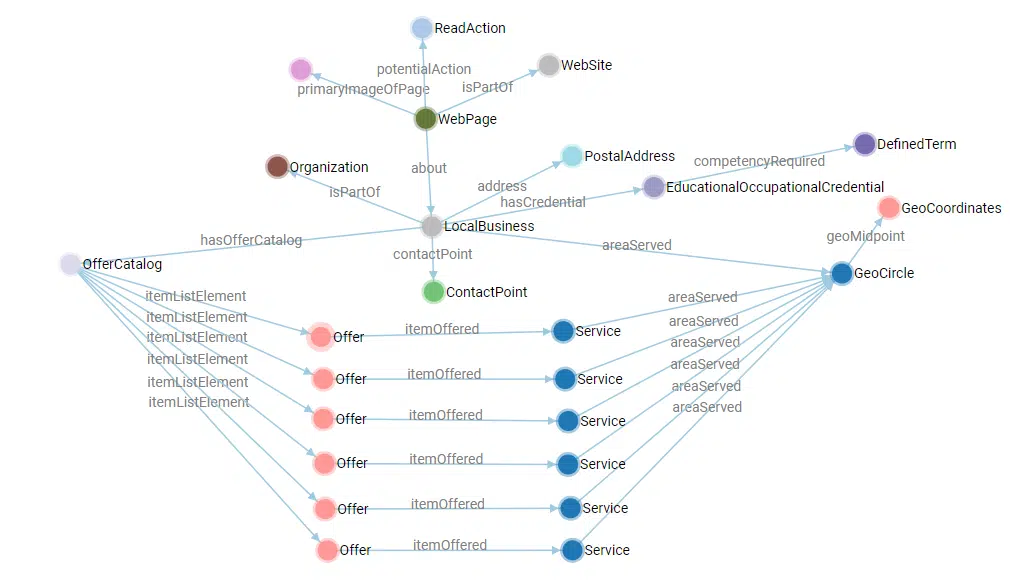

















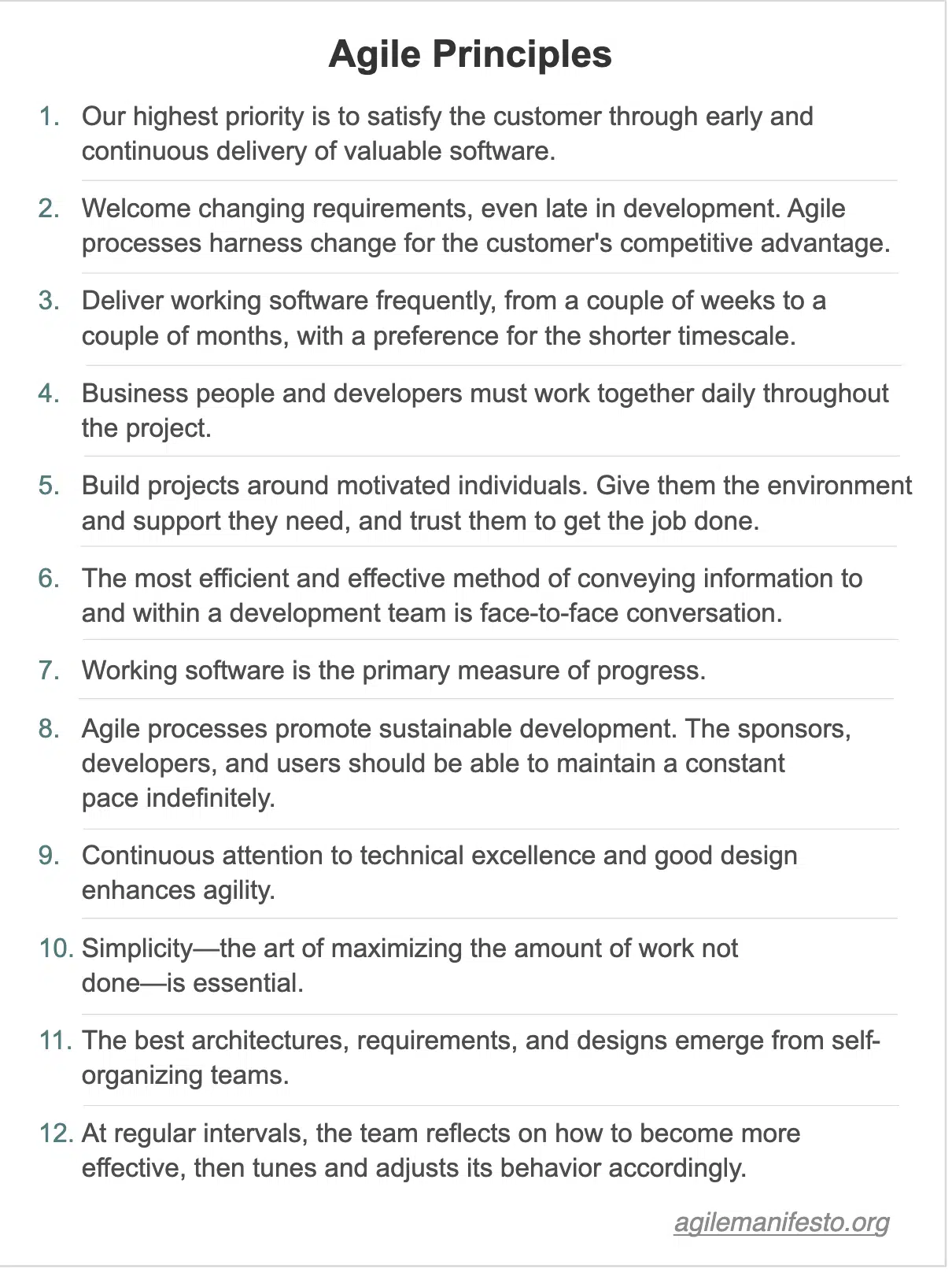














































































































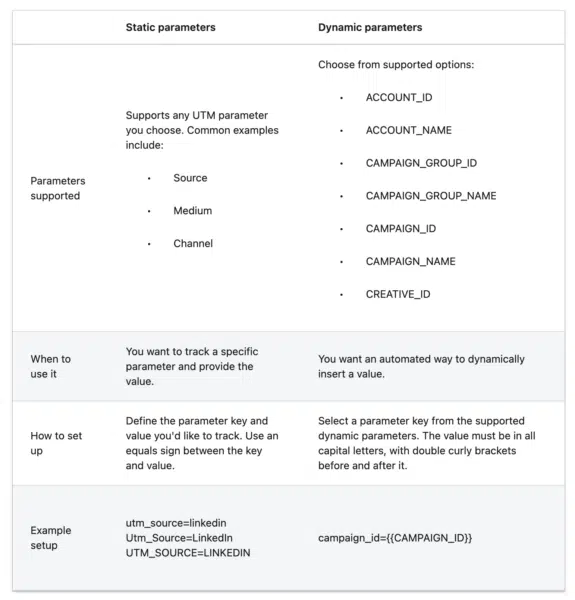


















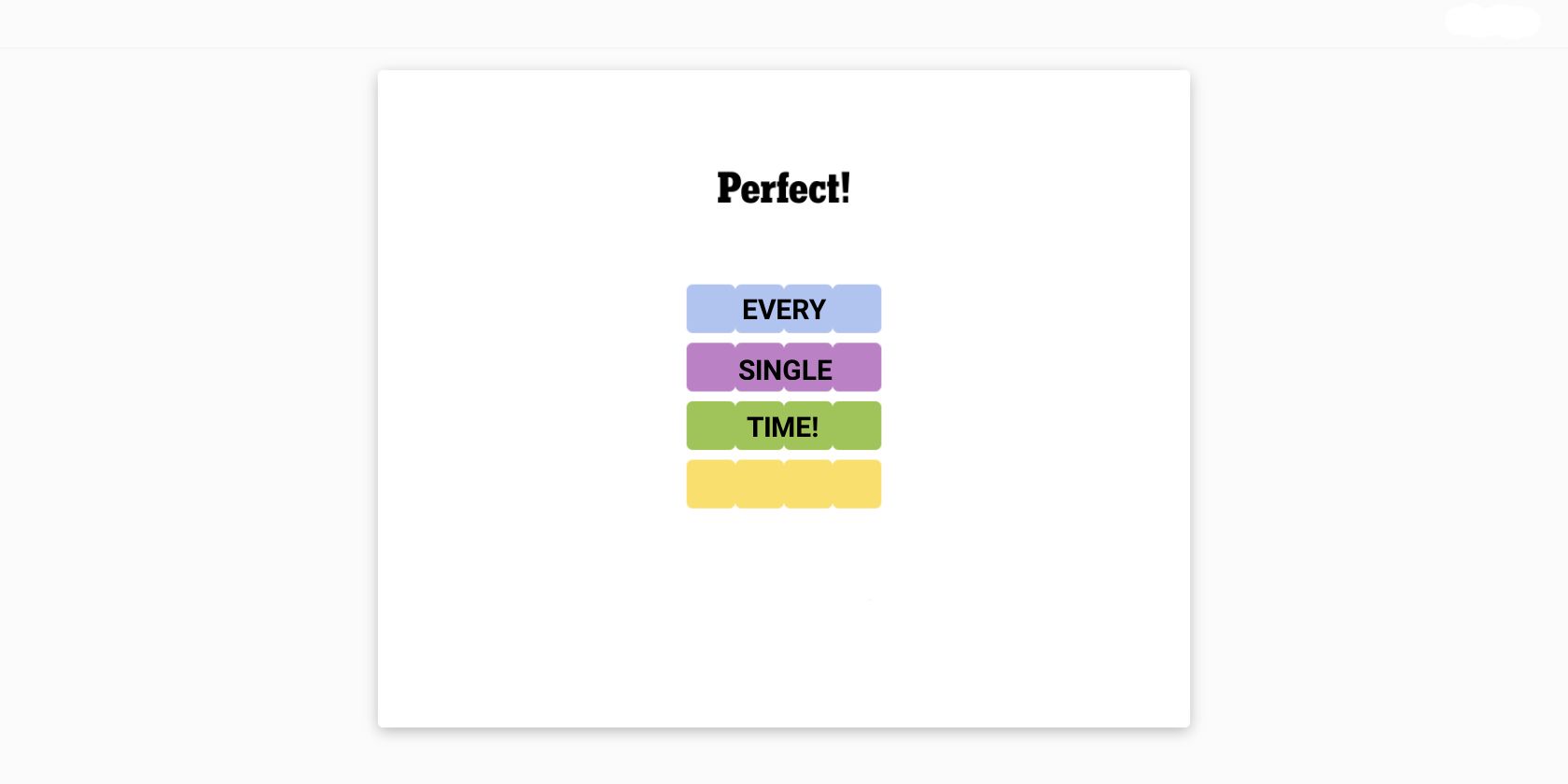

-Hybrids-Gear.jpg)