Recortes de Trump a Medicaid apuntaban a “adultos sanos”, pero hospitales advierten que niños sufrirán las consecuencias

Los republicanos insisten en que los recortes del presidente Donald Trump a Medicaid buscaban reducir el fraude y poner a trabajar a más adultos beneficiarios del programa. Pero los efectos secundarios pueden incluir menos atención médica para niños enfermos.

Algunos hospitales infantiles podrían perder miles de millones de dólares en ingresos una vez que se aplique por completo la amplia ley fiscal y de gasto de Trump, conocida por los republicanos como la One Big Beautiful Bill, según la Asociación de Hospitales Infantiles.

Los niños representan casi la mitad de los inscritos en Medicaid —el programa estatal y federal de atención médica para personas de bajos ingresos y con discapacidades— y en el Programa de Seguro Médico para Niños (CHIP).

La ley reducirá el gasto federal en Medicaid en aproximadamente $900.000 millones  durante una década.

Ese recorte “no se consigue sin afectar directamente la cobertura y atención para los niños de Arizona, especialmente los más vulnerables”, advirtió Robert Meyer, director ejecutivo de Phoenix Children’s, un sistema hospitalario pediátrico. Alrededor de la mitad de los ingresos del sistema provienen de Medicaid.

La ley de Trump encaja con su agenda nacional, que incluye una dura aplicación de las leyes de inmigración y la extensión de recortes de impuestos que en su mayoría benefician a los estadounidenses más ricos. Se espera que los recortes a Medicaid compensen parcialmente el costo de estas prioridades presidenciales, que aumentarán en más de $3 billones el déficit nacional, según la Oficina de Presupuesto del Congreso (CBO, en inglés). Esta oficina estima que unos 7,5 millones de personas perderán la cobertura de Medicaid para 2034 como resultado de la ley.

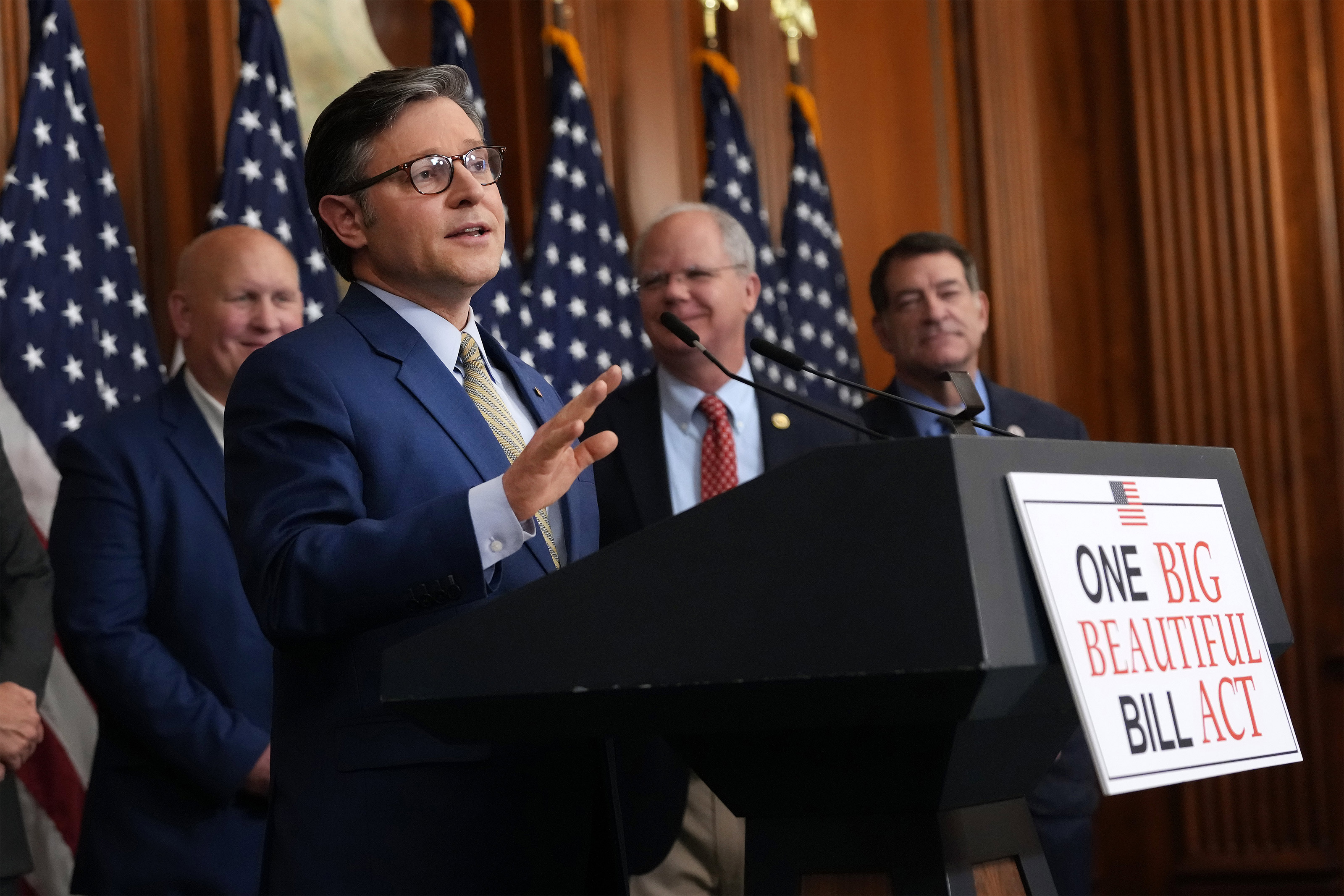
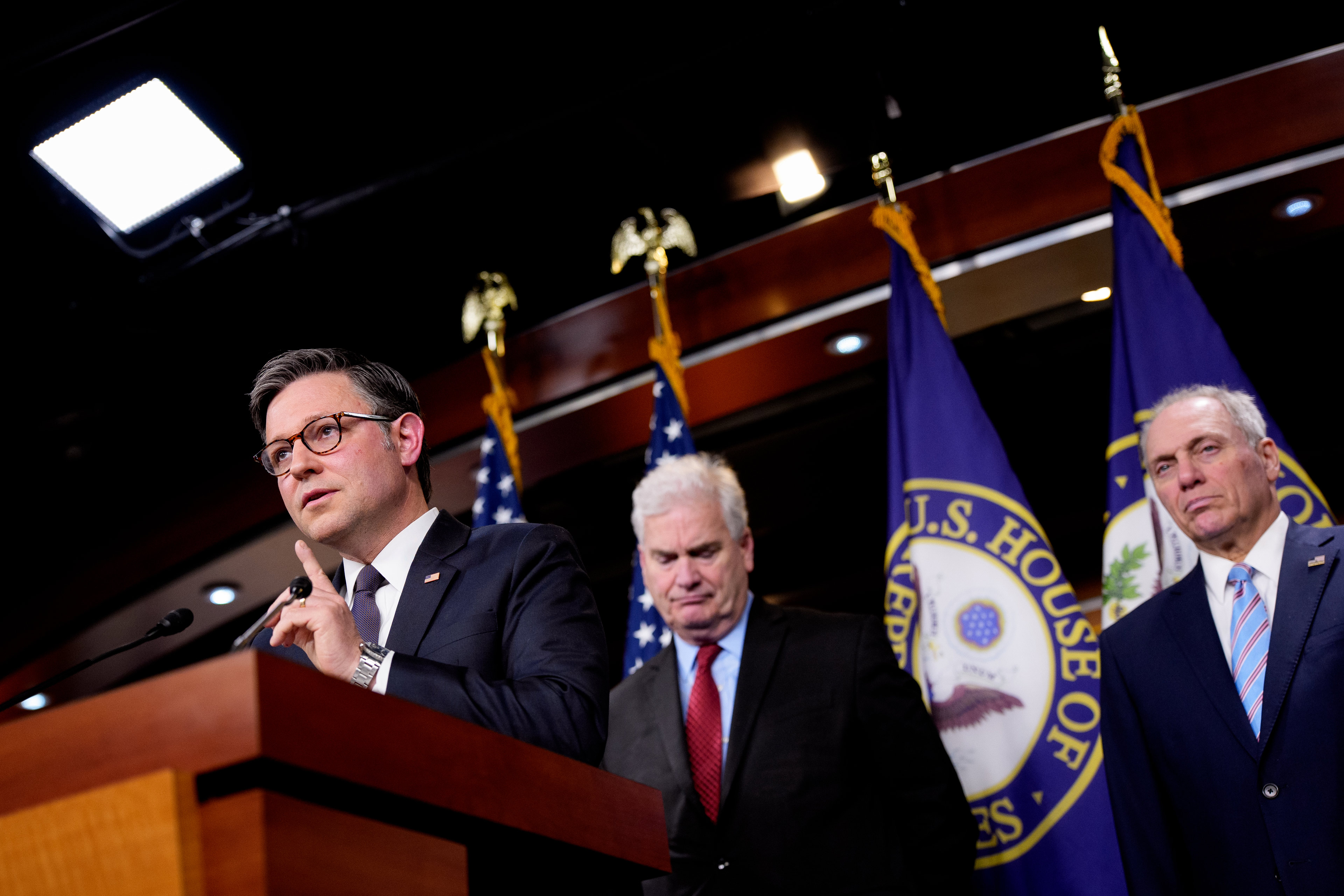
Durante los debates sobre la medida, los republicanos afirmaron que los recortes a Medicaid afectarían únicamente a los adultos sin discapacidad inscritos en el programa y que no trabajan, así como a inmigrantes sin estatus legal en el país. “Nuestra legislación protege Medicaid, lo fortalece para las personas que realmente lo necesitan y lo merecen”, dijo Mike Johnson, presidente de la Cámara de Representantes, en el programa “Meet the Press” de NBC News, el 1 de junio. “Y vamos a eliminar el fraude, el despilfarro y el abuso”.

Pero Meyer advirtió que, a menos que se reviertan algunos de los recortes, Phoenix Children’s perdería cerca de $172 millones al año en pagos complementarios que refuerzan los ingresos regulares del sistema provenientes de Medicaid, por la atención a niños de bajos recursos cubiertos por el programa. En general, Medicaid paga tarifas más bajas que los seguros privados o Medicare, el programa federal para personas mayores de 65 años.

Estos pagos, conocidos como pagos dirigidos por el estado (“state-directed payments”), se financian en gran parte con impuestos federales a través de complejos arreglos fiscales adoptados por casi todos los estados. Según Meyer, esos pagos han permitido al sistema de Phoenix abrir más clínicas para niños, aumentar el personal de salud mental y realizar evaluaciones para detectar maltrato infantil y otros traumas.

Una disposición de la ley de Trump impondrá un tope al monto que los estados pueden pagar a cualquier hospital, incluidos los hospitales infantiles. Pero ese límite, que entrará en vigor en 2028, se implementará gradualmente durante una década. Y los hospitales ya están haciendo lobby para evitarlo. Días después de votar a favor de la ley de Trump, el senador Josh Hawley, republicano de Missouri, presentó un proyecto de ley para eliminar las disposiciones que recortan los pagos de Medicaid a hospitales.

Si no se modifica la ley, al menos 29 estados tendrían que reducir sus pagos, según un análisis de KFF, una organización sin fines de lucro dedicada a brindar información sobre salud, que incluye a KFF Health News.

En promedio, estos fondos adicionales de Medicaid representan más de un tercio de los ingresos por Medicaid de los hospitales infantiles y alrededor del 14% de sus ingresos operativos totales, de acuerdo con la Asociación de Hospitales Infantiles.

Richard Park, director en la agencia de calificación crediticia Fitch Ratings, advirtió que los recortes al financiamiento de Medicaid representan un “obstáculo a largo plazo” para los hospitales pediátricos. Según directivos hospitalarios, si se eliminan esos pagos y los estados no compensan los fondos perdidos, podrían verse obligados a reducir personal y servicios.

“Los servicios que requieren hospitalizaciones más largas o que generan menos ingresos estarán, sin duda, en la mira”, dijo Park.

Los hospitales infantiles son especialmente vulnerables a los cambios en Medicaid porque dependen del programa para aproximadamente la mitad de sus ingresos, un porcentaje mucho mayor que los hospitales generales.

Aun así, la mayoría de los hospitales infantiles mantienen una buena situación financiera, porque tienen poca competencia —Es raro que haya más de uno o dos en cada área metropolitana— y reciben un fuerte respaldo filantrópico. Además, los recortes no afectarán a todos los hospitales infantiles del país.

En 2023, Phoenix Children’s tuvo un superávit de $163 millones sobre ingresos totales cercanos a los $1.500 millones, según su declaración de impuestos ante el IRS.

Según la nueva ley, los pagos complementarios en el Distrito de Columbia y en los 40 estados que expandieron Medicaid bajo la Ley de Cuidado de Salud a Bajo Precio (ACA) se limitarán a las tarifas de pago de Medicare. Los 10 estados que no expandieron Medicaid podrán pagar hasta el 110% de las tarifas de Medicare.

La administración Biden había permitido a los estados pagar hasta el promedio de las tarifas de los seguros privados, lo cual equivale a unas 2,5 veces la tarifa de Medicare, según KFF.

Las tarifas tradicionalmente bajas de Medicaid para proveedores de salud pueden hacer que médicos, dentistas y otros especialistas se muestren reacios a atender a pacientes del programa.

Brian Blase, presidente del conservador Paragon Health Institute y uno de los arquitectos clave de los cambios a Medicaid incluidos en la nueva ley, dijo que es justificable recortar los pagos dirigidos por el estado, ya que los estados no deberían pagar más por la atención a pacientes de Medicaid que lo que se paga por Medicare. A diferencia de los pagos regulares de Medicaid por servicios específicos, los hospitales no siempre tienen que rendir cuentas sobre cómo usan esos fondos extra, señaló.

Blase afirmó que los pagos dirigidos a hospitales infantiles y otras instituciones constituyen una forma de “subsidio corporativo”, que en muchos casos ayuda a que instituciones sólidas financieramente se enriquezcan aún más.

Agregó que los estados tienen pocos incentivos para reducir esos pagos, ya que la mayoría del dinero proviene de los contribuyentes federales.

En Norfolk, Virginia, el hospital infantil Children’s Hospital of The King’s Daughters depende de más de $11 millones anuales, en pagos dirigidos por el estado, para compensar lo que considera una brecha entre las bajas tarifas de Medicaid y el costo de ofrecer atención médica avanzada.

Los recortes a Medicaid incluidos en la ley de Trump “tendrán consecuencias graves y de gran alcance sobre nuestros servicios, programas y pacientes”, dijo la vocera Alice Warchol a KFF Health News. “La financiación complementaria de Medicaid nos ayuda a pagar a los médicos especializados en pediatría médica, quirúrgica y psiquiátrica que se necesitan para atender a cada niño que requiere nuestros servicios”.

En el año fiscal 2023, King’s Daughters tuvo un superávit de $24 millones sobre ingresos de $646 millones, según su declaración de impuestos federal.

Warchol explicó que el hospital ha usado los fondos adicionales de Medicaid para ampliar los servicios de atención a niños maltratados o abandonados, y para fortalecer los servicios de salud mental.

La forma en que los estados contabilizan estos pagos adicionales varía. Por ejemplo, Jennifer Strohecker, directora de Medicaid en Utah, dijo que su estado no hace seguimiento sobre cómo se gasta ese dinero.

En otros estados, como Texas, el dinero se utiliza como incentivo para que los hospitales mejoren la calidad de la atención. Allí se evalúa el desempeño de las instalaciones cada año y los resultados se publican en informes públicos.

Matthew Cook, presidente y CEO de la Asociación de Hospitales Infantiles, señaló que incluso con los fondos adicionales, Medicaid no cubre el costo total del tratamiento de sus pacientes.

Si bien algunos hospitales infantiles tienen balances sólidos gracias a la filantropía, no todos están en esa situación, advirtió Cook. Además, los recortes a Medicaid se suman a otras reducciones en fondos federales, como los destinados a la formación de médicos y la investigación.

En Phoenix Children’s, según Meyer, la pérdida de esos fondos adicionales reduciría la atención a los niños y el crecimiento de su fuerza laboral. El hospital espera que el Congreso retrase o revierta los recortes; pero no cuenta con ello, dijo.

“Vemos este período de gracia como una bendición para prepararnos y cerrar la brecha de financiación”, afirmó.

Related Topics

Contact Us

Submit a Story Tip

Watch: Why Is Having a Baby So Expensive in the US?

New moms all over social media are breaking down their incredibly expensive hospital bills after giving birth. So why is giving birth so pricey in the U.S.? And given the Trump administration’s anti-abortion, pro-natalist policies, is anything on the table to make having a child more affordable?

KFF Health News video producer Hannah Norman spoke with Stephanie Hastings, a physician and an assistant program director at the Cambridge Health Alliance, and Malini Nijagal, an OB-GYN and a clinical professor at the University of California-San Francisco.

KFF Health News is a national newsroom that produces in-depth journalism about health issues and is one of the core operating programs at KFF—an independent source of health policy research, polling, and journalism. Learn more about KFF.

USE OUR CONTENT

This story can be republished for free (details).

Under Trump, FDA Seeks To Abandon Expert Reviews of New Drugs

FDA leaders under President Donald Trump are moving to abandon a decades-old policy of asking outside experts to review drug applications, a move critics say would shield the agency’s decisions from public scrutiny.

The agency “would like to get away” from assembling panels of experts to examine and vote on individual drugs, because “I don’t think they’re needed,” said George Tidmarsh, head of the FDA’s Center for Drug Evaluation and Research. He relayed the message Tuesday at a meeting of health care product makers and Wednesday to an FDA advocacy group.

In addition to being redundant, Tidmarsh said, advisory meetings on specific drugs were “a tremendous amount of work for the company and for the FDA. We want to use that work and our time to focus on the big questions.”

The FDA’s advisory committees were created in their current form by a 1972 law aimed at expanding and regulating the government’s use of experts in technical decisions. They’re periodically summoned for advice, including to review evidence and vote on whether the FDA should approve drugs, vaccines, and medical devices, often when FDA officials face a difficult decision.

FDA actions have traditionally aligned with committee votes. A departure can provoke controversy and public debate, as was the case with the split 2021 decision on whether to approve the Biogen drug Aduhelm to treat Alzheimer’s disease.

The FDA approved the drug despite a “no” vote from its advisory committee, whose members felt the medicine did little to treat the disease. The conflict over Aduhelm laid bare the FDA’s struggle to reconcile pressure from industry and desperate patients with its rigorous evaluation of drug risks and benefits.

Tidmarsh said the committees would still be consulted on general issues like how to regulate different classes of drugs. But meetings on specific drugs, in which experts plow through piles of studies and hours of testimony from FDA and company officials, were mainly useful, he said, because they allowed the public to see how the FDA worked.

This month the FDA began publishing the “complete response letters” it sends to companies when it declines to approve their products. Releasing the letters, which previously required filing requests under the federal Freedom of Information Act, promotes a level of transparency akin to the advisory meetings’, Tidmarsh said.

Advisory committee meetings on individual drugs “are redundant when you have the complete review letters,” he told KFF Health News in a brief interview after appearing at the health care products conference.

Former FDA officials and academics who study the agency disagree. The meetings help FDA scientists make decisions and increase public understanding of drug regulation, and abandoning them doesn’t make sense, they said.

Tidmarsh’s reasoning is “hard to follow,” former FDA Commissioner Robert Califf told KFF Health News. “It’s extremely useful for people inside FDA to find out what other experts think before they make their final decisions. And it’s important to do that in a way that enables the public to understand the points of view.”

“Experts might ask questions of the company or FDA that neither of them thought of on their own,” said Holly Fernandez Lynch, an associate professor of bioethics and law at the University of Pennsylvania. “The public has few other opportunities to comment about FDA decisions.”

Spokespeople for FDA and the Health and Human Services Department did not respond to repeated requests for elaboration on Tidmarsh’s comments.

Califf at times disagreed with advisory committees as commissioner of the agency and once floated the idea that it might be better if they deliberated but did not vote on products. Still, while “maybe someone can come up with a better one, I always thought it was an amazing system,” he said.

The FDA is not obliged to ask the outside experts to review drugs and usually hasn’t. It calls on them mainly for important new types of medications or when a decision is especially tricky because of high demand for a product that may have limited value, Aduhelm being a classic example.

The advisory committees are “an important resource” for the FDA, said Sarah Ryan, a spokesperson for the Pharmaceutical Research and Manufacturers of America. “They can play an important part of the rigorous human drug review process we have in the U.S.”

The committees are often asked to help settle disagreements within the FDA about how to move forward on a regulatory decision, said Reshma Ramachandran, a health services researcher and clinician at the Yale School of Medicine.

She and other researchers and former FDA officials praised FDA Commissioner Marty Makary’s decision to publish the complete response letters.

But the letters don’t obviate the need for committee meetings, said Peter Lurie, a former associate FDA commissioner who heads the Center for Science in the Public Interest.

“A disclosed complete response letter tells the public that a company’s application was rejected and why,” Lurie said. “An advisory committee meeting says to outside experts and the public, ‘Here’s what we’re thinking of doing and we’d love your input before we decide.’ Plainly, those are not equivalent.”

The changes Tidmarsh described are already playing out on the ground. The FDA has held only seven advisory committee meetings since Trump reentered the White House, compared with 22 over the same time frame last year. Officials say they will now release complete response letters as they are sent, and published a batch of 89 earlier in September.

Makary has to some extent replaced the advisory committees, whose members have traditionally been vetted for expertise and biases and which are required to deliberate in public, with panels of handpicked scientists who support his views on subjects such as hormone replacement therapy and antidepressants.

Diana Zuckerman, a critic of the drug industry, attended the July hormone replacement therapy panel that considered the FDA’s black-box warning listing dangers of the treatment. Makary had wanted the warning removed and packed the panel with like-minded experts.

The event was hastily called with no opportunity for the public to review discussion materials or comment on them, she said.

“All that was transparent was that they didn’t want to hear from anyone who disagreed with them,” said Zuckerman, who leads the National Center for Health Research.

Before becoming commissioner, Makary pushed for more advisory committee meetings. In early 2022, he blasted the FDA’s decision to approve covid boosters for children ages 12 to 15 without consulting its Vaccine and Related Biological Products Advisory Committee. Makary posted on the social platform X at the time, “It is a slap in the face to science for @US_FDA to circumvent the standard convening of the expert advisory board.”

But Tidmarsh seems to disagree.

Instead of asking an advisory committee to vote in favor of or against a Duchenne muscular dystrophy drug, for example, he said the FDA would be better served by a committee studying the best way to evaluate such drugs, such as which outcomes, or end points, to measure. “Is this end point correct for Duchenne muscular dystrophy? That’s an important question that cuts across many different companies,” he told KFF Health News.

FDA official Vinay Prasad canceled a planned July advisory committee meeting to discuss a Duchenne drug made by the biotech company Capricor Therapeutics. The FDA later published its rejection, or “complete response letter,” to Capricor, which then published its own letter of response to the FDA. Prasad was later pushed out and rehired with fewer powers.

An advisory committee meeting could have worked through the drug’s risks and benefits in a calmer, public, less politicized atmosphere, Ramachandran said.

The FDA usually agrees with the votes of its several dozen advisory committees. A 2023 study found that the FDA agreed with 97% of “yes” votes and 67% of “no” votes.

That’s why Tidmarsh’s comments “come as a complete surprise,” said Genevieve Kanter, an associate professor of public policy at the University of Southern California, who wrote commentary accompanying the study. The FDA has postponed a lot of meetings this year, but “everyone thought it was temporary, with the transition and all the firings.”

“Another theory is that this decision is strategic,” she said, “in terms of consolidating power in the agencies so that you are no longer accountable to outside experts or the public.”

We’d like to speak with current and former personnel from the Department of Health and Human Services or its component agencies who believe the public should understand the impact of what’s happening within the federal health bureaucracy. Please message KFF Health News on Signal at (415) 519-8778 or get in touch here.

Related Topics

Contact Us

Submit a Story Tip

Luego de los recortes de Trump a la salud, estados enfrentan decisiones presupuestarias difíciles

Los pacientes comienzan a hacer fila antes del amanecer en Operación Salud Fronteriza, una clínica de salud gratuita que se realiza cada año durante cinco días en el Valle del Río Grande de Texas. Muchos residentes de esta región predominantemente latina, ubicada en la frontera con México, no tienen seguro médico, por lo que esta feria de salud ha sido durante más de 25 años un recurso clave de atención médica gratuita en el sur de Texas.

Hasta este año.

El plan de la administración Trump de retirar más de $550 millones en fondos federales para salud pública y pandemias en Texas hizo que se cancelara el evento, justo antes de su inicio programado para el 21 de julio.

“Hay personas que vienen todos los años y dependen de este evento”, dijo Dairen Sarmiento Rangel, directora del Departamento de Salud y Servicios Humanos del condado de Hidalgo. “Algunas personas incluso acampan afuera de Operación Salud Fronteriza para ser las primeras en recibir servicios. Este evento es muy importante para nuestra comunidad”.

Los gobiernos estatales y locales ya han tenido que hacer dolorosos recortes a sus programas, luego de importantes reducciones en la financiación federal para salud que ya han entrado en vigor. Ahora, se preparan para enfrentar los golpes financieros que están por venir —algunos no ocurrirán hasta finales del próximo año o incluso después— como resultado de la ley fiscal y de gasto aprobada por los republicanos en el Congreso en julio, conocida como la One Big Beautiful Bill, que pone en marcha gran parte de la agenda nacional del presidente Donald Trump.

Texas, por ejemplo, anticipa una reducción de hasta $39.000 millones en fondos federales para Medicaid durante los próximos 10 años debido a nuevas barreras para la inscripción, como revisiones de elegibilidad más frecuentes, según un análisis publicado en julio por KFF.

En conjunto, estas reducciones representan un cambio radical en la forma en que se financian y se ofrecen los programas estatales de salud. En la práctica, la administración está trasladando una parte importante de los costos de salud a los estados. Esto obligará a sus líderes a tomar decisiones difíciles, ya que muchos presupuestos estatales ya están presionados por la disminución en la recaudación de impuestos, la desaceleración del gasto federal por covid y la incertidumbre económica.

Más de una docena de estados han bajado sus proyecciones de ingresos para el año próximo, según un informe publicado en junio por Pew.

“Es casi inevitable que los estados recorten varios servicios de salud debido a la presión fiscal”, dijo Wesley Tharpe, asesor principal en política fiscal estatal del Centro para Prioridades Presupuestarias y Políticas (CBPP), una organización de tendencia progresista.

Algunos estados tratan de suavizar el impacto de forma proactiva.

En Hawaii, los legisladores se han propuesto ayudar a organizaciones sin fines de lucro que ya enfrentan disminución en fondos federales. Repartirán $50 millones en subvenciones a organizaciones de salud, servicios sociales y otras que hayan sufrido recortes. Para acceder a los fondos, deben demostrar que su financiación fue eliminada, reducida o afectada por los recortes.

“No es justo que organizaciones dedicadas a ayudar al pueblo de Hawaii se vean obligadas a reducir sus servicios por los recortes federales”, declaró el gobernador demócrata Josh Green en un comunicado.

Otros estados recortan proyectos para enfrentar la situación.

El gobernador de Delaware, Matt Meyer, demócrata, supo en marzo que la administración Trump retiraría $38 millones en fondos de salud pública al estado. Como consecuencia, un mes después, los líderes legislativos estatales frenaron un proyecto para renovar y ampliar el complejo del Capitolio estatal.

“Reconocimos que los recortes federales irresponsables a la red de protección social de miles de habitantes de Delaware nos obligaban a ahorrar recursos para proteger a los más vulnerables”, dijo David Sokola, presidente temporal del Senado estatal.

En Nuevo México, el estado con el mayor porcentaje de residentes inscritos en Medicaid, un grupo bipartidista de legisladores votó a favor de crear un fondo fiduciario para reforzar el financiamiento del programa. Según algunas estimaciones, aproximadamente el 10% de los más de 800.000 residentes que están cubiertos por Medicaid y el Programa de Seguro Médico para Niños (CHIP, en inglés) podrían perder su cobertura bajo esta nueva ley federal.

Algunos líderes estatales advierten a sus comunidades que lo peor está por venir.

En un evento realizado el 18 de agosto en un hospital del sur del Bronx, en la ciudad de Nueva York, la gobernadora demócrata Kathy Hochul subió al escenario junto a trabajadores de salud para criticar la nueva ley de Trump.

“Lo que los republicanos en Washington han hecho con la ‘Ley Más Horrible’ que he visto es, literalmente, perjudicar a los neoyorquinos”, dijo. El sistema de salud del estado se prepara para enfrentar recortes cercanos a los $13.000 millones al año.

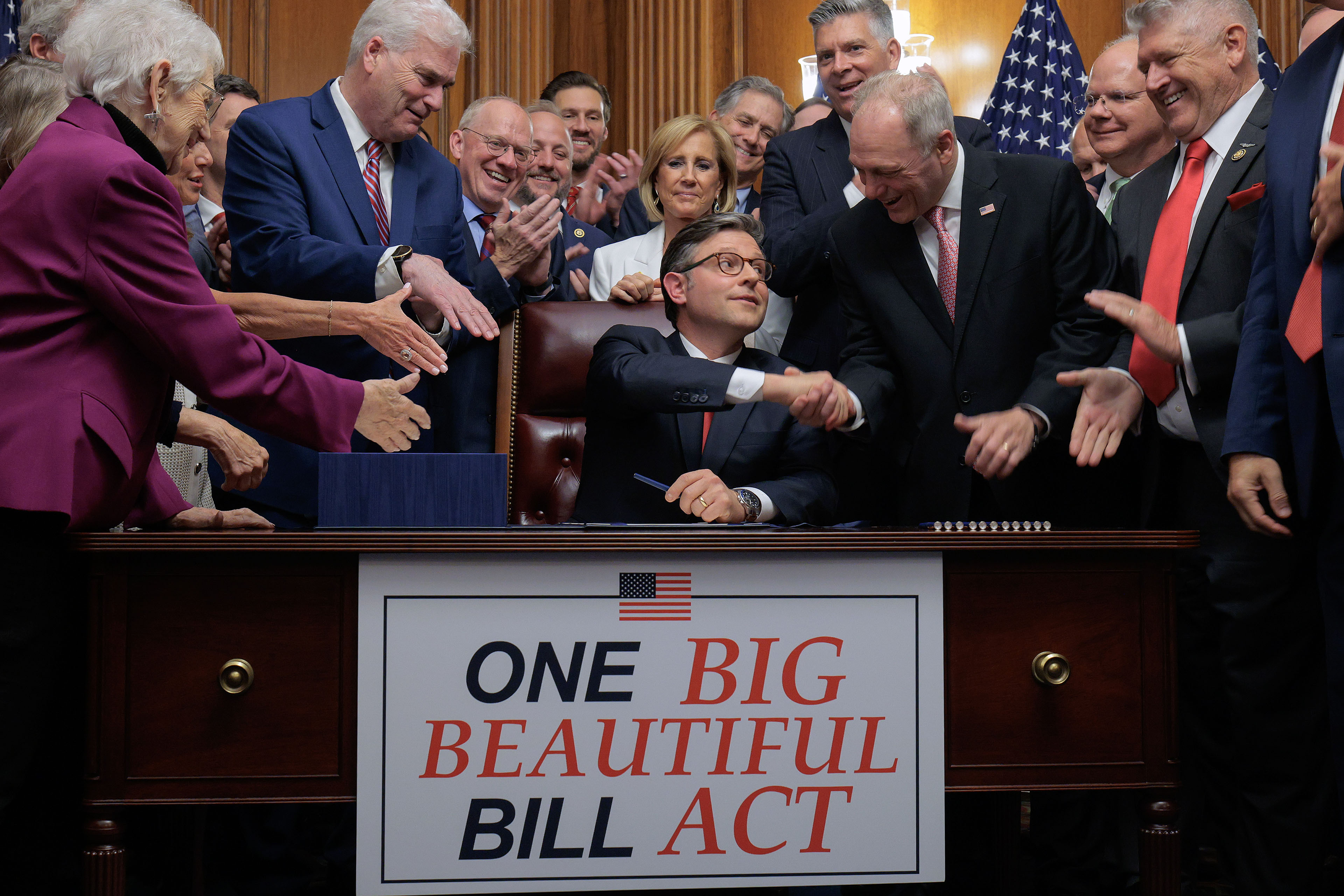
El presidente Donald Trump firma la llamada One Big Beautiful Bill, rodeado de senadores y representantes republicanos, el 4 de julio.(Samuel Corum/Getty Images)

En California, los legisladores analizaron el impacto de los recortes en una audiencia del comité de la Asamblea General el 20 de agosto, donde algunos legisladores demócratas señalaron que programas estatales como los de salud reproductiva estaban en peligro.

“Nos hemos preparado para esta realidad: la llamada ‘Big Beautiful Bill’ del presidente Trump ahora es ley”, dijo el legislador demócrata Gregg Hart durante la audiencia, calificándola como “un ataque directo a los programas fundamentales de California y a nuestros valores”.

“Lamentablemente, la realidad es que el estado no tiene la capacidad para compensar todos estos recortes federales draconianos con el presupuesto actual”, agregó. “No podemos simplemente firmar un cheque y hacer que esto desaparezca”.

La radical ley presupuestaria, que fue aprobada sin apoyo demócrata, reducirá el gasto federal en Medicaid en aproximadamen $1.000 millones durante la próxima década, según estimaciones de la Oficina de Presupuesto del Congreso (CBO). Las reducciones en el gasto vienen en gran medida de la imposición de un requisito laboral para las personas que obtuvieron Medicaid con la expansión promovida por la Ley de Cuidado de Salud a Bajo Precio (ACA), además de otras nuevas barreras para acceder a la cobertura.

Según la CBO, más de 7,5 millones de personas perderán la cobertura de Medicaid y quedarán sin seguro, mientras se extienden recortes fiscales para personas ricas que, según los demócratas, no los necesitan.

Por su parte, los republicanos y el presidente Trump afirman que el paquete fiscal y los recortes en los programas son necesarios para evitar el fraude y el despilfarro, y para garantizar la sostenibilidad de Medicaid, un programa federal-estatal que brinda cobertura a personas con discapacidades y de bajos ingresos.

“La One Big Beautiful Bill elimina a los inmigrantes ilegales, aplica requisitos laborales y protege a Medicaid para los verdaderamente vulnerables”, anunció la Casa Blanca en un comunicado del 29 de junio.

Los recortes a Medicaid no comenzarán hasta después de las elecciones legislativas de mitad de mandato en noviembre de 2026, pero ya se han aplicado otros recortes.

La administración Trump ha intentado recuperar $11.000 millones en fondos federales de salud pública destinados a los estados durante la pandemia, lo que provocó una batalla legal con una coalición de estados gobernados por demócratas. También recortó unos $1.000 millones en subvenciones federales para servicios de salud mental en las escuelas y detuvo los fondos de los Institutos Nacionales de Salud (NIH) que financiaban a más de 90 universidades públicas.

Un análisis de KFF Health News demuestra que las cancelaciones han afectado a todo el país, sin importar la afiliación política o la ubicación geográfica. De las organizaciones que sufrieron recortes en el primer mes, aproximadamente el 40% se encuentran en estados que Trump ganó en noviembre.

La secretaria de prensa del Departamento de Salud y Servicios Humanos (HHS), Emily Hilliard, dijo que la agencia prioriza las inversiones que respalden el mandato de Trump de enfrentar las enfermedades crónicas. Defendió algunos de los recortes y afirmó, erróneamente, que la nueva ley no reduce Medicaid.

“La pandemia de covid-19 ya terminó, y el HHS no seguirá desperdiciando miles de millones de dólares de los contribuyentes en una crisis que los estadounidenses superaron hace años”, dijo.

Líderes estatales señalan que los fondos federales por la pandemia, que la administración busca recuperar, se habían destinado a otras medidas de salud pública, como la vigilancia de enfermedades emergentes, la respuesta ante brotes y la contratación de personal. En mayo, fiscales estatales ganaron una orden de restricción temporal contra la administración.

“Lo que estamos viendo ahora es que los estados anticipan grandes recortes a Medicaid, pero también enfrentan una serie de recortes federales más pequeños, pero significativos, en programas de salud pública”, dijo Larry Levitt, vicepresidente ejecutivo de políticas de salud en KFF. (KFF Health News es uno de los programas de KFF)

Parte del desafío para los estados es simplemente entender los cambios.

“Creo que es justo decir que hay preocupación, confusión e incertidumbre”, afirmó Kathryn Costanza, experta en Medicaid en la Conferencia Nacional de Legislaturas Estatales.

Los estados intentan entenderlo todo, creando grupos asesores para seguir los cambios federales, presentando demandas para intentar bloquear los recortes y reasignando fondos.

En Colorado, los legisladores aprobaron una ley que permite que fondos estatales de Medicaid se usen para servicios de salud —excluyendo abortos— en clínicas de Planned Parenthood of America, después de que la nueva ley de Trump prohibiera la financiación federal para este tipo de atención. Aún está por verse si esa prohibición se mantiene en los tribunales.

La legislatura de Louisiana asignó $7,5 millones a universidades estatales para compensar los recortes en financiación federal para la investigación, gran parte de ella relacionada con temas de salud.

Y en Dakota del Sur, el banco de alimentos más grande del estado pidió a los legisladores que destinen $3 millones para compensar recortes en fondos del Departamento de Agricultura de Estados Unidos.

Los estados deben equilibrar sus presupuestos cada año, por lo que los recortes ponen en riesgo muchos servicios si los legisladores no están dispuestos a aumentar impuestos. El trabajo comenzará en serio en enero, cuando muchos estados inicien sus nuevas sesiones legislativas.

Y es probable que las decisiones difíciles continúen. Los republicanos en la Cámara de Representantes del Congreso consideran nuevas leyes que podrían traer más recortes, como la reducción al generoso financiamiento federal que actualmente reciben 20 millones de adultos inscritos en Medicaid gracias a la expansión de ACA.

Como resultado, algunos estados revertirán sus expansiones de Medicaid y recortarán aún más programas de salud.

Related Topics

Contact Us

Submit a Story Tip

Trump’s Medicaid Cuts Were Aimed at ‘Able-Bodied Adults.’ Hospitals Say Kids Will Be Hurt.

Republicans insist that President Donald Trump’s cuts to Medicaid were aimed at reducing fraud and getting more of its adult beneficiaries into jobs. But the side effects may include less care for sick kids.

Some children’s hospitals collectively stand to lose billions of dollars in revenue once Trump’s wide-ranging tax and spending law, which Republicans called the “One Big Beautiful Bill,” is fully enacted, according to the Children’s Hospital Association. Kids account for nearly half of enrollees in Medicaid, the state and federally financed health program for low-income and disabled people, and its related Children’s Health Insurance Program.

The law will cut federal Medicaid spending by about $900 billion over a decade.

The reduction “cannot be achieved without directly affecting coverage and care for Arizona’s kids, especially the most vulnerable among them,” said Robert Meyer, chief executive of Phoenix Children’s, a pediatric hospital system. About half of the system’s revenue comes from Medicaid.

Trump’s law locks into place much of his domestic agenda, including a massive expansion of immigration enforcement and an extension of tax cuts that largely benefit the wealthiest Americans. The cuts to Medicaid are expected to partially offset the cost of the president’s priorities, which will add more than $3 trillion to the nation’s deficit, according to the Congressional Budget Office. About 7.5 million Americans will lose Medicaid coverage by 2034 as a result, the CBO estimates.

Throughout debates over the measure, Republicans insisted the Medicaid cuts would affect only nondisabled adults enrolled in the program who don’t work and immigrants living in the U.S. without legal status. “Our legislation preserves Medicaid, strengthens Medicaid for the people who actually need it and deserve it,” House Speaker Mike Johnson said June 1 on NBC News’ “Meet the Press.” “And we’re going to get rid of the fraud, waste, and abuse.”

Meyer, though, warned that unless some cuts are reversed, Phoenix Children’s would lose about $172 million a year in payments that supplement the health system’s regular Medicaid revenue, for treating low-income children covered by the program. Medicaid typically pays lower rates for care than commercial insurance or Medicare, the federal program for people age 65 and older.

The supplemental payments, known as state-directed payments, are financed largely by federal taxpayers through complicated tax arrangements adopted by nearly all states. The payments have helped the Phoenix system open additional pediatric clinics, increase mental health staffing, and screen children for abuse and other trauma, Meyer said.

A provision of Trump’s law would cap the amount of directed payments states could make to any hospital, including those for children. But the cap, which doesn’t take effect until 2028, will be phased in over a decade — and hospitals are already lobbying to ensure that never happens. Days after voting for Trump’s law, Sen. Josh Hawley (R-Mo.) introduced legislation that would eliminate provisions of the measure cutting Medicaid payments to hospitals.

If the law isn’t changed, at least 29 states would need to reduce their payments, according to an analysis by KFF, a health information nonprofit that includes KFF Health News.

The extra Medicaid funds, on average, make up more than a third of children’s hospitals’ total Medicaid revenue and about 14% of their operating revenue overall, according to the Children’s Hospital Association.

Richard Park, a director at Fitch Ratings, a credit rating agency, said the Medicaid funding cuts present a “long-term headwind” for children’s hospitals. Hospital officials say that if the payments are cut and states don’t replace the funding, they could be forced to cut staff and services.

“Services the hospitals provide that require longer admissions or bring in less revenue are going to be in the crosshairs, for sure,” Park said.

Children’s hospitals are especially vulnerable to changes in Medicaid because they count on the program for about half their revenue — a much higher proportion than general acute-care hospitals do.

Most children’s hospitals are in good financial condition, however, because they face little competition — there are seldom more than one or two in a metropolitan area — and strong philanthropic support. And the funding cuts won’t affect all the nation’s approximately 200 children’s hospitals.

In 2023, Phoenix Children’s had a $163 million surplus on nearly $1.5 billion in revenue, according to its 2023 IRS tax return.

Under the law, the extra payments in the District of Columbia and 40 states that expanded Medicaid under the Affordable Care Act would be capped at Medicare payment rates. The 10 states that didn’t expand would be able to pay up to 110% of Medicare rates.

The Biden administration had allowed states to pay up to their average commercial insurance rates. That’s generally about 2.5 times the Medicare rate, according to KFF.

Medicaid’s traditionally low fees to health providers can make doctors, dentists, and other specialists reluctant to treat patients in the program.

Brian Blase, president of the conservative Paragon Health Institute and a key architect of Medicaid changes in the new law, said cutting state-directed payments is justified because states should not pay hospitals more to treat Medicaid patients than they do for Medicare patients. Unlike regular Medicaid payments for specific health services, hospitals are not always held accountable for how they spend the extra money, he said.

He said state-directed payments to children’s hospitals and other facilities amount to “corporate welfare,” often helping financially strong institutions get richer.

Blase said states have little incentive to pay hospitals less because the money from state-directed payments comes mostly from federal taxpayers.

In Norfolk, Virginia, Children’s Hospital of The King’s Daughters depends on more than $11 million annually in state-directed payments to make up for what it says is a shortfall between Medicaid’s low reimbursement rates and the cost of advanced care.

The cuts to Medicaid in Trump’s law “will have serious and far-reaching consequences to our services, programs, and patients,” spokesperson Alice Warchol told KFF Health News. “Medicaid supplemental funding helps us pay for the highly specialized pediatric medical, surgical, and psychiatric physicians that are needed to care for every child who needs our services.”

In fiscal 2023, King’s Daughters had a $24 million surplus on $646 million in revenue, according to its federal tax return.

King’s Daughters has used the extra Medicaid money to expand treatment for abused and neglected children and mental health services, Warchol said.

How states account for the extra payments made to hospitals varies. For instance, Utah Medicaid Director Jennifer Strohecker said her state does not track how the money gets spent.

Other states, such as Texas, use the money as an incentive for hospitals to improve their performance in treating patients. They track how well the facilities do each year and publish the findings in public reports.

Matthew Cook, president and chief executive of the Children’s Hospital Association, said that even with the extra funding, Medicaid doesn’t cover the full cost of treatment for its patients.

While some children’s hospitals have strong balance sheets, boosted by philanthropy, that is not the case for all, Cook said. And the Medicaid funding cuts come on top of reductions in other federal payments, including for training doctors and research, he said.

At Phoenix Children’s, Meyer said, the loss of extra funding would curtail expansions of care for children and growth of the hospital’s workforce. The hospital hopes Congress delays or reverses the cuts — but it’s not counting on it, he said.

“We see this grace period as a godsend to get ourselves ready to close the funding gap,” he said.

Related Topics

Contact Us

Submit a Story Tip

In the Fallout From Trump’s Health Funding Cuts, States Face Tough Budget Decisions
In 2024, the Texas State Guard participated in Operation Border Health, a five-day free health clinic in Texas. The annual event was canceled this year after the Trump administration announced a plan to strip more than $550 million in federal public health and pandemic emergency funds from Texas. (Texas State Guard/CC BY-ND 2.0)

Patients begin lining up before dawn at Operation Border Health, an annual five-day health clinic in Texas’ Rio Grande Valley. Many residents in this predominantly Latino and Hispanic region spanning the Mexican border lack insurance, making the health fair a major source of free medical care in South Texas for more than 25 years.

Until this year. The Trump administration’s plan to strip more than $550 million in federal public health and pandemic funds from Texas helped prompt cancellation of the event just before its scheduled July 21 start.

“Some people come every year and rely on it,” said Hidalgo County Health and Human Services Director Dairen Sarmiento Rangel. “Some people even camp out outside of Border Health so they can be the first in line to receive services. This event is very important to our community.”

States and local governments have made painful program cuts in the wake of major reductions in federal health funding that have already taken effect. Now, they’re sizing up the financial hits to come — some not until late next year or beyond — from the “One Big Beautiful Bill Act,” the tax and spending law congressional Republicans passed in July that enacts much of President Donald Trump’s domestic agenda.

Texas, for instance, expects to see its federal Medicaid funds reduced by as much as $39 billion over 10 years due to new barriers for enrollment, such as more frequent eligibility checks, according to a July analysis by KFF.

Taken together, the reductions amount to a seismic shift in how state health programs are provided and paid for. The administration is, in effect, pushing a significant amount of health costs to states. That will force their leaders to make difficult choices, as many state budgets are already strained by declining tax revenues, a slowdown in federal pandemic spending, and economic uncertainty.

Revenue forecasters in more than a dozen states have lowered expectations for the coming year, according to a June report by Pew.

“It’s almost inevitable that states will enact a number of cuts to health services because of the fiscal pressure,” said Wesley Tharpe, senior adviser for state tax policy at the left-leaning Center on Budget and Policy Priorities.

Some are proactively trying to stanch the impact.

Hawaii lawmakers are looking to aid nonprofits that are already contending with federal funding cuts. They’re doling out $50 million in grants to health, social service, and other nonprofits hit by federal funding cuts. To get the money, nonprofits must show a termination or drop in funding, or that they have otherwise been harmed by the cuts.

“It is not fair that organizations dedicated to supporting the people of Hawaii are being forced to scale back due to federal funding cuts,” Democratic Gov. Josh Green said in a statement.

Other states are scaling back projects to contend with cuts. Delaware Gov. Matt Meyer, a Democrat, received notice in March that the Trump administration was cutting $38 million in public health funding from the state. The next month, state legislative leaders halted a planned project to upgrade and expand the Capitol complex as a result.

“We recognized that the reckless federal cuts to the social safety nets of thousands of Delawareans called for us to hold back resources to protect our most vulnerable,” said David Sokola, president pro tempore of the Delaware Senate.

In New Mexico, the state with the highest percentage of residents enrolled in Medicaid, a bipartisan group of lawmakers voted to create a trust fund to boost funding for the program. About 10% of the more than 800,000 state residents covered by Medicaid and the related Children’s Health Insurance Program could lose their health coverage under the federal spending law, based on some estimates.

Some state leaders are warning constituents that the worst may be yet to come.

At an Aug. 18 event at a hospital in the South Bronx section of New York City, New York Gov. Kathy Hochul, a Democrat, stood on stage among health care workers in white coats to skewer Trump’s new law.

“What Republicans in Washington have done through the ‘Big Ugliest Bill’ I’ve ever seen is literally screwing New Yorkers,” she said. The state’s health system is bracing for nearly $13 billion in annual cuts.

And in California, lawmakers weighed the impact of the coming cuts from the federal law at a general assembly committee hearing on Aug. 20, where some Democratic legislators said state efforts to protect reproductive health services and other programs were in jeopardy.

“We’ve been bracing for this reality: President Trump’s so-called ‘Big, Beautiful Bill’ is now law,” Democratic lawmaker Gregg Hart said at the hearing, calling it a “direct assault on California’s core programs and our values.”

“Sadly, the reality is, the state does not have the capacity to backfill all of these draconian federal funding cuts in the current budget,” Hart said. “We cannot simply write a check and make this go away.”

A photo of President Trump holding up his signed portion of the One Big Beautiful Bill Act. Surrounding him are Republican senators and representatives.
President Donald Trump is joined by Republican lawmakers as he signs his tax and spending bill into law on July 4.(Samuel Corum/Getty Images)

The sweeping budget law, which passed without any Democratic support, will reduce federal spending on Medicaid by about $1 trillion over the next decade, based on estimates from the Congressional Budget Office. The spending reductions largely come from the imposition of a work requirement on people who’ve obtained Medicaid under the Affordable Care Act’s expansion, as well as other new barriers to coverage.

The law will mean more than 7.5 million people will lose Medicaid coverage and become uninsured, according to the Congressional Budget Office, while extending tax cuts for wealthy people who, Democrats say, don’t need them. Republicans and Trump have said the spending package and its accompanying program cuts were necessary to prevent fraud and waste, and to sustain Medicaid, a state-federal program for people with disabilities and lower incomes.

“The One Big Beautiful Bill removes illegal aliens, enforces work requirements, and protects Medicaid for the truly vulnerable,” the White House said in a June 29 statement.

The Medicaid cuts won’t begin until after the midterm elections in November 2026, but other cuts have already hit.

The Trump administration has sought to claw back $11 billion in federal public health funds earmarked to states because of the pandemic, spurring a legal fight with a coalition of Democratic-led states. It also cut about $1 billion in federal grants for mental health services in schools, and halted grants from the National Institutes of Health that provided money to more than 90 public universities.

HHS press secretary Emily Hilliard said the agency is prioritizing investments that advance Trump’s mandate to confront chronic disease. She defended some of the cuts and said, erroneously, that the spending law doesn’t cut Medicaid.

“The covid-19 pandemic is over, and HHS will no longer waste billions of taxpayer dollars responding to a crisis that Americans moved on from years ago,” she said.

State leaders say the pandemic funding the administration wants returned was earmarked for other public health measures, such as tracking emerging diseases, outbreak responses, and staffing. State attorneys general in May won a temporary restraining order against the administration.

“What we’re seeing now is states anticipating big cuts in Medicaid coming, but they’re also dealing with a whole variety of federal cutbacks in public health programs that are smaller but still quite meaningful,” said Larry Levitt, executive vice president for health policy at KFF, a health information nonprofit that includes KFF Health News.

Part of the challenge for states is simply understanding the changes.

“I think it’s fair to say there is concern, confusion, and uncertainty,” said Kathryn Costanza, a Medicaid expert at the National Conference of State Legislatures.

States are struggling to sort it all out, forming advisory groups that are tracking federal changes, suing to try to block the cuts, and reallocating funding.

In Colorado, lawmakers passed a bill to let state Medicaid dollars pay for non-abortion care at Planned Parenthood of America clinics after Trump’s law banned federal funding for such care. Whether the ban holds up in court remains to be seen.

The Louisiana Legislature sent $7.5 million to state universities to make up for cuts to federal research funding, much of which goes to health-related research.

And in South Dakota, the state’s largest food bank has asked lawmakers to spend $3 million to make up for funding cuts to the U.S. Department of Agriculture.

States must balance their budgets every year, so cuts put many services at risk if state lawmakers are unwilling to raise taxes. The work will begin in earnest in January, when many states begin new legislative sessions.

And the tough choices are likely to continue. Congressional House Republicans are considering legislation that could bring more cuts, including by slashing the generous cost sharing the federal government provides for 20 million adults who enrolled in Medicaid under the ACA’s Medicaid expansion.

Some states will roll back their Medicaid expansions and cut more health programs as a result.

Related Topics

Contact Us

Submit a Story Tip

He Built Michigan’s Medicaid Work Requirement System. Now He’s Warning Other States.

It was March 2020, and Robert Gordon was about to kick some 80,000 people off health insurance.

As the Michigan state health director, he had spent the past year, and some $30 million in state tax dollars, trying to avoid that very thing.

Gordon was a Democrat, a veteran of the Obama administration, and he did not want people to lose the Medicaid coverage they had recently gained through the Affordable Care Act.

But Gordon and his boss, Democratic Gov. Gretchen Whitmer, had reluctantly inherited a law passed two years earlier, when Republicans led the state. And that law mandated that Michigan institute a work requirement for Medicaid on Jan. 1, 2020.

Gordon and his team determined that most enrollees were already meeting the law’s requirements, either because they were already working or had an exemption. Thousands more reported their status through the newly built phone and online systems.

But even so, estimates suggested 80,000 to 100,000 Michiganders were going to be booted off the rolls within the year.

“That’s the population of the city of Flint who were on track to lose their insurance,” said Gordon, who led the state health department until 2021. “We’re implementing this about as well as this thing can be implemented, and it is still going to be pretty catastrophic.”

The new tax-and-spending law signed by President Donald Trump in July mandates a vast expansion of Medicaid work requirements to most states.

These systems will lead to 5.3 million more people being uninsured in 2034, according to an estimate from the Congressional Budget Office.

The law applies to 40 states and Washington, D.C., because they expanded Medicaid in recent years to cover more working-age adults.

About 18 million people will be affected once the work mandate is fully implemented nationally, according to the CBO. Unless their state gets an exemption till 2028, by 2027, these enrollees will need to prove they’re working, volunteering, getting job training, or doing other qualifying activities at least 80 hours a month to keep their coverage.

Republicans say this is a commonsense way to weed out “freeloaders.” Democrats argue that’s just political cover for slashing a program that saved some 27,000 lives starting in 2010, when the Affordable Care Act was signed, through 2022.

The number of people who lose coverage, either temporarily or permanently, could vary widely by state, depending on how each state implements and maintains its reporting system.

Michigan’s experience illustrates how challenging it can be to stop large numbers of people from inadvertently losing coverage, even when leaders try their best to prevent that.

“We were very committed to implementing a law that we didn’t agree with, in a way that reduced the number of people who lost insurance just because the government screwed something up,” Gordon said.

A Year of High-Stakes Work

In 2013, then-Gov. Rick Snyder, a Republican, waged a fierce battle within his own party to expand Michigan’s Medicaid program.

To Snyder, it was an opportunity to simultaneously save money and expand access: By slashing the rate of uninsured Michiganders by almost half, the state could reduce the burden of uncompensated care on the health system and boost the economy by improving the physical health of the workforce.

But opponents saw it as an expansion of “Obamacare” that would shift massive new costs onto state and federal taxpayers. A work requirement became a point of compromise and a way for Snyder to mollify some of that opposition.

Former Michigan Gov. Rick Snyder signed a law in 2013 to expand Medicaid eligibility. In 2018, he added a provision mandating that those newly eligible adults meet a work requirement to maintain coverage.(Bill Pugliano/Getty Images)

From a coverage perspective, Michigan’s expansion of Medicaid was a success. Low-income adults signed up, ballooning new enrollment beyond what even supporters had initially estimated.

By 2019, there were nearly 700,000 new Medicaid recipients in Michigan, and the state was responsible for an increasing share of their health care costs. (Medicaid is paid for jointly by states and the federal government.)

Fiscal hawks were worried. “It’s now become the largest budget problem in Michigan,” said Jarrett Skorup of the Mackinac Center for Public Policy, a free-market think tank

Snyder signed the bill creating the 80-hour-a-month work requirement in 2018, but it wouldn’t go into effect until 2020, after he left office.

That left newly elected Democratic governor Whitmer’s administration holding the bag. She tapped Gordon, who’d held senior roles in the federal Office of Management and Budget and Department of Education during the Obama administration, to lead the sprawling state health department.

Gordon was terrified that Michigan would become another Arkansas, which was the first state to implement a work requirement, in 2018. The change led more than 18,000 Arkansas residents to lose their coverage.

People in Arkansas were disenrolled “because computers went down, because forms weren’t clear, because they just never heard about it,” Gordon said. “Maybe they got sicker, maybe they died because of this decision.”

If Michiganders lost coverage at the same rate as Arkansans, as many as 160,000 people would have lost their health insurance within a year, according to one estimate.

Trying To Make Medicaid Work Requirements … Work

In some ways, Michigan was better positioned than other states to implement a work requirement, Gordon said: The unemployment rate was the lowest it had been in two decades and the state was already pretty good at collecting and tracking employment and wage data.

“If the state can figure out on its own, without having to ask you if you’re working, that’s great, because then you don’t have to do anything,” Gordon said. “You’re just exempted.”

Michigan eventually changed its law to allow people more time to report their work activities and to automatically determine their compliance or exemption by cross-checking data from other assistance programs, like food benefits.

To see if recipients were students or had health-related exemptions, Gordon and his team also tried to capture data from community college enrollment and medical insurance claims.

Dozens of staffers reprogrammed the state’s outdated benefits enrollment portal, created full-time call centers, set up audit and appeals processes, hired compliance review teams, and trained hundreds of local organizers to provide tech and enrollment assistance.

Forms and letters alerting hundreds of thousands of enrollees to the new policy were redesigned to be attention-grabbing and easier to understand.

The sheer amount of effort and time required meant other public health efforts had to take a back seat, Gordon said. “Your first job is going to suffer, and that is a consequence of work requirements.”

In Michigan, Black infant mortality rates were some of the highest in the nation. Thousands of people were still dying from overdoses.

Yet at the state health department, “all of the oxygen in the room was dedicated — almost all, I should say — to the work requirement implementation,” said Renuka Tipirneni, an internal medicine physician at the University of Michigan who studies Michigan’s Medicaid expansion.

Even after all that work, Gordon and his team had no illusions the system they’d spent $30 million creating was flawless.

“There was a real sense that everyone was doing everything they could,” he said. But they still worried that “huge numbers of people were going to fall through the cracks. Because that’s just what happens with systems like this.”

A photo of Gretchen Whitmer at a news event.
Democratic Gov. Gretchen Whitmer (right), during an appearance at Care Free Medical, a safety net clinic in Lansing, Michigan, on Dec. 2, 2019. She encouraged uninsured Michiganders to enroll in coverage through the Affordable Care Act.(David Eggert/AP)

A “Waste” of $30 Million

By the time the work requirement went into effect on Jan. 1, 2020, the state had been able to determine that the vast majority of the nearly 700,000 Medicaid expansion recipients already met the work requirement or were exempt.

That left about 100,000 people whose status was unknown and who therefore still had to go through the reporting process. By March, around 80,000 of those had failed to report and were on track to lose coverage.

On the one hand, it was a lower rate of coverage loss than Arkansas had. But it was still “an enormous number of people” set to lose coverage, Gordon said.

Before that could happen, a federal judge issued a ruling on March 4, 2020, blocking Michigan’s policies from going forward. That same day, Gordon was scheduled to testify before a Republican-led subcommittee about how the rollout was going.

Instead, he found himself explaining to legislators that the state’s work requirement was essentially dead in the water, and that “we had, on the demand of the people holding the hearing, spent tens of millions of dollars for no purpose.”

Given how brief Michigan’s experiment with a Medicaid work requirement was — only about two months of the policy’s being in effect, with no one losing coverage in the end — the Mackinac Center’s Skorup doesn’t see a lot of takeaways about the real-life impacts of work requirements.

“If you have an administration that is not sold on these being necessary at all, then I think they’re more likely to drag their feet on implementing this, which is what I think they did,” Skorup said, referring to the Whitmer administration.

Skorup is concerned because Medicaid costs keep rising, with 2.6 million Michiganders (1 in 4 residents) now covered by the program or the related Children’s Health Insurance Program. Skorup believes Medicaid spending is “crowding out” teacher pay, pensions, and roads in the state budget.

Supporters of Medicaid expansion say the program’s growth has benefited Michigan, pointing to research that Medicaid expansion helped boost employment and school enrollment and was a net positive for the state financially.

Court Ruling Comes Days Before Covid Hits

Only days after the court ruling stopped the work requirement in Michigan, officials announced the state’s first cases of covid-19. The 80,000 Michiganders who might have lost Medicaid were spared, so their health coverage continued as the pandemic unfolded. Gordon continued as health director until 2021, when he resigned over “differences of opinion” with Whitmer about some pandemic restrictions.

These days, Gordon is experiencing a sense of déjà vu, with new predictions showing as many as 500,000 Michiganders could lose coverage within the first year of federally mandated work requirements, according to state estimates.

“We would have a more honest and more efficient policy if Republicans just kick people off Medicaid,” he said.

That would be “incredibly harmful,” he said. “But this thing they’re doing isn’t any less harmful. It’s just more wasteful administratively, and more confusing to everyone.”

This article is from a partnership that includes Michigan Public, NPR, and KFF Health News.

Related Topics

Contact Us

Submit a Story Tip

Trump Administration Investigates Medicaid Spending on Immigrants in Blue States

SACRAMENTO, Calif. — The Trump administration is taking its immigration crackdown to the health care safety net, launching Medicaid spending probes in at least six Democratic-led states that provide comprehensive health coverage to poor and disabled immigrants living in the U.S. without permanent legal status.

The Centers for Medicare & Medicaid Services is scouring payments covering health care for immigrants without legal status to ensure there isn’t any waste, fraud, or abuse, according to public records obtained by KFF Health News and The Associated Press. While acknowledging that states can bill the federal government for Medicaid emergency and pregnancy care for immigrants without legal status, federal officials have sent letters notifying state health agencies in California, Colorado, Illinois, Minnesota, Oregon, and Washington that they are reviewing federal and state payments for medical services such as prescription drugs and specialty care.

The federal agency told the states it is reviewing claims as part of its commitment to maintain Medicaid’s fiscal integrity. California is the biggest target after the state self-reported overcharging the federal government for health care services delivered to immigrants without legal status, determined to be at least $500 million, spurring the threat of a lawsuit.

“If CMS determines that California is using federal money to pay for or subsidize healthcare for individuals without a satisfactory immigration status for which federal funding is prohibited by law,” according to a letter dated March 18, “CMS will diligently pursue all available enforcement strategies, including, consistent with applicable law, reductions in federal financial participation and possible referrals to the Attorney General of the United States for possible lawsuit against California.”

The investigations come as the White House and a Republican-controlled Congress slashed taxpayer spending on immigrant health care through cuts in President Donald Trump’s spending-and-tax law passed this summer. The administration is also pushing people living in the U.S. without authorization off Medicaid rolls. Health policy experts say these moves could hamper care and leave safety net hospitals, clinics, and other providers financially vulnerable. Some Democratic-led states — California, Illinois, and Minnesota — have already had to end or slim down their Medicaid programs for immigrants due to ballooning costs. Colorado is also considering cuts due to cost overruns.

At the same time, 20 states are pushing back on Trump’s immigration crackdown by suing the administration for handing over Medicaid data on millions of enrollees to deportation officials. A federal judge temporarily halted the move. California’s attorney general, Rob Bonta, who led that challenge, says the Trump administration is launching a political attack on states that embrace immigrants in Medicaid programs.

“The whole idea that there’s waste, fraud, and abuse is contrived,” Bonta said. “It’s manufactured. It’s invented. It’s a catchall phrase that they use to justify their predetermined anti-immigrant agenda.”

Trump Targets Immigrants

Immigrants lacking permanent legal status are not eligible to enroll in comprehensive Medicaid coverage. However, states bill the federal government for emergency and pregnancy care provided to anyone.

Fourteen states and Washington, D.C., expanded their Medicaid programs with their own funds to cover low-income children without legal status. Seven of those states, plus Washington, D.C., have also provided full-scope coverage to some adult immigrants living in the country without authorization.

The Trump administration appears to be targeting only states with full Medicaid coverage for both kids and adults without legal status. Utah, Massachusetts, and Connecticut, which provide Medicaid coverage only to immigrant children, have not received letters, for instance. CMS declined to provide a full list of states it is targeting.

Federal officials say it is their legal right and responsibility to scrutinize states for misspending on immigrant health coverage and are taking “decisive action to stop that.”

“It is a matter of national concern that some states have pushed the boundaries of Medicaid law to offer extensive benefits to individuals unlawfully present in the United States,” CMS spokesperson Catherine Howden said about the agency’s probe of selected states. The oversight is intended to “ensure federal funds are reserved for legally eligible individuals, not for political experiments that violate the law,” she said.

Health policy researchers and economists say providing Medicaid coverage to immigrants for preventive services and treatment of chronic health conditions staves off more costly care for patients down the road. It also tamps down insurance premium increases and the amount of uncompensated care for hospitals and clinics.

Francisco Silva, president and CEO of the California Primary Care Association, said the Trump administration is threatening to drive up health care costs and make it more difficult to access care.

“The impact is emergency rooms would get so crowded that ambulances have to be diverted away and people in a real emergency can’t get into the hospital, and public health threats like disease outbreaks,” Silva said.

California has taken a health-care-for-all approach, providing coverage to 1.6 million immigrants without legal status. The expansion, which was rolled out from 2016 to 2024, is estimated to cost $12.4 billion this year. Of that, $1.3 billion is paid by the federal government for emergency and pregnancy-related care.

As California rolled out its expansion, the state erroneously billed the federal government for care provided to immigrants without legal status — details that have not previously been reported and that former state officials shared with KFF Health News and the AP. The state improperly billed for services such as mental health and addiction services, prescription drugs, and dental care.

Jacey Cooper, who served as California’s Medicaid director from 2020 to 2023, said she discovered the error and reported it to federal regulators. Cooper said the state had been working to pay back at least $500 million identified by the federal government.

“Once I identified the problem, I thought it was really important to report it and we did,” Cooper said. “We take waste, fraud, and abuse very seriously.”

It’s not clear whether that money has been repaid. The state’s Medicaid agency says it does not know how CMS calculated the overpayments or “what is included in that amount, what time period it covers, and if or when it was collected,” said spokesperson Tony Cava.

California has an enormously complicated Medicaid program: It serves the largest population in the nation — nearly 15 million people — with a budget of nearly $200 billion this fiscal year.

Matt Salo, a national Medicaid expert, said these types of mistakes happen in states throughout the country because the program is rife with overlapping federal and state rules. Salo and other policy analysts agreed that states have the authority to administer their Medicaid programs as they see fit and root out misuse of federal funds.

And Michael Cannon, director of health policy studies at the libertarian Cato Institute, said the Trump administration’s actions “persecute a minority that’s unpopular with the powers that be.”

“The Trump administration cannot maintain that this effort has anything to do with maintaining the fiscal integrity of the Medicaid program,” Cannon said. “There are so much bigger threats to Medicaid’s fiscal integrity, that that argument just doesn’t wash.”

Immigrants’ Medicaid Under Attack

National Republicans have targeted health spending on immigrants in different ways. The GOP spending law, which Trump calls the “One Big Beautiful Bill,” will lower reimbursement to states around the country in October 2026. In California, for example, federal reimbursement for immigrants without legal status will go to 50% for emergency services, down from 90% for the Medicaid expansion population, according to Cava.

The Trump administration is also scaling back Medicaid coverage to immigrants with temporary legal status who were previously covered and announced in August that it would provide states with monthly reports pointing out enrollees whose legal status could not be confirmed by the Department of Homeland Security.

“Every dollar misspent is a dollar taken away from an eligible, vulnerable individual in need of Medicaid,” CMS Administrator Mehmet Oz said in a statement. “This action underscores our unwavering commitment to program integrity, safeguarding taxpayer dollars, and ensuring benefits are strictly reserved for those eligible under the law.”

States under review say they are following the law.

“Spending money on a congressionally authorized medical benefit program that helps people get emergency treatments for cancer, dialysis, and anti-rejection medications for organ transplants is decidedly not waste, fraud and abuse,” said Mike Faulk, deputy communications director for Washington state Attorney General Nick Brown.

Records show Washington Medicaid officials have been inundated with questions from CMS about federal payments covering emergency and pregnancy care for immigrants without legal status.

Emails show Illinois officials met with CMS and sought an extension to share its data. CMS denied that request and federal regulators told the state that its funding could be withheld.

“Thousands of Illinois residents rely on these programs to lawfully seek critical health care without fear of deportation,” said Melissa Kula, a spokesperson for the Illinois Department of Healthcare and Family Services, noting that any federal cut would be “impossible” for the state to backfill.

Shastri reported from Milwaukee.

The Associated Press Health and Science Department receives support from the Howard Hughes Medical Institute’s Department of Science Education and the Robert Wood Johnson Foundation. The AP is solely responsible for all content.

This article was produced by KFF Health News, which publishes California Healthline, an editorially independent service of the California Health Care Foundation. 

KFF Health News is a national newsroom that produces in-depth journalism about health issues and is one of the core operating programs at KFF—an independent source of health policy research, polling, and journalism. Learn more about KFF.

USE OUR CONTENT

This story can be republished for free (details).

La administración Trump investiga el gasto de estados demócratas en Medicaid para inmigrantes

SACRAMENTO, California — La administración Trump ha extendido su política de mano dura en inmigración a la red de atención médica pública, iniciando investigaciones sobre el gasto de Medicaid en al menos seis estados liderados por demócratas.

Estos estados brindan cobertura médica integral a inmigrantes pobres y con discapacidades que viven en el país sin estatus migratorio permanente.

Los Centros de Servicios de Medicare y Medicaid (CMS) están examinando los pagos que cubren atención médica para personas sin papeles, para asegurarse que no haya malgasto, fraude o abuso, según registros públicos obtenidos por KFF Health News y The Associated Press.

Si bien el gobierno federal permite que los estados facturen servicios de emergencia y atención relacionada con el embarazo para estos inmigrantes, funcionarios federales han enviado cartas a agencias estatales de salud en California, Colorado, Illinois, Minnesota, Oregon y Washington notificando que están revisando pagos estatales y federales por otros servicios médicos, como medicamentos recetados y atención especializada.

La agencia federal indicó a los estados que está revisando estos reclamos como parte de su compromiso por mantener la integridad financiera de Medicaid.

El principal objetivo es California, después que el propio estado informara haber cobrado de más al gobierno federal por servicios ofrecidos a inmigrantes sin estatus legal, por al menos $500 millones, lo que generó la amenaza de una demanda.

Según una carta con fecha del 18 de marzo, “si los CMS determinan que California está usando fondos federales para pagar o subsidiar atención médica para personas sin un estatus migratorio satisfactorio, para los cuales está prohibido por ley el financiamiento federal… los CMS aplicarán con diligencia todas las estrategias de cumplimiento disponibles, incluidas, de acuerdo con la ley aplicable, reducciones en la participación financiera federal y posibles derivaciones al fiscal general de Estados Unidos para una posible demanda contra California”.

Las investigaciones surgen mientras la Casa Blanca y el Congreso, controlado por los republicanos, recortan el gasto público en atención médica para inmigrantes, mediante los recortes de la ley fiscal y presupuestaria del presidente Donald Trump aprobada este verano. La administración también está impulsando que se elimine de Medicaid a las personas que viven en el país sin papeles.

Expertos en políticas de salud advierten que estas acciones podrían dificultar el acceso a atención médica y dejar vulnerables desde el punto de vista financiero a hospitales, clínicas y otros proveedores que forman parte de la red de seguridad.

El fiscal general de California, Rob Bonta, dice que la administración Trump está lanzando un ataque político contra los estados que aceptan a inmigrantes en los programas de Medicaid.(AP Photo/Noah Berger, File)

Algunos estados liderados por demócratas —como California, Illinois y Minnesota— ya han tenido que reducir o finalizar sus programas de Medicaid para inmigrantes debido al aumento de los costos. Colorado también está considerando recortes por exceso de gastos.

Al mismo tiempo, 20 estados están demandando al gobierno federal por entregar datos de Medicaid de millones de beneficiarios a las autoridades migratorias. Un juez federal detuvo temporalmente esa acción. Rob Bonta, fiscal general de California, quien lidera este desafío, sostiene que la administración Trump está lanzando un ataque político contra los estados que incluyen a inmigrantes en sus programas de Medicaid.

“La idea de que hay malgasto, fraude y abuso es inventada”, dijo Bonta. “Es un pretexto. Es una frase genérica que usan para justificar su agenda antiinmigrante predeterminada”.

Grupo demográfico en la mira de Trump

Los inmigrantes sin estatus migratorio permanente no son elegibles para acceder a la cobertura médica completa de Medicaid. Sin embargo, los estados sí pueden facturar al gobierno federal por atención de emergencia y servicios relacionados con el embarazo que se ofrezcan a cualquier persona.

Catorce estados, y Washington, D.C., han ampliado sus programas de Medicaid con sus propios fondos para cubrir a niños de bajos recursos sin papeles. Siete de esos estados, además de D.C., también ofrecen cobertura integral a algunos adultos inmigrantes que viven en el país sin autorización.

La administración Trump parece estar enfocándose exclusivamente en los estados que ofrecen cobertura completa de Medicaid tanto a niños como a adultos sin papeles. Por ejemplo, Utah, Massachusetts y Connecticut, que sólo cubren a niños inmigrantes, no han recibido cartas. Los CMS se negaron a proporcionar una lista completa de los estados bajo investigación.

Funcionarios federales sostienen que es su derecho y responsabilidad legal examinar si los estados están usando mal los fondos de Medicaid para cubrir la atención médica de inmigrantes, y aseguran que están tomando “acciones decisivas para detenerlo”.

“Es un tema de interés nacional que algunos estados hayan sobrepasado los límites de la ley de Medicaid al ofrecer beneficios extensos a personas que se encuentran ilegalmente en Estados Unidos”, dijo Catherine Howden, vocera de los CMS, refiriéndose a la auditoría en estados específicos. Este escrutinio busca “asegurar que los fondos federales se reserven para personas legalmente elegibles, y no para experimentos políticos que violan la ley”, dijo.

Investigadores en políticas de salud y economistas afirman que ofrecer cobertura médica a inmigrantes para servicios preventivos y tratamiento de enfermedades crónicas puede evitar gastos mayores en el futuro. También ayuda a contener el aumento de las primas y reduce la atención no remunerada en hospitales y clínicas.

Francisco Silva, presidente y director ejecutivo de la  California Primary Care Association, advirtió que la administración Trump está poniendo en riesgo el acceso a servicios de salud, y elevando los costos.

“El impacto sería que las salas de emergencia se saturarían, las ambulancias tendrían que ser desviadas y personas con emergencias reales no podrían entrar al hospital, además de riesgos de salud pública como brotes de enfermedades”, expresó Silva.

California ha adoptado un enfoque de atención médica para todos, y ofrece cobertura de salud a 1.6 millones de inmigrantes sin estatus legal. La expansión, implementada entre 2016 y 2024, se estima que costará $12.400 millones este año. De ese total, $1.300 millones son financiados por el gobierno federal para servicios de emergencia y relacionados con el embarazo.

Durante la implementación de la expansión, California facturó erróneamente al gobierno federal por servicios ofrecidos a inmigrantes sin estatus legal, según detalles no informados previamente, que ex funcionarios federales compartieron con KFF Health News y The Associated Press. El estado cobró de forma incorrecta por servicios como atención de salud mental y adicciones, medicamentos recetados y atención dental.

Jacey Cooper, quien fue directora de Medicaid en California entre 2020 y 2023, dijo que detectó el error y lo reportó a los reguladores federales. Cooper aseguró que el estado ha estado trabajando para reembolsar al menos $500 millones identificados por el gobierno federal.

“Una vez que identifiqué el problema, creí que era muy importante reportarlo, y lo hicimos”, dijo Cooper. “Nos tomamos muy en serio el malgasto, fraude y abuso”.

No está claro si ese dinero ya se devolvió. La agencia estatal de Medicaid dice que no sabe cómo los CMS calcularon los pagos indebidos ni “qué se incluye en ese monto, qué período cubre y si ya fue devuelto o no”, indicó el vocero Tony Cava.

California tiene un programa de Medicaid extremadamente complejo: atiende a la población más grande del país —cerca de 15 millones de personas— con un presupuesto de casi $200.000 millones para este año fiscal.

Matt Salo, experto nacional en Medicaid, dijo que este tipo de errores ocurren en todo el país, ya que el programa está lleno de reglas superpuestas entre los gobiernos estatales y el federal. Salo y otros analistas coinciden en que los estados tienen la autoridad de administrar sus programas de Medicaid según lo consideren adecuado y corregir el uso indebido de fondos federales.

Por su parte, Michael Cannon, director de estudios de políticas de salud en el Instituto Cato —un centro de tendnecia libertaria— afirmó que las acciones de la administración Trump “persiguen a una minoría que es impopular para quienes están en el poder”.

“La administración Trump no puede sostener que este esfuerzo tiene que ver con mantener la integridad financiera del programa Medicaid”, dijo Cannon. “Hay amenazas mucho más grandes para la integridad financiera de Medicaid, por lo que ese argumento no se sostiene”.

Menos, o nada, de cobertura para inmigrantes

A nivel nacional, los republicanos han apuntado al gasto en salud para inmigrantes desde distintos frentes.

A child wearing a white shirt and a red bracelet sits in the lap of an adult with arms around his waist
Una mujer y su hijo de 16 meses esperan ver a un médico en una clínica CommuniCare+OLE en Davis, California, el 26 de junio.(AP Photo/Godofredo A. Vásquez, File)

La ley de presupuesto del Partido Republicano, que Trump llama la “Grande y Hermosa Ley” (One Big Beautiful Bill), reducirá los reembolsos a los estados a partir de octubre de 2026. Por ejemplo, en California, el reembolso federal por servicios de emergencia para inmigrantes sin estatus legal pasará a ser del 50%, comparado con el 90% actual para la población cubierta por la expansión de Medicaid, según explicó Cava.

La administración Trump también está reduciendo la cobertura de Medicaid para inmigrantes con estatus legal temporal que antes estaban cubiertos, y anunció en agosto que enviará a los estados informes mensuales que destacan a beneficiarios cuyo estatus migratorio no ha sido confirmado por el Departamento de Seguridad Nacional.

“Cada dólar malgastado es un dólar que se le quita a una persona vulnerable y elegible que necesita Medicaid”, dijo en un comunicado Mehmet Oz, administrador de los CMS. “Esta acción subraya nuestro firme compromiso con la integridad del programa, la protección de los recursos públicos y la garantía de que los beneficios se otorguen exclusivamente a quienes son elegibles por ley”.

Los estados bajo revisión aseguran que están cumpliendo con la ley.

“Gastar dinero en un programa de beneficios médicos autorizado por el Congreso que ayuda a las personas a recibir tratamientos de emergencia para cáncer, diálisis y medicamentos antirrechazo para trasplantes de órganos no es, de ninguna manera, malgasto, fraude o abuso”, dijo Mike Faulk, subdirector de comunicaciones del fiscal general del estado de Washington, Nick Brown.

Los registros muestran que funcionarios de Medicaid en Washington han recibido muchas preguntas de los CMS sobre los pagos federales que cubren atención de emergencia y embarazo para inmigrantes sin papeles.

Correos electrónicos revelan que funcionarios de Illinois se reunieron con los CMS y pidieron una prórroga para compartir sus datos. La entidad les negó la solicitud y les advirtió que su financiación podría ser retenida.

“Miles de residentes de Illinois dependen de estos programas para recibir atención médica crítica sin temor a ser deportados”, dijo Melissa Kula, vocera del Departamento de Servicios de Salud y Atención Médica del estado, indicando que cualquier recorte federal sería “imposible” de compensar por parte del estado.

Shastri reportó desde Milwaukee.

El Departamento de Salud y Ciencia de The Associated Press recibe apoyo del Departamento de Educación Científica del Instituto Médico Howard Hughes y de la Fundación Robert Wood Johnson. AP es el único responsable de todo el contenido.

Esta historia fue producida por Kaiser Health News, que publica California Healthline, un servicio editorialmente independiente de la California Health Care Foundation.

Related Topics

Contact Us

Submit a Story Tip

KFF Health News' 'What the Health?': On Capitol Hill, RFK Defends Firings at CDC

The Host

Julie Rovner
KFF Health News


@jrovner


@julierovner.bsky.social

Read Julie’s stories.

Julie Rovner is chief Washington correspondent and host of KFF Health News’ weekly health policy news podcast, “What the Health?” A noted expert on health policy issues, Julie is the author of the critically praised reference book “Health Care Politics and Policy A to Z,” now in its third edition.

Just days after his firing of the brand-new director of the Centers for Disease Control and Prevention, a defiant Robert F. Kennedy Jr., the U.S. secretary of health and human services, defended that action and others before a sometimes skeptical Senate Finance Committee. Criticism of Kennedy’s increasingly anti-vaccine actions came not just from Democrats on the panel but from some Republicans who are also medical doctors.

Meanwhile, members of Congress have only a few weeks left to complete work on spending bills or risk a government shutdown, and time is also running out to head off the large increases in premiums for Affordable Care Act health plans likely to occur with additional Biden-era government subsidies set to expire.

This week’s panelists are Julie Rovner of KFF Health News, Jessie Hellmann of CQ Roll Call, Sarah Karlin-Smith of Pink Sheet, and Alice Miranda Ollstein of Politico.

Panelists

Jessie Hellmann
CQ Roll Call


@jessiehellmann


@jessiehellmann.bsky.social


Read Jessie’s stories.

Sarah Karlin-Smith
Pink Sheet


@SarahKarlin


@sarahkarlin-smith.bsky.social


Read Sarah’s stories.

Alice Miranda Ollstein
Politico


@AliceOllstein


@alicemiranda.bsky.social


Read Alice’s stories.

Among the takeaways from this week’s episode:

  • The FDA approved this year’s covid booster for people older than 65 and for younger people with serious illnesses. Previously, it had been recommended more broadly. All eyes will now turn to the CDC’s Advisory Committee on Immunization Practices, which is scheduled to meet Sept. 18. Usually this panel would endorse these recommendations and perhaps offer more guidance on the booster’s use for specific populations. But it is not clear whether it will do so — or whether it might even impose more limitations.
  • Kennedy’s firing of CDC Director Susan Monarez and the subsequent resignation of multiple senior scientists is raising questions about the agency’s future. Many staffers who were already on the fence about staying now are increasingly likely to leave. Many of these career scientists associate Kennedy’s history of harsh criticisms of public health workers with the recent CDC shooting in Atlanta. But since the shooting, Kennedy seems to have doubled down on his position.
  • At the hearing before the Senate Finance Committee, even those Republicans who were critical of Kennedy were careful not to criticize President Donald Trump. There’s some speculation that this duality is meant to drive a wedge between Kennedy and the White House, and to communicate that the HHS secretary could be politically damaging.
  • With vaccine policy in flux, red and blue states alike seem to be doing their own thing. Some, like California, Oregon, and Washington — which formed what they’re calling the West Coast Health Alliance — appear to be taking steps to protect access to vaccines. Red states could move in the other direction. For instance, this week, Florida Surgeon General Joseph Ladapo announced an effort to undo all statewide vaccine mandates, including those that require certain vaccines for children to attend school. If more states follow suit, it could lead to a geographic patchwork in which vaccine availability and requirements vary widely.
  • This month is lawmakers’ last chance to reup the federal ACA tax subsidies. If Congress doesn’t act to extend them, an estimated 24 million people — many of whom live in GOP-controlled states like Georgia and Florida — will see significant increases in their health insurance premium costs. There’s some talk that Congress could opt for a short-term or limited extension that would postpone the pocketbook impact until after the midterm elections. But insurers are already factoring in the uncertainty as they set rates for the upcoming plan year.
  • The Centers for Medicare & Medicaid Services announced a Medicare pilot program beginning next year that will use artificial intelligence to grant prior authorization decisions for certain procedures. There is irony here. United Healthcare and other private plans have already gotten into a lot of trouble for doing this, with AI systems often denying needed care.

Also this week, Rovner interviews KFF Health News’s Tony Leys, who discusses his “Bill of the Month” report about a woman’s unfortunate interaction with a bat — and her even more unfortunate interaction with the bill for her rabies prevention treatment.

Plus, for “extra credit” the panelists suggest health policy stories they read this week that they think you should read, too:

Julie Rovner: ProPublica’s “Gutted: How Deeply Trump Has Cut Federal Health Agencies,” by Brandon Roberts, Annie Waldman, and Pratheek Rebala.

Jessie Hellmann: KFF Health News’ “When Hospitals and Insurers Fight, Patients Get Caught in the Middle,” by Bram Sable-Smith.

Sarah Karlin-Smith: NPR’s “Leniency on Lice in Schools Meets Reality,” by Blake Farmer.

Alice Miranda Ollstein: Vox’s “Exclusive: RFK Jr. and the White House Buried a Major Study on Alcohol and Cancer. Here’s What It Shows,” by Dylan Scott.

Also mentioned in this week’s podcast:

Credits

Francis Ying
Audio producer

Stephanie Stapleton
Editor

To hear all our podcasts, click here.

And subscribe to KFF Health News’ “What the Health?” on SpotifyApple PodcastsPocket Casts, or wherever you listen to podcasts.

KFF Health News is a national newsroom that produces in-depth journalism about health issues and is one of the core operating programs at KFF—an independent source of health policy research, polling, and journalism. Learn more about KFF.

USE OUR CONTENT

This story can be republished for free (details).

Fighting a Health Insurance Denial? Here Are 7 Tips To Help

When Sally Nix found out that her health insurance company wouldn’t pay for an expensive, doctor-recommended treatment to ease her neurological pain, she prepared for battle.

It took years, a chain of conflicting decisions, and a health insurer switch before she finally won approval. She started treatment in January and now channels time and energy into helping other patients fight denials.

“One of the things I tell people when they come to me is: ‘Don’t panic. This isn’t a final no,’” said Nix, 55, of Statesville, North Carolina.

To control costs, nearly all health insurers use a system called prior authorization, which requires patients or their providers to seek approval before they can get certain procedures, tests, and prescriptions.

Denials can be appealed, but nearly half of insured adults who received a prior authorization denial in the past two years reported the appeals process was either somewhat or very difficult, according to a July poll published by KFF, a health information nonprofit that includes KFF Health News.

“It’s overwhelming by design,” because insurers know confusion and fatigue cause people to give up, Nix said. “That’s exactly what they want you to do.”

The good news is you don’t have to be an insurance expert to get results, she said. “You just need to know how to push back.”

Here are tips to consider when faced with a prior authorization denial:

1. Know your insurance plan.

Do you have insurance through your job? A plan purchased through healthcare.gov? Medicare? Medicare Advantage? Medicaid?

These distinctions can be confusing, but they matter a great deal. Different categories of health insurance are governed by different agencies and are therefore subject to different prior authorization rules.

For example, federal marketplace plans, as well as Medicare and Medicare Advantage plans, are regulated by the U.S. Department of Health and Human Services. Employer-sponsored plans are regulated by the Department of Labor. Medicaid plans, administered by state agencies, are subject to both state and federal rules.

Learn the language specific to your policy. Health insurance companies do not apply prior authorization requirements uniformly across all plans. Read your policy closely to make sure your insurer is following its own rules, as well as regulations set by the state and federal government.

2. Work with your provider to appeal.

Kathleen Lavanchy, who retired in 2024 from a job at an inpatient rehabilitation hospital in the Philadelphia area, spent much of her career communicating with health insurance companies on behalf of patients.

Before you contact your health insurer, call your provider, Lavanchy said, and ask to speak to a medical care manager or someone in the office who handles prior authorization appeals.

The good news is that your doctor’s office may already be working on an appeal.

Medical staffers can act as “your voice,” Nix said. “They know all the language.”

You or your provider can request a “peer-to-peer” review during the appeals process, which allows your doctor to discuss your case over the phone with a medical professional who works for the insurance company.

3. Be organized.

Many hospitals and doctors use a system called MyChart to organize medical records, test results, and communications so that they are easily accessible. Similarly, patients should keep track of all materials related to an insurance appeal — records of phone calls, emails, snail mail, and in-app messages.

Everything should be organized, either digitally or on paper, so that it can be easily referenced, Nix said. At one point, she said, her own records proved that her insurance company had given conflicting information. The records were “the thing that saved me,” she said.

“Keep an amazing paper trail,” she said. “Every call, every letter, every name.”

Linda Jorgensen, executive director of the Special Needs Resource Project, a nonprofit offering online resources for patients with disabilities and their families, has advised patients who are fighting a denial to specifically keep paper copies of everything.

“If it isn’t on paper, it didn’t happen,” she said.

Jorgensen, who serves as a caregiver to an adult daughter with special needs, created a free form you can print to help guide you when taking notes during phone calls with your insurance company. She advised asking the insurance representative for a “ticket number” and their name before proceeding with the conversation.

4. Appeal as soon as possible.

The silver lining is that most denials, if appealed, are overturned.

Medicare Advantage data published by KFF in January found that nearly 82% of prior authorization denials from 2019 through 2023 were partially or fully overturned upon appeal.

But the clock is ticking. Most health plans give you only six months to appeal the decision, according to rules laid out in the Affordable Care Act.

“Don’t dillydally,” Jorgensen advised, especially if you’re sending a paper appeal, or any supporting documents, through the U.S. Postal Service. She recommends filing quickly, and at least four weeks before the deadline.

For the sake of speed, some people are turning to artificial intelligence for help crafting customizable appeal letters.

5. Ask your HR department for help.

If you get your health insurance through an employer, there’s a good chance your health plan is “self-funded” or “self-insured.” That means your employer contracts with a health insurance company to administer benefits, but your employer shoulders the cost of your care.

Why does that matter? Under self-funded plans, decisions about what is or isn’t covered ultimately rest with your employer.

Let’s say, for example, your doctor has recommended that you undergo surgery, and your insurer has denied prior authorization for it, deeming the procedure “not medically necessary,” a phrase commonly used. If your plan is self-funded, you can appeal to the human resources department at your job, because your employer is on the hook for your health care costs — not the insurer.

Of course, there’s no guarantee your employer will agree to pay. But, at the very least, it’s worth reaching out for help.

6. Find an advocate.

Many states operate free consumer assistance programs, available by phone or email, which can help you file an appeal. They can explain your benefits and may intervene if your insurance company isn’t complying with requirements.

Beyond that, some nonprofit advocacy groups, such as the Patient Advocate Foundation, might help. On the foundation’s website is guidance about what to include in an appeal letter. For those battling severe disease, foundation staffers can work with you one-on-one to fight a denial.

7. Make noise.

We’ve written about this before. Sometimes, when patients and doctors shame insurers online, denials get overturned.

The same holds when patients contact lawmakers. State laws regulate some categories of health insurance, and when it comes to setting policy, state lawmakers have the power to hold insurance companies accountable.

Reaching out to your legislator isn’t guaranteed to work, but it might be worth a shot.

Finally, if you’re interested in sharing your experiences with a journalist, fill out this form. We’d like to hear from you.

KFF Health News is a national newsroom that produces in-depth journalism about health issues and is one of the core operating programs at KFF—an independent source of health policy research, polling, and journalism. Learn more about KFF.

USE OUR CONTENT

This story can be republished for free (details).

As Insurers Struggle With GLP-1 Drug Costs, Some Seek To Wean Patients Off

After losing 50 pounds on the injectable weight loss medication Zepbound, Kyra Wensley received a surprising letter from her pharmacy benefit manager in April.

Her request for coverage had been denied, the letter said, because she’d had a body mass index of less than 35 when she started Zepbound. The 25-year-old who lives in New York had been taking Zepbound without incident for months, so she was confused: Why was her BMI, which had been around 32 when she started, becoming an issue only now?

Wensley had no interest in quitting an effective drug. “Going right off like that, it’s easier said than done,” she said.

Her doctor fought to keep her on the GLP-1 agonist, the category that includes weight loss and Type 2 diabetes drugs Ozempic, Wegovy, Mounjaro, and Zepbound. But Wensley ultimately had to switch from Zepbound to Wegovy to meet her plan’s requirements. She said she doesn’t like Wegovy as much as her old medication, but she now feels lucky to be on any GLP-1.

Lots of research suggests such medications must be used indefinitely to maintain weight loss and related health benefits. But with list prices of roughly $1,000 a month, public and private payers are struggling to keep up with ballooning demand for GLP-1 weight loss drugs and in some cases are eliminating or restricting their coverage as a result.

North Carolina Medicaid plans to end GLP-1 coverage for weight loss on Oct. 1, just over a year after starting the coverage. Pennsylvania is planning to limit Medicaid coverage to beneficiaries at the highest risk of complications from obesity. And despite recent reports of a potential federal pilot program to extend coverage of GLP-1 obesity drugs under Medicaid and Medicare, all state Medicaid programs are likely to be under pressure due to steep spending cuts in the budget reconciliation package recently signed into law by President Donald Trump.

Already, many GLP-1 users quit within a year, studies suggest — often due to side effects, high costs, or insurance issues. Now a growing number of researchers, payers, and providers are exploring deliberate “deprescription,” which aims to taper some patients off their medication after they have taken it for a certain amount of time or lost a certain amount of weight.

The U.K.’s National Institute for Health and Care Excellence, which creates guidance for the National Health Service, recommends two-year limits on the use of some weight loss medications, such as Wegovy. And the concept was raised in a recent Institute for Clinical and Economic Review report on affordable access to obesity drugs.

A. Mark Fendrick, who directs the Center for Value-Based Insurance Design at the University of Michigan, has argued that if some people using GLP-1s to lose weight were eventually transitioned off, more people could take advantage of them.

“If you’re going to spend $1 billion or $100 billion, you could either spend it on fewer people for a long period of time, or you can spend it on a lot more people for a shorter period of time,” he said.

Fendrick’s employer, the University of Michigan, indeed does that. Its prescription drug plan caps coverage of GLP-1 drugs at two years if they’re used solely for weight loss.

Jamie Bennett, a spokesperson for Wegovy and Ozempic maker Novo Nordisk, declined to comment on the concept of deprescription, noting that its drugs are intended for chronic conditions. Rachel Sorvig, a spokesperson for Zepbound and Mounjaro manufacturer Eli Lilly, said in a statement that users should “talk to their health care provider about dosage and duration needs.”

Studies have shown that people typically regain a substantial amount of weight within a year of stopping GLP-1 medications, and that many people who quit ultimately go back on the drugs.

“There’s no standard of care or gold standard on how to wean right now,” said Allison Adams, an obesity and internal medicine doctor with UK HealthCare in Kentucky.

But the math shows why time-limited coverage is appealing to payers that struggle to pay for beneficiaries’ GLP-1 prescriptions, said Michelle Gourdine, chief medical officer for the pharmacy benefit manager CVS Caremark.

And states are “between a rock and a hard place,” said Kody Kinsley, who until January led North Carolina’s Health and Human Services Department. “They’re going to have to look at every single thing and trim dollars everywhere they can.”

Pennsylvania was looking for cost-saving strategies even before the new federal tax-and-spending law, according to Brandon Cwalina, press secretary for the state’s Department of Human Services. Pennsylvania projects it will spend $1.3 billion on GLP-1 drugs this year.

Plans could see real savings, Fendrick said, if they covered GLP-1s for initial weight loss then moved people to cheaper options — such as more affordable drugs or behavioral health programs — to maintain it.

Plenty of companies are eager to sell insurers, employers, and individuals on behavioral alternatives. One is Virta Health, which advertises its nutrition-focused weight management program as “a proven approach for deprescribing GLP-1s when clinically appropriate.” A Virta-funded study assessed 154 people with Type 2 diabetes who stopped using GLP-1 medications but continued following Virta’s program, concluding that their weight did not significantly increase after a year.

Researchers affiliated with a European weight management company also recently reported that slowly tapering off the medications may help maintain weight loss.

For employers and insurers, the “initial question” was whether to cover GLP-1s for obesity, said Virta CEO Sami Inkinen. “Now, basically, everyone’s coming to the middle and asking, ‘How do we responsibly cover these drugs?’”

Part of responsible coverage, Inkinen said, is providing other forms of support to patients who stop using GLP-1 medications, by choice or otherwise.

For some people, however, maintaining weight loss without a GLP-1 remains a challenge, even with other options available.

Lily, who lives in Michigan, lost almost 80 pounds in roughly 18 months on Wegovy. But she had to quit the drug when she turned 26 and left her parents’ insurance plan this year. The plan her employer offers stopped covering GLP-1s for weight loss right around the time she joined.

Lily, who asked to be identified by only her first name because she is not out to her family as transgender, has tried other medications since then, and previously tried lifestyle programs to control her weight. But she said nothing works as well for her as Wegovy.

She has regained 20 pounds since going off the drug at the beginning of the year and worries that number will continue to rise, potentially contributing to future health problems.

“Just give people the drugs,” she said. “It seems cheaper and safer in the long run.”

KFF Health News is a national newsroom that produces in-depth journalism about health issues and is one of the core operating programs at KFF—an independent source of health policy research, polling, and journalism. Learn more about KFF.

USE OUR CONTENT

This story can be republished for free (details).

Cuando los pacientes quedan atrapados en medio de las peleas entre aseguradoras y hospitales

Amy Frank dijo que pasó 17 horas al teléfono durante casi tres semanas, rebotando entre su aseguradora y el sistema hospitalario local, para asegurarse de que el plan de salud cubriera la atención que su esposo necesitaba después de una cirugía.

Muchas de sus llamadas no pasaron de la música en espera. Cuando lograba comunicarse, el hospital le decía que llamara a su aseguradora. La aseguradora, a su vez, le pedía que el hospital enviara por fax un formulario a un número específico. El hospital respondía que se le había indicado enviarlo a otro número distinto.

“Era un gran vacío legal en el que quedamos atrapados, dando vueltas sin parar”, dijo Frank.

Ella y su esposo, Allen, enfrentaron esa maraña de frustración porque estaban entre los 90.000 pacientes del centro de Missouri atrapados en una disputa contractual entre University of Missouri Health Care (MU Health Care), un sistema de salud con sede en Columbia, Missouri, y Anthem, la aseguradora de la pareja.

Las empresas dejaron vencer su contrato en abril al no lograr un acuerdo para mantener al sistema hospitalario y sus clínicas dentro de la red del seguro.

Cada vez más personas en Estados Unidos se ven en aprietos similares.

En la ciudad de Nueva York, las negociaciones entre UnitedHealthcare y Memorial Sloan Kettering Cancer Center no llegaron a un acuerdo antes del 30 de junio, lo que dejó brevemente a algunos pacientes en el limbo hasta que se concretó un acuerdo al día siguiente.

En Carolina del Norte, Duke Health anunció recientemente que podría dejar de formar parte de la red de Aetna a menos que la aseguradora aceptara pagar tarifas más altas. Y los Frank casi quedaron fuera de la red el año anterior, cuando una disputa contractual en 2023 entre Anthem y un grupo de atención primaria en Jefferson City, Missouri, los obligó a cambiar algunos de sus proveedores a MU Health Care.

De hecho, el 18% de los hospitales no federales experimentaron al menos un caso documentado de enfrentamiento público con una aseguradora entre junio de 2021 y mayo de 2025, según hallazgos preliminares de Jason Buxbaum, investigador en políticas de salud de la Escuela de Salud Pública de la Universidad Brown. En el mismo período, el 8% de los hospitales dejaron de estar dentro de la red de alguna aseguradora, al menos en forma temporal.

Según expertos de la industria, tendencias como la consolidación hospitalaria y el aumento de los costos médicos contribuyen a estas disputas, y políticas impulsadas durante la presidencia de Donald Trump podrían hacer que sean más frecuentes, ya que los hospitales se preparan para enfrentar recortes de aproximadamente $1.000 billones en el gasto federal en salud, como parte de una ley presupuestaria de gran alcance del  presidente.

“Van a ser más duros en las negociaciones con las aseguradoras porque van a estar en un estatus de supervivencia”, dijo John Baackes, ejecutivo de seguros jubilado y ex integrante de la junta de America’s Health Insurance Plans, el grupo gremial nacional que representa a la industria aseguradora.

Durante los tres meses de estancamiento entre la aseguradora y el sistema hospitalario en Missouri, los pacientes con planes de Anthem perdieron el acceso a cobertura dentro de la red con el proveedor médico más grande de la región, y, en algunas especialidades, el único.

La mayoría de las personas no podían cambiar de aseguradora a mitad de año y enfrentaban la opción de pagar precios más altos, posponer la atención, buscar nuevos proveedores o atravesar una pesadilla burocrática con la esperanza de que su condición médica calificara para una extensión de cobertura de 90 días.

La disputa ocurrió en un momento especialmente complicado para los Frank. Allen Frank se recuperaba de complicaciones luego de caerse del techo mientras limpiaba el revestimiento exterior de su casa en Rich Fountain en octubre. Amy lo llevó en auto 24 millas hasta la sala de emergencias más cercana. Hacía poco que MU Health Care había adquirido ese centro, en Jefferson City, y Allen fue trasladado en ambulancia terrestre 30 millas más hasta el hospital principal del sistema en Columbia, donde se le practicó una cirugía para colocarle dos placas metálicas y varios tornillos en la clavícula.

La consolidación del sistema de salud ha venido aumentando en todo el país durante las últimas tres décadas: desde 1998 se han anunciado más de 2.000 fusiones de hospitales, incluidas 428 entre 2018 y 2023. Las fusiones pueden generar eficiencias y algunos beneficios para los pacientes, pero también reducen la competencia en el mercado y fortalecen la posición de los hospitales en sus negociaciones con las aseguradoras.

“Los mercados de aseguradoras llevan tiempo estando consolidados”, dijo Buxbaum, de Brown. “Lo que ha cambiado es el nivel de consolidación de los hospitales”.

Ahora, si un sistema hospitalario deja de formar parte de una red, explicó, “no se trata solo de un hospital importante. Es mucho más probable que se trate de todos los centros clave o de una masa crítica de proveedores en el área”.

Para los pacientes, esto representa un escenario alarmante. Y por eso, la amenaza pública de romper relaciones se ha convertido en una herramienta poderosa en las negociaciones entre hospitales y aseguradoras. Esa táctica suele favorecer a los hospitales, comentó Baackes, “porque la suposición general es que la aseguradora es avara y el hospital está haciendo el trabajo de Dios”.

En un comunicado, Buddy Castellano, vocero de Elevance Health, empresa matriz de Anthem, escribió: “Abordamos las negociaciones con un enfoque en la equidad, la transparencia y el respeto para todos los afectados. Las discusiones sobre tarifas de los planes de salud son complejas y requieren una colaboración cuidadosa para garantizar la sostenibilidad a largo plazo. Nuestro compromiso es claro: asegurar el acceso a la atención médica mientras mantenemos la cobertura accesible para las familias, los empleadores y las comunidades a las que servimos”.

Allen Frank necesitó atención médica de seguimiento en los meses posteriores a la cirugía, incluida una segunda operación en julio.

Una ley federal conocida como Ley de No Sorpresas (No Surprises Act), que entró en vigencia en 2022, ofrece protección a algunos pacientes cuyos proveedores salen de la red por una disputa contractual. Las personas que están en tratamiento por condiciones graves pueden mantener las tarifas dentro de la red hasta por 90 días con sus proveedores actuales, lo que retrasa la necesidad de cambiar de proveedor o pagar más. Así que Amy Frank pasó horas al teléfono para lograr que su esposo pudiera continuar con la atención médica.

“Ya habíamos alcanzado el deducible. Si salimos de la red, tendríamos que empezar desde cero con el deducible”, explicó.

Finalmente, Anthem aceptó que Allen Frank continuara su tratamiento con MU Health Care. Pero cuando se presentó a una cita para una inyección en el hombro lesionado, le dijeron que el sistema de salud no tenía constancia de la autorización. Allen se negó a irse sin ser atendido y, finalmente, una enfermera logró comunicarse con Anthem para obtener el número de confirmación y la aprobación para la cita.

“Es muy frustrante”, dijo Amy Frank a principios de julio, antes de que las partes llegaran a un acuerdo. “Yo también tengo problemas médicos, pero no siento que sean lo suficientemente graves como para tener que pelear por la continuidad de mi atención”.

En un correo electrónico, el vocero de MU Health Care, Eric Maze, escribió: “Aunque nuestro objetivo era llegar a un acuerdo antes de que venciera el contrato y evitar interrupciones en la atención, establecimos procesos y recursos con anticipación para facilitar la continuidad de la atención y reducir la carga para nuestros pacientes. Entendemos y lamentamos el estrés y la preocupación que generó estar fuera de la red para muchos, y estamos profundamente agradecidos por la paciencia y la confianza que depositaron en nosotros durante este tiempo”.

El aumento de los costos médicos está impulsando las disputas contractuales. Los gastos hospitalarios aumentaron un 5,1% en 2024, según un informe reciente de la Asociación Estadounidense de Hospitales (American Hospital Association), superando la tasa de inflación, que fue de 2,9%. Los costos laborales son el principal factor: los salarios ofrecidos a enfermeros aumentaron un 26,6% más rápido que la inflación entre 2020 y 2024, según el informe.

Los hospitales buscan recuperar esos costos presionando a las aseguradoras para que paguen más por sus servicios.

El economista en salud de la Universidad de Washington en St. Louis, Tim McBride, dijo que esta dinámica podría empeorar aún más por la ley masiva de impuestos y gastos. Esta medida contempla recortes significativos al gasto federal en salud para la próxima década, incluyendo una reducción de 911.000 millones de dólares en Medicaid, y se prevé que provoque la pérdida de cobertura médica para 10 millones de personas.

Durante el colapso de las negociaciones entre MU Health Care y Anthem, la aseguradora afirmó que el hospital pedía un aumento del 39% en las tarifas durante tres años, mientras que el hospital aseguró que la aseguradora no se movía del 1%-2%.

El 30 de junio, tres meses después del inicio del conflicto, el Comité del Senado de Missouri sobre Seguros y Banca convocó a ambas partes a una audiencia que rompió el estancamiento de meses y provocó nuevas propuestas de Anthem.

“Anthem duplicó su oferta de aumento en las tarifas”, escribió en una publicación en Facebook la presidenta del Senado de Missouri, Cindy O’Laughlin, republicana cuyo distrito abarca partes del centro de Missouri, en una publicación del 8 de julio, alentando un acuerdo.

“Sí, sé que no estoy involucrada directamente ni soy la directora general de ninguna de las dos partes, pero por lo que me han dicho, esto parece una oferta razonable”.

Una semana después, las partes anunciaron un acuerdo con efecto retroactivo al 1 de abril, fecha en que venció el contrato anterior.

Amy Frank recibió varios mensajes de texto de amigos y familiares sobre el acuerdo. Ella había sido muy vocal con sus frustraciones, y querían asegurarse de que estuviera al tanto. Pero su alivio fue moderado.

“¿Y todo esto fue para nada?”, dijo al día siguiente del anuncio.

Ya había invertido horas al teléfono para asegurarse de que la cirugía de Allen del 31 de julio para reparar las placas en su clavícula estuviera cubierta. No tenía prisa por llamar a sus médicos para reprogramar las citas que había cancelado, imaginando que las líneas seguirían ocupadas. La experiencia la hizo preguntarse si ambas partes buscaban enfadar a la gente como táctica de negociación.

“Todo ese dinero por el que pelean… ¿realmente vale la pena todo este estrés?”, dijo.

Y después de haber vivido dos disputas en tres años, no puede evitar preguntarse: ¿cuánto tiempo pasará hasta la próxima?

Related Topics

Contact Us

Submit a Story Tip

When Hospitals and Insurers Fight, Patients Get Caught in the Middle

Amy Frank said it took 17 hours on the phone over nearly three weeks, bouncing between her insurer and her local hospital system, to make sure her plan would cover her husband’s post-surgery care.

Many of her calls never got past the hold music. When they did, the hospital told her to call her insurer. The insurer told her to have the hospital fax a form to a special number. The hospital responded that they’d been instructed to send faxes to a different number.

“It was just a big loophole we were caught in, going around and around,” Frank said.

Frank and her husband, Allen, faced that ellipse of frustration because they were among 90,000 central Missouri patients caught in the middle of a contract dispute between University of Missouri, or MU, Health Care, a Columbia, Missouri-based health system, and Anthem, the couple’s health insurance provider. The companies let their contract expire in April after failing to strike a deal to keep the hospital system and its clinics in-network.

A growing number of Americans find themselves in a similar pinch. In New York City, negotiations between UnitedHealthcare and Memorial Sloan Kettering Cancer Center missed a June 30 deadline, briefly leaving some patients in limbo until a deal was reached the next day. In North Carolina, Duke Health recently announced it could leave the Aetna network unless the insurance company agreed to pay more favorable rates to the health system. And the Franks were nearly caught out-of-network previously, when a 2023 contract dispute between Anthem and a primary care group in Jefferson City, Missouri, prompted the couple to switch some providers to MU Health Care.

Indeed, 18% of non-federal hospitals experienced at least one documented case of public brinksmanship with an insurance company from June 2021 to May 2025, according to preliminary findings by Jason Buxbaum, a health policy researcher at the Brown University School of Health. Over the same period, 8% of hospitals ultimately went out-of-network with an insurer, at least for a time.

Industry observers say long-standing trends like hospital consolidation and rising health care costs contribute to the disputes, and Trump administration policies could make them more frequent as hospitals brace for about $1 trillion in cuts to federal health care spending as part of President Donald Trump’s sweeping budget law.

“They’re going to be more hard-nosed at negotiating with the health plans because they’re going to be in a survival mode,” said John Baackes, a retired insurance executive and former board member of America’s Health Insurance Plans, the national trade group representing the health insurance industry.

During the three-month stalemate between the insurer and the health system in Missouri, patients with Anthem plans lost in-network coverage with the region’s largest — and, for some specialties, only — medical provider.

Most people were unable to switch insurance midyear and faced the choice of paying higher prices upfront, delaying care, finding new providers, or running a paperwork gauntlet in hopes their medical conditions qualified for a 90-day coverage extension.

The dispute came at a particularly inconvenient time for the Franks. Allen Frank was recovering from complications from falling off the roof while cleaning the siding of the couple’s home in Rich Fountain in October. When it happened, Amy drove him 24 miles to the nearest emergency room. The facility in Jefferson City had recently been taken over by MU Health Care, and Allen was soon transferred 30 miles farther by ground ambulance to the system’s main hospital in Columbia for surgery to insert two metal plates and several screws to repair his collarbone.

Health care consolidation has been booming nationwide for 30 years, with over 2,000 hospital mergers announced since 1998, including 428 from 2018 to 2023. Mergers may lead to some efficiencies and benefits for consumers, but they also reduce market competition and strengthen the hand of hospitals in negotiations with insurers.

“Insurer markets have been consolidated for a long time,” Brown’s Buxbaum said. “What’s changed is how consolidated the hospital markets have become.”

Now if a hospital system drops out of a network, he said, “it’s not just going to be one key hospital. It’s much more likely to be all the key facilities, or many of the critical mass of providers” in an area.

It’s a scary prospect for patients, making the public threat of a rupture a potent tool in negotiations between hospitals and insurers. That typically works in a hospital’s favor, Baackes said, “because the general assumption is the insurance is being greedy and the hospital is doing God’s work.”

In a statement, Buddy Castellano, spokesperson for Anthem’s parent company, Elevance Health, wrote, “We approach negotiations with a focus on fairness, transparency, and respect for everyone impacted. Health plan rate discussions are complex and require thoughtful collaboration to ensure long-term sustainability. Our commitment remains clear: ensuring access to care while keeping coverage affordable for the families, employers, and communities we serve.”

Allen Frank needed follow-up care in the months after his initial surgery, including a second surgery in July.

A federal law dubbed the No Surprises Act, which took effect in 2022, offers protections for some patients whose provider drops out of network due to a contract dispute. People getting treatment for serious conditions can keep their in-network rates for up to 90 days with their current providers, delaying the need to find a new one or face higher rates. So Amy Frank worked the phones to get that continuity of care for her husband.

“Our deductible was already met. If we go out-of-network, we’re going to have to start completely over for the out-of-network deductible,” she said.

Eventually, Anthem agreed to let Allen Frank continue his care with MU Health Care. But when he showed up for an appointment to get an injection in his injured shoulder, he was told the health system didn’t have a record of the approval. He refused to leave without being seen, and, eventually, a nurse was able to get through to Anthem to get a confirmation number and approval for the appointment.

“It’s just very frustrating,” Amy Frank said in early July, before the sides had reached a deal. “I’ve got my own medical issues, and I don’t feel like mine are bad enough to be fighting for a continuity of care.”

In an email, MU Health Care spokesperson Eric Maze wrote: “While our goal was to reach agreement prior to our contract terminating and to avoid disruption in care, we established processes and resources well in advance to facilitate continuity of care and reduce the burden for our patients. We understand and are sorry for the stress and concern being out of network created for many, and we are deeply grateful for the patience and trust placed in us during this time.”

Rising health care costs are fueling contract disputes. Hospital expenses grew 5.1% in 2024, according to a recent brief from the American Hospital Association, outpacing the 2.9% inflation rate. Labor costs are the biggest driver, with advertised nursing salaries rising 26.6% faster than inflation from 2020 to 2024, the brief noted.

Hospitals want to recoup those costs by pressing insurance companies to pay more for services.

Washington University in St. Louis health economist Tim McBride said that dynamic could be further enflamed by the massive tax-and-spending law. The measure makes significant cuts to federal health care spending over the next decade, including a $911 billion drop in Medicaid spending, and is expected to cause 10 million Americans to lose their insurance.

As negotiations between MU Health Care and Anthem broke down, the insurer claimed the hospital was seeking a 39% rate increase over three years, while the hospital said the insurer wouldn’t budge past 1%-2%.

On June 30, three months into the standoff, the Missouri Senate Insurance and Banking Committee called the two sides in for a hearing that broke months of deadlock and prompted new proposals from Anthem.

“Anthem doubled their rate increase offer,” Missouri Senate President Cindy O’Laughlin, a Republican whose district includes parts of central Missouri, wrote in a Facebook post on July 8, encouraging a deal.

“Yes I know that I’m not on the inside nor the CEO of either but from what I’ve been told this seems a reasonable offer.”

The sides announced an agreement one week later that was retroactive to April 1, the day the previous contract expired.

Amy Frank got several texts from friends and family about the agreement. She’d been so vocal about her frustrations, they wanted to make sure she’d seen the news. But her relief was subdued.

“So you put everybody through all of this for nothing?” she said the day after the deal was announced.

She had already sunk hours on the phone to ensure Allen’s July 31 surgery to repair the plates holding his clavicle together would be covered. She was in no rush to call her doctors to reschedule the appointments she’d skipped, figuring their phone lines would be busy. The experience had her wondering if the two sides were trying to get people upset as a bargaining tactic.

“That money that they’re fighting over — is that really worth all of the stress?” she said.

And after going through two disputes in three years, she can’t help but wonder: How long until the next one?

Related Topics

Contact Us

Submit a Story Tip

Estos son los aumentos de precios que también deberían preocuparte

Preocupados por la inflación, los estadounidenses han estado atentos a precios de productos cotidianos como los huevos y la gasolina. Pero un gasto menos conocido debería causar más alarma: el aumento de las primas de los seguros médicos. Llevan años subiendo, y ahora lo están haciendo a un ritmo sin precedentes.

Hay que considerar que, entre 2000 y 2020, el precio de los huevos fluctuó entre poco menos de $1 y aproximadamente $3 la docena; alcanzó los $6,23 en marzo, pero luego bajó a $3,78 en junio.

El precio promedio de la gasolina, tras oscilar entre $2 y $4 el galón durante más de una década a partir de 2005, alcanzó un máximo de $4,93 en 2022 y recientemente volvió a bajar a poco más de $3.

Mientras tanto, desde 1999, las primas de los seguros médicos para las personas con cobertura médica a través del empleador se han más que cuadruplicado. Solo entre 2023 y 2024, aumentaron más del 6% tanto para la cobertura individual como familiar, un alza más pronunciada que la de los salarios y la inflación general.

Para muchas personas que tienen planes médicos creados por la Ley de Cuidado de Salud a Bajo Precio (ACA) —porque trabajan para pequeñas empresas o pagan su propia cobertura— es probable que las tarifas hayan aumentado de forma aún más drástica. En este mercado, los reguladores estatales examinan minuciosamente los aumentos de tarifas propuestos por las aseguradoras, pero solo si superan el 15%.

Y la situación está a punto de empeorar: para 2026, las aseguradoras en los mercados de ACA han propuesto nuevos precios exorbitantes: en Nueva York, UnitedHealthcare propuso un aumento del 66,4%. HMO Colorado solicitó un aumento promedio de más del 33% en ese estado. En Washington, el aumento promedio propuesto por todas las aseguradoras es del 21,2%, y en Rhode Island es del 23,7%.

Según Business Group on Health, un consorcio de grandes empleadores, “los costos reales de la atención médica han aumentado un 50% acumulado desde 2017”. En una encuesta independiente publicada en 2021, el 87% de las empresas afirmó que, en los próximos cinco a 10 años, el costo de proporcionar seguro médico a sus trabajadores se volvería “insostenible”.

Y las aseguradoras del mercado de ACA están aumentando las primas un promedio del 20% para el próximo año, según un nuevo análisis. Imaginemos que los pagos de alquiler o hipoteca de decenas de millones de estadounidenses aumentaran repentinamente en esa cantidad.

En teoría, los que regulan los seguros podrían exigir que se redujeran las tarifas propuestas, y esto sucede a menudo. Sin embargo, algunos estados son más activos que otros en este sentido. Y todos temen que una interferencia regulatoria excesiva pueda expulsar a las aseguradoras de sus mercados.

Las aseguradoras ofrecen muchas explicaciones para sus cálculos, algunas de las cuales están relacionadas con las recientes medidas del Congreso y del presidente Donald Trump.

Por ejemplo, se espera que los nuevos aranceles a los socios comerciales de Estados Unidos aumenten el costo de los medicamentos y los suministros médicos. Mientras tanto, las reducciones en el gasto en salud incluidas en el proyecto de ley de presupuesto del Partido Republicano, junto con la expiración de algunos subsidios a las primas de la era Biden a finales de este año, provocarán que muchas personas pierdan su seguro médico.

Se prevé que cerca de 16 millones de estadounidenses se quedarán sin seguro en 2034, en muchos casos porque mantenerlo se volverá inasequible.

Dado que es probable que la mayoría de estas personas sean jóvenes o sanas, el grupo de riesgo de quienes permanezcan asegurados será mayor y más enfermo, y por lo tanto, más costoso de cubrir.

“En última instancia, creemos que el mercado de ACA probablemente será más pequeño y estará más orientado a la necesidad del paciente el próximo año”, escribió Janey Kiryluik, vicepresidenta de comunicaciones corporativas de Elevance Health (anteriormente conocida como Anthem), en un correo electrónico. Agregó: “Nuestra postura refleja una acción disciplinada temprana”.

Recuerda que la mayoría de las aseguradoras en el país son empresas públicas con fines de lucro; por lo tanto, tienden a actuar en beneficio de sus accionistas, no de los pacientes cuya atención médica cubren.

Las grandes empresas que gestionan sus propios planes de salud podrían negociar mejores condiciones para sus trabajadores. Pero las empresas más pequeñas, en su mayoría, tendrán que aceptar las ofertas.

Las primas no son el único aspecto del seguro médico que se está volviendo más caro. Los deducibles (el dinero que los beneficiarios deben pagar de su bolsillo antes que el seguro entre en vigencia) también están aumentando. El deducible promedio para un plan plata estándar de ACA en 2025 era de casi $5.000, aproximadamente el doble que en 2014. (Para quienes tienen seguro médico a través de su empleador, el promedio es de poco menos de $2.000).

Algunos estados intentan frenar la tendencia ofreciendo una “opción pública” estatal, un plan de seguro básico y asequible que los pacientes pueden elegir. Sin embargo, han tenido dificultades porque una tasa de pago más baja para los trabajadores generalmente significa menos proveedores participantes y un acceso reducido a la atención médica.

Si los votantes prestaran tanta atención al precio del seguro médico como al costo de la gasolina y los huevos, tal vez los funcionarios electos responderían con más medidas.

Related Topics

Contact Us

Submit a Story Tip

Recortes a Medicaid impactarían muy fuerte en esta comunidad rural de Colorado

En el Valle de San Luis, al sur de Colorado, las nubes se elevan sobre las imponentes montañas de la cordillera Sangre de Cristo. Un coro de mirlos gorjea mientras revolotea entre los juncos de un refugio de vida silvestre. Grandes campos cultivados en forma de círculo, intercalados con arbustos autóctonos, dan una sensación de tranquilidad bucólica.

Pero en medio de la austera belleza de una de las regiones agrícolas más productivas del estado, había una sensación de inquietud entre los líderes de la comunidad mientras el Congreso debatía un proyecto de ley de presupuesto que podría reformar radicalmente Medicaid, el programa de salud del gobierno gerenciado por los estados para personas de bajos ingresos.

“Intento estar preocupada y optimista”, dijo Konnie Martin, directora ejecutiva de San Luis Valley Health en Alamosa, Colorado, el centro de servicios de salud para 50.000 personas en seis condados rurales.

Martin afirmó que Medicaid es vital para la atención médica rural.

“Creo que en Colorado, en este momento, casi el 70% de los hospitales rurales están operando con un margen negativo”, en números rojos, dijo Martin.

El presupuesto anual del sistema de salud es de $140 millones, y los ingresos de Medicaid representan casi un tercio de esa cifra, según Shane Mortensen, director financiero de San Luis Valley Health.

El margen operativo es muy estrecho, por lo que los recortes federales a Medicaid podrían obligar al centro de salud a implementar recortes drásticos. “Será devastador para nosotros”, declaró Mortensen.

La región es una de las más pobres del estado. En el condado de Alamosa, 2 de cada 5 residentes están inscritos en Health First Colorado, el programa estatal de Medicaid.

Es un salvavidas, especialmente para quienes de otro modo no tendrían fácil acceso a la atención médica. Esto incluye a las personas mayores de bajos ingresos que necesitan cobertura complementaria además de Medicare, y a personas de todas las edades que viven con una discapacidad.

Imaginar un futuro con fuertes recortes a Medicaid deja a muchos pacientes en estado de incertidumbre.

“Revisé nuestro seguro y, ¡Dios mío!, solo me va a costar la mitad de mi sueldo pagarlo”, dijo Julianna Mascarenas, quien tiene seis hijos. Agregó que Medicaid la ha ayudado a cubrir a su familia durante años. Mascarenas trabaja como consejera y trata a personas con adicciones. Su ex marido trabaja en granjas —cultivando papas y arriando ganado— para empleadores que no ofrecen seguro médico.

En todo el estado, Medicaid cubre a 1 de cada 5 habitantes, más de un millón de personas.

Esto incluye a los niños en hogares temporales.

“Hemos tenido 13 niños entrando y saliendo de nuestro hogar, seis de los cuales nacieron aquí en este hospital con drogas en su organismo”, dijo Chance Padilla, cuidador temporal, refiriéndose al hospital insignia de San Luis Valley Health, en Alamosa.

“Medicaid ha sido fundamental para poder darles la vida normal que merecen”, dijo. “Estos niños requieren mucha intervención médica”.

Chris Padilla, esposo de Chance, agregó: “En un momento dado, tuvimos un preadolescente que necesitaba atención médica tres veces por semana. No habríamos podido hacerlo sin Medicaid”.

El personal y los administradores de San Luis Valley Health se preguntan si los recortes federales dificultarán que el sistema mantenga en funcionamiento su centro oncológico.

“Podría verse afectado drásticamente”, dijo Carmelo Hernández, director médico de San Luis Valley Health.

El hospital de Alamosa cuenta con su propia unidad de partos, un tipo de servicio que otros hospitales rurales de Estados Unidos han tenido dificultades para mantener abiertos. Alrededor del 85% de las pacientes de partos del hospital están cubiertas por Medicaid, dijo Hernández.

“Si no tenemos servicios de obstetricia aquí, ¿adónde irán?”, se preguntó Hernández, quien es ginecólogo obstetra. “Van a viajar una hora y 20 minutos al norte, a Salida, para atenderse. O pueden viajar a Pueblo, a otras dos horas en auto por un paso de montaña”.

Tiffany Martínez, de 34 años, se vio obligada hace poco a considerar esa posibilidad luego de dar a luz a su cuarto hijo.

Su embarazo fue de alto riesgo y tuvo que hacerse ecografías y pruebas de esfuerzo dos veces por semana en el hospital. Está inscrita en Medicaid. “Aquí abajo todo es mal pagado”, dijo Martínez. “No es que tengamos dinero solo para pagar al médico. No es que tengamos dinero para viajar seguido. Así que definitivamente es beneficioso”.

Ofreciendo atención de salud, y trabajos

Con 750 trabajadores, el sistema de salud es el mayor empleador del valle. Clint Sowards, médico de atención primaria, afirmó que la reducción de los fondos de Medicaid dificultará atraer a la próxima generación de médicos, enfermeras y otros profesionales de salud.

Ciertas especialidades médicas podrían dejar de estar disponibles, advirtió Sowards. “La gente tendrá que irse. Tendrán que irse del Valle de San Luis”.

Kristina Steinberg es médica de familia de Valley-Wide Health Systems, una red de pequeñas clínicas que atiende a miles de personas en la región. Explicó que Medicaid cubre a la mayoría de los residentes de hogares de adultos mayores de la zona.

“Si las personas mayores perdieran el acceso a Medicaid para la atención a largo plazo, perderíamos algunos hogares de adultos mayores”, dijo Steinberg. “Se consolidarían”.

Audrey Reich Loy, licenciada en trabajo social y directora de programas de San Luis Valley Health, afirmó que el sistema utiliza Medicaid “como una especie de columna vertebral de nuestra infraestructura”.

“No solo apoya a quienes reciben Medicaid”, afirmó. “Sino que, como resultado de lo que aporta a nuestra comunidad, nos permite garantizar una red de servicios que podemos ampliar y brindar a toda la comunidad”.

Buscando más eficiencia

Los republicanos en el Congreso que impulsaron la ley de gastos e impuestos, que según estimaciones resultará en grandes recortes a Medicaid, afirman que quieren ahorrar dinero y aumentar la eficiencia del gobierno.

Muchos en la región del condado de Alamosa votaron por Donald Trump. “Potencialmente está afectando en forma drástica a su base electoral”, dijo Hernández.

Agregó que los recortes a Medicaid podrían hacer reconsiderar la postura de los partidarios del presidente Trump, pero señaló que la política es un tema delicado que generalmente no aborda con los pacientes.

Sowards dijo que entiende que algunas personas crean que el sistema de Medicaid está en crisis y es costoso. Sin embargo, expresó serias dudas sobre la solución propuesta.

“Perder Medicaid tendría repercusiones drásticas que no podemos prever”, dijo Sowards.

Recortes generarían un efecto dominó

El impacto económico regional de San Luis Valley Health supera los $100 millones al año, y Medicaid representa una parte importante de esa cifra, apuntó Martin.

Cualquier recorte a Medicaid afectaría duramente al sistema de salud, pero también a las pequeñas empresas y a sus empleados. La región está sintiendo las consecuencias económicas. El estrés derivado de otros cambios, como los recientes recortes que la administración Trump implementó en la fuerza laboral federal.

El Valle de San Luis alberga a Monte Vista National Wildlife Refuge, el Parque Nacional Great Sand Dunes y otras tierras administradas por el gobierno federal.

Joe Martínez, presidente del Banco Federal del Valle de San Luis, afirmó que los empleados federales recientemente despedidos ya están yendo a los bancos preguntando: “¿Puede haber forma de que me condonen los pagos de la hipoteca de los próximos dos meses? ¿O podemos extenderla?”. O bien: “Perdí mi trabajo. ¿Qué podemos hacer para asegurarnos de no perder mi vehículo?”.

En abril, Ty Coleman, alcalde de Alamosa, viajó a Washington, DC, para hablar con la delegación del Congreso de Colorado. Dijo que su mensaje sobre los recortes a Medicaid fue directo: “Pueden tener un impacto económico devastador”. Coleman elaboró una larga lista de posibles problemas: más enfermedades crónicas y tasas de mortalidad más altas; tiempos de espera más largos para recibir atención; deudas médicas y presión financiera para las familias.

“No se trata solo de nuestra comunidad rural, sino también de las otras comunidades rurales de Colorado y de Estados Unidos”, dijo Coleman. “Y no creo que la gente lo esté entendiendo”.

Este artículo forma parte de una alianza entre CPR News, NPR y KFF Health News.

KFF Health News is a national newsroom that produces in-depth journalism about health issues and is one of the core operating programs at KFF—an independent source of health policy research, polling, and journalism. Learn more about KFF.

USE OUR CONTENT

This story can be republished for free (details).

The Price Increases That Should Cause Americans More Alarm

Wary of inflation, Americans have been watching the prices of everyday items such as eggs and gasoline. A less-noticed expense should cause greater alarm: rising premiums for health insurance. They have been trending upward for years and are now rising faster than ever.

Consider that, from 2000 to 2020, egg prices fluctuated between just under $1 and about $3 a dozen; they reached $6.23 in March but then fell to $3.78 in June. Average gas prices, after seesawing between $2 and $4 a gallon for more than a decade starting in 2005, peaked at $4.93 in 2022 and recently fell back to just over $3.

Meanwhile, since 1999, health insurance premiums for people with employer-provided coverage have more than quadrupled. From 2023 to 2024 alone, they rose more than 6% for both individuals and family coverage — a steeper increase than that of wages and overall inflation.

For many people who have the kind of insurance plans created by the Affordable Care Act (because they work for small companies or insure themselves), rates have probably risen even more drastically. In this market, state regulators scrutinize insurers’ proposed rate increases, but only if they exceed 15%.

And the situation is about to get worse: For 2026, ACA marketplace insurers have proposed eye-popping new prices: In New York, UnitedHealthcare has proposed a 66.4% rise. HMO Colorado has asked for an average increase of more than 33% in that state. In Washington, the average proposed increase across all insurers is 21.2%, and in Rhode Island it’s 23.7%.

According to Business Group on Health, a consortium of major employers, “actual health care costs have grown a cumulative 50% since 2017.” In a separate survey published in 2021, 87% of companies said that in the next five to 10 years, the cost of providing health insurance for their workers would become “unsustainable.”

And insurers in the ACA marketplace are increasing premiums by an average of 20% for next year, according to a new analysis. Imagine if tens of millions of Americans’ rent or mortgage payments were to suddenly increase by that amount.

Insurance regulators theoretically could demand that these proposed rates be lowered — and this often happens. But some states are more active than others in this regard. And all are wary that too much regulatory interference could drive insurers from their markets.

Insurers offer many explanations for their calculations, some of which are tied to recent actions by Congress and President Donald Trump. New tariffs on America’s trading partners, for example, are expected to push up the cost of drugs and medical supplies.

Meanwhile, reductions in health care spending included in the GOP budget bill, along with the expiration of some Biden-era premium subsidies at the end of this year, will cause many people to lose their health insurance. About 16 million Americans are expected to become uninsured by 2034, in many cases because keeping insurance will become unaffordable.

Because most of these people are likely to be young and/or healthy, the “risk pool” of those remaining insured will become older and sicker — and therefore more expensive to cover.

“Ultimately, we believe the ACA market will likely be smaller and higher acuity-driven next year,” Janey Kiryluik, vice president of corporate communications for Elevance Health (formerly known as Anthem), wrote in an email. She added: “Our position reflects early disciplined action.”

Remember, most insurers in the United States are public, for-profit companies; as such, they tend to act in the interests of their shareholders, not the patients whose health care they cover.

Large employers that manage their own health care plans might be able to negotiate better deals for their workers. But smaller companies, for the most part, will need to accept what’s on offer.

Premiums are not the only part of health insurance that’s getting more expensive. Deductibles — the money that beneficiaries must spend out-of-pocket before insurance kicks in — are also rising. The average deductible for a standard ACA silver plan in 2025 was nearly $5,000, about double what it was in 2014. (For those with employer-based insurance, the average number is just under $2,000.)

A few states are trying to stem the tide by offering a state-run “public option,” a basic affordable insurance plan that patients can choose. But they have struggled because a lower payment rate for workers generally means fewer participating providers and reduced access to care.

If voters paid as much attention to the price of health insurance as they do to the cost of gas and eggs, maybe elected officials would respond with more action.

Related Topics

Contact Us

Submit a Story Tip

Native Americans Want To Avoid Past Medicaid Enrollment Snafus as Work Requirements Loom

Jonnell Wieder earned too much money at her job to keep her Medicaid coverage when the covid-19 public health emergency ended in 2023 and states resumed checking whether people were eligible for the program. But she was reassured by the knowledge that Medicaid would provide postpartum coverage for her and her daughter, Oakleigh McDonald, who was born in July of that year.

Wieder is a member of the Confederated Salish and Kootenai Tribes in Montana and can access some health services free of charge through her tribe’s health clinics. But funding is limited, so, like a lot of Native American people, she relied on Medicaid for herself and Oakleigh.

Months before Oakleigh’s 1st birthday, the date when Wieder’s postpartum coverage would come to an end, Wieder completed and returned paperwork to enroll her daughter in Healthy Montana Kids, the state’s version of the Children’s Health Insurance Program. But her paperwork, caught up in the lengthy delays and processing times for applications, did not go through.

“As soon as she turned 1, they cut her off completely,” Wieder said.

It took six months for Wieder to get Oakleigh covered again through Healthy Montana Kids. Before health workers in her tribe stepped in to help her resubmit her application, Wieder repeatedly called the state’s health department. She said she would dial the call center when she arrived at her job in the morning and go about her work while waiting on hold, only for the call to be dropped by the end of the day.

“Never did I talk to anybody,” she said.

Wieder and Oakleigh’s experience is an example of the chaos for eligible Medicaid beneficiaries caused by the process known as the “unwinding,” which led to millions of people in the U.S. losing coverage due to paperwork or other procedural issues. Now, tribal health leaders fear their communities will experience more health coverage disruptions when new federal Medicaid work and eligibility requirements are implemented by the start of 2027.

The tax-and-spending law that President Donald Trump signed this summer exempts Native Americans from the new requirement that some people work or do another qualifying activity a minimum number of hours each month to be eligible for Medicaid, as well as from more frequent eligibility checks. But as Wieder and her daughter’s experience shows, they are not exempt from getting caught up in procedural disenrollments that could reemerge as states implement the new rules.

“We also know from the unwinding that that just doesn’t always play out necessarily correctly in practice,” said Joan Alker, who leads Georgetown University’s Center for Children and Families. “There’s a lot to worry about.”

Wieder is a member of the Confederated Salish and Kootenai Tribes. Like a lot of Native American people, she relied on Medicaid — for herself and daughter Oakleigh McDonald — before she lost coverage in 2023.(Tommy Martino for KFF Health News)

The new law is projected to increase the number of people who are uninsured by 10 million.

The lessons of the unwinding suggest that “deep trouble” lies ahead for Native Americans who rely on Medicaid, according to Alker.

Changes to Medicaid

Trump’s new law changes Medicaid rules to require some recipients ages 19 to 64 to log 80 hours of work or other qualifying activities per month. It also requires states to recheck those recipients’ eligibility every six months, instead of annually. Both of these changes will be effective by the end of next year.

The Congressional Budget Office estimated in July that the law would reduce federal Medicaid spending by more than $900 billion over a decade. In addition, more than 4 million people enrolled in health plans through the Affordable Care Act marketplace are projected to become uninsured if Congress allows pandemic-era enhanced premium tax credits to expire at the end of the year.

Wieder said she was lucky that the tribe covered costs and her daughter’s care wasn’t interrupted in the six months she didn’t have health insurance. Citizens of federally recognized tribes in the U.S. can access some free health services through the Indian Health Service, the federal agency responsible for providing health care to Native Americans and Alaska Natives.

But free care is limited because Congress has historically failed to fully fund the Indian Health Service. Tribal health systems rely heavily on Medicaid to fill that gap. Native Americans are enrolled in Medicaid at higher rates than the white population and have higher rates of chronic illnesses, die more from preventable diseases, and have less access to care.

Medicaid is the largest third-party payer to the Indian Health Service and other tribal health facilities and organizations. Accounting for about two-thirds of the outside revenue the Indian Health Service collects, it helps tribal health organizations pay their staff, maintain or expand services, and build infrastructure. Tribal leaders say protecting Medicaid for Indian Country is a responsibility Congress and the federal government must fulfill as part of their trust and treaty obligations to tribes.

Lessons Learned During the Unwinding

The Trump administration prevented states from disenrolling most Medicaid recipients for the duration of the public health emergency starting in 2020. After those eligibility checks resumed in 2023, nearly 27 million people nationwide were disenrolled from Medicaid during the unwinding, according to an analysis by the Government Accountability Office published in June. The majority of disenrollments — about 70% — occurred for procedural reasons, according to the federal Centers for Medicare & Medicaid Services.

CMS did not require state agencies to collect race and ethnicity data for their reporting during the unwinding, making it difficult to determine how many Native American and Alaska Native enrollees lost coverage.

The lack of data to show how the unwinding affected the population makes it difficult to identify disparities and create policies to address them, said Latoya Hill, senior policy manager with KFF’s Racial Equity and Health Policy program. KFF is a health information nonprofit that includes KFF Health News.

The National Council of Urban Indian Health, which advocates on public health issues for Native Americans living in urban parts of the nation, analyzed the Census Bureau’s 2022 American Community Survey and KFF data in an effort to understand how disenrollment affected tribes. The council estimated more than 850,000 Native Americans had lost coverage as of May 2024. About 2.7 million Native Americans and Alaska Natives were enrolled in Medicaid in 2022, according to the council.

The National Indian Health Board, a nonprofit that represents and advocates for federally recognized tribes, has been working with federal Medicaid officials to ensure that state agencies are prepared to implement the exemptions.

“We learned a lot of lessons about state capacity during the unwinding,” said Winn Davis, congressional relations director for the National Indian Health Board.

Nevada health officials say they plan to apply lessons learned during the unwinding and launch a public education campaign on the Medicaid changes in the new federal law. “A lot of this will depend on anticipated federal guidance regarding the implementation of those new rules,” said Stacie Weeks, director of the Nevada Health Authority.

Staff at the Fallon Tribal Health Center in Nevada have become authorized representatives for some of their patients. This means that tribal citizens’ Medicaid paperwork is sent to the health center, allowing staff to notify individuals and help them fill it out.

Davis said the unwinding process showed that Native American enrollees are uniquely vulnerable to procedural disenrollment. The new law’s exemption of Native Americans from work requirements and more frequent eligibility checks is the “bare minimum” to ensure unnecessary disenrollments are avoided as part of trust and treaty obligations, Davis said.

A photo of young toddler walking in her front yard.
Wieder and daughter Oakleigh McDonald’s experience is an example of the chaos for eligible Medicaid beneficiaries caused by the process known as the “unwinding,” which led to millions of people in the U.S. losing coverage due to paperwork or other procedural issues.(Tommy Martino for KFF Health News)

Eligibility Checks Are ‘Complex’ and ‘Vulnerable to Error’

The GAO said the process of determining whether individuals are eligible for Medicaid is “complex” and “vulnerable to error” in a 2024 report on the unwinding.

“The resumption of Medicaid eligibility redeterminations on such a large scale further compounded this complexity,” the report said.

It highlighted weaknesses across state systems. By April 2024, federal Medicaid officials had found nearly all states were out of compliance with redetermination requirements, according to the GAO. Eligible people lost their coverage, the accountability office said, highlighting the need to improve federal oversight.

In Texas, for example, federal Medicaid officials found that 100,000 eligible people had been disenrolled due to, for example, the state system’s failure to process their completed renewal forms or miscalculation of the length of women’s postpartum coverage.

Some states were not conducting ex parte renewals, in which a person’s Medicaid coverage is automatically renewed based on existing information available to the state. That reduces the chance that paperwork is sent to the wrong address, because the recipient doesn’t need to complete or return renewal forms.

But poorly conducted ex parte renewals can lead to procedural disenrollments, too. More than 100,000 people in Nevada were disenrolled by September 2023 through the ex parte process. The state had been conducting the ex parte renewals at the household level, rather than by individual beneficiary, resulting in the disenrollment of still-eligible children because their parents were no longer eligible. Ninety-three percent of disenrollments in the state were for procedural reasons — the highest in the nation, according to KFF.

Another issue the federal agency identified was that some state agencies were not giving enrollees the opportunity to submit their renewal paperwork through all means available, including mail, phone, online, and in person.

State agencies also identified challenges they faced during the unwinding, including an unprecedented volume of eligibility redeterminations, insufficient staffing and training, and a lack of response from enrollees who may not have been aware of the unwinding.

Native Americans and Alaska Natives have unique challenges in maintaining their coverage.

A photo of a water tower in rural Montana. Mountains are seen behind it.
Wieder lives in St. Ignatius, Montana, a community on the Flathead Indian Reservation.(Tommy Martino for KFF Health News)

Communities in rural parts of the nation experience issues with receiving and sending mail. Some Native Americans on reservations may not have street addresses. Others may not have permanent housing or change addresses frequently. In Alaska, mail service is often disrupted by severe weather. Another issue is the lack of reliable internet service on remote reservations.

Tribal health leaders and patient benefit coordinators said some tribal citizens did not receive their redetermination paperwork or struggled to fill it out and send it back to their state Medicaid agency.

The Aftermath

Although the unwinding is over, many challenges persist.

Tribal health workers in Montana, Oklahoma, and South Dakota said some eligible patients who lost Medicaid during the unwinding had still not been reenrolled as of this spring.

“Even today, we’re still in the trenches of getting individuals that had been disenrolled back onto Medicaid,” said Rachel Arthur, executive director of the Indian Family Health Clinic in Great Falls, Montana, in May.

Arthur said staff at the clinic realized early in the unwinding that their patients were not receiving their redetermination notices in the mail. The clinic is identifying people who fell off Medicaid during the unwinding and helping them fill out applications.

Marlena Farnes, who was a patient benefit coordinator at the Indian Family Health Clinic during the Medicaid unwinding, said she tried for months to help an older patient with a chronic health condition get back on Medicaid. He had completed and returned his paperwork but still received a notice that his coverage had lapsed. After many calls to the state Medicaid office, Farnes said, state officials told her the patient’s application had been lost.

Another patient went to the emergency room multiple times while uninsured, Arthur said.

“I felt like if our patients weren’t helped with follow-up, and that advocacy piece, their applications were not being seen,” Farnes said. She is now the behavioral health director at the clinic.

Montana was one of five states where more than 50% of enrollees lost coverage during the unwinding, according to the GAO. The other states are Idaho, Oklahoma, Texas, and Utah. About 68% of Montanans who lost coverage were disenrolled for procedural reasons.

A photo of Jonnell Wieder holding her daughter outside.
(Tommy Martino for KFF Health News)

In Oklahoma, eligibility redeterminations remain challenging to process, said Yvonne Myers, a Medicaid and Affordable Care Act consultant for Citizen Potawatomi Nation Health Services. That’s causing more frequent coverage lapses, she said.

Myers said she thinks Republican claims of “waste, fraud, and abuse” are overstated.

“I challenge some of them to try to go through an eligibility process,” Myers said. “The way they’re going about it is making it for more hoops to jump through, which ultimately will cause people to fall off.”

The unwinding showed that state systems can struggle to respond quickly to changes in Medicaid, leading to preventable erroneous disenrollments. Individuals were often in the dark about their applications and struggled to reach state offices for answers. Tribal leaders and health experts are raising concerns that those issues will continue and worsen as states implement the requirements of the new law.

Georgia, the only state with an active Medicaid work requirement program, has shown that the changes can be difficult for individuals to navigate and costly for a state to implement. More than 100,000 people have applied for Georgia’s Pathways program, but only about 8,600 were enrolled as of the end of July.

Alker, of Georgetown, said Congress took the wrong lesson from the unwinding in adding more restrictions and red tape.

“It will make unwinding pale in comparison in terms of the number of folks that are going to lose coverage,” Alker said.

This article was published with the support of the Journalism & Women Symposium (JAWS) Health Journalism Fellowship, assisted by grants from The Commonwealth Fund.

Related Topics

Contact Us

Submit a Story Tip

Happy 60th, Medicare and Medicaid!

The Host

Julie Rovner
KFF Health News


@jrovner


@julierovner.bsky.social

Read Julie’s stories.

Julie Rovner is chief Washington correspondent and host of KFF Health News’ weekly health policy news podcast, “What the Health?” A noted expert on health policy issues, Julie is the author of the critically praised reference book “Health Care Politics and Policy A to Z,” now in its third edition.

On July 30, 1965, President Lyndon B. Johnson signed landmark legislation creating Medicare and Medicaid. Sixty years later, the programs represent a fifth of the federal budget and provide coverage to nearly 1 in 4 Americans. In addition, the way Medicare and Medicaid structure and pay for medical care has set the standard for the private sector as well.

On this week’s special episode of KFF Health News’ “What the Health?” podcast, host Julie Rovner interviews two experts on the history, development, impact, and future of Medicare and Medicaid.

First, Rovner talks with Medicare historian and University of North Carolina health policy professor Jonathan Oberlander. Oberlander is the author of the book “The Political Life of Medicare” and a former editor of the Journal of Health Care Policy, Politics and Law.

Then, Rovner chats with Sara Rosenbaum, professor emerita at George Washington University. Rosenbaum has spent nearly her entire career working on Medicaid policy and has helped shape key priorities at the federal and state levels.

Click to open the transcript

Transcript: Happy 60th, Medicare and Medicaid!

[Editor’s note: This transcript was generated using both transcription software and a human’s light touch. It has been edited for style and clarity.] 

Julie Rovner: Hello, and welcome back to this special episode of “What the Health?” I’m Julie Rovner, chief Washington correspondent for KFF Health News, and I’m usually joined by some of the best and smartest health reporters in Washington. But this week we’ve got something special for you. It’s an episode marking the 60th anniversary this summer of Medicare and Medicaid, the twin government health programs that have largely shaped the way the U.S. pays for and delivers health care for the past half-century. To bring us the story, I sat down with two of my favorite experts on the subject, University of North Carolina professor Jonathan Oberlander and George Washington University’s Sara Rosenbaum. Here are my chats, starting with Jonathan Oberlander on Medicare. 

I am so pleased to welcome Jonathan Oberlander to the podcast. He’s a professor of social medicine, professor of health policy and management, and adjunct professor of political science at the University of North Carolina School of Medicine in Chapel Hill and one of the nation’s leading experts on Medicare. John, welcome to “What the Health?” 

Jonathan Oberlander: Great to see you, Julie. 

Rovner: So Medicare, to me at least, remains the greatest paradox in the paradox that is the U.S. health care system. It is at once both so popular and so untouchable that it’s considered the third rail of politics, yet at its core, it’s a painfully out-of-date and meager benefit that nevertheless threatens to go bankrupt on a regular basis. How did we get here? 

Oberlander: Wow. Let’s talk about the benefits for a minute. And I think one of the things we can say about Medicare in 2025 as we mark this 60th anniversary is it still bears the imprint of Medicare in 1965. And when Medicare was designed as a program — and the idea really dates back to the early 1950s — it was not seen as a comprehensive benefit. It was intended to pay for the most consequential costs of medical care, for acute care costs. And so when it was enacted in 1965, the benefits were incomplete. 

And the problem is, as you know very well, they haven’t been added to all that much. And here we have, all of us know, as we get older, we generally don’t get healthier. I wish it was true, but it’s not. And older persons deal with all kinds of complex medical issues and have a lot of medical needs, and yet Medicare’s benefits are very limited, so limited that actually a very small percentage of Medicare beneficiaries have only Medicare. Most Medicare beneficiaries have Medicare plus something else, and that may be an individual private plan that they purchase, called a Medigap plan, or maybe a declining number of people have retiree health insurance that supplements Medicare. Some low-income Medicare beneficiaries have Medicaid as well as Medicare, and they’re dual-eligibles. And some Medicare beneficiaries have extra benefits through the Medicare Advantage program, which I’m sure we will have a lot to say. So the bottom line, though, is Medicare has grown. What, about 70 million Americans rely on Medicare. But the benefit package — with some intermittent exceptions that are significant, such as the addition of outpatient prescription drugs in 2006 — really has not kept pace. 

Rovner: So let’s go back to the beginning. What was the problem that Medicare set out to solve? 

Oberlander: Well, it was both a substantive problem and a political problem. The origins of Medicare are in the ashes, the failure, of the Truman administration proposals for national health insurance during the mid- and late 1940s. And after they had lost repeatedly, health reformers decided they needed a new strategy. So instead of national health insurance, what today we would call single-payer, a federal-government-run program for everybody, they trimmed their ambitions down to initially just hospital insurance, 60 days of hospital insurance for elderly Social Security beneficiaries. And that was it. And they thought if they just focused on older Americans, maybe they would tamp down the controversy and the opposition of the American Medical Association and charges of socialized medicine, all things that had really thrown a wrench into plans for national health insurance. 

It didn’t quite work out as they thought. It took about 14 years from the time Medicare was proposed to enacted, and there was a big, divisive, controversial debate about Medicare’s enactment. But it was fundamentally a solution to that political problem of: How do you enact government health insurance in the United States? You pick a more sympathetic population. Now, there was a substantive problem, which was in the 1940s and especially 1950s, private health insurance was growing in the United States for Americans who are working-age. And that growth of employer-sponsored health insurance really left out retirees. They were expensive. Commercial insurers didn’t want to cover them. And the uninsured rate, if you can believe it, for people over age 65 before Medicare was around 50% — not 15% but five-zero, 50%. And so here you had a population that had more medical needs, was more expensive, and they had less access to health insurance than younger people. And Medicare was created in part to end that disparity and give them access to reliable coverage. 

Rovner: So as you mentioned, Medicare was initially just aimed at elderly Social Security recipients. What were some of the biggest benefit and population changes as the years went by? 

Oberlander: So in terms of populations, in 1972, Medicare added coverage for persons who have end-stage renal disease. So people who need dialysis, no matter what the age — it’s a lifesaving technology — they can qualify for Medicare. It didn’t really make sense to add it to Medicare. It’s just it was there. So they added it to Medicare. And also a population we don’t talk nearly enough about, younger Americans with permanent disabilities who are recipients of Social Security Disability Insurance for a couple of years. They qualify for Medicare as well and are a very important part of the Medicare population. Beyond that, Medicare’s covered population has not really changed all that much since the beginning, which actually would be a great disappointment to the architects of Medicare, who thought the program would expand to eventually cover everybody. 

In terms of benefits, the benefit package has been remarkably stable for better and actually probably for worse, with the exception of, for example, the addition of outpatient prescription drug coverage, which came online in 2006, the addition of coverage for various preventive services such as mammography and cancer screenings. But Medicare still does not cover long-term stays in nursing homes. Many Americans think it does. They will be disappointed to find out it does not. Medicare does not cover, generally, hearing or vision or dental services. Traditional Medicare run by the government does not have a cap on the amount of money that beneficiaries can spend in a year on deductibles and copayments and so forth. So really its benefits remain quite limited. 

Rovner: Even to this day we keep hearing about “Medicare for All,” “Medicare for All,” “Medicare for All.” Why has this never happened? And might it? 

Oberlander: Medicare was never intended just to be for older persons. The original vision was enact federal health insurance for the elderly, demonstrate that it works, then expand it to children next. And that way you have people towards the end of life and at the beginning of life covered. And after you do that, carry out essentially a pincer movement and cover the rest, the middle ages, and bring them into Medicare until it’s Medicare for all. 

And so that was their aspiration, and it did not happen that way. Some of it has to do with the costs of Medicare and the unexpectedly high cost at the beginning of the Medicare program. And when Medicare was seen as a fiscal problem, there wasn’t a lot of political space to expand it. Some of that has to do with just history. If you look at the late 1960s when the Johnson administration was considering expanding Medicare to children, which might’ve changed the trajectory of Medicaid and actually of all of U.S. health care policy, the Vietnam War was raging and the costs were really high and they didn’t want to add the expense of that, so they chose not to do it. 

Part of it has to do with a shift in the political winds. And Medicare was enacted at a very liberal time in American political history. And in the 1970s, American politics shifted to the right, so that arguably Jimmy Carter, a Democrat who became president in 1976, he was arguably more conservative on a health policy than Republican Richard Nixon was, the president that preceded him. So as American politics shifted to the right, the idea of Medicare for all through this incremental strategy sort of vanished. And in fact, Democrats largely abandoned that, and they went in a different direction, which eventually culminates in the Affordable Care Act. They went to building on Medicaid and building on private insurance. 

What’s interesting is you have seen in the last decade this resurgence of “Medicare for All,” and of course pushed most famously by Bernie Sanders in the Senate and through his presidential campaigns. And it has a lot of appeal. You look at the public opinion polls, it actually polls pretty well. I think a lot of that is really an indictment of U.S. health care and dissatisfaction with all kinds of things about American health insurance. But it faces so many obstacles. If it was easy to do, it would’ve been done already. And interest group opposition, having to raise taxes, which is not easy in the United States, allegations of socialized medicine in a country that has a strong libertarian focus, dislodging around 160 million people with private insurance and putting them into Medicare — there are just enormous obstacles to Medicare for All. So I suspect it’s going to continue to be part of the debate, but we are a long way from it. 

Rovner: Medicare is also the biggest single payer in the nation’s health care system and for decades has set the standard for how private insurance covers and pays for health care. Is that still the case? 

Oberlander: It is in many ways. Medicare, at the beginning, had very permissive payment policies. It was essentially a blank check to the health care industry, to physicians and hospitals. And not surprisingly, as a result, Medicare’s cost ran up really high in its first decade. When you get into the 1980s, Medicare becomes an innovator in payment reform in the United States. And in the early 1980s, it starts with hospitals and adopts what we call prospective payment for hospitals in the early 1980s, and then a fee schedule for physicians later on at the end of the decade in the 1980s. And Medicare has continued to be an important innovator. It is the home today for experiments in accountable care organizations and other innovations that we would term value-based purchasing. 

And really, if you look at, for example, how many commercial insurers pay, they use Medicare’s physician fee schedule. Now they don’t pay the same amount, because they’re not as big as Medicare. They don’t have the same leverage. And in fact, hospitals on average are paid about twice as much by commercial insurers than Medicare and physicians about 20% to 30%. Commercial insurers use the fee schedule that Medicare has, and then they adjust the dollar amount because they simply don’t have the same kind of influence that Medicare does. 

Rovner: I was going to say we hear a lot about administrative costs for health insurance. Medicare actually has among the lowest administrative costs, right? 

Oberlander: Yeah, Medicare is fairly low in administrative costs. And of course administrative costs are one of the reasons American health care is so much more expensive than other countries. And if you think about it, once you enroll in Medicare, you’re generally enrolled for the rest of your life. And that contrasts with private insurance. It also contrasts with Medicaid, where people turn on and off and it creates all kinds of instability. Medicare is a program that is federally administered, although of course a large share of the program is now delegated out to private insurers, and that is changing the complexity of administrative arrangements in Medicare, among other things. 

Rovner: We should probably go back and talk about how Medicare has so many pieces, A and B and C and D. How did that happen? I mean, I like to say it was not made confusing on purpose, but it was definitely made confusing. 

Oberlander: Yeah. So at the beginning, Medicare was created with Part A and Part B. Part A really was insurance for inpatient services and hospitals, Part B for outpatient and physician services. And there were two reasons for that. One is they were marrying the standard and a lot of private insurance at the time. So we had Blue Cross for hospitals and Blue Shield for physicians, and that was just like Medicare Part A and Part B. The other reason is the original Medicare proposal was really just Part A, as we mentioned before, just for hospital insurance, funded by payroll taxes through the Social Security system. 

Part B, the idea that you would have this insurance that beneficiaries could obtain for physician services that was going to be funded by paying premiums and general revenues, that was added very, very late in the Medicare debate. And so it came at a different time. So it got it added on as Part B. And then eventually we added Part C, which are private plans that beneficiaries can choose now, called Medicare Advantage, HMOs [health maintenance organizations] and PPOs [preferred provider organizations], and the whole alphabet soup, as an alternative to traditional Medicare. And then Part D, and Part D is prescription drug coverage. So I think we may be running out of the letters. We certainly have enough to confuse everybody. 

Rovner: We certainly do. So we keep hearing about how Medicare is going broke. Is that true? And can it be fixed? And how hard would it be? 

Oberlander: People have been worried about Medicare going broke since about 1970. And my philosophy on this is if you’ve been worrying about something being unsustainable for a half a century and it’s still here, you’re probably worrying about the wrong thing. So the chances of Medicare literally ever going broke and going away are, if not zero, as close to zero as you can get. What this has to do with is the way that Medicare is funded. And so Medicare Part A, hospital insurance, is funded almost entirely by what we call an earmarked payroll tax, the payroll tax that workers and their employers pay just for that. 

Rovner: And it’s part of the Social Security tax, right? 

Oberlander: And it’s part of the Social Security tax that people pay. And each year, the actuaries from Medicare project: How much money are we taking in? How much do we have in balances for Part A? And what do the expenditures look like? And so when you hear people say the Medicare trust fund is going to go, quote, “bankrupt” in now it’s about a decade, I think, projected from now, what they really mean to say is: OK, when we get to 2036, Medicare right now is not projected to have 100% of the funds it needs to pay for Part A services. We’ve had multiple periods during Medicare’s political history when we’ve gotten down to seven years, five years, four years. And Congress has never let that trust fund go insolvent. Politically, think about it. If there’s one thing we know about members of Congress, they want to be reelected. There are 70 million people in Medicare. I’m pretty sure a good way not to get reelected would be to get to say, I don’t know, October in 2036 right before the 2036 midterm elections, and say: We’re sorry. Medicare is just going to stop paying. 

So the good news is things can change. Congress can adopt policies, which they have in the past, that extend Medicare’s finances and strengthen its finances. So I think there is good reason to be concerned about how do we stabilize Medicare financing. But in terms of what keeps me up at night, Medicare going bankrupt, I wouldn’t let that bother me, and I wouldn’t let it bother you. 

Rovner: So how have the politics of Medicare changed over the years? I mean, at the beginning it was very— it was supported by Democrats and opposed by Republicans, and now it’s President [Donald] Trump who says, Thou shalt not touch Medicare

Oberlander: There’ve been some twists and turns. If you look at the vote on Medicare enactment in 1965, it was not the vote on Obamacare in 2010. There were some Northern Republicans, moderate liberal Republicans, who voted for it, and conservative Democrats who voted against it. So it was mainly a partisan debate but not exclusively a partisan debate. And I would say in between 1965 and it passed in 1995, the politics of Medicare were consensual. There was a lot of bipartisanship. If you think about the payment reforms in Medicare that we have today and that shape Medicare today, the prospective payment system, the Medicare fee schedule, those were sponsored by Republican presidents and supported by bipartisan majorities in Congress. 

And as you will vividly remember, because I know that you covered this, the biggest benefit —attempted benefit — expansion in Medicare’s history at the time in 1988 was sponsored by [President] Ronald Reagan, a conservative Republican. In 2003, the expansion of prescription drug coverage was under a Republican president, George W. Bush. So the partisan tides have not flowed in predictable ways, but I do think it’s fair to say, since 1995, there has been an erosion of bipartisanship in Medicare and a real breakdown. And the reason I choose that year as a demarcation point is for the first three decades of Medicare’s life, it never lived under a Republican-majority Congress. And in 1995, after Republicans swept the ’94 elections that brought [Rep.] Newt Gingrich to the speakership in the House and a Republican majority in the Senate, was the first time you had Republicans in Congress as a majority governing Medicare, and they pursued ambitious Medicare reform plans. And in the decades since then, Democrats and Republicans have disagreed very sharply over Medicare and over the future of Medicare. 

Now, Donald Trump has thrown a wrench in the politics in Medicare, as he has in many things, because he is not a traditional Republican in many senses, including on Medicare. And he said explicitly when he ran for president the first time that the effort by [Rep.] Paul Ryan, who was chair of the Budget Committee, also speaker of the House, to really reform Medicare and accelerate privatization and make large cuts in Medicare, he said it was politically stupid. Why would Republicans want to do that? And so he has moved the Republican Party to a different place in Medicare, and you can see it in this budget bill that just passed that did all kinds of things to Medicaid and very little to Medicare. I think the question is whether that Trump effect is going to endure past Trump. And so when we get out to, oh, I don’t know, 2029, 2030, what is the Republican consensus in Congress going to be? Have they actually moved in that direction? Or, particularly with the soaring budget deficits, is it going to go back to really a debate between Democrats and Republicans about the future of Medicare? 

Rovner: So let’s talk about privatization. Medicare Advantage, the private health plan alternative to traditional Medicare, is now more than half the program, both in terms of people and in terms of budget. Is this the future of Medicare? Or will we look back in many years and see it as kind of a temporary diversion? 

Oberlander: I think it’s the present and probably the future. The future is always so hard to predict, Julie, because it’s unwritten. But, I mean, this is really a shocking outcome historically, because what Medicare’s architects expected was that the program was going to expand government health insurance to all Americans, first with the older population, then adding children, then adding everybody. Did not turn out that way. The original aspiration was Medicare for all through any incremental means. Instead, 60 years later, we don’t have Medicare for all, but Medicare is mostly privatized. It’s a hybrid program with a public and private component that increasingly is dominated by private insurance. And the fact that over half of Medicare beneficiaries are enrolled in these private plans is a stunning development historically, by the way with lots of implications politically, because that’s an important new political force in Medicare that you have these large private plans, and it’s changed Medicare politics. 

I don’t think Medicare Advantage is going anywhere. I think the question is: How big is it going to get? And I’m not sure any of us know. It’s been on a growth trajectory for a long time. And the question is: Given that all the studies show that Medicare Advantage plans are overpaid, and overpaid by a lot, by the federal government and it’s losing a lot of money on Medicare Advantage and it’s never saved money, is there going to come a point where they actually clamp down? There have been some incremental efforts to try and restrain payments. Really haven’t had much effect. Are we actually going to get to a place where the federal government says: We need savings, yeah. This 22% extra that you’re getting, no, we can’t do that anymore

So I think it’s an open question about: How big is it going to get? Is it going to be two-thirds of the Medicare program, three-quarters of the Medicare program? And if so, then what is the future, turning the question on its head, of traditional Medicare if it’s that small? And that’s one of the great questions about Medicare in the next decade or two. 

Rovner: So for all the needs that Medicare does pay for, one huge hole that remains is its lack of coverage for long-term care, which I think you mentioned at the outset. I wrote my first story on Medicare’s lack of a long-term care benefit in 1986 when I was in my 20s. Now I am in my 60s, and we still haven’t solved the long-term care dilemma. Why has this one thing been so very difficult to address? 

Oberlander: It is the issue that will not speak its name. It’s such a huge problem, and we don’t talk about it. And the way we organize and pay for long-term care in the United States is really terrible. The costs of long-term care in nursing homes has skyrocketed. It’s, as anybody who knows who’s had a family member deal with this, it is absolutely a staggering cost to pay for somebody to stay in a nursing home. And I think, paradoxically, one of the reasons we don’t talk about it is actually because of that cost, because the budgetary implications of this are so high that members of Congress and presidential administrations just don’t go there. And what we’ve done instead is we’ve created a kind of de facto nonsystem where people spend down, often in not very ideal ways, to qualify for Medicaid. So we’ve got Medicaid as a major payer for institutional long-term care. 

We have expanded home health, long-term care, both in Medicare and Medicaid, and that’s a growing part of the system. Private insurance has never really developed. It’s not very stable. The insurance is expensive and hard for people to afford and often not very good. And I think as the baby boomers age, of course the need for long-term care just keeps growing and growing, and yet we paid more attention to it when you were in your 20s. Not to date you, but you did it first. I mean, we paid much more attention, I think you would agree, to this issue on the national stage back when [Sen.] Claude Pepper was in Congress, what, 40 years ago, and it is not really talked about anymore. We’ve kind of swept it up under the rug. And the result of that is a lot of Americans are left with terrible situations when somebody needs a long-term care stay. 

Rovner: And 40 years later, people still don’t know that Medicare doesn’t cover most long-term care. 

Oberlander: And yes, people still don’t know. And yeah, they assume that: Medicare, of course, it’s a program for older persons. Of course it must cover long-term care. And unfortunately it does not. 

Rovner: So one other thing that Medicare does do that most people don’t realize is educate most of the health care workforce, certainly doctors. People don’t realize the way that Medicare subsidizes the training of doctors. Is that something that we’re going to have to look at going forward? 

Oberlander: Medicare does play a huge role in subsidizing medical education, and I think — you ask: Is it something we have to look at? It’s something that of course provides a lot of social value. I think that the issue for Medicare, and not just for graduate medical education but for all of Medicare, is this: We have a federal budget deficit that was already enormous. We just added to it and added to it a lot in the so-called One Big Beautiful Bill. So we have red ink as far as the eye can see. And my prediction, which I don’t think takes a lot of courage, is that sooner or later, probably sooner, members of Congress are going to look up and see: Wait a minute. We have this gargantuan deficit. And they’re going to say — it’s a deficit that is going to have exploded because of the tax cuts — but they’re going to say: Oh, look at this deficit. We’ve got to tame government spending. 

Well, OK. Where does the government spend money? And of course, why did Willie Sutton rob banks? That’s where the money was. That’s what he famously quipped. Well, where does Congress go for budgetary savings? And this has been true for 40 years now. They go to Medicare. So I think there is a reckoning coming where Congress will look for major savings in Medicare as a result of the broader fiscal picture in the United States, and that is going to have implications for all parts of Medicare. 

Rovner: So last question. I know you don’t want to predict the future. Is Medicare going to be around in another 60 years when you’re ready for it? 

Oberlander: I’m going to be ready for Medicare closer to six years than 60 years. I won’t be around in 60 years. Yes, yes. The most important thing to say about Medicare is that retirement in the United States today is unimaginable without Medicare. Medicare is a cornerstone of health security, of retirement security, in the United States. It is absolutely unthinkable that we wouldn’t have the Medicare program. And for all the problems and challenges that it has, it’s also important at the end of the day to remember the successes it’s had and the vital access to medical care that it’s provided. And to think about what the world would look like for older Americans and persons who have permanent disabilities who did not have Medicare, what would happen if Medicare was not there? So I think there’s no question that Medicare is going to be here in 60 years. The question is: What form is Medicare going to take? 

Rovner: Excellent. Jonathan Oberlander, thank you so much. 

Oberlander: It was great to be with you, Julie. 

Rovner: I am so pleased to welcome Sara Rosenbaum to the podcast. Sara is professor emerita of health, law, and policy at George Washington University, one of the, if not the, leading experts on Medicaid. She’s also the person who has taught me at least 80% of what I know about the program. So I am extra thrilled that she’s agreed to come be our guide. Sara, welcome. 

Sara Rosenbaum: Thank you for having me. It’s such a pleasure to be on the show. 

Rovner: Let’s start at the beginning. Medicaid was kind of an afterthought to Medicare when they were both created 60 years ago. How did Medicaid come to be? 

Rosenbaum: Yeah, it’s a really interesting question. This is, of course, the lore, that Medicaid was an afterthought. If you look at the original act — which of course was an outgrowth of an earlier law, the Kerr-Mills Act, which had been enacted about five years before — and you read the original statutory language, which we lawyers revel in doing, you are amazed. This was not such a big afterthought. I would say that Wilbur Cohen and Wilbur Mills and Lyndon Johnson and everybody else had a good idea of what they were doing. They knew that they were planting the seeds for a program that ultimately would come to be the foundation of health insurance for low-income people across the United States, as well as, of course, specific categories such as people with very severe disabilities. 

Rovner: Why don’t you remind us what Kerr-Mills was? 

Rosenbaum: Yeah. So Kerr-Mills was an earlier, a limited, federal grant program, very much structured the way Medicaid is structured today, open-ended grants, but it really focused on the elderly. And of course it predated Medicare. And Kerr-Mills kind of helped make the case for Medicare, because it was obvious that it was such a limited program in its reach. It could not do what a universal insurance program for people who had attained a certain age, and ultimately also who become disabled, would do. 

Rovner: So what was the difference between Medicare and Medicaid supposed to be when they were signed into law 60 years ago? 

Rosenbaum: Yeah. So Medicaid was very much structured in the classic style of a state grants program. It has come, of course, to be so much more than that. But it was a grant to states, and states would set up state plans. This is all language that has become very familiar to us. And they would provide medical assistance, as it was called, to certain categories of poor people. And the theory was that the program would start with these people, but tucked into the — the categories were cash welfare recipients — but tucked in there were a group of people known as the medically needy, in the early days. 

And the medically needy, I always felt, was sort of the first seeds of something much bigger, because the point was that it was a program for people who were low-income, who couldn’t afford their medical care, but didn’t get cash welfare. So the theory was exactly the theory that has carried the program for 60 years now. And originally the thought was that it would really — and of course this has turned out to be the case — that that would enable people who had very serious health care costs for things that Medicare did not cover — nursing home care, home health benefits ultimately, those kinds of really big-ticket long-term care items outside of Medicare, because Medicare was really sort of like Blue Cross Blue Shield for old people like me. 

Rovner: You weren’t old at the time, though. 

Rosenbaum: I was not. I was just a kid. But the program was meant to replicate what folks had had through, during their working years. And so it was very important and very profound, but limited. 

Rovner: So Medicare’s long been the more politically popular of the two programs— 

Rosenbaum: Yes. 

Rovner: —primarily because of the political clout of older voters, which is how it was created. How was it that Medicaid became the program that grew so much? 

Rosenbaum: Well, I believe that Medicaid, and this is I think what Wilbur Cohen understood— 

Rovner: And you might remind us who Wilbur Cohen was. 

Rosenbaum: Wilbur Cohen was the genius behind so much of the early social welfare thinking who sort of was a bridge between the academic thinking about assistance, the legal thinking about assistance. By then, by the time Wilbur Cohen was working his magic in the Johnson administration, maybe the single most important article on social welfare policy ever written had been written by Charles Reich, “The New Property.” That sort of spelled out how Americans had come to expect help from the government as a right. So he was the brain trust, the one-man band behind thinking through, with members of Congress, what Medicare and Medicaid would look like. He was really the architect. 

Rovner: He was the secretary of health, education, and welfare at that point, right? 

Rosenbaum: Yeah. Well, I think he was actually the deputy, but you could be correct. I don’t remember whether he ever assumed the top position or whether he in fact was second in command. It’s worth checking. But he was the guy. He knew that what would propel Medicaid forward is that, unlike Medicare, which is tied to a premium structure, Medicare is funded through premium payments, which is great, but premium payments are quite unique because they are actuarially based. They are sort of a very tightly controlled form of financing, because you’re asking — whether it’s the government or now, of course, private insurers that contract with the government — you’re asking them to take on a lot of financial risk. And so everybody wanted the — like it was really going to work that way — wanted the assurance of premium structure. 

Well, Medicaid was not. Medicaid is a classic public health statute. It’s general revenue. And so every time something happened that required an intervention by the federal government where health care was concerned, you could just add a few pages to the Medicaid statute and end up with, voilà, a fix. So I was very privileged. I began my career in the first decade of Medicaid’s existence, shortly after the first great leap had happened when we created, in 1972, the Supplemental Security Income program, for people with profound disabilities or the elderly who were very, very poor. And that, of course, was accompanied pretty much by Medicaid. People were entitled to Medicaid. 

And by the time I came along, everybody was looking at another great leap. And that great leap, under the Carter administration, because of a lot of people’s work along the way, was children. Interestingly, the original statute — and this is what I mean when I say, “You go through the statute” — there’s all kinds of stuff that tells you where everybody knew this thing was going. There was the used-to-be-famous Ribicoff Amendment. Sen. [Abraham] Ribicoff of Connecticut offered an amendment to give states the flexibility to cover low-income children without regard to whether they lived in families that received cash welfare. And not too many years later, along comes the Department of Health and Human Services, based at HEW, that says, You know what? And of course this is way before the reproductive health politics of today. Somebody said, You know, if we added an unborn component to the Ribicoff child option, then you could cover poor pregnant women. 

And the original Ribicoff child program, therefore, including its the-unborn component, which was regulatory, were incredibly important. But they were tied to cash welfare assistance, and of course cash welfare assistance began to sink and sink and sink and sink. And by the mid-’70s, people said, Well, what if we decoupled this category from cash welfare funding levels and just let poor children have Medicaid? And there then ensued essentially a decade-long effort to add poor children and pregnant women as groups in their own right to the Medicaid program. And— 

Rovner: That was when I started covering it. 

Rosenbaum: Yes. 

Rovner: I was going to say it was almost sort of a stealth expansion, because it happened bit by bit by bit. But that was the strategy. 

Rosenbaum: That was the strategy. And of course the architect of that strategy — there were many, many parents of that strategy — but the true hero of that strategy was Congressman Henry Waxman and his extraordinary staff, who were so brilliant, not only in thinking through what they would be able to get done in the House — he was of course a chair of the [Energy and Commerce] health subcommittee at that point in the House — but also what those of us working outside of government would have to do by way of delivering support in the Senate. And so every year became sort of, at the beginning of the year, a strategy session with the singular Karen Nelson, who was the staff director for the health subcommittee. And we would all sit and say: OK, this year we’re going to do X. And so we’ve got to round up — this is what you could move in the House, and this is what we have to go round up in the Senate, and these are the outside groups. 

It was, they were amazing that way — I mean, political athletes. And their political athleticism was used to achieve this extraordinary breakthrough, not just for children but later on for long-term services and supports for the elderly, for people with disabilities. We all have that kind of amazing legislative prowess to thank, and they sent the program on its way. So by the turn of the 21st century, we had a Medicaid program in which it was a given that low-income children and pregnant women would have coverage. It was a given that the program was propelled — of course, there were many other things along the way — but would be a much more robust responder to long-term care needs, and to adults, to working-age adults, because we recognized parents as a group of people who could be helped. 

So all these seeds were here. And Medicaid had done amazing other work in the early 21st century, like enabling a response to the catastrophe of New Orleans, because it’s a general revenue program, or the World Trade Center attacks, where suddenly thousands of people needed health insurance. And so Medicaid was constantly the first responder, whether it was a structural first responder like coverage for poor people or whether it was a first responder to naturally occurring or man-made disasters. And that was the brilliance of the early years. 

Rovner: I was going to say also, Medicaid was used, I know in the last 30 or so years, to basically give states more money during economic downturns. 

Rosenbaum: Absolutely. This is one of the things that everybody was so sensitive to, that as the program was building, building, building, what the federal government could — now see, just how much debt the federal government can manage to work under — what the federal government could absorb in the way of spending in order to advance social welfare policy. States, because their economies are very differently structured, as are their political and legal systems, could not. And so, many times — many times — preferred financing has been used to make it possible for states to do all kinds of things. And look, we could go back to Sen. Russell Long, not exactly a civil rights icon, who was the father of Medicaid’s extraordinary family planning benefit, who made sure, along with Sen. [Herman] Talmadge, who similarly was not exactly a civil rights pioneer— 

Rovner: Couple of Southerners. 

Rosenbaum: Yes. That the family planning benefit not only would be expansive but would be paid to the states at 90% federal financing. So this idea goes all the way back to the early years, and you’re absolutely right that the financing has been used to make it possible for states to do things, to make it possible for states to maintain their programs during downturns, right up through the covid pandemic, of course. And that’s been a tremendously important part of the story, just like Medicaid has been used to support the health care safety net, both hospitals through its disproportionate-share hospital payment program, its other elements that give states the ability to fund their public health systems, county-operated public health systems, through Medicaid, and of course one of the most interesting stories of all, which is the extent to which Medicaid literally took a few dozen experimental clinics from the Great Society years that were struggling to survive — there were a few hundred by the time it happened — and created the financing system that today has created community health centers which serve 32 million people. So, I mean, Medicaid is the powerhouse. It is the powerhouse. 

Rovner: Today we think of Medicaid, as you were saying, in terms of this major population — seniors in nursing homes, low-income moms and kids, people with disabilities. But Medicaid’s also become the nation’s leading provider of things like drug treatment and rehabilitation and mental health care. How much has that been overlooked in the modern Medicaid discussions? 

Rosenbaum: Well, I think all of these things tend to get overlooked until they’re threatened, right? So all of a sudden, for the past six months, everybody’s had a 101 into what Medicaid does, because every few years we find we go through the same thing. This year was tougher than any we’ve faced before. But I put all of Medicaid’s contributions to mental health and addiction treatment in the category of long-term services and supports that Medicaid, because of its financing structure, has been able to essentially wrap around of a terribly deficient private insurance system and Medicare system that just do not, they’re not structured to fund these things. Somebody’s got to fund these things. And Medicaid has stepped up each time. And that’s why I think the battle over Medicaid that we have all been living through since January of this year is so profound, because the achievements of the program sort of reach into everything — chronic health, public health, insurance coverage. I always tried to explain to my students that there was no one thing that Medicaid does. You can’t just describe Medicaid as insurance. It’s way more than that. So you are absolutely right to point this out. 

Rovner: I feel like in 2017 in the fight over the repeal of the Affordable Care Act, that was sort of a big change for Medicaid. I think people had finally realized that Medicaid had grown larger than Medicare, that it was not just a program for the poorest of the poor, that it did all of these other things that you’re talking about, and that really a lot of, I guess, the stigma had been taken away. And yet this Congress felt comfortable — I don’t know if I’d say “comfortable” — but a majority of them voted to make these really deep, profound changes. I mean, what is that going to mean going forward both to the health care system and to the political system? 

Rosenbaum: Well, I’ve spent a lot of time thinking in the post-enactment period about: When was the die cast? When was the die cast that set everybody spinning? And I think they, congressional leaders and the White House leadership, understood the fatal error they’d made in 2017, which was separating the tax reforms from the spending reforms, because of course we were then able to battle the spending reforms on our own turf, right? Here, because of the decision that was made back, I’m sure, almost a year ago— 

Rovner: Literally the idea to do one “big, beautiful” bill. 

Rosenbaum: Yes. And that meant that Medicaid, along with food stamps, or SNAP [the Supplemental Nutrition Assistance Program], along with everything else, just became pay-fors. They just became offsets. And the name of the game then became beating back every attempt to deprive Congress of pay-fors to do the thing that it really wanted to do, which was tax reform. And so we were all reduced to — “we” in the sense of people who worked on social welfare policy, including a lot of my friends who work on tax policy but as a social welfare concern — we were all reduced to bystanders in this effort to get to a trillion dollars. 

Rovner: A trillion dollars in cuts. 

Rosenbaum: A trillion dollars in cuts. And therefore it opened the door to extraordinary things. I mean, for example, if I could take just a second on it, on the work requirements. The experiments from Arkansas and New Hampshire and other states, that formed the basis for so much of the opposition to work requirements, were very destructive. But the way they worked was people who were on Medicaid would then have to report in if they were working, which was not good, because they couldn’t navigate the red tape and fell off. But the model that has been passed, that’s been enacted, is like dropping a hydrogen bomb, because you will no longer be able to enroll in Medicaid if you cannot navigate the red tape. And so many of us kept pointing out that this was a terrible idea in any event, but to impose this at the point of enrollment meant that you were not just simply destabilizing coverage for people who had it, you were preventing people from getting it. 

And the way the statute is written, literally every person on Medicaid today who’s an affected person, the working-age adults in expansion states, is going to have to reapply for the benefits. It is huge. Huge. And because you can’t have Medicaid at the point of enrollment unless you could meet these requirements. And so I had many, many disputes along the way with people who thought it would be 3 million or 4 million or 5 million people losing their coverage. It’s potentially 20 million people, 20-plus million, the expansion population, because while there are exemptions, you’re going to have to prove an exemption. And some of the exemptions will be easier than others. But interestingly, the way Medicaid works in expansion states, people just enroll as low-income people. 

So whether you’re a parent, whether you have a disability and you’re waiting for Social Security to make the determination and you’re sort of on as a poor person while that’s happening, it doesn’t show up. What shows up is you’re a low-income person. And you’re going to be confronted with having to prove your worth to get health care. And when we tried to confront this, we were told quite bluntly that people were told: No, no, it’s the enrollment that’s going to remove everybody. That’s where the savings come from. And so it lost all of its humanity, and I think it drove home to me the point that this was all about the money and that’s why they were able to succeed. 

Rovner: So obviously, I mean, I know a big source of enrollment for Medicaid is health care providers themselves. People show up, they’re uninsured, and there’s somebody smart there who says, Hey, you’re eligible for Medicaid, so we can get paid. This is going to have a huge impact on the provider community, isn’t it?” 

Rosenbaum: Yes. And those providers that have, say, experience in trying to help their patients enroll in or keep their coverage will struggle mightily, because they’re losing huge amounts of revenue. We did a couple of quick analyses of just how much money, for example, community health centers stood to lose, and it’s over a five-to-seven-year period. It’s in the tens of billions of dollars. A friend of mine in Georgia told me that they’re about to lay off their entire — this is, We’re not affecting children, we were told. They’re about to lay off their entire child outreach staff, who help families with children all over Georgia enroll in and keep their coverage — for the children. And so they can’t afford them anymore. 

Rovner: So what happens next? Does this happen? And if it happens, does it take out the underpinnings of the entire health care system? Or does Congress eventually realize what it’s done and change its mind? 

Rosenbaum: Well, yeah, I mean, I think people are saying, Well, the two-year runway. It’s like two years until it becomes effective. The two-year runway is going to sort of make people forget about this, and then, boom, it’ll be upon us. I don’t think so. I think the two-year runway will end up shining a huge light on the fact that states cannot implement the whole system. I mean, while we are very focused on the number of people who will lose their coverage, the states are confronting an insurmountable problem here. They’ve never had to link Medicaid to work records. And Congress did everything it could to make matters so much worse. For example, they could have just said that: We’re going to import the same requirements that apply to SNAP to Medicaid. And so if you’re getting SNAP in your working age, then you automatically enroll in Medicaid. They didn’t do that. They didn’t do that. It’s a different-enough set of eligibility criteria and exemption categories. For example, SNAP ends, I think, at about 60, and the Medicaid work requirements go all the way to 65. 

Rovner: Age 60 and 65. Yeah. 

Rosenbaum: Yes, exactly. But I mean, the exemptions are different. The requirements are different. And so people are talking about, Oh, we’ll just align reporting systems. No, no, no, no. You are liable for all kinds of error rate penalties. If you just rely on SNAP, you can’t. So states have no way to deal with this, health care providers that will be called upon to literally provide the documentation. My guess is that Russell Vought, the head of OMB [the Office of Management and Budget], who is really the person in charge of implementing all of this, is not going to take attestations as evidence. They’re going to require documentary evidence and files about health exemptions and continuing health exemptions. This is all just to get some health care. It’s not like you can eat with your Medicaid card or pay your rent with your Medicaid card. 

So the astonishingness, I don’t think that’s a word, but the astonishingness of this all, I think, is only going to build and build. And of course so much attention was paid to rural hospitals, and so they tucked in this little teeny-tiny rural hospital program. And quite frankly — I just did a post with my colleague Anne Reid about this at HealthAffairs — if you read the fine print — and Carole Johnson has an excellent one — if you read the fine print — we’re not so fine print — if you read the print of the statute, we noted that offsetting lost revenue is only one of 15 different activities. In fact, you can’t just go to the government and say, you can’t go to Russell Vought and say, Please give us our allotment so that we can offset, the way the fund worked back during covid. You have to spend your money. My favorite is that you have to spend your money on things like consultants to help you design payment reform strategies, payment reform strategies for people who are no longer injured. So there’s no mitigation strategy for this, and I think the hope is that Congress will call it back 

Rovner: If it doesn’t, is this, I mean, the one sort of silver lining that I’d been sort of thinking about is, well, maybe if we tear down the health care system we’ll have to start again and build a better one. Is it possible that we could get there? Or are we just going to limp along? 

Rosenbaum: I have those thoughts often, and then I stop and think, well, those of us with health insurance could sit there and say, Yeah, maybe we just tear down the health system to start again. Meanwhile, of course, we will have millions of people without health care. So interestingly, the Affordable Care Act, of course, was designed not to tear down the health care system but to strengthen the health care system. But it was the brilliance of the Affordable Care Act was that it saw the holes and it sort of tried to fix them. And if we’d left it alone, with everybody in this, what I consider to be, sort of an intermediate arrangement, we could have done exactly what you are talking about, with just about everybody in the United States covered. We could have begun to really do the serious work of moving to something more unified, better, and of course cheaper and more efficient. That’s right — far easier to use. But we have decided instead to tear the Affordable Care Act apart, both the access to the marketplace by rolling back the assistance and of course the Medicaid reforms. 

Rovner: Well, happy birthday, Medicaid. 

Rosenbaum: Happy birthday, Medicaid. Today’s the day. 

Rovner: I know. 

Rosenbaum: Yeah. 

Rovner: Thank you so much, Sara Rosenbaum. 

Rosenbaum: Thank you for having me. It was a — it was both uplifting and sad. 

Rovner: OK. That’s this week’s show. I hope you enjoyed it. Thanks as always to our editor, Emmarie Huetteman, and our producer-engineer, Francis Ying. If you enjoy the podcast, you can subscribe wherever you get your podcasts. We’d appreciate it if you left us a review. That helps other people find us, too. Also, as always, you can email us your comments or questions. We’re at [email protected]. Or you can find me on X, @jrovner, or on Bluesky, @julierovner. We’re going to take a short break to let our hardworking staff have some rest. We’ll be back in your feed the Thursday after Labor Day. Until then, be healthy. 

Credits

Francis Ying
Audio producer

Emmarie Huetteman
Editor

To hear all our podcasts, click here.

And subscribe to KFF Health News’ “What the Health?” on SpotifyApple PodcastsPocket Casts, or wherever you listen to podcasts.

Try This When Your Doctor Says ‘Yes’ to a Preventive Test but Insurance Says ‘No’

“My son was diagnosed with congenital CMV, a virus that can cause hearing loss. As part of this diagnosis, he will be required to have routine hearing tests every few months until he is 10 years old. I reached out to you because I wanted to know why my son’s hearing tests weren’t covered by our insurance and why we needed to pay for it.”

— Anna Deutscher, 29, from Minnesota, writing about her infant son, Beckham

Trying to figure out why her claim was denied took Anna Deutscher a lot of time and work.

Baby Beckham’s hearing screenings were preventive care, which is supposed to be covered by law. Every hearing test cost them about $350 out-of-pocket. Between those bills and Beckham’s other health costs, the family maxed out two credit cards.

“Everything just immediately goes right to trying to pay that debt off,” Deutscher said.

At times, she felt overwhelmed by her son’s medical needs, on top of working. Deutscher said she “didn’t know what else to do” when her insurance company kept saying no to her requests that it pay for the hearing tests.

No one wants to spend time fighting their health insurance company. Many people feel they don’t have the knowledge or stamina to do it. But if, like Deutscher, you’re denied for a preventive service, it may be worth it.

Here are a few tips — a slingshot and a few stones, so you can be David when facing a health care Goliath.

1. Check Your Policy

Read your plan documents to confirm whether the treatment or service is covered. Pay attention to any exclusions or limitations. Deutscher’s plan documents say hearing tests are not covered. But even when a sought-after benefit is excluded, that might not be the end of the line.

2. Is the Service Preventive?

Many types of preventive care are supposed to be covered without additional cost under the Affordable Care Act. If you receive a recommended preventive screening and have private insurance, including through the Affordable Care Act marketplace, there should be no copayment at the time of service, and you shouldn’t get a bill later. A small number of insurance plans are “grandfathered in,” which means you may not have the same rights and protections as the ACA provides. Check with your employer’s human resources benefits manager to find out for sure.

Here’s a list of preventive services health plans must cover and the list specific to children and young adults.

A physician recommended regular hearing screenings for the Deutschers’ baby, which the healthcare.gov list indicates should be considered preventive and covered by insurance. But JoAnn Volk, an insurance expert and a research professor at Georgetown University, said real life often doesn’t match what the law requires.

“It really does come down to everyone sort of being on their best behavior on the provider and plan side to truly interpret and follow what should be covered,” Volk said.

3. Peel Apart the Denial

If you’ve been denied coverage, you need to know why. Health insurance companies are required to explain every denial. The denial letter or your explanation of benefits should state the reason, which may be a coverage exclusion, incorrect coding, or a determination that the service was deemed not medically necessary. Follow up and ask for specific details about the denial and the criteria used, and request an explanation of benefits. Then use that information to build an appeal, being sure to address the reason for the denial.

4. File the Appeal

There are a few steps to know, but you don’t have to be a lawyer to figure them out. Usually there’s an appeal form to fill out. Visit your insurer’s website, check your explanation of benefits, or call your insurer and ask how to get started. The process typically includes writing a letter saying why you disagree with the denial. Include any medical records or test results that support your case and a copy of the federal guidelines that show the care is a covered, preventive service. If you can, ask your physician to write a letter explaining why the service is preventive and necessary.

Your insurance company has 30 to 60 days to respond, depending on your state and health plan. If your appeal is denied, try again. Some people win on the second go-round.

If your appeal is denied a second time, you can request an external medical review. That process is led by a medical professional who is supposed to make an unbiased decision. In California, for instance, many health plans fall under the jurisdiction of the Department of Managed Health Care.

“In 2023, 72% of health plan members that came to us and filed an independent medical review ended up getting the service that they requested,” said Mary Watanabe, who leads the department.

Keep deadlines in mind. How much time you have to file should be on your explanation of benefits. Your insurer is required by law to accept the external reviewer’s decision.

For more help starting an appeal or asking for an external review, visit healthcare.gov or your state insurance department.

5. Ask Human Resources for Help

If you get coverage through your job and you’re hitting roadblocks, consider emailing your human resources department. HR folks have contacts with the insurance companies you don’t and may save you a few calls to the 800 number on the back of your insurance card. Legally, HR is under no obligation to help, and covering a health service may not be in your employer’s financial interest. But sending HR the documents you prepared for the insurance appeal may prompt them to push the insurance company to take another look.

“The whole point of employers offering benefits is to attract and retain a solid workforce, right?” Volk said.

Making a case to HR may be a ramp toward getting the treatment or service covered the next time your company revises its health plan offerings, said Rhonda Buckholtz, a consultant who advises businesses on medical billing.

She said consumers can do a quick online search to see whether other large insurance companies in their area cover the health care service they need. That information can give you leverage, Buckholtz said.

Going to HR helped Deutscher. Eventually, her employer said it would cover the cost of hearing tests for baby Beckham for the current plan year. Deutscher’s employer has a self-funded plan, which gives companies the ability to customize benefits. It ultimately decided to add hearing tests as a standard benefit for all employees.

“It’s been like this constant cloud hanging over my head, so for that to suddenly be lifted, it didn’t feel real. I also have never gone to my HR for something like this before. I didn’t even know this was an option,” Deutscher said.

Health Care Helpline helps you navigate the health system hurdles between you and good care. Send us your tricky question and we may tap a policy sleuth to puzzle it out. Share your story. The crowdsourced project is a joint production of NPR and KFF Health News.

KFF Health News is a national newsroom that produces in-depth journalism about health issues and is one of the core operating programs at KFF—an independent source of health policy research, polling, and journalism. Learn more about KFF.

USE OUR CONTENT

This story can be republished for free (details).

Maryland Taps Affordable Care Act Fund To Help Pay for Abortion Care

Maryland is the first state to tap into an old fund connected to the Affordable Care Act to help solve a new problem: helping pay the expenses of patients who travel to Maryland for an abortion.

With abortion now restricted or illegal in 22 states, jurisdictions like Maryland have become a destination for patients from as close as neighboring West Virginia to as far as Texas.

With a staff of six, the Baltimore Abortion Fund helps patients who need to travel pay for bus or plane tickets, lodging in Maryland, and sometimes meals. The fund spends about a million dollars a year on that support. Calls to its confidential helpline have increased by 50%-60% every year since Roe v. Wade was overturned, said Lynn McCann-Yeh, the fund’s co-director.

The fund disburses aid as people call in. Often, the weekly allotment is depleted after just one or two days.

“Sometimes that means that our helpline is closing within 24 to 48 hours at the start of the week, because there’s just too much demand for the amount of resources that we have,” McCann-Yeh said. “There are many, many more dozens of callers each week that are just getting a voicemail message saying that we’ve run out of support.”

To help, the Maryland Legislature turned to a pot of money established under the 2010 Affordable Care Act. Under the law, states could decide to require insurance plans sold on the ACA “marketplaces” to cover abortion. The plans were required to charge a minimum fee of $1 a month on every plan bought through the marketplace.

That money was then put into an account that would help pay when insured patients received abortion care.

The state accounts were necessary because of the federal Hyde Amendment, which restricts the U.S. government from paying for abortions, except in cases involving rape, incest, or severe medical risk to the patient.

Because the federal government partially subsidizes insurance plans sold through the ACA marketplaces, commercial insurers had to use their money to pay the monthly fee for each policyholder.

“Insurers have quietly complied with the ACA special rules resulting in these segregated accounts that have millions of dollars in them intended for abortion coverage,” said Cat Duffy, a policy analyst for the National Health Law Program.

Over time, the accumulated fees in such accounts have outstripped the withdrawals for abortion care for women on those insurance plans. Maryland’s account has grown to $25 million and takes in about $3 million each year.

Maryland passed a new law that allows the state health department to tap those funds and allocate up to $2.5 million a year in grants to organizations operating in Maryland that offer abortion assistance. Those groups can use the money for traveling patients, low-income patients in Maryland, or people without insurance.

“We know that we will be able to use those funds wisely and to make sure that we’re not turning away any patient due to their inability to pay,” said Ramsie Monk, the director of development at the Women’s Health Center of Maryland on the border with West Virginia.

Without assistance from abortion funds, many of the patients would not be able to pay for their care, says Diane Horvath, an OB-GYN at Partners in Abortion Care, in College Park, Maryland. Unlike some other health centers, which offer abortion only up to 16 weeks of pregnancy, Partners in Abortion Care can provide an abortion later in pregnancy. Those procedures are more complicated and more expensive.

More than 90% of the patients at Partners in Abortion Care receive financial assistance through various abortion funds.

“I would say a typical patient that we see probably every week is somebody who’s already got at least one child, they’re working a job that doesn’t offer substantial leave for medical care, it may not offer health insurance, or the insurance it offers doesn’t cover abortion, particularly when they’re coming from out of state and they’re struggling and living paycheck to paycheck,” Horvath said.

The new law passed this spring and took effect July 1. The first tranche of money is set to be transferred from the ACA fund to the state health department by the fall.

Since the Supreme Court overturned Roe in 2022, states where abortion remains legal, like Maryland, have seen an increase in abortion procedures, including for patients who can’t get a legal abortion in their home state. Many need financial assistance for the procedure or to cover travel costs from other states, lodging, and related expenses while they recover.

That financial aid is often provided by local and regional abortion funds, such as the nonprofit Baltimore Abortion Fund.

As more patients travel to Maryland, and some abortion funds exhaust their resources, clinics that provide abortions in Maryland are feeling financial pressure to serve traveling patients, as well as uninsured and low-income Marylanders seeking care.

Clinicians in Maryland performed about 39,000 abortions last year, a 28% increase from 2020, according to the Guttmacher Institute, a nonprofit focused on sexual health research.

Maryland’s move to tap the ACA fund represents an innovative solution for states that have opened their doors to out-of-state patients but are grappling with the logistics and costs of the increased clinical demand in a post-Roe landscape.

“This bill is super important for Maryland; we’re making sure our clinics stay open,” said Maryland state Del. Lesley Lopez, a Democrat who sponsored the bill. “Maryland has been a leader on a lot of reproductive bills for the past 30 years, and so in that way, this bill fits into that legacy. It’s also nationally significant, because there’s 25 or 26 other states that can take this model and run with it. We’re looking for California, Illinois, New York, those bigger states that are sitting on potentially hundreds of millions of dollars to take what we’ve done here in Maryland and implement it there.”

Anti-abortion groups in Maryland opposed the bill, saying that the new law will force some insurance consumers to pay for procedures they may disagree with.

“This bill uses insurance premiums from insured women to abort the children of uninsured women,” Laura Bogley, executive director of Maryland Right to Life, told the state legislature on March 6.

“Many of those uninsured women are non-Maryland residents who are trafficked into the state for late-term abortions that are restricted by other states.”

The bill’s supporters deny that traveling patients are being trafficked when they are traveling of their own volition in search of health care.

This article is from a partnership with WYPR and NPR.

Related Topics

Contact Us

Submit a Story Tip

Reduced ACA Subsidies May Make It Harder for Young Adults To Afford Coverage

As they move into adulthood, many young Americans face a unique and daunting challenge: finding their own health insurance by the time they turn 26. The lucky ones are covered through their jobs. But in an age of gig employment, more are falling off the “26 insurance cliff” and landing hard.

For a project produced in partnership with The New York Times, my colleague Hannah Norman and I gathered statistics (where they existed) and asked young people to tell us their stories. And, boy, they did. The article clearly touched a nerve, gathering over 1,600 comments the day after it published.

Many of the young adults we interviewed for the article, like Elizabeth Mathis and Evan Pack, a couple in Salt Lake City, could afford their insurance only because of Biden-era premium subsidies for plans bought through the Affordable Care Act, which created federal- and state-based marketplaces where people can purchase health insurance. Those subsidies expire at the end of this year and, so far, Congress has shown little interest in extending them. If they expire, studies estimate, premiums are expected to rise 75% on average next year, and roughly 4 million people would lose coverage.

The cliff was an unintended byproduct of a part of the Affordable Care Act that allowed young adults to stay on their family plan until 26. That number was chosen somewhat arbitrarily, as an age when people should be able to afford standardized plans created by the ACA or go on Medicaid.

In many respects, the law was an immediate win for young adults, or at least an improvement over the prior state of affairs: Kids were commonly kicked off the family plan earlier, at 18 or 21, for example, and thrown into an open market where insurance products could exclude basic health needs, like reproductive care, and insurers could refuse to cover patients with preexisting conditions, like asthma.

Millions of young adults gained insurance who would have otherwise gone without. But in the intervening years, Republicans undercut many of the ACA provisions that helped form this safety net, and, today, 26 is the age at which most Americans are uninsured.

“The good news is that the ACA gave young people more options,” said Karen Pollitz, who directed consumer information and insurance oversight at the Department of Health and Human Services during the Obama administration. (Pollitz is also a former ACA expert for KFF, a health information nonprofit that includes KFF Health News.) “The bad news is the good stuff is hidden in a minefield of really bad options that’ll leave you broke if you get sick.”

Related Topics

Contact Us

Submit a Story Tip

Breaking Down Why Medicare Part D Premiums Are Likely To Go Up

Medicare enrollees who buy the optional Part D drug benefit may see substantial premium price hikes — potentially up to $50 a month — when they shop for next year’s coverage.

Such drug plans are used by millions of people who enroll in what is called original Medicare, the classic federal government program that began in 1965 and added a drug benefit only in 2006. The drug plans are offered through private insurers, and enrollees must pay monthly premiums.

It’s not known whether insurers will pursue the maximum increase allowed, as premium prices for next year won’t be revealed until closer to open enrollment, which starts Oct. 15.

Increases are expected to mainly affect stand-alone Part D plans, not the drug coverage offered as part of Medicare Advantage, the private sector alternative to original Medicare. More on that later.

Policy experts say premiums are likely to go up for several reasons, including increased use of some higher-cost prescription drugs; a law that capped out-of-pocket spending for enrollees; and changes in a program aimed at stabilizing price increases that the Trump administration has continued but made less generous.

One thing is surer than ever, say many policy experts: Beneficiaries should not simply roll over their existing stand-alone Medicare drug plans.

“Everyone should shop plans in open enrollment,” said Stacie Dusetzina, a professor of health policy at Vanderbilt University Medical Center.

Here are three reasons prices would rise.

1. It’s the Spending!

Every year, insurers keep an eye on what they’re spending on drugs so they can build that into their premium estimates. Spending covers both the prices charged by drugmakers and volume, meaning how many people take the medications and how often.

And it’s up. Spending by insurers and government programs for prescription drugs in 2024 across the market grew more than 10%, which is slightly greater than in recent years, according to a research report published in last month’s issue of the American Journal of Health-System Pharmacy. Estimates are not yet available for this year’s trends.

Still, in 2024, researchers found that drug prices overall decreased slightly. Spending rose because of drugs coming on the market and increased utilization, especially for pricey weight loss drugs and another category of medications that treat various autoimmune conditions, such as rheumatoid arthritis.

Such increased use is evident in Medicare. Many beneficiaries, for example, are treated for autoimmune conditions. And even though Medicare doesn’t cover treatment for weight loss, many members have diabetes or other conditions that a new type of weight loss drugs can treat.

The Trump administration, according to The Washington Post, is considering a five-year pilot program in which Medicare Part D plans could voluntarily expand access to the drugs, which can cost more than $1,000 a month without insurance. Details have not yet been provided, but the pilot program would not begin in Medicare until 2027.

Another wild card for insurers is the Trump administration’s tariffs on businesses that purchase products made overseas, which could boost drug prices because the U.S. imports a lot of its pharmaceuticals. Much, however, remains unknown about whether drugmakers will pass along any additional tariff costs to consumers.

So, while rising spending is one factor, it isn’t the only reason next year’s premium prices are expected to go up.

2. New Out-of-Pocket Caps for Consumers

Changes made to Medicare aimed at helping people with high out-of-pocket costs for expensive medications may be a bigger factor.

Here’s why: Starting this year, Medicare enrollees have a limit on how much they must pay out-of-pocket for prescription drugs. It’s capped at $2,000, a threshold that will rise each year to cover inflation.

Lawmakers in Congress set those changes in the Inflation Reduction Act under President Joe Biden. The law also shifted a larger share of the cost of drugs used by Medicare beneficiaries from the federal program to insurers.

That $2,000 cap is a big change from previous years, when people taking expensive drugs had a higher threshold to meet annually and were on the hook to pay 5% of the drug’s cost even after meeting that amount. Those additional 5% payments ended last year under the provisions of the IRA.

Before that law passed, “people would spend $10,000 or $15,000 out-of-pocket each year just for a single drug,” Dusetzina said. “The Inflation Reduction Act was necessary to make Part D proper health insurance, but there’s a cost to do so.”

While the cap is a big help for affected consumers, the reduced amounts paid by some beneficiaries — coupled with the cost shift to insurers — could lead plans to spread their increased expenses across all policyholders through higher premiums. A growing number of health plans have also begun to require enrollees to pay a percentage of a drug’s cost, rather than a flat-dollar copay, which can lead to larger-than-expected costs at the pharmacy counter, Dusetzina said.

While consumers not currently taking high-cost specialty drugs may not see a benefit in the $2,000 cap initially, they might one day, say policy experts, who note that drugmaker prices continue to rise and that enrollees could fall ill with a condition like cancer or multiple sclerosis for which they need a very high-priced drug.

“It’s important to think not just in context of those groups who hit the cap every year, but also people are paying more in premiums to protect their future selves as well,” said Casey Schwarz, the senior counsel for education and federal policy at the Medicare Rights Center, an advocacy group.

The new prescription drug cap and other changes apply to both the stand-alone Part D drug plans and Medicare Advantage plans. But those Medicare Advantage plans are not expected to increase the drug portion of their premiums, partly because the private sector plans are paid more per member than what it costs taxpayers for the traditional program.

That means Advantage plans have far more money to add benefits, such as vision and dental coverage, which traditional Medicare does not include, or to use them to cushion the impact of rising spending on drug costs, thus limiting premium increases.

Those additional benefits are advertised to attract customers to Medicare Advantage, which also sometimes offers plans with minimal or no monthly premium costs. There are other differences between traditional Medicare and private sector plans. For example, Advantage members must stick to doctors and hospitals in the plan’s networks, and they may face more prior authorization or other hurdles than in the traditional program.

The growing difference between premiums — fueled by the extra rebates flowing to the private sector plans — “is increasingly tilting coverage toward Medicare Advantage and making traditional Medicare plus a stand-alone PDP [prescription drug plan] unaffordable for many enrollees,” said Juliette Cubanski, deputy director of the program on Medicare policy at KFF, a health information nonprofit that includes KFF Health News.

3. Trump Administration Reduced Funding Meant To Slow Premium Growth

The final factor in the premium increase equation is a program set up to slow the rise of premiums in stand-alone Part D plans.

It began under the Biden administration to offset premium increases tied to changes in the Inflation Reduction Act by temporarily injecting additional federal dollars to help insurers adjust to the new rules.

That plan sent just over $6 billion this year to Part D insurers.

And it had an effect.

The average monthly premium for a stand-alone Part D drug plan dropped 9%, from $43 last year to $39 this year, according to KFF, even when factoring in that some plans raised prices by up to $35 a month, the maximum increase allowed under the stabilization plan for this year.

In a memo released in late July, the Trump administration said it would continue the program for next year, while shaving about 40% of the funding. A government official told The Wall Street Journal that the administration felt that keeping the full funding would have mainly benefited the insurers and cost taxpayers an “enormous, excess amount.”

The stabilization effort next year will send $10 a month per enrollee to Part D insurers to help keep premiums in check, down from $15 this year. Among other changes, it allows insurers to raise premiums by as much as $50 a month, up from the $35 allowed this year.

That would be a substantial increase, Cubanski noted, although it is not clear just how many insurers would pursue the full amount.

“We did see some plans this year were taking premium increases of that $35 amount in 2025, and I fully expect we will see some plans with increases up to $50 a month” next year, she said.

Another reason to take a close look at all the options once open enrollment begins.

Related Topics

Contact Us

Submit a Story Tip

Medicaid Cuts Could Have Vast Ripple Effects in This Rural Colorado Community

In southern Colorado’s San Luis Valley, clouds billow above the towering mountains of the Sangre de Cristo range. A chorus of blackbirds whistle as they flit among the reeds of a wildlife refuge. Big, circular fields of crops, interspersed with native shrubs, give it a feel of bucolic quiet.

But amid the stark beauty in one of the state’s most productive agricultural regions, there was a sense of unease among the community’s leaders as Congress debated a budget bill that could radically reshape Medicaid, the government health program for low-income people.

“I’m trying to be worried and optimistic,” said Konnie Martin, CEO of San Luis Valley Health in Alamosa, Colorado, the hub for health care services for 50,000 people in six rural counties.

Martin said Medicaid is vital to rural health care.

“I think in Colorado right now, nearly 70% of rural hospitals are operating in a negative margin,” in the red, Martin said.

The health system’s annual budget is $140 million, and Medicaid revenue makes up nearly a third of that, according to Shane Mortensen, chief financial officer for SLV Health.

The operating margin is razor-thin, so federal cuts to Medicaid could force difficult cuts at SLV. “It will be devastating to us,” Mortensen said.

The region is one of the state’s poorest. In Alamosa County, 2 in 5 residents are enrolled in Health First Colorado, the state’s Medicaid program.

It’s a lifeline, especially for people who wouldn’t otherwise have easy access to health care. That includes low-income seniors who need supplemental coverage in addition to Medicare, and people of all ages with disabilities.

Envisioning a future with deep Medicaid cutbacks leaves many patients on edge.

“I looked into our insurance and, oh my goodness, it’s just going to take half my check to pay insurance,” said Julianna Mascarenas, a mother of six. She said Medicaid has helped her cover her family for years. Mascarenas works as a counselor treating people with substance use disorders. Her ex-husband farms — potatoes and cattle — for employers that don’t offer health insurance.

Julianna Mascarenas, a mother of six, says Medicaid has helped cover health care for her family for years.(Hart Van Denburg/CPR News)

Across the state, Medicaid covers 1 in 5 Coloradans, more than a million people.

That includes children in foster care.

“We’ve had 13 kids in and out of our home, six of which have been born here at this hospital with drugs in their system,” foster parent Chance Padilla said, referring to SLV’s flagship hospital in Alamosa.

“Medicaid has played a huge part in just being able to give them the normal life that they deserve,” he said. “These kids require a lot of medical intervention.”

Chris Padilla, Chance’s husband, said: “At one point, we had a preteen that needed to be seen three times a week by a mental health professional. There’s no way that we could have done that without Medicaid.”

Staff and administrators at SLV Health wonder whether federal cuts will make it hard for the system to keep its cancer center running.

“It could be pretty dramatically affected,” said Carmelo Hernandez, SLV’s chief medical officer.

The hospital in Alamosa has its own labor and delivery unit, the type of service that other rural hospitals across the U.S. have struggled to keep open. About 85% of the hospital’s labor and delivery patients are covered by Medicaid, Hernandez said.

A photo of a male doctor standing with his arms crossed in a medical room.
Carmelo Hernandez, chief medical officer at San Luis Valley Health in Alamosa, Colorado, specializes in obstetrics and gynecology. He and other hospital leaders wonder if some services, including obstetrics, can survive deep Medicaid cuts.(Hart Van Denburg/CPR News)

“If we don’t have obstetric services here, then where are they going to go?” said Hernandez, whose specialty is obstetrics and gynecology. “They’re going to travel an hour and 20 minutes north to Salida to get health care. Or they can travel to Pueblo, another two-hour drive over a mountain pass.”

Tiffany Martinez, 34, was recently forced to think about that possibility after giving birth to her fourth child.

Her pregnancy was high-risk, requiring twice-a-week ultrasounds and stress tests at the hospital. She’s enrolled in Medicaid.

“Everything down here is low-pay,” Martinez said. “It’s not like we have money to just be able to pay for the doctor. It’s not like we have money to travel often to go to the doctor. So it’s definitely beneficial.”

Providing Health Care — And Jobs

With 750 workers, the health system is the valley’s largest employer. Clint Sowards, a primary care physician, said having less Medicaid funds will make it harder to attract the next generation of doctors, nurses, and other health care workers.

Certain medical specialties might no longer be available, Sowards said. “People will have to leave. They will have to leave the San Luis Valley.”

Kristina Steinberg is a family medicine physician with Valley-Wide Health Systems, a network of small clinics serving thousands in the region. She said Medicaid covers most nursing home residents in the area. “If seniors lost access to Medicaid for long-term care, we would lose some nursing homes,” she said. “They would consolidate.”

Audrey Reich Loy, a licensed social worker and SLV Health’s director of programs, said the system utilizes Medicaid “as sort of the backbone of our infrastructure.”

“It doesn’t just support those that are recipients of Medicaid,” she said. “But as a result of what it brings to our community, it allows us to ensure that we have sort of a safety net of services that we can then expand upon and provide for the entire community.”

A middle aged woman with short-cut blonde hair speaks into a microphone.
Konnie Martin is CEO of San Luis Valley Health in Alamosa.(Hart Van Denburg/CPR News)

Seeking More Efficiency

Republicans in Congress who pushed for the big spending and tax law, which estimates suggest will result in large cuts to Medicaid, say they want to save money and make the government more efficient.

Many in the Alamosa County region voted for Donald Trump. “He’s potentially affecting his voter base pretty dramatically,” Hernandez said.

He said Medicaid cuts could give President Trump’s supporters second thoughts, but he noted that politics is a sensitive topic that he mostly doesn’t discuss with patients.

Sowards said he understands that some people believe the Medicaid system is ailing and costly. But he said he has grave doubts about the proposed cure.

“Losing Medicaid would have drastic repercussions that we can’t foresee,” Sowards said.

Cuts Would Create Ripple Effect

SLV Health’s regional economic impact is more than $100 million a year, with Medicaid accounting for a major part of that, Martin said.

Any Medicaid cuts would hit the health system hard, but they would also affect small businesses and their employees. The region is feeling economic stress from other changes, like recent cuts the Trump administration made to the federal workforce.

The San Luis Valley is home to the Monte Vista National Wildlife Refuge, Great Sand Dunes National Park, and other federally managed lands.

Joe Martinez, president of San Luis Valley Federal Bank, said that recently laid-off federal workers are already coming to banks saying: “‘Can I find a way to get my next two months’ mortgage payments forgiven? Or can we do an extension?’ Or: ‘I lost my job. What can we do to make sure that I don’t lose my vehicle?’”

Ty Coleman, Alamosa’s mayor, traveled to Washington, D.C., in April to talk to Colorado’s congressional delegation. He said his message about Medicaid cuts was straightforward: “It can have a devastating economic impact.” Coleman put together a long list of possible troubles: More chronic disease and higher mortality rates. Longer wait times for care. Medical debt and financial strain on families.

“It’s not just our rural community but the communities, rural communities, across Colorado as well, and the United States,” Coleman said. “And I don’t think people are getting it.”

This article is from a partnership that includes CPR NewsNPR and KFF Health News.

Related Topics

Contact Us

Submit a Story Tip

A Wild Health Insurance Hustle

When a New York couple purchased a health insurance plan from a telemarketer, they thought it covered everything they wanted: doctor visits, tests, and medicine. But then came the unexpected bills for thousands of dollars, forcing them to skip crucial medical care. 

In their series “Health Care Hustlers,” Bloomberg reporters Zachary Mider and Zeke Faux revealed how this couple and thousands of other people signed up for health plans by unknowingly agreeing to work fake “jobs.”  

Mider and Faux join “An Arm and a Leg” host Dan Weissmann to peel back the surprising layers of this story, from a TV-sitcom-writer-turned-investor who masterminded the idea to the legal gray area that allows these plans to proliferate.

Dan Weissmann


@danweissmann

Host and producer of “An Arm and a Leg.” Previously, Dan was a staff reporter for Marketplace and Chicago’s WBEZ. His work also appears on All Things Considered, Marketplace, the BBC, 99 Percent Invisible, and Reveal, from the Center for Investigative Reporting.

Credits

Emily Pisacreta
Producer

Claire Davenport
Producer

Adam Raymonda
Audio wizard

Ellen Weiss
Editor

Click to open the Transcript

Transcript: A Wild Health Insurance Hustle

Note: “An Arm and a Leg” uses speech-recognition software to generate transcripts, which may contain errors. Please use the transcript as a tool but check the corresponding audio before quoting the podcast.

Dan: Hey there—

This story’s outline may sound familiar, but what’s underneath — what we unravel here: It’s a new kind of thing. And it’s weird. 

And it could become huge.

So: A couple from New York, Sarah and Joe Strohmenger started new businesses, so they needed to buy their own health insurance for the first time..

And Sarah says the New York state marketplace, with Obamacare plans, seemed a little risky: If they got a subsidy, and then their new businesses did well, they might have to pay that subsidy back.

Sarah Strohmenger: As new business owners, we had not a clue of how much we were gonna make in the year.

So we were nervous about. How much we were gonna have to back pay. 

Dan: Looking elsewhere seemed like a cautious thing to do. Google led them to a site that offered quotes for insurance policies — just enter your phone number. They started getting calls from telemarketers, a lot of them, and eventually they picked a plan one of them offered. 

Sarah and Joe thought they were being reasonably careful. After all, Insurance is a regulated business. 

Sarah Strohmenger: We’re thinking it’s monitored. We had no clue that this was kind of like a free for all.

Dan: So as you’ve probably already guessed: Pretty quickly, and very painfully, Sarah and Joe figured out that they’d been hustled. 

But it took a pair of reporters from Bloomberg News to uncover the nature of that hustle. 

Zach Mider: There’s this kind of new breed of people offering health plans to the public that are not, um, not insurance companies at all, 

Dan: That’s one of those Bloomberg reporters, Zach Mider. As Zach and his reporting partner Zeke Faux revealed, this telemarketer had — on paper — made Joe an employee of a company he’d never heard of until those reporters told him about it.

And according to the legal theory underneath all of this, making Joe a certain kind of employee allowed the salesman to sell Joe an insurance plan so skimpy that— as Zach and Zeke’s story says — it would “normally be illegal.”

Zach Mider says these kinds of plans currently operate in a legal grey area, with nobody regulating it — not states, not the feds. 

Zach Mider: So it really is just kind of this weird legal vacuum where, you know, market actors are free to kind of jump in and start trying to do this.

Dan: Which, Zach says, they seem to be doing, more and more. 

Zach Mider: It looks like the numbers are shooting up

Dan: In their Bloomberg story, Zach and Zeke cite hundreds of complaints to the FTC from people who were sold these kinds of health plans.

They also write about meeting the guy who seems to have invented these plans — a former TV sitcom writer who they say actually believes he’s solving an important problem.

Their reporting — in a series called “Health Care Hustlers” — shows something else too: 

How each hustle gets created by a chain of legally-distinct operators — some of them truly operating completely independently of each other — and how, by being just one link in a chain, each operator can say:

“I was just doing a totally legit thing. It’s not my fault if some other guy is shady.”

Basically: These stories are showing us, more clearly than I’ve ever seen, what we’re up against when we take a call from somebody who says they’ve got a great insurance plan for us.

And it’s a totally wild ride. Here we go.

This is An Arm and a Leg, a show about why health care costs so freaking much, and what we can maybe do about it. I’m Dan Weissmann. I’m a reporter, and I like a challenge. So the job we’ve chosen here is to take on one of the most enraging, terrifying, depressing parts of American life — and bring you something entertaining, empowering and useful.

To start, here’s how bad things got for Sarah and Joe Strohmenger.

As they knew: They needed good health insurance. They’ve got pre-existing conditions.

For instance, Joe takes medicine that Sarah says costs 1500 dollars a month. And he’s got a benign brain tumor and has a doctor monitoring it. 

Sarah Strohmenger: That doctor was the most important doctor because it’s a doctor you can’t afford without health insurance.

Dan: Sarah says the monitoring includes periodic bloodwork and MRIs.

So she says when they were picking this plan, they asked about the doctor, about the tests, about the medicine, all their providers.

She says the sales rep for this plan told them, Yes. That is all covered.

Sarah Strohmenger: You know, it sounded great, covered everything that we needed.

Dan: Joe and Sarah paid about 87 hundred dollars upfront— a discount for a full year’s coverage. 

But Sarah says once they tried actually using the plan, things went south. She says their pharmacist told her Joe’s medicine wasn’t covered, and Joe’s doctor said his visits weren’t covered either.

And she says bills arrived that she did not expect.

Sarah Strohmenger: We were getting blood work bills back in the mail, for like $4,000 at a pop at a time, 3000.

Dan: According to the Bloomberg story, Joe called the company they’d bought the policy from— and reached a guy who said upgrading their plan would fix everything. They ultimately paid 20 thousand dollars for insurance that still didn’t cover what they needed.

Sarah says she thinks they also ended up on the hook for 10 to 15 thousand dollars in medical bills. 

Sarah Strohmenger: Within like six months, we stopped going to doctors.

Dan: They couldn’t afford to.

Sarah Strohmenger: We just were like, if we end up in the hospital, we’re basically screwed, you know? So Joe stopped going to all of his doctor’s appointments, he stopped taking his medication, and it was bad.

Dan: Meanwhile, Sarah says they also complained to state regulators about the company that sold them this policy.

The regulators wrote back, saying: We’ve never licensed or approved this entity. So… sorry. Sarah was like, Wait, WHAT? 

Sarah Strohmenger: I lived in a paradox that I didn’t know existed for a year. My mind was blown. 

Dan: I’m telling you — it’s REALLY weird. I’ve seen the letter, that’s what it says. And no: It’s not like there’s some other state office Sarah was supposed to write to. I checked.

Sarah says she and Joe took legal action against the marketing company, but they haven’t recovered any money. She says they paid off all the bills. And she says they signed up for a plan on New York’s Obamacare marketplace, which has been covering what they need. 

But she never understood what the heck had happened — the nature of the hustle — until she sent her story as a tip to Bloomberg News, and Zach Mider got in touch.

As it happened, he’d been digging into exactly this kind of hustle. 

Which has, I have to say, just an amazing number of layers and twists. Starting here:

When Zach looked at Sarah and Joe’s insurance cards, he noticed something that they had missed.

The name of a GROUP at the top — like as if this was a group plan, like you’d get from your job. 

And that was a key to the whole arrangement. That group — Outreach Data Partners Limited Partnership — is not an insurance company.

As Zach puts it, their legal stance is: They haven’t sold insurance to Sarah and Joe — or anybody else. That’s not the relationship.

Zach Mider: They’re claiming they have an employer-employee relationship with the people who buy health plans from them, and therefore, all of the state insurance laws don’t apply. 

Dan: Now, first: It’s actually true that for most people who get health benefits from their employer — like two-thirds — state insurance laws don’t apply. Lots of employers operate plans regulated by the federal Department of Labor.

Which Zach says is how Outreach Data Partners set up the plan Sarah and Joe bought.

All of which was news to Sarah and Joe.

Zach Mider: They just thought they were buying health insurance. 

Dan: And if they’re workers here, what was the JOB supposed to be?

Zach Mider: Yeah, that’s a great question. So, there is some work that is supposed to be done.

Dan: OK, strap in: Zach says to start with, in theory, the company gives you a special browser to use on your phone.

Zach Mider: The idea is if you want to go do something on the internet, you use this special browser and they’re collecting data about people’s browsing habits which then they can turn around and sell that information to advertisers.

Dan: So that’s the “job”: By using this browser, you’re producing value for the company— you’re working for them. Joe and Sarah told Zach they never got any special browser. And of course there’s another thing they might have expected to get from a job, ANY job: A paycheck.

And here’s how Zach says that absence gets explained.

Zach Mider: These data companies have been described to me as sort of, they’re startups, right?

Dan: And here’s where the full name of this company comes into play: ?Outreach Data Partners Limited Partnership. On paper, Joe and Sarah aren’t mere employees, they’re … limited partners— part owners. But in a company that hasn’t started making money yet. 

Zach Mider: Maybe they have a millionth share of the company. And so if the company starts making a lot of money, they will get a check. 

Dan: I don’t think Joe and Sarah are holding their breath for a check from Outreach Data Partners.

According to the Bloomberg story the company doesn’t have a public-facing website, and LinkedIn doesn’t list any employees. But the story also says that in a government filing the company claims 4,800 workers.

Zach and Zeke checked out the company’s headquarters: Box 371 at a UPS store in an Atlanta strip mall — between a dry cleaner and a Vietnamese restaurant. 

They found more than a dozen other companies using the same mailbox as their address — companies with names like Consumer Data Partners. All told, their story says these companies claim more than 30,000 employees.

And when Zach and Zeke started calling people connected to those companies, they ended up talking with the guy who seems to have invented what they call this fake-jobs healthcare setup.

A guy named Bill Bryan.

Zach Mider: Bill Bryan, was a pretty successful sitcom writer in the eighties and nineties. He wrote for Night Court

Judge from Night Court: What’s up Mac?

Mack from Night Court: A little case of disturbing the piece at a Star Trek convention, sir.

Zach Mider: And Coach

Craig Nelson: I didn’t lose the game. The team lost the game. I didn’t.

Zach Mider: And he wrote for a bunch of others. And then he does some real estate deals. He gets involved in some other investments. He ends up being a fairly wealthy guy and looking for new things to invest in, and comes across the idea of doing something with health plans.

Dan: ?Zach says, the idea was this: Obamacare had imposed standards on a lot of health insurance. Minimum stuff that had to be covered. Hospitalization. Mental health services. Prescription drugs. But covering all that stuff is expensive. It means premiums can be high, even with subsidies. And deductibles can be super-high: Thousands of dollars.

So Bill Bryan thought… 

Zach Mider: maybe if there was a way of designing a product that was legal. That covered less stuff than Obamacare, but still gave people what they wanted. You know? Um, it’s a free country. Maybe people should be able to decide what kind of healthcare they wanna buy and not have to meet all these minimum standards that maybe they’re not interested in.

Dan: So the plan that Sarah and Joe got sold, Zach says it does not meet those minimum standards. He says it covers like three doctor visits a year, a couple of lab services, and not a lot else.

Zach Mider: No coverage for hospitalization, no cover for emergency room visits. There is a prescription or there is a pharmacy benefit, but it only covers generics. 

Dan: Zach says Bill Bryan really thinks: that’s a product somebody might prefer to an Obamacare plan with a high deductible. Under the Affordable Care Act, you can’t sell that product as insurance. Actually, if you have a lot of employees, you can’t offer it to them either. 

But as a health-insurance law expert at Georgetown told me: You could maybe offer it to OWNERS of your company.

So by making people like Joe and Sarah LIMITED PARTNERS, maybe you could offer them this kind of super-stripped-down health plan legally.

Zach says: Bill Bryan thinks of this as a way to fix a problem he sees with Obamacare: Full coverage is too expensive for some people. 

Zach Mider: He’s a very smart guy, and so over the years he’s had to fight a lot for this, and I think that’s only kind of strengthened his conviction that it would be a corrective to the Obamacare system to have something that’s more affordable and more accessible for people to get.

Dan:Of course, that’s not what Joe and Sarah wanted – price wasn’t their top concern. They needed insurance that covered their providers, their treatments, their tests, their meds. That’s what they thought they were paying for.

I asked Zach and Zeke, what does Bill Bryan say about the kind of thing that happened to Joe and Sarah? 

Zach Mider: So it, it’s really important to point out here that like Bill Bryan didn’t sell the plan to Joe and Sarah. You know, he doesn’t do the call centers, right? These salespeople are all kind of independent operators who are essentially just selling this stuff for a commission. And so, he certainly doesn’t defend anybody misleading a customer.

Dan: According to Bloomberg’s story, Bryan said he had cut ties with the agency that sold Joe and Sarah their plan — years ago. 

And when he was told that the agency had sold the couple one of his plans much more recently, Bryan said, “That is absolutely news to me. I just don’t have anything more to say about any of these motherfuckers.” 

Zeke Faux: When we were talking with Bryan, though…

Dan: That’s Zach’s reporting partner, Zeke Faux.

Zeke Faux: …he and his colleagues were pretty evasive about exactly how these plans are sold.

Dan: Zeke says the way the plans are sold — specifically, the big commission rates for salespeople — was one of the reasons he and Zach got interested in this story in the first place.

Zeke Faux: Basically, the percentage of whatever the customer’s paying that is going to the salesman and the various middlemen involved is so high that it’s kind of hard to imagine that the customer could be getting a good deal. 

Dan: Even if the plan was cheap. Zach had pulled some data, crunched some numbers. The Bloomberg story says— at least in some cases— all those commissions and fees added up to 74 percent of what people like Joe and Sarah paid for these plans.

Zach Mider: If a person’s paying a dollar almost 74 cents is gonna go to commission to other various middlemen and whatever and only 26 cents is left for actually going into the pool from which medical care is paid out of. 

Dan: 26 cents for medical care. So, just to compare. Obamacare requires insurance plans to spend at least 80 cents of every dollar on medical care.

Everything else — your sales operation, all your admin costs — including the people who deny claims— and your CEO’s pay, and your profits — has to come out of that remaining 20 cents. 

With Bill Bryan’s plans, Zach’s numbers show that ratio can get almost flipped: 26 cents for medical care. 74 cents for commissions, fees, everything else

Zeke says: They brought these issues up to Bill Bryan. 

Zeke Faux: And when we tried to ask about that, Bryan and his colleagues pleaded ignorance, as if it was not really their business how the salesmen got paid.

Dan: And this is a big, big theme in this story: There’s no SINGLE entity doing all of this. It’s a chain of different players, and each one can blame the others.

Bill Bryan blamed the sales outfit for what happened to Joe and Sarah. 

And that company? Their CEO told Zach and Zeke that Outreach Data Partners screwed up, denying claims for the Strohmengers that should’ve been paid. And as the Bloomberg story reports: Bill Bryan dismissed that notion.

But there are more links in this chain than that. For instance, Outreach Data Partners — the company that theoretically made Joe and Sarah limited partners?

Bill Bryan does not run it. He doesn’t run ANY of the companies that employ 30,000 people from a mailbox in an Atlanta strip mall.

Which isn’t to say that he has nothing to do with them. That’s next.

This episode of An Arm and a Leg is produced in partnership with KFF Health News. That’s a nonprofit newsroom covering health issues in America. Their journalists do amazing work. We’re honored to be their colleagues.

So, Bill Bryan seems to be the mastermind behind what Bloomberg calls these 30,000 fake-jobs, and the health plans they offer.

But no, he doesn’t run the data companies behind those jobs. That would be illegal. 

Zach Mider: The data companies themselves wouldn’t be allowed under federal labor law to turn a profit on these health plans.

Dan: I mean, that sounds like a good law: Your boss isn’t supposed to make money by selling you a health plan. 

Zach Mider: So it’s all very segregated. They’re very careful to say these data companies are separate from us. The data companies are employing these people and they are sponsoring these health plans. And Bill Bryan’s role is he runs a series of vendors which provides services to the data companies.

Dan: Services like … running a health plan! Which, for a normal company, is a normal arrangement.

Remember how we said: Lots of employer health plans — ones tied to normal jobs— are exempt from state insurance laws?

The way those plans are set up, the employer normally hires a vendor — typically a big insurance company, like Blue Cross or Aetna — to run their health plan.

These data companies, instead of hiring Aetna to administer a health plan — for their 30 thousand “limited partners” — they’re hiring a company that Bill Bryan happens to run.

Zach Mider: I think he’s done a pretty good job of keeping these things formally separate, right? So he’s not formally in control. He doesn’t own the data companies, doesn’t formally direct their activities.

Dan: But Zach says: Bill Bryan seems to have had a hand in getting them set up. So they could offer health plans. That he could run.

Zach Mider: I think it’s fair to say that this was his and his partner’s idea, this whole kind of construct. But he’s tried pretty hard to, as a formal matter, make it compliant with federal labor law.

Zeke Faux: I feel like we should call the data companies and be like, hey, I can see that you have a lot of complaints about your health plan. It might be hurting recruiting. You know, would you like to switch to Aetna? Then we could find out if, uh — how independent they are.

Dan: That’s Zeke again, and yeah: He and Zach wrote in their story that they found HUNDREDS of complaints to the Federal Trade Commission, and the Better Business Bureau, and Apple’s App store about health plans tied to fake jobs.

A graphic that goes with their story shows dozens of quotes, like: This whole thing feels like a big scam that I fell for.

And: I can’t imagine I am the only person who has been lied to and basically stolen from.

And: Stay away at all costs.

Which raises a big question: Is any of this really legal? Isn’t there someone regulating it?

Zach says Bill Bryan wants answers to those questions too. 

Seven years ago, a data company the Bloomberg story describes as “allied with Bryan” went to the Labor Department for clarification— and validation. Basically, they said:

Zach Mider: We want you to sign off on this and confirm to everyone in the marketplace that this is legit. That these are real employees, these limited partner employees who are downloading the web browser are real employees, and that therefore we can sell ’em, these health plans without any problem. And the Department of Labor when push came to shove said, no, these aren’t employees. You’re just trying to sell insurance.

Dan: Bryan’s allies went to court to fight back. 

Zach Mider: And they’re still fighting over it all these many years later. That was 2018 when they were first trying to get this opinion. And um, now it’s 2025 and it’s still unresolved. 

Dan: ?Here’s what’s happened so far: A district judge ruled against the Labor Department, calling its opinion “arbitrary and capricious.” An appeals court later agreed with that conclusion, but sent the case back to the district court to reconsider other details, including: what should happen next.

Zach Mider: So the way it stands, it’s really in a kind of strange limbo, where the Department of Labor really doesn’t get to say, these are legit, or these are not while we wait for the litigation to play out. But it does open the door for other people like Bill Bryan to come into the marketplace and start selling this kind of stuff. 

Dan: And it looks like they have. The Bloomberg story has a chart, showing the number of households enrolled in “fake jobs” plans. After the appeals court ruled against the labor department, the numbers more than doubled.

And meanwhile, NOBODY is regulating these plans. They’re not traditional insurance plans, so state insurance departments don’t have jurisdiction. So with the federal case on hold, people like Sarah and Joe have no one to turn to.

In a letter to the editor that Bloomberg published, Bill Bryan blames what happened to people like Sarah and Joe on the Labor Department, for not validating his model.

“If the department stepped up and played its proper role,” he wrote, “the fraud reported in your story could have very well been prevented.”

He added: “At a minimum, it would give victims someplace to seek recourse.”

So: everybody’s got somebody else to blame. 

Which is one of the themes that connects Bill Bryan’s story with a totally WILD tale that Zeke traced to Florida. One that doesn’t start out sounding like it has anything to do with health insurance.

In 2024, he writes, “if you were poor and online, certain ads were everywhere you looked.”

These ads featured celebrity deepfakes — promising 6 thousand four hundred dollars, if you call a certain phone number. 

Zeke Faux: I mean, it looks like it’s Taylor Swift, and she’s saying…

Fake Taylor Swift: Remember those stimulus checks? Well, there’s a new thing going viral. 

Zeke Faux: Or it’s Dr. Phil and he’s saying..

Fake Dr. Phil: They’re giving out $6,400 to anyone who makes the call 

Zeke Faux: Or Andrew Tate saying…

Fake Andrew Tate: If you don’t act now, you’re basically throwing away $6,400. That’s just stupid.

Zeke Faux: And these ads didn’t even, they might briefly mention health insurance or maybe they don’t say health insurance at all.

Dan: But if you called that number, you’d end up talking with someone ready to sign you up for health insurance. 

Sign you up so quickly that… you might not have any idea that’s what had just happened. 

Or, for that matter, that no, you would not be getting 64 hundred bucks to spend.

This story goes in some WILD directions, but here’s how Zeke describes the connection with the fake-jobs saga. 

Zeke Faux: in reporting both of these stories, I think what we learned is that there is kind of a subculture of call center operators who have turned what seems like a pretty boring business selling health insurance into a get rich quick kind of operation.

Dan: The call centers, the telemarketers. That’s the connection— Bloomberg paired these stories under the heading “Health Care Hustlers.”And those hustlers are always looking for a new angle. 

Which is to say: Zeke and Zach’s stories reinforce a big Arm and a Leg rule: 

If the internet leads you to a phone call with someone who says they’ve got a GREAT health insurance deal for you… be very, very suspicious.

And a lot of people will be looking for deals on health insurance. 

During the Biden Administration, Congress added more-generous subsidies to Obamacare plans, which made them more affordable. 

Unless Congress re-ups them soon— which seems unlikely— those extra subsidies will expire this year. 

People will look for alternatives, and these call centers will offer them.

In a way, it’s back to the future: 

The first Trump Administration loosened certain rules, making it easier to sell short-term plans that didn’t meet Obamacare standards. Zeke says he reported on the results back then.

Zeke Faux: I spoke with people who had bought these plans and then had medical emergencies and been stuck with 50 or a hundred thousand dollar bills, so we’ll be — we’re kinda watching to see what new products emerge or what these call centers start selling. 

Dan: And meanwhile, just — look:  Don’t buy insurance over the phone from somebody you’ve never met. Don’t bother with google. Healthcare dot gov. That’s basically it. 

What you’ll find there, I’m not saying you’ll love it. It’s probably gonna cost more than you want to pay, and deductibles will likely be high. 

But even though subsidies for Obamacare plans aren’t AS generous this year, they still exist. And these policies are regulated. Anything else… like Sarah Strohmenger said, it’s a free-for-all. And there are some hustlers out there. 

Meanwhile: the Trump Administration and Congress have both set up changes to the ACA marketplaces — administrative hassles that will make it harder to get, and keep, your coverage.

The time to start planning for it is now. And we’re gonna have some help for you, starting with next week’s First Aid Kit newsletter. 

My colleague Claire Davenport has been digging into those changes, what they mean for all of us, and how we can start preparing. 

You can sign up on our website at armandalegshow dot com, slash, first aid kit.

By the way: We just launched a new version of our website — with a brand new feature: Starter Packs. 

Here’s where we bring together our best reporting on questions you need answers to, like: How do I shop for health insurance? 

We’ll have a link wherever you’re listening, 

and we’ll be back with a new episode in a few weeks.

Until then, take care of yourself.

This episode of An Arm and a Leg was produced by Emily Pisacreta and me, Dan Weissmann — with help from Lauren Gould—

And edited by Ellen Weiss.

Claire Davenport is our engagement producer. 

Adam Raymonda is our audio wizard.

Our music is by Dave Weiner and Blue Dot Sessions.

Bea Bosco is our consulting director of operations.

Lynne Johnson is our operations manager.

An Arm and a Leg is produced in partnership with KFF Health News. That’s a national newsroom producing in-depth journalism about health issues in America — and a core program at KFF: an independent source of health policy research, polling, and journalism.

Zach Dyer is senior audio producer at KFF Health News. He’s the editorial liaison to this show.

An Arm and a Leg is Distributed by KUOW — Seattle’s NPR station.

And thanks to the Institute for Nonprofit News for serving as our fiscal sponsor.

They allow us to accept tax-exempt donations. You can learn more about INN at INN.org.

Finally, thank you to everybody who supports this show financially. You can join in any time at Arm and a Leg show, dot com, slash: support.

Thanks! And thanks for listening.

“An Arm and a Leg” is a co-production of KFF Health News and Public Road Productions.

For more from the team at “An Arm and a Leg,” subscribe to its weekly newsletter, First Aid Kit. You can also follow the show on Facebook and the social platform X. And if you’ve got stories to tell about the health care system, the producers would love to hear from you.

To hear all KFF Health News podcasts, click here.

And subscribe to “An Arm and a Leg” on Spotify, Apple Podcasts, Pocket Casts, or wherever you listen to podcasts.

Guía para encontrar seguro de salud a los 26

Se suponía que iba a ser más fácil.

Cuando la Ley de Cuidado de Salud a Bajo Precio (ACA) se aprobó en marzo de 2010, el objetivo era ayudar a que más personas en el país obtuvieran seguro médico. Y, de hecho, la creación de mercados en línea y la ampliación de los criterios de elegibilidad para Medicaid lograron ese propósito.

Sin embargo,15 años después, el sistema dista mucho de ser fácil de usar.

A los jóvenes que buscan seguro médico pueden ayudarlos los navegadores que trabajan para los mercados en línea. Pero si prefieres hacerlo por tu cuenta, aquí tienes algunos consejos para buscar un plan, en base a laexperiencia de expertos.

Abróchate el cinturón.

Comienza aquí

Inicia tu búsqueda por lo menos dos meses antes de tu cumpleaños 26 (la edad en la que los jóvenes adultos deben salir del plan de salud de sus padres). En algunos casos, puedes inscribirte en un plan con anticipación para que entre en vigencia el día de tu cumpleaños.

Primero, averigua si tu plan familiar termina el día de tu cumpleaños o al final de ese mes. Algunos estados permiten que los jóvenes permanezcan en el plan familiar hasta los 29 años, bajo ciertas condiciones y, por lo general, con costos más altos.

Un navegador podrá darte más detalles.

Podrías mantener el seguro familiar a través de COBRA, un plan federal que permite extender el tiempo bajo este plan. Pero es imporante saber que puede ser muy costoso porque se debe pagar el total de la prima.

Quienes declaran una discapacidad generalmente pueden permanecer en el plan familiar después de los 26, dependiendo del tipo de seguro que tenga la familia.

Si estás en tratamiento médico y no puedes cambiar de hospital o de doctor, pagar esta prima podría ser tu mejor opción. No tendrás esta alternativa si tu familia tiene seguro a través de un plan de ACA.

Antes de empezar a buscar, haz una lista de los medicamentos y doctores de los que dependes, y destaca aquellos que son imprescindibles para ti. Incluso puedes jerarquizarlos.

Es muy probable que tengas menos opciones en el mercado que las que tenías en el plan de tus padres. Prepárate para hacer cambios y concesiones.

Encuentra tu mercado

Treinta y dos estados adoptaron el mercado federal como el lugar al que sus residentes pueden comparar y comprar cobertura. El resto administra sus propios mercados en línea. Puedes averiguar aquí dónde comprar seguro de slaud en tu estado.

Asegúrate de entrar a un sitio oficial de ACA. Hay muchas páginas que parecen oficiales pero que en realidad las operan corredores privados. El mercado federal está en cuidadodesalud.gov y en ningún otro lugar.

Ten en cuenta que los mercados estatales oficiales a veces tienen nombres poco comunes. Ejemplos son New York State of Health, Kynect (Kentucky), Covered California y CoverMe (Maine).

En los estados que usan el mercado federal, puedes encontrar ayuda aquí. En los mercados estatales, suele haber un botón o pestaña de “find local help” (buscar ayuda local) que te dirige a alguien que puede ayudarte a encontrar un buen plan.

Generalmente, te pedirán elegir entre un corredor, que recibe comisión si te inscribes, o un “asistente” que ofrece el servicio sin costo. Los asistentes han recibido capacitación especial en el mercado donde trabajan y, al no recibir comisión, no tienen incentivos para dirigirte hacia un plan que les genere ingresos.

Los asistentes suelen ser navegadores contratados por el mercado, pero a veces trabajan para hospitales, planes de salud u organizaciones sin fines de lucro. Tendrás que preguntar.

Aunque los navegadores suelen ser una fuente confiable de asesoría, podrían ser más difíciles de encontrar ahora que la administración recortó su financiamiento en los estados que dependen del mercado federal (los estados con mercado propio no han sido afectados).

Muchas organizaciones sin fines de lucro y estados ofrecen excelentes programas de asistencia gratuita. Estos expertos te guiarán paso a paso y sabrán qué opciones seleccionar para asegurarte la mejor cobertura posible al mejor precio disponible.

Inscríbete

Una vez en un sitio oficial que ofrezca planes de ACA, te pedirán ingresar tu información personal y una estimación de tus ingresos.

Cuarenta estados y el Distrito de Columbia ofrecen Medicaid a jóvenes solteros sin hijos si sus ingresos son lo suficientemente bajos para calificar. Si cumples con los requisitos, elsitio te redirige a la plataforma de Medicaid para iniciar el proceso de inscripción, o podrías inscribirte directamente desde el mercado.

Sin embargo, debes saber que la nueva ley aprobada por los republicanos ha aumentado los requisitos y la cantidad de trámites necesarios para obtener y mantener la cobertura de Medicaid.

Medicaid, un programa conjunto federal y estatal que ofrece seguro médico a personas con bajos ingresos, no cobra prima y cubre medicamentos a bajo costo o gratis. El inconveniente es que quienes están inscritos tienen menos doctores y hospitales dentro de la red para elegir.

Si tus ingresos superan el límite para Medicaid, tendrás que buscar una póliza en el mercado.

En la mayoría de los sitios, hay una herramienta para verificar si tu doctor u hospital están dentro de la red de un plan. Pero cuidado: estos directorios suelen tener errores, pese a las leyes federales que exigen su exactitud.

Por eso, antes de seleccionar un plan, llama al doctor o hospital para confirmar que aceptan el seguro que estás considerando.

Haz números

Para los cálculos, es mejor usar una computadora que un teléfono. Generalmente, puedes comparar los costos y la cobertura de solo tres planes a la vez.

Debes considerar:

  • La prima (teniendo en cuenta cualquier subsidio que recibas según tus ingresos) y otros gastos que deberás pagar, llamados “gastos compartidos”.
  • Deducible: lo que debes pagar de tu bolsillo antes de que el seguro comience a cubrir los gastos. (Algunos planes incluyen ciertas visitas al médico de atención primaria sin que cuenten para el deducible).
  • Copagos: cantidad fija que pagas por una visita al médico o a la sala de emergencias.
  • Coseguro: porcentaje de la factura total, comúnmente entre 10% y 30%, que puede ser muy alto. Por ejemplo, con el esquema común 80-20, tú pagas el 20%. Una estancia hospitalaria puede costar decenas o cientos de miles de dólares, y el 20% de eso es mucho dinero.
  • Límite de gastos de bolsillo: lo máximo que pagarás en un año, siempre que uses proveedores de la red y cumplas con el deducible.

Hacer números implica evaluar de manera integral lo que puedes pagar en primas frente a lo que puedes cubrir de los gastos mencionados antes. Si el deducible supera los $3.000 y el máximo anual de gastos es de $9.200, ¿tienes ese dinero?

En general, cuanto más baja es la prima mensual, mayor es la parte de los costos que deberás pagar si necesitas atención médica. Una misma aseguradora puede ofrecer planes muy distintos en el mismo mercado, con diferentes políticas de pago y redes.

Las personas con ingresos de hasta 2,5 veces el nivel de pobreza pueden obtener alivio en los gastos compartidos, pero solo si se inscriben en planes “Plata”. Los planes suelen clasificarse como Bronce, Plata, Oro y Platino; cada nivel refleja el porcentaje de gastos médicos que cubre el plan. Los planes de Bronce ofrecen la cobertura más baja.

Elige con sabiduría

Cuando reduzcas la lista de opciones a unos pocos planes, examínalos a fondo.

Un plan con deducible bajo podría requerir un copago diario de $1.000 o un coseguro del 50% en hospitalizaciones. Un plan que enumere tu sistema hospitalario como parte de la red podría solo incluir algunas de sus sedes, y no necesariamente las más cercanas o las que ofrecen el tipo de atención que necesitas.

Revisa el “resumen de beneficios y cobertura” para ejemplos concretos de lo que cubre el plan. Pon atención a los servicios que requieren autorización previa y, por ejemplo, cuántas visitas de fisioterapia cubren al año. La autorización previa puede ser un proceso largo y complicado.

En general, las primas más bajas implican más requisitos de autorización previa y menos cobertura. También revisa el listado de medicamentos cubiertos (llamado formulario) y confirma si tus doctores están en la red del plan.

Los planes del mercado suelen ofrecer menos opciones que los que ofrecen los empleadores: no hay tantos doctores u hospitales para elegir.

Verifica si la póliza cubre algo fuera de la red. Algunos planes pagan, por ejemplo, el 60% o 70% de los cargos aprobados, algo útil si necesitas ver un especialista fuera de la red o si la espera para una cita es muy larga.

Un estudio comprobó que las personas con planes del mercado tienen acceso, en promedio, a solo el 40% de los doctores cercanos, y en algunas zonas el acceso baja al 25%. Es probable que la cifra sea aún menor para especialistas en salud mental.

Recurso adicional

Si intentas elegir un plan y aún tienes dudas, busca uno de “precios fáciles” o estándar. Estos cumplen con ciertos requisitos básicos establecidos por los Centros de Servicios de Medicare y Medicaid (CMS), que supervisan los mercados federales. Estos planes incluyen algunas citas de atención primaria antes de que tengas que pagar el deducible.

El gobierno indica que en el mercado federal deben aparecer con la etiqueta “easy pricing”, aunque en los mercados estatales pueden identificarse de otra manera. En Nueva York, por ejemplo, se marcan simplemente con las letras ST (por estándar).

Por ahora, el financiamiento para subsidios a las primas está garantizado al menos este año, y sigue habiendo asistencia experta gratuita, así que no lo dejes pasar. Hay buenas ofertas disponibles, siempre y cuando te tomes el trabajo de encontrarlas.

Que tengas suerte.

Related Topics

Contact Us

Submit a Story Tip

Considering a Life Change? Brace for Higher ACA Costs

People thinking about starting a business or retiring early — before they’re old enough for Medicare — may want to wait until November, when they can see just how much their Affordable Care Act health insurance will cost next year. Sharp increases are expected.

Premiums for ACA health plans, also known as Obamacare, which many early retirees and small-business owners rely on for coverage, are going up, partly due to policy changes advanced by the Trump administration and Congress. At the same time, more generous tax subsidies that have helped most policyholders pay for coverage are set to expire at the end of December.

After that, subsidies would return to what they were before the covid-19 pandemic. Also being reinstated would be an income cap barring people who earn more than four times the federal poverty level from getting any tax credits to help them purchase coverage. Although Congress potentially could act to extend the credits, people weighing optional life changes should factor in the potential cost if lawmakers fail to do so.

“I would hate for people to make a big decision now and then, in a few months, realize, ‘I’m not even going to qualify for a tax credit next year,’” said Lauren Jenkins, an insurance agent whose brokerage helps people sign up for coverage in Oklahoma. “Coupled with the rate increases, that could be significant, especially for someone at or near retirement, when it could easily cost over $1,000 a month.”

Still, how things play out in the real world will vary.

The key factor is income, as the subsidy amount people receive is primarily based on household income and local insurance costs.

People experiencing the biggest dollar increase in out-of-pocket premiums next year will be those who lose subsidies altogether because they earn more than 400% of the federal poverty level. This year, that’s $62,600 for a single person and $84,600 for a couple.

This “subsidy cliff” was removed in the legislation first enacted during the covid pandemic to create enhanced subsidies, but it will be back next year if they expire. About 1.6 million people who earn more than 400% of the poverty threshold bought ACA plans this year, many of them getting some tax credits to help with the premiums, according to KFF data. KFF is a health information nonprofit that includes KFF Health News.

“A lot of small-biz owners fall around that level of income,” said David Chase, vice president of policy and advocacy for the Small Business Majority, a Washington, D.C.-based advocacy group, which is urging Congress to extend the credits.

And a good chunk of ACA enrollment consists of small-business owners or their employees because, unlike larger firms, most small businesses don’t offer group health plans.

In the Washington metropolitan area, “seven out of 10 people who qualify for lower premiums [because of the tax credits] are small-business owners,” said Mila Kofman, executive director of the DC Health Benefit Exchange Authority.

Congress must decide by the end of December whether to extend the subsidies a second time. Permanently doing so could cost taxpayers $335 billion over the next decade, but not acting could cause financial pain for policyholders and pose political repercussions for lawmakers.

Because new premiums and smaller subsidies would take effect in January, the potential fallout has some Republican lawmakers worried about the midterm elections, according to news reports.

Republican pollsters Tony Fabrizio and Bob Ward warned the GOP in a memo that extending the enhanced credits could mean the difference between success and failure in some midterm races, because support for the premium help “comes from more than two-thirds of Trump voters and three-quarters of Swing voters.”

While supporters credit the enhanced subsidies for a record 24 million sign-ups for this year’s ACA plans, critics have blamed them for instances in which sales brokers or consumers engaged in improper enrollment.

“The expanded subsidies were a temporary covid pandemic policy enacted by congressional Democrats on a party-line vote and scheduled to end after 2025,” said Brian Blase, president of the Paragon Health Institute, a conservative think tank. “They have led to tremendous fraud and waste, they reduce employer coverage, and they should be permitted to expire.”

Ed Haislmaier, a senior research fellow at the conservative Heritage Foundation, acknowledged that people earning more than 400% of the poverty level would not be happy with losing access to subsidies, but he expects most to stay enrolled because they want to avoid huge medical bills that could threaten their businesses or savings.

“They are middle-class or upper-income people who are self-employed, or early retirees with significant income, which means they have a lot of assets behind that income,” he said. “These are people who view insurance as financial protection.”

He thinks lawmakers would win political support from voters in this category by addressing two of their other major ACA concerns: that annual deductibles are too high and insurers’ networks of doctors and hospitals are too small.

“If you just give these people money by extending subsidies, it’s only addressing one of their problems, and it’s the one they are least upset about,” Haislmaier said. “That is the political dynamics of this.”

Here’s how the expiration of subsidies could play out for some hypothetical consumers.

People in households earning less than four times the poverty rate would still get subsidies — just not as generous as the current ones.

For example, those whose earnings are at the lower end of the income scale — say, just over 150% of the poverty threshold, or about $23,000 — will go from paying a national average of about $2 a month, or $24 toward coverage for the year, to $72 a month, or $864 a year, according to a KFF online calculator.

On the other end of the income spectrum, a 55-year-old Portland, Oregon, couple with a household income of $85,000 would also take a big hit on the cost of their benchmark plan. They currently pay about $600 a month in premiums — about 8.5% of their household income — with subsidies kicking in about $1,000 to cover the remainder.

Next year, if the tax credits expire, the same couple would not get any federal help because they earn over four times the poverty limit. They would pay the full monthly premium, with no subsidies, which would be about $1,800, based on initial 2026 premium rates filed with state regulators, said Jared Ortaliza, a policy analyst at KFF.

People should begin to see insurance rates late this fall, and certainly by Nov. 1, when the ACA’s open enrollment season begins, said Jenkins, the Oklahoma insurance agent. That gives them time to mull over whether they want to make changes in their plan — or in their lives, such as quitting a job that has health insurance or retiring early. This year, open enrollment extends to Jan. 15. Under new legislation, that open period will shorten by about a month, starting with the 2027 sign-up period.

Those who do enroll for 2026, especially the self-employed and people retiring early, should closely track their incomes during the year, she said.

It would be easy to bust through that income cap, she said.

If they do, they’ll have to pay back any tax credits they initially qualified for. Their income might rise unexpectedly during the year, for example, pushing them over the limit. An income bump could come from drawing down more money from retirement accounts than planned, landing a new customer account, or even from winning big at the casino.

“Maybe they win $5,000 at the casino, but that puts them $500 over the limit for the year,” Jenkins said. “They might have to pay back $12,000 in tax credits for winning a few thousand at the casino.”

Related Topics

Contact Us

Submit a Story Tip

Why Young Americans Dread Turning 26: Health Insurance Chaos

Amid the challenges of adulthood, one rite of passage is unique to the United States: the need to find your own health insurance by the time you turn 26.

That is the age at which the Affordable Care Act declares that young adults generally must get off their family’s plan and figure out their coverage themselves.

When the ACA was voted into law in 2010, what’s known as its dependent coverage expansion was immediately effective, guaranteeing health insurance to millions of young Americans up to age 26 who would otherwise not have had coverage.

But for years, Republicans have whittled away at the infrastructure of the original ACA. Long gone is the requirement to buy insurance. Plans sold in the ACA’s online insurance marketplaces have no stringent quality standards. Costs keep rising, and eligibility requirements and subsidies are moving targets.

The erosion of the law has now created an “insurance cliff” for Americans who are turning 26 and don’t have a job that provides medical coverage.

Some, scared off by the complexity of picking a policy and by the price tags, tumble over the edge and go without insurance in a health system where the rate for an emergency room visit can be thousands, if not tens of thousands, of dollars.

Today, an estimated 15% of 26-year-olds go uninsured, which, according to a KFF analysis, is the highest rate among Americans of any age.

If they qualify, young adults can sign up for Medicaid, the federal-state program for Americans with low incomes or disabilities, in most but not all states.

Otherwise, many buy cheap subpar insurance that leaves them with insurmountable debt following a medical crisis. Others choose plans with extremely limited networks, losing access to longtime doctors and medicines.

They often find those policies online, in what has become a dizzyingly complicated system of government-regulated insurance marketplaces created by the ACA.

The marketplaces vary in quality from state to state; some are far better than others. But they generally offer few easily identifiable, affordable, and workable choices.

“The good news is that the ACA gave young people more options,” said Karen Pollitz, who directed consumer information and insurance oversight at the Department of Health and Human Services during the Obama administration.

“The bad news is the good stuff is hidden in a minefield of really bad options that’ll leave you broke if you get sick.”

(Ethan Evans)

(Maxwell Frost)

Publicly funded counselors called “navigators” or “assisters” can help insurance seekers choose a plan. But those programs vary by state, and often customers don’t realize that the help is available. The Trump administration has cut funding to publicize and operate those navigator programs.

In addition, changes to Medicaid eligibility in the policy bill recently passed by Congress could mean that millions more ACA enrollees lose their insurance, according to the Congressional Budget Office.

Those changes threaten the very viability of the ACA marketplaces, which currently provide insurance to 24 million Americans.

In dozens of interviews, young adults described the unsettling and devastating consequences of having inadequate insurance, or no insurance at all.

Damian Phillips, 26, a reporter at a West Virginia newspaper, considered joining the Navy to get insurance as his 26th birthday approached. Instead, he felt he “didn’t make enough to justify having health insurance” and has reluctantly gone without it.

Ethan Evans, a 27-year-old aspiring actor in Chicago who works in retail, fell off his parents’ plan and temporarily signed up for Medicaid. But the diminished mental health coverage meant cutting back on visits to his longtime therapist.

Rep. Maxwell Frost, a Florida Democrat and the first Gen Z member of Congress, was able to quit his job and run for office at 25 only because he could stay on his mother’s plan until he turned 26, he said.

Now 28, he is insured through his federal job.

“The ACA was groundbreaking legislation, including the idea that every American needs health care,” he said. “But there are pitfalls, and one of them is that when young adults turn 26, they fall into this abyss.”

Why 26?

Back in 2010, the decision to make 26 the cutoff age for staying on a parent’s insurance was “kind of arbitrary,” recalled Nancy-Ann DeParle, deputy chief of staff for policy in the Obama White House.

“My kids were young , and I was trying to imagine when my child would be an adult.”

Before that time, children were often kicked off family plans at much younger ages, typically 18.

The Obama administration’s idea was that young adults were most likely settling into careers and jobs with insurance by 26. If they still didn’t have access to job-based insurance, Medicaid and the ACA marketplaces would offer alternatives, the thinking went.

But over the years, the courts, Congress, and the first Trump administration eviscerated provisions of the ACA. By 2022, a shopper on a federal government-run marketplace had more than 100 choices, many of which included expensive trade-offs, presented in a way that made comparisons difficult without spreadsheets.

Jack Galanty, 26, a freelance designer in Los Angeles, tried to plan for his 26th birthday by seeking coverage on the California insurance marketplace that would ensure treatment for his mild cerebral palsy and for HIV prevention.

“You’re scrolling for what feels like years, looking at 450 little slides, at the little bars, and trying to remember, ‘Was the one I liked No. 12 or 13?’” he recalled. “It feels like it’s nearly impossible to make a good choice in this scenario.”

(Elizabeth Mathis)

(Kayla Anderson)

Out-of-pocket expenses have soared. Complex plans in the lightly regulated marketplaces featured rising premiums, high deductibles, and requirements that patients pay a significant portion of the cost of care, often 20% — a charge known as coinsurance.

More than half of Americans ages 18 to 29 have incurred medical debt in the past five years, a KFF Health News data investigation found. Few have the reserves to pay it off.

The networks of doctors to choose from in these plans are often so limited that an insured person struggles to get timely appointments. It can even be hard to find the official websites amid an explosion of look-alikes operated by commercial brokers.

Sharing her contact information with one site that appeared legitimate left Lydia Herne, a social media producer in Brooklyn, “drowning” in texts and phone calls offering plans of uncertain and unregulated quality. “It never ends,” said Herne, 27.

Young Invincibles, an advocacy group representing young adults, runs its own “navigator” program to help young people choose health insurance plans.

“We hear the frustration,” said Martha Sanchez, the group’s former director of health policy and advocacy. “Twenty-six-year-olds have had negative experiences in a process that’s become really complex. Many throw up their hands.”

Elizabeth Mathis, 29, and Evan Pack, 30, a married couple in Salt Lake City, turned to the marketplaces two years ago, after Pack went uninsured for a “really scary” year after he turned 26.

“Every time he got in the car, I thought, ‘What if?’” Mathis said.

The couple pays more than $200 a month for a high-deductible health plan backed by a federal subsidy (the kind set to expire next year). It’s a significant expense, but they wanted to be sure they had access to contraception and an antidepressant.

But last year, Pack suffered serious eye problems and underwent an emergency appendectomy. Their plan left them $9,000 in debt, for medical care billed at over $20,000.

“Technically, we gambled in the right direction,” Mathis said. “But I don’t feel like we’ve won.”

The Affordability Problem

The ACA was supposed to help consumers find affordable, high-quality plans online. The legislation also tried to expand Medicaid programs, which are administered by states, to provide health insurance to low-income Americans.

But the Supreme Court ruled in 2012 that states could not be forced to expand Medicaid. Ten states, led mostly by Republicans, have not done so, leaving up to 1.5 million Americans, who could have qualified for coverage, without insurance.

Even where Medicaid is available to 26-year-olds, the transition has often proved precarious.

Madeline Nelkin of New Jersey, who was studying social work, applied for Medicaid coverage before her 26th birthday in April 2024 because her university’s insurance premiums were more than $5,000 annually.

But it was September before her Medicaid coverage kicked in, leaving her uninsured while she fought a chest infection over the summer.

“People tell you to think ahead, but I didn’t think that meant six months,” she said.

(Daisy Creager)

(Madeline Nelkin)

(Valeria Chávez)

When Megan Hughes, 27, of Hartland, Maine, hit the cliff, she went without. An aide for children with developmental delays, she has a thyroid condition and polycystic ovary syndrome.

She looked for a health care plan but found it hard to understand the marketplace. (She didn’t know there were navigators who could help.) Now she can’t afford her medicine or see her endocrinologist.

“I’m tired all the time,” Hughes said. “My cycles are not regular anymore at all. When I do get one, it’s debilitating.” She is hoping a new job will provide insurance later this year.

Traditionally, most Americans with private health insurance got it through their jobs. But the job market has changed dramatically since the ACA became law, particularly in the wake of the pandemic, with the rise of a gig economy.

Over 30% of people ages 18 to 29 said in recent surveys that they were working or have worked in short-term, part-time, or irregular jobs.

The ACA requires organizations with 50 or more employees to offer insurance to people working 30 hours per week. This has led to a growing number of contract employees who work up to, but not past, the hourly limit.

Many companies, which say they can’t afford the rising costs of traditional insurance, offer their employees only a modicum of help, perhaps around $200 per month toward buying a marketplace plan, or a bare-bones company plan.

Young people juggling part-time jobs and insurance options face bumpy, daunting transitions.

In Oklahoma, Daisy Creager, 29, has had three employers over the past three years. Insurance was important to her, not least because her former husband had Type 1 diabetes.

As she left the first of those jobs, her husband’s endocrinologist helped the couple stockpile less expensive insulin from Canada, since they would be uninsured.

After a few months, they bought a marketplace plan, but it was expensive and “didn’t cover a lot,” she said.

When she found a new job, she dropped that plan, only to discover that her new insurance coverage didn’t start until the end of her first month of employment. The couple would be uninsured for a few weeks.

A few days later, she came home to find her husband unconscious on the floor, in a diabetic coma. After hovering near death in an intensive care unit for four days, he woke up and began to recover.

“I think I’ve done everything right,” Creager said. “So why am I in a position where the health insurance available to me doesn’t cover what I need, or I can barely afford my premiums, or worse, at times I don’t even have it?”

Kathryn Russell, 27, developed excruciating back pain two months before her 26th birthday. After extensive testing, doctors determined she needed a complex surgery, which her surgeon couldn’t schedule until after she would be off her family’s insurance plan.

Forget the pain and the fear of the operation, she said, it was insurance that kept her up at night. “There’s this impending terror of, ‘What am I going to do?’” she recalled.

(One day before she turned 26, her father’s company agreed to keep her on his plan for six more months, if he paid higher premiums.)

The idea that the ACA would offer a variety of good options for people turning 26 has not worked as well as the legislation’s authors had hoped. The “job lock” tying insurance to employment has long plagued the United States workforce.

Young adults need guidance on their options beforehand, said Sanchez of Young Invincibles. None of those interviewed for this story, for example, knew there were navigators to help them find insurance on the online marketplaces.

Experts agree that the marketplaces need stronger regulation.

In 2023, the federal government defined clearer standards for what plans in each tier of insurance should offer, such as better prescription drug benefits, defined copays for X-rays, or coverage for emergency room visits.

Certain types of basic care, such as primary care, should require just a small copay for at least a small number of initial visits. Each insurer must offer at least one plan that complies with these new standards for every level, known as an “easy pricing” option or a “standard plan.”

Most plans on the marketplaces don’t meet these criteria. Federal and state regulators had long planned to cull such “noncompliant” plans, gradually — fearing that doing so too quickly would scare insurers away from participating.

But with the priorities of the new Trump administration now in focus, and a Republican majority in Congress, it’s far from clear what course President Donald Trump, who sought to repeal the ACA outright in his first term, will take.

There are hints: Subsidies to help Americans buy insurance, adopted during the Biden administration, are set to expire at the end of 2025 unless the Republican-led Congress extends them.

If the subsidies expire, premiums are likely to rise sharply for plans sold on the marketplaces, leaving insurance out of reach for many more young adults.

A Guide to Finding Insurance at 26‌

It was supposed to be easier than this.

When the Affordable Care Act was passed in March 2010, the goal was to help more Americans get health insurance. And, indeed, the establishment of online marketplaces and a broadening of the eligibility guidelines for Medicaid accomplished that.

Fifteen years later, however, that system is anything but user-friendly.

Young adults looking for health insurance will likely benefit from talking with so-called navigators who work for the online marketplaces. But if you want to go it alone, here are some tips about shopping for a plan, based on the advice of policy experts and people who have spent hundreds of hours helping others navigate this unwieldy set-up.

Buckle up.

Start Here

Begin your search at least two months before your 26th birthday. In some cases, you can sign up for a plan in advance so that it takes effect on your birthday.

First, find out if your family plan ends on your birthday or at the end of your birthday month. A few states allow young adults to stay on their family plan until they are 29, with certain conditions and, generally, higher costs. A navigator will know more.

You may have the option to stay, for a limited time, on your family’s plan under COBRA, a federal program that allows those with group health plans to extend their coverage past age 26. Odds that you will be approved for an extension are even higher if you can claim a disability.

Be aware, though, that this option will involve a considerable expense, since you will be required to pay the entire premium (the employer will no longer pay what is usually a substantial share). Those who claim a disability can often stay on the family plan after age 26, depending on the type of insurance the family holds.

If you’re undergoing medical treatment and can’t change hospitals or doctors, paying this premium may be your best course. You don’t have this option, however, if your family is insured through an Obamacare plan.

Before you start your search, make a list of the medicines and physicians you rely on, and highlight those you can’t do without. Rank them, even.

It’s quite likely that you will have fewer choices on the marketplace than you had on a parent’s plan. Be prepared to make some switches and trade-offs.

Find the Right Marketplace

Thirty-two states have adopted the federal marketplace as the place residents can go to compare and buy insurance policies. The rest run their own online marketplaces. You can find out here where to shop for insurance policies in your state.

Make sure you land at an official ACA website. There are many look-alikes run by private insurance brokers. The federal marketplace is found at healthcare.gov and nowhere else.

Note that official state marketplaces sometimes have unusual names. The New York State of Health, Kynect (Kentucky), Covered California, and CoverMe (Maine) are examples.

In states that use the federal marketplace, shoppers can find assistance here. On the state-based marketplaces, there is often a “find local help” button or a tab that directs you to a person who can help you find a good plan.

You will generally be asked to choose a broker, who is paid a commission if you sign up, or an “assister,” who provides the service at no cost. Assisters have received special training in the marketplace they serve, and, because they provide the service free, they have no financial incentive to steer you to a plan that pays a commission to the seller.

Assisters are often navigators who are funded by the marketplace, but in some cases they work for hospitals, health plans, or local nonprofits. You’ll have to ask.

While navigators are generally a surefire option for sound advice, they may become harder to find now that the Trump administration has cut funding for them in states that rely on the federal marketplace. (States that run their own marketplaces are unaffected.)

Many nonprofits and states run excellent programs that offer free assistance. And if, for example, you’re in the middle of cancer treatment, an assister affiliated with your hospital may offer better advice on picking a plan, since they will know which ones have contracts that may cover more of your expenses.

Ideally, these experts will walk you through the process and know which buttons to push to ensure you get the best coverage for your needs at the best rate for which you are eligible.

Sign Up

Once you’re on an official website that markets plans under the ACA, you will be asked to enter your personal information as well as an estimate of your income.

Forty states and the District of Columbia cover single young adults with no children under Medicaid if their income is low enough to qualify. If you’re eligible, you should be redirected to the Medicaid website to start the enrollment process, or you may enroll directly on the marketplace site.

But be aware that the Republicans’ recently passed domestic policy bill has increased the requirements and the paperwork required to get on, and stay on, Medicaid.

Medicaid, a joint federal and state program that provides health insurance to low-income Americans, does not charge its members a premium, and it covers medications at a nominal cost or free. The caveat is that those enrolled in the program have a smaller number of in-network doctors and hospitals to choose from.

If your income is above the threshold for Medicaid, you will need to shop on the marketplace for a policy.

On most sites, a search tool allows you to check whether your doctor or hospital is in a particular plan’s network. But beware: The directories on which this search relies are notoriously inaccurate, despite federal laws mandating otherwise.

So, before you select a plan, call the doctor or hospital to confirm they accept the insurance plan you’re considering purchasing.

Do the Math

When it comes to the math, it’s better to work on a computer than a phone. Generally, you can compare the costs of, and coverage offered by, only three plans at a time.

The following factors include premiums (taking account of any subsidy you get based on your income), as well as other expenses you’ll have to pay, called collective cost sharing:

  • The deductible — the amount you generally have to pay out-of-pocket before your insurance kicks in. (You may get a few “covered” visits with a primary care doctor; these won’t count against the deductible.)
  • Copayments — a fixed payment that you owe for any visit to a doctor or emergency room.
  • Coinsurance (this one can break the bank) — a percentage of the total bill, generally applied to hospital bills, that you have to pay. The plan may make it sound small, say, 10% to 30%. But if you have, for example, the common 80-20 split (in which the insurer pays 80% and you pay 20%), that can add up to a substantial sum. A single day in the hospital can cost tens or even hundreds of thousands of dollars, and 20% percent of that is a large amount.
  • The out-of-pocket maximum — the most you’ll have to pay out in a year, so long as you stay in network and pay the deductible.

Doing the math means looking at this holistically, balancing what you can pay in a premium against what you can afford for the above charges. If the deductible is over $3,000 and the out-of-pocket maximum allowed yearly is $9,200 — do you have that much money on hand?

Generally, the lower the monthly premium in a plan, the higher the share of costs you’ll have to pay should you need medical care. Note that an insurer may offer very different plans on the same marketplace, with different payment policies and networks.

People with incomes up to 2½ times the poverty level may gain some relief from cost-sharing charges, but only if they sign up for silver plans. Plans are typically labeled bronze, silver, gold, and platinum; each tier reflects the percentage of your medical expenses that your plan pays overall. Bronze plans offer the least amount of coverage.

Choose Wisely

Once you’ve narrowed your choices to a few plans, study each closely.

A plan with a low deductible might require a $1,000 daily copayment, or 50% coinsurance (you pay 50%) for hospital stays. A plan that lists your desired hospital system as in-network may include only some of its locations, and not necessarily the ones close to you or that offer the type of care you need.

When looking at a plan’s details, make sure to scroll down and read its “summary of benefits and coverage” for examples of the plan’s coverage of common medical needs. Pay close attention to which services require preauthorization and, for example, how many physical therapy visits they’ll cover each year. Preauthorization can be a long and cumbersome process.

Generally, the lower the premium, the more preauthorization will be required and the more limited the coverage will be. And check what drugs the plan covers (called the formulary) to see if yours are included, as well as its network of providers, to see whether your doctors are in it.

Marketplace plans tend to have limited offerings compared with job-based insurance; there aren’t as many doctors and hospitals to choose from. Click on the “provider directory” to see if an insurer’s network includes doctors and specialists you’re most likely to need, and hospitals that are acceptable and accessible to you.

Check to see if the policy offers any coverage for out-of-network providers. Some will pay, say, 60% or 70% of approved charges. It’s a useful perk if you need to see an out-of-network specialist, or if the wait for an in-network appointment is too long.

One study found that patients with marketplace plans have access to only 40% of doctors near their home, on average, and in some areas that figure was as low as 25%. It’s quite likely even lower for mental health providers.

A Backstop

If you’ve tried to choose a plan and you’re still confused, look for one of the “easy pricing” or standard plans. These conform to certain basic standards laid out by the federal Centers for Medicare & Medicaid Services, which oversees the marketplaces for the federal government. These plans offer some primary care appointments before you have to start paying the deductible.

The government says these plans must carry the label “easy pricing” on federal marketplace sites. But they may be identified differently on state-run marketplaces. In New York state, for example, they are simply marked with an ST (for standard).

Still, funding for premium subsidies is in place for this year at least, and free expert assistance is still out there, so don’t delay. There are good deals to be had, if only you put in the work.

Good luck.

Related Topics

Contact Us

Submit a Story Tip

California Taps Medicaid To Train and Recruit Behavioral Health Workers

Despite recent efforts to bolster California’s behavioral health workforce, the state is operating with only about two-thirds of the psychiatrists and therapists it needs. The problem is so severe it’s making it hard to backfill retiring practitioners, particularly in the state’s rural areas. 

“It feels helpless, because there is more than you can fix. There’s more people than you can help that need it,” said Nick Zepponi, a social worker at the Hill Country Community Clinic CARE Center in Redding in Northern California. The county’s suicide rate is more than double the state average and during the covid-19 pandemic overdose deaths increased more than threefold.

For years, experts have warned of California’s severe shortages of psychologists, psychiatrists, and other professionals in the mental health and substance use fields, exacerbated by many providers’ nearing retirement. Demand has also skyrocketed, due in part to the pandemic. 

Roughly 11 million Californians live in mental health professional shortage areas, the most after Texas, according to KFF, a health information nonprofit that includes KFF Health News. Democratic Gov. Gavin Newsom’s quest to make mental health and homelessness two of his signature issues have brought additional resources into California’s behavioral health system. 

State legislators have dedicated more than $1 billion for recruitment and training and California is now tapping $1.9 billion in Medicaid funds to attract and retain behavioral health workers, enticing them with scholarships and loan repayments, and helping schools fund new residencies and fellowships. 

But the Medicaid-backed initiative took effect only in January, and proponents are unsure whether the Trump administration will maintain such investments. In a statement, U.S. Department of Health and Human Services spokesperson Emily Hilliard said the Centers for Medicare & Medicaid Services has made clear that approved waivers remain in effect. 

“That said, states should not rely on temporary demonstration funding as a substitute for sustained, direct investment in their healthcare workforce,” Hilliard added, saying the agency would continue to evaluate California’s experiment, which sunsets at the end of 2029. 

One of California’s biggest bottlenecks is its acute shortage of psychiatrists — licensed medical doctors who can prescribe antidepressants and antipsychotic drugs. While the state has opened more training slots in recent years, they can cost as much as $250,000 a year and require 12 years of postsecondary education. 

Only a tenth of the target for expanded psychiatry residencies has been met, according to the California Health Care Foundation. 

As a result, existing personnel are buckling under the workload while patients without quick access to help during a crisis are turning to costly emergency care. In 2022, patients with mental health or substance use disorders accounted for 1 in 3 inpatient hospitalizations and 1 in 6 emergency room visits, state data shows. In ERs, doctors can often do little more than temporarily stabilize these patients, since long-term treatment beds are nearly impossible to find.

Related Topics

Contact Us

Submit a Story Tip

Even in States That Fought Obamacare, Trump’s New Law Poses Health Consequences
Francoise Cham of Miami has health insurance coverage for herself and her daughter through the Affordable Care Act marketplace, also known as Obamacare. The budget law signed by President Donald Trump on July 4 creates new rules for verifying eligibility for subsidized coverage, shorter enrollment periods, and other changes that will cause a projected 870,000 Floridians to lose health insurance by 2034.(Daniel Chang/KFF Health News)

MIAMI — GOP lawmakers in the 10 states that refused the Affordable Care Act’s Medicaid expansion for over a decade have argued their conservative approach to growing government programs would pay off in the long run.

Instead, the Republican-passed budget law that includes many of President Donald Trump’s priorities will pose at least as big a burden on patients and hospitals in the expansion holdout states as in the 40 states that have extended Medicaid coverage to more low-income adults, hospital executives and other officials warn.

For instance, Georgia, with a population of just over 11 million, will see as many people lose insurance coverage sold through ACA marketplaces as will California, with more than triple the population, according to estimates by KFF, a health information nonprofit that includes KFF Health News.

The new law imposes additional paperwork requirements on Obamacare enrollees, slashes the time they have each year to sign up, and cuts funding for navigators who help them shop for plans. Those changes, all of which will erode enrollment, are expected to have far more impact in states like Florida and Texas than in California because a higher proportion of residents in non-expansion states are enrolled in ACA plans.

The budget law, which Republicans called the “One Big Beautiful Bill,” will cause sweeping changes to health care across the country as it trims federal spending on Medicaid by more than $1 trillion over the next decade. The program covers more than 71 million people with low incomes and disabilities. Ten million people will lose coverage over the next decade due to the law, according to the nonpartisan Congressional Budget Office.

Many of its provisions are focused on the 40 states that expanded Medicaid under the ACA, which added millions more low-income adults to the rolls. But the consequences are not confined to those states. A proposal from conservatives to cut more generous federal payments for people added to Medicaid by the ACA expansion didn’t make it into the law.

“Politicians in non-expansion states should be furious about that,” said Michael Cannon, director of health policy studies at the Cato Institute, a libertarian think tank.

The number of people losing coverage could accelerate in non-expansion states if enhanced federal subsidies for Obamacare plans expire at the end of the year, driving up premiums as early as January and adding to the rolls of uninsured. KFF estimates as many as 2.2 million people could become uninsured just in Florida, a state where lawmakers refused to expand Medicaid and, partly as a result, now leads the nation in ACA enrollment.

For people like Francoise Cham of Miami, who has Obamacare coverage, the Republican policy changes could be life-altering.

Before she had insurance, the 62-year-old single mom said she would donate blood just to get her cholesterol checked. Once a year, she’d splurge for a wellness exam at Planned Parenthood. She expects to make about $28,000 this year and currently pays about $100 a month for an ACA plan to cover herself and her daughter, and even that strains her budget.

Cham choked up describing the “safety net” that health insurance has afforded her — and at the prospect of being unable to afford coverage if premiums spike at the end of the year.

“Obamacare has been my lifesaver,” she said.

If the enhanced ACA subsidies aren’t extended, “everyone will be hit hard,” said Cindy Mann, a health policy expert with Manatt Health, a consulting and legal firm, and a former deputy administrator for the Centers for Medicare & Medicaid Services.

“But a state that hasn’t expanded Medicaid will have marketplace people enrolling at lower income levels,” she said. “So, a greater share of residents are reliant on the marketplace.”

Though GOP lawmakers may try to cut Medicaid even more this year, for now the states that expanded Medicaid largely appear to have made a smart decision, while states that haven’t are facing similar financial pressures without any upside, said health policy experts and hospital industry observers.

KFF Health News reached out to the governors of the 10 states that have not fully expanded Medicaid to see if the budget legislation made them regret that decision or made them more open to expansion. Spokespeople for Republican Gov. Henry McMaster of South Carolina and Republican Gov. Brian Kemp of Georgia did not indicate whether their states are considering Medicaid expansion.

Brandon Charochak, a spokesperson for McMaster’s office, said South Carolina’s Medicaid program focuses on “low-income children and families and disabled individuals,” adding, “The state’s Medicaid program does not anticipate a large impact on the agency’s Medicaid population.”

Enrollment in ACA marketplace plans nationwide has more than doubled since 2020 to 24.3 million. If enhanced subsidies expire, premiums for Obamacare coverage would rise by more than 75% on average, according to an analysis by KFF. Some insurers are already signaling they plan to charge more.

The CBO estimates that allowing enhanced subsidies to expire will increase the number of people without health insurance by 4.2 million by 2034, compared with a permanent extension. That would come on top of the coverage losses caused by Trump’s budget law.

“That is problematic and scary for us,” said Eric Boley, president of the Wyoming Hospital Association.

He said his state, which did not expand Medicaid, has a relatively small population and hasn’t been the most attractive for insurance providers — few companies currently offer plans on the ACA exchange — and he worried any increase in the uninsured rate would “collapse the insurance market.”

As the uninsured rate rises in non-expansion states and the budget law’s Medicaid cuts loom, lawmakers say state funds will not backfill the loss of federal dollars, including in states that have refused to expand Medicaid.

Those states got slightly favorable treatment under the law, but it’s not enough, said Grace Hoge, press secretary for Kansas Gov. Laura Kelly, a Democrat who favors Medicaid expansion but who has been rebuffed by GOP state legislators.

“Kansans’ ability to access affordable healthcare will be harmed,” Hoge said in an email. “Kansas, nor our rural hospitals, will not be able to make up for these cuts.”

For hospital leaders in other states that have refused full Medicaid expansion, the budget law poses another test by limiting financing arrangements states leveraged to make higher Medicaid payments to doctors and hospitals.

Beginning in 2028, the law will reduce those payments by 10 percentage points each year until they are closer to what Medicare pays.

Richard Roberson, president of the Mississippi Hospital Association, said the state’s use of what’s called directed payments in 2023 helped raise its Medicaid reimbursements to hospitals and other health institutions from $500 million a year to $1.5 billion a year. He said higher rates helped Mississippi’s rural hospitals stay open.

“That payment program has just been a lifeline,” Roberson said.

The budget law includes a $50 billion fund intended to insulate rural hospitals and clinics from its changes to Medicaid and the ACA. But a KFF analysis found it would offset only about one-third of the cuts to Medicaid in rural areas.

Trump encouraged Florida, Tennessee, and Texas to continue refusing Medicaid expansion in his first term, when his administration gave them an unusual 10-year extension for financing programs known as uncompensated care pools, which generate billions of dollars to pay hospitals for treating the uninsured, said Allison Orris, director of Medicaid policy for the left-leaning think tank Center on Budget and Policy Priorities.

“Those were very clearly a decision from the first Trump administration to say, ‘You get a lot of money for an uncompensated care pool instead of expanding Medicaid,’” she said.

Those funds are not affected by Trump’s new tax-and-spending law. But they do not help patients the way insurance coverage would, Orris said. “This is paying hospitals, but it’s not giving people health care,” she said. “It’s not giving people prevention.”

States such as Florida, Georgia, and Mississippi have not only turned down the additional federal funding that Medicaid expansion brings, but most of the remaining non-expansion states spend less than the national average per Medicaid enrollee, provide fewer or less generous benefits, and cover fewer categories of low-income Americans.

Mary Mayhew, president of the Florida Hospital Association, said the state’s Medicaid program does not adequately cover children, older people, and people with disabilities because reimbursement rates are too low.

“Children don’t have timely access to dentists,” she said. “Expectant moms don’t have access nearby to an OB-GYN. We’ve had labor and delivery units close in Florida.”

She said the law will cost states more in the long run.

“The health care outcomes for the individuals we serve will deteriorate,” Mayhew said. “That’s going to lead to higher cost, more spending, more dependency on the emergency department.”

Related Topics

Contact Us

Submit a Story Tip

Aclarando la confusión sobre las vacunas contra covid-19

Si quieres vacunarte contra covid-19 este otoño, ¿lo cubrirá el seguro médico de tu empleador? No hay una respuesta clara.

El secretario de Salud y Servicios Humanos, Robert F. Kennedy Jr., un veterano activista antivacunas, ha modificado radicalmente la forma en que se aprueban estas vacunas, y para quiénes se recomiendan, creando incertidumbre cuando la cobertura era rutinaria.

Las agencias dentro del Departamento de Salud y Servicios Sociales (HHS)  responsables de especificar quién debe vacunarse no están necesariamente sincronizadas, emitiendo recomendaciones en apariencia contradictorias basadas en la edad o los factores de riesgo de enfermedades graves.

Pero la ambigüedad podría no afectar tu cobertura, al menos este año.

“Creo que en 2025 es muy probable que los planes de las empresas cubran las vacunas contra covid-19”, afirmó Jeff Levin-Scherz, médico de atención primaria, líder de salud poblacional de la consultora de gestión WTW y profesor adjunto de la Escuela de Salud Pública T.H. Chan de la Universidad de Harvard.

Ya lo han presupuestado, “y sería un gran esfuerzo administrativo intentar excluir la cobertura para quienes no tienen mayor riesgo”, dijo.

Con tantos cambios, es importante consultar con tu empleador o aseguradora sobre las políticas de cobertura antes de arremangarte la camisa.

Esto es lo que sabemos hasta ahora y lo que aún no está claro.

¿Cómo han cambiado las recomendaciones?

Lo que antes era sencillo ahora es mucho más confuso. El año pasado, las vacunas contra covid de Moderna y Pfizer-BioNTech se recomendaron para cualquier persona a partir de los 6 meses de edad.

Este año, la recomendación de los Centros para el Control y Prevención de Enfermedades (CDC) es más restringida. Aunque las vacunas se recomiendan ampliamente para adultos mayores de 19 años, ya no para embarazadas sanas ni para niños y adolescentes sanos de 6 meses a 17 años.

Kennedy anunció los cambios en un video en mayo, citando como justificación los riesgos de seguridad para los jóvenes y las embarazadas.

Sin embargo, sus afirmaciones han sido ampliamente cuestionadas por expertos en vacunas, pediatría y salud femenina. Un análisis de FactCheck.org reveló que el secretario “tergiversó la investigación científica para hacer afirmaciones infundadas sobre la seguridad de las vacunas para embarazadas y niños”.

Además, los cambios anunciados recientemente en el marco de aprobación de vacunas han reducido aún más la elegibilidad.

Moderna anunció el 10 de julio que la Administración de Drogas y Alimentos (FDA) había aprobado completamente su vacuna contra covid Spikevax, pero la aprobación está restringida a adultos mayores de 65 años y a personas de entre 6 meses y 64 años que tienen un mayor riesgo de desarrollar un caso grave de covid.

Otras dos vacunas contra covid que se espera estén disponibles este otoño, Nuvaxovid de Novavax y mNexspike de Moderna, también tienen restricciones. Están aprobadas para personas mayores de 65 años y para aquellas de entre 12 y 64 años que tienen afecciones subyacentes que las aumentan el riesgo de desarrollar covid grave.

Por ahora,  la vacuna contra covid Comirnaty de Pfizer sigue aprobada o autorizada a partir de los 6 meses sin ninguna restricción basada en factores de riesgo para covid.

Sin embargo, la FDA podría cambiar esto en cualquier momento, según expertos. El aumento de las restricciones “es definitivamente la dirección en la que se están moviendo”, afirmó Jen Kates, vicepresidenta sénior de KFF, autora de un análisis sobre las normas de cobertura del seguro de vacunas.

El HHS no ofreció comentarios oficiales para este artículo.

¿Cómo podrían estos cambios afectar mi cobertura para la vacuna?

Esa es la gran pregunta, y la respuesta es incierta. Sin cobertura, las personas podrían deber cientos de dólares por la vacuna.

La mayoría de los planes de salud privados están obligados por ley a cubrir las vacunas recomendadas, ya sea para covid, el sarampión o la gripe, sin cobrarles a sus miembros. Sin embargo, según el análisis de KFF, este requisito entra en vigencia después que un panel federal —el Comité Asesor sobre Prácticas de Inmunización (ACIP)— recomiende las vacunas y las adopte el director de los CDC.

El comité aún no ha votado sobre las recomendaciones de la vacuna contra covid para este otoño. Se espera que su próxima reunión sea en agosto o septiembre. Aun así, los empleadores y las aseguradoras pueden optar por cubrir las vacunas por su cuenta, como muchos lo hacían antes de que la ley los obligara. Sin embargo, podrían exigir a las personas que pagaran algo de sus bolsillos.

Además, las recomendaciones más restrictivas de las diferentes agencias del HHS podrían resultar en que algunos planes de salud se nieguen a pagar a ciertas categorías de personas para que reciban ciertas vacunas, según expertos.

“No creo que un empleador o una aseguradora nieguen la cobertura”, dijo Kates. “Pero podrían decir: debes tener este producto”.

Eso podría significar que una persona de 45 años sin afecciones subyacentes que aumenten su riesgo de covid podría tener que recibir la vacuna de Pfizer en lugar de la de Moderna si quiere que su plan de salud la cubra, dicen expertos.

Además, hasta 200 millones de personas podrían calificar para las vacunas porque tienen afecciones como asma o diabetes que aumentan su riesgo de enfermedad grave, según un comentario publicado por funcionarios de la FDA en el New England Journal of Medicine.

Profesionales de atención médica pueden ayudar a las personas a determinar si califican para la vacuna según sus afecciones de salud.

Tina Stow, vocera del America’s Health Insurance Plans (AHIP), que representa a los planes de salud, declaró que los planes seguirán cumpliendo con los requisitos federales para la cobertura de la vacuna.

¿Cuáles son las opciones para las personas embarazadas o con hijos que quieran vacunar?

Según una encuesta de KFF publicada el 1 de agosto, muchos padres tienen dudas sobre la vacunación de sus hijos. Aproximadamente la mitad afirmó desconocer si las agencias federales recomiendan que los niños sanos se vacunen este otoño. Entre la otra mitad, la mayoría dijo que no se recomienda la vacuna.

Mientras tanto, la recomendación de Kennedy de no vacunar a los niños sanos tiene una salvedad importante: si un padre quiere que su hijo se vacune contra covid y un profesional de salud lo recomienda, el niño puede recibirla bajo el modelo de “toma de decisiones clínicas compartidas” y debería estar cubierta sin costos compartidos.

Algunos expertos en políticas señalan que, de todos modos, esta es la forma en que se suele brindar atención a los niños. “Más allá de cualquier requisito, las vacunas siempre se han proporcionado con decisiones compartida”, afirmó Amanda Jezek, vicepresidenta sénior de políticas públicas y relaciones gubernamentales de la Infectious Diseases Society of America.

No existe una asignación similar para las personas embarazadas. Sin embargo, aunque Kennedy ha declarado que las vacunas contra covid ya no se recomiendan para embarazadas sanas, el embarazo es una de las afecciones médicas subyacentes que aumentan el riesgo de enfermarse gravemente por covid, según los CDC. Esto podría hacer que las embarazadas sean elegibles para la vacuna.

Dependiendo de la etapa del embarazo, podría ser difícil saber si se debe negar la vacuna a alguien debido a su condición. “Esto es un territorio desconocido”, afirmó Sabrina Corlette, codirectora del Center on Health Insurance Reforms de la Universidad de Georgetown.

¿Cómo afectarán estos cambios el acceso a la vacuna? ¿Podré seguir yendo a la farmacia para vacunarme?

“Si se espera que se vacunen muchas menos personas, menos centros ofrecerán las vacunas”, afirmó Levin-Scherz. Esto podría ser un obstáculo especialmente importante para quienes buscan dosis pediátricas de la vacuna contra covid.

Además, la autoridad de los farmacéuticos para administrar vacunas depende de varios factores. Por ejemplo, en algunos estados pueden administrar vacunas aprobadas por la FDA, mientras que en otros deben haber sido recomendadas por el ACIP, explicó Hannah Fish, directora sénior de iniciativas estratégicas de la National Community Pharmacists Association. Dado que el ACIP aún no ha recomendado las vacunas contra covid para el otoño, esto podría suponer un obstáculo en algunos estados.

“Dependiendo de las normas, es posible que aún se pueda obtener la vacuna en una farmacia, pero es posible que tengan que llamar al médico para que envíe una receta”, explicó Fish.

¿Qué significan estos cambios a largo plazo?

Es imposible saberlo. Pero dado el escepticismo sonoro de Kennedy sobre las vacunas y su aceptación de teorías refutadas desde hace tiempo sobre la conexión entre las vacunas y el autismo, entre otras cosas, a los profesionales médicos y de salud pública les preocupa que estas opiniones influyan en las políticas futuras.

“Los cambios en las recomendaciones que se hicieron con respecto a los niños y las mujeres embarazadas no se basaron necesariamente en una buena base científica”, dijo Corlette.

Convencer a la gente de que necesita la vacuna contra covid anualmente ya es un desafío, y los cambios en las directrices podrían dificultarlo aún más, advierten algunos expertos en salud pública.

“Lo preocupante es que esto podría reducir aún más la vacunación contra covid”, dijo Jezek.

Medicaid: nuevo requisito federal de trabajo deja a estados sin mucho margen de maniobra

Cuando el presidente Donald Trump firmó una ley que agrega requisitos laborales para algunos beneficiarios de Medicaid, es posible que haya perjudicado a legisladores de al menos 14 estados que estaban diseñando sus propios planes, según observadores del sector de salud.

Georgia es el único estado con un requisito laboral para Medicaid, pero varios estados llevan años intentando implementarlo, solo para ser bloqueados por los tribunales o, más recientemente, por la administración Biden.

Algunos buscan modificaciones específicas a las nuevas normas para cada estado. Otros pretenden implementar los requisitos laborales antes de que la ley federal entre en vigencia a finales de 2026.

Las acciones de estos estados y la enorme ley de impuestos y gastos de Trump comparten una exigencia: para mantener la cobertura de Medicaid, los adultos que puedan trabajar deben demostrar que lo están haciendo por un mínimo de horas en un trabajo o estudiando, o bien calificar para una de las pocas exenciones.

Pero ahora, los estados que se adelantaron deben asegurarse de que sus propuestas, que requieren aprobación federal, no se alejen demasiado de la ley de Trump.

“El estatuto establece el mínimo y el máximo” para los requisitos laborales, afirmó Sara Rosenbaum, profesora de derecho y políticas sanitarias de la Universidad George Washington.

Por ejemplo, Dakota del Sur anunció en julio que no presentaría una solicitud para los requisitos laborales como se había planeado previamente, ante la preocupación de que las normas estatales, menos estrictas, no se permitieran bajo la nueva ley federal. El secretario del Departamento de Servicios Sociales del estado advirtió que trabajar en una propuesta estatal mientras se debatían las normas federales podría ser “un ejercicio inútil”.

El plan de Arkansas, por otro lado, es más estricto que la ley federal. No hay exenciones a sus requisitos laborales en la solicitud, que está pendiente en los Centros de Servicios de Medicare y Medicaid (CMS).

La propuesta de Arizona también incluye algo que no está en la ley federal: la prohibición de que los “adultos sin discapacidad” reciban beneficios de Medicaid por más de cinco años en total a lo largo de su vida.

Funcionarios gubernamentales de Arkansas y Arizona afirmaron estar trabajando con funcionarios federales para adecuar sus planes a las nuevas normas.

Andrew Nixon, vocero del Departamento de Salud y Servicios Humanos de Estados Unidos (HHS), afirmó que el departamento está analizando cómo interactúan las nuevas normas federales con las exenciones estatales.

El HHS debe publicar, antes de junio del próximo año, las normas que describan cómo los estados implementarán los requisitos laborales, según Elizabeth Hinton, quien ha monitoreando estas exenciones como parte del Programa de Medicaid y Personas sin Seguro de KFF, una organización sin fines de lucro dedicada a la información de salud que incluye a KFF Health News.

“No sabemos exactamente qué cubrirá”, declaró Hinton.

Hinton agregó que no está claro cómo responderán los funcionarios federales a las solicitudes de los estados, pero dijo que “somos conscientes de que algunos piensan que no hay margen de maniobra”.

Los estados pueden ajustar sus programas de Medicaid mediante las llamadas “exenciones de demostración”, sujetas a la aprobación federal. Estas exenciones están diseñadas para probar nuevas ideas en áreas política “grises”.

Los estados que han presentado o planean presentar solicitudes con requisitos laborales incluyen: Arizona, Arkansas, Georgia, Idaho, Indiana, Iowa, Kentucky, Montana, New Hampshire, Carolina del Norte, Ohio, Carolina del Sur, Dakota del Sur y Utah.

Los republicanos del Congreso que aprobaron el proyecto de ley de reconciliación presupuestaria permitieron a los estados utilizar exenciones para acelerar la aplicación de las normas nacionales. Tara Sklar, profesora a cargo del Programa de Derecho y Políticas de Salud de la Universidad de Arizona, afirmó que espera que los estados que soliciten requisitos más estrictos tengan posibilidades de ser aprobados, mientras que los más flexibles podrían ser rechazados.

Sklar dijo que oficiales federales podrían ver con buenos ojos el plan de Arizona, ya que un límite vitalicio de cinco años para Medicaid es diferente a los requisitos laborales. Incluso si el gobierno federal aprueba estos requisitos más estrictos que los que exige la ley federal, es probable que esos programas enfrenten impugnaciones legales, afirmó.

La ley federal incluye un mínimo de 80 horas mensuales para trabajar o estudiar, con exenciones para ciertos adultos, como personas con problemas médicos delicados y padres con hijos pequeños dependientes.

Montana es el primer estado en redactar una solicitud de exención desde que el Congreso finalizó los requisitos laborales nacionales. Legisladores estatales aprobaron inicialmente los requisitos laborales —denominados estándares de “participación comunitaria” según el plan estatal— en 2019, pero la solicitud del estado se estancó hasta el final del primer mandato de Trump y durante la administración Biden.

Luego de la reelección de Trump, los legisladores de Montana levantaron la fecha de vencimiento de 2025 de su programa de expansión de Medicaid, declarando permanente el programa que cubría a más de 76.000 adultos en abril, con la expectativa de que la administración Trump aprobara los requisitos laborales.

A mediados de julio, las autoridades estatales publicaron su plan preliminar para hacerlo realidad “tan pronto como sea posible”.

El plan de Montana se alinea en gran medida con la ley federal, pero crearía exenciones adicionales, incluso para personas sin hogar o que huyen de la violencia doméstica.

La senadora estatal republicana Gayle Lammers afirmó que los requisitos laborales que también protegen a las personas que necesitan Medicaid fueron un factor clave para persuadir a los legisladores a mantener el programa de expansión. En ese momento, las autoridades desconocían la postura del gobierno federal sobre los requisitos laborales. Y ahora, según Lammers, tiene sentido que Montana se apegue a su plan.

“El estado debería tener voz y voto”, afirmó Lammers. “Somos muy independientes y cada persona es diferente”.

En Carolina del Sur, las autoridades estatales buscan implementar requisitos laborales para un número limitado de nuevos beneficiarios de Medicaid elegibles. Carolina del Sur es uno de los 10 estados que no ha ampliado la elegibilidad para Medicaid bajo la Ley de Cuidado de Salud a Bajo Precio (ACA). Sin embargo, en junio presentó una solicitud al gobierno federal para una expansión parcial de Medicaid que incluye un componente de requisito de trabajo que refleja en gran medida las nuevas normas federales.

En una carta al Secretario de Salud y Servicios Humanos, Robert F. Kennedy Jr., el gobernador de Carolina del Sur, el republicano Henry McMaster, calificó la propuesta estatal como “una solución específica para el estado”.

El único estado con un programa de requisito de trabajo activo ahora quiere reducirlo y espera la aprobación federal para hacerlo. “Georgia Pathways to Coverage” vence a finales de septiembre a menos que los CMS autoricen una extensión del programa con un cambio clave: exigir a los afiliados que documenten su trabajo una vez al año, no mensualmente. Esto representa un cambio con respecto al diseño inicial del programa, pero también difiere de las nuevas normas federales, que exigen verificaciones cada seis meses.

Fiona Roberts, vocera de la agencia de Medicaid de Georgia, afirmó que el estado aún espera saber si necesita modificar su plan.

Por lo tanto, Georgia se encuentra entre los estados en estado de incertidumbre, a la espera de la orientación del gobierno federal.

Los corresponsales de KFF Health News, Sam Whitehead y Lauren Sausser, contribuyeron con este informe.

Related Topics

Contact Us

Submit a Story Tip

New Medicaid Federal Work Requirements Mean Less Leeway for States

When President Donald Trump signed a law adding work requirements for some Medicaid recipients, he may have undercut lawmakers in at least 14 states who were designing their own plans, according to health industry observers.

Georgia is the only state with a work requirement in place for Medicaid, but several states have been pursuing such a policy for years, only to be blocked by courts or, most recently, the Biden administration. Some seek state-specific touches to the new rules. Others aim to implement work requirements before the federal law takes effect at the end of 2026.

These states’ moves and Trump’s massive tax-and-spending law share one demand: To keep their Medicaid health coverage, adults who can work must prove they’re logging a minimum number of hours at a job or school, or else qualify for one of the few exemptions.

But now, states that jumped ahead need to ensure their proposals, which require federal approval, don’t stray too far from Trump’s law.

“The statute sets both the floor and ceiling” for work requirements, said Sara Rosenbaum, a health law and policy professor with George Washington University.

South Dakota, for example, announced in July that it would not submit an application for work requirements as previously planned amid concerns that the state’s laxer rules would not be allowed under the new federal law. The state’s Department of Social Services secretary had warned that working on a state proposal while the federal rules are being hashed out could be “an exercise in futility.”

Arkansas’ plan, on the other hand, is more stringent than the federal law. There are no exemptions to its work requirements in the application, which is pending with the Centers for Medicare & Medicaid Services.

Arizona’s proposal also includes something that’s not in the federal law: a ban on “able-bodied adults” receiving Medicaid benefits for longer than five years total in their lives.

Arkansas and Arizona government officials said they were working with federal officials to square their plans with the new standards.

Andrew Nixon, a spokesperson for the U.S. Department of Health and Human Services, said the department is analyzing how the new federal standards interact with state waivers.

The federal health department must release rules by next June that outline how states are to implement work requirements, according to Elizabeth Hinton, who has been tracking such waivers as part of the Program on Medicaid and the Uninsured at KFF, a health information nonprofit that includes KFF Health News.

“We don’t exactly know what that will cover,” Hinton said.

It’s unclear how federal officials will respond to the states’ requests, she added, but “we are aware that some folks think there is no wiggle room here.”

States can tweak their Medicaid programs through what are known as demonstration waivers, which are subject to federal approval. The waivers are designed to test new ideas in policy gray areas.

The states that have filed or plan to file such applications with work requirements include Arizona, Arkansas, Georgia, Idaho, Indiana, Iowa, Kentucky, Montana, New Hampshire, North Carolina, Ohio, South Carolina, South Dakota, and Utah.

Congressional Republicans who passed the budget reconciliation bill left room for states to use waivers to fast-track the national standards. Tara Sklar, a professor leading the University of Arizona’s Health Law & Policy Program, said she expects states seeking certain stricter requirements to have a chance of approval, while more lenient ones may face denials.

Federal officials may look favorably on Arizona’s plan, Sklar said, as a five-year lifetime Medicaid limit is different from work requirements. Even if the federal government greenlights stricter work requirements than the federal law calls for, those programs are likely to face legal challenges, she added.

The federal law includes an 80-hour-per-month minimum for work or education, with exemptions for certain adults, including people who are medically frail and parents with young, dependent children.

Montana is the first state to draft a waiver application since Congress finalized national work requirements. State lawmakers first approved work requirements — called “community engagement” standards under the state plan — in 2019, but the state’s application stalled through the end of the first Trump term and the Biden administration.

After Trump was elected again, Montana lawmakers lifted the 2025 expiration date of its Medicaid expansion program, making permanent the program that covered more than 76,000 adults in April, with the expectation that the Trump administration would approve work requirements. In mid-July, state officials released their draft plan to make that a reality “as soon as is practicable.”

The Montana plan largely aligns with the federal law, but it would create additional exemptions, including for people who are homeless or fleeing domestic violence.

Republican state Sen. Gayle Lammers said work requirements that also protect such people who need Medicaid were a big part of persuading legislators to keep the expansion program. At the time, officials didn’t know where the federal government would land on work requirements. And now, Lammers said, it makes sense for Montana to stick to its plan.

“The state should have a say,” Lammers said. “We’re very independent, and everyone is different.”

In South Carolina, state officials are seeking to roll out work requirements for a limited number of newly eligible Medicaid beneficiaries. South Carolina is one of 10 states that has not expanded Medicaid eligibility under the Affordable Care Act, and yet the state submitted a request with the federal government in June for a partial Medicaid expansion that includes a work requirement component that largely reflects the new federal standards.

In a letter to Health and Human Services Secretary Robert F. Kennedy Jr., South Carolina Gov. Henry McMaster, a Republican, called South Carolina’s proposal “a state-specific solution.”

The only state with an active work requirement program now wants to scale it back and awaits federal approval to do so. “Georgia Pathways to Coverage” expires at the end of September unless CMS greenlights an extension of the program with a key change: requiring enrollees to document once a year that they’re working, not monthly. That’s a pivot away from the program’s initial design but also differs from the new federal rules, which call for checks every six months.

Fiona Roberts, a spokesperson for Georgia’s Medicaid agency, said the state is still waiting to hear whether it needs to alter its plan.

So Georgia is among the states in limbo, awaiting guidance from the federal government.

KFF Health News correspondents Sam Whitehead and Lauren Sausser contributed to this report.

Related Topics

Contact Us

Submit a Story Tip

Sorting Out Covid Vaccine Confusion: New and Conflicting Federal Policies Raise Questions

If you want a covid-19 shot this fall, will your employer’s health insurance plan pay for it? There’s no clear answer.

Health and Human Services Secretary Robert F. Kennedy Jr., a longtime anti-vaccine activist, has upended the way covid vaccines are approved and for whom they’re recommended, creating uncertainty where coverage was routine.

Agencies within HHS responsible for spelling out who should get vaccinated aren’t necessarily in sync, issuing seemingly contradictory recommendations based on age or risk factors for serious disease.

But the ambiguity may not affect your coverage, at least this year.

“I think in 2025 it’s highly likely that the employer plans will cover” the covid vaccines, said Jeff Levin-Scherz, a primary care doctor who is the population health leader for the management consultancy WTW and an assistant professor at Harvard’s T.H. Chan School of Public Health. They’ve already budgeted for it, “and it would be a large administrative effort to try to exclude coverage for those not at increased risk,” he said.

With so much in flux, it’s important to check with your employer or insurer about coverage policies before you roll up your sleeve.

Here’s what we know so far, and what remains unclear.

Q: How have the recommendations changed?

What used to be straightforward is now much murkier. Last year, the Moderna and Pfizer-BioNTech covid vaccines were recommended for anyone at least 6 months old.

This year, the recommendation by the Centers for Disease Control and Prevention is narrower. Although the vaccines are broadly recommended for adults 19 and older, they are no longer recommended for healthy pregnant people or for healthy children 6 months through 17 years old.

Kennedy announced the changes in a video in May, citing safety risks for young people and pregnant people as justification.

But his claims have been widely disputed by experts in vaccines, pediatrics, and women’s health. An analysis by FactCheck.org found that the secretary “misrepresented scientific research to make unfounded claims about vaccine safety for pregnant people and children.”

In addition, recently announced changes to the vaccine approval framework have further chipped away at eligibility.

Moderna announced July 10 that the FDA had fully approved its Spikevax covid vaccine — but approval is restricted to adults 65 and older, and for people from 6 months through 64 years old who are at increased risk of developing a serious case of covid.

Two other covid vaccines expected to be available this fall, Novavax’s Nuvaxovid and Moderna’s mNexspike, are also restricted. They are approved for people 65 or older and those 12 to 64 who have underlying health conditions that put them at higher risk of developing severe covid.

Notably, Pfizer’s Comirnaty covid vaccine is still approved or authorized for people 6 months of age and older without any restrictions based on risk factors for covid — at least for now. But the FDA could change that at any time, experts said.

Increasing restrictions “is definitely the direction they are moving,” said Jen Kates, a senior vice president at KFF who authored a KFF analysis of vaccine insurance coverage rules. KFF is a health information nonprofit that includes KFF Health News.

HHS did not provide an on-the-record comment for this article.

Q: How might these changes alter my insurance coverage for the vaccine?

That’s the big question, and the answer is uncertain. Without insurance coverage, people could owe hundreds of dollars for the shot.

Most private health plans are required by law to cover recommended vaccines, whether for covid, measles, or the flu, without charging their members. But that requirement kicks in after the shots are recommended by a federal panel — the Advisory Committee on Immunization Practices — and adopted by the CDC director, according to the KFF analysis. The committee hasn’t yet voted on covid vaccine recommendations for this fall. Its next meeting is expected to occur in August or September.

Still, employers and insurers can opt to cover the vaccines on their own, as many did before the law required them to do so. But they may require people to pay something for it.

In addition, the narrower recommendations from different HHS agencies might result in some health plans declining to pay for certain categories of people to get certain vaccines, experts said.

“I don’t think an employer or insurer would deny coverage,” Kates said. “But they could say: You have to get this product.”

That could mean a 45-year-old with no underlying health conditions raising their covid risk might have to get the Pfizer shot rather than the Moderna version if they want their health plan to pay for it, experts said.

In addition, up to 200 million people may qualify for the vaccines because they have health conditions such as asthma or diabetes that increase their risk of severe disease, according to a commentary published by FDA officials in the New England Journal of Medicine.

Health care professionals can help people determine whether they qualify for the shot based on health conditions.

Tina Stow, a spokesperson for AHIP, which represents health plans, said in a statement that plans will continue to follow federal requirements for vaccine coverage.

Q: What are the options for people who are pregnant or have children they want to have vaccinated?

Many parents are confused about getting their kids vaccinated, according to a KFF poll released on Aug. 1. About half said they don’t know whether federal agencies recommend healthy children get the vaccine this fall. Among the other half, more said the vaccine is not recommended than recommended.

Meanwhile, Kennedy’s recommendation that healthy children not get vaccinated has a notable caveat: If a parent wishes a child to get a covid vaccine and a health care provider recommends it, the child can receive it under the “shared clinical decision-making” model, and it should be covered without cost sharing.

Some policy experts point out that this is the way care for kids is typically provided anyway.

“Outside of any requirements, vaccines have always been provided through shared decision-making,” said Amanda Jezek, senior vice president of public policy and government relations at the Infectious Diseases Society of America.

There’s no similar allowance for pregnant people. However, even though Kennedy has stated that covid vaccines are no longer recommended for healthy pregnant people, pregnancy is one of the underlying medical conditions that put people at high risk for getting very sick from covid, according to the CDC. That could make pregnant people eligible for the shot.

Depending on the stage of someone’s pregnancy, it could be difficult to know whether someone should be denied the shot based on their condition. “This is uncharted territory,” said Sabrina Corlette, co-director of Georgetown University’s Center on Health Insurance Reforms.

Q: How will these changes affect access to the vaccine? Will I still be able to go to the pharmacy for the shot?

“If far fewer are expected to be vaccinated, fewer sites will offer the vaccinations,” Levin-Scherz said. This could be an especially notable hurdle for people looking for pediatric doses of a covid vaccine, he said.

In addition, pharmacists’ authority to administer vaccines depends on several factors. For example, in some states they can administer shots that have been approved by the FDA, while in others the shots must have been recommended by the ACIP, said Hannah Fish, senior director of strategic initiatives at the National Community Pharmacists Association. Since ACIP hasn’t yet recommended covid shots for the fall, that could create a speed bump in some states.

“Depending on the rules, you still may be able to get the shot at the pharmacy, but they might have to call the physician to send over a prescription,” Fish said.

Q: What do these changes mean long-term?

It’s impossible to know. But given Kennedy’s vocal skepticism of vaccines and his embrace of long-disproven theories about connections between vaccines and autism, among other things, medical and public health professionals are concerned those views will shape future policies.

“The recommendation changes that were made with respect to children and pregnant women were not necessarily made in good science,” Corlette said.

It’s already a challenge to convince people they need annual covid shots, and shifting guidelines may make it tougher, some public health experts warn.

“What’s concerning is that this could even further depress the uptake of the covid vaccines,” Jezek said.

Related Topics

Contact Us

Submit a Story Tip

Next on Kennedy’s List? Preventive Care and Vaccine Harm

The Host

In his ongoing effort to reshape health policy, Secretary of Health and Human Services Robert F. Kennedy Jr. reportedly plans to overhaul two more government entities: the U.S. Preventive Services Task Force and the National Vaccine Injury Compensation Program. Ousting the existing members of the task force would give Kennedy a measure of control in determining the kinds of preventive care that are covered at no cost to patients in the United States. And while it’s unclear what the secretary would do to the vaccine injury program, Kennedy has made no secret of his belief that vaccines can do more harm than good.

Meanwhile, last week marked the 35th anniversary of the Americans with Disabilities Act, and President Donald Trump signed an executive order that would enable local and state governments to forcibly hospitalize some people who are homeless and struggling with mental health problems.

This week’s panelists are Julie Rovner of KFF Health News, Anna Edney of Bloomberg News, Joanne Kenen of the Johns Hopkins Bloomberg School of Public Health and Politico Magazine, and Shefali Luthra of The 19th.

Among the takeaways from this week’s episode:

  • Less than two months after Kennedy removed all members of the Advisory Committee on Immunization Practices, he is reportedly considering a similar purge of members of the task force that recommends the preventive services insurers must cover — a list whose services, some of them controversial among Trump officials, include drugs that prevent HIV and certain cancer screenings. He is also considering changes to the federal program that compensates people who experience adverse effects from immunizations.
  • This week Vinay Prasad, the Food and Drug Administration’s top vaccine official, resigned just months into his tenure. Prasad had come under attack, notably by right-wing personality Laura Loomer, and had been blasted for some agency decisions about new drugs for rare diseases — despite his work limiting the use of covid shots.
  • Trump’s newly announced trade deal with the European Union includes a 15% tariff on brand-name pharmaceuticals, which would include, for example, the diabetes drug Ozempic, often used for weight loss. But it would be difficult to lower prices on brand-name drugs through tariffs; it is unlikely that drugmakers, facing higher import costs, would relocate production to the United States.
  • Also, Trump’s big tax and spending law, hastened through Congress weeks ago, renders some lawfully present immigrants ineligible for Affordable Care Act subsidies. But a new KFF Health News column points out that the change would actually raise premiums for everyone else, taking more healthy people out of the insurance pool.

Also this week, Rovner interviews George Washington University health policy professor Sara Rosenbaum, one of the nation’s leading Medicaid experts, to mark Medicaid’s 60th anniversary this week.

Plus, for “extra credit,” the panelists suggest health policy stories they read this week that they think you should read, too:

Julie Rovner: KFF Health News’ “Cosmetic Surgeries Led to Disfiguring Injuries, Patients Allege,” by Fred Schulte.

Anna Edney: The Washington Post’s “Morton Mintz, Post Reporter With a Muckraker Spirit, Dies at 103,” by Stefanie Dazio.

Joanne Kenen: ScienceAlert’s “New Kind of Dental Floss Could Replace Vaccine Needles, Study Finds,” by David Nield.

Shefali Luthra: The New Yorker’s “Mexico’s Molar City Could Transform My Smile. Did I Want It To?” by Burkhard Bilger.

Also mentioned in this week’s podcast:


To hear all our podcasts, click here.

And subscribe to KFF Health News’ “What the Health?” on SpotifyApple PodcastsPocket Casts, or wherever you listen to podcasts.
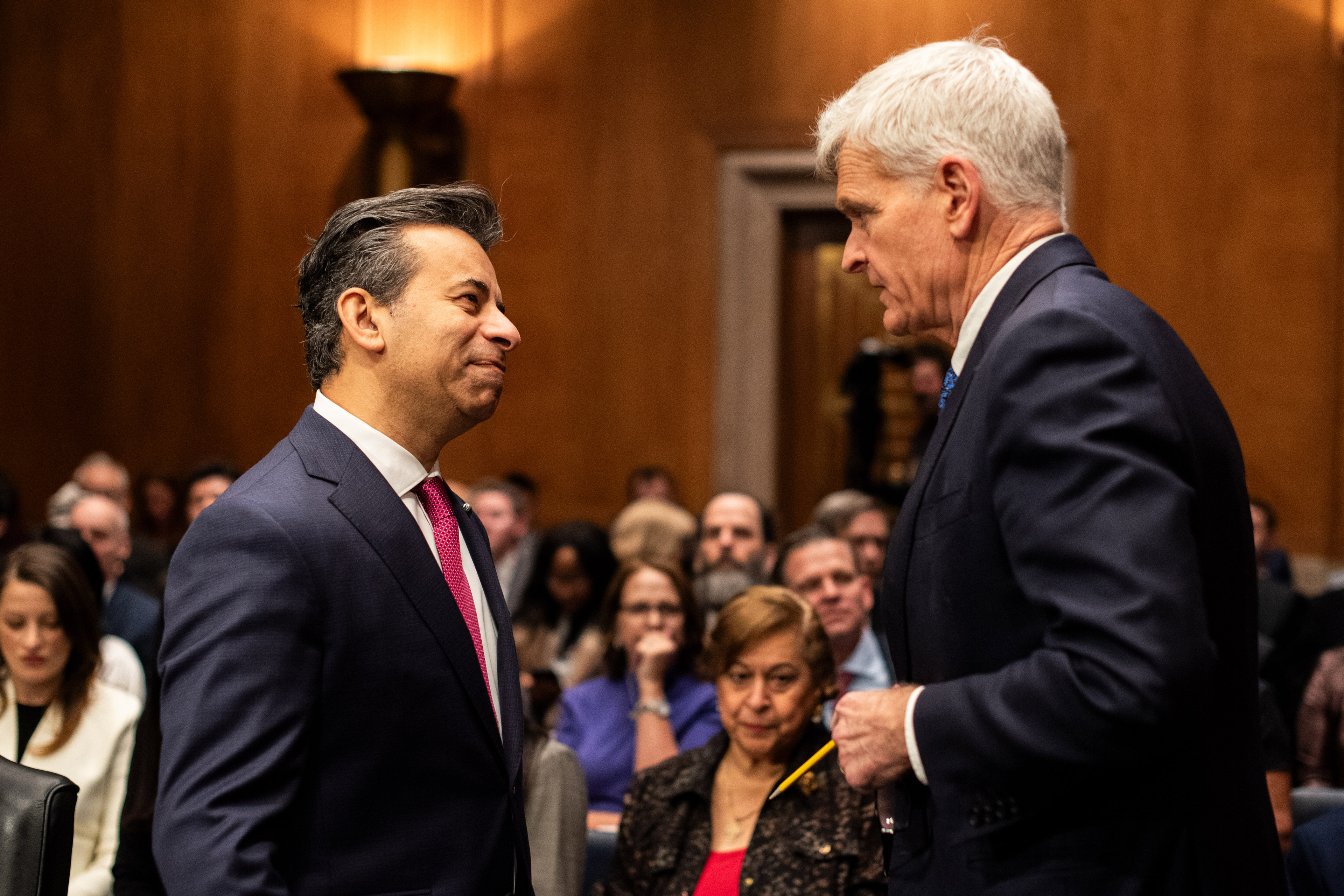
Related Topics

Contact Us

Submit a Story Tip

Por temor a perder la cobertura de Medicaid, padres se apresuran a vacunar a sus hijos

Durante dos décadas, la pediatra Lanre Falusi, de Washington D.C., ha asesorado a los padres sobre el calendario de vacunas que deben recibir sus hijos, la seguridad de la vacunación y sus efectos secundarios.

Pero dijo que este año las charlas han cambiado.

“Por primera vez, los padres de recién nacidos me preguntan si en el futuro sus bebés podrán seguir recibiendo las vacunas”, contó Falusi.

A lo largo del país, pediatras dicen que padres ansiosos están preocupados por si continuará habiendo acceso a las vacunas infantiles de rutina. Los más intranquilos son aquellos con hijos en Medicaid, el programa del gobierno que ofrece seguro médico para familias de bajos ingresos y personas con discapacidades.

Medicaid cubre a 4 de cada 10 niños en el país.

“El problema realmente surgió cuando RFK Jr. asumió el cargo de secretario de Salud y Servicios Humanos (HHS)”, afirmó Deborah Greenhouse, pediatra de Carolina del Sur.

La preocupación aumentó tras la reestructuración, en el mes de junio, de un órgano asesor clave sobre vacunas de los Centros para el Control y Prevención de Enfermedades (CDC). Millones de familias temen que en un futuro cercano tengan que pagar de su bolsillo las vacunas que actualmente están cubiertas por su seguro médico.

El secretario de Salud y Servicios Humanos, Robert F. Kennedy Jr., conocido activista antivacunas, destituyó a los 17 miembros del Comité Asesor sobre Prácticas de Inmunización (ACIP), el grupo responsable de recomendar las vacunas que deberían ser incluidas en los calendarios nacionales de inmunización para niños y adultos.

Kennedy sustituyó a los miembros del panel por otros nuevos, afines a sus puntos de vista, lo que generó alarma entre profesionales médicos y los expertos en salud pública.

“La gente debería preocuparse por lo que va a pasar con la disponibilidad de vacunas para los niños”, afirmó Jennifer Tolbert, directora adjunta del Programa sobre Medicaid y Personas sin Seguro Médico de KFF.

En virtud de la Ley de Cuidado de Salud a Bajo Precio (ACA), las aseguradoras médicas actualmente están obligadas a cubrir todas las vacunas recomendadas por el ACIP. Además, los estados y otras jurisdicciones utilizan el calendario de vacunación infantil para establecer los requisitos de inmunización de los escolares.

Las recomendaciones del ACIP también determinan qué vacunas están cubiertas por el programa Vaccines for Children (VFC), una iniciativa financiada por los CDC que proporciona dosis gratuitas a niños de familias de bajos ingresos y sin seguro médico.

La mitad de los niños del país son elegibles para este programa.

Si los nuevos miembros del ACIP retiraran su apoyo a una vacuna concreta y el director de los CDC estuviera de acuerdo, las consecuencias serían inmediatas, aseguró Tolbert. “Eso afectaría automáticamente qué vacunas están cubiertas y, por lo tanto, cuáles se encuentran disponibles para los niños beneficiarios de Medicaid”, explicó.

Las aseguradoras aún no han dicho cómo modificarían la cobertura, pero Tolbert afirmó que una medida de ese tipo abriría la puerta a que los planes de salud privados se negaran a cubrir la vacuna.

Los pediatras temen que en el futuro los padres se vean obligados a elegir entre pagar cientos de dólares de su bolsillo por las vacunas o dejar a sus hijos desprotegidos.

Por su parte el AHIP, la asociación nacional que agrupa a la industria de seguros médicos, dijo que los planes “siguen cumpliendo los requisitos federales relacionados con la cobertura de las vacunas recomendadas por el ACIP y seguirán apoyando el amplio acceso a servicios preventivos críticos, incluidas las vacunas”.

Los pediatras también dicen que las noticias sobre la nueva ley presupuestaria del presidente Donald Trump, que se espera que reduzca el gasto en Medicaid en aproximadamente $1.000 millones durante la próxima década, también han generado mucha inquietud entre los padres.

En realidad, aunque pueden estar preocupados por perder su Medicaid, Tolbert advirtió que la ley no menciona las vacunas ni cambia los requisitos de elegibilidad o las prestaciones de Medicaid para los niños. Sin embargo, menos financiación federal significa que los estados tendrán que tomar decisiones sobre a quiénes seguirán cubriendo y qué servicios se les ofrecerá.

Para tener los fondos necesarios para pagar Medicaid, los estados podrían aumentar los impuestos y destinar a este programa fondos destinados a otras áreas, como la educación o el sistema penitenciario. Pero lo más probable es que opten por reducir el gasto en Medicaid.

“También podrían hacerlo recortando la elegibilidad de poblaciones opcionales, recortando servicios que son opcionales o reduciendo los pagos a los proveedores”, argumentó Tolbert. “No está claro cómo se desarrollará esto, y es probable que sea diferente en cada uno de los estados”.

En junio, Kennedy anunció en una publicación en X que los CDC ya no recomiendan la vacuna contra covid-19 para niños sanos y embarazadas. La medida provocó una demanda judicial por parte de la Academia Americana de Pediatría y otras asociaciones de médicos que buscan frenar la directiva de Kennedy.

También ese mes, los nuevos miembros del ACIP nombrados por Kennedy votaron a favor de recomendar que los adultos y los niños ya no reciban vacunas contra la gripe con timerosal, un conservante que rara vez se utiliza en vacunas contra la gripe.

Los activistas antivacunas, entre ellos Kennedy, llevan décadas manifestándose contra el timerosal, alegando que está relacionado con el autismo, a pesar de que no existe evidencia científica que respalde esa relación.

“No hay motivo de preocupación”, afirmó en un comunicado Emily Hilliard, vocera del Departamento de Salud y Servicios Humanos. “Como ha declarado el secretario Kennedy, no se negará a nadie el acceso a una vacuna autorizada si decide recibirla”.

“Cuando el comité del ACIP se reunió en junio, reafirmó que las vacunas contra la gripe seguirán siendo accesibles y estarán dentro de la cobertura. Por otra parte, hizo hincapié en la seguridad garantizando que estas vacunas no contienen mercurio”, escribió Hilliard.

“El programa Vaccines for Children sigue proporcionando vacunas contra covid-19 sin costo alguno para los niños que cumplen los requisitos cuando los padres, el proveedor y el paciente consideren que la vacunación es adecuada. Medicaid seguirá reembolsando los gastos de administración”.

Sin embargo, la posibilidad de que una vacuna sea restringida o deje de estar cubierta ya está cambiando la forma en que los padres abordan la inmunización. En el consultorio de Falusi, están programando citas para que la vacunación coincida exactamente con los requisitos de elegibilidad de sus hijos, a veces incluso en la misma semana de su cumpleaños.

En Albuquerque, Nuevo México, la pediatra Melissa Mason, ha atendido algunos pacientes que contrajeron sarampión durante el brote en varios estados que comenzó en Texas.

Teme que nuevas limitaciones a la vacunación derive en más enfermedad y muertes.

Desde enero, se han registrado a nivel nacional más de 1.300 casos de sarampión, según los CDC. “Estamos viendo este brote porque las tasas de vacunación son demasiado bajas y eso permite que el sarampión se propague en la comunidad”, dijo Mason.

Los niños y adolescentes representan el 66% de los casos de sarampión, indican los CDC. En respuesta, Mason ha comenzado a ofrecer la vacuna contra el sarampión a bebés de tan solo 6 meses, medio año antes de lo habitual, aunque dentro de las directrices federales.

El año pasado, las tasas generales de vacunación en los jardines de infantes descendieron en el país, y el número de niños con exención de vacunación escolar siguió aumentando.

Mason teme que, si se restringe el acceso a las vacunas, las comunidades vean el regreso de otras enfermedades prevenibles que se han mantenido bajo control durante mucho tiempo, especialmente en estados como Nuevo México, donde el 61% de los niños están bajo Medicaid.

La tos ferina, otra enfermedad que puede ser mortal para los niños más pequeños, también se está propagando. Según informaron los CDC, hasta el 5 de julio se habían identificado más de 15.100 casos. Mason explicó que la tos ferina es especialmente peligrosa para los bebés demasiado pequeños para recibir la vacuna.

Por ahora, los pediatras están tratando de subrayar la urgencia sin provocar pánico en la población.

En Columbia, Carolina del Sur, Greenhouse solía ofrecer a las familias un rango de edad flexible para las vacunas de rutina.

“Ya no digo eso”, expresó la pediatra.

Ahora, la médica recomienda a los padres a vacunar a sus hijos tan pronto como puedan hacerlo.

Muchos de ellos le han preguntado si la vacuna contra el VPH, que ayuda a prevenir el cáncer de cuello uterino, se puede administrar a niños menores de la edad recomendada, que es de 9 años.

“De hecho, hoy mismo dos padres me han preguntado si sus hijos de 7 u 8 años podían recibir la vacuna contra el VPH”, contó Greenhouse. “Tuve que responderles que no está permitido”.

Dado que la vacuna requiere varias dosis aplicadas con meses de diferencia, Greenhouse teme que se acabe el tiempo para que las familias puedan cubrir la serie con el seguro de salud. Algunas familias pueden decidir no comprar la segunda dosis si tienen que pagarla de su bolsillo. Si ya no está cubierta por el seguro, esa segunda dosis podría costar alrededor de $300.

“No puedo estar 100% segura de cómo será el futuro de algunas de estas vacunas”, reflexionó Greenhouse. “Lo que sí puedo decir es que es una situación muy aterradora”.

Se espera que el comité asesor sobre vacunas que nombró recientemente el secretario Kennedy realice su próxima reunión pública en agosto.

Related Topics

Contact Us

Submit a Story Tip

Lawfully Present Immigrants Help Stabilize ACA Plans. Why Does the GOP Want Them Out?

If you want to create a perfect storm at Covered California and other Affordable Care Act marketplaces, all you have to do is make enrollment more time-consuming, ratchet up the toll on consumers’ pocketbooks, and terminate financial aid for some of the youngest and healthiest enrollees.

And presto: You’ve got people dropping coverage; rising costs; and a smaller, sicker group of enrollees, which translates to higher premiums.

The Trump administration and congressional Republicans have just checked that achievement off their list.

They have done it with the sprawling tax and spending law President Donald Trump signed on July 4 and a related set of new regulations released by the Centers for Medicare & Medicaid Services that will govern how the ACA marketplaces are run.

Among the many provisions, there’s this: Large numbers of lawfully present immigrants currently enrolled in Obamacare health plans will lose their subsidies and be forced to pay full fare or drop their coverage.

Wait. What?

I understand that proponents of the new policies think the government spends too much on taxpayer subsidies, especially those who believe the ACA marketplaces are rife with fraud. It makes sense that they would support toughening enrollment and eligibility procedures and even slashing subsidies. But taking coverage away from people who live here legally is not health care policy. It’s an echo of the federal immigration raids in Los Angeles and elsewhere.

“It’s creating a very hostile environment for them, especially after having to leave their countries because of some very traumatic experiences,” says Arturo Vargas Bustamante, a professor of health policy and management at UCLA’s Fielding School of Public Health. “For those who believe health care is a human right, this is like excluding that population from something that should be a given.”

In Covered California, 112,600 immigrants, or nearly 6% of total enrollees, stand to lose their federal tax subsidies when the policy takes effect in 2027, according to data provided by the exchange. In the Massachusetts and Maryland marketplaces, the figure is closer to 14%, according to their directors, Audrey Morse Gasteier and Michele Eberle, respectively.

It’s not clear exactly how much financial aid those immigrants currently receive in ACA marketplaces. But in Covered California, for example, the average for all subsidized enrollees is $561 per month, which covers 80% of the $698 average monthly premium per person. And immigrants, who tend to have lower-than-average incomes, are likely to get more of a subsidy.

The immigrants who will lose their subsidies include victims of human trafficking and domestic violence, as well as refugees with asylum or with some temporary protected status. And “Dreamers” will no longer be eligible for ACA marketplace health plans because they will not be considered lawfully present. Immigrants who are not in the country legally cannot get coverage through Covered California or most other ACA marketplaces.

The nearly 540,000 Dreamers in the United States arrived in the U.S. as kids without immigration papers and were granted temporary legal status by President Barack Obama in 2012. Of those, an estimated 11,000 have ACA health plans and would lose them, including 2,300 in Covered California.

Supporters of the policy changes enshrined in the CMS rule and budget law think it’s high time to rein in what they say are abuses in the system that started under the Biden administration with expanded tax credits and overly flexible enrollment policies.

“It’s about making Obamacare lawful and implementing it as drafted rather than what Biden turned it into, which was a fraud and a waste-infused program,” says Brian Blase, president of Arlington, Virginia-based Paragon Health Institute, which produces policy papers with a free-market bent and influenced the Republican-driven policies.

But Blase doesn’t have much to say about the termination of Obamacare subsidies for lawfully present immigrants. He says Paragon has not focused much on that subject.

Jessica Altman, executive director of Covered California, expects most immigrants who lose subsidies will discontinue their enrollment. “If you look at where those populations fall on the income scale, the vast majority are not going to be able to afford the full cost of the premium to stay covered,” she says.

Apart from the human hardship cited by Bustamante, the exodus of immigrants could compromise the financial stability of coverage for the rest of Covered California’s 1.9 million enrollees. That’s because immigrants tend to be younger than the average enrollee and use fewer medical resources, thus helping offset the costs of older and sicker people who are more expensive to cover.

Covered California data shows that immigrant enrollees targeted by the new federal policies pose significantly lower medical risk than U.S. citizens. And a significantly higher percentage of immigrants in the exchange are ages 26 to 44, while 55- to 64-year-olds make up a smaller percentage.

Still, it would be manageable if immigrants were the only younger people to leave the exchange. But that is unlikely to be the case. More red tape and higher out-of-pocket costs — especially if enhanced tax credits disappear — could lead a lot of young people to think twice about health insurance.

The covid-era enhanced tax credits, which have more than doubled ACA marketplace enrollment since their advent in 2021, are set to expire at the end of December without congressional action. And, so far, Republicans in Congress do not seem inclined to renew them. Ending them would reverse much of that enrollment gain by jacking up the amount consumers would have to spend on premiums out of their own pockets by an average of 66% at Covered California and more than 75% nationally.

And an analysis by the Congressional Budget Office shows that a consequent exodus of younger, healthier people from the marketplaces would lead to even greater costs over time.

Enhanced tax credits aside, consumers face additional hurdles: The annual enrollment period for Covered California and other marketplaces will be shorter than it is now. Special enrollment periods for people with the lowest incomes will be effectively eliminated. So will automatic renewals, which have greatly simplified the process for a majority of enrollees at Covered California and some other marketplaces. Enrollees will no longer be able to start subsidized coverage, as they can now, before all their information is fully verified.

“Who are the people who are going to decide to go through hours and hours of onerous paperwork?” says Morse Gasteier. “They’re people who have chronic conditions. They have health care issues they need to manage. The folks we would expect not to wade through all that red tape would be the younger, healthier folks.”

California and 20 other states this month challenged some of that red tape in a federal lawsuit to stop provisions of the CMS rule that erect “unreasonable barriers to coverage.” California Attorney General Rob Bonta said he and his fellow attorneys general hoped for a court ruling before the rule takes effect on Aug. 25.

“The Trump administration claims that their final rule will prevent fraud,” Bonta said. “It’s obvious what this is really about. It’s yet another political move to punish vulnerable communities by removing access to vital care and gutting the Affordable Care Act.”

This article was produced by KFF Health News, which publishes California Healthline, an editorially independent service of the California Health Care Foundation. 

Related Topics

Contact Us

Submit a Story Tip

Fearing Medicaid Coverage Loss, Some Parents Rush To Vaccinate Their Kids

For two decades, Washington, D.C., pediatrician Lanre Falusi has counseled parents about vaccine safety, side effects, and timing. But this year, she said, the conversations have changed.

“For the first time, I’m having parents of newborns ask me if their baby will still be able to get vaccines,” Falusi said.

Throughout the country, pediatricians say anxious parents are concerned about access to routine childhood immunizations, especially those with children on Medicaid, the government insurance program for low-income families and people with disabilities. Medicaid covers 4 in 10 children in the U.S.

“It really became an issue when RFK Jr. stepped into the role of HHS secretary,” said Deborah Greenhouse, a pediatrician in South Carolina.

The concern accelerated after the shake-up of a key Centers for Disease Control and Prevention vaccine advisory body in June, raising fears that millions of American families could soon have to pay out-of-pocket for shots now covered by their health insurance.

Health and Human Services Secretary Robert F. Kennedy Jr., a longtime anti-vaccine activist, removed all 17 members of the CDC’s Advisory Committee on Immunization Practices, the panel responsible for recommending which shots are included in the nation’s adult and childhood immunization schedules.

Kennedy replaced the panelists with new members aligned with his views, prompting alarm among medical professionals and public health experts.

“People should be worried about what’s going to happen to the availability of vaccines for children,” said Jennifer Tolbert, deputy director of the Program on Medicaid and the Uninsured at KFF, a national health information nonprofit that includes KFF Health News.

Under the Affordable Care Act, health insurers are required to cover all ACIP-recommended vaccines. States and other jurisdictions use the childhood vaccine schedule to set immunization requirements for schoolchildren. ACIP’s recommendations also determine which vaccines get covered by the Vaccines for Children Program, a CDC-funded initiative that provides free immunizations to low-income and uninsured children. Half of children in the U.S. are eligible for the VFC program.

If the new ACIP members withdraw support for a particular vaccine and the CDC director agrees, Tolbert said, the consequences would be immediate. “It would automatically affect what is covered and therefore which vaccines are available to children on Medicaid,” she said.

Health insurance companies have not yet said how they would alter coverage, but Tolbert said such a move would open the door for private insurers to refuse to cover the vaccine.

Pediatricians worry about a future where parents might have to choose — pay hundreds of dollars out-of-pocket for shots or leave their kids unprotected.

The health insurance industry group AHIP said that health plans “continue to follow federal requirements related to coverage of ACIP-recommended vaccines and will continue to support broad access to critical preventive services, including immunizations.”

Pediatricians say news about President Donald Trump’s new budget law, which is expected to reduce Medicaid spending by about $1 trillion over the next decade, also prompted questions from parents.

While parents may be worried about losing their Medicaid, the law doesn’t mention vaccines or change eligibility or benefits for children’s Medicaid, Tolbert said. But less federal funding means states will have to make decisions about who is covered and which services are offered.

To raise the revenue needed to pay for Medicaid, states could raise taxes; move money earmarked for other spending, such as education or corrections; or, more likely, reduce Medicaid spending.

“And they may do that by cutting eligibility for optional populations or by cutting services that are optional, or by reducing payments to providers in the form of provider rates,” Tolbert said. “It’s unclear how this will play out, and it will likely look different across all states.”

In May, Kennedy announced in a post on X that the CDC is no longer recommending the covid-19 vaccine for healthy children and pregnant women. The move prompted a lawsuit by the American Academy of Pediatrics and other physician groups that seeks to freeze Kennedy’s directive.

In June, the new ACIP members appointed by Kennedy voted to recommend that adults and children no longer receive flu vaccines with thimerosal, a preservative rarely used in some flu vaccines. Anti-vaccine activists, including Kennedy, have rallied against thimerosal for decades, alleging links to autism despite no evidence of any association.

“There is no cause for concern,” Department of Health and Human Services spokesperson Emily Hilliard said in a statement. “As Secretary Kennedy has stated, no one will be denied access to a licensed vaccine if they choose to receive one.”

“When the ACIP committee met last month, they reaffirmed that flu vaccines will remain accessible and covered, and they emphasized safety by ensuring these vaccines are mercury-free,” Hilliard wrote. “The Vaccines for Children (VFC) program continues to provide COVID-19 vaccines at no cost for eligible children when the parent, provider, and patient decide vaccination is appropriate. Medicaid will continue to reimburse the administration fee.”

But the possibility that a vaccine could be restricted or no longer covered by insurance is already changing how parents approach immunization. In Falusi’s practice, parents are scheduling appointments to coincide precisely with their child’s eligibility, sometimes making appointments the same week as their birthdays.

Melissa Mason, a pediatrician in Albuquerque, New Mexico, has evaluated some patients who contracted measles during the multistate outbreak that started in neighboring Texas.

She’s concerned that any new limitations on access or reimbursement for childhood vaccines could lead to even more preventable illnesses and deaths.

Nationally, there have been more than 1,300 measles cases since January, including three deaths, according to the CDC. “We’re seeing this outbreak because vaccination rates are too low and it allows measles to spread in the community,” Mason said.

Children and teens account for 66% of national measles cases. Mason has begun offering the measles vaccine to infants as young as 6 months old, a full six months earlier than standard practice, though still within federal guidelines.

Last year, overall kindergarten vaccination rates fell in the U.S. At the same time, the number of children with a school vaccination exemption continued to rise.

Pertussis, or whooping cough — another disease that can be deadly to young children — is spreading. As of July 5, more than 15,100 cases had been identified in U.S. residents this year, according to the CDC.

Mason said pertussis is especially dangerous to babies too young to receive the vaccine.

For now, pediatricians are trying to maintain a sense of urgency without inciting panic.

In Columbia, South Carolina, Greenhouse used to offer families a flexible age range for routine vaccinations.

“I’m not saying that anymore,” the pediatrician said.

She now urges parents to get their children vaccinated as soon as they are eligible.

She described anxious parents asking whether the HPV vaccine, which helps prevent cervical cancer, can be administered to children younger than the recommended age of 9.

“I actually had two parents today ask if their 7- or 8-year-olds could get the HPV shot,” Greenhouse said. “I had to tell them it’s not allowed.”

With the vaccine requiring multiple doses months apart, Greenhouse fears time may run out for families to get the series covered by insurance. If they have to pay out-of-pocket, she’s afraid some families may choose not to get the second dose. A second dose could cost about $300 if no longer covered by insurance.

“I cannot be 100% sure what the future looks like for some of these vaccines,” Greenhouse said. “I can tell you it’s a very scary place to be.”

Kennedy’s newly appointed vaccine advisory committee is expected to hold its next public meeting as soon as August.

KFF Health News is a national newsroom that produces in-depth journalism about health issues and is one of the core operating programs at KFF—an independent source of health policy research, polling, and journalism. Learn more about KFF.

USE OUR CONTENT

This story can be republished for free (details).

Trump Voters Wanted Relief From Medical Bills. For Millions, the Bills Are About To Get Bigger.

President Donald Trump rode to reelection last fall on voter concerns about prices. But as his administration pares back federal rules and programs designed to protect patients from the high cost of health care, Trump risks pushing more Americans into debt, further straining family budgets already stressed by medical bills.

Millions of people are expected to lose health insurance in the coming years as a result of the tax cut legislation Trump signed this month, leaving them with fewer protections from large bills if they get sick or suffer an accident.

At the same time, significant increases in health plan premiums on state insurance marketplaces next year will likely push more Americans to either drop coverage or switch to higher-deductible plans that will require them to pay more out-of-pocket before their insurance kicks in.

Smaller changes to federal rules are poised to bump up patients’ bills, as well. New federal guidelines for covid-19 vaccines, for example, will allow health insurers to stop covering the shots for millions, so if patients want the protection, some may have to pay out-of-pocket.

The new tax cut legislation will also raise the cost of certain doctor visits, requiring copays of up to $35 for some Medicaid enrollees.

And for those who do end up in debt, there will be fewer protections. This month, the Trump administration secured permission from a federal court to roll back regulations that would have removed medical debt from consumer credit reports.

That puts Americans who cannot pay their medical bills at risk of lower credit scores, hindering their ability to get a loan or forcing them to pay higher interest rates.

“For tens of millions of Americans, balancing the budget is like walking a tightrope,” said Chi Chi Wu, a staff attorney at the National Consumer Law Center. “The Trump administration is just throwing them off.”

White House spokesperson Kush Desai did not respond to questions about how the administration’s health care policies will affect Americans’ medical bills.

The president and his Republican congressional allies have brushed off the health care cuts, including hundreds of billions of dollars in Medicaid retrenchment in the mammoth tax law. “You won’t even notice it,” Trump said at the White House after the bill signing July 4. “Just waste, fraud, and abuse.”

But consumer and patient advocates around the country warn that the erosion of federal health care protections since Trump took office in January threatens to significantly undermine Americans’ financial security.

“These changes will hit our communities hard,” said Arika Sánchez, who oversees health care policy at the nonprofit New Mexico Center on Law and Poverty.

Sánchez predicted many more people the center works with will end up with medical debt. “When families get stuck with medical debt, it hurts their credit scores, makes it harder to get a car, a home, or even a job,” she said. “Medical debt wrecks people’s lives.”

For Americans with serious illnesses such as cancer, weakened federal protections from medical debt pose yet one more risk, said Elizabeth Darnall, senior director of federal advocacy at the American Cancer Society’s Cancer Action Network. “People will not seek out the treatment they need,” she said.

Trump promised a rosier future while campaigning last year, pledging to “make America affordable again” and “expand access to new Affordable Healthcare.”

Polls suggest voters were looking for relief.

About 6 in 10 adults — Democrats and Republicans — say they are worried about being able to afford health care, according to one recent survey, outpacing concerns about the cost of food or housing. And medical debt remains a widespread problem: As many as 100 million adults in the U.S. are burdened by some kind of health care debt.

Despite this, key tools that have helped prevent even more Americans from sinking into debt are now on the chopping block.

Medicaid and other government health insurance programs, in particular, have proved to be a powerful economic backstop for low-income patients and their families, said Kyle Caswell, an economist at the Urban Institute, a think tank in Washington, D.C.

Caswell and other researchers found, for example, that Medicaid expansion made possible by the 2010 Affordable Care Act led to measurable declines in medical debt and improvements in consumers’ credit scores in states that implemented the expansion.

“We’ve seen that these programs have a meaningful impact on people’s financial well-being,” Caswell said.

Trump’s tax law — which will slash more than $1 trillion in federal health spending over the next decade, mostly through Medicaid cuts — is expected to leave 10 million more people without health coverage by 2034, according to the latest estimates from the nonpartisan Congressional Budget Office. The tax cuts, which primarily benefit wealthy Americans, will add $3.4 trillion to U.S. deficits over a decade, the office calculated.

The number of uninsured could spike further if Trump and his congressional allies don’t renew additional federal subsidies for low- and moderate-income Americans who buy health coverage on state insurance marketplaces.

This aid — enacted under former President Joe Biden — lowers insurance premiums and reduces medical bills enrollees face when they go to the doctor or the hospital. But unless congressional Republicans act, those subsidies will expire later this year, leaving many with bigger bills.

Federal debt regulations developed by the Consumer Financial Protection Bureau under the Biden administration would have protected these people and others if they couldn’t pay their medical bills.

The agency issued rules in January that would have removed medical debts from consumer credit reports. That would have helped an estimated 15 million people.

But the Trump administration chose not to defend the new regulations when they were challenged in court by debt collectors and the credit bureaus, who argued the federal agency had exceeded its authority in issuing the rules. A federal judge in Texas appointed by Trump ruled that the regulation should be scrapped.

Related Topics

Contact Us

Submit a Story Tip

Here Come the ACA Premium Hikes

The Host

Julie Rovner
KFF Health News


@jrovner


@julierovner.bsky.social

Read Julie’s stories.

Julie Rovner is chief Washington correspondent and host of KFF Health News’ weekly health policy news podcast, “What the Health?” A noted expert on health policy issues, Julie is the author of the critically praised reference book “Health Care Politics and Policy A to Z,” now in its third edition.

Much of the hubbub in health care this year has been focused on Medicaid, which faces dramatically reduced federal funding as the result of the huge budget bill signed by President Donald Trump earlier this month. But now the attention is turning to the Affordable Care Act, which is facing some big changes that could cost many consumers their health coverage as soon as 2026.

Meanwhile, changes to immigration policy under Trump could have an outsize impact on the nation’s health care system, both by exacerbating shortages of health workers and by eliminating insurance coverage that helps keep some hospitals and clinics afloat.

This week’s panelists are Julie Rovner of KFF Health News, Julie Appleby of KFF Health News, Jessie Hellmann of CQ Roll Call, and Alice Miranda Ollstein of Politico.

Panelists

Julie Appleby
KFF Health News


@julie_appleby

Read Julie’s stories.

Jessie Hellmann
CQ Roll Call


@jessiehellmann


@jessiehellmann.bsky.social


Read Jessie’s stories.

Alice Miranda Ollstein
Politico


@AliceOllstein


@alicemiranda.bsky.social


Read Alice’s stories.

Among the takeaways from this week’s episode:

  • Many Americans can expect their health insurance premiums to rise next year, but those rate hikes could be even bigger for the millions who rely on ACA health plans. To afford such plans, most consumers rely on enhanced federal government subsidies, which are set to expire — and GOP lawmakers seem loath to extend them, even though many of their constituents could lose their insurance as a result.
  • Congress included a $50 billion fund for rural health care in Trump’s new law, aiming to cushion the blow of Medicaid cuts. But the fund is expected to fall short, especially as many people lose their health insurance and clinics, hospitals, and health systems are left to cover their bills.
  • Abortion opponents continue to claim the abortion pill mifepristone is unsafe, more recently by citing a problematic analysis — and some lawmakers are using it to pressure federal officials to take another look at the drug’s approval. Meanwhile, many Planned Parenthood clinics are bracing for an end to federal funding, stripping money not only from busy clinics where abortion is legal but also from clinics that provide only contraception, testing for sexually transmitted infections, and other non-abortion care in states where the procedure is banned.
  • And as more states implement laws enabling doctors to opt out of treatments that violate their morals, a pregnant woman in Tennessee says her doctor refused to provide prenatal care, because she is unmarried.

Also this week, Rovner interviews Jonathan Oberlander, a Medicare historian and University of North Carolina health policy professor, to mark Medicare’s 60th anniversary later this month.

Plus, for “extra credit” the panelists suggest health policy stories they read this week that they think you should read, too: 

Julie Rovner: KFF Health News’ “Republicans Call Medicaid Rife with Fraudsters. This Man Sees No Choice but To Break the Rules,” by Katheryn Houghton.  

Julie Appleby: NPR’s “Many Beauty Products Have Toxic Ingredients. Newly Proposed Bills Could Change That,” by Rachel Treisman.  

Jessie Hellmann: Roll Call’s “Kennedy’s Mental Health Drug Skepticism Lands at FDA Panel,” by Ariel Cohen.  

Alice Miranda Ollstein: The Associated Press’ “RFK Jr. Promoted a Food Company He Says Will Make Americans Healthy. Their Meals Are Ultraprocessed,” by Amanda Seitz and Jonel Aleccia.  

Also mentioned in this week’s podcast:

Credits

Francis Ying
Audio producer

Emmarie Huetteman
Editor

To hear all our podcasts, click here.

And subscribe to KFF Health News’ “What the Health?” on SpotifyApple PodcastsPocket Casts, or wherever you listen to podcasts.
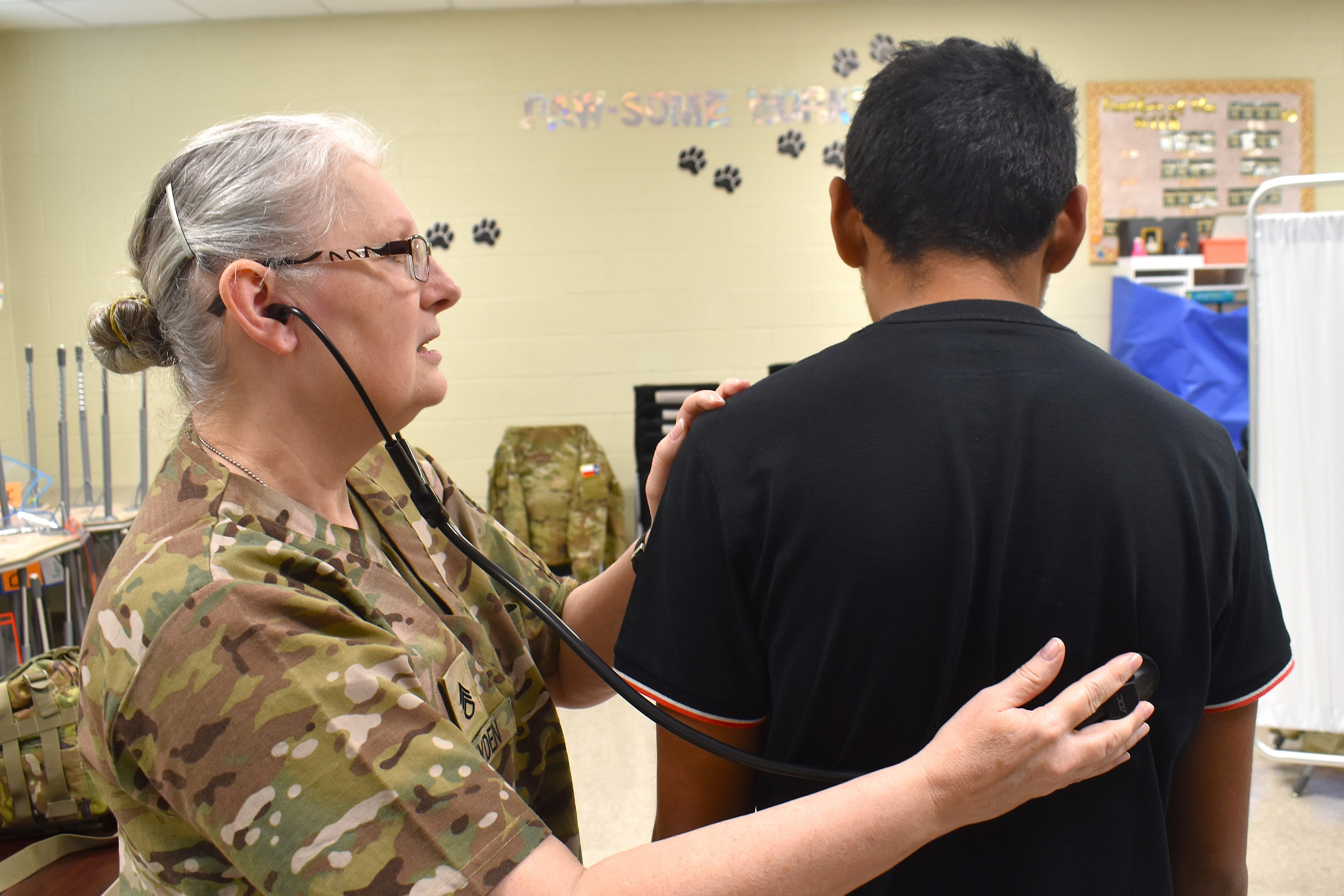
We encourage organizations to republish our content, free of charge. Here’s what we ask:

You must credit us as the original publisher, with a hyperlink to our kffhealthnews.org site. If possible, please include the original author(s) and KFF Health News” in the byline. Please preserve the hyperlinks in the story.

It’s important to note, not everything on kffhealthnews.org is available for republishing. If a story is labeled “All Rights Reserved,” we cannot grant permission to republish that item.

Have questions? Let us know at [email protected]

Watch: What Are Medicaid Work Requirements?

President Donald Trump signed legislation that mandates some Medicaid recipients prove they’re working, volunteering, or completing other qualifying activities at least 80 hours a month to maintain coverage. This applies to 40 states (plus Washington, D.C.) that have expanded Medicaid to a broader pool of low-income adults. Those states will share $200 million to prepare eligibility systems by the end of next year.

KFF Health News’ Renuka Rayasam breaks down what you need to know about Medicaid work requirements.

KFF Health News is a national newsroom that produces in-depth journalism about health issues and is one of the core operating programs at KFF—an independent source of health policy research, polling, and journalism. Learn more about KFF.

USE OUR CONTENT

This story can be republished for free (details).

Republicans Call Medicaid Rife With Fraudsters. This Man Sees No Choice but To Break the Rules.

MISSOULA, Mont. — As congressional Republicans finalized Medicaid work requirements in President Donald Trump’s budget bill, one man who relies on that government-subsidized health coverage was trying to coax his old car to start after an eight-hour shift making sandwiches.

James asked that only his middle name be used to tell his story so that he wouldn’t lose health coverage or be accused of Medicaid fraud. He found his food service gig a few weeks into an addiction treatment program. The man in his late 30s said his boss “hasn’t been disappointed.”

“I’m a good worker,” he said with a grin.

James can get the prescription drugs that help him stabilize his life and hold down that job through Medicaid, the state-federal insurance program that covers people with low incomes or disabilities. Those drugs curb his desire for alcohol and treat long-standing conditions that exacerbate his addiction, including bipolar and insomnia disorders.

But he hasn’t qualified for the program in months, ever since his work hours increased and he received a raise of about $1 an hour. He exceeds his income eligibility limit of about $21,000 per year by roughly $50 a week.

James said that despite his raise, he’s struggling to cover routine expenses, such as keeping his car running and paying his phone bill. He said he can’t afford the care he needs even on the cheapest insurance plan available to him through the Affordable Care Act’s marketplace or through his job’s health insurance plan. Even paying $60 a month for his sleep medications — one of six prescriptions he takes daily — is too expensive.

“I only saw one option,” James said. “Fudge the numbers.”

James hasn’t reported his new income to the state. That puts him at odds with congressional Republicans who justified adding hurdles to Medicaid by claiming the system is rife with waste, fraud, and abuse. But James isn’t someone sitting on his couch playing video games, the type of person House Speaker Mike Johnson and other people said they would target as they sought work requirements.

Medicaid provides health coverage and long-term care to more than 70 million people in the United States. Those who study safety-net systems say it’s extremely rare for enrollees to commit fraud to tap into that coverage. In fact, research shows swaths of eligible people aren’t enrolled in Medicaid, likely because the system is so confusing. And nearly two-thirds of people on Medicaid in 2023 had jobs, according to an analysis by KFF, a health information nonprofit that includes KFF Health News.

Those transitioning off Medicaid may qualify for other subsidized or low-priced health plans through the Affordable Care Act’s marketplace. But, as in James’ case, such plans can have gaps in what care is covered, and more comprehensive private plans may be too expensive. So James and an unknown number of other people find themselves caught between working too much to qualify for Medicaid but earning too little to pay for their own health care.

James considers himself to be a patriot and said that people shouldn’t “use government funding to just be lazy.” He agrees with the Republican argument that, if able, people should work if they receive Medicaid. Hiding his hours on the job from the government bothers him, especially since he feels he must lie to access the medical care that enables him to work.

“I don’t want to be a fraud. I don’t want to die,” James said. “Those shouldn’t be the only two options.”

On July 4, Trump signed into law the major tax and spending bill that makes it harder for low-income workers to get Medicaid. That includes requiring beneficiaries to work or go to school and adding paperwork to prove every six months they meet a minimum number of hours on the job.

“It’s going to hurt people, whether they’re playing by the rules or not,” said Ben Sommers, a health economist at Harvard University. “We see this vilification of mostly very hard-working people who are really struggling and are benefiting from a program that helps them stay alive.”

James said he initially declined his raise because he worried about losing Medicaid. He had previously been kicked off the coverage about a month into his rehab program after finding work. To stay in the sober-living program he otherwise couldn’t afford, James said, he dropped just enough hours at work to requalify for Medicaid and then soon picked up hours again. If he didn’t earn more, he said, he had no chance of saving enough money to find housing after graduating from the treatment program.

“They’ll give you a bone if you stay in the mud,” James said. “But you have to stay there.”

That problem — becoming just successful enough to suddenly lose Medicaid — is common. It’s called a benefit cliff, said Pamela Herd, who researches government aid at the University of Michigan.

“It just doesn’t make any sense that someone gets a dollar pay raise and all of a sudden they lose all access to their health insurance,” Herd said.

She said a partial fix exists called continuous eligibility, which guarantees an individual’s Medicaid coverage for a specific period, such as a year or longer. The goal is to give people time to adjust when they do earn more money. Continuous eligibility also helps maintain coverage for low-income workers with unpredictable hours and whose pay changes month to month.

But Congress has moved in the other direction. Under the new law, policymakers limited windows of eligibility for able-bodied adults to every six months. That will put more people on the program’s eligibility cliff, Herd said, in which they must decide between losing access to coverage or dropping hours at work.

“It is going to be a nightmare,” Herd said.

Those federal changes will be especially difficult for people with chronic conditions, such as James in Montana.

Not that long ago, James wouldn’t have been breaking the rules to access Medicaid because his state had 12-month continuous eligibility. But in 2023, Montana began requiring enrollees to report any change in their income within 10 days.

James is proud of how far he’s come. About a year ago, his body was breaking down. He couldn’t hold a spoon to eat breakfast without whiskey — his hands shook too hard. He had alcohol-induced seizures. He said his memories from his unhealthiest times come in flashes: being put on a stretcher, the face of a worried landlord, ambulance lights in the background.

James recently graduated from his treatment program. He’s staying with a relative to save money as he and his girlfriend try to find an affordable place to rent — though even with Medicaid, finding housing feels like a stretch to him. He’s taking classes part-time to become a licensed addiction counselor. His dream is to help others survive addiction, and he also sees that career as a way out of poverty.

To James, all his progress rides on keeping Medicaid a bit longer.

“Every time I get a piece of mail, I am terrified that I’m gonna open it up and it’s gonna say I don’t have Medicaid anymore,” he said. “I’m constantly in fear that it’s gonna go away.”

As of mid-July, officials hadn’t noticed the extra $50 he makes each week.

Related Topics

Contact Us

Submit a Story Tip

Amid PFAS Fallout, a Maine Doctor Navigates Medical Risks With Her Patients

When Lawrence and Penny Higgins of Fairfield, Maine, first learned in 2020 that high levels of toxic chemicals called PFAS taint their home’s well water, they wondered how their health might suffer. They had consumed the water for decades, given it to their pets and farm animals, and used it to irrigate their vegetable garden and fruit trees.

“We wanted to find out just what it’s going to do to us,” Penny Higgins said. They contacted a couple of doctors, but “we were met with a brick wall. Nobody knew anything.”

Worse still, she added, they “really didn’t want to hear about it.”

Many clinicians remain unaware of the health risks linked to PFAS, short for perfluoroalkyl and polyfluoroalkyl substances, despite rising medical and public awareness of the chemicals and their toxicity. PFAS can affect nearly every organ system and linger in bodies for decades, raising risks of cancer, immune deficiencies, and pregnancy complications.

These “forever chemicals” have been widely used since the 1950s in products including cosmetics, cookware, clothing, carpeting, food packaging, and firefighting foam. Researchers say they permeate water systems and soils nationwide, with a federal study estimating that at least 45% of U.S. tap water is contaminated. PFAS can be detected in the blood of nearly all Americans, according to the Centers for Disease Control and Prevention.

Maine was among the first states to begin extensive water and soil testing and to try to limit further public exposure to PFAS through policy action, after discovering that farms and residences — like the Higgins’ property — had been contaminated by land-spreading of wastewater sludge containing PFAS. Exposure can also be high for people living near military bases, fire training areas, landfills, or manufacturing facilities.

In regions where testing reveals PFAS hot spots, medical providers can be caught flat-footed and patients left adrift.

Rachel Criswell, a family practice doctor and environmental health researcher, is working to change that. She was completing her residency in Central Maine around the time that the Higginses and others there began discovering the extent of the contamination. Her medical training at Columbia University included more than a year in Norway researching the effects of PFAS and other chemicals on maternal and infant health.

When patients began asking about PFAS, Criswell and the state toxicologist offered primary care providers lunchtime presentations on how to respond. Since then, she has fielded frequent PFAS questions from doctors and patients throughout the state.

Even knowledgeable providers can find it challenging to stay current given rapidly evolving scientific information and few established protocols. “The work I do is exhausting and time-consuming and sometimes frustrating,” Criswell said, “but it’s exactly what I should be doing.”

Rachel Criswell, a family practice doctor and environmental health researcher in Central Maine, works with colleagues and community residents to assess PFAS health impacts and fields questions about the “forever chemicals” from doctors and patients throughout the state.(Brianna Soukup for KFF Health News)
A close up shot of a woman holding informational papers. They read: "Has your well been tested for PFAS? / There's still time to join the Maine PFAS study. / Help us understand how people in Maine are exposed to PFAS and how to build resilience in our communities. / The study involves a blood draw and a 20-minute survey. / You may opt to receive a copy of your blood work results. / Free to participate. / You may be eligible if you: are 18 years or older; live in Kennebec, Pensobscot, Somerset, or Waldo counties; have had your well tested for PFAS; have lived at that residence for 12 months before well testing."
Criswell, who practices at Redington-Fairview General Hospital in Skowhegan, Maine, holds flyers used to recruit patients for a study of PFAS exposure in Central Maine. (Brianna Soukup for KFF Health News)

A close up shot of some research papers in a folder. The top paper reads: "Exposure pathways and mental health impact of PFAS-contaminated biosolids."
A printout of a presentation Criswell shows to area residents at recruitment drives for a study about PFAS exposure in Central Maine. (Brianna Soukup for KFF Health News)

Phil Brown, a Northeastern University sociology professor and a co-director of the PFAS Project Lab, said the medical community “doesn’t know a lot about occupational and environmental health,” adding that “it’s a very minimal part of the medical school curriculum” and continuing education.

Courtney Carignan, an environmental epidemiologist at Michigan State University, said learning of PFAS exposure, whether from their drinking water or occupational sources, “is a sensitive and upsetting situation for people” and “it’s helpful if their doctors can take it seriously.”

Clinical guidance concerning PFAS improved after the National Academies of Sciences, Engineering, and Medicine released a report on PFAS in 2022. It found strong evidence associating PFAS with kidney cancer, high cholesterol, reduced birth weights, and lower antibody responses to vaccines, and some evidence linking PFAS to breast and testicular cancer, ulcerative colitis, thyroid and liver dysfunction, and pregnancy-induced hypertension.

That guidance “revolutionized my practice,” Criswell said. “Instead of being this hand-wavey thing where we don’t know how to apply the research, it brought a degree of concreteness to PFAS exposure that was kind of missing before.”

The national academies affirmed what Criswell had already been recommending: Doctors should order blood tests for patients with known PFAS exposures.

Testing for PFAS in blood — and for related medical conditions if needed — can help ease patients’ anxiety.

“There isn’t a day that goes by,” Lawrence Higgins said, “that we don’t think and wonder when our bodies are going to shut down on us.”

A husband and wife stand in their kitchen for a portrait. The kitchen has a familial warmth to it; flowers hang from baskets, the fridge is covered in photos and magnets, and colorful jars and mugs line the shelves.
Lawrence and Penny Higgins and other Central Maine residents serve on an advisory board for a Maine study assessing mental health consequences of PFAS exposure in rural residents.(Brianna Soukup for KFF Health News)
A husband and wife walk down a grassy area of their large outdoor property. On the left is a duck pond.
“Water is the worst thing you can have contaminated,” Penny Higgins says. “You use water in everything.” (Brianna Soukup for KFF Health News)

A photo of a water well in a grassy area.
State testing of the well at the Higginses’ Fairfield, Maine, home in 2020 revealed high PFAS readings. (Brianna Soukup for KFF Health News)

‘Devastating but Incredibly Helpful’

After finding out in 2021 that his family was exposed to PFAS through sludge spread on their Unity, Maine, farm decades earlier, Adam Nordell discovered that “it was exceedingly difficult” to get tested. “Our family doctor had not heard of PFAS and didn’t know what the test was,” he said. A lab technician needed coaching from an outside expert to source the test. The lab analyzing the samples had a backlog that left the family waiting three months.

“The results were devastating but incredibly helpful,” Nordell said. Their blood serum levels for PFAS were at roughly the 99th percentile nationally, far higher than their well-water levels would have predicted — indicating that additional exposure was probably coming from other sources such as soil contact, dust, and food.

Blood levels of PFAS between 2 and 20 nanograms per milliliter may be problematic, the national academies reported. In highly contaminated settings, blood levels can run upward of 150 times the 20-ng/mL risk threshold.

Nordell and his family had been planning to remain on the farm and grow crops less affected by PFAS, but the test results persuaded them to leave. “Knowledge is power,” Nordell said, and having the blood data “gave us agency.”

The national academies’ guidance paved the way for more clinicians to order PFAS blood tests. The cost, typically $400 to $600, can be prohibitive if not picked up by insurance, and not all insurers cover the testing. Deductibles and copays can also limit patients’ capacity to get tested. Less costly finger-prick tests, administered at home, appear to capture some of the more commonly found PFAS as accurately as blood serum tests, Carignan and colleagues found.

Maine legislators recently passed, with overwhelming support, a bill — modeled after one in New Hampshire — that would require insurers to consider PFAS blood testing part of preventive care, but it was carried over to the next legislative session.

“In my mind, it’s a no-brainer that the PFAS blood serum test should be universally offered — at no cost to the patient,” said Nordell, who now works as a campaign manager for the nonprofit Defend Our Health. Early screening for the diseases associated with PFAS, he said, is “a humane policy that’s in the best interests of everyone involved” — patients, providers, and insurance companies.

Criswell tells colleagues in family practice that they can view elevated PFAS blood levels as a risk factor, akin to smoking. “What’s challenging as a primary care doctor is the nitty-gritty” of the testing and screening logistics, she said.

In trainings, she shares a handout summarizing the national academies’ guidance — including associated heath conditions, blood testing, clinical follow-up, and exposure reduction — to which she has added details about lab test order codes, insurance costs and coverage, and water filtration.

Criswell served on an advisory committee tasked with allocating $60 million in state funds to address PFAS contamination from past sludge-spreading in Maine. The group recommended that labs analyzing PFAS blood tests should report the results to state public health authorities.

That change, slated to take effect this summer, will allow Maine health officials to follow up with people who have high PFAS blood levels to better determine potential sources and to share information on health risks and medical screening. As with many earlier PFAS policies, Maine is among the first states to adopt this measure.

Screening for PFAS is falling short in many places nationwide, said Kyle Horton, an internist in Wilmington, North Carolina, and founder of the nonprofit On Your Side Health. She estimates that only about 1 in 100 people facing high PFAS exposure are getting adequate medical guidance.

Even in her highly contaminated community, “I’m not aware of anyone who is routinely screening or discussing PFAS mitigation with their patients,” Horton said. Knowledge of local PFAS threats, she added, “hasn’t translated over to folks managing patients differently or trying to get through to that next phase of medical monitoring.”

A husband and wife pose for a photo by their duck pond. The area is lush with green grasses and various plants.
The Higginses had consumed water from their artesian well for decades, giving it to their pets and farm animals, and using it to irrigate their vegetable garden and fruit trees, before discovering it was contaminated with PFAS.(Brianna Soukup for KFF Health News)
A photo of four ducks swimming in a pond.
Before Lawrence Higgins learned in 2020 of the high PFAS levels, he built a duck pond to help manage the overflow of water.(Brianna Soukup for KFF Health News)

Patients as Advocates

In heavily affected communities — including in Michigan, Maine, and Massachusetts — patients are pushing the medical field to better understand PFAS.

More doctors are speaking out as well. Testifying before a Maine legislative committee this year in support of a bill that would limit occupational PFAS exposure, Criswell said, “We, as physicians, who are sworn to protect the health of our patients, must pay attention to the underlying causes of the illnesses we treat and stand up for policy solutions that reduce these causes.”

Even where policy changes are instituted, the physical and psychological toll of “forever chemicals” will extend far into the future. Criswell and other Maine doctors have observed chronic stress among patients.

Nordell, the former farmer, described his family’s contamination as “deeply, deeply jarring,” an ordeal that has at times left him “unmoored from a sense of security.”

To assess the mental health consequences of PFAS exposure in rural residents, Criswell and Abby Fleisch, a pediatric endocrinologist at the MaineHealth Institute for Research, teamed up on a study. In its first phase, winding up this summer, they collected blood samples and detailed lifestyle information from 147 people.

Nordell, the Higginses, and other Central Maine residents sit on an advisory board for the study, a step Criswell said was critical to ensuring that their research helps those most affected by PFAS.

“The urgency from the community is really needed,” she said. “I don’t think I would be as fired up if my patients weren’t such good advocates.”

Criswell has faced what she calls “cognitive dissonance,” caught between the deliberate pace of peer-reviewed medical research and the immediate needs of patients eager to lower their PFAS body burden. Initially she considered inviting residents to participate in a clinical trial to test therapies that are considered safe and may help reduce PFAS levels in the body, such as high-fiber diets and a drug designed to reduce cholesterol called cholestyramine. But the clinical trial process could take years.

Criswell and Fleisch are instead planning to produce a case series on PFAS blood-level changes in patients taking cholestyramine. “We can validate the research results and share those,” Criswell said, potentially helping other patients.

Alan Ducatman, an internist and occupational physician who helped design the largest PFAS cohort study to date, said providers should convey that “there is no risk-benefit analysis” for any of the current treatments, although they’re generally well known and low-risk.

“Some people want to be treated, and they should be allowed to be treated,” he said, because knowing they have high PFAS levels in their bodies “preys on them.”

A husband and wife walk towards the camera, and away from a large red barn with white painted doors and windows.
Lawrence and Penny Higgins at their home in Fairfield, Maine.(Brianna Soukup for KFF Health News)

Related Topics

Contact Us

Submit a Story Tip

Are 5 Million Nondisabled Medicaid Recipients Watching TV All Day? That’s Unsupported

“Almost 5 million able-bodied Medicaid recipients ‘simply choose not to work’ and ‘spend six hours a day socializing and watching television.’”

Scott Jennings on “CNN NewsNight with Abby Phillip” on July 1

Republicans defended the GOP megabill’s Medicaid changes as targeting a group of people they believe shouldn’t qualify: people who can work but instead choose to stay home and chill.

Several Republican politicians and pundits, including CNN senior political commentator Scott Jennings, pegged that group’s size at about 5 million people.

“There are like almost 5 million able-bodied people on Medicaid who simply choose not to work,” Jennings said July 1 on “CNN NewsNight with Abby Phillip.” “They spend six hours a day socializing and watching television. And if you can’t get off grandma’s couch and work, I don’t want to pay for your welfare.”

Centers for Medicare & Medicaid Services Administrator Mehmet Oz picked up on some of these points during a July 14 appearance on Fox News. “When the program was created 60 years ago, it never dawned on anyone that you would take able-bodied individuals who could work and put them on Medicaid. Today the average able-bodied person on Medicaid who doesn’t work, they watch 6.1 hours of television or just hang out,” Oz said.

Medicaid is a federal-state health insurance program that covers medical care for lower-income people.

Jennings cited two pieces of data: an estimate of how many fewer people would have coverage because of the work requirement and an analysis of how nonworking Medicaid recipients spend their time. But he made assumptions that the data doesn’t support.

Jennings Misrepresents CBO Estimate

The 4.8 million figure stems from a June 24 Congressional Budget Office analysis of a preliminary House version of the massive tax and spending package. The office, Congress’ nonpartisan research arm, projected that provisions of the bill would cause 7.8 million fewer people to have health coverage by 2034. They would include 4.8 million people previously eligible for Medicaid described as “able-bodied” adults 19 to 64 years old who have no dependents and who “do not meet the community engagement requirement” of doing “work-related activities” at least 80 hours a month.

Apart from working, doing community service and attending school also fulfill the community engagement requirement.

Jennings paired that statistic with a separate analysis of how nondisabled adult Medicaid recipients without dependent children spend their time.

But the CBO estimate was a projection — it doesn’t represent the current number of nondisabled Medicaid recipients, nor does it say 4.8 million people in this group “choose not to work.” The figure represented how many fewer people would have coverage because of the bill’s community engagement requirement.

“The challenge with Jennings’ comments — and they’ve been echoed elsewhere by elected Republicans — is that CBO never said that 4.8 million people were out of compliance with the proposed work requirements; they said that 4.8 million people would lose coverage because of the work requirements,” said Adrianna McIntyre, an assistant professor of health policy and politics at the Harvard T.H. Chan School of Public Health.

Among the Medicaid expansion population, the law requires most adults without dependent children and parents of children older than 13 to work or participate in other qualifying activities 80 hours every month. States will need to verify that applicants met the work requirement for one to three months before they applied. States will also be required to verify that existing enrollees met the work requirement for at least a month between eligibility determinations, which will be required at least twice a year.

Research into Medicaid work requirements imposed at the state level has shown that people found it difficult to fulfill them and submit documentation, contributing to coverage losses.

In Arkansas, which added a work requirement to Medicaid in 2018, a study based on nearly 6,000 respondents found that about 95% of the target population were already working or qualified for an exemption, but a third of them did not hear about the work requirements. As a result, nearly 17,000 Medicaid recipients subject to work requirements lost coverage.

KFF found that adults ages 50 to 64 are more at risk of losing Medicaid coverage because of the new work requirements. More than 1 in 10 in that age group said they had retired, and among them, 28% reported being disabled, said KFF, a health information nonprofit that includes KFF Health News.

Benjamin Sommers, a health care economics professor at the Harvard Chan school, said many of the 4.8 million “able-bodied” people in the CBO estimate “will actually be engaged in the activities they are supposed to be doing, and lose coverage because they are not able to navigate the reporting requirements with the state and lose coverage from red tape.”

When Recipients Don’t Work, It’s Rarely From Lack of Interest

There is no universal definition for “able-bodied”; disability can be assessed in different ways. But other studies offer much smaller estimates than 4.8 million Medicaid recipients without dependents who can work but choose not to.

Millions of working-age, nondisabled adults joined the Medicaid ranks in states that expanded eligibility under the Affordable Care Act. There were about 34 million working-age nondisabled Medicaid enrollees in 2024, according to the CBO, 15 million of whom enrolled through the ACA.

KFF analysis found a smaller figure of 26 million Medicaid-covered adults, ages 19 to 64, who don’t receive Supplemental Security Income, Social Security Disability Insurance, or Medicare benefits.

Among this group, KFF estimated, 64% were working either full time or part time. The reasons the rest were not working included caregiving (12%); illness or disability (10%); retirement, inability to find work, or other reason (8%); and school attendance (7%).

Few people cited lack of interest in working as the reason for their unemployment. An Urban Institute study found 2% of Medicaid expansion enrollees without dependents who neither worked nor attended school — or 300,000 people out of a projected 15 million subject to work requirements — cited a lack of interest in working as the reason they were unemployed.

This was consistent with the Brookings Institution’s June 5 analysis that found that, of 4.3 million adult enrollees who worked fewer than 80 hours a month and did not have any activity limitations or illnesses, about 300,000 reported that they “did not work because they did not want to.”

Mostly Women, Mostly With a High School Degree or Less

When Republicans have described nondisabled adult Medicaid recipients, they have often portrayed them as men in their 30s “playing video games” in their parents’ basement or who “smoke weed all day.” Research paints a different picture.

Jane Tavares and Marc Cohen, of the University of Massachusetts-Boston Gerontology Department, researched Medicaid recipients who are not disabled or working, have no dependent children under 18, and are not in school. They cited 2023 census data from the American Community Survey.

They found:

  • The average age of this population is 41, and 26% are older than 50.
  • Almost 80% are female.
  • Most, 80%, have a high school education or less.
  • Their median individual income is $0, and their median household income is $44,800.
  • About 56% worked in the past five years, and 23% worked in the prior year. About 30% are looking or available for work.

“They are not healthy young adults just hanging out,” the authors, along with health law experts Sara Rosenbaum and Alison Barkoff, wrote April 30.

“It’s clear based on their prior work history and family size/income that they are exceptionally poor and have likely left the workforce to care for adult children or older adults,” Tavares told PolitiFact. “Even if these individuals could work, they would have very few job opportunities and it would come at the cost of the people they are providing care for.”

AEI Study Not Definitively Linked to CBO Estimate

On the social platform X, Jennings posted the CBO letter and a May 29 analysis by the American Enterprise Institute, a conservative think tank, about “how nondisabled Medicaid recipients without children spend their time.” PolitiFact contacted CNN to reach Jennings but did not receive a reply.

The author of that study, American Enterprise Institute senior fellow Kevin Corinth, analyzed survey data and found that Medicaid recipients who do not report working spend on average 6.1 hours a day “on all socializing, relaxing and leisure activities (including television and video games).”

But it’s uncertain whether the people in the survey population he analyzed overlap with the people included in the CBO analysis, said Jennifer Tolbert, deputy director of KFF’s Program on Medicaid and the Uninsured.

Corinth told PolitiFact “it is difficult to say” how the population he analyzed differs from the CBO’s. Tavares, Cohen, Rosenbaum, and Barkoff said Corinth’s dataset defined disability narrowly, leading to a “serious underestimation of disability” among the population of Medicaid recipients he looked into. It focused on Medicaid recipients who receive Supplemental Security Income or have a health condition that prevents them from working. The researchers said this approach is too narrow because the SSI program accounts for only those “most deeply impoverished adults with severe disabilities.”

The group gave a hypothetical example of a 54-year-old woman with a serious heart condition who can work only a few hours a week. She may not be considered disabled under the SSI program, but she may be limited in the work she can do and may need time to rest.

“Using her ‘leisure time’ to justify a work requirement grossly misrepresents her reality,” the group wrote.

Corinth’s analysis also shows that nonworking Medicaid recipients spend less time socializing, relaxing, or engaged in leisure activities than nonworking people who aren’t covered by Medicaid. Nonworking Medicaid recipients also spend more time looking for work and doing housework and errands, it found.

Our Ruling

Jennings said almost 5 million nondisabled Medicaid recipients “simply choose not to work” and “spend six hours a day socializing and watching television.”

The 5 million figure stems from a CBO projection that 4.8 million people would go without coverage by 2034 as a result of not fulfilling the community engagement requirements. It is not descriptive of current enrollees and does not specify that these people choose not to work.

Jennings cited an American Enterprise Institute analysis on how nondisabled Medicaid recipients with no dependents spend their time, but it is uncertain if the population in that analysis overlaps with that in the CBO estimate.

Current snapshots of the population Jennings described produce a smaller number. A survey by the Urban Institute found that 2% of Medicaid expansion enrollees without dependents who were neither working nor attending school — about 300,000 people — cited a lack of interest in working. Other research has found reasons this group doesn’t work include caregiving, illness or disability, retirement, and inability to find work.

Studies of nonworking Medicaid recipients have found the majority are women and have a high school education or less. Their average age is 41, and more than half have a work history in the past five years.

We rate Jennings’ statement False.

Our Sources

Email interview, Jane Tavares, University of Massachusetts-Boston adjunct instructor in gerontology, July 2, 2025

Email interview, Marc Cohen, University of Massachusetts-Boston professor of gerontology, July 2, 2025

Email interview, Sara Rosenbaum, George Washington University Milken Institute School of Public Health professor emerita of health law and policy, July 2, 2025

Email interview, Alison Barkoff, George Washington University Milken Institute School of Public Health associate professor of health law and policy, July 2, 2025

Email interview, Edwin Park, Georgetown University McCourt School of Public Policy Center for Children and Families research professor, July 2, 2025

Email interview, Benjamin Sommers, Harvard T.H. Chan School of Public Health professor of health care economics, July 2, 2025

Phone interview, Jennifer Tolbert, deputy director of KFF’s Program on Medicaid and the Uninsured, July 2, 2025

Email interview, Adrianna McIntyre, Harvard T.H. Chan School of Public Health assistant professor of health policy and politics, July 2, 2025

Phone interview, Michael Karpman, Urban Institute Health Policy Division principal research associate, July 3, 2025

Email exchange, Congressional Budget Office spokesperson, July 2, 2025

Email interview, Kevin Corinth, American Enterprise Institute senior fellow, July 3, 2025

X post by Rapid Response 47, June 30, 2025

Transcript of “CNN NewsNight with Abby Phillip,” July 1, 2025

Congressional Budget Office, “Re: Information Concerning Medicaid-Related Provisions in Title IV of H.R. 1,” June 24, 2025

Benjamin D. Sommers, M.D., Ph.D., Anna L. Goldman, M.D., M.P.A., M.P.H., Robert J. Blendon, Sc.D., E. John Orav, Ph.D., and Arnold M. Epstein, M.D., “Medicaid Work Requirements — Results From the First Year in Arkansas,” June 19, 2019

Congressional Budget Office, Baseline Projections, Medicaid, June 2024

KFF, “Understanding the Intersection of Medicaid and Work: An Update,” May 30, 2025

Urban Institute, “Many Working People Would Be Shut Out of Medicaid Under Proposed Work Requirements,” June 11, 2025

Wisconsin Watch, “Have Millions of Nondisabled, Working-Age Adults Been Added to Medicaid?” July 2, 2025

CBS News, “Too Sick To Work, Some Americans Worry Trump’s Bill Will Strip Their Health Insurance,” June 26, 2025

Brookings Institution, “Any Way You Look at It You Lose: Medicaid Work Requirements Will Either Fall Short of Anticipating Savings or Harm Vulnerable Beneficiaries,” June 5, 2025

X post by Scott Jennings, July 2, 2025

American Enterprise Institute, “How Nondisabled Medicaid Recipients Without Children Spend Their Time,” May 29, 2025

Congressional Budget Office, “Estimated Budgetary Effects of an Amendment in the Nature of a Substitute to H.R. 1, the One Big Beautiful Bill Act, Relative to CBO’s January 2025 Baseline,” June 29, 2025

Geiger Gibson Program in Community Health, George Washington University Milken Institute School of Public Health, “The Fundamental Flaw in ‘How Workers Spend Their Time’,” June 4, 2025

X post by Aaron Rupar, July 1, 2025

X post by Congressman Brandon Gill, July 2, 2025

LeadingAge LTSS Center @UMass Boston, “Profile of Medicaid Population Age 18-64, Working and Non-Working Medicaid Beneficiaries, and ‘Able-Bodied’ Non-Working Medicaid Beneficiaries,” May 2025

The Milbank Quarterly, “Who’s Affected by Medicaid Work Requirements? It’s Not Who You Think,” April 30, 2025

KFF, “Different Data Source, but Same Results: Most Adults Subject to Medicaid Work Requirements Are Working or Face Barriers to Work,” June 25, 2025

Cómo encontrar el servicio de rehabilitación adecuado

La terapia de rehabilitación puede ser una bendición después de una hospitalización por un derrame cerebral, una caída, un accidente, un reemplazo de articulación, una quemadura grave o una lesión de la médula espinal, entre otras afecciones.

La fisioterapia, la terapia ocupacional y la terapia del habla se ofrecen en diversos entornos: hospitales, residencias de adultos mayores, clínicas y a domicilio.

Es fundamental encontrar una opción segura y de alta calidad con profesionales con experiencia en el tratamiento de tu afección.

¿Qué tipos de terapia de rehabilitación podría necesitar?

La fisioterapia ayuda a los pacientes a mejorar su fuerza, estabilidad y movimiento, y a reducir el dolor, generalmente a través de ejercicios específicos.

Algunos fisioterapeutas se especializan en problemas neurológicos, cardiovasculares u ortopédicos. También hay especialistas en geriatría y pediatría. La terapia ocupacional se centra en actividades específicas (llamadas “ocupaciones”), que suelen requerir habilidades motoras finas, como cepillarse los dientes, cortar alimentos con un cuchillo o vestirse.

La terapia del habla y del lenguaje ayuda a las personas a comunicarse. Algunos pacientes pueden necesitar terapia respiratoria si tienen dificultad para respirar o necesitan que se les retire el respirador.

¿Los seguros cubren las sesiones de rehabilitación?

Medicare, las aseguradoras de salud, la compensación laboral y los planes de Medicaid en algunos estados cubren las terapias de rehabilitación, pero los planes pueden negarse a pagar en ciertos entornos y limitar la cantidad de sesiones.

Algunas aseguradoras pueden pedir una preautorización y otras cancelar la cobertura si no se mejora. Las aseguradoras privadas suelen establecer límites anuales para la terapia ambulatoria.

El Medicare tradicional suele ser el menos restrictivo, mientras que los planes privados Medicare Advantage pueden supervisar de cerca el progreso y limitar los lugares en dónde los pacientes pueden recibir terapia.

¿Debería buscar rehabilitación hospitalaria?

Los pacientes que aún necesitan atención médica o de enfermería, pero que pueden tolerar tres horas de terapia cinco días a la semana, podrían calificar para ser admitidos en un hospital de rehabilitación especializado o en una unidad que funcione dentro de un hospital general.

Los pacientes suelen necesitar al menos dos de los principales tipos de terapia de rehabilitación: fisioterapia, terapia ocupacional o terapia del habla. Las estadías duran un promedio unos 12 días.

Jackie Olsen se estira bajo la instrucción de la fisioterapeuta Nora Chan durante una sesión de fisioterapia en Spaulding Rehabilitation en Boston. (Sophie Park for KFF Health News)

¿Cómo elijo?

Busca un centro especializado en el tratamiento de personas con tu diagnóstico; muchos hospitales enumeran las especialidades en sus sitios de internet. Las personas con afecciones médicas complejas o graves podrían preferir un hospital de rehabilitación conectado a un centro médico académico a la vanguardia de los nuevos tratamientos, incluso si está a un vuelo de distancia.

“Verás a pacientes jóvenes con lesiones catastróficas”, como daño de la médula espinal, viajando a otro estado para recibir tratamiento, dijo Cheri Blauwet, directora médica de Spaulding Rehabilitation en Boston, uno de los 15 hospitales que el gobierno federal ha elogiado por su trabajo de avanzada.

Sin embargo, elegir un hospital cerca de familiares y amigos que puedan ayudar después del alta tiene sus ventajas. Los terapeutas pueden ayudar a capacitar a los que serán cuidadores en casa.

¿Cómo encuentro hospitales de rehabilitación?

El planificador de altas o el trabajador social del hospital de agudos debería ofrecerte opciones. Puedes buscar centros de rehabilitación para pacientes internados por ubicación o nombre en el sitio web Care Compare de Medicare. Allí puedes ver cuántos pacientes con tu misma afección ha tratado ese hospital; cuantos más, mejor.

Puedes buscar por especialidad a través de la Asociación Americana de Proveedores de Rehabilitación Médica, un grupo comercial que publica una lista de sus miembros.

Averigüa qué tecnologías especializadas tiene un hospital, como simuladores de manejo (un auto o camión que permite al paciente practicar subir y bajar de un vehículo) o una mesa de cocina con utensilios para practicar cocinar.

¿Cómo puedo saber si un hospital de rehabilitación es confiable?

No es fácil: Medicare no analiza al personal ni publica en su sitio de internet los resultados de las inspecciones de seguridad como sí lo hace con las residencias de adultos mayores. Puedes pedir a la agencia de salud pública de tu estado o al hospital que te proporcionen informes de inspección de los últimos tres años. Estos informes pueden ser técnicos, pero te ayudarán a comprender lo esencial. Si el informe indica que se declaró un “riesgo inmediato”, significa que los inspectores identificaron problemas de seguridad que ponen en peligro a los pacientes.

La tasa de pacientes readmitidos en un hospital general por una razón potencialmente prevenible es una medida de seguridad clave. En general, los centros de rehabilitación con fines de lucro tienen tasas de readmisión más altas que los que son sin fines de lucro, pero hay algunos con tasas de readmisión más bajas y otros con tasas más altas. Puede que no tengas otra opción cerca: hay menos de 400 hospitales de rehabilitación y la mayoría de los hospitales generales no cuentan con una unidad de rehabilitación.

Puedes encontrar las tasas de readmisión de un hospital en la sección de calidad de Care Compare. Las tasas inferiores al promedio nacional son mejores.

Exercise machines sit in a bright room with many windows and high ceilings
Hay máquinas de ejercicio disponibles en un gimnasio de terapia en Spaulding Rehabilitation en Boston.(Sophie Park for KFF Health News)

Otra medida de calidad es la frecuencia con la que los pacientes son lo suficientemente funcionales como para irse a casa después de terminar la rehabilitación en lugar de ir a una residencia de adultos mayores, un hospital o una institución médica. Esta medida se denomina “alta a la comunidad” y se encuentra en la sección de calidad de Care Compare. Las tasas superiores al promedio nacional son mejores.

Busca reseñas del hospital en Yelp y otros sitios web. Pregunta si los pacientes ven al mismo terapeuta casi todos los días o no. Y si tienen certificaciones en la especialidad que necesitas.

Si es posible, visita el hospital y observa cómo opera. Si es posible, observa si las enfermeras responden rápido a las luces de llamada, si parecen estar sobrecargadas con demasiados pacientes o están mirando sus celulares. Pregunta a los pacientes actuales y a sus familiares si están satisfechos con la atención.

¿Qué pasa si no puedo tolerar tres horas de terapia al día?

Una residencia de personas mayores que ofrece rehabilitación podría ser adecuada para pacientes que no necesitan la supervisión de un médico, pero que no están listos para irse a casa. Las instalaciones generalmente brindan atención de enfermería las 24 horas. La duración de la rehabilitación varía según el paciente. Hay más de 14.500 centros de enfermería especializada en el país, 12 veces más que los hospitales que ofrecen rehabilitación, por lo que una de estas residencias podría ser tu mejor opción.

Puedes buscarlas a través del sitio web Care Compare de Medicare.

¿Qué sucede si los pacientes son demasiado frágiles incluso para una residencia de adultos mayores?

Podrían necesitar un hospital de cuidados de largo plazo. Estos se especializan en pacientes en coma, con respiradores y con afecciones médicas agudas que requieren la presencia de un médico. Los pacientes permanecen allí al menos cuatro semanas, y algunos meses. Care Compare te ayuda a buscar. Hay menos de 350 hospitales de este tipo.

Si tengo la fuerza suficiente para ir a casa. ¿Cómo recibo terapia?

Muchos hospitales de rehabilitación ofrecen terapia ambulatoria. También puedes ir a una clínica o un terapeuta puede ir a tu domicilio. Puedes contratar una agencia de atención médica a domicilio o encontrar un terapeuta que reciba tu seguro y haga visitas a domicilio.

Tu médico u hospital podría derivarte a otros profesionales. En Care Compare, las agencias de atención médica a domicilio indican si ofrecen fisioterapia, terapia ocupacional o terapia del habla. Puedes buscar terapeutas certificados en el sitio web de la Asociación Americana de Fisioterapia (APTA).

Durante la rehabilitación, los pacientes a veces se trasladan del hospital a un centro de enfermería y luego a su hogar, a menudo por insistencia de sus aseguradoras. Alice Bell, especialista senior de la APTA, señaló que los pacientes deberían intentar limitar el número de traslados, por su propia seguridad.

“Cada vez que un paciente cambia de un entorno a otro se encuentra en una zona de mayor riesgo”, afirmó.

Related Topics

Contact Us

Submit a Story Tip

Georgia Shows Rough Road Ahead for States as Medicaid Work Requirements Loom

Every time Ashton Alexander sees an ad for Georgia Pathways to Coverage, it feels like a “kick in the face.”

Alexander tried signing up for Pathways, the state’s limited Medicaid expansion, multiple times and got denied each time, he said, even though he met the qualifying terms because he’s a full-time student.

Georgia is one of 10 states that haven’t expanded Medicaid health coverage to a broader pool of low-income adults. Instead, it offers coverage to those who can prove they’re working or completing 80 hours a month of other qualifying activities, like going to school or volunteering. And it is the only state currently doing so.

“Why is this marketing out here?” said the 20-year-old, who lives in Conyers, east of Atlanta. “It’s truly not accessible.”

Each denial used the same boilerplate language, Alexander said, and his calls to caseworkers were not returned. State offices couldn’t connect him with caseworkers assigned to him from the same state agency. And when he requested contact information for a supervisor to appeal his denial, he said, the number rang to a fax machine.

“It’s impenetrable,” Alexander said. “I’ve literally tried everything, and there’s no way.”

Millions of Americans trying to access Medicaid benefits could soon find themselves navigating similar byzantine state systems and work rules. Legislation signed into law by President Donald Trump on July 4 allocates $200 million to help states that expanded Medicaid create systems by the end of next year to verify whether some enrollees are meeting the requirements.

Conservative lawmakers have long argued that public benefits should go only to those actively working to get off of government assistance. But the nation’s only Medicaid work requirement program shows they can be costly for states to run, frustrating for enrollees to navigate, and disruptive to other public benefit systems. Georgia’s budget for marketing is nearly as much as it has spent on health benefits. Meanwhile, most enrollees under age 65 are already working or have a barrier that prevents them from doing so.

What Georgia shows is “just how costly setting up these administrative systems of red tape can be,” said Joan Alker, executive director of Georgetown University’s Center for Children and Families.

Over the past two years, KFF Health News has documented the issues riddling Georgia’s Pathways program, launched in July 2023. More than 100,000 Georgians have applied to the program through March. Just over 8,000 were enrolled at the end of June, though about 300,000 would be eligible if the state fully expanded Medicaid under the terms of the Affordable Care Act.

The program has cost more than $100 million, with only $26 million spent on health benefits and more than $20 million allocated to marketing contracts, according to a KFF Health News analysis of state reports.

“That was truly a pretty shocking waste of taxpayer dollars,” Alker said.

The Government Accountability Office is investigating the costs of the program after a group of Democratic senators — including both members of the Georgia delegation — asked the government watchdog to look into the program. Findings are expected this fall.

A state report to the federal government from March said Georgia couldn’t effectively determine if applicants meet the qualifying activities criteria. The report also said the state hadn’t suspended anyone for failing to work, a key philosophical pillar of the program. Meanwhile, as of March, more than 5,000 people were waiting to have their eligibility verified for Pathways.

The Pathways program has strained Georgia’s eligibility system for other public benefits, such as food stamps and cash assistance.

In April, the state applied to the federal government to renew Pathways. In its application, officials scaled back key elements, such as the requirement that enrollees document work every month. Critics of the program also say the red tape doesn’t help enrollees find jobs.

“Georgia’s experience shows that administrative complexity is the primary outcome, not job readiness,” said Natalie Crawford, executive director of Georgia First, which advocates for fiscal responsibility and access to affordable health care.

Despite the struggles, Garrison Douglas, a spokesperson for Georgia’s Republican governor, Brian Kemp, defended the program. “Georgia Pathways is doing what it was designed to do: provide free healthcare coverage to low-income, able-bodied Georgians who are willing to engage in one of our many qualifying activities,” he said in an emailed statement.

New federal requirements in the tax and spending legislation mean that the 40 states (plus Washington, D.C.) that expanded Medicaid will need to prepare technology to process the documentation some Medicaid recipients will now have to regularly file.

The federal law includes exemptions for people with disabilities, in addiction treatment, or caring for kids under 14, among others.

The Trump administration said other states won’t face a bumpy rollout like Georgia’s.

“We are fully confident that technology already exists that could enable all parties involved to implement work and community engagement requirements,” said Mehmet Oz, head of the Centers for Medicare & Medicaid Services, in an emailed statement.

In a written public comment on Georgia’s application to extend the program, Yvonne Taylor of Austell detailed the difficulties she faced trying to enroll.

She said she tried to sign up several times but that her application was not accepted. “Not once, not twice,  but 3 times. With no response from customer service,” she wrote in February. “So now I am without coverage.”

Victoria Helmly of Marietta wrote in a January comment that she and her family members take care of their dad, but the state law doesn’t exempt caregivers of older adults.

“Georgia should recognize their sacrifices by supporting them with health insurance,” she wrote. “Let’s simplify this system and in the end, save money and lives.”

Related Topics

Contact Us

Submit a Story Tip

Even Grave Errors at Rehab Hospitals Go Unpenalized and Undisclosed

Rehab hospitals that help people recover from major surgeries and injuries have become a highly lucrative slice of the health care business. But federal data and inspection reports show that some run by the dominant company, Encompass Health Corp., and other for-profit corporations have had rare but serious incidents of patient harm and perform below average on two key safety measures tracked by Medicare.

Yet even when inspections reveal grave cases of injury, federal health officials do not inform consumers or impose fines the way they do for nursing homes. And Medicare doesn’t provide easy-to-understand five-star ratings as it does for general hospitals.

In the most serious problems documented by regulators, rehab hospital errors involved patient deaths.

In Encompass Health’s hospital in Huntington, West Virginia, Elizabeth VanBibber, 73, was fatally poisoned by a carbon monoxide leak during construction at the facility.

At its hospital in Jackson, Tennessee, a patient, 68, was found dead overnight, lying on the floor in a “pool of blood” after an alarm that was supposed to alert nurses that he had gotten out of bed had been turned off.

In its hospital in Sioux Falls, South Dakota, a nurse gave Frederick Roufs, 73, the wrong drug, one of 26 medication errors the hospital made over six months. He died two days later at another hospital.

“I can still see Fred laying in the bed as they shut each little machine off,” said his widow, Susan Roufs. “They clicked four of them, and then the love of my life was gone.”

Encompass, which owns 168 hospitals and admitted 248,000 patients last year, has led the transformation of this niche industry. In 2023, stand-alone for-profit medical rehabilitation hospitals overtook nonprofits as the places where the majority of annual patient admissions occur, a KFF Health News and New York Times analysis found. A third of all admissions were to Encompass hospitals. Such facilities are required to provide three hours of therapy a day, five days a week.

Across the nation, there are now nearly 400 stand-alone rehab hospitals, the bulk of which are for-profit. These hospitals collectively generate profits of 10%, more than general hospitals, which earn about 6%, and far more than skilled nursing homes, which make less than 0.5%, according to the most recent data from the Medicare Payment Advisory Commission, an independent congressional agency.

At the same time, the number of small, specialized units within acute care hospitals — where most rehab used to be provided — has dwindled. There are now around 800 of those, and most are nonprofits.

In its latest annual report, Encompass, which is publicly traded, reported an 11% net profit in 2024, earning $597 million last year on revenues of $5.4 billion.

Federal data on the performance of about 1,100 of the rehab facilities show Encompass tends to be better at helping most patients return home and remain there. In a two-year period ending in September 2023, Medicare rated 233 rehab facilities as performing better than the national rate for this major metric, called “discharge to community.” Most rehabs with better community discharge rates are for-profit, and Encompass owns 79 of them.

But data from Medicare also reveals Encompass owns many of the rehabs with worse rates of potentially preventable, unplanned readmissions to general hospitals. Medicare evaluates how often patients are rehospitalized for conditions that might have been averted with proper care, including infections, bedsores, dehydration, and kidney failures.

Encompass accounts for about 1 in 7 rehab facilities nationally, but owned 34 of the 41 inpatient rehab facilities that Medicare rated as having statistically significantly worse rates of potentially preventable readmissions for discharged patients. (Overall, rates of readmission after discharge ranged from 7% to 12%, with a median of 9%.)

And it owned 28 of the 87 rehab facilities — 65 of which were for-profit — that had worse rates of potentially preventable readmissions to general hospitals during patient stays. (The median for these kinds of readmissions was 5%, and rates for individual rehabs ranged from 3% to 9%.)

Patrick Darby, the executive vice president and general counsel of Encompass, strongly defended the company’s record in written responses to questions. He dismissed Medicare’s readmissions ratings of “better,” “worse,” and “no different than the national rate” as “a crude scoring measure” and said “performance is so similar across the board.” He called the violations found during health inspections “rare occurrences” that “do not support an inference of widespread quality concerns.”

“The simplest and most accurate reason for EHC’s success is that our hospitals provide superior care to patients,” he said, referring to Encompass by its corporate initials.

Chih-Ying Li, an associate professor of occupational therapy at the University of Texas Medical Branch at Galveston School of Health Professions, said in an interview that a research study she conducted found the profit status of a rehab facility was the only characteristic associated with higher unplanned readmissions.

“The finding is pretty robust,” she said. “It’s not like huge, huge differences, but there are differences.”

Alarming Mistakes

VanBibber was admitted to Encompass’ Huntington hospital in 2021 for therapy to strengthen her lungs. At the time, the hospital was undergoing a $3 million expansion, and state regulators had warned the company that areas of the hospital occupied by patients had to be isolated from the construction “using airtight barriers,” according to a health inspection report.

In her room, which was about 66 feet from the construction zone, she began having trouble breathing, the report said. When she told the staff, they ignored her and shut her door, according to a lawsuit brought by her estate. Staff members eventually noticed that she was “lethargic and gasping for air,” and called 911.

When the emergency medical squad arrived, the carbon monoxide detectors they wore sounded. By that time, VanBibber’s blood oxygen levels were dangerously low, the inspection report said. She died three days later from respiratory failure and carbon monoxide poisoning, according to the inspection report and the lawsuit. A plumber had been using a gas-powered saw in the construction area, but there were no carbon monoxide detectors in the hallways, the report said.

In court papers, Encompass and its construction contractors denied negligence for VanBibber’s death. The case is pending.

Inspectors determined Encompass failed to maintain a safe environment for all patients during construction and didn’t properly evaluate other patients for signs of poisoning, the report said.

Since 2021, the federal Centers for Medicare and Medicaid Services, or CMS, which oversees health inspections, has found that 10 Encompass hospitals, including the one that cared for VanBibber, had immediate jeopardy violations, federal records show. Such violations — like the ones that Medicare also found in connection with the deaths of Roufs and the patient who fell after leaving his bed — mean a hospital’s failure to comply with federal rules has put patients at risk for serious injury, serious harm, serious impairment, or death.

Darby, the general counsel for Encompass, said the company regretted any clinical problems and had promptly addressed all such findings to the satisfaction of inspectors. He said Encompass that has an “excellent compliance record,” including superior results from its accreditation agency, and that its overall number of health citations was tiny given how many hospitals Encompass owns and how many patients it treats.

Six other corporate-operated for-profit hospitals were also cited, while none of the 31 stand-alone nonprofit rehab hospitals received such violations from 2021 to 2024. (Inspection reports for general hospitals do not systematically specify in which part of the building a violation occurred, so rehab unit violations cannot be identified.)

An alert called a bed alarm was at the root of immediate jeopardies at Encompass hospitals in Morgantown, West Virginia, and Jackson, Tennessee. The devices are pressure- and motion-sensitive and emit a sound and display a light to alert staff members that someone at a high risk of falls has left his or her bed.

In its Morgantown hospital, a nurse technician discovered a patient face down on the floor with a large gash on her head after a defective alarm did not go off, an inspection report said. After she died, the nurse told inspectors: “We are having a lot of problems with the bed alarms.”

Medicare is not authorized by law to fine rehab hospitals for safety rule violations, even ones involving deaths uncovered during inspections, as it has done with nearly 8,000 nursing homes during the last three years, imposing average fines of about $28,000.

The only option is to entirely cut off a rehab hospital’s reimbursement for all services by Medicare and Medicaid, which cover most patients. That step would most likely put it out of business and is almost never used because of its draconian consequences.

“Termination is typically a last resort after working with the provider to come back into compliance,” Catherine Howden, a CMS spokesperson, said in an email.

As a result, because there’s no graduated penalty, even the most serious — and rare — immediate jeopardy violations effectively carry no punishments so long as the hospital puts steps in place to avert future problems.

“Only having a nuclear weapon has really hurt patient safety,” said Michael Millenson, a medical quality advocate.

One immediate jeopardy incident did result in a punishment, but only because the hospital was in California, which allows its health department to issue penalties. Encompass’ Bakersfield hospital paid a $75,000 fine last year for failing to control the blood sugar of a patient who died after her heart stopped.

Rapid Growth and a Troubled History

Encompass has accelerated its expansion in recent years and now operates in 38 states and Puerto Rico. It plans to open 17 more hospitals in Arizona, Connecticut, Florida, Georgia, Maine, Pennsylvania, South Carolina, Texas, and Utah by the end of 2027, according to its latest report.

It frequently moves into new markets by persuading local nonprofit hospitals to shutter their rehab units in exchange for an equity stake in a newly built Encompass hospital, company executives have told investors.

The president of Encompass, Mark Tarr, calls it a “win-win proposition”: The local hospitals can use their emptied space for a more lucrative line of service and Encompass gets a “jump start” into a new market, with partner hospitals often referring patients.

Tarr, who was paid $9.3 million in compensation last year, told investors that Encompass requires that the existing hospitals sign a noncompete deal. Sixty-seven Encompass hospitals are joint ventures, mostly with nonprofit hospitals as investors, according to the company’s June financial filing, the most recent available.

Darby said the company’s profits allow it to build hospitals in areas that lack intensive inpatient rehabilitation and improve existing hospitals. “High-quality patient care is not only consistent with shareholder return, but quality and shareholder return are in fact critical to one another,” he said.

The success of Encompass is particularly notable given that it barely survived what experts said was one of the largest modern accounting scandals in 2003.

The Securities and Exchange Commission charged that the company, then known as HealthSouth, overstated earnings by $2.7 billion to meet Wall Street analyst quarterly expectations, leading to the ouster of its founder and directors. In 2004, the company agreed to pay the government $325 million to settle Medicare fraud allegations without admitting wrongdoing. Darby credited the company’s new leaders for obtaining a $2.9 billion judgment on behalf of shareholders against the company’s founder.

The company changed its name to Encompass in 2018 after acquiring Encompass Home Health and Hospice. In 2019, the Justice Department announced the company had agreed to pay $48 million to settle whistleblower lawsuit claims that it misdiagnosed patients to get higher Medicare reimbursements, and admitted patients who were too sick to benefit from therapy. The company denied any wrongdoing, blaming independent physicians who worked at its hospitals. Darby said Encompass settled the case only to “avoid more years of expense and disruption.” He said the Justice Department never filed a lawsuit despite years of investigation.

Medication Harms

Rehab hospital inspection reports are not posted on Care Compare, Medicare’s online search tool for consumers. KFF Health News had to sue CMS under the Freedom of Information Act to obtain all its inspection reports for rehab hospitals. In contrast, Care Compare publishes all nursing home inspection reports and assigns each facility a star rating for its adherence to health and safety rules.

So people now choosing a rehab hospital would not know that at the Encompass hospital in Sioux Falls, South Dakota, in 2021, a nurse accidentally gave Roufs a blood pressure drug called hydralazine instead of hydroxyzine, his prescribed anti-anxiety medication, according to an inspection report. Roufs went into cardiac arrest. This type of error, called a “look-alike/sound-alike,” is one hospitals and staff members are supposed to be especially alert to.

Months before, an internal safety committee had identified a trend of medication errors, including when a nurse accidentally gave a patient 10 times the prescribed amount of insulin, sending him to the hospital, the inspection report said. The nurse had misread four units as 40. Since Roufs’s death, inspectors have faulted the hospital six times for various lapses, most recently in April 2024 for improper wound care.

An Encompass hospital in Texarkana, Texas, misused antipsychotic medications to pacify patients, resulting in an immediate jeopardy finding from CMS, the report said. And the company’s hospital in Erie, Pennsylvania, was issued an immediate jeopardy violation for not keeping track of medication orders in 2023, when a patient had a cardiac arrest after not receiving all of his drugs, according to the inspection report.

The federal government’s overall quality oversight efforts are limited. Medicare docks payment to rehab facilities for patients readmitted to a general hospital during shorter-than-average rehab stays, but unlike at general hospitals, there are no financial penalties when recently discharged rehab patients are hospitalized for critical health issues.

The Biden administration announced last year it intended to develop a rating scale of 1 to 5 stars for rehab facilities. The industry’s trade association, the American Medical Rehabilitation Providers Association, requested a delay in the creation of star ratings until the current quality measures were refined. The Trump administration has not determined whether it will continue the effort to rate rehab facilities, according to a CMS spokesperson.

Deadly Bedsores

The family of Paul Webb Jr., 74, claimed in a lawsuit that the Encompass hospital in Erie left Webb unattended in a wheelchair for hours at a time, putting pressure on his tailbone, in 2021. His medical records, provided to reporters by the family, list a sitting tolerance of one hour.

Webb — who had been originally hospitalized after a brain bleed, a type of stroke — developed skin damage known as a pressure sore, or bedsore, on his bottom, the lawsuit said. The suit said the sore worsened after he was sent to a nursing home, which the family is also suing, then home, and he died later that year. In his final weeks, Webb was unable to stand, sit, or move much because of the injury, the lawsuit said.

In court papers, Encompass and the nursing home denied negligence, as Encompass has in some other pending and closed lawsuits that accused it of failing to prevent pressure sores because nurses and aides failed to regularly reposition patients, or notice and treat emerging sores. Darby said Webb’s death occurred three months after his Encompass stay and was not related to his care at Encompass. He said no hospital with long-term patients could prevent every new or worsening pressure sore, but that Encompass’ rates were similar to the 1% national average.

One of Webb’s sons, Darel Webb, recalled a warning given to the family as they left an appointment their father had with wound specialists: A doctor brought up Christopher Reeve, the actor who played Superman in movies in the 1970s and 1980s.

“He goes, ‘Remember, Superman was paralyzed from falling off the horse, but he died from a bedsore,’” he said.

Jordan Rau has been writing about hospital safety since 2008. Irena Hwang is a New York Times data reporter who uses computational tools to uncover hidden stories and illuminate the news.

METHODOLOGY

To examine the medical rehabilitation hospital industry, we obtained and analyzed a database of inspection reports of freestanding rehabilitation hospitals from the federal Centers for Medicare & Medicaid Services, or CMS. We also obtained inspection reports from several states through public records requests.

We analyzed inpatient rehabilitation facility characteristics and patient volume data contained in hospital data files from the Rand Corp., a nonprofit research organization. This dataset compiles cost reports all hospitals submit each year to CMS. For each facility for the years 2012 to 2023, we categorized annual discharges by facility type (freestanding rehabilitation hospital or unit within an acute care hospital); facility ownership status (for-profit, nonprofit, or government); and which hospitals were owned by Encompass Health under its current or prior name, HealthSouth.

Financial information about Encompass Health was obtained from the company’s Securities and Exchange Commission disclosure filings.

We examined the readmission rates for all inpatient rehabilitation facilities that CMS publishes in its quality data. CMS evaluates the frequency with which Medicare patients were readmitted for potentially preventable reasons to an acute care hospital during their rehab stay. Separately, CMS also evaluates the frequency of potentially preventable readmissions to an acute care hospital within 30 days of discharge from rehab. We also examined the rate of successful return to home or community. Figures for all three metrics were available for about 1,100 of the roughly 1,200 rehab facilities in the CMS data. The most recent readmission data covered Medicare discharges from October 2021 through September 2023.

We examined nursing home penalties from the last three years from CMS’ data on nursing homes.

The Senate Saves PEPFAR Funding — For Now

The Host

Julie Rovner
KFF Health News


@jrovner


@julierovner.bsky.social

Read Julie’s stories.

Julie Rovner is chief Washington correspondent and host of KFF Health News’ weekly health policy news podcast, “What the Health?” A noted expert on health policy issues, Julie is the author of the critically praised reference book “Health Care Politics and Policy A to Z,” now in its third edition.

The Senate has passed — and sent back to the House — a bill that would allow the Trump administration to claw back some $9 billion in previously approved funding for foreign aid and public broadcasting. But first, senators removed from the bill a request to cut funding for the President’s Emergency Plan for AIDS Relief, President George W. Bush’s international AIDS/HIV program. The House has until Friday to approve the bill, or else the funding remains in place.

Meanwhile, a federal appeals court has ruled that West Virginia can ban the abortion pill mifepristone despite its approval by the Food and Drug Administration. If the ruling is upheld by the Supreme Court, it could allow states to limit access to other FDA-approved drugs.

This week’s panelists are Julie Rovner of KFF Health News, Joanne Kenen of the Johns Hopkins Bloomberg School of Public Health and Politico Magazine, Shefali Luthra of The 19th, and Sandhya Raman of CQ Roll Call.

Panelists

Joanne Kenen
Johns Hopkins University and Politico


@JoanneKenen


@joannekenen.bsky.social


Read Joanne’s bio.

Shefali Luthra
The 19th


@shefali.bsky.social


Read Shefali’s stories.

Sandhya Raman
CQ Roll Call


@SandhyaWrites


@SandhyaWrites.bsky.social


Read Sandhya’s stories.

Among the takeaways from this week’s episode:

  • The Senate approved the Trump administration’s cuts to foreign aid and public broadcasting, a remarkable yielding of congressional spending power to the president. Before the vote, Senate GOP leaders removed President Donald Trump’s request to cut PEPFAR, sparing the funding for that global health effort, which has support from both parties.
  • Next Congress will need to pass annual appropriations bills to keep the government funded, but that is expected to be a bigger challenge than the recent spending fights. Appropriations bills need 60 votes to pass in the Senate, meaning Republican leaders will have to make bipartisan compromises. House leaders are already delaying health spending bills until the fall, saying they need more time to work out deals — and those bills tend to attract culture-war issues that make it difficult to negotiate across the aisle.
  • The Trump administration is planning to destroy — rather than distribute — food, medical supplies, contraceptives, and other items intended for foreign aid. The plan follows the removal of workers and dismantling of aid infrastructure around the world, but the waste of needed goods the U.S. government has already purchased is expected to further erode global trust.
  • And soon after the passage of Trump’s tax and spending law, at least one Republican is proposing to reverse the cuts the party approved to health programs — specifically Medicaid. It’s hardly the first time lawmakers have tried to change course on their own policies, though time will tell whether it’s enough to mitigate any political (or actual) damage from the law.

Plus, for “extra credit” the panelists suggest health policy stories they read this week that they think you should read, too: 

Julie Rovner: The New York Times’ “UnitedHealth’s Campaign to Quiet Critics,” by David Enrich.

Joanne Kenen: The New Yorker’s “Can A.I. Find Cures for Untreatable Diseases — Using Drugs We Already Have?” by Dhruv Khullar.

Shefali Luthra: The New York Times’ “Trump Official Accused PEPFAR of Funding Abortions in Russia. It Wasn’t True,” by Apoorva Mandavilli.

Sandhya Raman: The Nation’s “‘We’re Creating Miscarriages With Medicine’: Abortion Lessons from Sweden,” by Cecilia Nowell.

Also mentioned in this week’s podcast:

Click to open the transcript

Transcript: The Senate Saves PEPFAR Funding — For Now

[Editor’s note: This transcript was generated using both transcription software and a human’s light touch. It has been edited for style and clarity.] 

Julie Rovner: Hello and welcome back to “What the Health?” I’m Julie Rovner, chief Washington correspondent for KFF Health News, and I’m joined by some of the best and smartest health reporters in Washington. We’re taping this week on Thursday, July 17, at 10 a.m. As always, news happens fast and things might have changed by the time you hear this. So, here we go. 

Today we are joined via videoconference by Sandhya Raman of CQ Roll Call. 

Sandhya Raman: Hello, everyone. 

Rovner: Shefali Luthra of The 19th. 

Shefali Luthra: Hello. 

Rovner: And Joanne Kenen of the Johns Hopkins Bloomberg School of Public Health and Politico Magazine. 

Joanne Kenen: Hi, everybody. 

Rovner: No interview this week, but more than enough news. So we will get right to it. 

We’re going to start on Capitol Hill, where in the very wee hours of Thursday morning, the Senate approved the $9 billion package of rescissions of money already appropriated. It was largely for foreign aid and the Corporation for Public Broadcasting, which oversees NPR and PBS. Now, this bill represents pennies compared to the entire federal budget and even to the total of dollars that are appropriated every year, but it’s still a big deal because it’s basically Congress ceding more of its spending power back to the president. And even this small package was controversial. Before even bringing it to the floor, senators took out the rescission of funds for PEPFAR [the President’s Emergency Plan for AIDS Relief], the bipartisanly popular international AIDS/HIV program begun under President George W. Bush. So now it has to go back to the House, and the clock on this whole process runs out on Friday. Sandhya, what’s likely to happen next? 

Raman: I think that the House has been more amenable. They got this through quicker, but if you look— 

Rovner: By one vote. 

Raman: Yeah. But I think if you look at what else has been happening in the House this week that isn’t in the health sphere, they’ve been having issues getting other things done, because of some pushback from the Freedom Caucus, who’s been kind of stalling the votes and having them to go back. And other things that should have been smoother are taking a lot longer and having a lot more issues. So it’s more difficult to say without seeing how all of that plays out, if those folks are going to make a stink again about something here because some of this money was taken out. It’s a work in progress this week in the House. 

Rovner: Yeah, that’s a very kind way to put it. The House has basically been stalled for the last 24 hours over, as you say, many things, completely unrelated, but there is actually a clock ticking on this. They had 45 days from when the administration sent up this rescission request, and we’re now on Day 43 because Congress is the world’s largest group of high school students that never do anything until the last minute. So Democrats warned that this bill represents yet another dangerous precedent. They reached a bipartisan agreement on this year of spending bills in the spring, and this basically rolls at least some of that back using a straight party-line vote. What does this bode for the rest of Congress’ appropriations work for the fiscal year that starts in just a couple of months? 

Raman: I think that the sense has been that once this goes through, I think a lot of people have just been assuming that it’ll take time but that things will get passed on rescissions. It really puts a damper on the bipartisan appropriations process, and it’s going to make it a lot harder to get people to come to the table. So earlier this week we had the chair of the Appropriations Committee and the chair of the Labor, HHS [Health and Human Services], Education subcommittee in the House say that the health appropriations they were going to do next week for the House are going to get pushed back until September because they’re not ready. And I think that health is also one of the hardest ones to get through. There’s a lot more controversial stuff. It’s setting us up to go, kind of like usual at this point, for another CR [continuing resolution], because it’s going to be a really short timeline before the end of the fiscal year. But if you look at some— 

Rovner: Every year they say they’re going to do the spending bills separately, and every year they don’t. 

Raman: Yeah, and I think if you look at how they’ve been approaching some of the things that have been generally a little bit less controversial and how much pushback and how much more difficulties they’ve been having with that, even this week, I think that it’s going to be much more difficult to get that done. And the rescissions, pulling back on Congress’ power of the purse, is not going to make that any easier. 

Rovner: I think what people don’t appreciate, and I don’t think I appreciated it either until this came up, is that the rescissions process is part of the budget act, which is one of these things that Congress can do on an expedited basis in the Senate with just a straight majority. But the regular appropriations bills, unlike the budget reconciliation bill that we just did, need 60 votes. They can be filibustered. So the only way to get appropriations done is on a bipartisan basis, and yet they’re using this rather partisan process to take back some of the deal that they made. The Democrats keep saying it, and everybody’s like, Oh, process, process. But that actually could be a gigantic roadblock, to stopping everything in its tracks, right? 

Raman: I really think so. And if you look at who are the two Republicans in the Senate that voted against the rescissions, one of them is the Senate Appropriations chair, Susan Collins. And throughout this, one of her main concerns was when we still had the PEPFAR in there. But it just takes back her power as the highest-ranking appropriator in the Senate to do it through this process, especially when she wasn’t in favor of the rescissions package. 

So it’s going to make things, I think, a lot more complicated, and one of her concerns throughout has just been that there wasn’t enough information. She was pulling out examples of rescissions in the past and how it was kind of a different process. They were really briefed on why this was necessary. And it was just different now. So I think what happens with appropriations and how long it’ll take this year is going to be interesting to watch. 

Rovner: And it’s worth remembering that it’s when the appropriations don’t happen that the government shuts down. So, but that doesn’t happen until October. Well, separately we learned that — oh, go ahead, Joanne. 

Kenen: There’s also sort of a whole new wrinkle, is that rescissions is, if you’re a Republican and you don’t like something and you end up, to avoid a government shutdown or whatever reason, you end up having to vote for a bill, you just have the president put out a statement saying, If this goes through, I’m going to cut it afterwards. And then the Republican who doesn’t like it can give a floor speech saying, I’m voting for it because I like this in it and I know that the president’s going to take care of that. It really — appropriations is always messy, but there’s this whole unknown. The constitutional balance of who does what in the American government is shifting. And at the end of the day, the only thing we do know after both the first term and what’s happened so far even more so in the second term, is what [President Donald] Trump wants, Trump tends to get. 

So, Labor-H [the appropriations for Labor, HHS, Education and related agencies], like Sandhya just pointed out, the health bill is one of the hardest because there’s so much culture-war stuff in it. But, although, the Supreme Court has put some of that off the table. But I just don’t know how things play out in the current dynamic, which is unprecedented. 

Rovner: And of course, Labor-HHS also has the Department of Education in it. 

Kenen: The former Department of Education. 

Rovner: To say, which is in the process of being dismantled. So that’s going to make that even more controversial this year. Moving back to the present, separately we learned this week that the administration plans to spend hundreds of thousands of dollars of taxpayer money to destroy stocks of food and contraceptives and other medical devices rather than distribute them through some of the international aid programs that they’re canceling. Now, in the case of an estimated 500 tons of high-energy biscuits bought by USAID [the U.S. Agency for International Development] at the end of the Biden administration, you can almost understand it because they’re literally about to expire next week. According to The Atlantic, which first reported this story, this is only a small part of 60,000 metric tons of food already purchased from U.S. farmers and sitting in warehouses around the world, where the personnel who’d be in charge of distributing them would’ve been fired or transferred or called back to the U.S. 

At the same time, there are apparently also plans to destroy an estimated $12 million worth of HIV prevention supplies and contraceptives originally purchased as part of foreign aid programs rather than turn them over or even sell them to other countries or nonprofits. This feels like maybe the not most efficient use of taxpayer dollars? 

Luthra: I think this is something we’ve talked about before, but it really bears repeating. As a media ecosphere, we’ve sort of moved on from the really rapid dismantling of USAID. And it was not only without precedent. It was incredibly wasteful with the sudden way it was done, all of these things that were already purchased no longer able to be used, leases literally broken. And people had to pay more to break leases for offices set up in other countries, all these sorts of things that really could have already been used because they had been paid for. And instead, the money is simply lost. 

And I think the important thing for us to remember here is not only the immense waste financially to taxpayers but the real trust that has been lost, because these were promises made, things purchased, programs initiated, and when other countries see us pulling back in such a, again, I keep saying wasteful, but truly wasteful manner, it’s just really hard to ever imagine that the U.S. will be a reliable partner moving forward. 

Rovner: Yeah, absolutely. I understand the food thing to some extent because the food’s going to expire, but the medical supplies that could be distributed by somebody else? I’m still sort of searching for why that would make any sense in any universe, but yeah I guess this is the continuation of, We’re going to get rid of this aid and pretend that it never happened. 

Well, meanwhile, it’s only been a couple of weeks, but we’re starting to see the politics of that big Trump tax and spending measure play out. One big question is: Why didn’t Republicans listen to the usually very powerful hospital industry that usually gets its way but did not this time? And relatedly, will those Republicans who voted with Trump but against those powerful hospital interests do an about-face between now and when these Medicaid cuts are supposed to take effect? We’ve already seen Sen. Josh Hawley, the Republican from Missouri who loudly proclaimed his opposition to those Medicaid cuts before he voted for them anyway, introduce legislation to rescind them. So is this the new normal? I think, Joanne, you were sort of alluding to this, that you can now sort of vote for something and then immediately say: Didn’t mean to vote for that. Let’s undo it. 

Kenen: You could even do it before you vote for it, if they play it right. If Congress passes these things, we’re not going to pay attention. We’re already in that moment. But also, when I was working on a Medicaid piece, the magazine piece like four or five months ago, one of the most cynical people I know in Washington told me, he said, Oh, they’ll pass these huge cuts because they need the budget score to get the taxes through, and then they’ll start repealing it. And it seemed so cynical at the time, only he might’ve been right. 

So I don’t think they’re going to cut all of it. Republicans ideologically want a smaller Medicaid program. They want less spending. They want work requirements. You’re not going to see the whole thing go away. Could you see some retroactive tinkering or postponement or something? Yeah, you could. It’s too soon to know. Hospitals are the biggest employer in many, many congressional districts. This is a power— 

Rovner: Most of them. 

Kenen: Most, yeah. I don’t think it’s quite all, but like a lot. It’s the biggest single employer, and Medicaid is a big part of their income. And they still by law have to stabilize people who come in sick, and there’s emergency care and all sorts of other things, right? They do charity care. They do uninsured people. They do all sorts. They still treat people under certain circumstances even when they can’t pay. But right now, the threat of a primary opponent is more powerful than the threat of your local hospital being mad at you and harming health care access in your community. So much in the Republican world revolves around not getting the president mad enough that he threatens to get you beaten in a primary. We’ve seen that time and again already. 

Rovner: Right. And I will also say there’s precedent for this, for passing something and then unpassing it. Joanne and I covered in 19— 

Kenen: But it wasn’t the plan. 

Rovner: Yeah, I know. But remember, back in 1997 when they passed the Balanced Budget Act, every year for the next — was it three or four years? They did what we came to call “give back” bills. 

Kenen: Or punting, right? 

Rovner: Yeah, where they basically undid, they unspooled, some of those cuts, mostly because they’d cut more deeply than they’d intended to. And then we know with the Affordable Care Act, I’ve said this several times, they passed all of these financing mechanisms for it and then one by one repealed them. 

Kenen: And the individual mandate — I mean everything- 

Rovner: And the individual mandate, right. 

Kenen: They kept the dessert and they gave away everything. They undid everything that paid for the dessert, basically. 

Rovner: Right. Right. 

Kenen: And so it was the Cadillac — because people don’t remember anymore — the Cadillac tax, the insurance tax, the device tax. They all were like, One at a time! And they were repealed because lobbying works. 

Rovner: The tanning tax just went. 

Kenen: Right, right. So that dynamic existed, passing something unpopular and then redoing it, but the dynamic now really just comes — basically this is Donald Trump’s town. He has had a remarkable success in not only getting Congress to do what he wants but getting Congress to surrender some of its own powers, which have been around since Congress began. This is the way our government was set up. So there’s a very, very different dynamic, and it’s still unpredictable. None of us thought that the biggest crisis would be the [Jeffrey] Epstein case, right? Which is not a health story, and we don’t have to spend any time on it except to acknowledge— 

Rovner: Please. 

Kenen: —that there’s stuff going on in the background that people who had been extremely loyal to the president are now mad. And we don’t know how long. He’s very good at neutralizing things, too. He’s blaming it on the Democrats. 

But there is a different dynamic. Congress has less power because Congress gave up some of its power. Are they going to want to reassert themselves? There is no sign of it right now, but who knows what happens. I thought they would cut Medicaid. I thought they would do work requirements. I thought they would let the enhanced ACA subsidies expire. But I did not think the cuts would go this deep and this extensive — really transformationally pretty historic cuts. 

Rovner: Shefali, you wanted to say something? 

Kenen: Not pretty historic cuts, very historic cuts. Unprecedented. 

Luthra: I was thinking Joanne made such a good point about how, for all of the talk now about trying to mitigate that backlash, a lot of this is in line ideologically with what Republicans want. They do want a smaller Medicaid program. And I think a really interesting and still open question is whether they are willing and able to actually create policy that does reverse some of these cuts or not, and even if they do, if it’s sufficient to change voters’ perception, because we know that these cuts are very unpopular. Democrats are talking about them a lot. Hospitals are talking about them a lot. And just the failed attempt to repeal the ACA led to the 2018 midterms. And I think there is a real chance that this is the dominant topic when we head into next year’s elections. And it’s hard to say if Josh Hawley putting out a bill can undo that damage, so—. 

Rovner: Well, I’m so glad you mentioned that, because The Washington Post has a really interesting story about a clinic closing in rural Nebraska, with its owners publicly blaming the impending Medicaid cuts. Yet its Trump-supporting patients are just not buying it. Now in 2010, Republicans managed to hang the Affordable Care Act around Democrats’ necks well before the vast majority of the changes took place. Are Democrats going to be able to do that now? There’s a lot of people saying, Oh, well, they’re not going to be able to blame this on the Republicans, because most of it won’t have happened yet. This is really going to be a who-manages-to-push-their-narrative, right? 

Kenen: This really striking thing about that story is that the people who were losing access, they’re not losing their Medicaid yet, but they’re losing access to the only clinic within several — they have to drive hours now to get medical care. And when they were told this was because the Republican Congress and President Trump, they said, Oh no, it can’t be. First of all, a lot of people just don’t pay attention to the news. We know that. And then if you’re paying attention to news that never says anything negative about the president, that blames everything on Joe Biden no matter — if it rains yesterday, it was his fault, right? 

So the sort of gap between — there are certain things that are matters of opinion and interpretation, and there are certain things that are matters of fact, but those facts are not getting through. And we do not know whether the Democrats will be able to get them through, because the resistance, it’s almost magical, right? My clinic closed because of a Republican Medicaid bill? Oh no, it’s hospital greed. They just don’t want to treat us anymore. They just, it doesn’t compute, because it doesn’t fit into what they have been reading and hearing, to the extent that they read and hear. 

Rovner: Sandhya, you want to add something? 

Raman: The one thing that as I’ve been asking around on Capitol Hill about the Hawley bill — and there was one from Sen. Rand Paul, and a House counterpart, from [Rep.] Greg Steube, does sort of the opposite — it wants to move up the timeline for one of the provisions. So one important thing to consider is neither of these bills have had a lot of buy-in from other members of Congress. They’ve been introduced, but the people that I’ve talked to have said, I’m not sure. 

And I think something interesting that Sen. Thom Tillis had said was: If Republicans had a problem with what some of the impacts would be, then why were they denying that there would be an effect on rural health or some of those things to begin with? And I think a lot of it will take some time to judge to see if people will move the needle, but if we’re going to change any of these deadlines through not reconciliation, you need 60 votes in the Senate and you’ll need Democrats on board as well as Republicans. And I think one interesting thing to watch there is that I think some of the Democrats are also looking at this in a political way. If there’s a Republican that has a bill that is trying to tamp down some of the effects of their signature reconciliation law, do they want to help them and sign on to that bill or kind of illustrate the effects of the bill before the midterms or whatever? 

Rovner: A lot more politics to come. 

Raman: Yeah. Yeah. 

Rovner: Meanwhile, over at HHS [the Department of Health and Human Services], there is also plenty of news. Many of the workers who’ve been basically in limbo since April when a judge temporarily halted the Trump administration’s efforts to downsize have now been formally let go after the Supreme Court last week lifted that injunction. What are we hearing about how things are going over at HHS? We’ve talked sort of every week about this sort of continuing chaos. I assume that the hammer falling is not helping. It’s not adding to things settling down. 

Kenen: No. And then Secretary [Robert F.] Kennedy [Jr.] just fired two top aides because — no one knows exactly the full story but it’s — and I certainly do not know the full story. But what I have read is that the personality conflict with his top aide — and that happens in offices, and he’s not the first person in the history of HHS to have people who don’t get along with one another. But it’s just more unsettled stuff in an agency already in flux, because now in addition to all these people being let go in all sorts of programs and programs being rolled back, you also have some leadership chaos at the top. 

Rovner: Well, meanwhile, HHS Secretary Kennedy took office with vows to eliminate the financial influence of Big Pharma, Big Food, and other industries with potential conflicts of interests. But shoutout here to my KFF Health News colleague Stephanie Armour, who has a story this week about how the new vested interests at HHS are the wellness industry. Kennedy and four top advisers, three of whom have been hired into the department, wrote Stephanie, quote, “earned at least $3.2 million in fees and salaries from their work opposing Big Pharma and promoting wellness in 2022 and 2023, according to a KFF Health News review of financial disclosure forms filed with the U.S. Office of Government Ethics and the Department of Health and Human Services; published media reports; and tax forms filed with the IRS. That total doesn’t include revenue from speaking fees, the sale of wellness products, or other income sources for which data is not publicly available.” Have we basically just traded one form of regulatory capture for another form of regulatory capture? 

Kenen: And one isn’t covered by insurance. Some of it is, but there’s a lot of stuff in the, quote, “wellness” industry that providers and so forth, certain services are covered if there’s licensed people and an evidence base for them, but a lot of it isn’t. And these providers charge a lot of money out-of-pocket, too. 

Rovner: And they make a lot of money. This is a totally — unlike Big Pharma, Big Food, and Big Medicine, which is regulated, Big Wellness is largely not regulated. 

Kenen: I think Stephanie — that was a really good piece — and I think Stephanie said it was, what, $6.3 trillion industry? Was that— 

Rovner: Yeah, it’s huge. 

Kenen: Am I remembering that number right? It’s largely unregulated. Many of the products have never gone through any review for safety or efficacy. And insurance doesn’t cover a lot of it. It doesn’t mean it’s all bad. There are certain things that are helpful, but as an industry overall, it leaves something for us to worry about. 

Rovner: Well, in HHS-adjacent breaking news that could turn out to be nothing or something really big, an appeals court in Richmond on Tuesday ruled 2-1 that West Virginia may in fact limit access to the abortion pill, even though it’s approved by the FDA [Food and Drug Administration]. It’s the first time a federal appeals court has basically said that states can effectively override the FDA’s nationwide drug approval authority. And it’s the question that the Supreme Court has already ducked once, in that case out of Texas last year where the justices ruled that the doctors who were suing didn’t have standing, so they didn’t have to get to that question. But, Shefali, this has implications well beyond abortion, right? 

Luthra: Oh, absolutely. We are seeing efforts across the country to restrict access to certain medications that are FDA-approved. Abortion pills are the obvious one, but, of course, we can think about gender-affirming care. We can think about access to all sorts of other therapeutics and even vaccines that are now sort of coming under political fire. And if FDA approval means less than state restrictions, as we are seeing in this case, as we very possibly could see as these kinds of arguments and challenges make their way to the Supreme Court. The case you alluded to earlier with the doctors who didn’t have standing is still alive, just with different plaintiffs now. And so these questions will probably come back. There are just such vast ramifications for any kind of medication that could be politicized, and it’s something that industry at large has been very worried about since this abortion pill became such a big question. And it is something that this decision is not going to alleviate. 

Rovner: Yes. Speaking of Big Pharma, they’re completely freaked out by this possibility because it does have implications for every FDA-approved drug. 

Luthra: And they invest so much money in trying to get products that have FDA approval. There’s a real promise that with this global gold standard, you will be able to keep a drug on the market and really make a lot of money on it. There’s also obviously concerns for birth control, which we aren’t seeing legally restricted in the same way as abortion yet, but it is something that is so deeply subject to politics and culture-war issues that that’s something that we could see coming down the line if trends continue the way they are. 

Rovner: Well, we will watch that space. Moving on. Wednesday was the third anniversary of the federal 988 federal crisis line, which has so far served an estimated 16 million people with mental health crises via call, text, or chat. An estimated 10% of those calls were routed through a special service for LGBTQ+ youth, which is being cut off today by the Trump administration, which accused the program, run by the Trevor Project, as, quote, “radical gender ideology.” Now, LGBTQ+ youth are among those at the highest risk for suicide, which is exactly what the 988 program was created to prevent. Yet there’s been very little coverage of this. I had to actually go searching to find out exactly what happened here. Is this just kind of another day in the Trump administration? 

Raman: I think a lot of it stems back to some of those initial executive orders related to gender ideology and DEI [diversity, equity, and inclusion] and things like that. The Trump administration’s kind of argument is that it shouldn’t be siloed. It should be all general. There shouldn’t be sort of special treatment, even though we do have specialized services for veterans who call in to these services and things. But I— 

Rovner: Although that was only saved when members of Congress complained. 

Raman: Yeah. But I do think that when we have so much happening in this space focused on LGBTQ issues, it’s easier for things to get missed. I think the one thing that I did notice was that California announced yesterday that they were going to step up to do a partnership with the Trevor Project to at least — the LGBTQ youth calling from California to any of those local 988 centers would be reaching people that have been trained a little bit more in cultural competency and dealing with LGBTQ youth. But that’s not going to be all the states and it’s going to take time. Yeah. 

Rovner: Yeah, we’re going to continue to see this cobbled together state by state. It feels like increasingly what services are available to you are going to be very much dependent on where you live. That’s always been true, but it feels like it’s getting more and more and more true. Shefali, I see you nodding. 

Luthra: Something you alluded to that I think bears making explicit is public health interventions are typically targeted toward people who are in greater danger or are at greater risk. That’s not discrimination — that’s public health efficiency. And suggesting that we shouldn’t have resources targeted toward people at higher risk of suicide is counter to what public health experts have been arguing for a very long time. And that’s just something that I think really bears noting and keeping in mind as we see what the impact of this is moving forward. 

Rovner: Yeah, I think that’s a very good point. Thank you. 

Well, speaking of popular things that are going away, a federal judge appointed by President Trump last week struck down the last-minute Biden administration rule from the Consumer Financial Protection Bureau that tried to bar medical debt from appearing on credit reports. This had been hailed as a major step for the 100 million Americans with medical debt, which is not exactly the same as buying a car or a TV that you really can’t afford. People don’t go into medical debt saying, Oh, I think I’m going to go run up a big medical bill that I can’t pay. But this strikes me as yet another way this administration is basically inflicting punishment on its own voters. Yes? 

Kenen: Yes, except we just don’t know. Some red states are so red that you don’t need every voter. We don’t know who actually votes, and we don’t know whether people make these connections, right? What we were talking about before with Medicaid — do they understand that this is something that President Trump not just urged but basically ordered Congress to do? So do people pay attention? How many people even know if their medical debt is or is not on their credit report? They know they have the medical debt, but I’m not sure everybody understands all the implication, particularly if you’re used to being in debt. You may be somebody who’s lost a job or couldn’t pay your mortgage or couldn’t pay your rent. Some of the people who have medical debt have so many other financial — not all — that it’s just part of a debt soup and it’s just one more ingredient. 

So how it plays out and how it’s perceived? It’s part of this unpredictable mix. Trump is openly talking about gerrymandering more, and so it won’t matter what voters do, because they’ll have more Republican seats. That’s just something he’s floating. We don’t know whether it’ll actually happen, but he floated it in public, so— 

Rovner: So much of this is flooding the zone, that people — there’s so much happening that people have no idea who’s responsible for what. There’s always the pollster question: Is your life better or worse than it was last year? Or four years ago, whatever. And I think that when you do so much so fast, it’s pretty hard to affix blame to anybody. 

Raman: And most people aren’t single-issue voters. They’re not going to the polls saying, My medical debt is back on my credit report. There’s so many other things, even if with the last election, health care was not the number one issue for most voters. So it’s difficult to say if it will be the top issue for the next election or the next one after that. 

And I guess just piggybacking that a lot of the times when there’s these big changes, they don’t take effect for a while. So it’s easier to rationalize, Oh, it may have been this person or that person or the senator then, or who was president at a different time, just because of how long it takes to see the effects in your daily life. 

Rovner: Politics is messy. All right, well, this is as much time for the news as we have this week? Now it’s time for our extra-credit segment. That’s where we each recognize a story we read this week we think you should read, too. Don’t worry if you miss it. We’ll put the links in our show notes on your phone or other mobile device. Shefali, why don’t you go first this week? 

Luthra: Sure. My piece is from The New York Times, by Apoorva Mandavilli. The headline is “Trump Official Accused PEPFAR of Funding Abortions in Russia. It Wasn’t True.” And she takes a look at when the head of the OMB [Office of Management and Budget] told the Senate that PEPFAR had spent almost $10 million advising Russian doctors on abortions and gender analysis. And she goes through and says this isn’t true. PEPFAR hasn’t been in Russia. They cannot fund abortions. And she talks with people who were there and can say this simply isn’t true and this is very easy to disprove. And I like this piece because it’s just a reminder that a lot of things are being said about government spending that are not true. And it is a public service to remind readers that they are very easily disproven. 

Rovner: Yeah, and to go ahead and do that. Sandhya. 

Raman: My extra credit is “‘We’re Creating Miscarriages With Medicine’: Abortion Lessons From Sweden,” and it’s from Cecilia Nowell for The Nation, my co-fellow through AHCJ [the Association of Health Care Journalists] this year. Cecilia went to Kiruna, which is an Arctic village in Sweden, to look at how they’re using mifepristone for abortions up to 22 weeks in pregnancy, compared to up to 10 weeks in the U.S. And it’s a really interesting look at how they’re navigating rural access to abortion in very remote areas. Almost all abortions in Sweden are done through medication abortion, and while the majority here are in the 60% versus high 90s. So just interesting how they’re taking their approach there as rural access is limited here. 

Rovner: Really interesting story. Joanne. 

Kenen: This is a piece in The New Yorker by Dhruv Khullar, and it’s “Can A.I. Find Cures for Untreatable Diseases — Using Drugs We Already Have?” And what I found interesting, we’ve been hearing about: Can AI do this? It’s sort of been in the air since AI came around. But what was so interesting about this article is there’s a nonprofit that is actually doing it, and they have this sort of whole sort of hierarchy of why a drug may be promising and why a disease may be a good target. And then the AI look at genetics and diseases, and they have four or five factors they look at. And then there’s this just sort of hierarchy of which are the ones we can make accessible. 

So A, it’s actually happening. B, it has promise. It’s not a panacea, but there’s promise. And C, it’s being done by a nonprofit. It’s not a cocktail for an individual patient. It’s trying to figure out: What are the smartest drugs to be looking at and what can they treat? And they give examples of people who have gone into remission from rare diseases. And also it says there are 18,000 diseases and only 9,000 have treatment. So this is huge, right? Rare diseases may only affect a few people, but there are lots of rare diseases. So cumulatively some of the people they strike are young. So for someone who doesn’t always read about AI, I found this one interesting. 

Rovner: Also, we read somebody’s story about how AI is terrible for this, that, and the other thing. It is very promising for an awful lot of things. 

Kenen: No. Right. 

Rovner: There’s a reason that everybody’s looking at it. 

All right, my extra credit this week is also from The New York Times. It’s called “UnitedHealth’s Campaign to Quiet Critics,” by David Enrich, who’s The Times’ deputy investigations editor and, notably, author of a book on attacks on press freedoms. That’s because the story chronicles how UnitedHealth, the mega health company we have talked about a lot on this show, is taking a cue from President Trump and increasingly taking its critics to court, in part by claiming that critical reporting about the company risks inciting further violence like the Midtown Manhattan murder of United executive Brian Thompson last year. 

I hasten to add, this isn’t a matter of publications making stuff up. United, as we have pointed out, is a subject of myriad civil and criminal investigations into potential Medicare fraud as well as antitrust violations. This is still another chapter unfolding in the big United story. 

OK, that is this week’s show. Thanks as always to our editor, Emmarie Huetteman, and our producer-engineer, Francis Ying. If you enjoy the podcast, you can subscribe wherever you get your podcasts. We’d appreciate it if you left us to review. That helps other people find us, too. Also, as always, you can email us your comments or questions. We’re at [email protected]. Or you can find me on X, @jrovner, or on Bluesky, @julierovner. Where are you folks hanging these days? Shefali? 

Raman: I’m at Bluesky, @shefali

Rovner: Sandhya. 

Raman: I’m at X and at Bluesky, @SandhyaWrites. 

Rovner: Joanne? 

Kenen: I’m mostly at Bluesky, @joannekenen.bsky, and I’ve been posting things more on LinkedIn, and there are more health people hanging out there. 

Rovner: So we are hearing. We will be back in your feed next week. Until then, be healthy. 

Credits

Francis Ying
Audio producer

Emmarie Huetteman
Editor

To hear all our podcasts, click here.

And subscribe to KFF Health News’ “What the Health?” on SpotifyApple PodcastsPocket Casts, or wherever you listen to podcasts.

Surprise Medical Bills Were Supposed To Be a Thing of the Past. Surprise — They’re Not.

Last year in Massachusetts, after finding lumps in her breast, Jessica Chen went to Lowell General Hospital-Saints Campus, part of Tufts Medicine, for a mammogram and sonogram. Before the screenings, she asked the hospital for the estimated patient responsibility for the bill using her insurance, Tufts Health Plan. Her portion, she was told, would be $359 — and she paid it. She was more than a little surprised weeks later to receive a bill asking her to pay an additional $1,677.51. “I was already trying to stomach $359, and this was many times higher,” Chen, a physician assistant, told me.

The No Surprises Act, which took effect in 2022, was rightly heralded as a landmark piece of legislation, which “protects people covered under group and individual health plans from receiving surprise medical bills,” according to the Centers for Medicare & Medicaid Services. And yet bills that take patients like Chen by surprise just keep coming.

With the help of her software-wise boyfriend, she found the complicated “machine-readable” master price list that hospitals are required to post online and looked up the negotiated rate between Lowell General and her insurer. It was $302.56 — less than she had paid out-of-pocket.

CMS is charged with enforcing the law, so Chen sent a complaint about the surprising bill to the agency. She received a terse email in return: “We have reviewed your complaint and have determined that the rights and protections of the No Surprises Act do not apply.”

When I asked the health system to explain how such a surprising off-estimate bill could be generated, Tufts Medicine spokesperson Jeremy Lechan responded by email: “Healthcare billing is complex and includes various factors and data points, so actual charges for care provided may differ from initial estimates. We understand the frustration these discrepancies can cause.”

Here’s the problem: While the No Surprises Act has been a phenomenal success in taking on some unfair practices in the wild West of medical billing, it was hardly a panacea.

In fact, the measure protected patients primarily from only one particularly egregious type of surprise bill that had become increasingly common before the law’s enactment: When patients unknowingly got out-of-network care at an in-network facility, or when they had no choice but to get out-of-network care in an emergency. In either case, before President Donald Trump signed the law late in his first term, patients could be hit with tens or hundreds of thousands of dollars in out-of-network bills that their insurance wouldn’t pay.

The No Surprises Act also provided some protection from above-estimate bills, but at the moment, the protection is only for uninsured and self-pay patients, so it wouldn’t apply in Chen’s case since she was using health insurance.

But patients who do qualify generally are entitled to an up-front, good-faith estimate for treatment they schedule at least three business days in advance or if they request one. Patients can dispute a bill if it is more than $400 over the estimate. (The No Surprises Act also required what amounted to a good-faith estimate of out-of-pocket costs for patients with insurance, but that provision has not been implemented, since, nearly five years later, the government still has not issued rules about exactly what form it should take.)

So, surprising medical bills — bills that the patient could not have anticipated and never consented to — are still stunning countless Americans.

Jessica Robbins, who works in product development in Chicago, was certainly surprised when, out of the blue, she was recently billed $3,300 by Endeavor Health for a breast MRI she had received two years earlier, with prior authorization from her then-insurer, Blue Cross and Blue Shield of Illinois. In trying to resolve the problem, she found herself caught in a Kafkaesque circle involving dozens of calls and emails. The clinic where she had the procedure no longer existed, having been bought by Endeavor. And she no longer had Blue Cross.

“We are actively working with the patient and their insurer to resolve this matter,” Endeavor spokesperson Allie Burke said in an emailed response to my questions.

Mary Ann Bonita of Fresno, California, was starting school this year to become a nursing assistant when, on a Friday, she received a positive skin test for tuberculosis. Her school’s administration said she couldn’t return to class until she had a negative chest X-ray. When her doctor from Kaiser Permanente didn’t answer requests to order the test for several days, Bonita went to an emergency room and paid $595 up front for the X-ray, which showed no TB. So she and her husband were surprised to receive another bill, for $1,039, a month later, “with no explanation of what it was for,” said Joel Pickford, Bonita’s husband.

In the cases above, each patient questioned an expensive, unexpected medical charge that came as a shock — only to find that the No Surprises Act didn’t apply.

“There are many billing problems out there that are surprising but are not technically surprise bills,” Zack Cooper, an associate professor of economics at Yale University, told me. The No Surprises Act fixed a specific kind of charge, he said, “and that’s great. But, of course, we need to address others.”

Cooper’s research has found that before the No Surprises Act was passed, more than 25% of emergency room visits yielded a surprise out-of-network bill.

CMS’ official No Surprises Help Desk has received tens of thousands of complaints, which it investigates, said Catherine Howden, a CMS spokesperson. “While some billing practices, such as delayed bills, are not currently regulated” by the No Surprises Act, Howden said, complaint trends nonetheless help “inform potential areas for future improvements.” And they are needed.

Michelle Rodio, a teacher in Lakewood, Ohio, had a lingering cough weeks after a bout of pneumonia that required treatment with a course of antibiotics. She went to Cleveland Clinic’s Lakewood Family Health Center for an examination. Her X-ray was fine. As was her nasal swab — except for the stunning $2,700 bill it generated.

“I said, ‘This is a surprise bill!’” Rodio recalled telling the provider’s finance office. The agent said it was not.

“So I said, ‘Next time I’ll be sure to ask the doctor for an estimate when I get a nose swab.’”

“The doctors wouldn’t know that,” the agent replied, as Rodio recalled — and indeed physicians generally have no idea how much the tests they order will cost. And in any case, Rodio was not legally entitled to a binding estimate, since the part of the No Surprises Act that grants patients with insurance that right has not been implemented yet.

So she was stuck with a bill of $471 (the patient responsibility portion of the $2,700 charge) that she couldn’t have consented to (or rejected) in advance. It was surprising — shocking to her, even — but not a “surprise bill,” according to the current law. But shouldn’t it be?

KFF Health News is a national newsroom that produces in-depth journalism about health issues and is one of the core operating programs at KFF—an independent source of health policy research, polling, and journalism. Learn more about KFF.

USE OUR CONTENT

This story can be republished for free (details).

Medical Rehab Hospital Inspections Go Unpublicized by Federal Officials

Federal health officials do not inform consumers about severe safety violations in hospitals that specialize in physical rehabilitation. Nor does Medicare impose fines as it does for nursing homes, or provide easy-to-understand five-star ratings as it does for general hospitals, according to an investigation by KFF Health News and The New York Times. 

Medical rehab hospitals have become a highly lucrative niche within the health care industry, collectively generating profits of 10%, more than general hospitals, which earn about 6%, and far more than skilled nursing homes, which make less than 0.5%, according to the most recent data from the Medicare Payment Advisory Commission, an independent congressional agency known as MedPAC. 

But MedPAC and independent researchers have found that for-profit rehabs tend to have higher rates of patients being readmitted to general hospitals than nonprofits do. 

In 2023, stand-alone for-profit rehabilitation hospitals overtook nonprofits as the places where most annual patient admissions occur, a KFF Health News and New York Times analysis found. These facilities are required to provide three hours of physical, occupational, or speech therapy a day, five days a week. 

Congress has not authorized Medicare to fine rehab hospitals for violations uncovered during inspections, even ones that resulted in death, as it has done with nearly 8,000 nursing homes during the last three years, imposing average fines of about $28,000. 

The only option is to entirely cut off a rehab hospital’s reimbursement for all services by Medicare and Medicaid, which cover most patients. That step would most likely put it out of business and is almost never used. Even the most serious violations effectively carry no punishments so long as the hospital puts steps in place to avert future problems. 

The federal government’s overall quality oversight efforts are limited. Medicare docks payment to rehab facilities for patients readmitted to a general hospital during shorter-than-average rehab stays, but unlike at general hospitals, there are no financial penalties when recently discharged rehab patients are hospitalized for critical health issues. 

The Biden administration announced last year it intended to develop a rating scale of 1 to 5 stars for rehab facilities on its Care Compare website. The industry’s trade association, the American Medical Rehabilitation Providers Association, requested a delay in the creation of star ratings until the current quality measures were refined. The Trump administration has not determined whether it will continue the effort to rate rehab facilities. 

Also read our consumer guide to finding the right place to get physical, occupational or speech therapy.

We encourage organizations to republish our content, free of charge. Here’s what we ask:

You must credit us as the original publisher, with a hyperlink to our kffhealthnews.org site. If possible, please include the original author(s) and KFF Health News” in the byline. Please preserve the hyperlinks in the story.

It’s important to note, not everything on kffhealthnews.org is available for republishing. If a story is labeled “All Rights Reserved,” we cannot grant permission to republish that item.

Have questions? Let us know at [email protected]

Insurers and Customers Brace for Double Whammy to Obamacare Premiums

Most of the 24 million people in Affordable Care Act health plans face a potential one-two punch next year — double-digit premium increases along with a sharp drop in the federal subsidies that most consumers depend on to buy the coverage, also known as Obamacare.

Insurers want higher premiums to cover the usual culprits — rising medical and labor costs and usage — but are tacking on extra percentage point increases in their 2026 rate proposals to cover effects of policy changes advanced by the Trump administration and the Republican-controlled Congress. One key factor built into their filings with state insurance departments: uncertainty over whether Congress allows more generous, covid-era ACA tax subsidies to expire at the end of December.

“The out-of-pocket change for individuals will be immense, and many won’t actually be able to make ends meet and pay premiums, so they will go uninsured,” said JoAnn Volk, co-director of the Center on Health Insurance Reforms at Georgetown University.

Especially if the higher subsidies expire, insurance premiums will be among the first financial pains felt by health care consumers after policy priorities put forward by President Donald Trump and the GOP. Many other changes — such as additional paperwork requirements and spending cuts to Medicaid — won’t occur for at least another year. But spiking ACA premiums, as the nation heads into key midterm elections, invites political pushback. Some on Capitol Hill are exploring ways to temper the subsidy reductions.

“I am hearing on both sides — more from Republicans, but from both the House and Senate” — that they are looking for levers they can pull, said Pennsylvania-based insurance broker Joshua Brooker, who follows legislative actions as part of his job and sits on several insurance advisory groups.

In initial filings, insurers nationally are seeking a median rate increase — meaning half of the proposed increases are lower and half higher — of 15%, according to an analysis for the Peterson-KFF Health System Tracker covering 19 states and the District of Columbia. KFF is a national health information nonprofit that includes KFF Health News.

That’s up sharply from the last few years. For the 2025 plan year, for example, KFF found that the median proposed increase was 7%.

Health insurers “are doing everything in their power to shield consumers from the rising costs of care and the uncertainty in the market driven by recent policy changes,” wrote Chris Bond, a spokesperson for AHIP, the industry’s lobbying group. The emailed response also called on lawmakers “to take action to extend the health care tax credits to prevent skyrocketing cost increases for millions of Americans in 2026.”

Neither the White House nor the Department of Health and Human Services responded to requests for comment.

These are initial numbers and insurance commissioners in some states may alter requests before approval.

Still, “it’s the biggest increase we’ve seen in over five years,” said analysis co-author Cynthia Cox, a KFF vice president and director of its Program on the ACA.

Premiums will vary based on where consumers live, the type of plan they choose, and their insurer.

For example, Maryland insurers have requested increases ranging from 8.1% to 18.7% for the upcoming plan year, according to an analysis of a smaller set of insurers by Georgetown University researchers. A much larger swing is seen in New York, where one carrier is asking for less than a 1% increase, while another wants 66%. Maryland rate filings indicated the average statewide increase would shrink to 7.9% from 17.1% — if the ACA’s enhanced tax credits are extended.

Most insurers are asking for 10% to 20% increases, the KFF report says, with several factors driving those increases. For instance, insurers say underlying medical costs — including the use of expensive obesity drugs — will add about 8% to premiums for next year. And most insurers are also adding 4% above what they would have charged had the enhanced tax credits been renewed.

But rising premiums are just part of the picture.

A bigger potential change for consumers’ pocketbooks hinges on whether Congress decides to extend more generous tax credits first put in place during President Joe Biden’s term as part of the American Rescue Plan Act in 2021, then extended through the Inflation Reduction Act in 2022.

Those laws raised the subsidy amounts people could receive based on their household income and local premium costs and removed a cap that had barred higher earners from even partial subsidy assistance. Higher earners could still qualify for some subsidy but first had to chip in 8.5% of their household income toward the premiums.

Across the board, but especially among lower-income policyholders, bigger subsidies helped fuel record enrollment in ACA plans.

But they’re also costly.

A permanent extension could cost $335 billion over the next decade, according to the Congressional Budget Office.

Such an extension was left out of the policy law Trump signed on July 4 that he called the “One Big Beautiful Bill.” Without action, the extra subsidies will expire at the end of this year, after which the tax credits will revert to less generous pre-pandemic levels.

That means two things: Most enrollees will be on the hook to pay a larger share of their premiums as assistance from federal tax credits declines. Secondly, people whose household income exceeds four times the federal poverty level — $84,600 for a couple or $128,600 for a family of four this year — won’t get any subsidies at all.

If the subsidies expire, policy experts estimate, the average amount people pay for coverage could rise by an average of more than 75%. In some states, ACA premiums could double.

“There will be sticker shock,” said Josh Schultz, strategic engagement manager at Softheon, a New York consulting firm that provides enrollment, billing, and other services to about 200 health insurers, many of which are bracing for enrollment losses.

And enrollment could fall sharply. The Wakely Consulting Group estimates that the combination of expiring tax credits, the Trump law’s new paperwork, and other requirements will result in ACA enrollment dropping by as much as 57%.

According to KFF, insurers added premium increases of around 4% just to cover the expiration of the enhanced tax credits, which they fear will lead to lower enrollment. That would further raise costs, insurers say, because people who are less healthy are more likely to grit their teeth and reenroll, leaving insurers with a smaller, but sicker, pool of members.

Less common in the filings submitted so far, but noticeable, are increases pegged to Trump administration tariffs, Cox said.

“What they are assuming is tariffs will drive drug costs up significantly, with some saying that can have around a 3-percentage-point increase” in premiums as a result, she said.

Consumers will learn their new premium prices only late in the fall, or when open enrollment for the ACA begins on Nov. 1 and they can start shopping around.

Congress could still act, and discussions are ongoing, said insurance broker Brooker.

Some lawmakers, he said, are consulting with the CBO about the fiscal and coverage effects of various scenarios that don’t extend the subsidies as they currently exist but may offer a middle ground. One possibility involves allowing subsidies for families earning as much as five or six times the poverty level, he said.

But any such effort will draw pushback.

Some conservative think tanks, such as the Paragon Health Institute, say the more generous subsides led people to fudge their incomes to qualify and led to other types of fraud, such as brokers signing people up for ACA plans without authorization.

But others note that many consumers — Democratic and Republican — have come to rely on the additional assistance. Not extending it could be risky politically. In 2024, 56% of ACA enrollees lived in Republican congressional districts, and 76% were in states won by Trump.

Allowing the enhanced subsidies to expire could also reshape the market.

Brooker said some people may drop coverage. Others will shift to plans with lower premiums but higher deductibles. One provision of Trump’s new tax law allows people enrolled in either “bronze” or “catastrophic”-level ACA plans, which are usually the cheapest, to qualify for health savings accounts, which allow people to set aside money, tax-free, to cover health care costs.

“Naturally, if rates do start going up the way we anticipate, there will be a migration to lower-cost options,” Brooker said.

KFF Health News is a national newsroom that produces in-depth journalism about health issues and is one of the core operating programs at KFF—an independent source of health policy research, polling, and journalism. Learn more about KFF.

USE OUR CONTENT

This story can be republished for free (details).

How To Find the Right Medical Rehab Services

Rehabilitation therapy can be a godsend after hospitalization for a stroke, a fall, an accident, a joint replacement, a severe burn, or a spinal cord injury, among other conditions. Physical, occupational, and speech therapy are offered in a variety of settings, including at hospitals, nursing homes, clinics, and at home. It’s crucial to identify a high-quality, safe option with professionals experienced in treating your condition.

What kinds of rehab therapy might I need?

Physical therapy helps patients improve their strength, stability, and movement and reduce pain, usually through targeted exercises. Some physical therapists specialize in neurological, cardiovascular, or orthopedic issues. There are also geriatric and pediatric specialists. Occupational therapy focuses on specific activities (referred to as “occupations”), often ones that require fine motor skills, like brushing teeth, cutting food with a knife, and getting dressed. Speech and language therapy help people communicate. Some patients may need respiratory therapy if they have trouble breathing or need to be weaned from a ventilator.

Will insurance cover rehab?

Medicare, health insurers, workers’ compensation, and Medicaid plans in some states cover rehab therapy, but plans may refuse to pay for certain settings and may limit the amount of therapy you receive. Some insurers may require preauthorization, and some may terminate coverage if you’re not improving. Private insurers often place annual limits on outpatient therapy. Traditional Medicare is generally the least restrictive, while private Medicare Advantage plans may monitor progress closely and limit where patients can obtain therapy.

Should I seek inpatient rehabilitation?

Patients who still need nursing or a doctor’s care but can tolerate three hours of therapy five days a week may qualify for admission to a specialized rehab hospital or to a unit within a general hospital. Patients usually need at least two of the main types of rehab therapy: physical, occupational, or speech. Stays average around 12 days.

How do I choose?

Look for a place that is skilled in treating people with your diagnosis; many inpatient hospitals list specialties on their websites. People with complex or severe medical conditions may want a rehab hospital connected to an academic medical center at the vanguard of new treatments, even if it’s a plane ride away.

“You’ll see youngish patients with these life-changing, fairly catastrophic injuries,” like spinal cord damage, travel to another state for treatment, said Cheri Blauwet, chief medical officer of Spaulding Rehabilitation in Boston, one of 15 hospitals the federal government has praised for cutting-edge work.

But there are advantages in selecting a hospital close to family and friends who can help after you are discharged. Therapists can help train at-home caregivers.

Jackie Olsen stretches under the instruction of physical therapist Nora Chan during a physical therapy session at Spaulding Rehabilitation in Boston.(Sophie Park for KFF Health News)

How do I find rehab hospitals?

The discharge planner or caseworker at the acute care hospital should provide options. You can search for inpatient rehabilitation facilities by location or name through Medicare’s Care Compare website. There you can see how many patients the rehab hospital has treated with your condition — the more the better. You can search by specialty through the American Medical Rehabilitation Providers Association, a trade group that lists its members.

Find out what specialized technologies a hospital has, like driving simulators — a car or truck that enable a patient to practice getting in and out of a vehicle — or a kitchen table with utensils to practice making a meal.

How can I be confident a rehab hospital is reliable?

It’s not easy: Medicare doesn’t analyze staffing levels or post on its website results of safety inspections as it does for nursing homes. You can ask your state public health agency or the hospital to provide inspection reports for the last three years. Such reports can be technical, but you should get the gist. If the report says an “immediate jeopardy” was called, that means inspectors identified safety problems that put patients in danger.

The rate of patients readmitted to a general hospital for a potentially preventable reason is a key safety measure. Overall, for-profit rehabs have higher readmission rates than nonprofits do, but there are some with lower readmission rates and some with higher ones. You may not have a nearby choice: There are fewer than 400 rehab hospitals, and most general hospitals don’t have a rehab unit.

You can find a hospital’s readmission rates under Care Compare’s quality section. Rates lower than the national average are better.

Another measure of quality is how often patients are functional enough to go home after finishing rehab rather than to a nursing home, hospital, or health care institution. That measure is called “discharge to community” and is listed under Care Compare’s quality section. Rates higher than the national average are better.

Look for reviews of the hospital on Yelp and other sites. Ask if the patient will see the same therapist most days or a rotating cast of characters. Ask if the therapists have board certifications earned after intensive training to treat a patient’s particular condition.

Visit if possible, and don’t look only at the rooms in the hospital where therapy exercises take place. Injuries often occur in the 21 hours when a patient is not in therapy, but in his or her room or another part of the building. Infections, falls, bedsores, and medication errors are risks. If possible, observe whether nurses promptly respond to call lights, seem overloaded with too many patients, or are apathetically playing on their phones. Ask current patients and their family members if they are satisfied with the care.

Exercise machines sit in a bright room with many windows and high ceilings
Exercise machines are available in a therapy gym at Spaulding Rehabilitation in Boston.(Sophie Park for KFF Health News)

What if I can’t handle three hours of therapy a day?

A nursing home that provides rehab might be appropriate for patients who don’t need the supervision of a doctor but aren’t ready to go home. The facilities generally provide round-the-clock nursing care. The amount of rehab varies based on the patient. There are more than 14,500 skilled nursing facilities in the United States, 12 times as many as hospitals offering rehab, so a nursing home may be the only option near you.

You can look for them through Medicare’s Care Compare website. (Read our previous guide to finding a good, well-staffed home to know how to assess the overall staffing.)

What if patients are too frail even for a nursing home?

They might need a long-term care hospital. Those specialize in patients who are in comas, on ventilators, and have acute medical conditions that require the presence of a physician. Patients stay at least four weeks, and some are there for months. Care Compare helps you search. There are fewer than 350 such hospitals.

I’m strong enough to go home. How do I receive therapy?

Many rehab hospitals offer outpatient therapy. You also can go to a clinic, or a therapist can come to you. You can hire a home health agency or find a therapist who takes your insurance and makes house calls. Your doctor or hospital may give you referrals. On Care Compare, home health agencies list whether they offer physical, occupational, or speech therapy. You can search for board-certified therapists on the American Physical Therapy Association’s website.

While undergoing rehab, patients sometimes move from hospital to nursing facility to home, often at the insistence of their insurers. Alice Bell, a senior specialist at the APTA, said patients should try to limit the number of transitions, for their own safety.

“Every time a patient moves from one setting to another,” she said, “they’re in a higher risk zone.”

Related Topics

Contact Us

Submit a Story Tip

In Rush To Satisfy Trump, GOP Delivers Blow to Health Industry

Doctors, hospitals, and health insurers for weeks issued dire warnings to Republican lawmakers that millions of people would lose health coverage and hospitals would close if they cut Medicaid funding to help pay for President Donald Trump’s big tax and spending bill.

But Republicans ignored those pleas, made even deeper cuts, and sent the legislation on July 3 to the White House, where Trump signed it the next day.

The law’s passage marked a rare political loss for some of the health industry’s biggest players. When unified, doctors, hospitals, and insurers have stood among the most powerful lobbying forces in Washington and have a long track record of blocking or forcing changes to legislation that could hurt them financially.

But health industry lobbyists are catching their breath and assessing the damage after Trump’s massive bill raced through Congress in less than two months with only Republican votes.

Several lobbyists offered various reasons for being unable to stave off big cuts to Medicaid, a $900 billion state-federal health insurance program that covers an estimated 72 million low-income and disabled people nationally and accounts for 19% of all spending on hospital care, about $283 billion a year, according to the latest data. But nearly all agreed that GOP lawmakers were more worried about angering Trump than facing backlash from local hospitals and constituents back home.

“Members were more scared of Trump issuing a primary challenge than disappointing local voters who may find their hospital has to close or their insurance premium may go up,” said Bob Kocher, a partner with venture capital firm Venrock who served in the Obama administration, referring to election primaries leading into the midterms.

Consider what happened to Sen. Thom Tillis (R-N.C.). After he took to the Senate floor to announce his opposition to the bill because of its cuts to Medicaid, Trump threatened to support a challenger to run against Tillis next year. Shortly thereafter, Tillis announced his retirement from politics.

But other factors were at work.

The health industry’s warnings to lawmakers may have been dismissed because hospitals, health centers, and other health care provider groups are seen by Republicans as strong backers of the Affordable Care Act, the law known as Obamacare that’s considered Democrats’ biggest domestic achievement in decades.

The ACA expanded government health insurance coverage to millions of people previously not eligible. And no Republicans voted for it.

“Hospitals’ support of the ACA has frustrated Republicans, and as a result there is less a reservoir of goodwill to hospitals than in the past,” Kocher said.

Ceci Connolly, chief executive of the Alliance of Community Health Plans, said her lobbying team spent extra time on Capitol Hill with lawmakers and their staffers, raising concerns about how the legislation would imperil health care coverage.

“There was almost an overriding sense on the part of Republicans in Congress to deliver a major victory for President Trump,” she said. Her group represents health plans that provide coverage in about 40 states. “That superseded some of their concerns, reluctance, and hesitation.”

Connolly said she repeatedly heard from GOP lawmakers that the focus was on delivering on Trump’s campaign promise to extend his 2017 tax cuts.

She said the concerns of some moderate members helped lead to one concession: a $50 billion fund to help rural hospitals and other health providers.

The money, she said, may have made it easier for some lawmakers to support a bill that, in total, cuts more than $1 trillion from Medicaid over a decade.

Another twist: Many new lawmakers were clearly still learning about Medicaid, she said.

Republicans also seemed eager to reduce the scope of Medicaid and Affordable Care Act marketplace coverage after enrollment in both programs soared to record levels during the pandemic and the Biden administration, she said. Trump’s law requires states to verify eligibility for Medicaid at least every six months and ends auto-enrollment into marketplace plans — steps health policy experts says will reverse some of those gains.

Charles “Chip” Kahn, a longtime health lobbyist and CEO of the Federation of American Hospitals, which represents for-profit hospitals, said the industry’s message was heard on Capitol Hill. But because the bill dealt with so many other issues, including tax cuts, border security, and energy, lawmakers had to decide whether potential health coverage losses were more important.

It was very different than in 2017, when Republicans tried to repeal Obamacare but failed. Trump’s 2025 measure, Kahn said, isn’t a health reform bill or a health bill.

It “left us with an outcome that was unfortunate.”

There were some successes, however, Kahn said.

Industry lobbying did prevent the federal government from reducing its share of spending for states that expanded Medicaid under the ACA. Hospitals and other Medicaid advocates also persuaded Congress not to cap the program’s open-ended federal funding to states. Both measures would have tallied billions more in additional Medicaid funding cuts.

The new law doesn’t change eligibility rules for Medicaid or change its benefits. But it does stipulate that states require most Medicaid enrollees who gained coverage via the ACA’s expansion to document that they work or volunteer 80 hours a month, a provision the Congressional Budget Office predicts will lead to about 5 million people losing coverage by 2034.

The law also limits states’ use of a decades-old system of taxing health providers to leverage extra federal Medicaid funding. This was another loss for the hospital industry, which has supported the practice because it led to higher payments from Medicaid.

Medicaid generally pays lower fees for care than private insurance and Medicare, the program for people 65 and older as well as those with disabilities. But due to provider taxes, some hospitals are paid more under Medicaid than Medicare, according to the Commonwealth Fund, a health research nonprofit.

Kahn credits the Paragon Health Institute, a conservative think tank, and its CEO Brian Blase for pushing the argument that provider taxes amounted to legalized “money laundering.” Blase advised Trump on health policy in his first term.

One hospital executive who asked for his name to be withheld to avoid professional retribution said the message — that some facilities had used this play to increase their profits — resonated with GOP lawmakers. “They thought some hospitals were doing fine financially and did not want to reward them,” he said.

Still, Kahn, who is retiring at the end of the year, said he was pleased the Senate delayed implementation of the provider tax cuts until 2028. That will give the health industry a chance to revise the law, he speculated, possibly after the 2026 midterm election changes the balance of power in Congress.

In rural northeastern Louisiana, Todd Eppler, CEO of Desoto Regional Medical Center, had hoped Congress would pass the initial House version of the bill, which didn’t include cuts to provider-tax funding. But he said any impact on his hospital in Mansfield, located in House Speaker Mike Johnson’s district, will be offset by the $50 billion rural health fund.

“I am happy where we ended up,” Eppler said. “I think they listened to rural hospitals.”

Hospitals have argued for decades that any cuts in federal funding to Medicaid or Medicare would harm patients and lead to service reductions. Because hospitals are usually one of the largest employers in a congressional district, industry leaders often also warn of potential job losses. Such arguments typically give lawmakers pause.

But this time around, that message had little traction.

One health industry lobbyist, who asked not to be identified to speak candidly without risking professional repercussions, said there was a sense on Capitol Hill that hospitals could withstand the funding cuts.

But there’s also a belief that trade groups including the American Hospital Association, the largest hospital industry lobbying organization, could have been more effective. “There is lot of concern that AHA statements were too soft, too little, and too late,” he said.

AHA helped lead a coalition of hospital organizations that spent millions of dollars on television advertising against the GOP bill. Its president and CEO, Rick Pollack, said in a statement before the House voted on the legislation that the cuts to Medicaid would be a “devastating blow to the health and well-being of our nation’s most vulnerable citizens and communities.”

Pollack said in a statement to KFF Health News that the appeal of tax cuts drove Republican lawmakers to pass the law.

“Hospitals and health systems have tirelessly advocated to protect coverage and access for millions of people,” he said. “We will continue to raise these critical issues to mitigate the effects of these proposals.”

The nation’s largest trade group for doctors, the American Medical Association, also opposed the funding cuts to Medicaid and other federal health programs. Its president, Bobby Mukkamala, said in a July 1 statement that the changes “will shift costs to the states and specifically to physicians and hospitals to provide uncompensated care at a time when rural hospitals and physician practices are struggling to keep their doors open.”

But the AMA was also focused on securing higher Medicare fees for doctors. The law ultimately included a one-time 2.5% Medicare pay bump for doctors in 2026. This wasn’t a victory because it left out the House version’s permanent payment fix that would have tied doctor pay to the medical inflation rate. Mukkamala noted the temporary lift but described it as falling “far short of what is needed to preserve access to care for America’s seniors.”

Joe Dunn, chief policy officer at the National Association of Community Health Centers, said his organization worked relentlessly this year to prevent deeper Medicaid cuts that would financially hurt nonprofit clinics. Health center administrators visited Washington in February, made thousands of phone calls, and sent emails to members of Congress.

One payoff was that the health centers were exempted from the law’s requirement that providers charge some Medicaid enrollees up to $35 copayments for services.

But at the end of the day, Dunn said, many GOP House and Senate members simply wanted to finish the bill. “They went in a direction that satisfied the president’s timelines and goals,” he said.

Chief Washington correspondent Julie Rovner contributed to this report.

Related Topics

Contact Us

Submit a Story Tip

Doulas, Once a Luxury, Are Increasingly Covered by Medicaid — Even in GOP States

As a postpartum doula, Dawn Oliver does her best work in the middle of the night.

During a typical shift, she shows up at her clients’ home at 10 p.m. She answers questions they may have about basic infant care and keeps an eye out for signs of postpartum depression.

After bedtime, she may feed the baby a bottle or wake the mother to breastfeed. She soothes the infant back to sleep. Sometimes, she prepares meals for the family in a Crock-Pot or empties the dishwasher.

She leaves the following morning and returns, often nightly, for two or three weeks in a row.

“I’m certified to do all of it,” said Oliver, of Hardeeville, South Carolina, who runs Compassionate Care Doula Services. It takes a village to raise a child, as the adage goes, but “the village is not what it used to be,” Oliver said.

Doulas are trained to offer critical support for families — before delivery, during childbirth, and in those daunting early days when parents are desperate for sleep and infants still wake up around the clock. While doulas typically don’t hold a medical or nursing degree, research shows they can improve health outcomes and reduce racial health disparities.

Yet their services remain out of reach for many families. Oliver charges $45 an hour overnight, and health insurance plans often don’t cover her fees. That’s partly why business “ebbs and flows,” Oliver said. Sometimes, she’s fully booked for months. Other times, she goes several weeks without a client.

That may soon change.

Two bipartisan bills, introduced in separate chambers of the South Carolina General Assembly, would require both Medicaid, which pays for more than half of all births in the state, and private insurers to cover the cost of doula services for patients who choose to use one.

South Carolina isn’t an outlier. Even as states brace for significant reductions in federal Medicaid funding over the next decade, legislatures across the country continue to pass laws that grant doula access to Medicaid beneficiaries. Some state laws already require private health insurers to do the same. Since the start of 2025, Vermont lawmakers, alongside Republican-controlled legislatures in Arkansas, Utah, Louisiana, and Montana, have passed laws to facilitate Medicaid coverage of doula services.

All told, more than 30 states are reimbursing doulas through Medicaid or are implementing laws to do so.

Notably, these coverage requirements align with one of the goals of Project 2025, whose “Mandate for Leadership” report, published in 2023 by the conservative Heritage Foundation, offered a blueprint for President Donald Trump’s second term. The document calls for increasing access to doulas “for all women whether they are giving birth in a traditional hospital, through midwifery, or at home,” citing concerns about maternal mortality and postpartum depression, which may be “worsened by poor birth experiences.” The report also recommends that federal money not be used to train doctors, nurses, or doulas to perform abortions.

The Heritage Foundation did not respond to an interview request.

Meanwhile, the idea that doulas can benefit babies, parents, and state Medicaid budgets by reducing costly cesarean sections and preterm birth complications is supported by a growing body of research and is gaining traction among conservatives.

A study published last year in the American Journal of Public Health found that women enrolled in Medicaid who used a doula faced a 47% lower risk of delivering by C-section and a 29% lower risk of preterm birth. They were also 46% more likely to attend a postpartum checkup.

“Why wouldn’t you want somebody to avail themselves of that type of care?” said Republican state Rep. Tommy Pope, who co-sponsored the doula reimbursement bill in the South Carolina House of Representatives. “I don’t see any reason we shouldn’t be doing that.”

Pope said his daughter-in-law gave birth with the assistance of a doula. “It opened my eyes to the positive aspects,” he said.

Amy Chen, a senior attorney with the National Health Law Program, which tracks doula reimbursement legislation around the country as part of its Doula Medicaid Project, said lawmakers tend to support these efforts when they have a personal connection to the issue.

“It’s something that a lot of people resonate with,” Chen said, “even if they, themselves, have never been pregnant.”

Conservative lawmakers who endorse state-level abortion bans, she said, often vote in favor of measures that support pregnancy, motherhood, and infant health, all of which these doula reimbursement bills are intended to do.

Some Republicans feel as if “they have to come out in favor of that,” Chen said.

Health care research also suggests that Black patients, who suffer significantly higher maternal and infant mortality rates than white patients, may particularly benefit from doula care. In 2022, Black infants in South Carolina were more than twice as likely to die from all causes before their 1st birthday as white infants.

That holds true for women in rural parts of the country where labor and delivery services have either closed or never existed.

That’s why Montana lawmakers passed a doula reimbursement bill this year — to narrow health care gaps for rural and Indigenous communities. To that end, in 2023, the state enacted a bill that requires Medicaid to reimburse midwives for home births.

Montana state Sen. Mike Yakawich, a Republican who backed the Democratic-sponsored doula reimbursement bill, said pregnant women should have someone to call outside of a hospital, where health care services can be costly and intimidating.

“What help can we provide for moms who are expecting? My feeling is, it’s never enough,” Yakawich said.

Britney WolfVoice lives on the Northern Cheyenne Indian Reservation in southeastern Montana, about two hours from the closest birthing hospital. In early July, she was seven months pregnant with her fourth child, a son, and said she planned to have a doula by her side for the second time in the delivery room. During WolfVoice’s previous pregnancy, an Indigenous doula named Misty Pipe brought cedar oil and spray into the delivery room, rubbed WolfVoice’s back through contractions, and helped ensure WolfVoice’s husband was the first person their daughter saw.

“Being in a hospital, I felt heard for the very first time,” WolfVoice said. “I just can’t explain it any better than I felt at home. She was my safe place.”

Pipe said hospitals are still associated with the government forcibly removing children from Native American homes as a consequence of colonization. Her goal is to help give people a voice during their pregnancy and delivery.

Most of her clients can’t afford to pay for doula services out-of-pocket, Pipe said, so she doesn’t charge anything for her birth services, balancing her role as a doula with her day job at a post office.

“If a mom is vulnerable, she could miss a prenatal appointment or go alone, or I can take time off of work and take her myself,” Pipe said. “No mom should have to birth in fear.”

The new state law will allow her to get paid for her work as a doula for the first time.

In some states that have enacted such laws, initial participation by doulas was low because Medicaid reimbursement rates weren’t high enough. Nationally, doula reimbursement rates are improving, Chen said.

For example, in Minnesota, where in 2013 lawmakers passed one of the first doula reimbursement bills, Medicaid initially paid only $411 per client for their services. Ten years later, the state had raised the reimbursement rate to a maximum of $3,200 a client.

But Chen said it is unclear how federal Medicaid cuts might affect the fate of these state laws.

Some states that haven’t passed doula reimbursement bills, including South Carolina, might be hesitant to do so in this environment, she said. “It’s just a really uncertain time.”

Digesting Trump’s Big Budget Law

The Host

As he had wanted, President Donald Trump signed his big budget bill into a big budget law in a White House ceremony on July 4, cementing, among other things, billions of dollars in cuts to health programs such as Medicaid. The new law will also reshape rules for the Affordable Care Act, Medicare, and other health programs. 

Meanwhile, the threat of layoffs continues to hang over the heads of employees at the Department of Health and Human Services, and funding for health-related contracts and grants remains stalled. 

This week’s panelists are Julie Rovner of KFF Health News, Rachel Cohrs Zhang of Bloomberg News, Rachel Roubein of The Washington Post, and Tami Luhby of CNN.

Among the takeaways from this week’s episode:

  • As details of Trump’s tax and domestic policy law come into focus, it’s clear that many immigrants in the country legally stand to lose government benefits, especially health coverage. While the GOP described the legislation as targeting “illegal immigrants,” the law as written bars many individuals living here with the government’s permission — including refugees and victims of domestic abuse and trafficking — from signing up for Medicaid, receiving Affordable Care Act marketplace subsidies, and more.
  • Other aspects of Trump’s priority-laden law received extra attention following its hastened passage. In an unusually political move, the Social Security Administration touted to beneficiaries the law’s cuts to taxes on Social Security benefits — which is neither what the law does nor what a federal agency traditionally does when Congress passes a law.
  • This week, the Supreme Court issued a decision from its shadow docket supporting the Trump administration’s ability to lay off federal workers using only his executive authority. That opinion is the latest curve on this year’s employment roller coaster for government employees, suggesting many people could soon lose their jobs.
  • In health agency news, public health groups are suing the Trump administration over the withdrawn recommendations on covid-19 vaccines — as insurers and others in the health industry sort out how to handle a federal shift in immunization recommendations. And HHS Secretary Robert F. Kennedy Jr. canceled a meeting of the U.S. Preventive Services Task Force. The abrupt cancellation suggests Kennedy could soon remake the panel, as he did last month with the panel on vaccines.

Also this week, Rovner interviews KFF Health News’ Julie Appleby, who reported the latest KFF Health News’ “Bill of the Month” feature, about some very expensive childhood immunizations. If you have a medical bill that’s exorbitant, baffling, or confusing, send it to us here.

Plus, for “extra credit” the panelists suggest health policy stories they read this week that they think you should read, too:

Julie Rovner: The New England Journal of Medicine’s “The Corporatization of U.S. Health Care — A New Perspective Series,” by Debra Malina, et al.

Rachel Roubein: The Associated Press’ “RFK Jr. Promoted a Food Company He Says Will Make Americans Healthy. Their Meals Are Ultraprocessed,” by Amanda Seitz and JoNel Aleccia.

Rachel Cohrs Zhang: The Wall Street Journal’s “Prosecutors Question Doctors About UnitedHealth’s Medicare Billing Practices,” by Christopher Weaver and Anna Wilde Mathews.

Tami Luhby: The Washington Post’s “A New D.C. Hospital Grapples With Too Many Patients and Too Few Nurses,” by Jenna Portnoy.

Also mentioned in this week’s podcast:


To hear all our podcasts, click here.

And subscribe to KFF Health News’ “What the Health?” on SpotifyApple PodcastsPocket Casts, or wherever you listen to podcasts.
Related Topics

Contact Us

Submit a Story Tip

Insurers Fight State Laws Restricting Surprise Ambulance Bills

Nicole Silva’s 4-year-old daughter was headed to a relative’s house near the southern Colorado town of La Jara when a vehicle T-boned the car she was riding in. A cascade of ambulance rides ensued — a ground ambulance to a local hospital, an air ambulance to Denver, and another ground ambulance to Children’s Hospital Colorado.

Silva’s daughter was on Medicaid, which was supposed to cover the cost of the ambulances. But one of the three ambulance companies, Northglenn Ambulance, a public company since acquired by a private one, sent Silva’s bill to a debt collector. It was for $2,181.60, which grew to more than $3,000 with court fees and interest, court records show. The preschool teacher couldn’t pay, and the collector garnished Silva’s wages.

“It put us so behind on bills — our house payment, electric, phone bills, food for the kids,” said Silva, whose daughter recovered fully from the 2015 crash. “It took away from everything.”

Some state legislators are looking to curb bills like the one she received — surprise bills for ground ambulance rides.

When an ambulance company charges more than an insurer is willing to pay, patients can be left with a big bill they probably had no choice in.

States are trying to fill a gap left by the federal No Surprises Act, which covers air ambulances but not ground services, including ambulances that travel by road and water. This year, Utah and North Dakota joined 18 other states that have passed protections against surprise billing for such rides.

Those protections often include setting a minimum for insurers to pay out if someone they cover needs a ride. But the sticking point is where to set that bar. Legislation in Colorado and Montana stalled this year because policymakers worried that forcing insurers to pay more would lead to higher health coverage costs for everyone.

Surprise ambulance bills are one piece of a health care system that systematically saddles Americans with medical debt, straining their finances, preventing them from accessing care, and increasing racial disparities, as KFF Health News has reported.

“If people are hesitating to call the ambulance because they’re worried about putting a huge financial burden on their family, it means we’re going to get stroke victims who don’t get to the hospital on time,” said Patricia Kelmar, who directs health care campaigns at PIRG, a national consumer advocacy group. “It means that person who’s worried it might be a heart attack won’t call.”

The No Surprises Act, signed into law by President Donald Trump in 2020, says that for most emergency services, patients can be billed for out-of-network care only for the same amount they would have been billed if it were in-network. Like doctors or hospitals, ambulance companies can contract with insurers, making them in-network. Those that don’t remain out-of-network.

But unlike when making an appointment with a doctor or planning a surgery, a patient generally can’t choose the ambulance company that will respond to their 911 call. This means they can get hit with large out-of-network bills.

Federal lawmakers punted on including ground ambulances, in part because of the variety of business models — from private companies to volunteer fire departments — and a lack of data on how much rides cost.

Instead, Congress created an advisory committee that issued recommendations last year. Its overarching conclusion — that patients shouldn’t be stuck in the crossfire between providers and payers — was not controversial or partisan. In Colorado, a measure aimed at expanding protections from surprise ambulance bills got a unanimous thumbs-up in both legislative chambers.

Colorado had previously passed a law protecting people from surprise bills from private ambulance companies. This new measure was aimed at providing similar protections against bills from public ambulance services and for transfers between hospitals.

“We knew it had bipartisan support, but there are some people that vote no on everything,” said a pleasantly surprised Karen McCormick, a Democratic state representative.

A less pleasant surprise came later, when Gov. Jared Polis, who is also a Democrat, vetoed it, citing the fear of rising premiums.

States can do only so much on this issue, because state laws apply only to state-regulated health plans. That leaves out a lot of workers. According to a 2024 national survey by KFF, a health information nonprofit that includes KFF Health News, 63% of people who work for private employers and get health insurance through their jobs have self-funded plans, which aren’t state-regulated.

“It’s why we need a federal ambulance protection law, even if we passed 50 state laws,” Kelmar said.

According to data from the Colorado secretary of state’s office, the only lobbying groups registered as “opposing” the bill were Anthem and UnitedHealth Group, plus UnitedHealth subsidiaries Optum and UnitedHealthcare.

As soon as the legislative session ended in May, Kevin McFatridge, executive director of the Colorado Association of Health Plans, a trade group representing health insurance companies in the state, sent a letter to the governor requesting a veto, with an estimate that the legislation would result in premiums rising 0.4%.

The Colorado bill said local governments — such as cities, counties, or special districts — would set rates.

“We are in a much better place by not having local entities set their own rates,” McFatridge told KFF Health News. “That’s almost like the fox managing the henhouse.”

Jack Hoadley, an emeritus research professor with Georgetown University’s McCourt School of Public Policy, said it isn’t clear whether state laws approved elsewhere are raising premiums, or if so by how much. Hoadley said Washington state is expected to come out with an impact analysis of its law in a couple of years.

The national trade association for insurance companies declined to provide a comment for this article. Instead, AHIP forwarded letters that its leaders submitted to lawmakers in Ohio, West Virginia, and North Dakota this year opposing measures in each state to set base ambulance rates. AHIP leadership described the proposals as inflated, government-mandated pricing that would reduce insurers’ chance to negotiate fair prices. Ultimately, the association warned, the proposed minimums would increase health care costs.

In Montana, legislators were considering a minimum reimbursement for ground ambulances of 400% of what Medicare pays, or at a set local rate if one exists. The proposal was sponsored by two Republicans and backed by ambulance companies. Health insurers successfully lobbied against it, arguing that the price was too steep.

Sarah Clerget, a lobbyist representing AHIP, told Montana lawmakers in a legislative hearing that it’s already hard to get ambulance companies to go in-network with insurers, “because folks are going to need ambulance care regardless of whether their insurance company will cover it.” She said the state’s proposal would leave those paying for health coverage with the burden of the new price.

“None of us like our insurance rates to move,” Republican state Sen. Mark Noland said during a legislative meeting as a committee tabled the bill. He equated the proposed minimum to a mandate that could lead to people having to pay more for health coverage for an important but nonetheless niche service.

Colorado’s governor was similarly focused on premiums. Polis said in his veto letter that the legislation would have raised premiums between 73 cents and $2.15 per member per month.

“I agree that filling this gap in enforcement is crucial to saving people money on health care,” he wrote. “However, those cost savings are outweighed in my view by the premium increases.”

Isabel Cruz, policy director at the Colorado Consumer Health Initiative, which supported the bill, said that even if premiums did rise, Coloradans might be OK with the change. After all, she said, they’d be trading the threat of a big ambulance bill for the price of half a cup of coffee per month.

Related Topics

Contact Us

Submit a Story Tip

The Prescription Drug Playbook, Part II

In response to the high price of prescription drugs, “An Arm and a Leg” asked listeners to share their strategies for getting the medicine they need at prices they can manage.

Host Dan Weissmann and producers Emily Pisacreta and Claire Davenport share tips from a retired hospital manager who now helps seniors find the right Medicare plans, a pharmaceutical sales rep, an employee benefits adviser, and a battle-worn hospital caseworker. Each brings surprising, maybe even lifesaving, information to the table.

Explore the full crowdsourced series, including five installments of the “First Aid Kit” newsletter: The Prescription Drug Playbook.

Dan Weissmann


@danweissmann

Host and producer of “An Arm and a Leg.” Previously, Dan was a staff reporter for Marketplace and Chicago’s WBEZ. His work also appears on All Things Considered, Marketplace, the BBC, 99 Percent Invisible, and Reveal, from the Center for Investigative Reporting.

Credits

Emily Pisacreta
Producer

Claire Davenport
Producer

Adam Raymonda
Audio wizard

Ellen Weiss
Editor

Click to open the Transcript

Transcript: The Prescription Drug Playbook, Part II

Note: “An Arm and a Leg” uses speech-recognition software to generate transcripts, which may contain errors. Please use the transcript as a tool but check the corresponding audio before quoting the podcast.

Dan: Hey there. Let’s meet Jeanne Chamberlin from North Carolina. She regularly talks with folks who take like 15 different meds every day. 

Jeanne Chamberlin: You are like, oh my gosh. And literally the retail costs are $20,000 a month. 

Dan: Jeanne’s an expert, twice over. Since retiring from a career managing hospitals and medical groups, she’s been helping her fellow seniors figure out how to manage what they pay for health care — as a county-level volunteer coordinator for a program called SHIP. 

Jeanne: And SHIP stands for Seniors Health Insurance Information Program. 

Dan: Actually in some cases it stands for State Health Insurance Assistance Program. 

Whatever you wanna call it — It’s a federally funded program that helps seniors with all things Medicare. Every state has its own version of SHIP. 

During the busy season — that’s in the fall, when people can pick new insurance for the coming year– Jeanne says she and her team speak to more than a hundred people a week. 

And one thing that comes up in basically ALL of those conversations: Can I change things to get my meds for less next year? 

She says one year, her team added up the impact of those conversations. Half of the people changed plans, and on average, they saved 300 dollars. Not bad… 

Jeanne: But there were many, many people who saved a thousand, 2000, even $10,000 by changing from one Medicare plan to another based entirely on the cost of their drugs. 

Dan: Jeanne’s gonna tell us how she helps people get those kinds of savings– with strategies that aren’t just for people on Medicare. 

And Jeanne is just one person who wrote to us when we asked for you, our listeners, to tell us about your tactics and tricks for dealing with the high cost of prescription drugs.

The result: two podcast episodes– this is number two — and four installments of our First Aid Kit newsletter. 

In this episode, we’re gonna hear from Jeanne and three other *incredible* sources who came to us with crucial insider knowledge. Knowledge that — now they we have it– we have to share with you. 

Jeanne’s gonna help us get set up. She’s gonna share what she tells those seniors, and how it can apply to anyone, at any age. 

… Then, a pharma insider is gonna air an open secret. 

An employee benefits advisor — a kind of scout for deals — will tell us where she’d send someone struggling to pay for meds. 

Finally, we’ll meet a battle-worn hospital caseworker. And beyond the specific tip she wrote in with, her work – and life story – are gonna bring us some deeper perspective. 

These people kick ass. 

And for all their advice, there is, of course, a BIG caveat: 

like we said last episode — your mileage will vary. There is no one solution for everyone. This is a set of patches, workarounds, bandaids. 

To be honest, a lot of them are actually weird byproducts of the profit-making machine. Which is a big reason they’re so patchy and unreliable. 

We deserve SO much better. But in the meantime, we can help each other. That’s what this project is about. Including the four newsletter installments I mentioned. And we’ll link to those from wherever you’re listening — so: you don’t need a pencil and paper here. We’ve got you. 

Our hope is that you walk away from all of this armed with a *little* more knowledge that could help you or someone you care about get the meds they need. A kind of leg up. An Arm and a Leg-leg-up. 

This is An Arm and a Leg, a show about why health care costs so freaking much, and what we can maybe do about it. I’m Dan Weissmann– I’m a reporter, and I like a challenge. So the job we’ve chosen on this show is to take one of the

most enraging, terrifying, depressing parts of American life, and bring you something entertaining, empowering, and useful. 

So, first: Jeanne wrote to us about what she knows from helping people enroll in Medicare. But she also had an instructive personal story to share. Because even experts have to scramble sometimes. 

A while ago, when Jeanne’s husband had a gut infection, he got prescribed two antibiotics. His insurance coverage meant one was gonna cost him thirty bucks. But the other one? His plan didn’t cover it And… . 

Jeanne: It was $1,200. For a 14 day supply it was just obscenely expensive. 

Dan: So immediately, Jeanne says she went into problem solving mode. And her order of operations provides a great template for any of us. 

Step one: Google for discounts. Just taking a quick first pass at the kind of thing we talked about in our last episode. Maybe that’s GoodRx. Maybe that’s a coupon from the drug maker. Results for Jeanne: Not great. 

Jeanne: I could get it down to $800. It’s like, still, you’re like $800. Really? 

Dan: So, on to step two: Tell your provider there’s a problem and ask for advice. 

Jeanne: We went back to the doctor and said, is there something else that you know you can do? 

Dan: Jeanne was thinking: Maybe the doc could recommend another antibiotic — one that insurance would cover. Or help them fight her husband’s insurance to get this drug covered. 

But actually, the doc’s proposal was much simpler. 

Jeanne: She said just take the other one. 

Dan: Just take the one Jeanne’s husband could get for thirty bucks. Skip the second drug. 

Jeanne: So he did, and he was fine!

Dan: END OF STORY. In this case. It’s not always that easy. But the moral is: ASK. If your insurance covers a different drug, your doc can tell you if it’s a good bet for you. If not… well… we’ll come back to other ways your doc could help. 

But right now let’s move on to the biggest, most valuable advice Jeanne gives to seniors– and that applies to everybody. 

Especially anybody with meds they’re taking long term, like blood pressure or cholesterol meds, or whatever. 

And the advice is this: Look ahead, every year. 

In the fall, when it’s time to sign up for next year’s insurance plan: Get a look at the list of which drugs your insurance will cover, and how much they expect you to pay for them. It’s called the formulary. 

Because even if you don’t change anything about your insurance, your insurance could change the formulary. That can happen to anybody. 

Jeanne sees it all the time with seniors, when their plans reboot at New Year’s. 

Jeanne: People come in in January and this happens every year, and say, I just went to the pharmacy and. They want $300 for my medicine. And last year, or last month in December, it was $30. 

Dan: These folks didn’t plan to change anything about their insurance — but their insurance plan changed on them– and stopped covering a drug they’ve been taking. Now they’re getting charged sticker price. 

And Jeanne’s like, ‘Man, I wish you’d have come to see us during the fall sign-up– open enrollment.’ 

Jeanne: We could have probably found a plan that covered that drug still.. 

Dan: Now, it’s true that folks on Medicare tend to have more choices than the rest of us here. In Medicare, drug coverage is its own separate plan — called Part D — and seniors in Jeanne’s county have more than a dozen to pick from. 

If you get insurance from work — and maybe there’s just one plan — this thing of looking ahead is maybe even more important.

At some point, maybe a couple months before the new year, you should get a chance to see that next year’s formulary 

And it could say, “Hey, your drug is gonna be more expensive for you next year” 

That’s your cue to start problem-solving right away. Get a plan in place before that new price kicks in. 

Step one: Check: Can you find discounts online that make this drug affordable? Cool. 

No? Time to get in touch with your provider’s office: start tapping their expertise. 

Jeanne: The provider normally has a lot of people with your condition and probably prescribes this medication a lot. 

Dan: And so, if your insurance company says they’ve got some other drug you could take, one they’ll pay for– your provider will know: could that drug work for you? 

And if you’ve got a choice of plans — but they all require a special approval process now for your drug — your provider will know: Is one of them more likely to actually issue that approval? 

Jeanne: Ask them about a plan where they have an easy time getting it approved for somebody with your condition where it always goes through. 

Dan: And that’s the plan you want to pick. And, speaking of getting your insurance company’s approval: 

We’re about to move from Jeanne’s advice– plan ahead, get your provider to help — to the next step. Because you can’t plan everything. Sometimes you get sick, with something new. No planning for that. 

And sometimes, your insurance is definitely not gonna say yes right away to the drug your doc thinks you need. And your doc thinks you need this particular drug. So, how ELSE can your provider help?

John: I work, uh — work for an industry with an approval rating below Congress. 

Dan: He’s a pharmaceutical sales rep! He asked us to keep his full name and employer confidential. 

He’s also an Arm and a Leg fan. 

John: I love it when, uh, I hear stories of average people just sticking it to the insurance company. It’s nice when the patient wins, cause they don’t get a lot of wins. 

Dan: We reached John in his primary office — also known as his car. 

When we asked listeners a few months ago to share lessons about getting prescription meds without paying an arm and a leg, he wrote right in with tips. 

And one, I love just for the attitude. Here’s John reading from the email he sent us: 

John: Step therapies. Uh, denials and price at pharmacy should be viewed as suggestions. 

Dan: Suggestions. Perfect. The other is much more specific. As a salesman, a big part of John’s job is prepping doctors for the fights they’re gonna have with insurance companies, to get approvals for drugs. He does that because approvals for them mean sales for John. 

Of course, approvals take time. 

John: But one thing that you know doesn’t care about time is diseases. 

The disease of Crohn’s or Bipolar disorder, whatever, isn’t like, look, I’ll hold off on affecting you until this prior authorization is done. 

Dan: So here’s John’s advice: while you’re fighting for that approval– pushing back on the insurance company’s “suggestion” that you try something else– Ask your provider if they can get free samples from the pharma company — from a rep like him.

John: And the provider hopefully will say, yeah, let me call the rep and we’ll leave some at front for you. 

Dan: Actually, your provider may already have some on hand. A study from a few years ago found that TWO THIRDS of primary-care practices had CLOSETS of pharmaceutical samples. Which, wow. 

So, let’s address something big: Like John joked about as we introduced him, pharma sales reps are NOT generally looked upon as model citizens. 

The rap is: Some of them use less-than-scrupulous tactics to encourage doctors to prescribe expensive drugs… even to patients who might not get extra benefit from a specific drug. Or, in the case of opioids — which got pushed really hard — might cause harm. And free samples are part of that process. 

So, some providers won’t meet with sales reps at all. Some health systems don’t allow any of their staff to meet with them. 

But you don’t have to approve of how pharmaceutical companies do their business to take advantage of John’s suggestion. And neither does your doctor. 

John says, to get free samples, your doctor might not even need to talk to anyone. 

They can just make a request online, at the manufacturer’s website. John says it definitely happens. 

John: So even with providers or doctors that I’ve never seen in my nine years, I know that they’ve gotten samples before. 

Dan: But here too, there will be limits. 

John: Some manufacturers don’t even do samples. So it really varies a lot. Dan: But a lot of these samples do exist — 

And the idea of using them as a stopgap while you fight to get your insurance to pay for the meds you need — I had never thought of it until we asked you, our listeners, for your tips.

And you also sent us this: Could a local clinic supply the meds you need for a price you can actually afford? That’s next.. 

This episode of An Arm and a Leg is produced in partnership with KFF Health News. That’s a nonprofit newsroom covering health issues in America. Their journalists do amazing work. We’re honored to be their colleagues. 

OK, a whole new kind of expert here. Like Jeanne, who we heard from earlier. Cristy Gupton also lives in North Carolina. She works as an independent employee benefits designer. You’re probably like, what the hell is that? Here’s how she describes her work. 

Cristy Gupton: Imagine you’re a kid in high school, in shop class, and your teacher puts an old engine on the table, and says, take it apart and put it back together again and make sure it works. 

Dan: Except, the machine is a health benefit program for workers. And– back to the shop-class metaphor — Cristy says she’s the real gear-head in the room . 

Cristy Gupton: By the time I put the engine back together, it works twice as good, but at half the cost. 

Dan: Cristy says she does it by ditching expensive, off-the-shelf parts — standard insurance policies from big companies — for custom solutions. It’s a WHOLE THING, and super-interesting, and worth going into. 

For now, she’s got one big tip that *some* of us could use to get access to meds at super-low prices. Basically it’s this: Look for a community health center that offers a sliding scale. They can get drugs at extremely low prices, through a federal program called 340B. 

How low? 

Cristy Gupton: The drug Humira is one of the most prescribed drugs in America. And the list price is probably somewhere in the neighborhood of 5,000 a month. But a 340B covered entity could purchase it for a penny. 

Dan: So we checked, and actually: Humira’s list price isn’t 5,000 dollars. It’s 7,000 dollars. But YES, a 340B clinic can get it for a penny. Now, they don’t get every drug that cheap, but..

And look: although this is all very much worth knowing about, it’s not guaranteed to work for you. 

340B is complicated in all kinds of ways. Here’s my colleague Emily Pisacreta asking Christy about it. 

Emily: Help me understand what 340B is. 

Cristy Gupton: I’ll give you my best, um, like only know enough to be dangerous answer. 

Dan: After checking some actual experts, here’s what we think you need to know: 

A federal law from the 1990s — section 340B of that law — basically requires drug-makers to give some hospitals and health centers that serve low-income folks super-duper discounts on meds. 

Those discounts don’t always get passed along to patients. The feds say hospitals and clinics can take a profit, to subsidize their other work . 

But the rules say: community health centers DO need to make drugs affordable to people with lower incomes. Specifically, to people who make less than two times the federal poverty level. 

For 2025, that’s just over 64 thousand dollars for a family of four. Not a lot. 

But it’s a lot of people: More than 28 percent of Americans qualify. And some clinics may have sliding scales for people with higher incomes than that. 

So: There’s a search tool. We’ve got a link wherever you’re listening to this. Find a clinic in your area, call them, and see what the deal is. 

One last thing to know: You’ve gotta actually be a patient at the clinic in order to use this program. And actually, if you meet the income requirements, all the clinic’s services are gonna be super-subidized. 

But if you don’t want to engage too deeply with the clinic– don’t want to switch over all your care to a new team — Cristy says, in her experience, you may not have to.

Cristy Gupton: It can be as loose as they just have a virtual visit. I mean, that’s pretty simple. 

Dan: Again, we’ve got a link to the search tool for finding a health center near you. Which of course…near you… not everybody is gonna have. Your mileage may vary, literally. But is it worth checking? Yeah, I think so. 

OK we’ve thrown a LOT at you. I know, I know. And we do have one more set of expert tips. From someone we are really glad to have met. So here’s Erika — and her expertise is part of a lifelong project. 

Erika: You know, as a child with Type one diabetes, I had a very dysfunctional household and I had to take care of myself from a very young age. I have learned that the skills that I developed as a child with a chronic illness are transferable into a career to help people be taken care of. 

Dan: So now, she works as a patient navigator– a kind of case worker, at a hospital in rural Oregon. 

When my colleague Emily talked with Erika, they bonded a little. 

Emily: I live with Type One Diabetes and I really wish that I had had a patient navigator, um, when I was diagnosed. 

Erika: Yeah, I wish I had me as a patient navigator too. 

Dan: Most of the patients Erika does work with are managing chronic conditions and other serious health problems, under tough circumstances. 

Erika: For example, let’s say a patient has an amputation and they’re told on discharge to keep it elevated and keep it clean. Well if they’re living in their car, that can be a challenge. So in that case, case management would try to find them a hotel for a couple weeks. 

Dan: And of course, one of the most common problems she tackles: helping people get their meds at prices they can afford. 

Erika: There are weeks where that’s all I’ll do.

Dan: For insured patients, Erika he starts with drugs-and-insurance 101: Helping them figure out which drugs their insurance covers, at what price to them, and coaching them before they call their insurance company. 

Erika:I offer to be on the call with them if they want. And I will tell you right now that we’re gonna be on hold with that insurance company for 30 minutes 

Dan: Yeah, that sounds familiar. Also, for some patients on Medicaid, Erika runs interference with bureaucracies. 

And, when there’s no way that insurance will make the right drugs affordable for her patients– including folks with no insurance at all– Erika helps them explore one of the options she wrote in to us about. 

“Patient Assistance Programs” based on income. Some are from manufacturers, others come from private foundations. 

Erika: It’s such a matter of somebody knowing who to ask and where to get the stuff. 

Dan: And there are websites to find this kind of thing — we’ve got links and guides for you — and she says the applications aren’t complicated. 

But the people she works with, they need extra help. 

Erika: A lot of my patients don’t even know how to use a computer or to get onto the internet, or they don’t have smart phones, they just have cell phones. So a lot of them, I meet with them. I take my laptop, and we do an online application. I help them fill it out. 

Dan: And then hope it works. Some programs only give out so much assistance per year, so not everybody gets help. 

Erika: It’s a frustrating fight. I feel bad that people have to wage this, you know, to get what they need to be healthy. It’s, it’s not like people are asking for BMW or new clothing. People are asking for, oftentimes medications they need to keep themselves alive. It’s, it’s like asking for oxygen. Like what if you were told you you couldn’t afford oxygen? That’s the way people feel sometimes.

Dan: And that’s why, even though Erika wrote to us about practical specifics, it’s her approach, her presence that we especially wanted to share with you. 

Erika: I advised all my patients to get a tattoo that says, be persistent. I mean, seriously, I don’t expect them to get tattoos. But as a patient who manages a chronic condition, you just have to be. 

Dan: Oh yeah. The ongoing burden of dealing with all this, it’s a bear. And it came up again and again when you wrote in to us. 

Erika: Yeah. Stress management, whew. 

Dan: For Erika’s patients, and for herself too. 

Erika: I have to remember to like, stop, step away, do some breathing. And these are things I teach to my patients a little bit too. Like, okay, let’s stop and do some breathing together on the phone. Okay. 

Dan: She calls her strategy “self compassion.” It’s about helping people see how much they’re already doing. 

Erika: I encourage people to take a moment and appreciate that about yourself. Okay? you’ve been on the phone with your insurance company for 30 minutes. 

You’re trying to get this done. You really need to appreciate that you’re doing that for your health. For your health. Feel good about that, at least. 

Dan: You are taking time to listen to this podcast. We are here, right now, together, doing our best. 

For the practical lessons — all the things to try, that may or may not work — we’ve done our best to write them down for you, and organize them so they’re useful, in our First Aid Kit newsletter. Four installments. 

You can find those newsletters — and these episodes — at Arm and a Leg show, dot com, slash, drugs. 

That’s the address where we first asked you to share what you’d learned by walking through this maze. Now we’re inviting you to come and see what we’ve learned from you.

Arm and a Leg show dot com, slash drugs. There’ll be a link wherever you’re listening to this. 

And you’ll find one more thing there, too. 

To honor the endless and ridiculous process that we sometimes have to go through to get our medicines… my colleague Claire Davenport, who has led the reporting for so much of this series, made an endless and ridiculous song. Well, with the help of an AI. Stay tuned after the credits for a little taste of that. 

We’ll be back with a new episode in a few weeks. 

Till next time, take care of yourself. 

This episode of An Arm and a Leg was produced by Emily Pisacreta and Claire Davenport with help from me, Dan Weissmann, and Lauren Gould. 

And edited by Ellen Weiss. 

Adam Raymonda is our audio wizard. 

Our music is by Dave Weiner and Blue Dot Sessions. 

Bea Bosco is our consulting director of operations. 

Lynne Johnson is our operations manager. 

An Arm and a Leg is produced in partnership with KFF Health News. That’s a national newsroom producing in-depth journalism about health issues in America — and a core program at KFF: an independent source of health policy research, polling, and journalism. 

Zach Dyer is senior audio producer at KFF Health News. He’s the editorial liaison to this show. 

An Arm and a Leg is Distributed by KUOW — Seattle’s NPR station. And thanks to the Institute for Nonprofit News for serving as our fiscal sponsor. 

They allow us to accept tax-exempt donations. You can learn more about INN at INN.org.

Finally, thank you to everybody who supports this show financially. You can join in any time at Arm and a Leg show, dot com, slash: support. 

And NOW….a little treat. 

So: At one point, we were like, “What if we could make like a jingle to help people remember all the tactics we’re talking about?” 

But when our producer Claire tried actually writing one, with AI supplying the melody and the band — it just kinda showed us how endless and ridiculous the list actually is. 

And we found that just adorable. Here’s how it starts… 

AI Song: I am a prescription – medication. And as you might know, I’m Expensive in this nation. Getting me can be confusing. And often quite scary. Since when it comes to meds. The prices can vary. Luckily, there’s some tricks you can try. When you’re in this situation and the price is high… 

Dan: Alright, I think you get the idea — and if you want more, it’s all at Arm and a Leg show dot com, slash, drugs. Along with these podcast episodes and First Aid Kit newsletter installments, and everything we hope you’ll actually find useful. Thanks.

“An Arm and a Leg” is a co-production of KFF Health News and Public Road Productions.

For more from the team at “An Arm and a Leg,” subscribe to its weekly newsletter, First Aid Kit. You can also follow the show on Facebook and the social platform X. And if you’ve got stories to tell about the health care system, the producers would love to hear from you.

To hear all KFF Health News podcasts, click here.

And subscribe to “An Arm and a Leg” on Spotify, Apple Podcasts, Pocket Casts, or wherever you listen to podcasts.
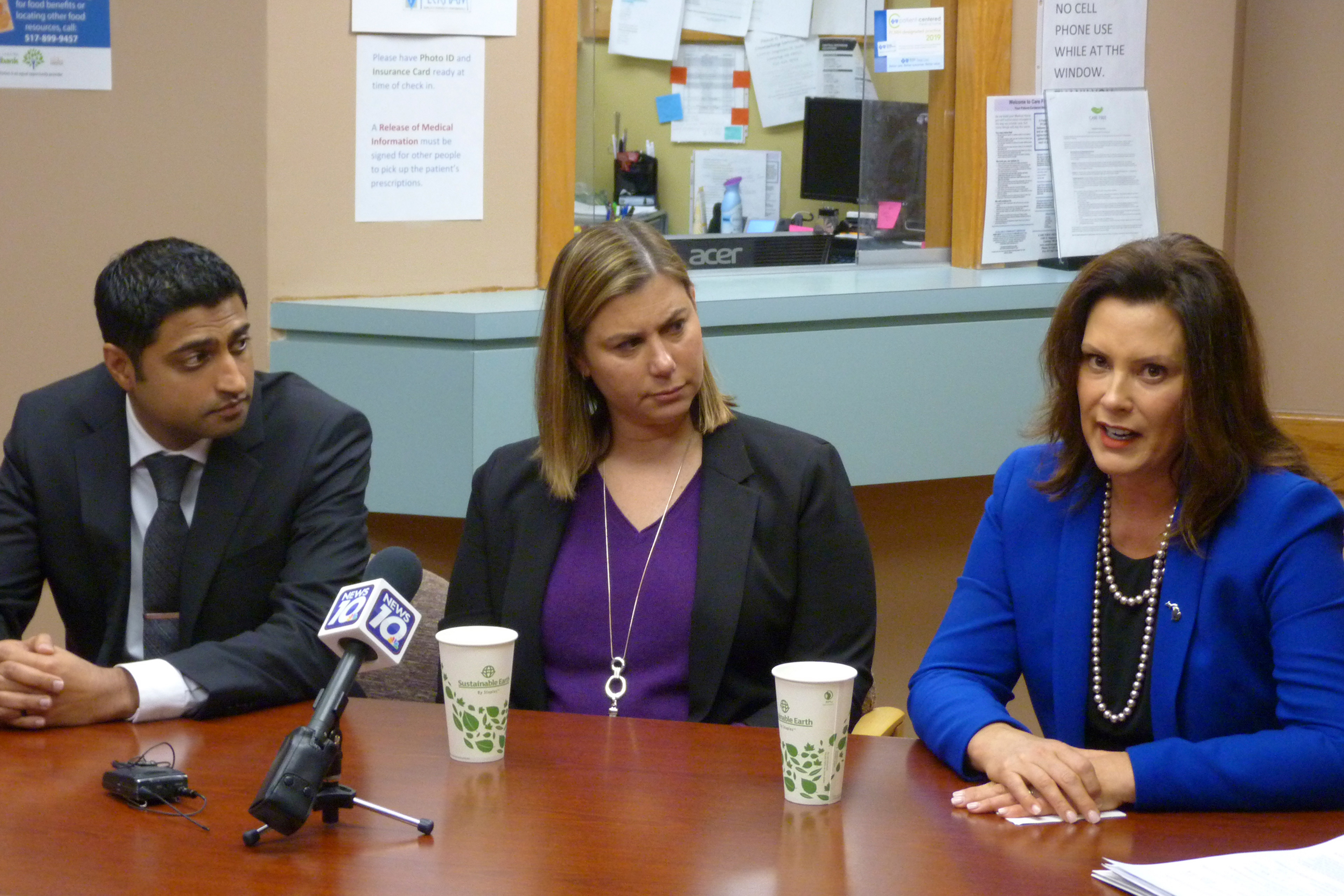
Republican Megabill Will Mean Higher Health Costs for Many Americans

The tax and spending legislation the House voted to send to President Donald Trump’s desk on Thursday, enacting much of his domestic agenda, cuts federal health spending by about $1 trillion over a decade in ways that will jeopardize the physical and financial health of tens of millions of Americans.

The bill, passed in both the House and the Senate without a single Democratic vote, is expected to reverse many of the health coverage gains of the Biden and Obama administrations. Their policies made it easier for millions of people to access health care and reduced the U.S. uninsured rate to record lows, though Republicans say the trade-off was far higher costs borne by taxpayers and increased fraud.

Under the legislation Trump’s expected to sign on Friday, Independence Day, reductions in federal support for Medicaid and Affordable Care Act marketplaces will cause nearly 12 million more people to be without insurance by 2034, the Congressional Budget Office estimates. That in turn is expected to undermine the finances of hospitals, nursing homes, and community health centers — which will have to absorb more of the cost of treating uninsured people. Some may reduce services and employees or close altogether.

Here are five ways the GOP’s plans may affect health care access.

Need Medicaid? Then Get a Job

The deepest cuts to health care spending come from a proposed Medicaid work requirement, which is expected to end coverage for millions of enrollees who do not meet new employment or reporting standards.

In 40 states and Washington, D.C., all of which have expanded Medicaid under the Affordable Care Act, some Medicaid enrollees will have to regularly file paperwork proving that they are working, volunteering, or attending school at least 80 hours a month, or that they qualify for an exemption, such as caring for a young child. The new requirement will start as early as January 2027.

The bill’s requirement doesn’t apply to people in the 10 largely GOP-led states that have not expanded Medicaid to nondisabled adults.

Health researchers say the policy will have little impact on employment. Most working-age Medicaid enrollees who don’t receive disability benefits already work or are looking for work, or are unable to do so because they have a disability, attend school, or care for a family member, according to KFF, a health information nonprofit that includes KFF Health News.

State experiments with work requirements have been plagued with administrative issues, such as eligible enrollees’ losing coverage over paperwork problems, and budget overruns. Georgia’s work requirement, which officially launched in July 2023, has cost more than $90 million, with only $26 million of that spent on health benefits, according to the Georgia Budget & Policy Institute, a nonpartisan research organization.

“The hidden costs are astronomical,” said Chima Ndumele, a professor at the Yale School of Public Health.

Less Cash Means Less Care in Rural Communities

Belt-tightening that targets states could translate into fewer health services, medical professionals, and even hospitals, especially in rural communities.

The GOP’s plan curtails a practice, known as provider taxes, that nearly every state has used for decades to increase Medicaid payments to hospitals, nursing homes, and other providers and to private managed-care companies.

States often use the federal money generated through the taxes to pay the institutions more than Medicaid would otherwise pay. Medicaid generally pays lower fees for care than Medicare, the program for people over 65 and some with disabilities, and private insurance. But thanks to provider taxes, some hospitals are paid more under Medicaid than Medicare, according to the Commonwealth Fund, a health research nonprofit.

Hospitals and nursing homes say they use these extra Medicaid dollars to expand or add new services and improve care for all patients.

Rural hospitals typically operate on thin profit margins and rely on payments from Medicaid taxes to sustain them. Researchers from the Cecil G. Sheps Center for Health Services Research who examined the original House version of the bill concluded it would push more than 300 rural hospitals — many of them in Kentucky, Louisiana, California, and Oklahoma — toward service reductions or closure.

Republicans in the Senate tacked a $50 billion fund onto the legislation to cushion the blow to rural hospitals. The money will be distributed starting in 2027 and continue for five years.

Harder To Get, and Keep, ACA Coverage

For those with Obamacare plans, the new legislation will make it harder to enroll and to retain their coverage.

ACA marketplace policyholders will be required to update their income, immigration status, and other information each year, rather than be allowed to automatically reenroll — something more than 10 million people did this year. They’ll also have less time to enroll; the bill shortens the annual open enrollment period by about a month.

People applying for coverage outside that period — for instance because they lose a job or other insurance or need to add a newborn or spouse to an existing policy — will have to wait for all their documents to be processed before receiving government subsidies to help pay their monthly premiums. Today, they get up to 90 days of premium help during the application process, which can take weeks.

Republican lawmakers and some conservative policy think tanks, including the Paragon Health Institute, say the changes are needed to reduce fraudulent enrollments, while opponents say they represent Trump’s best effort to undo Obamacare.

The legislation also does not call for an extension of more generous premium subsidies put in place during the covid pandemic. If Congress doesn’t act, those enhanced subsidies will expire at year’s end, resulting in premiums rising by an average of 75% next year, according to KFF.

On Medicaid? Pay More To See Doctors

Many Medicaid enrollees can expect to pay more out-of-pocket for appointments.

Trump’s legislation requires states that have expanded Medicaid to charge enrollees up to $35 for some services if their incomes are between the federal poverty level (this year, $15,650 for an individual) and 138% of that amount ($21,597).

Medicaid enrollees often don’t pay anything when seeking medical services because studies have shown charging even small copayments prompts low-income people to forgo needed care. In recent years, some states have added charges under $10 for certain services.

The policy won’t apply to people seeking primary care, mental health care, or substance abuse treatment. The bill allows states to enact even higher cost sharing for enrollees who seek emergency room care for nonemergencies. But if Medicaid patients fail to pay, hospitals and other providers could be left to foot the bill.

Cuts for Lawfully Present Immigrants

The GOP plan could cause at least hundreds of thousands of immigrants who are lawfully present — including asylum-seekers, victims of trafficking, and refugees — to lose their ACA marketplace coverage by cutting off the subsidies that make premiums affordable. The restriction won’t apply to green-card holders.

Because the immigrants who will lose subsidies under the legislation tend to be younger than the overall U.S. population, their exit would leave an older, sicker, and costlier population of marketplace enrollees, further pushing up marketplace premiums, according to marketplace directors in California, Maryland, and Massachusetts and health analysts.

Taking health care access away from immigrants living in the country legally “will do irreparable harm to individuals we have promised to protect and impose unnecessary costs on local systems already under strain,” John Slocum, executive director of Refugee Council USA, an advocacy group, said in a statement.

The bill reflects the Trump administration’s restrictive approach to immigration. But because it ran afoul of Senate rules, the legislation doesn’t include a proposal that would have reduced federal Medicaid payments to states such as California that use their own money to cover immigrants without legal status.

KFF Health News chief Washington correspondent Julie Rovner contributed reporting.

KFF Health News is a national newsroom that produces in-depth journalism about health issues and is one of the core operating programs at KFF—an independent source of health policy research, polling, and journalism. Learn more about KFF.

USE OUR CONTENT

This story can be republished for free (details).

To Keep Medicaid, Mom Caring for Disabled Adult Son Faces Prospect of Proving She Works

Four years before Kimberly Gallagher enrolled in Medicaid herself, the public health insurance program’s rules prompted her to make an excruciating choice — to give up guardianship of her son so she could work as his caregiver.

Now, another proposed twist in the rules could mean that, even though Missouri pays her to do that work, she might still have to prove to the state that she’s not unemployed.

The Kansas City, Missouri, resident has cared for her disabled son, Daniel, for all 31 years of his life. A rare genetic condition called Prader-Willi syndrome, in addition to autism, left him with an intellectual disability; a constant, excessive hunger; and an inability to speak. His needs left Gallagher, an elementary school teacher by training, with little opportunity to work outside her home.

As congressional Republicans slash about $1 trillion in federal Medicaid spending, Gallagher is among the 18.5 million Americans who could be required to prove that they work enough to keep their health insurance.

A budget bill that passed the House and Senate would require 80 hours of work or community service a month for adults who are insured through the Affordable Care Act’s Medicaid expansion program, which has allowed states to extend Medicaid coverage to more adults with low incomes. Forty states, plus Washington, D.C., have expanded their programs, additions that now cover about 20 million Americans, including Gallagher.

She enrolled in the coverage in December 2023, after she could no longer afford her private insurance. Before her husband died of cancer in 2019, the couple paid for private insurance and supported themselves on the income he earned as a master watchmaker. After his death, Gallagher was left to earn a living and find insurance on her own. At 59, she’s too young to collect her husband’s Social Security survivor benefit.

The Medicaid program that pays for in-home care for Daniel and 8,000 other Missourians with disabilities allows family members to be compensated for caregiving, but only if they’re not the legal guardian of the person they care for. So, Gallagher went to court to give up her rights to make decisions for her son and transfer authority to her parents.

“I think it’s appalling that it’s required, but it was necessary,” she said. “There was no way I could work outside of taking care of Daniel.”

Republicans have touted Medicaid work requirements both as a way to reduce federal spending on the program and as a moral imperative for Americans.

“Go out there. Do entry-level jobs. Get into the workforce. Prove that you matter. Get agency into your own life,” Mehmet Oz, administrator of the Centers for Medicare & Medicaid Services, said in a recent interview on Fox Business.

Democrats, meanwhile, have cast the requirements as bureaucratic red tape that won’t meaningfully increase employment but will cause eligible people to lose their health insurance because of administrative hurdles.

Indeed, the vast majority of Americans enrolled in Medicaid expansion are already working, caregiving, attending school, or have a disability, according to an analysis by KFF, a health information nonprofit that includes KFF Health News.

And while the Congressional Budget Office estimates the work requirement included in the House bill would cause 4.8 million Americans to lose their insurance, only about 300,000 of those people are unemployed because of lack of interest in working, according to the Urban Institute, a nonprofit research group. Recent history in states that have tried work requirements suggests technical and paperwork problems have caused a substantial portion of coverage losses.

Still, the provisions are generally popular among Republican lawmakers and the public. Sen. Josh Hawley (R-Mo.), who has repeatedly cautioned against cutting people off from Medicaid, has signaled support for adding work requirements.

And 68% of Americans favor the requirement described in the House bill, according to a recent poll conducted by KFF. But support for work requirements dropped as low as 35% when respondents learned that most Medicaid recipients already work and could lose their coverage because of paperwork requirements.

That’s what happened in Arkansas, where 18,000 people lost their Medicaid coverage in 2018 after the state phased in a work requirement. Thousands more were on pace to lose coverage in 2019 before a federal judge halted the requirement, largely over concerns about coverage losses. In discussions with focus groups, KFF found that many Arkansas Medicaid participants did not fully understand the requirements, despite the state’s outreach efforts, and some people didn’t receive mailed notices. Others were confused because the work-reporting paperwork and separate forms to renew Medicaid coverage asked for similar information.

Many family caregivers would be exempt from the work requirements proposed in Congress, but Gallagher probably would not, since she had to relinquish guardianship of her son to be paid for the work. While the hours she already logs should be enough to satisfy the requirement, she’ll need to report them again — unless the state can identify her through its existing data. But Missouri has a history of procedural problems in the state agency that administers Medicaid.

In early 2022, for example, Missouri was taking more than 100 days on average to process applications for Medicaid expansion, a wait that prompted patients to put off needed care and was more than twice the processing time allowed by federal law.

And 79% of the more than 378,000 Missourians who lost Medicaid coverage when covid-era enrollment protections ended in 2023 did so because of procedural reasons.

The next year, a federal judge ruled that Missourians were illegally being denied food aid by the state, in part because insufficient staffing at call centers left eligible people without assistance.

“They’re historically understaffed,” Timothy McBride, a health economist at Washington University in St. Louis, said of the state agency that administers Medicaid and food assistance. “I think that’s really the underlying problem.”

McBride’s analysis of Missouri’s Medicaid recipients found that fewer than 45,000 of the people enrolled in expansion in 2023 were unemployed for reasons other than caregiving, disability, attending school, or retirement. But more than twice that many Missourians could lose their insurance if work requirements prompt disenrollment rates similar to Arkansas’ implementation, according to a study from the Center on Budget and Policy Priorities, a left-leaning think tank that analyzes government policies.

The estimate assumes many otherwise eligible people would still lose coverage as a result of falling through the cracks, McBride said.

Hawley, who backed the Senate bill, declined to comment for this article. The senator previously told reporters that “we can sort that out” when asked about eligible people inadvertently losing Medicaid because of work requirements.

Gallagher worries about her coverage, because she recently was diagnosed with Hashimoto’s disease, an autoimmune disorder that attacks the thyroid gland. She said she had to search for her Medicaid card to fill the prescription that followed, having barely used it in the year in a half she’s been covered.

She also worries about her son’s Medicaid. A nursing home is not a realistic option, considering his needs. His coverage doubles as Gallagher’s only source of income and also pays for other caregivers, when she can find them, who give her breaks to tend to her own health and to her aging parents.

But nearly all in-home services like those Daniel receives are optional programs that states are not required to include in their Medicaid programs. And the magnitude of the cuts being proposed have prompted fears that the optional programs could be chopped.

“It would destroy our lives,” Gallagher said. “The only income we would have would be Daniel’s Social Security.”

KFF Health News is a national newsroom that produces in-depth journalism about health issues and is one of the core operating programs at KFF—an independent source of health policy research, polling, and journalism. Learn more about KFF.

USE OUR CONTENT

This story can be republished for free (details).

To Keep Medicaid, Mom Caring for Disabled Adult Son Faces Prospect of Proving She Works

Four years before Kimberly Gallagher enrolled in Medicaid herself, the public health insurance program’s rules prompted her to make an excruciating choice — to give up guardianship of her son so she could work as his caregiver.

Now, another proposed twist in the rules could mean that, even though Missouri pays her to do that work, she might still have to prove to the state that she’s not unemployed.

The Kansas City, Missouri, resident has cared for her disabled son, Daniel, for all 31 years of his life. A rare genetic condition called Prader-Willi syndrome, in addition to autism, left him with an intellectual disability; a constant, excessive hunger; and an inability to speak. His needs left Gallagher, an elementary school teacher by training, with little opportunity to work outside her home.

As congressional Republicans slash about $1 trillion in federal Medicaid spending, Gallagher is among the 18.5 million Americans who could be required to prove that they work enough to keep their health insurance.

A budget bill that passed the House and Senate would require 80 hours of work or community service a month for adults who are insured through the Affordable Care Act’s Medicaid expansion program, which has allowed states to extend Medicaid coverage to more adults with low incomes. Forty states, plus Washington, D.C., have expanded their programs, additions that now cover about 20 million Americans, including Gallagher.

She enrolled in the coverage in December 2023, after she could no longer afford her private insurance. Before her husband died of cancer in 2019, the couple paid for private insurance and supported themselves on the income he earned as a master watchmaker. After his death, Gallagher was left to earn a living and find insurance on her own. At 59, she’s too young to collect her husband’s Social Security survivor benefit.

The Medicaid program that pays for in-home care for Daniel and 8,000 other Missourians with disabilities allows family members to be compensated for caregiving, but only if they’re not the legal guardian of the person they care for. So, Gallagher went to court to give up her rights to make decisions for her son and transfer authority to her parents.

“I think it’s appalling that it’s required, but it was necessary,” she said. “There was no way I could work outside of taking care of Daniel.”

Republicans have touted Medicaid work requirements both as a way to reduce federal spending on the program and as a moral imperative for Americans.

“Go out there. Do entry-level jobs. Get into the workforce. Prove that you matter. Get agency into your own life,” Mehmet Oz, administrator of the Centers for Medicare & Medicaid Services, said in a recent interview on Fox Business.

Democrats, meanwhile, have cast the requirements as bureaucratic red tape that won’t meaningfully increase employment but will cause eligible people to lose their health insurance because of administrative hurdles.

Indeed, the vast majority of Americans enrolled in Medicaid expansion are already working, caregiving, attending school, or have a disability, according to an analysis by KFF, a health information nonprofit that includes KFF Health News.

And while the Congressional Budget Office estimates the work requirement included in the House bill would cause 4.8 million Americans to lose their insurance, only about 300,000 of those people are unemployed because of lack of interest in working, according to the Urban Institute, a nonprofit research group. Recent history in states that have tried work requirements suggests technical and paperwork problems have caused a substantial portion of coverage losses.

Still, the provisions are generally popular among Republican lawmakers and the public. Sen. Josh Hawley (R-Mo.), who has repeatedly cautioned against cutting people off from Medicaid, has signaled support for adding work requirements.

And 68% of Americans favor the requirement described in the House bill, according to a recent poll conducted by KFF. But support for work requirements dropped as low as 35% when respondents learned that most Medicaid recipients already work and could lose their coverage because of paperwork requirements.

That’s what happened in Arkansas, where 18,000 people lost their Medicaid coverage in 2018 after the state phased in a work requirement. Thousands more were on pace to lose coverage in 2019 before a federal judge halted the requirement, largely over concerns about coverage losses. In discussions with focus groups, KFF found that many Arkansas Medicaid participants did not fully understand the requirements, despite the state’s outreach efforts, and some people didn’t receive mailed notices. Others were confused because the work-reporting paperwork and separate forms to renew Medicaid coverage asked for similar information.

Many family caregivers would be exempt from the work requirements proposed in Congress, but Gallagher probably would not, since she had to relinquish guardianship of her son to be paid for the work. While the hours she already logs should be enough to satisfy the requirement, she’ll need to report them again — unless the state can identify her through its existing data. But Missouri has a history of procedural problems in the state agency that administers Medicaid.

In early 2022, for example, Missouri was taking more than 100 days on average to process applications for Medicaid expansion, a wait that prompted patients to put off needed care and was more than twice the processing time allowed by federal law.

And 79% of the more than 378,000 Missourians who lost Medicaid coverage when covid-era enrollment protections ended in 2023 did so because of procedural reasons.

The next year, a federal judge ruled that Missourians were illegally being denied food aid by the state, in part because insufficient staffing at call centers left eligible people without assistance.

“They’re historically understaffed,” Timothy McBride, a health economist at Washington University in St. Louis, said of the state agency that administers Medicaid and food assistance. “I think that’s really the underlying problem.”

McBride’s analysis of Missouri’s Medicaid recipients found that fewer than 45,000 of the people enrolled in expansion in 2023 were unemployed for reasons other than caregiving, disability, attending school, or retirement. But more than twice that many Missourians could lose their insurance if work requirements prompt disenrollment rates similar to Arkansas’ implementation, according to a study from the Center on Budget and Policy Priorities, a left-leaning think tank that analyzes government policies.

The estimate assumes many otherwise eligible people would still lose coverage as a result of falling through the cracks, McBride said.

Hawley, who backed the Senate bill, declined to comment for this article. The senator previously told reporters that “we can sort that out” when asked about eligible people inadvertently losing Medicaid because of work requirements.

Gallagher worries about her coverage, because she recently was diagnosed with Hashimoto’s disease, an autoimmune disorder that attacks the thyroid gland. She said she had to search for her Medicaid card to fill the prescription that followed, having barely used it in the year in a half she’s been covered.

She also worries about her son’s Medicaid. A nursing home is not a realistic option, considering his needs. His coverage doubles as Gallagher’s only source of income and also pays for other caregivers, when she can find them, who give her breaks to tend to her own health and to her aging parents.

But nearly all in-home services like those Daniel receives are optional programs that states are not required to include in their Medicaid programs. And the magnitude of the cuts being proposed have prompted fears that the optional programs could be chopped.

“It would destroy our lives,” Gallagher said. “The only income we would have would be Daniel’s Social Security.”

KFF Health News is a national newsroom that produces in-depth journalism about health issues and is one of the core operating programs at KFF—an independent source of health policy research, polling, and journalism. Learn more about KFF.

USE OUR CONTENT

This story can be republished for free (details).

GOP Governors Mum as Congress Moves To Slash Medicaid Spending for Their States

The last time a Republican-controlled Congress and President Donald Trump moved to slash Medicaid spending, in 2017, a key political force stood in their way: GOP governors.

Now, as Congress steamrolls toward passing historic Medicaid cuts of about $1 trillion over 10 years through Trump’s tax and spending legislation, red-state governors are saying little publicly about what it does to health care — even as they face reductions that will punch multibillion-dollar holes in their states’ budgets.

Medicaid, a program jointly run by states and the federal government, covers more than 70 million low-income or disabled people, including nearly half of the nation’s children. Republicans say the $900 billion-a-year program was allowed to grow too large under Democrats Barack Obama and Joe Biden by adding nondisabled adults they say don’t deserve government assistance, and they have long sought to scale it back.

Some of the biggest health cuts in the legislation Trump calls the “One Big Beautiful Bill” are achieved through new policies that would reduce enrollment by imposing more paperwork demands on enrollees, including a requirement that many prove they’re working. Those policies would affect only states that expanded Medicaid to more low-income people under the Affordable Care Act.

Nineteen of those states are led by Republican governors. Their silence on the bill’s health measures is giving political cover to GOP lawmakers from their states as they seek to cut Medicaid coverage for millions of people who gained it within the last decade.

KFF Health News contacted all 19 governors for comment on the legislation’s Medicaid cuts. Only six responded. Most said they backed imposing a work requirement on adult Medicaid enrollees.

“Implementing work requirements for able-bodied adults is a good and necessary reform so that Medicaid is being used for temporary assistance and not a permanent entitlement,” said Drew Galang, a spokesperson for Gov. Patrick Morrisey of West Virginia.

“Governor Rhoden supports workforce participation as a requirement of Medicaid expansion eligibility,” said Josie Harms, a spokesperson for South Dakota Gov. Larry Rhoden, adding that congressional lawmakers have the governor’s support: “South Dakota has an excellent federal delegation, and Governor Rhoden trusts them to fight for South Dakota’s priorities while delivering on President Trump’s promises.”

In a sign of how the political winds have changed, none of the governors said anything about another of the legislation’s significant cuts, to provider taxes — a tool that nearly all of their states use to help pay their share of Medicaid and gain additional funds from the federal government. That change is expected to cost states billions.

No Longer a Bipartisan Issue

In contrast to the radio silence from GOP governors, Democratic governors have campaigned against the megabill for weeks.

Pennsylvania Gov. Josh Shapiro posted on the social platform X that Trump and congressional Republicans were misleading Americans by saying they were cutting only waste, fraud, and abuse in Medicaid.

“They’re rushing to kick hundreds of thousands of Pennsylvanians off their healthcare — and lying about it,” he posted. “The damage this will do here in Pennsylvania and across America is staggering and will be felt for years to come.”

In New York, Gov. Kathy Hochul on July 1 charged that Trump’s legislation would devastate hospitals and could lead to more than 34,000 job cuts in her state.

“The collective impact of the GOP reconciliation bill in Washington, D.C., could force hospitals to curtail critically needed services such as maternity care and psychiatric treatment, not to mention to downsize operations, and even close entirely,” she said in a statement.

In 2017, the chorus was bipartisan, as Republican governors in Ohio, Nevada, and Massachusetts spoke out against cutting Medicaid. Trump’s bill to repeal much of the Affordable Care Act and roll back its Medicaid expansion narrowly failed in the Senate.

“It’s been surprising that red-state governors, particularly those in Medicaid expansion states, haven’t spoken out against Medicaid cuts,” said Larry Levitt, executive vice president for health policy at KFF, a health information nonprofit that includes KFF Health News. “Republican governors were a potent political force in the failed 2017 effort to repeal and replace the ACA, including Medicaid expansion.”

What’s changed since 2017, policy experts say, is that there are fewer moderate Republican governors, and GOP state executives who advocated for Medicaid expansion over a decade ago are no longer in office.

Additionally, seven of the then-red states that expanded Medicaid did so via ballot initiative, mostly over opposition from their governors.

In fact, the Medicaid work requirement is backed by many Republican governors, even if it means less federal Medicaid money and leads to fewer people covered.

Several states, including Arkansas and Ohio, have already passed state laws to implement a requirement that adults enrolled under the ACA’s Medicaid expansion work, volunteer, go to school, or participate in job training. Most states have yet to bring work requirement programs to fruition because they are waiting for federal government approval.

Charles “Chip” Kahn, president of the Federation of American Hospitals, a trade group of investor-owned hospitals, said that while fewer governors have engaged publicly in trying to block Medicaid cuts under the bill, federal lawmakers are hearing from legislators in their states.

A political dilemma for Republican governors is that, unlike in 2017, the bill before Congress is not legislation aimed expressly at repealing Obamacare. With a scope broader than health care, it would extend many of Trump’s tax cuts and direct billions in new spending toward border security, immigration enforcement, and the military, while also cutting health care spending.

“It’s like playing multidimensional chess rather than focusing on one issue,” Kahn said.

Larry Jacobs, director of the Center for the Study of Politics and Governance at the University of Minnesota, said some Republican governors may have expressed concerns privately to their states’ GOP senators but are not speaking out publicly for fear of drawing Trump’s wrath.

“Why are they being cagey? Trump and not wanting to be ‘Liz Cheney’d,’” Jacobs said, referring to the Republican former Wyoming lawmaker whom Trump helped oust after she served as vice chair of an inquiry into his attempts to overturn the results of the 2020 election.

Walking Political Tightropes

The political peril Republican lawmakers face in publicly challenging Trump remains explicit. On June 29, Sen. Thom Tillis (R-N.C.) announced he would not run for reelection after he voiced concerns about the bill and the president threatened to back a primary challenger. Tillis was one of three GOP senators to vote against it on July 1, though it still narrowly passed.

In addition to the work requirement, the biggest Medicaid cuts in the bill stem from its restrictions on provider taxes — levies that states impose on hospitals, nursing homes, and other health care institutions to help increase their federal reimbursement. Much of the additional money is then returned to the health care providers in the form of higher payments for their Medicaid patients.

The practice, which has been adopted in every state but Alaska, has been criticized by some Beltway Republicans as “money laundering” — even though the taxes are approved by state lawmakers and the federal Centers for Medicare & Medicaid Services and have been allowed under federal law for decades.

The Senate bill would limit the money states could raise — a move that would mean billions in funding cuts to states and their hospitals.

The states with Republican governors that expanded Medicaid are Alaska, Arkansas, Idaho, Indiana, Iowa, Louisiana, Missouri, Montana, Nebraska, New Hampshire, Nevada, North Dakota, Ohio, Oklahoma, South Dakota, Vermont, Virginia, West Virginia, and Utah.

One of the governors who expressed concerns about repealing the Obamacare Medicaid expansion in 2017 was Jim Justice of West Virginia, a Democrat at the time.

In a June 2017 letter to West Virginia Sen. Shelley Moore Capito, a Republican, Justice wrote: “Since so many of our people count on Medicaid, any cut to Medicaid would destroy families in West Virginia.” He added that “the consequences would be beyond catastrophic.”

On July 1, Justice — elected to the Senate as a Republican last year — voted for Trump’s megabill, including its Medicaid cuts.

“The Senator believes this bill strikes a good balance between protecting the most vulnerable and those who rely on the program while rooting out waste, fraud, and abuse to ensure the program is run efficiently for those deserving,” William O’Grady, a Justice spokesperson, said in an email July 2.

KFF Health News correspondent Arielle Zionts contributed to this report.

KFF Health News is a national newsroom that produces in-depth journalism about health issues and is one of the core operating programs at KFF—an independent source of health policy research, polling, and journalism. Learn more about KFF.

USE OUR CONTENT

This story can be republished for free (details).

Trump’s Bill Reaches the Finish Line

The Host

Julie Rovner
KFF Health News


@jrovner


@julierovner.bsky.social

Read Julie’s stories.

Julie Rovner is chief Washington correspondent and host of KFF Health News’ weekly health policy news podcast, “What the Health?” A noted expert on health policy issues, Julie is the author of the critically praised reference book “Health Care Politics and Policy A to Z,” now in its third edition.

Early Thursday afternoon, the House approved a budget reconciliation bill that not only would make permanent many of President Donald Trump’s 2017 tax cuts, but also impose deep cuts to Medicaid, the Affordable Care Act, and, indirectly, Medicare.

Meanwhile, those appointed by Health and Human Services Secretary Robert F. Kennedy Jr. to a key vaccine advisory panel used their first official meeting to cast doubt on a preservative that has been used in flu vaccines for decades — with studies showing no evidence of its harm in low doses.

This week’s panelists are Julie Rovner of KFF Health News, Alice Miranda Ollstein of Politico, Maya Goldman of Axios, and Sarah Karlin-Smith of the Pink Sheet.

Panelists

Maya Goldman
Axios


@mayagoldman_


@maya-goldman.bsky.social


Read Maya’s stories

Sarah Karlin-Smith
Pink Sheet


@SarahKarlin


@sarahkarlin-smith.bsky.social


Read Sarah’s stories.

Alice Miranda Ollstein
Politico


@AliceOllstein


@alicemiranda.bsky.social


Read Alice’s stories.

Among the takeaways from this week’s episode:

  • This week the GOP steamrolled toward a major constriction of the nation’s social safety net, pushing through Trump’s tax and spending bill. The legislation contains significant changes to the way Medicaid is funded and delivered — in particular, through imposing the program’s first federal work requirement on many enrollees. Hospitals say the changes would be devastating, potentially resulting in the loss of services and facilities that could touch all patients, not only those on Medicaid.
  • Some proposals in Trump’s bill were dropped during the Senate’s consideration, including a ban on Medicaid coverage for gender-affirming care and federal funding cuts for states that use their own Medicaid funds to cover immigrants without legal status. And for all the talk of not touching Medicare, the legislation’s repercussions for the deficit are expected to trigger spending cuts to the program that covers those over 65 and some with disabilities — potentially as soon as the next fiscal year.
  • The newly reconstituted Advisory Committee on Immunization Practices met last week, and it looked pretty different from previous meetings: In addition to new members, there were fewer staffers on hand from the Centers for Disease Control and Prevention — and the notable presence of vaccine critics. The panel’s vote to reverse the recommendation of flu shots containing a mercury-based preservative — plus its plans to review the childhood vaccine schedule — hint at what’s to come.

Plus, for “extra credit,” the panelists suggest health policy stories they read this week that they think you should read, too:

Julie Rovner: The Lancet’s “Evaluating the Impact of Two Decades of USAID Interventions and Projecting the Effects of Defunding on Mortality up to 2030: A Retrospective Impact Evaluation and Forecasting Analysis,” by Daniella Medeiros Cavalcanti, et al.

Alice Miranda Ollstein: The New York Times’ “‘I Feel Like I’ve Been Lied To’: When a Measles Outbreak Hits Home,” by Eli Saslow.

Maya Goldman: Axios’ “New Docs Get Schooled in Old Diseases as Vax Rates Fall,” by Tina Reed.

Sarah Karlin-Smith: Wired’s “Snake Venom, Urine, and a Quest to Live Forever: Inside a Biohacking Conference Emboldened by MAHA,” by Will Bahr.

Also mentioned in this week’s episode:

Credits

Francis Ying
Audio producer

Emmarie Huetteman
Editor

To hear all our podcasts, click here.

And subscribe to KFF Health News’ “What the Health?” on SpotifyApple PodcastsPocket Casts, or wherever you listen to podcasts.
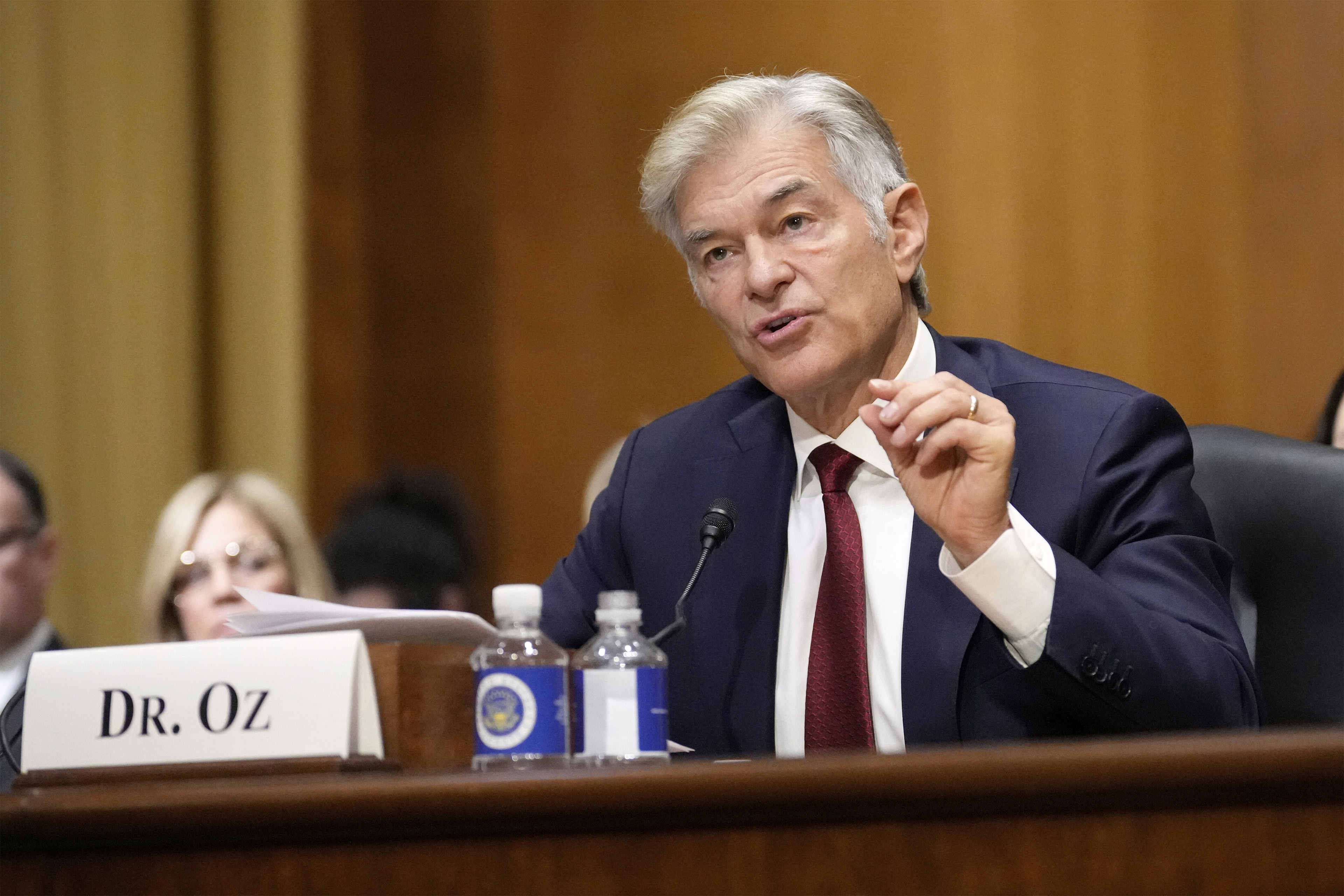
KFF Health News is a national newsroom that produces in-depth journalism about health issues and is one of the core operating programs at KFF—an independent source of health policy research, polling, and journalism. Learn more about KFF.

USE OUR CONTENT

This story can be republished for free (details).

We encourage organizations to republish our content, free of charge. Here’s what we ask:

You must credit us as the original publisher, with a hyperlink to our kffhealthnews.org site. If possible, please include the original author(s) and KFF Health News” in the byline. Please preserve the hyperlinks in the story.

It’s important to note, not everything on kffhealthnews.org is available for republishing. If a story is labeled “All Rights Reserved,” we cannot grant permission to republish that item.

Have questions? Let us know at [email protected]

States Brace for Reversal of Obamacare Coverage Gains Under Trump’s Budget Bill

Shorter enrollment periods. More paperwork. Higher premiums. The sweeping tax and spending bill pushed by President Donald Trump includes provisions that would not only reshape people’s experience with the Affordable Care Act but, according to some policy analysts, also sharply undermine the gains in health insurance coverage associated with it.

The moves affect consumers and have particular resonance for the 19 states (plus Washington, D.C.) that run their own ACA exchanges.

Many of those states fear that the additional red tape — especially requirements that would end automatic reenrollment — would have an outsize impact on their policyholders. That’s because a greater percentage of people in those states use those rollovers versus shopping around each year, which is more commonly done by people in states that use the federal healthcare.gov marketplace.

“The federal marketplace always had a message of, ‘Come back in and shop,’ while the state-based markets, on average, have a message of, ‘Hey, here’s what you’re going to have next year, here’s what it will cost; if you like it, you don’t have to do anything,’” said Ellen Montz, who oversaw the federal ACA marketplace under the Biden administration as deputy administrator and director at the Center for Consumer Information and Insurance Oversight. She is now a managing director with the Manatt Health consulting group.

Millions — perhaps up to half of enrollees in some states — may lose or drop coverage as a result of that and other changes in the legislation combined with a new rule from the Trump administration and the likely expiration at year’s end of enhanced premium subsidies put in place during the covid-19 pandemic. Without an extension of those subsidies, which have been an important driver of Obamacare enrollment in recent years, premiums are expected to rise 75% on average next year. That’s starting to happen already, based on some early state rate requests for next year, which are hitting double digits.

“We estimate a minimum 30% enrollment loss, and, in the worst-case scenario, a 50% loss,” said Devon Trolley, executive director of Pennie, the ACA marketplace in Pennsylvania, which had 496,661 enrollees this year, a record.

Drops of that magnitude nationally, coupled with the expected loss of Medicaid coverage for millions more people under the legislation Trump calls the “One Big Beautiful Bill,” could undo inroads made in the nation’s uninsured rate, which dropped by about half from the time most of the ACA’s provisions went into effect in 2014, when it hovered around 14% to 15% of the population, to just over 8%, according to the most recent data.

Premiums would rise along with the uninsured rate, because older or sicker policyholders are more likely to try to jump enrollment hurdles, while those who rarely use coverage — and are thus less expensive — would not.

After a dramatic all-night session, House Republicans passed the bill, meeting the president’s July 4 deadline. Trump is expected to sign the measure on Independence Day. It would increase the federal deficit by trillions of dollars and cut spending on a variety of programs, including Medicaid and nutrition assistance, to partly offset the cost of extending tax cuts put in place during the first Trump administration.

The administration and its supporters say the GOP-backed changes to the ACA are needed to combat fraud. Democrats and ACA supporters see this effort as the latest in a long history of Republican efforts to weaken or repeal Obamacare. Among other things, the legislation would end several changes put in place by the Biden administration that were credited with making it easier to sign up, such as lengthening the annual open enrollment period and launching a special program for very low-income people that essentially allows them to sign up year-round.

In addition, automatic reenrollment, used by more than 10 million people for 2025 ACA coverage, would end in the 2028 sign-up season. Instead, consumers would have to update their information, starting in August each year, before the close of open enrollment, which would end Dec. 15, a month earlier than currently.

That’s a key change to combat rising enrollment fraud, said Brian Blase, president of the conservative Paragon Health Institute, because it gets at what he calls the Biden era’s “lax verification requirements.”

He blames automatic reenrollment, coupled with the availability of zero-premium plans for people with lower incomes that qualify them for large subsidies, for a sharp uptick in complaints from insurers, consumers, and brokers about fraudulent enrollments in 2023 and 2024. Those complaints centered on consumers’ being enrolled in an ACA plan, or switched from one to another, without authorization, often by commission-seeking brokers.

In testimony to Congress on June 25, Blase wrote that “this simple step will close a massive loophole and significantly reduce improper enrollment and spending.”

States that run their own marketplaces, however, saw few, if any, such problems, which were confined mainly to the 31 states using the federal healthcare.gov.

The state-run marketplaces credit their additional security measures and tighter control over broker access than healthcare.gov for the relative lack of problems.

“If you look at California and the other states that have expanded their Medicaid programs, you don’t see that kind of fraud problem,” said Jessica Altman, executive director of Covered California, the state’s Obamacare marketplace. “I don’t have a single case of a consumer calling Covered California saying, ‘I was enrolled without consent.’”

Such rollovers are common with other forms of health insurance, such as job-based coverage.

“By requiring everyone to come back in and provide additional information, and the fact that they can’t get a tax credit until they take this step, it is essentially making marketplace coverage the most difficult coverage to enroll in,” said Trolley at Pennie, 65% of whose policyholders were automatically reenrolled this year, according to KFF data. KFF is a health information nonprofit that includes KFF Health News.

Federal data shows about 22% of federal sign-ups in 2024 were automatic-reenrollments, versus 58% in state-based plans. Besides Pennsylvania, the states that saw such sign-ups for more than 60% of enrollees include California, New York, Georgia, New Jersey, and Virginia, according to KFF.

States do check income and other eligibility information for all enrollees — including those being automatically renewed, those signing up for the first time, and those enrolling outside the normal open enrollment period because they’ve experienced a loss of coverage or other life event or meet the rules for the low-income enrollment period.

“We have access to many data sources on the back end that we ping, to make sure nothing has changed. Most people sail through and are able to stay covered without taking any proactive step,” Altman said.

If flagged for mismatched data, applicants are asked for additional information. Under current law, “we have 90 days for them to have a tax credit while they submit paperwork,” Altman said.

That would change under the tax and spending plan before Congress, ending presumptive eligibility while a person submits the information.

A white paper written for Capital Policy Analytics, a Washington-based consultancy that specializes in economic analysis, concluded there appears to be little upside to the changes.

While “tighter verification can curb improper enrollments,” the additional paperwork, along with the expiration of higher premiums from the enhanced tax subsidies, “would push four to six million eligible people out of Marketplace plans, trading limited fraud savings for a surge in uninsurance,” wrote free market economists Ike Brannon and Anthony LoSasso.

“Insurers would be left with a smaller, sicker risk pool and heightened pricing uncertainty, making further premium increases and selective market exits [by insurers] likely,” they wrote.

Related Topics

Contact Us

Submit a Story Tip

To Cut Medicaid, the GOP’s Following a Path Often Used To Expand Health Care

President Donald Trump’s “One Big Beautiful” budget reconciliation bill would make some of the most sweeping changes in health policy in years, largely affecting Medicaid and Affordable Care Act plans — with reverberations felt throughout the health care system.

With only a few exceptions, the budget reconciliation process — which allows the political party in control to pass a bill with only 51 votes in the Senate, rather than the usual 60 — is how nearly every major piece of health legislation has passed Congress since the 1980s.

But using reconciliation to constrict rather than expand health coverage, as the GOP is attempting now? That is unusual.

One of the best-known programs born via reconciliation is the “COBRA” health insurance continuation, which allows people who leave jobs with employer-provided insurance to keep it for a time, as long as they pay the full premium.

That is one of dozens of health provisions tucked into COBRA, or the Consolidated Omnibus Budget Reconciliation Act of 1985. Also included was the Emergency Medical Treatment and Active Labor Act, which requires hospitals that take Medicare to treat or transfer patients with medical emergencies, regardless of their insurance status — a law that’s become a focus of abortion opponents as they seek to limit access to the procedure.

A key reason so much health policy has passed this way has to do with how Congress manages the federal budget. Federal government spending falls into two categories: mandatory, or spending required by existing law, and discretionary, which traditionally is allocated and renewed each year as part of the appropriations process.

Lawmakers use the reconciliation process to make changes to mandatory spending programs — Medicare and Medicaid are among the largest — as well as tax policy. (For complicated political reasons, reconciliation bills cannot touch Social Security, the last prong in the entitlement program trifecta.)

Reconciliation comes into play only if it is needed to reconcile taxes or mandatory spending to comply with the terms Congress sets for itself each year, through the annual budget resolution. This year the GOP’s focus is finding the cash to renew Trump’s expiring tax cuts, which largely benefit wealthier Americans, and boost military and border security spending.

In years when Congress orders a reconciliation bill, health policy almost always plays a major part. Usually, reconciliation instructions call for reductions in payments to health providers under Medicare — which costs the most of the federal health programs.

For much of the 1980s and 1990s, Democrats in Congress quietly used reconciliation to expand eligibility for the Medicaid program, often by cutting more than the budget called for from Medicare. For every $5 cut from Medicare, about $1 would be redirected to provide Medicaid to more low-income people.

But budget reconciliation has also become a convenient way to make policy changes to the nation’s major health programs, as it is usually considered a “must-pass” bill likely to be signed by the president and not subject to filibuster in the Senate.

As a result, all manner of now-familiar health programs were created by budget reconciliation bills, many of which provided health coverage to more Americans.

The 1989 reconciliation bill created a new system for paying doctors who treat Medicare patients, as well as a new federal agency to study the cost, quality, and effectiveness of health care, today known as the Agency for Healthcare Research and Quality.

Children’s health has been a popular add-on over the years, including the gradual expansion of Medicaid coverage to more children based on family income. The 1993 reconciliation bill created the Vaccines for Children program, which ensures the availability and affordability of vaccines nationwide for uninsured and underinsured kids. The 1997 reconciliation bill created the Children’s Health Insurance Program, which today provides insurance to more than 7 million children.

In fact, the list of major health bills of the past 50 years not passed using budget reconciliation is short. For instance, the 2003 Medicare Modernization Act, which added a prescription drug benefit to the program for the first time, attracted just enough bipartisan support to pass on its own.

The biggest health care law of recent decades — the Affordable Care Act — didn’t start out as a reconciliation bill, but it ended up using the process to clear its final hurdles.

After initial passage of the bill in December 2009, a special election cost Democrats their 60th seat in the Senate — and with it, the supermajority they needed to pass the bill without Republican votes. In the end, the two chambers used a separate reconciliation measure, the Health Care and Education Reconciliation Act of 2010, to negotiate a compromise that included the ACA.

HealthBent, a regular feature of KFF Health News, offers insight into and analysis of policies and politics from KFF Health News chief Washington correspondent Julie Rovner, who has covered health care for more than 30 years.

Related Topics

Contact Us

Submit a Story Tip

El megaproyecto de ley republicano supondrá más costos de salud para muchos estadounidenses

El “One Big Beautiful Bill” del presidente Donald Trump recorta el gasto federal en los mercados de Medicaid y la Ley de Cuidado de Salud a Bajo precio (ACA) en aproximadamente $1.000 millones a lo largo de una década, según la Oficina de Presupuesto del Congreso (CBO), una entidad no partidista. Esto amenaza la salud física y financiera de decenas de millones de estadounidenses.

El proyecto de ley, aprobado por el Senado el martes 1 de julio, revertiría muchos de los avances en cobertura médica de las administraciones Biden y Obama, cuyas políticas facilitaron el acceso a la atención médica a millones de personas y redujeron la tasa de personas sin seguro en el país a mínimos históricos.

El plan del Senado para recortar drásticamente la financiación de Medicaid y los mercados de ACA podría hacer que unas 12 millones de personas más no tuvieran seguro para 2034, según estima la CBO.

Esto, a su vez, perjudicaría las finanzas de hospitales, residencias de adultos mayores y centros de salud comunitarios —que tendrían que absorber una mayor parte del costo del tratamiento de las personas sin cobertura— y podría obligarlos a reducir servicios y personal, hasta a cerrar instalaciones.

La legislación está en el escritorio de Trump a la espera de su firma, aunque primero el Senado y la Cámara de Representantes deben aprobar la misma versión. La Cámara de Representantes aprobó su propia versión en mayo y se espera que considere la versión del Senado hoy (2 de julio), según Tom Emmer, líder de la mayoría en la Cámara.

A continuación, se presentan cinco maneras en que los planes del Partido Republicano podrían afectar el acceso a la atención médica.

¿Necesita Medicaid? Entonces consigue un trabajo

Los recortes más profundos al gasto en atención médica provienen de la propuesta de un requisito de trabajo para Medicaid, que cortaría la cobertura a millones de afiliados que no cumplen con estos nuevos estándares.

En 40 estados y Washington, D.C., que han ampliado Medicaid bajo ACA, algunos beneficiarios de Medicaid tendrían que presentar regularmente documentación que demuestre que trabajan, hacen voluntariado o asisten a la escuela al menos 80 horas al mes, o que califican para una exención, como por ejemplos el cuidado de un niño pequeño.

El requisito del proyecto de ley no se aplicaría a las personas en los 10 estados, mayoritariamente republicanos, que no han ampliado Medicaid.

Investigadores de salud afirman que la política tendría poco impacto en el empleo. Según KFF, la mayoría de los beneficiarios de Medicaid en edad laboral que no reciben prestaciones por discapacidad ya trabajan o buscan trabajo, o no pueden hacerlo porque tienen una discapacidad, asisten a la escuela o cuidan a un familiar.

Los experimentos estatales con requisitos de trabajo se han visto plagados de problemas administrativos, como la pérdida de cobertura de los beneficiarios elegibles por problemas con el papeleo, y más gasto.

El requisito de trabajo de Georgia, que se implementó oficialmente en julio de 2023, ha costado más de $90 millones, de los cuales solo 26 millones se han destinado a prestaciones de salud, según el  Georgia Budget & Policy Institute, una organización de investigación no partidista.

“Los costos ocultos son astronómicos”, afirmó Chima Ndumele, profesor de la Escuela de Salud Pública de Yale.

Menos dinero significa menos atención en las comunidades rurales

Las medidas de ajuste que se aplicarían a los estados podrían traducirse en una disminución de los servicios de salud, profesionales médicos e incluso hospitales, especialmente en las comunidades rurales.

El plan del Partido Republicano reduciría una práctica conocida como impuestos a los proveedores, que casi todos los estados han utilizado durante décadas para aumentar los pagos de Medicaid a hospitales, residencias de adultos mayores y otros proveedores, así como a empresas privadas de atención médica administrada.

Los estados suelen utilizar el dinero federal generado a través de los impuestos para pagar a las instituciones más de lo que Medicaid pagaría de otra manera. (Medicaid generalmente paga las tarifas más bajas por la atención médica, en comparación con Medicare, el programa para personas mayores de 65 años y algunas personas con discapacidad, y los seguros privados).

Los hospitales y residencias de adultos mayores afirman que utilizan estos fondos adicionales de Medicaid para ampliar o añadir nuevos servicios y mejorar la atención para todos los pacientes.

Los hospitales rurales suelen operar con márgenes de ganancia reducidos y dependen de los pagos de impuestos de Medicaid para sostenerlos. Investigadores del Cecil G. Sheps Center for Health Services Research que examinaron el proyecto de ley de la Cámara concluyeron que este obligaría a más de 300 hospitales rurales, muchos de ellos en Kentucky, Louisiana, California y Oklahoma, a reducir sus servicios o cerrar.

Los senadores republicanos agregaron un fondo de $50 mil millones a su versión del proyecto de ley para amortiguar el impacto en los hospitales rurales.

Más dificultad para obtener, y mantener, la cobertura de ACA

Para quienes tienen cobertura del mercado de seguros de salud de ACA, el plan republicano dificultaría la inscripción y el conservar los planes.

Los asegurados del mercado de seguros estarían obligados a actualizar sus ingresos, estatus migratorio y otra información cada año, en lugar de reinscribirse automáticamente, algo que más de 10 millones de personas hicieron este año.

También tendrían menos tiempo para inscribirse; el proyecto de ley acorta el período anual de inscripción abierta en aproximadamente un mes.

Las personas que soliciten cobertura fuera de ese período —por ejemplo, porque pierden su trabajo u otro seguro, o necesitan agregar a un recién nacido o cónyuge a una póliza existente— tendrían que esperar a que se procesen todos sus documentos antes de recibir subsidios del gobierno para ayudar a pagar sus primas mensuales. Actualmente, reciben hasta 90 días de ayuda con las primas durante el proceso de solicitud, que puede tardar semanas.

Los legisladores republicanos y algunos centros de estudios de políticas conservadoras, incluido el Paragon Health Institute, afirman que los cambios son necesarios para reducir las inscripciones fraudulentas, mientras que los opositores afirman que son el último intento de desmantelar el Obamacare.

La legislación tampoco contempla una extensión de los subsidios mejorados implementados durante la pandemia de covid-19. Si el Congreso no actúa, estos subsidios expirarán a finales de año, lo que resultará en un aumento promedio del 75% en las primas el próximo año, según KFF.

¿Tienes Medicaid? Se pagará más por las consultas médicas

Muchos beneficiarios de Medicaid podrían tener que pagar más de su bolsillo por las citas.

El proyecto de ley exigiría a los estados que han ampliado Medicaid cobrar a los beneficiarios hasta $35 por algunos servicios si sus ingresos se encuentran entre el nivel federal de pobreza (este año, $15.650 por persona) y el 138% de esa cantidad ($21.597).

Los beneficiarios de Medicaid generalmente no pagan nada cuando buscan servicios médicos, ya que estudios han demostrado que cobrar incluso copagos pequeños lleva a las personas de bajos ingresos a renunciar a atención necesaria. En los últimos años, algunos estados han agregado cargos inferiores a $10 por algunos servicios.

Esta política no se aplicaría a las personas que buscan atención primaria, atención de salud mental o tratamiento de adicciones.

Recortes para inmigrantes con residencia legal

El plan republicano podría provocar que al menos cientos de miles de inmigrantes con residencia legal —incluyendo solicitantes de asilo, víctimas de tráfico humano y refugiados— pierdan su cobertura del mercado de seguros al eliminar los subsidios que hacen que las primas sean asequibles. La restricción no se aplicaría a los titulares de tarjetas de residencia permanente (Green Card o tarjeta verde).

Dado que los inmigrantes que perderían subsidios bajo este plan tienden a ser más jóvenes que la población general, su salida dejaría una población de afiliados de mayor edad, con mayor riesgo de enfermedad y costos más elevados, lo que incrementaría aún más las primas del mercado, según directores de los mercados de seguros de salud en California, Maryland y Massachusetts, y analistas de salud.

Quitar el acceso a la atención médica a los inmigrantes que viven legalmente en el país “causará un daño irreparable a las personas que hemos prometido proteger e impondrá costos innecesarios a los sistemas locales que ya están sobrecargados”, declaró John Slocum, director ejecutivo del Refugee Council USA, un grupo de defensa, en un comunicado.

Tanto la versión de la Cámara de Representantes como la del Senado del proyecto de ley reflejan el enfoque restrictivo de la administración Trump hacia la inmigración.

Sin embargo, debido a que contravenía las normas del Senado, la legislación no incluirá una propuesta que habría reducido los pagos federales de Medicaid a estados como California, que utilizan sus propios fondos para cubrir a inmigrantes sin papeles.

La corresponsal principal de KFF Health News en Washington, Julie Rovner, contribuyó con este artículo.

Related Topics

Contact Us

Submit a Story Tip

California Immigrants Weigh Health Coverage Against Deportation Risk

For months, Maria, 55, a caregiver to older adults in California’s Orange County, has been trying not to smile.

If she opens her mouth too wide, she worries, people will see her chipped, plaque-covered front teeth. An immigrant without legal status, Maria doesn’t have health or dental insurance. When her teeth start to throb, she swallows pain pills. Last summer, a dentist said it would cost $2,400 to fix her teeth. That’s more than she can afford.

“It’s so expensive,” said Maria, who often works 12-hour days lifting clients in and out of bed and helping them with hygiene, medication management, and housework. “I need money for my kids, for my rent, for transport, for food. Sometimes, there’s nothing left for me.”

KFF Health News connected with Maria through an advocacy organization for immigrant workers. Fearing deportation, she asked that only her first name be used.

Maria is among what the federal government estimates are 2.6 million immigrants living in California without legal status. The state had gradually sought to bring these immigrants into its Medicaid program, known as Medi-Cal. But now, facing a state enrollment freeze, low-income California residents in the U.S. without legal permission — along with the providers and community workers that help them — are anxiously weighing the benefits of pushing forward with Medi-Cal applications against the risks of discovery and deportation by the federal government.

Seeking to close a projected $12 billion budget deficit, California Gov. Gavin Newsom, a Democrat, signed a balanced state budget on June 27 that will end new Medi-Cal enrollment in January 2026 for those over 19 without legal status.

Meanwhile, federal immigration raids — which appear to have targeted at least one health clinic in the state — are already making some people afraid to seek medical care, say immigrant advocates and health providers. And the recent news that Trump administration officials are sharing Medicaid enrollee data, including immigration status, with deportation authorities is expected to further erode trust in the program.

U.S. Department of Health and Human Services spokesperson Andrew Nixon said the agency, which oversees the Centers for Medicare & Medicaid Services, had the legal authority to share the data to address “unprecedented systemic neglect under the Biden-Harris administration that allowed illegal immigrants to exploit Medicaid while millions of Americans struggle to access care, particularly in states like California.”

Further complicating matters, the Trump administration has threatened to withhold funds from states that provide health coverage to people without legal status. Currently, about 1.6 million people in the country without authorization are enrolled in Medi-Cal.

In 2016, California began opening Medi-Cal to low-income people lacking legal status, starting with children, then gradually expanded it to young people, older adults, and — in January 2024 — those ages 26 to 49. The state Department of Health Care Services, which oversees Medi-Cal, partnered with community health clinics to help get eligible people enrolled.

It’s too early to tell what impact the latest state and federal developments are having on enrollment numbers, since data is available only through March. But many health care providers and advocates said they expect a chilling effect on immigrant enrollment.

Seciah Aquino is executive director of the Latino Coalition for a Healthy California, which supports community health workers — also called promotores — who help spread awareness about Medi-Cal’s expansion to adults lacking legal status. Just over half of public health insurance recipients in California are Latino, compared with just 30% of Medicaid enrollees nationwide.

Aquino said her coalition will tell promotores to disclose data-sharing risks so community members can make informed decisions. 

“They take it very personally that advice that they provided to a fellow community member could now hurt them,” Aquino said.

Newsom condemned the data sharing, calling the move “legally dubious,” while U.S. Sens. Adam Schiff and Alex Padilla, both Democrats, have demanded that the Department of Homeland Security destroy any data shared.  

California’s Department of Health Care Services announced June 13 that it is seeking more information from the federal government. The agency said it submitted monthly reports to CMS with demographic and eligibility information, including name and address, as required by law.

Medicaid enrollee data from Illinois, Washington state, and Washington, D.C., was also reportedly shared with DHS. Jamie Munks, a spokesperson for the Illinois Department of Healthcare and Family Services, the state’s Medicaid agency, said the department was “deeply concerned” by the news and that the data was regularly passed along to CMS with the understanding that it was protected.

In Sacramento, Democratic lawmakers found themselves in the uncomfortable position of rolling back health benefits for low-income residents with unsatisfactory immigration status, including people without legal status, people who’ve held green cards for under five years, and some others who are in the process of applying for legal status or have statuses meant to protect them from deportation. In addition to the Medi-Cal enrollment freeze for immigrants 19 and older in the country without authorization, all enrolled residents with unsatisfactory immigration status from 19 to 59 years old will be charged $30 monthly premiums starting in July 2027.

“What I’m hearing on the ground is folks are telling me they’re going to have a really hard time making these premium payments,” said Carlos Alarcon, health and public benefits policy analyst with the California Immigrant Policy Center, an advocacy group. “The reality is most people already have limited budgets.”

The legislature rejected a proposal from the governor to bar immigrants with unsatisfactory immigration status from receiving long-term nursing home and in-home care through Medi-Cal but went along with eliminating dental benefits starting in July 2026.

Health care providers said that without Medi-Cal coverage, many immigrants will be forced to seek emergency care, which is more expensive for taxpayers than preventive and primary-level care. Sepideh Taghvaei, chief dental officer at Santa Cruz County’s Dientes Community Dental Care, saw this play out in 2009 when the state cut adult Medi-Cal dental benefits. Patients came in with swollen faces and excruciating pain, with conditions so advanced that they required hospital treatment. “It’s not cost-effective,” she said.

State Sen. Roger Niello, a Republican who serves as vice chair of the Senate budget committee, said he believes California shouldn’t be funding Medi-Cal for people who lack legal status, particularly given the state’s fiscal challenges. He also said he worries that coverage of people in the country without authorization could encourage others to move to California.

“If we maintain that expense to the noncitizen,” he said, “we’re going to have to cut someplace else, and that’s undoubtedly going to affect citizens.”

Californians, too, are going through a change of heart. In a May poll conducted by the Public Policy Institute of California, 58% of adults opposed the benefit.

For Maria, shifting health care policies have left her feeling paralyzed. Since she arrived here five years ago, the caregiver’s focus has been on earning money to support her three children, whom she left with her parents in her home country, she said.

Maria didn’t learn she might be eligible for Medi-Cal until earlier this year and hadn’t yet found time to complete the paperwork. After a friend told her that the state could freeze enrollment in January, she began rushing to finish the sign-up process. But then she learned that Medi-Cal data had been shared with immigration authorities.

“Disappointed and scared” was how she described her reaction.

Suddenly, she said, enrolling in Medi-Cal doesn’t seem like a good idea.

Phil Galewitz and Bram Sable-Smith contributed to this report.

This article was produced by KFF Health News, which publishes California Healthline, an editorially independent service of the California Health Care Foundation. 

Inmigrantes en California dudan en pedir cobertura médica por miedo a ser deportados

Durante meses, María, de 55 años, cuidadora de adultos mayores en el condado de Orange, se ha esforzado por no sonreír.

Le preocupa que si abre demasiado la boca, la gente vea sus dientes astillados y cubiertos de placa. Inmigrante sin papeles, María no tiene seguro médico ni dental. Cuando le empiezan a doler los dientes, toma analgésicos. El verano pasado, un dentista le dijo que arreglarle la dentadura le costaría $2.400. Es más de lo que puede permitirse.

“Es carísimo”, dijo María, quien generalmente trabaja 12 horas al día subiendo y bajando de la cama a clientes y ayudándolos con la higiene, a tomar los medicamentos y con las tareas del hogar. “Necesito dinero para mis hijos, para el alquiler, para el transporte, para la comida. A veces, no me queda nada para mí”.

Una organización de defensa de los trabajadores inmigrantes puso en contactó a KFF Health News con María. Por temor a la deportación, pidió que solo se usara su nombre de pila en este artículo.

María se encuentra entre los 2.6 millones de inmigrantes que viven en California sin estatus legal, según estimaciones del gobierno federal.

El estado había buscado gradualmente incorporar a estos inmigrantes a su programa de Medicaid, conocido como Medi-Cal.

Pero ahora, ante el congelamiento de las inscripciones estatales, los residentes californianos de bajos ingresos que se encuentran en el país sin papeles, junto con los proveedores y trabajadores comunitarios que los ayudan, evalúan con inquietud los beneficios de avanzar con las solicitudes de Medi-Cal frente a los riesgos de ser descubiertos y deportados por el gobierno federal.

La Legislatura de California, que busca cerrar un déficit presupuestario proyectado de $12 mil millones, aprobó una propuesta del gobernador demócrata Gavin Newsom para finalizar la inscripción en Medi-Cal en enero de 2026 para los mayores de 19 años sin estatus legal. Los legisladores están en proceso de definir los detalles finales del acuerdo presupuestario antes de que entre en marcha el nuevo año fiscal.

Mientras tanto, las redadas federales de inmigración, que parecen haber afectado al menos a una clínica de salud en el estado, ya están provocando que algunas personas teman buscar atención médica, según defensores de los inmigrantes y proveedores de salud.

Y se espera que la reciente noticia de que funcionarios de la administración Trump están compartiendo datos de los beneficiarios de Medicaid, incluyendo su estatus migratorio, con las autoridades de inmigración erosione aún más la confianza en el programa.

Andrew Nixon, vocero del Departamento de Salud y Servicios Humanos de Estados Unidos (HHS), afirmó que la agencia, que supervisa los Centros de Servicios de Medicare y Medicaid (CMS), tenía la autoridad legal para compartir los datos y abordar la “negligencia sistémica sin precedentes bajo la administración Biden-Harris, que permitió que inmigrantes indocumentados explotaran Medicaid mientras millones de estadounidenses luchaban por acceder a la atención médica, particularmente en estados como California”.

Para complicar aún más la situación, la administración Trump ha amenazado con retener los fondos de estados que ofrecen cobertura médica a personas sin estatus legal.

Actualmente, alrededor de 1.6 millones de personas que residen en el país sin documentos están inscritas en Medi-Cal.

En 2016, California comenzó a ampliar Medi-Cal a personas de bajos ingresos sin estatus legal, comenzando con los niños, y luego lo expandió gradualmente a jóvenes, adultos mayores y, en enero de este año, a personas de entre 26 y 49 años. El Departamento de Servicios de Atención Médica del estado, que supervisa Medi-Cal, se asoció con clínicas de salud comunitarias para ayudar a inscribir a las personas elegibles.

Es demasiado pronto para determinar el impacto que las últimas acciones estatales y federales estén teniendo en las cifras de inscripción, ya que los datos solo están disponibles hasta marzo. Sin embargo, muchos proveedores y defensores afirmaron que prevén un efecto negativo en la inscripción de inmigrantes, por miedo.

Seciah Aquino es directora ejecutiva de la Latino Coalition for a Healthy California, que apoya a los promotores de salud comunitarios, quienes ayudan a difundir la expansión de Medi-Cal a los adultos sin papeles. Poco más de la mitad de los beneficiarios del seguro médico público en California son latinos, en comparación con solo el 30% de los beneficiarios de Medicaid en todo el país.

Aquino afirmó que su coalición les pedirá a los promotores que informen sobre los riesgos de compartir datos para que los miembros de la comunidad puedan tomar decisiones informadas. “Se toman muy en serio que el consejo que le dieron a un miembro de la comunidad ahora pueda perjudicarlos”, expresó.

Newsom condenó el intercambio de datos, calificándolo de “legalmente dudoso”, mientras que los senadores nacionales Adam Schiff y Alex Padilla, ambos demócratas, han exigido que el Departamento de Seguridad Nacional (DHS) destruya cualquier dato compartido.

El Departamento de Servicios de Atención Médica de California anunció el 13 de junio que estaba solicitando más información al gobierno federal. La agencia dijo que enviaba informes mensuales a los CMS con información demográfica y de elegibilidad, incluyendo nombre y dirección, según lo exige la ley.

De acuerdo a lo informado, también se compartieron con el DHS datos de los afiliados a Medicaid de Illinois, el estado de Washington y Washington, D.C.

Jamie Munks, vocera del Departamento de Atención Médica y Servicios de Familia de Illinois, la agencia estatal de Medicaid, afirmó que el departamento estaba “profundamente preocupado” por la noticia, y que los datos se transmitían regularmente a los CMS con el entendimiento de que estaban protegidos.

En Sacramento, los legisladores demócratas se encontraron en la incómoda situación de tener que reducir los beneficios de salud para residentes de bajos ingresos con un estatus migratorio insatisfactorio, incluyendo personas sin estatus legal, personas con residencia permanente (green card o tarjeta verde) por menos de cinco años, y algunas otras que están en proceso de solicitar un estatus legal o tienen estatus que los protege de la deportación.

Además de apoyar el congelamiento de la inscripción a Medi-Cal para inmigrantes mayores de 19 años que residen en el país sin documentos, los legisladores acordaron cobrar primas mensuales a todos los residentes con un estatus migratorio insatisfactorio de entre 19 y 59 años. Newsom propuso una prima mensual de $100 a partir de enero de 2027; los legisladores estatales contraofertaron una de $30 a partir de julio de 2027.

“Lo que escucho en los sitios es que la gente me dice que les va a resultar muy difícil realizar estos pagos de primas, ya sean de $100 o $30”, dijo Carlos Alarcón, analista de políticas de salud y beneficios públicos del California Immigrant Policy Center, un grupo de defensa. “La realidad es que la mayoría de la gente ya tiene presupuestos limitados”.

La Legislatura rechazó una propuesta del gobernador para prohibir que los inmigrantes con un estatus migratorio insatisfactorio reciban atención de largo plazo en residencias de adultos mayores y atención domiciliaria a través de Medi-Cal, pero aceptó la eliminación de los beneficios dentales a partir de julio de 2026.

Los proveedores de atención médica afirmaron que, sin cobertura de Medi-Cal, muchos inmigrantes se verán obligados a buscar atención de emergencia, que es más costosa para los contribuyentes que la atención preventiva y de nivel primario.

Sepideh Taghvaei, directora dental de Dientes Community Dental Care del condado de Santa Cruz, presenció este fenómeno en 2009, cuando el estado recortó los beneficios dentales de Medi-Cal para adultos. Los pacientes llegaban con la cara hinchada y un dolor insoportable, con afecciones tan avanzadas que requerían tratamiento hospitalario. “No es rentable”, afirmó.

El senador estatal Roger Niello, republicano y vicepresidente del comité de presupuesto del Senado, afirmó que cree que California no debería financiar Medi-Cal para personas sin estatus legal, especialmente considerando los desafíos fiscales del estado. También expresó su preocupación por la posibilidad de que la cobertura para quienes residen en el país sin papeles anime a otros a mudarse a California.

“Si mantenemos ese gasto para los no ciudadanos, tendremos que recortar en otras áreas, y eso sin duda afectará a los ciudadanos”, aseguró.

Los californianos también están cambiando de opinión. En una encuesta realizada en mayo por el Public Policy Institute of California, el 58% de los adultos se opuso al beneficio.

Para María, los cambios en las políticas de salud la han dejado paralizada. Desde que llegó aquí hace cinco años, su prioridad ha sido ganar dinero para mantener a sus tres hijos, a quienes dejó con sus padres en su país de origen, contó.

La mujer no se enteró de que podría ser elegible para Medi-Cal hasta principios de este año y no había tenido tiempo de completar el papeleo. Después que una amiga le dijera que el estado podría congelar la inscripción en enero, comenzó a apresurarse para completar el proceso de inscripción.

Pero entonces se enteró de que los datos de Medi-Cal se habían compartido con las autoridades de inmigración. “Decepcionada y asustada”, así describió su reacción.

De repente, inscribirse en Medi-Cal ya no le parece buena idea, dijo.

Phil Galewitz y Bram Sable-Smith contribuyeron con este artículo.

Esta historia fue producida por KFF Health News, que publica California Healthline, un servicio editorialmente independiente de la California Health Care Foundation.

Related Topics

Contact Us

Submit a Story Tip

In a First, Trump and GOP-Led Congress Prepare To Swell Ranks of U.S. Uninsured

CLARKESVILLE, Ga. — Last September, Alton Fry went to the doctor concerned he had high blood pressure. The trip would result in a prostate cancer diagnosis.

So began the stress of trying to pay for tens of thousands of dollars in treatment — without health insurance.

“I’ve never been sick in my life, so I’ve never needed insurance before,” said Fry, a 54-year-old self-employed masonry contractor who restores old buildings in the rural Appalachian community he’s called home nearly all his life.

Making sure he had insurance was the last thing on his mind, until recently, Fry said. He had been rebuilding his life after a prison stay, maintaining his sobriety, restarting his business, and remarrying his wife. “Things got busy,” he said.

Now, with a household income of about $48,000, Fry and his wife earn too much to qualify for Georgia’s limited Medicaid expansion. And he said he found that the health plans sold on the state’s Affordable Care Act exchange were too expensive or the coverage too limited.

In late April, a friend launched a crowdfunding campaign to help Fry cover some of the costs. To save money, Fry said, he’s taking a less aggressive treatment route than his doctor recommended.

“There is no help for middle-class America,” he said.

Fry makes too much money to get health insurance through Georgia’s limited Medicaid expansion and he found Affordable Care Act plans too expensive or the coverage too limited.(Lynsey Weatherspoon for KFF Health News)

More than 26 million Americans lacked health insurance in the first six months of 2024, according to the Centers for Disease Control and Prevention.

The uninsured are mostly low-income adults under age 65, and people of color, and most live in the South and West. The uninsured rate in the 10 states that, like Georgia, have not expanded Medicaid to nearly all low-income adults was 14.1% in 2023, compared with 7.6% in expansion states, according to KFF, a health information nonprofit that includes KFF Health News.

Health policy researchers expect the number of uninsured to swell as the second Trump administration and a GOP-controlled Congress try to enact policies that explicitly roll back health coverage for the first time since the advent of the modern U.S. health system in the early 20th century.

Under the “One Big Beautiful Bill Act” — budget legislation that would achieve some of President Donald Trump’s priorities, like extending tax cuts mainly benefiting the wealthy — some 10.9 million Americans would lose health insurance by 2034, according to estimates by the nonpartisan Congressional Budget Office based on a House version of the budget bill.

A Senate version of the bill could result in more people losing Medicaid coverage, with reductions in federal spending and rules that would make it harder for people to qualify. But that bill suffered a major blow June 26 when the Senate parliamentarian, a nonpartisan official who enforces the chamber’s rules, rejected several health provisions — including the proposal to gradually reduce provider taxes, a mechanism that nearly every state uses to increase its federal Medicaid funding.

The number could rise to 16 million if proposed rule changes to the ACA take effect and tax credits that help people pay for ACA plans expire at the end of the year, according to the CBO. In KFF poll results released in June, nearly two-thirds of people surveyed viewed the bill unfavorably and more than half said they were worried federal funding cuts would hurt their family’s ability to obtain and afford health care.

Like Fry, more people would be forced to pay for health expenses out-of-pocket, leading to delays in care, lost access to needed doctors and medications, and poorer physical and financial health.

“The effects could be catastrophic,” said Jennifer Tolbert, deputy director of KFF’s Program on Medicaid and the Uninsured.

The House-passed bill would represent the largest reduction in federal support for Medicaid and health coverage in history, she said. If the Senate approves it, it would be the first time Congress moved to eliminate coverage for millions of people.

“This would take us back,” Tolbert said.

A Patchwork System

The United States is the only wealthy country where a substantial number of citizens lack health insurance, due to nearly a century of pushback against universal coverage from doctors, insurance companies, and elected officials.

“The complexity is everywhere throughout the system,” said Sherry Glied, dean of New York University’s Wagner School of Public Service, who worked in the George H.W. Bush, Clinton, and Obama administrations. “The big bug is that people fall between the cracks.”

This year, KFF Health News is speaking to Americans about the challenges they face in finding health insurance and the effects on their ability to get care; to providers who serve the uninsured; and to policy experts about why, even when the nation hit its lowest recorded uninsured rate in 2023, nearly a tenth of the U.S. population still lacked health coverage.

So far, the reporting has found that despite decades of policies designed to increase access to care, the very structure of the nation’s health insurance system creates the opposite effect.

Government-backed universal coverage has eluded U.S. policymakers for decades.

After lobbying from physician groups, President Franklin D. Roosevelt abandoned plans to include universal health coverage in the Social Security Act of 1935. Then, because of a wage and salary cap used to control inflation during World War II, more employers offered health insurance to lure workers. In 1954, health coverage was formally exempted from income tax requirements, which led more employers to offer the benefit as part of compensation packages.

Insurance coverage offered by employers came to form the foundation of the U.S. health system. But eventually, problems with linking health insurance to employment emerged.

“We realized, well, wait, not everybody is working,” said Heidi Allen, an associate professor at the Columbia School of Social Work who studies the impact of social policies on access to care. “Children aren’t working. People who are elderly are not working. People with disabilities are not working.”

Yet subsequent efforts to expand coverage to all Americans were met with backlash from unions who wanted health insurance as a bargaining chip, providers who didn’t want government oversight, and those who had coverage through their employers.

That led policymakers to add programs piecemeal to make health insurance accessible to more Americans.

There’s Medicare for older adults and Medicaid for people with low incomes and disabilities, both created in 1965; the Children’s Health Insurance Program, created in 1997; the ACA’s exchange plans and Medicaid expansion for people who can’t access job-based coverage, created in 2010.

As a result, the U.S. has a patchwork of health insurance programs with numerous interest groups vying for dollars, rather than a cohesive system, health policy researchers say.

A photo of a computer screen showing the HealthCare.gov website. Text on the site reads, "The Health Insurance Marketplace is open! Enroll now in a plan that covers essential benefits, pre-existing conditions, and more."
A woman looks at the healthcare.gov insurance exchange website on Oct. 1, 2013.(Karen Bleier/AFP via Getty Images)

Falling Through the Cracks

The lack of a cohesive system means that, even though Americans are eligible for health insurance, they struggle to access it, said Mark Shepard, an associate professor of public policy at the Harvard Kennedy School of Government. No central entity exists in the U.S. to ensure that all people have a plan, he said.

Over half of the uninsured might qualify for Medicaid or subsidies that can help cover the costs of an ACA plan, according to KFF. But many people aren’t aware of their options or can’t navigate overlapping programs — and even subsidized coverage can be unaffordable.

Those who have fallen through the cracks said it feels like the system has failed them.

Yorjeny Almonte of Allentown, Pennsylvania, earns about $2,600 a month as an inspector in a cabinet warehouse. When she started her job in December 2023, she didn’t want to spend nearly 10% of her income on health insurance.

But, last year, her uninsured mom chose to fly to the Dominican Republic to get care for a health concern. So Almonte, 23, who also needed to see a doctor, investigated her employer’s health offerings. By then she had missed the deadline to sign up.

“Now I have to wait another year,” she said.

In January, Camden, Alabama, resident Kiana George, who’s uninsured, landed in an intensive care unit months after she stopped seeing a nurse practitioner and taking blood pressure medications — an ordeal that saddled her with nearly $7,000 in medical bills.

A photo of a Black woman standing for a photograph indoors.
Kiana George lost Medicaid coverage in 2023 after she got a job at an after-school program that pays about $800 a month. The Camden, Alabama, resident stopped her high blood pressure treatment and later landed in an intensive care unit.(Whit Sides/Cover Alabama)

George, 30, was kicked off Medicaid in 2023 after she got hired by an after-school program. It pays $800 a month, an income too high to qualify her for Medicaid in Alabama, which hasn’t expanded to cover most low-income adults. She also doesn’t make enough for a free or reduced-cost ACA plan.

George, who has a 9-year-old daughter, said she “has no idea” how she can repay the debt from the emergency room visit. And because she fears more bills, she has given up on treatment for ovarian cysts.

“It hurts, but I’m just gonna take my chances,” she said.

Widening the Gaps

Health insurance is fundamentally a financial product, intended to protect the policyholder’s pocketbook from accidents or illnesses.

Researchers have known for decades that a lack of insurance coverage leads to poor access to health care, said Tom Buchmueller, a health economist at the University of Michigan Ross School of Business.

“It’s only more recently we’ve had really good, strong evidence that shows that health insurance really does improve health outcomes,” Buchmueller said.

Research released this spring by the National Bureau of Economic Research found that expanding Medicaid reduced low-income adults’ chances of dying by 2.5%. In 2019, a separate study published by that nonpartisan think tank provided experimental evidence that health insurance coverage reduced mortality among middle-aged adults.

In late May, the House narrowly advanced the budget legislation that independent government analysts said would result in millions of Americans losing health insurance coverage and reduce federal spending on programs like Medicaid by billions of dollars.

A key provision would require some Medicaid enrollees to work, volunteer, or complete other qualifying activities for 80 hours a month, starting at the end of 2026. Most Medicaid enrollees already work or have some reason they can’t, such as a disability, according to KFF.

House Speaker Mike Johnson has defended the requirement as “moral.”

“If you are able to work and you refuse to do so, you are defrauding the system. You’re cheating the system,” he told CBS News in the wake of the bill’s passage.

A Senate version of the bill also includes work requirements and more frequent eligibility checks for Medicaid recipients.

Fiscal conservatives argue a solution is needed to curb health care’s rising costs.

The U.S. spends about twice as much per capita on health care as other wealthy nations, and that spending would grow under the GOP’s budget bill, said Michael Cannon, director of health policy studies at the Cato Institute, a think tank that supports less government spending on health care.

But the bill doesn’t address the root causes of administrative complexity or unaffordable care, Cannon said. To do that would entail, for instance, doing away with the tax break for employer-sponsored care, which he said fuels excessive spending, raises prices, and ties health insurance to employment. He said the bill should cut federal funding for Medicaid, not just limit its growth.

A photo of Kiana George standing for a photo outdoors. She stands next to a sign that reads, "Expand Medicaid," followed by a quote describing her opinions on the issue and an explanation of her story.
George in February stands in front of the Alabama State House, where she shared her story with legislators. George makes too much to qualify for the state’s limited Medicaid program but not enough to get a free or reduced-cost Affordable Care Act plan.(Whit Sides/Cover Alabama)

The bill would throw more people into a high-cost health care landscape with little protection, said Aaron Carroll, president and CEO of AcademyHealth, a nonpartisan health policy research nonprofit.

“There’s a ton of evidence that shows that if you make people pay more for health care, they get less health care,” he said. “There’s lots of evidence that shows that disproportionately affects poor, sicker people.”

Labon McKenzie, 45, lives in Georgia, the only state that requires some Medicaid enrollees to work or complete other qualifying activities to obtain coverage.

He hasn’t been able to work since he broke multiple bones after he fell through a skylight while on the job three years ago. He got fired from a county road and bridge crew after the accident and hasn’t been approved for Social Security or disability benefits.

“I can’t stand up too long,” he said. “I can’t sit down too long.”

In February, McKenzie started seeing double, but canceled an appointment with an ophthalmologist because he couldn’t come up with the $300 the doctor wanted in advance. His cousin gave him an eye patch to tide him over, and, in desperation, he took expired eye drops his daughter gave him. “I had to try something,” he said.

McKenzie, who lives in rural Fort Gaines, wants to work again. But without benefits, he can’t get the care he needs to become well enough.

“I just want my body fixed,” he said.

Have you recently lost your health insurance coverage? Have you been uninsured for a while? Click here to contact KFF Health News and share your story.

Related Topics

Contact Us

Submit a Story Tip

Thune Says Health Care Often ‘Comes With a Job.’ The Reality’s Not Simple or Straightforward.

“A lot of times, health care comes with a job.”

Sen. John Thune (R-S.D.), in an interview with KOTA on May 30, 2025

Millions of people are expected to lose access to Medicaid and Affordable Care Act marketplace health insurance plans if federal lawmakers approve the One Big Beautiful Bill Act, President Donald Trump’s domestic policy package, which is now moving through the Senate.

Senate Majority Leader John Thune discussed health care and the pending legislation in an interview with KOTA, a South Dakota TV station. But he focused on a different kind of health insurance — employer-sponsored insurance.

“A lot of times, health care comes with a job,” Thune said.

Thune’s comments in the interview were made in the context of highlighting part of the GOP’s economic policy objective. “Creating those better-paying jobs that come with benefits is ultimately the goal here,” he said.

KFF Health News reached out to Thune’s office to find out the basis for this comment. His communications director, Ryan Wrasse, responded by reiterating Thune’s message: “Getting a job has the potential to lead a worker to acquiring health care.”

Paul Fronstin, director of health benefits research at the Employee Benefit Research Institute, said Thune’s comment may also be alluding to discussions surrounding Medicaid work requirements. The One Big Beautiful Bill Act would let nondisabled adults enroll in Medicaid only if they prove they’re volunteering, working, or searching or training for work.

Medicaid, funded by the federal government and states, is the country’s main health insurance program for people with low incomes. Some people with disabilities also qualify.

Some Republicans have built on the jobs talking point in defending the Medicaid cuts and work requirements. Sen. James Lankford (R-Okla.), for instance, told CNBC the bill isn’t about “kicking people off Medicaid. It’s transitioning from Medicaid to employer-provided health care.”

But the health policy experts we checked with made clear that getting a job isn’t a guarantee for getting work-sponsored insurance.

Employer-Sponsored Health Insurance: The Basics

These experts said most jobs do offer health insurance. But they also said the link between employment and work-based coverage is not always straightforward.

“When I see this statement, I’m like, ‘I’ve got so much more to say about this.’ But I’m not arguing with the statement,” Fronstin said.

Matthew Rae, an associate director focused on researching private insurance at KFF, a health information nonprofit that includes KFF Health News, also weighed in.

“Employer-sponsored coverage remains the bedrock of how people get health insurance in the United States,” Rae said. “I would say that getting a job is not a guarantee you’re going to have health insurance. It just increases your chances of getting it.”

About 60% of Americans younger than 65 receive health insurance through their job or as the spouse, child, or other dependent of someone insured through their work, according to 2023 KFF data.

Among workers ages 18 to 64 who were eligible but didn’t sign up for their workplace insurance, 28% said the reason they decided not to enroll was that the plans were too expensive, 2023 KFF data showed.

Most of these workers found health insurance elsewhere, such as through a relative’s workplace plan. But a small percentage of eligible employees, 3.7%, were uninsured.

Health insurance has been “the most valued benefit in the workplace” since businesses began offering it to recruit employees in a tight labor market during World War II, Fronstin said.

Federal law also encourages companies to offer plans. Under the Affordable Care Act, employers with 50 or more full-time workers are penalized if they don’t offer most employees insurance that the federal government considers affordable.

As of last year, 54% of companies offered health insurance to at least some employees, according to KFF.

But that’s not the main way the ACA helped lower the rate of people without health insurance, said Melissa Thomasson, a professor at Miami University in Ohio who specializes in the economic history of health insurance. “Nearly all of that” change, she said, came from the ACA creating private marketplace plans and allowing states to expand Medicaid eligibility.

Health policy analysts say the One Big Beautiful Bill would make it more difficult for people to qualify or afford marketplace plans, with proposals that would increase paperwork, shorten enrollment periods, and allow enhanced tax credits to fizzle out. Thomasson also noted that political rhetoric surrounding jobs and health insurance doesn’t always align.

“We often talk about small businesses being the engine of job creation,” but those are the businesses that often can’t afford to offer workplace insurance, she said.

So Who Isn’t Insured Through Workplace Insurance?

The most obvious category of people who don’t have workplace insurance are those who don’t have a job. This group includes children and retirees, people searching for work, people who choose not to work, and those who can’t work, because of a disability or illness.

Another group without employer-provided insurance is the 25% of people ages 18 to 64 who have a job but are unable to obtain such insurance, according to 2023 data from KFF.

Some of these people work for companies that don’t offer health insurance. These employers tend to be small businesses or part of certain industries, such as farming and construction.

Others are part-time, temporary, or seasonal workers at companies that offer health insurance only to full-time employees. Workers with low incomes are significantly less likely than those with higher incomes to be eligible for workplace insurance, according to 2023 KFF data.

People who aren’t employed or don’t get insurance through their job can get coverage in other ways. Some are insured through a relative’s workplace plan, while others purchase plans and may qualify for subsidies on the ACA marketplace.

Others get insurance through Medicaid or Medicare, the federal health insurance program for people 65 or older and some people with disabilities.

Cost and Quality — And Therefore Access to Care — Vary

Just because someone has health insurance doesn’t mean they’ll get the health care they need. People may skip or delay care if their plans are unaffordable or if they limit in-network providers.

“Health benefits come in all shapes and sizes,” Fronstin said. “Some employers offer very generous benefits, and others less so.”

KFF data shows that premiums and enrollees’ cost-sharing expenses grew faster than wages from 2008 to 2018 but have slowed in recent years.

Whether workplace insurance is affordable significantly varies by income. According to 2020 KFF data, lower-income families insured through a full-time worker spent, on average, 10.4% of their income on premiums and out-of-pocket costs. That’s more than twice the rate when looking at families across all incomes.

Our Ruling

Thune said, “A lot of times, health care comes with a job.”

This statement is partially accurate. Most workers in the U.S. get health coverage through work. But it glosses over aspects of our nation’s job-based health insurance system — such as how costs and coverage, especially for those with lower incomes, can make an employer plan out of reach even if it is available.

Bottom line: Not all jobs provide health insurance or offer plans to all their workers. When they do, cost and quality vary widely — making Thune’s statement an oversimplification.

We rate this statement Half True.

Sources

KOTA interview with Sen. John Thune, May 30, 2025.

CNBC interview with Sen. James Lankford, June 5, 2025.

KFF, “2024 Employer Health Benefits Survey,” Oct. 9, 2024.

KFF, “Employer Responsibility Under the Affordable Care Act,” Feb. 29, 2024.

KFF, “Employer-Sponsored Health Insurance 101,” May 28, 2024.

Peterson-KFF Health System Tracker, “What Are the Recent Trends in Employer-Based Health Coverage?” Dec. 22, 2023.

Peterson-KFF Health System Tracker, “How Affordability of Employer Coverage Varies by Family Income,”March 10, 2022.

Peterson-KFF Health System Tracker, “Tracking the Rise in Premium Contributions and Cost-Sharing for Families With Large Employer Coverage,” Aug. 14, 2019.

Manhattan Institute, “Put Employees in Control of Health Insurance with ‘Worker’s Choice ICHRA,’” May 22, 2025.

Brookings, “Uninsurance Rates Have Fallen Significantly Following the Affordable Care Act,” July 22, 2024.

Harvard Business Review, “Why Do Employers Provide Health Care in the First Place?” March 15, 2019.

Congressional Budget Office letter on the One Big Beautiful Bill Act increasing the number of uninsured people, June 4, 2025.

Phone interview with Paul Fronstin, director of health benefits research at the Employee Benefit Research Institute and a member of the Commonwealth Fund’s National Task Force on the Future Role of Employers in the U.S. Health System, June 6, 2025. 

Phone interview with Melissa Thomasson, professor and health economist at Miami University, June 6, 2025.

Phone interview with Maanasa Kona, associate research professor at the Center on Health Insurance Reforms at Georgetown University, June 6, 2025. 

Phone interview with Matthew Rae, associate director for the Health Care Marketplace Program at KFF, June 10, 2025. 

Phone interview with Sally Pipes, president and CEO of the Pacific Research Institute, June 11, 2025.

Email correspondence with Ryan Wrasse, communications director for Sen. John Thune, June 10, 2025.

KFF Health News, “Some Employers Test Arrangement To Give Workers Allowance for Coverage,” Oct. 2, 2024.

KFF Health News, “Trump’s ‘One Big Beautiful Bill’ Continues Assault on Obamacare,” June 3, 2025.

KFF Health News is a national newsroom that produces in-depth journalism about health issues and is one of the core operating programs at KFF—an independent source of health policy research, polling, and journalism. Learn more about KFF.

USE OUR CONTENT

This story can be republished for free (details).

Too Sick To Work, Some Americans Worry Trump’s Bill Will Strip Their Health Insurance

Stephanie Ivory counts on Medicaid to get treated for gastrointestinal conditions and a bulging disc that makes standing or sitting for long periods painful. Her disabilities keep her from working, she said.

Ivory, 58, of Columbus, Ohio, believes she would be exempt from a requirement that adult Medicaid recipients work, but she worries about the reporting process. “It’s hard enough just renewing Medicaid coverage every six months with the phone calls and paperwork,” she said.

In Warrenton, Missouri, Denise Sommer hasn’t worked in five years and relies on Medicaid to get care for anxiety, high blood pressure, and severe arthritis in her back and knees.

Sommer, 58, assumes she could easily qualify for an exemption with a doctor’s note. “There’s too much abuse in the system,” she said. She added that she doesn’t worry about others losing coverage for failing to meet reporting requirements.

“That’s their own fault, because they should just keep their address updated with the state and read their mail,” she said.

President Donald Trump’s One Big Beautiful Bill Act, sprawling legislation to extend his tax cuts and enact much of his domestic agenda, would require 40 states and the District of Columbia, all of which expanded Medicaid, to add a work requirement to the program. Enrollees would have to regularly file paperwork proving that they are working, volunteering, or attending school at least 80 hours a month, or that they qualify for an exemption.

Many Republicans say nondisabled adults should not be on Medicaid, arguing the work requirement will incentivize more people to get jobs. House Speaker Mike Johnson has said it would help preserve Medicaid “for people who rightly deserve” coverage, “not for 29-year-old males sitting on their couches playing video games.”

Last month, Johnson claimed 4.8 million Medicaid enrollees are choosing not to work, a figure disputed by health policy experts. Spokespeople for Johnson did not respond to a request for comment.

Studies by the Urban Institute and KFF show that, among working-age enrollees who do not receive federal disability benefits, more than 90% already work or are looking for work, or have a disability, go to school, or care for a family member and are unable to work.

Most Medicaid enrollees who are employed hold low-wage jobs, often with long or irregular hours and limited benefits, if any. Notably, their jobs often do not provide health insurance.

A new Urban Institute study found 2% of Medicaid expansion enrollees without dependents, about 300,000 people, report a lack of interest in working as the reason for not having employment.

The nonpartisan Congressional Budget Office estimates the work requirement in the House version of the legislation would lead to about 5 million adults losing Medicaid coverage by 2034; it has not yet analyzed the Senate bill. The Center for Budget and Policy Priorities, a left-leaning research organization, estimates that the Senate’s version could cause as many as 380,000 more people to lose coverage.

According to the CBO, the work-requirement provision represents the largest cut to Medicaid in the House bill — about $300 billion over a decade, reflecting the savings from no longer covering millions of current enrollees.

The projected savings are telling, said Anthony Wright, executive director of Families USA, a consumer policy and advocacy organization. “That gives a sense of the order of its magnitude and harshness,” he said.

Wright said that Republican-led states are likely to impose more burdensome reporting requirements. But even a less stringent approach, he said, will impose paperwork mandates that cause eligible beneficiaries to lose coverage.

Stephanie Carlton, chief of staff for the Centers for Medicare & Medicaid Services, said June 24 at Aspen Ideas: Health in Colorado that Trump administration officials believe the CBO is overstating the impact of the work requirement.

“We’re making it easy” for people to report their work hours using technology, she said. She defended the proposed requirement as a way of better integrating Medicaid beneficiaries into their communities.

“We’re a society, especially through covid, that disengaged from communities. We spend a lot of time online, on social media, and we lose that human-to-human interaction,” Carlton said. “We’re asking folks to engage in their communities. That’s a fundamentally good thing to do that’s part of getting benefits.”

Under the GOP proposal, people would have to meet the new work requirements when they initially sign up for Medicaid, then report their work or exemption status at least every six months — and potentially as frequently as every month.

“This is not a conversation America should be in,” said Leslie Dach, founder and chair of Protect Our Care, an advocacy group that supports the Affordable Care Act. “Think of real life. People are seasonal workers, or they work in retail, and it goes out of business or hours change. If you miss one month, you’re kicked off.”

The GOP legislation lists disability as an exemption, along with circumstances such as being incarcerated or being the parent of a dependent child. (The Senate bill, released on June 16, would exempt only the parents of children 14 and under.)

But even existing state and federal programs serving those with disabilities have different standards for determining eligibility.

Kevin Corinth, a senior fellow at the conservative American Enterprise Institute, said states may face challenges because many Medicaid enrollees with disabilities do not get Social Security Disability Insurance.

The federal government provides what’s called Supplemental Security Income to those who meet certain thresholds for being low-income and disabled, and states are required to enroll SSI recipients in Medicaid.

But about two-thirds of adult enrollees who are under age 65 and disabled — that is, have difficulties with vision, hearing, mobility, or cognitive function, or in other areas — do not receive SSI, according to KFF.

“It’s hard to know where to draw the line on who is disabled enough” to be exempt from the work requirement, Corinth said. “Some people will fall through the cracks, and states will have to do the best job they can.”

He said states will be expected to rely on government databases, such as those maintained by their labor departments, to determine whether enrollees are working. But proving a disability could be more taxing for enrollees themselves, he said.

Josephine Rios, who works in nursing at Kaiser Permanente in California, was among the Service Employees International Union members who gathered outside the U.S. Capitol. She worries that potential Medicaid cuts could cause her to lose her job and cause her grandchild, on Medicaid because of a disability, to lose his coverage.(Phil Galewitz/KFF Health News)

Two states that previously tried enacting Medicaid work requirements created strict rules for people with disabilities to get an exemption.

In Arkansas, the Medicaid work requirement had a 10-step online exemption process for individuals who were not automatically exempted by the state.

Consequently, although 30% of people subject to the requirement reported one or more serious health limitations, only 11% obtained a long-term exemption, according to the National Health Law Program.

Medicaid enrollees in Arkansas described a poorly functioning web-based reporting portal, inadequate outreach, and widespread confusion, according to focus-group interviews conducted by KFF.

Georgia’s Medicaid work requirement also has presented challenges for people seeking an exemption based on a disability. They must request a “modification” from the state on its online portal, then wait for a phone call from the state to set up an interview to review the application. Then they must enroll in the state’s job-training program before being allowed to sign up for Medicaid, according to the National Health Law Program.

Georgia has not disclosed how many people have applied for an exemption because of a disability or how many were approved.

Over 1 in 5 Medicaid enrollees have a disability, including 22% of those ages 19 to 49 and 43% of those 50 to 64, according to KFF.

Michael Karpman, principal research associate for the Urban Institute, said his group’s findings — that only a small fraction of Medicaid enrollees are unemployed because they aren’t interested in a job — explain why work-requirement programs in Arkansas and Georgia had no significant effect on employment even as they increased the number of uninsured adults.

“Many people fall off the Medicaid rolls due to red-tape reasons,” he said, noting challenges requesting exemptions or reporting work. “People struggle with the documentation process.”

Karpman said many people rely on Medicaid when they lose jobs that provide health coverage. The GOP work requirement, though, would deny them coverage while they’re seeking new jobs.

Chris Bryant, a Medicaid enrollee in Lexington, Kentucky, has a bleeding disorder and lives in government housing on $1,100 per month in federal disability payments. He said adding a work requirement to Medicaid will only add barriers for people whose health issues prevent them from working. “It will be messy,” he said.

Bryant, 39, said he knows people on Medicaid who could work but don’t, though he surmises it’s a small portion of the population. “People are on Medicaid because they have to have it and have no other option.”

Emmarie Huetteman contributed to this report.

Related Topics

Contact Us

Submit a Story Tip

Live From Aspen — Governors and an HHS Secretary Sound Off

The Host

It’s not exactly news that our nation’s health care system is only a “system” in the most generous sense of the word and that no one entity is really in charge of it. Notwithstanding, there are some specific responsibilities that belong to the federal government, others that belong to the states, and still others that are shared between them. And sometimes people and programs fall through the cracks.

Speaking before a live audience on June 23 at Aspen Ideas: Health in Colorado, three former governors — one of whom also served as secretary of the Department of Health and Human Services — discussed what it would take to make the nation’s health care system run more smoothly.

The session, moderated by KFF Health News’ Julie Rovner, featured Democrat Kathleen Sebelius, a former governor of Kansas and HHS secretary under President Barack Obama; Republican Chris Sununu, former governor of New Hampshire; and Democrat Roy Cooper, former governor of North Carolina.

Among the takeaways from the discussion:

  • States — and the governors who lead them — are major “customers” of the federal health system. For instance, states run research universities with the aid of federal grants from the National Institutes of Health. States also run Medicaid, the joint state-federal program for those with low incomes and disabilities, through which most of the nation’s care for issues such as mental health and substance use disorders is funded. In fact, most federal money sent to states is for Medicaid.
  • Cuts to Medicaid outlined in the House and Senate versions of President Donald Trump’s One Big Beautiful Bill Act would leave a huge hole in state budgets — one that the states, already facing budget constraints, would be unable to fill without making difficult choices. Notably, the bill does not make substantive cuts Medicare, a program that has a significant amount of excess spending and is expected to be insolvent within a decade.
  • Controlling health care costs is a major concern for the future of the nation’s fragmented health care system, as is maintaining the health care workforce. More people without insurance coverage means higher overall costs. Pandemic burnout, immigration raids, and even the cost of college are putting pressure on a dwindling workforce. The federal government could do more to encourage medical professionals to go into primary care and rural health care.

Video of this episode is available here on YouTube.


To hear all our podcasts, click here.

And subscribe to KFF Health News’ “What the Health?” on SpotifyApple PodcastsPocket Casts, or wherever you listen to podcasts.

Related Topics

Contact Us

Submit a Story Tip

California’s Much-Touted IVF Law May Be Delayed Until 2026, Leaving Many in the Lurch

California lawmakers are poised to delay the state’s much-ballyhooed new law mandating in vitro fertilization insurance coverage for millions, set to take effect July 1. Gov. Gavin Newsom has asked lawmakers to push the implementation date to January 2026, leaving patients, insurers, and employers in limbo.

The law, SB 729, requires state-regulated health plans offered by large employers to cover infertility diagnosis and treatment, including IVF. Nine million people will qualify for coverage under the law. Advocates have praised the law as “a major win for Californians,” especially in making same-sex couples and aspiring single parents eligible, though cost concerns limited the mandate’s breadth.

People who had been planning fertility care based on the original timeline are now “left in a holding pattern facing more uncertainty, financial strain, and emotional distress,” Alise Powell, a director at Resolve: The National Infertility Association, said in a statement.

During IVF, a patient’s eggs are retrieved, combined with sperm in a lab, and then transferred to a person’s uterus. A single cycle can total around $25,000, out of reach for many. The California law requires insurers to cover up to three egg retrievals and an unlimited number of embryo transfers.

Not everyone’s coverage would be affected by the delay. Even if the law took effect July 1, it wouldn’t require IVF coverage to start until the month an employer’s contract renews with its insurer. Rachel Arrezola, a spokesperson for the California Department of Managed Health Care, said most of the employers subject to the law renew their contracts in January, so their employees would not be affected by a delay.

She declined to provide data on the percentage of eligible contracts that renew in July or later, which would mean those enrollees wouldn’t get IVF coverage until at least a full year from now, in July 2026 or later.

The proposed new implementation date comes amid heightened national attention on fertility coverage. California is now one of 15 states with an IVF mandate, and in February, President Donald Trump signed an executive order seeking policy recommendations to expand IVF access.

It’s the second time Newsom has asked lawmakers to delay the law. When the Democratic governor signed the bill in September, he asked the legislature to consider delaying implementation by six months. The reason, Newsom said then, was to allow time to reconcile differences between the bill and a broader effort by state regulators to include IVF and other fertility services as an essential health benefit, which would require the marketplace and other individual and small-group plans to provide the coverage.

Newsom spokesperson Elana Ross said the state needs more time to provide guidance to insurers on specific services not addressed in the law to ensure adequate and uniform coverage. Arrezola said embryo storage and donor eggs and sperm were examples of services requiring more guidance.

State Sen. Caroline Menjivar, a Democrat who authored the original IVF mandate, acknowledged a delay could frustrate people yearning to expand their families, but requested patience “a little longer so we can roll this out right.”

Sean Tipton, a lobbyist for the American Society for Reproductive Medicine, contended that the few remaining questions on the mandate did not warrant a long delay.

Lawmakers appear poised to advance the delay to a vote by both houses of the legislature, likely before the end of June. If a delay is approved and signed by the governor, the law would immediately be paused. If this does not happen before July 1, Arrezola said, the Department of Managed Health Care would enforce the mandate as it exists. All plans were required to submit compliance filings to the agency by March. Arrezola was unable to explain what would happen to IVF patients whose coverage had already begun if the delay passes after July 1.

The California Association of Health Plans, which opposed the mandate, declined to comment on where implementation efforts stand, although the group agrees that insurers need more guidance, spokesperson Mary Ellen Grant said.

Kaiser Permanente, the state’s largest insurer, has already sent employers information they can provide to their employees about the new benefit, company spokesperson Kathleen Chambers said. She added that eligible members whose plans renew on or after July 1 would have IVF coverage if implementation of the law is not delayed.

Employers and some fertility care providers appear to be grappling over the uncertainty of the law’s start date. Amy Donovan, a lawyer at insurance brokerage and consulting firm Keenan & Associates, said the firm has fielded many questions from employers about the possibility of delay. Reproductive Science Center and Shady Grove Fertility, major clinics serving different areas of California, posted on their websites that the IVF mandate had been delayed until January 2026, which is not yet the case. They did not respond to requests for comment.

Some infertility patients confused over whether and when they will be covered have run out of patience. Ana Rios and her wife, who live in the Central Valley, had been trying to have a baby for six years, dipping into savings for each failed treatment. Although she was “freaking thrilled” to learn about the new law last fall, Rios could not get clarity from her employer or health plan on whether she was eligible for the coverage and when it would go into effect, she said. The couple decided to go to Mexico to pursue cheaper treatment options.

“You think you finally have a helping hand,” Rios said of learning about the law and then, later, the requested delay. “You reach out, and they take it back.”

This article was produced by KFF Health News, which publishes California Healthline, an editorially independent service of the California Health Care Foundation. 

KFF Health News is a national newsroom that produces in-depth journalism about health issues and is one of the core operating programs at KFF—an independent source of health policy research, polling, and journalism. Learn more about KFF.

USE OUR CONTENT

This story can be republished for free (details).

‘We Need To Keep Fighting’: HIV Activists Organize To Save Lives as Trump Guts Funding

GREENVILLE, Miss. — Cedric Sturdevant woke up with “a bit of depression” but made it to church, as he does every Sunday. In a few days, he would drive from Mississippi to Washington, D.C., to join HIV advocates at an April rally against the Trump administration’s actions.

It had clawed back more than $11 billion in federal public health grants to states and abruptly terminated millions of dollars in funds for HIV work in the United States. Testing and outreach for HIV faltered in the South, a region that accounts for more than half of all HIV diagnoses.

Dangerous changes loomed: To compensate for tax cuts for the wealthy, Trump’s “big, beautiful” bill and budget proposal for fiscal year 2026 threaten to curtail Medicaid, which provides health coverage for people with low incomes and disabilities. About 40% of adults with HIV rely on it for their lifesaving treatments.

Further, the budget proposes to eliminate all HIV prevention programs at the Centers for Disease Control and Prevention. This alone could lead to an additional 14,600 HIV-related deaths within the next five years, according to one analysis.

Trump’s budget proposal also would cancel a major grant that provides housing assistance for people with HIV. And it would end a strategic initiative to expand HIV services in minority communities, and another to support the mental health of people of color with HIV or at risk of infection.

“President Trump is committed to eliminating radical gender and racial ideologies that poison the minds of Americans,” a White House addendum to the budget says. Letters terminating HIV grants used similar language, targeting “diversity,” “equity,” and “gender minorities,” words that focus resources where they are needed most. Black and Latino people account for about 70% of new HIV infections in the U.S.

The cuts affect Sturdevant personally. He is a gay, Black man living with HIV and the co-founder of a grassroots group that combats health disparities in the Mississippi Delta, one of the poorest regions of the country.

A small HIV clinic operated by Mississippi’s AIDS Services Coalition is no longer testing people for HIV because of federal funding cuts and delays.(Amy Maxmen/KFF Health News)
A pastor, wearing a grey suit and gingham tie, holds a microphone as he speaks to an audience.
“Walk boldly!” said pastor Jerry Shelton during a sermon at the Anointed Oasis of Love Ministry church in the Mississippi Delta. (Amy Maxmen/KFF Health News)

The exterior of a red-brick church.
Communities in the Mississippi Delta come together on Sundays at the Anointed Oasis of Love Ministry church. (Amy Maxmen/KFF Health News)

That morning at church, a close friend, pastor Jerry Shelton of Anointed Oasis of Love Ministry, asked Sturdevant to help him deliver a sermon about resisting the urge to give up when life is hard. “The storm may come, but I shall not be moved!” Shelton preached, directing the congregation to approach adversity with confidence in themselves and in God. “Walk boldly!” he shouted.

After the service, Sturdevant resolved to bring the same energy to Washington. He’d tell his colleagues that they are survivors, he said. He’d tell them, “Let’s get together and make a plan.”

In the past few months, HIV advocates have begun to organize and strategize ways to limit the damage as federal funds are slashed and inflammatory rhetoric rises.

“It is a very scary time to be Black, queer, and living with HIV,” said Marnina Miller, co-executive director of the Positive Women’s Network, a nationwide group for women living with HIV. “But I am grateful that I am part of a community that will not bow down.”

“People are not giving up,” said June Gipson, the CEO of a health care nonprofit, My Brother’s Keeper, in Mississippi. Then she referenced the 1980s cartoon where heroes combine forces to create a super robot to defend the universe:

“We’ve got to form Voltron.”

The Weight of Stigma

Sturdevant often reminds his colleagues of all the HIV movement has overcome. In the 1980s, the government refused to acknowledge HIV as gay men died young. Once powerful treatments were available in the 1990s and early 2000s, the public health establishment largely neglected Black people with HIV, especially in the South. In that period, the demographics of the epidemic shifted away from white, upper- and middle-class gay populations in liberal states. Half of new diagnoses today are in the South and a third are among people with low incomes.

When Sturdevant first tested positive for HIV in 2005, he didn’t seek treatment. He kept his diagnosis hidden from friends and family because he knew how people talked about HIV. They considered it a death sentence, a punishment for irresponsible behavior, or a disease that could infect them through a touch or a shared toilet seat — which it cannot.

“I thought my family was going to disown me,” he said.

A year later, his weight plummeted because he couldn’t hold down food or water. Gaunt and feverish, he went to the hospital and learned he had AIDS. His mother slept at his hospital bedside for two weeks: “She said, ‘God got you.’”

A middle-aged man sits beside his mother and another woman on a house porch.
Sturdevant sits beside his mother, Gloria Sturdevant Allen. She slept by his hospital bedside for weeks when he was extremely sick from untreated HIV.(Amy Maxmen/KFF Health News)

Once he regained his health, Sturdevant resolved to care for others in his position. Scientists had developed powerful HIV drugs that, if taken daily, transform it from a death sentence into a manageable chronic disease in which a person’s virus levels are so suppressed that they cannot spread HIV to others. And policymakers ensured that almost everyone in the U.S. with HIV could get treated regardless of their ability to pay, largely because of Medicaid and the Ryan White HIV/AIDS Program.

But HIV experts had failed to overcome a key problem: Roughly a third of people living with HIV in the U.S. don’t get treated or don’t take the drugs regularly enough to be virally suppressed. Viral suppression rates are better in many African countries than in America.

To seek treatment and stick with it, Sturdevant understood, people had to have basic needs like food and housing met and, as importantly, a sense of belonging and empowerment. At his first job at an HIV organization in Jackson, Mississippi, Sturdevant regularly checked in with clients who didn’t have family members to support them. He hosted gatherings at his apartment and even offered it up as a place to stay. He has taken on the role of dad or uncle to many. “We called ourselves the family of love,” he said.

He saw how care bolstered lives, but the federal government needed data to drive its approach to HIV.

In 2012, the CDC expanded its in-depth surveys to learn more about the lives of people at risk of HIV and of those with HIV who weren’t virally suppressed. The surveys revealed what Sturdevant knew: A disproportionate number of them grappled with unstable housing, food insecurity, depression, and anxiety. Many participants agreed to prompts like, “Having HIV makes me feel that I’m a bad person,” or “Most people think that a person with HIV is disgusting,” or “Most people with HIV are rejected.”

The data showed policymakers that to curb the epidemic, they needed to address underlying problems that people with HIV faced. Federal funds began to flow to grassroots groups embedded in marginalized communities.

Public health researchers folded Black churches into the effort, recognizing them as hubs of volunteerism and as leaders of social movements. Although churches in the U.S. had historically fueled stigma against sexually transmitted diseases, Amy Nunn, a public health researcher at Brown University, said every pastor she talked with was eager to help. It paid off. In Kansas City, for example, researchers found that congregants who went to Black churches involved in HIV education and outreach were more than twice as likely to be tested.

Community-based interventions worked: New HIV infections dropped by 12% from 2018 to 2022.

Now the grassroots groups that have been so effective are in jeopardy and the in-depth surveys have halted as the Trump administration cuts funds and lays off CDC staff. Some health departments have issued stop-work orders to community-based groups that test people for HIV and connect them to treatment because federal HIV grants are unusually delayed. And as the Department of Health and Human Services continues to cancel HIV grants, the directors of grassroots groups anticipate more cuts.

“A lot of them are new and don’t have the resources to survive a year without funding,” said Masen Davis, executive director of Funders Concerned About AIDS.

One such group is Sturdevant’s.

‘Trust the Process’?

In 2017, Sturdevant returned home to the Mississippi Delta to launch a nonprofit, Community Health PIER, in one of the poorest and most medically underserved parts of the country. The average life expectancy in the Delta is 68, a decade shorter than the national average. The disenfranchisement of its majority-Black population stems from the region’s history, in which policies concentrated wealth and power among the minority-white population during the era of cotton sharecropping, Jim Crow laws and segregation, and, recently, due to gerrymandering.

A man standing at the front desk of a small room faces the camera. Behind him are a few signs decorated with rainbows. They say, "you were born to shine," and "be bold, be brave, be you."
Jabari Baymon is a manager at the grassroots organization Community Health PIER, which tests for HIV and connects people to treatment as part of its work on health equity in the Mississippi Delta.(Amy Maxmen/KFF Health News)
A statue of Fannie Lou Hamer in a park on a sunny day.
The Mississippi Delta is one of the most underserved regions in the country, a situation rooted in sharecropping, Jim Crow laws, segregation, and gerrymandering. The Delta was home to many civil rights activists, including Fannie Lou Hamer, who is buried there (above). (Amy Maxmen/KFF Health News)

An environmental landscape shows three large metal crosses rising from a lush green field dotted with small white flowers.
Crosses from one of hundreds of small churches in the Mississippi Delta region. (Amy Maxmen/KFF Health News)

Sturdevant set up shop in Greenville, near a Black church that served as a headquarters for civil rights activists in the 1960s. In a small office, his team organizes health events, tests people for HIV, and connects those who test positive with treatment and housing assistance, funded through federal programs like Ryan White.

“Whites have been getting Ryan White and other programs for years and living healthy,” said Ashley Richardson, administrative assistant of Sturdevant’s group. “Around here, Black people are just now getting to the point where we know there are resources to help.”

Lately the team fields calls from people with HIV who are terrified they will lose their lifesaving drugs and housing if government programs no longer help with the cost.

Sturdevant worries about keeping his staff employed and his community safe. On the drive home from the April event in Washington, he drearily recounted conversations with Republicans in Congress: “They basically all said trust the process.”

The heads of national HIV organizations have stepped up their advocacy, asking Congress to oppose cuts in President Donald Trump’s budget request, said Gregorio Millett, director of public policy at the Foundation for AIDS Research, a nonprofit known as amfAR.

Emily Hilliard, spokesperson for the Department of Health and Human Services, responded to queries from KFF Health News by writing, “Critical HIV/AIDS programs will continue under the Administration for a Healthy America.” Yet the administration’s proposed budget for HIV prevention represents a 78% reduction compared with fiscal year 2025, according to a KFF analysis.

HHS Secretary Robert F. Kennedy Jr. has fostered skepticism  about scientific facts concerning HIV, without citing evidence. “Any questioning of the orthodoxy that HIV is the sole cause of AIDS remains an unforgivable-even dangerous-heresy among our reigning medical cartel,” he wrote in a 2021 book.

Not Bowing to Barriers

Researchers and HIV advocates are hashing out strategies to fill in the vacuum in HIV care that the government is poised to leave. For decades, it has driven priorities, coordinated a constellation of HIV groups, and tracked the epidemic. Leisha McKinley-Beach, CEO of a training institute, Black Public Health Academy, in Atlanta, said people must remember that wasn’t always the case.

“This massive industry we have today was created by committed individuals at the grassroots level, who were going to help people live with HIV or die with dignity, by any means necessary,” she said.

One idea is to have larger, established HIV organizations partner with nascent groups in underserved regions. The bigger ones stand a better chance of garnering significant private donations. And by taking on the fiscal management of grants, large groups could enable small ones to devote time to service rather than fundraising, McKinley-Beach said.

Another strategy, said Kathy Garner, executive director of Mississippi’s AIDS Services Coalition, is to fill gaps by coordinating with churches and nonprofits dedicated to food assistance, housing, or mental health.

“One of the solutions is going to be civil society stepping up,” Garner said. “That’s an old term for people taking care of each other, outside of the government.”

A woman sits at a desk covered in stacks of paper and two computer monitors.
Kathy Garner at Mississippi’s AIDS Services Coalition holds a grant application for federal funds to support housing for people living with HIV. President Donald Trump’s budget proposal would eliminate this program, which was established in 1992 and funded at $505 million in 2025. (Amy Maxmen/KFF Health News)

A man faces the camera as he sits his desk that is covered in papers and books.
“I have real concerns with what the Trump administration is doing, and how it will play out for the health of people in a poor state,” said Bishop Ronnie Crudup of New Horizon Church International in Jackson, Mississippi. (Amy Maxmen/KFF Health News)

“We’re going to need to ramp up our services in all kinds of ways, and health and HIV will be a part of that,” said Bishop Ronnie Crudup of New Horizon Church International in Jackson, and a member of Mississippi Faith in Action, a coalition of African American churches involved in HIV.

“I have real concerns with what the Trump administration is doing, and how it will play out for the health of people in a poor state,” he said.

National groups, such as AIDS United, have been speaking with corporate funders and philanthropies about building a pooled fund to help sustain HIV organizations across the U.S.

Philanthropy for HIV has never come close to matching federal dollars, however. Non-governmental funders put $284 million toward HIV in the U.S. in 2023, compared with about $16 billion in annual federal funds for HIV in recent years.

“The truth is there is no way for philanthropy to make up for the cuts from the federal government,” Davis said. “I suspect we will see new infections rise within 18 months, which is heartbreaking.”

Sturdevant focuses on survival, not forecasts. “This isn’t going to be easy,” he said, “but we need to keep fighting for those who don’t have the fight in them.”

Related Topics

Contact Us

Submit a Story Tip

5 Takeaways From Health Insurers’ New Pledge To Improve Prior Authorization

Nearly seven months after the fatal shooting of an insurance CEO in New York drew widespread attention to health insurers’ practice of denying or delaying doctor-ordered care, the largest U.S. insurers agreed Monday to streamline their often cumbersome preapproval system.

Dozens of insurance companies, including Cigna, Aetna, Humana, and UnitedHealthcare, agreed to several measures, which include making fewer medical procedures subject to prior authorization and speeding up the review process. Insurers also pledged to use clear language when communicating with patients and promised that medical professionals would review coverage denials.

While Trump administration officials applauded the insurance industry for its willingness to change, they acknowledged limitations of the agreement.

“The pledge is not a mandate,” Mehmet Oz, administrator of the Centers for Medicare & Medicaid Services, said during a news conference. “This is an opportunity for the industry to show itself.”

Oz said he wants insurers to eliminate preapprovals for knee arthroscopy, a common, minimally invasive procedure to diagnose and treat knee problems. Chris Klomp, director of the Center for Medicare at CMS, recommended prior authorization be eliminated for vaginal deliveries, colonoscopies, and cataract surgeries, among other procedures. Health insurers said the changes would benefit most Americans, including those with commercial or private coverage, Medicare Advantage, and Medicaid managed care.

The insurers have also agreed that patients who switch insurance plans may continue receiving treatment or other health care services for 90 days without facing immediate prior authorization requirements imposed by their new insurer.

But health policy analysts say prior authorization — a system that forces some people to delay care or abandon treatment — may continue to pose serious health consequences for affected patients. That said, many people may not notice a difference, even if insurers follow through on their new commitments.

“So much of the prior authorization process is behind the black box,” said Kaye Pestaina, director of the Program on Patient and Consumer Protections at KFF, a health information nonprofit that includes KFF Health News.

Often, she said, patients aren’t even aware that they’re subject to prior authorization requirements until they face a denial.

“I’m not sure how this changes that,” Pestaina said.

The pledge from insurers follows the killing of UnitedHealthcare CEO Brian Thompson, who was shot in midtown Manhattan in early December on the way to an investor meeting, forcing the issue of prior authorization to the forefront.

Oz acknowledged “violence in the streets” prompted Monday’s announcement. Klomp told KFF Health News that insurers were reacting to the shooting because the problem has “reached a fever pitch.” Health insurance CEOs now move with security details wherever they go, Klomp said.

“There’s no question that health insurers have a reputation problem,” said Robert Hartwig, an insurance expert and a clinical associate professor at the University of South Carolina.

The pledge shows that insurers are hoping to stave off “more draconian” legislation or regulation in the future, Hartwig said.

But government interventions to improve prior authorization will be used “if we’re forced to use them,” Oz said during the news conference.

“The administration has made it clear we’re not going to tolerate it anymore,” he said. “So either you fix it or we’re going to fix it.”

Here are the key takeaways for consumers:

1. Prior authorization isn’t going anywhere.

Health insurers will still be allowed to deny doctor-recommended care, which is arguably the biggest criticism that patients and providers level against insurance companies. And it isn’t clear how the new commitments will protect the sickest patients, such as those diagnosed with cancer, who need the most expensive treatment.

2. Reform efforts aren’t new.

Most states have already passed at least one law imposing requirements on insurers, often intended to reduce the time patients spend waiting for answers from their insurance company and to require transparency from insurers about which prescriptions and procedures require preapproval. Some states have also enacted “gold card” programs for doctors that allow physicians with a robust record of prior authorization approvals to bypass the requirements.

Nationally, rules proposed by the first Trump administration and finalized by the Biden administration are already set to take effect next year. They will require insurers to respond to requests within seven days or 72 hours, depending on their urgency, and to process prior authorization requests electronically, instead of by phone or fax, among other changes. Those rules apply only to certain categories of insurance, including Medicare Advantage and Medicaid.

Beyond that, some insurance companies committed to improvement long before Monday’s announcement. Earlier this year, UnitedHealthcare pledged to reduce prior authorization volume by 10%. Cigna announced its own set of improvements in February.

3. Insurance companies are already supposed to be doing some of these things.

For example, the Affordable Care Act already requires insurers to communicate with patients in plain language about health plan benefits and coverage.

But denial letters remain confusing because companies tend to use jargon. For instance, AHIP, the health insurance industry trade group, used the term “non-approved requests” in Monday’s announcement.

Insurers also pledged that medical professionals would continue to review prior authorization denials. AHIP claims this is “a standard already in place.” But recent lawsuits allege otherwise, accusing companies of denying claims in a matter of seconds.

4. Health insurers will increasingly rely on artificial intelligence.

Health insurers issue millions of denials every year, though most prior authorization requests are quickly, sometimes even instantly, approved.

The use of AI in making prior authorization decisions isn’t new — and it will probably continue to ramp up, with insurers pledging Monday to issue 80% of prior authorization decisions “in real-time” by 2027.

“Artificial intelligence should help this tremendously,” Rep. Gregory Murphy (R-N.C.), a physician, said during the news conference.

“But remember, artificial intelligence is only as good as what you put into it,” he added.

Results from a survey published by the American Medical Association in February indicated 61% of physicians are concerned that the use of AI by insurance companies is already increasing denials.

5. Key details remain up in the air.

Oz said CMS will post a full list of participating insurers this summer, while other details will become public by January.

He said insurers have agreed to post data about their use of prior authorization on a public dashboard, but it isn’t clear when that platform will be unveiled. The same holds true for “performance targets” that Oz spoke of during the news conference. He did not name specific targets, indicate how they will be made public, or specify how the government would enforce them.

While the AMA, which represents doctors, applauded the announcement, “patients and physicians will need specifics demonstrating that the latest insurer pledge will yield substantive actions,” the association’s president, Bobby Mukkamala, said in a statement. He noted that health insurers made “past promises” to improve prior authorization in 2018.

Meanwhile, it also remains unclear what services insurers will ultimately agree to release from prior authorization requirements.

Patient advocates are in the process of identifying “low-value codes,” Oz said, that should not require preapproval, but it is unknown when those codes will be made public or when insurers will agree to release them from prior authorization rules.

Do you have an experience with prior authorization you’d like to share? Click here to tell your story.

Related Topics

Contact Us

Submit a Story Tip

El precio que pagas por un plan del Obamacare podría aumentar el próximo año

MIAMI, Florida. — Josefina Muralles trabaja a tiempo parcial de noche como recepcionista en un condominio de Miami Beach. Así, puede cuidar durante el día de sus tres hijos, su madre mayor y su hermano, que está paralítico.

También ayuda a su madre a alimentar, bañar y dar la medicación a Rodrigo Muralles, el hermano que padece epilepsia y quedó discapacitado luego de desarrollar covid-19 en 2020.

“Vive porque le damos de comer y atendemos sus necesidades personales”, explica Josefina Muralles, de 41 años. “No dice: ‘Necesito esto o aquello’. Lo ha olvidado todo”.

Aunque su marido trabaja a tiempo completo, este arreglo hace que los ingresos familiares estén justo por encima del umbral federal de pobreza: son demasiado altos para aplicar al Medicaid de Florida, pero lo suficientemente bajos como para que Muralles y su marido puedan optar por un seguro médico subvencionado a través del mercado de seguros establecido por la Ley de Cuidado de Salud a Bajo Precio (ACA, también conocida como Obamacare).

Muralles dijo que el año que viene es posible que ella y su marido no puedan permitirse ese seguro médico, que ha pagado por los anticoagulantes que le han recetado, la medicación para el colesterol y dos operaciones, incluida una para tratar un trastorno genético.

A esto se suma que los subsidios adicionales establecidos durante la pandemia, que redujeron las primas que pagaban Muralles y su marido a menos de la mitad, es decir a $30 al mes, solo estarán vigentes hasta el 31 de diciembre.

Sin estos subsidios, las primas de los planes médicos de ACA aumentarían en promedio más del 75%, y en algunos estados las facturas que pagan las personas se duplicarían con creces, según estimaciones de KFF.

Florida y Texas se verían especialmente afectados, ya que tienen más gente inscrita en este mercado que otros estados. Solo algunos de sus distritos electorales, especialmente en el sur de Florida, tienen más personas anotadas en Obamacare que otros estados enteros.

Al igual que muchos de los más de 24 millones de estadounidenses registrados en el mercado de seguros este año, Muralles no sabía que los subsidios mejorados estaban a punto de expirar. Dijo que no puede permitirse un aumento de la prima porque la inflación ya lesionado el presupuesto de su hogar.

“El alquiler está subiendo y la cuenta del agua también”, señaló.

Si se terminan los subsidios ampliados, los inscriptos con bajos ingresos, como el matrimonio Muralles serán los que reciban los mayores aumentos porcentuales en las primas.

En la práctica, los inscriptos de ingresos medios que ganan más de cuatro veces el umbral federal de pobreza ya no serían elegibles para recibir ningún subsidio. Esos afiliados —que en 2025, ganan unos  $62.600 por individuo — son, en su gran mayoría, adultos mayores, trabajadores autónomos y residentes en zonas rurales.

Julio Fuentes, presidente de la Florida Hispanic American Chamber of Commerce dijo que muchos de los miembros de su organización son propietarios de pequeñas empresas que dependen del Obamacare para ofrecer cobertura de salud.

“Es esto o nada”, afirmó.

La Oficina de Presupuesto del Congreso (CBO) calculó que si se dejan de aplicar los subsidios mejorados aumentará en 4,2 millones el número de personas sin seguro médico.

Si se suman los cambios en Medicaid que propone el proyecto de reconciliación presupuestaria de la Cámara de Representantes y las normas propuestas por la administración Trump para el mercado de seguros, que incluyen una verificación de ingresos más estricta y la reducción de los períodos de inscripción, el número total de personas sin cobertura crecerá en 16 millones durante ese período.

Un estudio del Urban Institute reveló que, sin los subsidios adicionales, los hispanos y los afroamericanos sufrirán mayores pérdidas de cobertura que otros grupos.

Fuentes señaló que alrededor de 5 millones de hispanos están inscritos en el mercado de ACA y que Donald Trump ganó el voto hispano en Florida en 2024. Espera que el presidente y los republicanos del Congreso vean la ampliación de los subsidios mejorados como una forma de conservar a esos votantes.

“Probablemente esta sea una buena forma de aumentar aún más esa base”, afirmó. “O un buen comienzo”.

La inscripción en el mercado de seguros ha crecido más rápidamente desde 2020 en los estados donde Trump ganó en 2024.

Una encuesta reciente de KFF reveló que el 45% de los estadounidenses que compran su propio seguro médico se identifican como republicanos o se inclinan por este partido, incluidos 3 de cada 10 que se identifican como partidarios de Make America Great Again (MAGA).

Un porcentaje menor se identifica como demócrata o independiente con tendencia demócrata (35%) o no se inclina por ninguno de los dos partidos (20%).

Kush Desai, vocero de la Casa Blanca, afirmó que las normas propuestas por la administración Trump, junto con las disposiciones del proyecto de ley presupuestaria aprobado por la Cámara de Representantes, “fortalecerán el mercado de ACA”.

El funcionario señaló que la CBO prevé que la legislación reduzca las primas de algunos planes en un promedio del 12% para 2034, pero que los gastos de bolsillo aumentarán o se mantendrán iguales para la mayoría de los consumidores que reciben subsidios.

“Los demócratas saben que los estadounidenses apoyan ampliamente el fin del despilfarro, el fraude y el abuso, tal y como lo hace The One, Big, Beautiful Bill, y por eso están tratando desesperadamente de cambiar el discurso”, afirmó Desai.

Sin embargo, Lauren Aronson, directora ejecutiva de Keep Americans Covered, un grupo con sede en Washington, D.C. que representa a aseguradoras de salud, hospitales, médicos y defensores de los pacientes, afirmó que es fundamental generar conciencia sobre el posible impacto de la pérdida de los subsidios mejorados, también conocidos como créditos fiscales anticipados para el pago de primas.

Aronson se mostró entusiasmada por el hecho de que los demócratas hayan presentado un proyecto de ley para extender la vigencia de estos subsidios, y que algunos senadores republicanos hayan expresado su apoyo.

Lo que más preocupa a Aronson es que el Congreso, controlado por los republicanos, esté más centrado en prorrogar los recortes fiscales que en mejorar los subsidios, afirmó. Según la CBO, el proyecto de ley actual que prorroga los recortes fiscales de 2017 aumentaría el déficit federal en unos $2,4 mil millones durante la próxima década, mientras que hacer que los subsidios mejorados sean permanentes aumentaría el déficit en $358.000 millones durante aproximadamente el mismo período.

“El Congreso está avanzando en un paquete de reconciliación fiscal que pretende beneficiar a las familias trabajadoras”, explicó Aronson. “Pero si los legisladores no se ocupan de los créditos fiscales, las familias trabajadoras terminarán cargando con el problema”.

Brian Blase, presidente del Paragon Health Institute, un centro de estudios conservador en políticas de salud, dijo que se suponía que los subsidios mejorados eran una medida temporal establecida durante la pandemia de covid-19 para ayudar a las personas que corrieran el riesgo de perder la cobertura.

Pero en realidad, afirmó, los subsidios mejorados facilitaron el fraude porque los afiliados no necesitaban verificar su elegibilidad por ingresos para recibir planes sin costo mensual. Alcanzaba con declarar ingresos iguales o cercanos al nivel federal de pobreza.

Los subsidios mejorados también empeoran la inflación en el sector de salud, desalientan a los empleadores a ofrecer cobertura médica y desplazan a modelos alternativos, como los seguros a corto plazo y los planes de la Farm Bureau, dijo Blase.

“Permitir que se acaben estos subsidios sería simplemente volver al Obamacare tal y como estaba redactado”, opinó Blase. “Es un programa más eficiente que el que tenemos ahora”.

Las nuevas normas para el mercado propuestas por la administración Trump en marzo ya están diseñadas para combatir el fraude, dijo Anna Howard, experta en políticas de la American Cancer Society Cancer Action Network, que aboga por una mayor cobertura de seguro médico. Howard señaló que la ampliación de los créditos fiscales mejorados ayudaría a garantizar que las personas que tienen derecho legítimo a la cobertura puedan obtenerla.

“No queremos que más de 5 millones de personas se vean privadas de su cobertura de salud por temor al fraude, cuando las políticas que se proponen no abordan necesariamente este problema”, manifestó.

Sin primas accesibles, muchos consumidores recurrirán a planes de salud de corto plazo, a organizaciones religiosas que ayudan con los costos médicos, y a otras formas de cobertura que no ofrecen las prestaciones ni las protecciones de la ley de salud, afirmó.

“Se trata de planes que no cubren los medicamentos prescriptos o que tienen límites anuales o de por vida”, explicó. “Para un paciente con cáncer, esos planes no sirven”, añadió.

Aunque los subsidios mejorados no expiran hasta finales de año, la Blue Cross Blue Shield Association preferiría que el Congreso actuara antes del otoño para evitar confusiones durante el período de inscripción abierta, señaló David Merritt, vicepresidente senior.

Las aseguradoras están preparando las tarifas para cumplir con los plazos estatales. Hacia octubre, los consumidores recibirán avisos de renovación de sus planes, con 60 días de anticipación. Estos avisos incluirán las primas correspondientes a 2026.

Sin los subsidios mejorados, explicó Merritt, la competencia en el mercado de seguros se reducirá, lo que dará lugar a menos opciones de cobertura y precios más altos, especialmente en los estados que no han ampliado la elegibilidad para Medicaid y donde la inscripción en Obamacare se disparó durante los últimos cuatro años, como Florida y Texas. “Los votantes y los pacientes realmente van a sentir el impacto”, afirmó.

Los representantes republicanos y demócratas de algunos de los distritos electorales de Florida que tienen el mayor número de personas en el mercado no respondieron a las repetidas solicitudes de entrevista.

Muralles, de North Miami, Florida, explicó que quiere que sus representantes se ocupen de defender a las personas que los votan y que, como ella, necesitan cobertura sanitaria para cuidar de sus familias.

“Ahora es el momento de demostrar que están con nosotros”, expresó Muralles. “Cuando todo el mundo está sano, todo el mundo va a trabajar, todo el mundo puede pagar impuestos, todo el mundo puede tener una vida mejor”.

Related Topics

Contact Us

Submit a Story Tip

Federal Proposals Threaten Provider Taxes, Key Source of Medicaid Funding for States

Republican efforts to restrict taxes on hospitals, health plans, and other providers that states use to help fund their Medicaid programs could strip them of tens of billions of dollars. The move could shrink access to health care for some of the nation’s poorest and most vulnerable people, warn analysts, patient advocates, and Democratic political leaders.

No state has more to lose than California, whose Medicaid program, called Medi-Cal, covers nearly 15 million residents with low incomes and disabilities. That’s twice as many as New York and three times as many as Texas.

A proposed rule by the Centers for Medicare & Medicaid Services, echoed in the Republican House reconciliation bill as well as a more drastic Senate bill, would significantly curtail the federal dollars many states draw in matching funds from what are known as provider taxes. Although it’s unclear how much states could lose, the revenue up for grabs is big. For instance, California has netted an estimated $8.8 billion this fiscal year from its tax on managed care plans and took in about $5.9 billion last year from hospitals.

California Democrats are already facing a $12 billion deficit, and they have drawn political fire for scaling back some key health care policies, including full Medi-Cal coverage for immigrants without permanent legal status. And a loss of provider tax revenue could add billions to the current deficit, forcing state lawmakers to make even more unpopular cuts to Medi-Cal benefits.

“If Republicans move this extreme MAGA proposal forward, millions will lose coverage, hospitals will close, and safety nets could collapse under the weight,” Gov. Gavin Newsom, a Democrat, said in a statement, referring to President Donald Trump’s “Make America Great Again” movement.

The proposals are also a threat to Proposition 35, a ballot initiative California voters approved last November to make permanent the tax on managed care organizations, or MCOs, and dedicate some of its proceeds to raise the pay of doctors and other providers who treat Medi-Cal patients.

All states except Alaska have at least one provider tax on managed care plans, hospitals, nursing homes, emergency ground transportation, or other types of health care businesses. The federal government spends billions of dollars a year matching these taxes, which generally lead to more money for providers, helping them balance lower Medicaid reimbursement rates while allowing states to protect against economic downturns and budget constraints.

New York, Massachusetts, and Michigan would also be among the states hit hard by Republicans’ drive to scale back provider taxes, which allow states to boost their share of Medicaid spending to receive increased federal Medicaid funds.

In a May 12 statement announcing its proposed rule, CMS described a “loophole” as “money laundering,” and said California had financed coverage for over 1.6 million “illegal immigrants” with the proceeds from its MCO tax. CMS said its proposal would save more than $30 billion over five years.

“This proposed rule stops the shell game and ensures federal Medicaid dollars go where they’re needed most — to pay for health care for vulnerable Americans who rely on this program, not to plug state budget holes or bankroll benefits for noncitizens,” Mehmet Oz, the CMS administrator, said in the statement.

Medicaid allows coverage for noncitizens who are legally present and have been in the country for at least five years. And California uses state money to pay for almost all of the Medi-Cal coverage for immigrants who are not in the country legally.

California, New York, Michigan, and Massachusetts together account for more than 95% of the “federal taxpayer losses” from the loophole in provider taxes, CMS said. But nearly every state would feel some impact, especially under the provisions in the reconciliation bill, which are more restrictive than the CMS proposal.

None of it is a done deal. The CMS proposal, published May 15, has not been adopted yet, while the House and Senate bills must be negotiated into one and passed by both chambers of Congress. But the restrictions being contemplated would be far-reaching.

A report by Michigan’s Department of Health and Human Services, ordered by Democratic Gov. Gretchen Whitmer, found that a reduction of revenue from the state’s hospital tax could “destabilize hospital finances, particularly in rural and safety-net facilities, and increase the risk of service cuts or closures.” Losing revenue from the state’s MCO tax “would likely require substantial cuts, tax increases, or reductions in coverage and access to care,” it said.

CMS declined to respond to questions about its proposed rule.

The Republicans’ House-passed reconciliation bill, though not the CMS proposal, also prohibits any new provider taxes or increases to existing ones. The Senate version, released June 16, would gradually reduce the allowable amount of many provider taxes.

The American Hospital Association, which represents nearly 5,000 hospitals and health systems nationwide, said the proposed moratorium on new or increased provider taxes could force states “to make significant cuts to Medicaid to balance their budgets, including reducing eligibility, eliminating or limiting benefits, and reducing already low payment rates for providers.”

Because provider taxes draw matching federal dollars, Washington has a say in how they are implemented. And the Republicans who run the federal government are looking to spend far fewer of those dollars.

In California, the insurers that pay the MCO tax are reimbursed for the portion levied on their Medi-Cal enrollment. That helps explain why the tax rate on Medi-Cal enrollment is sharply higher than on commercial enrollment. Over 99% of the tax money the insurers pay comes from their Medi-Cal business, which means most of the state’s insurers get back almost all the tax they pay.

That imbalance, which CMS describes as a loophole, is one of the main things Republicans are trying to change. If either the CMS rule or the corresponding provisions in the House reconciliation bill were enacted, states would be required to levy provider taxes equally on Medicaid and commercial business to draw federal dollars.

California would likely be unable to raise the commercial rates to the level of the Medi-Cal ones, because state law constrains the legislature’s ability to do so. The only way to comply with the rule would be to lower the tax rate on Medi-Cal enrollment, which would sharply reduce revenue.

CMS has warned California and other states for years, including under the Biden administration, that it was considering significant changes to MCO and other provider taxes. Those warnings were never realized. But the risk may be greater this time, some observers say, because the effort to shrink provider taxes is embedded in both Republican reconciliation bills and intertwined with a broader Republican strategy — and set of proposals — to cut Medicaid spending by $800 billion or more.

“All of these proposals move in the same direction: fewer people enrolled, less generous Medicaid programs over time,” said Edwin Park, a research professor at Georgetown University’s McCourt School of Public Policy.

California’s MCO tax is expected to net California $13.9 billion over the next two fiscal years, according to January estimates. The state’s hospital tax is expected to bring in an estimated $9 billion this year, up sharply from last year, according to the Department of Health Care Services, which runs Medi-Cal.

Losing a significant slice of that revenue on top of other Medicaid cuts in the House reconciliation bill “all adds up to be potentially a super serious impact on Medi-Cal and the California state budget overall,” said Kayla Kitson, a senior policy fellow at the California Budget & Policy Center.

And it’s not only California that will feel the pain.

“All states are going to be hurt by this,” Park said.

This article was produced by KFF Health News, which publishes California Healthline, an editorially independent service of the California Health Care Foundation. 

KFF Health News is a national newsroom that produces in-depth journalism about health issues and is one of the core operating programs at KFF—an independent source of health policy research, polling, and journalism. Learn more about KFF.

USE OUR CONTENT

This story can be republished for free (details).

Supreme Court Upholds Bans on Gender-Affirming Care

The Host

Julie Rovner
KFF Health News


@jrovner


@julierovner.bsky.social

Read Julie’s stories.

Julie Rovner is chief Washington correspondent and host of KFF Health News’ weekly health policy news podcast, “What the Health?” A noted expert on health policy issues, Julie is the author of the critically praised reference book “Health Care Politics and Policy A to Z,” now in its third edition.

The Supreme Court this week ruled in favor of Tennessee’s law banning most gender-affirming care for minors — a law similar to those in two dozen other states.

Meanwhile, the Senate is still hoping to complete work on its version of President Donald Trump’s huge budget reconciliation bill before the July Fourth break. But deeper cuts to the Medicaid program than those included in the House-passed bill could prove difficult to swallow for moderate senators.

This week’s panelists are Julie Rovner of KFF Health News, Victoria Knight of Axios, Alice Miranda Ollstein of Politico, and Sandhya Raman of CQ Roll Call.

Panelists

Victoria Knight
Axios


@victoriaregisk


Read Victoria’s stories.

Alice Miranda Ollstein
Politico


@AliceOllstein


@alicemiranda.bsky.social


Read Alice’s stories.

Sandhya Raman
CQ Roll Call


@SandhyaWrites


@SandhyaWrites.bsky.social


Read Sandhya’s stories.

Among the takeaways from this week’s episode:

  • The Supreme Court’s ruling on gender-affirming care for transgender minors was relatively limited in its scope. The majority did not address the broader question about whether transgender individuals are protected under federal anti-discrimination laws and, as with the court’s decision overturning the constitutional right to an abortion, left states the power to determine what care trans youths may receive.
  • The Senate GOP unveiled its version of the budget reconciliation bill this week. Defying expectations that senators would soften the bill’s impact on health care, the proposal would make deeper cuts to Medicaid, largely at the expense of hospitals and other providers. Republican senators say those cuts would allow them more flexibility to renew and extend many of Trump’s tax cuts.
  • The Medicare trustees are out this week with a new forecast for the program that covers primarily those over age 65, predicting insolvency by 2033 — even sooner than expected. There was bipartisan support for including a crackdown on a provider practice known as upcoding in the reconciliation bill, a move that could have saved a bundle in government spending. But no substantive cuts to Medicare spending ultimately made it into the legislation.
  • With the third anniversary of the Supreme Court decision overturning Roe v. Wade approaching, the movement to end abortion has largely coalesced around one goal: stopping people from accessing the abortion pill mifepristone.

Plus, for “extra credit,” the panelists suggest health policy stories they read this week that they think you should read, too: 

Julie Rovner: The New York Times’ “The Bureaucrat and the Billionaire: Inside DOGE’s Chaotic Takeover of Social Security,” by Alexandra Berzon, Nicholas Nehamas, and Tara Siegel Bernard.  

Victoria Knight: The New York Times’ “They Asked an A.I. Chatbot Questions. The Answers Sent Them Spiraling,” by Kashmir Hill.  

Alice Miranda Ollstein: Wired’s “What Tear Gas and Rubber Bullets Do to the Human Body,” by Emily Mullin.  

Sandhya Raman: North Carolina Health News and The Charlotte Ledger’s “Ambulance Companies Collect Millions by Seizing Wages, State Tax Refunds,” by Michelle Crouch.  

Also mentioned in this week’s podcast:

Credits

Francis Ying
Audio producer

Emmarie Huetteman
Editor

To hear all our podcasts, click here.

And subscribe to KFF Health News’ “What the Health?” on SpotifyApple PodcastsPocket Casts, or wherever you listen to podcasts.
We encourage organizations to republish our content, free of charge. Here’s what we ask:

You must credit us as the original publisher, with a hyperlink to our kffhealthnews.org site. If possible, please include the original author(s) and KFF Health News” in the byline. Please preserve the hyperlinks in the story.

It’s important to note, not everything on kffhealthnews.org is available for republishing. If a story is labeled “All Rights Reserved,” we cannot grant permission to republish that item.

Have questions? Let us know at [email protected]

With Enhanced Subsidies Set To Expire, Consumers Could Face Higher Obamacare Costs

While the Senate budget bill released this week proposes deep funding cuts and work requirements for Medicaid — proposals likely to increase the number of people without health insurance — another big health care issue looms that could affect millions unless Congress acts. 

Enrollment in the Affordable Care Act’s health insurance marketplace has soared over the past four years, especially in states that went for President Donald Trump in 2024. But next year, things might be very different. 

That record enrollment has been driven by a Biden-era enhancement for subsidies that lower the out-of-pocket cost of premiums for eligible people. Those enhanced subsidies are due to expire at the end of the year unless Congress extends them. 

If they don’t, ACA enrollees’ health insurance premiums would rise by more than 75% on average, with bills for people in some states more than doubling, according to estimates from KFF, a health information nonprofit that includes KFF Health News. 

Of the more than 24 million Americans who signed up for insurance through the marketplace this year, 9 in 10 receive a subsidy. Many are unaware that the enhanced subsidies are in place only through Dec. 31. 

Fabiola Auguste, a Florida insurance agent who lives in Miami-Dade County, said the enhanced subsidy reduced the premiums she pays by more than half, to $20 a month. If she can’t afford her premiums next year, Auguste said, she would most likely end up uninsured. 

“That would be, like, scary,” she said. “Just like before, everybody would stay without insurance until something happens, then you go to the hospital and ask for emergency Medicaid.” 

Low-income enrollees such as Auguste would experience the biggest bump in premiums if enhanced subsidies expire. Middle-income enrollees who earn more than four times federal poverty ($62,600 for a single person or $84,600 for a couple in 2025) would be ineligible for subsidies. 

Those middle-income enrollees are disproportionately older (ages 50 to 64), self-employed, and living in rural areas, according to a KFF analysis. A study by the Urban Institute, a nonprofit think tank, found that Hispanic and Black people would see greater coverage losses than other groups if the extra subsidies lapse. 

The Congressional Budget Office estimates ACA enrollment would drop from 22.8 million in 2025 to 18.9 million in 2026 and 15.4 million by 2030. While some people might be able to find other sources of coverage, others would become uninsured. 

Brian Blase, president of Paragon Health Institute, a conservative health policy think tank, said the enhanced subsidies were supposed to be a temporary measure during the covid pandemic to help people at risk of losing coverage. 

Allowing the subsidies to expire, he said, “is really going back to what the Obamacare structure was like,” he said.

Related Topics

Contact Us

Submit a Story Tip

Have Job-Based Health Coverage at 65? You May Still Want To Sign Up for Medicare

When Alyne Diamond fell off a horse in August 2023 and broke her back, her employer-based health plan through UnitedHealthcare covered her emergency care in Aspen, Colorado. It also covered related pain management and physical therapy after she returned home to New York City. The bills totaled more than $100,000.

The real estate lawyer, now 67, was eligible for Medicare at the time but hadn’t enrolled. Since she was still working, she thought her employer health insurance plan would cover her.

That misunderstanding has had financial repercussions that she continues to deal with today.

More than a year after her riding accident, Diamond was back at the emergency room after she tripped on a step while entering a New York restaurant. Her face covered in blood, Diamond was examined by staff, who did multiple CT scans. The bill for that care: $12,000.

This time, though, the insurance coverage wasn’t routine. Nearly all her claims were denied.

Diamond was caught in a fairly common coverage snag: People who have group health insurance when they become eligible for Medicare sometimes find themselves on the hook for their medical bills because their group plan stops paying.

Diamond contacted several people at UnitedHealthcare before she found out why the insurer refused to pay her claims.

When Diamond turned 65 in 2022, Medicare — unbeknownst to her — became the “primary payer” for her claims, meaning the federal health program for older or disabled people was supposed to take the lead in covering her medical bills, before other insurers paid anything. (As secondary payer, Diamond’s employer policy picked up 20% of what Medicare would have paid.)

Had she signed up for the government insurance plan when she turned 65, Diamond could have avoided a financially perilous situation that left her unexpectedly responsible for the medical costs she incurred during that time.

She began to understand what had happened as she made inquiries about the denied claims.

Diamond said she was told that UnitedHealthcare audited her claims last year and determined it had been improperly paying for her care, perhaps because her pricey medical claims after her fall from the horse raised a red flag.

The insurer not only stopped paying current claims but also moved to claw back tens of thousands of dollars it had paid to providers in the two years since she turned 65. Some of those providers are now seeking payment from her.

“It’s horrifying,” she said. “For about two months I was devastated. I thought, ‘Where am I going to get the money to pay all these people? There goes my retirement.’”

The mistake has already cost her $25,000 and may cost her much more if providers continue to bill her for amounts that UnitedHealthcare has clawed back for care she received before signing up for Medicare in February.

A UnitedHealthcare spokesperson declined to provide an on-the-record statement, citing safety concerns.

Patient advocates say they frequently hear from people who, like Diamond, thought they didn’t need to sign up for Medicare upon turning 65 because they had group health coverage.

That assumption is generally correct if they or their spouse is working at a company with at least 20 employees. In that case, employer coverage is considered primary and they can delay signing up for Medicare as long as they or their spouse continues to be employed there.

But if someone has employer coverage through a company with fewer than 20 workers, Medicare generally becomes the primary payer when they turn 65. The real estate law firm at which Diamond is a partner has a handful of employees.

Similarly, if someone is older than 65 and has retiree health coverage or has left their job and opted to continue their employer coverage under the Consolidated Omnibus Budget Reconciliation Act, also known as COBRA, Medicare pays first. The issue can also arise for people who are younger than 65 if they are eligible for Medicare because of a disability. In those instances, Medicare pays first if they or their family member works at a company with fewer than 100 employees.

If people in these groups don’t sign up for Medicare when they become eligible, they can find themselves responsible for all their medical bills for years. (They may also owe a penalty for late enrollment in the Medicare program.)

“It’s very alarming and there’s no current fix to the situation,” said Fred Riccardi, president of the New York-based Medicare Rights Center, a national patient advocacy organization.

The Centers for Medicare & Medicaid Services did not respond to a request for comment.

Mark Scherzer, a lawyer in Germantown, New York, who helps people with insurance problems, and who advised Diamond, said he gets calls a couple of times a month from people who face this issue.

“What I see constantly now is that insurers go back and they claw back the money from the doctor and the doctor then claws the money back from the patient,” he said.

Costly claims may trigger an insurer to examine someone’s coverage.

Those big claims “seem to get on the insurer’s radar,” said Casey Schwarz, senior counsel for education and federal policy at the Medicare Rights Center.

UnitedHealthcare has recouped over $50,000 in medical bills from some of the providers who treated Diamond in New York after her riding accident. She’s paid them about $25,000 so far. Some have agreed to let her pay the amount Medicare would have paid.

But there may be more bills to come. Under New York law, health plans have two years after claims are paid to claw back payments from providers, and providers have three years to sue patients for medical debt. So, while there is still time for Diamond to be billed, the clock will eventually run out.

Diamond plans to sue the broker who manages her company’s health plan and other benefits for negligence.

“The Medicare secondary payment rules basically say that if you didn’t sign up because you didn’t know Medicare was supposed to be primary, that’s on you,” said Melanie Lambert, senior Medicare advocate at the Center for Medicare Advocacy in Connecticut.

Lambert said she has seen the issue “many, many times.” In some instances, if a beneficiary can demonstrate they were misled by an employer or a federal employee, they may qualify for relief or a special enrollment period, she said.

In a 2023 letter to the acting secretary of the Department of Labor, the National Association of Insurance Commissioners advocated applying a “commonsense rule to COBRA plans, individual health insurance, and other coverage sources: those entitled to Medicare Part B but not enrolled in it should not lose benefits they pay for from a non-Medicare coverage source.”

The Department of Labor didn’t respond to a request for comment.

In earlier times, people started collecting Social Security benefits then automatically got Medicare when they turned 65.

Now, enrolling in Medicare is more complicated for many people, said Tricia Neuman, a senior vice president and the executive director of the Program on Medicare Policy at KFF, a health information nonprofit that includes KFF Health News.

“As more people are delaying going on Social Security and delaying going on Medicare, there’s more opportunities for people to make mistakes, and those mistakes are costly,” Neuman said.

Coverage experts say there are no clear requirements for insurers, employers, or the federal government to notify people about how the payment rules governing coordination of benefits between health plans may change when they become eligible for Medicare.

The information appears in a chart in the government’s “Medicare & You” handbook, if someone knows to look for it. But it is not easy to find.

A straightforward fix could solve many of the problems people face in this area, Scherzer said. Since every health plan knows its enrollees’ ages, why not require them to notify people approaching 65 of possible benefit coordination issues with Medicare? “It’s so simple and such a no-brainer.”

Related Topics

Contact Us

Submit a Story Tip

The Price You Pay for an Obamacare Plan Could Surge Next Year

MIAMI — Josefina Muralles works a part-time overnight shift as a receptionist at a Miami Beach condominium so that during the day she can care for her three kids, her aging mother, and her brother, who is paralyzed.

She helps her mother feed, bathe, and give medicine to her adult brother, Rodrigo Muralles, who has epilepsy and became disabled after contracting covid-19 in 2020.

“He lives because we feed him and take care of his personal needs,” said Josefina Muralles, 41. “He doesn’t say, ‘I need this or that.’ He has forgotten everything.”

Though her husband works full time, the arrangement means their household income is just above the federal poverty line — too high to qualify for Florida’s Medicaid program but low enough to make Muralles and her husband eligible for subsidized health insurance through the Affordable Care Act marketplace, also known as Obamacare.

Next year, Muralles said, she and her husband may not be able to afford that health insurance coverage, which has paid for her prescription blood thinners, cholesterol medication, and two surgeries, including one to treat a genetic disorder.

Extra subsidies put in place during the pandemic — which reduced the premiums Muralles and her husband paid by more than half, to $30 a month — are in place only through Dec. 31. Without enhanced subsidies, Affordable Care Act insurance premiums would rise by more than 75% on average, with bills for people in some states more than doubling, according to estimates from KFF, a health information nonprofit that includes KFF Health News.

Florida and Texas would be hit especially hard, as they have more people enrolled in the marketplace than other states. Some of their congressional districts alone, especially in South Florida, have more people signed up for Obamacare than entire states.

Like many of the more than 24 million Americans enrolled in the insurance marketplace this year, Muralles was unaware that the enhanced subsidies are slated to expire. She said she cannot afford a premium hike because inflation has already eaten into her household’s budget.

“The rent is going up,” she said. “The water bill is going up.”

Low-income enrollees like the Muralles couple would see the biggest percentage increases in premiums if enhanced subsidies expire.

Middle-income enrollees who earn more than four times the federal poverty line would no longer be eligible for subsidies at all. Those middle-income enrollees (who earn at least $62,600 for a single person in 2025) are disproportionately older, self-employed, and living in rural areas.

Julio Fuentes, president of the Florida State Hispanic Chamber of Commerce, said many of his organization’s members are small business owners who rely on Obamacare for health coverage.

“It’s either this or nothing,” he said.

The Congressional Budget Office estimated that letting the enhanced subsidies expire would, by 2034, increase the number of people without health insurance by 4.2 million. In tandem with changes to Medicaid in the House of Representatives’ reconciliation bill and the Trump administration’s proposed rules for the marketplace, including toughening income verification and shortening enrollment periods, it would increase the number of uninsured people by 16 million over that time period.

A study by the Urban Institute, a nonprofit think tank, found that Hispanic and Black people would see greater coverage losses than other groups if the extra subsidies lapse.

Fuentes noted that about 5 million Hispanics are enrolled in the ACA marketplace, and that Donald Trump won the Hispanic vote in Florida in 2024. He hopes the president and congressional Republicans see extending the enhanced subsidies as a way to hold on to those voters.

“This is probably a good way, or a good start, to possibly grow that base even more,” he said.

Enrollment in the marketplace has grown faster since 2020 in the states won by Trump in 2024. A recent KFF survey found that 45% of Americans who buy their own health insurance identify as or lean Republican, including 3 in 10 who identify as Make America Great Again supporters. Smaller shares identify as Democrats or Democratic-leaning independents (35%) or do not lean toward either party (20%).

Kush Desai, a White House spokesperson, said the rules proposed by the Trump administration, combined with the provisions in the House-passed budget bill, would “strengthen the ACA marketplace.” He noted that the CBO projects the legislation would reduce premiums for some plans about 12% on average by 2034 — but out-of-pocket costs would rise or remain the same for most subsidized ACA consumers.

“Democrats know Americans broadly support ending waste, fraud, and abuse, as The One, Big, Beautiful Bill does, which is why they are desperately trying to change the conversation,” Desai said.

But Lauren Aronson, executive director of Keep Americans Covered, a group in Washington, D.C., representing health insurers, hospitals, physicians, and patient advocates, said it is critical to raise awareness about the likely impact of losing the enhanced subsidies, which are also known as advanced premium tax credits. She is encouraged that Democrats have proposed legislation to extend the enhanced tax credits, and that some Republican senators have voiced support.

What worries Aronson most is that the Republican-controlled Congress is more focused on extending tax cuts than enhanced subsidies, she said. The current bill extending the 2017 tax cuts would increase the federal deficit by about $2.4 trillion over the next decade, according to the CBO, while making the enhanced subsidies permanent would increase the deficit by $358 billion over roughly the same period.

“Congress is moving forward on a tax reconciliation package that purports to benefit working families,” Aronson said. “But if you don’t take care of the tax credits, working families will be left holding the bag.”

Brian Blase, president of Paragon Health Institute, a conservative health policy think tank, said the enhanced subsidies were supposed to be a temporary measure during the covid-19 pandemic to help people at risk of losing coverage.

Instead, he said, the enhanced subsidies facilitated fraud because enrollees did not need to verify their income eligibility to receive zero-premium plans if they reported incomes at or near the federal poverty level.

The enhanced subsidies also worsen health inflation, discourage employers from offering health insurance benefits, and crowd out alternative models, such as short-term insurance and Farm Bureau plans, Blase said.

“Permitting these subsidies to expire would just be going back to Obamacare as it was written,” Blase said. “That is a more efficient program than the program that we have now.”

New rules for the marketplace proposed by the Trump administration in March are already designed to address fraud, said Anna Howard, a policy expert with the American Cancer Society Cancer Action Network, which advocates for increased health insurance coverage. Howard said extending the enhanced tax credits would help ensure that people who are legitimately eligible for coverage can get it.

“We don’t want to see over 5 million people be kicked off their health insurance coverage out of fears of fraud when the policies being proposed don’t necessarily address fraud,” she said.

Without affordable premiums, many consumers will turn to short-term health plans, health care cost-sharing ministries, and other forms of coverage that do not have the benefits or protections of the health law, she said.

“These are plans that don’t provide coverage for prescription drugs, or they have lifetime and annual limits,” she said. “For a cancer patient, those plans don’t work.”

Though the enhanced subsidies do not expire until the end of the year, the Blue Cross Blue Shield Association would prefer Congress to act by fall to avoid confusion during open enrollment, said David Merritt, a senior vice president. Insurers are preparing rates to meet state deadlines. By October, consumers will receive 60-day plan renewal notices with their 2026 premiums.

Without enhanced subsidies, Merritt said, competition in the marketplace will wither, leading to fewer coverage options and higher prices, especially in states that have not expanded Medicaid eligibility and where Obamacare enrollment spiked during the past four years, like Florida and Texas. “Voters and patients are really going to see the impact,” he said.

Republican and Democratic representatives for some of the Florida congressional districts with the highest numbers of people in the marketplace did not respond to repeated interview requests.

Muralles, of North Miami, Florida, said she wants her representatives to work in the interest of constituents like herself, who need health insurance coverage to care for their families.

“Now is the time to prove to us that they are with us,” Muralles said. “When everybody’s healthy, everybody goes to work, everybody can pay taxes, everybody can have a better life.”

Related Topics

Contact Us

Submit a Story Tip

‘MAGA’ Backers Like Trump’s ‘Big Beautiful Bill’ — Until They Learn of Health Consequences

Nearly two-thirds of adults oppose President Donald Trump’s “One Big Beautiful Bill” approved in May by the House of Representatives, according to a KFF poll released Tuesday.

And even Trump’s most ardent supporters like the legislation a lot less when they learn how it would cut federal spending on health programs, the poll shows.

The KFF poll found that about 61% of Republicans and Republican-leaning independents — and 72% of the subset who identify with Trump’s “Make American Great Again” movement — support the bill, which would extend many of Trump’s 2017 tax cuts while reducing spending on domestic programs, including cutting billions from Medicaid.

But when pollsters told survey respondents about the bill’s consequences for health care, opposition grew, including among MAGA supporters.

For example, after being told that the bill would decrease funding for local hospitals and increase the number of people without health insurance, support among those who back MAGA dropped more than 20 percentage points — resulting in fewer than half the group still backing the bill.

Ashley Kirzinger, KFF’s director of survey methodology and associate director of its Public Opinion and Survey Research program, said it’s no surprise polling shows that party affiliation affects how most of the public views the bill.

“But the poll shows that support, even among MAGA supporters, drops drastically once the public hears more about how the bill could impact local hospitals and reduce Medicaid coverage,” she said.

“This shows how the partisan lens wears slightly when the public learns more about how the legislation could affect them and their families.”

KFF is a health policy research, polling, and news organization that includes KFF Health News.

House Speaker Mike Johnson, a Louisiana Republican who won passage of the legislation in the chamber he controls by a single vote on May 22, has insisted the bill would not “cut Medicaid.” The nonpartisan Congressional Budget Office, which calculates the effects of legislation on the nation’s deficits and debt, says the measure would reduce federal spending on Medicaid by $793 billion over 10 years, resulting in nearly 8 million more people becoming uninsured.

The bill is encountering strident opposition from the health industry, most notably hospitals that expect to see large cuts in funding as a result of millions of people losing Medicaid coverage. The House-passed legislation would increase the frequency of eligibility checks and require that most nondisabled adults regularly prove they are working, studying, or volunteering at least 80 hours a month to keep their coverage.

“This is common sense,” Johnson said May 25 on the CBS News program “Face the Nation.” “And when the American people understand what we are doing here, they applaud it.”

Critics say the bill marks the latest attempt by Republicans to roll back the Affordable Care Act.

As the Senate moves toward a possible vote on its version of the legislation before Independence Day, the KFF poll shows Medicaid and the ACA are more popular than ever.

About 83% of adults support Medicaid, including large majorities of Democrats (93%), independents (83%), and Republicans (74%). That’s up from 77% in January, with the poll finding the biggest jump in favorability among Republicans.

Medicaid and the related Children’s Health Insurance Program cover about 78 million people who are disabled or have low incomes.

About two-thirds of adults hold favorable views of the ACA, the most since the law’s enactment in 2010, as recorded in KFF polls. The law has only been consistently popular with a majority of adults since about 2021.

Views of the ACA remain split along partisan lines, with most Republicans (63%) holding unfavorable views and most Democrats (94%) and independents (71%) viewing it favorably.

The poll found other indications that the public may not understand key provisions of the GOP bill, including its work requirements.

The poll finds two-thirds of the public — including the vast majority of Republicans (88%) and MAGA supporters (93%) and half (51%) of Democrats — initially support requiring nearly all adults on Medicaid to prove they are working or looking for work, in school, or doing community service, with exceptions such as for caregivers and people with disabilities.

However, attitudes toward this provision shifted dramatically when respondents were presented with more information.

For example, when told most adults with Medicaid are already working or unable to work, and that those individuals could lose coverage due to the challenge of documenting it, about half of supporters changed their view, resulting in nearly two-thirds of adults opposing Medicaid work requirements and about a third supporting them.

The poll of 1,321 adults was conducted online and by telephone June 4-8 and has a margin of error of plus or minus 3 percentage points.

Related Topics

Contact Us

Submit a Story Tip

‘Not Accountable to Anyone’: As Insurers Issue Denials, Some Patients Run Out of Options

BRIDGEPORT, W.Va. — By the time Eric Tennant was diagnosed in 2023 with a rare cancer of the bile ducts, the disease had spread to his bones. He weighed 97 pounds and wasn’t expected to survive a year with stage 4 cancer.

Two years later, grueling rounds of chemotherapy have slowed the cancer’s progress, even as it has continued to spread. But chemotherapy has also ravaged Tennant’s body and his quality of life.

Recently, however, the 58-year-old had reason to hope things would improve. Last fall, his wife, Rebecca, learned of a relatively new, noninvasive procedure called histotripsy, which uses targeted ultrasound waves to destroy tumors in the liver. The treatment could extend his life and buy him more downtime between rounds of chemotherapy.

Early this year, Tennant’s oncologist agreed he was a good candidate since the largest tumor in his body is in his liver. But that’s when his family began fighting another adversary: their health insurer, which decided the treatment was “not medically necessary,” according to insurance paperwork.

Eric Tennant and his wife, Rebecca, of Bridgeport, West Virginia.(NBC News)
A photo of an envelope with West Virginia’s Public Employees Insurance Agency's logo printed on it.
Eric Tennant, a state employee, is insured by West Virginia’s Public Employees Insurance Agency. (NBC News)

A photo of two women seated on the couch. The woman on the left has a denial letter in her lap.
Rebecca Tennant (left) discusses her husband’s health insurance denials with NBC News correspondent Erin McLaughlin. (NBC News)

A photo of a denial letter with highlighted text that reads, "It was determined this service is not medically necessary, so it is not covered by your plan."
For months, Eric Tennant’s health insurance refused to cover a cancer treatment recommended by his doctor, claiming the procedure was “not medically necessary,” a common reason used by health insurers to deny care. (A portion of this photo is digitally blurred to protect patient privacy.)(NBC News)

Health insurers issue millions of denials every year. And like the Tennants, many patients find themselves stuck in a convoluted appeals process marked by long wait times, frustrating customer service encounters, and decisions by medical professionals they’ve never met who may lack relevant training.

Recent federal and state efforts, as well as changes undertaken by insurance companies themselves, have attempted to improve a 50-year-old system that disproportionately burdens some of the sickest patients at the worst times. And yet many doctors complain that insurance denials are worse than ever as the use of prior authorization has ramped up in recent years, reporting by KFF Health News and NBC News found.

When the Tennant family was told histotripsy would cost $50,000 and insurance wouldn’t cover it, they appealed the denial four times.

“It’s a big mess,” said Rebecca Tennant, who described feeling like a pingpong ball, bouncing between the insurer and various health care companies involved in the appeals process.

“There’s literally nothing we can do to get them to change,” she said in an April interview with KFF Health News. “They’re, like, not accountable to anyone.”

While the killing of UnitedHealthcare chief executive Brian Thompson in December incited a fresh wave of public fury about denials, there is almost no hope of meaningful change on the horizon, said Jay Pickern, an assistant professor of health services administration at Auburn University.

“You would think the murder of a major health insurance CEO on the streets of New York in broad daylight would be a major watershed moment,” Pickern said. Yet, once the news cycle died down, “everything went back to the status quo.”

An Unintended Consequence of Health Reform?

Prior authorization varies by plan but often requires patients or their providers to get permission (also called precertification, preauthorization, or preapproval) before filling prescriptions, scheduling imaging, surgery, or an inpatient hospital stay, among other expenses.

The practice isn’t new. Insurers have used prior authorization for decades to limit fraud, prevent patient harm, and control costs. In some cases, it is used to intentionally generate profits for health insurers, according to a 2024 U.S. Senate report. By denying costly care, companies pay less for health care expenses while still collecting premiums.

“At the end of the day, they’re a business and they exist to make money,” said Pickern, who wrote about the negative impacts of prior authorization on patient care for The American Journal of Managed Care.

For most patients, though, the process works seamlessly. Prior authorization mostly happens behind the scenes, almost always electronically, and nearly all requests are quickly, or even instantly, approved.

But the use of prior authorization has also increased in recent years. That’s partly due to the growth of enrollment in Medicare Advantage plans, which rely heavily on prior authorization compared with original Medicare. Some health policy experts also point to the passage of the Affordable Care Act in 2010, which prohibited health insurers from denying coverage to patients with preexisting conditions, prompting companies to find other ways to control costs.

“But we can’t really prove this,” said Kaye Pestaina, director of the Program on Patient and Consumer Protection at KFF, a health information nonprofit that includes KFF Health News. Health insurers haven’t been historically transparent about which services require prior authorization, she said, making it difficult to draw comparisons before and after the passage of the Affordable Care Act.

A photo of Rebecca Tennant making a phone call.
Rebecca Tennant fought for months to get her husband’s cancer treatment approved by his insurance plan.(NBC News)

Meanwhile, many states are looking to overhaul the prior authorization process.

In March, Virginia passed a law that will require health insurers to publicly post a list of health care services and codes for which prior authorization is required. A North Carolina bill would require doctors who review patient appeals to have practiced medicine in the same specialty as the patient’s provider. The West Virginia Legislature passed bills in both 2019 and 2023 requiring insurers to respond to nonurgent authorization requests within five days and more urgent requests within two days, among other mandates.

And in 2014, the South Carolina Department of Health and Human Services temporarily lifted all prior authorization requirements for Medicaid beneficiaries seeking rehabilitative behavioral health services.

Federal rules to modify prior authorization that were introduced by the first Trump administration and finalized by the Biden administration are set to take effect next year, with the aim of streamlining the process, reducing wait times, and improving transparency.

These changes were supported by AHIP, a trade group that represents health insurers.

‘Sick With Little Recourse’

But the new federal rules won’t prevent insurance companies from denying payment for doctor-recommended treatment, and they apply only to some categories of health insurance, including Medicare Advantage and Medicaid. Nearly half the U.S. population is covered by employer-sponsored plans, which remain untouched by the new rules.

For some patients, the stakes couldn’t be higher.

On May 12, Alexander Schrift, 35, died at home in San Antonio, Florida, less than two months after his insurance company refused to cover the cancer drug ribociclib. It’s used to treat breast cancer but has shown promise in treating the same type of brain tumor Schrift was diagnosed with in 2022, according to researchers at the Dana-Farber Cancer Institute in Boston and the Institute of Cancer Research in London.

But Schrift’s insurance company refused to pay. The Right to Try Act, signed by President Donald Trump in 2018, entitles patients with terminal illnesses to try experimental drugs, but it does not obligate insurance companies to pay for them.

In May, Sheldon Ekirch, 30, of Henrico, Virginia, said her parents withdrew money from their retirement savings to pay for treatment denied by her health insurance company.

Ekirch, who was diagnosed with small fiber neuropathy in 2023, was recommended by her doctor to try an expensive blood plasma treatment called intravenous immunoglobulin to ease her near-constant pain. In April, a state agency charged with reviewing insurance denials upheld her insurer’s decision. Out-of-pocket, the treatment may cost her parents tens of thousands of dollars.

“Never in a million years did I think I’d end up here,” Ekirch said, “sick with little recourse.”

Earlier this year, New Jersey congressman Jefferson Van Drew, a Republican, introduced a bill that would eliminate prior authorization altogether. But history suggests that would create new problems.

When South Carolina Medicaid lifted prior authorization for rehabilitative behavioral health services in 2014, the department’s costs for those services skyrocketed from $300,000 to $2 million per week, creating a $54 million budget shortfall after new providers flooded the market. Some providers were eventually referred to the South Carolina Attorney General’s Office for Medicaid fraud investigation. The state Medicaid agency eventually reinstated prior authorization for specific services, spokesperson Jeff Leieritz said.

What happened in South Carolina illustrates a common argument made by insurers: Prior authorization prevents fraud, reduces overspending, and guards against potential harm to patients.

On the other hand, many doctors and patients claim that cost-containment strategies, including prior authorization, do more harm than good.

A photo of a woman in her kitchen working on a laptop.
Rebecca Tennant types on a laptop at home.(NBC News)

On Feb. 3, 2024, Jeff Hall of Estero, Florida, became paralyzed from the neck down and spent weeks in a coma after he suddenly developed Guillain-Barré Syndrome. The cause of his illness remains unknown.

Hall, now 51, argued that the Florida Blue health insurance plan he purchased on the federal marketplace hindered his recovery by capping the number of days he was allowed to remain in an acute rehabilitation hospital last year.

Hall said that after he was forced to “step down” to a lower-level nursing facility, his health deteriorated so rapidly within six days that he was sent to the emergency room, placed on a ventilator, and required a second tracheostomy. Hall believes the insurance company’s coverage limits set his recovery back by months — and, ironically, cost the insurer more. His wife, Julie, estimated Jeff’s medical bills have exceeded $5 million, and most of his care has been covered by his insurer.

“Getting better is not always the goal of an insurance company. It’s a business,” Jeff Hall said. “They don’t care.”

In a prepared statement, Florida Blue spokesperson Jose Cano said the company understands “it can be a challenge when a member reaches the limit of their coverage for a specific service or treatment.” He encouraged members affected by coverage limits to contact their health care providers to “explore service and treatment options.”

A ‘Rare and Exceptional’ Reversal

A photo of a man sitting in his living room.
Eric Tennant was diagnosed in 2023 with a rare cancer of the bile ducts and wasn’t expected to survive a year.(NBC News)

Back in West Virginia, Eric and Rebecca Tennant say they are realistic about Eric’s prognosis.

They never expected histotripsy to cure his cancer. At best, the procedure could buy him more time and might allow him to take an extended break from chemotherapy. That makes it worth trying, they said.

As a safety instructor with the West Virginia Office of Miners’ Health Safety and Training, Eric Tennant is a state employee and is insured by West Virginia’s Public Employees Insurance Agency.

As the Tennants pleaded with the state insurance agency to cover histotripsy, they faced a list of other companies involved in the decision, including UMR, a UnitedHealthcare subsidiary that contracts with West Virginia to manage the public employee plans, and MES Peer Review Services, a Massachusetts company that upheld the insurer’s decision in March, citing that histotripsy is “unproven in this case and is not medically necessary.”

None of their appeals worked. After KFF Health News and NBC News reached out to West Virginia’s Public Employees Insurance Agency with questions for this article, the agency changed its mind, explaining the insurer had consulted with medical experts to further evaluate the case.

“This decision reflects a rare and exceptional situation” and does not represent a change in the Public Employees Insurance Agency’s overall coverage policies,” Director Brent Wolfingbarger said in a prepared statement to KFF Health News.

In a separate prepared statement, UnitedHealthcare spokesperson Eric Hausman said the company sympathizes with “anyone navigating through life-threatening care decisions.”

“Currently, there is no evidence that histotripsy is as effective as alternative treatment options available,” he said in late May, after the earlier insurance denials were reversed, “and its impact on survival or cancer recurrence is unknown.”

MES Peer Review Services did not respond to a request for an interview.

Meanwhile, Rebecca Tennant worries it might be too late. She said her husband was first evaluated for histotripsy in February. But his health has recently taken a turn for the worse. In late May and early June, she said, he spent five days in the hospital after developing heart and lung complications.

A photo of a woman speaking to her husband at the kitchen table. She is writing in a notebook and holding a blue pen. Her husband has a pill bottle and organizer in front of him.
Eric Tennant is no longer considered a viable candidate for histotripsy, his wife said, although the Tennants are hopeful that will change if his health improves.(NBC News)

Eric Tennant is no longer considered a viable candidate for histotripsy, his wife said, although the Tennants are hopeful that will change if his health improves. Scans scheduled for July will determine whether his cancer has continued to progress. Rebecca Tennant blames her husband’s insurance plan for wasting months of their time.

“Time is precious,” she said. “They know he has stage 4 cancer, and it’s almost like they don’t care if he lives or dies.”

Do you have an experience with prior authorization you’d like to share? Click here to tell your story.

NBC News health and medical unit producer Jason Kane and correspondent Erin McLaughlin contributed to this report.

Related Topics

Contact Us

Submit a Story Tip

RFK Jr. Upends Vaccine Policy, After Promising He Wouldn’t

The Host

Julie Rovner
KFF Health News


@jrovner


@julierovner.bsky.social

Read Julie’s stories.

Julie Rovner is chief Washington correspondent and host of KFF Health News’ weekly health policy news podcast, “What the Health?” A noted expert on health policy issues, Julie is the author of the critically praised reference book “Health Care Politics and Policy A to Z,” now in its third edition.

After explicitly promising senators during his confirmation hearing that he would not interfere in scientific policy over which Americans should receive which vaccines, Health and Human Services Secretary Robert F. Kennedy Jr. this week fired every member of the Advisory Committee on Immunization Practices, the group of experts who help the Centers for Disease Control and Prevention make those evidence-based judgments. Kennedy then appointed new members, including vaccine skeptics, prompting alarm from the broader medical community.

Meanwhile, over at the National Institutes of Health, some 300 employees — many using their full names — sent a letter of dissent to the agency’s director, Jay Bhattacharya, saying the administration’s policies “undermine the NIH mission, waste our public resources, and harm the health of Americans and people across the globe.”

This week’s panelists are Julie Rovner of KFF Health News, Anna Edney of Bloomberg News, Sarah Karlin-Smith of the Pink Sheet, and Joanne Kenen of the Johns Hopkins Bloomberg School of Public Health and Politico Magazine.

Panelists

Anna Edney
Bloomberg News


@annaedney


@annaedney.bsky.social


Read Anna’s stories.

Sarah Karlin-Smith
Pink Sheet


@SarahKarlin


@sarahkarlin-smith.bsky.social


Read Sarah’s stories.

Joanne Kenen
Johns Hopkins University and Politico


@JoanneKenen


@joannekenen.bsky.social


Read Joanne’s bio.

Among the takeaways from this week’s episode:

  • After removing all 17 members of the vaccine advisory committee, Kennedy on Wednesday announced eight picks to replace them — several of whom lack the expertise to vet vaccine research and at least a couple who have spoken out against vaccines. Meanwhile, Sen. Bill Cassidy of Louisiana, the Republican head of the chamber’s health committee, has said little, despite the fact that Kennedy’s actions violate a promise he made to Cassidy during his confirmation hearing not to touch the vaccine panel.
  • In other vaccine news, the Department of Health and Human Services has canceled private-sector contracts exploring the use of mRNA technology in developing vaccines for bird flu and HIV. The move raises concerns about the nation’s readiness against developing and potentially devastating health threats.
  • Hundreds of NIH employees took the striking step of signing a letter known as the “Bethesda Declaration,” protesting Trump administration policies that they say undermine the agency’s resources and mission. It is rare for federal workers to use their own names to voice public objections to an administration, let alone President Donald Trump’s, signaling the seriousness of their concerns.
  • Lawmakers have been considering adding Medicare changes to the tax-and-spend budget reconciliation legislation now before the Senate — specifically, targeting the use of what’s known as “upcoding.” Curtailing the practice, through which medical providers effectively inflate diagnoses and procedures to charge more, has bipartisan support and could increase the savings by reducing the amount the government pays for care.

Also this week, Rovner interviews Douglas Holtz-Eakin, president of the American Action Forum and former director of the Congressional Budget Office, to discuss how the CBO works and why it’s so controversial.

Plus, for “extra credit,” the panelists suggest health policy stories they read this week that they think you should read, too: 

Julie Rovner: Stat’s “Lawmakers Lobby Doctors To Keep Quiet — or Speak Up — on Medicaid Cuts in Trump’s Tax Bill,” by Daniel Payne.  

Anna Edney: KFF Health News’ “Two Patients Faced Chemo. The One Who Survived Demanded a Test To See if It Was Safe,” by Arthur Allen.  

Sarah Karlin-Smith: Wired’s “The Bleach Community Is Ready for RFK Jr. To Make Their Dreams Come True,” by David Gilbert.  

Joanne Kenen: ProPublica’s “DOGE Developed Error-Prone AI Tool To ‘Munch’ Veterans Affairs Contracts,” by Brandon Roberts, Vernal Coleman, and Eric Umansky.  

Also mentioned in this week’s podcast:

Credits

Francis Ying
Audio producer

Emmarie Huetteman
Editor

To hear all our podcasts, click here.

And subscribe to KFF Health News’ “What the Health?” on SpotifyApple PodcastsPocket Casts, or wherever you listen to podcasts.

KFF Health News is a national newsroom that produces in-depth journalism about health issues and is one of the core operating programs at KFF—an independent source of health policy research, polling, and journalism. Learn more about KFF.

USE OUR CONTENT

This story can be republished for free (details).

We encourage organizations to republish our content, free of charge. Here’s what we ask:

You must credit us as the original publisher, with a hyperlink to our kffhealthnews.org site. If possible, please include the original author(s) and KFF Health News” in the byline. Please preserve the hyperlinks in the story.

It’s important to note, not everything on kffhealthnews.org is available for republishing. If a story is labeled “All Rights Reserved,” we cannot grant permission to republish that item.

Have questions? Let us know at [email protected]

‘One Big Beautiful Bill’ Would Batter Rural Hospital Finances, Researchers Say

Cuts to Medicaid and other federal health programs proposed in President Donald Trump’s budget plan would rapidly push more than 300 financially struggling rural hospitals toward a fiscal cliff, according to researchers who track the facilities’ finances.

The hospitals would be at a disproportionate risk of closure, service reductions, or ending inpatient care, according to a report authored by experts from the Cecil G. Sheps Center for Health Services Research following a request from Senate Democrats, who released the findings publicly Thursday. Many of those hospitals are in Kentucky, Louisiana, California, and Oklahoma, according to the analysis.

Trump’s budget plan, dubbed the “One Big Beautiful Bill Act,” contains nearly $700 billion in Medicaid cuts, according to the nonpartisan Congressional Budget Office. House Republicans passed the bill in late May, and it now awaits Senate consideration.

The proposed cuts to Medicaid raise the stakes for rural hospitals nationwide, many of which already operate on razor-thin, if not negative, margins. Diminished reimbursements from the state-federal health insurance program for those with low incomes or disabilities would further erode hospitals’ ability to stay open and maintain services for their communities — populations with more severe health needs than their urban counterparts.

“It’s very clear that Medicaid cuts will result in rural hospital closures,” said Alan Morgan, CEO of the National Rural Health Association, a nonprofit advocacy and research organization.

The Senate Democrats sent a letter to Trump, Senate Majority Leader John Thune, and House Speaker Mike Johnson asking them to reconsider the Medicaid cuts.

Sen. Edward Markey (D-Mass.), one of the Senate Democrats who requested the information from Sheps, in a statement said communities should know exactly what they stand to lose if Congress approves the reductions to Medicaid.

“People will die” if rural hospitals close, he said. “No life or job is worth a yes vote on this big billionaire bill.”

The legislation passed by the House in May would require most working-age, nondisabled Medicaid beneficiaries to prove they’re working, studying, or volunteering to retain coverage, and it would cut Medicaid reimbursement to states that use their own money to extend coverage to immigrants living in the country without authorization. Also, the bill would curtail taxes that nearly every state levies on providers to help draw down billions in additional federal money, which generally leads to more money for hospitals.

The Congressional Budget Office has estimated that the bill’s Medicaid provisions would lead to 7.8 million people becoming uninsured by 2034.

Johnson, a Louisiana Republican, has repeatedly claimed that the bill’s reductions in federal Medicaid spending don’t amount to cuts to the program. “If you are able to work and you refuse to do so, you are defrauding the system,” Johnson said May 25 on the CBS show “Face the Nation.”

Hospitals that do stay afloat likely will do so by cutting services that are particularly dependent on Medicaid reimbursements, such as labor and delivery units, mental health care, and emergency rooms. Obstetric services are among the most expensive and are being eliminated by a growing number of rural hospitals, expanding the areas that lack nearby maternity or labor and delivery care. Iowa, Texas, and Minnesota had the most rural obstetrics service closures between 2011 and 2023, according to the health analytics and consulting firm Chartis, which also studies rural hospital finances.

Nearly half of rural hospitals are operating in the red and 432 are vulnerable to closure. Medicaid cuts would push them further into financial peril.

That vulnerability stems at least partly from rural Americans’ being more likely to depend on Medicaid than the general population. For instance, nearly 50% of rural births are covered by the program, compared with 41% of births overall. But Medicaid covers only about half of what private insurance reimburses for childbirth-related services. Rural health systems have been struggling to meet the needs of their communities without the cuts to Medicaid, which brings in $12.2 billion, or nearly 10% of rural hospital net revenue, according to a Chartis report from May.

Hospitals in rural areas would collectively lose more than $1.8 billion with a 15% cut to Medicaid. That loss in revenue is roughly equivalent to 21,000 full-time hospital employees’ salaries.

Rural hospitals’ margins have been deteriorating for 10 to 15 years, said Michael Topchik, executive director for the Chartis Center for Rural Health, which analyzes and consults on rural hospital finances. Ten years ago, about one-third of rural hospitals were operating in the red. That’s closer to 50% now, he said.

It’s even higher in the 10 states that did not expand Medicaid eligibility under the Affordable Care Act, with 53% of rural hospitals there already operating in the red and more than 200 vulnerable to closure.

Other policies continue to affect rural hospitals, according to Chartis. Facilities will lose $509 million this year due to a 2% Medicare reimbursement cut — what’s known as sequestration — and $159 million in reimbursement for bad debt and charity care combined.

Some rural hospitals have responded to the increasing financial pressures in recent years by joining larger networks, such as Intermountain Health or Sanford, which are connected to facilities in the Mountain West and Midwest. But about half of rural hospitals are still independent, Topchik said, and struggle with a perennial collision of low patient volume and high fixed costs.

“We can’t Henry Ford our way out of this by increasing volumes to dilute costs and reduce prices,” he said. “It’s expensive, and that’s the reason the federal government, for a long time, has reimbursed rural hospitals in a variety of manners to help keep them whole.”

Rural hospitals play an important role in their communities. They provide health care to Americans who are older, sicker, and poorer and have less access overall to providers compared with people who live in urban areas. In many cases, a local rural hospital is the largest employer in a community and can trigger substantial local economic declines if it closes.

“When you close a hospital, oftentimes, the community follows,” Morgan said.

More than 10 million Americans enrolled in Medicaid live in counties that have at least one rural hospital, according to Chartis estimates. Kentucky, Texas, New York, North Carolina, California, and Michigan have the largest estimated populations of rural Medicaid enrollees.

And while Utah is not a state identified as especially vulnerable, health leaders there are concerned about rural hospital closures if Medicaid funding is cut, said Matt McCullough, the rural hospital improvement director for the Utah Hospital Association.

Facilities in rural parts of Utah are often governed by a board made up of community members — farmers, ranchers, and business owners who care about keeping their hospitals open, McCullough said, because they were born there and their kids were born there.

“They’ll do anything to see it stay open and provide good quality care to their neighbors, family members,” he said. “It’s people that they know and care about.”

KFF Health News is a national newsroom that produces in-depth journalism about health issues and is one of the core operating programs at KFF—an independent source of health policy research, polling, and journalism. Learn more about KFF.

USE OUR CONTENT

This story can be republished for free (details).

What Are ‘Improper’ Medicaid Payments, and Are They as High as a Trump Official Said?

“One out of every $5 or $6 in Medicaid [payments] is improper.”

Russell Vought stated on June 1, 2025, in an interview on CNN’s “State of the Union.”

Responding to charges that President Donald Trump’s tax and spending bill would cut Medicaid coverage for millions of Americans, Trump administration officials misleadingly counter that it targets only waste, fraud, and abuse.

During an interview on CNN’s “State of the Union,” Russell Vought, the administration’s director of the Office of Management and Budget, framed Medicaid as sagging under the weight of improper payments.

An “improper” payment refers to payments made erroneously to beneficiaries and their providers or without sufficient documentation.

Pressed June 1 by CNN host Dana Bash about concerns that low-income Americans would suffer if the bill becomes law, Vought called such arguments “totally ridiculous.”

“This bill will preserve and protect the programs, the social safety net, but it will make it much more commonsense,” Vought said. “Look, one out of every $5 or $6 in Medicaid [payments] is improper.”

That would mean Medicaid’s improper payment rate is 16% to 20%.

In a 2024 report covering the years 2022, 2023, and 2024, Medicaid’s parent agency — the Centers for Medicare & Medicaid Services — said the rate was about 5.1%.

One conservative group, the Paragon Health Institute, said the agency has been using an incomplete calculation method and that the percentage could be as high as 25%. Other experts told PolitiFact that the actual numbers could be higher than what the federal government reports, although not as high as Paragon’s estimate.

The White House did not respond to an inquiry for this article.

How High Is the Medicaid Improper Payment Rate?

Medicaid and its closely related Children’s Health Insurance program provides health care and long-term care to roughly 83 million lower-income beneficiaries, accounting for about one-fifth of health care spending overall. It is funded through a mix of federal and state money and is administered by states under federal government rules.

Every year, the Centers for Medicare & Medicaid Services publishes official numbers for the share of improper Medicaid payments, and in other federal health insurance programs the agency oversees.

In a 2024 review of payments made in 2022, 2023, and 2024, the agency found that 5.09% of Medicaid payments totaling $31.10 billion were improper.

The 5.09% rate represented a decrease from the 8.58% rate cited in its 2023 report, which was also based on a three-year time span. The 2024 figure represented the third consecutive annual decline.

Are These Numbers Complete?

In March 2025, Brian Blase, a conservative health policy analyst and president of Paragon Health, a health policy think tank, co-authored a report that said the official CMS improper payment rate figures were unrealistically low for eight of the past 10 years, because in some years the agency failed to undergo widespread auditing of its beneficiaries’ Medicaid eligibility.

From 2017 to 2019, during Trump’s first term, Blase served as Trump’s special assistant for economic policy. Before that, he served as a health policy analyst for the Senate Republican Policy Committee and has worked for the Heritage Foundation, a conservative think tank.

The report said if the agency’s analysis had looked at eligibility checks every year, more ineligible beneficiaries and payments on their behalf would have been discovered. The report said this might have increased the improper payment rate as high as 25%, based on the rates found in 2020 and 2021, when a high number of eligibility checks were included in the agency’s methodology.

However, it’s hard to confirm whether lack of eligibility auditing caused higher improper payment rates in 2020 and 2021, said Jennifer Wagner, director of Medicaid eligibility and enrollment at the Center on Budget and Policy Priorities, a liberal think tank.

Wagner said Medicaid enrollment procedures have fluctuated, which could help explain the higher rates in some years rather than others. Using two years of data to generalize about trends across a decade, she said, is not necessarily valid.

Robert Westbrooks, the federal Pandemic Response Accountability Committee executive director who worked in government oversight roles during Democratic and Republican administrations, told PolitiFact it’s plausible that the officially reported improper payment rates for Medicaid could be too low.

However, Westbrooks said pinpointing how much higher the rate is in reality is a speculative process. “I don’t believe anyone can credibly quantify the [difference],” he said.

What Is an Improper Payment?

Health care experts emphasized that improper payments are not the same thing as waste, fraud, or abuse.

CMS maintains official definitions for these terms:

  • Fraud: “When someone knowingly deceives, conceals, or misrepresents to obtain money or property from any health care benefit program.”
  • Waste: “Overusing services or other practices that directly or indirectly result in unnecessary costs to any health care benefit program. Examples of waste are conducting excessive office visits, prescribing more medications than necessary, and ordering excessive laboratory tests.”
  • Abuse: “When health care providers or suppliers perform actions that directly or indirectly result in unnecessary costs to any health care benefit program,” which can include overbilling or misusing billing codes.

By contrast, an improper payment “includes any payment to an ineligible recipient, any payment for an ineligible good or service, any duplicate payment, any payment for a good or service not received, and any payment that does not account for credit for applicable discounts,” KFF, a health information nonprofit that includes KFF Health News, wrote this year.

“Although all fraudulent payments are improper, not all improper payments are fraudulent,” said Jessica Tillipman, associate dean for government procurement law at George Washington University’s law school. “Most providers identify the improper payments and return them knowing how aggressively enforced” the legal provisions are. “When they don’t, they open the door to significant liability.”

CMS said about 79% of improper payments happened when there was insufficient documentation.

This typically involved cases in which a state or provider missed an administrative step, and it did not necessarily indicate fraud or abuse, the agency said. Instead, it could be an accidental oversight or mistake.

In other words, it was rare for ordinary beneficiaries to be scamming the government. “The vast majority of fraud in Medicaid is committed by providers or other actors, not enrollees,” Wagner said.

Our Ruling

Vought said that “one out of every $5 or $6 in Medicaid [payments] is improper.”

The official improper payment rate calculated by the Centers for Medicare & Medicaid Services in 2024 was about 5%, smaller than the 16% to 20% rate Vought described.

A health policy analyst and former Trump adviser said methodological shortcomings in the agency’s analysis could mean the rate is as high as 25%. Although it’s possible the rate is higher than the 5% the government reported, how much higher is speculative.

The statement contains an element of truth but ignores critical facts, namely the federal government’s own data. We rate the statement Mostly False.

Our Sources

Russell Vought, interview with CNN’s “State of the Union,” June 1, 2025.

Centers for Medicare & Medicaid Services, “Fiscal Year 2024 Improper Payments Fact Sheet,” Nov. 15, 2024.

Centers for Medicare & Medicaid Services, “PERM Error Rate Findings and Reports,” accessed June 4, 2025.

Centers for Medicare & Medicaid Services, “2024 Medicaid & CHIP Supplemental Improper Payment Data,” accessed June 4, 2025.

Paymentaccuracy.gov, “Annual Improper Payments Datasets,” accessed June 3, 2025.

KFF, “5 Key Facts About Medicaid Program Integrity — Fraud, Waste, Abuse and Improper Payments,” March 18, 2025.

KFF, “Virtual Event Transcript — The Health Wonk Shop: Understanding Fraud and Abuse in Medicaid,” April 24, 2025.

Paragon Health Institute, “Medicaid’s True Improper Payments Double Those Reported by CMS,” March 3, 2025.

Government Accountability Office, “Improper Payments: Information on Agencies’ Fiscal Year 2024 Estimates,” March 11, 2025.

Email interviews with Tammie Smith and Craig Palosky, spokespersons for KFF, June 2, 2025.

Email interview with Jennifer Wagner, director of Medicaid eligibility and enrollment at the Center on Budget and Policy Priorities.

Email interview with Jessica Tillipman, associate dean for government procurement law at George Washington University’s law school, June 3, 2025.

Email interview with Robert Westbrooks, Pandemic Response Accountability Committee executive director who worked in government oversight roles during Democratic and Republican administrations, June 3, 2025.

Four Ways Trump’s ‘One Big Beautiful Bill’ Would Undermine Access to Obamacare

Major changes could be in store for the more than 24 million people with health coverage under the Affordable Care Act, including how and when they can enroll, the paperwork required, and, crucially, the premiums they pay.

A driver behind these changes is the “One Big Beautiful Bill,” the name given to spending and tax legislation designed to advance the policy agenda of President Donald Trump. It passed the House on May 22 and is pending in the Senate.

The changes also would come from regulations the Trump administration proposed in March and the potential expiration of larger premium subsidies put in place during the covid-19 pandemic.

Millions of people might drop or lose coverage by 2034 as a result, according to the nonpartisan Congressional Budget Office.

Combined, the moves by Trump and his allies could “devastate access” to ACA plans, said Katie Keith, director of the Center for Health Policy and the Law at the O’Neill Institute, a health policy research group at Georgetown University.

States that run their own Obamacare marketplaces and the National Association of Insurance Commissioners have also raised concerns about added costs and reduced access. But House Republicans and some conservative think tanks say the ACA needs revamping to rein in fraud, part of which they pin on certain Biden administration changes the measures would undo.

Senate Republicans must now weigh whether to include the House’s proposals in their own bill, with the aim of getting it through the chamber by July 4.

Here are four key ways Trump’s policies could undermine Obamacare enrollment and coverage.

More Enrollment Hoops

The House-passed One Big Beautiful Bill Act, which runs more than 1,000 pages, would create paperwork requirements that could delay access to tax credits for some enrollees, potentially raising the cost of their insurance.

More than 90% of ACA enrollees receive tax credits to defray monthly premiums for their coverage. There are two key provisions for them to watch.

One would end automatic reenrollment for most ACA policyholders each year. More than 10 million people were automatically reenrolled in their coverage for the 2025 plan year, with their eligibility for tax credits confirmed via a system that allows ACA marketplaces to check government or other data sources.

The House bill would instead require every new or returning policyholder each year to provide information on income, household size, immigration status, and other factors, starting in 2028. If they don’t, they won’t get a premium tax credit, which could put the price of coverage out of reach.

“Everyone who wants to either purchase or renew a marketplace plan will have to come with a shoebox filled with documents, scan in and upload them or mail them in, and sit and wait while someone reviews and confirms them,” said Sabrina Corlette, a research professor and co-director of the Center on Health Insurance Reforms at Georgetown University.

She and other policy experts fear that many consumers will become uninsured because they don’t understand the requirements or find them burdensome. If too many young and healthy people, for example, decide it’s not worth the hassle, that could leave more older and sicker people for ACA insurers to cover — potentially raising premiums for everyone.

But supporters of the House bill say the current approach needs changing because it is vulnerable to waste, fraud, and abuse.

“This would ensure that enrollees need to return to the exchange to update their information and obtain an updated eligibility determination for a subsidy — best protecting the public against excess subsidies paid to insurers that can never be recovered,” the conservative Paragon Institute wrote in an April letter to top Department of Health and Human Services officials.

Having a Baby? Getting Married? Expect Coverage Delays

Today, people who experience life changes — losing a job, getting married or divorced, or having a baby, for instance — are considered provisionally eligible for tax credits to reduce their premiums if they sign up or change their ACA plans. That means they would be eligible to receive these subsidies for at least 90 days while their applications are checked against government data or other sources, or marketplaces follow up with requests for additional information.

The House bill would end that, requiring documentation before receiving tax credits. That could create particular hardship for new parents, who can’t confirm that babies are eligible for premium subsidies until they receive Social Security numbers weeks after they’re born.

Policy experts following the debate “did not expect the end to provisional eligibility,” Corlette said. “I don’t know what the reaction in the Senate will be, as I’m not sure everyone understands the full implications of these provisions because they are so new.”

It can take up to six weeks for the Social Security Administration to process a number for a newborn, and an additional two weeks for parents to get the card, according to a white paper that analyzed provisions of the House bill and was co-authored by Jason Levitis, a senior fellow at the Urban Institute, and Christen Linke Young, a visiting fellow with Brookings’ Center on Health Policy.

Without a Social Security number, any application to add a newborn to an ACA policy would automatically generate a hold on premium tax credits for that family, they wrote — increasing their out-of-pocket costs, at least temporarily.

“It puts consumers on the hook for any delays the marketplace is taking,” while the Centers for Medicare & Medicaid Services, which administers the ACA marketplaces, “is cutting staff and adding a lot more paperwork to burden the staff they have,” Levitis said.

Provisions in the House bill that would require ACA enrollees to provide information each year that they reenroll — or when seeking to add or change a policy due to a life circumstance — would increase the number of people without health insurance by 700,000 in 2034, according to the latest CBO estimate.

Less Time To Sign Up

The House bill would turn into law a Trump proposal to shorten the ACA open enrollment period. The start date would continue to be Nov. 1. But the window would be shortened by about a month, with an end date of Dec. 15. This affects people in states that use the federal marketplace as well as the 19 states and the District of Columbia that run their own, most of which offer open enrollment into at least mid-January.

Also, as soon as the end of this year, a special enrollment period the Biden administration created would be done away with. It allowed people with lower incomes — those who earn up to 1.5 times the 2024 federal poverty level, or about $38,730 for a family of three — to sign up anytime during the year.

Critics, including the Paragon Institute, argue that this enrollment opening led to fraud, partly blaming it for a steep increase last year in instances of insurance agents seeking commissions by enrolling or switching consumers into plans without their consent, or fudging their incomes to qualify them for tax credits so large they paid no monthly premiums at all.

But supporters — including some states that run their own ACA exchange — say there are other ways to address fraud.

“We anticipate that much of the improper activity can be prevented by security and integrity upgrades to the federal marketplace, which we understand the Centers for Medicare and Medicaid Services (CMS) is implementing,” the National Association of Insurance Commissioners wrote in a May 29 letter to congressional leaders.

Premiums and Out-of-Pocket Costs Will Likely Increase

The reason? Enhanced tax credits created during the pandemic expire at the end of the year. The House bill doesn’t extend them. Those more generous payments are credited with helping double ACA enrollment since 2020.

The CBO estimates that extending the subsidies would cost $335 billion over 10 years. The House bill instead funds an extension of Trump’s tax cuts, which largely benefit wealthier families.

If the enhanced credits are allowed to expire, not only would premium subsidies be smaller for many people, but there would also be an abrupt eligibility cutoff — an income cliff — for households above four times the federal poverty rate, or about $103,280 for a family of three for this plan year.

Taking into account the smaller subsidies and the cliff, KFF estimates a national average premium increase of 75% for enrollees if the enhanced subsidies expire. The CBO expects that about 4.2 million more people will be uninsured in 2034 as a result.

KFF Health News is a national newsroom that produces in-depth journalism about health issues and is one of the core operating programs at KFF—an independent source of health policy research, polling, and journalism. Learn more about KFF.

USE OUR CONTENT

This story can be republished for free (details).

Trump’s ‘One Big Beautiful Bill’ Lands in Senate. Our 400th Episode!

The Host

Julie Rovner
KFF Health News


@jrovner


@julierovner.bsky.social

Read Julie’s stories.

Julie Rovner is chief Washington correspondent and host of KFF Health News’ weekly health policy news podcast, “What the Health?” A noted expert on health policy issues, Julie is the author of the critically praised reference book “Health Care Politics and Policy A to Z,” now in its third edition.

After narrowly passing in the House in May, President Donald Trump’s “One Big Beautiful Bill” has now arrived in the Senate, where Republicans are struggling to decide whether to pass it, change it, or — as Elon Musk, who recently stepped back from advising Trump, is demanding — kill it. 

Adding fuel to the fire, the Congressional Budget Office estimates the bill as written would increase the number of Americans without health insurance by nearly 11 million over the next decade. That number would grow to approximately 16 million should Republicans also not extend additional subsidies for the Affordable Care Act, which expire at year’s end. 

This week’s panelists are Julie Rovner of KFF Health News, Jessie Hellmann of CQ Roll Call, Alice Miranda Ollstein of Politico, and Lauren Weber of The Washington Post.

Panelists

Jessie Hellmann
CQ Roll Call


@jessiehellmann


@jessiehellmann.bsky.social


Read Jessie’s stories.

Alice Miranda Ollstein
Politico


@AliceOllstein


@alicemiranda.bsky.social


Read Alice’s stories.

Lauren Weber
The Washington Post


@LaurenWeberHP


Read Lauren’s stories.

Among the takeaways from this week’s episode:

  • Even before the CBO released estimates of how many Americans stand to lose health coverage under the House-passed budget reconciliation bill, Republicans in Washington were casting doubt on the nonpartisan office’s findings — as they did during their 2017 Affordable Care Act repeal effort.
  • Responding to concerns about proposed Medicaid cuts, Iowa Sen. Joni Ernst, a Republican, this week stood behind her controversial rejoinder at a town hall that “we’re all going to die.” The remark and its public response illuminated the problematic politics Republicans face in reducing benefits on which their constituents rely — and may foreshadow campaign fights to come.
  • Journalists revealed that Health and Human Services Secretary Robert F. Kennedy Jr.’s report on children’s health may have been generated at least in part by artificial intelligence. The telltale signs in the report of what are called “AI hallucinations” included citations to scientific studies that don’t exist and a garbled interpretation of the findings of other research, raising further questions about the validity of the report’s recommendations.
  • And the Trump administration this week revoked Biden-era guidance on the Emergency Medical Treatment and Active Labor Act. Regardless, the underlying law instructing hospitals to care for those experiencing pregnancy emergencies still applies.

Also this week, Rovner interviews KFF Health News’ Arielle Zionts, who reported and wrote the latest “Bill of the Month” feature, about a Medicaid patient who had an emergency in another state and the big bill he got for his troubles. If you have an infuriating, outrageous, or baffling medical bill you’d like to share with us, you can do that here.

Plus, for “extra credit,” the panelists suggest health policy stories they read (or wrote) this week that they think you should read, too:

Julie Rovner: KFF Health News’ “Native Americans Hurt by Federal Health Cuts, Despite RFK Jr.’s Promises of Protection,” by Katheryn Houghton, Jazmin Orozco Rodriguez, and Arielle Zionts.

Alice Miranda Ollstein: Politico’s “‘They’re the Backbone’: Trump’s Targeting of Legal Immigrants Threatens Health Sector,” by Alice Miranda Ollstein.

Lauren Weber: The New York Times’ “Take the Quiz: Could You Manage as a Poor American?” by Emily Badger and Margot Sanger-Katz.

Jessie Hellmann: The New York Times’ “A DNA Technique Is Finding Women Who Left Their Babies for Dead,” by Isabelle Taft.

Also mentioned in this week’s podcast:

Credits

Francis Ying
Audio producer

Emmarie Huetteman
Editor

To hear all our podcasts, click here.

And subscribe to KFF Health News’ “What the Health?” on SpotifyApple PodcastsPocket Casts, or wherever you listen to podcasts.

We encourage organizations to republish our content, free of charge. Here’s what we ask:

You must credit us as the original publisher, with a hyperlink to our kffhealthnews.org site. If possible, please include the original author(s) and KFF Health News” in the byline. Please preserve the hyperlinks in the story.

It’s important to note, not everything on kffhealthnews.org is available for republishing. If a story is labeled “All Rights Reserved,” we cannot grant permission to republish that item.

Have questions? Let us know at [email protected]

Trump’s ‘One Big Beautiful Bill’ Continues Assault on Obamacare

Millions would lose Medicaid coverage. Millions would be left without health insurance. Signing up for health plans on the Affordable Care Act marketplaces would be harder and more expensive.

President Donald Trump’s domestic policy legislation, the One Big Beautiful Bill Act that cleared the House in May and now moves to the Senate, could also be called Obamacare Repeal Lite, its critics say. In addition to causing millions of Americans to lose their coverage under Medicaid, the health program for low-income and disabled people, the measure includes the most substantial rollback of the ACA since Trump’s Republican allies tried to pass legislation in 2017 that would have largely repealed President Barack Obama’s signature domestic accomplishment.

One difference today is that Republicans aren’t describing their legislation as a repeal of the ACA, after the 2017 effort cost them control of the House the following year. Instead, they say the bill would merely reduce “waste, fraud, and abuse” in Medicaid and other government health programs.

“In a way, this is their ACA repeal wish list without advertising it as Obamacare repeal,” said Philip Rocco, an associate professor of political science at Marquette University in Milwaukee and co-author of the book “Obamacare Wars: Federalism, State Politics, and the Affordable Care Act.”

The GOP, Rocco said, learned eight years ago that the “headline of Obamacare repeal is really bad politics.”

Democrats have tried to frame Trump’s One Big Beautiful Bill Act as an assault on Americans’ health care, just as they did with the 2017 legislation.

“They are essentially repealing parts of the Affordable Care Act,” Rep. Frank Pallone Jr. (D-N.J.) said as the House debated the measure in May. “This bill will destroy the health care system of this country.”

Nearly two-thirds of adults have a favorable view of the ACA, according to polling by KFF, a national health information nonprofit that includes KFF Health News.

In contrast, about half of people polled also say there are major problems with waste, fraud, and abuse in government health programs, including Medicaid, KFF found.

“We are not cutting Medicaid,” House Speaker Mike Johnson said May 25 on CNN’s “State of the Union,” describing the bill’s changes as affecting only immigrants living in the U.S. without authorization and “able-bodied workers” whom he claimed are on Medicaid but don’t work.

The program is “intended for the most vulnerable populations of Americans, which is pregnant women and young single mothers, the disabled, the elderly,” he said. “They are protected in what we’re doing because we’re preserving the resources for those who need it most.”

The 2025 legislation wouldn’t cut as deeply into health programs as the failed 2017 bill, which would have led to about 32 million Americans losing insurance coverage, the Congressional Budget Office estimated at the time. By contrast, the One Big Beautiful Bill Act, with provisions that affect Medicaid and ACA enrollees, would leave nearly 9 million more people without health insurance by 2034, according to the CBO.

That number rises to nearly 14 million if Congress doesn’t extend premium subsidies for Obamacare plans that were enhanced during the pandemic to help more people buy insurance on government marketplaces, the CBO says. Without congressional action, the more generous subsidies will expire at the end of the year and most ACA enrollees will see their premiums rise sharply.

The increased financial assistance led to a record 24 million people enrolled in ACA marketplace plans this year, and health insurance experts predict a large reduction without the enhanced subsidies.

Loss of those enhanced subsidies, coupled with other changes set in the House bill, will mean “the ACA will still be there, but it will be devastating for the program,” said Katie Keith, founding director of the Center for Health Policy and the Law at Georgetown University.   

Republicans argue that ACA subsidies are a separate issue from the One Big Beautiful Bill Act and accuse Democrats of conflating them.

The House-passed bill also makes a number of ACA changes, including shortening by a month the annual open enrollment period and eliminating policies from Joe Biden’s presidency that allowed many low-income people to sign up year-round.

New paperwork hurdles the House bill creates are also expected to result in people dropping or losing ACA coverage, according to the CBO.

For example, the bill would end most automatic reenrollment, which was used by more than 10 million people this year. Instead, most ACA enrollees would need to provide updated information, including on income and immigration status, to the federal and state ACA marketplaces every year, starting in August, well before open enrollment.

Studies show that additional administrative hurdles lead to people dropping coverage, said Sabrina Corlette, a research professor and co-director of the Center on Health Insurance Reforms at Georgetown University.

“Not only do people drop out of the process, but it tends to be healthier, younger, lower-income folks who drop out,” she said. “That’s dumb because they go uninsured. Also, it is bad for the insurance market.”

Supporters of the provision say it’s necessary to combat fraudulent enrollment by ensuring that ACA beneficiaries still want coverage every year or that they are not being enrolled without their permission by rogue sales agents. Most of the Medicaid coverage reductions in the bill, the CBO says, are due to new work requirements and directives for the 21 million adults added to the program since 2014 under an expansion authorized by the ACA.

One new requirement is that those beneficiaries prove their eligibility every six months, instead of once a year, the norm in most states.

That would add costs for states and probably lead to people who are still eligible falling off Medicaid, said Oregon Medicaid Director Emma Sandoe. Oregon has one of the most liberal continuous eligibility policies, allowing anyone age 6 or older to stay on for up to two years without reapplying.

Such policies help ensure people don’t fall off for paperwork reasons and reduce administrative burden for the state, Sandoe said. Requiring more frequent eligibility checks would “limit the ability of folks to get care and receive health services, and that is our primary goal,” Sandoe said.

The 2017 repeal effort was aimed at fulfilling Trump’s promises from his first presidential campaign. That’s not the case now. The health policy provisions of the House bill instead would help to offset the cost of extending about $4 trillion in tax cuts that skew toward wealthier Americans.

The Medicaid changes in the bill would reduce federal spending on the program by about $700 billion over 10 years. CBO has not yet issued an estimate of how much the ACA provisions would save.

Timothy McBride, a health economist at Washington University in St. Louis, said Republican efforts to make it harder for what they term “able-bodied” adults to get Medicaid is code for scaling back Obamacare.

The ACA’s Medicaid expansion has been adopted by 40 states and Washington, D.C. The House bill’s work requirement and added eligibility checks are intended to drive off Medicaid enrollees who Republicans believe never should have been on the program, McBride said. Congress approved the ACA in 2010 with no Republican votes.

Most adult Medicaid enrollees under 65 are already working, studies show. Imposing requirements that people prove they’re working, or that they’re exempt from having to work, to stay on Medicaid will lead to some people losing coverage simply because they don’t fill out paperwork, researchers say.

Manatt Health estimates that about 30% of people added to Medicaid through the ACA expansion would lose coverage, or about 7 million people, said Jocelyn Guyer, senior managing director of the consulting firm.

The bill also would make it harder for people enrolled under Medicaid expansions to get care, because it requires states to charge copayments of up to $35 for some specialist services for those with incomes above the federal poverty level, which is $15,650 for an individual in 2025.

Today, copayments are rare in Medicaid, and when states charge them, they’re typically nominal, usually under $10. Studies show cost sharing in Medicaid leads to worse access to care among beneficiaries.

Christopher Pope, a senior fellow with the conservative Manhattan Institute, acknowledged that some people will lose coverage but rejected the notion that the GOP bill amounts to a full-on assault on the ACA.

He questioned the coverage reductions forecast by the CBO, saying the agency often struggles to accurately predict how states will react to changes in law. He said that some states may make it easy for enrollees to satisfy new work requirements, reducing coverage losses.

By comparison, Pope said, the ACA repeal effort from Trump’s first term a decade ago would have ended the entire Medicaid expansion. “This bill does nothing to stop the top features of Obamacare,” Pope said.

But McBride said that while the number of people losing health insurance under the GOP bill is predicted to be less than the 2017 estimates, it would still eliminate about half the ACA’s coverage gains, which brought the U.S. uninsured rate to historical lows. “It would take us backwards,” he said.

Related Topics

Contact Us

Submit a Story Tip

Role Reversal: Millions of Kids Are Caregivers for Elders. Why Their Numbers Might Grow.

ST. PAUL, Minn. — High school senior Joshua Yang understands sacrifice. When he was midway through 10th grade, his mom survived a terrible car crash. But her body developed tremors, and she lost mobility. After countless appointments, doctors diagnosed her with Parkinson’s disease, saying it was likely triggered by brain injuries sustained in the wreck.

At 15, Yang, an aspiring baseball player and member of his school’s debate team, took on a new role: his mother’s caregiver.

Researchers estimate that Yang, now 18, counted among at least 5.4 million U.S. children who provide care to an adult in their home. As state officials eye federal Medicaid funding cuts that could drastically reduce home care services for those who are disabled or have chronic health conditions, many predict that number will rise.

That’s bad news for kids: Studies show that when young people take on care for adults with medical conditions, their health and academic outcomes decline. At the same time, their loved ones receive untrained care.

“It all fell to me,” said Yang, whose sisters were 9 and 10 at the time of their mom’s accident, and whose stepdad worked nights. His grades fell and he quit after-school activities, he said, unable to spare the time.

Early on, Yang found reprieve from a personal care nurse who gave them supplies, such as adult diapers, and advice on items to purchase, such as a chair for the shower. And for about a year, Yang was able to work for a personal care agency and earn $1,000 a month caring for his mom — money that went toward her medication and family needs.

But at the beginning of 11th grade, a change to his mom’s insurance ended her personal care benefit, sending him into a runaround with his county’s Medicaid office in Minnesota. “For a solid month I was on my phone, on hold, in the back of the class, waiting for the ‘hello,’” he said. “I’d be in third period, saying, ‘Mr. Stepan, can I step out?’”

A report published in May by the U.S. Government Accountability Office reminded states that National Family Caregiver Support Program grants can be used to assist caregivers under 18. However, the future of those grants remains unclear: They are funded through the Older Americans Act, which is awaiting reauthorization; and the Administration for Community Living, which oversees the grants, was nearly halved in April as part of the reorganization of the Department of Health and Human Services under President Donald Trump.

Additionally, if Congress approves proposed cuts to Medicaid, one of the first casualties likely will be states’ home- and community-based service programs that provide critical financial relief to family caregivers, said Andrew Olenski, an economist at Lehigh University specializing in long-term health care.

Such programs, which differ by state but are paid for with federal dollars, are designed to ensure that Medicaid-eligible people in need of long-term care can continue living at home by covering in-home personal and nursing care. In 2021, they served almost 5% of all Medicaid participants, costing about $158 billion.

By law, Medicaid is required to cover necessary long-term care in a nursing home setting but not all home or community care programs. So, if states are forced to make cuts, those programs are vulnerable to being scaled back or eliminated.

If an aide who makes daily home visits, for example, is no longer an option, family caregivers could step in, Olenski said. But he pointed out that not all patients have adult children to care for them, and not all adult children can afford to step away from the workforce. And that could put more pressure on any kids at home.

“These things tend to roll downhill,” Olenski said.

Some studies show benefits to young people who step into caregiving roles, such as more self-confidence and improved family relationships. Yang said he feels more on top of things than his peers: “I have friends worrying about how to land a job interview, while I’ve already applied to seven or eight other jobs.”

But for many, the cost is steep. Young caregivers report more depression, anxiety, and stress than their peers. Their physical health tends to be worse, too, related to diet and lack of attention to their own care. And caregiving often becomes a significant drag on their education: A large study found that 15- to 18-year-old caregivers spent, on average, 42 fewer minutes per day on educational activities and 31 fewer minutes in class than their peers.

Schools in several states are taking notice. In Colorado, a statewide survey recently included its first question about caregiving and found that more than 12% of high schoolers provide care for someone in their home who is chronically ill, elderly, or disabled.

Rhode Island’s education department now requires every middle and high school to craft a policy to support caregiving students after a study published in 2023 found 29% of middle and high school students report caring for a younger or older family member for part of the day, and 7% said the role takes up most of their day. Rates were higher for Hispanic, Asian, and Black students than their white peers.

The results floored Lindsey Tavares, principal of Apprenticeship Exploration School, a charter high school in Cranston. Just under half her students identified as caregivers, she said. That awareness has changed conversations when students’ grades slip or the kids stop showing up on time or at all.

“We know now that this is a question we should be asking directly,” she said.

Students have shared stories of staying home to care for an ill sibling when a parent needs to work, missing school to translate doctors’ appointments, or working nights to pitch in financially, she said. Tavares and her team see it as their job to find an approach to help students persist. That might look like connecting the student to resources outside the school, offering mental health support, or working with a teacher to keep a student caught up.

“We can’t always solve their problem,” Tavares said. “But we can be really realistic about how we can get that student to finish high school.”

Rhode Island officials believe their state is the first to officially support caregiving students — work they’re doing in partnership with the Florida-based American Association for Caregiving Youth. In 2006, the association formed the Caregiving Youth Project, which works with schools to provide eligible students with peer group support, medical care training, overnight summer camp, and specialists tuned in to each student’s specific needs. This school year, more than 700 middle and high school students took part.

“For kids, it’s important for them to know they’re not alone,” said Julia Belkowitz, a pediatrician and an associate professor at the University of Miami who has studied student caregivers. “And for the rest of us, it’s important, as we consider policies, to know who’s really doing this work.”

In St. Paul, Joshua Yang had hoped to study civil engineering at the University of Minnesota, but decided instead to attend community college in the fall, where his schedule will make it simpler to continue living at home and caring for his mom.

But he sees some respite on the horizon as his sisters, now 12 and 13, prepare to take on a greater share of the caregiving. They’re “actual people” now with personalities and a sense of responsibility, he said with a laugh.

“It’s like, we all know that we’re the most meaningful people in our mom’s life, so let’s all help out,” he said.

Related Topics

Contact Us

Submit a Story Tip

A Medicaid Patient Had a Heart Attack While Traveling. He Owed Almost $78,000.

On Christmas Day at the WaTiki indoor water park, Hans Wirt was getting winded from following his son up the stairs to the waterslides.

Wirt’s breathing became more labored once they returned to the nearby hotel where they and Wirt’s girlfriend were staying while visiting family in Rapid City, South Dakota.

Then he grew nauseated and went pale. Wirt thought the cause might have been the altitude change between his home in Deltona, Florida — 33 feet above sea level — and Rapid City, at the edge of the Black Hills. But his 12-year-old son was worried and called for an ambulance.

“I could tell by the look in his eyes that there was something a little more to this,” Wirt said. “So I can kind of thank my son for saving my life.”

It turned out the 62-year-old was having a heart attack. A “lousy Christmas present,” Wirt said.

Medics stabilized Wirt before taking him to Monument Health — the only hospital in Rapid City with an emergency room — where he was treated over two days.

Then the bill came.

The Medical Procedure

Paramedics used a defibrillator to restore a normal heart rhythm. Doctors at the hospital gave Wirt various medications, used an electrocardiograph and other diagnostic and monitoring devices, and inserted stents into his arteries to improve blood flow to his heart.

The Final Bill

$95,523.73, including $32,998.90 for medical supplies, mostly related to the stents, and $28,879 for treatment in a cardiac catheterization lab. After unspecified hospital adjustments to the bill, Wirt owed $77,574.44.

The Billing Problem: Medicaid Across State Lines

Wirt is covered by Florida’s Medicaid program through Sunshine Health, a managed-care plan. But the South Dakota hospital refused to submit the bill to his out-of-state Medicaid plan, instead sending it to Wirt and eventually threatening to send the debt to a collection agency.

Medicaid, the government health insurance program primarily for low-income people and those with disabilities, is jointly funded by the federal government and states. States are responsible for administering Medicaid, and most contract with private insurance companies like Sunshine Health.

Federal law says state Medicaid programs must reimburse out-of-state hospitals for beneficiaries’ care in an emergency.

Many hospitals bill out-of-state Medicaid plans in such situations. If they don’t, they risk not being reimbursed at all, since Medicaid recipients probably won’t be able to afford large bills, said Katy DeBriere, who was legal director for the Florida Health Justice Project when she spoke with KFF Health News in April.

But there’s no federal law that requires them to do so, she said.

Federal court opinions have noted that hospitals are not required to bill Medicaid for every individual beneficiary they treat, even if they generally accept Medicaid.

Monument Health didn’t bill Wirt’s insurance because the hospital isn’t enrolled as a health care provider with Florida Medicaid, said hospital spokesperson Stephany Chalberg. She told KFF Health News that Monument bills Medicaid plans only in South Dakota and four bordering states: Wyoming, Montana, Nebraska, and Minnesota.

The hospital’s website says Medicaid patients who are not enrolled in one of those states “are responsible for any charges.”

While traveling, Wirt was taken to Monument Health — the only hospital in Rapid City with an emergency room — where he was treated over two days.(Jacob Langston for KFF Health News)

“Due to the significant credentialing requirements of our multiple hospitals and hundreds of physicians we do not participate with all states,” a hospital representative wrote in a message to Wirt.

According to Florida’s Medicaid website, out-of-state providers who have treated one of its enrollees must submit five documents to bill the program, including a six-page application, a copy of the provider’s license, and a claim form.

The process is different in each state, and many Medicaid programs reimburse out-of-state providers at lower rates than those that are in-state, according to the Medicaid and CHIP Payment and Access Commission, a federal agency that advises Congress.

Provider enrollment barriers leave “beneficiaries in an untenable situation, preventing them from accessing the coverage to which they are legally entitled,” Chalberg said.

Wirt decided to submit his bill to his Medicaid plan on his own. But he said Sunshine Health told him it can only process bills received directly from providers.

Elizabeth Boyd, a spokesperson for Sunshine Health, told KFF Health News that its staff contacted the hospital on Wirt’s behalf. She did not respond when asked why the plan can’t process bills submitted by patients or what more it could have done to help Wirt.

The Resolution

A few days after KFF Health News emailed officials at Monument Health for this story, Wirt noticed his balance due fell from more than $77,000 to $0.

Chalberg told KFF Health News that Monument Health covered Wirt’s bill through its charity care program. She said that “appropriate patients” are told about the program and that “before any bill is sent to collections, it is evaluated to determine whether the patient may qualify for our financial assistance policy.”

To retain tax-exempt status, nonprofit hospitals must have programs that provide free or discounted care to patients who can’t afford their bills.

But Wirt said that when he first contacted Monument Health after receiving his bill and said he couldn’t afford to pay it, officials didn’t mention the program. He said they didn’t share any resources when he asked whether there were outside groups that could help him pay the bill. Wirt said hospital officials just recommended setting up a payment plan, but the monthly bills were still too high for him to afford. “There’s a reason why I’m on Medicaid,” Wirt said. “It’s just beyond me how they can expect somebody who had Medicaid to come up with that kind of money. It’s unrealistic.”

A photo of a man standing for a portrait under a shady tree.
Wirt said he spoke out about Monument Health’s billing practices because he doesn’t want others to endure the same experience.(Jacob Langston for KFF Health News)

The Takeaway

Sarah Somers, legal director at the National Health Law Program, said the various “cogs in the Medicaid system” didn’t operate correctly in Wirt’s situation. “Nobody’s exerting themselves enough to just smooth the way for this person.”

States are responsible for managing Medicaid and are therefore the main “cog,” Somers said. She said Medicaid managed-care companies are also supposed to intervene.

Somers and DeBriere said Medicaid recipients who receive bills they don’t think they owe should file a complaint with their state’s Medicaid program and, if they have one, their managed-care plan. They can also ask whether there is a Medicaid or managed-care caseworker who can advocate on their behalf.

The attorneys said patients should also contact a legal aid clinic or a consumer protection firm that specializes in medical debt. DeBriere said those organizations can help file complaints and communicate with the hospital.

DeBriere said that, had she assisted Wirt, she would have immediately sent a letter to Monument Health ordering it to stop billing him and to either register with Florida Medicaid to submit his bill or offer him charity care.

Wirt said the doctors who treated him and the medical care he received at Monument Health were excellent. He said he spoke out about the hospital’s billing practices because he doesn’t want others to endure the same experience.

“If I get sick and have a heart attack, I have to be sure that I do that here in Florida now instead of some other state,” he joked.

Bill of the Month is a crowdsourced investigation by KFF Health News and The Washington Post’s Well+Being that dissects and explains medical bills. Since 2018, this series has helped many patients and readers get their medical bills reduced, and it has been cited in statehouses, at the U.S. Capitol, and at the White House. Do you have a confusing or outrageous medical bill you want to share? Tell us about it!

Related Topics

Contact Us

Submit a Story Tip

In Arizona County That Backed Trump, Conflicted Feelings About Cutting Medicaid

GLOBE, Ariz. — Like many residents of this copper-mining town in the mountains east of Phoenix, Debbie Cox knows plenty of people on Medicaid.

Cox, who is a property manager at a real estate company in Globe, has tenants who rely on the safety-net program. And at the domestic violence shelter where she volunteers as president of the board, Cox said, staff always look to enroll women and their children if they can.

But Cox, who is 65, has mixed feelings about Medicaid. “It’s not that I don’t see the need for it. I see the need for it literally on a weekly basis,” she said. “I also see a need for revamping it significantly because it’s been taken advantage of for so long.”

It wasn’t hard to find people in Globe like Cox with complicated views about Medicaid.

Gila County, where Globe is located, is a conservative place — almost 70% of voters went for President Donald Trump in November. And concerns about government waste run deep.

Like many rural communities, it’s also a place where people have come to value government health insurance. The number of Gila County residents on Medicaid and the related Children’s Health Insurance Program has nearly doubled over the past 15 years, according to data from the Georgetown University Center for Children and Families. Today, almost 4 in 10 residents are on one of the plans for low- and moderate-income people or those with disabilities.

So as congressional Republicans consider plans to cut more than $700 billion from Medicaid, the debate over the program hits close to home for many Globe residents, even as some welcome the prospect of tighter rules and less government spending.

Mountains of mine tailings rise above the valley where Globe, Arizona, is situated.(Linda Gross for KFF Health News)

For Heather Heisler, the stakes are high. Her husband has been on Medicaid for years.

“We’re ranchers, and there’s not much money in ranching,” said Heisler, who gets her own health care from the Indian Health Service. “Most people think there is, but there isn’t.”

Heisler was selling handicrafts outside the old county jail in Globe on a recent Friday night when the town hosted a downtown street fair with food trucks and live music.

She said Medicaid was especially helpful after her husband had an accident on the ranch. A forklift tipped over, and he had to have part of his left foot amputated. “If anything happens, he’s able to go to the doctor,” she said. “Go to the emergency room, get medicines.”

She shook her head when asked what would happen if he lost the coverage. “It would be very bad for him,” she said.

Among other things, proposed tax legislation written by House Republicans would require working-age Medicaid enrollees to prove they are employed or seeking work. The bill, which passed the House and has advanced to the Senate, would also mandate more paperwork from people to prove they’re eligible.

Difficult applications can dissuade many people from enrolling in Medicaid, even if they’re eligible, researchers have found. And the nonpartisan Congressional Budget Office estimates more than 10 million people will likely lose Medicaid and CHIP insurance under the House Republican plan.

That would reverse big gains made possible by the 2010 Affordable Care Act, which has allowed millions of low-income, working-age adults in places like Globe to get health insurance.

Nationally, Medicaid and CHIP have expanded dramatically over the past two decades, with enrollment in the programs surging from about 56 million in 2005 to more than 78 million last year, according to federal data.

“Medicaid has always played an important role,” said Joan Alker, who runs the Georgetown University Center for Children and Families. “But its role has only grown over the last couple of decades. It really stepped in to address many of the shortcomings in our health care system.”

That’s particularly true in rural areas, where the share of people with disabilities is higher, residents have lower incomes, and communities are reliant on industries with skimpier health benefits such as agriculture and retail.

In Globe, former mayor Fernando Shipley said he’s seen this firsthand.

“A lot of people think, ‘Oh, those are the people that aren’t working.’ Not necessarily,” said Shipley, who operates a State Farm office across the road from the rusted remains of the Old Dominion copper mine. “If you’re a single parent with two kids and you’re making $20 an hour,” he added, “you’re not making ends meet. You’ve got to pay rent; you’ve got to feed those kids.”

A photo of a man sitting on his desk in an office.
Fernando Shipley, Globe’s former mayor, says that many residents who rely on Medicaid are working but that they wouldn’t be able to afford health care for their families without the government health plan.(Linda Gross for KFF Health News)

Not far away, at the local hospital, some low-wage workers at the registration desk and in housekeeping get health care through Medicaid, chief financial officer Harold Dupper said. “As much as you’d like to pay everyone $75,000 or $80,000 a year, the hospital couldn’t stay in business if that was the payroll,” he said, noting the financial challenges faced by rural hospitals.

The growing importance of Medicaid in places like Globe helps explain why Republican efforts to cut the program face so much resistance, even among conservatives.

“There’s been a shift in the public’s attitude, and particularly voters on the right, that sometimes government plays a role in getting people health care. And that’s OK,” said pollster Bob Ward. “And if you take away that health care, people are going to be angry.” Ward’s Washington, D.C., firm, Fabrizio Ward, works for Trump. He also polls for a coalition trying to protect Medicaid.

At the same time, many of the communities where Medicaid has become more vital in recent years remain very conservative politically.

More than two-thirds of nearly 300 U.S. counties with the biggest growth in Medicaid and CHIP since 2008 backed Trump in the last election, according to a KFF Health News analysis of voting results and enrollment data from Georgetown. Many of these counties are in deep-red states such as Kentucky, Louisiana, and Montana.

Voters in places like these are more likely to be concerned about government waste, polls show. In one recent national survey, 75% of Republicans said they think waste, fraud, and abuse in Medicaid is a major problem.

The actual scale of that waste is hotly debated, though many analysts believe relatively few enrollees are abusing the program.

Nevertheless, around Globe, Republican arguments that cuts will streamline Medicaid seemed to resonate.

Retiree Rick Uhl was stacking chairs and helping clean up after lunch at the senior center. “There’s a lot of waste, of money not being accounted for,” Uhl said. “I think that’s a shame.” Uhl said he’s been saddened by the political rancor, but he said he’s encouraged by the Trump administration’s aggressive efforts to cut government spending.

Back at the street fair downtown, David Sander, who is also retired, said he doubted Medicaid would really be trimmed at all.

“I’ve heard that they really aren’t cutting it,” Sander said. “That’s my understanding.”

Sander and his wife, Linda, were tending a stall selling embroidery that Linda makes. They also have a neighbor on Medicaid.

“She wouldn’t be able to live without it,” Linda Sander said. “Couldn’t afford to have an apartment, make her bills and survive.”

A photo of a street in an Arizona town.
The main street in downtown Globe, where many residents either get health care coverage through Medicaid or know someone who does.(Linda Gross for KFF Health News)

Related Topics

Contact Us

Submit a Story Tip

Republicans Aim To Punish States That Insure Unauthorized Immigrants

President Donald Trump’s signature budget legislation would punish 14 states that offer health coverage to people in the U.S. without authorization.

The states, most of them Democratic-led, provide insurance to some low-income immigrants — often children — regardless of their legal status. Advocates argue the policy is both humane and ultimately cost-saving.

But the federal legislation, which Republicans have titled the “One Big Beautiful Bill,” would slash federal Medicaid reimbursements to those states by billions of dollars a year in total unless they roll back the benefits.

The bill narrowly passed the House on Thursday and next moves to the Senate. While enacting much of Trump’s domestic agenda, including big tax cuts largely benefiting wealthier Americans, the legislation also makes substantial spending cuts to Medicaid that congressional budget scorekeepers say will leave millions of low-income people without health insurance.

The cuts, if approved by the Senate, would pose a tricky political and economic hurdle for the states and Washington, D.C., which use their own funds to provide health insurance to some people in the U.S. without authorization.

Those states would see their federal reimbursement for people covered under the Affordable Care Act’s Medicaid expansion cut by 10 percentage points. The cuts would cost California, the state with the most to lose, as much as $3 billion a year, according to an analysis by KFF, a health information nonprofit that includes KFF Health News.

Together, the 15 affected places cover about 1.9 million immigrants without legal status, according to KFF. The penalty might also apply to other states that cover lawfully residing immigrants, KFF says.

Two of the states — Utah and Illinois — have “trigger” laws that call for their Medicaid expansions to terminate if the feds reduce their funding match. That means unless those states either repeal their trigger laws or stop covering people without legal immigration status, many more low-income Americans could be left uninsured.

The remaining states and Washington, D.C., would have to come up with millions or billions more dollars every year, starting in the 2027 fiscal year, to make up for reductions in their federal Medicaid reimbursements, if they keep covering people in the U.S. without authorization.

Behind California, New York stands to lose the most federal funding — about $1.6 billion annually, according to KFF.

California state Sen. Scott Wiener, a Democrat who chairs the Senate budget committee, said Trump’s legislation has sown chaos as state legislators work to pass their own budget by June 15.

“We need to stand our ground,” he said. “California has made a decision that we want universal health care and that we are going to ensure that everyone has access to health care, and that we’re not going to have millions of undocumented people getting their primary care in emergency rooms.”

California Gov. Gavin Newsom, a Democrat, said in a statement that Trump’s bill would devastate health care in his state.

“Millions will lose coverage, hospitals will close, and safety nets could collapse under the weight,” Newsom said.

In his May 14 budget proposal, Newsom called on lawmakers to cut some benefits for immigrants without legal status, citing ballooning costs in the state’s Medicaid program. If Congress cuts Medicaid expansion funding, the state would be in no position to backfill, the governor said.

Newsom questioned whether Congress has the authority to penalize states for how they spend their own money and said his state would consider challenging the move in court.

Utah state Rep. Jim Dunnigan, a Republican who helped spearhead a bill to cover children in his state regardless of their immigration status, said Utah needs to maintain its Medicaid expansion that began in 2020.

“We cannot afford, monetary-wise or policy-wise, to see our federal expansion funding cut,” he said. Dunnigan wouldn’t say whether he thinks the state should end its immigrant coverage if the Republican penalty provision becomes law.

Utah’s program covers about 2,000 children, the maximum allowed under its law. Adult immigrants without legal status are not eligible. Utah’s Medicaid expansion covers about 75,000 adults, who must be citizens or lawfully present immigrants.

Matt Slonaker, executive director of the Utah Health Policy Project, a consumer advocacy organization, said the federal House bill leaves the state in a difficult position.

“There are no great alternatives, politically,” he said. “It’s a prisoner’s dilemma — a move in either direction does not make much sense.”

Slonaker said one likely scenario is that state lawmakers eliminate their trigger law then find a way to make up the loss of federal expansion funding.

Utah has funded its share of the cost of Medicaid expansion with sales and hospital taxes.

“This is a very hard political decision that Congress would put the state of Utah in,” Slonaker said.

In Illinois, the GOP penalty would have even larger consequences. That’s because it could lead to 770,000 adults’ losing the health coverage they gained under the state’s Medicaid expansion.

Stephanie Altman, director of health care justice at the Shriver Center on Poverty Law, a Chicago-based advocacy group, said it’s possible her Democratic-led state would end its trigger law before allowing its Medicaid expansion to terminate. She said the state might also sidestep the penalty by asking counties to fund coverage for immigrants. “It would be a hard situation, obviously,” she said.

Altman said the House bill appeared written to penalize Democratic-controlled states because they more commonly provide immigrants coverage without regard for their legal status.

She said the provision shows Republicans’ “hostility against immigrants” and that “they do not want them coming here and receiving public coverage.”

U.S. House Speaker Mike Johnson said this month that state programs that provide public coverage to people regardless of immigration status serve as “an open doormat,” inviting more people to cross the border without authorization. He said efforts to end such programs have support in public polling.

A Reuters-Ipsos poll conducted May 16-18 found that 47% of Americans approve of Trump’s immigration policies and 45% disapprove. The poll found that Trump’s overall approval rating has sunk 5 percentage points since he returned to office in January, to 42%, with 52% of Americans disapproving of his performance.

The Affordable Care Act, widely known as Obamacare, enabled states to expand Medicaid to adults with incomes of up to 138% of the federal poverty level, or $21,597 for an individual this year. Forty states and Washington, D.C., expanded, helping reduce the national uninsured rate to a historic low.

The federal government now pays 90% of the costs for people added to Medicaid under the Obamacare expansion.

In states that cover health care for immigrants in the U.S. without authorization, the Republican bill would reduce the federal government’s contribution from 90% to 80% of the cost of coverage for anyone added to Medicaid under the ACA expansion.

By law, federal Medicaid funds cannot be used to cover people who are in the country without authorization, except for pregnancy and emergency services.

The other states that use their own money to cover people regardless of immigration status are Colorado, Connecticut, Maine, Massachusetts, Minnesota, New Jersey, Oregon, Rhode Island, Vermont, and Washington, according to KFF.

Ryan Long, director of congressional relations at Paragon Health Institute, an influential conservative policy group, said that even if they use their own money for immigrant coverage, states still depend on federal funds to “support systems that facilitate enrollment of illegal aliens.”

Long said the concern that states with trigger laws could see their Medicaid expansion end is a “red herring” because states have the option to remove their triggers, as Michigan did in 2023.

The penalty for covering people in the country without authorization is one of several ways the House bill cuts federal Medicaid spending.

The legislation would shift more Medicaid costs to states by requiring them to verify whether adults covered by the program are working. States would also have to recertify Medicaid expansion enrollees’ eligibility every six months, rather than once a year or less, as most states currently do.

The bill would also freeze states’ practice of taxing hospitals, nursing homes, managed-care plans, and other health care companies to fund their share of Medicaid costs.

The Congressional Budget Office said in a May 11 preliminary estimate that, under the House-passed bill, about 8.6 million more people would be without health insurance in 2034. That number will rise to nearly 14 million, the CBO estimates, after the Trump administration finishes new ACA regulations and if the Republican-led Congress, as expected, declines to extend enhanced premium subsidies for commercial insurance plans sold through Obamacare marketplaces.

The enhanced subsidies, a priority of former President Joe Biden, eliminated monthly premiums altogether for some people buying Obamacare plans. They are set to expire at the end of the year.

This article was produced by KFF Health News, which publishes California Healthline, an editorially independent service of the California Health Care Foundation. 

KFF Health News is a national newsroom that produces in-depth journalism about health issues and is one of the core operating programs at KFF—an independent source of health policy research, polling, and journalism. Learn more about KFF.

USE OUR CONTENT

This story can be republished for free (details).

Bill With Billions in Health Program Cuts Passes House

The Host

With only a single vote to spare, the House passed a controversial budget bill that includes billions of dollars in tax cuts for the wealthy, along with billions of dollars of cuts to Medicaid, the Affordable Care Act, and the food stamp program — most of which will affect those at the lower end of the income scale. But the bill faces an uncertain future in the Senate.

Meanwhile, Health and Human Services Secretary Robert F. Kennedy Jr. released a report from his commission to “Make America Healthy Again” that described threats to the health of the American public — but notably included nothing on threats from tobacco, gun violence, or a lack of health insurance.

This week’s panelists are Julie Rovner of KFF Health News, Anna Edney of Bloomberg News, Sarah Karlin-Smith of the Pink Sheet, and Alice Miranda Ollstein of Politico.

Among the takeaways from this week’s episode:

  • House Republicans passed their “big, beautiful” bill 215-214 this week, with one Republican critic voting present. But the Senate may have its own “big, beautiful” rewrite. Some conservative senators who worry about federal debt are concerned that the bill is not fully paid for and would add to the budget deficit. Others, including some red-state Republicans, say the bill’s cuts to Medicaid and food assistance go too far and would hurt low-income Americans. The bill’s cuts would represent the biggest reductions to Medicaid in the program’s 60-year history.
  • Many of the bill’s Medicaid cuts would come from adding work requirements. Most people receiving Medicaid already work, but such requirements in Arkansas and Georgia showed that people often lose coverage under these rules because they have trouble documenting their work hours, including because of technological problems. The nonpartisan Congressional Budget Office estimated an earlier version of the bill would reduce the number of people with Medicaid by at least 8.6 million over a decade. The requirements also could add a burden for employers. The bill’s work requirements are relatively broad and would affect people who are 19 to 64 years old. 
  • People whose Medicaid coverage is canceled also would no longer qualify for ACA subsidies for marketplace plans. Medicare also would be affected, because the bill would be expected to trigger an across-the-board sequestration cut.
  • The bill also would impact abortion by effectively banning it in ACA marketplace plans, which would disrupt a compromise struck in the 2010 law. And the bill would block funding for Planned Parenthood in Medicaid, although that federal money is used for other care such as cancer screenings, not abortions. In the past, the Senate parliamentarian has said that kind of provision is not allowed under budget rules, but some Republicans want to take the unusual step of overruling the parliamentarian.
  • This week, FDA leaders released covid-19 vaccine recommendations in a medical journal. They plan to limit future access to the vaccines to people 65 and older and others who are at high risk of serious illness if infected, and they want to require manufacturers to do further clinical trials to show whether the vaccines benefit healthy younger people. There are questions about whether this is legal, which products would be affected, when this would take effect, and whether it’s ethical to require these studies. 
  • HHS released a report on chronic disease starting in childhood. The report doesn’t include many new findings but is noteworthy in part because of what it doesn’t discuss — gun violence, the leading cause of death for children and teens in the United States; tobacco; the lack of health insurance coverage; and socioeconomic factors that affect access to healthy food.

Also this week, Rovner interviews University of California-Davis School of Law professor and abortion historian Mary Ziegler about her new book on the past and future of the “personhood” movement aimed at granting legal rights to fetuses and embryos.

Plus, for “extra credit,” the panelists suggest health policy stories they read this week they think you should read, too:

Julie Rovner: The Washington Post’s “White House Officials Wanted To Put Federal Workers ‘in Trauma.’ It’s Working,” by William Wan and Hannah Natanson.

Alice Miranda Ollstein: NPR’s “Diseases Are Spreading. The CDC Isn’t Warning the Public Like It Was Months Ago,” by Chiara Eisner.

Anna Edney: Bloomberg News’ “The Potential Cancer, Health Risks Lurking in One Popular OTC Drug,” by Anna Edney.

Sarah Karlin-Smith: The Farmingdale Observer’s “Scientists Have Been Studying Remote Work for Four Years and Have Reached a Very Clear Conclusion: ‘Working From Home Makes Us Happier,’” by Bob Rubila.

Also mentioned in this week’s podcast:


To hear all our podcasts, click here.

And subscribe to KFF Health News’ “What the Health?” on SpotifyApple PodcastsPocket Casts, or wherever you listen to podcasts.
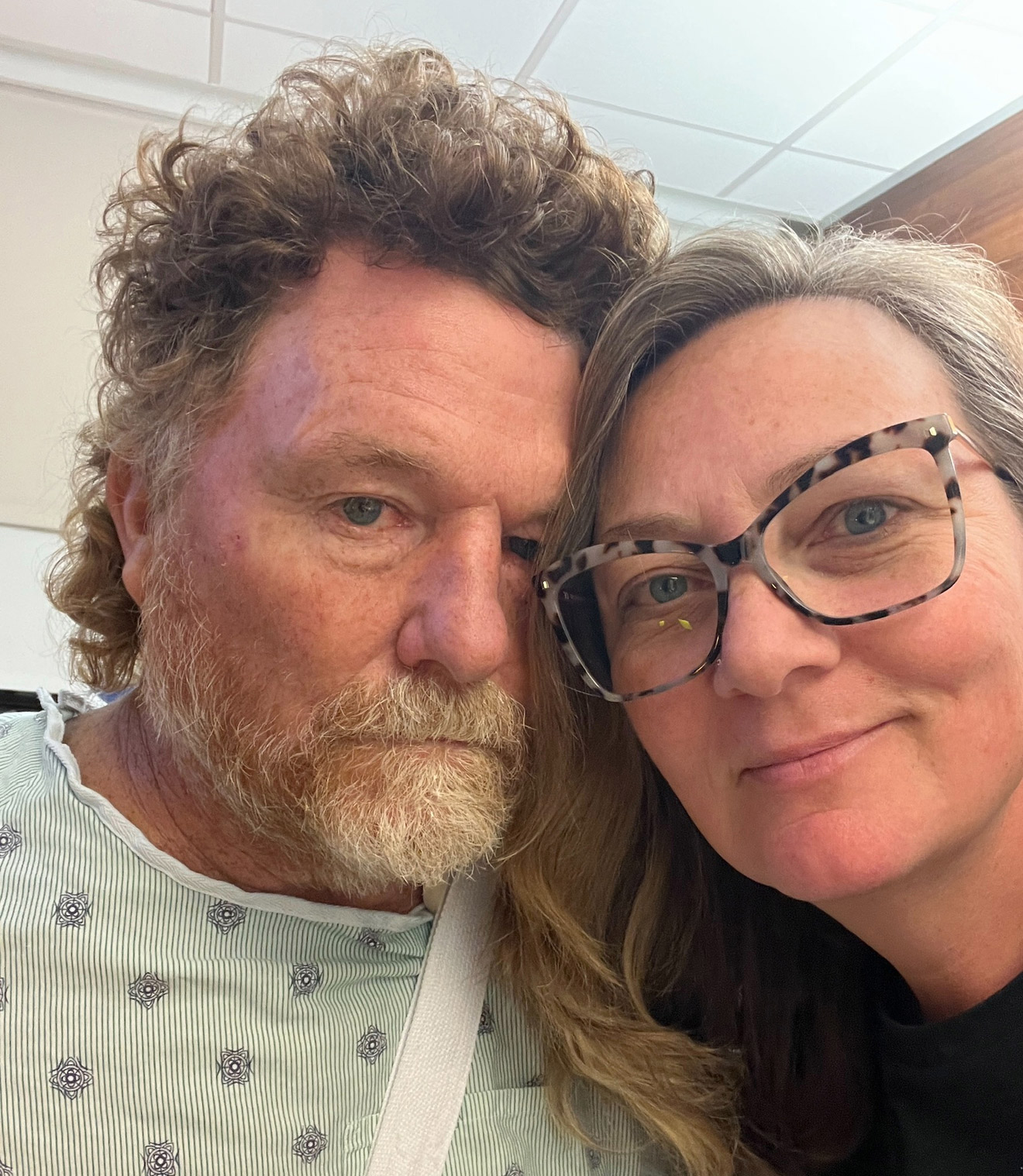
Related Topics

Contact Us

Submit a Story Tip

Trump’s DOJ Accuses Medicare Advantage Insurers of Paying ‘Kickbacks’ to Brokers

A blockbuster lawsuit from the federal Department of Justice alleges that insurers Aetna, Elevance Health (formerly Anthem), and Humana paid “hundreds of millions of dollars in kickbacks” to large insurance brokerages eHealth, GoHealth, and SelectQuote. The payments, made from 2016 to at least 2021, were incentives to steer patients into the insurer’s Medicare Advantage plans, the lawsuit alleges, while discouraging enrollment of potentially more costly disabled beneficiaries. 

All the insurers and brokers named in the case have denied the allegations and say they will fight them in court. 

Policy experts say the lawsuit, filed May 1, will add fuel to long-running concerns about whether Medicare enrollees are being encouraged to select the coverage that is best for them — or the one that makes the most money for the broker.  

In other Medicare news, The Wall Street Journal last week, citing unnamed sources, reported that a separate insurer, UnitedHealth Group, was being investigated by the Justice Department regarding unspecified potential Medicare violations. UnitedHealth pushed back, calling the article “deeply irresponsible” and saying it had not been notified by the DOJ as to any such investigation. 

Regardless of how this attention shakes out, Medicare Advantage, the private sector alternative to original Medicare, is likely to continue to draw scrutiny because it covers more than half of those enrolled. But the plans, which often include benefits not covered by the traditional government program, cost taxpayers more per enrollee and have drawn criticism for requiring patients to get prior authorization for certain services, something rarely required in original Medicare. 

The DOJ lawsuit alleges insurers made large payments they called “marketing” or “sponsorship” fees to get around rules that set caps on broker commissions. The payments, according to the lawsuit, added incentives — often more than $200 per enrollee — for brokers to direct Medicare beneficiaries toward their coverage “regardless of the quality or suitability of the insurers’ plans.” 

The case joins the DOJ in a previously filed whistleblower lawsuit brought by a then-employee of eHealth, Andrew Shea. The whistleblower’s attorney, Gregg Shapiro, said his client is grateful the DOJ chose to intervene: “People with Medicare must know that when an insurance agent recommends a plan, that recommendation is based solely on the client’s individual needs and preferences,” Shapiro said in an emailed statement. 

While encouraged that the Trump administration filed the case under investigations initiated by the Biden administration, policy experts say Congress and insurers need to do more. 

“What we see in this lawsuit highlights the terrible incentives that desperately need Congress to reform,” said Brian Connell, a vice president at the Leukemia & Lymphoma Society, an advocacy group. 

Related Topics

Contact Us

Submit a Story Tip

Republicanos buscan castigar a estados que ofrecen seguro de salud a inmigrantes sin papeles

La emblemática legislación del presupuesto del presidente Donald Trump castigaría a 14 estados que ofrecen cobertura de salud a personas que viven en el país sin papeles.

Estos estados, la mayoría liderados por demócratas, dan seguro médico a algunos inmigrantes de bajos ingresos —a menudo niños—, independientemente de su estatus migratorio. Defensores argumentan que la política es humanitaria y que, en última instancia, ahora costos.

Sin embargo, la legislación federal, que los republicanos han denominado One Big Beautiful Bill (Un hermoso gran proyecto de ley), recortaría drásticamente los reembolsos federales de Medicaid a esos estados en miles de millones de dólares anuales en total, a menos que reduzcan esos beneficios.

El proyecto de ley fue aprobado por un estrecho margen en la Cámara de Representantes el jueves 22 de mayo, y ahora pasa al Senado.

Si bien avanza gran parte de la agenda nacional de Trump, incluyendo grandes recortes de impuestos que benefician principalmente a los estadounidenses más ricos, la legislación también realiza recortes sustanciales del gasto en Medicaid que, según los responsables del presupuesto del Congreso, dejará a millones de personas de bajos ingresos sin seguro médico.

De ser aprobados por el Senado, estos recortes representarían un complejo obstáculo político y económico para los estados y Washington, DC, que utilizan sus propios fondos para brindar seguro médico a algunas personas que viven en Estados Unidos sin autorización.

Estos estados verían reducidos en 10 puntos porcentuales los reembolsos federales para las personas cubiertas por la expansión de Medicaid que se realize bajo la Ley de Cuidado de Salud a Bajo Precio (ACA).

Estos recortes le costarían a California, el estado que más tiene que perder, hasta $3 mil millones al año, según un análisis de KFF, una organización sin fines de lucro dedicada a información de salud que incluye a KFF Health News.

En conjunto, los 15 lugares afectados (los 14 estados y DC) cubren a aproximadamente 1.9 millones de inmigrantes sin papeles, según KFF. La entidad indica que la sanción también podría aplicarse a otros estados que cubren a inmigrantes con residencia legal.

Dos de los estados, Illinois y Utah, tienen leyes de “activación” que exigen terminar con sus expansiones de Medicaid si el gobierno federal reduce su aporte de fondos. Esto significa que, a menos que esos estados deroguen sus leyes de activación o dejen de cubrir a las personas sin estatus migratorio legal, muchos más estadounidenses de bajos ingresos podrían quedarse sin seguro.

Si continúan cubriendo a personas sin papeles, a partir del año fiscal 2027, los estados restantes y Washington, DC, tendrían que aportar millones o miles de millones de dólares adicionales cada año, para compensar las reducciones en sus reembolsos federales de Medicaid.

Después de California, Nueva York podría perder la mayor parte de la financiación federal: cerca de 1.600 millones de dólares anuales, según KFF.

El senador estatal de California, Scott Wiener, demócrata y presidente del Comité de Presupuesto del Senado, afirmó que la legislación de Trump ha sembrado el caos mientras los legisladores estatales trabajan para aprobar su propio presupuesto antes del 15 de junio.

“Tenemos que mantenernos firmes”, declaró. “California ha decidido que queremos una atención médica universal y que vamos a garantizar que todos tengan acceso a la atención médica, y que no vamos a permitir que millones de personas indocumentadas reciban atención primaria en salas de emergencia”.

El gobernador de California, el demócrata Gavin Newsom, declaró en un comunicado que el proyecto de ley de Trump devastaría la atención médica en su estado.

“Millones de personas perderán cobertura, los hospitales cerrarán y las redes de seguridad social podrían colapsar bajo ese peso”, dijo Newsom.

En su propuesta de presupuesto del 14 de mayo, Newsom instó a los legisladores a recortar algunos beneficios para inmigrantes sin papeles, citando el aumento desmedido de los costos del programa estatal de Medicaid. Si el Congreso recorta los fondos para la expansión de Medicaid, el estado no estaría en condiciones de cubrir los gastos, afirmó el gobernador.

Newsom cuestionó si el Congreso tiene la autoridad para penalizar a los estados por cómo gastan su propio dinero, y afirmó que su estado consideraría impugnar la medida en los tribunales.

El representante estatal de Utah, Jim Dunnigan, republicano que ayudó a impulsar un proyecto de ley para cubrir a los niños en su estado independientemente de su estatus migratorio, afirmó que Utah necesita mantener la expansión de Medicaid que comenzó en 2020.

“No podemos permitirnos, ni monetaria ni políticamente, que se recorten nuestros fondos federales para la expansión”, declaró. Dunnigan no especificó si cree que el estado debería cancelar su cobertura para inmigrantes si la disposición republicana sobre sanciones se convierte en ley.

El programa de Utah cubre a unos 2.000 niños, el máximo permitido por su ley. Los inmigrantes adultos sin estatus legal no son elegibles. La expansión de Medicaid de Utah cubre a unos 75.000 adultos, quienes deben ser ciudadanos o inmigrantes con residencia legal.

Matt Slonaker, director ejecutivo del Utah Health Policy Project, una organización de defensa del consumidor, afirmó que el proyecto de ley de la Cámara federal deja al estado en una posición difícil.

“Políticamente, no hay grandes alternativas”, declaró. “Es el dilema del prisionero: cualquier movimiento en cualquier dirección no tiene mucho sentido”.

Slonaker apuntó que un escenario probable es que los legisladores estatales eliminen su ley de activación, y luego encuentren la manera de compensar la pérdida de fondos federales para la expansión.

Utah ha financiado su parte del costo de la expansión de Medicaid con impuestos sobre las ventas y los hospitales.

“El Congreso pondría al estado de Utah en posición de tener que tomar una decisión política muy difícil”, declaró Slonaker.

En Illinois, la sanción del Partido Republicano tendría incluso consecuencias más graves. Esto se debe a que podría llevar a que 770.000 adultos perdieran la cobertura médica que obtuvieron con la expansión estatal de Medicaid.

Stephanie Altman, directora de justicia sanitaria del Shriver Center on Poverty Law, un grupo de defensa con sede en Chicago, afirmó que es posible que su estado, liderado por demócratas, derogue su ley de activación antes de permitir que se dé por terminada la expansión de Medicaid.

Agregó que el estado también podría eludir la sanción solicitando a los condados que financien la cobertura para inmigrantes. “Obviamente, sería una situación difícil”, declaró.

Altman indicó que el proyecto de ley de la Cámara de Representantes parece redactado para penalizar a los estados controlados por demócratas, ya que estos suelen brindar cobertura a inmigrantes sin importar su estatus migratorio.

Agregó que la disposición demuestra la “hostilidad de los republicanos contra los inmigrantes” y que “no quieren que vengan aquí y reciban cobertura pública”.

Mike Johnson, el presidente de la Cámara de Representantes de Estados Unidos, declaró en mayo que los programas estatales que brindan cobertura pública a personas sin importar su estatus migratorio actúan como un “felpudo abierto”, invitando a más personas a cruzar la frontera sin autorización. Afirmó que los esfuerzos para eliminar estos programas cuentan con el apoyo de las encuestas públicas.

Una encuesta de Reuters-Ipsos realizada entre el 16 y el 18 de mayo reveló que el 47% de los estadounidenses aprueba las políticas migratorias de Trump y el 45% las desaprueba. La encuesta reveló que el índice de aprobación general de Trump ha caído 5 puntos porcentuales desde que regresó al cargo en enero, hasta el 42%, con un 52% de los estadounidenses desaprobando su gestión.

ACA, también conocida como Obamacare, impulsó a los estados a ampliar Medicaid a adultos con ingresos de hasta el 138% del nivel federal de pobreza, o $21.597 por persona este año. Cuarenta estados y Washington, DC, ampliaron su cobertura, lo que contribuyó a reducir la tasa nacional de personas sin seguro a un mínimo histórico.

El gobierno federal ahora cubre el 90% de los costos de las personas incluidas en Medicaid gracias a la ampliación del Obamacare.

En los estados que cubren la atención médica de inmigrantes sin autorización, el proyecto de ley republicano reduciría la contribución del gobierno federal del 90% al 80% del costo de la cobertura para cualquier persona que se incorpore a Medicaid bajo la expansión de ACA.

Por ley, los fondos federales de Medicaid no pueden utilizarse para cubrir a personas que se encuentran en el país papeles, excepto para servicios de embarazo y emergencias.

Los otros estados que utilizan sus propios fondos para cubrir a personas sin importar su estatus migratorio son: Colorado, Connecticut, Maine, Massachusetts, Minnesota, Nueva Jersey, Oregon, Rhode Island, Vermont y Washington, según KFF.

Ryan Long, director de relaciones con el Congreso del Paragon Health Institute, un influyente grupo político conservador, afirmó que incluso si utilizan sus propios fondos para la cobertura de inmigrantes, los estados aún dependen de los fondos federales para “apoyar sistemas que faciliten la inscripción de inmigrantes indocumentados”.

Long afirmó que la preocupación por que los estados con leyes de activación puedan ver finalizada la expansión de Medicaid es una “pista falsa”, ya que los estados tienen la opción de eliminar sus activadores, como hizo Michigan en 2023.

La sanción por ofrecer cobrtura de salud a personas en el país sin papeles es una de las distintas maneras en que el proyecto de ley de la Cámara de Representantes recorta el gasto federal en Medicaid.

La legislación también trasladaría más costos de Medicaid a los estados al exigirles que verifiquen si los adultos cubiertos por el programa trabajan. Los estados también tendrían que recertificar la elegibilidad de los beneficiarios de la expansión de Medicaid cada seis meses, en lugar de una vez al año o menos, como lo hacen actualmente la mayoría.

El proyecto de ley también congelaría la práctica de los estados de gravar con impuestos a hospitales, residencias de adultos mayores, planes de atención médica administrada y otras compañías de atención médica para financiar su parte de los costos de Medicaid.

En una estimación preliminar del 11 de mayo, la Oficina de Presupuesto del Congreso (CBO) indicó que, según el proyecto de ley aprobado por la Cámara de Representantes, alrededor de 8,6 millones de personas más perderían la cobertura médica en 2034.

Esa cifra aumentará a casi 14 millones, según la CBO, después que la administración Trump finalice las nuevas regulaciones de ACA y, si el Congreso, liderado por los republicanos, como se prevé, se niegue a extender los subsidios mejorados para ayudar a pagar las primas de los planes de salud comerciales vendidos a través de los mercados del Obamacare.

Los subsidios mejorados, una prioridad del ex presidente Joe Biden, eliminaron por completo las primas mensuales para algunas personas que adquirieran planes de Obamacare. Y expiran a fin de año.

Esta historia fue producida por Kaiser Health News, que publica California Healthline, un servicio editorialmente independiente de la California Health Care Foundation.

Trump Won’t Force Medicaid to Cover GLP-1s for Obesity. A Few States Are Doing It Anyway.

CHARLESTON, S.C. — When Page Campbell’s doctor recommended she try an injectable prescription drug called Wegovy to lose weight before scheduling bariatric surgery, she readily agreed.

“I’ve struggled with my weight for so long,” said Campbell, 40, a single mother of two. “I’m not opposed to trying anything.”

In early April, about four weeks after she’d started taking Wegovy, Campbell said she hadn’t experienced any side effects, such as nausea or bowel irritation. But she doesn’t use a scale at home, she said, so she didn’t know whether she’d lost any weight since her most recent medical appointment earlier this year, when she weighed 314 pounds. Still, she was confident about achieving weight loss.

“It’s going to work because I’m putting in the work. I’m changing my eating habits. I’m exercising,” said Campbell, a shipping manager at a Michaels store. “I’m not going to second-guess myself.”

Wegovy belongs to a pricey class of drugs called GLP-1s (short for glucagon-like peptide-1 agonists) that have upended the treatment of obesity in recent years, offering hope to patients who have tried and failed to lose weight in myriad other ways.

Campbell gained access to Wegovy through South Carolina Medicaid’s decision in late 2024 to cover these weight loss drugs. But the medications remain out of reach for millions of patients across the country who could benefit from them, because many public and private health insurers have deemed the drugs too expensive.

A report published in November by KFF, a health information nonprofit that includes KFF Health News, found only 13 states were covering GLP-1s for the treatment of obesity for Medicaid beneficiaries as of August. South Carolina became the 14th in November.

Liz Williams, one of the report’s authors and a senior policy manager for the Program on Medicaid and the Uninsured at KFF, said she was not aware of any other state Medicaid programs joining the list since then. Looking ahead, the remaining states may be reluctant to add a new, expensive drug benefit while they brace for potential federal cuts coming from Congress, she said.

“As the budget debate, federally, is developing, that may impact how states are thinking about this,” Williams said.

The federal government won’t be helping anytime soon, either. Medicare covers GLP-1s to treat diabetes and some other health conditions, including obstructive sleep apnea and cardiovascular disease, but not obesity. In early April, the Trump administration announced it will not finalize a rule proposed by the Biden administration that would have allowed an estimated 7.4 million people covered by Medicare and Medicaid to access GLP-1s for weight loss. Meanwhile, the FDA is poised to force less expensive, compounded versions of these drugs off the market.

And the barrier to entry remains high, even for Medicaid patients in those few states that have agreed to cover the drugs without a federal mandate.

Case in point: In South Carolina, where more than one-third of all adults, and nearly half of the African American population, qualify as obese, the state Medicaid agency estimates only 1,300 beneficiaries will meet the stringent prerequisites for GLP-1 coverage.

Under one of those requirements, Medicaid beneficiaries who wish to access these drugs to lose weight must attest to “increased exercise activity,” said Jeff Leieritz, a spokesperson for the South Carolina Department of Health and Human Services.

Campbell, who is insured by Medicaid, was granted coverage for Wegovy based on her body mass index. First, though, she was required to submit six months’ worth of documentation proving that she’d tried and failed to lose weight after receiving nutrition counseling and going on a 1,200-calorie-a day diet, said Kenneth Mitchell, one of Campbell’s doctors and the medical director for bariatric surgery and obesity medicine at Roper St. Francis Healthcare.

Campbell’s Wegovy prescription was approved for six months, Mitchell said. When that authorization expires, Campbell and her health care team will need to submit more documentation, including proof that she has lost at least 5% of her body weight and has kept up with nutrition counseling.

“It’s not just, ‘Send a prescription in and they cover it.’ It’s rather arduous,” Mitchell said. “Not a lot of folks are going to do this.”

Campbell, 40, a single mother of two, says she’s struggled with her weight so long that “I’m not opposed to trying anything.”(Andrew Whitaker for KFF Health News)
A close up a shot of a woman's face, who is smiling.
“Weight loss is my biggest goal,” says Campbell, who expressed appreciation for Medicaid’s coverage of Wegovy. “It’s one more thing that’s going to help me get to my goal.”(Andrew Whitaker for KFF Health News)

Mitchell said South Carolina Medicaid’s decision to cover these drugs was met with excitement among those working in his medical specialty. But he wasn’t surprised that the state anticipates relatively few people will access this benefit annually, since the approval process is so rigorous and the cost high. “The problem is the medicines are so expensive,” Mitchell said.

Novo Nordisk, which manufactures Wegovy, announced in March that it was cutting the monthly price for the drug from $650 to $499 for cash-paying customers. The price that health insurance plans and beneficiaries pay for these drugs varies, but some GLP-1s cost more than $1,000 per patient per month, Mitchell said, and many people will need to take them for the rest of their lives to maintain weight loss.

“That is a tremendous price tag that someone has to foot the bill for,” Mitchell said.

That’s the reason California Gov. Gavin Newsom on May 14 proposed eliminating Medicaid coverage of GLP-1s for weight loss starting Jan. 1, to save an estimated $680 million a year by 2028.

And the North Carolina State Health Plan Board of Trustees voted last year to end coverage of GLP-1s for state employees, after then-North Carolina Treasurer Dale Folwell’s office estimated in 2023 that the drugs were projected to cost the State Health Plan $1 billion over the next six years. The decision came only a few months after a separate North Carolina agency announced it would start covering these drugs for Medicaid beneficiaries. North Carolina Medicaid has estimated it will spend $16 million a year on GLP-1s.

South Carolina Medicaid, which insures fewer than half the number of people enrolled in North Carolina Medicaid, anticipates spending less. Leieritz estimated GLP-1s and nutrition counseling offered to Medicaid beneficiaries in South Carolina will cost $10 million a year. State funding will cover $3.3 million of the expense; the remainder will be paid for by matching Medicaid funds from the federal government.

In a recent interview, Health and Human Services Secretary Robert F. Kennedy Jr. didn’t rule out the possibility that Medicare and Medicaid might cover GLP-1s for obesity treatment in the future as costs come down.

They’re “extraordinary drugs” and “we’re going to reduce the cost,” Kennedy told CBS News in early April. He said he would like GLP-1s to eventually be made available to Medicare and Medicaid patients who are seeking obesity treatment after they have tried other ways to lose weight. “That is the framework that we’re now debating.”

Meanwhile, public health experts have applauded South Carolina Medicaid’s decision to cover GLP-1s. Yet the new benefit won’t help the vast majority of the 1.5 million adults in South Carolina who are classified as obese, according to data published by the South Carolina Department of Public Health.

“We still have some work to do,” acknowledged Brannon Traxler, the public health department’s chief medical officer.

But the state’s new “Action Plan for Healthy Eating and Active Living,” written by a coalition of groups in South Carolina, including the Department of Public Health, makes no mention of GLP-1s or the role they might play in lowering obesity rates in the state.

The action plan, underwritten by a $1.5 million federal grant, isn’t meant to lay out an overarching approach for lowering obesity in South Carolina, Traxler said. Instead, it promotes physical activity in schools, nutrition, and the expansion of outdoor walking trails, among other strategies. A more comprehensive obesity plan might address the benefits of surgical intervention and GLP-1s, but those also carry risk, expense, and side effects, Traxler said.

“Certainly, I think, there is a need to bring it all together,” she said.

Campbell, for one, is taking the comprehensive approach. On top of injecting Wegovy once weekly, she said, she is prioritizing protein intake and moving her body. She also underwent weight loss surgery in late April.

“Weight loss is my biggest goal,” said Campbell, who expressed appreciation for Medicaid’s coverage of Wegovy. “It’s one more thing that’s going to help me get to my goal.”

Related Topics

Contact Us

Submit a Story Tip

How Trump Aims To Slash Federal Support for Research, Public Health, and Medicaid 

Health care has proved a vulnerable target for the firehose of cuts and policy changes President Donald Trump ordered in the name of reducing waste and improving efficiency. But most of the impact isn’t as tangible as, say, higher egg prices at the grocery store.

One thing experts from a wide range of fields, from basic science to public health, agree on: The damage will be varied and immense. “It’s exceedingly foolish to cut funding in this way,” said Harold Varmus, a Nobel Prize-winning scientist and former director of both the National Institutes of Health and the National Cancer Institute.

The blaze of cuts have yielded nonsensical and perhaps unintended consequences. Consider instances in which grant funding gets canceled after two years of a three-year project. That means, for example, that $2 million has already been spent but there will be no return on that investment.

Some of the targeted areas are not administration priorities. That includes the abrupt termination of studies on long covid, which afflicts more than 100,000 Americans, and the interruption of work on mRNA vaccines, which hold promise not just in infectious disease but also in treating cancer.

While charitable dollars have flowed in to plug some gaps, “philanthropy cannot replace federal funding,” said Dustin Sposato, communications manager for the Science Philanthropy Alliance, a group that works to boost support from charities for basic science research.

Here are critical ways in which Trump administration cuts — proposed and actual — could affect American health care and, more important, the health of American patients.

Cuts to the National Institutes of Health: The Trump administration has cut $2.3 billion in new grant funding since its term began, as well as terminated existing grants on a wide range of topics — vaccine hesitancy, HIV/AIDS, and covid-19 — that do not align with its priorities. National Institutes of Health grants do have yearly renewal clauses, but it is rare for them to be terminated, experts say. The administration has also cut “training grants” for young scientists to join the NIH.

Why It Matters: The NIH has long been a crucible of basic science research — the kind of work that industry generally does not do. Most pharmaceutical patents have their roots in work done or supported by the NIH, and many scientists at pharmaceutical manufacturers learned their craft at institutions supported by the NIH or at the NIH itself. The termination of some grants will directly affect patients since they involved ongoing clinical studies on a range of conditions, including pediatric cancer, diabetes, and long covid. And, more broadly, cuts in public funding for research could be costly in the longer term as a paucity of new discoveries will mean fewer new products: A 25% cut to public research and development spending would reduce the nation’s economic output by an amount comparable to the decline in gross domestic product during the Great Recession, a new study found.

Cuts to Universities: The Trump administration also tried to deal a harrowing blow — currently blocked by the courts — to scientific research at universities by slashing extra money that accompanies research grants for “indirect costs,” like libraries, lab animal care, support staff, and computer systems.

Why It Matters: Wealthier universities may find the funds to make up for draconian indirect cost cuts. But poorer ones — and many state schools, many of them in red states — will simply stop doing research. A good number of crucial discoveries emerge from these labs. “Medical research is a money-losing proposition,” said one state school dean with former ties to the Ivies. (The dean requested anonymity because his current employer told him he could not speak on the record.) “If you want to shut down research, this will do it, and it will go first at places like the University of Tennessee and the University of Arkansas.” That also means fewer opportunities for students at state universities to become scientists.

Cuts to Public Health: These hits came in many forms. The administration has cut or threatened to cut long-standing block grants from the Centers for Disease Control and Prevention; covid-related grants; and grants related to diversity, equity, and inclusion activities — which often translated into grants to improve health care for the underserved. Though the covid pandemic has faded, those grants were being used by states to enhance lab capacity to improve detection and surveillance. And they were used to formally train the nation’s public health workforce, many of whom learn on the job.

Why It Matters: Public health officials and researchers were working hard to facilitate a quicker, more thoughtful response to future pandemics, of particular concern as bird flu looms and measles is having a resurgence. Mati Hlatshwayo Davis, the St. Louis health director, had four grants canceled, three in one day. One grant that fell under the covid rubric included programs to help community members make lifestyle changes to reduce the risk of hypertension and diabetes — the kind of chronic diseases that Health and Human Services Secretary Robert F. Kennedy Jr. has said he will focus on fighting. Others paid the salaries of support staff for a wide variety of public health initiatives. “What has been disappointing is that decisions have been made without due diligence,” she said.

Health-Related Impact of Tariffs: Though Trump has exempted prescription drugs from his sweeping tariffs on most imports thus far, he has not ruled out the possibility of imposing such tariffs. “It’s a moving target,” said Michael Strain, an economist at the American Enterprise Institute, noting that since high drug prices are already a burden, adding any tax to them is problematic.

Why It Matters: That supposed exemption doesn’t fully insulate American patients from higher costs. About two-thirds of prescription drugs are already manufactured in the U.S. But their raw materials are often imported from China — and those enjoy no tariff exemption. Many basic supplies used in hospitals and doctors’ offices — syringes, surgical drapes, and personal protective equipment — are imported, too. Finally, even if the tariffs somehow don’t themselves magnify the price to purchase ingredients and medical supplies, Americans may suffer: Across-the-board tariffs on such a wide range of products, from steel to clothing, means fewer ships will be crossing the Pacific to make deliveries — and that means delays. “I think there’s an uncomfortably high probability that something breaks in the supply chain and we end up with shortages,” Strain said.

Changes to Medicaid: Trump has vowed to protect Medicaid, the state-federal health insurance program for Americans with low incomes and disabilities. But House Republicans have eyed the program as a possible source of offsets to help pay for what Trump calls “the big, beautiful bill” — a sweeping piece of budget legislation to extend his 2017 tax cuts. The amount of money GOP leaders have indicated they could squeeze from Medicaid, which now covers about 20% of Americans, has been in the hundreds of billions of dollars. But deep cuts are politically fraught.

To generate some savings, administration officials have at times indicated they are open to at least some tweaks to Medicaid. One idea on the table — work requirements — would require adults on Medicaid to be working or in some kind of job training. (Nearly two-thirds of Medicaid recipients ages 19-64 already work.)

Why It Matters: In 2024 the uninsured rate was 8.2%, near the all-time low, in large part because of the Medicaid expansion under the 2010 Affordable Care Act. Critics say work requirements are a backhanded way to slim down the Medicaid rolls, since the paperwork requirements of such programs have proved so onerous that eligible people drop out, causing the uninsured rate to rise. A Congressional Budget Office report estimates that the proposed change would reduce coverage by at least 7.7 million in a decade. This leads to higher rates of uncompensated care, putting vulnerable health care facilities — think rural hospitals — at risk.

Related Topics

Contact Us

Submit a Story Tip

Trump’s DOJ Accuses Medicare Advantage Insurers of Paying ‘Kickbacks’ for Primo Customers

[*]

When people call large insurance brokerages seeking free assistance in choosing Medicare Advantage plans, they’re often offered assurances such as this one from eHealth: “Your benefit advisors will find plans that match your needs — no matter the carrier.”

About a third of enrollees do seek help in making complex decisions about whether to enroll in original Medicare or select among private-sector alternatives, called Medicare Advantage.

Now a blockbuster lawsuit filed May 1 by the federal Department of Justice alleges that insurers Aetna, Elevance Health (formerly Anthem), and Humana paid “hundreds of millions of dollars in kickbacks” to large insurance brokerages — eHealth, GoHealth, and SelectQuote. The payments, made from 2016 to at least 2021, were incentives to steer patients into the insurer’s Medicare Advantage plans, the lawsuit alleges, while also discouraging enrollment of potentially more costly disabled beneficiaries.

Policy experts say the lawsuit will add fuel to long-running concerns about whether Medicare enrollees are being encouraged to select the coverage that is best for them — or the one that makes the most money for the broker.

Medicare Advantage plans, which may include benefits not covered by the original government program, such as vision care or fitness club memberships, already cover more than half of those enrolled in the federal health insurance program for seniors and people with disabilities. The private plans have strong support among Republican lawmakers, but some research shows they cost taxpayers more than traditional Medicare per enrollee.

The plans have also drawn attention for requiring patients to get prior authorization, a process that involves gaining approval for higher-cost care, such as elective surgeries, nursing home stays, or chemotherapy, something rarely required in original Medicare. Medicare Advantage plans are under the microscope for aggressive marketing and sales efforts, as outlined in a recent report from Sen. Ron Wyden (D-Ore.). During the last year of the Biden administration, regulators put in place a rule that reined in some broker payments, although parts of that rule are on hold pending a separate court case filed in Texas by regulation opponents.

The May DOJ case filed in the U.S. District Court for the District of Massachusetts alleges insurers labeled payments as “marketing” or “sponsorship” fees to get around rules that set caps on broker commissions. These payments from insurers, according to the lawsuit, added incentives — often more than $200 per enrollee — for brokers to direct Medicare beneficiaries toward their coverage “regardless of the quality or suitability of the insurers’ plans.” The case joins the DOJ in a previously filed whistleblower lawsuit brought by a then-employee of eHealth.

“In order to influence the market, the Defendant Insurers understood that they needed to make greater, illicit payments in addition to the permitted (but capped) commissions,” the lawsuit alleges.

In one example cited, the lawsuit says insurer Anthem paid broker GoHealth “more than $230 million in kickbacks” from 2017 to at least 2021 in exchange for the brokerage to hit specified sales targets in payments often referred to as “marketing development funds.”

Insurers and brokers named in the case pushed back. Aetna, Humana, Elevance, eHealth, and SelectQuote each sent emailed statements to KFF Health News disputing the allegations and saying they would fight them in court. EHealth spokesperson Will Shanley, for example, wrote that the brokerage “strongly believes the claims are meritless and remains committed to vigorously defending itself.” GoHealth posted online a response denying the allegations.

The DOJ lawsuit is likely to add to the debate over the role of the private sector in Medicare with vivid details often drawn from internal emails among key insurance and brokerage employees. The case alleges that brokers knew that Aetna, for example, saw the payments as a “shortcut” to increase sales, “instead of attracting beneficiaries through policy improvements or other legitimate avenues,” the lawsuit said.

One eHealth executive in a 2021 instant message exchange with a colleague that is cited in the lawsuit allegedly said incentives were needed because the plans themselves fell short: “More money will drive more sales [be]cause your product is dog sh[*]t.”

The DOJ case focuses on large insurance brokerages, which often rely on national marketing efforts to gain customers, rather than mom-and-pop insurance offices.

The filing, which alleges violations under the federal False Claims Act, outlines some of the problems consumers could face because of those payments, including being enrolled or switched into plans without their express permission, and getting coverage that didn’t meet their needs.

A cancer patient, for example, was switched from the original Medicare program into a private-sector managed-care plan by a large brokerage firm, according to the lawsuit, only to get hit with $17,000 in ongoing treatment costs that would have been covered without the change. Another person calling for free advice later discovered she had been enrolled without permission into a plan with a different insurer than she had previously chosen.

Meanwhile, people with disabilities looking to enroll in private-sector Medicare Advantage plans had their calls ignored or rerouted by systems designed to weed out disabled people, especially if they were under age 65, the lawsuit alleges. That’s because the insurers knew that disabled beneficiaries usually cost more to cover than those without medical problems, the case alleges. Medicare plans are not allowed to discriminate against people with disabilities.

Still, private insurers are allowed to offer commissions to brokers — or not.

Congress and regulators, however, concerned about insurers’ potential financial influence over beneficiaries’ choice of plans, set maximum commissions and limited payments for other things, such as administrative costs, to a vaguer standard: their fair market value. (Under the Biden-era rule that’s on hold, administrative fees would have been capped at $100 per enrollment.) On commissions, the national cap in 2021 — the final year cited in the lawsuit — was $539 per enrollment for the initial year, with higher amounts in some states, including California and New Jersey, the lawsuit said.

The allowed commission rates have risen to a maximum in the low $600s per person in most states this year. Those amounts are higher than what brokers earn if a client enrolls in original Medicare and buys a supplemental drug plan, for which the commission is capped at $109 for the initial year.

Some policy experts say that pay structure alone — aside from any of the allegations in the lawsuit — creates an uneven playing field between the private-sector plans and the original program.

“It’s not my intent to paint all agents and brokers with the same brushstroke, but there are significant financial incentives to steer people toward Medicare Advantage in general,” said David Lipschutz, co-director of law and policy at the Center for Medicare Advocacy.

While brokers can be helpful in sorting out complexities, other options are available. Lipschutz suggested that consumers seek information from their federally funded State Health Insurance Assistance Program, which can advise beneficiaries about Medicare options, are not affiliated with insurers, and don’t receive commissions.

While encouraged that the Trump administration filed the case under investigations that began under the Biden administration, policy experts say Congress and insurers need to do more.

“What we see in this lawsuit highlights the terrible incentives that desperately need Congress to reform,” said Brian Connell, a vice president at the Leukemia & Lymphoma Society, an advocacy group.

Right now, however, Congress is embroiled in budget battles amid calls by the Trump administration to drastically cut federal spending.

“It doesn’t seem like it’s high in the queue,” said Zachary Baron, director of the Center for Health Policy and the Law at Georgetown University’s O’Neill Institute. Some members of Congress may push for more changes to Medicare Advantage, Baron said, “but the real question is whether there will be bipartisan interest.”

The large amounts of money that the lawsuit alleges were involved, though, might add legislative momentum.

“This is money not being spent on care, money not going to providers of health care services,” Lipschutz said. “In my mind, it’s a lot of wasted payment. It’s pretty staggering.”

Related Topics

Contact Us

Submit a Story Tip

GOP Poised To Cut Billions in Health Benefits

The Host

Julie Rovner
KFF Health News


@jrovner


@julierovner.bsky.social

Read Julie’s stories.

Julie Rovner is chief Washington correspondent and host of KFF Health News’ weekly health policy news podcast, “What the Health?” A noted expert on health policy issues, Julie is the author of the critically praised reference book “Health Care Politics and Policy A to Z,” now in its third edition.

After all-night markups, two key House committees approved GOP budget legislation that would cut hundreds of billions of dollars from federal health programs over the next decade, mostly from the Medicaid program for people with low incomes or disabilities. The legislation is far from a done deal, though, with at least one Republican senator voicing opposition to Medicaid cuts.

Meanwhile, Health and Human Services Secretary Robert F. Kennedy Jr. testified before Congress for the first time since taking office. In sometimes surprisingly combative exchanges with lawmakers in the House and Senate, Kennedy denied cutting programs despite evidence to the contrary and said at one point that he doesn’t think Americans “should be taking medical advice from me.”

This week’s panelists are Julie Rovner of KFF Health News, Julie Appleby of KFF Health News, Joanne Kenen of the Johns Hopkins University Bloomberg School of Public Health and Politico Magazine, and Alice Miranda Ollstein of Politico.

Panelists

Julie Appleby
KFF Health News


@Julie_appleby

Read Julie’s stories.

Joanne Kenen
Johns Hopkins University and Politico


@JoanneKenen


@joannekenen.bsky.social


Read Joanne’s bio.

Alice Miranda Ollstein
Politico


@AliceOllstein


@alicemiranda.bsky.social


Read Alice’s stories.

Among the takeaways from this week’s episode:

  • House Republicans this week released — then quickly ushered through committee — major legislation that would make deep cuts to federal spending while funding President Donald Trump’s domestic priorities, including renewing tax cuts and boosting border security. A preliminary estimate by the Congressional Budget Office found the bill would cut at least $715 billion from federal health spending over 10 years — with most of that money coming from the Medicaid program.
  • Overall, the House GOP’s proposal would make it harder to enroll, and stay enrolled, in Medicaid and Affordable Care Act coverage. Among other changes, the bill would impose a requirement that nondisabled adults (with some exceptions) work, volunteer, or study at least 80 hours per month to be eligible for coverage. But Democrats and patient advocates point to evidence that, rather than encouraging employment, such a mandate results in more people losing or dropping coverage under burdensome paperwork requirements.
  • Republicans also declined to extend the enhanced tax credits introduced during the covid-19 pandemic that help many people afford ACA marketplace coverage. Those tax credits expire at the end of the year, and premiums are expected to balloon, which could prompt many people not to renew their coverage.
  • And Kennedy’s appearances on Capitol Hill this week provided Congress the first opportunity to question the health secretary since he assumed his post. He was grilled by Democrats about vaccines, congressionally appropriated funds, agency firings, and much more.

Plus, for “extra credit,” the panelists suggest health policy stories they read this week that they think you should read, too: 

Julie Rovner: The New York Times’ “Elizabeth Holmes’s Partner Has a New Blood-Testing Start-Up,” by Rob Copeland.  

Alice Miranda Ollstein: ProPublica’s “He Became the Face of Georgia’s Medicaid Work Requirement. Now He’s Fed Up With It.” by Margaret Coker, The Current.

Julie Appleby: Scientific American’s “How Trump’s National Weather Service Cuts Could Cost Lives,” by Andrea Thompson.  

Joanne Kenen: The Atlantic’s “Now Is Not the Time To Eat Bagged Lettuce,” by Nicholas Florko.

Also mentioned in this week’s podcast:

Credits

Francis Ying
Audio producer

Emmarie Huetteman
Editor

To hear all our podcasts, click here.

And subscribe to KFF Health News’ “What the Health?” on SpotifyApple PodcastsPocket Casts, or wherever you listen to podcasts.
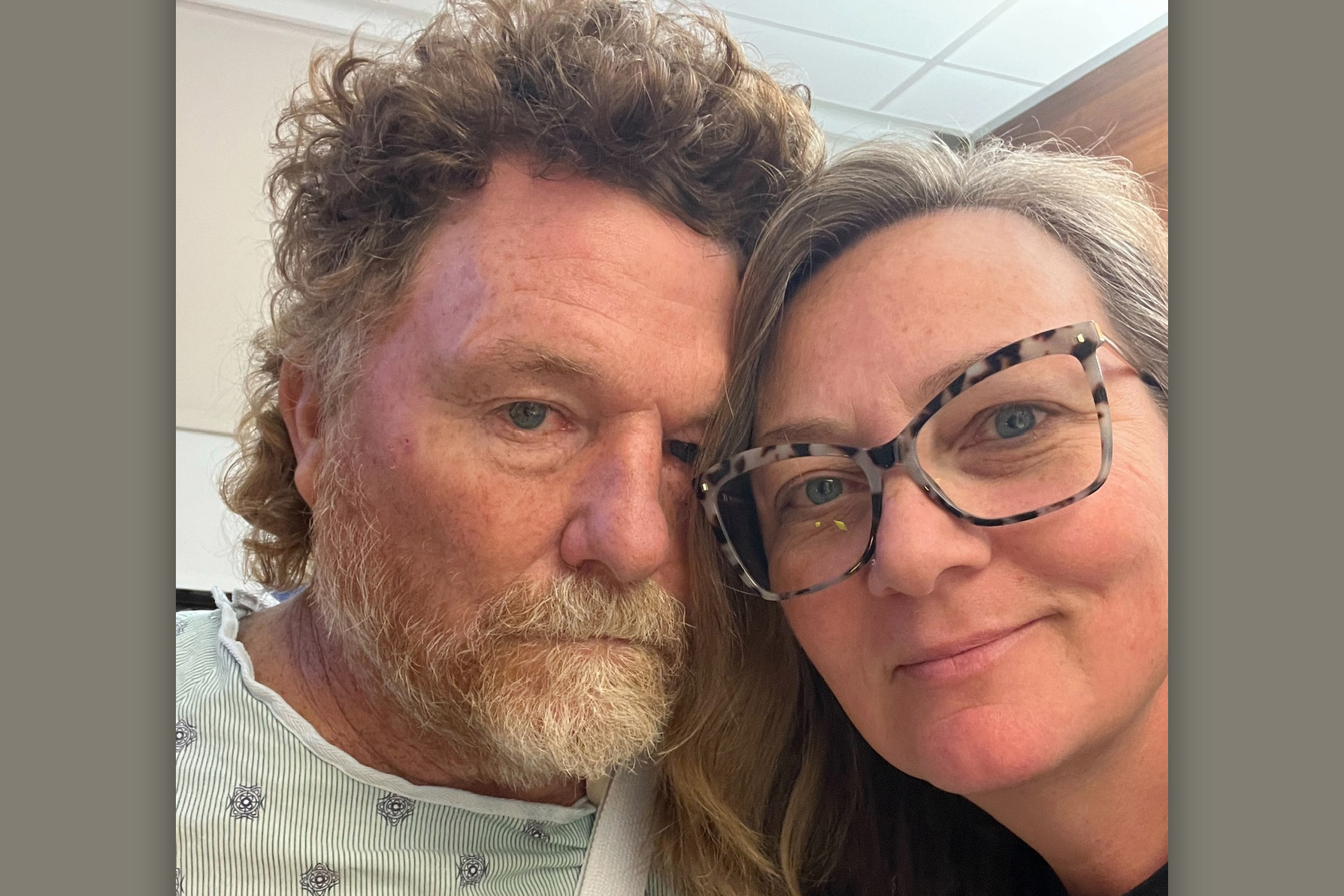
We encourage organizations to republish our content, free of charge. Here’s what we ask:

You must credit us as the original publisher, with a hyperlink to our kffhealthnews.org site. If possible, please include the original author(s) and KFF Health News” in the byline. Please preserve the hyperlinks in the story.

It’s important to note, not everything on kffhealthnews.org is available for republishing. If a story is labeled “All Rights Reserved,” we cannot grant permission to republish that item.

Have questions? Let us know at [email protected]

Newsom’s Pitch as He Seeks To Pare Down Immigrant Health Care: ‘We Have To Adjust’

SACRAMENTO, Calif. — Gov. Gavin Newsom on Wednesday proposed that California roll back health care for immigrants without legal status, saying the state needed to cut benefits for some to maintain core services across the board.

It’s a striking reversal for the Democrat, who had promised universal health care and called health coverage for immigrants the moral and ethical thing to do. But a $12 billion state budget deficit, potential federal spending cuts, and larger-than-expected Medi-Cal enrollment have forced him to dial back.

Newsom said he had no other choice but to call for major cost-cutting measures affecting how some immigrants are covered by Medi-Cal, the state’s Medicaid program, which covers about 15 million Californians.

“The challenge that we face this year and the challenge we will face for many years is on growth of our Medicaid system, Medi-Cal,” Newsom told reporters at his budget presentation. “Instead of rolling back the program, cutting people off for basic care, we have to adjust the comprehensive nature of the care.”

California is one of seven states that offer health coverage to low-income adults regardless of immigration status, and that has put the program in the political crosshairs of national Republicans. The latest U.S. House proposal would cut Medicaid funding by 10 percentage points for states that provide coverage for immigrants without legal status — an approach Newsom on Wednesday described as legally questionable. Meanwhile, the Trump administration cited California’s health coverage of noncitizens as an example of states “gaming the system” when it issued a proposed rule Monday to overhaul Medicaid provider taxes.

Some 1.6 million immigrants — most without legal status — are enrolled in Medi-Cal. Federal law prohibits Medicaid dollars from being used to cover unauthorized residents, meaning California must foot the bill for the vast majority of their health care. And those costs have ballooned.

Newsom cautioned that California, like other states, could soon be in a more dire budget situation if Republicans advance their proposal to cut Medicaid. That plan includes work requirements and would cap taxes levied on providers that help states draw additional federal money. However, the governor’s budget proposal was silent on potential federal cuts.

The $321.9 billion budget proposes a freeze in Medi-Cal enrollment for immigrants 19 and older without legal status, starting Jan. 1. Beginning in 2027, immigrants 19 and older in the country illegally, as well as those with legal residency for less than five years, would be required to pay $100 monthly premiums to maintain coverage.

The Newsom administration estimated those two moves would save the state $5.4 billion by the 2028-29 fiscal year. The governor also called for eliminating dental and long-term care benefits for those without legal status and for legal residents who arrived in the U.S. less than five years ago, according to California Department of Finance spokesperson H.D. Palmer.

The changes would not apply to the roughly 217,000 children and young adults without legal status covered by Medi-Cal. Those 18 and under were the first to receive Medi-Cal coverage, in 2016. Children are generally healthier and require less care, and a KFF Health News analysis showed that, in many cases, children lacking legal status were cheaper to cover than citizens.

Maria, a street vendor from Los Angeles, said the monthly premium alone would force her and others to forgo care.

“They say they are one of the largest economies, but they don’t want to help us,” said Maria, who didn’t want to give her full name, out of fear of retaliation from immigration authorities. “We are contributing to the state. It’s not fair that we, the poor, have to pay what we don’t have.”

“Where am I going to get the $100?” Maria asked.

Federal law prohibits charging the poorest Medicaid enrollees a premium, and Newsom’s $100 monthly payment would be considered unaffordable for current beneficiaries, said Laurel Lucia, director of the health care program at the University of California-Berkeley Labor Center.

Newsom is proposing a $194.5 billion Medi-Cal budget for 2025-26. Lawmakers have until June 15 to pass the budget. Democratic leaders signaled their intent to protect health care for the state’s poorest residents.

The governor and Assembly Speaker Robert Rivas blamed fiscal headwinds brought on by President Donald Trump’s tariffs, which they said had led to a massive $16 billion dip in state tax revenue forecasts since April. But Medi-Cal spending surged well before the tariffs took effect. State costs to cover Californians with “unsatisfactory immigration status” — those without status and legal residents who have been here less than five years — is roughly $10.8 billion per year, up from the $6.4 billion officials projected in November. The federal government pays $1.2 billion of that to cover mandated emergency and pregnancy care.

“It’s laughable that he’s trying to blame Trump for anything,” Republican Assembly member Joe Patterson, who sits on the Assembly Budget Committee, said of Newsom. “He overpromised to them, and he’s pulling the carpet out from underneath them.”

Other states that have extended coverage to immigrants are also struggling with escalating costs. Minnesota, for example, originally projected that 5,700 residents without legal status would sign up for the state Medicaid program, known as MinnesotaCare, at a cost of $200 million. Both figures have increased roughly threefold.

Illinois is ending services for adult immigrants, except seniors, on July 1, citing higher-than-anticipated enrollment. The mostly state-funded health plan will stop covering around 30,000 noncitizens ages 42 to 64, including those living in the country without authorization.

Newsom said Wednesday that without a suite of his proposed changes to Medi-Cal, program costs could grow by an additional $10 billion through June 2026 and would “contribute significantly to the structural imbalance in future years.”

But consumer advocates and lawmakers said the move is a betrayal of the governor’s commitment to bring California closer to universal health care and warned it would push immigrants into costly emergency room care. Sen. María Elena Durazo, a Democrat who championed the Medi-Cal expansion, said California shouldn’t single out immigrants to solve its budget deficit.

“I don’t agree that we should be isolating and abandoning and separating a particular group of Californians, as if they are responsible for the problem,” Durazo said. “I don’t care what you call them, they work, they contribute.”

This article was produced by KFF Health News, which publishes California Healthline, an editorially independent service of the California Health Care Foundation. 

Related Topics

Contact Us

Submit a Story Tip

The GOP’s Trying Again To Cut Medicaid. It’s Only Gotten Harder Since 2017.

It has been nearly eight years since Sen. John McCain’s middle-of-the-night thumbs-down vote torpedoed Republican efforts to repeal the Affordable Care Act and make drastic cuts to Medicaid.

With Donald Trump back in the White House and the GOP back in control of Congress, Republicans again have their eyes on Medicaid, the government health program for those with low incomes or disabilities. A GOP proposal unveiled this week would require many enrollees to prove they are working, volunteering, or studying, and to shoulder more of the costs of their care. It would also curtail taxes levied on providers that help states draw down billions in additional federal money.

Changes are needed, conservative lawmakers say, because the program is broken and costs too much. Medicaid’s annual price tag has soared from about $590 billion in 2017 to nearly $900 billion today.

If this script sounds familiar, it’s because Republicans made the same proposals and arguments in 2017, when they last had narrow control of Congress and Trump in the White House.

But while the 2025 Medicaid debate on Capitol Hill feels like a 2017 replay, the GOP’s latest effort toward a massive transformation could be more of a long shot, several health policy experts say. In the past eight years, Medicaid enrollment has surged to a record high, with the covid-19 pandemic driving numbers up and nine more states expanding the program to cover more low-income Americans, including six controlled by Republicans.

More enrollees, particularly in red states, means more constituents who rely on Medicaid to cover their health costs — making it harder for lawmakers to approve cuts.

“More red states have more skin in the game,” said Christine Eibner, a senior economist at Rand Corp., a nonprofit research organization.

More than three-quarters of the public opposes major cuts to Medicaid, including 55% of Republicans, according to a recent poll from KFF, a health information nonprofit that includes KFF Health News.

With the expansion of coverage to more Americans, Medicaid has grown more popular and important, said Krista Drobac, a health policy consultant who formerly worked for the National Governors Association. “Cutting it is not as politically palatable, even though Congress has moved further to the right.”

After months of saying little beyond citing a need to cut “waste, fraud, and abuse,” Republicans on the House Energy and Commerce Committee released legislation May 11 outlining their plans.

The bill does not include some of the most controversial proposals the GOP considered, such as eliminating the extra federal funding that allowed states to dramatically expand the program. Nonetheless, the changes it does propose amount to hundreds of billions of dollars in Medicaid spending cuts and could cause at least 8.6 million Americans to lose their health coverage, according to a preliminary estimate by the Congressional Budget Office released by the committee’s Democrats.

Some of the proposals are more targeted, such as a new financial penalty on states such as California that use their own money to cover people living in the country without legal permission.

Others would have widespread implications. In addition to requiring low-income people to prove their eligibility every six months, the GOP proposal would mandate that nondisabled enrollees younger than 65, with some exceptions, show that they work, volunteer, or attend school at least 80 hours per month.

A work requirement is an easier sell politically because it is not seen as cutting benefits, Billy Wynne, a Colorado-based health consultant, said in an interview before the legislation was unveiled.

But unlike in 2017, when the GOP also proposed implementing work requirements, such a policy is no longer just a theory: Arkansas’ program, which was suspended by a federal judge in 2019 after less than a year, left 18,000 people without coverage — with no indication the policy led to more people working. And Georgia’s program has been plagued by administrative burdens and cost overruns.

In fact, most Medicaid enrollees are already employed — just 8% of those who would be required to work are not already doing so, according to KFF.

Awareness about Medicaid and its beneficiaries has improved since 2017, Wynne said. “These are working families, and they vote.”

During a marathon House committee debate on the legislation that started Tuesday afternoon and continued through Wednesday morning, Rep. Jake Auchincloss of Massachusetts, a Democrat, voiced concern that burdensome new paperwork requirements would lead to many low-income people dropping or losing their coverage.

“These aren’t work requirements,” he said. “They’re paperwork requirements.”

Another complication for the GOP’s current effort is that the focus is not fixing the health system, as it was with the past push to repeal Obamacare. This time, Republicans’ main goal is offsetting the cost of extending $4 trillion in tax cuts passed under Trump in 2017 — separately from the repeal effort — that will otherwise expire at the end of this year.

Enrollment in Medicaid and its related Children’s Health Insurance Program swelled to over 93 million during the pandemic, a record high. Enrollment had fallen below 79 million as of December, but that was still about 5 million more people than were covered during the repeal debate in the summer of 2017.

Medicaid and CHIP cover more than 1 in 5 Americans, as well as 40% of children, 41% of births, and long-term care for 62% of nursing home residents.

Congressional Republicans for decades have sought to rein in Medicaid costs by capping federal spending but have faced resistance from Democrats, states, and the health industry.

The 2010 Affordable Care Act provided billions in federal Medicaid funding that enabled 40 states and the District of Columbia to expand the program to over 21 million nondisabled adults. But the law passed with no Republican votes, leaving Medicaid expansion open to partisan squabbling.

The new GOP proposal would require Medicaid enrollees making poverty-level wages or higher to pay copayments of as much as $35 per health care service.

Medicaid usually doesn’t require copays, and advocates for low-income people say any out-of-pocket charge at the doctor’s office could discourage them from seeking care.

Republican members of Congress face more pressure to avoid coverage cuts for their constituents, with many now representing expansion states, including key Senate leaders from South Dakota (Majority Leader John Thune) and Idaho (Finance Committee Chairman Michael Crapo).

There’s also pressure coming from an unusual source: Trump voters.

Last fall, Trump attracted more low-income voters than usual for a GOP presidential candidate.

Those voters are more likely to depend on Medicaid for health coverage. Matt Salo, a Washington, D.C.-based health consultant who was formerly executive director of the National Association of Medicaid Directors, said Trump voters have been telling Republicans at town hall meetings that they did not vote for benefit cuts.

“MAGA voters and people on Medicaid and their family members overlap in ways that have never been true before,” Salo said, referring to Trump’s “Make America Great Again” movement.

Republicans also face unfavorable odds of curtailing a long-standing practice by nearly every state — known as provider taxes — through which states pay some of their share of Medicaid costs by taxing hospitals, nursing homes, and other providers. Those funds then help states collect more matching dollars from the federal government.

For decades, Republicans have sought to limit Medicaid provider taxes, and their latest proposal would effectively freeze the taxes at current rates, squeezing state programs as costs continue to rise. Since 2017, such taxes have become more commonplace, and some states now rely on the funding for nearly a third of their Medicaid budgets.

Conservative groups and some GOP lawmakers have begun referring to these taxes as “money-laundering” schemes, even though they are legal and the taxes are approved by the federal government before states implement them.

One thing that hasn’t changed since 2017 is the strong defense of Medicaid from Democrats, hospital executives, and consumer groups, who argue the GOP’s plan will leave more people uninsured or unable to pay their bills, and force hospitals to close, worsening access to care.

Yet the Trump White House is better staffed to work with Congress than it was in 2017, and more members of the party, whether out of fear or loyalty, are likely to side with the president. So far this year, the Republican caucus has had just enough votes to confirm Trump’s Cabinet and pass a budget framework to tee up legislation to extend his tax cuts.

While the House GOP’s plan would amount to major changes for Medicaid, its legislation left out some of the more ground-shifting ideas like capping federal funding per enrollee or nixing extra expansion funding altogether — and it still needs to earn the approval of Senate Republicans.

Medicaid’s chief backers could end up breathing a sigh of relief, just as they did in summer 2017.

KFF Health News’ Julie Rovner contributed to this report.

Related Topics

Contact Us

Submit a Story Tip

After Promising Universal Health Care, California Governor Must Reconsider Immigrant Coverage

SACRAMENTO, Calif. — Gov. Gavin Newsom didn’t expect to be reckoning with another health care crisis.

In March, as President Donald Trump and congressional Republicans escalated a nationwide debate over whether to slash health care for poor and disabled Americans, the Democratic governor had to tell state lawmakers that California’s health care costs had spiraled out of control due to major Medicaid initiatives he backed — including the nation’s largest expansion of taxpayer-financed health care for immigrants living in the U.S. without legal permission.

His top officials at the state Department of Finance quietly disclosed to California lawmakers in a letter that the state had borrowed $3.4 billion to pay health insurers, doctors, and hospitals caring for patients enrolled in California’s Medicaid program, known as Medi-Cal. Facing rising health care costs amid a deepening state budget crisis, Newsom now must contemplate rolling back coverage and benefits.

The second-term governor faces a tough political decision: renege on his promise to achieve universal health care and strip coverage from millions of immigrants who lack legal status or look elsewhere for budget cuts. With nearly 15 million low-income or disabled residents enrolled in Medi-Cal, California has more to lose on health care than any other state. Yet even as Newsom has condemned Trump’s approach to tariffs and environmental policies, he has been tight-lipped on health policy.

Complicating his political tightrope: Polling shows that providing health care coverage for immigrants without legal status has tepid support. And any resulting budget trouble could harm his political legacy should he run for president in 2028.

“We all know that the cuts are definitely coming,” said Carlos Alarcon, a health and public benefits analyst with the California Immigrant Policy Center, which has helped spearhead a decade-long campaign in California to expand Medicaid to eligible immigrants without legal status. “The governor should keep his commitment — we’ll be very disappointed if we see cuts and rollbacks. When times get hard, it’s always our marginalized and underserved communities that lose out.”

California allows any low-income adults to enroll in Medi-Cal if they earn 138% of the federal poverty level, or $21,597 a year or less, regardless of immigration status. But the costs have been dramatically higher than expected.

Democratic Gov. Jerry Brown expanded Medi-Cal to people age 19 and younger without legal status, but he expressed reluctance to go further because of potential costs. Newsom signed bills into law adding people age 20 and older. An estimated 1.6 million immigrants without legal status are now covered, and costs have soared to $9.5 billion per year, up from $6.4 billion estimated in November. The federal government chips in roughly $1.1 billion of that total for pregnancy and emergency care.

“We can expand out of the graciousness of our heart to everywhere and anywhere, but the moment these resources run out, now everybody loses. We’re hitting that breaking point,” said California Assembly member David Tangipa, a Fresno Republican. “Either we get fiscally responsible, or there’s not going to be services for anybody — and that includes the Californian and the undocumented immigrant.”

Democratic leaders responsible for approving the state budget declined interviews. In a statement, state Sen. María Elena Durazo, a Los Angeles Democrat, who championed the expansion in the legislature, said, “Rolling back this progress would be a harmful and shortsighted decision.”

Lawmakers are considering freezing enrollment for immigrants without legal status, imposing cost-sharing measures such as drug copays or premiums, or restricting benefits, according to people familiar with the matter, who asked not to be identified to protect relationships at the state Capitol.

However, it’s unlikely Newsom will slash funding in his budget revision set for release on May 14. Instead, cuts would follow if congressional Republicans approve a budget deal with major reductions in federal spending on Medicaid.

“This is going to be very problematic for the governor. Budget cuts will disrupt the lives of millions of immigrants who just got health care, but the governor has got to do something, because this is not sustainable,” said Mark Peterson, an expert on health care and national politics at UCLA. “The prospect of cutting other places in order to support immigrants living in the country illegally would be a hard political sale; I don’t see that happening.”

Should Newsom, along with the Democratic-controlled legislature, be forced to make cuts, he could argue he had no choice. Trump and congressional Republicans have threatened states like California with the latest U.S. House proposal cutting Medicaid funding by 10 percentage points for states that provide coverage for immigrants without legal status.For Newsom, political analysts say, Trump could make an easy scapegoat.

“He can blame Trump — there’s only so much money to go around,” said Mike Madrid, an anti-Trump Republican political analyst in California who specializes in Latino issues. “It’s making people look at the health care that they can’t afford and ask, ‘Why the hell are we giving it for free to people who are here illegally?’”

The exorbitant cost has come as somewhat of a surprise.

In Newsom’s first budget proposal as governor — in which he called for expanding Medi-Cal to young adults without legal status — his administration estimated it would cost roughly $2.4 billion annually to extend benefits to all eligible people regardless of status. But the latest figure reported to legislators was nearly four times as much.

Newsom declined to respond to questions from KFF Health News, instead referencing previous comments that leave the door open to scaling back Medi-Cal. The governor noted “sober” discussions with lawmakers and said cutting Medi-Cal is “an open-ended question” that the president will heavily influence.

“What’s the impact of Donald Trump on a lot of these things? What’s the impact of federal vandalism to a lot of these programs?” Newsom asked rhetorically in December, suggesting it’s unclear whether he’ll be able to sustain the expansion to immigrants without legal status in future years.

Newsom expanded Medi-Cal in three phases, starting with immigrants ages 19 to 25, who became eligible in 2020, resisting pressure from health care advocates for one big, costly expansion. He argued doing it incrementally would ultimately save California money.

“It is the right thing morally and ethically,” Newsom said in 2020. “It is also the financially responsible thing to do.”

Record budget surpluses in recent years allowed Democrats to continue. Older adults ages 50 to 64 became eligible in 2022, and Newsom closed the gap the following year, approving coverage starting in 2024 for the biggest group, those ages 26 to 49.

But the costs have grown tremendously while the budget picture has soured, according to a KFF analysis of the most recent 2023 records available from the state Department of Health Care Services, which administers Medi-Cal.

Aside from children, it was more expensive to provide Medicaid coverage to immigrants without legal status than to legal residents. For instance, Medi-Cal paid L.A. Care, a major health insurer in Los Angeles, an average of $495.32 monthly to provide care for a childless adult without legal status and $266.77 for a legal resident without kids.

Not only were immigrants without legal status more expensive, California footed most of the cost. The state paid roughly between 60% and 70% of health care costs for a childless adult immigrant covered by L.A. Care, and about 10% for a legal resident without kids. Those costs don’t encapsulate the entire cost of providing care, which can vary depending on where Medi-Cal patients live, and grow higher when filling prescriptions, going to the dentist, or seeking mental health care.

These payments also differ by insurer, but the trend holds across the state’s Medi-Cal health insurance plans. Patients in most of the state can choose from more than one health plan.

Children without legal status in many cases were cheaper to cover than children who were legal residents. Generally, kids are healthier and require less care.

Mike Genest, who served as finance director under former Republican Gov. Arnold Schwarzenegger, argued that the state should have planned for the immense price tag.

“The idea that we’d be able to afford in the long run paying for health care for all these undocumented people — it’s beyond unsustainable,” Genest said.

While costs are high now, the expansion of Medi-Cal will result in long-term savings to taxpayers and the health care system, said Anthony Wright, who previously lobbied for the expansion as the head of the nonprofit Health Access and is now fighting Medicaid cuts as the executive director of Families USA, based in Washington, D.C.

“They’re going to be showing up in our health care system regardless,” Wright said. “Leaving them without health insurance is just going to end in more crowded emergency rooms, and it’s going to cost even more. It doesn’t make any sense economically for them to be uninsured; that takes critical revenue from clinics and hospitals, just causing more problems.”

This article was produced by KFF Health News, which publishes California Healthline, an editorially independent service of the California Health Care Foundation. 

Related Topics

Contact Us

Submit a Story Tip

Luego de prometer atención médica universal, el gobernador de California debe reconsiderar la cobertura para inmigrantes

SACRAMENTO, California — El gobernador Gavin Newsom no esperaba enfrentarse a otra crisis sanitaria.

En marzo, mientras el presidente Donald Trump y los republicanos del Congreso intensificaban el debate nacional sobre la posibilidad de recortar la atención médica para los estadounidenses pobres y con discapacidades, el gobernador demócrata tuvo que informar a los legisladores estatales que los costos de la atención de salud en California se habían descontrolado.

Esto debido a las grandes iniciativas de Medicaid que él apoyaba, incluyendo la mayor expansión del país de la atención médica financiada con fondos públicos para inmigrantes que viven en Estados Unidos sin papeles.

Sus altos funcionarios del Departamento de Finanzas estatal revelaron con discreción a los legisladores californianos en una carta que el estado había solicitado un préstamo de $3.400 millones para pagar a las aseguradoras, médicos y hospitales que atendían a los pacientes inscritos en el programa estatal del Medicaid, conocido como Medi-Cal.

Ante el aumento de los costos de la atención en medio de una crisis presupuestaria estatal cada vez más profunda, Newsom ahora debe considerar la posibilidad de reducir la cobertura y los beneficios.

El gobernador, en su segundo mandato, se enfrenta a una difícil decisión política: no cumplir su promesa de lograr una atención médica universal y retirar la cobertura a millones de inmigrantes sin estatus legal, o buscar recortes presupuestarios en otros lugares.

Con casi 15 millones de residentes inscritos en Medi-Cal, California tiene más que perder en materia de atención médica que cualquier otro estado. Sin embargo, aunque Newsom ha condenado la estrategia de Trump sobre los aranceles y las políticas ambientales, se ha mantenido hermético en materia de política de salud.

Para complicar su situación política, las encuestas muestran que brindar cobertura médica a inmigrantes sin papeles cuenta con escaso apoyo. Y cualquier problema presupuestario resultante podría perjudicar su legado político si se postulara a la presidencia en 2028.

“Todos sabemos que los recortes definitivamente se avecinan”, dijo Carlos Alarcón, analista de salud y beneficios públicos del California Immigrant Policy Center, que ha ayudado a impulsar una campaña de una década en el estado para expandir Medicaid a los inmigrantes elegibles sin documentos.

“El gobernador debe cumplir su compromiso; nos decepcionaremos mucho si vemos recortes y reducciones. En tiempos difíciles, siempre son nuestras comunidades marginadas y desatendidas las que salen perdiendo”, agregó.

California permite a cualquier adulto de bajos ingresos inscribirse en Medi-Cal si gana el 138% del nivel federal de pobreza, o $21.597 al año o menos, independientemente de su estatus migratorio. Sin embargo, los costos han sido mucho más altos de lo esperado.

El gobernador demócrata Jerry Brown amplió Medi-Cal a las personas de 19 años o menos sin estatus legal, pero expresó su reticencia a extenderlo más allá de ese grupo debido a los posibles costos.

Newsom promulgó leyes que incluyen a las personas de 20 años o más. Se estima que 1.6 millones de inmigrantes sin estatus legal ahora están cubiertos, y los costos se han disparado a $9.500 millones al año, en comparación con los $6.400 millones estimados en noviembre. El gobierno federal aporta aproximadamente $1.1 mil millones de ese total para atención médica del embarazo y emergencias.

“Podemos expandirnos por pura generosidad a todas partes, pero en cuanto estos recursos se agoten, todos perdemos. Estamos llegando a un punto crítico”, dijo el asambleísta de California David Tangipa (republicano de Fresno). “O asumimos la responsabilidad fiscal, o no habrá servicios para nadie, incluyendo a los californianos y a los inmigrantes indocumentados”.

Los líderes demócratas responsables de aprobar el presupuesto estatal no aceptaron entrevistas. En un comunicado, la senadora estatal María Elena Durazo (demócrata de Los Ángeles) quien defendió la expansión en la Legislatura, declaró: “Revertir este progreso sería una decisión perjudicial y obtusa”.

Los legisladores están considerando congelar la inscripción de inmigrantes sin estatus legal, imponer medidas de costos compartidos como copagos o primas sobre ls medicamentos, o restringir los beneficios, según personas familiarizadas con el tema, que pidieron no ser identificadas para proteger sus relaciones en el Capitolio estatal.

Sin embargo, es poco probable que Newsom recorte drásticamente los fondos en su revisión presupuestaria, publicada el 14 de mayo. En cambio, los recortes se producirían si los republicanos del Congreso aprueban un acuerdo presupuestario con importantes reducciones en el gasto federal en Medicaid.

“Esto va a ser muy problemático para el gobernador. Los recortes del presupuesto afectarán la vida de millones de inmigrantes que recién comienzan a tener atención médica, pero el gobernador tiene que hacer algo, porque esto no es sostenible”, dijo Mark Peterson, experto en atención médica y política nacional de la UCLA. “La posibilidad de recortar otros gastos para apoyar a los inmigrantes que viven en el país sin autorización sería una estrategia política difícil; no creo que eso suceda”.

Si Newsom, junto con la Legislatura controlada por los demócratas, se viera obligado a realizar recortes, podría argumentar que no tenía otra opción. Trump y los republicanos del Congreso han amenazado a estados como California con la última propuesta de la Cámara de Representantes de EE.UU. de recortar la financiación de Medicaid en 10 puntos porcentuales para los estados que ofrecen coberturas a inmigrantes sin papeles.

Para Newsom, Trump podría ser un chivo expiatorio fácil, dicen analistas.

“Puede culpar a Trump; el dinero disponible es limitado”, dijo Mike Madrid, analista político republicano anti-Trump en California, especializado en temas latinos. “Esto está haciendo que la gente vea la atención médica que no puede pagar y se pregunte: ‘¿Por qué demonios se la damos gratis a quienes están aquí sin documentos?’”.

El costo exorbitante ha sido una sorpresa.

En la primera propuesta presupuestaria de Newsom como gobernador, en la que propuso ampliar Medi-Cal a los adultos jóvenes sin documentos, su administración estimó que extender los beneficios a todas las personas elegibles, independientemente de su estatus, costaría aproximadamente $2.4 mil millones anuales. Pero la última cifra reportada a los legisladores fue casi cuatro veces mayor.

Newsom se negó a responder preguntas de KFF Health News, y en su lugar hizo referencia a comentarios anteriores que dejan la puerta abierta a la posibilidad de reducir Medi-Cal. El gobernador destacó las conversaciones “serias” con los legisladores y afirmó que recortar el programa es una “pregunta abierta” en la que el presidente influirá considerablemente.

“¿Cuál es el impacto de Donald Trump en muchos de estos temas? ¿Cuál es el impacto del vandalismo federal en muchos de estos programas?”, se preguntó Newsom retóricamente en diciembre, sugiriendo que no está claro si podrá sostener la expansión para los inmigrantes sin papeles en los próximos años.

Newsom expandió Medi-Cal en tres fases, comenzando con los inmigrantes de 19 a 25 años, quienes se volvieron elegibles en 2020, resistiendo la presión de los defensores de la atención médica para una expansión grande y costosa. Argumentó que hacerlo de forma gradual, en última instancia, ahorraría dinero a California.

“Es lo correcto moral y éticamente”, dijo Newsom en 2020. “También es lo financieramente responsable”.

Los superávits presupuestarios récord de los últimos años permitieron que los demócratas continuaran. Los adultos mayores de 50 a 64 años comenzaron a ser elegibles en 2022, y Newsom cerró la brecha al año siguiente, aprobando la cobertura para el grupo más numeroso, el de 26 a 49 años a partir de 2024.

Sin embargo, los costos han aumentado muchísimo, mientras que el panorama presupuestario se ha deteriorado, según un análisis de KFF de los registros más recientes de 2023 disponibles del Departamento de Servicios de Atención Médica del estado, que administra Medi-Cal.

Por fuera de los niños, fue más caro brindar cobertura de Medicaid a los inmigrantes sin estatus legal que a los residentes legales. Por ejemplo, Medi-Cal pagó a L.A. Care, una gran aseguradora de salud en Los Ángeles, un promedio de $495.32 mensuales por brindar atención a un adulto sin hijos sin papeles, y $266.77 por un residente legal sin hijos.

No solo fue más caro para los inmigrantes sin estatus legal, sino que California asumió la mayor parte del costo.

El estado pagó aproximadamente entre el 60% y el 70% de los costos de atención médica para un inmigrante adulto sin hijos cubierto por L.A. Care, y alrededor del 10% para un residente legal sin hijos. Estos costos no abarcan el costo total de la atención, que puede variar según en donde viven los pacientes de Medi-Cal, y aumentar al surtir recetas, ir al dentista o buscar atención de salud mental.

Estos pagos también varían según la aseguradora, pero la tendencia se mantiene en todos los planes de Medi-Cal. En la mayor parte del estado, los pacientes pueden elegir entre más de un plan de salud.

En muchos casos, la cobertura para los niños sin estatus legal fue más económica que la de los niños con residencia legal. Generalmente, los niños son más saludables y necesitan menos atención.

Mike Genest, quien se desempeñó como director de finanzas durante el gobierno del ex gobernador republicano Arnold Schwarzenegger, argumentó que el estado debería haber previsto el enorme costo.

“La idea de que a largo plazo podamos pagar la atención médica para todas estas personas indocumentadas es insostenible”, dijo Genest.

Si bien ahora los costos son altos, la expansión de Medi-Cal generará ahorros a largo plazo para los contribuyentes y el sistema de salud, afirmó Anthony Wright, quien anteriormente presionó a favor de la expansión como director de la organización sin fines de lucro Health Access y ahora lucha contra los recortes a Medicaid como director ejecutivo de Families USA, con sede en Washington, D.C.

“De todas formas, seguirán acudiendo a nuestro sistema de salud”, afirmó Wright. “Dejarlos sin seguro médico solo resultará en salas de emergencia más congestionadas y costará aún más. No tiene sentido económico que no tengan seguro; eso les quita ingresos cruciales a clínicas y hospitales, lo que solo causa más problemas”.

Esta historia fue producida por KFF Health News, que publica California Healthline, un servicio editorialmente independiente de la California Health Care Foundation.

Related Topics

Contact Us

Submit a Story Tip

A Health Policy Veteran Puts 2025 in Perspective

News has been coming out of Washington, D.C., since the start of the second Donald Trump administration like water out of a fire hose. It can feel impossible to stay on top of all the changes.

So in this episode of “An Arm and a Leg,” host Dan Weissmann speaks with KFF Health News chief Washington correspondent Julie Rovner to try to get a handle on what’s happened so far. Rovner has been covering health care in Washington for nearly 40 years and hosts the weekly health policy podcast “What the Health?”They talk about what the end of a little-known federal health regulatory agency could mean for the health care benefits of millions of Americans, with some help from KFF Health News senior correspondent Arthur Allen. Then, Rovner talks about efforts to cut Medicaid and why it may not be so easy to take apart.

Dan Weissmann


@danweissmann

Host and producer of “An Arm and a Leg.” Previously, Dan was a staff reporter for Marketplace and Chicago’s WBEZ. His work also appears on All Things Considered, Marketplace, the BBC, 99 Percent Invisible, and Reveal, from the Center for Investigative Reporting.

Credits

Emily Pisacreta, Claire Davenport
Producers

Adam Raymonda
Audio wizard

Ellen Weiss
Editor

Click to open the Transcript

Transcript: A Health Policy Veteran Puts 2025 in Perspective

Note: “An Arm and a Leg” uses speech-recognition software to generate transcripts, which may contain errors. Please use the transcript as a tool but check the corresponding audio before quoting the podcast.

Dan: Hey there– 

2025 has been a LOT so far, especially since the second Trump Administration got started. We hear about a lot of sudden moves, a lot of cuts, maybe some reversals — in health care (and everywhere else). With bigger moves maybe still to come. 

What’s ACTUALLY happened so far? I can’t keep up. 

But I know some people who might. Our pals at KFF Health News have a whole NEWSROOM — dozens and dozens of people — publishing stories every day. 

And one person in particular there is as plugged-in as can be. 

Julie Rovner has been covering health care in Washington, DC for longer than anybody. Close to four decades. 

When we first start talking, Julie gestures behind her. On a bookshelf in her office are copies of Congressional Quarterly, where she started reporting in the 1980s. 

Julie Rovner: I mean. Literally every time somebody in Congress sneezed on healthcare, I wrote a story. That was my job. For eight years. It was sort of the beginning of my career, but I’ve sort of thought about it ever since. 

Dan: Over the decades, she’s watched big changes happen incrementally, one sneeze at a time. 

Julie covered health care for NPR for more than 15 years, and since 2017, she’s hosted KFF’s podcast What the Health. 

Every week, she convenes a roundtable of top health-care reporters for a total inside-the-beltway nerd-fest. 

And it turns out: Even Julie Rovner has a hard time maintaining an up-to-date scorecard.

Julie Rovner: I’m trying to keep a running list of what’s been cut and what’s been restored, and it’s virtually impossible ’cause there’s 20 things every day. I mean, basically the way I do my news podcast now is I spend four days a week making a list, and then on the fifth day, I cut it in half about the things we can talk about. 

Dan: Oh my gosh. 

Julie Rovner: And on the day of the podcast, I usually cut it in half again. Dan: So, the scorecard keeps changing too fast. But Julie does see a big picture. 

And because she knows all the details– four decades of them– she can help us see it by telling us two stories: 

One about a teeny part of the health care system that most of us have never heard about. Which is now one of the too-many-to-keep-track-of offices that the Trump Administration has taken a chainsaw to. 

Then we’ll look at something everybody’s heard about — and lots of people are worried about: Medicaid. And Julie’s gonna show us why it may not be so easy to take apart. 

This is An Arm and a Leg, a show about why health care costs so freaking much, and what we can maybe do about it. I’m Dan Weissmann– I’m a reporter, and I like a challenge. So the job we’ve chosen on this show is to take one of the most enraging, terrifying, depressing parts of American life, and bring you something entertaining, empowering, and useful. 

Our first story — this little agency — teeny, by government standards — Julie actually watched it get built, early in her career. And it turns out to be a great example for this show to look at. 

I mean, here’s how Julie starts telling its origin story: 

Julie Rovner: In the late 1980s, there was kind of an agreement between Republicans and Democrats that healthcare costs were going up really fast and we didn’t know why. And one of the reasons is that we didn’t actually know what worked. 

Dan: That is, everybody wanted to know: Why does health care cost so freaking much, and what can we maybe do about it?

And they thought: Maybe somebody should do some research about what’s actually worth paying for. Between Medicare, Medicaid, and health benefits for government workers and veterans, the federal government does a lot of the paying. 

Julie Rovner: There was consensus that the federal government is spending all of this money on healthcare, they should spend at least a little bit of it, trying to figure out what works. And there should be some kind of, you know, referee, like a government agency. 

Dan: And of course that agency would need a name.. 

Julie Rovner: It was originally gonna be the Agency for Healthcare Research and Policy, but somebody figured out at the last minute that that would make its acronym AH-CRAP and they decided that was a bad idea. 

Dan: So they reversed the last two bits and called it the Agency for Healthcare Policy and Research. 

Julie Rovner: My favorite piece of health policy trivia. 

Dan: What can you tell me about the various sneezes and hiccups and coughs along the way? 

Julie Rovner: Oh, well there was quite a fight in creating “ah-crap.” 

Dan: Even though the idea had backers among both Democrats and Republicans, they had to deal with constituencies — interest groups — with turf to protect. 

Julie Rovner: There were medical organizations and insurance companies and they did not want the government dictating how medicine would be practiced. So it was not, you know, it was not a done deal. It took a lot of negotiating. 

Dan: And in 1989, the first year of George H.W. Bush’s presidency, neither political party could muscle anything through. 

Julie Rovner: Democrats are in charge of Congress. Republicans are in charge of the White House. Hence, anything that’s gonna happen is gonna be bipartisan. Unless they’re gonna try to override a veto. And hint hint, there were a couple of attempts to override George HW Bush vetoes, and

they all failed by a couple of votes, mostly on abortion stuff. And there was an NIH bill because I remember obscure things like this

Dan: I mean, you see why Julie is THE person to give us this story, right? 

So the agency gets created in 1989. and one of its jobs is creating practice guidelines. Official federal recommendations about treatments: Which ones worked, which ones don’t. 

Julie Rovner: It puts out an awful lot of guidelines and surprise, some of them were really controversial. 

Dan: Some eye doctors didn’t like a guideline on cataracts. The Pharma industry hated A guideline that recommended reducing the use of brand-new drugs. 

Julie Rovner: Then mid nineties they come out with one on back pain, on acute back pain. And one of the things this guideline found at looking at. All of the evidence is that. Back surgery doesn’t actually work very well for acute back pain. Um, needless to say, the nation’s spine surgeons were not thrilled. 

Dan: That guideline came out in 1994. That November, Republicans scored big majorities in both houses of Congress. 

NEWS ANCHOR 1: We begin tonight with the most straightforward reaction we’ve heard all day to the results of yesterday’s election. The Democratic chairman David Wilhelm said simply,“We got our butts kicked.” 

NEWS ANCHOR 2: Republicans called their promises a contract. 

GOP MEMBER: Today, we Republicans are signing a contract with America. 

Dan: A contract that required, among other things, big budget cuts. And this little agency ended up on their hit list. 

Julie Rovner: they were representing their spine surgeon constituents, and they were ready to just get rid of the whole thing. they tried to just wipe it out in the appropriation bill and they came very close, but didn’t quite

Dan: They did cut funding — including the money for creating guidelines. And they didn’t forget. In 1999, Congress passed legislation that formally kicked the agency out of the guidelines business altogether 

And gave it a new name: The Agency for Healthcare Research and Quality. AHRQ (arc), for short

Julie Rovner: Congress loves to give health agencies new names – even when they’re the same agency– because they want to sort of rid it of its baggage from the past. So we’ve renamed it, gotten it out of the guidelines business, but it is still the main Federal agency that looks at the quality of healthcare and how healthcare works. 

Dan: For example, Julie says AHRQ runs the Healthcare Cost and Utilization Project. HUP for short, of course.Which keeps track of some important numbers: 

Julie Rovner: How many people were in the hospital for how long? How many of them were kids? How many people got ambulatory surgery? How many hospital readmissions were there? This is that database 

Dan: And maintaining that database is part of AHRQs job. 

Julie Rovner: So it’s very small. But it’s the only agency that basically does what it does, which is to say we spend a fifth of our economy on healthcare. We should try to figure out how well it works. [ 

Dan: Or rather it was, until now. In March, officials from the Trump Administration’s Department of Government Efficiency — DOGE for short — held their first meeting with AHRQ’s leaders. 

Arthur Allen: it was a meeting in person at, at their office where this was done 

Dan: Julie’s KFF Health News colleague Arthur Allen talked with one of those ARQ staffers. 

Arthur Allen: It was just told, we don’t know what you do. We’re gonna cut you 80, 90%. 

Dan: Arthur says he found out about the whole thing by following up on a tip in a LinkedIn post. He says pitching the story wasn’t the easiest sell, even at KFF.

Arthur: Everybody was making jokes about it, They were like, yeah, good luck making an interesting story out of this. You know, good luck explaining what AHRQ does or making it into something anybody would want to read. 

Dan: He did, and they published it. And it led to a new tip: As Arthur reported, ARQ was getting merged with another office in the department of Health and Human Services– the Assistant Secretary for Planning and Evaluation. 

Sources from that office saw his ARQ story and told him: Their office was getting cut dramatically too. 

According to his sources, between the two agencies, almost three quarters of the people are gone. 

Including: everybody who was involved in calculating the federal poverty line. 

As the headline for Arthur’s story says: eighty million people qualify for benefits based on that number. 

Arthur Allen: It’s used by, you know, literally thousands of agencies, private, public, state, local, federal, to decide whether people qualify for benefits: food stamps, Medicaid, subsidies for childcare– you know, pretty much anything you can think of where there’s assistance to lower income people. 

Dan: One of the fired workers told Arthur, quote: “There’s literally no one in the government who knows how to calculate the guidelines. And because we’re all locked out of our computers, we can’t teach anyone how to calculate them.” 

Arthur Allen: The guy had been doing it for like 20 years. He was just thrown out the door and email removed. No way to reach him. 

Dan: He told Arthur that using a different methodology would produce different results. If the new calculation didn’t fully account for inflation, for one example, some people could end up losing benefits. And there are a lot of other examples. 

Arthur Allen: Over years, you know, you’re trying to develop the best way to do this. Any kind of number like this, which you’re trying to hone down and make it as accurate as possible, you develop this sort of fingerspitzengefühl…

Dan: What’s fingerspitzengefühl? 

Arthur Allen: Well, it’s a German word that means like, feeling at the end of your fingers, where it’s like, it, it’s an undefinable ability to do something like 

Dan: Like pick a lock? 

Arthur Allen: Yeah. Yeah. Like Right. Exactly. 

Dan: An HHS spokesperson told Arthur the department would continue to comply with statutory requirements and maintain critical programs. After the article was published, another spokesperson called KFF to say “the idea that this will come to a halt is totally incorrect. Eighty million people will not be affected.” 

Arthur Allen: They were like, there are other people at HHS who can do that and, you know, it’s, it’s true. It’s just, you could have made it so much easier. And also they haven’t been the most reliable always in terms of, you know, saying something and then following through on it. So, you know, there’s reason to be skeptical. 

Dan: Well, it’s, it’s a reporter’s credo, right? If your mom says she loves you, get another source. 

Arthur Allen: Yeah. 

Dan: So now we’ve actually looked at a COUPLE of small examples. And there are so many more. Julie Rovner sees them as part of the bigger picture.. 

Julie Rovner: How I’ve been thinking about this is that our healthcare system is a giant Jenga tower and it’s a little wobbly and what holds it up is everything that happens from the Department of Health and Human Services, it’s all the rules of the road. It’s all the enforcement, it’s all the protections. In many cases, it’s actually the funding. It’s what funds a lot of programs for people with low incomes, the training of, not just doctors, but future researchers. And they’re yanking out sticks from this Jenga tower as fast as they possibly can, and when the whole thing comes down, it’s gonna be very, not pretty. 

Dan: She sees all those blocks getting pulled from the Jenga tower. She knows why they’re there. And what could happen as they get yanked away.

Julie Rovner: I feel a lot like I did during the early parts of the pandemic. It’s just that feeling of, oh my God, what fresh hell is next? And will we ever be able to fix it? I’m, and I’m really worried about that. And you know, at least during the pandemic, I felt like everybody felt that way. 

Dan: With cuts and changes we’ve seen so far, the administration has acted on its own– and courts may or may not stop or reverse some of them. 

But then there’s one of the big things lots of people worry about: huge cuts to Medicaid, which insures something like 79 million people.Cuts on the scale we’re hearing about would requires Congress to act. To pass legislation. 

Which Julie Rovner thinksCongress will find very hard to do. 

Julie Rovner: Not so much because it’s hard to cut Medicaid, which it is, but because it’s gonna be really hard for this Congress with these little tiny Republican majorities to agree on anything. 

Dan: Julie, of course, has some very specific reasons these particular cuts will be so difficult for these particular Republican majorities. That’s next. 

This episode of An Arm and a Leg is produced in partnership with KFF Health News. That’s a nonprofit newsroom covering health issues in America. Their journalists — like Julie Rovner and Arthur Allen — do amazing work. We’re honored to be colleagues. 

So just to recap, here’s why cuts to Medicaid loom so large. 

NEWS ANCHOR 3: Republicans are looking to slash $2 trillion with a T in long-term spending. And Medicaid could be a target 

Dan: Congressional Republicans have passed a budget framework— basically, an outline — with big cuts spread across ten years. 

They’ve assigned committees to find specific cuts, and they’ve given more than 800 billion dollars in cuts to a committee that doesn’t have a lot of other options 

NEWS ANCHOR 4: A new analysis from the Congressional budget office shows the proposed budget would require MASSIVE cuts to Medicaid spending.

NEWS ANCHOR 5: It’s mathematically impossible for Republicans to meet their own target without cutting Medicaid. 

Dan: And Julie says, cuts on this scale could hurt a lot of people. 

Julie: I’ve seen estimates that 20 million people could lose their Medicaid coverage,…it’s maybe a quarter of the people on Medicaid. 

Dan: Julie says Republicans want to avoid saying they’ll make these kinds of cuts. So… 

Julie Rovner: You know, now Republicans are saying we’re not gonna cut Medicaid, puts the air quotes. 

Dan: What they’re saying they WILL do, that’s gonna require some unpacking. Here’s the official line, as Julie puts it 

Julie Rovner: We’re just gonna reduce the extra money that Medicaid pays states for the Medicaid expansion, under the Affordable Care Act. 

Dan: OK. Extra money for states. Medicaid Expansion. Affordable Care Act. 

Let’s break that down. The Affordable Care Act is best known for “Obamacare” marketplaces, where people can buy health insurance even if they have pre-existing conditions. 

But another big thing it did was to expand Medicaid: It raised income cut-off so more people could qualify. 

Now, the way Medicaid is designed, states share the cost with the federal government. But under the ACA, the feds send extra money to states, to pay for most of that expansion. Like 90 percent of it. 

That’s the context for this line that Congress wouldn’t cut Medicaid, just the “extra” money to states for the expansion. 

Julie Rovner: And we see a lot of Republicans saying, oh, if states wanna continue it. They can just pay their regular share. Well, that regular share is $626 billion over the next 10 years that states would cumulatively have to come up with. Um, states, unlike the federal government, pretty much have to balance their budgets every year. They don’t have 626 billion extra dollars hanging around to do that. 

Dan: Julie thinks a lot of states would end up cutting Medicaid. Some would do it automatically, with laws that are already on the books. 

Julie Rovner: We have 12 states that say if Congress reduces that threshold from 90%, we immediately cancel our Medicaid expansion. They’re called trigger laws and there’s 12 states with trigger laws. 

Dan: But some states — not only do they not have trigger laws. They have a big problem. 

Julie Rovner: Three states, three very red states, Missouri, Oklahoma, and South Dakota. Expanded Medicaid, not just by ballot measure, but by amending their state constitutions. 

Dan: Yeah, this was kind of interesting: All the states that initially rejected the Medicaid expansion were led by Republican politicians. 

It seems like a big reason they opposed it was because, well, it was part of the ACA– ya know, “OBAMA-care”? Their legislators would never vote for it. 

But expanding Medicaid is popular with a lot of people. The legislatures in these states didn’t vote for the expansion, the people did — they voted for ballot initiatives that actually added Medicaid expansion into their state constitutions.. 

Julie Rovner: These three states, that change their constitutions, don’t have trigger laws because they have changed their constitution. That maybe helps explain why Senator Hawley from Missouri, who is not known as a big defender of Medicaid, uh, has said he’s not gonna vote for Medicaid cuts because his is one of the states that could be left holding a very large and expensive bag if they’ve rolled back this additional federal match. So that’s just one example. You know, when he first said it, it’s like, why is Josh Hawley suddenly so gung-ho for Medicaid? Um, that helps explain why. 

Dan: That is very interesting. So this is an example of why it’s hard to cut Medicaid. Um, 

Julie Rovner: Very, yes.

Dan: And Julie says, there are other reasons too. 

Julie Rovner: I mean, if you go back to 2017, when the Republicans try to repeal and replace the Affordable Care Act for the first time, Medicaid turned out to be a main reason why they couldn’t, because suddenly people discovered that Medicaid is not just for, you know, moms and kids on welfare, medicaid pays. The vast majority of the nation’s nursing home bills, so everybody’s grandparents who were in nursing homes were probably getting Medicaid. Suddenly we discovered how many people were getting Medicaid and people discovered how many people were getting Medicaid, and they came to Congress. 

NEWS ANCHOR 6: On Capitol Hill where there were protests and many arrests today 

Crowd: Kill the bill. 

News reporter: Senate Republicans today received a bruising. Welcome back to Capitol Hill… 

Crowd: Kill the bill. Health care is a human right. 

Julie Rovner:I was there and they said, we don’t want you to do this, you know, it, it was very close, but in the end, I think Medicaid was really a major reason why Congress proved unable to repeal the ACA, if anything, Medicaid is now more entrenched and there are more people on it than there were in 2017. Um, and Congress has even smaller majorities. You judge how hard it’s gonna be. 

Dan: And as you’ve said, three states with two Republican senators each. Julie Rovner: Each. That’s correct. So there’s six. 

Dan: Republicans hold 53 Senate seats. They could lose three votes and call in Vice President JD Vance to break a tie. They need 50 votes. 

Julie Rovner: So they have 53 votes and six of those votes come from states. That would be left holding a very expensive bag. And another three or four senators who voted against it in 2017 are still there. So even counting to 50 is hard.

Dan: First, that’s one of Julie’s beloved Corgis in the background, amped up because he hears a neighbor dog outside. 

Wally: Woof! 

Julie Rovner: Wally, are you barking at Churchy? I’ll let you go play with him later. 

Second, of course we don’t know what Congress will actually do in this very-unusual year. 

But no matter what, it is fun talking about politics with Julie Rovner. 

And even if it does not seem like a fun time to be Julie Rovner, to be doing the job she does — drinking from the firehose, as she says — I don’t think she’s going anywhere. 

Julie Rovner: Yeah, I mean, you know, my mom was a journalist. My dad was a, a political staffer, basically. He worked at the state, federal, and local level in his career and basically, you know, made policy happen. And, , that is my legacy and I really care about it. 

Dan: And, she is not taking in absolutely EVERYTHING. For instance, she has not been watching “The Pitt.” The super-exciting– and super-stressful–new medical drama we talked about last time–the one that chronicles an especially-intense day in a busy urban emergency room. 

Julie Rovner: I started to watch it –and I watched every episode of ER. I mean, I’m one of those people. I’ve also seen every episode of Grey’s Anatomy which is insane. Um, but I started to watch the Pitt and I got about three quarters of the way into the first episode, and I thought, I cannot deal with this right now. And I turned it off. 

Dan: Yeah. 

Julie Rovner: I just– and I watched severance! I’m like,‘Why am I watching severance? I do not need anything creepy in my life right now.’ But it was very good. It’s funny, I could get through severance, but I could not get through The Pitt. 

Dan: So, even Julie Rovner has her limits. Which I think is great.

She is doing the thing I remind everyone to do at the end of every episode of this show: Taking care of herself. 

If you have not subscribed to our First Aid Kit newsletter yet, I think this is a great time to check it out. 

It’s where we boil down some of the practical things we’ve learned about taking care of ourselves and each other: 

My colleague Claire Davenport has been helping her roommate fight back against more than 14 thousand dollars in medical bills. They wiped out ten thousand with some due diligence. 

And I’m collecting advice for what could be a one-page resource: Some quick advice and links that everybody should get before the first hospital bill arrives. 

You can sign up– and read everything we’ve done so far — at arm and a leg show dot com, slash first aid kit. 

We’ll be back with a new episode in a few weeks. 

Until then, take care of yourself. 

This episode of An Arm and a Leg was produced by me, Dan Weissmann–, with help from Emily Pisacreta, Claire Davenport, and Zach Dyer of KFF Health News –And edited by Ellen Weiss. 

Adam Raymonda is our audio wizard. 

Our music is by Dave Weiner and Blue Dot Sessions. 

Bea Bosco is our consulting director of operations. 

Lynne Johnson is our operations manager. 

An Arm and a Leg is produced in partnership with KFF Health News. That’s a national newsroom producing in-depth journalism about health issues in America — 

and a core program at KFF: an independent source of health policy research, polling, and journalism.

Zach Dyer is senior audio producer at KFF Health News. He’s editorial liaison to this show. 

An Arm and a Leg is Distributed by KUOW– Seattle’s NPR station. And thanks to the Institute for Nonprofit News for serving as our fiscal sponsor. They allow us to accept tax-exempt donations. You can learn more about INN at INN.org. 

Finally, thank you to everybody who supports this show financially. You can join in any time at arm and a leg show, dot com, slash: support. Thanks! And thanks for listening.

“An Arm and a Leg” is a co-production of KFF Health News and Public Road Productions.

For more from the team at “An Arm and a Leg,” subscribe to its weekly newsletter, First Aid Kit. You can also follow the show on Facebook and the social platform X. And if you’ve got stories to tell about the health care system, the producers would love to hear from you.

To hear all KFF Health News podcasts, click here.

And subscribe to “An Arm and a Leg” on Spotify, Apple Podcasts, Pocket Casts, or wherever you listen to podcasts.

Trump Team Faces Key Legal Decision That Could Put Mental Health Parity in Peril

The Trump administration must soon make a decision that will affect millions of Americans’ ability to access and afford mental health and addiction care.

The administration is facing a May 12 deadline to declare if it will defend Biden-era regulations that aim to enforce mental health parity — the idea that insurers must cover mental illness and addiction treatment comparably to physical treatments for ailments such as cancer or high blood pressure.

Although a federal parity law has been on the books since 2008, the regulations in question were issued last September. They represent the latest development in a nearly two-decade push by advocates, regulators, and lawmakers to ensure insurance plans cover mental health care equitably to physical health care.

Within the dense 166-page final rule, two provisions have garnered particular attention: first, that insurers provide “meaningful benefits” — as defined by independent medical standards — for covered mental health conditions if they do so for physical conditions. For example, if insurers cover screening and insulin treatment for diabetes, then they can’t cover screening alone for opioid addiction; they must also cover medications to treat opioid use disorder.

Second, insurers must go beyond the written words of their policies to measure how they work in practice. For example, are patients having to seek out-of-network care more often for mental than physical care? If so, and it relates to an insurer’s policies, then those policies must be adjusted.

In January, a trade association representing about 100 large employers sued the federal government, claiming the regulations overstepped the administration’s authority, would increase costs, and risked reducing the quality of care. The ERISA Industry Committee represents several Fortune 500 companies, such as PepsiCo and Comcast, which sponsor health insurance plans for their employees and would be directly affected by the new regulations.

ERIC’s lawsuit, filed days before President Donald Trump’s inauguration, puts the onus on the new administration to decide whether to defend the regulations. If it chooses not to, the rules could be scrapped.

Mental health clinicians, patients, and advocates are urging the administration to fight back.

“What we’re trying to do is make the spirit of parity a practical reality,” said Patrick Kennedy, a Democratic former U.S. representative who sponsored the 2008 parity law in the House and co-founded the Kennedy Forum, which advocates on mental health issues. This is “an existential issue for the country, public health, for every aspect of our society.”

Patrick Kennedy speaks in Times Square during a 2024 advocacy campaign for mental health parity — the idea that insurers must cover mental illness and addiction treatment comparably to physical treatments. Kennedy, a Democratic former U.S. representative, sponsored a landmark 2008 mental health parity law and co-founded the Kennedy Forum, which advocates on mental health issues.(SimonProPhoto/The Kennedy Forum)

A 2023 national survey found that more than 6 million adults with mental illness who wanted treatment in the past year were unable to receive it. Cost was one of the most common barriers.

This lack of treatment harms people’s physical health too, with research suggesting that undertreating depression can complicate chronic conditions, such as diabetes.

Kennedy hopes that connection will prompt support from the Trump administration, which has made chronic disease a central focus of its “Make America Healthy Again” agenda.

“You’re never going to get MAHA if you don’t integrate mental health,” Kennedy said, mentioning the broad health movement embraced by his cousin HHS Secretary Robert F. Kennedy Jr.

But James Gelfand, president and CEO of ERIC, said the regulations are a misguided attempt to solve the nation’s mental health care crisis.

People’s difficulty accessing therapy or medication has less to do with insurance policy and more to do with a severe shortage of mental health care providers, he said, adding, “No amount of penalties on employers” or new parity regulations “is going to change that dynamic until we get more of these providers.”

This point is at the heart of debate about parity issues. Is mental health care difficult to access because there are few providers, or are providers not accepting insurance because of low reimbursement rates? A recent study by the research institute RTI International suggests it has more to do with payment.

The departments of Justice, Labor, and Health and Human Services declined to comment for this article. The Treasury Department, which is also involved in the lawsuit, did not respond to requests for comment.

‘They Bank on You Just Giving Up’

Psychiatric nurse practitioner Gabrielle Abelard employs about 40 clinicians in her therapy practice, which serves about 2,500 clients across Massachusetts each year.

One of the programs she’s most proud to offer is intensive in-home therapy for children with serious behavioral challenges, such as intergenerational trauma, aggressive outbursts, and self-harm. Two clinicians visit the child’s home over months and work with the family, the child’s doctors, and school staff.

“A big part of the work being done is helping to keep children in school, helping to keep them out of the hospital and even out of jail,” Abelard said.

But insurance barriers sometimes hinder the services.

Abelard’s staff has to obtain prior authorization from insurers before they can provide care. Then they have to reapply for authorization every two, three, or six months, depending on the insurer. When that reauthorization is delayed, Abelard faces a dilemma: continue seeing clients knowing insurers may not pay for those services or leave clients without care until the reauthorization comes through.

Continuing services has cost her tens of thousands of dollars, she said, and months of bureaucratic hurdles to obtain back payments from insurers.

“They bank on you just giving up,” she said.

A goal of the landmark 2008 Mental Health Parity and Addiction Equity Act was to decrease dilemmas such as Abelard’s.

But the bipartisan law primarily emphasized easy-to-measure treatment limits, saying insurers could not impose higher deductibles or copays for mental health care than they did for physical health care. What received less attention was how insurers should handle other limitations, such as prior authorization or fail-first requirements for patients to try certain therapies before they would be eligible for others.

As a result, true parity remained elusive, said Deborah Steinberg, a senior health policy attorney at the nonprofit Legal Action Center.

In 2020, Congress tried to address this through a new law, signed by Trump in his first term. The law required insurance plans to systematically analyze differences in certain treatment limitations for mental and physical health care and submit those analyses upon request to states and the federal governments.

As the federal government reviewed some of those analyses, it discovered numerous parity violations. In a 2022 report, it detailed how some insurance plans covered nutritional counseling for diabetes, but not for anorexia or bulimia. Another plan required precertification for all outpatient mental health and addiction services but only for a select few outpatient medical and surgical services.

The regulations issued in September aimed to provide insurers more guidance on the 2020 law and close loopholes that allowed such disparities, Steinberg said.

A photo of a woman posing in front of a conference room door with Legal Action Center's logo printed on it.
Deborah Steinberg is a senior health policy attorney at the nonprofit Legal Action Center. She is hopeful that the Trump administration will defend Biden-era regulations that aim to ensure insurance plans cover mental health care equitably to physical health care.(Kathryn Carlow)

‘Supply Is the Biggest Problem’

One of the biggest changes in the new regulations was the focus on outcomes, such as how often patients go out of network for mental versus physical care.

Steinberg called the provision “a really important change.” But Gelfand, president of the employer association suing to stop the regulations, said it ignores the complexity of mental health care.

Many factors outside employers’ and insurers’ control affect how often a patient goes out of network, he said, including the availability of providers in the area, regional variations in clinical practices, and the patient’s personal preference.

Mental health clinicians know there’s high demand for their services, so they have a lot of market power. That “is creating the bad behavior from these providers,” Gelfand said, such as refusing to accept insurance and not submitting out-of-network bills on clients’ behalf.

“Supply is the biggest problem,” Gelfand said.

However, the RTI International study challenged that premise, with the authors noting that primary care physicians are in shorter supply than behavioral health providers yet have much lower out-of-network use.

The authors point to insurance reimbursements as the culprit instead. The study found that insurance reimbursements for behavioral health visits are, on average, 22% lower than for medical or surgical office visits. The low pay creates a disincentive for psychologists and psychiatrists to join insurance networks.

But the fix may not be as easy as raising reimbursement rates. Companies are already paying increasingly high premiums for employees’ health insurance and many are concerned about sustaining these benefits.

ERIC has championed other strategies, such as reforming medical education and residency programs to produce more mental health care providers, increasing telehealth services, and training primary care doctors to address basic mental health concerns. The organization often lobbies state and federal lawmakers, writes letters to regulatory agencies, and testifies before Congress on these issues.

Narrowly focusing on insurance regulations could have unintended consequences, Gelfand said. Increased costs for health plans may get passed on to consumers. Or, in an attempt to keep costs down, insurers may narrow the size of their physical health care networks to match the mental health ones. In a worst-case scenario, employers could stop providing mental health benefits altogether.

Advocates say that’s unlikely, since many employees have come to expect this type of coverage, and employers recognize that providing mental health benefits can increase worker productivity and retention.

Patrick Kennedy also pointed to the bigger picture around these issues: If people do not have insurance coverage for mental health care, they’re more likely to end up in crisis at the hospital or in the criminal justice system, he said. Their children may be sent to foster care. Taxpayers finance those systems.

“We all end up picking up the tab for not enforcing parity,” he said.

But what calculation the Trump administration makes — and whether it defends or drops the new regulations — remains to be seen.

Related Topics

Contact Us

Submit a Story Tip

A California Lawmaker Leans Into Her Medical Training in Fight for Health Safety Net

SACRAMENTO, Calif. — State Sen. Akilah Weber Pierson anticipates that California’s sprawling Medicaid program, known as Medi-Cal, may need to be dialed back after Gov. Gavin Newsom releases his latest budget, which could reflect a multibillion-dollar deficit.

Even so, the physician-turned-lawmaker, who was elected to the state Senate in November, says her priorities as chair of a budget health subcommittee include preserving coverage for the state’s most vulnerable, particularly children and people with chronic health conditions.

“We will be spending many, many hours and long nights figuring this out,” Weber Pierson said of the lead-up to the state’s June 15 deadline for lawmakers to pass a balanced budget.

With Medicaid cuts on the table in Washington and Medi-Cal running billions of dollars over budget due to rising drug prices and higher-than-anticipated costs to cover immigrants without legal status, Weber Pierson’s dual responsibilities — maintaining a balanced budget and delivering compassionate care to the state’s poorest residents — could make her instrumental in leading Democrats through this period of uncertainty.

President Donald Trump has said GOP efforts to cut federal spending will not touch Medicaid beyond “waste, fraud, and abuse.” Congressional Republicans are considering going after states such as California that extend coverage to immigrants without legal status and imposing restrictions on provider taxes. California voters in November made permanent the state’s tax on managed-care health plans to continue funding Medi-Cal.

The federal budget megabill is winding its way through Congress, where Republicans have set a target of $880 billion in spending cuts over 10 years from the House committee that oversees the Medicaid program.

Health care policy researchers say that would inevitably force the program to restrict eligibility, narrow the scope of benefits, or both. Medi-Cal covers 1 in 3 Californians, and more than half of its nearly $175 billion budget comes from the federal government.

One of a handful of practicing physicians in the state legislature, Weber Pierson is leaning heavily on her experience as a pediatric and adolescent gynecologist who treats children with reproductive birth defects — one of only two in Southern California.

Weber Pierson spoke to KFF Health News correspondent Christine Mai-Duc in Sacramento this spring. She has introduced bills to improve timely access to care for pregnant Medi-Cal patients, require developers to mitigate bias in artificial intelligence algorithms used in health care, and compel health plans to cover screenings for housing, food insecurity, and other social determinants of health.

This interview has been edited for length and clarity.

Q: You’re a state senator, you practice medicine in your district, and you’re also a mom. What does that look like day to day?

A: When you grow up around someone who juggles a lot, that just kind of becomes the norm. I saw this with my mom [former state Assembly member Shirley Weber, who is now secretary of state].

I’m really happy that I’m able to continue with my clinical duties. Those in the health care profession understand how much time, energy, effort, and money we put into becoming a health care provider, and I’m still fairly early in my career. With my particular specialty, it would also be a huge void in the San Diego region for me to step back.

Q: What are the biggest threats or challenges in health care right now?

A: The immediate threats are the financial issues and our budget. A lot of people do not understand the overwhelming amount of dollars that go into our health care system from the federal government.

Another issue is access. Almost everybody in California is covered by insurance. The problem is that we have not expanded access to providers. If you have insurance but your nearest labor and delivery unit is still two hours away, what exactly have we really done for those patients?

The third thing is the social determinants of health. The fact that your life expectancy is based on the ZIP code in which you were born is absolutely criminal. Why are certain areas devoid of having supermarkets where you can go and get fresh fruits and vegetables? And then we wonder why certain people have high blood pressure and diabetes and obesity.

Q: On the federal level, there’s a lot of conversation happening around Medicaid cuts, reining in the MCO tax, and potentially dropping Affordable Care Act premium subsidies. Which is the biggest threat to California?

A: To be quite honest with you, all of those. The MCO tax was a recognition that we needed more providers, and in order to get more providers, we need to increase the Medi-Cal reimbursement rates. The fact that now it is at risk is very, very concerning. That is how we are able to care for those who are our most vulnerable in our state.

Q: If those cuts do come, what do we cut? How do we cut it?

A: We are in a position where we have to talk about it at this point. Our Medi-Cal budget, outside of what the federal government may do, is exploding. We definitely have to ensure that those who are our most vulnerable — our kids, those with chronic conditions — continue to have some sort of coverage. What will that look like?

To be quite honest with you, at this point, I don’t know.

Q: How can the state make it the least painful for Californians?

A: Sometimes the last one to the table is the first one to have to leave the table. And so I think that’s probably an approach that we will look at. What were some of the more recent things that we’ve added, and we’ve added a lot of stuff lately. How can we trim down — maybe not completely eliminate, but trim down on — some of these services to try to make them more affordable?

Q: When you say the last at the table, are you talking about the expansion of Medi-Cal coverage to Californians without legal status? Certain age groups?

A: I don’t want to get ahead of this conversation, because it is a very large conversation between not only me but also the [Senate president] pro tem, the Assembly speaker, and the governor’s office. But those conversations are being had, keeping in mind that we want to provide the best care for as many people as possible.

Q: You’re carrying a bill related to AI in health care this year. Tell me what you’re trying to address.

A: It has just exploded at a speed that I don’t know any of us were anticipating. We are trying to play catch-up, because we weren’t really at the table when all of this stuff was being rolled out.

As we advance in technology, it’s been great; we’ve extended lives. But we need to make sure that the biases that led to various discrepancies and health care outcomes are not the same biases that are inputted into that system.

Q: How does Sacramento policy impact your patients and what experience as a physician do you bring to policymaking?

A: I speak with my colleagues with actual knowledge of what’s happening with our patients, what’s happening in the clinics. My patients and my fellow providers will often come to me and say, “You guys are getting ready to do this, and this is why it’s going to be a problem.” And I’m like, “OK, that’s really good to know.”

I work at a children’s facility, and right after the election, specialty hospitals were very concerned around funding and their ability to continue to practice.

In the MCO discussion, I was hearing from providers, hospitals on the ground on a regular basis. With the executive order [on gender-affirming care for transgender youth], I have seen people that I work with concerned, because these are patients that they take care of. I’m very grateful for the opportunity to be in both worlds.

This article was produced by KFF Health News, which publishes California Healthline, an editorially independent service of the California Health Care Foundation. 

Related Topics

Contact Us

Submit a Story Tip

Cutting Medicaid Is Hard — Even for the GOP

The Host

Julie Rovner
KFF Health News


@jrovner


@julierovner.bsky.social

Read Julie’s stories.

Julie Rovner is chief Washington correspondent and host of KFF Health News’ weekly health policy news podcast, “What the Health?” A noted expert on health policy issues, Julie is the author of the critically praised reference book “Health Care Politics and Policy A to Z,” now in its third edition.

After narrowly passing a budget resolution this spring foreshadowing major Medicaid cuts, Republicans in Congress are having trouble agreeing on specific ways to save billions of dollars from a pool of funding that pays for the program without cutting benefits on which millions of Americans rely. Moderates resist changes they say would harm their constituents, while fiscal conservatives say they won’t vote for smaller cuts than those called for in the budget resolution. The fate of President Donald Trump’s “one big, beautiful bill” containing renewed tax cuts and boosted immigration enforcement could hang on a Medicaid deal.

Meanwhile, the Trump administration surprised those on both sides of the abortion debate by agreeing with the Biden administration that a Texas case challenging the FDA’s approval of the abortion pill mifepristone should be dropped. It’s clear the administration’s request is purely technical, though, and has no bearing on whether officials plan to protect the abortion pill’s availability.

This week’s panelists are Julie Rovner of KFF Health News, Anna Edney of Bloomberg News, Maya Goldman of Axios, and Sandhya Raman of CQ Roll Call.

Panelists

Anna Edney
Bloomberg News


@annaedney


@annaedney.bsky.social


Read Anna’s stories.

Maya Goldman
Axios


@mayagoldman_


@maya-goldman.bsky.social


Read Maya’s stories

Sandhya Raman
CQ Roll Call


@SandhyaWrites


@SandhyaWrites.bsky.social


Read Sandhya’s stories.

Among the takeaways from this week’s episode:

  • Congressional Republicans are making halting progress on negotiations over government spending cuts. As hard-line House conservatives push for deeper cuts to the Medicaid program, their GOP colleagues representing districts that heavily depend on Medicaid coverage are pushing back. House Republican leaders are eying a Memorial Day deadline, and key committees are scheduled to review the legislation next week — but first, Republicans need to agree on what that legislation says.
  • Trump withdrew his nomination of Janette Nesheiwat for U.S. surgeon general amid accusations she misrepresented her academic credentials and criticism from the far right. In her place, he nominated Casey Means, a physician who is an ally of HHS Secretary Robert F. Kennedy Jr.’s and a prominent advocate of the “Make America Healthy Again” movement.
  • The pharmaceutical industry is on alert as Trump prepares to sign an executive order directing agencies to look into “most-favored-nation” pricing, a policy that would set U.S. drug prices to the lowest level paid by similar countries. The president explored that policy during his first administration, and the drug industry sued to stop it. Drugmakers are already on edge over Trump’s plan to impose tariffs on drugs and their ingredients.
  • And Kennedy is scheduled to appear before the Senate’s Health, Education, Labor and Pensions Committee next week. The hearing would be the first time the secretary of Health and Human Services has appeared before the HELP Committee since his confirmation hearings — and all eyes are on the committee’s GOP chairman, Sen. Bill Cassidy of Louisiana, a physician who expressed deep concerns at the time, including about Kennedy’s stances on vaccines.

Also this week, Rovner interviews KFF Health News’ Lauren Sausser, who co-reported and co-wrote the latest KFF Health News’ “Bill of the Month” installment, about an unexpected bill for what seemed like preventive care. If you have an outrageous, baffling, or infuriating medical bill you’d like to share with us, you can do that here.

Plus, for “extra credit” the panelists suggest health policy stories they read this week that they think you should read, too: 

Julie Rovner: NPR’s “Fired, Rehired, and Fired Again: Some Federal Workers Find They’re Suddenly Uninsured,” by Andrea Hsu. 

Maya Goldman: Stat’s “Europe Unveils $565 Million Package To Retain Scientists, and Attract New Ones,” by Andrew Joseph. 

Anna Edney: Bloomberg News’ “A Former TV Writer Found a Health-Care Loophole That Threatens To Blow Up Obamacare,” by Zachary R. Mider and Zeke Faux. 

Sandhya Raman: The Louisiana Illuminator’s “In the Deep South, Health Care Fights Echo Civil Rights Battles,” by Anna Claire Vollers. 

Also mentioned in this week’s podcast:

Credits

Francis Ying
Audio producer

Emmarie Huetteman
Editor

To hear all our podcasts, click here.

And subscribe to KFF Health News’ “What the Health?” on SpotifyApple PodcastsPocket Casts, or wherever you listen to podcasts.

We encourage organizations to republish our content, free of charge. Here’s what we ask:

You must credit us as the original publisher, with a hyperlink to our kffhealthnews.org site. If possible, please include the original author(s) and KFF Health News” in the byline. Please preserve the hyperlinks in the story.

It’s important to note, not everything on kffhealthnews.org is available for republishing. If a story is labeled “All Rights Reserved,” we cannot grant permission to republish that item.

Have questions? Let us know at [email protected]

Seeking Spending Cuts, GOP Lawmakers Target a Tax Hospitals Love To Pay

On the eastern plains of Colorado, in a county of less than 6,000 people, Lincoln Health runs the only hospital within a 75-minute drive. The facility struggles financially, given its small size and the area’s tiny population.

But for over a decade, the Hugo, Colorado-based health system has remained afloat partially thanks to a surprising source: special taxes on the state’s hospitals.

The taxes Lincoln pays help cover the state’s Medicaid costs and — because the federal government matches a portion of what states spend on Medicaid — enable Colorado to claim more federal money. That generally leads to more dollars for the hospital. The tax proceeds also have helped Colorado expand Medicaid under the Affordable Care Act to cover 400,000 more low-income adults, significantly reducing the number of people showing up at hospital doors without insurance.

Last year, Lincoln paid $500,000 in provider taxes but netted more than $3.6 million extra from Medicaid, accounting for about 15% of its budget, said Lincoln CEO Kevin Stansbury.

“These dollars allow me to care for patients who are enrolled in Medicaid and to break even rather than lose money,” he said. “Without them, it would significantly impact our ability to survive.”

Every state except Alaska uses at least one provider tax to boost its federal Medicaid dollars.

But Republicans who control Congress are looking for potential cuts in the nearly $900 billion Medicaid program to help fund an extension of President Donald Trump’s tax cuts — and have sought to portray provider taxes as malicious, sometimes even deriding them as “money laundering.” Lawmakers say they may curtail or eliminate provider taxes as part of legislation to enact Trump’s domestic agenda.

“It’s infuriating,” Stansbury said.

Medicaid and the closely related Children’s Health Insurance Program together cover roughly 79 million low-income and disabled people and are jointly financed by states and the federal government.

Federal dollars match state payments with no limit. While the split varies based on a state’s per capita income, the federal match ranges from 50% to 77% for children, pregnant women, and people with disabilities, who make up most of the enrollment.

States started using provider taxes in the 1980s to help pay their share and gain additional Medicaid funds from the federal government.

Brian Blase, a former Trump health policy adviser who leads the conservative Paragon Health Institute, sees provider taxes as one of the highest forms of waste in Medicaid. States and their hospitals, nursing homes, and other providers aren’t held accountable for how the tax money is used, reducing incentives for states to control Medicaid spending, he said.

“This has been a feature of the program for four decades, and it is a feature that is getting worse,” Blase said.

The Congressional Budget Office estimates eliminating provider taxes would save the federal government more than $600 billion over a decade.

Rep. Brett Guthrie (R-Ky.), who chairs the House committee that oversees Medicaid, has said provider taxes are on the menu for potential cuts.

Other changes Republicans are considering to cut federal Medicaid spending include requiring adult enrollees to prove they’re working as a condition of eligibility, as well as ending higher payments for adults enrolled as part of the Affordable Care Act’s expansion of the program.

Since 2014, more than 20 million nondisabled adults in 40 states and Washington, D.C., have gained coverage under the expansion.

House Republicans have set a Memorial Day deadline to come to an agreement on spending cuts, which would help pay for extending about $4 trillion in tax cuts passed during Trump’s first administration and set to expire at the end of this year.

The Government Accountability Office and the Medicaid and CHIP Payment and Access Commission, a congressional advisory board, have raised concerns about the provider taxes, which effectively saddle federal taxpayers with state expenses. Republican and Democrat presidents have criticized or proposed curtailing the use of Medicaid provider taxes — including Trump in his first term, Barack Obama, and Joe Biden while serving as vice president.

But opposition from hospitals, nursing homes, and states snuffed out any move to limit or end the arrangements.

Colorado and other states often use the money to maintain or increase payments to providers, which are often paid less by Medicaid than by Medicare, the federal program primarily for people 65 or older, or private insurers.

States have added provider taxes to help generate federal money to cope with economic downturns and budget constraints.

Hospitals in Idaho last year began paying an additional provider tax to increase pay to hospitals and home- and community-based providers. The tax came as Idaho’s Republican-controlled legislature sought to add many conditions that threatened to end the state’s Medicaid expansion — which would also eliminate a key source of increased federal funding.

Brian Whitlock, president and CEO of the Idaho Hospital Association, said funding from the hospital tax helps boost Medicaid payments to about 80% of Medicare’s rates instead of 60%.

“We still lose money on every Medicare and Medicaid patient,” he said. “The state recognizes that this money helps offset the losses we take under Medicaid reimbursement.”

While hospitals and nursing homes have been the main beneficiaries of provider tax proceeds, ambulance services have also paid and benefited from Medicaid taxes. States increasingly have also approved Medicaid taxes on private insurers that operate their Medicaid programs to gain more federal funds.

California’s Medicaid managed care tax began in 2009 and is expected to generate nearly $9 billion in net revenue for the 2024-25 fiscal period — or about 5% of the state’s Medicaid budget, according to the California Legislative Analyst’s Office.

In recent years, California has extended full Medicaid coverage to immigrants lacking permanent legal status. Federal law prohibits federal Medicaid dollars from being used to cover people in the country without authorization, but states can use their own money.

At a presentation to congressional staffers in April, Blase cited California’s strategy as an example of provider tax abuse and claimed the state is effectively laundering federal funds to cover people living in the U.S. without authorization.

In practice, the tax has been a kind of fiscal pressure valve generally offsetting state spending. A ballot measure that passed in November now requires that much of the money from California’s tax specifically be used to increase Medicaid reimbursement to doctors, hospitals, and other providers.

Hospital officials and state Medicaid leaders argue the term “money laundering” is an inaccurate way to describe provider taxes, since they are allowed by federal law. But Blase said calling the levies a “tax” is misleading, pointing out that most businesses don’t typically advocate to pay one.

Jamie Whitney, chief legal officer for Texas-based Adelanto HealthCare Ventures, a consulting firm, said that provider taxes are a politically neutral way to help states pay for Medicaid and that curtailing their use would harm them all. “This is not a red-state, blue-state issue,” she said.

Colorado is one of more than a dozen states that have funded an ACA Medicaid expansion using provider tax money. Others include Arkansas, Louisiana, Missouri, North Carolina, Ohio, and Virginia.

Colorado implemented its Medicaid provider tax effort in 2009. In the 2024 fiscal year, about $5 billion of the state’s $15 billion Medicaid program was funded by provider taxes, according to the state.

The money helps the state pay higher Medicaid reimbursements to hospitals, which reduces their need to charge higher rates to private insurers, said Kim Bimestefer, executive director of the Colorado Department of Health Care Policy and Financing, which oversees Medicaid.

Some of the extra payments are dependent on hospitals meeting certain quality and patient-safety metrics, such as reducing readmission rates after patients are discharged — a requirement state officials say improves care for everyone.

The provider taxes also fund a program allowing working residents with disabilities to buy into Medicaid coverage even if their income is as high as 300% of the federal poverty level, or $46,950 for an individual. About 20,000 people are enrolled in the program.

Among them is Alison Sbrana, 31, of Fort Collins, Colorado, who has a type of chronic fatigue syndrome and relies on Medicaid to cover long-term home care.

“It would be devastating if the benefit went away,” said Sbrana, who works as a researcher and activist for those with the same disorder. “I would be forced to stop working to keep my income low enough to qualify.”

The state’s provider taxes also pay for a $60 million fund to support rural hospitals, helping them add telehealth services, recruit surgeons, and hire paramedics, according to a state report.

Konnie Martin, CEO of San Luis Valley Health, a two-hospital system based in Alamosa, Colorado, said her nonprofit paid $5.4 million in provider taxes last year and gained about $15 million in benefits from higher Medicaid payments and the rural grants.

She said the money helps her hospital maintain obstetrical services, so residents don’t have to drive 120 miles to the nearest maternity hospital. Without the birthing center, the entire region would suffer, she said.

“It also would gut the economy of the community, because young people will move away,” she said.

KFF Health News senior correspondent Bernard Wolfson contributed to this report.

Trump Policies at Odds With ‘Make America Healthy Again’ Push

In his March address to Congress, President Donald Trump honored a Texas boy diagnosed with brain cancer. Amid bipartisan applause, he vowed to drive down childhood cancer rates through his “Make America Healthy Again” initiative.

A few days later, the administration quietly dropped a lawsuit to cut emissions from a Louisiana chemical plant linked to cancer.

At first glance, Trump appears to have fully embraced the MAHA movement championed by Health and Human Services Secretary Robert F. Kennedy Jr. From proclaiming in his congressional speech a goal to “get toxins out of our environment” to launching a new commission to study cancer and other ailments, Trump has vowed to end what he calls an epidemic of chronic disease.

But even as he extols MAHA, Trump has unleashed a slew of policies likely to make Americans less healthy. He’s slashing 20,000 full time positions from HHS and cutting more than $4 billion in indirect costs related to health research grants, including studies into treatment for Alzheimer’s and cancer. He also supported a GOP plan likely to kneecap Medicaid, a joint federal-state program that covers about 72 million Americans.

The contradictions raise doubts about the sincerity of Trump’s support for the MAHA agenda and his administration’s commitment to making a dent in chronic disease — conditions that afflict about 133 million Americans and account for roughly 90% of the $4.5 trillion spent annually in the U.S. on health care.

The administration’s attention to chronic disease is also notable for its lack of focus on expanding health insurance. Research shows people with coverage have lower death rates; insurance provides free or low-cost preventive care that can help manage chronic disease and reduce risks of serious complications.

“The layoffs at HHS, cuts to Medicaid, and reduction in research could all end up resulting in less healthy Americans,” said Larry Levitt, executive vice president for health policy at KFF. “They’re talking about getting at the root causes of chronic disease. Less research and protections will undermine that goal.” KFF is a health information nonprofit that includes KFF Health News.

HHS leaders have said that they focused personnel cuts at agencies on redundant or unnecessary administrative positions. The administration has said the job cuts will save money and make HHS more responsive.

“Streamlining bureaucracy and eliminating redundancies is how we deliver on the mission of Making America Healthy Again — not by preserving a bloated system that’s failed to improve outcomes despite record spending,” HHS spokesperson Vianca Rodriguez Feliciano said in an email.

Public health advocates say the staffing cuts run counter to the promise of a MAHA agenda dedicated to reducing chronic disease.

“HHS declared that their mission is to Make America Healthy Again,” said Sharon Gilmartin, executive director of Safe States Alliance, on a press call. The alliance is a nonprofit focused on preventing injury and violence. “How can we do that when the people who have spent decades of their life combating the health issues of our nation are being tossed out with no notice?”

The HHS workforce reductions decimated divisions focused on chronic disease.

Gone is most of the Centers for Disease Control and Prevention’s population health division, which conducted research and developed public health programs on chronic disease. Gone, too, are staffers at the National Institutes of Health who focused on Alzheimer’s research. After HHS staffers working on Alzheimer’s projects were put on administrative leave, the Alzheimer’s Association sounded the alarm about the cuts, saying in an April 1 statement that the reductions “could cause irreversible damage.”

And gone is the CDC’s Office on Smoking and Health, which worked to protect the public from the harmful effects of tobacco use. The administration also gutted the FDA’s Center for Tobacco Products, which enforces advertising restrictions. Tobacco use is the leading preventable cause of disease, disability, and death in the country.

“Cuts to CDC and FDA tobacco control programs are devastating,” Tom Frieden, who served as director of the CDC from 2009 to 2017, said April 18 on the social media platform Bluesky.

According to administration fact sheets and press releases, the staffing cuts will save $1.8 billion a year and shrink HHS’ workforce from 82,000 to 62,000 full-time employees. HHS will be retooled to focus on “safe, wholesome food, clean water, and the elimination of environmental toxins,” according to a March 27 press statement. The restructuring will improve Americans’ experience with HHS by making the agency more responsive and efficient, the statement said.

Roger Severino, a lawyer who led the HHS Office for Civil Rights during the previous Trump administration, said the job cuts are necessary because the HHS budget has grown while American health has declined.

“If you want to Make America Healthy Again, you have to make HHS healthy again. You have to trim the bureaucratic fat,” said Severino, who is now vice president of domestic policy at the Heritage Foundation, a conservative policy group. “We haven’t seen chronic disease go down or obesity go down, while autism rates are up. If this were a private company, it would have gone bankrupt years ago.”

But many public health experts question how the federal government will be able to respond to existing problems, as well as new health issues, with fewer employees and resources.

Infectious diseases are one area of concern.

Trump, on the first day of his second term in office, withdrew the nation from the World Health Organization, which detects, monitors, and responds to emerging health threats. The U.S. has been the largest financial contributor to the organization.

Without membership, the U.S. may remain in the dark if the WHO identifies an emerging threat that could ultimately spread and become global. Spillover can happen: In 2014, an Ebola outbreak in West Africa led to 11 reported cases in the U.S. The WHO played a central role in developing infection-prevention protocols and provided logistical support to affected countries.

The evisceration of the U.S. Agency for International Development could also leave the nation more vulnerable because the agency worked with countries such as Vietnam on early detection of diseases including bird flu. The agency typically would have aided in the response to a current Ebola outbreak in Uganda, providing support that doctors say helped prevent spread in past outbreaks.

The staffing reductions and frozen or canceled grants are having an immediate impact on the ability to respond to infectious outbreaks. Right now, for instance, Texas is in the throes of a measles outbreak, with more than 500 confirmed cases.

But the administration’s funding cuts forced the Dallas County health department to lay off 11 full-time workers and 10 part-time staffers responsible for responding to such outbreaks, Philip Huang, director and health authority for the Dallas County Health and Human Services Department, said at a press event.

The administration has also imperiled ongoing research, including studies and trials related to chronic disease.

Trump ended hundreds of research projects at the National Institutes of Health totaling more than $2 billion, including projects on HIV prevention drugs and Alzheimer’s disease research.

“Patients enrolled in NIH studies led by Plaintiffs face abrupt cancellations of treatment in which they have invested months of time with no explanation or plan for how to mitigate the harm,” according to a federal lawsuit filed in Massachusetts by scientists and researchers.

The research being cut could potentially have supported Trump’s pledge, when he honored the boy with brain cancer, to drive down rates of the disease. In the weeks since, however, Trump’s administration announced plans to weaken automobile tailpipe emission standards. Trump slashed more than 400 grants to Columbia University, including millions earmarked for a cancer center.

“It’s making people sicker again. Now that would be a more honest bumper sticker,” said Leslie Dach, a former Obama administration official who is the executive chair of Protect Our Care, which advocates for the Affordable Care Act. “They’re stopping research on vaccines and gutting health care programs that keep 100 million Americans healthy. It’s all show. It’s a bunch of junk.”

KFF Health News is a national newsroom that produces in-depth journalism about health issues and is one of the core operating programs at KFF—an independent source of health policy research, polling, and journalism. Learn more about KFF.

USE OUR CONTENT

This story can be republished for free (details).

As Republicans Eye Sweeping Medicaid Cuts, Missouri Offers a Preview

CRESTWOOD, Mo. — The prospect of sweeping federal cuts to Medicaid is alarming to some Missourians who remember the last time the public medical insurance program for those with low incomes or disabilities was pressed for cash in the state.

In 2005, Missouri adopted some of the strictest eligibility standards in the nation, reduced benefits, and increased patients’ copayments for the joint federal-state program due to state budget shortfalls totaling about $2.4 billion over several prior years. More than 100,000 Missourians lost coverage as a result, and the Federal Reserve Bank of Philadelphia reported that the changes led to increases in credit card borrowing and debt in third-party collections.

A woman told NPR that year that her $6.70-an-hour McDonald’s job put her over the new income limits and rendered her ineligible, even though she was supporting three children on about $300 a week. A woman receiving $865 a month in disability payments worried at a town hall meeting about not being able to raise her orphaned granddaughter as the state asked her to pay $167 a month to keep her health coverage.

Now, Missouri could lose an estimated $2 billion a year in federal funding as congressional Republicans look to cut at least $880 billion over a decade from a pool of funding that includes Medicaid programs nationwide. Medicaid and the closely related Children’s Health Insurance Program together insure roughly 79 million people — about 1 in 5 Americans.

“We’re looking at a much more significant impact with the loss of federal funds even than what 2005 was,” said Amy Blouin, president of the progressive Missouri Budget Project think tank. “We’re not going to be able to protect kids. We’re not going to be able to protect people with disabilities from some sort of impact.”

At today’s spending levels, a cut of $880 billion to Medicaid could lead to states’ losing federal funding ranging from $78 million a year in Wyoming to $13 billion a year in California, according to an analysis from KFF, a health information nonprofit that includes KFF Health News. State lawmakers nationwide would then be left to address the shortfalls, likely through some combination of slashing benefits or eligibility, raising taxes, or finding a different large budget item to cut, such as education spending.

Republican lawmakers are floating various proposals to cut Medicaid, including one to reduce the money the federal government sends to states to help cover adults who gained access to the program under the Affordable Care Act’s provision known as Medicaid expansion. The 2010 health care law allowed states to expand Medicaid eligibility to cover more adults with low incomes. The federal government is picking up 90% of the tab for that group. About 20 million people nationwide are now covered through that expansion.

Missouri expanded Medicaid in 2021. That has meant that a single working-age adult in Missouri can now earn up to $21,597 a year and qualify for coverage, whereas before, nondisabled adults without children couldn’t get Medicaid coverage. That portion of the program now covers over 329,000 Missourians, more than a quarter of the state’s Medicaid recipients.

For every percentage point that the federal portion of the funding for that group decreases, Missouri’s Medicaid director estimated, the state could lose $30 million to $35 million a year.

But the equation is even more complicated given that Missouri expanded access via a constitutional amendment. Voters approved the expansion in 2020 after the state’s Republican leadership resisted doing so for a decade. That means changes to Medicaid expansion in Missouri would require voters to amend the state constitution again. The same is true in South Dakota and Oklahoma.

So even if Congress attempted to narrowly target cuts to the nation’s Medicaid expansion population, Washington University in St. Louis health economist Timothy McBride said, Missouri’s expansion program would likely stay in place.

“Then you would just have to find the money elsewhere, which would be brutal in Missouri,” McBride said.

In Crestwood, a suburb of St. Louis, Sandra Smith worries her daughter’s in-home nursing care would be on the chopping block. Nearly all in-home services are an optional part of Medicaid that states are not required to include in their programs. But the services have been critical for Sandra and her 24-year-old daughter, Sarah.

Sarah Smith has been disabled for most of her life due to seizures from a rare genetic disorder called Dravet syndrome. She has been covered by Medicaid in various ways since she was 3.

“I really and truly don’t know what I would do if we lost the Medicaid home care. I have no plan whatsoever,” says Sandra Smith, with daughter Sarah in her bedroom. “It is not sustainable for anyone to do infinite, 24-hour care without dire physical health, mental health, and financial consequences, especially as we parents get into our elder years.”(Bram Sable-Smith/KFF Health News)
A mother holds an Elmo plush toy in front of her daughter's face.
Sarah Smith has a rare genetic disorder called Dravet syndrome. Her mother, Sandra, worries that potential congressional cuts to Medicaid funding could mean an end to the optional in-home care that Missouri’s Medicaid program now covers for them.(Bram Sable-Smith/KFF Health News)

She needs intensive, 24-hour care, and Medicaid pays for a nurse to come to their home 13 hours a day. Her mother serves as the overnight caregiver and covers when the nurses are sick — work Sandra Smith is not allowed to be compensated for and that doesn’t count toward the 63-year-old’s Social Security.

Having nursing help allows Sandra Smith to work as an independent podcast producer and gives her a break from being the go-to-person for providing care 24 hours a day, day after day, year after year.

“I really and truly don’t know what I would do if we lost the Medicaid home care. I have no plan whatsoever,” Sandra Smith said. “It is not sustainable for anyone to do infinite, 24-hour care without dire physical health, mental health, and financial consequences, especially as we parents get into our elder years.”

Elias Tsapelas, director of fiscal policy at the conservative Show-Me Institute, said potential changes to Medicaid programs depend on the extent of any budget cuts that Congress ultimately passes and how much time states have to respond.

A large cut implemented immediately, for example, would require state legislators to look for parts of the budget they have the discretion to cut quickly. But if states have time to absorb funding changes, he said, they would have more flexibility.

“I’m not ready to think that Congress is going to willingly put us on the path of making every state go cut their benefits for the most vulnerable,” Tsapelas said.

Missouri’s congressional delegation split along party lines over the recent budget resolution calling for deep spending cuts, with the Republicans who control six of the eight House seats and both Senate seats all voting for it.

But 76% of the public, including 55% of Republicans, say they oppose major federal funding cuts to Medicaid, according to a national KFF poll conducted April 8-15.

And Missouri Sen. Josh Hawley, a Republican, has said that he does not support cutting Medicaid and posted on the social platform X that he was told by President Donald Trump that the House and Senate would not cut Medicaid benefits and that Trump won’t sign any benefit cuts.

“I hope congressional leadership will get the message,” Hawley posted. He declined to comment for this article.

U.S. House Republicans are aiming to pass a budget by Memorial Day, after many state legislatures, including Missouri’s, will have adjourned for the year.

Meanwhile, Missouri lawmakers are poised to pass a tax cut that is estimated to reduce state revenue by about $240 million in the first year.

Related Topics

Contact Us

Submit a Story Tip

Preparan análisis sobre el requisito de trabajo para Medicaid

El principal organismo no partidista de control gubernamental del país ha confirmado que está examinando los costos de operar el único programa de Medicaid activo con requisito de trabajo, mientras legisladores republicanos estatales y federales consideran requisitos similares.

La Oficina de Responsabilidad Gubernamental de Estados Unidos (GAO) informó a KFF Health News que su análisis del programa Georgia Pathways to Coverage podría publicarse este otoño.

En sus primeros 100 días, la administración Trump ha dicho que su prioridad era eliminar el despilfarro en los programas federales, lo que ha permitido al multimillonario Elon Musk y al recién creado Departamento de Eficiencia Gubernamental (DOGE) un amplio margen de maniobra para modificar radicalmente las operaciones de las agencias federales.

La idea de un mandato nacional que requiera que los beneficiarios de Medicaid trabajen, estudien o realicen otras actividades que cumplan los requisitos para mantener la cobertura está ganando terreno a medida que los republicanos del Congreso evalúan propuestas para recortar $880 mil millones del déficit federal a lo largo de 10 años.

Estos ahorros buscan compensar los costos de las prioridades del presidente Donald Trump, incluyendo la seguridad fronteriza y los recortes de impuestos que beneficiarían en gran medida a los más ricos.

La mayoría del público, independientemente de su orientación política, se opone a los recortes de fondos a Medicaid, según una encuesta publicada el 1 de mayo por KFF, una organización sin fines de lucro dedicada a la información sobre salud que incluye a KFF Health News.

La investigación de la GAO llega en un momento crítico, afirmó Leo Cuello, profesor de investigación del Centro para Niños y Familias de la Universidad de Georgetown.

“El Congreso parece estar implementando recortes a Medicaid de forma frenética y apresurada”, afirmó. El informe de la GAO podría explicar al Congreso la magnitud de los problemas con los requisitos de trabajo “antes de que se apresuren y lo hagan sin pensar”.

Las experiencias de Georgia y Arkansas, los dos únicos estados que han implementado programas similares, demuestran que los requisitos de trabajo reducen la inscripción en Medicaid y agregan costosas capas de burocracia.

Ahora, más estados intentan obtener la aprobación de la administración Trump para aprobar los requisitos de trabajo para Medicaid, el programa estatal-federal que ofrece cobertura médica a millones de estadounidenses con bajos ingresos y discapacidades.

Los Centros de Servicios de Medicare y Medicaid (CMS), que aprueban programas piloto de Medicaid, como los de requisitos de trabajo, no respondieron a una solicitud de comentarios.

La GAO halló en 2019 que la gestión de los programas de requisitos laborales puede resultar costosa para los estados —cientos de millones de dólares, en algunos casos— y que los funcionarios federales no consideraron esos costos al aprobarlos, lo que no puede aumentar el gasto de Medicaid.

Aun así, la administración Trump ha apoyado los requisitos laborales. Estos programas exigen que los empleados estatales verifiquen manualmente si los beneficiarios cumplen con los requisitos de elegibilidad, y supervisen su cumplimiento continuo.

En 2023, más del 90% de los adultos estadounidenses elegibles para la expansión de Medicaid ya trabajaban o podrían estar exentos de los requisitos, según KFF.

Durante su audiencia de confirmación para dirigir los CMS, Mehmet Oz afirmó estar a favor de los requisitos laborales, pero no creía que debieran utilizarse como “un obstáculo, un intento engañoso de impedir que las personas accedan a Medicaid”.

La primera administración Trump aprobó los requisitos laborales en 13 estados. Casi todos los programas fueron bloqueados por la administración Biden o por tribunales federales.

Georgia es uno de los 10 estados que no ha expandido completamente Medicaid a casi todos los adultos de bajos ingresos.

El estado lanzó Pathways to Coverage el 1 de julio de 2023. Ha sido una prioridad política del gobernador republicano Brian Kemp, cuya oficina se vio envuelta en una larga batalla legal con la administración Biden cuando intentó bloquear el programa.

El programa costó más de $57 millones estatales y federales hasta finales de 2024, gran parte de los cuales se destinaron a administrarlo. Al 25 de abril, 7.410 personas estaban inscritas, un pequeño porcentaje de las que estarían cubiertas por una expansión total de Medicaid. Pathways también ha ralentizado los tiempos de procesamiento para otros programas de beneficios en el estado.

Al ser consultado sobre los costos y beneficios de Pathways, Garrison Douglas, vocero de Kemp, señaló el reciente mercado estatal de Obamacare en Georgia. El mercado de seguros registró una inscripción récord debido, en parte, a la mejora de los subsidios aprobada por la administración Biden.

“Estamos cubriendo a más georgianos de lo que habría cubierto la expansión tradicional de Medicaid, y por menos dinero”, dijo Douglas, refiriéndose a la parte estatal, no federal, del gasto.

Los subsidios mejorados que impulsaron la inscripción expirarán este año. La Oficina de Presupuesto del Congreso estima que extenderlos costaría al gobierno federal alrededor de $335 mil millones en 10 años.

En marzo, Arkansas solicitó a la administración Trump que relanzara su programa de requisitos de trabajo de Medicaid. El período federal de comentarios públicos sobre el programa finaliza el 10 de mayo. Una versión anterior fue suspendida por una orden judicial en 2019, pero no antes de que más de 18.000 personas perdieran su cobertura en menos de un año.

Georgia planea solicitar a la Casa Blanca que renueve su programa con cambios modestos, incluyendo la reducción de la frecuencia con la que los inscritos deben demostrar al estado que están trabajando o participando en otras actividades calificadas.

La investigación de la GAO sobre el programa de requisitos de trabajo de Georgia se produce después de que tres senadores demócratas nacionales —Jon Ossoff y Raphael Warnock, de Georgia, y Ron Wyden, de Oregon— solicitaran a la GAO en diciembre una investigación sobre los costos del programa. Su solicitud citaba un informe de KFF Health News.

“Impulsé este informe de la GAO porque confío en que sus hallazgos respaldarán aún más lo que ya sabemos: Pathways to Coverage cuesta más dinero a los contribuyentes y cubre a menos personas que si el estado simplemente se uniera a otros 40 estados para cerrar la brecha en la cobertura médica”, declaró Warnock en un comunicado.

La GAO afirmó que su objetivo es determinar cuánto ha gastado Georgia en la gestión del programa, cuánto de ese dinero fue federal y cómo se está monitoreando ese gasto.

Related Topics

Contact Us

Submit a Story Tip

At Social Security, These Are the Days of the Living Dead

Rennie Glasgow, who has served 15 years at the Social Security Administration, is seeing something new on the job: dead people.

They’re not really dead, of course. In four instances over the past few weeks, he told KFF Health News, his Schenectady, New York, office has seen people come in for whom “there is no information on the record, just that they are dead.” So employees have to “resurrect” them — affirm that they’re living, so they can receive their benefits.

Revivals were “sporadic” before, and there’s been an uptick in such cases across upstate New York, said Glasgow. He is also an official with the American Federation of Government Employees, the union that represented 42,000 Social Security employees just before the start of President Donald Trump’s second term.

Martin O’Malley, who led the Social Security Administration toward the end of the Joe Biden administration, said in an interview that he had heard similar stories during a recent town hall in Racine, Wisconsin. “In that room of 200 people, two people raised their hands and said they each had a friend who was wrongly marked as deceased when they’re very much alive,” he said.

It’s more than just an inconvenience, because other institutions rely on Social Security numbers to do business, Glasgow said. Being declared dead “impacts their bank account. This impacts their insurance. This impacts their ability to work. This impacts their ability to get anything done in society.”

“They are terminating people’s financial lives,” O’Malley said.

Though it’s just one of the things advocates and lawyers worry about, these erroneous deaths come after a pair of initiatives from new leadership at the SSA to alter or update its databases of the living and the dead.

Holders of millions of Social Security numbers have been marked as deceased. Separately, according to The Washington Post and The New York Times, thousands of numbers belonging to immigrants have been purged, cutting them off from banks and commerce, in an effort to encourage these people to “self-deport.”

Glasgow said SSA employees received an agency email in April about the purge, instructing them how to resurrect beneficiaries wrongly marked dead. “Why don’t you just do due diligence to make sure what you’re doing in the first place is correct?” he said.

The incorrectly marked deaths are just a piece of the Trump administration’s crash program purporting to root out fraud, modernize technology, and secure the program’s future.

But KFF Health News’ interviews with more than a dozen beneficiaries, advocates, lawyers, current and former employees, and lawmakers suggest the overhaul is making the agency worse at its primary job: sending checks to seniors, orphans, widows, and those with disabilities.

Philadelphian Lisa Seda, who has cancer, has been struggling for weeks to sort out her 24-year-old niece’s difficulties with Social Security’s disability insurance program. There are two problems: first, trying to change her niece’s address; second, trying to figure out why the program is deducting roughly $400 a month for Medicare premiums, when her disability lawyer — whose firm has a policy against speaking on the record — believes they could be zero.

Since March, sometimes Social Security has direct-deposited payments to her niece’s bank account and other times mailed checks to her old address. Attempting to sort that out has been a morass of long phone calls on hold and in-person trips seeking an appointment.

Before 2025, getting the agency to process changes was usually straightforward, her lawyer said. Not anymore.

The need is dire. If the agency halts the niece’s disability payments, “then she will be homeless,” Seda recalled telling an agency employee. “I don’t know if I’m going to survive this cancer or not, but there is nobody else to help her.”

Some of the problems are technological. According to whistleblower information provided to Democrats on the House Oversight Committee, the agency’s efforts to process certain data have been failing more frequently. When that happens, “it can delay or even stop payments to Social Security recipients,” the committee recently told the agency’s inspector general.

While tech experts and former Social Security officials warn about the potential for a complete system crash, day-to-day decay can be an insidious and serious problem, said Kathleen Romig, formerly of the Social Security Administration and its advisory board and currently the director of Social Security and disability policy at the Center on Budget and Policy Priorities. Beneficiaries could struggle to get appointments or the money they’re owed, she said.

For its more than 70 million beneficiaries nationwide, Social Security is crucial. More than a third of recipients said they wouldn’t be able to afford necessities if the checks stopped coming, according to National Academy of Social Insurance survey results published in January.

Advocates and lawyers say lately Social Security is failing to deliver, to a degree that’s nearly unprecedented in their experience.

Carolyn Villers, executive director of the Massachusetts Senior Action Council, said two of her members’ March payments were several days late. “For one member that meant not being able to pay rent on time,” she said. “The delayed payment is not something I’ve heard in the last 20 years.”

When KFF Health News presented the agency with questions, Social Security officials passed them off to the White House. White House spokesperson Elizabeth Huston referred to Trump’s “resounding mandate” to make government more efficient.

“He has promised to protect social security, and every recipient will continue to receive their benefits,” Huston said in an email. She did not provide specific, on-the-record responses to questions.

Complaints about missed payments are mushrooming. The Arizona attorney general’s office had received approximately 40 complaints related to delayed or disrupted payments by early April, spokesperson Richie Taylor told KFF Health News.

A Connecticut agency assisting people on Medicare said complaints related to Social Security — which often helps administer payments and enroll patients in the government insurance program primarily for those over age 65 — had nearly doubled in March compared with last year.

Lawyers representing beneficiaries say that, while the historically underfunded agency has always had its share of errors and inefficiencies, it’s getting worse as experienced employees have been let go.

“We’re seeing more mistakes being made,” said James Ratchford, a lawyer in West Virginia with 17 years’ experience representing Social Security beneficiaries. “We’re seeing more things get dropped.”

What gets dropped, sometimes, are records of basic transactions. Kim Beavers of Independence, Missouri, tried to complete a periodic ritual in February: filling out a disability update form saying she remains unable to work. But her scheduled payments in March and April didn’t show.

She got an in-person appointment to untangle the problem — only to be told there was no record of her submission, despite her showing printouts of the relevant documents to the agency representative. Beavers has a new appointment scheduled for May, she said.

Social Security employees frequently cite missing records to explain their inability to solve problems when they meet with lawyers and beneficiaries. A disability lawyer whose firm’s policy does not allow them to be named had a particularly puzzling case: One client, a longtime Social Security disability recipient, had her benefits reassessed. After winning on appeal, the lawyer went back to the agency to have the payments restored — the recipient had been going without since February. But there was nothing there.

“To be told they’ve never been paid benefits before is just chaos, right? Unconditional chaos,” the lawyer said.

Researchers and lawyers say they have a suspicion about what’s behind the problems at Social Security: the Elon Musk-led effort to revamp the agency.

Some 7,000 SSA employees have reportedly been let go; O’Malley has estimated that 3,000 more would leave the agency. “As the workloads go up, the demoralization becomes deeper, and people burn out and leave,” he predicted in an April hearing held by House Democrats. “It’s going to mean that if you go to a field office, you’re going to see a heck of a lot more empty, closed windows.”

The departures have hit the agency’s regional payment centers hard. These centers help process and adjudicate some cases. It’s the type of behind-the-scenes work in which “the problems surface first,” Romig said. But if the staff doesn’t have enough time, “those things languish.”

Languishing can mean, in some cases, getting dropped by important programs like Medicare. Social Security often automatically deducts premiums, or otherwise administers payments, for the health program.

Lately, Melanie Lambert, a senior advocate at the Center for Medicare Advocacy, has seen an increasing number of cases in which the agency determines beneficiaries owe money to Medicare. The cash is sent to the payment centers, she said. And the checks “just sit there.”

Beneficiaries lose Medicare, and “those terminations also tend to happen sooner than they should, based on Social Security’s own rules,” putting people into a bureaucratic maze, Lambert said.

Employees’ technology is more often on the fritz. “There’s issues every single day with our system. Every day, at a certain time, our system would go down automatically,” said Glasgow, of Social Security’s Schenectady office. Those problems began in mid-March, he said.

The new problems leave Glasgow suspecting the worst. “It’s more work for less bodies, which will eventually hype up the inefficiency of our job and make us, make the agency, look as though it’s underperforming, and then a closer step to the privatization of the agency,” he said.

Jodie Fleischer of Cox Media Group contributed to this report.

Related Topics

Contact Us

Submit a Story Tip

Government Watchdog Expects Medicaid Work Requirement Analysis by Fall

The country’s top nonpartisan government watchdog has confirmed it is examining the costs of running the nation’s only active Medicaid work requirement program, as Republican state and federal lawmakers consider similar requirements.

The U.S. Government Accountability Office told KFF Health News that its analysis of the Georgia Pathways to Coverage program could be released this fall.

In its first 100 days, the Trump administration has said rooting out waste in federal programs was a priority, allowing billionaire Elon Musk and the newly created Department of Government Efficiency broad latitude to fundamentally alter the operations of federal agencies.

The idea of a nationwide mandate that requires Medicaid enrollees to either work, study, or complete other qualifying activities to maintain coverage is gaining traction as congressional Republicans weigh proposals to cut $880 billion from the federal deficit over 10 years. The savings are intended to offset the costs of President Donald Trump’s priorities, including border security and tax cuts that would largely benefit the wealthy.

A majority of the public — regardless of political leaning — oppose funding cuts to Medicaid, according to polling released May 1 by KFF, a health information nonprofit that includes KFF Health News.

The GAO investigation comes at a critical time, said Leo Cuello, a research professor at Georgetown University’s Center for Children and Families.

“Congress seems to be pursuing cuts in Medicaid in a frenetic and rushed manner,” he said. The GAO report could outline for Congress the full extent of problems with work requirements “before they rush forward and do this without thinking.”

The experiences of Georgia and Arkansas — the only two states to have run such programs — show that work requirements depress Medicaid enrollment while adding costly layers of bureaucracy.

Now, more states are trying to get signoff from the Trump administration to approve work requirements for Medicaid, the state-federal program that offers health coverage to millions of Americans with low-incomes and disabilities.

The Centers for Medicare & Medicaid Services, which approves Medicaid pilot programs such as work requirements, did not respond to a request for comment by publication.

The GAO found in 2019 that work requirement programs can be expensive for states to run — hundreds of millions of dollars, in some cases — and that federal officials failed to consider those costs when approving the programs, which cannot increase Medicaid spending.

Still, the Trump administration has supported work requirements. The programs require state employees to manually verify whether enrollees meet eligibility requirements and monitor their continued compliance.

In 2023, more than 90% of U.S. adults eligible for Medicaid expansion were already working or could be exempt from requirements, according to KFF.

During his confirmation hearing to lead CMS, Mehmet Oz said he was in favor of work requirements but didn’t think they should be used as “an obstacle, a disingenuous effort to block people from getting on Medicaid.”

The first Trump administration approved work requirements in 13 states. Nearly all the programs were blocked by the Biden administration or federal courts.

Georgia is one of 10 states that hasn’t fully expanded Medicaid to nearly all low-income adults.

The state launched Pathways to Coverage on July 1, 2023. It’s been a main policy priority of Republican Gov. Brian Kemp, whose office engaged in a lengthy court fight with the Biden administration after it tried to block the program.

The program cost more than $57 million in state and federal dollars through the end of 2024, with much of that going toward its administration. As of April 25, 7,410 people were enrolled, a small percentage of those who would be covered by a full Medicaid expansion. Pathways has also slowed processing times for other benefit programs in the state.

When asked about the costs and benefits of Pathways, Kemp spokesperson Garrison Douglas instead pointed to Georgia’s recently launched state-based Obamacare exchange. It saw record enrollment due, in part, to enhanced subsidies passed by the Biden administration.

“We are covering more Georgians than traditional Medicaid expansion would have, and for less money,” said Douglas, referring to the state, not federal, share of spending.

The enhanced subsidies that boosted enrollment are set to expire this year. The Congressional Budget Office estimates that extending them would cost the federal government about $335 billion over 10 years.

In March, Arkansas asked the Trump administration to relaunch its Medicaid work requirement program. The federal public comment period on the program runs through May 10. A previous version was halted by a court order in 2019, but not before more than 18,000 lost coverage in less than a year.

Georgia plans to request that the White House renew its program with modest changes, including reducing how frequently enrollees must prove to the state they’re working or engaging in other qualifying activities.

The GAO investigation into Georgia’s work requirement program comes after three Democratic U.S. senators — Jon Ossoff and Raphael Warnock of Georgia and Ron Wyden of Oregon — asked the GAO in December for an investigation into the program’s costs. Their request cited reporting by KFF Health News.

“I pushed for this GAO report because I am confident its findings will further support what we already know: Pathways to Coverage costs the taxpayers more money and covers fewer people than had the state simply joined 40 other states in closing the health care coverage gap,” Warnock said in a statement.

The GAO said it aims to figure out how much Georgia has spent to run the program, how much of that was federal money, and how that spending is being tracked.

KFF Health News is a national newsroom that produces in-depth journalism about health issues and is one of the core operating programs at KFF—an independent source of health policy research, polling, and journalism. Learn more about KFF.

USE OUR CONTENT

This story can be republished for free (details).

Work Requirements Might Cut Medicaid Spending. But at What Cost? 

Republicans have long pushed to force working-age adults enrolled in Medicaid to show they are, in fact, working. 

Party members argue Medicaid, a taxpayer-funded program for people with low incomes and disabilities, shouldn’t cover Americans who aren’t actively trying to improve their financial situations. And Republicans are closer than ever to achieving a national work requirement, after winning the White House and both chambers of Congress, and unlocking a fast-track process to secure big spending cuts. 

A national Medicaid work requirement would slash spending by reducing the number of people covered. About 5 million adults could lose Medicaid coverage in 2026 if Congress imposes one. 

But here’s the thing: Most adults with Medicaid who can work are already working, or have some reason they can’t (such as they’re full-time caregivers). And the experiences of two states that have implemented work requirements reveal the hidden costs of adding those layers of bureaucracy.  

The nonpartisan U.S. Government Accountability Office confirmed last week that, at the request of three Democratic senators, it’ll examine the costs of running a work requirement program that Georgia spent millions of dollars to establish. 

The GAO investigation comes at a critical time, said Leo Cuello, a research professor at Georgetown University’s Center for Children and Families. 

“Congress seems to be pursuing cuts in Medicaid in a frenetic and rushed manner,” he said. The GAO report could outline for Congress the full extent of problems with work requirements “before they rush forward and do this without thinking.” 

The GAO previously found that work requirement programs can be extremely expensive for states to run — hundreds of millions of dollars, in some cases — and that federal officials failed to consider those costs when approving the programs, which are not allowed to increase Medicaid spending. 

States must introduce new technology and have enough staffers to verify whether enrollees meet complex eligibility requirements and to monitor their continued compliance. 

When Arkansas tried its work requirement program, which applied to those covered by Medicaid expansion, 18,000 people lost coverage in less than a year before a federal judge stopped it. 

So, yeah, a work requirement would cut federal spending, but potentially also anger voters. 

New polling released Thursday by KFF, a nonprofit health policy organization that includes KFF Health News, shows a majority of Americans — regardless of party — oppose funding cuts to Medicaid. 

Moderate Republicans are showing trepidation about changes to the program: House Republican Don Bacon, a key centrist from Nebraska, said this week he wouldn’t support more than half a trillion dollars in cuts to Medicaid over a decade. The House-passed version of a congressional budget resolution called for as much as $880 billion. 

While Donald Trump has emphasized his goal of rooting out waste in federal programs, he’s also asking Congress to extend his 2017 tax cuts and spend more on border security. 

That the opinion of one House member from Nebraska could draw so much attention this week underlines the hard math House Speaker Mike Johnson faces in passing those pricey priorities; he can’t lose more than a handful of GOP votes to get it done.

Related Topics

Contact Us

Submit a Story Tip

Covered California Pushes for Better Health Care as Federal Spending Cuts Loom

Faced with potential federal spending cuts that threaten health coverage and falling childhood vaccination rates, Monica Soni, the chief medical officer of Covered California, has a lot on her plate — and on her mind.

California’s Affordable Care Act health insurance exchange covers nearly 2 million residents and 89% of them receive federal subsidies that reduce their premiums. Many middle-income households got subsidies for the first time after Congress expanded them in 2021, which helped generate a boom in enrollment in ACA exchanges nationwide.

From the original and enhanced subsidies, Covered California enrollees currently get $563 a month on average, lowering the average monthly out-of-pocket premium from $698 to $135, according to data from Covered California.

The 2021 subsidies are set to expire at the end of this year unless Congress renews them. If they lapse, enrollees would be on the hook to pay an average of $101 a month more for health insurance — not counting any premium hikes in 2026 and beyond. And those middle-income earners who did not qualify for subsidies before would lose all financial assistance — $384 a month, on average — which Soni fears could prompt them to drop out.

At the same time, vaccination rates for children 2 and under declined among 7 of the 10 Covered California health plans subject to its new quality-of-care requirements. Soni, a Los Angeles native who came to Covered California in May 2023, oversees that program, in which health plans must meet performance targets on blood pressure control, diabetes management, colorectal cancer screening, and childhood vaccinations — or pay a financial penalty.

Lack of access to such key aspects of care disproportionately affects underserved communities, making Covered California’s effort one of health equity as well. Soni, a Harvard-trained primary care doctor who sees patients one day a week at an urgent care clinic in Los Angeles County’s public safety net health system, is familiar with the challenges those communities face.

Covered California reported last November that its health plans improved on three of the four measures in the first year of the program. But childhood immunizations for those under 2 declined by 4%. The decline is in line with a national trend, which Soni attributed to postpandemic mistrust of vaccines and “more skepticism of the entire medical industry.”

Most parents have heard at least one untrue statement about measles or the vaccine for it, and many don’t know what to believe, according to an April KFF poll.

Health plans improved on the other three measures, but not enough to avoid penalties, which yielded $15 million. The exchange is using that money to fund another effort Soni manages, which helps 6,900 Covered California households buy groceries and contributes to over 250 savings accounts for children who get routine checkups and vaccines. Some of the penalty money will also be used to support primary care practices around California.

In addition to her bifurcated professional duties, Soni is the mother of two young children, ages 4 and 7. KFF Health News senior correspondent Bernard J. Wolfson spoke with Soni about the impact of possible federal cuts and the exchange’s initiative to improve care for its enrollees. This interview has been edited for length and clarity.

Soni worries about a decline in childhood vaccination rates and potential federal budget cuts that could lead to large-scale disenrollments.(Rich Pedroncelli for KFF Health News)

Q: Covered California has record enrollment of nearly 2 million, boosted by the expanded federal subsidies passed under the Biden administration, which end after this year. What if Congress does not renew them?

A: Our estimates are that it will approach 400,000 Californians who would drop coverage immediately. We hear every day from our folks that they’re really living on the margins. Until they got some of those subsidies, they could not afford coverage.

As a primary care doctor, I am the one to treat folks who show up with preventable cancers because they were too afraid to think about what their out-of-pocket costs would be. I don’t want to go back to those days.

Q: Congress is considering billions in cuts to Medicaid. How would that affect Covered California and the state’s population more broadly, given that more than 1 in 3 Californians are on Medi-Cal, the state’s version of Medicaid?

A: Those are our neighbors, our friends. Those are the people working in the restaurants we eat at. Earlier cancer screenings, better chronic disease control, lower maternal mortality, more substance use disorder treatment: We know that Medicaid saves lives. We know it helps people live longer and better. As a physician, I would be hard-pressed to argue for rolling back anything that saves lives. It would be very distressing to watch that come to California.

Q: Why did Covered California undertake the Quality Transformation Initiative?

A: We were incredibly successful at covering nearly 2 million, but frankly we didn’t see improvements in quality, and we continue to see gaps for certain populations in terms of outcomes. So, I think the question became much more imperative: Are we getting our money’s worth out of this coverage? Are we making sure people are living longer and better, and if not, how do we up the ante to make sure they are?

Q: There’s a penalty for not meeting the targets, but no bonuses for meeting them: You meet the goals or else, right?

A: We don’t say it like that, but that is true. And we didn’t make it complicated. It’s only four measures. It’s things that as a primary care doctor I know are important, that I take care of when I see people in my practice. We said get to the 66th percentile on these four measures, and there’s no dollars that you have to pay. If you don’t, then we collect those funds.

Q: And you use the penalty money to fund the grocery assistance and child savings accounts.

A: That’s exactly right. We had this opportunity to think about what would we use these dollars for and how we actually make a difference in people’s lives. So, we cold-called hundreds of people, we sent surveys out to thousands of folks, and what we heard overwhelmingly was how expensive it is to live in California; that folks are making trade-offs between food and transportation, between child care and food — just impossible decisions.

Q: You will put up to $1,000 a child into those savings accounts, right?

A: That’s right. It’s tied to doing those healthy behaviors, going to child well visits and getting recommended vaccines. We looked at the literature, and once you get to even just $500 in an account, the likelihood of a kid going to a two- or four-year school increases significantly. It’s actually because they’re hopeful about their future, and it changes their path of upward mobility, which we know changes their health outcome.

Q: Given the rise in vaccine skepticism, are you worried that the recent measles outbreak could grow?

A: I am very concerned about it. I was actually reading some posts from a physician colleague who trained decades earlier and was talking about all the diseases that my generation of physicians have never seen. We don’t actually know how to diagnose and take care of a number of infectious diseases because they mostly have been eradicated or outbreaks have been really contained. So, I feel worried. I’ve been brushing off my old textbooks.

This article was produced by KFF Health News, which publishes California Healthline, an editorially independent service of the California Health Care Foundation. 

Related Topics

Contact Us

Submit a Story Tip

The Patient Expected a Free Checkup. The Bill Was $1,430.

Carmen Aiken of Chicago made an appointment for an annual physical exam in July 2023, planning to get checked out and complete some blood work.

The appointment was at a family medicine practice run by University of Illinois Health. Aiken said the doctor recommended they undergo a Pap smear, which they hadn’t had in more than a year, and testing for sexually transmitted infections. Aiken, who works for a nonprofit and uses the pronoun they, said they were also encouraged to get the HPV vaccine.

They’d tested positive for HPV in 2019 and eventually cleared the virus but had not received the vaccine to prevent future infections.

“Sounds like a good idea,” Aiken, 37, recalled telling the doctor.

They also needed some lab work done, part of routine monitoring for one prescription. After being examined, Aiken said, they were directed to a different part of the office building to get blood drawn and receive the first dose of the vaccine before leaving.

Then the bill came.

The Medical Procedure

Services at Aiken’s appointment included a pelvic exam, a vaccination, and blood work, checking, in part, glucose levels and liver function.

An annual physical exam typically includes a variety of services, many of which insurers are required to cover under the Affordable Care Act, such as reviewing the patient’s health history, screening for high cholesterol, or performing a Pap smear, a procedure to check the cervix for signs of cancer.

Updating immunizations is also a common, covered service at checkups. The vaccine for HPV, or the human papillomavirus, provides protection against an infection that can cause several types of cancer. Federal health officials recommend being immunized for HPV at age 11 or 12, though the vaccine also can be administered later in life.

The Final Bill

$1,430.13: $1,223.22 for lab services and pathology, plus $206.91 for “professional services,” which included a charge for a 40-minute “High Mdm” outpatient visit — indicating a high level of “medical decision-making” — as well as charges for immunization administration and vaccines.

The Billing Problem: Diagnostic Blood Work With a Hospital Price Tag

Not all services that may be provided as part of an annual physical are paid for by insurance as preventive care.

A patient who needs blood work for a specific medical concern — as Aiken did, for medication monitoring — could be required to pay part of the bill. That’s the case even if the blood work is performed during a checkup alongside preventive services. Some health insurers pay for standard blood work as part of a preventive visit, but that’s not always the case.

Aiken had purchased a health insurance plan on the federal marketplace and said they were confident the visit would be covered at no cost to them.

When they got a bill for more than $1,400, Aiken thought, “How did this happen?” They said they called their insurer, BlueCross BlueShield of Illinois, then filed an appeal for the $1,223.22 amount they owed for lab services after their initial inquiry went nowhere. “Surely this is a misunderstanding.”

But their insurer sided with UI Health’s position that the blood work rendered during the appointment was not preventive. In a letter denying Aiken’s appeal, BlueCross BlueShield of Illinois decided that “the labs were billed correctly as diagnostic.”

Under the plan’s parameters, the insurer determined Aiken remained on the hook for 50% of the cost of outpatient labs performed in a hospital setting.

Dave Van de Walle, a spokesperson for BlueCross BlueShield of Illinois, would not discuss Aiken’s bill with KFF Health News.

Francesca Sacco, a spokesperson for UI Health, said in an emailed statement that Aiken scheduled the appointment for “medication monitoring and to obtain a vaccine.”

“Medication monitoring is not considered a wellness benefit under the Affordable Care Act,” she said.

Sacco also said Aiken’s labs were sent for processing to University of Illinois Hospital, more than a mile away from the family medicine practice.

That left Aiken owing more. Hospitals typically charge much more than physicians’ offices or independent commercial labs for the same tests.

The distinction between a preventive visit and a diagnostic one is important for billing purposes: It dictates who’s on the hook for the bill. A preventive visit generally comes at no cost to patients. But a visit for an ongoing medical issue is usually classified as diagnostic, leaving the patient subject to copays and deductibles — or even charged for two separate appointments.

Patients may not notice a difference in the exam room. Much of that nuance is determined by the medical provider and captured on the bill.

Confusion still persists 15 years after the ACA’s preventive services protections took effect, said Sabrina Corlette, a founder and co-director of the Center on Health Insurance Reforms at Georgetown University.

“This is an outrageous bill for what should have been routine care,” Corlette said. “People just don’t have this kind of money lying around.”

The Resolution

After the insurer denied their appeal, they “fell down a hole into despair about it for a while,” Aiken said.

“And then someone really wise was like, ‘You can pay it and then just stop thinking about it.’”

So that’s what Aiken did: “I put it on my credit card.”

UI Health’s Sacco said the hospital system is committed to working with insurers to resolve cost-sharing disputes.

“However, it is the insurance company’s sole discretion whether a service is fully covered or subject to cost sharing,” she said. “In this case, the insurer determined that cost sharing would be applicable to a specific portion of the services provided to the patient. Based on this determination, the patient was billed accordingly by UI Health.”

The experience left its mark on Aiken. Last year, they said, they walked out of an urgent-care visit after a doctor recommended a Pap smear — fearing they’d incur another large bill.

Aiken ended up paying the bill by credit card.(Jim Vondruska for KFF Health News)

The Takeaway

Delaying or avoiding care can lead to worse outcomes, which is why lawmakers tried to ensure patients generally would pay nothing for preventive services, such as immunizations, under the ACA.

Annual checkups are a key element of preventive care. For instance, most adults who never received the HPV vaccine do not know they are still eligible, so it’s critical to inform them of their options, said Verda Hicks, a gynecologic oncologist based in Kansas City, Missouri.

The vaccine offers protection against nine types of HPV, she said. It also prevents HPV-related cancers in men, so the Centers for Disease Control and Prevention recommends boys receive the immunization, too.

“Get vaccinated,” Hicks said. “We just do not have the same tools for many other cancers.”

Keep in mind that your coverage may vary — some insurance companies won’t cover the cost of the vaccine for some older patients — and the same services may be subject to different cost-sharing rules depending on whether they are conducted for prevention versus diagnosis.

Also, prices can vary depending on where care is delivered and tests are performed. If you need a blood test, ask that your doctor send the requisition to a commercial, in-network lab. Patients may not realize that labs drawn at a clinic may be sent to a hospital for testing, exposing them to greater costs.

There has been a push in Congress to eliminate this price variation through “site-neutral” payment policies. Regardless of location, the price for routine care would be reimbursed at the same amount.

“Site-neutral reforms could potentially have significantly reduced Carmen’s expenses,” said Christine Monahan, an assistant research professor at Georgetown’s Center on Health Insurance Reforms.

Meanwhile, a case before the Supreme Court could upend the health system by eliminating the requirement that insurers cover preventive services like vaccines and annual screenings at no cost to patients. The high court heard oral arguments April 21.

If the justices side with the plaintiffs this term, Georgetown’s Corlette said, “then we all potentially lose access to free, high-value preventive care, and that would be a real shame.”

Bill of the Month is a crowdsourced investigation by KFF Health News and The Washington Post’s Well+Being that dissects and explains medical bills. Since 2018, this series has helped many patients and readers get their medical bills reduced, and it has been cited in statehouses, at the U.S. Capitol, and at the White House. Do you have a confusing or outrageous medical bill you want to share? Tell us about it!

Related Topics

Contact Us

Submit a Story Tip

When Hospitals Ditch Medicare Advantage Plans, Thousands of Members Get To Leave, Too

For several years, Fred Neary had been seeing five doctors at the Baylor Scott & White Health system, whose 52 hospitals serve central and northern Texas, including Neary’s home in Dallas. But in October, his Humana Medicare Advantage plan — an alternative to government-run Medicare — warned that Baylor and the insurer were fighting over a new contract. If they couldn’t reach an agreement, he’d have to find new doctors or new health insurance.

“All my medical information is with Baylor Scott & White,” said Neary, 87, who retired from a career in financial services. His doctors are a five-minute drive from his house. “After so many years, starting over with that many new doctor relationships didn’t feel like an option.”

After several anxious weeks, Neary learned Humana and Baylor were parting ways as of this year, and he was forced to choose between the two. Because the breakup happened during the annual fall enrollment period for Medicare Advantage, he was able to pick a new Advantage plan with coverage starting Jan. 1, a day after his Humana plan ended.

When Fred Neary’s five doctors at the Baylor Scott & White Health system were leaving his
Medicare Advantage plan, he was forced to choose: Get new doctors or new insurance.(Kay McCoy)

Other Advantage members who lose providers are not as lucky. Although disputes between health systems and insurers happen all the time, members are usually locked into their plans for the year and restricted to a network of providers, even if that network shrinks. Unless members qualify for what’s called a special enrollment period, switching plans or returning to traditional Medicare is allowed only at year’s end, with new coverage starting in January.

But in the past 15 months, the Centers for Medicare & Medicaid Services, which oversees the Medicare Advantage program, has quietly offered roughly three-month special enrollment periods allowing thousands of Advantage members in at least 13 states to change plans. They were also allowed to leave Advantage plans entirely and choose traditional Medicare coverage without penalty, regardless of when they lost their providers. But even when CMS lets Advantage members leave a plan that lost a key provider, insurers can still enroll new members without telling them the network has shrunk.

At least 41 hospital systems have dropped out of 62 Advantage plans serving all or parts of 25 states since July, according to Becker’s Hospital Review. Over the past two years, separations between Advantage plans and health systems have tripled, said FTI Consulting, which tracks reports of the disputes.

CMS spokesperson Catherine Howden said it is “a routine occurrence” for the agency to determine that provider network changes trigger a special enrollment period for their members. “It has happened many times in the past, though we have seen an uptick in recent years.”

Still, CMS would not identify plans whose members were allowed to disenroll after losing health providers. The agency also would not say whether the plans violated federal provider network rules intended to ensure that Medicare Advantage members have sufficient providers within certain distances and travel times.

The secrecy around when and how Advantage members can escape plans after their doctors and hospitals drop out worries Sen. Ron Wyden of Oregon, the senior Democrat on the Senate Finance Committee, which oversees CMS.

“Seniors enrolled in Medicare Advantage plans deserve to know they can change their plan when their local doctor or hospital exits the plan due to profit-driven business practices,” Wyden said.

The increase in insurer-provider breakups isn’t surprising, given the growing popularity of Medicare Advantage. The plans attracted about 54% of the 61.2 million people who had both Medicare Parts A and B and were eligible to sign up for Medicare Advantage in 2024, according to KFF, a health information nonprofit that includes KFF Health News.

The plans can offer supplemental benefits unavailable from traditional Medicare because the federal government pays insurers about 20% more per member than traditional Medicare per-member costs, according to the Medicare Payment Advisory Commission, which advises Congress. The extra spending, which some lawmakers call wasteful, will total about $84 billion in 2025, MedPAC estimates. While traditional Medicare does not offer the additional benefits Advantage plans advertise, it does not limit beneficiaries’ choice of providers. They can go to any doctor or hospital that accepts Medicare, as nearly all do.

Sanford Health, the largest rural health system in the U.S., serving parts of seven states from South Dakota to Michigan, decided to leave a Humana Medicare Advantage plan last year that covered 15,000 of its patients. “It’s not so much about the finances or administrative burden, although those are real concerns,” said Nick Olson, Sanford Health’s chief financial officer. “The most important thing for us is the fact that coverage denials and prior authorization delays impact the care a patient receives, and that’s unacceptable.”

The National Association of Insurance Commissioners, representing insurance regulators from every state, Puerto Rico, and the District of Columbia, has appealed to CMS to help Advantage members.

“State regulators in several states are seeing hospitals and crucial provider groups making decisions to no longer contract with any MA plans, which can leave enrollees without ready access to care,” the group wrote in September. “Lack of CMS guidance could result in unnecessary financial or medical injury to America’s seniors.”

The commissioners appealed again last month to Health and Human Services Secretary Robert F. Kennedy Jr. “Significant network changes trigger important rights for beneficiaries, and they should receive clear notice of their rights and have access to counseling to help them make appropriate choices,” they wrote.

The insurance commissioners asked CMS to consider offering a special enrollment period for all Advantage members who lose the same major provider, instead of placing the burden on individuals to find help on their own. No matter what time of year, members would be able to change plans or enroll in government-run Medicare.

Advantage members granted this special enrollment period who choose traditional Medicare get a bonus: If they want to purchase a Medigap policy — supplemental insurance that helps cover Medicare’s considerable out-of-pocket costs — insurers can’t turn them away or charge them more because of preexisting health conditions.

Those potential extra costs have long been a deterrent for people who want to leave Medicare Advantage for traditional Medicare.

“People are being trapped in Medicare Advantage because they can’t get a Medigap plan,” said Bonnie Burns, a training and policy specialist at California Health Advocates, a nonprofit watchdog that helps seniors navigate Medicare.

Guaranteed access to Medigap coverage is especially important when providers drop out of all Advantage plans. Only four states — Connecticut, Massachusetts, Maine, and New York — offer that guarantee to anyone who wants to reenroll in Medicare.

But some hospital systems, including Great Plains Health in North Platte, Nebraska, are so frustrated by Advantage plans that they won’t participate in any of them.

It had the same problems with delays and denials of coverage as other providers, but one incident stands out for CEO Ivan Mitchell: A patient too sick to go home had to stay in the hospital an extra six weeks because her plan wouldn’t cover care in a rehabilitation facility.

With traditional Medicare the only option this year for Great Plains Health patients, Nebraska insurance commissioner Eric Dunning asked for a special enrollment period with guaranteed Medigap access for some 1,200 beneficiaries. After six months, CMS agreed.

Once Delaware’s insurance commissioner contacted CMS about the Bayhealth medical system dropping out of a Cigna Advantage plan, members received a special enrollment period starting in January.

Maine’s congressional delegation pushed for an enrollment period for nearly 4,000 patients of Northern Light Health after the 10-hospital system dropped out of a Humana Advantage plan last year.

“Our constituents have told us that they are anticipating serious challenges, ranging from worries about substantial changes to cost-sharing rates to concerns about maintaining care with current providers,” the delegation told CMS.

CMS granted the request to ensure “that MA enrollees have access to medically necessary care,” then-CMS Administrator Chiquita Brooks-LaSure wrote to Sen. Angus King (I-Maine).

Minnesota insurance officials appealed to CMS on behalf of some 75,000 members of Aetna, Humana, and UnitedHealthcare Advantage plans after six health systems announced last year they would leave the plans in 2025. So many provider changes caused “tremendous problems,” said Kelli Jo Greiner, director of the Minnesota State Health Insurance Assistance Program, known as a SHIP, at the Minnesota Board on Aging. SHIP counselors across the country provide Medicare beneficiaries free help choosing and using Medicare drug and Advantage plans.

Providers serving about 15,000 of Minnesota’s Advantage members ultimately agreed to stay in the insurers’ networks. CMS decided 14,000 Humana members qualified for a network-change special enrollment period.

The remaining 46,000 people — Aetna and UnitedHealthcare Advantage members — who lost access to four health systems were not eligible for the special enrollment period. CMS decided their plans still had enough other providers to care for them.

Related Topics

Contact Us

Submit a Story Tip

Montana Hospitals Preserve Medicaid Expansion, Fend Off Regulations

Hospitals have spent years amassing political influence at the federal and state levels. According to the nonprofit OpenSecrets, hospitals and nursing homes’ federal lobbying spending rose from $35 million in 2000 to more than $133 million last year, a 280% increase. 

They recently had a unique opportunity to flex some of that political muscle in Montana, where the state’s Medicaid expansion program was scheduled to expire in June unless legislators and the governor renewed it. 

Conservative lawmakers and groups saw an opportunity to terminate or narrow the Medicaid expansion program that cost about $1 billion in federal and state taxpayer money last year to cover tens of thousands of low-income adults. Ultimately, the conservative Republican lawmakers who occupy state House and Senate leadership positions sought to add requirements to the program or receive concessions from hospitals, such as a promise to bolster their community benefit spending, in return for continuing the program that provides them with revenue. 

What was expected to be one of the more contentious debates of the legislative session never happened. The Medicaid expansion renewal bill sailed through with little difficulty and few changes. 

The hospitals spent the last year working to form a coalition with businesses, health clinics, physician groups, insurers, and advocates for people with low incomes to push for extension of Medicaid expansion, which provides government health coverage to about 74,500 low-income, nondisabled Montanans. That work paid off when Democratic and moderate Republicans lawmakers joined forces to push the bill through. 

Hospital lobbyists, led by the Montana Hospital Association, not only helped steamroll Medicaid expansion through the legislature, but they also defeated nearly all attempts to add new requirements to the program and to place new regulations on the hospitals themselves. 

The hospitals’ political pull is acknowledged by frustrated conservative lawmakers who contend that the facilities, most of which are nonprofit organizations largely exempt from state and federal taxes, need more oversight and transparency. As Republican state Sen. Greg Hertz put it, “Hospitals don’t seem to want to come to the table to discuss anything, whether it’s transparency, controlling costs, or providing more information to the public on services.” 

Hospitals say they’re willing to debate ways to improve health care in Montana. But when it comes to regulations they regard as onerous — or lawmaker criticism that they are uncooperative — they aren’t shy about pushing back. “I think that we’ve demonstrated that we work on all kinds of health policies,” said Montana Hospital Association president and CEO Bob Olsen.

Related Topics

Contact Us

Submit a Story Tip

What ‘Fertilization President’ Trump Can Learn From State Efforts To Expand IVF Access

For nearly three agonizing years, Mariah Freschi and her husband have been trying to have a second baby. The California mother recently underwent surgery to remove her blocked fallopian tubes, leaving in vitro fertilization as her only option to get pregnant. But the cost quoted by her Sacramento-area clinic was $25,000 — out of reach for Freschi, a preschool teacher, and her husband, a warehouse worker.

“When we first found out IVF was our only option, it just felt so overwhelming,” said Freschi, who has insurance through the California marketplace. “No one sets aside 20, 30 grand to grow your family.”

The Freschis are far from alone in requiring medical assistance to have children: About 13% of women and 11% of men in the U.S. experience infertility, while others are in a same-sex relationship, single, or want to preserve their eggs or sperm before undergoing various medical treatments.

And, like the Freschis, many Americans do not have health insurance that pays for IVF.

During his campaign, President Donald Trump vowed that the government would cover IVF or require insurers to cover it. In February, he signed an executive order seeking policy recommendations on expanding IVF access, dubbing himself the “fertilization president” a few weeks later.

Whether the administration’s efforts will change policy remains unknown, but state-level attempts to mandate fertility coverage reveal the gauntlet of budgetary and political hurdles that such initiatives face — obstacles that have led to millions of people being left out.

“There are economic opponents, and there are ideological opponents,” said Sean Tipton, a lobbyist for the American Society for Reproductive Medicine. “It is a tough lineup of opponents. And that’s very consistent from state to state.”

Twenty-two states have passed legislation requiring insurers to cover at least some fertility care, and 15 of those require coverage for IVF. The laws vary widely, though, when it comes to who and what gets covered, largely because of debates over cost. Fertility services can range from diagnostic testing and ovulation-enhancing drugs to IVF, widely considered the most effective but also the most expensive treatment, during which one or more lab-fertilized eggs are transferred to a uterus.

Mariah Freschi of Rocklin, California, and her husband, Jarred, would like to have a second child but are struggling to afford the necessary in vitro fertilization and don’t have infertility coverage. (Mariah Freschi)

It’s mostly those footing the bill amid rising health care costs and state deficits that have voiced opposition. State insurance mandates “factor in significantly” when it comes to whether employers continue to provide coverage at all because of financial concerns, according to Chris Bond, a spokesperson for AHIP, which represents health insurers, who also said employers “want to have flexibility with how these benefits are structured.”

States cite concerns about higher premiums and the budget impact of having to cover government workers. In the past few years, infertility coverage bills in Minnesota, North Dakota, and Louisiana, for example, failed largely over cost.

IVF advocates, however, cite data from a decade ago showing that fertility care in states with mandates has accounted for less than 1% of total premium costs, a figure similar to estimates for newer mandates. And advocates often argue that building a family is a human right, though fertility care is disproportionately used by wealthy, white women. Covering IVF for the Medicaid population, which includes more than 70 million Americans, rarely works its way into legislative proposals.

The California Example

California is a case study in how many of these conversations play out. Cost concerns sank IVF legislation in the state for several years before lawmakers approved a mandate last year. SB 729 goes into effect July 1 and requires large employers with state-regulated health insurance to cover infertility diagnosis and treatment, including IVF. State employees will get coverage in 2027.

California’s mandate is considered one of the most comprehensive and inclusive in the country, said Barbara Collura, president of Resolve: The National Infertility Association, making same-sex couples and single parents eligible for coverage. But it still leaves out most of the state’s insured population, including those covered by Medicaid, the Affordable Care Act marketplace, and self-insured companies, which account for the majority of workers and are federally regulated.

Mimi Demissew, executive director of Our Family Coalition, an LGBTQ+ rights nonprofit that co-sponsored SB 729, said her group envisioned the broadest possible mandate, which would have included people covered by small employers, the marketplace, and other privately purchased plans. “We dreamed big,” she said. “But the pushback and the whittling down was because of the budget.”

Gov. Gavin Newsom’s finance department opposed SB 729 over concerns about the state’s budget and higher premiums. And groups representing the state’s health plans and employers cited costs in their opposition, with the California Chamber of Commerce calling health care “one of the most formidable expenses a business experiences,” per a legislative analysis.

The law going into effect this year is estimated to cover around 9 million people, 5 million fewer than originally proposed. Annual premiums, whose cost is typically shared by employers and employees, are projected to increase for people with state-regulated health insurance by approximately $40 per person covered in the first year.

Mandates Vary Widely by State

More than 10 states — including California — have what fertility experts call “comprehensive” coverage, which requires some insurers to cover IVF with minimal restrictions. But even in those states, large swaths of the population miss out.

In Massachusetts, which has one of the country’s oldest, broadest mandates for infertility coverage, including IVF, only about 30% of women were eligible as of 2019.

Those covered by these mandates, however, are grateful. Luisa Lopez, a nonprofit executive, credited the three IVF cycles that New York’s mandate covered with allowing her and her husband to have a baby after 10 years of trying.

“I feel very lucky to live in a state that prioritized this,” Lopez said. Still, she said, she was on the hook for thousands of dollars in copays and other costs.

In states with narrow mandates, coverage is elusive. With limited exceptions, only state employees have qualified for IVF coverage through Utah’s mandate, for example. Joseph Letourneau, a University of Utah fertility specialist who successfully lobbied for fertility preservation coverage for Medicaid patients and state employees with cancer, said he couldn’t recall ideological opposition to fertility coverage but that some legislators were concerned about raising costs.

Oklahoma and Kentucky limit coverage requirements to patients who wish to preserve their fertility because of specific medical conditions.

Pushback Beyond Costs

Some opponents of IVF coverage say life begins at the moment of conception and have expressed concerns about the disposal of embryos during the IVF process.

Chieko Noguchi, a spokesperson for the U.S. Conference of Catholic Bishops, said the Catholic Church teaches that IVF is morally wrong because it “involves the death or freezing of embryonic children and treats human beings like products that can be bought and ordered.”

In Republican-controlled-Georgia, some advocates say the proposal of abortion restrictions has distracted from efforts to mandate fertility coverage. SisterSong, a reproductive justice nonprofit, supports two bills that would require private insurers and Medicaid to cover IVF in Georgia. But, the organization’s director of maternal health and birth equity initiatives, Leah Jones, acknowledged a steep uphill battle given the costs and anti-abortion legislation that some advocates fear could criminalize IVF. Having to fight just for the legality of IVF, she said, detracts from expanding access.

“We’re always on the defense,” Jones said.

Several states, including Georgia, are weighing or have passed bills that would protect access to IVF after Alabama’s state Supreme Court ruled that embryos created through IVF should be considered children, leading to temporary suspension of those services. Zemmie Fleck, executive director of Georgia Right to Life, said the Georgia anti-abortion bill would not make IVF illegal.

This fissure in Trump’s base over protecting versus restricting or even prohibiting IVF has raised questions about how his executive order will play out. Letourneau of Utah said some of his patients have asked if the order will cover their treatment costs.

The White House did not respond to requests for comment.

An Uncertain Road Ahead

While a growing number of companies provide IVF coverage as a health benefit, most patients are left to find ways to pay on their own. Some have turned to loans — IVF financing startups such as Gaia and Future Family have raised millions in venture funding.

The Freschis have applied for grants, are crowdfunding, and have put their upcoming cycle on a credit card.

“It’s so scary,” said Freschi, describing worries about potential unexpected IVF costs. “It just feels like you’re constantly walking around with a weight on you.”

This article was produced by KFF Health News, which publishes California Healthline, an editorially independent service of the California Health Care Foundation. 

Related Topics

Contact Us

Submit a Story Tip

Hospitals’ Lobbying Frustrates Montana Lawmakers Who Sought To Boost Oversight

HELENA, Mont. — As Republican legislative leaders in Montana girded for this year’s battle over whether to extend Medicaid expansion in the state, they took aim at one of the program’s biggest backers: hospitals.

If Montana’s hospitals wanted to extend the government health insurance program that cost taxpayers about $1 billion in 2024, and benefit from that revenue, they should give something back, such as additional community health care services and benefits, GOP leaders argued as the session began in January.

But instead, they found out just how formidable a political force the state’s hospitals can be. The hospitals not only helped steamroll Medicaid expansion through the legislature, but they also defeated nearly all attempts to add new requirements to the program and to place new regulations on hospitals themselves.

Hospitals opposed and defeated bills to impose price caps and to prominently post their charges and killed an attempt to redirect Medicaid funds raised by a hospital tax.

Most Montana hospitals are nonprofit organizations that are largely exempt from state income and property taxes. Legislators requested drafts of several bills to scrutinize hospitals’ “community benefits,” the services they provide for free or at discounted costs that justify their nonprofit status, but did not introduce them during the session.

The only such bill introduced has been significantly amended, at the hospitals’ request.

The state hospital lobbyists’ political pull has frustrated conservative lawmakers in leadership positions who are seeking more oversight of and transparency from the hospitals.

“Hospitals don’t seem to want to come to the table to discuss anything, whether it’s transparency, controlling costs, or providing more information to the public on services,” said Republican state Sen. Greg Hertz, who sponsored the price-cap bill that was rejected on the Senate floor this month.

Hospitals say they’re willing to debate ways to improve health care in Montana, and they point to Medicaid expansion as a program whose benefits flow to all corners of the state.

Yet when it comes to regulations they regard as onerous or criticism that they’re uncooperative partners on health care policy, the hospitals aren’t shy about pushing back.

“I don’t think I’ve ever been approached by any of them on reforming the health care system,” Montana Hospital Association president and CEO Bob Olsen said of the hospitals’ critics in the legislature. “I think that we’ve demonstrated that we work on all kinds of health policies.”

Republicans hold big majorities this legislative session and their conservative leaders — most of whom opposed extending Medicaid expansion — have often seen hospitals as a political foe.

But Montana’s hospitals have always been a strong lobby in the state, with bipartisan appeal. The state’s 63 hospitals employ about 30,000 people, according to the MHA, including many of the state’s physicians, and have multiple lobbyists at the Capitol, both on their own and through the hospital association.

They also have a strong ally in state Rep. Ed Buttrey, a moderate Republican who also is on the board of directors of Benefis Health System. Buttrey sponsored the original 2015 Montana Medicaid expansion bill and bills to renew the program in 2019 and this year.

In the past year, hospitals worked to form a coalition with businesses, health clinics, physician groups, insurers, and advocates for people with low incomes to push for extension of Medicaid expansion, which provides government health coverage to about 74,500 low-income, nondisabled Montanans.

Medicaid expansion had been set to expire this June, but the bill extending it breezed through the legislature, passing by comfortable margins in February, with bipartisan support. Republican Gov. Greg Gianforte signed it into law last month.

The MHA has a political action committee that donates to multiple lawmakers of both parties. In 2024, it paid particular attention to allies of Medicaid expansion.

The PAC gave $61,000 to the Montana Democratic Party and $75,000 to a political committee that supported moderate Republicans in contested GOP legislative primaries last June, according to filings with the state commissioner of political practices.

The majorities that passed Medicaid expansion in February included every Democrat in the legislature and many of the moderate Republicans supported by the political committee financed partly by the MHA.

Democrats also have been voting almost universally against bills that would impose new regulations on hospitals.

Hertz’s bill, which would have capped larger hospitals’ prices at 300% of the Medicare rate for most procedures, failed on the Senate floor this month on a 26-24 vote. All but one Democrat and nine Republicans voted against it.

State Sen. Cora Neumann, a Democratic member of the Senate Public Health, Welfare and Safety Committee, also voted against a bill requiring nonprofit hospitals to show that their community benefits meet or exceed the value of their property tax exemptions.

Neumann said she supports better access to affordable care in Montana but that “the policies we have been presented with are not well thought out and raise concerns for me about government overreach.”

State Rep. Jane Gillette, a Republican who chaired the legislative panel overseeing health care spending in the state budget, tried last month to redirect a small portion of Medicaid expansion funds — $7 million a year — to certain hospitals. The money is part of $365 million generated annually by a tax on hospital services, and the corresponding federal match, according to Olsen, the hospital association leader.

Half of the $7 million would go to smaller, independent hospitals and the other half would be distributed to hospitals showing “exceptional health outcomes and efficiencies,” she said.

The House Appropriations Committee agreed March 24 to insert her proposals into the session’s main budget bill.

But a week later — after hospitals lobbied against the change — the same committee torpedoed language in a separate bill that would have implemented the changes. The next day, on the House floor, all but one Democrat and 25 Republicans formed a two-thirds majority to remove the funding change from the budget bill.

“That tells you what a stronghold the hospitals have,” Gillette said. “Even a slight variation to our current system is not acceptable to them.”

Olsen said the change would have taken money from some larger hospitals and moved it elsewhere, and not necessarily to the smaller hospitals Gillette hoped to help.

“She approached us, but never tried to work with us,” he said. “It wasn’t going to reach those hospitals that she wanted to reach.”

Senate President Matt Regier, a Republican, made a last attempt to insert Gillette’s amendment into the state budget bill on the Senate floor on April 17, but it was rejected on a 27-23 vote, with all 18 Democrats and nine Republicans voting no.

Hospitals are, however, working with Regier on his community-benefit reporting measure — the last-standing bill that might impose new regulations on hospitals.

The bill says if the community benefits reported by nonprofit hospitals don’t equal or exceed the value of their exemption from property taxes, they must pay the difference into a fund that would be distributed to small, “critical access” hospitals.

During the bill’s initial hearing April 2, Regier — a Medicaid expansion opponent and sometimes sharp critic of the hospitals — said he was open to amendments that hospitals might find acceptable.

The original bill cleared the Senate April 5 on a party-line, 30-18 vote, with Republicans in favor. Then, in a House committee meeting on April 17, Republicans attached amendments that had the hospitals’ blessing and sent the bill to the House floor.

The changes delay the law’s effective date until 2027 and more specifically define the community benefits that must be reported and the potential property tax liability to which hospitals must match their benefit.

Olsen said the MHA will support the amended bill.

“The truth of it is, hospitals have always far exceeded the tax exemption for community benefits, on the spending they do,” he said. “Some might fall short, from time to time — but over the long haul, they exceed those exemptions.”

Regier’s attempt to quantify the amount and compare it to nonprofit hospitals’ tax exemption is not unreasonable, Olsen said: “I’m confident hospitals can do it.”

KFF Health News is a national newsroom that produces in-depth journalism about health issues and is one of the core operating programs at KFF—an independent source of health policy research, polling, and journalism. Learn more about KFF.

USE OUR CONTENT

This story can be republished for free (details).

Medi-Cal Under Threat: Who’s Covered and What Could Be Cut?

SACRAMENTO, Calif. — Medi-Cal, California’s complex, $174.6 billion Medicaid program, provides health insurance for nearly 15 million residents with low incomes and disabilities. The state enrolls twice as many people as New York and more than three times as many as Texas — the two states with the largest number of Medicaid participants after California.

Enrollment is high because California goes beyond federal eligibility requirements, opening Medi-Cal to more low-income residents. The state also provides a broad range of benefits, such as vision, dental, and maternity care — some of which is largely paid for by federal dollars but which also affects state spending.

But lately, Medi-Cal has found itself in political crosshairs.

Democrats say the biggest threat to Medi-Cal is $880 billion in GOP budget cuts being mulled in Washington, D.C., which health experts say would require eligibility restrictions, such as work requirements, or program cuts to yield enough savings over a decade. Republicans argue that Medicaid costs have spiked due to fraud and abuse and they criticize state Democrats for making the benefit available to immigrants regardless of legal status.

In March, Gov. Gavin Newsom’s administration borrowed $3.4 billion to cover an unexpected overrun in Medi-Cal, and lawmakers in April appropriated an additional $2.8 billion for the rest of the fiscal year. Although the Democratic governor acknowledged a need for adjustments, he has defended the state’s efforts to get more people covered. In 2022, California’s uninsured rate for residents under age 65 hit a record low of 6.2%, according to the California Health Care Foundation.

As lawmakers debate funding for the safety net program, here’s what’s at stake for California’s largest health program.

Who’s Covered?

More than a third of Californians depend on Medi-Cal or the closely related Children’s Health Insurance Program to see a doctor, therapist, or dentist. They rely on the program to get medicine and access treatment. It can also be a lifeline for families by allowing people with disabilities and seniors to stay in their homes and providing coverage to their caregivers. It also funds nursing care for seniors.

The overwhelming majority of enrollees qualify because they earn 138% or less of the federal poverty level: $21,597 annually for an individual person or $44,367 for a family of four. While that’s low for a state where the median household income tops $96,000, it’s far more generous than Alabama’s family eligibility limit, which is 18% of the federal poverty level, or Florida’s, at 26%.

Unlike Alabama or Florida, California extends coverage to low-income adults without dependents. The state also covers more people with disabilities who work, inmates, and other residents who wouldn’t qualify for the benefit program if California lawmakers hadn’t expanded the program beyond what the federal government requires.

According to state estimates, Medi-Cal covers about 7.3 million low-income families and an additional 5 million adults, most of whom don’t have dependents. An additional million people with disabilities rely on the program.

Medi-Cal also picks up the tab for 1.4 million residents 65 and older for benefits not covered by Medicare, such as long-term care and dental, hearing, and vision care.

The majority of adult Medi-Cal recipients under 65 work, according to a KFF review of March 2024 census data. In California, about 42% of nondisabled adults on Medi-Cal work full time and an additional 20% work part time. Those not employed were most commonly caring for a family member, attending school, or ill.

Just over half of Medi-Cal recipients are Latino, about 16% white, 9% Asian or Pacific Islander, and 7% Black, according to state enrollment data. That differs from the nation as a whole, where about 40% of people under age 65 who use Medicaid are white, 30% Hispanic, 19% Black, and 1% Indigenous people.

Where Does the Money Come From?

The federal government pays for about 60% of the Medi-Cal program. Of its nearly $175 billion budget this fiscal year, Washington, D.C., is expected to contribute $107.5 billion.

An additional $37.6 billion comes from the state’s general fund. The final $29.5 billion comes from other sources including hospital fees, a managed-care organization tax, tobacco tax revenue, and drug rebates.

California receives 50% in matching federal dollars for core services, such as coverage to children and low-income pregnant women. But it gets a 90% match for the roughly 5 million Californians it has added to rolls under the Medicaid expansion authorized by the Affordable Care Act.

Where Does It Go?

On average, Medi-Cal costs $8,000 per recipient, but costs vary widely, according to a March analysis by the California Legislative Analyst’s Office.

For instance, people with disabilities account for 7% of enrollees but 19% of Medi-Cal’s spending, with an average annual cost of $21,626.

Meanwhile, the cost to cover seniors averages roughly $15,000. And senior enrollment, at 1.4 million, has skyrocketed, increasing 40% since 2020 as lawmakers eased the rules for how many assets people 65 and older could have and still qualify for the program.

California also foots much of the bill to cover about 1.6 million immigrants without legal status — roughly $8.4 billion of the $9.5 billion, Department of Finance program budget manager Guadalupe Manriquez said during a recent Assembly Budget Committee hearing.

What Could Get Cut?

President Donald Trump in March said that he would not “touch Social Security, Medicare, Medicaid” but focus on getting the “fraud out of there.” However, health experts say Medicaid services would be gutted if Congress follows through on massive spending reductions to pay to extend Trump’s tax cuts.

Congressional Republicans have discussed implementing work requirements for nondisabled adults, which could affect at least 1 million Medicaid enrollees in California, the most of any state, according to an analysis by the Urban Institute.

Lawmakers also could roll back the Medicaid expansion under the Affordable Care Act, also known as Obamacare, which passed in 2010 and allowed more people to qualify for Medicaid based on income. California, 39 other states, and Washington, D.C., have chosen to adopt “Medicaid expansion,” in which the federal government pays for 90% of coverage for those enrollees.

Such a move would cost California billions each year if it opted to continue coverage for the roughly 5 million additional enrollees who have gained coverage under the expansion.

Republicans could also make it tougher for states such as California to continue to draw federal aid through provider taxes such as the MCO tax, something the first Trump administration proposed but later dropped. The tax on managed care plans brings in about $5 billion a year and was endorsed by voters in a ballot initiative last fall, but the federal government has been complaining for years about how states levy such taxes on insurance plans and hospitals. If it restricts how states collect these taxes, it would likely cause a funding gap in California.

If federal cuts occur, Newsom officials acknowledge, the state couldn’t absorb the cost of existing programs. Republicans are pressuring Democrats who control the legislature to end Medi-Cal coverage of residents without legal status — something neither Newsom nor Democratic legislative leaders have expressed a willingness to do.

State leaders also could be faced with cutting optional benefits such as dental care and optometry, trimming services aimed at enhancing recipients’ quality of life, or reducing payments to managed care plans that cover 94% of Medi-Cal recipients.

That’s what California lawmakers did during the Great Recession, cutting reimbursement rates to providers and eliminating benefits including eye and dental care for adults. The governor at the time, Republican Arnold Schwarzenegger, went a step further, chopping $61 million from counties’ Medi-Cal funding in a budget bloodletting that he said contained “the good, the bad, and the ugly.”

This article was produced by KFF Health News, which publishes California Healthline, an editorially independent service of the California Health Care Foundation. 

Related Topics

Contact Us

Submit a Story Tip

The Ranks of Obamacare ‘Fixers’ Axed in Trump’s Reduction of Health Agency Workforce

They’re the fixers, the ones who step in when Affordable Care Act enrollees have a problem with their coverage, like a newborn incorrectly left off a policy or discovering that a rogue broker had signed them up or switched their plan without consent.

Specially trained caseworkers help resolve such issues, which might otherwise cause consumers to rack up large doctors’ bills or prevent them or their family members from getting care. Now, though, the broad federal reduction in force set in motion by the Trump administration has cut the ranks of those caseworkers, slashing two out of six divisions of caseworkers, according to one affected worker and a former Centers for Medicare & Medicaid Services official familiar with the situation, Jeffrey Grant.

Currently, the number of ACA enrollees is at an all-time high of 24 million. The ACA — known as Obamacare — has long drawn disfavor from Republicans and Trump himself. The health law faces additional changes next year that, if adopted, could sow confusion and more problems. Consumers would face a new learning curve with extra paperwork and rules. And the caseworker cuts might extend the time needed to resolve any difficulties.

“It impacts not only our jobs, but all these people we serve,” said one New York City-based caseworker, who was let go in a Feb. 14 purge affecting federal employees in their probationary periods. “Usually, we would have on average 14 days to take care of a case that was very difficult, although the urgent cases would be solved within two to three business days. It will now be delayed so much more. Whole teams got wiped out completely.”

NPR and KFF Health News are not naming the two affected workers in this article because they fear professional or personal repercussions for speaking to the media.

The two teams of caseworkers were dismantled in a haphazard fashion that left some workers without an official notice but locked out of their computers.

The cuts have demoralized caseworkers, whose jobs demand a grasp of complex and arcane health insurance rules in a little-known government department that most consumers don’t interact with — CMS’ Exchange Customer Solutions Group — until they need help.

“The loss in staffing is going to reduce the ability for people to get through” to caseworkers after contacting the marketplace or other organizations for help, said Jackie Kiger, executive director of Pisgah Legal Services, a nonprofit that provides legal and ACA help for North Carolina consumers and is facing a budget reduction under a separate effort by the Trump administration to cut “navigator” funding by 90%. Navigators are government-funded nonprofits that help people enroll in the ACA or resolve problems with coverage.

The federal force reduction aims to decrease the number of employees at agencies within the Department of Health and Human Services from 82,000 to 62,000, including the Centers for Disease Control and Prevention, the Food and Drug Administration, the National Institutes of Health, and CMS.

CMS, which oversees the ACA and other government health programs, will lose about 300 workers, including about 30 caseworkers scattered nationwide. The cuts come amid thousands of other federal job losses, including front-line workers across an array of agencies, from Social Security field offices to the National Park Service.

In a press release, HHS estimated its reduction in force will save taxpayers $1.8 billion a year. No one from CMS responded to KFF Health News’ questions about the caseworker reductions.

What Will Be Affected?

When consumers have a problem with their ACA plan, their first step is usually to call the federal or state marketplace on which they purchased coverage.

Those call centers can handle basic questions about plans purchased on the federal exchange, which serves 31 states. (State marketplaces handle their own complex cases and don’t rely on federal caseworkers.)

When someone calls the federal marketplace 800 number with coverage problems, the inquiry probably winds up on a caseworker’s desk, said one affected caseworker. That employee received a reduction-in-force notice several days after losing access to their work computer on April 1.

Caseworkers usually don’t speak directly with consumers, the worker said. Using information sent over by the federal marketplace — including notes taken when consumers called in with problems, as well as ACA applications — they handle or oversee consumer requests, such as canceling a plan or adding a member.

One of the last problems handled by that caseworker involved a child born in November who was not added correctly to the family’s plan for 2024, meaning any care the child received during the last two months of the year was not covered and the family risked being stuck with the bills.

“This person did everything right, including calling the marketplace within 60 days to report the birth and add the newborn to their coverage,” said the worker, who was quickly able to resolve it because it was a marketplace error.

The worker, who is now soured on federal employment and will look for a new job in the private sector, said caseworkers handled an average of 30 issues a day, but that in recent months the number kept climbing, heading past 45, and grew even more intense after the Feb. 14 dismissal of probationary employees.

“It’s not an easy job,” the worker said, noting the challenge of constantly evolving rules and policies governing health plans.

Ferreting Out Fraud

In the past year, caseworkers have dealt with cases involving unauthorized enrollments or switching, a problem that ticked up in late 2023, according to KFF Health News investigations, and continued through much of last year, resulting in at least 274,000 complaints to CMS through August. The complaints centered on practices by rogue brokers who enrolled or switched coverage for consumers without their express knowledge. That could leave them without access to their health provider networks or drug coverage, or even facing a tax bill.

Though it is unclear how many such complaints fell to a federal caseworker, some improperly switched consumers want to be restored into plans they had originally chosen, while others want them canceled.

“I have seen people who were enrolled and every two or three months a broker would switch them to a different plan,” said the caseworker who was locked out in early April. “The more health plans they were enrolled in, the more difficult it was to handle on the back end.”

New hires spend months learning the ropes.

The New York-based worker let go in February during her probationary period said she had joined CMS in October and spent three months in training. Just about a month after completing that training, she was let go — a bitter irony, she said, because she had sought stability in a job with the federal government, having experienced a layoff during her private-sector career.

“I took a huge pay cut — over $40,000 — when I went from the private sector into the government,” said the mother of three whose husband serves in the military. Her federal salary was about $76,000, which is not high for an expensive market like the New York metropolitan area. “But I took it as an opportunity to get in the door and move up. Then, boom, I get hit with another layoff.”

“I can only imagine how hard it is for people with 10 to 15 years with the government who are banking on it for retirement,” she said.

Starting next year, the Trump administration has proposed several changes to the ACA, including ending year-round eligibility for very low-income applicants, requiring additional financial and eligibility documentation, and charging some people a monthly $5 fee when auto-reenrolled in coverage until they confirm their eligibility.

Such changes will “make things harder, so there you will have more things that go wrong,” said Grant, the former CMS official, who founded Schedule F Healthcare Strategies after leaving CMS. “You will then also have fewer caseworkers to handle the work.”

We’d like to speak with current and former personnel from the Department of Health and Human Services or its component agencies who believe the public should understand the impact of what’s happening within the federal health bureaucracy. Please message KFF Health News on Signal at (415) 519-8778 or get in touch here.

Related Topics

Contact Us

Submit a Story Tip

Watch: Why Insurance Companies Are Denying Coverage for Prosthetic Limbs

PBS News Weekend’s Ali Rogin spoke with KFF Health News contributor Michelle Andrews about what some people with missing limbs consider a disparity in health insurance coverage: Though a knee replacement likely would be covered, a prosthetic knee isn’t always. A prosthetic device can be subject to cost caps and an amputee may be required to prove medical necessity for coverage. Andrews recently explored these issues in her article “Health Insurers Limit Coverage of Prosthetic Limbs, Questioning Their Medical Necessity.”

KFF Health News is a national newsroom that produces in-depth journalism about health issues and is one of the core operating programs at KFF—an independent source of health policy research, polling, and journalism. Learn more about KFF.

USE OUR CONTENT

This story can be republished for free (details).

States Push Medicaid Work Rules, but Few Programs Help Enrollees Find Jobs

For many years, Eric Wunderlin’s health issues made it hard to find stable employment.

Struggling to manage depression and diabetes, Wunderlin worked part-time, minimum-wage retail jobs around Dayton, Ohio, making so little he said he sometimes had to choose between paying rent and buying food.

But in 2018, his CareSource Medicaid health plan offered him help getting a job. It connected him to a life coach, who helped him find full-time work with health benefits. Now, he works for a nonprofit social service agency, a job he said has given him enough financial stability to plan a European vacation next year.

“I feel like a real person and I can go do things,” said Wunderlin, 42. “I feel like I pulled myself out of that slump.”

Republicans in Congress and several states, including Ohio, Iowa, and Montana, are pushing to implement work requirements for nondisabled adults, arguing a mandate would encourage enrollees to find jobs. And for Republicans pushing to require Medicaid enrollees to work, Wunderlin’s story could be held up as evidence that government health coverage can help people find employment and, ultimately, reduce their need for public assistance.

Yet his experience is rare. Medicaid typically does not offer such help, and when states do try to help, such efforts are limited.

And opponents point out that most Medicaid recipients already have jobs and say such a mandate would only kick eligible people off Medicaid, rather than improve their economic prospects. Nearly two-thirds of Medicaid enrollees work, with most of the rest acting as caregivers, going to school, or unable to hold a job due to disability or illness, according to KFF, a health information nonprofit that includes KFF Health News.

Existing efforts to help Medicaid recipients get a job have seen limited success because there’s not a lot of “room to move the needle,” said Ben Sommers, a professor of health care economics at the Harvard T.H. Chan School of Public Health. Most Medicaid enrollees already work — just not in jobs with health benefits, he said.

“The ongoing argument that some folks make is that there are a lot of people freeloading in Medicaid,” he said. “That’s just not supported by the evidence.”

Wunderlin struggled for years to find stable employment due to health issues, bouncing from one minimum-wage job to another around Dayton, Ohio. He says he sometimes found it difficult to afford food for himself and his cat, Annabelle. A job program through his Medicaid health plan connected him with a life coach, who helped him find full-time work with health benefits.(Maddie McGarvey for KFF Health News)

Using Health Programs To Encourage Work

The GOP-controlled Congress could allow or require states to implement a Medicaid work requirement as part of revamping and downsizing Medicaid. The first Trump administration encouraged those work mandates, but many were struck down by federal judges who said they were illegal under federal law.

Policy experts and state officials say more attention should be paid to investments that have helped people find better jobs — from personalized life coaching to, in some cases, health plans’ directly hiring enrollees.

They argue work requirements alone are not enough. “The move to economic mobility requires a ladder, not a stick,” said Farah Khan, a fellow with the Brookings Institution, a nonpartisan think tank.

While Medicaid work requirements have been debated for decades, the issue has become more heated as 40 states and Washington, D.C., have expanded Medicaid eligibility under the Affordable Care Act to the vast majority of low-income adults. More than 20 million adults have gained coverage as a result — but Republicans are now considering eliminating the billions in extra federal funding that helped states extend eligibility beyond groups including many children, pregnant women, and disabled people.

Only Georgia and Arkansas have implemented mandates that some Medicaid enrollees work, volunteer, go to school, or enroll in job training. But a study Sommers co-authored showed no evidence work requirements in Arkansas’ program led to more people working, in part because most of those who could work already were.

In Arkansas, more than 18,000 people lost coverage under the state’s requirement before the policy was suspended by a federal judge in 2019 after less than a year. Those who lost their Medicaid health care reported being unaware or confused about how to report work hours. Since 2023, Arkansas has been giving Medicaid health plans financial incentives to help enrollees train for jobs, but so far few have taken advantage.

Some plans, including Arkansas Blue Cross and Blue Shield’s, offer members $25 to $65 to complete a “career readiness” certificate. In 2024, some Arkansas health plans offered enrollees educational videos about topics including taxes and cryptocurrency.

Health plans don’t have an incentive to help someone find a better-paying job, because that could mean losing a customer if they then make too much to qualify for Medicaid, said Karin VanZant, a vice president at Clearlink Partners, a health care consulting company.

Rather than offering incentives for providing job training, some states, such as California and Ohio, require the insurance companies that run Medicaid to help enrollees find work.

In Montana, where some lawmakers are pushing to implement work requirements, a promising optional program nearly collapsed after state lawmakers required it be outsourced to private contractors.

Within the program’s first three years, the state paired 32,000 Medicaid enrollees with existing federally funded job training programs. Most had higher wages a year after starting training, the state found.

But enrollment has plummeted to just 11 people, according to the latest data provided by the state’s labor department.

Sarah Swanson, who heads the department, said several of the nonprofit contractors that ran the program shuttered. “There was no real part in this for us to deliver direct services to the folks that walked through our door,” she said. The state hopes to revive job training by allowing the department to work alongside contractors to reach more people.

The Hunt for Results

State officials say they don’t have much data to track the effectiveness of existing job programs offered by Medicaid plans.

Stephanie O’Grady, a spokesperson for the Ohio Department of Medicaid, said the state does not track outcomes because “the health plans are not employment agencies.”

Officials with CareSource, which operates Medicaid plans in multiple states, say it has about 2,300 Medicaid and ACA marketplace enrollees in its JobConnect program — about 1,400 in Ohio, 500 in Georgia, and 400 in Indiana.

The program connects job seekers with a life coach who counsels them on skills such as “showing up on time, dressing the part for interviews, and selling yourself during the interview,” said Jesse Reed, CareSource’s director of life services in Ohio.

Eric Wunderlin was on Medicaid for many years while working minimum-wage jobs around Dayton, Ohio. (Maddie McGarvey for KFF Health News)

Wunderlin now works for a nonprofit social service agency, which he says has given him greater financial stability. (Maddie McGarvey for KFF Health News)

Since 2023, about 800 people have found jobs through the program, according to Josh Boynton, a senior vice president at CareSource. The health plan itself has hired 29 Medicaid enrollees into customer service, pharmacy, and other positions — nearly all full-time with benefits, he said.

In 2022, California started offering nontraditional health benefits through Medicaid — including help finding jobs — for enrollees experiencing homelessness or serious mental illness, or who are otherwise at risk of avoidable emergency room care. As of September, it had served nearly 280,000 enrollees, but the state doesn’t have data on how many became employed.

The University of Pittsburgh Medical Center, which is among the largest private employers in Pennsylvania, running both a sprawling hospital system and a Medicaid plan, has hired over 10,000 of its Medicaid enrollees since 2021 through its training and support services. Among other jobs, they took positions as warehouse workers, customer service representatives, and medical assistants.

The vast majority left low-paying jobs for full-time positions with health benefits, said Dan LaVallee, a senior director of UPMC Health Plan’s Center for Social Impact. “Our Pathways to Work program is a model for the nation,” he said.

Josh Archambault, a senior fellow with the conservative Cicero Institute, said Medicaid should focus on improving the financial health of those enrolled.

While the first Trump administration approved Medicaid work requirements in 13 states, the Biden administration or federal judges blocked all except Georgia’s.

“I don’t think states have been given ample chance to experiment and try to figure out what works,” Archambault said.

KFF Health News senior correspondent Angela Hart contributed to this report.

Related Topics

Contact Us

Submit a Story Tip

Some Rural Hospitals Ditch Medicare Advantage

Rural hospital leaders are questioning whether they can continue to afford to do business with Medicare Advantage companies, and some say the only way to maintain services and protect patients is to end their contracts with the private insurers. 

Medicare is the main federal health insurance program for people 65 or older. Participants can enroll in traditional, government-run Medicare or in a Medicare Advantage plan run by a private insurance company. 

The private plans offer lower premiums and out-of-pocket costs for some patients. Nearly all offer extra benefits, such as vision, hearing, and dental coverage. Many also offer perks, such as gym memberships, nutrition services, and allowances for over-the-counter health supplies. 

But in recent years, average Medicare Advantage reimbursements to rural hospitals were about 90% of what traditional Medicare paid, according to a new report from the American Hospital Association. And traditional Medicare already pays hospitals much less than private plans, according to a recent study by Rand Corp., a research nonprofit. 

“The vast majority of our rural hospitals are not in a position where they can take further cuts to payment,” said Carrie Cochran-McClain, chief policy officer at the National Rural Health Association. “There are so many that are just really in a precarious financial spot.” 

Nearly 200 rural hospitals have ended inpatient services or shuttered since 2005. 

Jason Merkley, CEO of Brookings Health System in rural South Dakota, worried reimbursement losses would spark staff layoffs and cuts to patient services. So last year, the system dropped all four contracts it had with major Medicare Advantage companies. 

Great Plains Health, which serves parts of rural Nebraska, Kansas, and Colorado, has dropped all contracts with the private insurers. So has Kimball Health Services, which is based in two small towns in Nebraska and Wyoming. 

Rural hospital leaders are also concerned about Medicare Advantage payment delays and a resistance to authorizing patient care. 

Susan Reilly, a spokesperson for the Better Medicare Alliance, said a recent report published by her group, which promotes Medicare Advantage, found that private plans are more affordable than traditional Medicare for rural beneficiaries. That analysis was conducted by an outside firm and based on a government survey.

We encourage organizations to republish our content, free of charge. Here’s what we ask:

You must credit us as the original publisher, with a hyperlink to our kffhealthnews.org site. If possible, please include the original author(s) and KFF Health News” in the byline. Please preserve the hyperlinks in the story.

It’s important to note, not everything on kffhealthnews.org is available for republishing. If a story is labeled “All Rights Reserved,” we cannot grant permission to republish that item.

Have questions? Let us know at [email protected]

Tax Time Triggers Fraud Alarms for Some Obamacare Enrollees

Because of past fraud by rogue brokers, some Affordable Care Act policyholders may get an unexpected tax bill this season.

But that isn’t the only potential shock. Other changes coming soon — stemming from proposals by the administration of President Donald Trump — could affect their coverage and its cost. And sorting out related problems and challenges may take longer as federal workers are laid off and funding for assistance programs is cut.

First up: Taxes

Tax season is when some consumers learn they were fraudulently enrolled in an ACA plan or switched to a different one without their knowledge.

Those unauthorized enrollments or changes took off in late 2023 and continued through last year, drawing more than 274,000 complaints in the first eight months of 2024 to the Centers for Medicare & Medicaid Services, mostly about rogue agents or call centers.

Tax problems can arise if those enrollments resulted in premium tax credits exceeding the amount the consumer should have received. In those cases, consumers may have to pay all or part of those credits back. The amount owed could range from a few hundred dollars to thousands, with some caps based on income.

The first clue some people have is when they get a 1095-A form in the mail.

Those documents are sent out by the state and federal marketplaces to the IRS and ACA enrollees, showing any tax credit payments made to health insurers on a taxpayer’s behalf. Taxpayers use the premium tax credit information from the 1095-A when completing their return.

Returns can be held up if the IRS has information indicating the taxpayer has ACA coverage that they failed to report on their return, or if there are other discrepancies.

The Biden administration last year took steps to slow the fraudulent switching, including requiring a three-way call between the broker, client, and marketplace for some enrollment issues.

“While we may be seeing less [fraud], we’re still dealing with 2024 taxes,” said Erin Kinard, director of systems and intake for the Health and Economic Opportunity Program at Pisgah Legal Services, a nonprofit serving western North Carolina that offers both legal help and assistance with ACA problems.

Consumers who suspect they were fraudulently enrolled should immediately call their federal or state ACA marketplace, experts say. Some consumers will be referred to special federal caseworkers through the marketplaces. But some of those caseworkers are now part of the broad reduction in force by the Trump administration.

In recent days, “they laid off two divisions on the Affordable Care Act side,” said Jeffrey Grant, who oversaw ACA issues as CMS’ deputy director for operations in the Center for Consumer Information and Insurance Oversight before leaving in February.

With fewer caseworkers, “it will take longer to get problems taken care of,” said Grant, who is now president of Schedule F Healthcare Strategies, a consulting group that aims to help laid-off federal workers find new jobs. “The marketplace is twice as big as it was the last time the Trump administration was here, and now they are cutting caseworkers to less than were around then.”

And these cases are difficult because the rogue brokers who enrolled consumers sometimes misstated their income so they would qualify for the largest tax credits possible. Other consumers have found they were enrolled even though they had affordable employer coverage, making them ineligible for ACA subsidies.

That’s what happened to Anthony Akra and his wife, Ashley Zukoski, in Charlotte, North Carolina. They were enrolled in a plan without their knowledge in 2023, by a broker in Florida with whom they had never spoken. The couple had health insurance through Zukoski’s employer. The broker listed an income that qualified the household for a large subsidy that fully offset the monthly premium cost, so the couple never received a bill. One day, a 1095-A form showed up in their mailbox.

“I didn’t know what the hell it was,” said Akra, who said the form showed that he had been receiving hundreds of dollars a month in premium tax credits. He would owe a big chunk of that back unless he could get the plan retroactively canceled.

Because their pharmacy, part of a national chain, had switched them to the new plan, also without telling them, they had used the new coverage every time they filled a prescription. That inadvertent use of the policy complicated their efforts to get the fraudulent coverage revoked. Meanwhile, the IRS withheld more than $4,000 from their tax refund based on the information sent through that 1095-A form. Months passed, but with assistance from a “navigator” program — a government-funded nonprofit that helps people deal with insurance problems — they were able to get the incorrect insurance canceled and a refund at the end of October.

It is not unusual for people to spend weeks or even months trying to sort out the mess, said Kinard, whose organization is similar to the one that helped Akra.

While navigator programs nationwide are still operating to help people sign up for health coverage or address issues, the Trump administration has targeted their funding for a 90% cut.

Meanwhile, ACA enrollees may face a range of other surprises due to policy and budget steps proposed by the Trump administration.

More Potential Changes

Congress must decide whether to extend premium tax credits that were enhanced during the covid pandemic, which expanded eligibility for the credits and made them larger for many enrollees. Keeping them in place would be expensive, with the nonpartisan Congressional Budget Office and Joint Committee on Taxation estimating it would add $335 billion to the deficit through 2034.

That debate will come amid another deficit-affecting decision: whether to extend tax cuts enacted during the first Trump administration, which would add trillions to the budget deficit through 2034.

If the enhanced subsidies are not renewed, monthly premium costs would rise by an average of over 75%, according to KFF, a health information nonprofit that includes KFF Health News. Premiums could more than double in some states, including many GOP-led ones, such as Texas, Mississippi, Utah, Wyoming, and West Virginia.

That could spark a political backlash. Additionally, the enhanced subsidies are seen as a main reason for strong enrollment growth, leading to more than 24 million people signing up for ACA plans for this year. A recent KFF study found the 15 states with the most enrollment growth since 2020 were all won by Trump in 2024.

A proposed rule released last month by the Trump administration includes provisions to shorten the annual enrollment period, get rid of a special open enrollment period that allows low-income people to sign up year-round, and require stricter verification of income and other information when people apply for coverage. The administration says most of these steps are needed to reduce fraud in the system.

The administration estimates that 750,000 to 2 million fewer people would enroll in coverage as a result of the changes.

The new rule, if finalized, will make it harder for people to enroll, said Xonjenese Jacobs, director of Florida Covering Kids & Families at the University of South Florida College of Public Health. Losing the year-round enrollment for very low-income people, for example, would affect people short on cash who move often to stay with relatives or friends, and those who have unsteady employment, making it hard to know when or where to enroll and what their income might be in the coming year.

“They don’t have the same ability to plan,” Jacobs said. “It’s definitely going to make a difference for a lot of the individuals that we service.”

Related Topics

Contact Us

Submit a Story Tip

Un acuerdo exitoso eliminará $30 mil millones de deuda médica. ¿Es suficiente?

Subrayando la magnitud del problema de la deuda médica en el país, una organización sin fines de lucro con sede en Nueva York ha llegado a un acuerdo para liquidar viejas facturas médicas de aproximadamente 20 millones de personas.

Undue Medical Debt, que compra deudas de pacientes, está liquidando $30 mil millones en facturas impagas en una sola transacción con Pendrick Capital Partners, una empresa de comercialización de deuda con sede en Virginia. Según la organización, La deuda promedio de los pacientes que se liquida es de $1.100, y en algunos casos alcanza los cientos de miles de dólares.

El acuerdo evitará la venta de la deuda y protegerá a millones de personas de ser blanco de los cobradores. Pero incluso quienes defienden la liquidación de la deuda de los pacientes reconocen que estos acuerdos no pueden resolver una crisis que ya afecta a unas 100 millones de personas en Estados Unidos.

“No creemos que la forma en que financiamos la atención médica sea sostenible”, dijo Allison Sesso, directora ejecutiva de Undue Medical Debt, en una entrevista con KFF Health News. “La deuda médica genera expectativas desproporcionadas”, agregó. “Quienes tienen deudas no pueden pagar”.

Solo el año pasado, los estadounidenses pidieron prestado aproximadamente $74 mil millones para pagar la atención médica, según una encuesta nacional de West Health-Gallup. Incluso quienes se benefician de la reducción de deuda de Undue podrían tener otras deudas médicas que no se beneficiarán de este acuerdo.

Esta gran compra también resalta los desafíos que enfrentan los cobradores de deudas, los hospitales y otros proveedores de atención médica, ya que los pacientes acumulan facturas grandes que no están cubiertas por su seguro médico.

Chris Eastman, director ejecutivo de Pendrick, rechazó varias solicitudes de entrevista sobre la venta de deuda, que no se había informado previamente. Sin embargo, Eastman reconoció en el episodio de un podcast de 2024 que el cobro de deudas médicas se ha vuelto más difícil a medida que los reguladores han restringido la forma en que los cobradores pueden perseguir a los pacientes.

Pendrick ya ha cerrado, lo que, según Sesso, fue una fuerte motivación para este acuerdo. “Esta fue una gran oportunidad para sacar del mercado a un comprador de deuda”, afirmó.

Undue Medical Debt fue pionera en la estrategia de alivio de deuda hace una década, aprovechando donaciones benéficas para comprar deuda médica de empresas de comercialización de deuda a precios muy reducidos y liberando así a los pacientes de la obligación de pago.

La organización sin fines de lucro ahora también compra deudas directamente de los hospitales. Además, colabora con unas dos docenas de gobiernos estatales y locales para movilizar fondos públicos y aliviar la deuda médica en comunidades desde el condado de Los Ángeles hasta Cleveland y el estado de Connecticut.

El enfoque ha sido controversial. Y es probable que la compra récord de Undue Medical Debt, financiada con una combinación de filantropía y dinero de los contribuyentes, avive aún más el debate sobre la importancia de pagar a los cobradores por las deudas médicas.

“El enfoque se centra únicamente en tratar los síntomas, no la enfermedad”, afirmó Elisabeth Benjamin, vicepresidenta de la Sociedad de Servicios Comunitarios de Nueva York, una organización sin fines de lucro que ha liderado iniciativas para restringir la estrategia de cobros agresiva de deudas hospitalarias.

Benjamin y otros defensores aseguran que cambios sistémicos, como garantizar que los hospitales ofrezcan suficiente ayuda financiera a los pacientes y controlar los altos precios médicos, serían más valiosos para evitar que las personas se endeuden.

Pero muchos funcionarios del gobierno ven la eliminación de las facturas médicas impagas como parte de una estrategia más amplia para facilitar que los pacientes eviten las deudas en primer lugar.

“Cerrar el grifo es lo realmente importante a largo plazo”, dijo Naman Shah, doctor que dirige asuntos médicos en el Departamento de Salud Pública del condado de Los Ángeles. El condado está trabajando para mejorar los programas locales de ayuda financiera de los hospitales para los pacientes. Pero Shah afirmó que el alivio de la deuda también es clave.

“Es fácil criticar los vendajes cuando no eres tú quien se corta”, dijo. “Como médico, atiendo a personas con cortes y sé lo importante que es coserlos”.

El último acuerdo de Undue Medical Debt, en el que se están invirtiendo $36 millones, ayudará a pacientes de todo el país, según la organización sin fines de lucro. Pero aproximadamente la mitad de las cerca de 20 millones de personas cuyas deudas Pendrick poseía viven en solo dos estados: Texas o Florida.

Ninguno de los dos estados ha ampliado la cobertura de Medicaid a través de la Ley de Cuidado de Salud a Bajo Precio de 2010, una herramienta clave que, según han hallado los investigadores, refuerza la seguridad financiera de los pacientes al protegerlos de grandes facturas médicas y deudas.

Los pacientes elegibles para el alivio de la deuda tienen ingresos iguales o inferiores a cuatro veces el nivel federal de pobreza, aproximadamente $63.000 para una persona soltera, o deudas que superan el 5% de sus ingresos.

Aproximadamente la mitad de las deudas también tienen más de siete años. Estas han sido donadas a Undue Medical Debt por Pendrick, informó el grupo.

La organización sin fines de lucro planea pagar el resto de las deudas durante el próximo año y medio, aunque se han suspendido todos los cobros contra los pacientes. También planea invertir $40 millones adicionales, o $2 por persona, para procesar las deudas, localizar pacientes e informarles que sus deudas han sido condonadas.

Sesso, directora ejecutiva de Undue, expresó su esperanza de que la compra de deuda mantenga a los legisladores enfocados en implementar soluciones a largo plazo para la crisis de deuda médica del país.

Aplaudió a los líderes estatales por tomar medidas para excluir las deudas médicas de las calificaciones de crédito de sus residentes. Pero afirmó que también se necesitan medidas en Washington, D.C.

Sin embargo, la administración Trump ha suspendido las regulaciones promulgadas durante el gobierno del ex presidente Joe Biden que habrían prohibido la presentación de informes crediticios sobre deudas médicas a nivel nacional, y los republicanos del Congreso ahora están trabajando para revocar las nuevas normas.

“Hay un límite a lo que los gobiernos estatales y locales pueden hacer para resolver este problema”, dijo Sesso. “Es realmente un problema nacional que debe resolverse a nivel nacional”.

Related Topics

Contact Us

Submit a Story Tip

Rural Hospitals Question Whether They Can Afford Medicare Advantage Contracts

Rural hospital leaders are questioning whether they can continue to afford to do business with Medicare Advantage companies, and some say the only way to maintain services and protect patients is to end their contracts with the private insurers.

Medicare Advantage plans pay hospitals lower rates than traditional Medicare, said Jason Merkley, CEO of Brookings Health System in South Dakota. Merkley worried the losses would spark staff layoffs and cuts to patient services. So last year, Brookings Health dropped all four contracts it had with major Medicare Advantage companies.

“I’ve had lots of discussions with CEOs and executive teams across the country in regard to that,” said Merkley, whose health system operates a hospital and clinics in the small city of Brookings and surrounding rural areas.

Merkley and other rural hospital operators in recent years have enumerated a long list of concerns about the publicly funded, privately run health plans. In addition to the reimbursement issue, their complaints include payment delays and a resistance to authorizing patient care.

But rural hospitals abandoning their Medicare Advantage contracts can leave local patients without nearby in-network providers or force them to scramble to switch coverage.

Medicare is the main federal health insurance program for people 65 or older. Participants can enroll in traditional, government-run Medicare or in a Medicare Advantage plan run by a private insurance company.

In 2024, 56% of urban Medicare recipients were enrolled in a private plan, according to a report by the Medicare Payment Advisory Commission, a federal agency that advises Congress. While just 47% of rural recipients enrolled in a private plan, Medicare Advantage has expanded more quickly in rural areas.

In recent years, average Medicare Advantage reimbursements to rural hospitals were about 90% of what traditional Medicare paid, according to a new report from the American Hospital Association. And traditional Medicare already pays hospitals much less than private plans, according to a recent study by Rand Corp., a research nonprofit.

Carrie Cochran-McClain, chief policy officer at the National Rural Health Association, said Medicare Advantage is particularly challenging for small rural facilities designated critical access hospitals. Traditional Medicare pays such hospitals extra, but the private insurance companies aren’t required to do so.

“The vast majority of our rural hospitals are not in a position where they can take further cuts to payment,” Cochran-McClain said. “There are so many that are just really in a precarious financial spot.”

Nearly 200 rural hospitals have ended inpatient services or shuttered since 2005.

Mehmet Oz — doctor, former talk show host, and newly confirmed head of the Centers for Medicare & Medicaid Services — has promoted and worked for the private Medicare industry and called for “Medicare Advantage for all.” But during his recent confirmation hearing, he called for more oversight as he acknowledged bipartisan concerns about the plans’ cost to taxpayers and their effect on patients.

Cochran-McClain said some Republican lawmakers want to address these issues while supporting Medicare Advantage.

“But I don’t think we’ve seen enough yet to really know what direction that’s all going to take,” she said.

Medicare Advantage plans can offer lower premiums and out-of-pocket costs for some participants. Nearly all offer extra benefits, such as vision, hearing, and dental coverage. Many also offer perks, such as gym memberships, nutrition services, and allowances for over-the-counter health supplies.

But a recent study in the Health Services Research journal found that rural patients on private plans struggled to access and afford care more often than rural enrollees on traditional Medicare and urban participants in both kinds of plans.

Susan Reilly, a spokesperson for the Better Medicare Alliance, said a recent report published by her group, which promotes Medicare Advantage, found that private plans are more affordable than traditional Medicare for rural beneficiaries. That analysis was conducted by an outside firm and based on a government survey of Medicare recipients.

Reilly also pointed to a study in The American Journal of Managed Care that found the growth of private plans in rural areas from 2008-2019 was associated with increased financial stability for hospitals and a reduced risk of closure.

Merkley said that’s not what he’s seeing on the ground in rural South Dakota.

He said traditional Medicare reimbursed Brookings Health System 91 cents for every dollar it spent on care in 2023, while Medicare Advantage plans paid 76 cents per dollar spent. He said his staff tried negotiating better contracts with the big Medicare Advantage companies, to no avail.

Patients who remain on private plans that no longer contract with their local hospitals and clinics may face higher prices unless they travel to in-network facilities, which in rural areas can be hours away. Merkley said most patients at Brookings Health switched to traditional Medicare or to regional Medicare Advantage plans that work better with the hospital system.

But switching from private to traditional Medicare can be unaffordable for patients.

That’s because in most states, Medigap plans — supplemental plans that help people on traditional Medicare cover out-of-pocket costs — can deny coverage or base their prices on patients’ medical history if they switch from a private plan.

Merkley is one of several leaders of rural hospitals who say they’ve ended contracts with Medicare Advantage plans because negotiations with the private companies running them haven’t worked and they can’t wait for federal lawmakers to act.(Robb Long for KFF Health News)

Some rural health systems say they no longer work with any Medicare Advantage companies. They include Great Plains Health, which serves parts of rural Nebraska, Kansas, and Colorado, and Kimball Health Services, which is based in two small towns in Nebraska and Wyoming.

Medicare Advantage plans often limit the providers patients can see and require referrals and prior authorization for certain services. Requesting referrals, seeking preauthorization, and appealing denials can delay treatment for patients while adding extra work for doctors and billing staff.

“The unique rural lens on that is that rural providers really tend to be pretty bare-bone shops,” Cochran-McClain said. “That kind of administrative burden pulls people away from really being able to focus on providing quality care to their beneficiaries.”

Jonathon Green, CEO of Taylor Health Care Group in rural Georgia, said his system had to set up a team to deal solely with coverage denials, mostly from Medicare Advantage companies. He said some plans frequently decline to authorize payments before treatments, refuse to cover services they already approved, and deny payment for care that shouldn’t need approval.

In these cases, Green said, the companies argue that the care wasn’t appropriate for the patient.

“We hear that term constantly — ‘It’s not medically necessary,’” he said. “That’s the catchall for everything.”

Green said Taylor Health Care Group has considered dropping its Medicare Advantage contracts but is keeping them for now.

Cochran-McClain said her group supports policy changes, such as a federal bill that aims to streamline prior authorization while requiring Medicare Advantage companies to share data about the process. The 2024 bill was co-sponsored by more than half of U.S. senators, but needs to be reintroduced this year.

Cochran-McClain said rural-health advocates also want the government to require private plans to pay critical access hospitals and similar rural facilities as much as they would receive from traditional Medicare.

Green and Merkley stressed that they aren’t against the concept of private Medicare plans; they just want them to be fairer to rural facilities and patients.

Green said rural and independent hospitals don’t have the leverage that urban hospitals and large chains do in negotiations with giant Medicare Advantage companies.

“We just don’t have the ability to swing the pendulum enough,” he said.

Related Topics

Contact Us

Submit a Story Tip

Blockbuster Deal Will Wipe Out $30 Billion in Medical Debt. Even Backers Say It’s Not Enough.

Underscoring the massive scale of America’s medical debt problem, a New York-based nonprofit has struck a deal to pay off old medical bills for an estimated 20 million people.

Undue Medical Debt, which buys patient debt, is retiring $30 billion worth of unpaid bills in a single transaction with Pendrick Capital Partners, a Virginia-based debt trading company. The average patient debt being retired is $1,100, according to the nonprofit, with some reaching the hundreds of thousands of dollars.

The deal will prevent the debt being sold and protect millions of people from being targeted by collectors. But even proponents of retiring patient debt acknowledge that these deals cannot solve a crisis that now touches around 100 million people in the U.S.

“We don’t think that the way we finance health care is sustainable,” Undue Medical Debt chief executive Allison Sesso said in an interview with KFF Health News. “Medical debt has unreasonable expectations,” she said. “The people who owe the debts can’t pay.”

In the past year alone, Americans borrowed an estimated $74 billion to pay for health care, a nationwide West Health-Gallup survey found. And even those who benefit from Undue’s debt relief may have other medical debt that won’t be relieved.

This large purchase also highlights the challenges that debt collectors, hospitals, and other health care providers face as patients rack up big bills that aren’t covered by their health insurance.

Pendrick’s chief executive, Chris Eastman, declined several requests to be interviewed about the debt sale, which has not been previously reported. But Eastman acknowledged in a 2024 podcast episode that collecting medical debts has grown more challenging as regulators have restricted how collectors can pursue patients.

Pendrick has now shuttered, which Sesso said provided strong motivation for this deal. “This was a really great opportunity to get a debt buyer out of the market,” she said.

Undue Medical Debt pioneered its debt relief strategy a decade ago, leveraging charitable donations to buy medical debt from debt trading companies at steeply discounted prices and then freeing patients from the obligation to pay.

The nonprofit now buys debts directly from hospitals, as well. And it is working with about two dozen state and local governments to leverage public money to relieve medical debt in communities from Los Angeles County to Cleveland to the state of Connecticut.

The approach has been controversial. And Undue Medical Debt’s record-setting purchase — financed by a mix of philanthropy and taxpayer dollars — is likely to stoke more debate over the value of paying collectors for medical debts.

“The approach is just treating the symptoms and not the disease,” said Elisabeth Benjamin, a vice president at the Community Service Society of New York, a nonprofit that has led efforts to restrict aggressive hospital collections. Benjamin and other advocates say systemic changes such as ensuring hospitals offer sufficient financial aid to patients and reining in high medical prices would be more valuable in preventing people from sinking into debt.

But many government officials see retiring people’s unpaid medical bills as part of a larger strategy to make it easier for patients to avoid debt in the first place.

“Turning off the tap is what’s really important in the long run,” said Naman Shah, a physician who directs medical affairs at the Los Angeles County Department of Public Health. The county is working to improve local hospital financial aid programs for patients. But Shah said debt relief is key, as well.

 “It’s easy to criticize band-aids when you’re not the one who’s cut,” he said. “As a physician, I take care of people who have cuts, and I know the importance of stitching them back up.”

Undue Medical Debt’s latest deal, which it is spending $36 million to close, will help patients nationwide, according to the nonprofit. But about half the estimated 20 million people whose debts Pendrick owned live in just two states: Texas or Florida.

Neither has expanded Medicaid coverage through the 2010 Affordable Care Act, a key tool that researchers have found bolsters patients’ financial security by protecting them from big medical bills and debt.

The patients eligible for debt relief have incomes at or below four times the federal poverty level, about $63,000 for a single person, or debts that exceed 5% of their incomes.

About half the debts are also more than seven years old. These have been donated to Undue Medical Debt by Pendrick, the group reported.

The nonprofit plans to pay for the rest of the debts over the next year and a half, though all collections have stopped against patients. It also plans to spend an additional $40 million — or $2 a person — to process the debts, find patients, and inform them that their debts have been relieved.

Sesso, Undue’s chief executive, said she hopes the debt purchase will keep policymakers focused on enacting longer-term solutions to the nation’s medical debt crisis.

She applauded state leaders for taking steps to bar medical debts from their residents’ credit scores. But she said action is also needed in Washington, D.C. However, the Trump administration has suspended regulations enacted under former President Joe Biden that would have barred credit reporting of medical debt nationally, and congressional Republicans are now moving to revoke the new rules.

“There is a limit to what state and local governments can do to solve this problem,” Sesso said. “It’s really a national problem that has to be solved at the national level.”

KFF Health News is a national newsroom that produces in-depth journalism about health issues and is one of the core operating programs at KFF—an independent source of health policy research, polling, and journalism. Learn more about KFF.

USE OUR CONTENT

This story can be republished for free (details).

The House Speaker’s Eyeing Big Cuts to Medicaid. In His Louisiana District, It’s a Lifeline.

MANSFIELD, La. — When Desoto Regional Health System took out $36 million in loans last year to renovate a rural hospital that opened in 1952, officials were banking on its main funding source remaining stable: Medicaid, the joint federal-state health program for low-income people and the disabled.

But those dollars are now in jeopardy, as President Donald Trump and the GOP-controlled Congress move to shrink the nearly $900 billion health program that covers more than 1 in 5 Americans.

Desoto CEO Todd Eppler said Medicaid cuts could make it harder for his hospital to repay the loans and for patients to access care.

“I just hope that the people who are making these decisions have thought deeply about it and have some context of the real-world implications,” he said, “because it’s going to affect us as a hospital and going to affect our patients.”

One of the decision-makers is Eppler’s representative in Congress: House Speaker Mike Johnson, who lives about 35 miles north of here. He said he knows the Republican leader and his staff understand hospitals’ plight: The mother of Johnson’s chief of staff is CEO of a rural hospital in the district.

“I’ve never met a congressman yet that wanted a rural hospital in their district to close, and certainly Mike is no exception to that rule,” Eppler said.

Last year nearly 290,000 people in Johnson’s district were enrolled in Medicaid, about 38% of the total population, according to data compiled by KFF, the health information nonprofit that includes KFF Health News.

About 118,000 of them are in the program thanks to the Affordable Care Act, which allowed states including Louisiana to expand Medicaid to cover low-income adults, many of whom were working in low-paying jobs that don’t provide health insurance.

Louisiana ranks second in Medicaid enrollment, at nearly 32% — a reflection of the state’s high poverty rate. As Republicans weigh cuts, their actions could have dramatic consequences for their constituents here. Of the eight GOP-held House districts with the most Medicaid enrollees due to the expansion, four are in Louisiana. Johnson’s largely rural district ranks sixth in expansion enrollees.

Among them is Chloe Stovall, 23, who works in the produce aisle at the SuperValu grocery store in Vivian, Louisiana. She said her take-home wage working full time is $200 a week. She doesn’t own a car and walks a mile to work.

The store provides health coverage, but she said she won’t qualify until she’s worked there for a full year — and even then, it will cost more than Medicaid, which is free.

“I’m just barely surviving,” she said.

In February, Johnson pushed a budget resolution through the House that calls for cutting at least $880 billion over a decade from a pool of funding that includes Medicaid, to help fund an extension of Trump’s tax cuts and his border priorities. Republicans in Congress are now considering where to make cuts, and Medicaid is likely to take a big hit.

Defending the plan, Johnson said that Medicaid is “not for 29-year-old males sitting on their couches playing video games.”

Stovall said almost everyone she knows on Medicaid works at least one job. “I don’t even own a TV,” she said.

Contacted for comment, Johnson’s office pointed to his remarks at a conference in Washington last month. “We’re going to be very careful not to cut a benefit for anyone who is eligible to receive it and relies upon it,” Johnson said.

KFF Health News spoke with two dozen Medicaid enrollees in Johnson’s district. Most said they were unaware their congressman is leading the Republican charge to upend the program. Those informed of the Republican plan said it scares them.

Some GOP members of Congress want to eliminate the ACA’s Medicaid expansion funding, which led to 20 million working-age adults gaining coverage and helped slash the nation’s uninsured rate to its lowest level in history. Forty states and the District of Columbia have agreed to the change, which promised extra federal funding in exchange for expanding eligibility.

In this heavily Republican district, where Johnson won with 86% of the vote in November, 22% of residents live in poverty.

Like Trump, Johnson says he wants cuts to Medicaid but hasn’t elaborated other than saying the program should not cover “able-bodied” adults without imposing a work requirement.

“Everybody is committed” to preserving Medicaid benefits “for those who desperately need it and deserve it and qualify for it,” Johnson said at a news conference in February. “What we’re talking about is rooting out the fraud, waste, and abuse.”

Medicaid recipients in Johnson’s district, told about GOP plans to cut the program, said their lives are hard enough in a state where the minimum wage is $7.25 an hour. Without Medicaid, they said, they couldn’t afford health coverage.

In Vivian, near the borders with Arkansas and Texas, close to half of the 2,900 residents live in poverty. The main-street shops are mostly shuttered, except for a thrift store and a mom-and-pop restaurant that specializes in fried pork chops.

“Most everybody you know is on Medicaid here,” said Doris Luccous, 24.

Close to half of the residents of Vivian, Louisiana, near the borders with Arkansas and Texas, live in poverty. Most employers there pay the minimum wage, which hasn’t changed since 2009, and many workers rely on Medicaid.(Phil Galewitz/KFF Health News)

Luccous said she makes $250 a week after taxes as a housekeeper at a nursing home while raising her 2-year-old daughter in her childhood home. While shopping with her father — who doesn’t work, because of a disability — she said she counts on Medicaid for her bipolar medicines and to pay for therapy appointments.

“I don’t know where I would be without it,” she said.

Neither Luccous nor Stovall said they voted in the last election, and neither knew that Johnson is their representative in Congress.

Vivian has few large employers, and most employers pay the minimum wage, which hasn’t changed since 2009. “We are just stuck,” Stovall said.

Still, she said, “it’s a community where everybody knows everybody, and people are always willing to lend a hand because so many are in difficult financial circumstances.”

Willie White is CEO of David Raines Community Health Centers, which operates six outpatient clinics in northwestern Louisiana that serve primarily Medicaid enrollees. He said that Louisiana already ranks among the worst states for people’s health and that Medicaid cuts would only worsen the situation.

“You cannot expect health outcomes to improve if people can’t afford to access care,” White said.

A photo of a man in a suit smiling for a photo next to a sign that reads "David Raines Community Health Centers."
Willie White is CEO of David Raines Community Health Centers, which has six outpatient clinics in northwestern Louisiana, most of them in Speaker Mike Johnson’s district. The state’s decision to expand Medicaid has meant that more of the centers’ patients have access to specialty care. White is concerned that major Medicaid cuts could harm patients and the centers’ financial health.(Phil Galewitz/KFF Health News)

While the clinics provide primary and dental care on a sliding fee scale for uninsured patients, signing them up for Medicaid gives them better access to specialists and brings the health centers revenue to cover the cost of delivering care.

Many of the centers’ patients gained coverage through Medicaid expansion. Afterward, rates of screenings for colon and cervical cancer went from 10% to 50%, White said. 

But if Congress cuts Medicaid, the health centers would be forced to cut services, he said.

“Mike Johnson has been here and knows us, and he and his office have been responsive about our issues,” White said. “The message in prior years was, ‘We need additional funding,’ but now it is asking for no cuts.”

Community health centers, which in 2023 provided care nationally to more than 32 million mostly low-income people, have seen funding increases from Republicans and Democrats for decades.

“Everyone is supportive, but the question remains what that support will look like under the current administration,” White said. “If there are to be reductions, they need to be done with a scalpel.”

Expecting cuts, the health centers have already restricted travel and put a hold on filling vacant positions, White said.

Sitting in a David Raines clinic in Bossier City, Benjamin Andrade, 57, said having Medicaid has been a lifesaver since he needed heart surgery in 2020. Andrade is a chef and said he supports his wife and two children on $14 an hour.

He had not heard about any potential cuts to the program. Without Medicaid, he said, “it would be very hard for me to pay for all the medicines I take.”

Dominique Youngblood, 31, who was at the clinic for a dental checkup, said she’s had Medicaid most of her life. “Medicaid helps me so I don’t have to pay out-of-pocket going to the doctors,” she said.

A photo of a woman sitting in a exam room at a community health center.
Dominique Youngblood waits for a dental checkup at the David Raines Community Health Center in Bossier City, Louisiana. She says she’s had Medicaid most of her life and fears what would happen if she lost coverage for herself and her two children.(Phil Galewitz/KFF Health News)

Youngblood, who has two children, makes $12 an hour at a day care center. Asked about GOP efforts to scale back the program, she said, “It’s not fair, because it helps a lot of people who cannot afford medications and emergency room trips, and those are costs you can’t control.”

Back in Mansfield, Eppler’s hospital is more than just a health facility — it’s where many people in town come for lunch. The cafeteria was packed on a recent Friday as workers served boiled shrimp, fried okra, and baked fish.

Eppler said he’s aware Republicans in Congress are targeting a system of taxes that some states, including Louisiana, levy on hospitals and other health providers to draw down more federal Medicaid funding. That money helps finance what are known as supplemental payments to providers. Some conservatives belittle the extra funding as “money laundering.”

But that money accounts for about 15% of the DeSoto health system’s budget, said Eppler, a retired Air Force lieutenant colonel who has been CEO for a dozen years. “We are using that money to invest in the next 50 years of Desoto Parish, to build a hospital that they can have that will be sustainable,” he said.

The supplemental payments, for example, help pay to provide mental health services at three outpatient clinics. “If that $4 million went away, we would have to limit services — it’s just that simple,” he said.

A photo of Todd Eppler posing by a sign for Desoto Regional Health System.
Eppler, a retired Air Force lieutenant colonel, has been CEO of DeSoto Regional Health System for a dozen years.(Phil Galewitz/KFF Health News)

Related Topics

Contact Us

Submit a Story Tip

‘If They Cut Too Much, People Will Die’: Health Coalition Pushes GOP on Medicaid Funding

Tina Ewing-Wilson remembers the last time major Medicaid cuts slashed her budget.

In the late 2000s, during the Great Recession, the pot of money she and other Medi-Cal recipients depend on to keep them out of costly residential care homes shrank.

The only way she could afford help was to offer room and board to a series of live-in caregivers who she said abused alcohol and drugs and eventually subjected her to financial abuse. She vowed to never rely on live-in care again.

Now the 58-year-old Republican from the Inland Empire is worried Medicaid cuts being mulled by her party in Washington could force her into another vulnerable spot.

“If they reduce my budget, that doesn’t change the fact that I need 24-hour care,” said Ewing-Wilson, who has struggled with seizures and developmental disabilities her entire life. “If they cut it too much, people will die or they’ll lose their freedoms.”

Similar stories have already surfaced in GOP-held swing districts nationwide where activists have been applying political pressure to sway vulnerable House members from supporting $880 billion in cuts that health experts say would almost certainly hit safety net programs. But in California, which sends more Republicans to Congress than any state west of Texas, consumer groups and health industry giants are joining forces in a quieter campaign to lobby lawmakers in solidly red districts, some of which they say would be disproportionately affected if those cuts materialize.

Organizers are trying to highlight a thorny fact that faces many conservative members as they navigate a complex decision: The scale of spending cuts top GOP leaders are demanding is nearly impossible to achieve without slashing Medicaid funds to states, which are a lifeline for their largely poor, rural districts. In Rep. Doug LaMalfa’s northern Sierra district stretching to the Oregon border, for example, some 43% of residents are enrolled in Medi-Cal, while 48% of residents in Rep. Jay Obernolte’s district, centered on San Bernardino County, rely on Medi-Cal.

“The hospitals, the health plans — we don’t always get along with those folks,” said Dustin Corcoran, CEO of the powerful California Medical Association, which represents more than 55,000 doctors and encouraged its members to call their representatives. “On this, there’s not a lot of daylight. It will take strange bedfellows, for sure.”

The California Hospital Association has sent letters to Republican lawmakers and encouraged executives of its more than 400 member hospitals to reach out or provide tours to them. Consumer advocates and patient groups have protested outside members’ district offices and community health center CEOs have requested private meetings.

The House of Representatives in February approved a budget framework tasking the committee overseeing Medicaid to cut $880 billion over 10 years. While there are still no specific provisions cutting Medicaid, Medicare, or other safety net programs, health care analysts say the magnitude of the spending reductions means they’re inevitable. They could force millions of Californians off Medi-Cal (the state’s Medicaid program covers roughly 15 million people), reduce benefits for those still enrolled, and lower reimbursement rates for physicians at a time of acute provider shortages, said Kristof Stremikis, director of market analysis and insight for the California Health Care Foundation, a nonprofit that advocates on health care policy.

“What you’re talking about at the end of the day is reductions in funding that the states, including California, are in no position to make up,” Stremikis said. “You see that reflected in the different groups that have come together to talk about how important this program is.”

Even before Congress approved its controversial budget plan, Corcoran said, doctors and other industry representatives had been holding weekly calls for months to discuss how to protect Medicaid funding following Republicans’ substantial wins in November. Corcoran has also rallied physicians’ groups out of state, sending a joint letter to House leaders in February. The group has asked individual doctors to call or write their congressional representatives as well.

Many Republican lawmakers appear to be lying low while home after House leadership advised GOP members against holding in-person town halls, blaming Democratic activists for “hijacking” the events. A viral clip showed Obernolte getting booed down by constituents at a district event.

Meanwhile, LaMalfa said on the House floor in February that the spending resolution, which all nine California Republicans voted for, does not cut Medicaid, Medicare, or other social safety net programs.

“Any claim to the contrary is actually fearmongering, plain and simple, or I guess in my neighborhood it would be known as a lie,” he said.

Neither LaMalfa nor Obernolte responded to requests for comment.

Jo Campbell, who runs a federally qualified health center in LaMalfa’s district, said she has invited the lawmaker to join her and other local clinic executives to explain how the federal government can cut the $880 billion without touching funding crucial to health centers like hers.

“We all kind of live financially on a knife’s edge,” said Campbell, CEO of Hill Country Community Clinic, roughly half of whose patients rely on Medi-Cal. “It could mean the difference of whether or not we keep our doors open.”

Campbell hasn’t heard back from LaMalfa’s office.

Executives at Adventist Health, which has 23 hospitals across California, have met with Central Valley Republican Reps. Vince Fong and David Valadao and have requested a meeting with LaMalfa, with whom they worked closely after one of its hospitals burned in the 2018 Camp Fire.

“They’re all at different places,” said Adventist spokesperson Julia Drefke. “I think they understand what it means for their community. What that translates to in terms of their vote could be a different thing.”

In 2023, Medi-Cal made up more than 80% of patient revenue at Surprise Valley Community Hospital in LaMalfa’s district, for example, and 64% of patient revenue at Loma Linda University Children’s Hospital, in Obernolte’s district, came from Medi-Cal, according to a CHCF analysis of state data.

Sabrina Epstein, a policy analyst with Disability Rights California, said she’s encouraging local activists, no matter where they live, to engage with California’s congressional Republicans.

“It only takes a few votes to keep Medicaid going, to protect it in Congress,” she said. “We don’t know where those votes are going to come from.”

Republicans — swing district or not — will now have to weigh the popularity of Medicaid among their constituents with pressure from national Republicans who see a once-in-a-generation opportunity to shrink the size of government and have shown little mercy for party members who fall out of line. More than three-quarters of Americans have a favorable opinion of Medicaid, according to a January KFF poll.

Complicating that calculation is the recent revelation by Gov. Gavin Newsom’s administration that California’s Medi-Cal program is billions of dollars short and relying on a loan to cover the overrun. Republican state legislators have singled out California’s decision to cover low-income residents regardless of legal status, although other factors have also contributed.

“The majority party decided to add billions of dollars to the cost of Medi-Cal and it was so nonsensical,” said GOP Assembly member Joe Patterson. “That’s a self-inflicted wound.”

Jenny McLelland, whose 13-year-old son has a breathing disability that requires round-the-clock care, said cutting benefits for immigrants would end up costing taxpayers more, when they show up in emergency rooms with more complicated ailments.

“I don’t buy the argument that other people are any less deserving of care than my son,” said McLelland, who lives in Clovis, part of Fong’s district. For her son, Medi-Cal is “a matter of life and death,” she added.

She believes if Fong understood how vital Medi-Cal is to families, he would work to make the system better.

It remains to be seen whether targeting House Republicans will change minds when a final budget package is voted on. Two vulnerable members — Valadao and Young Kim, who represents a district east of Anaheim — have signaled they’ll oppose major cuts to Medicaid. Rep. Ken Calvert, whose Palm Desert district office was targeted by protesters during the spring recess, said in a statement that he favors work requirements and would not support Medicaid cuts for “mothers, children, disabled, and low-income Americans.”

In Valadao’s district, state data shows, two-thirds of residents rely on Medi-Cal, which is the single biggest payer for all five general acute care hospitals there. That includes Adventist Health Delano, which derives two-thirds of patient revenue from Medi-Cal, according to the CHCF analysis.

Most other GOP House members remain silent.

Ewing-Wilson voted for Obernolte, who won reelection by 20 percentage points and is in little danger of losing. She’s been trying for weeks to get a meeting with him. If he votes to cut Medicaid, she said, “I will be very disappointed in him, because I voted for him, expecting that he would care about all of his constituents.”

This article was produced by KFF Health News, which publishes California Healthline, an editorially independent service of the California Health Care Foundation. 

Related Topics

Contact Us

Submit a Story Tip

‘They Won’t Help Me’: Sickest Patients Face Insurance Denials Despite Policy Fixes

HENRICO, Va. — Sheldon Ekirch spends a lot of time on hold with her health insurance company.

Sometimes, as the minutes tick by and her frustration mounts, Ekirch, 30, opens a meditation app on her phone. It was recommended by her psychologist to help with the depression associated with a stressful and painful medical disorder.

In 2023, Ekirch was diagnosed with small fiber neuropathy, a condition that makes her limbs and muscles feel as if they’re on fire. Now she takes more than a dozen prescriptions to manage chronic pain and other symptoms, including insomnia.

“I don’t feel like I am the person I was a year and a half ago,” said Ekirch, who was on the cusp of launching her law career, before getting sick. “Like, my body isn’t my own.”

Ekirch said specialists have suggested that a series of infusions made from blood plasma called intravenous immunoglobulin — IVIG, for short — could ease, or potentially eradicate, her near-constant pain. But Ekirch’s insurance company has repeatedly denied coverage for the treatment, according to documents provided by the patient.

Patients with Ekirch’s condition don’t always respond to IVIG, but she said she deserves to try it, even though it could cost more than $100,000.

“I’m paying a lot of money for health insurance,” said Ekirch, who pays more than $600 a month in premiums. “I don’t understand why they won’t help me, why my life means so little to them.”

For patient advocates and health economists, cases like Ekirch’s illustrate why prior authorization has become such a chronic pain point for patients and doctors. For 50 years, insurers have employed prior authorization, they say, to reduce wasteful health care spending, prevent unnecessary treatment, and guard against potential harm.

The practice differs by insurance company and plan, but the rules often require patients or their doctors to request permission from the patient’s health insurance company before proceeding with a drug, treatment, or medical procedure.

The insurance industry provides little information about how often prior authorization is used. Transparency requirements established by the federal government to shed light on the use of prior authorization by private insurers haven’t been broadly enforced, said Justin Lo, a senior researcher for the Program on Patient and Consumer Protections at KFF, a health information nonprofit that includes KFF Health News.

Yet it’s widely acknowledged that prior authorization tends to disproportionately impact some of the sickest people who need the most expensive care. And despite bipartisan support to reform the system, as well as recent attempts by health insurance companies to ease the burden for patients and doctors, some tactics have met skepticism.

Some insurers’ efforts to improve prior authorization practices aren’t as helpful as they would seem, said Judson Ivy, CEO of Ensemble Health Partners, a revenue cycle management company.

“When you really dive deep,” he said, these improvements don’t seem to touch the services and procedures, such as CT scans, that get caught up in prior authorization so frequently. “When we started looking into it,” he said, “it was almost a PR stunt.”

Ekirch takes more than a dozen prescription medications. (Ryan M. Kelly for KFF Health News)

Ekirch at home in Henrico, Virginia. (Ryan M. Kelly for KFF Health News)

The ‘Tipping Point’

When Arman Shahriar’s father was diagnosed with follicular lymphoma in 2023, his father’s oncologist ordered a whole-body PET scan to determine the cancer’s stage. The scan was denied by a company called EviCore by Evernorth, a Cigna subsidiary that makes prior authorization decisions.

Shahriar, an internal medicine resident, said he spent hours on the phone with his father’s insurer, arguing that the latest medical guidelines supported the scan. The imaging request was eventually approved. But his father’s scan was delayed several weeks — and multiple appointments were scheduled, then canceled during the time-consuming process — while the family feared the cancer would continue to spread.

EviCore by Evernorth spokesperson Madeline Ziomek wrote in an emailed statement that incomplete clinical information provided by physicians is a leading cause of such denials. The company is “actively developing new ways to make the submission process simpler and faster for physicians,” Ziomek said.

In the meantime, Shahriar, who often struggles to navigate prior authorization for his patients, accused the confusing system of “artificially creating problems in people’s lives” at the wrong time.

“If families with physicians are struggling through this, how do other people navigate it? And the short answer is, they can’t,” said Shahriar, who wrote about his father’s case in an essay published last year by JAMA Oncology. “We’re kind of reaching a tipping point where we’re realizing, collectively, something needs to be done.”

A photo of wanted poster with two images from security footage of a man riding away on a bike and a gunman. Text on the poster reads, "Up to $10,000 reward for information regarding a homicide."
A wanted poster set up at a New York Police Department news conference requests information related to the killing of UnitedHealthcare CEO Brian Thompson on Dec. 4.(Alex Kent/Getty Images)

The fatal shooting of UnitedHealthcare CEO Brian Thompson on a New York City sidewalk in December prompted an outpouring of grief among those who knew him, but it also became a platform for public outrage about the methods insurance companies use to deny treatment.

An Emerson College poll conducted in mid-December found 41% of 18- to 29-year-olds thought the actions of Thompson’s killer were at least somewhat acceptable. In a NORC survey from the University of Chicago conducted in December, two-thirds of respondents indicated that insurance company profits, and their denials for health care coverage, contributed “a great deal/moderate amount” to the killing. Instagram accounts established in support of Luigi Mangione, the 26-year-old Maryland suspect accused of murder and terrorism, have attracted thousands of followers.

“The past several weeks have further challenged us to even more intensely listen to the public narrative about our industry,” Cigna Group CEO David Cordani said during an earnings call on Jan. 30. Cigna is focused on “making prior authorizations faster and simpler,” he added.

The first Trump administration and the Biden administration put forth policies designed to improve prior authorization for some patients by mandating that insurers set up electronic systems and shortening the time companies may take to issue decisions, among other fixes. Hundreds of House Democrats and Republicans signed on to co-sponsor a bill last year that would establish new prior authorization rules for Medicare Advantage plans. In January, Republican congressman Jefferson Van Drew of New Jersey introduced a federal bill to abolish the use of prior authorization altogether.

Meanwhile, many states have passed legislation to regulate the use of prior authorization. Some laws require insurers to publish data about prior authorization denials with the intention of making a confusing system more transparent. Reform bills are under consideration by state legislatures in Hawaii, Montana, and elsewhere. A bill in Virginia approved by the governor March 18 takes effect July 1. Other states, including Texas, have established “gold card” programs that ease prior authorization requirements for some physicians by allowing doctors with a track record of approvals to bypass the rules.

No one from AHIP, an insurance industry lobbying group formerly known as America’s Health Insurance Plans, was available to be interviewed on the record about proposed prior authorization legislation for this article.

But changes wouldn’t guarantee that the most vulnerable patients would be spared from future insurance denials or the complex appeals process set up by insurers. Some doctors and advocates for patients are skeptical that prior authorization can be fixed as long as insurers are accountable to shareholders.

Kindyl Boyer, director of advocacy for the nonprofit Infusion Access Foundation, remains hopeful the system can be improved but likened some efforts to playing “Whac-A-Mole.” Ultimately, insurance companies are “going to find a different way to make more money,” she said.

‘Unified Anger’

In the weeks following Thompson’s killing, UnitedHealthcare was trying to refute an onslaught of what it called “highly inaccurate and grossly misleading information” about its practices when another incident landed the company back in the spotlight.

On Jan. 7, Elisabeth Potter, a breast reconstruction surgeon in Austin, Texas, posted a video on social media criticizing the company for questioning whether one of her patients who had been diagnosed with breast cancer and was undergoing surgery that day needed to be admitted as an inpatient.

The video amassed millions of views.

In the days following her post, UnitedHealthcare hired a high-profile law firm to demand a correction and public apology from Potter. In an interview with KFF Health News, Potter would not discuss details about the dispute, but she stood by what she said in her original video.

“I told the truth,” Potter said.

The facts of the incident remain in dispute. But the level of attention it received online illustrates how frustrated and vocal many people have become about insurance company tactics since Thompson’s killing, said Matthew Zachary, a former cancer patient and the host of “Out of Patients,” a podcast that aims to amplify the experiences of patients.

For years, doctors and patients have taken to social media to shame health insurers into approving treatment. But in recent months, Zachary said, “horror stories” about prior authorization shared widely online have created “unified anger.”

“Most people thought they were alone in the victimization,” Zachary said. “Now they know they’re not.”

Data published in January by KFF found that prior authorization is particularly burdensome for patients covered by Medicare Advantage plans. In 2023, virtually all Medicare Advantage enrollees were covered by plans that required prior authorization, while people enrolled in traditional Medicare were much less likely to encounter it, said Jeannie Fuglesten Biniek, an associate director at KFF’s Program on Medicare Policy. Furthermore, she said, Medicare Advantage enrollees were more likely to face prior authorization for higher-cost services, including inpatient hospital stays, skilled nursing facility stays, and chemotherapy.

But Neil Parikh, national chief medical officer for medical management at UnitedHealthcare, explained prior authorization rules apply to fewer than 2% of the claims the company pays. He added that “99% of the time” UnitedHealthcare members don’t need prior authorization or requests are approved “very, very quickly.”

Recently, he said, a team at UnitedHealthcare was reviewing a prior authorization request for an orthopedic procedure when they discovered the surgeon planned to operate on the wrong side of the patient’s body. UnitedHealthcare caught the mistake in time, he recounted.

“This is a real-life example of why prior authorization can really help,” Parikh said.

Even so, he said, UnitedHealthcare aims to make the process less burdensome by removing prior authorization requirements for some services, rendering instant decisions for certain requests, and establishing a national gold card program, among other refinements. Cigna also announced changes designed to improve prior authorization in the months since Thompson’s killing.

“Brian was an incredible friend and colleague to many, many of us, and we are deeply saddened by his passing,” Parikh said. “It’s truly a sad occasion.”

The Final Denial

A photo of Sheldon Ekirch walking outside.
One of the only things that helps Ekirch to temporarily relieve her chronic pain is movement, so she frequently takes walks in her neighborhood.(Ryan M. Kelly for KFF Health News)

During the summer of 2023, Ekirch was working full time and preparing to take the bar exam when she noticed numbness and tingling in her arms and legs. Eventually, she started experiencing a burning sensation throughout her body.

That fall, a Richmond-area neurologist said her symptoms were consistent with small fiber neuropathy, and, in early 2024, a rheumatologist recommended IVIG to ease her pain. Since then, other specialists, including neurologists at the University of Virginia and Virginia Commonwealth University, have said she may benefit from the same treatment.

There’s no guarantee it will work. A randomized controlled trial published in 2021 found pain levels in patients who received IVIG weren’t significantly different from the placebo group, while an older study found patients responded “remarkably well.”

“It’s hard because I look at my peers from law school and high school — they’re having families, excelling in their career, living their life. And most days I am just struggling, just to get out of bed,” said Ekirch, frustrated that Anthem continues to deny her claim.

In a prepared statement, Kersha Cartwright, a spokesperson for Anthem’s parent company, Elevance Health, said Ekirch’s request for IVIG treatment was denied “because it did not meet the established medical criteria for effectiveness in treating small fiber neuropathy.”

On Feb. 17, her treatment was denied by Anthem for the final time. Ekirch said her patient advocate, a nurse who works for Anthem, suggested she reach out to the drug manufacturer about patient charity programs.

“This is absolutely crazy,” Ekirch said. “This is someone from Anthem telling me to plead with a pharmacy company to give me this drug when Anthem should be covering it.”

Her only hope now lies with the Virginia State Corporation Commission Bureau of Insurance, a state agency that resolves prior authorization disputes between patients and health insurance companies. She found out through a Facebook group for patients with small fiber neuropathy that the Bureau of Insurance has overturned an IVIG denial before. In late March, Ekirch was anxiously waiting to hear the agency’s decision about her case.

“I don’t want to get my hopes up too much, though,” she said. “I feel like this entire process, I’ve been let down by it.”

A photo of Sheldon Ekirch walking outside on the street.
(Ryan M. Kelly for KFF Health News)

Related Topics

Contact Us

Submit a Story Tip

Their Physical Therapy Coverage Ran Out Before They Could Walk Again

Mari Villar was slammed by a car that jumped the curb, breaking her legs and collapsing a lung. Amy Paulo was in pain from a femur surgery that wasn’t healing properly. Katie Kriegshauser suffered organ failure during pregnancy, weakening her so much that she couldn’t lift her baby daughter.

All went to physical therapy, but their health insurers stopped paying before any could walk without assistance. Paulo spent nearly $1,500 out of her own pocket for more sessions.

Millions of Americans rely on physical and occupational therapists to regain strength and motor skills after operations, diseases, and injuries. But recoveries are routinely stymied by a widespread constraint in health insurance policies: rigid caps on therapy sessions.

Insurers frequently limit such sessions to as few as 20 a year, a KFF Health News examination finds, even for people with severe damage such as spinal cord injuries and strokes, who may need months of treatment, multiple times a week. Patients can face a bind: Without therapy, they can’t return to work, but without working, they can’t afford the therapy.

Paulo said she pressed her insurer for more sessions, to no avail. “I said, ‘I’m in pain. I need the services. Is there anything I can do?’” she recalled. “They said, no, they can’t override the hard limit for the plan.”

A typical physical therapy session for a privately insured patient to improve daily functioning costs $192 on average, according to the Health Care Cost Institute. Most run from a half hour to an hour.

Insurers say annual visit limits help keep down costs, and therefore premiums, and are intended to prevent therapists from continuing treatment when patients are no longer improving. They say most injuries can be addressed in a dozen or fewer sessions and that people and employers who bought insurance could have purchased policies with better therapy benefits if it was a priority.

Atul Patel, a physiatrist in Overland Park, Kansas, and the treasurer of the American Academy of Physical Medicine and Rehabilitation, said insurers’ desire to prevent gratuitous therapy is understandable but has “gone too far.”

“Most patients get way less therapy than they would actually benefit from,” he said.

Hard caps on rehab endure in part because of an omission in the Affordable Care Act. While that law required insurers to cover rehab and barred them from setting spending restrictions on a patient’s medical care, it did not prohibit establishing a maximum number of therapy sessions a year.

More than 29,000 ACA health plans — nearly 4 in 5 — limit the annual number of physical therapy sessions, according to a KFF Health News analysis of plans sold last year to individuals and small businesses. Caps generally ranged from 20 to 60 visits; the most common was 20 a year.

Health plans provided by employers often have limits of 20 or 30 sessions as well, said Cori Uccello, senior health fellow at the American Academy of Actuaries.

“It’s the gross reality in America right now,” said Sam Porritt, chairman of the Falling Forward Foundation, a Kansas-based philanthropy that has paid for therapy for about 200 patients who exhausted their insurance over the past decade. “No one knows about this except people in the industry. You find out about it when tragedy hits.”

Even in plans with no caps, patients are not guaranteed unlimited treatment. Therapists say insurers repeatedly require prior authorization, demanding a new request every two or three visits. Insurers frequently deny additional sessions if they believe there hasn’t been improvement.

“We’re seeing a lot of arbitrary denials just to see if you’ll appeal,” said Gwen Simons, a lawyer in Scarborough, Maine, who represents therapy practices. “That’s the point where the therapist throws up their hands.”

‘Couldn’t Pick Her Up’

Katie Kriegshauser, a 37-year-old psychologist from Kansas City, Missouri, developed pregnancy complications that shut down her liver, pancreas, and kidneys in November 2023. After giving birth to her daughter, she spent more than three months in a hospital, undergoing multiple surgeries and losing more than 40 pounds so quickly that doctors suspected her nerves became damaged from compression. Her neurologist told her he doubted she would ever walk again.

Kriegshauser’s UnitedHealthcare insurance plan allowed 30 visits at Ability KC, a rehabilitation clinic in Kansas City. She burned through them in six weeks in 2024 because she needed both physical therapy, to regain her mobility, and occupational therapy, for daily tasks such as getting dressed.

“At that point I was starting to use the walker from being completely in the wheelchair,” Kriegshauser recalled. She said she wasn’t strong enough to change her daughter’s diaper. “I couldn’t pick her up out of her crib or put her down to sleep,” she said.

The Falling Forward Foundation paid for additional sessions that enabled her to walk independently and hold her daughter in her arms. “A huge amount of progress happened in that period after my insurance ran out,” she said.

In an unsigned statement, UnitedHealthcare said it covered the services that were included in Kriegshauser’s health plan. The company declined to permit an official to discuss its policies on the record because of security concerns.

A Shattered Teenager

Patients who need therapy near the start of a health plan’s year are more likely to run out of visits. Mari Villar was 15 and had been walking with high school friends to get a bite to eat in May 2023 when a car leaped over a curb and smashed into her before the driver sped away.

The accident broke both her legs, lacerated her liver, damaged her colon, severed an artery in her right leg, and collapsed her lung. She has undergone 11 operations, including emergency exploratory surgery to stop internal bleeding, four angioplasties, and the installation of screws and plates to hold her leg bones together.

Villar spent nearly a month in Shirley Ryan AbilityLab’s hospital in Chicago. She was discharged after her mother’s insurer, Blue Cross and Blue Shield of Illinois, denied her physician’s request for five more days, making her more reliant on outpatient therapy, according to records shared by her mother, Megan Bracamontes.

Megan Bracamontes’ health insurance allows for only 30 physical therapy sessions a year per person. Her daughter Mari Villar (left) has needed extensive PT after she was hit by a car in 2023. (Jim Vondruska for KFF Health News)

Villar began going to one of Shirley Ryan’s outpatient clinics, but by the end of 2023, she had used up the 30 physical therapy and 30 occupational therapy visits the Blue Cross plan allowed. Because the plan ran from July to June, she had no sessions left for the first half of 2024.

“I couldn’t do much,” Villar said. “I made lots of progress there, but I was still on crutches.”

Dave Van de Walle, a Blue Cross spokesperson, said in an email that the insurer does not comment on individual cases. Razia Hashmi, vice president for clinical affairs at the Blue Cross Blue Shield Association, said in a written statement that patients who have run out of sessions should “explore alternative treatment plans” including home exercises.

Villar received some extra sessions from the Falling Forward Foundation. While her plan year has reset, Villar is postponing most therapy sessions until after her next surgery so she will be less likely to run out again. Bracamontes said her daughter still can’t feel or move her right foot and needs three more operations: one to relieve nerve pain, and two to try to restore mobility in her foot by lengthening her Achilles tendon and transferring a tendon in her left leg into her right.

“Therapy caps are very unfair because everyone’s situation is different,” Villar said. “I really depend on my sessions to get me to a new normalcy. And not having that and going through all these procedures is scary to think about.”

Portrait of a leg with denim jean pulled up and a scar visible
Villar has had 11 operations to repair the damage caused when a car crashed into her on a Chicago sidewalk, broke both her legs, and damaged her liver, colon, and one of her lungs. Here she displays one of her surgical scars. (Jim Vondruska for KFF Health News)

A physical therapist measures the foot of a patient during a therapy session
Coxe measures Villar’s foot during a therapy session at Shirley Ryan AbilityLab. (Jim Vondruska for KFF Health News)

Rationing Therapy

Most people who use all their sessions either stop going or pay out-of-pocket for extra therapy.

Amy Paulo, a 34-year-old Massachusetts woman recovering from two operations on her left leg, maxed out the 40 visits covered by Blue Cross Blue Shield of Massachusetts in 2024, so she spent $1,445 out-of-pocket for 17 therapy sessions.

Paulo needed physical therapy to recover from several surgeries to shorten her left leg to the length of her right leg — the difference a consequence of juvenile arthritis. Her recovery was prolonged, she said, because her femur didn’t heal properly after one of the operations, in which surgeons cut out the middle of her femur and put a rod in its place.

“I went ballistic on Blue Cross many, many times,” said Paulo, who works with developmentally delayed children.”

Amy McHugh, a Blue Cross spokesperson, declined to discuss Paulo’s case. In an email, she said most employers who hire Blue Cross to administer their health benefits choose plans with “our standard” 60-visit limit, which she said is more generous than most insurers offer, but some employers “choose to allow for more or fewer visits per year.”

Paulo said she expects to restrict her therapy sessions to once a week instead of the recommended twice a week because she’ll need more help after an upcoming operation on her leg.

“We had to plan to save my visits for this surgery, as ridiculous as it sounds,” she said.

Medicare Is More Generous

People with commercial insurance plans face more hurdles than those on Medicare, which sets dollar thresholds on therapy each year but allows therapists to continue providing services if they document medical necessity. This year the limits are $2,410 for physical and speech therapy and $2,410 for occupational therapy.

Private Medicare Advantage plans don’t have visit or dollar caps, but they often require prior authorization every few visits. The U.S. Senate Permanent Subcommittee on Investigations found last year that MA plans deny requests for physical and occupational therapy at hospitals and nursing homes at higher rates than they reject other medical services.

Therapists say many commercial plans require prior authorization and mete out approvals parsimoniously. Insurers often make therapists submit detailed notes, sometimes for each session, documenting patients’ treatment plans, goals, and test results showing how well they perform each exercise.

“It’s a battle of getting visits,” said Jackee Ndwaru, an occupational therapist in Jacksonville, Florida. “If you can’t show progress they’re not going to approve.”

An Insurer Overruled

Marjorie Haney’s insurance plan covered 20 therapy sessions a year, but Anthem Blue Cross Blue Shield approved only a few visits at a time for the rotator cuff she tore in a bike accident in Maine. After 13 visits in 2021, Anthem refused to approve more, writing that her medical records “do not show you made progress with specific daily tasks,” according to the denial letter.

Haney, a physical therapist herself, said the decision made no sense because at that stage of her recovery, the therapy was focused on preventing her shoulder from freezing up and gradually expanding its range of motion.

“I went through those visits like they were water,” Haney, now 57, said. “My range was getting better, but functionally I couldn’t use my arm to lift things.”

Haney appealed to Maine’s insurance bureau for an independent review. In its report overturning Anthem’s decision, the bureau’s physician consultant, William Barreto, concluded that Haney had made “substantial improvement” — she no longer needed a shoulder sling and was able to return to work with restrictions. Barreto also noted that nothing in Anthem’s policy required progress with specific daily tasks, which was the basis for Anthem’s refusal.

“Given the member’s substantial restriction in active range of motion and inability to begin strengthening exercises, there is remaining deficit that requires the skills and training of a qualified physical therapist,” the report said.

Anthem said it requires repeated assessments before authorizing additional visits “to ensure the member is receiving the right care for the right period of time based on his or her care needs.” In the statement provided by Stephanie DuBois, an Anthem spokesperson, the insurer said this process “also helps prevent members from using up all their covered treatment benefits too quickly, especially if they don’t end up needing the maximum number of therapy visits.”

In 2023, Maine passed a law banning prior authorization for the first 12 rehab visits, making it one of the few states to curb insurer limitations on physical therapy. The law doesn’t protect residents with plans based in other states or plans from a Maine employer who self-insures.

Haney said after she won her appeal, she spaced out the sessions her plan permitted by going once weekly. “I got another month,” she said, “and I stretched it out to six weeks.”

Related Topics

Contact Us

Submit a Story Tip

He Had Short-Term Health Insurance. His Colonoscopy Bill: $7,000.

Tim Winard knew he needed to buy health insurance when he left his management job in manufacturing to launch his own business.

It was the first time he had shopped around for coverage, searching for a plan that would cover him and his wife, who was also between jobs at the time.

“We were so nervous about not being on a company-provided plan,” Winard said.

After speaking with an insurance agent, he decided against enrolling in an Affordable Care Act plan because he was concerned about the potential cost. Instead, he chose a short-term policy, good for six months.

Six months later, Winard was still working on starting his business, so he signed up for another short-term policy with a different insurer that cost about $500 a month.

When he needed a colonoscopy, Winard, 57, called his insurance company. He said a representative told him to go to any facility he wanted for the procedure.

Early last year, he had the colonoscopy at a hospital in Elmhurst, Illinois, not far from his home in Addison.

The procedure went well, and Winard went home right afterward.

Then the bill came.

The Medical Procedure

Periodic colon cancer screening is recommended for people at average risk starting at age 45 and continuing until age 75, according to the U.S. Preventive Services Task Force. In addition to those for preventive purposes, doctors may order colonoscopies to diagnose existing concerns, as was the case for Winard.

There are several ways to screen, including noninvasive stool tests. A colonoscopy allows clinicians to examine and remove any polyps, which are then tested to see whether they are precancerous or malignant.

The Final Bill

$10,723.19, including $1,436 for the anesthesia and $1,039 for the recovery room. After an insurance discount, his plan paid $817.47. Winard was left owing $7,226.71.

The Billing Problem: A Short-Term Plan, With Coverage Caps and Gaps

Short-term, limited-duration insurance policies do not have to follow rules established under the ACA because they are intended to be only temporary coverage.

As Winard experienced, benefits within the plans can vary, with some setting specific dollar caps on certain types of medical care — sometimes far below what it costs. What’s covered can be hard to parse, and the insurer generally gets the last word on interpreting its rules.

While some short-term policies look like comprehensive major medical policies, all come with significant caveats. Most have limits that people accustomed to work-based or comprehensive ACA plans may find surprising.

All short-term insurance carriers, for example, screen applicants for health conditions and can reject them because of health problems or exclude those conditions. Many do not include drug coverage or maternity care.

The fact that short-term plans can cover fewer services, conditions, and patients is why they are generally less expensive than an unsubsidized ACA plan.

In hindsight, Tim Winard says, he had not understood the difference between Affordable Care Act
policies and short-term plans. His advice? Don’t rely solely on marketing materials and always get a
cost estimate before a nonemergency procedure.(Jamie Kelter Davis for KFF Health News)

“The general trade-off is lower premiums versus what the plans actually cover,” said Cynthia Cox, vice president and director of the program on the ACA at KFF, a health information nonprofit that includes KFF Health News. “But the reason short-term plans are priced lower than a more comprehensive ACA plan is that they can deny people with preexisting conditions and don’t have to cover a lot of essential health benefits.”

Stunned that he owed more than $7,000 for his colonoscopy, Winard contacted his insurance company, Companion Life Insurance of Columbia, South Carolina.

An insurance representative told him in an email that it classified the procedure and all its costs, including the anesthesia, under his policy’s “outpatient surgery facility” benefit.

That benefit, the email said, capped insurance payment “within that facility” to a maximum of $1,000 per day.

That definition surprised Winard, who said he read his policy to mean that there was a cap on what could be charged for the facility itself — not for all the care he received there.

“I interpreted it to be a facility like a recovery room or surgery room,” he said. “They defined it to include any services at an outpatient facility.”

His plan says it covers colon cancer screening at 80% after patients meet their deductible. It also covers 80% of the cost of drugs provided in an outpatient setting.

Winard, who had met his deductible, said he expected he would pay only 20% toward the cost of his colonoscopy. But he also wondered why the screening, performed at Endeavor Health Elmhurst Hospital, was categorized by the insurer as a procedure at an “outpatient” facility.

According to the email Winard received from his insurer, his policy’s $1,000-a-day limit applies to “treatment or services in a state-approved freestanding ambulatory surgery center that is not part of a hospital, or a hospital outpatient surgery facility.”

Elmhurst Health spokesperson Allie Burke said that the hospital has an attached building where same-day outpatient procedures like colonoscopies are performed.

Short-term plans have been sold for decades. But in recent years, they’ve become a political football.

Out of concern that people would choose them over more comprehensive ACA insurance, President Barack Obama’s administration limited short-term plans’ terms to three months. Those rules were lifted in President Donald Trump’s first term, allowing the plans to again be sold as 364-day policies.

President Joe Biden, calling such plans “junk insurance,” restricted the policies to four months — a change that took effect one month after Winard’s procedure. Trump is expected to reverse Biden’s reversal and again make them available for longer durations.

The Resolution

In December, Winard hired an advocate, Linda Michelson, to help him parse his bill. They wrote to the hospital, offering to pay $4,000 if it would settle the entire bill — an amount Michelson said is about four times what Medicare would pay for a colonoscopy. Winard said the hospital declined the offer.

Spencer Walrath, another Elmhurst spokesperson, wrote in an email to KFF Health News that the hospital’s prices “reflect the value of the services we deliver.”

Companion Life did not respond to requests for comment. Scott Wood, who identified himself as a program manager and co-founder of Pivot Health, which markets Companion Life and other insurance plans, said in an interview that there was room for interpretation in the billing and that he had asked Companion Life to take another look.

Shortly after Wood’s comment to KFF Health News, Winard said he was contacted by his insurer. A representative told him that, upon reconsideration, the bill had been adjusted — although he was given no specific explanation as to why.

His new bill showed he owed only $770.

A photo of Tim Winard posing for a portrait outside his home.
(Jamie Kelter Davis for KFF Health News)

The Takeaway

Short-term plans can be appealing for some people because of the relatively low cost of their premiums, but consumers should read all the plan documents carefully before enrolling. Understand that the plans often won’t cover a full range of benefits, and check to see which services are covered and which are excluded. Check whether a policy includes per-day or per-policy-period dollar caps on coverage or other payout limits.

The federal government offers subsidies based on household income for ACA plans, which can make them comparable in cost to cheaper, short-term plans — but with a wider range of benefits.

In hindsight, Winard said he had not understood the difference between ACA policies and short-term plans.

His advice? Don’t rely solely on marketing materials, and always get a cost estimate, preferably in writing, before a nonemergency procedure like a colonoscopy.

Related Topics

Contact Us

Submit a Story Tip

With Few Dentists and Fluoride Under Siege, Rural America Risks New Surge of Tooth Decay

In the wooded highlands of northern Arkansas, where small towns have few dentists, water officials who serve more than 20,000 people have for more than a decade openly defied state law by refusing to add fluoride to the drinking water.

For its refusal, the Ozark Mountain Regional Public Water Authority has received hundreds of state fines amounting to about $130,000, which are stuffed in a cardboard box and left unpaid, said Andy Anderson, who is opposed to fluoridation and has led the water system for nearly two decades.

This Ozark region is among hundreds of rural American communities that face a one-two punch to oral health: a dire shortage of dentists and a lack of fluoridated drinking water, which is widely viewed among dentists as one of the most effective tools to prevent tooth decay. But as the anti-fluoride movement builds unprecedented momentum, it may turn out that the Ozarks were not behind the times after all.

“We will eventually win,” Anderson said. “We will be vindicated.”

Fluoride, a naturally occurring mineral, keeps teeth strong when added to drinking water, according to the Centers for Disease Control and Prevention and the American Dental Association. But the anti-fluoride movement has been energized since a government report last summer found a possible link between lower IQ in children and consuming amounts of fluoride that are higher than what is recommended in American drinking water. Dozens of communities have decided to stop fluoridating in recent months, and state officials in Florida and Texas have urged their water systems to do the same. Utah is poised to become the first state to ban it in tap water.

Health and Human Services Secretary Robert F. Kennedy Jr., who has long espoused fringe health theories, has called fluoride an “industrial waste” and “dangerous neurotoxin” and said the Trump administration will recommend it be removed from all public drinking water.

Separately, Republican efforts to extend tax cuts and shrink federal spending may squeeze Medicaid, which could deepen existing shortages of dentists in rural areas where many residents depend on the federal insurance program for whatever dental care they can find.

Dental experts warn that the simultaneous erosion of Medicaid and fluoridation could exacerbate a crisis of rural oral health and reverse decades of progress against tooth decay, particularly for children and those who rarely see a dentist.

“If you have folks with little access to professional care and no access to water fluoridation,” said Steven Levy, a dentist and leading fluoride researcher at the University of Iowa, “then they are missing two of the big pillars of how to keep healthy for a lifetime.”

Many already are.

Overlapping ‘Dental Deserts’ and Fluoride-Free Zones

Nearly 25 million Americans live in areas without enough dentists — more than twice as many as prior estimates by the federal government — according to a recent study from Harvard University that measured U.S. “dental deserts” with more depth and precision than before.

Hawazin Elani, a Harvard dentist and epidemiologist who co-authored the study, found that many shortage areas are rural and poor, and depend heavily on Medicaid. But many dentists do not accept Medicaid because payments can be low, Elani said.

The ADA has estimated that only a third of dentists treat patients on Medicaid.

“I suspect this situation is much worse for Medicaid beneficiaries,” Elani said. “If you have Medicaid and your nearest dentists do not accept it, then you will likely have to go to the third, or fourth, or the fifth.”

The Harvard study identified over 780 counties where more than half of the residents live in a shortage area. Of those counties, at least 230 also have mostly or completely unfluoridated public drinking water, according to a KFF analysis of fluoride data published by the CDC. That means people in these areas who can’t find a dentist also do not get protection for their teeth from their tap water.

The KFF Health News analysis does not cover the entire nation because it does not include private wells and 13 states do not submit fluoride data to the CDC. But among those that do, most counties with a shortage of dentists and unfluoridated water are in the south-central U.S., in a cluster that stretches from Texas to the Florida Panhandle and up into Kansas, Missouri, and Oklahoma.

In the center of that cluster is the Ozark Mountain Regional Public Water Authority, which serves the Arkansas counties of Boone, Marion, Newton, and Searcy. It has refused to add fluoride ever since Arkansas enacted a statewide mandate in 2011. After weekly fines began in 2016, the water system unsuccessfully challenged the fluoride mandate in state court, then lost again on appeal.

Anderson, who has chaired the water system’s board since 2007, said he would like to challenge the fluoride mandate in court again and would argue the case himself if necessary. In a phone interview, Anderson said he believes that fluoride can hamper the brain and body to the point of making people “get fat and lazy.”

“So if you go out in the streets these days, walk down the streets, you’ll see lots of fat people wearing their pajamas out in public,” he said.

Nearby in the tiny, no-stoplight community of Leslie, Arkansas, which gets water from the Ozark system, the only dentist in town operates out of a one-man clinic tucked in the back of an antique store. Hand-painted lettering on the store window advertises a “pretty good dentist.”

James Flanagin, a third-generation dentist who opened this clinic three years ago, said he was drawn to Leslie by the quaint charms and friendly smiles of small-town life. But those same smiles also reveal the unmistakable consequences of refusing to fluoridate, he said.

“There is no doubt that there is more dental decay here than there would otherwise be,” he said. “You are going to have more decay if your water is not fluoridated. That’s just a fact.”

Fluoride Seen as a Great Public Health Achievement

Fluoride was first added to public water in an American city in 1945 and spread to half of the U.S. population by 1980, according to the CDC. Because of “the dramatic decline” in cavities that followed, in 1999 the CDC dubbed fluoridation as one of 10 great public health achievements of the 20th century.

Currently more than 70% of the U.S. population on public water systems get fluoridated water, with a recommended concentration of 0.7 milligrams per liter, or about three drops in a 55-gallon barrel, according to the CDC.

Fluoride is also present in modern toothpaste, mouthwash, dental varnish, and some food and drinks — like raisins, potatoes, oatmeal, coffee, and black tea. But several dental experts said these products do not reliably reach as many low-income families as drinking water, which has an additional benefit over toothpaste of strengthening children’s teeth from within as they grow.

Two recent polls have found that the largest share of Americans support fluoridation, but a sizable minority does not. Polls from Axios/Ipsos and AP-NORC found that 48% and 40% of respondents wanted to keep fluoride in public water supplies, while 29% and 26% supported its removal.

Chelsea Fosse, an expert on oral health policy at the American Academy of Pediatric Dentistry, said she worried that misguided fears of fluoride would cause many people to stop using fluoridated toothpaste and varnish just as Medicaid cuts made it harder to see a dentist.

The combination, she said, could be “devastating.”

“It will be visibly apparent what this does to the prevalence of tooth decay,” Fosse said. “If we get rid of water fluoridation, if we make Medicaid cuts, and if we don’t support providers in locating and serving the highest-need populations, I truly don’t know what we will do.”

Multiple peer-reviewed studies have shown what ending water fluoridation could look like. In the past few years, studies of cities in Alaska and Canada have shown that communities that stopped fluoridation saw significant increases in children’s cavities when compared with similar cities that did not. A 2024 study from Israel reported a “two-fold increase” in dental treatments for kids within five years after the country stopped fluoridating in 2014.

Despite the benefits of fluoridation, it has been fiercely opposed by some since its inception, said Catherine Hayes, a Harvard dental expert who advises the American Dental Association on fluoride and has studied its use for three decades.

Fluoridation was initially smeared as a communist plot against America, Hayes said, and then later fears arose of possible links to cancer, which were refuted through extensive scientific research. In the ’80s, hysteria fueled fears of fluoride causing AIDS, which was “ludicrous,” Hayes said.

More recently, the anti-fluoride movement seized on international research that suggests high levels of fluoride can hinder children’s brain development and has been boosted by high-profile legal and political victories.

Last August, a hotly debated report from the National Institutes of Health’s National Toxicology Program found “with moderate confidence” that exposure to levels of fluoride that are higher than what is present in American drinking water is associated with lower IQ in children. The report was based on an analysis of 74 studies conducted in other countries, most of which were considered “low quality” and involved exposure of at least 1.5 milligrams of fluoride per liter of water — or more than twice the U.S. recommendation — according to the program.

The following month, in a long-simmering lawsuit filed by fluoride opponents, a federal judge in California said the possible link between fluoride and lowered IQ was too risky to ignore, then ordered the federal Environmental Protection Agency to take nonspecified steps to lower that risk. The EPA started to appeal this ruling in the final days of the Biden administration, but the Trump administration could reverse course.

The EPA and Department of Justice declined to comment. The White House and Department of Health and Human Services did not respond to questions about fluoride.

Despite the National Toxicology Program’s report, Hayes said, no association has been shown to date between lowered IQ and the amount of fluoride actually present in most Americans’ water. The court ruling may prompt additional research conducted in the U.S., Hayes said, which she hoped would finally put the campaign against fluoride to rest.

“It’s one of the great mysteries of my career, what sustains it,” Hayes said. “What concerns me is that there’s some belief amongst some members of the public — and some of our policymakers — that there is some truth to this.”

Not all experts were so dismissive of the toxicology program’s report. Bruce Lanphear, a children’s health researcher at Simon Fraser University in British Columbia, published an editorial in January that said the findings should prompt health organizations “to reassess the risks and benefits of fluoride, particularly for pregnant women and infants.”

“The people who are proposing fluoridation need to now prove it’s safe,” Lanphear told NPR in January. “What the study does, or should do, is shift the burden of proof.”

Cities and States Rethink Fluoride

At least 14 states so far this year have considered or are considering bills that would lift fluoride mandates or prohibit fluoride in drinking water altogether. In February, Utah lawmakers passed the nation’s first ban, which Republican Gov. Spencer Cox told ABC4 Utah he intends to sign. And both Florida Surgeon General Joseph Ladapo and Texas Agriculture Commissioner Sid Miller have called for their respective states to end fluoridation.

“I don’t want Big Brother telling me what to do,” Miller told The Dallas Morning News in February. “Government has forced this on us for too long.”

Additionally, dozens of cities and counties have decided to stop fluoridation in the past six months — including at least 16 communities in Florida with a combined population of more than 1.6 million — according to news reports and the Fluoride Action Network, an anti-fluoride group.

Stuart Cooper, executive director of that group, said the movement’s unprecedented momentum would be further supercharged if Kennedy and the Trump administration follow through on a recommendation against fluoride.

Cooper predicted that most U.S. communities will have stopped fluoridating within years.

“I think what you are seeing in Florida, where every community is falling like dominoes, is going to now happen in the United States,” he said. “I think we’re seeing the absolute end of it.”

If Cooper’s prediction is right, Hayes said, widespread decay would be visible within years. Kids’ teeth will rot in their mouths, she said, even though “we know how to completely prevent it.”

“It’s unnecessary pain and suffering,” Hayes said. “If you go into any children’s hospital across this country, you’ll see a waiting list of kids to get into the operating room to get their teeth fixed because they have severe decay because they haven’t had access to either fluoridated water or other types of fluoride. Unfortunately, that’s just going to get worse.”

Methodology: How We Counted

This KFF Health News article identifies communities with an elevated risk of tooth decay by combining data on areas with dentist shortages and unfluoridated drinking water. Our analysis merged Harvard University research on dentist-shortage areas with large datasets on public water systems published by the U.S. Centers for Disease Control and Prevention.The Harvard research determined that nearly 25 million Americans live in dentist-shortage areas that span much of rural America. The CDC data details the populations served and fluoridation status of more than 38,000 public water systems in 37 states. We classified counties as having elevated risk of tooth decay if they met three criteria:More than half of the residents live in a dentist-shortage area identified by Harvard.The number of people receiving unfluoridated water from water systems based in that county amounts to more than half of the county’s population.The number of people receiving unfluoridated water from water systems based in that county amounts to at least half of the total population of all water systems based in that county, even if those systems reached beyond the county borders, which many do.

Our analysis identified approximately 230 counties that meet these criteria, meaning they have both a dire shortage of dentists and largely unfluoridated drinking water.

But this total is certainly an undercount. Thirteen states do not report water system data to the CDC, and the agency data does not include private wells, most of which are unfluoridated.

KFF Health News data editor Holly K. Hacker contributed to this article.

Montana Examines Ways To Ease Health Care Workforce Shortages

HELENA, Mont. — Mark Nay’s first client had lost the van she was living in and was struggling with substance use and medical conditions that had led to multiple emergency room visits.

Nay helped her apply for Medicaid and food assistance and obtain copies of her birth certificate and other identification documents needed to apply for housing assistance. He also advocated for her in the housing process and in the health care system, helping her find a provider and get to appointments.

After a year of “steady engagement,” Nay said, the client has a place to live, is insured, is connected to the health care system, and has the resources needed to “really start to be successful and stable” in her life.

Nay is one of two community health workers in a program that St. Peter’s Health of Helena started in 2022, focusing on people experiencing or at risk of homelessness who had five or more ER visits in a year. Nay and his colleague, Colette Murley, link their clients to services to meet basic needs, whether it’s health care, food, housing, or insurance. The goal is to provide stability and, ultimately, to improve health outcomes.

Similar work is done in hospitals, community health centers, and other settings across Montana by people with titles such as case manager, outreach worker, navigator, and care manager. State Rep. Ed Buttrey, a Great Falls Republican, is sponsoring a bill in Montana’s legislative session to put a common title — community health worker — to the type of work they do and define in law what the role entails. The bill also would provide for licensure and allow, but not require, Medicaid to cover the service.

“Health care is just a very difficult system to navigate, especially when you’re trying to sign up for service and you’re trying to get access to coverage for service,” Buttrey said. “So that’s where I see the biggest benefit.”

Buttrey’s HB 850 is one of several bills still alive this session that are related to Montana’s health care workforce, which is stretched thin throughout the state, the fourth-largest by land area. According to the U.S. Health Resources and Services Administration, more than one-fourth of the state’s residents live in an area with a shortage of primary care health professionals.

Other pending workforce bills include three interstate compact bills, to recognize licenses issued in other states for physician assistants, psychologists, and respiratory therapists. Then there are bills to prohibit noncompete clauses for physicians and some categories of mid-level practitioners. Other measures would allow more unsupervised activities by certain aides and assistants, let nurses provide low-cost home visits to low-income patients, allow licensure of doulas, and let physician assistants and physical therapists be considered “treating physicians” for workers’ compensation purposes.

State Rep. Jodee Etchart, a Billings Republican and a physician assistant, is sponsoring two of the interstate compact licensure bills and one of the bills to limit noncompete clauses.

Etchart termed the compact bills “a no-brainer” because they allow people to get licensed, get a job, and start working in Montana right away.

In 2023, Etchart sponsored successful bills to allow physician assistants to practice without physician supervision and to expand the scope of practice for direct-entry midwives. Those bills, she said, helped pave the way for the progress this year’s workforce bills have made this session.

“It opened a lot of people’s eyes about how we can increase access to health care all over Montana,” she said.

The 2023 bill allowing independent practice by physician assistants drew opposition from physicians, with the Montana Medical Association saying it extended their scope of practice without requiring additional training. This session, the MMA has supported the bills to remove noncompete provisions but opposed bills on expanding the scope of practice for chiropractors and optometrists. MMA CEO Jean Branscum said the group generally believes scope-of-practice changes don’t fix workforce problems if the expanded practice isn’t supported by evidence or training.

Buttrey said this session’s bills to extend unsupervised practice and enact licensure compacts are an acknowledgment of the difficulty that small, rural communities have in attracting doctors. Physician assistants and nurse practitioners have been filling those gaps, he said.

Community health workers fill a different type of gap. They don’t provide direct medical care, instead helping people find the health care and support services they need to become and remain healthy.

Many states have already adopted definitions for community health workers and started providing Medicaid reimbursement for their services.

The requests to add to the list of Medicaid-covered services come at a time when Congress is considering significant budget cuts that could affect the amount of funding the federal government contributes to the Medicaid program. Although the legislature this session continued Montana’s Medicaid expansion program for low-income adults without disabilities, some legislators expressed concern about potential federal changes that could lower the amount of federal funds available for the program.

State Sen. Carl Glimm, a Kila Republican, was one of those legislators. He said he has similar concerns about increasing the types of services covered by Medicaid.

“The more stuff we add,” he said, “the more responsibility the state has” if the federal government shifts more of the program’s costs to the states.

Buttrey’s bill would define a community health worker as a “frontline public health worker” who helps people obtain medical and social services, advocates for their health, and educates individuals, providers, and the community about health care needs. Workers could be licensed after completing training and supervision requirements.

Most medical providers don’t have time to delve into all the outside factors influencing a patient’s health, said Cindy Stergar, CEO of the Montana Primary Care Association, which is supporting Buttrey’s bill. Community health workers can assist with that, she said, adding that research shows people with complex needs become healthier faster when their basic nonmedical needs, such as food and housing, are met.

“At the end of the day, the patient is better,” Stergar said. “That’s first and foremost.”

The Area Health Education Center at Montana State University has been offering community health worker training since 2018, and the University of Montana’s Center for Children, Families and Workforce Development began a training program in 2023. Together, the programs have trained nearly 500 people in how to identify the medical and social factors influencing a person’s health and in strategies for connecting the person with the right community resources.

“Ideally, what community health workers are doing is getting out of the clinic walls, meeting people where they are, and addressing the priorities of the client to get to the root cause of their health conditions and health needs,” said Mackenzie Petersen, project director for the training program at the University of Montana.

Supporters of the community health worker role say the workers are uniquely positioned to observe, understand, and address the barriers preventing a person from getting and staying healthy.

The barriers might be a lack of transportation or insurance or, for a homeless person, the inability to refrigerate a prescribed medication. A community health worker can arrange rides to appointments, help with insurance applications, or make sure a health care provider prescribes a medication that doesn’t need refrigeration.

Murley, with the St. Peter’s Health program, recalled that one of her clients was making frequent trips to the ER with suicidal ideation. Murley learned that he faced bullying in his apartment building and helped him relocate. The ER visits dropped off.

As Nay put it: “It’s really about helping the people that we work with create a path to their health.”

Related Topics

Contact Us

Submit a Story Tip

‘I Am Going Through Hell’: Job Loss, Mental Health, and the Fate of Federal Workers

The National Institutes of Health employee said she knew things would be difficult for federal workers after Donald Trump was elected. But she never imagined it would be like this.

Focused on Alzheimer’s and other dementia research, the worker is among thousands who abruptly lost their jobs in the Trump administration’s federal workforce purge. The way she was terminated — in February through a boilerplate notice alleging poor performance, something she pointedly said was “not true” — made her feel she was “losing hope in humans.”

She said she can’t focus or meditate, and can barely go to the gym. At the urging of her therapist, she made an appointment with a psychiatrist in March after she felt she’d “hit the bottom,” she said.

“I am going through hell,” said the employee, who worked at the National Institute on Aging, one of 27 centers that make up the NIH. The worker, like others interviewed for this story, was granted anonymity because of the fear of professional retaliation.

“I know I am a mother. I am a wife. But I am also a person who was very happy with her career,” she said. “They took my job and my life from my hands without any reason.”

President Trump and his allies have increasingly denigrated the roughly 2 million people who make up the federal workforce, 80% of whom work outside the Washington, D.C., area. Trump has said federal workers are “destroying this country,” called them “crooked” and “dishonest,” and insinuated that they’re lazy. “Many of them don’t work at all,” he said earlier this month.

Elon Musk — who is the world’s richest person and whose Department of Government Efficiency, created by a Trump executive order, is infiltrating federal agencies and spearheading mass firings — has claimed without evidence that “there are a number of people on the government payroll who are dead” and others “who are not real people.” At a conference for conservatives in February, Musk brandished what he called “the chain saw for bureaucracy” and said that “waste is pretty much everywhere.”

The firings that began in February are taking a significant toll on federal employees’ mental health. Workers said they feel overwhelmed and demoralized, have obtained or considered seeking psychiatric care and medication, and feel anxious about being able to pay bills or afford college for their children.

Federal employees are bracing for more layoffs after agencies were required to deliver plans by this month for large-scale staff reductions. Compounding the uncertainty: After judges ruled that some initial firings were illegal, agencies have rehired some workers and placed others on paid administrative leave. Then, Trump on March 20 issued a memo giving the Office of Personnel Management more power to fire people across agencies.

Researchers who study job loss say these mass layoffs not only are disrupting the lives of tens of thousands of federal workers but also will reverberate out to their spouses, children, and communities.

“I’d expect this will have long-lasting impacts on these people’s lives and those around them,” said Jennie Brand, a professor of sociology at UCLA who wrote a paper about the implications of job loss. “We can see this impact years down the road.”

Studies have shown that people who are unemployed experience greater anxiety, depression, and suicide risk. The longer the period of unemployment, the worse the effects.

Couples fight more when one person loses a job, and if it’s a man, divorce rates increase.

Children with an unemployed parent are more likely to do poorly in school, repeat a grade, or drop out. It can even affect whether they go to college, Brand said. There’s an “intergenerational impact of instability,” she said.

And it doesn’t stop there. When people lose their jobs, especially when it’s many people at once, the wealth and resources available in their community are reduced. Kids see fewer employed role models. As families are forced to move, neighborhood stability gets upended. Unemployed people often withdraw from social and civic life, avoiding community gatherings, church, or other places where they might have to discuss or explain their job loss.

Although getting a new job can alleviate some of these problems, it doesn’t eliminate them, Brand said.

“It’s not as if people just get new jobs and then pick up the activities they used to be involved with,” she said. “There’s not a quick recovery.”

Slashing Cultural Norms

The firings are upending a long-standing norm of the public sector — in exchange for earning less money compared with private-sector work, people had greater job security and more generous benefits. Now that’s no longer the case, fired workers said in interviews.

With the American economy moving toward temporary and gig jobs, landing a traditional government job was supposed to be “like you’ve got the golden goose,” said Blake Allan, a professor of counseling psychology at the University of Houston who researches how the quality of work affects people’s lives.

Even federal workers who are still employed face the daily question of whether they’ll be fired next. That constant state of insecurity, Allan said, can create chronic stress, which is linked to anxiety, depression, digestive problems, heart disease, and a host of other health issues.

One employee at the Centers for Medicare & Medicaid Services, who was granted anonymity to avoid professional retaliation, said the administration’s actions seem designed to cause enough emotional distress that workers voluntarily leave. “I feel like this ax will always be over my head for as long as I’m here and this administration is here,” the employee said.

Federal workers who passed on higher-paying private sector jobs because they wanted to serve their country may feel especially gutted to hear Trump and Musk denigrate their work as wasteful.

“Work is such a fundamental part of our identity,” Allan said. When it’s suddenly lost, “it can be really devastating to your sense of purpose and identity, your sense of social mattering, especially when it’s in a climate of devaluing what you do.”

Andrew Hazelton, a scientist in Florida, was working on improving hurricane forecasts when he was fired in February from the National Oceanic and Atmospheric Administration. The mass firings were carried out “with no humanity,” he said. “And that’s really tough.”

Hazelton became a federal employee in October but had worked alongside NOAA scientists for over eight years, including as an employee at the University of Miami. He lost his job as part of a purge targeting probationary workers, who lack civil service protections against firings.

His friends set up a GoFundMe crowdfunding page to provide a financial cushion for him, his wife, and their four children. Then in March, after a federal judge’s order requiring federal agencies to rescind those terminations, he was notified that he had been reinstated on paid administrative leave.

“It’s created a lot of instability,” said Hazelton, who still isn’t being allowed to do his work. “We just want to serve the public and get our forecasts and our data out there to help people make decisions, regardless of politics.”

Health Coverage Collateral

Along with their jobs, many federal workers are losing their health insurance, leaving them ill equipped to seek care just as they and their families are facing a tidal wave of potential mental and physical health consequences. And the nation’s mental health system is already underfunded, understaffed, and overstretched. Even with insurance, many people wait weeks or months to receive care.

“Most people don’t have a bunch of money sitting around to spend on therapy when you need to cover your mortgage for a couple months and try to find a different job,” Allan said.

A second NIH worker considered talking to a psychiatrist and potentially going on an antidepressant because of anxiety after being fired in February.

“And then the first thought after that was: ‘Oh, I’m about to not have insurance. I can’t do that,’” said the worker, who was granted anonymity to avoid professional retaliation. The worker’s health benefits were set to end in April — leaving too little time to get an appointment with a psychiatrist, let alone start a prescription.

“I don’t want to go on something and then have to stop it immediately,” the worker said.

The employee, one of several NIH workers reinstated this month, still fears getting fired again. The worker focuses on Alzheimer’s and related dementias and was inspired to join the agency because a grandmother has the disease.

The worker worries that “decades of research are going to be gone and people are going to be left with nothing.”

“I go from anxiety to deep sadness when I think about my own family,” the employee said.

The NIH, with its $47 billion annual budget, is the largest public funder of biomedical research in the world. The agency awarded nearly 59,000 grants in fiscal 2023, but the Trump administration has begun canceling hundreds of grants on research topics that new political appointees oppose, including vaccine hesitancy and the health of LGBTQ+ populations.

The NIH worker who worked at the National Institute on Aging was informed in mid-March that she would be on paid administrative leave “until further notice.” She said she is not sure whether she would find a similar job, adding that she “cannot be at home doing nothing.”

Apart from loving her job, she said, she has one child in college and another in high school and needs stable income. “I don’t know what I’m going to do next.”

We’d like to speak with current and former personnel from the Department of Health and Human Services or its component agencies who believe the public should understand the impact of what’s happening within the federal health bureaucracy. Please message KFF Health News on Signal at (415) 519-8778 or get in touch here.

Related Topics

Contact Us

Submit a Story Tip

Many People With Disabilities Risk Losing Their Medicaid if They Work Too Much

PLEASANTVILLE, Iowa — Zach Mecham has heard politicians demand that Medicaid recipients work or lose their benefits. He also has run into a jumble of Medicaid rules that effectively prevent many people with disabilities from holding full-time jobs.

“Which is it? Do you want us to work or not?” he said.

Mecham, 31, relies on the public insurance program to pay for services that help him live on his own despite a disability caused by muscular dystrophy. He uses a wheelchair to get around and a portable ventilator to breathe.

A paid assistant stays with Mecham at night. Then a home health aide comes in the morning to help him get out of bed, go to the bathroom, shower, and get dressed for work at his online marketing business. Without the assistance, he would have to shutter his company and move into a nursing home, he said.

Private health insurance plans generally do not cover such support services, so he relies on Medicaid, which is jointly financed by federal and state governments and covers millions of Americans who have low incomes or disabilities.

Like most other states, Iowa has a Medicaid “buy-in program,” which allows people with disabilities to join Medicaid even if their incomes are a bit higher than would typically be permitted. About two-thirds of such programs charge premiums, and most have caps on how much money participants can earn and save.

Some states have raised or eliminated such financial caps for people with disabilities. Mecham has repeatedly traveled to the Iowa Capitol to lobby legislators to follow those states’ lead. The “Work Without Worry” bill would remove income and asset caps and instead require Iowans with disabilities to pay 6% of their incomes as premiums to remain in Medicaid. Those fees would be waived if participants pay premiums for employer-based health insurance, which would help cover standard medical care.

Disability rights advocates say income and asset caps for Medicaid buy-in programs can prevent participants from working full time or accepting promotions. “It’s a trap — a poverty trap,” said Stephen Lieberman, a policy director for the United Spinal Association, which supports the changes.

Mecham (left) gets ready for his workday with the help of Courtnie Imler, a home health aide. Mecham relies on Medicaid to pay for such support services, which generally are not covered by private health insurance.(Tony Leys/KFF Health News)

Lawmakers in Florida, Hawaii, Indiana, Iowa, Maine, Mississippi, and New Jersey have introduced bills to address the issue this year, according to the National Conference of State Legislatures.

Several other states have raised or eliminated their program’s income and asset caps. Iowa’s proposal is modeled on a Tennessee law passed last year, said Josh Turek, a Democratic state representative from Council Bluffs. Turek, who is promoting the Iowa bill, uses a wheelchair and earned two gold medals as a member of the U.S. Paralympics basketball team.

Proponents say allowing people with disabilities to earn more money and still qualify for Medicaid would help ease persistent worker shortages, including in rural areas where the working-age population is shrinking.

Turek believes now is a good time to seek expanded employment rights for people with disabilities, since Republicans who control the state and federal governments have been touting the value of holding a job. “That’s the trumpet I’ve been blowing,” he said with a smile.

The Iowa Legislature has been moving to require many nondisabled Medicaid recipients to work or to document why they can’t. Opponents say most Medicaid recipients who can work already do so, and the critics say work requirements add red tape that is expensive to administer and could lead Medicaid recipients to lose their coverage over paperwork issues.

Iowa Gov. Kim Reynolds has made Medicaid work requirements a priority this year. “If you can work, you should. It’s common sense and good policy,” the Republican governor told legislators in January in her “Condition of the State Address.” “Getting back to work can be a lifeline to stability and self-sufficiency.”

Her office did not respond to KFF Health News’ queries about whether Reynolds supports eliminating income and asset caps for Iowa’s buy-in program, known as Medicaid for Employed People with Disabilities.

National disability rights activists say income and asset caps on Medicaid buy-in programs discourage couples from marrying or even pressure them to split up if one or both partners have disabilities. That’s because in many states a spouse’s income and assets are counted when determining eligibility.

In Iowa, for example, the monthly net income cap is $3,138 for a single person and $4,259 for a couple.

Iowa’s current asset cap for a single person in the Medicaid buy-in plan is $12,000. For a couple, that cap rises only to $13,000. Countable assets include investments, bank accounts, and other things that could be easily converted to cash, but not a primary home, vehicle, or household furnishings.

“You have couples who have been married for decades who have to go through what we call a ‘Medicaid divorce,’ just to get access to these supports and services that cannot be covered in any other way,” said Maria Town, president of the American Association of People with Disabilities.

Town said some states, including Massachusetts, have removed income caps for people with disabilities who want to join Medicaid. She said the cost of adding such people to the program is at least partially offset by the premiums they pay for coverage and the increased taxes they contribute because they are allowed to work more hours. “I don’t think it has to be expensive” for the state and federal governments, she said.

Congress has considered a similar proposal to allow people with disabilities to work more hours without losing their Social Security disability benefits, but that bill has not advanced.

Although most states have Medicaid buy-in programs, enrollment is relatively low, said Alice Burns, a Medicaid analyst at KFF, a health information nonprofit that includes KFF Health News.

Fewer than 200,000 people nationwide are covered under the options, Burns said. “Awareness of these programs is really limited,” she said, and the income limits and paperwork can dissuade potential participants.

In states that charge premiums for Medicaid buy-in programs, monthly fees can range from $10 to 10% of a person’s income, according to a KFF analysis of 2022 data.

The Iowa proposal to remove income and asset caps has drawn bipartisan backing from legislators, including a 20-0 vote of approval from the House Health and Human Services Committee. “This aligns with things both parties are aiming to do,” said state Rep. Carter Nordman, a Republican who chaired a subcommittee meeting on the bill. Nordman said he supports the idea but wants to see an official estimate of how much it would cost the state to let more people with disabilities participate in the Medicaid buy-in program.

Mecham, the citizen activist lobbying for the Iowa bill, said he hopes it allows him to expand his online marketing and graphic design business, “Zach of All Trades.”

On a recent morning, health aide Courtnie Imler visited Mecham’s modest house in Pleasantville, a town of about 1,700 people in an agricultural region of central Iowa. Imler chatted with Mecham while she used a hoist to lift him out of his wheelchair and onto the toilet. Then she cleaned him up, brushed his hair, and helped him put on jeans and a John Deere T-shirt. She poured him a cup of coffee and put a straw in it so he could drink it on his own, swept the kitchen floor, and wiped the counters. After about an hour, she said goodbye.

A photo of a health aid lifting a client out of his wheelchair.
Imler uses a mechanical hoist to lift Mecham out of his wheelchair as she helps him get cleaned up and ready for work at the marketing business he runs out of his home.(Tony Leys/KFF Health News)

After getting cleaned up and dressed, Mecham rolled his motorized wheelchair over to his plain wooden desk, fired up his computer, and began working on a social media video for a client promoting a book. He scrolled back and forth through footage of an interview she’d done, so he could pick the best clip to post online. He also shoots video, takes photos, and writes advertising copy.

Mecham loves feeling productive, and he figures he could work at least twice as many hours if not for the risk of losing Medicaid coverage. He said he’s allowed to make a bit more money than Iowa Medicaid’s standard limit because he signed up for a federal option under which he eventually expects to work his way off Social Security disability payments.

There are several such options for people with disabilities, but they all involve complicated paperwork and frequent reports, he said. “This is such a convoluted system that I have to navigate to build any kind of life for myself,” he said. Many people with disabilities are intimidated by the rules, so they don’t apply, he said. “If you get it wrong, you lose the health care your life depends on.”

Related Topics

Contact Us

Submit a Story Tip

Bill That Congressman Says Protects Medicaid Doesn’t — And Would Likely Require Cutting It

“On Feb. 25, I voted yes on a budget resolution that protects Social Security, Medicare, and Medicaid while cutting some spending elsewhere.”

Rep. Nick LaLota (R-N.Y.), in a YouTube video posted March 4, 2025

On Feb. 25, Rep. Nick LaLota (R-N.Y.) voted in favor of a House budget resolution that calls for sharp cuts in spending across a vast array of government areas. Medicaid is among the programs that could be at risk — catapulting it to the center of the political debate.

President Donald Trump has insisted he won’t harm Medicaid, Medicare, and Social Security benefits, saying his administration is looking to root out fraud. But Democrats have pushed back, saying the sheer size of the proposed cuts will result in harm to the Medicaid program, its enrollees, and medical providers.

A KFF tracking poll has found widespread public support for Medicaid, which suggests efforts to cut the program could face political headwinds. KFF is a health information nonprofit that includes KFF Health News.

LaLota, who represents part of Long Island, posted a video for his constituents explaining his position: “I voted yes on a budget resolution that protects Social Security, Medicare, and Medicaid while cutting some spending elsewhere.” Because much of his video focused on Medicaid, we did too. We found that his statement in this regard was layered with mischaracterizations and inaccuracies. Yet, in his video, LaLota advises his constituents to get their information straight from him, saying, “I’ll always be honest with you.”

We asked LaLota’s office for the information he used to back up his statement. The budget resolution makes no cuts to those programs, he wrote in a statement emailed by his communications aide Mary O’Hara. “Rather, it opens the door to protect Medicaid with common-sense solutions which ensure its availability for those Americans who qualify, including the removal of illegals from the rolls, work requirements for able-bodied adults, and the elimination of waste, fraud, and abuse.”

Let’s parse what the resolution does say and do, and the changes it could trigger for Medicaid.

Explaining the Basics

Budget resolutions are not law, but rather blueprints that guide lawmakers on budget-related legislation. The House-passed resolution — approved with 217 Republicans voting for it and 214 Democrats and one Republican against — is just one part of the budget process. The Senate also has a say, so changes are possible.

As written, the resolution seeks broad spending reductions across a range of areas overseen by various committees. It specifically asks the House Committee on Energy and Commerce to submit proposals “to reduce the deficit by not less than $880,000,000,000 [$880 billion] for the period of fiscal years 2025 through 2034.”

It does not say it would protect Medicaid. The word Medicaid is nowhere in the document. It does not prescribe any specific action on the program, such as instituting work requirements for recipients. Lawmakers separately draft legislation to make program adjustments to achieve the spending cut targets.

A little background: Medicaid is a state-federal program that provides medical coverage to lower-income residents, as well as payments to nursing homes for caring for seniors and disabled residents. Medicaid and the closely related Children’s Health Insurance Program cover more than 79 million people.

Medicare is the federal program that provides health insurance for some disabled people and most people over age 65. More than 68 million people are enrolled.

The resolution directs the committee to draft legislative language that would cut spending from areas under its jurisdiction, which include Medicaid and about half of Medicare.

Social Security is mainly overseen in the House by the Committee on Ways and Means. The panel also shares jurisdiction over Medicare with Energy and Commerce.

Policy experts and the Congressional Budget Office have said that, after removing Medicare from consideration, there’s not enough under the committee’s jurisdiction to cut $880 billion without substantially reducing Medicaid spending. (Medicare is generally considered a third rail because its beneficiaries are a powerful voting bloc.)

Indeed, of the $8.8 trillion in projected spending under the committee’s purview for the 10-year period, Medicaid accounts for $8.2 trillion, or 93%.

“Even if the committee eliminated all of non-Medicare and non-Medicaid spending, they would still have to cut Medicaid by well over $700 billion,” said Alice Burns, an associate director of KFF’s Program on Medicaid and the Uninsured.

Adding work requirements — most Medicaid recipients already have jobs — would not yield that level of savings and could increase state costs. Other cuts suggested by Republicans, including capping federal spending per enrollee, reducing federal matching dollars, and eliminating the use of provider taxes, which states use to pay for their share of Medicaid spending, could force states to cut spending or find new revenue sources.

“Cuts to Medicaid could mean eliminating coverage for children, parents, working adults or those who might need long term care; limiting benefits; or cutting payment rates for health plans or providers. These choices could come at a time when state revenue growth is slowing, and most states face requirements to pass balanced budgets,” according to an analysis by Robin Rudowitz, vice president of the KFF Program on Medicaid and the Uninsured.

The downstream effects if the House-passed budget resolution were enacted would be wide-ranging and significantly alter the safety net program, said Edwin Park, a research professor at the Center for Children and Families at Georgetown University.

He noted growing opposition to such large-scale Medicaid cuts from “beneficiaries and parents of children with disabilities, families with parents in nursing homes, and from health care providers.”

“Medicaid cuts are highly unpopular even among Trump voters,” he said.

Opposition to Medicaid cuts helped kill the 2017 attempt to repeal the Affordable Care Act during the first Trump administration, noted Joseph Antos, a senior fellow emeritus at the American Enterprise Institute.

Antos thinks the current spending cut target is unrealistic and will likely not survive the effort to merge the House budget blueprint with what the Senate wishes to do.

“Ultimately, the problem is you can’t take that much out of Medicaid,” Antos said.

LaLota’s focus on immigrants lacking legal status as a way to reduce federal spending on Medicaid is also misleading.

A number of states, including New York, offer coverage to children or adults regardless of immigration status, but they can use only state money to pay for such programs.

“States cannot use federal funding to cover undocumented immigrants,” Burns said. So removing them “won’t do anything for the deficit reduction targets.”

Our Ruling

LaLota said, “On Feb. 25, I voted yes on a budget resolution that protects Social Security, Medicare, and Medicaid while cutting some spending elsewhere.”

His statement is inaccurate and mischaracterizes laws and the language included in the budget resolution, creating a false impression of what his vote supported.

The 32-word sentence that directs the Energy and Commerce Committee to trim $880 billion over 10 years from programs it authorizes does not include any protections, guardrails, or specific directions for the panel to follow.

We rate this claim False.

Sources:

Rep. Nick LaLota, constituent video, March 4, 2025.

Clerk, United States House of Representatives, “Roll Call 50 | Bill Number H. Con. Res. 14,” Feb. 25, 2025.

Newsweek, “Donald Trump Issues Social Security, Medicaid Update,” March 10, 2025.

Rep. Hakeem Jeffries, press release, March 16, 2025.

KFF, February tracking poll, March 7, 2025.

Medicaid.gov, “October 2024 Medicaid & CHIP Enrollment Data Highlights,” accessed March 17, 2025.

Congressional Budget Office, letter to Reps. Brendan Boyle and Frank Pallone, March 5, 2025.

KFF Quick Takes, “As Governors Meet in D.C., Possible Federal Medicaid Cuts Loom as Big State Funding Issue,” Feb. 20, 2025.

KFF, “Key Facts on Health Coverage of Immigrants, Jan. 15, 2025.

Telephone interview with Joseph Antos, senior fellow emeritus, American Enterprise Institute, March 17, 2025.

Telephone interview with Edwin Park, research professor at the Center for Children and Families, Georgetown University, March 17, 2025.

Telephone interview with Alice Burns, associate director, Program on Medicaid and the Uninsured, KFF, March 17, 2025.

Medicaid Cuts Would Kneecap Health Services, Tribal Leaders Warn

While Congress considers potentially massive cuts to federal Medicaid funding, tribal health leaders are bracing for a crisis.

Indian Country has a unique relationship to Medicaid, because the program helps tribes cover chronic funding shortfalls left by the Indian Health Service, the federal agency responsible for providing health care to Native Americans.

With the related Children’s Health Insurance Program, Medicaid provides coverage to more than a million Native Americans. The joint state-federal program also accounts for about two-thirds of non-IHS revenue for tribal health providers. That income helps create financial stability and covers some operational costs for tribal hospitals and clinics. Tribal leaders want an exemption from any cuts and are preparing for a fight to preserve their access.

“Medicaid is one of the ways in which the federal government meets its trust and treaty obligations to provide health care to us,” said Liz Malerba, director of policy and legislative affairs for the United South and Eastern Tribes Sovereignty Protection Fund, a nonprofit advocacy organization for 33 tribes spanning from Texas to Maine. Malerba is a citizen of the Mohegan Tribe.

“So we view any disruption or cut to Medicaid as an abrogation of that responsibility,” she said.

Last month, the House approved a budget resolution that requires lawmakers to cut spending to offset tax breaks. The House Committee on Energy and Commerce, which oversees spending on Medicaid, is instructed to slash $880 billion over the next decade.

The IHS projects that it will bill Medicaid about $1.3 billion this fiscal year, which represents less than half of 1% of overall federal spending on Medicaid.

If Congress makes big cuts to the program, tribal health facilities will likely need to scale back services for a population that experiences severe health disparities, a high incidence of chronic illness, and a shorter life expectancy.

“When you’re talking about somewhere between 30% to 60% of a facility’s budget is made up by Medicaid dollars, that’s a very difficult hole to try and backfill,” said Winn Davis, congressional relations director for the National Indian Health Board.

We encourage organizations to republish our content, free of charge. Here’s what we ask:

You must credit us as the original publisher, with a hyperlink to our kffhealthnews.org site. If possible, please include the original author(s) and KFF Health News” in the byline. Please preserve the hyperlinks in the story.

It’s important to note, not everything on kffhealthnews.org is available for republishing. If a story is labeled “All Rights Reserved,” we cannot grant permission to republish that item.

Have questions? Let us know at [email protected]

Tribal Health Leaders Say Medicaid Cuts Would Decimate Health Programs

As Congress mulls potentially massive cuts to federal Medicaid funding, health centers that serve Native American communities, such as the Oneida Community Health Center near Green Bay, Wisconsin, are bracing for catastrophe.

That’s because more than 40% of the about 15,000 patients the center serves are enrolled in Medicaid. Cuts to the program would be detrimental to those patients and the facility, said Debra Danforth, the director of the Oneida Comprehensive Health Division and a citizen of the Oneida Nation.

“It would be a tremendous hit,” she said.

The facility provides a range of services to most of the Oneida Nation’s 17,000 people, including ambulatory care, internal medicine, family practice, and obstetrics. The tribe is one of two in Wisconsin that have an “open-door policy,” Danforth said, which means that the facility is open to members of any federally recognized tribe.

But Danforth and many other tribal health officials say Medicaid cuts would cause service reductions at health facilities that serve Native Americans.

Indian Country has a unique relationship to Medicaid, because the program helps tribes cover chronic funding shortfalls from the Indian Health Service, the federal agency responsible for providing health care to Native Americans.

Medicaid has accounted for about two-thirds of third-party revenue for tribal health providers, creating financial stability and helping facilities pay operational costs. More than a million Native Americans enrolled in Medicaid or the closely related Children’s Health Insurance Program also rely on the insurance to pay for care outside of tribal health facilities without going into significant medical debt. Tribal leaders are calling on Congress to exempt tribes from cuts and are preparing to fight to preserve their access.

“Medicaid is one of the ways in which the federal government meets its trust and treaty obligations to provide health care to us,” said Liz Malerba, director of policy and legislative affairs for the United South and Eastern Tribes Sovereignty Protection Fund, a nonprofit policy advocacy organization for 33 tribes spanning from Texas to Maine. Malerba is a citizen of the Mohegan Tribe.

“So we view any disruption or cut to Medicaid as an abrogation of that responsibility,” she said.

Tribes face an arduous task in providing care to a population that experiences severe health disparities, a high incidence of chronic illness, and, at least in western states, a life expectancy of 64 years — the lowest of any demographic group in the U.S. Yet, in recent years, some tribes have expanded access to care for their communities by adding health services and providers, enabled in part by Medicaid reimbursements.

During the last two fiscal years, five urban Indian organizations in Montana saw funding growth of nearly $3 million, said Lisa James, director of development for the Montana Consortium for Urban Indian Health, during a webinar in February organized by the Georgetown University Center for Children and Families and the National Council of Urban Indian Health.

The increased revenue was “instrumental,” James said, allowing clinics in the state to add services that previously had not been available unless referred out for, including behavioral health services. Clinics were also able to expand operating hours and staffing.

Montana’s five urban Indian clinics, in Missoula, Helena, Butte, Great Falls, and Billings, serve 30,000 people, including some who are not Native American or enrolled in a tribe. The clinics provide a wide range of services, including primary care, dental care, disease prevention, health education, and substance use prevention.

James said Medicaid cuts would require Montana’s urban Indian health organizations to cut services and limit their ability to address health disparities.

American Indian and Alaska Native people under age 65 are more likely to be uninsured than white people under 65, but 30% rely on Medicaid compared with 15% of their white counterparts, according to KFF data for 2017 to 2021. More than 40% of American Indian and Alaska Native children are enrolled in Medicaid or CHIP, which provides health insurance to kids whose families are not eligible for Medicaid. KFF is a health information nonprofit that includes KFF Health News.

A Georgetown Center for Children and Families report from January found the share of residents enrolled in Medicaid was higher in counties with a significant Native American presence. The proportion on Medicaid in small-town or rural counties that are mostly within tribal statistical areas, tribal subdivisions, reservations, and other Native-designated lands was 28.7%, compared with 22.7% in other small-town or rural counties. About 50% of children in those Native areas were enrolled in Medicaid.

The federal government has already exempted tribes from some of Trump’s executive orders. In late February, Department of Health and Human Services acting general counsel Sean Keveney clarified that tribal health programs would not be affected by an executive order that diversity, equity, and inclusion government programs be terminated, but that the Indian Health Service is expected to discontinue diversity and inclusion hiring efforts established under an Obama-era rule.

HHS Secretary Robert F. Kennedy Jr. also rescinded the layoffs of more than 900 IHS employees in February just hours after they’d received termination notices. During Kennedy’s Senate confirmation hearings, he said he would appoint a Native American as an assistant HHS secretary. The National Indian Health Board, a Washington, D.C.-based nonprofit that advocates for tribes, in December endorsed elevating the director of the Indian Health Service to assistant secretary of HHS.

Jessica Schubel, a senior health care official in Joe Biden’s White House, said exemptions won’t be enough.

“Just because Native Americans are exempt doesn’t mean that they won’t feel the impact of cuts that are made throughout the rest of the program,” she said.

State leaders are also calling for federal Medicaid spending to be spared because cuts to the program would shift costs onto their budgets. Without sustained federal funding, which can cover more than 70% of costs, state lawmakers face decisions such as whether to change eligibility requirements to slim Medicaid rolls, which could cause some Native Americans to lose their health coverage.

Tribal leaders noted that state governments do not have the same responsibility to them as the federal government, yet they face large variations in how they interact with Medicaid depending on their state programs.

President Donald Trump has made seemingly conflicting statements about Medicaid cuts, saying in an interview on Fox News in February that Medicaid and Medicare wouldn’t be touched. In a social media post the same week, Trump expressed strong support for a House budget resolution that would likely require Medicaid cuts.

The budget proposal, which the House approved in late February, requires lawmakers to cut spending to offset tax breaks. The House Committee on Energy and Commerce, which oversees spending on Medicaid and Medicare, is instructed to slash $880 billion over the next decade. The possibility of cuts to the program that, together with CHIP, provides insurance to 79 million people has drawn opposition from national and state organizations.

The federal government reimburses IHS and tribal health facilities 100% of billed costs for American Indian and Alaska Native patients, shielding state budgets from the costs.

Because Medicaid is already a stopgap fix for Native American health programs, tribal leaders said it won’t be a matter of replacing the money but operating with less.

“When you’re talking about somewhere between 30% to 60% of a facility’s budget is made up by Medicaid dollars, that’s a very difficult hole to try and backfill,” said Winn Davis, congressional relations director for the National Indian Health Board.

Congress isn’t required to consult tribes during the budget process, Davis added. Only after changes are made by the Centers for Medicare & Medicaid Services and state agencies are tribes able to engage with them on implementation.

The amount the federal government spends funding the Native American health system is a much smaller portion of its budget than Medicaid. The IHS projected billing Medicaid about $1.3 billion this fiscal year, which represents less than half of 1% of overall federal spending on Medicaid.

“We are saving more lives,” Malerba said of the additional services Medicaid covers in tribal health care. “It brings us closer to a level of 21st century care that we should all have access to but don’t always.”

This article was published with the support of the Journalism & Women Symposium (JAWS) Health Journalism Fellowship, assisted by grants from The Commonwealth Fund.

KFF Health News is a national newsroom that produces in-depth journalism about health issues and is one of the core operating programs at KFF—an independent source of health policy research, polling, and journalism. Learn more about KFF.

USE OUR CONTENT

This story can be republished for free (details).

Checking the Facts on Medicaid Use by Latinos
(iStock/Getty Images)

Spending cuts, immigration, and Medicaid are at the top of the Washington agenda. That climate provides fertile ground for misinformation and myths to multiply on social networks. Some of the most common are those surrounding immigrants, Latinos, and Medicaid.

These claims include assertions that Latinos who use Medicaid, the federal-state program for low-income people and those with disabilities, “do not work” and exaggerations of the percentage of people with Medicaid who are Latinos.

The U.S. House voted narrowly on Feb. 25 in favor of a budget blueprint that could lead to Medicaid cuts of up to $880 billion over a decade.

Medicaid and the Children’s Health Insurance Program are part of the national safety net, covering about 80 million people. Medicaid enrollment grew under the Affordable Care Act and after the start of the covid-19 pandemic but then started falling during the final two years of the Biden administration.

Immigrants’ impact on the nation’s health care system can be overstated in heated political rhetoric. Now-Vice President JD Vance said on the campaign trail last year that “we’re bankrupting a lot of hospitals by forcing these hospitals to provide care for people who don’t have the legal right to be in our country.” PolitiFact rated that statement “False.”

KFF Health News, in partnership with Factchequeado, compiled five myths circulating on social media and analyzed them with experts in the field.

1. Do Latinos who receive Medicaid work?

Most do. A KFF analysis of Medicaid data found that almost 67% of Latinos on Medicaid work, “which is a higher share of Medicaid adults who are working compared to other racial and ethnic groups,” said Jennifer Tolbert, deputy director of KFF’s Program on Medicaid and the Uninsured. KFF is a health information nonprofit that includes KFF Health News.

“For many low-income people, the myth is that they are not working, even though we know from a lot of data that many people work but don’t have access to affordable employer-sponsored insurance,” said Timothy McBride, co-director at the Center for Advancing Health Services, Policy and Economics Research, part of the Institute for Public Health at Washington University in St. Louis.

Neither the Department of Health and Human Services Office of Minority Health nor the Centers for Medicare & Medicaid Services responded to requests for comment.

2. Are Latinos the largest group enrolled in Medicaid?

No. White people who are not Hispanic represent the biggest demographic group in Medicaid and CHIP. The programs’ enrollment is 42% non-Hispanic white, 28% Latinos, and 18% non-Hispanic Black, with small percentages of other minorities, according to a CMS document.

Latinos’ share of total Medicaid enrollment “has remained fairly stable for many years — hovering between 26 and 30% since at least 2008,” said Gideon Lukens, research and data analysis director on the health policy team at the left-leaning Center on Budget and Policy Priorities, a research organization.

In a Feb. 18 blog post, Alex Nowrasteh and Jerome Famularo of the libertarian Cato Institute wrote: “The biggest myth in the debate over immigrant welfare use is that noncitizens — which includes illegal immigrants and those lawfully present on various temporary visas and green cards — disproportionately consume welfare. That is not the case.” They included Medicaid in the term “welfare.”

Although Latinos are not the biggest group in Medicaid, they are the demographic group with the greatest percentage of people receiving Medicaid. There are about 65.2 million Hispanics in the country, representing 19.5% of the total U.S. population.

Approximately 31% of the Latino population is enrolled in Medicaid, in part because employed Latinos often have jobs that do not offer affordable insurance.

Eligibility for Medicaid is based on factors such as income, age, and pregnancy or disability status, and it varies from state to state, said Kelly Whitener, associate professor of practice at the Center for Children and Families at Georgetown University’s McCourt School of Public Policy.

“Medicaid eligibility is not based on race or ethnicity,” Whitener said.

3. Do most Latinos living in the country without legal permission use Medicaid?

No. Under federal law, immigrants lacking legal status are not eligible for federal Medicaid benefits.

As of January, 14 states and the District of Columbia had used their own funds to expand coverage to children in the country without regard to immigration status. Of those, seven states and D.C. expanded coverage to some adults regardless of immigration status.

The cost of providing health care to these beneficiaries is covered entirely by the states. The federal government does not put up a penny.

The federal government does pay for Emergency Medicaid, which reimburses hospitals for medical emergencies for people who, because of their immigration status or other factors, do not normally qualify for the program.

Emergency Medicaid began in 1986 under the Emergency Medical Treatment and Labor Act, signed by President Ronald Reagan, a Republican.

In 2023, Emergency Medicaid accounted for 0.4% of total Medicaid spending.

Some conservative lawmakers say immigrants in the country illegally should not get any Medicaid benefits.

“Medicaid is meant for American citizens who need it most — seniors, children, pregnant women, and the disabled,” Rep. Dan Crenshaw (R-Texas) said on social media. “But liberal states are finding ways to game the system and make taxpayers cover healthcare for illegal immigrants.”

4. Do Latinos stay on Medicaid for decades?

Experts say there is no analysis by race or ethnicity of the length of time people use the program.

“The people who stay on Medicaid the longest are people who have Medicaid due to a disability and who live with a medical situation that does not change,” Tolbert said.

People who use long-term Medicaid support services represent 6% of the total number of people in the program.

Many beneficiaries are in the program temporarily, McBride said.

“Some studies indicate that as many as half of the people on Medicaid churn off of Medicaid within a short period of time,” he said, such as within a year.

5. Are Latinos on Medicaid the group that uses medical services the most?

Latinos do not use significantly more Medicaid services than others, experts say. Latinos receive preventive services (such as mammograms, pap smears, and colonoscopies), primary care and mental health care less than other groups, according to documents from CMS and the Medicaid and CHIP Payment and Access Commission, a nonpartisan organization that provides policy and data analysis.

Latinos do account for a disproportionate share of Medicaid labor and delivery services. Latino families and white families each represent about 35% of Medicaid births, although white people make up a bigger share of the overall population.

While Latinos represent 28% of all Medicaid and CHIP enrollees, they account for 37% of beneficiaries with limited benefits that cover only specific services.

“They actually use health care services less than other groups, because of systemic barriers such as limited English proficiency and difficulty navigating the system,” said Arturo Vargas Bustamante, a professor at UCLA’s Fielding School of Public Health and the faculty research director at the university’s Latino Policy and Politics Institute.

Latino people also avoid using services out of fear of the “public charge” rule and other policies, Vargas Bustamante said. President Donald Trump expanded the public charge policy and strongly enforced it during his first term, though it was softened under President Joe Biden. The policy was intended to make it harder for immigrants who use Medicaid or welfare programs to obtain green cards or become U.S. citizens.

“The chilling effect of public charge persists, but recent orders such as mass deportation or the elimination of birthright citizenship have generated their own chilling effects,” Vargas Bustamante added.

Related Topics

Contact Us

Submit a Story Tip

Watch: The Dr. Oz Show Comes to Congress

The Senate Finance Committee got its chance March 14 to question Mehmet Oz, President Donald Trump’s nominee to lead the vast Centers for Medicare & Medicaid Services, the largest agency within the Department of Health and Human Services. Oz, with his long history in television, was as polished as one would expect, brushing off even some more controversial parts of his past with apparent ease. In this special bonus episode of “What the Health?,” KFF Health News’ Rachana Pradhan and Stephanie Armour join host Julie Rovner to recap the Oz hearing. They also provide an update on the progress of nominees to lead the National Institutes of Health, the Food and Drug Administration, and the Centers for Disease Control and Prevention.

KFF Health News is a national newsroom that produces in-depth journalism about health issues and is one of the core operating programs at KFF—an independent source of health policy research, polling, and journalism. Learn more about KFF.

USE OUR CONTENT

This story can be republished for free (details).

Can House Republicans Cut $880 Billion Without Slashing Medicaid? It’s Likely Impossible.

The prospect of deep Medicaid cuts has become a flashpoint in Congress, with leaders of both parties accusing their counterparts of lying.

House Democratic leader Hakeem Jeffries said Feb. 27 that a Republican budget measure would “set in motion the largest cut to Medicaid in American history,” and that Republicans are hiding the consequences.

“The Republicans are lying to the American people about Medicaid,” Jeffries said. “I can’t say it any other way. Republicans are lying. Prove me wrong.”

Republicans said Democrats were distorting the Republican budget. Rep. Steve Scalise (R-La.) said, “The word ‘Medicaid’ is not even in this bill.” House Speaker Mike Johnson said on CNN that Republicans don’t want to cut Medicaid, “and the Democrats have been lying about it.”

Republicans are looking for massive budget savings to meet their goal of fully extending President Donald Trump’s 2017 tax cuts. This is a separate process from Congress’ need to pass a continuing resolution to keep the government running by March 14 or face a federal government shutdown.

Here’s what we know so far about potential Medicaid cuts.

The House GOP Budget Plan Seeks $880 Billion in Cuts

Medicaid serves about 1 in 5 Americans. The health care program for low-income people is paid for by the federal government and partly by states. Louisiana, home to Johnson and Scalise, has one of the highest state proportions of Medicaid enrollees.

The House Republican budget plan adopted Feb. 25 opens the door to slashing Medicaid, even though it doesn’t name the program. The plan directs the House Energy and Commerce Committee to find ways to cut the deficit by at least $880 billion over the next decade.

The committee has jurisdiction over Medicaid, Medicare, and the Children’s Health Insurance Program, in addition to much smaller programs. CHIP offers low-cost health coverage to children in families that earn too much money to qualify for Medicaid.

Republicans ruled out cuts to Medicare, the health insurance program for seniors that leaders cut at their political peril. Medicare is about 15% of the federal budget, and Medicaid is about 8.6%.

When Medicare is set aside, Medicaid accounts for 93% of the funding under the committee’s jurisdiction, the nonpartisan Congressional Budget Office found in a March 5 analysis. That means it is impossible for the committee to find enough cuts that don’t affect Medicaid.

“It’s a fantasy to imply that federal Medicaid assistance won’t be cut very deeply,” said Allison Orris, an expert on Medicaid policy at the Center on Budget and Policy Priorities, a left-leaning think tank.

After Medicaid, the next-largest program under the committee’s jurisdiction is CHIP. Lawmakers don’t appear to be planning to wipe out CHIP, but even if they did, they would be only a “fraction of the way there,” said Joan Alker, an expert on Medicaid and CHIP at Georgetown University.

If Medicare cuts are off the table, the only way to achieve $880 billion in savings is through big Medicaid cuts, said Larry Levitt, executive vice president for health policy at KFF, the health policy research, polling, and news organization that includes KFF Health News.

Andy Schneider, a professor at Georgetown University who served in the Obama administration as a senior adviser at the Centers for Medicare & Medicaid Services, said even if the committee eliminated all those “other” programs entirely it could achieve only $381 billion in savings — about 43% of the target.

“In short, if they don’t want to cut Medicaid [or CHIP], and they don’t want to cut Medicare, the goal of cutting $880 billion is impossible,” Schneider said.

The $880 billion cut is not a done deal. House Republicans were able to pass their budget package, but Senate Republicans are taking a different approach, without proposing such significant cuts.

Any finalized budget blueprint would need Senate Republicans’ buy-in. Sen. Josh Hawley (R-Mo.) is among Republicans who have spoken against potential cuts; he told HuffPost, “I would not do severe cuts to Medicaid.”

The numbers are starting points that may lead to negotiation among at least Republicans, said Joseph Antos, a health care expert at the conservative American Enterprise Institute. “We are a long way from final legislation, so it’s not possible to predict how much any program will be cut,” he said.

“If the bill also includes extending the [Trump 2017] tax cuts, we are probably months away from seeing real language,” Antos said.

Once the House and Senate have reached an agreement on language and the resolution passes both chambers, the committees will work on detailed cuts. To enact such cuts, both chambers would need to approve a separate bill and receive Trump’s signature.

Why Eliminating Fraud Doesn’t Solve the Problem

Republican leaders have deflected concerns about Medicaid cuts by talking about a different target: Medicaid fraud.

“I’m not going to touch Social Security, Medicare, Medicaid. Now, we’re going to get fraud out of there,” Trump told Fox News’ Maria Bartiromo on March 9, in keeping with his campaign rhetoric that he would protect those programs.

At the same time, Trump on his Truth Social platform praised the House resolution that would make cuts highly likely: “The House Resolution implements my FULL America First Agenda, EVERYTHING, not just parts of it!”

Would eliminating fraud solve the Medicaid problem? No.

On CNN, Johnson said cutting fraud, waste, and abuse would result in “part of the savings to accomplish this mission.” He said the government loses $50 billion a year in Medicaid payments “just in fraud alone.”

Johnson conflated “fraud” with “improper payments.” The Government Accountability Office, the nonpartisan investigative arm that examines the use of public funds, found about $50 billion in improper payments in Medicaid and the same amount in Medicare in fiscal 2023.

Those improper payments were made in an incorrect amount (overpayment or underpayment), should not have been made at all, or had missing or insufficient documentation. But that doesn’t mean that there was $50 billion in Medicaid fraud, which would involve obtaining something through willful misrepresentation.

The system used to identify improper payments is not designed to measure fraud, so we don’t know what percentage of improper payments were losses due to fraud, said Schneider, the former Obama administration health adviser.

Plus, it’s a drop in the overall bucket of the potential $880 billion in cuts.

Related Topics

Contact Us

Submit a Story Tip

California Borrows $3.4 Billion for Medicaid Overrun as Congress Eyes Steep Cuts

California’s Medicaid program has borrowed $3.4 billion from the state’s general fund — and will likely need even more — to cover ballooning health expenses for 15 million residents with low incomes and disabilities.

The state Department of Finance disclosed the loan to lawmakers in a letter late Wednesday, noting funds were needed to make critical payments to health care providers in Medi-Cal, the state’s version of Medicaid. In recent months, Gov. Gavin Newsom’s administration has warned of skyrocketing health care costs, including higher prescription drug prices and increased enrollment by newly eligible seniors and immigrants without legal status.

Finance spokesperson H.D. Palmer said the loan will cover Medi-Cal obligations through the end of the month. He declined to specify the total of the program’s potential shortfall. However, a document circulated by state Senate leaders warns that additional funding may be needed to cover expenses through June 30, the end of the fiscal year.

The cost overrun adds a new layer of difficulty for Democrats who control the legislature and are already grappling with congressional budget plans that could slash Medicaid funding, which accounts for 60% of Medi-Cal’s $174.6 billion budget. President Donald Trump and Republican lawmakers have also criticized California Democrats for covering residents regardless of their immigration status.

Newsom spokesperson Izzy Gardon downplayed the loan. “Rising Medicaid costs are a national challenge, affecting both red and blue states alike,” Gardon said. “This is not unique to California.”

Health officials last year said the state would spend roughly $6.4 billion in the 2024-25 fiscal year to cover immigrants without legal status, which the Democratic governor has hailed as a key step toward his goal of providing “universal coverage” for Californians. In recent testimony, however, finance staff told legislators that health benefits extended to all income-eligible immigrants without legal status are projected to cost roughly $9.5 billion, of which $8.4 billion will come from the general fund.

Republicans called for fresh scrutiny of the state’s decision to cover residents without legal status. “This program is out of control,” Senate Minority Leader Brian Jones posted on the social platform X. “We are demanding a full hearing and a full cost analysis so the public knows exactly where their tax dollars are going.”

Patient advocates objected to Republicans singling out the expansion for immigrants.

“Health care costs are influenced by many factors including prescription drugs, hospital costs, and more,” said Rachel Linn Gish, a spokesperson for Health Access California, a consumer health advocacy group.

According to a fall update from the Department of Health Care Services, Medi-Cal spending grew due to higher-than-expected enrollment of seniors, fewer Californians losing Medi-Cal coverage than anticipated, and increased pharmaceutical spending, as well as expanding coverage of immigrants. For instance, the state is spending $1.1 billion more on residents who were expected to lose coverage after the covid-19 pandemic, and an additional $2.7 billion more than anticipated to cover unauthorized residents.

Assembly Speaker Robert Rivas said he’s committed to maintaining the state’s expansions of Medi-Cal services.

“There are tough choices ahead, and Assembly Democrats will closely examine any proposal from the Governor,” he said in a statement. “But let’s be clear: We will not roll over and leave our immigrants behind.”

Senate leaders said they were looking closely at the state’s estimated costs and caseloads and would recommend cost containment measures as part of their budget proposal in the coming weeks.

Scott Graves, budget director at the California Budget & Policy Center, said it’s not unusual for the state government to make adjustments when spending doesn’t line up with projections.

Last year, for instance, the state borrowed $1.75 billion against its general fund when revenues from a state provider tax were delayed. Prior to that, Department of Finance officials said, California took out a similar loan in 2018 for $830 million.

“The reality is all of these are just estimates, especially with a very complicated program like Medi-Cal,” Graves said, noting that $3.4 billion is roughly 2% of the state’s overall Medi-Cal budget. “It seems like we’re on the verge of making a mountain out of a molehill.”

Mike Genest, who served as finance director under Republican Gov. Arnold Schwarzenegger, agreed that adjustments can be routine. But he said the magnitude of Medi-Cal’s current overrun was not.

“For this to happen in the middle of the year — we’re only in March — I mean, that’s pretty astounding,” Genest said.

California Democrats continue to characterize Trump and congressional Republicans as the biggest threat, pointing to the House budget plan to shrink Medicaid spending by as much as $880 billion. They say cuts of that magnitude would leave millions of residents uninsured, reducing access to preventive care and driving up costlier emergency room services.

They cautioned that some short-term cost increases could be driven by newly eligible residents seeking long-delayed care, which could level off in coming years. However, some acknowledge difficult decisions ahead.

“We definitely have to ensure that those who are our most vulnerable — our kids, those with chronic conditions — continue to have some sort of coverage,” said Democratic Sen. Akilah Weber Pierson, a San Diego County physician. “The question is, what will that look like? To be quite honest with you, at this point, I don’t know.”

This article was produced by KFF Health News, which publishes California Healthline, an editorially independent service of the California Health Care Foundation. 

KFF Health News is a national newsroom that produces in-depth journalism about health issues and is one of the core operating programs at KFF—an independent source of health policy research, polling, and journalism. Learn more about KFF.

USE OUR CONTENT

This story can be republished for free (details).

Cómo afectarían a los consumidores los cambios al Obamacare propuestos por Trump

La administración Trump publicó el lunes 10 de marzo su primer conjunto importante de cambios propuestos a la Ley de Cuidado de Salud a Bajo Precio (ACA). Funcionarios federales dicen que tienen como objetivo acabar con el fraude en el programa. Pero expertos aseguran que dificultará la inscripción, lo que terminará logrando que muchos consumidores no busquen cobertura.

Los detalles se dieron a conocer después que un borrador de la propuesta se hiciera público inadvertidamente.

Alrededor de 24 millones de estadounidenses se inscribieron en planes médicos para 2025 en los mercados de seguros de salud establecidos por ACA, conocida popularmente como Obamacare.

El gobierno de Biden logró niveles récord de inscripción después de aumentar los subsidios para pagar las primas para muchas personas de bajos ingresos, lo que resultó en reducir el costo mensual de algunos planes a literalmente $0.

También facilitó que algunas personas de ingresos muy bajos se inscribieran en cualquier momento del año, en lugar de esperar al período de inscripción cada otoño.

Pero el año pasado, el programa se vio afectado por inscripciones fraudulentas, lo que hizo que los Centros de Servicios de Medicare y& Medicaid (CMS) recibieran cerca de 274.000 quejas de consumidores, hasta agosto, la mayoría centradas en agentes de seguros deshonestos y otros actores de dudosa moralidad.

La administración Trump dijo en el comunicado del lunes que las nuevas regulaciones incluyen “pasos críticos y necesarios para proteger a las personas de ser inscritas en la cobertura del mercado sin su conocimiento o consentimiento, promover mercados de seguros de salud estables y asequibles, y garantizar que el dinero de los contribuyentes financie la asistencia financiera solo para las personas a las que ACA debe apoyar”.

Pero expertos en políticas dijeron que estos cambios impondrán nuevas cargas de papeleo que probablemente obstaculicen la inscripción.

“Bajo esta bandera de intentar acabar con las malas acciones de algunos corredores de seguros, están penalizando a los consumidores, particularmente a los de bajos ingresos, con requisitos más onerosos y más límites a su acceso a la cobertura”, dijo Sabrina Corlette, profesora de investigación y codirectora del Centro de Reformas de Seguros de Salud en la Universidad de Georgetown.

Entre otros nuevos requisitos, los consumidores tendrían que proporcionar al momento de inscribirse más información que demuestre su elegibilidad para períodos de inscripción especiales y para calificar para recibir subsidios.

La regulación también acortaría un mes el período de inscripción anual. Y toca temas sociales, limitando la elegibilidad de los “Dreamers” (el nombre dado a los inmigrantes que fueron traídos sin papeles al país cuando eran niños), en base en propuestas nunca aprobadas en el Congreso llamadas DREAM Act.

La propuesta eliminaría la oportunidad de poder inscribirse en cualquiera momento del año para personas con ingresos muy bajos. Pero también establecería nuevos requisitos para los períodos de inscripción especiales restantes, que permiten a las personas inscribirse después de experimentar eventos de vida importantes, como cuando sus ingresos cambian, pierden su cobertura basada en el trabajo o se divorcian, se casan o se mudan. Ahora tendrían que proporcionar más evidencia de su elegibilidad al presentar la solicitud en esas situaciones especiales.

A las personas que se reinscriban automáticamente en planes de primas cero durante el período de inscripción regular se les cobraría un pequeño pago mensual hasta que confirmen o actualicen su información.

Según la propuesta, los mercados de ACA tendrían que buscar datos adicionales de los consumidores, incluidos los trabajadores autónomos o por encargo, que estiman sus ingresos para el año siguiente pero no tienen datos de declaraciones de impuestos presentados ante el IRS para años anteriores.

El año pasado, la administración Biden implementó cambios para reducir las inscripciones fraudulentas, entre ellos, la exigencia de llamadas tripartitas entre los corredores de seguros, sus clientes y el mercado de seguros federal, cuidadodesalud.gov, cuando se realizaban ciertas inscripciones o cambios en la cobertura.

Algunos de los cambios propuestos por el gobierno de Trump podrían ayudar a advertir a ciertos consumidores de que han sido inscritos sin saberlo en un plan de ACA, como el requisito de que algunos clientes, incluso en los planes menos costosos, reciban una pequeña factura de sus primas mensuales.

Sin embargo, el papeleo adicional y otros requisitos de elegibilidad “probablemente tendrán un efecto en bajar la inscripción”, dijo Cynthia Cox, vicepresidenta y directora del Programa sobre ACA en KFF, una organización sin fines de lucro de información de salud que incluye a KFF Health News.

“Parte de eso podría proteger a los inscritos que se inscribieron de manera fraudulenta o que no se dan cuenta de que todavía están inscritos”, agregó Cox.

Aun así, podría resultar difícil para algunas personas si no pueden documentar un cambio esperado en los ingresos. “Pueden tener una reclamación legítima, pero que les resulta difícil demostrarlo”, dijo Cox.

El período anual de inscripción abierta finalizaría el 15 de diciembre, un mes antes que este año. Esa ventana anual es cuando la mayoría de las personas se inscriben y tiene como objetivo evitar que las personas esperen hasta enfermarse para inscribirse, una medida que ayuda a frenar el aumento de las primas.

La propuesta de Trump también impacta en cuestiones sociales.

Revertiría la política de la administración Biden que permite a los Dreamers calificar para la cobertura subsidiada de ACA. Esa decisión está siendo desafiada en los tribunales, en una demanda presentada por 19 estados que buscan revocarla.

También bajo la propuesta de Trump, la atención de afirmación de género no se consideraría parte de los “beneficios de salud esenciales” que todos los planes deben cubrir.

Según una sección de preguntas frecuentes que acompañó al comunicado de prensa inicial de las regulaciones propuestas, la disposición podría “llevar a mayores gastos de bolsillo para las personas que requieren servicios de modificación de rasgos sexuales, ya que podrían necesitar buscar planes que ofrezcan esta coberturas, como un plan sin beneficios esenciales o pagar los servicios de su bolsillo”.

Como regla propuesta, las medidas ahora enfrentan un período de comentarios públicos y una posible revisión antes de finalizarse.

“Nada de esto entrará en vigencia de inmediato”, dijo Katie Keith, directora del Centro de Política y Derecho de Salud en la Universidad de Georgetown. “La pregunta es cuánto se aplicará en 2025 en comparación con 2026”.

En las preguntas frecuentes se reconoció que algunos de los cambios propuestos, incluida la eliminación de la inscripción durante todo el año para las personas de ingresos muy bajos, “puede aumentar la carga administrativa para los consumidores asociada con los procesos de inscripción y verificación o podrían disuadir a algunas personas de bajos ingresos elegibles de inscribirse”.

Pero, continuó, “creemos que mejorar la integridad del programa y reducir las inscripciones indebidas supera estos posibles impactos en el acceso a la cobertura”.

Algunos legisladores y grupos conservadores han señalado las preocupaciones sobre la inscripción no autorizada y el papel que podrían tener los subsidios o los períodos de inscripción de ACA en que este problema se agudizara.

Por ejemplo, el Paragon Health Institute, de tendencia derechista, publicó un informe en junio que, entre otras cosas, pedía que se revirtiera la expansión del período de inscripción especial para personas de bajos ingresos que impulsó la administración Biden.

“Hay cantidades sustanciales de fraude y despilfarro en los mercados de ACA y la administración Biden siguió la estrategia de inscripción a cualquier costo y fue tolerante con el despilfarro, el fraude y el abuso”, dijo Brian Blase, ex asistente de salud durante la primera presidencia de Trump, quien es presidente del Paragon Health Institute y tiene influencia dentro de la actual administración Trump.

“Es evidente que se necesita un enfoque diferente para proteger a los inscritos legítimos y a los contribuyentes”, concluyó Blase.

KFF Health News is a national newsroom that produces in-depth journalism about health issues and is one of the core operating programs at KFF—an independent source of health policy research, polling, and journalism. Learn more about KFF.

USE OUR CONTENT

This story can be republished for free (details).

Trump Health Care Proposal Billed as Consumer Protection but Adds Enrollment Hoops

The Trump administration issued its first major set of proposed changes to the Affordable Care Act on Monday that federal officials said are intended to crack down on fraud in the program. Policy experts said they will make it harder for consumers to sign up for coverage, potentially reducing enrollment.

Details were released Monday after a draft press release was inadvertently posted earlier.

About 24 million Americans signed up for insurance plans sold under the ACA, known popularly as Obamacare, for 2025. The Biden administration achieved record enrollment levels after increasing premium subsidies for many lower-income people, which resulted in reducing the monthly cost of some plans to $0. It also made it easier for some very low-income people to sign up at any time of year, instead of waiting for an enrollment period each fall. But the program became plagued by fraudulent enrollment last year, generating about 274,000 consumer complaints through August, most focused on rogue insurance agents and other bad actors, to the Centers for Medicare & Medicaid Services.

The Trump administration said in a statement Monday that the new regulations include “critical and necessary steps to protect people from being enrolled in Marketplace coverage without their knowledge or consent, promote stable and affordable health insurance markets, and ensure taxpayer dollars fund financial assistance only for the people the ACA set out to support.”

Policy experts said the changes, though, will impose new paperwork burdens likely to hamper enrollment.

“Under this banner of trying to crack down on the bad actions of some insurance brokers, they are penalizing consumers, particularly low-income consumers, with more burdensome requirements and more limits on their access to coverage,” said Sabrina Corlette, a research professor and the co-director of the Center on Health Insurance Reforms at Georgetown University.

Among other new requirements, consumers would have to provide more information proving their eligibility for special enrollment periods and for premium subsidies when they enroll. The regulation would also shorten the annual enrollment period by a month. And it touches on social issues, limiting eligibility for “Dreamers” — a nickname for immigrants in the country illegally who were brought here as children, based on never-passed proposals in Congress called the DREAM Act.

The proposal would eliminate the year-round opportunity for a special enrollment period for people with very low incomes. But it would also set new requirements for the remaining special enrollment periods, which allow people to sign up after major life events, such as when their income changes, they lose their job-based coverage, or they get divorced, marry, or move. They would now have to provide evidence of their eligibility when applying under those special situations.

People auto-reenrolled into zero-premium plans during the regular enrollment period would be charged a small monthly payment until they confirm or update their information.

The ACA marketplaces, according to the proposal, would have to seek additional data from consumers, including the self-employed or gig workers, who estimate their income for the coming year but don’t have tax return data filed with the IRS for previous years.

The Biden administration made changes to reduce fraudulent enrollment last year including requiring three-way calls among insurance brokers, their clients, and the federal insurance marketplace, healthcare.gov, when certain sign-ups or coverage changes were made.

Some of the Trump administration’s proposed changes could help warn certain consumers that they’ve been unknowingly enrolled in an ACA plan, such as a requirement that some customers on even the least expensive plans receive a small, monthly premium bill.

However, the additional paperwork and other eligibility requirements “will probably have a downward effect on enrollment,” said Cynthia Cox, a vice president and the director of the Program on the ACA at KFF, a health information nonprofit that includes KFF Health News. “Some of that could be protecting enrollees who were fraudulently signed up or don’t realize they’re still signed up.”

Still, it could prove difficult for some people if they’re not able to document an expected change in income. “They might have a legitimate claim but have a hard time demonstrating it,” Cox said.

The annual open enrollment period would end Dec. 15, a month earlier than this year. The designated period is when most people sign up and is intended to prevent people from waiting until they get sick to enroll, a move that helps slow premium growth.

The Trump proposal also touches on social issues.

It would reverse the Biden administration policy that allows Dreamers to qualify for subsidized ACA coverage. That decision is already the subject of a court challenge brought by 19 states seeking to overturn it.

Also under the Trump proposal, gender-affirming care would not be considered part of the “essential health benefits” that all plans must cover.

According to an FAQ that accompanied the initial press release of the proposed regulations, the provision could “lead to increased out-of-pocket costs for individuals requiring sex-trait modification services, as they may need to seek plans that offer this coverage as a non-EHB or pay for services out-of-pocket.”

As a proposed rule, the measures now face a public comment period and potential revision before being finalized.

“None of it will go into effect right away,” said Katie Keith, director of the Center for Health Policy and the Law at Georgetown University. “The question is how much will apply in 2025 versus 2026.”

The FAQ acknowledged that some of the proposed changes, including ending year-round enrollment for very low-income people, “may increase the administrative burden for consumers associated with enrollment and verification processes or could deter some eligible low-income individuals from enrolling.”

But, it continued, “we believe that enhancing program integrity and reducing improper enrollments outweighs these potential impacts on access to coverage.”

Some lawmakers and conservative groups have pointed to the concerns about unauthorized enrollment and the role, if any, that ACA subsidies or enrollment periods have in fueling the problem.

The right-leaning Paragon Health Institute, for example, released a report in June that, among other things, called for the Biden administration’s expansion of the special enrollment period for low-income people to be reversed.

“There is substantial amounts of fraud and waste in the ACA exchanges and the Biden administration pursued the enrollment-at-all costs strategy, and was tolerant of the waste, fraud and abuse,” said Brian Blase, a former health aide during Trump’s first presidency who is president of the Paragon Health Institute and influential within the current Trump administration. “Clearly a different approach to protect legitimate enrollees and taxpayers is needed.”

KFF Health News is a national newsroom that produces in-depth journalism about health issues and is one of the core operating programs at KFF—an independent source of health policy research, polling, and journalism. Learn more about KFF.

USE OUR CONTENT

This story can be republished for free (details).

Medical-Debt Watchdog Gets Sidelined by the New Administration

The federal Consumer Financial Protection Bureau has taken major steps to help people with medical debt in its nearly 14-year history. It issued rules barring medical debt from Americans’ credit reports and went after debt collectors who pressured customers to pay bills they didn’t owe. But in early February, the Trump administration moved to effectively shutter the agency. 

“An Arm and a Leg” host Dan Weissmann talks with credit counselor Lara Ceccarelli about how the CFPB has helped clients at the nonprofit where she works, and how she’s navigating the sudden change.

Consumer rights advocate Chi Chi Wu, an attorney at the National Consumer Law Center, describes the court battle she and her colleagues are mounting to slow down the agency’s dismantling, and where things could go from here. 

Dan Weissmann


@danweissmann

Host and producer of “An Arm and a Leg.” Previously, Dan was a staff reporter for Marketplace and Chicago’s WBEZ. His work also appears on All Things Considered, Marketplace, the BBC, 99 Percent Invisible, and Reveal, from the Center for Investigative Reporting.

Credits

Emily Pisacreta
Producer

Claire Davenport
Producer

Adam Raymonda
Audio wizard

Afi Yellow-Duk
Editor

Click to open the Transcript

Transcript: Medical-Debt Watchdog Gets Sidelined by the New Administration

Note: “An Arm and a Leg” uses speech-recognition software to generate transcripts, which may contain errors. Please use the transcript as a tool but check the corresponding audio before quoting the podcast.

Transcript: A medical-debt watchdog gets sidelined by the new administration

Dan: Hey there– 

Lara Ceccarelli works for American Financial Solutions. That’s a non-profit credit counseling agency. 

Lara spends her days talking with people who have bills they can’t pay, debt collectors chasing them, including for medical bills.

On a recent Sunday night, Lara was winding down her day the way she usually does.

Lara: I tend to read the news before bed. I usually find that it gives me less anxiety, uh, when I have a clear picture of, you know, what’s happening in the world and I don’t feel like I’m in the dark. And yeah, that Sunday was an exception. 

Dan: That Sunday was February 9, and that evening big news had broken about the Consumer Financial Protection Bureau– C F P B, for short. 

A federal agency that’s basically a watchdog for consumer rights of all kinds. 

So, for years, whenever Lara’s talked to a client, and it sounds like a debt collector is violating their rights — which happens a lot– she has referred the client to the CFPB. And it has worked. 

Lara: They’ve created these streamlined processes where consumers can submit complaints and see enforcement action taken right away. 

Dan: But that Sunday night, February 9, news broke that an official President Donald Trump had put in charge of the CFPB was basically shutting the agency down. Effective immediately.

Agency staff had gotten a memo telling them to — stop working. 

Lara: I felt my stomach sink through the floor. And my poor husband is active duty in the military, so he was preparing for a very long day the next day on his Navy ship, and he took one look at me and knew something was badly wrong, 

Dan: What did your husband say?

Lara: He tried to tell me that it was all going to be okay. I think he was, uh, doing his best to be as supportive as he could. 

Dan: How late were you up that night?

Lara: Oh, I didn’t sleep. I think I got maybe one or two hours of sleep. I Lay down and I, uh, looked at my awful popcorn ceiling and tried to sleep and just could not shut my brain off. 

Dan: She was thinking about how important the CFPB has been– how many clients she’s referred to them.

I talked with Lara just over a week after that Sunday night. We’ll hear how she managed that first week, how she started shifting what she tells clients– what other resources she’s still referring them to. 

And we’ll hear about a court case that has slowed down the Trump administration’s efforts to completely dismantle the CFPB. And where things COULD go from here.

But first, we should talk about why the CFPB has been such a big deal, especially for people with medical debts. 

This is An Arm and a Leg, a show about why health care costs so freaking much, and what we can maybe do about it. I’m Dan Weissmann. I’m a reporter, and I like a challenge. So the job we’ve chosen on this show is to take one of the most enraging, terrifying, depressing parts of American life–and bring you a show that’s entertaining, empowering and useful.

We’re gonna hear about what the CFPB has done about medical debts from somebody who’s been working on this issue since the beginning. 

Chi Chi Wu: My name is Chi Chi Wu. I’m a senior attorney at the National Consumer Law Center.

Dan: Actually, she’s been at this since before the beginning. Chi Chi Wu joined the National Consumer Law Center in 2001. 

The Consumer Financial Protection Bureau started out a half dozen years later, in 2007– as an idea. A proposal from a law professor named Elizabeth Warren. She thought financial institutions needed a watchdog– or as she called it, “a cop on the beat.”

In 2008, financial institutions crashed the economy. Barack Obama became president. In 2010 Congress passed a law to put some new restrictions on financial institutions– the “Dodd Frank Wall Street Reform and Consumer Protection Act”– which mandated the CFPB’s creation. 

Chi Chi Wu says it didn’t take long for medical debts to land in the agency’s cross-hairs..

Chi Chi Wu: In 2014, the Consumer Financial Protection Bureau did a study that found, if you look at the debt collection items on credit reports… 

Dan: In other words,if you ask: When people get put in collections, what are the bills actually for?

Chi Chi Wu: …over half of them are for medical debt. Half. It was a huge number.

Dan: In other words, a ton of people had lousy credit scores, not because they’d taken a cruise they couldn’t pay for. But because they’d gotten sick. 

Chi Chi Wu: It was a huge problem. People would try to be buying a house or a car trying to get a credit card and they’d have to pay more or even get turned down .

Dan: And now it was on the record, thanks to the CFPB. 

The next year a bunch of state attorneys general reached a “voluntary agreement” with the big three credit bureaus — Equifax, Experian, TransUnion. The big three agreed that, they’d wait 180 days — six months — before putting a medical debt on somebody’s credit report. 

Chi Chi Wu: So the idea was the consumer would have six months to straighten out the debt with insurance, figure out what they actually owed, maybe dispute it if they didn’t think they owed it. 

Dan: Meanwhile, the CFPB was working on another problem.

Chi Chi Wu: Sometimes people would have items on their credit reports, especially for small dollar amounts that they never knew about until they went to buy a car or refinance their house. 

Dan: This was called “parking,” and Chi Chi Wu says it was especially common with medical debts.

Chi Chi Wu: A debt collector would get a medical debt referred from a healthcare provider and they wouldn’t do anything with it.

They wouldn’t send a single letter. They wouldn’t make a single phone call. All they would do is report that debt to the credit bureaus and wait… would just wait until the consumer had to use their credit score for something, you know, refinance their mortgage, buy a car…

Dan: Rent an apartment. Apply for a job… 

Chi Chi Wu: Yes, yes, all of those. And then, their credit would get pulled, this medical debt would show up. And they’d be left scrambling because they would have to clear that debt from their credit report before they could get that mortgage or car loan or job or apartment, and even if they were like, ‘I paid that, or insurance should have paid that,’ they didn’t have time to deal with it. Because if you’re in the middle of this big important transaction, you don’t have time to wait 30 days for a credit reporting dispute to be resolved. And often it takes longer.

Dan: So, people paid up. They didn’t have a choice. 

Chi Chi Wu:  And the reason debt collectors do that is because it’s cheap. It’s cheap to do credit reporting. It’s expensive to send a letter because it costs you, what is the price of a stamp right now?

Dan: 73 cents! Plus whatever it costs you to print it out and stuff. A guy who used to be a debt collector once told me sending a bill costs two bucks. 

Chi Chi Wu says the CFPB started working on a rule banning “parking” during the second Obama administration. And finalized the rule in 2020, under Donald Trump. It takes a while.

When Joe Biden became President, he appointed a CFPB director who put extra focus on medical debts. The credit bureaus got the idea that they might be subject to some new rules on that topic, and volunteered to make some changes of their own. 

In May 2022 they announced: Instead of waiting just six months to put medical bills on credit reports, they were gonna wait a full year. 

Chi Chi Wu: Because six months sometimes is not enough to deal with an insurance dispute, right? I mean, sometimes it takes a lot longer. So they extended that to a year and then they agreed not to report medical debts under 500.

Dan: And that’s when I first talked with Lara Cecarelli for this show. 

I was trying to figure out: Was it really a big deal? The debts would still be on the books — collectors could still bug people about them. And tons of debts would stay on credit reports. 

Lara told me: YEP. That’s gonna be a big deal. 

When we talked this month, she told me she could see the impact of the CFPB in her work day to day.

Lara: We’ve seen a huge decrease in the number of complaints from consumers, or difficulty that consumers are having with medical debt. It’s still something that we see. But you know, I used to have at least one conversation about medical debt a day, usually more, and that’s not the case. You know, I’m having a couple of conversations per week, maybe, about medical debt. So we’ve seen the impact.

Dan: And she could see more on the horizon: 

In January, before the inauguration, the CFPB actually issued new rules about medical debt. Like we said, credit bureaus had already promised to remove everything below five hundred dollars. 

Now, under the new rules, all medical debts would come off. And lenders couldn’t look at medical debts when they made lending decisions. 

The CFPB had planned to start enforcing those rules in March.

Now– on that Sunday evening in February– Lara was seeing news: The whole agency was shutting down. Over the next few days, news outlets reported more than a hundred and fifty immediate layoffs — and the cancellation of more than $100 million in contracts. And rumors of much deeper cuts to come.   

Lara started doing this job during the first Tump administration. She says, this sweeping change is not just a swing of the pendulum back to how things were then.    

Lara: No, this is new territory. They were still robust, they were still responsive to client complaints. The enforcement and the protection was still there,

Dan: For right now, it’s gone. Coming up: What the first CFPB-free week was like for Lara and her colleagues. What she’s telling clients now. And what Chi Chi Wu and her colleagues are doing. 

An Arm and a Leg is a co-production of Public Road Productions and KFF Health News — that’s a nonprofit newsroom covering health issues in America. KFF’s reporters do amazing work. We’re honored to work with them. 

Lara Ceccarelli says she’s had to revise what she’s used to telling clients. Because referring people to the CFPB was a pretty regular part of herday to day works.

Lara: It makes a difference feeling like you’ve got a powerhouse at your back. You say, you know, the CFPB is incredibly solid, they will help support you. You know, all you have to do is reach out. They’re communicative, and they are robust, and I can’t say that anymore. 

Dan: There’s still a website. There’s still a phone number. 

Lara: But you’re not getting a person right now. You’re getting voicemails. So at this point, we’re still advising clients that the CFPB is, you know, an important agency But we’re also informing them that right now the CFPB is basically going dark,

Dan: So, she’s telling people: Hey, it’s worth calling the CFPB, just in case somebody picks up. But meanwhile here are some other places to call. 

Lara: I had a client who had been threatened by a debt collector, and the debt that they’re collecting on is actually outside of the statute of limitations. It’s not collectible anymore. But they’re being harassed basically, you know, calling them at all hours of the day and night and advising them that, you know, they’re still subject to legal action, none of which is true.

Dan: Which means, Lara tells me, that collector is breaking a law called the Fair Debt Collection Practices Act. 

Lara: And normally I would have sent that client in the direction of the CFPB. 

Dan: Normally, you file a complaint with the CFPB, the company responds to you within 15 days, according to the agency’s website.

Lara says companies pay attention– because the CFPB has a big stick. In 2023, the agency shut down one medical-debt collection company for violating this very law.

That version of normal is gone for now. But Lara happens to know, the Federal Trade Commission — which is still up and running– also has authority to enforce that law. They’re not specialists, but they’ve got someone to answer the phones. So she encouraged her client to try them. 

Other folks, she’s referring to their state attorney general’s office. In a lot of states, consumer-protection is a big part of the state AG’s job. Some state’s have independent consumer protection bureaus. 

Lara and her colleagues respect the work they do. 

But it’s not the same as having a powerful, national agency that enforces federal law.

Lara: You know, it wasn’t something where somebody in Ohio has a different set of rules from somebody in California as far as where you go and who you contacted. Centralized enforcement and made it really easy for everybody to know where to go to get help with their particular issue. All these other different places, can sort of take up a piece of the enforcement action , but none of them have that same robust power that the CFPB had, or the direct focus specifically on financial institutions and and their interactions with consumers directly.

Dan: Lara and her colleagues are still there. She says their funding comes from private organizations, not the feds. 

Lara: We’re not worried about the lights going out here yet

We all tried to lift each other up and, you know, talk about the other resources that we have available, all of which are valuable. and we have to, you know, maintain some degree of equilibrium, when you’re speaking to clients that, you know, one of you could have a breakdown at a time, right?

And that’s never our turn. So, um, you know, you have to maintain some degree of optimism and positivity, because if you’re not optimistic and positive, for their outcomes. How can they possibly think there’s hope for the future? 

Dan: Lara says she’s doing her best at work– and working on keeping her balance.  

Lara:  I’ve got a beautiful little paint mare that I ride um, and I get to go out and play with her whenever the, uh, news gets too bleak. Normally, she gets, uh, one or two days without, you know, having to put up with me, but right now the need is dire.

Dan: Meanwhile, Chi Chi Wu is fighting. On two fronts. 

I mentioned earlier: Biden’s CFPB took a big parting shot in early January. The agency finalized a rule banning medical debts from credit reports.

That rule got hit immediately with lawsuits from ACA International — that’s the industry association for debt collectors — and the credit bureaus.

Chi Chi Wu and her colleagues at the National Consumer Law Center figured: The Trump Administration might not defend those lawsuits. 

So they started preparing motions to intervene: basically asking the court’s permission to take over the defense. On the Sunday evening when Lara Ceccarelli read about the CFPB shutdown on the news, Chi Chi Wu was not watching the news.

Chi Chi Wu: I had been working like a mad woman that weekend 

Dan: Drafting documents for that motion to intervene.

Chi Chi Wu: So I was kind of busy all weekend, writing, not watching the Super Bowl

Dan: She got word from colleagues that Trump’s people had shut down the CFPB, and she was like, “OK. That going into this document I’m writing..”

Chi Chi Wu: …Because that was more support saying, well, the, this new CFPB is not going to defend this rule and so you should let us defend the rule.

Dan: Let us — the NCLC — defend the rule in court. 

So OK, that was material for her fight on one front. But of course it opens up another front, another legal battle. 

In this one, NCLC is actually a plaintiff — along with a union representing CFPB employees, and a couple other non profits. On February 13– four days after the CFPB went dark — they asked a federal judge, basically to stop the CFPB shutdown. 

The next day, the judge issued a temporary order, telling the CFPB to hold off on three things:

One. No more mass firings.

Two: Don’t destroy data — or take data down from public websites.

And three: Don’t return money to congress.

That order lasts just over two weeks, then there’s a hearing scheduled. That’s happening a few days after we publish this episode, and we’ll be watching.  . 

The other lawsuit, about the CFPB’s rule on medical debt– it’s on a slower timetable. 

Meanwhile, Chi Chi Wu says there are other fronts to fight on, and not just for her.

Chi Chi Wu: This is where states can step in and protect the consumers in their state. Nine states have already banned medical debt from credit reports. New York, Colorado, California, Rhode Island, even Virginia — a purple state. And so, if your listeners are wondering what can they do —  I mean, you know, obviously contact their members of Congress to support the CFPB — but also, you know, if they are in a state that doesn’t have one of these laws, they can try to get their state legislatures to pass a law to protect them from medical debts on credit reports.

Dan: We are gonna do our best to stay on top of this story.A few days after we publish this episode, there’ll be that  hearing in federal court on the lawsuit opposing the CFPB’s shutdown.  

I’ll post updates on the social networking site BlueSky — it’s kind of a Twitter substitute, and you can find me there at danweissmann (spelled with two esses and two enns)

Next week’s First Aid Kit newsletter will include a roundup of what we know, and what resources are available. If you’re not signed up for First Aid Kit yet, just head to arm and a leg show, dot com, slash, first aid kit.

And we’ll be back in a few weeks, with an episode about one listener’s fight — successful fight — against a six thousand dollar charge. 

Megan: I didn’t need to be an expert on this. I just needed to have access to the tools and the podcast would remind me of them. So I was like, okay, I’m so confident that I do not owe this  and so that would get me, like, really amped up and angry about it.

Till then, take care of yourself.

This episode of An Arm and a Leg was produced by me, Dan Weissmann, with

help from Emily Pisacreta and Claire Davenport — and edited by Afi Yellow-Duke. 

Ellen Weiss is our series editor.

Adam Raymonda is our audio wizard. 

Our music is by Dave Weiner and Blue Dot Sessions. 

Bea Bosco is our consulting director of operations.

Lynne Johnson is our operations manager.

An Arm and a Leg is produced in partnership with KFF Health News. That’s a national newsroom producing in-depth journalism about health issues in America — and a core program at KFF:  an independent source of health policy research, polling, and journalism.

Zach Dyer is senior audio producer at KFF Health News. He’s editorial liaison to this show.

And thanks to the Institute for Nonprofit News for serving as our fiscal sponsor.

They allow us to accept tax-exempt donations. You can learn more about INN at

INN.org.

Finally, thank you to everybody who supports this show financially.

You can join in any time at: https://armandalegshow.com/support/

Thanks! And thanks for listening.

“An Arm and a Leg” is a co-production of KFF Health News and Public Road Productions.

To keep in touch with “An Arm and a Leg,” subscribe to its newsletters. You can also follow the show on Facebook and the social platform X. And if you’ve got stories to tell about the health care system, the producers would love to hear from you.

To hear all KFF Health News podcasts, click here.

And subscribe to “An Arm and a Leg” on Spotify, Apple Podcasts, Pocket Casts, or wherever you listen to podcasts.
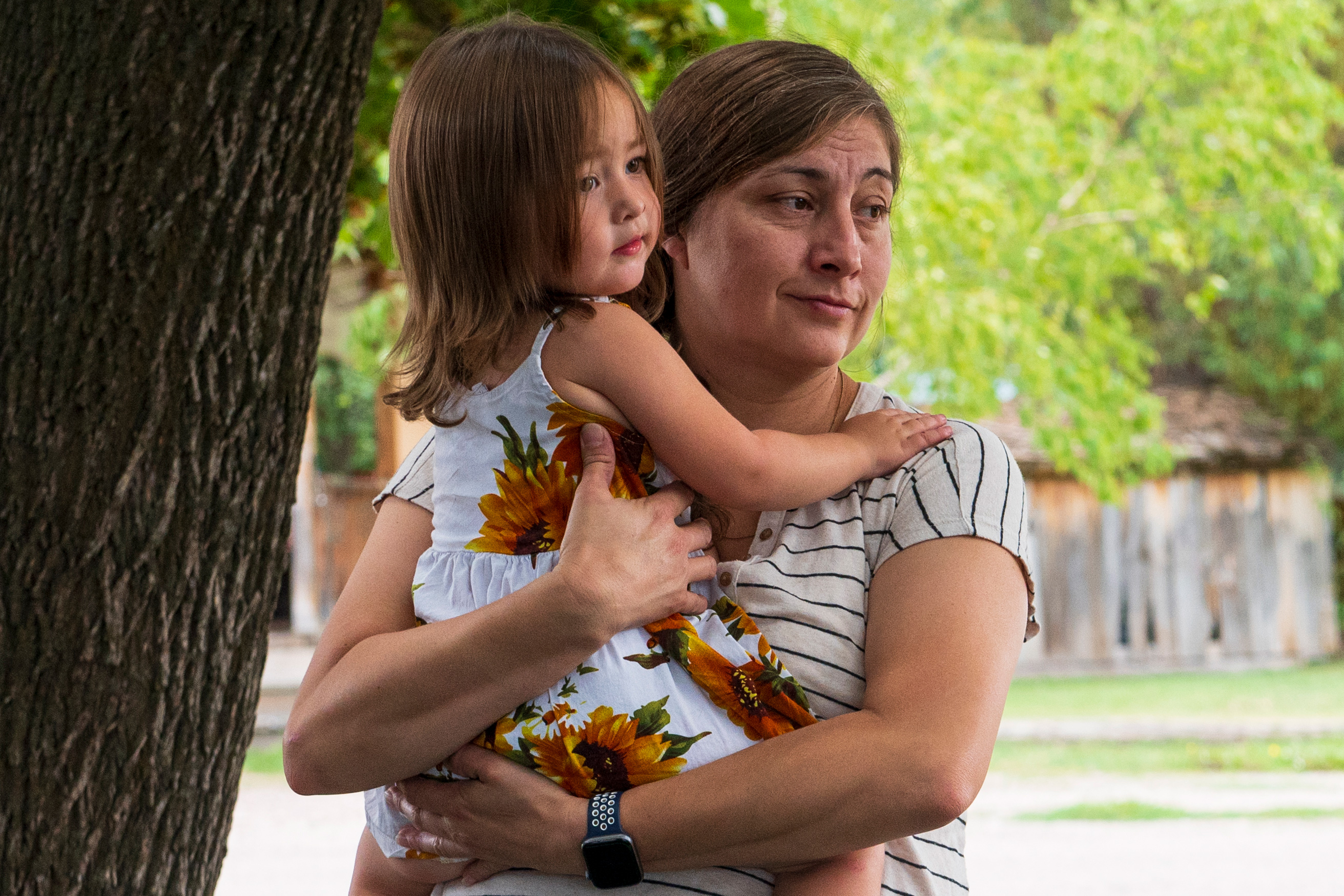
Thought Inflation Was Bad? Health Insurance Premiums Are Rising Even Faster

Kirk Vartan pays more than $2,000 a month for a high-deductible health insurance plan from Blue Shield on Covered California, the state’s Affordable Care Act marketplace. He could have selected a cheaper plan from a different provider, but he wanted one that includes his wife’s doctor.

“It’s for the two of us, and we’re not sick,” said Vartan, general manager at A Slice of New York pizza shops in the Bay Area cities of San Jose and Sunnyvale. “It’s ridiculous.”

Vartan, who is in his late 50s, is one of millions of Californians struggling to keep up with health insurance premiums ballooning faster than inflation.

Average monthly premiums for families with employer-provided health coverage in California’s private sector nearly doubled over the last 15 years, from just over $1,000 in 2008 to almost $2,000 in 2023, a KFF Health News analysis of federal data shows. That’s more than twice the rate of inflation. Also, employees have had to absorb a growing share of the cost.

The spike is not confined to California. Average premiums for families with employer-provided health coverage grew as fast nationwide as they did in California from 2008 through 2023, federal data shows. Premiums continued to grow rapidly in 2024, according to KFF.

Small-business groups warn that, for workers whose employers don’t provide coverage, the problem could get worse if Congress does not extend enhanced federal subsidies that make health insurance more affordable on individual markets such as Covered California, the public marketplace that insures more than 1.9 million Californians.

Premiums on Covered California have grown about 25% since 2022, roughly double the pace of inflation. But the exchange helps nearly 90% of enrollees mitigate high costs by offering state and federal subsidies based on income, with many families paying little or nothing.

Rising premiums also have hit government workers — and taxpayers. Premiums at CalPERS, which provides insurance to more than 1.5 million of California’s active and retired public employees and family members, have risen about 31% since 2022. Public employers pay part of the cost of premiums as negotiated with labor unions; workers pay the rest.

“Insurance premiums have been going up faster than wages over the last 20 years,” said Miranda Dietz, a researcher at the University of California-Berkeley Labor Center who focuses on health insurance. “Especially in the last couple of years, those premium increases have been pretty dramatic.”

Dietz said rising hospital prices are largely to blame. Consumer costs for hospitals and nursing homes rose about 88% from 2009 through 2024, roughly double the overall inflation rate, according to data from the Department of Labor. The rising cost of administering America’s massive health care system has also pushed premiums higher, she said.

Insurance companies remain highly profitable, but their gross margins — the amount by which premium income exceeds claims costs — were fairly steady during the last few years, KFF research shows. Under federal rules, insurers must spend a minimum percentage of premiums on medical care.

Rising insurance costs are cutting deeper into family incomes and squeezing small businesses.

The average annual cost of family health insurance offered by private sector companies was about $24,000, or roughly $2,000 a month, in California during 2023, according to the U.S. Department of Health and Human Services. Employers paid, on average, about two-thirds of the bill, with workers paying the remaining third, about $650 a month. Workers’ share of premiums has grown faster in California than in the rest of the nation.

Many small-business workers whose employers don’t offer health care turn to Covered California. During the last three decades, the percentage of businesses nationwide with 10 to 24 workers offering health insurance fell from 65% to 52%, according to the Employee Benefit Research Institute. Coverage fell from 34% to 23% among businesses with fewer than 10 employees.

“When an employee of a small business isn’t able to access health insurance with their employer, they’re more likely to leave that employer,” said Bianca Blomquist, California director for Small Business Majority, an advocacy group representing more than 85,000 small businesses across America.

Kirk Vartan said his pizza shop employs about 25 people and operates as a worker cooperative — a business owned by its workers. The small business lacks negotiating power to demand discounts from insurance companies to cover its workers. The best the shop could do, he said, were expensive plans that would make it hard for the cooperative to operate. And those plans would not offer as much coverage as workers could find for themselves through Covered California.

“It was a lose-lose all the way around,” he said.

Mark Seelig, a spokesperson for Blue Shield of California, said rising costs for hospital stays, doctor visits, and prescription drugs put upward pressure on premiums. Blue Shield has created a new initiative that he said is designed to lower drug prices and pass on savings to consumers.

Even at California companies offering insurance, the percentage of employees enrolled in plans with a deductible has roughly doubled in 20 years, rising to 77%, federal data shows. Deductibles are the amount a worker must pay for most types of care before their insurance company starts paying part of the bill. The average annual deductible for an employer-provided family health insurance plan was about $3,200 in 2023.

During the last two decades, the cost of health insurance premiums and deductibles in California rose from about 4% of median household income to about 12%, according to the UC Berkeley Labor Center, which conducts research on labor and employment issues.

As a result, the center found, many Californians are choosing to delay or forgo health care, including some preventive care.

California is trying to lower health care costs by setting statewide spending growth caps, which state officials hope will curb premium increases. The state recently established the Office of Health Care Affordability, which set a five-year target for annual spending growth at 3.5%, dropping to 3% by 2029. Failure to hit targets could result in hefty fines for health care organizations, though that likely wouldn’t happen until 2030 or later.

Other states that imposed similar caps saw health care costs rise more slowly than states that did not, Dietz said.

“Does that mean that health care becomes affordable for people?” she asked. “No. It means it doesn’t get worse as quickly.”

This article was produced by KFF Health News, which publishes California Healthline, an editorially independent service of the California Health Care Foundation. 

KFF Health News is a national newsroom that produces in-depth journalism about health issues and is one of the core operating programs at KFF—an independent source of health policy research, polling, and journalism. Learn more about KFF.

USE OUR CONTENT

This story can be republished for free (details).

Nursing Homes and the AMA, Once Medicaid Defenders, Hang Back as GOP Mulls Big Cuts

When congressional Republicans in 2017 pushed to repeal the Affordable Care Act and slash Medicaid, dozens of physician groups, patient advocates, hospitals, and others rallied to defend the law and the safety-net program.

Eight years later, two industry groups have been notably restrained as GOP lawmakers consider sweeping new Medicaid cuts: the American Medical Association and the American Health Care Association, which represents nursing homes.

At the same time, the two groups are lobbying Republicans, seeking support on other priorities.

The AMA is lobbying lawmakers to reverse a nearly 3% cut in Medicare’s fees for physicians. And the AHCA has pushed Congress to roll back regulations enacted under President Joe Biden that mandate better staffing ratios at nursing homes.

Representatives of the two groups declined to comment on the record about any connections between the Medicaid fight and their other legislative priorities.

But AHCA spokesperson Rachel Reeves said the nursing home group, which has issued a statement defending Medicaid, is communicating with lawmakers about the importance of the program for people with low incomes and disabilities. “We will make sure that the voices of our community are heard and that the message is loud and clear: Congress must protect our seniors who rely on Medicaid,” she said. Medicaid is the primary payer for nursing home care, covering more than 6 in 10 nursing home residents.

Nevertheless, other advocates and congressional Democrats said they’re frustrated by the two groups. “The time to speak out is now,” Sen. Ron Wyden, the senior Democrat on the Senate Finance Committee, told KFF Health News. “Americans will know which organizations stood up against harmful cuts to Medicaid when this fight is over.”

Medicaid, a state-federal insurance plan that together with the related Children’s Health Insurance Program covers about 80 million Americans, is in the crosshairs as congressional Republicans seek to trim several trillion dollars in federal spending to offset the $4.5 trillion cost of extending tax cuts enacted in President Donald Trump’s first term.

Medicaid cuts on the scale being contemplated would put coverage for millions of Americans at risk. That has alarmed advocates who work with people covered by the program, including children, Americans with disabilities, and low-income older adults. Other advocacy organizations who work with these patients have been much more active.

Last week, more than 400 pediatricians traveled to Washington, D.C., to speak to members of Congress about the importance of Medicaid. More than 100 leaders of safety-net hospitals that serve low-income patients around the country did the same.

Patients’ advocates such as the American Cancer Society Cancer Action Network have defended Medicaid. Last month, state medical societies sent a letter to congressional leaders warning of dire consequences if Medicaid cuts are enacted. And this week, more than 750 members of the American College of Obstetricians and Gynecologists are expected in Washington, where the group says they’ll be lobbying to preserve Medicaid funding.

“Slicing hundreds of billions of dollars from federal funding will force states to cut the care children and families depend on or raise taxes on hard-working Americans,” said Chip Kahn, chief executive of the Federation of American Hospitals, another trade group fighting to defend Medicaid.

Building coalitions was critical in previous health care debates, said Ron Pollack, the former head of patient advocacy group Families USA. Pollack helped lead the push for the 2010 Affordable Care Act. “We succeeded in the past because we stuck together,” he said.

Eight years ago, the AMA and AHCA were key members of the coalition that turned back Republican efforts to repeal the Affordable Care Act, often called Obamacare.

The AMA, the nation’s largest physician group, sent multiple letters to Congress throughout 2017, warning lawmakers in a March 17, 2017, letter that they should “keep upmost in your mind the potentially life altering impact your decisions will have on millions of Americans.”

And the AHCA’s president was a leading voice opposing repeal, which at one point he called “the biggest threat that the sector has faced in at least 20 to 25 years.”

This year, the AMA hasn’t sent a single letter or issued any news releases opposing Medicaid cuts. By contrast, the group has issued seven news releases since January on the lack of congressional action on physician fees.

The AHCA issued its first public defense of Medicaid in this year’s debate — a document it called a fact sheet — only the day after House Republicans adopted a budget resolution that threatens the program’s funding. When the group issued its 2025 policy priorities last week, “Priority #1” focused on staffing, including repealing the Biden-era staffing mandate. “Protecting Medicaid” was “Priority #2.”

The Medicaid debate will likely drag on for months as GOP leaders in the House and Senate try to cobble together a bill to extend tax cuts.

Medicaid’s defenders say they’re still looking for more voices to speak up.

“Republicans have said outright that silence is consent,” Wyden said. “If health care organizations don’t speak out against the GOP’s plans to cut health care, Republican lawmakers are going to assume those organizations are on board with their agenda.”

Related Topics

Contact Us

Submit a Story Tip

She Co-Founded the Office That Became DOGE. Now, She Sees ‘Irresponsible Transformation.’

Jennifer Pahlka is perhaps best known as the founder of Code for America, a widely respected nonprofit that helped formalize the principles of civic tech, a movement leveraging design and technology expertise to improve public access to government services and data. Notably, the organization reimagined the online application for California’s food assistance program, which once had one of the country’s lowest participation rates, transforming it from a 45-minute endeavor requiring a computer to a mobile-friendly process that can be completed in under 10 minutes.

Pahlka’s 2023 book, “Recoding America,” outlines her views on why the government so often fails to achieve its policy goals in the digital age. In it, she argues that “archaeological” layers of policies, regulations, and processes center the bureaucracy, not the public.

As a deputy chief technology officer under President Barack Obama, Pahlka helped launch the United States Digital Service, a unit within the White House that paired top technology talent with federal agencies to make government services more efficient and user-friendly. It was the predecessor to Elon Musk’s “Department of Government Efficiency,” or DOGE. On Feb. 25, 21 employees resigned from the renamed service, saying they would not “carry out or legitimize DOGE’s actions.”

Pahlka believes bolstering the government’s tech chops and relying less on contractors could save taxpayer dollars. However, as the administration looks to slash spending, she worries that DOGE’s “very indiscriminate” approach to date could wind up harming people who rely on public benefits such as Medicaid.

KFF Health News spoke to Pahlka, now a senior fellow at the nonpartisan Niskanen Center, about what she sees as “irresponsible transformation” and how best to fast-track government reform. This interview, conducted in mid-February, has been edited for length and clarity.

Q: You’ve made a career of bringing Silicon Valley talent into the public sector to improve the delivery of government services. What have you learned from mixing tech with government?

A: It’s really easy to look from the outside of government and say, “That’s crazy it works that way. I’m going to go in and fix it.” And when you get in, it’s that way for a reason, and you gain so much more empathy and sympathy for people in public service. You realize that people who you thought were obstructionists actually are just trying to do their jobs.

Civil servants deserve respect. We’re just not transforming government fast enough.

Q: What are the key changes you think would speed things up?

A: One, you have to be able to hire the right people and fire the wrong ones.

You also have to be able to reduce procedural bloat. When the unemployment insurance crisis hit, every state’s labor commissioner got called in front of the legislature and yelled at for the backlog. Rob Asaro-Angelo in New Jersey brought boxes and boxes of paper — 7,119 pages of active regs. And when they kept yelling, he kept pointing them to them and saying, “You can’t be scalable with 7,119 pages of regulations.”

The third pillar is investment in digital and data infrastructure.

And the fourth is closing the loop between policy and implementation. In California, you get thousands of bills introduced every year in the legislature. We don’t need that many. We need legislators to follow up on bills that have already been passed, see if they’re working, tweak them if they’re not. They need to go into agencies and say, “If this is hard for you to do, what mandates and constraints can we remove so you can make this a priority?”

Q: Civic technologists pushed through layers of bureaucracy in California to boost participation in the Supplemental Nutrition Assistance Program. How did that process unfold?

A: When we started working on California’s SNAP application, it was 212 questions. It started from, “What are all the policies that we need to comply with?” Instead of, “How would this be easy for someone to use?”

I think it can always be helpful to have fresh eyes on something. If those eyes have experience in consumer technology, they’re going to see through that lens of, “How do we deliver something that is easy for people to use?”

Q: House Republicans are considering deep financial cuts to safety net programs such as SNAP and Medicaid, and restricting eligibility. In recent years, organizations including Code for America have received hundreds of millions in private funding to modernize social safety net programs and make them more accessible. How optimistic do you feel that these efforts will progress over the next four years?

A: Let me say what I hope for: I hope that the states now get that when we don’t transform fast enough in a responsible way, you are inviting irresponsible transformation. I hope this gives governors and mayors all over the country a kick in the butt to say, “Whatever we have done so far, it has been insufficient. We really need to work on the capacity of our state to deliver in a modern era.”

Q: What do you mean by irresponsible transformation?

A: Maybe there is good stuff that DOGE is doing now that I don’t know about or good stuff that they will do in the future. I don’t have a crystal ball. But I do see that there is a huge difference between illegally stopping payments without Congress’ permission and making an IT system work better.

Q: To that point, DOGE’s purview seems to have shifted from modernizing government systems to, ostensibly, rooting out fraud, waste, and abuse. What do you make of that change?

A: I think the thesis that better technology could reduce waste, fraud, and abuse is sound, but you want to see both better use of technology to ensure that taxpayer dollars aren’t wasted, and that people who need their benefits are going to get them. You need a North Star that includes both of those things.

Q: And you’re not seeing that in DOGE?

A: They have not expressed great care for what damage can happen to people who rely on benefits. I’m just seeing large, very indiscriminate cuts.

They have signaled that government needs its own internal tech capacity and that it’s shocking how reliant on contractors our government is. I would agree with that.

We have a very dysfunctional government technology contracting ecosystem. There’s this set of big firms that we’ve outsourced our technology to that get to charge taxpayers a shocking amount of money to implement changes.

Q: Thousands of federal workers are now being pushed out. In light of your view that we outsource too much, what are your feelings on that?

A: We’ve overrelied on the idea that we should bring people in from the outside and underinvested in helping career civil servants to do transformation work themselves.

When I wrote my book, the biggest hero was Yadira Sánchez, who I think now has been at the Centers for Medicare & Medicaid Services for 25 years. She’s a leader who really pushes for the kinds of decisions that are going to make a service for doctors that’s going to be usable. She gets pushback and comes back and says, “If you make that decision, we are going to alienate doctors. They’re going to stop taking Medicare patients. And we’ve got to do it this different way.”

We need more of her, and we need to empower lots of people like that.

This article was produced by KFF Health News, which publishes California Healthline, an editorially independent service of the California Health Care Foundation. 

Related Topics

Contact Us

Submit a Story Tip

Medicaid Advocates Say Critics Use Loaded Terms To Gain Edge in Congressional Debate

In Washington’s debate over enacting steep funding cuts to Medicaid, words are a central battleground.

Many Republican lawmakers and conservative policy officials who want to scale back the joint state-federal health program are using charged language to describe it. Language experts and advocates for Medicaid enrollees say their word choice is misleading and aims to sway public opinion against the popular, 60-year-old government program in a bid to persuade Congress to cut funding.

Republicans such as Sen. Bill Cassidy of Louisiana, chair of the Senate Health, Education, Labor and Pensions Committee, are deploying provocative terms such as “money laundering,” rebranding a decades-old — and legal — practice known as provider taxes, which most states use to gain additional federal Medicaid funds.

They say it’s “discrimination” that the federal government matches state funding at a higher rate for adults covered by the Affordable Care Act’s Medicaid expansion than it does for other enrollees, including children, pregnant women, and disabled people.

And many Republicans, including House Speaker Mike Johnson and the director of the Office of Management and Budget, Russell Vought, have described adults who gained Medicaid coverage through the ACA expansion as “able-bodied” as they push for federal work requirements.

The term implies they have less need for government assistance than other Medicaid recipients — even though some have health conditions or caregiving responsibilities that make holding full-time jobs difficult.

“Able-bodied adults without dependents are better off with jobs than with hand-outs, and so are their communities and American taxpayers,” Sen. John Kennedy (R-La.) said in a press release in February.

To be sure, political spin is a practice older than Washington, and Democrats are no spectators in the war of words. But what’s striking about the latest GOP effort is that it is focused on cutting a health program for the nation’s poorest residents to pay, in part, for tax cuts for wealthier Americans.

A KFF poll conducted last month and released Friday found that support for proposed changes to Medicaid can wax or wane depending on what individuals are told about the program.

For example, the poll found about 6 in 10 adults support work requirements, with the same portion of respondents believing incorrectly that most working-age adults on Medicaid are unemployed. In fact, about two-thirds work.

KFF’s poll also showed that support for work requirements drops to about 3 in 10 adults when those who initially supported them hear that most Medicaid enrollees are already working and that, if the requirements were implemented, many would risk losing coverage because of the burden of proving eligibility.

When respondents initially opposed to work requirements were told they could allow Medicaid to be reserved for groups like the elderly, people with disabilities, and low-income children, support for them increased to 77%.

Steven Mintz, a history professor at the University of Texas, said the Medicaid debate likely will be won not on the facts, but instead on which party can describe it in terms that gain the most public support. “Words are wielded as weapons,” he said.

Republicans’ word choices are designed to appeal to people’s prejudices about Medicaid, he said, adding that “loaded” terms help divert attention from a detailed policy discussion.

“Words help reinforce a position that people already lean toward,” he said.

Sara Rosenbaum, professor emerita of health law and policy at George Washington University, said conservatives who have long tried to shrink Medicaid have an obvious motivation.

“These people spend their lives trying to ruin the program by searching for the newest slogans, the newest quips, and the newest nonsensical monikers that they think somehow will persuade Congress to completely upend the program and take benefits away from tens of millions of people,” she said.

Medicaid and the closely related Children’s Health Insurance Program cover nearly 80 million low-income and disabled people — roughly 1 in 5 Americans. Enrollment and spending soared in the past decade due largely to the covid pandemic and the decision by more states to expand Medicaid under the ACA. Polling shows the program is nearly as popular as Medicare, the health program primarily for those 65 or older — with about 3 in 4 Americans holding a favorable opinion of Medicaid.

The House of Representatives’ budget resolution, a blueprint that narrowly passed Feb. 25 with no Democratic support, calls for cuts of at least $880 billion over a decade largely from federal health and energy programs. A separate Senate resolution with no such cuts — so far — is also in play. Any proposal would need to pass both chambers.

Democrats fear most of those cuts will come from Medicaid. Trump has vowed not to touch Medicare, leaving few if any alternatives. He has said he would “cherish” Medicaid and go after only waste, fraud, and abuse in the program without offering details on how those would be interpreted — and he endorsed the House’s blueprint calling for cuts.

States and the federal government share in the financing of Medicaid, with the federal government paying from 50% to 77% of the cost of providing services to most beneficiaries. The rate is 90% for beneficiaries receiving coverage through their state’s Medicaid expansion program.

The federal matching rate varies based on a state’s per capita income relative to the national average; states with lower per capita incomes have higher matching rates. The remaining share of program funding comes from state and local sources.

The words “discrimination” and “money laundering” have been used in reports from the Paragon Health Institute, a conservative think tank led by a former Trump adviser, Brian Blase. Two former Paragon executives now advise Trump, and a former Paragon analyst advises Johnson.

Blase said there’s no ulterior motive in the group’s word choices. “This is us trying to describe the issue in a way that makes the most sense to members of Congress and policymakers,” he said.

Paragon analysts have argued for ending the federal government’s “discrimination” in matching state dollars for those covered under the ACA’s Medicaid expansion at a higher rate than for other enrollees. They also propose giving states a set amount of federal money per year for the program, rather than the open-ended federal funds that always have been a hallmark of Medicaid.

One way states raise funds for their share of Medicaid spending is through provider taxes that hospitals or nursing homes pay. States often reimburse the providers through the extra federal money.

Blase acknowledges that provider taxes used by states to draw down more federal money — which Paragon has referred to as “money laundering” — are legal. He said calling the practice a “tax” is misleading because the providers financially benefit from it.

“Money laundering is the best term we can think of for the schemes providers and states come up with to get federal reimbursement for artificial expenditures that benefits states and providers,” he said.

Joan Alker, executive director of the Center for Children and Families at Georgetown University, defended provider taxes as a legal way states raise money to cover low-income people. She noted most states with provider taxes are controlled at least partly by Republicans.

Alker rejected the notion that enhanced funding to expand enrollment is “discrimination.” The ACA included the higher rates for covering more low-income enrollees because that was the only way states could afford it, she said.

Without providing a specific example, Blase said advocates have said cuts would “leave people dying in the streets.”

During a brief funding freeze to Medicaid providers in January, Sen. Ron Wyden of Oregon, the top Democrat on the Senate Finance Committee, said, “This is a blatant attempt to rip away health insurance from millions of Americans overnight and will get people killed.”

Related Topics

Contact Us

Submit a Story Tip

To Patients, Parents, and Caregivers, Proposed Medicaid Cuts Are a Personal Affront

TUSTIN, Calif. — Cynthia Williams is furious with U.S. House Republicans willing to slash Medicaid, the government-run insurance program for people with low incomes or disabilities.

The 61-year-old Anaheim resident cares for her adult daughter, who is blind, and for her sister, a military veteran with severe post-traumatic stress disorder and other mental health conditions. Medi-Cal, the state’s version of Medicaid, pays Williams to care for them, and she relies on that income, just as her sister and daughter depend on her.

“Let’s be real. We shouldn’t have to be here tonight,” Williams told a raucous standing-room crowd of over 200 people at a recent town hall. “We should be home, spending time with our loved ones and our families, but we’re here. And we’re here to fight, because when politicians try to take away our health care, we don’t have the option to sit back and let it happen.”

The House last week approved a Republican budget plan that could shrink Medicaid spending by $880 billion over 10 years, only partially paying for an extension of expiring tax cuts from President Donald Trump’s first term, plus some new ones he has promised, totaling as much as $4.5 trillion.

A spending cut of that magnitude would have a huge impact in California, with nearly 15 million people — more than a third of the population — on Medi-Cal. Over 60% of Medi-Cal’s $161 billion budget comes from Washington.

Williams was among about a dozen providers, patient advocates, disabled people, and family members who stood up one after the other to tell their stories. Rep. Young Kim, a Republican whose district includes this relatively affluent Orange County city, declined an invitation for her or a staff member to attend. But her constituents delivered their message loud and clear to her and the other Republicans in Congress: Hands off Medicaid.

Josephine Rios, a certified nursing assistant at a Kaiser Permanente surgical center in Irvine, said her 7-year-old grandson, Elijah, has received indispensable treatments through Medi-Cal, including a $5,000-a-month medication that controls his seizures, which can be life-threatening. Elijah, who has cerebral palsy, is among the more than 50% of California children covered by Medi-Cal.

“To cut Medicaid, Medi-Cal, that’s like saying he can’t live. He can’t thrive. He’s going to lie in bed and do nothing,” Rios said. “Who are they to judge who lives and who doesn’t?”

Two thirds of Californians across party lines oppose cuts to Medi-Cal, according to a new survey by the California Health Care Foundation and NORC at the University of Chicago.

The town hall here was one of three organized late last month by “Fight for Our Health,” a coalition of health advocacy groups and unions, to target Republican House members whose California districts are considered politically competitive. The other two were in Bakersfield, part of which is represented by Rep. David Valadao, and Corona, home to Rep. Ken Calvert. Multiple other town halls and protests have sprung up across the country in recent weeks.

The coalition has reprised a campaign — part of a broader national movement — that fought against the GOP’s unsuccessful 2017 effort to repeal the Affordable Care Act.

The Republicans’ loss of House control in the 2018 midterm elections has been widely attributed to their stance on health care. Valadao was among the GOP members who lost their seats in 2018, though he took his back two years later.

Still, he voted for the House budget proposal last week, despite the fact that about two-thirds of the population in his district is on Medicaid — the highest in the state — and even though he is one of eight GOP House members who sent a letter to Speaker Mike Johnson warning about the “serious consequences” of deep cuts to Medicaid. Valadao’s office did not respond to requests for comment.

Calvert, who’s been in the House for 32 years and eked out reelection last November, also voted for the budget, as did Kim. All nine GOP members of California’s congressional delegation supported it, as did all House Republicans except one.

Critics of the budget plan say it helps the rich at the expense of society’s most vulnerable — an argument that was vigorously repeated at the Tustin town hall. But supporters of the plan say that extending the tax cuts, key provisions of which are set to expire at the end of this year, would avoid a large tax hike for average Americans and benefit low-income families the most.

“American families are facing a massive tax increase unless Congress acts by the end of the year,” Calvert said in a statement to KFF Health News before the vote. He vowed the GOP would not touch Social Security or Medicare. He did not offer similar assurances on Medicaid, but said, “We are not interested in cutting the social and healthcare safety net for children, disabled, and low-income Americans. We are focused on eliminating waste, fraud, and abuse.”

The document greenlit last Tuesday does not specify spending cut details, though it instructs the Energy and Commerce Committee, which oversees Medicaid and Medicare spending, to cut $880 billion — a large chunk of the up to $2 trillion in total cuts. The GOP’s razor-thin majority means Johnson will have a narrow path to get a more detailed budget passed. Republican support, whether from fiscal hawks who want deeper spending cuts or House members worried about slashing Medicaid, could ebb and flow as the details are hashed out.

Moreover, the House must reach a compromise with the Senate, which has passed a much narrower budget resolution that leaves the big tax cuts out for now.

Like Kim, Valadao and Calvert declined invitations to attend or send staffers to the town hall meetings in their regions. At the Tustin meeting, multiple speakers chided Kim for her absence. At one point, the large screen behind the podium flashed a picture of an empty chair with the words, in large block letters, “Congresswoman Kim, we saved you a seat.”

Kim spokesperson Callie Strock said in an email that Kim and her local staff had preexisting commitments that night. She added that Kim is “committed to protecting and strengthening our health care system.”

But those in attendance were clearly worried.

“It’s a moral obligation for all of us to look at the most disadvantaged people in our country and take good care of them,” said Beth Martinko, whose 33-year-old son, Josh, has autism and relies on Medi-Cal for his care. “This has no place in politics.”

This article was produced by KFF Health News, which publishes California Healthline, an editorially independent service of the California Health Care Foundation. 

KFF Health News is a national newsroom that produces in-depth journalism about health issues and is one of the core operating programs at KFF—an independent source of health policy research, polling, and journalism. Learn more about KFF.

USE OUR CONTENT

This story can be republished for free (details).

Years Later, Centene Settlements With States Still Unfinished

More than three years ago, health insurance giant Centene Corp. settled allegations that it overcharged Medicaid programs in Ohio and Mississippi related to prescription drug billing.

Now at least 20 states have settled with Centene over its pharmacy benefit manager operation that coordinated the medications for Medicaid patients. Arizona was among the most recent to join the ranks, settling for an undisclosed payout, Richie Taylor, a spokesperson for the state’s attorney general, told KFF Health News in December.

All told, Centene has agreed to pay more than $1 billion in settlements, according to Cohen Milstein, one of the law firms representing states in the agreements. Meanwhile, St. Louis-based Centene reported $163 billion in revenue in 2024, largely proceeds from government health programs for Medicaid, Medicare, and the Affordable Care Act. The health care company has admitted no wrongdoing in the settlements.

Two state holdouts appear to remain: Georgia has yet to settle with Centene, even though the administration of Gov. Brian Kemp hired law firm Liston & Deas in 2019 to investigate state pharmacy benefit operations.

Florida hired the same law firm in 2021 to pursue overbilling allegations involving Centene, but state officials declined to answer a reporter’s questions about whether Florida has dropped the case, reached an undisclosed settlement, or is still discussing the issue.

Neither state has publicly disclosed what’s standing in the way of potentially tens of millions of dollars in Centene payouts, or whether negotiations are taking place. Because the deals are largely occurring outside the court system, the process between the private law firms hired by states and Centene remains generally out of public view.

Centene spokespeople did not return multiple phone calls and emails asking for updates. In 2022, the company said it was working on settlements with Georgia and eight other states, having reached deals with 13 others. And in a Securities and Exchange Commission filing in October, Centene said it had reached settlements with “the vast majority of states impacted” over the operations of its former pharmacy benefits manager.

Georgia has “taken disproportionately long compared to other states,” said Greg Reybold, a vice president of the American Pharmacy Cooperative, which represents independent pharmacies.

Meanwhile, Centene’s Georgia Medicaid plan, the Peach State Health Plan, lost its bid last year to continue its longtime participation in a Georgia Medicaid program in which companies cover the care for Medicaid recipients for a set fee from the government rather than for each medical service provided. The company, which has been part of the contract since the managed-care program began in 2006, filed a protest over the contract awards, saying that the process was “mismanaged, rife with errors and reckless practices.”

Nationally, pharmacy benefit managers, or PBMs, have come under increased scrutiny over accusations of pocketing discounts on medications or inflating costs in the years since Centene started settling its Medicaid-related allegations. Members of Congress have proposed major policy constraints on PBMs. Centene has since overhauled its PBM operation.

Still, a possible settlement in Georgia could bring in significant money to the state. California had the largest publicly disclosed settlement at $215 million, split with the federal government, but a settlement with Georgia could be in the range of the $88 million that Centene agreed to pay in the Ohio dispute, Reybold said.

The state should aggressively pursue a settlement with Centene, said Roland Behm, co-founder of the Georgia Mental Health Policy Partnership, who is a critic of Centene and its Georgia Medicaid plan. Behm said state Attorney General Chris Carr should take “the same tenacious prosecutorial action” against Centene that Carr’s agency takes against individuals involved in fraud against Medicaid, the federal-state program that provides health insurance coverage for those with low incomes or disabilities.

Carr’s office said in 2022 that it stood ready to represent Georgia in settlement negotiations with Centene. Carr, a Republican who has announced he’s running for governor in 2026, received tens of thousands of dollars in campaign contributions from Centene, its subsidiaries, and its executives, as did Kemp, a fellow Republican, KFF Health News reported in 2022. Contributions to the Kemp and Carr campaigns were part of more than $26.9 million that Centene, its subsidiaries, its top executives, and their spouses donated to state politicians in 33 states, to their political parties, and to nonprofit fundraising groups from 2015 through 2022.

Since 2022, the company and its political action committee have contributed, combined, at least $2 million more to the campaigns of Florida and Georgia candidates of both political parties, along with state party organizations and political committees, according to state campaign finance records.

When asked about a possible settlement, a spokesperson for Carr, Kara Murray, directed a reporter to the Georgia Department of Community Health, which administers Medicaid.

Fiona Roberts, a spokesperson for that agency, then told KFF Health News that the department “is actively pursuing options to ensure regulatory compliance with the state’s contract.” She declined to comment further.

Florida’s attorney general’s office directed a reporter to the state agency that oversees Medicaid, the Florida Agency for Health Care Administration. But that agency did not respond to multiple phone calls and emails requesting comment.

Rebecca Grapevine of Healthbeat contributed to this article.

Related Topics

Contact Us

Submit a Story Tip

UnitedHealth Wins Ruling Over $2B in Alleged Medicare Advantage Overpayments

The Justice Department’s years-long court battle to force UnitedHealth Group to return billions of dollars in alleged Medicare Advantage overpayments hit a major setback Monday when a special master ruled the government had failed to prove its case.

In finding for UnitedHealth, Special Master Suzanne Segal found that the DOJ had not presented evidence to support its claim that the giant health insurer exaggerated how sick patients were to illegally pocket more than $2 billion in overpayments.

“A mere possibility of an overpayment is not enough for the government to carry its burden,” Segal wrote in an initial ruling. She recommended that UnitedHealth’s motion to dismiss the case be granted. The recommendation, which is to be presented to the federal judge handling the case, can be appealed within two weeks.

The civil fraud case against UnitedHealth Group, the nation’s largest Medicare Advantage insurer, was filed in 2011 by whistleblower Benjamin Poehling, a former company employee. The DOJ took over the case in 2017. Medicare Advantage is the privately run alternative to the traditional Medicare program for seniors.

“After more than a decade of DOJ’s wasteful and expensive challenge to our Medicare Advantage business, the Special Master concluded there was no evidence to support the DOJ’s claims we were overpaid or that we did anything wrong,” UnitedHealth spokesperson Heather Soule said in a statement.

Wyn Hornbuckle, a spokesperson for the Justice Department, said the agency wouldn’t comment on the ruling, which was filed in federal court in Los Angeles. Attorneys for whistleblower Poehling had no comment.

Medicare pays Advantage health plans higher rates to cover sicker patients but requires that their conditions be properly documented in medical records.

The DOJ alleges Medicare paid UnitedHealth Group more than $7.2 billion from 2009 through 2016 based on the company’s efforts to boost revenue by reviewing patient records to find additional diagnoses and adding medical billing codes to their files. According to the DOJ, Medicare would have paid the company $2.1 billion less if it had deleted unsupported billing codes.

The Justice Department also alleged that in these chart reviews, the health insurance giant ignored overcharges that might have reduced bills.

But the special master, who was appointed by U.S. District Judge Fernando Olguin, concluded the government’s case “depends entirely on speculation and assumptions about what the codes found by the United coders actually mean.”

“If this stands, I think it is a major defeat for the government,” said William Hanagami, an attorney who represented a different whistleblower in one of the earliest cases alleging billing fraud by a Medicare Advantage insurance company. Hanagami said he expects the government to appeal the decision.

Segal noted that UnitedHealth executives told Centers for Medicare & Medicaid Services officials about its chart review policies at an April 2014 meeting. At the time, CMS was considering a regulation to restrict use of chart reviews, but the agency backed off the regulation under pressure from the insurance industry. At the time, a CMS official described the industry’s response as an “uproar.”

The special master noted that United had requested the meeting with CMS officials, which she called “the opposite of concealment.”

“The problem with the government’s allegations is that the government knew of the very chart review practices which it now claims United prevented it from learning, and thus the government cannot have been duped into relying on any action or inaction by United in determining whether it had been the victim of overpayments,” Segal wrote.

Segal noted CMS audits of UnitedHealth’s Medicare Advantage plans had found that about 89% of billing codes were supported by patient medical records. The audit findings “undercut” the government’s claim that the company engaged in widespread overbilling.

“This litigation has been pending for more than a decade,” she wrote, “and the government has had ample opportunity to develop evidence in support of its theories. It has not.”

The decision comes as UnitedHealth faces renewed investigations into its handling of Medicare Advantage coding, including a new Justice Department review.

Medicare Advantage insurance plans have grown explosively in recent years and now enroll about 33 million members, more than half of people eligible for Medicare.

The industry has been the target of dozens of whistleblower lawsuits and government audits alleging that the plans cost taxpayers too much money, including a demand last month by Senate Judiciary Committee chair Chuck Grassley (R-Iowa) that UnitedHealth explain its billing practices.

Related Topics

Contact Us

Submit a Story Tip

Home Improvements Can Help People Age Independently. But Medicare Seldom Picks Up the Bill.

Chikao Tsubaki had been having a terrible time.

In his mid-80s, he had a stroke. Then lymphoma. Then prostate cancer. He was fatigued, isolated, not all that steady on his feet.

Then Tsubaki took part in an innovative care initiative that, over four months, sent an occupational therapist, a nurse, and a handy worker to his home to help figure out what he needed to stay safe. In addition to grab bars and rails, the handy worker built a bookshelf so neither Tsubaki nor the books he cherished would topple over when he reached for them.

Reading “is kind of the back door for my cognitive health — my brain exercise,” said Tsubaki, a longtime community college teacher. Now 87, he lives independently and walks a mile and a half almost every day.

The program that helped Tsubaki remain independent, called Community Aging in Place: Advancing Better Living for Elders, or CAPABLE, has been around for 15 years and is offered in about 65 places across 26 states. It helps people 60 and up, and some younger people with disabilities or limitations, who want to remain at home but have trouble with activities like bathing, dressing, or moving around safely. Several published studies have found the program saves money and prevents falls, which the Centers for Disease Control and Prevention says contribute to the deaths of 41,000 older Americans and cost Medicare about $50 billion each year.

Despite evidence and accolades, CAPABLE remains small, serving roughly 4,600 people to date. Insurance seldom covers it (although the typical cost of $3,500 to $4,000 per client is less than many health care interventions). Traditional Medicare and most Medicare Advantage private insurance plans don’t cover it. Only four states use funds from Medicaid,the federal-state program for low-income and disabled people. CAPABLE gets by on a patchwork of grants from places like state agencies for aging and philanthropies.

The payment obstacles are an object lesson in how insurers, including Medicare, are built around paying for doctors and hospitals treating people who are injured or sick — not around community services that keep people healthy. Medicare has billing codes for treating a broken hip, but not for avoiding one, let alone for something like having a handy person “tack down loose carpet near stairs.”

And while keeping someone alive longer may be a desirable outcome, it’s not necessarily counted as savings under federal budget rules. A 2017 Centers for Medicare & Medicaid Services evaluation found that CAPABLE had high satisfaction rates and some savings. But its limited size made it hard to assess the long-term economic impact.

It’s unclear how the Trump administration will approach senior care.

The barriers to broader state or federal financing are frustrating, said Sarah Szanton, who helped create CAPABLE while working as a nurse practitioner doing home visits in west Baltimore. Some patients struggled to reach the door to open it for her. One tossed keys to her out of a second-story window, she recalled.

Seeking a solution, Szanton discovered a program called ABLE, which brought an occupational therapist and a handy worker to the home. Inspired by its success, Szanton developed CAPABLE, which added a nurse to check on medications, pain, and mental well-being, and do things like help participants communicate with doctors. It began in 2008. Szanton since 2021 has been the dean of Johns Hopkins University School of Nursing, which coordinates research on CAPABLE. The model is participatory, with the client and care team “problem-solving and brainstorming together,” said Amanda Goodenow, an occupational therapist who worked in hospitals and traditional home health before joining CAPABLE in Denver, where she also works for the CAPABLE National Center, the nonprofit that runs the program.

CAPABLE doesn’t profess to fix all the gaps in U.S. long-term care, and it doesn’t work with all older people. Those with dementia, for example, don’t qualify. But studies show it does help participants live more safely at home with greater mobility. And one study that Szanton co-authored estimated Medicare savings of around $20,000 per person would continue for two years after a CAPABLE intervention.

“To us, it’s so obvious the impact that can be made just in a short amount of time and with a small budget,” said Amy Eschbach, a nurse who has worked with CAPABLE clients in the St. Louis area, where a Medicare Advantage plan covers CAPABLE. That St. Louis program caps spending on home modifications at $1,300 a person.

Both Hill staff and CMS experts who have looked at CAPABLE do see potential routes to broader coverage. One senior Democratic House aide, who asked not to be identified because they were not allowed to speak publicly, said Medicare would have to establish careful parameters. For instance, CMS would have to decide which beneficiaries would be eligible. Everyone in Medicare? Or only those with low incomes? Could Medicare somehow ensure that only necessary home modifications are made — and that unscrupulous contractors don’t try to extract the equivalent of a “copay” or “deductible” from clients?

Szanton said there are safeguards and more could be built in. For instance, it’s the therapists like Goodenow, not the handy workers, who put in the work orders to stay on budget.

For Tsubaki, whose books are not only shelved but organized by topic, the benefits have endured.

“I became more independent. I’m able to handle most of my activities. I go shopping, to the library, and so forth,” he said. His pace is slow, he acknowledged. But he gets there.

Kenen is the journalist-in-residence and a faculty member at Johns Hopkins University School of Public Health. She is not affiliated with the CAPABLE program.

Related Topics

Contact Us

Submit a Story Tip

Los republicanos están considerando recortes a Medicaid. De nuevo, ¿qué es Medicaid?

En enero, durante una audiencia en el Congreso en su camino a convertirse en secretario del Departamento de Salud y Servicios Humanos (HHS), Robert F. Kennedy Jr. dio información errónea sobre cuestiones básicas de Medicaid, un programa que ahora supervisa. 

En ese momento, afirmó que a Medicaid lo financia por completo el gobierno federal (no es así) y que muchos beneficiarios están insatisfechos con los altos gastos de bolsillo (los afiliados pagan poco o nada). 

Medicaid es complejo. Este programa estatal-federal que cuesta $880 mil millones al año ofrece cobertura de salud a millones de estadounidenses de bajos ingresos, o con discapacidades. Cubre distintos servicios para diferentes personas en muchas partes del país, y los afiliados pueden interactuar con compañías de seguros privadas que no tienen la palabra “Medicaid” en sus nombres, lo que hace que algunos ni siquiera sepan que están en el programa. 

Aunque el presidente Donald Trump prometió “amar y apreciar” a Medicaid, los republicanos anunciaron hace pocos días en el Congreso proyectos de presupuesto federal que podrían reducir drásticamente al programa. A medida que comienza el debate, esto es lo que necesitas saber sobre Medicaid. 

¿Qué es Medicaid y en qué se diferencia de Medicare? 

Medicaid y Medicare fueron creados por la misma legislación —una enmienda a la Ley del Seguro Social— promulgada por el presidente Lyndon B. Johnson en 1965. 

Medicaid es un programa gubernamental de seguro de salud para personas con bajos ingresos, y para adultos y niños con discapacidades. 

Medicare, por el contrario, generalmente cubre a personas de 65 años o más

Para los estadounidenses mayores con bajos ingresos, Medicaid cubre los gastos de bolsillo de Medicare. Estas personas suelen llamarse “doblemente elegibles” porque califican para ambos programas. 

¿Quién está en Medicaid? 

Más de 79 millones de personas reciben servicios de Medicaid o del relacionado Programa de Seguro de Salud Infantil (CHIP). Esto representa aproximadamente el 20% de la población total de Estados Unidos. La mayoría de los beneficiarios califican debido a sus bajos ingresos. 

Cerca del 40% de todos los niños de Estados Unidos son beneficiarios de Medicaid o de CHIP, que fue creado en 1997.

Ambos programas pagan servicios como chequeos rutinarios, vacunas y hospitalizaciones. Medicaid también cubre a personas embarazadas antes y después del parto: financia más del 40% de todos los nacimientos del país. 

Medicaid también atiende a personas con discapacidades o necesidades médicas complejas y los ayuda a pagar servicios que les permiten vivir de manera independiente, integradas a la comunidad, fuera de instituciones como hogares de adultos mayores u hospitales estatales. 

El programa atiende a una población diversa. Aproximadamente el 40% de las personas menores de 65 años que usan Medicaid son blancas no hispanas, el 30% son hispanas, el 19% son negras no hispanas, y el 1% son nativos americanos. 

Los fondos federales de Medicaid no pueden utilizarse para cubrir a inmigrantes sin papeles, aunque algunos estados y Washington D.C. han usado sus propios fondos para extender la cobertura a miembros de este grupo. California fue el primer estado en hacerlo. 

¿Cuáles son los requisitos de ingreso? 

La elegibilidad generalmente depende de si una persona tiene bajos ingresos, y los estados tienen diferentes formas de definir esto. Para un hogar de cuatro adultos sin hijos dependientes, el nivel de cobertura promedio a nivel nacional es de $44,367. 

La Ley de Cuidado de Salud a Bajo Precio (ACA, conocida como Obamacare), aprobada en 2010, permitió que más personas calificaran para Medicaid en función de sus ingresos. Esto se conoce como “expansión de Medicaid”. 

La ley ofreció considerables incentivos financieros a los estados para que ampliaran el programa, para llegar a cubrir a más personas. El gobierno federal aportaría más dinero por cada afiliado para ayudar a incluirlo en la cobertura.

La intención de la expansión era cerrar la brecha de falta de seguro de salud para los millones de estadounidenses que no obtienen cobertura a través de un empleador. Medicaid cubriría a personas con ingresos extremadamente bajos y, a medida que sus ingresos aumentaran, podrían pasar a planes subsidiados que se venden en los mercados de seguros de ACA. 

En 2012, la Corte Suprema de Estados Unidos determinó que la decisión de expandir Medicaid quedaría en manos de cada estado. Actualmente, 40 estados y Washington D.C. han optado por hacerlo, con el apoyo tanto de demócratas como de republicanos. 

En 2025, en los 10 estados que no han expandido Medicaid, el límite de ingresos para calificar es de $5,947 al año para una persona soltera. Quienes ganan más no son elegibles. 

Sin embargo, los adultos de esos estados que ganan demasiado para Medicaid también es posible que no ganen lo suficiente para recibir ayuda que les permita comprar planes en los mercados de ACA.

Esta situación deja a algunos sin cobertura. Se estima que 1.5 millones de personas caen en esta brecha. 

¿De dónde proviene el dinero para financiar Medicaid? 

El gobierno federal cubre la mayor parte del costo de Medicaid, igualando el porcentaje del gasto estatal.

Actualmente, el gobierno federal contribuye con al menos el 50% del gasto de los estados y aporta más dinero para algunos servicios y afiliados, como los niños y las embarazadas. 

Los estados menos ricos reciben un porcentaje mayor de fondos federales. En Mississippi, por ejemplo, el gobierno federal cubre el 77% del costo de Medicaid

Para los beneficiarios elegibles bajo la expansión de ACA, el gobierno federal paga el 90% de los costos. 

No hay un límite en cuánto pueden gastar los estados en el programa, y cientos de miles de millones de dólares federales fluyen hacia ellos cada año. En 2023, los estados destinaron aproximadamente el 15% de sus presupuestos a Medicaid. 

¿En qué se gasta ese dinero? 

La ley federal exige que todos los programas estatales de Medicaid cubran ciertos servicios como, por ejemplo, el transporte médico de emergencia, los exámenes de laboratorio, las radiografías, la planificación familiar y el tratamiento asistido con medicamentos para el trastorno por consumo de opioides.

El programa también cubre muchos servicios de enfermería y atención domiciliaria, aunque la ley permite que el gobierno recupere esos beneficios después del fallecimiento del afiliado. 

Más allá de estos requisitos, los estados tienen flexibilidad para decidir otros servicios que sus programas de Medicaid pueden ofrecer. 

Todos los estados cubren medicamentos recetados y la mayoría cubre atención dental, fisioterapia y anteojos. Medicaid cubre más servicios de salud mental y cuidados a largo plazo que cualquier otro tipo de seguro, público o privado. 

¿Cómo se llama Medicaid en mi estado? 

Los programas de Medicaid pueden tener muchos nombres diferentes, incluso dentro del mismo estado, en parte porque la mayoría de los estados utilizan aseguradoras privadas para gestionarlos. Esto puede resultar confuso para los consumidores, que pueden no darse cuenta de que están inscritos en Medicaid.

En Nueva York, por ejemplo, los planes de Medicaid son ofrecidos por grandes compañías, como Anthem Blue Cross Blue Shield y UnitedHealthcare. Pero también algunas de las que quizá no hayas oído hablar, como Amida Care y MetroPlusHealth.

En Wisconsin, los afiliados pueden estar en BadgerCare Plus; en Connecticut, en Husky Health; en Texas, en STAR; y en California, en Medi-Cal.

¿Cómo afecta Medicaid a los hospitales y médicos de mi estado?

Medicaid generalmente les paga a los proveedores de atención médica menos dinero que Medicare o los seguros privados. Sin embargo, es más de lo que recibirían por atender a personas sin seguro. Sin Medicaid, muchas más personas no tendrían cobertura. 

Tanto los estados como los hospitales y médicos dependen de estos fondos, y han expresado preocupación porque, incluso si los recortes se implementaran gradualmente, requerirían grandes ajustes. 

¿Qué pasará con Medicaid? 

No está claro. Los republicanos en Washington están impulsando nuevamente cambios importantes, que podrían incluir recortes en la financiación federal. Esto podría reducir el número de personas elegibles, de los servicios disponibles o de ambos. 

Un intento similar de derogar y reemplazar Obamacare en 2017, durante el primer mandato de Trump, fracasó. 

Uno de los mayores obstáculos para cambiar Medicaid es su popularidad: el 77% de los estadounidenses, incluidas mayorías de demócratas, independientes y republicanos, tienen una opinión favorable del programa. 

En el fondo, la discusión se reduce a varias preguntas clave sobre el papel del gobierno en la atención de salud. Algunas de ellas: ¿Cuán extensa debe ser la red de seguridad en salud? ¿Quién merece asistencia gubernamental? ¿Cómo afectarán los grandes cambios en Medicaid a los afiliados, los estados, los proveedores y el sistema de salud en general, aun si se hicieran en forma escalonada?

KFF Health News is a national newsroom that produces in-depth journalism about health issues and is one of the core operating programs at KFF—an independent source of health policy research, polling, and journalism. Learn more about KFF.

USE OUR CONTENT

This story can be republished for free (details).

Future of Cancer Coverage for Women Federal Firefighters Uncertain Under Trump

It took nearly three years to win presumptive workers’ compensation coverage for breast, cervical, and other cancers that firefighters who work for federal agencies may develop because of hazardous exposures on the job.

Now, just weeks after the Labor Department added coverage for those illnesses, firefighters worry the gains may be in jeopardy after the Trump administration deleted information about the expansion of coverage for cancers that mostly affect women and transgender firefighters from a federal webpage and ducked questions about whether it will uphold the policy change made in the waning days of the Biden administration.

“It’s really important to continue to focus on ensuring that those who devote their lives to protecting the public and communities continue to receive coverage through the special claims unit,” said Pete Dutchick, a federal firefighter and volunteer with the advocacy group Grassroots Wildland Firefighters.

The Labor Department’s special claims unit, established in 2022, processes all federal firefighter claims and provides a streamlined path for those with covered conditions. Wildland firefighters and advocacy groups representing them celebrated that year when federal officials moved to expedite workers’ compensation coverage of cancers tied to their jobs. It was recognition that the dangers of battling wildfires extend long after a blaze is extinguished.

The list of cancers federal officials tagged for streamlined claims processes through the Labor Department’s Office of Workers’ Compensation Programs included esophageal, colorectal, prostate, testicular, kidney, bladder, brain, lung, thyroid, multiple myeloma, non-Hodgkin’s lymphoma, leukemia, mesothelioma, and melanoma.

But that initial jubilation soured when it became clear that breast, ovarian, cervical, and uterine cancers were excluded, creating a coverage gap for more than 2,700 people, or about 16% of the more than 17,000 federal wildland firefighters working for the Forest Service and the Interior Department. These are firefighters who are dispatched to federal lands, like in national forests and national parks, and sometimes assist county and state crews, as they did when fires swept into Los Angeles in January.

“At first glance, we were ecstatic,” Dutchick said. “And then we’re like, ‘Well, where are the female cancers?’”

Dutchick, who has an 8-year-old daughter, was upset. “I certainly want her to have equal protections when it comes to health if she chooses to get into a field of public service,” he said.

Then this year, as the Biden administration wound toward a close, federal officials addressed the exclusion, adding the cancers to the list in a last-minute change before Donald Trump took office.

“This policy change acknowledges the unique occupational hazards faced by women firefighters and ensures they receive the care and support they deserve,” Christopher Godfrey, the now-former director of the workers’ compensation office, said in a Jan. 6 statement on the Labor Department’s website.

In a statement to KFF Health News four days later, Godfrey said the policy change resulted in immediate action for firefighters with new claims.

But in the early days of the Trump administration, the January press release announcing the cancer coverage expansion was deleted from the Labor Department website. When asked whether claims were still being processed for the four recently added cancers, a spokesperson for the workers’ compensation office, Frances Alonzo, told KFF Health News, “We do not have any additional updates regarding your inquiry.”

Formalizing the policy change through rulemaking will take months and support from Congress.

Kaleena Lynde is among a generation of women firefighters who developed cancer before streamlined coverage for workers’ compensation claims existed. In 2006, Lynde, then 22, was diagnosed with small cell ovarian cancer during her third fire season on the Shasta Lake Hotshots, an elite crew of firefighters in Northern California. Doctors removed a 5.4-pound tumor almost immediately that year. She’s now cancer-free, but only after multiple surgeries, chemotherapy, and an additional cervical cancer diagnosis three years later. Lynde has since gone on to work various jobs for the Forest Service, including 16 years at Eldorado National Forest doing fire investigation, fire prevention, and dispatch center jobs. She now coordinates wildfire apprenticeships for the agency’s Pacific Southwest region.

A friend recently sent her a link to the National Firefighter Registry for Cancer, a database tracking the prevalence of diseases among all firefighters, both structural and wildland. It made Lynde wonder — could her cancers be connected to her work on the fire line?

“I just thought I had bad luck,” Lynde said.

Seeking to fix the omission, more than 15 wildland firefighter advocacy groups, representing Hotshot crews, smokejumpers, and others, signed a September letter to Julie Su, the acting labor secretary at the time. They pointed out that other countries, including Australia, already included presumptive coverage for cervical, ovarian, uterine, and breast cancers.

The Labor Department implemented policy changes that eased the requirements for covering wildland firefighters’ cancer-related workers’ compensation claims in April 2022 through a Federal Employees’ Compensation Act bulletin. The rules were codified in December 2022 when President Joe Biden signed the National Defense Authorization Act.

To qualify, firefighters must have worked for at least five years and be diagnosed within 10 years of their last exposure. Those with unlisted cancers could still file claims through a special unit but wouldn’t receive the same streamlined adjudication for compensation. By September 2024, the workers’ compensation office had received 91 claims for qualifying cancers and heart and lung conditions. Of those, 89 were adjudicated through the special claims process and 84, or 94%, were accepted. Godfrey said that prior to the legislation, only 29% of occupational disease claims for firefighters were accepted.

Rachel Granberg, a wildland firefighter in Washington state, said streamlined processing and reimbursements are important. “It really gives people more bandwidth to worry about how they’re going to manage their life after a cancer diagnosis, rather than just fighting for basic health care.”

Too often firefighters end up crowdsourcing for financial support after cancer diagnoses, she said.

George Broyles, retired firefighter and Forest Service researcher, said that health risks are too often seen as part of the job. “Hazard pay is not going to stop cancer,” he said. Broyles wants federal firefighting agencies to be honest about cancer risks when hiring young workers and then educate them on ways to protect themselves.

The recent policy change meant claims for federal wildland firefighters with ovarian, breast, or uterine cancer were immediately directed to the special claims unit and expedited processing.

The Labor Department’s decision to change course and expand presumptive coverage to female reproductive cancers was sudden. In December, the agency released a statement to KFF Health News saying such a change was unwarranted.

Three weeks later — without pointing to any new published research — the agency changed course, citing additional consultation with the National Institute for Occupational Safety and Health and with Steven Moffatt, a doctor who specializes in firefighter illnesses. The agency conducts periodic reviews to consider adding new conditions to its coverage.

The Labor Department’s initial exclusion of female reproductive cancers illuminated the repercussions of research on wildland firefighter health in which women are understudied. One review found that only three out of 20 studies evaluated women firefighters’ cancer risk.

But research has confirmed for years that firefighters are exposed to toxic dangers. A study that followed Florida firefighters for almost 20 years in the 1980s and 1990s found that firefighting increases the overall cancer risk in female firefighters. In 2022, the International Agency for Research on Cancer classified firefighting as a cancer-causing occupation.

Recent research contributed to the agency’s inclusion of female reproductive cancers, Godfrey said. In 2023, a study determined a link between perfluorononanoic acid, a type of PFAS, and uterine cancer. PFAS, which stands for per- and polyfluoroalkyl substances, are a category of chemicals that a recent study found in the protective gear worn by wildland firefighters. Additional research has also linked PFAS exposure to an increase in melanoma. A study published in September identified 12 chemicals that firefighters are exposed to on the job linked to breast cancer.

But now, it’s unclear whether the Trump administration will roll back the new coverage, leaving some federal firefighters unsure whether exposures on the job will leave them scrambling for care.

KFF Health News is a national newsroom that produces in-depth journalism about health issues and is one of the core operating programs at KFF—an independent source of health policy research, polling, and journalism. Learn more about KFF.

USE OUR CONTENT

This story can be republished for free (details).

A Runner Was Hit by a Car, Then by a Surprise Ambulance Bill

Jagdish Whitten was on a run in July 2023 when a car hit him as he crossed a busy San Francisco street. Whitten, then 25, described doing “a little flip” over the vehicle and landing in the street before getting himself to the curb.

Concerned onlookers called an ambulance. But Whitten instead had friends pick him up and take him to a nearby hospital, the Helen Diller Medical Center, operated by the University of California-San Francisco.

“I knew that ambulances were expensive, and I didn’t think I was going to die,” he said.

Whitten said doctors treated him for a mild concussion, a broken toe, and bruises.

As he sat in a hospital bed, attached to an IV and wearing a neck brace, Whitten said, doctors told him that because he had suffered a traumatic injury, they had to send him by ambulance to the city’s only trauma center, Zuckerberg San Francisco General Hospital.

After a short ambulance ride, Whitten said, emergency room doctors checked him out, told him he had already received appropriate treatment, and released him.

Then the bill came.

The Medical Procedure

Traumatic injuries are those that threaten life or limb, and some facilities specialize in providing care for them. For someone hit by a car, that can include stabilizing vital signs, screening for internal injuries, and treating broken bones and concussions. Zuckerberg Hospital is a Level 1 trauma center, meaning it can provide any care needed for severely injured patients.

In emergency medicine, it is standard to transfer patients to centers best equipped to provide care. Ambulances are typically used for transfers because they are able to handle trauma patients, with tools to aid in resuscitation, immobilization, and life support.

At the first hospital, Whitten said, doctors performed a thorough workup, including a CT scan and X-rays, and advised him to follow up with his primary care physician and an orthopedic doctor. He was evaluated at the second hospital and released without additional treatment, he said.

The Final Bill

$12,872.99 for a 6-mile ambulance ride between hospitals: a $11,670.11 base rate, $737.16 for mileage, $314.45 for EKG monitoring, and $151.27 for “infection control.”

The Billing Problem: Surprise Bills Are Common With Ground Ambulances

Ground ambulance services are operated by a hodgepodge of private and public entities — with no uniform structure, or regulatory oversight, for billing — and most function outside insurance networks. Patients don’t typically have a choice of ambulance provider.

There are state and federal laws shielding patients from out-of-network ambulance bills, but none of those protections applied in Whitten’s case.

Whitten was insured under his father’s employer-sponsored health plan from Anthem Blue Cross. So when he received a nearly $13,000 bill months after his short transfer ride, he sent a photo of it to his dad.

Brian Whitten said the bills from the two hospitals — and the family’s out-of-pocket responsibility — were in line with what he had anticipated. But he was stunned by his son’s ambulance bill from AMR, one of the nation’s largest ambulance providers. Anthem Blue Cross denied the claim, saying the ambulance was out-of-network and required pre-authorization.

“It didn’t make a whole lot of sense to me, because the doctor is the one who put him in the ambulance,” Brian Whitten said. “It’s not like somehow he just decided, ‘Hey, can I take an ambulance ride?’”

Kristen Bole, a UCSF spokesperson, said in a statement that the health system’s standard of care is to stabilize patients and, when appropriate, transfer them to other medical facilities that are most appropriate to care for patients’ needs, adding that ambulance transfers between hospitals are standard practice.

While the medical system at large relies on negotiated prices for services, ambulance services operate largely outside of the competitive marketplace, said Patricia Kelmar, senior director of health care campaigns for PIRG, a nonpartisan consumer protection and good-government advocacy organization.

Ambulance transfers between hospitals to ensure the highest quality of care available are fairly common, Kelmar said. And with many hospitals being purchased and consolidated, it would follow that the number of ambulance transfers between facilities could increase as specialized medical units at any given hospital are downsized or eliminated, she said.

According to a study of private insurance claims data conducted in 2023, about 80% of ground ambulance rides resulted in out-of-network billing.

Generally, out-of-network providers may charge patients for the remainder of their bill after insurance pays. In some cases, patients can be on the hook even when they did not knowingly choose the out-of-network provider. These bills are known as “surprise” bills.

“It’s a financial burden, a significant financial burden,” said Kelmar, who is a member of the committee created to advise federal lawmakers on surprise bills and emergency ambulance transportation.

Eighteen states have implemented laws regulating surprise ambulance billing. A California law cracking down on surprise ambulance billing took effect on Jan. 1, 2024 — months after Jagdish Whitten’s ambulance ride.

But Kelmar said those state laws don’t really help people with employer-sponsored insurance, because those plans are beyond state control — which is why federal legislation is so important, she said.

As of 2022, federal law protects patients from receiving some surprise bills, especially for emergency services. But while lawmakers included protections against air ambulance bills in the law, known as the No Surprises Act, they excluded ground ambulance transports.

Whitten said doctors told him that because he had suffered a traumatic injury, they had to send him by ambulance to the city’s only trauma center. He received a nearly $13,000 bill for the 6-mile ride between hospitals.(Loren Elliott for KFF Health News)

The Resolution

Whitten’s father filed an insurance appeal on his son’s behalf, which Anthem granted. The insurer paid AMR $9,966.60.

Michael Bowman, a spokesperson for Anthem, said AMR had not submitted all the information it required to process the claim, leading to the initial denial. After consulting with AMR, Anthem paid its coverage amount, Bowman said.

But the insurer’s payment still left Whitten with a $2,906.39 bill for his out-of-network ambulance ride. Brian Whitten said he called an AMR customer service number several times to contest the remaining charges but was unable to bypass its automated system and speak with a human.

“I couldn’t find a way to talk to somebody about this bill other than how to pay it, and I didn’t want to pay it,” he said.

Unsuccessful and frustrated, Brian Whitten paid the remaining bill in January 2024, he said, concerned it would be turned over to a collection agency and hurt his son’s credit — and his well-being.

There was one more twist: He was shocked when he later reviewed his credit card statements and discovered that AMR had quietly but fully refunded his payment in October.

“It’s amazing that he got his money back,” Kelmar said. “That’s what’s shocking.”

In a statement, Suzie Robinson, vice president of revenue cycle management with AMR, said the company’s third-party billing agency regularly performs audits to ensure accuracy. An audit of Jagdish Whitten’s bill “revealed that the care provided did not meet the criteria for critical care,” Robinson said, which prompted the full refund.

Robinson said audits indicated fewer than 1% of its 4 million medical encounters annually are billed incorrectly.

The Takeaway

Robinson said patients who feel that AMR has billed them incorrectly should contact the company via email.

For patients in need of an ambulance in an emergency, there are few protections — and usually few options: Sometimes you don’t have a better choice than to get in.

Federal protections require that health plans cover certain surprise bills, with patients paying only what they would if they had received in-network care. Expanding those protections to ground ambulance bills would require Congress to act.

Ambulance providers deserve to be appropriately compensated for their vital role in our medical system, Kelmar said. But the system as it stands almost incentivizes providers to charge a higher rate, which can lead to surprise billing and financial hardship for patients and their families, she said.

Kelmar said she worries not just about the debt those bills create for consumers but also that people may decline vital ambulance transportation in an emergency, for fear of getting hit with an exorbitant bill.

“We just need to bring some sense back to the system,” she said.

A photo of Jagdish Whitten posing for a portrait outside.
(Loren Elliott for KFF Health News)

Bill of the Month is a crowdsourced investigation by KFF Health News and The Washington Post’s Well+Being that dissects and explains medical bills. Since 2018, this series has helped many patients and readers get their medical bills reduced, and it has been cited in statehouses, at the U.S. Capitol, and at the White House. Do you have a confusing or outrageous medical bill you want to share? Tell us about it!

Related Topics

Contact Us

Submit a Story Tip

Montana’s Medicaid Expansion Conundrum – KFF Health News

HELENA, Mont. — Despite concerns about what Congress and the Trump administration might have planned for Medicaid, Montana’s Republican-led legislature and GOP governor appear ready to keep the state’s Medicaid expansion program in place beyond its scheduled end date this summer.

State lawmakers don’t have the luxury of waiting until the federal picture sharpens. They must decide before the session ends in early May whether to lift a June 30 sunset date for the expansion program, which covers about 76,000 adults.

However, the likelihood that significant changes lie ahead for the joint federal-state Medicaid program has spurred discussion of whether legislators should — or can — prepare for what may be coming. That’s the challenge for lawmakers this session, said Republican state Rep. Jane Gillette during a recent meeting of the budget subcommittee she chairs that works on the Medicaid budget.

“What are the different options we have for bracing ourselves for that?” Gillette said.

The U.S. House is working on a budget bill to reflect President Donald Trump’s priorities, including allocating up to $4.5 trillion to extend tax cuts that would otherwise expire.

A plan passed by the House Budget Committee on Feb. 13 calls for $880 billion in cuts over the next 10 years for the committee that oversees, among other things, Medicaid spending. Ideas reportedly under discussion include federal work requirements for some Medicaid enrollees and a decrease in the share of costs the federal government pays for people covered by the expansion program.

Some of the proposals would shift significant costs to the states, noted Robin Rudowitz, a vice president and the director of the Program on Medicaid and the Uninsured at KFF, a health information nonprofit that includes KFF Health News. If that happens, states will need to raise revenue or cut spending elsewhere to continue the same level of Medicaid coverage, she said.

There are “no easy answers or options for states in these scenarios,” she said.

Some states are debating how to prepare for possible federal changes. The South Dakota Legislature is considering a bill that would ask voters whether to continue Medicaid expansion if the federal share drops. A bill to repeal Idaho’s expansion program outright has been introduced but not heard, while another making it contingent on federal approval of several limitations passed the state House on Feb. 19. Montana and eight other states have trigger laws that could end their expansion programs if the federal contribution rate drops.

The GOP-controlled Montana House of Representatives easily passed a bill to make the Medicaid expansion program permanent on Feb. 10 by a 63-37 vote. Then on Feb. 20, House Bill 245 passed the first of two votes required for Senate approval. Gov. Greg Gianforte has not publicly said whether he would sign the bill, but he previously said he believes the expansion program should continue if strong work requirements are in place.

In late January, the budget subcommittee that Gillette chairs was reviewing Medicaid expansion’s financial implications when talk quickly turned to the possible federal changes, particularly a drop in the federal matching rate.

Republican state Sen. Carl Glimm noted that observers have called a lower federal matching rate “pretty low-hanging fruit.” The change would require congressional action, though, and members noted that could take time.

The federal government pays 90% of the health care costs of expansion enrollees. That group is made up of adults ages 19 to 64 without disabilities and who have annual incomes at or below 138% of the federal poverty level, or $21,597 for an individual.

Until the federal Affordable Care Act allowed states to extend Medicaid to this group, the program was generally limited to low-income children, pregnant women, and adults who are blind, disabled, or at least 65. The federal match for those groups in Montana will be about 62% in the next state fiscal year, which begins in July.

The state spent nearly $1 billion on Medicaid expansion in 2024, with its share of the costs totaling just under $100 million. Budget committee staff said a 10% reduction in the federal share would add roughly $100 million in state costs. If the state’s share goes from 10% to the regular state match of 38%, the state would pay about $280 million more a year for expansion.

Subcommittee member Russ Tempel, a Republican senator, noted that the federal share changed in the past due to unexpected events, such as covid-19.

“Something’s going to happen that’s unpredictable,” he said. “It’s happened before, and it’s going to happen again, so we’re kind of a little bit shooting in the dark.”

But Republican Sen. Jeremy Trebas focused on the likely federal changes when urging senators to support his bill to tighten the work requirements in current law and, if federal approval were denied, eventually end the program.

“We should match up our state policy to coming federal policy so that we’re not caught off guard and expectations aren’t radically altered by what the federal government does,” he said during a committee hearing on Senate Bill 199.

The bill died last week on the Senate floor when all Democrats voted against it, along with a block of nine Republicans who have broken with their party on other issues this session. Roughly the same coalition also killed a bill by Glimm that would have phased out the expansion.

Trebas said recently he expects HB 245 to pass but also believes that federal Medicaid changes could happen more quickly than some think possible, forcing a special Montana legislative session to adjust to those changes.

Gillette, who voted against HB 245, said in a recent interview that the legislature should provide the Gianforte administration with a range of options to allow it to “course correct” without further legislative involvement if Medicaid expansion continues and federal changes come down before the legislature meets again in 2027.

State Senate President Matt Regier introduced a bill Feb. 15 to limit the expansion population to people below 100% of the federal poverty level and to give the state health agency the ability to limit spending or improve program integrity.

Regier’s bill also would make the expansion program contingent on the federal government approving a “community engagement” waiver, which includes work requirements, and it calls for lawmakers to vote on whether to hold a special session if the federal Medicaid matching rate drops more than three months before the next regular session.

But HB 245 sponsor Rep. Ed Buttrey, another Republican, said in a recent interview that existing law takes care of any future decrease in federal support by requiring either the state to increase premiums for the program or the legislature to appropriate additional funds if the program is to continue.

Buttrey also said the legislature can’t make decisions now based on what federal law might be in the future. He said it’s unlikely that federal Medicaid policy would change quickly, but that if it did, the program affects such a large percentage of the state’s population that a special session would be warranted.

“I can’t think of one that’s more important than that,” he said.

KFF Health News is a national newsroom that produces in-depth journalism about health issues and is one of the core operating programs at KFF—an independent source of health policy research, polling, and journalism. Learn more about KFF.

USE OUR CONTENT

This story can be republished for free (details).

Watch: What Is Medicaid, Again?


Journalists Discuss Health Care for Incarcerated Children and the Possibility of a Bird Flu Pandemic

Thank you for your interest in supporting Kaiser Health News (KHN), the nation’s leading nonprofit newsroom focused on health and health policy. We distribute our journalism for free and without advertising through media partners of all sizes and in communities large and small. We appreciate all forms of engagement from our readers and listeners, and welcome your support.

KHN is an editorially independent program of KFF (Kaiser Family Foundation). You can support KHN by making a contribution to KFF, a non-profit charitable organization that is not associated with Kaiser Permanente.

Click the button below to go to KFF’s donation page which will provide more information and FAQs. Thank you!

Can Medicaid’s Popularity Shield It From the Budget Ax? 

Congressional lawmakers are facing tricky arithmetic as they hammer out a budget plan to finance President Donald Trump’s agenda. 

Republicans need to free up roughly $4 trillion to pay for renewing Trump’s 2017 tax cuts, which expire at the end of the year. Trump has vowed not to touch the costliest government programs, including Medicare and Social Security. 

He’s been less clear about his plan for Medicaid. 

On Wednesday, he endorsed a House GOP plan that cuts at least $880 billion from, very likely, Medicaid — the federal-state health insurance program for Americans with low incomes or disabilities. 

As my colleague Phil Galewitz reports, changes to expand Medicaid have become entrenched in most states — and their budgets — over the past decade. Hospitals, which not only treat but also employ a lot of Americans, are reaching out to Congress with concerns. 

Medicaid is also popular. A January KFF poll found that about 3 in 4 Americans view the program favorably. So Republicans would have to be strategic about cuts. 

But first, let’s back up. What is Medicaid? My colleague Sam Whitehead and I published a useful explainer this week. 

Medicaid, which turns 60 this summer, was created as part of President Lyndon B. Johnson’s “Great Society” strategy to attack poverty along with Medicare, the federal health insurance program for those 65 and older. 

More than 79 million people receive services from Medicaid or its closely related Children’s Health Insurance Program. That’s about 20% of the country’s population. 

About 40% of all children are covered by Medicaid or CHIP. Medicaid also pays for 4 in 10 births and covers costs of caring for more than 60% of nursing home residents. 

State and federal spending on the program reached $880 billion last year. 

Back in Washington, Phil writes that the GOP is considering a few strategies to shrink Medicaid. 

They could reduce how much money the federal government sends to states, leaving state leaders to decide whether and how to plug budget holes. 

One idea Republicans are openly talking about is imposing work requirements. Most adults enrolled in Medicaid are already working or probably would be exempt because they’re in school, are caregivers, or are disabled. 

But, as Sam and I report, state experiences with work requirements show they make it harder for even eligible people to get coverage. 

At the heart of it all are key questions about the role of government in people’s health: How big should the U.S. medical insurance safety net be? Who deserves government assistance? 

And, perhaps most urgently, where will those who could lose Medicaid go for coverage?

We’d like to speak with current and former personnel from the Department of Health and Human Services or its component agencies who believe the public should understand the impact of what’s happening within the federal health bureaucracy. Please message KFF Health News on Signal at (415) 519-8778 or get in touch here.

We encourage organizations to republish our content, free of charge. Here’s what we ask:

You must credit us as the original publisher, with a hyperlink to our kffhealthnews.org site. If possible, please include the original author(s) and KFF Health News” in the byline. Please preserve the hyperlinks in the story.

It’s important to note, not everything on kffhealthnews.org is available for republishing. If a story is labeled “All Rights Reserved,” we cannot grant permission to republish that item.

Have questions? Let us know at [email protected]

Nueva ley ofrece atención médica a jóvenes que salen de la cárcel

Valentino Valdez recibió su certificado de nacimiento, su tarjeta de Seguro Social, una camiseta y pantalones color caqui cuando salió de una prisión de Texas en 2019, a los 21 años. Pero no tenía seguro médico, medicamentos para sus afecciones de salud mental ni acceso a un médico, dijo.

Tres años después, terminó internado en un hospital luego de expresar pensamientos suicidas.

Después de más de una década pasando por centros de detención de menores, hogares temporales y prisiones estatales, Valdez ahora se da cuenta que haber recibido tratamiento para sus problemas de salud mental le habría hecho la vida mucho más fácil.

“No es hasta que te ponen en situaciones cotidianas y respondes de forma adversa y desadaptada”, dijo, “que te das cuenta de que lo que pasaste tuvo un efecto en ti”.

“Estaba luchando con muchos problemas mentales”, dijo Valdez, que ahora tiene 27 años.

Durante años, personas como Valdez a menudo han tenido que valerse por sí mismas cuando buscaban servicios de atención médica después de salir de la cárcel, prisión u otros centros carcelarios.

A pesar de la alta tasa de problemas de salud mental y trastornos por adicciones en esta población, la mayor parte de las veces regresan a sus comunidades sin cobertura, lo que aumenta sus posibilidades de morir o sufrir una recaída que los lleve de nuevo a la cárcel.

Una nueva ley federal tiene como objetivo conectar mejor a los menores y adultos jóvenes encarcelados que son elegibles para Medicaid o el Programa de Seguro de Salud Infantil (CHIP) con los servicios antes de su liberación.

La meta es ayudar a prevenir que desarrollen una crisis de salud o reincidan mientras están en el proceso para reintegrarse a la sociedad.

“Esto podría cambiar la trayectoria de sus vidas”, dijo Alycia Castillo, directora asociada de políticas del Texas Civil Rights Project. Agregó que, sin ese tratamiento, muchos jóvenes que salen del sistema tienen dificultades para reintegrarse a las escuelas o trabajos, no respetan normas, y terminan entrando y saliendo de los centros de detención.

Históricamente, Medicaid ha tenido prohibido pagar los servicios de salud de las personas presas. Por eso, las cárceles, prisiones y centros de detención de todo el país tienen sus propios sistemas de prestación de atención médica, generalmente financiados con presupuestos estatales y locales, no integrados con un sistema de salud público o privado.

La nueva ley es el primer cambio a esa prohibición desde la creación de la Ley de Medicare y Medicaid en 1965, y es parte de un proyecto de ley de gastos firmado por el presidente Joe Biden en 2022. Entró en vigencia el 1 de enero de este año y exige que todos los estados proporcionen exámenes médicos y dentales a los jóvenes elegibles para Medicaid y CHIP, treinta días antes o inmediatamente después de que salgan de un centro penitenciario. Los jóvenes deben seguir recibiendo servicios de manejo de casos durante 30 días después de su liberación.

Más del 60% de los jóvenes presos son elegibles para Medicaid o CHIP, según un informe de septiembre de 2024 del center for Health Care Strategies. La nueva ley se aplica a menores y adultos jóvenes de hasta 21 años, o 26 para aquellos que, como Valdez, estuvieron en hogares temporales.

Sin embargo, poner la ley en práctica requerirá cambios significativos en la forma en que los miles de centros penitenciarios del país ofrecen atención médica a las personas que regresan a las comunidades, y podrían pasar meses o incluso años hasta que las instalaciones cumplan plenamente.

“No se trata de prender y apagar”, dijo Vikki Wachino, fundadora y directora ejecutiva del Health and Reentry Project, que ha estado ayudando a los estados a implementar la ley. “Estos puntos de conexión nunca se han hecho antes”, dijo Wachino, ex administradora adjunta de los Centros de Servicios de Medicare y Medicaid (CMS).

Los CMS no han dicho como planean hacer cumplir la ley.

Tampoco está claro si la administración Trump obligará a los estados a implementarla. En 2018, el presidente Donald Trump firmó una ley que obligaba a los estados a inscribir a los jóvenes elegibles en Medicaid cuando salieran de prisión, para que no experimentaran una brecha en la cobertura de salud.

La ley que firmó Biden se basó en ese cambio al exigir que las instalaciones brinden exámenes y servicios de salud a esos jóvenes, así como a los elegibles para CHIP.

Aunque la cantidad de jóvenes presos en el país ha disminuido significativamente en las últimas dos décadas, más de 64.000 menores y adultos jóvenes de 20 años o menos están en prisiones estatales, cárceles locales y tribales e instalaciones para jóvenes, según estimaciones proporcionadas a KFF Health News por la Prison Policy Initiative, una organización sin fines de lucro que investiga el daño del encarcelamiento masivo.

Una “parte desatendida del sistema de salud”

La Oficina Federal de Estadísticas de Justicia estima que aproximadamente una quinta parte de la población carcelaria del país pasó tiempo en hogares temporales. Los jóvenes negros no hispanos tienen casi cinco veces más probabilidades que los jóvenes blancos no hispanos de ser colocados en instalaciones para menores, según The Sentencing Project, una organización sin fines de lucro que aboga por la reducción de las poblaciones en prisiones y cárceles.

Estudios muestran que los menores que reciben tratamiento para sus necesidades de salud después de la liberación tienen menos probabilidades de volver a ingresar al sistema de justicia juvenil.

“A menudo, lo que lleva a los menores y a las familias a estos sistemas son las necesidades no satisfechas”, dijo Joseph Ribsam, director de políticas de bienestar infantil y justicia juvenil en la Annie E. Casey Foundation, y ex funcionario estatal de servicios para jóvenes. “Tiene más sentido que los niños tengan su atención de salud vinculada a un sistema de atención médica, no a un sistema carcelario”.

Sin embargo, la nueva requerirá muchos cambios. Las instalaciones y agencias primero deben crear sistemas para identificar a los jóvenes elegibles, encontrar proveedores de atención médica que acepten Medicaid, facturar al gobierno federal, y compartir registros y datos, según funcionarios estatales de Medicaid y oficiales correccionales, así como investigadores que siguen los cambios.

En enero, el gobierno federal comenzó a distribuir alrededor de $100 millones en subvenciones para ayudar a los estados a implementar la ley, incluso para actualizar la tecnología.

Algunos funcionarios estatales están señalando posibles complicaciones.

Por ejemplo, en Georgia, el sistema de justicia juvenil estatal no tiene una forma de facturar a Medicaid, dijo Michelle Staples-Horne, directora médica del Departamento de Justicia Juvenil del estado.

En Dakota del Sur, suspender la cobertura de Medicaid o CHIP de una persona mientras está en prisión en lugar de simplemente terminarla es un desafío, dijo Kellie Wasko, secretaria del sistema correcional del estado, en un seminario por internet en noviembre sobre la nueva ley. Ese es un cambio técnico que es difícil de poner en práctica, apuntó.

Los funcionarios estatales de Medicaid también reconocieron que no pueden obligar a los funcionarios locales a cumplir.

“Podemos construir un campo de béisbol, pero no podemos hacer que la gente venga a jugar a la pelota”, dijo Patrick Beatty, subdirector y director de políticas del Departamento de Medicaid de Ohio.

Los estados deberían ver la ley como una forma de abordar una “parte descuidada del sistema de salud”, dijo Wachino, la ex funcionaria de los CMS. Al mejorar la atención para las personas que salen de prisión, los estados pueden gastar menos dinero en atención de emergencia y en los correccionales, dijo.

“Cualquier estado que esté demorando el proceso está perdiendo una oportunidad”, agregó.

“Nuestro sistema está empeorando a la gente”

El Departamento de Servicios Familiares de Texas tomó la custodia de Valdez cuando tenía 8 años porque el historial de convulsiones de su madre la hacía incapaz de cuidarlo, según los registros. Valdez dijo que se escapó de hogares temporales por los abusos o las negligencias.

Unos años más tarde, ingresó al sistema de justicia juvenil de Texas por primera vez.

Los funcionarios allí no hicieron comentarios sobre su caso. Pero Valdez dijo que mientras lo trasladaban de una instalación a otra, sus medicamentos antidepresivos y antipsicóticos se suspendían abruptamente y sus registros rara vez se transferían. Nunca recibió terapia u otro apoyo para hacer frente a sus experiencias de la infancia, que incluyeron el abuso sexual, según sus registros médicos.

Valdez dijo que su salud mental se deterioró mientras estuvo detenido, porque estuvo aislado durante largos períodos de tiempo, por el trato brusco de los funcionarios, los temores de violencia por parte de otros niños y la falta de atención médica adecuada.

“Me sentía como un animal”, dijo Valdez.

En agosto, el Departamento de Justicia de los Estados Unidos publicó un informe que afirma que el estado expone a los niños detenidos a fuerza excesiva y a aislamientos prolongados, no los protege del abuso sexual y no brinda servicios de salud mental adecuados.

El Departamento de Justicia Juvenil de Texas ha dicho que está tomando medidas para mejorar la seguridad en sus instalaciones.

En 2024, el 100% de los menores en las instalaciones del Departamento de Justicia Juvenil de Texas necesitaron tratamiento especializado, incluso por problemas de salud mental, adicciones o comportamiento violento, según la entidad.

Con demasiada frecuencia, “nuestro sistema está empeorando a las personas y no les ofrece la continuidad de la atención que necesitan”, dijo Elizabeth Henneke, fundadora y directora ejecutiva de Lone Star Justice Alliance, un bufete de abogados sin fines de lucro en Texas.

Valdez dijo que el trauma de la custodia estatal ensombreció su vida después de su liberación. Se enojaba y se volvía violento con facilidad y a menudo sentía desesperación. Fue encarcelado nuevamente antes de sufrir una crisis que lo llevó a ser hospitalizado en 2022. Le diagnosticaron trastorno de estrés postraumático y le recetaron medicamentos, según su historial médico.

“Me ayudó a entender que no me estaba volviendo loco y que había una razón”, dijo. “Desde entonces, no voy a decir que ha sido fácil, pero definitivamente ha sido un poco más manejable”.

KFF Health News is a national newsroom that produces in-depth journalism about health issues and is one of the core operating programs at KFF—an independent source of health policy research, polling, and journalism. Learn more about KFF.

USE OUR CONTENT

This story can be republished for free (details).

Medicaid in the Crosshairs, Maybe

The Host

The future of the Medicaid health insurance program for those with low incomes is in doubt, as Congress works on a budget plan calling for major cuts while President Donald Trump both promises to support that plan as well as to protect the program. 

Meanwhile, thousands of employees at the Department of Health and Human Services were fired over the holiday weekend, while states with abortion bans face off against states with laws protecting doctors who use telemedicine to prescribe abortion pills to residents of the former.

This week’s panelists are Julie Rovner of KFF Health News, Sarah Karlin-Smith of the Pink Sheet, Joanne Kenen of the Johns Hopkins University Bloomberg School of Public Health and Politico Magazine, and Alice Miranda Ollstein of Politico.


Among the takeaways from this week’s episode:

  • Medicaid cuts of the magnitude the House is considering would decimate the program. And, as the Republican Party has realigned, cutting it would impact their base. Smaller changes around the edges — concepts like work requirements — may be more possible, even though they have not proved effective in past experiments.
  • Many of the firings at HHS have a particularly random feel. In some cases, whole offices, some of which were put in place to pursue Trump priorities such as artificial intelligence — have been left without any employees because all their employees were “new.” In other cases, highly recruited scientists were let go. What is emerging as a long-term issue from these federal firings is how agencies like the National Institutes of Health will recruit future scientists. Job candidates are highly educated people who can find more lucrative employment in the private sector. The loss of brainpower, combined with diminished federal support for research, will have consequences. Areas such as basic research, which is not a moneymaker, could suffer.
  • Texas and Louisiana are each seeking to prosecute a New York doctor who prescribes abortion medication via telemedicine. The governor of New York has vowed to protect such doctors under the state’s “shield law.” But the ultimate decision of which state law prevails will likely be made by the Supreme Court.

Plus, for “extra credit,” the panelists suggest health policy stories they read this week that they think you should read, too:

Julie Rovner: KFF Health News’ “Pain Clinics Made Millions From ‘Unnecessary’ Injections Into ‘Human Pin Cushions’” by Brett Kelman.

Alice Miranda Ollstein: The Washington Post’s “U.S. Reverses Plan To Shut Down Free Covid Test Program,” by Lena H. Sun and Carolyn Y. Johnson.

Joanne Kenen: Wired’s “The Ketamine-Fueled ‘Psychedelic Slumber Parties’ That Get Tech Execs Back on Track,” by Elana Klein.

Sarah Karlin-Smith: Fortune’s “The Dietary Supplements You Think Are Improving Your Health May Be Damaging Your Liver, Research Warns,” by Lindsey Leake.

Also mentioned in this week’s podcast:


To hear all our podcasts, click here.

And subscribe to KFF Health News’ “What the Health?” on SpotifyApple PodcastsPocket Casts, or wherever you listen to podcasts.

Related Topics

Contact Us

Submit a Story Tip

Pain Clinics Made Millions From ‘Unnecessary’ Injections Into ‘Human Pin Cushions’

McMINNVILLE, Tenn. — Each month, Michelle Shaw went to a pain clinic to get the shots that made her back feel worse — so she could get the pills that made her back feel better.

Shaw, 56, who has been dependent on opioid painkillers since she injured her back in a fall a decade ago, said in both an interview with KFF Health News and in sworn courtroom testimony that the Tennessee clinic would write the prescriptions only if she first agreed to receive three or four “very painful” injections of another medicine along her spine.

The clinic claimed the injections were steroids that would relieve her pain, Shaw said, but with each shot her agony would grow. Shaw said she eventually tried to decline the shots, then the clinic issued an ultimatum: Take the injections or get her painkillers somewhere else.

“I had nowhere else to go at the time,” Shaw testified, according to a federal court transcript. “I was stuck.”

Shaw was among thousands of patients of Pain MD, a multistate pain management company that was once among the nation’s most prolific users of what it referred to as “tendon origin injections,” which normally inject a single dose of steroids to relieve stiff or painful joints. As many doctors were scaling back their use of prescription painkillers due to the opioid crisis, Pain MD paired opioids with monthly injections into patients’ backs, claiming the shots could ease pain and potentially lessen reliance on painkillers, according to federal court documents.

Michelle Shaw, a former patient of Pain MD in Tennessee, testified in federal court that the pain clinics threatened to discharge her as a patient, which would have cut off her painkiller prescriptions and likely sent her into withdrawal, if she did not agree to monthly injections in her back, making her pain worse. Shaw was a key witness in the trial of Pain MD president Michael Kestner, who was convicted of 13 felonies related to health care fraud in October. Shaw was photographed at her Tennessee home on Jan. 14.(Brett Kelman/KFF Health News)

Now, years later, Pain MD’s injections have been proved in court to be part of a decade-long fraud scheme that made millions by capitalizing on patients’ dependence on opioids. The Department of Justice has successfully argued at trial that Pain MD’s “unnecessary and expensive injections” were largely ineffective because they targeted the wrong body part, contained short-lived numbing medications but no steroids, and appeared to be based on test shots given to cadavers — people who felt neither pain nor relief because they were dead.

Four Pain MD employees have pleaded guilty or been convicted of health care fraud, including company president Michael Kestner, who was found guilty of 13 felonies at an October trial in Nashville, Tennessee. According to a transcript from Kestner’s trial that became public in December, witnesses testified that the company documented giving patients about 700,000 total injections over about eight years and said some patients got as many as 24 shots at once.

“The defendant, Michael Kestner, found out about an injection that could be billed a lot and paid well,” said federal prosecutor James V. Hayes as the trial began, according to the transcript. “And they turned some patients into human pin cushions.”

The Department of Justice declined to comment for this article. Kestner’s attorneys either declined to comment or did not respond to requests for an interview. At trial, Kestner’s attorneys argued that he was a well-intentioned businessman who wanted to run pain clinics that offered more than just pills. He is scheduled to be sentenced on April 21 in a federal court in Nashville.

According to the transcript of Kestner’s trial, Shaw and three other former patients testified that Pain MD’s injections did not ease their pain and sometimes made it worse. The patients said they tolerated the shots only so Pain MD wouldn’t cut off their prescriptions, without which they might have spiraled into withdrawal.

“They told me that if I didn’t take the shots — because I said they didn’t help — I would not get my medication,” testified Patricia McNeil, a former patient in Tennessee, according to the trial transcript. “I took the shots to get my medication.”

In her interview with KFF Health News, Shaw said that often she would arrive at the Pain MD clinic walking with a cane but would leave in a wheelchair because the injections left her in too much pain to walk.

“That was the pain clinic that was supposed to be helping me,” Shaw said in her interview. “I would come home crying. It just felt like they were using me.”

‘Not Actually Injections Into Tendons at All’

Pain MD, which sometimes operated under the name Mid-South Pain Management, ran as many as 20 clinics in Tennessee, Virginia, and North Carolina throughout much of the 2010s. Some clinics averaged more than 12 injections per patient each month, and at least two patients each received more than 500 shots in total, according to federal court documents.

All those injections added up. According to Medicare data filed in federal court, Pain MD and Mid-South Pain Management billed Medicare for more than 290,000 “tendon origin injections” from January 2010 to May 2018, which is about seven times that of any other Medicare biller in the U.S. over the same period.

Tens of thousands of additional injections were billed to Medicaid and Tricare during those same years, according to federal court documents. Pain MD billed these government programs for about $111 per injection and collected more than $5 million from the government for the shots, according to the court documents.

More injections were billed to private insurance too. Christy Wallace, an audit manager for BlueCross BlueShield of Tennessee, testified that Pain MD billed the insurance company about $40 million for more than 380,000 injections from January 2010 to March 2013. BlueCross paid out about $7 million before it cut off Pain MD, Wallace said.

These kinds of enormous billing allegations are not uncommon in health care fraud cases, in which fraudsters sometimes find a legitimate treatment that insurance will pay for and then overuse it to the point of absurdity, said Don Cochran, a former U.S. attorney for the Middle District of Tennessee.

Tennessee alone has seen fraud allegations for unnecessary billing of urine testing, skin creams, and other injections in just the past decade. Federal authorities have also investigated an alleged fraud scheme involving a Tennessee company and hundreds of thousands of catheters billed to Medicare, according to The Washington Post, citing anonymous sources.

Cochran said the Pain MD case felt especially “nefarious” because it used opioids to make patients play along.

“A scheme where you get Medicare or Medicaid money to provide a medically unnecessary treatment is always going to be out there,” Cochran said. “The opioid piece just gives you a universe of compliant people who are not going to question what you are doing.”

“It was only opioids that made those folks come back,” he said.

The allegations against Pain MD became public in 2018 when Cochran and the Department of Justice filed a civil lawsuit against the company, Kestner, and several associated clinics, alleging that Pain MD defrauded taxpayers and government insurance programs by billing for “tendon origin injections” that were “not actually injections into tendons at all.”

Kestner, Pain MD, and several associated clinics have each denied all allegations in that lawsuit, which is ongoing.

Scott Kreiner, an expert on spine care and pain medicine who testified at Kestner’s criminal trial, said that true tendon origin injections (or TOIs) typically are used to treat inflamed joints, like the condition known as “tennis elbow,” by injecting steroids or platelet-rich plasma into a tendon. Kreiner said most patients need only one shot at a time, according to the transcript.

But Pain MD made repeated injections into patients’ backs that contained only lidocaine or Marcaine, which are anesthetic medications that cause numbness for mere hours, Kreiner testified. Pain MD also used needles that were often too short to reach back tendons, Kreiner said, and there was no imaging technology used to aim the needle anyway. Kreiner said he didn’t find any injections in Pain MD’s records that appeared medically necessary, and even if they had been, no one could need so many.

“I simply cannot fathom a scenario where the sheer quantity of TOIs that I observed in the patient records would ever be medically necessary,” Kreiner said, according to the trial transcript. “This is not even a close call.”

Jonathan White, a physician assistant who administered injections at Pain MD and trained other employees to do so, then later testified against Kestner as part of a plea deal, said at trial that he believed Pain MD’s injection technique was based on a “cadaveric investigation.”

According to the trial transcript, White said that while working at Pain MD he realized he could find no medical research that supported performing tendon origin injections on patients’ backs instead of their joints. When he asked if Pain MD had any such research, White said, an employee responded with a two-paragraph letter from a Tennessee anatomy professor — not a medical doctor — that said it was possible to reach the region of back tendons in a cadaver by injecting “within two fingerbreadths” of the spine. This process was “exactly the procedure” that was taught at Pain MD, White said.

During his own testimony, Kreiner said it was “potentially dangerous” to inject a patient as described in the letter, which should not have been used to justify medical care.

“This was done on a dead person,” Kreiner said, according to the trial transcript. “So the letter says nothing about how effective the treatment is.”

A tightly cropped photo of a woman and man sitting on their porch on wooden chairs.
Michelle Shaw and her fiancé, Thomas Truss, said in interviews that Pain MD clinics required patients to agree to multiple injections near their spines each month or be discharged. Shaw begrudgingly accepted the shots so she would not lose access to her painkiller prescriptions, but Truss said he refused the injections and was “kicked out.” Shaw was a key witness in the trial of Pain MD president Michael Kestner, who was convicted of 13 felonies related to health care fraud in October. Shaw and Truss were photographed at their Tennessee home on Jan. 14.(Brett Kelman/KFF Health News)

Over-Injecting ‘Killed My Hand’

Pain MD collapsed into bankruptcy in 2019, leaving some patients unable to get new prescriptions because their medical records were stuck in locked storage units, according to federal court records.

At the time, Pain MD defended the injections and its practice of discharging patients who declined the shots. When a former patient publicly accused the company of treating his back “like a dartboard,” Pain MD filed a defamation lawsuit, then dropped the suit about a month later.

“These are interventional clinics, so that’s what they offer,” Jay Bowen, a then-attorney for Pain MD, told The Tennessean newspaper in 2019. “If you don’t want to consider acupuncture, don’t go to an acupuncture clinic. If you don’t want to buy shoes, don’t go to a shoe store.”

Kestner’s trial told another story. According to the trial transcript, eight former Pain MD medical providers testified that the driving force behind Pain MD’s injections was Kestner himself, who is not a medical professional and yet regularly pressured employees to give more shots.

One nurse practitioner testified that she received emails “every single workday” pushing for more injections. Others said Kestner openly ranked employees by their injection rates, and implied that those who ranked low might be fired.

“He told me that if I had to feed my family based on my productivity, that they would starve,” testified Amanda Fryer, a nurse practitioner who was not charged with any crime.

Brian Richey, a former Pain MD nurse practitioner who at times led the company’s injection rankings, and has since taken a plea deal that required him to testify in court, said at the trial that he “performed so many injections” that his hand became chronically inflamed and required surgery.

“‘Over injecting killed my hand,’” Richey said on the witness stand, reading a text message he sent to another Pain MD employee in 2017, according to the trial transcript. “‘I was in so much pain Injecting people that didnt want it but took it to stay a patient.’”

“Why would they want to stay there?” a prosecutor asked.

“To keep getting their narcotics,” Richey responded, according to the trial transcript.

Throughout the trial, defense attorney Peter Strianse argued that Pain MD’s focus on injections was a result of Kestner’s “obsession” with ensuring that the company “would never be called a pill mill.”

Strianse said that Kestner “stayed up at night worrying” about patients coming to clinics only to get opioid prescriptions, so he pushed his employees to administer injections, too.

“Employers motivating employees is not a crime,” Strianse said at closing arguments, according to the court transcript. “We get pushed every day to perform. It’s not fraud; it’s a fact of life.”

Prosecutors insisted that this defense rang hollow. During the trial, former employees had testified that most patients’ opioid dosages remained steady or increased while at Pain MD, and that the clinics did not taper off the painkillers no matter how many injections were given.

“Giving them injections does not fix the pill mill problem,” federal prosecutor Katherine Payerle said during closing arguments, according to the trial transcript. “The way to fix being a pill mill is to stop giving the drugs or taper the drugs.”

Related Topics

Contact Us

Submit a Story Tip

Republicans Are Eyeing Cuts to Medicaid. What’s Medicaid, Again?

In January, during a congressional hearing on his way to becoming secretary of the Department of Health and Human Services, Robert F. Kennedy Jr. got basic details wrong about Medicaid — a program he now oversees.

He said that Medicaid is fully funded by the federal government (it’s not) and that many enrollees are unsatisfied with high out-of-pocket costs (enrollees pay limited, if any, out-of-pocket costs).

Medicaid is complex. The $880 billion-a-year state-federal program offers health coverage to millions of disabled and low-income Americans. The program covers different services for different people in different parts of the country — and enrollees may interact with private insurance companies without “Medicaid” in their names, leaving some unaware that they’re on the program at all.

Although President Donald Trump promised to “love and cherish” Medicaid, Republicans in Congress last week announced federal budget proposals that could dramatically curtail the program. As that debate begins, here is what you need to know about Medicaid.

What is Medicaid, and how is it different from Medicare?

Medicaid and Medicare were created by the same legislation — an addition to the Social Security Act — that was signed into law by President Lyndon B. Johnson in 1965.

Medicaid is a government health insurance program for people with low incomes and adults and children with disabilities.

Medicare, by contrast, generally covers those 65 or older.

For older Americans with low incomes, Medicaid covers out-of-pocket costs for Medicare. Such people are commonly called “dual eligibles,” because they qualify for both programs.

Who is on Medicaid?

More than 79 million people receive services from Medicaid or the closely related Children’s Health Insurance Program. That represents about 20% of the total population of the United States. Most enrollees qualify because of low incomes.

About 40% of all children in the country are covered by Medicaid or CHIP, created in 1997. Both pay for services such as routine checkups, vaccinations, and hospital stays. Medicaid also covers pregnant people before and after they give birth and pays for more than 40% of all births.

Medicaid also covers people with disabilities or complex medical needs and helps them afford services that allow them to live independently in community settings, outside of institutions such as nursing homes and state-run hospitals.

The program serves a diverse cross section of the country. About 40% of people under 65 who use Medicaid are white, 30% are Hispanic, 19% are Black, and 1% are Indigenous people.

Federal Medicaid dollars cannot be used to cover immigrants who are in the U.S. without legal permission, though some states, as well as Washington, D.C., have used their own funds to extend Medicaid coverage to such individuals. California was the first state to do so.

What are the income qualifications?

Eligibility generally depends on whether a person is low income, and states have different ways of defining that. For a four-adult household without dependent children, the current national median coverage level is $44,367.

The Affordable Care Act, often called Obamacare, which passed in 2010, allowed more people to qualify for Medicaid on the basis of income. This is what is known as “Medicaid expansion.”

The law offered states a sizable incentive to add more people to their programs: The federal government would pitch in more money per enrollee to help cover them.

The intention behind the expansion was to close gaps in health insurance programs for the millions of Americans who don’t get coverage through an employer. Medicaid would cover people with extremely low incomes, and as their incomes rose, they could move to subsidized health plans sold through the Affordable Care Act’s exchanges.

In 2012, the U.S. Supreme Court said the decision of whether to expand the program would be left up to individual states. Today, 40 states and the District of Columbia — led by Democrats and Republicans alike — have opted in.

In the 10 states that haven’t expanded Medicaid to more low-income adults, the median earnings qualification level is $5,947 a year for a single-person household in 2025. Those who make more are not eligible.

Adults in those states who make too much for Medicaid can also make too little to qualify for help buying plans on the Affordable Care Act exchanges, leaving some unable to afford coverage. An estimated 1.5 million fall into this coverage gap.

Where does the money to pay for it come from?

The federal government pays most of the cost of Medicaid by matching a portion of what states spend.

Currently, the federal government matches at least 50% of state spending and offers states more money for some services and enrollees — for instance, for children and pregnant women.

Less wealthy states — determined by considering residents’ per capita incomes — receive a higher match, translating to a higher percentage of federal dollars. In Mississippi, for instance, the federal government picks up 77% of the cost of Medicaid.

States also receive a 90% match from the federal government for enrollees eligible for Medicaid under the ACA’s expansion.

There is no limit on how much states can spend on the program, and hundreds of billions of federal dollars flow into states each year. In 2023, states spent about 15% of their own budgets on Medicaid.

What does that money pay for?

Federal law requires all state Medicaid programs to cover certain services, including emergency medical transportation, X-rays and lab work, family planning, and medication-assisted treatment for people with opioid use disorder. The program also covers many nursing and home health services, though federal law allows those benefits to be clawed back after an enrollee’s death.

Beyond that, states have the flexibility to choose the services their Medicaid programs cover. All states cover prescription drugs, and most cover eyeglasses, some dental care, and physical therapy.

Medicaid covers more mental health and long-term care services than any other type of insurance, public or private.

What is Medicaid called in my state?

Medicaid programs can go by many different names, even within the same state, in part because most states use private insurance companies to run them. This can be confusing for consumers who may not realize they are actually enrolled in Medicaid.

In New York, for instance, Medicaid plans are offered by major companies, such as Anthem Blue Cross Blue Shield and UnitedHealthcare — and some you may not have heard of, such as Amida Care and MetroPlusHealth. In Wisconsin, enrollees may be in BadgerCare Plus; in Connecticut, Husky Health; in Texas, STAR; and in California, Medi-Cal.

How does Medicaid affect hospitals and doctors in my state?

Medicaid generally pays health care providers such as doctors and hospitals less money for services than Medicare or private insurance does. But it can be more money than they’d get caring for people who are uninsured — and without Medicaid, many more Americans would be uninsured.

Like states, providers and hospitals have come to rely on this money and express concerns that even phasing it out over time would require major adjustments.

What’s going to happen to Medicaid?

It’s not clear. Republicans in Washington are again pushing for major changes, which could take the form of cuts to federal funding. That could reduce the number of people who qualify, the services available, or both. A similar push focused on repealing and replacing Obamacare in 2017, during Trump’s first term, was unsuccessful.

Perhaps one of the biggest obstacles to changing Medicaid is its popularity: 77% of Americans — and majorities of Democrats, independents, and Republicans — view the program favorably.

At the heart of it all are key questions about the role of government in people’s health: How big should the U.S. medical insurance safety net be? Who deserves government assistance? And how will enrollees, states, providers, and the health care system at large absorb major changes to Medicaid, even if a rollout were staggered?

KFF Health News is a national newsroom that produces in-depth journalism about health issues and is one of the core operating programs at KFF—an independent source of health policy research, polling, and journalism. Learn more about KFF.

USE OUR CONTENT

This story can be republished for free (details).

Deny and Delay? California Seeks Penalties for Insurers That Repeatedly Get It Wrong

When Colleen Henderson’s 3-year-old daughter complained of pain while using the bathroom, doctors brushed it off as a urinary tract infection or constipation, common maladies in the potty-training years.

After being told her health insurance wouldn’t cover an ultrasound, Henderson charged the $6,000 procedure to her credit card. Then came the news: There was a grapefruit-sized tumor in her toddler’s bladder.

That was in 2009. The next five years, Henderson said, became a protracted battle against her insurer, UnitedHealthcare, over paying for the specialists who finally diagnosed and treated her daughter’s rare condition, inflammatory pseudotumor. She appealed uncovered hospital stays, surgeries, and medication to the insurer and state regulators, to no avail. The family racked up more than $1 million in medical debt, she said, because the insurer told her treatments recommended by doctors were unnecessary. The family declared bankruptcy.

“If I had not fought tooth and nail every step of the way, my daughter would be dead,” said Henderson, of Auburn, California, whose daughter eventually recovered and is now a thriving 20-year-old junior at Oregon State University. “You pay a lot of money to have health insurance, and you hope that your health insurance has your well-being at the forefront, but that’s not happening at all.”

While insurance denials are on the rise, surveys show few Americans appeal them. Unlike in Henderson’s case, various analyses have found that many who escalate complaints to government regulators successfully get denials overturned. Consumer advocates and policymakers say that’s a clear sign insurance companies routinely deny care they shouldn’t. Now a proposal in the California Legislature seeks to penalize insurers who repeatedly make the wrong call.

While the measure, SB 363, would cover only about a third of insured Californians whose health plans are regulated by the state, experts say it could be one of the boldest attempts in the nation to rein in health insurer denials — before and after care is given. And California could become one of only a handful of states that require insurers to disclose denial rates and reasoning, statistics the industry often considers proprietary information.

The measure also seeks to force insurers to be more judicious with denials and would fine them up to $1 million per case if more than half of appeals filed with regulators are overturned in a year.

In 2023, state data show, about 72% of appeals made to the Department of Managed Health Care, which regulates the vast majority of health plans, resulted in an insurer’s initial denial being reversed.

“When you have health insurance, you should have confidence that it’s going to cover your health care needs,” said Sen. Scott Wiener, the San Francisco Democrat who introduced the bill. “They can just delay, deny, obstruct, and, in many cases, avoid having to cover medically necessary care, and it’s unacceptable.”

A spokesperson for the California Association of Health Plans declined to comment, saying the group was still reviewing the bill language. Gov. Gavin Newsom’s spokesperson Elana Ross said his office generally does not comment on pending legislation.

Concerned about spiraling consumer health costs, state lawmakers across the nation have increasingly looked for ways to verify that insurers are paying claims fairly.

In 2024, 17 states enacted legislation dealing with prior authorization of care by private insurers, according to the National Conference of State Legislatures. Connecticut, which has one of the most robust denial rate disclosure laws, publishes an annual report card detailing the number and percentage of claims each insurer has denied, as well as the share that ends up getting reversed. Oregon published similar information until recently, when state disclosure requirements lapsed.

In California, there’s no way to know how often insurers deny care, which health experts say is especially troubling as mental health care is reaching crisis levels among children and young adults. According to Keith Humphreys, a health policy professor at Stanford University, it’s easier to deny mental health care because a diagnosis of, say, depression can be more subjective than that of a broken limb or cancer.

“We think it’s unacceptable that the state has absolutely no idea how big of a problem this is,” said Lishaun Francis, senior director of behavioral health for the advocacy group Children Now, a sponsor of the bill.

Under Wiener’s proposal, private insurers regulated by the Department of Managed Health Care and the Department of Insurance would be required to submit detailed data about denials and appeals. They would also need to explain those denials and report the outcomes of the appeals.

For appeals that make it to the state’s independent medical review process, known as IMR, insurers whose denials are overturned more than half the time would face staggering penalties. The first case that brings a company above the 50% threshold would trigger a fine of $50,000, with a penalty ranging from $100,000 to $400,000 for a second. Each one after that would cost $1 million.

If passed, the measure would cover roughly 12.8 million Californians on private insurance. It would not apply to patients on Medi-Cal, the state’s Medicaid program, or Medicare, and it would exclude self-insured plans offered by large employers, which are regulated by the U.S. Department of Labor and cover roughly 5.6 million Californians.

The phrase “deny and delay” continues to reverberate across the health care industry after the killing of UnitedHealthcare CEO Brian Thompson. A survey by NORC at the University of Chicago released shortly after the brazen attack revealed that 7 in 10 people said they believed denials for health coverage and profits by health insurance companies bore a great deal or a moderate amount of responsibility for Thompson’s death.

Following Thompson’s death, UnitedHealthcare said in statements that “highly inaccurate and grossly misleading information” had been circulated about the way the company treats claims and that insurers, which are highly regulated, “typically have low- to mid-single digit margins.”

Wiener called Thompson’s killing a “cold-blooded assassination” but said his bill grew out of a narrower proposal that failed last year aimed at improving mental health coverage for children and adults under age 26. But he acknowledged the nation’s reaction to the killing underscores the long-simmering anger many Americans feel about health insurers’ practices and the urgent need for reform.

Humphreys, the Stanford professor, said the U.S. health system creates strong financial incentives for insurers to deny care. And, he added, state and federal penalties are paltry enough to be written off as a cost of doing business.

“The more care they deny, the more money they make,” he said.

Increasingly, large employers are starting to include language in contracts with claim administrators that would penalize them for approving too many or too few claims, said Shawn Gremminger, president of the National Alliance of Healthcare Purchaser Coalitions.

Gremminger represents mostly large employers who fund their own insurance, are federally regulated, and would be excluded from Wiener’s bill. But even for such so-called self-funded plans, it can be nearly impossible to determine denial rates for the insurance companies hired simply to administer claims, he said.

While it could be too late for many families, Sandra Maturino, of Rialto, said she hopes lawmakers tackle insurance denials so other Californians can avoid the saga she endured to get her niece treatment.

She adopted the girl, now 13, after her sister died. Her niece had long struggled with self-harm and violent behavior, but when therapists recommended inpatient psychiatric care, her insurer, Anthem Blue Cross, would cover it for only 30 days.

For more than a year, Maturino said, her niece cycled in and out of facilities and counseling because her insurance wouldn’t cover a long-term stay. Doctors tested a laundry list of prescription drugs and doses. None of it worked.

Anthem declined a request for comment.

Eventually, Maturino got her niece into a residential program in Utah, paid for by the adoption agency, where she was diagnosed with bipolar disorder and has been undergoing treatment for a year.

Maturino said she didn’t have the energy to appeal to Anthem. “I wasn’t going to wait around for the insurance to kill her, or for her to hurt somebody,” Maturino said.

This article was produced by KFF Health News, which publishes California Healthline, an editorially independent service of the California Health Care Foundation. 

KFF Health News is a national newsroom that produces in-depth journalism about health issues and is one of the core operating programs at KFF—an independent source of health policy research, polling, and journalism. Learn more about KFF.

USE OUR CONTENT

This story can be republished for free (details).

Iowa Medicaid Sends $4M Bills to Two Families Grieving Deaths of Loved Ones With Disabilities

Collection agents for the state of Iowa have sent letters seeking millions of dollars from the estates of at least two people with disabilities who died after spending most of their lives in a state institution.

The amounts represent what Medicaid spent covering the residents’ care when they lived at the Glenwood Resource Center, a state-run facility that closed last summer.

The bills are extraordinary examples of a practice called Medicaid estate recovery. Federal law requires states to try to collect money after some types of Medicaid recipients die. The point is to encourage people to use their own resources before relying on the public program. But some states, including Iowa, are particularly aggressive about the collections, national reports show.

Joy Higgins was stunned by a letter she received a few weeks after her 41-year-old daughter, Kristin, died last May. The letter was written on Iowa Department of Health and Human Services stationery. At the top, in bold letters, it said, “Re: Kristin Higgins.”

“Dear Joy Higgins,” the letter read. “Our sincere condolences to you, as we understand the above person is deceased.”

The letter explained that any money Kristin Higgins left behind would have to be remitted to the state to help repay Medicaid $4,263,148.67. Her family had 30 days to respond.

Joy Higgins, who lives in Council Bluffs, wonders why state debt collectors would send a massive bill to the family of someone like her daughter, who had little income because of a severe developmental disability stemming from a premature birth.

“What are they gaining? That’s my question. Except for kicking someone in the face right after they lost a loved one?” Higgins said.

Kristin Higgins’ only income was a Social Security disability benefit of $1,105 monthly. Most of that went directly to the state institution, where she lived for more than 30 years. Just $50 was set aside monthly as an allowance for personal expenses, according to a state ledger obtained by her family. “They knew exactly how much she had,” her mother said.

When she died, Kristin’s personal account had a balance of $2,239.84. The family put that money toward her funeral, an allowed expense. Nothing was left for the state to take. Higgins said receiving the letter was traumatic even though the family didn’t have to pay the Medicaid bill.

The Higginses have heard about similar attempts to collect from other families, including that of Eric Tomlyn, who died in 2020 at age 29 after spending most of his life at the Glenwood Resource Center.

Shortly after his death, the Tomlyn family received a Medicaid bill of more than $4.2 million. His mother, Susan Tomlyn, was shocked by the letter. “I was like, ‘What? What? Oh my God,’” she recalled.

Shortly after his 2020 death, Eric Tomlyn’s parents, Tim and Susan Tomlyn, received a Medicaid bill for more than $4.2 million. Susan was shocked by the letter. “I was like, ‘What? What? Oh my God,’” she recalled.(Tracy Lovett)

She filled out a form explaining that the small balance in her son’s personal account had gone toward his funeral. “That’s the last I heard of it,” Tomlyn said.

Supporters of estate recovery efforts say the rules encourage people to pay for their own care before applying for Medicaid, which is mainly intended to help those with little money.

Critics of estate recovery programs say they often target families with little to give. Wealthier families tend to have lawyers who can structure estates in ways that avoid Medicaid repayment demands, the critics note.

Like Higgins, Tomlyn thought her Medicaid recovery bill came from state officials because it was printed on letterhead from the Iowa Department of Health and Human Services. The people who signed the letters identified themselves as being from the “Estate Recovery Program.” But the people who produce such letters work for private contractors hired to collect Medicaid debts, according to Alex Murphy, a spokesperson for the state agency. Their contract requires them to use state stationery.

Murphy said in an email to KFF Health News that such letters are sent after every death of an Iowa Medicaid recipient who was at least 55 years old or who lived in a long-term care facility. He said the letters “request information from family members regarding the deceased person’s assets and expenses,” and the letters note that repayments are expected only from the person’s estate.

Iowa’s Medicaid collections are handled by Sumo Group, a Des Moines company. Its director, Ben Chatman, declined to answer questions, including why the company sent bills to families of people with disabilities who lived most of their lives in state institutions. “I don’t do media relations,” Chatman said.

Sumo Group is a subcontractor of a national company, Gainwell Technologies, which has handled Medicaid collections for several states. In Iowa, the company is paid 11% of whatever it can collect from the estates of Medicaid participants. A spokesperson for Gainwell declined to comment.

Iowa’s Medicaid estate recovery program brought in $40.2 million in the fiscal year that ended last June, up nearly 14% from two years earlier, state records show. That total represents a sliver of the state’s total Medicaid budget, which is expected to hit $9 billion this year.

Nearly two-thirds of Iowa estate recovery cases wound up being closed with no collection of money last fiscal year, according to the state. In cases in which money was recouped, the average amount paid was about $10,000.

Thirty-five Iowa families were granted hardship waivers, which the state allows if an heir’s health or life would be endangered because payment of the Medicaid bill would deprive them of food, clothing, shelter, or medical care. Officials denied an additional 20 requests for hardship waivers.

A 2021 report to Congress estimated states collected more than $700 million annually from Medicaid participants’ estates. That money is shared with the federal government, which helps finance Medicaid. Some states claw back much less than others. Hawaii, for example, collected just $31,000 in 2019, the latest year analyzed in the federal report. Iowa, with about twice as many residents as Hawaii, raked back more than $26 million that year.

Americans aren’t subject to such clawbacks for using any other federal health program, including Medicare, which covers older people of all income levels.

The national group Justice in Aging has helped lead opposition to Medicaid estate recovery programs. Eric Carlson, a California attorney for the group, said the issue usually comes into play after the death of a person who had nursing home care covered by Medicaid. Recovery demands often force survivors to sell homes that are their families’ main form of wealth, he said.

Carlson said he hadn’t previously heard of Medicaid estate recovery bills topping $4 million, like the ones sent to survivors of the two Iowans with disabilities.

He wondered why debt collectors would pursue such cases, which are unlikely to yield any money but could cause anxiety for families. “Of course, if you open up a piece of mail that says you owe millions of dollars, you’re going to think the worst,” he said.

Carlson said he would advise anyone who receives such a letter to respond to it with documentation showing that their loved one’s estate can’t repay a Medicaid debt. “It’s never a good idea to ignore it,” he said. Failure to respond to the bill could lead to continued collection efforts, which could threaten a family member’s finances or property, he said.

Some states have reined in their Medicaid clawback efforts. For example, Massachusetts legislators last year voted to drastically limit their program. This was the second time Massachusetts reduced its Medicaid estate recovery effort, which once was one of the most aggressive in the U.S.

Critics in Congress have also tried to limit the practice.

Rep. Jan Schakowsky (D-Ill.) has twice introduced bills to eliminate the federal requirement that states claw back Medicaid spending from recipients’ estates. Last year’s bill gained 47 Democratic co-sponsors, but it received no support from the Republicans controlling the chamber, and there was no similar bill in the Senate. She plans to try again this year, even though her party remains in the minority.

Schakowsky said in an interview that she’d never heard of Medicaid estate recovery demands reaching millions of dollars, as the Iowa families faced. But demands for hundreds of thousands of dollars are common. For many families, “that’s still impossible” to meet, she said.

Schakowsky hopes that members of Congress from both parties will agree to curtail the program once they realize how much angst it causes their constituents and how relatively little money it returns to the government. “The whole program is ridiculous,” she said.

Her quest could become even tougher if the Trump administration moves ahead with proposals to trim Medicaid spending.

The office of Sen. Chuck Grassley, who is the senior member of Iowa’s all-Republican congressional delegation and has taken leading roles in many health policy debates, declined to comment on the issue.

The Iowa Department of Health and Human Services said it notifies families about the estate recovery process when they apply for Medicaid. Joy Higgins said she doesn’t recall seeing such a notice.

The institution where Kristin Higgins spent most of her life was closed last year after federal officials investigated complaints of poor medical care. But Joy Higgins said her daughter was treated well there overall. “If I had millions in the bank, I’d give it to the state,” she said. “I would. It was worth it.”

Has your family been sent bills for repayment of Medicaid expenses after the death of a loved one who was covered by the program? Click here to tell KFF Health News your story.

Related Topics

Contact Us

Submit a Story Tip

As States Mull Medicaid Work Requirements, Two With Experience Scale Back

President Donald Trump’s return to the White House sent a clear signal about Medicaid to Republicans across the country: Requiring enrollees to prove they are working, volunteering, or going to school is back on the table.

The day after Trump’s inauguration, South Carolina GOP Gov. Henry McMaster asked federal officials to approve a work requirement plan. Ohio Republican Gov. Mike DeWine plans to soon follow suit. Republicans in Congress are eyeing Medicaid work requirements as they seek to slash billions from the federal budget.

But, just as a second Trump administration reignites interest in work requirements, Georgia is proposing to scale back key parts of the nation’s only active program. And Arkansas announced an effort to revive — with fundamental changes — a program that ended after a legal judgment in 2019.

The Georgia and Arkansas proposals, from the only two states to have implemented Medicaid work requirements, reveal the disconnect between rhetoric behind such programs and the realities of running them, said consumer advocates and health policy researchers.

“They recognize that what they did the first time didn’t work,” said Ben Sommers, a Harvard professor and a former health official in the Biden and Obama administrations. “It should be a signal to federal policymakers: Don’t point to Georgia and Arkansas and say, ‘Let’s do that.’”

More than a dozen states had Medicaid work requirement programs approved during Trump’s first administration.

After an expensive and bumpy rollout, Georgia in January posted a draft renewal plan for its Georgia Pathways to Coverage program. The plan removes the requirement to document work every month and to pay premiums. Those key elements — which supporters have argued promote employment and personal responsibility — were never implemented, the state said.

Enrollees would still have to meet the work requirement when they first apply and when they renew each year. The draft plan also expands the group of people who can opt out of work reporting to include parents of children under age 6. A public comment period on the plan is open through Feb. 20.

Arkansas’ latest request to federal officials doesn’t require enrollees to report their work hours. Instead, it proposes checking whether people are working, caregiving, or fulfilling other qualifying activities by using data, which could include income, job history, educational status, whether a child lives at home, and other criteria, said Gavin Lesnick, a spokesperson for the state’s Medicaid agency.

People deemed “not on track towards meeting their personal health and economic goals” won’t be disenrolled but can participate in a “success coaching” program to maintain coverage, according to the state’s proposal. A public comment period on Arkansas’ program runs through March 3.

‘Fundamentally Flawed’

More than 90% of U.S. adults eligible for Medicaid expansion are already working or could be exempt from requirements, according to KFF. Still, several states are quickly moving to restart Medicaid work requirements.

Besides the three states of Arkansas, Ohio, and South Carolina, Iowa and South Dakota are considering similar proposals. Lawmakers in Montana are weighing them as they debate renewing the state’s Medicaid expansion.

This week, House Republicans floated a budget proposal to cut $880 billion from the Energy and Commerce Committee, which oversees Medicaid, the state-federal health insurance program for people with low incomes or disabilities. Before the release of that plan, Speaker Mike Johnson said Republicans were discussing changes to Medicaid that include imposing work requirements.

Supporters of such requirements say Medicaid should be reserved for people who are working.

Right now, it “disincentivizes many low-income families from earning additional income” because they would lose health coverage if they make too much money, said South Carolina Gov. McMaster in his January letter to federal officials. He has argued that a work-reporting requirement is “fiscally responsible” and “will incentivize employment.”

There is no evidence showing such programs improve economic outcomes for people; the requirements don’t help people find jobs, but not having health insurance can keep them from working, health policy researchers say.

The goal of Ohio’s plan is to focus “resources and efforts on those who are engaged with their health choices and independence,” said the state. The plan doesn’t require most individuals to regularly “report activities, fill out forms, or take any action” beyond what is generally required for Medicaid enrollment. Ohio estimates that more than 61,000 people, or 8% of enrollees subject to its measure, would lose Medicaid eligibility in the first year.

Consumer advocates, health policy analysts, and researchers said the scaling back seen in recent work requirement proposals speaks to the challenges of mandating them for public benefits — and could serve as a cautionary tale for Republicans in Washington, D.C., and across the country. The programs can eliminate people from the Medicaid rolls or suppress enrollment, while adding costly layers of bureaucracy, they said.

“As a matter of health policy, work-reporting requirements in Medicaid are fundamentally flawed,” said Leo Cuello, a researcher at the Georgetown Center for Children and Families.

Lessons Learned?

Arkansas got its initial program off the ground in 2018 before a federal judge said it was illegal. Unlike Georgia, the state had already expanded Medicaid. That work-reporting requirement led to more than 18,000 people losing coverage, in part because enrollees were unaware or confused about how to report they were working.

In his ruling that ended the program, Judge James Boasberg said its approval was “arbitrary and capricious” because it failed to address a core goal of Medicaid: “the provision of medical coverage to the needy.”

Arkansas’ latest proposal tries to address a potential legal challenge by suspending, rather than terminating, health coverage through the end of the calendar year for people who don’t meet requirements.

“We have worked to design this amendment taking into account lessons learned from previous work requirements,” said Arkansas Medicaid Director Janet Mann at a press conference in late January announcing the new proposal.

But the requirements are “subjective,” and the difference between suspension and termination isn’t meaningful, said Camille Richoux, health policy director of Arkansas Advocates for Children and Families.

“The impact is the same: You can’t go to the doctor,” she said. “You can’t get your prescriptions filled.”

In Georgia, the Pathways program, launched in 2023, has offered coverage to a small portion of those who would qualify for Medicaid if the state had fully expanded it to all low-income adults, as 40 others have done. With the proposed changes, the state estimates enrollment in Pathways would grow to as many as 30,000 people in the final year of the pilot. The state currently estimates at least 246,000 would become eligible for Medicaid under a full expansion.

About 6,500 people were enrolled in Pathways as of late January, said Grant Thomas, the state’s deputy Medicaid commissioner, in a legislative hearing. According to state officials, the program has cost more than $57 million in state and federal funds through December, with most of that money going toward program administration, not benefits.

“Pathways is doing what it is designed to do: increase access to affordable health care coverage while lowering the uninsured rate across Georgia,” said Russel Carlson, who oversees the state’s Medicaid program as commissioner of the Department of Community Health. The changes to Pathways are an attempt to “improve the member experience” while finding ways “to make government more efficient and accessible,” he added.

Pathways requires that enrollees regularly submit documentation to prove they are working, but the program doesn’t include meaningful measures to help people find work, critics said. People who could be eligible for Pathways have said the whole process is time-consuming due to lengthy questionnaires, a glitchy system for uploading documents, and confusing technical language on the website, according to those working with potential enrollees.

“There’s stuff that sounds good on paper, but when you go to implement it in real life, it’s costly and burdensome,” said Leah Chan, director of health justice at the Georgia Budget and Policy Institute.

So far, Pathways has cost state and federal taxpayers nearly $9,000 per enrollee, largely back-end costs to run the program. States that have expanded Medicaid spent about $6,500 per enrollee in that group in 2021, according to KFF researchers.

Georgia GOP Gov. Brian Kemp has said he’s committed to his signature health program, but some Republican state lawmakers have shown an openness to consider full expansion.

A group of Democratic senators cited KFF Health News’ reporting last year when they asked the federal government’s top watchdog to investigate Pathways spending.

Even with the proposed changes, some people, including those who work in the informal or gig economy, may not have official records and may be locked out of health coverage, said Laura Colbert, executive director of Georgians for a Healthy Future, a nonprofit consumer health advocacy organization. People caring for older children or aging relatives, older adults who struggle to find work, and those with medical conditions that prevent them from working still wouldn’t qualify for health coverage, she said.

“The Pathways program just doesn’t reflect the reality of how people are working,” Colbert said. “Pathways is a program that has clearly been developed by people who have had salaried jobs with predictable incomes.”

Related Topics

Contact Us

Submit a Story Tip

A Dose of Love: The Winning Health Policy Valentines

Nothing sweeps us off our feet like a health policy valentine. Readers showed their love this season, writing poetic lines about surprise medical bills, bird flu, the cost of health care, and more. 

Here are some of our favorites, starting with the grand prize winner, whose entry was turned into a cartoon by staff illustrator Oona Zenda. 

1st Place

Runner-Up

What to make for my valentine?Maybe a cake on which we can dine!But raw milk and flu-ish eggs won’t do.Perhaps some fluoridated water in lieu?

– Holly Ainsworth 

Other Newsroom Favorites 

Measles are red.Chickenpox is too.Let’s stick with vaccinesAnd fight covid and flu.

– Arielle Levin Becker 

The donut hole is closed, my dear;Our Part D costs are capped.Let’s hope our love survives alongsideThe Inflation Reduction Act. 

– Brandy Bauer 

My love for you is like health care as a percentage of GDP. It grows larger every year.

– David Schleifer 

KFF Health News is a national newsroom that produces in-depth journalism about health issues and is one of the core operating programs at KFF—an independent source of health policy research, polling, and journalism. Learn more about KFF.

USE OUR CONTENT

This story can be republished for free (details).

We encourage organizations to republish our content, free of charge. Here’s what we ask:

You must credit us as the original publisher, with a hyperlink to our kffhealthnews.org site. If possible, please include the original author(s) and KFF Health News” in the byline. Please preserve the hyperlinks in the story.

It’s important to note, not everything on kffhealthnews.org is available for republishing. If a story is labeled “All Rights Reserved,” we cannot grant permission to republish that item.

Have questions? Let us know at [email protected]

Some Incarcerated Youths Will Get Health Care After Release Under New Law

Valentino Valdez was given his birth certificate, his Social Security card, a T-shirt, and khaki pants when he was released from a Texas prison in 2019 at age 21. But he didn’t have health insurance, mental health medications, or access to a doctor, he said.

Three years later, he landed in an inpatient hospital after expressing suicidal thoughts.

After more than a decade cycling through juvenile detention, foster care placements, and state prisons, Valdez realizes now that treatment for his mental health conditions would have made life on his own much easier.

“It’s not until you’re put in, like, everyday situations and you respond adversely and maladaptive,” he said, “you kind of realize that what you went through had an effect on you.”

“I was struggling with a lot of mental stuff,” said Valdez, now 27.

For years, people like Valdez have often been left to fend for themselves when seeking health care services after their release from jail, prison, or other carceral facilities. Despite this population’s high rate of mental health problems and substance use disorders, they often return to their communities with no coverage, which increases their chances of dying or suffering a lapse that sends them back behind bars.

A new federal law aims to better connect incarcerated children and young adults who are eligible for Medicaid or the Children’s Health Insurance Program to services before their release. The goal is to help prevent them from developing a health crisis or reoffending as they work to reestablish themselves.

“This could change the trajectory of their lives,” said Alycia Castillo, associate director of policy for the Texas Civil Rights Project. Without that treatment, she said, many young people leaving custody struggle to reintegrate into schools or jobs, become dysregulated, and end up cycling in and out of detention facilities.

Medicaid has historically been prohibited from paying for health services for incarcerated people. So jails, prisons, and detention centers across the country have their own systems for providing health care, often funded by state and local budgets and not integrated with a public or private health system.

The new law is the first change to that prohibition since the Medicare and Medicaid Act’s inception in 1965, and it came in a spending bill signed by President Joe Biden in 2022. It took effect Jan. 1 this year, and requires all states to provide medical and dental screenings to Medicaid- and CHIP-eligible youths 30 days before or immediately after they leave a correctional facility. Youths must continue to receive case management services for 30 days after their release.

More than 60% of young people who are incarcerated are eligible for Medicaid or CHIP, according to a September 2024 report from the Center for Health Care Strategies. The new law applies to children and young adults up to age 21, or 26 for those who, like Valdez, were in foster care.

Putting the law into practice, however, will require significant changes to how the country’s thousands of correctional facilities provide health care to people returning to communities, and it could take months or even years for the facilities to be fully in compliance.

“It’s not going to be flipping a switch,” said Vikki Wachino, founder and executive director of the Health and Reentry Project, which has been helping states implement the law. “These connection points have never been made before,” said Wachino, a former deputy administrator of the Centers for Medicare & Medicaid Services.

The federal CMS under the Biden administration did not respond to a question about how the agency planned to enforce the law.

It’s also unclear whether the Trump administration will force states to comply. In 2018, President Donald Trump signed legislation requiring states to enroll eligible youths in Medicaid when they leave incarceration, so they don’t experience a gap in health coverage. The law Biden signed built on that change by requiring facilities to provide health screenings and services to those youths, as well as ones eligible for CHIP.

Even though the number of juveniles incarcerated in the U.S. has dropped significantly over the past two decades, more than 64,000 children and young adults 20 and younger are incarcerated in state prisons, local and tribal jails, and juvenile facilities, according to estimates provided to KFF Health News by the Prison Policy Initiative, a nonprofit research organization that studies the harm of mass incarceration.

A ‘Neglected Part of the Health System’

The federal Bureau of Justice Statistics estimates that about a fifth of the country’s prison population spent time in foster care. Black youths are nearly five times as likely as white youths to be placed in juvenile facilities, according to the Sentencing Project, a nonprofit that advocates for reducing prison and jail populations.

Studies show that children who receive treatment for their health needs after release are less likely to reenter the juvenile justice system.

“Oftentimes what pulls kids and families into these systems is unmet needs,” said Joseph Ribsam, director of child welfare and juvenile justice policy at the Annie E. Casey Foundation and a former state youth services official. “It makes more sense for kids to have their health care tied to a health care system, not a carceral system.”

Yet many state and local facilities and state health agencies nationwide will have to make a lot of changes before incarcerated people can receive the services required in the law. The facilities and agencies must first create systems to identify eligible youths, find health care providers who accept Medicaid, bill the federal government, and share records and data, according to state Medicaid and corrections officials, as well as researchers following the changes.

In January, the federal government began handing out around $100 million in grants to help states implement the law, including to update technology.

Some state officials are flagging potential complications.

In Georgia, for example, the state juvenile justice system doesn’t have a way to bill Medicaid, said Michelle Staples-Horne, medical director for the Georgia Department of Juvenile Justice.

In South Dakota, suspending someone’s Medicaid or CHIP coverage while they are incarcerated instead of just ending it is a challenge, Kellie Wasko, the state’s secretary of corrections, said in a November webinar on the new law. That’s a technical change that’s difficult to operationalize, she said.

State Medicaid officials also acknowledged that they can’t force local officials to comply.

“We can build a ball field, but we can’t make people come and play ball,” said Patrick Beatty, deputy director and chief policy officer for the Ohio Department of Medicaid.

States should see the law as a way to address a “neglected part of the health system,” said Wachino, the former CMS official. By improving care for people transitioning out of incarceration, states may spend less money on emergency care and on corrections, she said.

“Any state that is dragging its feet is missing an opportunity here,” she said.

‘Our System Is Making People Worse’

The Texas Department of Family Services took custody of Valdez when he was 8 because his mother’s history of seizures made her unable to care for him, according to records. Valdez said he ran away from foster care placements because of abuse or neglect.

A few years later, he entered the Texas juvenile justice system for the first time. Officials there would not comment on his case. But Valdez said that while he was shuffled between facilities, his antidepressant and antipsychotic medications would be abruptly stopped and his records rarely transferred. He never received therapy or other support to cope with his childhood experiences, which included sexual abuse, according to his medical records.

Valdez said his mental health deteriorated while he was in custody, from being put in isolation for long periods of time, the rough treatment of officials, fears of violence from other children, and the lack of adequate health care.

“I felt like an animal,” Valdez said.

In August, the U.S. Department of Justice released a report that claims the state exposes children in custody to excessive force and prolonged isolation, fails to protect them from sexual abuse, and fails to provide adequate mental health services. The Texas Juvenile Justice Department has said it is taking steps to improve safety at its facilities.

In 2024, 100% of children in Texas Juvenile Justice Department facilities needed specialized treatment, including for problems with mental health, substance use, or violent behavior, according to the department.

Too often, “our system is making people worse and failing to provide them with the continuity of care they need,” said Elizabeth Henneke, founder and CEO of the Lone Star Justice Alliance, a nonprofit law firm in Texas.

Valdez said trauma from state custody shadowed his life after release. He was quick to anger and violence and often felt hopeless. He was incarcerated again before he had a breakdown that led to his hospitalization in 2022. He was diagnosed with post-traumatic stress disorder and put on medication, according to his medical records.

“It helped me understand that I wasn’t going crazy and that there was a reason,” he said. “Ever since then, I’m not going to say it’s been easy, but it’s definitely been a bit more manageable.”

Related Topics

Contact Us

Submit a Story Tip

Officials Seek To Dismantle Appeals Board for Montanans Denied Public Assistance

Montana Gov. Greg Gianforte’s administration is reviving efforts to do away with a panel that hears appeals from people who were denied public assistance to afford basics such as food and health care.

The effort, billed as a way to reduce red tape in government, would leave district court as the only option outside of the state health department for people to fight officials’ rejections of their applications for Medicaid, temporary financial assistance, food aid, and other programs.

Montana lawmakers are considering a bill requested by the state Department of Public Health and Human Services to eliminate its Board of Public Assistance. The health department backed a similar bill in 2023 as part of the Republican governor’s “Red Tape Relief” initiative, but the measure died in committee.

On Feb. 4, the state Senate passed the bill, sponsored by state Sen. Jeremy Trebas (R-Great Falls), on a 45-5 vote. It must also pass scrutiny of the state House of Representatives and Gianforte before it becomes law.

The three-person board, whose members are appointed by the governor, also decides appeals of administrative rulings that someone received more aid than they qualified for and therefore owes the state money.

During a Jan. 29 committee hearing, state officials who proposed the cut said they’re trying to eliminate unnecessary bureaucracy in government. Opponents of the plan worry the change would limit people’s chance of having their voices heard in hard-to-use and often overstretched systems.

“We know we’ve made a difference,” said Carolyn Pease-Lopez, a Democratic former state lawmaker who said she has been on the board since 2017.

Pease-Lopez said she was unaware until contacted by KFF Health News that the health department was trying again to get rid of the board.

Starting in 2023 and into last year, the state’s public assistance workforce was overstretched because of a massive effort to check who qualifies for Medicaid, the state and federal health insurance program for low-income people. People trying to tap into public assistance in Montana and elsewhere have said they face long waits for help managing their benefits.

In Montana, about 2,300 public assistance appeals a year go first to the health department’s Office of Administrative Hearings. Last year, roughly 15 of those cases went on to the Board of Public Assistance, the last forum for people to argue their case before going to district court.

The board is an unnecessary intermediate step, health department officials said.

The board upheld the health department’s decisions in all but one of the roughly 15 cases that came before it last year, said Rutherford Hayes, administrator of the Office of Administrative Hearings.

The health department, he said during the Jan. 29 hearing, “ultimately has far more legal expertise than a volunteer lay board does.” One of the board’s six annual meetings was canceled, he said, because there weren’t any cases to discuss.

Pease-Lopez said not every case that lands before the board is cut-and-dried, and that the panel sometimes plays the role of an intermediary. She recalled an instance in which a small medical company was on the hook to repay thousands of dollars to the state due to coding errors the health department hadn’t caught for years.

Pease-Lopez said in that case the board acted as a mediator between the company and state attorney to find a compromise.

“They wanted thousands and thousands of dollars that would have upended their business,” Pease-Lopez said. She said the board “gives the state a chance to not just have tunnel vision and be driven by the rules alone, but to kind of look at the whole picture.”

State officials have said that even though the board typically sides with the agency’s initial decision, keeping it running takes staff time. That includes preparing records for board meetings and assigning an attorney to represent the agency.

The agency has said eliminating the board would help appellants take their case to district court more quickly.

In 2023, lawmakers who opposed the plan worried it would cut the public’s access to an independent body. They also noted that appealing to the board is free, and people who are fighting to access public assistance programs may not have the money for court fees or a lawyer.

Still, no one spoke in opposition to the board’s elimination Jan. 29.

Sharon Bonogofsky, who served on the board for roughly two years starting in 2021, said she understands the argument for its elimination. She said the work sometimes felt redundant since the board usually upheld the state’s decisions.

She said with or without the board, more resources need to go toward helping people understand their benefits, avoid paperwork mistakes that might result in their owing the state money, and transition smoothly off of state assistance programs.

“Some of these people just had all they could handle keeping their lives together, and that bit of support they were receiving was a real lifeline,” Bonogofsky said.

KFF Health News is a national newsroom that produces in-depth journalism about health issues and is one of the core operating programs at KFF—an independent source of health policy research, polling, and journalism. Learn more about KFF.

USE OUR CONTENT

This story can be republished for free (details).

Wash, Dry, Enroll: Finding Medicaid Help at the Laundromat

SUITLAND, Md. — At a SuperSuds Laundromat just south of Washington, D.C., a steady stream of customers loaded clothes into washers and dryers on a recent Sunday morning, passing the time on their phones or watching television.

Amid the low hum of spinning clothes, Adrienne Jones made the rounds in a bright yellow sweatshirt, asking customers about their health needs. “Do you have health coverage?” Jones, an outreach manager for Fabric Health, asked Brendan Glover, 25, who was doing laundry with his toddler in tow.

Glover works in law enforcement, but he lost his coverage in 2024 when a job ended. “I am young, so I don’t think about it, but I know I will need it,” he said.

Jones collected his contact information, gave him a gift card for a future laundromat visit, and promised to help him find affordable coverage.

State Medicaid and Affordable Care Act coverage programs have long struggled to connect with lower-income Americans to help them access health care. They send letters and emails, place phone calls, and post on social media platforms such as Facebook and X.

Some of these state programs are trying an alternative approach: meeting people at the laundromat — where they regularly go and usually have time to chat.

Fabric Health, a Washington, D.C.-based startup, sends outreach workers into laundromats in Maryland, Pennsylvania, New Jersey, and — as of January — the District of Columbia, to help people get and use health coverage, including by helping schedule checkups or maternity care. The workers, many of whom are bilingual, visit the laundromats also to establish relationships, build trust, and connect people with government assistance.

Brendan Glover chats with Fabric Health worker Adrienne Jones inside a laundromat in Suitland, Maryland. Glover was uninsured at the time, and Jones said the company would help him find coverage.(Phil Galewitz/KFF Health News)

Medicaid health plans including those run by CareFirst BlueCross BlueShield in Maryland, UPMC in Pittsburgh, and Jefferson Health in Philadelphia pay Fabric Health to connect with their enrollees. The company was paid by the Maryland Managed Care Organization Association, the state’s Medicaid health plan trade group, to help people recertify their Medicaid eligibility after covid pandemic-era coverage protections expired.

Since 2023, the company has connected with more than 20,000 people in Maryland and Pennsylvania alone, collecting contact information and data on their health and social needs, said Allister Chang, a co-founder and the chief operating officer. Chang also serves on the D.C. State Board of Education as Ward 2’s elected representative.

Fabric Health would not disclose its fees to KFF Health News. The company is structured as a public benefit corporation, meaning it is a for-profit business created to provide a social benefit and is not required to prioritize seeking profits for shareholders.

Pennie, Pennsylvania’s ACA marketplace, which opened in 2020, pays Fabric Health to talk to people in the Philadelphia and Pittsburgh areas about coverage options and enroll them.

A survey last year found that two-thirds of uninsured people in the state have never heard of Pennie, said Devon Trolley, Pennie’s executive director.

“Fabric’s approach is very novel and creative,” she said. “They go to where people are sitting with time on their hands and develop grassroots relationships and get the word out about Pennie.”

For enrollees, the laundromat chats can be easier and quicker than connecting with their health plans’ customer service. For the health plans, they can increase state performance payments, which are tied to enrollee satisfaction and effectiveness at getting them services such as cancer screenings.

“Our pitch is: People spend two hours a week waiting around in laundromats and that idle time can be incredibly productive,” said Courtney Bragg, a co-founder and the CEO of Fabric Health.

CareFirst began working with the company last year to help people in Maryland renew coverage, schedule checkups, and sign up for other benefits including energy assistance and food stamps.

Sheila Yahyazadeh, chief external operations officer for the CareFirst plan, said the initiative shows the importance of human interaction. “There is a misconception that technology will solve all, but a human face is absolutely fundamental to make this program successful because at the end of the day people want to talk to someone and feel seen and cared for,” she said.

On a previous visit to SuperSuds, Jones, the Fabric Health outreach worker, met Patti Hayes, 59, of Hyattsville, Maryland, who is enrolled in the Medicaid health plan operated by CareFirst but had not seen a primary care physician in over a year. She said she preferred to see a Black physician.

After they met at the laundromat, Jones helped her find a new doctor and schedule an appointment. She also helped her find a therapist in her plan’s network.

“This is helpful because it’s more of a personal touch,” Hayes said.

A photo of Adrienne Jones standing while holding a laptop and speaking to Patti Hayes, seated. A laundry machine is behind them.
Adrienne Jones, an outreach manager for Fabric Health, talks to Patti Hayes, a Medicaid enrollee, inside a laundromat in Suitland, Maryland.(Phil Galewitz/KFF Health News)

Fabric Health also texts people to stay in touch and tell them when the outreach workers will be back at their laundromat so they can meet again in person.

Paola Flores, 38, of Clinton, Maryland, told a Fabric Health worker she needed help switching Medicaid plans so she could get better care for her autistic child. Communicating with her in Spanish, the worker said she would help her, including by making an appointment with a pediatrician.

“Good help is hard to find,” Flores said.

Ryan Moran, Maryland’s Medicaid director, said Fabric Health helped keep people enrolled during the Medicaid “unwinding,” when everyone on the program had to get renewed after the expiration of pandemic-era coverage protections that lasted three years.

Outreach workers there focused on laundromats in towns that had high rates of people being disenrolled for paperwork reasons.

“There is no question about the value of human-to-human interaction and the ability to be on the ground where people are, that removes barriers and gets people to engage with us,” Moran said.

Related Topics

Contact Us

Submit a Story Tip

Indiana Governor Appoints Business Leader To Shake Up Health Care

Gloria Sachdev has spent years challenging the health care industry, trying to bring down the high cost of care.

It’s working, even in an unlikely place: Indiana, which has had some of the nation’s highest hospital prices. Over the past few years, Indiana lawmakers have passed bills pushed by Sachdev that target complex and sometimes wonky health policy issues.

Sachdev, 55, trained as a pharmacist and for years led a coalition of Indiana businesses. In her quest to shake up the status quo, she sparked the creation of a national report on hospital pricing. She won over powerful Republican donor Al Hubbard, who has championed her proposals. She’s convened health care experts from across the country to tackle cost transparency. In turn, all this has elevated her profile in Indiana and beyond.

Now, this disruptor has ascended to a position of power in the Hoosier State. Indiana’s new Republican governor, Mike Braun, appointed her to a newly created Cabinet position overseeing the state’s health care agencies.

Republican leaders in Indiana have been receptive to Sachdev’s work, persuaded by her argument that the free-market approach of limited government intervention, long favored by the GOP, doesn’t work with health care.

“I believe in a free market, too,” she said.

But health care isn’t like a grocery store where shoppers have lots of options in the cereal aisle and can see the prices. Too often, Indiana patients are left with few choices and no price transparency, Sachdev said. That messaging has resonated with Indiana Republicans, she said, because they see it in their own communities.

A decade ago, when she began representing frustrated employers as chief executive of the Employers’ Forum of Indiana, she asked the businesses within that coalition to identify their biggest pain point: “They unanimously said health care affordability.”

Sachdev had spent years training as a pharmacist, pursuing a career in health care like her father. He was a researcher at the University of Oklahoma who made advances in decoding cystic fibrosis, a life-threatening genetic disorder that damages the lungs.

In her own career, Sachdev said, she has always sought answers to seemingly simple questions, driven by data and her belief that sound policy stems from rigorous analysis of the available evidence. So to examine the employers’ concerns, she sought to find out how health care prices in Indiana compared with those in other states. No such data existed at the time.

She cold-called Chapin White, then an economist at the Rand Corp. research organization, and persuaded him to help her find the answer. After some initial studies of Indiana, Rand published a study in 2019 that analyzed the prices paid by private health plans to more than 1,500 hospitals across the nation.

The results shocked her: Indiana landed at the top of the list, with the highest hospital prices among the 25 states initially studied. Sachdev was incredulous that her adopted state had earned such a dubious distinction. “We’re not New York City,” she said.

The results emboldened her — and state lawmakers — to take action. “When we’re highlighted like that, it certainly requires our attention,” said Chris Garten, the majority floor leader in the Indiana Senate and a former chair of the General Assembly’s oversight task force on health care costs.

The push for transparency also gained momentum nationally, leading President Donald Trump to issue an executive order in his first term that required hospitals to publicly disclose prices.

“Gloria was the catalyst for getting this started,” said Brown University economist Christopher Whaley, one of the other authors of the price transparency report while at Rand.

Consolidation has fueled higher prices in medical care. But Indiana is an outlier in how it chose to respond to consolidation, at least among red states, said Katie Gudiksen, executive editor of The Source on Healthcare Price and Competition, an online resource from the University of California Law-San Francisco.

Over the past few years, Indiana legislators have enacted laws to combat consolidation, banning large hospital systems from tacking on extra fees, restricting employers from imposing non-compete contracts on primary care physicians, and requiring health care companies to report pending mergers to the state’s attorney general.

Sachdev called the move to ban extra fees in some hospitals a major victory. Across the U.S., hospitals may add an extra charge to a bill, known as a facility fee, even when the visit happens outside the hospital at an affiliated doctor’s office. Indiana’s law not only lowers prices, she said, but also removes an incentive for hospitals to buy up physician practices for the purpose of tacking on a facility fee.

“All of our efforts are really in this space of increasing competition,” she said.

Last spring, Sachdev drew national medical pricing experts to Indianapolis for a conference on health care transparency. Celebrity entrepreneur Mark Cuban, a critic of high prices in the industry, was a keynote speaker.

At the conference, the latest installment of the Rand report was unveiled. Indiana had fallen from the top spot to the state with the ninth-highest prices.

Last fall, however, a hospital merger threatened to undo some of Sachdev’s wins in Indiana. Rival hospitals in Terre Haute were seeking to merge. The deal would have left the city and those in the surrounding rural areas with a hospital monopoly, and such consolidations elsewhere have been shown to raise medical prices.

Under the state’s Certificate of Public Advantage law, the deal would have been shielded from federal anti-monopoly restrictions. Two dozen states have had COPA laws on their books at some point, despite warnings from the Federal Trade Commission that such hospital mergers can become difficult to control and may decrease the overall quality of care.

The deal faced immense pushback. Doctors, health economists, and the FTC called on the Indiana Department of Health to deny Union Health’s application to merge with HCA Healthcare-owned Terre Haute Regional Hospital.

In an opinion piece in The Indianapolis Star, Sachdev urged regulators to consider the harm that came after similar mergers elsewhere.

“The evidence shows how deals, like the one in Terre Haute, can crush communities,” Sachdev wrote with Zack Cooper, a health economist and associate professor at Yale University.

In November, just days before the state was due to rule on the deal, Union Health withdrew its merger application.

“I was thrilled,” Sachdev said. “The writing was on the wall that it would have been denied.”

Now, Indiana state Sen. Ed Charbonneau, a Republican and chair of the Senate health committee, has introduced a bill to repeal the state’s COPA law. Indiana would become the sixth state to roll back such a law.

Describing Sachdev as aggressive and analytical, Charbonneau said she regularly shares her thoughts about the COPA law and other health care issues. “Gloria is not at all reluctant to come and talk to me or call me or text me,” he said.

When Braun appointed her as secretary of health and family services, he said in a statement that her “proven track record of transforming healthcare delivery and costs makes her the ideal choice to lead Indiana’s health initiatives.”

Braun’s health care agenda targets prices that “are robbing Hoosiers’ paychecks,” according to his campaign platform, which adds, “Without intervention, the strain will only get worse.”

In his second week as governor, Braun signed multiple executive orders seeking to increase transparency, directing state agencies to review the practices of pharmacy benefit managers and evaluate pricing. He also has said he plans to build on the legislature’s “ambitious work” of tackling affordability. With Republicans in control of the legislature, Braun is unlikely to encounter political gridlock, a reality that excites Sachdev.

“I’ve been working from the ground up, and we’ve made progress,” she said. “If I’m helping Gov. Braun from the top down, we can make faster, greater progress.”

Related Topics

Contact Us

Submit a Story Tip

New Year, New Congress, New Health Agenda

The Host

Julie Rovner
KFF Health News


@jrovner

Read Julie’s stories.

Julie Rovner is chief Washington correspondent and host of KFF Health News’ weekly health policy news podcast, “What the Health?” A noted expert on health policy issues, Julie is the author of the critically praised reference book “Health Care Politics and Policy A to Z,” now in its third edition.

The new, GOP-led, 119th Congress and President-elect Donald Trump have big legislative plans for the year — which mostly don’t include health policy. But health is likely to play an important supporting role in efforts to renew tax cuts, revise immigration policies, and alter trade — if only to help pay for some Republican initiatives.

Meanwhile, the outgoing Biden administration is racing to finish its health policy to-do list, including finalizing a policy that bars credit bureaus from including medical debt on individuals’ credit reports.

This week’s panelists are Julie Rovner of KFF Health News, Shefali Luthra of The 19th, Alice Miranda Ollstein of Politico, and Lauren Weber of The Washington Post.

Panelists

Shefali Luthra
The 19th


@shefalil


Read Shefali’s stories.

Alice Miranda Ollstein
Politico


@AliceOllstein


Read Alice’s stories.

Lauren Weber
The Washington Post


@LaurenWeberHP


Read Lauren’s stories.

Among the takeaways from this week’s episode:

  • The 119th Congress is now in session. Health care doesn’t make the list of priorities as lawmakers lay the table for the incoming Trump administration — though Republicans have floated Medicaid work requirements to cut federal spending.
  • A lot of health legislation hit the cutting-room floor in December, including a bipartisan proposal targeting pharmacy benefit managers — which would have saved the federal government and patients billions of dollars. And speaking of bipartisan efforts, a congressional report from the Senate Budget Committee adds to evidence that private equity involvement in care is associated with worse outcomes for patients — notably, lawmakers’ constituents.
  • As the nation bids a final farewell to former President Jimmy Carter, his global health work, in particular, is being celebrated — especially his efforts to eradicate such devastating diseases as Guinea worm disease and river blindness.
  • Meanwhile, the Biden administration finalized the rule barring medical debt from appearing on credit reports. The surgeon general cautions that alcohol should come with warning labels noting cancer risk. And the new Senate Republican leader is raising abortion-related legislation to require lifesaving care for all babies born alive — yet those protections already exist.

Plus, for “extra credit,” the panelists suggest health policy stories they read this week that they think you should read, too:

Julie Rovner: The Wall Street Journal’s “UnitedHealth’s Army of Doctors Helped It Collect Billions More From Medicare,” by Christopher Weaver, Anna Wilde Mathews, and Tom McGinty.

Alice Miranda Ollstein: The New York Times’ “Ozempic, Lego Bricks and Hearing Aids: What Trump’s Greenland Plan Could Hit,” by Ana Swanson and Jenny Gross.

Shefali Luthra: Vox.com’s “Gigantic SUVs Are a Public Health Threat. Why Don’t We Treat Them Like One?” by David Zipper.

Lauren Weber: The Washington Post’s “Laws Restrict U.S. Shipping of Vape Products. Many Companies Do It Anyway,” by David Ovalle and Rachel Roubein.

Also mentioned in this week’s podcast:

The Senate Budget Committee’s “Profits Over Patients: The Harmful Effects of Private Equity on the U.S. Health Care System.”

CLick here to open the transcript

Transcript: New Year, New Congress, New Health Agenda

[Editor’s note: This transcript was generated using both transcription software and a human’s light touch. It has been edited for style and clarity.] 

Julie Rovner: Hello, and welcome back to “What the Health?” I’m Julie Rovner, chief Washington correspondent for KFF Health News, and I’m joined by some of the best and smartest health reporters in Washington. We’re taping this week on Thursday, Jan. 9, at 10 a.m. As always, news happens fast and things might have changed by the time you hear this. So, here we go. 

Rovner: Today we are joined via videoconference by Alice Miranda Ollstein of Politico. 

Alice Miranda Ollstein: Hello. 

Rovner: Lauren Weber of The Washington Post. 

Lauren Weber: Hello hello. 

Rovner: And Shefali Luthra of The 19th. 

Shefali Luthra: Hello. 

Rovner: No interview this week — way too much news to catch up on. So let us get right to it. So, welcome to the 119th Congress and, soon, to a new presidential administration. We’ll go back and recap what happened in late December shortly, but I want to start by looking ahead. What’s on the immediate agenda here in Washington for health care? Anybody? 

Ollstein: So health care is not the priority right now for the incoming administration, for the new Republican trifecta in Washington. It can make it in, because they are talking about these massive, conglomerate bills that they have criticized in the past and said that they don’t like doing that, and they would much rather vote on individual things one by one. 

But now they’re talking about cramming everything into one giant reconciliation bill early in the new administration. And there will likely be some health care components. We don’t know yet what those will be. Things that purport to save money are a lot more likely than things that purport to cost money. Although, there’s often some funny math in that. Medicaid work requirements have been floated, and so we can talk about that. We know, we’ve seen that movie before, and we know how that can go, both in terms of what it means for people’s coverage and what it means in terms of savings. 

But I think that a lot of the ambitious stuff that lawmakers tried to get through at the end of the year is now in question, as to whether it has a future or not. Because the top priorities of the new administration are more on taxes and trade and immigration and things like that and not as much on health policy. 

Rovner: Although, I would point out that that end-of-the-year rush that they got — they kept the government open, and they got the government funded — that only goes until March. I saw sort of a plaintive email yesterday from Tom Cole, the Republican chairman of the House Appropriations Committee, saying, Um, we have to start working on the next one soon. Everybody’s busy talking about this huge tax bill, reconciliation. What are we going to do about Medicaid? And it’s like, hello, the current fiscal year is not finished. They just managed to put things off. 

Lauren, you wanted to add something? 

Weber: Yeah. I just wanted to say, I feel like we’ve entered the era of marketing when it comes to these bills. You’ve got President-elect [Donald] Trump saying he wants one big, beautiful bill. That’s what he wants. He wants one big, beautiful bill. And it’s not just Trump. I mean, let’s look at the MAHA movement, the “Make America Healthy Again” movement. 

I mean, I think we’re entering an era in which bills and movements all have catchy slogans. And I mean, heck, the American public may have a better understanding, or at least know what these people are telling them is happening with this marketing, we’ll see. So I just wanted to flag that this seems to be the change over here. 

Rovner: And this is when I get to put in my other reality check, which is they keep talking about this big, beautiful reconciliation bill that they only need Republican votes for. I have to remind people every year: In order to do a reconciliation bill, first they must do a budget resolution, in both houses. That has to go to the floor, be debated, has to be reconciled between the House and the Senate, about what the budget resolution looks like. 

The whole point of what’s called “reconciliation” is that it reconciles mandatory spending to the terms of the budget resolution. It takes a long time to do a budget resolution, even when you’re rushing it through. 

Also, all these things that they’re talking about putting into this reconciliation bill are not allowed to go into budget reconciliation. It’s only about mandatory spending. It is taxes. It is Medicare and Medicaid and other mandatory spending. And it’s the debt ceiling. And those are basically all the things that can go in. Sorry, that’s the end of my lecture. 

Alice, did you want to add something? 

Ollstein: Sure. I mean, I think we’re already seeing cracks emerging in this great Republican unity that they’re trying to project. I mean, they can’t even agree yet on whether to do one big, beautiful bill or two. And the people pushing for two are pointing out that if you put all your eggs in one basket and that basket breaks and falls apart and all the eggs smash on the floor, then you don’t really have anything to show for your work. 

Which of course is a situation Congress has found itself in many times over the past several years. And so, those folks are saying it’s much less risky to break it up and have it in separate bills, so that if one goes down in flames, the other might make it through. But yes, once again, we are seeing both House vs. Senate tensions, as well as Congress vs. Trump and Trump’s advisers tensions. And I imagine that is going to be a constant for the next few years. 

Rovner: And if you thought that the House was ungovernable with its tiny Republican majority in the last Congress, it’s even tinier now. In fact, we do have Speaker Mike Johnson. He did get elected on the first ballot, but it was not easy. There were a couple of holdouts who had to take calls from the president-elect in order to change their votes. So it’s pretty tenuous there. 

Shefali, before we move on, did you want to add something? 

Luthra: No, I mean, I think what will be really interesting, as well, is to see how this emerges in all of the more fractious issues among the Republican Party. I know we’ve talked a lot about how the Republican Party is very divided on a lot of issues of reproductive health, including abortion, something Alice and I both think about all the time. And— 

Rovner: And we will get to in a few minutes. 

Luthra: We will be getting to that very soon. But it is just very clear that all of these issues, where they project unity, are pretty quickly going to fall apart when it comes to engaging with the fact that this is a very divided coalition, and a lot of the things they’re talking about doing are not very popular with voters. And so we’ll see how that affects them as well. 

Rovner: Yes. So let’s move back a little bit. When we left things in December, we were a day away from a possible government shutdown, which did not happen. But the other thing that didn’t happen was a big package with basically an entire year’s worth of bipartisan health policy work in it, everything from new transparency requirements for pharmacy benefits managers [PBMs], to renewals of programs to prepare for the next pandemic and to fight the opioid epidemic, to rolling back cuts to doctors under Medicare. Most of that didn’t make it into the final package that will keep the government running until March. 

The tiny things that did make it in were extensions of telehealth authority for Medicare and payments for community health centers and some other expiring programs — but again, only through the middle of March, which is when the rest of this funding bill expires. 

So what happens to things like the PBM bill that fell by the wayside? Do we have any reason to think that Congress is going to pick it up and pass it this year? And even if they do that Trump would sign it? Or did all of that work last year, is that all just basically for naught now? 

Ollstein: I mean, I think you could make an argument either way. You could make an argument that it has a chance because there is bipartisan support. Some of these things could save the government money and help pay for other things that the Republican majority wants to do, like cut taxes. 

Rovner: I would say the PBM bill was like $5 billion in savings, as I recall. 

Ollstein: Exactly. And it’s not like PBMs are super-popular and everyone wants to defend them right now. So you can make the argument that it has a chance because of that, but we’ve seen tons of health policies in the past that have bipartisan support that would save money also fall by the wayside, just because they are not priorities. And so, I think, you can make the optimistic or the pessimistic case on this one. 

Rovner: Go ahead, Lauren. 

Weber: I would just add, I mean, a lot of things that people were pretty upset about, in terms of smaller things, health-wise, also got cut from the bill. I mean, there was funding for 9/11 cancer funds, for those that had been exposed to toxic chemicals, first responders, and so on. A lot of outcry after that got stripped out of the bill. Understandably so, considering, basically all the advocates said: We don’t want to parade our dying first responders to Congress every year to get funds. Really, you cut this out? 

So there does seem to be some momentum to potentially add that in again. There was also hullabaloo around childhood cancer research. They ended up passing a separate smaller bill, but it did not include the full measures to really prioritize some pressure on the FDA [Food and Drug Administration] and other funding to improve childhood cancer research. And so I think you’re going to continue to see, at least from the Dems, some pointing out of these issues going forward as, I mean, childhood cancer and 9/11 first responders are pretty sympathetic characters for funding. 

Rovner: Yeah, I think it’s going to be — I think a lot of these new committee chairs, particularly in the Senate, where the Republicans are taking over, are going to have to figure their way out and try to pick up some of the pieces. One interesting thing that came through my inbox this week was a bipartisan report from the Senate Budget Committee that found, and I am quoting from the headline in the press release, “Private Equity in Health Care Shown to Harm Patients, Degrade Care and Drive Hospital Closures.” Does this suggest that Congress might try to do something on this extremely fraught subject? 

Shefali, you are smiling. I mean— 

Luthra: I’m smiling because a couple of things, and the first is that there has been a lot of discourse about private equity’s impact on health care for consumers for years. This is very interesting and important work, and it is not at all surprising. 

And the other thing that we have to remember is that Donald Trump will be president. He is ideologically very unpredictable. As an actor, he is very unpredictable. And it’s just very difficult to guess what will actually become law and getting his signature. And part of that is because, we can remember from the last time he was president, he very often would change what he believed based on the last person he spoke to. We saw this all the time with drug pricing. 

And I just think that we will see really interesting bipartisan analyses of things that could make real differences for consumers on health care, but whether they become law, whether they change people’s lives, that’s just much, much harder for us to really predict in a meaningful way. 

Rovner: Yeah, I think everything’s pretty hard to predict right now. Lauren? 

Weber: Yeah, I just wanted to add, I mean, I know, obviously hard to predict, but I think the idea that you have lawmakers issuing pretty strident releases that tie private equity to decrease patient outcomes in their specific districts is a bit of a step forward. I mean, you have [Sen. Charles] Grassley saying: Look, none of these people care about patient care. They only care about shareholders. I do think that is a shift in rhetoric, to an extent. We’ve seen a building for quite some time. We’ve all talked about private equity on this podcast. 

But I do think when you have lawmakers making that jump to, Oh, people in my district are getting worse health care because of this, I think you could see more movement. 

Rovner: Yeah, it’s something I’m going to keep an eye on. Like I said, I was surprised to see that as a bipartisan report from a committee, even though it’s the Budget Committee that doesn’t really have authority to do anything legislatively. Still, it was worth noting. 

Well, in case there wasn’t already enough news this week, here in Washington this very morning, we are bidding farewell to former President Jimmy Carter, who died at age 100 late last month. Carter was one of a long list of Democratic presidents who tried and failed to overhaul the nation’s health care system. You can Google something called “hospital cost containment” if you want to know more. He also created the Health Care Financing Administration to run Medicare and Medicaid, which got renamed the Centers for Medicare & Medicaid Services in the early 2000s. 

But Carter’s biggest health achievements came after he left office. His work through his foundation addressed, and in some cases nearly eradicated, some mostly neglected tropical diseases that mostly afflict the poorest and most marginalized people on the planet. That’s going to be one of his real major legacies, was bringing global health home. Right, Alice? 

Ollstein: Yeah, and I think that’s interesting, given the recognition of his legacy right now, around his funeral, and lying in state in the Capitol, with the Trump administration coming into office, being very against bodies like the WHO [World Health Organization] and international cooperation on health care, very vocally critical of how international cooperation happened during the covid-19 pandemic. And so I think that is going to be an interesting contrast, given what Carter was able to achieve through such cooperation. 

Rovner: Yeah. Lauren? 

Weber: Yeah, I just wanted to add, I mean, it’s a model that I think then seeped into other presidents, right? I mean, you’ve seen [former president George W.] Bush’s investment in global health, and so on. And I do think, as Alice smartly pointed out, there is, obviously, a sharp contrast. But I mean, what Carter was able to do for river blindness and Guinea worm is unprecedented. And I think what was most moving in all of the recaps of his work is that these are people that don’t have a voice. They don’t have a position of power in the country they live in. I mean, this is him using his soft power to demand action, by flying out to far-flung corners of the world, to meet with farmers who had been disabled by Guinea worm, to make sure that this didn’t happen to future generations. 

And some of these biographers have posited that’s because of his upbringing as a poor farmer in Georgia. So I think this is kind of a once-in-a-generation moment to look at this impact someone has on global health. And as Alice pointed out, I don’t know what we’ll see going forward on that. 

Rovner: It’s hard to imagine Donald Trump making eradication of Guinea worm a major priority. Well, we are also bidding farewell over the next two weeks to the Biden administration, which is using its last days to try and get as much done and trumpet as many victories as it can. We’ll start with the Affordable Care Act, where the administration just announced that with a week left to go in the official sign-up period in most states, 24 million people have now been enrolled in ACA plans. That’s up 3 million just from last year and more than double the number from 2021 when [Joe] Biden took office. 

Of course, this is likely to be the high water mark. This year marked the first that the so-called Dreamers, those people brought illegally to the U.S. as children by their parents, they could enroll, at least for now. That’s something President Trump and the Republican Congress is considered likely to end. Plus, the additional tax credits that were put in place during the pandemic expire at the end of this year, unless Congress renews them. What’s the outlook for ACA enrollment? 

Ollstein: Well, Democratic senators are starting to make a push to extend those subsidies, introducing legislation and making a big splash about it today. There’s been a lot of lobbying from the health care sector, the hospitals, all the players who don’t want to see these tax credits expire, and as well as patient advocacy groups. Really, my inbox has been flooded with things related to that and calling on Congress to extend these subsidies. 

Of course, they cost a lot of money, and the new congressional majority definitely has other things they want to spend that money on, that are not helping people buy health insurance plans as part of the Affordable Care Act. And so, I think there is likely to be a lot of wrangling and horse-trading around this. I don’t think the subsidies are necessarily toast, but I don’t think that they’re a done deal, either. 

Rovner: Yeah, I mean, I keep saying, I think everybody’s first inclination after Election Day is that they were toast, because Republican trifecta. On the other hand, when you actually dig into the numbers, the biggest increases have come in red states. 

Ollstein: Absolutely. 

Rovner: So the people who are taking advantage of these extra subsidies are people who are in Republican states and voted for Republicans and are represented by Republicans. And you’ve got to wonder whether they want to, suddenly next January, or really next October, November, when people realize: Oh my goodness, my premiums for my health insurance are going to quadruple. How did this happen? Maybe they’ll think about that when they’re putting all of these big, beautiful bills together, maybe? 

Ollstein: Yeah, we’ve started to see some comments from some Republicans. Of course, it’s the ones who have been willing to work with Democrats in the past, like Lisa Murkowski in the Senate, saying that we should look at extending these subsidies. You’re not hearing that from most Republicans by any stretch of the imagination, but I think you’re starting to hear these rumblings because, like you said, Julie, they don’t want to have a bunch of constituents lose their insurance or have their insurance get way more expensive when they’re in power. 

Rovner: Yeah, the advantage and disadvantage of the trifecta. Lauren? 

Weber: I just wanted to ask, I mean, a question for the panel. I mean, there’s all this talk about “DOGE” [the “Department of Government Efficiency”] and cutting all this money, but as you just stated, Alice, they’re likely not to get rid of these subsidies. Johnson went on the record, I think this week or last week, to say Medicare is not going to get impacted. Medicaid cuts seem to be coming, but dear God, if you don’t cut some of these other things, I don’t know how you would possibly get to the money amounts that they’re talking about, especially in health. 

Ollstein: Well, and Elon Musk has already walked back his projection of how much he’ll be able to cut, saying that $2 trillion was aspirational and hopefully they’ll get $1 trillion. And so you’re already starting to see the walk-back of some of the preelection promises on that front as they start to confront some of the realities you mentioned, Lauren. 

Rovner: Yeah, there’s nothing like the optimism of early January, when a new Congress and a new president say, We’re going to do all of this in the first hundred days. You would think that Trump of all people would know better, because he tried to repeal the Affordable Care Act in the first hundred days in 2017, and that didn’t go so well. But apparently he has a short memory, too. 

Well, speaking of things that are likely to be undone, the Consumer Financial Protection Bureau finalized its rule this week barring the use of medical debt on credit reports. It’s already been sued for exceeding its authority by two trade groups representing creditors. How important would this change be if it actually survives? 

Luthra: Something like this could be really meaningful. I remember talking to families about their efforts to buy homes and often struggling to do so because their medical debt had harmed their credit score. And the thing about medical debt is that it’s usually not planned. It is probably actually almost always not planned, because you don’t hope to fall sick. You do not try to get a devastating injury that your insurance will not fully cover the costs for. 

And this was something that had really been championed by folks in the consumer advocacy space for a very long time, well before the Biden administration. Losing it would really have implications for people across the political spectrum, especially as we are in this space where housing remains very expensive, where medical debt is a real concern, and where having it affect your credit could really put a reasonable mortgage just out of reach for a lot of Americans. 

Rovner: Well, finally, as one of his parting recommendations, outgoing Surgeon General Vivek Murthy has issued a report recommending that alcoholic beverages carrying warning labels that they can cause cancer, just like tobacco products. His report calls alcohol the third-leading preventable cause of cancer. But this doesn’t feel super-likely to happen, between the power of the alcohol industry and the distrust of science, particularly when it recommends things people probably don’t want to hear. I assume nobody here is betting on this happening anytime soon? 

Ollstein: No, you’ve already seen members of Congress for whom the alcohol and beverage industry is very economically important for their state, all the folks who represent breweries and distilleries and wineries, already speaking out and sharing concerns about this. But I think that just the surgeon general using the bully pulpit to shine a light on this, it generated a lot of news coverage. That’s important. 

It’s important for consumers to see that and be able to make choices. And you’re already seeing some trends of younger folks being more sort of sober-curious. And there’s a lot of talk about Dry January being a healthy thing to do. And a lot more bars you’re seeing offer low-alcohol or nonalcoholic options. And so I think this is something that people are slowly becoming more aware of and more concerned about, whether the government steps in or not. 

Rovner: Yeah, I think it may be like tobacco, where everybody smoked and then gradually fewer and fewer and fewer people did. Lauren, did you want to say something? 

Weber: Yeah, I mean, I’ve written a lot about food labels in the last couple of years, and, I mean, that’s just been a torturous process. So the idea that anything on alcohol would change at anything faster than a glacial pace I think is probably problematic, considering there’s a lot of lawyers in this town and there’s a lot of money in lawmakers’ pockets in this town. So just wanted to add that. 

Rovner: And alcohol’s really popular — and legal. Well, let’s turn to abortion reproductive health. All things considered, it’s actually been sort of quiet on the abortion front for the last few weeks. But there has always been news, as is predictable when Republicans take over the House, Senate, and White House at the same time. New Senate Majority Leader John Thune has announced his intention to bring up an abortion bill. In this case, not a national ban, which President-elect Trump has said he wouldn’t sign, but rather the, quote, “Born-Alive Abortion Survivors Protection Act.” What is this bill? And what would it do? And how is it different from a similar-sounding bill that Congress passed and President George W. Bush signed in 2002? 

Luthra: We were chatting about this in advance of taping the podcast, and this is really interesting for a lot of reasons. What this bill would do is, essentially, if someone gives birth, the hospital or the health care provider is required to provide all forms of lifesaving care, even if it seems like the newborn will not live. And this is relevant in a lot of places. It is relevant when, for instance, you maybe experience a very, very early delivery, in which viability is just not on the table. 

We do know that the vast majority of abortions happen well before the point when there is actually going to be something that resembles an infant being born. And so what this actually does in practice, a lot of health care providers have sounded the alarms about, is stigmatize abortion and sow more mistrust of the health care providers who perform it. And it also, in cases where someone does give birth to a child that will not live, forces doctors to provide medical interventions that maybe won’t make a difference but that will delay the opportunity or prevent the opportunity for palliative care, which is really sad. 

I mean, you give birth to a child that won’t live, and it can’t spend its few moments with some kind of comfort. Instead, it’s given medical treatments that will not really help them. This bill differs from the law signed under President Bush in that it would add penalties. But the other thing that’s worth noting is that killing infants is already illegal. We have laws that ban homicide. And so, when abortion rights supporters and legal scholars say that this kind of law would be redundant, they’re right. We already have ways to penalize killing people. But what we don’t have are national restrictions that stigmatize abortion to the extent that it will be performed less and less. 

But the other thing I think is worth noting, to your point, Julie, is that this is a big step back, especially for Senator Thune, who was on the record supporting a 15-week national abortion ban and is now not. And that helps us underscore that national abortion restrictions are very toxic and that, instead, the GOP is really trying to focus on cases where they think they might have a better chance of winning, by focusing on the very end of pregnancy, areas where they see the support for abortion rights publicly go down, and start with restrictions there, before, if they ever want to do something more sweeping, waiting a bit more time for that to be politically viable. 

Rovner: Basically, it’s a messaging bill to try and put supporters of abortion rights on the spot and say, If you won’t vote for this, then you’re for infanticide. I mean, that’s essentially what the debate’s going to be. Right, Alice? 

Ollstein: Yeah. Well, and just so folks are aware, the timing of this is around the March for Life coming up in a couple days after the inauguration. And almost every year, Republicans in Congress attempt to hold some sort of messaging vote to coincide with that big anti-abortion demonstration in Washington, D.C. 

Rovner: I would say the anti-abortion demonstration is when it is because that was the anniversary of Roe v. Wade. That’s why they come to D.C. in January. 

Ollstein: Yeah. As an aside, they considered moving it to June to mark the anniversary of Dobbs but decided to keep it in January to continue to observe the anniversary of Roe anyways. But like Shefali said, it’s interesting that, even given that this is just a messaging vote, they’re still aiming a lot lower than they have in the past and not introducing the big, sweeping anti-abortion policies that the advocacy groups on that side want to see, in terms of restrictions on abortion medication, or like in the past, 15-week bans, 20-week bans, something like that. Instead, this is sort of a niche and arguably duplicative policy that they’re putting forward. 

Rovner: Well, we will certainly watch that space. Also, over the holiday break, an OB-GYN at the University of Indiana sued the Indiana Department of Health, claiming the state’s new abortion reporting requirements violate the federal HIPAA [Health Insurance Portability and Accountability Act] patient privacy rules. Failure to follow the state law could result in potential criminal liability or loss of medical license, but federal law is supposed to preempt state law. 

Along those same lines, Senate Finance Committee Chairman, now ranking member, Ron Wyden of Oregon released a report in December, which followed up on the reporting that we’ve talked about from ProPublica, about pregnant women dying from preventable and/or treatable complications. Wyden’s staff found that doctors in states with abortion bans have been unable to get sufficient legal advice and/or guidance from their hospital officials in a timely way. 

Quoting from the report, “Doctors are playing lawyer, and lawyers are playing doctor, while pregnant women experiencing anything short of what amounts to a dire emergency are sent away and told to return to the emergency room once a preventable situation becomes life-threatening.” Is there anything on the horizon that would sort out what doctors can and can’t do in states with abortion bans? This continues to be — we keep hearing story after story after story about this. 

Ollstein: So the anti-abortion movement’s response to this is that the laws themselves do not need to be changed, and they instead are introducing these new, what they call “med ed” bills that basically order the government, in collaboration with anti-abortion groups, to develop materials that doctors and medical students will have to review, that purport to explain what is and isn’t allowed in terms of abortion care and emergency care under these restrictions. 

One state so far has implemented this, South Dakota, and they are attempting to introduce it in a bunch of other states. Now, the medical community says there’s no way a video is going to solve this. These are incredibly complex situations. You can’t cover everything that might come up. You can’t cover every condition a pregnant person could have. And they see it as sort of a CYA — if folks are familiar with “cover your behind” — move, in terms of liability and an attempt to put the onus on individual doctors who are already struggling, and to say that any of these adverse outcomes are the fault of doctors for not understanding or correctly abiding by these legal restrictions on care. 

Whereas the doctors say that: We can’t get guidance from our own employers. We can’t get adequate guidance from the state. And these really tie our hands in these very sensitive, time-sensitive, and medically sensitive situations. 

Rovner: And we’ve seen cases, I mean like in Texas, where the attorney general has threatened in writing to prosecute doctors for things that doctors say is standard medical practice. 

Ollstein: Right, so even when a doctor came forward and said, It is my medical judgment that this person needs an abortion for medical reasons, we saw the attorney general there step in and say: I am overruling your judgment. No, she does not. And so that has, based on many interviews I’ve done, and I’m sure Shefali has done, created a real chilling effect, where people are afraid of being second-guessed like that. And even short delays, where someone is trying to consult with an attorney on what to do, even a short delay can be deadly for a patient in one of those situations. 

Rovner: Well, turning to this week in medical misinformation, the big news, of course, is that Facebook is going to disband its fact-checking unit and basically adopt the anything-goes-and-if-you-don’t-like-it-correct-it-yourself system now used by X. This could have big implications for health misinformation, I would think. Even though Facebook wasn’t doing such a great job before on allowing misinformation and disinformation to spread. Is this going to have a big effect? 

Luthra: I mean, I think this is just, to some extent, a sign of Facebook shifting with the political winds, right? I mean, the fact-checking came out in part after the 2016 election when there was a lot of claims of voter fraud. There are a lot of, How did Trump get into office? They instituted fact-checking to allegedly kind of pander to people who felt like that there was a lot of misinformation spread then. Now they’re moving away from fact-checking because they feel like then it gives people the ability to reflect what the community wants. I think it’s reflecting the trend we’re seeing on X. We’ll see more Community Notes. It makes journalists’ job all the more important, to actually distill what’s true and what’s false. 

Rovner: You’re our misinformation expert. Oh, go ahead, Alice. 

Ollstein: Oh, I wanted to also flag that part of Facebook’s announcement was that they are moving some of their teams from California to Texas, because Californians are too biased to do any content moderation and Texans presumably are not. That was the frame of that announcement, basically. And so that, I’ve already seen, is raising concerns in some groups on the left, and medical groups, about access to information about kinds of care that are restricted in Texas, like abortion care, like trans care. 

Will people be able to post about those things, to post accurate things about those things on those platforms? Or will that be restricted in the future? It’s also drawing attention for that reason. 

Luthra: And if I can add one more point to what Alice mentioned, I mean, one of the very explicit areas where Mark Zuckerberg said he would like more room for disagreement and more room for discourse is on the lines of gender, and very explicitly removing restrictions on using very, quite frankly, misogynistic terms about how women should exist in our society, about LGBTQ+ people, about explicitly allowing users to call them mentally ill. 

And this has very meaningful implications for gender equality, sure, but also for health care, because we are seeing that one of the most politicized areas of health care in our country is access to health care for trans people, is access to health care for women. And it’s just very hard to not look at this and think, oh, there will be no implication for how people conceive of health care and how people conceive of those who receive this kind of health care. 

Rovner: And we should point out, which I should have at the beginning, this is not just Facebook — this is all of Meta. So this is Facebook and Instagram and Threads. It’s basically, because I know that only sort of old people like me are still on Facebook, but lots of people are on Instagram and Threads, and this is obviously going to have some pretty big implications as we go forward. 

All right, well, speaking of misinformation, one mark of responsible science is fessing up when you are wrong. And this week we have a big wrong thing to talk about. Back in November, we talked about a study that found that black plastic cooking utensils and takeout containers were dangerous because they were made from recycled electronics and were leaching amounts of fire retardants and other chemicals into your food. 

Well, it turns out that you probably still should get rid of the black plastic in your kitchen, but know that they’re not quite as dangerous as originally advertised. It turns out that the authors of the study made a math error that exaggerated the levels of toxins by a factor of 10. Still, if you don’t want to be exposed to fire retardants and other nasty stuff, you might want to cook with metal or silicone or something that is not black plastic. I do think this is important, because it does show science is an iterative process. It’s rare to see someone step up and say: Oh, oops, we got this wrong. But here, it doesn’t change our general conclusion about this. But you should know that when we make a mistake, we’re going to fix it. I mean, that seems to be very rare in this world right now. 

Ollstein: It’s so hard, because you see the act of admitting error and correcting it — that can fuel distrust. People point to that and say: See, they got that wrong. They must be getting all this other stuff wrong, too. But of course, not correcting misinformation is far worse. And so, in a time of such distrust, communication is really, really hard. And did all the people who saw the first wave of news about the black plastic also see the correction and see that it wasn’t true? How are these things framed? Were the splashy articles that were run, were they corrected? Were they retracted? It’s hard to put the toothpaste back in the tube. 

Rovner: Yeah, but science is an imperfect process. And it’s a process. It would help, I think, if people understood that science is more of a process than a, this is what is. But that’s what we’re all here for, and that’s why we all still have jobs. All right, that is the news for this week. 

Now it’s time for our extra-credit segment. That’s where we each recognize the story we read this week we think you should read, too. Don’t worry. If you miss it, we will put the links in our show notes on your phone or other mobile device. 

Lauren, you were first this week, so why don’t you go first? 

Weber: I love this story, and I’m obviously biased, but by my colleagues David Ovalle and Rachel Roubein, on how “Laws restrict U.S. shipping of vape products. Many companies do it anyway.” Essentially, you shouldn’t be shipping flavored vapes across the country, but a bunch of companies do. And my colleagues were able to order and get their hands on quite a few of those flavored vapes. 

My favorite part is the kicker in the story, in which one company said, You’re not sanctioned to use our name in any way, when we reached out for comment after they had shipped us vapes illegally. So I thought that was quite something. But essentially, it gets at what is a flaw in this piece of the law, which is that the USPS [U.S. Postal Service] is supposed to enforce, or someone is supposed to enforce, how to stop the shipping of these vapes, but it’s not really happening. So it’s kind of a look at the best intentions may not be the reality on the ground. 

Rovner: Often. Alice. 

Ollstein: So I have a piece from the New York Times called “Ozempic, Lego Bricks and Hearing Aids: What Trump’s Greenland Plan Could Hit.” And this is coming off of Trump threatening to impose tariffs on Denmark if it refuses to allow the U.S. to take over Greenland, which has become one of Trump’s latest obsessions. 

And this piece is pointing out that tariffs on Denmark would impact a lot of things the U.S. population depends on. Specifically, the pharma giant Novo Nordisk is based there and manufactures tons of medications, including Ozempic, and other weight loss drugs and diabetes drugs in that family that are incredibly popular right now, and as well as hearing aids, other medical devices, other medications. And so this could impact consumers, if it ever were to happen, which who even knows. 

Rovner: Yes. Well, we will talk more about tariffs and the medical industry in a future podcast, but thank you for noting that. Shefali. 

Luthra: My piece is from Vox. It is by David Zipper. The headline is “Gigantic SUVs are a public health threat. Why don’t we treat them like one?” 

I think the story is so smart. I love this framing. It first lays out the evidence for why, when cars reach a certain size, they are very dangerous and much more likely to kill people. And then it gets into the conversation: Why don’t we actually treat this as a public health threat? 

And they look at the war on tobacco and the war on smoking to think through: What did it look like to take something that was so ubiquitous in our culture and actually convince the American public to shift away from it? I think this is really interesting for a lot of reasons. One is that public health is really expansive and we should think about it in an expansive way and consider all the different elements, like car size, that do affect our lives and life expectancy. 

And I also do think this ties really well to the conversation we had about the surgeon general’s alcohol warning, in that even short of policy changes, there is a lot that we can do as a society to shift the public’s understanding of health risks from things that we take for granted, and we can still move people in a direction toward being healthier and keeping our fellow Americans healthier. And that’s really interesting and important to think about. 

Rovner: Probably easier to do something about large SUVs than alcohol, but yes, I’m so glad you linked those two things. My story this week is from The Wall Street Journal. It’s called “UnitedHealth’s Army of Doctors Helped It Collect Millions More From Medicare,” by Christopher Weaver, Anna Wilde Mathews, and Tom McGinty. And it’s basically the flip side of the story that Stat News has been all over, about how United has used various methods to deny care to its Medicare Advantage patients to save the insurer money. This is a story about how United is forcing the doctors who work for the company — and there are a lot of them, like 10,000 — to basically run through a checklist of potential diagnoses for every Medicare Advantage patient, to encourage doctors to make those patients seem sicker, even if they’re not, because then the company gets more money for Medicare. 

The investigation found that the, quote, “sickness scores” for patients moving from traditional Medicare to United’s Medicare Advantage increased an average of 55%, which was, quoting from the story, “roughly equivalent to every patient getting newly diagnosed with HIV … and breast cancer,” basically maximizing profits from both ends. It is quite the story, and I recommend it highly. 

OK, that’s this week’s show. I hope you feel caught up and ready for the rest of 2025. As always, if you enjoy the podcast, you could subscribe wherever you get your podcasts. We’d appreciate it if you left us a review. That helps other people find us, too. Special thanks, again this week, to our temporary production team, Taylor Cook and Lonnie Ro, as well as our editor, Emmarie Huetteman. 

As always, you can email us your comments or questions. We’re at [email protected], or you can still find me at X, @jrovner, and increasingly at Bluesky, @julierovner.bsky.social. Where are you guys mostly these days? Alice? 

Ollstein: I am @alicemiranda on Bluesky, mostly. 

Rovner: Shefali. 

Luthra: You can find me on Bluesky, @shefali

Rovner: Lauren. 

Weber: Still just chilling on X, @LaurenWeberHP

Rovner: We will be back in your feed next week. Until then, be healthy. 

Credits

Taylor Cook
Audio producer

Lonnie Ro
Audio producer

Emmarie Huetteman
Editor

To hear all our podcasts, click here.

And subscribe to KFF Health News’ “What the Health?” on SpotifyApple PodcastsPocket Casts, or wherever you listen to podcasts.

KFF Health News is a national newsroom that produces in-depth journalism about health issues and is one of the core operating programs at KFF—an independent source of health policy research, polling, and journalism. Learn more about KFF.

USE OUR CONTENT

This story can be republished for free (details).

Hello, Trump. Bye-Bye, Biden. – KFF Health News

The Host

Julie Rovner
KFF Health News


@jrovner

Read Julie’s stories.

Julie Rovner is chief Washington correspondent and host of KFF Health News’ weekly health policy news podcast, “What the Health?” A noted expert on health policy issues, Julie is the author of the critically praised reference book “Health Care Politics and Policy A to Z,” now in its third edition.

Incoming President Donald Trump’s inauguration is Monday, yet the new GOP-led Congress is already rushing to work his priorities into legislation, eyeing cuts to Medicaid to pay for new tax and immigration priorities. But even in its waning days, the Biden administration continues to make big policy moves, including a possible order for tobacco companies to dramatically decrease the amount of nicotine in cigarettes. 

Meanwhile, the fires in Los Angeles are drawing new attention to the health dangers of not just smoke from organic matter, but also toxic substances released by burning plastic and other man-made materials — as well as the threat posed to both air and water quality.

This week’s panelists are Julie Rovner of KFF Health News, Anna Edney of Bloomberg News, Joanne Kenen of the Johns Hopkins University Bloomberg School of Public Health and Politico Magazine, and Sandhya Raman of CQ Roll Call.

Panelists

Anna Edney
Bloomberg


@annaedney


Read Anna’s stories.

Joanne Kenen
Johns Hopkins University and Politico


@JoanneKenen


Read Joanne’s stories.

Sandhya Raman
CQ Roll Call


@SandhyaWrites


Read Sandhya’s stories.

Among the takeaways from this week’s episode:

  • Republican lawmakers are weighing options to cut federal spending on Medicaid, the nearly $900-billion-a-year government program that covers 1 in 5 Americans. They could use the savings to bolster Trump priorities, such as extending the 2017 tax cuts. The GOP made splashy but unsuccessful attempts to cut Medicaid when Trump first took office and the party held a larger House majority — though the party seems more aligned with Trump today than it was then.
  • Congress has gotten down to business on messaging bills: It advanced legislation this week that would ban trans athletes from girls’ school sports and, separately, a measure to detain and even deport immigrants who are living in the U.S. without legal status and have been charged with, though not convicted of, minor crimes such as shoplifting.
  • The Supreme Court has agreed to hear a case later this year about the U.S. Preventive Services Task Force — an independent body of experts that issues recommendations in disease prevention and medicine. A ruling against its authority could strip coverage for key preventive health services from not just those with Affordable Care Act coverage, but also those on employer-sponsored health plans. The question stands: If not this task force, who would make the determinations about what preventive care should be covered?
  • And the outgoing Biden administration issued a slew of health regulations this week, including a ban on the dye Red No. 3 in food and other ingested products, as well as an early regulation limiting the amount of nicotine in tobacco products. The incoming Trump administration could upend these and more regulations, though some do align with its policy interests.

Also this week, Rovner interviews Harris Meyer, who reported and wrote the latest KFF Health News “Bill of the Month” feature, about a colonoscopy that came with a much larger price tag than estimated. If you have a mystifying or outrageous medical bill you’d like to share with us, you can do that here.

Plus, for “extra credit,” the panelists suggest health policy stories they read (or wrote) this week that they think you should read, too: 

Julie Rovner: KFF Health News’ “Can Medical Schools Funnel More Doctors Into the Primary Care Pipeline?” by Felice J. Freyer.

Anna Edney: Bloomberg News’ “It’s Not Just Sunscreen. Toxic Products Line the Drugstore Aisles,” by Anna Edney.

Joanne Kenen: The Atlantic’s “A Secret Way To Fight Off Stomach Bugs,” by Daniel Engber.

Sandhya Raman: Nature’s “New Obesity Definition Sidelines BMI To Focus on Health,” by Giorgia Guglielmi.

Also mentioned in this week’s podcast:

Click to open the transcript

Transcript: Hello, Trump. Bye-Bye, Biden.

[Editor’s note: This transcript was generated using both transcription software and a human’s light touch. It has been edited for style and clarity.] 

Julie Rovner: Hello and welcome back to “What The Health.” I’m Julie Rovner, chief Washington correspondent for KFF Health News, and I’m joined by some of the best and smartest health reporters in Washington. We’re taping this week on Thursday, Jan. 16, at 10 a.m. As always, news happens fast and things might have changed by the time you hear this. So, here we go. 

Today we are joined via videoconference by Anna Edney of Bloomberg News. 

Anna Edney: Hi, everybody. 

Rovner: Sandhya Raman of CQ Roll Call. 

Sandhya Raman: Good morning, everyone. 

Rovner: And Joanne Kenen of the Johns Hopkins Bloomberg School of Public Health and Politico Magazine. 

Joanne Kenen: Hi, everybody. 

Rovner: Later in this episode we’ll have my interview with Harris Meyer, who reported and wrote the latest KFF Health News “Bill of the Month,” about a patient whose colonoscopy bill was a lot bigger than he expected. But first, this week’s news. 

So we are now four days from the second swearing-in of Donald Trump as president, and discussions are already picking up on Capitol Hill about rolling the new president’s entire agenda into, quote, “one big, beautiful bill,” as Trump has put it. There are lots of differences of opinions between Republicans that are still to be worked out, but one target for cost-cutting is pretty clear, and that would be Medicaid. Sandhya, we’re starting to get a picture of the possibilities of how they might want to do that. What are some of the main things that are on the table? 

Raman: So the reconciliation talks are very much underway, and we’ve made a little progress but at the same time we just didn’t also make a lot of progress. The end of, -ish, last week we got a menu of items that Republicans are kind of considering as things they would use to offset some of the things that they’d want to do through reconciliation. 

Rovner: Like continue the tax cut? 

Raman: Yes, for the tax cuts and for border security. So what we have on the House side is a lot of things that are very health-oriented. About half of that list is health-oriented, and a lot of it is Medicaid. And so some of the things they’ve been floating around are some things we saw in the first Trump administration, them trying to do. We have per-capita caps on Medicaid spending, work requirements for Medicaid, changing the federal match for Medicaid expansion, and things like changing the public charge rule to back how it was in the Trump administration. 

Rovner: Remind people what the public charge rule is. 

Raman: The public charge rule kind of limits some of the social programs for folks that are not citizens to make use of things like Medicaid, SNAP [the Supplemental Nutrition Assistance Program], and other programs like that. 

Rovner: And those are for people who are here legally? 

Raman: Yes. So this week, Tuesday, we had our first meeting from the House Energy and Commerce Republicans to look over at least the health part of that menu. And talking to both Energy and Commerce Chairman Brett Guthrie and Buddy Carter, who heads the health subcommittee, it’s just the start. Discussions were pretty good, but it’s so early. 

Carter said that he still wants to get the PBM [pharmacy benefit manager] language from last year that didn’t make it across the finish line in there. And Guthrie has said that some of the numbers that we’ve seen of how much money from Medicaid they could possibly save are really in flux because of how they interact with all of the other provisions in there. Some things are under Ways and Means jurisdictions. Some things, if you do one and not the other, the numbers would change. 

So they’re still pretty early in the process, and we don’t know if we’re going to do the “one big, beautiful bill” or kind of what the Senate wants, with two bills, and that would just kind of change what would be done earlier versus later. But we do have a little bit more of a timeline now in what they’re trying to do. 

Rovner: I feel like it’s worth remembering that they tried taking a whack out of Medicaid in 2017, when they had a much bigger Republican majority in the House, and they couldn’t get it over the finish line. What makes them think they’re going to be more successful this time? 

Raman: I think part of it is that — this is still early on. When you ask them the feedback that they’ve gotten from Republican governors — most Republican states have had Medicaid expansion at this point. We still have only the 10 holdout expansion states. So, I think, really, as we get closer, if they seem like they’re angling to include some of these in whatever vehicle we have, we’ll probably hear more. 

And I mean, if you look at this state-level already, a lot of states are kind of couching their bets with Medicaid, just thinking about how they can do things differently in case their Medicaid federal funding changes over the course of this year or next year. So, I think it really depends on what feedback they’re going to get in the coming weeks and months. 

Rovner: Joanne wanted to add something. 

Kenen: Yeah, I mean, the beauty of reconciliation if you’re the majority party, but a narrow majority, which is what’s going on now, is you’d only need 51 votes in the Senate. You don’t need 60. So on one level, that sounds like they’ve got 53. It’s a slam dunk, right? But it’s not, because reconciliation, it’s a grab bag. You put so much stuff in there, and all you need is one provision that this person won’t vote for or that person won’t vote for. 

So this seemingly simple slam dunk for a narrow-majority Senate is actually a big, complicated mess. On the other hand, compared to the first Trump administration, this is a more conservative, or a more populist, or a more approach — I mean, the ideology or worldview of the Republicans in Congress is closer to Trump than it was in 2017. 

But yeah, they failed at what they thought was going to be easy. They thought repealing the ACA [Affordable Care Act] and changing, which included a lot of Medicaid stuff, they thought it was a slam dunk. And instead, it was a year-long slog that failed. So is Medicaid going to look the way it looks right now? No, it’ll change. How much will it change is really an open question. 

Remember, there’s some things they can do through waivers. Work requirements they can do through waivers. Although in the past, the courts have blocked them. The courts have changed. We don’t know where the courts will come down. But really it’s more than a headache. It’s like a headache and a stomachache. 

Rovner: Yeah, well, so reconciliation, budget, all of this stuff is still way TBD. Still, the Republican Congress is getting off to a fast start, at least in terms of messaging legislation. The House this week passed a bill to ban transgender athletes from women’s school sports, and the Senate’s debating a House-passed bill that would allow the deportation of undocumented people who are accused but not yet convicted of violent crimes. 

In West Virginia, the new governor, who’s also a former Capitol Hill health aide, [Patrick] Morrisey, issued executive orders making it easier for parents to send their children to school without being vaccinated. Overall, it seems the Republicans are kind of coalescing around a concept known as “medical freedom,” which to me seems just like a rejection of public health in general. Or am I missing something? Is there something more to this? 

Edney: No, I think that it’s always been around, but I think that certainly this resurgence in it is coming from the fact that people didn’t trust science during the pandemic. They were fed up. Communication wasn’t handled very well, and it still isn’t handled very well. I don’t think people have figured out how to talk about these things in measured ways. 

I would recommend if someone listening hasn’t read, Dr. Paul Offit wrote an op-ed in the New York Times a few days ago on vaccination that I thought was really good because he’s like: Listen, I’m a vaccine skeptic. Like, R.F.K. Jr. [Robert F. Kennedy Jr.] is a vaccine cynic. There’s the difference, and here’s what it is. And he laid it out there. And he is a pediatrician, and he also serves on FDA’s [the Food and Drug Administration’s] advisory committee for vaccines. 

So I think that a lot of this is stemming from misinformation and miscommunication, and it resonates with people. I mean, the Republican Party picked up a lot of fans in far-left progressives by talking about this. So I think they see that as an opportunity, too. So it may not just be grassroots. It may be a little bit of an opportunity they see. 

Kenen: Anti-vaccination sentiment has been around as long as vaccines. It actually goes back to smallpox. There has always been a certain amount of fear, skepticism, whatever. It had been traditionally among Democrats and Republicans. It actually changed. It began to change two or three years before the pandemic. 

Some state legislatures — and this was the medical freedom, this was on the right — started trying to water down mandates for schools. At that point, I don’t think anything big got through. But we began to see this emergence of a deeper politicization of vaccination. And it was on the right, and it’s what we now talk about as medical freedom. 

So instead of being something that’s across the political spectrum, it is now a politicized movement, on a libertarian Government can’t tell me what to do. And we saw this during the pandemic. And neither administration, neither the Trump administration in the first year of the pandemic nor the Biden administration in the ensuing years, really managed to explain the difference between individual choice and the fact that if you get sick, you might survive but you could endanger somebody else. 

You don’t know who the person on the bus next to you is. You don’t know who the kid in your classroom is. You don’t know who you’re standing next to at the grocery store. They could be really vulnerable. And that this whole sense of “my body, my choice,” doesn’t fly when you could kill somebody else unintentionally. And that sort of has been lost, or people don’t care. 

Rovner: Yeah, I mean we’ve seen that with tobacco over how many generations. It’s like, you want to put stuff in your lungs, that’s your business. But you don’t really get the right to put stuff in other people’s lungs because you would like to smoke. 

Meanwhile, continuing with the Republican agenda, my former KFF Health News colleague Anna Maria Barry-Jester has a really good story this week about what National Institutes of Health director candidate Jay Bhattacharya might have in mind for the agency, including de-emphasizing infectious disease research and focusing more on chronic disease. 

Given that the biggest institute at NIH is already the National Cancer Institute, which focuses on a chronic disease, is this just Republicans’ way of punishing the National Institute of Allergy and Infectious Diseases that was for so long headed by the now retired Dr. Tony Fauci? 

Raman: I think in a part that is a huge driving factor, when you look at some of his comments and R.F.K. Jr.’s comments about holistic approaches to health, that really when you look at what something like NIAID does, which is so infectious-disease-driven, versus the things like with cancer and other things. 

But I think at the same time, this has kind of been bubbling up before, when we even looked to last year. Before we had any of these nominees, before we even knew the outcome of the election, we had a push within Congress from the head of the House Labor-H Appropriations subcommittee and former Energy and Commerce Chairwoman Cathy McMorris Rodgers trying to reform NIH that way. 

We didn’t get that far with it. It was included in some of the appropriations bills that didn’t go anywhere yet. But I think it’s just part of a broader discussion that there is, kind of going back to what we were saying before, some of the wanting more control of what you see, in terms of medical freedom, and that they want to know more about what’s happening. 

So I think that, regardless, we’re going to see more of this. But I think one thing that was really interesting in what she’d been writing was just the NIH is so much bigger than just NIH, you know? It’s so many of the people that are benefited by it, that are working with this grant money, are states nationwide. And it’s just the medical research is for a global understanding of medical research, and just how many of the drugs that we see come from NIH money. So even if there is a broader push for reform, that it’s very sensitive into how broad of an effect that would have. 

Rovner: And I would point out, because I live up the street from NIH, that most of what NIH does doesn’t happen on the NIH campus. It is, as you said, it’s money that goes out to every single congressional district. There’s an enormous amount of backing. 

I would also point out that, yes, NIH has gotten kind of sprawling with, I think there’s 27 institutes now. Every single one of those has been added by Congress. NIH can’t create its own institutes. Only Congress can do that. So, Congress has sort of made NIH the sprawl that it is. I think there’s been bipartisan agreement that NIH maybe needs a new look. 

I guess the question is just sort of what direction that is going to take and whether some of it is going to be punitive or whether they’re actually going to look at it in a matter of what would benefit the country, because it gets a lot of money, and that’s also been bipartisan. 

Kenen: Right. What we’re not hearing yet, or at least — and maybe Anna, who covers pharma, can tell me if I’m wrong — but we’re not — NIH also does the basic, basic, basic cellular first-step science that eventually leads to the work that drug companies do to develop drugs. They do the basic, what they call bench, science. 

I’m not hearing the drug companies speak out. The ambivalence Americans have about drug companies, which is hating the prices but liking the drugs, I haven’t heard pharma — Maybe it’s just too early. Maybe they’re weighing in quietly, and maybe Anna can tell me I’m wrong and they are and I just didn’t notice. But that’s also a huge constituency, a huge, powerful constituency. Because without the NIH, we wouldn’t have many of the drugs that keep us and our elderly relatives alive, including a lot of the gains — we haven’t cured cancer, but we’ve made gains on cancer. That wouldn’t have happened. It’s not just the premier research institute in America. It’s the premier research institute in the world, and as Julie said, a big driver economically of every single county, every medical school, every public health, you know, it has been an economic powerhouse as well as a knowledge powerhouse. 

Edney: And I wouldn’t tell you you’re wrong. I think that you’re right. I haven’t heard the pharma companies talking about it. I think they are talking about a lot of things that they want done to benefit them, and so I’m sure that they’ve made their priorities. We’ll see if this reaches sort of a boiling point, where they do end up weighing in. And I also just want to say, NIH, I know they want to focus on chronic disease. It does a lot of that. So maybe that’s not being communicated: It’s not being cut or left off the table because we’re doing this. We can do two things. We can walk and chew gum. 

Rovner: Yes, I know, and that was the point I was trying to make. It’s like, there’s an enormous amount of chronic disease research that happens from the NIH, much of it dictated by Congress already. They spend a lot of time, individual members, telling NIH what it is they should be studying, which is a whole other issue that we’ll get to another time. 

But I want to stay on the topic of drug prices, because that’s a really big question mark for the incoming administration. This week, the CEO of drugmaker Eli Lilly told a Bloomberg reporter that it will ask the Trump administration to, quote, “pause” the Medicare drug price negotiation program, which of course is just getting underway. 

Of course, that’s happening even as Lilly encourages the incoming HHS [Department of Health and Human Services] not to cancel a Biden administration decision to have Medicare begin covering its expensive new weight loss drugs. 

Meanwhile, on its way out the door, the Biden administration’s Federal Trade Commission dropped a report that found that the nation’s three largest PBMs, which together control about 80% of the U.S. prescription drug market, drove up drug prices by an estimated $7.3 billion from 2017 to 2022. 

I saw somewhere this week, and I think, Sandhya, you mentioned this, a suggestion that Republicans might try to resurrect the PBM bill that was dropped from that year-end 2024 spending bill and put it in the next spending bill that Congress is going to have to do in March. Likely? Possible? Will this report have any impact? Or is there just too much other news this week and nobody’s going to remember? 

Raman: I think it’s definitely being talked about a lot. We talked to the leadership of Energy and Commerce. It’s a priority for both of them, both for Carter and for Guthrie, because they worked so closely on it before. It was included in a bipartisan deal that we had before we got the CR [continuing resolution] that we voted into law. It just got dropped along the way. 

Rovner: When Elon Musk said the bill was too big? 

Raman: Yeah. So I think we kind of have two pathways, where both of them want to get it done regardless. I think that it might depend whether they are able to piece it away and do it as something stand-alone, which they want to get it done sooner rather than later. 

But it depends a little bit more on the leadership level, if there are savings from using that bill to be used later down the line when they get reconciliation at a later stage. So I think that’s what we’re waiting on. Would they need to put that there? Or would they be able to go forth with that now? 

Rovner: True. So, it’s a bipartisanly popular provision that also saves money, so that makes it kind of attractive to lawmakers who are putting together things that might, as Joanne would say, include spinach. 

Anna, what more broadly do you see as the outlook on drug prices? 

Edney: Well, I think the first thing I think of with that program is, it saves a lot of money if you’re giving Medicare the ability to negotiate. And so, I just wonder how that fits into this agenda if you stop it and make it more favorable towards the drugmakers. Where does that fit in with cutting spending and reducing the deficit and all of those things? 

So, I think that, maybe they have a little bit of an uphill battle in making their case on that front. All of this, for me, hinges on whether Trump really means what he says. And I think we all know that we just have to wait and see what actually happens. 

Rovner: Yeah, a lot of shrug emojis coming. 

Edney: Exactly. 

Rovner: Well, meanwhile, across the street from Capitol Hill, the Supreme Court has agreed to hear that preventive health care case out of, altogether now, Texas. The case challenges the requirements in the Affordable Care Act that insurance cover, without copay, preventive services like immunizations, cancer screenings, birth control, and, the subject of this particular case, medication to prevent HIV. 

What happens if the court rules with the plaintiffs in this case who argue that the CDC’s [Centers for Disease Control and Prevention’s] Preventive Health Services Task Force does not have the authority to determine what services should be on this list? Which of course is the entity that now determines which services should be on this list. 

Edney: Well, it sounds like, then, a lot of people don’t get their preventive care covered. As KFF wrote, there is some that would be still covered, the mammographies, but not the HIV preventative medication. Other cancer screenings included in that as well. And so, it seems to throw a wrench, I guess, sort of just asking this of the panel, that agencies then would have to go make those determinations? Does Congress have to make the determinations on what’s covered then? 

Rovner: Well, that’s of course the big question. Or, would the secretary, him or herself? Who is authorized? I think the argument is because the Preventive Health Services Task Force is not Senate-confirmed, they can’t make these decisions. 

And of course, the way it works, they don’t make these decisions. They recommend them, and then the secretary sort of ratifies them. So it’s hard to tell from this whether it really would go away, or whether Congress would have to step in, or whether the secretary could just do it. I feel like this creates as many questions as it could answers. 

Kenen: It’s a really broad array of benefits that — it’s not just the HIV PrEP preventive medicine. And I read different stories about this, and they had different lists, including some cholesterol stuff. And I don’t know, since the lists were so different, I’m not sure exactly which ones are in or which ones were out. But it’s not just HIV drugs. It’s a lot of stuff. 

So it would certainly gut something that people count on now. I mean these are free not just under an ACA plan but if you get coverage through a job, those requirements also apply. So, a lot of people would no longer have free access to a lot of what we consider preventive care. 

Rovner: We’ll be watching this case. They have not scheduled oral arguments. They just decided to take it. So, this will be a later in 2025 case. Well, the flip side of an incoming administration are all the things the outgoing administration tries to slip through on its way out of town, and this week has seen a bunch of those. 

Most of these things could be fairly easily undone by incoming officials, but not without some public pain, which sometimes is why administrations wait until the very last minute to do them, to be a little passive aggressive, or maybe in some of these cases a lot passive aggressive. Several of these last-minute changes come from the Food and Drug Administration, an agency targeted for big changes under Trump 2.0. 

In just the last 48 hours, the FDA has announced a policy that would require dramatic reductions in nicotine in cigarettes to render them, quote, “minimally addictive or nonaddictive.” It moved to ban Red Dye No. 3, a controversial additive already banned in many other countries which has been shown to cause cancer in rodents. And it proposed a major change in food labels to require them to show on the front of packaging whether the food’s sodium, sugar, and saturated fat levels are low, medium, or high. Do any of these proposals live on for more than another week? 

Edney: I think the Red No. 3 could. We know that R.F.K. Jr.’s talked about food dyes and wanting to get them out of, he specifically said, cereal, but they’re in a lot of things. So, I see that one. 

I think the industry saw that coming from far away and has been switching already, of course sometimes to another problematic, potentially, food coloring. But I don’t think this is something you’re going to see them fight super hard for to change. The nicotine is much more iffy. Big Tobacco is still a huge force, and Trump gets funding for his campaign and things from companies who have a stake in this. 

And some of that could align with this idea of not necessarily medical freedom but, sort of, we can choose what we put in our bodies. If we want to be addicted to nicotine, that’s our choice. So, the other one, the labels, I’m not sure. They’re not particularly powerful or anything. I thought they looked … When I looked at it, I was like, This is confusing and just looks like the back, but it is a little different. So, I don’t know. Maybe it survives. I’m not sure how much the industry is working on this. 

Rovner: [Sen.] Bernie Sanders of all people excoriated the food labels, saying we don’t put on cigarette packages whether the cancers they cause are low, medium, or high. Why should we do this? I mean, this is basically another effort to go after ultra-processed foods. I was surprised at how angry he was at this. 

Kenen: I think he wants them in neon. 

Rovner: I think he wants R.F.K. Jr. to have fewer ultra-processed foods available. I think that’s going to be sort of the big takeaway from all of this, I guess. 

Kenen: Right. But we also don’t understand what an ultra-processed food is, because there’s some foods that are not ultra-processed that are bad for you. And there’s some foods that do have some kind of minimal processing that, I mean, we’ve come to lump this together and I couldn’t tell you. There’s some things that are, quote, “ultra-processed” that really aren’t that processed, don’t have a lot of additives. They have something. 

So the whole categorization needs more work, both for public understanding and political understanding. There’s nobody who’s going to say that Americans have a really healthy diet and that food additives … R.F.K. Jr. has pointed out to the food additive, where the companies have to get to self-certify, Yeah, this is safe. So, is that something that he could get widespread support on? Yes, but there’s a whole lot of other things that he says that people were not going to agree with. 

Rovner: And I will remind that we not only don’t know if R.F.K. Jr. will be confirmed, but they still don’t even have a date for his confirmation hearing, because they’re still waiting on the paperwork. All right, moving on. 

As we taped this morning, there are still several fires burning in the Greater Los Angeles area. We have talked about the health effects of fire before. It’s not exactly news that fire and smoke are bad for human health, but what seems to make these fires different is that they’re not mostly trees and brush and other bits of nature that are burning but lots of toxic substances that are polluting not just the air but also the drinking water. 

Are we going to have to start thinking about fire and health in a much different way if not just remote areas but entire suburbs are now prone to burning up as a result of our changing climate? 

Edney: It will make us think of a lot of things in different ways, and particularly health care, when there’s things like high benzene levels floating in the air. We know that so much of our interior environments are made with things that contain high levels of formaldehyde, things like that. 

I think the expectation is that can create a long-term issue, but also it can in the moment create more deaths just at the time, not because it directly kills but if you already have an issue and you have a respiratory problem or a heart problem that can be exacerbated by these fires. 

Yeah, I think there’s a ton to think about. Even drinking water can be impacted more so when you have power outages and things in the areas where you’re maybe cleaning that water and then things like that. So, I think that’s going to be — masks, N95s might be coming back for a totally different reason. 

Rovner: Well, N95s are not enough. I mean, I think that was the thing that kind of jumped out at me. If you watch the news coverage of it, the reporters aren’t wearing N95s anymore. They’re wearing what looked like old-style gas masks. I mean, you need sort of the next level of masking because N95s don’t filter out some of these toxic substances that are now floating in the air. I mean, they do filter out the sort of the actual smoke from wood and whatnot, but it’s pretty scary. 

I mean, a lot more people than ever before have N95s hanging around their house, but they certainly don’t have these next-level respirators, which is what I keep hearing doctors calling for. 

Kenen: And the article you — I think it was the one that you sent around yesterday that basically that everything in our house is, our couches are basically cubes of plastic wrapped in cloth and dangerous when they’re burned. But I mean, I think that was the article that also said that some of these things that are burning produce like a cyanide kind of gas, that the firefighters can’t even be exposed. They can’t stand in front of a house with a hose for a long time. 

It could be killing or injuring firefighters. So, it also hampers — they’re not just trying to put a hose on a burning tree. 

Rovner: Yeah. A lot more things to think about, which is just what we needed. Well, turning to abortion, remember all those states last year that voted to protect abortion rights? It seems that was far from the final word. 

We are seeing court case after court case to determine which abortion restrictions can stay and which can’t as a result of passage of those ballot measures. This is happening particularly in Missouri, where Planned Parenthood clinics are still not offering the procedure after a judge invalidated some but not all of the state’s restrictions. 

This seems to be the inevitable result of what we have seen in other elections, where the same voters endorse abortion rights but then turn around and vote for candidates, including judges, who don’t. Is the gridlock here on purpose or by accident? And Sandhya, what’s going to happen? 

Raman: I don’t know that it would be on purpose. I think that these voters that vote for the candidates, if abortion is not their top issue, they’re still going to vote in the way that kind of allies with them. But then if they’re looking at other policies, they’re going to vote for these candidates. 

And Missouri, I think, is interesting because it has long been, I think, one of the test cases for so much in the abortion space, of trying out new restrictions and what will stick to the wall. And I think that we’re going to see more of these kind of long, drawn-out battles, given that the judge said that some restrictions were struck down because of the constitutional amendment but then others, like the licensing for abortion facilities, which we’ve seen for years, can stay. And that just makes it so that they can’t really operate. 

Rovner: Yeah. They have things like how wide the hallways need to be, I mean, rules that were created to deter them from offering abortions, not because they were actually needed for safety and health. 

Raman: Yeah. These rules only apply to the abortion facilities. They’re not parallel in the other types of clinics and hospitals. So it’s targeted to them. I think it is just another example of it being kind of an uphill battle for them, because now, I mean, even in the past few years we’ve seen so much more attention on state supreme court races, which I feel like a few years ago that was not something that would get national attention for one state or another. 

But, given that, as they’re kind of litigating these and seeing how can we implement the law so that these clinics can open under the constitutional amendment, it relies on them, and just how much money that is being fueled to be able to not come down on the other side so that they can kind of operate. So I think that’s something to definitely watch, as some of these states are kind of litigating these things, but it’s going to be a long, drawn-out battle, even if it’s already been several months since seven out of 10 states last year voted in favor of abortion rights. 

Rovner: Yeah, this continues, and of course, we’ll wait and see what happens at the federal level, when the Trump administration gets going. Well, finally this week, we have another entry in our recurring segment, “This Week in Medical Misinformation.” I wanted to talk about a little-noted story from the medical news site MedPage Today about the American Board of Internal Medicine pulling the board certification of a Texas cardiologist who made controversial and untrue claims about covid and the covid vaccine, including that vaccine had killed tens of thousands of people. 

What’s troublesome about this story, though, is that the ABIM wouldn’t comment on individual physicians, although it did list this particular doctor on his website as not being certified. How should specialty boards deal with doctors who express views that are, shall we say, not consistent with medical evidence? And how transparent should they be about telling patients when they sanction one of their own, which is basically what happened here? 

Kenen: Well, they did put out a statement, I think it was the New England Journal of Medicine about a year and a half ago, saying that they were going to crack down on this. I’m not sure if there’s, for any of the boards, if there’s a mechanism for telling patients, because how do you even know who all the patients or potential patients are? 

Rovner: But when I say telling patients, I mean telling the public. 

Kenen: Right. But I don’t know that any of the boards do that in any — it’s a big can of worms about decertification and how infrequently it happens. 

So ABIM did put out a statement, I think it was two years ago now, and there’s been a process for a few, but not a lot. And it doesn’t mean they don’t have a license anymore. It means they don’t have board certification. So unless the state medical board, which is really the group that pulls a license — this is saying that you’re not a board-certified whatever your specialty is under ABIM. 

But Lauren [Weber of The Washington Post], who is sometimes on the website, had a good piece a couple of months ago about how few state boards have acted to sanction doctors who say incorrect things about vaccines. And that goes back way before covid. The medical profession doesn’t do a lot of self-policing. 

Rovner: Yes, and I’ve been doing this long enough to have covered the creation of the National Practitioner Data Bank, when doctors who’d had their licenses pulled could just go to another state, and there was no way for that state to easily find out that that doctor had had his or her license revoked. 

And that was usually not for saying things but for doing things that ended up with having the doctor decreed not qualified to practice medicine anymore. So, I mean, this is an issue that goes back a long ways. 

Kenen: And you would think they would be the opposite. You would think that the state boards, when somebody is really a bad guy or a bad gal, you would think they would say, “We stop them!” Like, “We are protecting your health.” And instead, it’s been very secretive and very infrequent. 

It’s more the state licensing board. I mean, certification is important, but really the power to de-license somebody is in the state boards. 

Rovner: Yeah, well, the whole argument that professions police their own, what we’ve discovered is that professions don’t do a very good job of policing their own. But we will keep watching. All right, that is the news for this week. Now, we will play my “Bill of the Month” interview with Harris Meyer. Then we’ll come back and do our extra credits. 

I am pleased to welcome to the podcast Harris Meyer, who reported and wrote the latest KFF Health News “Bill of the Month.” Harris, welcome to “What the Health?” 

Harris Meyer: Thanks very much, Julie. Glad to be here with you. 

Rovner: So, tell us about this month’s patient — who he is, where he’s from, what kind of medical care he got. 

Meyer: OK, Julie, this is a story about high prices, confusing bills, and lack of price transparency for a very common procedure. The patient is Tom Contos, a 45-year-old health care consultant who lives in Chicago. Last spring, Tom noticed blood in his stool. He went to see his family physician at Northwestern Medicine. 

The doctor referred him for a diagnostic colonoscopy because of the bleeding and because of his family history of serious colon issues. Then in June, he went in for a colonoscopy at Northwestern Memorial Hospital, which is a big teaching hospital in downtown Chicago. 

A Northwestern gastroenterologist performed the procedure, which took less than an hour. He found and removed two polyps, which a pathologist later found were not cancerous. The gastroenterologist concluded that Tom’s rectal bleeding was due to a large hemorrhoid. 

Rovner: So, just to be clear, it’s screening colonoscopies, those for people with no symptoms, that are supposed to be free as preventive care under the Affordable Care Act. Diagnostic colonoscopies like this one can require a patient to meet deductible and copay requirements, right? That’s something important for people to know? 

Meyer: Yes. There’s a lot of confusion about this. I got a lot of comments on my Washington Post article that expressed confusion. Yes, diagnostic colonoscopies like Tom’s are done when there are symptoms like bleeding or pain. In contrast, screening colonoscopies are recommended starting at age 45, even when there are no symptoms, to prevent colon cancer or other serious conditions. 

The Affordable Care Act requires health insurers to cover screening colonoscopies at no cost to patients. But for a diagnostic colonoscopy, patients may have to pay a deductible and copayment, even though that procedure similarly can prevent colon cancer. It doesn’t— 

Rovner: It can be confusing. 

Meyer: It’s confusing, yeah. 

Rovner: So he has a procedure, which found some minor indications that were taken care of, and then, as we say, the bill came. How much was it? 

Meyer: Yeah, Northwestern’s total charge was a mind-boggling $19,000. Tom’s insurer, Aetna, had a negotiated rate with Northwestern of a still significant about $6,000. When he got his insurance explanation of benefit statement, he saw that he owed about $4,100, with the insurer paying about $2,000. 

He was bewildered because he had asked Northwestern for an estimate of how much he would owe in total and he was told that he would owe about $2,400. My outside billing expert said $4,100 is quite a high out-of-pocket bill, though not unusual for teaching hospitals. 

Rovner: And he was charged for two colonoscopies, right? 

Meyer: Yes. That was a major reason that the bill was so high. Northwestern billed him for two colonoscopies, which Tom did not understand, since he had only received one. It turns out that providers routinely bill for two procedures if the gastroenterologist removes and biopsies two polyps in two different ways during the same procedure. 

The second procedure is billed at a discounted rate. Now, this seems strange to laypeople, but this is how providers get paid for the extra work of removing two polyps rather than one. 

Rovner: Which, as you pointed out at the beginning, it’s not like this is a several-hour surgery. This is a fairly quick procedure. 

Meyer: That’s right. It’s at most an hour, often less than that. 

Rovner: So what happened eventually with the bill? 

Meyer: Well, Tom appealed the bill to Northwestern and Aetna and was told that it was correct. He had already paid about $2,400 of the nearly $4,100 he owed, but he told Northwestern that its bill was, quote-unquote, “ridiculously high” and he wasn’t going to pay the remaining $1,700 or so and that they could take him to collections. 

Northwestern said that’s what they were going to do, and Tom decided to no longer use Northwestern or its doctors in the future. 

Rovner: Although I assume he did pay the amount that they said he owed. 

Meyer: No, he said: Take me to collections. I’m not paying it. My credit is good, and — I won’t repeat some of the things that he said to them. 

Rovner: Thank you. This is a family podcast. How can others avoid falling into this trap? I mean, he got an estimate. He had an idea of what he was going to be charged, and yet he was still charged considerably more than that estimate. 

Meyer: Yeah, he’s a health care consultant, but a lot of people get confused by this process, including him taken by surprise. He only looked at the estimate after he had had the procedure but before he got the final bill. So, like a lot of people, he got confused and he didn’t proceed necessarily as efficiently as he might have. But that’s common and not surprising. 

Rovner: Even for somebody who’s basically in the health care payment business. 

Meyer: Yes, that’s correct. 

Rovner: So be vigilant. Is that basically the takeaway? 

Meyer: Well, how can you avoid falling in the same trap? Unfortunately, not easily. Patients needing a diagnostic colonoscopy should check out freestanding endoscopy centers or ambulatory surgery centers that aren’t associated with a hospital, because they can be cheaper and they can provide good quality of care. 

To price-shop ahead of time, patients can look at the hospital’s price website and their insurer’s cost estimator website to get a sense of how much a diagnostic colonoscopy could cost. They also can look up a so-called good faith estimate of the cash price, meaning the procedure could be cheaper if they pay cash, rather than going through insurance. 

Plus, there are free websites such as Turquoise Health and Fair Health for checking prices for colonoscopies and other procedures. Now, once they get a price estimate from the provider, there’s one more wrinkle. Patients should ask whether that price includes the extra services, if the gastroenterologist finds and has to remove and biopsy one or more polyps. At least 40% of colonoscopies do find polyps. 

Now, experts say it’s unfortunate that getting a diagnostic colonoscopy can be so expensive and confusing billing-wise, but don’t hesitate, because it can be a lifesaving procedure for many people. 

Rovner: All excellent advice. Harris Meyer, thank you so much. 

Meyer: Thank you, Julie. 

Rovner: OK, we are back, and it’s time for our extra-credit segment. That’s where we each recognize the story we read this week we think you should read, too. Don’t worry. If you miss it, we will put the links in our show notes on your phone or other mobile device. Anna, why don’t you go first this week? 

Edney: I wanted to talk about one I wrote last month, and the headline is “It’s Not Just Sunscreen. Toxic Products Line the Drugstore Aisles.” I kind of wanted to put in one place talking about a lot of these contamination issues that have come up, but particularly also just show that, while the problems with products keep growing — one of them that I pointed out that’s new in this piece is dandruff shampoo containing benzene — the FDA is getting sort of slower on a lot of these things. They’re digging in, and they’re not trying to communicate to the public about the issues that have come up. They’ve had since last March of 2024 concerns brought to them about benzene and acne products. 

They’ve said nothing to the public. They just keep saying, We’re looking at it. And that’s very different from when this first kind of started happening on a larger scale, where it was like, boom, recalls. Now it’s just sort of this fight to maybe not have recalls. I don’t know what’s going on in their head. 

But there also are some issues in there with the tampons were found to contain a lot of heavy metals, FDA also slow-walking there. So I wanted to point out that piece I wrote if anybody missed it. 

Rovner: Yes. Thank you, Anna, on the “everything you thought might be safe is actually dangerous” beat. 

Edney: I’m the life of every party. 

Rovner: There you go. Joanne. 

Kenen: I’m not sure if this is an extra credit or a public service announcement, but there is a great piece in The Atlantic by Daniel Engber. Well, we all know there’s a ton of stomach bugs and norovirus going around, and it’s quite severe this year. And the headline is “A Secret Way to Fight Off Stomach Bugs,” and the answer is wash your hands with soap. 

But it’s a really well-written — it actually makes you laugh about stomach bugs. It’s a very well-written, good story. And no, for this bug, hand sanitizers don’t work. 

Rovner: Sandhya. 

Raman: My extra credit this week is called “New obesity definition sidelines BMI to focus on health,” and it’s by Giorgia Guglielmi for Nature. And it takes a look at — we had a revised definition of measuring and diagnosing obesity in the Lancet Diabetes & Endocrinology this week. 

So, instead of BMI [body mass index], which is weight- and height-linked, they’re suggesting a couple of alternatives: preclinical obesity, which is a person with extra body fat but their organs are still functioning normally, and clinical obesity, so when you have that excess body fat that it’s harming your organs. And there’s more in the piece on just different ways clinicians are looking at this globally. 

Rovner: Yeah, it’s really interesting because, obviously, every doctor says that BMI is a stupid and imprecise way to measure this, and then everybody uses BMI because, at the moment, it’s all we have. My extra credit this week is a KFF Health News story from Felice Freyer. It’s called “Can Medical Schools Funnel More Doctors into the Primary Care Pipeline?” and it’s about a problem I have been following for a while and which does not seem to be getting better. 

While the U.S. has opened lots of new medical schools over the past decade and has launched a raft of programs aimed at getting more graduating doctors to go into primary care, way too many are still pursuing specialty care instead. We have tried, as a society, free tuition and loan repayment programs, but it doesn’t seem that medical education debt is the biggest problem. 

We’ve also tried training doctors in more primary-care-centric locations, i.e. in community clinics rather than in hospitals, but that’s not made a huge dent, either. Rather, to quote one of the family medicine experts in the story: “It’s not the medical schools that are the problem; it’s the job. The job is too toxic.” 

In other words, it’s not really appealing to see too many patients for too little time and do tons of fighting with insurance companies and electronic medical records. Until we as a society start making primary care a lot more of a satisfying job, it’s not going to matter how much it pays. We’re still going to have a serious shortage. 

All right, that is this week’s show. As always, if you enjoy the podcast, you can subscribe wherever you get your podcasts. We’d appreciate it if you left us a review. That helps other people find us, too. Special thanks again this week to our temporary production team, Taylor Cook and Lonnie Ro, as well as our editor, Emmarie Huetteman. 

As always, you can email us your comments or questions. We’re at [email protected], or you can still find me occasionally at X, @jrovner, and increasingly at Bluesky, @julierovner.bsky.social. Where are you guys hanging out these days? Anna? 

Edney: On X, @annaedney, and then on Bluesky, @annaedney.bsky.social

Rovner: Joanne. 

Kenen: I’m on Bluesky, @joannekenen.bsky.social, very occasionally on X still, @JoanneKenen

Rovner: Sandhya. 

Raman: On X, @SandhyaWrites, and on Bluesky, @sandhyawrites.bsky.social

Rovner: We will be back in your feed next week. Until then, be healthy. 

Credits

Taylor Cook
Audio producer

Lonnie Ro
Audio producer

Emmarie Huetteman
Editor

To hear all our podcasts, click here.

And subscribe to KFF Health News’ “What the Health?” on SpotifyApple PodcastsPocket Casts, or wherever you listen to podcasts.

Most Insurance Covers IUDs. Hers Cost More Than $14,000.

During her annual OB-GYN visit, Callie Anderson asked about getting off the birth control pill.

“We decided the best option for me was an IUD,” she said, referring to an intrauterine device, a long-acting, reversible type of birth control.

Anderson, 25, of Scranton, Pennsylvania, asked her doctor how much it might cost. At the time, she was working in a U.S. senator’s local office and was covered under her father’s insurance through a plan offered to retired state police.

“She told me that IUDs are almost universally covered under insurance but she would send out the prior authorization anyway,” Anderson said.

She said she heard nothing more and assumed that meant it was covered.

After waiting months for an appointment, Anderson had the insertion procedure last March. She paid $25, her copay for an office visit, and everything went well.

“I was probably in the room itself for less than 10 minutes, including taking clothes on and off,” she said.

Then the bill came.

The Medical Procedure

According to Planned Parenthood, IUDs and implantable birth control represented nearly 25% of its contraceptive services provided from October 2021 to September 2022, per the latest data available.

There are two types of IUDs: copper, which Planned Parenthood says can protect against pregnancy for up to 12 years, and hormonal, which can last from three to eight years depending on the brand. Hormonal IUDs can prevent ovulation, and both types affect the movement of sperm, designed to stop them from reaching an egg.

A physician or other practitioner uses a tube to insert the IUD, passing it through the cervix and releasing it into the uterus.

Doctors often recommend over-the-counter drugs for insertion pain, a concern that prompts some patients to avoid IUDs. Last year, federal health officials recommended doctors discuss pain management with patients beforehand, including options such as lidocaine shots and topical anesthetics.

The Final Bill

$14,658: $117 for a pregnancy test, $9,862 for a Skyla IUD, $4,057 for “clinic service,” plus $622 for the doctor’s services.

The Billing Problem: A ‘Grandfathered’ Plan

Anderson got a rare glimpse of what can happen when insurance doesn’t cover contraception.

The Affordable Care Act requires health plans to offer preventive care, including a variety of contraceptives, without cost to the patient.

But Anderson’s plan doesn’t have to comply with the ACA. That’s because it’s considered a “grandfathered” plan, meaning it existed before March 23, 2010, when President Barack Obama signed the ACA into law, and has not changed substantially since then.

It’s unclear how many Americans have such coverage. In its 2020 Employer Health Benefits survey, KFF estimated that about 14% of covered workers were still on “grandfathered” plans.

Anderson said she didn’t know that the plan was grandfathered — and that it did not cover IUDs — until she contacted her insurer after it denied payment. Her doctor with Geisinger, a nonprofit health system in Pennsylvania, was in-network.

“My understanding was Geisinger would reach out to insurance and if there was an issue, they would tell me,” she said.

Mike McMullen, a Geisinger spokesperson, said in an email to KFF Health News that with most insurance plans, “prior authorization is not required for placing birth control devices, however, some insurers may require prior authorization for the procedure.”

He did not specify whether it is the health system’s policy to seek such authorizations for IUDs, nor did he comment on the amount charged.

The Pennsylvania State Troopers Association, which offers some retirees the plan that covered Anderson, did not respond to requests for comment. Highmark Blue Cross Blue Shield, the insurer, referred questions to the state.

Dan Egan, communications director for the state’s Office of Administration, confirmed in an email that the insurance plan is a grandfathered plan “for former Pennsylvania State Troopers Association members who retired prior to January 13, 2018.”

A benefit handbook for the plan identifies it as grandfathered and lists a variety of excluded services. Among them are “contraceptive devices, implants, injections and all related services.”

The $14,658 bill, an amount that typically would be negotiated down by an insurer, was solely Anderson’s responsibility.

“Fourteen thousand dollars is astronomical. I’ve never heard of anything that high” for an IUD, said Danika Severino Wynn, vice president for care and access at the Planned Parenthood Federation of America.

Costs for IUDs vary, depending on the type, where the patient lives, insurance status, the availability of financial assistance, and additional medical factors, Severino Wynn said.

She said most insurers cover the devices, but coverage can vary, too. For instance, some cover only certain types or brands of contraceptives. Generally, an IUD insertion costs $500 to $1,500, she added.

Many providers, including Planned Parenthood, have sliding-scale rates based on income or can set up payment plans for cash-paying or underinsured patients, she said.

According to FAIR Health, a cost estimation tool that uses claims data, an uninsured patient in the Scranton area could expect to be charged $1,183 for an IUD insertion done at an ambulatory surgery center or $4,319 in a hospital outpatient clinic.

The Affordable Care Act requires health plans to cover preventive care, including contraception. But “grandfathered” plans — those that existed before the act became law and have not changed substantially since — do not have to comply with the ACA. Anderson says she didn’t know she had such a plan until her insurer denied payment for her IUD.(Jason Ardan for KFF Health News)

The Resolution

Anderson texted and called her insurer and Geisinger multiple times, spending hours on the phone. “I am appalled that no one at Geisinger checked my insurance,” she wrote in one message with staff at her doctor’s office.

She said she felt rebuffed when she asked billing representatives about financial assistance, even after noting the bill was more than 20% of her annual income.

“I wasn’t in therapy at the time, but at the end of this I ended up going to therapy because I was stressed out,” she said. The billing office, she said, “told me that if I didn’t pay in 90 days, it would go to collections, and that was scary to me.”

Eventually, she was put in touch with Geisinger’s financial assistance office, which offered her a self-pay discount knocking $4,211 off the bill. But she still owed more than she could afford, Anderson said.

The final offer? She said a representative told her by phone that if she made one lump payment, Geisinger would give her half off the remaining charges.

She agreed, paying $5,236 in total.

The Takeaway

It’s always best to read your benefit booklet or call your insurer before you undergo a nonemergency medical procedure, to check whether there are any exclusions to coverage. In addition, call and speak with a representative. Ask what you might owe out-of-pocket for the procedure.

While it can be hard to know whether your plan is grandfathered under the ACA, it’s worth checking. Ask your insurance plan, your employer, or the retiree benefits office that offers your coverage. Ask where the plan deviates from ACA rules.

With birth control, “sometimes you have to get really specific and say, ‘I’m looking for this type of IUD,’” Severino Wynn said. “It’s incredibly hard to be an advocate for yourself.”

Most insurance plans offer online calculators or other ways to learn ahead of time what patients will owe.

Be persistent in seeking discounts. Provider charges are almost always higher than what insurers would pay, because they are expected to negotiate lower rates.

Bill of the Month is a crowdsourced investigation by KFF Health News and The Washington Post’s Well+Being that dissects and explains medical bills. Since 2018, this series has helped many patients and readers get their medical bills reduced, and it has been cited in statehouses, at the U.S. Capitol, and at the White House. Do you have a confusing or outrageous medical bill you want to share? Tell us about it!

[Correction: This article was updated at 9:30 a.m. ET on Jan. 31, 2025, to correct the spelling of Geisinger spokesperson Mike McMullen’s name.]

Related Topics

Contact Us

Submit a Story Tip

Trump’s Funding ‘Pause’ Throws States, Health Industry Into Chaos

States and the nation’s health industry were thrown into disarray after the Trump administration ordered Monday that the government freeze nearly all federal grants at 5 p.m. ET Tuesday, a sweeping directive that at least initially appeared to include funding for Medicaid, the state-federal health insurance program that covers more than 70 million Americans.

By midmorning Tuesday, state officials around the country reported they had been shut out of a critical online portal that allows states to access federal Medicaid funding.

Sen. Ron Wyden of Oregon, the top Democrat on the Senate Finance Committee, said on the social media site Bluesky that the portals were down in all 50 states following the Trump administration’s order.

“This is a blatant attempt to rip away health care from millions of Americans overnight and will get people killed,” he wrote.

Around midday Tuesday, as state health officials pressed the federal government for clarity, the White House Office of Management and Budget — which issued the Monday memo — put out new guidance clarifying that “mandatory programs like Medicaid” were not included in the freeze.

Karoline Leavitt, the White House press secretary, declined to confirm that Medicaid was exempt when pressed by reporters during an early afternoon briefing.

But she later said in a post on the social platform X that “no payments have been affected” by what she described as a “portal outage.”

The possibility that federal Medicaid funding would be shut off overnight spooked advocates already on edge about the program’s future. President Donald Trump vowed on the campaign trail not to seek cuts for Medicare or Social Security, the nation’s major entitlement programs serving mostly retired people. But he did not make the same promise about Medicaid, which pays for health care for primarily low-income and disabled people — approximately 1 in 5 Americans.

Separate from the freeze, congressional Republicans are discussing cutting the nearly $900 billion program, arguing costs have ballooned with enrollment, notably including the program’s expansion to cover more low-income adults. Lawmakers are also eyeing ways to save money for Trump’s other legislative priorities — in particular, extending the tax cuts from his first term that expire at the end of this year.

The federal government pays most costs for Medicaid, which is operated by states. Medicaid pays for most long-term care for Americans and for about 40% of all U.S. births, and together with the related Children’s Health Insurance Program covers about 38 million children.

Federal funding for Medicaid does not go directly to individual enrollees but to the states, which then distribute it to providers, health plans, and other entities that serve Medicaid enrollees.

State officials can access that funding through internet portals.

Joan Alker, who is executive director of the Center for Children and Families at the Georgetown McCourt School of Public Policy, said on X Tuesday that the portal lockout is “a major crisis.”

She pointed out that many states access their federal funding at the end of the month — “i.e. this week,” she wrote.

The original freeze order came in the form of a vaguely worded two-page memo from the Office of Management and Budget to all federal agencies directing them to “temporarily pause all activities related to obligation or disbursement of all Federal financial assistance.”

“This temporary pause will provide the Administration time to review agency programs and determine the best uses of the funding for those programs consistent with the law and the President’s priorities,” the memo said. The only programs explicitly noted as exceptions were Medicare and Social Security, which left it unclear how states would continue to pay doctors, hospitals, nursing homes, and private health plans to manage Medicaid.

Around the nation, health officials scrambled to make sense of the order, which was scheduled to take effect at 5 p.m. ET Tuesday. A federal judge halted the freeze shortly before its implementation, blocking the change until next week.

Even as OMB clarified that Medicaid was not included, the immediate impacts to other critical health programs were becoming clear, especially for community health centers and medical research centers.

Democrats in Congress expressed outrage at the Trump administration for pausing federal funding not only to Medicaid but also to numerous other programs, including the Supplemental Nutrition Assistance Program, also known as food stamps, the WIC nutrition program for pregnant and postpartum women and infants, and school meal programs for low-income students.

“The Trump Administration’s action last night to suspend all federal grants and loans will have a devastating impact on the health and well-being of millions of children, seniors on fixed incomes, and the most vulnerable people in our country,” Sen. Bernie Sanders (I-Vt.) said in a statement Tuesday. “It is a dangerous move towards authoritarianism and it is blatantly unconstitutional.”

The National Association of Medicaid Directors and the major nursing home associations were among those seeking clarification from the White House on Tuesday about the order’s impact on Medicaid funding.

Numerous state officials and groups said they were considering or had already filed litigation challenging the order. One lawsuit was filed Tuesday against OMB in federal court in Washington, D.C., by the National Council of Nonprofits and the American Public Health Association, seeking a temporary restraining order to “maintain the status quo until the Court has an opportunity to more fully consider the illegality of OMB’s actions.”

Attorneys general in California, New York, and four other states announced Tuesday afternoon a joint lawsuit against the Trump administration over the order, which they said had already frozen systems for Medicaid, Head Start, and even child support enforcement across multiple states.

“There is no question this policy is reckless, dangerous, illegal, and unconstitutional,” said New York Attorney General Letitia James. She added that she and other Democratic attorneys general would seek a temporary restraining order to halt the OMB policy from going into effect.

Leavitt defended the freeze during her White House briefing — the first of the new administration — saying it was critical to ensuring that federal funding was being used appropriately.

“This is a very responsible measure,” she said.

Reporting contributed by Bram Sable-Smith, Jordan Rau, Renuka Rayasam, Brett Kelman, and Christine Mai-Duc.

Related Topics

Contact Us

Submit a Story Tip

Covered California alcanza récord de inscripciones, pero peligran subsidios clave

Covered California, el mercado de seguros de salud del estado, ha alcanzado un récord de 1,8 millones de inscritos y la cifra podría aumentar aún más antes de la fecha límite de inscripción abierta del 31 de enero, debido en gran parte a una mejora en los subsidios que ha hecho que los planes sean más asequibles.

Pero el progreso del estado en la extensión de la cobertura de salud a todos los residentes podría frenarse con la segunda administración Trump y un Congreso republicano cuyo liderazgo ha sido hostil durante mucho tiempo a la Ley de Cuidado de Salud a Bajo Precio (ACA), la ley federal de 2010 también conocida como Obamacare.

La principal preocupación de los funcionarios de Covered California es la inminente expiración de los subsidios federales adicionales para pagar las primas de los seguros, aprobados por el Congreso en 2021 como parte de un paquete de ayuda durante la pandemia de covid. Eso resultó en primas más bajas para las personas de todo el país, especialmente los hogares de clase media, que compran seguros de salud a través de los mercados establecidos por ACA.

“Estamos siguiendo de cerca si se tomarán medidas para extender los subsidios mejorados, lo que tendrá un gran impacto”, dijo Jessica Altman, directora ejecutiva de Covered California, quien señaló que el programa tenía alrededor de 1,5 millones de inscritos antes de los subsidios mejorados.

Los republicanos han criticado el costo de los subsidios y no está claro si los renovarán.

Sin una extensión, los investigadores del Centro Laboral de la Universidad de California-Berkeley estiman que las primas de Covered California para los inscritos subsidiados se dispararían en un promedio de $967 al año a partir de 2026, y aproximadamente 69.000 californianos perderían su cobertura.

California tomó sus propias medidas el año pasado para hacer que la cobertura fuera más asequible, eliminando los deducibles y reduciendo otros costos de bolsillo en todas las pólizas de nivel medio conocidas como planes “plata”.

Sin embargo, es probable que el gasto en atención médica del estado enfrente nuevas presiones si los republicanos en Washington siguen adelante con sus planes de larga data de recortar la financiación de Medicaid, el programa de seguro médico para estadounidenses de bajos ingresos, conocido en California como Medi-Cal.

Además de reforzar Covered California, el estado también ha presionado agresivamente para expandir Medi-Cal, incluso para los inmigrantes sin papeles, y ahora gasta $161 mil millones al año en ese programa, aproximadamente la mitad pagados por el gobierno federal.

Cerca de 144.000 de los 1,8 millones de inscritos en Covered California al 14 de diciembre estaban adquiriendo cobertura por primera vez, y casi el 90% de todos los inscritos califican para recibir ayuda financiera.

Covered California ha extendido el período de inscripción hasta el 8 de marzo para los residentes de los condados de Los Ángeles y Ventura debido a los incendios forestales, y también ha emitido extensiones relacionadas con la gripe aviar y un terremoto en el norte de California.

Los residentes de bajos ingresos pagan poco o nada por las primas mensuales, mientras que para aquellos que ganan más, las primas están limitadas a un porcentaje de los ingresos del hogar. Con los subsidios federales mejorados, nadie está obligado a gastar más del 8,5% de sus ingresos en primas, siempre que elija un plan Silver. Sin embargo, estos planes pueden tener redes de proveedores más pequeñas y gastos de bolsillo significativos.

Según Covered California, la prima mensual promedio es de $136 para quienes reciben subsidios, dos tercios de los cuales pagan $10 o menos al mes. Pero las personas con ingresos más altos pueden terminar pagando bastante más. Por ejemplo, una familia de cuatro que gana $200.000 en el área de Los Ángeles pagaría más de $1.000 al mes por un plan Silver, según una calculadora de costos.

Si bien los subsidios federales y estatales han aumentado de manera significativa la cantidad de asistencia disponible, el costo subyacente del seguro ha seguido aumentando. Las primas de Covered California han aumentado un 7,9% en promedio para 2025, pero los subsidios adicionales protegen a la mayoría de los inscritos de este aumento.

“El gasto de bolsillo de la gente probablemente sea menor que el que hemos visto”, dijo Dylan Roby, profesor de salud, sociedad y comportamiento en la Universidad de California-Irvine. “Eso no significa necesariamente que las primas estén bajando. Solo significa que el gobierno estatal o federal está pagando una parte mayor de las primas que antes, en nombre de los inscritos”.

Ni Trump ni los líderes entrantes del Congreso han dado señales claras sobre cómo ven el futuro de los subsidios, pero ambos tienen un historial de intentar derogar y debilitar el Obamacare. Mike Johnson, presidente de la Cámara de Representantes, ha prometido una “reforma masiva” de la ley de atención médica, aunque sin dar muchos detalles.

Expertos, incluido Roby, dicen que los republicanos podrían extender los subsidios para evitar que los consumidores, las aseguradoras de salud, los hospitales y otros que se han beneficiado, protesten. La inscripción en los planes del mercado es especialmente alta en los estados controlados por los republicanos que no han ampliado Medicaid, porque ofrece a las personas de bajos ingresos una forma de acceder a un seguro de salud asequible.

“No creo que los miembros republicanos de la Cámara de Representantes estén tan inclinados a hacer que todas ls primas médicas de los estadounidenses aumentan”, dijo Roby. “Soy bastante optimista en cuanto a que [los subsidios] se renovarán”.

Pero la incertidumbre sobre el futuro de los subsidios, incluso si finalmente se renuevan, podría afectar el costo de los planes del mercado, dijo Rachel Linn Gish, directora de comunicaciones de Health Access California, una coalición de defensa del consumidor. Esto se debe a que las aseguradoras ya están comenzando a planificar sus tarifas para el próximo año y probablemente incluirán en los precios el riesgo de no renovar, dijo.

“Vamos a luchar durante el próximo año para tratar de salvar esos subsidios mejorados y, posteriormente, todos los demás marcos y financiamiento de la Ley de Cuidado de Salud a Bajo Precio”, dijo Linn Gish. “Porque si se revierte algo de eso, la gente perderá la cobertura de atención médica”.

Este artículo fue producido por KFF Health News, que publica California Healthline, un servicio editorialmente independiente de la California Health Care Foundation.

Related Topics

Contact Us

Submit a Story Tip

Covered California Hits Record Enrollment, but Key Subsidies in Jeopardy

Covered California, the state’s health insurance marketplace, has hit a record 1.8 million enrollees and the number could climb higher ahead of a Jan. 31 open enrollment deadline, due in large part to enhanced subsidies that have made plans more affordable.

But the state’s progress in extending health coverage to all residents could come to an abrupt halt as the second Trump administration takes power alongside a Republican Congress whose leadership has long been hostile to the Affordable Care Act, the 2010 federal law also known as Obamacare.

Top of mind for Covered California officials is the looming expiration of the additional federal subsidies for health insurance approved by Congress in 2021 as part of a covid pandemic relief package. That resulted in lower premiums for people around the country — especially middle-class households — who buy health insurance through the exchanges established by the Affordable Care Act.

“Whether there will be action to extend the enhanced subsidies — that’s a big impact that we are closely tracking,” said Covered California Executive Director Jessica Altman, who noted the program had about 1.5 million enrollees prior to enhanced subsidies.

Republicans have criticized the cost of the subsidies, and it’s not clear they’ll renew them.

Without an extension, researchers at the University of California-Berkeley Labor Center estimate, Covered California premiums for subsidized enrollees would soar by an average of $967 a year beginning in 2026, and an estimated 69,000 Californians would lose their insurance.

California took its own steps last year to make coverage more affordable, eliminating deductibles and reducing other out-of-pocket costs on all mid-tier policies known as “silver” plans.

However, the state’s health care spending is likely to face fresh pressure if Republicans in Washington follow through on long-standing designs to cut funding for Medicaid, the health insurance program for low-income Americans, known in California as Medi-Cal. In addition to bolstering Covered California, the state has also aggressively pushed to expand Medi-Cal, including to immigrants living in the U.S. without authorization, and now spends $161 billion a year on that program, about half paid by the federal government.

About 144,000 of Covered California’s 1.8 million enrollees as of Dec. 14 are first-time buyers, and nearly 90% of all enrollees qualify for financial help. Covered California has extended the enrollment period to March 8 for residents in Los Angeles and Ventura counties due to wildfires, and has also issued extensions related to the bird flu and an earthquake in Northern California.

Low-income residents pay little or nothing for monthly premiums, while for those earning more, premiums are capped at a percentage of household income. With the enhanced federal subsidies, no one is required to spend more than 8.5% of their income on premiums, provided they stick to a silver plan. Such plans, however, can have smaller provider networks and significant out-of-pocket costs.

According to Covered California, the average monthly premium is $136 for those who receive subsidies, two-thirds of whom pay $10 or less a month. But people with higher incomes can end up paying significantly more. For example, a family of four making $200,000 in the Los Angeles area would pay well over $1,000 a month for a silver plan, according to a calculator for estimating costs.

While federal and state subsidies have significantly boosted the amount of assistance available, the underlying cost of insurance has continued to go up. Covered California premiums are up by 7.9% on average for 2025, but the extra subsidies shield most enrollees from the increase.

“You end up with people’s out-of-pocket spending probably being lower than we’ve seen,” said Dylan Roby, a professor of health, society, and behavior at the University of California-Irvine. “That doesn’t necessarily mean that premiums are going down. It just means that the state or federal government is paying a larger share of premiums on behalf of enrollees than before.”

Neither Trump nor incoming congressional leaders have given clear signals about how they view the future of the subsidies, but both have a history of seeking to repeal and weaken the Affordable Care Act. House Speaker Mike Johnson has vowed “massive reform” of the health care law, though without offering specifics.

Experts including Roby say Republicans could extend the subsidies to avoid an outcry from consumers, health insurers, hospitals, and others who have benefited from them. Enrollment in marketplace plans is especially high in Republican-controlled states that have not expanded Medicaid, because it offers low-income people a way to access affordable health insurance.

“I don’t think Republican House members are that inclined to make all of their constituents’ health insurance premiums go up,” Roby said. “I’m kind of optimistic that [the subsidies] will be renewed.”

But uncertainty over the future of the subsidies, even if they eventually get renewed, could affect the cost of marketplace plans, said Rachel Linn Gish, communications director for Health Access California, a consumer advocacy coalition. That’s because insurers are already starting to plan their rates for next year and will likely price in the risk of nonrenewal, she said.

“We are going to be fighting for the next year to try to save those enhanced subsidies and subsequently all of the other frameworks and financing of the Affordable Care Act,” Linn Gish said. “Because if any of that gets rolled back, people will lose health care coverage.”

This article was produced by KFF Health News, which publishes California Healthline, an editorially independent service of the California Health Care Foundation. 

Related Topics

Contact Us

Submit a Story Tip

Hello, Trump. Bye-Bye, Biden. – KFF Health News

The Host

Incoming President Donald Trump’s inauguration is Monday, yet the new GOP-led Congress is already rushing to work his priorities into legislation, eyeing cuts to Medicaid to pay for new tax and immigration priorities. But even in its waning days, the Biden administration continues to make big policy moves, including a possible order for tobacco companies to dramatically decrease the amount of nicotine in cigarettes. 

Meanwhile, the fires in Los Angeles are drawing new attention to the health dangers of not just smoke from organic matter, but also toxic substances released by burning plastic and other man-made materials — as well as the threat posed to both air and water quality.

This week’s panelists are Julie Rovner of KFF Health News, Anna Edney of Bloomberg News, Joanne Kenen of the Johns Hopkins University Bloomberg School of Public Health and Politico Magazine, and Sandhya Raman of CQ Roll Call.

Among the takeaways from this week’s episode:

  • Republican lawmakers are weighing options to cut federal spending on Medicaid, the nearly $900-billion-a-year government program that covers 1 in 5 Americans. They could use the savings to bolster Trump priorities, such as extending the 2017 tax cuts. The GOP made splashy but unsuccessful attempts to cut Medicaid when Trump first took office and the party held a larger House majority — though the party seems more aligned with Trump today than it was then.
  • Congress has gotten down to business on messaging bills: It advanced legislation this week that would ban trans athletes from girls’ school sports and, separately, a measure to detain and even deport immigrants who are living in the U.S. without legal status and have been charged with, though not convicted of, minor crimes such as shoplifting.
  • The Supreme Court has agreed to hear a case later this year about the U.S. Preventive Services Task Force — an independent body of experts that issues recommendations in disease prevention and medicine. A ruling against its authority could strip coverage for key preventive health services from not just those with Affordable Care Act coverage, but also those on employer-sponsored health plans. The question stands: If not this task force, who would make the determinations about what preventive care should be covered?
  • And the outgoing Biden administration issued a slew of health regulations this week, including a ban on the dye Red No. 3 in food and other ingested products, as well as an early regulation limiting the amount of nicotine in tobacco products. The incoming Trump administration could upend these and more regulations, though some do align with its policy interests.

Also this week, Rovner interviews Harris Meyer, who reported and wrote the latest KFF Health News “Bill of the Month” feature, about a colonoscopy that came with a much larger price tag than estimated. If you have a mystifying or outrageous medical bill you’d like to share with us, you can do that here.

Plus, for “extra credit,” the panelists suggest health policy stories they read (or wrote) this week that they think you should read, too: 

Julie Rovner: KFF Health News’ “Can Medical Schools Funnel More Doctors Into the Primary Care Pipeline?” by Felice J. Freyer.

Anna Edney: Bloomberg News’ “It’s Not Just Sunscreen. Toxic Products Line the Drugstore Aisles,” by Anna Edney.

Joanne Kenen: The Atlantic’s “A Secret Way To Fight Off Stomach Bugs,” by Daniel Engber.

Sandhya Raman: Nature’s “New Obesity Definition Sidelines BMI To Focus on Health,” by Giorgia Guglielmi.

Also mentioned in this week’s podcast:


To hear all our podcasts, click here.

And subscribe to KFF Health News’ “What the Health?” on SpotifyApple PodcastsPocket Casts, or wherever you listen to podcasts.
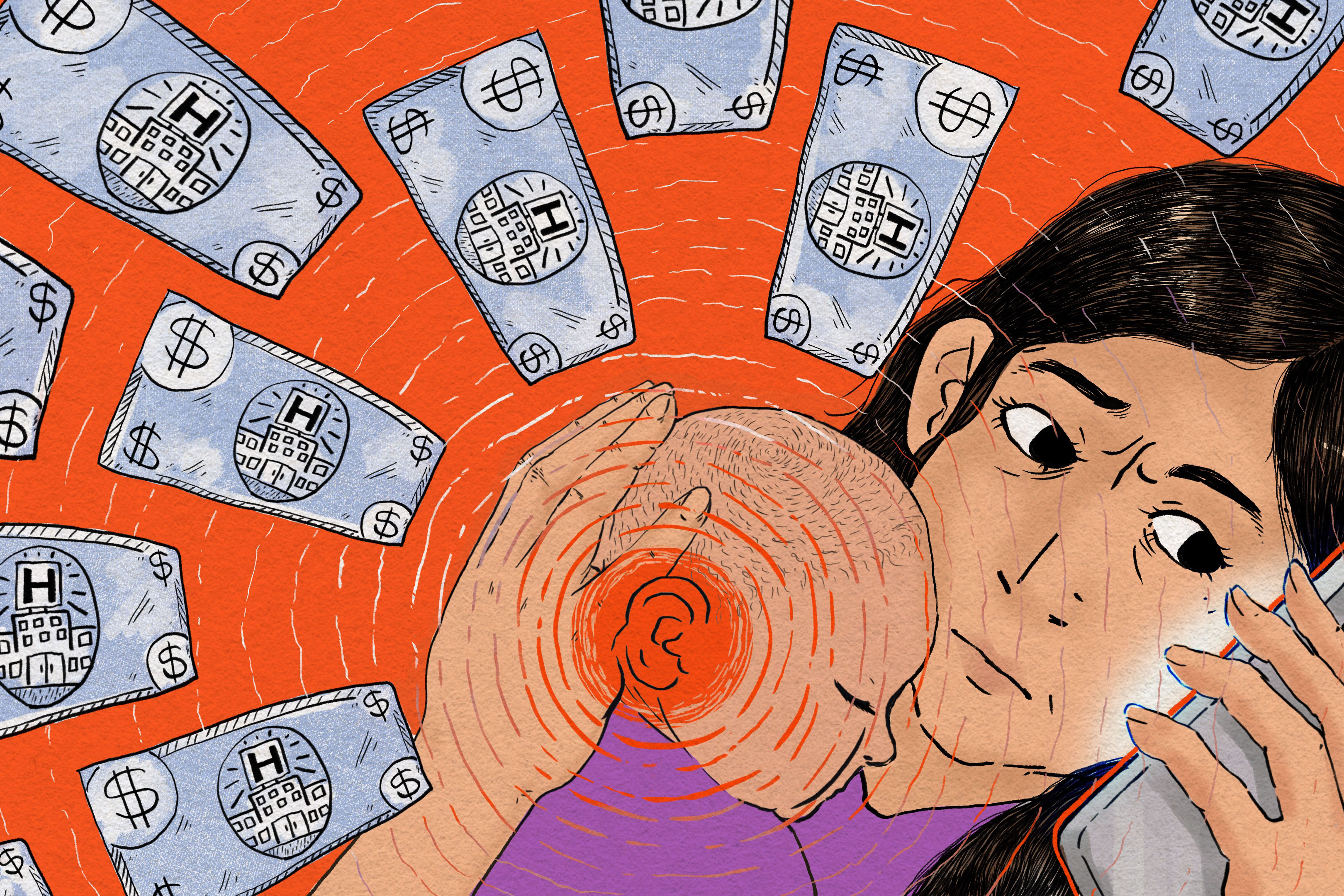
Related Topics

Contact Us

Submit a Story Tip

New California Laws Target Medical Debt, AI Care Decisions, Detention Centers

SACRAMENTO, Calif. — As the nation braces for potential policy shifts under President-elect Donald Trump’s “Make America Healthy Again” mantra, the nation’s most populous state and largest health care market is preparing for a few changes of its own.

With supermajorities in both houses, Democrats in the California Legislature passed — and Democratic Gov. Gavin Newsom signed — laws taking effect this year that will erase medical debt from credit reports, allow public health officials to inspect immigrant detention centers, and require health insurance companies to cover fertility services such as in vitro fertilization.

Still, industry experts say it was a relatively quiet year for health policy in the Golden State, with more attention on a divisive presidential election and with several state legislators seeking to avoid controversial issues as they ran for Congress in competitive swing districts.

Newsom shot down some of legislators’ most ambitious health care policies, including proposals that would have regulated pharmaceutical industry middlemen and given the state more power to stop private equity deals in health care.

Health policy experts say advocates and legislators are now focused on how to defend progressive California policies such as sweeping abortion access in the state and health coverage for immigrants living in the U.S. without authorization.

“I think everyone’s just thinking about how we’re going to enter 2025,” said Rachel Linn Gish, a spokesperson with the consumer health advocacy group Health Access California. “We’re figuring out what is vulnerable, what we are exposed to on the federal side, and what do budget changes mean for our work. That’s kind of putting a cloud over everything.”

Here are some of the biggest new health care laws Californians should know about:

Medical debt

California becomes the eighth state in which medical debt will no longer affect patients’ credit reports or credit scores. SB 1061 bars health care providers and debt collectors from reporting unpaid medical bills to credit bureaus, a practice that supporters of the law say penalizes people for seeking critical care and can make it harder for patients to get a job, buy a car, or secure a mortgage.

Critics including the California Association of Collectors called the measure from Sen. Monique Limón (D-Santa Barbara) a “tremendous overreach” and successfully lobbied for amendments that limited the scope of the bill, including an exemption for any medical debt incurred on credit cards.

The Biden administration has finalized federal rules that would stop unpaid medical bills from affecting patients’ credit scores, but the fate of those changes remains unclear as Trump takes office.

Psychiatric hospital stays for violent offenders

Violent offenders with severe mental illness can now be held longer after a judge orders them released from a state mental hospital.

State officials and local law enforcement will now have 30 days to coordinate housing, medication, and behavioral health treatment for those parolees, giving them far more time than the five-day deadline previously in effect.

The bill drew overwhelming bipartisan support after a high-profile case in San Francisco in which a 61-year-old man was charged in the repeated stabbing of a bakery employee just days after his release from a state mental hospital. The bill’s author, Assembly member Matt Haney (D-San Francisco), called the previous five-day timeline “dangerously short.”

Cosmetics and ‘forever chemicals’

California was the first state to ban PFAS chemicals, also known as “forever chemicals,” in all cosmetics sold and manufactured within its borders. The synthetic compounds, found in everyday products including rain jackets, food packaging, lipstick, and shaving cream, have been linked to cancer, birth defects, and diminished immune function and have been increasingly detected in drinking water.

Industry representatives have argued that use of PFAS — perfluoroalkyl and polyfluoroalkyl substances — is critical in some products and that some can be safely used at certain levels.

Immigration detention facilities

After covid-19 outbreaks, contaminated water, and moldy food became the subjects of detainee complaints and lawsuits, state legislators gave local county health officials the authority to enter and inspect privately run immigrant detention centers. SB 1132, from Sen. María Elena Durazo (D-Los Angeles), gives public health officials the ability to evaluate whether privately run facilities are complying with state and local public health regulations regarding proper ventilation, basic mental and physical health care, and food safety.

Although the federal government regulates immigration, six federal detention centers in California are operated by the GEO Group. One of the country’s largest private prison contractors, GEO has faced a litany of complaints related to health and safety. Unlike public prisons and jails, which are inspected annually, these facilities would be inspected only as deemed necessary.

The contractor filed suit in October to stop implementation of the law, saying it unconstitutionally oversteps the federal government’s authority to regulate immigration detention centers. A hearing in the case is set for March 3, said Bethany Lesser, a spokesperson for California Attorney General Rob Bonta. The law took effect Jan. 1.

Doctors vs. insurance companies using AI

As major insurance companies increasingly use artificial intelligence as a tool to analyze patient claims and authorize some treatment, trade groups representing doctors are concerned that AI algorithms are driving an increase in denials for necessary care. Legislators unanimously agreed.

SB 1120 states that decisions about whether a treatment is medically necessary can be made only by licensed, qualified physicians or other health care providers who review a patient’s medical history and other records.

Sick leave and protected time off

Two new laws expand the circumstances under which California workers may use sick days and other leave. SB 1105 entitles farmworkers who work outdoors to take paid sick leave to avoid heat, smoke, or flooding when local or state officials declare an emergency.

AB 2499 expands the list of reasons employees may take paid sick days or use protected unpaid leave to include assisting a family member who is experiencing domestic violence or other violent crimes.

Prescription labels for the visually impaired

Starting this year, pharmacies will be required to provide drug labels and use instructions in Braille, large print, or audio for blind patients.

Advocates of the move said state law, which already required translated instructions in five languages for non-English speakers, has overlooked blind patients, making it difficult for them to monitor prescriptions and take the correct dosage.

Maternal mental health screenings

Health insurers will be required to bolster maternal mental health programs by mandating additional screenings to better detect perinatal depression, which affects 1 in 5 people who give birth in California, according to state data. Pregnant people will now undergo screenings at least once during pregnancy and then six weeks postpartum, with further screenings as providers deem necessary.

Penalties for threatening health care workers (abortion clinics)

With abortion care at the center of national policy fights, California is cracking down on those who threaten, post personal information about, or otherwise target providers or patients at clinics that perform abortions. Penalties for such behavior will increase under AB 2099, and offenders can face felony charges, up to three years in jail, and $50,000 in fines for repeat or violent offenses. Previously, state law classified many of those offenses as misdemeanors.

Insurance coverage for IVF

Starting in July, state-regulated health plans covering 50 employees or more would be required to cover fertility services under SB 729, passed and signed last year. Advocates have long fought for this benefit, which they say is essential care for many families who have trouble getting pregnant and would ensure LGBTQ+ couples aren’t required to pay more out-of-pocket costs than straight couples when starting a family.

In a signing statement, Newsom asked legislators to delay implementation of the law until 2026 as state officials consider whether to add infertility treatments to the list of benefits that insurance plans are required to cover.

It’s unclear whether legislators intend to address that this session, but a spokesperson for the governor said that Newsom “clearly stated his position on the need for an extension” and that he “will continue to work with the legislature” on the matter.

Plans under CalPERS, the California Public Employees’ Retirement System, would have to comply by July 2027.

This article was produced by KFF Health News, which publishes California Healthline, an editorially independent service of the California Health Care Foundation. 

Related Topics

Contact Us

Submit a Story Tip

Cinco cambios críticos que puede sufrir Medicaid bajo Trump

Durante la presidencia de Joe Biden, la inscripción en Medicaid alcanzó un nivel récord y la tasa de personas sin seguro médico llegó a su nivel histórico más bajo.

Pero se espera que el regreso de Donald Trump a la Casa Blanca, junto con un Senado y una Cámara de Representantes controlados por republicanos, cambie esta situación.

Los republicanos en Washington afirman que planean utilizar recortes de financiamiento y cambios regulatorios para reducir drásticamente Medicaid, el programa de salud federal gerenciado por los estados que cuesta casi $900.000 millones al año y que, junto con el Programa de Seguro Médico Infantil (CHIP), ofrece atención a unos 79 millones de estadounidenses, en su mayoría de bajos ingresos o con discapacidades.

Las propuestas incluyen revertir la expansión de Medicaid impulsada por la Ley de Cuidado de Salud a Bajo Precio (ACA), que en los últimos 11 años sumó cerca de 20 millones de adultos de bajos ingresos al programa.

Trump ha dicho que quiere recortar drásticamente el gasto del gobierno, lo que podría ser necesario para que los republicanos extiendan los recortes de impuestos de 2017 que vencen a finales de este año.

Trump no habló demasiado sobre Medicaid durante su campaña de 2024. Su primera administración aprobó requisitos de trabajo en varios estados, aunque solo Arkansas los implementó antes de que un juez federal determinara que violaban los principios de ACA. También intentó otorgar financiamiento en bloque a los estados.

El presidente del Comité de Presupuesto de la Cámara, Jodey Arrington (republicano de Texas), dijo a KFF Health News que Medicaid y otros programas federales de beneficencia necesitan cambios importantes para ayudar a reducir la deuda federal. “Sin esos cambios, veremos con pesar cómo este país sufre un colapso fiscal”.

El representante Chip Roy (republicano de Texas), miembro del Comité de Presupuesto, indicó que el Congreso necesita explorar recortes al gasto federal en Medicaid.

“Es necesaria una reforma integral en el sector de salud, que podría incluir deshacer gran parte del daño causado por ACA y Obamacare”, dijo Roy. “Francamente, podríamos terminar proporcionando un mejor servicio si lo hacemos de la manera correcta”.

Defensores de las personas de bajos ingresos temen que los recortes que buscan los republicanos dejen a más estadounidenses sin seguro, dificultándoles el acceso a la atención médica.

“Medicaid es un objetivo obvio para recortes enormes”, dijo Joan Alker, directora ejecutiva del Centro para Niños y Familias de la Universidad Georgetown. “Probablemente se avecina una lucha existencial sobre el futuro de Medicaid”.

El programa, que cumplirá 60 años en julio, está llegando al final de una gran crisis, después que las protecciones de cobertura implementadas durante la pandemia de covid-19 expiraran en 2023, y todos los inscriptos tuvieran que demostrar que seguían siendo elegibles.

Más de 25 millones de personas perdieron su cobertura durante los 18 meses posteriores al inicio del proceso de “desafiliación”, aunque no ha aumentado notablemente el número de personas sin seguro, según los datos más recientes del censo.

Pero este número podría ser insignificante comparado con lo que ocurra en los próximos cuatro años, dijo Matt Salo, ex director ejecutivo y fundador de la Asociación Nacional de Directores de Medicaid. “Lo que vamos a ver es un cambio dramático aún mayor en quiénes estarán cubiertos por Medicaid y cómo operará el programa”, aseguró.

Sin embargo, Salo señaló que cualquier esfuerzo por reducir el programa enfrentará resistencia.

“Muchas entidades poderosas —gobiernos estatales, organizaciones de atención administrada, proveedores de atención de largo plazo y todos aquellos interesados en que Medicaid funcione de manera eficiente— estarán altamente motivadas para resistirse a recortes que consideren draconianos, ya que podrían afectar sus modelos de negocio”, afirmó.

Algunas de las estrategias del partido republicano para reducir el tamaño de Medicaid son:

  1. Cambio a financiamiento en bloque. Actualmente, el gobierno federal iguala un porcentaje del gasto estatal anual en Medicaid, sin un límite específico. Los republicanos quieren cambiar a pagos fijos anuales, lo que impactaría en la cantidad de dinero federal que algunos estados reciben. Desde Ronald Reagan, los presidentes republicanos han intentado sin éxito imponer una suma fija de financiación para Medicaid.
  2. Recortes a la financiación de ACA para Medicaid. ACA financió la cobertura para estadounidenses con ingresos de hasta el 138% del nivel federal de pobreza ($20.783 de ingresos anuales para un individuo en 2024). Los republicanos podrían intentar reducir ese financiamiento al mismo porcentaje que el gobierno federal paga por el resto de los inscritos en el programa, que promedia un 60%. “Debemos tener en cuenta que estamos subsidiando a la población sana y apta para trabajar que se beneficia de la expansión de Medicaid a un ritmo mayor que el que subsidiamos a los más pobres y enfermos, que era la intención original del programa”, dijo Arrington. “Eso no está bien”.
  3. Reducción de fondos federales. Desde su inicio, la tasa de contribución federal varía según la riqueza relativa de la población del estado. Los estados más pobres reciben una tasa más alta y ningún estado recibe menos del 50% en contrapartida. Los republicanos podrían buscar reducir la tasa base del 50% a menos del 40%.
  4. Agregar requisitos de trabajo. Aunque los tribunales federales han dictaminado que no se puede condicionar la cobertura a trabajar o a estar buscando trabajo, el Partido Republicano podría intentarlo nuevamente. “Si podemos lograr que los adultos sanos tengan requisitos de trabajo estrictos, eso puede suponer un enorme ahorro de costos”, dijo el representante Tom McClintock (republicano de California) a KFF Health News. Como la mayoría de los inscriptos en Medicaid ya trabajan, van a la escuela o son cuidadores, los críticos dicen que un requisito de ese tipo simplemente agregaría burocracia a la obtención de cobertura, con poco impacto en el empleo.
  5. Imponer barreras a la inscripción. Unos 10 estados ofrecen a algunas poblaciones lo que se denomina elegibilidad continua, mediante la cual las personas permanecen inscriptas durante años sin tener que renovar su cobertura. Se ha demostrado que esa política evita que los beneficiarios abandonen el programa durante períodos cortos por dificultades o problemas con el papeleo, lo que puede generar facturas médicas inesperadas y deuda. La administración Trump podría intentar derogar las exenciones que permiten a los estados otorgar elegibilidad continua, lo que obligaría a las personas en esos estados a tener que volver a solicitar cobertura cada año.

Si los planes de los republicanos para reducir Medicaid se concretan, expertos dicen que las personas de bajos ingresos que se vean obligadas a comprar seguros privados enfrentarán dificultades para pagar las primas y copagos comunes en estos planes comerciales, que no suelen existir en Medicaid.

El Paragon Health Institute, un centro de estudios conservador dirigido por Brian Blasé, ex asesor de Trump, ha publicado informes que dicen que los miles de millones de dólares adicionales que los estados recibieron para ampliar Medicaid bajo ACA han sido una bendición para las aseguradoras privadas que administran el programa y para las personas relativamente más ricas que, según la organización, no deberían estar inscriptas.

Josh Archambault, miembro senior del conservador Cicero Institute, dijo que espera que la administración Trump haga responsables a los estados por pagar miles de millones de más a los proveedores, y por inscribir en Medicaid a personas que no son elegibles.

Archambault agregó que el Partido Republicano buscará reducir Medicaid a sus poblaciones “tradicionales”: niños, embarazadas y personas con discapacidades.

“Necesitamos reequilibrar el programa que la mayoría de la gente piensa que tiene un bajo rendimiento”, apuntó. La mayoría de los estadounidenses, incluidas grandes mayorías tanto de republicanos como de demócratas, ven el programa de manera favorable, según encuestas.

Related Topics

Contact Us

Submit a Story Tip

Trump’s Return Puts Medicaid on the Chopping Block

Under President Joe Biden, enrollment in Medicaid hit a record high and the uninsured rate reached a record low.

Donald Trump’s return to the White House — along with a GOP-controlled Senate and House of Representatives — is expected to change that.

Republicans in Washington say they plan to use funding cuts and regulatory changes to dramatically shrink Medicaid, the nearly $900-billion-a-year government health insurance program that, along with the related Children’s Health Insurance Program, serves about 79 million mostly low-income or disabled Americans.

The proposals include rolling back the Affordable Care Act’s expansion of Medicaid, which over the last 11 years added about 20 million low-income adults to its rolls. Trump has said he wants to drastically cut government spending, which may be necessary for Republicans to extend 2017 tax cuts that expire at the end of this year.

Trump made little mention of Medicaid during the 2024 campaign. The first Trump administration approved work requirements in several states, though only Arkansas implemented theirs before a federal judge said it violated the law. The first Trump administration also sought to block grant funding to states.

House Budget Committee Chair Jodey Arrington (R-Texas) told KFF Health News that Medicaid and other federal entitlement programs need major changes to help cut the federal debt. “Without them, we will watch this country sadly enter into fiscal collapse.”

Rep. Chip Roy (R-Texas), a member of the Budget Committee, said Congress needs to explore cutting federal spending on Medicaid.

“You need wholesale reform on the health care front, which can include undoing a lot of the damage being done by the ACA and Obamacare,” Roy said. “Frankly, we could end up providing better service if we do it the right way.”

Advocates for poor people fear GOP funding cuts will leave more Americans without insurance, making it harder for them to get care.

“Medicaid is an obvious target for huge cuts,” said Joan Alker, executive director of Georgetown University’s Center for Children and Families. “An existential fight about Medicaid’s future likely lies ahead.”

Medicaid, which turns 60 in July, is nearing the end of a disruptive period, after covid pandemic-era coverage protections expired in 2023 and all enrollees had to prove they still qualified. More than 25 million people lost coverage over the 18 months after the “unwinding” began, though it has not notably increased the number of people without insurance, according to the latest census data.

The unwinding’s disruptions could pale in comparison to what happens in the next four years, said Matt Salo, former executive director and founder of the National Association of Medicaid Directors. “What we are going to see is an even bigger seismic shift in who Medicaid covers and how it operates,” he said.

But Salo said any efforts to shrink the program will face pushback.

“A lot of powerful entities — state governments, managed-care organizations, long-term care providers, and everyone under the sun who wants to do well by doing good — wants to see Medicaid work efficiently and be adequately funded,” he said. “And they will be highly motivated to push back on something they see as draconian cuts, because it could affect their business model.”

The GOP is looking at several tactics to reduce the size of Medicaid:

  • Shifting to block grants. Switching to annual block grants could lower federal funding for states to operate the program while giving states more discretion over how to spend the money. Currently, the government matches a certain percentage of state spending each year with no cap. Republican presidents since Ronald Reagan have sought to block-grant Medicaid with no success. Arrington said he favors ending the open-ended federal funding to states and replacing it with a set annual amount based on how many people each state has in the program.
  • Cutting ACA Medicaid funding. The ACA provided financing to cover, through Medicaid, Americans with incomes up to 138% of the federal poverty level, or $20,783 for an individual last year. The federal government pays 90% of the cost for adults covered through the law’s Medicaid expansion, which 40 states and Washington, D.C., have adopted. The GOP may try to lower that funding to the same match rate the feds pay states for everyone else in the program, which averages about 60%. “We should absolutely note that we are subsidizing the healthy, able-bodied Medicaid expansion population at a higher rate than we do the poorest and sickest among us, which was the original intent of the program,” Arrington said. “That’s not right.”
  • Lowering federal matching funds. Since Medicaid began, the federal match rate has been based on the relative wealth of a state’s population, with poorer states receiving a higher rate and no state receiving less than a 50% match. Ten states get the base rate — all but two are Democratic-run states, including New York and California. The GOP may seek to cut the base rate to 40% or less.
  • Adding work requirements. During the first Trump term, federal courts ruled that Medicaid law doesn’t allow coverage to be conditioned on enrollees’ working or seeking jobs. But the GOP may try again. “If we can get strict work requirements on able-bodied adults, that can be a huge cost savings by itself,” Rep. Tom McClintock (R-Calif.) told KFF Health News. Because most Medicaid enrollees already work, go to school, or serve as caregivers, critics say such a requirement would simply add red tape to obtaining coverage, with little impact on employment.
  • Placing enrollment hurdles. About 10 states offer some populations what’s called continuous eligibility, whereby people stay enrolled for years without having to renew their coverage. That policy’s been shown to prevent enrollees from falling out of the program for short periods because of hardships or paperwork problems, which can lead to surprise medical bills and debt. The Trump administration could seek to repeal waivers that allow states to grant multiyear continuous eligibility, which would require people in those states to reapply for coverage annually.

If the GOP’s plans to shrink Medicaid are realized, Democrats and health experts say, low-income people forced to buy private insurance would face challenges paying monthly premiums and the large copayments and deductibles common to commercial plans that typically don’t exist in Medicaid.

The Paragon Health Institute, a leading conservative think tank run by former Trump adviser Brian Blase, has issued reports saying the billions in extra money states took to expand Medicaid under the ACA has been a boon to private insurers that manage the program and relatively wealthier people it says shouldn’t be enrolled.

Josh Archambault, a senior fellow with the conservative Cicero Institute, said he hopes the Trump administration holds states accountable for overpaying providers and enrolling people in Medicaid who are not eligible. Conservatives have cited CMS reports saying states improperly pay Medicaid providers billions of dollars a year, though the federal government notes that is mostly due to lack of documentation.

He said the GOP will look to scale back Medicaid to its “traditional” populations of children, pregnant women, and people with disabilities. “We need to rebalance the program that most people think is underperforming,” he said. Most Americans, including large majorities of both Republicans and Democrats, view the program favorably, according to polls.

Related Topics

Contact Us

Submit a Story Tip

New Year, New Congress, New Health Agenda

The Host

Julie Rovner
KFF Health News


@jrovner

Read Julie’s stories.

Julie Rovner is chief Washington correspondent and host of KFF Health News’ weekly health policy news podcast, “What the Health?” A noted expert on health policy issues, Julie is the author of the critically praised reference book “Health Care Politics and Policy A to Z,” now in its third edition.

The new, GOP-led, 119th Congress and President-elect Donald Trump have big legislative plans for the year — which mostly don’t include health policy. But health is likely to play an important supporting role in efforts to renew tax cuts, revise immigration policies, and alter trade — if only to help pay for some Republican initiatives.

Meanwhile, the outgoing Biden administration is racing to finish its health policy to-do list, including finalizing a policy that bars credit bureaus from including medical debt on individuals’ credit reports.

This week’s panelists are Julie Rovner of KFF Health News, Shefali Luthra of The 19th, Alice Miranda Ollstein of Politico, and Lauren Weber of The Washington Post.

Panelists

Shefali Luthra
The 19th


@shefalil


Read Shefali’s stories.

Alice Miranda Ollstein
Politico


@AliceOllstein


Read Alice’s stories.

Lauren Weber
The Washington Post


@LaurenWeberHP


Read Lauren’s stories.

Among the takeaways from this week’s episode:

  • The 119th Congress is now in session. Health care doesn’t make the list of priorities as lawmakers lay the table for the incoming Trump administration — though Republicans have floated Medicaid work requirements to cut federal spending.
  • A lot of health legislation hit the cutting-room floor in December, including a bipartisan proposal targeting pharmacy benefit managers — which would have saved the federal government and patients billions of dollars. And speaking of bipartisan efforts, a congressional report from the Senate Budget Committee adds to evidence that private equity involvement in care is associated with worse outcomes for patients — notably, lawmakers’ constituents.
  • As the nation bids a final farewell to former President Jimmy Carter, his global health work, in particular, is being celebrated — especially his efforts to eradicate such devastating diseases as Guinea worm disease and river blindness.
  • Meanwhile, the Biden administration finalized the rule barring medical debt from appearing on credit reports. The surgeon general cautions that alcohol should come with warning labels noting cancer risk. And the new Senate Republican leader is raising abortion-related legislation to require lifesaving care for all babies born alive — yet those protections already exist.

Plus, for “extra credit,” the panelists suggest health policy stories they read this week that they think you should read, too:

Julie Rovner: The Wall Street Journal’s “UnitedHealth’s Army of Doctors Helped It Collect Billions More From Medicare,” by Christopher Weaver, Anna Wilde Mathews, and Tom McGinty.

Alice Miranda Ollstein: The New York Times’ “Ozempic, Lego Bricks and Hearing Aids: What Trump’s Greenland Plan Could Hit,” by Ana Swanson and Jenny Gross.

Shefali Luthra: Vox.com’s “Gigantic SUVs Are a Public Health Threat. Why Don’t We Treat Them Like One?” by David Zipper.

Lauren Weber: The Washington Post’s “Laws Restrict U.S. Shipping of Vape Products. Many Companies Do It Anyway,” by David Ovalle and Rachel Roubein.

Also mentioned in this week’s podcast:

The Senate Budget Committee’s “Profits Over Patients: The Harmful Effects of Private Equity on the U.S. Health Care System.”

Credits

Taylor Cook
Audio producer

Lonnie Ro
Audio producer

Emmarie Huetteman
Editor

To hear all our podcasts, click here.

And subscribe to KFF Health News’ “What the Health?” on SpotifyApple PodcastsPocket Casts, or wherever you listen to podcasts.

KFF Health News is a national newsroom that produces in-depth journalism about health issues and is one of the core operating programs at KFF—an independent source of health policy research, polling, and journalism. Learn more about KFF.

USE OUR CONTENT

This story can be republished for free (details).

We encourage organizations to republish our content, free of charge. Here’s what we ask:

You must credit us as the original publisher, with a hyperlink to our kffhealthnews.org site. If possible, please include the original author(s) and KFF Health News” in the byline. Please preserve the hyperlinks in the story.

It’s important to note, not everything on kffhealthnews.org is available for republishing. If a story is labeled “All Rights Reserved,” we cannot grant permission to republish that item.

Have questions? Let us know at [email protected]

Medicaid Expansion Debate Will Affect Other Health Policy Issues Before Montana Legislature

HELENA, Mont. — A last-minute change to a 2019 bill put an end date on Montana’s Medicaid expansion program, setting the stage for what is anticipated to be the most significant health care debate of the 2025 Montana Legislature.

In recent interviews, legislative leaders predicted a vigorous debate over keeping the Medicaid expansion program, which pays the medical bills of more than 75,000 low-income Montanans at an annual cost of about $1 billion to the federal and state governments. They also expect the topic to seep into other health policy decisions, such as the approval of new spending on Montana’s behavioral health system and regulation of hospital tax-exempt status.

“It all kind of links together,” said state Sen. Dennis Lenz, a Billings Republican and chair of the Senate Public Health, Welfare, and Safety Committee.

Legislators from both parties also expect lawmakers from the GOP majority to continue to pursue abortion restrictions, despite a November statewide vote making abortion a right under the Montana Constitution.

The Medicaid expansion debate, however, looms largest among the health care topics.

“This is definitely the elephant in the room, so to speak,” said Senate Minority Leader Pat Flowers, a Belgrade Democrat.

Montana expanded Medicaid, initially for four years, in 2015, through a coalition of minority Democrats, some moderate Republicans, and a Democratic governor. A similar coalition renewed the program in 2019, but at the last moment, Senate Republicans tacked on an end date of June 30, 2025. That put the matter in the lap of this year’s legislature.

Republicans still hold strong majorities in the state House and Senate, whose leaders voiced concerns about the expansion program.

This time around, the governor — Greg Gianforte — is a Republican. Last year, the Gianforte administration completed a postpandemic eligibility reassessment that cut the number of expansion enrollees from a high of 125,000 people in April and May 2023 to approximately 76,600 people as of October, the most recent data available.

Gianforte has included funding for Medicaid expansion in his proposed budget, which must be approved by the legislature to take effect. His office said he wants “strong work requirements for able-bodied adults without dependents” to take part in the program. Spokesperson Kaitlin Price said the governor “has been clear that the safety net of Medicaid should be there for those who truly need it, but that it will collapse if all are allowed to climb on it.”

GOP legislative leaders clearly are skeptical of the program, saying it won’t continue without some “sideboards,” or additional requirements of enrollees and providers.

Whether any expansion bill passes “will depend on the people pushing it,” said Senate President Matt Regier, a Kalispell Republican who opposes expansion. “If there is no give-and-take, it could be an interesting vote.”

Flowers said he knows getting Medicaid expansion through the Senate will be tough. Republicans hold a 32-18 majority, and the GOP caucus leans conservative.

“There are a lot of my colleagues on the Republican side that are ideologically opposed, and I think you’re going to see that in their consistent voting against reauthorizing,” Flowers said.

Medicaid, funded by both the state and federal governments, provides health coverage for certain groups of low-income people. Expansion extended Medicaid coverage to nondisabled adults ages 19 to 64 with incomes up to 138% of the federal poverty level — about $20,800 a year for an individual in 2024.

The 2010 federal Affordable Care Act opened Medicaid to this new group of adults, starting in 2014. But a 2012 U.S. Supreme Court ruling said states could choose whether to adopt the change, and 40 have done so.

Republican state Rep. Ed Buttrey said he would sponsor a bill to reauthorize Medicaid expansion without an expiration date, but many GOP lawmakers remain unconvinced that expansion is needed, viewing it as a costly, unnecessary welfare program.

“I understand there are some pros to Medicaid expansion, but, as a conservative, I do have issues with — I guess I can’t get around it — socialized medicine,” said House Speaker Brandon Ler (R-Savage).

In September, representatives from a pair of conservative-funded think tanks made a case for ending Medicaid expansion, saying its enrollment and costs are bloated. The consulting firm Manatt, on the other hand, said more people have access to critical treatment because of Medicaid expansion.

At the least, it appears many Republicans want to require participants to work, pay premiums, or meet other conditions, if the program is to continue.

Premiums and work requirements are in Montana’s law right now. The Biden administration, though, nixed both, so they haven’t been in effect. Montana Republicans expect the incoming Trump administration to be more open to such provisions.

Democrats say Medicaid expansion has succeeded on many fronts: covering thousands of low-income workers, helping keep rural health care providers and hospitals afloat, and bringing hundreds of millions of federal dollars into Montana’s economy. The state pays 10% of the program’s costs, which totaled about $962.4 million in fiscal year 2024. The federal government picked up $870 million of that tab.

“With all that, it’s just stunning to me that there could be opposition,” Flowers said. “There is just no reason for us, collectively as a state, not to support this.”

Democrats will have their own expansion bill, brought by Rep. Mary Caferro of Helena. She said the bill would remove the work requirements and premiums, shine more light on the contracting activities of the state health department, and reopen some public assistance offices that have been closed. It also would make expansion permanent.

“We’re 10 years into this program,” said Rep. SJ Howell of Missoula, the Democratic vice chair of the House Human Services Committee, which debates health policy legislation. “I think that continuing a cycle of uncertainty for patients and providers doesn’t make sense.”

State senators stand as the 2025 Montana legislative session gets underway on Jan. 6.(Matt Volz/KFF Health News)

Legislators also see the expansion debate tying into other health care discussions.

Regier and Lenz said Montana’s nonprofit hospitals — strong supporters of expansion — have benefited greatly from the program and may need to give something back in return. One possibility: more government oversight of the “community benefits” that hospitals must provide to receive tax-exempt status.

They also noted that Montanans pay a fee for hospital stays to support the Medicaid program and that a fee on hospital outpatient revenue helps pay the costs of Medicaid expansion. Those fees and the resulting money raised for hospitals may merit review, they said.

Meanwhile, backers said Medicaid expansion underpins one of the governor’s major policy priorities, to improve the state’s behavioral health system. Gianforte has proposed spending up to $100 million over the next two years on 10 recommendations made by an advisory commission that reviewed the system for the past 18 months.

If Medicaid expansion ends, many adults would lose access to the mental health and addiction treatment system that Gianforte wants to improve, advocates said, while treatment providers would lose a significant source of revenue.

Money for the behavioral health changes would come, in part, from a $300 million fund created by the 2023 legislature. Lawmakers plan to scrutinize Gianforte’s proposals during the budgeting process. Howell said Democrats want to look at whether the changes would use enough of the $300 million fund quickly enough and on the most pressing needs.

Meanwhile, Republicans said they’ll likely introduce bills on abortion — even though Montanans approved Constitutional Initiative 128 by a 58-42 margin in November. CI-128 said the right to an abortion cannot be “denied or burdened” except by a “compelling government interest achieved by the least restrictive means.”

“It’s not going to slow us down in our pro-life positions,” Ler said of CI-128.

At a minimum, GOP leaders said, some of CI-128’s terms should be defined.

“With a very poorly written ballot initiative like that, we need to say, ‘What does that abortion industry look like under CI-128 and what’s our role as a state?’” Regier said.

But state Sen. Cora Neumann, a Bozeman Democrat on the Senate Public Health, Welfare, and Safety Committee, said the CI-128 vote provided a strong mandate for the right of privacy.

Enacting restrictions would lead to “that slippery slope of what’s next, if we allow legislators to rule on what’s happening in the doctor’s office,” she said. “What kind of can of worms could be opened to other invasions of privacy?”

Related Topics

Contact Us

Submit a Story Tip

La salud, un proyecto inconcluso del gobernador de California

SACRAMENTO, California.— Seis años después de asumir el cargo prometiendo ser el “gobernador de la salud” de California, el demócrata Gavin Newsom ha destinado decenas de miles de millones de dólares de fondos públicos a servicios de la red de seguridad para los residentes más necesitados del estado, mientras diseña reglas para hacer que la atención médica sea más accesible y asequible para todos los californianos.

Más de un millón de residentes de California que viven en Estados Unidos sin papeles ahora califican para Medi-Cal, la versión estatal de Medicaid: ha sido uno de los primeros en cubrir a personas de bajos ingresos independientemente de su estatus migratorio.

El estado también está experimentando con fondos de Medicaid para pagar servicios sociales como asistencia para vivienda y alimentos, especialmente para aquellos que viven en las calles o tienen enfermedades crónicas. Además, está obligando a la industria de la salud a controlar los costos desbordantes mientras impone nuevas reglas a médicos, hospitales y aseguradoras para ofrecer una atención de mejor calidad y más accesible.

Sin embargo, hasta ahora, Newsom no ha logrado cumplir por completo con sus políticas de salud más ambiciosas, y muchos cambios aún no son visibles para el público: los costos de la salud siguen aumentando, la escasez de vivienda está empeorando y muchos californianos todavía luchan por obtener atención médica básica.

Ahora, algunas de las iniciativas emblemáticas de Newsom en materia de salud, que podrían definir su perfil en el escenario nacional, están en peligro con el regreso de Donald Trump a la Casa Blanca.

Según expertos en políticas sanitarias, California podría perder miles de millones de dólares en financiamiento para la atención médica si la nueva administración Trump altera los programas de Medicaid, algo que los republicanos han dicho que es probable. Tal movimiento podría obligar al estado a recortar drásticamente beneficios, e incluso la elegibilidad.

Y aunque la inscripción para que inmigrantes indocumentados obtengan atención médica gratuita se ha financiado casi completamente con dinero estatal, esto convierte a California en un blanco político.

“Eso es combustible para alimentar el argumento de la republicana MAGA de que estamos tomando dólares de impuestos de buenos estadounidenses y proporcionando atención médica a los inmigrantes”, dijo Mark Peterson, experto en atención médica de UCLA, en referencia al movimiento “Make America Great Again”.

Newsom rechazó una entrevista con KFF Health News. En un comunicado, reconoció que muchas de sus iniciativas todavía están en proceso de implementarse. Pero, aunque intentará trabajar con Trump, el gobernador prometió proteger su agenda de atención médica en sus dos últimos años en el cargo.

“Nos estamos acercando a la administración entrante con una mano abierta, no con un puño cerrado”, dijo Newsom. “Es una prioridad principal de mi administración asegurar que la atención médica de calidad esté disponible y sea asequible para todos los californianos”.

Mark Ghaly, ex secretario de Salud y Servicios Humanos bajo Newsom, dijo que transformar la forma en que se paga y ofrece la atención médica puede ser complicado. “No lo hicimos perfectamente”, dijo Ghaly. “La implementación siempre es complicada en un estado de 40 millones de personas”.

Antes de la inauguración de Trump el 20 de enero, Newsom ha propuesto asignar $25 millones para desafiar a Trump en atención reproductiva, ayuda por desastres y otros servicios. Su solicitud está pendiente en la Legislatura estatal controlada por demócratas.

Estas son las principales iniciativas que conformarán el legado de Newsom en salud:

Medicaid

Se avecinan posibles recortes federales en el estado más poblado de Estados Unidos. De los asombrosos $261 mil millones que California gasta anualmente en atención médica y servicios sociales, casi $116 mil millones provienen del gobierno federal. La mayor parte de eso va a Medicaid, que cubre a más de 1 de cada tres californianos. Líderes republicanos en Washington han planteado ideas para debilitar el programa, lo que podría reducir beneficios o disminuir la inscripción.

Además, la expansión de Medi-Cal en California para 1.5 millones de inmigrantes sin papeles se proyecta que costará al estado aproximadamente $6.4 mil millones para el año fiscal que termina el 30 de junio.

A principios de dciembre, Newsom sugirió que el estado continuaría financiando la expansión de atención médica para inmigrantes en el próximo año fiscal, pero no quiso decir si mantendría la cobertura en años futuros.

Grupos de defensa están listos para proteger esos beneficios si Trump hace de California su blanco. “Queremos continuar protegiendo el acceso a la atención y no ver un retroceso”, dijo Amanda McAllister-Wallner, directora ejecutiva interina de Health Access California.

Medicamentos genéricos

Citando el alto costo de los medicamentos recetados, en 2022 Newsom destinó $100 millones a su plan para producir insulina genérica para California y lanzar una planta estatal de fabricación para producir una gama de medicamentos genéricos.

Tres años después, California no ha logrado ninguno de los dos. Sin embargo, en abril Newsom anunció un acuerdo para comprar al por mayor naloxone, el medicamento para revertir las sobredosis de opioides, que el estado puso a disposición de escuelas, clínicas de salud y otras instituciones a un precio reducido.

“Es ciertamente decepcionante que no haya mucho más progreso”, dijo el ex senador estatal Richard Pan, quien redactó la legislación original de medicamentos genéricos.

Sobre la insulina genérica, Newsom reconoció “que ha tomado más tiempo del que esperábamos llevar insulina al mercado, pero seguimos comprometidos a ofrecer insulina a $30 disponible para todos los que la necesiten lo antes posible”.

Aborto

El gobernador ayudó a liderar la exitosa campaña de 2022 para incluir el acceso al aborto en la constitución estatal. Firmó leyes para garantizar que los abortos, espontáneos o no, no fueran criminalizados, para permitir que médicos de otros estados realicen abortos en California, almacenar medicamentos abortivos cuando mifepristona enfrentó una prohibición nacional, y destinó $20 millones para ayudar a los californianos que no pueden pagar el cuidado del aborto.

Newsom, quien ha hecho de los derechos reproductivos un pilar central de su agenda política, también financió anuncios y recorrió el país atacando a Trump y a otros republicanos en estados conservadores que han restringido el acceso al aborto.

Después de la victoria electoral de Trump, Newsom convocó una sesión legislativa especial para prepararse para posibles batallas legales con el gobierno federal. Dijo a KFF Health News que el estado se está preparando “de todas las maneras posibles para proteger los derechos garantizados en la constitución de California y asegurar la autonomía para todos los que están en nuestro estado”.

Costos crecientes de la atención médica

En 2022, Newsom creó la Office of Health Care Affordability para establecer límites al gasto en salud e imponer sanciones a las aseguradoras y proveedores de atención médica que no cumplieran con los objetivos. Para 2029, California limitará los aumentos anuales de precios para aseguradoras, médicos y hospitales al 3%.

Si bien Trump ha expresado preocupación por el aumento constante de los costos de la atención médica a nivel nacional y la calidad de la atención, sus ideas se han centrado en la desregulación y en reemplazar la Ley de Cuidado de Salud a Bajo Precio (ACA), lo que, según los expertos, podría costar a millones su cobertura de salud y aumentar los gastos de los pacientes.

California podría perder subsidios federales que han ayudado a reducir las primas de seguros para la mayoría de los aproximadamente 1.8 millones de personas que compran su cobertura de salud a través de Covered California, el mercado estatal de la ACA, lo que aumentaría los gastos de bolsillo de los pacientes.

El estado podría usar el dinero que recauda de sus propias multas por no tener seguro de salud, adoptada por Newsom después que el Congreso eliminara el mandato individual de Obamacare en 2017. Según el Departamento de Finanzas del estado, esos ingresos estatales están proyectados en $298 millones para este año fiscal. Eso es una fracción de los aproximadamente $1.7 mil millones anuales en subsidios federales para seguros de salud que recibe California.

Salud y falta de vivienda

Bajo el liderazgo de Newsom, California ha gastado cantidades sin precedentes de dinero público para abordar la crisis de personas sin hogar, pero la situación ha empeorado bajo su mandato.

Desde 2019, cuando Newsom asumió el cargo, hasta 2023, la falta de vivienda aumentó un 20%: más de 181,000 personas no tienen techo, a pesar que el estado destinó más de $20 mil millones para tratar de sacar a las personas de las calles, incluido un programa para convertir hoteles y moteles en viviendas para los sin hogar.

Además, se han invertido aproximadamente $12 mil millones en CalAIM, un esfuerzo experimental para integrar servicios sociales en Medi-Cal, como asistencia para alquilar y para prevenir desalojos.

El año pasado, una auditoría estatal encontró que el estado no estaba haciendo un buen trabajo en el seguimiento de la efectividad del dinero de los contribuyentes. CalAIM no está sirviendo a tantos californianos como se esperaba, y los pacientes enfrentan dificultades para recibir los nuevos beneficios de los aseguradores de salud.

“La crisis de personas sin hogar en nuestras calles es inaceptable”, reconoció Newsom. “Pero estamos comenzando a ver avances”.

Se espera que la administración Trump revierta las políticas liberales que han permitido el uso de dinero de Medicaid para experimentos de atención médica a través de exenciones alentadas por la administración Biden.

Notablemente, Trump ha criticado a Newsom por su manejo de la crisis de personas sin hogar y ha prometido sacar a las personas de las calles con más fuerza. La exención de CalAIM en California termina a finales de 2026.

Por ejemplo,en lugar de expandir la asistencia de vivienda y alimentos, el estado podría enfrentarse a movimientos federales para terminar los beneficios de CalAIM y hacer que Medicaid sea más restrictivo.

Salud mental y adicciones

Newsom ha lanzado la reforma más extensa del sistema de salud conductual de California en décadas, destinando miles de millones en fondos estatales a una nueva red de instalaciones de tratamiento y programas de prevención.

Dos de sus iniciativas emblemáticas más controvertidas, la Proposición 1 y CARE Court, inyectan dinero en el tratamiento y la vivienda para californianos con afecciones de salud conductual, especialmente personas sin hogar que viven en crisis. CARE Court permite a los jueces ordenar tratamiento para quienes sufren enfermedades mentales debilitantes y trastornos por adicciones.

Ambas iniciativas han enfrentado desafíos de financiamiento, dependen de los condados para su implementación y podrían tardar años en producir resultados visibles.

Mientras que Newsom ha buscado expandir el tratamiento comunitario, Trump ha sugerido un regreso a la institucionalización y propuso trasladar a personas sin hogar y a aquellos con graves afecciones de salud conductual a “grandes extensiones de tierra económica”.

Newsom dijo que espera que sus enfoques “innovadores” transformen la atención de salud conductual con “un enfoque en las personas con enfermedades más graves y adicciones”.

Esta historia fue producida por Kaiser Health News, que publica California Healthline, un servicio editorialmente independiente de la California Health Care Foundation.

Health Care Is Newsom’s Biggest Unfinished Project. Trump Complicates That Task.

SACRAMENTO, Calif. — Six years after he entered office vowing to be California’s “health care governor,” Democrat Gavin Newsom has steered tens of billions in public funding to safety net services for the state’s neediest residents while engineering rules to make health care more accessible and affordable for all Californians.

More than a million California residents living in the U.S. without authorization now qualify for Medi-Cal, the state’s version of Medicaid, making California among the first states to cover low-income people regardless of their immigration status. The state is experimenting with Medicaid money to pay for social services such as housing and food assistance, especially for those living on the streets or with chronic diseases. And the state is forcing the health care industry to rein in soaring costs while imposing new rules on doctors, hospitals, and insurers to provide better-quality, more accessible care.

However, Newsom has so far failed to fully deliver on his most sweeping health care policies — and many changes are not yet visible to the public: Health care costs continue to rise, homelessness is worsening, and many Californians still struggle to get basic medical care.

Now, some of Newsom’s signature health initiatives, which could shape his profile on the national stage, are in peril as Donald Trump returns to the White House. According to national health policy experts, California stands to lose billions of dollars in health care funding should the Trump administration alter Medicaid programs as Republicans have indicated is likely. Such a move could force the state to dramatically slash benefits or eligibility.

And although allowing immigrants without legal status to enroll in free health care has been funded almost entirely with state money, it makes California a political target.

“That is fuel to feed the Republican MAGA argument that we are taking tax dollars from good Americans and providing health care to immigrants,” said Mark Peterson, a health care expert at UCLA, referring to the “Make America Great Again” movement.

Newsom declined an interview with KFF Health News. In a statement, he acknowledged that many of his initiatives are works in progress. But although he will attempt to work with Trump, the governor vowed to protect his health care agenda in his final two years in office.

“We are approaching the incoming administration with an open hand, not a closed fist,” Newsom said. “It is a top priority of my administration to ensure that quality health care is available and affordable for all Californians.”

Mark Ghaly, a former Health and Human Services secretary under Newsom, said transforming the way health care is paid for and delivered can be bumpy. “We didn’t do it perfectly,” Ghaly said. “Implementation is always messy in a state of 40 million people.”

Ahead of Trump’s Jan. 20 inauguration, Newsom has proposed allocating $25 million to challenge Trump on reproductive health care, disaster relief, and other services. His request is pending in the state’s Democratic-controlled legislature.

Here are the major initiatives that will shape Newsom’s health care legacy:

Medicaid

Potential federal cuts loom large in America’s most populous state. Of the whopping $261 billion California spends annually on health care and social services, nearly $116 billion flows from the federal government. Most of that goes to Medicaid, which covers more than 1 in 3 Californians. GOP leaders in Washington have floated ideas to kneecap Medicaid, which could slash benefits or cut enrollment.

In addition, California’s expansion of Medi-Cal to 1.5 million immigrants without legal status is projected to cost the state roughly $6.4 billion for the fiscal year ending June 30. Newsom suggested in early December that the state would continue to fund the immigrant health care expansion in the upcoming budget year but declined to say whether he would preserve the coverage in future years.

Advocacy groups are readying to defend those benefits should Trump target California over the issue. “We want to continue to protect access to care and not see a rollback,” said Amanda McAllister-Wallner, interim executive director of Health Access California.

Generic Drugs

Citing the high cost of prescription drugs, Newsom in 2022 plowed $100 million into his plan to produce generic insulin for California and launch a state manufacturing plant to produce a range of generic drugs. Three years later, California has done neither. Newsom did, however, announce a deal in April to purchase in bulk the opioid reversal drug naloxone, which the state made available to schools, health clinics, and other institutions at a discount.

“It’s certainly disappointing that there isn’t much more progress on it,” said former state Sen. Richard Pan, who authored the original generic drug legislation.

On generic insulin, Newsom acknowledged “that it’s taken longer than we hoped to get insulin on the market, but we remain committed to delivering $30 insulin available to all who need it as soon as we can.”

Abortion

The governor helped lead the successful 2022 campaign to enshrine access to abortion in the state constitution. He signed laws to ensure abortions and miscarriages are not criminalized and to allow out-of-state doctors to perform abortions in California; built a stockpile of abortion medication when mifepristone faced a national ban; and set aside $20 million to help Californians who can’t afford abortion care to access it.

Newsom, who has made reproductive rights a central tenet of his political agenda, also funded ads and traversed the country attacking Trump and other Republicans in red states who have rolled back abortion access.

After Trump won the election, Newsom called a special legislative session to ready for potential legal battles with the federal government. He told KFF Health News the state is preparing “in every possible way to protect the rights guaranteed in California’s Constitution and ensure bodily autonomy for all those in our state.”

Rising Health Care Costs

In 2022, Newsom created the Office of Health Care Affordability to set limits on health care spending and impose penalties on industry payers and providers that fail to meet targets. By 2029, California will cap annual price increases for health insurers, doctors, and hospitals at 3%.

While Trump has voiced concern about the steady rise of health care costs nationally — and the quality of health care Americans are receiving — his ideas have focused on deregulation and replacing the Affordable Care Act, which experts say could cost millions their health coverage and increase patient health care spending. California could potentially lose federal subsidies that have helped offset insurance premiums for most of the roughly 1.8 million people who buy their health coverage from Covered California, the state’s ACA marketplace, which would increase patient out-of-pocket costs.

The state could use money it raises from its own health insurance penalty on the uninsured, which Newsom adopted after the Obamacare individual mandate was zeroed out by Congress in 2017. Those state revenues are projected to be $298 million this fiscal year, according to the state Department of Finance. That’s a fraction of the federal health insurance subsidies California receives — roughly $1.7 billion annually.

Health and Homelessness

Under Newsom, California has spent unprecedented public money on tackling homelessness, yet the crisis has worsened under his watch.

From 2019, when Newsom took office, to 2023, homelessness jumped 20% to more than 181,000, despite his funneling more than $20 billion into trying to get people off the streets, including converting hotels and motels into homeless housing. He has also plowed roughly $12 billion into CalAIM, an experimental effort to infuse Medi-Cal with social services, including rental and eviction assistance.

A state audit last year found the state isn’t doing a good job of tracking the effectiveness of taxpayer money. CalAIM isn’t serving as many Californians as expected and patients face difficulty receiving new benefits from health insurers.

“The homelessness crisis on our streets is unacceptable,” Newsom acknowledged. “But we are starting to see progress.”

Experts expect the Trump administration to reverse liberal policies that have allowed Medicaid money to be used for health care experiments through waivers encouraged by the Biden administration. Notably, Trump has attacked Newsom for his handling of the homelessness crisis and has vowed to more forcefully move people off the streets. California’s CalAIM waiver ends at the end of 2026.

Instead of expanding housing and food assistance, for instance, the state could instead see federal moves to end CalAIM benefits and make Medicaid more restrictive.

Mental Health and Substance Use

Newsom has launched the most extensive overhaul of California’s behavioral health system in decades, directing billions in state funding toward a new network of treatment facilities and prevention programs.

Two of his most controversial signature initiatives, Proposition 1 and CARE Court, infuse money into treatment and housing for Californians with behavioral health conditions, especially homeless people living in crisis. And CARE Court allows judges to compel treatment for those suffering from debilitating mental illness and substance use.
Both have been hamstrung by funding challenges, rely on counties for implementation, and could take years to produce noticeable results. Whereas Newsom has sought to expand community-based treatment, Trump has promised a return to institutionalization and suggested homeless people and those with severe behavioral health conditions be moved to “large parcels of inexpensive land.”

Newsom said he hopes his “innovative” approaches will transform behavioral health care with “a laser focus on people with the most serious illness and substance use disorders.”

This article was produced by KFF Health News, which publishes California Healthline, an editorially independent service of the California Health Care Foundation. 

Related Topics

Contact Us

Submit a Story Tip

Health Insurers Limit Coverage of Prosthetic Limbs, Questioning Their Medical Necessity

When Michael Adams was researching health insurance options in 2023, he had one very specific requirement: coverage for prosthetic limbs.
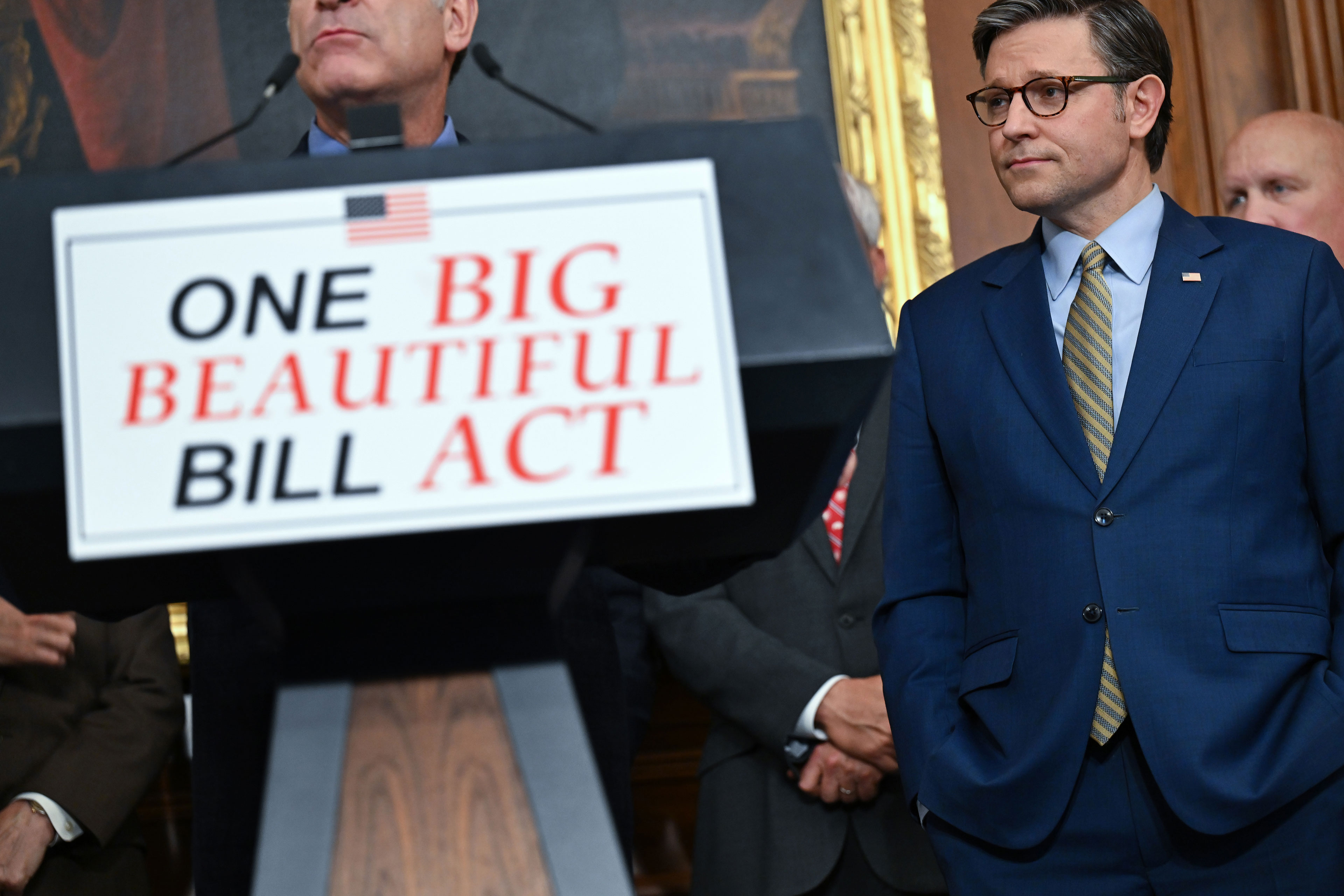
Adams, 51, lost his right leg to cancer 40 years ago, and he has worn out more legs than he can count. He picked a gold plan on the Colorado health insurance marketplace that covered prosthetics, including microprocessor-controlled knees like the one he has used for many years. That function adds stability and helps prevent falls.

But when his leg needed replacing last January after about five years of everyday use, his new marketplace health plan wouldn’t authorize it. The roughly $50,000 leg with the electronically controlled knee wasn’t medically necessary, the insurer said, even though Colorado law leaves that determination up to the patient’s doctor, and his has prescribed a version of that leg for many years, starting when he had employer-sponsored coverage.

“The electronic prosthetic knee is life-changing,” said Adams, who lives in Lafayette, Colorado, with his wife and two kids. Without it, “it would be like going back to having a wooden leg like I did when I was a kid.” The microprocessor in the knee responds to different surfaces and inclines, stiffening up if it detects movement that indicates its user is falling.

People who need surgery to replace a joint typically don’t encounter similar coverage roadblocks. In 2021, 1.5 million knee or hip joint replacements were performed in United States hospitals and hospital-owned ambulatory facilities, according to the federal Agency for Healthcare Research and Quality, or AHRQ. The median price for a total hip or knee replacement without complications at top orthopedic hospitals was just over $68,000 in 2020, according to one analysis, though health plans often negotiate lower rates.

To people in the amputee community, the coverage disparity amounts to discrimination.

“Insurance covers a knee replacement if it’s covered with skin, but if it’s covered with plastic, it’s not going to cover it,” said Jeffrey Cain, a family physician and former chair of the board of the Amputee Coalition, an advocacy group. Cain wears two prosthetic legs, having lost his after an airplane accident nearly 30 years ago.

AHIP, a trade group for health plans, said health plans generally provide coverage when the prosthetic is determined to be medically necessary, such as to replace a body part or function for walking and day-to-day activity. In practice, though, prosthetic coverage by private health plans varies tremendously, said Ashlie White, chief strategy and programs officer at the Amputee Coalition. Even though coverage for basic prostheses may be included in a plan, “often insurance companies will put caps on the devices and restrictions on the types of devices approved,” White said.

An estimated 2.3 million people are living with limb loss in the U.S., according to an analysis by Avalere, a health care consulting company. That number is expected to as much as double in coming years as people age and a growing number lose limbs to diabetes, trauma, and other medical problems.

Fewer than half of people with limb loss have been prescribed a prosthesis, according to a report by the AHRQ. Plans may deny coverage for prosthetic limbs by claiming they aren’t medically necessary or are experimental devices, even though microprocessor-controlled knees like Adams’ have been in use for decades.

Cain was instrumental in getting passed a 2000 Colorado law that requires insurers to cover prosthetic arms and legs at parity with Medicare, which requires coverage with a 20% coinsurance payment. Since that measure was enacted, about half of states have passed “insurance fairness” laws that require prosthetic coverage on par with other covered medical services in a plan or laws that require coverage of prostheses that enable people to do sports. But these laws apply only to plans regulated by the state. Over half of people with private coverage are in plans not governed by state law.

The Medicare program’s 80% coverage of prosthetic limbs mirrors its coverage for other services. Still, an October report by the Government Accountability Office found that only 30% of beneficiaries who lost a limb in 2016 received a prosthesis in the following three years.

Cost is a factor for many people.

“No matter your coverage, most people have to pay something on that device,” White said. As a result, “many people will be on a payment plan for their device,” she said. Some may take out loans.

The federal Consumer Financial Protection Bureau has proposed a rule that would prohibit lenders from repossessing medical devices such as wheelchairs and prosthetic limbs if people can’t repay their loans.

“It is a replacement limb,” said White, whose organization has heard of several cases in which lenders have repossessed wheelchairs or prostheses. Repossession is “literally a punishment to the individual.”

Adams ultimately owed a coinsurance payment of about $4,000 for his new leg, which reflected his portion of the insurer’s negotiated rate for the knee and foot portion of the leg but did not include the costly part that fits around his stump, which didn’t need replacing. The insurer approved the prosthetic leg on appeal, claiming it had made an administrative error, Adams said.

“We’re fortunate that we’re able to afford that 20%,” said Adams, who is a self-employed leadership consultant.

Leah Kaplan doesn’t have that financial flexibility. Born without a left hand, she did not have a prosthetic limb until a few years ago.

Growing up, “I didn’t want more reasons to be stared at,” said Kaplan, 32, of her decision not to use a prosthesis. A few years ago, the cycling enthusiast got a prosthetic hand specially designed for use with her bike. That device was covered under the health plan she has through her county government job in Spokane, Washington, helping developmentally disabled people transition from school to work.

But when she tried to get approval for a prosthetic hand to use for everyday activities, her health plan turned her down. The myoelectric hand she requested would respond to electrical impulses in her arm that would move the hand to perform certain actions. Without insurance coverage, the hand would cost her just over $46,000, which she said she can’t afford.

Working with her doctor, she has appealed the decision to her insurer and been denied three times. Kaplan said she’s still not sure exactly what the rationale is, except that the insurer has questioned the medical necessity of the prosthetic hand. The next step is to file an appeal with an independent review organization certified by the state insurance commissioner’s office.

A prosthetic hand is not a luxury device, Kaplan said. The prosthetic clinic has ordered the hand and made the customized socket that will fit around the end of her arm. But until insurance coverage is sorted out, she can’t use it.

At this point she feels defeated. “I’ve been waiting for this for so long,” Kaplan said.

KFF Health News is a national newsroom that produces in-depth journalism about health issues and is one of the core operating programs at KFF—an independent source of health policy research, polling, and journalism. Learn more about KFF.

USE OUR CONTENT

This story can be republished for free (details).

Why is bitcoin generally considered a safer investment than dogecoin?

bitcoin generally considered a safer investment than dogecoin

When it comes to cryptocurrencies, the first name that most people think of is Bitcoin. It is the granddaddy of all digital coins, having sparked laughs and investment opportunities alike over the past few years. But there is another cryptocurrency that is stealing the spotlight lately: Dogecoin. This meme coin has been a major player in the crypto scene since 2013, gaining popularity for its light-hearted nature and vibrant community following.

Both bitcoin is generally considered a safer investment than dogecoin are cryptocurrencies, but their distinct origins and technological features set them apart in the cryptocurrency landscape. While Dogecoin is often considered a fun and speculative coin, Bitcoin is often viewed as a safer investment due to its mature market position and institutional support.

Bitcoin was created in 2009 as a way to enable online transactions without the need for third-party intermediaries like banks. It is a decentralized currency that operates on a blockchain network, allowing for secure, fast, and private transactions. Bitcoin’s value is determined by supply and demand, much like other commodities. Its limited supply (21 million coins) and growing acceptance as a form of payment has led to its reputation as “digital gold” and a viable alternative to fiat currencies.

Why is bitcoin generally considered a safer investment than dogecoin?

In contrast, Dogecoin was created in 2013 as a light-hearted coin that features the Shiba Inu dog from the “Doge” meme. Its creators, software engineers Jackson Palmer and Billy Markus, wanted to create a meme that would capture the community’s attention and inspire laughter. Despite its humorous roots, Dogecoin has gained a lot of adoption due to its friendly, communal spirit and charitable work.

While both cryptocurrencies use Proof of Work, Bitcoin’s larger network makes it more resistant to attacks than Dogecoin’s smaller network. Additionally, Bitcoin has a fixed supply of 21 million coins, which helps to prevent inflation and enhance its scarcity-driven value. In comparison, Dogecoin has an unlimited supply and mints 5 billion new coins every year, making it more susceptible to inflation and devaluation over time.

Bitcoin is widely regarded as a safer investment compared to Dogecoin due to its established market presence, broader adoption, and robust fundamentals. As the first cryptocurrency, Bitcoin has positioned itself as a digital gold equivalent, with a finite supply capped at 21 million coins, giving it an intrinsic scarcity that appeals to investors seeking a hedge against inflation. This built-in scarcity contrasts sharply with Dogecoin, which has an unlimited supply and a high annual issuance rate, making it more susceptible to inflationary pressures and reducing its long-term value proposition.

Bitcoin’s status as the pioneer of the cryptocurrency market gives it a significant advantage in terms of credibility and trust. Over the years, Bitcoin has gained widespread acceptance as a legitimate asset class, with institutional investors, hedge funds, and even governments adopting it as part of their portfolios. Companies like Tesla, MicroStrategy, and Square have added Bitcoin to their balance sheets, further validating its role as a reliable store of value. In contrast, Dogecoin originated as a joke and lacks the foundational seriousness and utility that Bitcoin offers. While Dogecoin has gained popularity due to internet memes and endorsements from figures like Elon Musk, its origins as a parody currency and lack of a clear use case make it a far riskier investment.

Ultimately, the decision to invest in Bitcoin or Dogecoin should be based on one’s own personal goals and risk tolerance. However, many investors recommend maintaining a diversified portfolio that includes both Bitcoin and other cryptocurrencies, such as Dogecoin. In this way, you can take advantage of the unique benefits that each offer.

Elección de Trump y desafíos legales retrasan las inscripciones en el Obamacare

Las nuevas inscripciones bajo la Ley de Cuidado de Salud a Bajo Precio (ACA) parecen ser hasta un millón menos que el  número récord del año pasado, especialmente por problemas con el programa que enfrenta la saliente administración Biden.

La reelección de Donald Trump para un segundo mandato ha generado incertidumbre sobre el futuro de la ley de salud. Además, el gobierno implementó normas complejas para reducir las inscripciones fraudulentas y está combatiendo una demanda que busca evitar que un grupo de inmigrantes sin residencia legal adquieran cobertura en los mercados de seguros de salud.

Hasta ahora, el número de nuevos inscritos y reinscritos que utilizan cuidadodesalud.gov, el sitio del mercado federal que usan 31 estados, está por debajo del año pasado. A principios de diciembre, las nuevas inscripciones apenas superaban las 730,000, en comparación con 1.5 millones en el mismo período de 2023.

Para dar más tiempo a los consumidores de los estados del mercado federal para inscribirse, los Centros de Servicios de Medicare y Medicaid (CMS) extendieron hasta el 18 de diciembre el plazo para adquirir cobertura que comienza el 1 de enero. (El plazo del 15 de enero es para la que comenzaría el 1 de febrero).

También está en juego una regla emitida por la administración Biden que permite, por primera vez, que los Dreamers, las personas traídas al país de niños sin papeles, puedan inscribirse en los mercados y obtener subsidios.

El 9 de diciembre, un juez federal de Dakota del Norte falló a favor de 19 estados que buscaban bloquear esta directiva de la administración Biden.

El 16, el equipo de Biden obtuvo una suspensión temporal, pero el destino de esta opción todavía está por verse.

De prevalecer, la decisión en este caso, Kansas vs Estados Unidos, efectivamente prohíbiría a quienes han calificado para el programa de Acción Diferida para los Llegados en la Infancia (DACA) inscribirse o recibir subsidios para los planes de ACA en los 19 estados. Según los abogados que siguen el caso, no parece afectar la inscripción o la cobertura en otros estados.

Se espera una decisión final sobre la suspensión temporal en cualquier momento. Si se concede, podría permitir que los Dreamers sigan inscribiéndose mientras se escucha la apelación del gobierno a la decisión del tribunal de distrito, lo cual es poco probable que ocurra antes de que Trump asuma el cargo.

En sus documentos judiciales, la administración Biden argumenta que no conceder una suspensión sería muy disruptivo en medio del período de inscripción abierta, lo que causaría que el gobierno federal incurra en costos para reajustar su mercado para reflejar el cambio y notificar a aquellos que ya se han inscrito que sus planes han sido cancelados.

El caso original fue presentado en agosto en el Tribunal de Distrito de los Estados Unidos para el Distrito de Dakota del Norte y está siendo escuchado por el juez de distrito Daniel Traynor, nominado en 2019 por el entonces presidente Trump.

Previamente, el gobierno federal estimó que alrededor de 100,000 personas sin seguro de un total de medio millón de beneficiarios de DACA podrían inscribirse para tener cobertura de 2025. En su nuevo escrito, el gobierno dice que 2,700 se han inscrito en los estados que presentaron la demanda y que usan el mercado federal.

La regla de la administración Biden, finalizada en mayo, aclaró que quienes califican para DACA serían considerados “legalmente presentes” para los propósitos de inscribirse en planes bajo ACA, los cuales están abiertos a ciudadanos y aquellos denominados inmigrantes “legalmente presentes”.

Los abogados federales argumentan que Dakota del Norte no ha demostrado que sería perjudicado por la regla, por lo que no tiene legitimidad para presentar el caso. El estado argumentó que incurre en costos para aproximadamente 130 beneficiarios de DACA que viven allí, y que no tendría esos gastos si se les prohibiera inscribirse en ACA y, por lo tanto, decidieran abandonar el país.

Por su parte, el gobierno federal argumentó que un éxodo es poco probable. El escrito legal también cuestionó el cálculo de Dakota del Norte de que incurre en costos de $585 para emitir licencias de conducir a los beneficiarios de DACA y alrededor de $14,000 anuales para educar al menos a un miembro o dependiente de DACA.

Todos los estados que impugnan esta regla argumentan que causará cargas administrativas y económicas a medida que más individuos se inscriban, y que alentará a más personas a permanecer en Estados Unidos sin documentos.

Los estados demandantes son: Alabama, Arkansas, Florida, Idaho, Indiana, Iowa, Kansas, Kentucky, Missouri, Montana, Nebraska, New Hampshire, Dakota del Norte, Ohio, Carolina del Sur, Dakota del Sur, Tennessee, Texas y Virginia.

Related Topics

Contact Us

Submit a Story Tip

He Went in for a Colonoscopy. The Hospital Charged $19,000 for Two.

Tom Contos is an avid runner. When he started experiencing rectal bleeding in March, he thought exercise could be the cause and tried to ignore it. But he became increasingly worried when the bleeding continued for weeks.

The Chicago health care consultant contacted his physician at Northwestern Medicine, who referred him for a diagnostic colonoscopy, at least partly because Contos, 45, has a family history of colon issues.

“I work out a lot,” he said. “But my partner said this isn’t normal. My primary care physician said, ‘Given your family history, let’s get you in.’”

Northwestern Memorial Hospital asked him to prepay $1,000 out-of-pocket, and he underwent the procedure in June.

Then the bill came.

The Medical Procedure

Colonoscopies are performed in the United States more than 15 million times a year. Rates of colorectal cancer are on the rise, particularly among younger people.

The procedure, which is also a recommended screening for people 45 or older, involves examining the large intestine using a tube with a video camera that can also collect tissue samples.

It typically takes less than one hour, with another hour spent taking the patient’s history, administering anesthesia, and monitoring their recovery, said Glenn Littenberg, a physician who recently chaired the reimbursement committee of the American Society of Gastrointestinal Endoscopy.

According to Contos’ medical record, the gastroenterologist who performed his colonoscopy described it as “not difficult.” He biopsied and removed small growths called polyps from two spots and identified large internal hemorrhoids, which are swollen veins.

The biopsy samples were sent to pathology for testing and found to be precancerous. But the gastroenterologist reported finding no evidence of cancer, and after reviewing the pathology report, he concluded hemorrhoids were the likely cause of the bleeding.

The Final Bill

The hospital charged a total of $19,206 for the procedure, including physician fees. The insurer negotiated the price to $5,816 and paid $1,979, leaving a patient share of $4,047. (It wasn’t clear why the payments added up to slightly more than the negotiated price.) After Contos had paid $1,000 up front, plus $1,381 right after the procedure, the hospital said he still owed $1,666.

The Billing Problem: Colonoscopies That Find Polyps Cost More

Contos was shocked and angry when he received his itemized bill. “I said, ‘I don’t understand this.’ Then I started to research the cost.”

He asked the hospital what it charges for a diagnostic colonoscopy and was told he’d been sent a cost estimate through his online patient portal prior to the procedure.

The estimate, which took his deductible of $3,200 into account, listed a total price of $7,203, with an out-of-pocket bill of $2,381. He asked Northwestern why the charges were nearly three times the estimate and why his out-of-pocket share was nearly twice as high.

One big reason was revealed in an explanation of benefits (EOB) statement from Contos’ insurance company, Aetna: Northwestern had charged for two colonoscopies, at $5,466 each. And there were two fees for the gastroenterologist — $1,535 and $1,291.

The first procedure was listed as “colonoscopy and biopsy,” while the second was listed as “colonoscopy w/lesion removal.” Aetna’s negotiated member rate reduced the first $5,466 hospital charge to $3,425, while the charge for the second procedure was lowered to $1,787 — $1,638 less.

Neither the bill nor the EOB explained why there was a second procedure listed, at a reduced price.

After examining Contos’ bill, Littenberg said it’s standard for providers to bill for two colonoscopies if they remove two or more polyps in different ways, because of the extra work. As in this case, hospitals typically use a modifier code that reduces the amount charged for the second billed colonoscopy so they charge only for the extra work, he added.

“How do you explain that in sensible terms that anyone could understand?” Littenberg said.

Even with that reduction, Littenberg said, he thought Contos’ total out-of-pocket cost of $4,047 was “a lot, though not rare for large academic centers.”

Contos paid a fee up front, then made another payment after his procedure. He was shocked and angry when he got his itemized bill showing he still owed more.(Taylor Glascock for KFF Heath News)

Contos’ insurance documents show Aetna’s negotiated rate for his colonoscopy at Northwestern was more than twice the insurer’s median negotiated rate for the same procedure at other Chicago-area hospitals, according to Forrest Xiao, director of quantitative research at Turquoise Health, a company that gathers health care price data.

In exchanges with Northwestern and Aetna representatives, Contos asked why he was charged for two colonoscopies. A Northwestern representative said that because of the modifier code, he wasn’t actually being billed for two procedures, which Contos found bewildering.

“I told Northwestern, ‘I’m not paying that, and I don’t care if you send me to collections,’” he said. He filed appeals with the hospital and Aetna but was ultimately told the billing was correct.

The Resolution

In an email, Contos told the billing department that its charge was “ridiculously high.” A representative responded that Northwestern’s pricing is in line with other academic medical centers in Chicago and “non-negotiable” — and that his account would be turned over to a collections agency.

CVS Health spokesperson Phillip Blando said in a written statement to KFF Health News that the claims for Contos were “paid accurately” by Aetna, declining further comment. (CVS Health owns Aetna.)

Northwestern did not respond to multiple requests for comment.

Contos said he wrote to his physician that he was regretfully dropping him and leaving Northwestern entirely because of the health system’s high pricing.

He said he’s still experiencing periodic symptoms, which he relieves with over-the-counter Preparation H. A one-ounce tube of the ointment costs $10.99 at CVS.

The Takeaway

To get a colonoscopy at a lower price, Littenberg said, patients should consider going to a freestanding endoscopy center or ambulatory surgery center not associated with a hospital. A 2023 study found that ambulatory surgery centers billed insurers an average of about $1,030 for a colonoscopy with biopsy or with removal of a polyp, compared with $1,760 at a hospital.

To get a sense of how much a diagnostic colonoscopy could cost, patients can consult a hospital’s price website and an insurer’s cost-estimator website, both required by federal price transparency rules.

Patients also can look up a good-faith estimate of the cash price, which can be lower than the price for patients using insurance to pay for a procedure. In addition, they can check prices through websites such as Turquoise Health and Fair Health, which draw from federal price transparency data or claims data from insurers.

Still, the actual cost could be higher than the estimate if the colonoscopy finds one or more polyps that need to be removed and biopsied, which occurs in at least 40% of all colonoscopies, Littenberg said. Patients should ask whether the price includes those potentially extra services. After all, the point of a diagnostic colonoscopy is to find and, if necessary, treat lesions that could cause problems — regardless of the number found.

It all should be easier for patients, Xiao said: “You shouldn’t have to be a medical billing expert to know what you’re going to pay.”

Bill of the Month is a crowdsourced investigation by KFF Health News and The Washington Post’s Well+Being that dissects and explains medical bills. Since 2018, this series has helped many patients and readers get their medical bills reduced, and it has been cited in statehouses, at the U.S. Capitol, and at the White House. Do you have a confusing or outrageous medical bill you want to share? Tell us about it!

Related Topics

Contact Us

Submit a Story Tip

Journalists Wrap Up 2024 With Topics From Trump 2.0 to Frustration With Health Industry

Thank you for your interest in supporting Kaiser Health News (KHN), the nation’s leading nonprofit newsroom focused on health and health policy. We distribute our journalism for free and without advertising through media partners of all sizes and in communities large and small. We appreciate all forms of engagement from our readers and listeners, and welcome your support.

KHN is an editorially independent program of KFF (Kaiser Family Foundation). You can support KHN by making a contribution to KFF, a non-profit charitable organization that is not associated with Kaiser Permanente.

Click the button below to go to KFF’s donation page which will provide more information and FAQs. Thank you!

In Settling Fraud Case, New York Medicare Advantage Insurer, CEO Will Pay up to $100M

A western New York health insurance provider for seniors and the CEO of its medical analytics arm have agreed to pay a total of up to $100 million to settle Justice Department allegations of fraudulent billing for health conditions that were exaggerated or didn’t exist.

Independent Health Association of Buffalo, which operates two Medicare Advantage plans, will pay up to $98 million. Betsy Gaffney, CEO of medical records review company DxID, will pay $2 million, according to the settlement agreement. Neither admitted wrongdoing.

“Today’s result sends a clear message to the Medicare Advantage community that the United States will take appropriate action against those who knowingly submit inflated claims for reimbursement,” Michael Granston, a DOJ deputy assistant attorney general, said in announcing the settlement on Dec. 20.

Frank Sava, a spokesperson for Independent Health, said in a statement: “The assertions by the DOJ are allegations only, and there has been no determination of liability. This settlement is not an admission of any wrongdoing; it instead allows us to avoid the further disruption, expense, and uncertainty of litigation in a matter that has lingered for over a decade.”

Under the settlement, Independent Health will make “guaranteed payments” of $34.5 million in installments from 2024 through 2028. Whether it pays the maximum amount in the settlement will depend on the health plan’s financial performance.

Michael Ronickher, an attorney for whistleblower Teresa Ross, called the settlement “historic,” saying it was the largest payment yet by a health plan based solely on a whistleblower’s fraud allegations. It also was one of the first to accuse a data mining firm of helping a health plan overcharge.

In a whistleblower lawsuit, Teresa Ross accused a Medicare Advantage health insurance provider of billing the government for bogus diagnoses.(Cassidy Tobin)

The settlement is the latest in a whirl of whistleblower actions alleging billing fraud by a Medicare Advantage insurer. Medicare Advantage plans are private health plans that cover more than 33 million members, making up over half of all people eligible for Medicare. They are expected to grow further under the incoming Trump administration.

But as Medicare Advantage has gained popularity, regulators at the federal Centers for Medicare & Medicaid Services have struggled to prevent health plans from exaggerating how sick patients are to boost their revenues.

Whistleblowers such as Ross, a former medical coding professional, have helped the government claw back hundreds of millions of dollars in overpayments tied to alleged coding abuses. Ross will receive at least $8.2 million, according to the Justice Department.

Ross said that CMS “created a bounty” for health plans that added medical diagnosis codes as they reviewed patients’ charts — and whether those codes were accurate or not “didn’t seem to bother some people.”

“Billions of dollars are being paid out by CMS for diagnoses that don’t exist,” Ross told KFF Health News in an interview.

Data Mining

DOJ’s civil complaint, filed in September 2021, was unusual in targeting a data analytics venture — and its top executive — for allegedly ginning up bogus payments.

DxID specialized in mining electronic medical records to capture new diagnoses for patients — pocketing up to 20% of the money it generated for the health plan, according to the suit, which said Independent Health used the firm from 2010 through 2017. DxID shut down in 2021.

Gaffney pitched its services to Medicare Advantage plans as “too attractive to pass up,” according to the Justice Department complaint.

“There is no upfront fee, we don’t get paid until you get paid and we work on a percentage of the actual proven recoveries,” Gaffney said, according to the complaint. Timothy Hoover, an attorney for Gaffney, said in a statement that the settlement “is not an admission of any liability by Ms. Gaffney. The settlement simply resolves a dispute and provides closure to the parties.”

‘A Ton of Money’

CMS uses a complex formula that pays health plans higher rates for sicker patients and less for people in good health. Health plans must retain medical records that document all diagnoses they highlight for reimbursement.

Independent Health violated those rules by billing Medicare for a range of medical conditions that either were exaggerated or not supported by patient medical files, such as billing for treating chronic depression that had been resolved, according to the complaint. In one case, an 87-year-old man was coded as having “major depressive disorder” even though his medical records indicated the problem was “transient,” according to the complaint.

DxID also cited chronic kidney disease or renal failure “in the absence of any documentation suggesting that a patient suffered from those conditions,” according to the complaint. Past conditions, such as heart attacks, that required no current treatment, also were coded, according to the DOJ.

The suit alleges that Gaffney said renal failure diagnoses were “worth a ton of money to IH [Independent Health] and the majority of people (over) 70 have it at some level.”

Ross filed the whistleblower case in 2012 against Group Health Cooperative in Seattle, one of the nation’s oldest managed-care groups.

Ross, a former medical coding manager there, alleged that DxID submitted more than $30 million in disease claims — many of which were not valid — on behalf of Group Health for 2010 and 2011. For instance, Ross alleged that the plan billed for “major depression” in a patient described by his doctor as having an “amazingly sunny disposition.”

Group Health, now known as the Kaiser Foundation Health Plan of Washington, denied wrongdoing. But it settled the civil case in November 2020 by agreeing to pay $6.3 million. The DOJ filed a second complaint in 2021, against Independent Health, which also used DxID’s services.

Ross said she lost her job after her suit became public in 2019 and was unable to secure another one in the medical coding field.

“It was rough at times, but we got through it,” she said. Ross, 60, said she is now “happily retired.”

False Claims

Whistleblowers sue under the False Claims Act, a federal law dating to the Civil War that allows private citizens to expose fraud against the government and share in any recovery.

At least two dozen such suits, some dating to 2009, have targeted Medicare Advantage plans for overstating the severity of medical conditions, a practice known in the industry as “upcoding.” Previous settlements from such suits have totaled more than $600 million.

The whistleblowers have played a key role in holding health insurers accountable.

While dozens of CMS audits have concluded that health plans overcharged the government, the agency has done little to recoup money for the U.S. Treasury.

In a surprise action in late January 2023, CMS announced that it would settle for a fraction of the estimated tens of millions of dollars in overpayments uncovered through its audits dating to 2011 and not impose major financial penalties on health plans until a round of audits for 2018 payments, which have yet to be done. Exactly how much plans will end up paying back is unclear.

“I think CMS should be doing more,” said Max Voldman, an attorney who represents Ross.

Related Topics

Contact Us

Submit a Story Tip

Employers Press Congress To Cement Health Price Transparency Before Trump’s Return

It seems simple: Require hospitals and insurers to post their negotiated prices for most health care services and — bingo — competition follows, yielding lower costs for consumers.

But nearly four years after the first Trump administration’s regulations forced hospitals to post massive amounts of pricing information online, the effect on patients’ costs is unclear. And while President Joe Biden added requirements to make pricing information more user-friendly, Donald Trump’s imminent return to the White House has raised questions about what’s next, even though posting prices is an area of rare bipartisan agreement.

The uncertainty of what might happen next led some proponents to lobby Congress to include hospital and insurer price transparency in must-pass legislation before Trump takes office. That would turn both his and Biden’s regulations into law, making them less susceptible to being weakened or repealed by a future administration. But that effort failed.

The legislative step could also help protect against legal challenges in the wake of a Supreme Court decision that limited government agencies’ regulatory authority.

Employers are using transparency data to try to slow growth of their health care costs, and “the last thing you want to do is start over,” said James Gelfand, president and CEO of the ERISA Industry Committee, which represents large employers who finance their own health plans. His group is among the organizations pressing Congress to act.

“Congress’ failure to act is deeply disappointing, but employers and other advocates will redouble our efforts,” Gelfand said. “This will get done.”

While there are reports that many hospitals are not fully complying, federal regulators have sent thousands of warning letters to hospitals and fined just over a dozen.

The transparency rules require hospitals to list the prices they accept from all insurers for thousands of items and services, from stitches to delivery room costs to X-rays. For consumers, hospitals must also provide a list of 300 “shoppable” services, including bundled prices accepted for common services such as having a baby or getting a hip replacement. Insurers in July 2022 were similarly required to list their negotiated prices, not only for care at hospitals, but also surgery centers, imaging facilities, laboratories, and doctors’ offices.

It’s a massive and often confusing amount of data that has drawn interest from researchers and commercial outlets like Turquoise Health, which has sought to organize the information to better help ordinary consumers shopping for medical services or employers overseeing workers’ health plans.

The data shows a huge variation in prices, both in what hospitals charge and what insurers pay, for the same services. But the result of making those prices public is so far hard to quantify.

A recent study by Turquoise looked at negotiated rates in the nation’s 10 largest metro areas for a set of common health care services. It found that rates in the top quarter tier — the most expensive category — declined by 6.3% from December 2021 to June 2024, during the time the transparency rules were in place. But negotiated rates for the lowest-cost tier of services rose by 3.4%.

That may indicate hospitals and insurers — who can now see what rivals are charging and paying — have either cut prices or demanded better rates, at least for the costliest services.

Even so, Gerard Anderson, who oversees research into the data as a professor at the Bloomberg School of Public Health at Johns Hopkins University, said the changes Turquoise noted were small and are not reflective of what his team has seen in their own studies.

“So far we have not detected any impact of this data on behavior, of where insurers decide to go or what hospitals do to change prices once they realize what others are charging,” Anderson said.

Some health policy experts think it’s unlikely the incoming Trump administration would reverse its prior commitment to price transparency.

“I don’t see a world where he tanks his own regulations,” said Joe Wisniewski, an associate vice president at Turquoise Health. “There is also so much broad bipartisan support on the Hill.”

The current price-posting rules began with requirements in the Affordable Care Act, which the initial Trump administration more fully defined. The hospital industry failed in a legal challenge to block those rules, and the Trump-era requirements became effective in January 2021.

But even after the Biden administration made the data more user-friendly, it’s still not very helpful to consumers, Anderson said.

“This data is not telling them the price they will pay. It’s telling them the average price people paid last month or last quarter for a similar type of service,” he said.

More useful, Anderson and other experts say, are requirements in the price transparency rules that demand insurers offer online calculators for hundreds of nonemergency services. The detailed cost estimates must take into account how much patients have paid toward annual deductibles.

For uninsured consumers or others who don’t have access to online calculators, it remains difficult to piece together how much a service might cost from the information hospitals post online. For one thing, not every hospital has posted its negotiated rates.

The Department of Health and Human Services’ inspector general said in November an audit of 100 hospitals found that 63 complied with the price transparency rule, while the rest failed to meet one or more requirements.

The advocacy group Patient Rights Advocate, which looked at a sample of 2,000 hospitals, says that only 21% were fully compliant, although it used broader measures for compliance than the inspector general.

“By keeping their prices hidden, hospitals continue to block American consumers from their right to compare prices and protect themselves from overcharges,” said Cynthia Fisher, founder and chairman of the group, which has called for stricter rules and enforcement.

Related Topics

Contact Us

Submit a Story Tip

Federal ACA Marketplace Enrollment Lagging

It’s open enrollment season for the Affordable Care Act — and there are ongoing challenges.

First up, enrollment.

New and returning sign-ups through healthcare.gov — the federal marketplace that serves 31 states — are well below last year’s rate. New enrollments were just over 730,000 in early December, compared with 1.5 million at the same time last year.

To give consumers in those states more time to enroll, the Centers for Medicare and Medicaid Services extended the deadline to Wednesday to sign up for coverage that starts Jan. 1. (Open enrollment itself ends in most states on Jan. 15, for coverage that would begin Feb. 1.)

Meanwhile, the Biden administration is seeking to put on hold an order by a federal judge in North Dakota who ruled in favor of 19 states that challenged a rule allowing — for the first time — enrollment in ACA coverage by “dreamers,” people brought to the United States as children without immigration paperwork.

The Dec. 9 ruling effectively barred those who qualified for the Deferred Action for Childhood Arrivals (DACA) program in the 19 states from enrolling in or getting subsidies for ACA plans. It does not appear to affect enrollment or coverage in other states, lawyers following the case have said.

On Monday, the U.S. Court of Appeals for the 8th Circuit granted a temporary stay of the order at the government’s request. A final decision, expected any day, could extend the stay while the court hears the appeal.

The Biden administration argues that North Dakota hasn’t proved it would be harmed by the rule — and that not granting a stay would be disruptive. The Dec. 9 order would cause the federal government to incur financial costs if it has to retool the marketplace to reflect the change and notify those who have already enrolled that their plans are canceled, the administration argued.

The original case was filed in August in U.S. District Court in North Dakota and is being heard by District Judge Daniel Traynor, who was nominated in 2019 by then-President Donald Trump.

Previously, the federal government estimated that about 100,000 uninsured people out of a half-million DACA recipients might sign up for 2025 coverage. In its new filing, the government says 2,700 have enrolled through the federal marketplace, and an unknown number in states involved in the litigation that run their own state-based marketplaces.

The Biden administration rule, finalized in May, clarified that those who qualify for DACA would be considered “lawfully present” for the purpose of enrolling in plans under the ACA.

All the states challenging the ACA rule say it will cause administrative and resource burdens as more people enroll, and that it will encourage additional people to remain in the United States when they don’t have permanent legal authorization.


This article is not available for syndication due to republishing restrictions. If you have questions about the availability of this or other content for republication, please contact [email protected].


Related Topics

Contact Us

Submit a Story Tip

Obamacare Sign-Ups Lag After Trump Election, Legal Challenges

New enrollments under the Affordable Care Act are on pace to trail last year’s record numbers by as many as a million as the outgoing Biden administration confronts upheavals in the program.

Donald Trump’s election to a second term has cast uncertainty around the future of the health law. In addition, the Biden administration implemented cumbersome policies to reduce fraudulent enrollment and is combating a lawsuit that aims to block immigrants who lack legal residency from buying insurance under the program.

So far, the number of new and returning enrollees using healthcare.gov — the federal marketplace that serves 31 states — is below last year’s. New enrollments were just over 730,000 in early December, compared with 1.5 million at the same time last year.

To give consumers in federal marketplace states more time to enroll, the Centers for Medicare & Medicaid Services extended to Dec. 18 the deadline to sign up for coverage that starts Jan. 1. (The Jan. 15 deadline is for coverage that would begin Feb. 1.)

Also in flux is a rule issued by the Biden administration allowing — for the first time — enrollment in ACA coverage by people brought to the U.S. as children without immigration paperwork, known as “Dreamers.”

The Biden team was granted a temporary stay on Dec. 16 by the U.S. Court of Appeals for the 8th Circuit regarding a Dec. 9 order by a federal judge in North Dakota. That district court judge had ruled in favor of 19 states that sought to block the Biden administration’s Dreamers directive. Without a stay, the decision in that case, Kansas v. the United States, effectively bars those who have qualified for the Deferred Action for Childhood Arrivals program in the 19 states from enrolling in or getting subsidies for ACA plans. It does not appear to affect enrollment or coverage in other states, lawyers following the case have said.

A final decision on the temporary stay was expected any day now. If granted, it could allow Dreamers to continue enrolling while the government’s appeal of the district court ruling is heard, which is unlikely to occur before Trump takes office.

In its court filings, the Biden administration argues that not granting a stay would be very disruptive in the middle of open enrollment, causing the federal government to incur costs in retooling its marketplace to reflect the change, and notifying those who have already enrolled that their plans are canceled.

The original case was filed in August in the U.S. District Court for the District of North Dakota and is being heard by District Judge Daniel Traynor, who was nominated in 2019 by then-President Trump.

Previously, the federal government estimated that about 100,000 uninsured people out of a half-million DACA recipients might sign up for 2025 coverage. In its new filing, the government says 2,700 have enrolled in those states that brought the suit and use the federal marketplace.

The Biden administration rule, finalized in May, clarified that those who qualify for DACA would be considered “lawfully present” for the purposes of enrolling in plans under the ACA, which are open to citizens and those who are called “lawfully present” immigrants.

The federal lawyers argue that North Dakota has not proved it would be harmed by the rule, so it has no standing to bring the case. North Dakota argued that it incurs costs for approximately 130 DACA recipients who live in its state, and that it would not have those expenses if they were barred from enrolling in the ACA and thus decided to leave the country. An exodus is unlikely, the federal government argued. The legal brief also questioned North Dakota’s calculation that it incurs costs of $585 to issue driver’s licenses to the DACA recipients and about $14,000 annually to educate at least one DACA member or dependent.

All the states challenging the ACA rule say it will cause administrative and resource burdens as more people enroll, and that it will encourage additional people to remain in the U.S. when they don’t have permanent legal authorization. The plaintiff states are Alabama, Arkansas, Florida, Idaho, Indiana, Iowa, Kansas, Kentucky, Missouri, Montana, Nebraska, New Hampshire, North Dakota, Ohio, South Carolina, South Dakota, Tennessee, Texas, and Virginia.

KFF Health News is a national newsroom that produces in-depth journalism about health issues and is one of the core operating programs at KFF—an independent source of health policy research, polling, and journalism. Learn more about KFF.

USE OUR CONTENT

This story can be republished for free (details).

Democratic Senators Ask Watchdog Agency To Investigate Georgia’s Medicaid Work Rule

Three Democratic senators asked the country’s top nonpartisan government watchdog on Tuesday to investigate the costs of a Georgia program that requires some people to work to receive Medicaid coverage.

The program, called “Georgia Pathways to Coverage,” is the nation’s only active Medicaid work requirement.

Pathways has cost tens of millions in federal and state dollars on administration and consulting fees while enrolling 5,542 people as of Nov. 1, according to KFF Health News’ reporting. The congressional letter cited the reporting in its request to the Government Accountability Office.

“Republicans are hell-bent on putting mountains of red tape between Americans and their health care,” Sen. Ron Wyden (D-Ore.), head of the Senate Finance Committee, said in a statement about the letter he co-wrote. “Taxpayers deserve to hear from an independent watchdog about the true costs of the Republican health care agenda.”

Georgia Sens. Jon Ossoff and Raphael Warnock co-signed the request.

The Democrats’ letter asks the GAO to prepare a summary of the costs to run the program — and detail how much of that has been picked up by the feds, break down the cost of the program per person, and assess how Georgia has used contractors to run the program and how federal officials have overseen it.

The request comes as President-elect Donald Trump, who supported work requirements in his first administration, is set to take office and potentially transform how people qualify for Medicaid, the joint federal-state health insurance program for people who are disabled or have low incomes.

Many GOP-led states have pushed for work requirements in public benefits programs such as Medicaid, arguing that they promote employment. Georgia’s Pathways program requires some Medicaid applicants to prove they are working, volunteering, or studying for 80 hours a month.

The first Trump administration approved work requirements in 13 states. Only Georgia’s program, which started on July 1, 2023, is in effect. A Medicaid work requirement launched in Arkansas was halted by a court order in 2019.

In November, South Dakota voters gave lawmakers a green light to seek a work requirement for some Medicaid enrollees. In 2023, North Carolina lawmakers directed the state to seek work requirements if the federal government would approve such a waiver. And some GOP-led states have indicated they might also seek work requirements.

Georgia’s program has been a priority of Republican Gov. Brian Kemp, and his team defended the program.

“The Senators should be more focused on examining the failures of the federal government to adequately provide the services they’re required to administer than looking for every opportunity to criticize states that are taking innovative approaches,” Garrison Douglas, a Kemp spokesperson, said in an emailed statement.

Enrollment in the program, which as of Dec. 13 was 5,903, has fallen far short of the state’s initial projection of more than 25,000 in the first year.

The program has cost more than $40 million in state and federal funds, largely administrative costs and not medical care for enrollees, Georgia officials have said. KFF Health News reported in March that Georgia officials estimated the program’s administrative costs could increase to $122 million over four years.

A spokesperson for Georgia’s Medicaid agency, Fiona Roberts, said the costs “increased significantly” because of the program’s delayed launch. While it was approved by the Trump administration, the Biden administration attempted to block it, resulting in a legal fight.

KFF Health News has also reported that the program has slowed processing times for other Medicaid applications and for public benefits such as cash assistance and food stamps.

Meanwhile, more than a year after Pathways’ launch, Georgia officials said they still had not removed enrollees for failing to prove they are working, volunteering, or studying for 80 hours a month, KFF Health News has reported.

“State leaders continue to put taxpayer dollars behind their ineffective health care program that has failed by nearly every metric,” Warnock said.

Previous federal research suggests that the high costs per enrollee associated with Georgia’s program could be repeated elsewhere. The Trump administration didn’t properly weigh administrative costs in state applications for work requirements, according to a 2019 GAO report. Pathways is slated to expire on Sept. 30, unless federal officials grant an extension.

KFF Health News is a national newsroom that produces in-depth journalism about health issues and is one of the core operating programs at KFF—an independent source of health policy research, polling, and journalism. Learn more about KFF.

USE OUR CONTENT

This story can be republished for free (details).