
Wild Pere David's deer thrive in Jiangsu wetlands
As early autumn arrives in Yancheng, east China’s Jiangsu Province, herds of wild Pere David’s deer frolic and forage across the Tiaozini Wetlands, while flocks of migratory birds soar overhead. Located along the East Asian–Australasian Flyway, one of the world’s major migratory bird routes, it welcomes countless birds each year to rest, breed and overwinter.
The Tiaozini Wetlands, with its well-preserved environment, has become an ideal habitat for Pere David’s deer and a key stopover for migratory birds.
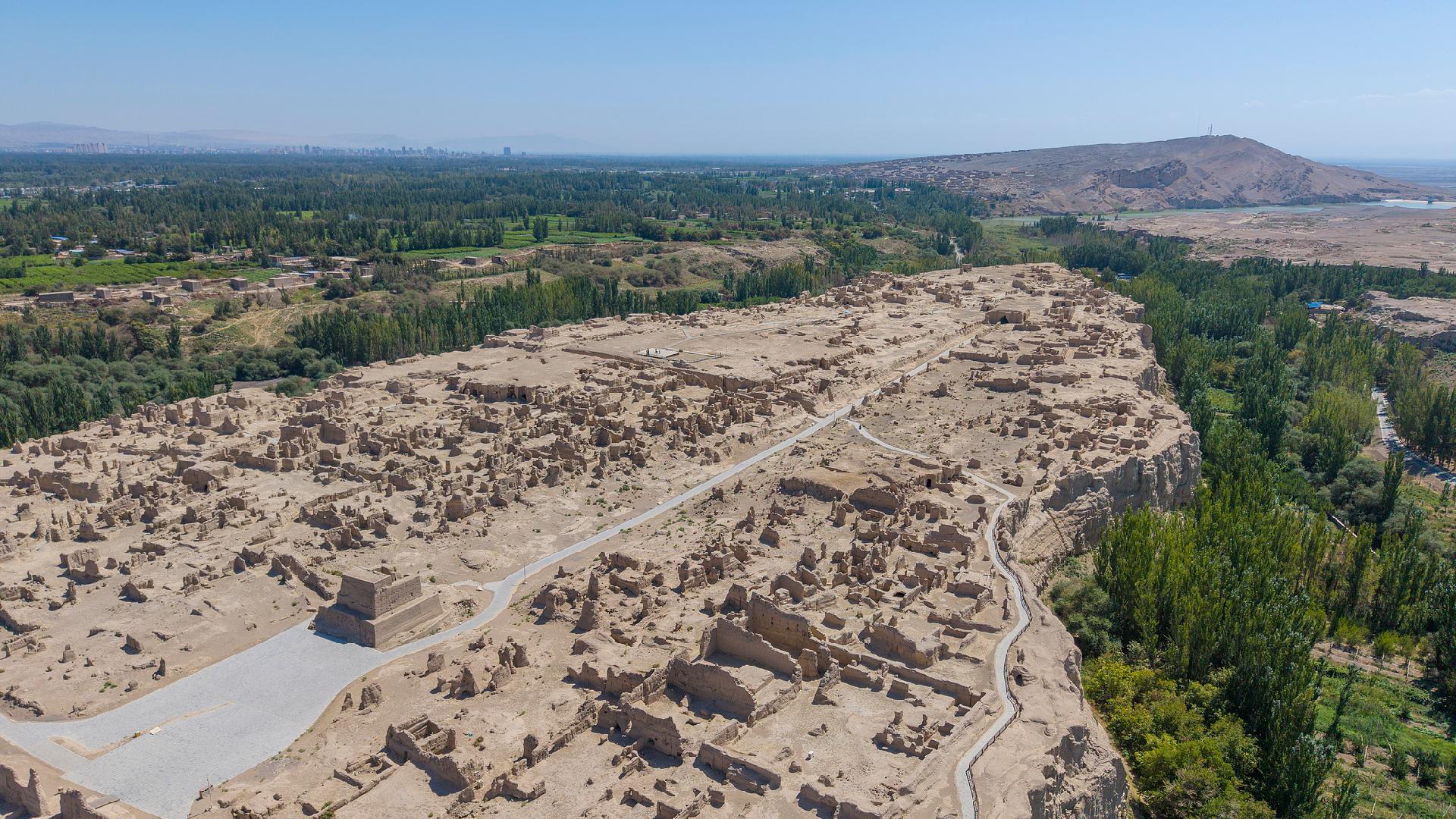
Xinjiang color palette: Unveiling the timeless charm of Jiaohe Ruins

Xinjiang color palette: A land of football and sweetness

Step into Liuxing Street, where Xinjiang's cultures truly shine
Step into Liuxing Street in Ili and you’ll instantly feel the heartbeat of Xinjiang. People of various ethnic groups, including Uygurs, Kazakhs, Hans, Mongolians and Russians, all live side by side, sharing stories, music and laughter. It’s not just about the food; it’s the vibe, the mix of cultures and the way life flows here in harmony. Every corner has a story and everyone you meet brings a piece of Xinjiang’s rich culture. Liuxing Street isn’t just a street – it’s a living, breathing snapshot of Xinjiang’s diverse spirit. Follow CGTN’s Wang Tao to discover the unique charm of Xinjiang.
Jinsha Site: A glimpse into China's ancient Shu civilization
As one of the major archaeological discoveries of the 21st century in China, the Jinsha Site in Chengdu, Sichuan Province showcases a civilization dating back about 3,200-2,600 years. It shares a cultural lineage with the Sanxingdui civilization, both being integral parts of the ancient Shu Kingdom. The site was discovered in 2001, and a museum was established on site in 2007.
<img src='https://news.cgtn.com/news/2025-09-14/Jinsha-Site-A-glimpse-into-China-s-ancient-Shu-civilization-1GF6Jtjriw0/img/42ba7f8de9a94531b1e7d16a40c4a7cd/42ba7f8de9a94531b1e7d16a40c4a7cd.jpeg' alt='The Sun and Immortal Birds Gold Ornament can be seen on display at the Jinsha Site Museum in Chengdu, Sichuan Province. /CGTN'
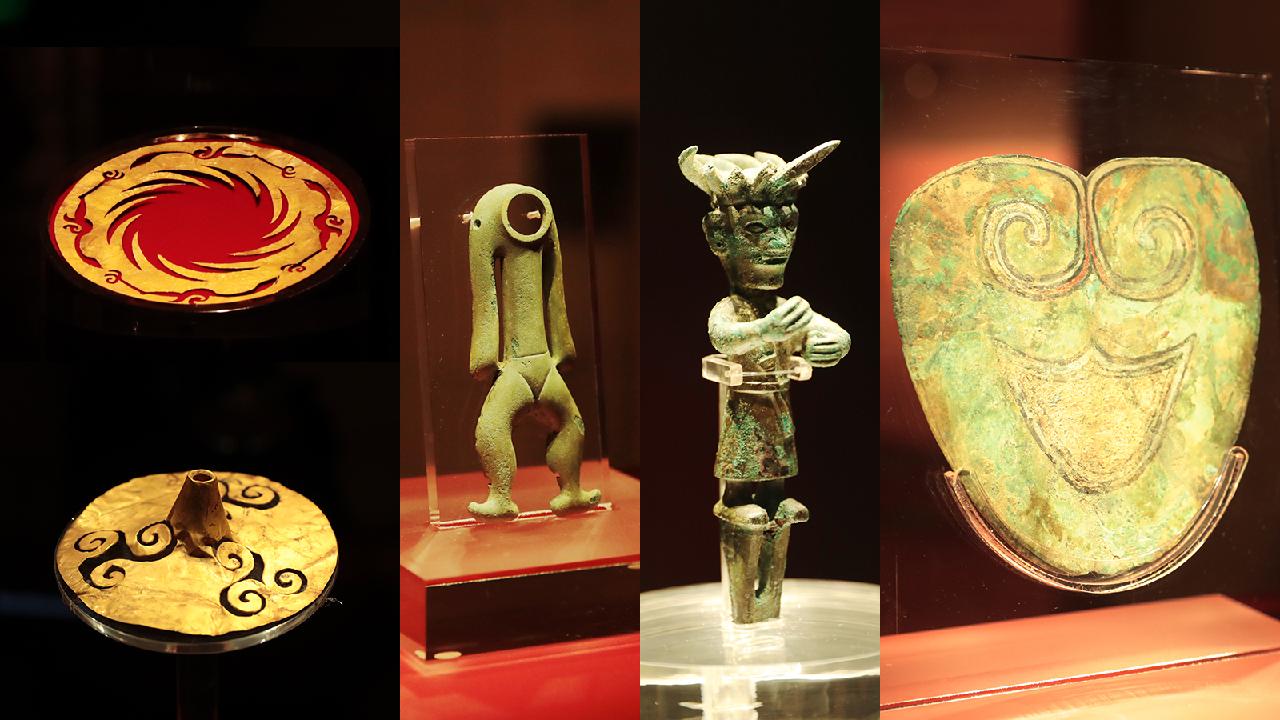
The Sun and Immortal Birds Gold Ornament is the most iconic artifact of Jinsha. The center of this circular ornament is hollowed out into a vortex with twelve serrated rays, surrounded by four carved birds flying counterclockwise, symbolizing the Sun and Immortal Birds in ancient Chinese mythology. The pattern of the gold ornament has been designated as the emblem of China’s cultural heritage and also serves as the primary element of Chengdu’s city logo.
<img src='https://news.cgtn.com/news/2025-09-14/Jinsha-Site-A-glimpse-into-China-s-ancient-Shu-civilization-1GF6Jtjriw0/img/be472e4f16244b0b9807a547b564f77d/be472e4f16244b0b9807a547b564f77d.jpeg' alt='The Gold Mask can be seen on display at the Jinsha Site Museum in Chengdu, Sichuan Province. /CGTN'
Similar cultural relics to those unearthed at Sanxingdui can also be found in the Jinsha Site Museum. The Gold Mask on display there is the largest and best-preserved from its period ever discovered in China, while the Bronze Standing Figure bears a strong resemblance to the large bronze standing figure excavated at Sanxingdui.
<img src='https://news.cgtn.com/news/2025-09-14/Jinsha-Site-A-glimpse-into-China-s-ancient-Shu-civilization-1GF6Jtjriw0/img/12d77422554f4b83ae9e6902c3dd373b/12d77422554f4b83ae9e6902c3dd373b.jpeg' alt='The Bronze Standing Figure can be seen on display at the Jinsha Site Museum in Chengdu, Sichuan Province. /CGTN'
Visitors can also explore the excavation site of Jinsha at the museum’s Relic Hall, immersing themselves in the riverside sacrificial ceremonies of the ancient Shu Kingdom 3,000 years ago and learning about the meticulous archaeological excavations carried out since 2001.

Xinjiang color palette: Safflower industry boosts local economy

The power of people-to-people exchanges
People-to-people exchanges serve as an important tool for cross-cultural understanding and collaboration. Each small step helps build global consensus on development, share opportunities for a prosperous future and contribute to weaving a shared future for humanity.

Xinjiang color palette: Dive into the mysterious canyon in Aksu
China's Huangyan Dao reserve safeguards coral reef ecosystem
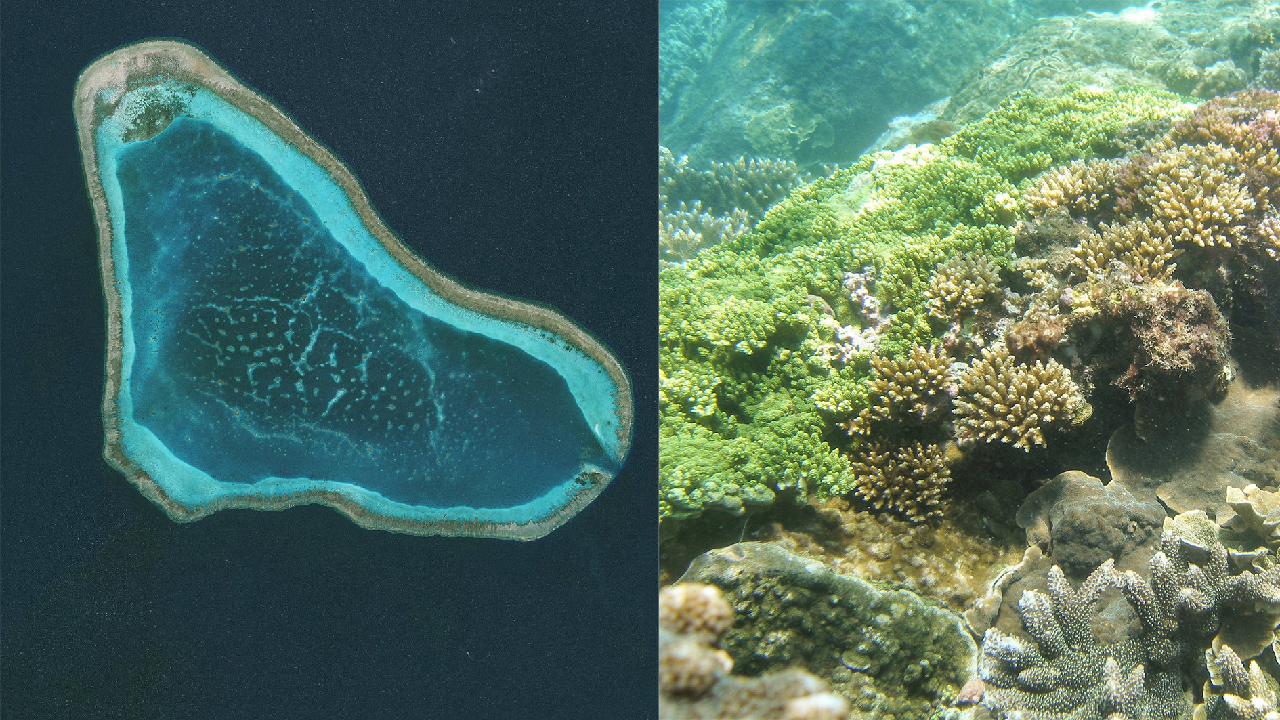
China’s National Forestry and Grassland Administration says that the Huangyan Dao National Nature Reserve, located in Sansha City, Hainan Province, primarily protects coral reef ecosystems. The reserve covers 3,523.67 hectares, including a 1,242.55-hectare core zone and a 2,281.12-hectare experimental zone.
<img src='https://news.cgtn.com/news/2025-09-12/China-s-Huangyan-Dao-reserve-safeguards-coral-reef-ecosystem-1GBHp7CZW7e/img/663c9a01825747b681829ff1e85d7efd/663c9a01825747b681829ff1e85d7efd.jpeg' alt='Functional zoning map of the Huangyan Dao National Nature Reserve /National Forestry and Grassland Administration'
According to a report titled “The Investigation and Assessment Report on Marine Ecology and Environment Status of Huangyan Dao,” released on July 10, 2024, the waters surrounding the Huangyan Dao area remain in excellent condition, with the coral reef ecosystem assessed as healthy. Researchers documented 109 species of hard corals, noting that the coral communities exhibit strong resilience and tolerance to rising sea temperatures – an encouraging sign under global climate change. The findings underscore Huangyan Dao’s role as a vital habitat and refuge for reef-building corals and associated marine life in the South China Sea.

Labubu greets visitors at China's service trade fair
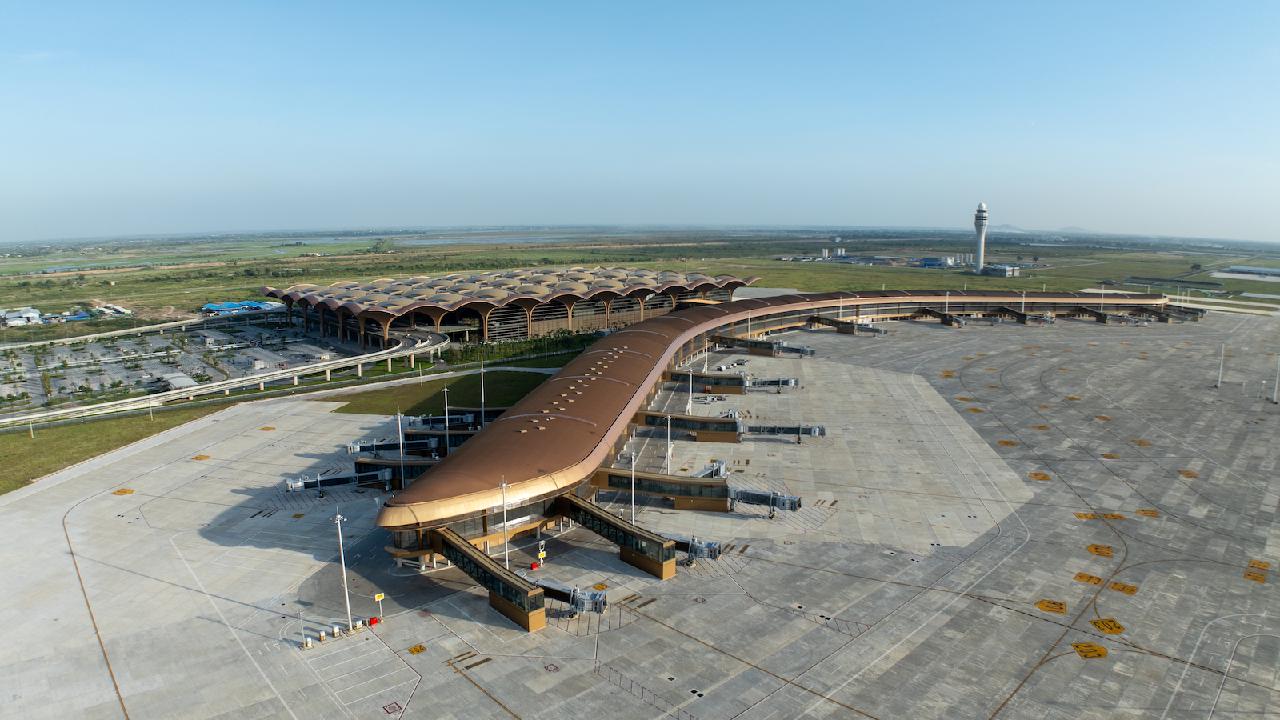
Cambodia's Techo Int'l Airport opens, emphasizes green design
Cambodia’s Techo International Airport officially opened on September 9, 2025, marking a new milestone in the country’s aviation development. Located in Kandal Province, about 19 kilometers from downtown Phnom Penh, the airport spans roughly 2,600 hectares.
<img src='https://news.cgtn.com/news/2025-09-11/Cambodia-s-Techo-Int-l-Airport-opens-emphasizes-green-design-1GAkwSNiDbW/img/66a8d94128434feea9befaa52f698d4a/66a8d94128434feea9befaa52f698d4a.jpeg' alt='A view of the Techo International Airport, Cambodia. /CCTEB'
The project was invested by Cambodia Airport Investment Co., Ltd. and constructed by China Construction Third Engineering Bureau Group Co., Ltd. (CCTEB). Work began in January 2020 and took more than five years to complete.
As the largest steel-structure project under construction in Cambodia in terms of volume and area, the airport features a steel-structured roof spanning 216 meters in width and 360 meters in length. Dome components weighing more than 11,000 tonnes, highlights the use of advanced construction techniques.
<img src='https://news.cgtn.com/news/2025-09-11/Cambodia-s-Techo-Int-l-Airport-opens-emphasizes-green-design-1GAkwSNiDbW/img/f88d983c9ade4de180e20fcdcd49a6ad/f88d983c9ade4de180e20fcdcd49a6ad.jpeg' alt='A view of the Techo International Airport, Cambodia. /CCTEB'
The project also emphasizes environmental sustainability. The airport’s new energy center houses Cambodia’s largest-capacity chiller system, while more than 1,000 solar panels have been installed, generating up to 120 million kWh annually and cutting carbon emissions by about 100,000 tonnes per year.
<img src='https://news.cgtn.com/news/2025-09-11/Cambodia-s-Techo-Int-l-Airport-opens-emphasizes-green-design-1GAkwSNiDbW/img/4fb95490b0a747b49944656c18c346c9/4fb95490b0a747b49944656c18c346c9.jpeg' alt='A view of the Techo International Airport, Cambodia. /CCTEB'
The opening of Techo International Airport is expected to ease pressure on Cambodia’s existing airports, strengthen the country’s air transport capacity, and inject fresh momentum for tourism and economic growth.
(Cover: A view of the Techo International Airport, Cambodia. /CCTEB)
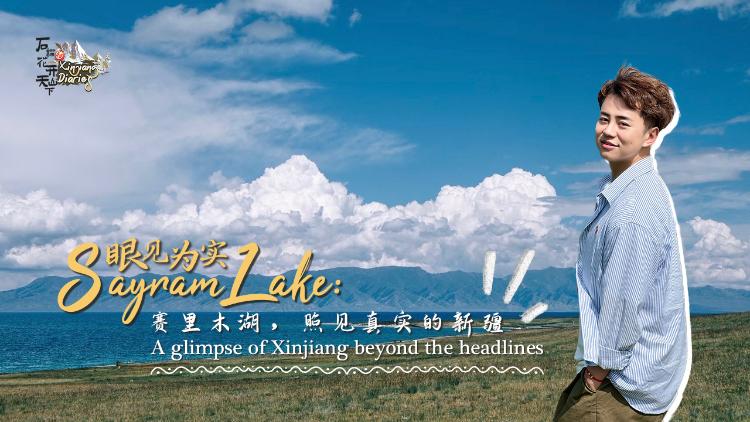
Sayram Lake: A glimpse of Xinjiang beyond the headlines
Some say Xinjiang is nothing but dust and desert, with no blue skies. But stand by the shores of Sayram Lake, watch the deep blue waters ripple in the breeze, and you’ll realize Xinjiang is far more than what you’ve been told. Here, you’ll see people deeply connected to their land, with cultures blending naturally into everyday life. No filters. No retouching. Just raw, honest beauty, captured as it truly is. Along the way, CGTN digital reporter Wang Tao spoke with travelers visiting Xinjiang for the first time. Let’s hear their impressions and see if their stories sound different from the ones you’ve heard before.
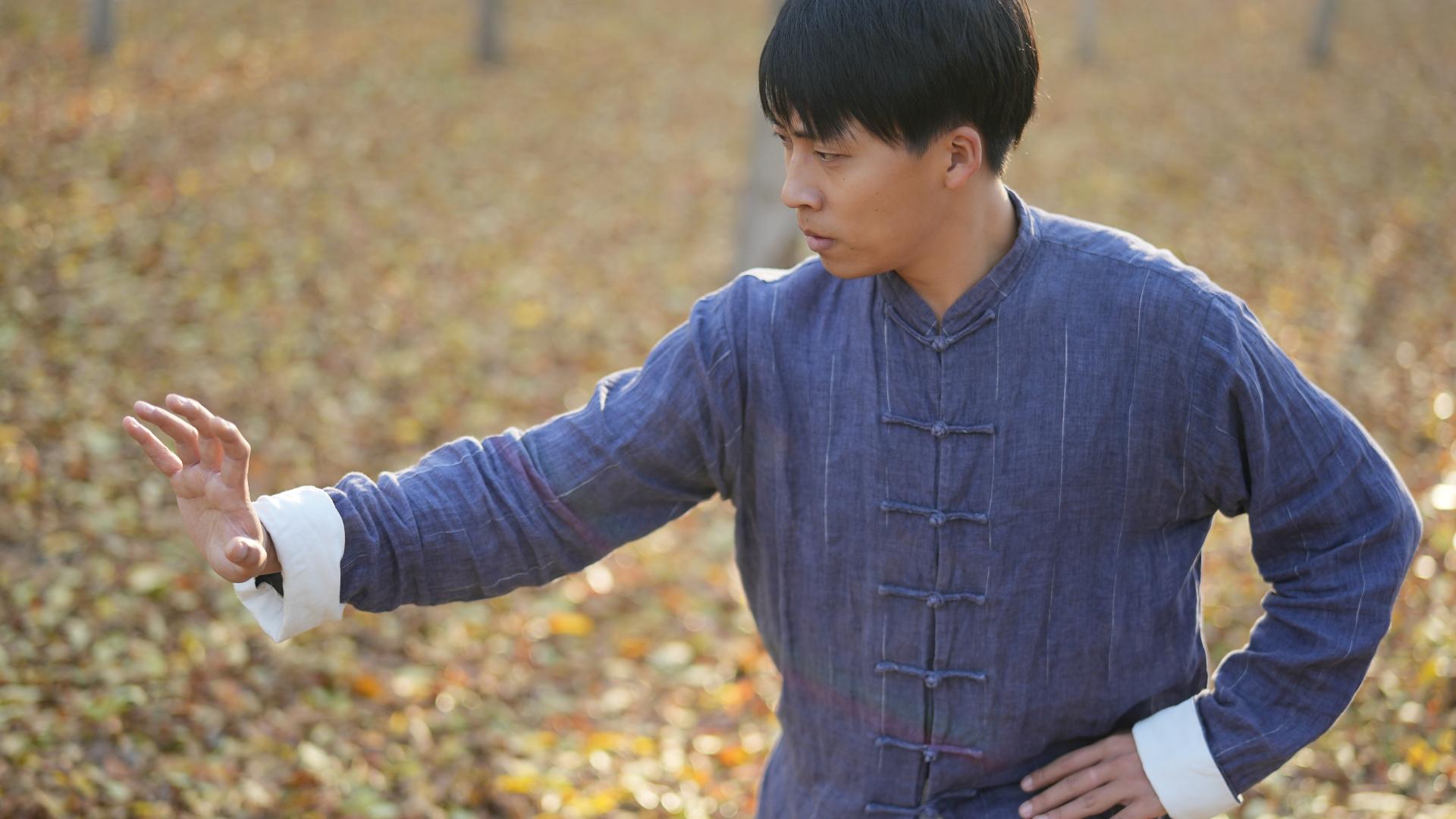
Practicing martial arts in a forest
A martial artist is seen practicing in a forest clearing. By training among trees, far from the distractions of the outside world, he can immerse himself fully in the traditional Chinese martial art of Bajiquan. Decades of daily commitment have ingrained every movement into his being and imbued every strike with a powerful force and elegant rhythm.
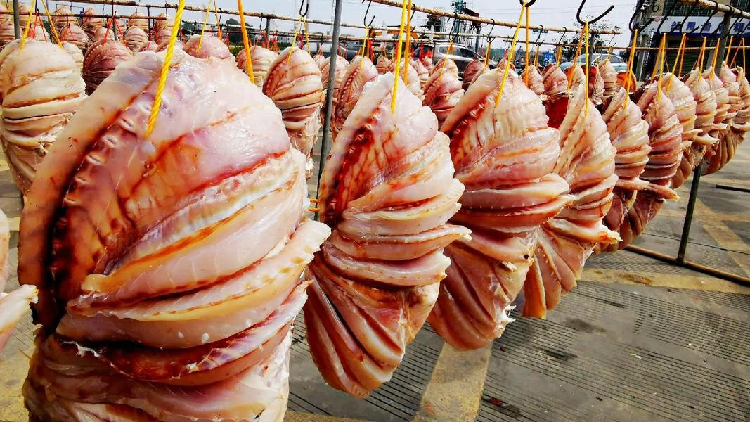
Danzhou dried snapper bask in the sun in celebration of the harvest
The technique used for drying crimson snapper is a traditional way of preserving fish in Danzhou, Hainan Province. The raw material, crimson snapper, is descaled, gutted, cleaned, and salted before being sun-dried. The final product is convenient and can be stored for a long time. The drying technique was included in Danzhou’s list of municipal-level intangible cultural heritage in May 2022, and continues to play an important role in the local marine food culture.
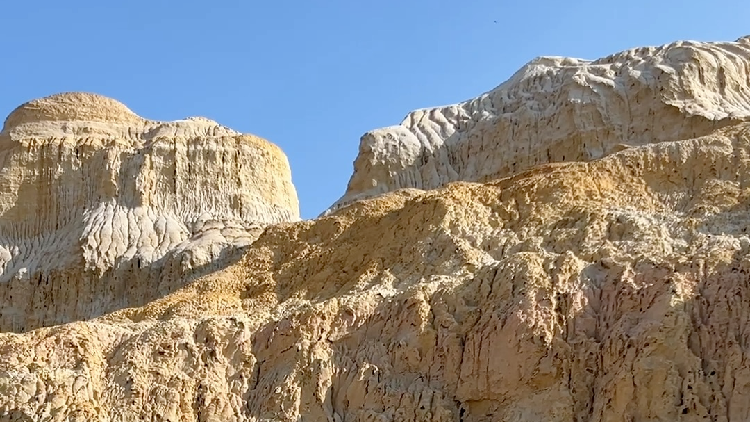
A vibrant ghost city on the sea—Yardang landform in Xinjiang
On the eastern bank of Ulungur Lake in Xinjiang stretches around five kilometer long Yardang landform, a surreal masterpiece sculptured by wind and time. Viewing from other sides of the lake, this geological wonder looks as a floating ghost city from with rise intensive sandcastles and stone forests.

Chinese wrestling meets Mongolian Bökh
Tianjin wrestling expert Zhang Shaohua has embarked on a journey north with two young disciples to the vast grasslands of Inner Mongolia. They came not only to gain technical knowledge, but for a journey into tradition and culture. Under skies washed in blue and across carpets of green, galloping herds streaked the horizon. The young wrestlers breathed in the expanse of the steppe and witnessed firsthand the appeal of Mongolian Bökh.
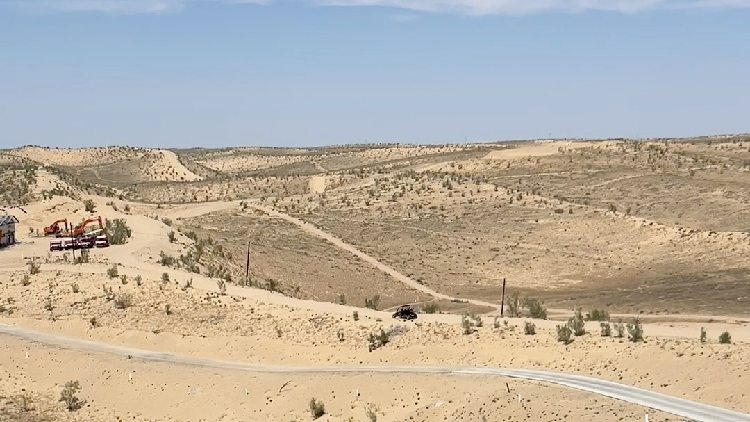
Gurbantunggut, a wet desert in Xinjiang
Located in the Junggar Basin, the Gurbantunggut Desert is the second largest desert in China, as well as the largest fixed and semi-fixed desert. Known as a wet desert because the sand dunes are covered in snow in winter, it is inhabited by a few ephemeral plants and drought-tolerant animals.
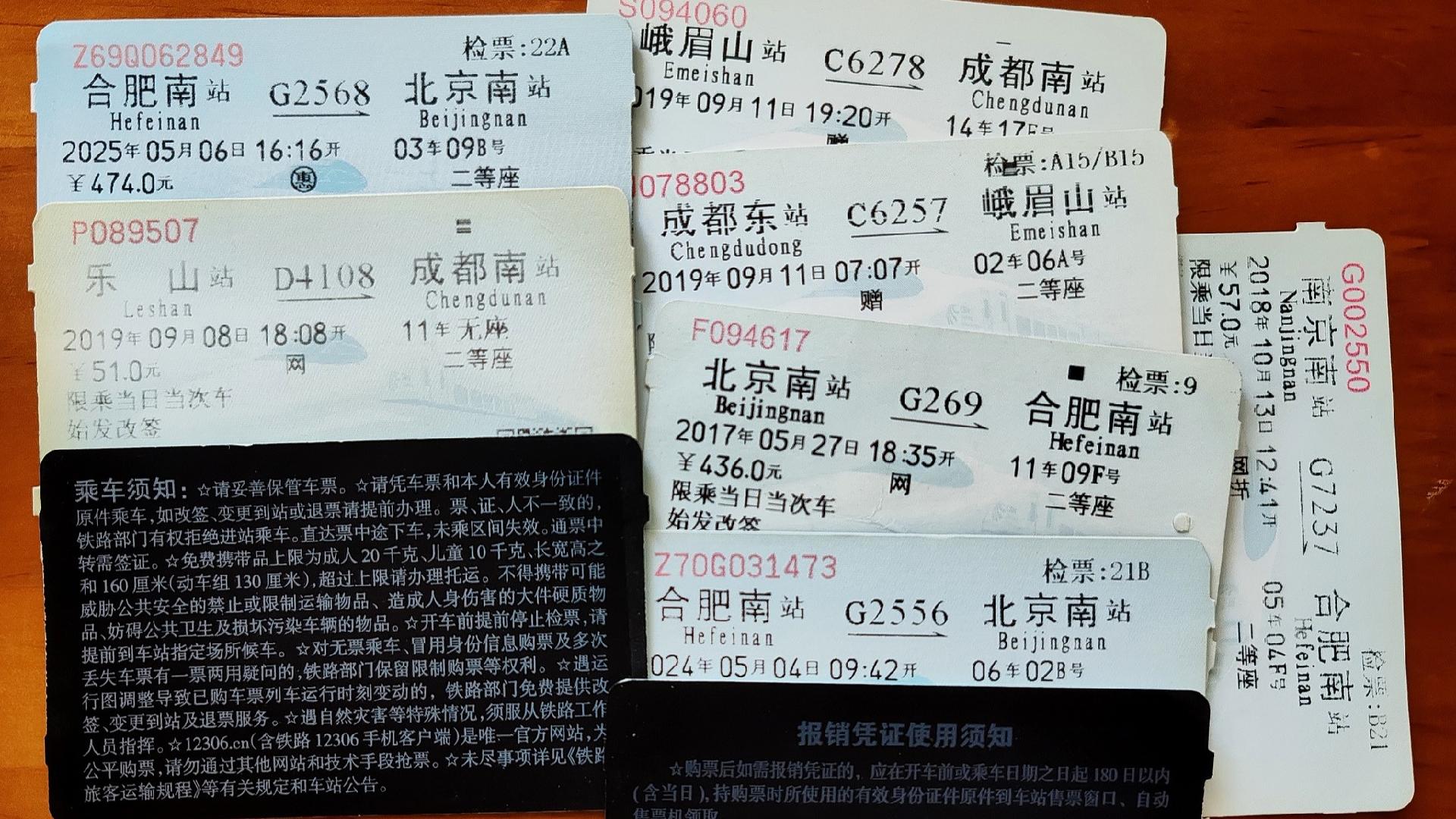
China's railways embrace e-invoices in push for digital services
<img src='https://news.cgtn.com/news/2025-09-08/China-s-railways-embrace-e-invoices-in-push-for-digital-services-1GvaU3AiBCE/img/5fbe2daa488e4c159a4dbff4fee093c3/5fbe2daa488e4c159a4dbff4fee093c3.jpeg' alt='Paper-based passenger tickets for China's railway. /VCG'
In a significant move highlighting its commitment to digital advancement, China will phase out paper-based passenger train tickets starting October. China Railway Group (CR) announced on Monday that digital invoices will become the standard for all rail travel.
Travelers will no longer receive paper reimbursement vouchers. Instead, they can request and download digital invoices for their journey, including any fees for refunds or ticket changes. This can be done within 180 days of their trip through the official 12306 online platform, ticket counters at railway stations, or self-service kiosks.
To ensure inclusivity, the railway authority has also introduced measures to assist passengers with limited or no internet access. These travelers can apply for digital invoices in person at train stations or by an authorized third party online.
<img src='https://news.cgtn.com/news/2025-09-08/China-s-railways-embrace-e-invoices-in-push-for-digital-services-1GvaU3AiBCE/img/6e553b958c6648e8b4f0b6ae6a142403/6e553b958c6648e8b4f0b6ae6a142403.jpeg' alt='A passenger uses ID card to get on a train in Guangzhou, south China's Guangdong Province, January 18, 2024. /VCG'
Passengers can retrieve their invoices via the 12306 platform, the income tax app, or email. For added convenience, travelers may request reissuance of invoices up to three times within the 180-day window in case of errors or changes to their information.
Although paper tickets are being retired, passengers who prefer a physical record may print a journey information note at station counters and self-service machines. This document serves only as a travel reminder and cannot be used as a ticket or reimbursement voucher.
China first announced its plan to gradually retire paper tickets in 2018.
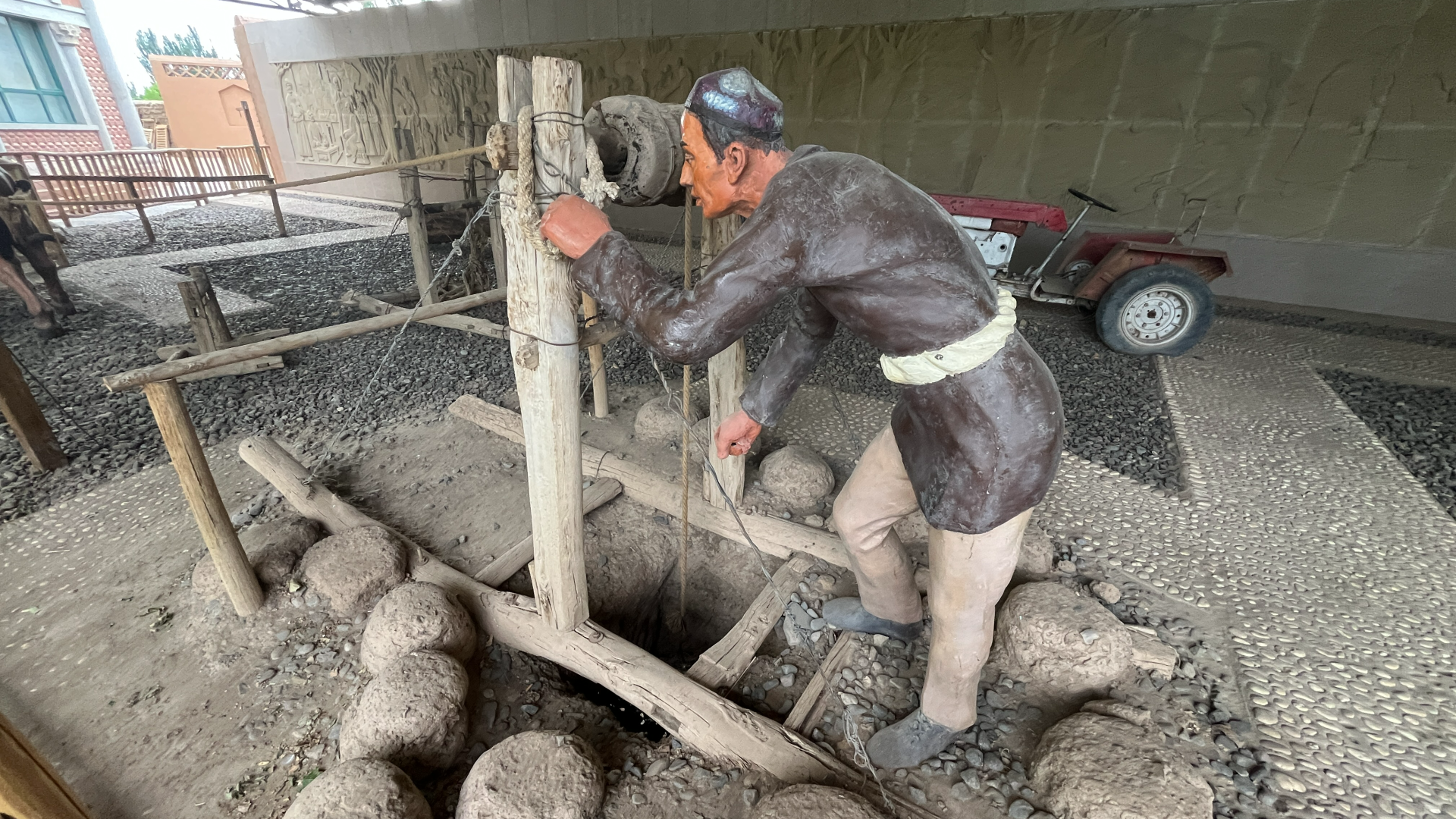
Underground 'Great Wall' ensures water supply in arid Turpan
The Great Wall stretches across northern China from Hushan in Shandong Province to Jiayuguan in Gansu Province. In northwestern China’s Xinjiang, there is an underground “Great Wall” known as a karez, a vast subterranean irrigation system that surrounds the city of Turpan.
<img src='https://news.cgtn.com/news/2025-09-07/Underground-Great-Wall-ensures-water-supply-in-arid-Turpan-1G0PP4R5d3G/img/0bb3ca5ca39f43f09c3f3f1cee23eafb/0bb3ca5ca39f43f09c3f3f1cee23eafb.jpeg' alt='Clay models depict how people used to draw water from a karez well at the Turpan Karez Paradise museum in Xinjiang. /CGTN'
Due to its extremely hot and dry climate, Turpan experiences an annual evaporation rate of 3,000 millimeters and an annual precipitation of just 16 millimeters. Collecting rainwater, preventing evaporation, and transporting it to fields and families has always been a key issue in the region. Around 2,000 years ago, an underground irrigation system known as a “karez” was created. Ancient engineers exploited the sloping terrain between the Tianshan Mountains and the Turpan Basin to collect melted snow and transport it via underground channels to prevent evaporation and absorption in the sand.
<img src='https://news.cgtn.com/news/2025-09-07/Underground-Great-Wall-ensures-water-supply-in-arid-Turpan-1G0PP4R5d3G/img/64d06e8ce6ec44eeacbf55ce6fe627e3/64d06e8ce6ec44eeacbf55ce6fe627e3.jpeg' alt='An underground karez channel is lit up at the Turpan Karez Paradise museum in Xinjiang. / CGTN'
This network of channels extends for over 5,000 kilometers from Turpan, a distance that equals the journey between Beijing and Urumqi. Currently, 238 of these channels remain in use.
<img src='https://news.cgtn.com/news/2025-09-07/Underground-Great-Wall-ensures-water-supply-in-arid-Turpan-1G0PP4R5d3G/img/e0f77662d4db4f58870690628295a9ce/e0f77662d4db4f58870690628295a9ce.jpeg' alt='Clay models at the Turpan Karez Paradise museum in Xinjiang depict a cattle-driven winch system used in karez wells. / CGTN'
The Karez System Cultural Landscape was inscribed as a UNESCO World Heritage Site in 2014.
<img src='https://news.cgtn.com/news/2025-09-07/Underground-Great-Wall-ensures-water-supply-in-arid-Turpan-1G0PP4R5d3G/img/ccf223717b454efdb605a88f2e8f307a/ccf223717b454efdb605a88f2e8f307a.jpeg' alt='The Karez wells in Turpan are typically dug dozens of meters deep. / CGTN'
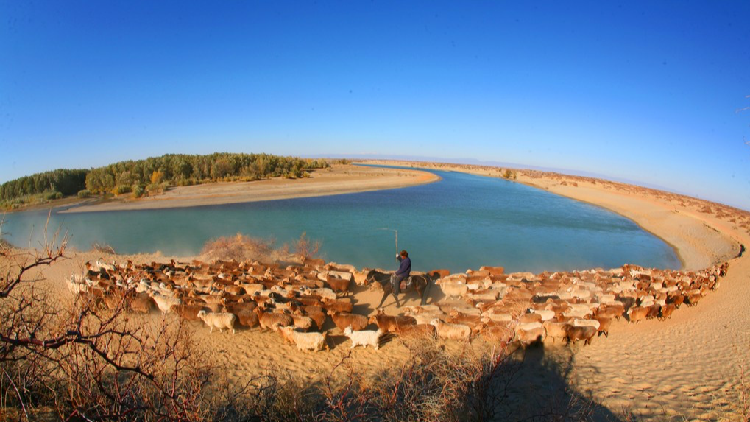
Herdsmen drive livestock to winter pastures in Xinjiang

Three generations of Wu family
Three generations of the Wu family from Mengcun are masters of the local form of Bajiquan. As part of the post-90s generation, Wu Hao is still learning, taught by his grandfather and father, Wu Lianzhi and Wu Dawei. Most of the time they live like an ordinary family. But when they’re on the training ground, they maintain a strict master-apprentice relationship.

Come to Turpan and taste the sweetest grape!
You won’t find a place hotter than Turpan. Here more than 100 days a year are higher than 35℃ (95℉). Thanks to the high temperature, long sunshine duration and big temperature difference between day and night, Turpan contributes 1/5 of grape output in China and its grapes are of the sweetest nationwide!

China's services trade sees notable growth in first 7 months
China’s services trade showed steady growth in the first seven months of 2025, with a significant rise in travel-related service trade, according to official data released on Friday.
The country’s services trade volume reached 4.58 trillion yuan (about $641.3 billion) during this period, an increase of 8.2 percent year over year, as reported by the Ministry of Commerce.
<img src='https://news.cgtn.com/news/2025-09-05/China-s-services-trade-sees-notable-growth-in-first-7-months-1Gq4yBTse1q/img/c6a357acd6374d5ca4c0d5c85580b7eb/c6a357acd6374d5ca4c0d5c85580b7eb.jpeg' alt='Cultural and creative products are on display at a media briefing for The China International Fair for Trade in Services (CIFTIS), Beijing, China, August 11, 2025. /VCG'
Services exports reached nearly 2 trillion yuan (about $280 billion), an increase of 15.3 percent from a year earlier. In comparison, services imports rose 3.3 percent to 2.58 trillion yuan (about $361.3 billion), resulting in a deficit of 581.56 billion yuan (about $81.4 billion).
<img src='https://news.cgtn.com/news/2025-09-05/China-s-services-trade-sees-notable-growth-in-first-7-months-1Gq4yBTse1q/img/d5fc3c08836c43fb909c94f393db51a6/d5fc3c08836c43fb909c94f393db51a6.jpeg' alt='International tourists visit the Temple of Heaven, Beijing, China, July 17, 2025. /VCG'
Trade in travel-related services continued strong growth, rising 10.4 percent year over year to 1.26 trillion yuan (about $176.4 billion). Notably, exports increased 62.9 percent.
Meanwhile, trade in knowledge-intensive services grew by 6.8 percent year over year to over 1.77 trillion yuan (about $247.8 billion).
(Cover: The CIFTIS billboard at Shougang Park in Beijing, China. /VCG)
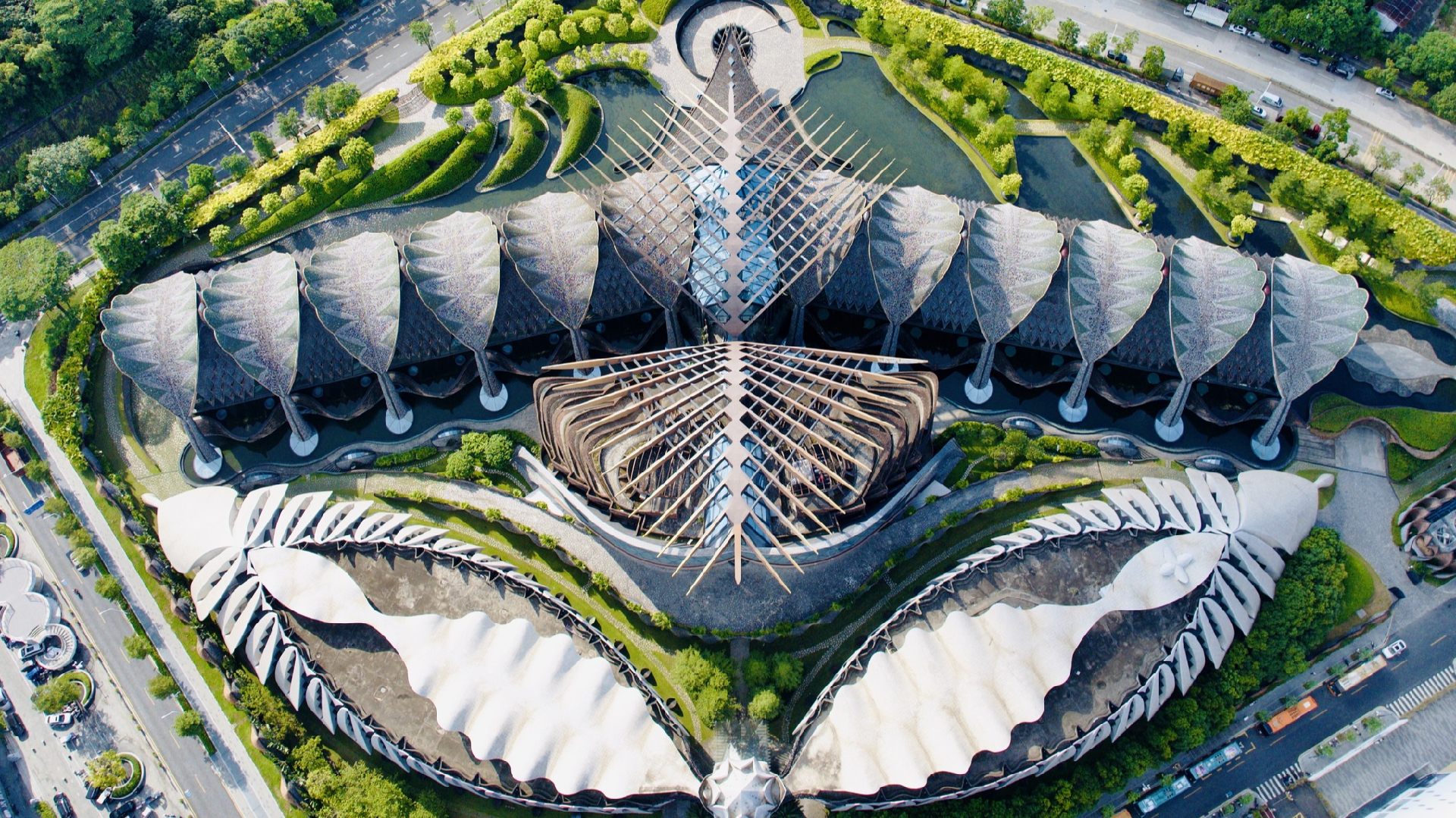
Butterfly or clam? Shenzhen fashion HQ redefines green design
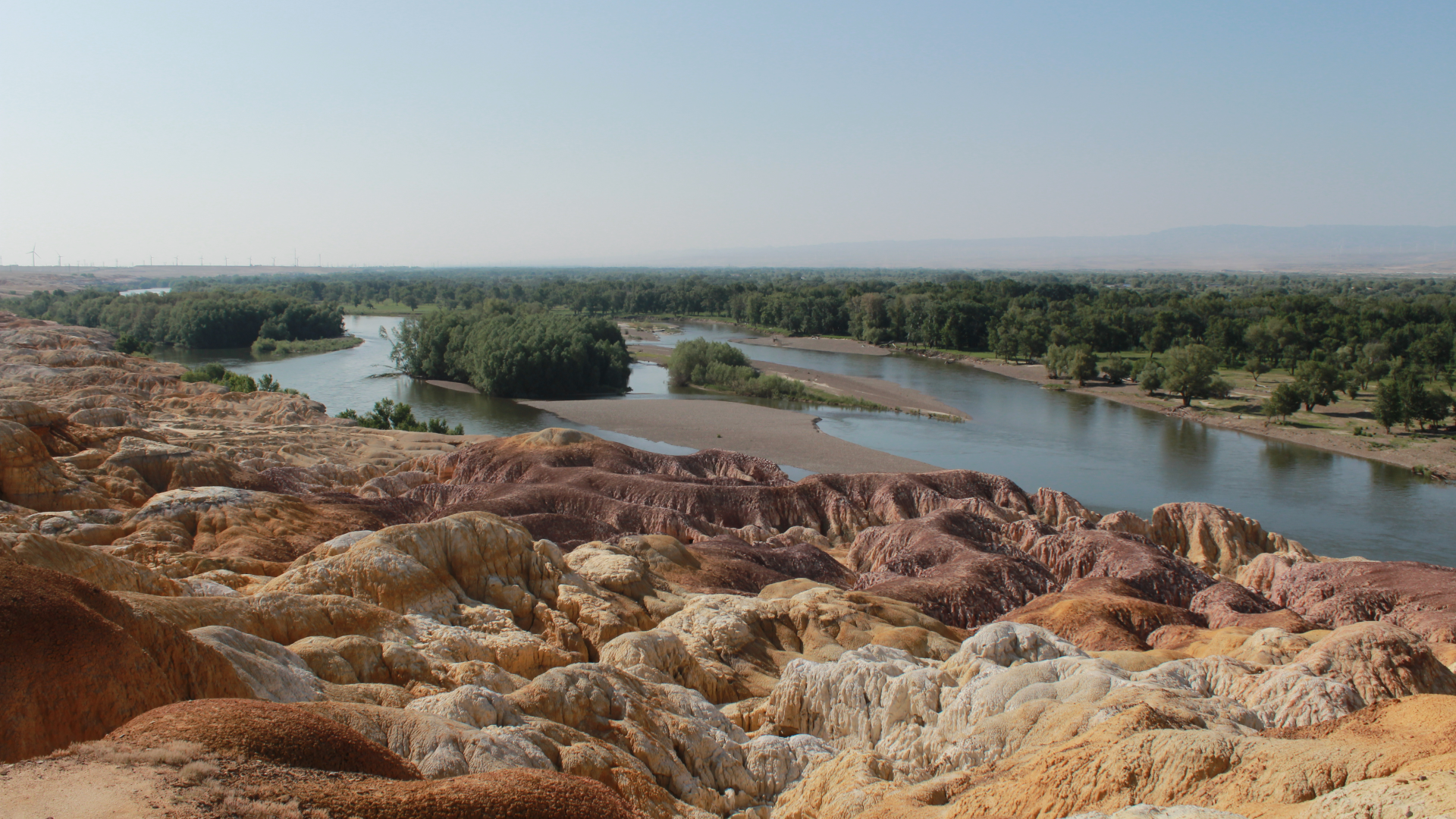
Five-colored beach, a Yardang landform born from sunlight and thunder
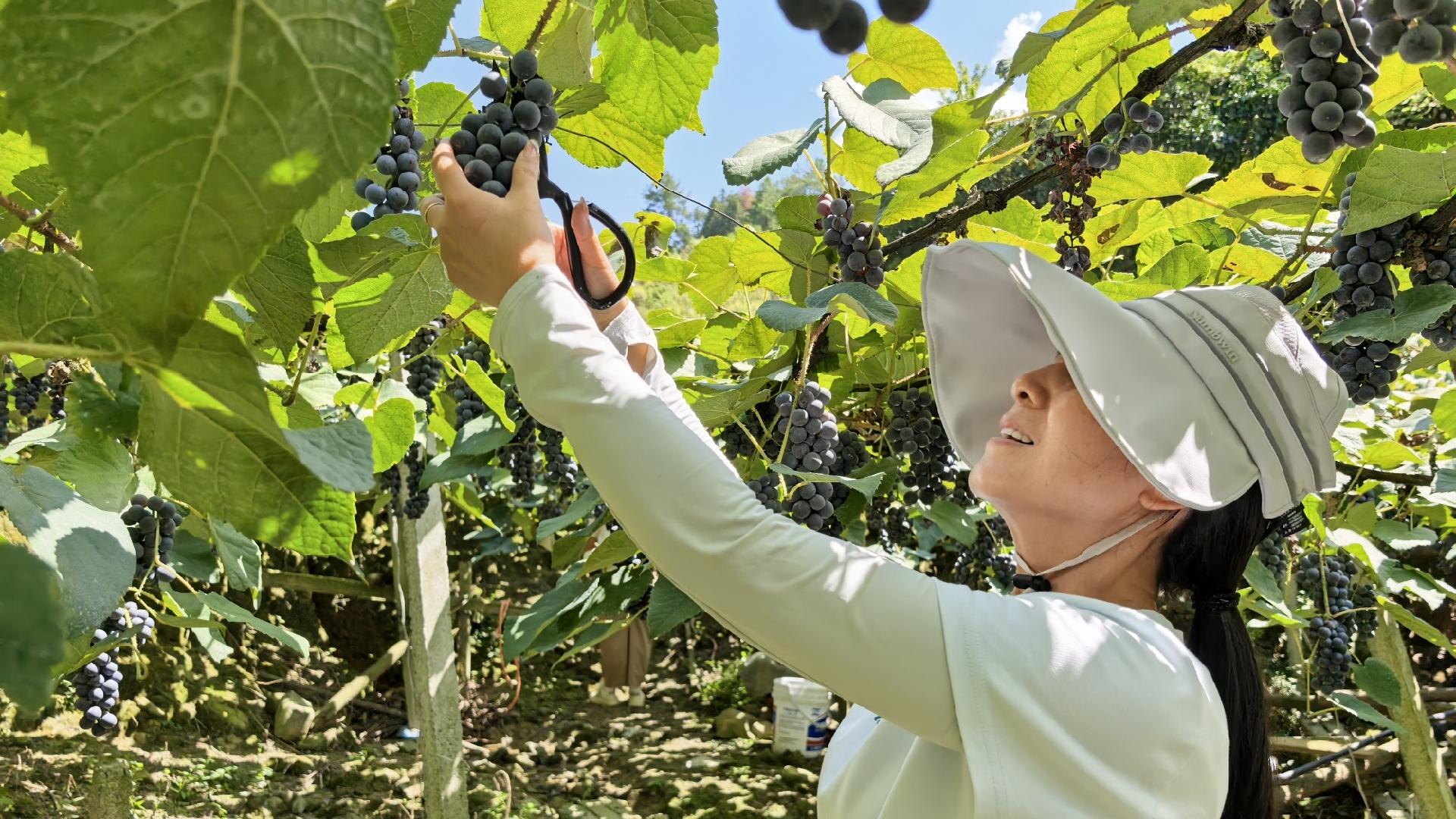
Sweet sensation: Alpine grapes hit markets across Guizhou
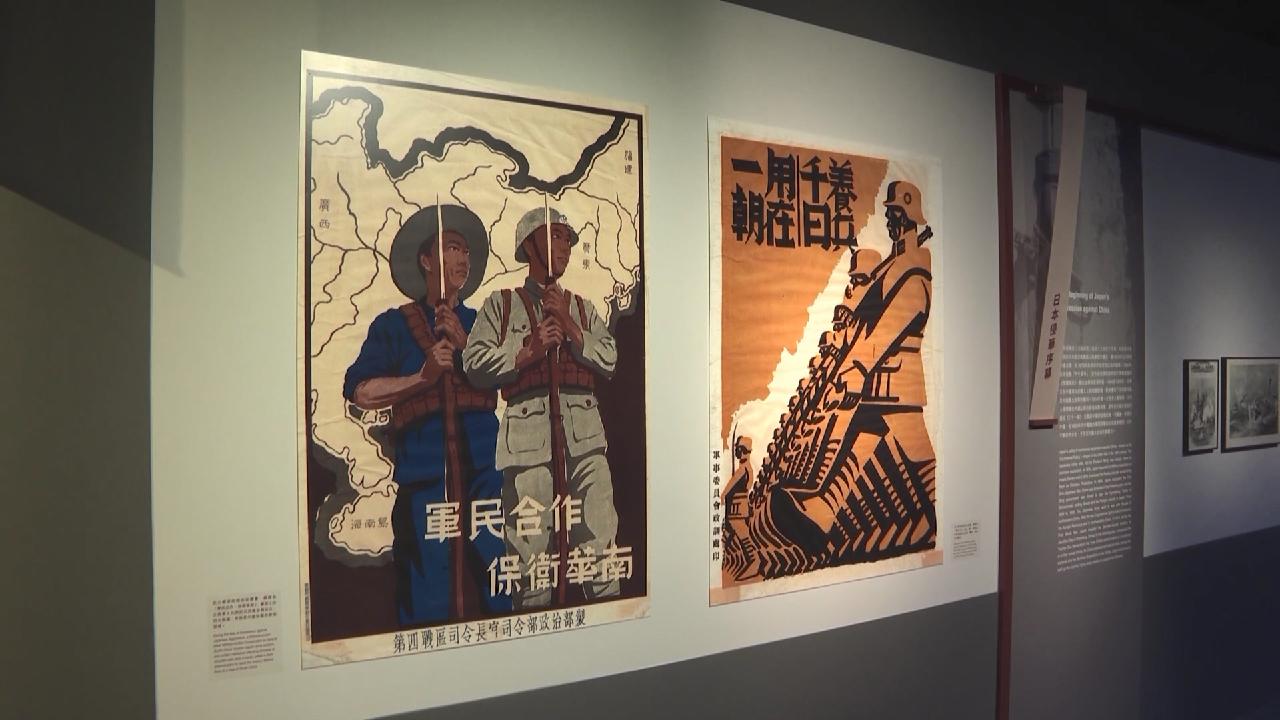
Hong Kong showcases China's nationwide efforts in War of Resistance
A major exhibition in Hong Kong is honoring China’s united efforts in the War of Resistance against Japanese Aggression which started in 1931. Co-organized by the National Museum of China and the Hong Kong Museum of History, it features the rare relics and interactive displays, highlighting contributions from Hong Kong and the rest of the country.
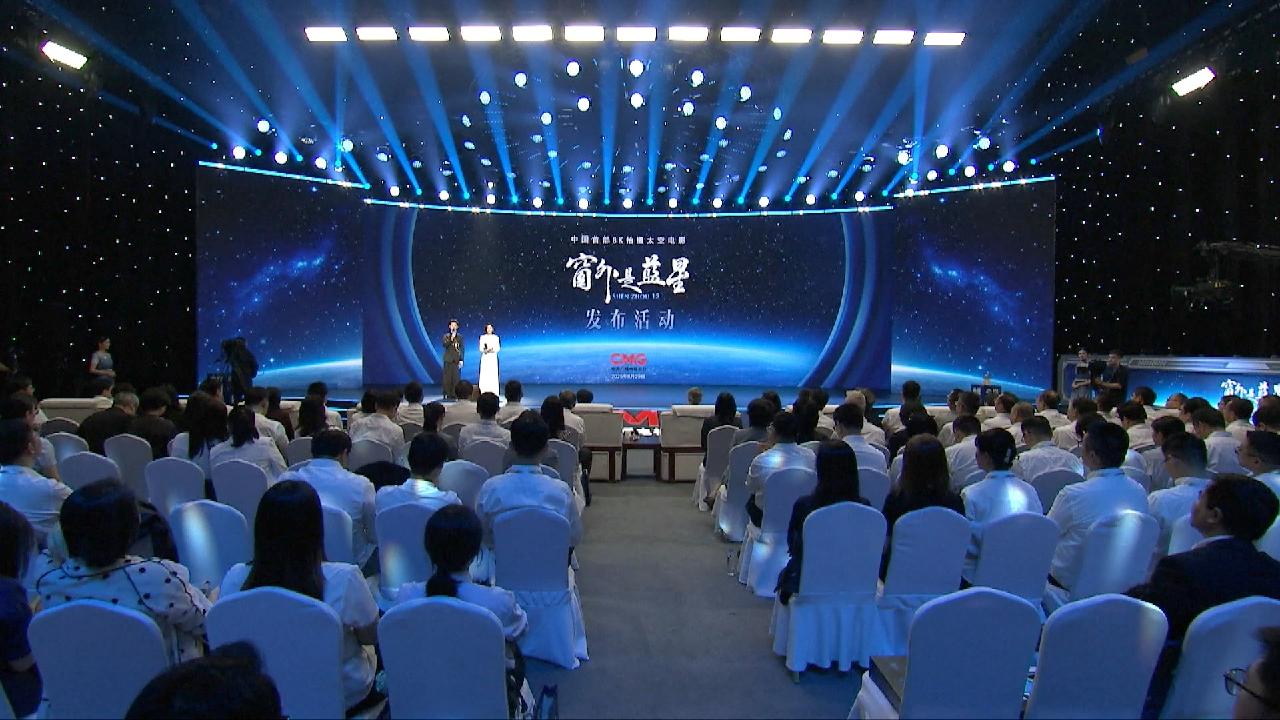
China premieres first 8K movie shot in space
China’s first 8K movie shot in space, titled “Shenzhou 13,” was officially launched in Beijing on Friday. Produced by China Media Group (CMG), the film is set to premiere nationwide on September 5.
The movie is based on the six-month orbital mission of astronauts Zhai Zhigang, Wang Yaping and Ye Guangfu aboard China’s space station. Shot entirely with 8K ultra-high-definition cameras, it offers unprecedented views of space as well as intimate glimpses of daily life aboard the station.
The Shenzhou-13 mission, which launched on October 16, 2021, saw the crew spend 183 days in orbit – a record for the longest continuous spaceflight by Chinese astronauts.
“Shenzhou 13” not only showcases China’s technological achievements in space exploration but also provides audiences with a rare cinematic experience from the final frontier.
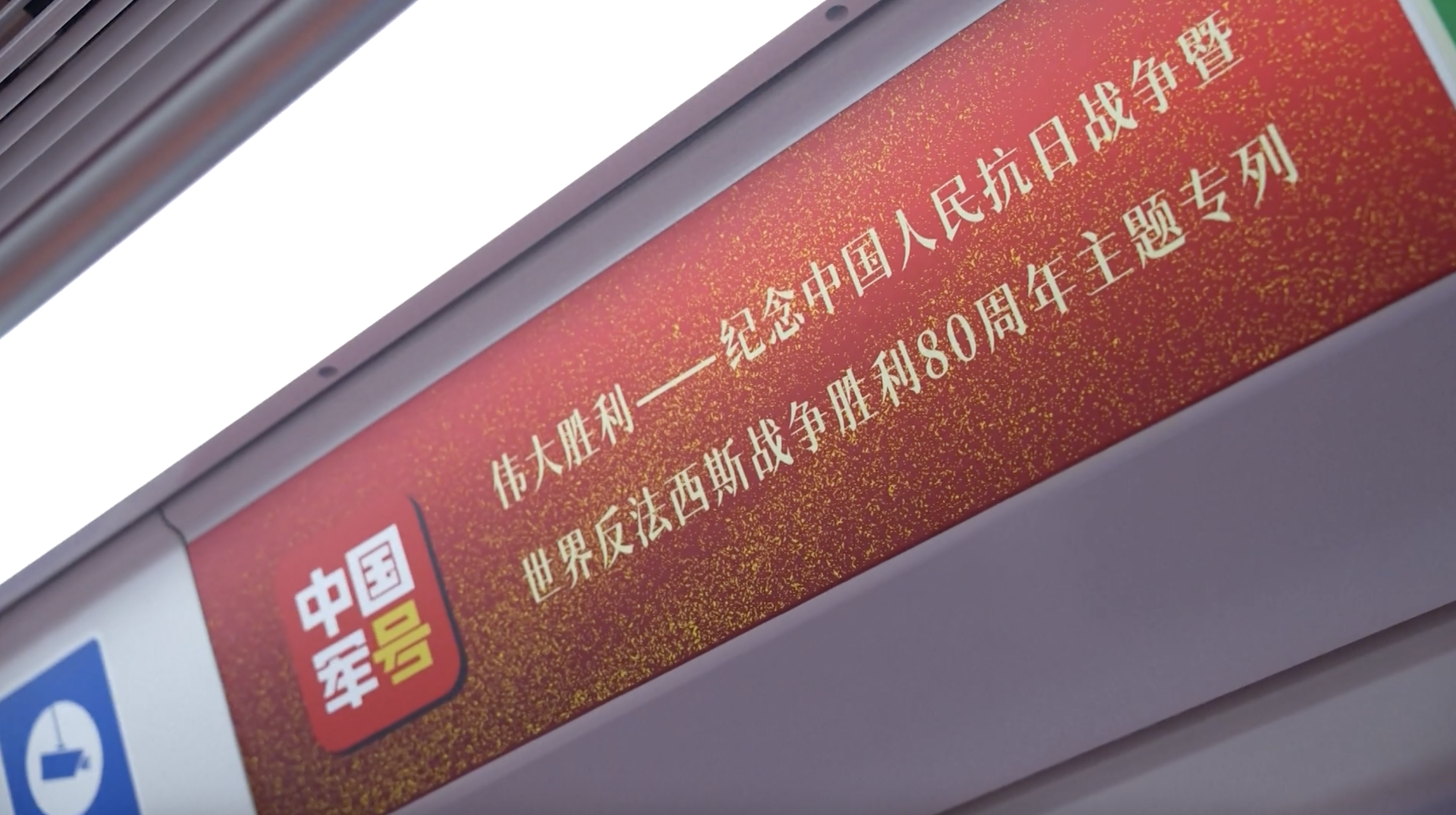
Beijing launches commemorative subway train marking WWII victory
A themed subway train commemorating the 80th anniversary of the victory in the Chinese People’s War of Resistance against Japanese Aggression and the World Anti-Fascist War was put into operation in Beijing on Sunday. The train, operating on the city’s Line 19, will run for one month, and features seven themed carriages. Through graphic displays, themed decorations and interactive installations, the carriages vividly recreate the heroic deeds of the Chinese people during the war and their resolve to carry forward the nation’s revolutionary legacy.
Tiananmen Square set for 80th anniversary commemoration
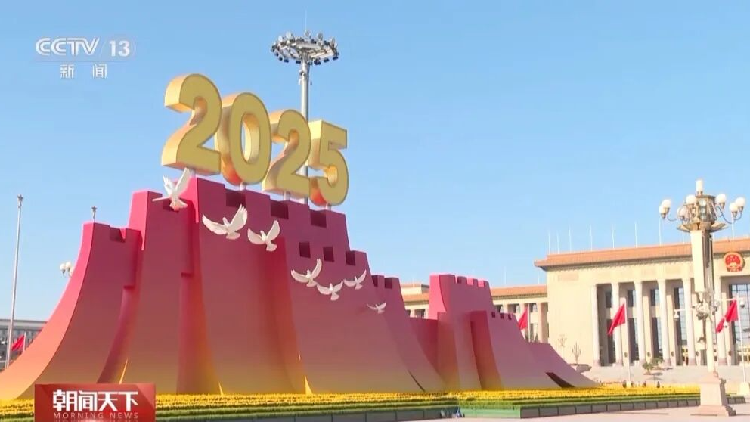
The core area of Tiananmen Square is now largely ready for the commemoration marking the 80th anniversary of the victory of the Chinese People’s War of Resistance Against Japanese Aggression and the World Anti-Fascist War, scheduled for September 3.
<img src='https://news.cgtn.com/news/2025-09-02/Tiananmen-Square-set-for-80th-anniversary-commemoration-1Gldfs0Smsg/img/61dd95d5ba76461c9c06dad7715d60da/61dd95d5ba76461c9c06dad7715d60da.jpeg' alt=''
The square features red, gold and green decorations. Green at the base represents the land; The golden sun above it symbolizes the dawn of progress for the Chinese nation.
The design scheme was created by a team from the Central Academy of Fine Arts, selected and refined from more than 100 proposals through extensive discussions.
<img src='https://news.cgtn.com/news/2025-09-02/Tiananmen-Square-set-for-80th-anniversary-commemoration-1Gldfs0Smsg/img/3406e6a4ddc7459ab1da6136db84006b/3406e6a4ddc7459ab1da6136db84006b.jpeg' alt=''
Tian Zhongli, head of the planning and design department of the event’s service and command office, said, “We placed the year pedestals on both sides of the Monument to the People’s Heroes, lifting up ‘1945’ and ‘2025,’ which clearly conveys the theme of the commemoration.”
The pedestals reflect the Great Wall as the central design language, with seven dove sculptures on each side to denote the 14-year struggle of the Chinese people in the war.
“The 14 doves are a highlight of the design, representing the shared pursuit and safeguarding of peace by hundreds of millions of Chinese people and peace-loving people around the world,” Tian said.
<img src='https://news.cgtn.com/news/2025-09-02/Tiananmen-Square-set-for-80th-anniversary-commemoration-1Gldfs0Smsg/img/ca4b52a8a7aa496e9becbd1db2fad9ca/ca4b52a8a7aa496e9becbd1db2fad9ca.jpeg' alt=''
Along Chang’an Avenue, 10 large themed flowerbeds have been arranged, drawing crowds of citizens and tourists to take photos.

Migratory birds stop over at a Xinjiang reservoir
In China’s Xinjiang Uygur Autonomous Region, the Aweitan Reservoir in Altay has become a lively stopover for migratory birds on their journey south. Egrets, wild ducks, geese and other species can be seen foraging and playing in the water, creating a vibrant autumn scene. Situated along the lower reaches of the Kelan River, the reservoir has grown into an important habitat that highlights the region’s rich biodiversity and its role in protecting migratory birds.

Bajiquan, a popular martial art
In Cangzhou, Bajiquan is more than just a martial art; it’s a symbol of the local cultural identity. Every year, thousands of enthusiasts from around the world visit the city in north China’s Hebei province to explore the roots of martial arts and promote international exchange. For Cangzhou residents, practicing Bajiquan is part of their daily routine — and it’s even included in physical education classes at the local schools.

Hong Kong holds drone show to mark anniversary of War of Resistance
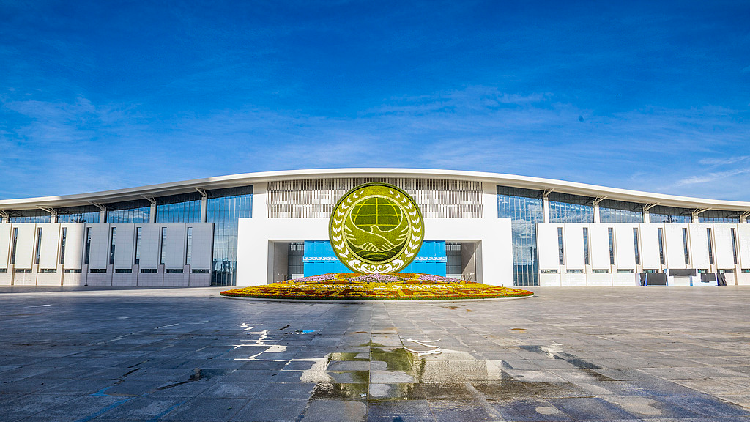
Flowers greet guests at SCO Summit in Tianjin
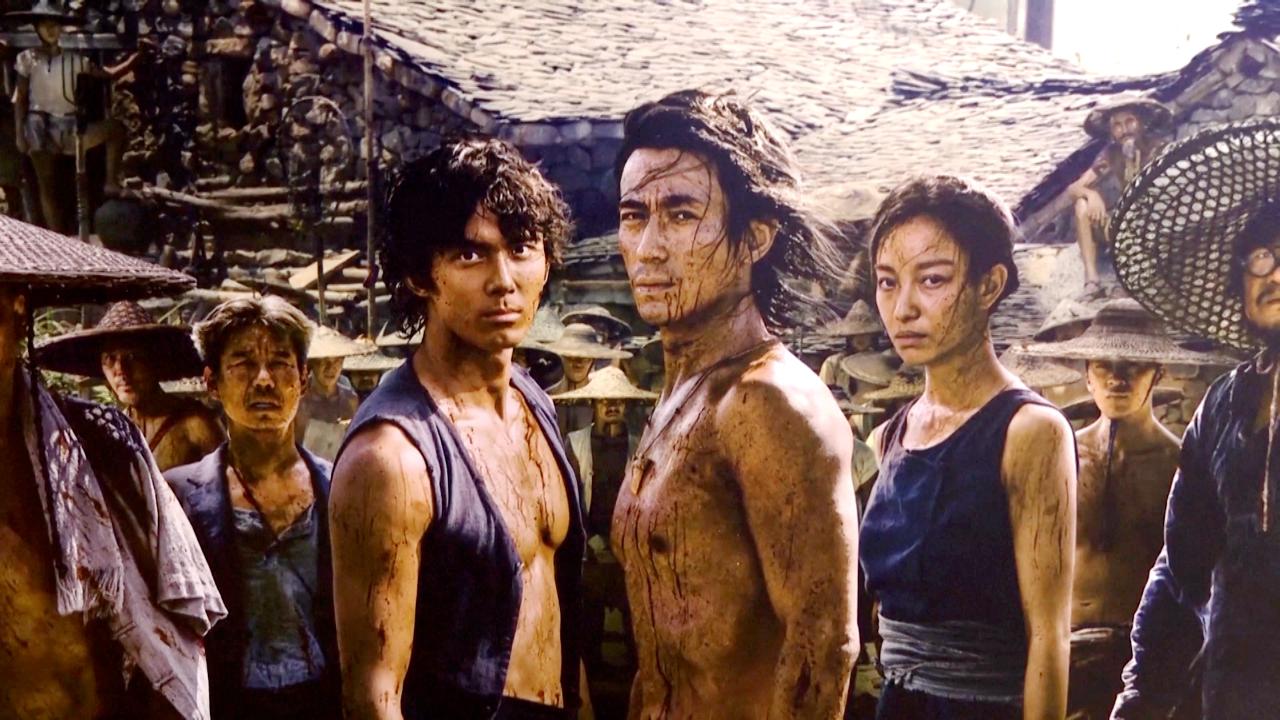
WWII film 'Dongji Rescue' moves Hong Kong audience
Chinese World War II film “Dongji Rescue” held its premiere in the Hong Kong Special Administrative Region on August 28, attracting a large audience of local viewers and industry professionals, with an overwhelmingly positive response.
The film recounted the story of how Chinese fishermen risked their lives to rescue more than 300 British prisoners of war (POWs) from the Japanese ship Lisbon Maru in 1942. Many audience members were deeply moved by the film’s intense rescue scenes and the sacrificial spirit of the fishermen portrayed.

Light show illuminates Tianjin ahead of SCO Summit 2025
A spectacular light show is being held along the Haihe River in the port city of Tianjin in north China on Thursday, as part of the buildup of the upcoming 2025 Shanghai Cooperation Organization (SCO) Summit.
Scheduled for August 31 and September 1, the summit will be the largest gathering in the SCO’s history, with more than 20 foreign leaders and 10 heads of international organizations expected to attend.

The Broadsword March: A battle song forged in resistance
In our series “Art Amid the Flames,” we explore how Chinese artists, scholars, and institutions kept culture and creativity alive during the War of Resistance. During the War of Resistance against Japanese Aggression, when rifles were scarce and defeat seemed certain, a group of Chinese soldiers reached for an ancient weapon — the broadsword — and forged a legacy far greater than the blade itself. This is the story behind “The Broadsword March,” a wartime anthem that has inspired generations.

Qixi Festival light show wows night sky in east China

Mahua, a must-have snack in Tianjin
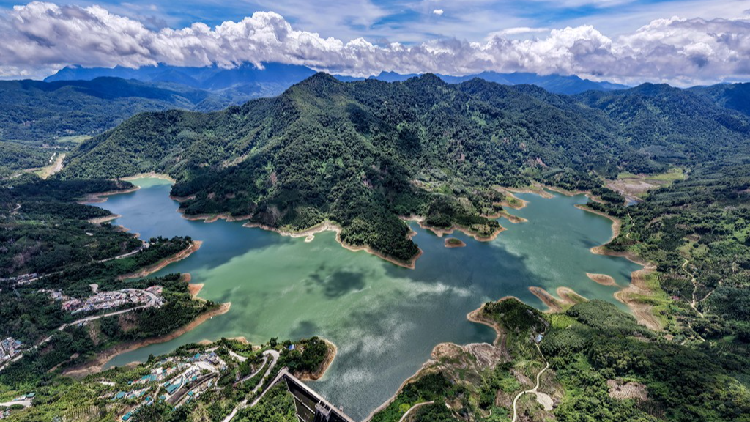
Hainan's Wuzhishan Reservoir shimmers in summer sun

Cyberpunk Labubu takes Chongqing by storm

World Lake Day: Reflecting Earth's fragility and majesty
August 27 marks the first-ever World Lake Day, a designation made by the United Nations in December 2024.
Lakes – whether natural or artificial – store over 90 percent of the world’s surface freshwater and play an irreplaceable role in sustaining biodiversity, regulating climate, controlling floods and capturing carbon.
Yet they are increasingly under threat from overuse, pollution and the effects of climate change. As mirrors of nature and sources of life for both aquatic and land ecosystems, lakes are vital for human water security, maintaining ecological balance and providing spiritual meaning and artistic inspiration that nurture our cultural heritage.
Join us in appreciating the breathtaking beauty of iconic lakes in China and beyond.
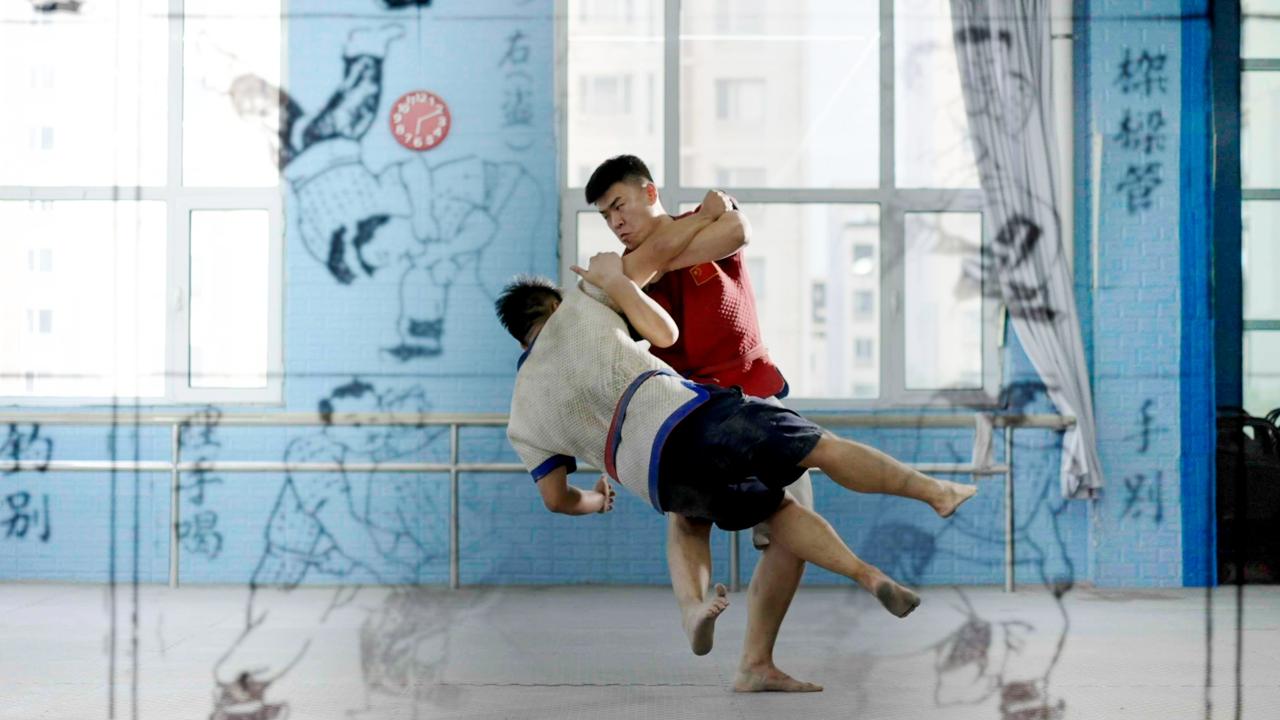
The dedication of a Chinese-style wrestling inheritor
A family heirloom dubbed the “martial arts manual” still ignites a spark in the nearly 60-year-old man’s eyes. This precious wrestling manual, passed down from Zhang Shaohua’s father, documents the history, techniques, and spirit of Chinese wrestling.
Transitioning from wrestler to coach has strengthened Zhang’s conviction and made him all the more determined to keep the tradition alive. Now, he not only teaches students free of charge but also runs a free training ground and performs for audiences. His passion for Chinese wrestling has deeply inspired his disciples.
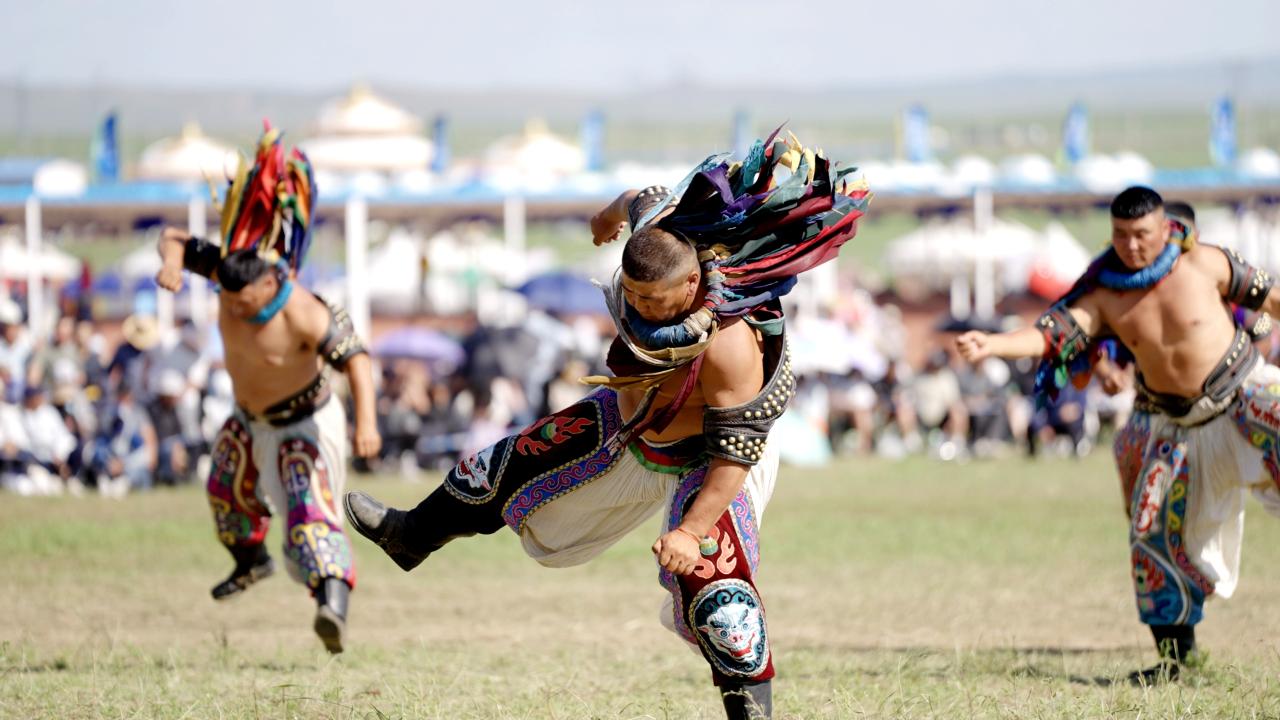
Mongolian Bökh: An unmissable highlight of the Naadam Fair
The Mongolian Bökh competition kicked off amidst great anticipation at the 35th Inner Mongolia Grassland Naadam Festival, with more than 500 Bökh wrestlers from Inner Mongolia engaged in fierce competition.
On the vast grasslands, Bökh is known as one of the “Three Manly Skills” alongside horse racing and archery. In ancient times, wrestling competitions were an important way to select brave warriors and talented generals. Today, this sport remains an indispensable and celebrated event at the Naadam Fair.
Bayinmend, from the West Ujimqin Banner in Xilingol League, is one of these Bökh wrestlers. He is the first Bökh wrestler in his family. With seven years of hard training and natural talent, the 27-year-old Mongolian youth has already demonstrated his skill on the competition field.
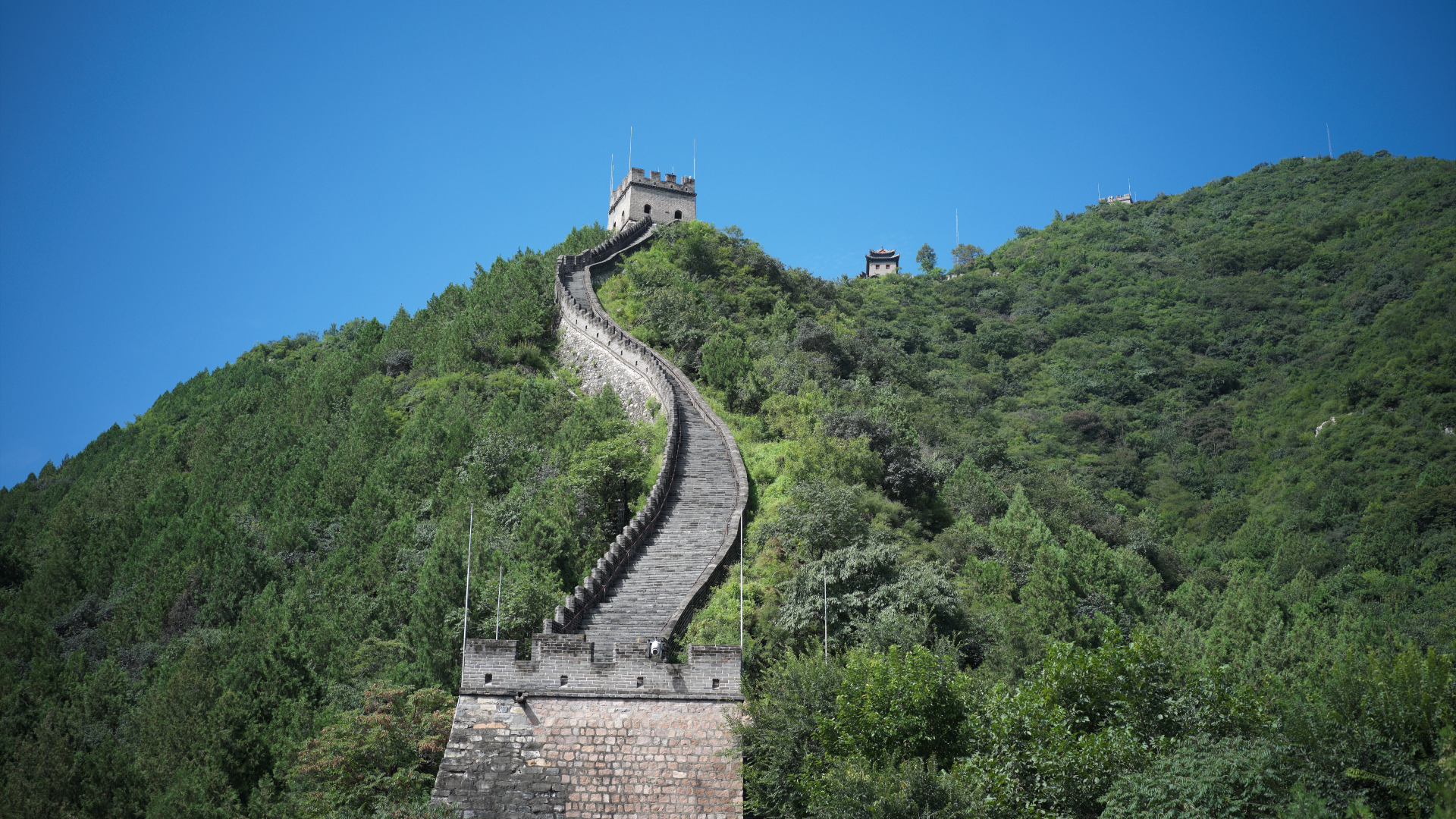
Summer at Juyongguan: The Great Wall winds through lush green hills
By continuing to browse our site you agree to our use of cookies, revised Privacy Policy and Terms of Use. You can change your cookie settings through your browser.
I agree

Thrilling rafting trips boost summer tourism in central China
For those seeking an exhilarating adventure and a refreshing escape during the summer, rafting is an ideal choice. A 6.5-kilometer-long canyon rafting route in Yichang City, Hubei Province has not only brought joy to visitors, but also contributed to the vibrancy of local tourism.
Since launching the rafting experience in April, the Chaotianhou scenic spot in Yichang has welcomed over 350,000 visitors, a year-on-year increase of 30 percent.
Beyond open-air rafting, the experience also includes cave rafting. Known for consistently cool temperatures and immersive environments, cave rafting enriches tourists’ experience, enhancing the overall enjoyment of their visit.
A night rafting program has also been introduced. After sunset, the river channel is illuminated with brilliant lights, allowing tourists to explore a fresh way of enjoying the water under the stars.
“It’s like getting a two-day, one-night experience. You can try all three types of rafting – you can literally raft from morning till night,” said Chen Hongqing, a tourist.
As an engaging addition to the region’s summer tourism offerings, the new rafting experience has extended tourists’ stays and boosted their spending in the area.

Experience rich folk customs in Tianjin
Ever blown your own sugar sculpture? Or kept rhythm with wooden clappers while performing crosstalk, a traditional form of Chinese stand-up comedy? Maybe these precious clay figurines will leave you speechless! Whatever the case may be, Tianjin has plenty of traditional experiences that will take your breath away.

People enjoy colorful nightlife on the banks of Haihe River in Tianjin
At night, dancers, karaoke singers, fishermen, and locals and tourists alike head to the banks of the Haihe River in Tianjin to bask in the summer breeze and enjoy the city’s dazzling skyline.

Eat your way through Tianjin
By continuing to browse our site you agree to our use of cookies, revised Privacy Policy and Terms of Use. You can change your cookie settings through your browser.
I agree

These grandparents are fitter than you
Forget the gym. If you want to see real strength, check out Tianjin’s Wangchuanchang Park. From swinging barbells to juggling kettlebells, to some of the most hardcore calisthenics out there, these senior citizens prove that age is just a number.
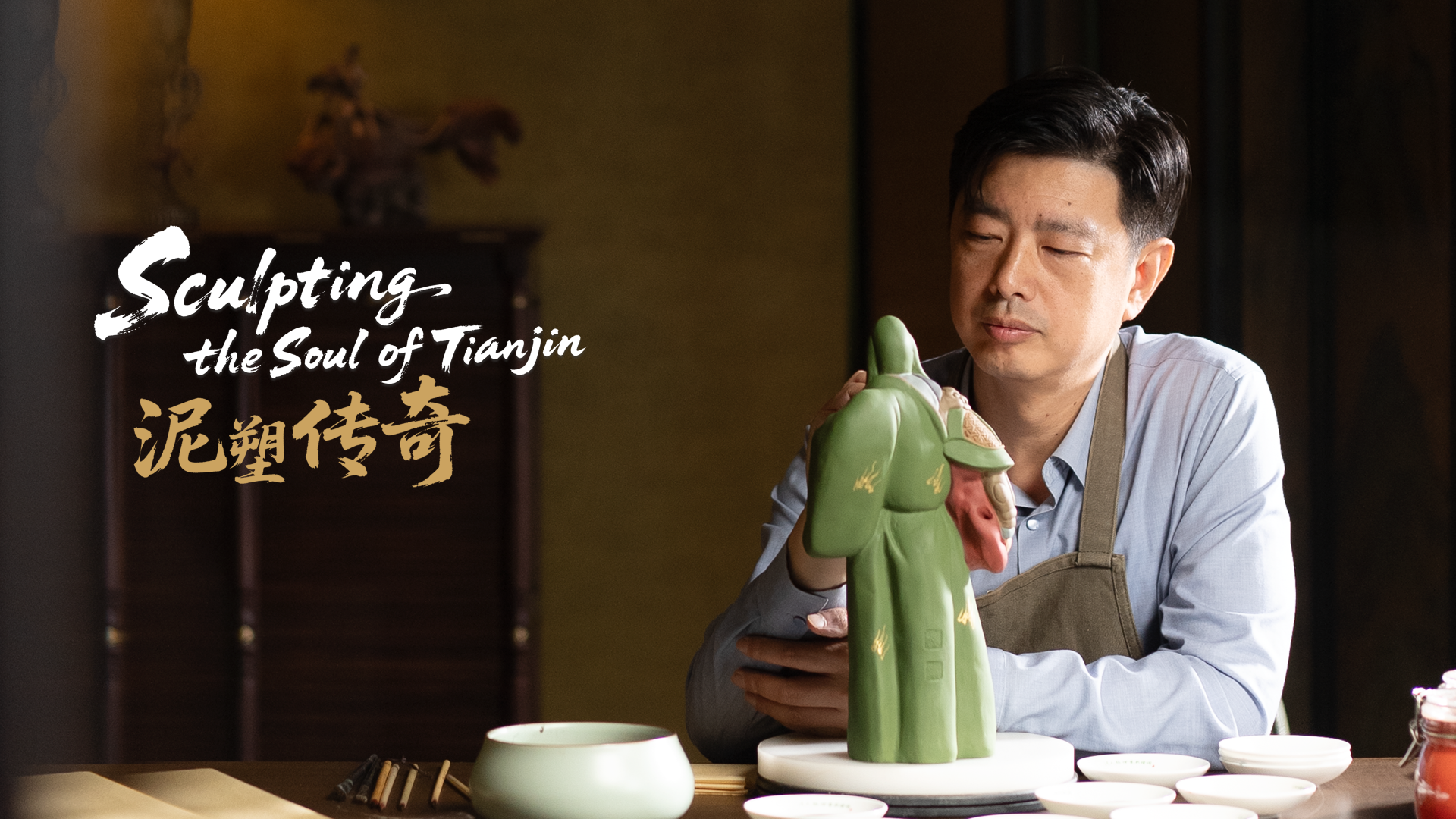
Sculpting the soul of Tianjin
The documentary “Sculpting the Soul of Tianjin” follows Zhang Yu, the sixth-generation inheritor of the renowned Clay Figure Zhang family. It traces his lineage back to his ancestor Zhang Mingshan, who arrived in Tianjin from Shaoxing in the 19th century and transformed the local clay into lifelike figurines.
Tianjin, with its historic concessions, bustling old towns, and modern skyline, has long been a city where East meets West, and tradition meets innovation. Through the lens of the Clay Figure Zhang family, we see a microcosm of this dynamic. The release of this episode comes at a moment of global attention for the city, which coincides with the 2025 Shanghai Cooperation Organization (SCO) summit in Tianjin. Just as the summit highlights the city as a hub of diplomacy, commerce, and international exchange, “Sculpting the Soul of Tianjin” showcases another facet of the city – its deep-rooted cultural traditions and enduring artistic heritage.
Through intimate reflections, Zhang Yu invites viewers into the meticulous craft of clay sculpting and the challenges of maintaining tradition amidst urban transformation. He recounts the early days of the family museum, where even as a child he was captivated by the lifelike expressions and vivid colors of the clay figurines, a fascination that would shape his life and career. Zhang thinks the highest form of respect for tradition is to preserve it in museums, then allow future generations the freedom to create anew. “The Clay Figure Zhang style may fade, but clay art won’t disappear,” he shares.
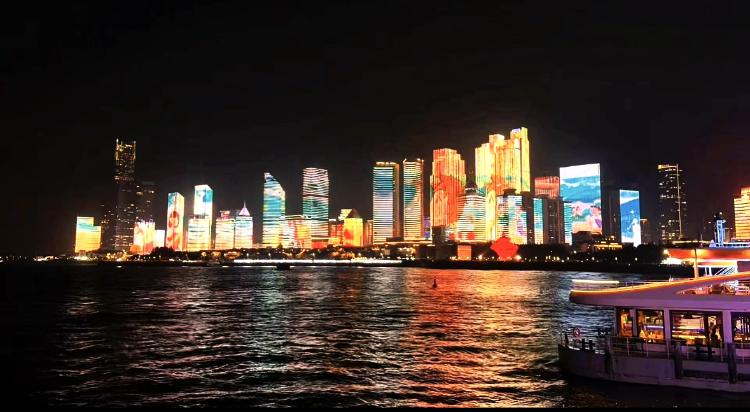
Fushan Bay: The enchanting night of interlaced light and shadow
The Fushan Bay Light Show is not only a visual feast but also a concentrated display of Qingdao’s urban culture and modern technology. It attracts a large number of tourists from China and abroad every year and has become an indispensable part of Qingdao’s night tours.

Mongolian Bökh wrestlers showcase spirit of the steppe
Mongolian Bökh, honored as a Chinese intangible cultural heritage, is a traditional wrestling sport that has been passed down for thousands of years. Wrestlers wear a distinctive open-front leather jacket known as the “zodog” and a colorful “jangaa” around their necks to symbolize honor. More than a contest of physical prowess, Bökh embodies the courage and spirit of the steppe warriors.
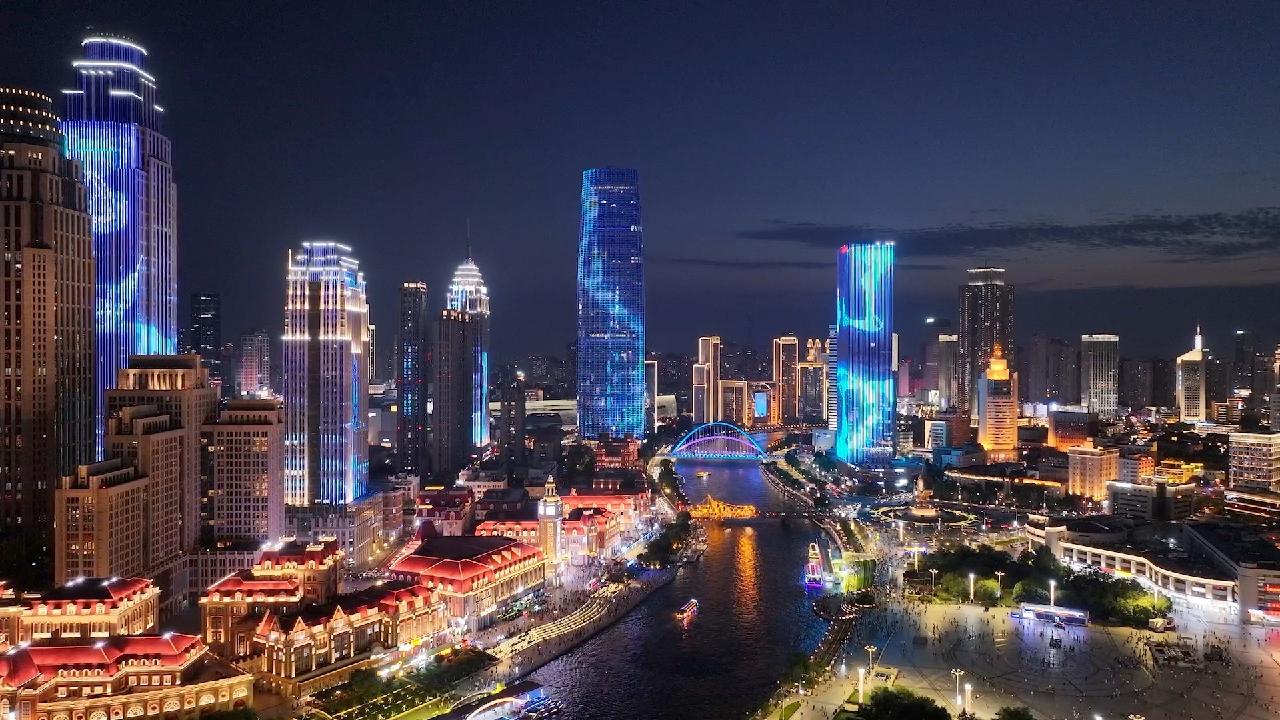
Dazzling light show in Tianjin features SCO landmarks and culture
The Haihe River in Tianjin was illuminated with a dazzling light show ahead of the Shanghai Cooperation Organization (SCO) summit from August 31 to September 1. The dynamic light display turned buildings, bridges, and piers along the river into a sweeping nightscape scroll, telling stories of China and the world throughout history and into the future.
Landmarks and cultural icons from the SCO member states were displayed in illuminated visuals, symbolizing nations working together for shared development and a brighter future.
The light show has become a regular feature since August 19.
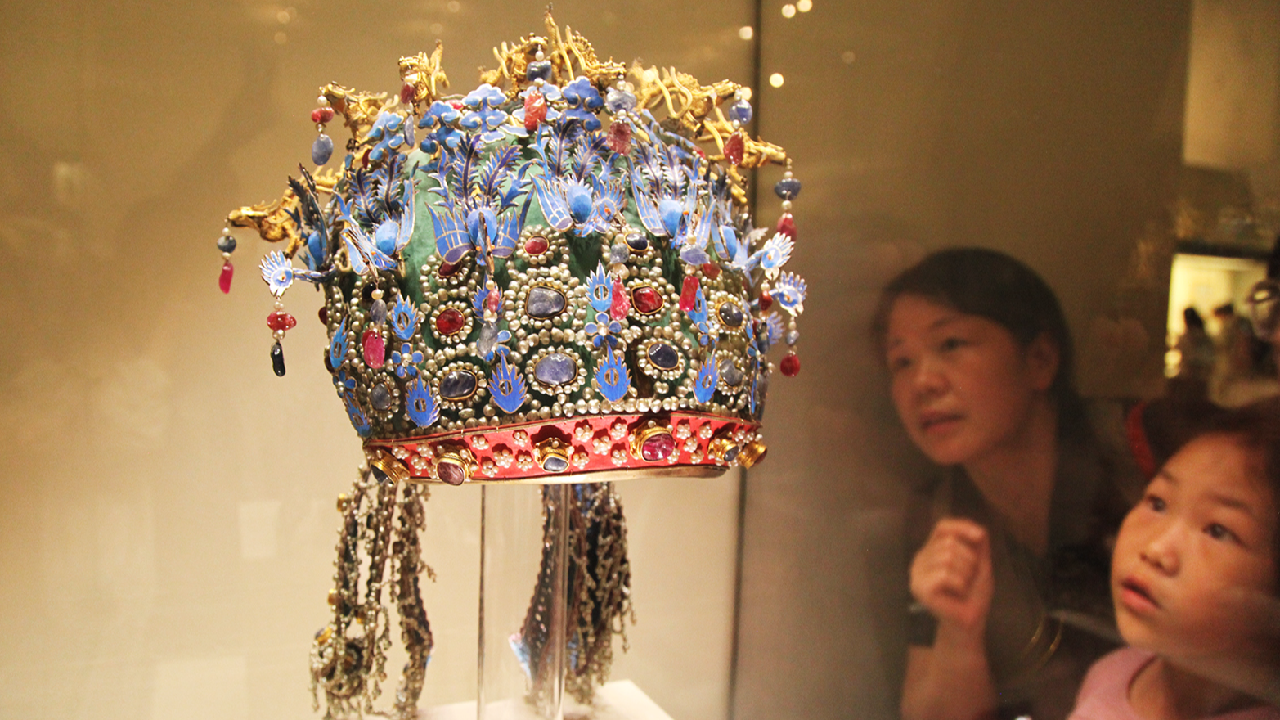
Exquisite phoenix coronet draws crowds at National Museum of China
The Phoenix Coronet for Empress Xiaoduan is one of the most celebrated artifacts at the National Museum of China in Beijing, attracting long queues of visitors eager to admire and photograph its intricate beauty.
The exquisitely crafted coronet features nine dragons and nine phoenixes, and is adorned with over 100 gemstones and more than 4,000 pearls. It dates back to the Wanli Era (1573-1620) during the Ming Dynasty, and was unearthed from Beijing’s Dingling Mausoleum in 1957.
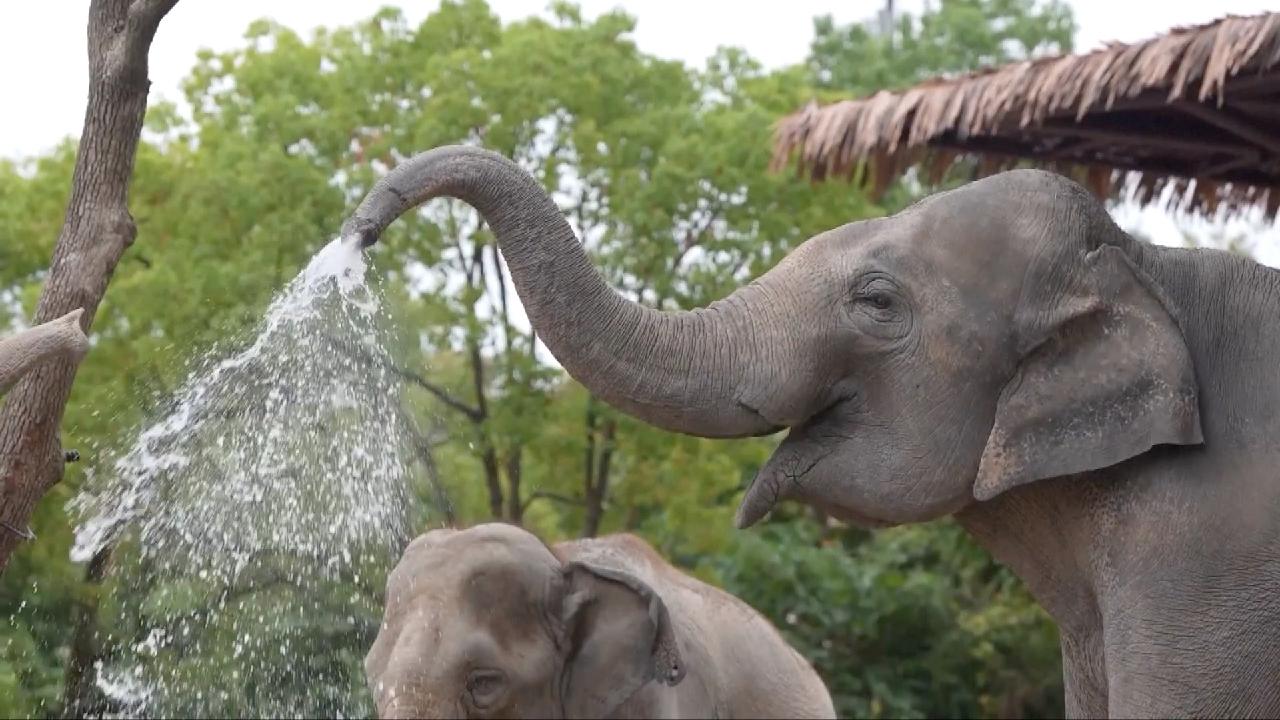
Animals kept cool during Shanghai heatwave
Shanghai Zoo has stepped up its efforts to protect its animals from a sweltering heatwave. Flamingos were kept cool with mist sprays, elephants splashed in ponds, red pandas received chunks of ice, and giant pandas enjoyed food in air-conditioned rooms. Staff also trimmed the animals’ fur and updated their diets, adding more juicy fruits and vegetables for primates and herbivores.
At Haichang Ocean Park, dolphins were given ice cubes, thermostatic systems kept pools cool, and marine animals were served frozen fruit.
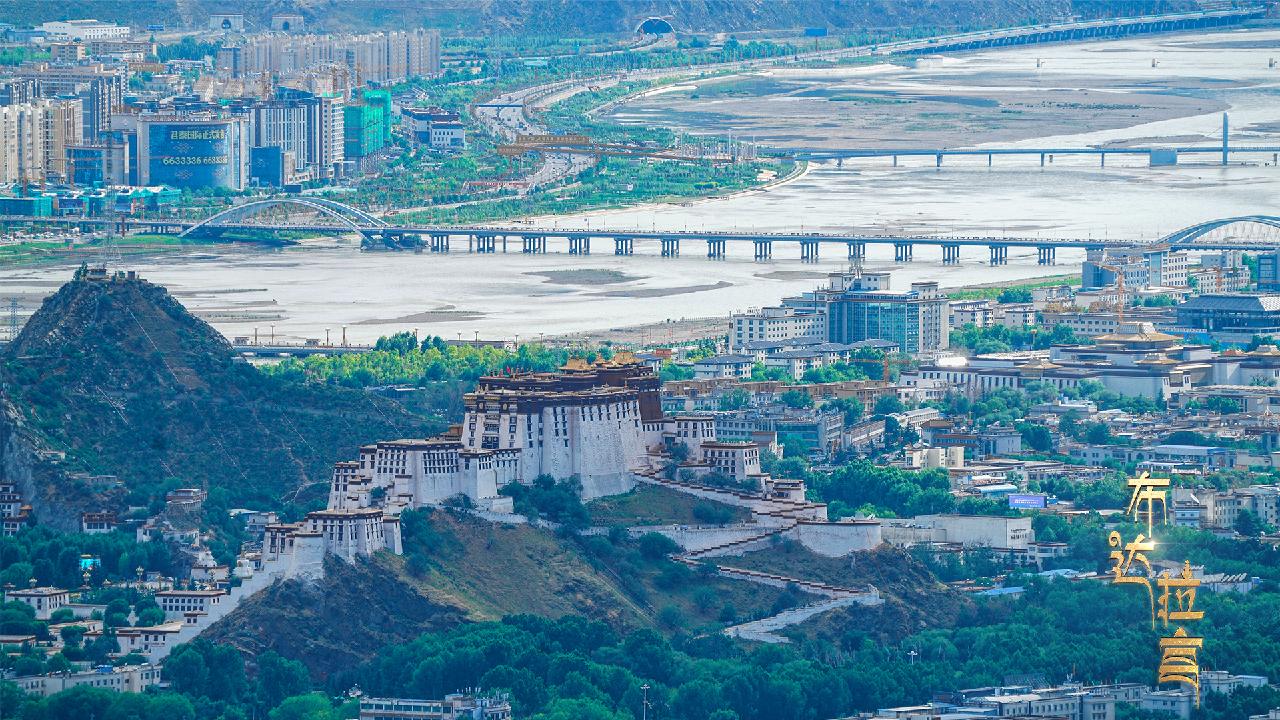
Potala Palace through the seasons: Eternal testament of time
By continuing to browse our site you agree to our use of cookies, revised Privacy Policy and Terms of Use. You can change your cookie settings through your browser.
I agree
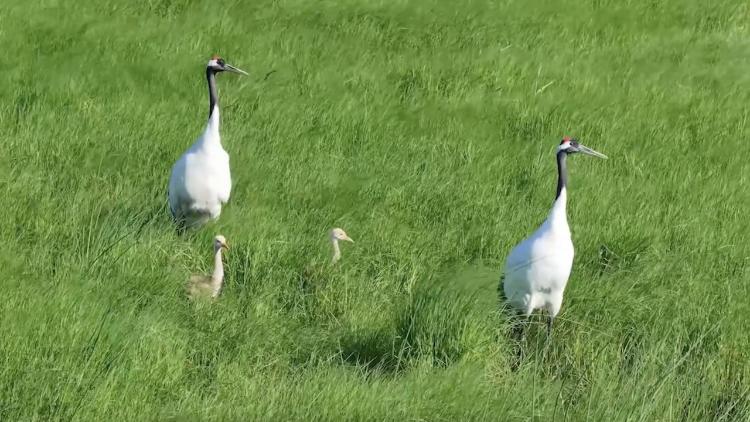
Nature reserve hosts over 250 bird species in Heilongjiang
The wetlands of the Naoli River National Nature Reserve in Raohe County, northeast China’s Heilongjiang Province, are teeming with life as the clear waters, lush reeds and flocks of birds add to the thriving ecosystem. The area is now home to more than 250 bird species, making it an important stopover site for migratory birds traveling across the region.

Pandas win over participants of World Games
No one can resist giant pandas. These black-and-white wonders have captured the hearts of people from around the world, including the participants of the World Games in Chengdu. During breaks from competition, they made a beeline for the panda base, filming videos, snapping photos, and picking up panda plushies as souvenirs. The panda journey added a sweet note to their World Games adventure.
[Video source: Chengdu Plus]
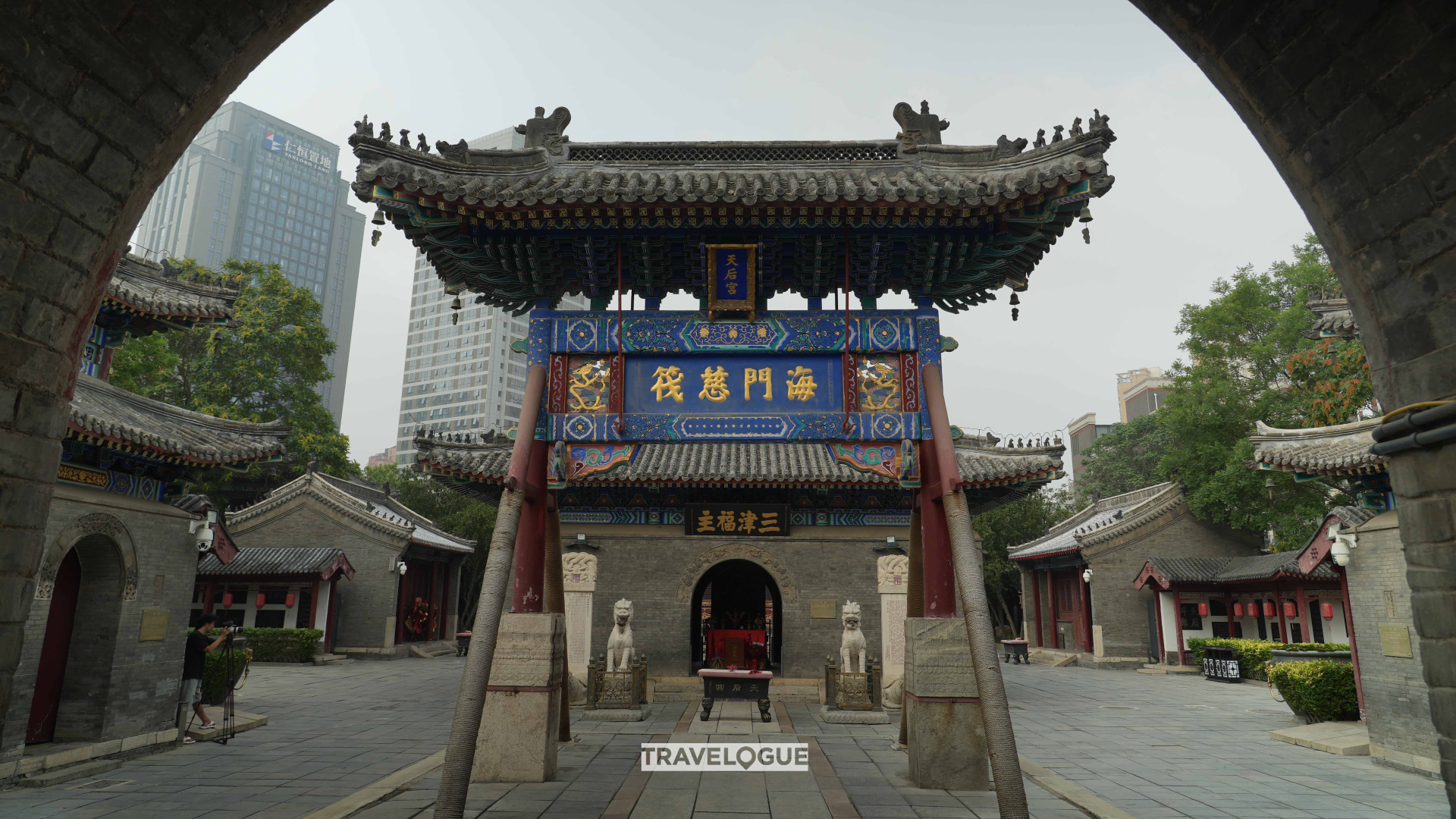
Tianjin's Tianhou Temple: A cultural legacy of centuries
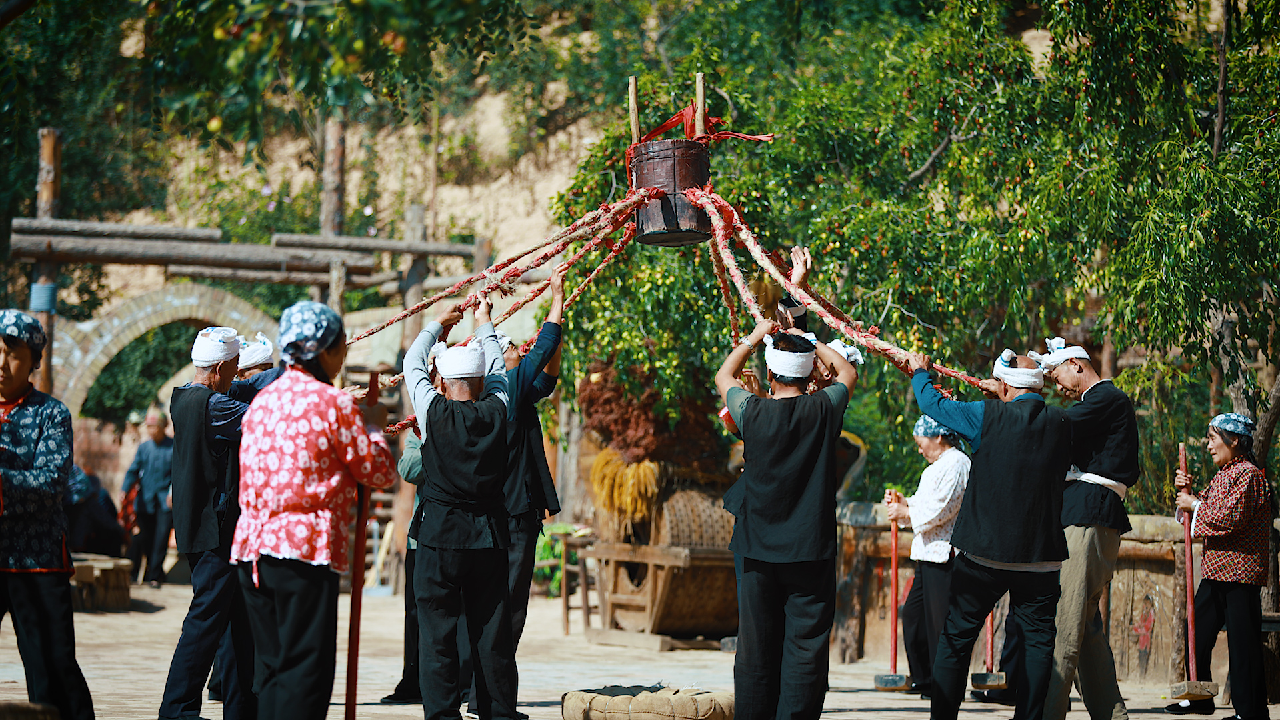
UN@80: A Chinese village's journey out of poverty
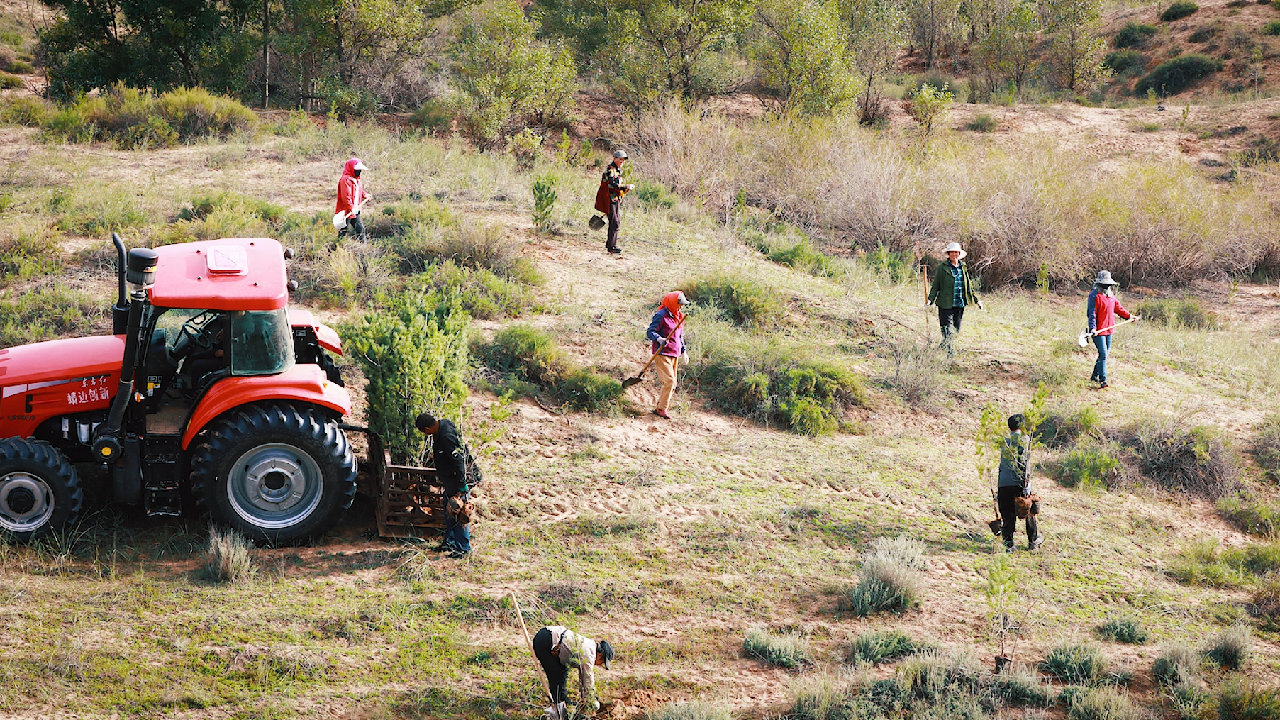
Mu Us Desert transformed: Locals fight desertification
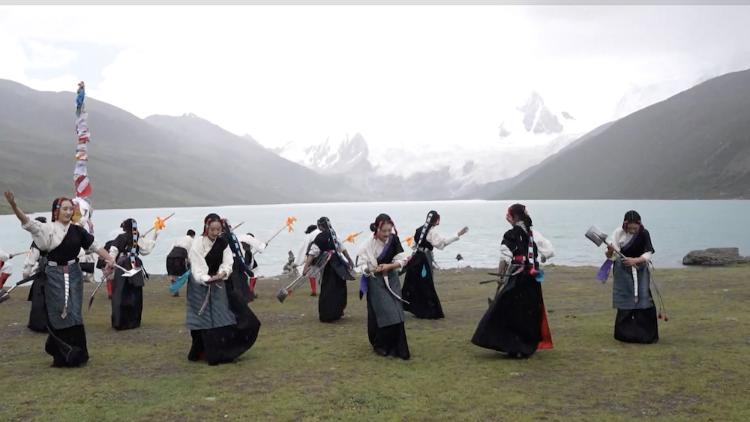
Eco-tourism transforms Xizang's remote landscapes
In Xizang’s Nyenchen Tanglha Mountains, once-isolated valleys and lakes are now thriving through eco-tourism. Improved infrastructure has opened access to stunning sites like Sakpu Snow Mountain and the Three-Color Lake, where conservation and community prosperity go hand in hand. Visitors can ride horses across vast meadows, stargaze from luxury tents, and enjoy sunrise performances of “Dabu Ashey,” a traditional dance listed as national intangible cultural heritage in China.
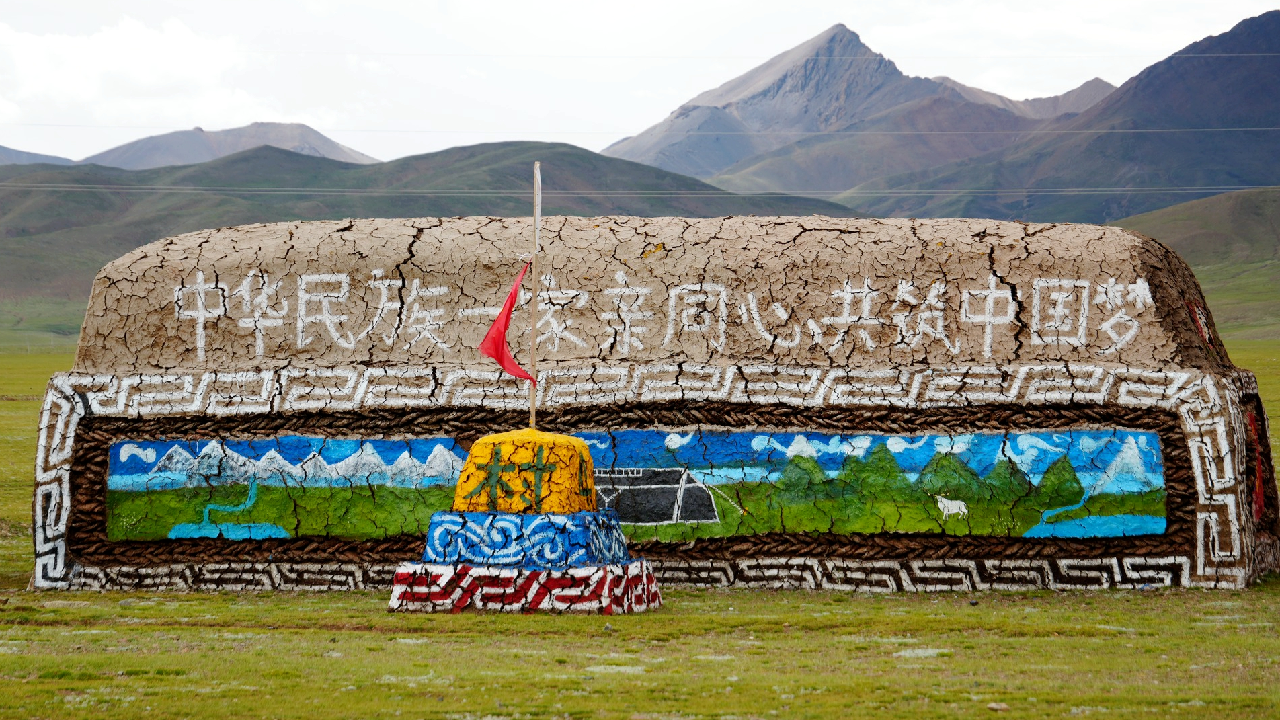
Yak dung art: A unique tribute
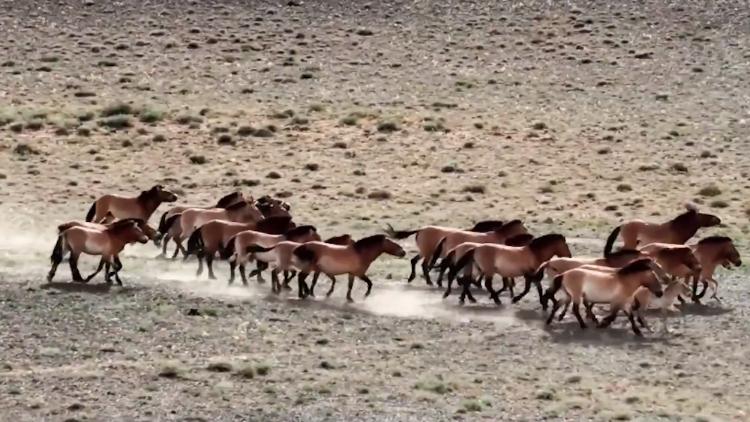
China's Przewalski's horse population tops 900
China’s Przewalski’s horse population has grown to over 900 – about one-third of the global total – marking 40 years since the species’ reintroduction. Native to Xinjiang’s Junggar Basin and parts of Mongolia, the world’s only surviving wild horse remains endangered but has thrived thanks to decades of habitat restoration and breeding programs. Today, rewilding efforts are expanding across the autonomous regions of Ningxia and Inner Mongolia, and Gansu Province, with habitats steadily enlarging. The Xinjiang Wild Horse Breeding and Research Center, Asia’s largest, has bred more than 800 horses and released 146 into the wild.
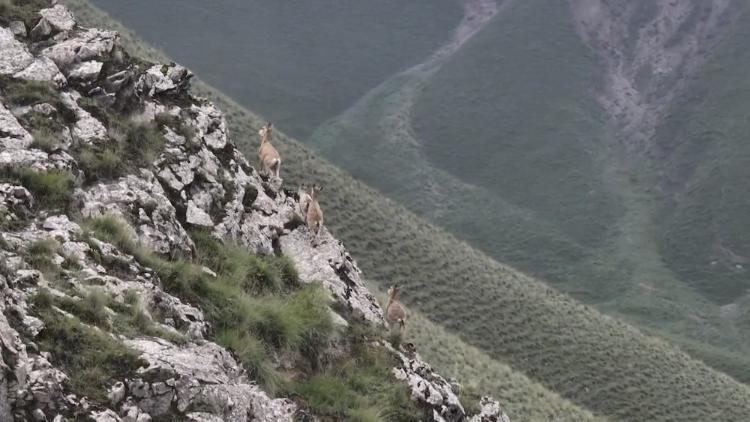
Ibex goats display dazzling climbing skills in Xinjiang
High in the Kunlun Mountains of northwest China’s Xinjiang Uygur Autonomous Region, rare ibex goats – a species under national second-class protection – were recently caught on camera scaling near-vertical rock faces with remarkable ease. The footage shows them hugging sheer cliffs, leaping onto narrow ledges, and maintaining flawless balance. Known for their agility and resilience, these wild goats thrive in rugged, rocky terrain ranging from 3,500 to 6,000 meters in altitude. Their growing numbers in recent years have played a vital role in safeguarding local biodiversity and maintaining the region’s ecological balance.
China to launch new visa for young science, technology professionals
<img src='https://news.cgtn.com/news/2025-08-14/China-to-launch-new-visa-for-young-science-technology-professionals-1FPPkIeRb7G/img/ebd04cb164734c40bef5649767319de5/ebd04cb164734c40bef5649767319de5.png' alt='Beijing Daxing International Airport, Beijing, January 8, 2025. /VCG'
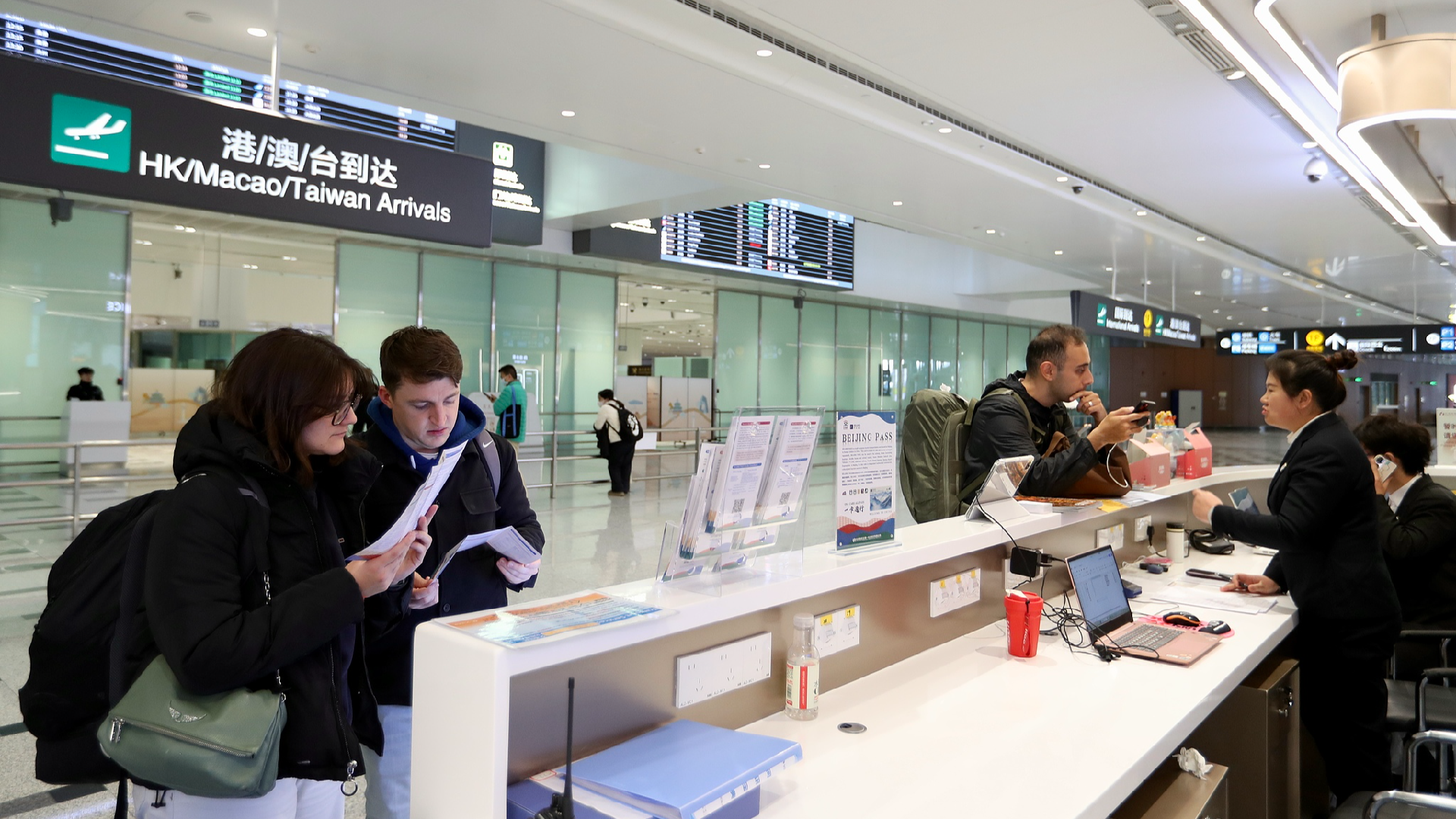
China will introduce a new visa category for young science and technology talents, following a decision by the State Council.
Premier Li Qiang has signed a State Council decree to promulgate the decision to amend the country’s regulation on the administration of foreigners’ entries and exits.
According to the decision, China will add a K visa to its ordinary visa categories, available to eligible young science and technology professionals.
Applicants for this visa must meet the qualifications and requirements set by the relevant Chinese authorities and submit supporting documentation.
The new rules will take effect on October 1.

Old venue, new life: Chengdu's sports legacy lives on in iconic ground
Can you imagine a venue still in use after more than 50 years? The World Games are in full swing in Chengdu, so we visited one of the city’s first major sports venues and an incubator of talent, Chengbei Gymnasium. Having been renovated with care, the iconic venue now plays host to dance events for the Chengdu World Games. Join CGTN’s Wang Tao to explore this storied venue and see how the legacy lives on.
Bronze sacred trees at Sanxingdui Museum
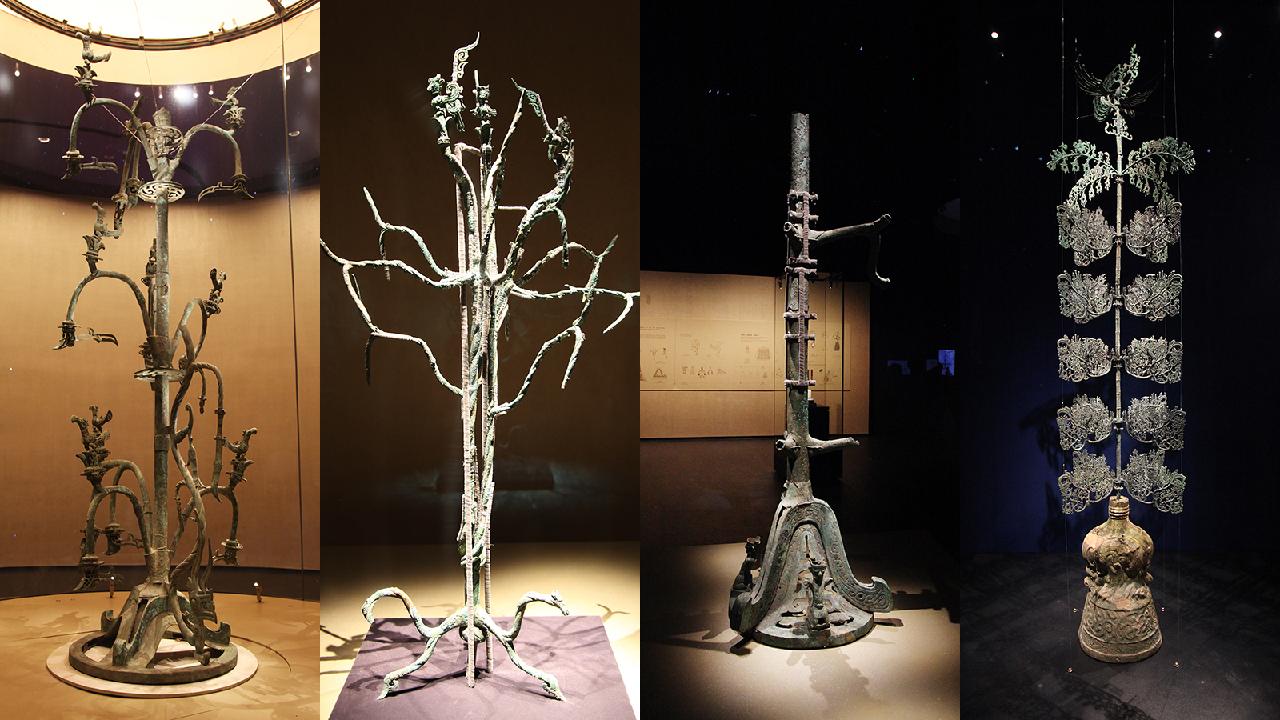
The Massive Bronze Sacred Tree, also known as the No. 1 Sacred Tree, is one of the most iconic treasures at the Sanxingdui Museum in Sichuan Province.
Though incomplete at the top, the restored tree still stands at an impressive 396 centimeters tall, making it the largest single bronze artifact ever discovered in the world.
The base of the tree resembles three interconnected mountain peaks. From this foundation rises the trunk with three tiers of branches. Nine birds perch along the branches, while a dragon stretches down one side of the trunk, poised to take flight.
The partly restored No. 3 Sacred Tree, however, looks very different. Its branches are twisted and its main trunk is only about 1 centimeter in diameter.
For many other bronze trees, only some sections have survived, such as the bases or branch-top birds, with the rest lost to time. Yet the intricate details of these remains still showcase the remarkable craftsmanship of ancient artisans.
Tianjin citywalk with a master of clay figurines
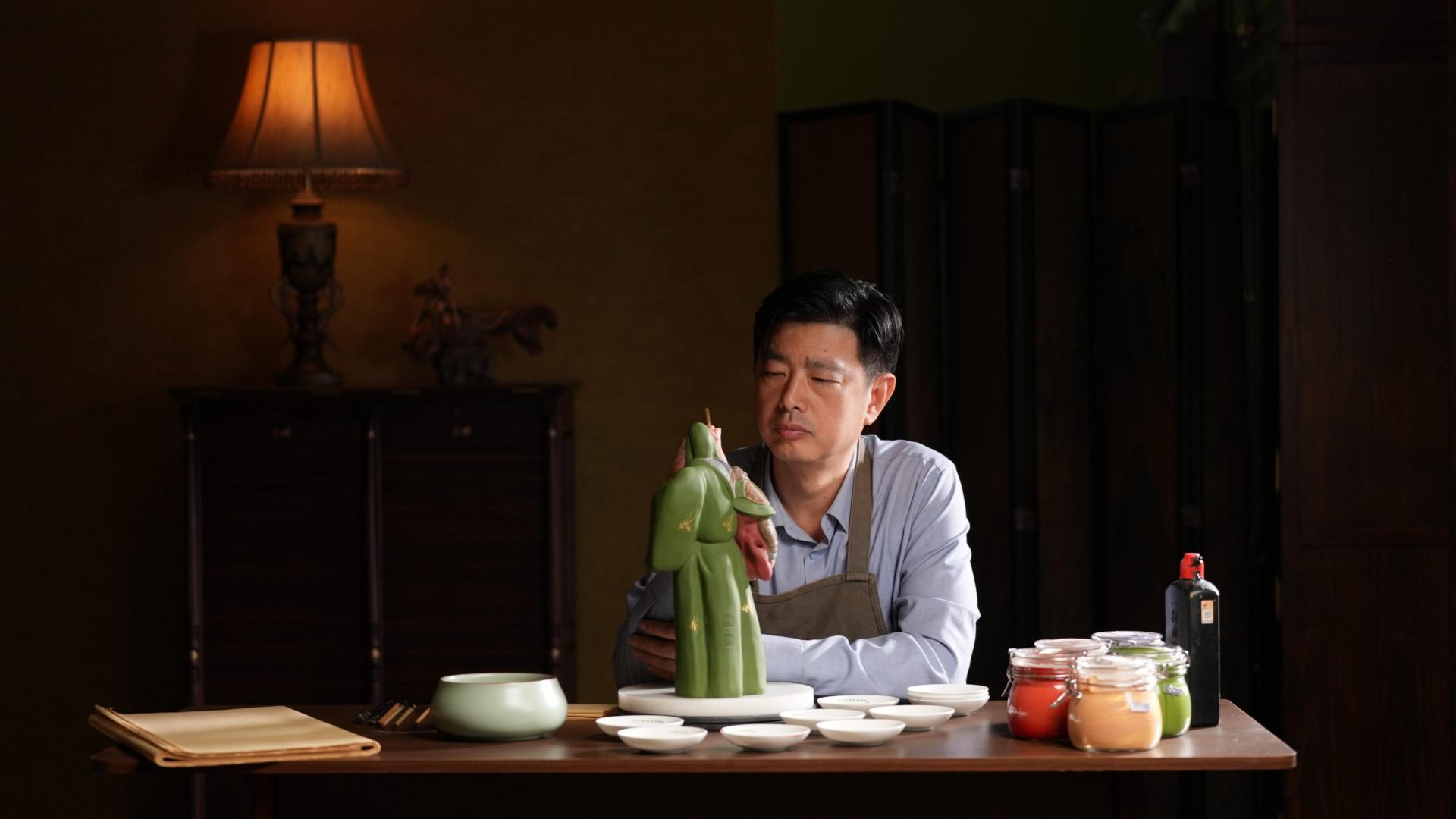
Join Zhang Yu on a stroll through Tianjin, where the city’s heartbeat echoes through Clay Figure Zhang. As a sixth-generation inheritor of this national intangible cultural heritage and Tianjin cultural emblem, Zhang blends traditional craftsmanship with contemporary aesthetics. He captures the most vivid memories of Tianjin through clay, preserving not only an art form, but also the city’s living spirit.
Anren Ancient Town: A living museum in Sichuan
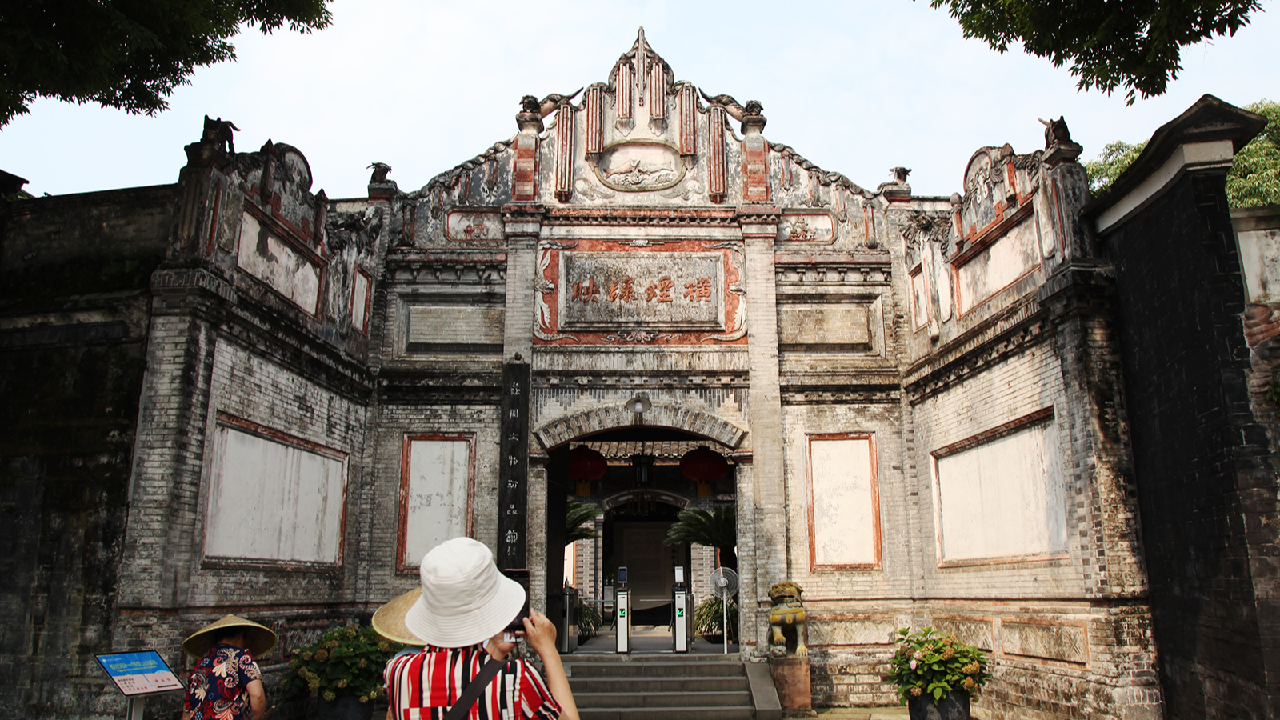
With a history of more than 1,400 years, Anren Ancient Town in Chengdu, Sichuan Province is a cultural treasure trove where the timeless local charm is reflected in the historic architecture, winding alleys, and rich cultural traditions.
Located about 40 kilometers from downtown Chengdu, Anren is best known for its collection of 27 well-preserved mansions, primarily built between the 1920s and 1940s. Blending Chinese and Western architectural styles, these grand residences were constructed by wealthy landlords during a period of profound social change.
The Liu’s Manor Museum, a major attraction in the town, is the former estate of the influential landlord Liu Wencai and his brothers. Covering more than 70,000 square meters, the museum offers exhibits that reflect the Liu family’s daily life, presents historical artifacts, and features the renowned clay sculpture series “Rent Collection Courtyard,” which powerfully depicts a landlord collecting rent from impoverished peasants through 114 life-sized figures.
The town also charms visitors with its old streets lined with traditional teahouses, local eateries, craft shops, and tranquil courtyards. Strolling beneath strings of colorful umbrellas, swathes of dyed fabric, and dangling birdcages, visitors are immersed in a scene that blends nostalgia with a sense of discovery. Cultural performances, including Sichuan Opera and immersive theater, further enhance the town’s rich atmosphere.
Anren is also home to the Jianchuan Museum Cluster, the largest private museum complex in China, featuring exhibitions ranging from wartime memories to folk culture.
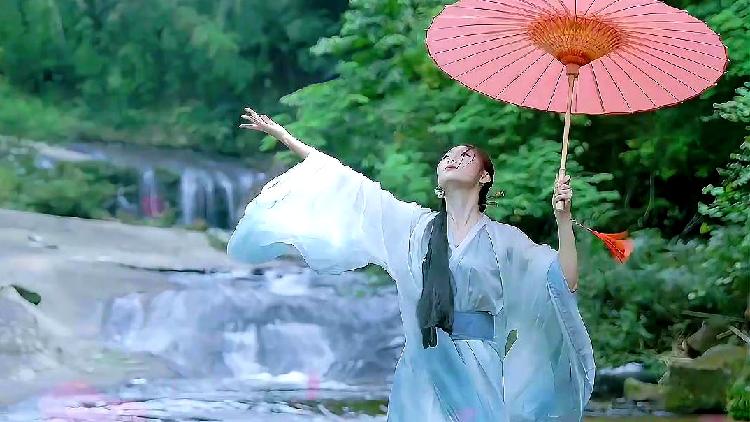
When oil-paper umbrellas meet traditional Chinese dance
As the umbrella ribs open and close, Hanfu robes flutter gracefully, as if traversing ancient and modern times. This is not just a dance but a flowing feast of intangible cultural heritage. The younger generation seems to be interpreting the beauty of Chinese culture in a new way.
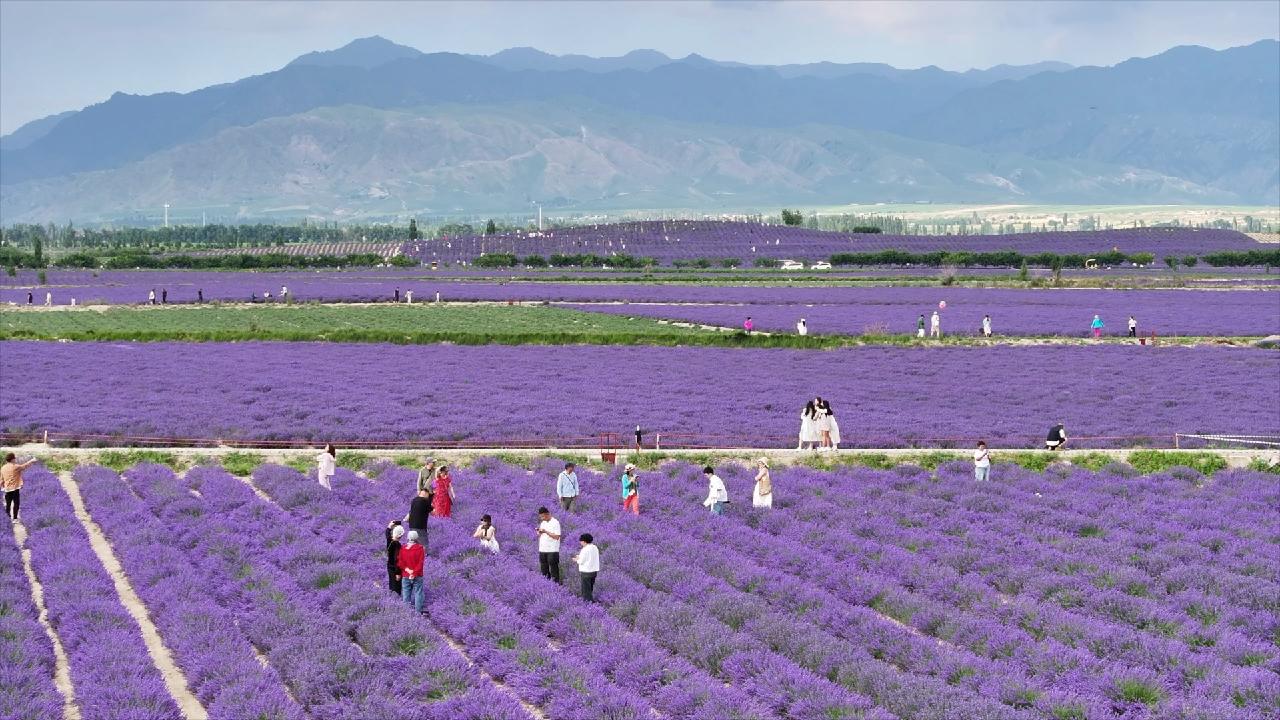
How Xinjiang village transformed from dusty fields to lavender dreams
<img src='https://news.cgtn.com/news/2025-08-10/How-Xinjiang-village-transformed-from-dusty-fields-to-lavender-dreams-1FJ5XSgDBh6/img/7287e52a123b44118a9f5ba2d38dcaba/7287e52a123b44118a9f5ba2d38dcaba.jpeg' alt='Lavender fields in the village of Sigong.'
Tucked away in the Ili River Valley in northwest China’s Xinjiang Uygur Autonomous Region, the village of Sigong once struggled to survive. The soil here was thin, rocky and poor for farming. Yields were low, income was meager and the village streets were quiet except for the elderly and children. Most young people left to work in faraway cities.
<img src='https://news.cgtn.com/news/2025-08-10/How-Xinjiang-village-transformed-from-dusty-fields-to-lavender-dreams-1FJ5XSgDBh6/img/ad05496e3e6b4a288c00f9c3807b9984/ad05496e3e6b4a288c00f9c3807b9984.jpeg' alt='Lavender fields in Sigong. '
Everything began to change in 2009, when the village began planting lavender as an experiment. The purple blossoms didn’t just brighten the landscape, they brought a new future. Lavender earned far more than traditional crops, sparking enthusiasm to plant more.
By 2017, over 95 percent of the village’s farmland was covered with lavender.
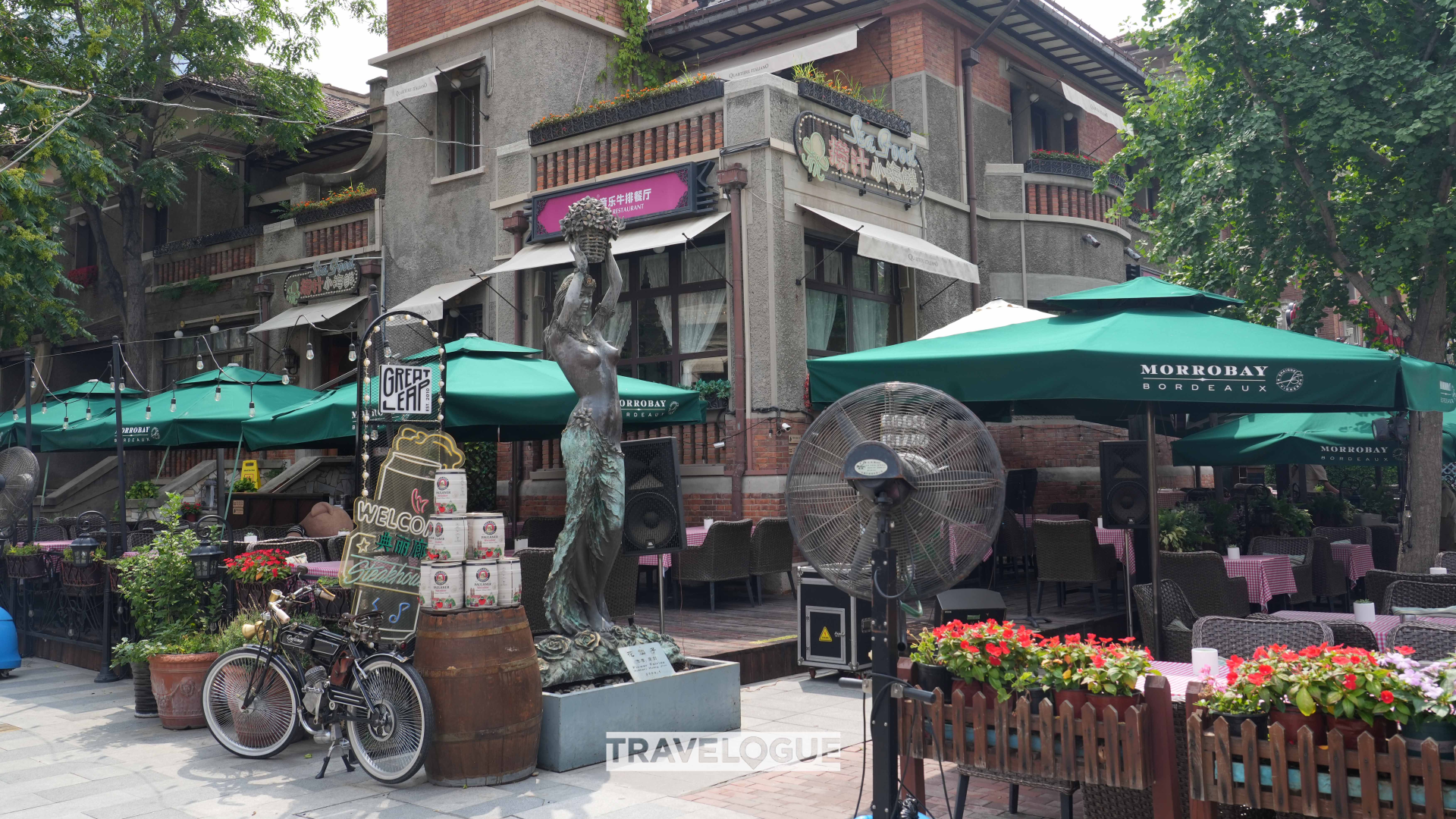
Tianjin's Italianate town: A step into Europe

Step into Kazanqi: Where culture lives and locals thrive
Once known for its dusty, uneven roads and unimpressive infrastructure, Kazanqi – located in the old town of Yining City, northwest China’s Xinjiang Uygur Autonomous Region – has undergone a remarkable transformation. Through preservation and revitalization, it has become a cultural landmark where history lives and folk life flourishes.
Today, more than 3,000 locals work here in tourism, handicrafts, food service and cultural activities. The area’s development has carefully balanced modernization with authenticity, preserving centuries-old homes and customs while offering immersive experiences for visitors.
Strolling down the narrow streets, one can hear the clip-clop of traditional “Hadike” horse-drawn carriages taking tourists around the neighborhood. Many residents still live in the same homes their families have resided in for generations, and some open their doors to travelers, offering an intimate look into local folk life.
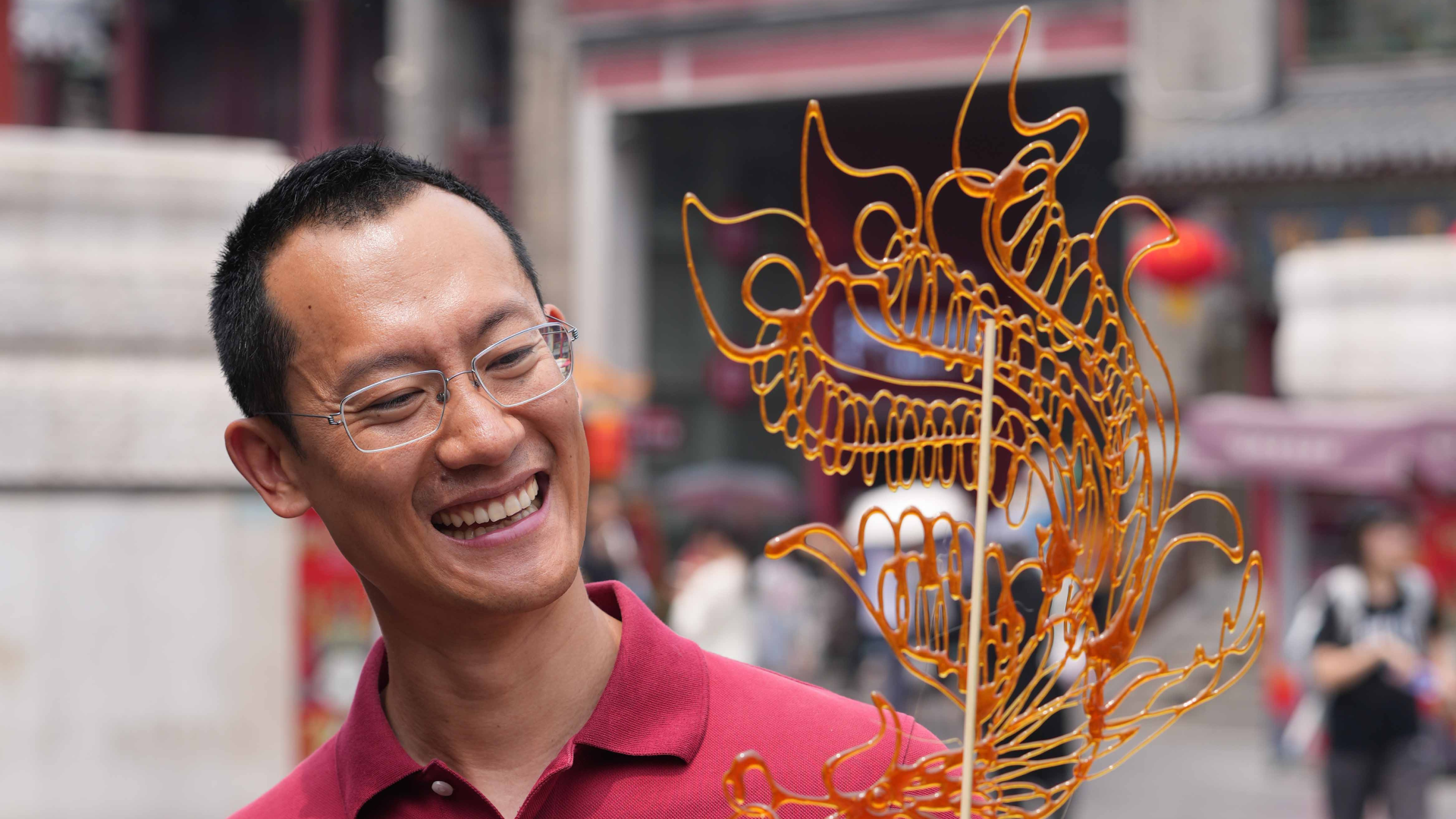
Tianjin sugar painting: Sweet art on the tip of the tongue

Summer of creativity: Beijing embraces illustrators' magical world
Often hailed as the “Oscars of the illustration world,” the 58th Bologna Illustrators Exhibition recently opened at Today Art Museum in Beijing. What highlights of the ongoing exhibition captivate art aficionados and families alike? Watch this to find out!

Tianjin: A fusion of classical and modern, Eastern and Western
Adjacent to the capital city of Beijing, Tianjin boasts a profound historical and cultural heritage, blending the architectural essence of both Eastern and Western traditions. Along the renowned Five Great Avenues, over 2,000 European-style villas stand as witnesses to a century of history, while the Ancient Culture Street brims with intangible cultural heritage. As dusk falls, the Tianjin Eye Ferris wheel illuminates the Haihe River, casting a glow on the elegant facades of the riverside buildings. Modern skyscrapers shimmer with neon lights, reflecting the city’s vibrant energy.

Feel the Pulse of Chengdu: Where sports pull people together
It’s a summer of sports in Chengdu, so we hit the streets in the capital of Sichuan Province and managed to rope strangers into a tug-of-war contest. We pulled together, as it were, with locals and people from all over the world and asked them if they knew Chengdu is playing host to The World Games. Come along with CGTN reporter Wang Tao, and feel the thrill of the Games.
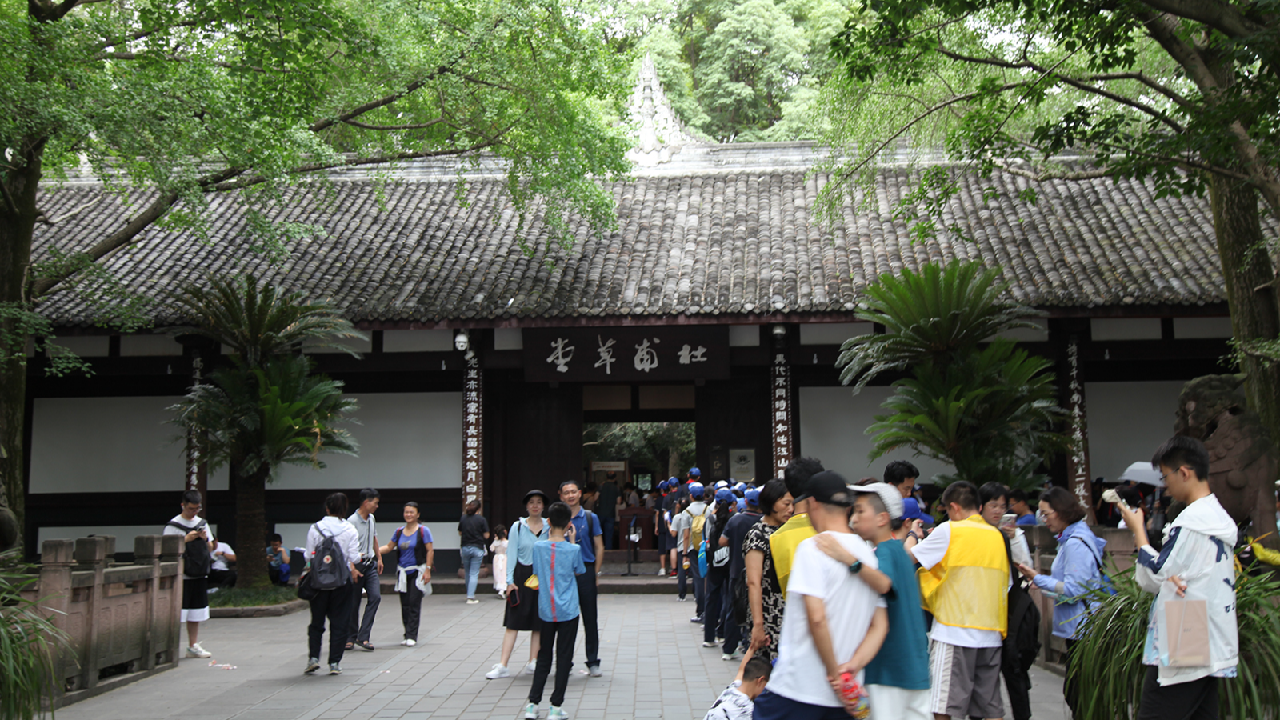
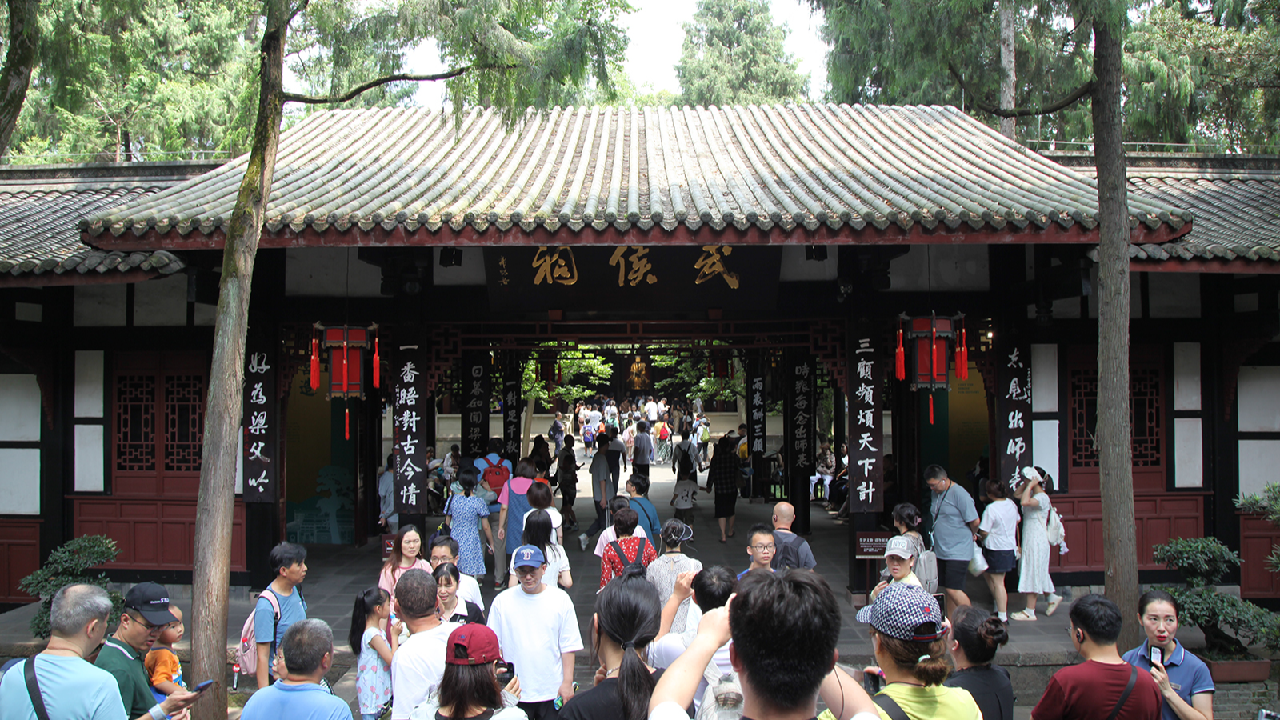
In the footsteps of a poet: The Du Fu Thatched Cottage in Chengdu
Once the residence of one of China’s greatest poets, the Chengdu Du Fu Thatched Cottage Museum in Sichuan Province is a treasured destination for literature lovers. It offers a glimpse into the life and legacy of Du Fu, the revered Tang Dynasty poet known as the “sage of poetry.”
In his later years, Du Fu went to Chengdu to escape the chaos of war. There, he lived in a humble thatched cottage for nearly four years, during which he composed more than 240 poems.
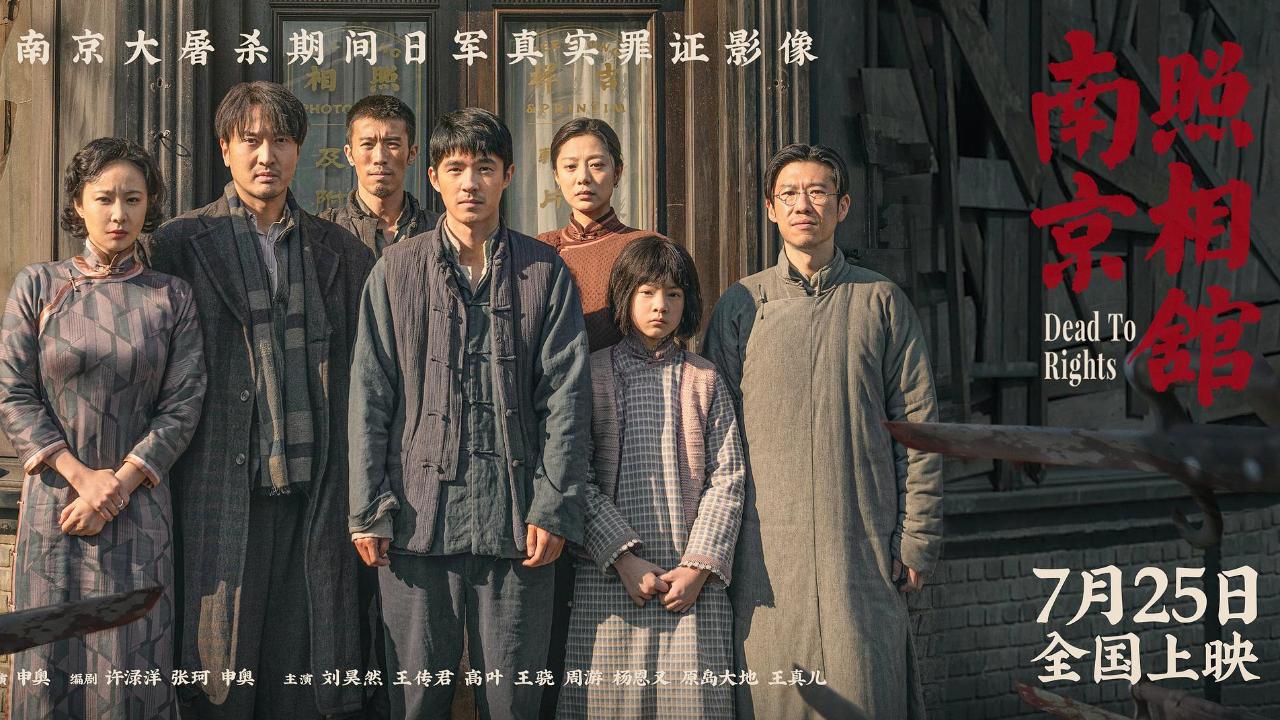
Chinese WWII movie gives stage to country's voice
Since its premiere on July 25, the domestic box office revenue for “Dead to Rights” has exceeded 1.8 billion yuan, topping the global box office rankings for the previous weekend. Beginning August 7, the film will be released in international markets including Australia, New Zealand, the United States, Canada, and other countries around the globe. We sat down with the film’s screenwriter Zhang Ke to explore the film’s profound significance during this pivotal historical period.
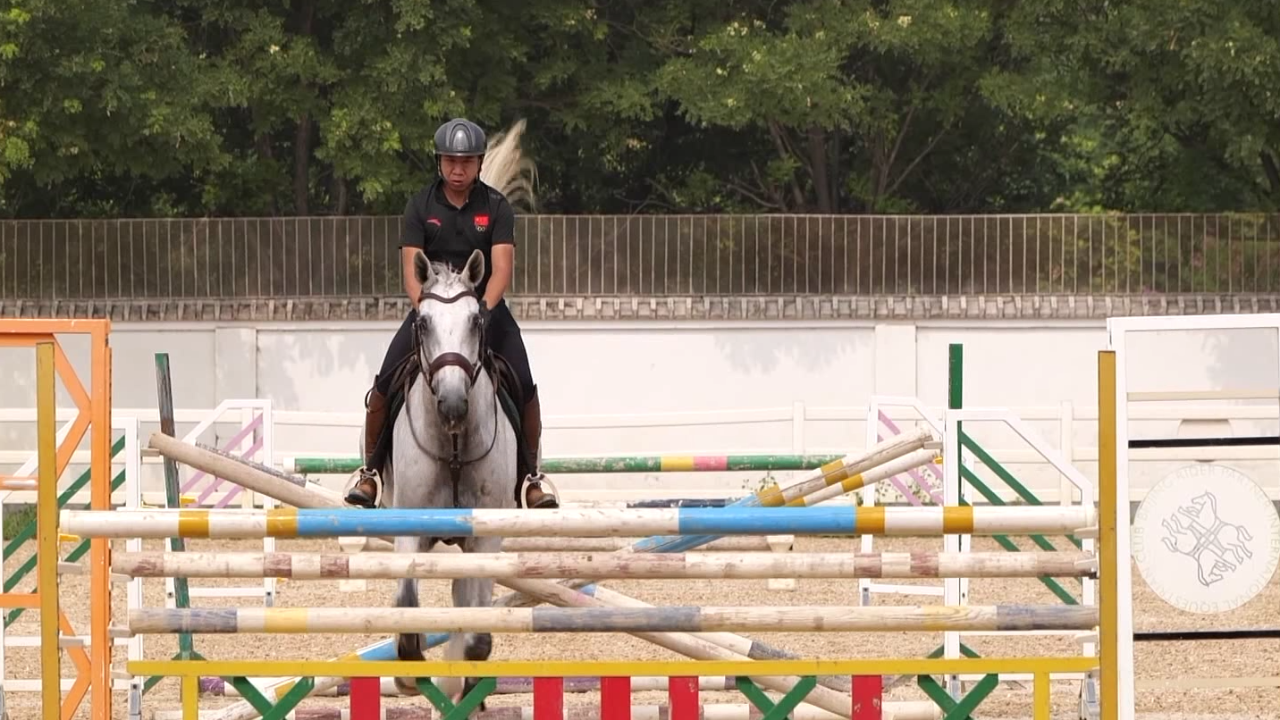
Leap of faith: Xizang equestrian team
Let’s meet the Xizang equestrian team. CGTN reporter Chen Yilin visits their training grounds to find out how these young riders, born into the saddle traditions of Xizang, are becoming national champions on the racecourse.
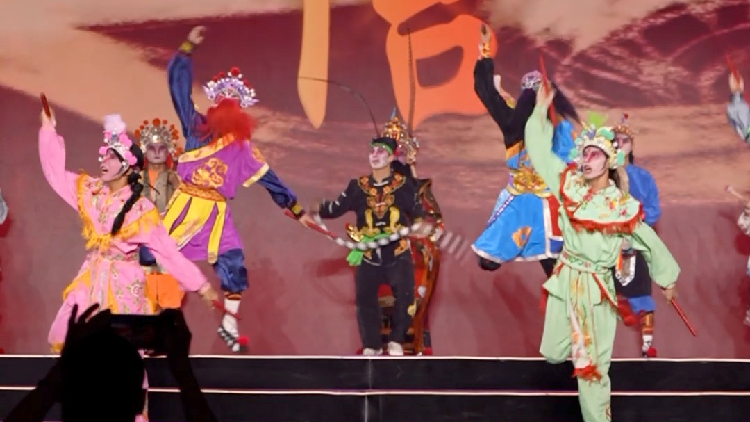
Chaozhou Yingge dance: From martial roots to vibrant tradition
The Chaozhou Yingge dance originated over 600 years ago along the coastal areas in south China as a form of martial practice, where the locals discreetly trained using military-style dances. Over the centuries, the practice has evolved into a vibrant performance art characterized by powerful percussion and dynamic movements blending strength and grace.