FIFA report: Saudi 2034 World Cup bid has ‘medium’ human rights risk

FIFA, the world governing body for football, released on Friday night its evaluation report for Saudi Arabia’s bid to host the men’s World Cup in 2034, awarding the nation a higher score for bidding requirements than it granted the successful Canadian, American and Mexican joint bid for the 2026 edition, while declaring the risk assessment for human rights to be “medium”.

FIFA also claim in their report that there is “good potential” for the competition to act as a “catalyst” for reforms within Saudi Arabia, saying it will “contribute to positive human rights outcomes”. Amnesty International described FIFA’s observations as “an astonishing whitewash” of Saudi Arabia’s human rights record.

The bid report also declared the bid by oil-rich Saudi to have demonstrated a “good commitment to sustainability” while FIFA acknowledges that the Saudi bid presents an “elevated risk” in terms of timing due to the climate of the country.

FIFA, which ordinarily holds men’s World Cups in June and July, says the bidder did not stipulate a proposed window for the tournament but pledged to collaborate to “ensure the tournament’s success”, implying we may see a repeat of the 2022 edition in Qatar which was shifted to the winter months to allow for the safety of participants and supporters.

FIFA ranks its World Cup bids out of five and awarded the Saudi bid a score of 4.2, higher than the so-called United bid for 2026, which was rated 4.0. For the Women’s World Cup in 2027, Brazil’s successful bid was ranked 4.0, while the defeated joint bid of Belgium, the Netherlands and Germany was given a score of 3.7.

FIFA released its report in an email to media at 12.33am Central European Time on Saturday morning. Almost immediately, reports emerged in Middle Eastern English-speaking outlets such as the Saudi Gazette, declaring that the Saudi bid had received the highest ever score from FIFA when bidding for a World Cup.

The Saudi bid for the 2034 World Cup had already been considered a nigh-on inevitability because it was the only bidder for the tournament. This outcome developed after FIFA announced a mega-edition bid for the 2030 World Cup, which would be hosted across three continents (Africa, Europe and South America) and six countries (Morocco, Spain, Portugal, Argentina, Uruguay and Paraguay).

This ruled those three continents out of bidding for the following World Cup in 2034, while the joint U.S., Canada and Mexico event for 2026 ruled out a return to North America due to FIFA’s principle of confederation rotation.

This left the Saudis with a clear run in the absence of a rival from elsewhere in Asia or Oceania, subject to a vote of member nations at the FIFA Congress on December 11, which was widely seen as a formality.

FIFA’s report say their evaluation “consulted various sources, including the bidder’s human rights strategy, the mandated context assessment, as well as direct commitments from the host country and host cities, together with all contractual hosting documents, all of which notably contain provisions relating to respecting human rights in connection with the competition”.


Tennis stars Ons Jabeur (far left) and Aryna Sabalenka tour the Saudi 2034 bid exhibition in October (Katelyn Mulcahy/Getty Images for WTA)

However, The Athletic revealed last month how 11 organisations — including Amnesty International, Human Rights Watch, a Saudi Arabian diaspora organisation and human rights groups specialising in the Gulf region — raised major concerns about the credibility of a report for FIFA entitled “Independent Context Assessment Prepared for the Saudi Arabian Football Federation in relation to the FIFA World Cup 2034”.

The independent context assessment, produced by the Saudi arm of global law firm Clifford Chance, excluded a large number of internationally recognised human rights from its assessment, saying this was because “either Saudi Arabia has not ratified the relevant treaties or because the Saudi Football Federation did not recognise them as ‘applying’ to the assessment”.

This meant it avoided delving into matters many would consider pertinent to Saudi, notably relating to freedom of expression, association and assembly, as well as LGBTQI+ discrimination, the prohibition of trade unions, the right to freedom of religion and forced evictions.

The report said that the scope of its assessment was “determined by the Saudi Arabian Football Federation in agreement with FIFA”, suggesting that FIFA itself approved the omissions. Both the Saudi Football Association and FIFA did not respond when approached by The Athletic at the time.

In a press release by the rights groups, they claimed that “Saudi Arabia’s already dire human rights record has deteriorated under the de facto rule of Crown Prince Mohammed bin Salman” and cited a “soaring number of mass executions, torture, enforced disappearance, severe restrictions on free expression, repression of women’s rights under the male guardianship system, LGBTI+ discrimination, and the killing of hundreds of migrants at the Saudi Arabia-Yemen border”.

“As expected, FIFA’s evaluation of Saudi Arabia’s World Cup bid is an astonishing whitewash of the country’s atrocious human rights record,” added Steve Cockburn, Amnesty International’s head of labour rights and sport. “There are no meaningful commitments that will prevent workers from being exploited, residents from being evicted or activists from being arrested.

“By ignoring the clear evidence of severe human rights risks, FIFA is likely to bear much responsibility for the violations and abuses that will take place over the coming decade. Fundamental human rights reforms are urgently required in Saudi Arabia, or the 2034 World Cup will be inevitably tarnished by exploitation, discrimination and repression.”

The FIFA bid evaluation, published on Saturday morning, leans heavily on the Clifford Chance report. It does not make any references to the terms “LGBTQI+”, “sexuality” or “sexual orientation”, while the only mention of women’s rights within Saudi Arabia can be found with references to the growth of the women’s game and women’s participation in football within Saudi.

The bid evaluation says that Saudi “has made significant strides in developing interest and grassroots participation for women and girls, and at the elite level”.


A model of Jeddah Central Development at the Saudi 2034 World Cup exhibition in Riyadh (Fayez Nureldine/AFP via Getty Images)

The bid, which ranks by low, medium or high, also gives a medium level of risk to stadiums, transport and accommodation, as well as the previously explained “event timing”. Stadiums are awarded a 4.1 rating out of five, despite eight of the proposed 15 stadiums for the tournament being new-builds. FIFA said this presented a “slightly elevated” risk profile.

The bid evaluation says the Saudi bid submitted commitments from the government to “respect, protect and fulfil internationally recognised human rights in connection with the competition, including in the areas of safety and security, labour rights (in particular fundamental labour rights and those of migrant workers), rights of children, gender equality and non-discrimination, as well as freedom of expression (including press freedom)”.

FIFA says the Saudis have committed to “equitable wages”, as well as “decent working and living conditions for all individuals involved in the preparation and delivery of the FIFA World Cup, including through the establishment of a workers’ welfare system to monitor compliance with labour rights standards for tournament-related workers”.

They also say the Saudis will “engage with the International Labour Organisation (ILO) in relation to its commitment to upholding international labour standards in all activities associated with the competition.” The treatment and rights of migrant workers were among the biggest talking points before and during the 2022 World Cup, staged in neighbouring Qatar.

go-deeper

GO DEEPER

World Cup 2022 migrant worker diaries, one year on: Death, regret, joy and trying to return

FIFA simultaneously released its report for the sole bid for the 2030 World Cup, which will be held in Spain, Portugal, Morocco, Uruguay, Argentina and Paraguay. The 2030 bid, which does not have a rival, will also be voted on by the member nations on December 11. It also received a rating of 4.2 out of 5, with the only medium risk factors judged to be stadiums, accommodation, transport, and the legal framework of the tournament.

The “sustainable event management” and “environmental protection” of a competition held across three continents was judged to be a “low” risk.

The report says that the “environmental impact assessment and initial carbon footprint assessment by the bidder, together with the commitments, objectives and mitigation actions outlined, provide a good foundation for the development of effective strategies towards managing the negative impacts of the tournament on the planet and protecting the environment”.

(Top photo: Christopher Pike/Bloomberg via Getty Images)

How to Control Who Messages You on Instagram

Key Takeaways

  • Control who can message you by managing message requests & choosing where they land to filter out unwanted messages.
  • Set your account to private so that only approved followers can DM you.
  • Block an Instagram account to prevent them from reaching out to you altogether.


If you ever feel like your Instagram DMs are a little too accessible, navigating your inbox can sometimes feel like a chore. But the good news is that Instagram gives you the tools to decide who can—and can’t—slide into your DMs.


1 Control How People Can Reach You

Instagram gives you the power to decide who can send you message requests and where those requests land. You can manage this by tapping that little circle with your profile picture in the bottom-right corner of the app to go to your profile. Hit the menu button in the top-right corner (it looks like three stacked lines—aka the “hamburger menu”). From there, tap Messages and Story Replies under the How others can interact with you section.


Here, you can decide what happens when someone tries to message you. For your followers on Instagram, you can choose whether their requests go to your Message Requests folder by selecting Message requests, or you can block them entirely by choosing Don’t receive requests.

For accounts that don’t follow you (i.e., Others on Instagram), you have the same options. Either let their requests appear in your Message Requests folder or stop them from showing up at all.

Messages from people you already follow will always go straight to your main inbox, so you don’t have to worry about missing out on chats with your friends or favorite accounts.


2 Set Your Account to Private

When your account is private, only your approved followers can send you direct messages (DMs) or interact with your posts. This is perfect if you’re tired of random DMs from strangers or spam accounts trying to sell you weird products.

To switch to a private account, open the Instagram app, go to your Profile, tap the three-line hamburger menu in the top right corner, and navigate to Account privacy to toggle on the Private account option.

Once you’ve made the switch, anyone who wants to follow you must send a request, which you can approve or deny.

Keep in mind that switching to private won’t affect your current followers, as they’re already on the list. If there are people you don’t want in your circle anymore, you can remove them by going to your followers’ list, tapping the three dots next to their name, and selecting Remove. Don’t worry, they won’t be notified.


3 Block Instagram Accounts

Sometimes, you just need to stop someone from reaching out altogether, and that’s where blocking comes in. Mind you, that is different from restricting an account. When you block someone on Instagram, they won’t be able to message you, comment on your posts, or even find your profile.

Instagram doesn’t notify them that you’ve blocked them, so if you’re worried about awkward confrontations, rest easy—they’ll just think you’ve gone offline or moved on.

To block an account, go to their profile, tap the three dots in the top-right corner, and select Block. If you’re dealing with a persistent troll or spam account, Instagram will even block not just their current profile but also any future accounts they might create.


Remember, your Instagram is your space, and you deserve to feel good every time you check your messages. Don’t hesitate to use the tools Instagram provides to control who connects with you.

Gardens, a paradise for photography buffs

<img src='https://news.cgtn.com/news/2024-11-30/Gardens-a-paradise-for-photography-buffs-1ySwhfFS048/img/a66047c3d5d94d6496eac5c1f8e8a0d9/a66047c3d5d94d6496eac5c1f8e8a0d9.jpeg'
Avid photographers will enjoy the UNESCO World Heritage gardens of Suzhou, Jiangsu Province. /CGTN
<img src='https://news.cgtn.com/news/2024-11-30/Gardens-a-paradise-for-photography-buffs-1ySwhfFS048/img/a66047c3d5d94d6496eac5c1f8e8a0d9/a66047c3d5d94d6496eac5c1f8e8a0d9.jpeg'
Avid photographers will enjoy the UNESCO World Heritage gardens of Suzhou, Jiangsu Province. /CGTN
<img src='https://news.cgtn.com/news/2024-11-30/Gardens-a-paradise-for-photography-buffs-1ySwhfFS048/img/a66047c3d5d94d6496eac5c1f8e8a0d9/a66047c3d5d94d6496eac5c1f8e8a0d9.jpeg'
Avid photographers will enjoy the UNESCO World Heritage gardens of Suzhou, Jiangsu Province. /CGTN
<img src='https://news.cgtn.com/news/2024-11-30/Gardens-a-paradise-for-photography-buffs-1ySwhfFS048/img/a66047c3d5d94d6496eac5c1f8e8a0d9/a66047c3d5d94d6496eac5c1f8e8a0d9.jpeg'
Avid photographers will enjoy the UNESCO World Heritage gardens of Suzhou, Jiangsu Province. /CGTN

It can be challenging to photograph architecture. But patience is a virtue – especially if you’re trying to capture the play of light and shadow on walls as sunlight streams through windows.

Hallmark Channel debuts “Holiday Touchdown: A Chiefs Love Story”

Hallmark Channel is leaning into its Kansas City roots — and the world-famous romance between music star Taylor Swift and football player Travis Kelce — to score during its lucrative Christmas TV movie season.

For more than a decade, viewers have embraced the cable channel’s “Countdown to Christmas” themed programming — dozens of low-cost movies that begin rolling out in mid-October and play virtually around the clock. On Saturday, Hallmark boosts its lineup with “Holiday Touchdown: A Chiefs Love Story” — one of two cable TV movies debuting this season that were inspired by Swift and Kelce’s relationship.

In the Hallmark Channel movie, Hunter King plays a young woman who is trying to help her family win a Kansas City Chiefs’ “Fan of the Year” contest. She encounters a team official, played by Tyler Hynes, who is responsible for evaluating the contestants. Hewing to the Hallmark script, the two soon experience warm-and-fuzzy feelings.

“Holiday Touchdown” is a partnership between Hallmark and the Kansas City Chiefs, so the movie also mines the real-life phenomenon of multi-generational relationships bound by a shared love of the Chiefs.

The movie was filmed last summer in the Kansas City area, including at GEHA Field at Arrowhead Stadium.

Hallmark, the card company, has long called Kansas City home.

“We are extremely grateful for the entire Hallmark team and the unique hometown partnership that’s been created around our two brands and this movie,” Mark Donovan, president of the Kansas City Chiefs, said in a September statement that announced the partnership.

Hallmark Media, which operates its television portfolio, is based in Studio City.

The movie is draped in red and gold and includes cameos by Chiefs players and head coach Andy Reid. There’s also a small role for Donna Kelce, the football player’s mother, who has has become a celebrity herself. On Friday, she was photographed alongside Swift as the pair headed inside Arrowhead Stadium to watch the NFL’s dominant team beat the Las Vegas Raiders.

The movie also features Jenna Bush Hager, Diedrich Bader, Megyn Price, Richard Riehle, Christine Ebersole and Richard Christy.

Made-for-TV holiday movies have become one of the industry’s most reliable — and profitable — staples.

Several networks, including Hallmark and Lifetime, crank out dozens of holiday-themed films each year to join such beloved evergreens as “National Lampoon’s Christmas Vacation,” “Home Alone” and “A Christmas Story” that play in syndication.

Hallmark’s other holiday-themed movies include “A ’90s Christmas,” “Sugarplummed,” “Following Yonder Star” and “Happy Howlidays.”

Last week, competitor Lifetime debuted its holiday offering loosely based on the Swift-Kelce romance. “Christmas in the Spotlight” stars Jessica Lord as a pop star who falls in love with a football player played by Laith Wallschleger after they meet backstage at one of her concerts.

Kia Syros Set To Launch on December 19, 2024; Check Expected Specifications, Features and Other Details of Upcoming Compact SUV

New Delhi, November 30: Kia Syros is an upcoming compact SUV from the Hyundai-owned Kia. Besides sharing the teasers, the South Korean automaker did not share any updates about its forthcoming model. The Syros SUV was expected to be placed early between the Kia Seltos and the Kia Sonet. However, many reports have recently shared details about the expected specifications and features of the upcoming Kia Syros.

As per expectations, the Kia Syros is expected to include a 1.2-litre NA petrol engine, a 1.0-litre turbo petrol engine, and a 1.5-litre diesel engine. The car’s engine is expected to be mated with a five-speed manual, a six-speed manual, DCT, IMT, and AT. These engine options are said to be similar to those of the Kia Sonet. It may also include other features like LED headlights, LED DRLs, roof rails, flush-fitting door handles, and L-shaped LED taillights. 

Besides these expected features, the reports suggested that the upcoming Kia Syros would be similar in design to the Kia Sonet. They said that the Kia EV9 and Kia Carnival would inspire the styling details of the compact SUV. Moreover, the other comfort features include a wireless charger, automatic climate control, digital instrument cluster, multiple airbags, ABS, ESC and ADAS features. Audi Q7 Facelift Launched in India: From Price to Specifications and Features, Know Everything About New Luxury SUV From Audi.

The details are expected unless the company confirms it ahead of the launch. Design-wise, it would be different than the Kia’s Sonet and Seltos models. However, some styling elements of the car could resemble the mentioned models. This compact SUV would rival other models, including Nissan Magnite, Toyota Taisor, Renault Kiger, Skoda Kylaq, Maruti Fronx and others in the segment.

(The above story first appeared on LatestLY on Nov 30, 2024 01:48 PM IST. For more news and updates on politics, world, sports, entertainment and lifestyle, log on to our website latestly.com).

Join Us for the WIRED Big Interview Event

WIRED’s Big Interview has long been the definitive source for in-depth conversations with the executives, scientists, political leaders, and creators shaping the rapidly shifting future. Now, for the first time, we’re bringing that series to the stage. You won’t want to miss it.

Join us live December 3 in San Francisco for a full day of in-depth interviews with an extraordinary lineup of guests.

We’ll be joined by Nvidia CEO Jensen Huang, former OpenAI CTO Mira Murati, Bluesky CEO Jay Graber, Signal Foundation president Meredith Whittaker, and many more luminaries from the worlds of technology, entertainment, business, science, and beyond.

What Is It?

The Big Interview is a one-day, in-person event at The Midway in San Francisco. It will feature a series of in-depth, illuminating conversations with some of the biggest names in innovation today, each led by a WIRED journalist. We’ll also be hosting a new spin on the classic science fair on-site, featuring a variety of hands-on experiences and cutting-edge demos.

How Do I Attend?

The Big Interview is a free event, but space is limited. Apply to attend here, where you’ll also find updates on programming announcements and more details about our sessions, as well as information on the venue and what to expect when you arrive. Can’t make it in person? We’ll also have a livestream running all day. You’ll be able to access it here, or check back at this post on the day of the event. The event kicks off at 9 am Pacific time and will run until roughly 4:30 pm.

Who Will Be Speaking?

We have interviews lined up throughout the day, including sessions with:

• Jay Graber, CEO, Bluesky

• Meredith Whittaker, president, Signal Foundation

• Dylan Field, cofounder and CEO, Figma

• Phil Wizard, breaker, Olympian

• Zack Snyder, director, writer, producer, director of photography

• Mark Cuban, entrepreneur and cofounder, Cost Plus Drugs

• Mira Murati, technologist

• Jensen Huang, founder and CEO, Nvidia

• Brian Chesky, cofounder and CEO, Airbnb

Crypto’s ‘Middle Child’ Ethereum Flounders as Rivals Gain Ground

Ethereum faces pressing questions over its direction as a rejigged user experience saps activity and fees, stoking uncertainty about whether the blockchain will continue to underpin commerce in crypto. Critics point to a growing reliance on so-called Layer-2 blockchains, built on top of Ethereum to improve otherwise clunky and costly transactions. Layer-2 operators like Arbitrum and Optimism have reaped the rewards. Since March, Layer-2 transactions are up 430%, while fees collected by Ethereum have fallen 87% in the same period, data compiled by Bloomberg show.

The performance of Ethereum’s token, Ether, underscores the muddy outlook. It’s up about 75% in the past year, a period when Bitcoin more than doubled. Bitcoin lately also scaled record highs atop president-elect Donald Trump’s embrace of digital assets, whereas Ether remains far from all-time peaks.

“The layer-2 road map shipped without careful examination of the economics,” said Max Resnick, head of research at Special Mechanisms Group, which is owned by Ethereum developer Consensys Systems. “It’s clearly a concern.”

‘World Computer’

Founded over a decade ago with the aim of creating a “world computer,” Ethereum made it easier to build blockchain-based applications, turbo-charging the decentralized finance — or DeFi — ecosystem where people trade, lend and borrow digital assets peer-to-peer using automated software.

The network supports over $72 billion in tokens locked in DeFi apps, as well as over $100 billion of the nearly $190 billion stablecoin market, according to data from DefiLlama. But what has long been considered a dominant position is perhaps for the first time under threat.

While the blockchain has “ceded some pricing power” in the short term, it has done so to allow “all the Layer-2s to establish themselves and grow and flourish,” said Consensys Chief Executive Officer Joseph Lubin.

In the US exchange-traded fund sector, Ether products have received a tepid reception, recording a net inflow of $242 million compared with a $31 billion flood into Bitcoin ETFs in 2024, according to data compiled by Bloomberg.

Growing Supply

Since the blockchain’s “Dencun” upgrade in March, Ether supply has turned inflationary: the number of tokens in circulation is rising. An earlier upgrade, “The Merge” in 2022, was supposed to prevent that and lure investors.

The loss of fees to Layer-2 platforms has exacerbated the situation, because the supply of Ether is kept in check through the permanent removal of tokens representing a portion of transaction fees.

There is now a live debate about whether bringing Layer-2s into the fold was the right path for Ethereum.

“Nobody understands the road map except for like a cabal of people and they’re not really doing a great job of telegraphing the view in a simplistic manner,” said Zaheer Ebtikar, co-founder of crypto hedge fund Split Capital.

Proponents had hoped Layer-2s would be a net positive for Ethereum, but the overall benefit to the network “is now less clear than it was initially,” Strahinja Savic, head of data and analytics at FRNT Financial, wrote in a note.

Rival Networks

Ether suffers from middle-child syndrome, in that it’s under-performing Bitcoin, but is still large enough that only a notable uptick in institutional inflows would move the needle on price, Split Capital’s Ebtikar said. Ether currently has a market capitalization of about $400 billion.

Capital is flowing to rival networks like Solana, which after Ethereum supports the most assets locked on DeFi applications, DefiLlama data shows. Solana’s token is up 300% in the past 12 months.

More affordable networks such as Solana appear to be catching up to Ethereum in terms of their appeal for users, said Eliezer Ndinga, VP-Head of Strategy and Business Development at 21.co.

One key figure whose conviction is unshaken is Ethereum co-creator Vitalik Buterin. In an interview with Bloomberg News, Buterin said many Layer-2 teams have expressed an interest “in finding ways to be more collaborative and supportive of the Ethereum ecosystem.” Those ancillary networks are deeply integrated with Ethereum’s community, he added.

Resnick at Special Mechanisms Group struck a different tone, arguing that for the first time in its history, Ethereum is in “the danger zone” in that it faces a genuine rival in Solana. Ethereum must focus on scaling “in order to preserve its users and moat in the short-term,” Resnick said.

© 2024 Bloomberg L.P.

Google faces £7 Billion UK class action over search monopoly

Google is staring down a £7 billion ($8.8 billion) class action lawsuit in the UK, accusing the tech giant of abusing its search dominance to harm consumers and stifle competition. The UK’s Competition Appeal Tribunal (CAT) ruled Friday that the case, led by consumer advocate Nikki Stopford, can proceed.

Why it matters: This lawsuit joins a growing global wave of legal challenges against Google’s market practices, challenging its control over search and advertising costs, potentially leading to reduced ad prices, increased competition, and alternative platforms for reaching consumers.

The allegations:

  • Android dominance: The lawsuit claims Google “forced” Android device manufacturers to preinstall Google Search and Chrome, echoing findings in prior EU rulings.
  • Apple payments: Google allegedly paid Apple billions to secure its default search engine status in Safari, an issue central to recent US legal battles.
  • Ad pricing impact: Stopford argues Google’s control over search drove up advertising costs, indirectly inflating consumer prices across the UK.

What they’re saying:

  • The plaintiffs: “Google continues to rig the search-engine market to charge advertisers more, which raises the prices they charge consumers,” Stopford said, framing the lawsuit as a push for fairer digital competition.
  • Google: Paul Colpitts, Google UK’s senior counsel, dismissed the claims as “speculative and opportunistic,” maintaining that people choose Google for its quality, not a lack of alternatives.

Bigger picture. Google is facing mounting scrutiny worldwide:

What’s next: As the case moves forward, Google will likely argue its dominance stems from consumer preference rather than anticompetitive behavior. A decision in this lawsuit could reshape how the tech giant operates in key markets.

Bottom line: The CAT ruling marks another significant challenge for Google as governments and consumer advocates worldwide ramp up efforts to curb Big Tech monopolies.


New on Search Engine Land

About the author

Anu Adegbola

Anu Adegbola has been Paid Media Editor of Search Engine Land since 2024. She covers paid search, paid social, retail media, video and more.

In 2008, Anu’s career started with

 delivering digital marketing campaigns (mostly but not exclusively Paid Search) by building strategies, maximising ROI, automating repetitive processes and bringing efficiency from every part of marketing departments through inspiring leadership both on agency, client and marketing tech side.


Outside editing Search Engine Land article she is the founder of PPC networking event – PPC Live and host of weekly podcast PPCChat Roundup.


She is also an international speaker with some of the stages she has presented on being SMX (US), SMX (Munich), Friends of Search (Amsterdam), brightonSEO, The Marketing Meetup, HeroConf (PPC Hero), SearchLove, BiddableWorld, SESLondon, PPC Chat Live, AdWorld Experience (Bologna) and more.

Halo Fans Can Save Big On Nerf’s Replica Needler Blaster In Amazon’s Black Friday Sale

The Halo Needler Nerf Blaster is on sale for $67 at Amazon for Black Friday 2024. Part of Nerf’s LMTD (limited edition) series, the Needler is both a functional blaster and cool collectible that can be left on its included stand and admired from afar–but where’s the fun in that? Especially since this is one of the coolest Nerf blasters around. It normally costs $100, so you’re saving 33% by picking it up this weekend. This deal is only available in limited quantities, and nearly 50% of these blasters have been claimed.

One of the most iconic weapons in the Halo series, the Needler is known for its rapid rate of fire. To imitate Covenant Grunts’ go-to weapon, Nerf installed a motor in the blaster. When you pull the trigger, the Needler launches all 10 Nerf Elite Darts in rapid succession. Yes, this means you will have to reload after each pull. The rotating drum is covered by a shield that you flip open to reload.

Nerf LMTD Halo Needler Blaster

The electronic components don’t don’t stop at the motor. The needles and accents on the handle glow when you hold it. The lighting effects can also be activated by turning on display mode, so you can show it off to friends without removing it from the display stand. You could even insist that it’s not a toy while your friends ask if they can try it. You’ll probably also want to display the box shown below, because it’s also quite cool.

The Needler requires six AA batteries to run. Your best bet here is to pair the blaster with some rechargeable batteries. You can get this Energizer AA and AAA battery charger with four batteries included for 50% off at Amazon during its Black Friday sale. You’ll need two more batteries still, but a 16-pack of Amazon Basics AA batteries is only $14 right now. Or you can get even better value by opting for the 24-pack for $18.

Nerf LMTD Halo Needler box

Halo fans should also check out Target’s deal on the Mega Showcase Xbox 360 Collector Building Set. Officially licensed by Microsoft, this 1,342-piece set includes buildable models of the original white Xbox 360, a controller, and a Halo 3 game box. It comes with a fake game disc that produces lighting effects when the console “reads” it. Mega’s Xbox 360 Collector Building Set is exclusive to Target and discounted by 50% through November 30.


Structural link for initiation of protein synthesis in bacteria

Within a cell, DNA carries the genetic code for building proteins.

To build proteins, the cell makes a copy of DNA, called mRNA. Then, another molecule called a ribosome reads the mRNA, translating it into protein. But this step has been a visual mystery: scientists previously did not know how the ribosome attaches to and reads mRNA.

Now, a team of international scientists, including University of Michigan researchers, have used advanced microscopy to image how ribosomes recruit to mRNA while it’s being transcribed by an enzyme called RNA polymerase, or RNAP. Their results, which examine the process in bacteria, are published in the journal Science.

“Understanding how the ribosome captures or ‘recruits’ the mRNA is a prerequisite for everything that comes after, such as understanding how it can even begin to interpret the information encoded in the mRNA,” said Albert Weixlbaumer, a researcher from Institut de génétique et de biologie moléculaire et cellulaire in France who co-led the study. “It’s like a book. Your task is to read and interpret a book, but you don’t know where to get the book from. How is the book delivered to the reader?”

The researchers discovered that the RNAP transcribing the mRNA deploys two different anchors to rope in the ribosome and ensure a solid footing and start of protein synthesis. This is similar to a foreperson at a construction site overseeing workers installing a complex section of the superstructure, confirming in two redundant ways that all the pieces are fastened securely at critical junctures for maximum stability and functionality.

Understanding these fundamental processes holds great potential for developing new antibiotics that target these specific pathways in bacterial protein synthesis, according to the researchers. Traditionally, antibiotics have targeted the ribosome or RNAP, but bacteria often find a way to evolve and mutate to create some resistance to those antibiotics. Armed with their new knowledge, the team hopes to outwit bacteria by cutting off multiple pathways.

“We know there is an interaction between the RNAP, the ribosome, transcription factors, proteins and mRNA,” said U-M senior scientist Adrien Chauvier, one of four co-leaders of the study. “We could target this interface, specifically between the RNAP, ribosome, and mRNA, with a compound that interferes with the recruitment or the stability of the complex.”

The team developed a mechanistic framework to show how the various components of the complex work together to bring freshly transcribed mRNAs to the ribosome and act as bridges between transcription and translation.

“We wanted to find out how the coupling of RNAP and the ribosome is established in the first place,” Weixlbaumer said. “Using purified components, we reassembled the complex — 10-billionth of a meter in diameter. We saw them in action using cryo-electron microscopy (cryo-EM) and interpreted what they were doing. We then needed to see if the behavior of our purified components could be recapitulated in different experimental systems.”

In more complex human cells, DNA resides in the walled-off nucleus, where RNAP serves as the “interpreter,” breaking down genetic instructions into smaller bites. This dynamo of an enzyme transcribes, or writes, the DNA into mRNA, representing a specifically selected copy of a small fraction of the genetic code that is moved to the ribosome in the much “roomier” cytoplasm, where it is translated into proteins, the basic building blocks of life.

In prokaryotes, which lack a distinct nucleus and internal membrane “wall,” transcription and translation happen simultaneously and in close proximity to each other, allowing the RNAP and the ribosome to directly coordinate their functions and cooperate with each other.

Bacteria are the best-understood prokaryotes, and because of their simple genetic structure, provided the team with the ideal host to analyze the mechanisms and machinery involved in the ribosome-RNAP coupling during gene expression.

The researchers employed various technologies and methodologies per each lab’s specialty — cryo-EM in Weixlbaumer’s group, and the Berlin group’s in-cell crosslinking mass spectrometry carried out by Andrea Graziadei — to examine the processes involved.

With expertise in biophysics, Chauvier and Nils Walter, U-M professor of chemistry, biophysics, utilized their advanced single molecule fluorescence microscopes to analyze the kinetics of the structure.

“In order to track the speed of this machinery at work, we tagged each of the two components with a different color,” Chauvier said. “We used one fluorescent color for the nascent RNA, and another one for the ribosome. This allowed us to view their kinetics separately under the high-powered microscope.”

They observed that the mRNA emerging from RNAP was bound to the small ribosomal subunit (30S) particularly efficiently when ribosomal protein bS1 was present, which helps the mRNA unfold in preparation for translation inside the ribosome.

The cryo-EM structures of Webster and Weixlbaumer pinpointed an alternative pathway of mRNA delivery to the ribosome, via the tethering of RNA polymerase by the coupling transcription factor NusG, or its paralog, or version, RfaH, which thread the mRNA into the mRNA entry channel of the ribosome from the other side of bS1.

Having successfully visualized the very first stage in establishing the coupling between RNAP and the ribosome, the team looks forward to further collaboration to find out how the complex needs to rearrange to become fully functional.

“This work demonstrates the power of interdisciplinary research carried out across continents and oceans,” said Walter.

Huma Rahil, a doctoral student in the Weixlbaumer lab, and Michael Webster, then a postdoctoral fellow in the lab and now of The John Innes Centre in the United Kingdom, co-led the paper as well.

Sai Pallavi reveals she never puts makeup on in any of her movies: ‘I only use eyeliner’ | Fashion Trends

Sai Pallavi is one of the few actors who can rock the no-makeup look like a boss. The star is often seen with a bare face during shoots and interviews. In a recent interview with actor Pearle Maaney, Sai shared that she doesn’t wear makeup in all her films. Even when she has to apply some makeup, she just opts for a bit of eyeliner.

Sai Pallavi shares she doesn’t put any makeup on for her movies.

(Also Read | Shraddha Kapoor’s sultry mini dress, heart-shaped bag comes with a heavy price tag. Guess what they cost)

‘I only apply eyeliner’

During the interview, while talking about her passion towards her craft, Pearle asked Sai whether she had any makeup on, and the actor revealed that she was only wearing an eyeliner. Then, Pearle asked the actor whether she had any sunscreen on, to which she replied ‘no’ and added, “Bindi is always there”.

Next, the Ludo actor asked Sai if there was any movie where she had any makeup on, and she replied, “Shyam Singha Roy. Yes, I had that big eyeliner [for the character]. In Fida, I also had only eyeliner. Most of the time, it is only eyeliner because, after a while, due to the bright lights, your eyes start to feel small. So, just to make your eye visible, we put eyeliner. ”

Sai has avoided makeup as much as she can ever since her debut in the Malayalam film Premam. In another interview, the actor revealed that she does not feel the pressure to wear makeup. “I think maybe it’s the person that I am. I don’t know the other side of how it might feel. Maybe there’s a lot of pressure to look perfect, and I’m not saying makeup doesn’t help. If it makes you feel confident, you should do it. I feel confident this way, and I think I’m doing fine,” she said.

About Sai Pallavi

Sai Pallavi was last seen in the Tamil film Amaran, starring Sivakarthikeyan. Based on the life of Ashok Chakra awardee Major Mukund Varadarajan, the movie is a blockbuster.

Catch every big hit,…

See more

Catch every big hit, every wicket with Crick-it, a one stop destination for Live Scores, Match Stats, Quizzes, Polls & much more. Explore now!.

Catch your daily dose of Fashion, Taylor Swift, Health, Festivals, Travel, Relationship, Recipe and all the other Latest Lifestyle News on Hindustan Times Website and APPs.

Alector turns to layoffs as Alzheimer’s drug fails

Brain drug developer Alector is laying off staff after one of its most advanced experimental medicines failed to show enough promise as a treatment for Alzheimer’s disease.

For the past few years, researchers have been testing the medicine, known as AL002, in a clinical trial that enrolled close to 400 participants with early-stage Alzheimer’s. Results were made public Monday afternoon, and while Alector found a few positive signs, its medicine didn’t hit any of the trial’s key goals and was not significantly better than a placebo at slowing disease.

The company’s share price subsequently fell almost 30% in after-hours trading, to just under $3.

To “align resources” with its “strategic priorities,” Alector will lay off about 41 of its 238 employees — a headcount reduction of roughly 17%. In an emailed statement, a company spokesperson said the reductions were across the organization.

As of Sept. 30, Alector had $457 million in cash, cash equivalents and investments, which the company estimates are enough resources to stay operational through 2026. Alector recorded a net loss of $42 million during the third quarter.

AL002 is an antibody drug designed to activate a protein found on the surface of certain cells made in the bone marrow. Studies suggests this “TREM2” protein performs a variety of important functions, with one being the promotion of immune cells that reside in the brain. Those cells, called microglia, are somewhat akin to controlled forest fires: they clear out toxic debris and help the brain grow and heal. Yet they can also overly inflame the nervous system, causing it to deteriorate.

Alector intends to keep exploring TREM2 biology, according to Chief Medical Officer Gary Romano. In the meantime, though, it has chosen to stop an extension study of AL002.

The spokesperson did not confirm whether AL002 development will halt altogether, but noted Alector plans to “thoroughly” explore the data from the failed trial before making before a decision about future TREM2 research. It also expects to share the full results from the trial at a medical meeting next year.

The company has been working on AL002 with AbbVie since the two entered a partnership in 2017. That deal gave Alector $205 million upfront, and the collaboration payments AbbVie has made since then represent a main source of revenue for Alector.

Monday’s announcement is similar to one Alector issued in March of last year. At the time, the company was trying to reprioritize its research and “better align” resources. And as part of that initiative, it let go of approximately 30 employees, most of who were in R&D.

Like many biotechnology companies, Alector’s pipeline largely consists of preclinical assets. However, its lead drug, which targets another protein tied to the brain and nerve cell erosion, has advanced into Phase 3 testing under a partnership with GSK.

The Senate has passed the Help to Buy housing scheme. It will help, but not much

Having finally stared down Greens resistance in the final sitting week of the year, the Albanese government looks set to tick off the last of its 2022 housing commitments in need of parliamentary approval.

Like most of Labor’s other housing measures, the Help to Buy and Build to Rent tax reform initiatives are rather narrowly targeted and quite modest in scale.

But although no one is claiming them as silver bullets, both can be fairly justified as sensible efforts to address widely perceived housing pressure points: namely, home ownership affordability and private rental housing quality.

How will Help to Buy work?

True to its name, Help to Buy is a mechanism to assist low to moderate-income earners in accessing home ownership.

Other first-home buyer assistance programs of course already exist.

The most important is the Commonwealth’s Home Guarantee Scheme, which enables access to low-deposit mortgages.

Created by former prime minister Scott Morrison, but expanded by his successor Anthony Albanese, this now offers such help to 50,000 households annually.

This is well over a third of all first-home buyers.

Importantly, though, Help to Buy is a more ambitious scheme that complements the guarantee program by targeting people on lower incomes.

It does this by setting lower income eligibility limits and by offering more substantial assistance to successful applicants.

That combination means Help to Buy can extend home ownership further down the income scale.

So whereas the Home Guarantee Scheme is mainly about enabling people to bring forward their first home acquisition, Help to Buy potentially enables home ownership for some people who were otherwise permanently excluded.

By taking a 30–40% stake, or “equity share”, in the acquired home, the government reduces both the size of the buyer’s down payment and their mortgage loan.

Multibillion-dollar plan

This of course comes at a cost, because the government needs to fund that equity share.

The price tag for a four-year program involving 40,000 homes is estimated at $5.5 billion.

But all that money and more will come back to the government when homes purchased with support are sold.

Use Windows Advanced Boot Options for Faster Troubleshooting

When your Windows PC encounters problems during startup, Advanced Boot Options can help get to the bottom of it. These options let you quickly diagnose and fix various issues without extensive technical knowledge.


Startup Repair

If an issue prevents your Windows computer from booting up correctly, the Startup Repair option can help you fix it. It scans for common problems, such as damaged system files, incorrect boot configurations, disk errors, and driver issues, and attempts to resolve them.

Startup Settings

The Startup Settings option contains specialized boot modes for your Windows PC. They provide different levels of access and functionality for the operating system, allowing you to troubleshoot, diagnose, and fix various Windows problems.


The Startup Settings screen on Windows.

Here are the modes available in the Startup Settings menu:

  • Enable Debugging: Boots Windows in debugging mode, which allows developers or system administrators to troubleshoot Windows problems using advanced tools. When debugging mode is enabled, they can, for instance, use WinDbg to investigate issues like system crashes.
  • Enable Boot Logging: This creates a detailed log of the entire bootup process, including drivers and services loaded, and stores it in a file called ntbtlog.txt in the C:Windows directory. By examining this file, you can tell whether a driver was behind your computer failing to load.
  • Enable Low-Resolution Mode: This helps you troubleshoot display issues by loading Windows with basic video drivers. The display will have a low resolution, but you can access the desktop and update or reinstall the display drivers when they malfunction.
  • Enable Safe Mode: This boots your computer with a minimal set of drivers and essential services, enough to get Windows to function. This can help troubleshoot problems like frequent crashes, driver issues, malware infections, software conflicts, system file corruption, and hardware failures.
  • Enable Safe Mode With Networking: The basic Safe Mode does not load network drivers, but this mode does, so you have internet connectivity to troubleshoot online issues. Since other parts of the system aren’t loaded, they are protected from problems you might encounter online.
  • Enable Safe Mode Command Prompt: This Safe Mode opens directly into the Command Prompt instead of the minimal desktop user interface. This allows you to run troubleshooting commands, such as the SFC and DISM commands.
  • Disable Driver Signature Enforcement: This mode boots Windows normally but with Driver Signature Enforcement disabled temporarily. This allows you to install unsigned drivers on your Windows PC. However, ensure the drivers come from trusted sources before you turn it off to avoid security risks.
  • Disable Early Launch Anti-Malware Protection: This mode disables the Microsoft Defender Antivirus ELAM (Early Launch Anti-Malware) driver. It checks for problematic drivers during startup and can halt the process if it detects one. Disabling it allows you to load those questionable drivers—assuming they’re safe—and troubleshoot them.
  • Disable Automatic Restart After Failure: When Windows runs into a critical error—a severe issue that significantly affects the functionality of the OS—your computer will reboot. By disabling this feature, your computer doesn’t restart but instead shows you the error, allowing you to troubleshoot it.


Command Prompt

The Command Prompt option launches a command-line interface in the Advanced Boot Options for advanced system recovery and troubleshooting.

It is useful when you need to run diagnostic commands, repair system files, manage disk partitions, or perform other administrative tasks that require the use of command-line tools without fully booting into Windows.

Uninstall Updates

The Uninstall Updates option allows you to roll back recent Windows updates. This is useful when the update is causing issues on your computer, such as slowdowns, system instability or crashes, boot errors, driver issues, and missing or malfunctioning features.

Basically, if you notice something is off after updating your computer, this is the option you need to use before the updates go past their rollback window, which is 10 days.

UEFI Firmware Settings

Selecting the UEFI Firmware Settings gives you access to the modernized version of the traditional Basic Input/Output System (BIOS) called the Unified Extensible Firmware Interface (UEFI).


This function allows you to tweak your computer’s basic or hardware-level settings, including boot order, secure boot, system time and date, fan speed, RAM settings, and power mode.

So, if you want to configure how your computer’s hardware and firmware interact, UEFI provides a more user-friendly way of doing it.

If you don’t see the UEFI Firmware Settings option, don’t panic. It just means you have to access similar settings using the BIOS, although it’s more limited. Depending on the manufacturer of your device, you can access BIOS by pressing keys like F2, F10, Delete, or Esc during startup.

System Restore

The System Restore option returns your computer to a previous working state by reverting changes made to the system settings. This feature is useful when fixing issues caused by problematic updates, changes, or sudden instability without affecting your personal files.

Keep in mind that System Restore depends on system restore points being available on your hard drive to undo the changes.


While Windows will create them automatically before a significant system event (e.g., installing new software or updates), you’re better off creating system restore points manually for better control.

System Image Recovery

The More Recovery Options screen on Windows.

If you created a system image of your Windows PC, the System Image Recovery option is where you use it to restore your computer. The system image will restore all your data from that Windows installation, including settings, configurations, apps, and files. It is one of the best options to recover your PC from complete hardware failure.

However, keep in mind that any data created after taking the system image will not be restored. So, if you can, be sure to create system images monthly, before major updates to your PC, or before important life events (e.g., traveling or moving to a new home).


A warning before you go: incorrect usage of Startup Options can exacerbate existing problems or cause new ones, making your system more unstable. Only use them if you completely understand how they work and the implications.

If you’re still unsure about how Advanced Boot Options work, consider seeking help from an IT professional before using them.

China's 4.6 million km rural road network circles the globe 115 times

China’s rural road network has reached an impressive length of 4.6 million kilometers, enough to circle Earth 115 times, according to the white paper “China’s Rural Roads in the New Era” released by the State Council Information Office.

This network includes 700,000 kilometers of country roads, 1.24 million kilometers of township roads, and 2.66 million kilometers of village roads. Additionally, 530,000 highway bridges and 2,222 tunnels have been constructed in rural areas, enhancing connectivity across the country.

<img src='https://news.cgtn.com/news/2024-11-29/China-s-4-6-million-km-rural-road-network-circles-the-globe-115-times-1yVgSaGqrnO/img/b6e562bc402246c79a6fcdb94435c020/b6e562bc402246c79a6fcdb94435c020.png' alt=''

Disney’s ‘Moana 2’ rolling toward history-making Thanksgiving weekend

“Moana 2” is shaping up to be one of Walt Disney Animation Studios’ biggest wave riders ever.

The animated musical about the seafaring Polynesian princess delivered a domestic Thanksgiving Day haul of $28 million — the largest Turkey Day bounty ever, according to studio estimates released Friday.

And the wave keeps building. “Moana 2,” which features the voices of Auli‘i Cravalho and Dwayne Johnson, ultimately could collect as much as $200 million in ticket sales over the five-day holiday weekend. That would shatter the previous Thanksgiving weekend mark set by Disney’s “Frozen 2,” which thawed to $125 million during its second weekend at the box office in 2019.

In just two days, “Moana 2” has generated $85.5 million in domestic ticket sales, studio estimates show. Including international markets, the sequel to the 2016 hit has raked in more than $109 million.

The original “Moana,” which also was released over Thanksgiving weekend, took in $81 million. It ultimately brought in $643 million in global ticket sales before swelling into one of the biggest streaming movie hits of all time.

Disney’s latest blockbuster has extended a welcomed resurgence at the box office for Hollywood studios at the end of a bumpy year. Movie houses and Hollywood executives have experienced a string of hot and cold theatrical releases, compounding the industry’s struggles due to delays caused by the COVID-19 pandemic and last year’s twin labor strikes by actors and writers.

Since last weekend, domestic distributors have generated an estimated $400 million in ticket sales with the triple threat of “Moana 2,” Universal Pictures’ “Wicked” and Paramount Pictures’ “Gladiator II,” according to Comscore.

Those three films have combined to generate $340 million in ticket sales since Nov. 22, Comscore said.

Once again, Disney displayed its moviemaking and marketing magic. “Moana 2” was initially conceived to be a Disney+ streaming series, but after Disney Chief Executive Bob Iger returned from retirement two years ago, Burbank executives reassessed the studio’s development and release strategy.

Disney had impressive stats to draw on: “Moana” has been the most streamed movie on Disney+ and was the No. 1 streamed movie among all services last year, according to Nielsen.

For months, Disney executives stayed mum on their plans — until the big reveal in early February when the studio announced “Moana 2” would arrive in theaters for Thanksgiving.

The movie, which had a budget of nearly $200 million, comes as moviegoers have been craving engaging fare for the entire family and movies running less than two hours. (“Moana 2” spans 1 hour, 40 minutes.)

Trailers for “Moana 2” played frequently during Disney’s earlier hit movie, “Inside Out 2,” which served to whet audiences’ appetites for Moana’s latest musical journey.

“All of the stars aligned to make this the box office phenomenon that it is,” Disney’s head of theatrical distribution, Tony Chambers, said.

The film is directed by David Derrick Jr., Jason Hand and Dana Ledoux Miller. It features music by Abigail Barlow, Emily Bear, Opetaia Foa’i and Mark Mancina. The sequel was produced by Walt Disney Animation Studios in its Vancouver and Burbank locations.

Security Firm GoPlus Launches Web3-Focussed Extension on Chrome, Edge Browsers

Web3 security firm GoPlus has introduced a dedicated browser extension to enhance safety for the Web3 community. Based in the British Virgin Islands, the company has launched the GoPlus Security Extension, compatible with browsers like Google Chrome and Microsoft Edge. This move follows a surge in security breaches within the $3.34 trillion global crypto sector.

The extension seems to have undergone browser testing for some time. According to its Google Chrome Web Store listing, the extension has already garnered 3,000 users and a five-star rating.

“GoPlus is transforming Web3 security with its transparent user security network, which provides open-access security data. It offers modular user security as a service to any blockchain,” the description on the Chrome Web Store states.

The browser extension includes features such as risk scanning for digital wallets, warning alerts, a security to do list, and customisable security policies, a launch note from GoPlus said.

GoPlus has integrated Artificial Intelligence (AI) into its Web3 security browser extension, featuring an AI bot and providing 24/7 support for users.

“This product is not just about identifying risks; it’s about giving users eternal peace of mind. By filling the critical gaps in existing security tools, we are creating a safer and more trustworthy ecosystem,” said Eskil Tsu, Co-Founder of GoPlus Security.

Along with its other features, the extension brings a ‘Security Layer’ which GoPlus explains as a comprehensive protection for “all on-chain activities”.

“Whether users are transferring tokens, interacting with smart contracts, or exploring decentralized applications, the Security Layer delivers real-time, dynamic safeguards, offering an end-to-end solution that covers the entire transaction lifecycle,” GoPlus said.

It is notable that browsers like Chrome and Opera have been introducing Web3-friendly features to cater to the growing community. Meanwhile, scams and hacks targeting the Web3 sector are also on the rise. Market players and analysts have been ramping up discussions to tighten security for the community.

Google Search Console recommendations now fully live

Google has fully rolled out its recommendations section within Google Search Console. Google launched it as an experimental feature back in August and has now fully rolled out the feature to all profiles within Google Search Console.

What is new. Google announced this morning that this feature is fully rolled out. Google said, “We’re happy to let you know that Recommendations are now available to everyone!”

Why don’t I see it. Google did add, “note that you’ll see them only if we have a recommendation available for your website.” So if you don’t see it, Google currently has nothing to recommend.

What is Search Console recommendations. Search Console recommendations is a “feature that provides websites with optimization opportunities and suggests actions they can take to improve their presence on Google Search,” Google wrote.

Recommendations offer you tips to help with indexing, crawling and serving based on the data Google collects in Search Console. “The data was already available to you on Search Console, but now we’re helping to make it more accessible by providing direct recommendations,” Google added.

Google updates the recommendations on a “regular basis and may expire or change details over time,” Google added. If Google does not have any recommendations, Google will show none.

You can learn more in this help document.

What it looks like. Here are some screenshots from profiles I have access to that have these recommendations:

Google Search Console Recommendations2

Why we care. These recommendations may provide insights into improving your sites or client site’s indexing, scrawling and serving in Google Search. Some may be obvious to experienced SEOs, some may prove to not be too helpful, while others may be super helpful.

Of course, do not just blindly adopt these recommendations. You know your site best, and if you run a news publishing site and Google recommends you show products on your site, well, it might not be the best recommendation.

Zelda Master Sword Replica Restocked At Amazon With $10 Discount Ahead Of Monday’s Launch

The Legend of Zelda fans who missed out on preordering The Master Sword Proplica earlier this year now have another chance to secure this eye-catching collectible ahead of next week’s launch. Amazon has restocked The Master Sword Proplica and is offering a small discount that drops the price to $190 (was $200). This premium Zelda collectible releases on December 2.


Tamashii Nations Master Sword replica

Gallery

Out of the box, you’re getting a life-sized replica of the sword–it has a total length of approximately 41.3 inches–from Tamashii Nations and Bandai Namco and it’s made from a high-quality ABS material. You’ll still want to be careful when using it as there is some degree of sharpness to the blade. The colors on this prop are quite nice though, and feature rich silver, purple, and gold metallic layers.

The other cool feature on this is that it can blast some sword-swinging sound effects, as well as several songs from The Legend of Zelda series. When you’re not admiring it in your hands, you can proudly display it at home on its included stand.

Alternatively, there are some other nice display and cosplay options available for sale. If you don’t feel like dropping $200 on the Master Sword, there’s a more affordable $25 version available. This one isn’t as detailed–or as sharp–as the one above, but you’ll probably have an easier time getting into a convention with it and you won’t lose sleep about it going through several baggage handlers during your flight.

And what good is a sword without a shield? The officially licensed Hylian shield replica is just $20, and while it won’t stop a Bokoblin attack, it at least looks the part if you’re aiming to complete your outfit.

More Legend of Zelda prop replicas


Bacteria ditch tags to dodge antibiotics

Bacteria modify their ribosomes when exposed to widely used antibiotics, according to research published today in Nature Communications. The subtle changes might be enough to alter the binding site of drug targets and constitute a possible new mechanism of antibiotic resistance.

Escherichia coli is a common bacterium which is often harmless but can cause serious infections. The researchers exposed E. coli to streptomycin and kasugamycin, two drugs which treat bacterial infections. Streptomycin has been a staple in treating tuberculosis and other infections since the 1940s, while kasugamycin is less known but crucial in agricultural settings to prevent bacterial diseases in crops.

Both antibiotics tamper with bacteria’s ability to make new proteins by specifically targeting their ribosomes. These molecular structures create proteins and are themselves made of proteins and ribosomal RNA. Ribosomal RNA is often modified with chemical tags that can alter the shape and function of the ribosome. Cells use these tags to fine tune protein production.

The study found that, in response to the antibiotics, E. coli begins to assemble new ribosomes that are slightly different from the ones produced under normal conditions. Depending on which antibiotic used, the new ribosomes lacked certain tags. The tags were specifically lost in the regions where antibiotics latch on to and halt protein production. The study found this made the bacteria more resistant to the drugs.

“We think the bacteria’s ribosomes might be altering its structure just enough to prevent an antibiotic from binding effectively,” says Anna Delgado-Tejedor, first author of the study and PhD student at the Centre for Genomic Regulation (CRG) in Barcelona.

Bacteria are known to develop antibiotic resistance in different ways, including mutations in their DNA. Another common mechanism is their ability to actively pump and transport antibiotics out of the cell, reducing the concentration of the drug inside the cell to levels that are no longer harmful.

The study is evidence of an entirely new survival strategy. “E. coli is altering its molecular structures with remarkable precision and in real time. It’s a stealthy and subtle way of dodging drugs,” says Dr. Eva Novoa, corresponding author of the study and researcher at the CRG.

The researchers made the findings using advanced nanopore sequencing technology, which read RNA molecules directly. Previous techniques would process RNA molecules in such a way that it would remove the chemical modifications. “Our approach has allowed us to see the modifications as they are, in their natural context,” says Dr. Novoa.

The study does not explore why or how the chemical modifications are lost in the first place. Further research could explore the underlying biology of the adaptive mechanism and uncover new ways to combat one of the biggest looming crises in global health. Global antimicrobial resistance has claimed at least one million lives each year since 1990 and is forecast to claim 39 million more lives between now and 2050.

“If we can delve deeper and understand why they are shedding these modifications, we can create new strategies that prevent bacteria from shedding them in the first place or make new drugs that more effectively bind to the altered ribosomes,” says Dr. Novoa.

Horoscope Today: Astrological prediction for November 30, 2024 | Astrology

All zodiac signs have their own characteristics and traits which define someone’s personality. Wouldn’t it be helpful if you started your day by already knowing about what’s going to come your way? Read on to find out whether the odds will be in your favour today.

Astrological prediction for November 30.(Pixabay)

Aries (Mar 21-Apr 20)
You may find multiple investment opportunities promising good returns. Avoid comparing yourself to colleagues at work. Internships with stipends could be available for students. Real estate agents might secure profitable deals. A long drive or trip might be appealing. Controlling your temper may improve relationships. Positive thinking could have a favorable impact on your health.
Love Focus: Your efforts will help the relationship blossom.
Lucky Number: 4
Lucky Colour: Purple

Taurus (Apr 21-May 20)
Rising expenditure can alarm some. Some of you may get a short vacation to a new location. A jealous coworker may try to hinder your project. Pilates practice may help improve your health. You could gain significant profits in commercial real estate. Some of you might get worried over a domestic issue. Driving off just for a change of scene is foreseen and will be lots of fun.
Love Focus: Your uncalled-for comments can put your lover off, watchout!
Lucky Number: 17
Lucky Colour: Brown

Gemini (May 21-Jun 21)
Visitors could disturb your peace with unpleasant behavior. Dedication and effort at work might lead to a promotion. You may join a new fitness program to stay in shape. Savings frittering away might be a cause for alarm. If a vacation is on your mind, this is an excellent time to plan it. Students need to pull up their socks on the academic front or they may lag behind.
Love Focus: Your bond with your lover could deepen.
Lucky Number: 6
Lucky Colour: Silver

Cancer (Jun 22-Jul 22)
You may likely have enough money for daily needs. Avoid relying solely on real estate deals. You may break the routine with a trip. Home tensions could rise for those in joint families. A long-awaited promotion may be nearing. Small dietary adjustments and meditation can help you relax.
Love Focus: Devote some time to your new romantic interest.
Lucky Number: 9
Lucky Colour: Dark Red

Leo (Jul 23-Aug 23)
Growth in home businesses might be slower than expected. You might plan a trip to a new destination. Real estate agents could earn significant commissions. Timely efforts may lead to a promotion and a salary raise. College students may get accepted into prestigious institutions. Seek medical advice if you face respiratory or digestive issues.
Love Focus: An argument with your lover may strain the relationship.
Lucky Number: 11
Lucky Colour: Cream

Virgo (Aug 24-Sept 23)
Avoid lending money, even to close friends, as it could lead to disputes. Risk-taking may be unavoidable at work. Consider taking that long-planned family vacation. Postpone any property investments for now, as risks are high. Students could receive positive assessment results. Health issues might disrupt your routine.
Love Focus: Singles could find themselves entering a new relationship.
Lucky Number: 9
Lucky Colour: Magenta

Libra (Sept 24-Oct 23)
You might impress those who matter at work with your presentations. Newlyweds may feel ready to start a family. Selling property might not yield the expected profit. A business proposal may come your way soon. Eating on time may help maintain your fitness. A trip could be postponed.
Love Focus: You may feel an attraction to someone you have recently met.
Lucky Number: 8
Lucky Colour: Brown

Scorpio (Oct 24-Nov 22)
You may experience a harmonious environment at home today. Avoid lending money, as repayment might be unlikely. Unforeseen issues could disrupt your plans. Employer is likely to notice your hard work and reward you for the same. Students could feel peer pressure, affecting their performance. You may feel physically fit with no health concerns.
Love Focus: Young people might struggle to adjust to changes in their romantic relationships.
Lucky Number: 3
Lucky Colour: Yellow

Sagittarius (Nov 23-Dec 21)
Financial prospects appear stable. Outdoor physical activities could enhance your health. Professionally, things might feel unstable and you must do something about it. Students’ academic success could result from hard work. Real estate professionals may see excellent results. Some of you may travel to a remote destination. Staying calm will be key to a productive day.
Love Focus: Romance looks exciting and promising today.
Lucky Number: 18
Lucky Colour: Beige

Capricorn (Dec 22-Jan 21)
Luxury purchases won’t affect your wealth due to strong profits. Avoid delays and complete your projects on time. Work obligations may limit family time. Travel may be enjoyable but might disrupt your other daily routine activities. Real estate investments should be thoroughly evaluated. You may not be able to give a good account of yourself on the academic front.
Love Focus: Some couples may feel their romantic relationship is stagnating.
Lucky Number: 8
Lucky Colour: White

Aquarius (Jan 22-Feb 19)
Starting a side business could bring financial rewards. Your relationships at home may improve. A healthy lifestyle may benefit you greatly. Focusing on work now could save future troubles. Distractions may hinder students’ academic performance. A property deal may turn out in your favor.
Love Focus: A romantic date could be on the horizon for you and your partner.
Lucky Number: 4
Lucky Colour: Blue

Pisces (Feb 20-Mar 20)
You may have enough money to enjoy the day fully. Health issues may require attention. Don’t embark on a trip unless you’re fully prepared. Students may perform well in final exams. Plan property investments carefully to avoid risks. Finish work early to enjoy quality time with loved ones.
Love Focus: Your love life may progress smoothly today.
Lucky Number: 9
Lucky Colour: Peach

Roche to buy cell therapy developer Poseida for $1B

Swiss pharmaceutical giant Roche is spending around $1 billion to acquire a San Diego-based biotechnology company that’s trying to treat certain cancers and rare diseases with a slate of cell therapies and genetic medicines.

The deal, announced Tuesday, has Roche paying $9 per share of Poseida Therapeutics. Poseida investors may additionally receive as much as $4 per share more via a so-called contingent value right if the biotech’s drug programs hit specific research and commercial milestones. The acquisition is expected to close sometime between January and the end of March.

The two companies were already working together through a licensing agreement inked in 2022. Terms of the new deal suggest Roche sees even more promise in Poseida’s gene editing technologies, which are being used to create allogeneic, or “off-the-shelf,” cell therapies that don’t rely on a patient’s own donor cells. Roche’s offer is 215% above Poseida’s closing share price on Monday — representing one of the largest premiums paid in a big-ticket biopharma acquisition over the past several years.

Poseida’s therapies target both solid tumors, including prostate, breast and lung, as well as blood cancers like multiple myeloma and acute myeloid leukemia. The company also has a couple genetic medicines directed at the liver to treat hemophilia A and an uncommon swelling disorder known as hereditary angioedema.

The acquisition should help Roche “drive further progress in allogeneic cell therapy” and bring forward “potentially first and best-in-class cell therapies in oncology, immunology and neurology,” according to Chief Medical Officer Levi Garraway.

Garraway added that his company is “very encouraged by the early clinical data” Poseida’s programs have generated so far.

Roche isn’t alone in its interest. One of Japan’s biggest drugmakers, Astellas, this spring paid $50 million — and offered up to $550 million on the back end — to partner with Poseida. The collaboration aims to develop two cell therapies for solid tumors, and was signed less than a year after Astellas took a nearly 9% stake in Poseida.

Another Japan-based firm, Takeda Pharmaceutical, spent $45 million in 2021 to get an exclusive worldwide license to some of Poseida’s technologies. But Takeda ultimately terminated that agreement in July 2023.

Roche noted in a statement that the acquisition hands it not only Poseida’s drug programs and suite of technologies, but also the company’s manufacturing operations. Poseida has an internal, so-called Good Manufacturing Practices facility that’s adjacent to its San Diego headquarters and is the company’s sole source of clinical manufacturing.

Additionally, the deal gives Roche an entry point into an accelerating industry competition to develop cell therapies for autoimmune diseases. Poseida has a cellular drug that it plans to evaluate as a treatment for lupus and multiple sclerosis.

Behind some of its big pharma peers, Roche has been playing catch up in cancer cell therapies. In addition to its earlier Poseida agreement, it has joined forces with Arsenal Biosciences and Adaptimmune, though that latter partnership recently fizzled.

Success Isn’t Easy – And That’s Where the Value Lies

Key takeaways

In both life and investment, it’s the journey through difficulty that builds our future.

Embrace the challenge, because every struggle today is setting the stage for success tomorrow.


In a world that celebrates instant success and quick gains, we can easily forget that anything worth having doesn’t come easy.

Real growth – in business, investment, and life – is built on a foundation of hard work, resilience, and patience.

In my mind, it’s the very struggle that creates the value.

The path to long-term success is supposed to be hard because each hurdle sharpens us, and each failure refines our approach.

I have found that the challenges we face aren’t obstacles to avoid; they’re the way forward.

Businessman Climbing The Steps To Success Hzuqufe

Hard work builds resilience

Every time you push through a challenge, you’re building something more than just skills or wealth.

You’re building resilience – a muscle that helps you bounce back when things don’t go as planned.

This strength is priceless in the world of property investment and wealth creation, where markets can turn, interest rates can rise, and economies can shift.

The more you’ve been tested, the more capable you are of navigating tough times and emerging stronger on the other side.

Struggles teach discipline and patience

In property and wealth creation, nothing of true value comes without discipline and patience.

Success isn’t in a single great decision; it’s in the discipline of making consistent, thoughtful choices over time.

Just like planting a tree and waiting years to see it bear fruit, wealth grows slowly and steadily.

It’s the hard work of staying the course, riding the ups and downs, and remaining committed even when success seems distant.

Embracing discomfort leads to growth

Think of any major achievement in your life – personal or professional.

Chances are, it wasn’t easy.

And that’s the point: discomfort and challenge are essential for growth.

In property, smart investors don’t shy away from hard decisions or challenging times.

5 Best Cheating Spouse Tracker Apps (Android & iPhone)

There are a variety of effective cheating apps available for both Android and iPhone that can provide insights into a partner’s online behavior. These tracker apps allow users to check location history, review messaging activity, and sometimes even access social media interactions. In this article, we’ll explore the 5 best cheating spouse tracker apps that are easy to use, discreet, and highly rated. Each app is evaluated for features, compatibility, and security to help you make an informed choice about which option may best suit your needs.

Top 5 Best Hidden Cheating Spouse Tracker App For Android & iPhone

Looking for a discreet way to monitor suspicious activity in your relationship? Discover the best hidden cheating spouse tracker apps for Android and iPhone, designed to help you uncover the truth without raising any red flags.

1. Msafely – Best overall cheating spouse tracker app for iPhone

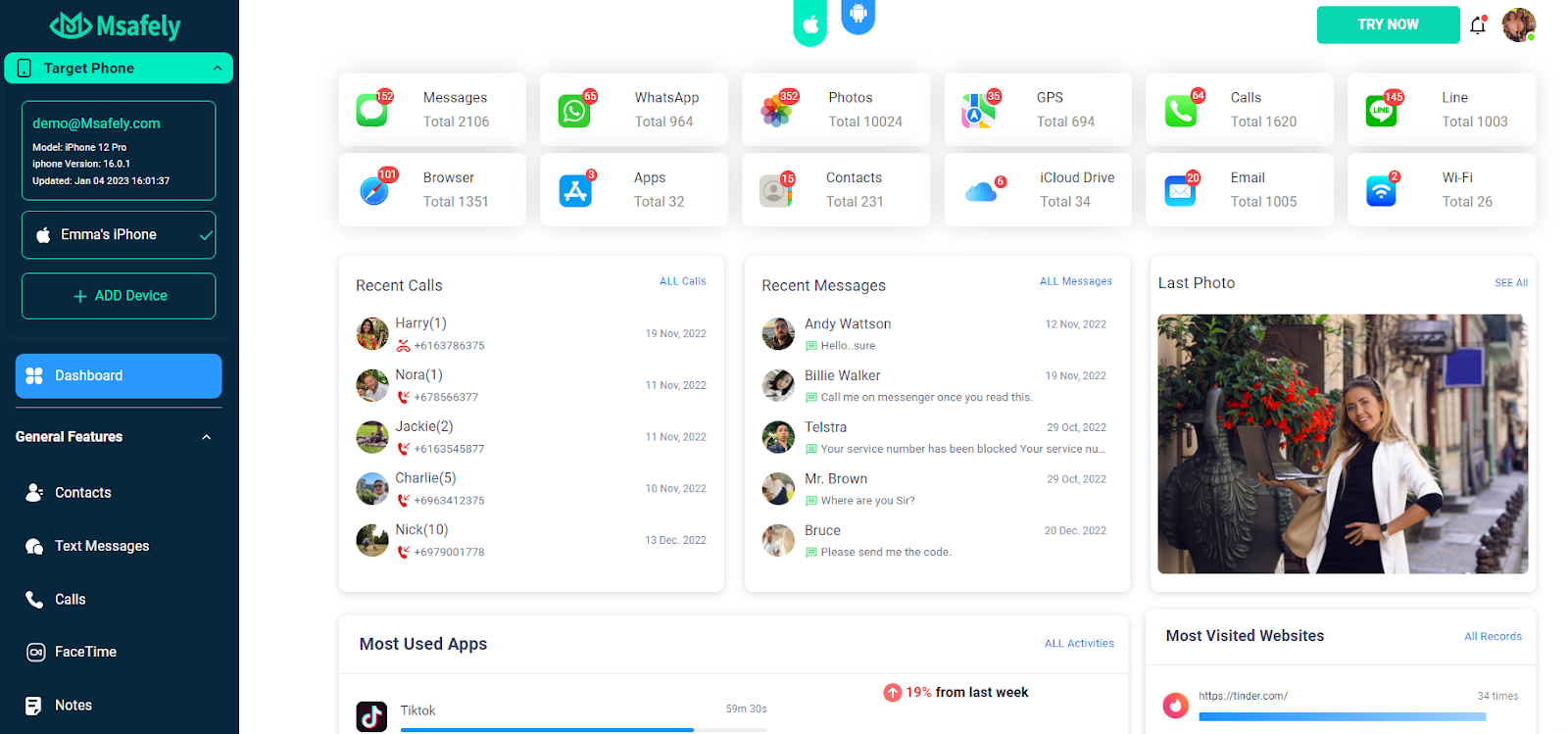
Msafely is one of the best iPhone monitoring apps, offering comprehensive tracking of key aspects such as social media, dating apps, and website activity. It is a useful tool for those who want to ensure transparency in their relationships.

Msafely Website

The comprehensive monitoring features of Msafely include tracking simple SMS, direct social media messages, and overall app usage. The affordable pricing options, especially when compared with the quality and features of the app, makes it the ideal tool for tracking an iPhone. 

Features

  • Multiple Spying Options: You can track all the digital activities on an iPhone with Msafely
  • Social media monitoring: Mafely also supports monitoring social media platforms on iPhones
  • GPS tracking: You can track the current location as well as the detailed location history of your partner with Msafely 

Pros

  • Msafely has a user-friendly interface. So, anyone can use it to find hidden apps on the iPhone for cheating
  • You can monitor all digital activities on an iPhone with Msafely
  • Msafely also supports GPS tracking of different types of smartphones, including iPhone
  • You can create custom alerts in Msafely to get quick alerts whenever a specific activity is performed on the phone, such as installing a dating app

Cons

  • Msafely has multiple pricing plans, but they are quite expensive

Pricing

Msafely Pricing
Msafely Pricing

Msafely offers three different pricing plans. The 1-month plan costs $39.99 per month while the 3-month plan costs $23.33 per month. If you are planning to keep monitoring the iPhone for a long period of time, you can also buy its 12-month plan that costs only $8.33 per month.

2. SpyPhone.cc — Best iPhone cheating app with a free trial

If you want to spy on someone’s iPhone without them knowing, you should consider using SpyPhone

SpyPhone Website
SpyPhone Website

SpyPhone offers a free version to help you gain access to an iPhone’s online activities, call logs, SMS, browsing history, social media usage, and cheating apps. All you need is the iCloud credentials of the target iPhone to start monitoring it remotely. 

Features

  • Free tracking: Get free tracking and monitoring of an iPhone with a free initial report
  • User-friendliness: SpyPhone is quick to set up and has a user-friendly interface to support monitoring
  • Fully undetectable: Whether you want to track your partner with their consent or spy on them, SpyPhone remains fully undetectable
  • Wide support: SpyPhone supports tracking of all major features on both iPhone and Android phones
  • Social media monitoring: You can monitor all key social media platforms, including WhatsApp, Facebook, Twitter, Telegram etc. with SpyPhone

Pros

  • Monitor all types of communication, including calls, SMS, emails, and social media DMs
  • Comprehensive reports about the target user’s online activities, including usage of cheating apps
  • No lengthy installation or configuration steps are involved in using SpyPhone

Cons

  • Internet access is compulsory for real-time location tracking

Pricing

SpyPhone is currently available for free. So, don’t waste your time and create an account on it today!

stories on infidelity

3. SpyX – Best Android cheating app for remote monitoring

The remote features of SpyX make it one of the best Android cheating apps currently available on the internet. While it is primarily for parental control, couples can also use SpyX because of its versatile features. 

SpyX Website
SpyX Website

Like most of the other monitoring and cheating apps, it can obtain a lot of information from a target device, including messages, call logs, location, and social media usage. 

Remote monitoring is the highlight of SpyX. You can simply start monitoring an Android without having to install an app. Keep in mind that remote monitoring does have some limitations, such as low data sync.

Features

  • Location tracking: SpyX allows you to track the location of the target Android, as long as their devices are connected to the internet
  • Hidden browser tracking: SpyX operates in a hidden mode to track mobile apps usage and track browser history of your partner
  • Comprehensive monitoring: You can obtain complete records of the SMS, MMS, call logs, and app usage of an Android in SpyX

Pros

  • User-friendly interface and a comprehensive demo area to facilitate the users
  • Features shown in the free demo are tracking features that you can actually use in your dashboard after purchase
  • Remote tracking and monitoring

Cons

  • The procedure is complex, and Android and iPhone phones use different binding processes

Pricing

SpyX Pricing
SpyX Pricing

SpyX’s pricing plans are quite expensive, especially when compared to other monitoring tools. The monthly package costs $49.98 per month. On the other hand, you can get the 3-month plan and 12-month plan at $28.32 per month and $11.66 per month respectively. 

4. mSpy – Best iPhone cheating app for iMessages

mSpy is a reliable spying and monitoring platform. It is a great tool to check your spouse’s iMessages and monitor their communication to determine if they are cheating on you. You can also use mSpy for other purposes, such as monitoring social media, live location tracking, and tracking phone numbers. 

mSpy Website
mSpy Website

The working mode of mSpy is available in both visible and stealth mode. So, if you want to see if your partner has a cheating app, you can use mSpy to find out the truth. 

Features

  • It supports monitoring cheating apps on both Android and iPhone
  • mSpy records the call log history to help you determine who the target user is speaking to

Pros

  • User-friendly interface
  • Multiple pricing options 
  • A unique keylogging feature is present to get complete information of what a user is typing

Cons

  • Expensive paid plans
  • mSpy has a user-friendly interface, but the initial process of setting it up can be difficult for non-technical individuals

Pricing

mSpy Pricing
mSpy Pricing

mSpy currently has discounted pricing. The 1-month plan of mSpy costs $48.99 per month, the 3-month plan costs $27.99 per month, and the 12-month plan costs $11.66 per month. As evident, these packages are quite expensive, especially when compared to other tools like MSafely. 

5.  Spyera – Best iPhone tracker to catch cheaters

Spyera is one of the best monitoring apps available for various operating systems, including iOS and macOS. You can use this iPhone tracker to monitor various activities, such as web history and apps usage, to determine if the target user is on cheating platforms. 

The monitoring of iPhones with Spyera is similar to other monitoring apps. You need to have the iCloud credentials of the target device for its remote monitoring and to successfully catch the cheaters. 

Spyera Features
Spyera Features

Features

  • Spyera can monitor and record calls of the target device
  • You can get a complete history of your partner’s social media usage with Spyera
  • Spyera also supports tracking browsing history to determine if your partner is visiting dating websites

Pros

  • Multiple tracking and monitoring features
  • Cross-platform support
  • Spyera offers multiple pricing options to suit your requirements
  • It operates in a stealth mode and has a user-friendly interface

Cons

  • Spyera does not support monitoring of all social media platforms
  • Expensive pricing plans
  • There is no free trial or refund policy in Spyera
  • Poor customer support

Pricing

Spyera Pricing

The pricing model of Spyera is quite different from the other monitoring apps. If you only want to monitor an iPhone with Spyera, you can buy its smartphone plan which costs $89 per month. On the other hand, there are also packages available for tablets ($69 per month) and computers ($49 per month). 

What Apps Do Cheaters Often Use On Their iPhones?

Cheaters have a lot of options when it comes to using different apps for cheating. Some of them are:

Related Reading: Signs Of Snapchat Cheating And How To Handle It

1. Snapchat

Snapchat is one of the oldest and most well-known social media apps that cheaters often use on iPhones for cheating purposes. It makes the messages viewable for a short amount of time. So, it is a perfect app for those who don’t want to leave any evidence of cheating. 

Snapchat
Snapchat

2. Viber

Viber is a secure and free communication app. The popularity of Viber has decreased in the last few years, but it is still known for its features like group chats and quickly disappearing messages. Hence, cheaters use Viber to hide their conversations. 

Viber
Viber

3. Tinder

Tinder is the most popular dating app in the world. Hence, it should not be installed on any device of a married or committed individual. 

If you see that your partner has Tinder installed on their iPhone, it is a clear indication that they are cheating on you. Cheaters use Tinder for much more than simple dating. It has become a popular tool for affairs and one-night stands. Therefore, if you find it on your partner’s phone, you should start investigating and monitoring it with an app like Msafely.

 Tinder
 Tinder

4. Bumble

Just like Tinder, Bumble is another popular dating app. It is not typically considered to be a cheating app, but many people use its dating features for cheating purposes as well. The primary focus of Bumble has always been on empowering women to make the first move. However, the app can be misused for cheating, so keep an eye out for it. 

Bumble
Bumble

5. WhatsApp

WhatsApp is one of the most popular communication apps in the world. It allows users to message or call anyone without any charges. While WhatsApp is typically used for everyday messaging, it can be used for cheating, so you should keep a close eye on how your partner is using WhatsApp and who they are talking to.

WhatsApp
WhatsApp

How To Catch Cheaters on An iPhone?

Considering the different apps, websites, and platforms that cheaters use, the best way to catch them is through a comprehensive monitoring tool. Msafely is the best option for you in this regard because of its user-friendliness, wide-ranging functionalities, and the ability to generate quick alerts through which you can catch cheaters in action. 

Here are the key steps involved in using Msafely to catch cheaters:

  1. Sign up for Msafely’s website and purchase one of its paid plans to access the monitoring features
Msafely Registration
 Msafely Registration

2. Connect the target device, such as an iPhone, to start its monitoring

Msafely OS Select
 Msafely OS Select

3. You will need the iCloud credentials of an iPhone to monitor it. Once the iPhone is connected, you can easily monitor it from Msafely’s dashboard

Msafely Dashboard
Msafely Dashboard

FAQs

1. Where do cheaters hide stuff on iPhone

Cheaters typically hide stuff and apps within folders. It is also possible they might be using a specific cheating app that disguises itself in the name of another app or game. 

2. What is the best app to hide cheating?

Some of the most popular iPhone apps to hide cheating are NewsTalk, Calculator Pro+, Vaulty Stocks, CoverMe, and Hide My Text.

3. Where do you look on the iPhone for cheating without them knowing?

Check for different apps like social media platforms. Moreover, you should check the Photos app, including deleted items, to find any proof of their cheating. Look within the folders if any dating or cheating app is installed. Also, you can use a third phone tracker like Msafely, Spyphone, etc. to track their iPhone without their knowledge.

4. What to look for in a cheating husband’s iPhone?

You should look for any suspicious cheating apps installed on your husband’s iPhone. Moreover, you should monitor his browsing history, social media usage, and call logs to determine if they are cheating. If you want to track their iPhone without their knowledge, it will be faster and more efficient to use third-phone monitoring apps like Msafely, Spyphone and so on.

5. Is the Msafely phone monitoring software undetectable?

Yes! Msafely is the best iPhone monitoring software because it operates in a completely undetectable mode. 

Final Thoughts

The bottom line is that there is a large collection of hidden apps on iPhones for cheating. Initially, you might think that it is difficult to find the right phone monitoring app, but we hole that this article has guided you to make the right choice. 

Among other apps, Msafely is the most efficient platform available to catch cheaters using different dating apps on their iPhones. Sign-up for Msafely today and monitor your partner’s iPhone to determine if they are being unfaithful. 

10 Best Apps To Catch A Cheater

15 Spy Apps For Cheaters — Free and Paid

15 Best Couple Apps To Try In 2021

Your contribution does not constitute a charitable donation. It will allow Bonobology to continue bringing you new and up-to-date information in our pursuit of helping anyone in the world to learn how to do anything.

Ask Our Expert

Barcelona’s 125th anniversary: When their star striker was kidnapped for 23 days

Friday, November 29, 2024, marks the 125-year anniversary of the formation of FC Barcelona.

To mark the occasion, The Athletic is running a series of pieces, celebrating the people and the moments who have helped make the club what it is today.

We have told you about the story of Joan Gamper, the man who founded the club, and run through some of the most significant numbers in Barca’s history. Now, we look at the scarcely believable story of when their star striker, Quini, was kidnapped in 1981…


“Quini’s wife called me at four o’clock in the morning. She told me he hadn’t come home that night and that she hadn’t heard anything from him.”

Former Barcelona president Joan Gaspart is talking to The Athletic about one of the most unusual incidents in the club’s history.

It was Sunday, March 1, 1981, and Gaspart was vice-president. Barca had beaten Hercules 6-0 at the Camp Nou and La Liga’s top scorer Quini had provided two goals. Barca looked on course for the Spanish title — something that had not happened since 1973-74, in Johan Cruyff’s playing days and when Quini was scoring goals for Sporting Gijon instead.

There was a sense of euphoria in the city and among the players, who decided to go for dinner at a restaurant near the ground.

It was the restaurant Can Fuste, a 15-minute walk from Camp Nou. Everyone was waiting for the then 31-year-old star striker Quini, full name Enrique Castro Gonzalez — but he never arrived.

“There were seven or eight of us,” Carles Rexach — one of the players in the squad tells The Athletic. “(Barca centre-back and Quini’s close friend Jose Ramon) Alexanko met us and said he didn’t know where he was or where he had gone.”


Quini was one of Spanish football’s most famous players in the 1980s (FC Barcelona)

The last anyone had heard from Quini was a TV interview in which he spoke about their upcoming game against Atletico Madrid. Atletico were in first place, two points ahead of Barca and the game was crucial.

Mari Nieves, Quini’s wife, had flown back from Gijon that afternoon with her two children, as she did on many weekends. After the match, her husband stopped by the house to pick up his things before getting in his Ford Granada to head to Barcelona airport to pick her up.

“His wife (when he did not appear at the airport) had called several hospitals, police stations or any place where they might know something,” Gaspart says. “He didn’t show up. Nobody knew anything. We went to his house at five or six o’clock in the morning thinking, ‘Where could he be?’”

Gaspart, then-Barca president Josep Lluis Nunez and Alexanko spent the night at Nieves’ house and immediately called the police.

The next day, the report of Quini’s disappearance became official. The three men stayed with Nieves until she received a call that began to give her answers.

The case caused a stir across the country. It was reported in all the major media outlets and rumours began to spread about whether the Basque separatist group ETA had been involved after terrorising Spain with a number of attacks.

Nieves received the first of 21 calls from her husband’s kidnappers. It was not ETA but three people with no criminal record and no jobs who had tried to solve their financial problems by kidnapping one of the country’s biggest football stars and demanding a large ransom.

“The news spread like wildfire all over Barcelona,” Josep Maria Minguella, a former agent and a figure who has been closely linked to the club over the years, tells The Athletic.

“There was a lot of consternation. With ETA active, there were a lot of kidnappings at the time, but it had never happened to a player. It was reminiscent of what had happened to (Real Madrid legend Alfredo) Di Stefano a few years earlier (when he was kidnapped by Venezuelan guerrillas in 1963).”

As Rexach puts it 43 years later, “At first we thought it was a joke because it was unimaginable.”

On his way home from the airport, Quini had stopped to fill up his car when the three men suddenly assaulted him and forced him into the vehicle at gunpoint. They later abandoned the car and put Quini in a hood and wooden crate in a van and drove to Zaragoza, around a four-hour drive to the west of Barcelona.

There they transferred him to a hideout, where he spent 23 days locked up.

Quini had been top scorer five times in La Liga and had scored 73 goals across four seasons with Barcelona.

“He was one of the best players in Spain and was constantly in the media spotlight,” Rexach says. “They knew kidnapping him was going to have a big impact.”

“He was such a charismatic man and he was good to people,” Juan Carlos Perez Rojo, a player who was in the ‘B’ team but trained with Barca’s senior side, tells The Athletic. “They knew everyone was going to step up and give him the money he needed.” Rojo and Quini became friends some time after the kidnapping and he is into his 46th year at Barca, where he works as a scout.

“As a person he was very simple, a good person, kind,” says Minguella, who helped sign Quini from Sporting Gijon. “He didn’t deserve all the things that happened to him and his family. It’s one of those moments when you realise that life can be unfair.”


Quini with Nieves on the day of his release (Xavier Bonilla/NurPhoto via Getty Images)

It later emerged the kidnappers’ main target had been the then-Barcelona coach Helenio Herrera. When they found out he had a cold, they changed their plans as they feared he might die during the kidnapping.

In the days that followed, the police worked in secrecy.

“There was a lot of upheaval,” says Minguella. “The police controlled the situation and didn’t want too many people to intervene.”

“The police didn’t want people to get in the way, even if they wanted to help,” adds Rexach. “So they just let Alexanko be the one to help.”

Barcelona asked La Liga to postpone the match against Atletico that weekend. The Spanish top flight denied that request, Barca played and lost 1-0 at the Vicente Calderon, Atletico’s former home. The German midfielder Bernd Schuster, who threatened not to play, blamed Nunez and Herrera for the match going ahead.

“There were people who didn’t want to play until they found him and there was a bit of a struggle because the coach thought we had to play even if he wasn’t there,” says Rexach. “It was complicated.”

Barca played two more games with Quini still missing, losing 2-1 to Salamanca and drawing 0-0 with Real Zaragoza. They would finish four points behind champions Real Sociedad in fifth place.

“That year we didn’t win La Liga because we spent those three weeks just thinking about Quini,” Rexach says.

Meanwhile, the police continued to do their job. As calls from the kidnappers were made from phone boxes, they asked Telefonica, Spain’s leading telecoms company which owned them, to cooperate.

“The kidnappers went completely unnoticed,” Juan Martinez Ruiz, one of the 20 officers in charge of the case, later told Spanish magazine Libero. “That was the main reason it took so long to locate them. They had never broken a dish, they had no previous convictions, they were not related to criminals… They were absolutely normal.”

The police issued a statement appealing for the public to help and had to deal with an avalanche of false leads. Telefonica had trouble identifying the origin of the calls.

In one of their calls, the kidnappers told Nieves they were nervous because of how much Quini ate, given they no longer had enough money to buy sandwiches. They were demanding 100 million pesetas for his ransom (worth around €600,000 today), a figure that had risen from the original 70 million pesetas.

In one of the attempts to pay the kidnappers, the police asked Alexanko to go to La Jonquera, a Catalan town close to the French border, with a briefcase full of banknotes. The kidnappers asked him to cross the border, but the police refused because the French authorities would have arrested him on the spot.

On March 20, the three men asked the money to be paid into a Credit Suisse bank account.

“Barca were looking for solutions because the kidnappers were very absent-minded,” Minguella says. “Those who kidnapped him did not have very clear ideas about what ransom they wanted to ask for and were changing their strategy.

“Nunez’s secretary called me to find out if I had any way of getting money in Switzerland, where the kidnappers asked for the money to be deposited. I was doing business in Luxembourg and Switzerland and I had money there. I said yes and agreed to help with the payment.”

The bank account was in the name of one of the kidnappers, Victor Miguel Diaz Esteban. The Swiss police worked closely with their Spanish counterparts to track him down. Diaz Esteban went to Switzerland to withdraw one million pesetas in U.S. dollars on March 24; within 18 hours, the police had arrested him after finding the hotel where he was staying and following his steps when he left for the airport to catch a plane to Paris. He was interrogated and confessed to holding Quini in a basement in Zaragoza.

In less than a day, the police released him and arrested a second kidnapper.

Quini later told friends this was when he was most afraid because he heard a lot of noise and thought the kidnappers would kill him. But on the night of March 25, radios across Spain announced he had been freed.

When he arrived in Barcelona, a huge crowd was waiting for him at the police station — Quini had to go out to greet them.


The striker prepares to give a press conference after his release (FC Barcelona)

“When he came out he was in a very bad state, you could see it,” Rexach says. “All I know is that I gave him a hug. He was hidden in a place with no light for 23 days. It’s something you wouldn’t wish on your worst enemy.”

“He wanted to play and get back to normal as soon as possible,” Rojo says. “They gave him psychological support, I heard about it from team-mates some time later.”

Quini returned for the last four games of the La Liga season, playing again barely a week after his release, and was received with full honours at every ground he played at. He played 90 minutes in each of his first three league games after his return — scoring twice in a 5-2 win against Almeria — and still finished as La Liga’s top scorer with 20 goals. He also scored in both legs of the Copa del Rey semi-final and twice in the final against his boyhood side Sporting Gijon in the final as Barca lifted Spain’s national cup.

“On every pitch, when they said Quini’s name, there was five minutes of applause,” Rojo says. “He had a spectacular reception.”

The three kidnappers were sentenced to 10 years in prison and given a five million peseta fine.

“They were simple people, without great possibilities,” Quini told a press conference after his release. “They fed me with sandwiches because they couldn’t afford any more.”

“There were team-mates who made jokes after that,” Rojo says. “Sometimes, when we were in hotels after dinner when you go to the room, there were team-mates who would go into his wardrobe to scare him when he arrived.”

Quini spent three more seasons at Barcelona, finishing with 73 goals in 141 appearances for the Catalans. He then returned to Sporting Gijon in 1984, where he spent the last three years of his playing career. He worked as a coach, team delegate and director of institutional relations for them.

The kidnapping had a very real impact on Quini, who died of a heart attack aged 68 in 2018. He was given an emotional tribute by the Camp Nou, with a huge tifo unfurled that read ‘Quini, sempre recordat’ — Quini, always remembered.


The Camp Nou tribute to Quini after his death (Xavier Bonilla/NurPhoto via Getty Images)

“This affected him a lot throughout his life,” Rexach says. “He spent many days locked underground in a very small cell. He didn’t want to talk about it because every time he did, he relived the trauma.

“He did tell me that when he was fed by the kidnappers he sometimes kept (the food) to himself. He thought that if they hunted them down and killed them, it would be impossible for anyone to find him there and he would starve to death.

“He had those 23 days in his head until the day he died. People think he forgot it quickly, but he didn’t. When someone would ask him a question (about it), you’d see him change the subject very quickly.

“It’s the most unbelievable thing that has happened to Barca in its history.”

(Top photos: Getty Images; design: Eamonn Dalton)

Here’s What to Look Out For

From annoying to outright sinister, scam calls are diverse and can sometimes be easier than expected to fall for. I’ve encountered multiple call attempts from people disguised in different ways, from telemarketing scams to people pretending to be the authorities, and these are the telltale signs.


1 Fake Customer Support

The number of times that someone has tried claiming to be a technical expert on the phone is laughable. I might be somewhat inclined to fall for their tricks if I was actually experiencing a technical issue, but they never call at these times.

Beyond claiming something is broken, these “customer support experts” may also claim that my payment failed. This is one of the most common types of phishing attacks, and you should always be cautious in these situations. If you’re ever in doubt, reach out to the product or service via one of their official support channels.

2 People Pretending to be the Authorities

Scam calls often use urgency and threats to try and coerce you into sending money to a criminal. For example, I’ve sometimes experienced calls with people pretending to be law enforcement. I also know others who’ve received fake calls from people claiming to be embassies.


Depending on where you are, you may also get scam calls from criminals pretending to be tax authorities. For example, someone might pretend to be the IRS. Again, it’s worth double-checking with your local tax authorities if you receive this kind of call.

3 Fake Charities

Some scammers pray on people’s goodwill, and fake charities are one way I’ve seen them try to do this. These can be particularly dangerous if you’re eager to please or quick to trust, two personality traits that make you more vulnerable to phishing scams and fraudulent phone calls.

When a fake charity calls you, they’ll try to tell you that they represent some kind of good cause. They might even try and guilt-trip you. A general rule of thumb for me is to donate directly to a charity I believe in; in my opinion, this is the best way to do it safely. If you’re donating to a fundraiser, it’s important to be aware of GoFundMe scams.


4 “Winning” Competitions

One of the oldest tricks in the phone call scamming book is for someone to pretend that you’ve won a competition. It’ll often involve claiming you’ve won an expensive piece of tech or a cash prize. The scammer will then likely try and get your banking details.

phishing scam text on smartphone
Mer_Studio/Shutterstock

If you don’t remember entering a competition, you can be certain that someone is trying to scam you. And if they convince you to join one, you should ignore their request; the same goes for not trusting giveaway contests on social media. Even if the call was legitimate and you did enter a competition, the company will find an alternative way to contact you.

5 Pretending That Someone Is in Danger

Another sinister way scammers have tried to contact me before is by pretending that someone else is in danger. Sometimes, they’ve pretended that it’s someone I know. This can be very difficult to deal with because, naturally, you always wonder, “What if?”


On other occasions, the scammer will say that they are the person in danger. In these cases, it’s always easy to confirm it’s a scam. I highly doubt that someone in peril would decide to call a random phone number and try getting money from them.

In almost all cases, the person will try asking me for my bank details. It’s also good that they do this because it’s the biggest red flag.

6 Telemarketing Scams

Telemarketing calls are annoying even if they aren’t scams, and I now pay zero attention to them. But in the past, people have tried scamming me by pretending to be telemarketers.

A woman holding her phone with a worried expression, with a laptop on the table and a sync icon.
THICHA SATAPITANON/Shutterstock

These kinds of scams can take multiple forms. Sometimes, a person has asked me to pay for something; in other cases, they’ve suggested that I have paid too much for something. You can also recognize a telemarketing scam if the voice sounds automated.


I’ve sought to remove my phone number if it’s publicly listed online, and I also have opted out of receiving telemarketing calls when I have the option to give permission. Thanks to this, I know that any calls I receive of this kind are either scams or unwelcome.

7 Fake Bank Calls

Sometimes, users have called me and pretended to be my bank. In some cases, they’ve asked me for my account details—and in other instances, the individual has asked me to send them money. I have refused to do so on both fronts. You should be very careful with fake test transactions and similar scams.

Like telemarketing scams, many fake bank calls are automated. Your bank won’t ask you for sensitive personal information, such as your card or account security number, and you should never hand these over. If you’re in doubt, call your bank via their official support number.


8 SIM Card Scams

SIM card scams are among the most advanced phone call scams, and you, therefore, need to be on high alert to avoid becoming a victim. These scams require your mobile carrier to comply, but before that, the scammer may contact you to gather information. In some cases, they may use phishing links instead of phone calls to try and scam you.

A smartphone displaying a failed eSIM activation, indicated by warning symbols encircling the device.
DenPhotos and AllArtAleks / Shutterstock

The person will then contact your carrier and pretend to be you. I’ve avoided becoming a victim by not giving anyone information like my address unless I’m certain they’re genuine. Even then, I may go to extra lengths to verify.

9 Voicemail Scams

This isn’t a strict call scam like some of the others on this list, but in some cases, I’ve received voicemail messages from people who are obviously trying to extort money from me. In these cases, the person will try to get me to call them back and claim that it’s for some important reason.


Because of AI, these kinds of scams have become more advanced, with voice clone family scams being one example. One way to tackle this issue is to be able to tell if the number calling is a phone scam, and another is to ignore the message altogether.

10 False Debt Scam Calls

Nobody likes being in debt, and it’s easy to see why scammers would use this to their advantage. Sometimes, I’ve received calls claiming I’m in debt for products and services I have never used. The scammer will then ask me to send money to pay this off.

Even if I was in debt, I would call the entity first and confirm this. You can often also check how much you owe online. You really don’t need to let scammers perform card-cracking on you.

Scam calls are prevalent, and while mobile devices are better at picking these up, they still aren’t perfect. As a result, you need to be on guard to stop issues from arising. Knowing what to look out for is an ideal starting point.

China expands multi-entry permits for HK, Macao to neighboring cities

<img src='https://news.cgtn.com/news/2024-11-29/China-expands-multi-entry-permits-for-HK-Macao-to-neighboring-cities-1yVzTASF5xm/img/5388465664204d368a453b13fbc3db21/5388465664204d368a453b13fbc3db21.png' alt='Photo of the Hong Kong-Zhuhai-Macao Bridge, Zhuhai, south China's Guangdong Province, July 20, 2024. /CFP'

China on Friday announced new policies enabling residents of Shenzhen and Zhuhai in Guangdong, the economic powerhouse province, to make more frequent visits to neighboring Hong Kong and Macao special administrative regions.

The measures are seen as the country’s latest efforts to enhance mobility and foster deeper integration within the Guangdong-Hong Kong-Macao Greater Bay Area.

According to a statement from the Exit and Entry Administration, starting December 1, 2024, permanent residents of Shenzhen and holders of residence permits in the city will be eligible to apply for multi-entry permits to Hong Kong. The permits allow unlimited visits to Hong Kong within a year, with each stay capped at seven days.

From January 1, 2025, permanent residents of Zhuhai City will be able to apply for a “one trip per week” permit for Macao. Under the policy, they can visit Macao once per calendar week, with a maximum stay of seven days per trip.

Also starting January 1, 2025, permanent residents and residence permit holders in the Guangdong-Macao In-depth Cooperation Zone in Hengqin will be eligible to apply for multi-entry permits to Macao, enabling unrestricted visits for up to seven days per stay within a one-year validity period.

The Greater Bay Area, encompassing China’s two special administrative regions and nine cities in Guangdong, is home to around 86 million people. It serves as a hub for innovation, finance and trade, maintaining dynamic connections to global markets. Last year, the region’s total economic output matched that of Canada.

How ‘Senna’ TV show deepens relationship between Netflix, F1

A few seasons into the run of Netflix’s Formula 1 docuseries “Drive to Survive,” the racing league’s governing body, the Fédération Internationale de l’Automobile (FIA), presented the platform with a deck containing evidence of “the Netflix effect.” Since the series premiered in 2019 as part of a concerted effort to expand the sport’s footprint in the U.S., officials had seen social media engagement, merchandising, attendance and ratings for race telecasts improve in its least-penetrated major market.

“It’s tough to totally decouple — Formula 1 was doing a lot of great new stuff, you had a broadcast partner in ESPN that was also prioritizing it, and you had a partner in Netflix that was promoting the sport through the docuseries,” recalls Brandon Riegg, vice president, nonfiction series & sports, at the streamer. “But they for sure were very generous and said, ‘We attribute a lot of this to Netflix.’ And when you saw the gains that they made across many categories, it was impressive, and I felt like we could take credit for at least a portion of that.”

Now Formula 1 is poised to return the favor.

With the premiere Friday of “Senna,” a scripted miniseries about the life and career of Brazilian F1 legend Ayrton Senna, the championship’s rich lore — replete with archival footage and FIA authorization to reconstruct races, podiums, logos, uniforms and track layouts from Senna’s heyday — becomes the source material for yet another evolution in one of the most innovative relationships in sports entertainment.

“It becomes almost like an origin story for F1,” says “Senna” showrunner Vicente Amorim. “You love ‘Drive to Survive’? You’re an F1 fan? You’re maybe thinking of watching the ‘F1’ movie next year? Maybe have a look at how it all started.”

If Warner Bros.’ 2025 feature, developed in collaboration with the FIA and starring Brad Pitt, represents the sport’s promotional campaign at the scale of a Hollywood blockbuster, “Senna” flows instead from Netflix’s distinct approach to international television. The six-part series, which follows its dashing hero from his karting days in São Paulo to his tragic death, at 34, during the 1994 San Marino Grand Prix, was produced in Brazil, filmed largely in Portuguese and relied on Latin American artisans, particularly in the creation of its astonishing replica cars. It’s the same regional model that created crossover hits such as “Élite” and “La Casa de las Flores,” applied to one of the most successful drivers in F1 history.

“We really made those shows thinking they would be huge in Spain and Mexico, respectively, and I think it’s precisely their authenticity and their very specific local value, culture, look and feel that made them unique for their own countries and then globally appealing,” says Francisco Ramos, Netflix’s vice president of content Latin America, who worked on both titles. “What we’ve discovered, through this journey of almost 10 years making local content outside of the U.S., is that the most accurate, authentic stories that properly represent the cultures from which they come are the ones that are able to find resonance outside of their home territory.”

Conceived by the racer’s family and Brazilian production company Gullane, “Senna” came to Netflix after plans for a feature film hit creative and financial roadblocks — and soon found a devoted fan in Amorim, who vividly remembers Senna’s zenith in the late 1980s and early 1990s, when he won three world championships. “It becomes almost like a religion,” Amorim says of growing up in Brazil during this period. “Every Sunday, you turn on the TV to watch Senna probably win.”

Although its focus is the triumph and tragedy of Senna’s career, as well as his relationships with his parents, Miltão (Marco Ricca) and Zaza (Susana Ribeiro), and his glamorous pop star girlfriend, Xuxa (Pâmela Tomé), “Senna” is also the tale of a fast-modernizing sport, one on the cusp of becoming the glitzy global juggernaut it is today. In 1994, the year Senna died, the F1 world championship consisted of 16 races, 11 of them in Europe; 30 years on, the season now spans 24 races on five continents, including three in the United States alone. And Senna himself — handsome, media savvy and impatient with the Old World politics he found in F1 when he joined the circuit in 1984 — was instrumental in setting the transformation in motion. As Amorim puts it, “There’s an F1 ‘Before Senna’ and an F1 ‘After Senna.’”

Gabriel Leone as Ayrton Senna, right, with Matt Mella as Senna’s teammate and rival Alain Prost.

(Alan Roskyn / Netflix)

The makeup of the “After Senna” F1 fan base is, in fact, a significant part of why Netflix has invested so much in its partnership with the sport. Although the FIA first envisioned “Drive to Survive” as a way to reach American viewers, according to Riegg, Netflix saw the docuseries as a “hedged bet”: If it failed to catch on in the States, it still had potential in other countries where Netflix operates that had established F1 followings.

In the end, “Drive to Survive” boosted interest in F1 not only in the U.S. but also globally: When the FIA presented Netflix with its deck about the series’ impact, “They made gains in some of the markets they thought were the most mature, including Brazil and Italy and Spain,” Riegg says.

Although Ramos insists that “Senna,” which was first announced in 2020, was not expressly intended to “feed off” the success of “Drive to Survive,” in many ways it epitomizes the same effort to diversify output and audience that has defined Netflix’s business in recent years. The release of promotional art and the trailer for “Senna” attracted interest not only in Brazil but also in other F1 strongholds like Mexico, Argentina, Italy and Japan, while the docuseries might be said to have primed the pump for potential viewers in places like the U.S. that have a less established F1 following.

“During the process of getting this developed and made, ‘Drive to Survive’ became bigger and bigger,” Ramos says. “That’s not the way we planned it. … But for sure there’s a benefit that I cannot steer away from.”

The benefit might also work in reverse, Riegg acknowledges, creating a chance “to broaden the funnel or the entry point for people that are going to become fans of Formula 1 in general, whether that’s the races or something like our documentary series.”

It’s an opportune moment for Netflix’s relationship with F1 to evolve, as “Drive to Survive” confronts its first real headwinds after years of viewership growth.

“I think there’s been a stabilization of the viewership the last couple seasons,” Riegg says. “It did the first few seasons continue to grow consistently and — I guess ‘plateau’ is one word — then found its audience. There’s a natural ebb and flow on all of these shows, especially the sports shows, or even our dating shows, which is analogous in certain ways, where some seasons you just have stronger stories than others. I think part of what F1 deals with that’s somewhat different than some of the other sports is you’ve had a winner in Max [Verstappen] and a team in Red Bull that’s really dominated for many seasons in a row so there’s sort of been less suspense and perhaps drama over the course of the season.”

What’s not yet on the table for Netflix, Riegg emphasizes, is live Formula 1 racing, although the FIA’s current U.S. television deal, with ESPN, expires in 2025. And it’s not because of the challenges the platform has faced in scaling up its capacity for live programming, most recently during the boxing match between Jake Paul and Mike Tyson, which led to widespread complaints of freezing, buffering and poor image quality. It’s because Netflix’s current focus vis-a-vis live television is on one-off events, rather than on a season-long commitment. “We’re in the crawl, walk, run phase,” Riegg says. “We’re definitely not in that business right now.”

And as “Senna” itself understands, it’s commerce as much as horsepower that makes the wheels of the sport turn. “F1 is a business,” Amorim says, repeating a real-life line from Senna rival Terry Fullerton that’s included in the series. “Except for two hours on Sunday.”

Car Launches in December 2024: From Honda Amaze Facelift to Kia Syros and Jaguar Four-Door GT, Check List of Vehicles Coming Next Month

New Delhi, November 29: December 2024 is set to offer new car and bike launches. Several cars will be launched in December 2024. Among the vehicles making their debut is the Honda Amaze Facelift. The Kia Syros may hit the market. Additionally, Jaguar will unveil its electric 4-Door GT.

In November, India’s automobile market saw new launches across car and bike segments. Audi unveiled the Q7 Facelift. The new Audi Q7 Facelift offers enhanced luxury and advanced technology. Mahindra launched its electric SUVs, the Mahindra XUV 9e and Mahindra BE 6e. Maruti Suzuki also introduced the Dzire 2024, combined with new styling with improved features. Ola Electric in the EV two-wheeler segment, launched the S1 Z, S1 Z Plus, Gig, and Gig Plus, each with features suitable to a variety of riders. Mahindra XEV 9e, Mahindra BE 6e Launched in India; From Price to Specifications and Features, Know Everything About New Electric SUVs From Mahindra.

List of Upcoming Car Launches in December 2024

December 2024 is set to be an eventful month for the auto industry with several anticipated car launches. Here is the list of upcoming models.

The Honda Amaze facelift is set to be launched on December 4, 2024, in India. The new model might include a pair of slim Dual-LED headlights that are expected to be positioned higher than in the previous version. The design of the daytime running lights appears to take inspiration from the Honda Elevate. The front bumper is likely to have a simple design, and there could be LED projector fog lights located at both ends. The new Honda Amaze facelift may feature a dual-tone colour scheme, combining beige and black. It is anticipated to have an 8-inch touchscreen infotainment system.

The Kia Syros is anticipated to be released on December 19, 2024, in India. This new vehicle is likely to come equipped with all-LED headlights, including LED daytime running lights (DRLs). The design of these headlights may resemble those found on the Kia Carnival MPV. The Kia Syros is expected to provide customers with three different engine options. These options are likely to include a 1.0-litre turbocharged three-cylinder petrol engine, a 1.2-litre naturally aspirated petrol engine, and a 1.5-litre four-cylinder diesel engine. Audi Q7 Facelift Launched in India: From Price to Specifications and Features, Know Everything About New Luxury SUV From Audi.

Jaguar has recently shared a sneak peek of its new electric four-door GT on social media. The company has confirmed that the official reveal will take place on December 2, 2024, in Miami. The teaser image highlights the back section of this upcoming electric vehicle, which is designed according to Jaguar’s new ‘Copy Nothing’ approach. The car may come with a roof that slopes down, which may give it a sporty coupe-like appearance, and it does not have a rear windshield. At the back, there is a grille with horizontal fins. Additionally, the wheel arches seem to be bulky.

(The above story first appeared on LatestLY on Nov 29, 2024 07:33 PM IST. For more news and updates on politics, world, sports, entertainment and lifestyle, log on to our website latestly.com).

We Need a New Right to Repair for Artificial Intelligence

There’s a growing trend of people and organizations rejecting the unsolicited imposition of AI in their lives. In December 2023, the The New York Times sued OpenAI and Microsoft for copyright infringement. In March 2024, three authors filed a class action in California against Nvidia for allegedly training its AI platform NeMo on their copyrighted work. Two months later, the A-list actress Scarlett Johansson sent a legal letter to OpenAI when she realized its new ChatGPT voice was “eerily similar” to hers.

The technology isn’t the problem here. The power dynamic is. People understand that this technology is being built on their data, often without our permission. It’s no wonder that public confidence in AI is declining. A recent study by Pew Research shows that more than half of Americans are more concerned than they are excited about AI, a sentiment echoed by a majority of people from Central and South American, African, and Middle Eastern countries in a World Risk Poll.

In 2025, we will see people demand more control over how AI is used. How will that be achieved? One example is red teaming, a practice borrowed from the military and used in cybersecurity. In a red teaming exercise, external experts are asked to “infiltrate” or break a system. It acts as a test of where your defenses can go wrong, so you can fix them.

Red teaming is used by major AI companies to find issues in their models, but isn’t yet widespread as a practice for public use. That will change in 2025.

The law firm DLA Piper, for instance, now uses red teaming with lawyers to test directly whether AI systems are in compliance with legal frameworks. My nonprofit, Humane Intelligence, builds red teaming exercises with nontechnical experts, governments, and civil society organizations to test AI for discrimination and bias. In 2023, we conducted a 2,200-person red teaming exercise that was supported by the White House. In 2025, our red teaming events will draw on the lived experience of regular people to evaluate AI models for Islamophobia, and for their capacity to enable online harassment against women.

Overwhelmingly, when I host one of these exercises, the most common question I’m asked is how we can evolve from identifying problems to fixing problems ourselves. In other words, people want a right to repair.

An AI right to repair might look like this—a user could have the ability to run diagnostics on an AI, report any anomalies, and see when they are fixed by the company. Third party-groups, like ethical hackers, could create patches or fixes for problems that anyone can access. Or, you could hire an independent accredited party to evaluate an AI system and customize it for you.

While this is an abstract idea today, we’re setting the stage for a right to repair to be a reality in the future. Overturning the current, dangerous power dynamic will take some work—we’re rapidly pushed to normalize a world in which AI companies simply put new and untested AI models into real-world systems, with regular people as the collateral damage. A right to repair gives every person the ability to control how AI is used in their lives. 2024 was the year the world woke up to the pervasiveness and impact of AI. 2025 is the year we demand our rights.

Taiwan Aligns with India, Japan on AML Regulations for Crypto Businesses, Accelerates Registration Deadline

Taiwan is taking regulatory steps to govern its growing crypto sector. In a recent move, the country has made compliance with anti-money laundering (AML) laws mandatory for crypto firms. With the crypto ecosystem expanding, Taiwan has become a hub for Web3 initiatives. According to Statista, Taiwan’s crypto market is projected to grow at an annual rate of 7.75 percent from 2024 to 2028.

This week, Taiwan’s Financial Supervisory Commission (FSC) announced that all crypto firms currently operating or planning to establish businesses in the country must submit for AML registrations. The FSC has expedited the registration deadline, moving it up to November 30, 2024, from the original date of January 1, 2025, as reported by CoinTelegraph reported citing information from official documents.

“Enterprises or persons established overseas to provide virtual asset services may not provide virtual asset services within my country unless they have registered the establishment of a company or branch in accordance with the company law and completed money laundering prevention registration,” the English translation of the official document printed in Mandarin said.

Virtual Assets Service Providers (VASPs) who are found to be in violation of FSC’s instructions could reportedly face up to two years in prison or a fine of up to TWD 5 million (roughly Rs. 1.30 crore).

Under Taiwan’s anti-money laundering regulations, companies must provide details on the measures they are implementing to prevent the use of their platforms for the movement of illicit funds via cryptocurrencies. Crypto exchanges are also required to monitor and report the names, account details, and locations of suspicious customers to the government in a timely manner.

The accelerated deadline for AML registrations in Taiwan follows recent fines imposed by the FSC on exchanges MaiCoin and BitoPro for AML violations.

The FSC is intensifying its oversight of crypto activities in Taiwan as it seeks to integrate Web3 services into the nation’s financial ecosystem. In October, FSC official Hu Zehua stated that the regulatory body is open to involving financial institutions in pilot programs for virtual asset custody services, following growing interest from private lenders in this area.

Similarly, countries like India and Japan have also mandated AML compliance for crypto firms. These regulations require crypto companies to assist law enforcement in monitoring and addressing potential criminal activities within the crypto space.

How to do an SEO projection

Companies are increasingly requesting SEO projections.

It’s a reasonable request. SEO efforts often require significant resources and companies want to know what kind of return they can expect.

However, accurately predicting future organic growth is never straightforward. 

Countless variables can impact outcomes. Think of:

  • Algorithm updates.
  • Fluctuating click-through rates.
  • SERP changes.
  • The speed (or lack) of implementation.

As an SEO professional, how do you approach the challenge of making SEO projections when so much is uncertain?

This article describes a step-by-step process for creating SEO projections. It also explores two alternative methods that might help you sidestep difficult projection discussions altogether.

Making SEO projections: A step-by-step process

A robust SEO projection requires a methodical, data-driven approach. 

This method provides a detailed framework for forecasting organic search performance with greater precision and confidence.

1. Pull all relevant keywords a website ranks for, the search volume and current rank 

If you want the result to be as accurate as possible, remove any irrelevant keywords from this list so as not to overinflate the monthly search volume. 

Your final list should look something like this:

In our example, let’s say that the website in question ranks for 1,500 relevant keywords that add up to 57,320 monthly searches.

2. Gather estimated click-through rates by position

CTRs vary significantly depending on where a keyword ranks – Position 1 typically has a much higher CTR than Position 12. 

While this isn’t perfect, as CTRs can differ by industry and website, it’s far more accurate than applying a uniform CTR across all ranks. 

Depending on your source, your CTR list might look something like this:

Tip: I recommend getting CTRs for positions 1-20. Since CTRs are pretty much non-existent after Position 20, you can assume that any position changes that happen in Positions 21+ do not contribute any new visits.

3. Multiply the MSV by the CTR for the current position

Multiplying the monthly search volume by the CTR provides an estimate of the monthly traffic each keyword is currently generating for your website. These estimates serve as a baseline for measuring future increases. 

The result should look something like this:

Step 3 - Multiply the MSV by the CTR for the current position

Be sure to validate your numbers. Double-check your keyword data and make adjustments if they seem overly high or unrealistic. 

4. Estimate how much your SEO tactics will improve keyword rankings and calculate new visits

Projections rely on a key assumption. While no SEO can guarantee ranking improvements, the expectation is that higher rankings will lead to increased CTRs and more traffic. 

Set realistic ranking improvements, as shown below, and multiply the search volume by the corresponding new CTR.

Step 4 - Estimate how much your SEO tactics will improve keyword rankings and calculate new visits

A couple of other important points on the table above.

  • You’ll notice in the above table that the “New Visits” column subtracts out the current visits. This makes sense, right? We want our projections to show the increase in visits against the current baseline, not the total number of visits.
  • Since SEO doesn’t happen overnight, think about the timeframe you expect to see these increases. I like to use at least six months to a year as a timeframe but consider the difficulty of keyword targets, their competitive landscape and overall scope. This is yet another assumption that you will have to consider as part of these projections. 
  • I use an Excel sheet with formulas and VLOOKUPs to automate this entire process, so consider making yourself a template for this exercise.

At the end of this step, you should have an idea of the number of new visits you can expect by improving the current rankings for these keywords. This will be the basis of the projection moving forward.

In this example, let’s say this comes out to 5,260 new monthly visits.

Tip: Make sure the number of new monthly visits seems reasonable. If your numbers say that you are going to 20x new visits in a year, then you may want to rework the numbers to be a little less aggressive.

5. Define metrics like average conversion rate and average conversion value

These metrics can be obtained from first-party analytics data or by asking the business for their internal figures. Often, businesses requesting a projection will provide these numbers upfront. 

Regardless, it’s essential to align on these metrics, as obtaining values like average order value from non-ecommerce businesses can sometimes be challenging.

It’s important to consider that conversion rates and values can vary across different sections of a site, such as blogs, service pages or the homepage. 

This variability is another assumption to keep in mind. For this example, we’ll use a conversion rate of 2% and an average order value of $150.

6. Multiply the sum of new traffic by the average conversion rate 

Add the total number of new visits from the table above, then multiply it by the average conversion rate. 

This calculation provides the estimated number of new monthly conversions from improved rankings and a greater share of the monthly search volume. 

For example, 5,260 new visits x 2% conversion rate = 105 new monthly conversions.

7. Multiply the number of new conversions by the average conversion value 

This calculation provides the estimated monthly revenue a website can expect from ranking improvements. 

For example, 105 new conversions x $150 average order value = $15,750 monthly revenue. 

Remember that SEO results are gradual, so these numbers will build incrementally over the selected timeframe.

Here’s an example of what the full process to this point could look like:

Example SEO projection

This final step provides actionable numbers based on keyword research and calculations, with some assumptions. However, if you want to refine these numbers further, see the next step.

8. Layer the amount of new traffic or conversions over existing performance

Consider the timeframe for ranking improvements when making projections. 

If you have access to first-party data, you can layer your projections on top of current performance to see how these gains will unfold over time. 

This step is crucial, especially if existing performance is trending downward. It helps ensure your projections align with current trends and avoid overpromising. 

For example, the projected gains might be enough to bring performance back to last year’s baseline if it has been in decline. 

At my agency, a data, analytics and insights team handles this using predictive modeling, but when done correctly, it might look something like this:

Example traffic projection trends

And with that, you’ve completed a thorough SEO projection.

Get the newsletter search marketers rely on.


SEO projection alternatives

Two alternative projection methods can provide valuable insights for situations requiring faster turnaround or limited data access:

  • Opportunity analysis.
  • Hybrid opportunity analysis.

Opportunity analysis

An opportunity analysis showcases the number of keywords and search volume within striking distance. 

The idea is to look into the total addressable market (TAM) and the opportunity to capitalize on it.

All it takes is pulling the keywords a website ranks for, their current rank, the MSV, and doing a little math to group them by position. Here’s what it could look like in practice:

Opportunity analysis

When you have the data organized in this way, you can make callouts to show the opportunity that exists, such as: 

  • “There are 1.5 million monthly searches where your website already ranks on Page 2 and beyond.”

Also, add CPC data to show what it could cost them to buy clicks for all these keywords from a paid campaign. It could be a compelling insight that resonates with their bottom line, like: 

  • “$23,471 is what it would cost per click to get traffic from each of these keywords.”

Chances are your SEO campaign costs significantly less than that, and the business doesn’t have to keep paying over time to get those clicks from organic sources. Talk about real value!

This method isn’t an exact science, but it works without needing first-party data, which some businesses may be reluctant to share. 

Still, it’s helped me avoid several in-depth projection discussions, and it might work for you too.

Hybrid opportunity analysis

Taking the opportunity analysis a step further, the hybrid method introduces additional layers of financial estimation.

You can pair monthly search volume with additional data like:

  • Average click-through rate.
  • Average order value.
  • Average conversion rate. 

This is another quick and dirty way to get real dollar values without spending much time digging. For example:

  • Pull the keywords that you plan to target and get a sum of the MSV. This could be existing keywords, new keywords, or a combination of both. For this example, we’ll use 100,000 MSV.
    • This step can be quick and easy by pulling all the keywords a website ranks for in positions 1-100 from a third-party tool or long and tedious by filtering and removing irrelevant keywords for a more accurate list. Use your judgment on what you have time for and what is needed in your given situation. 
  • Set an average click-through rate (CTR). Average CTRs will vary by website, industry and keyword, but most sources will give you an average between 1% and 5%. For this example, we’ll use 4%.
  • Set an average order value (AOV) and average conversion rate. This can be done by digging through first party data, assuming you have access, or asking the business for these numbers. We’ll use a 3% CVR and AOV of $75.
    • Average order value = (organic revenue) / (number of organic transactions)
  • Then do some math.
    • (100,000 monthly searches) x (4% CTR) = 4,000 visits
    • (4,000 visits) x (3% CVR) = 120 conversions
    • (120 conversions) x ($75 AOV) = $9,000 per month 
Hybrid opportunity analysis

Practical steps for predicting SEO growth

As with any projection, it’s important to have a list of caveats ready when presenting your findings. 

While these projections are based on research and data, they involve several assumptions, such as:

  • How much rankings will actually improve.
  • The accuracy of CTRs.
  • How long performance increases will take.
  • Whether conversion rates will remain consistent.
  • Whether the business will implement your recommendations.

There are no perfect solutions to some of these assumptions without advanced predictive analytics. Many factors are beyond our control, making it impossible to guarantee precise outcomes.

That said, I hope these insights equip you to have informed discussions about future performance. Now, go ahead and start making your own SEO projections!

Contributing authors are invited to create content for Search Engine Land and are chosen for their expertise and contribution to the search community. Our contributors work under the oversight of the editorial staff and contributions are checked for quality and relevance to our readers. The opinions they express are their own.

Official Pokemon Sprite Building Sets Are Only $17 In Target’s Black Friday Sale

If you love classic Pokemon games and pixel art, you might have trouble deciding which of Mega’s officially licensed Pokemon buildable models to pick up during Target’s Black Friday sale. All six of the awesome Pokemon Retro Sets are on sale for only $17.49 each through Saturday. This nostalgic collection of building sets lets you make pixel art-inspired figures of some of the most beloved and recognizable Generation 1 Pokemon from the Kanto Region: Pikachu, Charmander, Squirtle, Bulbasaur Eevee, and Mew.

Mega Bloks: Pokemon Retro Sets – Pixel Art Display Figures

Mega Bloks Pokemon Retro Sets

More Pokemon Mega Bloks Deals

The Pokemon Retro Sets have anywhere from 323 to 434 pieces, so you’re getting a lot of bang for your buck. If you’re a long-time Pokemon fan nostalgic for the days of battling static sprite-monsters on Game Boy, you should definitely check out the Retro series while it’s on sale. These would also make for great stocking stuffers for fans this holiday. A few of the Pokemon Retro Sets are marked as Target exclusives, but we haven’t seen any of them at other retailers since launch last year, so it sure seems like all of them are exclusives now.

As mentioned, all of the Pokemon are from Generation 1. You can piece sprites of all three original starters from Pokemon Red and Blue for Game Boy: Bulbasaur, Squirtle, and Charmander. Series mascot and Pokemon Yellow starter Pikachu is obviously part of the set. The two most recent additions to the lineup, Mew and Eevee, released in August. Each Pokemon comes with a shelf display stand, but you can also mount your pixel art Pokemon to the wall in your game room. Each Pokemon is roughly six inches tall and is officially licensed by The Pokemon Company.

The pixel art designs of Mega’s retro Pokemon figures would probably look great on the shelf next to the new Super Mario World Lego set featuring pixel art depictions of Mario and Yoshi. Lego Super Mario World: Mario & Yoshi released October 1 and is in stock at Target, Amazon, and the Lego Store.

One of Target’s other standout Mega Bloks deals taps into video game nostalgia, too. The officially licensed Xbox 360 building set is on sale for 50% off, dropping the price to only $75 (was $150). This Mega Showcase building set is exclusive to Target. The full build is 1,342 pieces and includes the console, controller, a Halo 3 game box and disc, and some very cool interactive features that Xbox and Halo fans will surely appreciate. It even comes packaged in a replica of the real box the console launched with back in 2005. It’s a fun build and a great display piece. The current $75 price is the best yet (previous low was $100).

While you’re looking at these retro-themed brick-building sets at Target, make sure you check out the retailer’s Lego deals, as there are some real gems to be found, especially if you like Star Wars. The Target-exclusive Invisible Hand Dreadnought is $20 off; Darth Vader’s helmet has received a rare 20% discount; and the 2,000-plus piece buildable Chewbacca figure is $60 off.

For those with CTE, family history of mental illness tied to aggression in middle age

People who have chronic traumatic encephalopathy (CTE) who have a family history of mental illness may have a higher risk of aggression in middle age, according to a study published in the November 27, 2024, online issue of Neurology®, the medical journal of the American Academy of Neurology.

CTE is a neurodegenerative disease associated with repeated head injuries, often seen in athletes and military personnel, that can lead to mood changes and dementia.

“This appears to be a case where together these risk factors add up to a greater risk for aggression than they each do on their own, where people with CTE and a family history of mental illness are much more likely to have aggressive behavior than those with just CTE or just the family history,” said study author Jesse Mez, MD, MS, of Boston University Chobanian & Avedisian School of Medicine and a member of the American Academy of Neurology.

The study involved 845 men who were exposed to repetitive head impacts through contact sports or military service. A total of 329 of them played professional football. All donated their brains to research after their death, which was at an average age of 60. Of the total group, 589, or 70%, had CTE and 383, or 45%, had a family history of mental illness.

Researchers interviewed family members or spouses of the participants about their aggressive behavior. They were also asked whether the participants’ parents, siblings or children were ever diagnosed with major depression, bipolar disorder, anxiety, post-traumatic stress disorder, obsessive-compulsive disorder or other mood or psychiatric disorders. If any family member had a diagnosis, the participant was considered to have a family history of mental illness.

Researchers then divided participants into four groups: 256 people, or 30%, with CTE and a family history of mental illness; 333 people, or 40%, with CTE and without a family history of mental illness; 127 people, or 15%, without CTE and with a family history of mental illness; and 129 people, or 15%, without CTE and without a family history of mental illness.

Researchers asked family members about the participants’ aggressive behavior, such as whether they had severe arguments with others or got in physical fights, where scores ranged from zero to 44. They found that during adulthood people with CTE and a family history of mental illness had an average score of 19 compared to people with CTE without a family history of mental illness who had an average score of 17.

“This relationship was most striking for participants who died between 40 and 59 years old,” Mez added.

After adjusting for other factors, such as total years playing contact sports and military history, researchers found that those who died between 40 and 59 years old who had CTE and a family history of mental illness scored an average of 0.64 standard deviations higher on a scale measuring aggression when compared to those with CTE, but without a family history of mental illness. For people who did not have CTE, having a family history of mental illness did not increase their risk for aggressive behavior.

“The link between a family history of mental illness and aggression may be through a shared genetic background and also through shared environment and common behaviors, such as childhood experiences with family members,” said Mez. “Identifying people who are more likely to show symptoms of aggression based on family history of mental illness would give us a way to predict the consequences of CTE and identify who may benefit most from treatment options.”

A limitation of the study was that the study relied on past information from family members and spouses who may not have remembered information accurately.

The study was funded by the National Institutes of Health, Department of Veterans Affairs and the Nick and Lynn Buoniconti Foundation.

Malaika Arora stands out in pink saree in unseen pic from Aditi Rao Hydari and Siddharth’s Rajasthan wedding | Fashion Trends

Nov 29, 2024 01:25 PM IST

Malaika Arora wore a vibrant saree to Aditi Rao Hydari and Siddharth’s wedding in Rajasthan. See inside pictures from the festivities.

Aditi Rao Hydari and Siddharth exchanged vows for the second time at the stunning Alila Ford Vishangar in Rajasthan recently, and Malaika Arora was one of the celebrity guests at the ceremony. More inside pictures from the wedding are now out and Malaika can be seen with the newlyweds in one of the photos. Also read | Aditi Rao Hydari to Deepika Padukone: Take wedding fashion inspo from these 6 Bollywood brides who wore traditional red

Malaika Arora added a tiny red bindi to finish off her beautiful destination wedding look.

Malaika opts for pink at Aditi’s wedding

Malaika’s wedding look screams flirty, and feminine. The former VJ and reality TV judge opted for a fuchsia pink saree. Her wedding look was traditional yet fresh thanks to her noodle-strap blouse and extravagant jewellery.

Malaika paired her pink saree with a beige mirrorwork blouse to add a subtle touch of contrast to the look. She accessorised with an opulent layered necklace. Balancing her wedding look effortlessly, she gave earrings a miss and opted for a statement watch instead.

More about her look

Instead of completing her look with her signature voluminous wavy hairstyle, Malaika styled her tresses in a messy bun, contributing to the overall romantic and dreamy aesthetic. Soft, dewy makeup, nude pink lips and lots of mascara made for her makeup choices. But what truly added to the traditional look was the bindi on her forehead.

Malaika’s saree look is ideal for a destination wedding. What’s interesting about this Malaika look is that it can be adapted to suit any kinds of pre-wedding and wedding festivities – from sangeet and mehendi to cocktail and reception.

If you are planning to attend a wedding soon, like Malaika, opt for a saree in a bright, eye-catching tone in lightweight fabrics that will blow in the breeze. Add lots of interesting jewellery to your look to jazz it up for a typical Indian wedding.

Catch every big hit,…

See more

Catch every big hit, every wicket with Crick-it, a one stop destination for Live Scores, Match Stats, Quizzes, Polls & much more. Explore now!.

Catch your daily dose of Fashion, Taylor Swift, Health, Festivals, Travel, Relationship, Recipe and all the other Latest Lifestyle News on Hindustan Times Website and APPs.

Roche’s TIGIT-targeting drug for cancer fails its biggest test

Roche’s long-running bet on a new kind of cancer immunotherapy has, after years of shrinking optimism and second-guessing by analysts on Wall Street, come up empty — at least for now.

On Tuesday, Roche said that much-anticipated results from a Phase 3 trial called SKYSCRAPER-01 showed the drug, tiragolumab, did not help people with advanced or metastatic lung cancer live longer. The company didn’t disclose any specific data in its statement, but confirmed the trial did not meet its primary goal.

Full findings will be presented at a medical meeting next year, said Roche, which plans to review its plans for tiragolumab development to “determine if any adjustments are necessary for the purposes of ongoing research.” The company has a handful of other studies testing the drug in cancers of the liver, esophagus, head and neck. Data from some of those trials are expected next year.

Tiragolumab is aimed at an immune cell protein called TIGIT, a drug target that was uncovered by scientists at Roche’s Genentech subsidiary. Researchers there have been studying TIGIT’s role in suppressing the immune system’s response to cancer for more than a decade. Tiragolumab, which binds to TIGIT to block those signals, was the result of their efforts and, after promising mid-stage trial results, became one of Roche’s top pipeline assets.

But since Roche embarked on a major Phase 3 study program, it has hit repeated setbacks proving that blocking TIGIT can add substantial benefit over existing immunotherapies like its approved drug Tecentriq. A trial testing tiragolumab in small cell lung cancer failed in 2022 and then, a few months later, data from SKYSCRAPER-01 showed treatment failed to slow tumor progression.

Roche kept the faith, continuing on with SKYSCRAPER-01 to see whether treatment could improve survival, the study’s other main goal. The company’s perseverance initially seemed warranted when inadvertently published data from an interim analysis indicated patients treated with tiragolumab were living longer.

Tuesday’s disclosure comes from the study’s final analysis, however, suggesting the benefit seen earlier either was not sustained in further follow-up, or wasn’t significant enough to declare success.

The trial, which enrolled 534 people with previously untreated non-small cell lung cancer, tested tiragolumab together with Tecentriq against Tecentriq alone. Participants’ tumors had to have high levels of PD-L1, which has been correlated with greater response rates to immunotherapies like Tecentriq.

Roche’s roller coaster with TIGIT was shared by other cancer drugmakers, which piled into TIGIT drug development in hopes of finding treatments as powerfully effective as the PD-1 and PD-L1 inhibitors that made Merck & Co. and Bristol Myers Squibb oncology powerhouses. Merck, Bristol Myers and Gilead Sciences have all invested heavily in TIGIT, as have smaller biotechnology companies like Arcus Biosciences and iTeos Therapeutics.

Some of their studies have since read out negative, leading some companies to back out of development. But others are pressing on and there have been some encouraging data, most recently from iTeos.

“The door finally closes on SKY-01, but TIGIT lives on,” Daina Graybosch, an analyst at Leerink Partners, wrote as the title of a client note Tuesday. In her view, AstraZeneca, which is working with biotech Compugen on a TIGIT drug, Gilead and iTeos could learn from Roche’s setbacks.

“Given recent history, investors are unlikely to give the biotech stocks much credit for these TIGIT programs,” Graybosch wrote. “We hope the SKY-01 failure, and potentially some positive signals from the detailed data next year, can be a turning point for these companies.”

Is Rate Relief Coming? Not So Fast, Say the Big Four Banks


For Australian mortgage holders eagerly anticipating relief from the Reserve Bank of Australia (RBA), there’s been a shift in the narrative.

ANZ has just joined Westpac and NAB in revising its cash rate forecast, now predicting the first rate cut will occur in May 2025, instead of February, and reducing the expected number of cuts in the cycle.

Meanwhile, CBA stands alone, still forecasting a February 2025 rate cut and a total of four reductions.

This adjustment from ANZ underscores a sobering reality: relief may not come as quickly or as significantly as many had hoped.

With only two rate cuts predicted, homeowners with an average $600,000 loan could face over $1,400 in extra interest charges compared to scenarios involving more substantial rate reductions.

Big four bank cash rate forecasts
First change (-0.25%) No. cuts forecast
ANZ May 25 2
CBA Feb 25 4
Westpac May 25 4
NAB May 25 5

What this means for borrowers

If the RBA adopts the more conservative path suggested by ANZ, the average mortgage rate may drop only slightly—remaining just below 6%.

For homeowners already stretched by higher repayment costs, this limited rate relief might feel like a drop in the bucket.

The lowest available variable rates could still hover in the mid-5% range, well above the levels many had anticipated just a few months ago.

Here’s how it breaks down:

  • Two rate cuts could reduce monthly repayments on a $600,000 loan to $3,811.
  • Five rate cuts would bring those repayments down to $3,552—a difference of $259 per month.
Impact of 2 vs 5 cash rate cuts on a $600k loan
No. of forecasted cuts in cycle Monthly repayments – mid 26 Interest paid – next 19 months
2 x 0.25% cuts by Aug 25 $3,811 $56,622
5 x 0.25% cuts by June 2026 $3,552 $55,153
Difference $259 $1,469
Source: www.canstar.com.au – 29/11/2024. Calculations are estimates based on an owner-occupier paying principal and interest with $600,000 debt in Dec 2024 with 25 years remaining on the average owner-occupier variable rate of 6.34%. Assumes banks pass on cash rate cuts in full one month after the change.

Potential average and lowest variable rates after 2 cash rate cuts

This gap highlights the significant impact rate movements have on household budgets.

A changing landscape

This is a stark contrast to earlier optimism about a faster and deeper easing cycle.

Sally Tindall, Canstar’s Director of Data Insights, aptly noted:

“May is firming up to be a more realistic option for the timing of the first cash rate cut, but there is still every possibility it could be a lot later than this.”

With inflationary pressures persisting and global economic uncertainty, the RBA may find itself with limited flexibility to aggressively cut rates.

This cautionary stance reflects a broader acknowledgment that the “neutral cash rate” could settle higher than previously expected.

What Can You Do?

As we await clearer signals from the RBA, it’s crucial for borrowers to take matters into their own hands:

  1. Refinance proactively: Don’t wait for the RBA to ease your financial burden. Shop around for a better deal now. Some lenders are offering competitive rates in the 5% range for new borrowers.
  2. Compare and Negotiate: Use tools to monitor rates, compare products, and track market trends.
  3. Budget for Resilience: Prepare for the possibility of prolonged higher repayments. This might mean trimming discretionary spending or finding ways to boost household income.

The Big Picture

While rate cuts are likely on the horizon, they may arrive later and with less impact than many had hoped.

This underscores the importance of financial resilience and strategic planning.

Waiting passively for relief could cost you significantly in the long run.

About Brett Warren
Brett Warren is National Director of Metropole Properties and uses his two decades of property investment experience to advise clients how to grow, protect and pass on their wealth through strategic property advice.

Google Maps Is Making It Easier to Warn Fellow Motorists If There’s a Cop on the Road

Google updated the Google Maps on Android Auto and Apple Car Play to make it easier to report when you see police on the road. In the past, you need to dig in through a menu to find this report type, making it harder and more distracting to do so.


How to Mark Police Presence on Google Maps Using Android Auto or Apple Car Play

Marking police presence using the incident reporting feature on Google Maps is rolling out to all users, so you should see it in car soon. You also don’t need to update Google Maps on your phone, as this is a server-side update (but you should still update Google Maps nonetheless, as app and software updates keep you safe).

If you see a cop on the road, report them on the app by tapping on the shield or warning icon close to you (the driver) and then tapping Police under the Add a report menu. This is the third option that will appear, immediately after Crash and Slowdown and before Construction. After you tap on the Police button, other motorists will see where the cop is on the map, warning them to be more careful on the road.

ANDRANIK HAKOBYAN / Shutterstock


Those who’ve been previously reporting police presence before the update will also notice that Google changed the reporting name from Speed traps to Police. This makes it a more encompassing and useful feature, letting you tell other road users when there’s a police operation on the road, like a car chase or a checkpoint, and not just a speed trap.

However, 9to5Google says that some displays might be incompatible with the incident report feature. If you don’t see it appear on your touchscreen display, you can send a report to Google by going to the Android Auto settings on your car’s display and tap See more settings on the phone.

When you see the Android Auto settings on your phone, tap the three-dot icon on the top-right corner, then tap Send feedback. From there, explain the issue to Google and, hopefully, it will come up with a solution with the particular car model that you have.


Making Google Maps a Potent Rival to Waze

Google Maps and Waze logos over their respective interfaces

This feature, which has long been available and easily accessible in Waze, is making Google Maps a better competitor. It seems that Google is slowly integrating the former’s unique features into the latter, but Waze’s drive planning feature still make it more useful for drivers.

Nevertheless, Google owns both apps, so you won’t go wrong with either one for navigation. In the end, whether it’s Waze or Google Maps, the right navigation app for you will depend on your preferences and use cases.

Picturesque cypress forests adorn wetland in east China

<img src='https://news.cgtn.com/news/2024-11-28/Picturesque-cypress-forests-adorn-wetland-in-east-China-1yTCL0WMgZq/img/563569ba8ee543c78515bf85359bcde8/563569ba8ee543c78515bf85359bcde8.jpeg'
Tourists view bald cypress forests from a sightseeing raft in a wetland park in Ningguo, east China’s Anhui Province on November 27, 2024. /CFP
<img src='https://news.cgtn.com/news/2024-11-28/Picturesque-cypress-forests-adorn-wetland-in-east-China-1yTCL0WMgZq/img/563569ba8ee543c78515bf85359bcde8/563569ba8ee543c78515bf85359bcde8.jpeg'
Tourists view bald cypress forests from a sightseeing raft in a wetland park in Ningguo, east China’s Anhui Province on November 27, 2024. /CFP
<img src='https://news.cgtn.com/news/2024-11-28/Picturesque-cypress-forests-adorn-wetland-in-east-China-1yTCL0WMgZq/img/563569ba8ee543c78515bf85359bcde8/563569ba8ee543c78515bf85359bcde8.jpeg'
Tourists view bald cypress forests from a sightseeing raft in a wetland park in Ningguo, east China’s Anhui Province on November 27, 2024. /CFP
<img src='https://news.cgtn.com/news/2024-11-28/Picturesque-cypress-forests-adorn-wetland-in-east-China-1yTCL0WMgZq/img/563569ba8ee543c78515bf85359bcde8/563569ba8ee543c78515bf85359bcde8.jpeg'
Tourists view bald cypress forests from a sightseeing raft in a wetland park in Ningguo, east China’s Anhui Province on November 27, 2024. /CFP
<img src='https://news.cgtn.com/news/2024-11-28/Picturesque-cypress-forests-adorn-wetland-in-east-China-1yTCL0WMgZq/img/563569ba8ee543c78515bf85359bcde8/563569ba8ee543c78515bf85359bcde8.jpeg'
Tourists view bald cypress forests from a sightseeing raft in a wetland park in Ningguo, east China’s Anhui Province on November 27, 2024. /CFP

November to early December is the best time to enjoy the landscape of a wetland park adorned by multicolored bald cypress forests in Ningguo, east China’s Anhui Province. Tourists can observe the colorful leaves from a distance on a viewing platform, take a stroll on the forest boardwalk or drift on sightseeing rafts in the lake to experience the beauty of phenology up close. 

‘Maria’ review: Jolie’s Callas is a chilly one-note bore

Maria Callas seized fame as the voice of Tosca, Medea and Carmen, opera’s eternally doomed heroines. If opera still commands audiences a century from now, perhaps it will sing of Callas, a fighter who survived the Nazi occupation of Greece, a heckling at La Scala, a media hazing on multiple continents and a humiliating public affair only to be hobbled by her own coping tools: sedatives and starvation.

“Maria,” starring Angelina Jolie, is director Pablo Larraín’s latest effort to build his own canon of 20th-century tragediennes. His previous melodramas “Jackie” and “Spencer” were fables about two painfully self-aware celebrities at their nadirs: Larraín peeked behind Jacqueline Kennedy‘s and Princess Diana’s facades less to humanize them than to expose their wounds. Callas, however, was infamous for her fits, so Larraín, perversely and underwhelmingly, chooses to respect her imperious veneer. If she’s the big boss-level diva he’s been working up to, Larraín lets her win.

This is Callas at the end of her life. Her corpse is the first thing we see onscreen, although cinematographer Edward Lachman has such a dazzling trick of cramming chandeliers into the frame that it takes a minute to spot her body. In the flashbacks that follow, Callas attempts to grandly dismiss liver disease as though it were spoiled wine. She spends most of the film doped up on Quaaludes, which in ’70s Paris were sold under the brand name Mandrax. Screenwriter Steven Knight even has her stroll around with an imaginary character named Mandrax (Kodi Smit-McPhee), a TV reporter she’s hallucinated into existence in order to feel important. Mandrax tosses her softball questions. She swats them down.

If you’ve seen any old interviews with Callas, you know that actual journalists tended to be rude with her. First, they’d ask Callas if she was a monster. Then they’d needle her about spending nine years with Aristotle Onassis only to get dumped for the future Jackie O. They needed to prick the goddess to see if she bled.

Early on, Callas parried these inquisitions with humor. Accused of hurtling a bottle of brandy at a director, she replied: “I wish I did. It would be a shame for the bottle.” As Callas got older, though, she got stiffer, and that’s the version we’re staring at here. Regal, guarded and stubborn, Jolie plays Callas as a lonely 50-something who rejected love, fame, joy and music and won’t fight that hard to get them back. Her character arc is just a blueprint plan of one; from scene to scene, you’re never sure whether she’s going to take action. Callas wants to be adored but she doesn’t want to be known. Her exhausted housekeepers Ferruccio (Pierfrancesco Favino) and Bruna (Alba Rohrwacher) speak volumes with every silent, fearful look, and when they get too personal with her, Callas commands them to move the piano as punishment.

Larraín makes a half-hearted attempt to recast Callas as a feminist martyr, alleging, as obliquely as possible, that she was once forced to trade her body to soldiers for cash and food. Biographical dots are unapologetically skipped, including her marriage to a man who doesn’t even merit a name before he’s ditched for Onassis (Haluk Bilginer). Adding to the disorientation, young Callas (Aggelina Papadopoulou) looks nothing like Jolie — not her lips, eyes, nose, jaw, frame, nothing. Yet the casting choice highlights how Callas recast herself in the 1950s, shedding a third of her body mass to transform from a zaftig soprano cliché into a high-fashion sylph (and in the process, sacrificing a bit of her oomph).

Callas could fold herself in a cloak and force an audience to focus on her. Her stillness was magnetic. All the emotions flooded out through her eyes and throat. Jolie trained in opera for seven months to prepare for the role and, according to Larraín, did her own singing on set. What we’re hearing is her voice blended into the real one at concentrations that range from 1% to 70% — the latter, I assume, in the scenes when a retired Callas tests her own vocal strength. To my ears, Jolie sounds fantastic, the kind of voice that would knock ’em dead on karaoke night. But peak Callas hits the senses like a lightning strike. Larraín tries to capture that power in his first close-up of Jolie, shoulders bare, singing at the camera in bold black and white. But the starkness of the shot works against him, giving us too much time to notice that Jolie’s throat barely seems to move, to wonder if her eyes shouldn’t have more passion.

Angelina Jolie in the movie “Maria.”

(Netflix)

Blazing passion used to be Jolie’s whole thing. I could close my eyes right now and see the wicked grin that made her a star in 1999’s “Girl, Interrupted.” But having endured her own tabloid scrutiny, she too has emerged too tightly controlled. Here, there’s only one second in one montage when, during a performance of Medea, Jolie unleashes a hot glare. The moment is so electric that you wish the whole film had that juice. We don’t see Callas that vibrant again until the end credits, and then, it’s archival footage of the real thing flashing a mischievous smile.

“A song should never be perfect,” Callas insists. I agree. Some critics called her singing ugly. Not in the factual sense, because that would be crazy, but closer to how fashionistas know to add one discordant accessory. The clash keeps things interesting. Jolie, however, uses perfection as armor, so no matter how much her Callas insists that opera is intoxicating, no matter how intoxicated her character actually is, her performance is a sober take on madness.

Larraín allows himself the occasional visual thrill, say a throng of Parisians suddenly assembling into a chorus. Otherwise, we’re so deep inside Callas’ delusions that things just feel flat. “What is real and what is not real is my business,” she pronounces, having bent the world to her will.

Oddly, after swooning along with giant aria after giant aria, I left the theater fixating on one of Larraín’s smallest sound-design choices. It comes when Callas, resplendent even in a bathrobe, glides into the kitchen to sing at Bruna while the poor deary cooks her an omelet. The solo goes on forever, long enough to make the point that, yes, Callas had fans clamoring outside the Metropolitan Opera, but she could also be a bit of a bore. And then, mid-song, Larraín adds a tiny clang — the sound of the spatula hitting the pan — to let us know that even in the prima donna’s fiercely protected bubble, her ego doesn’t always trump a plate of eggs.

I wish Larraín had cut Callas down to size more. He’s too protective of his fellow artist to slosh around in the fury that fueled her art. Callas could sing three octaves, but the film is mostly one note.

‘Maria’

In English and Greek, with subtitles

Rated: R, for some language including a sexual reference

Running time: 2 hours, 4 minutes

Playing: In limited release, Nov. 27

How Do You Get to Artificial General Intelligence? Think Lighter

In 2025, entrepreneurs will unleash a flood of AI-powered apps. Finally, generative AI will deliver on the hype with a new crop of affordable consumer and business apps. This is not the consensus view today. OpenAI, Google, and xAI are locked in an arms race to train the most powerful large language model (LLM) in pursuit of artificial general intelligence, known as AGI, and their gladiatorial battle dominates the mindshare and revenue share of the fledgling Gen AI ecosystem.

For example, Elon Musk raised $6 billion to launch the newcomer xAI and bought 100,000 Nvidia H100 GPUs, the costly chips used to process AI, costing north of $3 billion to train its model, Grok. At those prices, only techno-tycoons can afford to build these giant LLMs.

The incredible spending by companies such as OpenAI, Google, and xAI has created a lopsided ecosystem that’s bottom heavy and top light. The LLMs trained by these huge GPU farms are usually also very expensive for inference, the process of entering a prompt and generating a response from large language models that is embedded in every app using AI. It’s as if everyone had 5G smartphones, but using data was too expensive for anyone to watch a TikTok video or surf social media. As a result, excellent LLMs with high inference costs have made it unaffordable to proliferate killer apps.

This lopsided ecosystem of ultra-rich tech moguls battling each other has enriched Nvidia while forcing application developers into a catch-22 of either using a low-cost and low-performance model bound to disappoint users, or face paying exorbitant inference costs and risk going bankrupt.

In 2025, a new approach will emerge that can change all that. This will return to what we’ve learned from previous technology revolutions, such as the PC era of Intel and Windows or the mobile era of Qualcomm and Android, where Moore’s law improved PCs and apps, and lower bandwidth cost improved mobile phones and apps year after year.

But what about the high inference cost? A new law for AI inference is just around the corner. The cost of inference has fallen by a factor of 10 per year, pushed down by new AI algorithms, inference technologies, and better chips at lower prices.

As a reference point, if a third-party developer used OpenAI’s top-of-the-line models to build AI search, in May 2023 the cost would be about $10 per query, while Google’s non-Gen-AI search costs $0.01, a 1,000x difference. But by May 2024, the price of OpenAI’s top model came down to about $1 per query. At this unprecedented 10x-per-year price drop, application developers will be able to use ever higher-quality and lower-cost models, leading to a proliferation of AI apps in the next two years.

Russia Approves Tax Bill on Cryptocurrency Transactions Amid BTC Boom: Details

President Vladimir Putin’s government is swiftly moving to regulate the crypto sector amid Bitcoin’s historic boom. In a recent development, the Federation Council, Russia’s Upper House of Parliament, approved a bill outlining the taxation framework for crypto assets. Putin has long sought to reduce Russia’s reliance on the US dollar for international transactions, and tools like CBDCs and cryptocurrencies are seen as key to achieving this goal.

Under this bill, Russia has classified virtual digital currencies as property and introduced a tax of 13 to 15 percent on crypto sales generating personal income, a CoinTelegraph report citing information from the official document noted.

To position Russia as a crypto mining hub, the government has exempted crypto miners from value-added tax (VAT) on mined cryptocurrencies. Miners are required to comply with government regulations and report necessary information to local authorities. Violations of these guidelines may result in a fine of RUB 40,000 (roughly Rs. 30,754).

The bill has passed three readings in the Russian legislature and is awaiting President Putin’s signature to become law. The timeline for its finalisation remains unclear.

This move follows the election of Donald Trump as the 47th President of the United States, after which Bitcoin surged to a historic all-time high, nearing $100,000 (about Rs. 84.4 lakh).

President Putin appears to believe that virtual digital assets (VDAs) like Bitcoin can aid Russia’s economic recovery from the sanctions imposed by various nations following the country’s invasion of Ukraine in February 2022.

Since the start of this year, Russia has taken several steps to regulate the virtual digital assets sector.

Back in March, Russia joined Brazil, China, and South Africa – the BRICS group – in planning a digital payment network, backed by digital currencies. Recently, President Putin expressed support for this initiative, highlighting that digital currencies could benefit not only the BRICS countries but also other developing economies.

In July this year, President Putin signed the Digital Ruble Bill to help Russian citizens process payments via the Digital Ruble CBDC.

Does it deserve the fanfare?

After much anticipation, ChatGPT has finally entered search. And it’s bringing a new approach to how we find information online. 

The new ChatGPT search promises to offer timely, relevant answers, provide live updates, deliver visuals like weather and stock prices and share sources for further exploration.

This move signals a shift in the search landscape, positioning ChatGPT as a direct competitor to traditional search engines like Google.

With its personalized, context-aware responses, ChatGPT search offers users an alternative to traditional search results pages (SERPs) – one that eliminates the need to sift through links and ads.

But as this innovative new player enters the field, the question remains: does it deserve the fanfare?

How does ChatGPT Search work?

ChatGPT search is essentially a fine-tuned version of GPT-4o, and it works in much the same way as the current version available to the public.

The main difference is ChatGPT search will now provide real-time recommendations. This includes informational citations and links to other sites in the same way we’ve known to expect from the likes of Google and Bing.

The search index itself appears to be based on Bing’s search engine, possibly hinting at a greater partnership between Microsoft and OpenAI.

With this in mind, ensuring proper indexing by Bing and Google will certainly improve your chances of being found.

Plus, allowing OAI-SearchBot (the primary crawler for ChatGPT search) within your site’s robots.txt means the platform can more easily crawl and index your pages, instantly making you more discoverable.

What this means for Google and the search landscape

ChatGPT search could disrupt Google’s business model by keeping users on one platform for both information and decision-making.

This could diminish the value of Google’s search-based ads, threaten its market share and pose one of the biggest challenges the company has faced in decades.

Not only does ChatGPT search match the functionality of Google’s AI Overviews launched earlier this year, but it goes further by offering a more conversational and user-friendly experience.

As AI continues to capture public interest and the uptake of ChatGPT grows, we’re likely to see a shift in user behavior, similar to the impact of TikTok Search.

This could lead to more people moving away from Google and traditional search engines, gravitating toward more intuitive and interactive platforms.

Marketers must diversify their organic strategies to maintain results, reach their audiences and drive growth across multiple platforms.

That said, ChatGPT search isn’t drastically different from Google’s current search model.

Both platforms leverage large language models (LLMs) to analyze data and understand user intent.

While Google has long used LLMs and natural language processing (NLP) through BERT and MUM to improve its search results, ChatGPT’s conversational approach provides an additional layer of interactivity that could alter the search landscape.

Get the newsletter search marketers rely on.


The evolution of search is shifting toward providing more context, reducing the need for users to visit external websites.

While this enhances the consumer experience, publishers must embrace emerging platforms like TikTok, Reddit, and YouTube to re-optimize content and maintain organic traffic.

The key difference now lies in the user experience. ChatGPT search offers information in a single, conversational response, unlike traditional search engines that present lists of links.

These narrative-style answers allow for follow-up questions, keeping the conversation on topic without interruptions from paid ads or sponsored content.

Although Google’s AI Overviews and Bing’s Copilot have attempted to offer a ChatGPT-like experience within their traditional search results, they still rely on separate links and can’t provide the interactive Q&A that ChatGPT search can.

This shift in search presents a major opportunity and risk for brands. 

With rapid changes, it’s crucial for businesses to partner with expert agencies that can quickly identify trends and adapt.

Early adopters of new technologies tend to succeed, so having experts ahead of the curve is essential to preparing your organic strategy for the future.

What does this mean for your SEO strategy?

ChatGPT search introduces a new conversational way for users to find information, but its overall impact on your SEO strategy will likely remain limited. 

Keyword targeting and high-quality, credible content will remain essential for relevance and rankings. 

Making content valuable to users will be more important than ever, as ChatGPT offers a deeper understanding of context than other platforms.

ChatGPT search still operates on principles similar to traditional search engines, relying on crawled and indexed content and LLMs to deliver the most relevant information. 

This means marketers can continue to leverage structured data and schema markup to improve content relevance and enhance visibility in search responses.

A strong search experience optimization (SXO) plan will be crucial for brands to stay competitive in an evolving market.

While platforms may change, the focus for organic output should remain on producing high-quality, authoritative content that is clear, topic-relevant and trustworthy.

Building credible backlinks will continue to boost content authority and visibility.

Optimizing for long-tail keywords could help capture an increase in traffic, given the emerging preference for longer-form searches and response expectations.

ChatGPT search: A new challenger in the search engine landscape

ChatGPT search may change how people search for information, but the core elements of a strong search strategy remain unchanged.

High-quality, trustworthy content is still key, and brands that focus on SXO, structured data and long-tail keywords will stay ahead of the competition.

Contributing authors are invited to create content for Search Engine Land and are chosen for their expertise and contribution to the search community. Our contributors work under the oversight of the editorial staff and contributions are checked for quality and relevance to our readers. The opinions they express are their own.

Save 20% On Nex Playground, New Motion-Controlled Game Console For Families

Earlier this year, a new Microsoft Kinect-esque game console for families dubbed Nex Playground launched for $200. If you’ve had this family-friendly console on your watchlist, the quirky little cube is on sale for its lowest price yet at Amazon for Black Friday. The Nex Playground is discounted to $159 at Amazon during the retailer’s Black Friday sale.

Along with the Nex Playground console and five games, you’ll get an HDMI and power cord to get up and running in seconds. There’s even a camera cover for added privacy. Up to four players can use the system simultaneously, making it a fun party activity.

If you want additional games, you’ll have to sign up for a Play Pass. This costs $89 per year and unlocks over 20 new titles. It sounds a bit pricey, but it does offer some cool kid’s games, such as Elmo Says, Peppa Pig: Jump & Giggle, and Candy Land: Sugary Sprint. You’ll also find a game that puts a cool twist on Connect 4 and a unique version of Hungry Hungry Hippos.

If you plan on bringing the Nex Playground to holiday parties this year, there’s an official travel case for $25.

Black Friday has also brought deals on Nintendo Switch, PS5 Slim, and Xbox consoles:


More Black Friday Gaming Deals

Nanorobot hand made of DNA grabs viruses for diagnostics and blocks cell entry

A tiny, four-fingered “hand” folded from a single piece of DNA can pick up the virus that causes COVID-19 for highly sensitive rapid detection and can even block viral particles from entering cells to infect them, University of Illinois Urbana-Champaign researchers report. Dubbed the NanoGripper, the nanorobotic hand also could be programmed to interact with other viruses or to recognize cell surface markers for targeted drug delivery, such as for cancer treatment.

Led by Xing Wang, a professor of bioengineering and of chemistry at the U. of I., the researchers describe their advance in the journal Science Robotics.

Inspired by the gripping power of the human hand and bird claws, the researchers designed the NanoGripper with four bendable fingers and a palm, all in one nanostructure folded from a single piece of DNA. Each finger has three joints, like a human finger, and the angle and degree of bending are determined by the design on the DNA scaffold.

“We wanted to make a soft material, nanoscale robot with grabbing functions that never have been seen before, to interact with cells, viruses and other molecules for biomedical applications,” Wang said. “We are using DNA for its structural properties. It is strong, flexible and programmable. Yet even in the DNA origami field, this is novel in terms of the design principle. We fold one long strand of DNA back and forth to make all of the elements, both the static and moving pieces, in one step.”

The fingers contain regions called DNA aptamers that are specially programmed to bind to molecular targets — the spike protein of the virus that causes COVID-19, for this first application — and trigger the fingers to bend to wrap around the target. On the opposite side, where the wrist would be, the NanoGripper can attach to a surface or other larger complex for biomedical applications such as sensing or drug delivery.

To create a sensor to detect the COVID-19 virus, Wang’s team partnered with a group led by Illinois electrical and computer engineering professor Brian Cunningham, who specializes in biosensing. They coupled the NanoGripper with a photonic crystal sensor platform to create a rapid, 30-minute COVID-19 test matching the sensitivity of the gold-standard qPCR molecular tests used by hospitals, which are more accurate than at-home tests but take much longer.

“Our test is very fast and simple since we detect the intact virus directly,” Cunningham said. “When the virus is held in the NanoGripper’s hand, a fluorescent molecule is triggered to release light when illuminated by an LED or laser. When a large number of fluorescent molecules are concentrated upon a single virus, it becomes bright enough in our detection system to count each virus individually.”

In addition to diagnostics, the NanoGripper could have applications in preventive medicine by blocking viruses from entering and infecting cells, Wang said. The researchers found that when NanoGrippers were added to cell cultures that were then exposed to COVID-19, multiple grippers would wrap around the outside of the viruses. This blocked the viral spike proteins from interacting with receptors on the cells’ surface, preventing infection.

“It would be very difficult to apply it after a person is infected, but there’s a way we could use it as a preventive therapeutic,” Wang said. “We could make an anti-viral nasal spray compound. The nose is the hot spot for respiratory viruses, like COVID or influenza. A nasal spray with the NanoGripper could prevent inhaled viruses from interacting with the cells in the nose.”

The NanoGripper could easily be engineered to target other viruses, such as influenza, HIV or hepatitis B, Wang said. In addition, Wang envisions using the NaoGripper for targeted drug delivery. For example, the fingers could be programmed to identify specific cancer markers, and grippers could carry cancer-fighting treatments directly to the target cells.

“This approach has bigger potential than the few examples we demonstrated in this work,” Wang said. “There are some adjustments we would have to make with the 3D structure, the stability and the targeting aptamers or nanobodies, but we’ve developed several techniques to do this in the lab. Of course it would require a lot of testing, but the potential applications for cancer treatment and the sensitivity achieved for diagnostic applications showcase the power of soft nanorobotics.”

The National Institutes of Health and the National Science Foundation supported this work. Wang and Cunningham are affiliated with the Carl R. Woese Institute for Genomic Biology and the Holonyak Micro and Nanotechnology Lab at the U. of I.

Editor’s note: To reach Xing Wang, email @illinois.edu” title=”mailto:[email protected]”>[email protected].

The paper “Bioinspired designer DNA NanoGripper for virus sensing and potential inhibition” is available from @aaas.org” title=”mailto:[email protected]”>[email protected]. DOI: 10.1126/scirobotic

This work was supported in part by NIH grants R21EB031310, R44DE030852 and R21AI166898.

CLAT 2025 Important Test Day Instructions Released by the CLAT Consortium

The Consortium of National Law Universities (NLUs) has published the official test day instructions for the Common Law Admission Test (CLAT) 2025, scheduled to take place on December 1, 2024, from 2:00 PM to 4:00 PM.

Candidates with disabilities (PWD) will receive an extended duration until 4:40 PM. These guidelines are critical for aspirants to ensure a smooth examination experience.

Key Guidelines for CLAT 2025 Candidates

  1. Mandatory Admit Card and ID Proof: Candidates must carry a printed copy of their admit card along with a valid government-issued photo ID such as Aadhaar, PAN card, or Passport.
  2. Reporting Time: Examinees must reach their designated test centers at least one hour before the examination begins. Late arrivals may not be permitted entry.
  3. Prohibited Items: Items like mobile phones, electronic gadgets, calculators, and any form of study material are strictly prohibited inside the examination hall.
  4. Attendance Protocol: Candidates are required to fill in their Question Booklet (QB) number and OMR response sheet number on the attendance sheet provided during the test. They must also sign the sheet in the designated space to confirm their presence.
  5. Dress Code: Candidates are advised to wear simple attire without metallic accessories or items that may trigger security concerns during frisking.
  6. COVID-19 Protocols: Although the pandemic is largely under control, adherence to health protocols, including wearing masks and carrying personal sanitizers, is recommended.
  7. Stationery: Only blue or black ballpoint pens are allowed.

Additional Instructions for CLAT 2025

  • Candidates shall not be allowed to use the washroom after commencement of the test.
  • Candidates must familiarize themselves with their allocated test center in advance to avoid last-minute confusion.
  • Misconduct, including cheating or use of unfair means, will result in immediate disqualification.

Provisions for Candidates with Illness

Candidates with medical conditions should bring their prescribed medications to the exam center. If isolation is required due to the nature of the illness, candidates must notify the center superintendent at least 48 hours before the test to make necessary arrangements.

Documents to Retain Post-Exam

  1. Admit Card: Ensure the admit card is signed by the invigilator during the test, as it must be produced during the admission process.
  2. Test Materials: Candidates can retain their question booklet and the candidate’s copy of the OMR response sheet after the exam.
Horoscope Today: Astrological prediction for November 29, 2024 | Astrology

All zodiac signs have their own characteristics and traits which define someone’s personality. Wouldn’t it be helpful if you started your day by already knowing about what’s going to come your way? Read on to find out whether the odds will be in your favour today.

Astrological prediction for November 29.

ARIES (Mar 21-Apr 20)

While your financial situation may face challenges, it should remain manageable. Avoid getting involved in legal issues. You may feel confident and uplifted throughout the day. Planning trips ahead can lead to smoother travel experiences. Explore spirituality and religion for enhanced mental well-being. Stay engaged in your work to keep your enthusiasm high, as you likely prioritize health and positivity.

Love Focus: Today is a great opportunity to connect with your lover.

Lucky Number: 6

Lucky Colour: Cream

TAURUS (Apr 21-May 20)

Expanding too quickly in your financial ventures could lead to strain. Work presents great opportunities. Keep a balanced approach to prevent overextending yourself. You may choose to accompany those you get along with well on a journey. Efforts on the academic front will help you achieve the unattainable.

Love Focus: Avoid inappropriate actions that could harm your relationship.

Lucky Number: 18

Lucky Colour: Brown

GEMINI (May 21-Jun 21)

Unexpected financial gains could come your way today. If you own property, consider investing in renovations for better value. A little effort is likely to keep you physically fit. An impromptu out-of-town trip is likely to get you all excited. Family elders may demand your time and attention for something important. Students need to stay away from the distractions today.

Love Focus: Romantic excitement is on the horizon today.

Lucky Number: 1

Lucky Colour: Light Red

CANCER (Jun 22-Jul 22)

Be cautious of financial dodges today. Homeownership may be within reach soon. To maintain harmony at home, you may need to put in extra effort. Academic success is likely with good planning. Professional challenges may arise if fear holds you back. Older individuals may feel healthier today.

Love Focus: Keep romance on the back burner today.

Lucky Number: 2

Lucky Colour: Sky Blue

LEO (Jul 23-Aug 23)

Investing in appliances may bring quick returns. You may receive an inheritance. A job change with a better salary could be tempting. Unexpected health concerns might arise, so stay vigilant. Property investments could be beneficial. You may need to settle differences with a travel partner.

Love Focus: Take time to truly know someone before committing.

Lucky Number: 7

Lucky Colour: Maroon

VIRGO (Aug 24-Sept 23)

Now is the time to pursue new financial opportunities. A life-changing announcement from a loved one may be on the way. Planning and execution are key to achieving professional success. You may need to push harder academically to achieve your goals. Relations are likely to sour with someone in the family.

Love Focus: A romantic trip could strengthen your bond.

Lucky Number: 17

Lucky Colour: Orange

LIBRA (Sept 24-Oct 23)

Your financial situation is likely to improve significantly. Volunteering can bring surprising benefits. The demands of children might make the day challenging. Complacency at work could hinder your progress. Reconnecting with an old friend may lift your spirits and boost your confidence. Climbing the career ladder is very much indicated for some.

Love Focus: Some may face difficulties in maintaining a healthy relationship.

Lucky Number: 5

Lucky Colour: Green

SCORPIO (Oct 24-Nov 22)

Seeking expert advice can help you boost your finances in the long run. Staying calm and diplomatic will help you overcome office challenges. Social gatherings with family are likely. Buying property in a new location may be affordable. A child may make you proud with his or her achievements. You are likely to make an all-out effort to gain total fitness and succeed.

Love Focus: Keep your date intimate by avoiding public places.

Lucky Number: 4

Lucky Colour: Grey

SAGITTARIUS (Nov 23-Dec 21)

Timing is key when securing loans for business growth. Your hard work will catch the attention of important people. Buying or inheriting property seems possible. An adventurous trip could spark creativity. Students are likely to excel in their exams. Maintaining a balanced diet will benefit your health.

Love Focus: You may finally end a love-hate relationship.

Lucky Number: 17

Lucky Colour: Purple

CAPRICORN (Dec 22-Jan 21)

Key plans will move forward, leading to financial growth. A family trip could create lasting memories. Your ambitious goals will gain recognition. An international trip may be on the horizon. Resolving property disputes will require time and money, so stay focused on your health. A project may seem like an uphill task on the academic front.

Love Focus: A friendship may naturally evolve into romance.

Lucky Number: 8

Lucky Colour: Brown

AQUARIUS (Jan 22-Feb 19)

Investing in commercial real estate looks promising. You may likely close major deals and expand your business, allowing you to clear outstanding debts. Be mindful of domestic issues that could escalate due to anger. Prioritize healthy meals to stay energized. An expected windfall may take some more time to materialize, so have patience!

Love Focus: Flames of passion can fizzle out if you don’t spare time for love.

Lucky Number: 22

Lucky Colour: White

PISCES (Feb 20-Mar 20)

Loans could become more costly than anticipated, so proceed with caution. A family member may need extra care today. Consider the legal aspects of property dealings carefully. Health problems may disappear with only a slight change in lifestyle. Those traveling long distances will find the journey comfortable. Small ailments may trouble you due to the change of season.

Love Focus: Your relationship will grow significantly as a couple.

Lucky Number: 6

Lucky Colour: Silver

Kronos, Idorsia plan layoffs; PTC shelves ALS drug

Today, a brief rundown of news involving Kronos Bio, Idorsia and PTC Therapeutics, as well as updates from Alnylam Pharmaceuticals and Soleno Therapeutics that you may have missed.

Kronos Bio will lay off 83% of its workforce by year’s end and its CEO, Norbert Bischofberger, will step down effective Dec. 3, the company said Wednesday. Deborah Knobelman, the company’s chief operating officer and CFO appointed earlier this year, will become interim CEO. Kronos, which studies how to activate and deactivate genes to treat cancer and inflammatory disorders, had 97 employees as of Jan. 1, 2023, but layoffs reduced that number to 62 employees as of March 11 this year. A spokesperson didn’t respond to a question about how many employees will remain after this round of layoffs. In November, Kronos halted work on its lead candidate in ovarian cancer because the “benefit-risk profile [did] not warrant further clinical evaluation” and announced it would begin a strategic review. — Jonathan Gardner

Idorsia is in discussions to sell global rights to its blood pressure drug aprocitentan — sold in the U.S. as Tryvio — to an undisclosed buyer. In return for agreeing to exclusive talks, Idorsia will receive a $35 million fee from the unnamed company, money that extends the biotech’s runway into 2025. But to reach profitability, Idorsia has concluded it also needs to trim costs, and is considering cutting as many as 270 positions globally. The jobs potentially affected are mainly in R&D and support roles, Idorsia said, but some staff may be offered the opportunity to continue working on aprocitentan should a sale agreement be reached. — Ned Pagliarulo

PTC Therapeutics is shelving a drug that just failed as a treatment for amyotrophic lateral sclerosis. According to the company, high-level results showed the drug didn’t meet the main objective of the roughly 300-person trial, nor did it hit secondary goals focused on effectiveness. Analysts hadn’t ascribed much, if any, value to this program, which may help explain why PTC shares were down only 2% in after-hours trading Tuesday. On Wednesday, the company announced plans to sell a priority review voucher, which it just won with U.S. approval of Kebilidi, to an unnamed buyer for $150 million. — Jacob Bell

Acadia Pharmaceuticals has purchased exclusive worldwide rights to an experimental medicine from Saniona, a Denmark-based company. The medicine is meant to regulate a brain-calming chemical, and Acadia plans to start in 2026 a mid-stage study testing it in patients with essential tremor. Announced Tuesday, the deal is heavily backloaded, with Acadia shelling out $28 million upfront while offering as much as $582 million in potential milestone payments. Saniona may also receive tiered royalties on net sales of any resulting products. — Jacob Bell

Soleno Therapeutics has to wait another three months before it learns whether the Food and Drug Administration will grant an approval of its drug for Prader-Wili syndrome, a rare disease characterized by feelings of intense hunger and developmental delays. The agency set a new decision deadline of March 27, 2025, extending its review to allow for assessment of new information provided by Soleno. — Ned Pagliarulo

By March 23, the FDA will decide whether to approve Alnylam Pharmaceutical’s drug for a cardiac form of transthyretin amyloidosis known as ATTR-CM for short. If cleared, Alnylam’s drug would compete with Pfizer’s tafamidis and BridgeBio Pharma’s recently OK’d Attruby, and give physicians three treatment options for a deadly condition thought to affect tens of thousands of people in the U.S. and Europe. The FDA does not currently plan to hold an advisory committee to further vet Alnylam’s application, the company said Monday. — Ned Pagliarulo

Distinguishing the Skilled from the Lucky

Key takeaways

Many property market experts are misguiding novice investors with their anecdotes of easy wealth accumulation, and they also influence their massive followings to adopt this distorted narrative. It’s important to differentiate between genuinely skilled investors and those who’ve simply been on a lucky streak.

As you chart your investment journey, proceed with caution. Rely on proven investment principles, thorough research, and sound advice from experienced investors.

You need to plan to succeed in the property markets. You have to start with the end game in mind, understand what you need and what you want to achieve, and then build a plan, a strategy to get there.


Following the exhilarating thrill of the property boom we experienced in 2020-21, a new breed of self-proclaimed property investment “experts” has emerged.

These individuals, having reaped substantial rewards from the boom, are now gloating about their seemingly impeccable judgment and expertise, offering to sell you the secret to their success.

But beware – all that glitters is not gold.

Glitter

Only a couple of days ago I was approached by a client of Metropole who bought a great apartment in Sydney’s Inner West, and while it had gone up in value considerably, she wondered whether she had done the right thing after having watched a video on YouTube of a young so-called property “Guru” who bought multiple properties in the last couple of years and was now ready to retire at the age of 30.


In fact, she told me that she remembered Warren Buffett’s quote: “Wealth is the transfer of money from the impatient to the patient”, but still couldn’t help wondering whether she was following the wrong path 

I can understand where she was coming from. 

She was wondering are these individuals on social media were truly astute investors or merely fortunate outliers riding on the coattails of a surging market.

I explained this new breed of “get rich quick experts” are really just selling tickets to see unicorns because there are no “secrets” to getting rich quickly.

It reminded me of a warning I read a while ago…

Howard

Back in 2006, Howard Marks of Oaktree Capital warned of the danger of attributing too much value to a single success story in his memo ‘Risk’.

He noted that during boom times, those who took the most risk often saw the greatest returns.

But were they shrewd or simply aggressive and consequently bailed out by favourable conditions?


Nassim Nicholas Taleb calls such people “lucky idiots,” and in the short term, it’s hard to differentiate them from skilled investors.

Warren Buffett, the oracle of Omaha, gave a similar warning in his famed 1984 article ‘The Superinvestors of Graham-and-Doddsville’.

Buffett’s article illustrates a coin-flipping contest where each of America’s 225 million inhabitants ( the population of the USA at the time) starts with one dollar.

Ten days into the contest, 220,000 people have consistently called the coin correctly, each making a thousand dollars.

Human nature being what it is, this success often leads to inflated self-perception and unmerited self-promotion by these winners.

After another ten days, 215 individuals remain, each having won a million dollars.

This small group is likely to get overly proud of their “technique,” possibly even authoring books like “How I turned a Dollar into a Million in Twenty Days Working Thirty Seconds a Morning.”

Buffett’s story was to remind us that even if the same experiment was conducted with 225 million orangutans, the results would be much the same — 215 egotistical orangutans with 20 straight winning flips.

Does that make them skilled?

No, it means they are lucky.

This analogy, as humorous as it may sound, applies aptly to the property scenario. 

Lucky

Now, there are more than 215 of these “lucky idiots” or “egotistical orangutans,” boasting about how they’ve made fortunes from small investments, selling the narrative that you too can replicate their success with ease.

But it’s not just in the field of property, you’ll find them touting their prowess across digital platforms, from Twitter and YouTube to Instagram.

And somehow or other each of these individuals has managed to gather a following of over 215,000, exponentially spreading their ‘get rich quick’ rhetoric.

Buffett once said, “Only when the tide goes out do you discover who’s been swimming naked.”

The dangers of these so-called experts cannot be overstated.

Not only are they misguiding novice investors with their anecdotes of easy wealth accumulation, but they also influence their massive followings to adopt this distorted narrative.

It’s important to remember Sir John Templeton’s cautionary words: “The four most dangerous words in investing are: this time it’s different.” 

This time, indeed, is not any different, and the rules of prudence, diligence, and rational decision-making in investment still apply.

As the property market cools and the tide retreats, and it will again one day, there will be a lot of “naked swimmers” – individuals who lacked a sustainable strategy and are exposed for their lack of true investment acumen.

To avoid such a fate, it’s crucial to differentiate between genuinely skilled investors and those who’ve simply been on a lucky streak.

Remember, expertise comes from experience, study, and consistent success over time, not from a single fortunate instance.

As you chart your investment journey, proceed with caution.

Don’t fall for the intoxicating tales of easy riches, nor should you take advice from those whose success is more attributable to luck than to genuine skill.

Rather, rely on proven investment principles, thorough research, and sound advice from experienced investors with a track record of consistent success.

Planning

You need to plan

So while the property markets will create significant wealth for many Australians, statistics show that 50% of those who buy an investment property sell up in the first five years.

And of those who stay in the investment game, 92% never get past their first or second property.

That’s because attaining wealth doesn’t just happen, it’s not as easy as this new breed of get-rich gurus are suggesting.

It’s the result of a well-executed plan.

Digital Twins For Modern Relationships

Digital twins are one of the most transformational tools in the digital space. Fields such as manufacturing and urban planning currently harness their power. They’re virtual representations that simulate physical entities so their behavior can be predicted based on real-time data. But are there any uses of digital twins for modern relationships?

The answer may turn out to be yes. The technology is now being explored in personal relationships, especially in online dating. One of the main goals? To extend avenues in improving self-awareness and compatibility. It can help individuals explore and better understand their behaviors and those of their partners.  

Harnessing The Power Of Digital Twins For Modern Relationships 

Digital twins and modern relationships… how does this collaboration actually work? This entails creating a virtual model that captures various aspects of a person’s personality, as well as their emotional responses and behavioral patterns. Through the integration of data from various sources, these digital representations can then provide a comprehensive view of an individual’s relational dynamics.

A digital twin allows for a nuanced understanding of how each person contributes to the relationship. For instance, tools like Foxy allow you to create digital twins of yourself and your partner. These simulations can then help you analyze communication patterns, identifying moments of conflict or harmony based on historical data.  

Another benefit of this application is the enhanced empathetic capability. You get to see your own emotions and those of your life partner more clearly. And as your awareness increases, there will be more constructive conversations and a greater openness to address conflicts. All this helps strengthen your bond with your partner. Let’s discuss the benefits provided by digital twins for modern relationships.

Related Reading: 25 Ways To Strengthen Your Bond

Enhancing self-awareness

One of the major benefits of using a digital twin in modern romantic relationships is that it builds self-awareness. Over time, tracking your data will reveal emotional responses and behavior patterns that result from certain triggers. For instance, it could reveal how work stress affects communication with your partner, which, thus, helps recognize patterns that lead to misunderstandings.  

Digital twins can also play a crucial role in assessing compatibility. This technology can evaluate whether partners share similar conflict resolution styles or if their emotional needs align. It can help them identify potential areas of alignment or discord early on. This builds trust, allowing them to address compatibility issues before they escalate.

In a study, 64% of couples with the same interests said it helped their marriage succeed. Having a digital twin can help you meet people with the same love language, hence better compatibility.

Real-time feedback and adaptation 

Another great advantage a digital twin can offer is the ability to give real-time feedback in a relationship. For instance, once it notices tension is building up during a discussion, this technology could nudge individuals to take breaks or change the line of discussion, thus decreasing the chances of escalation taking place.

A couple applying real-time feedback mechanisms is more likely to experience higher levels of relationship satisfaction. In fact, as per a recent survey, 55% participants said they feel loved when their partner acknowledges their emotions. Digital twins may behave the exact same way and, thus, could be used to develop personalized insight into how partners can better communicate and understand each other.

This technology’s flexibility also allows further development of the relationship. So, as one partner progresses and changes over time, their digital twins can be updated to reflect new behaviors and emotional patterns.  

Related Reading: Words Of Affirmation Examples To Cement Your Bond

Ethical Considerations And Future Implications 

While the potential benefits of digital twins for modern relationships are pretty significant, ethical considerations must be addressed.

Privacy concerns surrounding the collection and analysis of personal data are paramount. Individuals must feel secure that their information is handled responsibly and that their emotional data isn’t misused or exploited. 

Compatibility

The reliance on technology in online dating also raises questions about authenticity and emotional connection. For instance, dating apps use ready-made social capital based on algorithmic suggestions, unlike social media platforms. The search for a perfect love life is based on technology rather than real emotions and romance. What does this mean then? As digital twins become more integrated into relationship dynamics, there’s a risk that individuals may prioritize data-driven insights over genuine emotional experiences.

Looking ahead, the future of digital twins in healthy relationships holds exciting possibilities. We may see the development of more sophisticated tools that make use of artificial intelligence and machine learning to provide even deeper insights into relational dynamics.  

Conclusion 

Digital twins represent a groundbreaking approach to enhancing self-awareness and compatibility in modern relationships. By leveraging data and technology, individuals can gain valuable insights into their emotional patterns, fostering healthier connections. The integration of digital twins may offer a path toward deeper understanding and fulfillment. 

What Is Agape Love And Its Role In Modern Relationships

The Complexities Of Modern Dating And How To Navigate Them: A Complete Guide

25 Relationship Terms That Sum Up Modern Relationships

Your contribution does not constitute a charitable donation. It will allow Bonobology to continue bringing you new and up-to-date information in our pursuit of helping anyone in the world to learn how to do anything.

Ask Our Expert

Reference +

You Need to Do This One Thing to Prepare for Spotify Wrapped 2024

Spotify users the world over are eagerly awaiting the arrival of Spotify Wrapped 2024. Wrapped being Spotify’s annual exploration of what each individual user has listened to over the last 12 months. It just needs you to do one thing before it agrees to release Wrapped.


Spotify Teases Wrapped 2024 by Offering Some Advice

In a post on For the Record, Spotify has teased the imminent arrival of Wrapped 2024. But it needs something from you first. Which is to update the Spotify app to the latest version.

According to the company, this is “one of the keys to getting the best Wrapped experience,” as “an up-to-date app means you’re getting a fully optimized Wrapped experience”. True or not, it’s worth keeping the Spotify app updated to ensure that you can access all the latest features.

To update the Spotify app on Android or iOS, just go to the relevant app store: the iOS App Store for iPhone users, and the Google Play Store for Android users. Search for the app, and, once found, check to see if an update is available. If so, download and install it to update the app to the latest version.


We suspect the reason why Spotify is pushing everyone to update the app in time for Wrapped is to ensure the release goes as smoothly as possible. Because as soon as they get wind that Wrapped has dropped, most Spotify users will rush to open the app and see if they were successful in racking up the most listening hours.

When Will Spotify Wrapped 2024 Start Rolling Out?

Now that Spotify is officially teasing the arrival of Wrapped 2024, the obvious question is when it will actually drop. And we have to admit that we’re not entirely sure at this point. However, we can make an educated guess.

For the last four years, Wrapped has dropped on a Wednesday, with two being at the end of November and the other two being in early December. However, prior to that, in 2018 and 2019, Wrapped dropped on the first Thursday in December.

Given that the last Wednesday of November has been and gone, we can narrow it down to next week (December 2-6), but what day within that week it’s going to land is anyone’s guess. If I had to guess, I would suggest Wednesday, December 4 as the most likely release date for Spotify Wrapped 2024.


While you’re waiting, remember that you can still access your Spotify Wrapped playlists for previous years.

Broomsedge in Shanghai fluffy like a 'knitting wool ball'

<img src='https://news.cgtn.com/news/2024-11-28/Broomsedge-in-Shanghai-fluffy-like-a-knitting-wool-ball–1yTCXRDZcPe/img/13ae9840ee5943538552fe64bef7fffa/13ae9840ee5943538552fe64bef7fffa.jpeg'
Colorful and vibrant broomsedge is seen in a garden in Shanghai on November 27, 2024. /CFP
<img src='https://news.cgtn.com/news/2024-11-28/Broomsedge-in-Shanghai-fluffy-like-a-knitting-wool-ball–1yTCXRDZcPe/img/13ae9840ee5943538552fe64bef7fffa/13ae9840ee5943538552fe64bef7fffa.jpeg'
Colorful and vibrant broomsedge is seen in a garden in Shanghai on November 27, 2024. /CFP
<img src='https://news.cgtn.com/news/2024-11-28/Broomsedge-in-Shanghai-fluffy-like-a-knitting-wool-ball–1yTCXRDZcPe/img/13ae9840ee5943538552fe64bef7fffa/13ae9840ee5943538552fe64bef7fffa.jpeg'
Colorful and vibrant broomsedge is seen in a garden in Shanghai on November 27, 2024. /CFP
<img src='https://news.cgtn.com/news/2024-11-28/Broomsedge-in-Shanghai-fluffy-like-a-knitting-wool-ball–1yTCXRDZcPe/img/13ae9840ee5943538552fe64bef7fffa/13ae9840ee5943538552fe64bef7fffa.jpeg'
Colorful and vibrant broomsedge is seen in a garden in Shanghai on November 27, 2024. /CFP
<img src='https://news.cgtn.com/news/2024-11-28/Broomsedge-in-Shanghai-fluffy-like-a-knitting-wool-ball–1yTCXRDZcPe/img/13ae9840ee5943538552fe64bef7fffa/13ae9840ee5943538552fe64bef7fffa.jpeg'
Colorful and vibrant broomsedge is seen in a garden in Shanghai on November 27, 2024. /CFP
<img src='https://news.cgtn.com/news/2024-11-28/Broomsedge-in-Shanghai-fluffy-like-a-knitting-wool-ball–1yTCXRDZcPe/img/13ae9840ee5943538552fe64bef7fffa/13ae9840ee5943538552fe64bef7fffa.jpeg'
Colorful and vibrant broomsedge is seen in a garden in Shanghai on November 27, 2024. /CFP

Hundreds of thousands of round and cute broomsedge shrubs in a garden in Shanghai have recently gone through the process of changing from green to yellow to red, and to deep red. Now they are colorful and have reached their best viewing period.

Due to its short stature and plant height usually below 1 meter, the broomsedge has a round or oval shape, giving people a feeling of “cuteness.” It has become a new “internet celebrity” in the gardening sector, loved and pursued by people, prompting many tourists to take photos.

A trio of new TV thrillers can provide some escapism this Thanksgiving

It seems like only the week before last that I was reviewing two thrillers — “Cross” and “Day of the Jackal” — in a single review. (Because it was.) And now I’m going to review three more, similarly grouped. I guess it’s a thing! And there are more on the way.

Why so popular? Thrillers promise … thrills. Even the less good ones can sustain interest over several episodes, if they throw in enough red herrings, amazing reversals, a modicum of action and suspense and an amazing revelation held back to the end of the series like a carrot on a stick. You may be disappointed when you get there, but you will get there.

Doing everything right is “Get Millie Black” (HBO at 9 p.m. PT Mondays, first episode now streaming on Max) — the echo of “Get Christie Love!,” the mid-’70s Teresa Graves detective show, a rare series with a Black woman in the lead, doesn’t seem a complete coincidence — is set primarily in the humbler precincts of Kingston, Jamaica; Tamara Lawrance plays Millie, who was sent away as a girl to live in England, where she becomes a Scotland Yard detective. After her mother’s death, she learns that her brother, Orville, whom she believed dead, is alive.

Suddenly, it’s one year later; Millie is working for the Kingston Police, and brother Orville has become sister Hibiscus (Chyna McQueen), living with a tribe of gay and transgender outcasts in the system of storm drains called the Gully. “Most people would call this place a sewer,” Millie says. “My sister calls it home.” The Gully is a real place; Jamaica is notoriously homophobic — “The most homophobic place on Earth?” Time magazine asked in 2006 — with anti-gay laws still on the books, which keeps Millie’s partner, Curtis (Gershwyn Eustache Jnr) in the closet.

As in most — all? — detective fiction, one case reveals another; suspense springs from never knowing exactly where we’re headed. Millie’s search for Janet Fenton (Shernet Swearine), a missing teenager, is complicated by Luke Holborn (Joe Dempsie), a (white) British detective who arrives from London looking for (white) rich kid Freddie Summerville (Peter John Thwaites). Freddie, he says, is needed in England to help take down a major gang; but he’s a person of interest to Millie, as well. As these storylines collide and various factions jockey for advantage in the wreckage, there will be murders and attempted murders and more murders.

The characters are vivid, unpredictable in a human way and perfectly played. The five-part series feels original, not quite like anything we’ve seen before. Created by the Booker Prize-winning Jamaican novelist Marlon James, it registers as authentic to its place and people, while being true to the noir tradition — tropical Raymond Chandler.

In Netflix’s “The Madness,” Colman Domingo stars as Muncie Daniels, a media pundit who finds himself at the center of a mystery.

(Amanda Matlovich/Netflix)

Created by Stephen Belber, the old-school conspiracy thriller “The Madness” (Netflix, premiering Thursday), proceeds from the Hitchcockian device of a regular Joe who finds himself at the center of, and a suspect in, a mystery, and goes on the run to clear himself, like Robert Donat in “The 39 Steps” or Cary Grant in “North by Northwest.” Alfred Hitchcock kept these stories down to a couple of hours, and I do believe that given the opportunity to stretch out over several episodes, he’d have stuck to two. “The Madness” does its work over eight, which strictly speaking is more than it needs. But there’s a lot to like about it.

Colman Domingo plays Muncie Daniels, a Black, Philadelphia-based CNN pundit and fill-in anchor, who in the series’ opening moments is attacked by a guest for no longer being involved in “the fight,” limiting himself to Harper’s magazine or an Ivy league lecture, when he once ran a non-profit “that took on racist landlords.” The implication, which subsequent comments will make explicit, is that he has lost himself — as one friend says, “going with your career, your ambition, your whims, then lying to yourself about it the whole while.” People are not shy about telling Muncie where they think he’s failing.

A distracted father to teenage son Demetrius (Thaddeus J. Mixson) and adult daughter Kallie (Gabrielle Graham), he’s dragging his feet on a divorce from Elena (Marsha Stephanie Blake). Looking to get away, Muncie repairs to a borrowed cabin in the Poconos, where, almost immediately he finds the body of a neighbor chopped up in a sauna — so much for relaxing. After escaping a pair of masked assailants, he brings the police around; the sauna, you will have guessed, is clean as a whistle. Meanwhile, evidence is being planted to frame him.

Domingo is required to spend a lot of time looking worried or otherwise pained; his stress wears on you after a bit, and so it’s a relief to find him (briefly) at a backyard barbecue, in relative safety. (And the whole megillah does seem to have a positive on his marriage, which is nice.) Also lifting the mood are John Ortiz as an FBI agent, Deon Cole as Muncie’s friend and lawyer and Stephen McKinley Henderson (appearing currently in “A Man on the Inside,” having a season at 75) as a wise old family friend and cigar store proprietor.

The action sweeps through some colorful locations — a chase in an empty theater, a meeting in a colonial recreation village, reconnaissance at a suburban swingers bar — that would not be out of place in a Hitchcock film, if he’d worked into the age of suburban swingers bars. The plot brings in white supremacists, militant anarchists (“basically Antifa on meth with Uzis”) and a couple of gazillionaires, one played by Bradley Whitford, as the trail leads, as it must, higher and deeper, into the dark heart of capitalist America. (“Maybe this is all a bit bigger than you thought,” someone suggests to Muncie.) Of course, these days, the (real) conspiracies seem to be all out in the open, making “The Madness” feel sort of quaint.

A man in a black suit stands and looks toward a woman in a yellow dress and headwrap seated on a blue couch.

Showtime’s “The Agency” stars Michael Fassbender as a covert CIA agent, and Jodie Turner-Smith as his love interest.

(Luke Varley/Paramount+ with Showtime)

Premiering Friday on Paramount+ with Showtime (Showtime at 9 p.m. PT Sunday) is “The Agency,” as in Central Intelligence. Based on a French series, “Le Bureau,” and set largely in London, it has been “created for American television” by Jez Butterworth, a Tony-winning British playwright, and his brother John-Henry Butterworth, who earlier collaborated on the screenplays for “Ford v Ferrari,” the James Brown biopic “Get on Up” and “Indiana Jones and the Dial of Destiny.” It is the least thrilling of these thrillers.

Michael Fassbender plays Martian, the code name his colleagues address him by (he’s got a couple of other names as well, used as convenient); as the series begins he’s ordered back, with only two days notice, from Ethiopia, where he has been undercover for some time, to the agency’s London station — which necessitates telling new lies to his already lied-to married lover, Samia (Jodie Turner-Smith). Samia, after some time, will arrive in London, where they will covertly take up again. Coincidence?

Back in London, Martian connects with handler Naomi (Katherine Waterston), whom he has only ever met over Zoom, boss Henry (Jeffrey Wright) and bigger boss Bosko (Richard Gere). It’s not a seamless transition. His agency-provided apartment comes bugged and his movements are tracked. (The scruffy agents assigned to follow him represent the series’ only real attempt at humor.)

Dr. Blake (Harriet Sansom Harris), one of the series more centered characters, arrives from Langley “to evaluate mental health across the department,” and though this seems particularly, if not exclusively, for Martian’s benefit, it’s true that nearly all these folks seem unhappy — with the notable exceptions of Blake, Naomi and Owen (John Magaro), another handler — as a result, they’re the people you’re the happiest to see. Martian is especially a pill, at work, at home with his teenage daughter, Poppy (India Fowler), and even with Samia. We do understand that he’s good at his job and a person of some authority, and torn between love and work, but when has that ever been an excuse?

The series has the strange quality of being under- and overwritten; people don’t talk much, and when they do, they don’t necessarily talk like people: “There are 170,000 words in the English language,” says Bosko. “Each year 2,000 of them become obsolete; they enter the great verbal bathtub of our collective being. Presently circling around that open drain are these words: stoicism, fortitude, duty, honor, sacrifice.”

Of 10 promised episodes, as of this writing only three were made available for review, at the end of which things are only beginning to come together. One assumes — hopes, anyway — that something compelling is going to happen in those remaining seven hours, but the direction is so thick with style and the characters so little developed, that it’s hard to work up more than a cursory interest in anyone’s fate.

That might change, of course. Disparate plotlines will presumably converge. There’s a compromised double agent on the run in Eastern Europe, leading to some skippably torturous scenes of torture, and a new recruit, Danny (Saura Lightfoot-Leon) being sent on her first assignment with what feels like little to no preparation.

“There’s a cost for doing this work,” she’s told. “A price. Are you sure you want to pay it?” (The price is “surviving totally alone forever.”) Run away, I want to say. There are so many other series you could be in.

Audi Q7 Facelift Launched in India: From Price to Specifications and Features, Know Everything About New Luxury SUV From Audi

New Delhi, November 28: Audi has launched the 2024 Audi Q7 Facelift in India. The New Audi Q7 Facelift is a luxury SUV which brings updates, including new styling, advanced technology, and features. The New Audi Q7 still provides a seating arrangement with three rows. It can accommodate up to seven passengers if you choose to add the optional third row of seats. The Audi Q7 Facelift comes with different colour options, which include Mythos Black Metallic, Glacier White Metallic, Sakhir Gold Metallic, Samurai Grey Metallic, and Waitomo Blue Metallic.

Interested customers can now start booking the Audi Q7 Facelift to reserve their vehicle. Customers can use the myAudi connect app, or go to their closest dealership to book the New Audi Q7. To secure their booking, interested customers can make a payment of INR 2 lakh. The New Q7 facelift comes in two variants, which include Premium Plus and Technology. The Audi Q7 facelift price starts at INR 88.66 lakh (ex-showroom). Mahindra XEV 9e, Mahindra BE 6e Launched in India; From Price to Specifications and Features, Know Everything About New Electric SUVs From Mahindra.

Audi Q7 Facelift Specifications and Features

The Q7 Facelift comes with Matrix LED Headlamps with LED rear combination lamps with dynamic turn signals. The SUV features a classic Quattro architecture and a powerful shoulder line. The SUV has been updated with a new front grille that has a hexagonal design and a 2D logo. It also comes with new LED headlights, which are now placed higher than they were in the earlier model. These headlights use advanced laser diodes for the daytime running lights. Additionally, the rear lights have been improved and can display four different light patterns. Ola S1 Z, Ola S1 Z Plus, Ola Gig and Ola Gig Plus Affordable Electric Scooters Launched in India With Higher Range; Check Price, Specifications and Features.

The interior of the SUV comes with a Cedar Brown and Saiga Beige design pattern. The vehicle is equipped with a leather steering wheel that has three spokes and includes multifunction controls as well as shift paddles. The New Q7 Facelift also features a high-quality Bang & Olufsen 3D Premium sound system. Additionally, the SUV comes with an updated infotainment system that will allow users to access third-party apps like Amazon Music and Spotify. The SUV is powered by a 3.0-litre turbocharged V6 petrol engine. It delivers 340 hp of power and 500 Nm of torque with an 8-speed automatic transmission.

(The above story first appeared on LatestLY on Nov 28, 2024 02:46 PM IST. For more news and updates on politics, world, sports, entertainment and lifestyle, log on to our website latestly.com).

The Beginning of the End of Big Tech

Next year will be Big Tech’s finale. Critique of Big Tech is now common sense, voiced by a motley spectrum that unites opposing political parties, mainstream pundits, and even tech titans such as the VC powerhouse Y Combinator, which is singing in harmony with giants like a16z in proclaiming fealty to “little tech” against the centralized power of incumbents.

Why the fall from grace? One reason is that the collateral consequences of the current Big Tech business model are too obvious to ignore. The list is old hat by now: centralization, surveillance, information control. It goes on, and it’s not hypothetical. Concentrating such vast power in a few hands does not lead to good things. No, it leads to things like the CrowdStrike outage of mid-2024, when corner-cutting by Microsoft led to critical infrastructure—from hospitals to banks to traffic systems—failing globally for an extended period.

Another reason Big Tech is set to falter in 2025 is that the frothy AI market, on which Big Tech bet big, is beginning to lose its fizz. Major money, like Goldman Sachs and Sequoia Capital, is worried. They went public recently with their concerns about the disconnect between the billions required to create and use large-scale AI, and the weak market fit and tepid returns where the rubber meets the AI business-model road.

It doesn’t help that the public and regulators are waking up to AI’s reliance on, and generation of, sensitive data at a time when the appetite for privacy has never been higher—as evidenced, for one, by Signal’s persistent user growth. AI, on the other hand, generally erodes privacy. We saw this in June when Microsoft announced Recall, a product that would, I kid you not, screenshot everything you do on your device so an AI system could give you “perfect memory” of what you were doing on your computer (Doomscrolling? Porn-watching?). The system required the capture of those sensitive images—which would not exist otherwise—in order to work.

Happily, these factors aren’t just liquefying the ground below Big Tech’s dominance. They’re also powering bold visions for alternatives that stop tinkering at the edges of the monopoly tech paradigm, and work to design and build actually democratic, independent, open, and transparent tech. Imagine!

For example, initiatives in Europe are exploring independent core tech infrastructure, with convenings of open source developers, scholars of governance, and experts on the political economy of the tech industry.

US Court Reverses Sanctions Against Tornado Cash: All You Need to Know

The cryptocurrency sector, currently valued at $3.31 trillion (approximately Rs. 2,79,67,613 crore), remains a niche market striving to establish its place in the global economy. Governments worldwide are still navigating the complexities of regulating crypto activities. Tornado Cash, a crypto mixer, has faced significant scrutiny in recent months due to its role in obscuring transaction trails, making fund recovery nearly impossible for victims of crypto scams and money laundering.

This week, a US federal court overturned the 2022 sanctions against Tornado Cash. The Fifth Circuit Court in New Orleans ruled that immutable smart contracts do not qualify as property, rendering existing laws inapplicable for imposing sanctions on the platform.

Understanding the Ruling

In 2022, Tornado Cash faced sanctions for allegedly facilitating the laundering of billions of dollars in cryptocurrency. The decision was later challenged by six users of the platform with support from Coinbase.

According to CyberScoop, the plaintiffs argued that Tornado Cash’s underlying smart contracts do not constitute property owned by the platform. Consequently, these contracts cannot be sanctioned under current laws, which allow sanctions on property but not on technology.

” We hold that Tornado Cash’s immutable smart contracts (the lines of privacy-enabling software code) are not the “property” of a foreign national or entity, meaning they cannot be blocked under IEEPA, and OFAC overstepped its congressionally defined authority,” the official court document said.

The New Orleans court’s latest ruling acknowledges that the sanctions against the crypto mixer lack legal basis. Responding to the decision, Coinbase’s Chief Legal Officer, Paul Grewal, described it as a victory for ‘privacy.’

“These smart contracts must now be removed from the sanctions list and US persons will once again be allowed to use this privacy-protecting protocol. No one wants criminals to use crypto protocols, but blocking open source technology entirely because a small portion of users are bad actors is not what Congress authorised,” Grewal posted on X.

A Closer Look at Tornado Cash’s Legal Struggles

Tornado Cash, a crypto mixer, allows users to conduct private financial transactions by swapping their cryptocurrency tokens for others of equal value within a shared pool. This process ensures anonymity but is often exploited by hackers and money launderers to obscure transaction histories and evade detection by law enforcement agencies.

Back in 2022 the Treasury Department’s Office of Foreign Assets Control (OFAC) imposed sanctions against Tornado Cash citing its alleged role in laundering over $7 billion (roughly Rs. 62,861 crore), a Reuters report said. As per the OFAC, North Korea’s notorious hackers from the Lazarus Group also used Tornado Cash to launder over $455 million (roughly Rs. 3,844 crore) from crypto thefts and hacks.

The platform was blacklisted in the US, leading to the arrest of its co-creator, Alexey Pertsev, in the Netherlands. Prior to his trial in March, Pertsev was released under surveillance after spending eight months in custody. In May, he was sentenced to 64 months in prison for money laundering.

Members from the Web3 community have criticised Pertsev’s arrest stating that the authorities were trying to curb financial privacy and independence by repressing services like Tornado Cash. For now, it remains unclear if the latest ruling in favour of Tornado Cash will have an impact on Pertsev’s situation.

How to be visible in generative AI search results

A new buzzword is making waves in the tech world, and it goes by several names: large language model optimization (LLMO), generative engine optimization (GEO) or generative AI optimization (GAIO). 

At its core, GEO is about optimizing how generative AI applications present your products, brands, or website content in their results. For simplicity, I’ll refer to this concept as GEO throughout this article.

I’ve previously explored whether it’s possible to shape the outputs of generative AI systems. That discussion was my initial foray into the topic of GEO. 

Since then, the landscape has evolved rapidly, with new generative AI applications capturing significant attention. It’s time to delve deeper into this fascinating area.

Platforms like ChatGPT, Google AI Overviews, Microsoft Copilot and Perplexity are revolutionizing how users search and consume information and transforming how businesses and brands can gain visibility in AI-generated content.

A quick disclaimer: no proven methods exist yet in this field.

It’s still too new, reminiscent of the early days of SEO when search engine ranking factors were unknown and progress relied on testing, research and a deep technological understanding of information retrieval and search engines.

Understanding the landscape of generative AI

Understanding how natural language processing (NLP) and large language models (LLMs) function is critical in this early stage.

A solid grasp of these technologies is essential for identifying future potential in SEO, digital brand building and content strategies.

The approaches outlined here are based on my research of scientific literature, generative AI patents and over a decade of experience working with semantic search.

How large language models work

Core functionality of LLMs

Before engaging with GEO, it’s essential to have a basic understanding of the technology behind LLMs.

Much like search engines, understanding the underlying mechanisms helps avoid chasing ineffective hacks or false recommendations.

Investing a few hours to grasp these concepts can save resources by steering clear of unnecessary measures.

What makes LLMs revolutionary

LLMs, such as GPT models, Claude or LLaMA, represent a transformative leap in search technology and generative AI.

They change how search engines and AI assistants process and respond to queries by moving beyond simple text matching to deliver nuanced, contextually rich answers.

LLMs demonstrate remarkable capabilities in language comprehension and reasoning that go beyond simple text matching to provide more nuanced and contextual responses, per research like Microsoft’s “Large Search Model: Redefining Search Stack in the Era of LLMs.”

The core functionality of LLMs in search is to process queries and produce natural language summaries.

Instead of just extracting information from existing documents, these models can generate comprehensive answers while maintaining accuracy and relevance.

This is achieved through a unified framework that treats all (search-related) tasks as text generation problems.

What makes this approach particularly powerful is its ability to customize answers through natural language prompts. The system first generates an initial set of query results, which the LLM refines and improves. 

If additional information is needed, the LLM can generate supplementary queries to collect more comprehensive data.

The underlying processes of encoding and decoding are key to their functionality. 

The encoding process

Encoding involves processing and structuring training data into tokens, which are fundamental units used by language models. 

Tokens can represent words, n-grams, entities, images, videos or entire documents, depending on the application. 

It’s important to note, however, that LLMs do not “understand” in the human sense – they process data statistically rather than comprehending it.

Transforming tokens into vectors

In the next step, tokens are transformed into vectors, forming the foundation of Google’s transformer technology and transformer-based language models. 

This breakthrough was a game changer in AI and is a key factor in the widespread adoption of AI models today.

Vectors are numerical representations of tokens, with the numbers capturing specific attributes that describe the properties of each token. 

These properties allow vectors to be classified within semantic spaces and related to other vectors, a process known as embeddings.

The semantic similarity and relationships between vectors can then be measured using methods like cosine similarity or Euclidean distance.

Transforming tokens into vectors

The decoding process

Decoding is about interpreting the probabilities that the model calculates for each possible next token (word or symbol).

The goal is to create the most sensible or natural sequence. Different methods, such as top K sampling or top P sampling, can be used when decoding.

The decoding process

Potentially, subsequent words are evaluated with a probability score. Depending on how high the “creativity scope” of the model is, the top K words are considered as possible next words. 

In models with a broader interpretation, the following words can also be taken into account in addition to the Top 1 probability and thus be more creative in the output.

This also explains possible different results for the same prompt. With models that are “strictly” designed, you will always get similar results.

Beyond text: The multimedia capabilities of generative AI

The encoding and decoding processes in generative AI rely on natural language processing. 

By using NLP, the context window can be expanded to account for grammatical sentence structure, enabling the identification of main and secondary entities during natural language understanding.

Generative AI extends beyond text to include multimedia formats like audio and, occasionally, visuals.

However, these formats are typically transformed into text tokens during the encoding process for further processing. (This discussion focuses on text-based generative AI, which is the most relevant for GEO applications.)

Dig deeper: How to win with generative engine optimization while keeping SEO top-tier

Challenges and advancements in generative AI

Major challenges for generative AI include ensuring information remains up-to-date, avoiding hallucinations, and delivering detailed insights on specific topics.

Basic LLMs are often trained on superficial information, which can lead to generic or inaccurate responses to specific queries.

To address this, retrieval-augmented generation has become a widely used method. 

Retrieval-augmented generation: A solution to information challenges

RAG supplies LLMs with additional topic-specific data, helping them overcome these challenges more effectively.

How retrieval-augmented generation works

In addition to documents, topic-specific information can also be integrated using knowledge graphs or entity nodes transformed into vectors. 

This enables the inclusion of ontological information about relationships between entities, moving closer to true semantic understanding.

RAG offers potential starting points for GEO. While determining or influencing the sources in the initial training data can be challenging, GEO allows for a more targeted focus on preferred topic-specific sources. 

The key question is how different platforms select these sources, which depends on whether their applications have access to a retrieval system capable of evaluating and selecting sources based on relevance and quality.

The critical role of retrieval models

Retrieval models play a crucial role in the RAG architecture by acting as information gatekeepers. 

They search through large datasets to identify relevant information for text generation, functioning like specialized librarians who know exactly which “books” to retrieve on a given topic. 

These models use algorithms to evaluate and select the most pertinent data, enabling the integration of external knowledge into text generation. This enhances context-rich language output and expands the capabilities of traditional language models.

Retrieval systems can be implemented through various mechanisms, including:

  • Vector embeddings and vector search.
  • Document index databases using techniques like BM25 and TF-IDF. 

Retrieval approaches of major AI platforms

Not all systems have access to such retrieval systems, which presents challenges for RAG. 

This limitation may explain why Meta is now working on its own search engine, which would allow it to leverage RAG within its LLaMA models using a proprietary retrieval system.

Perplexity claims to use its own index and ranking systems, though there are accusations that it scrapes or copies search results from other engines like Google.

Claude’s approach remains unclear regarding whether it uses RAG alongside its own index and user-provided information.

Gemini, Copilot and ChatGPT differ slightly. Microsoft and Google leverage their own search engines for RAG or domain-specific training. 

ChatGPT has historically used Bing search, but with the introduction of SearchGPT, it’s uncertain if OpenAI operates its own retrieval system.

OpenAI has stated that SearchGPT employs a mix of search engine technologies, including Microsoft Bing.

“The search model is a fine-tuned version of GPT-4o, post-trained using novel synthetic data generation techniques, including distilling outputs from OpenAI o1-preview. ChatGPT search leverages third-party search providers, as well as content provided directly by our partners, to provide the information users are looking for.” 

Microsoft is one of ChatGPT’s partners. 

When ChatGPT is asked about the best running shoes, there is some overlap between the top-ranking pages in Bing search results and the sources used in its answers, though the overlap is significantly less than 100%.

ChatGPT - best running shoes

Evaluating the retrieval-augmented generation process

Other factors may influence the evaluation of the RAG pipeline.

  • Faithfulness: Measures the factual consistency of generated answers against the given context.
  • Answer relevancy: Evaluates how pertinent the generated answer is to the given prompt.
  • Context precision: Assesses whether relevant items in the contexts are ranked appropriately, with scores from 0-1.
  • Aspect critique:Evaluates submissions based on predefined aspects like harmlessness and correctness, with ability to define custom evaluation criteria.
  • Groundedness: Measures how well answers align with and can be verified against source information, ensuring claims are substantiated by the context.
  • Source references: Having citations and links to original sources allows verification and helps identify retrieval issues.
  • Distribution and coverage: Ensuring balanced representation across different source documents and sections through controlled sampling.
  • Correctness/Factual accuracy: Whether generated content contains accurate facts.
  • Mean average precision (MAP): Evaluates the overall precision of retrieval across multiple queries, considering both precision and document ranking. It calculates the mean of average precision scores for each query, where precision is computed at each position in the ranked results. A higher MAP indicates better retrieval performance, with relevant documents appearing higher in search results.
  • Mean reciprocal rank (MRR): Measures how quickly the first relevant document appears in search results. It’s calculated by taking the reciprocal of the rank position of the first relevant document for each query, then averaging these values across all queries. For example, if the first relevant document appears at position 4, the reciprocal rank would be 1/4. MRR is particularly useful when the position of the first correct result matters most.
  • Stand-alone quality: Evaluates how context-independent and self-contained the content is, scored 1-5 where 5 means the content makes complete sense by itself without requiring additional context.

Prompt vs. query

A prompt is more complex and aligned with natural language than typical search queries, which are often just a series of key terms. 

Prompts are typically framed with explicit questions or coherent sentences, providing greater context and enabling more precise answers.

It is important to distinguish between optimizing for AI Overviews and AI assistant results. 

  • AI Overviews, a Google SERP feature, are generally triggered by search queries.
  • Whereas AI assistants rely on more complex natural language prompts. 

To bridge this gap, the RAG process must convert the prompt into a search query in the background, preserving critical context to effectively identify suitable sources.

Goals and strategies of GEO

The goals of GEO are not always clearly defined in discussions. 

Some focus on having their own content cited in referenced source links, while others aim to have their name, brand or products mentioned directly in the output of generative AI.

Both goals are valid but require different strategies. 

  • Being cited in source links involves ensuring your content is referenced.
  • Whereas mentions in AI output rely on increasing the likelihood of your entity – whether a person, organization or product – being included in relevant contexts.

A foundational step for both objectives is to establish a presence among preferred or frequently selected sources, as this is a prerequisite for achieving either goal.

Do we need to focus on all LLMs?

The varying results of AI applications demonstrate that each platform uses its own processes and criteria for recommending named entities and selecting sources.

In the future, it will likely be necessary to work with multiple large language models or AI assistants and understand their unique functionalities. For SEOs accustomed to Google’s dominance, this will require an adjustment. 

Over the coming years, it will be essential to monitor which applications gain traction in specific markets and industries and to understand how each selects its sources.

Why are certain people, brands or products cited by generative AI?

In the coming years, more people will rely on AI applications to search for products and services.

For example, a prompt like:

  • “I am 47, weigh 95 kilograms, and am 180 cm tall. I go running three times a week, 6 to 8 kilometers. What are the best jogging shoes for me?”

This prompt provides key contextual information, including age, weight, height and distance as attributes, with jogging shoes as the main entity.

Sample prompt - Attributes and entity

Products frequently associated with such contexts have a higher likelihood of being mentioned by generative AI. 

Testing platforms like Gemini, Copilot, ChatGPT and Perplexity can reveal which contexts these systems consider.

Based on the headings of the cited sources, all four systems appear to have deduced from the attributes that I am overweight, generating information from posts with headings like:

  • Best Running Shoes for Heavy Runners (August 2024)
  • 7 Best Running Shoes For Heavy Men in 2024
  • Best Running Shoes for Heavy Men in 2024
  • Best running shoes for heavy female runners 
  • 7 Best Long Distance Running Shoes in 2024

Copilot 

Copilot considers attributes such as age and weight. 

Based on the referenced sources, it identifies an overweight context from this information. 

All cited sources are informational content, such as tests, reviews and listicles, rather than ecommerce category or product detail pages.

Copilot output - best running shoes prompt

ChatGPT

ChatGPT takes attributes like distance and weight into account. From the referenced sources, it derives an overweight and long-distance context. 

All cited sources are informational content, such as tests, reviews and listicles, rather than typical shop pages like category or product detail pages.

ChatGPT output - best running shoes prompt

Perplexity

Perplexity considers the weight attribute and derives an overweight context from the referenced sources. 

The sources include informational content, such as tests, reviews, listicles and typical shop pages.

Perplexity output - best running shoes prompt

Gemini

Gemini does not directly provide sources in the output. However, further investigation reveals that it also processes the contexts of age and weight.

Gemini output - best running shoes prompt
Gemini sources - best running shoes prompt

Each major LLM lists different products, with only one shoe consistently recommended by all four tested AI systems.

Platfrom suggestions for best running shoes prompt

All the systems exhibit a degree of creativity, suggesting varying products across different sessions. 

Notably, Copilot, Perplexity and ChatGPT primarily reference non-commercial sources, such as shop websites or product detail pages, aligning with the prompt’s purpose.

Claude was not tested further. While it also suggests shoe models, its recommendations are based solely on initial training data without access to real-time data or its own retrieval system.

Claude's note regarding its training data

As you can see from the different results, each LLM will have its own process of selecting sources and content, making the GEO challenge even greater. 

The recommendations are influenced by co-occurrences, co-mentions and context. 

The more frequently specific tokens are mentioned together, the more likely they are to be contextually related.

In simple terms, this increases the probability score during decoding.

Dig deeper: How to gain visibility in generative AI answers: GEO for Perplexity and ChatGPT

Get the newsletter search marketers rely on.


Source and information selection for retrieval-augmented generation

GEO focuses on positioning products, brands and content within the training data of LLMs. Understanding the training process of LLMs is crucial for identifying potential opportunities for inclusion.

The following insights are drawn from studies, patents, scientific documents, research on E-E-A-T and personal analysis. The central questions are:

  • How big the influence of the retrieval systems is in the RAG process.
  • How important the initial training data is.
  • What other factors can play a role.

Recent studies, particularly on source selection for AI Overviews, Perplexity and Copilot, suggest overlaps in selected sources. 

For example, Google AI Overviews show about 50% overlap in source selection, as evidenced by studies from Rich Sanger and Authoritas and Surfer.

Surfer's Google AI Overviews study

The fluctuation range is very high. The overlap in studies from the beginning of 2024 was still around 15%. However, some studies found a 99% overlap.

The retrieval system appears to influence approximately 50% of the AI Overviews’ results, suggesting ongoing experimentation to improve performance. This aligns with justified criticism regarding the quality of AI Overview outputs.

The selection of referenced sources in AI answers highlights where it is beneficial to position brands or products in a contextually appropriate way. 

It’s important to differentiate between sources used during the initial training of models and those added on a topic-specific basis during the RAG process.

Examining the model training process provides clarity. For instance, Google’s Gemini – a multimodal large language model – processes diverse data types, including text, images, audio, video and code. 

Its training data comprises web documents, books, code and multimedia, enabling it to perform complex tasks efficiently.

Studies on AI Overviews and their most frequently referenced sources offer insights into which sources Google uses for its indices and knowledge graph during pre-training, providing opportunities to align content for inclusion.

SE Ranking on top linked websites in AI Overviews

In the RAG process, domain-specific sources are incorporated to enhance contextual relevance.

A key feature of Gemini is its use of a Mixture of Experts (MoE) architecture. 

Unlike traditional Transformers, which operate as a single large neural network, an MoE model is divided into smaller “expert” networks. 

The model selectively activates the most relevant expert paths based on the input type, significantly improving efficiency and performance. 

The RAG process is likely integrated into this architecture.

Gemini is developed by Google through multiple training phases, utilizing publicly available data and specialized techniques to maximize the relevance and precision of its generated content:

Pre-training

  • Similar to other large language models (LLMs), Gemini is first pre-trained on various public data sources. Google applies various filters to ensure data quality and avoid problematic content.
  • The training considers a flexible selection of likely words, allowing for more creative and contextually appropriate responses.

Supervised fine-tuning (SFT)

  • After pre-training, the model is optimized using high-quality examples either created by experts or generated by models and then reviewed by experts.
  • This process is similar to learning good text structure and content by seeing examples of well-written texts.

Reinforcement learning from human feedback (RLHF)

  • The model is further developed based on human evaluations. A reward model based on user preferences helps Gemini recognize and learn preferred response styles and content.

Extensions and retrieval augmentation

  • Gemini can search external data sources such as Google Search, Maps, YouTube or specific extensions to provide contextual information about the response.
  • For example, when asked about current weather conditions or news, Gemini could access Google Search directly to find timely, reliable data and incorporate it into the response.
  • Gemini performs search results filtering to select the most relevant information for the answer. The model takes into account the contextuality of the query and filters the data so that it fits the question as closely as possible.
    • An example of this would be a complex technical question where the model selects results that are scientific or technical in nature rather than using general web content. 
    • Gemini combines the information retrieved from external sources with the model output.
    • This process involves creating an optimized draft response that draws on both the model’s prior knowledge and information from the retrieved data sources.
  • The model structures the answer so that the information is logically brought together and presented in a readable manner.
    • Each answer undergoes additional review to ensure that it meets Google’s quality standards and does not contain problematic or inappropriate content.
    • This security check is complemented by a ranking that favors the best quality versions of the answer. The model then presents the highest-ranked answer to the user.

User feedback and continuous optimization

  • Google continuously integrates feedback from users and experts to adapt the model and fix any weak points.

One possibility is that AI applications access existing retrieval systems and use their search results. 

Studies suggest that a strong ranking in the respective search engine increases the likelihood of being cited as a source in connected AI applications. 

However, as noted, the overlaps do not yet show a clear correlation between top rankings and referenced sources.

Another criterion appears to influence source selection. 

Google’s approach, for example, emphasizes adherence to quality standards when choosing sources for pre-training and RAG. 

The use of classifiers is also mentioned as a factor in this process.

Pre-training quality standards

When naming classifiers, a bridge can be made to E-E-A-T, where quality classifiers are also used.

Information from Google regarding post-training also references using E-E-A-T in classifying sources according to quality.

Post-training quality standards

The reference to evaluators connects to the role of quality raters in assessing E-E-A-T.

Human feedback and evaluation

Rankings in most search engines are influenced by relevance and quality at the document, domain and author or source entity levels.

Dimensions of Google ranking

Sources may be chosen less for relevance and more for quality at the domain and source entity level.

This would also make sense, as more complex prompts have to be rewritten in the background so that appropriate search queries are created to query the rankings. 

While relevance is query-dependent, quality remains consistent.

This distinction helps explain the weak correlation between rankings and sources referenced by generative AI and why lower-ranking sources are sometimes included.

To assess quality, search engines like Google and Bing rely on classifiers, including Google’s E-E-A-T framework. 

Google has emphasized that E-E-A-T varies by subject area, necessitating topic-specific strategies, particularly in GEO strategies.

Referenced domain sources differ by industry or topic, with platforms like Wikipedia, Reddit and Amazon playing varying roles, according to a BrightEdge study.

Thus, industry- and topic-specific factors must be integrated into positioning strategies.

Dig deeper: How to implement generative engine optimization (GEO) strategies

Tactical and strategic approaches for LLMO / GEO

As previously noted, there are no proven success stories yet for influencing the results of generative AI. 

Platform operators themselves seem uncertain about how to qualify the sources selected during the RAG process.

These points underscore the importance of identifying where optimization efforts should focus – specifically, determining which sources are sufficiently trustworthy and relevant to prioritize.

The next challenge is understanding how to establish yourself as one of those sources.

The research paper “GEO: Generative Engine Optimization” introduced the concept of GEO, exploring how generative AI outputs can be influenced and identifying the factors responsible for this.

According to the study, the visibility and effectiveness of GEO can be enhanced by the following factors:

  • Authority in writing: Improves performance, particularly on debate questions and queries in historical contexts, as more persuasive writing is likely to have more value in debate-like contexts.
  • Citations (cite sources): Particularly beneficial for factual questions, as they provide a source of verification for the facts presented, thereby increasing the credibility of the answer.
  • Statistical addition: Particularly effective in fields such as Law, Government and Opinion, where incorporating relevant statistics into webpage content can enhance visibility in specific contexts.
  • Quotation addition: Most impactful in areas like People and Society, Explanations and History, likely because these topics often involve personal narratives or historical events where direct quotes add authenticity and depth.

These factors vary in effectiveness depending on the domain, suggesting that incorporating domain-specific, targeted customizations into web pages is essential for increased visibility.

The following tactical dos for GEO and LLMO can be derived from the paper:

  • Use citable sources: Incorporate citable sources into your content to increase credibility and authenticity, especially factual ones 
  • Insert statistics: Add relevant statistics to strengthen your arguments, especially in areas like Law and Government and opinion questions.
  • Add quotes: Use quotes to enrich content in areas such as People and Society, Explanations and History as they add authenticity and depth.
  • Domain-specific optimization: Consider the specifics of your domain when optimizing, as the effectiveness of GEO methods varies depending on the area.
  • Focus on content quality: Focus on creating high-quality, relevant and informative content that provides value to users.

Additionally, tactical don’ts can also be identified:

  • Avoid keyword stuffing: Traditional keyword stuffing shows little to no improvement in generative search engine responses and should be avoided.
  • Don’t ignore the context: Avoid generating content that is unrelated to the topic or does not provide any added value for the user.
  • Don’t overlook user intent: Don’t neglect the intent behind search queries. Make sure your content actually answers users’ questions.

BrightEdge has outlined the following strategic considerations based on the aforementioned research:

Different impacts of backlinks and co-citations

  • AI Overviews and Perplexity favor distinct domain sets depending on the industry. 
  • In healthcare and education, both platforms prioritize trusted sources like mayoclinic.org and coursera.com, making these or similar domains key targets for effective SEO strategies. 
  • Conversely, in sectors like ecommerce and finance, Perplexity shows a preference for domains such as reddit.com, yahoo.com, and marketwatch.com. 
  • Tailoring SEO efforts to these preferences by leveraging backlinks and co-citations can significantly enhance performance.

Tailored strategies for AI-powered search

  • AI-powered search approaches must be customized for each industry. 
  • For instance, Perplexity’s preference for reddit.com underscores the importance of community insights in ecommerce, while AI Overviews leans toward established review and Q&A sites like consumerreports.org and quora.com. 
  • Marketers and SEOs should align their content strategies with these tendencies by creating detailed product reviews or fostering Q&A forums to support ecommerce brands.

Anticipate changes in the citation landscape

  • SEOs must closely monitor Perplexity’s preferred domains, especially the platform’s reliance on reddit.com for community-driven content. 
  • Google’s partnership with Reddit could influence Perplexity’s algorithms to prioritize Reddit’s content further. This trend indicates a growing emphasis on user-generated content. 
  • SEOs should remain proactive and adaptable, refining strategies to align with Perplexity’s evolving citation preferences to maintain relevance and effectiveness.

Below are industry-specific tactical and strategic measures for GEO.

B2B tech

  • Establish a presence on authoritative tech domains, particularly techtarget.com, ibm.com, microsoft.com and cloudflare.com, which are recognized as trusted sources by both platforms.
  • Leverage content syndication on these established platforms to get cited as a trusted source faster.
  • In the long term, build your own domain authority through high-quality content, as competition for syndication spots will increase.
  • Enter into partnerships with leading tech platforms and actively contribute content there.
  • Demonstrate expertise through credentials, certifications and expert opinions to signal trustworthiness.

Ecommerce

  • Establish a strong presence on Amazon, as Perplexity’s platform is widely used as a source.
  • Actively promote product reviews and user-generated content on Amazon and other relevant platforms.
  • Distribute product information via established dealer platforms and comparison sites
  • Syndicate content and partner with trusted domains.
  • Maintain detailed and up-to-date product descriptions on all sales platforms.
  • Get involved on relevant specialist portals and community platforms such as Reddit.
  • Pursue a balanced marketing strategy that relies on both external platforms and your own domain authority.

Continuing education

  • Build trustworthy sources and collaborate with authoritative domains such as coursera.org, usnews.com and bestcolleges.com, as these are considered relevant by both systems.
  • Create up-to-date, high-quality content that AI systems classify as trustworthy. The content should be clearly structured and supported by expert knowledge.
  • Build an active presence on relevant platforms like Reddit as community-driven content becomes increasingly important.
  • Optimize your own content for AI systems through clear structuring, clear headings and concise answers to common user questions.
  • Clearly highlight quality features such as certifications and accreditations, as these increase credibility.

Finance

  • Build a presence on trustworthy financial portals such as yahoo.com and marketwatch.com, as these are preferred sources by AI ​​systems.
  • Maintain current and accurate company information on leading platforms such as Yahoo Finance.
  • Create high-quality, factually correct content and support it with references to recognized sources.
  • Build an active presence in relevant Reddit communities as Reddit gains traction as a source for AI systems.
  • Enter into partnerships with established financial media to increase your own visibility and credibility.
  • Demonstrate expertise through specialist knowledge, certifications and expert opinions.

Health

  • Link and reference content to trusted sources such as mayoclinic.org, nih.gov and medlineplus.gov.
  • Incorporate current medical research and trends into the content.
  • Provide comprehensive and well-researched medical information backed by official institutions.
  • Rely on credibility and expertise through certifications and qualifications.
  • Conduct regular content updates with new medical findings.
  • Pursue a balanced content strategy that both builds your own domain authority and leverages established healthcare platforms.

Insurance

  • Use trustworthy sources: Place content on recognized domains such as forbes.com and official government websites (.gov), as these are considered particularly credible by AI search engines.
  • Provide current and accurate information: Insurance information must always be current and factually correct. This particularly applies to product and service descriptions.
  • Content syndication: Publish content on authoritative platforms such as Forbes or recognized specialist portals in order to be cited as a trustworthy source more quickly.
  • Emphasize local relevance: Content should be adapted to regional markets and take local insurance regulations into account.

Restaurants

  • Build and maintain a strong presence on key review platforms such as Yelp, TripAdvisor, OpenTable and GrubHub.
  • Actively promote and collect positive ratings and reviews from guests.
  • Provide complete and up-to-date information on these platforms (menus, opening times, photos, etc.).
  • Interact with food communities and specialized gastro platforms such as Eater.com.
  • Perform local SEO optimization as AI searches place a strong emphasis on local relevance.
  • Create and update comprehensive and well-maintained Wikipedia entries.
  • Offer a seamless online reservation process via relevant platforms.
  • Provide high-quality content about the restaurant on various channels.

Tourism / Travel

  • Optimize presence on key travel platforms such as TripAdvisor, Expedia, Kayak, Hotels.com and Booking.com, as they are viewed as trusted sources by AI search engines.
  • Create comprehensive content with travel guides, tips and authentic reviews.
  • Optimize the booking process and make it user-friendly.
  • Perform local SEO since AI searches are often location-based.
  • Be active on relevant platforms and encourage reviews.
  • Providing high-quality content with added value for the user.
  • Collaborate with trusted domains and partners.

The future of GEO and what it means for brands

The significance of GEO for companies hinges on whether future generations will adapt their search behavior and shift from Google to other platforms. 

Emerging trends in this area should become apparent in the coming years, potentially affecting the search market share.

For instance, ChatGPT Search relies heavily on Microsoft Bing’s search technology. 

If ChatGPT establishes itself as a dominant generative AI application, ranking well on Microsoft Bing could become critical for companies aiming to influence AI-driven applications. 

This development could offer Microsoft Bing an opportunity to gain market share indirectly.

Whether LLMO or GEO will evolve into a viable strategy for steering LLMs toward specific goals remains uncertain. 

However, if it does, achieving the following objectives will be essential:

  • Establishing owned media as a source for LLM training data through E-E-A-T principles.
  • Generating mentions of the brand and its products in reputable media.
  • Creating co-occurrences of the brand with relevant entities and attributes in authoritative media.
  • Producing high-quality content that ranks well and is considered in RAG processes.
  • Ensuring inclusion in established graph databases like the Knowledge Graph or Shopping Graph.

The success of LLM optimization correlates with market size. In niche markets, it is easier to position a brand within its thematic context due to reduced competition. 

Fewer co-occurrences in qualified media are required to associate the brand with relevant attributes and entities in LLMs. 

Conversely, in larger markets, achieving this is more challenging because competitors often have extensive PR and marketing resources and a well-established presence.

Implementing GEO or LLMO demands significantly greater resources than traditional SEO, as it involves influencing public perception at scale.

Companies must strategically prepare for these shifts, which is where frameworks like digital authority management come into play. This concept helps organizations align structurally and operationally to succeed in an AI-driven future.

In the future, large brands are likely to hold substantial advantages in search engine rankings and generative AI outputs due to their superior PR and marketing resources.

However, traditional SEO can still play a role in training LLMs by leveraging high-ranking content.

The extent of this influence depends on how retrieval systems weigh content in the training process.

Ultimately, companies should prioritize the co-occurrence of their brands/products with relevant attributes and entities while optimizing for these relationships in qualified media.

Dig deeper: 5 GEO trends shaping the future of search

Contributing authors are invited to create content for Search Engine Land and are chosen for their expertise and contribution to the search community. Our contributors work under the oversight of the editorial staff and contributions are checked for quality and relevance to our readers. The opinions they express are their own.
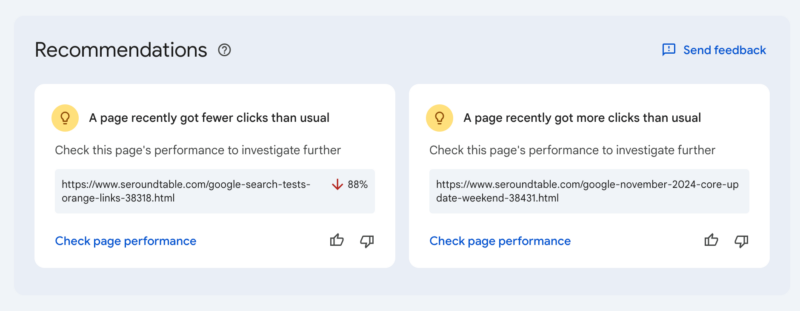
Grab A Free Game On Steam Right Now

Thanksgiving isn’t traditionally the time for receiving gifts, but that’s not stopping Digital Extremes from doing a giveaway of its own. The developer behind Warframe is offering its 2008 third-person shooter Dark Sector for free, but you only have until November 30 to claim it.

Digital Extremes shared the announcement on X, as well as Dark Sector’s page on Steam where the game is temporarily yours for the taking.

Digital Extremes credits Dark Sector for inspiring Warframe, and the game was initially released on PC, Xbox 360, and PlayStation 3. The story puts players in control of covert operative Hayden Tenno as he embarks on a mission behind enemy lines in the Eastern European nation of Lasria. He’ll soon discover that there’s a deadly secret that leaves him infected by a bio-weapon called the Technocyte Virus.

Ordinarily, the Technocyte virus turns its victims into mindless killing machines. Hayden avoided that fate–for now at least–and he’s been left with superhuman abilities that may give him the edge if he wants to make it out of Lasria alive.

During the summer, Digital Extremes offered up a preview for Warframe’s next expansion, Warframe: 1999. The story thrusts players on an alternate Earth, and it looks very intriguing so far. Additionally, Digital Extremes granted a child’s Make-A-Wish to be a voice actor in the upcoming expansion when it arrives later this year.

If you’re looking for more recent games and big sales, check out our Black Friday roundup!

Sound of traffic increases stress and anxiety, study finds

Manmade sounds such vehicle traffic can mask the positive impact of nature soundscapes on people’s stress and anxiety, according to a new study published November 27, 2024, in the open-access journal PLOS ONE by Paul Lintott of the University of the West of England, U.K., and Lia Gilmour of the Bat Conservation Trust, U.K.

Existing research shows that natural sounds, like birdsong, can lower blood pressure, heart, and respiratory rates, as well as self-reported stress and anxiety. Conversely, anthropogenic soundscapes, like traffic or aircraft noise, are hypothesized to have negative effects on human health and wellbeing in a variety of ways.

In the new study, 68 student volunteers listened to three 3-minute soundscapes: a nature soundscape recorded at sunrise in West Sussex, U.K., the same soundscape combined with 20 mile per hour road traffic sounds, and the same soundscape with 40 mile per hour traffic sounds. General mood and anxiety were assessed before and after the soundscapes using self-reported scales.

The study found that listening to a natural soundscape reduced self-reported stress and anxiety levels, and also enhanced mood recovery after a stressor. However, the benefits of improved mood associated with the natural soundscape was limited when traffic sounds were included. The natural soundscape alone was associated with the lowest levels of stress and anxiety, with the highest levels reported after the soundscape that included 40 mile per hour traffic.

The authors conclude that reducing traffic speed in urban areas might influence human health and wellbeing not only through its safety impacts, but also through its effect on natural soundscapes.

The authors add: “Our study shows that listening to natural soundscapes can reduce stress and anxiety, and that anthropogenic sounds such as traffic noise can mask potential positive impacts. Reducing traffic speeds in cities is therefore an important step towards more people experiencing the positive effects of nature on their health and wellbeing.”

Stay cosy and stylish this season with trendy hoodies for college girls | Fashion Trends

We all know that college girls’ fashion changes with the seasons. With the winter season approaching, their style will once again shift to match the weather. You’ll need new clothes for the winter, and among all those, the most essential item will be hoodies.

Stay Cozy and Stylish -trendy Hoodies for College Girls

College girls absolutely love hoodies. They can be styled with almost anything—whether it’s paired with a jacket or something else, hoodies fit perfectly with everything.

Hoodies also possess a charm that make many girls think they look cute and trendy in hoodies, which is the reason for the explosion of popularity of hoodies. Hoodies are a combination of a casual and chic vibe that you can wear daily in college, be it in the classroom or outside with friends.

To help you gear up for the winter season, we’ve explored Myntra to find the best and trendiest hoodies for college girls. These hoodies are not only stylish but also designed to keep you warm and comfortable.

Also read: Find the best cropped sweatshirts for women under Rs.999 for a stylish look

Top 10 hoodies every college girl must have this winter season!

So, we found some hoodies on Myntra for college-going girls that look great and keep warm during the winter session.

This cosy and stylish black and pink sweatshirt is ideal for a relaxed day out. Drop shoulder sleeves, a warm hood, and ribbed hem stretch through the rest of the day adding to your comfort, which makes for an excellent casual weekend ensemble.

No matter if you’re just in a chill mood or capturing special moments with friends, this sweatshirt provides maximum comfort while looking stylistic. Connect it with your favourite pair of jeans and achieve a casual look that does not compromise your style and comfort.

  • Comfortable Long Sleeves
  • Soft and Cozy Fabric
  • Bold Graphic Print
It can be Paired with Avoid Pairing with
Wear with Jeans or Leggings Overly Casual Footwear 
Complete with Sneakers or Casual Boots Avoid Bold Accessories

Stay cosy and trendy with this simple black hoodie from Puma, which you’ll love for its comfort. It has a regular fit, a soft jersey-lined hood with a drawcord, and a kangaroo pocket perfect for keeping hands warm or holding small items. The bold PUMA No. 1 logo on the chest adds a sporty touch, and the hoodie is made from recycled materials, helping reduce environmental impact.

This hoodie fits perfectly into the theme of casual day fashion and can be perfectly blended with jeans or leggings, proffering a relaxed yet trendy look. Comfort, style, and eco-friendliness make it a great addition to any wardrobe.

  • Comfortable Regular Fit
  • Soft, Eco-Friendly Fabric
  • Bold PUMA Branding
It can be Paired with Avoid Pairing with
Denim jeans for a casual chic look Formal trousers
Athletic shorts for an active day out Dress shoes

Are you longing for the good? Furthermore, if fashion has always been your concern, try the H&M cropped zip-up hoodie. Every time we use it, we get a sense of how gentle it is to the touch. The tailor-made construction makes it a piece of clothing suitable for easier days and comfy for the entire day.

The drawstring hood and zip are practical and add to the overall style, while the ribbed cuffs and hem give it a sporty touch that anyone will find flattering. Anyone will often throw it on over their favourite outfits, and it never fails to complete the look.

  • Comfortable Relaxed Fit
  • Soft Brushed Inside
  • Versatile Zip Closure
It can be Paired with Avoid Pairing with
Pair with Joggers or Jeans for a casual look Avoid overly tight bottoms
Complete the look with Sneakers or Casual Shoes Bold Accessories that clash with the simplicity

It’s easy to understand why this grey Mast & Harbour sweatshirt is just what you need. You’ll immediately like the striking font design that gives your casual clothing a stylish touch as you put it on. We liked the kangaroo pocket and drawcord hoodie that added functionality, and the straight hem and long sleeves offer a relaxed, comfortable fit. This sweatshirt is a great option for both outdoor activities and casual get-togethers.

  • Comfortable Long Sleeves
  • Soft, Pure Cotton Fabric
  • Stylish Typography Design
It can be Paired with Avoid Pairing with
Slim-fit jeans or leggings for a chic, Casual Look Formal trousers or skirts
Casual sneakers or boots to keep it sporty and comfortable Heavy accessories that may overpower the simple design

If you’re looking for a stylish and practical sweatshirt, this green one is a great choice. The zip closure makes it easy to put on, while the long sleeves keep you warm on cooler days. The comfy hood is perfect for when it gets windy, and the two front pockets are ideal for carrying essentials like a phone or keys.

In addition, the hem, which is ribbed, comfortably fits around, thus giving them a perfect snogging fit even if it just relaxes, which makes it the most comfortable and fashionable apparel. It is good to dress in such an item whether you do the house chores or meet with your pals.

  • Comfortable Long Sleeves
  • Functional Zip Closure
  • Versatile Design with Hood
It can be Paired with Avoid Pairing with
A messy bun or casual ponytail to maintain a relaxed vibe Intricate or oversized scarves that may compete with the simple design
Minimalistic silver jewellery like small hoops or stud earrings complement the hoodie’s clean look Heavy, layered necklaces can overwhelm the hoodie’s casual aesthetic.

Looking for a comfy yet stylish addition to your casual wardrobe? This pink typography printed pullover offers a relaxed fit with long sleeves and a hood, making it perfect for chilly days. The soft fabric ensures comfort, while the straight hem adds a clean, classic touch. Ideal for laid-back outings or weekend wear, this pullover keeps you cosy without compromising on style.

  • Comfortable Long Sleeves
  • Quite Soft
  • Relaxed Fit Fabric
It can be Paired with Avoid Pairing with
Skinny Jeans or Joggers Overly Formal Trousers
Casual Sneakers or Boots Heavy Accessories

Looking for a relaxed and fashionable item to complete your casual style? This hoodie in pink Sherpa from Roadster wins it all with its simple hoodie, long sleeves, and a kangaroo pocket that helps keep you warm during cold days. The modern lettering gives your ensemble a sophisticated look, and the soft, textured fabric will feel like a warm hug when you wear it on a cool morning stroll.

Its regular cut and straight hem guarantee flexibility of movement and make it a sensible option for daily use, seamlessly combining charm and comfort.

  • Comfortable Long Sleeves
  • Soft Sherpa Material
  • Trendy Typography Design
It can be Paired with Avoid Pairing with
Casual Beanies or Caps for a laid-back look Overly Formal Hairstyles like Slicked-Back Styles
Simple Hoop Earrings for an effortless finish Chunky, Statement Necklaces or Bracelets

This charcoal solid hoodie from Fleximaa is the perfect go-to when comfort meets style. Designed with a front zip closure, two kangaroo pockets, and a cosy hood, it offers both warmth and practicality for outdoor adventures or casual outings. The long sleeves and straight hem provide a relaxed fit, ensuring you stay comfortable while looking effortlessly chic.

  • Practical Zip Closure for Ease
  • Soft Long Sleeves for Comfort
  • Functional Kangaroo Pockets
It can be Paired with Avoid Pairing with
A Sleek Low Bun for a casual vibe


Bulky Layered Accessories
Simple Jewellery for a touch of elegance Formal Footwear like Dress Shoes

This blue solid hooded longline sweatshirt from ADBUCKS combines comfort and style effortlessly. Its front-zip closure, long sleeves, and two insert pockets make it the perfect addition to any casual wardrobe. The ribbed hem and relaxed fit provide a modern touch, making it suitable for various occasions while keeping you warm and stylish.

  • Long Sleeves for Comfort
  • Soft, Solid Fabric
  • Functional Zip Closure
It can be Paired with Avoid Pairing with
A Loose Top Knot for a laid-back look


Tight, Sleek Hairstyles like Flat Ironed Locks
Delicate Stud Earrings for understated elegance Heavy, Oversized Accessories like Bold Chains

There’s nothing better than wrapping up in this green printed hoodie from HRX by Hrithik Roshan on a chilly day because it combines warmth and lightness effortlessly. You’ll love how it keeps you comfortable during evening walks, while the hood offers excellent protection against the wind, making it the perfect choice for cold weather.

  • Comfortable Full Sleeves
  • Soft and Breathable Fabric
  • Reflective Logo Print
It can be Paired with Avoid Pairing with
A Casual High Ponytail or Messy Bun


Overly Bold Hairstyles or Complex Updos
Minimalist Crossbody Bag or Backpack Large, Flashy Jewellery or Chunky Watches

Also read: Top 10 Hoodies for College-Going Boys to Ace Casual Style

Conclusion

Choosing the right hoodie is about balancing personal style and winter comfort. A hoodie that feels uniquely “you” combines a simple design with soft, snug fabric for the perfect fit. With countless styles, materials, and patterns available, there’s something for everyone—whether you lean toward bold prints or classic simplicity.

More than just keeping you warm, hoodies elevate your look and bring versatility to your wardrobe. Pair them with jackets or jeans, and accessorise to add a personal touch that makes your winter outfits stand out. A well-chosen hoodie isn’t just an outfit—it’s a statement of style and comfort all in one.

Also read: Stay Chic with the Best Casual Footwear for Women – Metro & Mochi’s stylish collection up to 50% off

Frequently Asked Questions About Girl’s Hoodies

  • What Can Girls Wear with Hoodies?

    For a natural but stylish outfit, one of the best options is to wear a hoodie, which you can easily complement with skinny jeans or leggings for a neat appearance. Jazz things up by wearing a leather jacket or beanie on top, and a pair of sneakers or ankle-length boots is just the proper choice for the shoes.

  • How Should a Hoodie Fit?

    The fit of a hoodie depends on personal preference and plans for the day. Oversized hoodies offer a cosy feel, especially for lounging, while fitted ones work well for stepping out, giving a more polished look without sacrificing comfort.

  • How to Style a Hoodie in a Cute Way?

    A cropped hoodie can be worn with high-waisted jeans or a flowing skirt to create a playful and cheerful look that no one can miss. Also, your look can be complemented with the little hoop earrings or a necklace thus departing the boundary of casual and chic.

  • Should Hoodies Be Tight or Loose?

    Choosing between a loose or fitted hoodie depends on the desired style. Loose hoodies are excellent for layering or relaxing, while snug ones deliver a sporty, sharp appearance that suits a variety of outings.

  • When to Wear a Hoodie?

    A hoodie fits seamlessly into casual coffee meetups, study sessions, or quick errands, providing both style and comfort. Whether layered for a chilly evening or worn for a relaxed day indoors, it effortlessly complements different activities.

Disclaimer: At Hindustan Times, we help you stay up-to-date with the latest trends and products. Hindustan Times has an affiliate partnership, so we may get a part of the revenue when you make a purchase. We shall not be liable for any claim under applicable laws, including but not limited to the Consumer Protection Act, 2019, with respect to the products. The products listed in this article are in no particular order of priority.

Sarepta rebuilds drug pipeline with Arrowhead deal

Dive Brief:

  • Sarepta Therapeutics has turned to dealmaking to restock a drug pipeline analysts worried was growing thin, announcing Tuesday a deal with Arrowhead Pharmaceuticals that will give it four clinical-stage treatments and three others still in preclinical testing.
  • In return, Sarepta will pay Arrowhead $500 million upfront and spend another $325 million to buy Arrowhead shares at a premium to the stock’s weighted average over the past month. Sarepta will also send Arrowhead $50 million a year for the next five years.
  • Under the deal, Arrowhead will complete the Phase 1/2 trials underway for the four clinical-stage drugs, after which development will transition to Sarepta. Arrowhead will hand over responsibility for the preclinical programs after wrapping up preparatory work for human testing. Finally, Sarepta will also hold rights to nominate an additional six drug targets for Arrowhead to develop potential candidates against.

Dive Insight:

In doing a deal with Arrowhead, Sarepta is buying into a drugmaking technology that analysts view as complementary to its prior work with genetic medicine.

Arrowhead specializes in RNA interference, a way of muting gene expression by using small, interfering strands of RNA, or siRNA. The technology has been advanced furthest by Alnylam Pharmaceuticals, which developed five RNAi drugs that are now approved in the U.S. But those medicines are largely limited to diseases of the liver and other companies, like Arrowhead, have worked on ways to design RNAi therapies that can reach other tissues.

The four clinical-stage medicines Sarepta gains via the deal treat diseases of the muscle, central nervous system and lungs. Two are aimed at muscular dystrophies — long the focus of Sarepta’s drug development. The three preclinical assets, meanwhile, are all designed to treat conditions of the central nervous system.

“Robust and compelling early data from Arrowhead’s differentiated siRNA approach platform suggests potentially best-in-class treatments that will profoundly improve the lives of those with rare, genetic diseases,” said Louise Rodino-Klapac, Sarepta’s chief scientific officer and head of research and development, in a company statement.

Analysts largely viewed the deal as a positive step to build up Sarepta’s pipeline, which the company recently shrank by discontinuing a successor to its approved medicine Exondys 51 and the drugmaking platform from which it was built.

“This collaboration should mitigate concerns about Sarepta’s thin pipeline — which has been a key overhang — and provide multiple avenues of additional growth drivers going forward,” wrote Mizuho Securities analyst Uy Ear in a note to clients.

Sarepta also disclosed that its board had authorized repurchasing up to $500 million in company shares over the next 18 months, another step investors had sought.

“Investors who we spoke to wanted to see [Sarepta] 1) bring in new assets and 2) buy back shares: today’s announcement checks both boxes,” wrote Kristen Kluska, an analyst at Cantor Fitzgerald, in an investor note Tuesday.

Sarepta held nearly $1.4 billion in cash, cash equivalents and liquid investments as of Sept. 30. Sales of the company’s gene therapy for Duchenne muscular dystrophy, Elevidys, have also increased and are expected to climb higher — giving Sarepta a rising revenue base to fund development of the candidates it’s now taking on.

“We do not believe this deal implies the Elevidys launch has fallen off track,” wrote Danielle Brill, an analyst at Raymond James, in a client note. “In fact, the willingness to pay so much upfront tells us management remains comfortable with their cash flow outlook.”

“Sanctuary” in need of loving home
On a cold February night, three pit bull puppies who appeared to have neurological conditions were found dumped in a box in an alleyway in St. Louis, MO, at just six weeks old. Due to their condition, the puppies spent several weeks at the Stray Rescue of St. Louis vet clinic seeking medical attention for their malnutrition and abrasions. Once healed, all three siblings found foster homes, two of them eventually finding their forever homes. But now, just under a year later, one last pup named Sanctuary is left searching for his happy ending.

Sanctuary has Cerebellar Hypoplasia (CH), which means he has no control over his motor functions. CH causes him to have a wobbly and unbalanced stance. To stand and walk, Sanctuary needs the assistance of his Full Support Walkin’ Wheels wheelchair to get around throughout the day.

His foster mom, Clare, says, “His wheelchair has made the biggest difference in his life. It has helped him physically, mentally, and emotionally. He can run, walk, eat, drink, and go to the bathroom on his own.”

Sanctuary is a year old, receives physical therapy regularly, and attends puppy classes for socialization. Clare says, “”Sanctuary is sweet, smart, and silly. He loves his lamb chop toys and holding a ball in his mouth while running in the backyard in his wheelchair.””

Sanctuary’s foster family is searching for someone who can love him unconditionally and provide him with a lifestyle that caters to his special needs.

If you or someone you know may be interested in adopting Sanctuary, please contact Rae with Stray Rescue of St. Louis at: [email protected]

Will Labor’s International Student Cap Help Solve Australia’s Housing Crisis?

Key takeaways

International students are not the primary drivers of housing shortages. They occupy a small segment of the rental market, often unsuitable for the broader population. Blaming them shifts focus away from the real issue: Australia is not building enough homes.

International students contribute over $40 billion annually to the economy, supporting universities, businesses, and local communities. Limiting their numbers could harm the economy without offering meaningful relief to the housing market.

A failure to build sufficient homes over decades is the core issue, exacerbated by restrictive planning laws, local opposition to developments (NIMBYism), and a lack of federal leadership.

Policymakers must prioritize bold, systemic changes to close the housing supply gap. Solutions should balance housing needs with economic contributions, fostering a sustainable future for all Australians.


Australia’s housing shortage is the elephant in the room no one can ignore.

With sky-high rents, a squeeze on supply, and frustrated tenants battling for every available property, the housing crisis is a cocktail of systemic issues that’s been brewing for years.

Amid this turmoil, the federal government has floated the idea of capping international student numbers.

But will this approach really help?

Or is it just another example of political optics that fails to address the root causes of the problem?

Students

International Students: Scapegoats or Solution?

It’s no secret that international students are a significant part of Australia’s population.

They contribute billions to our economy, enrich our culture, and boost our universities’ global reputation.

But they also need somewhere to live, and the influx of students has undeniably added pressure to already strained housing markets in cities like Sydney and Melbourne.

Critics argue that capping student numbers could ease the rental crisis by reducing demand for inner-city apartments and share houses.

On paper, it sounds logical: fewer people competing for rentals means less pressure on prices.

But is it really that simple?

The Numbers Tell a Different Story

According to a Property Council of Australia report, limiting the number of international students would barely make a dent in our housing supply woes.

International students predominantly occupy a specific segment of the rental market, such as studio apartments and student accommodations near education institutions.

These properties are often unsuitable or unaffordable for the broader population struggling with housing.

In fact, a report by the TAPRI (The Australian Population Research Institute) highlights that international students only occupy a fraction of Australia’s overall rental market.

Blaming them for the housing crisis diverts attention from the real issue: we’re not building enough homes to meet the needs of a growing population.

What About the Economic Impact?

It’s not just about housing.

When brain cancer struck a baseball family, a ‘wonderful’ village sheltered them

Ten months ago when the nights were longest, Ned Rice emailed total strangers to share his family’s unthinkable dilemma. These were doctors across the country who had not met and did not treat his 3-year-old daughter. Wynnie had brain cancer. This was how Rice, a Phillies assistant general manager, coped.

He had to gather as much information as he could.

“I have still to this day never googled medulloblastoma,” said Cary Rice, his wife. “Because I can’t handle it. And I’m an analytical thinker, too. But if it’s too emotional, I can’t do it.”

Everything about this felt impossible. Wynnie had lost her balance a few times — and now her parents faced a sudden and critical decision. Doctors at Children’s Hospital of Philadelphia (CHOP) told the Rices they could not treat Wynnie with radiation; she was too young. The neurocognitive damage from radiation would prevent her from having an independent adult life. But her chances of survival were better with radiation.

Ned Rice sought a second opinion from another leading children’s hospital. They told him it would be reckless not to use the treatment known to be the best — radiation — no matter the long-term effects. Rice had negotiated player contracts worth hundreds of millions — a high-stakes process that blends objective valuations with a subjective hand. But this was so different.

It was a parent’s worst nightmare.

Then Rice saw an email. A neuro-oncologist at Cincinnati Children’s Hospital named Richard Graham sent a lengthy reply to one of Rice’s cold calls. “I was really panicking,” Rice said. “He doesn’t even know who I am. He has his own patients and his own life.” Graham shared his advice. He became a frequent resource for Rice.

These small, thoughtful moments accumulated.

An unexpected gift at the doorstep. A video from Wynnie’s classmates. More responses from out-of-town doctors who would never meet Wynnie. Family members and friends who dropped everything to care for her two siblings. More gifts. Nurses who did not just look after Wynnie — but her parents, too.

“It hits you over and over again,” Rice said. “There’s so many people that want to help. Everybody does it in their own way.”

Rice called his former boss. These weren’t like the late-night talks Matt Klentak and he often had while they ran baseball operations for the Phillies. But it felt normal, even though Klentak worked for the Milwaukee Brewers and Rice was on leave from the Phillies.

The phone calls were cathartic. They could dive right into whatever was on Rice’s mind because Klentak knew the latest on Wynnie through an Instagram account the Rices created to chronicle her fight against cancer. It’s grown to more than 700 followers. Friends of friends of friends now reply to posts with, “Go Wynnie go!” The account is a raw look into life with pediatric cancer. It’s become a way for Ned and Cary to express complicated feelings.

More than anything, it’s opened a door. “Caregiver burnout is a common phenomenon,” said Jane Minturn, Wynnie’s neuro-oncologist at CHOP, “and (Ned and Cary) have worked together to limit this.” Wynnie knows she is sick, but she does not understand what brain cancer is. The burden is shared by everyone around her.

It is immense. Klentak could sense it, at times, during those late-night conversations. It is isolating. But Rice started to carry the goodness of those who had entered Wynnie’s universe.

“I couldn’t really relate to what he was going through,” Klentak said. “And I think very few people could. But that doesn’t stop people from wanting to help.”


The first sign of distress wasn’t alarming. Wynnie was a happy and healthy 3-year-old learning to move faster. That meant an occasional stumble. But Ned and Cary noticed their daughter’s balance wasn’t improving; it looked a fraction worse every week. They scheduled an appointment last December with their pediatrician.

He threw cotton balls across the room to Wynnie, who was content to play the game. She had to bend over and fetch them. She wobbled. The pediatrician agreed something seemed off. He wanted her to see a neurologist at CHOP. The next appointment wasn’t for five months. He suggested the Rices go to the CHOP emergency room — not because it was urgent, but to assuage any immediate concerns.

They took Wynnie on Dec. 21, 2023.

“Sure enough,” Rice said, “we had five neurologists in our room in a few minutes.”

Wynnie didn’t have any other symptoms. The doctors scheduled an MRI in three weeks. It could be a muscular disease. Maybe it was vertigo. The Rices visited family for Christmas and Wynnie vomited twice. CHOP rescheduled the MRI for Dec. 29 and, that morning, Wynnie threw up again. She stumbled a few more times.

A doctor summoned Ned and Cary during the MRI. He pointed to a screen. There was a large tumor in Wynnie’s brain. Wynnie was sedated for the MRI. The doctors wanted to do immediate surgery to remove the tumor. It was 4 p.m. on the Friday of a holiday weekend. The procedure lasted four hours; it would take a week to know whether the tumor was cancerous.

Everything had spiraled so fast.

“It’s a long process, but that was definitely a low point,” Rice said. “Those first few days — you took a mostly happy, healthy, sweet girl in for an outpatient MRI. She wakes up and you’re just like, ‘Will we ever see that girl again?’ That was really hard.”

Then Wynnie was diagnosed with medulloblastoma.


Cary lies with Wynnie in the CHOP ICU four days after her brain surgery. Wynnie still could not move or talk. (Courtesy of the Rice family)

During that first trip to the E.R., before everything escalated, Rice was on the phone with Dave Dombrowski. Yoshinobu Yamamoto’s camp had instructed teams to make their last and best offers for the star free agent. Dombrowski communicated the number to Rice, who relayed it to Joel Wolfe, Yamamoto’s agent. Yamamoto signed with the Los Angeles Dodgers that night.

Rice did not mention where he was.

The day Wynnie underwent surgery, Rice called Phillies general manager Sam Fuld. He told him what was happening. Dombrowski was out of the country for a rare vacation; Rice talked to the Phillies’ president of baseball operations soon after New Year’s.

“We’ll see you when it’s over,” Dombrowski told him. “Take everything you need. We’ll completely cover it. Don’t worry about anything.”

John Middleton called a few hours later. The Phillies’ principal owner offered to connect the family with doctors. Cary is a lawyer and her firm, Hangley Aronchick Segal Pudlin & Schiller, told her to take as much time as she needed. The Rices were fortunate; they had the means to pay for treatment and ample time to direct attention toward Wynnie. Acquaintances offered to help with whatever the family needed, but what they needed was a cure for cancer.

All they wanted was normal. It was an uncomfortable situation that didn’t always have to be uncomfortable.

“We just have this wonderful sort of village that kept showing up,” Cary said. “Kept calling. Kept texting. Even when I couldn’t respond. We’re just really grateful for that because we are still the same people. We still want to talk about things and do things that have nothing to do with cancer. We want to feel normal. We want to have hope for a normal future. The worst thing you can do or say is nothing.”


Wynnie sits on a bed at CHOP between cycles of her treatment. (Courtesy of the Rice family)

Wynnie lived on the third floor at CHOP for almost eight months. The Rices opted against radiation. But her treatment — alternating cycles of chemotherapy and autologous stem cell transplants — was so grueling that most of it was inpatient. Ned and Cary would take 24-hour shifts with Wynnie. They were ships passing in the night without much interaction.

They found a community inside the hospital.

“These nurses, I mean, they’re not just nurses,” Cary said. “They’re therapists. They’re friends. They’re cheerleaders.”

Heidi Turner, one of Wynnie’s nurses, worked only overnights. That meant a lot of late-night bonding. Wynnie was discharged Aug. 23. The last night at CHOP, Turner handed Cary a letter to Wynnie.

“I’m going to miss you so much,” Cary said to Turner. “We’ll stop by and hopefully I’ll see you.”

She stared at Cary. The nurse replied she hoped to never see them again.

“And,” Cary said, “it just stuck with me because it’s such a weird feeling to have.”


Rice, who has been with the Phillies since 2016, stayed in contact with player agents and rival team executives last offseason but no longer served as the team’s main point of contact. The Phillies had started negotiating Zack Wheeler’s three-year, $126 million extension with B.B. Abbott, Wheeler’s agent at Wasserman. By January, Rice and Abbott had regular talks that started with 30 minutes about Wynnie and progressed to Wheeler’s contract.

“You’re never what you want to be for these families that are trying to talk about this,” Abbott said. “Because you just can’t be. It’s so all-consuming when you think, ‘My 3-year-old daughter has to go through this.’ It’s hard for parents and families to get their heads around exactly what’s getting ready to happen. The days and nights and hospitals. Watching their little girl lose her hair and be sick. All of this stuff that I knew was getting ready to come.”

For years, Abbott has raised awareness for pediatric cancer research through the Rally Foundation and the National Pediatric Cancer Foundation. “I just wanted to be more of a sounding board for him,” Abbott said. The Rices weren’t keeping Wynnie’s illness hidden; it was more of an open secret. Abbott decided to help subtly.

He asked Wheeler if he’d lend his name to a fundraiser for the National Pediatric Cancer Foundation near the end of spring training at the Phillies’ complex in Clearwater, Fla. Everyone knew it was for Wynnie, but no one had to say it. Word spread to the team’s front office and support staff. Dozens of Phillies employees had their heads shaved or orange streaks painted in their hair. Players made donations to the foundation.

Reliever Matt Strahm’s wife, Megan, organized a present from the Phillies’ wives and girlfriends. “An unbelievable, huge, outrageous gift wagon for Wynnie,” Rice said. He had not met Strahm’s wife until later that summer at the team’s family day.

“You’re amazing,” Rice said to her.

With Wynnie in the hospital, Rice watched from afar this year as the Phillies sprinted to first place. “The Banatic!” Wynnie said to her dad whenever the furry green mascot appeared on the screen. There are certain rhythms to the baseball season. It is monotonous but contains specific checkpoints. The Rices had none of that with Wynnie. There were no regular updates on her prognosis. They will not know how successful her treatments were until a scan sometime in December.

Their focus was singular. Get through today.

“Wynnie, she’s something,” Cary said. “She has this tiny little voice and she’s so sweet and gentle with everything she does. We always kind of considered her this little delicate flower. But she’s a beast.”


Wynnie at her 4th birthday party. (Ashley Blair Photography)

Two weeks ago, Wynnie had a birthday party. The Rices held it outdoors, at a playground by the Schuylkill River Park, because Wynnie’s immune system remains at risk. They had bagels and coffee and a face painter. Cary handed every kid a stuffed fox as a party favor. “Mr. Fox” was Wynnie’s constant companion in the hospital; Cary had so many at the house because people kept sending them when Wynnie would throw up on hers.

This was a celebration of Wynnie and the village that formed around her.

“We were surrounded,” Cary said, “by about 85 of the friends who have been there for us in so many different ways this year.”

Wynnie’s hair has started to grow back, although she wore a purple knit cap that covered her head at her party. Everyone could see the three purple flowers painted on her forehead.

But Wynnie felt sick near the end of the party. She went to the emergency room with croup. Another challenge. But she was 4 and she was here.

She wore her face paint to the E.R.

(Top image: Dan Goldfarb / The Athletic. Photos: Ashley Blair Photography) 

The Next AI App You Download Might Be From Elon Musk’s xAI

Are you ready for yet another way to use AI technology? According to a new report, xAI’s chatbot Grok might soon be available in a standalone app.


Another Way to Access Grok

The Wall Street Journal says that Elon Musk’s venture is planning release its own app. Currently, the only way to access Grok is through the social media app X, formerly Twitter. Grok access is a perk for subscribers to the social network in both the Premium and Premium+ tier. Premium costs $7 per month and also includes other X features like a larger reply boost.

A standalone Grok app could arrive for consumers as early as next month.

Interestingly, the report also says that Grok is currently being used to support another Musk venture, SpaceX’s Starlink, for customer service. Grok in the future might also be used to power a search engine for X in the future.

Grok has been behind the curve. xAI’s chatbot was released a little more than a year ago. Unlike competitors, the chatbot is known for answering questions with wit and sarcasm, showing Musk’s influence.


Do We Really Need Another AI App?

You don’t need to look very far to find a standalone AI chat app for your smartphone, tablet, or computer. There is a host of great AI chatbots like OpenAI’s ChatGPT, Google’s Gemini, Meta AI, Microsoft Copilot, and many more that don’t even need a subscription.

If you’re willing to pay, you can unlock a host of great additional features. For example, you can have a full-blown voice conversation with ChatGPT’s Advanced Voice Mode, which continues to roll out for more users.

And along with standalone AI app options, Apple, Microsoft, and Google are quickly adding native AI features to computer and smartphone operating systems. Apple Intelligence has just started its roll-out to Apple devices and is continuing to add new features well into 2025.

For Grok to be worth using in a standalone app, it needs to provide something unique compared to all of those other options. So it will be interesting to see what Musk has up his sleeve. While being an AI-powered X search engine sounds nice, it needs to have much more.


Flowing sea of clouds captivates visitors in Jiangxi

<img src='https://news.cgtn.com/news/2024-11-27/Flowing-sea-of-clouds-captivates-visitors-in-Jiangxi-1yS5UPg68WA/img/ea126750b0184566b2b8dcebdaa47477/ea126750b0184566b2b8dcebdaa47477.jpeg'
Mount Yingpan in Suichuan County, east China’s Jiangxi Province is shrouded by thick clouds on November 26, 2024. /CFP
<img src='https://news.cgtn.com/news/2024-11-27/Flowing-sea-of-clouds-captivates-visitors-in-Jiangxi-1yS5UPg68WA/img/ea126750b0184566b2b8dcebdaa47477/ea126750b0184566b2b8dcebdaa47477.jpeg'
Mount Yingpan in Suichuan County, east China’s Jiangxi Province is shrouded by thick clouds on November 26, 2024. /CFP
<img src='https://news.cgtn.com/news/2024-11-27/Flowing-sea-of-clouds-captivates-visitors-in-Jiangxi-1yS5UPg68WA/img/ea126750b0184566b2b8dcebdaa47477/ea126750b0184566b2b8dcebdaa47477.jpeg'
Mount Yingpan in Suichuan County, east China’s Jiangxi Province is shrouded by thick clouds on November 26, 2024. /CFP
<img src='https://news.cgtn.com/news/2024-11-27/Flowing-sea-of-clouds-captivates-visitors-in-Jiangxi-1yS5UPg68WA/img/ea126750b0184566b2b8dcebdaa47477/ea126750b0184566b2b8dcebdaa47477.jpeg'
Mount Yingpan in Suichuan County, east China’s Jiangxi Province is shrouded by thick clouds on November 26, 2024. /CFP
<img src='https://news.cgtn.com/news/2024-11-27/Flowing-sea-of-clouds-captivates-visitors-in-Jiangxi-1yS5UPg68WA/img/ea126750b0184566b2b8dcebdaa47477/ea126750b0184566b2b8dcebdaa47477.jpeg'
Mount Yingpan in Suichuan County, east China’s Jiangxi Province is shrouded by thick clouds on November 26, 2024. /CFP
<img src='https://news.cgtn.com/news/2024-11-27/Flowing-sea-of-clouds-captivates-visitors-in-Jiangxi-1yS5UPg68WA/img/ea126750b0184566b2b8dcebdaa47477/ea126750b0184566b2b8dcebdaa47477.jpeg'
Mount Yingpan in Suichuan County, east China’s Jiangxi Province is shrouded by thick clouds on November 26, 2024. /CFP

Mount Yingpan in Suichuan County, east China’s Jiangxi Province is often shrouded by thick clouds in early winter, especially after rainfall. At an altitude of over 1,700 meters, the clouds flow along the ridges, forming a capricious and captivating scene. Sometimes the clouds stream like pieces of gauze and sometimes they flood like roaring waves.

‘Seed of the Sacred Fig’ review: One Iranian family combusts

Reality seeps into “The Seed of the Sacred Fig” in multiple ways, including ones that writer-director Mohammad Rasoulof couldn’t have imagined back when he shot this absorbing drama in secret. One of Iran’s signature filmmakers — and among those most often in the theocratic government’s crosshairs — the 52-year-old auteur, now living in exile in Europe, tells the story of a family whose social standing becomes threatened by simmering societal tensions right outside their door. In order to preserve the rigid status quo, the clan’s patriarch will do everything he can to keep the winds of change from invading his household and affecting his wife and daughters. By making the political personal, Rasoulof warns us that repression starts at home.

Misagh Zare stars as Iman, who has just been promoted to investigating judge in the Revolutionary Court, a reward for 20 years as a dedicated attorney. His supportive wife, Najmeh (Soheila Golestani), is proud of him but also excited for what this new job means for them and their children, willful 21-year-old Rezvan (Mahsa Rostami) and insecure teen Sana (Setareh Maleki). They’ll receive a spacious home in a better section of Tehran, and maybe they can finally buy that dishwasher Najmeh has been craving. But Iman warns his family that, since judges are demonized in Iranian society, they need to be careful not to spread this news around. Underlining the occupational hazards awaiting Iman, he has been issued a gun for his protection.

As soon as Iman shows his alarmed wife that gun (it’s loaded, but he assures her the safety is on), audiences can start worrying about precisely when the weapon will go off. Provocatively, Rasoulof makes no attempt to hide his story’s metaphors or plot twists. If anything, he boldly foreshadows the darkness just on the horizon, shooting his drama austerely, the weight of inevitable doom hanging over everything.

Over the last 15 years, Rasoulof (“Manuscripts Don’t Burn,” “There Is No Evil”) has been imprisoned multiple times and had his passport confiscated, accused of spreading anti-government propaganda through his politically pointed films. “The Seed of the Sacred Fig” was inspired by one such jail stint in 2022, which occurred during the same time as that summer’s “Woman, Life, Freedom” uprising, sparked by the death of 22-year-old student Mahsa Amini while in the custody of the police, who arrested her for not wearing a hijab in public. (Authorities claimed Amini died of a heart attack, but her family insisted they fatally beat her.)

Those real-life events strike a match that lights the film’s slow fuse. Initially, Rezvan and Sana express frustration that their father’s new job requires them to conduct themselves “properly” outside the house. (Who knows who might be monitoring their social media presence?) But soon, it’s impossible for them or their mother to miss the violent protests in the wake of Amini’s death. Najmeh steadfastly echoes what she sees on state-run news services — Amini’s death was an accident — whereas her daughters, getting information on their smartphones, strongly suspect otherwise. And then Rezvan’s college friend Sadaf (Niousha Akhshi) is accidentally trapped in a campus protest, her face obliterated by buckshot fired by police. Long maintaining that the protesters are just thugs, Najmeh painfully removes the rounds from Sadaf’s bleeding wounds, her assumptions about the government she’s loyally obeyed falling away.

A film about complicity and denial, “The Seed of the Sacred Fig” examines how a seemingly reasonable husband and wife can tacitly support this national charade. Iman quickly learns that the “investigating” part of his job title is more of a suggestion: He is expected to sign death warrants for individuals the prosecutor has demanded be executed. At first, his conscience bothers him, but Zare’s performance is a wonder of quiet rationalization as Iman gradually decides that going along is better than making waves. A man of no strong principles beyond protecting his status, Iman is by turns pathetic and terrifying, the latter occurring when Iman discovers that his gun has gone missing, an oversight that could lose him his promotion. His fervor to determine who took the weapon reveals a shockingly monstrous side, turning his wife and children into frightened suspects and leading to a jarring tonal-shift ending that proves to be a cathartic, believable final destination for a film simmering with mistrust and anger.

Anticipating his movie’s inflammatory subject matter, Rasoulof had to cast and film “The Seed of the Sacred Fig” without tipping off the authorities. That knowledge adds additional layers of defiance and bravery to this grim tale, which incorporates actual protest footage and video of police brutality to amplify the narrative’s verisimilitude. But ugly reality imposed itself unpredictably as well. Shortly before the film’s Cannes premiere, Rasoulof was once again sentenced — this time, for eight years in prison. Instead, he fled Iran, arriving at the festival screening to a hero’s welcome. The sorrow and hope interwoven through “The Seed of the Sacred Fig” are vibrant but also bittersweet, considering that Rasoulof had to escape his homeland for telling the truth about the oppressive regime seeking to silence him.

“The Seed of the Sacred Fig” may open on Iman, but eventually, the focus shifts to Najmeh and her daughters, who are positioned as the possibility for liberating Iran from its regressive, patriarchal government. Rezvan and Sana are young and smart enough to recognize the regime’s cruelty, which makes Najmeh’s evolving mindset the film’s emotional center. Golestani shines as a woman clinging to her illusions — about a wife’s place, about women’s second-class status — because she’s never permitted herself to think any other way. The actor, like everyone else in “The Seed of the Sacred Fig” who took part at grave risk, makes that awakening moving. Najmeh thinks she’s saving her daughters — they may end up freeing her instead.

‘The Seed of the Sacred Fig’

In Persian with English subtitles

Rated: PG-13, for disturbing violent content, bloody images, thematic content, some language and smoking

Running time: 2 hours, 48 minutes

Playing: Opens Wednesday, Nov. 27, AMC Century City

US to Introduce New Restrictions on China’s Access to Cutting-Edge Chips

The US government has been imposing similar export controls on China aimed at limiting its ability to mint advanced silicon for years, but the controls apparently didn’t stop Huawei from developing competitive chips for training large AI models.

The Chinese tech giant, which was temporarily crippled by US sanctions half a decade ago, sent samples of its latest AI training chip, called Ascend, to customers this September, according to the South China Morning Post. Companies testing Ascend reportedly include ByteDance, the Chinese parent of TikTok, which is said to be training a large model primarily using Ascend. Baidu, which makes China’s leading search engine and has developed autonomous driving systems, recently placed an order for Huawei’s chips in a shift away from US chip giant Nvidia, according to Reuters. (Nvidia declined to comment.)

Export restrictions aimed at curbing China’s AI sector began under the first Trump administration. In 2019, several up-and-coming Chinese AI firms were added to the entity list, meaning that US firms, including chipmakers like Nvidia, would be required to get a special license to do business with them. This was followed by restrictions on sales of chips made with US technology to Huawei, China’s dominant telco and a leading smartphone manufacturer.

The Biden administration ratcheted up the controls in October 2022, limiting exports to China of cutting-edge GPU chips, including those made by Nvidia, a move aimed at curbing any Chinese company’s ability to train the most powerful AI models. The rules were tightened a year later to close loopholes that still allowed Chinese firms to access some advanced chips.

It can be tricky to gauge the impact of US chip sanctions, and some experts question whether the controls are spurring China to make more rapid advances in chipmaking itself, reducing its reliance on American companies.

In late 2023, Huawei unveiled the Mate 60, a smartphone featuring an advanced chip from the Chinese chipmaker SMIC. The announcement caused a stir in Washington, because it suggested that SMIC had made substantial progress in advancing its own manufacturing techniques. (Further analysis indicated that Huawei and SMIC were still reliant on foreign suppliers.)

But a report published this week by the Center for Strategic and International Studies, a Washington, DC-based think tank, argued that the Chinese government had already begun ramping up investment in domestic chipmaking before the US government began clamping down on the country’s access to advanced semiconductors. It also noted that China has made bigger strides in sectors not subject to export controls, such as solar cell and electric vehicle manufacturing.

How to monitor brand visibility across AI search channels

Tracking organic search performance is about to get comically frustrating.

Google has been rolling out a series of AI-enhanced search results over the past 18 months:

SEO professionals are battling to determine the extent to which they are stealing visibility and traffic. 

To further complicate our jobs, more people are using AI search tools like ChatGPT, Perplexity, Copilot, Claude and Gemini for search-related tasks. 

We must ask ourselves if the volume of these other search channels requires a serious content investment or whether we should wait. 

ChatGPT has about 50 times more web traffic than Perplexity and Copilot, but it is insignificant compared to Google, according to Similarweb.

But that doesn’t take into account ChatGPT app usage. Regardless, ChatGPT’s traffic has grown exponentially over the past year.

Now’s an opportune time to plan a content strategy, assuming that its deals with various publishers and integration into the Apple ecosystem will lead to a semi-permanent competitive presence in the organic search market going forward.

Are people using AI search for shopping? 

A few weeks ago, Google Shopping got a complete AI overhaul. ChatGPT added its search feature. Perplexity now has a purchase button directly on the results page for Pro customers.

Buying holiday gifts used to involve a family trip to the mall. It was a physical experience. 

People would line up at 5 a.m. Friday morning at their favorite retail store to get first dibs on the trendiest electronics, clothing, or toys. There was something gladiatorial about it.

Now, we can do it all from our phones. AI search will either remove all of the “humanity” out of shopping for your loved ones or make the experience more personalized and special than our lazy humans are capable of.

Imagine being able to run an AI search with a list of your best friend’s interests, a budget and the most recent trends. 

You get a selection of gifts that would make them feel loved, appreciated and seen – the pure fantasy of the lazy gift giver. 

However, with these AI search developments, not only is it a stronger reality, but brands also need to figure out ways to appear in the results and, at the very least, track their visibility.

Tracking brand mentions AI search channels

Assuming that more people are searching for gifts using AI search tools (there’s no definitive data yet), how should marketers track their brand’s visibility in these black box channels?

We need to accept that search volume and keyword tracking in conversational search is an unsolved problem. 

As search becomes conversational, we use more natural language, our searches become longer and the results are more contextual and personalized.

I discussed the challenges of conversational search bias in the context of Google’s AI-organized search results at length recently in a virtual presentation:

Despite feeling like an inexact science, tools have started tracking AI Overviews. 

Others have emerged to attempt to surface insights from the conversational AI search mess. 

The most compelling tool we’ve encountered is Profound. (Disclosure: Profound has provided me access to their tool and worked with me to run some experiments.)

Instead of focusing on a keyword, Profound uses topics to generate several prompts with subtopic variations, run them multiple times and identify which brands are being recommended by the AI search tools. 

The topical approach offers a bird’s-eye view of brand performance despite the limitations of minimal-volume long-tail keyword search utility.

Over time, you can identify trends in your industry by topic, brand, and publication. 

Once you identify the types of citations included in the AI search output, you can create your digital PR and content strategy to improve visibility in conversational search.

Anecdotally, the Profound team has already noticed some of these trends in conversational search behavior. 

According to Josh Blyskal, Customer Success Lead at Profound:

  • People put a lot of trust in AI. They provide elaborate detail in their prompts and ask AI for help with very important decisions.
  • People are making high purchase intent queries in AI, although the ability to purchase with AI is still new. People are going to AI search for recommendations, with many purchases still going back through Google.
  • AI loves mentioning brand names, regardless of whether a brand is included in the prompt. There are some brands that AI can’t stop talking about. This means that as AI usage grows, some brands will have a big marketing head start. Now is the best/easiest time to become one of these brands because the competition is the sparsest.

So, assuming that people use conversational AI to find brands and products, but the searches are unique and insignificant in volume, how do you monitor mentions and visibility?

Using topics for search instead of keywords

Topic clusters have been a popular content strategy for SEO. 

Many websites already attempt to blanket a topic methodically by making sure they cover every nook and cranny that could be searched for by their audience. 

Having a comprehensive and organized portfolio of content mapped to the search journey helps establish your brand as an authority. 

Couple that with a strong backlink profile, and you’re armed to be a major player in your market. 

By analyzing topic clusters, overarching themes naturally emerge, which can be effectively tracked using Profound. 

This tool provides a broader context of conversations around each subject. 

With a set of topics, Profound’s team creates a bespoke instance for you to track AI search channel performance across: 

  • ChatGPT-4o Search.
  • ChatGPT-4o-mini search.
  • Perplexity.
  • Microsoft’s Copilot.

If you don’t have your topics clearly developed, you could use any of the following SEO tools to create a list:

  • Semrush.
  • Ahrefs.
  • Keyword Insights.
  • thruuu.
  • Moz.

This methodology is the future of tracking brand performance in AI search. 

Let’s look into a recent experiment we conducted to identify the publications and brands that are visible for a set of Black Friday-related topics.

Get the newsletter search marketers rely on.


The AI search tracking experiment

As the father of a toddler girl, I was curious about the competitive toy space as we approached holiday shopping. 

You can see the seasonal trends for toy searches as Black Friday rolls around every year. 

What better time to investigate the volatility and fluctuations of AI search citations?

Google Trends - 'toys for toddlers'

I decided to investigate how toy brands like Fisher-Price and Melissa & Doug fare across AI search channels.

In my experiment, instead of relying on typical SEO tools, I took a different topical research approach.

I used SparkToro’s recent Relevant Topics feature to identify what’s important in the toy industry, tapping into what parents like myself are searching for this season. 

This feature takes a keyword and identifies a list of bespoke topics that appear across all of the websites, social profiles and forums your target audience engages with based on a specific location.

I generated the SparkToro relevant topic list to use with Profound before the holiday shopping season.

Using the keyword “toys,” I created a list of 50 toy-related topics.

Sparktoro relevant topics - 'toys'

These topics covered everything from wooden toys to outdoor toys. After checking the search volume in Semrush, I discovered that the topics themselves were low volume. 

Semrush search volume - relevant topics - 'toys'

Using Semrush, I identified direct toy manufacturer competitors to Fisher-Price and Melissa and Doug. 

Semrush keyword overlap - FIsher-Price competitors

The Profound team took our list of topics and competitors and began tracking performance across ChatGPT, Perplexity and Copilot. 

Each day, Profound generated various prompts for each topic that would likely generate brand mentions. It would capture the responses, brand rankings and citations for analysis.

Profound daily prompts for Fisher-Price

Over a week, trends started to emerge.

Brand visibility - FIsher-Price competitors

We can see improvement in visibility compared to the previous seven-day total for the topics that were important to my Fisher-Price products. 

Brand visibility calculates the percentage of AI answers across all topics that mention your brand.

We can get visibility into the brand’s performance per AI search model.

Industry visibility by Model

Drilling into topic visibility, we can see Fisher-Price is the market leader across six of the nine topics.

You can see how easy it is to get clarity from the topics important to your business goals. 

Fisher-Price topic visibility

You can visualize the rank competition for each topic as well:

Visualizing rank competition

Now, imagine that you want to focus on a specific topic and get even more granular. 

This is where you can start thinking about content strategy for improving your brand visibility for a specific topic important to your business. 

Let’s look at the topic: “Top Toys for Two-Year-Olds.”

In Semrush, this commercial keyword alone has a search volume of 480 per month in the U.S. 

While that’s not a massive number of searches, expanding it to a full topic would likely incorporate hundreds of additional searches. 

Semrush - Search volume 'Top Toys for Two-Year-Olds'

Fisher-Price is already performing well on this topic, with a visibility score of 84%.

Semrush - Visibility score 'Top Toys for Two-Year-Olds'

Taking “Top Toys for Two-Year-Olds,” we can look at the visibility and share of voice over time. 

Semrush - visibility and share of voice over time 'Top Toys for Two-Year-Olds'
Semrush - visibility score comparisons 'Top Toys for Two-Year-Olds'
Semrush - share of voice comparisons 'Top Toys for Two-Year-Olds'

These visualizations can provide useful insights for companies that want to track how their various AI search-driven content and digital PR experiments are performing. 

Keep in mind that:

Let’s double-check our work by plugging this topic into our AI search tools:

ChatGPT

ChatGPT - 'Top Toys for Two-Year-Olds'

Perplexity

Perplexity - 'Top Toys for Two-Year-Olds'

Copilot

Copilot - 'Top Toys for Two-Year-Olds'

Each of these searches produces citations that include Fisher-Price toys on their lists.

Notice that all of the citations are from publications and not the manufacturers.

The real magic and tactical importance of this process occurs when you analyze the citations that the conversational searches use and link to:

Conversational search citations

The data is all included, but Profound offers this near visualization of the citation nodes at a comprehensive and individual topic level.

Visualization of the citation nodes at a comprehensive and individual topic level

You can look at the specific URLs cited by volume and filter by search model. You can also see which URLs are cited for multiple search prompts. 

Citation domain count
Citation details 1
Citation details 2

Now, you can develop your own digital PR list with specific publications and URLs to target.

AI search tools’ outputs are dynamic.

They always change based on:

  • How we phrase our search.
  • The personalized output based on an individual’s interactions with the tool.
  • The constantly updated content on the web.

It’s a true moving target. 

When you track the citation change over time, you can see the volatility:

Citation share change analysis

Despite the volatility, at a macro level, you can see clear trends:

Top citations in the toy industry
  • Tinybeans significantly leads the pack with 5,823 citations, more than 30% higher than the second-place Amazon (4,460). This suggests Tinybeans has established itself as the primary authority in toy-related content according to the AI search models.
  • The top 10 features an interesting mix of traditional media, marketplaces, manufacturers and social platforms, with ecommerce (Amazon, Target), content publishers (Tinybeans, Forbes*, Parents) and social platforms (Reddit) all represented.
  • Big brands like LEGO and Melissa & Doug appear at the bottom of the top 10. This is pretty good proof that third-party content about toys generates more citations than direct brand content.
  • Tinybeans strengthened its dominance, and its two top-cited pages now control 35.2% of citations (up from 33%).
  • The Black Friday deals page experienced the largest share gain (+3.0pp), jumping from 8% to 11% of citations. This dramatic shift reveals that AI models are heavily weighting seasonal relevance in citation selection.
  • Both Forbes’ citations lost significant ground (-4.8pp combined), while specialized content gained visibility share. I think this could be either a result of Black Friday gearing towards focused, category-specific content over broad gift guides or Bing demoting sites like Forbes the way that Google did after its site reputation abuse manual action.

If I were Fisher-Price, I would make sure that my toys are included in Tinybeans.com’s articles (as well as Parents.com and WeAreTeachers.com).

I’d be developing that relationship and partnering with them when possible. 

Profound is starting to surface those insights for content strategy, too.

Profound - Content strategy insights

The bright side is that any brand can potentially see its visibility grow immediately. 

If your digital PR tactics are effective, your products can be served up by AI search results instantly. 

You don’t need to earn the same type of authority required for a similar type of query on Google.

But any wins you earn could be wiped away by competitors, publishers or changes to the AI search tool that are outside your control. 

It’s a double-edged sword. 

In the future, brands should have an AI search channel team that operates in coordination with SEO, digital PR and content. 

That team would monitor performance with a tool like Profound to report on visibility across core business topics and the citations populating them. 

Right now, the most valuable thing any organization can do is put the people, processes and creativity in place to build an agile AI search team within your marketing department. 

With these AI search tools, these people can pivot and adapt – and they’ll need to adapt. 

The tools will change over time, and we’ll also see content teams evolve. 

Most importantly, as people become more comfortable with conversational search, their queries and search methods will more naturally leverage the power of the tools. 

It won’t happen overnight, but it will be faster than anticipated.

Contributing authors are invited to create content for Search Engine Land and are chosen for their expertise and contribution to the search community. Our contributors work under the oversight of the editorial staff and contributions are checked for quality and relevance to our readers. The opinions they express are their own.

A Toddler Got a Nasal Swab Test but Left Before Seeing a Doctor. The Bill was $445.

Ryan Wettstein Nauman was inconsolable one evening last December. After being put down for bed, the 3-year-old from Peoria, Illinois, just kept crying and crying and crying, and nothing would calm her down.

Her mother, Maggi Wettstein, remembered fearing it could be a yeast or urinary tract infection, something they had been dealing with during potty training. The urgent care centers around them were closed for the night, so around 10:30 p.m. she decided to take Ryan to the emergency room at Carle Health.

The Medical Procedure

The ER wasn’t very busy when they arrived at 10:48 p.m., Wettstein recalled. Medical records indicate they checked in and she explained Ryan’s symptoms, including an intermittent fever. The toddler was triaged and given a nasal swab test to check for covid-19 and influenza A and B.

Wettstein said they sat down and waited to be called. And they waited.

As Wettstein watched Ryan in the waiting room’s play area, she noticed her daughter had stopped crying.

In fact, she seemed fine.

So Wettstein decided to drive them home. Ryan had preschool the next day, and she figured there was no point keeping her awake for who knew how much longer and getting stuck with a big ER bill.

There was no one at the check-in desk to inform that they were leaving, Wettstein said, so they just headed home to go to bed.

Ryan went to her preschool the next day, and Wettstein said they forgot all about the ER trip for eight months.

Then the bill came.

The Final Bill

$445 for the combined covid and flu test — from an ER visit in which the patient never made it beyond the waiting room.

The Billing Problem: A Healthy Hospital Markup and Standard Insurance Rules

Even though Ryan and her mother left without seeing a doctor, the family ended up owing $298.15 after an insurance discount.

At first, Wettstein said, she couldn’t recall Ryan being tested at all. It wasn’t until she received the bill and requested her daughter’s medical records that she learned the results. (Ryan tested negative for covid and both types of flu.)

While Wettstein said the bill isn’t going to break the bank, it seemed high to her, considering Walgreens sells an at-home covid and flu combination test for $30 and can do higher-quality PCR testing for $145.

Maggi Wettstein was charged $445 for the combined covid and flu test — from an ER visit in which her daughter never made it beyond the waiting room.(Ron Johnson for KFF Health News)

Under the public health emergency declared in 2020 for the covid pandemic, insurance companies were required to pay for covid tests without copayments or cost sharing for patients.

That requirement ended when the emergency declaration expired in May 2023. Now, it is often patients who foot the bill — and ER bills are notoriously high.

“That’s a pretty healthy markup the hospital is making on it,” Loren Adler, associate director of the Brookings Institution Center on Health Policy, told KFF Health News when contacted about Ryan’s case.

The rates the insurance companies negotiate with hospitals for various procedures are often based on multipliers of what Medicare pays, Adler said.

Lab tests are one of the few areas in which insurance companies can often pay less than Medicare, he said — the exception being when the test is performed by the hospital laboratory, which is often what happens during ER visits.

Medicare pays $142.63 for the joint test that Ryan received, but the family is on the hook for more than twice that amount, and the initial hospital charge was over three times as much.

The hospital is “utilizing their market power to make as much money as possible, and the insurance companies are not all that good at pushing back,” Adler said. A markup of a few hundred dollars is a drop in the bucket for big insurers. But for the patients who get unexpected bills, it can be a big burden.

Brittany Simon, a public relations manager for Carle Health, did not respond to specific questions but said in a statement, “We follow policies that support the safety and wellbeing of our patients, which includes the initial triage of symptomatic patients to the Emergency Department.”

While Ryan’s family would not have had to pay for a covid test during the public health emergency, it was the family’s insurer, Cigna, that did not have to pay this time, since the family had not yet met a $3,000 yearly deductible.

A Cigna representative did not respond to requests for comment.

The Resolution

Wettstein said she knew she could just pay the bill and be done with it, “but the fact that I never saw a provider, and the fact that it was just for a covid test, is mind-blowing to me.”

She contacted the hospital’s billing department to make sure the bill was correct. She explained what happened and said the hospital representative was also surprised by the size of the bill and sent it up for further review.

“‘Don’t pay this until you hear from me,’” Wettstein remembered being told.

Soon, though, she received a letter from the hospital explaining that the charge was correct and supported by documentation.

Wettstein thought she was avoiding any charges by taking Ryan home without being seen. Instead, she got a bill “that they have verified that I have to pay.”

“Like I said, it’s mind-blowing to me.”

A photo of Maggi Wettstein with her daughter.
(Ron Johnson for KFF Health News)

The Takeaway

ERs are among the most expensive options for care in the nation’s health system, and the meter can start running as soon as you check in — even if you check out before receiving care.

If your issue isn’t life-threatening, consider an urgent care facility, which is often cheaper (and look for posted notices to confirm whether it’s actually an urgent care clinic). The urgent care centers near Ryan’s home were closed that evening, but some facilities stay open late or around the clock.

In some ways, Wettstein was lucky. KFF Health News’ “Bill of the Month” has received tips from other patients who left an ER after a long wait without seeing a doctor — and got slapped with a facility fee of over $1,000.

Making the decision about where to go is tough, especially in a stressful situation — such as when the patient is too young to communicate what’s wrong. Trying to figure out what’s going on physically with a 3-year-old can feel impossible.

If you decide to leave an ER without treatment, don’t just walk out. Tell the triage nurse you’re leaving. You might get lucky and avoid some charges.

Wettstein won’t think twice about taking Ryan to the pediatrician or an urgent care center the next time she’s ailing. But, Wettstein said, after getting this bill, “I’m not going to create a habit out of going to the emergency room.”

Bill of the Month is a crowdsourced investigation by KFF Health News and The Washington Post’s Well+Being that dissects and explains medical bills. Since 2018, this series has helped many patients and readers get their medical bills reduced, and it has been cited in statehouses, at the U.S. Capitol, and at the White House. Do you have a confusing or outrageous medical bill you want to share? Tell us about it!

Related Topics

Contact Us

Submit a Story Tip

Juice WRLD Is Getting His Own Fortnite Island And Xbox Controllers

Although rapper Jarad Anthony Higgins–who was better known as Juice WRLD–passed away in 2019, he’ll be a featured performer at the Fortnite Remix Finale Event this weekend. Players can log into Fortnite this week and receive a free cel-shaded Juice WRLD skin the next time they return to the game. In addition to that in-game outfit and the finale event, the late musical artist is also getting his own Fortnite island via Unreal Editor for Fortnite (UEFN).

Interscope Records, the Juice WRLD estate, and others collaborated to create the island to coincide with the rapper’s final posthumous release, The Party Never Ends. The landscape of the island is built around a platform that leads players on a race to the top of a tower. If players need to rest before heading to the top, they can stop at the Xbox lounge and listen to some of Juice WRLD’s previously unreleased music. There will also be other Juice WRLD-themed collectibles and music throughout the island.

Juice WRLD was an avid fan of Xbox, and he is also being honored by Xbox Design Lab with two new controllers that feature imagery inspired by the late rapper. Those controllers aren’t endorsed or made by Epic, but they can be found here.

The Party Never Ends will be released on Friday, November 29, while Juice WRLD Island will launch the next day. Additionally, Xbox will host a Fortnite tournament on November 30 at the United Center in Chicago that will feature Juice WRLD Island as well as guest performers and a celebration of the rapper’s life.

After the Fortnite Finale event, Fortnite OG is returning in December on a permanent basis. Godzilla is even coming to Fortnite during Chapter 6 next month. But first, players will be able to vote for this year’s Game Awards from within Fortnite itself.

‘Alzheimer’s in dish’ model shows promise for accelerating drug discovery

A decade ago, researchers introduced a new model for studying Alzheimer’s disease. Known as “Alzheimer’s in a dish,” the model uses cultures of mature brain cells suspended in a gel to recapitulate what takes place in the human brain over 10 to 13 years in just six weeks. But does the model truly produce the same changes that take place in patients? In a new study, researchers from Mass General Brigham, in collaboration with colleagues at Beth Israel Deaconess Medical Center (BIDMC), created an algorithm to assess, in an unbiased manner, how well models of Alzheimer’s disease mimic the function and gene expression patterns seen in patients’ brains. Their results, published in Neuron, identify crucial shared pathways, confirming that the Alzheimer’s in a dish model can be used to assess new drugs accurately and rapidly as well as point the way to drug discovery.

“Our goal is to find the best model with the most similar activity to what we see in the brains of patients with Alzheimer’s disease,” said co-senior author Doo Yeon Kim, PhD, of the Department of Neurology at Massachusetts General Hospital (MGH), a founding member of the Mass General Brigham healthcare system. “We developed this 3D cell culture model for Alzheimer’s 10 years ago. Now we have the data that show that this model can accelerate drug discovery.”

The new study was made possible through a collaboration between researchers with expertise in neurology and data-driven systems, with a shared goal of finding better treatments for Alzheimer’s disease (AD). For decades, the field of AD research has faced challenges due to some of the limitations of mouse models of the disease, which do not develop amyloid plaques or other hallmarks of AD seen in humans. Different models have been developed by Kim and colleagues but, until now, it had not been possible to determine the extent to which these models accurately reflect the molecular and functional changes seen in the brain.

“We faced a fundamental challenge: understanding which models truly reflect the complexity of Alzheimer’s in the human brain,” said co-senior author Winston Hide, PhD, of the Department of Pathology at BIDMC. “By shifting focus from individual genes to the broader biological pathways they shape, we’ve created a system that transforms how we discover and test drugs.”

To address this need, the research team, led by Pourya Naderi Yeganeah, PhD, and Sang Su Kwak, PhD, co-lead authors, developed a novel integrative pathway activity analysis (IPAA) platform. The platform can determine which models most closely recapitulate the functional changes seen in AD and identify the most relevant pathways for drug discovery. In their paper, the researchers identified 83 dysregulated pathways shared across brain samples from deceased patients with Alzheimer’s disease and 3D cellular models. The researchers looked at one pathway — p38 mitogen-activated protein kinase (MAPK) — as a proof of concept, testing drugs that target this pathway. Interestingly, they discovered that a clinical p38 MAPK inhibitor, which has not yet been tested in AD patients, is highly effective at reducing AD pathology in a dish, highlighting its potential for future clinical trials. Even more compelling, their findings extend beyond a single pathway — the platform’s capacity to identify promising drug targets, combined with the speed and scalability of the Alzheimer’s in a dish model, enables simultaneous testing of multiple drugs to identify potential therapies. Already, the researchers have tested hundreds of approved drugs and natural products using the Alzheimer’s in a dish model, setting the stage for clinical trials.

“Now we have a system that not only allows us to test new drugs quickly, but also an algorithmic platform that can predict which drugs will work best.” said co-senior author Rudolph Tanzi, PhD, Director of the McCance Center for Brain Health and Genetics and Aging Research Unit at MGH. “Together, these advancements bring us closer to finding better drugs and getting them to patients.”

Horoscope Today: Astrological prediction for November 28, 2024 | Astrology

All zodiac signs have their own characteristics and traits which define someone’s personality. Wouldn’t it be helpful if you started your day by already knowing about what’s going to come your way? Read on to find out whether the odds will be in your favour today.

Astrological prediction for November 28.(Pixabay)

ARIES (Mar 21-Apr 20)
Your professional success will hinge on your planning abilities. Property brokers and sellers might discover lucrative deals. A new business idea could lead to significant profits. You may take pride in your children’s achievements at home. Be cautious of stress-related issues affecting your health. For some, academic success is on the horizon, marking the start of a promising phase.
Love Focus: Misunderstandings may disrupt romantic relationships.
Lucky Number: 3
Lucky Colour: Purple

TAURUS (Apr 21-May 20)
Pursuing excellence and efficiency will be your focus. To prevent chaos, diversify your financial investments. Today is favorable for earning money from small property transactions. Resolve any bitterness among household members to create harmony. Enjoyable outings with your kids can enhance happiness at home. Students may need to study diligently for challenging exams.
Love Focus: Neglecting your love life may strain your relationship.
Lucky Number: 3
Lucky Colour: Red

GEMINI (May 21-Jun 21)
Your boss might reward your hard work. Good health will boost your energy levels. Investing in real estate may yield profits. Students should focus on preparing for future goals. Some may receive joyful marriage news of an eligible in the family. Travel plans might need to be delayed due to potential obstacles.
Love Focus: A former lover may come back and haunt you, giving you sleepless nights.
Lucky Number: 2
Lucky Colour: Pink

CANCER (Jun 22-Jul 22)
With some extra cash, consider investing in profitable stocks now. A family gathering could help strengthen bonds. An extra workload might hinder your productivity. Small adjustments to your diet can significantly improve your health. Profits from real estate transactions are expected to be high, and a solid academic foundation is crucial for success.
Love Focus: Embrace spontaneity for a fulfilling romantic life.
Lucky Number: 6
Lucky Colour: Green

LEO (Jul 23-Aug 23)
Due to rising expenses, increasing your income may be necessary. Disputes may arise; try to resolve them amicably. Some may gain increased respect and admiration. Students earning prestigious degrees may enjoy enhanced social status. If possible, postpone property transactions for better outcomes. Academic support is on its way.
Love Focus: You might receive an abundance of love, creating lasting connections.
Lucky Number: 5
Lucky Colour: Sky Blue

VIRGO (Aug 24-Sept 23)
You will likely make a strong professional impression. Today, big plans may help boost your finances. Family conflicts could arise, so consider incorporating yoga into your routine. Your generosity may earn you social recognition. Delays in vacation plans may occur due to friends’ rescheduled commitments.
Love Focus: Let go of stubbornness in your romantic relationship.
Lucky Number: 22
Lucky Colour: Dark Grey

LIBRA (Sept 24-Oct 23)
Advancing your education could benefit your career. Previous investments may provide you with extra funds. Trust your instincts regarding your partner’s desires. Focus on your health by avoiding overeating. You might encounter interesting strangers who will positively influence your life. Legal issues regarding property may be resolved in your favor.
Love Focus: Your romantic life might currently be tumultuous.
Lucky Number: 18
Lucky Colour: Golden

SCORPIO (Oct 24-Nov 22)
Your financial dealings could soon prove profitable. Real estate investments are likely to yield good returns. The news of a new family member may lift spirits. Sales executives might feel down if targets are missed today. Students should dedicate more time to their studies. Supporters will help promote your social initiatives.
Love Focus: Your partner likely shares your feelings, enhancing your connection.
Lucky Number: 1
Lucky Colour: Light Yellow

SAGITTARIUS (Nov 23-Dec 21)
You may find yourself able to indulge in something expensive soon. Tensions at home may persist due to family disputes. Additional responsibilities may lead to a salary increase. Maintaining a positive mindset and regular exercise will benefit your health. Be cautious of potential legal issues concerning property. Motivating students will be essential for improving academic performance.
Love Focus: Getting to know someone better could spark a beautiful romantic connection.
Lucky Number: 3
Lucky Colour: Purple

CAPRICORN (Dec 22-Jan 21)
Your decisions today may not yield the desired outcomes. Resolving misunderstandings could improve the atmosphere at the domestic front. You might present a polished image professionally. Bad weather may force you to postpone planned trips. Stress could lead to health problems. So take special care of you today. Reclaiming ancestral property may require patience.
Love Focus: Your romantic life may face challenges right now.
Lucky Number: 4
Lucky Colour: Maroon

AQUARIUS (Jan 22-Feb 19)
High returns on investments are anticipated. Today, favors those who cherish family life. A slow pace at work could leave you feeling unmotivated. Upcoming exams will be a chance for students to showcase their preparation. Enjoyable travel experiences may arise from work-related trips. Regular exercise will enhance your physical well-being.
Love Focus: Avoid taking your partner for granted and allow romance to flourish.
Lucky Number: 8
Lucky Colour: Orange

PISCES (Feb 20-Mar 20)
Today is ideal for achieving more through efficiency and agility. Your financial situation appears stable. Travel opportunities may finally present themselves. Capitalize on career openings to advance. Students might face challenges today that need to be handled with care. Allergies could cause breathing difficulties, impacting your health, watch out! Strengthening relationships will enhance your social network.
Love Focus: Meeting someone special at a gathering could ignite romance.
Lucky Number: 7
Lucky Colour: White

How Intra-Cellular surprised Wall Street by breaking character

For drug companies, predicting how much money a product will make is a risky endeavor. If the estimate ends up being far off, then investors may question how well a developer understands its own business or the markets in which it operates. That’s especially true when the prediction is too high.

Analysts on Wall Street were therefore surprised last month to hear Intra-Cellular Therapies, which never much entertained this guessing game, say that its brain-rebalancing drug Caplyta would reach $5 billion in annual sales sometime in the next decade. This year alone, the New Jersey-based company expects $665 million to $685 million in net product sales from Caplyta.

“We kept getting asked,” said Sharon Mates, Intra-Cellular’s founder and CEO. “So we said, ‘Okay, why not tell you? Here it is.’”

Intra-Cellular’s stock price has subsequently risen by 13%, adding to a steady incline that, over the past five years, took shares from less than $10 apiece to above $85.

Known scientifically as lumateperone, Caplyta is already approved to treat schizophrenia and bipolar depression, and could be cleared for major depressive disorder as early as next year. Intra-Cellular licensed the drug from Bristol Myers Squibb in 2005, just a few years after the company formed and right as big pharma really started backing away from neuroscience and psychiatry. Now, the company has about 530 sales reps and plans to expand again in preparation for the move into major depression.

Mates spoke to BioPharma Dive about how her company scored a rare win in a notoriously tough research field, and how it intends to deliver on that lofty sales goal.

The following conversation has been edited and condensed for clarity.

BIOPHARMA DIVE: How did you first identify lumateperone as a potential medicine and then build a company around it?

SHARON MATES: I met Paul Greengard. He had just won his Nobel Prize and wanted to start a company based not just on cell surface receptors, but on downstream processing — what happens after the cell surface, how these signals come together, how they integrate.

The first thing I did was hire chemists, biologists. Some of our chemists knew chemists at Bristol, where they had stopped their neuroscience programs. The mantra in those days was you have to keep pushing the dose higher and higher until you get all these movement disturbances, and then you go back down. We showed through intracellular signaling … why you don’t need to have that profile. That’s how development started.

Given the mechanism of action, we thought lumateperone’s first indication would be schizophrenia. [But our research also found] we were effectively able to treat [schizophrenia patients’] depression. That’s what started us down mood disorders, which includes bipolar and major depressive disorder.

We received our first approval in December of 2019 and were preparing to launch the drug in 2020. We were going to fly everybody — 500-plus people — out to Arizona for our sales and launch meeting. Two weeks before, people were coming back from a Biogen meeting, all very sick. We said, “What are we doing here? We’re not sending all these people only for everybody to get sick and come back. We’re going to go virtual.”

We may have been, if not the first, one of the first to do a 100% virtual launch in pharmaceuticals. And remember, this was a challenging time for everybody, let alone a company that had never launched a product before.

Two years later, we received our first label expansion for bipolar depression. We were going to 43,000 healthcare providers before. We just late this year increased, so that we’re … addressing over 70,000. And we’ll expand again, anticipating approval in MDD next year.

Intra-Cellular formed around the time big pharma really began stepping back from psychiatry and neuroscience. How difficult was it to get investor buy-in?

Intra-Cellular CEO Sharon Mates

Permission granted by Intra-Cellular Therapies


It wasn’t easy in the beginning. Everybody was walking away, or had already walked away from neuroscience. But to me, that’s the time to get into something if you have conviction and believe in it. We knew there were patients [in need], and we thought we could develop better medicines.

We were very lucky. We were able to do several rounds of financing. Then we went public in 2014. Now we rely on our revenue base.

Do you think it would be harder for a young psychiatry company to follow Intra-Cellular’s trajectory today?

No, it’s just different. Other than lumateperone, all the compounds that we’re bringing forward, we discovered.

Today, most companies, they’re bringing in molecules from other companies that have already had substantial amounts of research go into them. They’re much further along than a structure on a piece of paper, which, when I went in … that’s what it was. They had done a few preclinical experiments. But it was really, really early.

Why have you tested your drug in this order in mood disorders? Why did you go for something like bipolar depression before a larger indication like MDD?

It’s a good question.

Every one of these drugs that has gone into mood disorders, they did start out in schizophrenia. And the reason is to give you some sense of where your dosing lies. There was one company, Memory Pharmaceuticals, that had a drug with a different mechanism of action. They thought they could go directly for bipolar. They did, and they failed. The company basically was destroyed, and they sold to Roche for $50 million.

I don’t even know whatever came of the molecule, but now there are companies with different mechanisms of action looking to not be in schizophrenia. That’s probably because schizophrenia is the smallest market of all these indications. There are about 2.6 million patients, bipolar is four to five times that size, and MDD is even larger.

Schizophrenia is absolutely an entry point, but one that is important. There’s a huge unmet need in all of these disorders. That’s historically why everybody started in schizophrenia, to understand the lay of the land.

An analyst once told me specialty neurology isn’t a very challenging category to launch a drug in, since the need for additional treatments is high and prescribers are often open to trying new things. Would you agree?

It’s true psychiatry is a prescribed area. But psychiatrists spend more time with their patients. Primary care doctors — you’re lucky if they’re spending eight minutes per patient these days. So it depends.

In every area, you have rapid adopters who, the minute a drug gets approved, want to give it to people. Then you have those on the other end of the spectrum, who say, “No, I’m going to wait two to three years until a lot of people have tried it.” And then you’ve got the middle, who are those doctors who’ll give it to one or two patients, see how they do, then increase to three or four, then keep increasing.

I’m not sure I would put this in any different category, other than it’s a prescribed group of caregivers who understand the need to be trying new medicines.

One question we used to get was, “Now you have an approved drug, but why do you think you can compete in the marketplace against the big guys?” And we said, “because we believe the product speaks for itself, and the efficacy, safety and tolerability demonstrate the attributes of the molecule over other molecules.”

As long as we can hire talented people, build a good team and have an equal share of voice in the marketplace — which means keep up with the DTC, keep up with the streaming — then the product speaks for itself. If you watch television, you see our ads and Vraylar ads and Rexulti ads. We’re all there.

That conviction raised eyebrows recently, when Intra-Cellular said Caplyta could be a $5 billion drug. Why offer a projection like that, since it puts a magnifying glass on execution?

What we said is we think, over the next 10 years, it’s a $5 billion opportunity for us. That means we think it actually could be bigger over more time.

Why did we do that now? You’ve probably heard we’re a pretty conservative company. Before we had conviction in our revenue guidance, we didn’t give revenue guidance, even though we kept getting told by Wall Street, “where’s your revenue guidance?” Once we had been in the marketplace, we could see where we were going. We could do our projections. We were comfortable giving revenue guidance, and for this year, we’re $665 million to $685 million.

From day one, we’ve gotten, “What’s your market opportunity? Or, what’s your peak sales?” As we built our base and our forecasts, we let the public know because we think that’s very important to our investors as well as to the general public.

At least some large drugmakers appear interested in neuroscience again and are investing. Does your company get more inbounds about partnerships and deals now? Is big pharma knocking down your door?

From day one, we have talked to people about partnerships. My mission is to go about building a company, and our team’s mission is to do the same. We will always do what’s in the best interest of our shareholders.

I think great companies, they’re bought, they’re not sold. We’re spending our time building our company. However, we always entertain inbound offers, and that includes different kinds of partnerships, different strategic options. We look at all of them, and we’ll continue to do so.

7 Questions To Ask Your Builder


The quality of the builder is key to an easy, stress-free, cost-effective building experience. For those who’ve never built before, chances are you have no idea how to judge which builders will perform a dream build, and who will cut more corners than a pair of scissors.

Building a new home is more than likely the most significant investment you’ll ever make, so it pays to do your research when deciding on the right builder to build your new home.

Here are 7 essential questions you should ask when building a new home.

How Many New Homes are You Currently Working On?

The number of projects a builder is able to take on will give you a fair indication of the company’s size, and often their ability. A smaller, boutique builder isn’t necessarily a bad thing (they might give your project their full attention), but a larger building company is likely to be well versed in the process, meaning they have the buying power to keep costs low, and the experience to treat you right.

Can You Show Me Some of Your Recently Finished Projects?

Past customers have been in the position you’re in now – you can learn a lot by asking your builder for some of the addresses of their homes currently under construction. When you do visit, look out for clean, well-organised worksites.

At What Points of Construction Can I Inspect The Build?

It’s important your builder involves you in the process, otherwise you could get to the final walk-through and realise there’s a long list of errors that never got picked up.

Ideally, your builder should offer you direct access to your building supervisor who will keep you updated with phone calls, emails and photos on the progress of your home.

How Long Have I Got for the Building Maintenance Period?

Six months after home completion is a pretty standard time, so make sure your builder offers this service around that mark.

Who Will Be Supervising My Build?

Look into the supervisor’s past experiences and length of employment, as these people are the key to overseeing a high quality build.

Ideally, you should have open and honest communication with your site supervisor who will visit the home regularly throughout the build to ensure the highest standard of quality control.

gas stovetop in a display home

How Long Has Your Company Been Operating?

Signing up to a builder with little experience is a big no-no! Ask your builder a little bit about their history, how long they have been operating in WA and how many awards they have won to back up their credibility.

pencil icon

Note: Signing up to a builder with poor financial history is risky! You don’t want to risk them going in the red again and leaving you in the lurch… Eject!

Are You a Licensed Builder of New Homes?

Would you get in the car with an unlicensed 13-year-old taxi driver? Heck no! It might seem like an obvious question, but you’d be surprised at how many homeowners forget to ask the sales consultant they are dealing with if the builder is licensed. Some even knowingly sign up with an unlicensed builder to save money! Don’t. Do. It. All it takes is to Google ‘check a builder’s licence’.

Guest Expert

About Guest Expert
Apart from our regular team of experts, we frequently publish commentary from guest contributors who are authorities in their field.

College Football Playoff at-large contenders: Cases for, against and fatal flaws

As the season approaches its final two weeks, jostling for at-large bids continues for teams in the upper echelon of College Football Playoff competition.

At this point, there are teams with CFP hopes both as a conference champion and as an at-large. There are others, such as Big 12 contenders BYU and Colorado, which need to win their conference to reach the Playoff. The same scenario exists for Group of 5 squads Boise State and Tulane.

For the teams strictly in at-large contention, what are the cases for their inclusion and what are the flaws that could keep them from the 12-team tournament? Below we examine 16 teams with at-large hopes — not just the 16 highest-ranked teams — and examine why they are worthy of at-large consideration while breaking down their flaws.

No. 1 Oregon (11-0)

By the numbers – Sagarin SOS (strength of schedule): 52; Record vs. FBS winning teams: 4-0; Record vs. FBS non-winning teams: 6-0; Points for: 33.9; Points against: 15.7.

Case for: The Ducks are the nation’s only unbeaten team, have ranked wins against Ohio State, Boise State and Illinois and compete in a coast-to-coast conference. At this stage, Oregon deserves the No. 1 ranking without debate.

Fatal flaw: This is more of a concern moving forward. Had Ohio State quarterback Will Howard slid a second earlier and called a timeout against Oregon, the Buckeyes might have kicked a game-winning field goal in Eugene. The teams are likely to meet in Indianapolis for the Big Ten championship. Should Oregon fall, the Ducks could face Boise State again in the CFP, and they won that game on a last-second field goal. Rematches against motivated opponents could pose challenges.

No. 2 Ohio State (10-1)

By the numbers – Sagarin SOS: 58; Record vs. FBS winning teams: 5-1; Record vs. FBS non-winning teams: 5-0; Points for: 37.8; Points against: 10.7.

Case for: The Buckeyes have the talent at every position to compete with any team in the country. They boast two NFL-caliber running backs and the nation’s top defense. Howard has completed 80 percent of his passes in six different games, and receivers Emeka Egbuka, Jeremiah Smith and Carnell Tate are an electrifying trio. On a neutral field, this team could win it all.

Fatal flaw: There are times the Buckeyes look ordinary, like in a 21-17 home win against Nebraska. Injuries to Ohio State’s top two offensive linemen could have consequences against a physical, athletic front. Howard has competed at a high level this year, but can he make the game-winning plays in a close contest against similar talent?

GO DEEPER

Predicting College Football Playoff rankings after Week 13: How far will Indiana fall?

No. 3 Texas (10-1)

By the numbers – Sagarin SOS: 39; Record vs. FBS winning teams: 7-1; Record vs. FBS non-winning teams: 3-0; Points for: 37.8; Points against: 12.1.

Case for: Texas can match up with anyone player-for-player. The Longhorns have the SEC’s top scoring defense and rank second nationally in total defense. They have an experienced quarterback in Quinn Ewers, elite players at every position and showed their grit by losing only one game so far in their first SEC season.

Fatal flaw: The Longhorns don’t own a victory over a current Top 25 team. They avoided Alabama, Ole Miss, Tennessee and South Carolina and they lost decisively to Georgia. That doesn’t take away their intent; the Longhorns traveled to defending national champion Michigan and won 31-19. But questions persist about how Texas will perform against fellow elite programs because they haven’t faced more than one entering this week’s showdown against Texas A&M.

By the numbers – Sagarin SOS: 37; Record vs. FBS winning teams: 6-1; Record vs. FBS non-winning teams: 4-0; Points for: 32.4; Points against: 14.6.

Case for: The Nittany Lions have handled their business in fine fashion. They survived at tough road venues like USC, Minnesota, Wisconsin and West Virginia with big plays in critical moments. Penn State has an underrated quarterback in Drew Allar, the nation’s best tight end in Tyler Warren and a top-five NFL Draft pick in edge rusher Abdul Carter. The Nittany Lions can adapt to different styles and weather won’t be a factor.

Fatal flaw: There are two big questions facing Penn State. One, can their wide receivers gain enough separation against an equally talented opponent? Two, can coach James Franklin string together multiple wins against top-10 competition? In Franklin’s 11 years, the Nittany Lions are 3-17 against top-10 opponents with only one victory in the last eight seasons.

go-deeper

GO DEEPER

‘On our terms’: Inside Penn State’s season-saving drive with 3 fourth-down conversions

By the numbers – Sagarin SOS: 65; Record vs. FBS winning teams: 6-1; Record vs. FBS non-winning teams: 4-0; Points for: 39.0; Points against: 11.6.

Case for: Few, if any, teams have looked more impressive than Notre Dame in the last two months. Only once have the Irish allowed more than 16 points in a game, and they’ve scored at least 31 points in each of their last seven games. Quarterback Riley Leonard has become an elite playmaker and Notre Dame’s line of scrimmage play can hang with any opponent.

Fatal flaw: The Irish have ranked wins against Texas A&M and Army away from home, but their overall schedule was light. Notre Dame’s 16-14 loss to Northern Illinois has served as a lightning rod for criticism. For the Irish the scenario is simple: beat USC and pick up a home CFP game. Lose to the Trojans and probably fall from CFP consideration.

No. 6 Miami (10-1)

By the numbers – Sagarin SOS: 61; Record vs. FBS winning teams: 5-1; Record vs. FBS non-winning teams: 4-0; Points for: 44.7; Points against: 22.3.

Case for: The Hurricanes average more points than any team in CFP contention. With quarterback Cam Ward, Miami can fill it up. In five different games, the Hurricanes have scored at least 50 points.

Fatal flaw: No at-large contender allows more points per game than Miami at 22.3. The Hurricanes frequently have been involved in one-score games against unranked opponents and have needed late rallies to win. Miami has yet to play a Top 25 team, let alone beat one.


Miami will finish the regular season on the road against Syracuse on Saturday. (Sam Navarro / Imagn Images)

By the numbers – Sagarin SOS: 4; Record vs. FBS winning teams: 4-2; Record vs. FBS non-winning teams: 4-0; Points for: 33.2; Points against: 14.6.

Case for: Nobody has more quality wins than Georgia, which beat CFP contenders Clemson, Texas and Tennessee. When operating at a high level, the Bulldogs look like an eventual champion. They have a veteran quarterback and talent that jumps off the roster. Despite a loss at Alabama, their furious comeback attempt will scare any future opponent.

Fatal flaw: Which version of Carson Beck will take the field in the CFP? He’s thrown 12 interceptions and three picks in three different games, including in a loss to Alabama and a win against Texas. In a game between equally matched opponents, how Beck performs could enhance – or harm – Georgia’s performance.

No. 8 Tennessee (9-2)

By the numbers – Sagarin SOS: 57; Record vs. FBS winning teams: 3-2; Record vs. FBS non-winning teams: 5-0; Points for: 37.4; Points against: 13.1.

Case for: The Vols can play any style of football and compete. They rank second in the SEC in both points scored and points allowed. Running back Dylan Sampson is one of the nation’s three best running backs and sophomore quarterback Nico Iamaleava displays some dynamic qualities.

Fatal flaw: Outside of beating Alabama, the Vols have an ordinary resume. None of their nonconference opponents are bowl eligible, and they lost to 6-5 Arkansas in Fayetteville. It’s why Tennessee hovered outside the CFP before Ole Miss and Alabama suffered losses last weekend.

No. 9 SMU (10-1)

By the numbers – Sagarin SOS: 59; Record vs. FBS winning teams: 5-1; Record vs. FBS non-winning teams: 4-0; Points for: 39.3; Points against: 21.0.

Case for: SMU’s ACC debut has been flawless with nary a loss despite a reduced revenue share. The Mustangs are one victory shy of running the table and advancing to the ACC title game. All-everything running back Brashard Smith was critical in wins against Duke and Pittsburgh.

Fatal flaw: An early loss to BYU lingers but not in the way most people expected back in September. With SEC teams slipping after their third loss, heightened scrutiny awaits SMU this weekend against Cal and in a potential ACC title game. It’s worth watching SMU’s defense, which has allowed at least 25 points to every bowl-eligible opponent since its BYU loss.

go-deeper

GO DEEPER

How SMU has developed the nastiest defense in the ACC

By the numbers – Sagarin SOS: 68; Record vs. FBS winning teams: 3-1; Record vs. FBS non-winning teams: 6-0; Points for: 41.3; Points against: 16.0.

Case for: The eye test and statistics favor Indiana. The Hoosiers have an electrifying offense led by quarterback Kurtis Rourke and five receivers with at least 24 catches, 280 yards and three touchdowns. Indiana also plays high-level defense, which is unusual for a portal-based team.

Fatal flaw: As of today, Indiana has beaten three FBS teams with winning records but that could fall to zero by Saturday. Its strength of schedule is by far the lowest of any power conference team vying for an at-large bid. In the Hoosiers’ only game against a ranked opponent, they lost 38-15 to Ohio State.

No. 12 Clemson (9-2)

By the numbers – Sagarin SOS: 62; Record vs. FBS winning teams: 1-2; Record vs. FBS non-winning teams: 7-0; Points for: 37.6; Points against: 22.0.

Case for: In all but one of its victories, Clemson won by double figures. It has a potent offense guided by quarterback Cade Klubnik, who has 29 touchdowns and four interceptions. The Tigers are third in the ACC in both scoring offense and scoring defense.

Fatal flaw: Clemson has the most pedestrian resume of any potential at-large squad. It has played just three FBS teams with winning records and won just once, and that was last week against 7-4 Pittsburgh. The Tigers give up nearly 23 points a game, the second-most of any team in the CFP Top 25.

No. 13 Alabama (8-3)

By the numbers – Sagarin SOS: 7; Record vs. FBS winning teams: 6-3; Record vs. FBS non-winning teams: 1-0; Points for: 36.2; Points against: 17.5.

Case for: In the first half against Georgia or throughout its victories against LSU and Missouri, Alabama looked like not only a CFP team but a title contender. Nine of its 11 FBS opponents have winning records, including seven of eight SEC opponents.

Fatal flaw: It really starts and ends with the win-loss record. Losing three games would end CFP hopes for nearly every other program save for Alabama. The Tide dropped games to Vanderbilt and Oklahoma, both of which are 6-5. It’s not impossible to build a case for Alabama’s inclusion, but it involves losses by multiple teams this weekend rather than for the Tide to simply beat Auburn.

No. 14 Ole Miss (8-3)

By the numbers – Sagarin SOS: 31; Record vs. FBS winning teams: 5-2; Record vs. FBS non-winning teams: 2-1; Points for: 38.5; Points against: 13.9.

Case for: Just watch the Rebels in action. It’s a potent offense led by Jaxson Dart and Tre Harris, capable of putting up points on everyone. Ole Miss crushed Georgia 28-10 and scored 63 points on Arkansas, which held Tennessee to 14. The defense has NFL-caliber performers, especially along the line.

Fatal flaw: Not only do Mississippi’s three losses make it difficult to climb into the CFP, but it’s also who beat the Rebels. None of the three teams are ranked by the committee with LSU (7-4) posting the best record. Losing at home to Kentucky (4-7) is probably the kill shot.


Ole Miss’ loss to Florida last week dropped the Rebels’ Playoff chances to 9 percent, per The Athletic’s model. (Matt Pendleton / Imagn Images)

No. 15 South Carolina (8-3)

By the numbers – Sagarin SOS: 18; Record vs. FBS winning teams: 4-3; Record vs. non-winning FBS teams: 3-0; Points for: 32.9; Points against: 18.2.

Case for: Of the 8-3 teams hovering in the SEC’s second tier, the Gamecocks won the important head-to-head battles against Texas A&M and Missouri. South Carolina has one of college football’s most dominant defensive lines with 39 sacks. Its offensive efficiency is impressive.

Fatal flaw: This is the season of “almosts” for South Carolina. Two touchdowns were called back against LSU because of penalties and a failed two-point conversion cost the Gamecocks an overtime opportunity against Alabama. Barring a chaotic scenario rivaling 2007, South Carolina “almost” will get into the CFP.

By the numbers – Sagarin SOS: 33; Record vs. winning teams: 3-1; Record vs. non-winning teams: 6-1; Points for: 30.5; Points against: 22.8.

Case for: Arizona State has posted its two most impressive wins in the last two weeks, beating Kansas State 24-14 on the road before toppling BYU 28-23 at home. The Sun Devils, who are led by versatile running back Cam Skattebo, have churned out five wins by a touchdown or less.

Fatal flaw: The Sun Devils have a 7.7-point differential, which is by far the lowest of any potential at-large team. Their losses came against 7-4 Texas Tech and 5-6 Cincinnati, and they’ve played only four teams with winning records.

By the numbers – Sagarin SOS: 40; Record vs. winning teams: 4-1; Record vs. non-winning teams: 4-1; Points for: 31.4; Points against: 19.5.

Case for: The Cyclones are resilient, as demonstrated by three come-from-behind victories in the closing seconds. Iowa State has the Big 12’s best pass defense, which ranks third overall. Their receiving combination of Jayden Higgins and Jaylin Noel has compiled nearly 2,000 yards and 13 touchdowns.

Fatal flaw: Iowa State steadily climbed the rankings until losing two straight to Texas Tech and Kansas (5-6). The Cyclones don’t own any Top 25 wins, and their depleted defense has given up more than 230 rushing yards in three of their last five games.

(Top photo: Johnnie Izquierdo / Getty Images))

I Refuse to Pay for Streaming Services That Also Have Ads

As streaming services continue to raise their subscription prices, one solution offered by some services is to have cheaper paid plans with ads. While this is an excellent way to reduce the cost of streaming, I won’t pay for a streaming service with ads for these reasons.


1 Paying for Premium Should Mean Premium

Top_CNX/Shutterstock

Paying for a streaming service means I’m paying for a premium service. I expect to get premium perks like limitless access to content in the library and an uninterrupted experience. Having ads included in a paid plan defeats the point of having me pay for the service when the company could have just made it free with ads.

Additionally, paying for a streaming plan with ads means I’m paying twice for the service. First, I’m paying for the subscription plan and, secondly, through my time and attention by watching the ads. A premium plan shouldn’t be this way.

2 Ads Interrupt the Viewing Experience

It’s no secret that ads interrupt the user experience on any product or service. That’s why many have embraced blocking techniques to keep the ads at bay. Having an ad-free experience is one of the main reasons that paid streaming services are better than free alternatives.


By paying the monthly subscription fee, I expected an ad-free experience. Otherwise, I would opt for many of the free movie streaming services that allow me to watch content for free with ads placed between the content.

3 Limited Differentiation From Free Services

tubi and pluto tv logos on smartphone screen
Tada Images/Shutterstock

Just as the saying goes, if the service is free, you are the product. This is the business model of free services, which make users the product by collecting data and using it to offer personalized ads. If I pay for a product, my data shouldn’t be collected for ads. Paying for a subscription should eliminate ads, as this is a crucial differentiator from free services. I can’t pay for a service and then still get ads.


4 Streaming Was Meant to Break Free From Ads

When streaming services debuted, they were advertised as an escape from expensive cable filled with commercials. Streaming allows users to pay a low monthly fee in exchange for accessing many movies and TV shows at any time and without ads. Unfortunately, as more platforms introduce ads in paid subscription tiers, it feels like we’ve come full circle.

Streaming wasn’t meant to be this way. Of course, the bright side of paid plans with ads is the lower subscription fee. However, it undermines the very concept that streaming services wanted to break from.

5 Better Alternatives Exist

Apple TV+ on smart TV.
Nate Williams / MakeUseOf

I would only pay for streaming services with ads if they were the only option. However, they aren’t the only game in town, thanks to the power of the internet. Even better, there are better alternatives that I can use, both free and paid. Apple TV+ is an excellent example of a completely ad-free streaming service. You pay one fixed monthly price and enjoy the entire library without limitations. Aside from Apple TV+, there are many other streaming services that don’t have ads.


If such services are expensive, or I want to save money on my online subscriptions, free options exist that offer content for free with ads, like Pluto TV. Sure, ads are disruptive, but watching ads in exchange for free access to content is a fair trade to me. With these two options, there’s no reason to pay for a service that displays ads.

More and more streaming services are offering paid plans with ads, but I refuse to pay for such services. Paying for a subscription plan with ads feels like a double charge, and it goes against the very concept that streaming services wanted to revolutionize. Better yet, there are better alternatives that I can use, and as long as that stays true, I won’t accept this emerging trend in streaming.

Next Stop: Unique Miao culture helps boost tourism

Shibadong Village in central China’s Hunan Province was honored as one of the “Best Tourism Villages” by the United Nations World Tourism Organization in its 2024 selection.

Located in Xiangxi Tujia and Miao Autonomous Prefecture, the pristine 400-year-old village is mainly inhabited by the Miao ethnicity. It is an important part of the Wuling Mountain Area Tujia and Miao Cultural and Ecological Protection Zone.

<img src='https://news.cgtn.com/news/2024-11-27/Next-Stop-Unique-Miao-culture-helps-boost-tourism-1ySaEtjzSE0/img/66240e8aeb954fab961f2a8c828a27b6/66240e8aeb954fab961f2a8c828a27b6.jpeg'
Shibadong Village, Xiangxi Tujia and Miao Autonomous Prefecture, Hunan Province, central China, July 4, 2024. /CFP
<img src='https://news.cgtn.com/news/2024-11-27/Next-Stop-Unique-Miao-culture-helps-boost-tourism-1ySaEtjzSE0/img/66240e8aeb954fab961f2a8c828a27b6/66240e8aeb954fab961f2a8c828a27b6.jpeg'
Shibadong Village, Xiangxi Tujia and Miao Autonomous Prefecture, Hunan Province, central China, July 4, 2024. /CFP
<img src='https://news.cgtn.com/news/2024-11-27/Next-Stop-Unique-Miao-culture-helps-boost-tourism-1ySaEtjzSE0/img/66240e8aeb954fab961f2a8c828a27b6/66240e8aeb954fab961f2a8c828a27b6.jpeg'
Shibadong Village, Xiangxi Tujia and Miao Autonomous Prefecture, Hunan Province, central China, July 4, 2024. /CFP

With its forest coverage rate reaching 80 percent, Shibadong boasts beautiful natural scenery and profound culture, as well as intangible cultural heritage projects like the Ganqiu Festival, a traditional Miao celebration of the approach of autumn.

Shibadong has deeply developed cultural resources, renovated ancient Miao dwellings and ancient post roads, and added cultural experience forms, such as Miao embroidery experience halls, agritainment and Miao homestay inns.

<img src='https://news.cgtn.com/news/2024-11-27/Next-Stop-Unique-Miao-culture-helps-boost-tourism-1ySaEtjzSE0/img/2066d225e96441cd98c63175301270c9/2066d225e96441cd98c63175301270c9.jpeg'
Miao embroidery with Chinese dragon patterns made in Shibadong Village, April 5, 2024. /CFP
<img src='https://news.cgtn.com/news/2024-11-27/Next-Stop-Unique-Miao-culture-helps-boost-tourism-1ySaEtjzSE0/img/2066d225e96441cd98c63175301270c9/2066d225e96441cd98c63175301270c9.jpeg'
Miao embroidery with Chinese dragon patterns made in Shibadong Village, April 5, 2024. /CFP
<img src='https://news.cgtn.com/news/2024-11-27/Next-Stop-Unique-Miao-culture-helps-boost-tourism-1ySaEtjzSE0/img/2066d225e96441cd98c63175301270c9/2066d225e96441cd98c63175301270c9.jpeg'
Miao embroidery with Chinese dragon patterns made in Shibadong Village, April 5, 2024. /CFP

The place where targeted poverty alleviation was first put forward in 2013, it also acts as a window through which one can observe the development of modern Chinese villages.

The village has since nurtured industries such as tourism, bottled mineral water, and Miao embroidery and helped wean villagers off their reliance on government aid while luring back youngsters. So far, more than 200 young people have settled down in Shibadong, primarily engaging in the village’s burgeoning tourism sectors.

<img src='https://news.cgtn.com/news/2024-11-27/Next-Stop-Unique-Miao-culture-helps-boost-tourism-1ySaEtjzSE0/img/f260c7e93723425b8f803f16074ee1f8/f260c7e93723425b8f803f16074ee1f8.jpeg'
Women from Shibadong Village wear Miao silver jewelry and traditional garments at a cultural festival in Fenghuang County, Xiangxi Tujia and Miao Autonomous Prefecture, October 28, 2019. /CFP
<img src='https://news.cgtn.com/news/2024-11-27/Next-Stop-Unique-Miao-culture-helps-boost-tourism-1ySaEtjzSE0/img/f260c7e93723425b8f803f16074ee1f8/f260c7e93723425b8f803f16074ee1f8.jpeg'
Women from Shibadong Village wear Miao silver jewelry and traditional garments at a cultural festival in Fenghuang County, Xiangxi Tujia and Miao Autonomous Prefecture, October 28, 2019. /CFP
<img src='https://news.cgtn.com/news/2024-11-27/Next-Stop-Unique-Miao-culture-helps-boost-tourism-1ySaEtjzSE0/img/f260c7e93723425b8f803f16074ee1f8/f260c7e93723425b8f803f16074ee1f8.jpeg'
Women from Shibadong Village wear Miao silver jewelry and traditional garments at a cultural festival in Fenghuang County, Xiangxi Tujia and Miao Autonomous Prefecture, October 28, 2019. /CFP

Tourism is booming in the village, thanks to its unique Miao culture, special landscapes, and improved facilities. In 2023, Shibadong received more than 800,000 tourists and achieved a tourism revenue of nearly 20 million yuan (about $2,800,000).

Shibadong Village showcases a new vision of China’s rural revitalization to the world, contributing Chinese wisdom, solutions and strength to global poverty reduction and sustainable development.

For more:

Next Stop: Fujian Tulou, connecting people through earthen fort-like buildings

Next Stop: ‘Mushroom cottages’ surrounded by cascading rice terraces

Next Stop: An ancient stone village bathed in flowers

Next Stop: A forest oxygen bar in the Qinling Mountains

Next Stop: The stone box that sits on ancient glacial relics

Next Stop: Lucid waters and lush mountains lift this village out of poverty

Next Stop: An ancient village with hanging drying ground

(Cover designed by CGTN’s Yu Peng)

The week’s bestselling books, Dec. 1

Hardcover fiction

1. James by Percival Everett (Doubleday: $28) An action-packed reimagining of “The Adventures of Huckleberry Finn.”

2. The City and Its Uncertain Walls by Haruki Murakami (Knopf: $35) The acclaimed writer returns with a love story and ode to books and to the libraries that house them.

3. Intermezzo by Sally Rooney (Farrar, Straus & Giroux: $29) Two grieving brothers come to terms with their history and the people they love.

4. The God of the Woods by Liz Moore (Riverhead Books: $30) Two worlds collide when a teenager vanishes from her Adirondacks summer camp.

5. The Grey Wolf by Louise Penny (Minotaur: $30) The 19th mystery in the Armand Gamache series.

6. All Fours by Miranda July (Riverhead Books: $29) A woman upends her domestic life in this irreverent and tender novel.

7. Small Things Like These by Claire Keegan (Grove Press: $20) During the 1985 Christmas season, a coal merchant in an Irish village makes a troubling discovery.

8. The Waiting by Michael Connelly (Little, Brown & Co.: $30) LAPD Det. Renée Ballard tracks a serial rapist whose trail has gone cold.

9. Playground by Richard Powers (W.W. Norton & Co.: $30) The Pacific Ocean-set novel explores one of the last wild places we have yet to colonize.

10. Tell Me Everything by Elizabeth Strout (Random House: $30) A return to the town of Crosby, Maine, and its colorful cast of characters.

Hardcover nonfiction

1. The Serviceberry by Robin Wall Kimmerer, John Burgoyne (Illus.) (Scribner: $20) The “Braiding Sweetgrass” author on gratitude, reciprocity and community, and the lessons to take from the natural world.

2. Revenge of the Tipping Point by Malcolm Gladwell (Little, Brown & Co.: $32) The bestselling author reframes the lessons of his first book 25 years later.

3. Didion and Babitz by Lili Anolik (Scribner: $30) In the journalist’s provocative new work, Eve Babitz’s diary-like letters provide a window into her fellow literary titan, Joan Didion.

4. The Message by Ta-Nehisi Coates (One World: $30) The National Book Award winner travels to three sites of conflict to explore how the stories we tell, and the ones we don’t, shape our realities.

5. Genesis by Henry A. Kissinger, Eric Schmidt, Craig Mundie (Little, Brown & Co.: $30) In his final book, the late statesman joins forces with two technologists to explore the challenges of AI.

6. Cher by Cher (Dey Street Books: $36) The superstar reveals her true story in the first of a two-part memoir.

7. Be Ready When the Luck Happens by Ina Garten (Crown: $34) The Barefoot Contessa shares the story of her rise in the food world.

8. Nexus by Yuval by Noah Harari (Random House: $35) How the flow of information has shaped us and our world across the centuries.

9. From Under the Truck by Josh Brolin (Harper: $30) The actor recounts his unconventional childhood and career.

10. The Memory Palace by Nate DiMeo (Random House: $33) A collection of offbeat tales from American history.

Paperback fiction

1. The Frozen River by Ariel Lawhon (Vintage: $18)

2. Demon Copperhead by Barbara Kingsolver (Harper Perennial: $22)

3. Orbital by Samantha Harvey (Grove Press: $17)

4. The Vegetarian by Han Kang (Hogarth: $17)

5. Tomorrow, and Tomorrow, and Tomorrow by Gabrielle Zevin (Vintage: $19)

6. My Brilliant Friend by Elena Ferrante (Europa Editions: $17)

7. The Nightingale by Kristin Hannah (St. Martin’s Griffin: $18)

8. The Best American Short Stories 2024 by Lauren Groff, Heidi Pitlor (Editors) (Mariner Books: $20)

9. North Woods by Daniel Mason (Random House Trade Paperbacks: $18)

10. The Berry Pickers by Amanda Peters (Catapult: $18)

Paperback nonfiction

1. On Tyranny by Timothy Snyder (Crown: $12)

2. The Art Thief by Michael Finkel (Vintage: $18)

3. The Backyard Bird Chronicles by Amy Tan (Knopf: $35)

4. Say Nothing by Patrick Radden Keefe (Vintage: $20)

5. The Pirate’s Wife by Daphne Palmer Geanacopoulos (Hanover Square Press: $22)

6. The Year of Magical Thinking by Joan Didion (Vintage: $18)

7. Greenlights by Matthew McConaughey (Crown: $20)

8. The Eater Guide to Los Angeles by Eater (Abrams Image: $20)

9. Slouching Towards Bethlehem by Joan Didion (Farrar, Straus & Giroux: $18)

10. Crying in H Mart by Michelle Zauner (Vintage: $17)

The Crypto Industry Is Helping Donald Trump Pick SEC Chair

In July, at a bitcoin conference in Nashville, Tennessee, Trump pledged to fire Gensler if reelected, drawing perhaps the most raucous applause of the night. “I will appoint an SEC chair who will build the future, not block the future,” Trump said.

Last week, Gensler announced that he would resign from his office on January 20, the day of Trump’s inauguration. Representatives of the industry in which Gensler has become so maligned are now helping to pick out his successor, sources tell WIRED.

The promise of an SEC overhaul was one of many made to the crypto industry by Trump on the campaign trail. At the Nashville conference, he pledged to cement the US as the foremost bitcoin mining powerhouse, create a national “bitcoin stockpile,” and establish a framework for stablecoin businesses, singing from the crypto hymn sheet.

In June, Trump hosted executives from the crypto mining industry at Mar-a-Lago, his resort in Florida. “We had a very long, in-depth discussion with him—and he was very interested. He was very engaged and asked great questions,” says Brian Morgenstern, head of public policy at bitcoin mining company Riot Platforms and a former official in the first Trump administration, who was in attendance.

Trump has even begun to dabble in crypto himself. Over the summer, his campaign began accepting crypto donations, and his sons launched their own crypto platform, World Liberty Financial, which he helped to promote. Last Thursday, The New York Times reported that Trump’s social media company, Truth Social, filed a trademark application for what was described as a crypto payment service called TruthFi.

Figures allied with the crypto industry have already been appointed to Trump’s cabinet. His pick for Secretary of Commerce, Howard Lutnick, leads the financial services company Cantor Fitzgerald, which manages assets for Tether, operator of the world’s largest stablecoin. Likewise, vice president-elect JD Vance, nominee for Secretary of the Department of Health and Human Services Robert F. Kennedy Jr., and coleader of the new Department of Government Efficiency Vivek Ramaswamy have all expressed pro-crypto views.

“Based on what I’ve heard in private conversations, my perspective has been that the incoming administration is taking their pro-bitcoin and crypto campaign promises very seriously and intend to do a robust assessment of options to optimize [appointments to regulatory positions] as best they can,” says Christopher Calicott, managing director at bitcoin-focused VC firm Trammell Venture Partners.

The price of bitcoin has risen to record heights, just shy of $100,000 per coin, since Trump won reelection earlier this month.

“The entire industry is going to have much brighter prospects on a number of different fronts,” says Morgenstern. “We don’t have any reason to doubt President Trump.”

Google Ads Creative Studio to sunset in Q1 2025

Google will sunset Ads Creative Studio by the end of March 2025, shifting its focus to new growth areas and enhancing partnerships with creative agencies to deliver tailored campaigns at scale.

Why we care. If you rely on Ads Creative Studio for YouTube and Display ad customizations, you’ll need to transition your workflows to third-party creative partners or other tools.

Key dates. As of Oct. 28, new accounts can’t be created. What’s next:

  • Jan. 17: Creation of new projects, including duplications, will be disabled.
  • End of March: Full platform deprecation.

What’s next. Advertisers can still use the following features until the sunset:

  • Editing and exporting existing projects.
  • Adding new assets and users.

For YouTube-specific customizations, advertisers are encouraged to engage third-party partners. For Display ads, Studio remains available for non-dynamic and dynamic workflows, or advertisers can explore external creative solutions.

Be prepared. Marketers should begin transitioning their creative strategies now, including exporting assets and identifying alternative platforms. Reach out to account managers for guidance and support.

Bottom line. As Ads Creative Studio phases out, advertisers must adapt their workflows to ensure creative efficiency and scalability through external partnerships.


New on Search Engine Land

About the author

Anu Adegbola

Anu Adegbola has been Paid Media Editor of Search Engine Land since 2024. She covers paid search, paid social, retail media, video and more.

In 2008, Anu’s career started with

 delivering digital marketing campaigns (mostly but not exclusively Paid Search) by building strategies, maximising ROI, automating repetitive processes and bringing efficiency from every part of marketing departments through inspiring leadership both on agency, client and marketing tech side.


Outside editing Search Engine Land article she is the founder of PPC networking event – PPC Live and host of weekly podcast PPCChat Roundup.


She is also an international speaker with some of the stages she has presented on being SMX (US), SMX (Munich), Friends of Search (Amsterdam), brightonSEO, The Marketing Meetup, HeroConf (PPC Hero), SearchLove, BiddableWorld, SESLondon, PPC Chat Live, AdWorld Experience (Bologna) and more.

Florida’s Deloitte-Run Computer System Cut Off New Moms Entitled to Medicaid

In mid-May, Mandi Rokx had a 3-month-old baby and a letter from a Florida agency warning that they both would be cut from Medicaid, the health insurance program for people with low incomes or disabilities.

Under a Florida law passed in 2021, Rokx was supposed to receive 12 months of continuous coverage after giving birth. But the letter from Florida’s Department of Children and Families said their coverage would end May 31.

The explanation: “You failed to complete or follow through with your Medicaid renewal.”

Rokx said she didn’t understand why the state was cutting coverage. She had provided everything it asked for, she said.

She worried about what losing Medicaid would mean for her daughter, Vernita. Initially after the coverage ended, Rokx said, she paid out-of-pocket for the infant’s checkups. She then turned to a free health fair put on once a month by a local nonprofit near her home in Melrose, Florida.

“I just hope she doesn’t get sick,” she said.

An unknown number of mothers in Florida have abruptly lost Medicaid coverage after giving birth, despite being eligible, according to an ongoing federal lawsuit filed against the state in August 2023. The issue is linked to the state’s computer eligibility system, run by Deloitte Consulting, according to trial testimony from state and Deloitte employees. It is yet one more example of problems states and beneficiaries have encountered with Medicaid management systems operated by Deloitte, a giant consulting firm.

As of July, Florida had awarded the global firm contracts valued at more than $100 million to modernize, operate, and maintain the state’s integrated eligibility system for Medicaid and other benefits.

Deloitte did not respond to requests for comment about its work in Florida.

In total, 25 states have awarded Deloitte eligibility system contracts, making the company the dominant player in this crucial slice of government business. These agreements, in which Deloitte commits to design, develop, or operate state-owned systems, are worth at least $6 billion, according to a KFF Health News analysis of state contracts.

The KFF investigation found that errors in Deloitte-run eligibility systems can cost millions and take years to fix while denying benefits like health insurance to eligible people.

In response to the investigation, Deloitte spokesperson Karen Walsh said the firm’s clients — state governments — “understand large system implementations are challenging due to the complexity of the programs they support and that all IT systems require ongoing maintenance, periodic enhancements and upgrades to software and hardware, and database management.”

Senate Democrat John Fetterman of Pennsylvania, which is one of Deloitte’s state clients, sees it much differently. “Let’s call this what it is: a racket,” he said. “This isn’t an occasional glitch. It’s a pattern of systemic failure. And the worst part? We’re paying them billions to do it.”

In July, Kimber Taylor of Jacksonville and Lily Mezquita of Orlando testified in a federal courtroom in Florida that state officials removed them from Medicaid even though their pregnancies made them eligible. The class-action lawsuit alleges that Florida did not adequately explain to people with Medicaid the reason for cutting their health insurance, or explain to them that they could appeal the decision before losing coverage.

Florida has denied the allegations in court filings. But the trial revealed problems with the computer system the state uses to determine Medicaid eligibility and inform people that they are no longer eligible. Deloitte did not respond to questions about the trial, in which a judge’s decision is pending.

Although Deloitte is not a named defendant in the lawsuit, an employee was called to testify about the firm’s role in operating Florida’s eligibility system. Harikumar Kallumkal, a Deloitte managing director who is responsible for Florida’s system, said that a “defect” may have led to coverage losses for new mothers.

William Roberts, a state worker who reviews Medicaid eligibility decisions, also testified that the agency learned about a “glitch” that cut postpartum coverage for eligible new mothers in April 2023 — the same month Florida launched a Medicaid eligibility review process known as “unwinding,” which all states undertook after pandemic-era coverage protections ended in March of that year. Kallumkal testified that Deloitte fixed the problem by April or May 2024.

And yet Rokx’s coverage was cut May 31.

During the unwinding, Florida disenrolled nearly 2 million people, including kids, from Medicaid, according to the Centers for Medicare & Medicaid Services.

Patient advocates say flaws in Florida’s Deloitte-operated computer system prevented some of the state’s most vulnerable residents from getting care they were entitled to receive.

“Florida’s Medicaid officials knew from the start of the unwinding period that their system was not handling pregnancy and postpartum Medicaid correctly, and proceeded full steam ahead anyway,” said Lynn Hearn, an attorney with the Florida Health Justice Project, a nonprofit legal aid and advocacy group that together with the National Health Law Program represents the class-action plaintiffs. “To this day, we don’t know that the problems have been fully corrected. The mothers of this state deserve better from their government.”

Medicaid is the largest insurance payer for childbirths in Florida, covering nearly 98,000, or 44%, of all deliveries in 2022, according to the state health department. But it’s unclear how many mothers have been cut from the Medicaid coverage they were entitled to receive. Florida’s Department of Children and Families on Sept. 9 cashed a check from KFF Health News to cover the processing fee for records it requested about eligible mothers who were disenrolled. As of Nov. 22, the state had not released the records.

The state did provide an estimate during the trial, but that number was not made available by the state to KFF Health News. In a court filing, the plaintiffs cited the state’s estimate as showing that 19,802 women were removed from pregnancy coverage as of March 2024, one year after Florida began unwinding. It’s unclear how many of these women lost coverage incorrectly. The figure is probably a conservative estimate — it excludes anyone who was removed from coverage because of paperwork issues.

Mallory McManus, deputy chief of staff for the Department of Children and Families, told KFF Health News that after identifying the problem, agency workers “manually corrected cases until necessary system updates were in place.” She added that the department also reviewed the system to “ensure there were no gaps in coverage.”

McManus said that Floridians who were disenrolled from Medicaid “were properly noticed and provided with information on requesting an appeal.”

Rokx, Taylor, and Mezquita ultimately regained their Medicaid coverage after seeking help from the Florida Health Justice Project. Attorneys there have said they are often able to get coverage restored for eligible people by reaching out directly to the state agency’s general counsel — an avenue not known to most Floridians.

While the class-action lawsuit awaits a judgment, the problems revealed at trial echo those encountered in other states with Deloitte-run Medicaid eligibility systems, such as Arkansas, Colorado, Florida, Georgia, Kentucky, Michigan, Pennsylvania, Rhode Island, Tennessee, and Texas.

In Texas, according to a July report by the U.S. Government Accountability Office, “about 100,000 eligible individuals had been disenrolled due to eligibility system errors,” including denial of postpartum coverage for some eligible women.

The error-plagued systems and widespread denials of Medicaid for eligible people have caught the attention of lawmakers on congressional committees that oversee social programs. They blame state leaders who they say aren’t holding vendors like Deloitte accountable.

“As the errors compound, contractors are rewarded with more billing hours and higher payouts,” said Rep. Lloyd Doggett (D-Texas). “This is an alarming and unacceptable waste of taxpayer dollars.”

Sen. Ron Wyden (D-Ore.), chairman of the Senate Finance Committee, which oversees Medicaid, said that too many people “can’t even get in through the front door due to outdated and inaccurate eligibility systems.”

And Rep. Kathy Castor (D-Fla.) said that “there’s such a pattern of trying to discourage and inappropriately cutting families off of Medicaid in Florida.”

“It appears to be intentional,” she said, “and I think it clearly is.”

KFF Health News is a national newsroom that produces in-depth journalism about health issues and is one of the core operating programs at KFF—an independent source of health policy research, polling, and journalism. Learn more about KFF.

USE OUR CONTENT

This story can be republished for free (details).

Shin Megami Tensei V: Vengeance Steelbook Edition Black Friday Deal Restocked

Shin Megami Tensei V: Vengeance, the enhanced release of the acclaimed 2021 RPG, has gotten a big discount for Black Friday. The story-rich dungeon-crawling RPG is just $25 at Amazon and Best Buy, so you can start fusing demons and making weighty moral choices without breaking the bank. You can even get a stylish steelbook case with your copy of the game for PS5, Xbox, or Nintendo Switch.

Vengeance adds new navigation and combat options to make battling feel more intuitive, and also features a ton of a brand-new content and story enhancements to help you better connect with the cast of humans and demons. With branching paths that allow you to choose between experiencing the original story or the updated Vengeance route, Vengeance is the ideal version of SMT V for experienced players and newcomers alike.

The original release was exclusive to Nintendo Switch and suffered from performance dips in spots. Vengeance is an improved experience on Switch, but if you have a PS5 or Xbox Series X, SMT V certainly benefits from the more powerful hardware.

Shin Megami Tensei V: Vengeance isn’t the only RPG developed by Atlus that’s on sale for Black Friday. Persona 3 Reload, the 2024 remake of the classic PS2 entry in the SMT spin-off series, is discounted to only $25, too. The studio’s newest game, Metaphor: ReFantazio, is on sale for its best price since launching last month.

Check out the list below for even more deals on role-playing games for Nintendo Switch, PS5, and Xbox Series X.

Black Friday RPG Deals for PS5, Switch, and Xbox

For more deals on video games, movies, and basically everything else under the sun, be sure to check out our roundups of the best Black Friday deals.

Disclosure: GameSpot and Fanatical are both owned by Fandom.


Black Friday Gaming Deals at Amazon:

It might be wrecking the climate, but carbon dioxide is actually good for your cells

The cells in our bodies are like bustling cities, running on an iron-powered system that uses hydrogen peroxide (H₂O₂) not just for cleaning up messes but also for sending critical signals. Normally, this works fine, but under stress, such as inflammation or a burst of energy use, oxidative stress damages cells at the genetic level.

This is because iron and H₂O₂ react in what’s known as the Fenton reaction, producing hydroxyl radicals, destructive molecules that attack DNA and RNA indiscriminately. But there’s a catch. In the presence of carbon dioxide — that pesky gas disrupting global climate systems — our cells gain a secret weapon in the form of bicarbonate which helps keep pH levels balanced.

A team of University of Utah chemists has discovered that bicarbonate doesn’t just act as a pH buffer but also alters the Fenton reaction itself in cells. Instead of producing chaotic hydroxyl radicals, the reaction instead makes carbonate radicals, which affect DNA in a far less harmful way, according to Cynthia Burrows, a distinguished professor of chemistry and senior author of a study published this week in PNAS.

“So many diseases, so many conditions have oxidative stress as a component of disease. That would include many cancers, effectively all age-related diseases, a lot of neurological diseases,” Burrows said. “We’re trying to understand cells’ fundamental chemistry under oxidative stress. We have learned something about the protective effect of CO₂ that I think is really profound.”

Co-authors include Aaron Fleming, a research associate professor, and doctoral candidate Justin Dingman, both members of the Burrows Laboratory.

Without bicarbonate or CO₂ present in experimental DNA oxidation reactions, the chemistry is also different. The free radical species generated, hydroxyl radical, is extremely reactive and hits DNA like a shotgun blast, causing damage everywhere, Burrows said.

In contrast, her team’s findings show that the presence of bicarbonate from dissolved CO₂ changes the reaction to make a milder radical striking only guanine, the G in our four-letter genetic code.

“Like throwing a dart at the bullseye where G is the center of the target,” Burrows said. “It turns out that bicarbonate is a major buffer inside your cells. Bicarbonate binds to iron, and it completely changes the Fenton reaction. You don’t make these super highly reactive radicals that everyone’s been studying for decades.”

What do these findings mean for science? Potentially a lot.

For starters, the team’s discovery shows cells are a lot smarter than previously imagined, which could reshape how we understand oxidative stress and its role in diseases like cancer or aging.

But it also raises the possibility that many scientists studying cell damage have been conducting laboratory experiments in ways that don’t reflect the real world, rendering their results suspect, Burrows said. Chemists and biologists everywhere grow cells in a tissue culture in an incubator set to 37 degrees Centigrade, or body temperature. In these cultures, carbon dioxide levels are raised to 5%, or about 100 times more concentrated than what’s found in the atmosphere.

The elevated CO₂ recreates the environment the cells normally inhabit as they metabolize nutrients, however, it is lost when researchers start their experiments outside the incubator.

“Just like opening up a can of beer. You release the CO₂ when you take your cells out of the incubator. It’s like doing experiments with a day-old glass of beer. It’s pretty flat. It has lost the CO₂, its bicarbonate buffer,” Burrows said. “You no longer have the protection of CO₂ to modulate the iron-hydrogen peroxide reaction.”

She believes bicarbonate needs to be added to ensure reliable results from such experiments.

“Most people leave out bicarbonate/CO₂ when studying DNA oxidation because it is difficult to deal with the constant outgassing of CO₂,” Burrows said. “These studies suggest that to get an accurate picture of DNA damage that occurs from normal cellular processes like metabolism, researchers need to be careful to mimic the proper conditions of the cell and add bicarbonate, i.e. baking powder!”

Burrows anticipates her study could result in unintended outcomes that may someday benefit research in other areas. Her lab is seeking new funding from NASA, for example, to study the effect of CO₂ on people confined to enclosed spaces, such as inside of space capsules and submarines.

“You’ve got astronauts in a capsule living and breathing, and they are exhaling CO₂. The problem is how much CO₂ can they safely handle in their atmosphere? One of the things we found is that, at least in terms of tissue culture, CO₂ does have a protective effect from some of the radiation damage these astronauts might experience. So what you might want to do is push up that CO₂ level. You certainly don’t want to go very high, but having it slightly higher might actually have a protective effect against radiation, which generates hydroxyl radicals.”

Anti-ageing, anti-pigmentation skincare tips for your 30s: Doctor suggests AM and PM routines for glowing skin | Health

Ageing gracefully isn’t luck. Instead, it’s a choice. Dr Saru Singh, a dermatologist and an aesthetic consultant & physician who often shares skincare tips and suggestions online, believes so. Dr Singh took to Instagram to share an anti-ageing and anti-pigmentation routine for anyone over 30 years. She suggested a morning and a nighttime routine and promised that if one follows her routine diligently for six months, they will see the transformation of their skin.

Doctor shares anti-ageing and anti-pigmentation skincare routines for your 30s and above.

(Also Read | What should be your skincare schedule? Retinoids to Vitamin C, doctor explains how to use actives correctly)

An easy multi-step skincare routine for people above 30s

In the clip titled, “Let me build you an anti-ageing and anti-pigmentation routine”, Dr Singh built a multi-step and easy skincare routine for anyone who is in their 30s or above. For the morning skincare routine, she suggested starting the day with a gentle cleanser and adding a vitamin C serum or an anti-oxidant serum in the next step. Next, follow it up with a peptide serum, moisturiser and sunscreen. Dr Singh stressed reapplying the sunscreen every three to four hours, even during the winter season.

For the nighttime routine, she advised netizens to always double-cleanse to ensure that their face is ‘squeaky clean’. “Follow it up with something as hydrating as a hyaluronic acid if you have dry skin or niacinamide if you have oily skin,” she said. Then, follow it up with a peptide-based serum.

“In the next step, use any anti-pigmentation cream or ointment that your dermatologist gives you. If not, you could either pick azelaic acid or kojic acid,” Dr Singh suggested. “And finally, layer on with a very good hydrating moisturiser, which is basically ceramide-rich. When you have done that, alternately, about three or two times a week, replace this kojic or azelaic acid with retinoids,” she added.

Why having a good skincare routine is important

According to Dr Singh, by your 30s, your skin slows down, and there’s collagen decline, slower cell turnover, dehydration, and environmental damage. However, having a healthy skincare routine can change everything.

  • Collagen Decline: Leads to sagging & fine lines.
  • Slower Cell Turnover: Causes dullness & uneven texture.
  • Dehydration: A weaker barrier means hydration escapes faster.
  • Environmental Damage: Sunspots, pigmentation & wrinkles from years of UV and pollution.

Dr Singh also penned some pro tips to follow while beginning the routine. She suggested, “Start retinoid slowly to avoid irritation, adjust actives to your skin’s needs, and NEVER skip sunscreen—it’s the ultimate anti-ageing hero.” She added, “Skincare isn’t just about looking good; it’s about protecting, feeding, and healing your skin. Your 30s are the perfect time to start. Trust me, future you will thank you.”

Disclaimer: This article is for informational purposes only and not a substitute for professional medical advice. Always seek the advice of your doctor with any questions about a medical condition.

Amgen obesity drug cuts weight in study, but results miss Wall Street’s high mark

Dive Brief:

  • Amgen on Tuesday said its weight loss drug MariTide helped people with obesity lose up to 20% of their body weight over one year in a Phase 2 trial, paving the way for the company to initiate a larger study aimed at supporting U.S. approval.
  • The weight loss Amgen reported for its monthly shot appeared to be “in line” with the popular obesity drugs Zepbound and Wegovy, Wall Street analysts said. However, the rate of trial participants discontinuing MariTide appeared higher than what was reported in testing for those weekly medicines, sold by Eli Lilly and Novo Nordisk.
  • Amgen’s study was among the most closely-watched in the obesity field this year, with investors driving company shares up on their high expectations for MariTide, or maridebart cafraglutide. Amgen’s stock fell by double digits in morning trading Tuesday. “Bulls will be a little disappointed today,” Jefferies analyst Michael Yee wrote in a client note.

Dive Insight:

Billions of dollars worth of investment have flowed into obesity drug research over the past two years, drawn by the success of Wegovy and Zepbound as well as forecasts that have predicted $100 billion or more in annual sales for obesity and diabetes drugs that target GLP-1.

Both Wegovy and Zepbound have already established dominant market positions, though. Ozempic, a diabetes drug that has the same active ingredient as Wegovy and is often prescribed off-label for weight loss, is now consumer shorthand for the new obesity shots.

Moreover, Novo and Lilly have data showing Wegovy and Zepbound can help in associated conditions, which have helped expand payer coverage. Wegovy gained FDA approval to reduce the risk of cardiovascular death and complications in people with obesity and established heart disease, which won it limited Medicare coverage. Meanwhile, Zepbound has shown it helps people with obesity who also have sleep apnea or heart failure.

Complicating Amgen’s chances of competing further, both Novo and Lilly have succesor obesity drugs in Phase 3 development that, if successful in the clinic, could reach the market before MariTide.

Like dozens of other companies, Amgen is trying to elbow its way in. Similar to Wegovy and Zepbound, MariTide stimulates GLP-1, a gut hormone regulating appetite and satiety. It also acts on a second hormone called GIP, but instead of stimulating it as Zepbound does, MariTide inhibits it.

Amgen didn’t disclose full details from MariTide’s Phase 2 trial, which evaluated several doses of the drug, indicating that more would be revealed at future medical meetings and in peer-reviewed journals.

The trial enrolled 465 people with obesity or who were overweight, and randomized them to take a placebo, one of four monthly fixed MariTide doses, one eight week fixed dose or one of two “escalation” regimens up to the maximum dose. It also enrolled 127 people with obesity or who were overweight and also had Type 2 diabetes, which researchers then randomized to take a placebo or monthly fixed-dose arms.

Amgen reported weight loss from treatment of up to 20% over 52 weeks for trial participants without diabetes who received MariTide, and up to 17% for those with diabetes. The drug also lowered blood sugar levels for the people with diabetes who took it.

Around 11% of people in the dose escalation arms dropped out because of side effects, which is higher than the 7% recorded in Phase 3 trials of Zepbound.

Based on the Phase 2 data, MariTide’s main differentiation appears to be its less frequent dosing, Leerink Partners analyst David Risinger wrote in a note to clients. Yee, meanwhile, wrote that the MariTide is “more or less similar” to Zepbound on weight loss.

Analysts at Piper Sandler took a more positive view of the data, noting that it suggests MariTide appears to match Zepbound’s weight loss more quickly.

“A number of questions remain, but we see a drug that provides equivalent weight loss to tirzepatide much faster … with monthly dosing … albeit with a key safety tradeoff,” wrote the bank’s Christopher Raymond in a client note.

On Tuesday, Amgen said it would start a Phase 3 clinical program of MariTide, which will include trials in people with obesity and heart disease, sleep apnea, kidney disorders and other conditions related to obesity.

Mining regions up, coastal markets down as Queensland and WA serve up regional property winners

Key takeaways

Regional dwelling values rose 1.1% over the quarter, outperforming capital cities.

Mackay (8.3%), Geraldton (8.2%), and Townsville (6.6%) were the top performers for quarterly value growth.

Geraldton posted the strongest annual value growth at 28.7%, while Ballarat saw the steepest annual decline at -6.3%.

Rents in regional areas rose 0.5% over the quarter, with Albany leading quarterly growth (3.0%).

Kalgoorlie-Boulder continued to record the highest gross rental yields at 8.8%.

Geraldton and Gladstone posted significant increases in annual sales volumes, at 44.2% and 34.3%, respectively.


Australia’s regional housing markets are once again outperforming their capital city counterparts, with Queensland and Western Australia leading the way in value growth, rents and rental yields.

The latest CoreLogic Regional Market Update found dwelling values in regional areas rose 1.1% over the three months to October, exceeding the 0.8% growth recorded in capital cities.

While the pace of growth has slowed since earlier in the year, Queensland and Western Australia regions continued to dominate the top-performing- lists, taking out the top eight spots for quarterly value growth areas.

Mining markets were well represented among the best performers across a range of metrics, with Queensland’s Mackay (8.3%) the top area for quarterly growth, followed by Geraldton in WA, up 8.2%, and Townsville in QLD, up 6.6%.

Best And Worst Perfromers November

Geraldton also recorded the strongest annual increase with dwelling values up 28.7% over the year to October, adding more than $100,000 to the median value.

Queensland’s Gladstone and Townsville also recorded significant annual growth of 27.2% and 26.9% respectively.

Regions like Mackay, Geraldton, and Townsville are seeing exceptional growth, driven by affordability advantages compared to our major cities, as well as lifestyle appeal.

This will have contributed to the strong demand but even with the impressive growth, for those with the capacity to service a mortgage, they still remain attainable with medians less than $600,000.

Conversely, across Australia’s largest 50 non-capital city Significant Urban Areas (SUAs), seven out of eight Victorian SUAs and 10 out of 21 NSW SUAs saw values fall over the three months to October.

The holiday town of Batemans Bay, on NSW’s south coast, recorded the largest decline, down -2.7% over the quarter, followed by Victoria’s coastal city of Warrnambool, down -2.6%.

Over the year, 10 markets in NSW and Victoria fell in value, with Ballarat recording the largest fall at -6.3%, followed by the St Georges Basin – Sanctuary Point region in NSW, and the Warragul – Drouin region in Victoria, both down -3.9% over the year.

The downturn in regional coastal and lifestyle areas of Victoria and NSW partially reflects their strong performance during COVID-19, when demand surged for affordable lifestyle markets and more space.

While these markets thrived during the early stages of COVID, reduced affordability and a range of headwinds have since softened conditions.

The PWHL pulled off its inaugural season. Year 2 will decide the future of women’s pro hockey

Marie-Philip Poulin stood on the blue line at the Bell Centre, fighting back tears.

She had just been introduced to a world record crowd in Montreal and the fans were giving her a deafening ovation. Poulin, the best women’s hockey player in the world for almost a decade, typically gets the loudest pregame cheer, especially in her home province of Quebec. But this applause — over 20 seconds long and delivered by 21,105 people — was different.

“Honestly, I didn’t know what to do, how to react, the emotions were so high,” Poulin said. “Having the Bell Centre packed for women’s hockey … it (felt like) we finally made it.”

That April 20 game broke the all-time attendance record for women’s hockey, one of many milestones for the inaugural Professional Women’s Hockey League season. Since its launch in January 2024, the long-awaited six-team league featuring the world’s best players has largely been heralded as a success. Millions of viewers tuned in for games; attendance records were repeatedly set and broken; and demand for tickets in some markets was so high that teams have already moved into bigger venues. Just last month, the league announced that it was preparing for expansion as soon as the 2025-26 season — sooner than anticipated.

But there were bumps along the way, and with the arrival of the PWHL’s second season, which begins on Saturday, big-picture questions loom. Now that the league is no longer sparkling brand new, can it maintain positive momentum? And what needs to happen to set the PWHL up for long-term success?


Five days into the PWHL’s inaugural season, Stan Kasten had seen enough.

Kasten was on a tour around the league, making stops at most teams’ home openers during the first week of the season. He visited Toronto for the first PWHL game on Jan. 1, attended a sell-out in Ottawa the next day, and watched games in New York and Boston.

Then Kasten got to Minnesota for the team’s home opener, which set a women’s pro hockey attendance record with over 13,000 fans at the Xcel Energy Center.

“That was the day I knew this was going to work,” Kasten said.

The longtime sports executive and president of the Los Angeles Dodgers became a central figure in women’s hockey after Dodgers majority owner Mark Walter and his wife, Kimbra, agreed to bankroll a new professional women’s hockey league.

The PWHL came together in a six-month sprint. Six markets and venues were chosen. A 72-game schedule was assembled. General managers and coaches and league staff were hired; players were signed and drafted. With so little time, teams played without traditional names, logos or jerseys.

“I will look back in amazement that we did it,” Kasten said. “We set the six months as our goal. … I was too dumb to know it wasn’t possible.”

The inaugural game on Jan. 1, between Toronto and New York, was sold out, albeit at Toronto’s 2,600-seat venue. Tennis legend Billie Jean King — who sits on the league’s advisory board — dropped the ceremonial puck alongside PWHL senior vice president of hockey operations Jayna Hefford. The game reached over 3 million views on Canadian television networks and the league’s YouTube stream.

“It was that moment where you’re like, ‘my childhood dream is coming true,’” said Toronto defender Jocelyne Larocque. “I had tears in my eyes because as a kid, my dream was to play pro hockey. And then, as you get a bit older, you think because I’m a woman, this isn’t going to happen for me.”

The next day, the league broke an attendance record for a women’s professional hockey game in Ottawa with over 8,000 fans at TD Place Arena. That was the record Minnesota smashed only four days later.


Fans packed the Tsongas Center in Lowell, Mass., for a Minnesota-Boston PWHL game during the first week of the league’s inaugural season. (Maddie Meyer / Getty Images)

The honeymoon phase didn’t end after the first few weeks of the season either. The league set a world record for attendance in Toronto (19,285) in February at Scotiabank Arena, which was broken two months later at the Bell Centre when Poulin received the ovation.

Overall, the league beat its own modest attendance projections for the inaugural year. According to Kasten, the internal projection was around 1,000 fans per game. The actual figure — over 5,000 — is a major accomplishment considering that previous women’s hockey leagues mostly struggled at the gate.

“Going into this season, no one really knew what to expect. We knew that we had a product that was worth watching and that we were going to do the best we could to showcase women’s hockey,” said Toronto goalie Kristen Campbell. “The fan support (exceeded) my expectations.”

Games throughout the season were uptempo, highly skilled and surprisingly physical. They were also easy to watch, since every game was available on YouTube for free — with high-quality broadcast production paid for by the league.

“I just don’t think a lot of people understood the skill level and the athleticism of these players,” said Ottawa GM Mike Hirshfeld. “And I think once they saw that, it became really attractive.”

The league landed several partnerships with major brands — such as Air Canada, Scotiabank, Bauer and Barbie — and worked with the NHL, going to All-Star Weekend and playing two neutral-site games at NHL venues in Pittsburgh and Detroit.

But the inaugural season was far from perfect.

PWHL merchandise flew off the shelves despite a lack of team names or logos, but the rollout was criticized because of supply issues and the limited size ranges.

The New York franchise played in three different rinks and struggled to draw fans, finishing with the worst attendance in the league. One game in Bridgeport, Conn., had only 728 fans — the league’s only game with fewer than 1,000 all season.

And just nine days after Minnesota won the first-ever Walter Cup, the league announced it was parting ways with the team’s general manager, Natalie Darwitz, “effective immediately.”

Some reports suggested there was a rift between Darwitz — a legend of Minnesota hockey and now a Hockey Hall of Fame inductee — and head coach Ken Klee, with some influential players siding with Klee. However, the league maintained the decision came after a review of the team’s operations that found “there wasn’t a path forward with the current personnel in place.”

Still, when the PWHL hosted the 2024 draft and awards in St. Paul, Minn., four days after Darwitz departed, fans were dispirited. Klee, who was responsible for the team’s draft picks, was booed at points during the night. He was also heavily criticized for selecting Britta Curl, who stirred controversy in the weeks leading up to the draft for her social media activity.

When asked about Darwitz’s departure this month, Minnesota captain Kendall Coyne Schofield said it was a league decision. Klee, meanwhile, said the team was focused on moving on.

“It’s pro hockey. Things happen,” he said. “We’re excited to get the season going.”


Kendall Coyne Schofield raised the Walter Cup after Minnesota won the PWHL’s inaugural league championship. (Troy Parla / Getty Images)

If the PWHL’s first season was about celebrating the league’s existence, its sophomore year, just days away, will focus on maintaining momentum while remaining in startup mode.

“We are far from a finished product,” said Kasten.

The league has taken several positive steps in its first real offseason.

In September, it unveiled team names and logos; jerseys were released earlier this month. The coinciding merchandise offerings have included more design options and size ranges.

New York has moved into a single primary venue — the Prudential Center in Newark, N.J., where the team played in front of its biggest crowd (5,132) last season — while Toronto and Montreal have moved into bigger venues full-time.

“We always hoped and planned to be in bigger buildings, but I don’t think we expected it so quickly,” said Hefford. “But that demand was real and it wasn’t just a blip. It wasn’t just inaugural-year excitement. And we’re seeing that in the response from fans this year in terms of ticket sales and memberships.”

Even with an 8,150 capacity at Coca-Cola Coliseum, Toronto’s season-ticket memberships sold out for a second year in a row. And Kasten said the league expects average attendance to increase.

The PWHL will also play nine neutral-site games, mostly in NHL buildings including Seattle, Vancouver, Denver and St. Louis.

“It’s a reinforcement of what we perceive as widespread and growing interest around our sport,” he said of the neutral-site games. “I can’t say it enough times, these women, these world-class athletes who have been overlooked for so long, are finally seeing the recognition they should have been receiving for years and years.”

Perhaps the biggest development of the offseason is that the league is already looking to add up to two teams as soon as 2025-26. Last season, league leadership often tried to head off questions about expansion but Kasten said the success of Year 1 convinced league leaders to start the process sooner.

“I don’t know if we do it,” he said. “But we’re looking at it because the interest is really there.”

The league has sent out over 20 requests for proposals to interested potential expansion partners, said Amy Scheer, the PWHL’s senior vice president of business operations.

A major driver of PWHL expansion is the influx of international players. In June, over a dozen international players — from Finland, Sweden, Russia, Czechia and more — were drafted, alongside dozens more players from the NCAA. That so many players have decided to make the jump to North America is an encouraging sign. Most top players elected to stay in Europe last season and track the new league’s progress from afar.

“It became more clear what the league is going to look like and so now, I feel like everybody is trying to get a spot here,” said Team Germany forward Laura Kluge, who was invited to Toronto’s training camp after going undrafted in June. “The goal is to come here and play because (it’s) the most professional league out there.”

One of the major critiques of the PWHL last season was that — with the seven-team Premier Hockey Federation shutting down in June 2023 — the ecosystem for women’s hockey in North America became too small, with very few roster spots and development opportunities. Expansion would fix that without diluting the product, given how much talent should be coming from Europe and the NCAA over the next two years.

How expansion might work still remains to be seen. All six current PWHL teams, as well as the league itself, are owned by the Walters.

The single-entity ownership model was critical, Kasten said, to the league getting up and running as quickly as it did. But the question remains: Will the business eventually outgrow unilateral control?

Women’s hockey has attempted individual ownership in the past. The original National Women’s Hockey League folded, in part, because owners stopped seeing the value in investing. The PHF sold some teams, but the league’s main financial backers — John and Johanna Boynton — still owned four of the league’s seven teams.

“I love how it has worked for us so far. I don’t know when that model stops being the most efficient, if ever,” Kasten said. “Could that change in the future? I suppose it could, but we don’t have any plans to change it now.”

For all the progress made during this offseason, there are some longer-term benchmarks left.

The PWHL does not have the kind of media rights deals that are traditional in men’s pro sports, and those more recently signed in women’s professional basketball and soccer.

“Let’s face it, until we get a mature media plan and media revenue we won’t really be a full-fledged league,” said Kasten.

Last season, every game was broadcast on the league’s YouTube channel. This season, however, Canadian audiences won’t have access to the PWHL’s YouTube stream. Those streaming rights are now exclusive to the league’s Canadian broadcast partners, which include TSN, CBC and Amazon Prime. U.S. broadcast rights have not been announced. Pulling games off YouTube in Canadian markets is a hit to access and visibility, but the league is expected to make more money from an increase in rights fees.

“The change is positive for the league because it helps us grow in terms of stability,” Scheer said. “It helps us grow to ensure that the league is on the path to long term health and that women’s hockey will be here for good.”

The biggest challenge for the league is going to be the wage gap that exists between top players and those who make up the majority of each team’s roster, due to how the collective-bargaining agreement set player compensation and roster construction.

In Year 1, the top six players on each team were required to make at least $80,000 on guaranteed three-year contracts, per the CBA. Meanwhile, the league minimum was set at $35,000, which will increase by 3 percent to $36,050 in 2024-25. Many players’ salaries are closer to league minimum on non-guaranteed contracts. And given how much of the salary cap has already been allotted to top players, incoming players — or free agents deserving of raises — will be feeling the squeeze until those contracts expire after the 2025-26 season.

It’s a trickier problem to fix with the CBA locked in until July 31, 2031. But it’s something the league will inevitably be judged on if the business continues to grow.

Despite all these questions, perhaps the biggest change in Year 2 will be a focus not so much on milestones and records but more on the game itself.

“There were a lot of firsts last year and a lot of emotional moments — moments that were bigger than hockey,” said Poulin. “This year is about making it normal that we play in bigger buildings that sell out, that people are excited (to be there). And now we’re just going to play hockey because that’s our job.”

(Illustration: Meech Robinson / The Athletic. Photos: Mark Blinch, Minas Panagiotakis, Bruce Bennett / Getty Images; Kevin Sousa / NHLI via Getty Images; M. Anthony Nesmith / Icon Sportswire via Getty Images)

The 10 Coolest Interactive Google Search Widgets You Should Know About

Google’s AI Overviews have made getting instant results from Search easier. However, the best source for instant results are the various operators and widgets at the top of Google’s search results, saving you from having to scroll for an answer.


Once you know what to type into Google Search, you can get instant answers to a number of questions you may have rattling around inside your brain. There are a surprising number of these available on Google Search, but these are the ones I find myself using most regularly.


1 Find Out the Time in Any Location

If you want to know the time in your current location, you’re likely to glance at your wristwatch, a wall clock, or (most likely) your phone. However, what if you want to know what time it is now in another part of the world?

To find out the time in any location in the world, just type “time [location]” into Google. As long as Google recognizes the location you search for, the answer will appear instantly at the top of the search results page.


2 See When the Sun Is Rising or Setting

While none of us can control when the sun rises and sets, many people still want to know when it’s happening, this includes everyone from farmers who work from dawn to dusk to ordinary folks who just want to know what to expect when they get up for work.

Google Search's sunrise widget in action

To find out what time the sun is rising or setting in a specific location, just type either “sunrise [location]” or “sunset [location]” into Google. The default you’ll see will be the time for today, but you can also add a specific day or date.

3 Find the Current Price of Any Stock

While not everyone is blessed with a portfolio of stocks and shares, those who are can instantly check the price of any they own by asking Google. In case any of you are wondering, the same trick works for cryptocurrencies such as Bitcoin.


Google Search's stocks widget in action

To find out the current price of any stock, just type “stocks [stock symbol]” into Google. If you don’t know the symbol for a stock, just try the name instead, and it should work. You’ll see the current price, as well as past performance.

4 Translate Words Into Another Language

While Google Translate has a dedicated app and website, it’s also available at the top of Google Search results when you want a quick translation of a single word or short phrase. You can translate longer words and phrases too, but if you’re going to do that, we recommend that you get the app instead.

Google Search's translation widget in action


To translate any word or phrase into another language, just type “translate [word or phrase] into [language]” into Google. For example, “translate ‘thank you’ into german”. Google will recognize what language the word is in, and translate it.

5 Set a Timer or Start a Stopwatch

There are certain times when you need to set a timer or start a stopwatch. Sure, your phone also has this capability, but so does Google Search, and it’s so simple to set a timer for a certain amount of time or start a stopwatch running, that I tend to use this method more often than not.

Google Search's timer widget in action

To set a timer for a certain amount of time, just type “[amount of time] timer” into Google. This timer will open up and start immediately. Alternatively, to open a stopwatch, just type “stopwatch” and click the Play button.


6 Check the Weather Forecast at Any Location

There are lots of decent weather apps around now, and they’re great for keeping tabs on the area you live in or traveling to for an extended period. However, if you just want to take a quick look at what the weather is like in a certain place, Google Search offers a simple solution.

Google Search's weather widget in action

To find out the weather in any place on Earth, just type “weather [location]” into Google. You’ll see the weather right now and for the next seven days. You can also see more details about the temperature, precipitation, and wind.

7 Convert One Type of Unit to Another Unit

As someone who grew up using both the decimal and metric systems, I often need to convert one unit to another. How many pounds are in a kilogram? How many milliliters are in a pint? Etc. Thankfully, Google has the answer to all of these and more.


Google Search's units converter in action

To convert one unit to another, just type “[unit] to [unit]” into Google. You’ll get an instant result, a formula to produce a rough result, and a dropdown menu allowing you to select other units to convert to and from.

8 Find the Hex Value of Any Color

While most people won’t need to make use of this specific Google Search trick, those who do will find it extremely useful. There are, believe it or not, 16.7 million hexadecimal color combinations available. And with Google’s built-in Color Picker, you can find the exact color you’re looking for.

Google Search's Color Picker widget in action


To find the hex value for any color in the world, just type “color picker” into Google. You’ll see a detailed color picker letting you select a specific shade, with the hex value (as well as other values) underneath. You can then copy the code with one tap.

9 View Recent Results Between Sports Teams

Sports fans the world over are obsessed with results. It doesn’t really matter how well or how badly your team has played; what matters is whether they won or lost. Google Search can show you your team’s recent results or the results of any other team.

Google Search's sports results widget in action

To find out your favorite sports team’s recent results, just type “[sports team] results” into Google. Or, to see specifically how they have fared against a particular opponent, just type “[sports team] vs [sports team]” to see a list of previous head-to-heads.


10 Discover the Definition of Any Word

Last but not least is one for people who like to understand what they’re talking about. If you come across a word you’re unfamiliar with, you can ask Google to define what it means without consulting a dictionary. It will even tell you how to pronounce the word.

Google Search's word definition widget in action

To find out what a word means, just type “define [term]” into Google. You should get an instant definition of that term, as well as a list of words with a similar meaning. Essentially, providing a dictionary and thesaurus entry in one.

None of these Google Search operators and widgets are going to change your life in a major way. However, they will allow you to get answers to some important questions instantly and without having to wade through any clickbait or misinformation.


Google Search is far from perfect these days (and likely never was despite our rose-tinted glasses). However, these instant answers to important questions make it well worth using, even with the rise of ChatGPT and other AI chatbots.

Bearded reedlings put on winter ballet in Heilongjiang

<img src='https://news.cgtn.com/news/2024-11-26/Bearded-reedlings-put-on-winter-ballet-in-Heilongjiang-1yQkbtSY21q/img/d031ffc54dbb4ad99063ca9924e692b3/d031ffc54dbb4ad99063ca9924e692b3.jpeg'
Bearded reedlings are spotted in the Longfeng Wetland National Nature Reserve in Daqing, Heilongjiang Province, November 8, 2024. /CFP
<img src='https://news.cgtn.com/news/2024-11-26/Bearded-reedlings-put-on-winter-ballet-in-Heilongjiang-1yQkbtSY21q/img/d031ffc54dbb4ad99063ca9924e692b3/d031ffc54dbb4ad99063ca9924e692b3.jpeg'
Bearded reedlings are spotted in the Longfeng Wetland National Nature Reserve in Daqing, Heilongjiang Province, November 8, 2024. /CFP
<img src='https://news.cgtn.com/news/2024-11-26/Bearded-reedlings-put-on-winter-ballet-in-Heilongjiang-1yQkbtSY21q/img/d031ffc54dbb4ad99063ca9924e692b3/d031ffc54dbb4ad99063ca9924e692b3.jpeg'
Bearded reedlings are spotted in the Longfeng Wetland National Nature Reserve in Daqing, Heilongjiang Province, November 8, 2024. /CFP
<img src='https://news.cgtn.com/news/2024-11-26/Bearded-reedlings-put-on-winter-ballet-in-Heilongjiang-1yQkbtSY21q/img/d031ffc54dbb4ad99063ca9924e692b3/d031ffc54dbb4ad99063ca9924e692b3.jpeg'
Bearded reedlings are spotted in the Longfeng Wetland National Nature Reserve in Daqing, Heilongjiang Province, November 8, 2024. /CFP
<img src='https://news.cgtn.com/news/2024-11-26/Bearded-reedlings-put-on-winter-ballet-in-Heilongjiang-1yQkbtSY21q/img/d031ffc54dbb4ad99063ca9924e692b3/d031ffc54dbb4ad99063ca9924e692b3.jpeg'
Bearded reedlings are spotted in the Longfeng Wetland National Nature Reserve in Daqing, Heilongjiang Province, November 8, 2024. /CFP

A group of charming bearded reedlings, often referred to as the “elves of the wetlands,” gathered in the Longfeng Wetland National Nature Reserve in Daqing, Heilongjiang Province. The tiny birds flitted and frolicked among the swaying reeds, their plumage adding pops of color to the muted winter landscape. They seemed to be “dancing” on a frozen patch of the wetland, creating a winter ballet; some darted playfully through the thickets, while others perched delicately on the icy tips of the reeds. The wetland, blanketed in frost and bathed in soft sunlight, seemed to echo the joy and vitality of these birds.

Rocker Marilyn Manson drops lawsuit against Evan Rachel Wood

Embattled rock icon Marilyn Manson has dropped his lawsuit against former fiancée Evan Rachel Wood and will pay her $327,000 in attorney fees, her lawyers confirmed Tuesday afternoon.

Manson, whose real name is Brian Warner, sued the “Westworld” actor in March 2022 for defamation and intentional infliction of emotional distress. The couple dated for three years, beginning when she was 19 and he was 37.

Evan Rachel Wood, in an image from “Showbiz Kids,” a frank documentary about the challenges of being a child actor.

(HBO)

The lawsuit, filed in Los Angeles Superior Court, accused Wood of hatching plans to manufacture sexual-abuse allegations against Manson and to profit from them, among other claims, according to the complaint.

Most of that lawsuit was thrown out after Wood petitioned for an anti-SLAPP exemption, a legal maneuver used to strike down frivolous and expensive lawsuits that can silence critics, and Manson was ordered to pay $327,000 in attorney fees.

Manson had appealed but reached out to settle, according to Wood’s lawyers.

A call to Manson’s legal representative was not immediately answered.

Manson initially offered to pay some of the fees in exchange for settlement terms of confidentiality and a “mutually acceptable” public statement, according to Wood’s attorneys.

Wood’s legal team rejected the proposal. Manson eventually agreed to the full settlement without confidentiality.

“Manson…filed a lawsuit against Ms. Wood as a publicity stunt to try to undermine the credibility of his many accusers and revive his faltering career,” Michael J. Kump, Wood’s attorney, said in a statement. “But his attempt to silence and intimidate Ms. Wood failed. As the trial court correctly found, Warner’s claims were meritless.”

The crux of the lawsuit revolved around Manson’s accusation that Wood and artist Illma Gore had orchestrated a campaign to cast him as a rapist and destroy his career.

Wood alleged in 2022 that Manson had “essentially raped” her during the filming of Manson’s 2007 “Heart-Shaped Glasses” music video.

That allegation was strenuously denied by Manson’s legal team, which eventually filed the complaint.

“Game of Thrones” actor Esme Bianco also sued the musician in 2021, alleging sexual assault, sexual battery and human trafficking. They settled the lawsuit in 2023 after Bianco said Los Angeles County Dist. Atty. George Gascón “mishandled” the case.

Ashley Walters, Manson’s former assistant, also sued and alleged sexual assault and harassment. Court proceedings are expected to resume in January.

In 2023, Manson also settled with an unnamed woman who alleged that he had raped her in 2011.

Ola S1 Z, Ola S1 Z Plus, Ola Gig and Ola Gig Plus Affordable Electric Scooters Launched in India With Higher Range; Check Price, Specifications and Features

New Delhi, November 26: Ola CEO Bhavish Aggarwal has two new announcements related to electric vehicles for customers. Ola Electric unveiled its new electric scooters—Ola S1 Z and Ola Gig—for customers who cannot afford expensive offerings like the Ola S1 series. The Ola S1 Z is an e-scooter with a different design and more range.

The new Ola S1 Z, on the other hand, is the most affordable electric scooter offered by Bhavish Aggarwal’s company, starting at INR 39,999. The front design is similar to the Ola S1 series but thinner. It comes with a large single seat and a carrier to put something in and carry it. The design and features of these newly unveiled electric scooters are for customers looking for cost-cutting solutions. Vivek Oberoi Buys Rolls Royce Cullinan: Bollywood Actor Adds One of World’s Most Expensive Cars to His Garage, Check Price Here (Video).

Ola Gig and Ola Gig Plus Specifications and Features

Ola Gig has a minimalist design and offers a maximum range of 112 kilometres per charge. It achieves a top speed of 25 kmph and has a 1.5kWh portable battery capacity. The Ola Gig’s motor has 250 W power. The price of this model starts at INR 39,999. On the other hand, the slightly higher variant, Ola Gig+, comes with an 81/157 km certified range, and the e-scooter achieves a top speed of 45 kmph. It comes with two 1.5kWh single reportable batteries and has 1.5 kW motor power. Ola Gig Plus is priced at INR 49,999. Mahindra BE 6e and Mahindra XEV 9e Global Launch Today; Check Expected Specifications and Features.

Ola S1 Z is launched in India at INR 59,999 and comes with a top speed of 70 kmph and a certified range of 75/146 km on a single charge. It includes two 1.5 kWh portable batteries—the motor of the e-scooter churns out a maximum of 3 kW power. The new Ola S1 Z electric scooter has a sleek and premium design. Ola S1 Z Plus, the higher variant, offers slightly higher-end specifications and features. It provides a higher 75/146 certified range and achieves a top speed of 70 kmph. The Ola S1 Plus includes two 1.5 kWh single portable batteries that deliver 3 kWh. It is priced at INR 64,999. All the models are available for pre-reserve at INR 499. Deliveries will begin starting from April 2025. 

(The above story first appeared on LatestLY on Nov 26, 2024 04:16 PM IST. For more news and updates on politics, world, sports, entertainment and lifestyle, log on to our website latestly.com).

Yes, That Viral LinkedIn Post You Read Was Probably AI-Generated

AI-generated writing is now all over the internet. The introduction of automated prose can sometimes change a website’s character, like when once beloved publications get purchased and overhauled into AI content mills. Other times, however, it’s harder to argue that AI really changed anything. For example, look at LinkedIn.

The Microsoft-owned social media site for business professionals has embraced AI, even offering LinkedIn Premium subscribers access to its own in-house AI writing tools that can “rewrite” posts, profiles, and direct messages. The initiative appears to be working: Over 54 percent of longer English-language posts on LinkedIn are likely AI-generated, according to a new analysis shared exclusively with WIRED by the AI detection startup Originality AI. It’s just that the corporate-speak style of AI writing on the platform can be tricky to distinguish from genuine human-penned Thought Leader Blogging.

Originality scanned a sample of 8,795 public LinkedIn posts over 100 words long that were published from January 2018 to October 2024. For the first few years, the use of AI writing tools on LinkedIn was negligible. A major increase then occurred at the beginning of 2023. “The uptick happened when ChatGPT came out,” says Originality CEO Jon Gillham. At that point, Originality found the number of likely AI-generated posts had spiked 189 percent; it has since leveled off.

LinkedIn says it doesn’t track how many posts on the site are written or edited with AI tools. “But we do have robust defenses in place to proactively identify low-quality, and exact or near-exact duplicate content. When we detect such content, we take action to ensure it is not broadly promoted,” says Adam Walkiewicz, LinkedIn’s head of “feed relevance.” “We see AI as a tool that can help with review of a draft or to beat the blank page problem, but the original thoughts and ideas that our members share are what matter.”

LinkedIn is for finding a new job and keeping in touch with former coworkers, which means it’s a relatively staid social media platform. But in recent years, it’s developed its own network of influencers and is surprisingly popular with Gen Z, including teenagers. Like everywhere else on the internet, people are thirsty for attention on LinkedIn, too, and startups have realized there’s money to be made helping people grow their audiences. There’s a cottage industry of AI LinkedIn comment and post generators to help the career-minded churn out content to dazzle potential bosses or prospective customers. Instead of spending four minutes puzzling over the right tone with which to congratulate an ex-colleague on their promotion, it now takes four seconds to conjure up an algorithmically generated accolade instead.

But LinkedIn users who spoke to WIRED say that they rely more on general-purpose large language models to cobble their LinkedIn posts together rather than bothering with specialty AI tools. Content writer Adetayo Sogbesan says she uses Anthropic’s Claude to spin up rough drafts of posts she creates on behalf of clients in the tech industry. “Of course, there’s a lot of editing done after,” she says, but the chatbot still “helps me save a lot of time.”

Dogecoin Foundation Seeks Funding to Develop ‘Dogebox’: Details  

The Dogecoin Foundation is looking to raise funding now that the re-election of Donald Trump as the US President has rallied the crypto market to record highs. In a detailed message recently posted on X, the official handle of the Dogecoin Foundation said that it was seeking sponsors to fund their 2025 vision for the growth of the Dogecoin ecosystem. In the upcoming year, the ecosystem of the popular memecoin is looking to expand into a new service, called Dogebox, for which it requires funding.

Dogecoin, which is presently trading at $0.3863 (roughly Rs. 32.5) on global exchanges, has been called the ‘people’s crypto’ by Elon Musk, who believes DOGE has more day-to-day utility compared to other crypto assets like BTC and ETH.

Through Dogebox, the ecosystem developers wish to onboard the “first million grassroot retailers to accept Dogecoin” as a payment option. This project is part of the open-source work that the Dogecoin Foundation has been working on for a while now.

Explaining the concept of Dogebox, the X post by the Dogecoin Foundation said, “The Dogebox Decentralised Infrastructure System will allow every day businesses to self-host and self-custody their own online shops, build integrations with existing systems, and allow regular node-runners to participate in decentralised payment systems that will reward them when people spend their Dogecoin for goods and services in their neighbourhoods.”

While the foundation has asked investors to reach out with their proposals, the organisation has not specified the funding amount it is looking to attract to develop Dogebox.

The foundation aims to give people alternatives to traditional financial practices, which includes banks, brokers, and other third parties to facilitate transactions between two parties.

“We are currently seeking major sponsors for 2025, to benefit collectively from building open-source utility for the future of decentralized payments: putting crypto to work for its intended purpose, as a means of exchange, free from tyranny for all humanity,” the tweet noted.

For now, the foundation has not disclosed a specific timeline for the development of Dogebox.

In 2023, the Dogecoin Foundation had launched a fund pool of five million DOGE tokens, aimed at funding the growth of the memecoin.

This week, open interest for Dogecoin reportedly exceeded $4 billion (roughly Rs. 33,725 crore), marking the highest point for memecoins in terms of bets from futures traders.

Google’s adtech monopoly faces historic antitrust test

The U.S. Justice Department and eight states wrapped up closing arguments on Monday in a landmark antitrust case accusing Google of monopolizing the ad technology market. The outcome could reshape the tech giant’s business model and set a precedent for regulating Big Tech.

Driving the news. Lawyers for the DOJ argued that Google has abused its dominance in online ad tools, linking its products to lock out competitors and stifle innovation. Aaron Teitelbaum, a government attorney, likened Google’s market grip to being “once, twice, three times a monopolist.”

  • Google’s lead lawyer, Karen Dunn, pushed back, framing the company as an innovator in a competitive market. She argued that the government failed to prove its case, saying the evidence showed Google’s actions benefited advertisers and publishers.

Why we care. If Judge Leonie Brinkema sides with the government, the ruling could break up Google’s $31 billion ad-tech business and set a legal benchmark for antitrust cases against other tech giants like Amazon, Meta, and Apple. It will certainly be a major disruption for all advertisers as you won’t have access to the amount of data that Google provides for reporting and optimization.

Zoom in. The case centers on Google’s control over tools used to buy and sell ads online. The DOJ claims the company has an 87% share in the ad-selling tech market, enabling it to skim excessive profits at the expense of publishers and advertisers.

  • Google’s 2008 acquisition of DoubleClick is a key focus, with the government alleging the deal entrenched its dominance.
  • Witnesses included YouTube chief Neal Mohan and executives from publishers like News Corp, who testified about Google’s practices harming competition.

Between the lines: Judge Brinkema raised sharp questions during closing arguments, including about Google’s policies that led to the deletion of internal communications. However, she hasn’t signaled how she might rule.

  • In one exchange, she questioned whether market dominance could simply reflect the best product winning. The DOJ countered that Google’s behavior went beyond fair competition.

The stakes: A ruling against Google could force it to spin off its ad-tech business and impose stricter regulations.

What’s next: Judge Brinkema’s decision is expected in the coming months. Meanwhile, Big Tech’s regulatory battles are escalating:

  • The DOJ has sued Apple over antitrust issues.
  • The FTC has ongoing cases against Amazon and Meta for allegedly crushing competition.

What they’re saying:

  • Mr. Teitelbaum (DOJ): Google tied its tools to enrich itself, “killing off” potential challengers to its dominance.
  • Ms. Dunn (Google): The government’s case “simply does not hold up,” highlighting price drops and quality improvements in ad tech under Google.

Bottom line. The ruling could deal a major blow to Google, but it also has the potential to redefine how courts approach tech monopolies in the digital age.

However, this blow to Google could also lead to a blow to users if not done correctly. Industry experts already raised major concerns off the back of a possible Chrome sale:

  • Another company will just fill the monopoly hole Google vacates.
  • A more challenging landscape for advertisers.
  • Another case where government decisions lead to less innovation and more complexity.
Efforts To Curb ACA Enrollment Fraud Face Real-World Test

The current Affordable Care Act open enrollment season is the first big test of new federal guardrails against fraud.

The rules aim to head off unauthorized ACA plan enrollments or switches by rogue agents and entities looking to make money via enrollment commissions. Such sign-ups triggered more than 274,000 consumer complaints through August this year.

But some health insurance experts fear the new rules could slow consumer sign-ups and reduce the number who sign up for 2025 coverage. In most states, ACA open enrollment started Nov. 1 and extends through Jan. 15.

Regulators “really have this tightrope to walk,” said Sabrina Corlette, a co-director of the Center on Health Insurance Reforms at Georgetown University.

The Centers for Medicare and Medicaid Services, for example, now requires that certain policy adjustments — those in which the agent is not “affiliated” with the existing plan — have more restrictions, such as mandating a three-way call between the agent or broker, the consumer and healthcare.gov.

In August, CMS also barred two of about a dozen private sector online enrollment platforms from connecting with healthcare.gov. And it suspended 850 agents suspected of possibly being involved in these activities, although some were reinstated.

Federal regulators said in mid-October that casework associated with consumer complaints had fallen by almost a third in recent weeks.

Still, CMS’s actions inadvertently could slow the enrollment process.

Given that phone lines for healthcare.gov already get busy — especially in mid-December — Ronnell Nolan, president and CEO of Health Agents for America, a professional organization for brokers, said consumers should “hit the ground running.”

Meanwhile, reports are emerging that fraudsters are already figuring out workarounds for CMS’s antifraud protections, Nolan said.

For its part, CMS said it has “ramped up support operations” at its healthcare.gov marketplace call centers, which are open 24/7, in anticipation of increased demand for three-way calls, said Jeff Wu, deputy director for policy of the CMS Center for Consumer Information and Insurance Oversight. CMS officials expect “minimal wait times,” Wu added.

The problem of unauthorized switches is not new but took off during last year’s open enrollment.

Brokers generally blamed much of the problem on the ease with which agents could access ACA information in the federal marketplace. Though federal regulators have worked to tighten that access, they stopped short of instituting what Nolan and some other agents say is needed: two-factor authentication.

For consumers, unauthorized switches can cause a host of problems, from higher deductibles to new networks that do not include their physicians or hospitals, or even tax bills if those unauthorized policies came with premium credits for which they did not qualify.

But they also posed a political liability for the Biden administration, a blemish amid two years of record ACA enrollment. Democrats want more oversight and punishment of rogue agents, while Republicans say fraud was fueled by Biden administration moves that allowed for more generous premium subsidies and special enrollment periods. The fate of those enhanced subsidies, which are set to expire at the end of 2025, will be decided by Congress next year.


This article is not available for syndication due to republishing restrictions. If you have questions about the availability of this or other content for republication, please contact [email protected].


Related Topics

Contact Us

Submit a Story Tip

Become A Gun-Toting Raccoon–No, Not That One–With Call Of Duty’s New DLC

Activision continues to stock the Call of Duty in-game store with new bundles, and the latest lets you become a legally distinct version of Guardians of the Galaxy’s Rocket Raccoon. Or at least that’s what people are saying about the new “Cash Bandit” store bundle that went live today, November 26, for Black Ops 6 and Warzone.

The bundle comes with the “Raccoon Goon” skin for Niran, along with the “Debt Collector” weapon skin for the Sirin 9mm special weapon that was recently released. There is also a “Vault Security” GPR 91 assault rifle blueprint included with the bundle.

This is not Rocket Raccoon.

The raccoon skin also includes a weapon reticle called “Cash Flow,” along with a finishing move labeled “Disarmed.” What’s more, the bundle includes a raccoon-themed decal and weapon charm, as well as a one-hour double XP token. This DLC bundle costs 2,800 COD Points, which is about $20 USD.

This isn’t the first Call of Duty store bundle that bears a resemblance to a Guardians of the Galaxy character. Activision previously released the Gaia skin for 2023’s Modern Warfare III that looked a lot like Groot from the Marvel superhero franchise.

If you don’t want to become a raccoon but want to play Call of Duty as an animal, the in-game store was also recently stocked with a bundle that turns you into a shark with huge muscles.

Black Ops 6 launched at the end of October and was the month’s best-selling game in the US, and is already the No. 3 best-selling game of 2024 so far.

In other Call of Duty news, it’s been reported that Microsoft has created a new committee to help shape the future of the mega-franchise, while the first supposed information about 2027’s Call of Duty game has emerged.

Sub-Saharan Africa leads global HIV decline

The Institute for Health Metrics and Evaluation (IHME) has published a new study in The Lancet HIV journal that revealed significant progress in the global fight against HIV/AIDS, alongside a stark warning that current trends indicate the world is not on track to meet the ambitious UNAIDS 2030 targets.

The research, which analyzed the global, regional, and national burden of HIV/AIDS among 204 countries and territories from 1990 to 2021 and forecasted trends to 2050, highlighted a mixed landscape of achievements and challenges in the battle against this global epidemic.

Between 2010 and 2021, new HIV infections decreased from 2.1 million to 1.7 million, and HIV-related deaths decreased from 1.2 million to 718,000. Despite this progress, researchers found regional variation in the HIV response and forecast the world is not on track to meet UNAIDS 2030 targets to cut new HIV infections and AIDS-related deaths by 90%.

Sub-Saharan Africa leads the world in cutting new HIV infections and deaths from the disease

The global decline in HIV incidence is largely driven by sub-Saharan Africa, where the likelihood of getting HIV over a lifetime has fallen by 60% since its peak in 1995. This region also achieved the largest decrease in population without a suppressed level of HIV (PUV), from 19.7 million people in 2003 to 11.3 million people in 2021.

In contrast, the lifetime probability of HIV acquisition increased from 0.4% to 2.8% between 1995 and 2021, while PUV rose from 310,000 people to 680,000 people between 2003 and 2021 in Central Europe, Eastern Europe, and Central Asia.

“The world has made remarkable global progress to significantly reduce the number of new HIV infections and lives lost to the disease, yet there are remaining challenges to overcome,” said Dr. Hmwe Kyu, IHME Associate Professor and study author. “More than a million people acquire a new HIV infection each year and, of the 40 million people living with HIV, a quarter are not receiving treatment,” she added.

Despite progress, UNAIDS’s HIV infection reduction and AIDS-related deaths 2030 targets won’t be met

Although substantial progress has been made against HIV incidence and AIDS-related mortality, the world is not on target to meet the UN’s 2030 targets to reduce new HIV infections and AIDS-related deaths by 90%.

The number of people living with HIV is expected to peak at 44.4 million by 2039, followed by a gradual decrease to 43.4 million people by 2050.

“The global community must make sustained and substantive efforts to sharpen the focus on prevention, optimize access to antiretroviral therapy, and make HIV testing widely available to achieve prompt diagnosis and linkage to care,” said Dr. Kyu.

New cases of HIV, and deaths associated with the disease, are expected to continue to decrease globally. However, long-term increases have been forecast in North Africa and the Middle East, where only 67% of people living with HIV are aware of their status, 50% access ART, and 45% are virally suppressed.

“Although new HIV infections and HIV-related mortality have fallen globally, they are increasing in several nations and regions. Our analysis is designed to inform countries’ sustained response to HIV that includes expanded access to lifesaving antiretroviral therapy (ART), effective prevention options, and innovative care models,” said Austin Carter, IHME Research Scientist.

The study authors set a series of recommendations to sustain and invigorate the global HIV response, including the strengthening of the US President’s Emergency Plan for AIDS Relief (PEPFAR) and other similar public health programs dedicated to HIV control, as well as the expansion of prevention services, with a multitude of existing and emerging technologies. Additionally, interventions and care delivery models that work must be studied and implemented effectively and equitably, with special emphasis on measuring progress and addressing remaining gaps in our collective goal of ending the HIV epidemic.

The findings and recommendations from the new study by the GBD 2021 HIV collaborators serve as a call to action for governments, health care providers, and the global community to renew their commitment to ending the HIV epidemic. Only through sustained, comprehensive, and equitable efforts will the world be able to achieve the UNAIDS 2030 targets and ultimately eradicate HIV/AIDS as a public health threat.

Flood alerts soar across Britain: What travellers need to know to stay safe amid Storm Bert’s fury | Travel

Britain remained on high alert after the second major storm of the season battered the country over the weekend, leaving at least two people dead and disrupting road and rail travel.

Swans swim by a restaurant in a flooded area near Billing Aquadrome, in the aftermath of Storm Bert, near Northampton, Britain (Photo by REUTERS/Phil Noble)

Hundreds of homes in England and Wales battled the floodwaters on Monday and several rail operators canceled services after Storm Bert lashed Britain with heavy rains and wind gusts up to 80 mph over the weekend. As much as 130 millimeters (5.1 inches) of rain fell in some areas, causing some rivers to overflow their banks and turning roads into waterways.

A man in his 80s died after his car entered the water at a ford in Lancashire in northwest England on Saturday, and a body believed to be that of a missing dog walker was found the same day near the Afon Conwy river in North Wales.

“Further flooding is sadly likely over the next few days as water levels rise in slower flowing rivers such as the Severn and the Ouse,” Environment Secretary Steve Reed told the House of Commons. “The Environment Agency anticipates that any impacts should be less severe than we’ve seen in recent days.”

More than 130 flood alerts remained in effect across England, Wales and Scotland late Monday.

A severe flood warning, meaning there is danger to life, was issued for the River Nene in Northampton as water levels continued to rise. Hoping to escape, people holding shopping bags filled with necessities waded through deep water Monday.

Stan Brown, 67, who has lived in the region for 25 years, said he had no choice but to go.

“I’ve got somewhere else to go but I’m one of the few,” he said. “Other people have spent their life savings to buy a place there, and now they’ve got nowhere else to go.”

Among the hardest hit areas were parts of Wales, where residents of Pontypridd tried to protect their homes by using buckets to bail water over a flood wall and back into the River Taff. Two severe flood warnings issued for the River Monnow in southeast Wales have been lowered to warnings.

Because of climate change and warmer oceans, storms can pick up more energy, increasing wind speeds, while a warmer atmosphere can hold more moisture.

Reed said the government planned to spend 2.4 billion pounds ($3 billion) over the next two years to shore up flood defenses around the country.

“Climate change will inevitably lead to more severe weather of the kind we’ve seen this weekend,” he said.

Biden administration proposes Medicare, Medicaid coverage of pricey weight loss drugs

The Biden administration on Tuesday proposed a rule that would allow Medicare and Medicaid to cover weight loss drugs for patients with obesity.

The rule — if kept by the incoming Trump administration — would dramatically expand access to drugs like Wegovy and Zepbound that have proven powerfully effective in helping people lose weight. But such an expansion would come at a price tag of roughly $40 billion over a decade for federal and state governments.

Currently, Medicare is barred by statute from covering drugs for weight loss, while only a handful of state Medicaid programs pay for the medications. But “people with obesity deserve to have affordable access to medication and support,” Chiquita Brooks-LaSure, administrator of the Centers for Medicare and Medicaid Services, said on a call with reporters Tuesday.

More than 40% of Americans are obese, according to the Centers for Disease Control and Prevention. That percentage is expected to reach 50% by 2030. Obesity can cause or worsen other significant medical conditions, including heart disease, diabetes, strokes and some cancers, and for many people is doggedly resistant to diet and exercise.

Over the past few years, medications known as GLP-1 agonists have gained widespread use for their effectiveness treating obesity. People can lose as much as 15% to 25% of their body weight while on the drugs, which work by imitating gut hormones. Research also indicates that GLP-1s can lower the risk of heart complications, and help improve chronic conditions like sleep apnea.

Yet despite soaring demand, cost has proved a significant barrier to GLP-1 adoption for many Americans. Annual list prices for Wegovy and Zepbound exceed $10,000, although both Novo and Lilly having savings programs that lower the cost for some individuals. (A self-pay program by Lilly, for instance, offers a single-dose vial version of Zepbound for about half the list cost of the auto-injector form.)

The price tag has put off many employers and payers from coverage — fewer than 1 in 5 employer-sponsored plans included GLP-1s this year, according to health policy research firm KFF.

Access to the newest anti-obesity drugs has also been patchwork for the 72 million Americans in Medicaid. Currently, only 13 states cover GLP-1s for weight loss, according to KFF.

And many millions of Americans on Medicare have had no access to weight loss drugs, due to legislation passed two decades ago preventing the program from covering such medications. CMS did allow some coverage earlier this year, clearing reimbursement of Novo Nordisk’s Wegovy for Medicare enrollees who are obese or overweight and have heart disease.

Now, regulators are aiming to get around statutory restrictions entirely by revising CMS’ interpretation of the law to recognize obesity as a chronic disease instead of a weight management issue.

The changing medical consensus around obesity drove the new interpretation, CMS officials said Tuesday.

“This is not about weight loss per se. This is about treatment of a chronic condition,” Meena Seshamani, the director of Medicare, said on the Tuesday call with reporters.

The new rule would expand access to the drugs to an estimated 3.4 million people on Medicare and 4 million people in Medicaid, according to a White House press release.

It would do so by allowing people with a body mass index of 30 or higher to qualify for Medicare coverage of weight loss drugs. The expanded coverage would not apply to people who are considered more mildly overweight.

The proposal also reinterprets the Medicaid statute, so anti-obesity drugs can no longer be excluded from the safety-net program.

The move is likely to be popular — especially since CMS doesn’t expect the expanded coverage to increase premiums or out-of-pocket costs, thanks to consumer protection provisions in the Inflation Reduction Act passed in 2022, according to Seshamani.

Some Medicare enrollees currently on GLP-1s could see their out-of-pocket costs fall by as much as 95%, officials said.

However, the expanded coverage would prove expensive for taxpayers overall. The federal government expects to spend about $25 billion on weight loss drugs in Medicare over 10 years, a figure that could exacerbate existing financial stress on the program.

That sum doesn’t include the impact of any savings from patients’ improved health, though the Congressional Budget Office has estimated savings from GLP-1 coverage will be small, in the ballpark of $50 million to $1 billion each year.

As for Medicaid, the federal government expects to spend $11 billion over ten years, while states will pick up an additional $3.8 billion, according to Medicaid director Dan Tsai.

It’s uncertain how states will respond to the proposal, given Medicaid is already often the No. 1 or No. 2 line item on state budgets.

[PODCAST] What’s Next for Interest Rates? Dr. Andrew Wilson’s Predictions for 2025

While the Reserve Bank of Australia has kept rates on hold yet again, the big question is—how much longer will this last?

And more importantly, when might we see the next rate cut? 

With the local economy sending mixed signals, it seems that many economists are finding it increasingly difficult to predict the RBA’s next move. In fact, they keep changing their forecasts. 

But it’s not just our local factors in play. 

Overseas developments, particularly the political shifts in the United States with a newly elected president, could have ripple effects that impact our rates here in Australia. 

How will these global pressures influence the timing of any rate cuts? And what might it mean for property markets and investors looking to plan their next move? 

That’s what I discussed today with Dr Wilson, chief economist of My Housing Market, in today’s podcast. 

Takeaways

  • The RBA has held rates steady for the eighth consecutive month, but with economic signals unclear, economists are finding it increasingly difficult to forecast the next move. While many expect a rate cut next year, Dr. Andrew Wilson predicts it may not come until at least late 2025. 29
  • The RBA has indicated that inflation is unlikely to settle within its target range (2-3%) until 2026. With underlying inflation still above 3%, the RBA is expected to keep rates “restrictive” until inflation is sustainably under control. 
  • Despite the cost-of-living pressures, the Australian economy remains resilient with a low unemployment rate, record-high workforce participation, and robust job growth. Retail sales are also holding strong, staying well above pre-COVID levels. 
  • Political and economic shifts overseas, particularly in the U.S., could impact the RBA’s future rate decisions, adding an extra layer of uncertainty for investors and homeowners trying to plan their next steps. 
  • The latest ABS data shows a slight decrease in the total value of new housing loans in September, with a 0.3% drop to $30.2 billion. While investor loans fell by 1.0%, owner-occupier loans inched up by 0.1%. Investor loan values remain high in states with strong housing markets.

Links and Resources: 

Michael Yardney 

Get the team at Metropole to help build your personal Strategic Property Plan Click here and have a chat with us 

Get a bundle of free reports and eBooks – www.PodcastBonus.com.au  

Also, please subscribe to my new podcast Demographics Decoded with Simon Kuestenmacher – just look for  Demographics Decoded wherever you are listening to this podcast and subscribe so each week we can unveil the trends shaping your future. 

icon-podcast-large

Subscribe & don’t miss a single episode of Michael Yardney’s podcast

Hear Michael & a select panel of guest experts discuss property investment, success & money related
topics. Subscribe now, whether you’re on an Apple or Android handset.

Need help listening to Michael Yardney’s podcast from your phone or tablet?

We have created easy to follow instructions for you whether you’re on iPhone / iPad or an Android
device.

icon-email-large

Prefer to subscribe via email?

Join Michael Yardney’s inner circle of daily subscribers and get into the head of Australia’s best
property investment advisor and a wide team of leading property researchers and commentators.


Michael Yardney

About Michael Yardney

Michael is the founder of Metropole Property Strategists who help their clients grow, protect and pass on their wealth through independent, unbiased property advice and advocacy. He’s once again been voted Australia’s leading property investment adviser and one of Australia’s 50 most influential Thought Leaders. His opinions are regularly featured in the media.


Will She Come Back? 15 Signs You’ll Get Back Together

The post-breakup phase is among the hardest times in a person’s life. You’re mourning the loss of an intimate connection, trying to come to terms with the void, while your mind is filled with conflicting emotions—sadness, longing, anger, with intermittent moments of relief. Navigating it all can become infinitely more complex if you start regretting the breakup, and wondering, “Will she come back?”

Unfortunately, I don’t have a simple “yes” or “no” answer to this question. Whether or not a woman will want to consider reconciling with an ex depends on numerous factors—who initiated the breakup and why, the nature of your relationship and depth of your connection, how she’s coping with the breakup, and whether her behavior reflects any signs you’ll get back together. So, let’s take all of these factors into consideration and help you ascertain whether your hopes of getting back with an ex will come to fruition.    

Will She Come Back If She Broke Up With Me?

The possibility of getting back together after a breakup may seem bleak if your ex was the one to call it quits. While many people tend to think that female dumpers always come back, that is not necessarily true. If she chose to end the relationship, she must have her reasons for it. Unless those reasons are addressed, the possibility of a reconciliation may be slim. Now, don’t get me wrong. I’m not asking you to give up hope. But if you’ve been spending your days wondering, “Will my ex come back?”, instead of focusing on healing, it’s vital to have a reality check on what your odds are. Here are a few factors to consider:

Related Reading: Expert Advice On Coping With Feeling Empty After A Breakup

1. Why did she break up? 

The reason behind your ex’s decision to break up can determine her likelihood of coming back to you. If she ended the relationship because of issues that can be fixed—a misunderstanding, miscommunication, lack of effort—then she may consider giving you another chance if she believes you’re willing to make an effort to work on the underlying issues. However, if she broke up with you because she had fallen out of love, or due to fundamental differences like incompatible life goals, or because you broke her trust, then rekindling the relationship may be harder.  

2. How has she been after the breakup?

If she isn’t actively trying to move on, there is a chance she may come back

Your ex’s behavior post-breakup can also offer insight into the possibility of getting back together. Is she trying to stay in touch? Is she checking in on you through mutual friends? Is she still liking your social media posts? These gestures might indicate that she’s not entirely over you. 

On the other hand, if she has gone radio silent after the breakup or is already dating someone new, then she may well have put the relationship behind her already. You see, stereotypes like female dumpers always come back and don’t hold water, so it’s best not to get your hopes up if you see clear signs she’s moving on.

3. What were her feelings leading up to the breakup?

Was the breakup sudden, or had there been signs she was unhappy in the relationship for a while? If she’d been unhappy for months, talking about feeling disconnected or sharing her frustrations with you, she may have emotionally distanced herself long before ending things. In contrast, if she broke up after a heated argument, it could be a decision she made in the heat of the moment and she may come to regret it and want to reconcile. 

Related Reading: 6 Harmless Mistakes In A Relationship That Are Actually Harmful

4. Have you both acknowledged what went wrong?

If you and your ex can have an honest conversation about what went wrong and acknowledge the issues that led to the breakup, in a mature way, without anger or bitterness, it shows emotional growth and an openness to fixing things. But if either of you is still unwilling to take responsibility for your part, it’s unlikely the relationship can move forward.

5. Does she still have feelings for you?

Will she ever come back? At the end of the day, the answer to this question boils down to how she feels about you. If, during conversations, she expresses confusion about her feelings or seems nostalgic about your time together, it’s one of the promising signs your ex will give you another chance. However, if she’s emotionally detached and focused on moving forward, it may be best for you to accept the breakup.

Related Reading: How To Woo An Ex-girlfriend After A Breakup?

Will She Come Back If I Dumped Her?

Ending a relationship and then regretting your decision is undoubtedly a sticky spot to be in. You know you’ve hurt the woman you love and may want to make amends. At the same time, you may be worried about how she might react. Once again, knowing your odds of winning her back can bolster your efforts. Those odds may depend on the following factors:

1. Why did you break up?

The reason behind the breakup remains a huge deciding factor for reconciliation, irrespective of who ended the relationship. If you broke up impulsively, during a heated argument, or because you were feeling overwhelmed either by the stresses of life or the state of your relationship, your ex might be willing to give you another chance. But if the breakup was a result of deeper, lingering issues—trust issues, infidelity, or emotional incompatibility—she may hesitate to come back, even if you try to win her over again.

2. How did you break up?

will she ever come back
How you handle a breakup also determines the scope of reconciliation

How you ended the relationship matters as well. Were you respectful and calm or did you make the situation messy, filled with hurtful words? If you calmly explained that you needed space to figure things out, she may respect that decision and be open to reconciling later. However, if you ended things in an angry outburst, calling her names or placing all the blame on her, she may have closed the door on the possibility of getting back together as a way to protect herself.

3. Did you give her space after the breakup? 

Will she come back to me if I give her space, you wonder? While there is no guarantee, it’s definitely better than the alternative of hounding her with text messages and calls. By giving her space you allow your ex to process her feelings and reflect on the relationship. Who knows she may start missing you and want to get back together. 

4. Was she emotionally invested?

The chances of getting back together after a breakup also depend on how emotionally invested she was in the relationship. If you were together a long time and she talked about a future with you and was deeply committed, she may be more open to reconnecting and rekindling the relationship. On the other hand, if the relationship was still fairly new or she seemed emotionally detached even before you ended things, she may prefer not to revisit this closed chapter in her life. 

5. What do her friends and family say?

If you’ve been wondering, “Will she come back?”, but have been getting mixed responses from her, turning to her close friends or family for clarity might help. If people in her inner circle say that she still talks about you, remembers you fondly, or has been having a hard time moving on, you can do a happy dance, as you relish the thought, “My ex wants me back.”

15 Signs Your Ex Will Eventually Come Back

Now that we’ve covered all possible scenarios, I hope you have the answer to the question that has been weighing on your mind—will my ex come back? Now, let’s turn our attention to what the post-breakup dynamic between you and your ex will likely be if she’s open to the idea of getting back together with you. Because reconciliation doesn’t happen out of the blue. There are always signs your ex is leaving the door open. Here are 15 such signs that suggest that your ex will eventually come back: 

1. She keeps reaching out

One of the most obvious signs you’ll get back together is that your ex still reaches out to you. Perhaps, she makes it a point to wish you on your birthday or congratulate you on a big promotion, or just texts to “check-in” or “see how you’re doing”. These are clear indicators that she still thinks about you and hasn’t moved on. Psychologist Dr. Terri Orbuch says, “When an ex continues to initiate contact, it’s often because they are still processing their feelings and aren’t fully ready to let go of the past.” 

2. She reminisces about the good times 

will my ex come back
Nostalgia reflects unresolved feelings

Famous psychologist and relationship expert Dr. John Gottman says, “Nostalgia often reflects unresolved feelings. When someone frequently talks about the past, it can indicate that they miss what they had and are considering whether those positive memories outweigh the reasons for the breakup.” 

If she brings up old memories, saying things like, “Remember that amazing road trip we took last summer?”, she clearly misses the connection she shared with you. By bringing up these comforting memories she’s trying to reconnect with you emotionally, and that is one of the clearest signs your ex isn’t over you.  

3. She hasn’t moved on 

So, it’s been a while since you two broke up. You’ve been missing her, wondering if she will ever come back to you. Losing sleep over questions like will she come back after no contact or will she come back to me if I give her space? How about you give the overthinking spiral a rest and pay attention to what she’s been up to since the breakup?

If she hasn’t been dating anyone new or doesn’t even seem to be making an effort to get back on the dating scene, it could be because she doesn’t want to move on from you. Lisbon, 27, says, “I broke up with my boyfriend, but months later, I realized I wasn’t interested in dating anyone else. It wasn’t that I couldn’t find someone, I just didn’t want to. That’s when I knew I wasn’t over him.”

Related Reading: Should I Text My Ex? A Complete Guide To Help You Decide

4. She gets jealous at the prospect of you being with someone else

Jealousy is a strong indicator of underlying feelings. If she seems unsettled by the idea of you dating other people, it’s likely because she hasn’t been able to detach emotionally. That is one of the strongest signs your ex will give you another chance. Her jealousy may manifest in the form of: 

  • Snide remarks
  • Passive-aggressive comments
  • Outright possessiveness

“Jealousy often comes from a place of emotional insecurity, and when an ex displays jealousy, it indicates they are still emotionally invested and not ready to see you with someone else,” says Dr. Stan Tatkin, couples therapist.

5. She keeps in touch with your friends or family

One of the signs your ex is leaving the door open for you that you just cannot miss is that she remains in contact with your friends and family. If she still wishes your mom on her birthday or texts your best friend just to touch base, it may be her way of trying to remain in your orbit (and also keep tabs on your life). If that doesn’t suggest a reluctance to cut ties, what will?

6. She talks about the breakup

Getting back together after a breakup may be a very real possibility if your ex has been asking questions like, 

  • “Do you think we made the right decision?” 
  • “Have you thought about why things ended?” 
  • “Do you ever regret that we parted ways?” 

Asking why you think things went wrong is often more than curiosity—it’s a way of revisiting the decision and perhaps even bringing the possibility of getting back together on the table.

“When someone questions the reasons for a breakup or expresses doubts about it, they are likely still processing the emotional fallout and may be considering a second chance.” 

— Esther Perel, Relationship Therapist

7. She still follows you on social media 

When you want to get someone off your mind and out of your life, what do you do? You cut them out completely. That means blocking them everywhere. If your ex hasn’t done that yet and instead actively engages with your posts, it’s among the signs your ex just needs time to work through her emotions before she finds her way back to you. 

“After I broke up with my ex, I couldn’t help but keep checking his Instagram. Even though we weren’t talking, I wasn’t ready to let go, and I felt connected to him through his posts,” says Jenna, a marketing professional from Alabama. 

8. She takes accountability for past mistakes

will she come back after no contact
Accountability can signal a desire to mend things

Psychologist Dr. Julie Gottman says, “Apologies after a breakup often reflect a desire to mend emotional wounds and sometimes pave the way for reconciliation.” If your ex apologizes by sending you a heartfelt message and takes responsibility for her actions, it could be an attempt to mend fences and heal the damage to your bond. 

9. She hasn’t returned your things 

Akin to blocking someone everywhere, returning a former partner’s things—a hoodie that may be lying at her place, a t-shirt she borrowed because she loved to sleep in it, a Fresh Press you kept in her kitchen—is also an act of moving on. If your ex hasn’t done that, it may be her way of holding onto the connection she shared with you. This is one of the strong signs you’ll get back together because she isn’t over you—not even close. 

Related Reading: 21 Flirting Signs From A Woman You Never Knew About

10. She flirts with you

Flirting, whether over text or in person, is one of the clearest signs your ex isn’t over you. She may be testing the waters to see if there is still a spark between you or if you feel the same way about her. Here’s what flirtatious moves may look like: 

  • Playful teasing
  • Paying you compliments
  • Using pet names from when you were together

“Flirting is often a way to gauge whether the romantic connection is still alive. When an ex flirts, they’re signaling that they may be open to exploring those feelings again.” 

— Dr. Stan Tatkin

11. She asks about your love life 

It can be hard to see your ex asking about your dating life as one of the signs you’ll get back together. In fact, it may well make you feel like she’s over you since she seems so casual about and unaffected by the prospect of you dating someone new. Trust me when I say, it’s not. That casual, “So, are you seeing anyone?”, is her way of trying to figure out if she still has a chance with you. Chances are she is dying inside, secretly hoping that your answer is no. 

12. She makes excuses to see you

If your ex keeps coming up with reasons to see you—like dropping by to pick up a book she left at your place or wanting to meet to “talk about something important”—she may be creating opportunities to interact with you in a cozy, personal setting. What reason could she possibly have for going to such lengths to spend some time with you other than wanting to get back together because she misses you?

On-Ex

13. She works on improving herself 

“After we broke up, my ex started going to therapy to deal with the issues that led to our breakup. It wasn’t long before she reached out to say she’d made changes and wanted to try again,” says Pat, a 30-year-old cybersecurity analyst, who has been going steady with his girlfriend for over four years since they got back together. 

Investing in self-improvement could be your ex’s way of trying to become the best version of herself, for her sake and yours. She likely wants you to see that she’s making all the effort possible to fix the patterns that contributed to the issues in your relationship.  

14. She is curious about your feelings 

One of the undeniable signs you’ll get back together is that your ex seems to be fishing for information about your emotional state. She may ask you: 

  • Are you over me? 
  • Are you still hurt about the breakup?
  • Do you miss me? 

These questions serve no other purpose except to give her an idea about where there’s still a chance for reconciliation. 

Related Reading: How To Win Your Ex-Girlfriend Back Through Text – 19 Examples

15. She keeps bumping into you “by accident”

“Oh my, what are you doing here?” “Hey, so we meet again.” “I had no idea you’d be here. It’s good to see you.” Have you and your ex been having such exchanges a little too often for it to seem like a coincidence? Yeah well, that’s because it’s not. She may be intentionally showing up at places she knows you frequently as a way to meet you and spend time with you. If that isn’t one of the clearest signs your ex will give you another chance, what is? 

Key Pointers

  • Whether your ex will come back depends on the reasons behind the breakup, the depth of your relationship, her post-breakup behavior, and how unresolved issues are addressed
  • Reasons like misunderstandings or lack of effort may offer a chance to reconcile, while deeper issues like broken trust or falling out of love make reconciliation less likely
  • Staying in touch, reminiscing about good times, showing jealousy, or seeking excuses to see you indicate an inclination to reconcile
  • Who ended the relationship and how also plays a role in determining whether your ex will come back
  • Efforts like self-improvement or therapy suggest she may be working on fixing the issues that led to the breakup

Final Thoughts 

Navigating the aftermath of a breakup can be emotionally taxing, especially when you’re left wondering if your ex will come back. Seeing the signs that you and your ex will get back together eventually definitely brings hope but it’s essential to approach reconciliation with maturity. Reflect on whether the relationship is worth reviving and ensure you’re both willing to work on past issues. Sometimes, moving forward together is possible; other times, letting go is the path to personal growth and new beginnings.

Does The No Contact Rule After Break Up Work? Expert Responds

11 Signs She Has Someone Else In Her Life

17 Powerful Signs From The Universe Your Ex Is Coming Back

Your contribution does not constitute a charitable donation. It will allow Bonobology to continue bringing you new and up-to-date information in our pursuit of helping anyone in the world to learn how to do anything.

Ask Our Expert

How tennis players and tennis coaches choose each other: ‘The most important thing is trust’

How does one of the best male players in tennis history choose a new coach?

Pick somebody who has been there with you — and who you beat to get there. Novak Djokovic’s decision to hire Andy Murray for at least the Australian Open has renewed interest in one of the most interesting psychological relationships in sport: The tennis player and their coach.

Djokovic has always sought out a coach who has scaled the mountain he chose, hiring Boris Becker, Andre Agassi and Goran Ivanisevic throughout his career, all of them, like Murray, former Wimbledon champions and multiple major winners, Ivanisevic apart. He needs the voice of someone who he respects and who is happy to have it out with him mid-match — until they aren’t. A few months after Djokovic and Ivanisevic parted ways in March this year, six seasons and 12 major titles in the bank, Ivanisevic explained that they simply ran out of patience with each other.

Djokovic’s decision comes on the back of a reshuffle at the top of the WTA Tour, with world No. 2 Iga Swiatek, world No. 3 Coco Gauff, world No. 6 Elena Rybakina and four-time Grand Slam champion Naomi Osaka all firing and then hiring in the wake of the U.S. Open in a bid to renew their games, work on technique, strengthen relationships, gain an edge — or rather, a mix of all these things that is unique to each player’s priorities and each coach’s way of working. That mix can win titles and inspire careers, but it had better work, with players and their teams on the road together and working at close quarters for practically the entire year.

“I imagine that if I had a family and kids, I would not be here at all,” world No. 18 Marta Kostyuk’s coach Sandra Zaniewska said in an interview with The Athletic earlier this year.

A technical master or a sideline hype master? A proven champion or a developing prospect? Players and coaches alike have myriad decisions to make in choosing each other.

GO DEEPER

Murray named Djokovic’s coach for Australian Open


There are all sorts of factors that go into choosing a coach. Sometimes players want to work on something technical, whether a shot or a surface. Three-time Grand Slam champion Stan Wawrinka brought in former Wimbledon champion Richard Kraijeck in 2016 to improve his grass-court tennis; Roger Federer and Murray did the same thing for clay with Jose Higueras and Alex Corretja respectively.

Djokovic hired Ivanisevic — who is now with Rybakina — in part to improve his serve, increasing its fluency and turning Djokovic into one of the most feared and precise servers in the sport in the early 2020s. In search of a better net game, Djokovic employed Australian player Mark Woodforde, who won 11 Grand Slam doubles titles with fellow ‘Woody’ Mark Woodbridge; he hired former U.S. Open finalist Todd Martin to work on his serve earlier in his career with less successful results.

Technical changes were the main motivation behind Gauff’s decision to split with Brad Gilbert, with whom she won the U.S. Open in 2023. Gilbert coached Gauff to deflect the vulnerabilities in her serve and forehand by turning matches into battles of defense and attrition; he would tell her to hit her forehand with a slow, looping arc to neutralize attacks. When opponents figured this out — and her serve kept letting her down — it was time for a change, not just in her game but in the type of coaching that would help her progress.

“I wanted someone to help me with what I wanted to see progress in, especially on the serve,” Gauff said in a news conference at the WTA Tour Finals in Saudi Arabia, which she won in an early boost to her relationship with Matt Daly, a specialist on both footwork and grip technique who co-created a training device to help players improve their grip, and Jean-Christophe Faurel.

“JC” has worked with Gauff previously and players often return to coaches they know and trust. Djokovic went back to long-time coach Marian Vajda in 2018 before they split for a second time four years later. Murray did likewise, bringing Ivan Lendl back in 2016 after the latter had stepped down two years earlier, and then again for a third spell in 2022. As when football clubs sack and hire managers, availability is the intangible that remains out of players’ control and choosing a familiar face can be easier than going into the unknown, especially in the case of Djokovic, 37, who does not have much time left in his career to take a punt on something new.


Gauff switched from a tactical to a technical focus in her coaching team (Artur Widak / NurPhoto via Getty Images)

Emma Raducanu is another player focused on improving a specific shot — often the serve or forehand. If she doesn’t feel it’s working, she is quick to move on. Torben Beltz, who was brought in to improve Raducanu’s forehand in November 2021, was sacked five months later when it was felt that insufficient progress was being made. Raducanu doesn’t want a hype man or woman, but technical expertise.

One of the most successful examples of technical focus in recent times comes from women’s world No. 1 Aryna Sabalenka, who transformed her serve with the support of biomechanics specialist Gavin MacMillan after it completely broke down in 2022.

go-deeper

GO DEEPER

How tears and a telephone in Toronto changed Aryna Sabalenka’s tennis life

It’s something Swiatek, who Sabalenka dethroned as world No. 1 in October, is looking for from her new relationship with Wim Fissette. Fissette, who has had Grand Slam-winning success with Kim Clijsters, Angelique Kerber and Naomi Osaka, is one of the most prominent coaches on the WTA Tour. Their uniting offered a window into the mutual considerations that players and coaches undertake when beginning a relationship, which representatives from both have explained over the last few weeks.

Swiatek, by her own admission an overthinker, spoke to Fissette by phone before meeting in person in Warsaw to discuss “the specifics of the technicalities and what he wanted to change in my game”. At a news conference at the WTA Finals earlier this month, Swiatek said that Fissette “added some extra stuff that I haven’t thought of” as well as aligning with her own ideas for improvement.

On a personal level, Swiatek appreciated Fissette’s listening skills, which players and friends said is one of his defining characteristics as a coach in interviews with The Athletic last month.

“The communication was kind of smooth. He also let me talk a lot and he was able to listen to me and this was pretty fun,” Swiatek said. Fissette told Eurosport last month that he wanted to work with Swiatek after splitting with former world No. 1 Osaka, who switched to working with Serena Williams’ former coach Patrick Mouratoglou in September.

“Not only because she is No. 1 in the world but also because of her personality, which is a role model for other tennis players,” Fissette said.

go-deeper

GO DEEPER

Emotional intelligence, data, and tough love: Who is Wim Fissette the coach?


Personality is the other deciding factor in player-coach relationships: Not just whether they work or not, but how long they might last. While players are typically the more ruthless party in ending partnerships despite the now de rigueur mutually gushy Instagram announcements, coaches can sometimes take the decision.

Fissette was working with world No. 5 Zheng Qinwen when he decided to rejoin Osaka’s team last year, a decision which left Zheng blindsided and heartbroken. Zheng has since reunited with Pere Riba, who helped her to an Olympic gold medal and a first Grand Slam final in 2024. They have a quirky dynamic whereby during practice sessions at a tournament, Zheng dictates the sessions, but Riba calls the shots in training; they figured out the compromise after learning each other’s personalities, a necessary process in every relationship.

Jessica Pegula, who reached the U.S. Open final in September after splitting with David Witt and bringing on Mark Knowles and Mark Merklein, discussed the importance of retaining identity in a news conference at the WTA Tour Finals. “I think you can see a coaching situation doesn’t work out because they try to change the player too much,” she said.

“You obviously have to get along with the person. You have to be able to respond well to them.”

American world No. 18 Frances Tiafoe was next to hire Witt and he reached the U.S. Open semifinals with the American in his box. “Someone needs to push me and hold me accountable, but also make it fun for me,” Tiafoe said in a news conference at the tournament.

“If you come at me with a drill-sergeant-type mentality, I’m going to go the other way.”

Patrick McEnroe, who has been guiding players since retiring in 1998, worked with Tiafoe at the Laver Cup exhibition event. “He brings a certain energy to everyone around him, so obviously you’ve got to understand that coming in.”

Mouratoglou, who coached Simona Halep and Holger Rune between Williams and Osaka, described the need to be a “chameleon” in a recent Zoom interview ahead of his arrival in London for Ultimate Tennis Showdown, his main pursuit outside of coaching.


Mouratoglou with Osaka in Beijing earlier this year (Robert Prange / Getty Images)

“My job is to understand I cannot be the same every time,” he said.

“Serena needed to feel that she was in control of everything. If you don’t win the title, it’s nothing. It’s No. 1 or nothing.

“Simona was the opposite, she wanted me to be in control of everything.” After Halep had a panic attack at the 2022 French Open, Mouratoglou realized he had to back off the intensity that had worked with Williams.

“She felt the pressure of having to deliver was hurting her. I completely changed the way I was interacting with her.” Halep then reached the Wimbledon semifinals before being provisionally suspended in October 2022 after testing positive for roxadustat. Tennis integrity authorities suspended her for four years in 2023 before the Court of Arbitration for Sport (CAS) reduced the ban to nine months on appeal in March this year after accepting that the positive test came from a contaminated supplement. Mouratoglou said he felt “responsible” for Halep’s case in an Instagram video in 2023.

Now working with Osaka, Mouratoglou said the former world No. 1 is “a very interesting personality” but “not easy to understand because she’s very secretive and keeps a lot inside.”

“I think in terms of game and work to do, we are really on the same page. But there is this piece that is very important, which is understanding the person that she is. That will take more time.”


In the sea of recent changes, world No. 1 Sabalenka has been an oasis of calm. She prioritizes coaches who can understand her unique personality and has built a relationship with her long-time coaches Jason Stacy and Anton Dubrov over time after some “really bad experiences” that left her “betrayed”.

“I was (never) looking for big names because sometimes big names are just big names,” she added at a news conference at the WTA Tour Finals earlier this month. “I was looking for someone smart and someone who is always looking for something.

“I was looking for someone who can understand that even if I go crazy on court, it’s nothing personal.”

“Anton, I knew him, since I don’t know 15, because he was in the academy when I was practising.

“With Jason, it took us two years to open up and trust him fully and to understand him as a person and I’m really glad I didn’t kick him out.”


Sabalenka has found success in stability after remodelling her serve with a specialist (Robert Prange / Getty Images)

Former U.S. Open champion Daniil Medvedev also treasures stability, working with main coach Gilles Cervara for more than seven years before bringing on former world No. 6 Gilles Simon, which is more similar to Djokovic’s decision to bring on Murray. “I am not someone who wants to constantly change and look for something new,” he said in a news conference at the Laver Cup in September.

Argentina’s world No. 30 Francisco Cerundolo echoed the benefits of having multiple coaches at a news conference a couple of months ago, but America’s Danielle Collins meanwhile said in an interview earlier this month that she prefers not to have much of a team around her: She likes working things out herself and isn’t always convinced of the value that coaches can bring.

That value can be hard to quantify. In Djokovic’s case, the rarefied level at which he operates means it’ll likely come down to whether Murray can provide the right sort of energy to help him get over the line for an 11th time at the Australian Open. Murray’s ability to absorb and defuse the frustration that comes his way from Djokovic, just like his coaches had to try to do when he was hurling invective their way during his own career, may be his biggest asset as the rivals turned partners establish the most important element of any relationship.

“The main thing is to trust them,” world No. 4 Jasmine Paolini told The Athletic in Riyadh.

(Top photos: Getty Images; design: Kelsea Pietersen)

Here’s How I Always Pick the Right USB-C, USB 3.2, USB 3.0, or Thunderbolt Cable

USB-C is effectively the universal cable standard, something that took a long time to come around. However, its brilliant flippable shape and extensive variety of uses can sometimes make it difficult to know if you actually have the right cable for the device at hand.


Your Port Might Be a Lower Standard

The first check regarding USB-C issues is the port you’re plugging a device into. For example, you might have a USB-C 3.2 hub, plug it into your device, and find that it doesn’t work. If you’re using the included cable for that device, the most likely scenario is that you’re plugging it into a port with insufficient standards.

Many laptops today have at least one Thunderbolt port, but aside from a few exceptions like MacBooks, most laptops have a mix of ports ranging from USB 3.0 to Thunderbolt over USB-C, in a confusing variety. These may have an icon to indicate the port’s standard, such as a lightning icon for Thunderbolt or the USB number “3.0” or “3.2” next to the port, but this isn’t guaranteed.

If you’re using the wrong port, don’t give up on your specific cable. Refer to your device’s specifications to determine which port has what standard. However, beware of further confusion about ports, such as lacking a port entirely even if your motherboard might support it.


Your Device Might Not Even Have the Port

Ste Knight/MakeUseOf

Most prevalent on Windows desktops, your device may completely lack the correct port. For example, many motherboards technically support Thunderbolt 4 but might not have a Thunderbolt port unless you purchase a PCIe add-on.

As such, you might attempt to connect a Thunderbolt device to your PC that technically supports that standard, yet the port is lacking. Thunderbolt is a widely adopted standard, yet its implementation over USB-C remains confusing. It’s more likely USB 3.1 or 3.2. Before you even think of which cable to buy, you should know the standard your intended port supports, as well as your motherboard.


While USB-C and Thunderbolt are compatible, a standard USB port does not support the full range of Thunderbolt features, like high-speed data transfer or daisy chaining, which require a Thunderbolt-certified port. Refer to your device’s specifications to determine exactly what type of USB-C port you’re working with, then decide on a cable if you need to buy one.

Your Cable Might Not Have the Bandwidth

Lightning to USB-C cable for iPhone

USB is generally backward compatible but not forward compatible. For example, a USB 3.2 port will support a USB 2.0 device, whereas a USB 2.0 port can physically support a USB 3.2 device but will only operate at USB 2.0 speeds. Certain devices requiring higher power or bandwidth of USB 3.2 may not function properly. The same concept applies to cables—a USB 2.0 cable can physically connect to a USB 3.2 device but will limit its performance to USB 2.0 standards. To ensure proper functionality, every component—device, port, and cable—should meet the same standard as the peripheral device or higher


While USB-A cables and ports are often color-coded to denote their standard—gray for USB 2.0, blue for USB 3.0 or higher—these color codes are not universal, particularly with third-party manufacturers. USB-C cables and ports, on the other hand, all look identical, with the possible exception of a small icon near the port, which might not even be included. As such, identifying the exact specifications of a USB-C cable without additional information can be challenging. Some cables include icons, such as the Thunderbolt logo, but many do not, making testing or detailed labeling necessary.

As such, USB-C cables can be impossible to know the exact specifications without testing. I once purchased a “USB-C 3 W” cable, assuming it was a USB 3.0 cable. However, whether it was my confusion or intentionally misleading marketing, the cable only had USB 2.0 standards, and I could not use it with the USB 3.0 device I planned on. This limitation was impossible to check for on the hardware until I tested it.


Similarly, when a device you purchase comes with a USB-C cable, it’s difficult to know that cable’s standard. You might purchase a smartphone that uses USB-C and might support fast charging and rapid data transfer, but the cable might have slower, older USB 2.0 standards.

My recommendation regarding picking the right USB-C cables is to search based on the standard you’re using, such as “USB 3.2” or “Thunderbolt 4,” and then double-check that the cable you purchase meets that standard before buying. You can also refer to USB-IF certification or Thunderbolt branding to ensure they meet the claimed standards.

Make Sure the Cable, Port, or Device Isn’t Broken

If you’ve checked everything else regarding USB port and cable standards, your cable may be broken. Try testing the cable with different devices. If the cable works, your device or port might have an issue, whereas if the cable doesn’t work with other ports or devices, the cable is likely busted.


In my experience doing technical support, this is the least likely root cause, but cables can break and malfunction, especially if they are used in a way that adds tension and potential breakage. Treat your cables gently, and you can likely avoid this issue.

While it is certainly possible to troubleshoot USB-C cable issues, everything would be easier if cables were required to have consistent iconography to denote their standards, such as the USB data standard. Many have these icons, but they’re not required. While USB-A is becoming outdated, at least identifying its standard is relatively easy. USB-C needs the same ease of identification!

Next Stop: Fujian Tulou, earthen fort-like buildings connects people

With its 700-year old history, Guanyang Village situated in Nanjing County of Zhangzhou City, southeast China’s Fujian Province, is well-known for its iconic earthen fort-like buildings.

Fujian Tulou, which dates back to the Song and Yuan dynasties, is a type of Chinese rural dwelling of the Hakka people in the mountainous areas of the province. The layout of the buildings followed the Chinese dwelling tradition of the “closed outside, open inside” concept: an enclosure wall with living quarters around the peripheral with a common courtyard at the center.

Since the inclusion of Fujian Tulou in the UNESCO World Heritage List in 2008, Guanyang Village has innovatively revitalized its cultural heritage and preservation.

<img src='https://news.cgtn.com/news/2024-11-26/Next-Stop-Fujian-Tulou-earthen-fort-like-buildings-connects-people-1yQcuZt6d1e/img/0462ee495a47469f8902e8c2e303fba3/0462ee495a47469f8902e8c2e303fba3.jpeg' alt='View of a Tulou in Guanyang Village. /CFP'<img src='https://news.cgtn.com/news/2024-11-26/Next-Stop-Fujian-Tulou-earthen-fort-like-buildings-connects-people-1yQcuZt6d1e/img/4eef7cc5b16f40d481923a54e1c60c14/4eef7cc5b16f40d481923a54e1c60c14.jpeg' alt='Inside of a Tulou in Guanyang Village. /CFP'

In recent years, the village has found new ways to keep its traditions alive by reviving the interiors of these ancient buildings and introducing public spaces that encourage community gathering.

Also, new ventures, including Tulou homestays, farm-to-table dining experiences and cafes, have taken root, catering to the growing appetite among travelers in search of cultural immersion.

The rise in tourism has rejuvenated the village, reversing the trend of an aging population. Increasingly, young residents are returning to start businesses, contributing to a shared vision of prosperity. 

“In 2008, the average annual income here was 10,000 yuan (over $1,300). By 2023, it had tripled to 30,000 yuan (over $4,000),” said Zhang Haitao, head of the county’s bureau of culture, sports and tourism.

<img src='https://news.cgtn.com/news/2024-11-26/Next-Stop-Fujian-Tulou-earthen-fort-like-buildings-connects-people-1yQcuZt6d1e/img/8712a6ae0e194f5babcae00b36b2c468/8712a6ae0e194f5babcae00b36b2c468.jpeg' alt='A close view of a Tulou in Guanyang Village. /CFP'<img src='https://news.cgtn.com/news/2024-11-26/Next-Stop-Fujian-Tulou-earthen-fort-like-buildings-connects-people-1yQcuZt6d1e/img/7a01fb543ab94dcfbaf3ee7dcb431d37/7a01fb543ab94dcfbaf3ee7dcb431d37.jpeg' alt='Street view in Guanyang Village, Fujian Province, February 11, 2024. /CFP'

“Our aim is to make Guanyang Village a model for rural vitalization,” Zhang added, describing a future countryside where the environment is preserved, culture thrives and community life prospers.

The journey of the village from a historical hamlet to a global tourism gem epitomizes the transformative power of cultural preservation and sustainable development. Its seamless blend of ancient traditions and modern vitality offers a blueprint for rural communities worldwide, demonstrating that heritage and innovation can go hand in hand.

Guanyang Village was honored as one of the “Best Tourism Villages” by the United Nations World Tourism Organization in its 2024 selection.

(Cover designed by CGTN’s Huang Ruiqi)

Disney agrees to pay $43 million to settle lawsuit over women’s pay

Walt Disney Co. has agreed to pay $43.3 million to resolve a long-running lawsuit brought by a group of female employees who had alleged gender pay discrimination at the Burbank entertainment giant.

The proposed settlement was filed in Los Angeles County Superior Court late Monday.

Disney did not admit fault as part of the settlement. The company has long rejected allegations that it paid women less than their male counterparts and has previously asserted the case conflated the experiences of a small group of women to cast clouds over the company’s pay practices.

“We have always been committed to paying our employees fairly and have demonstrated that commitment throughout this case,” a Disney spokesperson said in a statement. “We are pleased to have resolved this matter.”

In addition to setting up a $43.25-million fund to pay plaintiffs, Disney agreed to hire an “Industrial/Organizational psychologist” to provide training to Disney executives overseeing the organization of jobs. Disney also agreed to hire an outside labor economist to perform a pay equity analysis of certain positions for three years, according to the settlement document.

The lawsuit began in April 2019 with two women — LaRonda Rasmussen and Karen Moore — in Southern California and eventually swelled to nine women who alleged they were being paid substantially less than men who were performing similar duties. Despite Disney’s objections, a Superior Court judge granted class-action status to the case last December, allowing the named plaintiffs to represent thousands of other women who work at Disney and bring their claims under California’s Equal Pay Act.

The class was drawn to include “women who have been or will be employed by a Disney-Related Company in California, between April 1, 2015 and December 28, 2024, below the level of Vice President, and in a salaried, full-time, non-union position,” according to the settlement document.

Part of the issue, the plaintiffs’ attorneys have long maintained, was that Disney hired women at lower salaries, which established a system in which women continued to be underpaid even as they advanced in the company.

San Francisco attorney Lori Andrus first brought the suit. Two other law firms — Cohen Milstein and Goldstein Borgen Dardarian & Ho — eventually joined the case to represent the plaintiffs.

Rasmussen worked as a manager in product development for Disney in Glendale and raised an issue with management that she was not being compensated fairly, alleging that men who held the same title as she were paid from $16,000 to nearly $40,000 more a year, according to the lawsuit.

Months after Rasmussen brought up the issue, she said in the initial complaint that Disney adjusted her salary amount but said the differential “was not due to gender.”

Moore was based in Burbank, working as a senior copyright administrator. In the lawsuit, Moore said she had been discouraged from applying for a manager position.

L.A. County Judge Elihu M. Berle must approve the settlement.

Wipro Partnership With Marelli Extended for 4 Years To Work on Cloud Transformation

New Delhi, November 26: IT firm Wipro on Tuesday announced a four-year extension of its partnership with Italian automotive solutions provider Marelli to focus on cloud transformation. As part of the partnership, Wipro FullStride Cloud will transition Marelli’s Milan Data Centre and local server rooms to the cloud, thus centralising its operations to create a more agile and stable environment, according to a regulatory filing. Rumble, Canadian Video Streaming Platform, To Invest USD 20 Million in Bitcoin Amid Price Rise

The project will help reduce the time-to-market for Marelli’s products and services, creating long-term value for all stakeholders, it said. “Over the years we have worked with them, the Wipro team has developed an in-depth understanding of our business, which combined with their technical expertise, will help us further develop and grow our IT infrastructure,” Marelli Chief Digital Officer Vittorio Rossetti said. Vodafone Idea Shares Surge Nearly 8% Amid Reports of Union Cabinet Waving Bank Guarantee Requirement.

The project, expected to deliver significant operational savings, will improve employee support services through AI-driven virtual assistants, implement vulnerability management solutions, and provide extensive application maintenance services aimed at fostering innovation, reducing costs, and minimising future rework needs with a focus on long-term efficiency.

The Wipro scrip settled at Rs 589.05 apiece on the BSE on Tuesday, 1.08 per cent higher than its previous close.

(This is an unedited and auto-generated story from Syndicated News feed, LatestLY Staff may not have modified or edited the content body)

Phone Maker Xiaomi Made the Car That Apple Couldn’t

You more than likely know Xiaomi, so-called Apple of China, as a maker of smartphones that offer a decent alternative to Samsung. You might also know about its smartwatches, robotic vacuums and electric scooters. Good, if often unoriginal design, sold at a competitive price.

But did you know it also sells cars? Xiaomi Auto leapt into the packed EV market only in March 2024, yet already has a hit on its hands with the SU7. An electric sedan not dissimilar to the Porsche Taycan, it attracted almost 90,000 orders within 24 hours of going on sale—a stat that likely makes it the fastest-selling car of all time.

As well as flying out the door, the SU7 flies around the racetrack, too. A pumped-up version, called the SU7 Ultra and packing more than 1,500 horsepower, set a new Nurburgring lap record in November, beating both the Rimac Nevera and Porsche Taycan Turbo GT by over 15 seconds around the 12.9-mile course. Even more remarkably, it set the 6:46.9 record on a damp track and with an apparent loss of power part-way round.

Photography: Xiaomi Press

Before we get too carried away, it’s important to caveat this by saying, yes, smartphone maker Xiaomi set a stonking lap time, but it did so using a stripped-out prototype that isn’t street legal. It’s also worth stating how the Nio EP9—also an electric concept—went fractionally quicker way back in 2017, and the Volkswagen ID.R holds the outright electric lap record, at 6:05.3.

Back to the street-legal SU7. The car sold so well at launch that Xiaomi Auto has raised its 2024 delivery forecast three times since, up from an initial goal of 76,000 to 130,000 by mid-November.

According to Chinese auto industry expert Mark Rainford, that revised figure is “more than even XPeng managed to deliver in the year to September,” despite selling cars for the past six years and operating in multiple international markets. November also saw Xiaomi post a 30.5 percent increase in third-quarter revenue.

Even Ford Boss Loves Xiaomi

But don’t just look at the sales figures. Ford CEO Jim Farley recently admitted to not only driving a Xiaomi car in the US, but after six months he didn’t want to give it back. Speaking on the Everything Elecctric Show podcast in October, Farley said: “Everyone was talking about the Apple car. But the Xiaomi car, which now exists and it’s fantastic; they sell 10,000, 20,000 a month—they are sold out for six months. That is an industry juggernaut, and [it comes from] a consumer brand that is much stronger than car companies.”

“I don’t like talking about the competition so much,” continued Farley, “but I drive a Xiaomi. We flew one from Shanghai to Chicago and I’ve been driving it for six months now and I don’t want to give it up.”

Photography: Xiaomi Press

The Chinese EV market is incredibly crowded, but Xiaomi’s first entry stands out owing to its premium styling (even if it appears to borrow somewhat from the Taycan) and low price. The SU7 starts from under $30,000, placing it $4,000 below the Tesla Model 3 in China. Even the hypercar-powerful SU7 Ultra seems like good value, with a production version set to cost around $112,500 when it goes on sale in March 2025.

With just one model in production, Xiaomi will already look to make full use of its own, 20,000 cars-per-month factory—itself a rarity among auto startups, who usually prefer to outsource the vast expense of building cars to others in a bid to sidestep the growing pains Elon Musk once described as “production hell”.

There is no shortage of Chinese electric car companies queuing up to take on Tesla. BYD has come closest in terms of outright sales, while under new Chinese ownership a resurgent MG has seen success by undercutting Tesla in the UK market. Of course, prohibitive tariffs mean Chinese-made cars are not viable, or indeed welcome, in the US—and remember, that includes vehicles built in China by brands from elsewhere, such as the Mini Cooper and Aceman, and the Polestar 2, at least until production in the UK and US comes online.

Hong Kong’s Largest Digital Bank ZA Now Offers Direct Crypto Trading Services for Retail Users

Hong Kong’s ZA Bank has announced the launch of crypto trading services, enabling retail users to trade assets like Bitcoin directly. Claiming to be Asia’s first digital lender to offer such a service, ZA Bank now allows users to buy and sell Bitcoin and Ether through fiat currencies HKD and USD via its app. To access this new feature, users must first open an account with ZA Bank and complete a risk assessment to ensure readiness for engaging with volatile crypto assets.

With this service, ZA Bank aims to simplify crypto access for retail users—individuals trading for personal gains—offering benefits like zero commission for a limited time. On a broader scale, the bank has expressed its ambition to disrupt the traditional finance (TradFi) sector.

“As the only bank in Asia offering funds, US stocks, and virtual asset trading services, ZA Bank is committed to advancing the Web3 ecosystem in alignment with regulatory policies and market demand, while fostering deeper integration between finance and technology. Start trading crypto with as little as USD 70 / HKD 600, offering maximum flexibility. Enjoy zero percent commission for the first three months,” said ZA’s announcement of the development.

Trading and holding crypto assets are legal in Hong Kong. However, the region does not recognise any crypto asset as equivalent to the HKD.

Back in 2022 Hong Kong was ranked first on the ‘Worldwide Crypto Readiness Report’ by Forex Suggest. The same year, Hong Kong authorities had said they were exploring ways to legalise crypto trading by retail investors, review property rights for tokenised assets, and monitor the legalities of smart contracts.

ZA Bank, licensed by the Hong Kong Monetary Authority in 2019, stated in its post that Hong Kong’s ongoing interest in exploring crypto assets led the company to introduce its crypto services.

“A recent survey by the Hong Kong Association of Banks4 reveals that nearly 70 percent of respondents believe that if banks offer virtual asset trading services, it would make buying and selling virtual assets more convenient or could help popularise cryptocurrency trading. The rise of cryptocurrency presents investors with more diverse asset allocation opportunities,” the announcement post explained.

As per Calvin Ng, Alternate Chief Executive of ZA Bank, the bank has entered into a partnership with HashKey Exchange to deliver bank-grade security in virtual assets trading.

This year, Hong Kong has accelerated efforts to establish a regulatory framework to oversee the crypto sector. In June, the HKSAR Legislative Council established a new subcommittee focused on drafting comprehensive crypto legislation.

Hong Kong authorities are also auditing the compliance of crypto firms to ensure that investors are safeguarded against scams.

Google Ads outage disrupts campaigns

New on Search Engine Land

About the author

Anu Adegbola

Anu Adegbola has been Paid Media Editor of Search Engine Land since 2024. She covers paid search, paid social, retail media, video and more.

In 2008, Anu’s career started with

 delivering digital marketing campaigns (mostly but not exclusively Paid Search) by building strategies, maximising ROI, automating repetitive processes and bringing efficiency from every part of marketing departments through inspiring leadership both on agency, client and marketing tech side.


Outside editing Search Engine Land article she is the founder of PPC networking event – PPC Live and host of weekly podcast PPCChat Roundup.


She is also an international speaker with some of the stages she has presented on being SMX (US), SMX (Munich), Friends of Search (Amsterdam), brightonSEO, The Marketing Meetup, HeroConf (PPC Hero), SearchLove, BiddableWorld, SESLondon, PPC Chat Live, AdWorld Experience (Bologna) and more.

Anti-Fraud Efforts Meet Real-World Test During ACA Enrollment Period

Unauthorized switching of Affordable Care Act plans appears to have tapered off in recent weeks based on an almost one-third drop in casework associated with consumer complaints, say federal regulators. The Centers for Medicare & Medicaid Services, which oversees the ACA, credits steps taken to thwart enrollment and switching problems that triggered more than 274,000 complaints this year through August.

Now, the annual ACA open enrollment period that began Nov. 1 poses a real-world test: Will the changes curb fraud by rogue agents or brokerages without unduly slowing the process of enrolling or reducing the total number of sign-ups for 2025 coverage?

“They really have this tightrope to walk,” said Sabrina Corlette, co-director of the Center on Health Insurance Reforms at Georgetown University. “The more you tighten it up to prevent fraud, the more barriers there are that could inhibit enrollment among those who need the coverage.”

CMS said in July that some types of policy changes — those in which the agent is not “affiliated” with the existing plan — will face more requirements, such as a three-way call with the consumer, broker, and a healthcare.gov call center representative.

In August, the agency barred two of about a dozen private sector online-enrollment platforms from connecting with healthcare.gov over concerns related to improper switching.

And CMS has suspended 850 agents suspected of being involved in unauthorized plan-switching from accessing the ACA marketplace.

Still, the clampdown could add complexity to enrollment and slow the process. For example, a consumer might have to wait in a queue for a three-way call, or scramble to find a new agent because the one they previously worked with had been suspended.

Given that phone lines with healthcare.gov staff already get busy — especially during mid-December — agents and policy analysts advise consumers not to dally this year.

“Hit the ground running,” said Ronnell Nolan, president and CEO of Health Agents for America, a professional organization for brokers.

Meanwhile, reports are emerging that some rogue entities are already figuring out workarounds that could undermine some of the anti-fraud protections CMS put in place, Nolan said.

“Bottom line is: Fraud and abuse is still happening,” Nolan said.

Brokers assist the majority of people actively enrolling in ACA plans and are paid a monthly commission by insurers for their efforts. Consumers can compare plans or enroll themselves online through federal or state marketplace websites. They can also seek help from people called assisters or navigators — certified helpers who are not paid commissions. Under a “find local help” button on the federal and state ACA websites, consumers can search for nearby brokers or navigators.

CMS says it has “ramped up support operations” at its healthcare.gov marketplace call centers, which are open 24/7, in anticipation of increased demand for three-way calls, and it expects “minimal wait times,” said Jeff Wu, deputy director for policy of the CMS Center for Consumer Information and Insurance Oversight.

Wu said those three-way calls are necessary only when an agent or a broker not already associated with a consumer’s enrollment wants to change that consumer’s enrollment or end that consumer’s coverage. It does not apply to people seeking coverage for the first time.

Organizations paid by the government to offer navigator services have a dedicated phone line to the federal marketplace, and callers are not currently experiencing long waits, said Xonjenese Jacobs, director of Florida Covering Kids & Families, a program based at the University of South Florida that coordinates enrollment across the state through its Covering Florida navigator program.

Navigators can assist with the three-way calls if a consumer’s situation requires it.

“Because we have our quick line in, there’s no increased wait time,” Jacobs said.

The problem of unauthorized switches has been around for a while but took off during last year’s open enrollment season.

Brokers generally blamed much of the problem on the ease with which rogue agents can access ACA information in the federal marketplace, needing only a person’s name, date of birth, and state of residence. Though federal regulators have worked to tighten that access with the three-way call requirement, they stopped short of instituting what some agent groups say is needed: two-factor authentication, which could involve a code accessed by a consumer through a smartphone.

Unauthorized switches can lead to a host of problems for consumers, from higher deductibles to landing in new networks that do not include their preferred physicians or hospitals. Some people have received tax bills when unauthorized policies came with premium credits for which they did not qualify.

Unauthorized switches posed a political liability for the Biden administration, a blemish on two years of record ACA enrollment. The practice drew criticism from lawmakers on both sides of the aisle; Democrats demanded more oversight and punishment of rogue agents, while Republicans said fraud attempts were fueled by Biden administration moves that allowed for more generous premium subsidies and special enrollment periods. The fate of those enhanced subsidies, which are set to expire, will be decided by Congress next year as the Trump administration takes power. But the premiums and subsidies that come with 2025 plans that people are enrolling in now will remain in effect for the entire year.

The actions taken this year to thwart the unauthorized enrollments apply to the federal marketplace, used by 31 states. The remaining states and the District of Columbia run their own websites, with many having in place additional layers of security.

For its part, CMS says its efforts are working, pointing to the 30% drop in complaint casework. The agency also noted a 90% drop in the number of times an agent’s name was replaced by another’s, which it says indicates that it is tougher for rival agents to steal clients to gain the monthly commissions that insurers pay.

Still, the move to suspend 850 agents has drawn pushback from agent groups that initially brought the problem to federal regulators’ attention. They say some of those accused were suspended before getting a chance to respond to the allegations.

“There will be a certain number of agents and brokers who are going to be suspended without due process,” said Nolan, with the health agents’ group. She said that it has called for increased protections against unauthorized switching and that two-factor authentication, like that used in some state marketplaces or in the financial sector, would be more effective than what’s been done.

“We now have to jump through so many hoops that I’m not sure we’re going to survive,” she said of agents in general. “They are just throwing things against the wall to see what sticks when they could just do two-factor.”

The agency did not respond to questions asking for details about how the 850 agents suspended since July were selected, the states where they were located, or how many had their suspensions reversed after supplying additional information.

KFF Health News is a national newsroom that produces in-depth journalism about health issues and is one of the core operating programs at KFF—an independent source of health policy research, polling, and journalism. Learn more about KFF.

USE OUR CONTENT

This story can be republished for free (details).

Dragon Quest Monsters: The Dark Prince For Switch On Sale For Best Price Yet

If you’re enjoying Dragon Quest III HD-2D Remake, you can queue up for your next adventure within the franchise for cheap thanks to a great Black Friday deal at Amazon and Best Buy. Dragon Quest Monsters: The Dark Prince is on sale for $30 for Nintendo Switch, which is the lowest price yet for the turn-based, monster-taming game.

And speaking of monster-taming spin-off games, Monster Hunter Stories Collection is also on sale for a big discount at Amazon. You can grab a physical copy for Switch for only $40 (was $60).

Dragon Quest Monsters: The Dark Prince is just one of many Square Enix RPGs on sale for a great price during Black Friday 2024. Nintendo Switch and PlayStation users can save big on the recently released Final Fantasy I-VI Collection Anniversary Edition, which contains the Pixel Remasters of the first six mainline Final Fantasy games.

If you love the HD-2D graphics of Dragon Quest III, then you should check out Octopath Traveler II, a downright beautiful JRPG, and Star Ocean: The Second Story R, which isn’t technically HD-2D, but it has a similar aesthetic.


PS5 owners can save $30 on Final Fantasy 7 Rebirth at multiple retailers, but if you snag the deal from Amazon, you’ll get a free DualSense controller skin. Final Fantasy 16, though arguably more action than RPG, is also on sale for cheap.

There are plenty of great deals on JRPGs from other studios, too. All of Atlus’ major 2024 releases are discounted, including the recently released Metaphor: ReFantazio for PS5 and Xbox Series X as well as Shin Megami Tensei V: Vengeance for all three console platforms. You can even get the Steelbook Launch Edition of SMT V: Vengeance for $25.

Here’s a list of some of our favorite Black Friday RPG deals for Nintendo Switch, PlayStation, and Xbox. Most of these links lead to Amazon deals, unless the game is sold out there, which tends to happen a lot with Black Friday game deals at Amazon. In those cases, we’ve linked to Best Buy or Walmart.

Black Friday JRPG Deals for Switch, PS5, and Xbox


Nintendo Switch Digital Games

Multiple other Dragon Quest digital games for Switch are available for discounts as part of Nintendo’s Cyber Deals. If you buy keys from a major retailer, such as Best Buy, when you redeem them on the Switch eShop you’ll get as many Gold Points as you would when buying the game for full price on the eShop.


Amazon Black Friday Gaming Deals:

Revolutionary bioengineering research may transform type 1 diabetes care, pave way for tackling cancer and autoimmune disease

Regenerative medicine holds the extraordinary promise that future patients in need of new cells, tissues or organs will no longer have to rely on donors. Organ shortages and cell type mismatches will become past problems, replaced by safe, on-demand options for anyone who needs a transplant.

This revolutionary field still faces many challenges, including the nontrivial task of convincing stem cells to differentiate into desired cell types for treatment. And even if the correct cells or tissues are created and can function successfully in the body, immune rejection presents a formidable barrier to their use. To overcome this obstacle, regenerative medicine treatments in use today require systemic immunosuppression, leaving patients vulnerable to environmental hazards like viruses, bacteria and cancer cells.

In a novel approach to tackle these obstacles, researchers at the Medical University of South Carolina and the University of Florida recently collaborated on a novel, highly specific strategy to treat type 1 diabetes (T1D) using a tagged beta cell transplant in tandem with localized immune protection provided by specialized immune cells also tagged with a complementary but inert targeting molecule.

According to Leonardo Ferreira, Ph.D., a researcher at MUSC Hollings Cancer Center and one of the principal investigators on the study, marrying stem cell engineering and regulatory T cell (Treg) engineering allowed the first step toward a readily available, off-the-shelf solution to treating T1D.

In their recent study published in the journal Cell Reports, the researchers described a unique collaboration that leveraged the beta cell engineering expertise of the lab of Holger Russ, an associate professor of pharmacology and therapeutics at the University of Florida, combined with the delicate surgical expertise and chimeric antigen receptor (CAR) T cell expertise available at Hollings.

For T1D patients, the trouble begins with an immune system self-attack on pancreatic beta cells, the cells that produce the hormone insulin to regulate blood sugar levels. Without a reliable way to self-regulate blood glucose levels, patients are forced to live with a high-maintenance regimen of glucose monitoring and insulin management to maintain health and avoid dangerous complications like neuropathy, amputation and blindness.

For now, some patients with poorly controlled T1D may consider islet cell transplantation using beta cells from a donor. Beta cells are isolated from a donor pancreas, purified and delivered to the patient’s liver, where they can take up residence and begin secreting insulin. However, this option requires patients to undergo immunosuppression for the rest of their lives to keep the body from rejecting the foreign beta cells. It also requires the availability of donor cells, which might require long waits or may not happen at all.

To focus on an alternative solution, the researchers used an engineering strategy with tagged beta cells generated from stem cells. And to induce localized immune protection, the researchers chose to use Tregs, a type of immune cell that monitors and controls the immune response.

“Most of the cells of the immune system are focused on killing invasive elements,” Ferreira said. “But Tregs are the generals of the immune system. They make sure that nothing goes overboard, and they train the immune system on how to respond in the future.”

The researchers used a mouse model to test their strategy. By transplanting beta cells that were engineered from stem cells and included a nonreactive tag — an inactivated version of epidermal growth factor receptor — into the kidney capsules of immunodeficient mice, they showed that the cells were incorporated and began to manufacture functional insulin. In the next phase of testing, the mice were exposed to an aggressive type of immune cell to check on the viability of the transplanted beta cells in the face of a simulated immune response. As expected, all of the beta cells were killed by the immune response, the same thing that happens in people with T1D.

To avoid the killing response in the next phase, the researchers added specialized Tregs along with the immune challenge. These cells were tagged with CAR technology using a receptor that specifically recognized the inert EGFR tag present on the transplanted beta cells. With this added step, the researchers observed the immune protection they hoped for, as they observed the transplanted beta cells remaining safe, sound and functional in their new home.

Ferreira was delighted with the results and energized to take the next steps. “With this approach,” he said, “we made both the lock and the key for creating immune tolerance.”

Now that Ferreira and colleagues have shown the feasibility of their approach to T1D treatment, they plan to continue their research efforts, including building a whole library of locks and keys — differentiated stem cells and tagged protective Tregs — for multiple purposes, such as targeting certain cancers, lupus and other autoimmune diseases.

A few questions remain, such as the specific ligand that should be used for human transplantation and the longevity of Treg-mediated immune protection. The ligand or tag must be inert and have no negative impact on the function of the cells or create any reaction that could cause side effects. And it is still unknown if one Treg treatment will be effective or might need to be repeated at intervals that have yet to be established. Because Tregs can educate immune cells to maintain immune tolerance, it is possible that one treatment will be adequate, but further research is needed to understand the long-term effects.

Answering these questions and confirming the validity of the approach in humans may soon transform T1D from a chronic, high-maintenance disease with many complications to one that can be managed much more easily.

Want to lose weight before New Year without dieting? Nutritionist shares simple tips to follow | Health

Nov 26, 2024 12:05 PM IST

With healthy swaps in the diet, a workout routine and keeping cravings at bay, we can shed three kilos in 6 weeks, said the nutritionist.

The year end is almost here and we have already started planning to how to send the last few days of this year and the first day of the upcoming year with happiness and doing what we love. Some love to go for a vacation during that time, while some spend the days in the warmth of their loved ones. Also read | Himanshi Khurana lost 11 kgs, says ‘I never went to gym’: Here’s how she did it

Simrun Chopra, Nutritionist, shared a few tips on how we can shed the extra kilos before New Year, without going through a strict diet. (Pexels)

Wanting a perfect beach body for the year-end vacay pictures is natural. Simrun Chopra, a nutritionist, has shared a few tips on how we can shed the extra kilos before New Year, without going through a strict diet.

Burn more calories:

Have an intense workout routine. We can increase the number of steps in a day to burn at least 500 calories more. Going for a walk every day can also help in burning the extra calories. Also read | Woman reveals how she dropped from 130 kg to 64 kg: ‘Main workout I did was…’

Reduce calories:

It is essential to reduce the calorie intake by making conscious choices. From avoiding street and junk food, to making healthy swaps in the daily meal is essential. Instead of having a morning snack, we can have a cup of tea or coffee. “Add a small salad before lunch and dinner (cucumber, carrot, tomato—no dressing). Drink 3 liters of water daily (1 glass on waking and before meals). Add protein to every meal, especially breakfast. My go-to? Chia Pudding,” wrote the Nutritionist.

Chia pudding is loaded with fibre, protein and healthy fats.(Pexels)

Indulgences:

Doing this without a coach can be difficult as we may start having cravings for our favourite food. “This might be one sacrifice you need to make for 6 weeks. Keep indulgent meals in check for just 6 weeks. One big splurge can undo progress, so stay mindful,” Simrun added. Also read | Man who lost 12 kgs in 50 days shared his diet: ‘You don’t need to cut out your favorite foods’

Making small healthy changes in the diet and including a healthy workout routine can show positive results in the body. Maintaining a healthy balance and being consistent can help in shedding the extra kilos and achieve the desired body goal.

Disclaimer: This article is for informational purposes only and not a substitute for professional medical advice. Always seek the advice of your doctor with any questions about a medical condition.

Catch every big hit,…

See more

Catch every big hit, every wicket with Crick-it, a one stop destination for Live Scores, Match Stats, Quizzes, Polls & much more. Explore now!.

Catch your daily dose of Fashion, Taylor Swift, Health, Festivals, Travel, Relationship, Recipe and all the other Latest Lifestyle News on Hindustan Times Website and APPs.

Biohaven muscle drug misses goal of SMA study, but advances in obesity

Dive Brief:

  • An experimental, muscle-preserving drug from Biohaven fell short of its goal in a Phase 3 study of people with spinal muscular atrophy, but showed enough promise in its effects on body composition that the company plans to advance it as a treatment for obesity.
  • A regimen of Biohaven’s drug, taldefgrobep alfa, and a standard SMA therapy didn’t significantly improve motor function after 48 weeks compared to treatment with a typical SMA medicine and placebo. Biohaven didn’t provide full study data in a Monday statement, but claimed it found “efficacy signals” in certain subgroups and plans to discuss potential paths forward in SMA with U.S. regulators.
  • Treatment was associated with positive changes on body composition, Biohaven said. The “overall strength and consistency” of those findings has encouraged the company to “rapidly advance” the drug into a placebo-controlled Phase 2 trial in obesity by the end of the year.

Dive Insight:

Biohaven’s trial is the latest data point in the industry’s search for new ways to preserve muscle, a field of study with implications for many diseases, including SMA and obesity.

For SMA, which causes progressive muscle weakness, muscle preservation as a treatment approach was recently shown to have merit. In October, biotech Scholar Rock said a drug that — similar to taldefgrobep alfa — blocks a protein limiting muscle growth succeeded in a Phase 3 trial in SMA. The results sparked a stock surge for Scholar Rock and validated these so-called myostatin inhibitors as a way to conserve muscle.

The findings also raised investor interest in Biohaven’s drug. While both work similarly, Wall Street analysts cautioned that Biohaven’s results could differ. A big reason why, some wrote, is that Biohaven enrolled a much broader population of SMA patients, including those who are older and less likely to benefit.

The failure “is not a complete surprise given significant differences in the study designs and variability in the patient population,” wrote William Blair analyst Sarah Schram, in a Monday note to investors.

Biohaven isn’t giving up on SMA just yet, though. It pointed to positive results in people of certain ages and ethnicities. It also suggested that imbalances in some genetic factors, as well as very low myostatin levels in some patients at the study’s start, could have contributed to the negative result.

Full findings will be presented at a future medical meeting, Biohaven said.

Still, even the purported benefits Biohaven touted “[don’t] appear that competitive,” wrote Piper Sandler analyst Christopher Raymond. Jefferies’ Michael Yee added that Scholar Rock is now “well positioned and derisked,” while Biohaven has low odds of an approval in SMA.

Scholar Rock shares surged by about one-third Monday morning.

Both companies are on equal footing in obesity, where myostatin inhibitors are seen as a way to conserve muscle in people on weight loss drugs like Novo Nordisk’s Wegovy. Biohaven’s study will start this quarter, while Scholar Rock expects to report Phase 2 data from an ongoing study in the second quarter of 2025.

Raymond, of Piper Sandler, also noted how Biohaven has other opportunities to boost its value in the near term. By the end of the year, it will resubmit an approval application for a drug it’s developing for a type of brain disorder and report data for a treatment in testing for multiple immune diseases.

“Bottom-line, even with the miss today (which we had not modeled anyway), we still recommend shares,” Raymond wrote.

Labour that works miracles | Jim Rohn


Two thousand years ago on April 15th one of Jesus’ disciples came to him and said it was time to pay taxes (that’s how I know it was around April 15th), but they had no money.

In response to his disciple’s statement, Jesus said “no problem”.

Now why could he say “no problem”?

Word had it that Jesus was a miracle worker.

If you hand a problem to a miracle worker what they are inclined to say is “no problem”.

You’ve got to hang out with people like that.

I belong to a small group and we do business around the world.

These guys are all miracle workers.

What an incredible group.

If you hand any of them a problem guess what they say, “no problem”.

How many books will they read to solve a problem?

As many as it takes.

If they need to consult – how much consulting will they do?

As much as it takes.

How early will they get up?

As early as it takes.

“No problem.” You have to hang out with people like that.

You cannot believe the thrill of being associated with miracle workers, people who will do whatever it takes to get the job done and perform miracles.

When asked about paying the taxes Jesus said it was “no problem”.

In fact, he said it was going to be easy – he told the disciple to just go fishing.

Now it couldn’t have been any easier than that, especially for this disciple whose name was Peter, because Peter was a fisherman.

Now if you can fish and you should fish and you don’t fish – then that is why you do not get a miracle.

But Jesus told his disciples to go fishing and the first fish that he caught looked in its mouth.

How To End A Long-Distance Relationship: 11 Gentle Ways

Breaking up with your significant other is no easy task. It is probably one of the toughest conversations you’ll have. Things get a tad trickier when you throw distance into the mix. If you’re currently trying to figure out how to end a long-distance relationship, we can understand your predicament.

How do you tell your partner that things aren’t working out? Is it a better idea to slowly build up the breakup conversation or just rip the band-aid off? These are questions that may be keeping you up at night if you are intent on ending a long-distance relationship as thoughtfully and gently as possible. But if you don’t want to put your soon-to-be-ex through the emotional wringer, perhaps it’d be a good idea to have a conversation about how they view the current state of your relationship and your future together.

It’ll help you assess whether both you and your partner are on the same page about your future as a couple. If so, the breakup conversation will become much easier. If not, you’ll need a more sensitive approach to ending a long-distance relationship with someone you love and who loves back. But before that let’s quickly assess whether you’re breaking up for the right reasons.

How Do You Know When To Break Up Long Distance?

How do you even recognize long-distance relationship breakup signs? Relationships are complicated enough. Long-distance relationships come with a whole different level of complication. It takes immense effort and commitment from both partners to make a long-distance relationship work. Even so, the lack of physical intimacy and proximity can lead to a void, taking a toll on a couple’s emotional connection and romantic feelings.

So, how do you decide that this complex relationship dynamic has become too emotionally challenging to sustain? How do you know when to end a long-distance relationship? If you’ve been agonizing over, “Should I break up with my long-distance boyfriend/girlfriend?”, here are a few indicators that the end of the relationship is imminent:

  • You might have fallen out of love: While distance does make the heart grow fonder, too much distance for too long can douse your feelings for each other
  • You met someone else: Especially if that someone lives in the same city as you, it is hard for a long-distance relationship to compete with the opportunity for a fully present relationship
  • You develop trust issues: Even if your partner has a heart of gold, it is hard not to have doubts about their faithfulness; if these doubts are overwhelming you, it’s probably better to part ways
  • Financial burden: The financial burdens to maintain your relationship in terms of traveling long distances to meet each other
  • Feeling overwhelmed: Difficulty balancing day-to-day life and friendships with the demands of a long-distance romantic relationship
  • Doubts: Frequent doubts about the state of a relationship due to the long-distance
  • Relationship dissatisfaction: Feeling dissatisfied with the relationship due to unmet expectations, not being able to meet your partner face-to-face, lack of physical intimacy
For more expert-backed insights, please subscribe to our YouTube Channel

How To End A Long-Distance Relationship – 11 Thoughtful Ways

So, you’ve decided that you cannot continue your relationship long distance. Be it on account of changing feelings, trust issues, or issues unique to your dynamic, if a relationship starts to feel like a chore, that’s the biggest indicator that walking away is better than trying to make things work.

With a few hundred to a few thousand miles between you, the question is: how do you follow through on this decision without making it too hard on your partner? Here are 11 tips on how to end a long-distance relationship with as much care and compassion as possible:

Related Reading: 10 Thoughts One Has When Dumped In A Long-Distance Relationship

1. Don’t rush the decision

Is it possible to make a long-distance relationship work? While it is possible, there is also no denying that not being able to meet your long-distance girlfriend or boyfriend in person can get extremely emotionally taxing. This can lead to frustration, which can cause communication breakdowns over the simplest things, making breaking up seem like the only option available to you.

So, before you decide when to end a long-distance relationship, make sure a breakup is really what is best for you. For example, if you don’t feel excited to hear your long-distance partner’s voice or read their texts for an extended period of time, it could mean that you’ve fallen out of love with them. If this is the case, then you might need to find out how to end a long-distance relationship.

2. Don’t take too long to address it either

However, try not to take too long to make this decision. The struggle to figure out how to end a long-distance relationship can leave you indecisive and always trying to buy time. While indecision is perfectly normal, procrastinating and mulling over, “Should I break up with my long-distance boyfriend/girlfriend?”, will only prolong your misery and lead to feelings of resentment in you and your partner.

Besides, if they have no idea that you’ve already started the breakup process in your mind because you’ve been acting like it’s business as usual, they may continue to make plans for the future — both immediate and long-term. Since your heart is no longer in it, you may not be as enthusiastic about them, be it a date night over a video call, taking a trip together, or talking about when you can possibly be together for good.

This can be hurtful to your partner, and when you do finally have the breakup conversation, they may not take it well. Finding the right balance between not rushing the decision and not taking too long may be a little tricky but you should trust your judgment by tuning into your gut feelings. At the end of the day, only you can figure out what’s best for you.

Related Reading: 10 Noticeable Signs You Need To Let Go Of A Long-Distance Relationship

3. Discuss your feelings with a friend or therapist

So, how do you decide when to end a long-distance relationship? When ending long-distance relationships, deciding the future course of action can become a lot easier if you ask someone for help. If you have trusted friends, you can absolutely ask them for help.

If you want a more analytical eye, a relationship coach or a therapist would serve you much better. They will help you make sense of your confounding emotions, and find a definitive answer to whether a breakup is the only recourse available to you. Additionally, seeking help from a therapist or getting relationship counseling can help you figure out how to end a long-distance relationship as gracefully and gently as possible.

4. Talk to your partner

Let your partner know you’re thinking of ending your long-distance relationship

You should also have a serious conversation with your partner before you make the final decision, especially if the issues driving you apart can be addressed/resolved. For instance, if it is only the distance affecting you in the relationship, you could consider,

  • More frequent visits
  • An extended vacation together
  • One of you relocating

Moving to a new city is a big move for anyone, so don’t make it lightly. But if it is a long-term, serious relationship or you feel that it’s a relationship worth saving, this move could save you and your partner a great deal of heartache. However, if you feel that irrespective of whether you’re together or apart, your long-term relationship is over, then you need to figure out how to end a long-distance relationship.

5. Have the conversation over a voice or video call

When you see long-distance relationship breakup signs, it can be very tempting to do it over text or even to ghost your partner to spare yourself the uncomfortable conversation. However, if the long-distance relationship was good for you at one point, then your partner deserves a final conversation.

A video chat would be ideal as it would feel like a face-to-face conversation and would help bring closure to both of you. So, we strongly recommend that you consider breaking up over Skype/FaceTime (or whatever your preferred mode of video calls is). But if you think that would really be too difficult to handle, a phone call is the least you owe your partner. This is especially crucial if you’re ending a long-distance relationship with someone you love and want to minimize the hurt.

However, if it is a fairly new relationship, you might want to know how to break up a long-distance relationship over text. Again, be as gentle as possible because even ending a new relationship can be heartbreaking for your partner. Whatever you do decide, make sure it’s a clean break with no room for ambiguity.

Related Reading: What To Do If You Are Feeling Disconnected From Your Partner?

6. Bring up the things you are bothered by

When you do talk to your partner, be clear about what is bothering you about the relationship without sounding like you are accusing them. It is not their fault that they live where they live, just as it is not yours. Not knowing what your partner’s life is like outside of your interactions with them could create a sense of insecurity in the relationship or get in the way of you feeling truly attached to them.

However, this door swings both ways, which is why an accusatory tone would be counterproductive. After all, they are also in a long-distance relationship with you. That’s why, when you talk about why you’re ending this long-distance relationship, it can be helpful to use ‘I’ statements as far as possible. Here are a few examples of how you can put your point across without causing your partner unnecessary hurt:

  • “I have been feeling very lonely despite being in a relationship”
  • “I don’t feel as if my emotional needs are being met in this relationship”
  • “It makes me uneasy not knowing what your life is really like out there”

7. Tell them how or why the relationship isn’t working for you

Distance and trust are not the only things that can come between you and your long-distance partner. A big part of being in a committed relationship is being a part of each other’s lives. This includes interacting with each other’s friends, family, and colleagues.

In the absence of this, a long-distance relationship can feel pointless very quickly. This, among other reasons, should be talked about with your long-distance partner before deciding on a breakup. Again, it boils down to whether one or both of you should/can relocate or whether the two of you should call it a day in your long-distance relationship.

Related Reading: How To Break Up With A Guy? 12 Ways To Soften The Blow

8. Give your partner some time to process and express themselves

Breakup news does not go down easy. Remember, the breakup process began for you when you decided it was time to call it quits. But this is a completely new development for your partner, and if they didn’t see it coming, it can be a bit of a shock too. Your partner will probably need some time to process this information and come up with a response.

Maybe they would like to give it another shot or try something new to keep things going. If you’re not on the same page, it can exacerbate their pain. Allow them the opportunity to process the breakup, and express their emotions and points of view before saying goodbye.

9. Make an effort to understand their point of view while expressing yours

When they do come back to you with a response, it can be tempting to not listen to them for fear of having your mind changed. This is a natural defense in a stressful situation such as a breakup. Instead, make an effort to understand your partner’s perspective without giving away too much ground.

Remember, there is no such thing as a pain-free breakup. You can avoid painful feelings for only so long. At some point, you have to sit them and let them wash you over. It’s a rite of passage for moving on. Why not, give yourself and your ex-partner a chance to have at it and let it all out so that you can truly move on from the relationship?

Related Reading: 7 Stages Of Grief After A Breakup: Tips To Move On

10. Allow them a little space for their emotions without being guilt-tripped

Your ex may react to your decision with anger. This is a natural response to news like this but the way they express their anger may or may not be healthy. If it is a healthy reaction, give them the space to feel angry because it is what they need in the moment.

However, they could resort to making you feel bad about yourself for breaking up with them. They could make you feel guilty about your decision. In this case, stand your ground and make it clear that it isn’t a personal attack against them and that they have no right to be emotionally abusive.

11. Take the time to grieve the relationship

If you do decide to end things, make sure you give yourself time and space to grieve. You may be the one who ends the relationship but that doesn’t mean that you don’t have a right to mourn. A relationship, even a long-distance one, becomes a big part of your life and identity, and letting go of it is not that easy.

Key Pointers

  • A long-distance relationship is hard to maintain because of distance, potential trust issues, and a host of other reasons
  • It may be tempting to break up with your long-distance partner over text/DM or simply to ghost them in order to spare yourself the uncomfortable conversation
  • But if your partner meant something to you, then you owe them the courtesy of a video chat or a phone call
  • If your relationship is relatively new, you could consider figuring out how to break up a long-distance relationship over text
  • Share what’s bothering you about the long-distance relationship with your partner and listen to what they have to say about it
  • But don’t allow them to emotionally blackmail you because of how they feel about your decision
  • Allow yourself to grieve the relationship and give yourself enough time to heal

Grieving a relationship is not that different from grieving the death of a loved one. So, don’t be ashamed of experiencing the same feelings for the loss of your long-distance relationship. A long-distance breakup is still a breakup and grieving is a part of the healing process. If you feel like the two of you should stay friends, then that’s a discussion you can have too.

FAQs

1. How do you know when to break up long distance?

While a relationship has its inevitable ups and downs, a healthy relationship should have more ups than downs. If your long-distance relationship feels more like a struggle than a joy, then it is time to do something about it. This could mean changing things up like one or both of you relocating so the two of you can be together. Or it could be time to end the relationship. This is a discussion you need to have with your soon-to-be ex-partner.

2. Is distance a reason to break up?

The fact is that distance is a problem in a committed relationship. Not being able to be physically present with your partner can prevent both of you from living full lives. A long-distance relationship should be a temporary situation because it makes no sense to be in one for an entire lifetime. At some point, you will have to come together. So, if you can’t figure out how to make that happen in a way that satisfies both of you, then it might be time to end things. And if you do break up, it would be ideal to learn how to minimize the hurt. Even more so when ending a long-distance relationship with someone you love.

3. What percentage of long-distance relationships break up?

According to the research, around 40% of long-distance relationships don’t last. But this is not only due to the distance. It could be because of the increased financial burden of having to travel more often to meet. Or the loss of autonomy or privacy when couples do spend time together. While it is hard to predict what could go wrong in a long-distance relationship, it is heartening to know that a majority of long-distance couples do go the distance.

Expert Advice On Coping With Feeling Empty After A Breakup

19 Dos And Don’ts After A Breakup

10 Best Positive Things To Do After A Breakup

Your contribution does not constitute a charitable donation. It will allow Bonobology to continue bringing you new and up-to-date information in our pursuit of helping anyone in the world to learn how to do anything.

Ask Our Expert

Brian Kelly left Notre Dame for LSU to win a title. Why is he further away from that than ever?

The low point of Brian Kelly’s 38 games as head coach at LSU came in Gainesville two weeks ago, with a third consecutive loss and two heated sideline exchanges with his players.

The first sideline interaction looked familiar: Kelly got in the face of wide receiver Chris Hilton with a stern lecture that featured a couple of expletives. The second was different: Kyren Lacy, the team’s leading receiver, seemingly startled Kelly when he yelled at his coach after another failed LSU possession.

The loss to Florida snapped Kelly’s string of seven straight seasons with at least 10 wins, dating back to his time with Notre Dame, and feels indicative of larger issues at LSU. It’s difficult to look toward 2025 and project a significant turnaround for the Tigers — especially after five-star quarterback Bryce Underwood flipped his verbal commitment from LSU to Michigan late last week.

GO DEEPER

Bryce Underwood’s meetings with Tom Brady helped flip QB to Michigan

Kelly’s first season included an SEC West title and win over Alabama, and his second featured a Heisman Trophy winner and 10 victories. But the Tigers (7-4) head into their regular-season finale against Oklahoma playing out the string on a disappointing year.

“It’s just not up to the standard. It’s been patchwork,” a person long affiliated with LSU football said.

Almost three full seasons after Kelly made the audacious decision to leave Notre Dame to chase a national championship at one of the SEC’s most volatile superpowers, it remains to be seen whether he fits the job and can effectively recruit and coach the players the Tigers need to reach that goal.

The Athletic spoke with more than a half-dozen people who have ties to LSU and Kelly for this story. Most were granted anonymity to speak candidly about how Kelly’s tenure at LSU has gone and whether the marriage can be successful.

LSU’s last three coaches — Nick Saban, Les Miles and Ed Orgeron — had all won national championships by the end of their fourth seasons in Baton Rouge. Kelly ran toward, not away from, that standard upon his arrival.

“I want to be in an environment where I have the resources to win a national championship,” Kelly said in the spring of 2022. “And I came down here because I want to be in the American League East,” a reference to the hyper-competitive Major League Baseball division that features the Red Sox and Yankees.

Instead, Kelly will enter Year 4 still searching for the right combination of assistant coaches and with a roster that looks more like the early stages of a rebuild than one ready to contend in the toughest conference in the country.

From the moment LSU athletic director Scott Woodward made the surprising move to pull Kelly from Notre Dame on Dec. 1, 2021, with a 10-year, $95 million contract, the biggest question was: How would the Massachusetts native fit at the SEC school?

While some pointed to Kelly’s career spent coaching in the North and an awkward foray into a Southern accent — “my FAM-i-lee” — at an introductory appearance as signs that his long track record of success might not be transferrable to LSU, those familiar with the program and the coach say his hands-off and at times detached management style has not matched what’s needed at LSU.

“Brian Kelly’s trying to be the same guy he was at Notre Dame at LSU, and it ain’t working,” a former assistant said.

Last week on the SEC coaches’ teleconference, Kelly was asked by The Athletic to what extent he was still learning what works best at LSU. “I don’t know that it’s as much about me as much as it’s about us, and how we continue to build our program consistently,” Kelly said.

Cleaning house

With the full backing of Woodward, who felt the program lacked structure under Orgeron, Kelly cleaned house when he arrived at LSU. It was an unusually deep cleaning for a power-conference program just two years removed from a national championship. But Orgeron was seen by Woodward as running too loose a ship, and the volatility made it difficult to sustain success. The idea was to start anew and implement a more buttoned-up approach.

About 50 people were replaced, from assistant coaches to support staff, including longtime strength and conditioning coach Tommy Moffitt, now at Texas A&M.

“I think just that first (coaching) staff was not what the staff needed to be, and it probably was trying to be too clean of a break,” a former staffer said.

That appears to have been an overcorrection.

“You lose your way a little bit,” the source long affiliated with LSU said.

After pivoting hard away from Coach O’s regime, Kelly, again with input from Woodward, pivoted back after the 2023 season to try to fix an abysmal defense that undercut Heisman winner Jayden Daniels and a spectacular offense, and to fortify credibility on the recruiting trail close to home after Kelly’s first full signing class had only 10 in-state players.

Corey Raymond, a former LSU player who was part of the 2019 national champion staff, was brought back to coach the secondary. Raymond helped establish LSU’s reputation for elite defensive back play. Bo Davis, another former player who was part of the 2003 national title staff under Saban, returned as defensive line coach.

“I think to recruit Louisiana, you have to have Louisiana guys,” the former staffer said.

In addition, Blake Baker — who had a brief stint as linebackers coach at LSU in 2021, Orgeron’s final season — was brought back from Missouri as defensive coordinator at $2.5 million per year. The defense is better than last year’s version, which was maybe the worst in school history, but it still ranks near the bottom of the SEC.

It was expected for the offense to regress some from the best in the country with the departure of Daniels and two first-round NFL Draft pick receivers in Malik Nabers and Brian Thomas. Instead, the drop-off has been drastic for what appears to be LSU’s more talented side of the ball, led by two offensive tackles with first-round potential and quarterback Garrett Nussmeier.

The offensive coordinator transition from Mike Denbrock, who left LSU after last season to return to Notre Dame, to Joe Sloan, who was promoted from quarterbacks coach to replace Denbrock, has not gone well. The Tigers are ninth in the SEC in yards per play (6.11) and 11th in points per game (28.6).

“Scott Woodward and Brian Kelly made a personnel gamble when they decided to let Mike Denbrock out the door because they felt like Joe Sloan was the answer,” the former assistant said. “The data right now would tell you that that’s not the case.”

Woodward declined a request to be interviewed for this story through an LSU spokesman.

Kelly could very well be heading back into the market for an offensive coordinator after this season.

The BK Way

Kelly has always taken something of a 30,000-foot approach to running a program, and the results show he knows what he’s doing. Kelly has a .725 winning percentage over 21 years coaching in the FBS, which doesn’t include 118 victories in 13 seasons leading Division II Grand Valley State.

But even at Notre Dame, particularly after going 4-8 in 2016, Kelly conceded he needed to be more present for his players, acknowledging they wanted him to be more available and connected to the team.

Changes were made and the Fighting Irish took off on the best run the program had since its glory run under Lou Holtz, bulldozing to five consecutive double-digit win seasons and two College Football Playoff appearances.

“When Brian Kelly’s at Notre Dame, he can be his CEO self. He’s often surrounded by excellent staff members and business just goes on as usual,” the former assistant said.

Thirty years of being one of the most successful coaches in college football has made Kelly confident in his ability to build a winning program. At LSU, he seems to have underestimated the need to adjust.

Kelly brought with him from Notre Dame an accountability system for the players, which rewards and penalizes things such as timeliness, dress code, health and wellness check-ins and taking nutritional supplements. Players are either above the line or below the line, and being below can result in a loss of playing time.

“You can’t be late for meetings. You’ve got to take your vitamins every day. You have to do a wellness check-in app on your phone every day, and for (some of) these guys it’s a foreign language to them,” the former staffer said. “… Installing culture is a great idea, but now the way you’re installing culture is actually creating a culture problem.”

Charles Turner, who arrived at LSU in 2019 for the Tigers national title team and was the team’s starting center in 2022 and ‘23, said he had hardly any personal interactions in two seasons playing for Kelly.

Turner said players had to schedule appointments to visit Kelly, which was much different than Orgeron’s open-door policy.

“For Coach Kelly, I think this is a different dynamic for him. … When I was playing for Kelly the last two years, I didn’t talk to him. I started every game for him. Just, ‘Hey, hi. How you doing?’ And that was really it. We never talked Xs and Os. I never sat in his office and got personal with him. He really never got to know me.”

Turner said he hopes Kelly can get it turned around but added he “might not be the best fit” for LSU.

“He’s definitely a good coach, but as far as championships and all that other stuff, you gotta come a different way with your players,” Turner said. “You have to let your players know that you really got ’em.”

A second former assistant echoed Turner: “If you don’t really know the players, if you don’t know how to come at them, don’t know how to talk to them, don’t know how to build relationships with them — if you’re not involved with them, it’s not gonna work.”

Another source said Kelly makes an effort to try to connect with his players, though it doesn’t always seem to come naturally to the coach.

“I think the (players) that believe in him, believe in him,” the source long affiliated with LSU said. “He’s had to find his way when he first got here because it is a different animal.”

Of the two sideline dust-ups at Florida, Kelly chewing out Hilton drew the most attention.

“I do think he is held to a little bit of an unfair (standard) because people want to see him fail,” the former assistant said.

Kelly alluded to this during an interview with Paul Finebaum on the SEC Network last week.

“I find it kind of interesting that I am the only coach in the country that has conversations with their players on the sideline. But be that as it may, we were having a coaching moment with one of my wide receivers, you know, who is desperately wanting to make big plays for us,” Kelly said.

Lacy initiating an exchange with Kelly was more notable. Whether it was a red flag signaling deeper problems or an isolated incident, it was something not seen much at the college level between head coach and player. Kelly said during the interview he had no issue with Lacy expressing his frustration.

“Unfortunately sometimes the camera’s in our office where we’re working, and that comes with being the head coach at a high-profile institution like LSU,” he said.

Recruiting misses

It was one of the first questions Kelly faced after the move: Would he be able to recruit in the SEC against the likes of Georgia’s Kirby Smart and Alabama’s Nick Saban? Kelly and his initial staff were short on recruiting ties and institutional knowledge of a talent-rich state where battles can be fierce.

New Orleans native and longtime SEC assistant Frank Wilson was the one notable addition to the first staff to build those Louisiana connections, but Kelly put Brian Polian, who had been a key member of his staff at Notre Dame, in charge of recruiting.

Kelly himself has never been as hands-on and immersed in the recruiting process as might be necessary to compete with SEC machines, where a top-10 national class might rank closer to the middle of the conference than the top.

“You sit down with these parents and these guardians and these people that are around these kids, and a big part of their decision making is, ‘Who do I trust? Who gives off this vibe that, you know, I want my kid to be with?’ And I think BK probably struggles there a little bit. I think they bring him in as the closer, and I don’t know that that’s his specialty,” the former staff member said.

LSU’s recruiting classes under Kelly haven’t been poorly rated. The 2022 class he mostly inherited was ranked 12th in the country by 247Sports’ composite rankings, because it only had 15 players. The stars were offensive tackles Will Campbell and Emery Jones, tight end Mason Taylor and linebacker Harold Perkins Jr., all juniors who could jump to the NFL after this season.

Almost half that class, seven players, has already transferred out.

LSU’s first full recruiting class under Kelly in 2023 ranked sixth in the country in the 247Sports Composite. Only 10 of the 26 signees were from Louisiana high schools. Only 15 members of the class are still with the team. Most notably, five-star offensive lineman Lance Heard from Bonita, La., transferred to Tennessee, where he starts.

The class that should be the backbone of next year’s LSU team has so far produced four significant contributors, led by linebacker Whit Weeks. Instead, there is a glaring hole in the roster.

“We didn’t need to go to all those other places (outside LSU’s traditional footprint) to get guys. We’ve got guys right here. I think you had arrogance, and that’s what happened. It set us back. There’s no doubt,” the source long affiliated with the program said. “(Polian) was still recruiting like he had at Notre Dame.”

Of course high school recruiting isn’t the only way to improve a roster these days. LSU found a Heisman winner in Daniels in the transfer portal in 2022. Two of the team’s best players this season, edge rusher Bradyn Swinson and receiver Aaron Anderson, were portal additions in 2023. Still, LSU under Kelly has not shown the capacity to transform the roster through transfers the way SEC rival Ole Miss has done under Lane Kiffin. Though Kelly’s biggest win this season came against the Rebels, who have shown portaling to the championship can be a perilous path.

There are also questions about how well LSU is keeping up with the competition when it comes to name, image and likeness compensation for players.

“Some of it has been the misperception that this place is rolling in dough, when the reality of it is they are losing recruits because they’re simply being outbid,” one of the former assistants said.

That appears to be the case for what might turn out to be a bigger loss than anything that has happened on the field this season. Late last week, Underwood — who was primarily recruited by Sloan — decommitted from LSU after 10 months. Underwood is reportedly set to receive an NIL deal worth millions over multiple years for going to Michigan.

Back in May, Kelly lamented LSU coming up short when portal shopping: “We were in the market, in the transfer portal, looking for defensive linemen. It hasn’t fared very well, quite frankly, because we are selling something a little bit differently. And that is, we want to recruit. We want to engage, build relationships. We want to develop, retain, and have success. We’re not in the market of buying players. … And unfortunately, right now, that’s what some guys are looking for. They want to be bought. … We’re not going to go out and buy players.”

With revenue-sharing with players on the horizon, and possibly less emphasis on booster-funded NIL deals, the system might be moving in Kelly’s favor.

What’s next?

Despite dissatisfaction at LSU — there were some “Fire Kelly” chants coming from the student section early in Saturday’s 24-17 home victory against Vanderbilt — Kelly will not be ousted anytime soon.

“Nothing happens without him being the head coach because it is an economic problem that they cannot solve,” a second former LSU staffer said.

Woodward gave Kelly a 10-year guaranteed contract, and the buyout currently sits at $64.5 million. That goes down by $9.5 million annually.

It’s easy to look at the declining results and apparent trajectory of LSU football and conclude Kelly will enter Year 4 on a hot seat, with a roster unable to compete for a Playoff spot. Economics might force patience, and not everybody believes this situation is irreversible.

“I think where LSU’s in a good spot is BK is Scott’s guy. Scott is BK’s guy, they’re gonna work together. (LSU) President (William) Tate’s supportive. They do actually have the pieces in place right now, they just don’t have the roster in place,” the former staffer said.

A victory over the Commodores is no cause for celebration at LSU — more of a temporary respite after three weeks of mostly bad news and a little something to back up the signs of progress Kelly insists he sees.

“Based upon the feedback that I’m getting from (weekly meetings with) our leadership council here, we’re right on where we need to be in terms of building the foundation of our program,” Kelly said last week. “We have to continue to recruit. Our players are playing hard. They’re playing with the right kind of attitude. But this is the SEC. And the talent is real.”

(Top photo: Meech Robinson/ The Athletic; Photo: James Gilbert / Getty Images)

These "SpyLoan" Android Apps Use Your Data to Blackmail You: Here's How to Stay Safe

The Google Play Store is the safest place to download Android apps, but it’s not scam-free. There are plenty of shady apps on the service, and while Google does its best to take them down when they appear, they can’t get them all. Such is the case of the rise of “SpyLoan” apps that reel you in with the promise of low-interest loans but instead harvest your personal data and blackmail you with it.

Besame Mucho Festival at Dodger Stadium is canceled

Organizers of the Besame Mucho Festival announced on Monday via an Instagram post that the 2024 edition of the event was canceled due to “circumstances beyond [their] control.” The one-day event was scheduled to take place Dec. 21 at Dodger Stadium.

“We take great pride in our annual celebration of exceptional music and culture, connecting generations in a way no other event can,” the post read. “After working tirelessly all year to bring you another unforgettable show in December, we are deeply disappointed to share this news.”

The second L.A. edition of Besame Mucho was originally set to feature headliners Shakira, Enrique Iglesias, Los Tigres del Norte and Banda MS. Other notable performers included Pitbull, Ana Barbara, Gloria Trevi, Juanes, Carlos Vives and Elvis Crespo. Had the event taken place, it would’ve marked Shakira’s first headlining set at a music festival.

The 2023 Besame Mucho Festival showcased performances from Maná, Los Bukis and Gloria Trevi. Standout moments included Natalia Lafourcade’s memorable rendition of Juan Gabriel’s version of “Ya No Vivo por Vivir,” a homecoming performance by Los Lobos and a retrospective setlist from Los Bukis. Tickets for the inaugural event sold out in 70 minutes.

As of Monday afternoon, general admission tickets for the canceled event were still being sold for $435 and VIP packages starting at $745. According to the festival’s statement, ticketholders will be automatically refunded “in as little as 30 days.”

Last week, organizers shared the lineup for the Austin, Texas, edition of the festival, set to take place in April. Scheduled to perform are some of the biggest acts in musica Mexicana like Peso Pluma, Ramon Ayala and Carin León.

The Future of Online Privacy Hinges on Thousands of New Jersey Cops

LexisNexis spokesperson Paul Eckloff disputes that freezing was an overreach. The company deemed that step as necessary to honor the requests submitted by Atlas users to not disclose their data. “This company couldn’t be more dedicated to supporting law enforcement,” he says. “We would support common sense protections.” But he described Daniel’s Law as overly punitive.

To Adkisson, the people being punished were the cops, judges, and other government workers he had met on his Jeep excursions through New Jersey. Among them were police officers Justyna Maloney, 38, and her husband, Sergeant Scott Maloney, 46, who work in Rahway, a tiny city along the border with New York City.

In April 2023, Justyna was filmed by a YouTuber who runs the channel Long Island Audit, which has over 842,000 subscribers. He often films himself trying to goad police into misbehavior, and Justyna asking him to leave a government office became his newest viral hit. Followers inundated the Rahway Police’s Facebook page with about 6,500 comments, including death threats, slurs, and links to the Maloneys’ address and phone numbers on SearchPeopleFREE.com and Whitepages. Scott says Facebook wouldn’t remove the comments linking to the contact information. Neither would the police department, citing First Amendment concerns. Tensions boiled.

In August 2023, Scott received texts demanding $3,000 or “your family will be responsible for paying me in blood.” The texts listed his sister’s name and address. An hour later, the same number sent a video of two ski-masked individuals bearing guns inside an unknown location. Atlas wasn’t up and running yet, so Scott, determined to delete all his family’s contact data online, sat on his lagoonside deck every evening for weeks, crushing Michelob Ultras to stay calm as he navigated takedown forms. He put in so many requests to Whitepages for his family that it barred him from making more.

The Facebook comments linking to the Maloneys’ address only came down after they sued their bosses last November for violating Daniel’s Law. This past January, a state judge ruled that the risk to the couple “far outweighs” potential harm to the police department from censorship complaints.

As Adkisson looked to sue noncompliant data websites, he had no trouble signing up the Maloneys as plaintiffs. And because Daniel’s law now made it possible, thanks to Atlas and the police union’s lobbying, to collect guaranteed penalties from data websites, Adkisson had been able to secure five law firms, including prominent national firms Boies Schiller Flexner and Morgan & Morgan, and some attorneys who personally knew the Daniel of “Daniel’s Law.”

Ernst & Young Introduces Metaverse, AI to Its Hiring Process With New eVe Platform 

Ernst & Young (EY), one of the ‘Big Four’ consultancy firms, has integrated the metaverse element from Web3 into its hiring process. The London based firm, that also has offices in India, has launched a service called eVe, that essentially offers a warm-up pre-interview preparation for candidates applying for a role at the company. The service is aimed at helping job applicants gather information around the dos and don’ts before appearing for in-person interviews.

The eVe platform lets job seekers engage with an AI avatar of an EY associate. This avatar can be seen in a metaverse setting of a photorealistic background of what looks like an EY office.

The avatar, that currently only supports the English language, prompts visitors to ask their questions around the interview process at EY.

“You can ask me a wide range of questions about interview preparation and wellbeing benefits at EY. For interviewing, you can inquire about behavioural interviewing, technical interviewing, or case studies. If you have a specific question in mind, feel free to ask,” the digital assistant says.

It goes on to explain how people can navigate through finding and applying for job opportunities at the firm, which has recorded an estimated global revenue of approximately $51 billion (roughly Rs. 4,29,796 crore) in 2024.

People can ask eVe about EY’s compensation benefits, pension plans, and other related follow-up questions.

It’s worth noting that the EY’s digital avatar does not provide a virtual tour of the EY offices yet. It does, however, saves the chat records for users to revisit notes shared by the AI assistant. The company has shared an email ID directed to its ‘metaverse lab’ unit for people to report any grievances they might have with the service of the platform.

As per a report by Business Insider, candidates who apply for jobs at EY are sent a link to eVe where they can have their FAQs around the interview process answered in detail. The eVe platform was thoroughly tested for months before being rolled out, the report added. Citing EY’s global lead of Metaverse Lab, the report noted that younger job applicants are spending an average of 15 to 20 minutes conversing with eVe.

According to a blog post by EY, its Cognitive Human Enterprise team has been creating a virtual world.

“With a market estimated to reach $800 billion (roughly Rs. 67,42,664 crore) in two years, the metaverse has the power to transform all industries. Organisations that address the innovation potential now will be well positioned to harness the opportunities that it will unleash,” the blog notes.

Everything you need to know about page experience in 2025

Google’s page experience update set a new benchmark for creating user-friendly websites.

It highlighted the growing importance of performance and usability in SEO by emphasizing Core Web Vitals, responsive design and minimal intrusive elements.

This article traces the evolution of the algorithm update and its integration with other Google priorities, such as the helpful content update and practical steps to align with these standards in 2025.

An introduction to the page experience update

Google’s page experience update, which went live in June 2021 and fully rolled out by February 2022, represented a pivotal moment in the company’s ongoing commitment to improving web usability. 

Building on a legacy of user-focused initiatives – such as the 2012 page layout algorithm, which targeted sites with excessive above-the-fold ads – this update refined Google’s approach to user-centric design, placing greater emphasis on tangible metrics and performance benchmarks.

Ahead of its implementation, Google provided detailed guidance in April 2021, signaling significant changes on the horizon. 

Central to the update was the introduction of Core Web Vitals, a set of metrics designed to measure key aspects of user experience, such as page loading speed and interactivity. 

This shift also marked the gradual deprecation of Accelerated Mobile Pages (AMP) as a requirement for top search results.

Notably, one of the initial Core Web Vitals, First Input Delay (FID), has since been replaced by Interaction to Next Paint (INP). 

Recently, Google removed the page experience report in Search Console to reduce clutter and simplify navigation.

From the start, the page experience update communicated a clear directive: webpages must be responsive, accessible and user-friendly. 

The question remains: How has this update evolved over time?

The evolution of the page experience update

Since 2021, direct updates from Google explicitly focused on the page experience update have been sparse, creating something of a “black hole” regarding its standalone evolution. 

However, Google has continued referencing “page experience” in subsequent updates. 

This documentation, originally published in 2021 and updated in April 2023, helps us understand the evolution of the page experience update:

Understanding Core Web Vitals and Google Search results

Between 2021 and 2023, most materials on the page experience focused on adhering to Core Web Vitals.

Core Web Vitals and page experience resources

Several of Google’s resources on page experience are linked to the helpful content update:

Page experience and helpful content resources

Like this Google Search Central doc on “The role of page experience in helpful content.”

Google documentation on The role of page experience in helpful content

While Google stated that there were no significant updates to their page experience update, it’s interesting to know that helpful content and page experience are fundamentally connected.

Google then linked to their “Understanding page experience in Google Search results” page, which had been revised:

Self-assess your content's page experience

Get the newsletter search marketers rely on.


Page experience in 2025

Google provided SEOs with a page experience checklist on the previously mentioned page.

  • Perform well for the Core Web Vitals assessment.
  • Serve pages via secure protocols (HTTPS, HSTS implemented).
  • Use responsive mobile design.
  • Avoid using excessive amounts of ads, particularly above the fold. (This relates to Google’s earlier page layout algorithm update.)
  • Avoid using intrusive overlays (e.g., for regional content choices) that take up too much space above the fold

These are all solid recommendations, let’s break them down so they are easier to understand.

Core Web Vitals: A key element of Google page experience

Since its inception in the early 2020s, responsiveness has been a key aspect of Google page experience evaluations. 

Previously, Google evaluated page-speed performance against lab-based metrics and a numeric page-speed rating. 

Google used CrUX (Chrome UX report) data, which was field-based (real user data vs. mobile emulators), to enhance its understanding of page-speed performance.

Page responsiveness and Core Web Vitals have always been central to Google’s page experience criteria. 

These metrics remain unchanged, so focus on understanding and improving them.

As the web grows faster and more competitive, consider tools like server-side rendering or parallel JavaScript deployment to enhance performance and maintain your edge.

Serve pages via secure protocols

Many years ago, HTTPS (the secure version of the HTTP protocol) was a ranking factor. Sites that served all pages and resources via secure protocols gained a ranking edge. 

That’s no longer true. In 2025, this is an absolute expectation from Google. Nowadays, exploring additional technologies such as HSTS (strict transport security) is prudent. 

Make sure that redirects are in place to move users from insecure to secure content.

Responsive mobile design

Much like HTTPS, this is an area where Google used to give ranking bonuses to responsive sites that render correctly on mobile. Once again, this is now an expectation. 

Don’t use separate mobile sites with separate codebases. Instead, ensure that your dynamic CSS can render pages responsively, regardless of the device or viewport width. 

Less responsive sites can still perform, but only if there’s no competition.

Avoid excessive deployment of on-page ads

Google has taken a strong stance against above-the-fold advertising content since 2012.

If most of your page has ads and affiliate links, that will hurt your SEO, especially if most of the screen real estate has ads above the fold.

Focus on giving users the information they want first. Ads are important for revenue, but they should be easy for users to notice or ignore.

Google expects users to have control, so avoid overwhelming them with ads that make finding the information they need hard.

Avoid intrusive overlays and interstitials

Just like ads, intrusive overlays and interstitials prevent users from finding the information they seek. 

Common issues include:

  • Newsletter sign-up pop-ups that are too large (taking up the majority of the screen).
  • Regional redirect notices that move users to the correct version of your site. 

Neither of these notices is innately bad, but if they take up most of your above-the-fold screen real estate, beware.

Users should first be able to interact with your pages and find the information they are looking for. 

Interstitials can be helpful, but they should not block users from completing their main tasks.

In such a scenario, Google will likely demote your pages within search rankings.

Page experience takeaways for 2025 and beyond

With search engine algorithms and user expectations continuously shifting, the page experience metrics we prioritize today will lay the foundation for success in the coming years.

Historical foundations

  • Google’s focus on page experience predates the formal update. 
  • Policies like the 2012 page layout algorithm showcased their longstanding commitment to user-centric web design.

Core Web Vitals remain central

  • The Core Web Vitals continue to form the backbone of Google’s page experience criteria. 
  • Metrics such as LCP, CLS and INP highlight the importance of site performance and responsiveness.

Emphasis on standard expectations

  • Technologies such as the HTTPS protocol and responsive mobile design, once competitive advantages, are now minimum standards. 
  • Google no longer rewards these implementations. Instead, their absence could harm rankings.

Advertising constraints

  • Google penalizes sites with excessive or poorly placed ads, particularly those dominating above-the-fold space. 
  • This approach ensures users can access content without unnecessary distractions.

Avoiding intrusive elements

  • Overlays and interstitials (e.g., large pop-ups or redirect notices) should not block users from accessing key content. 
  • While these elements can serve useful purposes, they must not impede the primary user interaction.

Helpful content alignment

  • The page experience update now intersects significantly with Google’s helpful content update, reinforcing the importance of meeting user intent and providing value through content.

Iterative enhancements

  • Although there haven’t been many major updates to page experience since 2021, the underpinning principles are regularly updated to align with broader SEO trends and user expectations.

These insights confirm Google’s commitment to a fast, user-friendly and informative web ecosystem, rewarding those who align with Google’s evolving priorities and psychological UX principles.

Contributing authors are invited to create content for Search Engine Land and are chosen for their expertise and contribution to the search community. Our contributors work under the oversight of the editorial staff and contributions are checked for quality and relevance to our readers. The opinions they express are their own.

Dicen que los esfuerzos contra el fraude en ACA han dado resultados. Pero hay que estar alerta

Los cambios no autorizados en los planes médicos de la Ley de Cuidado de Salud a Bajo Precio (ACA) parecen haberse reducido en las últimas semanas: reguladores federales informaron que hay menos quejas de los consumidores.

Los Centros de Servicios de Medicare y Medicaid (CMS), que supervisan ACA, atribuyen esta reducción a las medidas adoptadas para prevenir problemas de inscripción y cambios de planes, que ya habían generado más de 274,000 quejas hasta agosto.

Ahora, el período anual de inscripción abierta de ACA, que comenzó el 1 de noviembre, plantea una prueba en el mundo real: ¿lograrán estos cambios frenar el fraude perpretado por agentes o corredores deshonestos sin ralentizar demasiado el proceso de inscripción o reducir el número total de inscripciones para la cobertura de 2025?

“Realmente tienen que caminar por una cuerda floja”, dijo Sabrina Corlette, codirectora del Centro de Reformas de Seguros de Salud de la Universidad de Georgetown. “Cuanto más se endurecen las medidas para prevenir el fraude, más barreras podrían existir que inhiban la inscripción de quienes necesitan la cobertura”.

En julio, los CMS anunciaron que ciertos tipos de cambios de póliza, particularmente aquellos en los que el agente no está “afiliado” al plan existente, enfrentarán requisitos adicionales, como una llamada tripartita con el consumidor, el corredor y un representante del centro de llamadas de cuidadodesalud.gov.

En agosto, la agencia prohibió a dos de unas doce plataformas privadas de inscripción en línea conectarse con cuidadodesalud.gov debido a preocupaciones relacionadas con cambios indebidos de planes. Además, los CMS suspendieron a 850 agentes sospechosos de participar en cambios no autorizados de planes dentro de los mercados de seguros de salud de ACA.

Sin embargo, estas medidas podrían agregar complejidad al proceso de inscripción y hacerlos más lento. Por ejemplo, un consumidor podría tener que esperar en “fila” para realizar una llamada tripartita o buscar un nuevo agente porque el anterior fue suspendido.

“Empiecen rápido”, recomendó Ronnell Nolan, presidenta y directora ejecutiva de Health Agents for America, una organización profesional de corredores de seguros.

Mientras tanto, algunos reportes sugieren que entidades deshonestas ya están encontrando formas de eludir las protecciones contra el fraude implementadas por CMS.

“La realidad es que el fraude y el abuso aún están ocurriendo”, dijo Nolan.

Los corredores ayudan a la mayoría de las personas que se inscriben activamente en planes de ACA y reciben una comisión mensual de las aseguradoras por sus esfuerzos.

Los consumidores pueden comparar planes o inscribirse ellos mismos en línea a través de los sitios web del mercado federal o estatal. También pueden buscar ayuda de asistentes, a veces llamadas navegadores, quienes están certificados pero no reciben comisiones.

Bajo “encuentren ayuda local” en el sitio federal y en los de los mercados estatales, los consumidores prueben encontrar a corredores o navegadores locales.

Los CMS afirman que han “ampliado las operaciones de apoyo” en sus centros de llamadas del mercado federal cuidadodesalud.gov, los cuales están abiertos las 24 horas del día, anticipando una mayor demanda de llamadas tripartitas.

Según Jeff Wu, subdirector de políticas del Centro de Información y Supervisión de Seguros para Consumidores de los CMS, se esperan “tiempos de espera mínimos”.

Wu aclaró que estas llamadas tripartitas solo son necesarias cuando un agente o corredor que no está asociado con la inscripción de un consumidor desea modificarla o finalizar su cobertura. No aplican para personas que buscan cobertura por primera vez.

Los navegadores, que cuentan con una línea telefónica directa al mercado federal, pueden asistir en estas llamadas tripartitas si es necesario.

El problema de los cambios no autorizados no es nuevo, pero se intensificó durante la temporada de inscripción abierta del año pasado.

Los corredores culpan en gran parte de este problema a la facilidad con la que agentes deshonestos pueden acceder a la información de ACA en el mercado federal, necesitando solo el nombre, la fecha de nacimiento y el estado en donde vive la persona. Aunque los reguladores han trabajado para limitar este acceso, no han implementado lo que algunos grupos de agentes consideran necesario: la autenticación en dos pasos, que podría requerir un código que los consumidores recibirían en su teléfono móvil.

Estos cambios no autorizados pueden causar una serie de problemas para los consumidores, desde deducibles más altos hasta la inclusión en redes que no incluyen a sus médicos o hospitales preferidos. Algunas personas han recibido facturas de impuestos cuando pólizas no autorizadas venían con créditos para pagar las primas para los cuales no calificaban.

Los cambios no autorizados plantearon una responsabilidad política para la administración Biden, una mancha en dos años de inscripciones récord en ACA.

La práctica generó críticas de legisladores de ambos partidos; los demócratas exigieron más supervisión y castigo a los agentes deshonestos, mientras que los republicanos dijeron que los intentos de fraude fueron alimentados por las medidas de la administración Biden que permitieron subsidios de primas más generosos y períodos de inscripción especiales.

El destino de esos subsidios mejorados, que expirarán, lo decidirá el Congreso el próximo año cuando la administración Trump tome el poder. Pero las primas y los subsidios que vienen con los planes 2025 en los que las personas se están inscribiendo ahora permanecerán vigentes durante todo el año.

Las medidas adoptadas este año para frustrar las inscripciones no autorizadas se aplican al mercado federal, utilizado por 31 estados. Los estados restantes y el Distrito de Columbia tienen sus propios sitios web, y muchos de ellos cuentan con capas de seguridad adicionales.

A pesar de la controversia, los CMS dicen que sus esfuerzos están funcionando, destacando una disminución del 30% en las quejas.

La agencia también informó una reducción del 90% en el número de veces que el nombre de un agente fue reemplazado por otro, lo que indica que ahora es más difícil para los agentes rivales robar clientes para obtener las comisiones mensuales.

No obstante, algunos grupos de agentes critican que algunos de los 850 agentes suspendidos no tuvieron oportunidad de responder a las acusaciones antes de ser sancionados. “Habrá agentes y corredores suspendidos sin un debido proceso”, dijo Nolan. Según estos grupos, implementar la autenticación en dos pasos sería más efectivo que las medidas actuales. “Estamos saltando tantos obstáculos que no estoy segura de que vayamos a sobrevivir”, concluyó Nolan.

Related Topics

Contact Us

Submit a Story Tip

Sniper Elite: Resistance Is Like A Welcome Serving Of Comfort Food

I often think about the era when Grand Theft Auto games were coming out almost every year rather than once a decade or so. In those off years, there were a lot of games that tried to fill the void for players wanting an open-world crime-drama game: True Crime, Saints Row, Mafia, Scarface, Crackdown–the list goes on. Presumably, no one making these games thought they would dethrone Rockstar. Still, they understood they could capitalize on the genre’s popularity by giving players a new lookalike while Rockstar was busy cooking up the next GTA. Since 2017’s Sniper Elite 4, I’ve viewed the Sniper Elite series as something similar, only in this case, the series it’s filling in for is Hitman. Rebellion’s Sniper Elite: Resistance won’t outdo IO Interactive’s incredible Hitman series, and it doesn’t even seem to do much differently compared to the last few games in its own series, but if you’ve enjoyed this sort of game before and are eager for another one, Sniper Elite: Resistance looks to be a reliable proxy.

I recently played about 90 minutes of the game’s third mission before its debut in January on PC, PlayStation, and Xbox Series X|S, when it will also be a day-one Game Pass launch. Even as I strained to find much in the way of new experiences, I had a fun time. That suggests that this sixth game in the series, and the first since 2022, is roughly as enjoyable as the last couple of entries–at least from what I’ve seen so far.

Pictured: politics in games

Like Hitman, levels are huge and open-ended regarding where you can go and how you can complete your objectives when you get there. In recent sequels, Rebellion has built in more creative kills reminiscent of Agent 47’s handiwork, such as hiding a grenade in wrapping paper for a target to unwrap, or killing Hitler with a bowling pin. Each mission includes a main objective and several optional objectives of a few different kinds. There are intel collectibles you can gather, ally hideouts to locate, things like enemy weapons depots to blow up, and usually a high-value target to snuff out, too.

The sandbox-style fun of it all is deciding how you do that, whether it’s by sneaking past everyone and exfiltrating before anyone knew you were there, or going loud and aiming for the groins of every Nazi who comes into view of your scope. Some players will prefer to mainline the campaign, but I’ve long found Sniper Elite to be one of the better series at enticing me to clear each map of all its different mission markers, and as a stealth experience especially, I’ve always enjoyed the challenges they put in front of me.

Even with just 90 minutes to play the preview build of the game, I couldn’t help but investigate every optional objective I came across. Once, when I was nearing the end of a main objective, I’d suddenly realized what I’d overlooked when seeking a secret ally hideout about an hour earlier in the level, so I ditched the elaborate Nazi mansion I was sneaking through, trekked all the way back to an earlier section past the dead fascists I’d left in my wake, to climb the side of a building using the drain pipe and some ledges so I could finally check that side quest off my list. Sniper Elite gives you a vast playground to explore, offers many viable routes through it, and doesn’t punish you for handling it all in the order and manner of your choosing. In a world without Agent 47 for the foreseeable future, I’ll gladly accept this Historical Hitman in his absence.

Sniper Elite's sharpshooting gameplay run deep, but its best attribute is its sprawling levels.
Sniper Elite’s sharpshooting gameplay run deep, but its best attribute is its sprawling levels.

I’ve played all of these games, and though the next one to really blow me away would also be the first one, none have been bad. The studio seems to think better of its signature X-ray bullet cam than I do–in Sniper Elite 5, I eventually turned it off so it wouldn’t keep slowing down my missions–but I’m still otherwise very much into the format of these games. Both level to level and game to game, they become a kind of even-keeled comfort-food experience.

Like cooking your favorite meal for the fourth time in a week, you know what you’re getting with Sniper Elite. It may not dazzle you with new flavors that have never graced your tongue, but it’s a reliable go-to when you don’t know what to make for dinner that night. I don’t mean to damn the game with faint praise; I sincerely enjoy these games and gladly try a new one every few years at their current pace.

That’s not to say this sequel is totally void of new experiences. The broad strokes are certainly very familiar, but one aspect Rebellion is adding–which I didn’t get to see in my time with the game so far–are Propaganda missions, which cast players as “resistance fighters,” giving the game’s massive levels more replayability in the form of new objectives on subsequent playthroughs.

The slow-motion X-ray camera isn't a selling point for me after so many entries, but the mechanics around it remain satisfying.
The slow-motion X-ray camera isn’t a selling point for me after so many entries, but the mechanics around it remain satisfying.

This will also be the first game in the series to cast a hero other than Karl Fairburne, the square-jawed alpha American, as the playable protagonist. Instead, it turns to Harry Hawker, a British soldier who has been in past games, but usually as the backup character for those playing the campaign in co-op. That will give this chapter in the story a different voice, but the lack of a number in this game’s title and the fact that Hawker’s story takes place at the same time as Fairburne’s in Sniper Elite 5 also suggest this is overtly a continuation of what worked well before. Rebellion is keeping things in France for now rather than moving the series to a new country like sequels in this series have tended to. If Sniper Elite is the comfort food series, Resistance is like enjoying a second plate of what you scarfed down earlier. If you’re still hungry, eat up.

Political opinions influence our choice of chocolate

We distance ourselves from completely neutral products if they are liked by people who have political views that we find disagreeable. This is shown in four studies from Linköping University, Sweden. The behaviour is reinforced if we have to make a decision when others are watching.

Political distancing affects us more deeply than was previously known and governs our choices even when it is completely irrelevant. The studies show that even chocolate can be political.

“From a social perspective, it can unfortunately be rational to distance ourselves from these neutral things, but this contributes to a more polarised society,” says Arvid Erlandsson, senior associate professor at the Department of Behavioural Sciences and Learning at Linköping University.

In four studies, researchers investigated people’s attitudes to completely non-political products before and after these were linked to people or groups with different political views. As far as is known, this is the first time such an investigation has been conducted. The results have been presented in the journal Personality and Social Psychology Bulletin.

The first study concerned clothing. The more than 600 participants were first shown a number of pictures of people wearing formal clothes. The heads of the people were hidden. Participants were asked to give their opinion on the design, fit and colour of the clothes and how much they would want to buy them. They were also asked their views on political parties. They then had to re-evaluate the clothes, but this time the faces of the people wearing them were visible. It turned out that the faces belonged to well-known Swedish politicians.

This clearly affected the results in the second round. Clothes worn by a politician from the participants’ least liked party were now more often perceived as less stylish than in the first assessment.

In the next study, more than 800 participants first gave scores to eight well-known chocolate brands and stated their political stance. They were then divided into groups for a second round. One group was told that a previous pilot study showed that their political opponents liked a particular chocolate the best. A second group was instead told which kind their own side preferred. They then made a new assessment.

It turned out that chocolate that was liked by political opponents had now become significantly less appealing. However, varieties that were liked by their own side did not become more popular.

“It’s less about you associating with what your own side likes and more about avoiding what’s liked by the opposing side,” summarises Arvid Erlandsson.

A third study similarly examined willingness to donate money to various charities. More than 1,200 people participated and the results were the same as in the previous studies. Participants were less likely to give money to organisations they were told were preferred by political opponents.

The researchers think that we unconsciously behave this way to maintain a consistent self-image. What the participants did not know was that the pilot study showed that everyone — regardless of their political affiliation — had actually liked the same chocolate varieties and the same charities.

In the last study, 1,295 people participated. They also had to choose between products, but with a difference. One group made their choices while being observed by animated faces they were told belonged to their own political grouping. It turned out that the tendency to distance oneself from products liked by political opponents was further reinforced. The researchers’ conclusion is that we attach great importance to how we appear to others.

“Knowing about it might make you think twice, instead of just going on a gut feeling,” says Arvid Erlandsson.

Women and Child Empowerment Program & Launch of the Social Justice Forum by International Sai Sewa Trust, Kaushambi, UP [December 6 – 7]: Register by Dec 3!

Registrations are invited for the Women and Child Empowerment Program & Launch of the Social Justice Forum by International Sai Sewa Trust, Kaushambi, UP. Register by Dec 3! About International Sai Sewa Trust           Founded on 8th November 2018, the International Sai Sewa Trust is a non-profit organization committed to fostering social justice, women’s empowerment, child […]

The post Women and Child Empowerment Program & Launch of the Social Justice Forum by International Sai Sewa Trust, Kaushambi, UP [December 6 – 7]: Register by Dec 3! appeared first on Lawctopus.

Are you in charge of a holiday feast? Follow these tips for food safety | Health

Ready or not, the holidays are here. It’s a time when many Americans accustomed to preparing simple meals find themselves responsible for safely serving multi-dish feasts.

Are you in charge of a holiday feast? Follow these tips for food safety

It’s no easy task. Outbreaks of some types of food poisoning tend to rise in November and December, according to the U.S. Centers for Disease Control and Prevention. Tainted turkey, undercooked stuffing and germ-laced gravy from holiday buffets have all led to past illnesses — and even deaths — CDC investigators have found.

It can be tricky for occasional cooks to prepare big meals in a way that avoids the common hazards that can make people sick, said Donald Schaffner, a food science expert at Rutgers University.

“Cooking takes longer with big masses of food. Cooling takes longer with big masses of food,” said Schaffner, who co-hosts the food-safety podcast “Risky or Not?”

Together with podcast co-host Benjamin Chapman, a food scientist at North Carolina State University, Schaffner outlined common ways to keep holiday meals both festive and safe. Prepare the turkey

Nearly 90% of U.S. hosts plan to serve turkey on Thanksgiving this year, according to the turkey producer Butterball.

But raw turkey can harbor illness-causing bacteria such as salmonella, campylobacter and other germs. It must be handled safely to prevent those bugs from contaminating refrigerator surfaces, sinks and kitchen counters.

A frozen bird must be thawed first. There are several accepted methods, including in the refrigerator, in the microwave or in cold running water, Schaffner said.

“All of these methods pose risks,” he cautioned.

A frozen turkey needs about 24 hours for every 4 to 5 pounds of weight to thaw in a refrigerator, according to the Agriculture Department. If you use a microwave or the cold water method, the bird must be cooked immediately. For details about safe turkey handling, check out the thawing and cooking calculators created by the USDA.

And don’t wash the turkey. It’s a bad idea to rinse it in the sink, even though many cooks still insist on the practice, often out of habit, said Chapman.

“Anything that hits that surface and generates spray is going to basically spread contamination around your kitchen,” he said.

Instead, pat the turkey dry with paper towels and toss them, or use a kitchen towel and disinfect it in the laundry. What about roasting?

Turkey needs to reach a cooked temperature of 165 degrees Fahrenheit before serving. The best way to tell if it’s cooked is to use a tip-sensitive digital thermometer inserted in the innermost section of the thigh, not touching the bone.

Don’t rely on the plastic pop-up thermometers stuck in some commercial turkeys. Chapman’s past research shows that those buttons can activate well before the bird is actually done.

At the same time, don’t determine doneness by relying on signs such as golden-brown skin, whether the meat is no longer pink or whether the juices run clear.

“None of those are great indicators of temperature,” Chapman said. Side dishes and leftovers

How you handle the rest of the meal — mashed potatoes, gravy, green beans or yams — is just as important as the main dish. It’s crucial to avoid the so-called danger zone of temperatures between 40 degrees and 140 degrees Fahrenheit, where bacteria can easily grow.

The key is to keep hot foods piping hot and cold foods cold — and to refrigerate everything promptly, Schaffner said.

“The recommendation is that you get those leftovers into the refrigerator within two hours of when they came off of the stove,” he said.

Make sure to refrigerate dense foods like sliced turkey, cooked sweet potatoes or gravy in shallow containers to help them cool down fast. Schaffner’s recent research showed that foods cooled in containers at a depth of no more than 2 inches posed little risk of growing dangerous germs. Keep it clean

One key way to avoid food poisoning is through scrupulous cleaning in the kitchen.

Wash your hands before preparing food and after touching raw poultry. Use separate cutting boards, knives and other utensils when handling raw meat and fresh foods such as vegetables and salads.

Pay close attention to any surface that may be contaminated. It’s important to clean first with soap and water and then sanitize with a disinfectant — a two-step process.

___

The Associated Press Health and Science Department receives support from the Howard Hughes Medical Institute’s Science and Educational Media Group. The is solely responsible for all content.

This article was generated from an automated news agency feed without modifications to text.

New data could help Merck expand use of cardiovascular drug

Dive Brief:

  • Adding Merck & Co.’s new cardiovascular drug Winrevair to background therapy helped people with severe lung hypertension stay alive and avoid invasive medical care longer than those who only received background therapy, the company said Monday.
  • Data from the ZENITH trial could potentially expand use of a drug that’s now forecast to earn $5 billion a year at its peak. A trial steering committee stopped the trial early at an interim checkpoint because data indicated the Winrevair combination clearly outperformed placebo, Merck said.
  • Merck obtained Winrevair in 2021 with its $11 billion acquisition of Acceleron in 2021. The pharmaceutical company is looking for sales of heart disease drugs to drive growth in coming years as its biggest seller, the cancer treatment Keytruda, loses market exclusivity later in the decade.

Dive Insight:

Winrevair treats pulmonary arterial hypertension, a condition that makes pumping blood through the lungs harder and eventually causes heart damage. Patients can have a range of symptoms, from shortness of breath while doing everyday activities, to fatigue, discomfort and even shortness of breath while at rest. Life expectancy in individuals who experience the latter symptom is very short — about one year.

Pulmonary hypertension has a range of therapies, including types of drugs used to treat heart failure. It is also treated with drugs specific to the condition, such as Johnson & Johnson’s blockbusters Opsumit and Uptravi, which J&J obtained when it bought Actelion for $30 billion in 2017.

Winrevair won Food and Drug Administration approval earlier this year based on study data showing it improved walking speed in people with the disorder, a functional measure that was the trial’s primary goal. Treatment also delayed death and other complications. That study was in moderately ill people who had slight or moderate impairment due to their condition.

The ZENITH study announced Monday tested Winrevair in people with the most severe disease classification, along with those who are moderately impaired. Investigators assessed all-cause death, lung transplantation or any disease-related hospitalization as the study’s main measure. Those outcomes measures are important for doctors and insurers to know how well patients will fare over the long term while taking the drug.

Merck didn’t release detailed data from the study but will present them at an upcoming medical meeting and to regulators.

“This is the first study in [pulmonary arterial hypertension] in which the interim analysis led to an early conclusion of the study due to overwhelming efficacy,” said Vallerie McLaughlin, director of the pulmonary hypertension program at the University of Michigan and a paid Merck consultant, in a statement. “Winrevair has brought significant optimism to the field, and we thank the investigators and patients for being part of this important study.”

In a client note, Evercore ISI analyst Umer Raffat wrote that the study confirms Winrevair’s “incredible efficacy,” but noted data from a trial in heart disease expected in 2025 will be a more important catalyst as it could “expand target population by many-fold.”

Winrevair earned sales of $219 million through Sept. 30.

Smart Payment Options for Property Investors: Meeting Modern Expectations


As renters’ preferences evolve, property investors are called to evolve their approach as well. Responding to a world where digital transactions are prevalent, today’s savvy property investors are increasingly leveraging modern payment methods to simplify tenant rent payments. The result? Enhanced tenant relationships, improved retention, and a significant reduction in late payments. By offering flexible and convenient payment solutions—identified through insights compiled in the Xero Payments Report—investors can remove common barriers to timely rent payments and foster long-term stability.

Why payment flexibility matters

If someone is prepared to pay rent but encounters a restrictive or inconvenient payment system, they will likely feel more frustrated with the renting process and motivated to delay their payment. Today, renters particularly favour options that align with increasing expectations for convenience, such as digital or mobile wallet payments.

The Xero Payments Report highlights a shift in Australia’s payment landscape, emphasizing the demand for mobile-friendly, fast payment solutions. For property investors, offering diverse payment methods isn’t just a perk—it’s a competitive necessity to ensure seamless rent collection.

Tips: Providing a range of payment methods can help investors show tenants that their needs are valued. According to Xero’s report, businesses offering multiple payment options foster greater loyalty and are more likely to receive positive referrals. This approach creates a win-win scenario: renters enjoy the convenience and flexibility they seek, while property owners benefit from enhanced tenant satisfaction and loyalty.

How digital payments support cash flow

Cash flow is critical in property investment, and digital payment options streamline the process. Xero’s report reveals that businesses using digital payments get paid faster, reducing unpaid invoices and improving cash flow. Digital payments allow for real-time payment notifications, meaning there is no more waiting for checks to clear or bank transfers to process. This is essential in speeding up the payment process for everyone.

8648

Better transparency and communication

Evolving payment methods to include more flexible, digital options offers more than convenience for landlords and tenants — this approach can enhance transparency and communication. When tenants know they have a choice, they’re more likely to proactively express their concerns with payments. Having several payment options makes it easy for tenants to reach out to you if their financial situation changes, fostering a relationship with greater clarity for both parties.

The Xero report also reveals that businesses offering payment flexibility tend to have more customer interactions. For property investors, that could mean building a stronger relationship with their tenants and protecting their survival during economic downturns.

Simplifying payment processes with automation

Automation is revolutionizing the way property investors manage rent collection. By reducing the need for manual input, automated systems free up time for investors to focus on their portfolios. Automated payment reminders, for instance, can eliminate the awkwardness of chasing tenants for overdue rent while ensuring payments are made on time.

Planning A Commitment Ceremony? Everything You Need To Know

Commitment ceremonies offer an alternative for couples who want to declare their devotion without legal bindings. Unlike traditional weddings, commitment ceremonies are centered on personal vows and shared values rather than legal requirements, providing flexibility to create a unique, heartfelt celebration. If you’re considering this option, here’s a comprehensive guide to understanding and planning a commitment ceremony.

What Is A Commitment Ceremony?

A commitment ceremony is a meaningful ritual where couples publicly affirm their love and dedication without the legal contract of marriage. It’s a non-legal marriage alternative where couples express vows, often incorporating spiritual or cultural elements personal to their relationship. Couples may opt for such a ceremony to celebrate their relationship for various reasons, including spiritual beliefs, legal constraints, or personal preferences.

So, what is a commitment ceremony? At its core, it’s about expressing commitment on one’s own terms, focusing on the symbolic and emotional connection rather than the legalities. This type of ceremony is for those who wonder, “Can you be married, but not legally?” With a commitment ceremony, the answer is yes.

Commitment ceremonies have also gained traction in Hollywood recently as celebrity couples move away from legal marriages. Some famous couples that have opted for commitment ceremonies in the last decade include:

  • Pop icon, Lady Gaga, and her partner Taylor Kinney
  • Blood Diamond actor, Djimon Hounsou, with Kimora Lee Simmons
  • Jennifer Aniston and Justin Theroux
  • Beyonce and Jay Z (Although they were already married, they renewed their vows through a commitment ceremony
Commitment ceremony

Commitment ceremony vs wedding: The key differences

If you’re planning a symbolic union and wondering, “Commitment ceremony vs wedding: which is right for us?, here’s an overview. Both options allow couples to express love and devotion, yet they serve very different purposes. A traditional wedding typically involves legal formalities, resulting in a legally recognized union. On the other hand, a commitment ceremony is a more personal, non-legal marriage that celebrates the emotional bond without binding legal contracts.

Related Reading: The First Year Of Marriage Is So Important | How To Make It Count

For those that desire getting married spiritually but not legally, a commitment ceremony offers a ceremony framework similar to weddings, including the option for exchanging rings, vows, and hosting a reception—minus the legalities. Let’s dive into five key distinctions that set commitment ceremonies apart from traditional weddings.

  • Legal status: A wedding creates a legally recognized union, while a commitment ceremony is a non-legal marriage
  • Documentation: Weddings result in a marriage certificate issued by the government; you can include a symbolic commitment ceremony certificate in a commitment ceremony it won’t be legal
  • Purpose: Commitment ceremonies focus on the emotional and spiritual relationship rather than legal recognition
  • Legal benefits: Couples that opt for a commitment ceremony can’t avail the employment or tax benefits that come with a legal marriage
  • Insurance benefits: Unlike a traditional marriage, a non-legal marriage doesn’t qualify a couple to share insurance benefits

Reasons for choosing a commitment ceremony over a wedding

Historically, commitment ceremonies were popular among LGBTQ+ or interracial couples as they weren’t legally allowed to get married. While the laws have now changed in a majority of places, many couples still choose non-legal ceremonies for diverse reasons. Some may want the freedom to express love outside the confines of legal frameworks, while others may be attracted to the intimate, flexible nature of a commitment ceremony. 

A couple in their 30s, who opted for a commitment ceremony, share, “We believe that marriage is a union of two souls. It’s a very personal aspect of our lives and the government shouldn’t have to do anything with it. At least, that’s what we wanted for ourselves.”

There’s a rising trend among couples who prioritize spiritual or personal connections over official status and are interested in how to get married without government involvement or just prefer a vow ceremony. This non-legal marriage approach has also gained popularity among couples who value inclusivity, sustainability, or alternative lifestyles.

Non-legal marriages
Same-sex couples used to opt for commitment ceremonies

For others, a commitment ceremony feels more personal and authentic, giving them the freedom to design every aspect of their celebration. Here are five compelling reasons why couples choose a commitment ceremony over a traditional wedding:

  • Legal restrictions: In places where same-sex marriage is still not legally allowed, such couples may choose a commitment ceremony to symbolize their union
  • Privacy: Couples who want a personal vow ceremony away from legal scrutiny
  • Flexibility: Allows couples to design a ceremony unique to their personalities without government-imposed frameworks
  • Belief system: Ideal for those wanting a spiritual, non-legal marriage
  • Inclusivity: Welcomes diverse cultural and spiritual practices without restrictions
  • Symbolic gesture: It’s about love and connection rather than fulfilling legal obligations

Pros and cons of a commitment ceremony

While commitment ceremonies can be a beautiful way to celebrate love, they come with unique advantages and limitations. This type of ceremony works well for those desiring a personalized, intimate affair but may pose challenges for couples seeking legal rights or protections. By focusing on commitment ceremony vows and creative elements, many couples find this style of celebration fulfilling and meaningful.

Related Reading: How to Tell Someone You Just Want to Be Friends: 15 Examples

For those wondering “Can you be married, but not legally?” a commitment ceremony answers affirmatively, allowing couples to embody their bond without formalities. However, it’s essential to consider both the benefits and potential drawbacks, particularly if you’re planning a long-term future with shared assets, insurance, or inheritance plans. Here are some significant pros and cons to help weigh your options:

Pros Cons
Couples can craft a highly personalized commitment ceremony There are no legal safeguards for property or inheritance
They can focus solely on the relationship without worrying about legal formalities No legal rights such as tax benefits
Suits couples who want a non-legal marriage that aligns with their beliefs Family or friends may not recognize the ceremony’s significance
Commitment ceremony vows are deeply personal, and the experience is often more intimate Insurance limitations

How To Plan A Commitment Ceremony

Planning a commitment ceremony allows for a highly personalized approach that traditional weddings may not offer. It’s a journey of weaving together shared values, creating meaningful moments, and planning a celebration that mirrors the unique essence of your relationship. With the freedom to include only the elements that resonate most, couples often find this approach rewarding. Whether interested in commitment ceremony ideas to enhance the event or simply wondering how to get married without government involvement, here’s a stepwise guide to crafting a beautiful, unforgettable ceremony:

  1. Define your vision: Decide if you want the ceremony to be spiritual, symbolic, or theme-based. Explore elements that you want to add to your weddings such as bridesmaids/groomsmen, hashtag ideas, any traditional rituals, etc.
  2. Choose a venue: Select a setting that aligns with your preferences, be it a beach, garden, or cultural space. Or you can go for something completely different, like my friend Alisha did. She and her partner are both very adventurous people. So they decided to go skydiving as their commitment ceremony. They exchanged their vows on the plane, kissed, and then jumped together. Honestly, the coolest couple I know!
  3. Prepare commitment ceremony vows: Craft personal promises that reflect the essence of your relationship
  4. Create a symbolic commitment ceremony certificate: Consider designing a certificate as a keepsake
  5. Select attire and decor: Reflect your personalities with outfits and decorations that complement your ceremony style
  6. Plan ceremony flow: Arrange a schedule including vow exchanges, readings, and any symbolic rituals
  7. Invite guests: Send invitations to friends and family who understand and support your choice
  8. Arrange to document the day: Hire a photographer or videographer to capture the moments
  9. Arrange for celebrants or officiants: Some couples choose spiritual leaders or close friends to officiate
  10. Enjoy your day!
more on marriage advice

Infographic On Commitment Ceremony Ideas

Planning a commitment ceremony opens up endless possibilities for creativity and personalization. From rituals rooted in ancient traditions to unique, modern takes, commitment ceremony ideas can be as diverse as the couples planning them. This style of ceremony invites couples to celebrate their connection in ways that might not fit within a conventional wedding framework, creating a memorable day that’s truly theirs.

To inspire your planning, here are some unique ideas for commitment ceremonies that capture the spirit of love and commitment:

Commitment Ceremony ideas
Commitment ceremony ideas

Key Pointers

  • A commitment ceremony is for getting married spiritually but not legally
  • As it does not have any legal standing, you won’t get a marriage certificate, tax benefits or insurance benefits with a commitment ceremony
  • Couples may opt for a commitment ceremony if they don’t want any legal hassle or seek flexibility
  • Planning a commitment ceremony is similar to a wedding, expect the legal part, where you can choose the traditional element you want to keep and add new ones if you want

Final Thoughts

Commitment ceremonies provide an alternative to traditional weddings, celebrating love without the constraints of legalities. Whether you’re interested in exploring the concept of non-legal marriage, a commitment ceremony offers endless possibilities to express and celebrate your unique connection.

Situationship Vs Relationship: Can One Lead To The Other?

How To Get Over Infatuation: 17 Psychological Tricks

How To Text A Girl For The First Time: 15 Tips And 75 Examples

Your contribution does not constitute a charitable donation. It will allow Bonobology to continue bringing you new and up-to-date information in our pursuit of helping anyone in the world to learn how to do anything.

Ask Our Expert

4 Ways eSIMs Are Safer Than a Physical SIM Card

If you’ve ever swapped out a SIM card or worried about losing one, you know how inconvenient physical SIM cards can be. Enter the eSIM, short for “embedded SIM,” an eSIM is built directly into your device, removing the need for a physical card entirely. But beyond the convenience, eSIMs also offer safety benefits that physical SIM cards can’t match.


1 No Physical Card to Lose or Steal

Naumstudiopro and Touchr / Shutterstock

One of the most obvious safety advantages of eSIMs is that there’s no physical card to lose or steal. A traditional SIM card can be easily removed from your phone if lost or stolen, giving someone access to your phone number and potentially your accounts.

With an eSIM, this vulnerability is eliminated. The eSIM is embedded directly into your device’s hardware, meaning there’s nothing to physically remove or tamper with. Even if someone gains access to your phone, the absence of a removable SIM card makes it harder for them to exploit your network or identity.

This also means no more fumbling with tiny SIM card trays or keeping spare SIMs in your wallet, where they can easily go missing.


2 Easier to Lock or Deactivate Remotely

Losing your phone can be stressful enough, but with a physical SIM card, there’s the added concern that someone could misuse it for calls or messages. While contacting your carrier to deactivate a physical SIM is possible, it can be a slow process, leaving your information vulnerable in the meantime.

eSIMs eliminate this worry by making it easier to lock or deactivate your SIM remotely. For instance, many carriers allow users to suspend or deactivate their eSIM profiles through online support or mobile apps. After verifying your identity, your carrier can deactivate the eSIM almost instantly, cutting off access to your number and network.

Additionally, most modern smartphones with eSIM capabilities, such as iPhones or Android devices, are equipped with built-in tools like Find My iPhone or Find My Device. These services let you remotely lock or erase your phone. If you choose to erase the device, the eSIM profile is disabled at the same time, ensuring it can’t be misused.


Some carriers even provide dedicated apps that allow users to manage their eSIM profiles directly. This means you can delete, suspend, or transfer your eSIM to another device without needing to physically retrieve your stolen phone. Together, these features ensure that eSIMs offer a faster, more secure way to protect your accounts if your phone is ever lost or stolen.

3 Harder to Compromise

Physical SIM cards have long been a target for scams like SIM swapping, where attackers trick your carrier into issuing them a replacement card. Once they have control of your SIM, they can intercept two-factor authentication codes, reset passwords, and even access sensitive accounts like banking apps.

eSIMs drastically reduce this risk. Since they’re embedded directly into your device, transferring an eSIM requires strict authentication protocols. Many carriers now require multi-factor authentication or in-person verification before making any changes to an eSIM profile.


This added layer of authentication closes a key vulnerability that has long plagued physical SIM cards. While no system is foolproof, eSIMs make it significantly more difficult for attackers to compromise your number and personal information.

4 Better International Travel Security

Traveling internationally with a physical SIM card often involves swapping it out for a local one to avoid hefty roaming fees. This process not only leaves your primary SIM vulnerable to loss or damage but also exposes you to potential security risks, such as tampering during storage or transit.

With an eSIM, these concerns disappear. Many eSIM-compatible devices allow you to download and activate local carrier profiles remotely, often before you even land in a new country. This means you can switch networks in minutes without handling a physical card.


What’s more, eSIMs let you maintain multiple profiles on one device. You can keep your primary number active while adding a temporary profile for local data or calls. This dual functionality ensures you stay connected to home and travel networks without sacrificing security.

For frequent travelers, this added layer of convenience and safety is invaluable. You can avoid the hassle of physical SIM swaps while knowing your primary profile is securely stored and inaccessible to anyone but you.

eSIMs bring a modern approach to mobile connectivity that prioritizes convenience and security. By eliminating the physical SIM card, they reduce risks like theft, swapping scams, and accidental loss. Their remote management capabilities and resistance to common vulnerabilities make them a safer option, especially for those who value their privacy and data protection. While traditional SIM cards have served us well for decades, it’s clear that eSIM technology is a significant step forward.

Dawn redwoods brighten Kunming's early winter

<img src='https://news.cgtn.com/news/2024-11-25/Dawn-redwoods-brighten-Kunming-s-early-winter-1yOyTLakO5y/img/e1112e3a3191479da0451b10f2143f1b/e1112e3a3191479da0451b10f2143f1b.jpeg'
Dawn redwoods highlight the winter hues of the Sanjiacun Reservoir in Kunming, Yunnan Province on November 24, 2024. /CFP
<img src='https://news.cgtn.com/news/2024-11-25/Dawn-redwoods-brighten-Kunming-s-early-winter-1yOyTLakO5y/img/e1112e3a3191479da0451b10f2143f1b/e1112e3a3191479da0451b10f2143f1b.jpeg'
Dawn redwoods highlight the winter hues of the Sanjiacun Reservoir in Kunming, Yunnan Province on November 24, 2024. /CFP
<img src='https://news.cgtn.com/news/2024-11-25/Dawn-redwoods-brighten-Kunming-s-early-winter-1yOyTLakO5y/img/e1112e3a3191479da0451b10f2143f1b/e1112e3a3191479da0451b10f2143f1b.jpeg'
Dawn redwoods highlight the winter hues of the Sanjiacun Reservoir in Kunming, Yunnan Province on November 24, 2024. /CFP
<img src='https://news.cgtn.com/news/2024-11-25/Dawn-redwoods-brighten-Kunming-s-early-winter-1yOyTLakO5y/img/e1112e3a3191479da0451b10f2143f1b/e1112e3a3191479da0451b10f2143f1b.jpeg'
Dawn redwoods highlight the winter hues of the Sanjiacun Reservoir in Kunming, Yunnan Province on November 24, 2024. /CFP
<img src='https://news.cgtn.com/news/2024-11-25/Dawn-redwoods-brighten-Kunming-s-early-winter-1yOyTLakO5y/img/e1112e3a3191479da0451b10f2143f1b/e1112e3a3191479da0451b10f2143f1b.jpeg'
Dawn redwoods highlight the winter hues of the Sanjiacun Reservoir in Kunming, Yunnan Province on November 24, 2024. /CFP

In the western suburbs of Kunming, southwest China’s Yunnan Province, lies the Sanjiacun Reservoir, a hidden gem that transforms into a dazzling palette of colors in late autumn and early winter. The metasequoia (dawn redwood) forest surrounding the reservoir gradually turns shades of golden yellow and fiery red. Their reflections shimmer gently on the reservoir’s crystal-clear waters, creating a mesmerizing interplay between reality and its mirrored image.

The best time to capture this natural spectacle is during the misty mornings or at sunset. Sunbeams streaming through the tree trunks form crepuscular rays, often referred to as “god rays,” which add a magical touch to the reservoir in early winter.

‘Wicked’ box office: Hollywood needs family-friendly films

Everyone is wondering if “Glicked,” the potentially record-breaking, industry-lifting pre-Thanksgiving combination of “Wicked” and “Gladiator II,” will be this year’s “Barbenheimer,” the record-breaking, industry-lifting summertime combination of “Barbie” and “Oppenheimer.”

Could be. Hope so. But it’s hard not to think that everyone is missing the point.

Because Hollywood’s future doesn’t depend on who’s going to see both films on the same day. It depends on who’s going to see “Wicked” in the same row. Sharing Twizzlers and a tub of popcorn.

Families.

Double-feature combos are certainly a novel and fun way to engage audiences and goose the box office, and I would never disrespect the Oscar-winning “Oppenheimer,” which did amazingly well with audiences given its serious biopic genre. For its part, “Gladiator II” certainly looks like a gas.

But it was “Barbie,” and now “Wicked,” that put a serious number of butts in seats: Universal Pictures’ musical adaptation earned $114 million at the domestic box office this weekend, leading the $55.5-million take of Paramount’s swords-and-sandals epic. And it will be “Moana 2” that continues to do so over Thanksgiving weekend, if its predicted $125-million opening comes to fruition. Not the R-rated, demographically targeted projects but the big, festive movies that the whole family can enjoy.

“Something the whole family can enjoy” used to be a selling point. Now, in a time of targeted demographics, when Hollywood has decided that an R rating is all but required for a film to be considered “important,” it’s become a joke. Calling something that is not made by Pixar/Disney “family friendly” makes it immediately uncool and definitely unsexy. For all that they love to tout the elusive “four-quadrant” productions, most studios are not going out of their way to make family-friendly films these days. At least not those that exist outside the MCU.

And yet “Wicked,” like “Barbie” and this summer’s big hit, “Inside Out 2,” has played to enormous audiences across all kinds of demographics, not to mention generations, and no doubt included loads of families. (Who, if early accounts are an indication, were prepared to sing along with many of the songs, to the consternation of those who were not.)

If Hollywood really wants to make a comeback, it needs to take this lesson to heart: If you want to sell a bunch of tickets and popcorn, families are the ultimate consumer group. For good reason.

Streaming may have taken over the world, but believe me when I say parents want to take their children, of all ages, to the movies. If your kids are small, it offers the rare opportunity to do something they will enjoy while you get to sit down, without argument or constant demands, for two hours. Bliss! If you like the movie, even better.

If your kids are teens or young adults, movies offer the increasingly rare opportunity to share an experience in which everyone is fully engaged — unlike with home movie nights, dining out or virtually any group activity, cellphone usage is prohibited in movie theaters. Although complaints about bad behavior in cinemas may be on the rise, it’s still likelier here than anywhere that you can experience the joy of movie viewing without feeling compelled to ask, after noting the illuminated phone and bowed head of your child, “Are you even watching this?” They are, because that is the only thing they can do. And then, at least for the drive home, you all have something to talk about that does not require you to explain how people used to navigate entire cities without the benefit of an app or them to show you what they mean by playing something on TikTok.

Once again you have, if only temporarily, a shared language. Amazing!

And more than any other patrons, families — by which I mean any group that includes at least two generations, the elder of whom is paying — see the moviegoing experience as an outing, which means snacks are a given.

Once you’ve gone to the trouble of finding the time everyone is free, arguing over seats, buying the tickets and getting everyone to the theater on time, a parent (or grandparent or aunt or older brother) is not going to draw the line at getting this one a hot dog and that one a slushy. Nope, this is now officially a mini-holiday, so pretzel bites and Skittles all around. (And with “Wicked,” purchasers can console themselves with how much cheaper even the most concession-heavy film experience is when compared with seeing the stage version.)

So why, in an industry struggling to sustain its bricks-and-mortar business model in a digital world, are there so few films the whole family can enjoy?

Once upon a time, there were four-quadrant films in virtually every genre. Oh, for the golden years of the “Harry Potter” franchise, which, in its first three years, overlapped with “The Lord of the Rings.” Long will I remember the wonders of 2005, which included family-friendly hits like “Harry Potter and the Goblet of Fire,” “The Lion, the Witch and the Wardrobe,” “Batman Begins,” “Mr. & Mrs. Smith,” “Madagascar,” “Charlie and the Chocolate Factory,” “The Corpse Bride,” “King Kong,” “Nanny McPhee,” “Robots,” “Sky High,” “Zathura: A Space Adventure,” “Hoodwinked!” “Wallace & Gromit: The Curse of the Were-Rabbit,” “The Sisterhood of the Traveling Pants” and, of course, the enduring classic “The Adventures of Sharkboy and Lavagirl in 3-D.”

Our family practically lived in the cinema that year.

This is not an argument against sex, violence, mature themes or whatever bags the R rating for a given movie. That same year gave us “Brokeback Mountain,” “Memoirs of a Geisha,” “The Constant Gardener,” “Cinderella Man,” “A History of Violence,” “The 40 Year-Old Virgin,” “Wedding Crashers,” “Pride and Prejudice” and plenty of other fine, sophisticated, adult movies.

But with the notable exception of superhero movies, Hollywood seems increasingly willing to throw the baby, or at least the 8-year-old, out with the bathwater.

So while it’s clever to marry, and cross-promote, films as different as “Barbie” and “Oppenheimer” or “Wicked” and “Gladiator II,” let’s not lose sight of which films draw the bigger audiences. To paraphrase another movie that drew multiple generations to the multiplex: If you build it, they will come. Especially if they can bring the kids.

Nissan Layoffs: Japanese Automobile Company To Reduce 1,000 Employees From Thailand Following Announcement of Reduction of 9,000 Global Staff

Bangkok, November 25: Nissan layoffs continue, as the Japanese automobile company plans to reduce 1,000 people from Thailand. This comes as Nissan announced that it would reduce nearly 7% of its global workforce by fiscal 2026. Therefore, by ending March 2027, around 9,000 people from the Nissan workforce would be eliminated.

The Nissan job cuts were announced after the company’s poor financial performance. The company also announced a 20% reduction in its production capacity to reduce costs. According to several reports, the Nissan layoffs will affect Thailand staff and relocate about 1,000 employees by Fall 2025. Intel Selling Its Properties To Save Costs After Announcing Layoffs of 15,000 Employees This Year: Report.

The Japanese automobile giant has been trying to adopt a restructuring exercise to manage its costs, therefore announcing job cuts and reducing its plant’s production capacity. The situation developed when Nissan, the third-largest automaker in Japan, suffered from lower-than-expected sales. 

The reports said that Thailand’s car market has been dominated by Japanese automobile companies; however, just like European companies, these firms are suffering from severe competition as Chinese manufacturers push their electric vehicles, achieving a significant foothold in the car market. Nissan reported an operating profit of 32.9 billion yen in the July-September quarter, down 85% from 208.1 billion yen in the corresponding quarter a year earlier.

Amid these struggles, Nissan sales were down 29.7% from the previous year during the 2022-23 fiscal year, and the company could sell 14,224 units. The domestic market of Thailand saw four cars manufactured by the Japanese automaker and for exports. Following its strategy, Nissan is expected to slash 9,000 jobs as it tries to reduce its costs and also reduce its production by 20%. Bosch Layoffs: 5,000 Employees To Be Laid Off by German Multinational Tech and Engineering Firm To Reduce Costs, Stay Competitive in Industry Amid Automotive Industry Crisis.

The reports mentioned that Nissan CEO Makoto Uchida stated that the job cuts and downturns did not imply that the company was shrinking in size; however, these measures aimed to make the business more resilient. He said that these efforts would help the company reorganise management, making it respond quickly and flexibly to the changes in the business environment.  Nissan layoffs are also set to hit 1,000 individuals in the United States. 

(The above story first appeared on LatestLY on Nov 25, 2024 08:01 PM IST. For more news and updates on politics, world, sports, entertainment and lifestyle, log on to our website latestly.com).

Cybertruck’s Many Recalls Make It Worse Than 91 Percent of All 2024 Vehicles

Aftermarket prices might soften further as Tesla is now starting to deliver a new $79,990 model to reservation holders. Not that there’s any longer much need to place reservations—North American Tesla stores now accept walk-in orders for Cybertrucks, with delivery two or three weeks later. “I am calling it: Original reservation list is basically finished,” said reservationist BayouCityBob on a Cybertruck owners forum last month. Tesla had claimed to have banked more than one million $100 pre-launch reservations for the Cybertruck.

“I was thinking I have to wait a couple of [years] before my time comes,” MC1987 responded to BayouCityBob, citing his invitation to purchase his second Cybertruck (the poster had returned their first, a top-spec Cyberbeast, because of alleged “build quality issues.”) “This is so wild,” they said.

As most other parts of the world have yet to sanction Cybertruck sales, Tesla can’t boost take-up outside of North America. UK automobile listings website Carwow describes the Cybertruck as a “rolling axe head”, a nod to the fact that the sharp-angled pickup is literally too edgy to meet strict European pedestrian-safety regulations.

Nor can Tesla rely on the US consumer’s love affair with pickups. “Something like 70 percent of all truck sales involve a truck being traded in,” says Drury. “This isn’t the case with [the Cybertruck],” he revealed, using Edmunds’ trade-in data.

“While Cybertruck hasn’t been on the market too long, it’s been long enough for us to capture some of the used ones. Because there’s no sign that Cybertrucks are being traded for trucks—which is what we typically see in America—then this likely isn’t a vehicle being used for truck-like purposes,” says Drury.

While the Cybertruck’s six recalls this year might not alarm “edgy” consumers, the bad press that often results won’t impress Tesla shareholders—higher-than-average recalls could tarnish the greater brand.

Any spike in general automobile recalls should not necessarily worry consumers since defects range widely in severity, and very few are stop-sale orders or demands to immediately cease driving any particular model. Auto makers might hate to file them, but recalls demonstrate that the regulatory system is working as designed.

However, with Musk advising government—even if it’s at arms-length—some regulators might get their wings clipped, perhaps even reducing the number of product recalls, potentially increasing danger for consumers. Not all Cybertruck owners will be too fussed about that, though.

Trump Media Files for ‘TruthFi’ Trademark, Hinting at Expansion into Web3 

Bitcoin has shot up to its historical high of $98,000 (roughly Rs. 82 lakh) following the election of Donald Trump as the 47th president of the US. During his election campaigning, president-elect Trump showed immense support for crypto engagement, vouching for introducing changes in taxation and business policies. In another pro-crypto step, Trump’s media firm has filed for a trademark for ‘TruthFi’, hinting at exploring the Web3 arena.

The Trump Media & Technology Group is reportedly exploring a foray into Web3 finance – possibly an assets custody service. Josh Gerben, a trademark lawyer based in Washington, US, said the trademark application carrying the serial number 98859006 was filed last week. The TMTG primarily oversees Trump’s social networking platform Truth Social.

The TruthFi platform is expected to dabble in services facilitating crypto payments, digital asset trading, and financial custody services for virtual digital assets. As per the report by New York Times, if TruthFi comes into operation, it is likely that Trump’s media organisation could consider acquiring smaller Web3 firms and onboard people familiar with the sector. Earlier this month, a Reuters report claimed that Trump’s media firm was in discussions to acquire Bakkt, a crypto trading organisation.

After Trump was banned from various social networking firms like Facebook, Instagram, and X (formerly Twitter) in 2021, he launched Truth Social to compete with traditional social media platforms and advertised the platform as a promoter of free speech. As of September this year, Trump Media was valued at $3.22 billion (roughly Rs. 27,143 crore), shows Yahoo Finance. The figure stood at $8.47 billion in March this year.

It appears that the firm is now looking to explore different avenues for funding and is planning to venture deeper into the crypto sector, the valuation of which presently stands at $3.33 trillion (roughly Rs. 2,80,71,228 crore) as per CoinMarketCap.

The birth of TruthFi will, however, not be the first venture into Web3 for Trump, who previously called cryptocurrency a scam but decided to go pro-crypto during his campaigning. The American multi-billionaire has promised to make the US the “crypto capital of the planet.”

Back in September this year, Trump unveiled a new cryptocurrency business named the World Liberty Financial. While the project has been advertised as one that would transform DeFi, details about the business remain undisclosed by the Trump family.

In April, Trump launched his second NFT collection after churning out millions of dollars from the first one launched in December 2023.

Affiliate links may be automatically generated – see our ethics statement for details.
This Official Zelda-Themed Wireless Controller Is Only $25 At Amazon For Black Friday

The Legend of Zelda fans can score a pretty sweet deal on a wireless Nintendo Switch controller themed around the iconic action-adventure series. As part of Amazon’s Black Friday Sale, PowerA’s Legend of Zelda: Sworn Protector Bluetooth Controller is discounted to only $25, which is the best price yet for the $45 controller.

If you want all of those features, you’ll need to opt for Nintendo’s Switch Pro Controller, which is on sale for $50 at multiple major retailers as part of Nintendo’s official Black Friday deals. The Pro Controller is almost never discounted from its $70 price, so this best-ever deal is worth considering, too. You can also grab a pair of Neon Red and Blue Joy-Con Controllers for $60, down from $80.


Black Friday Zelda Merch Deals

First 4 Figures Hylian Shield Statue

The Legend of Zelda fans can also save on a wide variety of cool T-Shirts, hoodies, hats, and select collectibles. One of the standout deals is almost sold out: the Collector’s Edition Hylian Shield statue from First 4 Figures. This 11.5-inch replica statue is made of PVC and comes with a magnetic display stand equipped with LED lights. This statue originally sold for $110, but you can add it to your display shelf for only $47.


Scientists identify key mechanism in development of skin cancer

LMU researchers have discovered how the interplay between a key protein and an endolysosomal ion channel promotes tumor development in skin cancer.

Melanoma arising from pigment-producing cells known as melanocytes is the deadliest form of skin cancer. A major cause of melanoma is excessive exposure to ultraviolet light, from sunlight or other sources, which can trigger mutations that promote tumor formation. A team led by LMU pharmacologist Professor Christian Grimm (Walther Straub Institute of Pharmacology and Toxicology) and Dr. Karin Bartel (Faculty of Chemistry and Pharmacy) has now investigated the molecular mechanisms of tumorigenesis. As the researchers demonstrate, the interplay of two proteins — the ion channel TPC2 and the enzyme Rab7a — plays a decisive role, as they promote the growth and metastasis of melanoma.

Studies have shown that certain activity-boosting mutations in the ion channel TPC2 are associated with fair skin, blond hair, and albinism. These traits make people particularly susceptible to melanoma, as their skin offers less protection against harmful ultraviolet radiation. Conversely, loss of TPC2 is associated with decreased melanoma risk. The ion channel controls the breakdown of important proteins in endolysosomes — cell organelles that are involved in transport and degradation processes — and thus influences signaling pathways that regulate tumor growth.

Molecular pathways influencing tumor progression

Like TPC2, the protein Rab7a is an important regulator for the endolysosomal system. Earlier proteome analyses had shown, moreover, that Rab7a is a potential interaction partner of TPC2. Using modern methods such as endolysosomal patch-clamp electrophysiology and the measurement of lysosomal calcium release via fluorescence microscopy, the researchers established that there was indeed an interaction between Rab7a and TPC2 at the functional level, which promoted the growth and invasiveness of melanoma cells. Conversely, the pharmacological inhibition of Rab7a decreased TPC2 activity and thus melanoma growth.

“Our results show that Rab7a, by amplifying TPC2 activity, plays a key role in the regulation of tumor growth,” says Grimm. “Specifically, the activation of TPC2 by Rab7a reduces the levels of a certain protein. This protein boosts the stability of a transcription factor that is a key regulator in melanocytes and melanomas and promotes their proliferation and survival.”

A particularly notable finding, according to the researchers, was that effects of the interaction of Rab7a and TPC2 could be demonstrated in vivo. In mouse models with melanoma cells without Rab7a or TPC2, they found that tumor size and metastasis were much reduced. “The interaction between Rab7a and TPC2 could pave the way for new therapeutic strategies which target the specific signaling pathways that promote melanoma growth and metastasis” concludes Grimm.

Ananya Panday reveals she was in therapy as social media trolls impacted her mental health: ‘I used to feel very down’ | Health

Ananya Panday recalled she would ‘just break down’ and did not want to go on sets and work and felt she was ‘not good enough’ after being trolled during her initial years in Bollywood. In a recent interview with Barkha Dutt’s We The Women, the actor was asked if being called a ‘nepo baby’ impacted her peace of mind when she revealed she had to undergo therapy as she dealt with the hate comments on social media. Also read | World Mental Health Day: New things to try if work-life balance isn’t working

Ananya Panday talks about undergoing therapy in a new interview. (File Photo/PTI)

‘With therapy I was able to consolidate my feelings’

Asked what made her go for therapy, she said, “I have done therapy in the past, I am not as regular now. I could not articulate my emotions. I used to just feel very, very down. The thing, I sometimes feel with mental health and social media, is that you may read something in the moment and you may not realise that it is affecting you, because you think ‘I am fine right now, I am having a good day, I am in the car, I am busy’. I will read a comment and I will ignore it. But weeks later, it could still be there in your subconscious somewhere and things that like really pile up. With therapy, I was just able to consolidate my feelings and articulate my thoughts a little better.”

‘Somedays I don’t want to be on social media’

Talking about mental health is not an easy conversation to have. It takes courage and bravery to use your voice. Asked if there was still stigma attached to talking about your mental health in public, Ananya, who is the daughter of actor Chunky Panday and Fabulous Lives Vs Bollywood Wives star Bhavna Pandey, said, there still was stigma, ‘but it has gotten a lot better’.

Asked about the worst way she’s been trolled, the actor said, “Honestly, a lot has been said about me, so I can’t really choose one moment… sometimes when I can’t control a narrative that makes me upset. For instance, when I started out, in my first year (in films), someone made a fake account on Instagram, and they started writing they were in school with me and said I lied about my education and getting into college. First, I was like, ‘No one is going to believe that’. But people did believe it… somedays, I definitely don’t want to be on social media… when I was in school, I had been called everything from hunchback to flat chest to chicken leg and hairy. But we were in a bubble, and now, because of social media, the smallest of voices can be amplified across the world, and this is definitely a scary time.”

10 things to do for your mental health every day

When you’re already overwhelmed, it can be difficult to know what to do next. But, just as you prioritise physical fitness, it’s crucial to incorporate daily practices to nurture your mental health.

In a 2023 interview with HT Lifestyle, Dr Jyoti Kapoor, founder-director and senior psychiatrist, Manasthali shared 10 everyday habits that can boost mental health:

1. Practice mindfulness meditation: Dedicate a few minutes each day to mindful meditation. It can help you stay grounded, reduce stress, and increase self-awareness.

2. Exercise regularly: Engage in physical activity that you enjoy, whether it’s a brisk walk, yoga, or a full workout. Exercise releases endorphins, which boost your mood.

3. Prioritise sleep: Aim for at least 8 hours of quality sleep each night. A well-rested mind is better equipped to handle daily stressors.

4. Connect with loved ones: Foster relationships with family and friends. Spending time with loved ones provides emotional support and strengthens your social connections.

5. Control screen time: Set boundaries on screen time, especially on social media and news consumption. Overexposure to negative information can contribute to anxiety.

6. Practice gratitude: Keep a gratitude journal and write down three things you’re thankful for each day. This practice promotes a positive mindset.

7. Learn something new: Stimulate your mind by acquiring new skills or knowledge. It can boost confidence and keep your brain active.

8. Establish a routine: Create a daily schedule that includes time for work, relaxation, and self-care. A routine provides structure and reduces uncertainty.

9. Express yourself: Find creative outlets like art, writing, or music to express your emotions. It can be therapeutic and help you process feelings.

10. Take professional help if needed: Don’t hesitate to reach out to a mental health professional if you’re struggling with your mental health. Therapy can provide valuable support and coping strategies.

Disclaimer: This article is for informational purposes only and not a substitute for professional advice.

Amgen picks prolific biotech founder Chang as new top scientist

Howard Chang, a top biotechnology researcher and longtime professor at Stanford University, will join Amgen as chief scientific officer on Dec. 16, the company said Wednesday.

Chang will also assume the title of senior vice president of research and will report to Jay Bradner, the executive vice president of research and development who currently serves as chief scientific officer. Chang will oversee operations in key research hubs around the world and research into therapies for rare diseases, cancer, inflammation and cardiometabolic conditions, Amgen said.

In Chang, Amgen is getting an award-winning scientist known for expertise in genetics and RNA research, particularly in long-noncoding RNAs. But Chang is also an experienced industry player, whose resume includes co-founding the biotech companies Orbital Therapeutics, Cartography Biosciences, Boundless Bio and Accent Therapeutics. 

“Howard is one of our generation’s foremost physician-scientists, with expertise in human genetics and a profound ability to distill complex disease biology into clarified targets,” Bradner said in Amgen’s statement announcing his appointment.

Chang will have his work cut out for him at Amgen, which is facing the impending losses of market exclusivity for best sellers including Prolia/Xgeva, Enbrel, Repatha and Otezla. In a recent report, analyst firm Leerink Partners ranked Amgen among the top five large-cap biopharma companies exposed to patent expirations for blockbuster drugs in the 2025-2030 period.

To make up for declining sales of older medicines, Amgen has been looking both outside and inside the company for growth. Last year, Amgen completed a $28 billion acquisition of Horizon Therapeutics. And it’s been focusing on experimental treatments for immune-system disorders, prostate cancer and obesity, an area of particular interest to investors with the booming demand for drugs like Ozempic.

Chang, for his part, expressed confidence that his new company will succeed. “Amgen holds a storied place in the biotech industry,” Chang posted on LinkedIn. “I’m confident we can push the boundaries of what is possible in science and medicine.” 

Chang holds undergraduate and medical degrees from Harvard University as well as a Ph.D. in biology from the Massachusetts Institute of Technology. He completed his residency and a fellowship in dermatology at Stanford and has been on the faculty at the university since 2004.

Three million additional strata units offer part of the solution to housing crisis

Key takeaways

New analysis has identified the potential to build more than three million additional strata units over almost 1.3 million sites across Australia’s capital cities, providing one potential solution to Australia’s growing housing crisis.

Largest number of sites were identified in Melbourne, followed by Sydney.

Across the local government areas, Brisbane City Council (Qld) stands out with the highest potential, along with The Mornington Peninsula (Vic) and Canterbury-Bankstown (NSW) and City of Sterling (WA).

More than half (57%) are within 2km of an existing train station, offering important transport links for commuters


A new analysis has identified the potential to build more than three million additional strata units over almost 1.3 million sites across Australia’s capital cities, providing one potential solution to Australia’s growing housing crisis.

Of those units identified, almost 500,000 (16%) are situated on ‘low complexity’ sites without any material slope, heritage rules or the risk of a hazard such as bushfire or flooding.

The analysis excludes high-rise and mixed-use opportunities, with the average number of potential units per site at just 2.5.

The largest number of sites were identified in Melbourne, with more than 472,000 lots and the potential to deliver almost 1.2 million new strata units, followed by Sydney with just under 351,000 sites and the potential for more than 934,000 new units to be built.

Potential New Strata Supply By Capital City

The report ‘The Missing Middle: The Greatest Opportunity for Medium-Density Development’, developed in partnership between CoreLogic and Archistar, assessed the development potential of capital city land that doesn’t currently have a strata development and where local regulations allow for higher density dwellings.

The analysis shows more than half (57%) are within 2km of an existing train station, offering important transport links for commuters while also leveraging the significant capital investment in transport infrastructure.

The National Cabinet had its work cut out for it to deliver on its commitment when it comes to new housing.

The National Housing Accord has laid down the challenge of delivering a well-located new housing supply.

Gukesh Dommaraju, 18, has made history. Can the prodigy become the youngest chess world champion?

Dr. Rajinikanth and his wife Dr. Padma would regularly play chess together for fun at their family home in India. Always at their side, watching wide-eyed, observing intensely as each piece was strategically moved on the board, was their son, Gukesh. The young boy was captivated by the calculated black and white dance before him.

“He would become fascinated with how the pieces worked,” Rajini tells The Athletic.

Over the next few weeks, Gukesh, still fresh into adulthood, could become the youngest-ever chess world champion. By qualifying for this month’s 2024 World Chess Championship in Singapore, the 18-year-old is already the youngest challenger to compete for the world title.

It has been a meteoric and surprising rise for a player who, until the summer of 2022, was still solely ranked as a junior. “It just happened by accident,” says Rajini, a surgeon. His son’s success wasn’t preordained, he says. Neither he nor his spouse, who is a microbiologist, had planned for or dreamed of their son becoming a phenomenon in the sport. “We never realized he was a special talent,” he explains. “It was the schools, teachers, and coaches who started to tell us, ‘This kid is talented, you should pursue more’.”

Starting on Monday, Gukesh will play titleholder Ding Liren, 32, of China in the best-of-14 classical games match that could last until December 13. For the first time in 138 years, two players from Asia will contest the final.

Gukesh, from the city of Chennai on the Indian south coast, a hotbed for chess talent, won the eight-player 2024 Candidates tournament in Toronto to set up the chance to become the first teenager to win the world title. Aged 17, in his first appearance at what is essentially the final round of World Championship qualifying, he overcame the odds and got the better of five more celebrated players — all with higher rankings — earning his title shot with five wins, one loss, and eight draws to finish with a score of nine out of 14 (one point for a win, half a point for a draw, and zero for a loss). Should he triumph in Singapore, he will become India’s second world chess champion after Viswanathan Anand.


Ding competes against Gukesh during the Tata Steel Chess Tournament in the Netherlands in January 2023. (Photo by Sylvia Lederer/Xinhua via Getty Images)

Perhaps such success shouldn’t have been surprising given the records he broke as a child. Still young enough to be included in the International Chess Federation’s (FIDE) junior world rankings, he is the world’s top-ranked junior male player in classical chess, the longest format of the sport.

That he could beat the defending champion isn’t in the realm of fantasy, either. Gukesh, ranked fifth in the world in this month’s classical rankings, is the in-form player. Ding, currently 23rd, has had a difficult reign as world champion, taking a nine-month break from the sport last year for mental health reasons. He hasn’t won a classical game since January and has only played 44 classical games since becoming world champion.

“I am worried about losing very badly. Hopefully it won’t happen,” Ding said to chess app TakeTakeTake in September. At this week’s press conference, Ding said he wasn’t at his peak but said he was at “peace” and would review his previous best performances for inspiration.

Ding does, however, hold the better record in the pair’s head-to-head classical meetings, winning two and drawing once, and his peak FIDE rating of 2,816 is higher than Gukesh’s (2,794, reached in October).

But Magnus Carlsen, the five-time world champion who opted not to defend his world crown in 2023 but is still ranked as the world’s best classical player, has backed Gukesh to win, and urged the importance of Ding making a fast start.

“Ding cannot lose the first game… from what we’ve seen from Ding for the last one-and-a-half years, I don’t think he’ll come back from losing the first game, so I agree, hesitantly, that he’s going to be the first person to win a game, but I’m very uncertain,” he told chess.com. The Norwegian added: “The only way there’s going to be a low number of decisive games is that Ding gets chances and keeps missing them. We could see a bloodbath.”


‘Gukesh D’ as he is known, started playing chess at the age of seven, winning various junior tournaments before becoming, at the time, the second-youngest grandmaster, aged 12 years, seven months and 17 days. Grandmaster, awarded to players by governing body FIDE for life, is the highest title outside of world champion; today there are more than 1,850.

This year, he became the third-youngest to reach a FIDE rating of 2,700 after claiming two gold medals at the Chess Olympiad — a biennial international tournament that was held in Budapest, Hungary, and he is the youngest player to achieve a rating of 2,750.

Gukesh said his youth could be viewed as a negative and a positive heading into the final, but at this week’s press conference Ding said his opponent played with maturity “in many aspects”. Known for being an aggressive player, Gukesh, who recently revealed he was a fan of the sitcom Friends, is one of a number of young players making a name for himself in the sport. Ding recently decribed the new generation of players as fearless. “There are a lot born after 2000, they play fearlessly and are willing to try different strategies that the previous generation might not have,” he said, according to The Straits Times.


Gukesh is welcomed at Chennai International Airport after winning two gold medals at the FIDE Chess Olympiad (Photo by R. Satish Babu/AFP via Getty)

One of the coaches who told Gukesh’s parents about their son’s special ability and helped his development was Indian grandmaster Vishnu Prasanna, who coached the prodigy from 2017 to 2023.

They first met after Vishnu hosted a small training camp for students from Gukesh’s school, Velammal Vidyalaya, which has a great reputation for producing chess talents. Developing a strong mentality was a big focus point for Vishnu. “We discussed a lot of non-chess stuff about mindsets and how people in extreme sports behave,” Vishnu tells The Athletic. 

“We talked a lot about Alex Honnold (the American free solo climber) and many extreme athletes and what kind of mindsets they try to keep. I always emphasized that chess techniques come and go and can be played around with, so there is no one right technique. But there can be a right mindset that promises performance, and that is the difference between players rather than the chess itself.”

His parents never involved themselves in training, instead making sure life outside of the sport was settled. But, with the approval of Gukesh’s parents, Vishnu, experimenting with his approaches, resisted the use of computer or chess engine assistance until Gukesh was a grandmaster, the aim being to encourage Gukesh to think on his own.

Chess had a deeper impact, too, on the teenager. “He used to be very naughty,” says Rajini.

“He was the only child so whatever he wanted he had to get it sometimes. He used to have all these tantrums but once he started chess he became very observant, how he is now. He started becoming more calm, patient, and observant. Chess has changed him.”


Playing chess can cause mental fatigue because of the concentration required. Yet, Gukesh’s appetite for the game once saw him play 276 games in 30 tournaments across 13 countries over 16 months while squeezing in 10am-5pm sessions with Vishnu in between competitions.

The longest game at a World Chess Championship was in 2021 between Carlsen and Ian Nepomniachtchi, taking seven hours and 45 minutes. Such mental focus can take its toll. After the ‘Moscow Marathon’, a World Championship contest between Anatoly Karpov and Garry Kasparov that lasted five months and 48 games, Karpov told a Russian magazine he had lost 10kg (22lb) in weight.


Gukesh could become the first Indian world champion since Viswanathan Anand (Photo by Marcus Brandt/picture alliance via Getty Images)

In Singapore, each classical game will follow the time control of 120 minutes for the first 40 moves, followed by 30 minutes for the rest of the game. From move 41, a 30-second increment will start. Players must remain poised, balanced and consider their moves deeply. A score of 7.5 points or more will win the world title. If the players are level after 14 classical games, a tie-break will be played on December 13. The right mindset is paramount, says Vishnu.

“It’s probably the biggest stage that anyone would get to, it’s all about nerves when you get there,” he says.

“He has been thriving under pressure. So far, he has always delivered in moments where he has a lot to lose and when things are hanging by a thread.”

History is on the line, and so too is a lot of money. The total prize pot for the World Championship is $2.5million, with each player earning $200,000 for each game they win. The remaining prize money will be split equally between the players. This is a significant hike from the €48,000 ($50,489 at current currency conversion) Gukesh banked from winning the Challenger tournament.

Even if Gukesh remains calm under the Singapore spotlight, his parents will not be relaxed. Padma does not watch her son’s matches because the experience is too stressful. Instead, she will wait for the results to come in.

“I also want to do that, because it is too stressful for us, but it is too difficult to stay away so it’s like a hide-and-seek. So I just watch once every half an hour or hour and just see what position he is in,” says Rajini.

Tournaments have taken Gukesh, accompanied by his father, all over the world. There have been sacrifices, but the family have few regrets.

“Two-thirds of the year we were travelling for tournaments — his mother got very little time to spend with us. That is one thing we regret. Otherwise, we are very happy with how things turned out and we are very fortunate,” says Rajini.

Coach Vishnu saw the pursuit of greatness first-hand. “There is no clear path to recreate what he has done,” he says. “A certain hyper-focus and sacrifice of a regular childhood, a regular school life, and a regular social life of a teenager, you give up all that and focus on the main thing and that is to get better at chess.”

There are increasingly more chess prodigies, but Gukesh has worked persistently to fulfil his potential. “I had no doubt he was going to do well but, still, he exceeded expectations,” says Vishnu.

Gukesh is following in the footsteps of a great: five-time world champion Anand, now the deputy president of FIDE and also from Chennai. Fittingly, Gukesh overtook him in the chess rankings last year to knock him off the top spot as India’s highest-ranked player, a position he had held for 37 years (although Arjun Erigaisi, in fourth place, currently holds that honour).

Anand dominated an era, including winning four consecutive World Championships between 2007 and 2012.

“Playing the world championship and winning the Candidates is trying to fill Anand’s shoes, which is something my generation tried but failed to do,” says Vishnu, 35.

“So it is very inspiring that Gukesh is close to putting India back on top of world chess, looking back and thinking, ‘That was the kid who was coming and training with me’.”

(Top image: Andrzej Iwanczuk/NurPhoto via Getty Images; design Eamonn Dalton)

Even If You Use a VPN, Some Apps Will Still Know Your Real Location

One benefit of using a virtual private network (VPN) is concealing your location. But if that’s your main goal, you might be surprised to learn that some apps can still tell your real location.


Why VPNs Can’t Completely Hide Your Location

When you connect to a VPN, it creates an encrypted tunnel between your device and the VPN provider’s server. Then, when you send or receive data over the internet, it is transmitted through the tunnel and routed to the destination by the VPN’s server. In this setup, the VPN server is the middleman that handles internet packets on your behalf.

By accessing internet resources on your behalf, the VPN effectively conceals your identity. It does so by using its IP address instead of your real IP address, so any websites or applications you access will see the VPN server as the party accessing the resource and not you. To the website or app, your location is the location of the VPN server’s IP address.

This works fine for duping services or apps that rely on IP addresses to tell your location. However, this strategy isn’t foolproof, as there are other ways that apps and websites can tell your location without using your IP address.


Using Your GPS Data

McLittle Stock and Gorodenkoff / Shutterstock

Smartphones and tablets have a built-in GPS that can be used to tell the device’s current location. Especially on mobile, apps use data from the GPS sensor to determine your location. For instance, navigation apps like Google Maps and ride-hailing apps like Uber use your GPS data to determine your location precisely.

That’s why even if you connect to a VPN and open an app, your current location won’t change unless you physically move to a different place. This is because connecting to a VPN only changes your IP address; it doesn’t alter your GPS sensor data.

As such, these apps can still tell your real location regardless of your VPN settings. But of course, there’s a way to trick such apps by using location spoofing. Check out our article on the differences between location spoofing and VPNs for more details.


Checking Surrounding Wi-Fi Networks

mesh wifi system covering smart home concept
metamorworks/Shutterstock

Another trick some apps use to determine your real location is checking surrounding Wi-Fi networks. Every Wi-Fi access point has a unique MAC address (also called a BSSID) broadcast to nearby devices. Your device can detect these nearby Wi-Fi networks even if you’re not connected.

This feature allows you to scan and connect to nearby Wi-Fi networks easily. However, some companies use it to create large databases of Wi-Fi MAC addresses and their geographic locations.

So, even with a VPN connection, location spoofed, or GPS disabled, some apps can send the list of nearby Wi-Fi addresses to a Wi-Fi location database to determine your approximate location. In this case, VPNs aren’t that useful for tricking apps that use nearby Wi-Fi networks to determine your location.


Using Bluetooth and Nearby Devices

A hand holding a phone with a Wi-Fi 2.4GHz icon and another hand holding a phone with a Bluetooth icon.
Roman Samborskyi / Shutterstock

Some apps can also determine your real location using Bluetooth and nearby devices. Smartphones and other Bluetooth-enabled devices broadcast their presence to nearby devices.

Apps can determine your location by detecting these signals and then comparing the identity of nearby Bluetooth devices to data stored in databases that link them to specific physical locations. This is partly how Find My Device works even when your phone is switched off.

In some places like airports and retail stores, small Bluetooth Low Energy (BLE) devices (known as beacons) provide location-based services like indoor navigation, where GPS can be less effective. By detecting these beacons, some apps can tell your location by identifying specific beacons mapped to physical locations.


Using a VPN is great for accessing geo-restricted content, protecting your data on public networks, or browsing the internet anonymously. However, to conceal your location from apps, look elsewhere since some apps don’t rely on your IP address to determine your location.

Chrysanthemums add a splash of color to Qingdao

<img src='https://news.cgtn.com/news/2024-11-24/Chrysanthemums-add-a-splash-of-color-to-Qingdao-1yMTH6ju2Gc/img/65d7d2bee7724c73a557a91550c662fe/65d7d2bee7724c73a557a91550c662fe.jpeg'
A variety of chrysanthemums are seen on display at Zhongshan Park in Qingdao City, Shandong Province, November 23, 2024. /CFP
<img src='https://news.cgtn.com/news/2024-11-24/Chrysanthemums-add-a-splash-of-color-to-Qingdao-1yMTH6ju2Gc/img/65d7d2bee7724c73a557a91550c662fe/65d7d2bee7724c73a557a91550c662fe.jpeg'
A variety of chrysanthemums are seen on display at Zhongshan Park in Qingdao City, Shandong Province, November 23, 2024. /CFP
<img src='https://news.cgtn.com/news/2024-11-24/Chrysanthemums-add-a-splash-of-color-to-Qingdao-1yMTH6ju2Gc/img/65d7d2bee7724c73a557a91550c662fe/65d7d2bee7724c73a557a91550c662fe.jpeg'
A variety of chrysanthemums are seen on display at Zhongshan Park in Qingdao City, Shandong Province, November 23, 2024. /CFP
<img src='https://news.cgtn.com/news/2024-11-24/Chrysanthemums-add-a-splash-of-color-to-Qingdao-1yMTH6ju2Gc/img/65d7d2bee7724c73a557a91550c662fe/65d7d2bee7724c73a557a91550c662fe.jpeg'
A variety of chrysanthemums are seen on display at Zhongshan Park in Qingdao City, Shandong Province, November 23, 2024. /CFP

An outdoor chrysanthemum exhibition opened at Zhongshan Park in Qingdao City, Shandong Province, featuring around 300 species of the blooming flowers. Visitors flocked to the park to enjoy the floral scenery. The annual exhibition has a history of 40 years, highlighting the importance of bringing natural harmony to urban spaces.

Kendrick Lamar uses spite as an engine on ‘GNX’

Kendrick Lamar starts his exhilarating new album by complaining that someone vandalized a mural depicting his face — a mural depicting his face in triplicate, in fact — on the side of a Honduran restaurant in his Compton hometown. Never mind that somebody cared enough about Lamar to paint the mural in the first place. What the 37-year-old rapper is pissed about is that this billboard-sized monument to his greatness was defaced.

That’s the energy Lamar is tapped into on the deeply irritated “GNX,” which came out by surprise Friday morning, eight months to the day after he jumped into an epic feud with Drake that ended up lifting Lamar to new heights of commercial success and cultural prestige. (That the Pulitzer Prize winner vanquished Drake in their beef now goes without saying.) In April, he scored a No. 1 single with his appearance on Future and Metro Boomin’s “Like That”; in May, he did it again with his own “Not Like Us.” Lamar put on a historic all-star concert in June at Inglewood’s Kia Forum, then announced that he’ll headline the Super Bowl halftime show in New Orleans in February, just a week after “Not Like Us” is set to compete for record of the year and song of the year at the 67th Grammy Awards.

Yet grievances abound on “GNX,” whose dozen tracks had taken spots 1 through 12 on Spotify’s U.S. Top 50 by early Sunday and which is all but certain to debut atop the Billboard 200 next week with one of 2024’s biggest openings. In “Wacced Out Murals” he can’t believe that Snoop Dogg had the audacity to post one of Drake’s diss tracks on social media — “I prayed it was the edibles” is his concern-trolling explanation — and laments Lil Wayne’s public disappointment that Lamar got the Super Bowl gig instead of him. “Used to bump ‘Tha Carter III,’ held my Rollie chain proud,” he raps, “Irony, I think my hard work let Lil Wayne down.”

“Hey Now” is about the punishing scrutiny he faces as a celebrity, while “Peekaboo” questions those trying to tarnish his legacy. “I did it with integrity and n— still try hate on me,” he growls in “Man at the Garden” — a distinct shift in outlook from Lamar’s previous album, 2022’s knotty “Mr. Morale & the Big Steppers,” where he was riven by self-doubt after a decade of being held up as the voice of his generation. Here, in contrast, he’s daring anyone to say he doesn’t deserve to be admired (even if few beyond Drake have actually suggested that he doesn’t).

Whatever its source at this point, indignation remains a valuable motivator of Lamar’s art; his writing and rapping on “GNX” are as razor-sharp as they were in the brutal diss tracks he released one after another, Drake barely getting a second to breathe between them, this past spring. As funny too: “N— feel like he entitled ’cause he knew me since a kid,” he sneers in “TV Off,” “Bitch, I cut my granny off if she don’t see it how I see it.” Lamar is worked up about liars, about folks doling out backhanded compliments, about other rappers with “old-ass flows” wasting space with empty rhymes. Indeed, what seems to make him angriest is the idea that a person could triumph in hip-hop by taking hip-hop less seriously than he does. The album closes with a song called “Gloria” in which he spends nearly five minutes extending a detailed metaphor that positions writing as the great love of his life.

As eager as he is to frame himself as a singular talent, Lamar happily shares the spotlight on “GNX,” passing the mic to a number of young L.A. up-and-comers including Dody6, Lefty Gunplay, Wallie the Sensei and AzChike; in the title track, he doesn’t even take a verse, merely joining Hitta J3, YoungThreat and Peysoh on the song’s chorus. “Heart Pt. 6” recounts his origin story as a member of L.A.’s scrappy yet shrewd Top Dawg crew. And then there’s the lithe and funky “Dodger Blue,” in which he’s but a humble product of the oft-misunderstood city that shaped him: “Don’t say you hate L.A. when you don’t travel past the 10,” goes one line destined to be seen on a T-shirt or hoodie any day now.

Several smiling men stand next to a red vehicle in daytime

Kendrick Lamar, in green jacket, films the music video for “Not Like Us” in Watts in June.

(Michael Blackshire / Los Angeles Times)

Produced by a team led by Lamar’s longtime collaborator Sounwave and the pop hitmaker Jack Antonoff — Mustard, who helmed “Not Like Us,” also co-produced two tracks — “GNX” is steeped in West Coast styles and sounds; the music slaps, slides, bounces and shimmies. Several songs ride highly recognizable samples: In “Reincarnated,” a densely lyrical fantasy in which Lamar imagines his past lives, the beat is “Made N—” by 2Pac, the late philosopher-braggart in whose contradictions Lamar has always found inspiration; “Luther,” a sensual duet with SZA, remakes Luther Vandross and Cheryl Lynn’s remake of “If This World Were Mine” by Marvin Gaye and Tammi Terrell — a gorgeous piece of lineage-making that calls to mind Beyoncé’s archival ambitions on albums like “Renaissance” and “Cowboy Carter.”

Even amid those plush textures, though, Lamar has retribution on his mind. “If this world was mine, I’d take your enemies in front of God,” he promises-slash-threatens, “Introduce them to that light, hit them strictly with that fire.” Watch out.

Google Selling Chrome Won’t Be Enough to End Its Search Monopoly

To give competitors a leg up, the government wants Google to share its search index and the data it collects about users when determining which results to show. The argument is that potential rivals would then be able to match the information advantage Google has amassed over decades studying the behavior patterns of its billions of users. In addition, Colorado’s attorney general proposed in Wednesday’s filing that Google fund “reasonable, short-term incentive payments” to users who opt for non-Google default search engines.

On top of having to divest of Chrome, Google would be banned from launching a new browser or investing in search, ad tech, and AI rivals for five to 10 years. The government says the restrictions would enable “fostering innovation and transforming the general search and search text ads markets over the next decade.”

Rauch, the Vercel CEO, believes that Google is unfairly using Chrome to direct people toward its AI chatbot, Gemini, as well as other services it owns, such as Google Docs, through a mix of nudges and incentives built into its search engine. “Google is stacking every advantage that they can by monopolizing this very important piece of software infrastructure,” Rauch says.

Turning over Chrome to a neutral steward like a nonprofit organization or an academic institution, Rauch says, would burst open the search box on the world’s most popular browser and give people access to a plethora of alternatives. Chrome already allows users to change their default search provider, but Google still nudges users back through alerts as they browse. “I could imagine, in a world where people are more equipped to choose rather than default, a lot of consumers might end up choosing Perplexity or ChatGPT, whereas today it’s a very roundabout thing,” Rauch says.

But financial and legal analysts have expressed doubts about how much the government’s proposals could really achieve. The former Google executives who spoke with WIRED are just as skeptical. Rajen Sheth, who oversaw parts of the Chrome business and now runs a software startup for building online courses, says users are gravitating toward what they are used to in what he believes is already an open marketplace. “Given the technology landscape and the different levers, are there things that will make a difference? It will be tough,” he says.

Getting access to Google’s proprietary data and having the opportunity to court iPhone users may help increase the odds that people turn to alternative search engines. But Google also has unmatched computing infrastructure, unique data from sibling services such as Maps, and more than a quarter-century of brand recognition with consumers. “No matter how much you level the playing field, people are going to go to the best product for the job,” the former Chrome business leader says.

Former Google executives say that what will supplant the company one day isn’t another traditional search engine, but something akin to ChatGPT that presents content to users in a more interactive way. That new technology isn’t fully developed yet, but it might be by the time the government’s lawsuit against Google is finally settled. That means Google’s place in the market could look vastly different before enforcement of the judge’s order even begins.

Updated November 21, 2024, at 2:22 am EST: This story was updated with comments from Google and DuckDuckGo, and additional details from the court filing were added.

8 strategic steps for setting and overseeing your SEO budget

Are you struggling with your SEO budget? You aren’t alone.

Many businesses either overspend or underspend – and the results are subpar. 

Because SEO is a long-term investment, it can be difficult to determine the budget you’ll need and how to allocate resources over time to achieve the best results. 

This article will show you how to approach your SEO budget by covering everything from assessing your business needs to managing your SEO budget:

1. Know what goes into an SEO program 

While you can pick and choose what you divert your SEO budget to based on priority, a good program will ensure it contains the right mix of SEO strategies.

So, the first step to creating an SEO budget is understanding what’s in a good SEO program. 

Here are the primary activities in a holistic SEO program: 

Technical SEO

A good SEO program will start with a technical SEO audit to uncover the issues hindering a website’s ability to rank or provide a good user experience. 

A technical audit takes time and, therefore, can be a bigger investment. 

After an audit, one of the first steps you will take in an SEO program is to improve the performance of your website. 

Depending on the website’s state, technical SEO may require the bulk of your efforts and budget.

Once your site runs well, you will likely need to invest less to keep it humming, barring any big changes to search engine algorithms or general fixes.

Content creation

Excellent content is the foundation of any SEO program. Unfortunately, it’s one of the areas that tends to slow down SEO programs because businesses fall behind.

Expect to invest effort into this step. You will need to pay for the cost of writers and/or editors, as well as other professionals who know multimedia. 

Yes, you can use AI tools to streamline efforts, but the bar needs to be high on quality standards. Expect to invest in content as an ongoing expense.

Earning high-quality, relevant links takes resources, too. Content creation is the first step in earning links.

Building a network, sharing your content resources through creative partnerships, managing the backlink profile and more are all part of it, too. 

Depending on how much time and effort you put into this area of your SEO, the cost to maintain the strategy varies, but it is ongoing.

SEO tools

Making sure your SEO program is on target takes data analysis. 

Investments in SEO tools can vary from affordable to a bit more robust. An enterprise company can spend several thousands on SEO tools per month.

Companies spent about 19% of their marketing budget on marketing technology in 2024, the CMO Survey found.

But only about 56% of all martech tools purchased are actually used, according to the research. This is an area to watch for wasted spend.

Also factor in the time to review, analyze and course-correct as needed.

Other SEO activities

Worth mentioning, so I’m not leaving anything out, are the niche SEO activities required in local SEO, ecommerce SEO and international SEO – all of which require a budget. 

Tip: Use the 80/20 rule – spend 80% on proven strategies and reserve 20% for testing innovative approaches. Prioritize foundational tasks like technical SEO audits and performance fixes early on.

2. Figure out the costs of SEO in-house vs. agency vs. consultancy  

The second thing you need to ask is if your budget will support an in-house team, an agency,  some hybrid of the two or a consultant. 

According to recent research: 

  • Agencies charge an average of $3,209 per month (Ahrefs). 
  • Freelancers charge $1,348 per month (Ahrefs).
  • Retainer pricing can go all the way up to $50,000, but not the norm (Ahrefs).
  • In-house SEO team roles can range from $45,000 for analyst positions to about $82,000 for head of SEO (Ahrefs).

These stats can offer a frame of reference but know that they will change based on the vendor’s or professional’s experience and location. 

Tip: Start with a clear understanding of your goals and internal capacity before deciding on external help. Hybrid models can be cost-effective and produce great results for many businesses.

If you think an agency might be the right fit for your business, you can check out my Search Engine Land article, How to hire an SEO agency: The definitive guide.

3. Understand the factors that impact an SEO budget

Here are some considerations when crafting an SEO budget. 

Your business

The size of your business and your specific SEO goals will have a big impact on pricing. 

Larger enterprises with ambitious goals may ultimately pay more for an SEO program. At this level, SEO becomes a significant line item in the marketing budget and requires buy-in from senior leadership.

On the other hand, for small businesses, SEO costs can be on the lower end of the spectrum. However, that doesn’t mean you should skimp on quality. 

Your revenue

Your SEO budget should align with your overall business goals and objectives. 

Most businesses have SEO budgets that range from $500/month to $20,000/month, depending on their size and goals.

Businesses should allocate as much as they can afford to SEO as a cost of advertising. 

Every industry is different; some may require more or less of an investment to compete. 

Remember, just because $3,000 is comfortable does not mean it is sufficient to compete and win. 

Here are some guidelines:

  • Consider allocating 5% to 10% of your business revenue toward SEO. This is what businesses that are serious about competing do. 
  • Consider your paid advertising budget, and spend about 25% of that budget additionally on SEO. 

Your competition

Who is your competition? And how fast do you want to beat them? These are the questions that should drive budget decisions. 

First, determine who your competition is in the SERPs. There are many SEO tools out there to help you figure out competitors by the keywords you want to target.

Then, take a deeper dive into your competition’s SEO efforts, including their technical strength, content quality and depth, optimization tactics and backlink profile. 

Estimate the resources required to compete.

Secondly, figure out how fast you want to compete. Most SEO programs take several months up to a year to see measurable SEO results. 

This can vary depending on how competitive the niche and keywords are. 

If you want slow growth, you’ll use a smaller budget over a longer period of time. Or perhaps you have the ability to launch a more aggressive campaign for six months to start.

Remember that the factors that influence how fast you’ll see results include the health of your site, the competition and whether you take action.

Tip: Regularly benchmark your competitors’ SEO activities to ensure your budget aligns with the level of competition you’re up against. 

For more, you can check out my articles here at Search Engine Land:

4. Establish what stakeholders want and report your wins

If you want to secure, keep and grow your SEO budget, here are some things to consider on an ongoing basis:

  • Know the goals of the people controlling the budget. Try to align your SEO proposal with their goals. Jim Yu has a piece on communicating with the C-suite worth checking out here on Search Engine Land. 
  • Educate stakeholders on the value of SEO. The truth is some stakeholders may not know much more about SEO beyond terms like “link building,” “rankings” and “Google.” Make sure to support your recommendations with advice from search engines like Google, too.
  • Report your wins. Nothing is better at securing a budget than showing how the SEO strategy is driving the KPIs that matter to the company.

Tip: Use visual reporting tools like dashboards or charts to make SEO progress tangible for stakeholders.

Dig deeper: How to use SEO education for stakeholder management

Get the newsletter search marketers rely on.


5. Map your priorities

Don’t plan a road trip without a map, and don’t plan an SEO budget without clear priorities. 

Aligning your budget with your main SEO goals ensures your dollars drive results. 

For example, is building brand authority most important, or driving sales for seasonal products or services? Or maybe you want to enter into a new market segment or dominate the SERP features.

Remember: Not all SEO efforts have the same timeline or price tag. Split your efforts into:

  • Short-term wins: These are actions that will provide quick results. 
  • Long-term investments: These activities require consistent effort but pay off big. 

An initial SEO audit should uncover what the quick wins and long-term investments would be.

Tip: Focus on SEO initiatives that align directly with business goals, and revisit your roadmap quarterly to adjust. 

Dig deeper: How to create SMART SEO goals (with examples)

6. Adjust the budget based on performance

Being rigid with your budget allocations doesn’t leave you room to pursue what’s working and ditch what’s not. 

For instance, maybe one keyword has lost traction, or one type of content strategy is really driving success. 

Or perhaps a product page is seeing a surge in organic traffic but no conversions. You might reallocate the budget toward CRO efforts.

To keep your finger on the pulse, track performance. Conduct monthly and quarterly reviews to gather and analyze data.

And be willing to let go of underperforming tactics – even if you’ve sunk a large chunk of your budget into them.

Tip: Create a dynamic budget where a portion of funds is reallocated quarterly based on what’s delivering the best results. 

7. Be flexible with unforeseen costs

Imagine you’re on a basketball team, and the rules of the game require that the basket keeps moving across the court. That’s SEO. 

SEO is a moving target. Algorithms change, competition changes, socioeconomic factors come into play and more.

Anything that can happen likely will happen, so having some flexibility in your budget for times such as these is important.

For example:

  • A Google algorithm change might require adjustments to your content strategy or technical fixes to maintain rankings.
  • A surprise collaboration with an industry influencer could drive high-impact results.
  • A security breach could demand immediate attention and resources.

Consider setting aside 10% to 15% of your SEO budget for emergencies or opportunities. 

At the end of a quarter or a year, review your “rainy day” budget to see how much was used and how you used it. This is good data moving forward.

Tip: Make continuing education a part of your SEO strategy so you can monitor industry updates and anticipate potential disruptions, staying proactive rather than reactive. 

Dig deeper: How much does SEO really cost

8. Assess the ROI of your SEO investment

Results can sometimes take time, and they should be demonstrable. I have seen many sites with a long list of deliverables without any quantifiable set of measurements.

“I will edit eight pages per month” is not ROI and is obviously easy to perform.

That said, many companies/people claiming to do SEO simply punch down a list of tasks without any results other than the fact that you paid for the tasks to be done.

The single most important metric for SEO success will be a growth in organic traffic over time.

Tip: Use cohort analysis to measure how SEO-driven leads or customers perform over time compared to other channels. 

In summary, successfully managing an SEO budget is a big task. Overspending can drain resources without delivering results, while underinvesting can leave you falling behind the competition.

When you view your SEO budget as a flexible, results-driven tool, you’ll help your business remain competitive in the search results no matter what comes your way. 

Contributing authors are invited to create content for Search Engine Land and are chosen for their expertise and contribution to the search community. Our contributors work under the oversight of the editorial staff and contributions are checked for quality and relevance to our readers. The opinions they express are their own.

Animal Crossing: New Horizons Gets Huge Black Friday Discount

One of the most popular Nintendo Switch games has received an uncommonly large discount for Black Friday 2024. Animal Crossing: New Horizons is on sale for only $35 at Target. It’s one of several Switch games Target has for five bucks less than the official Black Friday deal. If Target sells out, Best Buy has New Horizons for $40.


More Nintendo Switch Black Friday Deals


If you’d like to grab a few more Switch classics, quite a few of Nintendo’s best first-party games are on sale right now as well. These range from award-winning titles like Super Mario Odyssey and The Legend of Zelda: Tears of the Kingdom to gems like Super Mario Maker 2 and Pikmin 1 + 2.

First-party Nintendo Switch controllers are on sale for best-ever $20 discounts, dropping the price of the Switch Pro Controller to $50 (was $70) and the Neon Red/Blue Joy-Con Controllers to $60 (was $80). Best Buy and Target are offering stellar $75 discounts on the 2024 Switch holiday bundles. The Nintendo Switch Mario Kart bundle is only $225, and the Switch OLED Mario Kart bundle is $275. Each bundle includes a digital copy of Mario Kart 8 Deluxe and a 12-Month Nintendo Switch Online membership, so you’re getting a $75 discount and $80 worth of freebies.

Nintendo Switch Game Deals

Note: Target is offering an additional $5 discount on some of the official Black Friday Switch game deals.

Target

Best Buy


Save $20 on Switch Controllers:

  • Switch Pro Controller — $50 ($70)
  • Neon Red and Blue Joy-Cons — $60 ($80)

Save $75 on Switch Console Bundles:

Plenty of other holiday deals are running right now, so be sure to check GameSpot’s Black Friday hub to see the latest discounts on video games, Lego sets, anime, and more.

More Gaming, Tech, and Entertainment Deals & Preorders

New insights into sleep uncover key mechanisms related to cognitive function

While it’s well known that sleep enhances cognitive performance, the underlying neural mechanisms, particularly those related to nonrapid eye movement (NREM) sleep, remain largely unexplored. A new study by a team of researchers at Rice University and Houston Methodist’s Center for Neural Systems Restoration and Weill Cornell Medical College, coordinated by Rice’s Valentin Dragoi, has nonetheless uncovered a key mechanism by which sleep enhances neuronal and behavioral performance, potentially changing our fundamental understanding of how sleep boosts brainpower.

The research, published in Science, reveals how NREM sleep — the lighter sleep one experiences when taking a nap, for example — fosters brain synchronization and enhances information encoding, shedding new light on this sleep stage. The researchers replicated these effects through invasive stimulation, suggesting promising possibilities for future neuromodulation therapies in humans. The implications of this discovery potentially pave the way for innovative treatments for sleep disorders and even methods to enhance cognitive and behavioral performance.

The investigation involved an examination of the neural activity in multiple brain areas in macaques while the animals performed a visual discrimination task before and after a 30-minute period of NREM sleep. Using multielectrode arrays, the researchers recorded the activity of thousands of neurons across three brain areas: the primary and midlevel visual cortices and the dorsolateral prefrontal cortex, which are associated with visual processing and executive functions. To confirm that the macaques were in NREM sleep, researchers used polysomnography to monitor their brain and muscle activity alongside video analysis to ensure their eyes were closed and their bodies relaxed.

The findings demonstrated that sleep improved the animals’ performance in the visual task with enhanced accuracy in distinguishing rotated images. Importantly, this improvement was unique to those who actually fell asleep — the macaques that experienced quiet wakefulness without falling asleep did not show the same performance boost.

“During sleep, we observed an increase in low-frequency delta wave activity and synchronized firing among neurons across different cortical regions,” said first author Dr. Natasha Kharas, a former researcher in Dragoi’s lab and current resident in neurological surgery at Weill Cornell. “After sleep, however, neuronal activity became more desynchronized compared to before sleep, allowing neurons to fire more independently. This shift led to improved accuracy in information processing and performance in the visual tasks.”

The researchers also simulated the neural effects of sleep through low-frequency electrical stimulation of the visual cortex. They applied a 4-Hz stimulation to mimic the delta frequency observed during NREM sleep while the animals were awake. This artificial stimulation reproduced the desynchronization effect seen after sleep and similarly enhanced the animals’ task performance, suggesting that specific patterns of electrical stimulation could potentially be used to emulate the cognitive benefits of sleep.

“This finding is significant because it suggests that some of the restorative and performance-enhancing effects of sleep might be achieved without the need for actual sleep,” said Dragoi, study co-author, professor of electrical and computer engineering at Rice, the Rosemary and Daniel J. Harrison III Presidential Distinguished Chair in Neuroprosthetics at Houston Methodist and professor of neuroscience at Weill Cornell. “The ability to reproduce sleeplike neural desynchronization in an awake state opens new possibilities for enhancing cognitive and perceptual performance in situations where sleep is not feasible — such as for individuals with sleep disorders or in extenuating circumstances such as space exploration.”

The researchers further investigated their findings by building a large neural network model. They found that during sleep, both excitatory and inhibitory connections in the brain become weaker, but they do so asymmetrically, making inhibitory connections weaker than excitatory connections, which causes an increase in excitation.

“We have uncovered a surprising solution that the brain employs after sleep whereby neural populations participating in the task reduce their level of synchrony after sleep despite receiving synchronizing inputs during sleep itself,” Dragoi said.

The idea that NREM sleep effectively “boosts” the brain in this way, and that this resetting can be mimicked artificially, offers potential for developing therapeutic brain stimulation techniques to improve cognitive function and memory.

“Our study not only deepens our mechanistic understanding of sleep’s role in cognitive function but also breaks new ground by showing that specific patterns of brain stimulation could substitute for some benefits of sleep, pointing toward a future where we might boost brain function independently of sleep itself,” Dragoi said.

This research was supported by National Eye Institute grants 5R01EY026156 (V.D.) and 5F31EY029993 (N.K.).

High on past, mixing with present

Sixteen33’s menu takes celebrating local to an even more microscopic level. For instance, the Ranwar extols the fact that over four centuries ago, this tiny village was surrounded by paddy fields. Oshtori’s cocktail features the indigenous Indrayani rice liqueur, gin, lemon tincture, and a mist of absinthe, “served in a clay glass with crispy rice garnish”.

Similarly, Chuim, which is the namesake to a bygone place which a posh Bandra neighbourhood today, blends white rum, sherry, coconut syrup and jasmine air “to evoke the village’s history of flower cultivation”. Other bartistes have climbed on the bandwagon.

Mumbai’s Bandra seems to be where the action is. Bandra Born, situated in the eponymous suburb promotes a cocktail menu that includes mahua—an indigenous liquor commonplace in India’s tribal belts. Often called the world’s “oldest distilled liquor”, mahua fell from grace after it was outlawed by the British in colonial India. Today, Bandra Born presents itself as “India’s first mahua-dedicated bar”.

Out east, Rajan Sethi’s contemporary dining venture AM/PM opened its doors in Kolkata with a cocktail menu that is an ode to the grand old city’s soon-to-be-discontinued trams. For instance, a cocktail from AM/PM’s menu is called Line 25 to Yesterday, and features aged rum, banana oil, mixed nuts, all-spice, vanilla and chocolate bitters. It is a homage to the city’s hawkers who sell treats on trams.

Balachandran adds that the focus on local ingredients, dishes and produce have helped his bar create a niche for itself. Crafts are not just textiles and brass, it is spirits too. “Our beverages honour Goa by working with local farms, producers and artisans to highlight regional flavours and locally-made spirits. We’re trying to promote Goa’s locally crafted spirits in our creations,” he says.

In Delhi, Ravish Bhavnani, co-founder and chief mixologist of Fig ‘n Maple, has created a cocktails menu that taps into India’s fondness for sharbats. “We took cues from our extensive travels through the country to create a refreshing new experience,” says Bhavnani, adding, “In our homes now, many traditional ingredients that were once commonplace have faded into obscurity. We’re trying to revive these forgotten treasures, such as nannari (a herb, known better as sarsaparilla or sugandhi), gond katira (tragacanth gum), palash (an edible flower) and more. We’re using them in our cocktails today.”

With Indians shedding social inhibitions even in small towns towards drinking alcohol, new cocktail projects take their inspiration from little-known native spirits and ingredients to create fabulous mixes that show the diversity of cultures and tastes.

“Our beverage programme celebrates Goa’s rich bounty by highlighting regional flavours and locally-made spirits.”

Pankaj Balachandran

Internship Opportunity @ The Center for Gender and Environment, Lucknow [6 Weeks; 4 Vacancies; Remote]: Apply Now!

Applications are invited for an Internship Opportunity at The Center for Gender and Environment, Lucknow. Apply Now! About the Organisation The Center for Gender and Environment works on issues of Gender and Environment with a focus on India. Founded on the principles of Gender, Equality, and environmental justice, the organization is committed to building initiatives […]

The post Internship Opportunity @ The Center for Gender and Environment, Lucknow [6 Weeks; 4 Vacancies; Remote]: Apply Now! appeared first on Lawctopus.

Demystifying gastritis: Common triggers, prevention tips to know | Health

When the stomach lining gets inflamed, it can lead to gastritis. Ranging from mild symptoms to a chronic condition, the most common symptoms of gastritis include stomach pain, nausea, vomiting, bloating, and indigestion. Also read | Yoga for gastric problems: 4 easy exercises to heal acidity and gas issues organically

Gastritis can cause chronic stomach pain and make it difficult to go through the day.(Unsplash)

Gastritis can cause chronic stomach pain and make it difficult to go through the day. In an interview with HT Lifestyle, Dr. Rohan Badave, Consultant Medical Gastroenterology, Manipal Hospital, Goa pointed out the common causes that can trigger gastritis, and shared prevention tips to follow.

Common triggers of gastritis:

Helicobacter pylori (H. pylori) infection: A common bacterial infection is one of the most frequent causes of gastritis. This may lead to the bacteria eroding the stomach lining, making it easier for stomach acid to cause harm.

Long-term use of Nonsteroidal Anti-inflammatory Drugs (NSAIDs): Medications such as aspirin, ibuprofen and naproxen can irritate the stomach lining and produce gastritis when taken frequently or over time. Also read | Festive overeating? Combat indigestion and bloating with these powerful herbs and spices

Excessive alcohol consumption: Too much alcohol can irritate and wear away the stomach lining, making it more likely for a person to get gastritis.

Stress: Emotional or physical stress may also play a role in the development of gastritis. Under extreme psychological distress from trauma or surgery, a patient can develop stress-induced gastritis.

Spicy or acidic foods: Although they may not actually trigger gastritis, spicy or acidic foods such as citrus and tomatoes may worsen symptoms by irritating an inflamed stomach lining.

Caffeine and smoking: Caffeine, as well as that fact they irritate the stomach lining, produces more acid.

Know the common triggers of gastritis.(Unsplash)

Prevention tips to calm gastritis symptoms:

Limit alcohol intake: Alcohol can worsen symptoms, so reducing consumption can help.

Quit smoking: Smoking increases stomach acid production and can worsen gastritis.

Have a healthy diet: It is advised to avoid the irritants and opt for a bland, non-irritating diet. Focus on foods like cooked vegetables, non-citrus fruits (bananas, apples), whole grains, and lean proteins. Also read | Signs of heart attack that resemble gastric trouble; experts on how to differentiate between the two

Avoid spicy and acidic foods: These can aggravate symptoms.

Smaller meals: Eat smaller, more frequent meals to avoid overwhelming the stomach.

Stay hydrated: Drink plenty of water throughout the day to help maintain stomach function and prevent dehydration, which can worsen gastritis.

Manage stress: Relaxation techniques like deep breathing, meditation, yoga, and regular exercise can help reduce stress levels and improve symptoms.

Disclaimer: This article is for informational purposes only and not a substitute for professional medical advice. Always seek the advice of your doctor with any questions about a medical condition.

Will Walgreens’ store closures disrupt its clinical trial aims?

Retail pharmacy giants have been straining under the intense headwinds hitting the industry this year — and Walgreens’ most recent earnings provided another case in point.

The company said in October that it plans to close about 1,200 lower-performing stores over the next three years, citing changing consumer habits, rising competition from chains like Walmart and battles with pharmacy benefit managers over reimbursement as chief challenges. The pharmacy chain operates nearly 9,000 stores in the U.S.

As Walgreens attempts to regain footing, the company plans to return its focus to its “legacy strength as a retail pharmacy-led company,” CEO Tim Wentworth said on an Oct. 15 earnings call.

What will the revamp mean for its clinical trials ambitions?

Launched in 2022, Walgreens’ clinical trials business falls under its healthcare segment. In the last quarter, that segment saw a healthy 7% bump in sales over the previous year, which was one bright spot company executives pointed to on the October earnings call. But overall company operating losses also topped $14 billion in fiscal year 2024, and Walgreens has indicated it could sell one of its key segments — the primary care business VillageMD.

Still, Ramita Tandon, Walgreens’ chief clinical trials officer, said in an interview that the company’s clinical trials plans remain full steam ahead.

“There’s been no impact to the business,” Tandon said, pointing out that the upcoming store closures will not affect Walgreens’ 20 clinical trials centers.

Overall, Walgreens’ clinical trials services are interwoven with day-to-day drugstore operations, which will remain aligned with wider plans to refocus on its legacy as a pharmacy.

“We are in lock step with the wider business model,” Tandon said.

Walgreens’ pharmacy infrastructure and clinical trials partnerships have leaned on its capacity to both capture patient data and recruit diverse populations.

“When a patient picks up a prescription, we have built the clinical trial activity into the system so that pharmacists get flagged that they could be eligible for a trial,” Tandon said, explaining the strategies Walgreens uses to drive recruitment.

Boehringer Ingelheim announced in May that it is teaming up with Walgreens to recruit and run a Phase 3 study for an obesity and diabetes candidate at its clinical trial centers, for example.

More recently, Walgreens partnered with the Biomedical Advanced Research and Development Authority to bolster decentralized clinical trial models that could be used during a health crisis.

“I built the business to tackle two issues — the lack of representation and the lack of trial accessibility,” Tandon said. “We look for public and private partnerships that help us unlock those issues.”

So far, Walgreens’ clinical trial recruitment efforts have reached more than five million patients, Tandon said.

Walgreens has kept the business going, too, while other pharmacy giants have dropped out. CVS, which has closed hundreds of stores in the last few years, shuttered its clinical trials business in 2023 after just two years.

Tandon said she recognizes Walgreens’ clinical trials business is not a nonprofit, and that each partnership must drive revenue to the organization. Going forward, “ongoing partnerships with pharma are going to be crucial” while the company considers bringing on new types of companies, Tandon said.

“As others potentially come into the ecosystem, like CROs, we evaluate each possibility on a case-by-case basis to look at trial objectives and make sure it drives value for both the partner and Walgreens,” Tandon said.

Mastering the Four Types of Luck That Shape Your Future

Key takeaways

Many people think of luck as some random, mystical force, but there are different types of luck and you can actually influence the kind of luck you experience in your life.

When you have a unique set of skills, knowledge, or personality traits, you create opportunities that wouldn’t exist otherwise. This is especially true in the world of property investment.

In property investment, having a keen eye for detail, understanding market trends, and anticipating changes in the market allows you to capitalise on opportunities that others overlook.

While luck will always play a role in our lives, by understanding the four types of luck you can take control of your own destiny and increase your chances of encountering luck.


When we talk about success, luck often comes up as a factor that can make or break a person’s journey.

Many people think of luck as some random, mystical force—something entirely out of our control.

But what if I told you that there are different types of luck and that you can actually influence the kind of luck you experience in your life?

In one of his thought-provoking newsletters, Sahil Bloom discusses the four types of luck, a concept originally proposed by Dr. James Austin in his book Chase, Chance, and Creativity.

The idea is that luck isn’t just a random event but rather something you can cultivate and attract.

Understanding these types of luck can help you better position yourself to achieve your goals, whether you’re investing in property, building a business, or simply trying to create a successful and fulfilling life.

Luck

1. Blind luck

The first type of luck is what most people think of when they hear the word “luck”—random chance.

Now, if you’re reading this, you’ve already experienced a form of blind luck because it includes where you were born, who you were born to, and the base circumstances of your life.

This means you’re probably living in Australia, the best country in the world and at the best time in history.

But given that, blind luck is the kind of luck that happens without any effort or intention on your part.

You’re walking down the street and find a $50 note lying on the ground, or you receive an unexpected inheritance from a distant relative.

Blind luck is entirely out of your control. It’s the roll of the dice, the luck of the draw.

You can’t plan for it, predict it, or create it—it’s purely random.

While we all experience blind luck at various points in our lives, it’s not something you can rely on.

Think of it as a bonus when it comes your way, but don’t base your strategy for success on the hope that blind luck will strike.

However, what’s important to remember about blind luck is that it is often fleeting.

It may bring short-term benefits, but without a plan or the right actions to follow it up, blind luck can easily slip through your fingers.

You might find that $50 note, but without a sound financial plan, it might just be spent without making any real difference in your life.

2. Luck from motion

The second type of luck is more within your grasp.

This luck comes from being in constant motion, from actively engaging with the world and putting yourself out there.

It’s the kind of luck that happens when you’re consistently taking action, meeting new people, trying new things, and exposing yourself to new opportunities.

These types of activities naturally increase your chances of getting lucky.

Consider the importance of networking in business.

The more people you meet, the more opportunities you create to form partnerships, discover new ideas, or even stumble upon a chance encounter that could change your career.

The same goes for attending seminars, participating in community events, or simply engaging in conversations with a wide range of individuals.

Each interaction is a potential doorway to an opportunity you might not have encountered otherwise.

This type of luck is particularly relevant in the world of property investment.

By being actively involved in the market—constantly learning and keeping track of the macro factors that affect our economy and their housing markets, building a team of trusted advisors regularly reviewing your property portfolio and staying informed and up-to-date —you put yourself on the path of opportunities that others might miss.

You’re more likely to outperform the average investor who thinks emotionally because you’ll put yourself in a strategic position to take advantage of the markets when they suit you rather than when the media tells you to.

You’ll be in the position to discover that undervalued property, negotiate that perfect deal, or identify a rising suburb before the crowd does.

Luck from motion is about creating momentum in your life.

The more energy you put out, the more you attract.

This kind of luck rewards the proactive, the doers, and those who are constantly moving forward.

It’s not just about being busy, but about being actively engaged in activities that can lead to serendipitous outcomes.

Hasbro Announces New Monopoly Playing Figure

3. Luck from Awareness

This type of luck is about being observant and attuned to your environment.

It’s the kind of luck that happens when you see opportunities that others might miss because you have a unique perspective or a heightened sense of awareness.

The rise of football’s ‘arrival fits’, putting player fashion in the spotlight

Tom Marchitelli worked as an accountant for a hedge fund for eight years before setting up a side hustle that soon became his full-time business.

Marchitelli started a custom menswear clothing business called Gentleman’s Playbook a decade ago. Since then, he has accrued approximately 500 clients, the majority of whom are professional athletes in the NFL, NBA, NHL and MLB, and on the PGA Tour.

When The Athletic spoke with Marchitelli, he was heading to an airport in Dallas after a meeting with a baseball player.

In his role as personal designer, stylist and tailor, Marchitelli handpicks entire wardrobes for a clientele which includes Kansas City Chiefs tight end Travis Kelce. During the different pre-seasons across the United States’ various leagues, Marchitelli is rarely in one city for long. As well as working on a lookbook of outfits for specific events, the majority of his work centres around personalising entire collections of tunnel fits for the athletes he works with.

“Tunnel fits” is the phrase used to describe what sportsmen and women wear when they turn up at venues for games (‘fits’ being short for ‘outfits’).

Usually, athletes arrive in the tunnel beneath the arena wearing their best outfits, which is where the name derives from. Think of it as a pre-game runway, where players across sports in North America showcase their personalities through what they wear.

The most fashion-conscious athletes, such as Houston Texans’ Stefon Diggs or Oklahoma City Thunder’s Shai Gilgeous-Alexander, will go big, but others prefer to keep it simple.


Stefon Diggs arrives for an NFL game in January this year (Perry Knotts/Getty Images)

Kyle Kuzma was in the former camp, and is now the latter. The Washington Wizards forward recently announced his ‘retirement’ from the tunnel walk after taking the game to heights with choices including an incredibly oversized pink Raf Simons jumper and a black Rick Owens puffer jacket.

“I don’t want to be a part of that type of community where you have to put on a ’fit. I’m really taking a backseat to all of that,” Kuzma told Vogue in October.

While Kuzma has checked out and traded in a palate of high fashion for plain-tasting sweatsuits, in Europe, footballers are only just checking into the world of tunnel fits.

“It is a sport within sports (in the U.S.),” Marchitelli says. “Social media plays a huge role, because all major sports teams have media people who are in charge of photographing the players as they enter.

“That’s only been around, I would say maybe eight years, because when I first started, that (posting images of players arriving to games on social media) wasn’t a thing. And then it started becoming so visible.


Kyle Kuzma, pictured in 2022 (left) and 2021, has ‘retired’ from deliberate tunnel fits (Getty Images)

“You’re getting a close and personal look at what athletes look like when they’re not in their uniforms (team kit), and how they are choosing to express themselves. And, over time, players have taken more pride in how they show up for work.

“Another big factor that drives it is competition among players. These guys are trying to outdress guys on their team, guys on other teams across their sport, and even crossing over into other sports.

“When they show up to the arena, they’re given the uniform that they’re forced to wear, so they don’t have any real choices of self-expression other than their shoes, cleats (boots), maybe a wristband accessory or a headband. But the outfit that they wear to show up to the game, they’re able to express how they feel and how they want to look.”

Marchitelli could field a team in each men’s major sports league with the number of clients he has, but not a single one is a professional footballer despite MLS and NWSL teams having both dabbled in this subcultural movement.

In European football, tunnel fits are almost nonexistent. France international Jules Kounde led the way for Barcelona in recent seasons with his ensembled looks which blend vintage finds with high fashion. This season though, Barca players are no longer been allowed to arrive for games in their own clothes. This has led Kounde, a face now as recognisable in fashion quarters as much as football, capturing his fits to share with his followers on social media after matches instead.

Most teams have a strict club-tracksuits-only policy applied to matchday and this is one of the main reasons why pre-game tunnel fits have not yet taken off in football.

So where is the individuality? The answer to that does not yet reside in the underbelly of stadiums but in the car parks of the sport’s training grounds. Heading into training for your club or national team has slowly evolved into a time when players across the men’s and women’s games can showcase their style in the form of arrival fits.

Showing up for international duty, in particular, has become a moment for players to demonstrate their fashion prowess.

Last month, Liverpool defender Ibrahima Konate arrived at France’s training ground wearing a neon green hood zipped over his face while his international team-mate Marcus Thuram, often bedecked in Balenciaga and Chrome Hearts, is among those also paving the way.


Konate arrives for international duty with France in October (Franck Fife/AFP via Getty Images)

Players of Argentina, Belgium and Portugal are three other standouts who consistently show up. Meanwhile, England — whose players include Louis Vuitton brand ambassador Jude Bellingham — are still strutting around in team-supplied Nike tracksuits, proving the trend has not completely caught fire everywhere.

“It was probably 2022 when that (arrival fits) wave really began,” Jordan Clarke, founder of Footballer Fits, a platform which celebrates footballer fashion, says.

Clarke noticed that Premier League team Crystal Palace had started putting pictures on Instagram of their players arriving at their south London training ground wearing their own clothes. After starting a conversation with the club, Footballer Fits and Palace have been collaborating on Instagram posts to showcase what players are wearing ever since.

“Now we’ve done it with Chelsea, Nottingham Forest, Anderlecht in Belgium, we’ve done it with Brentford a lot, we’ve done it with Crystal Palace Women, Chelsea Women — there are so many,” says Clarke, who hopes that arrival fits are a precursor to tunnel fits becoming a regular sight in football.

“I don’t want to leave anyone out, but we’ve done it with so many clubs and now you’re seeing Liverpool, Newcastle United and Manchester City maybe not doing it in collaboration with us, but they’re doing it (themselves) now, and that’s amazing to see.

“With training, there is a lot less pressure. They (clubs) can release photos midweek and whatever happens on the weekend, unless you’re a super-negative person, I don’t think people are going to link back to what the players wore to training as the reason why they lost.”

Siobhan Wilson is one of the players who has featured on Footballer Fits’ Instagram page in collaboration with her club, Birmingham City Women, and she would welcome an escape from the traditional pre-match tracksuit.

“It actually annoys me, you know — especially when you see what they are doing in the WNBA,” says the 30-year-old Jamaica international with a laugh. “I wish we did stuff like that here. They just want us to all look like clones of each other, but it’s fine.”

Wilson used to deliver mail while playing part-time for Palace. She now combines a full-time playing career at Birmingham, who are top of the second-tier Championship, with being a fitness influencer to 1.3million followers on TikTok.

“It’s nice for the fans to see players express themselves through what they’re wearing and their style,” she says. “You get to see people’s personalities by doing that, so it would be something that I would love to see more of.

“For me, I feel like if you’ve got like a nice ’fit on, and a good pair of shoes on, you just feel good. But I get the other side (players arriving in uniform tracksuits) too. It is a team game. You’re there to play as a team, so I get it from that standpoint, but wearing your own clothes and feeling comfortable in what you’re wearing: it allows you to be yourself a bit more.”


Martin Odegaard and Arsenal arriving in team gear to play Chelsea this month (Stuart MacFarlane/Arsenal FC via Getty Images)

Algen Hamilton is a designer and stylist from south London.

His break in the fashion industry arrived when he started styling looks for footballer friend Reiss Nelson, the Fulham winger (on loan from Arsenal) who he met at primary school aged four. Hamilton’s client list includes Trevoh Chalobah (Crystal Palace, on loan from Chelsea), Kai Havertz (Arsenal), Joe Willock (Newcastle), Ben Chilwell (Chelsea) and Mateo Kovacic (Manchester City).

“I’ll work with them constantly throughout the season, whenever they want to — when they have an event coming up or they have an awards ceremony or they’re going to a premiere,” Hamilton, 24, explains. “When it comes to arrival fits, those looks normally come from the wardrobe I create and I’ll update it multiple times in a year.

“I speak to them first about what they want to wear and what the vibe is that we are going for, if it’s different to before, where they are travelling to et cetera. Then I’ll go off, make the outfits and send them a message. They will tell me which outfits they love.

“So, for example, I’m working with Trevoh right now. We made a whole bunch of outfits, which he picked, and then there are brands who want to gift some stuff for winter.”


Amadou Onana, left, checks in for Belgium duty in 2023 (Nico Vereecken/Photo News via Getty Images)

Having worked with Chalobah on a full-time basis since 2021, Hamilton has watched the progression of football and fashion’s relationship firsthand.

“When I first started, players weren’t really going out there dressing up like they do now, and it wasn’t just the Premier League — we are talking La Liga (its Spanish equivalent) and the Bundesliga (the top division in Germany),” he says.

“Also, brands weren’t really opening up partnerships to football players either. As time has gone by, the popularity has grown and supporters are tapping into the player outside of the training ground and off the pitch. I feel like now, those opportunities are happening more. Players are more open with their fits and want to show them off.

“We have watched the game change bit by bit and it is only a matter of time for it to get to that stage where it’s like the sports are in America. But let’s not mix a step forward with progress, because it can be a step forward seeing teams do that (post-arrival fits on social media) but it doesn’t mean it’s actual progression for the teams to change their minds.

“The Premier League is very traditional. They’ll probably be the last league that will change how things are.

“It would be nice for the progress to be meaningful; for it (wearing an arrival outfit) not to be looked at as a distraction or as a moment where players aren’t focused on what the team objectives are, but to see it as an opportunity where players are expressing themselves.”

go-deeper

GO DEEPER

Footballers, modelling and the power of expression

(Top photos: Getty Images; design: Kelsea Peterson)

The 7 Best Chrome Extensions for Quickly Capturing Information

Ever come across something online and wished you could save it effortlessly for later? From insightful articles to helpful videos or that sudden idea for a to-do list, capturing information online can quickly get overwhelming if you don’t have the right tools. This is where the following Chrome extensions come in handy—they’re the sidekicks that make capturing, organizing, and revisiting all that information a breeze.


Saner.AI is a smart, all-in-one tool for capturing, organizing, and even analyzing the information you come across online. Its intuitive side panel keeps your notes easily accessible as you browse, allowing you to quickly jot down thoughts or save key details without interrupting your flow.

With just two clicks you can save anything that catches your attention. Saner.AI goes further with its Auto-tagging feature, which organizes your notes by relevant labels automatically. This means no more digging through a cluttered list of notes to find what you need—it’s all neatly categorized for you.

save to pocket


Pocket is perfect for saving anything you come across online—articles, videos, or even that recipe you’ve been meaning to try. With just one click, you can stash content into a clean, distraction-free space that’s always ready when you are.

Using Pocket is simple. You can save content by clicking the Pocket button in your browser toolbar, right-clicking on a page and selecting Save to Pocket, or using a quick keyboard shortcut (Ctrl + Shift + P on Windows or Command + Shift + P on Mac). To keep everything organized, Pocket allows you to add tags, making it easy to find content later.

If you want even more features, Pocket Premium offers unlimited highlighting, a permanent library for offline access, and even a text-to-speech function for listening to saved articles on the go.

nimble capture screenshot


Nimble Capture is a powerhouse when it comes to grabbing and saving visual content from the web. Whether you need a screenshot of an entire webpage, a specific section, or even a window from another application, Nimble Capture has you covered. It’s perfect for saving details from a webpage or quickly capturing snippets you want to remember.

Taking screenshots on your Mac or PC is effortless with Nimble Capture. You can use the button in the address bar, right-click to select Capture, or rely on customizable hotkeys for even faster access. Once captured, the extension’s built-in editor lets you resize, crop, draw, and add annotations like arrows, text boxes, or highlights. Need to point something out? You can even add stickers or shapes for clarity and emphasis.

Nimble Capture doesn’t stop at screenshots—it’s also a screencasting tool. This extension makes it simple to produce polished visuals and videos for whatever purpose.


todoist to-do list

Todoist is one of the most impressive to-do list apps. But you know what’s more impressive? Checking your tasks and creating new ones using just an extension. The Todoist extension integrates seamlessly into your workflow, making it easy to capture and manage tasks as you go.

The extension lets you plan your day with a quick glance at your to-do list, and checking off completed tasks feels incredibly satisfying. Its features go beyond the basics, offering options like reminders, priority levels, and recurring due dates to keep you organized and productive. Collaboration is also a breeze—you can assign tasks to others using just the extension.

saved to google drive extension screenshot


The Save to Google Drive Chrome extension offers a quick, hassle-free way to store web content directly on Google Drive. Whether it’s an article, an image, a video, or even an entire webpage, this extension makes saving seamless. With just a few clicks, you can send anything directly to Google Drive.

Using the extension is straightforward. You can click the browser action button to save the current page or right-click to save specific media files and links. If you need to capture entire web pages, the extension even supports full-page screenshots, scrolling automatically to ensure nothing gets missed.

It’s as easy as opening the page, clicking the extension, and voilà! Everything is neatly stored and ready for later use. This simplicity, combined with the ability to access your saved items from any device, makes it an indispensable tool for staying organized.

glasp youtube video side panel screenshot


Glasp is a fantastic tool for extracting key insights from YouTube videos without needing to watch every second. Powered by AI models like ChatGPT and Claude, the extension generates summaries and provides full transcripts directly from the Chrome toolbar. It’s perfect for quickly capturing the essence of a video or jumping straight to the parts that matter most.

As you watch a video, a helpful gadget box appears in the corner of your screen. With just one click, you can view or copy the transcript and even access a concise summary. The summaries are timestamped, making it easy to skip to specific sections that catch your interest.

Glasp also lets you adjust the summary length or customize the prompts for a more personalized experience.

raindrop extension screenshot


Raindrop.io is more than just a bookmarking tool—it’s a full-featured organizer that allows you to highlight, annotate, and group your captures into thematic collections.

What sets Raindrop.io apart is its smart organizational features. It suggests tags for your bookmarks and lets you create custom filters, making it easy to search for saved content by keyword, date, or topic. For added peace of mind, the Permanent Library feature saves a full copy of every page or PDF you bookmark, ensuring you still have access even if the original content disappears.

With so much information available online, having the right tools to capture and organize it can make all the difference. Thanks to these Chrome extensions, capturing information doesn’t have to be a tedious process. Try them out, and watch your workflow transform!

Window frames in Suzhou gardens add to the fun of sightseeing

<img src='https://news.cgtn.com/news/2024-11-24/Window-frames-in-Suzhou-gardens-add-to-the-fun-of-sightseeing–1yHMNX8vcPe/img/bc2b8b840970494fb5b77bd5766bd314/bc2b8b840970494fb5b77bd5766bd314.jpeg'
A view of a window frame in the classical gardens of Suzhou, Jiangsu Province. /CGTN
<img src='https://news.cgtn.com/news/2024-11-24/Window-frames-in-Suzhou-gardens-add-to-the-fun-of-sightseeing–1yHMNX8vcPe/img/bc2b8b840970494fb5b77bd5766bd314/bc2b8b840970494fb5b77bd5766bd314.jpeg'
A view of a window frame in the classical gardens of Suzhou, Jiangsu Province. /CGTN
<img src='https://news.cgtn.com/news/2024-11-24/Window-frames-in-Suzhou-gardens-add-to-the-fun-of-sightseeing–1yHMNX8vcPe/img/bc2b8b840970494fb5b77bd5766bd314/bc2b8b840970494fb5b77bd5766bd314.jpeg'
A view of a window frame in the classical gardens of Suzhou, Jiangsu Province. /CGTN
<img src='https://news.cgtn.com/news/2024-11-24/Window-frames-in-Suzhou-gardens-add-to-the-fun-of-sightseeing–1yHMNX8vcPe/img/bc2b8b840970494fb5b77bd5766bd314/bc2b8b840970494fb5b77bd5766bd314.jpeg'
A view of a window frame in the classical gardens of Suzhou, Jiangsu Province. /CGTN

From sun and moon symbols to fans and flowers, you’ll find all sorts of intricately carved window frames in the classical gardens of Suzhou. Which one is your favorite?

10 must-see concerts this holiday season

Considering that the weather outside isn’t exactly frightful during the winter months in SoCal, our concert calendar manages to keep our social lives plenty warm in between all the extra meals and family gatherings scheduled to descend upon us in the coming days.

It’s in that spirit of giving that we offer a brisk yet bountiful list of ways to spend your time in the company of fellow fans, all basking in the gift of live music this holiday season. Cobbling together a slate that bears a gift of a little something for everyone — from the metalhead, to the pop princess to the avant-jazzer. Here’s our guide to 10 must-see concerts to enjoy from post-Thanksgiving through the top of 2025.

decorative

Each year, starting around Thanksgiving, culture vultures get to unwrap an early present: a raft of films, TV shows, concerts and more that fill the calendar through the end of the season. And this week, The Times is happy to be your guide to some of the most noteworthy offerings, from Oscar contenders and crowd-pleasers to holiday specials you and the family can curl up with. Read on!

Dawn Richard + Spencer Zahn / Zebulon / Dec. 2
Richard deserves a clean break from any Diddy news in her life. She’s a hell of a modernist R&B singer in any setting, but even better with adventurous pianist and composer Zahn in tow. “Quiet in a World Full of Noise,” their latest collaboration in a fruitful string of them, is a tender, vulnerable meditation on grief and deserves its own flowers. — August Brown

TV on the Radio / El Rey Theatre / Dec. 4, 5 & 7
Twenty years after the release of its acclaimed “Desperate Youth, Bloodthirsty Babes,” this adventurous New York art-rock crew has reunited to play its first gigs since 2019. TV on the Radio’s 2004 debut mapped the bewildering psychic landscape of a post-9/11 America, so it’s fitting that the band chose this moment of exuberance and fear to make its return. At the El Rey, you’ll see singer Tunde Adebimpe, guitarist Kyp Malone and drummer Jaleel Bunton onstage; Dave Sitek, the band’s guitarist and studio mastermind, opted to sit these shows out. — Mikael Wood

KIIS-FM Jingle Ball / Intuit Dome / Dec. 6
For the acts on the bill — all of them eager to hear their songs on the radio into the new year — this annual all-star holiday concert is a way to kiss the powerful programming rings at KIIS (and its corporate parent, iHeartMedia). For fans in the audience, it’s efficient one-stop shopping for what’s happening on today’s Top 40, including SZA’s wonderfully digressive R&B, Benson Boone’s earnest nice-guy balladry, Tate McRae’s neo-Britney dance-pop and Shaboozey’s post-hip-hop country music. Also due to perform are Meghan Trainor, Kane Brown, Madison Beer, T-Pain, NCT Dream … and Paris Hilton. Some things never change. — M.W.

Metallica / YouTube Theater / Dec. 13
Between two SoFi Stadium dates and a headlining appearance at Indio’s Power Trip festival, Metallica hasn’t exactly been hard to see in Southern California over the last year and a half. But here’s a rare opportunity to catch the veteran metal band in the kind of small(-ish) room it hasn’t played regularly in decades. The occasion for Metallica’s visit to Inglewood’s 6,000-capacity YouTube Theater is the group’s biannual Helping Hands benefit concert, which aims to raise money to fight hunger and to support technical education. Jimmy Kimmel will host the evening, and expect additional acts to be announced. — M.W.

Billie Eilish / Kia Forum / Dec. 15, 16, 17, 20 & 21
On the road for the first time without her brother and producer, Finneas, as a permanent part of her live band, the 22-year-old pop superstar stops at the Forum for five shows in support of “Hit Me Hard and Soft,” which just became the siblings’ third straight album to be nominated for album of the year at the Grammy Awards. (Nobody else has done that with their first three LPs.) Before the tour, Finneas said he’d join his sister onstage occasionally when his schedule permits; here he’ll serve as Eilish’s opening act on Dec. 21. — M.W.

Jeff Parker ETA IVtet / Zebulon / Dec. 16-17
The guitar genius was the beating heart of the late, great Highland Park jazz club ETA, whose residencies spun off a number of compelling combos like the experimental group SML. Fans of his IVtet — a small cadre of jazz and session heroes who are among the city’s best improvisers — will be thrilled to see the combo back in action in person and on record with “The Way Out of Easy,” a refined slate of free-flowing jams. — A.B.

Besame Mucho festival / Dodger Stadium / Dec. 21
Shakira recently postponed a 2024 arena tour to 2025 so she could meet fan demand by upgrading some dates to stadiums. But the Colombian pop icon — whose latest album, “Las Mujeres Ya No Lloran,” chronicles her messy breakup with Spanish soccer star Gerard Piqué — is still on the books to headline the third Besame Mucho festival at Dodger Stadium, where she’ll be joined by Enrique Iglesias, Pitbull, Los Tigres del Norte and Banda MS for an expansive overview of Latin music spread across multiple stages. Among the dozens of other acts on the bill: Ivy Queen, Juanes, Café Tacuba, Caifanes, Los Tucanes de Tijuana and Carlos Vives, the last of whom was just named person of the year at the Latin Grammys. — M.W.

X / The Observatory / Dec. 27
What on earth is Los Angeles going to do without X? The standard bearers of SoCal’s punk scene for more than five decades promised they’d hang it up with “Smoke & Fiction,” a compelling valediction of an LP released this year. Who knows how many gigs they have left in the tank? While you should see them any chance you get, this Christmas show should be an especially meaningful one. — A.B.

Latin Mafia / Hollywood Palladium / Jan. 22
The Mexico-based De La Rosa brothers won a new artist nod at the Latin Grammys for their debut album, “Todos Los Días Todo El Día,” which deftly straddles urbano, trap, R&B, EDM and indie. They’ve already played Coachella and Camp Flog Gnaw. What’s next? A recent listening party in Mexico City that drew the 18,000 fans suggests they’re about to get much bigger stateside. — A.B.

Jamie xx / The Shrine / Jan. 23
You’re not going to have a better night on a dance floor than whenever Jamie xx is on deck. The producer and erstwhile member of the xx beat his own high standards with this year’s “In Waves,” a joyful and heartfelt insistence on the redemptive power of the club. Whatever other dark stuff is happening in late January in the United States, know that you can still go hear “Baddy on the Floor” with a roomful of jubilant friends. — A.B.

Northvolt Bankruptcy: Collapse of Swedish EV Battery Maker Started When BMW Cancelled Multi-Billion Dollar Order in June 2024, Says Report

Stockholm, November 24: Swedish EV battery maker Northvolt, after announcing a couple of rounds of layoffs this year, filed for bankruptcy with a debut of USD 5.8 billion. According to reports, the collapse of the company was a blow to Europe’s bid to stand up in the EV supply chain. The battery maker had become a hope for the future of electric vehicles in the European region. 

Bloomberg reported that Northvolt AB’s fall towards bankruptcy began in June 2024 when BMG AG cancelled a “multi-billion dollar” order. This order was very important for the company, and with the cancellation, Northvolt was scrambled to keep the finances flowing. However, it is reported that the German automobile industry already struggled and was going through a crisis and not keeping up with the market. Ford Layoffs: US-Based Automobile Giant Planning Job Cuts of 4,800 Employees in Germany, UK Amid Its Struggles With Passenger Vehicle, Lower Demand.

The Northvolt layoffs were announced as the company struggled, and hundreds of jobs were cut as part of efforts to save costs. The report mentioned that the investors had poured USD 10 billion into the company and later found that only USD 30 million in cash was left. On Thursday, the Swedish EV battery company filed for bankruptcy, which reportedly set back the European industry against competitors from South Korea and China.

Northvolt CEO Peter Carlsson resigned amid the crisis and warned the EU about the risks of it slowing down on the green projects. He also said the company needed USD 1.2 billion to finance its new business plan. He told the reporters about regret if the company did not drive the transition towards cleaner tech. The Northvolt investors hoping to get cash returns were warned in a call from one of the company owners about running out of cash. GM Layoffs: General Motors Lays Off Hundreds of Workers Globally, Employee of 38 Years Gets Termination Email at 5 AM.

The report said the Sweden-based EV battery maker was facing a task of restructuring and focusing more on operations to emerge from its Chapter 11 bankruptcy. Amid the delay in its IPO, delays in building budgets, and construction projects, the company reportedly tried hiding that it was running out of cash. The battery maker also tried to assure the investors by announcing the Skelleftea plant expansion in northern Sweden.

(The above story first appeared on LatestLY on Nov 24, 2024 05:03 PM IST. For more news and updates on politics, world, sports, entertainment and lifestyle, log on to our website latestly.com).

The AI Reporter That Took My Old Job Just Got Fired

James and Rose, the bizarre AI bots who were recently installed as news broadcasters at local Hawaii paper The Garden Island, have been terminated.

Employee retention is always a bit of a problem at local newspapers, and The Garden Island newspaper on the Hawaiian island of Kauai is no exception. Many reporters—usually mainland transplants like myself—would stick around for just a couple years before moving on, and some only lasted months.

After a two-month run, James and Rose have joined our ranks, as their broadcast has been discontinued, according to a representative for The Garden Island’s parent company, Oahu Publications (OPI). The pair were designed by Caledo, an Israeli firm that turns articles into videos where AI hosts discuss the news with one another. The Garden Island’s program was the first of its kind in the United States, and Caledo said at the time that it intended to expand it to hundreds of other local newspapers throughout the country—this is still the aim, according to a spokesperson.

While OPI declined to comment further, and Caledo declared the program a success without elaborating on this particular scenario, it seems likely that a broadly negative public response played into the decision to end James and Rose’s tenure at The Garden Island.

James, a middle-aged Asian man, and Rose, a younger redhead, were never able to figure out how to present the news in a manner that wasn’t deeply off-putting for viewers. Their program, which ran twice a week on Youtube, Facebook, and Instagram, covered topics as varied as a fall pumpkin giveaway and a vigil for a labor massacre—all in the same distant, matter-of-fact tone of beings incapable of comprehending human emotions.

In one particularly stilted exchange about the pumpkin giveaway, Rose asked James, “And how have these free pumpkins impacted the community?” to which James responded, “The free pumpkins have brought joy to many.”

They consistently butchered difficult Hawaiian names and even had surprising struggles with much simpler words. In their final broadcast on November 4, while discussing an air rifle championship, Rose inexplicably replaced the word “rifle” with the word “referee.”

In the polarized months leading up to the election, the pair managed to inspire visceral, bipartisan contempt. Comments under the videos were nearly universally negative.

Building a PPC roadmap for new brands: 10 questions to ask

Once brands decide to start a PPC program, they often want to get moving immediately.

However, there are a few things they either haven’t thought of or need a reality check before they’re truly ready to spend money wisely.

When those brands come to our agency, there’s a list of questions I like to ask to help us build a roadmap – and set expectations. (If you’re a brand, it’s a very good idea to ask these internally before you bring on a partner.)

1. What are your goals for a PPC program?

This is a fairly straightforward question that, more often than not, gets an answer like “We want customers,” “Drive sales” or “Boost revenue.” 

That’s all well and good, but answers like that lead to a very necessary set of follow-up questions to make sure all sides are on the same page.

Dig deeper: How to create a roadmap for your PPC clients

2. What’s the conversion event that leads to an opportunity (or sale)?

Coming at this from a B2B angle (since ecommerce usually goes right to sales), we’re looking to learn the action that puts users close to the conversion. Something like “request a demo” or “sign up for an audit” or “book a free consultation.” 

There are other ways to get people into the funnel with a softer, often content-related offer. Still, it’s good to know the marketing ultimate goal before the lead gets handed off to the business development team.

3. What happens after the first conversion?

This question really helps you identify work to be done before any PPC money can be spent. 

If you’re an agency and being held to revenue goals – and you’re being a responsible business partner – you absolutely need to ask this question because much of what happens after the conversion event above will be out of your control.

For B2B/SaaS companies and B2C lead gen companies, it’s what happens after someone takes an action that will either bring good leads through the funnel or not. 

This means post-conversion site experience, email follow-ups, lead qualification, expected time for sales to contact leads, etc. 

Hiccups at any one of those stages will curtail the business impact of your PPC campaigns.

Even for ecommerce companies bringing in sales, the post-conversion experience is huge. 

From fulfillment communication to retention strategies, you’ll usually help the brand identify ways to stretch their PPC dollars farther, LTV-wise, with some work upfront.

4. What’s your tracking set-up?

This is also a big question that, more often than not, identifies some pre-work to do with tagging, tracking, UTM parameters, etc., that will make sure our campaigns are pulling in the right data for attribution purposes. 

Clients who haven’t given this much thought yet might need a quick tutorial on the state of cookies and browser-side tracking. 

If you see a blue-sky opportunity to build something from scratch, I highly recommend avoiding dependency on third-party cookie tracking and setting up server-side tracking instead to make sure your client is capturing valuable first-party data from the jump.

Dig deeper: Advanced analytics techniques to measure PPC

5. How advanced is your CRM set-up?

Messy CRMs can create significant challenges for PPC teams. These include difficulties with: 

  • Attribution.
  • Tracking the impact on pipeline and revenue.
  • Using advanced techniques like offline conversion tracking (OCT). 

Without a clean CRM, it’s harder to teach platforms like Google, Meta, and LinkedIn how to target the right users effectively.

Brands with messy or incomplete instances would do all parties a service by addressing their CRM before opening the PPC floodgates.

Get the newsletter search marketers rely on.


6. What’s your ICP?

This question can generate a surprising range of answers – some incredibly specific and backed by rich research, some broad and hypothetical. 

Either way, the answer will inform your targeting. 

  • Too specific and you may want to suggest that the brand consider slightly broader targeting that can help new audiences self-identify.
  • Too broad and you’ll want to make sure you’re testing different audiences and creative themes to help the brand narrow in on their core audience.

7. What are your differentiators?

This question is related to the question above and incredibly important to surface. 

It will help you understand more about the brand’s competitive positioning, which you can and should use in copy and creative.

8. Are you running an SEO program?

Active SEO campaigns always provide PPC teams with good keyword learnings and even raw data that provides insights into the pain points and benefits top of mind for their ICP.

SEO campaigns can also help PPC teams find content to feature in paid campaigns, whether as site links on Google ads or as pieces for potential top-of-funnel campaigns on paid social.

Dig deeper: How to maximize PPC and SEO data with co-optimization audits

9. Is there existing demand for your product?

For companies with new versions of existing products or startups taking an established idea, product or service forward, non-brand search and competitor search campaigns are solid plays. 

But occasionally, a startup will break new ground in an industry or product category with minimal awareness or search volume. (Think GoPro in the early 2010s.) 

In these cases, when brands need to focus on demand generation, paid social is an excellent way to build awareness at scale. This is especially true for brand campaigns, which typically avoid the high CPMs associated with bottom-of-the-funnel efforts.

For B2B, that generally starts on LinkedIn, although there may be other platforms to consider depending on the niche. 

For B2C and ecommerce, Meta is still the place to start for most brands, although certain industries can tap into thriving communities on TikTok.

10. What’s your budget?

Although we need to make sure the budget is big enough to justify agency costs before anyone signs anything, talking about budget before the fundamentals are in place means you’ll get an answer you can’t act on for a while. 

Once we are ready to discuss dollars, we analyze audience size and keyword volume to identify a minimum spend threshold (which varies broadly by industry) that brands must reach to gain traction. 

From there, budgeting is a balance between not overspending up front and bringing in enough data to help all sides (including the platform bidding algorithms) learn and iterate quickly. 

There will be time to dial in performance, but it’s important to communicate those expectations clearly – brands should almost never expect world-class returns from the first wave of spend.

If you have a brand that comes to you with all of those questions pretty well answered, congrats. The odds are you will get the chance to work with a tremendous internal team to build a great PPC program. 

More often than not, though, you’ll find that there’s a lot of work to be done before you can start spending budget responsibly. In that event, work to develop a project plan and timelines so each side has a better understanding of next steps.

Dig deeper: How to manage a paid media budget: Allocation, risk and scaling

Contributing authors are invited to create content for Search Engine Land and are chosen for their expertise and contribution to the search community. Our contributors work under the oversight of the editorial staff and contributions are checked for quality and relevance to our readers. The opinions they express are their own.

Nintendo Switch Mario Kart Bundle Is Only $225 With Black Friday Doorbuster Deal

Nintendo’s official Black Friday deals are starting to go live at major retailers, and Best Buy’s lineup of deals includes two very welcome surprises: $75 discounts on the Nintendo Switch OLED and Nintendo Switch holiday bundles. Both bundles include Mario Kart 8 Deluxe and a 12-Month Switch Online membership. The Switch OLED Mario Kart bundle is available for only $275, while the regular Switch Mario Kart bundle is down to $225.


Best Buy – Black Friday Doorbuster Deals

Save on extra Switch controllers:


Nintendo Switch consoles without $80 worth of free stuff–Mario Kart 8 Deluxe costs $60, Switch Online is $20–have never received discounts like this from a major retailer, so Best Buy’s Doorbuster is by far the best Switch console deal we’ve seen. As such, we wouldn’t be surprised to see both of these bundles sell out soon.

You can use your savings on the console to pick up a steeply discounted game or extra controller. Along with this unprecedented pair of console deals, the Nintendo Switch Pro Controller and Neon Red/Blue Joy-Con Controller Set have received their biggest discounts yet. You can save $20 on each, dropping the price of the Pro Controller to $50 and the pair of Joy-Con Controllers to $60.

A bunch of notable Switch-exclusive games are featured in the Black Friday sale, too. Super Mario Odyssey is only $30, The Legend of Zelda: Tears of the Kingdom is down to $40, and Animal Crossing: New Horizons is also up for grabs for $40.

Nintendo Black Friday Deals

Nintendo Switch games

As for the included game code, Mario Kart 8 Deluxe is the top-selling Switch game of all time–though this record does include previous console bundles. First released on the Wii U and then later ported to Switch, Mario Kart 8 Deluxe has greatly expanded over the years with a series of DLC tracks. If you’re buying the console bundle as a gift, we’d recommend picking up the Booster Course Pass for $25, as this adds 48 tracks to the game, effectively doubling its size.

The 12-month subscription to Switch Online also broadens your gaming options, as it lets you access online multiplayer, store game save data online, and unlocks a growing library of NES, SNES, and Game Boy games. While details on the Switch successor are expected to be revealed by next year, there are still plenty of exciting games coming to current Switch consoles throughout the rest of 2024 and next year.

If you’re interested in the smaller, portable-only Nintendo Switch Lite, Nintendo released the new Hyrule Edition handheld alongside The Legend of Zelda: Echoes of Wisdom on September 26. You can buy the Zelda-themed Switch Lite for $210. It doesn’t come with the game, but you will get a 12-month Nintendo Switch Online + Expansion Pack membership, which grants access to even more retro Nintendo games.


How Golgi stress affects T-cells’ tumor-fighting ability

The Golgi apparatus modifies, sorts and packages proteins to be sent to their final destinations, whether that’s within or outside of the cell.

It’s a core function, but little studied in the setting of cancer immunology, especially when compared to other organelles like the mitochondria or endoplasmic reticulum.

“So we were interested in looking a little bit more at the Golgi apparatus. It’s obviously an important organelle. How is it being changed or what is its role in T-cells in terms of fighting cancer?” said Nathaniel Oberholtzer, an M.D./Ph.D. student who worked in the lab of Shikhar Mehrotra, Ph.D., co-leader of the Cancer Biology & Immunology Research Program at MUSC Hollings Cancer Center and scientific director of the Center for Cellular Therapy in the MUSC College of Medicine.

As it turns out, the healthy function of the Golgi apparatus has a lot to do with how well T-cells function in killing cancer cells. Understanding how a signaling axis mitigates Golgi stress, enabling it to perform properly, points to a possible new therapeutic target for researchers to pursue to strengthen T-cells. Not only that, but Oberholtzer’s research shows how the Golgi could be used as a biomarker to select the strongest T-cells for immunotherapy.

Oberholtzer, as first author, and Mehrotra, as senior author, along with a team of Hollings scientists published the research this month in Science Advances.

T-cells, part of the immune system, can kill cancer cells. CAR-T cells are T-cells that have been modified in the lab to home in on proteins on the surface of an individual’s cancer cells. CAR-T cells are custom-made for each patient.

Both T-cells and CAR-T cells can become “exhausted” in the hostile tumor microenvironment. Mehrotra’s lab looks at ways to boost these cells so that they can fight cancer for a longer time.

“The whole tumor microenvironment is conducive for the tumor itself, but not for the other cells which are trying to get in there,” Mehrotra said.

Just like people, cells are constantly subjected to stress — stress from biochemical reactions that have become unbalanced and mechanical stress from moving. Transient stress can be good. Stressing your muscles through exercise strengthens them, and transient stress on cells can prompt them to a response that ultimately strengthens them.

“But if this stress stays there, which it does in the tumor microenvironment, the cells are just in continuous stress, and that will then lead to a very different phenotype and death,” Mehrotra said.

However, the researchers found that treating the Golgi apparatus with hydrogen sulfide created T-cells that could take more stress.

“Hydrogen sulfide is a gaseous signaling molecule present in pretty much all mammalian cell types. Typically, it’s a byproduct of different cellular processes, but it’s actually been shown to have really important signaling roles as well,” Oberholtzer said.

“It can modify proteins through a process called sulfhydration, where it modifies cysteine residues and can change their activity.”

In this project, Oberholtzer found that this sulfhydration process, in modifying a protein called Prdx4 within the Golgi apparatus, confers protection in an oxidative setting.

“When you have the stressors that the tumor microenvironment puts on T-cells, you get a disruption, or fragmentation, of the Golgi apparatus where it essentially isn’t able to do its job. Hydrogen sulfide protects against that disruption,” Oberholtzer said.

Looking into this protective effect then led the researchers to look more closely at the Golgi apparatus by itself.

“Essentially, if you just use the Golgi apparatus as a simple marker, if T-cells have a lot of Golgi versus less, the ones that have more Golgi are much more robust at killing tumor cells and controlling tumors,” Oberholtzer explained.

Using cell sorting technology at the Flow Cytometry & Cell Sorting Shared Resource at Hollings, the researchers sorted T-cells according to the amount of Golgi they contained. The top 30% were labeled Golgi-hi and the bottom 30% were labeled Golgi-lo.

“Basically, all the cells which are expressing high Golgi have a very different phenotype. They are less exhausted, and they are much more potent in controlling tumors,” Mehrotra said.

This pre-clinical work suggests that sorting T-cells into Golgi-hi and Golgi-lo and reinfusing only the Golgi-hi cells into a patient would create a better chance of controlling the tumor.

“Right now, we’re working on doing some validation studies in the Center for Cellular Therapy to potentially be able to start a clinical trial to see if that has a translational ability as well,” Oberholtzer said.

More work is also needed to understand the role of Golgi stress when all of the organelles in a cell are under stress because of the tumor microenvironment.

Many avatars of the diva of flavours

Ritu Dalmia is the grand dame of Italian haute cuisine in India. DIVA, opened at the tun of the 21st century. It was the first serious standalone Italian restaurant in Delhi and the place to be seen with a forkful of risotto and a sip of Negroni.

It made Dalmia, its gregarious short-haired chef, a household name in the right circles of urban India. She is rarely seen not smiling, or laughing. This time, she laughs, admitting “I am the biggest liar.” A Delhi girl, she had claimed she would never open a Mumbai version. The truth is, since then she has three.

The third, DIVA, recently opened its doors at Jio World Drive in BKC, Mumbai. The first one was the Tasting Room at Good Earth, a Delhi-based home decor store in Lower Parel, in 2021. The second was Motodo, her flagship pizzeria at Jio World Drive, in 2022.

Dalmia admits to a penchant for dissimulation—such as vowing never to write a book (she has written four) or do a TV show (Italian Khana). “What can I do but hang my head in shame,” she jokes. “But with time, your thoughts, prospects, and processes change. Don’t hold me to what I say today, as it might be different tomorrow,” she adds.

The menu at DIVA is designed with shoppers in mind. It offers nutritious bowls and plates that can be enjoyed solo or shared with friends after or in between serious shopping. “I am serving all the food I would like to eat, regardless of its origin,” says Dalmia.

These include Asian bowls, Mac and Cheese, Rogan Josh, ghar ki (home-style) chicken curry, chola palak chawal, and more. “Times are changing. People are no longer concerned with a specific cuisine; they just want good food,” she elaborates.

Dalmia doesn’t plan or strategise her life or business. She operates on impulse. Growing up, she often travelled to Italy and fell in love with the cuisine and cooking. At 21, she gave up her family’s marble business to become a chef, opening her first restaurant, Mezza Luna, in Delhi in 1993. She recalls a family offering her a job as a cook at a salary of `25,000 and a room to live in.

Lexicon to disband sales team, lay off 60% of staff

Dive Brief:

  • Lexicon Pharmaceuticals will lay off 60% of its workforce and eliminate its commercial organization in a restructuring meant to save $100 million in operating costs next year.
  • The shakeup follows Lexicon’s receipt of a letter from the Food and Drug Administration that cited “deficiencies” in the company’s approval application for its diabetes drug Zynquista. The therapy has been under review by the agency, which was aiming to reach a decision by Dec. 20.
  • Lexicon will now pivot to focus on its research pipeline, which includes a drug in Phase 2 testing for diabetic peripheral neuropathic pain and a preclinical obesity therapy. The company is also testing sotagliflozin, the active ingredient of Zynquista, in a Phase 3 study of people with hypertrophic cardiomyopathy.

Dive Insight:

Lexicon’s latest bid to win approval of sotagliflozin in people with diabetes already was in trouble. The company, which in 2019 tried and failed to secure a clearance in Type 1 diabetes broadly, had focused its most recent application on a narrower group of people with Type 1 diabetes and chronic kidney disease.

The FDA agreed to review sotagliflozin for this use but, in late October, a group of experts the agency convened to aid it determined the drug’s benefits did not outweigh its risks. While the FDA doesn’t have to follow the advice of its advisory committees, it usually does, seemingly dimming Lexicon’s chances of winning approval by Dec. 20.

The agency hasn’t gotten there yet, indicating to Lexicon that shortcomings in the drug application prevent it from discussing a potential label or post-marketing requirements.

Facing an uphill battle, Lexicon has decided to retrench, eliminating the sales team it had built up in anticipation of winning approval of Zynquista. The company will also halt promotion of its drug Inpefa, which also contains sotagliflozin but is used to reduce the likelihood of cardiovascular complications in patients with heart failure or Type 2 diabetes, chronic kidney disease and other risk factors.

While Lexicon will continue to manufacture and make available Inpefa, it is otherwise transitioning to become a “clinical development-focused” company. The $100 million in anticipated savings is in addition to an earlier $40 million cut to operating costs that involved layoffs for 75 employees.

Why Australians Aren’t Buying the Transit-Oriented Development Hype

Key takeaways

While Transit-Oriented Developments (TODs) aim to solve urban issues like traffic, affordability, and suburban sprawl, the concept doesn’t always fit market realities. Australians often still prefer the flexibility of car ownership and spacious homes, particularly for families.

TODs primarily appeal to single professionals and couples without children, not families who typically want more space and access to parks. This disconnect often results in limited demand, potentially leading to slower sales and higher vacancy rates.

Though TODs intend to promote affordability, high land costs around transit hubs and expenses of mixed-use features typically push prices up, making these developments more exclusive without significant government support or subsidies.

Successfully integrating residential, commercial, and public spaces in TODs is complex. Insufficient foot traffic can discourage commercial tenants, leaving storefronts empty and reducing community appeal, thereby undermining the liveliness that TODs promise.

While governments endorse TODs, developers face extensive bureaucratic hurdles, zoning challenges, and often costly requirements like public spaces and sustainable features, which can limit project profitability and viability.

Australia’s cultural preference for low-density, suburban homes with car access presents a barrier. The TOD lifestyle may appeal more to younger generations, but shifting the wider population’s mindset may be a longer process than anticipated.

While TODs hold promise, they’re not a complete solution to Australia’s urban issues. For TODs to succeed, there must be a better alignment between their design and real market demand. Achieving this balance will require government, planners, and developers to rethink TOD approaches to create genuinely livable and sustainable urban spaces.


Politicians are raving about Transit-Oriented Developments (TODs) as the future of our cities—but in my mind, they are just another political pipe dream.

Build higher-density housing, commercial spaces, and amenities around public transport hubs to encourage sustainable living, reduce car dependence, and create vibrant urban communities.

Sounds good, doesn’t it?

Recently Victorian Premier Jacinta Allen unveiled plans to overhaul planning rules for 50 locations to clear the way for taller buildings and increased housing density around train and tram stations.

Similarly, the New South Wales government will allow developers to build taller and denser buildings – and have approvals fast-tracked – under sweeping changes to planning rules that will also curtail the power of councils to decide on major housing projects.

Yet, while TODs are a favourite talking point among politicians looking to solve our housing affordability issues, there seems to be a significant gap between the enthusiasm in planning circles and the reality in the property market.

Property Development

1. The idealism vs. reality gap

In theory, TODs are an urban planner’s dream, promising to tackle a number of urban challenges at once: traffic congestion, housing affordability, and suburban sprawl.

However, what looks great on paper doesn’t always translate well into real-world execution.

In the actual property market, buyers and tenants often have different priorities.

While TODs are designed to attract people who prefer a car-free lifestyle, the reality is that many Australians still value the flexibility and convenience that comes with owning a car.

Despite increasing public transport usage, the cultural preference for spacious homes with garages remains strong, particularly among families.

2. TODs are often mismatched with market demand

One of the biggest challenges TODs face is that they often fail to align with the demands of the property market.

Planners may focus on building apartments near train stations, assuming that proximity to public transport will attract buyers or renters.

However, the target demographic that planners envision—young professionals, downsizers, or eco-conscious millennials—may not be as eager to commit to these developments as expected.

For one, families with children, who make up a significant portion of the property market, usually prefer homes with more space, access to parks, and safe streets over the convenience of a nearby train station.

TODs tend to attract single professionals or couples without children, which limits their market appeal.

This mismatch between what planners envision and what the market desires will likely result in sluggish sales and high vacancy rates.

3. Pricing and affordability issues

Another factor that hampers the popularity of TODs is pricing.

Ironically, developments built with the aim of enhancing affordability often end up being priced at a premium.

If you think about it, the cost of land around transit hubs is typically high, and the added expenses associated with creating mixed-use developments, green spaces, and public amenities need to be paid by somebody – usually the eventual purchaser.

Without meaningful government subsidies or incentives, TODs will not be able to deliver affordable housing and risk becoming another form of exclusive, high-end housing.

4. The complexity of mixed-use development

Transit-Oriented Developments are more than just residential complexes; they are supposed to be vibrant, mixed-use communities that include shops, offices, and public spaces.

NFL Week 12 roundtable: Giants’ QB plan post-Jones, NFC West race, is Bo Nix legit OROY contender?

You can officially count the New York Giants among the teams whose offseason will be built around finding its next franchise quarterback.

Daniel Jones’ being benched and then released is just one development highlighting league happenings leading up to Sunday’s Week 12 action. The Giants host the Tampa Bay Buccaneers with fan favorite Tommy DeVito in line to start.

Elsewhere in this week’s roundtable, our NFL writers Mike Sando, Zak Keefer and Jeff Howe discuss the NFC West. Could it be the league’s most fascinating division title race?

What about the Offensive Rookie of the Year race? Is the Denver Broncos’ Bo Nix (or another rookie quarterback) closing in on the Washington Commanders’ Jayden Daniels? Though Anthony Richardson has redeemed himself in Indianapolis, how will he and the Colts fare against the buzz saw that is the Detroit Lions? The 11-point favorite Kansas City Chiefs — sans Taylor Swift — visit Charlotte and the Carolina Panthers for the first time in eight years. The Harbaugh Bowl caps off Week 12 on Monday night, too.

Read more on what’s catching our writers’ attention this week.


The Daniel Jones era is over as the Giants host the Bucs. What’s next for Jones? What does the Giants’ plan at quarterback look like this offseason?

Howe: They tried to move up for a top QB in April, and I’d expect a similar effort — if not a more concerted one — this spring. The Giants are still in contention for the No. 1 pick, so they might get their choice of QBs, but the race has primarily been focusing on Cam Ward and Shedeur Sanders. There isn’t a marquee prospect in this class, though, and there are personnel executives who have already said they wouldn’t rank any of the 2025 QBs ahead of the six first-rounders from April. The Giants, like every QB-desperate team, should be aggressive, but they can’t force it. As for Jones, he’ll enter the camp competition vortex for teams that aren’t able to find a starting-caliber QB in the draft. It’s recently worked for the likes of Baker Mayfield, Sam Darnold and Russell Wilson, so I’d highly recommend a friendly offensive system.

GO DEEPER

2025 NFL Draft order projections: Cowboys, Bears tumbling toward top-10 picks

Sando: Jones projects as a backup somewhere, possibly with a team that has playoff aspirations and could stand to upgrade behind its starter. The Miami Dolphins are only 4-6, but they could use an upgrade behind Tua Tagovailoa. The Arizona Cardinals have Clayton Tune. Tampa Bay has Kyle Trask. The Minnesota Vikings have Nick Mullens. Maybe those teams love their backups, but I could see teams in their situations considering Jones.

As for the Giants, who will be making the decisions there? How high will their draft choice be? Which veterans might be available? It’s just way too early to know what the Giants are going to do, based on all the important unknown variables. They need to find a veteran able to start and possibly develop so they aren’t too dependent on their next drafted QB — especially in 2025, which doesn’t look like the best year for drafting at the position.

Keefer: Jones is going to make a lot of money in this league as a capable backup somewhere, removed from the expectations that come with being a franchise guy. I can’t see a team — barring an unforeseen injury — rolling with him as the starter in Week 1 next season. Not after what he’s put on tape the last two seasons. And the Giants will find themselves this spring backed into one of the worst corners in football: needing a quarterback in a draft that doesn’t feature a lot of quarterback talent. That’s caused teams to reach in the past, and it’s burned them for decades. New York would be wise to go the veteran route before the draft just to be safe. I wonder whether the prospect of Justin Fields taking over would get Giants fans excited.


Daniel Jones was benched Monday after the New York Giants’ 2-8 start to the season, during which he completed 63.3 percent of his passes for 2,070 yards, eight touchdowns and seven interceptions through 10 games. (Mario Hommes / DeFodi Images via Getty Images)

The Broncos, on the road against the Las Vegas Raiders on Sunday, are in the thick of the AFC playoff hunt. Is Bo Nix (or another rookie QB) a legitimate Offensive Rookie of the Year contender or is it still Jayden Daniels’ award to lose?

Howe: It’s Daniels’ award to lose, and Drake Maye is playing better than Nix. If Daniels and the Commanders tumble while the Broncos snag a playoff spot, there’s absolutely an avenue for Nix to claim the award, but I would still take Daniels over the field.

Sando: It’s Daniels’ award to lose, but there is some uncertainty about how strongly he and that offense will finish. Nix is definitely gaining on him from a production standpoint. We can see that in the table below, which shows production for Daniels, Nix and Maye over their past six games. That’s a big change from early in the season.

Rookie QB comp: Last six games

QB Daniels Nix Maye

W-L

3-3

3-3

2-4

Cmp-Att

101-163

132-192

122-181

Cmp%

62.0%

68.8%

67.4%

Yards

1,203

1,409

1,214

Yds/Att

7.4

7.3

6.7

TD-INT

6-1

11-2

9-6

Rating

94.2

104.7

89.0

Sacked

11

11

15

QB EPA

13.0

31.2

10.4

EPA/Pass Play

+0.11

+0.13

+0.05

Keefer: Mike is right — it’s not only Bo Nix entering the conversation but Drake Maye as well, although he won’t be able to boast the relative team success Daniels is enjoying in Washington and Nix is enjoying in Denver. Voters for these types of awards often lean on turnaround stories, and for a while this season, Daniels was scripting the best one in football. He’s still in front, but how he responds to consecutive losses might very well end up deciding this award.

The Chiefs are 11-point favorites on the road against the Panthers and, presumably, they’ll bounce back Sunday. Does the loss in Buffalo combined with the Lions’ continued rise change how you feel about Kansas City?

Howe: A bit, yes. If the Chiefs managed to beat the Buffalo Bills with a subpar performance, that might have been a wrap, but the Lions and Bills are decisively better right now. And though everyone is waiting for the Chiefs to get significantly better as Patrick Mahomes gains experience with his skill players, we shouldn’t overlook the fact Josh Allen and the Bills will do the same. No one who has watched the playoffs for the past half-decade is ever going to write off the Chiefs, but they’re objectively behind Detroit and Buffalo entering the most pivotal stretch of the season.

Sando: The way the Bills offense handled the Chiefs defense should be concerning for Kansas City. Kansas City can improve as the season progresses because it is well coached and it will be developing key players as Isaiah Pacheco returns, Xavier Worthy gains experience, etc. But it feels like a good year to be Detroit or Buffalo, all things considered. The Chiefs are very good but less dominant than their record indicates.

Keefer: I learned my lesson last year. The regular season simply does not matter for the Chiefs. They’ve come to transcend football norms during their dynastic run. It doesn’t matter that plenty of their wins this season have been unconvincing. Doesn’t matter that Travis Kelce has taken a step back. Doesn’t matter that Patrick Mahomes has looked mediocre — or worse — for stretches. Doesn’t matter that they couldn’t close out the Bills last week. They absolutely remain a legitimate Super Bowl contender and can beat anyone in the playoffs. Remember, as Kansas City proved last year, it’s not the team that looks the best in November and December, it’s the one that gets hot in January. More than any team out there, it knows how to do that.

The Harbaugh Bowl takes place Monday night. The Baltimore Ravens trail in the AFC North title race. The 7-3 Los Angeles Chargers escaped the Cincinnati Bengals last week. There are plenty of storylines in this one. Which one intrigues you the most?

Howe: Before the season, coaches and executives around the league predicted Justin Herbert would make a jump with Jim Harbaugh, who would prioritize the ground game and a high-level defense to complement his quarterback. Harbaugh proceeded to run a conservative offense, but he’s given Herbert more of a chance to let it rip as of late. If Herbert topples the Ravens, he’s going to earn serious MVP consideration.

Sando: I’m interested in seeing whether the Chargers’ much-improved defense can slow Lamar Jackson with the benefit of whatever inside info they have from coordinators Jesse Minter and Greg Roman, who spent significant time on the Ravens’ staff. Is this a game the Chargers can play on their terms? What happens if this game picks up where Chargers-Bengals left off? Will Justin Herbert keep pace with Jackson in that case?

Scoop City Newsletter

Scoop City Newsletter

Free, daily NFL updates direct to your inbox.

Free, daily NFL updates direct to your inbox.

Sign UpBuy Scoop City Newsletter

Keefer: The Chargers-Bengals game was one of the best of the season — Herbert went wild in the first half, then Joe Burrow put together some of the best football I’ve ever seen him play in the second. The intriguing layer of the Harbaugh matchup Monday night is how Lamar Jackson bounces back from last week’s loss to the Pittsburgh Steelers (his -0.21 EPA per dropback and 66.1 passer rating were season lows). Jackson typically torches teams outside the AFC North, and a statement win Monday against an elite defense — the Chargers lead the league in scoring defense at 14.2 allowed per game — would push him right back in front of the MVP race.

It’s time for the biweekly NFC West temperature check. The Los Angeles Rams (5-5) host a hot Philadelphia Eagles team Sunday night. The San Francisco 49ers (5-5) are on the road against the Green Bay Packers. The Cardinals (6-4) and Seattle Seahawks (5-5) meet. Which team is in the best position to win the division?

Howe: I liked the Cardinals as a fun surprise team this season, but I didn’t anticipate they’d be a serious division threat, even if injuries among their opponents are a big reason. I’ll stick with the Cardinals because they’re playing the best and continue to get better. I do like the Seahawks and think they’re neck and neck with Arizona, so their two meetings in the next three weeks could very well tell the story in this division race. Seattle needs to focus more on the run game, though, and the O-line injuries have been problematic. The Niners still have the highest ceiling in the division, but they’ve been giving away too many games and I’m not ready to assume that pattern is about to magically break. The Rams have been too inconsistent, although I can’t rule out Matthew Stafford’s flipping a switch and keeping them in the mix.


Kyler Murray and the Arizona Cardinals could be one of the league’s surprise teams at 6-4 and atop the NFC West. (Stacy Revere / Getty Images)

Sando: The Athletic’s model gives the Cardinals a 58 percent chance of winning the division, followed by the Rams (23 percent), the 49ers (12 percent) and the Seahawks (8 percent). Is it really that lopsided? I see this division coming down to the final week, when San Francisco visits Arizona and the Rams visit Seattle. All four teams could have a shot at 9-8. Any team getting to 10-7 probably will win the division. I don’t see any team with a big advantage, but I question whether the 49ers can stay healthy enough to prevail.

Keefer: The Cardinals are playing the best of any team in the division, and as Jeff noted, these two meetings with the Seahawks could end up deciding the NFC West title. (San Francisco and L.A. have been too inconsistent.) But critical this time of year are the teams that are showing tangible signs of improvement, and the Cardinals fit the bill: Arizona has won four straight, including its last two by a combined 45 points. In three of those wins the defense allowed less than 16 points. On offense, Kyler Murray has been lighting it up. By mid-January, I like the Cardinals to win their first division title since 2015.

(Top photo of Bo Nix: Dustin Bradford / Getty Images)

I Wish More Streaming Services Had These Features

Ever paused mid-binge and thought, “Why don’t all streaming services have this feature?”. Or wished for a tool to make your movie nights more fun and interactive? With so many platforms vying for our attention, you’d think they’d go all out to include everything we want. Here are some cool features I wish more streaming services would adopt…


1 Seamless “Watch Together” Options

Streaming has become a social activity, even when friends and family are miles apart. Some platforms, like Amazon Prime Video’s Watch Party, allow users to watch content together remotely. These features synchronize playback and often include a chat option, making it feel like you’re in the same room.

But not all services have caught up. Imagine how much better Netflix or Hulu could be with similar built-in watch-together tools. Sure, you can use third-party extensions like Teleparty (formerly Netflix Party) to watch Netflix with friends virtually, but they’re not as smooth as native integration.

A truly seamless feature would let users connect directly in-app, invite friends with a simple link, and include video or audio chat for real-time reactions. Adding these tools across all platforms would make streaming a more communal and memorable experience.


2 Interactive Features for Niche Genres

Some genres practically beg for extra engagement. Karaoke modes for musicals, trivia pop-ups during documentaries, or director’s commentary overlays during action films could transform passive viewing into an interactive experience.

Disney+ dabbled in niche engagement with its Sing-Along versions of musicals like Frozen, where on-screen lyrics turn your living room into a karaoke party. However, this concept could go so much further. Imagine an interactive Hamilton mode where historical facts appear alongside the lyrics, or a mystery series with “guess the culprit” polls integrated into the episode.

3 Genre-Specific “Shuffle” Buttons

HBO Max Shuffle Button on Friends page

Sometimes, you don’t know what you want to watch—you just know the vibe. A genre-specific shuffle button could solve that indecision instantly. Picture a “Comedy Shuffle” that plays a random funny movie or show from the library or a “Horror Shuffle” for a spooky night in.


HBO Max already offers a shuffle option for specific shows, like Friends and The Big Bang Theory, but expanding this to genres would make discovering new favorites much easier. It’s especially useful when you’re revisiting a familiar genre but don’t want to sift through endless menus.

With a well-designed algorithm, this feature could also prioritize content you haven’t watched yet, ensuring that shuffle feels fresh and exciting instead of repetitive.

4 A “Skip Unnecessary Recaps” Button

We’ve all been there: you’re binging a series, and every episode starts with the same “Previously on…” montage. While helpful for weekly releases, it’s downright redundant when you’re watching back-to-back episodes.

Netflix already lets you skip intros, but imagine if you could also bypass these recap segments with a single button. This would be especially useful for plot-heavy dramas like Stranger Things or Game of Thrones, where recaps often rehash what you just saw minutes ago.


Even better, streaming services could offer customizable playback settings—letting you toggle recaps on or off depending on whether you need the refresher. It’s a small change, but one that could save viewers from repetitive interruptions during marathon sessions.

5 Live Watch Parties for Major Releases

People sitting on couch watching tv
Vasyl Shulga/Shutterstock

There’s something electric about experiencing a major premiere with a crowd, even if it’s virtual. While platforms like Twitch excel at live community events, traditional streaming services rarely offer this kind of shared excitement.

Imagine Netflix hosting a global watch party for the release of a highly anticipated show like Stranger Things. Users could join live chats, share reactions through emojis, or even participate in polls and Q&A sessions with creators. Disney+ experimented with this during the Loki finale, but these events are still rare.


A dedicated live watch party feature would make releases feel like events rather than just another drop in the content ocean. It’s a great way for fans to connect and for platforms to build buzz and loyalty.

6 Offline Viewing Without Expiration

Most streaming platforms let you download content for offline viewing, but there’s usually a catch. Downloads often have a frustrating expiration date—sometimes as short as 48 hours once you hit play. This restriction makes it hard to enjoy your library on your own schedule, especially during trips or long stretches without reliable internet.

Platforms like Amazon Prime Video and Netflix already support offline downloads, but they could take a page from Apple’s playbook. Apple TV+ allows users to keep downloaded content indefinitely, as long as users maintain their subscription. This flexibility would make offline viewing feel less like a temporary perk and more like a proper feature.

Removing expiration dates would ensure viewers can truly enjoy their favorite shows and movies whenever they want, without a ticking clock ruining the experience.


7 Streaming Stats and Insights for Fans

For those who love data, streaming stats could add a new layer of fun to watching. Imagine being able to track how many hours you’ve spent on a series, how many episodes you’ve watched in a week, or even what genres you binge the most.

Some platforms already offer a hint of this. Spotify Wrapped, while for music, is a great example of how user stats can be turned into a viral moment. Why not bring something similar to TV and movie streaming services? Crunchyroll has experimented with yearly summaries for anime fans, but it’s far from widespread.

These insights wouldn’t just be fun—they could also help viewers discover more content. A “most-watched director” stat could recommend similar films, or a breakdown of your viewing habits might surface hidden gems in your favorite genres.


Streaming services have made great strides in delivering convenience and variety, but there’s still untapped potential to improve the experience. Features like seamless “watch together” options, genre-specific shuffle buttons, and offline viewing without expiration would enhance usability and add a layer of personalization and fun.

While some services have dipped their toes into these ideas, there’s still plenty of room for all streaming platforms to adopt these tools. Until then, we’ll continue to hope for a future where streaming is not only about what we watch, but how we watch it.

Nature's dance unfolds as birds soar above river's tides in Zhejiang

<img src='https://news.cgtn.com/news/2024-11-23/Nature-s-dance-unfolds-as-birds-soar-above-river-s-tides-in-Zhejiang-1yLlGT9jboI/img/89b4d46df21c428aa7d4d04f2a22c5d6/89b4d46df21c428aa7d4d04f2a22c5d6.png'
An aerial photo shows birds strolling on the Qiantang River in Zhejiang Province on November 18, 2024. /CFP
<img src='https://news.cgtn.com/news/2024-11-23/Nature-s-dance-unfolds-as-birds-soar-above-river-s-tides-in-Zhejiang-1yLlGT9jboI/img/89b4d46df21c428aa7d4d04f2a22c5d6/89b4d46df21c428aa7d4d04f2a22c5d6.png'
An aerial photo shows birds strolling on the Qiantang River in Zhejiang Province on November 18, 2024. /CFP
<img src='https://news.cgtn.com/news/2024-11-23/Nature-s-dance-unfolds-as-birds-soar-above-river-s-tides-in-Zhejiang-1yLlGT9jboI/img/89b4d46df21c428aa7d4d04f2a22c5d6/89b4d46df21c428aa7d4d04f2a22c5d6.png'
An aerial photo shows birds strolling on the Qiantang River in Zhejiang Province on November 18, 2024. /CFP
<img src='https://news.cgtn.com/news/2024-11-23/Nature-s-dance-unfolds-as-birds-soar-above-river-s-tides-in-Zhejiang-1yLlGT9jboI/img/89b4d46df21c428aa7d4d04f2a22c5d6/89b4d46df21c428aa7d4d04f2a22c5d6.png'
An aerial photo shows birds strolling on the Qiantang River in Zhejiang Province on November 18, 2024. /CFP

A “tide tree” along the Qiantang River in Haining, Zhejiang Province became the stage for a spectacle recently. Flocks of birds gracefully danced with the river’s majestic tides, painting a vivid picture of nature’s beauty and ecological harmony.

EV Recall: Hyundai Motor, Kia Motor Recall Nearly 2.08 Lakh Electric Vehicles in US Due to Issue of Sudden Power Loss

New York, November 23: Automakers Hyundai and Kia are recalling nearly 208,000 electric vehicles (EVs) in the US owing to an issue that could cause the vehicles to suddenly lose power. As per filings with the US National Highway Traffic Safety Administration (NHTSA), the issue is with the Integrated Charging Control Unit (ICCU) that “may become damaged and stop charging the 12-volt battery, which can result in a loss of drive power.” “Dealers will inspect and replace the ICCU and its fuse, as necessary. In addition, dealers will update the ICCU software.

All repairs will be performed free of charge,” said the recall notification on NHTSA website. Hyundai is recalling over 145,000 Ioniq and Genesis vehicles, which includes some Ioniq 5 and Ioniq 6 vehicles. The recall also covers three electrified variants from its luxury brand Genesis, including the Genesis GV60, Genesis GV70, and Genesis G80 from model years 2022-2025. Nearly 62,872 Kia EV6 vehicles have also been recalled. Dealers will fix the issue for free. Los Angeles Auto Show: Hyundai Showcases Ioniq 9 and Kia Unveils High-Performance EV9 Electric SUV at LA Auto Show.

After the failure of the ICCU, a series of driver warnings appear, and the vehicle activates a “fail-safe” driving mode that slowly reduces drive power over the course of 20 to 40 minutes. “A loss of drive power increases the risk of a crash,” according to the recall notification. In 2021, over 80,000 Kona EVs were recalled due to a fire risk caused by an LG battery defect after reports of a dozen battery fires. Earlier this year, Elon Musk-run Tesla recalled more than two million vehicles — almost all of the cars it sold in the US — due to incorrect font size on warning lights. Hyundai Motor India Limited To Set Up 2 Renewable Energy Plants in Tamil Nadu With Investment of INR 38 Crore.

The recall of almost 2.2 million vehicles included nearly all Tesla EV models, including Model S, Model X, 2017-2023 Model 3, Model Y, and 2024 Cybertruck vehicles. The NHTSA also noted that warning lights with a smaller font size can make critical safety information on the instrument panel difficult to read, increasing the risk of a crash.

(The above story first appeared on LatestLY on Nov 23, 2024 10:06 AM IST. For more news and updates on politics, world, sports, entertainment and lifestyle, log on to our website latestly.com).

Microsoft at 50: An AI Giant. A Kinder Culture. And Still Hellbent on Domination

No question about it: Nadella’s Microsoft is a triumph. Finally, in the 2020s, Microsoft has centered on the most innovative tech since the PC itself. And though revenues from AI products haven’t begun to offset Microsoft’s huge investments, it has the confidence—and the resources—to wait until the products improve and users find them useful.

But can Microsoft really avoid the hubris that set it so far back before? Consider what happened in May of this year with a product called Recall.

The feature was supposed to epitomize Microsoft’s integration of AI into its hardware, software, and infrastructure. The idea was to give users something like a personal version of the Internet Archive. Recall would constantly capture everything that happens in your machine: what you read, what you write, pictures and videos you look at, sites you visit. Simply describe to your machine what you’re looking for: What were those carpet samples I was considering for my living room? Where is that report about the ecology of the Amazon? When did I go to Paris? Those moments would pop up like magic, as if you had a homunculus that knew everything about you. It sounds scary—kind of like an onboard Big Brother—but Microsoft insisted users could feel safe. Everything stays on your computer!

Almost immediately, critics lambasted it as a privacy nightmare. For one thing, they noted, Recall worked by default and gobbled up your personal information, no matter how sensitive, without asking permission. While Microsoft has emphasized that only the user could access Recall, security researchers found “gaps you could drive a plane through,” as one tester put it.

“Within about 48 hours, we went from ‘Wow, this is extraordinarily exciting!’ to people expressing some reservations,” says Brad Smith. While the press was piling on, Smith was on a plane to meet Nadella in Washington, DC. By the time he landed, he figured it would be prudent to make Recall work only if users opted in; Nadella agreed. Meanwhile, in Redmond, Microsoft’s senior executives piled into meeting rooms to see how they might scale back the product. Fortunately, since the feature had not shipped yet, they didn’t have to recall Recall. They postponed the launch. And they would add security features, like “just in time” encryption.

“People pointed out some obvious things for us to do, which we should have caught,” Nadella says. But his own Responsible AI team missed them as well. A measure of “know-it-all”-ness had led to an announcement of a product that fell short, indicating that, even when led by a purported empath, Microsoft still retains too many of its earlier character flaws. Only now, it’s a $3 trillion company with locked-in access to the products of the leading-edge AI operation.

“You can think about it in one of two ways,” says Brad Smith. “One is, ‘Gee, I wish we would have thought about this before.’ Hindsight is a great thing. Or two, ‘Hey, it’s good that we’re using this to make this change—let’s be explicit about why.’ It was really a learning moment for the entire company.”

That’s fine. After 50 years, though, it’s a lesson that Microsoft—and Nadella—should have learned a long time ago.

Getty Images (timeline)


Let us know what you think about this article. Submit a letter to the editor at [email protected].

What it means for SEO and how to prepare

Google is making a groundbreaking move into uncharted SEO territory: introducing an AI Sales Assistant directly in search results. 

Imagine this – a virtual sales clerk embedded in the SERPs, guiding users with product comparisons, highlighting features like Teflon vs. stainless steel vs. cast iron, and showcasing a curated list of 10 products tailored to their needs. 

While still in testing and not fully rolled out, this feature appears right beneath your Google listing and is poised to reshape how users shop and interact with your brand.

Hat tip to Brodie Clark, whose video has alerted the industry. (I couldn’t see the Google Sales Assistant in my search results, so the screenshots below are from Clark’s video.)

What is the Google Sales Assistant experience?

Imagine your next Google search for “non-stick pan,” yielding an interactive assistant right beneath the organic listings, guiding you with tips, product recommendations and even a product carousel – all without leaving the search results page.

That’s what’s happening. 

At a high level, here’s the gist of Google’s Sales Assistant: 

  • It’s positioned directly below organic listings: Users engage with it as they scroll, like a digital assistant that’s always one step ahead.
  • It mimics an in-store sales pro: Ask it for a “non-stick pan,” and it’s already advising you about coating types, durability and heat tolerance – basically like the store expert who always knows just what you need.
  • A product carousel shows up in the SERPs: In the search results, users can scroll through relevant products, which are currently limited to those from the site being searched.
  • Product images and descriptions show up in the SERPs: There is no need for users to visit your website.

Based on Clark’s documentation of the experience, here is how a user interacts with the AI sales assistant:

A search for “kitchen warehouse” results in an extra SERP feature under their listing.

When the Shop button is clicked, a panel on the right appears, with the Google Sales Assistant asking what the searcher is looking for.

Google’s AI Sales Assistant- SERPs panel

The user tells the Google sales assistant what they are looking for. (In the video, the user entered the query “looking for a non-stick pan.”)

The assistant asks about the size the user is looking for, followed by a list of different pans.

Each pan is described with approximately two sentences outlining its features, finish, typical size and other details, appearing as though particular products sold at Kitchen Warehouse were being listed.

Google’s AI Sales Assistant- Selection and options

Scrolling down, the user sees a carousel of products organized by the Google Sales Assistant, which is not likely in the order defined by merchandisers (or algorithms) in the product grid pages.

What’s concerning is that Kitchen Warehouse has over 170 nonstick frying pans.

Google’s AI Sales Assistant- 10 products displayed

The 10 suggestions in the carousel can be assessed, but they may not necessarily represent the brand’s best image to users, as Google generated them using its AI.

Google’s AI Sales Assistant- Users can rate the product suggestions

In the video, the user clicks on a product, and the Sales Assistant panel displays the product photos and description, along with a link to the website.

Google AI Sales Assisnt GIF

With this feature, the SERPs could hijack your product grid page’s SEO traffic. 

What are the risks executives need to hear?

While this new feature holds exciting potential, it also raises several important “what ifs.”

In the video, all the products were from Kitchen Warehouse.

But what will the future hold? 

  • What will happen if a product is out of stock?
  • What did the customer ask for that the store doesn’t have?
  • Will the Sales Assistant be like Zappos and suggest a competitor website that sells what the user is looking for?

Detailed product knowledge

Right now, your organic listing reflects only what you’ve put out there.

But as AI-driven assistants learn to respond in richer detail, Google may lean on other sources if your content lacks specificity or depth. 

  • Will it be correct?
  • Is it messaging you want to communicate?
  • Is it on brand?

If your product is missing unique, detailed information, you may lose control (or influence) in messaging displayed in AI-led interactions.

Users may never see product specs/descriptions

The sales assistant showed a short description (1-2 sentences) for each product. That isn’t really enough to properly sell a user on your product.

Users will like this

Company websites often display 1-3 popups during the shopping experience, which can be annoying. However, this experience eliminates those interruptions.

It’s fast, and it offers a consistent shopping experience across many sites, making the user’s shopping journey simpler and quicker.

If you divest in SEO because of this, your competitors will gobble up market share. And if you don’t shine in the Google Sales Assistant, your customers may buy from sites that do.

Dig deeper: Retailers: Google is becoming your new category page

Get the newsletter search marketers rely on.


Adapting to the evolving search landscape

SEO is not dying, and it’s important to communicate this to executives. 

SEO remains a vital channel, but it may require a facelift – or even a full overhaul – on certain sections of your site, especially those that Google will use for its Sales Assistant feature.

I think of SEO in a few buckets:

The SERPs have evolved significantly. Unlike in the past, you now need both a strategy and specific tactics to succeed.

A dedicated SERP SEO strategy is essential.

Creating a SERP SEO strategy

Many companies focus their SERP SEO strategy on title tags, meta descriptions and structured data. 

However, you must expand beyond these areas and collaborate with teams that may not be eager to make the necessary changes. 

To optimize for the Google Sales Assistant portion of your SERP SEO strategy, here’s where to focus.

Product descriptions need a robust, detailed summary sentence

No marketing fluff here. When Google borrows content for the Sales Assistant, your goal is to have it sell the product in a single sentence. A second sentence is a bonus if Google chooses to display it.

Start small – focus on one product line or the top 10, 20 or 50 products to establish standards, find the right tools to scale and define workflows. Later, you can decide how to prioritize which products get special imagery and which don’t. 

Aim to secure real estate for this content outside of the main description section or, at the very least, place it before the main description. 

You want Google to view this text as a standalone entity, front and center. That said, Google is quite adept at identifying quality content for extraction in the SERPs.

Consider adding product buying guides 

This type of content discusses the product category and leads the shopper toward various products. 

Google may use some of this content for its AI, and so will other AIs like ChatGPT.

Product images should educate, not just display

They should sell the product on their own, without the user ever reading your product description. 

Some of the best examples of this come from inexpensive products on Amazon. In a nutshell, products need dimensions, feature callouts and text. 

  • Dimensions should be added to photos.
  • Point to features on the product.
  • Add text in images with key selling points.

(At the end of this article, you’ll find examples of images that effectively sell the product features.)

Adapting your operational SEO approach

Operational SEO focuses on how SEO is implemented within a large company.

As Google transforms its search results into a “store,” this will require some adjustments across the board. 

The shift will impact multiple teams, including user experience, photography, graphic design, writers, merchandisers and more.

To ensure smoother SEO operations as we prepare for the launch of the Google Sales Assistant, here are some key tips.

Get executive buy-in

It’s crucial to secure executive support for both the strategy and the operational plan required to execute it. Executives must fully understand the scope of content and graphic changes you’ll be recommending. 

While it may seem niche at the moment, AI is rapidly advancing.

Now is the time to refine your processes for creating the type of imagery and content needed at scale.

Get merchandiser buy-in for your strategy

In some companies, merchandisers are compensated based on sales in their categories.

Google’s changes will impact these sales, especially if the product images and text displayed in the AI sales assistant aren’t appealing to buyers. 

As a result, the merchandising team could become an unexpected ally in your SERP SEO strategy.

Spark content strategy conversations

Encourage discussions around whether your products have the quality, features and pricing to compete as AI expands its scope beyond just your brand. 

These conversations could lead to important shifts in how you structure pricing, product imagery, and descriptions.

Change the content goal to be the go-to authority in the eyes of AI

This isn’t just about ranking; it’s about becoming the go-to authority on your product in the eyes of AI. 

Think of your content as a script for AI. Outline every feature, benefit and unique selling point in clear, compelling detail. 

For example, if you offer cookware, explain the technology behind your non-stick coating or why it’s more durable than competitors. 

You may already do this, but the question is:

Are you doing it in a way that ensures AI will recognize your product as superior when comparing it to competitors’ content?

Develop the SEO operations plan for execution

SEO operations must evolve into a seamless, well-oiled machine that functions consistently across the organization. How? 

Start practicing now. Establish the workflow now. Focus on integrating SEO the way it should have been done years ago. 

If you wait, you’ll be scrambling when the Google Sales Assistant launches and revenue starts to drop.

Evaluate structured markup opportunities

Take a close look at the schema options available for your products, and implement as many schema attributes as possible. 

This is an effective way to provide detailed product information to search engines, helping AI-driven SERPs and tools display your product details accurately.

The big picture: SEO ops in an AI-driven search world

Google’s AI Sales Assistant might be experimental now, but if it becomes mainstream, it could fundamentally change how users interact with products in search results. 

SEO managers at large companies must go beyond the basics and embrace a strategy that blends content depth, technical SEO and organizational collaboration.

If your SEO operations team isn’t ready to think beyond keywords and meta descriptions, it’s time to level up. 

Get the right stakeholders on board, develop high-quality product content and educational product images and ensure that every team is rowing in the same direction.

Practice now, so you’re prepared when Google’s Sales Assistant goes primetime.

By embracing these AI-inspired strategies, you can help your brand lead the charge, ensuring it stands out to customers – and to the digital assistants that increasingly influence what they see.

Dig deeper: How to optimize for product-first results in retail Google SERPs

Examples of product images that educate and sell

Below are examples of products I have purchased. I was sold on these products by the images alone. 

Images like this will help maximize sales in the Google Sales Assistant, where you may only have 1-2 sentences for a product description. 

Do you recall how big those product images were? Huge. Maybe there’s a reason? 

Google Sales Assistant - Frypan image

Below are examples of how to use that large image space to sell the product through product images.

Product image example 1
Product image example 2
Product image example 3
Product image example 2
Product image example 5
Product image example 6
Product image example 7
Product image example 8
Product image example 9
Product image example 10
Product image example 11

Contributing authors are invited to create content for Search Engine Land and are chosen for their expertise and contribution to the search community. Our contributors work under the oversight of the editorial staff and contributions are checked for quality and relevance to our readers. The opinions they express are their own.

Lego Mario Question Block Model Set Gets Black Friday Deal At Amazon And Walmart

Lego discontinued the Super Mario 64 Question Block Model Set a few months ago, but multiple retailers still have units to sell before it’s gone for good. The even better news is that the 2,064-piece set is discounted for Black Friday 2024 at Amazon and Walmart. You can add the Lego Super Mario 64 Question Block to your collection for $180 (was $200). This $20 discount already sold out at Target, so it’d be wise to secure one soon if interested.

Lego Super Mario 64 Question Block Model Set (2,064 pieces)

$180 ($200)

Lego Super Mario 64 Question Block

The 2,064-piece Lego set is shaped just like the iconic Question Mark blocks from the Super Mario series, and inside of it are several small dioramas of landscapes from Super Mario 64. You can construct the game’s hub world, Peach’s Castle, and a trio of levels: Bob-omb Battlefield, Cool Mountain, and Lethal Lava Trouble with this kit, and as you’d expect, the building process is a treat.

Additionally, this comes with Lego Super Mario 64 microfigures of Mario, Yoshi, Princess Peach, King Bob-omb, and Chain Chomp, and as an added touch, the entire set is compatible with the interactive Lego Mario/Luigi/Peach figures that come with the Lego Mario starter courses, which received cool new editions in August.


Lego Nintendo Display Sets

The Question Block is one of only five non-playset Lego Super Mario kits. Multiple of these sets tend to be hard to find at major retailers, including the Lego Nintendo Entertainment System. The Lego NES is in stock and discounted by $54 through November 24 as part of Lego Insiders Weekend. To get this rare discount, you simply need to sign up for a free rewards account. The Lego NES is a great build for two people to construct together, as it comes with separate instruction booklets for the CRT TV and console.


Lego’s newest Super Mario display set for adults is a charming 1,215-piece Super Mario World-themed pixel art model of Mario and Yoshi. Lego Super Mario World: Mario and Yoshi released in October and is priced at $130. For a smaller-scale (and cheaper) build, check out the Piranha Plant, which is on sale for only $48 at Amazon. The Piranha Plant is a fun 540-piece build with a Warp Pipe as its pot.

Troubling spike in severe pregnancy-related complications

A new study from Northwestern Medicine reveals a troubling rise in severe maternal health issues and birth complications in Illinois from 2016 to 2023, closely linked to increases in chronic health conditions affecting pregnancy, such as high blood pressure, gestational diabetes, mental health disorders and especially obesity, which saw the largest increase in annual rates.

The study highlights significant racial and socioeconomic disparities, finding that non-Hispanic Black mothers faced more than double the rate of severe complications compared to non-Hispanic white mothers, and that living in high-poverty neighborhoods elevated maternal health risks across all racial groups.

“Despite significant recent statewide quality-improvement efforts, these birth outcomes are worsening for all ages, reflecting the worsening pre-pregnancy health of the reproductive-age population in Illinois,” said corresponding author Dr. Mugdha Mokashi, aresident physician in obstetrics and gynecology at the McGaw Medical Center at Northwestern.

The findings reflect national trends demonstrating the increasing prevalence of conditions such as obesity, hypertensive disorders of pregnancy and gestational diabetes among pregnant people of all ages, she added. The study provides the most updated data on maternal morbidity and delivery complications within the state of Illinois.

The findings were published Nov. 21 in the journal Obstetrics & Gynecology Open.

“Our findings underscore the role of social determinants of health — such as race and income — in driving disparities in maternal health, suggesting that efforts to reduce maternal morbidity need to address both racial inequalities and economic hardship,” said study co-author Dr. Lynn Yee, associate professor of obstetrics and pulmonology at Northwestern University Feinberg School of Medicine and a Northwestern Medicine maternal fetal medicine physician.

Breaking down of the findings:

In the study cohort of 988,480 births at 127 Illinois hospitals between January 2016 to June 2023, the overall rate of severe maternal morbidity rose from 1.4% in 2016 to 2% in 2023. Vaginal birth complications increased 22.4%, and cesarean birth complications increased 48.9%.

Hypertensive disorders of pregnancy and anemia — both of which increased over the study period — were significant risk factors for severe maternal morbidity and birth complications. The largest increase by far was in annual rates of obesity from 2016 to the first six months of 2023 (7.8% to 22.3%). Additionally, there were increases in gestational diabetes (4.2% to 5.5%), depression (2.5% to 6.6%), anxiety (3.1% to 10.4%) and other chronic comorbidities (4.7% to 7.4%). Non-Hispanic Black patients had more than double the severe maternal morbidity rate (2.6%) compared to non-Hispanic white patients (1.1%).

Health counseling before pregnancy is important

Maternal health affects almost everyone, and those thinking about pregnancy should be sure to check in with their health care provider to screen for any chronic conditions they may have before getting pregnant, the study authors said.

“Pre-conception counseling is such an important way to make sure that all of your health conditions are optimized prior to pregnancy,” Mokashi said. “There are many important policy and public health initiatives in Illinois that people may be interested in learning more about.”

‘It’s not just because the people getting pregnant are older’

While not the original aim of the study, the scientists did additional analysis that found the increased prevalence of maternal health issues and birth complications is not simply because the people getting pregnant are older. The findings reflected an increase in hospital coding for hypertensive disorders of pregnancy, gestational diabetes, anemia, depression, serious mental illness and other chronic conditions, especially obesity, even among those giving birth who are younger than 30.

“In brief, even young pregnant patients have more medical conditions and complications in pregnancy,” Mokashi said.

What can be done?

Policies for poverty alleviation — such as the proposed refundable child tax credit in Illinois, House Bill 4917, if passed — have demonstrated improvement in maternal health, the study authors said.

Perinatal quality initiatives in California have reduced postpartum hemorrhage-related morbidity. Similarly, the Illinois Perinatal Quality Collaborative is working to reduce cesarean births and address racial disparities through Promoting Vaginal Birth and Birth Equity initiatives.

Increasing access to doula support and patient navigator programs could also be useful supports, Mokashi said. In 2024, the Illinois Department of Healthcare and Family Services adjusted reimbursement for doula services. At Northwestern, research on patient-navigator programs have shown promise in reducing care disparities for low-income minoritized patients postpartum. And at the federal level, passage of the 13 bills comprising the Black Maternal Health Momnibus Act re-introduced in 2023 would provide critical funding support to increase data collection and quality initiatives for prevention of maternal morbidity.

On National Espresso Day, these 3 coffee-based cocktails are sure to impress everyone

A fun cocktail can elevate any weekend plan, whether you are relaxing at home or pre-gaming before heading out on the town. Why not celebrate one of the world’s most beloved coffee creations — the bold and aromatic espresso — today, on National Espresso Day? Beyond your classic shot of espresso, there are countless ways to savour this beverage, like an indulgent espresso martini, a unique negroni and more.

Espresso makes for an delicious addition to cocktails (unsplash)

Creat a fun cocktail that stuff you will find in your pantry and bar cart and enjoy a delicious cocktail that will also impress friends and family. These three recipes highlight espresso’s versatility and add a fun touch to the celebrations.

Chocolate & coffee Negroni

Chocolate & coffee Negroni

Ingredients:

30ml – Gin

30ml – Campari

30ml – Cacao nibs-infused rosso vermouth

2 dashes – Chocolate bitters

Method:

To make the Cacao Nibs-Infused Rosso:

Put 40gms of cacao nibs and 200ml of rosso vermouth in a sealed bag. Seal the bag in a container with water. 

Set the machine temperature at 60degree for 30mins. Once it hits the temperature, put the bag inside and leave it. 

Put the bag in an ice bath. 

Strain it through a filter paper so you don’t have any sediments.

To make the cocktail:

Pour the mix into an aeropress with 10gms of coarse coffee grind.

Stir it once and then plunge it down.

Pour the liquid over the block of ice.

Garnish with dark chocolate brittle with sea salt

Inputs by Sixteen33, Bandra, Mumbai


Espresso Martini

Espresso martini
Espresso martini

Ingredients:

45 ml – Vodka

30 ml – Kahlúa

1 shot – Espresso

Method:

Pour all ingredients into a shaker and give it a good shake with some ice.

Strain it into a chilled Martini glass and garnish with a single coffee bean.

Inputs by Butterfly High, Lower Parel, Mumbai


First Kiss

First Kiss
First Kiss

Ingredients:

60ml – Bourbon Whiskey 

30ml – Espresso Shot

15ml – Condensed milk 

15ml – Rose Syrup 

Method:

Add all the ingredients into a shaker with ice. 

Shake it thoroughly. 

Double-strain the drink into a martini glass.

Garnish with Little Heart Biscuits

Inputs by Millo, Lower Parel, Mumbai

BridgeBio heart drug approved by FDA, setting up battle with Pfizer

The Food and Drug Administration has approved a new medicine for a deadly genetic heart condition, boosting its developer, BridgeBio Pharma, and teeing up a battle for control of a lucrative market targeted by several drugmakers.

The agency on Friday cleared Attruby, known scientifically as acoramidis, for people with a cardiac form of transthyretin amyloidosis, a progressive disease that leads to heart failure and death.

In testing, Attruby helped keep people alive and out of the hospital longer than those who’d received a placebo. Treatment was also associated with improvements in quality of life as well as markers of heart health.

Notably, the drug is approved to prevent hospitalization or death resulting from heart complications of transthyretin amyloidosis with cardiomyopathy. Investors had been skeptical BridgeBio would earn such a distinction from regulators, leading to doubts about Attruby’s commercial prospects. 

BridgeBio priced Attruby at just under $19,000 for a 28-day supply, translating to an annual list cost of about $244,000.

The approval represents another step forward in treatment of transthyretin amyloidosis, which has become a top target of drugmakers over the last decade. The condition is caused by the toxic buildup of a misfolded protein, transthyretin or TTR, that the body typically uses to transport vitamin A. It primarily affects the nerves, the heart or both, and worsens with time.

Since 2018, multiple treatment options have emerged for patients with nerve damage, or polyneuropathy, a rarer form affecting an estimated 30,000 to 50,000 people in the U.S. and Europe. Progress has been slower for those with cardiac symptoms. Until recently, this form was often mistaken for other heart problems and only properly diagnosed by the time patients already had advanced heart failure. But the 2019 approval of the first treatment — a Pfizer pill called tafamidis — and adoption of less invasive diagnostic techniques have accelerated progress.

Since then, awareness of ATTR amyloidosis with cardiomyopathy has grown, driving sales of tafamidis and boosting estimates of disease prevalence. Worldwide tafamidis sales last year reached $3.3 billion and may surpass that total in 2024, making it one of Pfizer’s fastest-growing products.

In an interview, Neil Kumar, BridgeBio’s CEO, noted how those sales were achieved even as only about 50,000 people in the U.S. have been diagnosed. While an increase from a few years ago, that figure still only represents a fraction of the 250,000 to 300,000 in the country thought to have the condition. Research firm Global Market Insights estimated earlier this year that the overall market for transythretin amyloidosis treatments will surpass $11 billion by 2032, with the cardiomyopathy form accounting for the bulk of drug sales.

BridgeBio’s drug is designed to “stabilize” the misfolded TTR protein, as tafamidis does, but more completely. Vutrisirian, a competing drug from Alnylam Pharmaceuticals that could get to market next year, interferes with TTR production by silencing expression of the related gene. Others from Ionis Pharmaceuticals and Intellia Pharmaceuticals could follow.

The rush of programs has positioned ATTR amyloidosis cardiomyopathy as one of drug industry’s next commercial battlegrounds. Such a development will also mean physicians could soon have tough choices to make. While Bridgebio and Alnylam have revealed data in recent months pointing to the possible advantages of their drugs, their medicines weren’t tested directly against tafamidis or each other, meaning doctors will have to figure out which treatment is best for each patient.

“It’s going to be hard for us clinicians,” said Mazen Hanna, a cardiologist at the Cleveland Clinic, in an interview earlier this year. “The experts in the amyloidosis community are going to be left with tough decisions to make, without clear data to support our decisionmaking.”

Are These 5 Thoughts Secretly Sabotaging Your Success?


We all have an inner voice—a constant monologue that swings between cheering us on and, unfortunately, holding us back.

This inner dialogue can be our best ally or our worst enemy.

While the positive side of this voice encourages us to strive for success, the negative side can keep us rooted in fear and self-doubt, preventing us from seizing opportunities and taking the steps needed to reach our full potential.

Whether you’re an aspiring property investor or someone striving for personal growth, these limiting thoughts can be especially detrimental.

They act as invisible barriers, stalling progress and fuelling hesitation.

The key is recognizing these thoughts for what they are—self-imposed limitations—and flipping the script.

Let’s explore five common thoughts that might be holding you back and how to reframe them, not just for personal growth but also in your property investment journey.

1. “I am not talented enough” (or “I don’t deserve success”)

Opportunities knock—whether it’s a new investment, a career advancement, or a chance to lead—and instead of embracing them, you hesitate.

You wonder, “Am I really good enough?”

This is classic impostor syndrome: the persistent belief that you’re not as competent as others perceive you to be.

This mindset is particularly damaging in property investment, where self-belief is critical.

Property investing is about making informed decisions, taking calculated risks, and learning from the inevitable setbacks.

If you’re constantly questioning your abilities, you might miss out on great deals or hesitate at crucial moments.

Instead, remind yourself: “I’ve worked hard to get here. I have the knowledge and the skills, and I have a great team of property strategists around me to help me on my property investment journey as well as a Strategic Property Plan so I know what to do and what not to do, and I am capable of achieving my goals.”

Remember, everyone starts somewhere, and even the most successful investors felt unsure at the beginning.

It’s your persistence and willingness to learn that will make the difference.

Think instead: “I have worked for this, and I will succeed. My experience and willingness to learn are my greatest assets.”

2. “I am too busy”

We live in a fast-paced world where everyone seems to be juggling endless responsibilities.

It’s easy to default to “I’m too busy” when considering a new venture, like starting your property investment journey or expanding your portfolio.

But let’s be honest: “Too busy” is often an excuse that masks a fear of change or the unknown.

The reality is, you get to decide what you make time for.

Property investment, like any worthwhile pursuit, requires commitment.

Yes, there’s never a perfect time to start, and there will always be competing priorities.

But if you wait for the perfect moment, you might wait forever.

Instead, see every opportunity as a chance to reprioritise and refocus.

Investing in property isn’t just about finding the right deal; it’s about creating the right mindset and making it a priority.

If you truly want to build wealth and secure your financial future, you’ll find a way to make the time.

Think instead: “Everyone is busy; I will make the time for what truly matters.”

3. “I am not a born leader” (or “I can’t handle this responsibility”)

Leadership isn’t just about managing people; it’s about taking charge of your life and decisions.

Many potential property investors hold back because they don’t see themselves as leaders—they fear responsibility, potential failure, or simply stepping out of their comfort zones.

In property investment, you are the leader of your financial future.

You’ve probably heard me say it before: you must be the pilot of your life, not a passenger going along for a ride.

NWSL infrastructure is the ‘hardest problem to solve’. Here’s how things stand around the league

All eyes will be on Kansas City, Missouri this weekend when the Orlando Pride and the Washington Spirit face off in the NWSL championship on Sunday. In a way, it will bring the season full circle with CPKC Stadium hosting an action-packed finale.

The stadium’s opening in March marked a historic moment for the NWSL, raising the standard for a club’s stadium experience. With its 11,500-seat capacity, the Current became the first NWSL club to sell out every home game in the regular season.

Although privately financing a stadium might be an unrealistic goal for some clubs, or even an unnecessary one, what the Current has accomplished with CPKC Stadium makes room for a larger conversation about infrastructure in the NWSL. Last year, league commissioner Jessica Berman described that as “probably the hardest problem to solve long-term, and one of the most important problems for us to solve as soon as possible”.

That being the case, The Athletic has taken stock of some of the biggest infrastructure-related wins and losses of the 2024 season.

Most teams are using shared facilities

Nine NWSL clubs in the 2024 season shared a venue with an MLS club. That will increase to 10 teams next year as a new MLS team comes to San Diego. Four teams share training facilities, too. Some teams also share space with a lower-division men’s team, from MLS Next Pro or USL for example.

The only team not to share its venue was the Kansas City Current, which largely used private financing to build its own stadium and training facilities.

GO DEEPER

KC Current’s stadium opener was an historic leveling-up

While sharing resources has its upsides, there can also be friction between teams. Take the disagreement between DC United and the Spirit over their long-term deal in 2021, forcing the Spirit to train at a local high school while the matter was resolved.

Three years later, the Spirit is now in a very different place, heading to another NWSL championship after winning its first title in 2021. It now has American businesswoman Michele Kang as majority owner, and Audi Field is its full-time home venue after splitting time between multiple stadiums in previous seasons. This year the Spirit sold out three matches, with its semi-final win against NJ/NY Gotham drawing 19,365 fans.


Rodman celebrates during the 2024 NWSL Playoffs semi-final match at a sold-out Audi Field (Amber Searls / Imagn Images)

Kang has not been shy about expressing her goal of Spirit one day having its own facility. This seems especially pressing now, given that USL Super League’s DC Power, partly owned by DC United, also calls Audi Field home.

In other instances, as for Racing Louisville and USL club Louisville City, having a shared facility means also sharing ownership, which makes it easier to make last-minute decisions, like when deciding to offer your venue as an alternate with only a few days’ notice.

Issues of being a tenant, and not an owner

Earlier this month, San Diego Wave FC was forced to move its final home match of the regular season across the U.S. to the aforementioned Louisville at Lynn Family Stadium because of poor playing conditions at its home, Snapdragon Stadium.

“The safety and wellbeing of all players is our top priority, and the current field conditions at Snapdragon Stadium, which are the responsibility of a third party, have not met the standards required for a safe playing environment,” the club said in a statement.

The Wave had a series of planned celebrations, including a fan appreciation night, a ceremony for Emily Van Egmond’s 100th NWSL appearance and a ceremony for Alex Morgan’s retirement. All of which had to be moved following the venue switch. Morgan’s celebration will happen next year. The venue also will host two games in the SheBelieves Cup in February.


Megan Rapinoe sustained an ACL injury during the first half of the 2023 NWSL Championship match at Snapdragon Stadium (Orlando Ramirez / Imagn Images)

Field issues in San Diego are not new, with multiple season-ending injuries for NWSL players happening at Snapdragon last year, including Megan Rapinoe’s injury in the early moments of the 2023 NWSL championship. These issues extended into the 2024 season, with former interim coach Landon Donovan saying that “outside of replacing the whole field” there was little to be done to remedy the issue.

Because the Wave is only a tenant, it has limited say over what San Diego State University does and soon cedes next priority to MLS expansion team San Diego FC.

The MLS team will have priority in scheduling, despite the Wave having a loyal fanbase and averaging 19,575 fans per game. Only one other women’s team in the world averages higher attendance, according to the club: Arsenal Women in the Women’s Super League. The university’s contract with the MLS club, though, specifies there will be an annual meeting at the start of each contract year to discuss topics such as “stadium maintenance and capital improvement plans” and “field of play quality”.

The crowding at Snapdragon has led at least one team, the professional rugby team San Diego Legion, to relocate in the new year. The team announced Tuesday it would move to the 6,000-seat Torero Stadium to make way for more weekend home matches.

Public land and public funds – or private financing?

A similar availability snafu happened in Chicago, when the punk rock festival Riot Fest announced it would be held at SeatGeek Stadium in Bridgeview, Illinois, on the same day as a home game for the Chicago Red Stars. The stadium is publicly owned by the Village of Bridgeview, and the hope was that both events would happen concurrently.

“It is unfair and unfortunate to have our club put in this situation, shining a light on the vast discrepancies in the treatment of women’s professional sports versus men’s professional sports,” Red Stars president Karen Leetzow said at the time.

The problem resolved when Riot Fest announced the festival would be relocating to Chicago proper, bringing an anticlimactic end to the months-long drama. The timing of this dilemma unraveled just after the Red Stars had packed Wrigley Field in a historic game against Bay FC on June 8.


Chicago hosted Bay FC at Wrigley Field in front of a record-breaking crowd. (Daniel Bartel / Imagn Images)

While the Red Stars have been tenants of SeatGeek Stadium since 2016, and are contracted through the 2025 season, club leadership has been outspoken about wanting to find a home closer to Chicago.

“Every week, we’re meeting with influential people here in the city who can help us get this done,” Leetzow said in August. “I have a whole series of talking points I’ve been refining and honing throughout the summer and into the fall as the (state) legislators go back into session.”

The hope is for city officials to commit public funding to a women’s soccer stadium like they did to renovate Soldier Field, where MLS side Chicago Fire FC currently competes. That might be a tall ask, though, as the Chicago Bears and White Sox are also bidding for public funding for stadium projects.

The Chicago Fire said last month they are considering building a privately financed, soccer-specific stadium in the city, and had already toured three sites for the project. The MLS team left SeatGeek Stadium, which is 30 minutes outside the city, by paying $60.5 million to get the Fire out of its lease with the venue early in 2019 after Joe Mansueto acquired a controlling stake in the team.

What about training facilities?

Investing in better infrastructure also means investing in training facilities that will help develop and prepare players.

Last year, the Utah Royals unveiled multi-million-dollar expansion and remodelling plans for an NWSL-specific training site at their Zions Bank Real Academy, a 42-acre campus with several grass and indoor fields that houses the franchise’s clubs, including Real Salt Lake in MLS. The Pride and Houston Dash have similar, dedicated spaces with their MLS counterparts.

NWSL expansion club Bay FC announced in September plans to build a training facility in San Francisco’s Treasure Island neighborhood, slated to open in 2027.

“Having a permanent dedicated space that is built specifically for our players and football operations staff will allow us to continue to attract the best national and international talent and continue our Club’s mission of being a catalyst for innovation and change for our athletes and the community,” Bay FC chief executive Brady Stewart said at the time.

The news drew criticism, though, for the decision to develop an area with a history of hazardous waste.

go-deeper

GO DEEPER

After hazardous waste history, Bay FC’s new training site is ‘available for re-use by the public’

More recently, Angel City Football Club unveiled plans to relocate to a nine-acre site on the campus of California Lutheran University, where they plan to upgrade and remodel a 50,000-square-foot training center. The center was previously home of the Los Angeles Rams and will undergo a multimillion-dollar remodel entirely financed by the club, serving as the team’s home for up to four years.

“The size of this performance center is incredibly important, because not only can we provide the resources and staffing and tools that they need today, but we have enough room to grow and evolve,” Julie Uhrman, president and co-founder of Angel City told The Athletic. “So, if we extend beyond from a first team to a second team to Academy, we have the ability to grow.”

The new facility will be exclusively for Angel City and feature custom lockers for players, coaches and staff. Other custom features include a dedicated locker room for players under 18, a children’s playroom to support players and staff, an onsite studio for content creation, a custom boot wall and a private outdoor relaxation lounge.

“Our commitment is that we are going to build a permanent Performance Center for our players, and we’ve actively been working on that since 2020,” Uhrman said. “Wanting something that’s 10-plus acres is challenging and takes time, and while we’re doing that, we wanted to build the best temporary training facility that we could.”

That search for a permanent home remains a “work in progress”, she added. So far, the club has “identified a couple of locations that we’re really excited about.”

Where do things stand for expansion clubs?

The NWSL is growing, with plans to announce a 16th team before the end of the year. The latest expansion club is expected to begin playing in 2026 alongside Boston. While the league isn’t hinting at which direction it will go, it’s safe to assume that having a concrete plan for a team’s facilities and infrastructure could be a deciding factor.

The ownership group in Boston proposed renovating George R. White Stadium in Franklin Park for the team’s home venue, where BOS Nation FC will play. This would be secured through equity and involve a public-private partnership with Boston Public Schools, which would retain ownership of the stadium for its own use.

As for a potential 16th expansion team, one ownership group in Cleveland recently announced the joint purchase of 13.6 acres of state land to build a $150 million, 12,500-seat stadium on what is currently undeveloped land in the city’s downtown. Cleveland Soccer Group (CSG) plans to pursue a public-private partnership, similar to Boston’s thinking.

go-deeper

GO DEEPER

NWSL expansion: Where things stand as the league looks to add a 16th team

“I think it’s really important because most stadiums in this country have had some public financing element to them,” Murphy said. “If you look back in the state of Ohio even, maybe over the past 30 years, there’s been about $2 billion spent in this state across Cleveland, Columbus, Cincinnati, Dayton, Toledo, (and) other cities on men’s professional (sports), and over the same periods it’s been $0 for women.”

Cleveland Metroparks purchased the roughly $4.2 million state-owned property, where the stadium will sit, from the Ohio Department of Transportation. CSG will fund the purchase, with the stadium remaining publicly owned. The purchase of this property, though, is contingent on CSG being awarded the NWSL expansion bid.

Some other potential expansion groups, such as a campaign that launched in Nashville last month, have not shared specific details on their own facilities plans. The local MLS club, Nashville SC, has however expressed interest in potentially sharing their stadium, Geodis Park.

(Top photo: Jamie Squire / Getty Images)

How to View Your Printed Document History on Windows

Key Takeaways

  • While the print queue in Windows shows your pending print jobs, it doesn’t keep a record of completed ones.
  • The built-in Event Viewer app on Windows can help you keep track of printed documents.
  • You can also use a third-party tool like PaperCut Print Logger to monitor all print jobs on your system.


Whether you want to check print history for your own reference or to see what others are printing from your system, it’s easy to find a list of previously printed files on Windows. Here are a couple of ways to do that.


View Your Printed Document History Using Event Viewer

Although Event Viewer is typically used to troubleshoot various system issues, you can also use it to keep track of your printed documents on Windows.

However, Event Viewer does not maintain a record of printed documents by default. To enable this functionality, you’ll need to configure it to log your printing activities manually.

First, press Win + R to open the Run dialog box, then type eventvwr in the text box and press Enter. This will open the Event Viewer window.

Using the left pane, navigate to Applications and Services Logs > Microsoft > Windows and locate the PrintService folder within the Windows folder. Now, right-click on the Operational log from the middle pane and select Properties.


In the Log Properties window, navigate to the General tab and tick the Enable logging checkbox. You should also specify what Windows should do when the maximum event log size is reached.

Click Apply followed by OK to save the changes.

Enable Print History in Windows 11

Windows will now keep a log file of any documents that are printed from your system. You can access that log file from the Event Viewer at any time.

To view the print log, open Event Viewer using the search menu. Use the left pane to navigate to Applications and Services Logs > Microsoft > Windows > PrintService and double-click the Operational log to view your print history.


In the middle pane, you’ll see entries for various printer events. You can sort these entries by Date and Time or Task Category. Select an entry to view the exact date and time of the print job along with the printer that was used. You’ll also find the file path of your printed document under the General tab.

View Print History Log in Windows 11

If you ever need to clear your print history from Windows, simply right-click on the Operational log file within the PrintService folder and select the Clear log option from the context menu.

View Your Printed Document History Using PaperCut Print Logger

While it’s possible to check the printed document history via Event Viewer, it’s not the most user-friendly method.

Thankfully, you can also use a third-party app like ParperCut Print Logger to check your printer history on Windows. First, download and install the PaperCut Print Logger tool on your PC.


Once installed, PaperCut Print Logger will automatically monitor and log all print jobs on your system. It will capture essential details such as the time of printing, the name of the user who initiated the print job, the total number of pages, and other attributes like paper size, color mode, and more.

To view your printed document history saved by PaperCut Print Logger:

  1. Open File Explorer to C: > Program Files (x86) > PaperCut Print Logger.
  2. Double-click the ViewLogs shortcut.
  3. In the report, you will see your print history by date.
  4. Click the View button in the HTML column to see a list of printed documents for a specific day, along with their details.
  5. Click the CSV/Excel option to save the report as an Excel file for further analysis or record-keeping.

PaperCut Print Logger page on browser


Knowing how to access your printed document history on Windows can come in handy in certain situations. You can use it to track down a particular document or even check if someone else is using your printer without permission. Fortunately, doing this is fairly straightforward, no matter which method you choose.

Combs’ lawyers say his NY home would be ‘more restrictive’ than jail

For a third time, lawyers for Sean “Diddy” Combs urged a judge Friday to grant the hip-hop mogul $50 million bail, this time saying he should be placed in home confinement in a three-bedroom New York City apartment on the Upper East Side with 24-hour surveillance.

Federal prosecutors, however, said Combs violated the rules in a federal lockup and “cannot be trusted” outside with contacting witnesses. They also alleged that he was a “danger to others.”

U.S. District Judge Arun Subramanian delayed a decision until next week.

Combs’ legal team told the judge that it was proposing conditions “far more restrictive” than Combs faces in jail, including limiting phone calls to only his attorneys, prohibiting visitors other than a handful of lawyers and named family members, and requiring 24-hour security by an independent firm with a bar on contacting witnesses or potential witnesses. Previously, the defense had proposed Combs’ Miami mansion for home detention, but the judge rejected that Friday because it has a dock and access to the water.

Combs, 55, has pleaded not guilty to charges of sex trafficking, racketeering and transportation to engage in prostitution. He and associates are accused of luring female victims, often under the pretense of a romantic relationship, and using force, threats, coercion and drugs to get them to engage in sex acts with male prostitutes in what Combs referred to as “freak-offs.” He has been in federal detention for more than 60 days since his arrest.

Federal prosecutors reiterated their opposition to Combs being granted bail, alleging that he attempted to tamper with witnesses and influence potential jurors.

Prosecutors said that in the Metropolitan Detention Center in Brooklyn where he is being held, Combs had flouted rules regarding communications and phones and was orchestrating contact with witnesses to buy himself out of the case with false testimony. The prosecutor said he was a “danger to others” who only needs to reach one juror.

The judge asked prosecutors to address why Abercrombie & Fitch CEO Michael Jeffries was able to get $10-million bail on an indictment for sex trafficking and prostitution business but not Combs.

Combs’s lawyers noted that Jeffries allegedly paid for dozens of men to travel within the United States and internationally to meet him and his co-defendants to engage in commercial sex acts. Jeffries is also accused of using a security company to surveil and intimidate witnesses who threatened to expose his misconduct, yet the government agreed to his home detention.

Federal prosecutors, however, argued in court and a two-page letter to the judge that the cases are materially different for multiple reasons. While Jeffries is accused of using force, fraud, and coercion to engage men in non-consensual sex, he is not facing the additional racketeering, firearms and violence-related charges that Combs is.

Combs is charged with leading an enterprise with a persistent pattern of racketeering activity from 2008 to 2024 that included Combs and his co-conspirators engaging in kidnapping, arson, and forced labor.

Combs’ alleged criminal conduct, a prosecutor told the judge, was more similar to high-profile sex-crime cases where defendants were kept in custody, as with NXIVM leader Keith Raniere, Larry Ray and R. Kelly.

Combs’ lawyers also argued that the government distorted the now-infamous security video of Combs assaulting then-girlfriend Cassandra “Cassie” Ventura at the Intercontinental Hotel in Los Angeles. A prosecutor said they used the version that was first shown on CNN because they didn’t want Combs or his attorneys to be able to identify the source of the video and retaliate.

The judge gave prosecutors and Combs’ attorneys until Monday to submit information about Combs’ communications from jail — a recent sticking point in the case — before he makes a bail decision.

Ford Layoffs: US-Based Automobile Giant Planning Job Cuts of 4,800 Employees in Germany, UK Amid Its Struggles With Passenger Vehicle, Lower Demand

Cologne, November 23: US-based automobile giant Ford has announced its new round of layoffs as the year is about to end. The latest round of Ford layoffs will affect nearly 4,000 employees working in Germany. Moreover, the automobile layoffs will affect other countries like the UK, where the company will let go 800 people. These job cuts will impact 14% of the company’s workforce as the car company struggles with its passenger vehicles. 

According to a report by Strait Arrow News, Ford incurred financial losses due to its passenger vehicles, which were attributed to a shift and emphasis on electric cars, which the company called “highly disruptive.” While there is a rise in EV adoption worldwide, companies like Rolls Royce have also announced that their upcoming cars will be electric. Ola Electric Layoffs: Bhavish Aggarwal-Led EV Firm To Lay Off 500 Employees Amid Restructuring Efforts.

Ford CFO John Lawler, in a letter addressing the government amid 0the company’s struggle with lack of demand and carbon dioxide regulations. He said that Germany lacked a policy on how to advance with “mobility. The letter also said that the country lacked public investment and charging stations. Besides, John Lawler stressed that the country did not offer incentives to consumers to encourage them to buy electric vehicles and meet the CO2 compliance targets. 

The report mentioned that lower-than-expected demand affected the production of two new vehicles, the Ford Explorer and the Ford Capri. The Ford layoffs were announced following the poor demand the US automobile company met. The job cuts announced by Ford would lead to a reduction of its workforce in Germany by early 2025. Volkswagen Layoffs Coming? Volkswagen Might Shut Plants in Germany, End Job Security Scheme as Part of Cost-Cutting Measures.

The announcement of the new Ford layoffs is the company’s second-biggest effort to reduce its workforce in Germany. Earlier, the automobile giant announced layoffs of 3,800 workers in Europe. Now, the company is aiming to slash 4,800 jobs as its struggles with low demand continue. 

(The above story first appeared on LatestLY on Nov 23, 2024 10:49 AM IST. For more news and updates on politics, world, sports, entertainment and lifestyle, log on to our website latestly.com).

The World’s Biggest EV Maker Has the Industry’s Worst Human Rights Appraisal

“[BYD’s] disclosures show a serious lack of transparency on human rights diligence in its battery supply chains,” said Amnesty’s Callamard. “Other low-scoring firms, such as Hyundai and Mitsubishi, lack the necessary depth and information about implementation across key human rights due diligence areas.”

“The commitments these companies report on are often vague and provide little evidence of meaningful action, showing they have a long way to go to meet international standards,” Callamard said.

While companies such as Renault and GM have stated their commitment to human rights due diligence, and rank higher than some of the lowest-scoring companies, they still provide limited evidence of fully integrating these commitments into their supply chain operations, with scant information about their risk assessments, according to the Recharge for Rights report.

BMW, Mercedes-Benz, Tesla, and VW have “more to do” to “identify actual and potential human rights risks across [their] supply chains,” said Amnesty, but the fact that they achieved a “moderate” score “should stand as a model for the others to follow,” stated Recharge for Rights.

Auto Compliance

Six of the 13 companies featured in the Recharge for Rights report responded to WIRED, stressing that they take the issues raised by Amnesty seriously. BMW, GM, Nissan, Mitsubishi, and Hyundai all sent statements regarding their poor scoring.

Mitsubishi said Amnesty’s report was based on information dating from 2023, “but we have initiated numerous efforts since then.” These measures, said the Japanese company, include using AI to “analyze potential connections with suppliers related to conflict minerals and other issues.”

Nissan provided WIRED with its Sustainability Data Book, which included minerals-sourcing best practices, adding that the company respected the “human rights of all stakeholders” and complied with “applicable laws, regulations, and standards.”

“Our supply chain compliance program sets out the highest standards,” stated Hyundai, adding it was “committed to a sustainable, ethical supply chain that upholds human rights, environmental protection, and safety.”

“We have been committed to respecting human rights for years, even beyond legal requirements,” Mercedes-Benz stated, highlighting that it “ranks the best among the evaluated automobile manufacturers” in Amnesty’s report.

BMW pointed WIRED to the group’s compliance management documents. General Motors said it was committed to “sustainable and responsible sourcing of goods and services.” A Ford spokesperson offered to be interviewed on a Zoom-style call but, at the agreed time, did not show up.

History of Criticism

Digging up minerals can be exceedingly lucrative for mining companies, but people who live in proximity to these resources rarely, if ever, benefit. For some Brazilian communities, this changed last month following a court case that will be keenly studied by the industries that rely on such minerals, including the automotive sector.

The largest class action in English history was filed in London on October 21, a claim involving 700,000 individuals seeking redress after a devastating tailings dam rupture in 2015 on the Doce River in southeastern Brazil. Nine years later, the Doce River—which the Krenak Indigenous people revere as a deity—is still poisoned with the iron ore mine’s deluge-related toxins.

11 essential SEO elements you should be tracking

By now, you may have encountered SEO dashboards, such as those from Screaming Frog, which sync with Looker Studio. Perhaps you use an enterprise tool to track your technical SEO in the cloud.

That’s all fine, but how helpful is it really?

  • Is it improving your rankings?
  • If you’re managing 30-50 or even 100+ sites, does tracking technical SEO with cloud crawlers offer anything actionable?

If you said yes, then great! I’m happy for you.

But if you, like the rest of us, wish there was a better way, there is! 

The key is to be more targeted and intentional about what and which pages we track. 

This article dives into what is truly essential to track and how to track each. I’ll also cover helpful paid tools for tracking SEO elements. (I’m not affiliated with these companies, but I am a customer of a few.) 

Indexability elements

Tracking your site’s indexability is crucial. It should be at the top of your list. If your site isn’t indexable, all your efforts are wasted. 

In this section, I’ll explain the key indexability factors that affect your visibility on Google and how to track them.

1. Robots.txt changes

The robots.txt file is the first file that search engines look at when crawling your website. This simple file provides instructions on how bots should crawl a website.

What do we track?

Every SEO should track changes to the robots.txt file, especially if it starts blocking search engines. 

Many tools offer this feature, but it’s important to set up email alerts to notify you if the file blocks search engines.

A common reason this happens is when developers push a site from staging to production and accidentally transfer the robots.txt file.

This occurs when all files are pushed live instead of just the updated ones.

What tools to use

While I’m prone to building custom Python tools for tasks, why reinvent the wheel here? Several low-cost tools work great for validating your robots.txt file.

I prefer LittleWarden for this task because it lets you track specific changes or general indexability checks and send email alerts. You can set it to check daily or hourly.

However, Visualping (which I used in this knowledge graph case study) is also an excellent choice for tracking robots.txt changes.

2. Noindex robots tags

Ah, the infamous noindex tag. This is a meta robots tag you can add to pages you don’t want indexed in Google, like login, account or other low-value pages. 

If you have pages you absolutely need indexed or not indexed, tracking changes to your configuration is vital to your SEO health.

What tools to use

LittleWarden is great for this because you can customize settings for each page, allowing you to easily set most pages to be indexable while marking a few as noindex. 

Tools like Screaming Frog and Sitebulb can also work, but they require more setup.

3. X-Robots-Tag changes

Simply put, the x-robots-tag does the same thing as the noindex meta tag, but instead of being in the <head> of your website, it shows up in the HTTP response headers.

What tools to use

LittleWarden is pre-configured to check your HTTP response headers for any indexability issues that might happen, including canonical tag changes.

4. XML sitemap validation

XML sitemaps are another powerful SEO tool. These files contain a map of all of the links on our sites. 

Google uses these as strong hints for pages they should discover and add to their crawl queue. 

If your sitemap has errors (e.g., fetch or parse fails), Google will keep attempting to process it for a few days. If the attempts persistently fail, Google will stop trying to crawl the URL.

What tools to use

LittleWarden wins again with its ease of use for tracking changes to your XML sitemaps and ensuring their validity. 

5. Canonical tag changes

Canonical tags are an often misunderstood and misused element in SEO. 

While Google only treats these as hints and not strict directives (like noindex), it’s still important to track whether they’re changed on a page.

What tools to use

LittleWarden can track this, but you can also use tools like ChangeTower or VisualPing. Screaming Frog and Sitebulb can track it too, but setting up email alerts requires extra steps.

Get the newsletter search marketers rely on.


On-page ranking elements

On-page SEO elements refer to factors on your pages that users and search engines can see.

If you’re in local SEO, you might not encounter many site changes. However, when you add more team members with site access, someone may inadvertently make marketing changes that could affect your rankings.

This is why tracking on-page elements is crucial.

6. Heading tag changes

Heading tags are any text that is formatted using formal heading HTML (<h1>,<h2>,<h3>, etc.). There has been some debate over how Google uses these.

Google reps say they don’t matter that much for rankings, but they do for accessibility. 

Many SEOs, including myself, believe that a well-optimized H1 and heading structure can improve rankings, but that’s a discussion for another time. 

For now, it’s important to track changes to your H1 tags on your most important pages.

What tools to use

This is where the variety of tools we can use really opens up. You can test out any of the following below with reliable consistency:

  • Little Warden.
  • Versionista.
  • Wachete.
  • Visualping.
  • ChangeTower.

Again, you can technically use Screaming Frog and Sitebulb, but configuring email alerts from this will be a pain. 

7. Internal linking changes

Tracking changes to your internal links can be critical to maintaining a strong internal link graph. 

If a well-placed internal link with optimized anchor text gets removed or changed, it could affect your rankings.

Will it affect it a lot? Probably not. But are you really willing to test that out for us?

What tools to use

  • Little Warden.
  • Versionista.
  • Wachete.
  • Visualping.
  • ChangeTower.

8. Keyword changes

Tracking changes to your keyword usage on your site is vital to your SEO success. 

If another marketer on your team tries their hand at sprucing up your content, they could unknowingly tank your rankings for your page.

What tools to use

  • Little Warden.
  • Versionista.
  • Wachete.
  • Visualping.
  • ChangeTower.

SERP visibility

Tracking how you appear in the SERP may not directly affect your rankings, but it could affect your organic click-thru rates (CTR). 

9. Title tag changes

Title tags are the code we provide to search engines that suggest what we think our displayed title should be.

Yes, Google changes title tags, but that doesn’t mean we should ignore them.

What tools to use

  • Little Warden.
  • Versionista.
  • Wachete.
  • Visualping.
  • ChangeTower.

10. Meta description changes

Meta descriptions may be one of the most contentious topics in SEO. Some things that make this such an interesting topic include, but are certainly not limited to:

  • They’re not technically ranking factors, but they are critical to our sales pitch in the SERP. 
  • SEO tools warn us about pixel and character length, but Google will change them anyway to match search intent.
  • I’ve directly heard Gary Illyes at a conference tell an SEO point blank that optimizing title tags and meta descriptions is a waste of time. (I take umbrage with this.) 

However, if you’re already tracking unintended changes to your site, clicking the meta description box is worth the extra second. 

What tools to use

  • Little Warden
  • Versionista
  • Wachete
  • Visualping
  • ChangeTower

11. Schema validation

Schema markup is a powerful tool. It can send important structured data to Google and help us create interesting SERP features for our results.

Creating and implementing schema markup takes time, so it’s important to track any changes, especially since SERP features can boost your organic CTR.

What tools to use

  • Little Warden.
  • Versionista.
  • Wachete.
  • Visualping.
  • ChangeTower.

Happy tracking

Now that you have your comprehensive list of SEO elements to track, it’s time to add some robust monitoring for your SEO campaigns. 

Trust me, it’s better to be prepared than to find out about a change that happened days later. 

Contributing authors are invited to create content for Search Engine Land and are chosen for their expertise and contribution to the search community. Our contributors work under the oversight of the editorial staff and contributions are checked for quality and relevance to our readers. The opinions they express are their own.

Lego Insiders Weekend Deals – NES, R2-D2, The 6,785-Piece AT-AT, And More

The Lego Nintendo Entertainment System is on sale for 20% off at the Lego Store as part of the retailer’s pre-Black Friday Insiders Weekend. It’s one of numerous rarely discounted sets available for 20% off for Lego Insiders. With the discount, the Lego NES drops from $270 to only $216. This matches the best price we’ve seen for the charming 2,646-piece set since its debut in 2020.

Other highlights from Insiders Weekend include the absolutely massive Star Wars AT-AT Walker, which clocks in at 6,785 pieces and is on sale for $170 off (but it’s still $680). This makes the 2,314-piece R2-D2 model kit for $192 (was $240) sound like a bargain. You can also save big on some cool cars from movies, including the Batmobile Tumbler from The Dark Knight, which is down to $216, and the ECTO-1 from Ghostbusters, which is $192 (was $240).

If you aren’t a Lego Insider, you can sign up for the free rewards program to get this offer now. All purchases made this weekend will earn Insiders double rewards points. Lego Insiders Weekend ends on Sunday, November 24 at 9 PM PT.

Lego Insiders Weekend Deals

  • Nintendo Entertainment System (2,646 pieces) — $216 ($270)
  • Star Wars – AT-AT (6,785 pieces) — $680 ($850)
  • Star Wars – R2-D2 (2,314 pieces) — $192 ($240)
  • Ghostbusters ECTO-1 (2,352 pieces) — $192 ($240)
  • Batman Batmobile Tumbler (2,049 pieces) — $216 ($270)
  • Loop Coaster (3,756 pieces) — $320 ($400)
  • A-Frame Cabin (2,082 pieces) — $144 ($180)
  • NASA Space Shuttle Discovery (2,354 pieces) — $160 ($200)
  • Disney Mickey & Friends – 3-in-1 Magical Castle (520 pieces) — $80 ($100)
  • Disney Villain Icons (1,540 pieces) — $104 ($130)
  • Guardians of the Galaxy – Rocket & Baby Groot (566 pieces) — $51 ($60)
  • Corvette Classic Car (1,210 pieces) — $120 ($150)
  • Eldorado Fortress (2,509 pieces) — $172 ($215)
  • Tree House (3,306 pieces) — $200 ($250)
  • Technic – Liebherr Crawler Crane LR 13000 (2,883 pieces) — $560 ($700)
  • Lego Message Board (1,743 pieces) — $80 ($100)

Lego Nintendo Entertainment System (2,646 Pieces)

Lego Nintendo Entertainment System with CRT TV, NES controller, and Super Mario Bros. cartridge

Lego’s take on Nintendo’s iconic console doesn’t just include a buildable version of the machine, it also throws in all the pieces you’ll need to build an old-school CRT TV and stand, NES controller, and a Super Mario Bros. NES cartridge as well.

The end result is an intricate display piece., full of interactive elements like a working cartridge slot, rotating dials on the CRT TV, and a crank-operated screen that emulates a Super Mario level. It also has a very charming secret that will delight long-time fans.


The Lego NES is one of six Super Mario-themed Lego model kits geared toward adults. Amazon and Walmart have notable deals on two of the others. The 2,064-piece Super Mario 64 Question Block set is on sale for $180 at both retailers for Black Friday. This deal is particularly notable because Lego discontinued the Question Block kit a few months ago.

On the budget side of Lego Mario display sets, the adorable Piranha Plant set is discounted to $48 at Amazon and Walmart. This 540-piece set normally costs $60, and $48 matches its all-time low price.


Lego Super Mario: More Display Models for Adults


The newest Super Mario display set launched on October 1. Lego Super Mario World: Mario & Yoshi recaptures the magic of one of the best Mario games in all of its retro glory. It features eye-catching sprite depictions of Mario and Yoshi built from 1,215 Lego pieces. When you turn the crank on the display stand, Yoshi’s legs animate into a running motion. Yoshi’s tongue sticks out when you twist a dial–Mario doesn’t even need to punch the back of Yoshi’s head to make this happen.

Nintendo fans should also check out the first Lego set based on The Legend of Zelda. The Great Deku Tree 2-in-1 building kit is a Lego Store-exclusive 2-in-1 set that retails for $300. This makes it the most expensive Lego Nintendo set to date, but it is a 2-in-1 build. Both builds have the same foundation, but about halfway through the process, you pick whether to create the Breath of the Wild or Ocarina of Time version of The Great Deku Tree. The Breath of the Wild build uses more pieces, so if you want to try both, the Ocarina of Time build is the easier of the two to both build and disassemble.