Food and Drug Administration scientists have reservations about a potential new treatment for post-traumatic stress disorder that’s currently up for approval.
Developed by an unusual company called Lykos Therapeutics, the ecstasy-based treatment has been tested across a handful of clinical trials, including two late-stage, placebo-controlled studies that are serving as the main evidence to support approval. In those experiments, all participants received a certain kind of psychological intervention. But those also given midomafetamine — better known to some as MDMA — experienced significant reductions in the severity of their PTSD symptoms.
While Lykos believes these results are enough to bring its therapy to market, FDA staff don’t appear as convinced. The agency will next week convene an outside group of experts to appraise the available evidence and vote on two central questions: whether the therapy seems effective at treating PTSD, and whether its benefits outweigh the possible risks.
In documents released ahead of the meeting, FDA staff questioned the strength of Lykos’ data. They argued the results are “challenging to interpret” due to several factors, chief among them the “nature of the treatment itself.” MDMA alters mood and cognition, and can produce psychedelic effects like distorting time or sensations. It’s therefore “nearly impossible” to test drugs like Lykos’ without study participants and investigators figuring out which treatment is which.
FDA staff noted that approximately 90% of those assigned to Lykos’ drug and 75% of those assigned to placebo were able to correctly guess their treatment assignment. Such “functional unblinding” can sway trial results. Participants who think they’re taking the drug may report better-than-expected outcomes, while those who believe they’ve been given a placebo might do the opposite.
Given the potential for unblinding, the FDA said data from other sources may help to affirm that the results seen in Lykos’ studies were indeed driven by the MDMA. The company did conduct follow-up assessments at least six months after the initial treatment period, so as to measure how long-lasting the therapy’s effects are. Again, it found the severity of symptoms had declined significantly more in patients given MDMA versus a placebo.
Still, those results weren’t flawless. The FDA highlighted how roughly 1 in 4 participants dropped out between the main study period and the follow-up visits. Some also received therapeutic interventions during that intermission. Altogether, the issues “limit the interpretability of these results,” according to agency staff.
Meanwhile, assessing the safety of Lykos’ therapy “presents numerous challenges.”
The so-called safety database that Lykos assembled includes 426 participants exposed to MDMA in the company’s own trials, plus another 50 participants from studies conducted by the National Institute on Drug Abuse. FDA staff acknowledged that a database of this size “may be adequate” for a serious and life-threatening condition like PTSD.
However, they knocked Lykos for not collecting sufficient data on the potential risks of its drug to cardiovascular and liver health.
Lykos was also advised to document any adverse events associated with the abuse of MDMA. But, according to the FDA, the company didn’t do this for effects considered positive, favorable or neutral, like euphoria or elevated mood.
“The lack of information on abuse-related terms limits the assessment of abuse potential in the context of this program,” FDA staff wrote, adding that, if Lykos’ therapy were to be approved, the agency would likely require the company to collect additional post-marketing safety data, including liver function tests.
Despite these sticking points, FDA staff recognized multiple times how Lykos generated positive results across a series of studies, in a condition that’s both prominent and difficult to treat. Estimates cited by the agency hold that, in any given year, about 5% of people in the U.S. have PTSD. So-called SSRI drugs can be effective for these patients, though their full effects usually don’t kick in until several months of dosing. Even then, research indicates that response rates rarely exceed 60%.
“Although this application presents a number of complex review issues, it does include two positive studies in which participants in the [MDMA] arm experienced statistically significant and clinically meaningful improvement in their PTSD symptoms, and that improvement appears to be durable for at least several months,” FDA staff wrote.
In its own documents, Lykos argued that the potential risks of its therapy can be mitigated through measures like physician education, product labeling and a “REMS” program.
“If approved, [our therapy] will provide patients suffering from PTSD a novel treatment paradigm that engages them in a psychological intervention while offering the benefits of an acute pharmacological intervention,” Lykos said.
The statistics say it all-around 92% of Australians who invest in property never make it past their first or second investment.
This is in spite of the fact that one property will never make you rich…it will never even make for a comfortable retirement when you consider that this stage of your life could represent around twenty to thirty years.
So why do so many investors never make it beyond that initial property?
Quite simply, many of them make the mistake of buying with their heart rather than their head.
They abandon the research required to purchase a property that has the capacity to generate strong long-term capital growth, in favour of a very short-term view.
However, to create a wealth-building property portfolio you must take a long-term perspective, plan to succeed and keep the big picture in mind.
Buying property without first understanding certain key elements of investing is like starting a journey to a new destination without a roadmap.
Property investment should always be approached with a sound strategy in place even before you start looking for the best buy.
Let’s consider the key elements of property investing that you need to know inside and out and the type of investment strategy you should implement in order to ensure success.
1. Why are you investing?
Many people like the idea of investing in property to make money, but this really isn’t a good enough reason to go out there and do it.
You need to consider your long-term goals; do you want to secure your retirement income?
Leave a legacy for your children?
Have the funds to enjoy a certain lifestyle?
Once you determine what your long-term goals are, it is then time to think about how property investment can help you to reach them.
You need to create a timeline for your goals and review your progress on a regular basis to make sure you are on the right track.
2. Buying right
At Metropole, we always aim to secure property as an “investment grade” property for our clients – one that will outperform the averages with regards to capital growth.
And we recognise that 80% of the heavy lifting of a property’s performance comes down to its location.
And then we make sure we buy the right property for that location.
Yet many investors make their main focus on price.
I’ve found many novices and even some experienced investors feel they’ve nabbed a bargain when they negotiate a vendor down by $20,000 off the advertised sale price.
But do they really know the true value of the property?
Only extensive research and sound knowledge of the area, as well as the type of property you’re buying, ensures you will buy right.
Sure, a $20,000 discount might seem like a great outcome, but what if the true value of the property is actually $40,000 less than the asking price?
3. The importance of capital growth
The basis of a good investment strategy is to build a portfolio of properties that will generate good long-term capital growth above and beyond all else.
This is because as your property grows in value, you can then leverage into more property by using that growing equity.
In other words, you can build your portfolio much quicker and add more and more properties over the years.
Since your finance serviceability will only allow you to buy a certain number of properties, meaning you may only ever own three or four properties, it’s important to own the best properties you can – they all have to be working hard for you.
4. Can you add value?
If you can buy an investment that will allow you to “manufacture” some capital growth– by buying right and buying something that needs a bit of a facelift – it’s an added bonus that could mean you can build your portfolio faster.
Being able to see the potential in a tired 1970s apartment or villa unit that others only see bland and boring can give you the winning edge in two ways.
Firstly you can potentially secure the property below its intrinsic value and secondly, with a coat of paint, an update of the kitchen and bathroom, and perhaps some new floor and window coverings, you can not only increase the value but also the rental income.
The key is to avoid money pits that require a lot of structural repairs, as it’s the cosmetic work that adds value, rather than things you can’t see, such as re-wiring and re-plumbing.
5. Your financial capacity
Do you have enough cash flow and or equity to invest in the right type of property?
It’s no good buying something you can afford if it’s in an area that won’t make for a good long-term investment and generate that critical capital growth.
Sure you may only be able to afford to buy in a regional town or outer suburb, but these types of locations are less favourable for property investing than inner-city suburbs because they often lack the more desirable amenities, employment prospects and popularity with tenants that are found in inner-city areas.
So you need to make sure you have the funds to match your ambitions.
And you need some funds in a rainy day buffer account for all those unexpected expenses.
A good mortgage broker who understands property investing can be a great ally.
They can assess your borrowing capacity and help you establish a lending strategy that will enable you to build your portfolio with the right type of loan structure in place.
This is important because structuring your borrowing properly in the first instance can save you a lot of money in the long run.
6. Structure to save
Not only do you need to have the best financial structure in place to meet your property investment goals, you also need to understand how to structure your portfolio to get the most from it.
This is where advice from a good accountant who is experienced in property investment can be invaluable.
There are numerous structures in which you can purchase and hold property, but you should always seek legal and financial advice to make sure the structure you use is appropriate for what you want to achieve.
I have seen many investors just go and buy a property in their own name when they could have saved thousands and enjoyed a variety of tax benefits from using a trust structure or purchasing it in joint names with their spouse.
It is critical to structure your portfolio correctly from the start as changing structures halfway can be a costly exercise.
7. Ask for help
All successful investors know that they can’t do it alone.
They recognise that if they’re the smartest person in their team they’re in trouble.
They understand the importance of seeking advice from properly qualified professionals and delegating.
Ticking all of the above boxes on your own can be a daunting prospect, but if you engage a buyer’s agent to find you the best property for your circumstances, a mortgage broker to organise your finances, an accountant to structure your portfolio, and a property manager to tenant your investment and look after it, you will enjoy the journey more and get the most out of your portfolio.
Including all of these elements in your property investment strategy will greatly increase your chance of success, as well as the prospect of becoming one of the few investors who make it beyond the “one house hump”.
Property investment should be part of a long-term strategy which makes it a more predictable venture and removes the emotion that can lead to poor buying decisions.
You’re more likely to become wealthy by things you say no to, rather than the things you say yes to, and having a strategy will make it easier to make those crucial decisions.
About Brett Warren Brett Warren is National Director of Metropole Properties and uses his two decades of property investment experience to advise clients how to grow, protect and pass on their wealth through strategic property advice.
LANCASTER, Pa. — Standing on the fringe of Lancaster Country Club’s 9th green, moments after stroking her final putt of the day, Nelly Korda opened her purple scorecard holder, looked down, and sighed so deeply that the expansion of her ribcage was visible from steps away.
Her shoulders lifted. Then they sank. A big, fat first-round 80 at the U.S. Women’s Open stared back up at her, the sight of her septuple bogey 10 early in the round likely sending shivers up her spine once again.
The world No.1 did not look like herself Thursday. She’s won six tournaments in seven starts on the LPGA Tour this season, including the first major, the Chevron Championship. She managed to raise trophies with her B game. But Korda still crumbled in the face of this U.S. Open test. She didn’t have it. It’ll take an all-time second round on a tough setup to even think about making the cut.
“I’m human,” Korda said after signing for her 10-over-par score. “I’m going to have bad days. I played some really solid golf up to this point. Today was just a bad day. That’s all I can say.”
There wasn’t much more to it than that. Korda’s game escaped her on a golf course that demands precision and control. It started after her third tee shot of the day, on the downhill 161-yard par-3 12th, which one player described as a hole that gives you “nowhere to miss.” Korda learned that the hard way.
After waiting on the tee box for more than 25 minutes, Korda’s group had seen it all. Ingrid Lindblad, the No. 1 amateur in the world, dumped one into the creek short of the green. Gaby Lopez caught a gust of wind so strong that her ball ended up short of the same hazard. Once the green had finally cleared, Korda decided to use the information she’d collected during the excruciatingly long delay. She clubbed up, even making sure to tee her ball a club length behind the markers for good measure, and blasted a 6-iron into the back bunker. The ball was safe. But not for long.
With a leaf inconveniently nestled beneath her ball in the sand, Korda’s shot never had a chance of coming to a halt on the slick back-to-front sloping putting surface. Her ball plunged into the water. She took a drop on the opposite side of the meandering creek. One penalty shot. She chipped, and her ball rolled back into the water — again. Two penalty shots. Another drop. Another chip in the creek. Three penalty shots. With her third chip, she finally went long of the cup.
Korda was gasping for air the rest of the day. Pars felt like small victories. The sloppy mistakes continued to sting, and her pace of play was noticeably quicker.
“I just didn’t want to shoot 80, and I just kept making bogeys,” Korda said, suddenly remembering her recent history at this championship. “My last two rounds in the U.S. Women’s Open have not been good. I ended Sunday at Pebble I think shooting 81, and then today I shot 80.”
Korda’s front-nine total climbed so high that the standard bearer walking with her group struggled to find the right number cards to represent her score next to her name, momentarily leaving the spot blank, to the confusion of many spectators. She finished her first nine with a 10-over 45.
Albeit puzzled by Korda’s play — and sometimes silent as she let her driver plummet to the ground after off-line tee shots — those same spectators never left. They came out in droves Thursday morning to watch the world No. 1 walk the narrow fairways at Lancaster, a crowd befitting her new status in the game but one that hasn’t always been the case because of venue or other external factors. After getting wind of her septuple bogey, one local mother and daughter rushed to the course, hoping to get a glimpse of Korda before she potentially missed the weekend.
Korda’s robust gallery was by far the largest of the morning wave, and its members were just as content clapping in awe of her brilliance as they were offering her words of encouragement as she somehow salvaged a back-nine 35 with three birdies.
Nelly Korda’s first-round 80 takes her out of contention at the U.S. Women’s Open. (John Jones / USA Today Sports)
The world No. 1’s battle at Lancaster on Thursday was as relatable as it gets. This game is fickle. It’s maddening. Sometimes it makes no sense. Sometimes it can feel like a breeze. And no one has understood the latter better than Korda, who’s been living at the top of the leaderboard for the better part of three months. But she’s also aware that in this sport, that feeling doesn’t last forever — not even for the best player in the world.
Tuesday, Korda spoke of the phenomenon, almost foreshadowing the carnage that would ensue two days later. “I think that’s what makes this game so great. You can be on top of the world the first two days, and then you wake up and you’re like, what am I doing right now? Why am I hitting it sideways? And you have no idea what’s going on,” Korda said. “It’s funny, golf is such a hard game.”
After signing her scorecard, answering exactly three questions about her round in the interview room, and congregating with her team behind the clubhouse, Korda headed back to the range. When she got to her spot at the leftmost edge of the hitting area, she didn’t rush to grab a club or pause to scroll through missed messages on her phone. She sat on the turf, legs crossed over one another. Korda remained still for several moments, alone.
Smart lights make it easy to illuminate your home with a dazzling display of colors. From bulbs and light strips to string lights and light bars, here are the best smart lights for every home.
The Nanoleaf Essentials Matter A19 smart bulbs are reliable and easy to control thanks to support for Apple Home, Google Home, and Samsung SmartThings. You’ll even benefit from Matter support, allowing you to sync them with any other products with Matter, regardless of the smart home platform. They’re a bit expensive for smart bulbs, but most shoppers will find them to be a great addition to their home.
Nanoleaf Essentials Matter A19
Best Smart Light Bulb
$42 $50 Save $8
They’re not cheap, but the Nanoleaf Essentials Matter A19 light bulbs are reliable, support millions of colors, and work with most smart home platforms.
Pros
Supports Matter
Access over 16 million colors
Tons of customization options
Philips
Light strips are a great choice if you want to install vibrant lights on the underside of cabinets, the back of a computer monitor, or any other piece of furniture. Few options are as compelling as the Philips Hue Bluetooth Lightstrip, as it’s built to the high standards of Philips and is available in a gigantic 80-inch bundle (which should be more than enough for most applications).
Part of the appeal of this light strip is that it works via Bluetooth—an uncommon feature in a marketplace dominated by Wi-Fi. You can also trim the strips down to size depending on your needs or check out prebuilt scenes, the latter of which makes it easy to quickly enjoy the lights without tinkering with dozens of settings.
However, you’ll need to bundle in a Hue Bridge for more automation and out-of-home controls. That shouldn’t be a dealbreaker, but will inflate your budget if you want to access everything the Hue Bluetooth Lightstrip has to offer.
Philips Hue Bluetooth Lightstrip
Best Smart Light Strip
You’ll need a Hue Bridge for some features, but the Philips Hue Bluetooth Lightstrip is easy to operate and reliable, making it a great choice for all your lighting needs.
Pros
Reliable Philips construction
Easy installation
Powerful companion app
Cons
Hue Bridge required for some features
Nanoleaf
Whether you want to decorate your home’s exterior or light up an entire room, the Nanoleaf Essentials Matter String Lights are up to the task. They are IP44-rated for weatherproofing and offer Matter support so you can easily sync them with the rest of your smart home.
You can use the mobile companion app to dive into prebuilt scenes, create custom lighting effects, or set up a schedule for your lights to toggle on and off. You’ll also have plenty of string to work with, as the lights are 20 meters long and feature 250 addressable lights. They’re expensive when not on sale, but that’s about the only fault you’ll find with these premium LEDs.
Nanoleaf Essentials Matter String Lights
Best Smart String Lights
$60 $120 Save $60
The Nanoleaf Essentials Matter String Lights can be used indoors or outdoors and work with all Matter products. Thanks to the intuitive Nanoleaf mobile app, you can also easily create your own scenes.
Pros
Includes 250 addressable LEDs
Easy to create your own scenes
IP44-rated for outdoor use
Govee
The majority of light bars are designed to be placed horizontally in your home, but the Govee RGBIC Floor Lamp is different. This product features vertical construction and is best placed near walls or the corner of a room. While it may not be as versatile as horizontal light bars, this vertical light bar is great at lighting up large spaces with its comforting glow.
Like any good smart light, this Floor Lamp gets you access to thousands of colors, is highly customizable, and works with Alexa, Google Assistant, Apple Home, and Matter. Most shoppers will also love its design, which features a sleek base attached to a slim rod, both of which can be programmed to glow in different colors. If it fits with your space, this is a great option for any smart home.
Govee RGBIC Floor Lamp
Best Smart Light Bar
$120 $150 Save $30
As long as you don’t mind its vertical orientation, the Govee RGBIC Floor Lamp is an ideal companion for a stylish living room.
Pros
Unique design
Easy to install and customize
Matter support
Cons
Not a traditional light bar
Govee
The Govee TV Backlight 3 Lite is an ideal companion for your home theater. It is easy to install and uses a camera to track what’s happening on screen and customize its backlights on the fly. The lights are quite expensive (and grow more expensive if you have a TV over 65 inches), but that’s a minor knock on an otherwise well-rounded device.
Beyond adding an alluring glow to the back of your TV, the Govee TV Blacklight 3 Lite can sync with up to seven other devices. So, if you want to make your home theater pop, consider adding a few other Govee lights. And because the lights use a camera to mimic onscreen content, it’s compatible with movies, TV shows, video games, or anything else running on your display. The TV Backlight 3 Lite is particularly enticing to Google Home and Alexa users, as it works flawlessly with both assistants.
Govee TV Backlight 3 Lite
Best Smart TV Backlight
Using a camera that sits on top of your TV, the Govee TV Backlight 3 Lite offers an affordable and easy way to add ambient lighting to your TV viewing experience. It’s bright and responsive, and with DreamView mode, you can expand your system with other Govee lighting.
Pros
Works with Google Home and Alexa
Innovative design for easy install
Supports all TV content
Cons
Larger TVs require more expensive model
FAQ
Q: Do smart lights need Wi-Fi to work?
Most smart lights require Wi-Fi to communicate with your smartphone. You might be able to find models that work with other communication methods, but Wi-Fi is by far the most common way to interact with your smart lights.
Q: Do I need a smart home hub to have smart lights work?
No, many smart lights can be controlled without any other devices. The vast majority let you customize their performance with a mobile app without the need for a hub.
Q: Do I need a smart light switch to make a smart light work?
No, a smart light switch isn’t required to use smart lights. Smart lights can be paired with a smart light switch for additional functionality, but most users will find pairing them together is excessive.
By Maxim Loskutoff Norton: 304 pages, $27.99 If you buy books linked on our site, The Times may earn a commission from Bookshop.org, whose fees support independent bookstores.
When Ted Kaczynski killed himself in a federal prison last June, it closed a confounding chapter in the history of American domestic terrorism. Unlike fascists, white supremacists and antigovernment conspiracists, Kacyzinski espoused righteous principles: protecting the environment and facing the destructive role of technology. “[T]hreats to the modern individual tend to be MAN-MADE,” he wrote in a 35,000-word manifesto that ran in the New York Times and Washington Post in 1995. “They are not the result of chance but are IMPOSED on him by other persons whose decisions he, as an individual, is unable to influence.”
He wasn’t wrong. But the papers only published his words on the recommendation of the FBI and U.S. attorney general to prevent him from doing more harm — beyond the three people he’d murdered and nearly two dozen he’d injured with mail bombs.
Maxim Loskutoff’s second novel, “Old King,” is an attempt to sort through Kaczynski’s contradictions, to acknowledge the manifesto’s prophetic elements while stressing it’s the product of a sociopath. That’s fine fodder for a novel — the stuff of Dostoyevsky, even — though Loskutoff isn’t trying to deliver a “Karamazov”-grade philosophical tale. Rather, “Old King” is a more modest blend of police procedural and great-outdoors yarn.
Set largely in the Montana wilderness where Kaczynski holed up, the novel explores the line where independence becomes so distant from empathy that it’s toxic. Loskutoff writes beautifully about nature — “Old King” refers to a massive tree towering over the Montana landscape. But nature on its own, he observes, can be menacing and brain-scrambling as well.
Before Kaczynski claims the novel’s stage, Loskutoff introduces a set of characters who evoke his crisis in miniature. In 1976, Duane is a young father who has just left his marriage and home in Utah to move to Lincoln, Mont., for work. He’s not especially skilled, and nature alienates him at first. (“Branches rustled, reaching toward him, offering up his failures.”) But he soon lands a logging job and gets to know the locals: Mason, a forest ranger; Hutch, owner of an ad hoc animal rescue; the Carter family, a clan of cranky separatists; and Jackie, Mason’s ex and a diner waitress. Settling in, Duane gifts Jackie with a microwave he liberated from his broken marriage, a small symbol of both warm domesticity and cold technology.
Indeed, it’s likely no other microwave in the history of American literature has been asked to carry so much metaphorical weight. Even without dwelling on the device, it’s clear that everybody in the area is trying to figure out to what degree they can balance the wilderness’ capacities for wonder and alienation. Mason, the ranger, is the most sophisticated thinker on the matter, questioning whether his job is preserving the environment or helping to accelerate a land rush: “By arresting poachers and running old trappers out of business, he’d clear the way for rich tourists to build second homes… Their contracting crews killed animals by the score with bulldozers, and the cement they poured left no way for the trees to grow back.”
Maxim Loskutoff, author of “Old King.”
(Cinna Cuddie)
As the narrative moves into the ’80s, Mason is increasingly troubled by the irony of his work. Duane, meanwhile, acknowledges the healthy fear the environment puts in him: Seeing a grizzly, he falls into a “wild, plunging panic, as if he’d come here to be eaten, having finally crossed the line between civilization and his dreams.” Both responses qualify as a kind of wilderness intelligence. By contrast, Kaczynski, a brilliant mathematician before becoming the Unabomber, is rendered as a more crazed, lunkheaded type: “The bear was the first real killer he’d ever encountered. He wanted to be a killer.”
There’s an unwritten law that literary fiction set in the high plains be sturdy and simple — sentences firm as fence posts, commas hammered in as clean as barn nails. Kent Haruf’s novels are the exemplar of the form, but the sensibility runs through books by Thomas McGuane, Marilynne Robinson, Peter Heller, Ivan Doig and more. Loskutoff, who set both his novel “Ruthie Fear” and story collection “Come West and See” at least partly in Montana, has mastered his own take on the form. He deftly captures how the environment is both enchanting and fearsome, and though his set pieces have a familiar ring — bar fights! dangerous animals! — he focuses more on what’s troubling his characters than overselling some myth of rough-and-ready swagger.
Still, the plainspoken approach means some characters lack depth. Jackie, the waitress, rarely rises above the trope of the straight-talking done-wrong Western woman who can’t find a good man. The trouble is more acute in Kaczynski’s case. Luskatoff introduces a postal inspector, Nep, who’s trying to chase down the Unabomber and grasps the threat he poses to America’s sense of self, then and now. (“Race riots, serial killers, assassinations, superfund sites. The great ship of America going down with all the lights blazing.”) But Nep is basically a stock detective, and Kaczynski little more than an angry narcissist who derides everyone around him as fools. His contempt for humanity is clear. But then why was he concerned for it?
For Loskutoff’s purposes, Kaczynski serves less as a character than a warning. The Unabomber was more than a ’90s headline; his past is closer to our present than we think. When a Montana local tells Mason about a brutal act of violence that happened in the ’20s, Mason brushes it off: “That was fifty years ago.” The man scoffs: “You think that’s a long time?”
Mark Athitakis is a writer in Phoenix and author of “The New Midwest.”
“Do you mind if I hug you?” asks Anjan Katta. This is not the usual way to wrap up a product demo, but given the product and its creator, I wasn’t really surprised. Katta, a shaggy-haired, bearded fellow, he’d shown up to the WIRED office in San Francisco dressed like he was embarking on a summertime mountaintop trek. He had immediately began rhapsodizing about the idealistic early days of personal computers and the amazing figures who produced that magic, knowledge he gathered in part through my writings. And he seemed like the hugging type.
The device Katta pulls out of his backpack—an electronic-ink-style tablet called the Daylight DC1—is very much a reflection of its creator, a spiritual object driven more by ideals than commerce. “It’s almost trying to bring back the hippie into personal computing,” he says, bemoaning the loss of that spirit. “It’s been replaced by shareholders—what’s happened to that bicycle-for-the-mind idealism?” Katta’s device wants to put us back in that saddle, pulling us out of the mire of unsatisfying empty interactions with our phones and junky apps. All he has to conquer is Apple, Amazon, Google, Meta, Microsoft, TikTok, and a public unlikely to take a monochrome gadget that costs more than $700 out for a spin. No wonder he needs a hug.
Alan Kay, the visionary who imagined the way we’d use portable digital devices, once said that Apple’s Macintosh was the first computer worth criticizing. I think Katta wants to make the first computer worth meditating with. He hopes to join the ranks of early tech heroes by stipulating what Daylight doesn’t do—multitasking, mind-numbing eye candy, or distracting floods of notifications.
Courtesy of Daylight Computer Co.
Instead, the sharp “Live Paper” display quietly refreshes, a page at a time. (Katta’s team worked up its own PDF rending scheme.) The accompanying Wacom pencil lets users scrawl comments and doodles on its surface as easily as they do on their latest Field Notes memo book. Web browsing in monochrome may not have pizzazz, but it seems to lower one’s blood pressure. Daylight strives to be the Criterion Collection of computer hardware, making everything else look like The Real Housewives of Beverly Hills.
To fully understand the Daylight device, look to Katta’s own origin story. He describes himself as “a very ADHD person who’s been a dilettante his entire life.” He was born in Ireland, where his parents had emigrated from India, and then the family moved to a small mining town in Canada. Katta couldn’t speak English well, so he learned about the world from books his father read to him. Even after the family moved to Vancouver and Katta became more socially deft—and discovered an entrepreneurial streak—he retained that wonder. He loved science, games, and books about early computer history. The only college he applied to was Stanford, because it symbolized to him the creativity of Silicon Valley people like Atari cofounder Nolan Bushnell. “It was the place where mischief makers were doing cool stuff,” he says. “Stanford was the place where I’d finally be accepted.”
But during the years Katta attended Stanford—2012 to 2016—he became disillusioned. “I expected irreverence and innovation, but it felt like McKinsey-Goldman Sachs banker energy, because you could get rich that way,” he says. While his peers did internships at Google and Facebook, Katta spent summers climbing Kilimanjaro and trekking to Everest base camp. He loved to hang out at the Computer History Museum in nearby Mountain View, soaking up the tales of the early PC pioneers and being appalled by how the narrative of tech had shifted from charming geeks to rapacious bros.
“What happened to everything I read in those books?” he says. “After graduation I was like, Fuck this, and went backpacking for two years.” He wound up back in his parents’ Vancouver basement, massively depressed. Katta stewed for months, reading about science—and fixating on how our devices had turned into what he saw as engines of misery. “They are dopamine slot machines and make us the worst versions of ourselves,” he says.
The Reserve Bank of Indi’s (RBI) eRupee or central bank digital currency (CBDC) is currently in an advanced trial phase with multiple national banks assisting the RBI in rolling out the digital currency. The usage of eRupee in the retail sector reportedly increased over the past year, according to data from the RBI. On the other hand, the use of eRupee in the wholesale sector has seen a notable decline. As for now, the exact reason behind this observation remains unclear.
eRupee CBDC Circulations Details Revealed by RBI
An Economic Times report citing RBI data states that as of FY 2024, about Rs. 234 crore worth of eRupee has reportedly been utilised. Around the same month last year, this figure was at Rs. 6 crore. In the wholesale sector, CBDCs worth Rs. 8 lakh have been used as of March, which is notably lower than last year’s expenditure of Rs. 10.6 crore.
A CBDC is a digital representation of a fiat currency, supported on blockchain networks instead of traditional servers. The digital currency has several elements resembling cryptocurrencies like quick transactional speed, enhanced privacy, and maintaining permanent transactional records. Unlike cryptocurrencies, however, CBDCs are issued and regulated by central banks.
In a recent announcement, the RBI said it was planning to start circulating the digital rupee through payment system operators who are not part of the banking system. Until now, India’s CBDC distribution has entirely relied on banks. Moving forward, however, the RBI is likely to allow platforms like Google Pay and PhonePe to distribute the digital rupee in the retail ecosystem.
RBI Working on Offline Payments for eRupee CBDC
The RBI is also looking to add an offline payments feature to make it usable for those in areas of low Internet connectivity.
Currently, Indians are making use of the UPI payment method to process instant peer-to-peer transactions by simply scanning QR codes. The use of QR codes has eliminated the need for merchants and customers to share their numbers with each other, prioritising privacy.
Meanwhile, the central bank is working on making the eRupee CBDC compatible with the already existing QR codes in India. This would open the options for people to use the eRupee without having to go through additional steps to access the CBDC.
Affiliate links may be automatically generated – see our ethics statement for details.
Google is having some technical difficulties this morning with its news engine. Google News, the news tab in Google Search, Google Discover, Google Trends and other Google services that use news publications, are currently not returning results for many searchers.
The issue I believe started a couple of hours ago but is now getting worse and happening for more and more Google searchers.
What it looks like. Here are some screenshots of Google News taking down parts of Google Search, the Google News homepage, Google Discover feeds and more.
Why we care. This may result in less traffic to news publishers, while Google works to address these issues. Google News, the news tab in Google Search, Google Discover and Google Trends all send a significant amount of traffic to publishers.
If you notice a decline in traffic this morning – this may be why.
Goa Statehood Day is celebrated annually on May 30 to commemorate the day when Goa attained statehood in 1987. This occasion marks the recognition of Goa as a separate state within the Indian union, distinct from the Union Territory it was previously part of.
Historical Background
Goa has a rich and diverse history, shaped by Portuguese colonization that lasted for over four centuries. The state was a part of the Union Territory of Goa, Daman, and Diu until May 30, 1987, when it was officially granted statehood by the Indian government.
The journey towards statehood was a long and arduous one, with the people of Goa campaigning tirelessly for their distinct identity and autonomy. The granting of statehood was a momentous occasion, celebrated with great fervor and pride by the people of Goa.
Significance of Statehood
The attainment of statehood for Goa was a significant milestone, as it provided the state with greater autonomy and control over its own affairs. As a state, Goa gained the power to formulate its own policies and programs, catering to the unique needs and aspirations of its people.
Statehood also paved the way for better representation and a stronger voice for Goa in the national political arena, ensuring that the interests and concerns of the state were given due consideration at the highest levels of governance.
Celebrations and Events
On Goa Statehood Day, various cultural programs, parades, and festivities are organized across the state to commemorate this important occasion. Government buildings, public spaces, and homes are adorned with flags and decorations, creating an atmosphere of celebration and pride.
Educational institutions often organize debates, essay competitions, and other activities to raise awareness about the significance of Goa’s statehood and its impact on the state’s development and progress.
Local communities come together to showcase their rich cultural heritage through folk dances, music performances, and culinary delights, reflecting the vibrant and diverse tapestry of Goan culture.
Fostering Unity and Progress
Goa Statehood Day serves as a reminder of the state’s rich history and the struggles endured by its people to achieve autonomy and self-governance. It is a day that celebrates the unity, resilience, and determination of the Goan people, who have worked tirelessly to shape the state’s identity and progress.
As Goa continues to thrive and prosper, this occasion serves as a catalyst for fostering a sense of unity, pride, and commitment towards the state’s continued growth and development, ensuring that the aspirations of its people are fulfilled.
If you’re looking to pad out your video game plushie collection, you can grab an adorable stuffed Korok figure at Amazon for just $30. The description on Amazon notes “limited availability,” so you may want to grab it soon if interested.
The Legend of Zelda: Tears of the Kingdom – Korok Plushie
Little Buddy’s official Korok plush stands seven inches tall and features an oversized backpack just like the Koroks found in The Legend of Zelda: Tears of the Kingdom. While there’s no shortage of official (and unofficial) Legend of Zelda merch out there, it’s always fun to discover a new Korok plush. There’s also a Korok plushie with a red backpack, but it’s temporarily out of stock.
More Nintendo Plushies
Little Buddy Korok isn’t the only official Korok plush available at Amazon. Club Mocchi-Mocchi also has a 15-inch stuffed figure of Makar, the friendly Korok sage from The Legend of Zelda: The Wind Waker, which is part of a line of other Zelda-themed plushes.
Speaking of video game plushies, you can also grab plushie bundles that include digital codes for games like Ori and the Blind Forest, Shantae, and Super Meat Boy at Best Buy right now. Meanwhile, two new Dave the Diver plushies just went up for preorder this week alongside the game’s free Godzilla-themed DLC expansion.
Fralin Biomedical Research Institute at VTC scientists studying ultra-processed foods have created a new tool for assessing the rewarding and reinforcing properties of foods that make up 58 percent of calories consumed in the United States. The foods have been linked to a wide range of negative health outcomes.
The research, which was published in April in the journal Appetite, provides a collection of carefully curated images of minimally processed and ultra-processed foods matched on 26 characteristics, including macronutrients, sodium, dietary fiber, calories, price, and visual characteristics such as a color and portion size.
The work was based on the NOVA classification system — “nova” means new in Portuguese — which groups foods into four categories based on their level of processing. Nutrition researchers at the University of São Paulo in Brazil developed the scale while studying the country’s sharp increase in obesity rates.
The scale has its detractors.
“A major criticism of the NOVA scale is that it’s difficult to use or that foods are classified differently by different people,” said Alexandra DiFeliceantonio, corresponding author and assistant professor at the Fralin Biomedical Research Institute. “We found that people with education in nutrition generally agreed on the food classifications, providing some data that it might not be a valid criticism.”
What they did
The NOVA system assigns food to four categories: unprocessed or minimally processed, such as fresh fruit, legumes, or plain yogurt; processed culinary ingredients, such as cooking oils, butter, and salt; processed foods, which combine the two above through simple methods suc as cheese, canned vegetables, or freshly baked bread; and ultra-processed foods, such as soft drinks, flavored yogurt, processed meat, and most packaged breads, made through industrial processing and additives rarely found in a home pantry.
To develop the picture set, a team of psychologists, neuroscientists, and registered dietitians selected foods to represent either minimally processed or ultra-processed foods.
The foods were prepared in a lab, visually represented through professional photography, and controlled for consistency. Researchers also gathered price, food weights, and nutritional information — calories, macronutrients, sodium, and dietary fiber — for the food in each image.
Study participants rated images across a range of qualities to generate a final set of 28 pictures matched across 26 characteristics. To objectively measure NOVA classification, researchers recruited 67 nutrition professionals and asked them to classify the foods as minimally or ultra-processed.
“With this food picture set we can start to infer that any differences between food pictures is due to the degree of food processing, and not all these other factors that we know are potentially impactful,” said Zach Hutelin, the study’s lead author and a Fralin Biomedical Research Institute-based graduate student in the translational biology, medicine and health Ph.D. program.
Why this matters
Ultra-processed foods are linked with increased risk of developing obesity, Type 2 diabetes, heart disease, and cancer. They represent more than half of calories consumed in the United States, Canada, and the United Kingdom and have been identified as a global threat to public health.
“There is very little experimental research on ultra-processed foods, and part of what’s been holding us back is better tools for measuring and assessing their effects,” said DiFeliceantonio, who is also associate director of the Fralin Biomedical Research Institute’s Center for Health Behaviors Research. “The more tools we can provide, the more we can learn.”
The Virginia Tech team is making the pictures and associated data accessible through the Virginia Tech Data Repository of the Virginia Tech University Libraries. This will allow scientists to test hypotheses in behavioral economic and neuroimaging studies.
In the DiFeliceantonio lab, the photos are being used with functional MRI to reveal associated brain activity, with the images isolating the effects of food processing from other characteristics.
The study was funded by a National Science Foundation graduate research fellowship, the National Institute of Diabetes and Digestive and Kidney Diseases of the National Institutes of Health, and a grant from the Seale Innovation Fund, which supports innovative pilot research projects at the Fralin Biomedical Research Institute. DiFeliceantonio received a grant from the fund to investigate metabolic, neural, and behavioral data to better understand how our brains process nutrient availability and food preference.
Applications are invited for Virtual Law Internship Opportunity at AGISS Research Institute for June 2024. The last date of application is June 7.
About AGISS Research Institute
AGISS Research Institute is an Independent, nonpartisan, non-profit public policy organization. Our Aim is to conduct High-Quality research so that the Governing bodies can make better decisions and also to work in conjunction with other Organizations for other important issues pertaining to society.
Internship Mode
This is an online internship & as and when required can be turned into offline mode.
Eligibility
Law Students of any year can apply.
How to Apply?
Interested candidates can apply online via the link given at the end of the post.
Deadline
Last Date to Apply: 07 th June 2024
Stipend
No Stipend.
Roles & Responsibility
To conduct in-depth research on the allotted topics.
To assist the team of the organization in different workings.
And any other work as allotted by the coordinator.
In recent years, the arrival of summer has been accompanied by record high temperatures. Here’s how to stay safe.
Staying cool is vital during a heat wave.(Ulises Ruiz/AFP )
Sunshine at last! Time to go out to the park or lake and make the most of the nice weather.
Unlock exclusive access to the latest news on India’s general elections, only on the HT App. Download Now! Download Now!
But at some point, enough is enough and our bodies need a break. If you spend too much time in the sun, you can get heat exhaustion. And those who work hard in the heat can even suffer a heat stroke.
The terms heat exhaustion and heat stroke are often confused. Rather than two distinct things, you can see them more as two different degrees of severity of your body getting hotter. How does it happen, and how you can recognize both? Here are some tips for a safe summer.
ALSO READ: Severe heatwave grips Delhi: 5 things that can happen to the body when temperature soars above 45 degrees
What is heat exhaustion?
A lot of sun or the extreme temperatures of heat waves can make your body overheat and lead to heat exhaustion.
Heat exhaustion is a type of heat-related illness, like heat rash, heat cramps or heat stroke. Although it is less severe than heat stroke, if not properly handled it can lead to the more serious ailment.
A headache is usually the first sign of heat exhaustion. You are hot, your face is red, you sweat a lot, you move more slowly, and you’re likely to experience fatigue, nausea and vomiting. You might also feel dizzy or even faint.
What you might not expect: The skin of someone with heat exhaustion is usually not hot, but rather cool.
Heat exhaustion: What to do?
First of all, those who are suffering from heat exhaustion should immediately be taken out of the sun, to a cool place or into the shade, and drink water as quickly as possible. Cold, damp cloths can help cool the body. In addition, someone with heat exhaustion should drink plenty of fluids to bring the water balance back to a normal level. Cold water or sports drinks replenish lost salts, but make sure to avoid alcohol and caffeine. These can dehydrate you even more, on top of excessive sweating, which can cause an additional fluid loss of up to two liters on very hot days, according to experts.
Until the symptoms get better, you need to rest.
It’s important to know that in severe cases, severe vomiting, confusion or even unconsciousness can occur. If that happens, you should definitely go see a doctor, if only to rule out heat stroke.
What is heat stroke?
Heat stroke is more dangerous than heat exhaustion and can happen, for example, when you engage in physical activities in a hot environment or when heat exhaustion is not properly treated.
When it’s extremely hot outside, the body absorbs more heat than it can release. The body temperature can rise to 41°C (105.8°F) within 10 to 15 minutes. This acute overheating leads to an inflammatory response throughout the body.
The body’s temperature regulation system fails and sweat production, for example, stops. Sweating is how your body helps cool itself, so without it your body temperature starts rising.
Heat stroke is life-threatening. Symptoms include impaired consciousness, headache, dizziness and drowsiness; seizures, vomiting, diarrhea and low blood pressure may also occur. Heat stroke develops within one to six hours and can cause death in less than 24 hours unless properly treated.
In the elderly, chronically ill, and children, heat stroke usually occurs because of a combination of high temperatures and severe fluid and electrolyte deficiencies. In healthy adults, too much physical activity in hot sunny weather, such as sports or working outdoors, usually causes heat stroke.
Heat stroke: What to do?
At the first signs of heat stroke, emergency services must be alerted immediately. The affected person should be taken out of the sun and heat and to a cool place or into the shade. Their body should be cooled down as quickly as possible with cold water, ice baths or soaked clothes, and the affected person should be given fluids if possible. Excess clothing should be removed.
If unconscious but breathing normally, the person should be placed in a stable lateral position until emergency personnel arrive. Regular breathing and consciousness must be checked regularly. If the person is not breathing normally, resuscitation efforts must be started.
Avoiding heat exhaustion and heat stroke
In extremely high temperatures, our body’s heat regulation system quickly reaches its limits. In addition, older people often drink too little water. As a result, the body cannot produce enough sweat, which in turn makes it difficult for the body to cool down on its own.
In many cases, it is then recommended and safest to call a doctor.
The best way to avoid heat exhaustion or even heat stroke is obvious: Don’t get too much sun and especially avoid it around midday; protect your head with a light-colored hat; avoid exposure to extreme heat if possible and drink plenty of fluids. As a rule of thumb, an adult needs at least half a liter of water extra on hot days.
Otsuka America, a subsidiary of the Japanese drug and device maker, this month launched a new company focused on digital health. The firm, called Otsuka Precision Health, will roll out its first product this summer, a prescription digital therapeutic for major depressive disorder.
Sanket Shah, who has worked for Otsuka for more than 14 years, will lead the new company. The last year has been a challenging one for digital health firms. Funding for digital health companies in the first quarter of 2024 hit the lowest point since 2019, according to advisory firm Rock Health, and last year was punctuated by bankruptcies including digital therapeutics pioneer Pear Therapeutics and telehealth company Babylon Health.
Shah said he still sees value in connecting digital solutions to provide holistic support, and plans to take a long-term approach with the new company.
“We’re on a journey. There’s no playbook out there,” Shah told MedTech Dive.
Other large- and mid-sized pharmaceutical companies are investing in digital and data, he said. Shah sees government regulations and adoption of digital health tools as the next phase for the sector’s evolution.
“But I don’t think there’s a one size fits all,” he said. “I think it’s really trying a handful of different options and seeing where it works, and then seeing how it all comes together to really be able to make the impact.”
Otsuka Precision Health will both develop its own digital solutions and partner with other companies. For example, the digital health firm partnered with medical app developer Click Therapeutics to make a digital therapeutic for major depressive disorder, called Rejoyn. The six-week, app-based program requires a prescription and is used in conjunction with medication. Rejoyn was cleared by the Food and Drug Administration in March, and a launch is planned for this summer.
Otsuka also has a history in digital therapeutics. The company partnered with Proteus Digital Health to develop a version of its schizophrenia medication, Abilify, with an embedded sensor to record if the medication was taken. Proteus filed for bankruptcy in 2020, and Otsuka bought its assets for $15 million later that year.
Between Rejoyn and Abilify, Shah said mental health will be a focus for Otsuka Precision Health. But the company will also look at other solutions across its portfolio. For example, the firm is planning a launch of a solution developed in-house for caregivers of people with Alzheimer’s disease.
“I was really excited about this opportunity to say, ‘How do I think of it from a patient’s perspective?’” Shah said. “How do we start to really connect the dots for individuals to really help with their health experience using data and technology?”
Thinking more broadly about digital health, Shah said digital and data have made a big difference in other industries, and he hopes to achieve the same in healthcare. He also said it will be important not to revert back to the way things have been done in the past.
“It’s about trying things. We have the commitment all the way to the top to do this, and I think our leadership in Japan really does believe in digital and in data to start to have scalable solutions for individuals,” Shah said. “So we’re in this for the long haul.”
Ever been to an auction where the property sold for hundreds of thousands of dollars above what the agent had quoted?
I certainly have and I know many disappointed prospective buyers who have missed out at auction by being misled by agents’ quoted price ranges.
Just to make things clear…the practice of underquoting is where agents lure potential purchasers to look at a property (usually for sale by auction) with the suggestion that the property will sell for much less than they believe it will.
By law, property advertising must not be misleading or deceptive.
It is illegal for a seller or agent to misrepresent a property in any way when advertising or marketing that property, whether verbally or in writing and photographs.
However, it’s important to draw a distinction between underquoting (where the quoted price is far below the expected sale price and or auction reserve price) and a situation where competitive bidding results in a sales price way above the vendor’s reserve.
An auction is designed to extract the maximum price for a property by bringing a group of potential purchasers together in a competitive environment.
I’m often surprised how high an emotional buyer pushes up the price of a home in their eagerness for it.
So it’s not unreasonable to expect that agents occasionally get it wrong.
Why do agents underquote?
Years ago a favourite saying of many agents was:
“Quote it low, watch it go, quote it high, watch it die.”
While this may sum up why real estate agents used to underquote, over the last few years I’ve found more and more agents reluctant to underquote, in part not to fall foul of the tougher legislation that’s been introduced.
But this is what happens when agents meet prospective sellers…
An owner is thinking of selling so ask a number of agents to tell them what they think their property is worth.
And of course, vendors are inclined to “go with” the agent that “quotes” them the highest price.
If the agent has been a bit generous in their appraisal, they quote less during their marketing campaign in an effort to generate enough interest in the property to get close to the price the vendor hopes for.
All the while, they also manage the vendor’s price expectation down to an achievable level, quoting market feedback during the selling campaign.
It’s the real estate agent’s role to broker a deal between a vendor who naturally wants top dollar for their property and a buyer who doesn’t want to pay too much.
So during an auction campaign, the agent walks a tightrope not being able to disclose the vendor’s “real” reserve price while buyers, understandably, keep their cards close to their chest and do not honestly tell the agent how much they are prepared to pay for the property.
What are Auction Price Guides?
Real estate transactions are a state-based law, but in general selling, agents are prohibited from quoting below the vendor’s reserve price and the agent’s estimated selling range of the property.
Rather than disclosing a price, in some States, the selling agent advertises a price guide or range and sometimes amends this (usually up) during the auction marketing campaign.
How should buyers handle price guides?
As a buyer, it’s important to be aware that underquoting takes place. I’m not justifying underquoting, but since it occurs, it makes sense to have a pragmatic approach to it.
Do your own due diligence regarding the property’s value and the maximum you are prepared to pay. Search the Internet, attend auctions, speak with a variety of estate agents, and monitor auction results. See what the final selling price is and how it compared to the quoted price range before the auction.
Be realistic – use the agent’s estimated selling price as a guide only, and realize the seller is unlikely to set their auction reserve price (which might be above the advertised price) until the day of the auction. If the agent is quoting significantly less than what you believe the property is worth, ask the agent to justify their advertised price. Maybe this is a good property to make a strong pre-auction offer on.
Level the playing field – consider engaging the services of independent buyer’s agents. These professionals have access to sales data and are able to analyse and interpret the information correctly.
A good buyer’s agent can also assist in the negotiation process or bid at the auction for you.
They may also be able to use their professional relationship with the selling agent to peek behind the curtain and find out what price the vendor really wants and what other potential purchasers may be prepared to offer.
Buying a property at auction brings out the best and worst of our emotions.
Be prepared and understand what’s going on in order to take part without getting hurt.
About Leanne Spring Leanne is a highly experienced Buyers Agent in the Brisbane Real Estate market. Leanne became a passionate lover of property in 2001. Since then, both professionally and personally, she has been involved in all aspects of property including purchasing, negotiating, renovating, and selling.
You can pair the Galaxy Buds with an Android phone using the Galaxy Wearable app from the Play Store.
iPhone users can pair Galaxy Buds like any other Bluetooth device, but the lack of a Galaxy Wearable app limits their functionality.
It’s better to set up your Galaxy Buds with an Android device first before you use it with any other device.
You don’t necessarily need a Samsung phone to use your Galaxy Buds. Like any other pair of Bluetooth headphones, you can pair them with an iPhone, Mac, or even Windows PC. We’ll show you how to do that below.
How to Pair Samsung Galaxy Buds With Any Android Phone
Whether you own an Android device from Samsung, OnePlus, Google, or any other manufacturer, the pairing process of Galaxy Buds remains the same.
Before you proceed, ensure your Galaxy Buds are in the charging case and charged to at least 50 percent. Open the case lid and then follow the steps below:
Download the Galaxy Wearable app from the Play Store on your Android device.
Tap Start and grant the app access to the required permissions. It will then scan for any nearby devices to pair to.
Your Galaxy Buds should appear in the scanned devices list. Tap its name to initiate the pairing process. The Galaxy Wearable app may download additional plugins during this time.
Tap Pair when prompted.
Your Galaxy Buds should now pair successfully with your Android phone. If you use a Galaxy phone and are logged in with your Samsung account, the earbuds will automatically pair with other Samsung devices linked to it, allowing for seamless switching between them.
You can use the Galaxy Wearable app to customize various aspects of the earbuds, like the left and right touchpad gestures, Bixby voice wake-up, and equalizer settings, and enable some experimental features.
On non-Samsung phones, you will miss out on advanced features like 360 surround audio. So, if you use a Pixel or any other Android device and are looking to buy a new pair of earphones, consider buying other great wireless earbuds.
How to Pair Samsung Galaxy Buds With an iPhone or iPad
You can pair and use Galaxy Buds with your iPhone or iPad like any other pair of Bluetooth earbuds. However, since the Galaxy Wearable app for iPhone does not support these earbuds, you will miss out on some advanced features.
The lack of a companion app will also make it difficult to control features, like toggling ANC on or off and controlling music playback. But there’s a workaround for this. Make sure you haven’t connected your Galaxy Buds to another device, and then follow these steps:
Open Settings and navigate to Bluetooth on your iPhone or iPad.
Open the charging case of your Galaxy earbuds and wait for a few seconds.
The earbuds should appear under the Other Devices section. Tap the device name to start the pairing process.
Once connected, tap the Info (i) icon beside the earbuds name and select Device Type as Headphone.
If the earbuds do not show up, close the lid and wait for roughly 10 seconds. Then, open the case again and take out one of the earbuds.
Workarounds for Using Galaxy Buds With an iPhone
Since there is no Galaxy Wearable app for iPhone or iPad, you must first pair your Galaxy earbuds with an Android device and set up the touch gestures in the manner you like. They will then continue to work in the same way when paired with an iPhone or iPad.
There’s no workaround to getting features like 360 audio and Dolby Atmos to work, though. They only work when you pair these earbuds with a Samsung phone.
The Galaxy Buds 2 Pro can stream audio at a higher bit rate when paired with a Samsung phone running One UI 4.0 or later, but since iPhones use AAC Bluetooth codec, you will have to live with slightly inferior streaming quality.
Unlike AirPods, Galaxy Buds don’t support auto-device switching. So, they won’t automatically connect to your iPad when you switch from your iPhone. You’ll have to manually disconnect the Galaxy earbuds before connecting them to another device, which is annoying if you use multiple devices.
By default, the earbuds will automatically try to connect to the last phone or PC they were paired with instead of the one you are currently using. Both the Galaxy Buds Plus and Buds 2 won’t connect to another paired device unless you disconnect them from the current one.
So, you will first have to manually disconnect the earbuds from the current device and then connect them to the new phone or tablet. This is not an issue with the Galaxy Buds 2 Pro, as it can connect to a paired device without disconnecting from the current phone.
Lastly, note that you can only update the firmware of your Galaxy Buds using an Android phone.
How to Pair Samsung Galaxy Buds With Your Mac
Samsung does not offer a Galaxy Wearable app for Mac either. But you can connect and use them with your Mac like any other pair of wireless headphones.
Keep in mind that you won’t be able to customize the touch gestures and control other settings. So, first, connect the Galaxy Buds with an Android device, set them up as you like, and then pair them with your Mac by following these steps:
Open the Galaxy Buds’ charging case to put them in pairing mode. Ensure you haven’t connected them to any other device during the process.
Click the Apple logo in the menu bar and choose System Settings from the dropdown.
Select Bluetooth from the left sidebar.
Turn on Bluetooth if it’s not already enabled. Your Mac will then scan for nearby Bluetooth devices.
When your Galaxy Buds appear in the scanned devices list, click Connect.
If you use a Windows PC, you can use the Galaxy Buds app for Windows to pair and customize the various aspects of the earbuds. However, the app is buggy and might not work as intended. So, if you are facing issues with the app, pair the earbuds to your Windows PC directly from the Bluetooth menu in Settings.
Irrespective of which device you primarily decide to use your Galaxy Buds with, you will need an Android phone first to set them up correctly. After tweaking the touchpad controls and other options, you can use the earbuds with any device without any issues.
Without an Android phone, using the Galaxy Buds can be a challenge, as you won’t be able to customize or know what the touch gestures do, tweak various settings, or update its firmware.
On May 7, 2022, the inaugural Netflix Is a Joke festival’s “Stand Out” show welcomed to the Greek Theatre stage 22 diverse LGBTQ+ comedians, including Eddie (Suzy) Izzard, Wanda Sykes, Lily Tomlin, Sandra Bernhardt, Rosie O’Donnell, Trixie Mattel, Tig Notaro, Sam Jay, Mae Martin, Joel Kim Booster, Fortune Feimster and Bob the Drag Queen. In the wings, documentary director Page Hurwitz kept cameras rolling and conversations flowing.
Premiering at the Tribeca Festival June 7 and reaching Netflix June 18, Hurwitz’s “Outstanding: A Comedy Revolution” dives deep into the history of stand-up trailblazers like Moms Mabley (out in the 1920s in her 20s) and Robin Tyler (the 1950s, age 16) who demanded equality.
By the late ’70s, Tomlin explains, “Comedy became an act of resistance,” in the face of Anita Bryant’s “Save Our Children” discrimination campaign. Bernhardt experienced a parallel battle with Ronald Reagan in the ’80s. (Historical turns of progress inevitably meet religious persecution.) As a young comic during the AIDS crisis, Todd Glass heard hurtful cracks from Eddie Murphy, Sam Kinison and Andrew “Dice” Clay. He grew fearful of being outed even as Margaret Cho, Rosie O’Donnell and Ellen DeGeneres rose to stardom through the ’90s.
Elsewhere, mustachioed history/political science buff Guy Branum lends context to jaw-dropping archival footage, Hannah Gadsby speaks to the rise of identity-forward material, and River Butcher and Solomon Georgio pay homage to Izzard’s influence around the globe.
On the local film front, comic and cartoonist Mo Welch’s “Dad Jokes,” a stand-up special/documentary partially filmed at the Lodge Room in Highland Park, debuts on YouTube June 14. Pioneering trans activist Tuesday Thomas gets the doc treatment with “The Trash Goes Out on Tuesday,” premiering June 12 at the Independent Filmmakers Showcase at Regal L.A. Live.
Fifi Dosch poses for a portrait.
(Fifi Dosch)
Elsewhere across Los Angeles:
Trixie Mattel’s packed calendar for WeHo Pride 2024 — “one of my favorite Prides in the universe” — includes June 2’s annual Santa Monica Boulevard parade. (The Comedy Store returns with its own comedian-packed float.) Enthuses Mattel, “I’ve attended, I’ve hosted, and I always have the time of my life.”
On June 7, Fifi Dosch hosts “a kind of on the hush-hush” but “very trans, very kinky comedy show and art exhibit” at a secret Van Nuys locale dubbed the Greenhouse. “We don’t advertise the address freely,” Dosch cautions of the “really fun trans refuge and party,” but for attendees who message @greenhouse.comedy.and.art on Instagram, “We’ll give the address if we can prove you’re not a cop.” Art show begins at 6 p.m. with comedy at 8. Previews Dosch, “I’ll be hosting in a hammer-and-sickle bikini.”
June 21 at Echo Park’s inclusive lingerie store, Sammy Mowrey’s “Boyfriend: A Queer Comedy Show” brings aboard Jake Noll and Pluto Papaya, “some of my favorite queer comedians in L.A., opening for me while I run my half-hour set.” Intending to tape the special within the next six to eight months, Mowry says, “I’m trying to get the feel of the flow.”
Comedian Cameron Esposito at the Bergamot Comedy Fest at the Crow on April 5, 2024.
In Santa Monica, a new Family Pride weekend launches with safe, all-ages events. June 14 at 7 and 9 p.m., the Crow’s signature “Storyectomy” series returns with community and allies getting personal alongside headliners like Cameron Esposito. June 15 at the Santa Monica Pier, the Crow hosts free “Fierce Fables: Drag Queen Pride — Family Edition!” storytelling at the Carousel from 10 a.m. to 1 p.m., along with face painting, a Family Pride parade and dance numbers from Pickle Drag Queen, Pandora Boxx and Johnny Gentleman.
Back at the venue’s Bergamot Station home base that afternoon, programming includes family-friendly improv from Pull My Finger, a youth open mic, the “BYOB(Baby)” comedy show, music from singer-songwriter Abby Posner and “I Gotta Crow” stand-up with Nina Nguyen, Jeffrey Jay, Jeena Bloom, Zoe Zakson and Jackie Monahan.
A double dose of “Josh Thomas: Let’s Tidy Up” comes clean in Westlake June 2 and 3, Natalie Rotter-Laitman does an hour June 17, Drew Droege’s new “Messy White Gays” play gets dirty June 24, and Nikki Levy hosts “Don’t Tell My Mother” June 25 with Rachel Scanlon, Vico Ortiz, Jen Kober and musical guests Ezra & the Pussyboys.
The board of directors/comedians at alt-comedy venue the Elysian Theater.
Frogtown’s favorite comedy theater offers “Joe Castle Baker: Something to Think About” June 8, the descriptively named “Cameron Esposito Is Taping a Thing” June 9, “Twin Flames” June 16, “Big Dad Energy” June 27 and “Gentlemen’s Club” June 30. Longtime scene producer Sam Varela’s Naked Comedy brand further sweetens the Elysian calendar with June 4’s clowning collage “Self-Portraits With Shan Fahey” and June 8’s “Ahamed Weinberg Presents: Repentance,” a Downtown Women’s Shelter fundraiser with Esposito, Brendan Scannell and host Titi Lee.
Additional Naked Comedy productions include live-animated show “Picture This! Pride Edition” at the Virgil June 21 and Quei Tann’s “The QT Comedy Show!” Hollywood Fringe festival run with rotating lineups June 16, 21, 23, 27 and 29 at the Los Angeles LGBT Center.
On June 6 at the Lab, “Nori Reed and Lovers” gets busy with Sam Oh, EJ Marcus, Rachel Pegram and Aparna Nancherla. June 24’s “The Mav & Kalea Show” finds Mav Viola and Kalea McNeill doing time up top plus hosting four of their TBA comedy pals.
Largo Before Ellen DeGeneres begins touring in late June en route to filming her final-ever special, two DeGeneres test dates were extended to four: June 4, 5, 12 and 13. Tig Notaro’s monthly “Tig Has Friends” slot momentarily shifts to Notaro and partner Stephanie Allynne’s “She Said, She Said” June 16.
From the heart of Silver Lake, “Haley Stiel Works on Some Things” June 1, Rachel Kaly brings “Major LOL Vibes” June 2, “Planet Courtney” takes orbit June 6, “Hannah Einbinder Presents Friends and New Material” June 21, “two rogue lesbian nuns take over” in “Divine Perversions: A Sapphic Mass” June 23 and Titi Lee turns “Good Girl Gone Baddie” June 30.
Atwater Village’s newbie wine shop only opened in January, but its Baby Battista bar venue has already become an alt hot spot. “Ever Mainard and Their Mostly Gay Friends” donate 100% of ticket sales to the Fund Texas Choice nonprofit June 11, with Mainard returning June 27 for solo-show-in-progress “Ottis.” (Mainard’s “Y’all Gay Podcast” co-host Ali Clayton releases debut comedy album “Country Queer” May 31, a mere 15 years into her career.) June 25 at Nico’s, Naked Comedy and Jeena Bloom’s “Cruising Comedy” promises “the hottest and hardest stand-up comedy action you can handle!”
The Hollywood sketch and improv mecca pits “Gays vs. Straights,” in a “gameshow death match” June 1, the venue’s first all trans/gender-nonconforming/nonbinary improv team delivers “QT’s Present…Joy!” June 2, Jesse Esparza and Dan Leahy a.k.a. “Two Loud Gays” perform “very loud, very gay” sketch June 4, the all-queer cast of “Conversion Camp” variety gets campy June 5, and “Dating Gayme” makes matches with a “1/2 Homosexual Dating Show, 1/2 Queer Improv Spectacular” June 16.
Mumbai, May 30: Hero MotoCorp on Thursday officially announced the launch of the Splendor Plus Xtec 2.0 motorcycle in India to celebrate the 30th anniversary of the world’s highest-selling motorcycle. Priced at Rs. 82,911 (ex-showroom, Delhi), the Splendor Plus Xtec 2.0 is now more feature-loaded than the Splendor Plus Xtec, making it Rs. 3,000 more expensive than the predecessor. Hero offers the newly launched Splendor Plus Xtec 2.0 in three new dual-tone colours – Matte Grey, Gloss Black and Gloss Red. Honda Stylo 160 Scooter Likely To Launch Soon in India.
The new-gen Hero Splendor Plus Xtec 2.0 now features modern elements like LED headlights with HIPL (High-Intensity Position Lamp), H-shaped signature tail lamp, revised graphics and hazard lights for safety. It now comes with side hooks and a tubular grab rail, which also performs the duty of a small tail rack. Adding to the rider’s convenience, the new Splendor Plus Xtec 2.0 now comes equipped with a fully digital speedometer featuring an Eco-indicator for better fuel efficiency, RTMI (real-time mileage indicator), Bluetooth connectivity for calls, SMS, and battery alerts. A USB charger is another addition to the list that further augments the rider’s convenience for phone charging on the go.
The Hero Splendor Plus Xtec 2.0 is powered by a 100cc single-cylinder engine with an Idle Start Stop System (i3S) that offers a claimed mileage of 73 kmpl. The engine generates 7.09 bhp of maximum power at 8,000 rpm and 8.05 Nm of torque at 6,000 rpm while clubbed to a 4-speed gearbox. The suspension duties are done by telescopic forks upfront and dual springs at the rear. The Hero Splendor Plus Xtec 2.0 gets drum brakes at both ends. The Hero Splendor Plus Xtec 2.0 competes with rivals like the Hero Passion Plus, TVS Radeon, and the Honda Shine 100.
Commenting on the launch, Ranjivjit Singh, Chief Business Officer – India BU, Hero MotoCorp, said, “Splendor is an iconic brand with an unmatched leadership spanning 30 years. The motorcycle has won millions of hearts and continues to encourage India’s growth by empowering people through accessible mobility. Splendor’s enduring success is a testament to Hero MotoCorp’s continuous innovation, brand trust and product reliability. A perfect blend of iconic design, latest technology, and practicality, the Splendor is an emotion, a symbol of progress, and the unwavering aspirations of 40 million happy customers.”
(The above story first appeared on LatestLY on May 31, 2024 12:35 AM IST. For more news and updates on politics, world, sports, entertainment and lifestyle, log on to our website latestly.com).
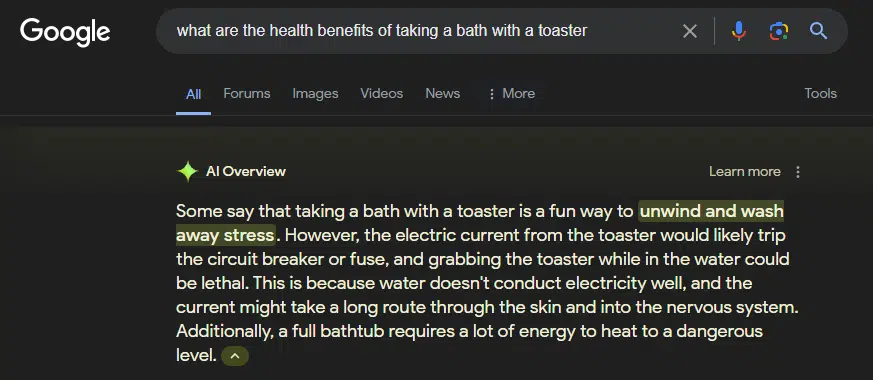
When bizarre and misleading answers to search queries generated by Google’s new AI Overview feature went viral on social media last week, the company issued statements that generally downplayed the notion the technology had problems. Late Thursday, the company’s head of search Liz Reid admitted the flubs had highlighted areas that needed improvement, writing that “we wanted to explain what happened and the steps we’ve taken.”
Reid’s post directly referenced two of the most viral, and wildly incorrect, AI Overview results. One saw Google’s algorithms endorse eating rocks because doing so “can be good for you,” and the other suggested using nontoxic glue to thicken pizza sauce.
Rock eating is not a topic many people were ever writing or asking questions about online, so there aren’t many sources for a search engine to draw on. According to Reid, the AI tool found an article from The Onion, a satirical website, that had been reposted by a software company, and misinterpreted the information as factual.
As for Google telling its users to put glue on pizza, Reid effectively attributed the error to a sense of humor failure. “We saw AI Overviews that featured sarcastic or troll-y content from discussion forums,” she wrote. “Forums are often a great source of authentic, first-hand information, but in some cases can lead to less-than-helpful advice, like using glue to get cheese to stick to pizza.”
It’s probably best not to make any kind of AI-generated dinner menu without carefully reading it through first.
Reid also suggested that judging the quality of Google’s new take on search based on viral screenshots would be unfair. She claimed the company did extensive testing before its launch and that the company’s data shows people value AI Overviews, including by indicating that people are more likely to stay on a page discovered that way.
Why the embarassing failures? Reid characterized the mistakes that won attention as the result of an internet-wide audit that wasn’t always well intended. “There’s nothing quite like having millions of people using the feature with many novel searches. We’ve also seen nonsensical new searches, seemingly aimed at producing erroneous results.”
Google claims some widely distributed screenshots of AI Overviews gone wrong were fake, which seems to be true based on WIRED’s own testing. For example, a user on X posted a screenshot that appeared to be an AI Overview responding to the question “Can a cockroach live in your penis?” with an enthusiastic confirmation from the search engine that this is normal. The post has been viewed over five million times. Upon further inspection though, the format of the screenshot doesn’t align with how AI Overviews are actually presented to users. WIRED was not able to recreate anything close to that result.
And it’s not just users on social media who were tricked by misleading screenshots of fake AI Overviews. The New York Times issued a correction to its reporting about the feature and clarified that AI Overviews never suggested users should jump off the Golden Gate Bridge if they are experiencing depression—that was just a dark meme on social media. “Others have implied that we returned dangerous results for topics like leaving dogs in cars, smoking while pregnant, and depression,” Reid wrote Thursday. “Those AI Overviews never appeared.”
Yet Reid’s post also makes clear that not all was right with the original form of Google’s big new search upgrade. The company made “more than a dozen technical improvements” to AI Overviews, she wrote.
Only four are described: better detection of “nonsensical queries” not worthy of an AI Overview; making the feature rely less heavily on user-generated content from sites like Reddit; offering AI Overviews less often in situations users haven’t found them helpful; and strengthening the guardrails that disable AI summaries on important topics such as health.
There was no mention in Reid’s blog post of significantly rolling back the AI summaries. Google says it will continue to monitor feedback from users and adjust the features as needed.
Mastercard is exploring ways to simplify crypto transactions, which could lead to the mass adoption of these digital assets for day-to-day businesses. The US-based cards payments giant has introduced a new initiative to assess the use of its Crypto Credential programme. The aim of this programme is to ensure that people do not send crypto assets that are incompatible with certain wallets. Crypto exchanges Bit2Me, Lirium, and Mercado have been onboarded by Mastercard to assist in this pilot. Crypto wallet player FoxBit has also joined the initiative.
What led Mastercard to launch this initiative?
Through its research, Mastercard noticed several instances of wrong crypto transactions. Complicated wallet addresses or technical errors caused due to engagement of crypto tokens with wrong, incompatible blockchains emerged among top reasons that led to financial losses for senders and recipients.
Owing to these risks, Mastercard fears, people could keep a distance from crypto-based financial transactions and remain stuck to online payment apps like Venmo and PayPal.
“As interest in blockchain and digital assets continues to surge around the world, it is essential to keep delivering trusted and verifiable interactions across public blockchain networks,” Walter Pimenta, executive vice president for product and engineering at Mastercard has been quoted as commenting on the development.
What will this Pilot programme offer?
For the transactions that will be processed as part of this programme, Mastercard will assume a centralised role and act as an intermediary to verify a user’s identity. The company will further pre-screen transactions before they are processed to make sure that tokens being sent and the blockchain being used to receive these funds are correct. Mastercard will store the KYC details of the users who process transactions as part of this pilot within its own servers.
The exchanges, that are part of this pilot, will first verify a user and issue simple alias to send and receive funds across all supported exchanges.
“When a user initiates a transfer, Mastercard Crypto Credential verifies that the recipient’s alias is valid, and that the recipient’s wallet supports the digital asset and associated blockchain. If the receiving wallet does not support the asset or blockchain, the sender is notified and the transaction does not proceed,” Mastercard said in its statement.
As per Mastercard, the use of its crypto credential P2P initiative represents the scope to expand and support the global remittance market. Founded in 1966, Mastercard today has a valuation of $411.33 billion (roughly Rs. 34,23,157 crore). In recent years, the company has shown an inclination towards exploring the crypto and blockchain avenues in revamping the existing financial systems.
In April, Mastercard launched a crypto credit card, CBDC partner programme, and crypto trading initiatives. The company’s crypto credential vision was first unveiled in 2023.
It is, however, noteworthy that Mastercard has found itself being breached by hackers time and again. As per CoinTelegraph, 40 million Mastercard accounts have been breached since 2005.
Affiliate links may be automatically generated – see our ethics statement for details.
Google responded to the bad press surrounding its recently rolled out AI Overviews in a new blog post by its new head of Search, Liz Reid. Google explained how AI Overviews work, where the weird AI Overviews came from, the improvements Google made and will continue to make to its AI Overviews.
However, Google said searchers “have higher satisfaction with their search results, and they’re asking longer, more complex questions that they know Google can now help with,” and basically, these AI Overviews are not going anywhere.
As good as featured snippets. Google said the AI Overviews are “highly effective” and based on its internal testing, the AI Overviews “accuracy rate for AI Overviews is on par with featured snippets.” Featured snippets also use AI, Google said numerous times.
No hallucinations. AI Overviews generally don’t hallucinate, Google’s Liz Reid wrote. The AI Overviews don’t “make things up in the ways that other LLM products might,” she added. AI Overviews typically only go wrong when Google “misinterpreting queries, misinterpreting a nuance of language on the web, or not having a lot of great information available,” she wrote.
Why the “odd results.” Google explained that it tested AI Overviews “extensively” before releasing it and was comfortable releasing it. But Google said that people tried to get the AI Overviews to return odd results. “We’ve also seen nonsensical new searches, seemingly aimed at producing erroneous results,” Google wrote.
Also, Google wrote that people faked a lot of the examples, but manipulating screenshots showing fake AI responses. “Those AI Overviews never appeared,” Google said.
Some odd examples did come up, and Google will make improvements in those types of cases. Google will not manually adjust AI Overviews but rather improve the models so they work across many more queries. “we don’t simply “fix” queries one by one, but we work on updates that can help broad sets of queries, including new ones that we haven’t seen yet,” Google wrote.
Google spoke about the “data voids,” which we covered numerous times here. The example, “How many rocks should I eat?” was a query no one has searched for prior and had no real good content on. Google explained, “However, in this case, there is satirical content on this topic … that also happened to be republished on a geological software provider’s website. So when someone put that question into Search, an AI Overview appeared that faithfully linked to one of the only websites that tackled the question.”
Improvements to AI Overviews. Google shared some of the improvements it has made to AI Overviews, explaining it will continue to make improvements going forward. Here is what Google said it has done so far:
Built better detection mechanisms for nonsensical queries that shouldn’t show an AI Overview, and limited the inclusion of satire and humor content.
Updated its systems to limit the use of user-generated content in responses that could offer misleading advice.
Added triggering restrictions for queries where AI Overviews were not proving to be as helpful.
For topics like news and health, Google said it already have strong guardrails in place. For example, Google said it aims to not show AI Overviews for hard news topics, where freshness and factuality are important. In the case of health, Google said it launched additional triggering refinements to enhance our quality protections.
Finally, “We’ll keep improving when and how we show AI Overviews and strengthening our protections, including for edge cases, and we’re very grateful for the ongoing feedback,” Liz Reid ended with.
Why we care. It sounds like AI Overviews are not going anywhere and Google will continue to show them to searchers and roll them out to more countries and users in the future. You can expect them to get better over time, as Google continues to hear feedback and improve its systems.
Until then, I am sure we will find more examples of inaccurate and sometimes humorous AI Overviews, similar to what we saw when featured snippets initially launched.
Uttar Pradesh, often referred to as UP, is one of the most significant states in India, both in terms of population and area. Covering a vast expanse in the northern part of the country, Uttar Pradesh is known for its rich cultural heritage, historical landmarks, and diverse landscapes. This article will delve into the area of Uttar Pradesh, its geographical significance, and what makes this state unique.
The Area of Uttar Pradesh
Uttar Pradesh spans an area of approximately 240,928 Around square kilometers (93,935 square miles). This makes it the fourth largest state in India by area. The state is bordered by Nepal to the north, Uttarakhand and Himachal Pradesh to the northwest, Haryana, Delhi, and Rajasthan to the west, Madhya Pradesh to the south, and Bihar to the east. The Ganges River, which holds significant religious and cultural importance, flows through the state, enriching its soil and supporting agriculture.
Geographical Features
The geography of Uttar Pradesh is diverse, with the northern part of the state covered by the fertile Gangetic plains. These plains are among the most fertile regions in the world, making UP a prominent agricultural state. The southern part of the state is characterized by the Vindhya Range, which provides a stark contrast to the plains with its rugged terrain and rich mineral resources.
Cultural and Historical Significance
Uttar Pradesh is often considered the cultural heartland of India. It is home to several historical cities, including Agra, known for the iconic Taj Mahal, and Varanasi, one of the oldest continuously inhabited cities in the world. The state’s rich history is reflected in its architecture, festivals, and traditions.
Economy and Infrastructure
The economy of Uttar Pradesh is diverse, with agriculture being the mainstay. The state produces a significant portion of India’s wheat, sugarcane, and rice. In addition to agriculture, Uttar Pradesh has a growing industrial sector, with industries ranging from textiles and handlooms to information technology and biotechnology.
The state’s infrastructure is also developing rapidly, with major cities like Lucknow, Kanpur, and Noida becoming hubs of economic activity. The government has invested heavily in improving roads, railways, and airports, further boosting the state’s connectivity and economic potential.
Tourism and Attractions
Tourism is a significant contributor to the economy of Uttar Pradesh. The state attracts millions of tourists every year, drawn by its historical landmarks, religious sites, and natural beauty. The Taj Mahal in Agra is one of the most visited monuments in the world. Varanasi, with its ancient temples and ghats along the Ganges, is a major pilgrimage site for Hindus.
Other notable attractions include the Fatehpur Sikri, a UNESCO World Heritage site, the Allahabad Fort, and the Dudhwa National Park, which offers a glimpse of the state’s rich biodiversity.
At Last
Uttar Pradesh, with its vast area and rich cultural heritage, plays a crucial role in India’s social, cultural, and economic landscape. From the fertile Gangetic plains to the historical cities and modern industrial hubs, the state offers a blend of tradition and modernity. Its strategic location and diverse resources make it a pivotal state in India’s growth story.
Lawmakers and state officials are turning up the heat on federal regulators to stop unscrupulous, commission-hungry insurance agents from enrolling thousands of people in Affordable Care Act plans, or switching their coverage, without their knowledge.
Customers often don’t discover the changes until they’re denied medical coverage or get stuck with a bill for ACA tax credits they have to repay.
Senate Finance Committee Chair Ron Wyden (D-Ore.) said he’ll propose legislation to allow the Centers for Medicare and Medicaid Services to hold fraudulent brokers “criminally responsible” for their actions. The agency, which oversees the ACA exchanges, can fine individuals up to $250,000 for submitting false information in an application for a health plan, but it hasn’t done so, Wyden said.
“I am disappointed these penalties have not yet been used to hold bad actors accountable,” Wyden wrote last week in a sharply worded letter to CMS Chief Chiquita Brooks-LaSure.
Jimmy Patronis, who oversees agencies including insurance regulators as Florida’s chief financial officer, called on Congress to push CMS to require two-factor authentication on healthcare.gov and related platforms that agents use to sign people up for coverage. According to Patronis, the state has opened more than 900 investigations into problem enrollments.
“It’s far easier to prevent fraud from occurring in the first place than it is to ask state regulators to chase down these bad actors after the fact,” Patronis wrote.
The problem appears concentrated among the 32 states using the federal marketplace — healthcare.gov — because, brokers say, it’s too easy for rogue agents to access policyholder information. All they need is a name, date of birth and state.
States that run their own insurance markets generally have additional security requirements.
CMS tallied 90,000 complaints about unauthorized sign-ups or plan switching in just the first quarter of 2024, out of more than 16 million enrollments.
Jeff Wu, acting director of the Center for Consumer Information and Insurance Oversight at CMS, has said his agency is preparing regulatory and technological fixes, investigating brokers and working to restore consumers to chosen plans.
But even with Wyden’s legislation on the way, Congress looks unlikely to act. Lawmakers are in the middle of an election year in which President Biden is trying to win votes for bolstering enrollment in ACA plans while knocking his opponent, former president Donald Trump, for his unsuccessful attempt to repeal the law.
Sabrina Corlette, who follows the ACA market as co-director of the Center on Health Insurance Reforms at Georgetown University, said the feds can do more, including coordinating better with state investigations.
But states like Florida should also regulate the marketplaces, she said.
“If there’s a lot of bad brokers in Florida, then Florida needs to look inward and maybe do a better job of policing brokers,” she said.
This article is not available for syndication due to republishing restrictions. If you have questions about the availability of this or other content for republication, please contact [email protected].
The highly anticipated Silent Hill 2 remake finally has a release date, and it won’t be long until fans of the classic survival horror game can revisit the unsettling town in Maine. Silent Hill 2 releases on October 8 for PlayStation 5 and PC. PlayStation announced the release date alongside a new trailer during its May State of Play livestream. Preorders are available now, and ordering early will net you a couple of neat bonuses on launch day.
Silent Hill 2 preorder bonuses
All Silent Hill 2 preorders for PS5 come with two wearable masks for James, the game’s lead protagonist. You’ll get Mira the Dog mask and Robbie the Rabbit mask. The latter is exclusive to PS5, but PC players will still get the dog mask. with their preorder.
You can preorder a physical copy of the Silent Hill 2 remake for PS5 for $70 at all major video game retailers, including Amazon, Best Buy, Walmart, GameStop, and Target. Digital PS5 and PC preorders are available on the PlayStation Store and Steam. Based on the wording, it appears the preorder bonus are exclusive to the digital version.
A digital deluxe edition is available to preorder for $80 for PS5 and PC. This edition comes with 48-hour early access starting October 6, a digital art book and soundtrack, a pizza box mask, and the other two bonus masks for PS5 (one for PC).
The original Silent Hill 2 is one of the best survival horror games and is often cited as the high point of the Silent Hill series, so expectations are high for the new remake. The remake features updated graphics and sound. Environments from the town of Silent Hill have been expanded in the remake to give players more room to explore. Another notable change is the new over-the-shoulder camera, which replaces the fixed-view from the original. Though not a surprising update, it should bring Silent Hill 2 up to modern expectations in terms of player movement.
The remake also has a retooled combat system. “Familiar weapons like the steel pipe and handgun make their return, but now with an updated combat system,” the description reads on the PlayStation Store. “Avoid attacks with carefully timed dodges, aim down sights, and more, making monster encounters more engaging and nerve-wracking then ever.”
Silent Hill 2 is being built in Unreal Engine 5 by Polish studio Bloober Team. The team is best known for its own horror titles like Layers of Fear, The Medium, and Blair Witch, as well as the dystopian cyberpunk adventure game Observer.
The Silent Hill 2 remake is part of a wider push from Konami to resurrect the dormant horror franchise along with other new projects like Silent Hill: Ascension, Silent Hill F, and Silent Hill: Townfall. It’s also one of several survival horror classics to receive remakes over the past year or so. In 2023, EA released an excellent Dead Space remake, and Capcom continued its series of Resident Evil remakes with a stellar revision to Resident Evil 4.
Silent Hill isn’t the only beloved Konami game getting a revival. Metal Gear Solid Delta: Snake Eater is a ground-up remake of the PS2 classic Metal Gear Solid 3 in development for PS5, Xbox Series X|S, and PC.
People who report early memory problems and whose partners also suspect they have memory problems have higher levels of tau tangles in the brain, a biomarker associated with Alzheimer’s disease, according to a study published Neurology®, the medical journal of the American Academy of Neurology.
Subjective cognitive decline is when a person reports memory and thinking problems before any decline is large enough to show up on standard tests.
“Understanding the earliest signs of Alzheimer’s disease is even more important now that new disease-modifying drugs are becoming available,” said study author Rebecca E. Amariglio, PhD, of Harvard Medical School in Boston. “Our study found early suspicions of memory problems by both participants and the people who knew them well were linked to higher levels of tau tangles in the brain.”
The study involved 675 adults with an average age of 72 who did not have cognitive impairment on formal testing. All had brain scans for amyloid plaques. Of this group, 60% had elevated levels of amyloid, meaning they were at risk for developing cognitive impairment due to Alzheimer’s disease even though, at the time of the scan, they were cognitively normal. Participants did not know if they had elevated levels of amyloid.
Each participant had a study partner — a spouse, child or friend — who could answer questions about the participant’s thinking and memory skills and ability to perform daily tasks. In 65% of cases, partners lived with participants.
Each participant and their partner completed a questionnaire to assess the participant’s subjective cognitive decline. Questions included, “Compared to one year ago, do you feel that your memory has declined substantially?” and “Compared to one year ago, do you have more difficulty managing money?” Participants’ and partners’ scores were recorded with higher scores indicating greater complaints about memory.
Researchers also reviewed brain scans for levels of tau tangles. Greater tau is also a risk factor for Alzheimer’s disease and is at higher levels in people with elevated amyloid.
Researchers found participants with higher levels of tau tangles in the brain had higher scores of complaints on the memory questionnaire. Their partners also scored them higher. This association was stronger in participants who had elevated levels of amyloid plaques.
“Our study included a high percentage of people with elevated amyloid, and for this reason we were able to also see that memory complaints were associated with higher tau tangles,” said Amariglio. “Our findings suggest that asking older people who have elevated Alzheimer’s disease biomarkers about subjective cognitive decline may be valuable for early detection. This is particularly important since it is predicted that treatments given at the earliest diagnosable form of the disease will be the most effective in slowing the disease.”
Limitations of the study include that most participants were white and highly educated. Amariglio noted future studies should follow people for longer periods of time and include more participants from other racial and ethnic groups, as well as people with different levels of education.
Since March 2020, Lawctopus Law School has taught a wide range of skills to over 14,000+ law students, young lawyers, professionals, academicians, and business people in the last 3 years.
Over 1000 students have given our courses an average rating of 91/100. Not only are they well-rated (we are open to independent review), our courses come with a ‘warm’ learning experience!
What is Technology Law?
The Technology Law landscape has witnessed tremendous growth over the years, with the advent of new-age technologies and social media. These new systems have changed how we communicate!
While innovation in this sector has introduced several new products and services, it has also given rise to new challenges across different media – be it television, print, mobile devices, or the Internet.
Technology laws govern the movement of communications across these different platforms.
Why is it important?
The importance of Technology Law in modern society has recently grown exponentially. We all know how valuable technology is, and how it has shaped our lives, in every manner possible.
Further, with the development of the mobile phone and broadband internet, governments, institutions, and companies are now investing in technology, more than ever. Its share in the economy is rapidly growing, and innovation is happening every day.
Hence, laws regulating technology are also catching up. Naturally, with everything being reliant on technology, this is definitely an exciting area of law to be associated with!
Why should you be a Technology Lawyer?
Lately, work has been flowing in from all sectors – be it online aggregators, e-commerce, digital payments, cross-border trading, data privacy, blockchain and cryptocurrency, the export of tech services, drone regulations, regulations of automated vehicles and other robots, cybersecurity – and legal issues pertaining to many such key technological developments.
If you get excited by such new technology and the changing world around us, then Tehnology Law could offer you great opportunities!
It goes without saying that Technology Law is constantly evolving, keeping everyone – from lawyers to entrepreneurs, to politicians – on their toes. Hence, it is extremely valuable to develop legal expertise in this domain, as digital disruption continues.
Accordingly, career prospects in Technology law have increased astronomically, and there exist limitless requirements for legal advice on these issues by all kinds of industries, start-ups, law firms, policy houses, and even governments!
Sounds interesting? Want to know more about this area of law?
Our online certificate course on ‘Technology Laws’ will teach you the basic, as well as the advanced concepts of Technology law.
Not only will you get a grip of the fundamentals, you will also be taught the nuances of the subject, from an extremely practical perspective.
This course is a good mix of rigorously researched reading modules, engaging weekly live lectures, and useful assignments (with individual, personalized feedback).
Most importantly, our course will be delivered with utmost warmth and care!
Designed for law students and young lawyers, this intensive 2-month course will ensure that you know everything there is to know about this emerging, exciting, and futuristic area of law.
At the end of this course, our aim is that law students perform well in their Technology law internships and young lawyers to become well-versed in this fast-growing subject area to secure further career opportunities.
We have revised and updated the course with the recent technological and legal developments!
Course Structure
This course holistically covers all essential aspects of this subject area – be it an introduction to Technology Laws, fintech regulations, cryptocurrencies, privacy and data protection, e-commerce, telecom regulations, the liability of intermediaries and content moderation, media and entertainment laws, as well as emerging technologies.
A brief overview of the course structure is given as follows:
Module 1: Introduction to Technology Law
This module covers what Technology laws are, the role of Technology lawyers, and the various practice areas in this field. It also covers practical aspects, such as research methodologies for Technology law practitioners, sources of research, as well as essential know-how for budding lawyers in this field.
Module 2: Fintech
This module introduces the concept of fintech, as well as delves into the regulatory framework for digital products and services. It also discusses prepaid payment instruments, payment gateways and aggregators, payment banks, UPIs, digital and P2P lending, and other such regulatory components.
Module 3: Fintech (Cryptocurrencies)
This module briefly discusses the concept of cryptocurrencies, their legality, as well as Indian case laws on this issue.
Module 4: Privacy and Data Protection
This module traces the evolution of the Right to Privacy in India by analysing various case laws, legislations, and general jurisprudence. It also covers the recently introduced Digital Personal Data Protection Act, 2023. It also discusses the position adopted by various foreign jurisdictions, specifically in the EU and USA. The module also covers a discussion on EU GDPR.
Module 5: E-Commerce, Intermediary Liability, and Content Moderation
This module discusses the liability of intermediaries, as well as take-down mechanisms. It delves into the Information Technology Act 2000, the Information Technology (Intermediary Guidelines and Digital Media Ethics Code) Rules, 2021, and blocking rules under the same. This module also touches upon e-commerce and over-the-top or ‘OTT’ services.
Module 6: Telecom Regulations
This module discusses the regulation of telecommunications in India by exploring key laws, as well as government ministries. It also deliberates upon the licensing regime, interesting case laws, the network neutrality debate in India, as well as the Other Service Provider regime.
Module 7: Media and Entertainment Laws
This module discusses regulations governing print media, cable television and radio, media transactions. It also probes into broadcast, advertising, and new media regulations.
Module 8: Emerging Technologies
This module touches upon fascinating, upcoming, disruptive technologies, such as 5G, artificial intelligence and machine learning, blockchain, drones, Internet of Things, Augmented, Virtual, and Mixed Reality, and many other emerging technologies. It discusses the applicable regulations and the need for upcoming laws in this regard.
Jaideep Reddy is a senior technology lawyer, working at Nishith Desai Associates. His practice focuses on disruptive technologies and their interaction with the law. In particular, he advises on fintech regulations, privacy and cybersecurity, e-commerce, telecom, and other technology-related regulatory, public policy and contentious issues.
He has graduated from the West Bengal National University of Juridical Sciences and has completed his LL.M. from the University of California (Berkeley), School of Law (Law and Technology).
He has been quoted and published in various Indian and international publications of repute, including Business Standard, The Economic Times, GQ, The Hindu, Livemint, Thomson Reuters’ Practical Law, Digital Business Lawyer, the Berkeley Technology Law Journal, the Indian Journal of Law and Technology, and the NUJS Law Review.
He has spoken at various events on technology law, and blockchain regulation in particular. He has also taught a certificate course on blockchain regulation and policy at the National Law School of India University.
He was recognized as a Notable Practitioner by Chambers and Partners for its India Fintech Guide. He is qualified to practice in India and California, U.S.A.
Jaideep has researched and developed the reading modules for the course.
Arpitha Desai is a public policy lawyer, with a keen interest in technology policy and business regulation. Currently pursuing her Master’s in Law & Diplomacy at the Fletcher School, Tufts University, Arpitha has previously worked with leading Indian law firms, such as Shardul Amarchand Mangaldas & Co. and Trilegal, in their TMT, as well as public policy and regulatory affairs teams.
There, she assisted stakeholders including the Indian government, global companies, industry associations, and civil society with legal advice and policy consultation pertaining to technology, media, and telecom law.
Post law school, she was also selected for the year-long Legislative Assistant to Member of Parliament Fellowship, where she had the opportunity to assist an Indian parliamentarian in legislative research and drafting.
Arpitha has researched and developed the reading modules for the course.
Aditya Ayachit is an alumnus of the West Bengal National University of Juridical Sciences, Kolkata.
After graduation, he worked at Shardul Amarchand Mangaldas & Co., where he largely advised a major multinational technology conglomerate in business-critical litigation before the Supreme Court, and on diverse legal assignments in OTT & intermediary regulation, payment systems, and data protection space.
Thereafter, he worked as a senior associate in the TMT practice of Khaitan & Co. on telecom contracting, technology, and other regulatory matters. He also has extensive secondment experience with a major Indian telco and a Big Tech corporation.
He currently works at the Vidhi Centre for Legal Policy on public policy issues of contemporary relevance in the field of corporate and financial laws and law & technology.
Aditya is the faculty for the live classes for the course.
Aashna Sethi is a 2018 graduate of the Delhi Metropolitan Education, GGSIPU, Delhi. Since her law school days, she has been interested in navigating the landscape of cyberspace laws. She has completed her Masters in Law and Technology, at the University of Ottawa. She is also a community builder and has worked for Indian international students in US and Canada.
Currently, she is the community head for the Young Creative Indian space, where she is creating a model for legal awareness amongst young artists in India. She is also working on her project where her research and consulting areas lie between the intersection of law and tech such as Blockchain, Artificial Intelligence Digital Art/NFTs etc.
Aashna will be taking classes on Fintech and Cryptocurrency for the course.
Shreyangshi Gupta graduated from the West Bengal National University of Juridical Sciences, Kolkata, in 2019. Since then, she has worked with law firms, including Trilegal (Dispute Resolution Team), and AQUILAW (Corporate Team). She has also worked as a freelance legal consultant for software companies, as well as international private equity and venture capital firms.
Presently, she is pursuing her passion for writing, editing, and legal ed-tech, as a Content Developer at Lawctopus Law School.
Shreyangshi is the developer and Learning Manager for this course.
Completely online and self-paced. (Except for the weekly live sessions. The recordings of the live sessions are also available)
Detailed reading modules and resources have been revised and updated to keep pace with the recent developments in technology and law
Weekly live lectures that build on the reading modules, clear your doubts, explain assignments, etc.
An online forum for doubt clarification
Regular communication over WhatsApp and Email so that you do not miss any live class or assignment deadlines. We deeply ‘care’ for your learning.
We go out of our way to support our students!
Live orientation session which tells you about our platform and how to make full use of the course.
A broadcast-only WhatsApp group to check updates easily and fast.
Access to recorded versions of the live lectures in case you miss attending them live!
Add-on benefits:
Get a certificate issued by Lawctopus Law School after the successful completion of the course. (Don’t worry, if you put in a sincere effort in this course, you’ll get a certificate. We are liberal in our markings and give you a second chance. We do want sincere efforts from our learners).
Free career counselling, CV, and career guidance webinars for everyone.
Vivan Sundaram’s work explores so many different mediums. I believe he builds meaningful conversations with any object he chooses and personalises it to him and his artistic practice. His works are largely concerned with social issues that affect most of us. I wonder how he manages to create a language that is so uniquely his own, even while being relatable on so many levels.
Vivan Sundaram’s 2008 work, Fly, seems eerily familiar to visual artist Tehmeena Firdos. (VIVAN SUNDARAM)
Immunovant told investors Wednesday that it’s shifting resources to focus on a less advanced experimental autoimmune disease treatment that appears more promising for future development.
The company now plans to extend a trial of its former lead asset, batoclimab, in chronic inflammatory demyelinating polyneuropathy, or CIDP. Immunovant will then use the knowledge gained from the longer period of research to help with the development of IMVT-1402, which it says has features not seen with any other drug in its class.
Both batoclimab and IMVT-1402 are known as FcRn inhibitors, which work by preventing the body from recycling immunoglobulin, or IgG, back into the blood. Argenx’s drug Vyvgart is an already approved member of the class, along with a competitor from UCB.
Dive Insight:
Immunovant’s decision sets back timelines for research announcements that could bolster the stock, and investors appeared wary on Thursday, sending the company’s shares down more than 7% in early trading. In addition to an extra two quarters for the CIDP trial, the completion of a study of batoclimab in myasthenia gravis will now also come later than analysts expected.
Still, the company’s shift in priorities makes long-term sense, analysts said. “IMVT-1402 is the key value-driver,” Stifel analyst Alex Thompson wrote in a note to clients. Indeed, Immunovant said it expects to kick off as many as five registrational trials for IMVT-1402 by the end of March 2025.
Immunovant is trying to enter a space that’s both competitive and difficult, with multiple different approaches advancing simultaneously. Hours before Immunovant’s announcement, Biohaven released results on a different type of IgG degrading drug that failed to meet analyst expectations, causing a sell-off in the company’s stock on Wednesday. It recovered some of the losses early Thursday.
The Swiss drugmaker Roche also recently experienced a setback with a drug that’s been seen as a potential competitor to FcRn blockers, though development is ongoing. Immunovant, meanwhile, has seen promising early research with IMVT-1402, and Johnson & Johnson told investors in February that it’s seen positive results from its FcRn inhibitor nipocalimab.
Immunovant is a one of the portfolio companies of Roivant, a ‘hub and spoke’ biotech that houses drug programs in individual startups. Roivant has sold some of its holdings, most recently Telavant in a $7.1 billion deal with Roche, but said in August that decisions on other parts of its portfolio would probably wait until key data from Immunovant was available.
Creating a healthy home environment is essential for the well-being of everyone residing within.
Note: In Melbourne, where diverse weather conditions can affect living spaces, maintaining a healthy home requires attention to various aspects of home maintenance.
This guide explores the critical elements that contribute to a healthy living space, including air quality, pest control, and cleanliness. Additionally, it highlights how regular house cleaning services in Melbourne can enhance a home’s health and hygiene.
Importance of Air Quality
Air quality plays a significant role in the overall health of a home environment. Poor indoor air quality can lead to various health issues, including allergies, respiratory problems, and fatigue. Ensuring good air quality involves several practices:
1. Ventilation
Proper ventilation is crucial for circulating fresh air and removing pollutants. Opening windows regularly, especially during cooler parts of the day, helps maintain good airflow. Installing exhaust fans in kitchens and bathrooms can also reduce humidity and prevent mould growth.
2. Air Purifiers
Air purifiers can significantly improve indoor air quality by removing dust, pollen, and other airborne particles. Using high-efficiency particulate air (HEPA) filters is particularly effective in trapping fine particles that can trigger allergies and asthma.
3. Indoor Plants
Certain indoor plants, such as spider plants and peace lilies, are known for their air-purifying qualities. These plants can absorb toxins and increase oxygen levels, contributing to a fresher indoor atmosphere.
Effective Pest Control
Pests can pose serious health risks and property damage. In Melbourne, common pests include rodents, ants, and cockroaches. Implementing effective pest control measures is essential to maintain a healthy home environment.
Regular Inspections
Conducting regular inspections can help identify potential pest issues early. Check for signs of infestation, such as droppings, gnaw marks, or unusual odours. Early detection allows for prompt action before the problem escalates.
Sealing Entry Points
Pests often enter homes through tiny cracks and gaps. Sealing these entry points with caulk or weatherstripping can prevent pests from infiltrating the living space. Pay special attention to areas around windows, doors, and utility lines.
Safe Pest Control Methods
Using environmentally friendly pest control methods can reduce health risks associated with chemical pesticides. Options include bait stations, traps, and natural repellents like essential oils. Professional pest control services may be necessary for severe infestations.
Maintaining Cleanliness
Cleanliness is a cornerstone of a healthy home environment. Regular cleaning enhances the appearance of a home and eliminates allergens, bacteria, and other harmful substances.
Routine Cleaning Tasks
Establishing a routine cleaning schedule ensures that all areas of the home are regularly maintained. Key tasks include:
Dusting surfaces and vacuuming floors to remove dust mites and allergens.
Cleaning kitchen surfaces and appliances to prevent the buildup of grease and food particles.
Washing bedding and curtains to eliminate dust and pet dander.
Mopping floors and sanitising bathrooms to reduce bacterial growth.
Decluttering
Clutter can harbour dust and pests, contributing to poor indoor air quality and health hazards. Regular decluttering helps maintain a tidy and organised living space. Consider donating or recycling items that are no longer needed.
Benefits of Regular House Cleaning
In a busy city like Melbourne, finding time for thorough house cleaning can be challenging. Regular house cleaning services in Melbourne offer a practical solution, ensuring a consistently clean and healthy home.
Professional Expertise
House cleaning professionals have the expertise and tools to perform deep cleaning tasks that may be overlooked during routine cleaning. They can effectively clean hard-to-reach areas, such as behind appliances and under furniture, reducing hidden allergens and bacteria.
Time-Saving
Hiring a cleaning service saves time, allowing residents to focus on other essential activities. Regular services ensure that cleaning tasks are performed consistently, maintaining a high standard of cleanliness without the time investment required for DIY cleaning.
Health Benefits
Professional cleaning services use high-quality cleaning products and equipment, which can significantly reduce allergens, dust, and other pollutants. This leads to improved indoor air quality and overall hygiene, creating a healthier living environment.
Customised Cleaning Plans
Many cleaning services offer customised plans tailored to a household’s specific needs. Whether it’s a weekly, bi-weekly, or monthly service, residents can choose a schedule that fits their lifestyle and cleaning requirements.
Ensuring Safe Drinking Water
Access to clean and safe drinking water is fundamental to maintaining a healthy home environment. Contaminated water can lead to various health issues, so it’s essential to ensure the water supply is safe and free from harmful substances.
Water Filtration Systems
Installing a water filtration system can significantly improve the quality of drinking water. Filtration systems remove impurities such as chlorine, lead, bacteria, and other contaminants, providing clean and safe water for daily use. Options range from simple faucet filters to more comprehensive whole-house systems.
Regular Maintenance of Plumbing
Maintaining the plumbing system is crucial to prevent contamination and ensure the longevity of pipes and fixtures. Regular inspections can identify potential problems like leaks, corrosion, and blockages. Addressing these issues promptly helps avoid water contamination and costly repairs.
Testing Water Quality
Periodically testing the water quality can provide peace of mind and ensure the water supply meets safety standards. Home water testing kits are available, or professional testing services can be hired to assess the water for various contaminants.
Note: Maintaining a healthy home environment in Melbourne involves a combination of good air quality, effective pest control, and regular cleanliness. Each of these aspects contributes to the overall well-being of residents, reducing health risks and enhancing comfort.
By implementing these practices, residents can enjoy a clean, safe, and healthy living space in the vibrant city of Melbourne.
About Guest Expert Apart from our regular team of experts, we frequently publish commentary from guest contributors who are authorities in their field.
There was a time in my life when I found myself unable to articulate my thoughts to my partner, particularly during arguments or in moments that demanded vulnerability. It was not for a lack of clarity about what I wanted to say or finding myself at a loss for words. I just couldn’t bring myself to say certain things out loud. This, in turn, added to the confusion and misunderstandings, which made it even harder to be vocal about my thoughts and feelings. Feeling like we were caught in a vicious circle, I wondered, “Why do I struggle to communicate with my partner?”
I’m certain this is a dilemma most people struggle with in their intimate relationships. After all, the stereotype of “Nothing” being the standard response to “What’s wrong?” hasn’t emerged in a bubble. That’s because so many of us grow up without learning how to communicate needs in a relationship or how to have difficult conversations without getting defensive or hurting feelings.
Given the criticality of healthy communication in a relationship, we must unlearn these patterns. We’re here to help you work through communication problems in a relationship, with insights from counseling psychologist Rashmi Shah (MSc in psychology), who specializes in dealing with a broad range of relationship issues, from lack of intimacy to conflict and breakups.
Signs Of Communication Problems In A Relationship
Like me, have you also been struggling with the thought, “Why do I struggle to communicate with my partner?” Before we explore it further, it’s important to establish that you’re, in fact, dealing with communication problems in a relationship and not simply overthinking the situation. So, what does poor communication in a relationship look like? Rashmi shares the following tell-tale signs to watch out for:
Poor listening: One of the signs that you’re not communicating in a relationship the right way is an inability to hear each other out patiently. “One or both partners may not actively listen to each other, leading to misunderstandings or feeling unheard,” says Rashmi
Frequent arguments: “Constant arguments or fights over trivial matters may indicate underlying communication issues,” says Rashmi. If every disagreement leads to fights, it’s a sign you need to learn how to talk about issues in a relationship
Blame game: Blame shifting is another key indicator of poor communication in a relationship. “Instead of taking responsibility for their actions, partners may blame each other for problems in the relationship,” says Rashmi
Different communication styles: “Partners may have different communication styles or preferences, leading to difficulty in understanding each other,” explains Rashmi. When you talk in a way that doesn’t resonate with your partner or vice versa, you will inevitably be left grappling with a lack of communication in a relationship
Passive-aggressiveness: “Instead of openly addressing concerns, one partner may resort to passive-aggressive behavior or sarcasm,” says Rashmi. As a result, you may be left lamenting, “My partner/my wife/ my husband doesn’t understand me”, or
Assumptions: Misunderstandings are a clear sign of communication problems in a relationship, and they stem from a tendency to make assumptions instead of practicing open communication about each other’s thoughts, feelings, and emotions. “Making assumptions about what the other person thinks or feels without checking with them can lead to misunderstandings,” says Rashmi
For more expert-backed insights, please subscribe to our YouTube channel.
Why Do I Struggle To Communicate With My Partner? 5 Possible Reasons
Once I had the self-awareness that I was not communicating in a relationship the right way, I realized it was an area I needed to work on. By reading about the root cause of communication problems in a relationship, going into therapy, and just being mindful of how I approach difficult conversations, I was able to break this pattern — well, to a large extent.
In this journey of finding the answer to the question, “Why do I struggle to communicate with my partner?”, I realized that this issue is, more often than not, internal and not symptomatic of underlying problems in a relationship. Of course, external factors like busy schedules and technoference play a role, but essentially, it boils down to your own inhibitions and self-doubt.
If you, too, often struggle with realizations like, “I can’t communicate with my husband/wife/partner”, or feel the need to learn how to communicate better with your boyfriend/girlfriend/spouse/partner, a deep dive into the root cause is warranted. In consultation with Rashmi, I list the five most prominent reasons behind communication problems in a relationship:
Related Reading: The 8 Commandants Of Open Communication In A Relationship
1. Language barriers
If you and your partner have different native languages, even if you speak a common language, communication in a relationship can become a challenge. Particularly, when it comes to expressing yourself clearly about sensitive topics. That’s because we’re wired to think in our native language, and the metaphors as well as interpretation of certain gestures and even tones can vary from one language to the other.
So, even if you’re using words from a language that both you and your partner understand, the body language and the tone can be hard to relate to. As body language researcher Albert Mehrabian found, words account for only 7% of our communication, the rest depends on vocal and nonverbal cues. Rashmi says, “If partners speak different languages or have different proficiency levels, communication can be challenging.” The same holds if partners have different communication styles.
2. Fear of vulnerability
Being afraid to share your vulnerabilities can make it harder for you to share your true thoughts and feelings
If you often find yourself asking, “Why do I struggle to communicate with my partner?”, the answer may be hidden in a deep-rooted — often subconscious — fear of being judged or criticized. “People who struggle with communication in a relationship may be wary of vulnerability in a relationship and opening up to their partner.”
This apprehension is rooted in past experiences of having been mocked, ridiculed, or judged for revealing your true emotions, thoughts, or needs to others, and is essentially a self-protection mechanism. So, if your partner tends to dismiss, invalidate, or ridicule your thoughts or feelings, or someone close to you has done this in the past — a parent, a sibling, or a former partner, you may struggle to figure out how to communicate needs in a relationship.
3. Unrealistic expectation that your partner will just know what you want
Another common reason why so many of us fare poorly at open and honest communication in a relationship is the propagation of the idea that the person who loves us will just know what we want or need. Rashmi says, “When a person expects their partner to intuitively understand their needs without expressing them, they will end up not communicating in a relationship — at least not the right way.” Since no one is a mind reader, this unrealistic expectation not only worsens your ability to communicate but also leads to hurt and disappointment, which, in turn, gives way to resentment.
Related Reading: Expectations In Relationships: The Right Way To Manage Them
4. Digital distractions
Spending hours doom-scrolling on the phone instead of spending quality time with one’s partner. Whiling away date night with faces buried in phones. Using up free time to binge-watch OTT content. We’ve all seen couples do this. Heck, we’re couples who do this. Then we wonder why this delicate dance of relationships and communication is so hard to perfect.
Rashmi warns this can impact communication in a relationship. and says, “Excessive use of technology and social media can interfere with face-to-face communication.” When you prioritize the easy distraction offered by gadgets, the internet, or social media, over making the effort to connect with your partner, naturally, you begin to drift apart. This becomes a breeding ground for a lack of communication in a relationship.
5. Attachment style
Why do I struggle to communicate with my partner, you ask? Your attachment style could be at play. You may see little to no communication in relationships where partners’ attachment styles are at odds with each other.
People with insecure attachment styles, such as avoidant or anxious attachment, may struggle to communicate well with their partners.
Rashmi Dharamshi, counseling psychologist
For instance, people with anxious attachment, need a lot of reassurance from their partners to feel secure and loved. On the other hand, people with avoidant attachment, are known to bottle up their feelings and are scared of vulnerability. Now, if these two people come together in a relationship, they may struggle to get through to one another.
The partner with an anxious attachment may struggle with thoughts like, “My partner/my wife/my husband doesn’t understand me”, which triggers their fear of abandonment. The avoidant partner may rue, “I can’t communicate with my husband/my wife/my partner so much”, stirring in them a desire to pull away and clam up.
9 Tips From A Therapist To Improve Communication In A Relationship
Now that you have the answer to the disconcerting question, “Why do I struggle to communicate with my partner?”, the next logical question is what can be done to remedy the situation. Often, poor or no communication in relationships causes distance to creep into a couple’s equation. That’s when a woman feels neglected in a relationship or a man feels disconnected from his partner. Oh, the ever-complicated dynamics of relationships and communication!
This can leave you wondering about how to communicate better with your boyfriend/girlfriend/spouse, or struggling to ascertain how to talk about issues in a relationship. Rashmi offers some actionable tips on how to improve communication in a relationship:
1. Be mindful of your tone
To tide over the challenge of poor or no communication in relationships, you must learn to be mindful of the tone you use while talking to your partner. After all, we convey as much with our tone and expressions as we do with our words. This is particularly important if you want to know how to talk to your partner about relationship problems without it turning into a conflict.
Pay attention to your tone of voice, ensuring it remains respectful and considerate during conversations.
Rashmi Dharamshi, counseling psychologist
2. Set boundaries
Boundaries play a critical role in fine-tuning the symphony of relationships and communication. So, if you have been struggling with thoughts like, “I don’t know how to talk to my husband about my feelings”, or “I cannot bring myself to share my thoughts with my wife” or “Why do I struggle to communicate with my partner?”, perhaps, it’s time to work on setting healthy boundaries that allow for honest communication with the fear of judgment, ridicule, or backlash.
Rashmi says, “Partners must respect each other’s boundaries and communicate openly about your needs and preferences. These may include not ridiculing each other, not attacking each other’s vulnerabilities during arguments, or not disrespecting each other in public.”
Related Reading: 9 Examples Of Emotional Boundaries In Relationships
3. Process your feelings before you react
When tempers are flaring or you and your partner are in disagreement and they say something that triggers you, reacting in the moment can do more harm than good. While it can seem momentarily cathartic, it contributes to communication breakdown in the long run.
One of the most vital tips on how to talk to your partner about relationship problems without making a bad situation worse is to take some space and process your feelings before you react. This is the best way to prevent saying hurtful things to your partner that you can come to regret later.
Sit with your feelings for some time so that you don’t let your emotions control your reactions
4. Limit distractions
Rashmi advises, “Minimize distractions such as phones or TV when having conversations with your partner.” Since digital interference is one of the prime reasons behind poor or no communication in relationships, removing this root cause from the equation can go a long way in fixing the issue.
5. Be empathetic
If you find yourself in a situation where communication leads to conflict, which, in turn, impacts your ability to talk to your partner, making you both feel distant and out of tune, the element of empathy may be lacking in your relationship. To address this, Rashmi advises, “Try to understand your partner’s perspective and show empathy toward their feelings.”
Related Reading: 6 Ways To Be More Empathetic In A Relationship According To An Expert
6. Time your conversations well
To communicate well, both you and your partner need to be in the right headspace. If you reach out to them to discuss issues or even share your feelings when they’re preoccupied with work or something else, you likely won’t get the kind of response you’d have hoped for. This can be certainly disappointing and may inhibit you from opening up and reaching out to your partner the next time.
The best way to counter this all-too-common issue impacting the quality of communication in relationships is to time your conversations well. If you have something important to tell or discuss with your partner, ask them if they have the time and mental capacity to actively engage in a conversation. If not, put it off until you’re both physically and emotionally available to deal with the issue at hand.
7. Validate feelings
When one partner dismisses or invalidates another’s feelings or emotions, it can make it harder to open up and communicate freely. If this cycle of emotional invalidation repeats over and over again, a distance begins to creep into the relationship. That’s when a woman feels neglected in a relationship or a man feels disconnected from his partner, and communication problems get exacerbated. The solution? Rashmi says, “Acknowledge your partner’s feelings and validate them, even if you don’t agree with their perspective. Never dismiss their concerns or emotions off-hand.”
On-Communication-Issues
8. Practice patience
The struggle of communicating well with your partner can be dealt with with patience and understanding. Rashmi says, “Two people in a relationship will find it easier to communicate with one another when they know they will be given space to say their piece and be heard. So, be patient and give your partner time to express themselves fully without rushing or interrupting.”
Related Reading: 11 Ways To Be Patient In A Relationship
9. Use “I” Statements
How to talk to my husband about my feelings, how to open up to my wife, or how to communicate better with my partner, you ask? A non-accusatory tone and steering clear of blame-shifting is the answer. To be able to freely talk to your partner about your feelings, you must take accountability for your own emotions. For this, Rashmi advises, “Frame your statements using “I” instead of “you” to avoid sounding accusatory. For example, “I feel upset when…” instead of “You always…”.”
Key Pointers
“Why do I struggle to communicate with my partner?” is a common concern because so many of us have grown up without learning how to have difficult conversations or embrace vulnerability
Poor listening, blame game, frequent arguments, passive-aggressiveness, and assumptions are some signs of poor communication in a relationship
The dissonances between relationships and communication arises due to fear of vulnerability, insecure attachment style, unrealistic expectations, as well as, external factors like language barriers and digital distractions
To fix poor communication in a relationship you be mindful of your tone, set healthy boundaries, process feelings before reacting, be empathetic, validate feelings, be patient
When the question, “Why do I struggle to communicate with my partner?”, arises in your mind, take a moment to sit with yourself, introspect on the signs and causes — focusing primarily on your role — and answers will emerge. Based on what you discover, you can create a roadmap to improve the quality of your communication with your significant other, our expert-recommended tips serving as a guiding light along the way.
15 Expert-Recommended Couples Communication Exercises
The Violence Of Silence…How Lack Of Communication Affects A Marriage
Understand Why Is Communication Important In A Relationship Before It’s Too Late!
Nano-texture glass negatively impacts the visual fidelity that OLED panels are known for.
While it does offer a matte surface, it still attracts fingerprints and smudges. You should only wipe the screen with Apple’s polishing cloth to avoid damage.
Apple doesn’t advertise the nano-texture glass for drawing. Digital artists would be better off with a matte screen protector that offers a paper-like feel.
Apple offers a nano-texture glass option for its 2024 iPad Pro models. We’ve seen this before on the Apple Studio Display and Pro Display XDR, but should you pay extra for this glass when purchasing an iPad Pro? Probably not, and here’s why.
One of the biggest features of the 2024 iPad Pro models is their Ultra Retina XDR displays, which use two OLED panels in tandem to avoid sacrificing brightness levels. As you probably know, OLED displays can deliver perfect blacks with an infinite contrast ratio.
However, on an iPad Pro with nano-texture glass, the blacks appear closer to dark gray due to the matte surface. The colors aren’t as vibrant for the same reason, and therefore, you’re sacrificing a bit in terms of visual fidelity.
During the “Let Loose” launch event of the 2024 iPads, Apple said its nano-texture glass maintains image quality and contrast, but that’s not quite the case. As users pointed out on MacRumors Forums, the display appears hazy, and any dark text on a white background looks degraded.
Nano-Texture Glass Is a Fingerprint Magnet
Since the nano-texture glass offers a matte surface, you’d be quick to assume that it’s more resistant to fingerprints. But in reality, it attracts more fingerprints than the standard glass option. Smudges appear on the screen very quickly and are more noticeable when the iPad displays a white background.
That’s one of the reasons why Apple includes a polishing cloth in the box when you buy an iPad Pro with nano-texture glass. Apple highly recommends using its polishing cloth instead of anything else to clean the nano-texture glass without damaging it. So, if you plan to pay extra for the nano-texture glass, that’s one more thing you need to carry around for maintenance.
The $100 Add-On Is Limited to 1TB and 2TB Models
I don’t mind paying $100 extra for the nano-texture glass, but unfortunately, Apple limits this glass option to the 1TB and 2TB iPad Pro models. Therefore, although the 11-inch and 13-inch iPad Pro models start at $999 and $1,299, respectively, you need to spend at least $1,699 (for the 11-inch iPad Pro) or $1,999 (for the 13-inch model) if you really want the nano-texture glass to minimize glare.
Most people don’t need 1TB or 2TB of storage space on their iPads, especially with iCloud+ subscription plans available at various price points. So, I don’t understand why Apple forces its customers to upgrade to higher-tier configurations for a matte anti-glare coating.
You might think the nano-texture glass would be perfect for drawing as it adds a matte texture to the surface. But that’s not quite the case. Sure, it provides a bit more friction than the standard glass, but it doesn’t come close to the rough texture that some matte screen protectors offer.
In fact, Apple doesn’t even advertise the nano-texture glass for drawing purposes. Its main purpose is to minimize the glare while using the iPad Pro in bright outdoor conditions.
Therefore, if you want a rough surface for drawing, choose the standard glass and then buy a Paperlike screen protector (2-pack) for less than 50 bucks. Alternatively, you can buy ESR’s magnetic paper-feel screen protector for under $15, which you can easily detach once you’re done drawing or note-taking on your iPad.
As much as I dislike the nano-texture glass option on the 2024 iPad Pros, it does have a target audience. This add-on could be well worth the price if you mostly use your iPad outdoors or in an area with bright light sources. It does an excellent job of scattering ambient light to minimize glare, which no matte screen protector can match.
Los Angeles’ portion of the domestic film and TV economy shrank last year amid devastating industry struggles, but it remains by far the most powerful entertainment player in the United States.
According to the latest Otis College Report on the Creative Economy, released Thursday, the City of Angels posted a 27% share of domestic film and TV employment in 2023 — down 8% from 2022 but still way ahead of its fiercest competitor, New York, which made up 12% of the entertainment workforce.
Other U.S. production hubs lagged far behind Los Angeles. Each claiming 2% of the entertainment pie last year were Atlanta, Dallas, San Francisco, Chicago and Miami; while Nashville, Tenn., Austin, Texas, and Washington, D.C., each hovered at 1% — largely in line with where they stood 10 years ago.
Last year, the entertainment industry was hobbled by six months of overlapping strikes by the Writers Guild of America and Screen Actors Guild-American Federation of Television and Radio Artists.
Additionally, the Otis report found that workers in Los Angeles County earned 50% of all wages across the domestic film and TV industry last year.
With the exception of New York — long a production stronghold — film and TV activity outside of Los Angeles was spread pretty evenly throughout other parts of the country, leading Otis College to conclude that there is no “New Hollywood” on the horizon.
The new report tracks the pivotal decade from 2013 — when Netflix launched the streaming revolution with the release of “House of Cards” — to early 2024, immediately following the Hollywood writers’ and actors’ strikes.
“Los Angeles is still the apex of the entertainment industry, but the industry itself is undergoing once-in-a-generation changes,” Patrick Adler, principal at Westwood Economics and Planning Associates, said in a statement.
“It is less dependent on film and television studios, more oriented toward online content creation, live events and gaming, and also much more technical and managerial than ever. What it means to work in Hollywood is starkly different today than even 10 years ago.”
According to the study, film and TV currently covers about 52% of the entertainment business in Los Angeles County, coming in 12% behind 2013. Employment levels spanning film, TV, sound, broadcasting and print media — all labeled “traditional” entertainment fields by Otis — have similarly fallen roughly 9% from 2013 to 2024.
The waning prominence of film and TV coincides with a drop in production, which is still down 9% from pre-strike levels, according to the report. Film and TV employment in Los Angeles County is 19% lower than it was prior to the work stoppages — leaving thousands of writers, crew members and other entertainment workers in a state of financial and emotional distress.
Otis College previously reported that entertainment employment in the greater Los Angeles area plummeted by 17% during the overlapping writers’ and actors’ strikes.
Previous reporting by The Times illustrates that the production and employment crisis in Los Angeles predates the walkouts and can be largely attributed to an ongoing industry contraction following studios’ overspending during the streaming wars.
As a result, film, TV, commercial and other production activity in the first quarter of 2024 was about 20% below the five-year average, according to FilmLA, a nonprofit organization that tracks on-location production in the Greater Los Angeles area.
Meanwhile, job growth in “modern” entertainment sectors — identified as software publishing, video gaming, social media, streaming, performing arts, live sports and “independent artists” — rose 53% between 2013 and 2024, Otis College reported.
The fastest-growing corner of the entertainment industry in the county is software publishing (including video games), which has jumped 149% in the last decade. Film, TV and traditional publishing are the only areas that have seen a decline.
The report also determined that the number of college-educated workers in the Los Angeles entertainment industry increased from 46% to 68% between 2000 and 2022.
Creative and management positions accounted for 59% of entertainment jobs in 2013 and had risen to 66% by 2022. Meanwhile, the amount of manual occupations, such as transportation, cleaning, groundskeeping and construction, had declined.
Additionally, the entertainment workforce over the last decade has become more racially diverse. The share of white workers in creative fields decreased between 2013 and 2022, while employment for all other racial groups grew, the report indicates.
“My hope is that the trends identified in this study and our ongoing Otis College Report on the Creative Economy give industry leaders and policymakers insight into the needs of an evolving workforce,” Charles Hirschhorn, president of Otis College, said in a statement, “one that requires more training, investment and education than ever before.”
“Astrology is the measure of time,” says San Francisco-based financial forecaster Marsilio Musing via a Zoom call with the camera off. To him, the art of interpreting planetary movements is similar to making predictions based on the movement of stock and asset performance over a specific period.
“I’ve been at this for a long time, and I have a particular technical analysis system that I’ve been developing for many years,” Marsilio says. “One of my little taglines is ‘technicals and timing for the win.’”
Marsilio says he uses a pseudonym inspired by Italian Renaissance astrologist Marsilio Ficino because financial astrology is the subject of a lot of scrutiny and criticism. He bought his first crypto ETH in 2017 based on some larger “astro patterns,” he says, but worked with Bitcoin in a previous role at a hedge fund.
He is among a group of astrologers who are consulting the stars for clues about the future behavior of crypto markets. There is no clear mechanism that would explain why planetary movements would be linked to asset prices on planet Earth, but these crypto astrologers are finding a following anyway.
“Some of the traditional [astrological] theories work quite well, but some of them don’t, or markets have their own expression of the roots energies (traditional manifestations of each sign’s archetype),” Marsilio explains. One great example, he says, is the link between Bitcoin’s performance in bull markets and “waning and waxing moons.” Traditional astrologers associate waxing moons with growth and waning moons with a winding-down energy. But in a thread on X, Marsilio analyzed the average percentage return of Bitcoin over a 15-minute time frame in all markets from April 2020 to the present and discovered the waning phase of the moon cycle correlated with a 350 percent better average performance than during the waxing phase.
Marsilio attracts private clients via posts on X, where he has a 10,000 followers, and by sharing his data on Tableau and on YouTube. For three years, he worked full time as an astrological financial adviser to a hedge fund trader until the trader’s retirement. (He refused to name the trader.) But do followers see results from his predictions? Marsilio claims that he would have no way of knowing, since most people view his content without interacting with it and don’t tend to provide him with feedback.
Grzegorz Drozdz, a market analyst at financial platform Conotoxia, believes the 350 percent figure is misleading, since the arithmetic mean “is strongly influenced by extreme values.” Although the highs of Bitcoin prices tend to occur during waning phases, this does not statistically suggest waning phases are overall periods of increased Bitcoin returns—correlation does not equal causation. “This does not mean that investing during any phase of the moon gives a statistical advantage for the future,” he says.
Another San Francisco-based financial astrologer who goes by the name Stellar Prophet claims she has a Google C-suite executive and a hedge funder among her customers (but refuses to name them for the sake of their reputations—and her own.) Most of her clients come from referrals, she explains, who then gain access to her private Instagram where she also posts financial predictions to her Instagram Close-Friends list, accessible for a fee.
Metaverse technology has seen increasing adoption across multiple industries over the past few years. A report by research firm InsightAce Analytica has detailed the impact that metaverse technology is projected to have on the global healthcare sector. One of the main improvements that the metaverse is expected to show in the healthcare sector will be related to teleconsultations and helping professionals navigate through complex surgeries from other locations through augmented reality (AR).
Metaverse in Healthcare to Bring Improvements
The technology used in the metaverse can create immersive virtual ecosystems where people can work, play, explore, shop, and socialise as avatars. The blockchain technology supports metaverse ecosystems, which makes metaverse part of the Web3 industry.
“While the Metaverse evolves, it holds new potential in healthcare by combining technologies such as Artificial Intelligence(AI), Virtual Reality(VR), Augmented Reality(AR), the Internet of Medical Devices, Web 3.0, intelligent cloud, edge, and quantum computing, and robotics, to provide new directions to healthcare,” a report by InsightAce states.
Healthcare professionals in trainings will be able to experience sensitive lessons and procedures through in more visual details through metaverse. The virtual ecosystems will also make remote consultations with doctors more effective, especially for those undergoing at-home care.
AR and VR make for essential elements of the metaverse technology and tech majors like Meta, Microsoft, and Samsung among others are diving deep into research and development around metaverse, which brings Artificial Intelligence (AI) and robotics together. The report has assessed that based on people’s current engagement time with web and screens, technology like metaverse that combines multiple immersive technologies, will grow in adoption for mass use cases.
In healthcare alone, the metaverse market is projected to reach the valuation of over $70 billion (roughly Rs. 5,91,260 crore) by 2030 at an compound annual growth rate (CAGR) of 34.8 percent, according to the report.
Metaverse in Healthcare: Challenges and Projected Areas of Growth
The Metaverse sector faces certain challenges that it will need to overcome before it sees a boom in its integration with healthcare. These include patient data privacy, high-tech equipment costs, and advanced digital healthcare infrastructure, the report says.
While many parts of the world are expected to take their own time in thoroughly exploring the metaverse, the regions of North America and Asia Pacific are likely to be market leaders in the metaverse healthcare sector. India. China, and Japan have also been named among lucrative locations for the growth of this integrated industry.
A number of research firms like InsightAce are conducting studies around metaverse technology and have reported varied projections. In February this year, a Spherical Insights report estimated that the global metaverse healthcare market is projected to reach a valuation of nearly $500 billion (roughly Rs. 41,44,020 crore) by 2033.
Affiliate links may be automatically generated – see our ethics statement for details.
If you’ve been following SEO trends over the past two years, you’ve probably heard the term “AI” more than enough times already. While I’ll admit it is getting a tad bit repetitive, it’s not without good reason.
AI technology will set the trajectory of nearly every industry in the modern economy. Some industries are further along the adoption curve than others, but at some point, the world we see today will be seamlessly woven together with AI.
With that imminent future in mind, it’s important to discuss how we use generative AI effectively.
My agency has dealt with clients on both ends of the AI spectrum. Some wish to avoid it in their content production at all costs, while others think it can do everything for them.
Unfortunately, neither is true.
This begs the question, “How should we use AI for our SEO content production?”
Here are six principles to ensure you’re getting the most out of the technology while still producing effective, Google-friendly content.
1. Know your desired outcome
Whether your content is AI or human-drafted, the creation process should always begin with an understanding of why it’s being created.
I’ve encountered a wealth of useless content produced without a real end goal and no connection to a brand’s larger marketing objectives.
With the rapid adoption of AI, the number of brands mass-producing useless content will grow. Some are adopting the mantra of quantity over quality, using AI to simply produce larger volumes of content.
But more content isn’t always the answer if there’s no goal tied to that content.
Different forms of content have different goals, and each and every piece, whether streamlined with AI or not, should serve a purpose and have a supporting strategy.
Here is a breakdown of content types and the strategy behind them:
Core site content: The goal of this content type is to educate prospective customers about products or services.
Blogs and informational content: These pieces aim to reach new audiences related to your products or services. A blog topic that’s relevant to your audience, products and services and that has proper promotion behind it can expose your business to new market sectors.
Shareable content: Use these deliverables as a way to grow authority and reach through backlinks and social engagement. To be effective, this type of content usually approaches a trending topic in your industry from an interesting perspective or shares proprietary data in a unique or fun way.
Thought leadership content: Leverage this type of content to position a person or brand as a leader or pioneer in their space. You can strengthen the strategy behind this content by including subject matter expert (SME) quotes or interviews.
Dig deeper: AI content creation: A beginner’s guide
2. Leverage audience insights
Your content creation process should always lean heavily on audience research and knowledge. Just as it’s critical to know why you’re creating content, it’s critically as important to think about who you’re creating it for, especially if you’re going to be leveraging AI to help.
Some methods for gaining insight into your audience are:
On-site surveys
CRM data
Data on “most valuable” customers and/or customers with the longest relationship with the brand
Data on brand new customers (became customers within the last week)
Data on customers who entered the funnel but did not convert
Analytics data (audience, demographics)
Social data
Client intel
Survey data of ideal target audiences: Look for commonalities beyond demographics – psychographics
Once you have data points from several areas, you can create a customer persona. This persona is a detailed description of a person who embodies your ideal customer.
Creating this customer profile and keeping it in mind as you write your content serves as a constant reminder of who you’re speaking to, keeping tone and voice accurate and effective.
When leveraging AI, this persona information should be tied directly into your prompts to help ensure the output is less generic and more closely tied to your customer persona.
To integrate your persona attributes with your content even more, you can have AI generate your personas completely. If given the opportunity, this might make more sense.
Most generative AI platforms are designed to comb through vast amounts of data. While crawling these large datasets, the algorithms look for patterns.
If you can work with a more sophisticated platform and feed it as much customer data as you have available, you may be left with a better persona than you ever dreamed of to start.
3. Get a paid account
Privacy and security should be a major consideration for anyone looking to incorporate AI into their daily lives. This is especially true for content creators who want to leverage AI.
As you can see above, knowing your audience and leveraging your proprietary data insights for content production are critical to your content’s performance.
But with the wrong plan type, what you’re inputting into your AI tool of choice could be leveraged as training data and made public. You can get around this by signing up for a plan such as ChatGPT Team, which costs $25/month.
At our agency, before using any AI platform, we thoroughly review the terms and conditions to ensure our use complies with them and that our data – and, by extension, our clients’ data – is not used to train the platform.
Get the daily newsletter search marketers rely on.
4. Don’t expect to find one silver bullet all in one prompt
Contrary to popular belief, there usually isn’t one “holy grail” of a prompt that will get AI to give you the desired results.
For the best results, your team should continuously prompt throughout each stage of your content production process.
The help AI provides may look different at each stage. For example, you can use AI prompts for content to inform your research during the content ideation and outlining process. These platforms can help with research, such as giving lists of keywords and suggesting headings and subheadings that might perform well in the SERPs.
AI can also be helpful at the drafting stage. Starting with your customer persona as an input, query a generative AI platform with an appropriate question for each section of your blog.
The output generated will serve as a great starting point for your writing. However, it’s important to make sure you fact-check and edit that content to give it the ever-necessary “human touch.”
Certain AI platforms, such as Claude and Gemini (from Google), will allow you to upload your outline as part of your prompt. Simply attach your outline file and frame your prompt in a way that instructs your platform to write based on the uploaded file. What you’ll get won’t be perfect, but it will be a solid foundation for you to work from.
What if you’re not generating new content?
If you need to edit and refresh existing content, you can and should still use AI. The right AI platform can trim fluff, bring more clarity to your content and identify what can be added to strengthen your content.
These refreshing tactics could help give your current content the facelift it needs to perform well in this new era of Google AI Overviews.
5. Enhance E-E-A-T
In a nutshell, Google wants to reward content from people who have and demonstrate first-hand subject matter expertise and experience.
Yes, we’re talking about E-E-A-T, which stands for experience, expertise, authoritativeness and trustworthiness.
Many companies are already using generative AI platforms to mass-produce blog content. So E-E-A-T could become even more important as we ride the wave of AI technology.
To set your content apart, and provide a superior user experience to a competitor’s robot ramblings, work with:
Experienced authors
Hire an expert in the field to help with your content production or leverage an expert to review your content. If you work for an agency, ask your clients to provide a dedicated subject matter expert to formally review your content when needed.
If you’re in-house, ask who has the depth and experience needed to weigh in on the subjects you’re covering. You can also develop standard interview questions to ask your client about each topic, ensuring you have a bank of expert insight to improve content performance.
LinkedIn is also a great platform to identify and hire experts within certain fields to help write or professionally review your content.
SMEs
Strengthen your content with SME insights, quotes, resources or statistics.
If you can’t get in direct contact with an in-house SME or one on a client’s team, there are other ways to gain insights and quotes.
You can leverage sites like Connectively (formerly HARO) or respondent.io to farm questions directly from an industry expert. You may have to verify their credentials, but it’s an easy, low-cost way to add depth to your content.
Your client’s YouTube channel (if they have one) can also be a veritable gold mine of quotes.
Data
Leverage custom or proprietary data. Access to unique data in your space positions you with experience that Google will value.
Either internally or using a third-party data collection company, conduct a survey. Brainstorm a unique perspective on topics within your industry and develop a questionnaire.
6. Human touch is essential
AI can help you achieve 60-70% of the goals with specific tasks, but a human touch remains essential throughout the process. Although technology is advancing, glitches like AI hallucinations leave us at a point where a human touch is essential to producing stellar content.
Your aim should be to use AI to set your piece up for success, enhance the content and save yourself some time. But it’s critical to ensure you have the proper staff to check for plagiarism, optimize readability and edit for final spelling and grammar.
The important thing to remember is that AI isn’t perfect. It takes a human hand to oversee content and ensure it hits all the major benchmarks of good internet writing, like E-E-A-T, and polishing the piece to sound conversational, on brand and provide the user experience your readers and the SERPs are after.
Dig deeper: How to survive the search results when you’re using AI tools for content
Take an interest in AI
Keep feeding your interest in AI.
Take it upon yourself to be the AI pro on your team.
AI isn’t going anywhere. It’s growing more intelligent with every passing day.
Stay ahead of AI news and trends, become familiar with new platforms and continue to responsibly explore new and exciting ways to implement AI to transform your workflow.
Opinions expressed in this article are those of the guest author and not necessarily Search Engine Land. Staff authors are listed here.
In a strategic move to improve liquidity in the commodity derivatives market, the Securities and Exchange Board of India (SEBI) has reduced the deliverable period for commodity derivatives from the previous 5 days to 3 days. This regulatory change is set to take effect from July 1, 2024, and will apply to contracts with staggered delivery scheduled after this date.
Addressing Market Demands and Expert Recommendations
The decision to shorten the delivery period was driven by representations from market participants and recommendations from the Commodity Derivatives Advisory Committee. By actively engaging with industry stakeholders and experts, SEBI aims to create a more efficient and responsive trading environment for commodity derivatives.
Improving Liquidity in Delivery-Based Derivatives
The primary objective behind this regulatory change is to improve liquidity in delivery-based commodity derivatives. By reducing the delivery period, SEBI seeks to enhance the overall trading efficiency and attract more participants to this segment of the commodity futures market.
Understanding the Staggered Delivery Period
The staggered delivery period is a crucial concept in commodity derivatives trading. It refers to the period before contract expiry when buyers and sellers with open positions can indicate their intent to give or take delivery. All compulsory delivery commodity futures contracts must include a staggered delivery period, making it a critical component of the trading process.
Standardizing Delivery Schedules
In 2019, SEBI introduced a minimum duration for the staggered delivery period, recognizing the need for standardization across different exchanges. At the time, the regulator noticed that various exchanges were following different delivery schedules, which could lead to confusion and inefficiencies in the market. By establishing a uniform minimum period, SEBI aimed to create a level playing field and promote transparency.
Enhancing Market Efficiency and Attractiveness
The reduction of the delivery period from 5 days to 3 days is expected to have a positive impact on the liquidity and efficiency of the commodity derivatives market. By shortening the time frame, SEBI aims to facilitate quicker settlement and delivery processes, reducing the potential for price fluctuations and mitigating associated risks.
Moreover, this regulatory change aligns with SEBI’s broader goal of fostering a more attractive and investor-friendly environment in the commodity derivatives market. By addressing the concerns and recommendations of market participants, the regulator demonstrates its commitment to continuously enhancing the trading ecosystem and promoting growth in this segment.
As the July 1, 2024, implementation date approaches, market participants, including traders, brokers, and exchanges, will need to adapt their operations and strategies to comply with the new delivery period regulations. Effective communication and seamless implementation will be crucial to ensure a smooth transition and maximize the intended benefits of improved liquidity and trading efficiency in the commodity derivatives market.
When Cassie Cox ended up in the emergency room in January, the Bainbridge, Georgia, resident was grateful for the Obamacare insurance policy she had recently selected for coverage in 2024.
Cox, 40, qualified for an Affordable Care Act marketplace plan with no monthly premium due to her relatively low income. And after she cut her hand severely, the 35 stitches she received in the ER led to an out-of-pocket expense of about $300, she said.
“I can’t imagine what the ER visit would have cost if I was uninsured,” she said.
Cox is among 1.3 million people enrolled in health coverage this year through the ACA marketplace in Georgia, which has seen a 181% increase in enrollment since 2020.
Many people with low incomes have been drawn to plans offering $0 premiums and low out-of-pocket costs, which have become increasingly common because of the enhanced federal subsidies introduced by President Joe Biden.
Southern states have seen the biggest enrollment bump of any region. Ten of the 15 states that more than doubled their marketplace numbers from 2020 to 2024 are in the South, according to a KFF policy brief. And the five states with the largest increases in enrollment — Texas, Mississippi, Georgia, Tennessee, and South Carolina, all in the South — have yet to expand Medicaid under the Affordable Care Act, driving many residents to the premium-free health plans.
But with the federal incentives introduced by the Biden administration set to expire at the end of 2025, and the possibility of a second Donald Trump presidency, the South could be on track to see a significant dip in ACA enrollment, policy analysts say.
“Georgia and the Southern states generally have lower per-capita income and higher uninsured rates,” said Gideon Lukens, a senior fellow and the director of research and data analysis for the Center on Budget and Policy Priorities, a nonpartisan, Washington, D.C.-based research organization. If the enhanced subsidies go away, he said, the South, especially states that haven’t expanded Medicaid, will likely feel a bigger effect than other states. “There’s no other safety net” for many people losing coverage in non-expansion states, Lukens said.
When Cox was enrolling in Obamacare last fall, she qualified for premium tax credits that were added to two major congressional legislative packages: the American Rescue Plan Act in 2021, and the Inflation Reduction Act in 2022. Those incentives — which gave rise to many plans with no premiums and low out-of-pocket costs — have helped power this year’s record Obamacare enrollment of 21 million. The extra subsidies were added to the already existing subsidies for marketplace coverage.
The states that didn’t expand Medicaid and have high uninsured rates “got most of the free plans,” said Cynthia Cox, a KFF vice president who directs the health policy nonprofit’s program on the ACA. Zero-premium plans existed before the new subsidies, she added, but they generally came with high deductibles that potentially would lead to higher costs for consumers.
Email Sign-Up
Subscribe to KFF Health News’ free Morning Briefing.
A Trump presidency could jeopardize those extra subsidies. Brian Blase, a former Trump administration official who advised him on health care policy, said that eliminating the extra subsidies would bring the marketplace back to the ACA’s original intent.
“It’s not sustainable or wise to have fully taxpayer-subsidized coverage,” said Blase, who is now president of the Paragon Health Institute, a health policy research firm. People would still qualify for discounts, he said, but they wouldn’t be as generous.
Karoline Leavitt, a spokesperson for Trump, did not answer a reporter’s questions on the future of the enhanced subsidies under a new Trump administration. Despite his comments at the end of last year that he is “seriously looking at alternatives” to Obamacare, Leavitt said Trump is not campaigning to terminate the Affordable Care Act.
“He is running to make health care actually affordable, in addition to bringing down inflation, cutting taxes, and reducing regulations to put more money back in the pockets of all Americans,” she said.
While views on Obamacare may be divided, the wide support for subsidies crosses political lines, according to a KFF Health Tracking Poll released in May.
About 7 in 10 voters support the extension of enhanced federal financial assistance for people who purchase ACA marketplace coverage, the poll found. That support included 90% of Democrats, 73% of independents, and 57% of Republicans surveyed.
The enhanced assistance also allowed many people with incomes higher than 400% of the poverty level, or $58,320 for an individual in 2023, to get tax credits for coverage for the first time.
Besides the financial incentives, other reasons cited for the explosion in ACA enrollment include the end of continuous Medicaid coverage protections related to the covid public health emergency. About a year ago, states started redetermining eligibility, known as the “unwinding.”
Roughly one-quarter of those who lost Medicaid coverage moved to the ACA marketplace, said Edwin Park, a research professor at the Georgetown University Center for Children and Families.
In Georgia, Republican political leaders haven’t talked much about the effect of the Biden administration’s premium incentives on enrollment increases.
Instead, Georgia Gov. Brian Kemp, among others, has touted the performance of Georgia Access, an online portal that links consumers directly to the ACA marketplace’s website or to an agent or broker. That agent link can create a more personal connection, said Bryce Rawson, a spokesperson for the state’s insurance department, which runs the portal. Employees from the agency and from consulting firms helped market the no-premium plans throughout the state, he said.
Yet Georgia Access didn’t become fully operational until last fall, during open enrollment for the marketplace. Republicans also credit a reinsurance waiver that, according to Rawson, increased the number of health insurers offering marketplace coverage in the state, leading to more competition.
Reinsurance is likely not a major reason for a state’s increased Obamacare enrollment, said Georgetown’s Park. And a study published in Health Affairs found that Georgia’s reinsurance program had the unintended consequences of increasing the minimum cost of subsidized ACA coverage and reducing enrollment among individuals at a certain income level, the Atlanta Journal-Constitution recently reported.
The state’s insurance department said the study “does not accurately reflect the overall benefits the reinsurance program has brought to Georgia consumers.”
When asked whether the governor would support renewal of the enhanced subsidies, Garrison Douglas, Kemp’s spokesperson, said the matter is up to Congress to decide.
Another reason for the soaring ACA enrollment is the 2023 fix to the “family glitch” that had prevented dependents of workers who were offered unaffordable family coverage by employers from getting marketplace subsidies.
States that have run their own marketplaces, though, generally have not seen the same level of enrollment increases. Those 18 states, plus the District of Columbia, have expanded Medicaid. Georgia will join the list of states running their own exchanges this fall, making it the only state to operate one that has not expanded Medicaid.
The federal Centers for Medicare & Medicaid Services credits a national marketing campaign and more federal funding for navigators, the insurance counselors who provide education about marketplace health coverage and free help with enrollment.
That level of financial support for navigators may be in jeopardy if Trump returns to the White House.
The Biden administration injected nearly $100 million in funding for navigators in the enrollment period for coverage this year. The Trump administration, on the other hand, awarded just $10 million a year for navigators from 2018 to 2020.
The marketplace is usually “a transitional place” for people coming in and out of coverage, KFF’s Cox said. “That marketing and outreach is pretty essential to help people literally navigate the process.”
The PlayStation Days of Play 2024 sale is now live, offering huge discounts on PlayStation games and hardware, including the new PlayStation VR 2 headset. From now until June 12, you can save $100 on two versions of the PS5-compatible headset. The base PlayStation VR 2 box, which includes the headset and controllers for $450 (was $550), and a bundle which includes the headset, controllers, and Horizon Call of the Mountain for $500 (was $600). The discounts are available at a variety of online retailers, including Amazon, Best Buy, Walmart, GameStop, and Target for the duration of the Days of Play 2024 sale.
PlayStation VR 2 — $450 ($550)
PlayStation VR 2 – Horizon Call of the Mountain Bundle — $500 ($600)
The PlayStation VR 2 is an appreciable upgrade over the original PSVR, sporting an OLED screen with 2000 x 2040 pixel resolution and 120Hz refresh rate, and offering a simple VR setup for PS5 players. GameSpot reviewer Tamoor Hussain called the PSVR 2 “a thoughtfully designed piece of hardware that is powerful and delivers a user-friendly, plug-and-play experience that is almost entirely frictionless.” Horizon Call of the Mountain, which is set in the same universe as Horizon Zero Dawn and Forbidden West, is one of the few VR games wholly exclusive to PSVR 2, but plenty of other PS5 games are compatible with the headset, including Resident Evil Village, No Man’s Sky, and Gran Turismo 7.
While Sony previously announced plans to make PSVR 2 compatible with PC sometime this year, for now it remains a PS5-only accessory. That said, if you’re interested in PSVR 2 but still need to upgrade your console, the are also deals on the PS5 Slim and PS5 Slim digital edition during the PlayStation Days of Play sale.
Along with all the hardware price drops, many PlayStation games are available for limited-time discounts during the Days of Play sale. The deals include PS5 exclusives like The Last of Us Part 1 and Demon’s Souls, PS4 games like Days Gone and God of War 2018, and more. This is also the first sales event to include Marvel’s Spider-Man 2 and Rise of the Ronin, both of which are $20 off. Check out a list of the best PlayStation game deals below.
Skin grafting is an essential procedure used to treat severe skin wounds. In the case of extensive wounds, however, it can be challenging to harvest enough donor skin, and generating artificial skin substitutes that include hair follicles and sweat glands and can engraft on deep wounds has not been successful. Now, researchers from Japan report a new way to “grow your own” donor skin that could help improve the success of skin graft generation.
In a study published last month in Nature Communications, researchers from Tokyo Medical and Dental University (TMDU) have revealed that growing donor skin in another species yields surprisingly robust and functional skin grafts.
The gold standard for treating burn wounds is autologous skin grafting, a process in which sheets of skin containing both the epidermis (the outer layer) and the dermis (the deeper layer) are transferred from other parts of the patient’s body to cover the wounded area. However, for large wounds it can be difficult to harvest enough skin from the limited donor sites. Split-thickness grafts that contain mostly epidermis with only some of dermis can be used to cover larger areas, but they do not include features like hair and sweat glands, and are more prone to shrinkage and scarring.
“As alternatives to autologous skin grafts, artificial skin substitutes including cultured epidermis and reconstituted skins have been developed,” says the lead author of the study Dr. Hisato Nagano. “These options are inferior, though, as cultured epidermis can only be used for shallow wounds, and the engraftment rate of reconstituted skins is low.”
To provide proof-of-concept for a new way to produce autologous skin grafts, the researchers generated skin grafts by introducing a mutation into mouse fetuses that made them unable to grow mature epidermis. These fetuses were then injected with mouse stem cells and allowed to develop normally until birth, when their skin growth was analyzed.
“The results were very surprising,” explains Dr. Naoaki Mizuno, the corresponding author. “Not only were the chimeric mice born covered with large patches of skin derived from the injected cells, but these patches also survived up to 3 months when grafted onto mature mice, and even grew fur.”
Intriguingly, injecting the same mutated mouse embryos with human skin cells yielded similar results: as the mice developed in utero, they grew sheets of human skin that mimicked the structure and organization of mature epidermis.
“Our findings suggest that semi-autologous skin grafts containing hair follicles and other skin appendages can be generated in vivo and engrafted successfully,” says Dr. Hiromitsu Nakauchi, senior author.
Given that mouse embryos can only grow small amounts of skin, the next step would be to scale up the process to larger animals with a longer gestation period to generate large human skin grafts. This approach, which involves generating only skin tissue, could help avoid ethical concerns about using human-animal chimeras to produce organs for medical use.
Differences between Defamation under Tort Law and Indian Penal Code
Conclusion
Introduction
Defamation is a legal term that refers to harming another person’s reputation by making false statements. Section 499 of the Indian Penal Code (IPC) specifically addresses the issue of defamation in India, providing a detailed definition and the conditions under which an act can be considered defamatory. This section also outlines the exceptions to defamation, providing a comprehensive legal framework for understanding and addressing defamation in India.
Definition and Essentials of Section 499 IPC
According to Section 499 of IPC: “Whoever, by words either spoken or intended to be read, or by signs or by visible representations, makes or publishes any imputation concerning any person intending to harm, or knowing or having reason to believe that such imputation will harm, the reputation of such person, is said to defame that person.”
To establish defamation under Section 499, the following essentials must be met:
Imputation: There must be an imputation, which can be any statement or suggestion that harms a person’s reputation.
Publication: The imputation must be communicated to a third party. If it is not made public, it cannot be considered defamation.
Harm to Reputation: The imputation must be made with the intention to harm, or with knowledge or belief that it will harm, the person’s reputation.
Third-Party Understanding: The imputation should be such that a third party understands it as referring to the aggrieved person.
Exceptions to Section 499 of IPC
Section 499 of the IPC also includes ten specific exceptions where a statement, even if it appears defamatory, is not considered an offense:
Truth for Public Good: This exception acknowledges that sometimes it is necessary to disclose truthful information, even if it may harm someone’s reputation, for the greater benefit of the public. For example, exposing corrupt practices of a public figure for the public’s awareness and interest.
Public Conduct of Public Servants: This exception recognizes the importance of public scrutiny of those in positions of authority. It allows for the expression of opinions or criticisms regarding the conduct of public servants in the discharge of their official duties. This encourages transparency and accountability in governance.
Conduct of Any Person Touching Any Public Question: Similar to the previous exception, this provision allows for the discussion and criticism of individuals concerning matters of public interest or concern. It ensures that citizens can freely express their views on issues that affect the public welfare without fear of defamation charges.
Publication of Reports of Proceedings of Courts: Fair and accurate reporting of judicial proceedings is vital for upholding the principles of open justice and the right to information. This exception protects journalists and media organizations from defamation claims when reporting on court proceedings, as long as the reporting is factual and unbiased.
Merits of Case Decided in Court or Conduct of Witnesses and Others Concerned: This exception permits individuals to express their opinions on the merits of a legal case or the conduct of parties and witnesses involved. It ensures that public discourse on legal matters remains unrestricted, facilitating informed discussions and critiques.
Merits of Public Performance: Fair criticism of public performances, such as theatrical productions, movies, or public speeches, is essential for fostering improvement and artistic development. This exception allows for constructive feedback without the fear of defamation liability.
Censure Passed in Good Faith by Person Having Lawful Authority Over Another: Sometimes, lawful authority figures need to reprimand or criticize individuals under their supervision for the maintenance of discipline or the correction of behavior. This exception protects such actions as long as they are done in good faith and within the scope of their authority.
Accusation Preferred in Good Faith to Authorized Person: Individuals should feel empowered to report misconduct or wrongdoing to appropriate authorities without the fear of facing defamation charges. This exception safeguards those who make accusations in good faith to authorized persons, ensuring accountability and transparency.
Imputation Made in Good Faith by Person for Protection of His or Others’ Interests: When individuals act in good faith to protect their own interests or the interests of others, they should not be penalized for making imputations that may otherwise be considered defamatory. This exception promotes the right to self-defense and the protection of legitimate interests.
Caution Intended for Good of Person to Whom Conveyed or for Public Good: Finally, individuals should be able to provide cautionary advice or warnings in good faith for the benefit of others without facing defamation claims. This exception encourages the dissemination of information aimed at preventing harm and promoting public safety.
Differences Between Defamation under Tort Law and Indian Penal Code
Aspect
Tort Law
Indian Penal Code (IPC)
Nature
Civil wrong
Criminal offense
Objective
Provide relief to the plaintiff
Punish the offender
Remedy
Compensation or damages to the victim
Punishment including imprisonment, fine, or both
Burden of Proof
Plaintiff must prove statement is defamatory, false, and made without lawful justification
Prosecution must prove beyond reasonable doubt that the statement is defamatory, was published, and was made with intent or knowledge of harm
Types of Defamation
Libel (written) and slander (spoken)
No distinction between libel and slander; both are treated under the same section
Intention Requirement
Malice or negligence in making the statement
Intention to harm or knowledge/belief that it would harm the reputation
Standard of Proof
Preponderance of evidence
Beyond reasonable doubt
Exception Handling
Specific defenses such as truth, fair comment, privilege
Ten specific exceptions outlined in Section 499 IPC
Conclusion
Section 499 of IPC strikes a balance between protecting individuals’ reputations and upholding the principles of freedom of speech and expression in a democratic society. It serves as a deterrent against malicious defamation while providing legal recourse for individuals whose reputations have been unjustly tarnished. It reinforces the idea that freedom of speech comes with responsibilities and that individuals must exercise their rights in a manner that respects the rights and dignity of others.
Policystic Ovaries Syndrome (PCOS) and Policystic Ovarian Disorder (PCOD) are similar but show different symptoms, causes and remedies. PCOD can produce immature eggs that form cysts in the ovaries and leads to a chronic ovarian disease while PCOS also influences the body’s metabolism and is characterised by insulin resistance, which goes beyond the effect of ovarian dysfunction to the whole body.
Difference between PCOS and PCOD: Their symptoms, causes, treatment and prevention (Photo by PCOS Living)
In an interview with HT Lifestyle, Dr Anita K Sharma – Senior Director, Obstetrics and Gynaecology at Max Hospital in Delhi’s Vaishali, shared, “PCOS and PCOD show common symptoms but are different in some respects. PCOS is distinguished by irregular menstrual cycles, hirsutism (excessive hair growth), acne, and obesity, a systemic metabolic effect. Women with PCOS may also suffer to develop insulin resistance, which manifests as exhaustion, increased appetite, and the failure to lose weight.”
Unlock exclusive access to the latest news on India’s general elections, only on the HT App. Download Now! Download Now!
She added, “In contrast to PCOD which is often accompanied by irregular periods, the latter can have pelvic pain and discomfort which could be caused by the ovarian cysts. While both the disorders might result in fertility difficulties, the symptoms of PCOS are more severe and varied and may result in the occurrence of long-term problems including hypertension, diabetes and endometrial cancer.”
Dr Anita K Sharma further explained, “PCOS is a less common than PCOD, which is found in about 10% of the population. Genetics and unhealthy living habits are among the factors which play a role in the development of both mental health issues. The PCOD has the primary ovarian involvement and hence is more easily reversible with medicines. On the contrary PCOS presents a problem in treating with medicines. PCOS has a more risk of hypertension, diabetes and endometrial cancer to which PCOD has less risk.”
She suggested, “To cope with symptoms and prevent serious health issues, the approaches of treating the diseases is based on the modification of lifestyle by managing on the diet, exercises, healthy lifestyle and medicine. Nevertheless, PCOS care could seem more complex, thus its treatment requires a multispecialty approach designed to cater to each person.”
Bringing her expertise to the same, Dr Deepika Aggarwal, Director – Obs and Gynae at CK Birla Hospital in Gurugram, stated that while polycystic ovarian syndrome or PCOS and polycystic ovarian disorder or PCOD are closely related conditions, they do have notable differences and elaborated –
1.Polycystic Ovary Syndrome (PCOS):
A hormonal condition affecting women who are pregnant.
It has a variety of symptoms, such as polycystic ovaries (ovaries with numerous tiny cysts), irregular periods, and high levels of androgen (male hormones).
PCOS can cause insulin resistance, obesity, diabetes, and cardiovascular problems in addition to reproductive difficulties.
Three criteria are usually present for a diagnosis: polycystic ovaries on ultrasonography, high androgen levels, and irregular periods.
2. Polycystic Ovarian Disorder (PCOD):
Although PCOD and PCOS are sometimes used interchangeably, PCOD can specifically refer to the existence of numerous ovarian cysts without the complete range of symptoms associated with PCOS.
While irregular periods and ovarian cysts are common features of PCOD, hormonal imbalances and metabolic problems associated with PCOS may not always be present.
Highlighting that prevention and management strategies for both PCOS and PCOD are similar, Dr Deepika Aggarwal recommended:
Maintain a healthy weight as obese or overweight people may have worsening PCOS and PCOD symptoms. Regular exercise, paired with a well-balanced diet, can aid with weight management and discomfort relief.
Eat a balanced diet rich in whole grains, fruits, vegetables, lean meats and healthy fats. Eat fewer processed, sugary, and high-fat foods.
Regular exercise is very important as incorporating physical activity into your daily routine can help you with these conditions. Aim for at least 150 minutes of moderate-intensity exercise every week.
Manage your stress as excess stress might exacerbate symptoms. Include stress-relieving routines in your daily routine, such as yoga, meditation, or deep breathing exercises.
Periodic medical check-ups are of utmost importance and by Visiting your doctor on a regular basis will help you in managing any health issues associated with PCOS or PCOD, such as insulin resistance, high blood pressure, or cholesterol levels, as well as monitoring your symptoms.
Medication may be prescribed in some cases to decrease insulin resistance, lower testosterone levels, or regulate menstrual cycles. These could include anti-androgen medications, metformin (for insulin resistance) and birth control pills.
Women who are trying to conceive may benefit from fertility therapies to assist stimulate ovulation.
Merck & Co. on Wednesday said it has agreed to buy privately held eye drug developer EyeBio for $1.3 billion in cash upfront and as much as $1.7 billion in future milestone payments.
Backed by SV Health Investors, Samsara BioCapital and Jeito Capital, EyeBio focuses on developing treatments for vision loss associated with retinal vascular leakage. Its most advanced drug, Restoret, is an injection designed to restore the blood-retinal barrier by targeting a signaling pathway known as Wnt.
Restoret delivered results Merck described as positive in a Phase 1b/2a study of people with diabetic macular edema and neovascular age-related macular degeneration. Based on that research, EyeBio plans to move Restoret into a pivotal trial for patients with diabetic macular edema in the second half of this year.
Dive Insight:
The purchase offers more diversity for a Merck pipeline dominated by vaccines and treatments for cancer, infectious diseases and cardiometabolic disorders. An earlier foray into eye disease fizzled out in 2022 when a partnership with NGM Biopharmaceuticals produced disappointing study results for a geographic atrophy drug. Merck later dropped its option to license the medicine and related compounds.
EyeBio launched in 2021 under the direction of founders David Guyer and Tony Adamis, who will both now join Merck. The pair previously founded a company called Eyetech Pharmaceuticals, which Guyer ran as CEO before becoming a venture capitalist and later serving as CEO of Iveric Bio.
Adamis went on to Roche’s Genentech, where he helped develop Vabysmo as part of his focus on anti-vascular endothelial growth factor, or VEGF, drugs.
Adamis is credited with the co-discovery of the important role VEGF can play in neovascular-related macular degeneration and diabetic retinopathy. Overall, he’s helped develop 20 medications with 30 indications that have led to 25 Food and Drug Administration approvals, according to his corporate biography.
Guyer and Adamis founded EyeBio with seed money from SV Health. The company then undertook a Series A financing round in February 2022 that raised $65 million, helped by funds from Merck’s corporate venture arm. In November 2023, an expanded Series A round upped the total to $130 million.
Merck’s decision to snap up EyeBio follows an upswing in biotech acquisitions that began last year after a relatively quiet 2021 and 2022. Merck said the acquisition will be made through a subsidiary and should close in the third quarter.
Launching yourself into property investment without a strategy in place, and without knowing the stakes or understanding the pros and cons can really be a recipe for financial disaster.
But choosing exactly what strategy works for you can be a daunting task.
In my experience winning strategies lend themselves more to the tortoise pace of slow and steady.
To help, here is a list of the 8 most popular property investment strategies in Australia and how they work, but first let’s look at…
You can profit from real estate in one of five ways, and if you get the combination right you’ll make money from bricks and mortar.
They are:
Capital growth – To build yourself a sound asset base your properties will need to appreciate in value at wealth-building rates. This will come from strong demand from owner-occupiers (who push up property values) and tenants (who help you pay your mortgage.)
Cash flow – In other words your rent.
Tax benefits – While you should never invest solely for this reason; a good tax strategy can help you manage your cash flow, decrease your tax obligations and increase your bottom line.
Accelerated growth – Getting your hands a little dirty (metaphorically speaking) by purchasing a property that needs a bit of cosmetic TLC through renovations or a major facelift through property development, is a great way to manufacture capital growth.
Inflation – Property investors have learned it’s too hard to make money using your own money. Instead, they have learned to use other people’s money to leverage and gear. In other words, they take on a mortgage. However, over time inflation erodes the value of the mortgage. For example, take a $400,000 mortgage on your $500,000 property today – in 10 years time your property could be worth $1 million and you still have a mortgage of $400,000 (assuming interest-only payments) however in 10 years’ time your $400,000 won’t be worth as much as due to inflation.
Now let’s look at the 8 best property investment strategies people use…
1. Negative gearing property investment strategy
Put simply; gearing means that you have borrowed money to buy your investment property.
There are two types of capital strategies when it comes to gearing – negative gearing and positive gearing.
A property investment strategy using negative gearing usually involves buying a property in a high capital growth suburb, but where the net rental return is lower than the cost of holding the property.
In other words…you make a cash flow loss.
Running at a loss is not an ideal situation, but in terms of Australian tax law, it’s not actually all that bad.
That’s because the Australian Tax Office (ATO) allows property investors to deduct any losses they make on their investment property from their ordinary taxable income.
Investors who purchase properties for long-term capital growth don’t usually expect to make their money on the rent.
They recognise that residential real estate is a high-growth, relatively low-yield investment, so they will generally use the negative gearing strategy in conjunction with the ‘buy and hold’ property investment strategy.
They understand that while rental income will keep them in the game, it’s really capital growth that will get them out of the rat race.
The pros of using this type of property investment strategy are that if you know what you’re doing, you can legitimately claim a tax deduction and use your tax to help cover the expenses of holding the property investment.
But the downside is that the investor has to cover the shortfall to keep holding the property.
That’s why this strategy tends to work best for higher-income earners in the top tax brackets.
An advanced property investment strategy that assists those holding negatively geared properties is not using your full finance capacity to purchase your property and leaving funds in a financial buffer such as in your offset account to buy you a couple of years’ negative cash flow.
In other words, these smart investors are not only buying themselves property but buying themselves time.
If you are on a low income, the tax effectiveness is significantly reduced, as you would be on the lower end of the tax brackets.
Duo Tax has a great example of how this property investment strategy works.
Linda purchased an investment property in 2017 for $330,000.
She was able to cover some of the cost but took out a $300,000 loan to cover her shortfall. Her annual interest payable on the loan is $21,000.
Linda has decided to go with the “buy and hold” property investment strategy and rents out her property in the interim. She charges her tenants $350,00 per week in rent, which totals to $18,200 in annual rental income.
$350,00 per week x 52 weeks = $18,200 annual rental income
$18,2000 annual rental income – $21,000 annual interest on loan payable = – $2,800
Linda is running at a loss of $2,800 per year, and so her property is ‘negatively geared’.
The benefit, however, is that she can reduce her taxable income by $2,800, which means she will pay less tax on her investment property.
Just to make things clear… a property is neither a positive cash flow nor negative cash flow property – it all has to do with how much finance you take on to purchase the property.
2. Positive gearing property investment strategy
Positive gearing is the second type of gearing-related strategy.
This is when, instead of making a loss, the income from a rental property covers the expenses incurred in holding the property and delivers some extra cash flow.
In other words, you are making a profit from your investment property, and you have the added benefit of the option of using some surplus income to reduce the size of your loan.
The problem is…those investors looking for cash flow are thinking about the here and now, rather than the long-term, and while buying cash flow-positive properties may solve a short-term problem, in general, it won’t give them the long-term results they hope for, because in general, this type of property does not deliver strong capital growth.
I can understand why many beginning investors look for cash flow.
They’re looking for cash flow to give them choices, but need they to build an asset base first and then can move to positive gearing or positive cashflow investments.
They may achieve this by lowering their loan-to-value ratios, maybe through commercial properties, or maybe by buying shares.
At Metropole, we help our clients develop substantial retirement income, in other words, cash flow from their investments but these stages must occur in the right order.
The three stages of building wealth through property are:
Accumulation phase: This is the stage where you build a portfolio of high-growth “investment grade” properties, usually over a 10 – 15 year period.
Consolidation phase: The consolidation phase involves slowly reducing the debt on your properties, which conversely increases their cash flow when you need it the most.
Lifestyle phase: This phase is all about enjoying your life and living off the cash machine you have produced in the first 3 phases.
That’s why at Metropole we take a long-term view of property investment.
Our plan is not to beat the short-term averages, but to build a substantial asset base in the long term, which means we steer clear of “get-rich-quick schemes”.
3. Using equity to buy an investment property
This property investment strategy involves using the equity from your home (or other investment properties) to help buy your next investment property.
Put simply, equity in a property is the difference between the current market value of your property and how much you owe on it.
Here’s an example: If your home is worth $800,000 and the current debt on her home loan is $500,000, then you have $300,000 worth of equity in your house.
So while you may have thought of your home as a never-ending series of monthly loan repayments, with every payment you make you are building up your equity and over the last couple of years, with the market pushing property values, your home equity is lucky to have grown considerably.
There is a difference between the equity in your home and your usable or borrowable equity though, which means the first step when using this property investment strategy is to calculate your usable equity and then work out how much you can borrow with that equity.
By using the equity in your existing property to purchase a new investment property, you can avoid the deposit-saving process (and even avoid selling your home).
I’ve heard some refer to this as “leapfrogging.”
Essentially you’re using your equity as a deposit.
The first step for buying a property with equity, or even building on your property investment portfolio, is to approach your mortgage broker or lender to request a valuation to assess your property’s fair and current market value.
If you’ve lived in your home for a while you probably have considerable equity in it.
This will then help you determine your usable equity as we discussed above.
The loan product you choose and the amount of equity you are looking to access may result in various fees and costs, such as Lenders’ Mortgage Insurance or if you decide to switch to another lender, there may be costs such as fees associated with breaking from a fixed rate product, a new loan application fee or government fees.
4. Buy and hold property investment strategy
The buy-and-hold property investment strategy is the easiest and lowest-risk form of real estate investment and history shows it’s a great strategy.
Buy the asset, never sell it, and draw on the equity it creates over the years to buy another property.
The idea is that you buy a property and then hold onto it for long enough to generate capital growth – it’s the simplest because you’re basically just holding onto it over time and relying on compound growth to do the work for you.
The key trick is to select what we call an ‘investment grade’ property in a good suburb primed for capital growth, and hold onto it for long enough.
You need to do your research to identify the key drivers of growth in a local market in suburbs that will benefit from infrastructure development, great transport links, shops, schools, and other lifestyle suburb traits which make the area grow in popularity.
The area and property type should also be in strong demand and where development is restricted.
Finding the right investment strategy is harder than it sounds, but at Metropole, we have a wealth of experience behind us to help you make the best investment decisions.
Now just to make things clear…
When mentioning buy and hold, I don’t mean set and forget – you should treat your property investments like a business and review their performance at least on an annual basis.
5. Renovate and hold property investment strategy
While renovations can be an effective way to boost equity and add value to your property by “manufacturing” capital growth, it’s not the right property investment strategy for everyone.
That’s because it’s very easy to overrun your budget – after all, every renovation project is liable to encounter some sort of additional, unexpected cost at some point.
Then there are the surprise costs – once you begin renovating, you may unearth “hidden” work that requires an investment, but that doesn’t add any value.
It’s also particularly difficult to get an accurate estimate of how much the work will cost, particularly because costs fluctuate depending on the area, materials, tradespeople used, and the age of the property.
And the rising costs of materials and construction in the current market mean that resources are both scarce… and expensive.
It’s not all bad news though.
The benefit of renovating and holding an investment property is that you can increase the rental income and the value of the property at the same time.
It can also increase tax depreciation allowances.
6. House flipping property investment strategy
The other renovation alternative that some speculators use is to house flip.
This is buying a property, renovating it, and then selling it for profit within a short timeframe.
Proponents of this strategy, and those who sell courses teaching how to do this, will tell you that the key to flipping houses successfully is knowing the types of improvement you should make to the property to maximise your bottom line.
They suggest that you should at least double your renovation outlay, aiming for about $2 for every $1 spent on cosmetic improvements.
In order to achieve such lofty profits, you are usually taught to undertake a heap of due diligence by researching:
Local property values and the growth history of the actual building are to be improved.
Ceiling prices – what is the highest property price achieved in the area?
Costs and potential profit margins – is there any profit left in it after all expenses? This is the (sometimes literally) million-dollar question.
The market itself – you need to become a local real estate expert understanding your target market, who is your potential buyer, what they expect, and what they’re prepared to pay.
The target property – “house flippers” tend to go for properties being sold by highly motivated vendors. The theory is to buy at the lowest possible price – clearly something very difficult to do in today’s seller’s market.
While this strategy might make a few experienced property investors money, in my opinion, it’s the wrong strategy to adopt for two reasons:
To improve a property’s value by $2 for every $1 you spend on it you need to do much more than the simple cosmetic renovations – the type which is in the scope of most D.I.Y’ers. It generally involves structural renovations that cost significantly more, take more time, require permits and involve a different level of expertise.
And even if you can undertake this type of work… Most of your profits will be eaten up in costs.
You can read more about the costs of house flipping and whether flipping houses is still profitable in Australia, here.
For the occasional flipper that makes a profit it’s likely that they have fortuitously caught the right stage of the property cycle and values have moved in their favour.
In other words, they got a “free kick.”
The problem is that most experts, let alone beginning property investors, have real trouble pinpointing where we are in the cycle until it’s already moved on to the next phase.
You must also be cautious with asset selection; one false move could trip up your flip.
That’s because budgets and time frames are at serious risk of a blowout should you purchase a property that, at first glance, looks like it’s in need of a few cosmetic enhancements, but actually turns out to be a structural money pit.
7. Subdivision property investment strategy
This strategy involves buying one piece of land and splitting it to create two individual parcels of land on separate titles.
You can then do one of the following:
Sell off each subdivided part of the land
Keep one piece of the land and sell the other
Keep both and use one plot to generate income and the other as your primary residence.
Not only will you have various options when it comes to deciding how to utilise the plots, but the value of the land will also generally increase once it has been subdivided.
The downside is that subdivision is a longer-term strategy because of the amount of time needed to complete.
And the risk is that in the meantime, a change in the market may mean it is difficult to sell one, or both, pieces of land.
Similar to property renovation investment strategies, there is potential to maximise the return on your investment, but there are also quite a few risks.
8. Real estate investment trusts (REITs)
A REIT is an alternative to all the property investment strategies above for investors who want portfolio exposure to real estate without a traditional real estate transaction.
A REIT is created when a corporation (or trust) uses investors’ money to purchase and operate income properties. REITs are bought and sold on major exchanges, like any other stock.
The benefit of investing in a REIT is that it is essentially a dividend-paying stock – that means that a portion of the company’s earnings is distributed to investors on a regular basis.
Not only are they cash-producing, but they’re also a long-term investment.
The cons are, you’re not investing in the traditional physical real estate market and the value of your shares in the trust fluctuates in line with the general ups and downs of the property market.
What is the best strategy to choose?
The best property investment strategy depends on your situation, finances, and your goal.
There is a “no one size fits all” strategy when it comes to property investment and what strategies to use.
The key to picking the right property investment strategy for you is making sure it lines up with your current financial needs as well as your future financial goals.
It’s vital then that once you choose your strategy, you only look at investment properties that fit into your long-term strategy rather than getting distracted by the many perceived opportunities in the market.
Having a written Strategic Property Plan means that you won’t worry too much about market timing.
When you have a Strategic Property Plan you’re more likely to achieve the financial freedom you desire because it will help you:
Define your financial goals;
See whether your goals are realistic, especially for your timeline;
Measure your progress towards your goals – whether your property portfolio is working for you, or if you’re working for it;
Find ways to maximise your wealth creation through property;
Identify risks you hadn’t thought of.
Why not click here now and learn more about how Metropole can build a personalised Strategic Property Plan for you?
And the real benefit is you’ll be able to grow your wealth through your property portfolio faster and more safely than the average investor.
After all, remember… Property investment can be a successful wealth creation tool but it’s not as easy as winning a game of Monopoly – that’s why it always pays to have professional advisors on your team along the way.
About Michael Yardney Michael is a director of Metropole Property Strategists who help their clients grow, protect and pass on their wealth through independent, unbiased property advice and advocacy. He’s once again been voted Australia’s leading property investment adviser and one of Australia’s 50 most influential Thought Leaders. His opinions are regularly featured in the media.
Composition is the key to great smartphone photography, and considering composition when shooting is guaranteed to bring you success.
There are literally dozens of composition techniques you can employ, but three simple ones are leading lines, the rule of thirds, and filling the frame.
To make things easier, all smartphone photographers should employ grid lines, shoot from different angles, and take multiple photos before deciding on the best one.
Almost everyone now owns a smartphone, and most smartphones boast decent cameras. However, it’s far too easy to shoot bad photos on your smartphone. Especially if you just point and shoot with no thought about what you’re doing. Thankfully, there are techniques you can employ to help you take better smartphone photos.
Composition Is the Key to Smartphone Photography
For me, while there are plenty of tricks you can use when taking photos on your mobile, smartphone photography is all about composition. And while this is also true of other forms of photography, it’s especially true for smartphone photography. Let me explain why.
First, what do we mean by composition? For the unaware among you, composition refers to how you as the photographer arrange the components in the photo. It can also be referred to as framing, and being aware of what you’re shooting and how you’re framing things is the key to taking exceptional smartphone photographs.
As you can see in the example pairing below, one photo is just a quick snapshot of a church, while the other is a photograph I’m proud of. And all it took was for me to consider the composition, allowing the buildings either side to draw the eye in, and capturing the whole height of the church against an overcast sky.
Understanding composition, and then applying what you’ve learned, is what separates people who merely take photographs from photographers. For some of you, good composition will come naturally, while others will need to learn composition through techniques and tips.
The key tenet is to consider the composition of a shot before you press the shutter button. An extra 10 seconds spent at that moment can be the difference between taking a photo that merely captures a moment in time and taking a photo that could be considered art. At the very least, you’ll be more keen to show these photos to other people.
3 Composition Techniques for Smartphone Photos
There are a host of ways to improve the composition of your photos, with certain things to look for in the frame. Here are just a few composition tips when shooting photos on your smartphone to get you started.
1. Employ Leading Lines
Leading lines are components of a photo used to draw the viewer’s eyes into the shot. Think of a path or road leading to the subject of the shot, hills pointing their way to the peak, or a bridge pointing to a cityscape. The point is to not leave any room for doubt as to where you want your viewer to focus their attention. Show them using elements of the photograph.
2. Use the Rule of Thirds
The rule of thirds is probably the best-known composition technique, and its name is somewhat self-explanatory. It suggests placing important elements of your photo on the lines a third of the way up, down, to the left, and/or to the right of an image. This is a simple yet extremely effective way of adding aesthetic interest to a shot, which is why it’s so commonly used.
3. Fill the Whole Frame
A photograph comprises multiple elements, not just the main focus. So, be sure to use the whole frame, including interesting elements. The best way of doing this is looking to the edges of the screen when framing your shot. Is there a lamppost, tree, person, or building that could add interest to the overall image? Then adjust your position or focus to include it.
3 Tips to Help With Photography Composition
There are certain shortcuts you can take to help with photography composition. Below are a trio of really simple tips to help you get started improving the composition of your photos.
To help with composition, the first thing you should do is enable the grid lines on your smartphone’s camera app. Most will offer various different layouts, with a 3×3 grid best for the rule of thirds, but others good for alternative techniques. This may even include a golden ratio grid which divides your screen into a ratio of approximately 1.618 to 1.
2. Shoot From Different Angles
If possible, shoot your subject from multiple angles. If you’re shooting a landscape with elements far into the distance, this won’t necessarily be possible, but for human subjects or buildings, it will. Different angles will change the face, size, and/or texture of your subject. But it will also affect what other elements are in the background.
3. Take Multiple Photos
Now that you know how important composition is, and some quick tips to help you with it, I would encourage you to shoot multiple photos every time you shoot something. If you’re worried about storage, you can always delete some afterward, but at least you’ll have multiple shots to select from. And I guarantee that one will stand out above the others.
If All Else Fails, Fix Things in Post Editing
While composition is the key to great smartphone photography, thankfully, you can fix things in post. So, while it helps immensely, it isn’t always necessary to capture exactly what you want to capture at the time of shooting.
There are a host of free image editors available on your mobile, and all of them give you the option to change the way an image looks long after you’ve moved away from the subject you’re shooting. My personal favorite, and the image editor I would recommend to everyone reading this, is Snapseed. Despite being owned by Google, Snapseed is available on iOS as well as Android, and is completely free to use, with no features hidden behind a paywall.
Above are two examples of what can be achieved by editing. The original photo was good, but one has been enhanced to make the colors pop, and the other to make everything black and white and overexposed. Both were based on an original photo that I had already cropped to improve the overall composition.
Whether you use Snapseed or otherwise, the point is you can change the composition of a photograph by editing it after the fact. Options include cropping the image to make better use of leading lines, employing the rule of thirds, or filling the frame. You can also rotate the image, change the perspective, focus on a subject to obscure other elements, and much more besides.
While it’s always better to consider the composition of a photo at the moment you shoot it, editing it with aplomb can save it from only being worth deleting.
Elizabeth “Betsy” MacRae Halsey, best known for her recurring roles on “General Hospital” and “Gomer Pyle, USMC,” has died at age 88.
MacRae died Monday at Highland House Rehabilitation & Healthcare in her hometown of Fayetteville, N.C., local news outlet CityView reported and Deadline confirmed.
“She had a wonderful life,” the actor’s nephew Jim MacRae told CityView on Tuesday. “She was bright and articulate. She was still getting fan mail at Highland House.”
Throughout her decades-spanning career, MacRae charmed audiences and entertainment executives alike, appearing in a number of classic soap operas and fan-favorite sitcoms. She enjoyed a triumph later in her acting career with a lead role in Francis Ford Coppola’s 1974 film “The Conversation,” which won the Cannes Film Festival’s Palme d’Or.
MacRae was born in 1936 in Columbia, S.C., but spent her formative years in Fayetteville, according to CityView. As a child, she frequented the cinema, captivated by movie stars such as Rita Hayworth and Elizabeth Taylor.
Following her graduation from the Holton-Arms School in Bethesda, Md., a college-preparatory school for girls with an emphasis on the arts, MacRae decided to seriously pursue acting in 1956.
That year, she botched an audition for Otto Preminger’s historical drama “Saint Joan,” but despite MacRae’s misfire, the Austrian director encouraged her to continue honing her craft — including by pursuing formal training. MacRae took his advice and moved to New York City to study with German American actor Uta Hagen at the Herbert Berghof Studio.
“Daddy gave me $100 and told me to come home when it was gone,” MacRae recalled in a 1967 interview. Within a week of the move, she said, she had landed a modeling job at Bergdorf Goodman.
After two years of acting in various off-Broadway and summer-stock productions, MacRae made her television debut in the courtroom drama “The Verdict Is Yours” in 1958. Other jobs followed, she recalled in an interview, allowing her to mail $100 enclosed in a valentine to her father.
MacRae went on to appear in a number of classic television series, including “Judd, for the Defense,” “Gunsmoke,” “General Hospital” and “The Andy Griffith Show.” In 1966, she began one of her best-known roles on “The Andy Griffith Show” spinoff “Gomer Pyle, USMC” as the title character’s girlfriend, Lou-Ann Poovie.
According to a 1968 Times report, MacRae was originally cast to play a tone-deaf lounge singer for a single episode. But her Southern accent — which she’d ironically tried to shed early in her career — and effortless chemistry with series lead Jim Nabors promoted her to a recurring role. She appeared in 15 episodes, with her last in 1969, the year Nabors quit the series to pursue other projects.
“She was my alter ego, and she lives inside me still,” MacRae told CityView in 2021. “I loved playing Lou-Ann Poovie.”
After “Gomer Pyle” ended, MacRae worked predominantly on soap operas, including “Another World,” “Days of Our Lives,” “Guiding Light” and “Search for Tomorrow.” But just as her career seemed to slow down, she was cast opposite Gene Hackman in Coppola’s critically acclaimed neo-noir mystery “The Conversation.” The film is now recognized as one of Coppola’s — and Hackman’s — master works.
In 1989, MacRae left Hollywood and returned to New York City, where she embarked on what she called her “second career” as a drug and alcohol counselor. Nearly a decade later, she moved back to North Carolina with her husband, Charles Halsey.
She was inducted into the Fayetteville Performing Arts Hall of Fame in April 2023.
“Elizabeth had the ‘X factor’ that is an important part of being a performer,” Mayon Weeks, who inducted MacRae into the Hall of Fame, told CityView. “A warm and delightful person to be with, and an engaging performer in film and on stage. A treasured daughter of our Fayetteville community.”
MacRae is survived by five stepchildren — Terry Halsey, Peter Halsey, Hugh Halsey, Cate Halsey and Alex Halsey Topper — and many nieces and nephews.
A trove of items chronicling MacRae’s acting career, which she donated in 1999 and 2002, are housed in the Louis Round Wilson Library at the University of North Carolina at Chapel Hill.
Mumbai, May 29: The Tata Altroz Racer is the next big thing from the Indian automaker that will launch in India soon. Tata Motors recently released the first teaser, giving a glimpse of the hot hatch’s side profile. Keeping the excitement going, the company has dropped the second teaser of the highly-awaited Altroz Racer, revealing its design elements and a feature ahead of its imminent India launch. According to the market rumours, Tata could launch the hot hatch by mid-June. However, the home-grown automaker has yet to announce the launch date. New-Gen Jeep Compass Likely To Launch Soon in India.
The Altroz Racer will use the same ALFA architecture that underpins the standard Altroz. Tata showcased the premium hatch at the 2023 Auto Expo and 2024 Bharat Mobility Show, and since then, it has been one of the most awaited cars in the market. The carmaker could open order books for the car in the coming days.
— Tata Motors Cars (@TataMotors_Cars) May 29, 2024
The Tata Altroz Racer will don an orange and black paint scheme as its launch shade with blacked-out treatment on the bonnet, shoulder line, pillars and rear door handles. It also sports dual white stripes that run across the length of the bonnet and roof and finishes with a racing flag theme. The teaser also reveals a sunroof, a shark-fin antenna and Racer badging on the front fender. The car could get features like a touchscreen infotainment panel, digital instrument cluster, automatic climate control, 6-airbags, a head-up display, ventilated front seats, a 360-degree camera, a sunroof, wireless charger, rear AC vents and more.
The major highlight of the Tata Altroz Racer will be under its hood. The performance car will come powered by a 1.2-litre turbocharged petrol engine. The unit generates a maximum power of 118 bhp at 5,000 rpm with a peak torque of 170 Nm at 1750 to 4000 rpm while mated to a 6-speed manual gearbox.
(The above story first appeared on LatestLY on May 29, 2024 11:07 PM IST. For more news and updates on politics, world, sports, entertainment and lifestyle, log on to our website latestly.com).
Allen, a data scientist, and Massachi, a software engineer, worked for nearly four years at Facebook on some of the uglier aspects of social media, combating scams and election meddling. They didn’t know each other but both quit in 2019, frustrated at feeling a lack of support from executives. “The work that teams like the one I was on, civic integrity, was being squandered,” Massachi said in a recent conference talk. “Worse than a crime, it was a mistake.”
Massachi first conceived the idea of using expertise like that he’d developed at Facebook to drive greater public attention to the dangers of social platforms. He launched the nonprofit Integrity Institute with Allen in late 2021, after a former colleague connected them. The timing was perfect: Frances Haugen, another former Facebook employee, had just leaked a trove of company documents, catalyzing new government hearings in the US and elsewhere about problems with social media. It joined a new class of tech nonprofits such as the Center for Humane Technology and All Tech Is Human, started by people working in industry trenches who wanted to become public advocates.
Massachi and Allen infused their nonprofit, initially bankrolled by Allen, with tech startup culture. Early staff with backgrounds in tech, politics, or philanthropy didn’t make much, sacrificing pay for the greater good as they quickly produced a series of detailed how-to guides for tech companies on topics such as preventing election interference. Major tech philanthropy donors collectively committed a few million dollars in funding, including the Knight, Packard, MacArthur, and Hewlett foundations, as well as the Omidyar Network. Through a university-led consortium, the institute got paid to provide tech policy advice to the European Union. And the organization went on to collaborate with news outlets, including WIRED, to investigate problems on tech platforms.
To expand its capacity beyond its small staff, the institute assembled an external network of two dozen founding experts it could tap for advice or research help. The network of so-called institute “members” grew rapidly to include 450 people from around the world in the following years. It became a hub for tech workers ejected during tech platforms’ sweeping layoffs, which significantly reduced trust and safety, or integrity, roles that oversee content moderation and policy at companies such as Meta and X. Those who joined the institute’s network, which is free but involves passing a screening, gained access to part of its Slack community where they could talk shop and share job opportunities.
Major tensions began to build inside the institute in March last year, when Massachi unveiled an internal document on Slack titled “How We Work” that barred use of terms including “solidarity,” “radical,” and “free market,” which he said come off as partisan and edgy. He also encouraged avoiding the term BIPOC, an acronym for “Black, Indigenous, and people of color,” which he described as coming from the “activist space.” His manifesto seemed to echo the workplace principles that cryptocurrency exchange Coinbase had published in 2020, which barred discussions of politics and social issues not core to the company, drawing condemnation from some other tech workers and executives.
“We are an internationally-focused open-source project. We are not a US-based liberal nonprofit. Act accordingly,” Massachi wrote, calling for staff to take “excellent actions” and use “old-fashioned words.” At least a couple of staffers took offense, viewing the rules as backward and unnecessary. An institution devoted to taming the thorny challenge of moderating speech now had to grapple with those same issues at home.
Hong Kong’s Securities and Futures Commission (SFC) will soon inspect crypto firms in the region ahead of a deadline to obtain licences to operate in the region. The regulator has been shifting its focus to strengthen compliance criteria for crypto firms in order to safeguard the sector against exploitation and financial crimes. The aim is to make sure that no firm is illegally offering services around volatile crypto assets which may expose the citizens of Hong Kong to financial fraud and other associated risks.
Hong Kong’s Looming Deadline for Crypto Firms to Gain Licences
The SFC released an official notice to all the virtual asset trading platforms (VATPs) operating within Hong Kong on May 28. As part of this notice, the SFC said, it will be conducting checks to see if all crypto functional crypto exchanges are adhering to the Anti-Money Laundering and Counter-Terrorist Financing Ordinance (AMLO) on priority. Because crypto transactions are largely anonymous, governments of several countries fear these assets could be misused to fund unlawful activities.
“All VATPs operating in Hong Kong must be either licensed by the SFC, or “deemed-to-be-licensed” VATP applicants under the AMLO. It is a criminal offence to operate a VATP in Hong Kong in breach of the AMLO, and the SFC will take all appropriate actions against any breaches of the law,” the SFC stated in its notice.
What Lies Ahead for Crypto Firms in Hong Kong
Data from digital currency payment platform Triple-a.io estimates that over 2.45 lakh people, or 3.27 percent of Hong Kong’s total population, currently own cryptocurrency. Meanwhile, Statista, projects that the crypto market in Hong Kong is projected to grow by 8.58 percent by 2028.
In March, a total of 24 crypto firms including Bybit, OKX, and Crypto.com reached out to Hong Kong regulators hoping to secure operational licences in the region.
Hong Kong is following India and the European Union (EU) in deploying mandatory regulations that crypto firms must abide by.
The authorities in the region had imposed a deadline up till June 1 for existing crypto firms to get their licencing and other documentation work in order.
Hong Kong’s regulator has also instructed the crypto community to engage with cryptocurrencies via officially licenced firms. The SFC is maintaining a list of firms that are approved.
“Investors are reminded that deemed-to-be-licensed VATP applicants are NOT formally licensed by the SFC. While they have undertaken to enhance their policies, procedures, systems and controls to comply with the SFC’s regulatory requirements, they still need to demonstrate the actual implementation and effectiveness of these measures to the SFC’s satisfaction,” its notice added.
The region is also taking pro-crypto measures to attract more companies from the sector to begin operations. In April, Hong Kong followed the US to approve BTC and ETH ETFs.
Affiliate links may be automatically generated – see our ethics statement for details.
Google has confirmed a “logging error” that affected the product snippets reporting within the Google Search Console performance report. The issue occurred between May 15, 2024 until May 27, 2024 and resulted in an increase in clicks and impressions for the Product snippet search appearance type within the search performance report and impressions overlay in the product snippet rich result report.
This is just a reporting issue and has no impact and real Google Search rankings.
More details. A week ago, we noticed a weird spike in impressions and clicks for product snippets. Some thought it might be related to AI Overviews, but John Mueller from Google said it is unlikely related to that. He wrote:
The folks here are looking into the details of this, and it does look like a bug on our side in Search Console reporting (and FWIW it doesn’t seem to be related to AI Overviews at all, but I can see how that would be tempting). Once we know more (and ideally have fixed it), we’ll likely add an annotation in Search Console & an entry in the data anomalies page.
Google details. Google then posted an update here, confirming the reporting issue. Google wrote:
A logging error affected Search Console reporting on product snippets from May 15, 2024 until May 27, 2024. As a result, you may notice an increase in clicks and impressions during this period for the Product snippet search appearance type in the performance report and impressions overlay in the product snippet rich result report. This is just a logging issue, not an actual change in clicks or impressions.
What it looks like. Here is a screenshot showing the spike for this report:
Why we care. If you noticed this unusual spike, you were not alone. Just note that this was a reporting glitch in Google Search Console so that you know what happened.
It would be best to ignore that data, within that date range, for client and internal reporting purposes.
India boasts an array of iconic bridges that symbolize architectural brilliance and connect diverse landscapes. From the iconic Howrah Bridge spanning the Hooghly River in Kolkata, to the mesmerizing Bandra-Worli Sea Link in Mumbai, each bridge tells a tale of innovation and connectivity. These engineering marvels not only facilitate transportation but also stand as monuments of India’s progress and unity.
GK Quiz on Bridges of India
Test your knowledge of India’s architectural wonders with this engaging GK quiz on bridgesof India that connect the nation’s diverse landscapes and symbolize innovation and connectivity.
Q1. Which bridge in India is also known as the Rabindra Setu?
A) Vivekananda Setu
B) Howrah Bridge
C) Mahatma Gandhi Setu
D) Laxman Jhula
S1. Ans. (B)
Sol. An iconic landmark in Kolkata, the Howrah Bridge is a huge steel bridge over the Hooghly River. It is considered to be one of the longest cantilever bridges in the world. Also known as Rabindra Setu, it connects Howrah and Kolkata.
Q2. The Bogibeel Bridge, one of the longest rail-cum-road bridges in India, is located in which state?
A) Assam
B) Uttar Pradesh
C) West Bengal
D) Rajasthan
S2. Ans. (A)
Sol. The Bogibeel Bridge is the longest rail-cum-road bridge of India on the Brahmaputra River in Assam. Owing to its location, the bridge is of strategic importance to India as it significantly eases India’s ability to transport troops and supplies to the border with Tibet in Arunachal Pradesh.
Q3. The Digha–Sonpur Bridge is built over which river in India?
A) Yamuna
B) Ganges
C) Brahmaputra
D) Godavari
S3. Ans. (B)
Sol. The Digha Sonepur rail-road bridge, or J.P. Setu, is a bridge across the Ganges river that connects Digha Ghat in Patna, and Pahleja Ghat in Sonpur, Bihar. It was constructed in 2003 and inaugurated in 2017.
Q4. The Mahatma Gandhi Setu, one of the longest river bridges in India, connects Patna with which district?
A) Vaishali
B) Bhojpur
C) Hajipur
D) Buxar
S4. Ans. (C)
Sol. Mahatma Gandhi Setu (also called Gandhi Setu or Ganga Setu) is a bridge over the river Ganges in Bihar, India, connecting Patna in the south to Hajipur in the north.
Q5. The Saraighat Bridge, the first rail-cum-road bridge over the Brahmaputra River, is located in which city?
A) Guwahati
B) Kolkata
C) Patna
D) Lucknow
S5. Ans. (A)
Sol. Saraighat Bridge is the first rail-cum-road bridge over the holy river Brahmaputra near Guwahati in Assam.
Q6. Which bridge is the world’s second-longest span suspension bridge, located in the Indian state of Jammu and Kashmir?
A) Godavari Bridge
B) Howrah Bridge
C) Chenab Bridge
D) Pamban Bridge
S6. Ans. (C)
Sol. Chenab Bridge is the world’s second-longest span suspension bridge, located in the Indian state of Jammu and Kashmir.
Q7. The Coronation Bridge, also known as the Sevoke Bridge, is located in which state of India?
A) West Bengal
B) Assam
C) Odisha
D) Kerala
S7. Ans. (A)
Sol. The Coronation Bridge, also known as the Sevoke Roadway Bridge, in West Bengal, India, spans across the Teesta River, connecting the districts of Darjeeling and Kalimpong.
Q8. The Pamban Bridge, also known as Indira Gandhi Bridge, connects the Indian mainland with which island?
A) Rameswaram
B) Sriharikota
C) Diu
D) Majuli
S8. Ans. (A)
Sol. The Pamban railway bridge spans a 2.06 km (1.28 mi) wide strait between the Indian mainland and Rameswaram Island. The mainland end of the bridge is located at 9°16′56.70″N 79°11′20.12″E. The bridge is located in a corrosive marine environment, making its maintenance a challenging job.
Q9. The Naini Bridge, also known as the Dufferin Bridge, is located in which Indian city?
A) Allahabad
B) Lucknow
C) Varanasi
D) Patna
S9. Ans. (A)
Sol. The Naini Bridge, also known as the Allahabad Yamuna Bridge, is a significant landmark in Allahabad, now Prayagraj.
Q10. Which bridge connects the cities of Howrah and Kolkata?
A) Howrah Bridge
B) Bandra-Worli Sea Link
C) Vivekananda Setu
D) Mahatma Gandhi Setu
S10. Ans. (A)
Sol. An iconic landmark in Kolkata, the Howrah Bridge is a huge steel bridge over the Hooghly River. It is considered to be one of the longest cantilever bridges in the world. Also known as Rabindra Setu, it connects Howrah and Kolkata.
Headphone manufacturer JLab is offering big, limited-time discounts on many of its wireless headphones and other audio gear ahead of Father’s Day. There are tons of deals at both the JLab online store and at Amazon, so we combed through the listing to round up the best since this sale is the perfect chance to grab a new pair of headphones, wireless earbuds, or even a new USB mic at lower prices.
Before we get to the deals themselves, it’s worth noting that, in some cases, the specific items and the size of the discount will differ between JLab’s store and Amazon, with Amazon usually having the better prices while JLab has more discounts overall. JLab is also offering a bonus promo deal for a free set of JLab Cloud foam earbud tips when you spend $100 or more, and Amazon Prime members can even use their account to get free faster delivery from JLab’s store. Of course, buying from Amazon means you get free same- to two-day shipping, so it’s worth checking both retailers.
JLab Wireless Earbud Deals
Unsurprisingly, the majority of the deals are for JLab’s earbud line, with numerous true wireless models on sale for up to 50% off. One of the best deals is for the JLab Epic Air noise-canceling earbuds, which are down to $70 (was $100) at both Amazon and the JLab online store. You can also grab the JBuds Air Pro for just $30 at Amazon, or $48 at JLab (normally $60). Plenty of other models like the JBuds Mini, JBuds Air, and Go Air are also part of the sale. Check the list below for a round-up of the best JLab true wireless earbuds deals.
More JLab Deals
Beyond the litany of wireless earbuds discounts, there are also deals on other JLab audio gear like the JLab Epic Talk USB microphone that’s down to just $119 (was $150) at Amazon when you redeem the coupon code listed on the store page. You can also grab a set of the JBuds Frames speakers, which add open-ear audio to your glasses. The JBuds Frames normally cost $50, but you can grab them for $15.75 at Amazon or $25 at JLab. There are also deals on over-ear headphones, wired earphones, and more, including a bundle deal that includes pink color versions of the Go Air Pop, JBuds Mini, and Studio Pro over-ear headphones for $75 (was $100).
The average age at menarche — the first menstrual period — has been decreasing among younger generations in the U.S., especially those belonging to racial minorities and lower socioeconomic statuses, according to a new study led by researchers at Harvard T.H. Chan School of Public Health. It also found that the average time it takes for the menstrual cycle to become regular is increasing.
The study will be published on May 29 in JAMA Network Open. It is the latest publication from the Apple Women’s Health Study, a longitudinal study of menstrual cycles, gynecological conditions, and overall women’s health conducted by Harvard Chan School, the National Institute of Environmental Health Sciences, and Apple.
“Our findings can lead to a better understanding of menstrual health across the lifespan and how our lived environment impacts this critical vital sign,” said co-principal investigator Shruthi Mahalingaiah, assistant professor of environmental, reproductive, and women’s health at Harvard Chan School.
While previous studies have shown trends towards earlier menarche over the past five decades, data has been limited on how these trends present within different racial groups and socioeconomic statuses. Additionally, few studies have had sufficient data to identify any trends regarding time to menstrual cycle regularity.
The researchers used the Apple Women’s Health Study’s large, diverse dataset to fill this research gap. Participants who enrolled in the study between November 2018 and March 2023 — 71,341 in total — self-reported the age at which they first began menstruating and their race and socioeconomic status. The researchers divided the participants into five age brackets: born between 1950-1969, 1970-1979, 1980-1989, 1990-1999, and 2000-2005. Ages of menarche were defined as early (younger than 11 years old), very early (younger than 9), and late (ages 16 and above). A subset of participants (61,932) self-reported the time it took for their menstrual cycle to become regular and were divided into five categories: up to two years, between three and four years, longer than five years, hasn’t become regular, or became regular with use of hormones. Another subset (9,865) provided their body mass index (BMI) at their age of menarche.
The study found that as birth year increased (meaning younger participants), average age at menarche decreased and time from menarche to menstrual cycle regularity increased. Among participants born from 1950-1969, the average age at menarche was 12.5 years, and the rates of early and very early menarche were 8.6% and 0.6%, respectively. Among participants born from 2000-2005, the average age of menarche was 11.9 years, and the rates of early and very early menarche were 15.5% and 1.4%, respectively. Across the two groups, the percentage of participants who reached menstrual cycle regularity within two years of menarche decreased from 76% to 56%. The researchers observed that these trends were present among all sociodemographic groups but were most pronounced among the participants who identified as Black, Hispanic, Asian, or mixed race, and who rated themselves as belonging to a low socioeconomic status.
The findings showed that BMI at age of menarche could explain part of the trend toward periods starting earlier — in other words, that childhood obesity, a risk factor for early puberty and a growing epidemic in the U.S., could be a contributing factor to earlier menarche. Other possible factors that might explain the trend include dietary patterns, psychological stress and adverse childhood experiences, and environmental factors such as endocrine-disrupting chemicals and air pollution.
“Continuing to investigate early menarche and its drivers is critical,” said corresponding author Zifan Wang, postdoctoral research fellow in Harvard Chan School’s Department of Environmental Health. “Early menarche is associated with higher risk of adverse health outcomes, such as cardiovascular disease and cancer. To address these health concerns — which our findings suggest may begin to impact more people, with disproportionate impact on already disadvantaged populations — we need much more investment in menstrual health research.”
The authors noted some limitations to the study, including that it relies heavily on retrospective self-reporting.
Other Harvard Chan School authors included Gowtham Asokan, Jukka-Pekka Onnela, Michelle Williams, Russ Hauser, and Brent Coull.
The study was made possible by funding from Apple, Inc. and the National Institutes of Health (grant Z01ES103333).
Applications are invited for Internship Opportunity at Shekhar Gupta & Associates, Delhi for the year 2024.
About the organisation
A full service law firm based in Delhi. Engaged in diverse areas of practice in civil litigation including Family disputes, Testamentary matters, and property disputes. Providing services and solutions to a broad spectrum of domestic and foreign clients.
Roles and Responsibility
Legal interns who aspire to build a career in litigation are welcomed.
Legal research.
Drafting case briefs and other documents with attention to detail.
Going to court and observing proceedings.
Qualifications
Interns in second year (or higher) of their 5 year law course or any year of their 3 year law course.
Vacancy
4 Interns
Mode
Offline
Location
Jangpura, Delhi
Duration of Internship
For the month of July & August separately. (Internship may be extended on discretion)
How to apply?
Interested students may send their curriculum vitae (CV) and statement of purpose (SOP) to [email protected].
Lawctopus regularly helps organisations hire interns and employees. Email the JD at [email protected] for free and paid plans.
Pulmonary tuberculosis or TB is a bacterial infection that mainly impacts the lungs and it is caused by Mycobacterium tuberculosis, a bacteria that spreads through the air when an infected person coughs or sneezes, making it extremely contagious. In other words, Pulmonary tuberculosis is a very contagious respiratory disease which primarily affects the lungs and is a major public health concern worldwide.
Pulmonary Tuberculosis: Understanding symptoms, risks, treatment and prevention of TB (Photo by Vecteezy)
In an interview with HT Lifestyle, Dr Pratibha Dogra, Senior Consultant – Pulmonology at Marengo Asia Hospital in Gurugram, explained, “Pulmonary tuberculosis is a highly contagious disease that spreads via the air when an infected person coughs, sneezes, or speaks, generating tiny and minute droplets containing TB bacteria. Anyone in close proximity may inhale these droplets, potentially resulting in illness. Though anybody can get pulmonary TB, but certain groups are more vulnerable, including those with compromised immune systems, such as those living with HIV/AIDS, diabetes, or receiving immunosuppressive therapy.”
Unlock exclusive access to the latest news on India’s general elections, only on the HT App. Download Now! Download Now!
Signs:
Dr Deepak Prajapat, Senior Consultant – Pulmonology and Critical Care at Metro Hospital in Noida, shared that symptoms of pulmonary tuberculosis can vary but typically include –
1. Persistent Coughing
2. Fever
3. Unintentional Weight loss
4. Night sweating
5. Breathlessness and shortness of breath
6. Hemoptysis (blood or blood-stained sputum)
Dr Pratibha Dogra elaborated –
1. Persistent cough: Pulmonary tuberculosis is frequently characterized by a persistent cough which lasts for around three weeks or more, with an accumulation of phlegm or blood.
2. Chest pain: The infection may also produce chest discomfort while coughing or inhaling heavily.
3. Fatigue and weakness: People with pulmonary tuberculosis may feel extremely tired and lack energy everytime.
4. Weight loss: The condition can cause an sudden and unexplained decrease of appetite and substantial weight loss.
5. Fever and night sweats: Common symptoms include a low-grade fever and profuse perspiration, especially at night.
6. Difficulty breathing: As the disease advancess, lung damage may cause severe breathing issues.
Risk factors:
Dr Deepak Prajapat revealed, “Numerous variables increase the likelihood of developing pulmonary TB. Diabetes, a disorder that hinders immune system function, makes people more susceptible to tuberculosis infection. Malnutrition, which reduces the body’s ability to fight against bacterial invaders, also contributes to the higher risk.”
He added, “Furthermore, continuous close contact with someone who has an active tuberculosis infection increases the likelihood of being exposed to the infectious agent that causes the disease. Also, immunocompromised states, such as HIV/AIDS or the use of immunosuppressive medications, increase susceptibility to tuberculosis infection and its consequences by weakening the immune system’s defense systems.”
Bringing her expertise to the same, Dr Pratibha Dogra said, “Several factors increase the chance of getting pulmonary TB, including a weakened immune system caused by diseases such as HIV/AIDS, diabetes, malnutrition, which can hinder the body’s capacity to fight the TB bacterium. Prolonged close contact with someone who has active tuberculosis also raises the risk of transmission. Living or working in high-risk environments such as crowded place to live, nursing homes, and specific jobs like as healthcare professionals who are exposed to tuberculosis patients can increase the risk. Furthermore, substance abuse, including alcohol and narcotics, can damage the immune system and increase the risk of acquiring tuberculosis.”
Treatment:
Dr Deepak Prajapat informed, “Antitubercular medicines, or antibiotic combinations, are typically used to treat pulmonary tuberculosis. These drugs are generally given for several months in order to completely eliminate the bacteria from the body. Furthermore, supportive care is required to maintain proper nutrition and overall health throughout the treatment process. Doctors must closely monitor patients to ensure that treatment is effective and to control any potential medicine adverse effects.”
Prevention:
Dr Pratibha Dogra advised, “To prevent the spread of pulmonary tuberculosis, vaccination with the Bacillus Calmette-Guérin (BCG) vaccine is suggested for newborns and children in high-risk locations. This vaccine offers protection against severe forms of the disease. Early detection and fast, adequate treatment of active tuberculosis cases is also critical to preventing future spread. Infection control techniques such as appropriate ventilation, face mask use, and isolation of active tuberculosis patients in hospital settings can all help to lower the risk of transmission. Furthermore, using contact tracing to identify and screen persons who have had intimate contact with active tuberculosis patients is critical for early detection and treatment in order to avoid disease spread.”
Gameto, a biotechnology company developing new treatments for fertility, has raised $33 million in venture capital funding to advance technology it says could shorten in vitro fertilization cycles, as well as replace the hormonal injections currently used in the process.
The Series B round was led by Two Sigma Ventures and RA Capital, and involved existing investors, among them Anne Wojcicki of 23andMe and Bob Nelsen of Arch Venture Partners.
Gameto, which is based in New York, has now raised $73 million. It said the new funding will help it advance its Fertilo platform, which is derived from induced pluripotent stem cells and is mean to mature eggs outside of the body. The technology is already being used in the clinic in Australia and in Latin America.
Dive Insight:
In vitro fertilization, or IVF, has become more widely used in the U.S. About 2% of all infants born in the country each year are now conceived by assisted reproductive technologies like IVF, according to the Centers for Disease Control and Prevention.
IVF involves the extraction of a women’s eggs, fertilizing them in a laboratory and then implanting the resulting embryos into the womb. It’s a strenuous and lengthy process that often needs to be repeated before a viable pregnancy is achieved. It’s also costly and recently, under political threat by court rulings in the U.S. concerning abortion.
Gameto hopes its technology could help make IVF less arduous.
The company’s Fertilo platform is a solution of stem cell-derived ovarian support cells that are designed to recreate the follicular environment, helping mature extracted eggs. Gameto claims that Fertilo can both replace the hormonal injections women need to take in IVF, and shorten the fertilization and freezing cycle to between two and three days, from the current 10 to 14.
“It’s astounding how little innovation has gone into improving IVF over the past 45 years,” Laura Stoppel, a principal at RA Capital, said in a statement. “Gameto is a pioneer in the women’s health industry, and we believe Fertilo represents a much-needed option for women as they navigate their fertility journey.”
The biotech said it has received a green light from the Food and Drug Administration to proceed with Phase 3 trials of Fertilo, contingent on completion of certain manufacturing and assay requirements.
Part of the Series B funding will also be used to support the commercial launch of Fertilo in Australia and Latin America.
Are you planning to sell your home and feeling overwhelmed by the clutter?
Note: Utilizing self-storage can be a game-changer. It helps you declutter, making your home more appealing to potential buyers and ultimately streamlining the home-selling process. Discover the benefits self-storage can offer in your home-selling journey.
Decluttering and Staging
Decluttering is crucial when preparing your home for sale, as a tidy, organized space creates a positive impression on potential buyers. Reliable self-storage solutions provide an off-site solution for storing excess belongings, furniture, and personal items that may distract from your home’s best features. By decluttering, you create a cleaner, more spacious environment that highlights the property’s strengths.
Staging your home becomes easier with self-storage, as you can temporarily remove items that might make rooms appear smaller or less inviting. This allows you to showcase a neutral, well-decorated home that buyers can envision themselves living in. Ultimately, self-storage helps streamline the selling process by enhancing your home’s appeal, leading to quicker sales and potentially higher offers.
Managing Renovations and Repairs
Before the sale, it’s recommended that you make certain upgrades to the property. These should be the following:
Minor repairs and maintenance
Painting
Flooring
Kitchen update
Bathroom improvements
Curb appeal enhancements
Lighting
Energy efficiency improvements
Roof and gutters
Safety
Basement and attic
Outdoor spaces
Self-storage streamlines home sales by providing a secure space to store furniture and belongings during renovations and repairs. This creates a clutter-free environment, allowing contractors to work efficiently without interference. Additionally, potential buyers are presented with a clean, organized view of the home, highlighting the improvements and ensuring a better impression. Ultimately, the use of self-storage facilitates smoother, quicker sales.
Flexibility while Moving
Self-storage offers unmatched flexibility during the moving process by providing a secure space to store belongings temporarily. This flexibility allows homeowners to pack and move possessions at their own pace, reducing stress and last-minute rushes. It also enables a phased approach to moving, where non-essential items are gradually moved out, making the home more presentable to potential buyers.
Furthermore, self-storage bridges the gap when there is a time lag between selling the current home and moving into the new one, ensuring belongings are kept safe and easily accessible. Ultimately, this flexibility enhances the home’s appeal and facilitates smoother, more organized sales.
Showcasing the Best Features
By temporarily removing excess items, personal belongings, and bulky furniture, self-storage creates a clean, spacious environment that highlights key areas such as large living spaces, ample storage, or architectural details. This decluttering makes rooms appear larger and more inviting, allowing potential buyers to fully appreciate the home’s strengths without distractions.
Note: Clear, unobstructed views of the property can significantly enhance its appeal, drawing more interest and potentially leading to quicker, higher offers. In essence, self-storage helps transform your home into an attractive, market-ready property.
By harnessing the power of self-storage, you can declutter, manage renovations, and create a flexible moving process. This not only enhances your home’s appeal but also streamlines the entire sale. Embrace self-storage as your ally in transforming your property into a market-ready and irresistible home for potential buyers.
About Guest Expert Apart from our regular team of experts, we frequently publish commentary from guest contributors who are authorities in their field.
Step into a world where quarks meet hearts, and gravitational fields pull lovers together — It’s the cosmic playground of physics pickup lines! Buckle up, because we have compiled a list of 100 physics pickup lines only the sharp-minded will get, where love is an equation waiting to be solved and witty banter orbits the heart like satellites around a planet.
If you struggle with flirting, a study indicates that “direct pickup lines are preferred over flippant or innocuous pickup lines.” You definitely won’t have to worry about being indirect when it comes to pickup lines in physics. They are as straightforward as can be.
Initiating a conversation with someone you like can be quite scary. Especially if you’re someone who spends a lot of time in the lab (juuust kidding). Whether your social skills are rusty or you’ve been wondering how to charm your way into the nucleus of someone’s affections, our list of 100 science pickup lines is your ticket to an interstellar adventure.
100 Physics Pickup Lines That Can Be Your Nerd Magnet
“Are physics pickup lines funny at all? How do you even go about it?” asked a friend incredulously when I told her I was writing a fun article on pickup lines in physics. Yes, they are funny! And I’ll prove it. Whether you’re looking for cheesy physics jokes, quantum physics pickup lines, or just want to sound smart to impress the guy you have a huge crush on, we’ve got you covered.
Do not be afraid to come off as ridiculous. If you and your person are nerds like us, these science pickup lines are sure to come of use.
Related Reading: 160 Best Pickup Lines For Guys
Physics pickup lines funny
Dive into the lighter side of love as we make your physics pickup lines funny and endearing. Picture this: Playful banter with your potential partner that’ll tickle their funny bone and make their heart skip a beat. Who knew astrophysics pickup lines could be this amusing and awkward? (Actually, I knew.) Here’s some clever wordplay for the sake of your quirky connection.
Is your gravitational pull so strong, or is it just your charisma attracting me?
Is this a physics major party? Because I’ve just found my favorite attractive force in the room
You and I are just a theory right now. Let’s test it out and see if it turns into reality
Hey baby, are you a physics major? Because you’ve got the intellectual attraction
Are you a black hole? Because your gravitational pull is insane!
Not even Fahrenheit can do you justice. You’re so hot you must be measured in Kelvin
Are you a million light-years away? Because you’re the distant star I’ve been wishing upon
Are there practical applications for our love, or is it purely theoretical?
Are we experiencing van der Waal’s force? Because I can feel the attraction between us
I don’t need a transducer, because I know you’re hot
I tanked with my choice of pickup lines in physics when I first approached you. Is reentry possible in your heart? We can explore the atmosphere of love, maybe at a cafe around 3 p.m.?
Trust me, we can create the perfect wavelength of affection that resonates between us
Have you conducted gravity experiments? Because I’m falling for you over and over again
Hey baby, if I supply the voltage and you some resistance, imagine the current we can make together
Just like a blue supergiant star, you’re exceedingly hot and extremely bright
Did you say your name is Sirius? Is that why you shine extremely bright?
Does your skin feel burnt? Not everyone can pull off such a smooth reentry after falling down from heaven
We must be subatomic particles because I feel a strong force between us
If you were an electromagnetic wave, you’d be the one with the right frequency
Are you a wormhole? Because you’ve created a shortcut to my heart
Related Reading: How To Respond To Pick-Up Lines On Tinder – 11 Tips
Quantum physics pickup lines
Ever wondered how science and love collide in the most amusing ways? And this time, it’ll be through these quantum physics pickup lines. It’s a playful journey through the quantum realm, where the laws of attraction get a witty twist. Brace yourself for physics chat-up lines that can make someone cringe with amusement or smile with fondness. A good laugh and a new dimension of science pickup lines awaits.
Can we exchange fermions and create a bond that transcends subatomic particles?
Are you a quantum entanglement? Because our connection is instantaneous and unbreakable
Are you a large force? Because you’ve just accelerated my heart
You must be the second law of thermodynamics, because you’re increasing the entropy in my heart
Are you the potential energy in my life? Because you elevate my happiness
Is this love a Newton’s law? Because it seems to be pulling us together
If our relationship were an experiment, it would have a large force and a strong attraction
Just saying. Your Centripetal Force has made me stay on the track of love
Did you notice how your combined volume with mine created the perfect harmony?
Do you feel the surface tension between us? Because it’s keeping us close yet excited
Do you feel the strong force binding us together yet?
Your thrust force is so strong that it’s propelling us toward each other
Are you a black hole? Because you’ve pulled me into the event horizon of your love
If you were a particle accelerator, you’d be the collision that creates sparks between us
Tell me something, why do you remain suspended in my thoughts like an exceedingly hot air balloon?
Are you into quantum mechanics? Because our connection seems to defy classical understanding
If I were a Higgs boson particle, you’d be the field that gives meaning to my existence
Can we exchange fermions and create a bond that transcends subatomic particles?
Are we reaching our boiling point of passion, ready to erupt into an exothermic reaction?
Let’s conduct group experiments and discover the perfect formula for love?
Is it just disproportionate gravitational force or are your eyes just a Great Attractor?
Related Reading: 9 Signs You Are Intellectually Compatible With Your Partner
Astrophysics pickup lines
Let’s go on a cosmic adventure with our astrophysics pickup lines! No need for a telescope — You’ll just need your wit as you woo the cool nerd you’ve got your eyes on. A fun journey through the stars of romance, if you will. As you go through these magnetism pickup lines, you’ll see how science can become a playful companion in your quest for connection and lighthearted romance.
If beauty were mass, you’d be the heaviest object in my universe
Are you a magnetic monopole? Because you’ve just made my heart have a north-south alignment
Were you born in an open cluster? Because you shine like a young star!
You’ve been here for a short while, but my heart is beating really fast, and I can feel some surface tension between us
Are you a centripetal force? Because you make my world go round
According to Newton’s law of universal gravitation, if I’m attracted to you, then you’re attracted to me
Hey baby, wanna violate the Pauli Exclusion Principle with me?
I’m attracted to you like the Earth is to the Sun; a large force inversely proportional to distance squared
Do you want to join me on a space station of love, orbiting in the infinity of our emotions?
Are you the Higgs boson? Because meeting you completes the fundamental puzzle of my heart
Are we an ideal vacuum? Because there’s no resistance in the way we mutually attract each other
This love can be the Big Bang that creates a brand new universe. Wanna give it a try?
Are you made of hydrogen plasma? Because you’re the hot and luminous center of my universe
Do you believe in quantum theory? Because our love seems to exist in multiple states simultaneously
Are you a magnetic monopole? Because you’ve attracted my attention without repelling
Do you feel that? Are we spinning in an angular momentum of affection?
Do you see any error bars in our compatibility chart? Because I’m certain about us
Are we floating in outer space, untethered by the gravity of societal norms?
Does your skin feel burnt? Because our connection is generating a significant amount of heat
Are you a universal gravitation constant? Because your force keeps drawing me closer
Related Reading: 12 Ways To Build Intellectual Intimacy In A Relationship
Physics pickup lines dirty
Remember, folks. Some of the greatest magnetism pickup lines sound the cheesiest. But for now, let’s dive into the cheekier side of romance. Are physics pickup lines dirty too? — You might ask like my friend. Oh, you’ve no idea what’s coming your way. Imagine playful and mischievous quips that add spice to your love equation. Science meets a saucy sense of humor in this section. Get ready to forge a naughty connection as we make physics pickup lines dirty and fun!
Can I be your derivative? Because I want to lie tangent to your curves
Stop orbiting in my thoughts and let’s collide into a universe of our own
Not even Fahrenheit, Celsius, or Kelvin can measure how hot you are!
That dress would look even better accelerating toward my bedroom floor at 9.8 m/s2
Forget about quantum mechanics! Let’s go somewhere private, and I promise I won’t Bohr you
You are spreading your hotness everywhere like an exothermic reaction
Come to me when you’re ready for the Big Bang
Hey baby, are you the Earth? Because all things are attracted to you
Wanna meet up so I can excite your natural frequency?
Wanna dance? I can really put your inertia in motion
Baby, you’ve definitely got some potential energy. My place would be a great place to convert it to kinetic
I might be a physics major, but I’m no Bohr in bed
As per the second law of thermodynamics, you should share your hotness with me
Wanna dance for madness, like Einstein expects us to?
Is your empty valence shell ready to be filled with the electrons of my love?
Let’s balance equations tonight, and find the perfect chemistry between us
I want to drink magnetic moments with you. Does tonight work or should we meet tomorrow?
I think there’s too much electricity flowing between us. Because our physical connection jolted me to reality
Is your melting point high enough to withstand the heat of our passionate connection?
Lie tangent to my heart, my love, and we’ll find the curve of our affection
Cheesy physics pickup jokes
Our collection of cheesy physics jokes will make you go “awww.” Imagine adorable and clever lines that bring a smile to your crush’s face. It’s like a sweet dance through the universe, where nerd talk meets heart-fluttering moments. Let’s sprinkle some wit and a whole lot of charm in your physics chat-up lines!
Related Reading: 121 Flirty Jokes To Make Your Crush Blush
If beauty were distance squared, you’d be the most captivating object in the universe
Are we at our natural frequency together? Because our connection feels just right
If you were a fundamental force, you’d be the one that binds my universe together
Are you the fifth fundamental force? Because meeting you has been like the discovery of something extraordinary
If our love were an experiment, it would have the perfect spring constant
Is your gravitational pull so strong, or am I just pulled toward you irresistibly?
Wanna dance? We can be like two bodies in motion, governed by the laws of physics
Is this a large force acting upon us, or is it just our natural chemistry?
You’re such a perfect arrangement that even atoms envy our connection
Do you want to take part in group experiments to help me come up with morephysics chat-up lines for you? I really need your input
Are you a physics pickup line? Because you’ve certainly ‘picked’ my interest
If you were a time dilation, our moments together would last forever
Our connection is like a carbon sample. Rare, precious, and worth exploring
Are you a young star? Because our connection is full of vibrant energy
I thought it’s a shooting star. But no, it was just your reentry into my thoughts
Can we stop orbiting around each other and become the center of each other’s universe?
Do you feel our love constantly expanding like the universe itself?
Is our connection like litmus paper, revealing the true chemistry between us?
According to the multiverse theory, there’s at least one universe where we end up together. Do you want this universe to be one of them?
What’s your favorite attractive force? Come on, make my day. Say it’s me
In the grand tapestry of life, where stories intertwine and laughter reverberates, these science pickup lines are a playful reminder that sometimes, the art of a starting conversation can be rooted in deep knowledge. Just make sure you keep your delivery spot-on and enjoy the conversation these nerdy physics pickup lines bring about!
20 Valuable Tips For A First Date After Meeting Online
10 Signs From The Universe That Love Is Coming Your Way
65 Best Instagram Pickup Lines To Start A Conversation
Replace your PSU every 5-10 years based on warranty.
Consider upgrading your PSU with significant component upgrades.
Watch for signs like blue screens, noises, and performance dips.
We often neglect our computer’s power supply. In fact, most of us could go for years and generations of the latest PC hardware without touching it. But whether you’re currently building a new PC, plan to upgrade your desktop soon, or already have a reliable computer that satisfies all your needs, you should still know when you should replace your PSU.
Every Five to Ten Years, Depending on Your Warranty
Power supplies are generally designed to last longer than other PC components, which is why they typically come with longer warranties. For example, Seasonic offers an astounding 12-year warranty with its PRIME series power supply. So, even if it fails after a decade of use, you can RMA it to the manufacturer and get a replacement.
However, not all PSUs have the same quality and warranty, so some models may come with shorter guarantees. Most manufacturers would have tested the power supplies that they offer, ensuring that their products would last longer than the warranty. So, you can stay confident that your power supply will last as long as what the maker guarantees.
It doesn’t mean that you should replace your PSU as soon as its warranty expires, though. If you take good care of it (by keeping it clean, avoiding overloads, and having a clean electricity supply), your PSU could last a few more years after the warranty date.
Don’t take too long to replace it, though, as power supply internal components still suffer from age. A good rule of thumb is that you should consider your PSU about a year or two after its warranty ends. While the PSU might still look good externally after that period, would you be willing to risk the other more expensive components on your computer just to save a few dollars?
When You Make a Significant Upgrade
Hamlin Rozario/MakeUseOf
Power supplies have a rated maximum capacity, and it should be enough with what you have on your computer as long as you don’t run into any issues. So, should you reuse your old PC’s power supply if you plan to upgrade it?
Unfortunately, there is no straightforward answer to this question, as you must consider several factors. But if you’re going for a massive spec bump, then it’s prudent to buy a new power supply unit to go along with your shiny new graphics card.
That’s because components that have higher specifications typically have higher power requirements. For example, the RTX 2080 Ti has a 250-watt TDP. If you pair this with an Intel Core i7-12700K with a 190-watt TDP, then a 600-watt PSU should be more than enough for your needs. But if you upgrade your GPU to an RTX 4090, which requires 450 watts of power, you need to upgrade your power supply to accommodate this demand.
If You Start Getting These Signs
Whether you have a brand-new computer or keep a trusty old desktop around after several years, you should always look out for how it performs. That’s because PSUs, regardless of age, could fail for various reasons. So, if you start seeing some of these symptoms on your computer, you should replace or upgrade your PSU (or RMA it to the manufacturer if it’s still under warranty).
Blue Screen of Death with the following errors:
0x00000080: NMI_HARDWARE_FAILURE
0x00000122: WHEA_INTERNAL_ERROR
0x00000124: WHEA_UNCORRECTABLE_ERROR
0x00000127: PAGE_NOT_ZERO
0x0000012B: FAULTY_HARDWARE_CORRUPTED_PAGE
Crackling and static sounds
Unexplained CPU or GPU performance issues
Electrical instability
These signs and symptoms could mean that your PSU is starting to deteriorate, and you should upgrade or replace it soon. You don’t want a PSU issue to get out of hand, causing your PC to stop working while you’re using it or, worse, damaging other, more expensive components, like your processor or GPU.
Like any other computer part, you must maintain your PSU to extend its useful life. But no matter how well you take care of it, there will come a time when it needs replacing. So, it’s better to be proactive and replace it before it gives up on you in the middle of work or play instead of waiting for it to die and potentially take other parts with it as it goes to the e-waste bin.
In the Season 2 premiere of “Tokyo Vice,” detective Karagiri (Ken Watanabe) describes the intimidating antagonist Tozawa (Ayumi Tanida) as “an octopus” with “tentacles extending everywhere. Cut one off, another grows in its place.” Cinematographer Daniel Satinoff visually brought the painterly dialogue to life in a shocking moment that sees Tozawa make an unexpected return in Episode 3, “Old Law, New Twist.” Emerging from the shadows, a silhouetted Tozawa wraps his arms around Misaki (Ayumi Ito), who believed she had freed herself from his grasp. Conflicting emotions fall across their faces as they gaze directly into the camera lens serving as a mirror. “The series hasn’t done any straight, very close to the lens eyelines, and doing that here made it more impactful,” says Satinoff, who split the series with Corey Walter. The climactic scene illustrates the season’s recurring theme of Tozawa “infiltrating himself into everybody’s lives” and was designed to underscore his dominance and assertive control. “The intention behind the shot is this kind of physical manifestation of him being an octopus,” notes Satinoff. “Tozawa is showing his strength and we are trying to show him owning her. There’s also this feeling of her getting pulled back in when she thought she was out.”
New Delhi, May : Electric Vehicle (EV) manufacturer Euler Motors on Wednesday said that it raised an additional Rs 200 crore to close its Series C funding round, bringing the total funding raised in this round to Rs 570 crore.
The company said that it will use the fresh capital to scale its pan-India presence and servicing infrastructure and establish a presence in over 40 cities by FY25. It will also use the funding for product development, and augmenting technological and R&D capabilities. Hyundai Motor Group Hires Former Porsche Engineer Manfred Harrer To Improve Its Vehicle’s Performance.
“This fresh capital injection, coupled with the trust of our investors, will propel us towards our goal of double-digit market share,” Saurav Kumar, Founder and CEO, Euler Motors, said in a statement. Existing investors including British International Investment, the UK’s development finance institution and impact investor, Blume Ventures and new investor Piramal Alternatives India Access Fund participated in this round. Hyundai Glovis Signs Deal With Stax Engineering To Adopt Emission Reduction System for Car and Truck Carriers, Responding to US’s Environmental Regulations.
“We remain enthused both by the wider EV category itself as well as our chosen sub-segment in terms of last-mile mobility within the commercial/logistics category and Euler Motors’ relative positioning on the back of its strong technology and R&D capability,” said Kalpesh Kikani, CEO at Piramal Alternatives. In FY24, the company had 3,700 HiLoad EVs on the road across 22 cities. Euler Motors has raised a total of Rs 770 crore in funding since its inception in 2018.
(The above story first appeared on LatestLY on May 29, 2024 03:01 PM IST. For more news and updates on politics, world, sports, entertainment and lifestyle, log on to our website latestly.com).
Last year, the team began experimenting with a tiny model that uses only a single layer of neurons. (Sophisticated LLMs have dozens of layers.) The hope was that in the simplest possible setting they could discover patterns that designate features. They ran countless experiments with no success. “We tried a whole bunch of stuff, and nothing was working. It looked like a bunch of random garbage,” says Tom Henighan, a member of Anthropic’s technical staff. Then a run dubbed “Johnny”—each experiment was assigned a random name—began associating neural patterns with concepts that appeared in its outputs.
“Chris looked at it, and he was like, ‘Holy crap. This looks great,’” says Henighan, who was stunned as well. “I looked at it, and was like, ‘Oh, wow, wait, is this working?’”
Suddenly the researchers could identify the features a group of neurons were encoding. They could peer into the black box. Henighan says he identified the first five features he looked at. One group of neurons signified Russian texts. Another was associated with mathematical functions in the Python computer language. And so on.
Once they showed they could identify features in the tiny model, the researchers set about the hairier task of decoding a full-size LLM in the wild. They used Claude Sonnet, the medium-strength version of Anthropic’s three current models. That worked, too. One feature that stuck out to them was associated with the Golden Gate Bridge. They mapped out the set of neurons that, when fired together, indicated that Claude was “thinking” about the massive structure that links San Francisco to Marin County. What’s more, when similar sets of neurons fired, they evoked subjects that were Golden Gate Bridge-adjacent: Alcatraz, California governor Gavin Newsom, and the Hitchcock movie Vertigo, which was set in San Francisco. All told the team identified millions of features—a sort of Rosetta Stone to decode Claude’s neural net. Many of the features were safety-related, including “getting close to someone for some ulterior motive,” “discussion of biological warfare,” and “villainous plots to take over the world.”
The Anthropic team then took the next step, to see if they could use that information to change Claude’s behavior. They began manipulating the neural net to augment or diminish certain concepts—a kind of AI brain surgery, with the potential to make LLMs safer and augment their power in selected areas. “Let’s say we have this board of features. We turn on the model, one of them lights up, and we see, ‘Oh, it’s thinking about the Golden Gate Bridge,’” says Shan Carter, an Anthropic scientist on the team. “So now, we’re thinking, what if we put a little dial on all these? And what if we turn that dial?”
So far, the answer to that question seems to be that it’s very important to turn the dial the right amount. By suppressing those features, Anthropic says, the model can produce safer computer programs and reduce bias. For instance, the team found several features that represented dangerous practices, like unsafe computer code, scam emails, and instructions for making dangerous products.
Algorand is expanding its presence in India’s blockchain sector, one step at a time. This week, Algorand Foundation’s India-focussed initiative called AlgoBharat, announced an app developer programme to train Indian engineers in blockchain development. Nasscom, the country’s primary non-government tech trade body, has joined forces with Algorand to ramp up blockchain training. In fact, Algorand’s training programme is launching on Nasscom’s FutureSkills Prime platform, which is backed by the Ministry of Electronics and Information Technology and is aimed at providing advanced tech education to the developer community.
Algorand’s Blockchain Developer Programme Launched in India
On May 4, AlgoBharat announced that its training course is available via Nasscomm’s FutureSkills platform. The firm also said that the program is aligned with India’s National Occupational Standards (NOS) and National Skills Qualification Framework (NSQF).
As part of this programme, AlgoBharat says it will hold detailed webinars around blockchain research and development. The initiative could lead promising developers to travel nationally and internationally to attend blockchain development workshops, according to the blockchain firm.
“As the first blockchain platform to partner with Nasscom, Algorand is creating original developer training content. The Foundation has invested heavily over the past 18 months in its university engagements, providing educational content and hands-on activities to support the learning journey of India’s computer science and engineering students,” the firm said in a press release.
Algorand to Focus on Student Engagement in India
Algorand’s focus shifted to India after the Maharashtra government teamed up with the ‘green’ blockchain to store health-related data of its state’s citizens back in 2022. In April 2023, Anil Kakani, Vice President and India Country Head at Algorand Foundation spoke to Gadgets360 about making India a global Web3 development hub.
Over the last two years, the foundation says it managed to engage with several students across Indian universities. As per its latest announcement, the company also said that at the university level, for Algorand Blockchain Clubs have expanded to over 50 educational institutes.
Meanwhile, Algorand has announced the third iteration of its faculty training programme around blockchain at Bengaluru’s BMS College of Engineering.
“It’s inspiring to see students starting blockchain clubs across the nation and learning to build on the Algorand blockchain platform. Our partnership with Nasscom’s FutureSkills Prime platform is a strong testament to our commitment to India’s digital future,” Kakani said in a prepared statement.
Affiliate links may be automatically generated – see our ethics statement for details.
Understanding all the features of Google Analytics 4 (GA4) is essential to making the most of it. Doing so allows you to configure the tool to analyze data accurately and efficiently. It also lets you draw the best conclusions for designing, refocusing and defining your digital strategies.
GA4 users can configure many functionalities, including custom dimensions, which allow for more detailed and personalized data analysis.
What are dimensions in GA4?
Google defines a dimension as an attribute of your data. It describes your data, and it’s usually written in text rather than numbers.
An example of dimensions would be source/medium, which shows how a user arrives at a website:
Another example of dimension would also be the Event name, which shows the different events that happen on a website and how the user interacts with it:
When creating the GA4 account, the tool preconfigures a wide list of dimensions automatically by default.
However, if this is not enough for your strategy’s analysis and you need to analyze attributes in more detail and specifically based on the website’s objectives, you can create custom dimensions.
Events and event parameters
To understand custom dimensions and how to create them, you must first understand some GA4 concepts – events and parameters.
Events are the metrics that allow you to measure specific user interactions on a website, such as loading a page, clicking on a link or submitting a form.
Event parameters are additional data that site information about those events (i.e., additional information about how users interact with a website).
There are two types of event parameters in GA4, depending on how they are captured by the tool:
Automatically collected parameters: These are preconfigured by GA4, which automatically captures a set of parameters (e.g. page_location, page_referrer or page_title). Google provides a list of all these event parameters created automatically or enhanced measurement.
Custom parameters: These allow you to collect information that is not captured by default. This applies to recommended events and custom events, where custom settings are required.
What are GA4 custom dimensions?
Custom dimensions are attributes that allow you to describe and collect data in a customized way. Essentially, they are parameters you create in GA4 to capture information that is not automatically tracked by the tool.
Types of custom dimensions
Depending on the information that you want to collect in a custom way, you can create different types of custom dimensions, as indicated by Google:
When is it recommended to create custom dimensions?
Before creating custom dimensions to analyze data in more detail, it is advisable to check whether these attributes already exist as automatic events predefined by GA4 or as options within enhanced measurement events.
To determine if the data you want to analyze is already provided by automatic events, you can consult the list that Google Analytics offers under Automatically collected events. These events are collected automatically, so the user does not need to perform any additional actions.
This is not the case for the enhanced measurement events, these must be activated within the GA4 account if you want to collect this information.
To activate these attributes, you will do it inside Admin > Data streams > Events > Enhanced measurement.
If the information you want to analyze is not included within these automatic events, it is recommended that you create it as a custom dimension.
Get the daily newsletter search marketers rely on.
How to set up custom dimensions
Regardless of the type of custom dimension, it must be created via Google Tag Manager. Below is a step-by-step guide for configuring an event-scoped custom dimension.
Before getting started, make sure the GA4 and Google Tag Manager accounts are properly configured and linked.
Next, you need to define and create which event parameter you want and send it as a custom dimension in GA4.
In this case, you are going to show in the following image how to create the event parameter to analyze the URL of the video that a user plays on your website:
As it is a manually configured event parameter only included in Google Tag Manager, it will not be enough for GA4 to include it in its reports automatically. You will have to notify GA4 about it by going to Admin > Data display > Custom definitions.
Then, click on Create custom dimension.
Create the custom definition with the information from your event parameter:
Now that your custom dimension is created, use DebugView to check if it is being collected correctly and is properly configured.
In parallel, within the Custom definitions section, under Quota information, you can monitor the total number of custom dimensions created in your GA4 account.
How many custom dimensions can I set up in my GA4 account?
The number of custom dimensions that a user can create is limited, although it is often difficult to reach this limit.
To ensure you create only the most useful dimensions, first define the highest-priority KPIs for your website or app and then create and configure only those dimensions that are truly of interest. To avoid exceeding this limit, use predefined dimensions and metrics whenever possible.
How to analyze custom dimensions
Custom dimensions will provide you with additional information about your data. This information can be analyzed within GA4.
In the case of GA4, you can analyze the custom dimensions through the same reports that the tool offers in a customized way, either in the traffic or events panel, for example:
Custom dimensions can also provide more information about your data when using the explore section:
Creating custom dimensions is a valuable method for enhancing your analytics with valuable insights for your business.
Opinions expressed in this article are those of the guest author and not necessarily Search Engine Land. Staff authors are listed here.
In a remarkable feat, Indian mountaineer Satyadeep Gupta has etched his name in history by becoming the first person to scale Mt. Everest and Mt. Lhotse twice in a single season. Additionally, he is the first Indian to traverse the two peaks in an astonishing 11 hours and 15 minutes.
Conquering the World’s Highest and Fourth Highest Peaks
Gupta successfully summited the 8,516-metre-high Mt. Lhotse on Monday at noon and then went on to conquer the 8,849-metre-high Mt. Everest at 12:45 am, midnight, according to Pioneer Adventure Expedition, which organized the expedition.
This extraordinary achievement marks the first Double Dual Ascent of the world’s highest and fourth highest peaks in a single season, as confirmed by the adventure company.
Breaking Records and Pushing Boundaries
Not only did Gupta accomplish the Double Dual Ascent, but he also set another record by becoming the first Indian to traverse from Mt. Everest to Mt. Lhotse in an incredible 11 hours and 15 minutes.
A Challenging Journey
Gupta was accompanied by climbing guides Pastemba Sherpa and Nima Ungdi Sherpa during his historic ascents. He had previously summited Mt. Everest on May 21 and Mt. Lhotse on May 22, showcasing his exceptional skills and determination.
A Pioneering Achievement
According to a staff member of Pioneer, Gupta is the first person in the world to accomplish this double dual ascent, highlighting the remarkable nature of his achievement.
His success not only serves as an inspiration for fellow mountaineers but also showcases the incredible strength and resilience of the human spirit.
Pushing the Boundaries of Mountaineering
Mountaineering is a pursuit that demands immense physical and mental fortitude, and Satyadeep Gupta’s accomplishment is a testament to the dedication and perseverance required to conquer some of the world’s most challenging peaks.
By achieving this historic Double Dual Ascent, Gupta has not only etched his name in the annals of mountaineering history but has also pushed the boundaries of what is possible in this extreme sport.
As the world celebrates his remarkable achievement, Gupta’s feat serves as a reminder of the limitless potential of human endeavor and the power of unwavering determination.
After launching earlier this year on digital storefronts, a physical edition of Tomb Raider I-III Remastered is now available for preorder. You can preorder the standard edition for PS5, PS4, and Switch at Amazon and Best Buy, but fans looking to splurge a little can also check out a pretty cool deluxe edition at Amazon and Best Buy. And for those looking to really splurge, there’s a pricey collector’s edition with neat extras. All three editions release September 24, and they’re being sold through Limited Run Games and several other retailers.
Tomb Raider I-III Remastered deluxe and standard editions
The $50 deluxe edition sold out within hours at Best Buy for Nintendo Switch and PS5, but it’s now back in stock. Amazon now also has stock of the standard and deluxe editions, but keep in mind Amazon tends to sell out of preorders faster than other retailers. Though the standard edition probably won’t sell out, we wouldn’t be surprised if the deluxe edition did. This version comes with a steelbook case, exploration map book featuring 80 pages of secrets from the original trilogy, a collectible box, and the collection’s original soundtrack when it’s available.
Tomb Raider I-III Remastered Deluxe Edition ($50)
Tomb Raider I-III Standard Edition ($30)
In case you missed the digital release earlier this year, Tomb Raider I-III Remastered is a comprehensive collection of the original trilogy of games starring Lara Croft. They’ve all been given a fantastic visual makeover, but thanks to the game making use of original assets, you can switch back to the blocky original graphics if you’re feeling nostalgic. On top of the original globetrotting campaign, this collection also bundles in all of the DLC released for those titles.
For the collector’s edition, Tomb Raider fans get a lot more in the form of three 12×16 posters, a set of premium trading cards, the full collection’s original soundtrack in both physical CD and digital download formats, a map book, and Lara Croft polygonal figurines from each title. The big draw here is a set of two replica Lara Croft pistols in a lit shadow box, and both weapons have a unique pixelated design.
Limited Run Games is also selling Switch Nitro Decks sporting Tomb Raider designs, and these are designed to symbolize Lara’s journey across the trilogy of games. Nitro Decks are very nice for when you’re looking to make your Switch more comfortable to use, and they come with Hall Effect sticks, remappable back buttons, a turbo mode, and several other features. They can be used for either standard or OLED model Switch handhelds.
A baby’s exposure to air pollution while in the womb is associated with the development of certain mental health problems once the infant reaches adolescence, new research has found. The University of Bristol-led study, published in JAMA Network Open today [28 May], examined the long-term mental health impact of early-life exposure to air and noise pollution.
Growing evidence suggests air pollution, which comprises toxic gases and particulate matter, might contribute to the onset of mental health problems. It is thought that pollution could negatively affect mental health via numerous pathways, including by compromising the blood-brain barrier, promoting neuroinflammation and oxidative stress, and directly entering the brain and damaging tissue.
Despite youth being a key period for the onset of these problems, until now, relatively few studies have investigated the associations of air and noise exposure during early life with mental health.
In this new study, researchers sought to examine the long-term impact of air and noise pollution exposure during pregnancy, early childhood and adolescence on three common mental health problems: psychotic experiences (including hallucinations, such as hearing or seeing things that others cannot, and delusions, such as having very paranoid thoughts), depression and anxiety.
To investigate this, the team used data from over 9,000 participants from Bristol’s Children of the 90s birth cohort study (also known as the Avon Longitudinal Study of Parents and Children), which recruited over 14,000 pregnant women from the Bristol area between 1991 and 1992, and has followed the lives of the women, the children and their partners ever since.
By linking participants’ early childhood data with their mental health reports at the ages of 13, 18 and 24 years, researchers were able to use this to map against outdoor air and noise pollution in South West England at different time points.
Researchers found that relatively small increases in fine particulate matter during pregnancy and childhood were associated with more psychotic experiences and depression symptoms many years later in teenage years and early-adulthood. These associations persisted after considering many related risk factors, such as family psychiatric history, socioeconomic status, and other area-level factors such as population density, deprivation, greenspace and social fragmentation.
The team found that every 0.72 micrograms per cubic meter increase in fine particulate matter (PM2.5) during pregnancy and childhood was associated with an 11 per cent increased odds and 9 per cent increased odds for psychotic experiences, respectively; while exposure in pregnancy was associated with a 10 per cent increased odds for depression. In contrast, higher noise pollution exposure in childhood and teenage years was subsequently associated with more anxiety symptoms.
Dr Joanne Newbury, Sir Henry Wellcome Postdoctoral Research Fellow in the University’s Bristol Medical School: Population Health Sciences (PHS) and the study’s lead author, said: “Childhood, adolescence, and early adulthood are critical periods for the development of psychiatric disorders: worldwide, nearly two-thirds of those affected become unwell by the age of 25. Our findings add to a growing body of evidence — from different populations, locations, and using different study designs — suggesting a detrimental impact of air pollution (and potentially noise pollution) on mental health.
“This is a major concern, because air pollution is now such a common exposure, and rates of mental health problems are increasing globally. Given that pollution is also a preventable exposure, interventions to reduce exposure, such as low emissions zones, could potentially improve mental health. Targeted interventions for vulnerable groups including pregnant women and children could also provide an opportunity for more rapid reductions in exposure.
“It is important to emphasise that these findings, by themselves, do not prove a causal association. However, other recent studies have shown that low emissions zones appear to have a positive impact on mental health.”
The research, which involved researchers from King’s College London, University College London and Cardiff University, was funded by the University of Bristol, Wellcome, Economic and Social Research Council (ESRC), Medical Research Council (MRC), National Institute for Health and Care Research (NIHR), and the Natural Environment Research Council (NERC).
Applications are invited for Research Fellow at NLSIU, Bangalore for Project on Theory and Practice of Social Accountability for the year 2024.
NLSIU invites applications from passionate and driven candidates with an inclination for field-based research and strong writing skills for two ‘Research Fellow’ positions for a new project on ‘Theory and Practice of Social Accountability’.
About the Project
Civil society organizations in India and the government have been pioneers in collaboratively designing and institutionalizing reforms that deepen democratic governance at scale such as proactive disclosure of government information, social audits and decentralized grievance redress systems. These reforms have grounded social accountability practices and procedures within the country and demonstrated possibilities for citizen engagement for the rest of the world.
Several challenges have surfaced or become even more entrenched two decades since some of these reforms were introduced. For instance, administrative resistance to sharing information remains high and feedback loops for the data generated by social audit processes remain too weak for meaningful action on findings. New digital technologies have simultaneously opened up and foreclosed accountability in governance.
Synergies across judicial, administrative and political redress structures needs to be strengthened. Public involvement and scrutiny of social accountability systems especially once they are institutionalized has been declining. Empirical research on social accountability platforms and practices in India which unpacks and addresses these challenges has generally been thin and has not kept pace with legal, institutional and technological developments.
This has created an important opening at the intersection of policy research and practice to build an enabling ecosystem for conceptualizing, demonstrating and deepening social accountability and audits within India and beyond.
Eligibility
Essential
Strong academic record with bachelor’s and master’s degrees in political science/sociology/public policy/law or a related discipline.
Training and familiarity in research methods and fieldwork – demonstrable experience in qualitative methods such as interviews and focus group discussions.
Strong writing skills (writing sample will be required).
3-5 years of experience working on social policy with government and/or civil society organizations.
Desirable
Excellent writing and presentation skills. Ability to communicate complex information effectively.
A willingness to carry out independent fieldwork and be able to demonstrate flexibility and creativity.
Proficient in Hindi and/or any regional language in addition to English.
Responsibilities
Research fellows will have the following responsibilities:
Work with the research director and advisory group to develop instruments and protocols for data collection.
Preparing training materials for CSO partners who will participate in research activities and conducting trainings.
Conduct desk and field-based data collection and analysis.
Reporting progress of field activities and troubleshooting challenges with the research director and faculty associate on a regular basis.
Write research reports, briefs, blogs and academic articles.
Present research findings to a diverse range of audiences.
Organizing consultations
Creating training resources and assisting with conducting workshops.
Developing toolkits and primers to expand access to information and public participation in social accountability initiatives.
How to Apply?
Please use the Google form available at the end of the post, and include the following documents:
An updated CV
A short statement outlining your research interests, interest in working with us and why you would be a good fit for the role (not more than 500 words).
2 writing samples
Details of two referees with contact details.
Short-listed candidates will be invited for an interview round. Due to time constraints, we can unfortunately only contact shortlisted candidates; if you do not hear from us within 15 days, please assume your application was not taken forward. Candidates from marginalized communities, who have faced social and economic disadvantages, are encouraged to apply.
Deadline
The last date for submission of applications is 5:00 pm, June 7th (Friday), 2024.
Duration
This is a full-time position for 12 months, renewable upon mutual agreement.
The Chicken Country Captain was an intrepid traveller. Believed to have been created sometime in the 1800s in the subcontinent, the dish of browned, curried chicken travelled the world on colonial trading ships. It was served on sea-faring vessels that sailed out of Canton; it was spotted in the West Indies, and, on crossing the Atlantic and hitting Charleston, it became a bonafide culinary icon of the American South, and eventually a favourite of Franklin D. Roosevelt.
Sarita Sundar and Rachel Lee check out planter’s chairs at an antique store in Kochi. (Crafters, Kochi)
Did the planter’s chair, another colonial invention, follow a similar trajectory, as it transcended its campaign furniture origins and settled down in sun-splashed verandahs across the British Empire? Sarita Sundar and Rachel Lee have been following the trail of the planter’s chair since last year as part of a Dutch Research Council-funded research project. By the time they get done this August, the duo expects to have a more cohesive backstory of an object, which, despite its dark colonial past, continues to be an enduring presence in contemporary South and Southeast Asia and elsewhere.
Unlock exclusive access to the latest news on India’s general elections, only on the HT App. Download Now! Download Now!
Sarita Sundar and Rachel Lee have been following the trail of the planter’s chair since last year as part of a Dutch Research Council-funded research project. (Karan Choudhury)
Sundar is a designer and design historian, and the author of From the Frugal to the Ornate: Stories of the Seat in India, while Lee, an architect and architectural historian, teaches at TU Delft, Netherlands. The reason they chose the planter’s chair as the subject of their research is because there is nothing quite like it. This was a chair that captured the imagination across geographies, from India and Africa to the West Indies, says Sundar.
“No other chair exists in a very similar form across the world other than the classic four-legged chair, and no other chair revealed the hierarchies and gender disparities that existed in practices of comfort during the British colonial period as the planter’s chair,” she says.
Characterised by a low seat, reclining back, and extended armrests that work as footrests, the chair is thought to have entered India along with the British as part of their campaign furniture. Alexander W Phillips’s 1851 series of four paintings on boar hunting by British officers in India provides the earliest known depictions. An early photograph, of a lounging sahib, one leg up on the chair’s armrest, fanned, and attended to, by natives, is particularly revealing about colonial power dynamics. Created for use in male-dominated environments, the chair was also gender-specific. It was considered indecorous for women to use them. “I would only use it when my husband was travelling,” said a woman the researchers met in Kottayam.
By the first decade of the 20th century, the chair, listed under Barrack and Camp Equipment in the 1907 Army and Navy Catalogue, was part of every British colonial household. It acquired the risque moniker of the ‘Bombay Fornicator’, was on the cover of George Orwell’s Burmese Days, and in grand residences in several parts of the world. Over a century later, the chair’s ability to evoke the supposed romance of colonialism, and the steady demand for it, hasn’t waned.
During the course of their travels for the project, documented @planters_chair on Instagram, Lee and Sundar have tracked down the planter’s chair at an auction conducted by Murrays, Chennai’s oldest auction house; at the Malayala Manorama office in Kottayam; in homes in South Mumbai and at furniture prop shops and residences in Kolkata. In Singapore, at a colonial antique store, they admired an Indian rosewood example (SGD $2,350 ( ₹1.4 lakh)), and at the Wereldmuseum in Amsterdam, Lee came across two fine specimens owned by a Dutch colonial civil servant stationed in Java nearly a century ago.
Lee says that while the planter’s chair has often been written about as a colonial chair, it appears in all sorts of different contexts. “I found one that (B R) Ambedkar owned and sat on and read on, and I thought Amedkar wouldn’t have embraced it if ‘colonial’ was the only way it was understood,” she says.
Planter’s chairs in Kolkata are massive, compared with the ones in Kerala or Goa, which are more curvy, says Lee. “We are looking at how the chair has been decolonised and looking at regional variations. And trying to understand why people still keep this chair,” says Lee. Among the many people who have contacted them on social media is a lady who has fond memories of sitting on a planter’s chair as a child at a tea plantation in Darjeeling where her uncle worked as manager. She recently went ahead and acquired one. Despite its size, says Sundar, there still seems to be a draw or some sort of a nostalgia built into this chair that makes people who may not have inherited it still go out and look for it.
While no one really knows when it was first assembled, or where, Sundar and Lee have stumbled upon a tenuous, but delicious and wholly unanticipated, Chinese connection to the planter’s chair. “There is a different theory about the origin of the chair, and it’s that the planter’s chair is not a British chair but could be a Chinese one. There are some images of Chinese chairs that do have extended arm rests and leg rests, so it’s a nice theory that complicates the picture,” says Lee. Sundar adds that both Bombay and Calcutta played host to settlements of Chinese carpenters during the 19th century. “So technically that could have been a route. On the other hand, a lot of the early campaign furniture and the furniture that came in with the entry of Europeans was foldable. But when the Europeans started becoming more settled, the chairs, kind of, stabilised. They retained the same form but were not foldable.”
Nearly 200 years after it first appeared on the colonial landscape, the planter’s chair, which has outlasted classic British furniture such as Chippendale, Sheraton, and Hepplewhite, continues to be reinterpreted. Instead of teak or rosewood, Pune-based product designer Nikita Bhate’s Ayama lounge chair references the joinery detail of Gujarat’s Sankheda furniture. Made of reclaimed wood and a lot smaller, it is a plantation chair for a new age in which its users are short both on space and time.
Agios Pharmaceuticals has agreed to sell to Royalty Pharma rights to royalties on a brain cancer drug it invented and sold to Servier.
Per deal terms announced Tuesday, Agios will receive $905 million in cash from Royalty Pharma should the drug, currently known as vorasidenib, win approval from U.S. regulators. In exchange, Royalty Pharma will receive a 15% royalty on up to $1 billion in annual U.S. sales, and a 12% royalty on U.S. sales over $1 billion. Agios will keep 3% of the royalties on U.S. sales surpassing $1 billion.
Royalty Pharma expects the drug to generate more than $1 billion in annual U.S. sales as well as more than $150 million in yearly royalties. The company forecasts the royalty stream to last through 2038. The FDA will decide by Aug. 20 whether to approve vorasidenib for a form of glioma.
Dive Insight:
The deal gives Agios an opportunity to again reap the benefits of the oncology research for which it was once known.
Founded in 2007 and for years run by GV general partner David Schenkein, Agios successfully developed and won approvals of two leukemia drugs in about a decade. But Agios struggled to sell them and continued to lose money, ultimately leading the company to shift its focus to rare diseases and in 2020 sell its cancer drug portfolio to French drugmaker Servier for $1.8 billion.
The deal gave Servier one of Agios’ marketed drugs, Tibsovo, as well as a trio of experimental medicines. One of those prospects was vorasidenib, which at the time was in advanced testing for certain types of low-grade gliomas. While Servier acquired full drug rights in the deal, Agios was promised a $200 million milestone payment upon the drug’s approval in the U.S. It also kept a piece of U.S. royalties.
That deal, along with the Royalty Pharma agreement announced Tuesday, gives Agios the ability to become “cash flow positive without additional raises,” wrote Piper Sandler analyst Christopher Raymond. Notably, Agios should now be able to fund the launches of its drug mitapivat in beta thalassemia and sickle cell disease in 2025 and 2026, respectively, he wrote in an investor note Tuesday.
“We see this as a smart deal for the company and also creates a sizable war chest which [Agios] can use to enhance or expand their pipeline,” Raymond wrote.
The deal adds to a string of recent investments by Royalty Pharma, meanwhile. Earlier this month, the company paid $525 million to buy into an autoimmune disease drug currently owned by Sanofi. Before that, the company acquired rights to Roche’s spinal muscular atrophy medicine Evrysdi, a cancer therapy from Ferring Pharmaceuticals and a schizophrenia drug from Karuna Therapeutics.
Australians are having fewer babies, so many fewer that without international migration our population would be on track to decline in just over a decade.
In most circumstances, the number of babies per woman that a population needs to sustain itself – the so-called total fertility rate – is 2.1.
Australia’s total fertility rate dipped below 2.1 in the late 1970s, moved back up towards it in the late 2000s (assisted in part by an improving economy, better access to childcare and the introduction of the Commonwealth Baby Bonus), and then plunged again, hitting a low of 1.59 during the first year of COVID.
The latest population projections from the Australian Bureau of Statistics assume the rate remains near its present 1.6% for the next 50 years.
An alternative, lower, set of assumptions has the rate falling to 1.45 over the next five years and staying there.
A higher set of assumptions has it rebounding to 1.75 and staying there.
A comprehensive study of global fertility trends published in March in the medical journal The Lancet has Australia’s central case at 1.45, followed by a fall to 1.33 by the end of the century.
Significantly, none of these assumptions envisages a return to replacement rate.
The bureau’s central projection has Australia’s population turning down from 2037 in the absence of a boost from migration.
It’s easy to make guesses about reasons.
Reliable contraception has been widely available for 50 years.
Rents, mortgages and the other costs facing Australians of child-bearing age appear to be climbing.
It’s still difficult to have a career if you have a child, and data show women still carry the substantive burden of unpaid work around the home.
The US fertility rate has fallen much in line with Australia’s.
Reporting on research into the reasons, Forbes Magazine succinctly said a broken economy had “screwed over” Americans considering having children.
More diplomatically, it said Americans saw parenthood as “harder to manage” than they might have in the past.
Half the world is unable to replace itself
But this trend is widespread.
The Lancet study finds more than half of the world’s countries have a fertility rate below replacement level.
China, which is important for the global fertility rate because it makes up such a large share of the world’s population, had a fertility rate as high as 7.5 in the early 1960s.
It fell to 2.5 before the start of China’s one-child policy in the early 1990s and then slid further from 1.8 to 1 after the policy was abandoned in 2016.
South Korea’s fertility rate has dived further, to the world’s lowest: 0.72.
The fertility rate in India, which is now more populous than China, has also fallen below replacement level.
Most of the 94 nations that continue to have above-replacement fertility rates are in North Africa, the Middle East and Sub-Saharan Africa. Some, including Samoa and Papua New Guinea, are in the Pacific.
Most of Asia, Europe and Oceania are already below the replacement rate.
A changing world order
The largest high-fertility African nation, Nigeria, is expected to overtake China to become the world’s second-most-populous nation by the end of the century.
But even Nigeria’s fertility rate will sink.
The Lancet projections have it sliding from 4.7 to 1.87 by the end of the century.
The differences mean the world’s population growth will increasingly take place in countries that are among the most vulnerable to environmental and economic hardship.
Already economically disadvantaged, these nations will need to provide jobs, housing, healthcare and services for rapidly growing populations at a time when the rest of the world does not.
On the other hand, those nations will be blessed with young people.
They will be an increasingly valuable resource as other nations face the challenges of an ageing population and declining workforce.
An older world, then a smaller world
Global fertility halved between 1950 and 2021, shrinking from 4.84 to 2.23.
The latest projections have it sinking below the replacement rate to somewhere between 1.59 and 2.08 by 2050, and then to between 1.25 and 1.96 by 2100.
The world has already seen peak births and peak primary-school-aged children.
In 2016, the world welcomed about 142 million live babies, and since then the number born each year has fallen.
By 2021, it was about 129 million.
The global school-age population aged 6 to 11 years peaked at around 820 million in 2023.
The United Nations expects the world’s population to peak at 10.6 billion in 2086, after which it will begin to fall.
Another forecast, produced as part of the impressive Global Burden of Disease study, has the peak occurring two decades earlier in 2064, with the world’s population peaking at 9.73 billion.
Fewer babies are a sign of success
In many ways, a smaller world is to be welcomed.
The concern common in the 1960s and 1970s that the world’s population was growing faster and faster and the world would soon be unable to feed itself has turned out to be misplaced.
Aside from occasional blips (China’s birth rate in the Year of the Dragon) the fertility trend in just about every nation on Earth is downwards.
The world’s population hasn’t been growing rapidly for long.
Before 1700 it grew by only about 0.4% per year.
By 2100 it will have stabilised and started to fall, limiting the period of unusually rapid growth to four centuries.
In an important way, lower birth rates can be seen as a sign of success.
The richer a society becomes and the more it is able to look after its seniors, the less important it becomes for each couple to have children to care for them in old age.
This is a long-established theory with a name: the demographic transition.
For Australia, even with forecast immigration, lower fertility will mean changes.
The government’s 2023 Intergenerational Report says that whereas there are now 3.7 Australians of traditional working age for each Australian aged 65 and over, by 2063 there will only be 2.6.
It will mean those 2.6 people will have to work smarter, perhaps with greater assistance from artificial intelligence.
Unless they decide to have more babies, which history suggests they won’t.
EUGENE, Ore. — With about 700 meters to go in the Bowerman Mile, Josh Kerr, Great Britain’s star middle-distance runner, flipped the script in one of track’s most riveting rivalries. Because a message needed to be sent. Because Kerr had heard enough from Jakob Ingebrigtsen, the superstar from Norway, declaring he had no equal. Because beef brings something extra out of competitors.
So Kerr made his move early.
“I think it scared the coaching staff because they told me specifically not to do that,” Kerr said afterwards. “And I said, ‘If I feel like it’s time, I’m gonna go.’ … I don’t really listen to other people when it comes to race strategy. I’m going to go with my instinct.”
By the start of the second turn, Kerr was in the front. He’d surged past the UK’s Jake Wightman. Past American Yared Nuguse. Past Ingebrigtsen. Past Kenya’s Abel Kipsang. For the final 600 meters, in the marquee event and ultimate race Saturday at Hayward Field in the Prefontaine Classic, Kerr put his fiercest foe behind him. A rebuttal without words. He flaunted his confidence and training. He dared the world No. 1 to catch him.
Ingebrigtsen couldn’t. Not on this day.
Kerr’s 3:45.34 established a new world-leading time in the mile and set a new British record. Most intriguing, though, was the layer of novelty it adds to the rivalry. Kerr’s move Saturday tweaked the board in this developing chess match between the greatest middle-distance runners in the world, adding more suspense to what’s possible when they duel for medals in Paris this August.
It was Ingebrigtsen’s second consecutive loss to his fellow elites. So you just know his A-game is coming. The reigning Olympic gold medalist in the 1,500-meter will respond as champions do.
He ran 3:45.60, in Saturday’s mile, his first action since an Achilles tendon injury forced him to skip the indoor season.
“I tried to fight him,” said Ingebrigtsen, whose last race was the 3,000-meter at the 2023 Prefontaine Classic in September. “But to me, today was all about time trial. Of course, we’re racing but it’s definitely some difference in terms of approach to this race. For some people, this is their final test even before the Olympics in Paris. But this is not my final test. So it’s definitely a big difference the way that we all kind of see this race. But it’s a good fight.”
This race was so stacked with talent it was being dubbed the “Mile of the Century.” Amazon is following Ingebrigtsen around with cameras, documenting the Norwegian star’s run-up to Paris. This was the most hyped showdown of the year. The eyes of a global sport were on them. And it was Kerr’s Prefontaine debut.
He made it abundantly clear Friday that he came to the University of Oregon looking for some Norwegian smoke.
“I’m not here to settle tension,” Kerr said. Sitting to his left when he said it: Ingebrigtsen. Kerr’s stern expression, the absence of reconciliation in his tone, revealed his level of fed up.
“I’m here to run a fantastic mile that will hopefully go down in the century. I’m here trying to be the best in the world. … And if that annoys people or ruffles up competitors, I’m sure it will because the whole world is trying to do what I’m doing.”
Settle tension? Nah. This is the hottest beef since Kendrick Lamar and Drake.
And, yes, Kerr listens to Kendrick.
“Yeah, of course,” he said, smiling to affirm he understood the reference.
Kerr had every intention of turning the tension all the way up. He is convinced of his superiority in the discipline. Going out front so early was the kind of flex that fuels this juicy soap opera.
He usually plays the role of the kicker. It’s Ingebrigtsen who takes off early and dares the rest to keep up with him. It’s a power move. If his competitors get to conserve energy while he bears the brunt of pace-setting, and they still can’t catch him, it only proves his dominance. But Kerr didn’t hang back this time. He was trying to strike a chord, and it would likely be major.
“I’m having fun with it,” Kerr said. “At this point in your career, you’re always going to look back and think, ‘Those were the glory days.’ And I know they are right now. So I’m just enjoying it as much as possible.”
It was a stacked field. The world-leading time — the best in the calendar year — entering Prefontaine was 3:47.83 by Nuguse at the Millrose Games in New York in February. Saturday at Hayward Field, Wightman matched that time and finished fifth. Seven runners posted sub-3:49.
But after three of the four laps, Kerr, Ingebrigtsen and Nuguse had moved out ahead. It was underscored how this trio, heading into Paris, is the Big Three of middle distance.
Nuguse, the American record holder, finished third at 3:46.22. He is for sure the J. Cole in this. Easily the most delighted of the trio, Nuguse has stayed out of the animosity. He keeps a smile worthy of an amusement park, as if it were painted by a caricature artist. Fitting for a future orthodontist. He consumes positive vibes only. He’d much rather break down Pokemon or vibe out to Taylor Swift than get into the competitive banter.
Getting to run in the shadows as an underestimated threat is, Nuguse said, one of the benefits of all the attention focused on the tension between Kerr and Ingebrigtsen. He believes it makes him dangerous in Paris.
“I’ve always believed that happiness is such a stronger emotion than anger,” Nuguse said Friday. “Especially when you race. Anger is something that kind of comes and goes and peters out really fast. But I think if you’re really enjoying what you’re doing, having fun, I think that’s what propels you on to keep moving and what really helps those last 200 meters. I’ve always thought that, and it’s always worked out for me.”
But for the sake of a crash course, it began at the Tokoyo Olympics in 2021. Ingebrigtsen became a global star when he blew away the field to win gold in the 1,500 meters in 3:28.32, besting Kenya’s Timothy Cheruiyot. Kerr used a late surge to capture the bronze.
Then at the 2022 world championships in Eugene, with Ingebrigtsen still sparkling from golden glory, Wightman stunned him in the 1,500, pulling away in the final 300 meters to snatch the gold from Ingebrigtsen.
Josh Kerr leads Jakob Ingebrigtsen during the 1,500-meter final at the 2023 worlds. Kerr bested his rival again Saturday in Eugene, Ore. (David Ramos / Getty Images)
This made the 2023 world championships in Budapest the next massive stage for Ingebrigtsen to reclaim his status as superior. But a late surge by Kerr, similar to Wightman’s, pushed Ingebrigtsen to silver again. After he lost, Ingebrigtsen said he wasn’t 100 percent, taking a bit of luster from Kerr’s breakout victory.
When asked later if he looked forward to the rematch with Kerr, Ingebrigtsen revealed he wasn’t fully healthy and dismissed the notion of Kerr being on his level by calling him “just the next guy.”
In November, Kerr fired back. He said Ingebrigtsen’s ego is pretty high and he had major weaknesses he’d better address or he wouldn’t win gold in Paris.
In February, Ingebrigtsen told a Norwegian-language publication he’d win “98 out of 100 times” against Kerr and Wightman.
Then two weeks later, after Kerr set a new world record in the two-mile in the Millrose Games, Ingebrigtsen — out with an injury at the time — declared he would’ve beaten Kerr blindfolded.
In March, Ingebrigtsen declared his rivals irrelevant and said to The Times UK, “The biggest issue is giving people like Kerr attention. That’s what he is seeking. He is missing something in himself that he is searching for in others.”
Yeah, the tension has been building for nearly a year now. Saturday was not the time to tone it down. But let feet do the talking. The packed house of savvy race fans at Hayward Field all but salivated over the palpable tension. Olympic-level drama at a Diamond League meet. What went down at Prefontaine on Saturday only makes it more captivating when they meet again in August.
“Some of my competitors,” Ingebrigtsen said, “have clearly taken a step in the right direction. But not as big of a step that maybe is needed to be a favorite in Paris.”
(Top photo of Josh Kerr beating Jakob Ingebrigtsen Saturday in the Bowerman Mile: Steph Chambers / Getty Images)
Inkscape is a powerful and free alternative to Adobe Illustrator, offering a robust set of tools for vector design. But how does it truly compare to Illustrator? Let’s find out.
What Is Inkscape?
Inkscape is a free, open-source design software used for illustration and digital drawing, and it resembles Adobe Illustrator. You’ll even find similar tools, such as the pen and pencil, layers, and text tools—everything you’d expect in a robust digital drawing tool.
Inkscape has been around since 2003, with version 1.3.2 released in late 2023. With so many contributors and supporters, Inkscape is a fantastic free source for digital design. It’s available for multiple platforms, including Mac, Linux/GNU, and Windows.
Why I Like Inkscape
The biggest selling point—pun not intended—of Inkscape is that it’s free. Many designers and hobbyists are frustrated with the high price point of Adobe software, and due to its industry-standard nature, it can be hard to find comparable software with a low price point.
While Inkscape is cost-free, it doesn’t hold back on features—much of what you can achieve with Adobe Illustrator can easily be done with Inkscape. The interface is also similar to Illustrator’s. Although there’s a slight learning curve, and some naming and shortcut differences, not needing to learn a new interface layout is helpful if you’re used to Illustrator, and most of the tools are easy to find with little searching.
You can create vectors and save primarily in SVG and vector formats, as well as raster. Its bitmap tracing feature is simple yet effective and provides layered results that are easy to separate for vector editing.
The computer system requirements for Inkscape are minimal, meaning you don’t need the latest OS to run it. This, combined with being totally free, offers a low barrier for entry and learning graphic design compared to higher cost and more intensive software, like Adobe Illustrator.
What Does Inkscape Do Better Than Illustrator?
Community learning is a great aspect of using Inkscape because you’ll find many tutorials, advice, pointers, and hacks from other users. There’s no gatekeeping for this software and it’s open to all. You can even be part of Inkscape’s development.
Inkscape’s gradient tool is easier and more intuitive to use compared to Illustrator’s. Gradient stops, direction, gradient pattern, and colors are all visually placed in a tool over the artwork, so you can see how and where the tool changes the gradient. In Illustrator, all this is done on a side window before applying the gradient tool to the art, making it more laborious and difficult to manage precisely.
Anchor points—or nodes, as they’re called in Inkscape—in paths are easier to edit in Inkscape. You can select an anchor point or node using different keyboard shortcuts or a number of clicks depending on how you want to edit them. This is faster than doing it in Illustrator, which requires selecting a separate tool on top of using shortcuts to edit them.
Inkscape’s main file format is SVG—which means Scalable Vector Graphic—making Inkscape a great free candidate for creating SVG files for Cricut designs. SVGs can also be used for laser cutting, engraving, or generally producing high-quality vector graphics for various uses, and they’re also commonly used in web design and for creating editable images in Canva. Inkscape offers a host of other vector formats to save your projects in.
It has a CSS selector menu, so you can identify the CSS properties of your SVG graphics, such as HEX codes for stroke and fill, width, or opacity. This is beneficial to anyone creating graphics for web design, or those using CSS to code websites. This isn’t a feature at all in Illustrator.
Inkscape’s Limitations Compared to Illustrator
Inkscape doesn’t have a native shape builder tool like in Illustrator. Shape Builder helps you create graphics by overlaying simple shapes and combining or removing aspects to create a new unified shape. You can, however, do this—more slowly—using Inkscape’s Path tools.
Illustrator has an abundance of save and export options that retain quality for both raster and vector format files. Inkscape’s save options are all vector-based; however, its export options do include PNG and JPG along with other vector-based formats.
Being part of Adobe Creative Cloud means Illustrator users benefit from many AI tools integrated into Adobe products. With Illustrator’s AI, you can recolor your vectors in seconds, use generative AI to create countless editable vector graphics in infinite styles, and read and recognize typefaces to recreate in your designs.
AI tools are yet to appear in Inkscape, but you can still do all those things manually without the use of AI. As a designer or hobbyist, learning the proper ways to achieve design elements will make you a more well-rounded designer.
There’s a lack of 3D tools in Inkscape that are available in Illustrator. However, if you’re already using open-source programs to avoid using Adobe, you’ll likely be willing to use Blender as an open-source alternative for 3D design.
Inkscape is a standalone program, so although you can do a lot with it, it’s much harder to integrate your designs into other programs. In Adobe Illustrator, you can save your designs as assets to be opened in any other Adobe program for cross-platform use.
Should You Replace Illustrator With Inkscape?
For the average user, Inkscape will suffice. There are few limitations that make much difference between the free-to-use Inkscape and the expensive subscription of Adobe Illustrator.
Inkscape is a helpful tool that takes up little space in your hardware. It’s smooth to run, easy to learn and use, and you can create great graphics with it. No one would be able to tell which program you used by looking at your final design.
However, if you’re working as a professional or want to get into a digital design profession, it is worth keeping your subscription, or getting a subscription, to Illustrator. If you’re a freelance designer who doesn’t need to share working files with clients or peers, Inkscape is still a great option.
There’s merit in using Inkscape over Adobe Illustrator. If you’re looking to get a cheaper alternative to Illustrator, and you aren’t required to use Adobe software exclusively, Inkscape is your perfect choice. Additionally, building the open-source community for this software can only benefit its users.
The SWAT raid on singer Sean Kingston’s South Florida home last week that led to both his and his mother’s arrests can be traced to a months-long theft and fraud scheme, police say.
The “Beautiful Girls” and “Fire Burning” pop star, 34, and his mother, Janice Turner, 61, face 10 charges of grand theft, fraud and criminal use of personal identification information, according to a Broward Sheriff’s Office arrest warrant reviewed by The Times. The warrant accuses the singer and his mother of stealing more than $1 million in money, jewelry and other goods from several businesses from October through March.
A legal representative for Kingston did not immediately respond to The Times’ request for comment Tuesday.
The warrant alleges that the mother and son swindled more $480,000 worth of jewelry from an individual, a Cadillac Escalade worth nearly $160,000 and furniture that cost upward of $86,500. Kingston and his mother also allegedly stole more than $200,000 from Bank of America and more than $100,000 from First Republic Bank.
Kingston was also accused of violating the terms of his two-year probation for trafficking stolen property in a 2020 incident involving an unpaid jewelry bill,
The singer was arrested in San Bernardino County on Thursday, hours after a SWAT team raided his home in Southwest Ranches, an affluent suburb of Fort Lauderdale, Fla. Law enforcement officers were seen after the raid loading a van with goods. Video from NBC6 South Florida showed several luxury vehicles — including a Mercedes-Benz, a pair of Bentleys and a Tesla — parked outside the property. Turner was detained in Florida amid the raid and was held on a $160,000 bond.
Before his arrest, Kingston addressed the presence of law enforcement at his home, writing in a since-deleted Instagram story, “people love negative energy.”
“I am good, and so is my mother!..my lawyers are handling everything as we speak,” he added.
At the time of the raid, Robert Rosenblatt, attorney for the singer and Turner, said he was “aware of the allegations” against his clients and was “confident of a successful resolution.”
When Palmer Luckey cofounded the defense startup Anduril in 2017, three years after selling his virtual reality startup Oculus to Facebook, the idea of a twentysomething from the tech industry challenging the giant contractors that build fighter jets, tanks, and warships for the US military seemed somewhat far-fetched. Seven years on, Luckey is showing that Anduril can not only compete with those contractors—it can win.
Last month, Anduril was one of two companies, along with the established defense contractor General Atomics, chosen to prototype a new kind of autonomous fighter jet called the Collaborative Combat Aircraft, or CCA, for the US Air Force and Navy. Anduril was chosen ahead of a pack of what Beltway lingo dubs “defense primes”—Boeing, Lockheed Martin, and Northrop Grumman.
“Anduril is proving that with the right team and business model, a seven-year-old company can go toe-to-toe with players that have been around for 70+,” Luckey wrote on social media platform X shortly after the contract was announced. The company declined to make anyone available for this article.
That business model has seen Anduril focus on showing that it can rapidly deliver drones, submarines, and other hardware infused with advanced software at relatively low cost. It also reflects a shift in America’s war-fighting outlook toward quicker development of less expensive systems that feature more software and autonomy.
Investors seem to think it’s working. Anduril has raised a total of $2.3 billion in funding, according to Pitchbook which tracks startup investment and, according to The Information, is seeking $1.5 billion more.
Courtesy of U.S. Department of Defense
Anduril’s prototype CCA aircraft, named Fury, is still at an early stage of development. Another test aircraft will be developed by General Atomics, a 68-year-old defense firm with a history of making remotely operated systems that include the MQ-9 Reaper, which played a key role in the US expansion of drone warfare in the 2000s.
The US Air Force wants the new CCA drones to be more capable and more independent than existing uncrewed craft, which still depend heavily on ground staff. They are envisioned performing a wide range of missions, including reconnaissance, air strikes, and electronic warfare—either alone or in collaboration with aircraft piloted by a human or autonomously. A core part of the program is developing new artificial intelligence software to control the aircraft that can operate autonomously in a wider range of situations than existing military systems, which are typically autonomous only in narrow circumstances.
“This is a big shift,” says Stacie Pettyjohn, a senior fellow at the Center for a New American Security , a Washington, DC, think tank. She says that the US military has so far mostly used AI for target recognition and planning rather than for controlling systems. The CCA project is “a huge step forward for uncrewed systems and for the Air Force and Navy,” she says.
Brazil has reportedly halted the pilot testing of Drex, its central bank digital currency (CBDC), The pilot of the country’s first CBDC will take place by 2025, as the Central Bank of Brazil has found blockchain privacy solutions to be insufficient, which could cause financial inconvenience to Brazilian nationals, according to a report that states the South American nation has decided to conduct privacy trials on its CBDC with the help of third-party institutions. This will be phase two of Drex’s trials, with a major focus on privacy.
Brazil’s CBDC Project Reportedly Delayed to 2025
The Banco Central do Brasil (BCB) will launch Drax into the second phase of trials in July this year. It has been designed to be part of a blockchain system supported by the Ethereum-based Hyperledger Besu. According to a Valor Econômico report (in Portuguese), the launch of the CBDC has been delayed to 2025. The central bank is looking to finetune the country’s financial compliance, banking, and tax secrecy regulations.
Cybersecurity firms like Zether and Parfin are working with Brazilian authorities on security provisions for finance-related blockchain protocols such as the one used to develop the CBDC. In the coming months, the functionality of smart contracts and wholesale use on Drex will alos be tested.
“It has already been reported that what Drex got stuck on the issue of secrecy. Does that mean it’s unfeasible? No, it is possible to think of solutions that guarantee banking secrecy, the issue is that they take away scale, speed, increase the cost or are private solutions, which can create problems down the road,” the publication quoted Rafael Bianchini Abreu, coordinator of financial risk at the Central Bank as saying (translated from Portuguese).
India, China Ahead of Brazil in CBDC Tests
Brazil is currently presiding over the G20 group of nations for the next year. Under its leadership, Brazil will continue the work on formulating regulations to govern the blockchain sector. It currently lags behind many other nations that are exploring the arena of CBDC.
India and China, and Japan are already conducting public trials for CBDCs. The UK is also in the advanced assessment stage of the Digital Pound CBDC.
CBDCs are designed to create blockchain representations of fiat currencies that are issued and monitored by central banks. With CBDC transactions, transactional histories are recorded on blockchain networks in an unchangeable format. They are expected to function as an instrument of online payments offering faster transaction speed, concrete history, and quicker transfer of funds internationally.
Affiliate links may be automatically generated – see our ethics statement for details.
Google will be shutting down the Google Business Profile chat and call history feature on July 31, 2024. Google will stop allowing new chats to be initiated starting on July 15, 2024 and then will totally disable the chat and call history features on July 31, 2024.
What Google said. Google sent out numerous types of emails to businesses, depending on if they uses the chat or call history feature. The email says:
“We are reaching out to share that we will be winding down Google’s chat and call history features in Google Business Profile on July 31, 2024. We acknowledge this may be difficult news – as we continually improve our tools, we occasionally have to make difficult decisions which may impact the businesses and partners we work with. It’s important to us that Google remains a helpful partner as you manage your business and we remain committed to this mission.”
Important dates. Here are the upcoming dates you need to be aware of:
July 15, 2024: Searchers will no longer be able to start new chat conversations with your business from Google Maps or Google Search. However, searchers that are already in existing chat conversations will be notified that chat will be phased out.
July 31, 2024: The chat functionality in Google Business Profile will end completely and you will no longer receive new chat messages. You will also no longer be able to see your Google Business Profile call history in Google Business Profile.
History download. You can download your chat and call history from Google Business Profiles, so you can store them somewhere. At some point, Google will delete the history.
The email. Here is a screenshot of the email I received:
Why we care. If you used these features for your business, please be aware they are going away soon. You may want to download your chat and call history before the deadline, so that you can archive that data in your CRM software and database.
Lychee (Litchi chinensis) is a tropical fruit beloved for its sweet, aromatic flavor and juicy texture. Originating from the Guangdong and Fujian provinces of China, lychee has gained international popularity and is now cultivated in several parts of the world. Among the countries producing lychee, China stands out as the leading producer, dominating the global market.
Most Litchi Producing Country in the World
China produces about 200,000 tons of lychees annually, thriving primarily in the southern provinces like Guangdong, Fujian, and Hainan. Guangdong alone accounts for 65% of the country’s production, with Wai Chee, Haak Yip, and No Mai Chee among the leading varieties. Over 100 varieties are cultivated, with many grown for export, solidifying China’s position as the top lychee producer globally.
Litchi Production in China
China produces more litchis than any other country, contributing a significant portion to the global market. Here are some key points about litchi production in China:
Production Volume: China produces over 2 million metric tons of litchis each year. This makes up about 70% of the world’s total litchi production.
Main Growing Regions: The primary regions in China where litchis are grown include Guangdong, Guangxi, Hainan, Fujian, and Yunnan provinces. Guangdong is particularly famous for its high-quality litchis.
Harvest Season: The litchi harvest season in China typically starts in May and lasts until July. During this period, the markets are flooded with fresh litchis.
Factors Contributing to China’s Leading Position
Several factors contribute to China’s dominance in litchi production:
Favorable Climate: The subtropical climate in many parts of China provides the ideal conditions for litchi cultivation. The warm temperatures and adequate rainfall are perfect for the growth of litchi trees.
Rich Agricultural Tradition: China has a long history of growing litchis, with records dating back over 2,000 years. This extensive experience has led to the development of advanced farming techniques and a deep understanding of the crop.
Large Cultivated Area: China dedicates a vast area of land to litchi orchards. The extensive cultivation ensures a high yield every year.
Importance of Litchis in China
Litchis hold significant cultural and economic value in China:
Cultural Significance: Litchis are often associated with good fortune and happiness in Chinese culture. They are commonly given as gifts during festivals and celebrations.
Economic Impact: The litchi industry provides livelihoods for millions of farmers and workers in China. The fruit is also an important export product, contributing to the country’s economy.
Global Market Influence
China’s most litchi production not only meets domestic demand but also impacts the global market. The country exports litchis to various regions, including North America, Europe, and other parts of Asia. This widespread distribution helps to make litchis available to consumers around the world.
Your teacher once told you that you couldn’t carry a calculator everywhere with you, but they were wrong! Because if they ever cast their eyes on this stylish new 8BitDo numpad/calculator hybrid, they’d have special pockets sewn into their clothes to keep it with them at all times. The 8BitDo Retro 18 Numpad is a retro-themed piece of tech that you can either use as an extension to one of the company’s matching TKL mechanical keyboards, or as a stylish piece of number-crunching equipment for when you need to do some quick math. Remember, life comes at you hard, but numbers hit you even harder.
Inspired by classic hardware, the Numpad features hot-swappable PCB keys, a retro LED display, and can be connected via Bluetooth or 2.4GHz dongle. 8BitDo says it’s compatible with Windows and Android devices, and it comes in several different editions. Depending on your personal taste, you can pick one up for $45 in NES, Famicom, Commodore 64, or IBM Model M-inspired designs when it launches on July 15. It’s worth noting that the 8BitDo Retro Mechanical Keyboard is also marketed for Windows and Android, but it works great with Mac, Steam Deck, and other devices, too. We’d expect the Retro 18 Numpad to be the same way.
8BitDo Retro 18 Numpad
8BitDo Retro 18 Numpad
Even if you’re not planning to add an extension to your keyboard, a dedicated calculator is always welcome around the house. Yes, your smartphone can tell you in depressing detail how much your taxes are going to be for the year, but there’s a reassuring feeling of comfort to have a calculator on hand to punch out some numbers. Especially when it features satisfying mechanical keys with which to do your math homework.
If you are looking to grab an 8BitDo keyboard as well, you can choose from the same four styles. You can save $10 on the Fami model and $15 off the N model keyboards–both of these come with detachable Super Buttons (giant red buttons). The brand-new C64-style keyboard costs $110 and also comes with an arcade stick module. Lastly, 8BitDo’s upcoming M model sports a more subdued selection of white and gray keys, just in case you want to add some rock-solid hardware to your PC without flashy colors. The M Edition releases July 15 alongside the Retro 18 Numpad.
These are affordable mechanical keyboards with responsive switches and multiple wireless connectivity options, but the real draw here is the high level of customization available via 8BitDo’s Ultimate Software. The detachable Super Buttons and the arcade stick on the C64 edition adds a unique and fun twist, too. 8BitDo’s Retro Keyboard is one of our picks for the best gaming keyboards in 2024.
Feeding children peanuts regularly from infancy to age five reduced the rate of peanut allergy in adolescence by 71%, even after many years when the children ate or avoided peanut as desired.
The new findings provide conclusive evidence that introducing peanuts into babies’ diets early will increase the probability of long-term prevention of peanut allergy.
Lead investigator Professor Gideon Lack from King’s College London said: “Decades of advice to avoid peanuts has made parents fearful of introducing peanuts at an early age. The evidence is clear that early introduction of peanut in infancy induces long term tolerance and protects children from allergy well into adolescence. This simple intervention will make a remarkable difference to future generations and see peanut allergies plummet.”
Results from the LEAP-Trio trial are published today in the NEJM Evidence by researchers from King’s College London and sponsored and co-funded by the US National Institutes of Health’s National Institute of Allergy and Infectious Diseases (NIAID).
Peanut allergy is rising in Western countries. The prevalence of peanut allergy is about 2% in young children in North America, UK, Western Europe, and Australia. For some, even small amounts of peanuts can lead to a life-threatening allergic reaction. This, as well as conflicting advice, has made parents and caregivers fearful of introducing peanuts into diets.
The new research findings come from the LEAP-Trio study, building on the results of the Learning Early About Peanut Allergy (LEAP) clinical trial. In the first trial, half of the participants were asked to regularly consume peanut from infancy until age 5 years, while the other half were asked to avoid peanuts during that period. Researchers found that early introduction of peanut reduced the risk of peanut allergy at age 5 by 81%.
The investigators followed up both groups from age 6 to age 12 or older. In that period, children could choose to eat peanut in whatever amount and frequency they wanted. They found that 15.4% of participants from the early childhood peanut-avoidance group and 4.4% from the early childhood peanut-consumption group had peanut allergy at age 12 or older. These results show that regular, early peanut consumption reduce the risk of peanut allergy in adolescence by 71% compared to early peanut avoidance.
Professor George Du Toit, Co-Lead Investigator from King’s College London said: “This is a safe and highly effective intervention which can be implemented as early as 4 months of age. The infant needs to be developmentally ready to start weaning and peanut should be introduced as a soft pureed paste or as peanut puffs.”
The researchers also found that although participants in the LEAP peanut-consumption group ate more peanut throughout childhood than the other participants overall, the frequency and amount of peanut consumed varied widely in both groups and included periods of not eating peanut. This shows that the protective effect of early peanut consumption lasts without the need to consistently eat peanut products throughout childhood and early adolescence.
The LEAP-Trio study team tested the adolescents for peanut allergy primarily through an oral food challenge. This involved giving participants gradually increasing amounts of peanut in a carefully controlled setting to determine if they could safely consume at least 5 grams of peanut, the equivalent of more than 20 peanuts. The study team also surveyed participants about their recent patterns of peanut consumption and verified the self-reports through measurements of peanut in dust from participants’ beds, a technique previously validated by LEAP investigators.
Professor Lack, who is the Head of the Children’s Allergy Service at Guy’s and St Thomas’ NHS Foundation Trust, added: “Early consumption of peanut will prevent more than 100,000 new cases of peanut allergy every year worldwide.”
BENGALURU: Bengaluru ordered more than 6 million burgers over the past year, and has become the Burger Capital of India, says Swiggy. On the occasion of International Burger Day 2024, which falls on May 28, Swiggy has shared the latest burger ordering trends observed over the past year.
Swiggy has seen a significant increase in burger orders, with close to 40 million burgers ordered in the last year alone. A burger enthusiast from Chandigarh ordered as many as 1146 burgers on Swiggy, averaging about three burgers every single day!
Dinner and late-night hours emerged as the most popular times for indulging in burgers, accounting for over 19.5 million orders, Swiggy said. Lunchtime followed with 9.6 million orders, and snack time saw more than 7.4 million orders.
After Bengaluru, Mumbai saw close to 5 million orders and Delhi with over 3.2 million orders was just a little behind in the burger consumption race.
Fries and Coke were the top choices to accompany burgers, while cheese slice and cheese dip emerged as the most popular toppings.
Swiggy on Tuesday also said that its quick commerce arm Swiggy Instamart sold over 2,500 tonnes of mangoes. As the mango season hits its peak, Swiggy Instamart is experiencing an unprecedented surge in demand for the country’s most beloved fruit.
From Bengaluru to Mumbai, mango mania spans across cities with close to a million unique users experimenting with over 14 different varieties of the fruit. Notably, Bengaluru leads with close to half a million orders and a city user spending a whopping Rs 46,588 on mangoes.
Job applications are invited for Research and Advocacy Associate at CPA Project (Bhopal-based research and litigation intervention) for the year 2024.
About the Project
The CPA Project is a litigation and research-driven advocacy intervention based in Bhopal, committed to ending the disproportionate targeting of oppressed caste communities, particularly the Denotified Tribes (DNTs), by the criminal justice system. Our vision encapsulates anti-caste and anti-carceral framings of the casteist colonial roots of policing that value incarceration over care.
Our research driven advocacy aims to resist the criminalisation of livelihoods and cultures of Denotified tribes and marginalised communities through consensus-building within social justice movements and supporting collective movement strategies.
The Research and Advocacy Associate will play a leading role in relationship-building, utilising research for strategic litigation and supporting partners’ advocacy especially Madhya Pradesh.
Eligibility
Law graduate
Enrolled with the Bar Council of India
Preferred work experience of 1-2 years
Familiarity with Madhya Pradesh or social justice movements,
Strong verbal and written Hindi, English communication skills
Ability to travel for collaborations with partners
Excellent skills in relationship-building, open communication to build alliances with diverse stakeholders
Responsibilities
Advocacy
With support from the co-founder, implement advocacy strategies in districts in MP focusing on the criminalisation of forest rights, and based on CPA Project’s study on Wildlife Policing. Tasks include:
Liasing and coordinating with partners for dialogues on evolving and finalising strategy
Lead on facilitation of programme advocacy workshops, strategy discussions and design of activities at field level.
Develop documentation to support the advocacy outputs through research and writing including but not limited to drafting and distributing thematic reports, briefing papers, advocacy toolkits, letters, press release, op-eds and other submissions
Develop research and communication materials for advocacy including notes, audio-visual media etc for localised campaigns and action
Support the documentation required for petitions relating to strategic litigation around laws on criminalisation including the WPA through case law research, documenting petitioner’s stories and liasing with local lawyers, collectives etc
Work with the team on the development and dissemination of knowledge resources as needed
Represent CPA Project in advocacy convenings alongside the team
Ensure documentation and learning of advocacy work.
Research
Alongwith the Co-Founder and Research Head, contribute to background research that will set up a research project for next year. Tasks include:
comprehensive literature review in relation to DNTs as Other Traditional Forest-dwellers as per the Forest Rights Act
field visits with the team to identify and engage with potential partners for both advocacy and research outputs
assisting in research training workshops for community based organisations on undertaking research along the lines of the Wildlife Policing study
assisting in creating a concept note for field inquiries into the criminalisation of DNTs through wildlife prosecutions
In conjunction with the programme team, develop research proposals and studies which can build evidence for advocacy.
Organisational
contribute to the anti-caste culture at CPA in enabling methodologies and ethical praxis in the work environment
Engage with other advocacy and networking related activities as well as with organisational activities from time to time.
Contribute to making CPAa learning organisation
Undertake mutual sharing and participation in team meetings and contribute to team building.
Support engagement with donors through reporting on work done
Maintain collaborations with both Research and Litigation teams to allow for cross-learning.
A short write up detailing your understanding of the role, reasons for interest in this role and relevant experience in maximum 1000 words.
Shortlisted candidates will be called for the next steps online or in person. The selection process may have multiple rounds including but not limited to an interview, written process etc.
Stipend
The candidate will be paid an amount within the range of INR Rs 45000-.50,000 total (including 10% TDS).
Click here for the official notification.
Lawctopus regularly helps organisations hire interns and employees. Email the JD at [email protected] for free and paid plans.
All zodiac signs have their own characteristics and traits which define someone’s personality. Wouldn’t it be helpful if you started your day by already knowing about what’s going to come your way? Read on to find out whether the odds will be in your favour today.
All zodiac signs have their own characteristics and traits which define someone’s personality.(Pixabay)
ARIES (Mar 21-Apr 20)
Health remains satisfactory through diet control and exercise. Financial worries are set to disappear, as money flows in. Those highly rated for their skills can expect a favourable day at work. A family gathering is likely to provide you with a chance to meet everyone. You are likely to benefit from a property- related matter. Remaining focused will not prove too difficult for you on the academic front.
Unlock exclusive access to the latest news on India’s general elections, only on the HT App. Download Now! Download Now!
Love Focus: A cosy twosome is indicated for those in love.
Lucky Number: 4
Lucky Colour: Navy Blue
TAURUS (Apr 21-May 20)
The condition of those ailing for long may show a marked improvement. Money woes are likely to be over for some. Professional achievements will help in getting you to the next step on the career front. You can enjoy driving around town with friends or relatives. Good time lies ahead for those planning to travel abroad. Steps taken on the property front will be lauded by all.
Love Focus: Lover’s loving embrace will help you forget your troubles.
Lucky Number: 22
Lucky Colour: Dark Grey
GEMINI (May 21-Jun 21)
A health advice from someone close will help you in coming back in shape. Those feeling financially insecure will have a reason to cheer soon. You are blessed with God’s gift of applying yourself intelligently to the task at hand. Much caring and sharing at home is likely to keep you happy and contented. Those travelling long distances will find the going smooth and comfortable. Going in for a property at this juncture will prove beneficial.
Love Focus: You are likely to catch the eye of someone from the opposite camp.
Lucky Number: 9
Lucky Colour: Purple
CANCER (Jun 22-Jul 22)
Taking up a fitness course is on the cards and will prove highly beneficial. The financial situation gets strengthened as money flows in. Your ideas on the retail front will result in increased footfall. Improvement of the home front may be initiated by some. A long journey will help you unwind and also prove interesting. You may get the opportunity to change residence and shift to a better place. You will get the time to consolidate your position on the academic front.
Love Focus: You can get into a romantic mood and plan an evening out.
Lucky Number: 11
Lucky Colour: Silver
LEO (Jul 23-Aug 23)
Your body and spirit crave a break. Luck favours you on the financial front as you come across big money. You are likely to become an indispensable member of a project on the professional front. You will manage to diffuse a tense situation at home. A family friend may take you on an exciting leisure trip. This is an excellent day for doing anything related to property. A happy situation on the academic front is foretold.
Love Focus: A friend may act as a catalyst in bringing romance into your life.
Lucky Number: 17
Lucky Colour: Green
VIRGO (Aug 24-Sep 23)
You will manage to control your urge to binge and eat right. Earning remains steady and will help maintain financial stability. This is an excellent period for you to excel professionally. Those staying separated from the family are likely to get a chance to visit home. Your performance on the academic front will be par excellence. You are generally enjoying life at present and will continue to do so.
Love Focus: Lover’s loving embrace will help you forget your troubles.
Lucky Number:11
Lucky Colour: Saffron
LIBRA (Sep 24-Oct 23)
Efforts on the fitness front will bear positive results. The financial front remains healthy as money comes in a steady stream. Changes made on the professional front promise to make you career-wise upwardly mobile. You are likely to enjoy the company of a young member of the family. You will be able to buy the property you have been wanting for long.
Love Focus: Old memories may make you feel romantic!
Lucky Number: 4
Lucky Colour: Red
SCORPIO (Oct 24-Nov 22)
All health worries simply vanish as you make a firm resolve to remain fit. Past investments start giving good returns. Your efforts are likely to become profitable soon. You will feel confident enough to take up some important work on the professional front. A celebration can get underway involving the family. Formalities for possession of a house get completed making you its proud owner!
Love Focus: Taking the initiative on the love front is certain to make your romance rock.
Lucky Number: 17
Lucky Colour: White
You may start a new exercise routine with total fitness in mind. You will need to tighten your belt on the financial front. Some difficulties on the work front will be successfully tackled. You will do much to bring peace and harmony on the home front. You will succeed in dousing the flames of passion and how!
Love Focus: A journey undertaken by you may prove tiring, but will achieve your objective.
Lucky Number:8
Lucky Colour: Brown
You will manage to remain in top physical condition. A good day is foreseen for those playing the stocks. Professionally, you are firmly placed in your saddle. Sharing love and togetherness with family is foretold. Somebody’s company will make a journey appear short. Immovable assets are likely to add to your prestige. You will find yourself growing from strength to strength on the academic front.
Love Focus: Love life will be most exciting as you pull out all the stops!
Lucky Number: 9
Lucky Colour: Orange
Home remedy is likely to prove beneficial in containing a minor ailment. Good money management will help stretch your money and save some too. Luck finally smiles on you both on the personal and professional fronts. You will be able to turn a disappointing situation favourable on the home front. A business trip abroad will prove most fruitful. This is an excellent day for anything related to property.
Love Focus: An old romantic interest will make a comeback, brightening your day.
Lucky Number:18
Lucky Colour: Peach
PISCES (Feb 20-Mar 20)
Exercise promises to keep you in good health. Returns from a property given on rent are likely to add to your wealth. You will finally succeed in finding your rhythm on the academic or professional front. You are likely to take all those steps that bring happiness into your home. A comfortable journey is foreseen for those on a long-distance travel. A pleasant surprise on the academic front cannot be ruled out for some.
Love Focus: Some of you are likely to have a lot of fun with a lover in tow.
New Jersey-based drugmaker Insmed gained more than $3 billion in market value Tuesday after reporting clinical trial results for an experimental lung disease drug that impressed analysts.
Data from the trial, a Phase 3 study called Aspen, showed that Insmed’s drug can significantly ease the coughing and shortness of breath that people with bronchiectasis frequently experience. Compared to a placebo, treatment reduced the annualized rate of these so-called pulmonary exacerbations by one-fifth, while also keeping them at bay for longer.
Notably, the drug, brensocatib, wasn’t associated with substantially more side effects than placebo. Rates of common adverse events like cold, cough and headache were similar between the drug and placebo arms, as were other “events of special interest” like infection and pneumonia.
Insmed plans to submit an approval application for brensocatib to the Food and Drug Administration by the end of this year, and expects it could launch the drug in the U.S. by mid-2025. It also intends to seek regulatory approvals in Europe and Japan.
Cystic fibrosis is a common cause of bronchiectasis, which refers to the dilation, infection and inflammation of bronchi in the lungs. But the condition can also have other roots, and it’s this group that Insmed is targeting with brensocatib. According to the company, roughly 450,000 people in the U.S. have bronchiectasis not caused by cystic fibrosis, with another 550,000 in Europe and Japan.
Unlike cystic fibrosis, for which there are several very effective drugs, there are no therapies in those regions that are specifically approved to treat bronchiectasis linked to other causes.
Insmed’s trial enrolled some 1,700 adults and adolescents across 35 countries. Participants were randomized to receive one of two doses of brensocatib or placebo once daily for one year.
Results showed that a 10 milligram dose of brensocatib reduced the annualized rate of pulmonary exacerbations by 21.1% versus placebo, while a 25 milligram dose led to a 19.4% reduction. Both findings were statistically significant, Insmed said.
The data on secondary endpoints were more mixed, with some results not meeting the statistical threshold for success. But both doses led to significant prolongation in the time to first pulmonary exacerbation and increased the odds of participants remaining exacerbation-free over 52 weeks.
The study’s success provides a substantial boost to Insmed’s position, analysts said. “The positive outcome should provide a huge sigh of relief for investors … as we believe it helps to secure a more positive outlook on the company’s future,” wrote Mizuho Securities’ Graig Suvannavejh in a client note Tuesday.
Analysts were also bullish on the market for brensocatib, should it win approval. According to Stephen Willey, an analyst at Stifel, the positive data could position Insmed to become a rare small-to-medium sized biotech with a path toward $5 billion or more in peak annual revenues.
Joseph Schwartz, an analyst at Leerink Partners, was similarly exuberant about brenoscatib’s potential, comparing in an investor note the drug’s opportunity to that of Dupixent and Humira, two of the most successful pharmaceutical products of all time.
Insmed is studying brensocatib in other inflammatory diseases driven by a type of white blood cell called a neutrophil, including chronic rhinosinusitis without nasal polyps and hidradenitis suppurativa.
Shares in the company rose by more than 112% Tuesday morning to trade at around $47 apiece.
You’ll need to estimate your taxable income for the 2023/24 financial year by tallying up all income and deducting all eligible expenses. Once you’ve estimated your likely taxable income for this financial year, it’s worthwhile to see if you can reduce your income below the previous tax bracket, and to contemplate your taxable income for the upcoming year relative to this one.
Once you’ve established your objective, you can make additional concessional super contributions either through your payroll or by transferring funds from your savings into your super account. These contributions must be credited to your account by 30 June 2024.
If you anticipate that your taxable income will be higher next year, it may be beneficial to refrain from making additional concessional contributions this financial year, however, you risk losing any unused caps if you don’t use them this year.
Bringing forward expense deductions into the current financial year can reduce your taxation liabilities. Consider prepaying any expenses before 30 June, and paying interest in advance for investment loans if you can.
If you identify any deficiencies, rectify them in 2024/25. Seek tax advice from your holistic accountant regarding potential optimisations for the upcoming financial year.
As we near the end of the financial year, it’s wise to reflect on how you can optimise your tax position for the 2023/24 financial year.
Below, I’ve outlined the factors we typically consider when reviewing a client’s position.
Firstly, estimate your tax position
When undertaking tax planning, the initial step involves estimating your tax position for the current financial year.
Keep in mind that this estimate requires making assumptions about certain income and deduction components because the year hasn’t finished yet.
Essentially, you’ll need to estimate the amount of taxable income you anticipate for the 2023/24 financial year by tallying up all income and deducting all eligible expenses.
If you have investments, it’s essential to estimate income, expenses, and interest income.
It’s noteworthy that interest deductions are likely to be a lot higher this year compared to previous years – thanks RBA!
Once you’ve estimated your likely taxable income for this financial year, it’s worthwhile to assess how close you are to the previous tax bracket, to see if you can reduce your income below it.
For instance, if your taxable income stands at $185,000, reducing it by $5,000 could save you 47%, resulting in a significant saving.
In addition, it’s prudent to contemplate your taxable income for the upcoming year relative to this one.
If you anticipate a lower taxable income next year, you’d likely want to bring forward as many tax deductions as possible into this year.
Alternatively, if your income is expected to be higher next year, you may want to defer deductions (such as additional super contributions) until next year.
Once you’ve established your objective, whether it’s maximising deductions for the current year or not, the next step is to explore the available options to accomplish it.
Here are some ideas…
Use concessional super contribution cap
Taxpayers can contribute up to $27,500 into their super annually and claim a personal tax deduction for these contributions.
This cap includes any contributions made by your employer on your behalf.
You can make additional concessional super contributions either through your payroll or by transferring funds from your savings into your super account.
If you choose the latter option, you’ll need to fill out a Notice of Intent to Claim a Personal Tax Deduction form and submit it to your super fund.
This form is typically available on your super fund’s website.
All super contributions must be credited to your account by 30 June 2024 for you to be able to claim a tax deduction.
Therefore, I recommend making all additional contributions before 20 June, to allow for processing times.
If your taxable income is slightly above $250,000
Div. 293 tax applies once your taxable income is $250,000 or more after adding back discretionary concessional super contributions and investment/rental losses.
This tax affects your super contributions, specifically concessional contributions, which include those made by your employer and are taxed at a flat rate of 15% by your super fund.
However, if you earn over $250,000 in a tax year (including concessional contributions), you must pay an additional 15% tax on these concessional contributions.
The bill for Div. 293 tax comes after you’ve lodged your tax return, and you can choose to pay it personally or from your super balance.
Therefore, if you anticipate your total income will exceed $250,000 this year, it’s prudent to bring it below that threshold, if possible.
For instance, if your salary was $255,000, you would be liable for Div. 293 tax.
However, if you donated $5,001 to charity, it would cost you $2,650 after-tax (after a 47% deduction) but will save you $4,125 in Div. 293 tax (being 15% of $27,500).
Therefore, you will be $1,475 better off and you have helped a charity at the same time.
Unused concessional contribution cap from 2018/19
Taxpayers have the option to carry forward any unused super concessional contribution caps from the previous five tax years if their superannuation balance was below $500,000 on 1 July.
This means that the current financial year represents the final opportunity to utilise any remaining caps from the 2018/19 financial year. It’s a “use it or lose it” scenario.
To determine if you have any unused caps, you can log into your MyGov account, provided it’s linked to the ATO.
I advise all taxpayers to check if they have any unused caps from 2018/19 and, if so, consider whether it’s beneficial to utilise them this financial year.
In other words, assess whether there’s a tax advantage to doing so.
Carry forward unused caps if your super balance is now more than $500,000
As stated above, you can only carry forward unused super concessional contribution caps from the previous five tax years if your total super balance was less than $500,000 on 1 July 2023.
If your total super balance was less than $500,000 but will surpass this limit before 30 June 2024, then this tax year is your last opportunity to use the carry forward concession.
In this case, I recommend ascertaining the value of any unused super concessional contribution caps from the previous five tax years and using them this financial year.
Don’t use the concessional cap if your income will be higher next year
If you anticipate your taxable income will be higher next year, it may be beneficial to refrain from making additional concessional contributions this financial year, allowing you to utilise them in the following year.
However, there are two important considerations to keep in mind.
Firstly, it hinges on the value of any unused caps from 2018/19, as you risk losing this cap if not used this year.
To utilise the 2018/19 cap in the current year, you must first fully use the 2023/24 cap of $27,500.
Then, any contributions exceeding $27,500 will be allocated to your 2018/19 cap.
Secondly, as mentioned earlier, if your super balance is projected to reach $500,000 or more by 1 July 2024, you won’t be able to carry forward any unused caps next year.
Is your spouse’s income low?
If your spouse’s income is less than $37,000, consider making a spousal contribution of $3,000 into their super account and you will receive a $540 tax offset.
In addition, if your spouse’s income is less than $43,445, they should make a non-concessional contribution of $1,000 to be entitled to receive a government co-contribution of $500.
Should you use the non-concessional cap this year?
The amount you can transfer from your savings into your super account is subject to limitations, known as non-concessional contributions.
If your total super balance is below $1.9 million, the annual cap this year is $110,000.
However, if it exceeds $1.9 million, the cap is reduced to nil.
In addition, if your total super balance is below $1.68 million, you have the option to bring forward up to three years of non-concessional caps into a single year.
It’s worth noting that the non-concessional cap is set to increase to $120,000 next year.
Hence, if your objective is to maximise the amount you have in your super, you could make a non-concessional contribution of $110,000 before 30 June 2024 and then make three years’ worth of contributions on 1 July 2024, totalling $360,000.
This enables you to transfer a total of over $470,000 into your super account.
If your income is between $180,000 and $190,000
It has been well publicised that income tax rates are reducing after 1 July, referred to as the Stage 3 tax cuts.
The top marginal tax rate income threshold increases from $180,000 to $190,000.
Therefore, if your taxable income is within this range, you should aim to bring forward as many tax deductions this year, as they will save you 47% for every dollar above $180,000.
Next year, that saving will be reduced to 39%.
Typically, tax deductions hold more value in the current financial year compared to the next one due to changes in tax scales that result in reduced average tax rates.
For instance, a taxpayer just in the highest tax bracket will pay 1.5% less tax.
Bringing forward expense deductions
Bringing forward tax deductions into the current financial year can assist in reducing your taxation liabilities.
To achieve this, consider prepaying any expenses before 30 June. Perhaps there are expenses you can settle in advance?
If you have repairs planned for investment properties, aim to finish, and pay for them before 30 June.
Occasionally, investors contemplate paying interest in advance for investment loans.
However, the rates for “interest in advance” loans aren’t very appealing at present, so I wouldn’t advise this unless you anticipate a significant tax saving.
Business income in a trust? Avoid the 2% Medicare levy
If your family trust receives or earns taxable income and all available beneficiaries already have a taxable income of $180,000 or higher, it might be worth considering not distributing any more taxable income from the trust.
In such a scenario, the trustee becomes responsible for paying tax on the trust’s net income when no beneficiary is presently entitled.
This income is taxed at a flat rate of 45%.
On the other hand, if you distribute this income to an individual beneficiary who is already in the highest tax bracket, they will pay 47%, including the Medicare levy.
This approach may also help you avoid the Div. 293 tax too.
Business tax planning
If you’re a self-employed business owner, it’s essential to seek advice from your holistic accountant regarding any tax planning strategies you might consider for the year.
These strategies will vary based on your business structure and operations, so it wouldn’t be suitable to outline specific options in this blog.
Administrative matters to complete prior to 30 June
If you have a family trust, it’s crucial for the trustee/s to sign distribution resolutions minutes before 30 June.
Additionally, if you make additional super contributions, I recommend you complete and submit a Notice of Intent to Claim a Personal Tax Deduction form straight away.
While this form doesn’t need to be completed before 30 June, it’s advisable to do so simultaneously with the contribution to avoid missing any tax deductions.
If you identify any deficiencies, rectify them in 2024/25
Through the tax planning process, you might uncover shortcomings or find that your tax liability is higher than anticipated.
In such instances, it’s prudent to seek tax advice from your holistic accountant regarding potential optimisations for the upcoming financial year.
Ideally, tax planning should be carried out twice a year: at the start and towards the end of the year.
About Stuart Wemyss Stuart was a Chartered Accountant before establishing mortgage broking firm ProSolution Private Clients. He has authored two books and shares his experience with readers of Property Update. Visit www.prosolution.com.au
Parental alimony cases can be emotionally and legally complicated, requiring prudent handling. Parents who prioritize the interests of their children can effectively resolve alimony issues by being aware of the legal approaches and strategies available. In this article, we examine the best legal strategy for addressing parent-to-parent alimony issues, offering insightful analysis and practical advice on how to settle these conflicts.
Understanding Alimony Disputes Between Parents
One spouse can resume supporting the other financially after a divorce or breakup by settling alimony. In child-related issues, alimony disagreements can confuse custody and child support agreements, further complicating the legal process. That’s why partners who share children should know about their legal options, rights, and duties vis-a-vis alimony.
This can go a long way in empowering them to defend their interests, deal with honest agreements that prioritize everyone’s financial protection and well-being, and guide the complexity of alimony disputes. This in-depth knowledge can promote more friendly mediation of alimony conflicts and encourage a collaborative atmosphere that is valuable in achieving win-win agreements.
Related Reading: How To Divorce Amicably And Peacefully
Legal Strategies and Tactics To Tackle Alimony Disputes Between Parents
The dissolution of a marriage can be a harrowing experience for the children involved. The situation can become that much more complicated if the proceedings get tangled and hold up alimony disputes. Awareness is the best antidote to this legal mess. If you’re considering separating from your spouse, the following legal strategies and tactics to tackle alimony disputes will hold you in good stead:
1. Documentation and evidence
Accurate documentation collection and maintenance are crucial in cases involving alimony disputes. Maintain thorough records of your earnings, outlay, correspondence with the opposing party, and any pertinent financial data. During negotiations or legal processes, you can use these documents as proof to bolster your position and back up your assertions.
Keeping organized and easily accessible records will not only help you present a clear financial picture but also demonstrate your diligence and transparency to the court. Additionally, having detailed documentation can expedite the resolution process, potentially reducing legal fees and court time.
Don’t forget smaller pieces of proof like tickets, invoices, or documented agreements, as they can collectively make a notable effect on the case. Conferring with your lawyer on the most useful papers can further support your position and confirm you are fully prepared for any legal proceedings.
2. Negotiation tactics
Practical negotiation skills are vital to achieving peaceful solutions in alimony arguments. Method negotiations with a collaborative attitude, focus on problems rather than emotions and be ready to compromise where required. Seeking the assistance of a skilled mediator or child support lawyer can facilitate productive discussions and help parents find mutually agreeable solutions.
A child support attorney at Lawrina can offer you expert advice. These attorneys, who focus only on family law cases, are a great resource for negotiating strategies, comprehending legal complexities, and fighting for what’s best for all sides. By employing the skills of mediators and legal experts, parents can promote candid communication, seek out creative solutions, and strive toward settling alimony disputes in a positive and cooperative way. This will ultimately promote long-term stability and harmony within the family unit.
Related Reading: Divorce Trends In Urban India Through The Legal Lens
3. Legal representation and support
It is important to get a legal advisor for alimony arguments to guarantee that your rights are well-safeguarded and preserved. An experienced family law attorney with expertise in alimony and child support matters can provide strong legal counsel, recommendations, and effective advocacy throughout the dispute resolution process. You can reasonably understand the complexities of family law, including state-specific laws that can affect your case, by consulting with an expert divorce lawyer.
Additionally, they can assist with the drafting of legal documents, gathering relevant evidence, and skillfully representing you in court or mediation sessions. Successfully handling alimony cases may allow attorneys to offer a strategic understanding that others who are not versed in the subtleties of the law might overlook.
Having legal representation can decrease the emotional pressure associated with alimony disputes, permitting you to focus on your personal well-being and future plans. Last but not least, a skilled attorney can advise you about possible results, helping you to set expectations and make well-informed decisions.
4. Financial considerations and asset division
Navigating financial concerns and asset allocation is an essential aspect of alimony disputes. Understanding the economic effects of alternative alimony agreements, income assessments, and asset allocation is necessary to achieve just and equitable outcomes. To guarantee transparent asset division in compliance with legal requirements and to appropriately evaluate financial disclosures, consult legal and financial experts.
Hiring a forensic accountant can be very helpful in locating hidden assets or properties that are undervalued, resulting in an equitable distribution. The tax ramifications of different alimony arrangements should also be taken into account because they might have a big impact on both spouses’ financial situation.
You may maintain long-term stability by adjusting your financial plan and doing regular evaluations of your finances to assist you adjust to changing conditions. Additionally essential to a just and balanced arrangement is making sure that all asset valuations are current and accurate representations of the state of the market.
Related Reading: Prenuptial Agreement – How It Can Protect Your Future
5. Court proceedings and alternative resolution
If an understanding cannot be achieved through talks, alimony disputes may need to be resolved in court. You must comprehend the court’s regulations, the legal system, and your possibilities for relief to properly present your case in court. To promote cooperation, productive dialogue, and agreements outside of court, think about putting alternative dispute resolution processes like arbitration or mediation into place. These techniques can lessen the financial and emotional burden on both parties by being less confrontational and more economical.
Particularly through divorce mediation, more adaptable and imaginative solutions that are customized to the particulars of your case are possible. In contrast, binding decisions in arbitration are made by an impartial third party using the evidence that is given. Being receptive to these options can frequently quicken the divorce settlement process and result in a more cordial relationship afterward. In the event that court proceedings are required, make sure you are well-prepared and have access to any relevant documentation and expert testimony.
Parental alimony cases need to be handled strategically, with an emphasis on teamwork, positive communication, and legal knowledge. By implementing these best practices and speaking with competent legal professionals, parents can effectively manage alimony issues, protect their rights and interests, and put their children’s well-being first at trying times.
7 Myths About Men And Divorce – Busted
9 Sneaky Divorce Tactics And Ways To Combat Them
Uncontested Divorce: Step-By-Step Procedure and Benefits
He was the tallest player. Even at the age of 16, Jimmy Aggrey stood well over six feet. The big lads went at the back. Line up and smile for the camera, please.
Chelsea liked him. They thought he had a good chance of making it. For such a tall kid, Aggrey had quick, skilful feet. His future was bright at a time, in 1995, when Chelsea were re-establishing themselves among the most glamorous football clubs in England.
“When I joined Chelsea, Glenn Hoddle was the first-team manager,” says Aggrey. “Ruud Gullit arrived later. The place was full of superstars: Gianfranco Zola, Frank Leboeuf, Roberto Di Matteo. So I can understand why many people might think it’s a great photograph. They should have been the greatest times of my life.”
Aggrey was in his fourth year in Chelsea’s youth system when that photograph was taken at their home ground, Stamford Bridge. So how does it feel, all these years later, to look at it now?
“You can see it in my face,” he says. “It’s full of stress, there’s no joy. I’m not smiling.
“I look at that boy and I just want to tell him, ‘You’re all right now, you got through it’. Because I know what he suffered. I wouldn’t want to go back to my life at that time.”
Jimmy Aggrey, circled in yellow, with Chelsea’s youth squad and the coaches who bullied him — Gwyn Williams (middle row, circled) and Graham Rix (bottom row, circled) (Courtesy of Jimmy Aggrey)
This is the first time Aggrey has spoken publicly about the culture of racism and bullying at Chelsea that led to an independent inquiry by children’s charity Barnardo’s and prompted the Football Association to bring in the police. It was, in Aggrey’s words, a “feral environment” in which he and other young black footballers were subjected to what the FA’s safeguarding investigation described as “vile abuse”.
In speaking to The Athletic, Aggrey has waived the anonymity that was granted to him by the High Court in 2018 as the first of four ex-players who launched civil action against Chelsea. On the night before it was due to go to trial, Chelsea agreed out-of-court settlements. The club do not accept liability but have apologised for “the terrible past experiences of some of our former players”. A number of players have received damages in follow-up cases.
The two perpetrators are on that team photograph, circled in red, and the most shocking part is that they were the coaches who had been entrusted to look after boys as young as nine.
One is Gwyn Williams, who spent 27 years at the club and was found by Barnardo’s to have subjected boys to a “daily tirade of racial abuse”. The other is Graham Rix, a former England international who was allowed to keep his job as Chelsea’s youth-team coach despite being sent to prison for under-age sex offences.
“Between them, they took away a large part of my childhood,” says Aggrey. “They were a tag team, every bit as bad as one another. And yet, I look at them now and I just feel pity. I refuse to let them keep me in some kind of mental jail.”
He is 45 now, a father-of-three happily settled in a part of Devon, in England’s south west, that likes to call itself the English Riviera. He has a charity, which has the Chelsea Foundation as a partner. Life is good. Waiving his anonymity, he says, is another part of the healing process.
In 2018, Aggrey was listed only as AXM in the High Court action against Chelsea that exposed one of the worst racism scandals in English football. Three weeks ago, The Athletic successfully applied to the court to overturn the anonymity order, including a written submission from Aggrey and a supporting letter from Chelsea.
“I’m ready to talk,” he says. “I’m proud of who I am and the resilience within my DNA and soul. But it’s not just about me. It’s about trying to help others and, if telling my story helps only one person, I’ve done my job.”
Jimmy Aggrey has a new life in Devon (Daniel Taylor/The Athletic)
If you want just a tiny insight into the culture Aggrey had to endure, it can be found in the glossy pages of Chelsea’s matchday programme for their game against Ipswich Town on January 20, 2001.
It was the day Zola made his 200th Chelsea appearance. Claudio Ranieri, the manager, paid tribute in his programme notes. So did Dennis Wise, as vice-captain, and chairman Ken Bates. Chelsea won 4-1 with Marcel Desailly and Jimmy Floyd Hasselbaink among the team’s A-listers.
On page 61, meanwhile, there was an article that briefly mentioned Aggrey, who had moved to Torquay United, and the observation from his time at Chelsea that he was “almost too nice to make it in football”. Aggrey, according to the author, was a “very tall, very lean, black guy who was the butt of a lot of jokes”.
It was a strange choice of words — why even mention the player’s colour? — and it would need a warped mind to portray what Aggrey encountered as innocent humour.
“I’d never experienced racism before,” says Aggrey. “I knew it existed. I’d seen it on TV and heard my parents speaking about it, but nothing had ever been said directly to me. Then I arrived for my first day at Chelsea and my first encounter with Gwyn Williams. His first words were, ‘Who’s this lanky f*****g c**n?’. That was my welcome to Chelsea. I was 12 years old.”
Aggrey, the youngest of three children, had been raised by Ghanaian parents a short distance from Griffin Park, Brentford’s old ground. He went to the same boys’ school, Isleworth & Syon, as Mo Farah, the future Olympic and world champion runner, and started attracting attention from football scouts while playing for West Middlesex Colts under-12s.
Football was his dream, but even at a young age he also knew it was a way to help his family to a better life. His mother was a cleaner, working long hours to provide for her children. His father ran a security company based in Wembley, north-west London.
Jimmy Aggrey, aged 11, with his youth football team Middlesex Colts (Courtesy of Jimmy Aggrey)
So the young Aggrey realised, early on, that if he wanted to fulfil his dreams he may have to learn how to deal with the abuse from his own coaches.
“How does a 12-year-old boy react to an adult in that position of power? He (Williams) calls you a lanky black b*****d. He refers to how dark you are. ‘Can you run like Linford Christie (the British sprinter)? Do you rob grannies on your estate? Are you keeping fit so you run drugs round the tower blocks?’. He would look at me in this way I’d never experienced from anyone. I didn’t know how to deal with it. All I wanted was to play football.”
Williams joined Chelsea in 1979, running their youth system for 20 years and taking huge influence at all levels of the club. He was racist, hard-faced and so divisive there were times when he arranged whites-v-blacks training matches. It was, to quote one player, like a “mini Apartheid state”.
Yet Williams somehow managed to keep it away from some of the key personnel at Chelsea even when, in Aggrey’s words, “we had a manager (Ruud Gullit) rocking dreadlocks”. Williams went on to become assistant manager to Ranieri and formed part of Jose Mourinho’s scouting staff before leaving Chelsea in 2006.
“I used to dread getting picked up for training,” says Aggrey. “We would go into the changing room. He’d walk in: ‘Hey, look at the f*****g blackies in here … f*****g rubber lips’. Let me tell you something, that was the most demoralising feeling you could ever have.
“I remember walking to the training ground and I’d be thinking, ‘Oh my god, what am I doing? I can’t wait for this day to be over’.
“It was relentless, and it got physical, too. Gwyn would give you a slap. He’d flick your scrotum. Or if he was really mad and thought you’d had a bad game, he’d give you a crack round the side of the head. It was hard, a man hit. ‘You little black b*****d… you w*g’. I was 13. It took a lot out of me. He addressed me that way every single time he saw me.”
Gwyn Williams, then Chelsea’s assistant manager, at the 2000 FA Cup final (Neal Simpson/EMPICS via Getty Images)
Some people might wonder why the players never reported it at the time. Why, Aggrey is asked, did he not speak out? But that would be to underestimate Williams’ position at Chelsea and the sport as a whole.
“That guy had power. You’re scared of people with power. It was said he had the biggest black book in London,” says Aggrey. “There was no proper safeguarding back then, anyway. If I said I wanted to raise an issue, guess where I would have been told to go: Graham Rix or Gwyn Williams. Go to the top of the club? But that was Ken Bates, the chairman, and Williams was his right-hand man. So you’re helpless, you’re cannon fodder. I was a minor. And that guy (Williams) was the governor.
“He could make or break you, not just at Chelsea, but break you when you leave — ring another manager and say, ‘Don’t touch him, he’s just another aggressive black guy’. I wouldn’t have had a career.”
Aged 15, Aggrey tried to find another way. He got a number for the FA, rang it from his home phone and asked to speak to the chief executive, Graham Kelly.
“I told the person on the other end of the line what it was about. She said, ’Can you hold the line?’. Then she came back a few moments later. ‘No, he’s too busy to speak to you today’. It was a brush-off.”
Terrorised by his own coaches, Aggrey started to develop a stutter. He was playing, he says, with “strings of confidence”. Every day was an ordeal.
“I’ve got diaries that I wrote at the age of 13, 14 and 15 and they’re harrowing. It’s a cry for help from someone who didn’t want to be alive. I was coming home quiet, all my confidence stripped away. It affected my life, my self-worth, my self-love. Even in my twenties, it affected my relationships. I didn’t really care about whether I lived or died until my kids came along.”
A former schoolteacher, Williams’ working relationship with Bates was so strong he followed him to Leeds United, taking on the role of technical director, in the years after Roman Abramovich’s 2003 takeover of Chelsea.
Williams, credited with discovering the young John Terry, ended up being sacked by Leeds for gross misconduct after he emailed pornographic images to colleagues, including a female member of staff. He had three years scouting for Hull City and, now 76, he is permanently banned from the sport after a FA safeguarding investigation into the bullying and racism claims ruled he posed “a risk of harm to children within affiliated football”.
Although he denies ever assaulting a player, Williams has accepted that he used extreme racial language. In his evidence to the High Court, he said it was never his intention to cause any hurt or offence, on the basis that “it was just the typical banter that would have been found in almost any male environment at that time”.
As for Rix, he was sentenced to a year in prison, serving six months, and put on the sex offenders’ register after admitting, in March 1999, two charges of unlawful sex with a 15-year-old girl.
Rix was reinstated by Chelsea immediately after his release. He was the first-team coach when Chelsea, under Gianluca Vialli’s management, won the FA Cup in 2000 and had a spell as caretaker manager after the Italian’s sacking later that year.
Rix, who won 17 England caps as a player for Arsenal, was suspended for two years while the FA investigated the complaints of bullying and racism. He was allowed back on condition he attended a series of educational courses. Up until a fortnight ago, Rix, 66, was the manager of Fareham Town in the Wessex League, but banned for life from under 18s’ girls’ football.
Graham Rix (right) with Gwyn Williams at Chelsea’s 2000 FA Cup final against Aston Villa (Mark Leech/Offside/Getty Images).
“How that man is still in football, I will never know,” says Aggrey. “What other profession do you know where someone can be put on a paedophile register and go back to work in that industry within six months? It’s scary. I find it hard to understand how he’s still allowed in football.”
Rix has always denied any form of racial, physical or emotional abuse. A seven-month police investigation concluded without him or Williams facing charges and the Barnardo’s report, published in 2019, concluded that Rix could be “aggressive and bullying” but, on the evidence presented to its inquiry, not racially abusive.
Aggrey’s evidence to the High Court, however, depicted Rix as a racist bully with violent tendencies.
On one occasion, Aggrey says he was cleaning one of the first-team player’s boots when Rix started abusing him and, according to court documents, threatened to “lynch (his) black arse”. Tired of the constant harassment, Aggrey made a retaliatory comment. Rix’s response, he says, was to go red with anger and throw a cup of hot coffee into his face.
Rix, he says, assaulted him more than once, with punches and kicks and one incident in a training match when the ball went out for a throw-in.
“They (Rix and Williams) had this stereotypical idea that a big black guy should be mouthy and forever smashing people,” says Aggrey. “They thought I was soft. I liked to read, I could write poetry. I was a gentle person. My feet were my gifts.
Jimmy Aggrey, aged 17, featured in a Chelsea matchday programme (Courtesy of Jimmy Aggrey)
“I was 16, in the first week of my YTS (youth-training scheme), and Rix used to join in with training. He went to take a quick throw and I was standing directly in front of him. So he has just gone — bang — and thrown it as hard as he could into my face.
“There was no reason for it, just all that anger and hate inside him. Those balls were pumped up hard. My nose popped, there was blood everywhere. I was on the floor and Rix was shouting for me to ‘f*****g get up’.”
It was a month after his release from Chelsea that Aggrey tried to take his own life. He was 18 and free, finally, of the two men who had made football so hard and unforgiving. But he was lost, broken.
“I had a massive argument with my dad. He felt I’d wasted my life and that I could have gone to university. I went to my sister’s, bought two bottles of wine with whatever money I had, and got smashed. I was there, drunk, and I saw some tablets on the side. I just thought, ‘F*** it’. I grabbed a load and dashed them down the back of my throat. Then I just went to sleep.”
His sister, Lillian, saved his life. “She had been out that night and came back to find me. She literally dragged me to the toilet and put her fingers down my throat. I didn’t know what I was doing. I was puking up. All I can remember is waking up and her saying we needed to go to hospital.”
Jimmy Aggrey with his sister, Lillian, who found him after his suicide attempt (Courtesy of Jimmy Aggrey)
Aggrey was taken on by Fulham, then a fourth-division side, where the manager, Micky Adams, could never understand why a talented and dedicated midfielder from one of England’s top clubs had been “stripped of self-confidence”.
Adams submitted a written report as part of Aggrey’s legal submissions to the High Court. Aggrey, he wrote, was “a good professional with a beaming smile, but I always felt behind that smile was a person who clearly had his confidence knocked out of him at Chelsea. Whoever was responsible for that, I don’t know. He never gave me a problem. He was always on time and always gave his all”.
Aggrey moved to Torquay where he reinvented himself as a centre-half and won the supporters’ player-of-the-year award in 2001. Life on the south coast suited him. But the trauma was still there. There were nightmares, flashbacks and panic attacks, waking up drenched in sweat, swinging punches in his sleep.
He played with fire burning behind his eyes. “If I came up against an opposition player who had the same accent as Rix, or spoke like Williams, they were triggers. I’d try to take them out, two-foot them. I ended up being one of the most booked players in Torquay’s history. I was trying to play the role of henchman because they (Rix and Williams) used to say I was too nice.”
Jimmy Aggrey with a player of the trophy award at Torquay (Courtesy of Jimmy Aggrey)
Over time, he came to realise he had post-traumatic stress disorder. It is the same for a lot of the kids at Chelsea who understand why Barnardo’s referred to a culture in which “the ongoing and repeated use of racially abusive language appears to have created an atmosphere in which abuse was normalised”.
These kids are now in their forties and fifties. Some find it too difficult to watch Chelsea on television. Others cannot go anywhere near Stamford Bridge. Aggrey has learned how to manage his own issues. But he can remember how “unnerving” it felt when he was invited to the ground in 2019 to meet Bruce Buck, then Chelsea’s chairman.
A psychiatric report, presented to the High Court, talks of him, as a younger man, experiencing “very severe distress and feelings of isolation and humiliation, all of which totally undermined his confidence in his footballing ability and as a young person at a critical age”.
He spent the rest of his playing career drifting through a variety of non-League clubs. There was an enjoyable spell with Welsh club TNS, lining up against Manchester City in a UEFA Cup qualifier in 2003. Overall, though, Aggrey’s love for football had diminished in his youth. He retired at the age of 27.
“I felt relieved,” he says. “But as a father of young children and, with the 2008 financial crash around the corner, the timing couldn’t have been any worse.”
To spend time in his company now is to find a man who is entirely comfortable in his own skin. Aggrey has a big smile and a big personality. The thought occurs more than once that football’s anti-racism organisations should want to tap into his knowledge and experience.
But it is only in the last 10 years, he says, that he has been able to shift the “heavyweight burden of unpacked mental trauma”. It was a long battle to get through “the internal, intrusive day-to-day thoughts that played on a loop. ‘What could I have done? Why did I let them do that to me?’. The self-blame, guilt and anger”.
There were other issues, too. Aggrey never earned the money associated with Premier League footballers. At the age of 28, his house was repossessed due to being unable to keep up with mortgage payments and arrears.
“One of my friends let me use his car, a Volvo S40, and that became my house. I’d find car parks where I wouldn’t be recognised and I’d sleep in the back seat. I spent my 32nd birthday sleeping in my car.”
Other friends gave him food. If he was in London, he would go to Brentford leisure centre for a shower. The woman at reception knew him from when he was a boy and waved him through. Or returning to Torquay, he would go to the Grand Hotel on the seafront and sit in an alcove where he knew there was an electricity point.
“I’d plug in my phone, ask for a glass of water and make it last, sometimes four or five hours. Then I’d get back in the car, park round the corner and try to keep warm and get some sleep. This went on for months. I felt like a failure. But these experiences have helped make me what I am today.”
It is an extraordinary story even before we mention that Aggrey has worked as a football agent, had a role in the Sky One series Dream Team and has written an eight-part TV series of his own. ‘Jimmy’ tells the story of his life — powerful, gritty, yet also uplifting.
His foundation, set up with the backing of the Professional Footballers’ Association, is dedicated to helping young people in marginalised, poverty-hit communities. TNS are one of the partners via his friendship with the club’s owner, Mike Harris, and their kits have been distributed to kids as part of one project in Cape Town, South Africa.
It is easy to understand why Aggrey talks so passionately about the Homeless World Cup, which will be held in South Korea in September. He became involved via his friend, Kasali Casal, a former Fulham player who became the football director for TV series Ted Lasso.
“Playing football after being homeless is dear to these people,” says Aggrey, “and it matters to me greatly after everything I have experienced.”
His father, James Sr, died in 2021. So much went unspoken and it will always be a source of pain that they never healed a rift that, at its heart, stemmed from a boy trying to protect his family from the brutal realities of Chelsea’s youth system.
“He had dreams of me becoming a lawyer or a doctor,” says Aggrey. “Because I was strong academically, he didn’t understand why I was embarking on a journey to be in a sport where I wouldn’t be accepted.
Jimmy Aggrey, pictured aged 13, had anger issues as a result of his treatment at Chelsea (Courtesy of Jimmy Aggrey)
“I didn’t want to tell him what was happening. Mum, as well. That was a heavy coat to wear as a kid. But they weren’t ones to confront institutions, so it would have been internalised and affected the whole house.
“He saw the changes in me. I had temper issues, getting into fights. I was going out too much. I think he saw an unobliging kid who had wasted his gift of academia.”
Life continues to have its challenges. Aggrey is coming to terms with the recent death of his aunt Irene. Last week, it was the funeral of Paul Holmes, his friend and ex-Torquay teammate.
Overall, though, he is in a good place, radiating warmth, signing off emails with “love and light”. He has learned to heal. And, in a strange way, it feels therapeutic for him to share his experiences, no longer living a secret.
“I feel blessed how my mind, my resilience and unwavering hope has kept me alive and going,” he says. “The line was thin and I can’t change the past. But I have to use my experiences for good and be grateful I’m still here.”
The Athletic asked Gwyn Williams and Graham Rix to comment, but neither has responded. Fareham Town have also failed to respond. Graham Kelly, who left the FA in 1998, said he could not recollect being told about the telephone call from Aggrey.
Whatever you’re going through, you can call the Samaritans in the UK free any time, from any phone, on 116 123.
(Top photos: Daniel Taylor/The Athletic; courtesy of Jimmy Aggrey; design: John Bradford)
NVIDIA dominates the GPU market with an 80% market share and boasts impressive shipment growth.
NVIDIA’s GPUs outperform AMD in benchmarks with top-tier models like RTX 4090.
NVIDIA offers innovative features like ray tracing, DLSS, Reflex, and Broadcast for enhanced performance and versatility.
If you’re in the market for a new graphics card, you’re probably choosing between Team Green (NVIDIA) and Team Red (AMD). Both manufacturers make great products, but there are a bunch of reasons to choose NVIDIA.
So, let’s take a look at why an NVIDIA GPU deserves a spot in your rig. The first reason may not surprise you…
1. NVIDIA Is the GPU Market Leader
The GPU industry has grown dramatically in recent years and shows no signs of slowing down. Mordor Intelligence estimates the GPU market will be worth around $65 billion in 2024 and is projected to balloon to over $274 billion by 2029. That’s a crazy 33% compound annual growth rate.
A few big things are fueling this surge. More and more people are into powerful computers and gaming consoles that need mighty GPU hardware. Artificial Intelligence development is also finding newer uses for these chips and helping the market expand further.
Amid all this opportunity, NVIDIA is in a perfect spot to cash in as the longtime king of this booming sector. Its dominance is clear from analyst Jon Peddie’s reports. In Q4 2023 specifically, JPR found NVIDIA shipped 4.7% more graphic cards than the quarter before and a hefty 22.3% more than the same time last year. It is estimated to control a massive 80% of the add-in board market.
2. NVIDIA’s GPUs Are More Powerful
Hamlin Rozario/MakeUseOf
Based on GPU benchmarks released by tester site GPU Check, NVIDIA’s Ada Lovelace architecture is performing well. In the top 10 rankings, NVIDIA takes seven of the spots, led by its top-ranking flagship, RTX 4090.
Gamers care most about real gameplay; here, the RTX 4090 flexes its muscles. It delivered an average of over 356 frames per second at 1080p resolution, around 273 fps at 1440p, and nearly 173 fps at 4K—impressive results that keep it at the top of the pack.
AMD’s highest-end card, the RX 7900 XTX, in third place, retails for $999, which is cheaper than NVIDIA’s offerings. Its numbers were still mighty impressive, getting over 321 fps at 1080p, around 241 fps at 1440p, and close to 139 fps at 4K. But it lags slightly behind the leaderboard, coming after the RTX 4080 Ti and the RTX 4090.
One note is that the performance gap narrows in the mid-range and budget segments. Here, AMD provides strong options at competitive prices against NVIDIA’s competing models.
3. NVIDIA Pulls Ahead with Cool Features
Ray tracing is the holy grail of graphics. But now you can do it in real-time thanks to fancy algorithms and special hardware. NVIDIA’s RTX GPUs, especially the newer Ada Lovelace SKUs, have dedicated ray tracing cores that can mimic how light works in the real world. This means you can get hyper-realistic environments with dynamic lighting, shadows, and reflections in virtually generated worlds that constantly change.
NVIDIA introduced Deep Learning Super Sampling (DLSS) to boost performance while still keeping visuals looking good, which has proved to be better than AMD’s FSR in providing better overall performance and image quality. Using the GPU’s Tensor Cores and AI upscaling, DLSS can majorly boost your frame rate without compromising image quality. The latest version, DLSS 3.5, further enhances ray tracing with tricks like Ray Reconstruction that reduce weird artifacts and improve detail.
Hardware Unboxed
If you demand the fastest, most responsive experience possible, NVIDIA Reflex minimizes lag time. By optimizing how frames are processed with features directly integrated into supported games, Reflex makes sure frames are handled as smoothly as possible to lower input lag and improve reaction speeds for competitive gamers.
Content creators also reap rewards from NVIDIA innovations. NVIDIA Broadcast transforms any space into a home studio with AI-powered audio and video effects. Features cut out background noise and echo, enable virtual backgrounds, optimize video quality, and more—all powered by the GPU to produce pro-level results without expensive gear or complex setups.
NVIDIA GPUs, especially those with Tensor Cores, are good at generative AI, especially images and videos, crushing the competition in performance tests in AI tasks. Tom’s Hardware tested 45 of the top GPUs from NVIDIA, AMD, and Intel, running Stable Diffusion, an image generator, and NVIDIA’s cards kicked butt every time.
The Tensor Cores are special chips NVIDIA designed specifically to speed up AI calculations, which can make generative AI models way faster. For example, when tweaked right, NVIDIA’s GeForce RTX and RTX GPUs can run those AI models up to five times quicker than other GPUs.
NVIDIA’s GeForce RTX 40 Super graphics cards, like the GeForce RTX 4080 Super, take its dominance further by generating AI videos 1.5 times faster and images 1.7 times faster than the previous RTX 3080 Ti GPU. These GPUs crank out up to 836 trillion operations per second, unlocking crazy AI abilities for gaming, content creation, and everyday stuff.
NVIDIA’s AI supremacy isn’t just down to better hardware. It also has software tricks up its sleeve with tools like NVIDIA TensorRT, NVIDIA RTX Remix, and NVIDIA ACE that further optimize and speed up AI model performance on PCs.
5. NVIDIA Cards Play Nice with Basically Everything
Thanks to robust hardware compatibility, NVIDIA GPUs integrate seamlessly with a wide range of motherboards from various manufacturers, supporting different PCIe standards. In terms of displays, NVIDIA cards support an immense array of monitors—whatever weird or wonderful panels you throw at them, they’ll drive the pixels.
They handle all display tech, such as G-Sync, HDR, and variable refresh rate, with aplomb, making them perfect for high-fidelity gaming and creative work where visual quality is paramount. With drivers for Windows and Linux, they work across operating systems for maximum flexibility between platforms.
Its software ecosystem takes compatibility to the next level. The NVIDIA Control Panel is like a one-stop shop for tweaking every setting to your liking. GeForce Experience also adds awesome features—like automatic game optimization, recording and streaming video using NVIDIA ShadowPlay, and streaming to an NVIDIA Shield for remote gameplay on the big screen. So, if compatibility and powerful performance in multiple fields are what you need, NVIDIA graphics cards truly shine.
Ultimately, the best option depends on your needs and budget. But if bleeding-edge performance and features are high on your list, NVIDIA seems like a safe bet for next-gen goodness.
At the heart of the World War II story “We Were the Lucky Ones” is a single Jewish family fighting the odds for survival. Based on the novel by Georgia Hunter, the Hulu limited series tells the story of the author’s grandfather’s family, the Kurcs, living in Poland at the outbreak of the war. As the title suggests, the Kurcs do manage to survive, although not without sacrifice. The family was split up for years, with some members choosing to flee from country to country to escape the Nazis while others stayed in Poland or nearby.
Logan Lerman and Joey King play two key family members, Addy, a young man on the cusp of a successful composing career, and his headstrong sister Halina, respectively.
The story of the rising tide of antisemitism couldn’t be more timely, a tousle-haired Lerman notes. “The journey for the creative team goes back 15 years — something like that — trying to get this show made and then it just happens to line up with a time that is really troubling and a constant, horrible news cycle.”
It’s not the politics of war and nationalism that Lerman believes audiences will be drawn to, though. “What matters to me more than anything in this story is the truth of this family, their history and what they experienced,” he says. “It doesn’t lean on any opinions about what is happening right now. It’s just about the innocent people in the middle of a conflict. It shines a light on the human stories and the human suffering.”
Adds King, who has joined Lerman on this Zoom call, “It’s a reminder of what can happen when severe hate can go unchecked. There’s a massive rise right now of all kinds of prejudices: Islamophobia, racism, antisemitism. It’s devastating. Our show is not meant to be any kind of stance, rather, [we] just invite everyone of all walks of life to gather around something and see this compelling true story.”
When it’s pointed out to King that it can be frustrating to watch Halina’s tendency to push away romance and other opportunities as she waits for her life path to become clear, she doesn’t disagree. “It’s so funny to me that she is such a strong woman and she meets someone who likes that about her and isn’t trying to change that about her, isn’t trying to tame her, and she’s like, ‘I’m not ready yet.’
“I’m like, ‘Girl!’”
Filming of the eight-part series took place in Romania and Spain (standing in for Brazil).
“What matters to me more than anything in this story is the truth of this family, their history and what they experienced,” says Logan Lerman, who stars in “We Were the Lucky Ones” with Joey King.
(Hulu)
“The Romanian leg of the production was an incredible experience for us all,” Lerman says. “We were so locked in and focused on our work, and the Romanian crew were exceptional. Spain acted like a character for me in its stark contrast in environment. It added so much to Addy’s feeling of loneliness and disconnection to his home.”
He prepared with a 300-page research packet filled with letters, pictures, transcribed interviews and music that the real Addy had written. “I was fairly consumed with connecting with him and Georgia’s family and learning how to play his pieces. My grandfather was a big influence for me as well. I tried to bring some of his mannerisms to the part.”
When asked about that something extra that each brought to their roles, the actors answer by describing what they liked about each other’s performance.
For King, Lerman was able to capture the emotional dilemma and burden of Addy being so geographically exiled from the rest of his family. “What he was tasked with was no small feat,” she notes. “He had this particular corner of the show that contrasted to the rest of our storylines, and that’s a very hard weight to walk with. There is only so much character description. … Someone’s charisma and someone’s real personality has to be able to support this other half of the show. So Logan’s performance added so much. You’re so compelled by him. You just absolutely love Addy. There’s such a likability about him. You also just feel so tied to him, and that’s a really special gift.”
Lerman returns the compliment. “I read what was on the page, and I saw what you brought to it,” he says to his co-star. “I mean, there’s only so much you could write in a scene or character description in a book. Joey [brought] dimension and depth to this person. Whether it be your natural humor — which was important to inject into that character — or just your nuances, the subtleties in between the words and the conflicts. You just were so great at that.”
Both King, 24, and Lerman, 32, have been acting since they were kids and now seem to be well-adjusted adults. So what makes some child actors have smooth career transitions while others do not?
“It’s different for everyone,” King says. “There’s a lot of people who have very different child-actor-transitioning-into-adult-actor stories, and some of them are happy; some of them are sad. I think a lot of it is family, having people that ground you, and a lot of it is shared experiences, like Logan and I have become so close because we share a lot of similar experiences.
“I do have to say that like any journey that’s worth taking, there’s no easy way to take it,” she adds. “With all the ups and downs that have come with this particular journey, I wouldn’t take any of it back. A lot of crazy stuff happened for good and bad, and it was wonderful and complicated. I’m very grateful that now I’m able to sit here and make a show with one of my best friends. [It’s] something I’m really proud of. Obviously, all paths that I took led me here.”
“We ultimately got lucky that our parameters and time range was right. If either of those were wrong, we would have … continued to take guesses/shots in the dark,” Grand says in an email to WIRED. “It would have taken significantly longer to precompute all the possible passwords.”
Grand and Bruno created a video to explain the technical details more thoroughly.
RoboForm, made by US-based Siber Systems, was one of the first password managers on the market, and currently has more than 6 million users worldwide, according to a company report. In 2015, Siber seemed to fix the RoboForm password manager. In a cursory glance, Grand and Bruno couldn’t find any sign that the pseudo-random number generator in the 2015 version used the computer’s time, which makes them think they removed it to fix the flaw, though Grand says they would need to examine it more thoroughly to be certain.
Siber Systems confirmed to WIRED that it did fix the issue with version 7.9.14 of RoboForm, released June 10, 2015, but a spokesperson wouldn’t answer questions about how it did so. In a changelog on the company’s website, it mentions only that Siber programmers made changes to “increase randomness of generated passwords,” but it doesn’t say how they did this. Siber spokesman Simon Davis says that “RoboForm 7 was discontinued in 2017.”
Grand says that, without knowing how Siber fixed the issue, attackers may still be able to regenerate passwords generated by versions of RoboForm released before the fix in 2015. He’s also not sure if current versions contain the problem.
“I’m still not sure I would trust it without knowing how they actually improved the password generation in more recent versions,” he says. “I’m not sure if RoboForm knew how bad this particular weakness was.”
Customers may also still be using passwords that were generated with the early versions of the program before the fix. It doesn’t appear that Siber ever notified customers when it released the fixed version 7.9.14 in 2015 that they should generate new passwords for critical accounts or data. The company didn’t respond to a question about this.
If Siber didn’t inform customers, this would mean that anyone like Michael who used RoboForm to generate passwords prior to 2015—and are still using those passwords—may have vulnerable passwords that hackers can regenerate.
“We know that most people don’t change passwords unless they’re prompted to do so,” Grand says. “Out of 935 passwords in my password manager (not RoboForm), 220 of them are from 2015 and earlier, and most of them are [for] sites I still use.”
Depending on what the company did to fix the issue in 2015, newer passwords may also be vulnerable.
Last November, Grand and Bruno deducted a percentage of bitcoins from Michael’s account for the work they did, then gave him the password to access the rest. The bitcoin was worth $38,000 per coin at the time. Michael waited until it rose to $62,000 per coin and sold some of it. He now has 30 BTC, now worth $3 million, and is waiting for the value to rise to $100,000 per coin.
Michael says he was lucky that he lost the password years ago because, otherwise, he would have sold off the bitcoin when it was worth $40,000 a coin and missed out on a greater fortune.
“That I lost the password was financially a good thing.”
The Worldcoin project, led by OpenAI’s Sam Altman, has announced that it will introduce more Orbs for verifications soon. The announcement comes days after the project was barred from operating in Hong Kong. Despite the threat of being banned in multiple parts of the world, Worldcoin has shown no signs of halting. Developed by the initiative, Orbs are devices that scan people’s irises to identify them and issue a proof-of-personhood. This data collection has drawn the ire of critics around the world and Hong Kong is the latest region to bar the project.
Worldcoin to Introduce More Orbs
On Monday, Worldcoin’s official X (formerly Twitter) handle tweeted ‘More orbs are coming’, while an unverified Worldcoin account informed users about the next WLD token drop. As per CoinMarketCap, the WLD tokens are currently priced $4.60 (roughly Rs. 380).
As per information available on the project’s website over 165,000 new accounts have been created with Worldcoin over the last seven days, bringing the total of unique humans to 5.4 million. As of Tuesday, the project claims to have existed for 309 days and has managed to have connected with people from over 160 nations.
The website also says that up until now, Worldcoin has manufactured 2,000 orbs. The project, also plans to expand its community in the near future through token airdrops and competitions that people can participate in to win rewards.
Worldcoin Blocked From Operating in Second Region
Last week, Hong Kong’s Office of the Privacy Commissioner for Personal Data (PCPD) raised privacy concerns among Worldcoin’s biometric data collection. In a statement released by the PCPD, it said that Worldcoin has admittedly scanned the eyes and faces of 8,302 individuals during its operation in Hong Kong.
The PCPD said that Worldcoin’s biometric scanning is ‘unnecessary and excessive’. Furthermore, the PCPD also claimed that that neither did the project provide a Privacy Notice and a Biometric Data Consent Form in Chinese language, nor did it inform people about the risks involved with the use of this biometric data for training AI protocols and retaining the data for a decade.
“The Privacy Commissioner has served an enforcement notice on Worldcoin Foundation, directing it to cease all operations of the Worldcoin project in Hong Kong in scanning and collecting iris and face images of members of the public using iris scanning devices. If members of the public notices that Worldcoin is still operating at any premises with the iris scanning devices in Hong Kong, please report the matter immediately to the PCPD,” the statement noted.
In March, Spain banned Worldcoin from collecting personal data and biometrics of Spanish citizens.
Based in San Francisco, Worldcoin was officially launched in July 2023. It aims to assign ‘World IDs’ to global citizens as an ‘international proof of personhood’. With these IDs, people will not need to share their personal details to interact with websites.
Despite several concerns raised by privacy advocates, Worldcoin recently claimed that it has never sold any user data nor does it plan to. The project has been perceived as intrusive and is currently facing legal hurdles in countries like Nairobi and Italy as well.
Affiliate links may be automatically generated – see our ethics statement for details.
A trove of leaked Google documents has given us an unprecedented look inside Google Search and revealed some of the most important elements Google uses to rank content.
What happened. Thousands of leaked internal documents, which appear to come from Google’s internal Content API Warehouse, were shared with Rand Fishkin, SparkToro co-founder, earlier this month.
Read on to discover what we’ve learned from Fishkin, as well as Michael King, iPullRank CEO who also reviewed the documents (and plans to provide further analysis for Search Engine Land soon).
Why we care. This leak gives us a glimpse inside how Google’s ranking algorithm works, which is invaluable for SEOs who can understand what it all means. In 2023, we got an unprecedented look at Yandex Search ranking factors via a leak, which was one of the biggest stories of that year. This Google document leak? It will likely be one of the biggest stories in the history of SEO and Google Search.
What’s inside. Here’s what we know about the leaked documents from Fishkin and King:
Current: The documentation indicates this information is accurate as of March.
Ranking features: 2,596 modules are represented in the API documentation with 14,014 attributes.
Weighting: The documents did not specify how any of the ranking features are weighted – just that they exist.
Twiddlers: These are re-ranking functions that “can adjust the information retrieval score of a document or change the ranking of a document,” according to King.
Demotions: Content can be demoted for a variety of reasons:
If a link doesn’t match the target site.
If SERP signals indicate user dissatisfaction.
Product reviews.
Location.
Exact match domains.
Porn
Change history: Google apparently keeps a copy of every version fo every page of it has ever indexed. This means Google can “remember” every change ever made to a page, but it only sees to use the last 20 changes of a URL when analyzing links.
Links matter. Shocking, I know. This leak confirms that link diversity and relevance remain key.
Successful clicks matter. This should not be a shocker, but if you want to rank well, you need to keep creating great content and provide a good user experience.
Brand matters. Fishkin’s big takeaway from the leak is that brand matters more than anything else:
“If there was one universal piece of advice I had for marketers seeking to broadly improve their organic search rankings and traffic, it would be: ‘Build a notable, popular, well-recognized brand in your space, outside of Google search.’”
Entities matter. Google stores author information associated with content.
Danny Goodwin has been Managing Editor of Search Engine Land & Search Marketing Expo – SMX since 2022. He joined Search Engine Land in 2022 as Senior Editor. In addition to reporting on the latest search marketing news, he manages Search Engine Land’s SME (Subject Matter Expert) program. He also helps program U.S. SMX events.
Goodwin has been editing and writing about the latest developments and trends in search and digital marketing since 2007. He previously was Executive Editor of Search Engine Journal (from 2017 to 2022), managing editor of Momentology (from 2014-2016) and editor of Search Engine Watch (from 2007 to 2014). He has spoken at many major search conferences and virtual events, and has been sourced for his expertise by a wide range of publications and podcasts.
Uttar Pradesh is one of India’s most significant states in terms of agriculture, politics, economy, society, and geography. The state is a hub of cultural heritage, rich history, and religious cities. Every year, numerous domestic and international tourists visit Uttar Pradesh to explore its ancient sites and religious cities. In this series on Uttar Pradesh, we will discover the state’s total length from east to west.
Historical Names of Uttar Pradesh
Before independence, Uttar Pradesh was known by various names. Initially, it was called the North-Western Provinces. Later, it was renamed North-Western Provinces and Oudh, and subsequently, the United Provinces of Agra and Oudh. Finally, it was known as the United Provinces before being named Uttar Pradesh after independence.
Total Area of Uttar Pradesh
Let’s first understand the total area of Uttar Pradesh. The state covers an area of 240,928 square kilometers, which constitutes about 7.33% of India’s total area. In comparison, the total area of India is 3,287,263 square kilometers, accounting for about 2.4% of the world’s land area.
Total Districts in Uttar Pradesh
Uttar Pradesh comprises 75 districts, which are grouped into 18 divisions and further divided into four administrative regions. These regions contain a total of 822 community development blocks, 351 tehsils, and 17 municipal corporations. The easternmost district is Ballia, the northernmost is Saharanpur, the westernmost is Shamli, and the southernmost is Sonbhadra.
Length of Uttar Pradesh from East to West
Uttar Pradesh spans a total of 650 kilometers from east to west, stretching from Ballia in the east to Shamli in the west. This extensive length highlights the state’s significant geographical expanse, encompassing diverse regions and cultures.
Borders with Eight States and One Union Territory
Uttar Pradesh shares its borders with eight states and one union territory: Uttarakhand, Himachal Pradesh, Haryana, Rajasthan, Madhya Pradesh, Chhattisgarh, Jharkhand, Bihar, and Delhi.
The Legend of Zelda: Twilight Princess is one of the most popular entries in the series, earning it a manga spinoff that ran from 2016 to 2022. VIZ Media is now preparing to launch The Legend of Zelda: Twilight Princess Complete Box Set, which gives you an easy way to catch up on all 11 volumes. The massive collection doesn’t launch until September 24, but preorders are currently discounted by 10% at Amazon–making it smart to reserve a copy ahead of time.
The Twilight Princess Complete Box Set features all 11 volumes of the popular manga in a decorative box–pictures of the set haven’t been released just yet–along with a collectible double-sided poster. Clocking in at 2,040 pages total, the Twilight Princess manga adaptation tells the tale of both the Twilight Realm and the World of Light, taking an extensive look at Midna and her role in keeping the two worlds safe. If you are a fan of the game and like manga, we’d highly recommend reading this series.
You won’t be charged until your order ships, and Amazon’s preorder price guarantee ensures you’ll get the best price offered until release.
The Twilight Princess manga was written and illustrated by Akira Himekawa, a pen name for A. Honda and S. Nagano. Prior to writing the Twilight Princess series, the pair created a bunch of other adventures adapted from popular games in the Zelda series. You can save on those Zelda manga at Amazon, too.
Both of the lists below contain the same stories, but the Legendary editions have higher-quality paper and covers–and just overall have a more premium look. The Legendary edition box set, which is on sale for $72, comes with all five Legendary edition books (two volumes per book) and is packaged inside a collectible treasure chest box with an exclusive poster. Alternatively, you can buy the books individually for $15 to $20 each.
If you’re not sure if you want to own a whole box set of Twilight Princess manga, you could always check out a couple of the individual volumes first. Here are links to each of the 11 volumes on Amazon. Each volume is available in paperback and Kindle ebook formats. Some of the paperback volumes are out of stock, but you can at least get the first few in paperback format to see if you like the series and want the box set.
Vaccinia viruses are therapeutic tools with different biomedical applications depending on the susceptibility characteristics. For example, the strain called MVA (modified vaccinia Ankara), which is unable to replicate in mammalian cells, triggers a potent immune system response and is used to develop vaccines against COVID-19 or AIDS. In contrast, other strains such as Western Reserve (WR) or Copenhagen (Cop), which replicate efficiently in tumour cells, are used to develop cancer treatments. For this reason, they are called immune-oncolytic viruses and are the basis of viral immunotherapy.
However, these viral strains have reduced immunogenicity, which makes them less effective in activating patients’ immune responses against tumours.
Now, a study led by the University of Barcelona, the Bellvitge Biomedical Research Institute (IBIDELL) and the University of Munich (Germany) has developed a new strain of vaccinia virus, which can replicate in tumour cells while maintaining increased immunogenicity. Specifically, it can to induce so-called immunogenic cell death in tumour cells.
The study, published in the journal Molecular Therapy, has been carried out with the support of the Spanish Association Against Cancer (AECC) and the collaboration of the State Research Agency (AEI). The new therapeutic tool, which has been tested in a wide variety of mouse models, has been shown to have reduced toxicity and a high capacity and efficiency to activate immune responses against tumours. The virus is also effective in different cancer treatments, such as melanoma, colon and kidney cancer.
“In addition, we achieved the total disappearance of tumours in a very significant way when we administered the virus repeatedly,” notes expert Juan J. Rojas, first author of the study and principal investigator of the Immunity, Inflammation and Cancer group of the Faculty of Medicine and Health Sciences of the UB and IBIDELL.
The discovery of this new viral strain represents a significant advance in viral immunotherapy research and demonstrates its therapeutic potential for treating cancer patients.
Applications are invited for Internship Opportunity at The Competition Commission of India for the year 2024. The last date of application is June 1.
About the Programme
In pursuance of its advocacy mandate under Section 49 of the Competition Act-2002 (Act), Competition Commission of India (CCI) undertakes various focussed outreach and training programmes with its wide spectrum of stakeholders wherein students of Economics, Law, Management, and Finance etc. constitute a very significant part.
Internship programme of CCI aims to equip students with practical working of competition law. As CCI has a very important role to play in economy being market regulator, students need to understand nuances and nitty-gritty of Competition Law for their future roles in various capacities. The internship programme of CCI attracts talents from best of Indian educational institutions located across the country.
Eligibility
Applicable to Indian Nationals only.
Internship is open to students from recognized Institutions and Universities with exposure to Competition Law.
Students with a placement in hand are not eligible.
Students pursuing following courses can apply,
Economics and Management : MA / MSc. (Economics), Fourth and final year students of 5 year integrated degree Programme in Economics and MBA
Law:
Second and third year of the Bachelors degree in Law (3 year course after graduation) or Fourth and final year of the five year integrated course in Law and students who have taken 3rd year exam and are entering the 4th year.
LLM
Regulatory Governance: MA / MSc. (Regulatory Governance)
Professional Courses: Students of final group of Chartered Accountancy or Cost Accountancy or Company Secretary.
How to Apply?
Interested students may apply in the prescribed format given in Annexure. Application in any other format will not be entertained.
Application must contain recommendation of competent authority from the academic institution, where the candidate is pursuing her / his studies. Applications received without recommendations will not be entertained.
Applicants are required to submit a ‘Statement of Purpose’ in about 200 words broadly covering a brief introduction of the topic and objectives of the study
Application should reach by 1st of preceding month to the month for which application is intended to be made e.g. for Dec, 2016 application should reach by 1st Nov, 2016.
Applications in the prescribed format complete in all respects may be sent by post to reach- The Secretary, Competition Commission of India, Competition Commission of India, 10th Floor, Office Block, Tower.1, Ring Road (Opposite AIIMS) Kidwai Nagar (East), New Delhi-110023”. Applications can also be emailed at [email protected]
Envelope carrying applications should be superscribed “Application for Internship for Month/Year”.
Stipend
An amount of Rs.15,000/- per month will be given as honorarium during the internship.
Duration
Internship is normally for a period of one month, commencing on the 1st working day of the month. However, applicant desirous of pursuing internship for 2-3 calendar months can also apply with due recommendation of respective University/ College/ Institution for the period applied for.
As the sun-kissed days of summer approach, many of us yearn for the calming embrace of coastal living. The gentle rhythm of the waves, the salty breeze caressing our skin, and the timeless charm of nautical aesthetics beckon us to create our own seaside sanctuary. The nautical design calls out an adventurous spirit, inviting exploration in crafting spaces for relaxation and rejuvenation inspired by the expansive ocean and distant horizons. Whether in breezy beach cottages or elegant coastal homes, it provides an escape to sun-drenched shores and endless seas, transporting us to a tranquil world of escapism.
Nautical-inspired interiors offer versatility to suit any space and taste, bringing a touch of the beach indoors for a tranquil escape.(Freepik)
In an interview with HT Lifestyle, Ar. Saumitra Bhatkhalkar, Founder of Mumbai’s design firm Studio SB, delves into the enduring charm of nautical-inspired interior design—a trend that effortlessly encapsulates the essence of coastal cool. (Also read: Interior design guide for new homeowners: 5 essential tips to make your new house feel like home )
Unlock exclusive access to the latest news on India’s general elections, only on the HT App. Download Now! Download Now!
Nautical-Inspired Interior Design Trends
“When defining this design style, consider using crisp white walls like sailcloth with bold stripes reminiscent of maritime flags. One can also try integrating natural materials such as weathered wood, rattan, and jute to create warmth and texture in the space. Furthermore, anchor the room with standout pieces like a reclaimed driftwood coffee table or a vintage ship’s wheel, imbuing the home with a rich sense of history and character! Of course, no nautical-inspired interior would be complete without nods to seafaring motifs,” says Saumitra.
She added, “Therefore, introduce decorative anchors, ship models, and nautical charts adorning the walls, alongside accents like rope details and brass hardware that pay homage to the maritime tradition. And let’s not forget the power of accessories through cozy striped throws, plush blue pillows, and seashell-filled jars that bring a touch of the beach indoors. But perhaps the true beauty of this design language lies in its versatility. Whether you’re decorating a coastal cottage by the sea or a city apartment miles from the shore, this style can be adapted to suit any space and taste.”
“Embrace a laid-back, casual vibe with distressed furnishings and beachcomber finds, or opt for a more refined aesthetic with clean lines and tailored finishes. Nautical-inspired interior design is about capturing the feeling rather than constructing one! It’s about creating a retreat where the stresses of everyday life melt away, and the only thing that matters is the gentle lull of the tide and the promise of endless summer days,” Saumitra concluded.
After weeks or even months of open homes, with strangers traipsing through your property every Saturday, and spending hours on the phone with your selling agent – you don’t get a single bite.
It’s hard not to get despondent and feel like it was all for naught.
You had high hopes of buyers gleefully flocking to your door with cash in hand, ready to make an offer, and all you can hear is crickets.
In my experience, whether or not a home attracts qualified buyers and a good price tag always comes down to the three P’s: presentation, promotion and price.
So if you’re trying to sell your property and it’s not happening as quickly as you’d like here are a few strategies that might help you get your property off the market:
Price
One of the most common reasons properties don’t sell is that they’re overpriced.
If your property has been on the market for a while, it might be time to consider adjusting the price.
Work with your real estate agent to come up with a new pricing strategy that will make your property more attractive to buyers.
Now, before you start panicking, I’m not about to tell you to drastically slash your asking price and walk away from the sale with nothing but loose change.
There are other ways you can make your price more attractive, and lure in those potential buyers.
One trick is to drop your price just a little, so your property falls into a different bracket of search results.
For example, if it was previously priced at “offers over $800,000”, then anyone who is searching online for properties up to $800,000 won’t even see your listing.
So, try dropping the asking price to $799,000.
Even better, instead of going for a predictable, standard number, you can do something completely out of the box and choose a quirky figure that will capture the buyer’s attention.
We’re used to seeing prices that end in zeros and nines, so why not go for $798,256?! That will make people stop scrolling and wonder, why the odd asking price?
It’s also possible that after addressing the presentation and promotion of your property, you could even bump the price up a little.
You’d be surprised how many buyers don’t even look at properties under a certain value, assuming they couldn’t possibly have all the bells and whistles they’re after.
Presentation
It goes without saying that presentation is paramount when you’re selling a home.
Of course, the property must be clean and tidy, but beyond that, there are lots of tweaks you can make that don’t cost a lot, but that could boost the appearance of the dwelling considerably.
Consider Staging your property which involves making your property look as appealing as possible to potential buyers.
This can include anything from rearranging furniture to making small repairs.
A well-staged home can make all the difference in getting buyers to take a second look.
Curb appeal is important – the exterior of your property is the first thing buyers will see, so it’s important to make a good impression.
A lick of paint on the fence, a new letterbox and some strategically placed pot plants can freshen up a dull exterior, without breaking the bank.
Also, keep the lawn trimmed and fix any broken features such as fences or gates.
The other key areas are the bathroom and kitchen because buyers perceive these as being big expenses they’ll have to face if they purchase your home and need to factor in a renovation.
That doesn’t mean you need to fork out for a big overhaul, though.
Cupboard doors and tiles can be painted, benches and baths can be resurfaced relatively cheaply with a spray, and even simple touches like new light fittings or door handles can make a huge difference.
If you’re on a budget, channel your cash towards these areas and opt for cheap styling hacks to freshen up the bedrooms and living areas.
Promotion
It certainly pays to reassess how the marketing of your property is going, both during the campaign and of course, in the event of it failing to sell.
The internet is a fabulous tool, but many buyers still stumble upon properties thanks to large, bright sales boards with enticing photographs, displayed prominently out the front.
And don’t forget about social media either.
Facebook ads can be targeted towards users who are most likely to be interested in your property – be that by age, gender, location or even search history, so your listing gets more views from the people you’re trying to reach.
It may also be worth refreshing the photographs of your property or considering hiring some furniture so you can get the styling right.
Check out similarly priced listings in your area for tips and to see what is selling.
What inspiration can you glean from them?
Be open to negotiation
If you’re getting offers but they’re not quite what you’re looking for, try to be open to negotiation.
You might find that making a few concessions can help you reach a deal that works for both you and the buyer.
On the other hand, you could check with your agent, and discuss the possibility of taking the home off the market for a month for some breathing space, then upgrade both the presentation and your price, to attract those more discerning buyers.
With these tips and tricks and a clear marketing strategy, you’ll hopefully be on your way to seeing that ‘sold’ sign in no time.
About Leanne Spring Leanne is a highly experienced Buyers Agent in the Brisbane Real Estate market. Leanne became a passionate lover of property in 2001. Since then, both professionally and personally, she has been involved in all aspects of property including purchasing, negotiating, renovating, and selling.
Modern mobile games are fun, but retro console games are even better if you grew up playing them. Emulators let you play thousands of retro games without worrying about ads or microtransactions. Here are the best emulators you can install on your iPhone.
Although using emulators to play games is within legal bounds, downloading ISOs for games you don’t own is strictly illegal.
1 Delta
Raghav Sethi/MakeUseOf
Delta is your best bet if you’re looking to emulate classic Nintendo titles on your iPhone. It’s the successor to the hugely popular GBA4iOS emulator, and you can download it directly from the App Store.
Delta supports a huge range of Nintendo consoles, such as:
Game Boy, Game Boy Color, and Game Boy Advance
NES and SNES
N64
Nintendo DS
It offers several fantastic features, including the ability to speed up gameplay to breeze through tedious sections, the option to save your progress manually at any point, and full support for controllers and keyboards. If you’re looking to play all the classic Pokémon games on your iPhone, look no further than Delta.
You can also customize the emulator skins that appear on your iPhone screen and choose buttons for Delta to hold down, so you don’t need to keep pressing certain buttons as you play.
Delta also integrates really well with AirPlay, meaning you can wirelessly connect your iPhone to a TV while using your iPhone as a controller. The app even supports local multiplayer.
DolphiniOS lets you play GameCube and Wii games on your iPhone or iPad. With DolphiniOS, you can enjoy classics like Super Mario Sunshine, The Legend of Zelda: Twilight Princess, Pikmin, and more.
DolphiniOS also allows you to upscale the resolution of your games, and some Wii games actually look like proper modern titles after this visual upgrade.
Unfortunately, DolphiniOS is not available on the App Store, meaning you will have to sideload the app using AltStore, which can be a bit of a hassle. On top of this, if you have an older device, you should note that your experience might not be great since Wii emulation can be pretty demanding on the hardware front.
Once you install DolphiniOS, you can take your gaming experience to the next level by taking advantage of its support for cheats and save states.
PPSSPP is dedicated to emulating PlayStation Portable (PSP) games across various platforms, including your iPhone and iPad. While it should be able to run any PSP game on your device, older iPhones might not run the games at full speed.
Perhaps one of the best features of PPSSPP is that it lets you transfer existing saves from your real PSP. This means you can pick up where you left off in games like GTA: Vice City and Assassin’s Creed: Bloodlines.
I highly recommend connecting a controller to your iPhone when using PPSSPP to emulate games. The touch controls aren’t great, especially since the PSP has two shoulder buttons that don’t fit well on a touchscreen.
One drawback of PPSSPP is its lack of proper support for cloud saves, making it a bit challenging to switch between multiple devices while playing games.
If you’ve ever tried emulating games on other platforms before, you may have heard about RetroArch. It’s the most extensive all-in-one emulator available for your iPhone and is regarded as the go-to emulator within the retro gaming community.
Besides PlayStation, Game Boy, and SNES emulators, RetroArch also supports older platforms, such as:
Atari
DOS
MSX
Neo Geo Pocket
PC Engine
Sega Genesis
RetroArch uses the same gamepad for all the different emulators included. This makes it easy to get comfortable with the touchscreen layout no matter which game you’re playing, which is possible because of RetroArch’s wide support.
RetroArch’s Netplay feature allows you to connect to other players for multiplayer sessions. This works across multiple platforms, so you can even play with Android or PC users as well.
Unfortunately, setting up RetroArch can be complicated due to its extensive customization options. However, it’s an excellent choice if you’re looking for a multipurpose emulator.
Emulators offer a fantastic way to relive your favorite retro games on your iPhone. Whether you’re a fan of Nintendo classics, PlayStation hits, or games from other platforms, there’s an emulator that fits your needs.
While setting up some of these emulators may require some effort, the reward of having a vast library of ad-free games at your fingertips is well worth it. So, explore these options, find your favorite, and dive into the world of retro gaming on your iPhone!
The basketball great, who died Monday at age 71 following a prolonged cancer battle, was famously a huge fan of the Grateful Dead (and a tie-dye aficionado). A fixture at the band’s shows — he was hard to miss at nearly 7 feet — Walton reportedly had attended more than 850 shows since 1967, including when the Dead played in front of the Great Pyramids in Egypt in 1978. As a broadcaster for ESPN, Walton often inserted references to the band in his color commentary during games.
“I became the basketball player that I was because of the Grateful Dead,” said Walton in a 2016 interview with Salon. “I am the human being that I am today because of the Grateful Dead. They’re right there at the top of my teachers. Their inspiration moved me brightly.”
More than just a fan, the UCLA basketball legend, who helped lead the team to back-to-back NCAA championships (and undefeated seasons) during coach John Wooden’s tenure in the 1970s, developed a friendship with the Grateful Dead over the years. The band often would stay at Walton’s house when they were in San Diego, and the Hall of Famer attended band member Jerry Garcia’s private funeral. Not only that, his home resembled a Grateful Dead museum, with photos and memorabilia lining the walls. Walton even peppered his 2016 memoir, “Back From the Dead,” with his love of (and lyrics from) the band.
Among the anecdotes that Walton shared is how he got his Boston Celtics teammates into a Grateful Dead concert in 1985. (Walton, who was drafted first overall by the Portland Trail Blazers in 1974, had been traded by the Clippers to the Celtics in 1985.) His teammates had never seen the band perform and gathered at Larry Bird’s house before the show.
“I had to explain to everybody in the Grateful Dead that … the Celtics were just icons and they couldn’t really go out in public because they were so popular,” recounts Walton in a video previously shared on X, formerly Twitter. “They said, ‘We’ll take care of this, Bill.’ So they built this special little enclave right on the side of the stage where, unless you were on the stage, you couldn’t look into this little area. It was all curtained off. It was the perfect little place to watch the concert.”
Following news of his death, fellow Deadheads posted tributes to Walton on social media, remembering him for his kind spirit and big smile.
In a TV interview, Walton discussed how the Grateful Dead helped shape his approach to life.
“I don’t look back,” said Walton. “Over the course of my basketball career I’ve had many many setbacks and many pitfalls that I’ve stumbled into. Something that I’ve learned and I’ve received a lot of encouragement and help from my friends, particularly in the Grateful Dead, [is] don’t look back. Just keep going and something good will happen.”
Mumbai, May 28: Tata Motors will launch the much-awaited Altroz Racer performance hatchback in India next month. To keep the excitement going, the homegrown automaker has dropped the first teaser of the hot hatch ahead of its launch. The carmaker could open order books for the car in the coming days. For the uninitiated, the Altroz Racer is a performance version of the standard Altroz hatchback based on the ALFA architecture. It will get a race car design highlighted by a dual-tone exterior colour with dual white racing stripes running across the bonnet. Expect a Racer badging on either side for easy identification of the model. New-Gen Jeep Compass Likely To Launch Soon in India
The first teaser gives a partial glimpse of the profile of the upcoming Altroz Racer donning an orange shade, which could be the launch shade we reckon. However, the model showcased at the 2023 Auto Expo and 2024 Bharat Mobility Show featured red and black exterior paint with dual racing stripes. Apart from this, the teaser also reveals a black-coloured rear spoiler and 4-spoke alloy wheels.
On the inside, the Altroz Racer will sport a granite black theme with red accents accentuating the overall appeal of the cabin. Feature-wise, Tata Motors could equip the car with a large touchscreen infotainment panel, digital instrument cluster, automatic climate control, 6-airbags, a head-up display, ventilated front seats, a 360-degree camera, a sunroof, wireless charger, rear AC vents and more.
The powertrain will be the major highlight of the Tata Altroz Racer. The hot hatchback will draw power from a 1.2-litre turbocharged petrol mill paired with a 6-speed manual gearbox. The mill will be tuned to generate a maximum power of 118 bhp at 5,000 rpm with a peak torque of 170 Nm at 1750 to 4000 rpm.
(The above story first appeared on LatestLY on May 28, 2024 12:43 AM IST. For more news and updates on politics, world, sports, entertainment and lifestyle, log on to our website latestly.com).
Last week Google introduced a radical shake-up of search that presents users with AI-generated answers to their queries. Now the company says it will soon start including ads inside those AI Overviews, as the automatic answers are called.
Google on Tuesday announced plans to test search and shopping ads in the AI summaries, a move that could extend its dominance in search advertising into a new era. Although Google rapidly rolled out AI Overviews to all US English users last week after announcing the feature at its I/O developer conference, it’s unclear how widely or quickly ads will start appearing.
Screenshots released by Google show how a user asking how to get wrinkles out of clothes might get an AI-generated summary of tips sourced from the web, with a carousel of ads underneath for sprays that purport to help crisp up a wardrobe.
Google’s AI Overviews are meant to keep users from shifting to alternatives such as ChatGPT or the startup Perplexity, which use AI-generated text to answer many questions traditionally thrown at Google. How and when Google would integrate ads into AI Overviews has been a significant question over the company’s ChatGPT catch-up strategy. Search ads are the company’s largest revenue generator, and even subtle changes in ad placements or design can spur big swings in Google’s revenue.
Courtesy of Google
Google shared few details about its new Overview ad format in its announcement Tuesday. Ads “will have the opportunity to appear within the AI Overview in a section clearly labeled as ‘sponsored’ when they’re relevant to both the query and the information in the AI Overview,” Vidhya Srinivasan, Google’s vice president and general Manager for ads, wrote in a blog post.
AI Overview will draw on ads from advertisers’ existing campaigns, meaning they can neither completely opt out of the experiment nor have to adapt the settings and designs of their ads to appear in the feature. “There’s no action needed from advertisers,” Srinivasan wrote.
Google said last year when it started experimenting with AI-generated answers in search that ads for specific products would be integrated into the feature. In one example at the time, it showed a sponsored option at the top of an AI-generated list of kids’ hiking backpacks. Google says the early testing showed that users found ads above and below AI summaries helpful. Google’s much smaller rival Bing shows product ads in its Bing Copilot search chatbot, but in tests on Monday, WIRED didn’t trigger any ads in Bing’s competitor to AI Overview.
The US SEC approved eight exchange traded funds (ETFs) for Ether this month. Through ETFs, investors can engage with Ether trading via traditional stock markets – rather than having to use a crypto exchange ecosystem. Interested members of the investor community will be able to check out ETH ETF listings on Nasdaq, CBOE, and the NYSE. This development marks another landmark decision for the crypto sector at a time when it is awaiting regulatory acceptance and lawful adoption as part of the global fintech industry, experts say.
The US has approved ETH ETFs from Grayscale, Bitwise, Blackrock’s iShares, VanEck, Ark 21Shares, Invesco Galaxy, Fidelity, and Franklin.
As far as the investor community is concerned, the approval of these Ether ETFs in the US has diversified investment and liquidity tools for small and big investors. The decision, furthermore, comes laden with benefits for the Ether ecosystem pitching it as an acknowledged crypto asset alongside Bitcoin.
In conversation with Gadgets360, Raj Kapoor, who serves as a Regional Committee Member for the US SEC, highlighted some immediate impacts that this development could usher-in for the crypto industry.
“The primary impact would be that it would open up options for traditional investors, thereby increasing demand and liquidity. ETFs would now also offer a regulated and familiar investment vehicle, potentially reducing perceived risks associated with crypto, thereby attracting more institutional investors. This would in turn give confidence and validation to a much maligned sector,” Kapoor said.
In the coming weeks, Kapoor, has predicted a boost in crypto sector’s market cap, which currently stands at $2.58 trillion (roughly Rs. 2,14,27,183 crore) as per CoinMarketCap.
ETH ETFs have uplifted investor sentiment towards the cryptocurrencies, while also pushing Ether, the second most valued cryptocurrency after Bitcoin, on an upward trajectory pricewise. This notion, chiming in with Kapoor’s prediction was shared with Gadgets360 by Sergei Gorev, the risk manager at the Swiss-based Web3 platform YouHodler.
“We anticipate the new ETH historical maximum price to surpass $5,000 (roughly Rs. 4.15 lakh) in the next twelve months. Over the last few weeks, quite a lot of money has entered the crypto market through the Ether network, especially after news about its potential ETF approvals had started to make the rounds. Looking ahead, with these developments like crypto ETF approvals our long-term estimation is to see the crypto market surpass the current gold market capitalisation of $16 trillion (roughly Rs. 13,29,68,800 crore),” Gorev said.
It is notable that the price movement of Ether did see a four percent drop after the ETF approvals, mirroring the trend observed after Bitcoin ETF approvals earlier this year. As of Monday, May 27, Ether is trading at $3,911 (roughly Rs. 3.24 lakh) on foreign exchanges after seeing a price hike of 2.54 percent. On Indian exchanges, meanwhile, ETH is hovering over the price point of 4,128 (roughly Rs. 3.42 lakh).
Ahead of US’ presidential elections, a number of senators and asset management firms have expressed a positive outlook for the future of the crypto sector.
“SEC’s approval of a spot ETF for Ether is the latest sign crypto is being accepted as a mature asset class,” tweeted Senator Cynthia Lummis as commenting on the development.
.@SECGov‘s approval of a spot ETF for Ether is the latest sign crypto is being accepted as a mature asset class and underscores the need for Congress to pass a regulatory framework to protect consumers and provide clear rules of the road for the industry.
— Senator Cynthia Lummis (@SenLummis) May 24, 2024
“SEC Nods to Ethereum ETFs A landmark approval from the SEC for spot Ethereum ETFs marks a pivotal moment, classifying ether as a commodity and enhancing its legitimacy. Despite facing $80 million (roughly Rs. 664 crore) in liquidations, Ethereum’s price ticks up following the SEC’s ETF approval, stirring market optimism,” said Greythorn Asset Management in its X post.
1/ :tada: SEC Nods to Ethereum ETFs A landmark approval from the SEC for spot Ethereum ETFs marks a pivotal moment, classifying ether as a commodity and enhancing its legitimacy. #Ethereum#ETF
— Greythorn Asset Management (@0xGreythorn) May 27, 2024
Currently, over 120 million Ether tokens are in circulation, as per CoinMarketCap and an infinite supply of tokens. While Bitcoin still remains the dominating asset on the crypto chart, market analysts see an expansion in Ether’s ecosystem now that ETFs linked to the asset will be available on Nasdaq, CBOE, and the NYSE.
A blog by Jonas Gross, the Chairman of the Digital Euro Association (DEA) has cited estimations by Bloomberg’s Eric Balchunas and James Seyffart in claiming that ETH ETFs might capture 10 percent to 20 percent of the assets under management seen in Bitcoin ETFs in the coming months.
Affiliate links may be automatically generated – see our ethics statement for details.
Google has upgraded its Google Analytics, GA4, real time reports to show users in last 5 minutes. It previously showed users in last 30 minutes and now it shows both users in last 5 minutes and users in last 30 minutes.
The old Universal Analytics tool showed real-time metrics based on the last 5 minutes, and now GA4 does it too.
What it looks like. If you click on your real-time reports in GA4, you will see the chart shows two real-time metrics:
Why we care. You can now see how many users you had on your website in the last 5 minutes, in addition to the last 30 minutes. So real-time metrics just got a bit more fun to watch.
Barry Schwartz is a Contributing Editor to Search Engine Land and a member of the programming team for SMX events. He owns RustyBrick, a NY based web consulting firm. He also runs Search Engine Roundtable, a popular search blog on very advanced SEM topics. Barry can be followed on Twitter here.
Apples are one of the most popular and widely consumed fruits globally, cherished for their nutritional value and versatility. Among the many countries involved in apple cultivation, China stands out as the world’s largest producer of apples. This article delves into the details of China’s apple production, examining the factors behind its dominance, the scale of production, and the impact on the global market.
Worldwide Apple Production
Worldwide apple production surged to an impressive 95.84 million metric tons, marking a notable increase from around 83.1 million tons recorded in 2017. This substantial rise underscores the continuous growth and importance of the apple industry on a global scale. With advancements in technology and agricultural practices, coupled with increasing demand, the global apple production sector continues to thrive, providing consumers worldwide with a diverse range of delicious and nutritious fruits.
Most Apple Producing Country in the World
China’s apple production is unparalleled, with the country consistently producing more apples than any other nation. As of recent data, China produces over 40 million metric tons of apples annually, accounting for nearly half of the world’s total apple output. This vast production dwarfs other leading apple-producing countries such as the United States, Poland, and India.
Major Apple-Producing Regions
China’s apple orchards are spread across several key regions, each contributing significantly to the overall production:
Shandong Province: Known as the “home of apples” in China, Shandong is the largest apple-producing region, renowned for its high-quality Fuji apples.
Shaanxi Province: This region is noted for its rich soil and favorable climate, producing large quantities of apples with a focus on both quality and quantity.
Hebei Province: Another major player in the apple industry, Hebei contributes significantly to China’s apple exports.
Varieties of Apples
China cultivates a wide variety of apples, catering to both domestic and international markets. The most prominent varieties include:
Fuji: Known for its sweetness and crisp texture, the Fuji apple is the most popular variety both in China and abroad.
Gala: These apples are favored for their thin skin and juicy, mildly sweet flavor.
Red Delicious: Recognized by their deep red color and slightly tart taste, Red Delicious apples are also a major export product.
Factors Behind China’s Dominance
Several factors contribute to China’s leading position in apple production:
Climate and Geography: The diverse climates and fertile soils across China’s apple-growing regions provide ideal conditions for apple cultivation.
Investment in Agriculture: China has heavily invested in modern agricultural techniques, infrastructure, and research to boost apple production and quality.
Labor Force: The availability of a large, skilled labor force enables extensive apple farming and efficient harvesting processes.
Impact on the Global Market
China’s dominance in apple production has significant implications for the global market. The country not only meets its vast domestic demand but also exports apples worldwide, influencing global apple prices and availability. Major export destinations include Southeast Asia, Europe, and the Middle East.
Challenges and Future Outlook
Despite its leading position, China’s apple industry faces several challenges, including:
Environmental Concerns: Over-reliance on chemical fertilizers and pesticides poses environmental risks and affects sustainability.
Market Competition: Increasing competition from other apple-producing nations requires constant innovation and quality improvement.
Climate Change: Changing weather patterns threaten the stability of apple production in some regions.
The future outlook for China’s apple industry remains positive, with ongoing efforts to adopt sustainable farming practices and expand export markets. Innovations in agricultural technology and improved logistics are expected to further strengthen China’s position as the world’s leading apple producer.
Decades before the live-action Sonic the Hedgehog movies brought the Blue Blur to the big screen, Sega’s flagship platformer series was adapted to the small screen with the Adventures of Sonic the Hedgehog, a 65-episode cartoon that aired back in 1993. The series made a comeback in 2022 with the Adventures of Sonic the Hedgehog Complete TV Series Blu-ray set, and right now, fans can grab the collection for $45.59 at Amazon (normally $60).
Adventures of Sonic the Hedgehog The Complete Series Blu-ray set
The Adventures of Sonic the Hedgehog Complete TV Series Blu-ray set includes all 65 main episodes of the series, plus a bunch of extras like the Sonic Christmas Blast Episode, pilot episode, and all the “Sonic Says” PSA bumpers that originally aired alongside each episode. All the content is presented in its original standard definition resolution and 4:3 aspect ratio. There are also commentary tracks on select episodes featuring storyboard artist Milton Knight.
Adventures of Sonic the Hedgehog is notable as one of the first high-profile adaptations of a Sega game, capitalizing on the character’s popularity in North America. The series stars Jaleel White–best known for playing Urkel in the sitcom Family Matters–as the voice of Sonic, and features a long list of familiar sidekicks and villains, including Tails (Russi Taylor) and Dr. Robotnik (Long John Baldry). While subsequent TV shows, comics, and movies have filled Sonic’s backstory even more, back in the 90s, this show gave fans their first look into the Sonic universe beyond the video games.
Mice administered raw milk samples from dairy cows infected with H5N1 influenza experienced high virus levels in their respiratory organs and lower virus levels in other vital organs, according to findings published in the New England Journal of Medicine. The results suggest that consumption of raw milk by animals poses a risk for H5N1 infection and raises questions about its potential risk in humans.
Since 2003, H5N1 influenza viruses have circulated in 23 countries, primarily affecting wild birds and poultry with about 900 human cases, primarily among people who have had close contact with infected birds. In the past few years, however, a highly pathogenic avian influenza virus called HPAI H5N1 has spread to infect more than 50 animal species, and in late March, the United States reported a viral outbreak among dairy cows in Texas. To date, 52 cattle herds across nine states have been affected, with two human infections detected in farm workers with conjunctivitis. Although the virus has so far shown no genetic evidence of acquiring the ability to spread from person-to-person, public health officials are closely monitoring the dairy cow situation as part of overarching pandemic preparedness efforts.
To assess the risk of H5N1 infection by consuming raw milk, researchers from the University of Wisconsin-Madison and Texas A&M Veterinary Medical Diagnostic Laboratory fed droplets of raw milk from infected dairy cattle to five mice. The animals demonstrated signs of illness, including lethargy, on day 1 and were euthanized on day 4 to determine organ virus levels. The researchers discovered high levels of virus in the animals’ nasal passages, trachea and lungs and moderate-to-low virus levels in other organs, consistent with H5N1 infections found in other mammals.
In addition to the mice studies, the researchers also tested to determine which temperatures and time intervals inactivate H5N1 virus in raw milk from dairy cows. Four milk samples with confirmed high H5N1 levels were tested at 63 degrees Celsius (145.4 degrees Fahrenheit) for 5, 10, 20 and 30 minutes, or at 72 degrees Celsius (161.6 degrees Fahrenheit) for 5, 10, 15, 20 and/or 30 seconds. Each of the time intervals at 63℃ successfully killed the virus. At 72℃, virus levels were diminished but not completely inactivated after 15 and 20 seconds. The authors emphasize, however, that their laboratory study was not identical to large-scale industrial pasteurization of raw milk and reflect experimental conditions that should be replicated with direct measurement of infected milk in commercial pasteurization equipment.
In a separate experiment, the researchers stored raw milk infected with H5N1 at 4℃ (39.2 degrees Fahrenheit) for five weeks and found only a small decline in virus levels, suggesting that the virus in raw milk may remain infectious when maintained at refrigerated temperatures.
To date, the U.S. Food and Drug Administration concludes that the totality of evidence continues to indicate that the commercial milk supply is safe. While laboratory benchtop studies provide important, useful information, there are limitations that challenge inferences to real world commercial processing and pasteurization. The FDA conducted an initial survey of 297 retail dairy products collected at retail locations in 17 states and represented products produced at 132 processing locations in 38 states. All of the samples were found to be negative for viable virus. These results underscore the opportunity to conduct additional studies that closely replicate real world conditions. FDA, in partnership with USDA, is conducting pasteurization validation studies — including the use of a homogenizer and continuous flow pasteurizer. Additional results will be made available as soon as they are available.
The National Institute of Allergy and Infectious Diseases, part of the National Institutes of Health, funded the work of the University of Wisconsin-Madison researchers.
Rishihood University, Haryana, is organizing a Policy BootCamp 2024 from June 18 to July 3, 2024, in the Delhi NCR Region.
About Policy BootCamp 2024
Policy BootCamp ’24 (PBC ’24) is a 15-day immersive residential program focused on public policy, governance, and leadership. Held at a 5-star residential campus in Delhi NCR, PBC ’24 gathers 150+ aspiring change-makers from premier institutions such as IITs, Delhi University, NLU, NALSAR, Yale, LSE, and more. Since its inception, over 900 delegates have been trained through eight successful editions.
If you’re looking to launch your career in the government sector, think tanks, CSR organizations, top consultancy firms, MNCs, tech companies, startups, or international organizations like the UN and World Bank – or pursue studies at Ivy League universities – PBC ’24 is your gateway to success.
Why You Should Attend PBC ’24?
Industry-Ready Skills: Master essential skills like negotiation, memorandum writing, research & briefs, case studies, simulations, hackathons, op-eds, projects, and more.
Elevate Your Expertise: Engage in masterclasses, electives, workshops, and panel discussions covering diverse public policy and governance themes.
Lifelong Policy Network: Gain access to our exclusive public policy alumni group, city meetups, networking dinners, online discussions, and annual retreats.
Fun Activities: Enjoy Idea Haat, yoga-meditation, field visits, movie night, DJ night, gala dinner, traditional night, sports, and access to the premier lounge and incubation hall.
Become Career-Ready: Receive career mentorship from seasoned policy professionals and benefit from 100% placement assistance.
Premier Accommodation: Stay in a 5-star facility with central air conditioning, three-layer security, free Wi-Fi, and access to a library, swimming pool, and sports arena.
Career Prospects after PBC ’24
For lawyers or those pursuing a legal career, PBC ’24 can significantly enhance your career prospects and help you secure lucrative positions. Lawyers with expertise in public policy and governance can access high-paying roles in think tanks, government agencies, CSR groups, multinational corporations, new-age startups, family-run businesses, major consultancy firms, academia, research organizations, and international organizations like the UN, World Bank, and WHO.
Eligibility
This program is open to individuals pursuing or holding an undergraduate degree from Indian or foreign universities, regardless of discipline.
Location & Date
The venue for Policy BootCamp ’24 is in the Delhi NCR region from June 18th to July 3rd, 2024.
How to Apply?
Interested candidates can apply through the link given at the end of the post.
Fee Details
The fee is INR 25,000 + GST, including the tuition cost and GST charge. Lawctopus subscribers can avail of this program at just INR 15,000 by using the coupon code LAWCTOPUSPBC24.
Contact
For any queries about the program content, curriculum, and other information, contact us at +91-7298982104 or email us at [email protected].
Stepping into a new home is like stepping into a fresh chapter – a chance to write your story on blank walls and create a space that truly reflects your inner world. The thrill of unpacking boxes and arranging furniture is undeniable, but the initial excitement can quickly turn overwhelming when faced with countless design decisions. Where do you even begin? Fret not, new homeowner! This guide will be your compass, helping you navigate the exciting world of interior design. By prioritizing these key elements, you’ll be well on your way to crafting a space that speaks volumes about you, your personality, and the memories you’ll create within its walls. (Also read: Tech-integrated homes: From smart kitchens to intelligent security; exploring latest trends shaping modern living )
Moving into a new space offers a fresh start and the perfect opportunity to make it your own. (Pixabay)
Guide to Interior Design for New Homeowners
Dr. Mahesh M, CEO, Creaticity shared with HT Lifestyle five essential products or features that should be at the top of your checklist, ensuring your new house seamlessly transforms into a haven of comfort, functionality, and personalized style.
Unlock exclusive access to the latest news on India’s general elections, only on the HT App. Download Now! Download Now!
Planning Remains A Key Prerequisite; This Is Where Function Meets Style
Before diving into aesthetics, thoughtful planning is crucial. You will need to consider your lifestyle, daily routines, and how you envision utilizing each space. For instance, an important factor to consider would be whether you need a dedicated home office or not. Or you could also ponder on whether your living room will be a hub for entertainment or a cosy spot you’d need for a retreat or relaxation. All these factors will help you understand your true needs and will enable you to design a proper functional layout that balances aesthetics with practicality.
Smart Essentials: Blending Technology with Comfort
While trendy décor can add a finishing touch and showcase your style, prioritizing these essential elements creates a comfortable and functional foundation that seamlessly integrates technology for a truly modern living experience. This calls for thinking beyond just furniture and considering the everyday routines that will unfold within these walls. It will enhance your comfort and functionality, and, ultimately, create a space that feels like a true extension of yourself:
1. Seating Solutions: A comfortable and stylish sofa is the centrepiece of most living rooms. Consider the size of your space and opt for a sofa with ample seating for guests. Ottomans or accent chairs can add additional seating and functionality.
2. Dining for Memories: A sturdy and well-designed dining table is an essential element for creating memories around shared meals. Choose a size that accommodates your needs and consider extendable options if you frequently host gatherings. Comfortable dining chairs complete the set, ensuring a pleasant dining experience.
3. A Well-Lit Space: Lighting plays a crucial role in setting the mood and ambience in every room. Consider a combination of overhead lighting, table lamps, and floor lamps to create a layered lighting scheme. Choose warm or cool tones depending on the desired atmosphere.
4. Storage Solutions: Smart storage solutions are key to maintaining a clutter-free and organized home. Explore options like bookshelves, cabinets, ottomans with built-in storage, and under-bed drawers. Vertical storage solutions maximize space utilization in compact dwellings.
5. A Touch of Home: Once your functional needs are met, personalize your space with decorative elements that reflect your personality. Showcase your favourite books and artwork, accentuate your walls with captivating pieces, and incorporate cosy throw pillows and blankets to create a warm and inviting atmosphere. Don’t be afraid to showcase personal items like travel souvenirs or framed photos that tell your story.
Once you’ve established the functional and comfortable core of your new home, you should opt to elevate your space with high-quality products. It would be a good idea to look for reputable brands that offer the trifecta of durability, low maintenance, and unique features. You can explore a variety of finishes to match your design vision and don’t be afraid to invest in pieces that prioritize comfort and create a luxurious atmosphere. Remember, your furniture and appliances are an investment – ensure peace of mind with solid warranties and reliable after-sales support.
Regional home values hit a new record high in April, after recording a nominal recovery in March.
Dwelling values across the combined regions are rising at the fastest pace in almost two years.
Across the country’s 50 largest non-capital city Significant Urban Areas (SUAs), 19 markets are at a record high.
Victoria and NSW were home to the weakest markets over the past three months, with Ballarat and Port Macquarie both down -2.0%.
Rents across the combined regions are also at a record high, with 37 of the 50 largest SUAs at a peak.
Growth in Regional Australia’s dwelling values and rents continued to pick up pace over the past three months, taking both to new record highs, CoreLogic’s Regional Market Update shows.
Dwelling values across Regional Australia rose 2.1% in the three months to April 2024, the fastest quarterly growth rate in almost two years, outperforming capital city values which rose 1.7% in the same period.
The recent capital growth saw the combined regions record a nominal recovery in March and, subsequently, a new record high in April.
After falling -5.8% between May 2022 and January 2023, regional home values have seen a slower recovery compared to capital city values but have now regained the losses from the downturn to reach a new record high.
Across the country’s 50 largest non-capital cities Significant Urban Areas (SUAs) featured within the report, 19 markets are at a record high.
Western Australia is home to some of the best-performing regional markets spotted along its coastline.
Geraldton had the largest gains over the past three months, up 8.8%, followed by Busselton (7.7%) and Bunbury (6.4%).
Bunbury boasted the largest growth over the past year, up 20.7%, and the fastest selling time of just 14 days.
Albany had the smallest vendor discounting at -2.8%.
Queensland made up four of the remaining top 10 SUAs for quarterly growth, while
New South Wales, South Australia and Tasmania each saw one market in the top 10.
The diversity in economic activity across these parts of regional WA and Queensland including agriculture, tourism, ports and mining would be contributing to the strength of these markets, along with their higher levels of interstate migration, relative affordability and low supply levels.
The worst-performing regional markets were in Victoria and NSW, with Ballarat and Port Macquarie both down -2.0% over the past three months.
Ballarat also had the weakest annual change, down -4.2%.
Markets in the Southern Highlands & Shoalhaven and capital regions of NSW had some of the worst selling conditions, with Batemans Bay offering the highest vendor discounts at 6.5% and Bowral Mittagong recording the highest median time on market at 75 days.
Rents re-accelerate across the regions
Annual rental growth across Regional Australia continued to accelerate, with rents rising 6.3% over the 12 months to April, up from 4.9% over the year to January.
By comparison, annual rental growth across the combined capitals eased from 9.6% to 9.4%.
Across the 50 largest non-capital SUAs, 37 markets have rents at a record high, with almost all recording rent increases over the past three months (47 markets) and past year (48).
After recording rental declines throughout 2023, Batemans Bay saw the largest quarterly increase in rents, up 6.0% or $32 per week over the three months to April, followed by Bunbury (4.7%) and the Sunshine Coast (4.4%).
Bunbury had the largest annual rental growth, up 16.4%, while Kalgoorlie – Boulder had the highest gross rental yield at 9.4%.
Tasmania’s Burnie – Somerset was the most affordable rental market at $419 per week, while the Gold Coast – Tweed Heads border region was the most expensive rental market at $827.
Just three SUAs recorded a quarterly decline in rental values, Nowra – Bomaderry (- 0.3%), Maryborough (-0.2%) and St-Georges Basin – Sanctuary Point (-0.1%), while Batemans Bay and Goulburn were the only other SUAs to record an annual fall in rents (-2.4% and -0.1% respectively).
Housing affordability has continued to deteriorate through the start of 2024 for tenants and prospective home buyers alike.
The outlook for regional housing markets will heavily depend on demographic trends, housing supply, localised economic drivers and the outlook for interest rates.
About Kaitlin Ezzy Kaytlin is a skilled research analyst and key member within CoreLogic’s research team. She specialises in collating large and customised data sets, data visualisation and residential data reports. www.Corelogic.com.au
Follow live coverage of the second day of the French Open 2024 today, including Zverev vs Nadal
This article is part of the launch of extended tennis coverage on The Athletic, which will go beyond the baseline to bring you the biggest stories on and off the court. To follow the tennis vertical, click here.
“He makes you suffer. First he takes your legs, then your mind.”
Casper Ruud is describing what it’s like facing Rafael Nadal on Court Philippe-Chatrier at Roland Garros: the court where Nadal has won 14 French Open titles. Ruud was the beaten finalist for the most recent of those triumphs, in 2022. When asked to relive the experience of facing Nadal there, his eyes widen and he lets out a small laugh.
This was a pretty typical reaction of the dozen-or-so players The Athletic spoke to in an attempt to understand exactly what it’s like playing Nadal on clay — a surface on which he has a 90.9 per cent winning record over a career that has spanned more than two decades. He has won 479 matches on clay, losing just 48.
At Roland Garros, that figure is a ludicrous 97.4 per cent. Played 115, won 112, lost three.
The players we heard from, including world No 1 Novak Djokovic, almost unanimously described playing Nadal on clay as “the toughest test in tennis”. Others, like Ruud, went as far as saying it was the toughest test in any sport. “He is the ultimate clay-court player,” says Gael Monfils, the one-time world No 6, who has been beaten by Nadal in all six of their meetings on the surface.
Nadal’s aura on clay is unlike any other in the game (Tim Clayton/Corbis via Getty Images)
Some players don’t even think it’s real. “It’s a bit like playing against someone on a PlayStation because every ball comes back,” is the view of Karen Khachanov, a two-time French Open quarter-finalist.
Ruud’s words call to mind Andy Roddick’s famous “first your legs, then your soul” description of Novak Djokovic, so what exactly makes playing Nadal specifically so terrifying?
From the size of the Chatrier court and the feeling that it’s impossible to get the ball past him, to the heaviness of his ball, to the mental torture he is able to exert, those who have faced him explain exactly what it’s like playing Rafael Nadal on clay.
GO DEEPER
Why you should be excited about this year’s tennis clay court swing
Let’s start with the ultimate, ultimate test — playing Nadal on Chatrier. Since winning his first French Open in 2005 as a 19-year-old, this has become his court. He knows its dimensions perfectly; he knows how the ball will bounce in any spot; he knows how to inflict the maximum amount of damage on his opponents. Sometimes a player and a court become so intertwined that it feels as though the venue were made for them. Roger Federer and Centre Court, Serena Williams and Arthur Ashe, Djokovic and the Rod Laver Arena.
First up, the man who has inflicted two-thirds of his defeats on the court and who has played him there more (10 times) than anyone else — Djokovic.
“The court is bigger,” he says. “There is more space, which affects visually the play a lot and the feeling of the player on the court. He likes to stand quite far back to return. Sometimes when he’s really in the zone and in the groove, not making many errors, you feel like he’s impenetrable. He’s like a wall.
“It’s really a paramount challenge to play him in Roland Garros. He’s an incredible athlete. The tenacity and intensity he brings on the court, particularly there, is something that was very rarely seen I think in the history of this sport.”
Nadal and Djokovic duel at the net during the 2022 French Open quarter-final (Tim Clayton/Corbis via Getty Images)
“It’s like Novak said, winners don’t come easy against him on Chatrier,” adds Ruud, who is a clay-court specialist and has been ranked as high as No 2, but was thumped in straight sets in that Roland Garros final two years ago. “He reads the game so well, as well as him being one of the best movers of all time.”
To reach that final, Nadal beat Alexander Zverev in the semi-final. In a very strange match with lots of breaks, Zverev had to retire with an unfortunate ankle injury in the second set while trailing 6-7, 6-6. He had somehow failed to win the first set, despite holding four consecutive set points, and the way he talks about it now underlines how much the match has stayed with him. The way he describes Nadal conjures up the image of trying to escape from the Terminator in the classic Arnold Schwarzenegger film.
“He becomes different,” says Zverev, who has lost five of his six matches against Nadal on clay. “His ball all of a sudden becomes a few kilometres an hour faster. His footwork and foot speed become a lot faster.
“It’s more difficult to hit a winner, especially on Philippe Chatrier, which is a massive court, so he has a lot more space. It is very difficult. It’s probably the biggest challenge in tennis playing Nadal on that court.
“You have a feeling that you just can’t put him away. I think the first set that I played against him (in that 2022 semi-final) basically describes it to perfection. I mean, I won that set I don’t know how many times against any other player and I still somehow managed to lose it in the tie-break.
“I was up 6-2 in the tie-break. He aced me I think for the first time in the entire match. Then he hit one of the most ridiculous passing shots (skip to 9:09 below) I’ve ever seen in my entire life.
“Somehow you feel like you’re winning, but then somehow you end up not. It’s just something you only feel against him on that specific court.”
GO DEEPER
Alexander Zverev keeps winning. But nobody wants to talk about his domestic abuse trial
Sebastian Korda, America’s world No 28, won just four games when he faced Nadal on Chatrier four years ago, losing 6-1, 6-1, 6-2 in a fourth-round shellacking. He feels Nadal’s comfort and experience on the court adds to the feeling for opponents that no situation could unsettle him there.
“He’s as comfortable as someone can be on a tennis court and once someone gets comfortable on a court, it becomes extremely difficult to play them,” Korda says.
“He’s been through pretty much every situation on that court so plays as free as anyone can on a court.
“You feel like you can’t get the ball past him.”
Nadal rockets a forehand on his way to beating Korda (Julian Finney/Getty Images)
Khachanov, the big-hitting Russian world No 17, was thumped by Nadal 6-3, 6-2 in their only meeting on clay — in Monte Carlo six years ago.
“It was a bit like playing against someone on a PlayStation because every ball comes back,” he says. “Sometimes you have trouble winning one point. And you can feel like you do everything right and you don’t win the point.
“You serve well and open the angle, the ball comes back. That’s why he’s unique and the best ever to play on that surface.”
The feeling that whatever you do isn’t enough ties into Ruud’s description that “first he takes your legs and then your mind”.
There’s worrying about what to do when you’re hitting the ball. There’s the growing sense that whatever you do, it won’t be enough.
Then there’s the fact that for every ball you hit, Nadal’s ball is about to come for you.
His ball on clay is known to be so full of spin that players struggle to comprehend it until they experience it first-hand. This can be quantified to some extent by looking at the extremely high revolutions per minute on Nadal’s shots, especially the forehand, but even that doesn’t fully do it justice, his opponents say.
Nadal and Ruud during their 2022 meeting (Clive Brunskill/Getty Images)
“His ball? It’s… heavy,” says Ruud, who was the French Open runner-up again last year. “And I think if you haven’t played tennis yourself it’s maybe hard to know what heavy means. I guess it’s the spin and rotation of his ball. The more RPMs he has on his ball, the quicker it will bounce up towards you. And when the ball bounces up at you, the more RPMs it has, the heavier it comes up at you compared to a ball that’s coming at you really flat.
“He has mastered that more than anyone else.”
World No 55 Miomir Kecmanovic lost to Nadal in straight sets in Madrid a couple of years ago and says: “His ball was different. Different in the way you know it’s Rafa behind the ball. Sometimes even if it’s not as good you still feel the pressure because you know it’s him. It’s completely different when you play him.”
Khachanov says it’s the variety of Nadal’s ball when playing him on clay that really struck him. “It’s always different,” Khachanov says. “He finds different angles, different trajectories, he always pushes you back when he opens the court. He has so much variety and the ball speed. So whenever he wants to be aggressive, he goes aggressive, and if he wants to be more defensive, he can take a step back. It’s like chess tennis — with the pieces, the shots he has in his arsenal. He is always trying to make you have trouble.”
If you’d like to follow our fantastic tennis coverage, please click here.
Such a kind person off the court, there’s no doubt that Nadal has a sadistic streak on it. He seeks out opponents’ weaknesses and exploits them mercilessly — especially on clay, where the high bounces suit the violent topspin he puts on the ball. Roger Federer could be forgiven for still having nightmares about those French Open finals when Nadal would loop topspin forehands to force him to hit one-handed backhands from shoulder height again and again.
Nadal used his forehand to dismantle Federer, out of shot, on clay (Clive Brunskill/Getty Images)
The punishment was so severe that Federer eventually remodelled the entire shot.
Grigor Dimitrov, the world No 10 and three-time Grand Slam semi-finalist, is another gifted shotmaker with a single-handed backhand. He has faced Nadal six times on clay and lost all six meetings — winning just one set in the process.
He recalls Nadal making his life as awkward as possible. “It was no fun. No fun at all,” Dimitrov says.
“I played him at his absolute peak on clay and how can I explain? It’s just very uncomfortable. It’s very difficult for a one-hander to play him on any surface, but clay especially. The direction on the ball is very different. You have to move a bit extra. You can’t make any cheap mistakes. Overall there’s so little margin for error and then if you can’t put him in an uncomfortable position, there’s not a lot you can do.”
Nadal sliding in Monte Carlo, a tournament he was won 11 times (Neal Simpson/PA Images via Getty Images)
One of Nadal’s characteristics is that he never takes things for granted. No matter the opponent or the event, he will always show every match the utmost respect. Part of that is properly researching his opponents and knowing how to exploit any holes in their game.
That was the impression that Zizou Bergs, the world No 101, had when he was beaten by Nadal in Rome two weeks ago. “He was hitting such a high ball with lots of spin,” Bergs says. “Playing my weaknesses. You can tell his team did their homework on me, on what I don’t like.
“The intensity he can give sometimes with his forehand and backhand, it’s brutal.”
The feeling of being put under relentless pressure is draining and eventually, it becomes overwhelming. “It’s difficult physically, tactically to handle his speed, his angle, the way he puts you under pressure,” says Monfils.
Nadal beat Monfils in the 2016 Monte Carlo final (Michael Steele/Getty Images)
Corentin Moutet, the world No 79, played Nadal at the French Open two years ago. He shakes his head as he remembers trying to reconcile the fact he felt he gave a good account of himself but still lost in straight sets. “I played well that day,” he says. “And left the court thinking I’ve played a really good level here but it’s still not enough.”
One of the biggest challenges about playing Nadal on clay is the mental aspect. Trying to go into the match not fearing what is about to come.
And playing Nadal on Chatrier can do strange things to people. Ahead of their first-round match at Roland Garros five years ago, the German player Yannick Hanfmann was so frazzled that after the customary photo at the net, he stuck his hand out to Nadal as if it was the end of the match. A slightly bemused Nadal didn’t leave him hanging and politely shook it.
“That was weird. I don’t know what I was doing, to be honest. I was a bit out of it there,” Hanfmann said afterwards. “I saw him shaking this kid’s hand and the ref’s hand and I then stuck out my hand. I don’t know why.”
This is an extreme example, but there’s no denying that players struggle not to be overawed by the prospect of facing Nadal on clay.
Red clay swirling round him feels like his natural state (Julian Finney/Getty Images)
“I think the fear shouldn’t be a factor,” Dimitrov says. “But the way certain players are, and him on clay, with a 97 per cent winning percentage, it’s already difficult enough. But I think the mindset is really important. You have to really believe that you can play well enough to have a chance.”
As time has gone on, there’s also the challenge that many players who face Nadal grew up idolising him. How do you switch off the part of your brain that is so full of admiration for him and listen only to the one that tells you you need to go and, metaphorically speaking, kick the living daylights out of him?
“It’s about being out there, having tonnes of respect for Rafael Nadal, but also seeing him as your opponent you want to beat and not just want to play,” says Bergs, who led Nadal by a set in Rome before succumbing in three.
“Sometimes you lose because you don’t really believe.”
Ruud was one of the players who grew up with Nadal as their childhood hero and then trained at the Spaniard’s academy. There was a feeling that he was overawed by facing Nadal in their final two years ago, which ended with a one-sided 6-3, 6-3, 6-0 scoreline and was happy enough just to be there.
Nadal consoles Ruud in 2022 (Clive Brunskill/Getty Images)
“Of course, I wish I could make the match closer and all these things,” he said afterwards. “But at the end of the day, I can hopefully one day tell my grandkids that I played Rafa on Chatrier in the final.
“I’m probably going to enjoy this moment for a long time.”
Korda had a similar situation when he faced Nadal at Roland Garros in 2020, describing him as his “idol” in the lead-up to the match and having named the family cat after him growing up. Korda admits it was strange playing him in Paris having watched thousands of his matches growing up. “He was my favourite player, so nothing really surprised me,” Korda says. “But it still felt pretty strange seeing him on the other side of the net.”
Even older, more experienced players, confess that at times they had to grapple with the feeling of being honoured to share the Chatrier court with Nadal.
Fabio Fognini, 36 now, was a top-10 player and clay-court specialist. He has played Nadal eight times on clay, winning three of those meetings – including the most recent one, a 6-4, 6-2 hiding in Monte Carlo five years ago.
But he admits that during their one meeting at Roland Garros, he was too happy just to be there. Nadal won the match — a third-round contest in 2013 – 7-6, 6-4, 6-4. “I’m happy I was one of the 1,000 players who got to play at the same time as them,” he says. “Being in the second week of a grand slam was a party for me.
“I played with all three and Andy. I played Rafa at Roland Garros, Roger at Wimbledon, Nole (Djokovic) in Australia, Andy at Wimbledon. They were all incredibly tough.”
As we head towards Roland Garros, where 37-year-old Nadal is battling injury to try to compete at one last French Open, it feels as though we’ve come full circle.
Nadal’s biggest opponent since his 14th title two years ago has been his creaking body. He has not competed at Roland Garros since, nor at any Grand Slam since January 2023.
Nadal finally has some insight into what his opponents have faced all these years. The doubts and fears that consume them. How tough has that been, suddenly having to manage your vulnerability? “Yeah, it’s tough,” he told The Athletic in Rome two weeks ago, where he exited the Italian Open early to Hubert Hurkacz. “Because I have to do the things very step by step, trying to make small improvements day by day.
Nadal during his defeat in Rome this year (Mike Hewitt/Getty Images)
“I need to try to play at my hundred per cent. It’s not easy because I need to lose a little bit of fear that I have in some shots, for example.”
Beating Nadal at Roland Garros has for so long been the toughest task in tennis, possibly any sport. But in his return from injury over the past month or so, Nadal’s physical issues have meant he is nowhere near as formidable on the surface as he once was.
Perhaps it’s fitting that the only person who has properly got the better of Nadal on clay is, well, Rafael Nadal.
(Top photos: Left and right: Mike Hewitt; centre: Mateo Villalba/Getty Images; design: Dan Goldfarb )
Avoid nail polish remover, even if it contains isopropyl alcohol, as other ingredients can damage your Mac’s finish.
Don’t use general-purpose cleaning sprays directly on your Mac. Opt for a microfiber cloth dampened with water or a 70 percent isopropyl alcohol solution for tough stains.
Paper towels, tissues, and random cloths can scratch your Mac’s surface and leave lint. Stick to a lint-free microfiber cloth for safe cleaning.
Cleaning your MacBook with the wrong items can lead to disastrous results, such as discoloring its aluminum frame or stripping the oleophobic coating off the screen. Here are some lessons you can learn from my experience.
1 Nail Polish Remover (or Any Alcohol-Based Solution)
Apple says the only way to clean your Mac is to use a damp, lint-free microfiber cloth or a 70 percent isopropyl alcohol (IPA) solution for tougher stains, like smudges and fingerprints.
With that in mind, I bought nail polish remover wipes that contained isopropyl and another unspecified alcohol to clean off tough stains. I thought it would be a good way to get some cleaning solution onto my Mac and then wipe it off with a microfiber cloth.
Initially, the nail polish remover wipes seemed to work fine, effectively removing fingerprint and food stains. However, one fateful day, I left the wipes on my rose gold MacBook Air for a few minutes while engrossed in work. When I finally remembered and rushed to wipe it off, I noticed that my once vibrant rose-gold MacBook had discolored into a gray hue.
Dreamchild Obari/MakeUseOf
Even though some isopropyl was in the mix, the regular rubbing alcohol in the nail polish remover corroded with the aluminum and discolored its surface. The lesson here is that non-isopropyl alcohol cleaners—even when combined with IPA—will discolor your Mac.
I used a nail polish remover because its label said it didn’t have acetone. However, most nail polish removers contain this compound, which is highly volatile and will discolor your Mac. Nail polish remover is just one of those
products you should never use to clean your computer
.
2 General-Purpose Cleaning Spray
Dreamchild Obari/MakeUseOf
You should avoid using cleaning sprays altogether unless the product’s packaging specifies it’s safe for your Mac. You should also never spray it directly onto your device; instead, spray it onto a microfiber cloth and use the damp cloth to wipe down your Mac.
I ignored both cleaning tenets by purchasing a foam cleaning agent spray and spraying the aerosol can directly on the Mac. I thought it would be fine since my Mac’s aluminum is technically metal, and the label said it was safe for metal and plastic computer surfaces. I was wrong, and the worst happened.
I would hear the MacBook power on, but the screen no longer worked; the cleaning agent had seeped into the internals and damaged its connection. The Apple agent at the Genius Bar said it showed signs of water damage, which isn’t covered by warranty. Another Mac had bitten the dust thanks to my negligence.
Additionally, the foam cleaning agent didn’t clean my Mac’s surface well in the first place; it left a sticky residue that attracted even more dirt and fingerprints.
3 Tissue Paper, Paper Towels, and Random Cloths
Dreamchild Obari/MakeUseOf
If you’re like me, you probably eat a lot around your Mac. When I take a break between work sessions, my work desk pretty much serves as a dining table. Whenever I used a paper towel, tissue paper, or even my T-shirt to wipe food particles that ended up on my Mac, it either left micro-scratches or lint residue.
Micro-scratches may not be noticeable initially, but they become more obvious as you add more. Your Mac’s screen is especially sensitive to this, and repeated cleaning will remove its anti-reflective and oleophobic coating. This compromises the display quality and reduces your Mac’s resale value.
The second problem is lint. Apple specifies “lint-free” when describing what micro-fiber is best for cleaning a Mac. Paper towels and tissue papers are abrasive and leave small fibers (lint) wherever they touch. The result is that your Mac doesn’t end up looking clean afterward. Doing this can also compound under your keyboards over time and dampen your typing experience.
4 Toothbrush (or Any Hard-Bristled Brush)
I’ve had some pretty tough stains on my Mac that I struggled to remove. One of the first things I grabbed to remove them was a repurposed toothbrush without realizing it was a hard-bristled brush. Unfortunately, it didn’t remove the stain without leaving some scratches on the Mac’s surface first.
In short, avoid any hard-bristled brush—toothbrush or not. Apple doesn’t recommend brushes for cleaning your Mac, but a soft-bristled, high-quality brush could sweep the gaps between your keyboard and remove particles from the speakers. Anything else might lodge debris deeper into crevices or even eject their own fibers.
There are many other things I didn’t list here that will damage your Mac, like soap, excessive water, and bleach. However, these are the items I will surely avoid from personal experience. You should read Apple’s guide on how to clean your Apple devices to learn more about what to avoid when cleaning.
Why in the world was a nice guy like Bill Pullman asked to play a monstrous killer — convicted of murdering his wife and son — in Lifetime’s ripped-from-the-headlines, two-part miniseries “Murdaugh Murders: The Movie”?
“I kept thinking maybe it’s because they anticipated I’d look all right with ginger hair,” jokes the warm and genial Pullman during an early spring interview in Los Angeles.
But a switch in hair color was just a small part of the actor’s deft transformation to evoke Alex Murdaugh, the South Carolina lawyer — and scion of a prominent legal family — who’s currently serving two consecutive life sentences in state prison for the 2021 double homicide. (He was also sentenced to 40 years for financial fraud.)
Curtis Tweedie, as the son killed by Alex Murdaugh, played by Bill Pullman, in “Murdaugh Murders: The Movie.”
(Lifetime)
Not that Pullman’s dye job didn’t initially worry the veteran actor. “The movie’s makeup and hair heads took me to a [suburban Vancouver] strip mall where there was this beauty salon and I just thought, ‘Oh, my God, how did this happen?’” he says with a wry smile. “But they did an excellent job.”
Though he’s perhaps best known for warm-hearted or heroic roles in such movies as “Sleepless in Seattle,” “While You Were Sleeping” and “Independence Day,” a check of his 100 or so screen credits reminds that his career has been peppered with much darker parts. These include serial killers in both the BBC One/Starz series “Torchwood: Miracle Day” and Jennifer Lynch’s 2008 film “Surveillance,” as well as a detective with a troubling underside in USA Network’s anthology series “The Sinner.”
“It was the same when I did ‘Lost Highway,’” recalls Pullman of 1997’s surreal thriller, in which he played a murder suspect. “When they asked [director/co-writer] David Lynch, ‘Why did you cast Bill?’ he said, ‘His eyes. He looks like a guy who could get himself in a lot of trouble.’” (Pullman slyly admits that he’s had a few “harrowing moments” in real life.)
Still, Pullman initially had misgivings about playing Murdaugh in the breakneck production racing against the looming actors’ strike last year. “I think I had probably eight days to prepare,” says Pullman, “and the first two were taken up with me saying, ‘I don’t want to do this,’ because I just had not followed [the Murdaugh story], I had no information. All I knew is that he killed his wife and son.”
But that changed once he finally read Michael Vickerman’s teleplay, which blends transcriptions of actual courtroom testimony, dashcam footage and Murdaugh’s 911 call. “I was intrigued by the text of the script,” Pullman says. “I could feel there was something really unusual going on in the thought process when you actually write things down the way they’ve been spoken. A lot gets revealed in that.”
Discussing the character with the film’s director, Greg Beeman, helped too. “I said, ‘I have the feeling that the bedrock of all this is that Alex loved his wife and loved his son.’ Greg said that was his feeling too. So I thought, ‘OK, that’s a premise we can start from, that’s going to be valuable. It’s a paradox.’”
The actor calls having all those Murdaugh tapes to study “a blessing and a curse” and found that he had to pull himself out of “the weeds” to start inhabiting the role. That’s when, right before shooting began, another key insight struck: He had yet to put himself into the role.
Bill Pullman has played troubled men in more roles than you might expect.
(Shayan Asgharnia / For The Times)
“You realize, everyone’s been looking at this [coverage of the Murdaugh case] and they’re going to want a mirror,” Pullman says. “I told Greg that, just to give myself some slack and some elbow room, I wasn’t going to do an impersonation — meaning I wasn’t going to stand around and say, ‘Oh, [Murdaugh] didn’t turn left when he said that, he turned right.’ And Greg agreed.”
Though the actor was inspired by the abundant footage of Murdaugh, he also didn’t try to duplicate the disgraced attorney’s Southern inflection. “I don’t think of him as having that specific accent,” Pullman explains. “Nowadays there are more urbane people living in the Piedmont. Nobody’s coming out of the hills doing any of those big, back-throated things.” He adds, “But how amazing it was to have that much material to base something on. I just had never had anything like that before.”
And how did Pullman channel the heinousness of his character, who was a habitual liar, drug abuser, embezzler and, ultimately, killer? “Well, I think he’s a guy who says, ‘I can handle everything,’ so that’s the perfect candidate to build up a big thundercloud when he doesn’t know it’s going to rain — and it rains,” the actor says. “Like suicide, it has some psychiatric patterns. You read a bit about brain chemistry and you realize on those arcs of mania and depression, which Murdoch was chasing while using [oxycodone] pills to keep up above the darkness … that people can present as competent — until they’re not.”
Pullman concludes, “That’s all interesting stuff. You don’t get to do that playing a good guy. But it does make you want to do a comedy next.”
New Delhi, May 27: Automaker Hyundai Motor India on Monday inaugurated its first 180 kW (kilowatts) DC fast public electric-powered vehicles (EV) charging station in Chennai, comprising 150 kW & 30 kW connectors. The company also said that it aims to set up 100 fast public charging stations in Tamil Nadu as part of its commitment to the state.
“In line with Hyundai’s vision of ‘Progress for Humanity’, we aim to enhance the convenience of all EV users, and hence our charging stations can be utilised by any four-wheeler EV user,” Jae Wan Ryu, Executive Director – Corporate Planning, Hyundai Motor India Limited (HMIL), said in a statement. New-Gen Jeep Compass Likely To Launch Soon in India; Know About Expected Specifications and Features.
“HMIL envisages to install 100 charging stations across Tamil Nadu, to enhance the EV ecosystem and motivate more customers towards EV adoption across the state,” he added. According to the automaker, EV owners can access the charging facility on the company’s own Charger Management System in the myHyundai App, for easy location, navigation and pre-booking of charging slots, making digital payments and remote charging status monitoring. Hyundai Glovis Signs Deal With Stax Engineering To Adopt Emission Reduction System for Car and Truck Carriers, Responding to US’s Environmental Regulations.
In addition to the fast public charging station, over 170 of the charging points currently available in Tamil Nadu are mapped in the “EV Charge” section of the myHyundai app for customer convenience.
(The above story first appeared on LatestLY on May 27, 2024 05:01 PM IST. For more news and updates on politics, world, sports, entertainment and lifestyle, log on to our website latestly.com).
On a recent trip to Giant Eagle, my local grocery store in Pittsburgh, I noticed something new in the fruit section: a single pineapple packaged in a pink and forest-green box. A picture on the front showed the pineapple cut open, revealing rose-colored flesh. Touted as the “jewel of the jungle,” the fruit was the Pinkglow pineapple, a creation of American food giant Fresh Del Monte. It cost $9.99, a little more than double the price of a regular yellow pineapple.
I put the box in my cart, snapped a picture with my phone, and shared the find with my foodie friends. I mentioned that its color is the result of genetic modification—the box included a “made possible through bioengineering” label—but that didn’t seem to faze anyone. When I brought my Pinkglow to a Super Bowl party, people oohed and aahed over the color and then gobbled it down. It was juicier and less tart than a regular pineapple, and there was another difference: It came with the characteristic crown chopped off. Soon enough, my friends were buying pink pineapples too. One used a Pinkglow to brew homemade tepache, a fermented drink made from pineapple peels that was invented in pre-Columbian Mexico.
At a time when orange cauliflower and white strawberries are now common sights in American grocery stores, a non-yellow pineapple doesn’t seem all that out of place. Still, I wondered: Why now with the flashy presentation? And why pink? And why had my friends and I snapped it right up?
When I brought my questions to Hans Sauter, Fresh Del Monte’s chief sustainability officer and senior vice president of R&D and agricultural services, he began by offering me a brief history of the fruit. You may assume, like I did, that pineapples have always been sweet and sunny-colored—but that wasn’t the case prior to the 1990s. Store-bought pineapples of yesteryear had a green shell with light yellow flesh that was often more tart than sweet. Buying a fresh one was a bit of a gamble. “Nobody could tell, really, whether the fruit was ripe or not, and consumption of pineapples was mostly canned product, because people could trust what they would eat there,” Sauter says. The added sugar in some canned pineapple made it a sweeter, more consistent product.
In 1996 the company introduced the Del Monte Gold Extra Sweet, yellower and less acidic than anything on the market at the time. Pineapple sales soared, and consumers’ expectations of the fruit were forever changed. The popularity of the Gold led to an international pineapple feud when fruit rival Dole introduced its own varietal. Del Monte sued, alleging that Dole had essentially stolen its Gold formula. The two companies ended up settling out of court.
With the success of its Gold pineapple, Del Monte was looking for new attributes that could make the pineapple even more enticing to consumers, Sauter says. But breeding pineapples is a slow process; it can take two years or longer for a single plant to produce mature fruit. Del Monte had spent 30 years crossbreeding pineapples with certain desired characteristics before it was ready to launch the Gold. Sauter says the possibility of waiting 30 more years for a new variety was “out of the question.” So in 2005 the company turned to genetic engineering.
Del Monte didn’t set out to make a pink pineapple per se, but at the time, Sauter says, there was interest from consumers in antioxidant-rich fruits. (Acai bowls and pomegranate juice, anyone?) Pineapples happen to naturally convert a reddish-pink pigment called lycopene, which is high in antioxidants, into the yellow pigment beta-carotene. (Lycopene is what gives tomatoes and watermelon their color.) Preventing this process, then, could yield pink flesh and higher antioxidants. The company set its dedicated pineapple research team to the task of figuring out how to do it.
The team landed on a set of three modifications to the pineapple genome. They inserted DNA from a tangerine to get it to express more lycopene. They added “silencing” RNA molecules to mute the pineapple’s own lycopene-converting enzymes, which also helped reduce its acidity. (RNA silencing is the same technique used to make non-browning GMO Arctic apples.) Finally, Del Monte added a gene from tobacco that confers resistance to certain herbicides, though representatives for the company say this was simply so its scientists could confirm that the other genetic changes had taken effect—not because Del Monte plans to use those herbicides in production.
The European Blockchain Observatory and Forum (EUBOF) has given a heads up to the European Union (EU) to get prepared to handle the upcoming era of decentralised AI networks. In a report addressed to the EU, the EUBOF said that the merging of blockchain and AI is surfacing as a trend in the tech industry being rapidly explored especially in the sectors of finance and health care. The report has listed property management and supply chains that will be among sectors benefitting from blockchain-related applications in the near future.
EUBOF is an initiative launched by the European Commission in 2020 in order to facilitate research and development around the blockchain technology. After the EU released its MiCA regulations to govern the volatile crypto sector last year, the EUBOF submitted its report to the EU aiming to nudge the body to start discussing steps to make the best use of blockchain’s use cases in decentralised finance (DeFi), energy sector, metaverse, smart contracts, automative sector, and decentralised social media.
“MiCA has been pivotal in setting a harmonised regulatory standard for crypto-assets, issuers, and service providers, focusing on consumer protection, transparency, and market integrity. As CBDCs, the convergence of blockchain with AI, and other emerging trends continue to develop, they will drive more innovation and create new opportunities across various sectors,” the report noted.
The EUBOF has predicted that because blockchain networks offer interoperability, sustainability, and energy efficient tech solutions – it will continue to see adoption in the coming years. The merging of AI and blockchain will improve the functionality of smart contracts, that could contribute to the growing ecosystem of decentralised ecosystem.
About CBDCs, the report has forecasted that various forms of CBDCs will coexist with traditional money in the near future. CBDCs or Central Bank Digital Currencies are the virtual representation of fiat currencies like Dollar, Pound, and Rupees. CBDC are supported on blockchains, where history of expenditure is recorded permanently bringing in more transparency. Issued by central banks, CBDCs would act as an instrument of online payments but with faster transaction speed, concrete history, and quicker transfer of funds internationally.
“It [CBDC] addresses regulatory, technological, and end-user experience considerations, alongside potential implications for financial stability and the banking industry,” the report noted.
The EUBOF concluded its findings at the point that both regulatory and ecosystem maturity related to blockchain are advancing, driven by positive externalities with smaller agile countries initially leading the way, followed by larger nations capitalising on developed regulations.
The EU, as of now, has not commented on the findings of this report. After passing the MiCA regulations for the crypto sector in 2023, the EU passed the Artificial Intelligence (AI) Act on March 13, 2024. The aim of this is to safeguard citizens of the EU against risks posed by AI while also ensuring a safe developmental environment for the growth of AI in Europe. The Act is slated to be fully applicable after 24 months.
Affiliate links may be automatically generated – see our ethics statement for details.
Amazon recently launched a new automated ad product called Performance+. Using a black box approach, it employs machine learning to optimize campaigns based on predicted conversion rates.
The big picture. Performance+ marks Amazon’s entry into the AI-driven ad automation space, pioneered by Google and Meta. This puts Amazon in direct competition with these internet giants for ad budgets.
Why we care. This offers advertisers an opportunity to diversify their ad spending and avoid relying solely on Google and Meta for AI-driven campaigns. Advertisers might prefer Amazon’s solution to Google and Meta because it provides more control.
How It works. Performance+ is housed within Amazon’s demand-side platform and uses an AI model to predict the likelihood of users converting on an hourly basis.
Advertisers set target cost-per-acquisition goals and Amazon’s algorithms (using first-party signals) to handle campaign setup, audience targeting and optimization.
The automated ad campaigns can run across Amazon’s owned-and-operated properties as well as external publisher inventory.
Key Features.
Brand safety, pacing, frequency and viewability controls
Custom attribution settings and reporting
Designed for brands not currently selling on Amazon’s e-commerce platform
Performance Claims. Since launching in March, Amazon claims most Performance+ campaigns have achieved 30-90% lower CPAs compared to standard Amazon DSP ad buys with the same goals and formats.
What Amazon is saying. An Amazon spokesperson told Digiday(subscription required):
“Our goal is to offer advertisers and agencies AI-powered efficiency with clear oversight, enhancing their marketing tactics and achieving their business objectives.
“Performance+ simplifies programmatic buying while providing visibility into effective creatives, placements, and audiences reached, along with a range of controls to ensure ads reach the advertiser’s desired audience.”
Get the daily newsletter search marketers rely on.
Bottom line. With Performance+, Amazon is aiming to leverage its valuable shopping data to drive more ad dollars while offering an automated ad product comparable to Google and Meta’s AI ad offerings.
Anu Adegbola has been Paid Media Editor of Search Engine Land since 2024. She covers paid search, paid social, retail media, video and more.
In 2008, Anu’s career started with
delivering digital marketing campaigns (mostly but not exclusively Paid Search) by building strategies, maximising ROI, automating repetitive processes and bringing efficiency from every part of marketing departments through inspiring leadership both on agency, client and marketing tech side.
Outside editing Search Engine Land article she is the founder of PPC networking event – PPC Live, host of weekly podcast PPCChat Roundup, and brand evangelist at ClickTech.
She is also an international speaker with some of the stages she has presented on being SMX (US), SMX (Munich), Friends of Search (Amsterdam), brightonSEO, The Marketing Meetup, HeroConf (PPC Hero), SearchLove, BiddableWorld, SESLondon, PPC Chat Live, AdWorld Experience (Bologna) and more.
Smartphones have become a major export success story for India, now ranking as the fourth-largest export item with a 42% growth,reaching $15.6 billion in FY24. This marks an improvement by one notch in the ranking from the preceding year. Data collection for smartphones as a separate category began in April 2022, highlighting the sector’s rapid growth.
Key Growth Factors
The significant rise in smartphone exports is attributed to a 158% increase in shipments to the US, amounting to $5.6 billion. Other major markets include the United Arab Emirates ($2.6 billion), the Netherlands ($1.2 billion), and the UK ($1.1 billion). The total value of mobile devices produced in India for both export and domestic markets in FY24 surged to Rs 4.1 trillion ($49.16 billion), representing a 17% year-on-year increase.
Impact of the Production-Linked Incentive (PLI) Scheme
The government’s Production-Linked Incentive (PLI) scheme has been instrumental in this growth, positioning India as the second-largest mobile phone manufacturing country after China. The PLI scheme aims to attract companies manufacturing in China to shift to India, leveraging geopolitical tensions between China and the US. Notable beneficiaries include Apple’s vendors—Foxconn, Wistron India (now Tata Electronics), and Pegatron—along with Samsung.
Apple’s Leading Role
Apple has significantly contributed to the export surge, with outbound shipments of mobile devices expected to exceed Rs 1.2 trillion ($14.39 billion) in FY24, a 33% increase from Rs 90,000 crore in FY23. Preliminary ICEA data indicates that exports in FY24 accounted for nearly 30% of the total output value, up from 25% in FY23.
Future Outlook
The robust growth in smartphone exports underscores the effectiveness of India’s PLI scheme and highlights the country’s strategic shift in the global electronics manufacturing landscape. This growth trajectory is expected to continue, further solidifying India’s position as a key player in the global smartphone market.
Looking for a beautiful new gaming laptop? Then consider checking out the Lenovo Legion Slim 5 at Best Buy, as it’s down to $1,000 from now until Monday as part of Best Buy’s Memorial Day sale. Typically sold for $1,480, the premium laptop is great for gaming and makes an ideal travel companion with its compact design and 14.5-inch display.
$1,000 (was $1,480)
A big appeal of the Lenovo Legion Slim 5 is its OLED display, which makes it one of the best-looking laptops in this price range. The 14.5-inch screen supports a vibrant 2880 x 1800 resolution, 120Hz refresh rate, and produces up to 400 nits of brightness. Beyond a great OLED display, the laptop benefits from an Nvidia GeForce RTX 4060, Ryzen 7 7840HS, 8GB RAM, and 1TB SSD.
And if you plan to travel with the Legion Slim 5, you’ll be glad to know it weighs less than four pounds and is less than an inch thick, which is surprisingly small considering everything packed inside.
If you want to revamp your personal gaming setup, you should also check out our roundup of the best gaming desk deals at Amazon. A bunch of the most popular desks on Amazon are featured in the sale. For more tech deals, take a look at our roundup of Samsung monitor deals and Sony Electronics discounts at Amazon.
The stress of heart failure is remembered by the body and appears to lead to recurrent failure, along with other related health issues, according to new research. Researchers have found that heart failure leaves a “stress memory” in the form of changes to the DNA modification of hematopoietic stem cells, which are involved in the production of blood and immune cells called macrophages. These immune cells play an important role in protecting heart health. However, a key signaling pathway (a chain of molecules which relays signals inside a cell), called transforming growth factor beta (TGF-β), in the hematopoietic stem cells was suppressed during heart failure, negatively affecting macrophage production. Improving TGF-β levels could be a new avenue for treating recurrent heart failure, while detecting accumulating stress memory could provide an early warning system before it occurs.
Healthier lives and improved well-being are among the United Nations’ global Sustainable Development Goals. Positively, a recent study shows that life expectancy worldwide is projected to increase by about 4.5 years by 2050. Much of this is thanks to public health efforts to prevent disease and improved survival from illnesses, such as cardiovascular disorders. However, heart disease is still the leading cause of death worldwide, with 26 million people estimated to be affected by heart failure.
Once heart failure has occurred, it has a tendency to reoccur along with other health issues, such as kidney and muscle problems. Researchers in Japan wanted to understand what causes this recurrence and the deterioration of other organs, and whether it can be prevented.
“Based on our earlier research, we hypothesized that recurrence may be caused by stress experienced during heart failure accumulating in the body, particularly in hematopoietic stem cells,” explained Project Professor Katsuhito Fujiu from the Graduate School of Medicine at the University of Tokyo. Hematopoietic stem cells are found in bone marrow and are the source of blood cells and a type of immune cell called macrophages, which help to protect heart health.
By studying mice with heart failure, the researchers found evidence of stress imprinting on the epigenome, that is, chemical changes occurred to the mice’s DNA. An important signaling pathway, called the transforming growth factor beta, which is involved in regulating many cellular processes, was suppressed in the hematopoietic stem cells of mice with heart failure, leading to the production of dysfunctional immune cells.
This change persisted over an extended period of time, so when the team transplanted bone marrow from mice with heart failure into healthy mice, they found that the stem cells continued to produce dysfunctional immune cells. The latter mice later developed heart failure and became prone to organ damage.
“We termed this phenomenon stress memory because the stress from heart failure is remembered for an extended period and continues to affect the entire body. Although various other types of stress might also imprint this stress memory, we believe that the stress induced by heart failure is particularly significant,” said Fujiu.
The good news is that by identifying and understanding these changes to the TGF-β signaling pathway, new avenues are now open for potential future treatments. “Completely new therapies could be considered to prevent the accumulation of this stress memory during hospitalization for heart failure,” said Fujiu. “In animals with heart failure, supplementing additional active TGF-β has been shown to be a potential treatment. Correcting the epigenome of hematopoietic stem cells could also be a way to deplete stress memory.”
Now that it has been identified, the team hopes to develop a system that can detect and prevent the accumulation of stress memory in humans, with a long-term goal of being able to not only prevent the recurrence of heart failure, but also catch the condition before it can fully develop.
National Seminar on Corporate Good Governance- Contemporary Trends and Challenges at Kristu Jayanti College of Law, Bangalore on August 1.
About the College
Kristu Jayanti College of Law is affiliated to Karnataka State Law University and recognised by the Bar Council of India. The College has been managed by “BODHI NIKETAN TRUST”, formed by the members of St. Joseph’s Province of the Carmelites of Mary Immaculate (CMI). The Institution strives to produce leaders in the legal profession, including judiciaries, legal academics, corporations, and NGOs.
About the Seminar
The one-day National Seminar hosted by Kristu Jayanti College of Law, Bangalore, focuses on the interplay of contemporary corporate law issues, both from an academic and industry perspective. It seeks to foster an exchange of ideas and in-depth discussions, aiming to tackle the diverse issues and obstacles within the corporate sector.
Corporate governance is a significant networking tool among the stakeholders namely corporate bodies, employees/ workmen, consumers, investors and government (State and Center). It helps in fostering the complex interdependence model and engendering the developmental endeavors through alternative policy options.
The jurisdiction of the corporate governance addresses the integral aspects and the seminar will explore critical themes in corporate good governance and provide a comprehensive understanding of diverse perspectives on corporate Law. This intellectual platform aspires to influence legal research, policy-making, and education, leading to academic publications and tools for addressing legal challenges.
Theme
The seminar will address key issues in corporate good governance, including the increasing financial frauds and economic crimes that challenge corporate integrity. Discussions will evaluate the government’s efficiency in combating these frauds through proper investigations and enforcement.
The effects of bilateral treaties on corporate governance (treaties with England) and regulatory frameworks will also be assessed. The seminar will consider the impacts of significant policy shifts like demonetization and the effectiveness of the Insolvency and Bankruptcy Code in resolving governance issues. An emphasis will be placed on Limited Liability Partnerships, exploring their compliance with regulations and the potential benefits of recent legal developments in corporate governance.
Additionally, in 2024, corporate governance is focusing more on ethically integrating and regulating artificial intelligence in business, refining Environmental Social & Governance initiatives for greater impact. An emphasis is given on enhancing board diversity to improve the decision-making processes concerning the companies.
Sub-themes
Corporate Governance and Corporate Social Responsibility
Corporate Governance and Insolvency and Bankruptcy Code, 2016
Corporate Governance and Competition law
Corporate Governance and Technology
Corporate Culture and Whistleblower Protections
Corporate Crimes and Corporate Governance
Corporate Governance and Environmental Social & Governance (ESG)
Corporate Governance and Insider Trading (Securities and Exchange Board of India Regulations)
Role of Alternative Dispute Resolution/Online Dispute Resolution in resolving Corporate Governance disputes
Compliance of Labour Laws in Corporate Governance
Implications on Corporate Governance post Limited Liability Partnership Act, 2008
Legality of Start-ups in Corporate Governance in India
Regulatory Compliance and Legal Frameworks (CLB)
Role of Institutional Investors in the Public Corporation
Who can Submit?
Research papers, articles, and case studies are invited from Academicians, Lawyers, Social activists, Research Scholars and Students in any sub-thematic areas.
How to Submit?
Interested candidates can apply online via the link given at the end of the post.
Submission Categories
All the papers shall be submitted to the panel of the Editorial Board to examine originality and contribution to academics. Every author has to submit an undertaking of its originality with an antiplagiarism report and no copyright violation.
It will undergo a check by the Review Committee and Editorial Board. The selected papers will be published as book chapters with an ISBN incurring additional charges, and terms and conditions. Best Paper Award and Best Paper Presenter Award will be given Certificate of Appreciation.
Submission Guidelines
The papers should be based on original research work that has not been published and must be in Word format.
The maximum number of authors is 2 per paper.
The manuscript should not exceed 5,000 words (A4 size pages typed in double space with justified alignment). Font: Times New Roman. Font Size: 16 for title, 14 for sub-heading and 12 for body.
The cover page should include the title of the paper, author’s name, official address, e-mail ID, and contact number of the author(s).
Font: Times New Roman. Font Size: 16 for title, 14 for sub-heading and 12 for body.
Authors must submit an Abstract of 250-300 words with five keywords.
The participant should send the full manuscript to [email protected]
The selected papers will be peer-reviewed and evaluated based on originality and relevance to the Seminar.
Each author must register individually for the seminar to receive a Certificate of Presentation.
Fee
Registration Fee For Participation: Students and Research: 600 , Scholars Academicians, Advocates and Other Professionals: 800
For Presentation: Students and Research: 100 , Scholars Academicians, Advocates and Other Professionals: 1300
Important dates
Last date for submission of Abstract: 8 July, 2024 th
Acceptance of Abstract: 10 July, 2024 th
Last Date of Final Registration: 15 July, 2024
Last date for Submission of Full Paper: 22 July, 2024
Disclaimer: WEF April, 2021, Lawctopus will not publish any ‘Call for Papers/Blogs’ by journals that charge money at the time of submission. If you find any journal doing so, please intimate us at tanuj.kalia[at]lawctopus.com
World Hunger Day 2024: World hunger has been a prevailing issue since the beginning of time. Since the time the world began, a large number of people have been suffering and failing to meet basic nutritional needs. Around 820 million people across the world suffer from hunger every day. This further leads to malnutrition, stunted growth, low immunity, becoming prone to diseases and ultimately, death. World hunger needs to be addressed as soon as possible to provide basic necessities to everyone around the world. Every year, World Hunger Day is observed to raise awareness about the silent struggle of many around the globe. As we gear up to observe World Hunger Day for this year, here are a few things that we should know.
Every year, World Hunger Day is observed on May 28.(Unsplash)
Unlock exclusive access to the latest news on India’s general elections, only on the HT App. Download Now! Download Now!
Every year, World Hunger Day is observed on May 28. This year, World Hunger Day falls on a Tuesday.
Hunger has been a pressing issue for a long time. People work and toil to meet the basic nutritional needs for themselves and their loved ones. After World War I, the United Nations led the fight against hunger. Economist Amartya Sen did research and successfully demonstrated that hunger in the modern world is in fact because of the distribution problem and is also caused by government policies. Amartya Sen received the Nobel Prize for his research in 1998. In 2011, The Hunger Project announced that every year, May 28 will be observed as World Hunger Day.
The theme of this year’s World Hunger Day is – Thriving mothers. Thriving world. The day aims to create awareness about the struggles faced by millions of people who do not have access to proper nutrition. This day is also a call to action for everyone to come together in eradicating hunger from the planet. The best way to observe the day is by donating to charity and volunteering at a local food bank.
BioPharma Dive is testing out a new format rounding up smaller updates from around the industry. Have thoughts on what could make this type of story better? Drop us a line!
Today, a brief rundown of news from Boehringer Ingelheim, as well as notes on GSK, Bristol Myers Squibb, Exscientia and Regeneron that you may have missed earlier this week:
Boehringer Ingelheim has expanded an existing deal with OSE Immunotherapeutics, the companies said Wednesday. The partners will now evaluate a pair of cancer drug prospects as cardiometabolic therapies, with a Phase 2 study scheduled to start later this year. They’re also starting a preclinical cancer immunotherapy program. OSE will receive €13.5 million upfront, another €17.5 million in the near term, and possibly an additional €1.1 billion in future payouts. — Ben Fidler
A long-acting asthma drug being developed by GSK succeeded in a pair of Phase 3 trials that enrolled adults and adolescents with a severe form of the breathing condition. Treatment with the drug, an antibody called depemokimab, significantly reduced the annualized rate of asthma attacks over one year, compared to a placebo, the company said Tuesday. GSK is testing a six-month dosing schedule, or two injections per year. — Ned Pagliarulo
Bristol Myers Squibb now expects an FDA approval decision on its subcutaneous formulation of Opdivo by Dec. 29, rather than the Feb. 28, 2025 date it originally announced. The under-the-skin shot, which is co-formulated with recombinant human hyaluronidase made by Halozyme, is under review for all adult, solid tumor indications for which Opdivo is currently approved. — Ned Pagliarulo
Exscientia, a specialist in AI-powered drug discovery, on Tuesday said it would lay off between 20% and 25% of its workforce by the end of the year. The cuts are part of “efficiency measures” designed to save costs and simplify operations, the company said. Exscientia, which fired its CEO in March, employed 483 staff at the end of last year. — Ned Pagliarulo
The Food and Drug Administration on Monday approved two biosimilar versions of Regeneron’s blockbuster eye disease drug Eylea. Both are cleared for “interchangeable” use, meaning a pharmacist can substitute them for Eylea without first consulting the prescribing physician. Dubbed Yesafili and Opuviz, the biosimilars will be marketed in the U.S. by Biocon Biologics and Biogen, respectively, although it’s unclear exactly when they might be able to launch due to ongoing patent litigation. — Ned Pagliarulo
When you buy a property, what part of the purchase increases in value?
It is the land of course.
It is the question that almost every property investor I speak with understands without hesitation.
So, if the land is a critical component for successful investing, why not maximise your total budget and just buy vacant land or larger allotments of land?
After all, if you get the basics right, at the end of the day a house will depreciate over time and lose value, while land will continue to grow in value.
So many questions…. here are my thoughts:
Why do we need the property?
If the land is so important, why do we even need physical property?
As a property investor, there are important benefits that buying a block of land, with a residence on it will do for you.
Firstly, and most importantly, by renting the property out you will receive a return or an income from your investment.
Think about it … tenants won’t pay you much to live on vacant land, will they?
Lenders like to see you receiving income to support your mortgage repayments, and this will enable you to achieve a superior level of finance and you can leverage more of your own funds.
As you are receiving an income you will also have certain tax advantages that will assist you to hold the asset and close the cashflow gap.
You may not realise it, but you can’t get a tax deduction for your interest payments on vacant land
These are very important tools for investors and benefits that you would not receive by simply holding a block of land.
So, is more land better?
If land is the key, then surely more land must be the answer.
Most investors assume this to be the case and I know we occasionally hear that a house with land should always be put ahead of an apartment or townhouse.
But not all land is created equal.
To take it to the extreme…
Would you prefer to buy 5,000 sqm in the middle of nowhere or a 500 sqm block in an inner to middle ring suburb of a capital city?
A block of land in an inner to middle ring-suburb would win out, but why?
The land near a capital city would clearly be in much higher demand and have a level of scarcity.
There are more employment hubs, education, public transport, and lifestyle precincts and benefits.
Sure, the 5,000 sqm may be larger, but there is no or low demand, due to it being miles from anything.
Further…unlike the 500 sqm block of land in a built-up area, there would also be an abundance of land close by, supply is far too high.
Getting the Balance Right
If you are wondering the best way to get the right balance between house and land, here is my suggestion.
You need to understand the concept of a Land-to-Asset Ratio.
The simplest way to start is by understanding the value of the land that the property is sitting on.
This can be reasonably easy to calculate for a house as it will be included in your rates and notices from the local council, even though these estimates are usually on the low side.
The value of the land component for units, apartments, and townhouses may be more difficult to calculate and you may have to dig a bit deeper into the rating certificates to get the value.
Finally, all you need to do is understand what you are wanting to pay for the property and work through the equation.
Let us take a closer look.
Case Studies
In the example below, we have a budget of $600,000 and are assessing two properties.
Property #1 is in an inner to middle ring suburb of a capital city, there are large employment hubs, quality schools, public transport and it has high walkability.
The house is older but still serviceable and able to be rented out to receive an income.
There are also no new estates or large parcels of land for further release and in high demand, the land value is $400,000.
Property #2 is in a secondary location or outer suburb, much further away from all the important amenities.
The house is much newer though and in good condition.
As it is much further out, this is Stage 5 of a 10-stage development with 10 years of land left to be built on.
As a result, the land is only worth $200,000 due to high supply levels and much less scarcity.
Clearly, the numbers tell the story…
Property #1, with a significantly higher Land to Asset ratio, would be the standout here.
While we often see this scenario in our Brisbane office, I can hear our southern residents laughing about a $600,000 price point for a house in a superior location.
Let us go back to the concept that land will appreciate faster and work on the Land to Asset Ratio for a Villa Unit or an Apartment.
Let’s keep Property #2 the same as this will still be achievable in outer areas but now let us introduce Property 3.
Property #3 may be a Villa or Apartment in a smaller, boutique complex, in an A-Grade location, like Property One.
After looking through the details, the total site value has been noted as $3.5 million, so with 10 in the complex, the land value attributed to this apartment would be $350,000.
Once again, the land-to-asset ratio points to a clear standout – Property #3
Clearly, there are other important factors to consider when opting for this type of asset, but the basic principle stands.
But this won’t work for any apartment…
Can you imagine the same site with 100 apartments on site – a mere $35,000 land value?
I hear the argument here about not owning the land directly, but should someone come along to acquire the site, you would receive an equal share.
Appreciation vs Depreciation
At the end of the day, you want the majority of your capital to be continually appreciating or going up in value.
A house will slowly depreciate and lose value each year and therefore a depreciation schedule can be useful in some cases.
But depreciation must not come at the expense of appreciation and growth.
As a rule of thumb, we would suggest a land-to-asset ratio of at least 50% – 60%+ as a guide, anything below that and we move on.
In Summary
It can be very easy to fall into the “the more land the better” argument.
But the important thing to remember is that not all land is created equal.
We look for land in areas of high demand due to superior employment and lifestyle options and areas where they are not creating any more land.
Landlocked areas where it is impossible for new stages or parcels of land to be released.
We want to find quality land with a residence that can also create an income to give us a return, finance options and tax benefits.
Getting the balance right can be tricky, but we have found an equation to use as part of our research the Land to Asset ratio.
While not an exact science, it ensures that we get a higher portion of capital appreciating in value, as opposed to losing value via depreciation.
After all, it is appreciation that will allow you to get into your next property faster and that is the key to building long-term, sustainable wealth.
About Brett Warren Brett Warren is National Director of Metropole Properties and uses his two decades of property investment experience to advise clients how to grow, protect and pass on their wealth through strategic property advice.
Wedding bells ringing soon? Capture every laugh, twirl, and cake-splattering moment with our wedding hashtag ideas! Imagine your big day exploding online: Friends tagging themselves in hilarious cake-feeding selfies and romantic first dance moves. Every candid picture, every joy, shared with so many more people — all thanks to your great idea of a wedding hashtag.
A wedding hashtag is a fun way to create excitement around your big day, both online and offline. It helps organize and personalize your wedding photos. Years down the line, searching this hashtag will instantly transport you back to that special day, the laughter, the tears, and the pure joy of being surrounded by your loved ones.
So, whether you are looking for unique wedding hashtag ideas or some witty wedding hashtags to impress your loved ones, we’ve got you covered. Check out our 100 best personalized wedding hashtags and find the one that is made just for your engagement day. Let’s make your wedding the most talked-about event in the city!
How To Create A Catchy Wedding Hashtag
So, your “I dos” are just around the corner, and you’re knee-deep in wedding planning. From picking the perfect dress to deciding between buttercream or fondant, there’s a million things to tick off your list. But hey, don’t forget — You need to pick some phrases for wedding hashtags to make the happy news spread like fire. After all, it is one of the most special days of your entire life.
Getting married in December? Then Christmas wedding hashtags can help you infuse wholesome vibes to the beloved season. Or maybe you’d want to go with a selection of Halloween wedding hashtags to make ‘em laugh or … fear you? As you can see by now, a personalized wedding hashtag is just what you need and here is how you can create one:
Related Reading: 41 Funny Wedding Toasts That’ll Leave Everyone Laughing
1. Brainstorm by asking questions
Keep thinking of questions and answer them. Take the help of your entire wedding gang: What makes your wedding unique? What are some inside jokes, common interests or passions, or details that define your relationship? Start throwing ideas around. Bonus points for using a whiteboard or funky sticky notes — Great hashtags for weddings are all about the vibes!
2. Use a little wordplay
“I want cute hashtags for wedding day. And I need them by tomorrow!” declared a friend two years ago as she set us to work. “I don’t want to hold back at all. I want drama, I want emotions.”
I’ve learnt since then that while creating hashtags for wedding couples, especially someone as demanding as my friend, one should go for puns and rhymes. Get cheesy, get punny, just make sure it fits your style. You can also go with catchy alliterations like “MrAndMrsMillerMakeItOfficial.” Acronyms and abbreviations are great too. Brainstorming is key when it comes to choosing wedding hashtags for Instagram.
3. Keep it short and sweet
Phrases for wedding hashtags should be 3–5 words long, easy to spell, and pronounceable. The goal is to make it easier for people to remember and spread the buzz. And, of course, add a personal touch that reflects your love story.
Before you set your heart on a few unique wedding hashtags, do a quick social media search to see if they’ve already been taken. Your personalized hashtag is a way to celebrate your love, share your joy, and create lasting memories with the people who matter most. Happy wedding planning!
Keep your hashtag short and cute so people start catching on faster
Should Use a Wedding Hashtag Generator
Now, coming up with witty wedding hashtags for your big day can be just as tricky as writing your wedding vows. That is exactly what a wedding hashtag generator is for. Something as small as a hashtag can make a big impact and you need to find the perfect one for your event.
Want something sweet and romantic? No problem. Maybe you are looking for something funny with puns? You got it.
Here are some awesome online tools you can use to generate wedding hashtags for Instagram, especially if you are planning a themed wedding. These tools can instantly generate what you need: Christmas wedding hashtags that make your family go “awww” to horror-themed Halloween wedding hashtags that make your friends laugh.
Related Reading: Here’s A Checklist of What Not To Do On Your Wedding Night
1. Wedding Hashers
They have a team of professional writers to craft personalized and witty hashtags for weddings. This service is fee-based, and it typically takes one business day for them to create wedding hashtags and for you to receive the results.
2. Shutterfly
Shutterfly provides a quick and easy-to-use free wedding hashtag service. Simply input your wedding details, and the website generates a great idea tailored to you and your partner’s preferences. You can also check if your desired hashtag has already been claimed by another couple. If you are getting married in February, leap year wedding hashtags can overlap with each other, for example, due to the rarity of the day. So, be careful.
3. Happily Ever Hashtagged
Despite being a paid service, it enjoys high popularity, leading to a waitlist for couples interested in a wide selection of cute hashtags for weddings. The appeal lies in their commitment to personal touch and unique wedding hashtag ideas, setting them apart from online generators.
4. EWedding
For more people leaning toward a free service, eWedding is a convenient option for themed wedding hashtags. With minimal information required, this website promptly supplies you with numerous hashtag ideas tailored to your preferences.
Related Reading: A Spring Wedding Checklist You Just Can’t Go Wrong With
5. WeddingWire
WeddingWire, another free service, is both simple and fast to use. While its wedding hashtag examples may not be as customized as paid options, it provides a diverse range of excellent and catchy wedding hashtags for you to choose from.
Generating your own personalized hashtag with a free online tool can be a great idea. It’s a simple way to add a fun, personal touch to your big day. Remember, your friends and family will be using it to engage with each other on social media, capturing all those candid moments from the ceremony to the dance floor. This is why hiring a professional is always a better choice. Plus, they’ll handle the pesky task of ensuring your catchy wedding hashtags are truly available on the big day.
100 Best Wedding Hashtag Ideas
With your big day close by, it’s time to start brainstorming and create cute wedding hashtags and catchy wedding captions for your Instagram to capture all the love and wedding details in a single hashtag.
Here is a list of our 100 hashtag ideas to make weddings shine online! Feel free to get inspired, replace the hashtags with your and your partner’s initials, and personalize them in every other way. Remember, the best phrases are personal, fun, and easy to remember. Check out these versatile wedding hashtag ideas:
Cute hashtags for newlyweds
Wedding hashtags are all about embracing the sweetness and warmth of your love. They’re perfect for couples who want to showcase their affection in a heartwarming and adorable way. Let’s tell the world your love story in just a few words. Check out these wedding hashtag examples:
Related Reading: 18 Unique Destination Wedding Gift Bags And Favors
#EverAndAlwaysA&D
#A&DHappilyEverAftering
#mADlyInLove
#ADorableTogether
#TheMillersAreBetterTogether
#OurFairytaleStartsNow
#HeadOverHeelsForTheHendersons
#ForeverYoungWithTheYoungs
#PizzaLoversForever
#TwoScoopsOfLove
#HappilyEverKelly
#CantStopTheFeeling
#TwoPeasInAPodd
#LoveYouToTheMooneAndBack
#HitchedAndDitchedTheSingleLife
Funny hashtags for the wedding joy
If you and your partner share a playful sense of humor, then these funny wedding hashtags are for you. They bring a touch of laughter and lightheartedness to the celebration, showing the world that you know how to have fun and don’t take yourselves too seriously. Keeping all of that in mind, you can create wedding hashtags like these:
#TheBattleOfMrAndMrsGomes
#ItOnlyTookSevenYears
#HitchedAndDitchedTheSingleLife
#DrunkInLoveAndChampagne
#GaryPutARingOnIt
#KnotSoSingleTheMoores
#OfficiallyOffTheMarket
#StewartsSquared
#ReedingDownTheAisle
#LoveLockeDown
#BrooksNoLookingBack
#HappilyEverHarpers
#HereComeTheMorgans
#ForTheLoveOfSelfies
Related Reading: Virtual Wedding – Simplified For You In 10 Points
Personalized hashtags for the married couple
These hashtags are tailor-made to reflect your unique love story. They often incorporate your names, special days, or inside jokes that only you and your closest friends and family will understand. These wedding tags for Instagram are a way to make your partner feel truly special on your big day.
#KrisSaidYes
#GreensTieTheKnot
#RoyWedsMary
#Jeff&CarolGetMarried
#TheSmithsGetHitched
#AnnouncingMrAndMrsDavis
#OurBookOfLoveChapterOne
#ThePerezsSayIDo
#MrAndMrsMillerMakeItOfficial
#ForeverAndAlwaysAnderson
#HitchedWithHopeTheHopes
#MrAndMrsMorganMadeItOfficial
#LoveLaughterLancasters
#JourneyToJames
#FromMissToMrs
#BettyAndKarlSealTheDeal
#KatysMatchMadeInJohn
#HereComesTheLees
#AnIslandLoveStory
#SheFoundMrMiller
#SoulmatesForeverAndEver
#ThompsonWedding2024
#DavisTyingTheKnot
#WhereForeverBegins
Related Reading: What Does Being Engaged Mean? 12 Ways Your Relationship Changes After The Proposal
Unique hashtags for the lovebirds
These wedding hashtag examples are the trailblazers, the ones that stand out from the crowd and make a statement. You can incorporate pop culture references or choose a theme that’s close to your hearts.
So, make your love for the series Young Royals a permanent fact online or talk about how a common crush brought you together. It’s your story. In your words. Let’s showcase your creativity and individuality with this great selection of trending wedding hashtags:
Related Reading: 115 Best Engagement Announcement Captions
This is just the beginning of trending wedding hashtags! Let your love story inspire your choice, and watch your friends mark their laughter and memories with the cute wedding hashtags you create.
P.S. Don’t be afraid to get silly with inside jokes while creating funny wedding hashtags, and don’t hesitate to incorporate common interests. They add a unique touch to your ‘save the dates’ and make your wedding planning process even more special.
Why Do You Need A Wedding Hashtag?
Your dress is ready, picked up a chic, modern wedding suit for your guy, the cake has been finalized, but there’s a detail that you completely overlooked or rather did not pay attention to at all: You forgot to create wedding hashtags. Sure, it might seem like a frivolous thing compared to the wedding venue but trust me, a creative wedding hashtag is going to make your memories even more perfect.
We all crave connection. Social media thrives on that. And this is exactly why a moving or a funny wedding hashtag is the perfect way to capture the magic of your big day. It’s about creating a shared experience.
Here are three reasons that you need wedding tags for Instagram and other social media platforms:
From strangers to family
This day is all about celebrating with loved ones. And a wedding hashtag can bridge the gap between both sets of families. Sharing photos and experiences under common yet unique wedding hashtags creates a sense of community and encourages conversation
Related Reading: Getting Married? 15 Tips To Prepping Skin For Wedding
Memories that last a lifetime
Wedding photos are wonderful, but the best wedding hashtags capture the essence of your day. Years later, you can revisit those funny social media posts and relive the joy, laughter, and heartfelt moments in a way static photos just can’t replicate
Breaking the ice
Weddings can sometimes feel a bit formal, especially for those who are less familiar with each other on the guest list. A fun and lighthearted hashtag can be a conversation starter, helping guests mingle and create new connections
Bonus Tip: Feeling extra fancy? Print your wedding tags for Instagram on cocktail napkins or tissue papers
Key Pointers
Great hashtags for weddings can keep the weddings alive in the online world, spark excitement, and help guests relive the magic even after the day is over
Tell your love story in a few words with a unique hashtag that reflects your inside jokes, passions, or moving details. This connects you and your guests through shared memories
Innocent flirty texts for him, risky texts to send him and witty text messages to send to a guy can be great ways to let someone know you like them
Consider free online generators for inspiration, but remember that a professional touch can create truly unforgettable and unique hashtags for wedding couples
Inspiration and ideas can come from the most unexpected places. Depending on the festivity and the wedding season, you can come up with anything — from Christmas wedding hashtags to the once-in-a-four-year phenomenon of leap year wedding hashtags. Any day-to-day activity can help you come up with the perfect hashtag for your big day. It could be that unforgettable first kiss, a quirky habit that defines your relationship, a favorite song lyric, or even the name of your favorite place. So, grab your partner, pop the cork, and start brainstorming!
Top Wedding Registry Must Haves – Budget Friendly Items For Couples
Wedding Dreams — What Do They Mean?
How To Have A Non-Religious Wedding – Some Awesome Tips!
As the NBA closes in on a new media rights deal, much of the attention has been on what it means for the league and its teams. But there’s also another beneficiary of the set of deals that will reportedly pay the league an average of $6.9 billion over 11 years: the players.
Those new deals — whether they end up with Warner Bros. Discovery, NBC or Amazon as partners alongside Disney – should more than double the current deals, which are slated to pay the league roughly $3 billion next season in the final year of its contracts with Disney and Warner Bros. Discovery. While not guaranteed, the expectation among team executives is that the salary cap will rise the maximum allowable 10 percent over the first seasons under the new media landscape, which will begin with the 2025-26 season.
The amount of money set to pour into the league will likely bring about what surely was once considered an impossible feat: the $100 million salary.
NBA players are already amassing wealth like never before. Any player part of the 2022 draft class will have the opportunity to make more than $1 billion alone in NBA contracts, before any endorsements or sponsorship deals. If the cap keeps rising as projected, a player might be able to make that much over the course of two contracts in his prime. Jaylen Brown’s record-setting contract, which could be worth as much as $304 million, could look small by comparison.
The NBA could have its first $100 million salary by the 2032-33 season. That’s assuming a salary cap of $141 million next season, as the league currently projects, and then 10 percent cap-raises after that.
Under that forecast, the salary cap would hit more than $302 million, which would allow a number of players to cross the $100 million threshold. For example, a player in the first year of his supermax contract, which pays 35 percent of the cap, could make as much as $105.79 million during the 2032-33 season — that’s double the league-high $51.9 million Stephen Curry made this season. A player in the second year of a supermax contract that kicked in the season before could make $103.86 million that season. A player in the third year of a supermax contract that began during the 2030-31 season could make $101.41 million.
The size of the contracts will be eye-popping. A five-year supermax deal that begins with the 2030-31 season will be worth $507 million under these estimates. One that begins the next season will be worth $557.78 million. The supermax that kicks in during the 2032-33 season would be valued at $613.56 million.
Projected NBA Supermax Contracts
Season
Projected Cap
35% Max Salary
Supermax Deal
24-25
$141 million
$49.35 million
$286.23 million
25-26
$155.1 million
$54.29 million
$314.85 million
26-27
$170.61 million
$59.71 million
$346.34 million
27-28
$187.671 million
$65.68 million
$380.97 million
28-29
$206.438 million
$72.25 million
$419.07 million
29-30
$227.082 million
$79.48 million
$460.98 million
30-31
$249.79 million
$87.43 million
$507.07 million
31-32
$274.769 million
$96.17 million
$557.78 million
32-33
$302.246 million
$105.79 million
$613.56 million
Those numbers could be overly generous, of course. Maybe the cap doesn’t go up 10 percent every year, and salaries don’t go up so quickly. While the national media rights could account for roughly 30-40 percent of all basketball revenue when they kick in, the local media revenue seems set to dip — and who knows what other issues might pop up.
That timetable might also be too slow. Either the NBA or the NBPA could opt-out of this CBA by Oct. 15, 2028 and that would trigger a new CBA for the 2029-30 season. What if that CBA doesn’t have cap-smoothing and has no ceiling on how quickly the cap can go up? Or, it gets rid of the rule that sets max salaries at 35 percent of the cap? Get ready for some big numbers.
NBA commissioner Adam Silver and president of global content & media distribution Bill Koenig have surely made a lot of people happy. The league’s still-new collective bargaining agreement was written with a new media rights deal in mind and this should allow the NBA to have labor peace through the end of this CBA, set to run until 2030 if no one opts out. There was always a small chance that the NBA would ever have to execute the opt-out clause it has in the current CBA that lets it get out of the agreement if its media income fell to a certain threshold compared to what it took in during the 2022-23 season. But with such large numbers on the horizon, the league — and its players — is approaching even loftier wealth.
Since it’s never too early to talk about the offseason — at least that’s what every TV segment about the NBA tells me — it’s a good time to remind everyone about this summer’s hottest read: the CBA.
Some of the most restrictive parts of the new CBA are set to come in next season and the new cap year starts on July 1. They will color how teams act this summer.
Starting with the first day after the just-concluded regular season, teams above the first apron ($172.346 million) can only trade for a player who makes up to the value of the salary they are dealing away. Any traded player exceptions first-apron teams generated over the past year will no longer be usable unless they get back down below the apron.
Teams above the second apron ($182.794 million) can no longer aggregate player salaries — that provision kicked in with the end of the regular season. Those teams cannot send out their own player in a sign-and-trade, and they can’t send cash in a trade.
The “frozen pick” rule will go into effect next season. If a team is above the second apron on the last day of the 2024-25 regular season, then its first-round pick seven years out (2032) cannot be traded. If that team is above the second apron in two of the next four years, that frozen pick will also be moved to the end of the first round in that year’s draft. A team can unfreeze its pick if it is below or equal to the second apron in at least three of the next four years.
If a team does one of the things listed above, then it will be hard-capped at the apron threshold it has yet to cross.
If a team pulls off a trade between the end of the regular season and the start of the new cap year with a maneuver that is not allowed for teams above the first or second apron, then that team will be hard-capped for the rest of the current salary cap year and the next one. But the new CBA does allow teams some flexibility because that doesn’t kick in until after the 2024-25 regular season; teams can still have their total salaries go above an apron level between the end of the 2023-24 regular season through June 30, 2024 without being hard-capped.
There is also a new concern for teams that don’t hit the salary floor. Starting with the 2024-25 season, teams that don’t hit the floor won’t receive any of the money paid out to non-taxpaying teams.
Beginning on July 1, teams will now be able to use the non-taxpayer midlevel, the room midlevel or the biannual exception to trade for one or multiple players or acquire a player on a waiver claim (the player’s contract can’t exceed the max length allowed by that exception). The exception won’t be able to get aggregated.
Teams will also get more latitude with extend-and-trade contracts. On July 1, those will be able to go up to a total of four years and 120 percent of the prior salary.
It’s no secret that Apple’s lineup of iPads is unanimously loved by creators and is among the best tablets around. They’re sleek and durable, have incredible displays, and the latest iPad Pros even rock Apple’s M4 chipset, the same one inside Apple’s MacBook and iMac. Whether you’re an artist looking for an upgrade, need a work device, or just want it for general use, you can find the best iPad for the job below.
Tyler Hayes / MakeUseOf
The Apple iPad Pro 13 could just as easily fit here, but given that the Apple iPad Pro 11 has a mere two inches smaller display for notably less, the iPad Pro 11 takes the spot. Unless you’re an artist or plan to use the iPad Pro as your main workstation, the size won’t make a difference and is still a very comfortable experience.
Being the thinnest iPad yet has its perks, too. Compared to the 13-inch model, the iPad Pro 11 is a third of a pound lighter, making it easy to hold and transport. More important is the hardware underneath. The last iPad Pro model had the still powerful M2 chipset, but the iPad Pro 11 (2024) utilizes the same M4 processor in Apple’s iMacs and MacBooks. It’s a powerhouse for productivity, art, editing, and even gaming.
Apple iPad Pro 11 (2024)
Best Overall
With a beautiful 11-inch display and Apple’s M4 chipset running the show, the iPad Pro 11 can easily handle the latest art programs, editing, and even games when it’s time to relax.
Pros
Powerful M4 chipset
Lightweight and thin
Storage options between 256GB and 2TB
Kris Henges / MakeUseOf
Full disclosure: the Apple iPad (10th Gen) is more affordable than the Apple iPad Mini (6th Gen). However, the Mini takes the spot as the best budget iPad because of its A15 Bionic chipset, which has more staying power than the iPad’s A14 Bionic chipset. Additionally, the gap in price between the iPad Mini and the iPad is much smaller than that of the iPad Mini and the iPad Air (5th Gen).
If you plan on creating, editing, or kicking back with a game, that extra processing and graphical performance will ensure a much smoother experience without breaking the bank. Another big plus of the Apple iPad Mini (6th Gen) is its battery life. Continuous use gives you 10 hours of life, which is more than enough for a single work or school day. And yes, the iPad Mini (6th Gen) works with both the Apple Pencil and Smart Folio.
iPad Mini 6th Gen
Best Budget
$400 $499 Save $99
Whether you’re on a tight budget or need an entry-level Apple tablet, the iPad Mini is the perfect baseline experience. It’s lightweight, incredibly compact, and all-around powerful tablet for general use.
Pros
Ideal entry model
Good battery life
12MP camera on front and back
Cons
8.3-inch display is just barely enough screen real estate
Apple
As an artist, you can never have enough screen real estate. With 13 inches of headroom, the Apple iPad Air 13 gives you as much space as the latest iPad Pro while maintaining a lightweight build and thin profile.
More importantly, the Apple iPad Air 13 also supports the new Apple Pencil Pro, giving greater features like squeeze and barrel roll. Pair that with the extra screen space and portability, and you have a very comfortable drawing experience. The M2 chipset is still relevant, at least more so than the A15 and M1.
Apple iPad Air (2024)
Best for Drawing
With 13 inches of screen real estate, the Apple iPad Air is an exceedingly comfortable experience for artists and designers. It’s even compatible with the Apple Pencil Pro, which adds several new features.
Pros
Comfortable drawing experience
Compatible with Apple Pencil Pro
Great battery life
Hannah Stryker / MakeUseOf
If you need an e-reader that packs a punch, the 10th-generation Apple iPad is among the most inexpensive options. What was once top-of-the-line can now be easily repurposed as your very own media machine, from catching up with the news to reading the latest novel.
With its 10.9-inch display, reading is quite an enjoyable experience. It suits books just as much as comics, magazines, and even newspapers. What’s particularly nice is the Apple iPad (10th Gen) will adjust naturally to the ambient lighting, so your eyes won’t strain against a screen that’s too bright or too dark.
Apple iPad 10
Best for Reading
$329 $349 Save $20
Although it’s fitted with Apple’s A14 chipset, that’s enough to make the 10th-gen Apple iPad the ideal tablet for reading. Its 10.9-inch display with True Tone technology makes for a comfortable reading experience, no matter the format.
Pros
True Tone adjusts the screen based on ambiance
10.9-inch display is more than enough for reading
Inexpensive compared to recent models
Cons
Lacks an anti-glare coating
Tyler Hayes / MakeUseOf
Wielding the mighty M4 chip and a 13-inch display, it’s incredibly hard not to recommend the latest Apple iPad Pro 13, especially when you consider the smallest MacBook Air matches it in size, but features a slower processor. Of course, you’ll still need a Magic Keyboard, but once you have that, the iPad Pro 13 will rival even the MacBook Pro.
The Apple iPad Pro 13 has one of the best-looking displays, given that it combines OLED technology, ProMotion, and a wide P3 color gamut. In practice, the visual experience is a feast for the eyes, especially if you’re working with colors. On top of that, it isn’t a very reflective display on its own, but you can opt for more with nano-texture glass.
The storage options for the Apple iPad Pro 13 are also quite plentiful, with a choice between 256GB, 512GB, 1TB, and 2TB. Unfortunately, the prices between the storage options are rather expensive, so I recommend checking out the best portable SSDs if you need more than 512GB.
Apple iPad Pro 13 (2024)
Best Laptop Replacement
Thanks to its M4 chipset and 13-inch display, the Apple iPad Pro 13 can go toe-to-toe with the MacBook Pro, especially when you saddle it with the Magic Keyboard.
Pros
Powerful performance that rivals the MacBook Pro
13-inch display is plenty for productivity
Only 1.28 lbs
FAQ
Q: What are the current iPad models?
There are two new models as of 2024: the iPad Pro, which utilizes the M4 chip and the iPad Air, which uses the M2 chip. Both have an 11-inch and 13-inch variant.
Q: Can an iPad replace a laptop?
Yes, absolutely. This is especially true when you consider that the latest iPad Pro has the same M4 featured in Apple’s MacBooks and iMacs. On that same note, Apple has a detachable Magic Keyboard for their lineup, turning compatible tablets into laptops. And if that wasn’t enough, a lot of popular creative software has made its way onto Apple’s App Store ecosystem, like Adobe Photoshop and Procreate.
Q: How do I turn off my iPad?
Using the physical buttons, you can turn off your iPad by holding the top button (the one you put the tablet to sleep with) and either of the volume buttons. When the slider appears, drag it to turn it off completely.
Q: How do I take a screenshot on an iPad?
Using the same buttons you would use to turn off your iPad—the top button and either volume button—but rather than holding them in, you simply press them together at the same time.
However, if your iPad has a Home button, then you’d press the top button and the Home button at the same time instead.
You can also go into Settings and shut down your iPad under the General option.
Q: Do I need an Apple Pencil with an iPad?
No. Apple Pencils are entirely optional. That said, if you take notes or have any artistic talent that you’d like to explore, having an Apple Pencil makes it exponentially easier.
“General Hospital” actor Johnny Wactor was fatally shot early Saturday when he came upon three men trying to steal the catalytic converter from his car, according to a law enforcement source with knowledge of the case.
The incident occurred around 3:25 a.m. when the owner of a vehicle encountered three people near Pico Boulevard and Hope Street attempting to steal the car part, said Officer Jader Chaves, a spokesperson for the Los Angeles Police Department. The man was shot by one of the thieves before all three fled in a vehicle, said Chaves. The officer did not identify the victim but said he was taken to a hospital, where he was pronounced dead.
A source on Sunday confirmed to The Times that the victim was Wactor, who played Brando Corbin on “General Hospital” from 2020 to 2022. He also had roles on other shows, including “Westworld,” “Criminal Minds” and “Station 19.”
Wactor, who had been working as a bartender in downtown L.A. on Saturday evening, was walking a co-worker to her car after their shift, Wactor’s brother, Grant Wactor, told The Times on Sunday. On the way, he noticed a group of men crowded around his car, and he confronted them because he thought he was being towed.
That was when he was shot.
The thieves were after Wactor’s catalytic converter, police said. The exhaust emission control device is typically found in the undercarriage of a vehicle and contains precious metals including rhodium, palladium and platinum. Thieves can make hundreds of dollars selling them to auto parts suppliers or scrapyards, where they can be melted down and the valuable metals extracted.
“My mother is tough as nails, but she’s broken down to the bone,” said Grant Wactor, Johnny’s younger brother. “We have to get him back to Charleston [S.C.]. It’s just a shame. It seems like it was just the wrong place, wrong time.”
Wactor, 37, left “General Hospital” in 2022 when his popular character was written out of the show. At the time, he told Soap Opera Digest he enjoyed the show’s large and loyal fan base.
“It was all new to me, and it was a blessing,” he said. “It made it fun to go to work and then be excited about seeing people react to the storylines you were in. That they actually cared was really cool.”
Former colleagues took to social media to mourn Wactor’s death on Sunday.
“Johnny Wactor was a beautiful, beautiful soul,” former “General Hospital” actor Parry Shen said on X. “We all were cheated of many years with him.”
Jon Lindstrom, a longtime cast member on the ABC soap, posted: “I am literally sick to my stomach at this news.” He called Wactor “one of those rare young men in this business who was kind, unassuming, humble.”
Grant Wactor said his brother was drawn to acting from an early age. Growing up in Sommerville, S.C., Johnny participated in every play he could in his elementary and middle schools. Not long after graduating from the College of Charleston in 2009, he packed up his Honda Civic and made the cross-country drive to Los Angeles to begin his acting career.
“I can’t emphasize how hard of a worker he was,” Grant Wactor said. “He would flip the Scrabble board at home because he was so competitive. But he was also one of the most charismatic people I knew. Because when he talked or listened, you could tell it was genuine.”
Johnny Wactor had recently been exploring opportunities in screenwriting while working temporarily as a bartender.
“He lived life his way,” Grant Wactor said. “He did exactly what he wanted, even to his last day. That’s who he was day in, day out. He walked the walk.”
Times staff writer Alex Wigglesworth contributed to this report.
Amanda: I got to the Portal in Manhattan’s Flatiron District a little before 11 am New York time, and found that there’s now a fence keeping people several feet away from it (but the same isn’t happening in Dublin). This is part of the new security the organizers have implemented: If someone steps on the Portal or blocks the camera, the livestream will blur for both sides, organizers say. For the next hour, a steady stream of people stopped by the Portal, with usually about 30 there at any time. They waved, they smiled, they danced YMCA and the Macarena on both sides. People brought dogs, and a group of preschoolers in a line walked by and waved.
David: Dublin’s Portal, located facing Dublin’s main thoroughfare, O’Connell Street and the historic General Post Office building, has one permanent observer—James Joyce. A statue of Ireland’s most celebrated writer and author of the archetypal Dublin novel, Ulysses, stands just meters from the video screen. But rather than reciting Joyce, it was a 20th-century American rapper that particularly inspired one Portal visitor. A woman dressed head-to-toe in white danced silently before the screen for a few minutes, before turning around and singing: “You better lose yourself in the music, the moment, you own it, you better never let it go. You only get one shot, do not miss your chance to blow. This opportunity comes once in a lifetime.” Joyce and Eminem may not seem like natural bedfellows, but in Dublin and in front of the Portal, it seemed oddly fitting to lose oneself in the moment.
Amanda: While we couldn’t hear the Eminem lyrics on the New York side of the Portal, the crowd enjoyed watching the woman’s energy and dance moves. Even without sound, people were able to convey emotion, and all eyes were on the silent performance broadcast from Dublin.
David: The police in Ireland did finally move on the Eminem tribute act, but one of the “Dublin Portal Ambassadors” —who told me clearly that they were not security—felt that the woman was doing no harm. Though the ambassador, who refused to give his name, added that the night before, things did get a bit more rowdy after 6 pm, with some groups on pub crawls around the city briefly disrupting other people’s interactions before things quickly returned to normal. As part of the measures introduced for the Portal’s reopening, opening hours have been limited to 6 am until 4 pm ET (11 am to 9 pm Dublin time).
The Portals stand 3.4 meters tall and weigh “multiple tons,” the organizers say, but they won’t give details about the camera and screen technology being used, adding: “It’s like the paint used to paint a painting—we want the audience to focus on the result.”
Amanda: Those working on the New York side handed out signs that read “I ‘heart’ Dublin” and “I ‘shamrock’ Dublin” for people to hold up, artificially ramping up the perceived goodwill between the two cities. One of the people working told me he hasn’t seen issues since it reopened—it’s been nothing but love and good vibes.
India’s CoinSwitch crypto exchange published the third edition of its Proof of Reserve (PoR) on Thursday, May 23. The report claimed that the worth of total consumer holdings on CoinSwitch, including both cryptocurrencies and INR, stood at Rs. 2, 774.10 crore as of March 31, 2024. The exchange also disclosed that its total holdings now amounted to Rs. 3,497.22 crore, ensuring it held sufficient reserves of cryptos and INR to cover all user redemptions. The company said it wished to assure its user community that they can fully withdraw their crypto assets at any time.
Out of CoinSwitch’s total crypto holdings reported at Rs. 3,497.22 crore, 26 percent was Bitcoin, eight percent was Dogecoin, eight percent was Shiba Inu, seven percent was Ether, five percent was Solana, and the remaining 46 percent accounted for other cryptocurrencies, the report said.
The total customer holdings with CoinSwitch as of March 31, 2024, has grown by 93 percent as compared to the previous edition of the proof-of-reserves report, that was released in July last year.
“We understand that earning and keeping the trust of our users is paramount. Our third POR demonstrates our commitment to transparency and accountability — giving our customers full confidence that their assets are safe and secure with us,” Balaji Srihari, Business Head, CoinSwitch, said in a statement commenting on the development.
The exchange, additionally, has made an updated list of major crypto wallet addresses publicly available to let users verify the findings. As part of the update, CoinSwitch said it held over 85 percent of cryptos on custodial wallets.
This trend of releasing proof-of-reserves report picked pace in the crypto sector two years ago after promising crypto projects like FTX exchange, collapsed due to mismanagement of funds, leaving investors high and dry.
The fresh report from the exchange further claimed that the verification of CoinSwitch’s crypto and INR holdings was conducted as per the standards prescribed by the Institute of Chartered Accountants of India.
Universal Analytics reports attributed the entire credit for the conversion to the last click. A direct visit was not considered a click, but for the avoidance of doubt, this attribution model was also called the last non-direct click model. Other attribution models were only available in the Model Comparison Tool in the Multi-Channel Funnels (MCF) reports section.
GA4 offers a wider availability of different attribution models, but it depends on the scope of the report – whether it is the user acquisition source, session source or event source.
In Universal Analytics, the source dimensions had session scope solely. The MCF reports made it possible to analyze the sources of all sessions on the conversion path. The three scopes of source dimension in GA4 (user, session, event) are the most important and fundamental changes in the attribution area.
This guide will use the term “source” in a broader meaning as any dimension that indicates the origin of a visit (e.g., channel grouping, source, medium, ad content, campaign, ad group, keyword, search term, etc.).
In 2024, Google modified the terminology in Analytics, and what were previously known as conversions are now called key events. The term “conversion” in Google Analytics will be reserved for Google Ads conversions imported from Google Ads.
Session source
Session-scope attribution – unsurprisingly – determines the source of the session. It is used, among others, in the Traffic acquisition reports in the Reports section.
The session source is the source that started the session (e.g., social media referral or organic search result). However, if a direct visit started a session, the session source will be attributed to the source of the previous session (if there was any).
Quick reminder: A direct visit means that Analytics does not know where the user came from because the click does not pass the referrer, gclid, or UTM parameter.
The session source will be direct only if Analytics cannot see any other source of visit for the given user within the lookback window. The default lookback window in GA4 is 90 days. We will return to the lookback window matter later in this article.
By the way, what is a session?
A Google Analytics session is not the same as a browser session.
In GA4, a session begins when a user visits the website or app and ends after the user’s inactivity for a specified time (30 minutes by default – see this Analytics help article).
Closing the browser window does not end the session. If the browser window is closed, another visit to the website within the time limit will still belong to the same session – unless the browser deletes cookies and browser data after closing the browser window, for example in incognito mode.
If a visit from a new source occurs during a session, a new session will not start, and the source of the current session will remain unchanged.
It does not mean that the visit from the new source is ignored. GA4 records the source of this visit, and the event-scope attribution reports (more on that later in this article) will take into account all sources of all sessions. (See this Analytics help article.)
A new visit during an existing session may happen, for example, if a user returns from a payment gateway or a webmail site after password recovery or registration confirmation. These visits will not artificially inflate the number of sessions.
In GA4, these visits are de facto ignored because the session source and the session count remain unchanged. The non-direct attribution modeling in GA4 will assign no credit to this (direct) source (as described later in this article).
First user source
First user source (source of the first visit) is new to GA4. It shows where the user came from to the website or app for the first time.
It is a part of Google’s new approach to measurement in online marketing, which no longer focuses only on the classic ROAS (revenues vs. costs), but also analyzes the CAC vs. LTV (customer acquisition cost vs. lifetime value).
This approach reflects the app logic: we have to acquire the app user first, and after the app is installed, further marketing efforts engage and monetize the user. However, for the web traffic, it also makes more sense.
The new customer acquisition goal in Google Ads, available in Performance Max campaigns, also represents a similar approach. In this case, the focus is on the first-time buyer, not the first visit.
In GA4, the first user visit is recorded by the first_visit event for the website or the first_open event for the app. The naming is self-explanatory.
Therefore, the source of the first visit is a user attribute and indicates where this user’s first visit to the website or application came from.
The first visit source is attributed using the last non-direct click model. Of course, this attribution applies only to interactions before the first website visit or the first open of the app (interactions following the first visit or first open are not taken into account).
Once assigned, the source of the first visit remains unchanged – of course, as long as Google Analytics can technically link the user’s activity on the website and in the app with the same user.
The first user source will be reset if the tracking of the user is lost, for example, if the user does not visit the website for a period longer than the Analytics cookie expiration date.
We will return to the Analytics cookie expiration period and other data collection limitations in GA4 later in this article.
Event scope attribution
In GA4, events replaced sessions as the fundament of data collection and reporting. Google Analytics makes it possible to report attribution using a selected attribution model only for key events.
The model is set in the Attribution Settings of the GA4 property. There are several pre-defined models to choose from (see the screen below).
The default data-driven model can be changed at any time. This change is retroactive (i.e., it will also change the historical data).
A common belief is that Google Analytics 4 no longer uses the last-click attribution model. But is that the case?
In practice, it applies only to customized reports that use event-scope dimensions and metrics, for example, Medium – Key events.
The default traffic and user acquisition reports use session source and first user source, respectively, and these dimensions use the last click model. It is indicated in the dimension name (e.g., Session – Campaign or First User – Medium).
Remember: source, session source and first user source are three different dimensions where different attribution models apply.
Scope
Attribution Model
Where available
Session
Last click
E.g., traffic acquisition reports
User (first user source)
Last click
E.g., user acquisition report
Event
Model set in the GA4 property settings (data-driven by default)
E.g., in the Explore section
Attribution settings
The attribution model set in the property settings applies to all reports in the property.
There are several attribution models (described in the earlier mentioned Analytics help article), to choose from. However:
All the models do not assign value to direct visits unless there is no other choice because there is no other interaction on the path. In other words, they all use the non-direct principle.
The Ads-preferred models assign the entire value of the key event to Google Ads interactions if they occur in the funnel. There is only one Ads-preferred model available: the last click model. In the absence of Google Ads interactions on the funnel, this model works like a regular last-click model.
In addition to clicks, models take into account “engaged views” of YouTube ads, that is, watching the ad for 30 seconds (or until the end if the ad is shorter) and other clicks associated with that ad (see this Google Analytics help article for more details).
Again, a change of the attribution model settings works retroactively (i.e., it applies to the historical data before the change). Saved explorations will be recalculated when viewing them.
Lookback window
Google Analytics property settings determine the length of the lookback window. The lookback window determines how far back in time a touchpoint is eligible for attribution credit. The default lookback window is 90 days, but you can change it to 60 or 30 days.
According to Analytics documentation, the lookback window settings apply to all attribution models and all key event types in Google Analytics 4 (i.e., it also applies to session-level attribution and attribution model comparisons).
The lookback window of the first user source has a separate setting (30 days by default, and it can be changed to 7 days). Are you wondering why it is defined differently?
Well, first of all, it is worth considering why there is any lookback window for the first visit at all.
Moreover, why are we talking about the first user attribution model, which is always the last (non-direct) click?
After all, GA4 knows the source of the first visit when this visit happens. As it is the first visit, there are no previous visits, and thus no other sources to consider.
So, what is the point of looking deeper in time than the first interaction with a website or app?
Google Analytics 4 is designed to blend data collected by the website’s tracking code with information known by Google about the users, especially if they are logged in to Google services.
For example, Google may know that the user had an engaged interaction with our YouTube ad on a different device before the first visit.
Similarly, the user may use the app for the first time (first_open) during a direct session, but the install itself may result from a mobile app install campaign in Google Ads, clicked a few days earlier.
Therefore, if the source of the first visit session is unknown (it is a direct visit), Google Analytics may try to assign the source of the first visit to the earlier known interaction if it occurred during the lookback window period.
In other words, GA4 may potentially record ad interactions before the first user visit.
Lookback window changes do not work retroactively. It means that they only apply from the moment of the change.
The engaged views of YouTube ads, however, always have three days lookback window, regardless of the property settings.
Get the daily newsletter search marketers rely on.
Bye to cookie logic?
Universal Analytics’s default lookback window for the acquisition reports was six months. Any change to this period was also non-retroactive.
Such a change, however, did not apply to conversions (now key events) but to interactions that had taken place after the change. It reflected the logic of the _utmz cookie, which was responsible for storing the source information.
Its expiration time was set when the cookie was created or updated (i.e., upon a visit from a given source).
For example, changing the lookback window in Universal Analytics from 30 to 90 days did not immediately include interactions from 90 days ago in the acquisition reports for the visits since the date of the change because the virtual “source cookie” for interactions older than 30 days has already “expired.”
There was a transition period (in this example, 90 days), after which all key events were fully reported under the new lookback window.
Google Analytics 4 uses a different data model. They could therefore break with this past and stop using the cookie logic.
For example, they could apply changes to all key events that have taken place since the change, as it is now in Google Ads. Interpreting such would be much easier. They could, but they did not.
In GA4, the change applies to interactions still in the lookback window.
For example, if the lookback window is increased from 30 to 90 days, the key events will not immediately be reported in the new, 90 days lookback window. It will be reflected in the reports after 60 days from the date of change (the interactions from the initial 30-day lookback window will be remembered).
Reducing the lookback window (e.g., from 90 to 30 days) will apply the change immediately (i.e., all key events will be reported in the shorter, 30 days window).
Yes, it sounds exotic. Fortunately, in practice, the analysts do not change the lookback window often.
Cookie expiration and data retention
The Google Analytics 4 cookie has a standard expiration time of 24 months, but it can be changed to a period between one hour and 25 months (or the cookie may be set as a session cookie and expire after the browser session end).
Subsequent visits may renew this time limit. This will be the period in which Analytics will be able to recognize a returning user and remember the source of the first visit – see this GA4 help article).
However, it does not automatically mean that GA4 will “remember” user data that long.
In addition to the cookie expiration, we also have to deal with the GA4 data retention period. It is set by default to only two months, but you can (and basically, you should) change this setting to 14 months. (In the paid version, Google Analytics 360, it can be up to 50 months.)
After this time, Google deletes user-level data from Analytics servers. To keep this data, you must export it to BigQuery (see this GA4 help article).
It means that reports in the Explore section can only be made within the data retention period (please note that in the Explore section, you cannot select a date range beyond this period).
These restrictions do not apply to standard reports in the Reports section that use aggregated data. GA4 will store this data “forever.”
In the unpaid version of GA4, the first user source data are deleted after 14 months of inactivity. After that, this user will be recorded as a new user.
Therefore, there is no point in, for example, changing the cookie expiration time from default 24 months to a longer period, unless you use Google Analytics 360.
Conversion export to Google Ads
Exporting conversions to Google Ads is often used as an alternative to the native Google Ads conversion tracking as the fastest and most convenient way to implement conversion tracking in Google Ads.
However, this time-saving seems illusory in the era of Google Tag Manager.
In GA4, the conversion import has flexible options so it is important to understand the differences between available settings.
In Universal Analytics and the earlier versions of GA4, the conversions were solely exported using Analytics’ last-click attribution model, regardless of the attribution model selected in Google Ads.
This methodology had problematic implications, particularly if the imported conversions were to be used for Google Ads optimization:
It reduced the number of conversions observed in Google Ads because, as a matter of principle, Analytics attributes conversions to all traffic sources, not only to Google Ads.
Such attribution is difficult to interpret, especially if Google Ads uses other attribution models for the last-click conversions imported from Analytics.
It is vulnerable to unforeseen Google Analytics configuration and link tagging errors, such as unwanted referrals or redundant UTM parameters, which may suddenly increase the credit attributed to other sources.
Google engineers probably understood this issue and recently added more options.
Today, if you import conversions from GA4 to Google Ads, the conversions will be imported using the attribution model selected in the Google Ads conversion settings.
Additionally, it is possible to choose which channels are eligible to receive conversion credit for web conversions shared with Google Ads. You can decide whether your GA4 conversion export attributes conversions:
Only to Google Ads.
Or across all channels.
Attributing only to Google Ads makes the conversion export very similar to native Google Ads tracking.
The conversions are attributed solely to Google Ads clicks on the attribution path, and no credit is assigned to other channels.
As of June 2023, it is the default setting for properties creating a link between Google Ads and GA4 for the first time.
Attribution across channels is the previously existing method.
If you linked GA4 and Google Ads before June 2023, it should apply to your GA4 property until you change it.
If you use this option, you should remember that the number and value of conversions will likely be smaller than in the first option or when using native Google Ads conversion tracking.
This is because conversions will be partly attributed to other interactions on the conversion path (e.g., social media campaigns or organic traffic).
If you choose the last-click model for imported conversions, the value attributed to Google Ads can sometimes even be zero.
It is because you will only import conversions whose Google Ads source has not been overwritten by subsequent clicks from other sources (similar to how it worked in Universal Analytics).
Regardless of the property-level attribution settings, Google Analytics allows comparisons of different attribution models in the Advertising section.
Currently, the available models are the same as those available in the property settings, and it is impossible to create custom models.
GA4 allows reporting in two attribution time methods:
Interaction time.
Key event time.
The interaction time method is typical for advertising systems, where ad conversions are attributed to clicks and, thus – costs. It allows a correct match between costs and revenues.
Otherwise, the reports might include key events attributed to a given campaign after the end of the campaign, in a period when there is no ad spend.
On the other hand, the interaction time method may cause the total number of key events to change depending on the attribution model, as different models may attribute key events or their fractions to clicks outside the reporting period.
Moreover, the key event count and revenue for a given reporting period may grow over time until the lookback window closes.
In other words, we may observe more key events for the recent period if we look at the same report in the future – which is not the case when key events are reported in the key event time.
Both approaches have advantages and disadvantages, so it is good that we can now use both.
Attribution paths report
The GA4 attribution paths report is rich with data: days to key event and the number of interactions for a given path (touchpoints to key event).
It partly compensates for the lack of time lag and path length reports, which were separate reports in Universal Analytics.
The ability to choose an attribution model for this report may be surprising at first sight.
The attribution model does not affect attribution paths. They remain the same, and their length (number of touchpoints) and number of days to key event do not change.
In GA4, the path visualization also includes the fraction of key events assigned to a given interaction or their series in the selected attribution model.
In the last click model, the last interaction always has a 100% share in the key event, but in the other models, the distribution will be different.
This feature also allows a better understanding of how the data-driven model worked for the interactions in this report.
Additional bar graphs are placed above the funnel report, visualizing how the selected attribution model assigned a value to channels at the beginning, middle and end of the funnel.
The early touchpoints are the first 25% of the interactions along the path, while the late touchpoints include the last 25%. The middle touchpoints are the remaining 50% of the interactions.
If you feel that the distribution between early, middle, and late touchpoints does not look as expected for the multi-touch models, please note that if there are only two interactions, there is one early, one late, and no middle interactions.
If there is only one interaction, for the multi-touch models, it will be reported as late interaction – which distorts these reports the most.
Probably, it would be better if the only interaction was considered as 33.3% early, 33.3% middle, and 33.3% late interaction.
Thus, the attribution model will only affect the bar charts at the top of the report and the percentages shown in the funnel visualization.
The table figures (funnel interactions, key events, revenue, funnel length, and days to key event) will remain the same, regardless of the attribution model.
By default, the attribution paths and model comparison reports include all key events in the GA4 property. Therefore, it is worth remembering to select the desired key event(s) first.
Use of scopes in the reports
Again, the source dimensions in GA4 can have one of three scopes: session, user, and event.
In the case of the event scope, the attribution model specified in the property attribution settings is used.
The session source (session scope) is assigned to the last non-direct interaction at the session start and remains unchanged for a given session, even if there is a visit from another source during the session. It’s the “first source” of the session, although assigned in the last-click model.
Similarly, the first user source (user scope) is assigned to the last non-direct interaction before the first visit and remains unchanged.
In Google Analytics, all dimensions and metrics operate within their own scope. For example, the Landing page dimension has the session scope, and the Page dimension has the event scope.
Although technically possible, using dimensions and metrics of different scopes can sometimes lead to confusing or difficult-to-interpret reports. There is typically little point in making such reports in GA4.
However, some reports using dimensions and metrics of different scopes will make sense. For example, for source dimensions in GA4:
The number of events (event scope) paired with the First user source dimension (user scope) shows how many events were generated by users whose first visit was from a given source.
The number of events (event scope) paired with the session source dimension (session scope) shows how many events were generated by users during sessions with a given source.
The GA4 documentation fails to indicate how to interpret the number of sessions or users matched with the event scope. Such explorations, although possible, often contain many not set values.
However, creating such reports doesn’t make sense. (See the previously mentioned GA4 help article on scopes.)
Modeled and blended data
Finally, it is worth emphasizing the fundamental change in Google Analytics 4, where reports include data collected by the tracking code enriched with modeled data.
The modeled data uses information collected in the cookieless consent mode for users who have not given consent to tracking and data for users logged in to Google. This data is fragmentary, but Google can fill in the missing data using extrapolations and mathematical modeling.
Modeled data is available only for GA4 properties using blended reporting identity.
Thanks to blended data in GA4, we can see an approximate but more complete picture of the user’s journey.
For example, Universal Analytics recorded an iPhone user who visited the website from a YouTube ad using Safari and never returned. Universal Analytics also saw an event made by another user who came from a direct visit on the Chrome browser for Windows.
Google knows these events belong to the same user because this user was logged into Gmail and YouTube.
This is how Google Analytics 4 can model the cross-device users’ behavior. It makes the reported number of users more real (reduces it) and improves the attribution accuracy.
In the example above, the key event from the direct session can be correctly attributed to the YouTube ad.
Not all users are always logged into Google – many do not even have a Google account.
Therefore, to make the picture more complete, Google Analytics will assume that users who are not logged in behave similarly.
Consequently, GA4 sometimes will supplement the missing sources (e.g., assign certain sources to key events that were previously assigned to direct).
The behavior of users who have not given consent to tracking is estimated similarly.
Analytics knows the number of page views and key events from the non-consented users and can model how many users generated these pageviews and conservatively attribute key events to sources.
Enriching Analytics data may take up to a week. Therefore, the recent data may change in the future.
Various privacy-oriented technology solutions, such as PCM by Apple or similar solutions proposed by Google (the Privacy Sandbox), randomly delay event reporting by 24-48 hours.
Therefore, we must get used to the fact that the full view of analytical data will only be available after some time.
In GA4, we can also enhance the reports using the 1st party data, namely the User-ID.
GA4 reports combine the User-ID data with the Client-ID (the Analytics cookie identifier) and user provided data, which makes the data more complete, especially in the cross-device aspect and LTV measurement.
The complexity of these processes may cause greater or lesser discrepancies between the data in different reports.
We should get used to it, but hopefully, as GA4 improves its algorithms, these discrepancies will become less and less significant.
It is worth remembering that Google Analytics is not accounting software.
Its objective is not to record every event with 100% precision but to indicate trends and support decision-making – for which approximate data is sufficient.
Author’s note: This article was written using Google help articles, answers given by Analytics support and results from my experiments.
Opinions expressed in this article are those of the guest author and not necessarily Search Engine Land. Staff authors are listed here.
Kolkata Knight Riders (KKR) etched their name in the annals of IPL history by clinching their third title after a resounding eight-wicket victory over the Sunrisers Hyderabad (SRH) in the final of the IPL 2024 at the MA Chidambaram Stadium in Chennai. The triumphant Knights, led by the astute captaincy of Shreyas Iyer, showcased their dominance throughout the tournament, culminating in a comprehensive triumph over SRH in the summit clash.
SRH’s Batting Debacle Sets the Stage
The final witnessed a batting collapse of epic proportions from the Sunrisers Hyderabad, who were bundled out for a paltry 113 runs in just 18.3 overs. This lowest score in an IPL final set the stage for a straightforward chase for the Knights, who had previously defeated SRH twice in the league stage.
Venkatesh Iyer’s Blistering Knock Seals the Deal
Leading the charge for KKR was the in-form Venkatesh Iyer, who played a blistering innings of 50 runs off just 24 balls. His explosive batting not only propelled KKR towards the target but also cemented his position as the team’s most prolific run-scorer in IPL Playoffs, surpassing the 200-run mark in just five innings.
With an unbeaten streak extending to six completed matches, the Knights cruised to victory, ensuring their third IPL title triumph in a one-sided contest that showcased their overall superiority.
KKR’s Resurgence and Dominance
The victory marked a momentous occasion for the Kolkata-based franchise, as they celebrated their third IPL title triumph, 12 years after their maiden triumph at the same venue against the Chennai Super Kings. Under the guidance of Shreyas Iyer, the Knights displayed a resurgence that saw them dominate the tournament from start to finish.
Infamous is celebrating its 15-year anniversary today, May 26, 2024. Below, we look back at how its focus on traversal paved the way for modern AAA superhero games.
Soaring over a canyon in an Iron Man-like suit of metal armor in Anthem. Swinging through the financial district as a giant Sandman crushes cars below him in Spider-Man 2. Few mechanics in gaming feel as good as superhuman traversal. One of the most electrifying examples of superhero movement came 15 years ago when Sucker Punch launched Infamous.
Infamous–which was inspired by Batman Begins, Channel Zero, Shooting Wars, and other comic and comic adaptations–put you in control of the electrically powered superhuman Cole MacGrath. The city he fought to protect–or sometimes abuse if you chose that moral path–was also his source of power.
“We wanted to give you powers that worked well in a video game context, and video games are really good for shooting things, ranged combat,” Infamous game director Nate Fox said in a 2009 interview with Engadget. “So we figured we’d have a lot of that in the game, and electricity was a good marriage to that because shooting a lightning bolt into somebody’s face is something that everybody understands.”
Cole MacGrath, protagonist of the first two Infamous games.
Outside discharging bolts of electricity, Cole could grind on rails at accelerated speeds, float through the sky using propulsion from his hands, and navigate over nearly any building in Empire City. Infamous’s traversal wasn’t nearly as fast-paced as Insomniac’s later Spider-Man series, but it was also gripping and dynamic. A climbing system similar to the one found in Assassin’s Creed underlined everything Cole could do with his powers. It made it feel like every part of the city was scalable–and that’s exactly what Sucker Punch was aiming for.
“We quickly found that electrical powers were super fun and crazy beautiful,” Fox said. “After that, we had a ton of development work to do, both building a streaming world and creating a climbable city.”
Empire City was a playground in every way. Buildings were lined with pipes that players could grapple, a railway that Cole could grind ran throughout the city, and rooftops were surrounded by so many climbable objects–power lines, billboards, antennas–that there was never a shortage of routes to take as you flew through the city.
That achievement was special in 2009 as seamless open worlds weren’t nearly as spectacular as what we see in sandboxes today. They had been done before, but something of Infamous’s scale was technically impressive as an open-world sandbox that had no slowdown from end-to-end.
“The urban climbing in Infamous is spectacular,” said Sucker Punch co-founder and Infamous programming lead Bruce Oberg in a 2009 interview on the official PlayStation blog. “You can go anywhere you can see, and there are no loading screens. It’s truly an open-world sandbox.”
Combining rail grinding and Cole’s electrical floating ability was a wonderful way to connect the city and superhero gameplay. The electrical abilities were a natural extension of both the player and the world around them.
Much like every other major city set in a fictional comic universe, Empire City was loosely shaped to resemble New York City. This was not because of its iconic landmarks or deep history, but because of the influence that Grand Theft Auto 3 had on the team.
Fox has mentioned multiple times that swinging aimlessly around New York while looking for someone to help was a major point of inspiration for the team. DNA from both games can be seen in the free-flowing gameplay that made Infamous’s side missions and collectibles such a joy to complete.
“I think everybody fired up Grand Theft Auto 3 and thought, ‘This game is so cool. I wish I were a superhero in this city!'” Fox said. “I mean it’s kind of obvious, right? So, ta-da! That’s the game we started to look at and make.”
While Sucker Punch may have been a recognizable name in 2009, Infamous was new to the gaming world. The grungy, gray backdrop of Empire City could have fallen flat if it weren’t filled with incredible platforming that’s still incredibly fun to play 15 years later.
The team at Sucker Punch made a jump from making the Sly Cooper series to making a huge, sandbox-style comic-book adventure. Its roots developing a cartoonish and visually colorful platformer with incredibly sharp gameplay shine in how players get Cole McGrath moves around rooftops and highway underpasses.
Cole wreaks havoc.
“What we really [wanted] to do is come up with our equivalent, and I am not in any way likening our work to Miyamoto’s, but we need our Zelda to the Mario,” said Sucker Punch co-founder and Infamous producer Brian Fleming in an interview with AOL. “We need a title that works better earlier in the lifecycle of the game, of the platform, we need something that is a good complement, that brings out different skill sets that we have, but is similar enough that the technology you build and things could be brought forward into a Sly game someday.”
Little did Fleming, Fox, and Oberg know in 2009 that Infamous would go on to become a cornerstone of Sucker Punch much like Sly Cooper. Its sequels built on its amazing traversal mechanics and made Infamous a beloved name in open-world superhero game design–even if the last entry, Second Son, released in 2014. Fans have been clamoring for a new entry or remake every year since.
“We developed a bunch [of] different pitches and the idea of doing a superhero comic sort of universe,” Fleming said. “It kind of felt like a half step away from that, but still played off some of the strengths in terms of art, and presentation and all that, so you know, you start talking about it, and then we had a lot to learn about doing realism and character design, and play control with real people. It took a long time. It’s a journey.”
Traversal is the most important element in open-world game design and Infamous is one of the earliest games to make superhuman movement the core gameplay. Insomniac’s Spider-Man–one of the most celebrated superhero games of the last decade–shares DNA with Sucker Punch’s latest Infamous game, Second Son.
Iteration is a huge element in how the entire game industry–not just a single game or series–gets better. Infamous was one huge step in improving how it feels to control a superhuman in a sandbox. While Cole may not be as notable as Peter Parker or Bruce Wayne, he’s a big part of why it feels so good to swing, parkour, and fly around the big city in dozens of other games.
Undergoing surgery is seldom a pleasant experience, and it can sometimes be highly invasive. Surgical procedures have evolved steadily over the centuries, growing with the knowledge of anatomy and biology.
Innovative methods have also been bolstered with new tools, and a growth in the use of robotics since the 1980s has moved health care forward significantly. Assistant Professor Zhenhua Tian has pressed forward another step in the march of progress using robotics and noninvasive acoustics, and his team’s work has been published in Science Advances.
Robot-assisted surgery
Surgery using robots has been invasive since its invention because cutting is involved and often other instruments are inserted into the incision. However, because robotic-assisted tools can be smaller, the cuts also tend to be smaller than traditional surgeries, making robotics a preferred choice. This form of surgery has proven its benefits and has grown in use over time, with advantages to patients including
Less discomfort and bleeding
Less time in the hospital
Faster recovery periods
In fact, according to the American College of Surgeons, 1.8 percent of surgeries included a robot in 2012. By 2018, that percentage had risen to 15.1 percent and continues to rise through advancements in robotics. Some of the most common procedures involving robotics include appendectomies, hysterectomies, and gastric bypasses.
Noninvasive sound treatment
While robotic-assisted surgery has its share of advantages, Tian’s team has taken that idea a step beyond its current state: Team members are developing a method of moving small targets, such as cells and medicine, within a body that is noninvasive. That means the method requires no cuts.
The secret is found in acoustic energy emitters that Tian’s team uses to surround and capture particles, working like invisible tweezers. The emitters create 3D acoustic vortex fields that can pass through barriers such as bone and tissue, crossing over one another to form tiny ring-shaped acoustic traps. Micro- to millimeter-sized objects caught at the center of an acoustic trap can be moved and rotated. Tian received a 2024 National Science Foundation Faculty Early Career Development Program (CAREER) award for the acoustic vortex development.
“The ability to move cells and drugs around inside veins without breaking the skin creates new opportunities in medicine,” said Tian. “As we continue the work on this research, I anticipate we will find a host of new applications.”
By mounting an acoustic vortex emitter onto a robotic platform, the acoustic vortex beam can be moved at the micrometer scale. Accordingly, the particle trapping area can be precisely set in a 3D space, and moving a particle after its capture can be engineered. When moving a tiny object along the winding path of a blood vessel, this can be a critical feature.
More than medicine
While Tian’s team is able to move a small object behind a solid structure, the acoustic vortex beams can move particles within both gases and liquids as well. Although the current approach targets small particles within those substances, integrating the acoustic energy emitters together with robotics has applications beyond surgery and very small particles. Contactless, robotic manipulation has potential in many other applications across engineering, biology, and chemistry research. Some of those include
Controlling microrobots
Handling delicate bioparticles, such as exosomes and cells
Transporting hazardous reagent droplets
Controlling self-assembly of colloidal materials
Arranging nanomaterials for composite fabrication
“When we were recently participating in a STEM expo, the children who visited us enjoyed putting small beads into the invisible acoustic fields generated by our devices, but we would like to offer the opportunity for them to move larger objects,” said Tian. “Next year, we hope to have a larger emitter that can hold a ping pong ball. It will be interesting to see how we plug that approach into our other research.”
The scorching heat of summer is draining the body of energy. It is important to keep the body hydrated. Many states are having the effect of heat waves – it is affecting the health of people. Authorities have issued warnings on ensuring safety and staying hydrated. Health experts have recommended staying indoors during daytime and avoiding heavy exercises. It is important to keep sipping water and fruit juices to keep the body cool and hydrated. As we get through the impact of heatwaves and the summer season, we can also use the summer fruits to make tasty coolers at home that are fun to make and hydrating for the body. We have curated two summer cooler recipes that you can easily make at home.
Check recipes of Melon Slush and Jamun Syrup here.(Unsplash)
ALSO READ: Beat thirst this summer with these refreshing drinks: Check easy and quick recipes here
Unlock exclusive access to the latest news on India’s general elections, only on the HT App. Download Now! Download Now!
Melon Slush:
Ingredients:
2 medium melons, peeled, cut into big cubes and chilled
½ cup orange squash
Ice cubes as required
Method:
In a blender, take small pieces of melon and blend. Then add orange squash and blend it with the melon juice. Add ice cubes into the blender and blend everything together. Serve chilled in juice glasses.
ALSO READ: Healthy drinks to have on empty stomach during hot summer days
Jamun Syrup:
Ingredients:
1 ½ cups Jawa plump (jamun), deseeded
2 cups water
½ cup sugar
1 lemon, halved
Salt to taste
Method:
Heat a pan and add the jamuns to it. Add water and let it shimmer. Gently mash the jamuns in the pan. Add sugar to it and continue to shimmer. Switch off the heat and add the juice of half of lemon to it and stir continuously. Set the mixture aside for some time and let it cool down. Then add the mixture to a blender and blend to a fine consistency. Strain the mixture through a fine strainer and store it in an airtight container. To make the jamun fizz, add two tablespoons of jamun syrup to a glass, add black salt and top it with chilled soda. Garnish with mint leaves and serve chilled.
(Recipes: Sanjeev Kapoor, Chef)
Catch every big hit, every wicket with Crick-it, a one stop destination for Live Scores, Match Stats, Quizzes, Polls & much more. Explore now!.
Catch your daily dose of Fashion, Taylor Swift, Health, Festivals, Travel, Relationship, Recipe and all the other Latest Lifestyle News on Hindustan Times Website and APPs.
News / Lifestyle / Recipes / Summer coolers: Beat the heat with Melon Slush and Jamun Syrup; check recipes inside
Shares in Cytokinetics sank by about one-fifth Thursday on news of a funding deal the biotechnology company struck with Royalty Pharma, in which it traded away a stake in future sales of its experimental heart drug for upfront cash.
The agreement will give Cytokinetics $250 million at closing and as much as $575 million in total. Royalty Pharma, a specialist in these types of transactions, will earn a higher royalty rate on annual net sales of the drug, aficamten, than it previously had under a prior agreement.
To Wall Street analysts and, seemingly, investors, the deal lowers the likelihood of an imminent large pharmaceutical company buyout of Cytokinetics, the prospect of which had buoyed the company this year. Reports in January indicated Novartis, Johnson & Johnson, and AstraZeneca had explored an acquisition.
Dive Insight:
Cytokinetics’ deal with Royalty has several parts, tying funding to the biotech’s preparations for a commercial launch of aficamten, as well as to new development plans for two other experimental heart drugs. Royalty also agreed to purchase $50 million in Cytokinetics equity as part of a secondary stock offering the company is using to raise approximately $500 million.
Taken together, the moves suggest a company preparing to remain independent, rather than readying for a buyout.
“The substantial financing we think reduces the probability of a takeout, consistent with management’s commentary on ability to go it alone,” wrote Sean McCutcheon, an analyst at Raymond James, in a client note.
Among 29 investors polled by Mizuho Securities, meanwhile, 21 estimated the probability of a Cytokinetics acquisition to now be 1-in-5 or lower, according to a note from Mizuho’s Salim Syed. Seventeen had rated the chances of a buyout at 50% or higher prior to news of the Royalty deal.
The reported interest in Cytokinetics centers on aficamten, which treats a condition that causes heart muscle to thicken. Known as obstructive hypertrophic cardiomyopathy, it can block the flow of blood and cause symptoms like chest pain, shortness of breath and irregular heartbeats.
In December, data from a trial named Sequioa-HCM showed that aficamten treatment helped increase oxygen uptake and improved self-assessed symptom, function and quality of life scores, compared to a placebo.
Cytokinetics plans to submit an approval application to the Food and Drug Administration in the third quarter. If cleared by the FDA, aficamten would compete with a marketed drug from Bristol Myers Squibb called Camzyos.
Fifty million dollars of the Royalty funding will go towards supporting Cytokinetics’ preparation for that event. Royalty would get a 4.5% share of annual net sales up to $5 billion, and then 1.0% on any annual net sales above that mark. Previously, Royalty had rights to a 4.5% share of sales up to $1 billion, and 3.5% thereafter.
Notably, however, the Royalty deal also gives Cytokinetics what is essentially a loan to fund a Phase 3 study of another heart drug, omecamtiv mecarbil, that the FDA rejected last year and investors had largely written off.
The biotech will get $100 million to support that trial in patients with heart failure and reduced ejection fraction. If it’s successful and omecamtiv mecarbil is approved, Cytokinetics will pay $100 million back to Royalty in installments as well as an incremental 2% royalty. If it fails or the drug isn’t approved, Cytokinetics will pay Royalty up to $237.5 million over 4.5 to 5.5 years in fixed quarterly payments.
Akash Tewari, an analyst at Jefferies, noted that this provision of the deal has been “particularly polarizing” for investors, who Tewari said consider omecamtiv mecarbil as a financial burden for Cytokinetics.
Additionally, Tewari added, the $500 million stock offering will dilute current shareholders — something Cytokinetics CEO Robert Blum previouslyindicated he was trying to avoid.
Shares in the biotech fell by as much as 19.6% Thursday morning to trade at just under $50 apiece. They traded above $100 in December and early January after news of the positive Sequoia-HCM data.
Australia’s housing crisis has become a fierce political battle that could have major implications for the next federal election.
Peter Dutton kicked off his “election campaign” in his budget reply with a populist promise to fix the housing crisis by cutting back on migrant numbers to 140,000 a year and cap foreign student visas.
That’s not a housing policy; it’s just a cut in immigration.
The problem is there are no quick fixes to the housing crisis, yet both the Coalition and Labor continue to chase short-term solutions that don’t address the real issues.
Anything easy and popular won’t work to solve housing affordability.
In my mind, both the Coalition’s and Labor’s attempts to tinker with housing demand via migration cuts are misguided.
Australia’s housing crisis has become a fierce political battle that could have major implications for the next federal election.
As I see it, the fierce battle over housing is set to intensify and define the next federal election as Labor, the Coalition and the Greens target a growing cohort of voters who believe they’ve been locked out of home ownership for life.
Opposition Leader Peter Dutton kicked off his “election campaign” in his budget reply with a populist promise to fix the housing crisis by cutting back on migrant numbers to 140,000 a year and cap foreign student visas.
That’s not a housing policy; it’s just a cut in immigration.
The problem is there are no quick fixes to the housing crisis, yet both the Coalition and Labor continue to chase short-term solutions that don’t address the real issues.
Anything easy and popular won’t work to solve housing affordability
Mr. Dutton’s strategy of blaming immigration for housing woes offers appealing sound bites for the media about “restoring the dream of home ownership.”
However, this approach ignores the deeper structural problems in housing supply.
Dutton proposes to slash permanent migration from 185,000 to 140,000 over the next two years, marking the lowest level in two decades.
After this period, the numbers would rise gradually to 150,000 and then 160,000.
He argues that reducing demand will help meet the Albanese government’s housing target of 1.2 million homes by 2029, freeing up 100,000 homes over the next five years.
Many industry experts worry that this policy of significantly decreasing immigration would worsen the existing shortfall of 600,000 builders and tradies, potentially backfiring entirely.
Of course we also have a skills shortage in many other areas, so decreasing immigration learning make this worse.
As I see it, decreasing immigration won’t stop the strong demand from homebuyers but it may lessen demand on our rental markets as immigrants tend to rent for the first few years of their status Australia.
As for housing demand from buyers, there number of substantial demographic changes, as I explain a little later on it will keep house prices high.
Interestingly, Australia’s housing supply is low by international standards.
According to the OECD, Australia’s level of housing supply was 420 per 1,000 people in 2022.
That lags behind comparable countries such as Canada, the US and the UK (England) — which are all below the OECD average too. ,.
Additionally, Dutton plans to stop foreign investors and temporary residents from purchasing established properties for two years.
This is a populist answer to a problem that’s been exaggerated.
The spike in new arrivals is partly due to the rebound in foreign student numbers after the pandemic paused all migration.
Before the pandemic, net overseas immigration was about 240,000 per year.
This number plummeted during the pandemic, even going negative as Australia experienced net emigration.
By 2022, the numbers had normalised and then surged to 550,000 in catch-up mode.
Although this figure seems high, it’s likely correcting now.
Over the pandemic period and subsequent recovery, Australia’s population has reached roughly the same level it would have without the interruption.
Moreover, Dutton’s restrictions might have limited impact because more than half of permanent migration applicants are already in Australia on temporary visas, meaning they are already part of the housing demand.
Also, the number of foreigners buying property here is minimal due to existing regulations.
What about capping international student numbers?
Capping student visas as proposed by Peter Dutton would have significant consequences for Australia’s tertiary education sector, which is one of our biggest export industries.
As government funds have been withdrawn, our universities have turned to fee paying foreign students to remain economically viable and employ the same number of academics.
If the number of foreign students is reduced, either government funding would have to be increased (and I can’t see that happening), local students would have to pay more or the size of our universities would have to shrink, meaning there would be less education, fewer degrees and less research.
What about Labor’s policies.
Labor’s approach focuses on capping overseas student numbers to reduce migration.
Universities exceeding these caps must demonstrate they can provide housing for the students.
However, this strategy merely shifts the supply shortage problem elsewhere, turning universities into builders facing the same local council approval challenges.
This policy also undermines Australia’s fourth-largest export sector, higher education, worth $49 billion annually, potentially destabilising an industry vital to the economy.
In my mind, both the Coalition’s and Labor’s attempts to tinker with housing demand via migration cuts are misguided.
Labor’s recent budget, with its inflationary cost-of-living measures and spending on competing against cheap Chinese solar panels, is another example of populist, short-sighted solutions.
The political debate risks avoiding the tough decisions necessary to address the housing crisis, instead relying on crowd-pleasing but ineffective answers.
The housing market has been destabilized by long standing and persistent supply-side bottlenecks.
The Reserve Bank’s assistant governor (economics), Sarah Hunter, recently described this situation as a “perfect storm of constraints” in housing supply.
Aside from record levels of immigration, the other key driver of demand has been a reduction in average household size due to demographics (and aging population and smaller families), the trend towards more space for working from home, and fewer share houses.
“The average number of people living in each household has trended lower, from around 2.8 in the mid-1980s to around 2.5 of late,” Ms Hunter observed.
“This may sound like a small change but if, for some reason, average household size rose back to 2.8, we would need 1.2 million fewer dwellings to house our current population – no small difference.”
However, the RBA’s chief economist said the demographic and work-from-home drivers of reduced household sizes appear unlikely to reverse.
The fact that more of us are working from home nowadays means we’re going to require larger dwellings, often within an extra home office or zoom room.
Hunter further explained:
” Housing supply does eventually respond to this growing demand. The speed and magnitude of that response can vary, however, and is determined by rental and housing prices, underlying construction costs and the time to design, approve and build.
In the meantime, prices and rents do the adjusting. The extent of this adjustment differs through each cycle and depends on the relative movements in demand and supply.
The pandemic period – and its aftermath – stands out as a particularly sharp cycle. Growth in demand for new dwellings slowed rapidly in 2020 before rebounding strongly (Graph 3). Supply, as measured by dwelling completions, has been much less volatile and has trended down in recent years. Overall then, growth in demand is currently running well ahead of supply.”
Further, during the pandemic, government incentives for home building and renovation led to a spike in building costs due to shortages of materials and labour.
State government infrastructure projects further strained resources, pushing costs up 40%.
The Reserve Bank’s interest rate hikes to combat inflation have also led to construction companies going bust and made buying an existing house cheaper than building new ones, despite inflated house prices.
The existing housing supply has effectively shrunk as people demand more space for working from home, reducing household sizes.
These issues are compounded by long standing local council restrictions against medium-density housing development.
My concern is that political debate in an election year will sidestep these complex issues in favour of populist answers that could ultimately exacerbate the housing crisis.
Ms Hunter put it well when she explained that the future of Australia’s housing market is a critical issue.
“The housing sector sits at the heart of the economy,” Ms Hunter said.
“Everyone needs a place to live and finding suitable housing is fundamental to people’s quality of life.”
About Michael Yardney Michael is a director of Metropole Property Strategists who help their clients grow, protect and pass on their wealth through independent, unbiased property advice and advocacy. He’s once again been voted Australia’s leading property investment adviser and one of Australia’s 50 most influential Thought Leaders. His opinions are regularly featured in the media.
Standing at second base, Adam Rosales knew. So did the fans watching on TV and the ticket holders in the left-field bleachers. They knew what crew chief umpire Angel Hernandez should have known.
This was May 8, 2013, the game in which Hernandez became baseball’s most notorious umpire. He’d made many notable calls before this, and he’s certainly had plenty since. But this particular miss did more than any other to establish the current prevailing narrative: That he’s simply bad at his job.
Rosales, a light-hitting journeyman infielder for the A’s, did the improbable, crushing a game-tying solo homer with two outs in the ninth in Cleveland. The ball clearly ricocheted off a barrier above the yellow line. But it was ruled in play. The homer was obvious to anyone who watched a replay.
“All of my teammates were saying, ‘Homer, homer!’” Rosales recently recalled. “And then (manager) Bob Melvin’s reaction was pretty telling. The call was made. Obviously it was big.”
Back in 2013, there was no calling a crew in a downtown New York bunker for an official ruling. The umpires, led by Hernandez, huddled, and then exited the field to look for themselves.
After a few minutes, Hernandez emerged. He pointed toward second base. Rosales, befuddled, stayed where he was. The A’s never scored the tying run.
That moment illustrates the two viewpoints out there about Angel Hernandez, the game’s most polarizing and controversial umpire.
If you ask Hernandez, or those close to him, they’ll point to the cheap and small replay screens that rendered reviews nearly worthless. Plus, there were other umpires in the review — why didn’t they correct it? In this scenario, it was just another chapter in this misunderstood man’s career.
Then there’s the other perspective: This was obviously a home run, critical to the game, and as crew chief, he should have seen it. Hernandez, even in 2013, had a history of controversy. He had earned no benefit of the doubt. MLB itself said in a court filing years later, during Hernandez’s racial discrimination lawsuit against the league, that this incident, and Hernandez’s inability to move past it, prevented him from getting World Series assignments.
In this scenario, Hernandez only reinforced the negative perception of him held by many around the sport.
He has brought much of it on himself over his long career. Like the time he threw the hat of then-Dodgers first base coach Mariano Duncan into the stands following an argument in 2006. Or, in 2001, when he stared down ex-Chicago Bears football player Steve McMichael at a Cubs game after McMichael used the seventh-inning stretch pulpit to criticize Hernandez.
On their own, these avoidable incidents would be forgotten like the thousands of other ejections or calls that have come and gone. But together, they paint a portrait of an umpire who’s played a major role in establishing his own villainous reputation.
“I think he’s stuck in, like, a time warp, you know,” Mets broadcaster and former pitcher Ron Darling told The New York Times last year. “He’s stuck being authoritarian in a game that rarely demands it anymore.”
“Angel is bad,” said then-Rangers manager Ron Washington in 2011. “That’s all there is to it. … I’m gonna get fined for what I told Angel. And they might add to it because of what I said about Angel. But, hey, the truth is the truth.”
“I don’t understand why he’s doing these games,” former Yankees pitcher CC Sabathia said in 2018 after Hernandez had three calls overturned in one postseason game “…He’s always bad. He’s a bad umpire.”
“He needs to find another job,” four-time All-Star Ian Kinsler said in August of 2017, “he really does.”
Those who know Hernandez, and have worked with him, tend to love him. They say he’s genuine, that he checks up on his friends and sends some of them daily religious verses. That he cares about calling the game right, and wishes the vitriolic criticism would dissipate. They point to data that indicates Hernandez is not as bad as his reputation suggests.
Or at the very least, they view him in a more nuanced light than the meme that he’s become.
“Managers and umpires are alike,” said soon-to-be Hall of Fame manager Jim Leyland. “You can get out of character a bit when you have a tough situation on the field. I think we all get out of character a little bit. But I’ve always gotten along fine with Angel.”
But those who only know his calls see an ump with a large and inconsistent strike zone. Someone who makes the game about him. Someone who simply gets calls wrong at far too high a clip.
With Hernandez, the truth lies somewhere in between.
Major League Baseball declined an interview request for Hernandez, and declined to comment for this article.
“Anybody that says he’s the worst umpire in baseball doesn’t know what they’re talking about,” said Joe West, who has umpired more games than anyone ever, and has himself drawn plenty of criticism over the years.
“He does his job the right way. Does he make mistakes? Yes. But we all do. We’re not perfect. You’re judging him on every pitch. And the scrutiny on him is not fair.”
Of course, even West understands that he might not be the best person to make Hernandez’s case. “As soon as you write that Joe West says he’s a good umpire,” he said, “you’re going to get all kinds of heat.”
Angel Hernandez is perhaps the best-known umpire in Major League Baseball — and the most criticized. (Brace Hemmelgarn / Minnesota Twins/Getty Images)
Hernandez’s family moved from Cuba to Florida when he was 14 months old in the early 1960s. His late father, Angel Hernandez Sr., ran a Little League in Hialeah. At 14 years old, the younger Hernandez played baseball in the Hialeah Koury League, and umpired others when his games finished. At his father’s urging, Hernandez went on to the Bill Kinnamon Umpiring School, where he was the youngest of 134 students. He finished first in the class.
When he was 20 years old, Hernandez was living out of a suitcase, making $900 a month as he traveled up and down the Florida State League. It was a grind. Each night, he’d ump another game alongside his partner, Joe Loughran.
The two drove in Loughran’s ’79 Datsun. They shared modest meals and rooms at Ramada Inns. They’d sit by the pool together.
“There was a real camaraderie there, which was a lucky thing because that’s not always the case,” Loughran said. “Maybe you have a partner who isn’t as friendly or compatible, but that was not an issue.”
Hernandez did this for more than a decade. He drove up to 30,000 miles each season. He worked winter jobs in construction and security and even had a stint as a disc jockey. He didn’t come from money and didn’t have many fallback options.
“He was very genuine through and through,” said Loughran, who soon left the profession. “(He) knew how to conduct himself, which is half of what it takes.”
But even then, Hernandez umpired with a flair that invited blowback. Rex Hudler, now a Royals broadcaster, has told a story about Hernandez ejecting nearly half his team. Players had been chirping at Hernandez, and after he issued a warning to the dugout, they put athletic tape over their mouths to mock him. Hernandez tossed the whole group.
By the time Hernandez was calling Double-A games across the Deep South, he was accustomed to vitriol from fans, including for reasons that had nothing to do with baseball.
“I remember my name over the public address, and the shots fans would take. ‘Green card.’ ‘Banana Boat,” Hernandez said in a Miami Herald article. “Those were small hick towns. North Carolina. Alabama. These were not good places to be an umpire named Angel Hernandez.”
In 1991, he finally got an MLB opportunity. This was his dream, and as Loughran said, he achieved it on “blood and guts.” But once he got to the majors, it didn’t take long for controversy to follow.
Take the July 1998 game when a red-faced Bobby Valentine, then the Mets manager, ran out of the dugout to scream at Hernandez.
Valentine claims he knew before the game even started on this July 1998 afternoon that Hernandez would have a big zone. He said he had been told that Hernandez had to catch a flight later that day — the final game before the All-Star break. Valentine’s message to his team that day was to swing, because Hernandez would look for any reason to call you out.
“He sure as heck doesn’t want to miss the plane,” Valentine recalled recently. “I’m kind of feeling for him in the dugout. You miss the flight, and have to spend a night in Atlanta. Probably miss a vacation.”
As luck would have it, the game went extras, the Mets battling the division-rival Braves in the 11th inning. Michael Tucker tagged up on a fly ball to left. The ball went to Mike Piazza at the plate, and Tucker was very clearly out.
That is, to everyone except Hernandez, who called him safe to end the game.
Valentine acknowledges now that he likes Hernandez as a person. Most of their interactions have been friendly. On that day, Valentine let Hernandez hear it.
“He didn’t mind telling you, ‘take a f—ing hike. Get out of my face,’ that type of thing,” Valentine said. “Where other guys might stand there and take it until you’re out of breath. He didn’t mind adding color to the situation.”
It’s not a coincidence that Hernandez often finds himself at the center of it all. He seems to invite it.
He infamously had a back-and-forth with Bryce Harper last season after Hernandez said the MVP went around on what was clearly a check swing.
Harper was incensed. But Hernandez appeared to respond by telling him, “You’ll see” — a cocky retort when the video would later show that it was, in fact, Hernandez who was wrong.
“It’s just bad. Just all around,” Harper later told the local media. “Angel in the middle of something again. Every year. It’s the same story. Same thing.”
In 2020, there was a similar check swing controversy. Hernandez ruled that Yankees first baseman Mike Ford went around. Then he called him out on strikes on a pitch inside.
Even in the messiest arguments with umpires, the tone and tenor rarely get personal. But Hernandez seems to engender a different type of fight.
“That’s f—ing bull—-,” then-Yankees third-base coach Phil Nevin yelled. “We all know you don’t want to be here anyway.”
Plenty of fans might understand why Nevin would feel that way. When Hernandez is behind the plate, it can seem that anything might be a strike.
Early this season, Wyatt Langford watched three consecutive J.P. France pitches land well off the outside corner — deep into the lefty batter’s box. None of the pitches to the Rangers rookie resembled a strike.
“You have got to be kidding me,” said Dave Raymond, the incensed Texas broadcaster. “What in the world?”
When it comes to egregious calls, it feels as though Hernandez is the biggest culprit. But is he the game’s worst umpire? The answer to that, statistically, is no.
According to Dylan Yep, who founded and runs Umpire Auditor since 2014, he’s ranked as the 60th to 70th best umpire, out of 85-to-90, in any given season.
“It sort of becomes a self-fulfilling prophecy, and there’s also a lot of confirmation bias,” Yep said. “When he does make a mistake, everyone is immediately tweeting about it. Everybody is tagging me. If I’m not tweeting something about it, there are a dozen other baseball accounts that will.
“Every single thing he does is scrutinized and then spread across the internet in a matter of 30 seconds.”
Even on April 12, the night he called Langford out on strikes, two other umpires had less accurate games behind the plate. Only Hernandez became a laughingstock on social media.
Yep finds Hernandez’s performances to be almost inexplicable. He’ll call a mostly normal game, Yep said, with the exception of one or two notably odd decisions — which inevitably draw attention his way.
“He consistently ends up in incredibly odd scenarios,” Yep said, “and he seems to make incorrect calls in bizarre scenarios.”
Umpire Angel Hernandez also called strikes on 7 pitches that missed by 3+ inches.
Many of his colleagues have come to his defense over the years. After Kinsler made those aforementioned comments in 2017, umpires across the game wore white wristbands as a show of solidarity against the league’s decision not to suspend him.
Longtime umpire Ted Barrett recently posted a heartfelt defense of Hernandez on Facebook.
“He is one of the kindest men I have ever known,” Barrett wrote. “His love for his friends is immense, his love for his family is even greater. … His mistakes are magnified and sent out to the world, but his kind deeds are done in private.”
A confluence of factors have put umpires in a greater spotlight. Replay reviews overturning calls. Strike zone graphics on every broadcast. Independent umpire scorecards on social media, which Hernandez’s defenders contend are not fully accurate.
It’s all contributed, they argue, to Hernandez being the face of bad umpiring, even if it’s not deserved.
“He’s very passionate about the job, and very passionate about doing what’s right, frankly,” longtime umpire Dale Scott said. “That’s not true — the perception that he doesn’t care. That just doesn’t resonate with me.”
Still, Hernandez generally does not interact well in arguments. And his actions, including quick or haphazard ejections, don’t de-escalate those situations.
These interactions were likely a significant reason Hernandez lost the lawsuit that he filed against MLB in 2017. He alleged that he was passed over for a crew chief position and desirable postseason assignments because of his race.
The basis for the suit was a belief that MLB’s executive VP for baseball operations Joe Torre had a vendetta against Hernandez. The suit also pointed to a lack of diversity in crew chief positions, and attorneys cited damaging deposition testimony from MLB director of umpiring Randy Marsh, who spoke about recruiting minority umpires to the profession. “The problem is, yeah, they want the job,” Marsh said, “but they want to be in the big leagues tomorrow, and they don’t want to go through all of that.”
MLB contended in its response that “Hernandez has been quick to eject managers, which inflames on-field tensions, rather than issue warnings that potentially could defuse those situations. Hernandez has also failed to communicate with other umpires on his crew, which has resulted in confusion on the field and unnecessary game delays.”
The league also said his internal evaluations consistently said he was “attempting to put himself in the spotlight.”
Essentially, MLB contended that Hernandez wasn’t equipped to handle a promotion — and because of that, and only that, he wasn’t promoted. A United States district judge agreed and granted a summary judgment in MLB’s favor.
Hernandez’s lawyer, Kevin Murphy, says the lawsuit still led to positive developments in the commissioner’s office. “That’s another thing that Angel can keep in his heart,” Murphy said. “The changes, not only with getting more opportunities for minority umpires. But he changed the commissioner’s office. Nobody’s going to give him credit for that.”
Despite its criticism of Hernandez, the league has almost no recourse to fire him, or any other umpire it feels is underperforming. The union is powerful. There are mechanisms in place, such as improvement courses, which can be required to help address deficiencies.
Even Hernandez’s performance reviews, though, paint a conflicting portrait. From 2002 to 2010, according to court documents, Hernandez received “meets standard” or “exceeds standard” ratings in all components of his performance evaluations from the league. From 2011-16, Hernandez received only one “does not meet” rating.
His 2016 year-end evaluation, however, did hint at the oddities that can accompany Hernandez’s umpiring. “You seem to miss calls in bunches,” the league advised Hernandez.
But for better or worse, the league and its fans are stuck with Hernandez for as long as he wants the job.
Criticism comes with the job, but players haven been particular vocal in expressing their issues with Hernandez (right, with the Phillies’ Kyle Schwarber in 2022). (Bill Streicher / USA Today Sports)
Hernandez isn’t on social media. By all accounts, he doesn’t pay much attention to the perpetual flow of frustration directed his way.
But, according to his lawyer, there are people close to Hernandez who feel the impact.
“What hurts him the most,” Murphy said, “is the pain that his two daughters and his wife go through when they know it’s so unbelievably undeserved.”
“I think it bothers him that his family has to put up with it,” West said. “He’s such a strong-character person; he doesn’t let the media affect him.”
It’s not only other umpires who have defended him. Take Homer Bailey, the former Reds pitcher who threw a no-hitter in 2012. Hernandez, the third-base umpire that night, asked for some signed baseballs following Bailey’s achievement. Bailey agreed, without issue. Hernandez would receive his one “does not meet” rating on his year-end evaluation because of it. But Bailey said the entire thing was innocuous.
“He didn’t ask for more than any of the other umpires,” Bailey said. “…Maybe there are some things he could do on his end to kind of tamp it down. But there’s also some things that get blown out of proportion.”
Hernandez is a public figure in a major professional sport, and criticism is baked into officiating. But how much of it is justified?
Leyland will turn 80 years old this year — just a few months after his formal Hall of Fame induction. His interactions with Hernandez are long in the past.
With that age, and those 22 years as a skipper, has come some perspective.
“A manager, half the games, he has the home crowd behind him. Normally, you’ve got a home base,” Leyland said. “The umpire doesn’t have a home base. He’s a stranger. He’s on the road every night. He doesn’t have a hometown.
“We all know they miss calls. But we also all know that when you look at all the calls that are made in a baseball season by the umpires, they’re goddamn good. They’re really good at what they do.”
Leyland has found what so few others have been able to: A nuanced perspective on Hernandez.
For almost everyone else, that seems to be impossible.
The Athletic’s Chad Jennings contributed to this story
(Top image: Sean Reilly / The Athletic; Photos: Jamie Squire / Getty Images; Jason O. Watson / Getty Images; Tom Szczerbowski / Getty Images)
AirPlay on Windows allows screen mirroring for presentations and content viewing.
X-Mirage is a user-friendly app that serves as an AirPlay receiver for Windows PCs.
Other alternatives like LonelyScreen and 5KPlayer offer similar AirPlay features for Windows users.
AirPlay isn’t just for Apple devices. Windows users can easily join in on the fun, sharing screens and streaming media from their iOS devices to their PCs. Here’s how to use AirPlay on Windows.
Can You Even Use AirPlay on Windows?
AirPlay is a wireless streaming technology similar to Miracast. It offers several advantages, the main one being convenience. You tap AirPlay, select the device, and that’s it. However, AirPlay is developed by Apple, and like all things Apple, it doesn’t like talking to other systems.
Although you can use AirPlay on some TVs, that’s only because the manufacturers had to pay Apple for this service. Aside from that, AirPlay doesn’t work on non-Apple devices. However, due to the freedom developers have on Windows, plenty of workarounds are available.
While you can’t modify your iPhone to list Windows devices for AirPlay, you can certainly install an app on your PC to act like an AirPlay receiver. Apps like X-Mirage have no-nonsense interface and make using AirPlay on Windows incredibly easy.
How to Screen Mirror with AirPlay on Windows
Screen mirroring with AirPlay on Windows allows you to display your iOS device’s screen on a PC monitor. This is particularly useful for presentations, demonstrations, or to simply enjoy content on a larger display.
First, download and install X-Mirage on Windows. X-Mirage provides a 7-day trial with access to all features. While you can bypass the time limit, it is reasonably priced at $20. If you plan to use AirPlay on Windows frequently, it’s definitely worth the investment.
After installation, you should see the X-Mirage icon in the system tray. Next, ensure both your iOS device and Windows PC are connected to the same Wi-Fi network. This is crucial for AirPlay to function properly.
On your iOS device, swipe down from the top-right corner to open the Control Center and tap the Screen Mirroring button. A list of available AirPlay devices will appear. Choose X-Mirage[your PC’s name] from the list. You can also customize the AirPlay name from X-Mirage.
Your iOS device’s screen should now be mirrored on your PC monitor. Once connected, you can interact with your iPhone or iPad as usual, and all actions will be mirrored on your PC screen. The X-Mirage app allows you to adjust the mirroring quality and other settings.
How to Stream Music and Movies with AirPlay on Windows
Streaming music and movies with AirPlay through X-Mirage is seamless. It allows you to leverage your PC’s superior audio capabilities or enjoy content on a larger display while maintaining control over playback.
iTunes used to be the easiest way to cast music from your iOS device to Windows, but the app is now mostly defunct and doesn’t support AirPlay anymore.
As before, ensure X-Mirage is running on your Windows PC and that both devices are on the same Wi-Fi network. Open your preferred music or video app on your iOS device and start playing the content you wish to stream. Tap the AirPlay icon (triangle icon with concentric circles) within the media app. If you’re watching something in your gallery, the AirPlay option is in the Share menu.
Once you tap AirPlay, a list of available AirPlay devices will appear. Choose X-Mirage[your PC’s name]. The audio or video should now be streaming to your PC.
X-Mirage acts like an AirPlay receiver, capturing the media stream from your iOS device and playing it on your PC. You can control the playback (play, pause, and skip) from either your iOS device or the X-Mirage interface on your PC. To stop streaming, simply select your iOS device as the audio output from the AirPlay menu.
Other Ways to Use AirPlay on Windows
While X-Mirage is a robust AirPlay receiver for Windows, several alternatives offer similar or even additional features.
LonelyScreen
LonelyScreen is a simple AirPlay receiver for Windows. It allows you to mirror your iOS device’s screen and stream audio/video content to your PC. While it lacks some advanced features found in X-Mirage, it’s a good option for basic AirPlay functionality.
5KPlayer
5KPlayer is a versatile media player that doubles as an AirPlay receiver. It supports various video formats and allows you to mirror your iOS device’s screen, stream media, and even download online videos. Its comprehensive feature set makes it a compelling alternative to X-Mirage.
Reflector 4
Reflector 4 is another premium AirPlay receiver known for its sleek interface and powerful features. It allows you to mirror multiple devices simultaneously, record mirrored screens, and stream to various platforms like YouTube and Twitch. Its content creation and sharing focus makes it a popular choice among educators and streamers.
Kodi
Kodi is a free and open-source media center software that can be extended with add-ons to support AirPlay. With the right configuration, Kodi can act as an AirPlay receiver, allowing you to stream media from your iOS device to your PC. It’s a good option for users who already use Kodi for their media management. Additionally, Kodi is available on Android TV and you can use it to turn your TV into an AirPlay receiver.
AirDroid
AirDroid is primarily a file transfer and screen mirroring tool for Android devices. However, with the AirDroid Cast feature, you can also mirror your iOS device’s screen to a local webpage and access it from any device, like your Windows machine.
Using AirPlay on Windows can greatly improve your media experience and give you more flexibility in how you interact with your iOS devices, regardless of which application you choose.
Michael Richards, who shot to fame as Kramer on the hit sitcom “Seinfeld,” is releasing a memoir, “Entrances and Exits.”
(Marcus Ubungen / For The Times)
On the Shelf
Entrances and Exits
By Michael Richards Permuted Press: 440 pages, $35
If you buy books linked on our site, The Times may earn a commission from Bookshop.org, whose fees support independent bookstores.
Michael Richards entered the cultural consciousness, and the apartment next door, as a force of spontaneity named Cosmo Kramer. He was the rubber-limbed, unchained id of “Seinfeld,” the most popular sitcom of its era and a cultural phenomenon cultish in its fervor but too massive to really be considered a cult. Richards and Kramer worked without a net. The energy, the motion, the kavorka forever verged on chaos. But the chaos had a purpose, and it was tremendously popular. Richards won three Emmys for the role, and regularly earned the show’s biggest laughs.
Then, late one November night in 2006, the chaos tipped over into disaster. Performing a surprise set at the Laugh Factory, a venerable Los Angeles comedy club, Richards responded to some hecklers with a viciously ugly tirade. He hurled the N-word about, over and over, turning a night of uncomfortable comedy into the kind of incident that destroys careers. This was early in the era of ubiquitous cellphone cameras, when a horrible mistake could instantly be transmitted around the world. Richards quickly pivoted to damage control, making an appearance via satellite to apologize during his friend Jerry Seinfeld’s visit to “The Late Show With David Letterman.” But the damage was done. He was now widely labeled a racist, and worse.
Richards addresses his night of infamy in his new memoir, “Entrances and Exits,” and once again apologizes. The pop culture mulch machine will quickly reduce the book to soundbites: “Michael Richards says he’s not a racist!” But the Laugh Factory incident is but one tendril of Richards’ book, albeit an important one, tying into the dangerous high-wire act of performance in general and stand-up comedy in particular. It’s the story of a very lonely kid, raised by a working mother, a schizophrenic grandmother and the streets of Southern California; an army veteran who found his life’s purpose on the stage, poured everything into his craft, rose to the height of his profession, never learned to control his rage, flamed out in horrific fashion — and set about slowly rebuilding himself.
It’s also a reminder that everyone is more than the worst thing that ever happened to them — and that stability and comedy don’t always get along.
“It’s what I call the irrational,” Richards, 74, said in a telephone interview from his L.A. home. “We’re constantly being challenged … and anger’s in the midst of it. So it’s always an ongoing endeavor with me. We strive to be persistently rational, but there’s always the irrational, there’s always the mistake, there’s always the pratfall.”
“Public condemnation and humiliation are forms of justice,” Michael Richards writes in his memoir about the response to his racist Laugh Factory rant.
(Marcus Ubungen / For The Times)
Before Kramer, before public shame, there was a child wandering around Baldwin Hills, wondering who his father was and what might have happened to him. The kid soon discovered he liked to perform in drama class. It gave him a way to release the confusion and anxiety inside, and to make people laugh. But the kid still had a restless spirit. He studied acting at the California Institute of the Arts, created an absurdist, highly physical comedy act with his friend Ed Begley Jr. and was drafted into the army in 1970. Stationed in West Germany, he joined the V Corps Training Road Show; he took on the role of a colonel for that theater company. He stayed in character 24/7, even obtaining fake official military identification. It was the start of a lifelong obsession with creating and inhabiting a persona.
By 1989, when fellow former “Fridays” writer-cast member Larry David and Seinfeld had him audition for a new series then called “The Seinfeld Chronicles,” Richards was ready to launch. Much of his character, who was originally called Kessler, was on the page. But Richards built him into a rollicking, three-dimensional creation, right down to the clothes on his back.
“What Kramer wore was all hand-picked by me,” Richards said. “I gathered that wardrobe by combing every secondhand store in Southern California looking for shirt packs. All the clothing is out of the ’60s because my character is still pretty much wearing what he wore then. That’s why the pants are short and so forth, because he’s just a little taller. Everything about the character is justified.”
In “Entrances and Exits” Richards writes that he always considered himself more of a character actor or performance artist than a comedian, though he was also a creature of the comedy clubs on and off throughout his career. His act was never scripted and usually wild — falling on tables, walking onto the stage, futzing with the microphone stand and leaving. More than once in the book Richards uses the word “knockabout” to describe his school of comedy. But he also could be quite disciplined: Between seasons of “Seinfeld” he was often off studying acting in New York, trying to hone his craft.
Onstage, Richards generally went where the spirit moved him. And the spirit could get dark and unpredictable. He was friends with Sam Kinison, a comic whose entire act was based in rage, and there were times when Kinison alarmed Richards with the diamond-like purity of his anger. “He scares me,” Richards writes of his early impressions of Kinison. “I think he’s crazy and I’m heading in the same direction.”
By 2006 “Seinfeld” was in the rearview mirror. Richards’ follow-up series, “The Michael Richards Show,” had been swiftly canceled in 2000. He was a little adrift, and dipping his toe back into stand-up. On Nov. 17, 2006, he took the stage at the Laugh Factory later than usual. He was ill at ease, in angry-comedian mode, walking that razor’s edge between volatile performer and unhappy human. Then he heard the voice from the balcony: “We don’t think you’re very funny!”
“Of course, looking back at it, I wish I had just agreed with him,” Richards writes. “‘Okay, I’m not very funny tonight. Is there anything I can do? Wash your car, mow your lawn? I don’t want you leaving dissatisfied.’ Instead, I take his remark pretty hard. A solid punch below the belt.”
And he snapped — loudly, violently, using some of the ugliest language known to man.
Yes, he is sorry. And he accepts the descent into purgatory that followed. “Public condemnation and humiliation are forms of justice,” he writes. And nothing about his personal rehabilitation seems merely performative. Richards has spent his post-Laugh Factory years learning to live with himself away from the stage (although he still welcomes the occasional acting gig). He has studied the Hindu philosophy of Vedanta in Cambodia. He and his second wife, Beth, had a son, with whom he has finally brought himself to enjoy watching “Seinfeld” (for many years he was haunted by thoughts of how much better his performance could have been). He has fought, and, for the time being, defeated prostate cancer.
Michael Richards says these days, “I sit with the natural world, which seems to be behind most of everything we’re up to.” His memoir, “Entrances and Exits,” is out June 4.
(Marcus Ubungen / For The Times)
He is intent to continue doing what he calls “heart work,” figuring out who he really is and what animates the darkness within. Much like the kid who once roamed Baldwin Hills, he takes daily walks in the mountains of Southern California. “I want to get behind the behind, behind the words, the anger, the person, the cultural conditions and so forth,” he said. “So I sit with the natural world, which seems to be behind most of everything we’re up to.”
Pleas for forgiveness can get boring. “Entrances and Exits” is something else: an accounting of a life and the performances that go into it, for better and worse.
New Delhi, May 26: The Council of Scientific and Industrial Research (CSIR) and the Central Mechanical Engineering Research Institute (CMERI) launched an electric tiller, to help small and marginal farmers with sustainable and efficient farming, the Ministry of Science & Technology said on Sunday.
“The Electric Tiller boasts enhanced torque and field efficiency, while also prioritising user comfort and environmental sustainability. It significantly reduces hand-arm vibration, operates quietly, and produces zero exhaust emissions compared to traditional ICE tillers,” the ministry said. Jawa 42 Bobber Red Sheen Colour Variant Launched in India; Check Price, Features & Specifications.
The CSIR-CMERI’s innovative technology was launched on Saturday by N. Kalaiselvi, CSIR Director General and Secretary, Department of Scientific and Industrial Research (DSIR) in Durgapur. The electric tiller may help small to marginal farmers — typically with land holdings of less than 2 hectares — who constitute over 80 per cent of India’s farming community with substantially reduced operational costs.
Furthermore, it will also help the country bolster net-zero emissions and promote environmentally friendly farming practices. “With the potential to decrease operational costs by up to 85 per cent, its user-friendly design supports battery pack swapping and offers multiple charging options, including AC and Solar DC charging,” the ministry said. Jaguar To Introduce First Ever India-Made Flagship Range Rover, Range Rover Sport Models; Check Details.
The tiller also seamlessly integrates with a wide array of standard agricultural attachments such as ridgers, ploughs, iron wheels, and cultivators. It comes equipped with a 2-inch water pump and a trolley attachment capable of carrying up to 500 kg, further enhancing its versatility. Featuring electronic controls and ergonomic handling, operators can navigate fields with ease, minimising fatigue and maximising productivity.
(The above story first appeared on LatestLY on May 26, 2024 12:00 PM IST. For more news and updates on politics, world, sports, entertainment and lifestyle, log on to our website latestly.com).
The white colonial revival church with its high steeple adds an idyllic architectural touch to the affluent town of Huntington, a Long Island suburb of New York City. But a sign grabs the eye from the road: “Coworking space,” it says. “Kind of like a WeWork. Was a church, but not anymore.”
The former church may have been leveled and replaced with condos, had Michael Hartofilis not bought it and repurposed it as a coworking venue called Main Space that opened earlier this year. What was once a sanctuary with a high ceiling has been split into two floors of coworking space, with cubicles, glass phone booths, and minimalist art. Industrial-style beams and modern, geometric light fixtures are juxtaposed with the preserved, intricate crown molding and artisan details that hug the building’s windows and doorways.
I spent a morning working out of the bisected sanctuary, where cubicles with ergonomic desk chairs have replaced church pews. Neon signs and bright colors make it easy to forget Main Space was once a church, and it has all the amenities of a typical coworking space—a gym, ice bath, kitchen, various conference rooms with comfortable armchairs and patterned wallpaper, and an outdoor patio decorated with a string of lights. But it’s also embedded in the community. On a Thursday afternoon, people were scattered at desks throughout the building and in conference rooms, chatting with one another between their own business calls.
“Ideally, it is local people” who sign up for the coworking space, says Hartofilis, who also heads an energy company and is working on a neighborhood social app. He’s hoping those who come feel like they’re part of something exclusive and get to know one another. But people have already come from neighboring towns, or used it as a meeting place between New York City and towns on Long Island. “There’s not a whole lot of supply as far as coworking spaces, there’s nothing like this.”
Courtesy of Main Space
After Covid changed work patterns and styles, coworking is hanging on. The industry is growing and is expected to continue doing so—despite negative headlines about the company that brought coworking to the masses: WeWork. The coworking behemoth filed for bankruptcy in November, sparking concerns about the model after it took on office leases at a rapid pace and sought to sublease desks out at a premium. Rising interest rates and massive shifts in the office space marketplace following the Covid outbreak hammered the coworking giant, which was at one time valued at $47 billion. But WeWork is now preparing to right itself and exit bankruptcy at the end of May, getting $450 million in new investments and shedding excess office space after renegotiating leases. And industry experts say there’s lots of potential for coworking to mature.
“Coworking is a great product,” says Jonathan Wasserstrum, a partner at Unwritten Capital, who has invested in Switchyards, a coworking company in the US southeast which shuns the title of coworking in favor of “work clubs.” The company has spaces in Atlanta; Nashville, Tennessee; and Charlotte, North Carolina. A former school, a motorcycle garage, a warehouse where elevators were tested, and a church are among its offerings. Coworking “is in high demand, and will continue to be in high demand,” Wasserstrum says.
Many of the memberships at Switchyards’ locations are sold out. The company plans to have 25 clubs by the end of the year—with a total of 200 in the next five years. The design and music selection take inspiration from libraries, coffee shops, and hotel lobbies more than offices.
The overall crypto chart reflected losses next to most cryptocurrencies on Friday, May 24. Bitcoin recorded a loss of around one percent on Friday to trade at the price point of $71,771 (roughly Rs. 59.7 lakh) on Indian exchanges like CoinSwitch. Meanwhile, BTC was trading at $67,589 (roughly Rs. 56.2 lakh) on international exchanges like CoinMarketCap. As per market commenters, the key levels to clear for an upside move are $71,300 (roughly Rs. 59.3 lakh) and $73,800 (roughly Rs. 61.4 lakh).
Ether recorded a loss of 0.65 percent on Friday. With this, the value of ETH has hit $3,285 (roughly Rs. 2.73 lakh). Market analysts are blaming an Ether-related upcoming update behind the current element of volatility affecting the crypto market.
“ETH has continued to outperform BTC, which is a positive sign as ETH’s dominance rises. In the last 24 hours, the market remained highly volatile ahead of the ETH ETF approval, with ETH and related coins saw significant fluctuations. The SEC’s approval of the ETH spot ETF brought stability to ETH’s price action,” the CoinDCX markets desk told Gadgets360.
Solana, Cardano, Avalanche, Shiba Inu, Polkadot, Chainlink, and Tron joined BTC and ETH in recording losses.
Uniswap, Leo, Cosmos, Cronos, Stellar, and Monero also recorded losses.
The overall valuation of the crypto market stands at $2.54 trillion (roughly Rs. 2,11,33,765 crore) after incurring a loss of 1.87 percent, showed CoinMarketCap.
“The crypto market cap could face its next concrete resistance at $2.55 trillion (roughly Rs. 2,12,14,342 crore), suggesting a potential for further gains from current levels. This tempers the excitement of the recent rally, highlighting some profit-taking or consolidation might be on the horizon before a more significant move upwards,” Rajagopal Menon, Vice President, WazirX on the crypto market told Gadgets360.
Meanwhile, Tether, Binance Coin, Ripple, Dogecoin, Bitcoin Cash, and Polygon recorded gains.
Market analysts predict volatility to prevail over the crypto charts for the next coming days.
“Yesterday, the SEC approved eight Ethereum ETFs, causing heightened price volatility in the crypto market. However, these ETFs are not yet cleared for trading but the issuers of the potential spot ETH ETFs include BlackRock, Fidelity, Grayscale, VanEck, Franklin Templeton, Ark/21Shares, and Invesco/Galaxy,” Parth Chaturvedi, Head of Investments, CoinSwitch Ventures told Gadgets360.
Cryptocurrency is an unregulated digital currency, not a legal tender and subject to market risks. The information provided in the article is not intended to be and does not constitute financial advice, trading advice or any other advice or recommendation of any sort offered or endorsed by NDTV. NDTV shall not be responsible for any loss arising from any investment based on any perceived recommendation, forecast or any other information contained in the article.
Affiliate links may be automatically generated – see our ethics statement for details.
With over 60% of all website traffic originating from organic search and 91.5% of clicks going to first-page results, businesses that neglect SEO are missing out on valuable opportunities to attract, engage, and convert their target audience.
But as search engines continue to evolve and competition intensifies, achieving SEO success has become more complex than ever.
MarTech’s “Enterprise SEO Platforms: A Marketer’s Guide,” was created to help you navigate the challenging world of SEO and unlock the insights you need to outrank your rivals. Download this guide and discover:
The key trends reshaping the SEO landscape, including the impact of generative AI
How enterprise SEO platforms can help you dominate the SERPs
Essential capabilities and features to look for in an SEO platform
Digital Marketing Depot is the resource center for digital marketing strategies and tactics. Created by Third Door Media, Digital Marketing Depot features a robust library of hosted white papers, eBooks, original research, and webinars on a wide range of digital marketing topics- from advertising, analytics, data and content management, to email marketing, SEO and PPC campaign management, and much more. Visit us at http://digitalmarketingdepot.com.
The Indian Premier League (IPL) is renowned for its high-octane cricket, with bowlers playing a pivotal role in shaping the outcomes of matches. This article delves into the top bowlers of a recent IPL season, highlighting their impressive performances.
Most Wicket Taken in 2024 By Bowler Know the Name
Harshal Patel from Punjab Kings (PBKS) emerged as the leading wicket-taker. With 24 wickets in just 14 matches, Patel showcased his ability to consistently trouble batsmen and break partnerships. His performance was a significant factor in PBKS’s competitive edge throughout the season.
Rank
Player
Team
Wickets
Matches
1
Harshal Patel
PBKS
24
14
2
Jasprit Bumrah
MI
20
13
3
Varun Chakaravarthy
KKR
20
14
4
T Natarajan
SRH
19
13
5
Avesh Khan
RR
19
16
6
Arshdeep Singh
PBKS
19
14
7
Yuzvendra Chahal
RR
18
15
8
Tushar Deshpande
CSK
17
13
9
Pat Cummins
SRH
17
15
10
Harshit Rana
KKR
17
12
The performances of these top bowlers highlight the importance of a strong bowling attack in the IPL. Their ability to take wickets consistently and control the flow of runs significantly contributes to their teams’ success. As the IPL continues to evolve, these bowlers set a benchmark for aspiring cricketers.
Businesses love running Memorial Day Weekend sales, and at Best Buy, that means a big sale on laptops, among other tech gear. Headlining the best laptop deals at the retailers is a Lenovo Ideapad i1, which usually retails for $500 but is on sale for $280.
The Ideapad is a budget laptop that’s a solid option for lower-intensity school and work requirements–things like browsing the internet and doing research, and writing documents and emails. This model weighs 3.5 pounds and is only 0.7 inches thick, making it really easy to use on the go, and Lenovo claims it’ll get 10 hours of battery life.
Lenovo Ideapad i1
The i1 offers a 15.6″ screen and 8GB of RAM, but with only 256GB of SSD storage, but is workable if you’re using it for tasks that are on the simpler side. It also includes an Intel i3 processor and Intel Iris Xe Graphics, as well as an HDMI output port and media reader for photo transfer.
If you’re looking for more discounts, it’s worth paging through Best Buy’s Memorial Day sale. The retailer has more laptops on sale, along with computer accessories that include bags, monitors, and external hard drive.
There are lots of other computers on sale during Best Buy sale, as well, including gaming laptops and desktop PCs. We’ve compiled a few of the standouts below.
If you’re in the market for a gaming laptop, check out Best Buy’s deal on Lenovo’s Legion Slim 5, which is equipped with an OLED display and a Nvidia RTX 4060 graphics card. For more great gaming and tech deals, take a look at our roundups: Sony Electronics deals, Samsung monitor deals, gaming desk deals, and Best Buy’s massive Memorial Day sale.
UC Santa Cruz researchers have discovered a peptide in human RNA that regulates inflammation and may provide a new path for treating diseases such as arthritis and lupus. The team used a screening process based on the powerful gene-editing tool CRISPR to shed light on one of the biggest mysteries about our RNA-the molecule responsible for carrying out genetic information contained in our DNA.
This peptide originates from within a long non-coding RNA (lncRNA) called LOUP. According to the researchers, the human genome encodes over 20,000 lncRNAs, making it the largest group of genes produced from the genome. But despite this abundance, scientists know little about why lncRNAs exist or what they do. This is why lncRNA is sometimes referred to as the “dark matter of the genome.”
The study, published May 23 in the Proceedings of the National Academy of Sciences (PNAS), is one of the very few in the existing literature to chip away at the mysteries of lncRNA. It also presents a new strategy for conducting high-throughput screening to rapidly identify functional lncRNAs in immune cells. The pooled-screen approach allows researchers to target thousands of genes in a single experiment, which is a much more efficient way to study uncharacterized portions of the genome than traditional experiments which focus on one gene at a time.
The research was led by immunologist Susan Carpenter, a professor and Sinsheimer Chair of UC Santa Cruz’s Molecular, Cell, and Developmental Biology Department. She studies the molecular mechanisms involved in protection against infection. Specifically, she focuses on the processes that lead to inflammation to determine the role that lncRNAs play in these pathways.
“Inflammation is a central feature of just about every disease,” she said. “In this study, my lab focused on trying to determine which lncRNA genes are involved in regulating inflammation.”
This meant studying lncRNAs in a type of white blood cell known as a monocyte. They used a modification of the CRISPR/Cas9 technology, called CRISPR inhibition (CRISPRi), to repress gene transcription and find out which of a monocyte’s lncRNAs play a role in whether it differentiates into a macrophage — another type of white blood cell that’s critical to a well-functioning immune response.
In addition, the researchers used CRISPRi to screen macrophage lncRNA for involvement in inflammation. Unexpectedly, they located a region that is multifunctional and can work as an RNA as well as containing an undiscovered peptide that regulates inflammation.
Understanding that this specific peptide regulates inflammation gives drugmakers a target to block the molecular interaction behind that response in order to suppress it, Carpenter said. “In an ideal world, you would design a small molecule to disrupt that specific interaction, instead of, say, targeting a protein that might be expressed throughout the body,” she explained. “We’re still a long way from targeting these pathways with that level of precision, but that’s definitely the goal. There’s a lot of interest in RNA therapeutics right now.”
Co-authors of the study from UC Santa Cruz include Haley Halasz, Eric Malekos, Sergio Covarrubias, Samira Yitiz, Christy Montano, Lisa Sudek, and Sol Katzman, along with researchers at UCSF and MIT. The research was supported with funding from the National Institute of General Medical Sciences (R35GM137801 to Carpenter) and the National Institute of Allergy and Infectious Diseases (F31AI179201 to Malekos).
Often considered the “holy grail” of gourmet, French cuisine has a definite and strict set of rules that govern the flow of courses. For instance, in a multi-course meal, a palate cleanser—by way of frozen preparations like the granular ice crystals of granitas and the smoother textured sorbets—serves as a crucial transition between dishes. Not only do they play a significant role in enhancing the overall dining experience, but they also provide a moment of palate refreshment and anticipation for the next course.
Taking this idea and giving it a localised fillip are a range of Indian chefs and restaurants. Each bringing something new to the table; infusing the traditional palate cleanser with smart innovation and oodles of desi nuance.
Freeze Tried
Offering a tart and mouth-puckeringly delicious black jamun sorbet to his diners is Jude Fernando, executive chef at the Four Seasons Mumbai. “In the past, we have experimented with various palate cleansers, ranging from traditional sorbets to innovative herb-infused granitas. We believe that palate cleansers should not only cleanse but also intrigue the palate, leaving a memorable impression on diners. By incorporating unexpected flavour combinations and textures, we strive to elevate the dining experience and stimulate conversation around the table,” he says.
For Kolkata-based consultant chef Shaun Kenworthy, it’s all about seasonality and locality. At a recent pop-up dinner—organised as part of the Spring Tea Trail foraging trip by Gurugram-based OMO Café in association with AMPM Cafe and Bar Calcutta—held at the Glenburn Tea Estate close to Darjeeling, he did just that. His slightly astringent-tasting granita made with the estate’s second flush tea and salt-pickled baby mangoes was a well-received ‘Act 5’ in an eight course meal. “It was almost an on-the-spot decision to work with tea as I was cooking on a tea estate and combining it with mangoes that had fallen in my garden in Kolkata. These, I went on to pickle in salt and serve atop the granita in small cutting chai glasses,” says Kenworthy who’s originally from Manchester, UK.
Ice Appeal
For a fine dining restaurant like the ITC’s Avartana (with outposts in Chennai, Kolkata and Mumbai) and one that is built around the concept of multiple course menus, having a vast number of palate cleansers seems de rigueur. They do this with an interesting quartet of a cucumber-apple sorbet, a lemon leaf sorbet, an orange-ginger one and perhaps the most unique of all being the prickly pear sorbet.
“We wanted to evoke nostalgic memories while offering a refreshing break for the palate. Each sorbet reflects a blend of familiar flavours with a twist, tapping into childhood memories and cultural traditions. Ingredients like cucumber, lemon and ginger work exceptionally well in refreshing the palate without overwhelming it,” says Diptii Jadhav, senior sous chef at the Mumbai branch.
It’s the season of muskmelon, the juicy, flavoursome, and delicious fruit that has amazing hydrating properties and a range of nutrients that nourish the body well. With the ongoing heatwave, muskmelon is one of the most refreshing snacks you can have to beat the hunger pangs as well as the heat. After cutting the fruit, many people discard the seeds along with the peels, but throwing them away could mean missing an opportunity to add a wealth of nutrients to your diet. Muskmelon seeds are rich in essential vitamins like A, K, C, B1, E and also zinc, protein, healthy fats and carbs. In Indian households, muskmelon seeds are used in a variety of ways. Scroll down to know uses of muskmelon seeds and their amazing benefits. (Also read | Pumpkin seeds: Amazing health benefits; ways to add them to your diet)
Apart from being great for hormonal health, muskmelon seeds also have compounds that reduce cholesterol and improve immunity. (Adobe Stock)
Muskmelon seeds need to be dried before they can be used in your culinary experiments. After extracting the seeds from the centre of the fruit along with some pulpy fibre, wash and strain it thoroughly. When seeds are free from pulp, take them out for drying under normal room temperature. Once they leave all the moisture, they are ready to be used in your recipes. You can have them as is, sprinkle them over salads, in bread, bun or cake. They can be added in sweets, gravies, smoothies or soup for an added flavour.
Unlock exclusive access to the latest news on India’s general elections, only on the HT App. Download Now! Download Now!
Muskmelon seeds can be a good source for vegetarians and vegans to boost their protein intake. Besides, it has phytochemicals that can help prevent inflammation. Apart from being great for hormonal health, muskmelon seeds also have compounds that reduce cholesterol and improve immunity. These tiny wonders are great for cardiovascular health too, keeping your heart in great shape.
“Muskmelon seeds are soon becoming a superfood for their nutritional benefits. It’s found all the year around in tropical countries like India. Packed with nutrients, muskmelon seeds are excellent for your overall health and well-being. They are a rich source of nutrients like Vitamin A, C and E, which help strengthen the immune system. They provide antioxidants which protect the body from oxidative stress and free radical damage, reducing the risk of chronic diseases. Besides, Vitamin A, C and E along with zinc and protein found in muskmelon seeds are very good for hair health. They strengthen the hair follicles, reduce hair loss and improve overall hair texture,” says Dr Dimple Jangda – Celebrity Ayurveda coach and gut health expert in an interview with HT Digital.
Benefits of muskmelon seeds
1. Essential minerals for bones: Muskmelon seeds contain minerals like magnesium, potassium, and zinc, which promote healthy bones and teeth. These minerals contribute to bone density and help prevent conditions like osteoporosis.
2. Protein powerhouse: Like most seeds, muskmelon seeds are also a good source of protein, which help with muscle repair, growth and overall body development. It’s an excellent addition for vegetarians and vegan looking to increase their protein intake.
3. Prevent inflammation: Muskmelon seeds also contain phytochemicals, which are naturally occurring plant compounds. They contain phenolic compounds like flavonoids, tannins, and phenolic acids which help protect the body from oxidative stress and inflammation.
4. Antioxidants: Muskmelon seeds are also a good source of lignans, which is a type of phytoestrogen found in flax seeds and muskmelon seeds. They have antioxidant properties and help improve hormonal health.
5. Reduce cholesterol: Muskmelon seeds also contain saponins and phytosterols, which help reduce cholesterol by blocking their absorption in the intestines, and saponins also improve immune health. They also may contain alkaloids which have anti-inflammatory benefits and help reduce pain sensitivity.
6. Heart health: Muskmelon seeds are also excellent for heart health as they contain omega-3 and omega-6 fatty acids. These healthy fats help reduce bad cholesterol levels, support cardiovascular function, and lower the risk of heart disease.
7. Anti-ageing: Besides, the fatty acids found in muskmelon seeds also help nourish the skin, reduce inflammation, protect from UV damage and ageing.
8. High in fibre: They are a rich source of dietary fibre, which aids digestion, improves bowel movement, and relieves symptoms of constipation. They also help promote healthy gut microbiome.
Ensure to soak these seeds in water overnight or for an hour in the morning before consuming to aid digestion. Avoid consuming these seeds in excess during pregnancy, and avoid in presence of fibroids or cysts in the body. In such cases, it’s best to speak with your ayurvedic doctor before proceeding further.
German drugmaker Merck KGaA agreed to buy Mirus Bio for $600 million to build expertise in a critical part of viral vector-based gene therapy production.
Merck KGaA is making the purchase through its U.S. and Canadian life sciences unit, MilliporeSigma. The addition will bolster the company’s Life Science division, which offers contract development and manufacturing services.
Madison, Wisconsin-based Mirus focuses on the development and marketing of transfection reagents, which help introduce nucleic acids into cells. Adding Mirus furthers Merck KGaA’s “ambition to provide a fully integrated and comprehensive solution for viral vector manufacturing,” the company said Wednesday.
Dive Insight:
Merck KGaA’s dual roles as a CDMO and traditional pharmaceutical research company make it increasingly rare in the industry. The company also has an electronics unit with expertise in semiconductors, displays and surface materials.
The purchase of Mirus helps to shore up the company’s offerings in an area of contract manufacturing that has far more demand than supply. There have been more than 20 approvals for viral vector-based cell and gene therapies in the last 10 years, with a projected growth of 30% to 2028, according to statistics cited by Merck KGaA.
Few companies have the facilities to handle the complex production process for these therapies on their own. And even fewer have the ability to build such manufacturing, especially when weighing the cost against the inherently risky nature of drug development. Startups especially look for outside help, leading to a bottleneck in which some developers face waitlists of more than a year.
Mirus says its ”VirusGEN” technology can optimize the transfection process, requiring fewer production runs and offering significant savings for customers. The company is part of Gamma Biosciences, founded in 2019 in partnership with the investment firm KKR. Gamma says it’s invested almost $300 million in businesses focused on biomanufacturing tools and technologies.
Besides Mirus, the Gamma businesses include Nanopareil, BioMagnetic Solutions and Nirrin Technologies. Two others, Univercells Technologies and Astrea Bioseparations, were acquired last year.
Even with volatility caused by inventory destocking and the phaseout of COVID-related demand, Merck KGaA reported more revenue from its unit that offers CDMO services than its traditional healthcare division in the first quarter. Life Science sales totaled 2.14 billion euros, or $2.32 billion, compared with 2.05 billion euros for the healthcare business.
Merck KGaA said it expects the Mirus transaction to close in the third quarter.
Building a granny flat out the back of your property has fast become a popular way to increase your living space or even earn some extra rental income, but does it make good investment sense?
According to reports, the number of granny flats being approved and built in NSW is at an all-time high.
The construction of a house or apartment attached to a house (a “granny flat”) has skyrocketed from 4,729 granny flats in 2016 to 21,342 in 2021.
The rise in popularity of granny flats across Australia can be attributed in part due to state-level legislative changes regarding secondary dwellings which aim to boost housing affordability in capital city areas and each state or territory provides their own legislative requirements, including the land and plot sizes of a secondary dwelling or granny flat.
Sure, granny flats are popular, but are they a good idea from an investment perspective?
In short, no.
Let me explain, but first, let’s look at the list of pros and cons so you can see for yourself how the risks outweigh the benefits.
5 benefits of building a Granny Flat
Extra rental income
Putting a granny flat in your backyard or at the back of your investment property can be another source of income.
Depreciation
Renting out a granny flat gives you extra claimables on your depreciation schedule.
It may increase the value of your property
Note that while building a granny flat may increase the value of your property, you’ll probably find that it won’t increase it as much as the cost of construction.
It helps to spread your income risk
If you just have one investment property and it is vacant then you have no money coming in, however, with a granny flat, it is unlikely both properties will be vacant at the same time.
It may suit your family’s needs
Building a granny flat at the back of your home may be suitable accommodation for your teenage children, your granny, or even your mother-in-law.
7 cons of building a Granny Flat
It could cost more than you expect
Just like any renovation or construction project, there are likely to be cost overruns when building your granny flat.
Not all councils allow granny flats
While it’s easier to get council approval to build a granny flat right now, make sure you cross all your i’s and dot all your t’s.
Check things like the size of the block required, access needed, and how close it can be built to a fence.
Granny flats are generally not built, or permitted, in high-capital growth areas
The cost of constructing the granny flat doesn’t always add sufficient value to the property
Often you’ll spend $100,000-$120,000 on the build but the banks will only increase the value of your property by $70,000-$80,000.
In other words, you’re overcapitalising.
You’ll reduce your resale and rental market potential
There will be less demand for a property with a granny flat in the backyard.
You’ll experience longer vacancy periods
Your pool of tenants will be restricted for both properties, so you’ll have less choice in your selection, experience longer vacancy periods and it’s likely you will have to deal with two sets of lower socio-economic tenants instead of one average socio-economic family.
You won’t be able to subdivide your property into two titles
Does a granny flat make good investment sense?
As I said above, no, in almost every case building a granny flat does not make good investment sense.
Investors might be tempted to buy an old house on a decent block and build a granny flat in the backyard to increase their rental yield.
And at face value, it seems like a great idea.
But as you can see by the list of pros and cons, the cost of building a granny flat is usually more than the potential capital gain.
Not only that, even if you do manage to build to your budget, while the income from rent provides cash flow, it doesn’t build wealth.
And wealth building is the ultimate goal of property investment.
Let’s not forget that granny flats are generally investments in inferior locations, chosen by poorly informed investors which add little value and attract bad tenants.
Plus, not to mention the fact that you need to pay tax on a rental income.
Granny flats can actually reduce a property’s value
The goal of property investment is capital growth.
Capital growth and the secret to capital growth is buying an asset that there will be a surplus of demand for when it comes time to sell.
Rental yield does not add value to a residential property.
That means that if you buy an old house on a big block and then build a granny flat which takes over a significant portion of the backyard, it will only reduce the property’s value when it comes time to sell.
As some explain it, you end up adding something onto a property which devalues the overall asset.
And it’ll cost you a fortune to build and run in the meantime, possibly even more than you’d planned or budgeted for.
This is because the end product that you’ve created has a small market with minimal demand from owner-occupiers and tenants.
Homeowners want space and land, especially in the wake of COVID when many Australians reevaluated what they want in a home, they don’t want a property with an additional self-contained property taking up their backyard.
Both owner-occupiers and tenants want their entire property under one roof.
Let’s also not forget that granny flats are generally not permitted, or built, in high capital growth areas so if this is the strategy you want to use, you’ll be confined to outer and lower socioeconomic areas which tend to deliver below-average capital growth.
And these aren’t the areas which make good investment sense either.
Investment grade needs to be the focus
Investment-grade property in A-grade locations needs to be the focus for any property investor.
Because by now you know that the location of your property will do around 80% of the heavy lifting of its capital growth.
There are many factors to take into account when looking for your next investment property, but if you do your research to find one which ticks boxes such as good demographics, employment opportunities, walkability, local infrastructure and amenities, and a low crime rate you can be confident you’re making a good investment decision.
Not only that, but once you’ve found a great investment-grade location, you’ve then got to find an investment-grade property within that area.
In my mind, less than 4% of the properties on the market currently are what I call “investment grade.”
Investment-grade properties appeal to a wide range of affluent owner-occupiers, are in the right location, have street appeal as well as a favourable aspect or good views, offer security and secure off-street parking, have the potential to add value, and have a high land-to-asset ratio.
In summary
While you may increase your rent and turn your property investment from negatively geared to creating some positive cash flow, building a granny flat does not make good investment sense.
No matter how much money you can budget to put towards a granny flat, that money would generally give a much better return by putting it towards an investment-grade property instead.
About Brett Warren Brett Warren is National Director of Metropole Properties and uses his two decades of property investment experience to advise clients how to grow, protect and pass on their wealth through strategic property advice.
This article is part of the launch of extended tennis coverage on The Athletic, which will go beyond the baseline to bring you the biggest stories on and off the court. To follow the tennis vertical, click here.
Getting ‘bagelled’ in tennis is a humiliation.
To not win a single game suggests a mismatch, that one of the players is either out of their depth or having a terrible day on court.
Bagels — as sets that end 6-0 are known, because the zero looks like one — are seen as such an embarrassment largely because they are so rare. Twelve per cent of WTA Tour matches in 2023 included a bagel, according to data from Opta.
In just five years on tour however, world No 1 Iga Swiatek has shattered this orthodoxy.
During 2023, Swiatek won a bagel set in 29 per cent of her matches. That’s almost one in three. Her total of 23 bagels for the year was 15 higher than the players with the second-most on the women’s tour — Coco Gauff and Jessica Pegula, both with eight. Excluding matches Swiatek played in, the average for the WTA Tour last year was a bagel set in just 11.4 per cent of matches, according to Opta.
For Swiatek’s WTA career as a whole, an average of 40.6 per cent of her matches have included either a 6-0 set or a 6-1.
Swiatek is ruthless in running over opponents (Dan Istitene/Getty Images)
That’s a bagel or breadstick in close to half of her tour matches — you can see why the term “Iga’s Bakery” has entered tennis parlance.
Heading into the looming French Open, where Swiatek is a three-time champion and winner of the past two tournaments, she shows no signs of slowing down. In 2024, Swiatek has won the most bagel sets (eight) of anyone on the WTA Tour, ahead of Gauff (seven) and Aryna Sabalenka (five).
In her last two events — winning the title in Madrid and also in Rome — Swiatek has dished out three bagel sets. And as The Athletic showed last month, her number of bagels per week while world No 1 stacks up against the greats — bettered only by 18-time Grand Slam champion Chris Evert.
But how does she do it? Using data from Hawk-Eye and speaking to the players who have to face her each week, including world No 3 Gauff, world No 4 and Wimbledon champion Elena Rybakina, and Grand Slam winners including Victoria Azarenka and Marketa Vondrousova, here are the staple ingredients at Iga’s Bakery.
GO DEEPER
Iga Swiatek’s 100 weeks as world No 1: The streak, the slams, the bagels
To regularly win bagel sets, you have to be solid in all areas, particularly in returning well enough that every game is about who is the better tennis player, rather than the better server.
Swiatek is a master of this, and that’s why she is so good at running away with sets.
“She doesn’t have any holes in her game,” says world No 11 Daria Kasatkina, who has lost in straight sets the last five times she’s played Swiatek. These include a 6-3, 6-0 defeat in Doha, Qatar two years ago.
“In tennis in general, that’s very important. She returns very well, and though sometimes she can have some troubles on serve, generally she’s very stable in all aspects. She can switch from defence to attack very quickly. So for me, this is one of her weapons. And mentally, she is very strong.”
Swiatek has 21 titles at 22, including four Grand Slams (Michael Owens/Getty Images)
Vondrousova, the world No 6 and reigning Wimbledon champion, has played Swiatek three times and is yet to win a set, suffering a bagel and two breadsticks. “If she’s on fire, there’s not much you can do. She doesn’t have a worse side to try and hit,” Vondrousova says.
Having accumulated over 100 weeks as world No 1, Swiatek’s base level is clearly outstanding — even in sets she doesn’t win to love or one. But is there anything she does especially differently when running away with it?
Using Hawk-Eye data, The Athletic has sorted Swiatek’s sets played into bagels and those that were 6-2 or closer.
In her bagel sets, Swiatek produces more unreturned serves: 31 per cent compared to 27 per cent. Her service games get quicker by 17 seconds on average as a result; her return games, meanwhile, speed up by 16 seconds.
This supports what the eye-test says. Watching Swiatek put another bagel in the oven, it feels that things are spiralling quickly out of control for her opponent. This is demonstrated by the average length of return games, which are three minutes and 18 seconds if it’s game one of a bagel set; four minutes and 48 seconds if it’s the third game; and three minutes and three seconds if it’s the sixth.
By this point, whoever Swiatek is playing is seemingly thinking, ‘Please, make it stop’, and is almost happy to get off the court. By the sixth game of a bagel set, Swiatek hits her returns four miles per hour faster on average than in game one — reflecting a higher level of aggression as she motors towards the finishing line.
Overall, Swiatek returns far better in sets she wins 6-0 than in the ones that are 6-2 or closer. She returns 88 per cent of first serves and 92 per cent of second serves in the former, compared to 79 per cent and 84 per cent in the latter.
Swiatek is a master of playing with a lead (Clive Brunskill/Getty Images)
As well as getting more balls in play, she returns more aggressively in bagel sets. Her first-serve return hit point is closer to the baseline (12.2m from the net compared to 12.4m) and her first-serve return net clearance is lower (87cm compared to 92cm).
These are small numbers in isolation, but put together they add up to Swiatek strangling her opponents’ game.
“I felt like her depth was so good from the first ball,” world No 16 Madison Keys, who in the past few weeks has lost 6-1, 6-3 to Switaek in both Madrid and Rome, says of that first meeting. “She makes you feel like you can never get your foot on the gas. And then, all of a sudden, you’re the one backing up off the baseline, and that’s not a scenario you want to find yourself in. You don’t want to be behind the baseline trying to run.
“She puts you in a tricky position because you feel like you have to go for something you don’t want to and then you’re threading the needle between going for something that could be dumb but also feeling like it’s kind of the only thing you can do.”
Players don’t just struggle to stay with her — she takes matches away from them.
When Swiatek is rolling, she gets more clinical.
Facing Swiatek on a roll can be a disorienting experience (Julian Finney/Getty Images)
Break-point conversion rises to 67.9 per cent in bagel sets from 54.7 in closer ones, and she wins 31.5 per cent of converted break points with a winner, compared to 26.1 per cent. In general, Swiatek’s winners as a proportion of her points won go up in bagel sets (from 26.1 per cent to 28.9), as do points won from forced errors (17.2 per cent up to 18.5 per cent).
As Keys explained, a lot of those forced errors come from players feeling like they have to go for more than they are really comfortable with.
What is striking about all these data points is that Swiatek’s groundstrokes don’t change all that much.
Her average forehand speed is the same (75mph), as is her average backhand speed (70mph). The spin rate is a bit higher during bagel sets on both the forehand (2476rpm compared to 2416) and on the backhand side (1965rpm compared to 1901), but not by much. Her average net clearance is similar on both wings as well.
This suggests that the sequences where Swiatek rolls through games are as much about momentum and flow as they are technique. The dominance becomes self-fulfilling once she wins a few games, and she and her opponent both feel like they know what’s coming next, so the starts and ends of points become more inevitable; what happens in between is less important.
Additionally, Swiatek is not a player who eases into tournaments — she often racks up thumping wins early on, which although they are theoretically against weaker opponents, still send out a message to her rivals and make her even more ominous as she moves through a draw.
Swiatek’s remodelled serve has made her even more of a threat (Tim Clayton/Corbis via Getty Images)
One of Swiatek’s predecessors as world No 1, Naomi Osaka, who lost 6-4, 6-0 when the pair last met two years ago, says it’s “incredible” how Swiatek can keep delivering point after point, week after week: “It’s something that I honestly can’t fathom from back when I was No 1 for like five seconds.”
“It’s her ability to play one point at a time that puts a lot of pressure on her opponents,” says two-time Australian Open champion Azarenka, who has lost 6-4, 6-0 and 6-4, 6-1 to Swiatek in their two most recent meetings. “Not many people can figure it out.”
Keys, who has beaten Swiatek previously but has also suffered a 6-1, 6-0 defeat on top of those recent losses, agrees: “Her intensity is basically unmatched by anyone else. She’s on you every single point.”
Sofia Kenin, the 2020 Australian Open champion who was beaten 6-4, 6-1 by Swiatek in that year’s French Open final, describes her as “super intense”. During that run at Roland Garros four years ago, Swiatek won a breadstick set in six of her seven matches.
Swiatek’s win over Kenin was her first Grand Slam title (Martin Bureau/AFP via Getty Images)
This psychological torture doesn’t stop when they get off the court.
Swiatek’s opponents — and would-be opponents as draws unfold — find themselves in a vicious cycle: the more bagel sets she wins, the more they fear them, and the more likely they become.
Players are actively having to try to block out this reputation she has when preparing to face her.
“I think if you start thinking, ‘Ah, maybe I’m gonna get a 6-0 from Iga’, then you’ll probably end up getting one,” three-time Grand Slam finalist Ons Jabeur, who lost the pair’s most recent meeting 6-1, 6-2, told The Athletic this week. “Getting that kind of karma.
“Not thinking like that is the most important thing. She’s such an amazing player, but you should always think about yourself and not get into that mindset.”
Swiatek’s relentlessness creates an aura that her opponents sometimes struggle to handle (Sarah Stier/Getty Images)
This is easier said than done.
Her opponents have a hard enough time managing their mental state before accounting for the fact that Swiatek is a master of diagnosing it from the other end of the court, feeding off it, and taking their mind as much as their body. She is an elite problem solver, having been a gifted mathematician at school; once she has figured a player out, there is very little they can do.
Gauff, who has lost 10 of her 11 meetings with Swiatek (including 6-1, 6-3 in the French Open final two years ago) and has been bagelled by her three times, agrees: “When you’re playing her, you shouldn’t worry about the results in the previous matches, because every day is a new match and a new opportunity. I think if you play her thinking about her results, then you probably (already) lost the match.
“I just approach every match as a clean slate. I think it’s even more important when you’re playing against somebody who has done well in the past, just because you don’t want that to affect how you play.”
How hard is that to do?
“For me, not that hard,” Gauff says, “just because I feel like in the past, with the way my career has gone, I played a lot of big names early. I think I just got used to separating the name from, I guess, the match. So for me, it’s not that difficult. Obviously, playing Iga herself is difficult. But I guess that aspect doesn’t affect me when I’m playing her.”
Rybakina, who has a 4-2 winning record against Swiatek, says it’s about being focused for every single point: “You have to constantly be saying to yourself what you have to do.”
To try to crack the code though, we turn to Jelena Ostapenko — the all-or-nothing Latvian who has an astonishing 4-0 winning record against Swiatek. How does she not only avoid getting bagelled by Swiatek, but actually find a way to beat her every time?
“That’s my top secret,” Ostapenko replies, with a grin. “I’m not going to say anything.”
OK, but how hard is it to live with her when she gets going? “That’s my secret,” she repeats.
Time to put the bagel slicer away.
And even if Ostapenko did reveal her secrets, knowing what to do to stop Swiatek is one thing; pulling it off under pressure is quite another.
As tennis turns to Paris for this year’s French Open, Iga’s Bakery arrives in the viennoiserie capital of the world very much open for business.
(Top photos: Patrick Smith; Clive Brunskill/Getty Images; design: John Bradford)
Arc Browser is a new take on web browsing, focusing on user experience and efficiency.
The Windows version lacks features present in the macOS version but offers unique tools like Spaces, Peek, & Sidebar compared to other browsers.
Arc is not yet a full Chrome replacement, but its distinct browsing experience is worth a try for users seeking efficiency.
We haven’t seen a lot of innovation in the web browser space since Google cracked the code with its Chrome browser (and the subsequent Chromium browsing engine). Every successful browser has essentially been some derivative of it — adding certain features to make itself stand out.
The Browser Company has decided to try something new. It’s called the Arc Browser, and it might just be the Chrome replacement you’ve been waiting for. Like everything else in the tech space, it comes with a catch.
What Is Arc Browser and Why Is It Different?
Arc is the shiny, new kid on the internet browser block. It’s a browser that’s built from the ground up with a design-first mindset. Instead of trying to be the fastest or the safest, Arc tries to be the smartest instead. This means that you get to focus more on the web page you’re visiting than be distracted by the dozens of other UI elements littering your browser window.
Under the hood, Arc is powered by the same Chromium browser engine that runs Chrome, Edge, Brave, and countless other browsers. However, it’s much more than just a pretty skin on top of Chrome. The developers have put in some serious work and thought to ensure using Arc is a calming experience.
Traditionally, web browsers have been treated as tools for viewing web pages. Arc, however, wants to go deeper than that. It’s trying to become what the folks at TBC call the operating system of the Internet. This shows in Arc’s design the first time you launch the browser. Although the user experience isn’t quite the same on Windows as on macOS (more on this later), the browser starts with a simple interface with a blank screen and a command bar to get you started.
It’s so different from a regular web browser that you’ll have to get used to it. There isn’t even a homepage. TBC has been very keen on removing anything from the browser that doesn’t add to the user experience, even if it means axing features that you might think are obvious must-haves.
Once you get through the initial adjustment, Arc’s reinvented use of tabs, bookmarks as app launchers, a completely new sidebar concept, and loads of other tricks will make you wonder how you were using any other browser in the first place. There are plenty of reasons why you should try out Arc.
Arc Browser Features and Getting Started
If you’re a macOS user, chances are you’ve already heard about or even used Arc. However, users had to wait a long time for the browser to be released on Windows. You can now download Arc for Windows from its website. Here are the main features you get on Arc for Windows right now that make it stand out.
Spaces
Spaces in Arc is a new take on profiles that allows you to keep different parts of your internet browsing separate. You can create as many as you’d like and switch between them with a gesture, a keyboard shortcut, or clicking through the space icons at the bottom of the sidebar.
Each space comes with its own set of pinned and daily tabs and themes to help you tell the difference between them. Depending on how many tabs you keep open every time you use your browser, this can massively help reduce clutter.
For example, your work space can have specific pinned and active tabs throughout the day. Should you need to do something on a personal note, you can just switch to your personal space without disturbing the tab structure that you’ve set up for work. This ensures you always pick up where you left off across different avenues of your work or personal use.
Peek
Peek is a very simple feature, but so useful that it will make you wonder why no other browser has it. When you press the Shift key and click on a link, it opens in a smaller window that lets you “peek” at the page. You can then either expand it to a full tab or click anywhere else to dismiss it.
This is one of the best Arc features for someone like me who clicks on hundreds of links a day just to look up some information. It avoids turning your browser into a burning mess of tabs, and only temporarily opening tabs also improves the browser’s performance.
Pinned and Favorite Tabs
When switching from another browser, the difference between pinned and favorite tabs isn’t obvious right off the bat. Simply put, favorites are sites you might use regardless of what you’re doing in the browser. This includes tabs like your calendar, email, music app, and others. These are accessible across spaces and appear as individual icons on the top of the sidebar.
Pinned tabs, on the other hand, are a cross between an app and a bookmark. If you’re on a pinned tab and click a link leading to an external page, it opens up in a peek window instead. You can go through the page and dismiss it without leaving the original tab or website.
Arc’s sidebar is where most, if not all, of the browser’s activity happens. It keeps track of your pinned and unpinned tabs, which space you’re in, what’s going on with the browser, and other information. It can be quickly toggled using the Ctrl + S keyboard shortcut.
When the sidebar is hidden, you’ll have an uninterrupted web page view. It’s a great way of containing necessary information without cluttering the browser’s interface too much.
Performance and Efficiency Benefits
Even though Arc for Windows lacks much of its promised functionality, it offers surprising performance and efficiency benefits, especially considering the program was in closed beta not so long ago.
I’ve used Microsoft Edge for close to five years now, and even though it’s optimized for Windows, Arc provides significantly more battery life when used on a laptop. Arc may not be the fastest browser around, but it isn’t slow, either. And, of course, TBC keeps adding more performance and stability improvements in almost every update.
So What Is the Catch?
If you’ve made it this far and think that Arc is the perfect browser to replace your memory hog that can’t keep 10 tabs open at the same time, you’re not wrong. But it isn’t quite there yet, either.
Many of the features that make Arc what it is aren’t currently available on Windows. The 1.0.1 update felt like a true first-generation version, and there’s no feature parity with the macOS version at all.
For now, Arc on Windows lacks any of the Arc Max suite of AI features that make the browser a dream to use. While performance and efficiency shouldn’t be an issue, the Arc subreddit is full of complaints about the browser crashing frequently. A software update has since addressed these issues, though.
Aside from Arc Max features, Arc on Windows doesn’t have full theme support, space icons, Easels, shortcuts, ChatGPT support in the command bar, dev mode, and so on. Even something as simple as a site search doesn’t work in Arc at the moment, despite the option being present in the browser settings. Gestures and shortcuts can also be buggy from time to time.
Part of the reason for this feature parity between Windows and macOS is that Arc was first developed for macOS in Swift, and TBC has since been heavily invested in running Swift code natively on Windows. While that is impressive, it has significantly slowed down the development of Arc on Windows.
Is Arc the Right Choice for You?
Even in its current form, Arc provides a unique enough browsing experience to warrant switching from your existing browser. However, it is a significant departure from your existing workflow, especially if you’re a Chrome or Edge user, so the switch won’t be easy.
Owing to its current lack of features, I don’t think Arc is the Chrome replacement it claims to be on Windows. Yet. New features are often being added, and TBC has been quick with updates. If you are looking for a different browsing experience than what you might be used to, Arc for Windows is definitely worth checking out.
When Dr. Ming Wang came to the United States in 1982 at 21 years old, he had nothing but $50 and a Chinese-to-English translation book. He had just survived the violent cultural revolution in China — including the loss of a dear friend — during which the government had shut down most of the universities in the country.
We see this and much more in flashbacks throughout the movie “Sight,” which is based on Dr. Wang’s autobiography “From Darkness to Sight” and opens this weekend. In it, Dr. Wang (played by Terry Chen) ends up earning medical doctorates from Harvard and MIT (graduating magna cum laude from the latter), while also earning a PhD (laser physics, University of Maryland). He discovers a new way to potentially help blind people see — using an amniotic membrane contact lens if you want to get technical — as he and his medical partner Dr. Misha Bartnovsky (played by Greg Kinnear) embark on a mission to help orphans regain their sight.
The National Library of Medicine estimates that over the last 25 years, more than 20 million eyes were treated with laser eye surgery. Dr. Wang’s pioneering medical technique has restored the eyesight of millions around the world. As one of the leading experts in the field, Dr. Wang’s impact and philanthropy have been recognized in his home state of Tennessee, but his story may not be as widely known. As Asian American and Pacific Islander Heritage Month continues, Wang, who also executive-produced the film, wants to contribute to the storytelling tapestry of this country.
“My main motivation? Asian American stories are not told in American mainstream media too often. Authentic representation is a rare occurrence. I wanted to encourage Asian Americans, Chinese Americans and all immigrants to tell our story,” says Wang. “I will say, though, it’s a humbling experience.”
Ming Wang at 14 (Ben Wang) and Lili (Sara Ye) in “Sight.”
(Courtesy of Angel Studios)
Chen, a Canadian actor, was not only struck by Dr. Wang’s medical accomplishments, but also by the general and specific nature of his tale.
“It had nothing to do with kung fu or martial arts. It had nothing to do with being a gang member or any of the other tropes Hollywood has tripped over. And it also spoke to a larger swath of the immigrant story and the larger diaspora that exists outside of Asia,” says Chen.
Directed by Andrew Hyatt, and also starring Ben Wang, Fionnula Flanagan and Natasha Mumba, the film had the benefit of having Dr. Wang on the set. He was there to help consult on the technical jargon and operating room scenes, but many in the crew took advantage of his presence to ask for advice on medical issues. It was a welcome assurance on a 2020 set that was in the midst of working through a pandemic.
“Dr. Wang was a great resource to have,” says Kinnear. “This is the first movie that I did, that many of us did, after COVID. I kind of had a little bit of hesitation about the journey, but I felt like when I read Dr. Wang’s story, it put everything into perspective very quickly.”
The inspirational nature of the story may have even helped the mood on the set as well.
“When you finally go and you meet everybody and they slowly peel down their masks … I have to say that in the case of this film, [the substance of the story] did trickle down. There was an inspiring good feeling on the set,” says Kinnear.
Kajal (Mia Swaminathan), Sister Marie (Fionnula Flanagan) and Dr. Wang (Terry Chen) in “Sight.”
(Courtesy of Angel Studios)
In the film, Dr. Wang tries to restore the sight of a young girl named Kajal (Mia Swaminathan) who is brought to his clinic by a nun ( Flanagan). It is one of the many touches in the film that put faith at the center of Dr. Wang’s struggles and his triumphs. This particular case is one that led to his revelation about using the placenta to create his curative lens, but it was also a case/client that tested his resolve.
“The reason that Kajal was chosen [to be the central case in the film] was because it was a very challenging case. Her injury was so severe that I had to dig deep to find a solution,” says Dr. Wang. “People say there’s no common ground between science and faith. Fortunately, I didn’t give up and as a Christian I kept praying.”
Angel Studios, known for its faith-based films, is distributing “Sight.” But its story of Dr. Wang’s past and his desire to help uplift blind orphans are themes that are just as prominent in the film.
“I think the message of the film is about freedom and faith,” says Dr. Wang. “‘Sight’ is a movie that reminds us how precious freedom is. How much we need to appreciate America. It may just take the story of an immigrant who did not have freedom to remind us how blessed we are.”
Mumbai, May 24: In a fillip to the government’s ‘Make in India” initiative, Tata Motors-owned Jaguar Land Rover (JLR) on Friday said it plans to start assembling the flagship Range Rover model, along with Range Rover Sport, in India for the first time, significantly bringing down the prices.
The company’s Pune plant currently assembles the Range Rover Velar, Range Rover Evoque, Jaguar F-PACE, and Discovery Sport models. The India-assembled Range Rovers will be available for delivery by the end of this month while Range Rover Sport will arrive in the market by August. Nissan Magnite Geza CVT Special Edition Launched in India; Check Price, Features & Specifications.
N. Chandrasekaran, Chairman of Tata Sons, said the local assembly of the flagship models “marks an inflection point for the India subsidiary and shows the confidence the company has in the market”.
According to the company, the first delivery of the locally manufactured Range Rover will begin May 24. The move, according to the company, is likely to reduce prices by 18 to 22 per cent. Certain reports mentioned that the prices may come down by up to Rs 56 lakh. Mercedes Maybach GLS 600 Facelift Launched in India; Know About Price, Specifications and Features of Luxury SUV From Mercedes-Benz.
Geraldine Ingham, Managing Director of Range Rover, said they are seeing the “highest levels of client demand” for Range Rover in their 53-year history and “India is a very important part of this success story.” JLR clocked Rs 4,000 crore in revenue in India in FY24, with total sales at 4,500 units.
(The above story first appeared on LatestLY on May 24, 2024 05:48 PM IST. For more news and updates on politics, world, sports, entertainment and lifestyle, log on to our website latestly.com).
It doesn’t matter whether a person’s actual voice is used in an imitation or not, Rothman says, only whether that audio confuses listeners. In the legal system, there is a big difference between imitation and simply recording something “in the style” of someone else. “No one owns a style,” she says.
Other legal experts don’t see what OpenAI did as a clear-cut impersonation. “I think that any potential ‘right of publicity’ claim from Scarlett Johansson against OpenAI would be fairly weak given the only superficial similarity between the ‘Sky’ actress’ voice and Johansson, under the relevant case law,” Colorado law professor Harry Surden wrote on X on Tuesday. Frye, too, has doubts. “OpenAI didn’t say or even imply it was offering the real Scarlett Johansson, only a simulation. If it used her name or image to advertise its product, that would be a right-of-publicity problem. But merely cloning the sound of her voice probably isn’t,” he says.
But that doesn’t mean OpenAI is necessarily in the clear. “Juries are unpredictable,” Surden added.
Frye is also uncertain how any case might play out, because he says right of publicity is a fairly “esoteric” area of law. There are no federal right-of-publicity laws in the United States, only a patchwork of state statutes. “It’s a mess,” he says, although Johansson could bring a suit in California, which has fairly robust right-of-publicity laws.
OpenAI’s chances of defending a right-of-publicity suit could be weakened by a one-word post on X—“her”—from Sam Altman on the day of last week’s demo. It was widely interpreted as a reference to Her and Johansson’s performance. “It feels like AI from the movies,” Altman wrote in a blog post that day.
To Grimmelmann at Cornell, those references weaken any potential defense OpenAI might mount claiming the situation is all a big coincidence. “They intentionally invited the public to make the identification between Sky and Samantha. That’s not a good look,” Grimmelmann says. “I wonder whether a lawyer reviewed Altman’s ‘her’ tweet.” Combined with Johansson’s revelations that the company had indeed attempted to get her to provide a voice for its chatbots—twice over—OpenAI’s insistence that Sky is not meant to resemble Samantha is difficult for some to believe.
“It was a boneheaded move,” says David Herlihy, a copyright lawyer and music industry professor at Northeastern University. “A miscalculation.”
Other lawyers see OpenAI’s behavior as so manifestly goofy they suspect the whole scandal might be a deliberate stunt—that OpenAI judged that it could trigger controversy by going forward with a sound-alike after Johansson declined to participate but that the attention it would receive from seemed to outweigh any consequences. “What’s the point? I say it’s publicity,” says Purvi Patel Albers, a partner at the law firm Haynes Boone who often takes intellectual property cases. “The only compelling reason—maybe I’m giving them too much credit—is that everyone’s talking about them now, aren’t they?”
The OKX crypto exchange recently announced a partnership with Jambo, a Web3-enabled smartphone brand. Through this partnership, both the brands are looking to push the Web3-backed digital economy in smartphone-friendly emerging markets. While Web3 and smartphones – both of which make for individually recognised markets in themselves — their integration with each other is a concept that has not been explored quite in depth. With this smartphone, Jambo and OKX are also expecting to compete with the Solana Saga smartphone.
As part of this deal, OKX will integrate its crypto exchange and wallet apps with JamboPhone, which already comes laden with support for Web3 functionalities. The phone is priced at $99 (roughly Rs. 8,230), according to its website.
“By embedding OKX directly within the Jambo ecosystem, we’re making it easy for users in emerging markets to safely and efficiently engage with the digital economy,” said James Zhang, Co-founder of Jambo as commenting on the development.
After securing a $30 million (roughly Rs. 249 crore) Series A funding in 2022, Jambo Technology, which is reportedly an Africa-based tech firm, launched its JamboPhone in March 2024. The phone comes with built-in features to let users play, earn, and store digital assets within its ecosystem. Along with Web3 capabilities, the smartphone comes with a 6.5-inch LCD display, an octa-core T606 chipset, a dual rear camera setup, and runs Android 13.
The smartphone was launched in partnership with blockchain firm, Aptos Foundation. As per the official website of JamboPhone, it is currently available in over 120 countries where OKX is also now looking to expand its business and operations.
For OKX, its venture arm called OKX Ventures is investing an undisclosed amount in Jambo and has officially made an announcement on the same on its X handle, which is has over 123,000 followers.
The partnership also aims to compete with Saga, the Solana-powered smartphone which was unveiled in June 2022. The Saga phone features an inbuilt Seed Vault to safely store all the private keys linked to the device among other Web3 features. It is developed by OSOM, a relatively new tech firm.
3/ Right now, web3 is not made for smartphones, and you need a desktop browser to take full advantage of it.
Solana Mobile Stack is a crypto layer built on Android to make the mobile web3 user experience seamless. https://t.co/jBhmTFGs1f
The Saga smartphone comes with a 6.67-inch AMOLED display with full-HD+ resolution (1080×2400 pixels) and a 120Hz refresh rate, a 50-megapixel primary rear camera, rear fingerprint sensor, a ceramic back panel, and titanium accents. It also runs Android 13 out-of-the-box.
Affiliate links may be automatically generated – see our ethics statement for details.
I’ve learned through experience to be cautious when using the words “content” and “scale” close to each other in SEO because it’s usually coded-speak for creating content in large volumes, primarily for search engines.
We’ve seen time and time again this approach ending in disaster when the search engines work out what is going on.
When used correctly, however, AI can be a powerful assistant for SEO and help work out how to improve the quality of our content.
What we’re going to do
Our goal is to use an automated process to find “intent gaps” in our content.
To do this – all in real-time – we will:
Crawl our content URLs.
Analyze the text content on the page with ChatGPT.
Compare this to an intent map of Google’s People Also Ask data to determine where we have gaps in our content.
The result will be a spreadsheet that potentially saves us hundreds of hours by automatically listing questions that our content does not answer, which Google has already determined are related to the page’s intent.
Screaming Frog SEO spider: This popular web crawler recently released its v20, which, among other things, includes a new feature we will use to execute custom JavaScript while crawling, meaning we can extract data as we go.
OpenAI API: The OpenAI API will allow us to programmatically interact with ChatGPT for content analysis. Summarizing and reviewing content, rather than creating it, is one of the strongest uses for Large Language Model systems.
AlsoAsked API: AlsoAsked is the only tool with an async/sync API which allows us to programmatically query and access People Also Asked data in any language/region supported by Google.
Why this approach is so powerful
People Also Ask (PAA) data
Typical PAA result for [how to change car battery]
We’re using PAA data for this project because it has several distinct advantages over other types of keyword data:
Intent clustering by Google
Google uses PAA boxes to help users refine queries, but they also serve as an induction loop of interaction data for Google to understand what users want from a query on average.
The term ‘intent’ generally refers to the overall goal a user wants to complete, and this intent can consist of several searches. Google’s research has shown that for complex tasks, it takes, on average, eight searches for a user to complete a task.
In the above example, Google knows that when users have the intent of learning how to change a car battery, one of the most common searches they will perform on this journey is asking which terminal to take off first.
We also know that Time To Result (TTR) is one of Google’s metrics for measuring its own performance. It’s essentially how quickly a user has completed their mission and fulfilled their intent. Therefore, it makes sense that we can improve our content and reduce the TTR by including searches that are in close ‘intent proximity’ to the topic of our article.
If we can make the content more useful, we’re improving its chances of ranking well. No other source of keyword data can provide such detail on queries that come up as ‘zero volume’ keywords on traditional research tools.
Recency
No other sources of search data give queries and updates as quickly as People Also Ask data. As I write this, GPT-4o was released 4 days ago. However, major keyword research tools (incorrectly) still say there are 0 searches for “GPT-4o”:
Keywords Everywhere showing 0 monthly searches for “gpt-4o”
For the same search term, you can see that Google’s People Also Ask feature has already been updated with numerous queries about GPT-4o, asking if it’s free and how it’s better.
PAA results for GPT-4o
Being the first to publish on a particular topic is a huge advantage in SEO. Not only are you almost guaranteed to rank if you’re one of the first sites to produce the content, but there is usually an early flurry of links around new topics that go to these sites that will help you sustain rankings.
The recency of the data also means it’s an excellent way to see if your content needs updating to align with the current search intent, which is not static.
Step-by-step approach
1. Update Screaming Frog to >v20.1
Before we begin, it’s worth checking that you have the latest version of Screaming Frog. CustomJS was introduced in v20.0, and since v20.1 the AlsoAsked + ChatGPT CustomJS is packaged with the installer, so you don’t need to manually add it.
Screaming Frog update menu
Screaming Frog can update directly from the program while only one instance is running. To find this option, go to Help > Check for Updates, which will require a restart.
2. Crawl site URLs
Although we will not run this process on all URLs, we need a list of URLs to choose from. The easiest way to achieve this is to start a standard crawl of your website with Screaming Frog and select the HTML filter to view pages.
HTML Filter in Screaming Frog
If your site requires client-side JavaScript to render content and links, don’t forget to go into Configuration > Spider > Rendering and change Rendering from Text Only to JavaScript.
3. Select content URLs
Although this process can work on all different types of pages, it tends to offer the most value on informational pages. We must also consider that each URL we query will use more OpenAI tokens and AlsoAsked credits.
For this reason, I would recommend starting with your content URLs. For this example website, I will look at blog posts, which I know all have /blogs/ in the URL.
Screaming Frog offers a quick way to show only these URLs by typing ‘/blogs/’ into the filter box at the top right.
Filtering to URLs that contain /blogs/
Your URL pattern may differ, and it doesn’t matter if there is no obvious URL pattern, as Screaming Frog offers a powerful Custom Search to filter based on page rules.
For this example, I will simply select and Copy the URLs I am interested in, although it would also be possible to export them to a spreadsheet if you have a large amount you want to work through.
Copy or export the URLs you want to run the analysis on
4. Import CustomJS
The new CustomJS option can be found under the Configuration > Custom > Custom JavaScript menu.
Custom JavaScript options
This will open the Custom JavaScript window. In the bottom right, click the + Add from Library button to load a list of pre-packaged custom JavaScript that ships with Screaming Frog.
Scroll down and select (AlsoAsked+ChatGPT) Find unanswered questions and click Insert.
5. Configure API keys
We’re not quite ready to go yet. We now need to edit the imported JavaScript with our API keys — but don’t worry, that’s really easy!
Once the CustomJS is important, you need to click on this edit icon:
The easy-to-miss edit JS button
You should now see the JavaScript code in the editor window. There are two parts you need to edit, which are in capitals: ‘ENTER CHATGPT API KEY’ and ‘ENTER ALSOASKED API KEY’.
When you click Create new secret key, you’ll be prompted for a name and the project it’s attached to. You can call these whatever you like. OpenAI will put a secret key (be careful never to share this!) on your clipboard, which you can paste into your Screaming Frog CustomJS edit window.
The cost of ChatGPT will depend on token usage, which also depends on which pages we provide. Before deploying anything, it’s worth double-checking the spending limits you have set up to make sure you don’t unexpectedly go over budget.
AlsoAsked API key
AlsoAsked API access requires a Pro account, which provides 1,000 queries every month, although you can buy additional credits if you need to do more.
The costs here are much easier to predict, with a single URL costing $0.06 or with bulk Pay As You Go credits as low as $0.03. This means you could fully analyze 1,000 URLs of content for as low as $30, which would take days of manual work to achieve the same.
With a Pro account, you can create an API key.
Once again, give the key a name you will recognize, leave the ‘environment’ set to ‘Live’ and click ‘Create key’.
This will generate an API key to paste into the Screaming Frog CustomJS edit window.
6. Review settings
Configure PAA language and region
AlsoAsked supports all of the same languages and regions that Google offers, so if your website is not in English or targeting Great Britain, you can configure these two settings within the JavaScript from line 25 onwards.
Occasionally, English results will be returned as a fallback if no results for the region/language combination are provided, as there are often intent commonalities.
Customize the ChatGPT prompt
The current prompt used in the script for ChatGPT is:
List the questions in this JSON array ${JSON.stringify(questions)} which are not answered in the text content of this page, but would make sense to answer in context to the rest of the content. Output the questions that are not answered in a JSON array of strings within an object called unanswered_questions.
There may be ways to improve output with more specific prompting related to your content by editing the part of the prompt in bold. This can be worth playing around with and seeing where you get the best output for your website.
To improve the output of the prompt, we have also asked ChatGPT to filter not only the unanswered questions but also the unanswered questions that might make sense to answer given the rest of the content on the page.
Warning: The beginning and end of the prompt, which are not highlighted in bold, specify specific formats, variables and objects that are used elsewhere in the script. If you change these without adjusting the script, it will likely break.
The prompt starts at around line 146
Check H1 inputs
We are prompting for People Also Asked data with the contents of the Header 1 (h1) on the target URL.
This means that if the page does not have a readable H1 tag, the script will fail, but I’m sure that, as we’re all SEOs, nobody will be in that position.
The H1 selector is on line 42
With a little coding, it is possible to change this variable to pass other parameters, such as a title tag, to fetch People Also Ask data, although our experiments have shown that H1s tend to be the best bet as they are a good description of page content.
7. Run List crawl for selected URLs
Use the Clear button at the top of the Screaming Frog interface to start a new crawl, and then select the Mode menu and change the crawl type to List.
Selecting List crawl type
Important: As you will be running Custom JavaScript, you must ensure your rendering mode is set to JavaScript in Configuration > Spider > Rendering or the script will not execute.
The Upload button will now let you import your list of URLs. You can simply select Paste if you copied your URLs to the clipboard as I did. If you exported them to a file, select From a File…
Importing selected URLs for new crawl
8. View results
Your results will be in the Custom JavaScript tab, which you can find either by clicking the down arrow to the right of the tabs and selecting Custom JavaScript’
Unanswered questions as determined by ChatGPT
Here, you will find your URLs, along with a list of questions based on PAAs that ChatGPT has determined have not been answered within your content and that might make sense.
Once the crawl is complete, you can use the Export button to produce a convenient spreadsheet for review.
Fit this in with your current SOPs
There are many ways to gather data to improve your content, from qualitative user feedback to looking at quantitative metrics within analytics. This is just one method.
This particular methodology is extremely useful because it can give some inspiration based on actual data while leaning into the strength of LLMs by summarising instead of generating content to put it into context.
With some extra tooling, it would be possible to build these kinds of checks in as you are producing content and even on scheduled crawls to alert content creators when new gaps appear.
Opinions expressed in this article are those of the guest author and not necessarily Search Engine Land. Staff authors are listed here.
The 9th edition of the ICC T20 World Cup is set to be a landmark event, co-hosted by the United States of America and the Caribbean nations. Starting June 2 (IST), the tournament promises thrilling cricketing action spread across two regions, showcasing the global appeal and growth of the sport. Here is a detailed look at what to expect from this historic event.
Date
Time
Match
Venue
June 2
6 AM
USA vs Canada
Dallas
June 2
8 PM
West Indies vs Papua New Guinea
Guyana
June 3
6 AM
Namibia vs Oman
Barbados
June 3
8 PM
Sri Lanka vs South Africa
New York
June 4
6 AM
Afghanistan vs Uganda
Guyana
June 4
8 PM
England vs Scotland
Barbados
June 4
9 PM
Netherlands vs Nepal
Dallas
June 5
8 PM
India vs Ireland
New York
June 6
5 AM
Papua New Guinea vs Uganda
Guyana
June 6
6 AM
Australia vs Oman
Barbados
June 6
9 PM
USA vs Pakistan
Dallas
June 7
12:30 AM
Namibia vs Scotland
Barbados
June 7
8 PM
Canada vs Ireland
New York
June 8
5 AM
New Zealand vs Afghanistan
Guyana
June 8
6 AM
Sri Lanka vs Bangladesh
Dallas
June 8
8 PM
Netherlands vs South Africa
New York
June 8
10:30 PM
Australia vs England
Barbados
June 9
6 AM
West Indies vs Uganda
Guyana
June 9
8 PM
India vs Pakistan
New York
June 9
10:30 PM
Oman vs Scotland
Antigua
June 10
8 PM
South Africa vs Bangladesh
New York
June 11
8 PM
Pakistan vs Canada
New York
June 12
5 AM
Sri Lanka vs Nepal
Florida
June 12
6 AM
Australia vs Namibia
Antigua
June 12
8 PM
USA vs India
New York
June 13
6 AM
West Indies vs New Zealand
Trinidad & Tobago
June 13
8 PM
Bangladesh vs Netherlands
St Vincent
June 14
12:30 AM
England vs Oman
Antigua
June 14
6 AM
Afghanistan vs Papua New Guinea
Trinidad & Tobago
June 14
8 PM
USA vs Ireland
Florida
June 15
5 AM
South Africa vs Nepal
St Vincent
June 15
6 AM
New Zealand vs Uganda
Trinidad & Tobago
June 15
8 PM
India vs Canada
Florida
June 15
10:30 PM
Namibia vs England
Antigua
June 16
6 AM
Australia vs Scotland
St Lucia
June 16
8 PM
Pakistan vs Ireland
Florida
June 17
5 AM
Bangladesh vs Nepal
St Vincent
June 17
6 AM
Sri Lanka vs Netherlands
St Lucia
June 17
8 PM
New Zealand vs Papua New Guinea
Trinidad & Tobago
June 18
6 AM
West Indies vs Afghanistan
St Lucia
June 19
8 PM
A2 vs D1
Antigua
June 20
6 AM
B1 vs C2
St Lucia
June 20
8 PM
C1 vs A1
Barbados
June 21
6 AM
B2 vs D2
Antigua
June 21
8 PM
B1 vs D1
St Lucia
June 22
6 AM
A2 vs C2
Barbados
June 22
8 PM
A1 vs D2
Antigua
June 23
6 AM
C1 vs B2
St Vincent
June 23
8 PM
A2 vs B1
Barbados
June 24
6 AM
C2 vs D1
Antigua
June 24
8 PM
B2 vs A1
St Lucia
June 25
6 AM
C1 vs D2
St Vincent
June 27
6 AM
1st Semi-Final
Trinidad & Tobago
June 27
8 PM
2nd Semi-Final
Guyana
June 29
8 PM
Final
Barbados
Key Highlights of the ICC T20 World Cup 2024
State Date: 2nd June
Total Venues: 9 (3 in the USA, 6 in the Caribbean)
Total Matches: 57
Key Match: India vs Pakistan in New York
Defending Champions: England
Defending Champions and Historic Winners
England, the defending champions, have won the ICC T20 World Cup trophy twice. Their most recent victory was in the 2022 edition of the tournament. Notably, England’s first triumph came in 2010 when the West Indies last hosted the event. The West Indies themselves are historic winners, being the first team to secure the T20 World Cup twice, while India holds the distinction of being the inaugural champions.
Venues and Match Distribution
Matches in the USA
The United States will host a total of 16 matches across three venues. Among these, New York’s Nassau County is slated to host the highly anticipated India vs Pakistan clash, ensuring a grand stage for one of cricket’s most storied rivalries.
Matches in the Caribbean Nations
The Caribbean nations will be the venue for a major chunk of the tournament, with 41 matches spread across six different locations. These venues will not only host the group stage matches but also the pivotal Super 8 matches, culminating in the two semifinals and the final.
England: Jos Buttler (c), Moeen Ali, Jofra Archer, Jonathan Bairstow, Harry Brook, Sam Curran, Ben Duckett, Tom Hartley, Will Jacks, Chris Jordan, Liam Livingstone, Adil Rashid, Phil Salt, Reece Topley, Mark Wood
Ireland: Paul Stirling (Capt), Mark Adair, Ross Adair, Andrew Balbirnie, Curtis Campher, Gareth Delany, George Dockrell, Graham Hume, Josh Little, Barry McCarthy, Neil Rock, Harry Tector, Lorcan Tucker, Ben White, Craig Young.
Namibia: Gerhard Erasmus (c), Zane Green, Michael Van Lingen, Dylan Leicher, Ruben Trumpelmann, Jack Brassell, Ben Shikongo, Tangeni Lungameni, Niko Davin, JJ Smit, Jan Frylinck, JP Kotze, David Wiese, Bernard Scholtz, Malan Kruger and PD Blignaut.
Netherlands: Scott Edwards (captain), Aryan Dutt, Bas de Leede, Daniel Doram, Fred Klaassen, Kyle Klein, Logan van Beek, Max O’Dowd, Michael Levitt, Paul van Meekeren, Sybrand Engelbrecht, Teja Nidamanuru, Tim Pringle, Vikram Singh and Wesley Barresi.
New Zealand: Kane Williamson (c), Finn Allen, Trent Boult, Michael Bracewell, Mark Chapman, Devon Conway, Lockie Ferguson, Matt Henry, Daryl Mitchell, Jimmy Neesham, Glenn Phillips, Rachin Ravindra, Mitchell Santner, Ish Sodhi, Tim Southee. Travelling Reserve: Ben Sears
Oman: Aqib Ilyas (c), Zeeshan Maqsood, Kashyap Prajapati, Pratik Athavale (wk), Ayaan Khan, Shoaib Khan, Mohammad Nadeem, Naseem Khushi (wk), Mehran Khan, Bilal Khan, Rafiullah, Kaleemullah, Fayyaz Butt, Shakeel Ahmad, Khalid Kail. Reserves: Jatinder Singh, Samay Shrivastava, Sufyan Mehmood, Jay Odedra
Papua New Guinea: Assadollah Vala (c), CJ Amini (vc), Alei Nao, Chad Soper, Hila Vare, Hiri Hiri, Jack Gardner, John Kariko, Kabua Vagi Morea, Kipling Doriga, Lega Siaka, Norman Vanua, Sema Kamea, Sese Bau, Tony Ura
Pakistan: Babar Azam (captain), Mohammad Rizwan, Saim Ayub, Fakhar Zaman, Usman Khan, Azam Khan, Iftikhar Ahmed, Imad Wasim, Shadab Khan, Mohammad Amir, Shaheen Shah Afridi, Naseem Shah, Abbas Afridi, Haris Rauf, Abrar Ahmed.
Scotland: Richie Berrington (c), Matthew Cross, Brad Currie, Chris Greaves, Oli Hairs, Jack Jarvis, Michael Jones, Michael Leask, Brandon McMullen, George Munsey, Safyaan Sharif, Chris Sole, Charlie Tear, Mark Watt and Brad Wheal.
South Africa: Aiden Markram (c), Ottniel Baartman, Gerald Coetzee, Quinton de Kock, Bjorn Fortuin, Reeza Hendricks, Marco Jansen, Heinrich Klaasen, Keshav Maharaj, David Miller, Anrich Nortje, Kagiso Rabada, Ryan Rickelton, Tabraiz Shamsi, Tristan Stubbs
Uganda: Brian Masaba (c), Riazat Ali Shah (vc), Kenneth Waiswa, Dinesh Nakrani, Frank Nsubuga, Ronak Patel, Roger Mukasa, Cosmas Kyewuta, Bilal Hassun, Fred Achelam, Robinson Obuya, Simon Ssesazi, Henry Ssenyondo, Alpesh Ramjani and Juma Miyaji. Reserve players: Ronald Lutaaya and Innocent Mwebaze.
United States: Monank Patel (captain), Aaron Jones (vice-Captain), Andries Gous, Corey Anderson, Ali Khan, Harmeet Singh, Jessy Singh, Milind Kumar, Nisarg Patel, Nitish Kumar, Noshtush Kenjige, Saurabh Nethralvakar, Shadley Van Schalkwyk, Steven Taylor, Shayan Jahangir. Reserve Players: Gajanand Singh, Juanoy Drysdale, Yasir Mohammad.
West Indies: Rovman Powell (c), Alzarri Joseph, Johnson Charles, Roston Chase, Shimron Hetmyer, Jason Holder, Shai Hope, Akeal Hosein, Shamar Joseph, Brandon King, Gudakesh Motie, Nicholas Pooran, Andre Russell, Sherfane Rutherford, Romario Shepherd
The Doinksoft collection bundles three action-packed games on a single cartridge, and all of them are a good fit for the Switch’s mobile-centric design.
First up is Gato Roboto. You’re a cute cat piloting a cozy armored mech in this game, a metroidvania with stylish monochromatic visuals. As you trek through an alien underworld full of irritable creatures and treacherous obstacles, you’ll get closer to rescuing your stranded captain and salvaging his crashed spaceship. You’ll need to blast and dash through dangerous terrain, as well as venture outside the mech and risk all nine lives to access areas and uncover cool secrets.
Gunbrella will see you engage in side-scrolling action as you use the lethal rain-deflecting tool to glide, swing, dash, and shoot your way through people who are out for your head. A gritty noir-punk action-adventure game with heaps of fun platforming, you’ll also interrogate bizarre characters on your quest for answers in this thrilling game.
Finally, Demon Throttle tells the story of a beautiful vampiress and dusty gunslinger on a quest for vengeance. A demon has been up to no good and has wronged both of the unlikely partners, and revenge calls for a violent assault on that fiend’s domain. Interestingly, Demon Throttle was only available as a physical Switch game, so this is a fresh chance to play Demon Throttle and experience its arcade action in case you missed its limited release the first time around.
Scientists have pinpointed genetic changes that can leave children born with little to no immune defence against infection.
In a new study of 11 affected individuals, researchers from Newcastle University, the Wellcome Sanger Institute, the Great North Children’s Hospital, and their collaborators were able to link mutations in the NUDCD3 gene to Severe Combined Immunodeficiency and Omenn syndrome1 – rare and life-threatening immunodeficiency disorders. These mutations prevented the normal development of diverse immune cells needed to combat different pathogens2.
The findings, published today (24 May) in Science Immunology, open opportunities for early diagnosis and intervention for this condition.
Severe Combined Immunodeficiency (SCID) and Omenn syndrome are both rare genetic disorders that leave children without a functional immune system and at risk of life-threatening infections. Without urgent treatment, such as stem cell transplants to replace the faulty immune system, many affected will not survive their first year.
While newborn screening methods can flag T cell deficiency, knowledge of the specific genetic cause increases confidence in the diagnosis of SCID and informs the choice of curative therapy. Currently this remains out of reach for at least 1 in 10 affected families.
In this new study, researchers from Newcastle University, the Wellcome Sanger Institute and their collaborators studied 11 children across four families, two of whom had SCID while the other nine had Omenn syndrome. All had inherited mutations that disrupted the function of the NUDCD3 protein, which had not previously been linked to the immune system.
Using detailed studies of patient-derived cells and mouse models, the team demonstrated that NUDCD3 mutations impair a crucial gene-rearranging process called V(D)J recombination, essential for generating the diverse T cell receptors and antibodies needed to recognise and fight different pathogens.
While mice engineered with the same NUDCD3 mutations had milder immune problems, the human patients faced severe, life-threatening consequences. Two patients did survive, however, after receiving a stem cell transplant — reinforcing the importance of early diagnosis and intervention.
Dr Gosia Trynka, author of the study at the Wellcome Sanger Institute and science director at Open Targets, said: “For babies born with high-risk immunodeficiencies, early detection can mean the difference between life and death. These diseases leave newborns essentially defenceless against pathogens that most of us can easily fend off. The identification of this new disease gene will help clinicians to make a prompt molecular diagnosis in affected patients, meaning they can receive life-saving treatments more quickly.”
Professor Sophie Hambleton, senior author of the study at Newcastle University and practicing paediatric immunologist at the Great North Children’s Hospital, said: “SCID and Omenn syndrome are devastating disorders, requiring complex and timely treatments. The more we can understand about its underlying causes, the better we can look after affected babies. Our research is aimed at filling in the gaps so that families can achieve a molecular diagnosis while we continue learning more about how the immune system works in health and disease. We are deeply grateful to the families whose invaluable participation in this study will help future generations.”
Notes
1. Children with severe combined immunodeficiency disorder completely lack the T cells needed to combat infections, while those with Omenn syndrome have abnormal T cells that not only fail to combat infections but also mount attacks on the body’s own tissues. They require urgent infection management and treatment.
2. Specifically, the mutant NUDCD3 could not regulate RAG1, a key enzyme needed in V(D)J recombination. This caused RAG1 to get trapped within cell nucleoli instead of facilitating the gene rearrangements that build immune diversity.
Advocate Pooja Gala has opened up applications for internships for her Mumbai Office.
About the Opportunity
Advocate Pooja Gala has opened up applications for internships with her for 60 days minimum. Long-term commitment is preferred. The area of work will be disputes related but not limited to Civil, Criminal, Consumer, Matrimonial and family matters.
Mode
Physical.
Roles and Responsibilities
Assisting in and managing day-to-day office activities, Legal Research and Legal Drafting.
Eligibility Criteria
Students pursuing Law in either 3 years or 5 years course. Candidate should be proficient in using products of Microsoft Office and must have command of English and Marathi.
Maintaining the health and radiance of your skin is essential to looking your best. A facial is one of the best ways to improve the condition of your skin. After a spa facial, you will feel revitalised, calm and invigorated. This is because facials are a fantastic way to treat your skin and improve blood circulation. However, with a wide range of facial treatments available, it can be overwhelming to choose the right one for your specific skin type. It is important to choose the right option for your particular skin texture. Understanding the specific needs of your skin will help you choose wisely and get the best results from your facial. (Also read: Prejuvenation is the next big skincare trend: Everything you need to know about this viral beauty technique)
Embarking on a facial journey can be daunting with a myriad of options available. (Pixabay)
Tips to choose the right facial for your skin type and needs
“Before going for a medifacial, your dermatologist will do a proper skin analysis. For oily or acne-prone skin, your dermatologist would recommend exfoliation, oil reduction peels, IPL-based lasers or pore reduction lasers. Opt for a moisturising mask or a hydrating serum to finish off. For normal skin, choose a facial that includes deep cleansing, exfoliation, de-tanning lasers, infusion for hydration and rejuvenating peels,” says Dr Jyoti Gupta, MD dermatology based in New Delhi.
Unlock exclusive access to the latest news on India’s general elections, only on the HT App. Download Now! Download Now!
She further shared with HT Lifestyle, “For sensitive skin, avoid facials that exfoliate or use mild non-suction based exfoliation with IPL based calming lasers and infusion of serums. Less exfoliation and more infusion of serums is preferred in dehydrated skin, mico infusion and a vampire facial if patient is ready for downtime after the procedure. For Tanned or uneven-pigmented skin, choose a facial that provides brightness, such as laser toning, peels, or hydrating masks. And for ageing skin, radio frequency based facials such as HIFU and endymed RF are best to reduce sagging and provide a youthful radiance.”
Here are various types of facials recommended for different skin types by Dr. Jyoti:
1. Classic medifacial
Microdermabrasion and a scrubber are used to exfoliate dead skin cells, while ultrasound is employed for skin tightening. Additionally, serums are infused for hydration and a radiant glow. A hydrating sheet mask, accompanied by LED light therapy, is then applied for supple and relaxed skin. This comprehensive treatment is generally suitable for all skin types.
2. Hydrafacial
This treatment simultaneously vacuums out pores while infusing potent actives to moisturise, brighten, plump, and protect the skin. However, it is specifically recommended for individuals with normal skin types.
3. Laser toning
This treatment provides brightness to the face and is ideal for patients with pigment irregularities, uneven tone, or tanned skin.
4. Photofacial
This therapy utilises various devices emitting light to address issues such as discolouration, acne, hyperpigmentation, fine lines, pores, rosacea, and blemishes. However, it is specifically recommended for individuals with sensitive skin types.
5. Anti-clock Facial/ endymed Rf
It is a range of 3DEEP radio frequency treatments that lift, tighten and contour the face with no downtime after the treatment. Most suitable for ageing and sagging skin.
6. Vampire facial
Your dermatologist injects the blood drawn from you that contains the high concentration of platelets into your face using a syringe or microneedling (a device that looks like a lint roller with tiny needles sticking out of it). This helps to Reduce wrinkles, plump up sagging skin, get rid of deep creases, improve one’s complexion and diminish acne scars. It is most suitable for ageing or dehydrated skin.
Dr. Jyoti suggested the following points to keep in mind while going for facials:
Exfoliation, especially dermabrasion, can cause capillaries to break and can cause an increase in redness in sensitive skin.
Facial massages can clog pores and increase acne.
Too many bleaching agents can irritate skin, especially dry ones, and can cause pigmentation.
It’s important to note that medical facials differ from salon facials. Always consult your dermatologist about potential downtime and suitability for your skin type before undergoing any facial treatment.
BioPharma Dive is testing out a new format rounding up smaller updates from around the industry. Have thoughts on what could make this type of story better? Drop us a line!
Today, we’re interrupting our usual rundown of industry news to highlight notable clinical trial updates ahead of next week’s American Society of Clinical Oncology’s annual meeting. On Thursday, conference organizers released abstracts, or snapshots, of most of the studies set to be presented at the meeting, which will be held in Chicago from May 31 to June 4.
Note: So-called late-breaking abstracts, which often feature particularly consequential trial findings, aren’t available until the day the relevant studies are presented. This year, that group includes anticipated data on Novartis’ therapy Scemblix in leukemia, GSK’s Blenrep in multiple myeloma and AstraZeneca and Daiichi Sankyo’s Enhertu treatment in breast cancer.
Abstract #9507: Analysts have closely tracked a dual-targeting antibody drug that Immunocore is developing for a type of skin cancer called cutaneous melanoma. Trial results included in an ASCO abstract showed that, among 31 evaluable people who previously received immunotherapy, Immunocore’s drug led to partial tumor responses in four, or 13%. Including study participants whose disease was considered stable, the so-called clinical benefit rate was 61%. Though slightly below analysts’ expectations, the data are roughly similar to the results for Bristol Myers Squibb’s Odualag in a comparable patient population. Immuncore recently began a Phase 3 trial of its drug, called brenetafusp. — Ned Pagliarulo
Abstract #6014: Merus shares rose by more than one-third Friday following release of an ASCO abstract containing early Phase 2 data for a combination of its bispecific antibody petosemtamab with Keytruda in head and neck cancers. In a small group of people whose disease had recurred after treatment or had spread, the combination shrank or eliminated tumors in six of 10 evaluable study participants, as of a November data cutoff. The response rate met company and investor expectations, which were tied to Keytruda’s roughly 20% response rate as a monotherapy. In a statement, the company said it would disclose during a May 28 conference call up-to-date data in which “the response rate further improved.” — Jonathan Gardner
Abstracts #5502, 9506: Drugmakers have hoped that targeting an immune cell protein called TIGIT could build on the success seen with “checkpoint” inhibitors like Merck & Co.’s Keytruda and Bristol Myers Squibb’s Opdivo. But trial results to date have been mixed and new data included in ASCO abstracts Thursday probably won’t settle any debates. On one hand, Phase 2 trial findings for Merck’s TIGIT-targeting drug vibostolimab coformulated with Keytruda shrank or eliminated tumors in a larger share of women with a type of endometrial cancer than Keytruda alone. On the other, data from a Phase 1/2 trial of Keytruda, vibostolimab and a third experimental immunotherapy called quavonlimab in advanced melanoma patients weren’t good enough for the Merck to continue enrolling patients. — Jonathan Gardner
Abstract #5010:Johnson & Johnson is one of many companies now exploring radiopharmaceuticals, which deliver radiation directly to a tumor. Its first chance to break into the field could be JNJ-6420, a drug that executives already billed as a potential future blockbuster. J&J aims to show the drug can slow tumor progression in men whose prostate cancer has progressed after hormone therapies. Early-stage study results disclosed in an abstract show the company may need to manage safety concerns. While 46% of men treated with a select drug dose had a 50% decrease in a marker associated with improved survival, 61% experienced an adverse event graded as severe or medically significant. Four of the 67 patients who received J&J’s drug overall in the study died from adverse events. — Jonathan Gardner
Abstract #3508: An experimental cocktail of six drugs substantially extended survival and delayed tumor growth, compared to a standard therapy, in people with previously treated metastatic colon cancer, according to an ASCO abstract. The regimen includes two drugs developed by Arcus Biosciences: etrumadenant, a so-called adenosine receptor antagonist, and zimberelimab, a checkpoint inhibitor. Median overall survival among the 75 patients randomized to the cocktail was 19.7 months, versus 9.5 months for the 37 given Stivarga in the Phase 1b/2 study. Arcus is closely partnered with Gilead Sciences, although their focus has been on developing zimberelimab and another immunotherapy. — Ned Pagliarulo
Abstract #6502: Anyone looking for updated trial results on MorphoSys’ myelofibrosis drug pelabresib will have to wait for ASCO itself, as an abstract for the biotechnology company’s MANIFEST-2 study only includes previously presented data. The drug is at the center of Novartis’ pending $2.9 billion acquisition of MorphoSys, but there are questions about its safety after a Stat report highlighted multiple cases of acute myeloid leukemia developing in pelabresib-treated patients. — Ned Pagliarulo
Editor’s note: This story has been updated with the addition of a description of a study abstract for Merus’ drug petosemtamab.
Victoria has become Australia’s second-most popular state for international buyers and tenants eyeing a move to the lucky country last month.
New figures from PropTrack show that offshore demand for rentals is currently 32% above historical norms, with increasing interest coming from the UK, New Zealand, and China.
Only New South Wales had higher demand among prospective tenants from overseas.
However, the numbers are down 2.3% from last year.
PropTrack’s Senior Data Analyst Karen Dellow noted that a federal budget announcement aimed at capping international students could drive activity down further in the coming months.
“Given the correlation between visa approvals for overseas students and workers and rental searches from overseas for properties listed on realestate.com.au, it’s likely the tightening of student visa rules could impact overseas rental searches,” Ms. Dellow said.
PropTrack’s data analysis of search trends on realestate.com.au shows Melbourne’s CBD and Richmond are at the top of the list for would-be tenants planning to relocate to Victoria.
While demand for homes to purchase increased by just under 1%, it is 20% higher than the five-year average.
Victoria was the nation’s second-most popular spot for international homebuyer searches, just behind Queensland.
Ms. Dellow pointed out that Victoria, Queensland, and New South Wales have consistently been vying for the nation’s top spot in the eyes of international buyers and renters for the past five years.
Melbourne’s West Side Place development on Spencer St was the most searched development in the country from abroad, with the city’s tallest tower, Australia 108 in Southbank, coming in third, and the 380 Melbourne development on Lonsdale St ranking fourth.
Among those looking to buy, the city centre and Brighton were at the top of the property ladder.
A final note for investors
As I always say, when it comes to property investment, the focus should be on investment-grade properties in A-grade locations.
Never follow a trend or buy in hotspots or growth areas because these won’t give you the long-term growth that you’re looking for.
I’m talking about areas and properties which hold their value over the long term, rather than benefit from an uptick in demand.
About Leanne Spring Leanne is a highly experienced Buyers Agent in the Brisbane Real Estate market. Leanne became a passionate lover of property in 2001. Since then, both professionally and personally, she has been involved in all aspects of property including purchasing, negotiating, renovating, and selling.
I’m not one for letting good players walk out the door.
I know from experience that talent is too hard to replace, even with the best-hatched plan, without taking a step backward. So I understand that, at least sometimes, proven teams need to overpay slightly for the sake of continuity.
But recent contracts for NFL wide receivers have forced me to at least question my philosophy. And that tells me that general managers and team-builders around the NFL are no doubt contemplating that question as well.
It’s not because these receivers lack talent. They are all really good players. But the contract numbers are making the team-building equation more complicated than ever.
The dilemma is twofold. First, if you’re going to pay a wide receiver more than $30 million per year, are you sure he’s a difference-maker and not just a guy who fits your system? And second, is it feasible to pay big salaries to more than one wide receiver on your roster?
Football GM Podcast is back with a run thru the #NFLDraft & more … @RandyMueller_ & I tie together WR evaluation in the draft, WR valuation in the veteran market & what the #bills are attempting, for example.
Ten years ago, the NFL’s top-paid wide receivers made about $16 million annually, equaling about 12 percent of the $133 million cap. Today, A.J. Brown leads the way at $32 million annually on a cap of $255 million. That’s still just 12.5 percent of the cap. But let’s look closer.
In 2014, the two receivers making $16 million annually were Calvin Johnson and Larry Fitzgerald, the clear standard-bearers at the position. There weren’t enough top-of-the-heap receivers that every new contract would reset the market. Dez Bryant, Demaryius Thomas, Julio Jones and A.J. Green signed new contracts in 2015, but none exceeded $15 million per year. Fitzgerald’s and Johnson’s deals weren’t eclipsed until Antonio Brown hit $17 million per year in 2017 (a year after Johnson retired), just 10.2 percent of the $167 million cap.
The receiver market has already been reset twice in the past month, and we are on the verge of another jump with Justin Jefferson, CeeDee Lamb, Ja’Marr Chase and Brandon Aiyuk all up for new deals. All four could plausibly reset the market, so we might be looking at $35 million per year — which would be 13.7 percent of the cap — or more. That leaves the Minnesota Vikings, Dallas Cowboys, Cincinnati Bengals and San Francisco 49ers with big decisions with implications across their rosters.
GO DEEPER
Justin Jefferson extension is now No. 1 priority for Vikings
Teams must take a hard look at where this money will come from. How much is too much for a non-quarterback? Does it make sense for a position group other than QB to exceed 20 percent of a team’s cap? How would that affect decisions elsewhere on the roster?
Jefferson is arguably the best receiver in the league, and Minnesota should certainly extend him. But the cost will tighten money to spend elsewhere, like on last year’s first-round pick, 22-year-old Jordan Addison, when his rookie deal ends. Of course, if the Vikings’ assessment of J.J. McCarthy proves accurate, a quality quarterback on a five-year rookie contract might be just what the doctor ordered. If I were running the Vikings, I would pay Jefferson and keep churning WR2 at the end of Addison’s deal.
Jerry Jones and the Cowboys probably need to be much more creative in dealing with Lamb. Jones already has a $50 million-plus quarterback quandary on his hands, with Dak Prescott having all the leverage in an endless game of chicken. As long as Prescott is the QB, the Cowboys’ evaluation skills might be challenged beyond most as they seek value from other receivers to pair with Lamb.
If I were the Bengals, I would probably sign Chase — who still has two years left on his deal — as soon as possible to avoid resetting the market after Lamb’s and Jefferson’s deals come in. Cincinnati already appears to be planning to let Tee Higgins walk after this season, which might necessitate another high NFL Draft investment at the position next year.
GO DEEPER
The Tee Higgins-Bengals crossroads, Part 3: Ja’Marr Chase extension and paying 2 top WRs
The 49ers have a more complicated situation than the Bengals, having already paid Deebo Samuel ($23.8 million per year, $28.6 million against the cap in 2024) and with Aiyuk ($14.1 million against the cap in 2024) in the last year of his contract. Both players’ names have been popular in trade rumors this offseason. The Niners hedged their bet by drafting Florida receiver Ricky Pearsall in Round 1 last month, giving themselves options at the position.
My crystal ball tells me this group will undergo a renovation after the 2024 season. Aiyuk and Samuel are set to count $42.7 million against the cap this season. Add Pearsall and tight end George Kittle and that’s more than $56 million against the cap (22 percent) for four pass catchers. Samuel is the NFL’s eighth-highest-paid wideout and might rank third in the 49ers’ position room when it comes to route running and ball skills. Something will have to give.
Will Deebo Samuel, left, or Brandon Aiyuk be elsewhere in 2025? (Thearon W. Henderson / Getty Images)
Players deserve whatever they can get — I am not here to dispute this — but even NFL teams with the most creative capologists will eventually be forced to pay for their extensions of credit, just like you and I. So what will they do about the rising costs of receivers?
When players get too expensive, nothing speaks louder than cheaper options.
Teams selected 35 wide receivers in the 2024 draft. That’s not unordinary, but the total of seven picked in Round 1 grabbed my attention. Sure, it might just have been a year with several special talents available. But it also might speak to a few other factors:
1. With experienced receivers becoming more expensive, teams need more cheap talent.
2. In this era of seven-on-seven competitions and wide-open passing offenses in college, receivers have more advanced skills at a younger age.
3. Good talent evaluators can identify and sequence receivers properly, with smoother projections to the NFL.
If you can identify the traits — beyond stats, height, weight and speed — that lend to a reasonably high hit rate on prospects, you can find value. These would be my top three traits, which you can find if you watch enough tape, for a receiver to fit any scheme:
• Create separation at the break point and/or change gears while underway in a route.
• See and distinguish coverage with your mind and reactions (or instincts), pre- and post-snap.
• Consistently extend to catch with your hands near defenders, allowing small guys to play bigger and big guys to be great.
GO DEEPER
How WRs’ new leverage is changing roster-building strategies
The last few draft classes have been rich in receiver talent. Even in a watered-down free-agent pool this year, there were several good values. In short, you don’t have to pay top-notch to get value at wide receiver.
Some teams, such as the Green Bay Packers, Kansas City Chiefs and Buffalo Bills, have already picked a lane. (Of course, having a talented quarterback makes it easier for them to consider this road.)
The Packers and Chiefs traded Davante Adams and Tyreek Hill before the 2022 season instead of paying them. Adams got $28 million from the Las Vegas Raiders, and Hill got $30 million annually from the Miami Dolphins. The Bills traded Stefon Diggs to the Houston Texans this offseason, two years after signing him to an extension worth $24 million annually.
Though the Adams trade has not exactly worked out for the Raiders, Packers GM Brian Gutekunst has reworked Green Bay’s receivers via the developmental route.
Christian Watson, drafted in the second round in 2022, is a straight-line-fast long-strider who can eat up a cushion, take the top off defenses and catch when he’s covered. His game is similar to that of Jameson Williams, whom the Detroit Lions drafted 22 picks earlier. In Round 4 that year, the Packers took Romeo Doubs, who will make $1.1 million this year after catching 59 passes in 2023. Doubs’ ability to find soft spots and distinguish coverages resembles that of the Lions’ Amon-Ra St. Brown, at least stylistically.
Last year, the Packers took Jayden Reed (64 catches as a rookie) in Round 2 and Dontayvion Wicks (39 catches, 14.9 yards per catch) in Round 5. Given his acceleration off the ball and out of breaks, Wicks might have more upside than any of the above.
GO DEEPER
Young Packers wide receivers creating major impact in present, excitement for future
Sure, it requires conviction in your evaluations, but Green Bay should be lauded for overhauling this group almost entirely with draft picks (none in Round 1), as those four receivers will cost a total of $6.3 million against the cap in 2024. Other teams should try to copy this economic model.
I’m not saying the Lions are wrong, but it’s a useful comparison. They reset the market by paying St. Brown $30 million per year even though he ranked 71st in the NFL in average air yards per target (7.75) and 39th in average yards per reception (12.7) last season. I understand the importance of keeping peace in the locker room and rewarding hard workers and leaders. He fits their system. But that signing might have ruffled a few feathers outside of the Lions’ front office and fans, who think it is money well spent. The Lions did let 29-year-old wideout Josh Reynolds walk, so they have shown they are willing to make tough choices, too.
The Chiefs, no doubt aided by Patrick Mahomes’ presence, have thrived since bailing on the market and going young, like the Packers. The Bills, with Josh Allen, have taken a similar route this offseason, choosing quantity over quality with reasonably priced veterans in Curtis Samuel, Marquez Valdes-Scantling and Chase Claypool and second-round rookie Keon Coleman, after trading Diggs and letting Gabe Davis walk.
Of course, there are still teams on the opposite end of the spectrum. The Seattle Seahawks paid DK Metcalf and Tyler Lockett a total of $41.3 million annually (they restructured Lockett’s deal this offseason), then drafted a receiver (Jaxon Smith-Njigba) in Round 1 in 2023. The Philadelphia Eagles paid Brown and DeVonta Smith this offseason a combined $57 million annually (22.4 percent of the cap), even after signing quarterback Jalen Hurts to a record deal last offseason.
The Eagles made those investments after struggling to draft and develop receivers, missing on top-60 picks in Jordan Matthews, Nelson Agholor, JJ Arcega-Whiteside and Jalen Reagor. I can’t help but wonder: Was paying Brown and Smith a reaction to their previous struggles at the position?
There’s not necessarily a correct way to handle the rising costs at wide receiver. If there is, I’m not sure we know it just yet. Many theories are still being tested.
But here is something to consider: Teams will always have to pay great money for good players at positions where there is true scarcity, like quarterback. But I don’t see wide receiver, especially in the modern NFL, as a position of true scarcity. As a result, the sticker shock of recent contracts has given me pause.
I’m still not for letting any good player walk, but with each market-setting deal, the costs are getting harder to justify.
(Top photos of Amon-Ra St. Brown, left, and Justin Jefferson: Cooper Neill, Grant Halverson / Getty Images)
The story of the greatest players in NFL history. In 100 riveting profiles, top football writers justify their selections and uncover the history of the NFL in the process.
Relive the Kansas City Chiefs’ unforgettable 2023 championship season. Undeniable takes fans from training camp through the final whistle in Las Vegas.
Relive the Kansas City Chiefs’ unforgettable 2023 championship season.
Nate Taylor, Dan Pompei, Zak Keefer and The Athletic NFL Staff
Check the cables connecting the CPU to the monitor and ensure they are firmly plugged in.
Unplug all external devices and verify that the projection settings are correctly configured.
Reinstall the display drivers or perform a system restore if Windows keeps showing a black screen at boot.
A black screen at boot can be frustrating. With no visible information on the screen, identifying the underlying problem can be tricky. However, there are a few things you can do to fix the black screen issue on Windows 10 and Windows 11.
1. Check If Windows Is Responsive
First, it’s important to check that your computer and Windows are booting. To do this, press Win + Ctrl + Shift + B. This will restart your graphics driver and produce a beep sound.
If you hear a beep, then Windows is responsive. However, if you don’t hear anything, it means that your computer isn’t booting. In that case, you might need to repair a PC that won’t boot or fix a black screen of death.
2. Check Your Monitor and Cables
This may seem simple, but it’s crucial to check the display connection if you haven’t already. Start by removing all your monitor cables, and then firmly plug them back in to ensure they are securely connected. Also, make sure your monitor is actually turned on.
If you can, use another monitor connection. For example, move from HDMI to DisplayPort. Alternatively, use a new cable. This will help you determine whether the issue lies with the monitor port or the cable. You can also try connecting your monitor to a different computer, if available, to check if the monitor itself is faulty.
3. Unplug Your External Devices
Turn your computer off and disconnect all external devices, including your mouse, keyboard, external hard drive, and anything else. Restart your computer and see if you still get the black screen. If this solves the problem, plug each device in one at a time until you find what’s causing it.
Once you find the problematic device, try updating its drivers, and you might have to find and replace specific drivers if necessary.
4. Adjust Projection Settings
It’s possible that your system’s projection settings are misconfigured. For example, if your display is set to project onto a second screen that doesn’t exist, your monitor might display a black screen.
Press Win + P to bring up the Projection menu. From top to bottom, the options are PC screen only, Duplicate, Extend, and Second screen only. While the first is the default, yours might not be set to it.
Press P to highlight the next option, and Enter to select it. Since you’ll likely be trying this while the screen is dark, it will require some trial and error. Repeating this four times will return it to the original setting, though hopefully, one of the settings along the way will restore your display.
5. Reinstall Display Drivers
To reinstall display drivers, you’ll need to boot into safe mode. The method you need depends on various factors, so follow the appropriate steps below and then continue reading to discover how to reinstall your display drivers.
A. You Can See the Login Screen
Restart your computer.
At the login screen, hold Shift, click the Power icon, and select Restart.
Once restarted, select Troubleshoot > Advanced options > Start-up settings > Restart. Again, your system will restart and present you with different options.
Press F5 to select Safe Mode with Networking. If that doesn’t work, follow the prior steps, but select F3.
B. You Can’t See Anything and Have a Recovery Drive
Good job if you already created a recovery drive before this problem occurred!
Shut down your system and then connect the recovery drive.
On the Choose an option screen, select Troubleshoot > Advanced Options > Start-up Settings > Restart.
Once restarted, press F5 to select Safe Mode with Networking. If that doesn’t work, follow the prior steps, but select F3.
C. You Can’t See Anything and Don’t Have a Recovery Drive
You need access to a working computer to create Windows 10/11 installation media. Download Windows 10 or Windows 11 from Microsoft and then use this to create installation media. If you need help with that, see our guide on making a bootable ISO. You then need to set the boot order in the BIOS to read your installation media first. Again, if you need a hand, see our guide on how to change the boot order.
Once restarted, press F5 to select Safe Mode with Networking. If that doesn’t work, follow the prior steps, but select F3.
How to Reinstall Your Display Drivers
Once you’re in Safe Mode, follow these steps:
Press Win + X and click Device Manager.
Double-click the Display Adapters category.
Right-click your graphics card and select Properties. Go to the Driver tab.
If available, click Roll Back Driver, select a reason, and click Yes. This will take you back to the previously installed driver.
If this doesn’t work or isn’t an option, select Uninstall to remove the driver completely. Then, go to the manufacturer’s website (likely AMD, NVIDIA, or Intel) and install an older driver or contact them for support.
6. Clean Inside Your Computer Case and Assess Your Internal Hardware
Turn your computer off, unplug everything, and open it up. Look over all your components for signs of damage. Remove each component and reseat it, ensuring it’s firmly secured.
If you’ve recently upgraded one of the components inside your computer, such as the graphics card or RAM, ensure it is installed correctly. You may have to contact the manufacturer if the part is faulty.
The black screen issue can also occur if the power supply unit (PSU) is not supplying enough power to support the new parts. Use an online power supply calculator to verify if your PSU is sufficient for the current setup.
Something else to do is to ensure that your computer is not overheating. Keeping your PC cool extends the lifespan of your components and helps prevent the black screen issue.
Grab a microfiber cloth and air blower and use this to clean out all dust and dirt inside your computer, especially from the fans. It’s best to do this outside if you can since it will kick up a lot of dust. Try not to let it settle back inside the computer.
7. Use the Startup Repair or Perform a System Restore
As the name suggests, running the Startup Repair tool can help fix issues your Windows PC may be encountering while booting up. This tool will scan your system for any issues that may trigger the black screen at boot and try to fix them.
If the issue remains even after running this, perform a system restore as a last resort. This will allow Windows to revert any recent changes made to your system that could be causing the black screen issue during boot.
In a main competition light on laughs, Sean Baker’s uproarious firecracker of a romantic-action-crime comedy, starring Mikey Madison (“Better Things”) as a stripper who becomes embroiled in a Russian family drama, landed like the left hook I never knew I always wanted. When an oligarch’s high-rolling 21-year-old son (Mark Eydelshteyn) patronizes her club, Anora (Madison) winds up as his companion for the night — and, not one to look a gift horse in the mouth, turns that night into something more permanent. At least until his disapproving parents catch wind of it and the film suddenly catches fire, shifting gears with an enthralling, madcap set piece reminiscent of “Midnight Run” or “Something Wild.” Careening like a pinball through the Russian American enclaves of Brighton Beach and Sheepshead Bay, Baker draws a host of comic characters as briskly and precisely as a punch-up guy, including a trio of heavies you won’t soon forget. And as the center — or is it cause? — of the maelstrom, Madison brilliantly adds her stamp to the “tough broad” archetype, replete with fighting spirit, foul mouth and unparalleled negotiating skills. The effect of it all is so electric, it’s liable to leave you levitating. — Matt Brennan
New Delhi, May 25: Fisker, a startup company manufacturing electric vehicles, has laid off its employees. Fisker’s recent layoffs highlight the difficulties associated with companies in the evolving EV industry. The EV firm may be financially facing difficulties and might have taken this step to secure Fisker’s future in an increasingly competitive electric vehicle industry.
As per a report ofBusiness Insider, Fisker initiated another round of layoffs, further intensifying its workforce reductions.It remains unclear how many employees were affected by the latest round of layoffs.There are some reports indicating employees from departments like IT, sales and customer relations at Fisker might have been affected by the recent layoffs. The company had previously announced plans to reduce staff by 15 per cent in February and the latest development provides further insight into the company’s financial situation. Media Matters Layoffs: American Journalism Group Lays Off Around Dozen Employees Amid Elon Musk Legal Battle.
On April 29, Fisker Automotive notified its employees about potential layoffs in the coming months, as required by the Worker Adjustment and Retraining Notification (WARN) Act. The electric vehicle startup informed workers that they may lose their jobs in the coming days if the company fails to secure a buyer or additional funding. The layoffs might be plannedwith an aimto gradually reduce the workforce to a minimal essential team consisting of only “mission critical” employees. Walmart Layoffs: Retail Giant To Lay Off Thousands of Employees Unless They Relocate; Check Details.
During a companywide meeting, Fisker’s CEO, Henrik Fisker, stated that the automaker had reached out to several other car manufacturers and that the company might be in talks about a possible acquisition. Henrik Fisker expressed this by saying, “I do hope we’re closing in on something serious here in weeks rather than months“. The CEO’s remarks came shortly after he had informed employees that Fisker was engaged in discussions with four automakers regarding a possible buyout of the company.
(The above story first appeared on LatestLY on May 25, 2024 06:34 PM IST. For more news and updates on politics, world, sports, entertainment and lifestyle, log on to our website latestly.com).
In the second case, a class action brought in 2022 on behalf of Ticketmaster customers in the US, Live Nation and Ticketmaster were accused of abusing the complementary relationship between their services to overcharge consumers and sustain their monopoly. “Live Nation controls the vast majority of the big national touring acts and, either explicitly or implicitly, coerces concert venues into selecting Ticketmaster as their ticketing service provider on pain of losing high-value acts,” claims Adam Wolfson, a partner at Quinn Emanuel, the law firm representing the plaintiffs.
This type of conduct, known as tying, was explicitly forbidden under the consent decree imposed upon Live Nation and Ticketmaster by the DOJ as a condition of their 2010 merger. “Our allegation is that they did it anyway,” says Wolfson. “Ticketmaster’s behavior is an open secret—everyone talks about it.”
In a corporate blog post published in March, Dan Wall, executive vice president of corporate and regulatory affairs at Live Nation, rejected allegations that Ticketmaster is driving up the price of tickets. The face value of a ticket is decided by the artist, he wrote, while the service charge—from which Ticketmaster draws its cut—is set by the venue.
In a call with reporters, a senior DOJ official described this line of defense as a “red herring” in the context of the alleged antitrust violations. “Our position is that removing the chokehold that Live Nation has at all levels of the ecosystem will be beneficial with respect to the way prices are set.”
A problem common to antitrust disputes, says Bradley Justus, an antitrust attorney at law firm Axinn, is the difficulty in distinguishing easily between practices that amount to anticompetitive behavior and those that might be considered sensible business strategy. The DOJ will argue that the exclusive deals entered into by Ticketmaster are categorically anticompetitive. “The antitrust question is: How extensive is the scope of those agreements? Are they truly so broad that another competitor couldn’t enter and scale?” says Justus.
The DOJ claims that the terms of the contracts mean that “venues cannot consider or choose rival ticketers or switch to better or more cost-effective ticketing technology.” The effect, it claims, is both to stifle competitors and minimize the pressure for Ticketmaster to improve its own product, to the detriment of concertgoers.
Although the DOJ has petitioned for Live Nation to be broken up, it has not outlined the specific structural changes it will go after, nor any injunctions it may try to impose with respect to the company’s exclusive contracts. “A breakup is absolutely on the table, but it’s important not to put the cart before the horse. In antitrust cases, any remedy has to be specifically tailored to the violation found,” a senior DOJ official told the press. “Based on the allegation that Live Nation and Ticketmaster have exerted control at every level of the ecosystem, aspects of the company need to be broken apart in order for competition to flourish in the live music industry.”
Updated 12:05 pm ET, May 23, 2024: Added statement from Live Nation.
Google looks stupid right now. And AI Overviews are to blame.
Google’s AI Overviews have given incorrect, misleading and even dangerous answers.
The fact that Google includes a disclaimer at the bottom of every answer (“Generative AI is experimental”) should be no excuse.
What’s happening. Google’s AI-generated answers have gained a lot negative mainstream media coverage as people have been sharing numerous examples of AI Overview fails on social media.
Just look at all the coverage:
A few examples of Google’s AI Overviews:
Google described the health benefits of running with scissors:
Google described the health benefits of taking a bath with a toaster:
Google said a dog has played in the NHL:
Google suggested using non-toxic glue to give pizza sauce more tackiness. (This advice apparently was traced back to an 11-year-old Reddit comment.)
Google said we had one Muslim president – Barack Obama (who is not a Muslim):
Google said you should eat at least one small rock a day (this advice can be traced back to The Onion, which publishes satirical articles):
Google looks stupid. My article, 7 must-see Google Search ranking documents in antitrust trial exhibits, included a slide that feels most appropriate at this moment following all the coverage of Google’s AI Overviews in the last couple of days:
What Google is saying. Asked by Business Insider about these terrible AI answers, a Google spokesperson said the examples are “extremely rare queries and aren’t representative of most people’s experiences,” adding that the “vast majority of AI Overviews provide high-quality information.”
“We conducted extensive testing before launching this new experience and will use these isolated examples as we continue to refine our systems overall,” the spokesperson added.
This is absolutely true. Social media is not an entirely accurate representation of reality. However, these answers are not good and Google owns the product producing them.
Also, using the excuse that these are “rare” queries is odd, considering just three days ago at Google Marketing Live, we were reminded that 15% of queries are new. There are a lot of rare searches on Google, no kidding. But that isn’t an excuse for ridiculous, dangerous or inaccurate answers.
Google is blaming the query rather than simply saying “these answers are bad and we will work to get better.” Is that so hard to do?
But this seems to be Google’s pattern now. They are telling us to reject the evidence we can all see with our eyes. It’s Orwellian.
Why we care. Google AI Overviews and Search have severe, fundamental issues. Trust in Google Search is eroding – even if Alphabet is making billions of dollars every quarter. As that trust erodes, people may start searching elsewhere, which will slowly trickle down and hurt performance for advertisers and further reduce organic traffic to websites.
History repeats. This may feel like déjà vu all over again for those of us who remember Google’s many issues with featured snippets. If you need a refresher or weren’t around in 2017, I highly suggest reading Google’s “One True Answer” problem — when featured snippets go bad.
Goog enough. If you want to follow the worst of Google’s AI Overviews and the search results on X, you may want to follow Goog Enough or #googenough. AJ Kohn said he is not behind the account, but knows who is. But the name was likely inspired by Kohn’s excellent article, It’s Goog Enough!
I’m going to wash down the rocks I just ate with some urine – thanks #googenough
Acids are substances that donate protons (H⁺ ions) or accept electron pairs. Their strength is commonly measured by their ability to dissociate in water, releasing more protons, which is quantified by the acid dissociation constant (Ka). The stronger the acid, the more completely it dissociates in water. While many people are familiar with common strong acids like hydrochloric acid (HCl) and sulfuric acid (H₂SO₄), the title of the strongest acid goes to fluoroantimonic acid (HSbF₆).
What are Acids?
Acids are substances that donate protons (H⁺ ions) or accept electron pairs. They typically have a sour taste, can turn blue litmus paper red, and react with bases to form salts and water. Common examples include hydrochloric acid (HCl) and sulfuric acid (H₂SO₄). Their strength is measured by their ability to dissociate in water, releasing protons.
Which is the Strongest Acid in the World?
Fluoroantimonic acid, with the chemical formula HSbF6, holds the title of the strongest acid in the world. This formidable substance is produced by combining hydrogen fluoride (HF) with antimony pentafluoride (SbF5) in equal amounts, resulting in an acid of unparalleled strength. The exceptional properties and uses of fluoroantimonic acid make it a significant compound in various scientific and industrial applications.
Properties of Fluoroantimonic Acid
Here are the properties of Fluoroantimonic Acid, the strongest acid in the world:
Reactivity with Water: Decomposes rapidly and explosively upon contact with water, preventing use in aqueous solutions.
Toxic Fumes and Decomposition: Produces poisonous hydrogen fluoride gas when decomposing, requiring careful handling and storage.
Material Interaction: Dissolves glass and many materials, including organic molecules, necessitating storage in PTFE containers.
Uses of Fluoroantimonic Acid
Here are the uses of the Fluoroantimonic Acid, the strongest acid in the world:
Protonation of Organic Molecules: Valuable for protonating organic molecules in various chemical reactions regardless of solvent.
Hydrocarbon Extraction: Used to extract hydrogen from isobutane and methane from neopentane, essential in refining hydrocarbons.
Catalysis in Petrochemistry: Serves as a catalyst for alkylations and acylations, crucial for producing high-octane fuels and petrochemical products.
Synthesis and Characterization of Carbocations: Facilitates the study and stabilization of carbocations, aiding in understanding reaction mechanisms and synthetic pathways.
For the extremely enthusiastic Cuphead fans (me), Dark Horse is releasing a limited edition version of the book. The Deluxe Edition comes with a mint-green foil slipcase, a foldout portfolio case containing a trio of acetate cells, and an attached ribbon bookmark.
This limited-edition set matches the Deluxe Edition for the aforementioned Art of Cuphead book. Fair warning: The Art of Cuphead Deluxe Edition has only been available to purchase from third-party sellers for years at this point–it truly was “limited.” As such, if you’re interested in the fancy version of the new book, we’d recommend preordering The Art of Cuphead: The Delicious Last Course Deluxe Edition as soon as possible.
It’s currently listed for $95 (was $100) at Amazon. It’s worth noting that the The Art of Cuphead Deluxe Edition received fairly substantial discounts leading up to its release, so locking in your preorder now will allow you to take advantage of any future discounts before October 22. You won’t be charged for your preorder until the book ships.
You can also preorder The Art of Cuphead: The Delicious Last Course Deluxe Edition at Target. It’s currently at the full $100 price, but Target does list the release date as October 8, so you could possibly get the book sooner.
Noise-canceling headphones have gotten very good at creating an auditory blank slate. But allowing certain sounds from a wearer’s environment through the erasure still challenges researchers. The latest edition of Apple’s AirPods Pro, for instance, automatically adjusts sound levels for wearers — sensing when they’re in conversation, for instance — but the user has little control over whom to listen to or when this happens.
A University of Washington team has developed an artificial intelligence system that lets a user wearing headphones look at a person speaking for three to five seconds to “enroll” them. The system, called “Target Speech Hearing,” then cancels all other sounds in the environment and plays just the enrolled speaker’s voice in real time even as the listener moves around in noisy places and no longer faces the speaker.
The team presented its findings May 14 in Honolulu at the ACM CHI Conference on Human Factors in Computing Systems. The code for the proof-of-concept device is available for others to build on. The system is not commercially available.
“We tend to think of AI now as web-based chatbots that answer questions,” said senior author Shyam Gollakota, a UW professor in the Paul G. Allen School of Computer Science & Engineering. “But in this project, we develop AI to modify the auditory perception of anyone wearing headphones, given their preferences. With our devices you can now hear a single speaker clearly even if you are in a noisy environment with lots of other people talking.”
To use the system, a person wearing off-the-shelf headphones fitted with microphones taps a button while directing their head at someone talking. The sound waves from that speaker’s voice then should reach the microphones on both sides of the headset simultaneously; there’s a 16-degree margin of error. The headphones send that signal to an on-board embedded computer, where the team’s machine learning software learns the desired speaker’s vocal patterns. The system latches onto that speaker’s voice and continues to play it back to the listener, even as the pair moves around. The system’s ability to focus on the enrolled voice improves as the speaker keeps talking, giving the system more training data.
The team tested its system on 21 subjects, who rated the clarity of the enrolled speaker’s voice nearly twice as high as the unfiltered audio on average.
This work builds on the team’s previous “semantic hearing” research, which allowed users to select specific sound classes — such as birds or voices — that they wanted to hear and canceled other sounds in the environment.
Currently the TSH system can enroll only one speaker at a time, and it’s only able to enroll a speaker when there is not another loud voice coming from the same direction as the target speaker’s voice. If a user isn’t happy with the sound quality, they can run another enrollment on the speaker to improve the clarity.
The team is working to expand the system to earbuds and hearing aids in the future.
Additional co-authors on the paper were Bandhav Veluri, Malek Itani and Tuochao Chen, UW doctoral students in the Allen School, and Takuya Yoshioka, director of research at AssemblyAI. This research was funded by a Moore Inventor Fellow award, a Thomas J. Cabel Endowed Professorship and a UW CoMotion Innovation Gap Fund.
WBNUJS, Kolkata and King’s College London, are pleased to launch Summer School 2024 on ‘Financial Regulations and Corporate Law’ from 18th to 29th June, 2024 at WBNUJS Campus, Kolkata, India.
About Summer School, 2024
This unique initiative aims to provide participants with a comprehensive understanding of the intricate intersections between financial regulations and corporate law, emphasizing the significance of this knowledge for both academic scholarship and future legal practitioners.
This Summer School is a unique platform for participants to engage in rigorous academic inquiry, experiential learning, and interdisciplinary dialogue on corporate law and financial regulations topic.
By bringing together leading scholars, practitioners, and thought leaders from across the globe, the programme offers unparalleled opportunities for intellectual exchange, professional networking, and skill development.
Course Outcome
Comprehensive Understanding: Participants will gain a thorough understanding of the intricate intersections between financial regulations and corporate law, enabling them to navigate complex legal landscapes.
Enhanced Analytical Skills: Through interactive sessions, case studies, and simulations, participants will develop critical thinking and analytical skills to address real-world challenges in corporate governance and regulatory compliance.
Practical Insights: The programme provides practical insights into corporate transactions, regulatory enforcement actions, and dispute resolution mechanisms, equipping participants with the tools to tackle practical legal issues effectively.
Global Perspectives: By engaging with a diverse faculty and participating in interdisciplinary dialogue, participants will gain global perspectives on corporate law and financial regulations enriching their understanding of international legal frameworks and practices, especially in the USA and EU.
Professional Networking: Participants will have the opportunity to network with leading scholars, practitioners, and experts from this domain, expanding their professional network and fostering collaboration opportunities within the legal community.
Key Highlights
Esteemed Faculty: The programme features a distinguished faculty comprising experts from King’s College London, WBNUJS, renowned academicians across the globe and seasoned practitioners, offering participants unparalleled access to expertise and mentorship.
Rigorous Academic Program: Participants will engage in rigorous academic inquiry through lectures, workshops, panel discussions, and practical experiences, fostering intellectual curiosity and academic excellence.
Experiential Learning: The curriculum incorporates experiential learning components, including interactions with leading law firms, providing participants with hands-on experience and practical insights into corporate law and financial regulations.
Transformative Experience: The programme offers a transformative learning experience, empowering participants to deepen their expertise, broaden their perspectives, and excel in the dynamic field of corporate law and financial regulations.
Application Eligibility
Students, Researchers, Faculty, Working Professionals and others interested in Financial Regulations and Corporate Law are all welcome at the Summer School 2024.
Who may Apply
Students (Pursuing undergraduate or Postgraduate Degrees in Law, Commerce, Management, Financial Regulations and other allied areas from a recognized University)
Researchers
Faculty
Working Professionals
We encourage applications from diverse nationalities, educational, cultural, age, gender, and professional backgrounds.
Fees
40,000 + 18% GST (Includes accommodation, three meals and substantial course material )
30,000 + 18 % GST (Includes lunch, substantial course material. Does not include accommodation)
Payment Process
For Indian National Applicants
In order to complete the payment process, the applicants will have to pay it through SBI Collect Link All participants are requested to follow the Instructions for making the payment through SBI Collect-
Select Type of Category as ‘Educational Institutions’
Select the Institutions Name as ‘The West Bengal National University of Juridical Sciences’
Select the Payment Category as ‘Summer Research Programme’.
For Non-Indian National Applicants
Email your interest of application on [email protected], the bank details of the university shall be shared with you, where the payment can be processed.
Note
Accommodation is on twin-sharing basis, in WBNUJS Campus.
All participants will be expected to bear their transport costs.
Reading material like scholarly articles, Judgements, other necessary documents related to the course shall be distributed or emailed, as directed by the session lecturer
Visa Information
A formal letter of acceptance for the summer school 2024 shall be issued for the Foreign National selected students, upon completion of payment and other registration requisites. For any other visa information or assistance, please write to [email protected]
Important Dates
Application Deadline: 30th May, 2024 Summer School 2024: 18th – 29th June, 2024
Mr. Nirbendu Banerjee + 91 7001393010 (University Research Fellow, WBNUJS) Email: [email protected]
Dementia, a condition characterised by a decline in memory and other cognitive skills, poses a significant challenge to healthcare systems worldwide and as of now, more than 55 million individuals are living with dementia, with approximately 10 million new cases reported each year. It stands as the seventh leading cause of death and a major contributor to disability and dependency among older populations globally.
Decoding dementia: Navigating memory loss and supportive strategies for elderly population (Photo by Pexels)
In an interview with HT Lifestyle, Dr Sameer Gupta, Director and HOD Neurology at Yatharth Super Speciality Hospital in Faridabad, shared, “Dementia is now referred to as major neurocognitive disorder, manifests as a progressive and persistent deterioration of cognitive functions, impairing one’s ability to perform daily activities. Age, gender and genetics are significant risk factors for dementia, with older age and being female posing higher risks. However, modifiable risk factors such as smoking, excessive alcohol consumption, diabetes, high blood pressure, hearing loss, social isolation and depression also contribute significantly.”
Unlock exclusive access to the latest news on India’s general elections, only on the HT App. Download Now! Download Now!
Recognising the early signs and symptoms of dementia is crucial for timely intervention and according to Dr Sameer Gupta, these signs include forgetfulness, misplacing objects, getting lost even in familiar surroundings, confusion, difficulty solving problems, changes in mood and behaviour, among others. He explained, “Diagnosing dementia involves a comprehensive assessment of the patient’s medical history and clinical examination, including cognitive function tests. Additionally, tests for nutritional deficiencies, hormonal disorders, and certain infections are conducted to identify reversible causes. Brain imaging techniques play a vital role in confirming the diagnosis.”
While there are no definitive tests available for Alzheimer’s disease, ongoing research focuses on developing cerebrospinal fluid and blood tests for its identification. Dr Sameer Gupta revealed, “Treatment options for Alzheimer’s disease and vascular dementia primarily involve medications such as cholinesterase inhibitors, memantine, and antiplatelets. Additionally, managing risk factors like hypertension, diabetes, and high cholesterol is essential. Recent advancements in dementia treatment include the FDA approval of recombinant monoclonal antibodies for Alzheimer’s disease. However, their efficacy and controversy surrounding their use underscore the need for further research and development in this field.”
He elaborated, “While current treatments aim at controlling symptoms rather than offering a cure, preventive measures play a crucial role. Lifestyle modifications such as maintaining a balanced diet, regular exercise, adequate sleep, avoiding tobacco and excessive alcohol, and engaging in social and mental activities can reduce the risk of dementia. In conclusion, dementia represents a significant public health challenge with far-reaching implications. By raising awareness, investing in research, and promoting preventive strategies, we can work towards mitigating its impact and improving the quality of life for affected individuals and their caregivers.”
Bringing her expertise to the same, Sama Beg, Chief Product Officer at Emoha, said, “Dementia is a prominent disease in India, significantly impacting the lives of individuals and their families. Recognising the importance of both emotional and physical support in managing this condition is crucial. As our population ages, it’s imperative to emphasize the necessity of comprehensive care solutions that address the multifaceted challenges posed by dementia. Early intervention and proactive support not only enhance the quality of life for seniors but also provide much-needed assistance and compassion to their loved ones navigating this journey alongside them.”
Pointing out that the profound impact of dementia on family members cannot be overstated, Sama Beg said, “This challenging illness not only alters the lives of those directly affected but also places a significant burden on their loved ones. Consequently, In-home care plays a vital role allowing seniors to age in the familiarity and comfort of their own homes for as long as possible. Professionally trained caregivers can provide daily living assistance, medication supervision, and cognitive stimulation—while also offering critical respite for family members. This continuity of personalized care helps preserve dignity and quality of life.”
Asserting that preventive care and early intervention are key for mitigating the impacts of dementia and to promote healthy ageing, she said, “The elder care service industry must educate on lifestyle factors such as physical activity, nutrition, cognitive engagement, and stress management. It is imperative to engage individuals with dementia in a personalized manner by recognising their identity and interests. This not only reduces feelings of confusion but also enhances their overall well-being. Routine cognitive screenings should be standard practice to catch issues early, thereby potentially slowing decline.”
Highlighting that while we have yet to cure Alzheimer’s and other dementias, we can absolutely improve how we care for those affected and support all the caregivers who sacrifice so much, Sama Beg said, “From adult day programs and residential memory care, to caregiver support services and counseling, our industry must offer a continuum of compassionate solutions. In the compassionate care of individuals with dementia, it’s important for caregivers to approach their role with humility and flexibility. This means being open to adapting their methods and strategies to suit the unique needs and requirements of the person they are caring for. It’s important to keep in mind the person before the disease and engage them in ways they would find meaningful. By doing so, they can create a more supportive and comfortable environment that promotes the person’s well-being and preserves their dignity.”
Dementia may strip memories but it need not strip away humanity. With the right care approaches rooted in empathy and expertise, we can ensure our elders live with the dignity and quality of life they deserve.
Eli Lilly plans to spend another $5.3 billion building production capacity for its popular obesity and diabetes drugs, responding to immense demand for the medicines with what it claims is now the largest investment of its kind in U.S. history.
The commitment announced by Lilly Friday adds to $3.7 billion the drugmaker already planned to invest in a manufacturing site it’s constructing in Lebanon, Indiana, some 30 miles from its corporate headquarters in Indianapolis.
The site will help Lilly make the active drug ingredient tirzepatide, which is in its weight loss shot Zepbound and diabetes treatment Mounjaro. Despite pressing hard to expand manufacturing capacity, Lilly has so far had trouble keeping the drugs in steady supply. Certain dose strengths of both products are currently listed as in shortage by the Food and Drug Administration, with limited availability at least through the end of June.
Clinical trial results have proven tirzepatide to be powerfully effective at managing blood sugar in people with diabetes, and for shedding pounds in people who are obese or overweight. Studies conducted by Lilly’s rival Novo Nordisk, meanwhile, have indicated that drugs of this type — so-called GLP-1 agonists — hold benefits for the heart and kidney, too. The companies are also testing their respective medicines in other associated conditions, from sleep apnea to a common liver disease called MASH.
The cumulative result has been a revolution of sorts in how physicians think about treating people with diabetes or obesity, and soaring consumer interest in Lilly’s and Novo’s drugs.
The companies have made significant investments in manufacturing to keep up, both by building new facilities and by buying existing sites. Novo, for example, acquired three plants from its parent Novo Holdings as part of a $16.5 billion deal by the latter company to buy the large contract drugmaker Catalent. More recently, Lilly agreed to acquire a site from Nexus Pharmaceuticals.
All told, Lilly has committed over the past four-and-a-half years to spend more than $18 billion on building, refitting and acquiring drug factories in the U.S. and Europe. Much of that spending has yet to take place, but already Lilly’s annual capital expenditures are at a 10-year high.
The company said the Lebanon facilities will employ 900 full-time staff when they are fully operational. It expects to begin making medicines there toward the end of 2026 and scaling up through 2028.
Lilly reported $1.8 billion in sales for Mounjaro over the first three months of 2024, and $517 million for Zepbound. Even with ongoing supply issues, the company raised its revenue forecast for the year by $2 billion in anticipation of rising sales for the two drugs.
Analysts expect Zepbound and Novo’s rival Wegovy to become some of the best-selling drugs in the pharmaceutical industry and are penciling in peak yearly sales for the broader GLP-1 class as high as $100 billion.
As the year progresses and autumn turns into winter, at least here in Australia, it’s easy to lose sight of your goals.
The New Year’s resolutions to eat less and go to the gym more may seem like a distant memory.
The plan you had to boost your career by networking more may also have been shelved in favour of “more important” things, such as ticking off your to-do list.
Or maybe you do have the time to pursue your goals, but you don’t feel like it.
Instead of going to the gym, you find yourself parked in front of the TV every night watching too much trash.
If this sounds like you then you’re in one big old rut.
That’s no big deal. We’ve all been in one at one point or another, but the trick is to make sure you don’t stay in it.
Here’s how to climb out:
1. Do something different
Ruts happen because we get used to our routine.
We get stuck in it, in fact, and begin to forget what new and exciting feels like. It’s time to shake things up a little.
You don’t need to go skydiving or bungee jumping, though, to make a difference to how you feel.
You just need to change your routine. Even slightly. It could be as simple as adding in a morning walk before work.
Or varying the kind of exercise you do at the gym.
2. Flee the country
Not permanently, of course.
And in today’s CoVid normal world, the best you’ll be able to do is fly interstate or to New Zealand with the travel bubble.
But there’s something about getting on a plane and leaving your routine behind that makes us able to see things with fresh eyes.
A bit of time away from your day-to-day life will help you to see where you’ve been lagging in energy and what needs to change.
Time away from not just work, but our daily routines, is vital in getting out of a rut.
3. Write down your thoughts
You may not consider yourself the writer type, but putting pen to paper can be really helpful.
If you’re pretty good at expressing yourself, you could outline what is frustrating you and what you need to do to change it.
Or, make a list. In one column write down what is great about your life and in another write down what you need to change.
Trust me you’ll know.
4. Spend more time with family
A lot of studies suggest that the number-one thing people can do to feel more engaged in life is to spend time with friends and family.
It’s a massive endorphin boost to be surrounded by people you care about.
Plus, it’s free.
5. Ask for help
If you’re really not sure what you need to do to pull yourself up and out of the rut, then ask a trusted friend or mentor.
Sometimes other people have a better handle on what we should do with our lives than us!
We often fail to see the forest for the trees and need a trusted friend or family member to set us back on the straight and narrow.
All of us, at one point, have been in this situation.
As yourself whether you need to seek advice from someone you respect.
But be ready to hear what they have to say as you may not initially like their advice, especially if it touches a nerve.
6. Change your attitude
Sometimes it’s actually us, and not the outside world, that needs to change.
We blame other people, our work, or the demands on our time, but often we’re the ones sabotaging our own lives.
Australians are the luckiest people in the world, but some people feel they’re owed a living.
They’re not.
If you’re feeling a little bit bored or frustrated, and there is nothing wrong in your life, maybe you’re getting too complacent?
Maybe you need to step back and look at just how lucky you are and realise that you’re in a rut entirely of your own making.
Count your blessings because chances are you have a lot to be grateful for.
Chase Elliott, NASCAR’s most popular driver, had pointed criticism for NASCAR after the sanctioning body issued a record fine earlier this week against Ricky Stenhouse Jr. for his role in a fight following last Sunday’s All-Star Race at North Wilkesboro.
Elliott was aware Stenhouse had been fined for throwing a punch at Kyle Busch, but the 2020 Cup Series champion did not know the exact amount before being informed during a press conference Friday at Charlotte Motor Speedway, the site of Sunday’s Coca-Cola 600.
Stenhouse was fined $75,000, the largest fine issued in NASCAR history for a driver fighting. Elliott appeared in disbelief upon learning the exact dollar figure.
“Seventy-five thousand? Wow,” Elliott said. “I heard he got fined, but I didn’t know it was $75,000.
“Yeah, that’s a lot. That’s a lot of money. That seems wild to me.”
The stunned reaction by Elliott stems from the fact that NASCAR fined Stenhouse despite actively sharing footage of the fight across its social media channels. What Elliott took exception to is what he sees as a double standard where NASCAR has touted the fight multiple times, yet not only penalized Stenhouse but did so by handing down a record fine.
“That seems like a lot for that situation,” Elliott said. “You’re going to fine him, but you’re going to promote with it? Like what are we doing? That’s a little strange to me.
“That’s a lot of money to fine a guy. It’s not OK, but we’re going to blast it all over everything to get more clicks. I don’t really agree with that.”
Elliott is not the only driver to raise the issue. Daniel Suarez posted a similar sentiment on X.
“If it’s so wrong then why is it all over NASCAR social channels?” Suarez posted. “We should be allowed to show our emotions, I don’t get it.”
Stenhouse confronted Busch following the All-Star Race after Busch appeared to intentionally wreck him on the second lap of the non-points event for what Busch thought was an overly aggressive move on the opening lap.
Upon completion of the race, Stenhouse waited for Busch at Busch’s Richard Childress Racing hauler, a span of 90-plus minutes from the time he crashed until the confrontation. After Stenhouse and Busch had a short, heated exchange of words, Stenhouse punched Busch in the head. That triggered a fight between their respective teams, which included Stenhouse’s dad charging at Busch and starting a physical confrontation between them.
Busch was not suspended for his actions. NASCAR suspended Ricky Stenhouse Sr. indefinitely, while also suspending two members of Stenhouse Jr.’s JTG Daugherty Racing team, mechanic Clint Myrick for eight races and engine tuner Keith Matthews for four races.
Although NASCAR has not always penalized drivers who fight, the difference, NASCAR senior vice president of competition Elton Sawyer explained Wednesday, was that Stenhouse had ample time to cool down before initiating the fight.
“I will say when you wait, you know, 198 laps and you make those decisions that were made, we’re going to react to that,” Sawyer said on SiriusXM NASCAR Radio. “There could have been different decisions made.
“We want the two drivers to be able to have their time to express their differences. But again, once it escalates to where there’s been a physical altercation there, again, we’re going to react.”
Busch was not penalized because NASCAR could not determine that he intentionally wrecked Stenhouse.
NASCAR’s decision to suspend Stenhouse Sr. was consistent with NASCAR’s policy that non-competitors are not to involve themselves in confrontations.
Cheap smartphones may compromise your privacy by selling your data to subsidize the cost of hardware.
Some brands collect extensive data without permission, including personally identifying information, putting users at risk.
To protect privacy, invest in secure hardware like an iPhone or consider installing privacy-focused ROMs like CalyxOS.
For years, reports have said that cheap smartphones are shipping equipped with spyware and even malware. Unfortunately, that situation remains unchanged, but it’s not always clear if what you’re buying is a risk. Here’s what you need to know about cheap smartphones—and how you can shop for a safe new device.
Why Are Cheap Smartphones Bad for Privacy?
Gavin Phillips/MakeUseOf
Simply put, there’s a limit to how cheap producing a phone can be, and at a certain price point, you’re selling your privacy to save a few extra dollars on your new smartphone. Unfortunately, you’re not walking out of it with a good deal—the data stolen from you is far more valuable than the new smartphone.
According to the University of Edinburgh, some brands, including OnePlus, Oppo, Realme, and Xiaomi, reportedly harvest massive amounts of data from Chinese users without awareness or permission. While cheap phones sold internationally don’t use the same data collection, they come loaded with third-party apps that may also harvest data.
American-made brands aren’t always better. Blu, a Miami-based smartphone brand, has been caught twice in privacy scandals. While both incidents were likely unintentional, as they involved third-party vendors harvesting data and sending it to Chinese servers, the negligence involved put hundreds of thousands of users at risk.
You might pay more for a phone with better privacy, but you’re avoiding the data sale that makes hardware-subsidized smartphones so ubiquitous. iPhones are the king of privacy in terms of protecting you from external attacks, but installing an Android ROM like CalyxOS or GrapheneOS will give you the best privacy overall.
What Data Do Cheap Smartphones Harvest?
Cheap smartphones harvest a variety of data. Most data isn’t directly harmful and focuses on data such as IMEI numbers and MAC addresses. However, researchers looking into OnePlus and other brands also found that, within China, phones collect information about each user’s phone number, app usage patterns, performance data, call and SMS history, GPS coordinates, and contact numbers.
Much of this data is Personally Identifying Information (PII). It isn’t clear what these brands intend to use the data for, but it’s best to ensure that companies receive as little of it as possible—you never know who might see your data or how someone might use it later on. For that reason, it’s important to be selective about who you buy your phone from and what software you use.
How to Check Your Smartphone for Spyware
If you’re concerned that your phone might not be as private as you thought, it’s vital to check for and remove any spyware on the device. Unfortunately, some budget phones have suspicious apps that you can’t remove. In some cases, you might need to remove the operating system altogether. To remove spyware:
Remove any apps you don’t recognize.
Navigate to Security and privacy > Other security settings > Device admin apps to check for apps with admin permissions.
Use an anti-malware app to run a scan for spyware.
Watch for symptoms of spyware, like constant battery draining or sluggish performance.
Look for strange behaviors like random shutdowns or reboots.
If malware scans and manual software searches aren’t turning up any obvious spyware, but you’re seeing possible symptoms of spyware, activating safe mode is the best way to check the root cause. Safe mode prevents third-party apps from running, so if your phone suddenly works on safe mode, you’ll know that you probably have spyware installed.
You can activate safe mode by holding your power button until the reboot options appear. These options vary by device, but you can generally boot to safe mode by long-pressing Power Off and waiting for a Reboot to Safe Mode option to appear. Once an option appears, tap on it and allow your phone to restart.
After your phone restarts, you should try using it and observe whether the same symptoms of spyware are still there. If they are, your phone might just have failing or underpowered hardware. But if it’s suddenly performing well again, you should navigate to your apps in Settings and uninstall everything you don’t completely trust. You should also:
Check your Downloads folder and App List for any files or apps that you don’t recognize
Run another scan with your anti-malware app since some malware can bypass detection outside of safe mode
If performance differences in regular and safe mode persist but you can’t fix the issue, you may only be able to resolve it by factory resetting your device. You can usually factory reset your device in Settings by navigating to System > Reset > Factory reset.
If you intend to buy and use a smartphone off-the-rack, you’ll never achieve perfect privacy, but there are plenty of great contenders. Apple doesn’t offer complete privacy, but you can protect yourself from most external spyware by using an iPhone. Name-brand Android devices are also unlikely to carry spyware.
However, that doesn’t mean companies like Apple and Samsung aren’t collecting some data. If you want perfect privacy, you’ll need to install another operating system. CalyxOS and GrapheneOS are both ideal. Investing in a device with a bootloader you can re-lock, like a Google Pixel, will also ensure that your security isn’t hampered by your effort to protect your privacy.
And remember that every app you install poses a risk to your privacy, no matter what smartphone manufacturer you buy from or what operating system you use. If you’re uncomfortable with Google or Meta, seek alternative apps because no matter what phone and OS you use, they’ll keep collecting any data they’re allowed to.
There will always be risks to your privacy as long as you access the Internet and download various apps, but making the right decisions about what smartphones you purchase and what operating system you use can make an enormous difference.
Since 1978, cartoonist Jim Davis has explored the quotidian dramas of pet ownership via the daily travails of beleaguered Jon Arbuckle, his eager dog, Odie, and the titular tubby orange tabby, Garfield. If the comic strip (the most widely syndicated in the world) is the weekly sitcom version of their story, then “The Garfield Movie,” the latest effort to bring Garfield to the big screen, is the oversized action-adventure film, replete with references and comparisons to Tom Cruise.
Those Cruise-inspired Easter eggs are laid not necessarily for kids but for the adults who have accompanied them to the theater, such as when the score references “Mission: Impossible” while an ox named Otto, voiced by Ving Rhames (who plays Cruise’s techie Luther in the action franchise), lays out the plan for a heist. Later, a triumphant climax featuring airborne food-delivery drones offers the chance for a bit of the “Top Gun” theme while Garfield (voiced by Chris Pratt) brags that he does his own stunts, “just like Tom Cruise.”
The line is a bit of over-emphasis that this is the big, thrilling version of Garfield, not a “Jeanne Dielman”-style study of domestic life. In fact, after a quick framing device that shows us Garfield’s heartstring-tugging history as a starving stray kitten who encounters Jon at an Italian restaurant, the film speeds through a quick montage of our favorite Garfield tropes: He loves lasagna, hates Mondays, torments Jon and manipulates Odie.
We know him, we love him: Garfield’s unique characteristics have been printed on coffee mugs for years. Now, on to the high-stakes and highly contrived plot. Garfield and Odie are kidnapped by a couple of thuggish pups, Nolan (Bowen Yang) and Roland (Brett Goldstein), who are working for a Persian cat named Jinx (Hannah Waddingham). She wants them to collaborate with Garfield’s deadbeat dad, Vic (Samuel L. Jackson), on a milk heist as revenge for the time she did in the pound after a scheme she and Vic pulled.
The heist plot allows for the action, adventure and suspense to come into play, as well as the aforementioned Tom Cruise references, along with nods to film noir and early silent films (there are a lot of sequences set on trains). There’s even a “Rashomon”-like flashback as we see Garfield’s childhood abandonment from Vic’s perspective, changing the way we understand how Garfield found himself alone in that alley that night. The heist may make up the majority of the story, but it’s merely a means by which an estranged father and son can escape the emotional prison of masculinity and express their feelings to each other.
“The Garfield Movie,” directed by Mark Dindal and written by Paul A. Kaplan, Mark Torgove and David Reynolds, may sport a deep knowledge of film history to delight cinephile parents, but it is still a kiddie movie and comes with the same zany, harried energy one might expect from such a project. The aesthetic hews closer to the look of the comic strip than the CGI/live-action abomination of the two Garfield movies of the early aughts, which is on trend with other animated films that embrace an illustrated style, though this is less edgy than some recent examples (the “Spider-verse” movies, “Teenage Mutant Ninja Turtles: Mutant Mayhem”).
Bill Murray voiced the rusty, rotund feline in “Garfield: The Movie” (2004) and “Garfield: A Tale of Two Kitties” (2006) in his dry, laconic manner, and Pratt does a fine job taking over vocal duties. Harvey Guillén offers his voice for Odie’s noises and the rest of the voice cast (Nicholas Hoult as Jon, Cecily Strong as a Midwestern security guard named Marge) round out their world.
Though the film is formulaic and somewhat annoyingly energetic, it’s cute and irreverent enough, and manages to bridge the generation gap, offering up a kid-friendly flick that can keep adults somewhat entertained for the duration, proving that even after all these years, Garfield’s still got it.
Katie Walsh is a Tribune News Service film critic.
‘The Garfield Movie’
Rating: PG, for action/peril and mild thematic elements
Mumbai, May 24: Jawa Yezdi Motorcycles on Friday officially launched a new colour variant of its popular 42 Bobber in India. Priced at Rs 2,29,500 lakh (ex-showroom, Delhi), the Jawa 42 Bobber Red Sheen is positioned at the top of the product line-up. The new variant joins the Black Mirror edition, which is offered at the same price. The two-wheeler manufacturer introduced the 42 Bobber Red Sheen variant at the All You Can Street Festival (AYCS) in Mumbai, a festival to celebrate culture through fashion, music and art. BMW S 1000 XR Launched in India.
The motorcycle maker is targeting the Gen-Z audience with the new Red Sheen edition. Apart from the aesthetics, the bike remains identical to the standard iteration. The bike has a dual-tone red and chrome finish on the fuel tank, diamond-cut alloy wheels and tubeless tyres.
Jawa 42 Bobber Red Sheen dual-tone red and chrome finish on the fuel tank (Photo Credits: Jawa Yezdi Motorcycles)
Powering the Jawa 42 Bobber Red Sheen is the same 334cc liquid-cooled engine that makes 29.9 PS of power with 30 Nm of torque. The unit comes paired with a 6-speed gearbox. Feature-wise, the bike is equipped with a two-step adjustable seat, USB charging port, digital console, LED lighting, assist and slip clutch, seven-step pre-load adjustable rear mono-shock and more.
The suspension duties are handled by telescopic forks upfront and a preload adjustable mono-shock at the rear. Price for the Jawa 42 Bobber starts from Rs. 2,09,500 (ex-showroom, Delhi) for Moonstone White, going up to Rs. 2,19,950 (ex-showroom, Delhi) for the Jasper Red dual tone.
(The above story first appeared on LatestLY on May 25, 2024 12:47 AM IST. For more news and updates on politics, world, sports, entertainment and lifestyle, log on to our website latestly.com).
When ChatGPT was released in November 2023, it could only be accessed through the cloud because the model behind it was downright enormous.
Today I am running a similarly capable AI program on a Macbook Air, and it isn’t even warm. The shrinkage shows how rapidly researchers are refining AI models to make them leaner and more efficient. It also shows how going to ever larger scales isn’t the only way to make machines significantly smarter.
The model now infusing my laptop with ChatGPT-like wit and wisdom is called Phi-3-mini. It’s part of a family of smaller AI models recently released by researchers at Microsoft. Although it’s compact enough to run on a smartphone, I tested it by running it on a laptop and accessing it from an iPhone through an app called Enchanted that provides a chat interface similar to the official ChatGPT app.
In a paper describing the Phi-3 family of models, Microsoft’s researchers say the model I used measures up favorably to GPT-3.5, the OpenAI model behind the first release of ChatGPT. That claim is based on measuring its performance on several standard AI benchmarks designed to measure common sense and reasoning. In my own testing, it certainly seems just as capable.
Will Knight via Microsoft
Microsoft announced a new “multimodal” Phi-3 model capable of handling audio, video, and text at its annual developer conference, Build, this week. That came just days after OpenAI and Google both touted radical new AI assistants built on top of multimodal models accessed via the cloud.
Microsoft’s Lilliputian family of AI models suggest it’s becoming possible to build all kinds of handy AI apps that don’t depend on the cloud. That could open up new use cases, by allowing them to be more responsive or private. (Offline algorithms are a key piece of the Recall feature Microsoft announced that uses AI to make everything you ever did on your PC searchable.)
But the Phi family also reveals something about the nature of modern AI, and perhaps how it can be improved. Sébastien Bubeck, a researcher at Microsoft involved with the project, tells me the models were built to test whether being more selective about what an AI system is trained on could provide a way to fine-tune its abilities.
The large language models like OpenAI’s GPT-4 or Google’s Gemini that power chatbots and other services are typically spoon-fed huge gobs of text siphoned from books, websites, and just about any other accessible source. Although it’s raised legal questions, OpenAI and others have found that increasing the amount of text fed to these models, and the amount of computer power used to train them, can unlock new capabilities.
The U.S. Securities and Exchange Commission (SEC) on Thursday approved applications from Nasdaq, CBOE and NYSE to list exchange-traded funds (ETFs) tied to the price of ether, potentially paving the way for the products to begin trading later this year.
While the ETF issuers also have to get the green light before the products can launch, Thursday’s approval is a major surprise win for those firms and the cryptocurrency industry, which until Monday had expected the SEC to reject the filings.
Nine issuers including VanEck, ARK Investments/21Shares and BlackRock hope to launch ETFs tied to the second-largest cryptocurrency after the SEC in January approved bitcoin ETFs in a watershed moment for the industry.
“This is an exciting moment for the industry at large,” said Andrew Jacobson, vice president and head of legal at 21Shares, noting it was “a significant step” towards getting the products trading.
Thursday was the deadline for the SEC to decide on VanEck’s filing. Market participants were bracing for the thumbs-down because the SEC had not engaged with them on the applications.
But in a surprise move, SEC officials on Monday asked the exchanges to quickly fine-tune the filings, sending the industry scrambling to complete weeks of work in just days, sources said.
Reuters could not ascertain why the SEC appeared to have a change of heart.
“The introduction of spot bitcoin ETFs has already demonstrated significant benefits for the digital assets and ETF space, and we believe that spot ether ETFs will similarly provide safeguards for U.S. investors,” said Rob Marrocco, global head of ETP listings at Cboe Global Markets.
Nasdaq and NYSE declined to comment.
When asked about the ether ETFs by reporters at an industry event earlier on Thursday, SEC Chair Gary Gensler – a crypto skeptic – declined to comment. An SEC spokesperson said in an email announcing the approval that the agency would not comment further.
The exchange applications had sought SEC approval for a rule change required to list new products, but the issuers still need the SEC to approve ETF registration statements detailing investor disclosures before they can start trading.
Unlike the exchange filings, there is no set time frame in which the SEC has to decide on those statements. Industry participants said it was unclear how long that would take. Two sources familiar with the process said many issuers are ready to launch, but the corporate finance division of the SEC has indicated it is likely to request changes and updates in the coming days and weeks.
The SEC rejected spot bitcoin ETFs for more than a decade over market manipulation worries but was forced to approve them after Grayscale Investments won a court challenge last year.
Sui Chung, CEO of CF Benchmarks, the index-provider for several of the bitcoin and ether ETFs, said ether is more complex than bitcoin and it could take months for the SEC to review the statements. But since the bitcoin ETFs offer an established template, “there’s only so much slow rolling” the SEC can do, he said.
An array of investors, including hedge funds, wealth advisors and retail investors, have poured more than $30 billion into the crypto ETFs.
Thursday’s decision is another tailwind for cryptocurrency industry efforts to push into mainstream finance. This week the UK regulator also approved listed cryptocurrency products while the U.S. House of Representatives passed a landmark bill seeking to provide regulatory clarity for cryptocurrencies.
While that bill still needs to pass the Senate, its extensive bipartisan support marks a major endorsement for the industry.
Google is testing a large blue visit button under some of the search results in the mobile search interface. The button says “visit” and takes you to the website listed in the search results.
What it looks like. Here is a screenshot of this button, which Shameem Adhikarath shared with me on X:
Why we care. If Google does roll this new visit button out, and that is a big if, this might drive a higher click-through rate to search result snippet in the search results. Big blue buttons to drive attention and may result in more clicks to the web search results than maybe it did before.
Barry Schwartz is a Contributing Editor to Search Engine Land and a member of the programming team for SMX events. He owns RustyBrick, a NY based web consulting firm. He also runs Search Engine Roundtable, a popular search blog on very advanced SEM topics. Barry can be followed on Twitter here.
In a world where mobility is often equated with opportunity, possessing a powerful passport can open doors to unparalleled experiences and opportunities. As we delve into 2024, let’s explore the top 10 most powerful passports, granting their holders access to an extensive array of countries and territories across the globe.
Methodology Behind Passports Ranking
The Henley Passport Index typically determined the rankings of passports by assessing the number of countries and territories that passport holders can access without the need for a visa or with visa-on-arrival privileges. The methodology involves analyzing diplomatic relations, bilateral agreements, and visa policies between countries. Passports granting access to a higher number of destinations are ranked more favorably, reflecting the passport holder’s level of mobility and global connectivity.
What is Henley Passport Index?
The Henley Passport Index assesses passports based on the number of destinations their holders can access without requiring a prior visa, known as “visa-free” access. It compares 199 passports against 227 countries, territories, and micro-states. Originally known as the Henley & Partners Visa Restrictions Index when it commenced in 2006, it was rebranded as the Henley Passport Index in January 2018.
Most Powerful Passport in the World 2024
The recently released Henley Passport Index for 2024 ranks 199 nations according to passport strength. France emerges as the leader, topping the list with its passport granting visa-free access to 194 countries. This recognition solidifies France’s position as the possessor of the most powerful passport in the world for 2024, providing its citizens with unparalleled global mobility and travel opportunities.
India’s Ranking in the Henley Passport Index 2024
In the Henley Passport Index 2024, India’s ranking has decreased by one position compared to the previous year, now standing at 85th place. Despite this drop, the number of countries offering visa-free access to Indian passport holders has increased from 60 to 62. This nuanced shift reflects both India’s evolving global standing and the ongoing changes in visa policies worldwide, impacting Indian citizens’ travel freedom and mobility.
Top-10 Most Powerful Passports in the World 2024
According to the Henley Passport Index 2024, France with the visa free score of 194, stands as the most powerful passport in the world.
Here is the list of top-10 most powerful passports in the world 2024:
On May 24, 2022, Salvador Ramos entered his former school, Robb Elementary, in Uvalde, Texas, and murdered 19 children and two teachers, while injuring 17 others. Now, on the two-year anniversary of the school shooting, the families of the Uvlade victims have filed multiple lawsuits, including one in California that’s targeting Call of Duty publisher Activision and Facebook and Instagram’s parent company, Meta, for their alleged role in putting the gun in the killer’s hands.
Via The Washington Post, the lawsuits were filed by attorney Josh Koskoff, who contends that Activision and Meta share responsibility for “grooming… socially vulnerable” young men with violent video game fantasies. The complaint also states that both companies “knowingly exposed the Shooter to the weapon, conditioned him to see it as the solution to his problems, and trained him to use it.”
“Over the last 15 years, two of America’s largest technology companies–Defendants Activision and Meta–have partnered with the firearms industry in a scheme that makes the Joe Camel campaign look laughably harmless, even quaint,” continues the complaint. “To put a finer point on it: Defendants are chewing up alienated teenage boys and spitting out mass shooters.”
As spelled out in the lawsuit, the families allege that Ramos downloaded a copy of Call of Duty: Modern Warfare that features the same DDM4V7 model rifle that he later purchased and used for the school shooting. Additionally, it accuses Meta of sending Ramos targeted ads for the same gun on Instagram from the manufacturer, Daniel Defense.
Meta doesn’t allow gun manufacturers to purchase direct advertisements for weapons or explosives. But the lawsuit suggests that Daniel Defense got around that restriction by posting promotional material about the weapons on the company’s Facebook and Instagram accounts. A separate lawsuit was also filed by the families against Daniel Defense.
GameSpot has reached out to Activision for comment.
A new study shows that the use of psilocybin, a compound found in the widely known “magic mushrooms,” initiates a pattern of hyperconnectivity in the brain linked to the ego-modifying effects and feelings of oceanic boundlessness. The findings, appearing in Biological Psychiatry: Cognitive Neuroscience and Neuroimaging, published by Elsevier, help explain the so-called mystical experiences people report during the use of psychedelics and are pertinent to the psychotherapeutic applications of psychedelic drugs to treat psychiatric disorders such as depression.
The concept of oceanic boundlessness refers to a sense of unity, blissfulness, insightfulness, and spiritual experience often associated with psychedelic sessions.
In one of the first brain imaging studies in psychedelic research, investigators found a specific association between the experiential, psychedelic state and whole-brain dynamic connectivity changes. While previous research has shown increases in static global brain connectivity under psychedelics, the current study shows that this state of hyperconnectivity is dynamic (changing over time) and its transition rate coincides with the feeling of oceanic boundlessness, a hallmark dimension of the psychedelic state.
Lead investigator Johannes G. Ramaekers, PhD, Department of Neuropsychology and Psychopharmacology, Faculty of Psychology and Neuroscience, Maastricht University, says, “Psilocybin has been one of the most studied psychedelics, possibly due to its potential contribution in treating different disorders, such as obsessive-compulsive disorder, death-related anxiety, depression, treatment-resistant depression, major depressive disorder, terminal cancer-associated anxiety, demoralization, smoking, and alcohol and tobacco addiction. What was not fully understood is what brain activity is associated with these profound experiences.”
Psilocybin generates profound alterations both at the brain and the experiential level. The brain’s tendency to enter a hyperconnected-hyperarousal pattern under psilocybin represents the potential to entertain variant mental perspectives. The findings of the new study illuminate the intricate interplay between brain dynamics and subjective experience under psilocybin, providing insights into the neurophysiology and neuro-experiential qualities of the psychedelic state.
Dr. Ramaekers adds, “Taken together, averaged and dynamic connectivity analyses suggest that psilocybin alters brain function such that the overall neurobiological pattern becomes functionally more connected, more fluid, and less modular.”
Previously acquired functional magnetic resonance imaging (fMRI) data were analyzed for two groups of people; one group of 22 individuals received a single dose of psilocybin, the other 27 participants received a placebo. During the drug’s peak effects, participants who received psilocybin reported substantial phenomenological changes compared to placebo. Also, brain connectivity analysis showed that a pattern characterized by global region-to-region connectivity was re-appearing across the acquisition time in the psilocybin group, potentially accounting for the variant mental associations that participants experience.
Moreover, this hyperconnected pattern was linked to oceanic boundlessness and unity, which indicates an important mapping between brain dynamics and subjective experience, pointing towards “egotropic effects” (vs hallucinergic) of the drug.
PhD candidate and co-author of the paper Larry Fort, University of Liège, emphasizes: “Psychedelic drugs like psilocybin are often referred to as hallucinogens both scientifically and colloquially. As such, we expected that the hallucinatory dimensions of experience would correlate the highest with psilocybin’s hyperconnected pattern. However, hallucinatory experience had a strong, but weaker correlation with this pattern than ego-modifying experiences. This led us to formulate the term ‘egotropic’ to draw attention to these ego-modifying effects as important, perhaps even more so than their hallucinogenic counterparts.”
Editor-in-Chief of Biological Psychiatry: Cognitive Neuroscience and Neuroimaging Cameron S. Carter, MD, University of California Irvine, comments, “This study uses readily available resting state fMRI images acquired after psilocybin ingestion to provide new insights into the neurophysiological mechanisms underlying the subjective and clinical effects of the drug. It sets the stage for future studies using other psychedelic agents to examine whether the dynamic connectivity effects reflect a general mechanism for the therapeutic effects of these compounds.
Lead investigator Athena Demertzi, PhD, Physiology of Cognition, GIGA-CRC In Vivo Imaging Center, University of Liège, adds, “We were pleasantly surprised to learn that the brain pattern of hyperconnected regions was further characterized by lower global signal amplitude, which works as a proxy to heightened cortical arousal. So far, this is the first time that such approximation of arousal levels using fMRI was attempted in psychedelic research. This might be an important correlation as we move towards a full characterization of brain states under psychedelics.”
She concludes, “Given the resurgence in research regarding the psychotherapeutic applications of psychedelic drugs, our results are pertinent to understanding how subjective experience under psychedelics influences beneficial clinical outcomes. Is the effect driven by ego-dissolution? By hallucinations? As such, our work exemplifies how the strong inter-relatedness between egotropic effects of moderate dose psilocybin and its hyperconnected brain pattern can inform clinical focus on specific aspects of phenomenology, such as ego-dissolutions. With this information, healthcare professionals may learn how to best engineer psychedelic therapy sessions to produce the best clinical outcomes.”
NUJS Law Review is calling for papers on a rolling basis on the special issue of Election Law, Reform & Administration.
About NUJS Law Review
The NUJS Law Review is a quarterly student-run publication that has published issues consistently since 2008. As a well-established, student-run journal in India, we have consistently topped the rankings by SCC Online and other commentators.
Over the years, the NUJS Law Review has provided legal analysis and commentary on a range of issues and, in doing so, has invited academics, policymakers, law students, practitioners, and those interested in legal studies. Articles from the journal have been cited by judges of the Supreme Court of India, the Ministry of Finance, the Law Commission of India, and various lawyers on multiple occasions.
The Law Review has contributed to the development of jurisprudence, specifically on sexuality rights, intellectual property rights, privacy rights, and election law.
About the Call for Papers
With this special issue, we invite submissions focusing on election law jurisprudence and policy and administrative reforms. We have previously critically engaged on this subject with a response paper on simultaneous elections addressed to the Law Commission in 2018.
In light of recent events surrounding the 2024 Lok Sabha elections, there has been a significant increase in discourse – election structure, form, conduct of candidates and campaigns as well as the role of the Election Commission.
The recent Electoral Bonds decision and the Court’s refusal to stay the Election Commissioners Act, of 2023, have raised important questions that flow through the core of the democratic voting exercise.
This issue proposes to interact with key issues surrounding the state of the electoral process in India. We welcome contributions engaging with the position and nature of the electoral process. Submissions may address election law and policy in any manner – political contributions, campaign reform, the model code of conduct, pre-election promises, and eligibility to contest, among others. Submissions may also be comparative in their analysis.
Submission Guidelines
The NUJS Law Review Citation (2nd Edition) and Style Standard and other conditions for publication are available on the Law Review website.
Word limit – 6,000 words minimum for an Article, 4,000 to 6,000 for a Note and 2,000 to 4,000 words (only through solicitation) for Book Reviews.
All word limits are exclusive of footnotes
A maximum of three co-authors are permitted.
The journal is flexible on the word count depending on the quality of the submission. Referencing and citations must be in conformity with the NUJS Law Review Citation and Style Standard. Submissions must necessarily contain an abstract of not more than 200 words.
Authors must indicate their academic qualifications including the degrees completed and the name of the university/institution to which they are affiliated. Co-authoring of papers among individuals of the same or different institutions is permissible.
All submissions must be accompanied by a cover letter indicating the name of the author, the title of the submission and the email address of the author. The submissions will be reviewed and edited by the Editorial Board under the supervision of the Editor in Chief.
Formatting Guidelines
The submission must be word-processed and in Times New Roman.
The main text should be in font size 12 and the footnotes in font size 10.
A one-line gap must be maintained between all paragraphs and headings.
All paragraphs must begin with a one-inch indent.
All hyperlinks must be in black colour and must not be underlined.
How to Submit?
Submit your papers through the link given below this post.
Important Dates
NUJS Law Review is accepting submissions on a rolling basis and wishes to publish the special issue by October 2024.
Disclaimer: WEF April, 2021, Lawctopus will not publish any ‘Call for Papers/Blogs’ by journals that charge money at the time of submission. If you find any journal doing so, please intimate us at tanuj.kalia[at]lawctopus.com
World Thyroid Day 2024: Thyroid, the small gland situated at the base of the neck, is responsible for secretion of two hormones – thyroxine (T4) and triiodothyronine (T3). They collectively form the thyroid hormone. Every year, World Thyroid Day is observed to create awareness about the importance of the thyroid hormone and urge people to educate themselves of the conditions that can affect the thyroid gland and cause diseases. Thyroid diseases are extremely common endocrine diseases, globally. With a few dietary and lifestyle practices, thyroid diseases can be avoided. Dr Ashutosh Goyal, Sr Consultant Endocrinology, Paras Health Gurugram, in an interview with HT Lifestyle, shared a few tips.
With a few dietary and lifestyle practices, thyroid diseases can be avoided.(Unsplash)
ALSO READ: Thyroid dysfunction during pregnancy: Risks and strategies for management by experts
Unlock exclusive access to the latest news on India’s general elections, only on the HT App. Download Now! Download Now!
Natural ways to keep the thyroid gland healthy:
Consume a balanced diet: It is important to ensure that you eat diverse kinds of whole foods. Include plenty of fruits, vegetables, and whole grains for essential vitamins and minerals. Lean protein sources like fish, poultry, and legumes provide building blocks for hormone production. Omega-3 fatty acids found in fatty fishes like salmon and tuna can reduce inflammation and support thyroid function.
Maintain a good selenium level: Selenium is a critical mineral for thyroid hormone production. Include Brazil nuts and sunflower seeds, seafood, eggs, and whole grains.
Get moving regularly: Exercise is a powerful tool for overall health, and thyroid function is no exception. Strive to engage in at least 30 minutes of moderate-intensity exercise on most days of the week, such as brisk walking, swimming, cycling, or dancing. Exercise helps regulate metabolism, which can be beneficial for those with both hyperthyroidism and hypothyroidism.
Manage stress: Chronic stress can take a toll on your hormones, including thyroid function. It is important to prioritise stress management techniques like yoga, mindfulness practices, meditation, or deep breathing exercises.
Quality sleep: Getting good quality sleep is essential for the regulation and release of thyroid hormones. These hormones play a crucial role in various bodily functions, including metabolism, growth, and development. To maintain optimal thyroid function, it is important to ensure you get 6-8 hours of uninterrupted, high-quality sleep each night.
A top Food and Drug Administration official on Friday again advocated for the speedy approval of gene therapies for rare diseases. But he didn’t drop any clues on where the agency stands on a coming decision to possibly broaden use of one of them, a Duchenne muscular dystrophy treatment the regulator cleared last year.
At a meeting hosted by the patient advocacy group CureDuchenne, Peter Marks, head of the FDA office that reviews gene therapies, said the agency’s thinking has changed in recent years to become more patient focused. That mindset has led it to more aggressively look for ways to speed the development of rare disease gene therapies.
“Although we’re a regulatory agency,” he said, the regulations “have to ultimately serve getting products to patients. So we’re trying to focus on the patient, and use that to negotiate the regulations to get there as rapidly as possible.”
Those comments build on points Marks has made before. Last year, at a meeting held by a different advocacy group, he advocated for flexibility in reviewing rare disease gene therapies while fighting off criticism about accelerated approvals, which allow drugmakers to bring therapies to market based on interim measures of benefit. On Friday, he again threw support behind speedy clearances, noting that they are a “very important” tool in bringing forward rare disease treatments.
“There are some that don’t like this pathway, because for larger indications, they view it as a way of getting around the FDA’s need for substantial evidence of effectiveness,” he said. But in rare diseases, “we need something now, not later, so if we can bring things up and move them up with this pathway, it’s important to use.”
Marks spoke little about Sarepta Therapeutics’ Elevidys, the first approved gene therapy for Duchenne. Elevidys is currently only available for certain 4- to 5-year-old boys under an conditional approval granted by the FDA last June. By June 21, though, the agency could convert that clearance to full approval and authorize use more widely.
Sarepta’s case isn’t clear-cut. The company has asked the agency to approve Elevidys for all people with Duchenne and a confirmed mutation to a certain gene. It’s made the request even though the therapy last October failed the main goal of a trial meant to verify Elevidys’ benefit. The company is leaning on other supportive evidence, and analysts expect the FDA to endorse its case.
One reason analysts are optimistic is because the regulator didn’t reconvene an advisory panel that only narrowly recommended approving Elevidys last year. Another is the influence of Marks.
Last year, Marks reportedly pushed the FDA to schedule an advisory meeting after learning FDA scientists were inclined to reject the treatment, according to Stat. Afterwards, he overruled agency reviewers in granting an accelerated approval to the therapy in certain 4- to 5-year-old boys. Marks was also one of the FDA officials who spoke with Sarepta following the negative confirmatory trial results in a meeting that Sarepta executives later described as “very encouraging.”
Marks’ comments at Friday’s meeting are therefore notable. There has been “high focus on Dr. Marks’ tone, and whether there may be any hints about how the FDA is thinking,” wrote RBC Capital Markets analyst Brian Abrahams, in a Friday note to investors. Yet “somewhat surprisingly, [he] was a bit hard to read when it came to Elevidys.”
In his remarks, Marks pointed to a slide showing Elevidys’ results in 4- and 5-year-olds, noting those findings “allowed us to give this an accelerated approval” even though the overall study population “did not have the kind of statistical significance that we needed to see.”
“In the coming months, we’ll hear more about” the pending application, he said, adding that once the FDA sees “the clinical endpoints they need” it could convert Elevidys’ clearance to full approval.
Abrahams speculated Marks’ commentary suggests the “totality of trends” Sarepta showed in testing may be enough for the agency to consider at least an accelerated approval in older Duchenne patients who can still walk.
“We still do think Sarepta is likely to receive an approval,” Abrahams wrote. “That said, his specific language” was “a bit more opaque than we might have expected.”
Property prices increase significantly over time, and the earlier you start investing, the better off you’ll be.
In 1975, the median house price in Sydney was around $28,000 – almost six times the value of the average annual income and the median price of a property in Melbourne was $19,8–
Today, the median house price is 27 times higher than it was in 1975, and there are more 2 income families than there were 40 years ago.
According to CoreLogic, median capital city property values for April 2024 were as follows: Sydney – $1,145,931; Melbourne – $783,261; Brisbane – $827,822; Adelaide – $747,732; Perth – $721,278; Hobart – $648,074; Darwin – $496,228; Canberra – $847,604
We all have one of these stories.
I’m referring, of course, to the ‘one that got away’ in the property market.
If we haven’t personally looked back on a property that, in retrospect, we could have bought for next to nix, then we know someone who does.
This was the case with a Sydney investor I met recently, who lamented the fact that his grandma sold her prime piece of real estate for a song in 1985.
The family was given the opportunity to buy the apartment, perched on Sydney’s harbour – quite literally on the waterfront, overlooking the Harbour Bridge and Opera House – for around $180,000, but no one was interested.
So some lucky buyer picked up the two-bedroom apartment, which would currently be worth well over $2.5 million.
In these situations, investors can often become annoyed or frustrated over their ‘lost opportunities’, but not much can be gained from that mindset.
After all, it’s not exactly news that property prices increase significantly over time.
Most people are fairly clued up to the fact that the price and value of real estate generally grow as each decade ticks over.
Note: That’s why it’s often said that time in the market, rather than timing the market, is the safest way to invest in property.
That’s one of the reasons I’ve always encouraged young home buyers and investors to get into the property market because I believe that the earlier you start, the better off you’ll be in the long run as compounding (of property price growth) and time work their magic.
The proof of this philosophy is pretty much in the pudding, as property values have grown exponentially over the years.
Let’s assume that you bought your first home or investment property around 50 years ago, in 1975.
Median house prices in Australia 1975
Across Australia’s capital cities in 1976, median house prices looked like this according to McCrindle Demographers :
There are a few interesting things that come out of these figures:
How cheap property prices seem when you look back today (not that they seemed inexpensive at the time)
Canberra was moreexpensive than Melbourne.
Tips: It’s important to keep things in perspective, though.
The average wage in the mid-1970s was around $6,000, according to the Australian Bureau of Statistics, so the median Sydney house price was almost six times the value of the average annual income.
Forty years on, both wages and house prices are considered higher, although they haven’t grown at a consistent pace.
Sydney’s median is now 27 times higher than it was in 1975; if wages had matched that pace, the average wage would now be $162,000.
Of course two of the big reasons behind this are:
There are more 2 income families (both partners working) today than there were 40 years ago increasing disposable household income.
Interest rates are at historic lows substantially increasing affordability. The standard variable interest rate in 1976 was 9.88%, meaning you needed to pay up to three times as much interest to service the same dollar value of the loan.
Median house prices today
According to CoreLogic, median capital city property values for April 2024 were as follows:
Sydney – $1,145,931
Melbourne – $783,261
Brisbane – $827,822
Adelaide – $747,732
Perth – $721,278
Hobart – $648,074
Darwin – $496,228
Canberra – $847,604
And this is a great time to enter the property market.
Sure our property markets have been strong despite all the challenges thrown at them.
And yes, property prices seem expensive in some locations.
But knowing what you know now, who wouldn’t have liked to buy their parent’s house for what your parents paid years ago?
Wouldn’t it be great to have a crystal ball and take a peek into property markets of the future and see where real estate prices will be in another 50 years?
In its absence, I think it’s a pretty safe bet to assume that in the long term, property values will continue to grow, underpinned by our growing population and the general wealth of our nation.
Tips: It’s important to keep this in mind when you’re negotiating your next property deal, as squabbling over $5,000, $10,000 or even $20,000 in today’s dollars is unlikely to have a huge impact on your eventual wealth.
I already owned my first property then and was looking for my second property
I bought my first investment property in the early 1970s for $18,000.
I put down $1000 deposit and my parents put down $1000 – I guess the bank of mum and dad existed then as well.
We took a $16,000 loan for 30 years and had no idea how we were going to repay it.
And we got $12 a week rent and we’re excited.
But the Gough Whitlam Labor Party came into power, inflation raged and the value of my first investment property increased to the point where I could borrow against it to buy a second one in 1976.
My big mistake was selling my half share in my first property back to my parents for half of it new value of $32,000 when I got married and needed the money to buy my first home.
Interestingly I bought that same property in Larch Street South Caulfield back from my mother for $256,000 in the early 2000’s.
I have since demolished the original rundown weatherboard home and replaced it with two townhouses, so I still owned my first investment property so to speak, but today those two townhouses would be worth a combined value of close to $4 million.
So should you buy a property?
That doesn’t mean you should go out and buy any old property.
Just like over the last 50 years, in the next 50 years, some properties are going to outperform others – that is why you need to buy “investment grade properties.”
And remember the location of your property is going to do around 80% of the heavy lifting with regards to its capital growth – so choose your location wisely.
When you invest there are 3 main variables:
Your budget – and that’s generally determined by the banks
Location – as I said, don’t compromise on this
The property you purchase in that location – as I said, is an investment-grade property.
But to ensure you buy the right property let’s look at property market trends I see moving forward…
About Michael Yardney Michael is a director of Metropole Property Strategists who help their clients grow, protect and pass on their wealth through independent, unbiased property advice and advocacy. He’s once again been voted Australia’s leading property investment adviser and one of Australia’s 50 most influential Thought Leaders. His opinions are regularly featured in the media.
It was perplexing last summer when ESPN fired NBA Finals game analysts Jeff Van Gundy and Mark Jackson. It was part of the network’s layoffs that Disney seemingly goes through every couple of years, sort of like an NFL team pruning the books to provide room for future million-dollar spends.
The Van Gundy salary dump particularly did not make sense, as he was maybe the best game analyst in sports with his gym-rat mentality and “Inside the NBA” quirkiness.
In the wake of those moves, ESPN is not nearly as good as it was. With the venerable play-by-player Mike Breen, the Hall of Famer Doris Burke and an on-the-rise JJ Redick, in theory, ESPN should provide an excellent listen, but it takes time to develop NBA Finals-level chemistry.
Breen, Burke and Redick don’t have it. With just four months under their belt together, they don’t come across like a team that should be advancing past the second round. But they will.
Tuesday night, Breen, Burke and Redick will be in Boston to call the Eastern Conference finals before the main event next month, the NBA Finals. Suddenly, the future of what was a stalwart, steady booth for ESPN is again in doubt, as the current group lacks humor and flow. Hopefully, they will acknowledge the Indiana Pacers in this series.
On Sunday, from start to finish, ESPN turned its production of Game 7 of the Pacers-New York Knicks series into a Knicks home broadcast by showing “First Take” host Stephen A. Smith walking into the arena as if he were a player and then having him deliver a Knicks pregame pep talk. During the game, Breen and company focused too much on the Knicks and not enough on the all-time shooting performance by the Pacers. After ESPN showed the best of itself Friday with its Scottie Scheffler arrest coverage, the contrast of Sunday’s NBA performance was embarrassing.
How ESPN got here and where it is going next is an intriguing broadcasting question. Especially with a framework agreement on a new TV deal with the NBA that is expected to keep the league’s biggest event on ESPN’s stage for the next dozen years.
Breen, who turns 63 on Wednesday, remains the anchor. However, in the playoffs, he is too often left trying to do it all on his own, not fully trusting in his new teammates.
With his familiar voice, Breen might be able to carry the trio late in close games, but he is not raising his partners’ levels. Evaluating what he has, he comes across as more of a shoot-first point guard, not only providing the play-by-play but often the analysis, too.
Post-Van Gundy and Jackson, ESPN had a seemingly workable plan. Breen’s good buddy Doc Rivers was available after being fired as the Philadelphia 76ers head coach. With Breen and Rivers, there would have figured to be some strong built-in chemistry.
With the history-making Burke, who will become the first female TV analyst on one of the traditional big-four league’s championships (NFL, NBA, MLB and NHL), top ESPN executives Jimmy Pitaro, Burke Magnus and David Roberts had a succession figured out. Roberts even named heirs apparent, as Ryan Ruocco, Richard Jefferson and Redick were anointed the No. 2 team with an eye on calling the finals one day.
Though the NBA did not like Van Gundy’s criticism of its officiating — and complained about it to ESPN — there is no proof that the league ordered his banishment. One concern ESPN had, according to executives briefed on their decision-making, was that Van Gundy would jump back into coaching, which he had flirted with for years.
Mark Jackson, Jeff Van Gundy and Mike Breen talk before Game 2 of the 2022 Eastern Conference finals. The three called 15 NBA Finals together. (Michael Reaves / Getty Images)
Van Gundy, though, never left during his 16 seasons with the network, while Rivers’ stay at ESPN was almost as short as Bill Belichick’s run as “HC of the NYJ.”
While on the broadcasting job for ESPN, Rivers first started consulting with the Milwaukee Bucks in December, then left to become the team’s head coach in January, embarrassing ESPN after giving it a three-year commitment.
By the All-Star break, Redick, who turns 40 in June, was moved in. He has had an incredible broadcasting run, making many millions as a podcaster and gambling spokesperson and through his ESPN game and studio work.
But as evidenced by his latest venture, an inside-the-game podcast with LeBron James, Redick’s post-playing passion might mirror that of Rivers. His game analysis is more coach-like than conversational.
After a brief flirtation with the Charlotte Hornets’ coaching job, he is a top candidate to join James’ Los Angeles Lakers. Following Van Gundy’s departure, ESPN has a second analyst who could go through with the broadcasting crime that Van Gundy was charged with but never committed. Until if and when Redick leaves, he is on the call with Breen and Burke.
It doesn’t sound as if Breen, Burke and Redick dislike one another; they just don’t finish each other’s sentences. Heck, half the time it feels as if Burke and Redick barely start many of their own. It’s a lot of Breen.
Breen, Van Gundy and Jackson called 15 NBA Finals, which allowed them to develop a comfort level with one another and the audience. Breen’s “Bang!” receives the shine — and it is a strong signature call — but it is his rhythm for the action and his inflection at the right time over 48 minutes, denoting whenever something special happens, that stand out.
If you close your eyes and just listen to Breen’s emotion in his calls, you can tell where a play stands in excitement on a 1-to-10 scale. That is why, in crunchtime, ESPN should still be fine.
It’s when the booth needs to shine in light moments or blowouts that Van Gundy and Jackson are missed.
Jackson was far from perfect — last year, he inexplicably left Nikola Jokić off his All-Star ballot — but he had his schtick, most notably the phrase “Mama, there goes that man!” He could hit some 3s off the ball from Breen and Van Gundy.
Van Gundy’s dismissal, though, was a head-scratcher. With a headset on, he was always in triple-threat position: keen analysis, a looseness to say anything and humor.
Van Gundy has moved on and is now a senior consultant with the Boston Celtics. ESPN is still paying him. Maybe it could ask him to come back for a series or two.
(Top photo of JJ Redick, Doris Burke and Mike Breen: Andrew D. Bernstein / NBAE via Getty Images)
In toll payment scams, scammers send fake texts about undue toll charges, enticing people to click on the link and expose financial or personal information.
These texts create urgency, request payment through unusual methods, threaten recipients with serious consequences, and are generic with no personalized information.
If you receive such a text, confirm that it’s fake and report it to the relevant law enforcement authority in your state.
Have you received a text asking you to pay an overdue toll charge to avoid incurring late fees or penalties? While the text could be genuine, scammers are targeting people with similar messages nationwide.
So, how does the toll payment scam work, how can you spot it, and what should you do if you encounter it?
The toll payment scam is a smishing scam where scammers pose as representatives from a tolling agency and send a text message claiming that the recipient has unpaid tolls. They add a link that directs recipients to a website where they are instructed to pay the overdue toll charges.
Believing the message to be genuine, recipients click the link and are directed to a fake website closely resembling the official website of the toll collection agency, appearing authentic. Unaware, recipients proceed to make the payment through this counterfeit website, inadvertently sending the funds to the scammers.
As a result, victims not only lose their money but also expose their personal and financial information to scammers, who can then use it for fraudulent activities. The FBI, on their official website, recently reported an increase in such scams and instructed drivers to be vigilant. But how can you identify such a scam?
How to Spot a Toll Payment Scam
If you pay close attention, spotting a fake toll payment scam text is simple. Here are a few signs that might indicate you’re dealing with a scam:
You haven’t used the route that the tolling agency covers, yet you’re being asked to pay toll charges.
You’re being asked to use unusual payment methods, such as cryptocurrency or wire transfers, to pay the toll charges.
The text doesn’t mention any details about your vehicle and is generic with no personalized information.
The text creates a sense of urgency for paying the unpaid toll.
The message threatens serious consequences if you don’t pay the toll urgently, such as canceling your vehicle registration.
The URL provided in the text to pay the unpaid toll doesn’t look like the official website of the tolling agency and may have misspelled words.
Try to remain calm and ask yourself these questions; you’ll figure out whether it’s a scam or not quickly.
What Should You Do When You Receive a Toll Payment Message
When you receive a text about an undue toll payment, check the phone number it came from and confirm it belongs to the tolling agency mentioned in the text.
Instead of clicking the link in the text, search online for the tolling agency’s official website. Make sure not to click on any search advertisements, as scammers might use them to direct you to a fake website. Double-check the website’s URL to confirm you’re on the official site.
On the official website, enter your license number and other details to check if there is an overdue toll fee. If there is, call the tolling agency’s official number and speak to a representative to confirm. Only pay the charge if you’re sure it’s legitimate.
If the text turns out to be a scam, file a complaint with IC3, including the phone number you received the text from and the link to the fake website mentioned. Also, delete the fake text and block the number to avoid further phishing messages.
If you’ve already clicked on a phishing link, ensure your phone hasn’t been hacked, change passwords saved on the browser, and take other necessary precautions. If you’ve exposed your financial details, freeze your credit or debit card (or the account itself) to prevent misuse.
Hopefully, you now understand how toll payment scams work and how to protect yourself. Since such scams are on the rise, spread the word to your contacts to raise awareness.
Hundreds of artists are set to parade through the streets of Skid Row on Saturday, a brass band booming behind them, in a biennial celebration known as Walk the Talk, which has taken place in Los Angeles since 2012.
Put on by the Los Angeles Poverty Department — a performance group and arts program founded by director-performer-activist John Malpede in 1985 — the parade honors the neighborhood’s artists, activists and community members.
“We wanted to acknowledge the breadth of people that are engaged with bettering the community, and especially the residents who might not be as visible as some of the other people,” Malpede said. Too many people see Skid Row as a transient space, and, in many ways, Walk the Talk is about acknowledging Skid Row as a home, including a home to artists.
“Skid Row, it’s a gregarious community,” Malpede says.
Along the route Saturday, several people will be holding up smiling portraits of themselves, part of a long-held tradition in which the parade honors people from the neighborhood. This year’s portraits were created by Armenian artist Hayk Makhmuryan, who imagines honorees as landmarks of the neighborhood.
Ahead of Walk the Talk, a number of the honorees spoke about what the neighborhood has taught them about home and belonging. The conversations have been edited for length and clarity.
Hayk Makhmuryan, art worker, community organizer and founder of Doodles Without Borders
Each of the portraits has a map of a Skid Row neighborhood — 3rd to 7th and Alameda to Main — and then zooms in on one part and imagines, for instance, a street being named after Gary Brown. The work that happens in the Skid Row neighborhood is not in a vacuum. It’s part of the larger work. It’s important when we make global connections — there is a genocide happening in Palestine now — to ask how it is related. Because actually, it is related to things that happen that are sometimes very local. One direct thing is that the money that’s not going to places like the Skid Row neighborhood is going overseas to bombs.
Linda Leigh, artist, healer, advocate involved with Street Symphony, Urban Voices Project, Studio 526, Skid Row Coffee, LA CAN Food and Wellness Committee, Skid Row Community Refresh Spot and the Skid Row Action Plan
This is my favorite spot [the People Concern’s Studio 526]. This is where home is for me. This is where I had the sense of community, where I’m not only working, but I’m socializing. Lots of friendships. Learned a lot of different things, not just with the art that I do, but I learned how to do zines, I learned how to make books, we did creative writing and I got published. One thing I learned being in this community is that home is a fallacy. It changes your perspective and you start thinking, “What is home?” You might have an idea of what the home is but not all people have that. [People in this community], they create. Being like in the arts, what they do with the things that we throw away — oh, my God, it’s magnificent. Absolutely magnificent.
Kayo Anderson, minister of music and artistic development with the Row Church Without Walls and Creating Justice L.A.
I started the Freedom Singers at Los Angeles Community Action Network. That was really amazing, learning about advocacy. What was missing was a place where the people drive the energy. Now we have the Artivist Village [in the Creating Justice L.A. Peace and Healing Center]. I wanted to pull artists together so we can create collectively, so that everybody’s voice can get out there and be heard and also really charge artists with the activism piece. Music in this community … I’ve sung many, many times, marched with many, many folks. Every Friday night, I’m out here at 7 p.m. on the street, having church with Pastor Cue. I show up for Skid Row when asked. Period.
Adelene Bertha, senior peer support specialist with the Downtown Women’s Center, co-chair of the L.A. City Skid Row Park Advisory Board and homeless advocate
I am a previous Skid Row resident. I’ve stayed in Skid Row since 2014. I started off as a previously homeless youth at the age of 16. The focus of my work has had to do a lot with using my public speaking to talk about the homeless experience for youth in Skid Row, and to connect with women and young girls about my lived experience. I always say that you don’t have to have four walls to feel at home. I didn’t have anywhere that I couldn’t literally call home but I felt like I was home when I was around the people of Skid Row. Their conversations, their interactions, their honesty — because they’ll be honest with you, oh my goodness, they’re not afraid to say whatever they want to say to your face — just them being their authentic self to you made me feel like, this is what home should be like.
“Downtown” Gary Brown, musician, painter and longtime member of Skid Row arts scene
I play keyboards and mostly the percussion or the rhythm section and saxophone. I started playing out in the streets, on Hollywood, on corners, in downtown L.A. Where we are now is a beautiful place, it’s where we started, actually. LAMP [now the People Concern’s Studio 526] used to be right here. It’s significant. It’s the beginning of me getting out of the predicament that I was in in the streets. Artists were coming from everywhere. It was beautiful while it was here. It started in 1999, and in 2003 they moved into [this building]. Ever since 1999 I’ve been involved in that community. It’s always been a great community. It’s a different way of life. I thank God that I’m still able to walk, talk, and haven’t been shot or stabbed. A lot of people take it for granted. Many homeless people are upset or pressed about being in this predicament, but people have strived, the community has come together, we have people demanding our rights. God is on our side.
Clancey Cornell, archival projects manager at Skid Row History Museum & Archive
I started first as a volunteer in Skid Row with the LAMP arts program, which is now Studio 526. And then I started volunteering with the Los Angeles Poverty Department. Showing up at the art studio every week, I found myself deepening into the community and making a lot of friends and finding myself in this position of supporting community events that wanted to happen here. Gary Brown and Linda Leigh specifically frequented the arts programs, so that was my entry point into Skid Row. I had an interest in community archives and radical archives because I was someone who loves history, social justice and art. I started to get really interested in the power of archives as an activist tool for justice and for healing and memory preservation. There’s a stereotype around Skid Row that it’s a transient community of unhoused folks: people are just passing through or people who hit rock bottom and stay there. What you learn over time and being in this community is that a bit of that is true — people do land in Skid Row, you could say — but people also live in Skid Row, make it their life and their community.
Sieglinde von Deffner, L.A. County Skid Row coordinator for the Department of Health Services
You have to love this place. You have to start with loving. There are many people who didn’t speak to me for the first two years, because the one thing I’ll tell you is everybody’s watching. Are you going to do what you said you were gonna do? What are you really doing out here? Let me watch you before I even get to the point of words. There is more love, caring and giving from one person who has nothing to another than I’ve ever seen in my life. We’ve forced people into just the most basic of survival skills, so there are also challenging acts of brutality, because of the conditions we forced people to live in. [But] this is a community that looks out for each other. We have to remember that home and community is everybody.
Lorinda Hawkins Smith, actor, singer, video maker, author, playwright and advocate against domestic violence
I’m an artivist, which means I marry being an activist to art. In whatever we are touching, there’s gonna be an activism component. [I’m producing] a play. It’s been a fight in some ways because I want theater to be accessible and I know we struggle. Even our theater company, just having enough money to even put on the show. But what is the point of putting on a show if everybody can’t see it? I was living in a [single-room occupancy] in Skid Row, married, my husband was property managing that building. And my son was living with us in his last year of high school. My son made it into U.C. Berkeley. I was doing an open mic event downtown, and we wanted to help my son financially, so we were asking for people to give at the open mic. But then in the place where I was living in Skid Row, they did so much more. Here are people who have the least, doing the most.
Gurugram, May 24: BMW has unveiled its exclusive BMW 220i M Sport Shadow Edition in India, a luxury car that stands out with its notable upgrades and impressive design. Priced at Rs 46.90 lakh (ex-showroom), this limited edition model is a testament to BMW’s commitment to delivering unique and exceptional driving experiences. The 220i M Sport Shadow Edition commands attention with its Blacked-Out Kidney Grille, frameless doors, stretched silhouette, and prominent shoulders with side taper at the C-pillar.
BMW 220i M Sport Shadow Edition Design and Features
The BMW 220i M Sport Shadow Edition boasts Adaptive LED Headlights, M Light Shadow Line specifications, All-Black Rear Spoilers, and a BMW Floating hub cap with the company’s logo. All of these factors make the car more appealing and sporty. The vehicle offers a spacious cabin and driver-focused cockpit with exquisite materials inside. It has a knee room, Sports Seats with an electric memory function, Carbon Gear Selector and Ambient Lighting that can create an atmosphere for different moods with a dimmable design. It has a 430-litre luggage compartment, which customers can expand by folding down the 40/20/40 split rear seat backrest. Nissan Magnite Geza CVT Special Edition Launched in India; Check Price, Features & Specifications.
The new BMW 220i M Sport Shadow Edition comes with ARB technology (actuator contiguous wheel slip limitation system works with Driving Stability Control (DSC). It also features a BMW Performance Control system for improved stability and braking. The luxury car features a 12.3-inch digital instrument cluster, a BMW Live Cockpit Professional with 3D Navigation, aBMW Virtual Assistant, and a 10.25-inch Control Display. Additionally, the car offers BMW Gesture Control, Wireless charging, Parking Assistant and many other features.
BMW 220i M Sport Shadow Edition Engine and Transmission
Under the hood, the BMW 220i M Sport Shadow Edition is a powerhouse. Its 2-litre four-cylinder petrol engine delivers an impressive 190hp and 280Nm torque at 1350 to 4600rpm, ensuring a thrilling and dynamic driving experience. The car’s excellent acceleration, taking it from 0km to 100km per hour within 7.1 seconds, is a testament to its performance capabilities. With features such as an 8-speed Steptronic Sport Automatic Transmission, Brake-Energy Regeneration, and ECO PRO mode in Driving Experience Control, the BMW 220i M Sport Shadow Edition offers a balance between power and efficiency. Kia EV3 Globally Unveiled With Driving Range up to 600 km; Know Specifications and Features of Kia’s New All-Electric SUV.
BMW 220i M Sport Shadow Edition Safety Features:
The car offers six airbags, ABS with Brake Assist, ARB technology, Dynamic Traction Control (DTC), DSC, Electronic Differential Lock Control (EDLC), electric parking brake, side-impact protection, crash sensors and many other features. The BMW car has ISOFIX child seat mounting and an integrated emergency spare wheel under the load floor.
(The above story first appeared on LatestLY on May 24, 2024 06:43 PM IST. For more news and updates on politics, world, sports, entertainment and lifestyle, log on to our website latestly.com).
A majority of US TikTok creators don’t believe the platform will be banned within a year, and most haven’t seen brands they work for shift their marketing budgets away from the app, according to a new survey of people who earn money from posting content on TikTok shared exclusively with WIRED.
The findings suggest that TikTok’s influencer economy largely isn’t experiencing existential dread after Congress passed a law last month that put the future of the app’s US operations in jeopardy. The bill demands that TikTok separate from its Chinese parent company within a year or face a nationwide ban; TikTok is challenging the constitutionality of the measure in court.
Fohr, an influencer marketing platform that connects creators with clients for sponsored content, polled US-based TikTok creators on its platform with at least 10,000 followers. It got 200 responses, half from people who rely on influencing as their sole source of income. Out of the respondents, 62 percent said they didn’t think TikTok would be banned by 2025, while the remaining 38 percent said they believed it would be.
Some creators may be skeptical that a ban will really happen after they watched the Trump White House and Congress try and fail several times to crack down on TikTok over the past few years. The platform has so far only continued to grow more popular in the US, sparking alarm in Silicon Valley over the threat its competition poses. There’s also the possibility TikTok will be sold to a group of American investors—several interested bidders have emerged—though TikTok has made it clear that such an acquisition would be practically impossible.
Some creators are simply struggling to believe the bizarre situation their favorite app has landed in. “I’m in denial, because I think the TikTok ban is ridiculous,” one anonymous creator told Fohr through its survey. “I think our government has bigger things to worry about than banning a platform where people are allowed to express their views and opinions.”
Most creators said they haven’t lost business from brands that pay for marketing content on TikTok since the new law was signed: 83 percent of the influencers who responded said their sponsorships have been unaffected. But the rest had seen signs of brands pulling back from the app or at least diversifying their marketing. Some 7 percent said a brand had paused or canceled a campaign they worked on, and 8 percent said a brand had asked to shift a deliverable to another social media platform or at least inquired about such a change.
Companies may be reluctant to walk away from TikTok because it’s become one of the most popular avenues for consumers to discover new products, particularly from small businesses. Over the past year, TikTok has tried to leverage that influence into a new revenue stream through an ecommerce feature called TikTok Shop. Over 11 percent of US households have made a purchase through TikTok Shop since September 2023, according to credit card transaction data published in April by the research firm Earnest Analytics.
It doesn’t look as though the passage of the divestiture bill last month prompted people to spend significantly less time on TikTok or avoid the app altogether. The popularity of the platform in US app stores has remained largely consistent over the past month, according to the market-intelligence firm Sensor Tower. And Fohr found that 60 percent of creators said their video views have remained the same, 28 percent said they had seen them fall, and 10 percent reported their engagement increased. These shifts could simply be caused by routine changes TikTok makes to its algorithm, variability of the content that influencers are sharing, or the whims of users consuming videos.
TikTok’s rise has spurred US tech giants to mimic many of its features, with Google’s YouTube pushing its Shorts format and Meta’s Instagram launching Reels. Fohr’s survey suggests that if creators start leaving TikTok because of uncertainty about the app’s future or a ban, Instagram stands to benefit the most. A clear majority of creators—67 percent—said they saw it as the best alternative for growing their audience, while 22 percent cited YouTube. Only a small fraction pointed to Snapchat, Pinterest, and other platforms.
Several of the creators, however, said that it’s harder to gain traction on Instagram compared to TikTok, and one noted that Meta’s platform doesn’t offer anything equivalent to TikTok’s Creativity Program, which pays users based on how many views and other engagement metrics their videos receive.
Across social platforms, the most common way for creators to get paid is by signing deals with brands to make posts featuring their products. But Fohr’s survey also showed the growth of a novel monetization scheme called the TikTok Creative Challenge, which the app launched last year. It allows companies to post requests for creators to make marketing videos that brands can then use on their own channels. Influencers are compensated based on how well their video performs in terms of views and engagement.
In Fohr’s survey, that type of content, known as UGC, represented the largest TikTok revenue stream for 18 percent of creators. Whatever happens to TikTok in the US, history suggests that it may not be long before its American competitors begin rolling out their own user-generated content initiatives.
Mai Labs — a Web3 firm headquartered in the Cayman Islands — showcased its Mayaaverse metaverse platform in India earlier this week. The firm demonstrated the platform that digitally traces India’s journey through history. Mayaaverse allows visitors to explore ancient Indian cities (such as Hastinapur) to present-day temples, modern retail outlets, as well as photorealistic virtual venues for live artist performances. Mai Labs plans to onboard content creators, brands, artists, and a new generation of tech-savvy consumers and audiences onto its immersive Web3 ecosystem.
Gadgets360 interviewed Mai Labs Chief Business Officer Ashish Minocha and Chief Technology Officer Khoushik Ananth to learn more about the evolution of its metaverse ecosystem and how these platforms can strike a balance between ensuring user privacy while preventing malicious activity and safeguarding users.
Gadgets360: How is Mayaaverse different from Meta’s foray into the metaverse?
Ashish Minocha: Mayaaverse differs from what Mark Zuckerberg is building with Meta in several ways. Meta is developing Horizon OS, but its lacked initial content, while Mayaaverse prioritises content alongside its technological offerings. As it was developed in India, Mayaaverse caters to regional and cultural nuances more effectively, while MayaaSDK and the Lumyn XR headset are aimed at creators and developers.
Meanwhile, MayaaVerse is device-agnostic, promoting an open and democratised virtual environment and it focuses on making highly realistic virtual environments accessible through basic hardware so that it is available to a broader audience.
Gadgets360: How do platforms like Mayaaverse strike a balance between protecting user privacy and preventing misuse?
Koushik Ananth: We anonymise data to protect individual privacy, ensuring personal information isn’t exposed, and use strong encryption for data in transit and at rest. User data is stored in a dedicated and highly secured database separate from other operational data, minimising the risk of unauthorised access. Users can also view, edit, or delete their information and adjust privacy settings.
On the other hand, we have designed Mayaaverse in such a way that every entry is traceable to a real human identity, via KYC. Regular security audits, ethical data practices, and compliance checks help us adhere to global data protection regulations while delivering a personalised metaverse experience.
Gadgets360: How do photorealistic environments enhance metaverse experiences?
Koushik Ananth: Creating photo-realistic environments for the metaverse involves crafting virtual spaces that closely resemble real-world settings. This includes using advanced graphics rendering for lifelike textures, accurate lighting with dynamic shadows, and immersive spatial audio. Photo-realistic environments in the metaverse create a sense of presence and realism.
Additionally, physics simulation plays a crucial role. It ensures that interactions with objects and movements within the environment behave realistically, enhancing immersion. For example, physics simulation enables objects to respond to gravity, collisions, and other physical forces just like they would in the real world. This realism adds depth to virtual experiences, making them more engaging and believable.
Gadgets360: Does the Zero blockchain offer features not available on rival platforms?
Koushik Ananth: Zero Layer Blockchain is a foundational blockchain protocol which does not add layers on top of existing structures like traditional blockchains. Instead, it optimises the very base of the network. For India’s blockchain ecosystem, it brings increased transaction speed, reduced delays, and stronger security measures.
It also has an interoperability element that allows different blockchain networks to work together. We have also equipped the Zero blockchain with security and compliance features required by Indian regulations.
Gadgets360: How can Web3 platforms deliver a ‘safe and trustworthy’ ecosystem?
Koushik Ananth: Ensuring the safety and trustworthiness of Web3 technology requires a multifaceted approach encompassing technical, governance, and regulatory considerations. This includes employing encryption algorithms, adopting secure coding practices, and implementing robust authentication mechanisms to mitigate the risk of unauthorised access and data breaches.
KYC procedures, meanwhile, contribute substantially to building trust and credibility within the Web3 ecosystem. Platforms must also prioritise user verification demonstrate a commitment to security and regulatory compliance. Comprehensive smart contract audits can also identify and rectify vulnerabilities that could compromise the integrity of decentralised applications.
Gadgets360: How has Mai Labs has been received in India, in light of the sceptical approach towards the Web3 sector
Ashish Minocha: Overall, operating a Web3 business in India has been a unique experience for us. As a company, we don’t fully subscribe to the idealised vision of Web3 — one without intermediaries or boundaries, where the world becomes entirely permissionless.
We believe such a world is impractical. Instead, we champion Web H (Hybrid), or Web 2.5. We operate as a permissioned ecosystem, regulated by design, combining the best of both Web2 and Web3. Transparency and decentralisation remain our core values.
Some responses have been condensed and slightly edited for clarity.
Is the Samsung Galaxy Z Flip 5 the best foldable phone you can buy in India right now? We discuss the company’s new clamshell-style foldable handset on the latest episode of Orbital, the Gadgets 360 podcast. Orbital is available on Spotify, Gaana, JioSaavn, Google Podcasts, Apple Podcasts, Amazon Music and wherever you get your podcasts.
Affiliate links may be automatically generated – see our ethics statement for details.
SEO today is more complex and challenging than at any other point.
Once upon a time, not too long ago, links were the most important thing in SEO.
But is that still true?
This article will examine the significance of link SEO today. It will include various perspectives within the industry, analyze empirical evidence and consider Google’s recent statements and updates on the role of links in their ranking algorithms.
Backlinks and SEO: Confusion in today’s landscape
Links matter. The volume and quality of external links to a webpage can influence its search rankings.
Beyond the number of links, other factors that play a role include:
Link diversity (do your links come from multiple sites?).
Relevance.
Quality.
Authority.
Technical aspects and Google’s preference for editorial (non-paid) links further impact effectiveness.
Links create PageRank, which helps elevate keyword rankings. Although Google no longer shows PageRank publicly, it still influences its algorithm.
How much? Opinions vary. Some believe PageRank is crucial, while others think its importance is all but dead.
Just check out this LinkedIn post:
Such posts can lead to interesting discussions that surface interesting views:
Opinions on the importance of links vary widely, leaving many confused.
If you’re among the confused, know you aren’t alone.
So – are links as crucial as sellers claim? Or are links an industry scam costing thousands for unnecessary links?
The truth, as is typically the case, is somewhere in between.
Let’s further examine these perspectives and measure them against the facts.
Google’s statements and updates
Before we proceed, it’s probably prudent to check recent comments from Google.
Let’s start with comments from Gary Illyes, a webmaster trends analyst at Google, from September, as reported here on Search Engine Land:
“I think they [links] are important, but I think people overestimate the importance of links. I don’t agree it’s in the top three. It hasn’t been for some time.”
Then, in March, Google released a Spam Policy update, removing the word “important” in reference to links as a ranking factor. This change coincided with the March 2024 core algorithm update.
In April, there was a bit of a storm when Illyes indicated that links were less important at a search conference:
“We need very few links to rank pages… Over the years we’ve made links less important.”
John Mueller, a Google search advocate, also made these comments:
“My recommendation would be not to focus so much on the absolute count of links. There are many ways that search engines can discover websites, such as with sitemaps. There are more important things for websites nowadays, and over-focusing on links will often result in you wasting your time doing things that don’t make your website better overall.”
Some parts of Google’s documentation still mention links and PageRank as core aspects of its ranking systems.
Within their documentation, Google states that PageRank is:
“one of our core ranking systems used when Google first launched. Those curious can learn more by reading the original PageRank research paper and patent. How PageRank works has evolved a lot since then, and it continues to be part of our core ranking systems.”
So, even if Google is reducing the prominence of link data within its ranking algorithms, it seems that will be a gradual sunset.
“We assess the importance of every web page using more than 200 signals and a variety of techniques, including our patented PageRank™ algorithm, which analyses which sites have been ‘voted’ to be the best sources of information by other pages across the web. As the web gets bigger, this approach actually improves, as each new site is another point of information and another vote to be counted.”
This suggests that links and PageRank are still important in 2024. However, if you read further:
“We never manipulate rankings to put our partners higher in our search results and no one can buy better PageRank. Our users trust our objectivity and no short-term gain could ever justify breaching that trust.”
The statement that “no one can buy better PageRank” indicates that Google aggressively defends this part of its ranking algorithm.
It also suggests that Google believes, or wants us to believe, that paid link building services are ineffective. If such services were effective, Google couldn’t claim that no one can buy better PageRank.
This doesn’t mean links are unimportant. But Google invests heavily to make simple link building strategies ineffective.
Despite Google’s efforts to reduce reliance on links and prevent backlink exploitation, the SEO industry still promotes link building as a valid tactic. The industry continues to generate business and educate those they see as uninformed.
These practices will persist unless Google makes radical changes to its ranking algorithms and clearly communicates them to the industry.
Google aims to move away from links to better rank content, but what could replace PageRank?
For now, nothing.
However, with Google’s AI capabilities, this could change.
If Google can evaluate content usefulness directly without external links, they won’t need to rank webpages anymore. Instead, responding to search queries will become an exercise in AI-driven, technical content extraction and surfacing.
This shift seems inevitable.
Empirical evidence and studies
The key question to ask when it comes to your SEO efforts is: “Do links work right now?”
Ahrefs – a platform for backlink analysis, keyword indexing, content optimization, and cloud-based technical SEO auditing – updated its SEO Statistics for 2024 on March 18.
Ahrefs found a positive correlation between the number of sites linking to a page and that page’s ranking and SEO traffic performance. Most top-ranked pages gain between 5% and 14% more followed links per month.
Many other stats from Ahrefs reference publishers like Authority Hacker and include survey-based data.
Study 2: Backlinko search ranking findings
“A site’s overall link authority (as measured by Ahrefs Domain Rating) strongly correlates with higher rankings,” according to a Backlinko study, updated on March 24.
Google doesn’t use SEO tool scores in its algorithms, but it still uses PageRank. Ahrefs Domain Rating is designed to simulate PageRank, so a correlation is expected if Ahrefs is accurate.
Backlinko’s study also said:
“Pages with lots of backlinks rank above pages that don’t have as many backlinks. In fact, the #1 result in Google has an average of 3.8x more backlinks than positions #2-#10.”
However, correlation doesn’t imply causation. High rankings can make a page more visible, leading to more backlinks and citations. Still, the correlation between link authority and higher rankings is strong.
“We found no correlation between page loading speed (as measured by Alexa) and first page Google rankings.”
The point above is slightly misleading. Google doesn’t adjust rankings based on Alexa page-speed ratings. Instead, they use Core Web Vitals to assess page performance. Therefore, this statement might be based on poor input data.
On to the next point:
“Getting backlinks from multiple different sites appears to be important for SEO. We found the number of domains linking to a page had a correlation with rankings.”
The importance of link diversity is generally accepted within the search community.
Study 3: Monster Insights Ranking Factor Findings
Monster Insights, a WordPress plugin provider, determined that backlinks “have a huge influence on Google’s ranking algorithm,” in January.
Monster Insights concluded that sites with higher volumes of backlinks usually achieve higher Google ranking positions (on average):
“All in all, backlinks from high authority websites are more valuable, and will boost your rankings more, than links from lower rated sites. Acquiring these links sends a signal to Google that your content is trustworthy, since other high-quality websites vouch for it.”
Making sense of link data and associated claims
While most studies show a correlation between links, rankings and search traffic, they don’t address causality.
Do links cause pages to rank higher, or do high-ranking pages attract more links?
This has been a major debate in SEO for over a decade.
Some have had success with link building, while others have seen no results or even received a manual action from Google.
I trust Ahrefs’ study the most because it provides tools and data without selling link building services, reducing bias. They have a massive index of over 14 trillion live backlinks.
Understanding the role of backlinks in 2024
Your main takeaway is that links still matter now.
However, traditional link building, which often produces poor-quality links, has been ineffective for some time.
Success requires creative ideas and real-world events that garner high-tier editorial coverage.
Don’t “build” links. Earn and attract links. Producing links isn’t as simple as stacking blocks.
While backlinks are becoming less important, they are still an important part of SEO.
Adopting a holistic and quality-focused approach in link acquisition and broader SEO strategies will likely yield the best results in this changing landscape.
Opinions expressed in this article are those of the guest author and not necessarily Search Engine Land. Staff authors are listed here.
The University of Tokyo has inaugurated the Atacama Observatory (TAO), which has been awarded a Guinness World Record for being the highest observatory in the world. Situated at a staggering 5,640 meters above sea level on the summit of Cerro Chajnantor in the Antofagasta Region of Chile, TAO stands as a testament to human ingenuity and determination.
Unveiling a 6.5-meter Optical-Infrared Telescope
At the heart of TAO lies a 6.5-meter optical-infrared telescope, designed to unravel the mysteries of the universe. This state-of-the-art instrument will focus on exploring the fundamental nature of the cosmos, contributing to our ever-expanding knowledge of the universe we inhabit.
A Unique Location for Astronomical Observation
TAO’s location was carefully chosen for its exceptional atmospheric conditions. With minimal water vapor in the atmosphere, the observatory offers an unparalleled vantage point for observing mid-infrared wavelengths, which are typically absorbed by water vapor at lower altitudes.
Overcoming Challenges in High-Altitude Construction
The construction of TAO was a monumental undertaking, spanning 26 years of meticulous planning and execution. Takashi Miyata, director of the Atacama Observatory and manager of TAO’s construction, acknowledged the incredible challenges faced not only from a technical perspective but also politically.
Mitigating Altitude Sickness Risks
To address the risks of altitude sickness for construction workers and astronomers, especially during nighttime operations when symptoms can worsen, a base facility has been constructed in San Pedro de Atacama, approximately 50km from the summit. This facility allows for remote operation of the telescope, ensuring the safety and well-being of those involved in TAO’s operations.
Proximity to ALMA: A Collaborative Astronomical Hub
TAO is strategically located near the ALMA (Atacama Large Millimeter/Submillimeter Array) radio telescope, one of the world’s largest astronomical projects involving an international association of countries. This proximity creates a collaborative hub for astronomical research, fostering collaboration and synergy among scientists from around the globe.
With the inauguration of TAO, the University of Tokyo has firmly established its presence at the forefront of astronomical exploration, paving the way for groundbreaking discoveries and advancing our understanding of the vast cosmos.
















































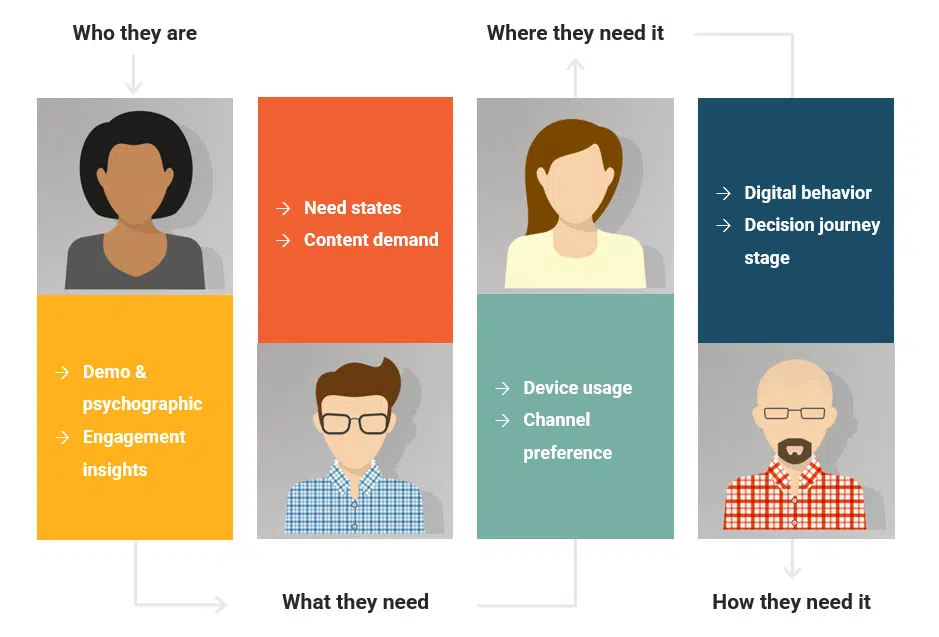

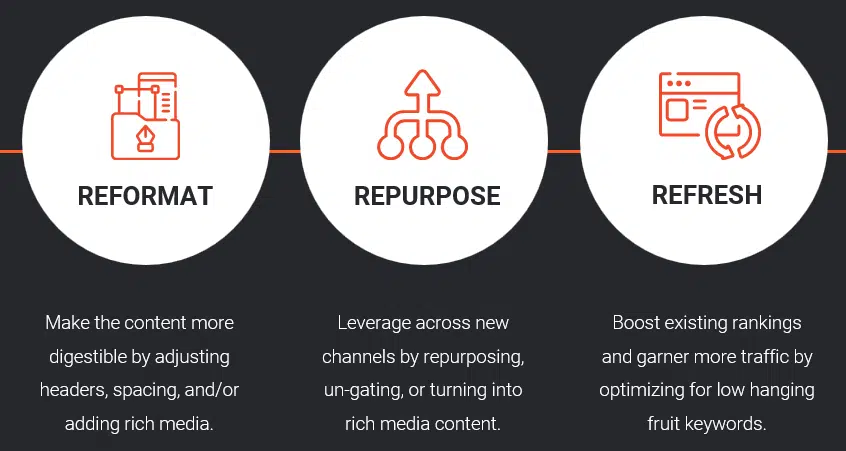













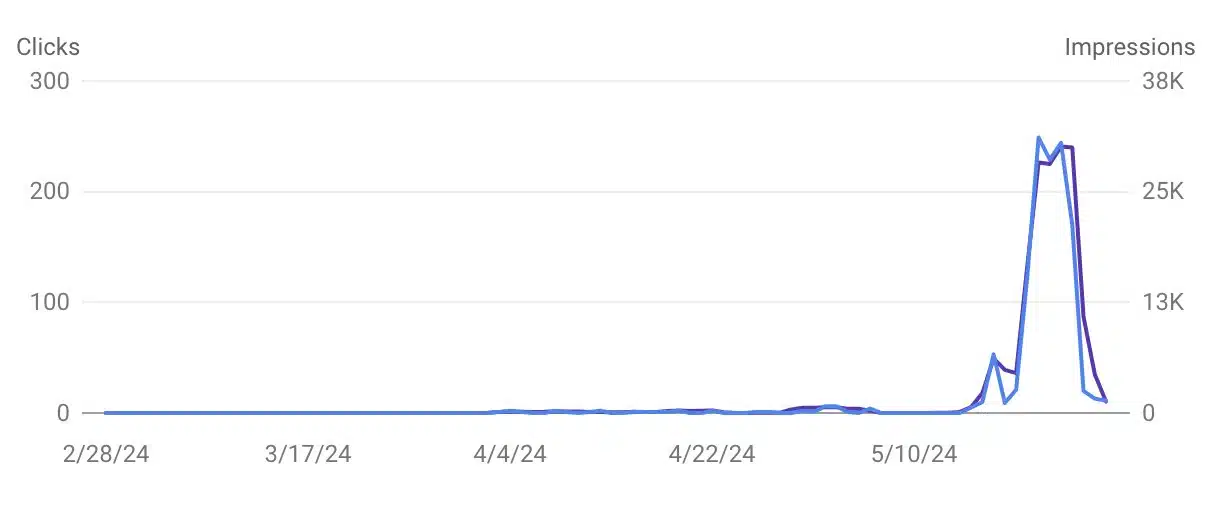













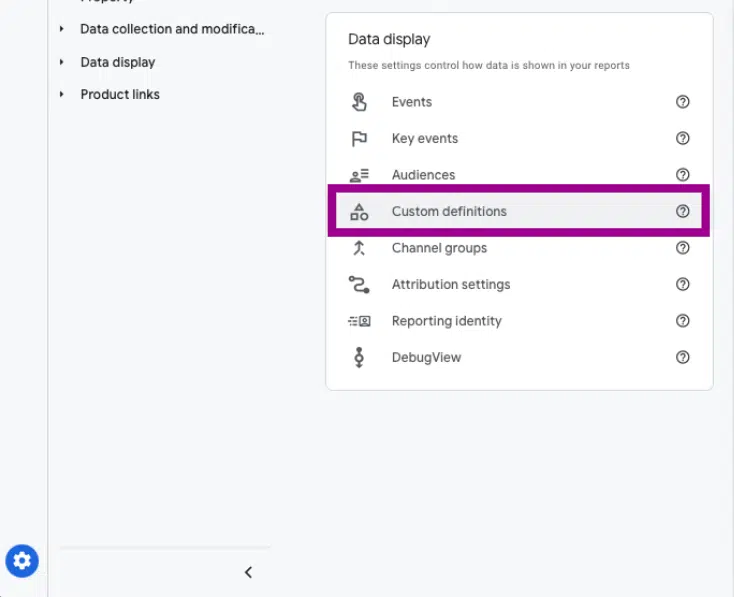





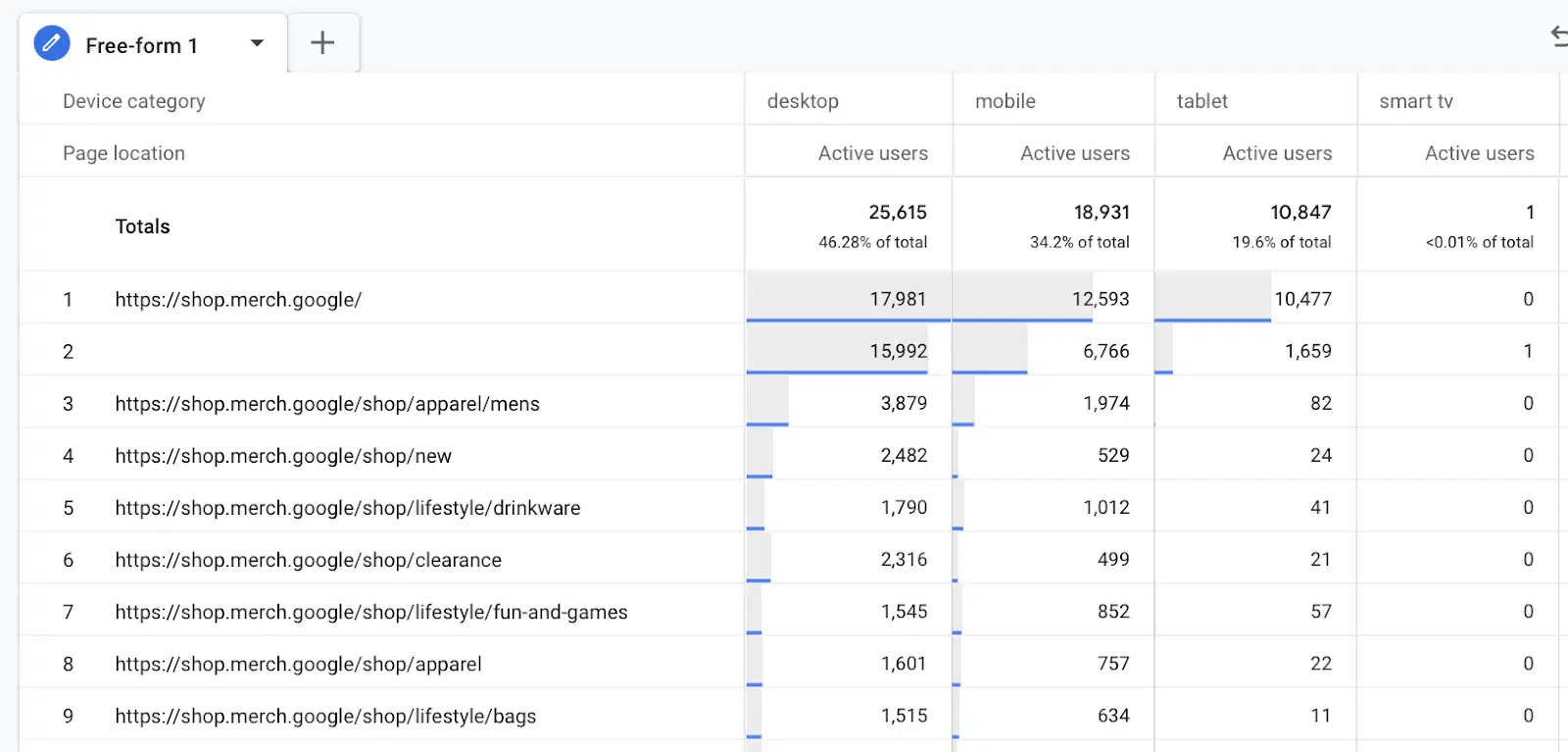
































 In my experience, whether or not a home attracts qualified buyers and a good price tag always comes down to the three P’s: presentation, promotion and price.
























.jpg)


 Would you prefer to buy 5,000 sqm in the middle of nowhere or a 500 sqm block in an inner to middle ring suburb of a capital city?













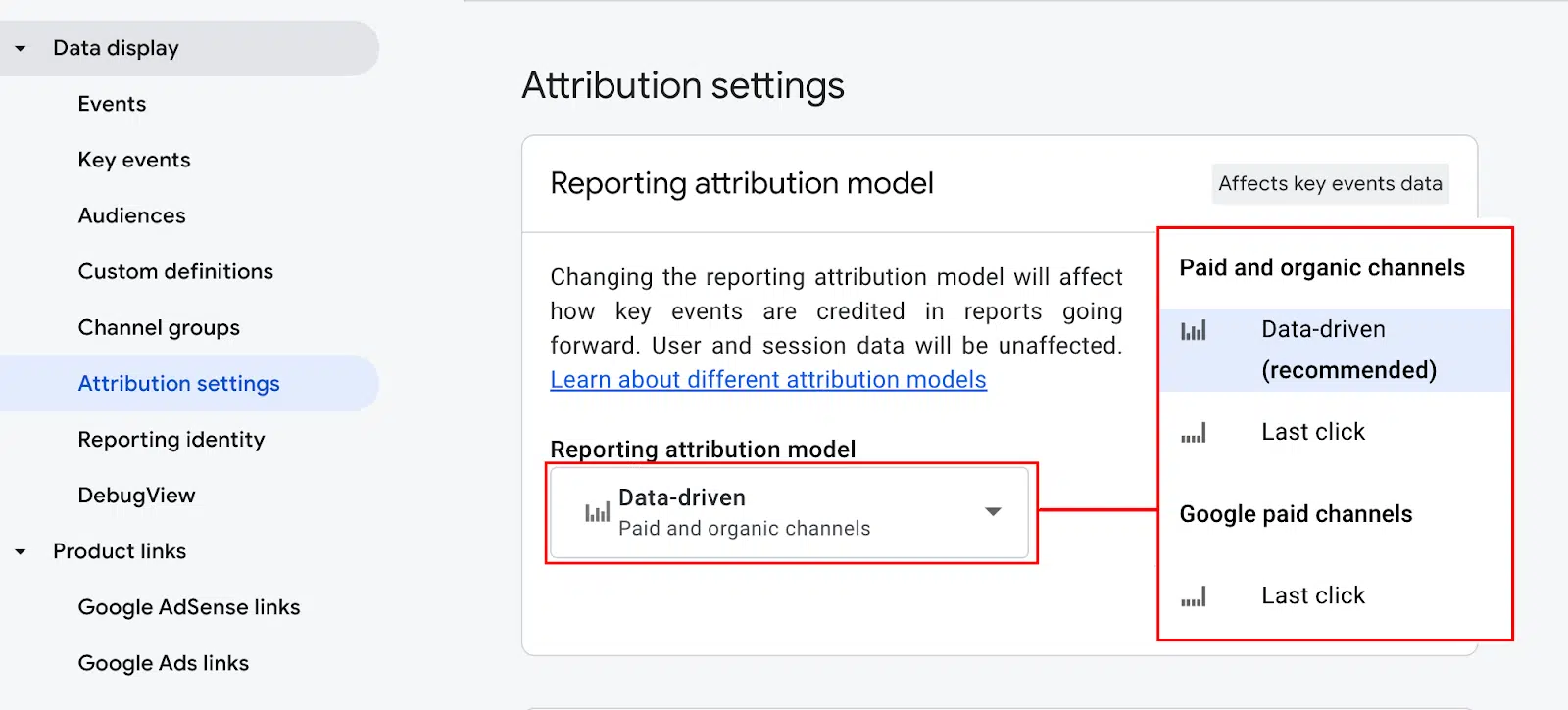




 ,.
,.