Research on RNA editing illuminates possible lifesaving treatments for genetic diseases

A team at Montana State University published research that shows how RNA, the close chemical cousin to DNA, can be edited using CRISPRs. The work reveals a new process in human cells that has potential for treating a wide variety of genetic diseases.

Postdoctoral researchers Artem Nemudryi and Anna Nemudraia conducted the research alongside Blake Wiedenheft, professor in the Department of Microbiology and Cell Biology in MSU’s College of Agriculture. The paper, titled “Repair of CRISPR-guided RNA breaks enables site-specific RNA excision in human cells,” was published online in the journal Science and constitutes the latest advance in the team’s ongoing exploration of CRISPR applications for programmable genetic engineering.

CRISPR, which stands for Clustered Regularly Interspaced Short Palindromic Repeats, is a type of immune system that bacteria use to recognize and fight off viruses. Wiedenheft, one of the nation’s leading CRISPR researchers, said that the system has been used for years to cut and edit DNA, but that applying similar technology to RNA is unprecedented. DNA editing uses a CRISPR-associated protein called Cas9, while editing RNA requires the use of a different CRISPR system, called type-III.

“In our previous work, we used type-III CRISPRs to edit viral RNA in a test tube,” said Nemudryi. “But we wondered, can we program manipulation of RNA in a living human cell?”

To explore that question, the team programmed type-III CRISPR proteins to cut RNA containing a mutation that causes cystic fibrosis, restoring cell function.

“We were confident that we could use these CRISPR systems to cut RNA in a programmable manner, but we were all surprised when we sequenced the RNA and realized that the cell had stitched the RNA back together in a way that removed the mutation,” said Wiedenheft.

Nemudryi noted that RNA is transient within the cell; it is constantly being destroyed and replaced.

“The general belief is that there’s not much point in repairing RNA,” he said. “We speculated that RNA would be repaired in living human cells, and it turned out to be true.”

Wiedenheft has mentored the two postdoctoral researchers since their arrival at MSU nearly six years ago, and said that the impact of their scientific contributions will lead to significant and continued advancements.

“The work done by Artem and Anna suggests that RNA repair might be a fundamental aspect of biology and that harnessing this activity may lead to new lifesaving cures,” said Wiedenheft. “Artem and Anna are two of the most brilliant scientists I have ever encountered, and I’m confident that their work is going to have a lasting impact on humanity.”

RNA editing has important applications in the search for treatments of genetic diseases, Nemudryi said. RNA is a temporary copy of a cell’s DNA, which serves as a template. Manipulating the template by editing DNA could cause unwanted and potentially irreversible collateral changes, but because RNA is a temporary copy, he said, edits made are essentially reversible and carry far less risk.

“People used Cas9 to break DNA and study how cells repair these breaks. Then, based on these patterns, they improved Cas9 editors,” said Nemudraia. “Here, we hope the same will happen with RNA editing. We created a tool that allows us to study how the cells repair their RNA, and we hope to use this knowledge to make RNA editors more efficient.”

In the new publication, the team shows that a mutation causing cystic fibrosis can be successfully removed from the RNA. But this is only one of thousands of known mutations that cause disease. The question of how many of them could be addressed with this new RNA editing technology will guide future work for Nemudryi and Nemudraia as they finish their postdoctoral training at MSU and prepare for faculty positions at the University of Florida this fall. Both credited Wiedenheft as a life-changing mentor.

“Blake taught us not to be afraid of testing any ideas,” said Nemudraia. “As a scientist, you should be brave and not be afraid to fail. RNA editing and repair is the terra incognita. It’s scary but also exciting. You feel you’re working on the edge of science, pushing the limits to where nobody has been before.”

Law Researcher at High Court of Jharkhand

High Court of Jharkhand, Ranchi is inviting application for the post of Law Researchers/ Research Associates in The High Court of Jharkhand, Ranchi.

About High Court of Jharkhand

The Jharkhand High Court is one of the newest high courts in India. It was established in 2000. The court has jurisdiction over Jharkhand state. The seat of the court is at Ranchi, the administrative capital of the state.

About the Opportunity

Applications are invited from the eligible candidates for engagement of Law Researchers/ Research Associates in The High Court of Jharkhand, Ranchi on contractual basis. The contractual engagement shall be for a term of one year, which may be extended once for one year. Maximum period of engagement shall be two years.

Eligibility Criteria

  • Any fresh Law Graduate/ Postgraduate from a University/ College recognised by the Bar Council of India shall be eligible to apply.
  • Students studying in the 5th year of a 5-year Law course or Final year of a 3-year Law course will also be eligible for engagement and their final selection would be subject to their passing of the final year examination of LL.B. prior to their engagement.
  • Candidates having familiarity with computer will get preference in matter of selection. d. The candidature of a candidate who is practicing Lawyer must be recommended by a designated Senior Advocate or in case applicant is other than Lawyer, by the Head of the last Law School/ College/ University attended by him/her.
  • The candidate who has passed all his / her examinations in the first attempt with at least 60% aggregate marks will alone be eligible to apply.
  • The candidates pursuing Post Graduate degree in Law or any other Degrees or Programme requiring their compulsory attendance will not be eligible to apply for the engagement.

Salary

  • Each Law Researcher/ Research Associate will be paid a consolidated amount of Rs. 40,000/- per month as Honorarium/ stipend for his/ her engagement or such higher amount as may be prescribed by the State Government from time to time in this regard.
  • The Law Researcher/ Research Associate shall not be entitled to any other allowance and/ or remuneration, and will not be treated as a permanent or otherwise employee of the High Court of Jharkhand, Ranchi or the State Government.

How to Apply?

Interested candidates are required to submit in their application in the prescribed format and shall submit it to E-mail address [email protected]

Application Deadline

May 5, 2024

Location

Ranchi

Lawctopus regularly helps organisations hire interns and employees. Email the JD at [email protected] for free and paid plans.

Flight price to accommodation, check out this guide for tourists travelling from India to Dubai | Travel

Dubai offers a diverse, multicultural setting and abundance of hotels and attractions that continue to make it the top travel choice for Indian travellers who see it as a tourist destination for exploration and sightseeing. Earlier this year, Dubai introduced a five-year multiple-entry visa to boost travel between India and the Gulf nation where the visa is issued within 2-5 working days upon receiving and accepting the service request and allows its holder to stay in the country for 90 days, extendable once for a similar period, with a total stay not exceeding 180 days in one year.

Flight price to accommodation, check out this guide for tourists travelling from India to Dubai (Photo by Nick Fewings on Unsplash)

In an interview with HT Lifestyle, Aneta Zajac of Fly4free, shared, “Dubai is a great example of how a city that was more of a curiosity and a place to visit while changing flights can become a full-fledged and desirable holiday destination. A multitude of various attractions – both for children and adults, for those desiring adrenaline and for beach lovers, restaurants from all over the world, great weather most of the year, and, above all, the huge availability of direct flights from most countries make Dubai attract millions of tourists. The futuristic metropolis is an interesting, safe, clean and very attractive destination where no one will be bored.”

HT launches Crick-it, a one stop destination to catch Cricket, anytime, anywhere. Explore now!

Deniz Rymkiewicz, Group PR and Community Manager at eSky, revealed, “Tourism in the UAE has been experiencing an impressive boom in recent years, and Dubai is one of the main magnets for travelers. The city stands out as a dynamic cultural, commercial and entertainment place in the Middle East. Its iconic towers, luxury hotels, world-famous shopping malls and futuristic architectural designs attract tourists from all over the world. A visit to Dubai is a chance to experience unique experiences, such as skiing on water slides inside shopping malls, admiring the world’s tallest building Burj Khalifa, or exploring traditional markets and monuments. Dubai combines modernity with history, offering unforgettable experiences for travelers looking for unique attractions.”

According to Marzena German, Travel Market Expert at Wakacje.pl, Dubai has been a rising star in the rankings of the most popular destinations among travel agents’ clients over the past few years. She highlighted, “The success of this destination is due to several factors – apart from promotional campaigns, the main reason is accessibility. Dubai is a rather exotic destination, which is always interesting, but it is also relatively close. It is therefore possible to quite simply visit a place with an interesting culture and impressive architecture.”

Robert Blaszczyk, Head of Strategic Clients Department at Conotoxia, explained, “The dirham (AED), the official currency of the United Arab Emirates, has a much higher exchange rate to the Indian rupee. For 1 AED, you will pay approximately 22.73 INR. In the currency world, the dirham, divided into 100 fils, is among the newcomers. It entered circulation in 1973, replacing the riyal. The AED banknotes, renowned for their advanced anti-counterfeiting protection, feature symbolic buildings, plants and animals. However, compared to exchanging cash, e.g. at an airport exchange office, it seems much more convenient and beneficial to use a multi-currency card.”

He elaborated, “A night in a budget hostel in Dubai can be found for under 100 AED, i.e. about 2 272 rupees. In the hotels, the prices increase with the number of stars, but they are not out of reach. You can expect to pay around 9,000 INR per night for two people in a room at a five-star hotel. However, you can rent a 170-square-metre apartment for a staggering 363,000 INR if you want something exclusive. The cost of living in Dubai is much higher than, for example, in New Delhi. Some examples of prices converted into INR: a meal in a restaurant for one person – 2,200-3,500 INR; a fast food snack – from 690 INR; a small loaf of bread – 136 INR; a litre of milk – 160 INR; 1 kg of yellow cheese – from 900 INR; 10 eggs – about 295 INR, and a 1km taxi ride – about 80 INR.”

Robert Blaszczyk suggested, “Before leaving for the United Arab Emirates, we must take care of our passports. The next step is to complete an online visa application at uaevisa.ae. Then we have to pay for it. How much? 150 USD (12,500 INR) for a single entry permit for up to 30 days. Alternatively, there is an option to stay in Dubai for 48 hours for 95 USD (approx. 8,000 INR). 90-day visas are also available for USD 450 (37,500 INR). Once you have paid, you will receive an email confirming that you have been granted entry to the UAE. You will need to print out the visa for yourself and present it to customs when you land in Dubai. This is important for both tourist and business visitors. Dubai is becoming an increasingly popular destination for trade fairs, conferences and other events, bringing together business people from diverse industries worldwide.”

He concluded, “Two people will pay around 50,000 rupees for round-trip airfares on the New Delhi-Dubai route, for instance. A four-night stay costs around 20,000 INR. Renting a car – from 100 AED per day, but the whim of renting a Ferrari, for example, would be 10 times more expensive, meaning around 10,000 INR. Food and tickets to museums, mosques and specialities in traditional markets will cost about 30,000 INR. Some attractions are free of charge, but, for example, to enter the Burj Khalifa, the world’s highest building (828 m), you have to pay about 3,600 INR when converted from the local currency. Shopping malls, local markets and amusement parks are full of temptations that can quickly drain the budget for a day out. However, it seems that a sum of around 200,000 INR will allow two people to experience four days of incredible excitement.”

Enlaza gets JP Morgan, Regeneron backing for covalent biologics

Enlaza Therapeutics, a San Diego-based startup, has raised a $100 million Series A round to develop biologic cancer drugs designed to latch onto their targets through covalent bonds.

The new funding announced Tuesday and led by the life sciences investment arm of J.P. Morgan comes two years after the company debuted with a $61 million seed round. The cash should pave the way for the company to begin its first clinical trials.

Enlaza develops covalent drugs, known as such because they tightly bind to proteins instead of bouncing in and out of their targets. Such medicines, which are typically small molecules, have been around for decades and are often discovered accidentally. But relatively recently, the pharmaceutical industry and a number of drug startups have emerged with plans to design covalent therapies more purposefully.

Enlaza is specifically focused on bringing the approach to biologics. With the help of a technology it calls “War-Lock,” the startup introduces proprietary amino acids to protein drugs, an approach that’s designed to form an irreversible bond with a disease target. The company claims this method should lead to more precise and potent medicines and is initially working on cancer drugs, though it may eventually branch out into other therapeutic areas.

“We think there are very clear opportunities in the world of oncology,” CEO Sergio Duron said in an interview. But “ultimately, our goal is to provide better, more efficacious, safer drugs for patients.”

The company’s research remains in early stages. In the year and a half since it emerged from stealth, the Enlaza has begun putting a pipeline together and run some preclinical studies. Duron contends those studies have displayed “the advantages of covalent protein drugs,” but the company is still a few years away from the types of human trials that can more definitively prove its claims.

Duron didn’t say how long the company’s financial runway is, or which diseases or drug targets it’s pursuing first. But Enlaza has grown to employ 45 people and, with the help of the new funding, could add at least 20 more to its workforce. It’s expecting to advance “several development candidates” towards clinical trials as well, Duron said.

“We have a well designed plan in place, and more importantly, are financed to be able to achieve those goals,” Duron said.

J.P. Morgan was joined in the funding round by Amgen Ventures, Alexandria Venture Investments and the newly launched venture arm of Regeneron. Enlaza’s prior backers, such as founding investor Avalon Ventures and Frazier Life Sciences, also participated.

The financing comes amid a recent upswing in biotechnology venture investments following a prolonged downturn. Biotech venture funding surged from $4.9 billion in the fourth quarter of 2023 to $6.5 billion in the first three months of 2024, according to data from J.P. Morgan and DealForma.

CBA pares back cash rate cut prediction to just one in 2024

Key takeaways

Australia’s biggest bank, CBA, has revised its cash rate forecast, reducing the number of predicted RBA cuts in 2024 from three 0.25 percentage point cuts to just one, scheduled for November.

Last week Westpac e updated the bank’s cash rate forecast, reducing the number of predicted cuts from two to one.

Australia’s biggest bank, CBA, has revised its cash rate forecast, reducing the number of predicted RBA cuts in 2024 from three 0.25 percentage point cuts to just one, scheduled for November.

This decision comes on the back of stronger-than-expected inflation data from the ABS last Wednesday.

Last week, Westpac’s economic team also updated the bank’s cash rate forecast, reducing the number of predicted cuts from two to one.

As a result, all big four bank economic teams now predict there will be just one cash rate cut in 2024 at the RBA’s November meeting.

Current Big Four bank cash rate forecasts

  May RBA meeting Forecasted next RBA move Total 0.25%-pt cuts in 2024 Total 0.25%-pt cuts in 2025
CBA Hold at 4.35% – 0.25% pts in Nov-24 1 4
Westpac Hold at 4.35% – 0.25% pts in Nov-24 1 4
NAB Hold at 4.35% – 0.25% pts in Nov-24 1 4
ANZ Hold at 4.35% – 0.25% pts in Nov-24 1 2

Source: RateCity.com.au. Forecasts are current as of 30/04/2024.

Plan for a hike, rather than a cut

While the big four banks are aligned in their prediction for the RBA’s next move, wider recent economic commentary warns the next move from the RBA could be up rather than down.

Reserve Bank Governor, Michele Bullock, made it clear following the RBA’s March meeting that the Board “cannot rule anything in or out”.

Therefore, prudent borrowers should plan for a hike, just in case.

Potential impact of a 0.25% pt hike on monthly repayments

Based on a borrower who has not renegotiated their loan since the start of the hikes

Loan size at start of hikes Increase if the cash rate rises to 4.60% Total increase to repayments since start of hikes (14 hikes)
$500,000 $74 +$1,284
$750,000 $112 +$1,927
$1,000,000 $149 +$2,569

Source: RateCity.com.au. Based on an owner-occupier paying principal and interest with 25 years remaining who has not renegotiated since the start of hikes. Starting rate is the RBA avg. existing owner-occupier variable rate of 2.86% in April 2022.

RateCity.com.au research director, Sally Tindall, said: “What these cash rate forecasts tell us is that no-one, not even the RBA knows what its next move is.”

“While we’ve made excellent progress bringing down inflation, there’s every chance this next leg of the battle could be the hardest,” she said.

“You only have to look at the monthly CPI indicator to see signs of stickiness, with the data showing three months of stagnation, followed by a small rise to 3.5 per cent.

“The RBA is not going to revert back to hiking the cash rate without plenty of data on its side, and plenty of warning to borrowers. However, if you’ve got a mortgage, it’s prudent to plan for a hike just to be on the safe side.

“One way to do this is to call your bank and ask for a rate cut. Even a relatively minor 0.25 percentage point cut is enough to cushion the blow of another rate rise, especially if you can pocket the rate reduction as quickly as possible and keep your monthly repayments the same to help build a buffer,” she said.

ABS Consumer Price Index, Australia – annual movement

Quarterly CPI Monthly CPI
Dec-22 7.8% 8.4%
Jan-23 7.5%
Feb-23 6.8%
Mar-23 7.0% 6.3%
Apr-23 6.7%
May-23 5.5%
Jun-23 6.0% 5.4%
Jul-23 4.9%
Aug-23 5.2%
Sep-23 5.4% 5.6%
Oct-23 4.9%
Nov-23 4.3%
Dec-23 4.1% 3.4%
Jan-24 3.4%
Feb-24 3.4%
Mar-24 3.6% 3.5%

Source: ABS Consumer Price Index, Australia. Quarterly CPI and Monthly CPI.

15 Situationship Rules You Must Follow To Protect Yourself

I was once in a situationship, long before Gen-Zers had a term for it. It was the most exhilarating and also the most emotionally draining romantic experience of my life. While I loved the idea of coloring outside the lines of a typical relationship, things got messy once feelings got thrown into the mix and we were no longer on the same page about the purpose of our arrangement. In the process, I lost a good friend. So, trust me when I say situationship rules matter.

If you find yourself in a similar state and are not clear about what to do in a situationship, find yourself caught up in the situationship vs relationship dilemma, or are unsure about how to define a situationship you have going on with someone, I’ve got you covered.

In consultations with relationship expert and counselor Dhriti Bhavsar (Master’s in Clinical Psychology), who specializes in relationship, breakup, and LGBTQ counseling, I’ll touch upon all there is to know about a situationship and setting some ground rules to navigate it without getting hurt. Let’s begin by understanding what is a situationship all about.

What Is A Situationship?

So, what is a situationship? If you turn to the dictionary to define situationship, here’s what you’ll find: “a romantic or sexual relationship that is not considered to be formal or established”. Now, what does not “formal” or “established” mean? In simpler terms, a situationship means a casual and fluid romantic and/or sexual relationship between two people, with no commitment or expectations.

To define situationship, Dhriti says, “An absence of labels and conversations about the future are the tell-tale markers of a situationship.” Along similar lines, a Reddit user says, “When you end up consistently seeing someone like they are your significant other but are noncommittal and refuse to take the leap to solidify an actual relationship.”

Related Reading: Situationship – Meaning And 10 Signs You Are In One

Now, on a surface level, a situationship may seem a lot like any other casual, undefined intimate connection like a no-strings-attached relationship or a friends-with-benefits arrangement. However, there is a distinct difference. In other undefined connections like NSA or FwB relationships, there is clarity on terms of engagement. In a situationship, things tend to get more muddled. That’s why situationship vs relationship dilemma is far too common. If you’re in such an undefined intimate connection, the first order of business to navigate it successfully is to identify if it amounts to a situationship.

How do you know if you are in a situationship

A situationship is fluid

Since a situationship can closely resemble so many other forms of casual relationships, it is imperative to know for sure if you’ve landed yourself in one. As Dhriti says, “Not knowing what to expect from a relationship or what is acceptable and what’s not can be a dangerous and confusing place to be in.” So, how do you know if you are in a situationship? Here are some clear signs to watch out for:

  • You behave like romantic partners but there has been no define-the-relationship conversation
  • You have both agreed to keep things casual
  • You don’t make long-term plans involving each other. Your plans focus on the next meetup, next hookup, or at best, what you’d be doing a couple of weeks later
  • Either one or both of you are hooking up with or dating other people
  • You aren’t integrated into each other’s lives — for example, you haven’t met each other’s family or friends
  • Sex is likely the centric part of your relationship
  • There is no consistency in your communication patterns — you may text back and forth for days, spend weekends together, and then go without any contact for days
  • You may talk to each other with ease about a lot of topics, but steer clear of deep, meaningful conversations about emotions, vulnerabilities, and of course, the future
  • There is little to no emotional intimacy in the relationship
  • You haven’t made any promises to each other
  • You don’t expect your situationship partner to show up for you in your time of need and they feel no obligation to do so — and vice versa
  • Your conversations are carefully crafted so as not to “ruin” what you have
  • Even if you have been together a significant amount of time — in my case, for instance, the situationship last eight months — you haven’t crossed any relationship milestones
  • The thought of “where is this going” makes you feel anxious and uneasy

Related Reading: 9 Types Of Situationships And Their Signs

15 Non-Negotiable Situationship Rules – Follow These To Protect Yourself

As may be clear from these indicators of a situationship, a connection of this sort comes with a lot of gray areas. To be able to navigate these muddied waters, you need some situationship rules to protect yourself emotionally. Take it from me, I didn’t think much of rules and boundaries, and chose to just go with the flow — as is the wont of 20-somethings who think they can conquer the worlds — and ended up falling in love with my situationship partner. He, on the other hand, was nowhere close to being emotionally invested.

My feelings led me to go along with a lot of things I wasn’t comfortable with, say yes when I wanted to say no, and put up with being treated in ways that left me hurt because I was holding on to hope that if I just gave it time, he’d begin to feel the same way about me. That obviously didn’t happen but I ended up in a broken heart. Apparently, my experience isn’t isolated.

Related Reading: 11 Situationship Red Flags You Should Know About

If scores of Reddit threads on situationships are any indicator, in this casual, dynamic, undefined “relationship”, one person always catches feelings and gets hurt in the process. As this Reddit user says, “A situationship is the least “casual” of casual relationships, you basically get all the perks of a relationship which includes going on dates, sleeping together, enjoying each other’s company, staying over at the other’s but without the titles of boyfriend/girlfriend, or expectation it will turn into a proper committed relationship where you end up saying you love each other and build a future together. I don’t recommend ever getting into one, someone is always more invested in one person than the other, just ends in heartbreak and confusion.”

That’s why my situationship advice to you would be to always focus on and prioritize yourself. Here are 15 situationship rules that will help you do just that:

1. Keep it fun and light

What is a situationship if not a casual relationship with no labels and obligations? As Dhriti says, “In a situationship, any conversations about the future are off limits. The focus is on the here and now.” So, if the focus is not the here and now, why not make the most of it? Keep things light and playful, enjoy the present, and don’t get invested in the idea of a shared future.

Related Reading: The Complete Guide To “We Act Like A Couple But We Are Not Official” Situation

2. Be in touch with your feelings

Weighing in the situationship vs relationship difference, a Reddit user says, “You date each other like you’re in a relationship, but you’re not exclusive. Most of the time, it ends badly because one person will always want more than the other one.” If there is one recurring theme that you may have noticed so far, it’s that there is a very real chance of catching feelings even if you’re unofficially dating.

So, it’s important to check in with yourself from time to time and assess how you feel toward the person you’re in a situationship with. If you do find yourself catching feelings or falling head over heels in love, it’s time to figure out how to get out of a situationship. Don’t stick around, hoping, and wondering, “Can a situationship turn into a relationship?” More often than not, it does not.

what to do in a situationship
Be in tune with your feelings

3. Prioritize yourself

Wondering what to do in a situationship to protect yourself and avoid getting hurt? Make a conscious effort to focus on and prioritize yourself in this connection. Identify why got into a situationship,

  • Was it for sex?
  • Or to enjoy the perks of a casual relationship minus the baggage of expectations and commitment?
  • Was it because you don’t have time for a more committed relationship?

Not losing focus on your needs will help you prioritize them over that of your partner as well as the relationship itself.

4. Don’t hesitate to vocalize your needs

Speaking of needs, don’t hesitate to be vocal and assertive about yours. Dhriti advises, “Communicate your needs in a situationship clearly, and at the same time, be open to accepting your partner’s needs.” This requires healthy communication on the part of both partners. So, don’t shy away from having a sit-down about what this situationship means to both of you, what you seek from it, and how you intend to go about fulfilling these needs. In doing so, discuss:

  • Finding a middle ground where there is a mismatch in needs
  • Deal-breakers
  • What you would do if one partner’s needs began to change

Related Reading: 10 Critical Emotional Needs In A Relationship

5. Respect your schedule and time

While it’s normal for situationship partners to not communicate consistently or even offer explanations about periods of absence, don’t let this norm become an excuse for your partner to walk all over you and your schedule or treat you badly. My situationship partner, for instance, would go incommunicado for days and then show up at my door when his schedule cleared up, expecting me to drop everything to hang out with him.

In hindsight, I feel that his sense of entitlement was emboldened by my lack of willingness to say no. Don’t let that happen to you. One of the most vital situationship rules is to always respect your schedule and time so that your partner will too. Here is what you can do:

  • Discuss when you’d be available to each other
  • While it’s okay to make impromptu plans once in a while (remember, the idea of a situationship is to have fun), don’t let it become the norm
  • If your partner disregards your schedule, stand up for yourself

6. Make space for other important relationships in your life

Wondering what to do in a situationship to protect yourself? Here is a piece of situationship advice that can help you find the answer: make sure your entire life doesn’t revolve around this casual, fleeting connection, no matter how good it feels. Nurture space in the connection to nurture other important relationships with friends, coworkers, and family. Leading a well-rounded life is key to not letting a situationship become larger than life.

infographic on Situationship Rules
15 Non-Negotiable Situationship Rules

7. Don’t be afraid to explore

One of the basic situationship rules is that there is no commitment or expectation of exclusivity — unless there has been an explicit conversation about the latter. So don’t hold yourself back from dating or talking to other people. Now, I’m not saying that you absolutely have to date other people. But if someone interesting comes along and you feel like exploring what it could lead to, don’t hold yourself back on account of your situationship. Remember, you’re not in a relationship. At the same time, be mindful of the rules of dating multiple people to protect yourself.

8. Follow the ‘don’t ask, don’t tell’ policy

Talking about situationship rules, Dhriti says, “There may be certain things you don’t share with each other, and that’s perfectly normal.” One such thing that I can think of is each other’s experiences with dating or hooking up with other people.

No matter how much you tell yourself that your situationship arrangement is completely casual or how devoid of romantic feelings it may be, there is just no way to know for sure how you or your partner may feel about and react to details of the other person’s dating escapades. As far as that goes, stick to the ‘don’t ask, don’t tell’ policy.

Related Reading: Why Does He Keep Me Around If He Doesn’t Want A Relationship?

9. Refrain from emotional vulnerability

Dhriti says, “In a situationship, the entire connection between two people hinges on hiding true feelings and steering clear of any emotional vulnerability. It’s the only way a surface-level involvement can remain just that.” So, naturally, a valuable piece of situationship advice would be to steer clear of letting your guard down in front of your partner.

  • Don’t tell about your hopes and fears
  • Don’t discuss past traumas and emotional wounds
  • Refrain from trading childhood stories
  • Leave past loves and heartbreak out of the conversation

These are just the kinds of things that pave the way for emotional intimacy in a relationship. Once there is emotional intimacy, romantic feelings are not far behind.

10. Don’t consider them your plus-one

To protect yourself from the risk of falling for your situationship partner, and being left wishfully wondering, “Can a situationship turn into a relationship?”, make sure you don’t have any relationship-like expectations. For instance, expecting your situationship partner to be your plus one to weddings, high school reunions, or even parties.

Doing so indicates that you’ve begun to view them as an integral part of your life, and that goes against the very basic situationship rules of keeping things transient and casual.

Related Reading: Casual Dating — 13 Rules To Swear By

11. Discuss whether you want to go public, don’t assume

In a typical relationship, there is the expectation of making things public once both partners commit to each other and there is clarity on how they see their future together. Couples announce being together to their friends, post on social media, attend social events together, and so on.

However, that’s not how it necessarily goes in a situationship. My situationship partner, for instance, didn’t want any of his friends to know that we were a thing. So, one of the important situationship rules is to always discuss whether you want to tell people about your arrangement. To avoid stepping on any toes, never assume.

12. Introducing family and friends may be a no-go

I remember my situationship partner once calling me up to say that he was on his way to pick me up. I was hanging out with friends, so I asked him to take a detour to my location. When he showed up, I insisted that he join us for a drink before we went out. While he did come in and chatted my friends up, he wasn’t pleased that I had taken the liberty to do that. The night was a bust and he became somewhat distant afterwards.

Based on my experience, my situationship advice to you would be to avoid introducing your partner to your friends and family. It just places a lot of pressure and leaves unsaid expectations hanging over a fragile connection, and doesn’t play out well.

Spice-It-Up

13. Set firm boundaries

One of the most critical elements that can help you navigate a situationship successfully is setting boundaries early. Right from the get-go, be clear about what you want from this connection, and let your partner know what’s acceptable and what’s not.

Dhriti agrees, and says, “Boundaries help manage expectations, which is exceedingly important in a situationship. They also help you see the other person for who they really are and not through a colored lens of who you want them to be.” Besides, if and when you get to the point of figuring out how to get out of a situationship, these boundaries will make it easier to cut the cord.

14. Enjoy it while it lasts

In adhering to all the situationship rules I have laid out for you, don’t forget to have fun with your situationship partner and savor this unusual relationship while it lasts. As long as you don’t let feelings into the mix and feel comfortable and secure with the person you’re with, a situationship can be an immensely fun ride. Make the most of it.

Related Reading: What Does It Mean When Someone Says They Are Looking For ‘Something Casual’?

15. Remember that it’s temporary

A situationship is by definition fleeting in nature. After a point, you will find yourself at a crossroads, where you’re either wondering how to get out of a situationship or can a situationship turn into a relationship. Now, the way forward really depends on both people involved. If the romantic feelings are mutual, a situationship can materialize into something more. For that to happen,

Dhriti advises, “You have to be willing to invest in the relationship, work on building trust, talk about things like commitment and future, and prioritize open communication.” However, more often than not, the end of a situationship is not this idealistic, and people end up parting ways. Either way, know that a situationship cannot last forever. It will either grow into something more or wither away.

Key Pointers

  • A situationship is a romantic and/or sexual relationship between two people sans any labels, commitment, or expectations
  • An agreement to keep things casual, no long-term plans, no involvement in each other’s lives, and focus on the here and now are some signs you’re in a situationship
  • If you find yourself in one, it’s important to navigate it skillfully to avoid getting hurt
  • Keep it fun and light, being in touch with your feelings, prioritizing yourself, setting boundaries, and being prepared to let go when the connection has run its course are some ways you can do that

Situationship rules can vary depending on the people involved and their circumstances. For instance, for some, staying over at a situationship partner’s place can be a non-started whereas, for others, even taking weekend trips together may be acceptable. While you can establish ground rules that work well for you, make sure you follow these basic ones to make this experience fun and enjoyable rather than an emotionally harrowing ride.

Seeing Someone vs Dating – 7 Differences You Must Know About

How Long Should You Casually Date Someone – Expert View

Dating With Intention: Meaning And Rules To Set You Up For Success 

Ask Our Expert

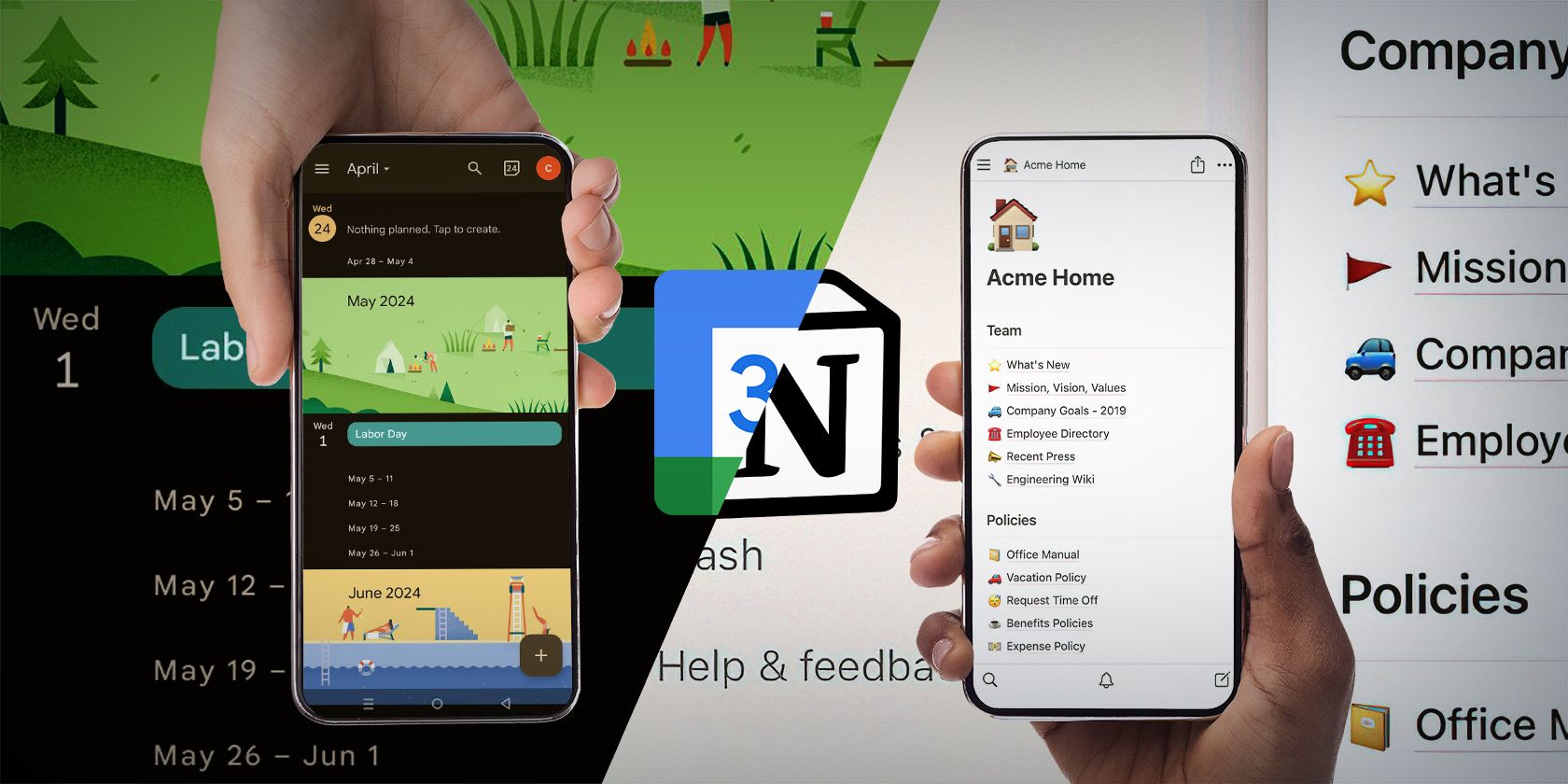
5 Reasons to Switch From Google Calendar to Notion Calendar

Key Takeaways

  • Notion Calendar has several advantages over Google Calendar, such as embedding Notion pages.
  • With Notion Calendar, you can use Dark Mode on all devices where it’s downloadable.
  • Notion Calendar’s streamlined interface is modern and intuitive, and it easily syncs with your Notion databases.


Since launching in January 2024, Notion Calendar has been a tempting alternative to Google Calendar. Both apps have their pros and cons, but there are some pretty good reasons to consider switching to Notion Calendar. Today, you’ll discover five of the best.


1 Use Dark Mode on All Devices With Notion Calendar

Although you can use Dark Mode in the Google Calendar smartphone app, it’s not available in the web version without plugins or external theming. Even if you switch on Dark Mode for your Mac, only the browser’s outer edges turn dark; Google Calendar itself remains bright.

Notion Calendar, meanwhile, respects your computer’s Dark Mode setting, turning dark when it’s on. You can also use Dark Mode on Notion Calendar for your smartphone.


Notion Calendar in Dark Mode on a Computer

If you own an Android phone and can enable Dark Mode for Chrome and all Android sites, the fact that Notion Calendar doesn’t have an Android app isn’t a deal-breaker. But for iPhone and Mac users who enjoy using Dark Mode, it could be.

2 Embed Notion Pages in Notion Calendar

You might find it easier to keep everything in one place rather than scattering it across different sources. Notion Calendar lets you embed Notion pages, which might be a compelling enough reason to switch from Google Calendar.

Embedding a Notion page in Notion Calendar on your computer is very simple. Follow these steps:


  1. Open Notion Calendar. Then, either create a new event or open an existing one.
  2. Go to Docs and links.
  3. In the text box, search for the Notion page you want to embed. Alternatively, choose from the list of recent pages when they appear.

Access Docs and Links in Notion Calendar

While you can embed Notion pages in the Notion Calendar desktop and web apps, this is not—at the time of writing in April 2024—possible on Notion Calendar for iOS. So, you should either perform this action on your computer or copy and paste the link from your smartphone.

3 Sync Your Notion Databases With Notion Calendar

In addition to embedding specific pages in Notion Calendar, it’s also possible to sync your databases within the app. However, like embedding Notion pages in Notion Calendar, you can only perform this action on your computer. Moreover, the databases you sync must have a calendar or timeline view.


  1. In Notion Calendar, find your database on the left-hand side and expand it.
  2. Select Add Notion database and search for the database you want to sync.

Add Notion Database in Notion Calendar

4 Notion Calendar Has a More Streamlined Interface

Besides its unique features, Notion Calendar’s easy-to-navigate user interface is another reason to switch. There’s nothing inherently wrong with how Google Calendar looks, but Notion Calendar’s interface is—from personal experience—more modern and feels more intuitive.


Create and customize a new meeting that you'll schedule in Notion Calendar

The app fits more onto your screen but does so in a non-intrusive way, and its fonts are easy to read. You can easily navigate to your Notion pages, too. The only downside of Notion Calendar’s interface is that while it’s currently optimized for smartphones and computers, the iPad app is optimized for iPhone screens.

5 You Can Sync Google Calendar With Notion Calendar

One of the biggest challenges when migrating from one app to another is transferring all of your data. However, if you decide to switch from Google Calendar to Notion Calendar, you have nothing to worry about; you can easily add each of your calendars on desktop or mobile devices.


  1. Go to the left-hand side. On your smartphone, tap the three-dots icon to expand the toolbar.
  2. Select Add calendar account.
  3. Tap Connect and enter the details associated with your Google Calendar account.

Add a new Notion Calendar account to your workspace

While Notion Calendar is currently only available on iOS and desktop, users of these devices have plenty of compelling reasons to switch. From a more intuitive experience to syncing Notion pages and databases, the app is especially handy if you already use Notion. Since you don’t need to manually transfer all of your data from Google Calendar, it’s well worth trying out.

How Wrexham transformed under Rob McElhenney and Ryan Reynolds

When “Welcome to Wrexham,” the Emmy-winning FX docuseries, kicks off its third season Thursday (streaming the next day on Hulu), our intrepid heroes are preparing for their first season in the fourth tier of English soccer after 15 years in the semipro National League.

Funding the team’s rise, and saving the down-on-its-luck Welsh city where the club plays, was the whole point of the series when actors Rob McElhenney (“It’s Always Sunny in Philadelphia”) and Ryan Reynolds (“Deadpool”) came up with the idea of buying Wrexham AFC during the pandemic.

So when the club, the third-oldest professional team in the world, was promoted last April — and, spoiler alert, was promoted again this month to the third-tier League One — shouldn’t that have been a wrap? Wasn’t that the time to roll credits?

Not necessarily. Because now the goal has changed.

“That’s the beauty of sport. You just don’t know where it’s going to end,” said McElhenney, a hardcore fan of Philadelphia’s professional sports teams. “Our ultimate goal is to build a sustainable model that will allow us to not only get to the Premier League, but sustain in the Premier League and eventually win the Premier League and be in the Champions League.”

To put that in perspective, in U.S. sports that would be like taking a rookie-league baseball team and turning it into the New York Yankees — if baseball had promotion and relegation, which it does not. So there really is no comparison.

But since McElhenney and Reynolds come from a world of make believe, where nothing is impossible, why not dream big? Well, for one thing this isn’t a Hollywood script in which the guy gets the girl and evil never wins. There’s no guarantee “Welcome to Wrexham” will have a happy ending.

But it wouldn’t be wise to bet against that.

“That’s part of the gambit here. You’re surrendering to fate,” Reynolds said. “You can’t write the script in advance. You can only work as hard as humanly possible to put the best club and infrastructure out on the onto that pitch and that’s what makes it compelling. That we don’t have that kind of control.

“And in football, not unlike life, anything can happen.”

Also in football, not unlike life, spending a lot of money can sure improve your odds. And McElhenney and Reynolds have spent a lot of money. It cost them more than $2.5 million to buy the team and another $4.7 million to buy back the freehold of the team’s historic stadium, according to published reports.

They spent on players too. Paul Mullin, the league’s leading scorer in Wrexham’s final two seasons in the fifth-tier National League, and teammate Ben Tozer each made more than $5,000 a week, about three times the league’s average wage. Two others reportedly made $3,700 a week.

That was steep in the National League, one that had been made up of small-town teams often owned by local businessmen who weren’t backed by Hollywood studios. But it’s perfectly legal, too, since the league does not have a salary cap or fair play protections.

“At the moment, there’s no level playing field,” Jim Parmenter, chairman of National League club Dover, told the Athletic last spring.

In the first episode of Season 2, McElhenney and Reynolds are told Wrexham lost $12 million in their first season despite leading the league in attendance. Yet they kept spending to buy promotion to League 2 later that same season, something for which they make no apologies.

Wrexham co-owner Rob McElhenney, left, celebrates with Wrexham's Elliot Lee after a match against Stockport on Saturday.

Wrexham co-owner Rob McElhenney, left, celebrates with Wrexham’s Elliot Lee after a match against Stockport on Saturday.

(Jon Super / Associated Press)

“The rules and regulations around these leagues are really prescriptive,” Reynolds said. “You have a very clear set of boundaries and rules to work within. And I think every team is encouraged to to work as hard as you possibly can and do whatever you could possibly can within those margins.

“That’s exactly what we’ve been doing with Wrexham. You can loath me, you can loath Rob, but it’s pretty damn hard to root against this town and what they’ve been through for so many decades and what this club has meant to this town. So we will do anything humanly possible to see that Wrexham continues to progress and grow in the in the world football community.”

Besides, Wrexham isn’t the only club or community that has benefited. According to the the Athletic, 22 the 72 teams in the Championship, League One and League Two — at the second, third and fourth levels of English soccer — are either wholly owned by or have minority investors hailing from the U.S. with 14 of them experiencing new investment since the actors took control at Wrexham in February 2021.

Thanks to the focus of the docuseries, the profile of League 2 has never been higher. And that’s meant higher salaries, more interest and larger crowds, with three teams topping 10,800 a game heading into last weekend, about double the league average last season.

The TV show, Wrexham’s summer tour of the U.S. — a trip that will be repeated this July — plus sponsorship deals with United Airlines and others could push Wrexham’s turnover this season to more than $25 million, nearly four times what it was just two years ago. That’s a rising tide that will lift all the boats in League 2 — and, presumably, next season in League 1.

It’s already lifted Wrexham — the team and the town, which were struggling through some rough times when McElhenney and Reynolds took their gamble, riding to the rescue and lifting the hopes and self-confidence of both.

“You know, there’s just no sure things. It’s why they have the great expression giant killers in this sport,” Reynolds said. “I think the thing that I’m most surprised by in this whole experience, aside from how forthcoming and vulnerable the folks in Wrexham have been telling their story, is how romantic this game is.

“Prior to Wrexham most of my football exposure came from watching the Canadian national women’s team. I saw glimpses of it with those women fighting for their country and their sport. But boy have I seen it in Wrexham and in this sport in general.

“It’s just the most romantic thing in the world.”

Why would anyone want to see that end?

You have read the latest installment of On Soccer with Kevin Baxter. The weekly column takes you behind the scenes and shines a spotlight on unique stories. Listen to Baxter on this week’s episode of the “Corner of the Galaxy” podcast.

Ampere Nexus Electric Scooter Launched in India With Premium Design and Certified Long Range; Check Price, Features and Other Specifications of New Greaves Electric Scooter

New Delhi, April 30: Greaves Electric Mobility Private Limited (GEMPL), the e-mobility arm of Greaves Cotton Limited, today introduces its first high-performance family electric scooter, the Ampere Nexus, starting at INR 1,09,900 (ex-showroom). Ampere Nexus is entirely designed, developed, and manufactured in India, featuring multiple first-ever innovations and class-leading specifications.

The Ampere Nexus comes in four attractive colours: Zanskar Aqua, Indian Red, Lunar White, and Steel Grey. This diverse colour palette ensures riders have a spectrum of appealing choices to suit their preferences. High-performance and family-focused features redefine the electric scooter experience, providing unparalleled comfort, style, performance, intelligence, and safety. Ultraviolette F77 Mach 2, F77 Mach 2 Recon Launched; From Price to Specifications and Features, Know Everything About New E-Motorcycles From Ultraviolette.

  • Best-in-class hybrid swing arm with twin suspension
  • Best-in-class aerodynamics with unique air-cool architecture
  • 4x stronger chassis with a load-stratified design enabled with Nex.Armor™
  • 7″ TFT Touchscreen with SmartSense technology and lightning fast boot time enabled with Nex.IO™
  • Safest LFP chemistry with 1.3 times more cycle life and fastest charging time of 3hr 22mins
  • Brightest in the category Diamond Cut Headlamps and Arctic Tern-inspired Taillamps
  • Functionally designed large seat with crafted lightweight aluminium grab handle
  • 93 kmph top speed with five riding modes and 136 km certified range
  • Premium Seamless design without visible nuts and bolts

Mr K. Vijaya Kumar, Executive Director & CEO of Greaves Electric Mobility Private Limited, said, “The launch of Ampere Nexus high-speed electric scooter marks a momentous achievement in our commitment to sustainable transportation. This transition from leisurely to urban to high-speed models signifies a pivotal moment in our journey. With each stride forward in democratising e-mobility, we progress toward a more inclusive, sustainable future. The Ampere Nexus stands ready for those ready to Take Charge of their daily aspirations.”

Boasting a 3 kWh safest LFP battery with 30% extra battery life and a powerful mid-mount drive, this e-scooter delivers a seamless riding experience with its 4 kW peak motor power. With five versatile riding modes, front disc brakes and an IP67 rating, riders can effortlessly navigate all terrains and climates, including flooded conditions, validated by this scooter’s iconic pre-launch ride covering 10,000 km from Kashmir to Kanyakumari. The

Ampere Nexus ensures both performance and efficiency by offering impressive speed in Power mode, along with more comfort-focused multiple city modes and reverse mode. Plus, with a remarkable CMVR-certified range of 136 km per charge, riders can explore more without worrying about recharging frequently. Crafted at the confluence of innovation and reliability, the Ampere Nexus sets a new benchmark for electric mobility, embodying the ethos of the trademarked technologies of Nex.Armor and Nex.IO.

The e-scooter, dubbed The Nex Big Thing, achieved a record-breaking journey from Kashmir to Kanyakumari. This expedition set four iconic records acknowledged by the India Book of Records. It achieved the longest electric scooter ride, spanning over 10,000 kilometres, a first in a single journey. The journey also set a record by visiting 115 cities and towns in one ride.

Additionally, the scooter became the first electric scooter capable of towing a pickup truck weighing 1860 kg and an additional 140 kg from two passengers, covering 2 kilometres. Another notable achievement was the creation of the biggest electric scooter brand logo on white sand, measuring an impressive 179.8ft x 95.2 ft or 17100 sq. ft.

Today, you can book the Ampere Nexus in two variants (Nexus EX and Nexus ST) online. Test rides and delivery will be available at over 400 dealerships and touchpoints across India starting the second half of May 2024. BMW R 1300 GS To Launch Soon in India; Check Expected Specifications, Features and Booking Details.

  • Book your Nexus today – Link
  • About Greaves Electric Mobility Private Limited:

    Greaves Electric Mobility Private Limited (GEMPL), the electric mobility business of Greaves Cotton Limited (GCL), is a leading player in Electric Vehicle (EV) technology in India. With comprehensive support from GCL’s EV ecosystem, GEMPL has been designing and manufacturing electric vehicles for over 13 years and has established a strong presence in the electric 2-wheeler and 3-wheeler segments. In the electric 2-wheeler segment, the ‘Ampere’ brand is a fast-growing e-scooter brand with a strong presence in both B2C and B2B segments. Furthermore, MLR Auto Limited and Bestway Agencies Private Limited, subsidiaries of Greaves Electric Mobility Private Limited, are rapidly expanding businesses in the electric 3-wheeler segment. With a strong base of over 3 lakh satisfied customers, GEMPL is committed to creating an affordable and sustainable ecosystem that provides the country with uninterrupted, clean, and last-mile mobility solutions.

  • For more information, please visit:

    https://greaveselectricmobility.com/

    https://ele3w.com/

    For more information, visit- www.greavescotton.com

  • Disclaimer:

    “This press release may include statements of future expectations and other forward-looking statements based on management’s current expectations and beliefs concerning future developments and their potential effects upon Greaves Cotton Limited and its subsidiaries/ associates (“Greaves”). These forward-looking statements involve known or unknown risks and uncertainties that could cause actual results, performance or events to differ materially from those expressed or implied in such statements. Important factors that could cause actual results to differ materially from our expectations include, amongst others: general economic and business conditions in India and overseas, our ability to successfully implement our strategy, our research and development efforts, our growth and expansion plans and technological changes, changes in the value of the Indian Rupee and other currency changes, changes in the Indian and international interest rates, change in laws and regulations that apply to the related industries, increasing competition in and the conditions of the related industries, changes in political conditions in India and changes in the foreign exchange control regulations in India. Neither Greaves, nor our directors, or any of our subsidiaries/associates assume any obligation to update any forward-looking statement contained in this release.”

  • Photo: https://mma.prnewswire.com/media/2401376/Ampere_Nexus_Launch.jpgLogo: https://mma.prnewswire.com/media/2183421/4215395/Greaves_Cotton_Limited_Logo.jpg

(ADVERTORIAL DISCLAIMER: The above press release has been provided by PRNewswire. ANI will not be responsible in any way for the content of the same)

AI Detectors for ChatGPT: Everything You Need to Know

Detecting when text has been generated by tools like ChatGPT is a difficult task. Popular artificial- intelligence-detection tools, like GPTZero, may provide some guidance for users by telling them when something was written by a bot and not a human, but even specialized software is not foolproof and can spit out false positives.

As a journalist who started covering AI detection over a year ago, I wanted to curate some of WIRED’s best articles on the topic to help readers like you better understand this complicated issue.

Have even more questions about spotting outputs from ChatGPT and other chatbot tools? Sign up for my AI Unlocked newsletter, and reach out to me directly with anything AI-related that you would like answered or want WIRED to explore more.

February 2023 by Reece Rogers

In this article, which was written about two months after the launch of ChatGPT, I started to grapple with the complexities of AI text detection as well as what the AI revolution might mean for writers who publish online. Edward Tian, the founder behind GPTZero, spoke with me about how his AI detector focuses on factors like text variance and randomness.

As you read, focus on the section about text watermarking: “A watermark might be able to designate certain word patterns to be off-limits for the AI text generator.” While a promising idea, the researchers I spoke with were already skeptical about its potential efficacy.

September 2023 by Christopher Beam

A fantastic piece from last year’s October issue of WIRED, this article gives you an inside look into Edward Tian’s mindset as he worked to expand GPTZero’s reach and detection capabilities. The focus on how AI has impacted schoolwork is crucial.

AI text detection is top of mind for many classroom educators as they grade papers and, potentially, forgo essay assignments altogether due to students secretly using chatbots to complete homework assignments. While some students might use generative AI as a brainstorming tool, others are using it to fabricate entire assignments.

September 2023 by Kate Knibbs

Do companies have a responsibility to flag products that might be generated by AI? Kate Knibbs investigated how potentially copyright-breaking AI-generated books were being listed for sale on Amazon, even though some startups believed the products could be spotted with special software and removed. One of the core debates about AI detection hinges on whether the potential for false positives—human-written text that’s accidentally flagged as the work of AI—outweighs the benefits of labeling algorithmically generated content.

August 2023 by Amanda Hoover

Going beyond just homework assignments, AI-generated text is appearing more in academic journals, where it is often forbidden without a proper disclosure. “AI-written papers could also draw attention away from good work by diluting the pool of scientific literature,” writes Amanda Hoover. One potential strategy for addressing this issue is for developers to build specialized detection tools that search for AI content within peer-reviewed papers.

October 2023 by Kate Knibbs

When I first spoke with researchers last February about watermarks for AI text detection, they were hopeful but cautious about the potential to imprint AI text with specific language patterns that are undetectable by human readers but obvious to detection software. Looking back, their trepidation seems well placed.

Just a half-year later, Kate Knibbs spoke with multiple sources who were smashing through AI watermarks and demonstrating their underlying weakness as a detection strategy. While not guaranteed to fail, watermarking AI text continues to be difficult to pull off.

April 2024 by Amanda Hoover

One tool that teachers are trying to use to detect AI-generated classroom work is Turnitin, a plagiarism detection software that added AI spotting capabilities. (Turnitin is owned by Advance, the parent company of Condé Nast, which publishes WIRED.) Amanda Hoover writes, “Chechitelli says a majority of the service’s clients have opted to purchase the AI detection. But the risks of false positives and bias against English learners have led some universities to ditch the tools for now.”

AI detectors are more likely to falsely label written content from someone whose first language isn’t English as AI than that from someone who’s a native speaker. As developers continue to work on improving AI-detection algorithms, the problem of erroneous results remains a core obstacle to overcome.

UK’s Cashaa to Expand its Multifunctional Crypto Wallet Service in India: Details

India, despite its slow adoption of Web3 technologies and services, has emerged as a region of focus for several companies working around cryptocurrencies, metaverse, and NFTs. In a fresh development, UK-based crypto wallet firm Cashaa has announced the expansion of its services to India and other locations that include Turkey, Indonesia, Kenya, South Africa, as well as the UAE. The platform, that already works in Europe, will be made available across these new regions starting June 2024.

This expansion for Cashaa services will allow more members of the crypto community to purchase, spend, and hold digital assets in its secure ecosystem. Among other services, the platform will also allow users to procure fiat loans against their crypto deposits. Through its services and broader geographical expansion, Cashaa is aiming to stir more engagement around its native token called CAS. Founded in 2016, the company is especially boastful and proud about its security system.

“Cashaa has facilitated the movement of millions of dollars for crypto businesses without facing any security breaches, regulatory sanctions, or fines since the last eight years,” Kumar Gaurav, Founder, Cashaa said in a prepared statement.

The team behind Cashaa claims to believe that the year 2024 will drive crypto towards mainstream adoption.

“With the likes of Black Rock and many trillion-dollar institutions entering the space, billions of new users who had never considered crypto as an asset class will enter the space, especially post Bitcoin ETF approvals by the SEC earlier this year,” Gaurav added.

For now, Cashaa is working to ensure that its operations and service offerings align well with the laws and corporate requirements of all the locations. As far as expanding its business to India is concerned, Cashaa is among several Web3 firms looking to express interest in the country that evidently shows promise.

From three percent in 2018, India’s global share of blockchain developer pool reportedly rose significantly to 12 percent last year. Projects around Web3-compatible finance, entertainment, and infrastructure services are garnering the attention of venture capitalists towards India, which is also home to over a 1,000 Web3 startups. In order to keep its investor community safeguarded against crypto scams and frauds, the Indian government is gradually deploying regulations to oversee the sector.


Affiliate links may be automatically generated – see our ethics statement for details.
Number of concerns over Google Privacy Sandbox grow to 111

The U.K. Competition and Markets Authority (CMA) now has 111 potential concerns over Google’s Privacy Sandbox, according to its April Q1 2024 report. That’s up from 72 in the CMA’s Q4 2023 report, released January.

Why we care. The CMA’s January report made it clear that Google couldn’t proceed with third-party cookie deprecation. Sure enough, Google announced a third delay in the phase-out of cookies, with hopes to complete the process in 2025. But again, this is just a delay. Third-party cookies will go away.

Why the concerns? The CMO and the U.K.’s Information Commissioner’s Office (ICO) are concerned the Privacy Sandbox could make Google even more dominant, giving them an unfair advantage that could hurt advertisers, competing ad platforms, publishers and users.

Multi-touch concerns. One addition to the report is around concerns over Google’s approach to attribution:

  • “Stakeholders have expressed further concerns around Google’s approach to multi-touch attribution, arguing that ‘single touch’ attribution is likely to advantage Google.”
  • “For example, a current user journey may involve seeing an ad several times on different properties (e.g. a publisher site, their social media feed, etc) before the user takes an action. Users may also act on their intent to convert by searching for the advertised product. Stakeholders are concerned that Google is likely to be the ‘last touch’ and therefore capture more of the value from conversions than other market participants.”
  • “We have shared this feedback with Google and await its response.”

What is Google’s Privacy Sandbox? Google is introducing the Privacy Sandbox program as an alternative to third-party cookies to enable advertisers to deliver targeted ads in Chrome while minimizing improper cross-site and cross-app tracking.

Maybe 2025. Google started phasing out third-party cookies to 1% of Chrome users in January. However, Google announced yet another delay to third-party cookie deprecation on April 24:

“We recognize that there are ongoing challenges related to reconciling divergent feedback from the industry, regulators and developers, and will continue to engage closely with the entire ecosystem. It’s also critical that the CMA has sufficient time to review all evidence including results from industry tests, which the CMA has asked market participants to provide by the end of June. Given both of these significant considerations, we will not complete third-party cookie deprecation during the second half of Q4. We remain committed to engaging closely with the CMA and ICO and we hope to conclude that process this year. Assuming we can reach an agreement, we envision proceeding with third-party cookie deprecation starting early next year.”

Privacy Sandbox update

The report. You can read the CMA Q1 2024 report here (PDF).

Ayushman Bharat Diwas 2024

Ayushman Bharat Diwas is celebrated annually on April 30 to raise awareness about the Ayushman Bharat Yojana and its goals. This year, it falls on Tuesday, April 30, 2024. The day was established by the government to highlight the scheme’s objective of providing better access to affordable and quality healthcare services, especially for the underprivileged.

The Pradhan Mantri Jan Arogya Yojana (PM-JAY)

Launched in 2018 by Prime Minister Narendra Modi, the Ayushman Bharat Yojana (PM-JAY) is a healthcare scheme that offers free health insurance of Rs. 5 lakh to more than 10.74 crore poor and vulnerable families every year. The scheme covers three days of pre-hospitalization and 15 days of post-hospitalization care, ensuring comprehensive support for patients.

Comprehensive Healthcare Coverage

Under the PM-JAY scheme, eligible patients can receive first-rate medical care at thousands of government and private hospitals across the country. The scheme covers not only hospitalization expenses but also associated fees, such as overtime charges. While the central government fully funds the PM-JAY scheme, its implementation cost is shared between the central and state governments.

Empowering States and Creating Jobs

The state governments have the right to provide cashless hospitalization to the beneficiaries of the PM-JAY scheme. Additionally, the Ayushman Bharat Yojana has created a new job category called Ayushman Mitra, providing employment opportunities for young Indian citizens who are appointed by hospitals to assist beneficiaries.

Spreading Awareness and Ensuring Access

The significance of Ayushman Bharat Diwas lies in its efforts to highlight the objectives of the Ayushman Bharat Yojana and educate people about the advantages of this healthcare scheme. By celebrating this day, the government aims to ensure that eligible beneficiaries can avail of medical services up to Rs. 5 lakh per family per year in any government-empaneled hospital across the country.

To fully benefit from the Ayushman Bharat Yojana, beneficiaries must have comprehensive health insurance coverage. Those without insurance can explore options like Bajaj Markets, which offer advantages such as hassle-free renewal, cashless claim settlement, and reinstatement benefits.

Sign Here? Financial Agreements May Leave Doctors in the Driver’s Seat

Cass Smith-Collins jumped through hoops to get the surgery that would match his chest to his gender.

Living in Las Vegas and then 50, he finally felt safe enough to come out as a transgender man. He had his wife’s support and a doctor’s letter showing he had a long history of gender dysphoria, the psychological distress felt when one’s sex assigned at birth and gender identity don’t match.

Although in-network providers were available, Smith-Collins selected Florida-based surgeon Charles Garramone, who markets himself as an early developer of female-to-male top surgery and says that he does not contract with insurance. Smith-Collins said he was willing to pay more to go out-of-network.

“I had one shot to get the chest that I should have been born with, and I wasn’t going to chance it to someone who was not an expert at his craft,” he said.

Smith-Collins arranged to spend a week in Florida and contacted friends there who could help him recover from the outpatient procedure, he said.

Garramone’s practice required that the patient agree to its financial policies, according to documents shared by Smith-Collins. One document stated that “full payment” of Garramone’s surgical fees is required four weeks in advance of surgery and that all payments to the practice are “non-refundable.”

Smith-Collins said he and his wife dipped into their retirement savings to cover the approximately $14,000 upfront. With prior authorization from his insurer in hand saying the procedure would be “covered,” he thought his insurance would reimburse anything he paid beyond his out-of-pocket maximum for out-of-network care: $6,900.

The day before surgery, Smith-Collins signed another agreement from the surgeon’s practice, outlining how it would file an out-of-network claim with his insurance. Any insurance payment would be received by the doctor, it said.

The procedure went well. Smith-Collins went home happy and relieved.

Then the bill came. Or in this case: The reimbursement didn’t.

The Patient: Cass Smith-Collins, now 52, who has employer-based coverage through UnitedHealthcare.

Medical Services: Double-incision top surgery with nipple grafts, plus lab work.

Service Provider: Aesthetic Plastic Surgery Institute, doing business as The Garramone Center, which is owned by Garramone, according to Florida public records.

Total Bill: The surgeon’s practice billed the patient and insurance a total of $120,987 for his work. It charged the patient about $14,000 upfront — which included $300 for lab work and a $1,000 reservation fee — and then billed the patient’s insurer an additional $106,687.

The surgeon later wrote the patient that the upfront fee was for the “cosmetic” portion of the surgery, while the insurance charge was for the “reconstructive” part. Initially, the insurer paid $2,193.54 toward the surgeon’s claim, and the patient received no reimbursement.

After KFF Health News began reporting this story, the insurer reprocessed the surgeon’s claim and increased its payment to the practice to $97,738.46. Smith-Collins then received a reimbursement from Garramone of $7,245.

What Gives: Many patients write to Bill of the Month each year with their own tangled billing question. In many cases — including this one — the short answer is that the patient misunderstood their insurance coverage.

Smith-Collins was in a confusing situation. UnitedHealthcare said his out-of-network surgery would be “covered,” then it later told Smith-Collins it didn’t owe the reimbursement he had counted on. Then, after KFF Health News began reporting, he received a reimbursement.

Adding to the confusion were the practice’s financial polices, which set a pre-surgery payment deadline, gave the doctor control of any insurance payment, and left the patient vulnerable to more bills (though, fortunately, he received none).

Agreeing to an out-of-network provider’s own financial policy — which generally protects its ability to get paid and may be littered with confusing insurance and legal jargon — can create a binding contract that leaves a patient owing. In short, it can put the doctor in the driver’s seat, steering the money.

The agreement Smith-Collins signed the day before surgery says that the patient understands he is receiving out-of-network care and “may be responsible for additional costs for all services provided” by the out-of-network practice.

UnitedHealthcare said Smith-Collins’ out-of-network surgery would be “covered,” then it later told him it didn’t owe the reimbursement he had counted on. Then, after KFF Health News began reporting, he received a reimbursement.(Bridget Bennett for KFF Health News)

Federal billing protections shield patients from big, out-of-network bills — but not in cases in which the patient knowingly chose out-of-network care. Smith-Collins could have been on the hook for the difference between what his out-of-network doctor and insurer said the procedure should cost: nearly $102,000.

Emails show Smith-Collins had a couple of weeks to review a version of the practice’s out-of-network agreement before he signed it. But he said he likely hadn’t read the entire document because he was focused on his surgery and willing to agree to just about anything to get it.

“Surgery is an emotional experience for anyone, and that’s not an ideal time for anyone to sign a complex legal agreement,” said Marianne Udow-Phillips, a health policy instructor at the University of Michigan School of Public Health.

Udow-Phillips, who reviewed the agreement, said it includes complicated terms that could confuse consumers.

Another provision in the agreement says the surgeon’s upfront charges are “a separate fee that is not related to charges made to your insurance.”

Months after his procedure, having received no reimbursement, Smith-Collins contacted his surgeon, he said. Garramone replied to him in an email, explaining that UnitedHealthcare had paid for the “reconstructive aspect of the surgery” — while the thousands of dollars Smith-Collins paid upfront was for the “cosmetic portion.”

Filing an insurance claim had initially led to a payment for Garramone, but no refund for Smith-Collins.

Garramone did not respond to questions from KFF Health News for this article or to repeated requests for an interview.

Smith-Collins had miscalculated how much his insurance would pay for an out-of-network surgeon.

Documents show that before the procedure Smith-Collins received a receipt from Garramone’s practice marked “final payment” with a zero balance due, as well as prior authorization from UnitedHealthcare stating that the surgery performed by Garramone would be “covered.”

But out-of-network providers aren’t limited in what they can charge, and insurers don’t have a minimum they must pay.

An explanation of benefits, or EOB, statement shows Garramone submitted a claim to UnitedHealthcare for more than $106,000. Of that, UnitedHealthcare determined the maximum it would pay — known as the “allowed amount” — was about $4,400. A UnitedHealthcare representative later told Smith-Collins in an email that the total was based on what Medicare would have paid for the procedure.

Smith-Collins’ upfront charges of roughly $14,000 went well beyond the price the insurer deemed fair, and UnitedHealthcare wasn’t going to pay the difference. By UnitedHealthcare’s math, Smith-Collins’ share of its allowed amount was about $2,200, which is what counted toward his out-of-pocket costs. That meant, in the insurer’s eyes, Smith-Collins still hadn’t reached his $6,900 maximum for the year, so no refund.

Neither UnitedHealthcare nor the surgeon provided KFF Health News with billing codes, making it difficult to compare the surgeon’s charges to cost estimates for the procedure.

Garramone’s website says his fee varies depending on the size and difficulty of the procedure. The site says his prices reflect his experience and adds that “cheaper” may lead to “very poor results.”

Though he spent more than he expected, Smith-Collins said he’ll never regret the procedure. He said he had lived with thoughts of suicide since youth, having realized at a young age that his body didn’t match his identity and feared others would target him for being trans.

“It was a lifesaving thing,” he said. “I jumped through whatever hoops they wanted me to go through so I could get that surgery, so that I could finally be who I was.”

A photo of a man standing outside with his arms crossed. He's looking away from the camera.
UnitedHealthcare denied both of Smith-Collins’ appeals, finding its payments were correct based on the terms of his plan, and said his case was not eligible for a third, outside review.(Bridget Bennett for KFF Health News)

The Resolution: Smith-Collins submitted two appeals with his insurer, asking UnitedHealthcare to reimburse him for what he spent beyond his out-of-pocket maximum. The insurer denied both appeals, finding its payments were correct based on the terms of his plan, and said his case was not eligible for a third, outside review.

But after being contacted by KFF Health News, UnitedHealthcare reprocessed Garramone’s roughly $106,000 claim and increased its payment to the practice to $97,738.46.

Maria Gordon Shydlo, a UnitedHealthcare spokesperson, told KFF Health News the company’s initial determination was correct, but that it had reprocessed the claim so that Smith-Collins is “only” responsible for his patient share: $6,755.

“We are disappointed that this non-contracted provider elected to charge the member so much,” she said.

After that new payment, Garramone gave Smith-Collins a $7,245 refund in mid-April.

The Takeaway: Udow-Phillips, who worked in health insurance for decades and led provider services for Blue Cross Blue Shield of Michigan, said she had never seen a provider agreement like the one Smith-Collins signed.

Patients should consult a lawyer before signing any out-of-network agreements, she said, and they should make sure they understand prior authorization letters from insurers.

The prior authorization Smith-Collins received “doesn’t say covered in full, and it doesn’t say covered at what rate,” Udow-Phillips said, adding later, “I am sure [Smith-Collins] thought the prior authorization was for the cost of the procedure.”

Patients can seek in-network care to feel more secure about what insurance will cover and what their doctors might charge.

But for those who have a specific out-of-network doctor in mind, there are ways to try to avoid sticker shock, said Sabrina Corlette, a research professor and co-director of the Center on Health Insurance Reforms at Georgetown University:

  • Patients should always ask insurers to define what “covered” means, specifically whether that means payment in full and for what expenses. And before making an upfront payment, patients should ask their insurer how much of that total it would reimburse.
  • Patients also can ask their provider to agree in advance to accept any insurance reimbursement as payment in full, though there’s no requirement that they do so.
  • And patients can try asking their insurer to provide an exact dollar estimate for their out-of-pocket costs and ask if they are refundable should insurance pick up the tab.

Bill of the Month is a crowdsourced investigation by KFF Health News and NPR that dissects and explains medical bills. Do you have an interesting medical bill you want to share with us? Tell us about it!

Related Topics

Contact Us

Submit a Story Tip

Todd Howard Believes Larian Studios Deserves The Success It Found In Baldur’s Gate 3

Game director and executive producer of Bethesda Game Studios Todd Howard recently said that Larian Studios deserves all the praise and success it’s been getting following the launch of Baldur’s Gate 3.

In an interview with Kinda Funny Games, Howard spoke highly of the studio by saying, “They’ve done great work for for a long time,” and that Larian deserves all the accolades it’s received. Howard continued by saying that there are “some people in the industry who look [at Larian] and say ‘Oh look at this overnight success.’ Like, have you played their previous games?”

Now Playing: Baldur’s Gate 3 Video Review

Howard continued to praise Larian by saying:

“I think they did a tremendous job, obviously, in terms of what they delivered as a product and who they are as a studio. How they go about their work, how they talk about it, I think it’s fantastic.”

As the interview continued, Howard said that Bethesda is inspired by various games in the industry.

“I think we look at all the games right. I don’t want to pinpoint particularly that one. We’re big gamers–we see things in all games [and] we say, ‘Oh, you know, that’s actually a better way of doing something that we’re trying to do.’ I don’t want to like call out specifics right now in areas but I’d say across the gaming spectrum you know how people are, how we’re engaging with games and things we like. You sort of see that filter in the games we have in development now [with] patches or things that we’re doing to our own games.”

For more news on what came out of the interview, check out our story detailing why Fallout 76 doesn’t have cross-play, as well as why Howard doesn’t regret having a new Fallout game launch with the show and the upcoming Starfield expansion scheduled for later this year.

Enzymes open new path to universal donor blood

The quest to develop universal donor blood has taken a decisive step forward. Researchers at DTU and Lund University have discovered enzymes that, when mixed with red blood cells, are able to remove specific sugars that make up the A and B antigens in the human ABO blood groups. The results have been published in the scientific journal Nature Microbiology.

“For the first time, the new enzyme cocktails not only remove the well-described A and B antigens, but also extended variants previously not recognized as problematic for transfusion safety. We are close to being able to produce universal blood from group B donors, while there is still work to be done to convert the more complex group A blood. Our focus is now to investigate in detail if there are additional obstacles and how we can improve our enzymes to reach the ultimate goal of universal blood production,” says Professor Maher Abou Hachem, who is the study leader at DTU and one of the senior scientists behind the discovery.

He states that the discovery is the result of combining the expertise of DTU researchers in enzymes from the human gut microbiota and Lund University researchers in carbohydrate-based blood groups and transfusion medicine.

High demand for donor blood

Human red blood cells carry specific complex sugars structures (antigens) that define the four ABO blood groups A, B, AB and O. These antigens control compatibility between donors and recipients for safe blood transfusion and organ transplantation. Donor blood is screened for disease markers and the main blood groups. It can then be stored refrigerated for up to 42 days.

The need for donor blood is high due to the elderly making up a larger proportion of the population and more patients undergoing blood-intensive medical procedures. Successfully converting A or B blood types into ABO universal donor blood can markedly reduce the logistics and costs currently associated with storing four different blood types. In addition, the development of universal donor blood will lead to an increased supply of donor blood by reducing the waste of blood approaching its expiry date.

The reason why it is necessary to remove the A and B antigens to create universal donor blood is because they can trigger life-threatening immune reactions when transfused into non-matched recipients.

The concept of using enzymes to generate universal donor blood was introduced more than 40 years ago. Since then, higher efficiency enzymes to remove the A and B antigens were discovered, but researchers are still not able to explain or abolish all immune reactions related to the blood, and therefore these enzymes are still not used in clinical practice.

Enzymes from the gut

The research groups from DTU and Lund University have gone new ways to find enzymes that can remove both the A and B blood antigens and the sugars that block them. The research teams discovered new mixtures of enzymes from the human gut bacterium Akkermansia muciniphila that feeds by breaking down the mucus, which covers the surface of the gut. It turns out that these enzymes are exceptionally efficient, as the complex sugars at the surface of the intestinal mucosa share chemical resemblance with those found at the surface of blood cells.

“What is special about the mucosa is that bacteria, which are able to live on this material, often have tailor-made enzymes to break down mucosal sugar structures, which include blood group ABO antigens. This hypothesis turned out to be correct,” says Maher Abou Hachem.

The researchers in this study tested 24 enzymes, which they used to process hundreds of blood samples.

“Universal blood will create a more efficient utilization of donor blood, and also avoid giving ABO-mismatched transfusions by mistake, which can otherwise lead to potentially fatal consequences in the recipient. When we can create ABO-universal donor blood, we will simplify the logistics of transporting and administering safe blood products, while at the same time minimizing blood waste” says Professor Martin L. Olsson, the leader of the study at Lund University.

The researchers from DTU and Lund University have applied for a patent on the new enzymes and the method for enzyme treatment and expect to make further progress on this in their new joint project over the next three and a half years. If successful, the concept needs to be tested in controlled patient trials before this can be considered for commercial production and clinical use.

The initial research project is funded by the Independent Research Fund Denmark (Technology and Production Sciences, FTP), the Swedish Research Council, ALF grants from the Swedish government and county councils as well as the Knut and Alice Wallenberg Foundation and Research Fund Denmark, Natural Sciences, FNU), while the new continued project is funded by the Novo Nordisk Foundation, Interdisciplinary Synergy Programme.

FACTS:

Donorblood

In Scandinavia, the four main blood types are distributed with approximately 40-45 percent blood type A, the majority of whom are so-called RhD positive and 10-15 percent RhD negative, followed by blood type O with about 40 percent, B with about 10 percent and AB with about 5 percent. Red blood cells from blood group O are the only type that can be used by all receiving patients regardless of ABO type.

Bacterium from the gut

Akkermansia muciniphila is a bacterium found abundantly in the guts of most healthy humans. This bacterium can break down mucus in the gut and produces beneficial compounds such as the short-chain fatty acid propionate, in addition to exerting beneficial effects on body weight and metabolic markers.

Call for Applications for 1-Year LLM at TERI University, New Delhi: Apply Now!

Applications are open for admission to the One-Year LLM in Infrastructure and Business Law & Environment and Natural Resources Law by TERI School of Advanced Studies, New Delhi.

About the Institute

TERI School of Advanced Studies was set up as a Trust by TERI (The Energy and Resources Institute) – a not-for-profit, independent research institute recognized globally for its contribution to scientific and policy research in the realms of energy, environment, and sustainable development in 1998.

In 1999, the TERI School of Advanced Studies was granted the ‘Deemed to be University’ status by the University Grants Commission (UGC) and notified vide the Ministry of Human Resources Development, Department of Education, Government of India.

Programme & Specialisation

LL.M. Programme with specializations in Infrastructure and Business Law & Environment and Natural Resources Law.

Course Duration

1 year.

Benefits

  • Research-Intensive Curriculum: Dive deep into the complexities of law with a curriculum that balances theory and practice, tailored to provide Indian and global perspectives, especially in environmental law.
  • Industry-Driven Learning: The programme is designed in consultation with industry experts, ensuring you get the most relevant and up-to-date knowledge.
  • Skill Development Focused: More than just theory, this LL.M. programme is a mentorship-based experience focusing on developing the employability skills crucial for your career.
  • Finishing School Concept: Styled on the lines of a finishing school, this programme is set to polish and perfect your professional skills.
  • Global and Local Perspectives: Gain insights into both Indian and international legal frameworks, preparing you for diverse legal challenges.

Career Prospects

Infrastructure laws and Environmental laws are two emerging fields in legal practice. An LL.M. with specialization in either of these fields would open up opportunities in:

  • Litigation
  • Corporate Practice
  • Teaching and Research

Specialised Faculty Members

The programme is taught by a mix of regular and guest faculty members who have expertise and experience in various aspects of environmental law, infrastructure law, business law, policy analysis, natural resource management, climate change, etc. The programme also provides opportunities for students to interact with eminent jurists, lawyers, and scholars from India and abroad.

Application Process

Admission through CLAT / CUET-PG (Score Cards of 2023 and 2024 accepted) / Direct Counselling.

Click here to know more about the faculties.

Click here to know more about the programs.

Click here to apply.

Note: This is a sponsored post.

How do printed board assembly accommodate for dynamic mechanical loads?

printed board

When designing a PCB, you must ensure the board can handle dynamic mechanical loads such as constant vibration and movement. To do this, you need to work with an engineer who can help you simulate the behavior of a bare or unpopulated circuit board under these conditions. This way, you can make changes to the design before the final product goes into production to avoid costly errors down the line.

To begin with, you must choose the right substrate material for your printed board assembly. Some environments are extremely harsh, and you need a durable material that can handle the extremes in temperature, humidity, and vibration. For example, polyimide is more resistant to these types of environments than epoxy resins and is commonly used in electronic components like capacitors, resistors, and sensors.

Once you have chosen the substrate material, you need to determine how much flex you want your board to be able to sustain. This will have a direct impact on the cost of your finished product. For example, a stiffer rigid-flex board can be more expensive to manufacture than a more flexible flex board.

How do printed board assembly accommodate for dynamic mechanical loads?

Next, you need to determine the amount of copper layering your bare circuit board should have in order to support the intended mechanical loads. For instance, a rigid-flex board will typically require 1 oz copper per square inch for power and signal layers and 0.5 oz for the other layers.

You must also consider how your traces and pads will interact with the component leads once they’re on the board. For instance, through-hole technology uses holes that are drilled in the bare circuit board so the component’s wire leads can be inserted into them. These wires are then soldered to the copper traces on the circuit board to complete the electrical connection.

In a rigid-flex printed circuit board, you must make sure the copper layer is thick enough to meet your desired bend radius. You must also plan for the type of forming tool and the number of times you’ll be bending the ribbon. For example, a compression forming tool may be more suitable for a flex circuit ribbon that requires several bends in a small area than a tension forming tool.

For a populated circuit board, you must consider the number of components and the type of components in each part. You must use the right solder paste, and you must be able to inspect the placement of each part on your circuit board using techniques such as AOI (automated optical inspection) or X-ray inspection.

Finally, you must take into account your manufacturing process in determining the time it takes for your circuit boards to be ready for assembly and testing. For instance, you’ll want to minimize the manual steps required for loading and removing components from the trays. Fortunately, there are automated solutions for this process that can help you reduce your manual labor and improve your efficiency.

Suhana Khan dazzles in flirty purple mini dress as she attends the Lux 100 years event as brand ambassador: Watch | Fashion Trends

Shah Rukh Khan and Gauri Khan’s daughter Suhana Khan stepped out in Mumbai for last night’s event celebrating 100 years of the Lux. The brand also announced Suhana as their ambassador. Previously, SRK was associated with the brand. Over the years, many Hollywood and Bollywood celebrities have featured in Lux ads, often called iconic. For instance, SRK’s Lux ad featuring him immersed in a bathtub full of rose petals, as Hema Malini, Kareena Kapoor Khan, Sridevi and Juhi Chawla sat around him on the side, is quite unforgettable. Keep scrolling to see what Suhana wore to the Lux 100 Years event as she began her journey with the brand.

Suhana Khan wore a purple mini dress to attend the Lux 100 years event as their brand ambassador. (HT Photo/Varinder Chawla)

HT launches Crick-it, a one stop destination to catch Cricket, anytime, anywhere. Explore now!

The paparazzi clicked Suhana Khan at the Lux 100 Years event dressed in a flirty purple-coloured mini dress. The pictures and videos show her walking the purple carpet in her floor-sweeping ensemble, greeting the media, and posing for a photo call. Her ensemble is an off-the-shoulder outfit featuring puffed sleeves, a plunging neckline, a pleated overlapping design on the torso, a cinched waist, gathered details on the front, a mini-length hem, and a figure-hugging silhouette accentuating her frame. The pleated train attached to the side of her mini dress adds an elegant aesthetic to the red carpet look.

Suhana accessorised the mini ensemble with glittering sequin embellished pumps, gold rings on her hands and statement earrings. Meanwhile, she chose winged eyeliner, mascara on the lashes, shimmering eye shadow, rouge on the cheekbones, berry-toned lip shade, darkened brows, and highlighter on the contours for the glam picks. Lastly, centre-parted loose tresses styled in soft waves round off Suhana’s look.

Suhana Khan debuted with the Netflix movie The Archies, which also starred Agastya Nanda and Khushi Kapoor. Reportedly, Suhana’s next project is with her father. It is in an action film titled King.

FDA finalizes lab developed test rule over industry opposition

Dive Brief:

  • The Food and Drug Administration on Monday released a final rule strengthening its authority over laboratory developed tests, or LDTs, advancing a policy that has drawn fierce opposition from healthcare industry groups.
  • The rule amends agency regulations to make explicit that in vitro diagnostics are devices under the Federal Food, Drug and Cosmetic Act, including when the manufacturer of the diagnostic is a laboratory.
  • The FDA said it will phase out its enforcement discretion approach for LDTs so that in vitro diagnostics manufactured by a laboratory will generally fall under the same enforcement policy as other tests.

Dive Insight:

Critics argue the FDA’s plan to increase oversight of LDTs will slow development of cutting-edge diagnostics. Under the new rule, most LDTs would be regulated as medical devices, subject to pre-market review as other in vitro diagnostics are now, which can be a more expensive and longer process.

The FDA asserts the risks associated with LDTs have increased as the tests have become more complex and widely used, necessitating greater scrutiny to ensure their accuracy and safeguard patients.

“Today’s action is a critical step toward helping to ensure the safety and effectiveness of LDTs, while also taking into account other public health considerations, including continued access to critical tests patients rely upon,” Jeff Shuren, director of the FDA’s Center for Devices and Radiological Health, said in a statement.

LDTs are in vitro diagnostics that are used within a single clinical laboratory, traditionally a hospital or academic medical center, though larger companies increasingly are marketing such tests.

Under the current regulatory framework, LDTs are certified under the Clinical Laboratory Improvement Amendments of 1988, and the Centers for Medicare and Medicaid Services regulates that process.

“LDTs are being used more widely than ever before – for use in newborn screening, to help predict a person’s risk of cancer, or aid in diagnosing heart disease and Alzheimer’s. The agency cannot stand by while Americans continue to rely on results of these tests without assurance that they work,” said FDA Commissioner Robert Califf.

The American Clinical Laboratory Association, which has spearheaded opposition to the FDA rule, maintains that LDTs are not medical devices, and subjecting them to medical device regulation will harm patient access to needed testing and compromise innovations that drive personalized medicine.

“We are disappointed that FDA has continued down this path,” ACLA President Susan Van Meter said in a statement. “The rule will limit access to scores of critical tests, increase health care costs, and undermine innovation in new diagnostics.”

Quest Diagnostics CEO Jim Davis, on an earnings call earlier this month, said the FDA’s plan to regulate LDTs raises “serious” legal issues.

“While we will be prepared to comply with the rule, we will continue to work with our trade association, ACLA, on potential next steps,” said Davis.

Don’t Let the Status Quo Stop You

Some of us really like the status quo.

Even when we have a better alternative, many of us are content to keep on doing what we’re doing.

I think about this every time my wife and I swap cars.

Depending on who is running what errands that day, we’ll switch between our big car and our little car.

Every time we change, my wife has this habit.

It’s a very good habit, but it’s the exact opposite of what I do

Before she backs out of the garage, she adjusts everything.

The seat slides closer and the mirrors get moved.

She even fiddles with the height of the seatbelt.

Only then does she head down the road.

I, on the other hand, just get into the car and slide back the seat (because I wouldn’t fit otherwise).

But everything else I leave alone.

Things are great — until I try to look in any of the mirrors.

Because the mirrors are still where my wife left them, I can only see out of them if I slouch down and move back and forth.

I’ve been known to do this for an entire day.

But sometimes, I’ve been in this ridiculous position sitting at a stop light, and I’ve thought to my slouched-down self, “Just reach up and adjust the mirror.”

It takes less than 10 seconds, and my whole day gets a lot more comfortable.

So why don’t I skip the slouching and adjust my mirrors every time we swap cars?

I don’t think about it.

You could call me lazy, but I call it status quo bias

I didn’t just make that up. Researchers have known about this quirk for a while.

Even in the face of what would clearly be a better alternative, humans have a tendency to leave things the same.

The “why” behind this bias fascinates me.

In 1988, William Samuelson and Richard Zeckhauser gave a name to our habit of disproportionately sticking with the status quo.

The bias was so obvious that researchers could see it in a simple, multiple-choice questionnaire that study participants completed.

Timberwolves’ Anthony Edwards can’t run from stardom anymore

PHOENIX — Fresh off, arguably, the most important performance of his young career, Anthony Edwards sat in front of the world with a white tank top and an all-black Atlanta Braves fitted cap that sat loose, hovering just above his crisp hairline — making him look more like an extra in Outkast’s “Player’s Ball” video than the future face of the NBA.

Edwards is who he is. Silly. Lovable. Intelligent. Country. He wears it all, loudly and proudly. He’s also a competitor. A trash-talker. He wears all of those things just as loud, just as proud.

You add all of that up and you have a star. You add all of those things up plus a 40-point performance in a playoff-sweeping 122-116 victory over the Phoenix Suns on Sunday night, and you start to enter superstardom.

Yet, Edwards, for one reason or another, is afraid to go there. For as honest, brash and confident as he is and can be, there lives a bashfulness inside the 22-year-old when it comes to talking about his stature within the sport’s most prestigious club.

A year ago, before a first-round loss to the eventual-champion Denver Nuggets, Edwards said he couldn’t consider himself a young star until he “wins in the playoffs.”

A year later, he did it. Edwards not only won in the playoffs, but he was the alpha in a series that featured the likes of Devin Booker and Kevin Durant, his all-time favorite player. Edwards led his organization to heights it hadn’t seen in 20 years, the second round of the NBA playoffs. He did it with rim-twisting dunks. He did it with a sweet shooting stroke. He did it with gnaw-your-arm-off defense. He did it with leadership. He did it with WWE “Suck It!” extracurriculars. He did it while giving an earful to the player he has looked up to since he was 5.

These are the things that make stars. This is what stardom looks like.

“Nah, not yet, man,” Edwards said Sunday after reaching the benchmark he placed on himself a year ago. “Not yet.”

Edwards, unbeknownst to him, lost the privilege to decide what he is and isn’t in this league.


Kevin Durant congratulates Anthony Edwards after Minnesota swept Phoenix in the first round of the NBA playoffs. (Christian Petersen / Getty Images)

When you score 40 points in a series-clinching victory — on the road at that — you’re a star. When you played 79 regular-season games and were the best player for a team that was one game short of having the top record in your conference, you’re a star. When you’re one of 12 players, at the age of 22, picked to represent your country in the Olympics, you’re a star. When you make everyone laugh every time you’re in front of a microphone, order McDonald’s off Uber Eats immediately after a game, like he did in Detroit last season, you’re a star.

“He’s the face of the league,” said teammate Karl-Anthony Towns, who sat next to Edwards as his reserved side took center stage when talking about his status in the NBA. “He hates when I say it, but it’s true. Like I said, ‘Future so bright, got to put the sunglasses on.’ ”

Regular players don’t decide to dominate when they have a chance to end their opponent for good.  They don’t have that ability. Stars shoot 11 of 15 from the floor for 31 points in the second half when their team is trailing at halftime like Edwards did on Sunday. Stars muster up their last bit of energy late in the fourth quarter to throw down a “Night, night!” dunk — like he did with just over two minutes to play when he crossed up Bradley Beal on the wing, took a gather dribble, launched from outside of the paint and forced his childhood hero out of the way as he punished the rim like it hit his sister.

Stars get on their other star teammate amid all the chaos when they do something wrong like Edwards did when Towns committed another unnecessary foul with the game in the balance.

Edwards can’t run from it anymore. No matter how hard he tries. If he doesn’t want to be a star, then stop playing like one.

“He rises to the occasion,” Wolves forward Kyle Anderson told The Athletic.

Stars also make their teammates better. That’s the point of having a star. The gravity of one person makes the existence of others more meaningful.

Edwards picked apart the Suns’ defense as a playmaker. The 40 points will make the headlines, but he also had six assists with only two turnovers in 41 minutes of play. He should have had 10-plus assists, but the Wolves couldn’t buy a bucket in the game’s first 24 minutes.

There were signs throughout the season, but it was this series where Edwards blossomed as a creator for others. There were times early on in his career when it felt like he passed because he had to. There was nowhere else for him to go.

As the season went on, and this playoff series played out, Edwards was welcoming blitzes so that he could create advantages to make the pass to an open man, so that he could get his teammates involved in the flow of the game, so that this Timberwolves team could potentially do something only one team before has accomplished in the franchise’s 35-year history.

But, yeah, Edwards is not a star.

“He is a good person,” said Minnesota assistant coach Micah Nori, who filled in for coach Chris Finch after a collision on the sideline in the fourth quarter left him with a serious leg injury. “And what I mean by that is, they trust him. He’s got some self-humor. You’ve seen all of his interviews. He’s the first one to congratulate and move all of his glory over to his teammates. They all love him.

“When he plays, makes the right play, and they know he cares, not only about himself but the team, he’s done a good job of stepping up in that regard.”

Edwards can keep running from the label all he wants, but if he doesn’t want to embrace it out of fear of being content, then it will never go away. His mindset is correct. His intentions are good. But it’s impossible for anyone with two eyes and a pinch of sense not to see a star when they look at Edwards.

From this point on, there’s no point in even asking Edwards about it. He has spoken — with his play and his personality. He never needs to say it out loud. We’ll all keep saying it for him.

“He’s my favorite player to watch,” Durant said of his star pupil after Sunday’s game. “He’s just grown so much since coming in the league. At 22, his love for the game shines so bright. That’s one of the reasons why I like him the most because he just loves basketball and is grateful to be in this position.

“He’s going to be someone I follow for the rest of his career.”


Related reading

Krawczynski: Timberwolves fans deserve to celebrate a rare trip to Round 2

(Top photo: Ross D. Franklin / Associated Press)

I Edited My Photos With These AI-Powered Apps: Here Were the Results

Key Takeaways

  • Enhance your photos easily with AI editing tools like Google Photos, Pixlr, Luminar Neo, and Fotor.
  • Google Photos, Fotor, and Luminar Neo all have AI enhancement features that will give you subtle changes for better results.
  • Experiment with different AI editing tools to adjust brightness, reduce noise, and remove backgrounds for improved images.


You can make your pictures look great with minimal effort using AI photo editing. Today, you’ll discover a range of AI editing tools I used to adjust my images, including auto-enhance, noise removal, and several other features. Let’s jump right in.


I tried two specific features in Google Photos: Auto-Enhance and tweaking the sky. Keep in mind that Google Photos’ AI editing tools require a Google One subscription.

Auto-Enhance

The Auto-Enhance tool in Google Photos is similar to enhancement features you’ll find in most image-editing apps, including Adobe Lightroom and Canva. Here’s the original image that I used Auto-Enhance for in Google Photos:


Now, here’s what the image looked like after using Auto-Enhance:

An auto-enhanced image in Google Photos

The changes were subtle. Google Photos added some brightness to the image, and it also looks a bit punchier. Overall, I was happy with these edits.

The changes were also subtle on other pictures I tried Auto-Enhance with, but your mileage may vary as it depends on how much editing is needed for your original image.

Editing the Sky

Google Photos also uses AI to edit the sky in your images. You can choose from seven presets:

  • Vivid
  • Luminous
  • Radiant
  • Ember
  • Airy
  • Afterglow
  • Stormy

I used the same picture to try out sky editing. As I took the image on a sunny day, I was curious to see how it’d look with the Stormy filter…


A picture in Google Photos that has the Stormy filter

I actually quite liked how Google Photos desaturated and darkened parts of my image. Before trying the tool, I naively thought it was going to replace the sky with a stormy one; instead, they work more like filters.

The Afterglow Filter in Google Photos

You still have to think about the colors in your pictures, though. I tried Afterglow next, and the results weren’t so great. However, I believe this filter would work well if you want to improve your nighttime sky photography.


2 Enhance Your Images Using Pixlr AI

Pixlr is one of the best free Photoshop alternatives, and it has several AI tools you can use to enhance your photos. I tried three: Super Sharp, Noise Removal, and Generative Fill. Here’s how each of them worked.

Super Sharp

Below is the original image I edited with Pixlr Super Sharp, and I also used it for the other AI tools we’ll discuss in a moment.

A photo of a city skyline taken during the daytime

I noticed that Pixlr significantly compressed my image after uploading it, so that’s something to keep in mind. Here’s the result:

Super Sharp Applied to a Photo Via Pixlr AI


If you only have a free Pixlr membership, you get 12 coins for its AI features.

Noise Removal

You can remove noise from your pictures with Photoshop and several other tools. If you don’t know how to manually do this, consider starting with Pixlr’s Noise Removal feature.

When I zoomed into my picture, I saw that much of the noise that was previously there was now gone. Still, I personally prefer Photoshop’s tools for both smartphone and DSLR/mirrorless camera images—even if you have to pay for the software.

Pixlr's AI Denoise tool in action


Generative Fill

You can add generative fill to your pictures in Photoshop, but how does the tool work in Pixlr? To find out, I wanted to create an overcast sky effect in my images and gave Pixlr the following prompt:

Please replace the selected area with an overcast sky. I don’t want a huge storm; just gray clouds.

That didn’t quite work as planned…

Results of an AI-Generated Attempt in Pixlr

I then sought to ask a clearer prompt:

Please replace the sky in my picture with an overcast day

Again, this did not work as I wanted.

A second attempt to use generative fill in Pixlr


Adobe Express has a much better generative fill tool, so I’d recommend using that. I also gave the other Firefly AI features in Adobe Express a spin if you’re interested in using the app.

Luminar Neo is one of the most popular AI photo editing apps, and I tried editing some of my images with numerous of its tools. Unlike the other apps we’ve discussed so far, you have to download an app for Luminar Neo. After doing that, I tried out AI Enhance, GenExpand, and Relight.

AI Enhance

First, I tried the AI Enhance feature in Luminar Neo. Here’s the original image:

Photo of a city landscape on a river

Luminar Neo lets you choose how strong you want the enhancements to be. You can also determine how much you want to change the sky. I opted for subtle changes to both:


The enhance feature in Luminar Neo

Having the slider was quite nice, as I’ve often found it annoying that editing apps give you a default change. This time, I felt like I had more control.

Relight

Luminar Neo also has a Relight feature that lets you add brightness to different parts of your image. You get three sliders:

  • Brightness Near
  • Brightness Far
  • Depth

Depth is especially useful for choosing how much of your image you wish to brighten. I made a few slight changes to this picture, focusing mainly on Brightness Far. Here is my result:

Relight sliders in Luminar Neo


The Relight feature worked similarly to the exposure and brightness sliders that you see in Lightroom and Photoshop. I’m not sure that I would use it as a replacement for those unless I made the switch to Luminar Neo. Nonetheless, it’s a helpful feature.

4 Using 1-Tap Enhance in Fotor

1-Tap Enhance is one of Fotor’s free AI editing features, and I was curious to see how it would fare in comparison to Google Photos’ Auto-Enhance. This time, I used this picture:

An image of a kayaker on a lake

As you can see below, Fotor’s 1-Tap Enhance was pretty similar to Google Photos. Most of the changes to my image involved brightening. You do have to deal with a Fotor watermark, but you can always crop this out—I’d therefore recommend uploading and editing a picture that you later want to crop anyway.


An image enhanced with Fotor's One-Tap Enhance tool

5 Background Removal With CutOut Pro

If you’re looking for a fast way to remove the background from a photo, consider using CutOut Pro’s background removal tool. All you have to do is upload your image, let CutOut Pro do its thing, and within a few seconds, you’ll get a downloadable file.

The Background Removal tool in CutOut Pro

You can download your picture in JPEG and PNG. I was pretty satisfied with the result, so I would definitely recommend CutOut Pro for background removal purposes.


AI is a great way to make quick edits to your pictures, such as automatically enhancing them or getting rid of the background. Many are free, and even the paid versions often have free trials. Give each of these tools a try and see what you can come up with.

Tom Sandoval, Ariana Madix counter Rachel Leviss’ lawsuit

“Vanderpump Rules” exes Ariana Madix and Tom Sandoval fired back at former co-star Rachel Leviss, denying her allegations that they distributed sexually explicit videos without her consent.

Last week, Madix and Sandoval filed separate responses in Los Angeles County Superior Court to Leviss’ February lawsuit, which accuses the former romantic partners of eavesdropping, revenge porn, invasion of privacy and “intentional infliction of emotional distress.” The 29-year-old reality TV star’s complaint stems from the tabloid scandal — known among Bravo fans as “Scandoval” — that revealed she had been sleeping with Sandoval, Madix’s longtime boyfriend.

A legal representative for Leviss (formerly “Raquel Leviss”) did not immediately respond Monday to The Times’ request for comment.

Madix, 38, filed a declaration on Friday requesting that the court strike Leviss’ complaint, citing California’s anti-SLAPP law, which protects against frivolous lawsuits. The reality TV personality turned Broadway star‘s declaration countered Leviss’ claims that Madix had obtained and distributed at least two sexually explicit videos of Leviss without her knowledge or consent. Leviss claimed in her February complaint that her co-star had informed the “Vanderpump” cast and production team about the videos.

“I did not send the videos to anyone else. Nor did I share, display, or show the videos to anyone else,” Madix said, according to legal documents. “To be clear, I only saw the video of Plaintiff masturbating in places secluded from others.”

Madix said in her declaration that she was in a locked bathroom stall when she discovered explicit FaceTime videos of Leviss on Sandoval’s phone. “I hurriedly took out my own phone and made two recordings of the FaceTime video,” she said.

She also said she confronted Sandoval later about the videos in an alley near the West Hollywood venue where his cover band was performing, and that her ex-boyfriend “forcibly grabbed my phone from my hands” and deleted the videos from her phone. However, before he deleted the videos, Madix shared them with Leviss, with the text reading, “you’re dead to me.”

The declaration added that Madix had informed friends and family about Sandoval’s affair, and included screenshots of text message exchanges between Madix and Leviss and between Madix and a friend about Madix’s discovery of the affair.

Attorney Margo Arnold and Joseph Greenfield, vice president and chief forensic examiner with digital forensics investigations firm Maryman, also filed declarations in support of Madix’s motion to strike Leviss’ complaint.

Days before Madix filed her declaration, Sandoval, 40, filed his response: a motion to strike portions of Leviss’ lawsuit.

“Leviss’ lawsuit is a thinly veiled attempt to extend her fame and to rebrand herself as the victim instead of the other woman while denigrating her former friend Madix as a ‘scorned woman’ and her former paramour Sandoval as ‘predatory,’” the TomTom Restaurant & Bar co-founder’s motion said.

At the core of Sandoval’s response, filed April 22, are Leviss’ alleged “dubious and supported causes of action” against Sandoval. In February, Leviss alleged that Sandoval had recorded sexually explicit clips of his co-star without her knowledge or consent.

Sandoval’s motion counters the accusations, alleging that “these videos were created by Leviss and published by Leviss to Sandoval via a consensual exchange on Facetime, i.e., ‘their video calls.’”

The court documents continued: “Based on Leviss’ own allegations, Sandoval merely saved private copies of the videos that Leviss had filmed and shared with him.”

Citing “deficient allegations” in the February lawsuit, Sandoval said Leviss’ causes of action “fail and require either dismissal or amendment.” He requested that the court grant his motion against Leviss’ suit in its entirety and strike her request for special compensatory damages.

“The allegations in support of this cause of action are conclusory and devoid of sufficient facts to evidence [Sandoval’s] conduct as being intentional, willful or fradulent, let alone despicable,” the declaration says.

In a statement shared with People last week, Leviss’ attorneys Mark Geragos and Bryan Freedman fired back at Sandoval’s declaration.

“Sandoval’s response in the face of irrefutable evidence that will be presented in court is disturbing,” they said. “Leveraging such claims for media attention and perpetuating victim-blaming is not just deplorable but actionable.”

Elon Musk Can’t Solve Tesla’s China Crisis With His Desperate Asia Visit

Elon Musk will be pleased that his surprise jaunt to China on Sunday garnered many glowing headlines. The trip was undoubtedly equally a surprise to Indian prime minister Narendra Modi, who had been scheduled to offer Musk the red carpet on a long-arranged visit.

The billionaire blew off India at the last minute, citing “very heavy Tesla obligations.” Indeed, Tesla has had a tumultuous couple of weeks, with federal regulator slap-downs, halved profits, and price-cut rollouts. Yet, in a very public snub that Modi won’t quickly forget, the company CEO made time for Chinese premier Li Qiang.

And well Musk might. Tesla needs China more than China needs Tesla. After the US, China is Tesla’s second biggest market. And ominously, in the first quarter of the year, Tesla’s sales in China slipped by 4 percent in a domestic EV market that has expanded by more than 15 percent. That’s enough of a hit for any CEO to jump in a Gulfstream and fly across the Pacific for an impromptu meeting with a Chinese premier.

Globally, Tesla has lost nearly a third of its value since January, and earlier this month, Tesla’s worldwide vehicle deliveries in the first quarter fell for the first time in almost four years. As they are wont to do, Tesla investors continue to complain over repeated delays to the company’s rollout of cars with genuine driverless capabilities.

One of Tesla’s stop-gap technologies—a now heavily-discounted $8,000 add-on—is marketed as Full Self-Driving, or FSD. But, like the similarly confusingly named Autopilot feature, it still requires driver attention, and may yet still prove to be risky.

Among the deals said to have been unveiled at Sunday’s meeting with Li Qiang was a partnership granting Tesla access to a mapping license for data collection on China’s public roads by web search company Baidu.

This was a “watershed moment,” Wedbush Securities senior analyst Dan Ives said in an interview with Bloomberg Television. However, Tesla has been using Baidu for in-car mapping and navigation in China since 2020. The revised deal, in which Baidu will now also provide Tesla with its lane-level navigation system, clears one more regulatory hurdle for Tesla’s FSD in China. It does not enable Tesla to introduce driverless cars in China or anywhere else, as some media outlets have reported.

Press reports have also claimed that Musk has secured permission to transfer data collected by Tesla cars in China out of China. This is improbable, noted JL Warren Capital CEO and head of research Junheng Li, who wrote on X: “[Baidu] owns all data, and shares filtered data with Tesla. Just imagine if [Tesla] has access to real-time road data such as who went to which country’s embassy at what time for how long.” That, she stressed, would be “super national security!”

According to Reuters, Musk is still seeking final approval for the FSD software rollout in China, and Tesla still needs permission to transfer data overseas.

Li added that a rollout of even a “supervised,” data-lite version of FSD in China is “extremely unlikely.” She pointed to challenges for Tesla to support local operation of the software. Tesla still “has no [direct] access to map data in China as a foreign entity,” she wrote.

Instead, Tesla is likely using the deal extension with Baidu as an FSD workaround, with the data collected in China very much staying in China. Despite this, Tesla shares have jumped following news of the expanded Baidu collaboration.

Furthermore, Li said there’s “no strategic value” for Beijing to favor FSD when there are several more advanced Chinese alternatives. (We’ve tested them.)

“Chinese EVs are simply evolving at a far faster pace than Tesla,” agrees Shanghai-based automotive journalist and WIRED contributor Mark Andrews, who tested the driver assistance tech available on the roads in China. The US-listed trio of Xpeng, Nio, and Li Auto offer better-than-Tesla “driving assistance features” that rely heavily on lidar sensors, a technology that Musk previously dismissed, but which Tesla is now said to be testing.

Although dated in shape and lacking in the latest tech, a Tesla car is nevertheless more expensive in China than most of its rivals. Tesla recently slashed prices in China to arrest falling sales.

Musk’s flying visit to China smacked of “desperation,” says Mark Rainford, owner of the Inside China Auto channel. “[Tesla] sales are down in China—the competition has weathered the price cuts so far and [the Tesla competitors have] a seemingly endless conveyor belt of talented and beautiful products.” Rainford further warns that the “golden period for Tesla in China” is “at great risk of collapsing.”

Tesla opened its first gigafactory in Shanghai five years ago, and it is now the firm’s largest—but the automaker has been playing tech catchup in China for some time. In addition to Xpeng, Nio, and Li, there are other Chinese car companies competing with Tesla on autonomous driving, as Musk will see if he visits the Beijing Motor Show, which runs through this week.

Beijing is now arguably the world’s preeminent automotive expo, but Tesla is not exhibiting—a sign that it has little new to offer famously tech-hungry Chinese autobuyers. Pointedly, the Cybertruck is not road-legal in China, although that hasn’t stopped Tesla from displaying the rust-prone electric pickup in some of its Chinese showrooms.

Likewise, Tesla has just announced plans for a European Cybertruck tour. But, just like in China, the EV pickup cannot be sold in the EU, either—and according to Tesla’s lead on vehicle engineering, it likely never will be.

Speaking on tighter pedestrian safety regulations in the EU compared to the US, Tesla’s vice president of vehicle engineering, Lars Moravy, told Top Gear that “European regulations call for a 3.2-mm external radius on external projections. Unfortunately, it’s impossible to make a 3.2-mm radius on a 1.4-mm sheet of stainless steel.”

The “Cybertruck Odyssey” tour—as Tesla’s European X account calls it—may titillate Tesla fans, but it could prove to be about as useful as shooting a Roadster into space.

IIT-Madras Begins Draft Work on ‘Metaverse India Policy and Standards’ with Industry Veterans

The metaverse market, that is expected to grow at an annual rate of 37.7 percent in the next six years, is estimated to reach the valuation of $74.4 billion (roughly Rs. 6,20,918 crore) by the end of 2024. Gearing up to withstand the force of advancements in Web3, IIT Madras has begun drafting policies to oversee the metaverse sector. Called the XTIC (the eXperiential Technology Innovation Centre), a research and development body incubated by the IIT-M, has begun work around something called the ‘Metaverse India Policy and Standards (MIPS)’.

The XTIC has established a dedicated committee to conduct research around the predictable use cases and loopholes in the current metaverse ecosystem. The committee will address the technical and ethical shortcomings to make the industrial use of this digital technology safer and more advanced.

Rrahul Sethi, a veteran from India’s tech space who recently launched a metaverse experience centre in NCR’s Noida, is part of this committee. In conversation with Gadgets360, Sethi noted that the MIPS will not curate policies and standards around the metaverse on its own, but will collaborate with industry players, conduct dialogues, and publish reports for the government to refer to while centrally deploying Web3-related policies.

“The metaverse is a rapidly evolving concept. Experts and leaders from across India and from other parts of the world will join in here collectively to discuss these standards and create awareness around them,” Sethi said.

A fully-functional virtual universe, the metaverse ecosystem is built on blockchain networks. The technology offers a hyper-realistic virtual ecosystem where people can work, socialise, play games, and window shop from the comfort of their homes.

In a recently released report, the World Economic Forum (WEF) said that 92 percent manufacturing firms in the US are already exploring ways to add a metaverse twist to their existing business operations.

“The industrial metaverse, is projected to be a $100 billion (roughly Rs. 8,29,018 crore) market globally by 2030. The metaverse will propel the next phase of industrial revolution through the convergence of digital twins, a core building block of the industrial metaverse, and four rapidly evolving fields – spatial computing, Artificial Intelligence (AI), Web3, and blockchain,” the report had said at the time.

Now that IIT-M has kickstarted the process of drafting rules to oversee the Web3 sector, the committee will analyse the potential impacts of metaverse across sectors including education, healthcare, gaming, and enterprise, and propose strategies to maximise benefits.

Addressing ethical, privacy, and security issues linked to metaverse and collaborating with stakeholders from industry, academia, and government to gather diverse perspectives and insights are part of the committee’s agenda.

“These are major outcome goals but we are still deliberating on more. Government bodies will also use the reports to set standards,” Sethi added.

Back in January, China also formed a body that would set the standards for use and exploration of metaverse there.


Cryptocurrency is an unregulated digital currency, not a legal tender and subject to market risks. The information provided in the article is not intended to be and does not constitute financial advice, trading advice or any other advice or recommendation of any sort offered or endorsed by NDTV. NDTV shall not be responsible for any loss arising from any investment based on any perceived recommendation, forecast or any other information contained in the article. 

Affiliate links may be automatically generated – see our ethics statement for details.
Google adds 6 new AI features for Performance Max

Google Ads today introduced six new AI features for Performance Max campaigns.

Why we care. You’ll want to explore these new PMax features to see whether they help you uncover new insights or improve campaign performance and ROI.

Customer Value mode. This new PMax feature, in beta, is meant to help PMax advertisers who use purchase conversion goals to acquire high-value customers.

  • New customer acquisition goals are now available for Search Ads 360 advertisers.

Customer retention goal. This PMax feature, also in beta, is designed to help you win back lost customers.

  • Contact your Google account team to learn about next steps.

Detailed demographics. Data on age and gender groups is rolling out now. You will be able to find it in audience insights. As Google explained it:

  • “Detailed demographics in audience insights empower you to understand your untapped demographics so you can craft ads that resonate directly with specific age and gender groups.”

Budget pacing insights. You will be able to see real-time spend tracking, current and projected spend and forecast conversion performance. Google said:

  • “At a glance, you can analyze your campaign pacing to identify potential areas for strategic budget shifts, such as moving budget from a campaign that’s underpacing to a campaign that is close to becoming budget limited.”

Account-level IP address exclusions. PMax advertisers can now exclude specific IP addresses (e.g., your company), reducing wasted budget on unwanted ad interactions.

Final URL expansion. This new PMax feature, in beta, lets you test whether “replacing your final URL with a more relevant landing page from your website drives stronger results. … Opting into the Final URL expansion experiment will split your traffic, dedicating a portion of your budget to testing this feature while tracking results alongside your original setup.”

  • Advertisers testing this feature had “an average increase of over 9% in conversions/conversion value at a similar Cost Per Action (CPA)/Return on Ad Spend (ROAS),” according to Google data.
  • Contact Google support or your account team if you want to join the beta.
Which Indian City is Known as “Cotton City”?

India is a land of diverse cities, each with its own identity shaped by its history, art, and culture. While every city in the country boasts its own rich heritage, there are unique aspects that set them apart from others. In this article, we delve into one such city, known as the “Cotton City,” to uncover its story and significance.

Which Indian City is Known as “Cotton City”?

Yavatmal, situated in Maharashtra, India, is famously referred to as the “Cotton City.” Renowned for its thriving cotton industry, Yavatmal boasts a rich history and cultural heritage. With its significant contribution to cotton production, the city has earned its distinctive identity as a major hub for cotton cultivation and textile manufacturing in the region.

The Rich Geography of Cotton City

Spanning over an area of 135,782 square kilometers, the district of Yavatmal boasts a diverse landscape characterized by its fertile soil and lush greenery. With a literacy rate of 57.96%, the region is home to 16 blocks and 31 police stations, fostering a sense of security and community. Additionally, Yavatmal is a melting pot of cultures, with four languages spoken within its boundaries.

Why is Yavatmal Known as “Cotton City”?

Yavatmal earns its moniker of the “Cotton City” due to its prominence in cotton production. Renowned for its textile mills and cotton ginning factories, the city stands as a testament to India’s thriving textile industry. The district administration’s website highlights the presence of historical Raymond mills, which have played a significant role in shaping Yavatmal’s identity as a center for cotton and textile manufacturing.

Snag This 7-Game Star Wars Collection On Nintendo Switch For Only $40

Ahead of Star Wars Day, you can save big on Star Wars: Heritage Pack, a Nintendo Switch-exclusive compilation of some of the best classic Star Wars games you can play today. The physical edition of Star Wars: Heritage Pack released late last year and hasn’t received a meaningful discount prior to this week. Both Amazon and GameStop are selling Star Wars: Heritage Pack for only $40. Amazon is price-matching GameStop’s deal, which is only one of many early Star Wars Day deals you can shop at GameStop.

The physical edition of Star Wars: Heritage Pack typically sells for $60. Oddly enough, the digital version of the Star Wars: Heritage Pack still goes for $80 on the Switch eShop. In comparison, the physical edition was already a bargain at full price, but now you’re getting a 50% discount over the digital edition.

You may need to move fast if you want to snag it at this low price, as Amazon is currently listing the game as “Temporarily Out of Stock.” That’s often an indicator that a product will officially sell out soon–but for now, you can still add it to your cart and cash in on the discount. Orders of the collection at GameStop will ship immediately. That said, you’ll have to pay a shipping fee unless your total order eclipses $79.

Star Wars: Heritage collection pulls together seven classic Star Wars games:

  • Star Wars Jedi Knight: Jedi Academy
  • Star Wars Jedi Knight II: Jedi Outcast
  • Star Wars Episode I Racer
  • Star Wars Republic Commando
  • Star Wars: The Force Unleashed
  • Knights of the Old Republic (Downloadable)
  • Knights of the Old Republic 2 (Downloadable)

While the first five games are playable directly off the Switch cartridge, both Knights of the Old Republic are digital versions that need to be downloaded from the eShop–so make sure you have a good internet connection and a bit of space on your microSD card. Combined, the two KOTOR games clock in just shy of 30GB. If you need to expand your storage, microSD cards are pretty cheap these days. You can get a 256GB SanDisk Ultra for only $20 (as $26). For a larger capacity option, check out this Lexar 1TB card for only $67.49 (list price is $130).

Looking for something more recent? Then take a look at GameStop’s price cut on Star Wars Jedi: Survivor, as the retailer has the hit game listed for $30 (down from $70) on both Xbox Series X and PS5. Our 8/10 Star Wars Jedi: Survivor review said the adventure “improves upon its predecessor’s gameplay and storytelling to deliver an engrossing story of a Jedi grappling with morality.”

Test reveals mice think like babies

Kishore Kuchibhotla, a Johns Hopkins University neuroscientist who studies learning in humans and animals, and who has long worked with mice, wondered why rodents often performed poorly in tests when they knew how to perform well. With a simple experiment, and by acting as “a little bit of a mouse psychologist,” he and his team figured it out.

“It appears that a big part of this gap between knowledge and performance is that the animal is engaging in a form of exploration — what the animal is doing is very clever,” he said. “It’s hard to say animals are making hypotheses, but our view is that animals, like humans, can make hypotheses and they can test them and may use higher cognitive processes to do it.”

The work, which deepens our understanding of animal cognition, and could lead to identifying the neural basis for strategizing, published in Current Biology.

Kuchibhotla’s lab previously found that animals know a lot more about tasks than they demonstrate in tests. The team had two theories about what could be behind this gap. Either the mice were making mistakes because they were stressed, or they were doing something more purposeful: exploring and testing their knowledge.

To figure it out Kuchibhotla and Ziyi Zhu, a graduate student studying neuroscience, came up with a new experiment.

Mice heard two sounds. For one sound they were supposed to turn a wheel to the left. For the other sound, they’d turn the wheel to the right. When the mice performed correctly they were rewarded.

The researchers observed how upon hearing either sound over consecutive trials, the mice would turn the wheel left for a bit, then switch to turning it right, seemingly making mistakes but actually being purposeful.

“We find that when the animal is exploring, they engage in a really simple strategy, which is, ‘I’m going to go left for a while, figure things out, and then I’m going to switch and go right for a while,'” Kuchibhotla said. “Mice are more strategic than some might believe.”

Zhu added, “Errors during animal learning are often considered as mistakes. Our work brings new insight that not all errors are the same.”

The team learned even more about the rodents’ actions by taking the reward out of the equation.

When a mouse performed correctly and wasn’t rewarded, it immediately doubled down on the correct response when retested.

“If the animal has an internal model of the task, the lack of reward should violate its expectation. And if that’s the case, it should affect the behavior on subsequent trials. And that’s exactly what we found. On subsequent trials the animal just does a lot better,” Kuchibhotla said. “The animal is like, ‘Hey, I was expecting to be rewarded, I wasn’t, so let me test my knowledge, let me use the knowledge I have and see if it’s correct.'”

If the animal didn’t have an internal model of the task, there would be no expectations to violate and the mice would keep performing poorly.

“At a very early time in learning the animal has an expectation and when we violate it, it changes its strategy,” Kuchibhotla said. “It was surprisingly strategic.”

This mouse strategizing is comparable to how nonverbal human babies learn. Both are highly exploratory and both may test hypotheses in various ways, Kuchibhotla said.

During the experiments Kuchibhotla said he became “a little bit of a mouse psychologist” to interpret their behavior. Like working with a nonverbal infant, he and Zhu had to infer the underlying mental processes from the behavior alone.

“That’s what was really fun in this project, trying to figure out what the mouse is thinking,” he said. “You have to think about it from the perspective of the animal.”

Next the team hopes to determine the neural basis for strategic thinking, and how those strategies might compare across different animals.

LLS Course Bundle for UGC NET (General Paper & Law)

About Lawctopus Law School

Lawctopus Law School has taught a wide range of skills to over 10,000+ law students, young lawyers, professionals, academicians, and business people.

Over 1000 students have rated our courses and the average rating is 92/100. Many students call our online courses a ‘warm’ learning experience!

Our online certificate course on ‘Contract Drafting and Negotiation’ will teach you the fundamentals of contracts, contract drafting, and contract negotiation. This course will ensure that you get a grip on the fundamentals of Contract Drafting from a very practical point of view.

Lawctopus Law School offers a bundle of UGC courses designed to empower law students and professionals in their pursuit of academic and career growth. These UGC courses include the UGC-NET (Law) Course, UGC NET (Law) Mock Test Series, and UGC NET JRF (Paper 1) course.

About LLS Course Bundle for UGC-NET Examination

Lawctopus Law School’s UGC courses are meticulously crafted to cater to the specific requirements of law students and professionals. The courses available in the bundle are as follows:

UGC-NET: General Paper on Teaching & Research Aptitude [Paper 1]

This self-paced course on the UGC NET Paper Examination is specifically designed to help you prepare for Paper 1 of the UGC NET Exam. We cover all the topics which are part of the syllabus for Paper 1 of the UGC NET Examination Course.

How will this course on UGC NET (Paper 1) help you?

  1. Prepare for the Examination in a holistic manner and cover all the subjects comprehensively.
  2. Get guidance from 4 UGC NET Qualified professionals through 20 recorded sessions and more than 100 recorded lectures.
  3. Evaluate your performance through 10 subject-based practice tests having at least 100 questions each and 4 Mock Tests on Paper 1.
  4. Know the ‘Studying Strategy ‘and types of questions asked for each subject through our recorded lectures.

To register for the Course Bundle for UGC NET Examination Course, click here.

UGC-NET (Law) Course [Paper 2]

This course is designed to assist candidates in preparing for the UGC-NET (Law) examination, a prestigious qualification that enables individuals to pursue teaching and research opportunities in the field of law. The course covers all relevant topics and provides comprehensive study materials, lectures, and practice tests.

Key Elements of the Course

  • Over 10 detailed, comprehensive, and to-the-point Reading Resources for all the subjects.
  • Over 20 Recorded Lectures by subject matters on all the subjects which are part of the Syllabus of Paper 2 of the Examination. The recorded lectures cover: Types of Questions asked; Studying Strategy; Doubts and Queries on the basis of Readings, Recorded Lectures, and Mock-Tests.
  • Over 10 Quick Reference Documents (1 or 2 pages long) for Case Laws on each subject; legal terms, definitions, and important sections or theories.
  • Over 10 Subject-based Practice Tests (Min. 100 questions each; overall 1000+ questions) to help you evaluate your understanding and predict your performance in the Examination.
  • 8 Complete Mock Tests on Paper 2 (100 questions each; 2 marks and 2 hours duration) conducted online through Computer in the same format as the actual Examination.
  • Course Access – All the learners will have access to the course materials for 1 year from the date of registration.

Live Classes

We have scheduled 11 LIVE classes from April 1 to May 30.

Each class will be 60-120 minutes long.

Our LIVE classes are held from 6.30-8.30 pm on Weekdays or on Sunday mornings so that working professionals too can join the classes.

Till April 30, four live sessions of the course will be conducted, with the remaining seven live sessions scheduled for May, followed by 2-3 revision sessions in the first week of June.

In case you miss a LIVE class or join the course a little late, the recorded version of the same is provided on your LMS (Learning Management System) too.

You can check the schedule of the live sessions here.

To register for the Course Bundle for UGC NET Examination Course, click here.

UGC NET (Law) Mock Test Series

The UGC NET (Law) Mock Test Series is designed to simulate the UGC-NET (Law) examination environment and assess your preparedness. It includes a series of practice tests that mirror the actual exam pattern, allowing you to familiarize yourself with the format, time constraints, and types of questions encountered in the UGC-NET (Law) examination.

The competitive advantage of LLS UGC-NET (Law) Mock Tests includes:

  • Prepared by 5 UGC-NET qualifiers after a thorough analysis of past years’ papers and patterns.
  • Each question has been drafted and reviewed by UGC-NET qualifiers.
  • 3 additional layers of reviews were conducted by experts to give you the best quality and experience.
  • This set of 18 mocks covers all types of questions/concepts, including the ones that are in the syllabus but are not asked very often this ensures that nothing surprises you!
  • 10 out of these 18 mocks have been prepared subject-wise.
  • 8 Complete Mock Tests having both Paper 1 & Paper 2.
  • Detailed explanations that enhance your knowledge.
  • Clear all your doubts through a Discussion Forum.
  • Evaluate your performance (as compared to other mock takers) through a Leaderboard.
  • Use the timer feature and get the real mock experience.
  • Identify your areas/subjects of strength/weakness through a detailed analysis report.
  • Get up to 5 re-attempts for each Mock Test.

To register for the Course Bundle for UGC NET Examination Course, click here.

Who is this Course for?

  • Postgraduate Students of Law
  • Academicians

Course Details

Course Fee: INR  14,500 inclusive of GST. 

The total cost of courses, if bought separately, is INR 17,500. SAVE 20%

Course Access: All the learners will have access to the course materials for 1 year from the registration date. All the recorded videos, study materials, and mock tests will be available for 1 year.

To register for the Course Bundle for UGC NET Examination Course, click here.

Course Developers

Pooja Chandran Nambiar is a Senior Project Manager at the Foundation for Ecological Security. As a law and policy researcher, she focuses on the issues of environmental justice and political ecology, with 3+ years of experience in legal research and writing.

She holds an LLM in Environment and Natural Resources Law from TERI School of Advanced Studies, New Delhi, and has qualified the UGC-NET Examination in 2020 in her first attempt.

Pooja was the Chairholder of the KTS Tulsi Chair of Excellence on Constitutional Law, and was associated with the Lawctopus Law School as a Subject Matter Expert in 2021.

Mariyam Khan completed her Bachelors in Law from Aligarh Muslim University, Malappuram Centre and her post-graduation (LL.M.) from Jamia Millia Islamia, New Delhi specialising in Criminal Laws.

She has been a rank holder both at UG and PG levels. She qualified UGC-NET in December 2019 and is passionate about teaching.

Jatin Garg has completed Bachelors in Law from RGNUL, Punjab and has done his post-graduation (LLM) in Trade and Investment Laws from NLU Jodhpur.

He has qualified for UGC NET (Law) in 2017 and has worked with IIM Ranchi as Legal Manager, Indian School of Public Policy as an Executive Manager, and has taught Corporate Laws at IIM Ranchi and Amity Law School, Delhi.

Vershika Sharma graduated from NLU Jodhpur and completed her LLM from HPNLU, Shimla, where she secured a Gold Medal. She has been a topper throughout her academic career. Immensely invested in and passionate about education, Vershika has been an academic mentor at IDIA, Rajasthan.

Vershika has taught over 300 students the intricacies of legal research and writing. To enhance her online teaching skills, Vershika also completed an intensive online course on ‘The Art of Facilitation‘ from Colab.x.

Mansi Mankotia graduated with a B.A.LL.B (Hons.) from H.P. University in 2020 and pursued an LLM specializing in criminal law from NLU Shimla. Currently, Mansi is dedicated to advancing her expertise through a Ph.D. in Law.

With professional experience as an in-house counsel, she currently serves as a Learning Manager at Lawctopus Law School, contributing to the development and delivery of practical law courses.

Anushka Ukrani graduated from Campus Law Centre, University of Delhi and has completed her LLM from National Law University, Shimla, where she secured the Vice Chancellor’s Medal for Overall Topper in the master’s programme.

Thereafter she was able to clear UGC-NET in her first attempt and since then has been working as an Assistant Professor at DME Law School (Affiliated to GGSIPU). Currently, she is also pursuing Ph.D. from Dharmashashtra National Law University, Jabalpur.

Need help to decide? Feel free to reach out to us on these channels.

Phone calls/WhatsApp Number: 935 968 4056 (Ishani Patankar, Counsellor, Lawctopus Law School)
Email: [email protected]

To register for the Course Bundle for UGC NET Examination Course, click here.

Gourmet delight: Butterfly Prawns with Toum Sauce recipe for culinary enthusiasts

Prawns are a rich source of iron that help in boosting the production of red blood cells and are packed with significant amounts of vitamin A, E, B12, B6 and niacin. Apart from the vitamins, prawns contain minerals like calcium, phosphorous and potassium that make up a healthy diet.

Gourmet delight: Butterfly Prawns with Toum Sauce recipe for culinary enthusiasts (Photo by FreshToHome)

Made up of extremely healthy cholesterol, they are surprisingly low in calories and a great source of high quality protein. They contain high levels of zinc and are a rich source of selenium that is one of the most effective antioxidants at maintaining healthy cells.

HT launches Crick-it, a one stop destination to catch Cricket, anytime, anywhere. Explore now!

Tick protein for the weekday with this scrumptious recipe of Butterfly Prawns with Toum Sauce which will surely leave you drooling and coming back for more this Monday night –

Deciphera sells for $2.4B, adding to upswing in biopharma M&A

Dive Brief:

  • Ono Pharmaceutical has agreed to buy cancer drugmaker Deciphera Pharmaceuticals in a deal that values the latter company at $2.4 billion.
  • Per deal terms, Ono is purchasing in cash all outstanding shares of Deciphera for $25.60, reflecting a 75% premium to the stock’s closing price Friday. The companies expect to complete their deal sometime between July and September, at which point Deciphera would become a wholly owned subsidiary of Ono.
  • The acquisition would hand Ono a marketed therapy for a type of tumor found in the gastrointestinal tract, as well as a slate of experimental cancer drugs. Of those, the most advanced is a medicine called vimseltinib that last fall succeeded in a key study. Before the end of June, Deciphera plans to submit the medicine for approval as a treatment for a group of rare tumors that affect tissues around the joints.

Dive Insight:

Ono’s purchase adds to a recent upswing in biopharma deals. According to a database compiled by BioPharma Dive, drugmakers this year have inked at least 16 buyouts worth $50 million or more. The tally is higher than the 11 seen over the same period in 2023.

To Ono, which is based in Japan, the deal announced Monday offers a way to both build out its cancer research and get a stronger foothold in other markets. In a statement, CEO Gyo Sagara noted how the Deciphera acquisition will expand his company’s oncology portfolio as well as accelerate its business development activities in the U.S. and Europe.

Bradley Canino, an analyst who covers Deciphera for the investment bank Stifel, wrote in a note to clients that Ono currently makes around 30% of its revenue from markets in the Americas. Moving forward, though, the U.S. “will become more important due to the ability to command a price premium and recoup R&D costs.”

Canino also used the Ono deal to suggest that investors may want to change how they think about companies like Deciphera. He noted how mid-sized drugmakers have shown an appetite for “de-risked” cancer assets, and how “this trend in oncology should not be ignored.” Some examples of that trend include the tie-ups between Sobi and CTI BioPharma, Ipsen and Epizyme, and Genmab and ProfoundBio.

“These deals suggest that companies that can commercialize important, but small, oncology drugs should have the ability to find an acquisition exit amongst a broad suite of acquirers once the commercial market has been established with a successful launch,” the analyst wrote.

4 easy tips to set up or revamp your home

Creating a comfortable and stylish home doesn’t need to be a lengthy or costly endeavour. Whether you’re starting from scratch with a new property or looking to refresh your current living space, there are straightforward strategies that can transform any area efficiently. In this guide, we present four practical steps to set up your home quickly, focusing on design choices, functional improvements and aesthetic touches that can make a big difference quickly.

1. Define your style and functionality needs

The first step is to define your style and assess your functional needs. This approach ensures that your home not only looks appealing but also meets your daily living requirements.

Understanding your space

Every space has unique dimensions and potential constraints, such as odd angles or limited natural light. Start by thoroughly measuring your rooms and noting any architectural features or existing elements that could influence your furniture placement and room layout. Sketching a basic floor plan can be incredibly helpful. This visual guide helps you imagine the space and plan the arrangement of furniture and other elements without physical exertion.

Choosing your aesthetic

Deciding on an interior design style is important because it sets the tone for all your decor decisions. Here are some popular styles you might consider:

  • Modern minimalist: Characterised by simplicity and a monochromatic colour palette, this style emphasises functionality and clean lines.
  • Industrial: This style showcases raw materials like exposed steel and distressed wood, often complemented by exposed brick walls and industrial lighting fixtures.
  • Scandinavian: Known for its warmth and functionality, Scandinavian design combines minimalism with a cosy mix of soft hues, textural contrasts and simple, well-made furniture.
  • Bohemian: This is an eclectic and carefree style featuring vibrant colours, mixed patterns and varied textures. It often incorporates natural elements and artistic, whimsical touches.
  • Traditional: This style reflects classic European decor, with its attention to detail, ornate styling and rich colour schemes.

Functional planning

Functionality should be at the core of your home setup. Consider how each room will be used. A kitchen might need space for cooking and socialising, requiring a different layout and furnishings than a quiet, secluded home office. Think about:

  • Traffic flow: Ensure that there is enough space for people to move easily through rooms without obstruction.
  • Accessibility: If your household includes young children, elderly family members or individuals with disabilities, consider their needs by choosing appropriate furniture heights and clear pathways.
  • Multipurpose spaces: Rooms in smaller homes often serve multiple functions. Living areas might double as workspaces, or bedrooms might need to accommodate study areas.

Prioritising function

When planning your space, it’s important to consider the practical aspects that ensure comfort and efficiency. Adequate storage solutions are crucial for keeping clutter at bay and organising essentials for easy access. Consider incorporating built-ins and multifunctional furniture that maximise space without compromising on style.

bulb icon

Tips: Choose furniture that is both aesthetically pleasing and comfortable. Opt for well-cushioned sofas and ergonomic chairs that support your body, especially in areas where you spend a lot of time. The practicality of each piece is just as important as its appearance: ensure that furniture not only fits your space but also supports your lifestyle.

As technology becomes increasingly integrated into our daily lives, planning for its inclusion in your home is essential. Ensure there are sufficient power outlets and consider the placement of devices such as TVs, speakers, and home office equipment. This enhances functionality, allowing for a seamless blend of technology and comfort.

2. Furnish and decorate efficiently

Furnishing and decorating your home efficiently involves strategic planning and a thoughtful selection of items that enhance both the aesthetics and functionality of your space. This approach ensures that you achieve a cohesive and inviting home environment without unnecessary expenditure or effort.

Start with essential furniture

Begin by identifying the essential pieces of furniture needed for each room. For instance, a bedroom requires a bed and adequate storage for clothes, while a living room might need a comfortable sofa, a coffee table and some form of entertainment unit. Focusing on these key pieces first allows you to ensure that you have the necessary functional items before adding decorative elements.

bulb icon

Tips: When selecting these essential items, consider their size, style and material to ensure they complement your home’s overall design theme. Investing in good-quality foundational pieces can also prevent frequent replacements, saving money in the long run.

Make it easy with furniture sets

At vidaXL, we offer furniture sets that are an easy and convenient way to ensure that all the pieces in a room coordinate well and provide the necessary functionality. Here’s an overview of different types of furniture sets for various rooms in the house.

Bathroom furniture sets

Bathroom furniture sets typically combine storage units, sinks, mirrors and sometimes even coordinated bath panels for a cohesive look. These sets are designed to maximise the utility of often limited bathroom space while maintaining an aesthetic flow.

  • Vanity units: These combine a sink with storage underneath, ideal for hiding plumbing and storing toiletries out of sight.
  • Cabinets and shelves: Many sets include wall-mounted cabinets or shelves for additional storage. These can hold towels, cleaning products and other bathroom essentials.
  • Mirrors: A matching mirror often complements the vanity unit. Some mirrors have additional features, such as built-in lighting or storage.

Choosing a furniture set for the bathroom can help keep the decor uniform and is often more cost-effective than purchasing individual pieces. Materials like water-resistant wood, stainless steel or PVC are popular for their longevity in a humid bathroom environment.

Former Dodger Steve Sax sets out to honor the Marine pilot he calls ‘my hero’

ROSEVILLE, Calif. – There is only a smattering of baseball memorabilia on display in Steve Sax’s home office, a show of restraint considering he was a five-time All-Star.

His Rookie of the Year trophy is nowhere to be found. There is no Silver Slugger Award on a shelf. Neither World Series ring resides on a finger.

Instead, Sax’s most cherished possessions abound just out of sight. And on a rainy afternoon in this Sacramento suburb, he is in a nostalgic mood.

“Oh, I wanted to show you something,’’ Sax said.

The Los Angeles Dodgers sparkplug rises from behind his desk and returns with a treasure. He lifts a delicate glass cover to unveil one of his favorite art pieces.

It’s a misshapen model airplane with all the hallmarks of a grade-school project. The lumpy black body is made of clay. Two red marbles serve as the jet’s afterburners while one green one represents the landing gear.

“So, he made that for me,’’ Sax, 64, said. “He was in the fourth or fifth grade. And he said, ‘Dad, I’m gonna be an aviator someday.’’’

John was 8 years old when a friend of the family, a former Navy pilot, took him up in a single-engine World War II Soviet fighter called the Yakovlev Yak. They tooled around skyways above Northwest Oregon and for John, it was love at first flight. After that, the only place he wanted to be was in the sky.

Rich Ward, the pilot that day, had seen this phenomenon before. “There are some unusual people where you take them up one time and it’s over,” he said by phone. “Flying is what they’re going to do. I think they were reincarnated: they used to be birds.”

John Sax was so obsessed with flying that other youthful pursuits, such as baseball, barely registered. A ball once sailed over John’s head as if undetected during a Little League game. Oddly, the kid looked skyward the whole time but never budged.

More baffled than angry, Sax asked little Johnny after the game why he didn’t, you know, try to catch it.

“I saw the ball,’’ the kid protested, “but, Dad, did you see the C-130 going by? Each one of those engines costs 7 million dollars!”

Sax, a second baseman who played for the Yankees, White Sox and A’s as well as the Dodgers in a 14-year major league career, laughed as he recounted that story. Soon he was out of his seat again, this time reaching into a display case. He pulled down a poem encased in a silver frame.

It’s called “My Dad: by John Sax.” The outdated font suggests it rolled out of a home printer in the early 1990s. It reads, in part:

My dad was with me
when I was born
I know he’ll be beside me
through every storm

“Johnny wrote that for me when he was a little boy,’’ Sax said. “He won first prize in a contest.”

Another item in Sax’s collection, however, remained undisturbed. He does not rise to get it. He merely glowers in the direction of an adjoining room, where an autopsy report sits banished to a drawer for eternity.

“I haven’t looked at it. I can’t look at it,’’ Sax said. “And that’s forever. I just don’t want to see it.”

John became an aviator, just as he told his dad he would. He was a star pilot in the military, tapped for the Marine Corps version of “Top Gun” and heralded by his commanding officer as “a natural in the cockpit, just leaps and bounds above his peers in terms of his progression.”

Capt John J. Sax died with four other Marines when the aircraft he was co-piloting malfunctioned and crashed into a remote Southern California desert on June 8, 2022.

The reason Steve Sax has now parted with so many of his baseball treasures is that he had dreamed of one day giving them to his son. Instead, he holds tight only to all the gifts John gave him.

“He was my hero,’’ Sax said.

That is why Sax is here now, alternating between tears and laughter, between happy memories and debilitating grief, as he embarks on his mission to honor John’s life.


John Sax’s elementary school project was one of many early signs of his love for flying. (Courtesy of Steve Sax)

If the military operated like the major leagues, John Sax might have won Rookie of the Year, too.

“He walked into the room and was just larger than life,’’ Lt. Col. John Miller recalled by phone. “I see a lot of Marine officers check in. He was just different right from the get-go. His personality, his ability to communicate, his motivation, his excitement – full of energy.”

Miller serves as the commanding officer for the “Purple Foxes,” a squadron based at the Marine Corps Air Station Camp Pendleton (San Diego County).

The unit’s colorful history dates back to the Vietnam War when, Miller said, an infantry battalion was under heavy fire during the battle for Khe Sanh in 1968 and needed an emergency resupply. The Purple Foxes heard the distress calls and immediately launched, resupplying the Marines and prompting one of the grateful men to reply: “You were the only ones that gave a s— about us.”

The line became an enduring motto. “Give a s—” lives on in the Purple Foxes culture. It’s painted onto aircraft and imprinted on shoulder patches.

It was in this rough-and-tumble culture that John Sax, the failed Little League outfielder, became a franchise player. He was especially adept at maneuvering the MV-22B Osprey, an aircraft that combines the agility of a helicopter with the speed of a turboprop. The Marines use the Osprey as an assault support aircraft.

It was John Sax’s favorite mode of travel.

“He loved it,’’ Miller said. “It was designed to take off and land like a helicopter, so you don’t really need a runway, but  to fly in airplane mode at higher altitudes and much faster air speeds than a typical helicopter.”

Flying in the military had long been John’s goal, but it took a while for Uncle Sam to welcome him aboard. The Navy rejected John because of a shattered elbow suffered during a skimboarding accident (Dr. Neal ElAttrache, the famed Dodgers surgeon, handled the repairs.) John was later derailed by astigmatism, which also required surgery.

But John never considered a Plan B.

“Whatever it took, it didn’t matter,’’ Steve said. “It was amazing to me how driven he just was, even as a young boy. Nothing was going to get in his way. Nothing.”

Along the way, John earned a degree in aeronautical science at Embry-Riddle and amassed flying experience. Once he had the hang of things, he even took his mom for a spin. Debbie and Steve split when John was young, but they remain on good terms. They have an older daughter, Lauren Ashley, who is 37.

John took Debbie up in 2015 in a Cessna-172, a single-engine plane known as the Skyhawk.

Once they reached cruising altitude, John turned to her and said, “Mom, do you want to see what I’ve learned?” She was thrown by the question. They were already flying.  This was what he’d learned, right?

Then her John stalled the plane, nose-dived for a spell and calmly pulled out of the stall. “Then he looks over at me and he goes, ‘Don’t tell my instructor I just did that,’” Debbie said with a laugh.


Steve Sax (right) with his son John. (Courtesy of Steve Sax)

Steve Sax had a much different relationship with his own father. John Thomas Sax was a Montana-born truck driver who lived life as if on a word count. He didn’t say much of anything. Specific phrases such as “I’m sorry” or “I love you” never escaped his larynx.

“He was like John Wayne,” Sax said. “My dad was not a talker. He was a doer.”

But his dad’s no-nonsense gruffness pulled Sax from the abyss during the lowest point of his career. In 1983, the infielder suddenly found himself incapable of making routine throws to first base. His version of the baseball yips became so bad that it’s now known as “Steve Sax Syndrome.” He made 30 errors that season, and his throws were so wildly errant that some smart-aleck fans along the first-base line at Dodger Stadium started wearing helmets.

“I had 26 errors at the break,’’ Sax recalled. “People make that in a career. I had 26 at the break.”

Less remembered is that Sax worked his way out of it. He overcame his throwing woes and finished in the National League’s top five for fielding percentage every year from 1986-1988, then led the American League in ’89 with the Yankees.

“I did! Thank you for remembering!’’ Sax said, laughing. “But I was going to tell you anyway.”

What was the cure for Steve Sax Syndrome? His stern father, John, told Steve that the only escape was to get his confidence back, and the only way to do that was to practice manically until he felt like himself again.

Then, in a rare moment of vulnerability for John Sax, he confided to Steve that he had the exact same issue as a young player, and that’s how he got out of it once upon a time.

“So I thought, ‘Wow! If Dad can go through this, then, of course, it will work,’’ Sax said. “So I took his advice, went through practice and got my confidence back one day at a time. Eventually, I took that confidence into the game – and the thing was gone.”

That tough-love lesson was the last conversation Sax ever had with his father. John died on June 10, 1983 at age 47.

It was several more years before Steve learned, to his delight, that Dad had conned him. Steve was reminiscing with his mom, Nancy, about how Dad’s willingness to open up about his throwing struggles saved his career. “And my mom whispers, ‘Your dad never had a throwing problem,’’’ Sax said.

He smiled. His parents had known each other since the fifth grade.

“He just told me that because he knew how much I revered his power and strength. And I got over it because I thought, ‘Well if he went through it …’ But he never went through it!”

The rest of Sax’s career was more fun, especially in 1988. He kicked off that magical year by belting a homer as the Dodgers’ first batter of the season. And by October, he was in the on-deck circle for Kirk Gibson’s classic home run against the A’s Dennis Eckersley in Game 1 of the World Series.

Lesser remembered, except for in this room, is that the biggest highlight for Sax that season happened in that sweet spot between Opening Day and the Fall Classic.

On Aug. 15 of that year, John Sax was born.


Steve Sax (right) with Tommy Lasorda during the 1988 World Series against the Oakland A’s. (Lennox McLendon / Associated Press)

On the worst day of their lives, the news came in ominous trickles.

Lauren invited her mom and dad over for dinner. Debbie got there first, just in time to read a text from Rich Ward, the family friend who had taken John on that life-changing flight. The message was something about a military mishap at Camp Pendleton.

“He didn’t say crash,” Debbie said. ‘He said, ‘There was an incident with an Osprey.’”

Debbie called John’s cellphone and it went straight to voicemail. She checked with John’s wife, Amber, who hadn’t heard from him. Rich told them not to worry about the silence, noting that the military often goes into a communication lockdown if something goes haywire.

Debbie wasn’t yet worried, though by the time Steve’s car rolled up to the house, she at least fretted over the rest of the squadron. Steve was also unfazed; military pilots are hardly the most reachable people. Unreturned phone calls and texts were the norm.

He recalls going to bed at 9 p.m. Ten minutes later he heard a knock at the door.

There was a Marine in full dress on his doorstep.

“I knew right away,’’ Sax said.

Recounting this part of the story, Sax went quiet for several moments. This is the pattern. When talking about the crash, Sax’s words often trailed off. He would start sentences with a full head of steam before running into a wall of grief.

Then, after a few beats of silence, he would push through. He did not fight tears; he embraced them. Among the few worthwhile condolences Sax received after the accident was when a nun told him: “Grief is the price you pay for loving someone.’’’

It took a full military investigation over the next 10 months, but the family got a full accounting of what happened that day. Capt. John Sax and four other Marines were returning from a training mission at low altitude on a clear and sunny afternoon. John had a lunch date scheduled with his wife within the hour. He and Amber had a daughter who was not quite 2 years old, and a second child would be born on Sept. 19.

What happened next would later be categorized as “a catastrophic mechanical failure.” The Osprey suffered “a hard clutch engagement,’’ which is when the clutch that connects the Osprey’s rotor gearbox to its engine slips. As detailed by the Defense News, the Osprey should immediately transfer the power load from the damaged engine to a second operational one. In this case, though, the power transfer blew out that engine, too. There is no third engine.

“It fell,” Steve Sax said, “like a rock out of the sky.” He even knows the moment of impact, 12:14 p.m. “and 18 seconds.”

The four other service members who perished that day were Cpl. Nathan E. Carlson, 21, of Winnebago, Ill.; Capt. Nicholas P. Losapio, 31, of Rockingham, N.H.; Cpl. Seth D. Rasmuson, 21, of Buffalo, Wyo.; and Lance Cpl. Evan A. Strickland, 19, of Valencia, N.M.

The official report following the military investigation stated, “There was nothing the crew of the SWIFT 11 could have done to anticipate or prevent this aviation mishap.”

This is one of the calamities that put John Sax’s favorite aircraft under increased scrutiny. From March 2022 to November 2023, 20 service members died in four fatal Osprey crashes, as noted in a recent NBC story. The U.S. military grounded its entire fleet of about 400 V-22 Ospreys after the crash of an Air Force Special Operations Command Osprey off Japan last November killed eight airmen.

In the case of the Purple Foxes, the fallen crew members remain a familiar presence at Camp Pendleton, where the new generation of Marine pilots wear patches bearing their names.

“We talk about them all the time,’’ Miller said. “When we walk into the squadron, we have a huge plaque with all their pictures above the entranceway.

“They are kind of a driving force for us to always do the right thing.”


Steve Sax started a foundation to help other kids who share John’s passion for flight achieve their goals. (Courtesy of Debbie Sax)

The first fundraiser for the Capt. John J. Sax Family Foundation took place at the Ronald Reagan Presidential Library in Los Angeles on Nov. 7, 2023. More than a thousand Marines attended, according to one estimate. Miller, who was John Sax’s commanding officer and closest confidante, wrote Steve Sax a letter in the aftermath of the tragedy:

“John spoke of you often and about how great his childhood was. What is most amazing to me is that he never once mentioned that you were a professional baseball player. Humility was his most impressive character trait. He loved you, Deborah, Lauren and his family dearly. … His life and legacy are a direct testament to how you raised John and for that, you should be proud.”

For all of the baseball memorabilia he’s given away, there’s one notable doozy in Sax’s home office. It’s a 4-foot by 6-foot painting called “Babe and the Kids,”  based on a famous 1922 photo of Babe Ruth surrounded by schoolchildren. Sports artist Opie Otterstadt reimagined the photo by painting all the “kids” as Hall of Famers. There are baby-faced versions of Roberto Clemente and Sandy Koufax and George Brett.

“I look at this painting every day,” Sax said.

Now, the image is at the heart of the biggest fundraiser to date for the nascent John J. Sax Family Foundation. Interactive digital versions of the painting are for sale, and the proceeds will fund grants for young people who dreamed, as John Sax once did, of taking flight. “Honestly, there’s no way you can ever put a lid on that much light and energy,” Debbie Sax said. “So we want to just keep it going.”

Steve Sax said the foundation has already given away $10,000 in grant money to aspiring aviators. The funding got a boost when Sax auctioned off all that hardware from his baseball career.

“It doesn’t necessarily have to be the military,’’ Sax said. “It could be somebody who wants to become an astronaut. It’s pretty broad. But if they’ve got a passion for flight, that’s what we’re gonna help them with.”

Steve Sax hopes the foundation will keep John’s memory alive. More practically, it gives him something else to hold onto, right alongside the clay fighter jet and the poem.

One of the stages of grief is acceptance, but Sax is nowhere near that territory, and finds it hard to believe such a stage exists.

“Because I just don’t understand it,” he said. “I know John’s not here. But I just …”

He hits that wall again.

“… I can’t grab it, still. You’re moving forward but you’re not moving on. … I try to think about what John would want. But the one line I heard that really summed up losing a child was: ‘The pain never goes away until you’ve taken your last breath. It won’t go away until your heart stops beating.’

“But I believe in heaven. And I believe I’ll see him again.”

(Top image: Dan Goldfarb / The Athletic; Photo: Daniel Brown / The Athletic)

No, Your Antivirus Doesn’t Need to Be Open Source—Here’s Why

Key Takeaways

  • Open source may not be suitable for antivirus software, as proprietary solutions can more rapidly respond to emerging threats.
  • Closed-source antivirus programs offer various advanced defenses beyond simple signature scanning and have considerable resources to maintain high code quality.
  • While open source has advantages in other domains, antivirus may be better served through a proprietary approach that concentrates responsibility.


By openly sharing code, many developers are able to review and improve programs together; this approach has led to remarkable innovations. However, when it comes to antivirus software, “the more eyes, the better” may not hold true.

While proponents have valid arguments, there are several reasons why antivirus programs don’t need to be open source.


Antivirus programs require constant updates to stay one step ahead. Maintaining this relentless pace of vigilance and response through an open-source project presents some hurdles.


Open-source antivirus programs commonly rely on crowdsourced signature databases contributed voluntarily. As a result, they tend to lag behind paid alternatives in rolling out signature and definition updates. For antivirus software to be truly effective, fixes must be implemented and updates deployed within mere days before viruses can spread widely. Expecting an all-volunteer community to deliver fixes and updates regularly and quickly is ambitious.

Additionally, open-source development depends on the unpaid contributions of security experts and engineers. However, these professionals routinely command high compensation in commercial roles, as this income is necessary to earn a living. When the demands of continually monitoring malware threats and keeping definitions fully up-to-date compete with responsibilities from paying jobs, it’s understandable that paid work would take priority over volunteer work.

If the ongoing efforts of volunteers are to be sustained, who will foot the massive bill for intelligence gathering, regular signature updates, and evolving methodologies? Remember that, at the end of the day, the product will be given away for free. Without long-term commercial backing dedicated to this task, meeting the demands of mission-critical protection through an open model seems unreliable.


2. The Cons of Exposing Antivirus Code Outweigh the Pros

A commonly cited advantage of open source is allowing anyone to review and modify the code. However, this transparency presents unique challenges in the context of antivirus software.

By making core detection and removal mechanisms visible in the source code, malicious actors could scrutinize these defenses closely. As with all software, vulnerabilities inherently exist—whether the code is open or closed. However, public access to the source means cybercriminals may have greater and prolonged insight into weaknesses before they are patched.

While open source alone does not birth more vulnerabilities, it changes security dynamics in ways that could hinder antivirus efficacy. These programs rely partly on obscurity to gain ground over evolving threats. Were bugs to become widely known through public review, bad actors could more swiftly circumvent protections. Even after a fix arrives, they may already have workarounds prepared.


Additionally, a 2022 Cornell University study found open source projects sometimes take nearly three weeks after disclosure to release patches—ample opportunity for attacks during that window. Besides, contributions from volunteer communities wane unpredictably over time, possibly resulting in unaddressed risks, vulnerabilities, or threats. For antivirus demands of constant vigilance, “many eyes on the code” may not offset publicity-enabled risks in this time-sensitive domain.

3. It’s Difficult to Maintain High-Quality Code in a Community-Driven Project

Keeping standards optimum across millions of lines of code is a monumental task, even for dedicated teams of paid developers. In an open-source environment where contributions come from volunteers with differing abilities and priorities, ensuring excellence and adherence to best practices across the board presents a significant challenge.


Additional factors, like how promptly vulnerabilities are found and patched, shape the quality of a program’s code over time. Likewise, algorithms and techniques must evolve continuously to counter advancing malware tactics. Maintaining this swift development cycle within an open model is quite difficult.

4 Reasons Why Proprietary Antivirus Solutions Are Better

The closed-source or proprietary model may prove better suited for antivirus software, and there are several reasons why.

1. Commercial Businesses Can Match the Fast-Moving Threat Landscape

Proprietary antivirus companies employ dedicated teams of cybersecurity aficionados, malware analysts, and code craftspeople focused solely on product development, care, and support. This facilitates the rapid analysis of new malware samples, the design of effective detection and removal techniques, and user updates, all with minimal delays.

Open-source projects often rely on volunteers contributing in their spare time. Closed-source projects, on the other hand, have paid employees explicitly tasked with rapidly responding to emerging threats full-time.


Additionally, security research and development demand handsome remuneration. Commercial businesses can fund sizable groups—like Microsoft’s battalions, aimed squarely at fixing vulnerabilities and releasing updates across their platforms. The nature of antivirus protection aligns well with proprietary models built for relentless, acute response to cyberattacks.

2. Proprietary Antivirus Solutions Have Lots More Features

Open-source antivirus software has its place, but most folks don’t realize just how limited these solutions are compared to commercial-grade antivirus. Proprietary antivirus is packed with defenses far beyond signature scanning—features most of us aren’t taking advantage of but absolutely should be.


Proprietary antivirus leads the charge with multipronged defenses that go well beyond mere signature matching. Technologies like behavioral monitoring, application sandboxing, and integrated firewalls form a robust shield against emerging threats like zero-days and sneaky malware.

This approach contrasts open-source options like ClamAV. While handy for basic duties like email scanning, its detection rates and regular signature updates can’t compete. Open-source antivirus mainly sticks to signature databases without extra tactics like heuristic analysis or behavior blocking.

Even affordable commercial players like Comodo offer bundled perks on top of detection—features like web protection, Wi-Fi security, parental controls, and firewalls. Built-in defenses from the likes of Microsoft and Apple Inc. now automate malware removal and routine updates, lessening reliance on third-party antivirus for newly installed systems.


3. The Code Isn’t Revealed, but That’s Not a Disadvantage

When it comes to protecting your devices, transparency is surely a virtue—but without adequate security, what good is visibility into a software’s inner workings? Besides, effective security solutions do not inherently require publicly visible code.

In 1984, while receiving the ACM TuringAward, Ken Thompson said that to trust code, you must write it yourself, as any software could potentially contain inserted vulnerabilities. However, if writing it yourself isn’t possible, you only have to ensure the code’s creator prioritizes protecting your interests as highly as their own.

Open-source proponents argue that widespread independent review strengthens defenses against exploitation, meaning your interests are always protected. However, adequately testing all open-source software can be a challenge. Proprietary advocates thus argue that concentrating responsibility within a single entity—with financial motives to prioritize your interest—provides stronger incentives for diligence.


Under the open model, it’s also simpler to insert harmful code snippets, where any reviewer could compromise security. Of course, bad actors exist on both sides. However, proprietary companies understand that endangering users would destroy their business overnight. So, for critical security tasks like antivirus, a sole for-profit developer who keeps their code private may actually be more aligned with your security needs.

4. There Are Many Proprietary Antivirus Solutions Available

With adequate research and due diligence, you can select a proprietary antivirus that perfectly suits your needs without compromising security. Several antivirus providers have established track records over many years, and their reputations depend on delivering robust protection and timely updates. There are also capable free antivirus programs from Avira, Avast, and others that fuse anti-malware signatures with personal firewalls for robust everyday security. For Linux users in particular, integrated defenses have advanced to the point where third-party antivirus bears minimal added value.


While the open-source model thrives on community collaboration, many closed-source antivirus companies actively solicit feedback through forums, bug-reporting portals, and cooperation with independent research initiatives. For instance, Gen Digital Inc. allows people to report bugs; these reports benefit brands like Norton, LifeLock, Avast, and Avira.

Gen Digital Inc.'s Request for Vulnerability Reports

While open-source spurs remarkable innovations, antivirus is better off being closed and proprietary. An open model may work better in other domains, but antivirus demands rapid response, and concentrated responsibility may aid that. Closed-source antivirus providers leverage teams, technologies, and strategic security focus to offer a comprehensive defense against an evolving risk landscape.


For protection against emerging threats, the commercial self-interests of a proprietary security provider could prove the closest alignment with your security needs.

University protests dominate media coverage, obscuring the true horror of Gaza war

The mention of mass graves is so deeply disturbing that it’s preferable to think of such wartime horrors as dark remnants of another era, chapters of history we’ll never repeat. The Armenian genocide, the Bolshevik revolution, Nazi Germany, El Salvador, Bosnia-Herzegovina.

The fairy tale that the human race has evolved beyond such barbarism was shattered (again) last week when reports surfaced that three mass burial sites had been unearthed in Gaza. The shocking development should have made headlines, but it barely made it onto most people’s radars.

The media are instead hyper-focused on how we protest atrocities rather than the atrocities themselves.

Anti-war demonstrations on college campuses dominate conversations and coverage about the Israel-Hamas war. Every imaginable news source — legacy print outlets, user-generated posts, broadcast and cable news — has its sight set on the encampments and rallies breaking out on campuses across the nation.

The protests are worthy in their own right for drawing attention to critical issues. They’ve raised awareness (and hackles) around the staggering Palestinian death toll, antisemitism, occupation, the oft-forgotten hostages and free speech. The largely peaceful demonstrations, dealt with ineptly at best by university heads and law enforcement, are rightfully the leading national story, and its stars are a generation that many older folks had written off as apathetic.

In SEO terms, the protests present the perfect setting for a media blitz. They’re taking place at colleges and they come with powerful images and ample social media content. As an example, protests at USC unfolded live on television across various local stations, with choppers capturing the action from every imaginable angle. They’re also an easier way into the war, bringing the Mideast conflict home to America without the horror of witnessing a real battle.

But blanket coverage of the uprising by students is so omnipresent, it’s overshadowed news from the very war they’re protesting.

There’s been a stunning lack of coverage and outrage following an announcement Friday by Palestinian authorities that they’d uncovered 390 bodies from mass grave sites around Gaza’s Nassar and Shifa hospitals, facilities that were raided and destroyed in Israeli strikes. The bodies were reportedly found in the pits, buried by bulldozed debris, after the Israeli Defense Forces ended operations in the region.

Exterior of Shifa Hospital in Gaza City on Nov. 10.

(AFP via Getty Images)

Women and children are among the deceased; the majority are still unidentified. Some of the dead were allegedly found stripped naked with their hands bound behind their backs. “It indicates serious violations of international human rights law and international humanitarian law, and these need to be subjected to further investigations,” said Ravina Shamdasani, a chief spokesperson for the U.N. high commissioner for human rights, Volker Türk.

The sheer barbarity of these scenes may explain why they haven’t garnered more attention. It’s simply too awful to process, so we turn away.

And if the discovery of mass graves is a hard story to watch, it’s an even harder one to cover. Israel continues to restrict international journalists’ access to Gaza, so there are fewer reporters there to bear witness. For those who are there, it’s one of the deadliest wars on record for media workers, and civilian casualties are more than 34,000. If reporters do survive, they’re faced with intense investigative digging to get to the truth. And when their stories are finally reported, they’ll be lambasted, trolled and harassed by one side — or both — for their perceived bias.

But we need answers, and short of an independent investigation (the Biden administration has left it up to Israel to investigate itself), we’re left to guess whether war crimes have or have not been committed.

The dearth of information is partly due to the contraction of American newsrooms. Journalism outlets big and small have lost the resources, access and the expertise to cover wars like they once did. It’s also up to elected officials to draw attention to potential war crimes, especially when the U.S. plays such a central role in the conflict.

Politicians like Mike Johnson have instead been busy raising their profiles by inserting themselves into the Palestinian-Israeli mire. Painting himself as a defender of student safety, the Republican House speaker instead put hundreds if not thousands of anti-war protesters in danger — Jewish students included — by conflating their pro-Palestinian stances with sympathy for Hamas. “The things that have happened at the hands of Hamas are horrific, and yet these protesters are out there waving flags for the very people who committed those crimes. This is not who we are in America,” Johnson posted Thursday on X, formerly Twitter.

It was refreshing to see that ABC News didn’t just quote him and move on, as many other news outlets did. The network reported that there had been no documented cases of demonstrators waving Hamas flags. Such details matter when the safety of students is at stake.

But critical questions remain around Gaza’s mass graves, and there’s the matter of accountability.

“The grave in question was dug — by Gazans — a few months ago,” tweeted Nadav Shoshani, a spokesman for the Israeli Defense Force. “This fact is corroborated by social media documentation uploaded by Gazans at the time of the burial. Any attempt to blame Israel for burying civilians in mass graves is categorically false and a mere example of a disinformation campaign aimed at delegitimizing Israel.”

Israeli officials said the corpses buried near Nasser Hospital had been exhumed to check whether they were those of Israeli hostages. An Israeli military official said that all remains were then “respectfully returned to their place.”

Gaza authorities affirm that graves were dug before the Israeli military’s arrival, but allege that the IDF added bodies to the site. Gaza Civil Defense said that only about 100 people were buried in graves before the IDF raid, and that 390 to 392 bodies (accounts vary) had since been recovered.

The widely reported slaughter of innocent Israelis and Palestinians, and the taking of hostages, prompted the protests in the first place. Now, the cries of demonstrators are the story. But we can certainly pay attention on both fronts, even if one of them requires a lot more work and emotional girding. It’s our moral imperative to pay attention or risk becoming bystanders as another dark chapter on wartime atrocities writes itself.

The Latest Online Culture War Is Humans vs. Algorithms

Brands and bots are barred from Spread, and, like PI.FYI, the platform doesn’t support ads. Instead of working to maximize time-on-site, Rogers’ primary metrics for success will be indicators of “meaningful” human engagement, like when someone clicks on another user’s recommendation and later takes action like signing up for a newsletter or subscription. He hopes this will align companies whose content is shared on Spread with the platform’s users. “I think there’s a nostalgia for what the original social meant to achieve,” Rogers says.

So you joined a social network without ranking algorithms—is everything good now? Jonathan Stray, a senior scientist at the UC Berkeley Center for Human-Compatible AI, has doubts. “There is now a bunch of research showing that chronological is not necessarily better,” he says, adding that simpler feeds can promote recency bias and enable spam.

Stray doesn’t think social harm is an inevitable outcome of complex algorithmic curation. But he agrees with Rogers that the tech industry’s practice of trying to maximize engagement doesn’t necessarily select for socially desirable results.

Stray suspects the solution to the problem of social media algorithms may in fact be … more algorithms. “The fundamental problem is you’ve got way too much information for anybody to consume, so you have to reduce it somehow,” he says.

In January, Stray launched the Prosocial Ranking Challenge, a competition with a $60,000 prize fund aiming to spur development of feed-ranking algorithms that prioritize socially desirable outcomes, based on measures of users’ well-being and how informative a feed is. From June through October, five winning algorithms will be tested on Facebook, X, and Reddit using a browser extension.

Until a viable replacement takes off, escaping engagement-seeking algorithms will generally mean going chronological. There’s evidence people are seeking that out beyond niche platforms like PI.FYI and Spread.

Group messaging, for example, is commonly used to supplement artificially curated social media feeds. Private chats—threaded by the logic of the clock—can provide a more intimate, less chaotic space to share and discuss gleanings from the algorithmic realm: the trading of jokes, memes, links to videos and articles, and screenshots of social posts.

Disdain for the algorithm could help explain the growing popularity of WhatsApp within the US, which has long been ubiquitous elsewhere. Meta’s messaging app saw a 9 percent increase in daily users in the US last year, according to data from Apptopia reported by The Wrap. Even inside today’s dominant social apps, activity is shifting from public feeds and toward direct messaging, according to Business Insider, where chronology rules.

Group chats might be ad-free and relatively controlled social environments, but they come with their own biases. “If you look at sociology, we’ve seen a lot of research that shows that people naturally seek out things that don’t cause cognitive dissonance,” says Stoldt of Drake University.

While providing a more organic means of compilation, group messaging can still produce echo chambers and other pitfalls associated with complex algorithms. And when the content in your group chat comes from each member’s respective highly personalized algorithmic feed, things can get even more complicated. Despite the flight to algorithm-free spaces, the fight for a perfect information feed is far from over.

Inclusion Into Startup Initiatives, Risk Mitigating Policies: BWA Lists Web3 Needs for Upcoming Government

India, the largest democracy in the world, is currently undergoing its general election process to choose its leaders for the next four years. Before the chosen leaders take the reins of India’s growth within their commands, the Bharat Web3 Association (BWA) has listed some immediate steps that the upcoming government could consider in order to grow the blockchain-based sector. Formed in 2021, the BWA is touted as India’s largest industry body representing the Web3 firms working around cryptocurrencies, metaverse, blockchain, and NFTs.

Among top suggestions listed by the BWA, it has urged India’s upcoming government to include the up-and-coming Web3 firms under the country’s startup initiatives. Tax benefits, capital gains tax exemptions, access to government funding, and monetary aid through the Startup India Seed Fund Scheme are among provisions that India offers to promising firms that are trying to establish their shops within the country.

The BWA believes that startup initiatives endorsed by Department for Promotion of Industry and Internal Trade (DPIIT), Ministry of Electronics and Information Technology (MeitY), and the office of the Principal Scientific Advisor (PSA) could greatly benefit the Web3 sector, that is still trying to find solid grounds in India.

“The Web3 sector presents a trillion-dollar opportunity for India, that is home to over 1,000 Web3 startups, accounting for 12 percent of the world’s Web3 developers in 2023 from three percent in 2018. To build on this immense potential, the government should come out with focused skill development programs and sandboxes to enhance skills in blockchain/Web3,” the BWA has said.

All Web3 firms in India fall under the Prevention of Money Laundering Act, 2002 (PMLA) — under which they are mandated to maintain a record of all entities and individuals that are using their platforms. Making new users complete their KYCs is an essential criterion for Web3 service providers for onboarding more accounts onto their respective platforms. Moving forward, the BWA has noted that it is imperative for firms to function under a risk-mitigating policy framework.

The BWA has advocated for Web3 firms to get access to E-KYC and C-KYC–related provisions in India. While Electronic KYC (E-KYC) is a digital version of the KYC process completely non-reliant on physical paperwork, the Central Know Your Customer (C-KYC) is a centralised database of customer information maintained by the Indian government.

“India’s immense Web3 talent is undeniable. The BWA has been working closely with the government to create a conducive environment for the sector, and we hope the next government looks at our request and includes our asks in their immediate action plan to foster the growth of the ecosystem and establish India as the global hub for Web3,” Dilip Chenoy, Chairperson, BWA said in his official statement.

Providing escrow accounts and banking services for owners of Web3 businesses, allowing offsetting of losses, as well as a reduction of the one percent TDS on the transfer of digital assets to 0.01 percent – are other suggestions that the BWA has jotted down for the next elected government to take into consideration.

Earlier in April, the BWA had laid down a bunch of self-regulatory guidelines to streamline the process of token listings for crypto exchanges operating in India. The aim of these rules is to ensure that scam tokens and potentially risky cryptocurrencies do not enter the Indian Web3 ecosystem posing financial risks to the investor and trader communities here.


Affiliate links may be automatically generated – see our ethics statement for details.
Iraq Enacts Harsh Anti-LGBT Legislation: A Blow to Human Rights

Iraq’s parliament recently passed a stringent law criminalizing same-sex relationships, imposing a maximum 15-year prison sentence. The legislation, titled the Law on Combating Prostitution and Homosexuality, reflects a concerning trend of increased scrutiny and persecution of LGBT individuals in Iraq.

Legislation Overview

Under the Law on Combating Prostitution and Homosexuality, engaging in same-sex relations carries a penalty of at least 10 years in prison, extending up to 15 years. Advocating for homosexuality or prostitution is punishable by a minimum of seven years behind bars. Additionally, individuals who alter their “biological gender” or dress in a manner considered effeminate face imprisonment ranging from one to three years.


Background and Opposition

Initially, the bill proposed the death penalty for same-sex acts but was revised before passage due to strong opposition from the United States and European nations. Human rights groups, including Human Rights Watch, have condemned the legislation, citing it as a severe violation of fundamental human rights.


Impact on LGBT Community

Iraq did not explicitly outlaw gay sex before this legislation, though vague morality clauses in its penal code had been used to target LGBT individuals. Members of the community have historically faced violence from armed groups and individuals. The enactment of this law further exacerbates the challenges faced by LGBT individuals in Iraq, creating a hostile environment for their existence and rights.


Global Implications and Condemnation

Rights groups and international entities have condemned Iraq’s enactment of the anti-LGBT law, highlighting its implications for human rights and freedoms. The move represents a broader trend of conservative factions in Iraqi politics denouncing LGBT rights, signaling a concerning regression in human rights protections within the country.

High On Life Physical Edition And Official Graphic Novel Preorders Are Live At Amazon

One of the strangest games of 2022, High on Life, will receive a physical release for the first time on September 19. This physical edition of a shooter starring obnoxious talking guns extends its humorous creative liberties to its cover art. Along with a half-peeled alien “sticker,” the phrase “Game of the Year” is hastily scrawled on a faux duct-taped label. From a player interest perspective, High on Life essentially was the GOTY on Xbox Game Pass. At the end of 2022, Microsoft confirmed High on Life was the biggest launch of the year on the subscription service. It also held the title as the biggest third-party release on the service until Palworld stole the crown earlier this year.

Published by Limited Run Games, the physical edition of High on Life comes with the base game and the High on Knife expansion. This edition was initially revealed back in February as a Limited Run Games’ store exclusive, but it sold out pretty fast. If you didn’t snag a copy then, preorders are now live at Amazon. Presently, only the PS5 version is available to preorder. Fans of High on Life can also preorder the official graphic novel follow-up ahead of its publication later this year.

High on Life: Game of the Year Edition

Limited Run was also taking preorders on a cool collector’s edition earlier this year, but it too wasn’t available for long before all copies were snapped up. In case you missed it when it first came out, High on Life was a pretty colorful action game and a solid debut from Squanch Games, which was co-founded by Rick and Morty co-creator Justin Roiland. It’s worth noting that Roiland resigned from the studio after domestic violence allegations against him were revealed shortly after the game’s release, but the studio continues to operate without him.

As you’d expect, the game features a really weird plot about an alien cartel using humans as drugs–or basically, it riffs on that one season of Torchwood. As a bounty hunter tasked with taking down the menace, you’ll wield various talking guns with colorful personalities. Also, some of your firearms deliver so much foul language that they’d make a sailor blush. The High on Knife expansion is set a few years after the events of the main game, and kindly asks you to help the homicidal Knifey track down a mysterious package from his homeworld.

“Ultimately, High On Life is, in its own weird way, a take on what a modern Metroid Prime game could be, through the lens of Justin Roiland’s comedy antics,” Jason Fanelli wrote in GameSpot’s High on Life review. “There’s a similar sense of exploration mixed with fast-paced moments of combat, only here it’s also swelling with expletive-laden jokes and sometimes incoherent rambling.”

High on Life: The Graphic Novel

If you’d like to explore the universe of the game even further, the official graphic novel collects all four issues of the comic book series and is also set after the game, as humanity finds itself being hunted by a mysterious being. It’s up to the Bounty Hunter to once again bring justice to the stars. The four-issue arc mixes in a tale of redemption and zany cosmic violence for good measure.

The Art of High on Life

Lastly, you can check how the game came to be with The Art of High on Life, an official hardcover art book that released in March. It features nearly 200 pages of full-color illustrations of the game’s strange creatures, weird worlds, and grotesque gunplay, as well as expert commentary from Squanch Games.

How geography acts as a structural determinant of health

In unincorporated communities in the United States-Mexico borderlands, historically and socially marginalized populations become invisible to the healthcare system, showing that geography acts as a structural determinant of health for low-income populations. So concludes a study by a University of California, Riverside, team that focused its attention on the borderland in Southern California, specifically, eastern Coachella Valley.

From September to December 2020, the team, led by Ann Cheney, an associate professor of social medicine, population, and public health in the School of Medicine, conducted interviews in collaboration with María Pozar, a community investigator and CEO of Conchita Servicios de la Comunidad, with 36 Latinx and Indigenous Mexican caregivers of children with asthma or respiratory distress. The researchers found communities in the “colonias” (unincorporated areas in the borderlands) lack basic critical infrastructure including healthcare access.

The U.S.-Mexico borderland is home to nearly 2.7 million Hispanic or Latinx individuals. The immigrant population in the colonias has limited English proficiency, health literacy levels, and income, and lower levels of formal education. Many are undocumented.

“Our work shows the importance of geography in health and how geography acts as a structural determinant of health,” Cheney said. “For example, foreign-born caregivers who speak Spanish or Purépecha prefer to take their children across the U.S.-Mexico border for respiratory health care because physicians there provide them with a diagnosis and treatment plan that they perceive improves their children’s health.”

The study, published in the journal Social Science & Medicine, found the caregivers perceive U.S.-based physicians as not providing them with sufficient information since most physicians do not speak their language and do not adequately listen to or are dismissive of their concerns about their children’s respiratory health. The caregivers perceive Mexican-based physicians as providing them with a diagnosis and treatment plan, whereas U.S.-based physicians often prescribe medications and provide no concrete diagnosis.

“Further, only those with legal documentation status can cross the border, which contributes to disparities in children’s respiratory health,” Cheney said. “Thus, caregivers without legal status in the U.S. must access healthcare services in the U.S. for their children and receive, what these caregivers perceive, as suboptimal care.”

Cheney added she was surprised to learn that caregivers who did not have legal documentation status in the U.S. asked trusted family and friends to take their children across the border to receive healthcare services for childhood asthma and related conditions.

“Geography, meaning living in unincorporated communities, harms health,” she said. “Geography and the politics of place determines who can and cannot cross borders.”

Study participants discussed the distance they needed to travel to pediatric specialty care for the care and management of their children’s respiratory health problems. Some commented on the lack of interaction and communication with physicians during medical visits. Some participants commented on the lack of physicians’ knowledge about the connections between their children’s exposure to environmental hazards and poor respiratory health and allergic symptoms.

The research took place in four unincorporated rural communities — Mecca, Oasis, Thermal, and North Shore — in eastern Coachella Valley, along the northern section of the Salton Sea. People living in the colonias here are subject to the health effects of environmental hazards. Many are farmworkers living and working in the nearby agricultural fields. Most of the workforce lives in mobile parks and below the federal poverty line.

“In addition to toxic water and dust from the Salton Sea, other environmental health hazards, such as agriculture pesticide exposure, waste processing facilities, and unauthorized waste dumps, also contribute to this community’s high incidence of poor respiratory health,” said Gabriela Ortiz, the first author of the research paper and a graduate student in anthropology who works with Cheney. “These communities are vulnerable to the policies and governing decisions around exposure to environmental hazards and infrastructure development. The absence of infrastructure and lack of healthcare infrastructure limits their access to primary care and specialty care services.”

Ortiz explained that anthropologists and social scientists have long argued that environmental injustices are a product of structural violence.

“This is indirect violence caused by social structures and institutions that prevent individuals from meeting their basic needs because of political economic domination and class-based exploitation,” she said. “Understanding the complex interplay between geography, borderlands, and health is essential for coming up with effective public health policy and interventions.”

The title of the research paper is “Seeking care across the US-Mexico border: The experiences of Latinx and Indigenous Mexican caregivers of children with asthma or respiratory distress.”

Cheney, Ortiz, and Pozar were joined in the study by Ashley Moran and Sophia Rodriquez of UCR.

The study was funded by the National Institutes of Health/National Institute of Minority Health and Health Disparities.

Assessment Internship Opportunity at Arcum Global

Arcum Global one of the legal management firms is inviting long-term Interns to work with them.

About Arcum Global

Arcum Global is a legal management firm specializing in residency planning and global business setups.

About the Opportunity

Arcum Global is inviting applications from eligible candidates to work as long-term Interns.

Roles and Responsibilities

Mode of Internship

On-site and Off-site (Both).

Eligibility Criteria

LLB/BBA/MBA/B.Com

How to Apply?

Interested candidates can share their CVs at [email protected]

Location

New Delhi

Contact Information

In case of any queries, please contact [email protected]

Lawctopus regularly helps organisations hire interns and employees. Email the JD at [email protected] for free and paid plans.

Alia Bhatt, Ranbir Kapoor, Jr NTR, Karan Johar, Hrithik Roshan and Saba Azad enjoy a dinner date: Who wore what | Fashion Trends

Last night, a rare and exclusive gathering took place in Mumbai as Alia Bhatt, Ranbir Kapoor, Jr NTR and his wife Lakshmi Pranathi, Karan Johar, Hrithik Roshan and Saba Azad stepped out for a dinner date. The paparazzi captured the stars outside an eatery joint in the bay and shared pictures and videos from their outing on Instagram. Reportedly, Ayan Mukerji managed to get the stars together. While Alia, Ranbir, Jr NTR, Lakshmi Pranathi, and Karan Johar arrived together for the dinner date, Hrithik and Saba joined them later on. Scroll down to see who wore what for the casual star-studded outing.

Alia Bhatt, Ranbir Kapoor, Jr NTR, Karan Johar, Hrithik Roshan and Saba Azad on a dinner date in Mumbai. (HT Photo/Varinder Chawla)

Alia Bhatt, Ranbir Kapoor, Jr NTR, Karan Johar, Hrithik Roshan and Saba Azad on a dinner date: Who wore what

HT launches Crick-it, a one stop destination to catch Cricket, anytime, anywhere. Explore now!

Alia Bhatt slipped into a one-shoulder maxi dress for the outing with the stars. She wore a white-coloured ensemble featuring a quirky tropical-inspired pattern in an orange shade. The floor-length dress features a sleeveless silhouette, a flowy fitting, and a body-hugging fit on the torso. She styled the ensemble with gold hoop earrings, statement rings, stacked bracelets, and white strappy sandals. Lastly, a sleek centre-parted hairdo, glowing skin, rouge on the cheeks, feathered brows, and mascara on the lashes completed the glam picks with the ensemble.

Ranbir Kapoor and JR NTR brought their A-game to the outing, twinning in their fashion choices. Ranbir sported a black Polo shirt with a collared neckline, button closures, half-length sleeves, and a fitted silhouette. He paired it with black straight-fitted pants, tan brown suede Chelsea boots, a luxurious watch, and a side-parted hairdo. Meanwhile, JR NTR opted for a cool black round-neck T-shirt, black skinny-fit pants, a leather strap watch, and trendy tan-coloured chunky sneakers. His trimmed beard and backswept hairdo completed his effortlessly stylish look.

Meanwhile, Hrithik Roshan looked dapper during the dinner date in a casual outfit. He wore a baggy button-down shirt featuring stripes, taupe-coloured straight-leg fit pants, a baseball cap, and sneakers. Saba complemented him in an ivory-coloured silk blouse featuring spaghetti straps and a plunging neckline. She completed the look with beige high-waisted pants, strappy stilettos, dainty earrings, rings, a clutch, a sleek watch, a centre-parted sleek bun, and minimal makeup.

Biogen sees ‘encouraging’ trends for postpartum depression drug

Dive Brief:

  • Biogen has seen “encouraging early trends” in the launch of its postpartum depression pill Zurzuvae, revealing in first quarter earnings drug sales that surpassed the estimates of Wall Street analysts.
  • Biogen said sales of Zurzuvae between January and March hit $12 million, up from $2 million in the fourth quarter of 2023 and doubling consensus estimates of $5 million to $6 million. The company didn’t, however, reveal the number of prescriptions filled for Zurzuvae, making demand for the drug difficult to track. 
  • Zurzuvae, which was discovered by Biogen partner Sage Therapeutics and approved by the Food and Drug Administration last August, is the only pill available specifically meant to treat postpartum depression, or PPD. But its sales prospects are uncertain, as the condition often goes undiagnosed, and many who are diagnosed don’t receive treatment.  

Dive Insight:

PPD affects about 1 in 8 women after giving birth and, when left untreated, can lead to substance abuse and suicide. 

Yet awareness of PPD, as well as treatment options, has evolved slowly. Women suspected of having PPD first receive psychotherapy, with drug interventions reserved for more severe cases. Even then, women were long prescribed commonly used antidepressants, which don’t always work and, if they do, can take weeks to kick in. 

Sage has tried to change those trends. It first launched an infused drug, Zulresso, in 2019 and followed last year with Zurzuvae. Sales of Zulresso have been minimal, largely due to its high price and 60-hour administration. But Zurzuvae, which Biogen acquired partial rights to in 2020, could be different, as it’s a pill that can be shipped to a person’s home and is taken daily for two weeks. At $15,900 per course, the drug is also less than half the wholesale cost of Zulresso. 

Still, analysts have had low expectations for the launch. Prescription numbers tracked by contract research and consulting firm Iqvia matched Zurzuvae’s low revenue numbers in the fourth quarter, wrote Stifel analyst Paul Matteis. Iqvia numbers had indicated “little weekly growth as of late” on prescriptions as well, Matteis wrote. 

The $12 million figure, then, caught analysts by surprise, suggesting that the data may not be reflecting the launch’s trajectory. 

On a conference call with analysts, Biogen executives indicated there are more prescribers now, and that women are more quickly able to access and get insurance coverage for the drug. 

“Across multiple physician types, we believe many providers are demonstrating an urgency to treat [PPD], notably OB-GYNs,” who led overall prescribing in the first quarter, said Alisha Alaimo, the head of Biogen’s North America division, on the conference call. That’s encouraging, “as they are often the first to see PPD patients.” 

Biogen also said two of the three national pharmacy benefit managers are covering the drug “without burdensome restrictions.” 

Some analysts are skeptical as to whether the positive signs will continue. Jefferies analyst Michael Yee questioned whether the jump in sales were a result of inventory stocking. Biogen’s slide presentation didn’t break out specific prescription numbers, Yee noted. 

Still, PPD has a peak annual sales opportunity of about $500 million, and “could be higher if sales continue to beat,” he wrote. 

Money Won’t Make You Happier But It Will Eliminate 58% Of The Unhappiness Caused By Not Having Money

I spent many years studying the rich and the poor in my Rich Habits Study and found that there were twelve problems almost everyone has to contend with in life:

  1. Health Problems
  2. Financial Problems
  3. Family Problems
  4. Neighbor Problems
  5. Home Repair Problems
  6. Car Problems
  7. Addiction Problems
  8. Job Problems
  9. Relationship Problems
  10. Death or Disability Problems
  11. Time Management Problems
  12. Weather Problems

Each of these problems creates stress, worry and unhappiness for anyone affected by them.

When I analyzed my study data, I discovered that, out of all of these modern-day problems, the rich really only struggle with five:

  1. Family Problems
  2. Health Problems
  3. Time Management Problems
  4. Death or Disability Problems and
  5. Weather Problems.

If you do the math, that’s only forty-two per cent of life’s problems that the wealthy have to contend with.

Or, looking at it another way – being rich eliminates fifty-eight per cent of life’s major problems.

Let’s delve into this in a little more detail.

#1 Health Problems

According to my Rich Habits Study data, seventy-six per cent of the rich do some form of cardio exercise every day for about thirty minutes.

The science on the health benefits of cardio exercise is clear – cardio exercise improves your health and extends your life.

But what about cancer?

Cancer is fairly democratic in that it plagues the rich and the poor alike.

However, studies indicate that a poor diet increases the risk factors associated with cancer.

According to my Study, the rich and the poor had very different diets.

The rich ate significantly less junk food, consumed significantly less alcohol, avoided fast-food restaurants, and consumed far less sugar than the poor did.

On top of all this, the rich have the financial means to secure the best medical care, in the event something does go wrong.

Nonetheless, although the rich can afford to find the best medical care available, their money cannot eliminate health problems.

#2 Financial Problems

The only financial problems the rich have involve managing their money and investments.

One hundred percent of the rich in my study owned their own home and eight-four percent had no mortgage.

#3 Family Problems

Rich or poor, we cannot control family problems.

Having a family means you will deal with a whole host of family issues.

Family Situation

#4 Neighbour Problems

The rich have the luxury of picking their neighbours.

They can afford to find the best places to live.

And if they decide they can’t tolerate their neighbours, they have the financial ability to move to a better neighbourhood.

#5 Home Repair Problems

If the central air conditioning system breaks, the rich have the money to fix it immediately.

When it comes to major repairs, the only issue for the rich is how fast the electrician, plumber, or carpenter can get the job done.

There are no financial concerns for the rich when something goes wrong with their home.

Tenants Repairing

Kirk Cousins concerned Falcons’ decision to draft Michael Penix Jr. doesn’t help team this season

The Atlanta Falcons made a surprising selection taking former Washington quarterback Michael Penix Jr. with the No. 8 pick in the 2024 NFL Draft.

Among those shocked by the selection was their current projected starting quarterback, Kirk Cousins.

The Falcons called Cousins when they were on the clock to let him know they were taking Penix, his agent, Mike McCartney, told The Athletic. When Cousins signed with the team this offseason, the Falcons told him they would be drafting a quarterback in the later rounds of this draft. He was stunned when they took one in the first round, and Cousins’ biggest concern is that the pick doesn’t help the team for the upcoming season.

Part of the reason Atlanta selected Penix is that it believes it won’t have a top pick in coming drafts with Cousins under center the next few years, a team source told The Athletic.

The Falcons signed Cousins this offseason to a four-year deal worth $180 million, including $100 million guaranteed. The 35-year-old quarterback is recovering from the torn Achilles tendon he sustained in Week 8 last season. Cousins said at his introductory news conference in March that he could take drops and make passes, but if added, “I think the minute I would have to leave the pocket is where you’d say, ‘Yeah, he’s still recovering from an Achilles.’”

Opinions varied on Penix

I didn’t think the Falcons would use the eighth pick for Penix, that’s for sure, but I do think Penix was a really interesting prospect in this draft.

Two former head coaches with strong track records were among the people I spoke with during the draft process who had Penix as their No. 2 quarterback in this draft, behind Caleb Williams. It seemed like very few people agreed with this assessment.

My feel during Super Bowl week was that Penix would be gone by the middle of the first round, but the recent chatter surrounding him made me feel like that was a stretch. With quarterbacks, there can be great volatility. If a team loves one, the team should take him. And when teams feel set at the position already, they simply do not select them most of the time. That is how someone like Penix can go earlier than expected while an Aaron Rodgers waits longer than expected.  — Mike Sando, National NFL writer

Required reading

(Photo: Jorge Lemus / NurPhoto via Getty Images)

How to Change Notification Sounds for Each App on Your Android Phone

Key Takeaways

  • On Android, you can easily customize notification sounds for individual apps using the Settings app.
  • If needed, you can use the built-in voice recorder app to create custom sounds for notifications.
  • For more advanced management of notification alerts, consider using third-party customization apps.


Tired of guessing which app sent you a notification? We’ll teach you how to set custom notification sounds for each app on your Android phone so that you can easily distinguish between important and unwanted notifications.

How to Set a Custom Notification Sound for Specific Apps via Settings

The Settings app on your Android makes it easy to customize notification sounds for apps. However, the steps may vary depending on your phone and the Android version it’s running.

Customize Notification Sounds on Phones Running Android 13 or Older

The instructions below are accurate for Samsung Galaxy phones running Android 13 or older. If you own a Google Pixel or another device that runs stock Android, the steps may differ slightly.

  1. On your Android phone, navigate to Settings > Apps.
  2. Find and select the app you wish to set a custom tone for.
  3. On the app info page, tap Notifications and toggle on the slider button for Show notifications.
  4. Choose the appropriate notification category and select Alert. Do note that categories will vary across different apps.
  5. On the Notification category page, scroll down and tap Sound. Then, select your desired notification tone from the list.


Customize Notification Sounds on Phones Running Android 14

On Samsung phones running Android 14 (One UI 6.0) or later, here’s what you need to do:

  1. Open the Settings app and scroll down to tap Apps.
  2. Find and select the app you wish to set a custom tone for.
  3. On the app info page, tap Notifications and turn on the Allow notifications toggle.
  4. Tap Notification categories and select the alert type for which you want to change the notification sound.
  5. Tap Sound and choose your preferred alert sound from the list.

If you don’t see the Notification categories option on your Samsung phone, head to
Settings > Notifications > Advanced settings
and enable the
Manage notification categories for each app
toggle.


How to Use Your Own Audio Files as Priority Tones

Not satisfied with the default notification sounds on your device? No problem. You can easily record your own audio clips or select songs from your music library to use as custom notification sounds.

Whether you’re a fan of techno beats, classical strings, or ringtones that sound like vintage phones, you can choose a sound that suits your style. Let’s take a look at how to do this.

Step 1: Record Some Realistic Sound Clips

With a little work, you can record some audio clips using the pre-installed voice recorder app on your phone. Once you’ve recorded the audio clip, use a free audio editing app to trim and transform the sound clips to the right length and file type.

After editing the recording to your liking, export it as an MP3 file and add it to your Notifications folder. For our example, we’ll use the free MP3 Cutter and Ringtone Maker app. Here’s how you can edit your audio file:

  1. Install and launch the MP3 Cutter and Ringtone Maker app.
  2. Upload the recorded audio file.
  3. Adjust the Start and End handlebars to trim the clip to the required length. You also have the option of mixing in sound effects and merging audio files.
  4. Hit Save and export the file in MP3 format.


Step 2: Set an MP3 as a Custom Alert

If you already have a lot of music files downloaded on your smartphone, you can use them as notification alerts. To do this, cut or trim the audio files using the steps listed in the section above.

Remember, the audio file needs to be stored locally in the Notifications folder within your file manager app. Here’s how to do this:

  1. On your device, open My Files or File Manager app.
  2. Navigate to Categories > Audio > Music folder(s).
  3. Select the MP3 file of your choice and tap Move.
  4. Head to My Files > Categories > Audio > Notifications and tap Move here to transfer and store the file locally.
  5. Open the Settings app and tap Apps.
  6. Select the app you wish to set up a custom alert for.
  7. Navigate to the Sound settings (as mentioned in the first section), and you’ll now see the music file added to the list.
  8. Tap the file to set it up as your custom alert tone.


How to Manage Notification Alerts With Third-Party Apps

On Android, you also have the option to use third-party apps to set custom notification sounds for different apps. Notification Sound Manager is one such app that lets you upload custom sounds or enable text-to-speech functionality for announcing notifications. You can download it from the Play Store for free.

Here’s how you can use Notification Sound Manager to configure and manage alerts:

  1. Install and open Notification Sound Manager on your phone.
  2. Give it permission and head to the home page of the app. Then, tap the plus (+) icon in the top-right corner to add a new sound.
  3. Choose the app and select the audio file using File Explorer.
  4. Tap the floppy disk icon in the top-right corner to save your template.


If you need moments of uninterrupted focus, Notification Sound Manager also lets you disable specific notifications temporarily.

Setting different notification sounds for your apps is an excellent way to customize your notifications. However, if you still find yourself overwhelmed after that, you can try using third-party apps to better manage notifications on your Android device.

Stagecoach 2024: Best photos from the festival

The Stagecoach Country Music Festival returned to the Empire Polo Club in Indio from April 26-28.

Eric Church, Miranda Lambert and Morgan Wallen headlined the sold-out festival, which also included performances from stars such as Post Malone, Jelly Roll and Ernest .

Celebrity chef Guy Fieri was back doing cooking demonstrations with Stagecoach stars too.

Take a look at our best photos from the festival.

Maddie Marlow, of Maddie & Tae, performs on the Mane Stage at the Stagecoach Country Music Festival in Indio on Saturday.

(Allen J. Schaben / Los Angeles Times)

Post Malone plays an acoustic guitar and sings behind a microphone

Post Malone performs on the Mane Stage at the Stagecoach Country Music Festival on Saturday.

(Allen J. Schaben / Los Angeles Times)

Hailey Whitters performs on the Mane Stage at the Stagecoach Country Music Festival.

Hailey Whitters performs on the Mane Stage on opening day of the Stagecoach Country Music Festival in Indio.

(Allen J. Schaben / Los Angeles Times)

Dancers perform to Alana Grace at Diplo's Honkytonk on the opening day of Stagecoach Country Music Festival.

Dancers perform to Alana Grace at Diplo’s Honkytonk on the opening day of Stagecoach Country Music Festival at the Empire Polo Club in Indio on Friday.

(Evan Schaben / Los Angeles Times)

A fan holds a Mexican flag while watching Mexican music artist Carin Leon.

A fan holds a Mexican flag while watching Mexican music artist Carin Leon perform on the Palomino Stage on the opening day of the Stagecoach Country Music Festival. (Allen J. Schaben / Los Angeles Times)

A fan watches Asleep at the Wheel perform on the Palomino Stage on Saturday.

A fan watches Asleep at the Wheel perform on the Palomino Stage on Saturday. (Allen J. Schaben / Los Angeles Times)

Jadayia Kursh poses for photos with horses in the Compton Cowboy area.

Jadayia Kursh poses for photos with horses in the Compton Cowboy area on opening day of the Stagecoach Country Music Festival.

(Allen J. Schaben / Los Angeles Times)

Compton Cattle Drivers David Caballero and Jasmine Caballero are led by their niece Daniela Marin at Stagecoach.

Compton Cattle Drivers David Caballero and his sister, Jasmine Caballero, are led by their niece Daniela Marin, who is celebrating her third birthday, as they parade their inflatable animals in the Compton Cowboy area on opening day of the Stagecoach Country Music Festival.

(Allen J. Schaben / Los Angeles Times)

Jelly Roll performs on the Mane Stage on the first day of the Stagecoach Country Music Festival.

Jelly Roll performs on the Mane Stage on the first day of the Stagecoach Country Music Festival.

(Allen J. Schaben / Los Angeles Times)

Fans dance and sing along as Jelly Roll performs at the Stagecoach Country Music Festival.

Fans dance and sing along as Jelly Roll performs on the Mane Stage on the first day of the Stagecoach Country Music Festival.

(Allen J. Schaben / Los Angeles Times)

Tenille Townes performs on the Mane Stage

Tenille Townes performs on the Mane Stage on the second day of the Stagecoach Country Music Festival. (Allen J. Schaben / Los Angeles Times)

Two women sport country hats, one saying "most my Ex's Live in Texas" while watching Willie Nelson & Family.

Two women sport country hats, with one saying “most my Ex’s Live in Texas” while watching Willie Nelson & Family perform on the Mane Stage on Saturday. (Allen J. Schaben / Los Angeles Times)

Country dancers perform before a crowd to DJ Kevin Bolt at Diplo's Honkytonk.

Country dancers perform before a crowd to DJ Kevin Bolt at Diplo’s Honkytonk on the second day of the Stagecoach Country Music Festival in Indio.

(Evan Schaben / Los Angeles Times)

Mexican music artist Carin Leon performs at the Stagecoach Country Music Festival.

Mexican music artist Carin Leon performs on the Palomino Stage on the opening day of the Stagecoach Country Music Festival.

(Allen J. Schaben / Los Angeles Times)

A man drinks a beer from a women's boot while watching Willie Nelson & Family perform.

A man drinks a beer from a women’s boot while watching Willie Nelson & Family perform on the Mane Stage on the second day of the Stagecoach Country Music Festival.

(Allen J. Schaben / Los Angeles Times)

Graham Drew and Kassandra Ballar dance as Friday headliner Eric Church performs.

Graham Drew and Kassandra Ballard, center, of Calgary, Canada, dance as Friday headliner Eric Church performs on the Mane Stage on the first day of Stagecoach. (Allen J. Schaben / Los Angeles Times)

Friday headliner Eric Church performs on the Mane Stage.

Friday headliner Eric Church performs on the Mane Stage on the first day of the Stagecoach Country Music Festival. (Allen J. Schaben / Los Angeles Times)

Trampled by Turtles performs at the Stagecoach Country Music Festival.

Trampled by Turtles performs on the Palomino Stage on the second day of the Stagecoach Country Music Festival.

(Allen J. Schaben / Los Angeles Times)

A couple kisses as other nap and rest in the shade at the Stagecoach Country Music Festival.

Nathan Archuleta of Newport Beach kisses Taylor Gillespie of Mission Viejo while others nap and rest in the shade on opening day of the Stagecoach Country Music Festival.

(Allen J. Schaben / Los Angeles Times)

Elle King makes a hand gest from the stage at the Stagecoach Country Music Festival.

Elle King performs on the Mane Stage on opening day of the Stagecoach Country Music Festival.

(Allen J. Schaben / Los Angeles Times)

Vincent Neil Emerson performs on the Palomino Stage on the opening day of Stagecoach.

Vincent Neil Emerson performs on the Palomino Stage on the opening day of the Stagecoach Country Music Festival.

(Evan Schaben / Los Angeles Times)

Fans cheer as Jelly Roll performs on the Mane Stage.

Fans Daryl Clark, left center, of Joshua Tree, Cheyenne Thomas, right center, of Yucaipa, cheer as Jelly Roll performs on the Mane Stage on the first day of the Stagecoach Country Music Festival.

(Allen J. Schaben / Los Angeles Times)

Elon Musk Heads to China in Surprise Visit, Likely To Meet Senior Chinese Officials in Beijing To Discuss Rollout of Full Self-Driving Software in China: Report

Shanghai, April 28: Tesla CEO Elon Musk has headed to China on Sunday on a surprise visit to the country, which is also the second biggest market of the electric vehicle giant, news agency Reuters reported citing two people with knowledge of the matter.

Musk’s visit to China comes a week after his visit to India was postponed due to ‘Tesla obligations.’ He was scheduled to meet with Prime Minister Narendra Modi and announce plans to enter the Indian market. Meanwhile, as of now, Musk is seeking to meet senior Chinese officials in Beijing to discuss the rollout of Full-Self Driving (FSD) software in China and to obtain approval to transfer data collected in the country abroad to train algorithms for its autonomous driving technologies, Reuters said, citing one of the two people. Elon Musk Revives Missing Flight MH370 Memories, Says No Evidence of Aliens.

In response to a query on social media platform X, the Musk stated that Tesla may make FSD available to customers in China “very soon.” Notably, Musk’s visit to China was not made prominently visible in public eyes. According to Reuters, Tesla, since 2021, has stored all data collected by its Chinese fleet in Shanghai as required by Chinese regulators and has not transferred any, back to the United States. Elon Musk Says Advertisement Revenue Sharing Will Be Paused for Some Creators Using Bots To Earn More on X.

The US EV maker rolled out FSD, the most autonomous version of its Autopilot software, four years ago but has yet to make it available in China despite customers urging it to do so.

Ads for Explicit ‘AI Girlfriends’ Are Swarming Facebook and Instagram

However, 3,000 ads for “AI girlfriends” and 1,100 containing “NSFW” were live on April 23, according to Meta’s ad library.

WIRED’s initial review found that Hush, an AI girlfriend app downloaded more than 100,000 times from Google’s Play store, had published 1,700 ads across Meta platforms, several of which promise “NSFW” chats and “secret photos” from a range of lifelike female characters, anime women, and cartoon animals.

One shows an AI woman locked into medieval prison stocks by the neck and wrists, pledging, “Help me, I will do anything for you.” Another ad, targeted using Meta’s technology at men aged 18 to 65, features an anime character and the text “Want to see more of NSFW pics?”

Several of the 980 Meta ads WIRED found for “personalized AI companion” app Rosytalk promise around-the-clock chats with very-young-looking AI-generated women. They used tags including “#barelylegal,” “#goodgirls,” and “teens.” Rosytalk also ran 990 ads under at least nine brand names on Meta platforms, including Rosygirl, Rosy Role Play Chat, and AI Chat GPT.

At least 13 other apps for AI “girlfriends” have promoted similar services in Meta ads, including “nudifying” features that allow a user to “undress” their AI girlfriend and download the images. A handful of the girlfriend ads had already been removed for violating Meta’s advertising standards. “Undressing” apps have also been marketed on mainstream social platforms, according to social media research firm Graphika, and on LinkedIn, the Daily Mail recently reported.

Some users of so-called AI companions say they can help combat loneliness, with others reporting them feeling like a real partner. Not all of the ads found by WIRED promote only titillation, with some also suggesting that an explicit AI chatbot could provide emotional support. “Talk to anyone! You’re not alone!” reads one of Hush’s ads on Meta platforms.

Carolina Are, an innovation fellow researching social media censorship at the Center for Digital Citizens at Northumbria University in the UK, says that Meta makes it extremely difficult for human sex workers to advertise on its platforms, she says.

“When people are trying to work through and profit off their own body, they are forbidden,” says Are, who has helped sex workers reactivate lost and unfairly suspended accounts on Meta platforms. “While AI companies mostly powered by bros that exploit images already out there are able to do that.”

Are says the sexually suggestive AI girlfriends remind her of the unsophisticated and generic early days of internet porn. “Sex workers engage with their customers, subscribers, and followers in a way that is more personalized,” she says. “This is a lot of work and emotional labor beyond the sharing of nude images.”

Limited information is available about how the AI apps are built or the underlying text or image-generation algorithms trained. One used the name Sora, apparently to suggest a connection to OpenAI’s video generator of that name, which has not been publicly released.

How to launch a product-led SEO strategy

Today’s SEO landscape is fraught with uncertainty, marked by:

Keeping your website strategy tied to traditional notions like keyword research based on search volume is a recipe for a slow but certain death. 

But what are your options? 

One possible escape route is product-led SEO, which focuses your strategy on your customers’ needs, pains and desires.

This article will help you transition from a keyword-focused to a customer-centric SEO strategy, offering practical tips for integrating both approaches effectively.

5 steps to kickstart your product-led SEO strategy

1. Identify your customer

One fundamental mistake many SEO experts make is focusing on the website and forgetting about the customers.

Remember, keywords don’t make purchases; people do (or at least for now). This is why focusing solely on keyword research or technical audit won’t do the job. You need to know who is your ideal customer persona.

There are many ways to do this. The easiest one is to talk to your colleagues from the marketing department and see if they have this already. 

If you know a colleague from another department who would likely use your product, spend a day shadowing them or conducting an in-depth interview. Discover where they go online for information and learning, what factors they consider when making decisions and their biggest daily challenges. 

You can also visit the GA4 Demographics report for information about age, country and interests. Take the last with a grain of salt as your website might have attracted the wrong users. 

Lastly, create a profile of your ideal customer. You can easily start with HubSpot’s Make My Persona tool.

Dig deeper: Do personas REALLY matter in content marketing?

2. Dive into your data

SEO often overlooks the valuable data gathered by customer-facing departments like sales and support.

Platforms such as Salesforce and Microsoft Dynamics offer rich insights into customer needs and behaviors, making them essential tools for SEO. Access to these platforms and their reports can significantly enhance SEO strategies.

The challenge with these tools is that navigation through the data directly in them could be a real pain. So, the easiest way to start is to create a report with the important information within the tool and then export it in CSV format. 

Many organizations face restrictions on exporting CRM data due to privacy concerns. Always verify that your reports exclude personal identification information, such as emails, phone numbers, names and company details. Your goal is the information put in by your sales team, like a summary of the conversation or a description of the lead’s situation. 

After exporting, you have a few options depending on the size:

  • Read it manually.
  • Cluster it with the help of a Python script.
  • Or ask ChatGPT to do the heavy lifting. 

As you look for repeating patterns in how your customers speak, you can also use simple tools like TagCrowd and then search for the words that are repeated the most in your initial report. 

The end result of this exercise should be a document with three columns: 

  • Users’ pain point/challenge. 
  • Customers’ voice or how your customers have described this challenge.
  • Information on how many times each challenge was mentioned.

Or if we need to translate these three into a more SEO-friendly language:

  • Topics.
  • Keywords related to the topics.
  • Search volume.

Unfortunately, the data in your CRM platforms can often be insufficient.

In these cases, you need to expand your research beyond your company. One way to do this is through review platforms. 

Dig deeper: An SEO guide to audience research and content analysis

Get the daily newsletter search marketers rely on.


3. Read customer reviews

If someone spent 30 minutes of their lives writing a review of your product, they either love it or hate it a lot. In either case, these users have given you valuable information.

While you can’t do much for those who hate some of the features and functionalities, you can analyze the rest for reasons to believe in your product and the pains you have resolved in their lives. 

Most platforms provide ways to export your reviews in CSV format. The analysis process afterward could be similar to the one for the data in your CRM. You can even ask ChatGPT to make a SWOT analysis for your product and identify your strengths and weaknesses.

Review platforms offer more than just access to customer feedback. They provide valuable insights and real-life examples for content creation. Additionally, they grant access to competitor reviews, enhancing competitive analysis.

Collecting initial data for your competitors might require more in-depth knowledge of Python, an extra budget for a third-party tool, a browser extension or a lot of manual work. Regardless of the method, the outcome will provide valuable insights into how customers perceive your competitors. 

Extract the use cases and real-life situations from these reviews, and if your product covers them, make sure that you show them in your content. Remember to uphold ethical standards and avoid making claims without verifiable evidence.

4. Expand your knowledge with forums

SEO professionals recently expressed frustration about Google’s preference for websites such as Reddit and Quora. These platforms thrive on content generated by real users, making them valuable for Google’s algorithms. Utilize this content to benefit your SEO strategy.

One way to start analyzing them is to use traditional keyword research tools like Semrush, Ahrefs, etc. You just need to check the domain and all the keywords it ranks for, then look for keywords related to your content.

With this approach, you will end up with a list of pages ranking for relevant keywords. Some might be concrete conversations, others communities. You can then easily expand them manually. 

Image showing Semrush domain report for reddit.com and filtered by the phrase “product led SEO”

Once you are ready with your list, you need to extract the information. You can do this with:

  • A web scraping browser extension (there are many different options).
  • A website crawler with the capability to extract information (like Screaming Frog).
  • Or a tool like Sheetsmagic which directly puts your information in Google Sheets. 

The analysis can be done again with the help of AI or Python, or you can go through it manually. This time, you will receive one extra level of information – potential titles for your future content. 

Merge insights from customer conversations, your own data and reviews to discover alignments with your ideal customer persona. This integration forms the backbone of your tailored SEO strategy, and the result will be your product-led content calendar and SEO plan.

Dig deeper: Advanced tactics to maximize the SEO value of user-generated content

5. Create content that answers your customer’s questions

To make this content work, you must answer your customers’ questions and give them solutions to their challenges while showing how your product/service fits into the picture.

Your blog should not become a duplicated version of your documentation; rather, it should present the features and capabilities of your product in a more storytelling manner. 

Turn the customer examples you collected into compelling stories. Ideally, include quotes from real customers. If quotes are unavailable, use supporting statistics. Companies like PWC, EY, Deloitte, Accenture and McKinsey publish tons of research that you can use for inspiration. 

Dig deeper: What is helpful content, according to Google

Aligning SEO with your product’s value proposition

Starting your product-led SEO journey is not difficult, and it could be eye-opening to learn why customers choose your product.

Your strategy shouldn’t be static. Once you establish the basics, it should evolve with your audience’s changing needs.

Only by always learning and changing can you ensure that you build lasting engagement and drive growth. Your customers are leading the way, but you must be dedicated to following them.

Opinions expressed in this article are those of the guest author and not necessarily Search Engine Land. Staff authors are listed here.

Which Country is Known as “Land of Rising Sun”?

Japan, often referred to as the “Land of the Rising Sun,” is a captivating island nation nestled in the vast expanse of the Pacific Ocean. Renowned for its rich history, vibrant culture, and stunning landscapes, Japan has fascinated people around the world for centuries. But what’s the story behind this evocative nickname? Let’s delve into Japan’s historical names and the origins of its iconic title.

Which Country is Known as “Land of Rising Sun”?

Japan is famously known as the “Land of the Rising Sun.” This evocative title stems from Japan’s geographical position where the sun appears to rise from the east. In Japanese, the country’s name, Nihon, translates to “sun-origin” or “land of the rising sun.” This symbolic reference has deep cultural and historical significance, reflecting Japan’s enduring fascination with the celestial body and its pivotal role in shaping the nation’s identity.

Japan’s Geographic and Demographic Overview

Japan’s archipelago spans approximately 145,916.9 square miles and comprises 6,852 islands. Positioned off the eastern coast of mainland Asia, Japan is home to a population of around 127 million people, making it the world’s 10th largest country by population. Notably, Tokyo, the capital city, hosts a staggering 9 million residents within its metropolitan area.

Why is Japan Known as “Land of Rising Sun”?

Japan earns its moniker, the “Land of the Rising Sun,” due to its eastward location relative to China, where the sun seemingly ascends from Japan’s direction. Locally, Japan is referred to as “Nippon” or “Nihon,” which directly translates to “source of the sunin Japanese. This translates figuratively in English to signify Japan’s association with the dawn, encapsulating its cultural reverence for the celestial body and its significance in shaping national identity.

Japan’s Historic Names

For over 1400 years, Japan has been known as the “Land of the Rising Sun.” In Japanese, the country’s name is Nihon, which translates to “sun-origin” or “land of the rising sun.” Various theories exist regarding the origin of this popular reference. Initially referred to as “Wa” or “Wo” in Chinese historical records, Japan’s identity evolved over time. In the 5th century AD, the dominance of the Yamato clan led to the country being designated as “Yamato.

China’s Influence in Japan’s Naming

The introduction of Chinese influences by Prince Regent Shotoku in 600 AD played a significant role in shaping Japan’s identity. Shotoku, an admirer of Chinese culture, integrated Confucian models, the Chinese calendar, and Buddhism into Japanese society. In a letter to the Sui emperor in 607 AD, Shotoku first referred to Japan as the “Land of the Rising Sun,” emphasizing its position where the sun rises. Subsequently, the terms “Nippon” and “Dai Nippon” gained prominence in diplomatic documents following the Taika Reform in 645 AD.

Origin of the Term ‘Nippon’

The origin of the name “Nippon” is subject to various interpretations. Chinese records suggest that it emerged in the late 7th century when a Japanese envoy, dissatisfied with the term “Wa,” proposed “Nippon” to signify the country’s proximity to the sunrise. Empress Wu Zetian of China is also credited with instructing the Japanese envoy to adopt the name “Nippon.” Additionally, Japanese records indicate that a visiting envoy during the Tang dynasty introduced the term “Nippon” during diplomatic exchanges.

The Symbolism of the Rising Sun in Japan’s National Flag

The national flag of Japan, commonly known as the “rising sun flag,” dates back to the early 7th century. Initially featuring a yellow sun on a red background, its design has evolved over time. Initially utilized on ships during the Edo Era to indicate nationality, it gradually gained prominence in various contexts beyond maritime use.

Priest Arrested For Using Church Funds On Candy Crush And Other Mobile Games

There have been plenty of church scandals over the decades, but this might be the very first one that involves Candy Crush. Via The Philadelphia Inquirer, Reverend Lawrence Kozak was arrested in Pottstown, Pennsylvania on April 25 and charged with stealing over $40,000 in funds from his former parish, St. Thomas More Church. According to the report, Kozak’s vice of choice was mobile gaming, especially Candy Crush and Mario Kart.

The Archdiocese of Philadelphia removed Kozak from his parish in November 2022 after an internal investigation determined that he spent “an astronomical amount of Apple transactions” on the church’s credit card. The charges span from September 2019 to July 2022. Kozak is also said to have used church funds to buy gifts for his goddaughter.

Kozak reportedly told investigators in 2022 that the money was used to “power up” and give him an advantage while playing his mobile games. Kozak added that he was “seeking counseling for his addiction,” and he denied intentionally using church funds for his games. Instead, Kozak says that the charges to the church’s credit cards happened because they were already linked to his cell phone.

The Philadelphia Inquirer states that financial records show that Kozak repaid $10,000 to the parish credit card account from his personal funds. The story also says that Kozak mailed an $8,000 check to his former parish after he had been removed from his post. Along with the check, Kozak wrote a note of apology to his successor at St. Thomas More, and he mentioned his attempts to repay the church.

Kozak is currently free on bail, and his attorney told The Philadelphia Inquirer that “he was reviewing the charges and planned to contact prosecutors about the case in the coming days.”

Florida dolphin found with highly pathogenic avian flu

The case of a Florida bottlenose dolphin found with highly pathogenic avian influenza virus, or HPAIV — a discovery made by University of Florida researchers in collaboration with multiple other agencies and one of the first reports of a constantly growing list of mammals affected by this virus — has been published in Communications Biology.

The report documents the discovery, the first finding of HPAIV in a cetacean in North America, from the initial response by UF’s Marine Animal Rescue team to a report of a distressed dolphin in Dixie County, Florida, to the subsequent identification of the virus from brain and tissue samples obtained in a postmortem examination.

Analyses initially performed at UF’s zoological medicine diagnostic laboratory ruled out the presence of other potential agents at play in the dolphin’s disease, with the Bronson Animal Disease Diagnostic Laboratory in Kissimmee, Florida, verifying the presence of HPAI virus in both the lung and brain.

Those results were confirmed by the National Veterinary Services Laboratory in Ames, Iowa, which characterized the virus subtype and pathotype. The virus was confirmed to be HPAI A (H5N1) virus of HA clade 2.3.4.4b. Subsequent tissue analysis was performed at the Biosafety Level 3 enhanced laboratory at St. Jude Children’s Research Hospital in Memphis.

Allison Murawski, D.V.M., a former intern with UF’s aquatic animal medicine program, was first author on the study and developed a case report on the dolphin as part of her research project. She traveled to Memphis and worked closely with Richard Webby, Ph.D., who directs the World Health Organization Collaborating Center for Studies on the Ecology of Influenza in Animals and Birds at St. Jude’s and served as corresponding author on the paper

Webby’s laboratory investigates avian influenza cases in many species and was key in determining where the virus may have originated, what unique RNA characteristics or mutations were present that could suggest its ability to infect other mammals, and how the virus could be tracked from this source.

The researchers sequenced the genomes from local birds and looked at viruses isolated from Northeast seal populations.

“We still don’t know where the dolphin got the virus and more research needs to be done,” Webby said.

“This investigation was an important step in understanding this virus and is a great example where happenstance joins with curiosity, having to answer the ‘why’ and then seeing how the multiple groups and expertise took this to a fantastic representation of collaborative excellence,” said Mike Walsh, D.V.M., an associate professor of aquatic animal health, who served as Murawski’s faculty mentor.

Retainership With a Difference! Lawctopus Law School is Hiring Practical Law Educators [WFH]: Apply by May 5

The lament that colleges don’t teach real-life skills is often repeated. Internships were supposed to be the answer, but 7-8 out of 10 internships are a waste of time.   This has huge implications. Law graduates are unemployable after 3-5 years of education and lakhs in expenditure. Law offices spend 6 months-2 years in basic training […]

The post Retainership With a Difference! Lawctopus Law School is Hiring Practical Law Educators [WFH]: Apply by May 5 appeared first on Lawctopus.

Summer style upgrade: Tips to transform your interior space with trendy wall carpets for fresh look

Summer is the ideal time to breathe a new life into your living spaces with a burst of fresh, vibrant decor. Picture sun drenched days, blossoming flowers, and the cheerful hues that define the season and these images instantly bring warmth and energy to mind.

Summer style upgrade: Tips to transform your interior space with trendy wall carpets for fresh look (Photo by Wayfair)

To capture the essence of summer and revitalise your home, consider adding trendy wall carpets. These beautiful pieces not only inject bursts of colour and texture but also become focal points, transforming ordinary rooms into captivating retreats.

HT launches Crick-it, a one stop destination to catch Cricket, anytime, anywhere. Explore now!

In an interview with HT Lifestyle, Anushka Ahuja, Co- Founder at Studio by Agni, shared, “Whether they boast intricate patterns or bold motifs, wall carpets inject a sense of vitality and charm into your space, mirroring the season’s vibrancy. Make a bold statement with eye-catching patterns and designs, serving as focal points that command attention and spark conversation.”

She suggested, “Embrace the summer vibes by adorning your walls with these chic carpets, effortlessly enhancing your seasonal style and creating an enchanting atmosphere. Whether your taste leans towards bohemian flair or classic elegance, there’s a wall carpet to complement every aesthetic, adding a personal touch to your space.”

Bringing his expertise to the same, Smriti Choudhary, Brand Director at Cocoon Fine Rugs, said, “As summer draws near, it’s time to give your home a breath of fresh air. One of the most effective ways to do that is by jazzing up your walls with trendy wall carpets. Picture this, vibrant colours, cool patterns, and a cosy feel that screams summer fun. Wall carpets offer an opportunity to showcase personal style and creativity. Whether you’re into bold shades or prefer something more laid-back, there are always options to match every style.”

She recommended, “One way to glamourise the space is with an asymmetrical rug that looks like wall art and can also be used as a substitute for artwork. Moreover, colours like yellow and blue add the most charismatic pop to the wall. Invest in hand-knotted rugs for the wall as they last for generations just like your artwork. From vibrant hues to intricate patterns, wall carpets embody the essence of summer chic, resonating with both contemporary sensibilities and timeless elegance. Whether you envision a burst of colour to enliven a neutral palette or crave the soothing embrace of earthy tones, our range offers diverse options to suit your discerning taste.”

Moderna turns to AI to change how its employees work

Moderna is betting big on bespoke artificial intelligence assistants. The biotechnology company on Wednesday said it has expanded a partnership with OpenAI, the buzzy creator of ChatGPT, to give its thousands of employees access to custom-built AI chatbots.

Moderna hopes these tailored versions of the AI tool that made OpenAI famous will help boost its employees’ productivity as it attempts to bring 15 new vaccine and drug products over the next five years. Already, the biotech says its employees have created and deployed more than 750 “GPTs,” including tools that help its drug researchers select vaccine doses for testing and its lawyers quickly scan contracts.

The companies have been working together since last year and Moderna employees were already using a chatbot built around ChatGPT. The new agreement allows the biotech’s staff to build their own GPTs for specific purposes.

For example, a pilot tool called Dose ID is designed to verify vaccine doses selected by Moderna’s clinical study team before the they advance it further in testing. 

“Dose ID GPT really allows us to take these large data sets … and input that into the GPT, which makes an optimal dose recommendation from thousands of pages of data,” said Meklit Workneh, Moderna’s head of clinical development, in a video published alongside Moderna and OpenAI’s announcement. “It provides supportive rationale for why we are picking a specific dose over other doses.” 

Moderna aims to have all of its employees using GPTs in their regular work processes. So far, its legal team has been the fastest to adopt the tools. 

The biotech has long had a technological bent, often describing the messenger RNA its medicines are built from in the language of software and computer code.

Yet it’s not alone in exploring generative AI tools like large language models — other large drugmakers are incorporating the technology into their employees’ processes, too. Amgen and Danish biotech Genmab are both working with OpenAI in a similar fashion as Moderna, for instance.

A wave of startups, meanwhile, is exploring how AI could be applied to drug discovery, spurring billions of dollars of investment. Just this week, Xaira Therapeutics launched with more than $1 billion in funding from a long list of blue-chip venture backers. 

Why free investment advice could cost you a fortune

Key takeaways

Of course, nothing in this world is free — especially property investment advice.

In fact, free advice is usually worth what you paid for it.

Here’s the thing: as a property investor you’ll have to pay “learning fees” — either to the market or to a trusted advisor who’ll save you paying the market.

The three common market learning fees I see investors pay are:
1. Buying the wrong asset — by not owning an investment-grade property that outperforms the market, investors miss out on significant capital growth.
2. Overpaying for their property — not having up-to-date market knowledge or becoming emotionally involved and paying too much can cost investors tens and tens of thousands of dollars.
3. Procrastination or not buying at all could mean a huge opportunity cost. Over the last few years, the market did not wait for those investors who sat on the sidelines.

When you think about the word “free” what does it mean to you? Free Advice

For some people, it means the freedom to do whatever they want — whether that’s financial freedom or having no ties so you can travel the world.

For others, “free” means something that costs you no money.

But, of course, nothing in this world is free — especially property investment advice.

In fact, free advice is usually worth what you paid for it.

Learning fees

Considering half of those who buy and invest property sell up in the first five years, and around ninety per cent of those who stay in the market never get past their second property, it seems that most investors pay a “learning fee” to the market.

So going it alone, or getting free but poor advice from property spruikers or marketers isn’t really free after all — there’s a significant cost involved.

In fact, most investors spend their first 10 years learning what not to do and that’s an expensive waste of time.

Here’s the thing: as a property investor you’ll have to pay “learning fees” — either to the market or to a trusted advisor who’ll save you paying the market.

The three common market learning fees I see investors pay are:

  1. Buying the wrong asset — by not owning an investment-grade property that outperforms the market, investors miss out on significant capital growth.
  2. Overpaying for their property — not having up-to-date market knowledge or becoming emotionally involved and paying too much can cost investors tens and tens of thousands of dollars.
  3. Procrastination or not buying at all could mean a huge opportunity cost. Over the last few years, the market did not wait for those investors who sat on the sidelines.

On the other hand, many of the investors who paid a strategic advisor to guide them have done very well over the last few years.

But with so many people with vested interests keen to offer guidance…

How can you tell that you’re dealing with a trusted advisor?

A trusted advisor tailors their recommendations to your personal circumstances and they warn you of the risks as well as the rewards.

Their advice is not biased by any property, products or services to be sold. Second Property

So one of the first questions I’d ask them is “How are you getting paid?” This will reveal a lot.

Joel Embiid — battling Bell’s palsy — turns in 50-point masterpiece

PHILADELPHIA — Joel Embiid walked off the podium and into the array of hallways of the Wells Fargo Center late Thursday evening wearing dark black sunglasses across his face. He had worn them for most of the night after the Philadelphia 76ers preserved their season with a grueling Game 3 win over the New York Knicks; in the locker room as he iced his leg and in a news conference in front of reporters and cameras.

Over the last week-and-a-half, Embiid has had Bell’s palsy, which has weakened the muscles on the left side of his face. It began with heavy migraines last week, just a day or so before the 76ers beat the Miami Heat in a Play-In Tournament game to notch the No. 7 seed. It has lingered, leaving his mouth drooped, and his eye dry, blurry and in constant need of drops.

The condition has been a nuisance, he said, but not a deterrent. This season has tested Embiid in many ways. He has seen an NBA All-Star teammate demand out, and a torn left meniscus erase two months from what had been an MVP-level campaign. The 76ers have had to preserve their season and win just to get into the postseason. Their hopes, and their safe passage, have always depended on Embiid.

They did again Thursday in a resounding Game 3 win, when Embiid turned in his finest playoff performance yet. Hampered by the still balky knee, and now bothered by this recent illness, he dropped 50 points on the Knicks in a 125-114 win that pulled Philadelphia to 2-1 in their first-round series.

Embiid was dominant and efficient. He made 13 of 19 shots and took 21 free throws. He catalyzed the 76ers during a 43-point third quarter when they erased a halftime deficit and took control of the game. When the 76ers’ season seemed to teeter, just one loss away from an-all-but-over series, Embiid stepped to the forefront one more time.

He did it, of course, in his own way. He nearly lost control in the first quarter and was almost ejected — arguably should have been — when he followed up an offensive foul with a Flagrant 1 a few possessions later. As he lay on the ground, Embiid pulled down opposing center Mitchell Robinson, who was leaping above him for a dunk. The play incensed the Knicks; Donte DiVincenzo called it “dirty.” But it served as a rebuke and nothing more for Embiid. Instead, he overpowered the Knicks the rest of the night.

Tyrese Maxey scored 25 points, Cameron Payne came off the bench for 11, and the Sixers drained 48.4 percent of their 31 3s. Yet, it was Embiid who carried them once again.

He outgunned Jalen Brunson, who finally broke out of his two-game slump. Brunson scored 39 points and dished out 13 assists after missing 39 of his first 55 shots this series and it still was not enough. Not when Embiid tormented the Knicks inside and out. Embiid hit five 3s and drew seven shooting fouls. The Knicks rolled out one big after another trying to stop him but couldn’t. Isaiah Hartenstein had five fouls, Robinson played just 12 minutes because of an ankle injury that forced him to miss the second half and still had three fouls.

“I got lucky,” Embiid said. “I made a few shots. But gotta keep taking them, press on that. Gotta keep trusting myself. Especially because the physical abilities are somewhat limited.”

Embiid had been slowed earlier in the series by his left knee, which he reaggravated in Game 1. He had missed 30 games with a torn left meniscus after surgery in February, and hurt it once more. Thursday, however, he seemed to be spry again. But the constant run of injuries and afflictions has worn on Embiid. He revealed his frustration as he explained his new bout of Bell’s palsy. It has, at times, forced him to ask himself why he has been such a magnet for bad luck.

“I say it every day,” he said. “It is unfortunate. Every single year you start asking yourself questions like ‘Why?’ Every single year. It’s very annoying. Maybe it’s just meant to be. You gotta just take it as it is. The one thing I’m not going to do is give up. No matter what happens. Gotta keep pushing, gotta keep fighting, gotta keep putting my body on the line.”

He has done that repeatedly. At 7-feet, 280 pounds, he has inflicted pain and been treated for it after a slew of injuries. They have left an imprint on him.

Thursday, it nearly caused him to get tossed out of the game. Embiid grabbed Robinson, he said, because he was worried about getting hurt one more time. He had injured his left knee after Golden State Warriors forward Jonathan Kuminga fell on it this January. That image, Embiid said, ran through his mind as he saw Robinson standing atop him in the first quarter. It put Robinson in danger, though officials deemed it was not worthy of a Flagrant 2.

“I kind of had some flashbacks when he came down to it,” Embiid said, rationalizing himself. “It’s unfortunate. I didn’t mean to hurt anybody. In those situations, I gotta protect myself because I’ve been in way too many situations where I’m the recipient of the bad end of it. It was unfortunate. But physical game. They want to bring their physicality. We can be physical, too, and we are. It goes both ways. I get bumped all over the place and I just keep playing. I can take it. I gotta keep my mind and make sure that I don’t get outside myself. I just gotta keep being myself, aggressive and physical.”

GO DEEPER

Joel Embiid’s ‘dirty’ flagrant foul on Mitchell Robinson is Game 3’s turning point

It was nearly the play that swung the game and the series. The Sixers might have been sunk without him and looking at one more early playoff exit. Instead, they’ll get to play Game 4 Sunday with a chance to tie up their series with the Knicks.

Embiid had predicted this late Monday night after a disastrous end to Game 2. It was a prediction uttered with the kind of confidence that comes with an MVP award and a place as one of the league’s best players. The Sixers, he said, should have been up 2-o in the series. The Sixers, he said, will win it anyway.

Predictions are easy. Thursday, Embiid backed it up. He became just the third player in Sixers history to score at least 50 points in a playoff game, and the first ever in NBA history to do it on fewer than 20 shots. Embiid hammered the Knicks with post ups and drives to the rim. He barreled in off screens and fired away from deep.

The 76ers followed suit. They took advantage of a physical game that occasionally grew chippy, if not more. After bemoaning the officials in Game 2, they committed seven fewer fouls than the Knicks and took 14 more free throws. The third-quarter surge served as a difference-maker and Philadelphia withstood New York in the fourth.

Now, it is a series again and the Sixers have regained their swagger. Embiid never lost his.

(Photo of Embiid:  Tim Nwachukwu / Getty Images)

Today’s Connections Answer and Clues (Sunday, April 28, 2024)

Connections requires players to find the connections between 16 words, and place them in four groups of four. If you want some help, we have the solution to Connections for April 28, 2024, along with hints to help you solve it yourself.


SPOILERS AHEAD (CLUES)


Category Clues for Today’s Connections (#322)

Today, as every day, you need to split the 16 words that make up the Connections puzzle grid into four groups of four based on specific categories. It isn’t as easy as it sounds. Fortunately, we’re on hand to help you solve today’s Connections puzzle.

If you want to jump straight to today’s Connections solution, scroll past the next spoiler warning. However, if you’d rather see some category clues designed to help you solve it without giving the answers away first:

  • Yellow: “When you really care about something”
  • Green: “Whether by accident or on purpose”
  • Blue: “Visible background radiation”
  • Purple: “A female first name”

SPOILERS AHEAD (CATEGORIES)

Today’s Connections Solution (April 28, 2024)


If those clues aren’t enough, and you’re still struggling to beat Connections #322 without running out of mistakes, here is the solution…

Today’s Connections Categories Without the Answers

  • Yellow = “Passionate, as a Feeling”
  • Green = “Bang Into”
  • Blue = “Analog TV Interference”
  • Purple = “____ Mary”

With the categories revealed, you should try to guess which words belong where. There are 16 words in total, with four belonging to each category.

If you are still stuck despite knowing the names of each category, continue scrolling down for the 16 words organized into their respective categories.

SPOILERS AHEAD (SOLUTION)

Today’s Connections Categories Plus the Answers

  • Yellow: “Passionate, as a Feeling” = DEEP, EXTREME, FIERCE, INTENSE
  • Green: “Bang Into” = BUMP, BUTT, KNOCK, RAM
  • Blue: “Analog TV Interference” = FUZZ, NOISE, SNOW, STATIC
  • Purple: “____ Mary” = BLOODY, HAIL, PROUD, VIRGIN

What Made Today’s Connections Difficult

Today’s Connections puzzle was made difficult due to the following:

  1. The most obvious red herrings here are “snow” and “hail” as two different types of weather, plus “bloody” and “butt” as two different mild curse words. All of these words have different meanings depending on the context being used.
  2. Blue is probably the trickiest category, at least for anyone under a certain age who may have never seen an analog TV before. Yes, television static is a trope in old films and TV shows, but even then, knowing four different names for the phenomenon is a push.


Our Top Tips to Beat Connections Every Day

  1. Shuffle the words as many times as you need. Shuffling the words around means you’re more likely to spot the connections.
  2. Look for differences as well as similarities. The NYT is trying to trip you up, so look for what divides the words with similar meanings.
  3. Take your time, and don’t rush into a guess. Connections isn’t a timed challenge, so you have the luxury of planning everything out.
  4. Look for common themes over time. The more you play Connections, the more you’ll spot recurring themes cropping up regularly.
  5. Tune into the NYT editors’ way of thinking. It’s the puzzle setters you’re competing against, so you need to understand their game plan.

Now that you have completed today’s Connections puzzle (with a little help from your friends at MUO), you should check out some of the other free games from the New York Times.


Wordle is the best-known of them all, and challenges you to find a 5-letter word within six guesses. For every letter you find, you get told if it’s in the correct place, allowing you to whittle down the possible options. If you need help with Wordle, check out our tips and tricks to improve your Wordle score.

There’s also Strands, the newest addition to the New York Times’ burgeoning list of games. Just like Connections, it’s extremely challenging, but in a unique string-the-letters-together way. We recommend you check out our best tips for beating Strands to give yourself a leg up on the daily challenge.

Or, if you’re really only into Connections but want more tips than are offered above, check out our longer list of Connections tips and tricks.

Stagecoach 2024: Everyone who performed with Post Malone at the fest

Post Malone’s presence on the lineup of the 2024 Stagecoach Country Music Festival — where he was billed as performing a set of country covers — may have seemed odd at first glance. But it’s actually a good fit for the Texas native and musical Renaissance man.

The rapper-singer-songwriter-producer is almost a Kevin Bacon-esque figure in modern music. He recently guested on Beyoncé’s “Cowboy Carter” and Taylor Swift’s “The Tortured Poets Department,” and he joined fellow Stagecoach 2024 performers Morgan Wallen and Hardy at the CMA Awards in November for a country medley.

And because Malone seems to know everyone, it made sense that his Stagecoach set had some star power on Saturday night.

Dwight Yoakam (and his amazing denim jacket with the flying white fringe that he wore during his own set Friday) was first up to join Malone for “Little Ways” early in the set. Two songs later, previous Stagecoach headliner Brad Paisley was on stage to duet on his hit “I’m Gonna Miss Her” and stayed on stage for the pair to cover Vince Gill’s “One More Last Chance.”

Later, Sara Evans joined Malone, her long brown hair whipping in the gusty Indio wind, for her hit “Suds in the Bucket.”

Paisley returned to play guitar on the final song of the set, a rollicking cover of the Alan Jackson classic “Chattahoochee.”

However, despite the rumors, and the plane flying the “Cowboy Carter” banner around the polo fields earlier in the evening, Beyoncé didn’t hop on stage.

Elon Musk Visits China, Likely To Promote Tesla’s Autopilot and Supervised Full Self-Driving Technology: Report

New Delhi, April 28: Tesla CEO Elon Musk has made an “unannounced and surprising” visit to Beijing, according to a media report on Sunday. Musk’s visit has raised hopes for bringing Tesla’s autopilot and supervised full self-driving (FSD) technology to China, known to be the electric vehicle maker’s second-biggest market, the South China Morning Post reported.

This comes as China looks to increase the adoption of advanced driver-assistance systems and higher levels of autonomous driving functions in mass-produced cars. Musk had in a recent post on X.com noted that Tesla will make FSD available to customers in China “very soon”. Elon Musk Warns Record Low Birth Rates Leading to Population Collapse in Europe and Most of Asia.

Tesla rolled out FSD, the most autonomous version of its Autopilot software, four years ago but the technology is yet to be available in China. Musk’s latest visit also coincides with the ongoing 2024 Beijing Auto Show, the report said. Musk was earlier, this month, expected to visit India, and Prime Minister Narendra Modi. Elon Musk Revives Missing Flight MH370 Memories, Says No Evidence of Aliens.

However, the tech billionaire scrapped the plan amid crucial Tesla quarterly results and will possibly visit the country later this year to announce his investment plans. In a post on X, the billionaire said that unfortunately, “very heavy Tesla obligations require that the visit to India be delayed.” “But I do very much look forward to visiting later this year,” Musk added.

(The above story first appeared on LatestLY on Apr 28, 2024 03:25 PM IST. For more news and updates on politics, world, sports, entertainment and lifestyle, log on to our website latestly.com).

Elizabeth Warren Calls for Crackdown on Crypto’s Role in Child Sexual Abuse

US senators Elizabeth Warren and Bill Cassidy have called for the Department of Justice and Department of Homeland Security to redouble efforts to stop the use of cryptocurrency to pay for child sexual abuse material (CSAM) online, a problem they claim has worsened.

In a letter sent on Thursday, addressed to Attorney General Merrick Garland and Secretary of Homeland Security Alejandro Mayorkas, the senators claim that the “pseudonymity” afforded by crypto transactions is helping those that trade in CSAM to evade detection by law enforcement.

Citing data from the US Treasury’s Financial Crime Enforcement Network as well as research from Chainalysis, a company that specializes in tracing crypto transactions, and the Internet Watch Foundation, a CSAM-focused charity, the letter asserts that the “use of cryptocurrency in the illicit trade of CSAM appears to be increasing.”

Between 2020 and 2022, financial institutions identified 1,800 bitcoin wallets suspected of engaging in transactions linked to child sexual exploitation or human trafficking, the letter states. Although the scale of the crypto-based market for CSAM decreased in 2023, Chainalysis found, an increase in sophistication among sellers allowed them to evade detection for far longer than in previous years.

The people participating in the trade of CSAM online use a variety of methods to conceal their activity, the senators claim, including using crypto mixing services and ATMs to conceal the origin of funds used in CSAM transactions and to launder the proceeds.

“These are deeply troubling findings revealing the extent to which cryptocurrency is the payment of choice for perpetrators of child sexual abuse and exploitation,” wrote the senators.

To jump-start a response, Warren and Cassidy have asked the DOJ and DHS to publish details of their own research into the scope of crypto’s role in the CSAM problem, as well as information about the challenges specific to prosecuting this category of crime. The senators have given the agencies until May 10 to respond to their questions.

For her frequent and voluble criticism of cryptocurrency and its role in illicit activity, Warren has become something of a villain in crypto circles. Lately, the senator has come under criticism for a piece of anti-money-laundering legislation she proposed in July 2023, which the Chamber of Digital Commerce, a crypto advocacy group, has claimed will “erase hundreds of billions of dollars in value for US startups and decimate the savings of countless Americans invested in this asset class legally.”

Warren has reiterated her stance that the crypto industry must follow the same stringent rules as other financial organizations in the US in order to prevent misuse by criminal actors, including vendors of CSAM.

6 things you should do after a Google core update rollout completes

The March 2024 core update has been a volatile, mammoth update. It’s been a long and turbulent road for some.

It can be overwhelming when you hear that an update has finished rolling out.

With so many moving parts, pinpointing results and actions for your website can seem like an impossible task after a Google algorithm update finishes rolling out.

Follow the following steps for a methodical and strategic way forward. 

1. Assess the impact on your site

The first step is determining how the latest update has affected your site. This isn’t always clear-cut, and it’s important to carry out in-depth analysis and review things critically.

Here are some of the best places to start your investigation. 

Get a visibility overview

The best starting point is to look at search visibility often using tools like Semrush, Ahrefs or Sistrix.

You’ll quickly see if there has been an obvious change in visibility around the time of an algorithm update. This will give you an overview, but it’s only part of the picture.

You might see a huge surge or drop, but it’s more likely that you’ll see a smaller fluctuation. While this is a good indication of how a core update has impacted your site’s visibility in the SERPs, you’ll need to dig deeper to really understand the update’s effects. 

Your site could have lost or gained in areas that aren’t crucial to your strategy or been picked up for broad terms that don’t convert well.

So, while this is a great place to start to get a feel for what’s been going on, it’s important to go further. 

Monitor traffic and rankings

Once you’ve assessed visibility changes, take a more in-depth view of rankings and traffic. This will give you a better view of how any changes are actually affecting your results. 

You can monitor any changes using Google Analytics, Search Console and other third-party tools. Look for marked changes in traffic, clicks, impressions, conversions and rankings. 

Analyze Google Search Console data

Google Search Console is where you’ll be notified if your site has been issued with a manual action. If you’ve seen a large drop, check for messages. 

Examine your performance reports, looking for changes in impressions, clicks or average position compared to the previous period. Use the filter functionality to isolate positive or negative changes.  

Analyze GSC data during core update

2. Evaluate the market and gain industry insight 

Once you’ve analyzed your site, assess the bigger picture. What else has happened around you and what has been prioritized in the SERPs?

Review changes in SERPs

If you want to improve your understanding, manually check the SERPs for your key terms. Look out for new competitors entering the SERPs, changes in featured snippets or other SERP features. 

It’s important to gain this awareness and use it alongside your data. It’s always possible that changes in the wider search landscape have caused the impact you’re seeing. When one site goes up, another is always displaced. 

If fluctuations aren’t very pronounced, you may be seeing changes due to these factors more than what you have or haven’t done on your own site.  

New or different SERP features could impact user interactions. Even if your rankings haven’t dropped or risen, you could still feel an impact in your results.

Monitor competitors

Assessing what you can about the competition can help you spot what’s working for them that you might not have considered.

While there’s only so much you can dig into, taking stock of how your closest competition has lost or gained after an update can help you to understand the movements in your industry.

Remember, they may not have changed anything drastic. Perhaps something they’ve already been doing now holds more value. So try not to focus only on recent changes, but review any plus points that could be missing from your strategy.   

Stay informed

Follow reputable SEO blogs, forums and industry news sources to stay updated on Google algorithm update findings and best practices.

Agencies and experts who work across a whole host of sites can have a better view of common patterns and trends that have emerged after a core update, so keep an eye on their blogs and social media or attend local events to discuss with peers. 

Sistrix releases blog posts on winners and losers that can help shed some light on what is working and what’s causing issues for other websites. These are well worth a read to improve your understanding of what’s changed. 

“Spend time analyzing the data to understand the changes, while also keeping in the loop with the community on platforms like X to understand any patterns or trends that have developed – this can help to identify areas to evaluate and also give guidance on trends across the industry.”

– Amanda Walls, Director, Cedarwood Digital 

Get the daily newsletter search marketers rely on.


3. Isolate the bad and the good

If you’ve seen an overall uplift or a downturn, the next step is to determine which areas of your website it has affected. 

Segment data

Try to determine any trends in the increases or decreases you’re seeing. You could segment your data by device, location, user behavior, content type and content quality. This will give you a more in-depth understanding of the factors that may or may not be helping your performance. 

You can also compare similar content pieces or groups with competitors to assess your performance relative to theirs. 

Check URL directories

Assessing visibility trends by URL directory structure can show whether certain areas are gaining, maintaining or losing ground. This provides a useful overview to help you narrow down what’s working for you and what isn’t. 

Check URL directories after core update

Often, pages in a specific directory (e.g., /blog vs. /product) are structured in a certain way or share many factors in common. This quick analysis might give you immediate insight into what’s working well on your site and what needs work.  

Compare and contrast

Perhaps you can’t see a clear trend in specific URL paths on your site. In this case, you can compile a spreadsheet of your biggest winning and losing pages. Review the similarities and differences between these pages to see if you can determine any common factors. 

The worst-case scenario is an overall downturn with very few positives in any area of your site. This is likely to indicate a widespread problem with your website or SEO strategy as a whole.

The chances are, you’ll already know if you’ve been taking risks or trying to push the boundaries for quick wins. But if a downturn like this blindsides you, you’ll need to conduct a thorough review.  

Get the daily newsletter search marketers rely on.


4. Review areas for improvement

Most SEO professionals are very close to the websites they work with, so the above analysis will indicate what’s working on your site and in your industry after the algorithm update has finished rolling out. 

However, it’s important not to jump to conclusions or make assumptions. The next step is to do a thorough review of the areas that need improvement. 

If you work from the agency side, you might have landed new clients who have suffered during an update and need help. You may not be familiar with their websites, content and performance. This makes it easier to review unbiasedly and let your analysis lead.

Evaluate content quality

Review Google’s guidelines for content and quality and use them to assess the quality of your content. You might want to do this specifically on the pages that have lost traffic or rankings.

However, you could also take a more holistic view and conduct a content audit. After all, you may have content that wasn’t performing well before or after a core update that could get missed with the former approach. 

You’ll easily spot thin or duplicate content, but keep an eye out for outdated information, too. Focus on factors like E-E-A-T, satisfying user intent and filling any content gaps that can improve your page. 

Dig deeper: Writing people-first content: A process and template

Check technical SEO elements

If you’ve experienced a downturn across your site, a technical SEO issue could hold you back. Audit your site, considering site speed, mobile-friendliness, crawlability and indexability. 

“Look at the crawling and indexing state of pages. If certain pages are removed from the index after an update, it’s a good time to investigate it.”

– Preeti Gupta, Founder and SEO, Packted 

Assess user experience (UX)

Check metrics such as engagement rate, average session duration and pages per session in Google Analytics to gauge user engagement. Usability issues could also be prevalent across many pages on your site, so if you’ve seen a widespread downturn, it’s worth assessing. 

If you suspect you have usability issues, you could conduct user testing or track visits with a tool like Hotjar or Microsoft Clarity to gain insight into user behavior. Use this information to plan any changes you’ll make to improve usability. 

5. Review your strategy and plan

Once you have a clear picture of what’s working and what isn’t, it’s sensible to look at this alongside your strategy and determine whether you need to shift your focus.

After all, we can’t plan ahead for core updates so it’s important to be flexible and work with the changes rather than remaining blinkered. 

Target problem areas

If you’ve seen certain key pages or sections of your site suffer after an update, make sure you have a plan in place to improve them. You might schedule a more thorough review, assess user intent, carry out a content gap analysis and detail the work needed to give them a boost. 

Perhaps you were already aware that these areas needed work, but this dip in performance is your reminder to prioritize them. Adjust your strategy to reflect the importance of making improvements in these areas. You might need to allocate extra resources or simply re-prioritize.  

Embrace the wins

If you’ve noticed one area of your site is gaining while others aren’t, assess what you might be doing differently. Can you apply it to the other sections that have stayed fairly static or declined? 

It’s easy to feel that glow when your hard work has paid off and you’ve made some positive gains after a core update. But there’s likely to be even more you can do. Consider how you can work with this to keep momentum going, setting your website up for future success rather than just sitting back and reveling in your win!

Plan for recovery

If you suffer negative effects from a core update, you can feel overwhelmed, paralyzed and panicked. The best thing to do is to try to stay calm and methodical. Create an achievable action plan you can start on as soon as possible. 

Plenty of useful resources exist, so if you’re at a loss, do some reading to help you on your path. You’re already reading this, so you’re halfway there. Check the Google algorithm updates list with recovery tips from Marie Haynes to set your plan off in the right direction. 

Stick with it

If you’ve suffered after a core update, seeing improvements can take some time. But if you’ve done all the above analysis and are genuinely working toward improving your website, content and user experience, don’t get disheartened.

It takes consistent, long-term work to get results.

The site below suffered at marker A, the June 2021 core update. While other issues were present following this time, with consistent work since the beginning of 2023, progress is clearly being made as more recent updates take effect. 

SEO tool visibility overview - after update recovery

6. Communicate with stakeholders

The final piece of the puzzle is communication. Ensuring that key stakeholders know about the algorithm update and are well informed about its impact and your actions will help keep everyone working towards the same goals. 

“First of all, inform the client if there is a core update coming up that might influence their ranking and tell them not to be afraid, as you check their positioning regularly and will inform them if something happened. It helps to not have the client freak out over something they read regarding the core update. For the communication afterward, always communicate your findings with actions to take. This makes it easier for the client to accept problems as they know you planned how to work on it already.”

– Dani Leitner, Independent SEO consultant

Dig deeper: How to communicate Google core updates to executives

Prepare a summary report

Summarize the key points from the analysis you have carried out and create a concise report.

  • Add charts and visualizations where appropriate.
  • Keep this high-level and easy to digest so stakeholders can immediately see the core update’s impact on their business.  
  • Cover both positive and negative changes, keeping the report balanced and informative.
  • Provide background and context if necessary, helping those who might not be as familiar with algorithm updates to find out more information.

Circulate the report to all necessary parties. 

Explain plans and strategies

Perhaps you have put plans in place to mitigate negative results, or maybe you have a strategy to push great results even further. Either way, communicating these and why you plan to tackle them after an update is important for keeping invested parties in the loop.

Perhaps other departments can add value or help with certain tasks to get things back on track. Encourage collaboration to improve your resources and strategies. 

Address concerns and set expectations

After thoroughly investigating the data described above, you will be well prepared for any questions about the update. Make sure you’re available, responsive and confident when responding to any concerns. 

It’s also wise to manage expectations around your planned actions. Make sure stakeholders understand the long-term nature of SEO work and set realistic timescales. 

Update on progress

Finally, keep other stakeholders updated on your progress, any completed tasks and any changes in performance. Continue to monitor and analyze data to track improvements over time.

Keep calm, stay methodical and communicate well

It’s easy to let Google’s algorithm updates send you into a spin. They’re always shrouded in a certain amount of mystery and potential feelings of doom!

The reality is that most professionals genuinely striving to create better websites are unlikely to drop off the face of Google at the hands of an update.

Once the update has finished, keep your cool. Spend time digging into the data and learning about what has changed.

When you’ve got a better picture of your performance, create an action plan and communicate with others. Keep working through your actions and monitoring the effects of your changes – until the next one!

Dig deeper: How to survive a Google core update and come out on top

Opinions expressed in this article are those of the guest author and not necessarily Search Engine Land. Staff authors are listed here.

Yakshagana Exponent Subrahmanya Dhareshwar Passes Away

The world of Yakshagana, a traditional theatre form of Karnataka, has lost a towering figure. Subrahmanya Dhareshwar, a senior and well-known Yakshagana ‘bhagavatha’ (background singer), passed away in Bengaluru. He was 66 years old.

A Life Dedicated to Yakshagana

Born on September 5, 1957, in Kirimanjeshwara, Kundapura taluk, Udupi district, Dhareshwar hailed from a family with a deep connection to Yakshagana. His father, Lakshminarayana Bhat, was an amateur Yakshagana artiste, instilling in him a passion for the art form from an early age.

A Disciple of Legends

Dhareshwar was a disciple of the legendary Yakshagana ‘bhagavatha’ late Narnappa Uppura. He entered the world of professional Yakshagana singing at the age of 21, captivating audiences with his melodious and rich voice.

Filling a Void

After the untimely demise of the legendary Yakshagana ‘bhagavatha’ Kalinga Navada in 1990, Dhareshwar filled the vacuum created in the Badagu Thittu (Southern) school of Yakshagana, carrying forward the rich tradition with his exceptional talent.

A Decorated Career

A recipient of the prestigious Karnataka Rajyotsava award, Dhareshwar was a professional ‘bhagavatha’ for nearly four decades. He performed with renowned Yakshagana melas (touring troupes) such as Amrutheswari, Hiremahalingeshwara, Panchalinga, and Perdoor. Even after his retirement as the ‘pradhana bhagavatha’ (principal singer) from the Perdoor Yakshagana mela, he continued to grace various Yakshagana shows and ‘Talamaddales’ (traditional Yakshagana singing events) until recently.

A Legacy of Melody

Dhareshwar’s melodious voice and rich renditions earned him hundreds and thousands of fans across Karnataka and beyond. His passing marks the end of an era, leaving a void in the Yakshagana world that will be difficult to fill.

Music Legend K.K. Slider Announces Lego Animal Crossing Tour

Lego has revealed the latest character to join the Animal Crossing collaboration. Starting on August 1, people will be able to collect the legendary artist known as K.K. Slider.

The news comes the official Lego X/Twitter account where it posted a video of Slider jamming out, and it reads:

“K.K. is bringing some extra groove to the LEGO Animal Crossing range from August 1!”

Based on the video it appears that Slider will be a part of a set that includes the town hall from the game. There’ll also be another set inspired by Dodo Airlines.

It is worth mentioning that even though Slider is known for his voice and guitar-playing skills, he won’t be able to move or sing. In the video, LEGO made it a point to have the words ” K.K. minifigure doesn’t actually sing or move” at the bottom, meaning that the company has stripped him–and all earthkind–of his greatest gift. Even though Slider will be without a voice, he’ll still look great in any Animal Crossing set.

LEGO originally announced the Animal Crossing crossover late last year, but people weren’t able to buy any sets until a few weeks ago in March. There are various sets people can purchase, some of which include Isabelle’s House Visit, Kapp’n’s Island Boat Tour, Crossing Bunnie’s Outdoor Activities, and many more.

It’s also worth noting that Animal Crossing isn’t the only collaboration LEGO has had this year. Early this month, LEGO teamed up with Wizards of the Coast to create a massive Dungeons & Dragons set. The set includes iconic D&D monsters such as The Beholder, Gelatinous Cube, and the Owlbear.

Breast cancer rates rising among Canadian women in their 20s, 30s and 40s

Rates of breast cancer in women under the age of 50 are rising in Canada according to a study which showed an increase in breast cancer diagnoses among females in their Twenties, Thirties, and Forties.

Led by Dr. Jean Seely, this study published in the Canadian Association of Radiologists Journal reviewed breast cancer cases over 35 years to shed light on trends in breast cancer detection in Canada.

“Breast cancer in younger women tends to be diagnosed at later stages and is often more aggressive,” said Dr. Seely, Head of Breast Imaging at The Ottawa Hospital and Professor in the Department of Radiology at the University of Ottawa. “It’s alarming to see rising rates among women in their Twenties and Thirties because they are not regularly screened for breast cancer.”

Risk increases with age

Using data from the National Cancer Incidence Reporting System (1984-1991) and the Canadian Cancer Registry (1992-2019) at Statistics Canada, the research team, which included Larry Ellison from Statistics Canada and Dr. Anna Wilkinson, an Associate Professor in the Faculty of Medicine, looked at all women aged 20 to 54 who were diagnosed with breast cancer.

Their findings included:

  • For women in their Twenties, there were 3.9 cases per 100,000 people between 1984 and 1988, compared to 5.7 cases per 100,000 between 2015 and 2019 for a 45.5% increase.
  • For women in their Thirties, there were 37.7 cases per 100,000 people between 1984 and 1988, compared to 42.4 cases per 100,000 between 2015 and 2019 for a 12.5% increase.
  • For women in their Forties, there were 127.8 cases per 100,000 people between 1984 and 1988, compared to 139.4 cases per 100,000 between 2015 and 2019 for a 9.1% increase.

The study’s results show the importance of targeting younger women in breast cancer awareness campaigns and screening programs. Most public health efforts focus on women over 50, but these findings suggest that younger women are increasingly at risk and may benefit from earlier and more frequent screenings.

Personal experience

Chelsea Bland is one of those women.

Hearing about a death from breast cancer at age 33 led Chelsea — then 28 — to conduct her own self-examination, where she discovered a lump. This led to screenings which ultimately led to a breast cancer diagnosis and subsequent treatment. While she is two years cancer free, she remains on hormone therapy today. The entire experience led Chelsea to help establish a local group that provides peer support for younger women — the average ages range between 28 to 40.

“I hope that by bringing awareness to this study it makes people think twice about saying that being in your twenties, thirties and forties is too young to have breast cancer. In my support group, I have heard the same story over and over again,” Chelsea says. “Young women are not being taken seriously after they find a lump because they are told they are too young for breast cancer. This has ultimately led to delays in being diagnosed and being diagnosed at a more advanced stage. We are not too young for this and this is happening to women who do not have any high-risk genetic markers for breast cancer, myself included.”

Improving awareness

The investigators say more research is needed to understand the root cause of rising breast cancer rates among younger women, information that could be used to develop targeted intervention strategies.

“We’re calling for increased awareness among health-care professionals and the public regarding the rising incidence of breast cancer in younger women,” said Dr. Seely, who alongside Dr. Wilkinson have long documented the benefits of early detection with screening for women in their forties. “We need to adapt our strategies and policies to reflect these changing trends, ensuring that all women, regardless of age, have access to the information and resources they need to detect and combat this disease.”

Malvani cuisine: Spice, spice baby

Chef Dilip Bavkar expertly stirs and mixes the cashew apple curry with an overpowering aroma. It’s the ethereal setting that provides the extra magic. A Malvani cooking class on an airy gazebo overlooking the Arabian Sea at Coco Shambala in Sindhudurg, near the pristine Bhogwe beach, is an experience not to be missed. Bavkar shows how to make the brilliant orange Malvani masala, ground with as many as 14 spices from poppy seeds to mace and cloves, simmering the cashew fruit in it, till it turns soft. Next is a tangy prawn curry, with coriander seeds, dried red chillies, raw mango, coconut, ginger, garlic and onions, ground into a paste. Last on the list is a delicious dessert made of cooked sago pearls and sweet Alphonso mango puree mixed with coconut milk.

Malvan, a scenic fishing town in the Sindhudurg district on the south Konkan coast, the land of the mercurial Marathas, is a mix of two words—‘Maha’, meaning a large piece of land and ‘Lavan’ meaning salt, which was once produced here. The picturesque land is hemmed in by the Arabian sea on one side, and the Sahyadri mountains on the other. The cuisine is an amalgamation of culinary influences from Maharashtra, Goa and Karnataka. The region is dotted with mango orchards laden with succulent Alphonso mangoes, cashew and kokum trees and of course coconut palms, and this reflects in what’s found on the plates.

Suhas Malewadkar, the F&B Manager at Coco Shambhala, explains, “We use a lot of red chillies and spices, as well as a generous dose of coconut in various forms. Being on the coast, seafood is an integral part. But the cornerstone of this cuisine is the aromatic Malvani masala, which is a mix of different spices like coriander and poppy seeds, fennel, mustard, cardamom, bay leaf, cinnamon, clove, nutmeg etc. Vatan, an onion, ginger, garlic and coconut paste, forms the base. In most dishes a souring agent is added, according to what is available in the season, from tamarind or raw mango to kokum.”

International Journal of Law Management & Humanities

The International Journal of Law Management & Humanities invites Research papers, Articles, Short Notes, Book Reviews, Case Commentaries, and others such for its Volume VII Issue III.

The Manuscript titled “The Specific Relief (Amendment) Act, 2018” of IJLMH is recently Cited by 2-Judge Bench of Hon’ble Delhi High Court in Page 36 of the Judgement. The Judgement can be accessed by CLICKING HERE.

About the Journal

The International Journal of Law Management & Humanities is a bi-monthly, Double-Blind, Peer-Reviewed International Journal (ISSN: 2581-5369) working in the Law, Management & Humanities arena. Presently the Editorial team of IJLMH consists of Well-known and widely recognised professors and professionals from India, France, Ethiopia, Indonesia, Cameroon, and Nigeria.

IJLMH has published Research Papers of Authors from 51 Countries, 400+ Universities, 20 High Courts, and the Supreme Court of India and Rwanda and has created a revolution in the Indian Legal Publication Industry with innovations. Published Authors of the Journal include Sitting Magistrates, AOR – Supreme Court of India, Advocates of SC, HC and District Courts, Vice-Chancellors, Deans, Academicians, Librarians, Students of Various Universities, and others. The Journal is rated 4.9/5 based on 350+ reviews on Google.

IJLMH has published research of Authors from 51 countries, i.e., Australia, Austria, Afghanistan, Albania, Bangladesh, Brunei, Cameroon, Canada, Central African Republic, China, Dubai, Ethiopia, Germany, Ghana, Guinea, Hungary, India, Indonesia, Iran, Iraq, Ireland, Italy, Kenya, Malaysia, Mauritius, Morocco, Myanmar, Namibia, Nepal, Netherlands, Nigeria, North Macedonia, Pakistan, Peru, Poland, Qatar, Rwanda, Russia, Saudi Arabia, Slovak Republic, South Africa, Srilanka, Syria, Tanzania, Thailand, Tunisia, Turkey, U.K., USA, Vietnam, and Zimbabwe.

IJLMH is the first Privately run Indian Journal to be indexed by HeinOnline and to provide FREE DOI to all the manuscripts.

  • Indexing and Impact Factor Information [30 Indexing Databases]

The Journal is indexed in 30 Databases, including HeinOnline, MANUPATRA, ROAD: the Directory of Open Access scholarly Resources by ISSN, ZDB, ABCD Index, Scope Database, Citefactor, Journal Factor, I2OR, SIS, ISI, DRJI, SJIF, SIF and WCOSJ, EDJI Index, Infotiger etc. Please note that indexing of databases does not mean that all the paper will be available on all the databases.

  • Manuscripts at HeinOnline can be accessed at this link.
  • Manuscripts at Manupatra can be accessed at this link.
  • Manuscripts at GOOGLE SCHOLAR can be accessed at this link.
  • Journal Impact Factor: 6.725 (2024) – Calculated by International Institute of Organised Research.
  • Latest Issues: To check the pattern of publication and diversity of Authors please visit our latest issue at https://www.ijlmh.com/publications/volume-vii-issue-i/
  • For quick access, IJLMH also has an Android App which can be downloaded at this link.

Theme

IJLMH is being operated without any theme for best dissemination of knowledge. Any research related to Law, Management or Humanities is acceptable.

Submission Procedure

IJLMH has a unique Online Submission system that works on AI and allows you to transparently track every step of your Manuscript with Email and SMS notification. Please prefer to submit the manuscript via Online Submission System itself.

Manuscript Processing Charges (To be paid after acceptance)

  • For Indian Authors: INR 1000.
  • For Other Countries: $25

*This charge does not include a Hard Copy of the Certificate or Paper Booklet. The Hard Copies will be optional to order and charged separately. Hard Copies can be ordered at this link.

*There is no separate Charge for Co-Authorship till a maximum of 2 Authors.

Submission Guidelines

  1. The submissions may be made under the following categories; the word limit is exclusive of footnotes:
    • Research paper: 3000 – 7000 words.
    • Article: 1500-3000 words
    • Book reviews: 1500-2000 words
    • Short Note & Case Comment: 1000 – 2000 words
  1. The submission must not be previously published or currently under review at any other journal/conference/book etc. and should not be submitted to any other journal/conference while in process of review with us. Read this point carefully, Kindly do not submit the same paper at many journals/conferences/seminars etc.
  2. The submission must be the original work of the authors i.e. shouldn’t be plagiarized and also should be free from grammatical, spelling and other errors. It must also not contain any defamatory words.
  3. Submission must be accompanied by an abstract of not more than 300 words and author(s) affiliation. No Paper will be accepted without an abstract.
  4. All footnotes/references in the submission must conform to the bluebook 19th Edition.
  5. The charge consists of Co-Authorship for 2 Authors.
  6. Copyright over the published material shall vest with “International Journal of Law Management & Humanities
  7. A separate cover letter mentioning the name(s) of the author(s), E-mail id, Mobile number, the title of the manuscript and the name of the Institution, shall be sent along with the submission if the submission is being made through email.
  8. All submissions must be made in .doc format. No pdf format shall be entertained.
  9. There should be no mention of the author’s name or any other identity in the original manuscript.

Important Dates

  • Submission Deadline for First Round: 3rd May 2024.
  • Communication of Review Result: Within 2 days of submission.
  • Live Publication of Manuscript: It generally takes 5-6 days for publication, which may, in exceptional cases, extend up to 10 working days after Pre-publication formalities till the Publication and issuance of e-Certificate. Urgent Requests can be made with proper reasons subject to acceptance by the Editorial Board.

For more information or queries, please connect us via WhatsApp Chat available on the official website available at this link or email us at [email protected].

To access the official App, Click Here.

Note: This is a sponsored post.

Disclaimer: WEF April, 2021, Lawctopus will not publish any ‘Call for Papers/Blogs’ by journals that charge money at the time of submission. If you find any journal doing so, please intimate us at tanuj.kalia[at]lawctopus.com

Aditi Rao Hydari dazzles as the epitome of style and elegance in ethereal angrakha anarkali ensemble. It costs ₹65k

Published on Apr 28, 2024 09:39 AM IST

Aditi Rao Hydari serves up ethnic fashion inspiration effortlessly, donning a stunning pink anarkali ensemble paired with minimal makeup. Check out all photos.

₹65k” data-url=”https://www.hindustantimes.com/photos/lifestyle/aditi-rao-hydari-dazzles-as-the-epitome-of-style-and-elegance-in-ethereal-angrakha-anarkali-ensemble-it-costs-65k-101714275245624.html”>

/

expand-icon
View Photos in a new improved layout

Published on Apr 28, 2024 09:39 AM IST

Aditi Rao Hydari is the epitome of class and elegance as she dons an ethereal baby pink anakali ensemble. The diva is a total stunner who never fails to hit fashion targets like a pro. Whether it’s a chic jumpsuit or a traditional suit, the actress can pull off any look to perfection. Just a day ago, she served ethnic fashion goals in a green traditional suit and this time she turned heads in a mesmerising anarkali ensemble. With the wedding season in full swing, Aditi’s look serves as a perfect style inspiration. Let’s decode her stylish look and take some fashion notes.(Instagram/@aditiraohydari)

₹65k” data-url=”https://www.hindustantimes.com/photos/lifestyle/aditi-rao-hydari-dazzles-as-the-epitome-of-style-and-elegance-in-ethereal-angrakha-anarkali-ensemble-it-costs-65k-101714275245624.html”>

/

On Saturday, Aditi gave her fans a weekend treat as the actress took to Instagram and uploaded a series of stunning pictures accompanied by a pink flower emoji as the caption. In the post, she can be seen looking like an ethereal princess in a pink ethnic suit. (Instagram/@aditiraohydari)
expand-icon
View Photos in a new improved layout

Published on Apr 28, 2024 09:39 AM IST

On Saturday, Aditi gave her fans a weekend treat as the actress took to Instagram and uploaded a series of stunning pictures accompanied by a pink flower emoji as the caption. In the post, she can be seen looking like an ethereal princess in a pink ethnic suit. (Instagram/@aditiraohydari)

₹65k” data-url=”https://www.hindustantimes.com/photos/lifestyle/aditi-rao-hydari-dazzles-as-the-epitome-of-style-and-elegance-in-ethereal-angrakha-anarkali-ensemble-it-costs-65k-101714275245624.html”>

/

Aditi's look features a mesmerising ivory and masoom gulabi angrakha kalidar anarkali set that captivates with its elegant print. The eye-catching anarkali is crafted in luxurious chanderi silk with resham embroidery. It is paired with a matching pants and a netted dupatta.(Instagram/@aditiraohydari)
expand-icon
View Photos in a new improved layout

Published on Apr 28, 2024 09:39 AM IST

Aditi’s look features a mesmerising ivory and masoom gulabi angrakha kalidar anarkali set that captivates with its elegant print. The eye-catching anarkali is crafted in luxurious chanderi silk with resham embroidery. It is paired with a matching pants and a netted dupatta.(Instagram/@aditiraohydari)

₹65k” data-url=”https://www.hindustantimes.com/photos/lifestyle/aditi-rao-hydari-dazzles-as-the-epitome-of-style-and-elegance-in-ethereal-angrakha-anarkali-ensemble-it-costs-65k-101714275245624.html”>

/

If you loved Aditi's outfit and are wondering how much it costs then don't worry, we have got you covered. Her elegant anarkali ensemble is from the shelves of the designer brand Punit Balana and comes with a price tag of <span class=
expand-icon
View Photos in a new improved layout

Published on Apr 28, 2024 09:39 AM IST

If you loved Aditi’s outfit and are wondering how much it costs then don’t worry, we have got you covered. Her elegant anarkali ensemble is from the shelves of the designer brand Punit Balana and comes with a price tag of 65k. (Instagram/@aditiraohydari)

₹65k” data-url=”https://www.hindustantimes.com/photos/lifestyle/aditi-rao-hydari-dazzles-as-the-epitome-of-style-and-elegance-in-ethereal-angrakha-anarkali-ensemble-it-costs-65k-101714275245624.html”>

/

Assisted by celebrity fashion stylist Sanam Ratansi, Aditi accessorised her chic look with a pair of silver statement earrings and a pair of golden high heels, adding a touch of glamour and complementing her stunning look perfectly.(Instagram/@aditiraohydari)
expand-icon
View Photos in a new improved layout

Published on Apr 28, 2024 09:39 AM IST

Assisted by celebrity fashion stylist Sanam Ratansi, Aditi accessorised her chic look with a pair of silver statement earrings and a pair of golden high heels, adding a touch of glamour and complementing her stunning look perfectly.(Instagram/@aditiraohydari)

₹65k” data-url=”https://www.hindustantimes.com/photos/lifestyle/aditi-rao-hydari-dazzles-as-the-epitome-of-style-and-elegance-in-ethereal-angrakha-anarkali-ensemble-it-costs-65k-101714275245624.html”>

/

With the help of make-up artist Tanuja Dabir, Aditi got decked up in nude eyeshadow, mascara-covered lashes, darkened brows, contoured cheekbones, blushed cheeks, glowing highlighter, and a shade of nude lipstick.&nbsp;&nbsp;&nbsp;(Instagram/@aditiraohydari)
expand-icon
View Photos in a new improved layout

Published on Apr 28, 2024 09:39 AM IST

With the help of make-up artist Tanuja Dabir, Aditi got decked up in nude eyeshadow, mascara-covered lashes, darkened brows, contoured cheekbones, blushed cheeks, glowing highlighter, and a shade of nude lipstick.   (Instagram/@aditiraohydari)

₹65k” data-url=”https://www.hindustantimes.com/photos/lifestyle/aditi-rao-hydari-dazzles-as-the-epitome-of-style-and-elegance-in-ethereal-angrakha-anarkali-ensemble-it-costs-65k-101714275245624.html”>

/

Assisted by hairstylist Daksh Nidhi, Aditi styled her lush, long locks into soft curls and left them open at the centre to let them gorgeously cascade down her shoulders, complementing her chic look perfectly.(Instagram/@aditiraohydari)
expand-icon
View Photos in a new improved layout

Published on Apr 28, 2024 09:39 AM IST

Assisted by hairstylist Daksh Nidhi, Aditi styled her lush, long locks into soft curls and left them open at the centre to let them gorgeously cascade down her shoulders, complementing her chic look perfectly.(Instagram/@aditiraohydari)

Regeneron expands in gene editing with Mammoth deal

Dive Brief:

  • Regeneron Pharmaceuticals is upping its investment in genetic medicine, announcing Thursday a $100 million deal with CRISPR drug developer Mammoth Biosciences.
  • Through their collaboration, the companies plan to develop in vivo gene therapies that combine Regeneron’s viral vector technology with Mammoth’s DNA editing platforms, which are designed to be more compact than the industry standard.
  • The agreement will give Regeneron access to Mammoth’s technology for five and a half years, and provides the larger company with an option to extend the deal for another two years. The companies will jointly select research targets, while Regeneron will lead development.

Dive Insight:

Gene therapy developers have long been hamstrung by drug delivery, limited in which tissues they can reach and slowed by concerns of unintended safety problems.

Regeneron is one of many companies working on solutions around that bottleneck. It aims to develop better viral vectors — the engineered shells that shuttle genetic material into the body — by leaning on its expertise in antibody drugs.

“We’re finally at the tipping point where we’re ready to move into trying to develop our technologies into true medicines to help patients,” said Leah Sabin, executive director of Regeneron’s genetic medicines division.  

The Mammoth deal is one of several forays by Regeneron into genetic medicine. Other deals include a longstanding research pact with Intellia Therapeutics that has led to a program for the rare disease transthyretin amyloidosis, and the purchase of a gene therapy biotech named Decibel Therapeutics.

“In the beginning, we were really careful to try to partner with external companies and forging collaborations to get our feet wet,” Sabin said. “With each passing year, we’re more committed to becoming a serious player in the genetic medicine space.”

Regeneron has also expanded into cell therapy with a buyout of 2seventy Bio’s pipeline and a collaboration with Sonoma Biotherapeutics, following on earlier work in autoimmune drug development.

Thursday’s deal gives Mammoth $95 million in an equity investment and $5 million in upfront cash. The biotech could receive up to $370 million more per target if certain development, regulatory and commercial milestones are met.

“We believe we can further our mission to transform the lives of patients by accelerating the discovery and development of genetic medicines in collaboration with Regeneron,” Trevor Martin, Mammoth’s CEO, said in a statement.

Martin co-founded Mammoth in 2018 with a pair of University of California, Berkeley researchers, Janice Chen and Lucas Harrington, who had worked with CRISPR pioneer Jennifer Doudna on a paper outlining gene editing enzymes.

The Brisbane, California-based company began testing CRISPR technology for COVID-19 diagnostic tests. In 2023, it switched gears to develop CRISPR-based therapies, focusing on smaller DNA-cutting enzymes that it claims could be more easily delivered into tissues across the body.

Another 25 Tony Robbins Inspirational Quotes

Tony Robbins, is a life coach and performance strategist.

He says he is not a motivator.

He’s been quoted as saying: “If all you do is motivate, without a strategy, it’s like a warm bath. It’s nice. It’s not enough.”

Robbins prefers to think of himself as an inspirer, so here are some of his quotes that will make you think about life, success and taking action from a different perspective… and maybe even provide you with some inspiration of your own.

I once shared 25 Inspirational Tony Robbins quotes which you can read here. Now here are a few more…

Discover 25 of his motivational quotes:

“The secret of success is learning how to use pain and pleasure instead of having pain and pleasure use you. If you do that, you’re in control of your life. If you don’t, life controls you.” – Tony Robbins

“In life you need either inspiration or desperation.” – Tony Robbins

Identify your problems, but give your power and energy to solutions.” – Tony Robbins

“It’s what you practice in private that you will be rewarded for in public.” – Tony Robbins

“Every problem is a gift–without problems we would not grow.” – Tony Robbins

“In life you need either inspiration or desperation.” – Tony Robbins

Pablo (76)

“It is in your moments of decision that your destiny is shaped.” – Tony Robbins

“In life you need either inspiration or desperation.” – Tony Robbins

“Successful people ask better questions, and as a result, they get better answers.” – Tony Robbins

Is My Husband Controlling? Quiz

Has that ring on your finger started to feel like a handcuff? If you feel your husband’s actions have shifted from caring to controlling, you’ve come to the right place. This controlling husband quiz, created by a relationship counselor with a master’s degree in psychology, will help you spot red flags in your marriage.

As spouses, we naturally want what’s best for our partners, so it’s normal to offer opinions and input about their lives. This is why when your husband tries to control you, you might convince yourself he’s doing it for your own good. However, this is a form of emotional abuse. Healthy communication in marriage looks different and doesn’t leave you feeling micromanaged.

Related Quiz: Is my boyfriend controlling? Quiz

Read through the 10 controlling behaviors in the quiz and see how many your husband exhibits. Answer the questions as honestly as possible. Remember, this control issues test is designed to help you understand your situation and work towards a solution

Questions

  1. He stops you from meeting certain friends, or throws a tantrum any time you meet these friends
    1. Often
    2. Rarely
    3. Never
  2. He tells you how to dress and forces you to change if he doesn’t approve of your outfit
    1. Often
    2. Rarely
    3. Never
  3. How often does he get upset when you make plans without him?
    1. Often
    2. Rarely
    3. Never
  4. He becomes jealous of anyone you spend time with
    1. Often
    2. Rarely
    3. Never
  5. He makes you feel guilty for choosing to spend time with your family
    1. Often
    2. Rarely
    3. Never
  6. He asks to go through your phone and social media accounts
    1. Often
    2. Rarely
    3. Never
  7. He respects your privacy and alone time
    1. Often
    2. Rarely
    3. Never
  8. How often do the two of you fight because your husband doesn’t trust you?
    1. Often
    2. Rarely
    3. Never
  9. He blames you for all the problems in your relationship
    1. Often
    2. Rarely
    3. Never
  10. How often does your husband criticise your appearance, opinions, and you in general?
    1. Often
    2. Rarely
    3. Never

Ask Our Expert

World Cup 2026: Concerns over fans’ U.S. visa wait times – ‘Your window might already be closed’

Concerns have been raised with the United States government, including an official meeting in the White House, over fears supporters may be deterred from the 2026 men’s World Cup owing to excessive wait times to process visa applications to visit the country.

The tournament begins in 777 days and it will be at least another 18 months before many countries will be assured of qualification, yet the wait times for U.S. visa interviews in two Mexican cities are already in excess of 800 days, while it is 685 days in the Colombian capital of Bogota.

In a statement to The Athletic, the U.S. Department of State (which oversees international relations) insisted it is determined to reduce wait times but also encouraged supporters in affected countries to start applying for visas now, over two years out from the tournament and with the line-up still unknown.

The 2026 edition of world football’s governing body FIFA’s flagship tournament will include 48 nations for the first time and will be held in 16 cities in the U.S, Canada and Mexico.

It will also be the first World Cup without an overarching local organising committee, which means FIFA is tasked with pulling everything together, in conjunction with the many layers of stakeholders and bureaucracy across three nations and 16 host cities, each of which have differing levels of private and taxpayer support.

The three host countries also have differing entry criteria for visitors, which has the potential to create visa confusion for fans seeking to follow their team deep into the tournament across multiple borders.

Several host cities, including the location for the final — New York/New Jersey — are also concerned about the wait times for visas, and the potential impact on income from tourism during the tournament, but the cities are currently allowing FIFA and the travel industry to lead the conversations with the government. Some of those who have spoken to The Athletic wished to remain anonymous, owing either to sensitivity around discussions or to protect working relationships.

Travis Murphy is the founder of Jetr Global Sports + Entertainment and a former American diplomat who also once ran international government affairs for the NBA.

“My concern is this could be a disaster (in 2026),” he said. “The concerns are absolutely there on the city level. The cities are thinking, ‘They are FIFA, so they must have it under control.’ But when you realise how FIFA worked in the past with previous hosts in Qatar and Russia, it doesn’t necessarily work in the United States.

“We’re just a completely different animal in terms of how our government operates and how we communicate. And frankly, the emphasis that we place on soccer as a sport in our country.

“If this was the Super Bowl, the World Series or the NBA finals, we’d be having a different conversation. Soccer is not the biggest sport in our country. And I think that’s a fundamental lack of understanding by FIFA, perhaps just taking it for granted that it is the case everywhere in the world. But it’s not yet in the United States.”

In recent months, U.S. travel industry representatives and FIFA have raised concerns with the U.S. Department of State and the White House as the respective groups seek to organise how millions of tourists will enter the U.S. during the five-week tournament in June and July 2026. In January 2024, FIFA strengthened its staff in D.C. when it hired Alex Sopko, the former chief of staff for the Office of Intergovernmental Affairs at the White House, to be its new Director of Government Relations.

In a statement to The Athletic, a FIFA spokesperson said the organisation is working closely with U.S. Government in the planning and preparation for the World Cup, including regular discussions on critical topics such as immigration and visas, and adding it recognises “the urgency of these matters.”

The visa delays ahead of the World Cup were raised in a meeting at the White House on Wednesday, April 17, with senior administration officials in conversation with the United States Travel Association (U.S. Travel). 

Geoff Freeman, president and CEO of U.S. Travel, was present in the meeting. He describes visa wait times as a “massive issue” but added: “We came away confident that the White House recognises the significance of the 2026 World Cup and will take concrete steps to streamline aspects of the travel experience for the more than eight million anticipated visitors.”

Freely available data on the website of the Department of Consular affairs details the lengthy wait times currently impacting visitor visas from markets that may be highly relevant during the World Cup, which begins in 778 days.

Forty-one countries, including much of Europe, Japan, South Korea and Australia, are part of a visa waiver programme — ESTA — to enter the United States, which means citizens of these countries can travel without obtaining a visa, so as long as their trip for tourism or business does not exceed 90 days.

However, many people, estimated by U.S. Travel to represent 45 per cent of those who visit the States, do require visas for entry. These documents, called a B1/B2 visa, also require in-person appointments at a U.S. Embassy or Consulate to take digital photographs and fingerprints, as well as an interview, in which the candidate must state their intention to return to their home countries and explain their reasons for visiting the United States.

Infantino


FIFA president Gianni Infantino announces the 2026 match schedule in February (Brennan Asplen/FIFA via Getty Images)

Wait times for a visa interview at a U.S. consulate in the Mexican cities of Mexico City and Guadalajara are currently 878 days and 820 days respectively, so an application made today may not be approved before the World Cup begins. In the Colombian capital of Bogota, the current wait time is 685 days, while Panama City is 477 days and Quito in Ecuador is 420.

The 2026 World Cup is guaranteed to include the U.S, Mexico and Canada as hosts but five more nations may yet qualify from North and Central America, while up to seven may enter from the South American Football Confederation. Wait times are also dramatic in the Turkish city of Istanbul, where it takes 553 days for an appointment, as well as in Morocco, semi-finalists at the World Cup in 2022, where the wait time is 225 days.

In a statement to The Athletic, the state department said: “We encourage prospective FIFA World Cup visitors who will need U.S. visas to apply now – there is no requirement to have purchased event tickets, made hotel reservations, or reserved airline tickets to qualify for a visitor visa.”

Freeman attributes the current visa delays to the shutdown of consular offices during the coronavirus pandemic but also outlines long-standing issues.

“The U.S. is the world’s most desired nation to visit, but our market share is slipping and it’s in a large part due to long visa wait times,” he said. “If you are Colombian and want to come and bring your kids in 2026, your window might already be closed.”

A World Cup is further complicated because many supporters may wait until their nations have secured qualification to organise their trip. For the Americas, this will largely be in winter 2025 — the play-offs may be as late as March 2026 — while nations will only know the cities in which their teams will be competing following the draw, which is usually held eight months out from the tournament.

During the 2022 World Cup in Qatar, visitors were able to expedite their entry into the country by applying for a Hayya card, effectively a fan pass for World Cup ticket holders that acted as a visa for the tournament. A repeat pass is not expected to be approved by the U.S, particularly at a time of global tensions both in the Middle East and following Russia’s invasion of and continued war against Ukraine.

Freeman warned: “The U.S. is not going to change its visa policies in the short term to frankly cater to FIFA. I think where you may see the U.S. adjust some of its approach is in cooperation with Mexico and Canada. So once teams have qualified within the tournament, how do we streamline their ability to cross borders and attend games in other markets later in the tournament? I believe that’s where there will be greater cooperation and some of those discussions are already taking place.”

The answer may simply be additional staff and investment, such as deploying more consular officers at embassies, a method which has helped significantly reduce wait times from Brazil and India over the past year. Congress set aside $50million for the U.S. State Department to “reduce passport backlogs and reduce visa wait times” in a bill signed into law by U.S. President Joe Biden in March but it was not specified how and where the money will be invested.

There is a precedent for visa issues causing delays at major international sporting events in the United States. Kenya’s Ferdinand Omanyala, who set the African 100metres record of 9.77 seconds in 2021, only received his visa documentation the day before the men’s 100 metres heats began at the World Athletics Championships in Eugene, Oregon in 2022.

After securing his visa in Kenya, he took a five-hour flight to Qatar, endured a six-hour layover, then a 14-hour flight to Seattle, another three-hour layover and last of all, a one-hour flight to Oregon. He landed at 4.15 pm and immediately went to the track, where the heats commenced at 6.50pm.


Omanyala competes in the men’s 100m heats on July 15, 2022 (Carmen Mandato/Getty Images)

The sprinter said: “If you are hosting a championship, you need to waive (visa requirements) for athletes. It’s a lesson for the host country in the future, and the U.S. is hosting the Olympics in 2028 (in Los Angeles), so they need to learn from this and do better next time.”

Murphy added: “There were hundreds of athletes who were unable to travel. The World Athletics Championships was was a relatively small event compared to the magnitude of what we’re talking about with the 48-team World Cup and the millions and millions of people involved, in terms of what needs to happen.”

Playing rosters are usually only approved in the final months before a tournament, but the U.S. is expected to expedite processing to ensure players and support staff from federations are able to arrive in time for the World Cup.

The U.S. Department of State attributes the issues at World Athletics to the pressures felt by consular officers coming out of the pandemic and told The Athletic that wait times for “P-visas”, generally used by members of professional sports teams coming to participate in athletic competitions, are “low worldwide”.

Murphy said the National Security Council has established a working committee on the matter for the White House but caveated his optimism with a reminder that more instant priorities are Israel, Gaza and Ukraine. He said: “This is not a priority beyond the host cities, FIFA itself and the members of Congress who represent those host cities. But in terms of there being a broad approach that is all-encompassing and has a wide swath of support in Congress, there’s just nothing there. There’s no bills or initiatives in Congress that are focused on this.”

He added: “The conversations that needed to have started a year plus ago are not at a point where they need to be. And when you’re talking about the U.S. Government, it is essentially at a state of standstill in terms of any major movement that needs to happen from now until November of this year (when there is a Presidential election).”

The Department of State insisted it is “committed to facilitating legitimate travel to the United States while maintaining high national security standards.”

Its statement continued: “We are pleased to be an active participant in a working group with FIFA and other stakeholders on plans for the 2026 FIFA World Cup. The Bureau of Consular Affairs recognizes the importance of international inbound tourism, including for mega sporting events such as the FIFA World Cup, and is working tirelessly to facilitate secure travel to the United States. We have significantly reduced visa wait times over the past two years.”

One of the peculiarities of the U.S. political system is that there is no sports ministry to facilitate such discussions. In its absence, Murphy calls for a special envoy to be appointed, with the World Cup likely to be followed by the women’s edition in 2027 before the Olympics in LA in 2028.

He said: “There has to be somebody centralised to organise those conversations. That’s relatively easy to do. If it’s somebody that has the respect and attention of the cabinet agencies, they can have a conversation with Capitol Hill and that’s going to go a long way to getting things done.”

(Top photo: Patrick Smith/FIFA via Getty Images)

Don’t Buy the Wrong OLED Monitor

Key Takeaways

  • Choose between QD-OLED and WOLED monitors depending on your use case.
  • QD-OLED monitors are better suited for low-light conditions, whereas WOLED monitors show their strengths in bright rooms.
  • Dell, MSI, and Gigabyte use QD-OLED panels exclusively, whereas Acer, Corsair, and Viewsonic use LG’s OLED panels. Asus offers both QD-OLED and WOLED monitors.


Not all OLED monitors are created equally. Some are better suited for darker rooms, whereas others work well in brighter rooms. So, be careful before you splurge on a new OLED monitor, whether you plan to use it for gaming, work, or media consumption.


OLED Panel Options: QD-OLED and WOLED

Several brands sell OLED monitors today, but only two companies manufacture all these OLED panels: LG Display and Samsung Display. LG Display makes WOLED panels, whereas Samsung Display makes QD-OLED panels.

PC peripheral makers source OLED panels from these two companies and sell them by making their own changes to the monitor’s design, software, etc. But what’s the difference between LG’s WOLED and Samsung’s QD-OLED panels?

Both panels offer all the standard benefits of OLED technology, but they’re manufactured differently, as they vary in panel composition and subpixel structure.


LG’s WOLED uses an OLED layer that emits white light and has a fourth white subpixel on top of red, green, and blue. On the other hand, QD-OLED’s OLED layer emits blue light, which passes through a Quantum Dot layer. This Quantum Dot layer modifies the light wavelength for the red and green subpixels.

As a result, you’ll notice some minor differences in picture quality and color reproduction between these two panels. But when it comes to monitors, there are more noteworthy differences to worry about, which we’ll discuss below.

LG’s WOLED Panels Have a Matte Coating

Hamlin Rozario/MakeUseOf

As of this writing, all OLED panels that use LG’s WOLED panels have a matte coating on the screen. This has been a controversial topic among consumers, as a matte screen coating isn’t ideal for OLED displays; it negatively impacts the picture quality and contrast ratio.


LG’s matte screen coating is a bit harsh, and it can often make the picture appear grainy. Samsung’s QD-OLED panels, on the other hand, typically use a glossy/semi-gloss coating, just like most OLED TVs on the market.

However, LG’s matte coating has its benefits. For instance, if you work in a bright room, like in a studio, LG’s matte coating does an excellent job of minimizing reflections. Monitors that use Samsung’s QD-OLED panels will reflect any light source in front of them. However, this shouldn’t be a problem if the light sources are behind the monitor.

So, it comes down to where you plan to use your OLED monitor. If you plan to use it in a light-controlled room, go for a QD-OLED monitor, as you wouldn’t have to worry about coating grain. Otherwise, a WOLED monitor may be better for you.

Samsung’s QD-OLED Panels Have a Magenta Tint

QD OLED and WOLED monitor side by side showing magenta tinting
Hamlin Rozario/MakeUseOf


Although I prefer Samsung’s glossy QD-OLED panels, they’re not perfect. Samsung’s QD-OLED panels have a magenta tint, which is most noticeable when ambient light sources are in front of the monitor. This is due to the lack of a polarizing layer in the panel structure, meaning any ambient light bounces off it.

Therefore, when you watch dark content on a QD-OLED monitor in a bright room, the blacks won’t appear as true blacks even if the individual pixels are off. The monitor’s bezels are far more noticeable, which isn’t the kind of experience you’d want with an OLED display. This isn’t an issue with LG’s WOLED panels, thanks to their anti-reflective matte coating.

However, if light sources are behind the monitor, you’ll struggle to notice the magenta tint. So, in a dark room, they perform just as well as WOLED monitors in terms of black levels.


QD-OLED Monitors Offer Slightly Better Text Clarity

Text clarity in Windows on an OLED monitor
Hamlin Rozario/MakeUseOf

Text clarity is an issue on both types of OLED monitors, especially if you use Windows. That’s because Windows uses a subpixel text rendering technique that suits traditional LCD displays with RGB stripe subpixel layouts.

Unfortunately, both QD-OLED and WOLED panels have different subpixel layouts. WOLED panels use an RGBW stripe layout, whereas QD-OLED displays use a triangular RGB subpixel structure. Since these subpixel structures deviate from the common RGB stripe layout, the text quality will be lower compared to a standard LCD monitor.

On a QD-OLED monitor, you’ll see color fringing on text, with green outlines at the top of the text and pink outlines at the bottom. This is more noticeable at 1440p resolution than 4K, especially when you get closer to the display. On WOLED monitors, you’ll see some shadowing on the left and right edges of text.


From my experience, I disliked the shadowing on my WOLED monitor more. Plus, the QD-OLED monitor handles smaller font sizes better. However, both Samsung and LG have tried to address text clarity issues with their newer generation of OLED panels.

I currently own an Alienware AW3423DW, which uses a first-generation QD-OLED panel, and an Alienware AW2725DF, which uses a third-generation QD-OLED panel. I can confidently say color fringing is less of an issue on the newer panel.

Which Brands Sell QD-OLED and WOLED Monitors?

You now know that Samsung manufactures QD-OLED panels and LG makes WOLED panels. But which brands use Samsung’s panels and which ones use LG’s? Let’s find out.

Brands That Use Samsung’s QD-OLED Panels

Here are the popular monitor brands that use Samsung’s QD-OLED panels, along with the latest models they offer as of April 2024:


Brands That Use LG’s WOLED Panels

Here are the top brands that have used LG’s WOLED panels to date, along with their most recent offerings:

As you can see, Asus is the only company, as of early 2024, that makes both WOLED and QD-OLED monitors. But this may change down the line. If you want to know whether a monitor uses a QD-OLED or WOLED panel, read the product description or spec sheet.

You won’t see the term “QD-OLED” anywhere in the product description of an OLED monitor that uses LG’s panel. LG Display also doesn’t use the term “WOLED” to market its panels.

Which OLED Monitor Is Right for You?

Are you still having a tough time deciding between QD-OLED and WOLED monitors? Let me make this simple for you.


If you use your computer in a dimly lit or dark room and there are no ambient light sources, like 3D light panels, in front of the monitor, buy a QD-OLED monitor without second thoughts. You won’t notice the magenta tint at all, and you’ll appreciate the glossy screen that maintains crystal-clear image quality.

However, if you prefer working or gaming with the lights on or have a window next to your PC, go for a WOLED monitor instead. Its matte coating will minimize reflections, and the screen will remain pitch black even in a bright room. Just make sure you don’t sit too close to the monitor so you don’t notice the coating grain.

Paramount Global CEO Bob Bakish expected to leave the company

Paramount Global Chief Executive Bob Bakish is expected to be ousted from the company, according to two sources familiar with the matter.

Bakish’s departure comes as Paramount’s future hangs in the balance.

The company is currently in a 30-day exclusive negotiating period with tech scion David Ellison, whose Skydance Media has teamed up with investment firms RedBird Capital and KKR to acquire Paramount controlling shareholder Shari Redstone’s National Amusements holding company. That exclusive negotiating period ends in early May.

Under a complicated two-step proposition, Ellison would gain control of the media company, which includes the storied Melrose Avenue Paramount movie studio, broadcast network CBS and various cable channels such as MTV and Comedy Central. Ellison’s camp would pay $2 billion for National Amusements, and Paramount would then absorb Skydance.

But shareholders have balked at reports of Ellison’s proposal, arguing that it would value Redstone’s shares at a premium while diluting the value for them. Several shareholders have said they’d prefer a deal with private equity firm Apollo Global Management, which is offering $26 billion, including the assumption of Paramount’s debt.

Bakish is said to have been opposed to the Skydance transaction. Redstone, according to one person familiar with the matter, has also been frustrated with certain of Bakish’s decisions, including not selling Showtime. The company, meanwhile, has lost massive amounts of money on its streaming service, Paramount+.

The company now known as Paramount Global formed in 2019 from the merger of Viacom Inc. and CBS Corp. But the combination never convinced Wall Street of its promise. In the last year alone, Paramount Global’s stock has lost nearly half its value.

Recently, Sony has engaged in talks with Apollo to potentially join its bid, which could give the Japanese entertainment and electronics company a significant majority stake in Paramount.

CNBC and Variety first reported the news of Bakish’s ouster. CNBC, in its report, said Bakish could be fired as soon as Monday, citing anonymous sources.

Representatives for Paramount declined to comment.

Bakish was named CEO in 2016, after a tumultuous year for the company then known as Viacom. At the time, the company’s stock had fallen 45% in two years as Viacom faced declining ratings at some of its key networks, including Comedy Central and MTV, as well as struggles at its Paramount Pictures film studio.

After Redstone orchestrated the merger of Viacom with CBS, Bakish became CEO of the combined enterprise.

Bakish had been a Viacom executive since 1997. Before that, he was a management consultant with an MBA from Columbia Business School.

In 2016, Redstone described Bakish as “an exemplary forward thinker” who “embraces disruption and brings teams along with him.”

US Probes If Tesla Autopilot Recall of Two Million Vehicles Did Enough To Make Drivers Pay Attention

Detroit, April 26: The US government’s auto safety agency is investigating whether last year’s recall of Tesla’s Autopilot driving system did enough to make sure drivers pay attention to the road.

The National Highway Traffic Safety Administration says in documents posted on its website Friday that Tesla has reported additional crashes involving Autopilot since the recall, raising concerns at the agency about the effectiveness of the remedy. Elon Musk Says New Tesla Model 3 is ‘Quicker’ Than Porsche 911, Shares Teaser Video.

The recall involved more than 2 million vehicles, nearly all the vehicles that Tesla had sold at the time. The agency pushed the company to do the recall after a two-year investigation into Autopilot’s driver monitoring system, which measures torque on the steering wheel from a driver’s hands.

The fix involves an online software update to increase warnings to drivers. But the agency said in documents that it has found evidence of crashes after the fix, and that Tesla added updates that weren’t part of the recall.

“This investigation will consider why these updates were not part of the recall or otherwise determined to remedy a defect that poses an unreasonable safety risk,” the agency wrote.

A message was left early Friday seeking comment from Tesla. NHTSA said that Tesla reported 20 crashes that apparently happened after the recall remedy was sent out. The agency has required Tesla and other automakers to report crashes involving partially and fully automated driving systems.

The agency said it will evaluate the recall, including the “prominence and scope” of Autopilot’s controls to address misuse, confusion and use in environments that the system is not designed to handle. It also said that Tesla has stated that owners can decide whether they want to opt in to parts of the recall remedy, and that it allows drivers to reverse parts of it.

Safety advocates have long expressed concern that Autopilot, which can keep a vehicle in its lane and a distance from objects in front of it, was not designed to operate on roads other than limited access highways. The investigation comes just one week after a Tesla that may have been operating on Autopilot hit and killed a motorcyclist near Seattle, raising questions about whether a recent recall went far enough to ensure Tesla drivers using Autopilot pay attention to the road.

After the April 19 crash in a suburban area about 15 miles (24 kilometres) northeast of the city, the driver of a 2022 Tesla Model S told a Washington State Patrol trooper that he was using Autopilot and looked at his cellphone while the Tesla was moving. “The next thing he knew there was a bang and the vehicle lurched forward as it accelerated and collided with the motorcycle in front of him,” the trooper wrote in a probable-cause document.

The 56-year-old driver was arrested for investigation of vehicular homicide “based on the admitted inattention to driving, while on Autopilot mode, and the distraction of the cell phone while moving forward, putting trust in the machine to drive for him,” the affidavit said. The Tesla driver told the trooper that he was driving home from having lunch when the crash occurred at about 3:45 p.m.

The motorcyclist, Jeffrey Nissen, 28, of Stanwood, Washington, was under the car and pronounced dead at the scene, authorities reported. Authorities said they have not yet independently verified whether Autopilot was in use at the time of the crash. The Associated Press reported shortly after the recall that experts said it relied on technology that may not work. Tesla, the leading manufacturer of EVs, reluctantly agreed to the recall last year after NHTSA found that the driver monitoring system was defective and required a fix.

The system sends alerts to drivers if it fails to detect torque from hands on the steering wheel, a system that experts describe as ineffective. Government documents filed by Tesla say the online software change will increase warnings and alerts to drivers to keep their hands on the steering wheel. It also may limit the areas where the most commonly used versions of Autopilot can be used, though that wasn’t entirely clear in Tesla’s documents. X App in Tesla Cars Coming Soon: Elon Musk Says Tesla Cars To Soon Have an Integrated X Experience.

NHTSA began its investigation in 2021, after receiving 11 reports that Teslas that were using the partially automated system crashed into parked emergency vehicles. Since 2016, the agency has sent investigators to at least 35 crashes in which Teslas that were suspected of operating on a partially automated driving system hit parked emergency vehicles, motorcyclists or tractor trailers that crossed in the vehicles’ paths, causing a total of 17 deaths.

But research conducted by NHTSA, the National Transportation Safety Board and other investigators show that merely measuring torque on the steering wheel doesn’t ensure that drivers are paying sufficient attention. Experts say night-vision cameras are needed to watch drivers’ eyes to ensure they’re looking at the road.

Meta’s Open Source Llama 3 Is Already Nipping at OpenAI’s Heels

Jerome Pesenti has a few reasons to celebrate Meta’s decision last week to release Llama 3, a powerful open source large language model that anyone can download, run, and build on.

Pesenti used to be vice president of artificial intelligence at Meta and says he often pushed the company to consider releasing its technology for others to use and build on. But his main reason to rejoice is that his new startup will get access to an AI model that he says is very close in power to OpenAI’s industry-leading text generator GPT-4, but considerably cheaper to run and more open to outside scrutiny and modification.

“The release last Friday really feels like a game-changer,” Pesenti says. His new company, Sizzle, an AI tutor, currently uses GPT-4 and other AI models, both closed and open, to craft problem sets and curricula for students. His engineers are evaluating whether Llama 3 could replace OpenAI’s model in many cases.

Sizzle’s story may augur a broader shift in the balance of power in AI. OpenAI changed the world with ChatGPT, setting off a wave of AI investment and drawing more than 2 million developers to its cloud APIs. But if open source models prove competitive, developers and entrepreneurs may decide to stop paying to access the latest model from OpenAI or Google and use Llama 3 or one of the other increasingly powerful open source models that are popping up.

“It’s going to be an interesting horse race,” Pesenti says of competition between open models like Llama 3 and closed ones such as GPT-4 and Google’s Gemini.

Meta’s previous model, Llama 2, was already influential, but the company says it made the latest version more powerful by feeding it larger amounts of higher-quality training data, with new techniques developed to filter out redundant or garbled content and to select the best mixture of datasets to use.

Pesenti says running Llama 3 on a cloud platform such as Fireworks.ai costs just a 20th of the cost of accessing GPT-4 through an API. He adds that Llama 3 can be configured to respond to queries extremely quickly, a key consideration for developers at companies like his that rely on tapping into models from different providers. “It’s an equation between latency, cost, and accuracy,” he says.

Open models appear to be dropping at an impressive clip. A couple of weeks ago, I went inside startup Databricks to witness the final stages of an effort to build DBRX, a language model built that was briefly the best open one around. That crown is now Llama 3’s. Ali Ghodsi, CEO of Databricks, also describes Llama 3 as “game-changing” and says the larger model “is approaching the quality of GPT 4—that levels the playing field between open and closed-source LLMs.”

Llama 3 also showcases the potential for making AI models smaller, so they can be run on less powerful hardware. Meta released two versions of its latest model, one with 70 billion parameters—a measure of the variables it uses to learn from training data—and another with 8 billion. The smaller model is compact enough to run on a laptop but is remarkably capable, at least in WIRED’s testing.

Two days before Meta’s release, Mistral, a French AI company founded by alumni of Pesenti’s team at Meta, open sourced Mixtral 8x22B. It has 141 billion parameters but uses only 39 billion of them at any one time, a design known as a mixture of experts. Thanks to this trick, the model is considerably more capable than some models that are much larger.

Meta isn’t the only tech giant releasing open source AI. This week Microsoft released Phi-3-mini and Apple released OpenELM, two tiny but capable free-to-use language models that can run on a smartphone.

Coming months will show whether Llama 3 and other open models really can displace premium AI models like GPT-4 for some developers. And even more powerful open source AI is coming. The company is working on a massive 400-billion-parameter version of Llama 3 that chief AI scientist Yann LeCun says should be one of the most capable in the world.

Of course all this openness is not purely altruistic. Meta CEO Mark Zuckerberg says opening up its AI models should ultimately benefit the company by lowering the cost of technologies it relies on, for example by spawning compatible tools and services that Meta can use for itself. He left unsaid that it may also be to Meta’s benefit to prevent OpenAI, Microsoft, or Google from dominating the field.

Google CEO says AI overviews are increasing Search usage

Google has served “billions of queries” with its generative AI features and plans to “expand the type of queries we can serve our users” even further. That’s according Alphabet/Google CEO Sundar Pichai, speaking during the Q1 2024 Alphabet earnings call.

AI overviews, which Google introduced in the U.S. in late March and the UK earlier this month for a small slice of queries, are also increasing Search usage, according to Pichai:

  • “Based on our testing, we are encouraged that we are seeing an increase in search usage among people who use the new AI overviews as well as increased user satisfaction with the results.”

Later during the Q&A portion, Pichai was asked multiple times about search behavior and user engagement within SGE. Here is what Pichai said:

  • “I think broadly, we’ve always found that over many years when things work well on the organic side, monetization follows. So, typically, the trends we see carry over well. Overall, I think with generative AI in Search, with our AIO views … I think we will expand the type of queries we can serve our users.”
  • “We can answer more complex question as well as in general. That all seems to carry over across quarter categories. Obviously, it’s still early, and we are going to be measured and put user experience at front, but we are positive about what this transition means.”
  • “We see an increase in engagement, but I see this as something which will play out over time. But if you were to step back at this moment, there were a lot of questions last year, and we always felt confident and comfortable that we would be able to improve the user experience.
  • “People question whether these things would be costly to serve, and we are very, very confident we can manage the cost of how to serve these queries. People worried about latency. When I look at the progress we have made in latency and efficiency, we feel comfortable.”
  • “There are questions about monetization. And based on our testing so far, I’m comfortable and confident that we’ll be able to manage the monetization transition here well as well. It will play out over time, but I feel we are well-positioned.”

Why we care. All signs continue to indicate that Google is continuing its slow evolution toward a Search Generative Experience. I’m skeptical about user satisfaction increasing, considering what an unimpressive product AI overviews and SGE continues to be. But I’m not the average Google user – and this was an earnings call, where Pichai has mastered the art of using a lot of words to say a whole lot of nothing.

SGE will continue to evolve in 2024. During the Q&A portion, Pichai was asked to elaborate on what types of queries or scenarios generative AI is working best so far. Pichai kept it vague:

  • “On SGE and Search … we are seeing early confirmation of our thesis that this will expand the universe of queries where we are able to really provide people with a mix of actual answers linked to sources across the web and bring a variety of perspectives, all in an innovative way. And we’ve been rolling out AI overviews in the U.S. and the U.K., trying to mainly tackle queries, which are more complex, where we think SGE will clearly improve the experience.”
  • “We’ve already served billions of queries, and it seems to cut across categories. But we are still continuing our testing… We are metrics-driven in these areas. … But I am optimistic that it clearly improves the user experience, users are telling us that, and we are seeing it in our metrics, and we’ll continue evolving it through the course of this year.”

This was followed later by a question seeking more color around AI changing Search volume or Google use cases. Pichai answered with a non-answer about Google’s positive and profound path:

  • “We view this moment as a positive moment for Search. And I think it allows us to evolve our product in a profound way. And Search is a unique experience. People come and they get to — be it if you want answers, if you want to explore more, if you want to get perspectives from across the web and to be able to do it across the breadth and depth of everything they are looking for and the innovation you would need to keep that up, I think it’s what we’ve been building on for a long time.
  • “And so I feel we are extraordinarily well set up, particularly given the innovation path we are on. And overall, I view this moment as a positive moment.”

New on Search Engine Land

About the author

Danny Goodwin

Danny Goodwin has been Managing Editor of Search Engine Land & Search Marketing Expo – SMX since 2022. He joined Search Engine Land in 2022 as Senior Editor. In addition to reporting on the latest search marketing news, he manages Search Engine Land’s SME (Subject Matter Expert) program. He also helps program U.S. SMX events.

Goodwin has been editing and writing about the latest developments and trends in search and digital marketing since 2007. He previously was Executive Editor of Search Engine Journal (from 2017 to 2022), managing editor of Momentology (from 2014-2016) and editor of Search Engine Watch (from 2007 to 2014). He has spoken at many major search conferences and virtual events, and has been sourced for his expertise by a wide range of publications and podcasts.

Top-10 Tourism Places in India 2024

India, a land of diverse cultures, landscapes, and histories, continues to enchant travelers from around the globe with its myriad attractions. In 2024, the country beckons adventurers, history buffs, nature lovers, and spiritual seekers alike to explore its treasures. Here are the top 10 tourist attractions in India for the year 2024.

Tourism in India

Tourism in India contributes significantly to the country’s GDP, accounting for 4.6% and projected to grow at a rate of 7.8% annually. While foreign tourist arrivals saw a decline in recent years, domestic tourism remains robust, with over 6.19 million foreign tourists and a substantial domestic tourist population. India boasts diverse attractions, from historical monuments to scenic landscapes, and has been recognized globally for its cultural and natural heritage. Efforts by the Ministry of Tourism aim to promote niche tourism segments and maintain initiatives like the Incredible India campaign to boost the sector’s growth and development.

Top-10 Tourist Attractions in India 2024

India boasts a diverse array of tourist attractions, including the iconic Taj Mahal, the spiritual Varanasi Ghats, and the majestic Himalayan range. Here is the list of top-10 tourist attractions in India 2024:

Top-10 Tourist Attractions in India 2024
S. No. Places Location
1. The Taj Mahal Agra
2. The Red Fort New Delhi
3. The Gateway of India Mumbai
4. Amber Palace Jaipur
5. Agra Fort Agra
6. Mysore Palace Mysore
7. Ajanta Caves Aurangabad
8. Harmandir Sahib Amritsar
9. Kailasa Temple Ellora Caves, Maharashtra
10. Manikarnika Ghat Varanasi

The Taj Mahal

Location: Agra

The Taj Mahal, an ivory-white marble mausoleum in Agra, India, was commissioned in 1631 by Mughal Emperor Shah Jahan to house the tomb of his beloved wife, Mumtaz Mahal. Completed in 1648, it incorporates Indo-Islamic and Mughal architectural styles, with intricate inlay work and symmetrical design. Recognized as a UNESCO World Heritage Site, it’s celebrated as a masterpiece of Islamic art, drawing millions of visitors annually and earning a place among the New 7 Wonders of the World in 2007.

The Red Fort

Red Fort | Old Delhi, History, & Facts | Britannica

Location: New Delhi

The Red Fort in Old Delhi, India, was commissioned by Emperor Shah Jahan in 1639 as the Mughal capital’s main residence. Designed by Ustad Ahmad Lahori, it blends Persian and Indian architectural styles. Plundered in 1739 and damaged during the Indian Rebellion of 1857, it remains a symbol of India’s heritage. Designated a UNESCO World Heritage Site in 2007, it hosts the annual Independence Day flag-hoisting ceremony by the Prime Minister.

The Gateway of India

Gateway of India, Mumbai: History and Heritage | Veena World

Location: Mumbai

The Gateway of India, a monumental arch in Mumbai, India, was completed in 1924 to commemorate the landing of King George V. Designed by architect George Wittet, it blends Indo-Islamic and Gujarati architectural styles. Serving as a ceremonial entrance for dignitaries, it witnessed significant historical events like the departure of British troops in 1948. Despite being a tourist attraction, it faced security challenges due to past terror attacks. Plans for its development were proposed by the Maharashtra government in 2019.

Amber Palace

Amber Palace - All You Need to Know BEFORE You Go (2024) - Tripadvisor

Location: Jaipur

Amer Fort, situated in Amer, Rajasthan, India, is a remarkable fortress overlooking Maota Lake, renowned for its fusion of Rajput and Mughal architectural styles. The palace within, known as Amer Palace, boasts opulent halls like Diwan-e-Aam and Diwan-e-Khas, and the exquisite Sheesh Mahal. Connected to Jaigarh Fort by an underground passage, it served as a royal residence and is now a UNESCO World Heritage Site, attracting millions of visitors annually.

Agra Fort

Agra Fort

Location: Agra

The Agra Fort, also known as Agra’s Red Fort, is a historic fortress located in the city of Agra, India. Originally constructed by Mughal Emperor Akbar in 1565, it served as the primary residence for Mughal rulers until 1638. Renovated over the centuries, it was designated as a UNESCO World Heritage Site in 1983. Situated close to the Taj Mahal, it showcases a blend of Mughal and Rajput architectural styles, reflecting its rich history.

Mysore Palace

Mysore Palace | Description, History, & Facts | Britannica

Location: Mysuru

Mysore Palace, also called Amba Vilas Palace, stands as a majestic symbol of Karnataka’s rich history in Mysore, India. Initially built in the 14th century within the Old Fort, it underwent several rebuilds due to fires. The current grand structure, constructed between 1897 and 1912 after a devastating fire, is commonly referred to as the New Fort. It attracts over six million visitors annually, making it one of India’s top tourist destinations, second only to the Taj Mahal.

Ajanta Caves

What do Ajanta Caves, Roman cathedrals, Sleeping Buddha of Thailand and the UK's coat of arms have in common?

Location: Aurangabad

The Ajanta Caves, located in Maharashtra, India, comprise 30 rock-cut Buddhist cave monuments dating back from the 2nd century BCE to about 480 CE. Recognized as a UNESCO World Heritage Site, these caves are renowned for their exquisite Buddhist art, featuring paintings and sculptures that are among the finest examples of ancient Indian art. Carved into a 75-meter wall of rock, the caves served as monasteries and worship halls, depicting the past lives of Buddha and tales from Aryasura’s Jatakamala. Discovered in 1819 by British officer Captain John Smith, the caves are nestled within the picturesque surroundings of the Deccan plateau.

Harmandir Sahib

Golden Temple - Wikipedia

Location: Amritsar

The Golden Temple, also known as Harmandir Sahib, is a revered gurdwara located in Amritsar, Punjab, India. It holds significant spiritual importance in Sikhism and is one of the holiest sites in the religion. Built around a man-made pool completed by Guru Ram Das in 1577, it has been repeatedly rebuilt and embellished over the centuries, culminating in its iconic gold-covered dome. Open to people of all faiths, the temple complex includes Akal Takht and a langar serving free meals to visitors.

Kailasa Temple

Exploring Kailasa Temple, one of world's most remarkable cave temples | Times of India Travel

Location: Ellora Caves, Maharashtra

The Kailasha temple, situated in the Ellora Caves of Maharashtra, India, is a monumental rock-cut Hindu temple renowned for its size, architecture, and sculptural beauty. Carved from a single cliff face, it stands as a remarkable feat of ancient Indian architecture, with its sanctuary soaring 32.6 meters above the ground. Constructed primarily during the eighth century under the Rashtrakuta king Krishna I, it showcases a blend of Pallava and Chalukya architectural styles, adorned with intricate relief sculptures.

Manikarnika Ghat

Manikarnika Ghat - Wikipedia

Location: Varanasi

Manikarnika Ghat, situated on the banks of the sacred River Ganga in Varanasi, Uttar Pradesh, is one of the most revered cremation grounds in Hinduism. According to legend, it derives its name from the earrings of the goddess Sati, which are said to have fallen at this spot. Hindus believe that cremation at this ghat facilitates the soul’s journey towards moksha, liberation from the cycle of rebirth. Additionally, the ghat houses the Hindu genealogy registers of Varanasi.

List of Cricket Stadiums in Andhra Pradesh_70.1

These Adorable Final Fantasy Totes and Pouches Are Up For Preorder

It makes sense that a long-running franchise like Final Fantasy would have plenty of merch for fans to buy. But while a lot of it is just for show, there’s plenty of more practical stuff available as well, like these cute tote bags, small pouches and a shoulder strap for your phone that are now available to preorder. All of these items are adorned with iconic Final Fantasy critters like cactuars, tonberries and moogles. The designs are understated and charming, without any particular frills, making them perfect for a variety of uses.

Preorder Final Fantasy tote bags, pouches and smartphone straps

Gallery

While all of these bags are available for preorder, none have from release dates yet. Amazon says they’ll ship in January 2025, but the Square Enix store says October. In any case, all of the items are cheaper on Amazon. Fortunately for us, these items don’t seem priced to break your piggy bank.

In the meantime, if you’re looking for more Final Fantasy-themed merch, be sure to check out these collectible Final Fantasy VII figures that are also available for preorder. If you’re looking to check out the latest games in the series, you can grab Final Fantasy XVI for $45 at Amazon right now (down from $50), which just saw the new The Rising Tide expansion DLC drop on April 18 that adds a whole new gameplay chapter and a new Eikon power for players to master. There’s also the second part of the Final Fantasy VII remake trilogy, Final Fantasy VII Rebirth, that launched on PS5 earlier this year, and the upcoming Dawntrail expansion for Final Fantasy XIV online that drops June 28.

Automated machine learning robot unlocks new potential for genetics research

University of Minnesota Twin Cities researchers have constructed a robot that uses machine learning to fully automate a complicated microinjection process used in genetic research.

In their experiments, the researchers were able to use this automated robot to manipulate the genetics of multicellular organisms, including fruit fly and zebrafish embryos. The technology will save labs time and money while enabling them to more easily conduct new, large-scale genetic experiments that were not possible previously using manual techniques

The research is featured on the cover of the April 2024 issue of GENETICS, a peer-reviewed, open access, scientific journal. The work was co-led by two University of Minnesota mechanical engineering graduate students Andrew Alegria and Amey Joshi. The team is also working to commercialize this technology to make it widely available through the University of Minnesota start-up company, Objective Biotechnology.

Microinjection is a method for introducing cells, genetic material, or other agents directly into embryos, cells, or tissues using a very fine pipette. The researchers have trained the robot to detect embryos that are one-hundredth the size of a grain of rice. After detection, the machine can calculate a path and automate the process of the injections.

“This new process is more robust and reproducible than manual injections,” said Suhasa Kodandaramaiah, a University of Minnesota mechanical engineering associate professor and senior author of the study. “With this model, individual laboratories will be able to think of new experiments that you couldn’t do without this type of technology.”

Typically, this type of research requires highly skilled technicians to perform the microinjection, which many laboratories do not have. This new technology could expand the ability to perform large experiments in labs, while reducing time and costs.

“This is very exciting for the world of genetics. Writing and reading DNA have drastically improved in recent years, but having this technology will increase our ability to perform large-scale genetic experiments in a wide range of organisms,” said Daryl Gohl, a co-author of the study, the group leader of the University of Minnesota Genomics Center’s Innovation Lab and research assistant professor in the Department of Genetics, Cell Biology, and Development.

Not only can this technology be used in genetic experiments, but it can also help to preserve endangered species through cryopreservation, a preservation technique conducted at ultra-low temperatures.

“You can use this robot to inject nanoparticles into cells and tissues that helps in cryopreservation and in the process of rewarming afterwards,” Kodandaramaiah explained.

Other team members highlighted other applications for the technology that could have even more impact.

“We hope that this technology could eventually be used for in vitro fertilization, where you could detect those eggs on the microscale level,” said Andrew Alegria, co-lead author on the paper and University of Minnesota mechanical engineering graduate research assistant in the Biosensing and Biorobotics Lab.

4th CAIL National Moot Court Competition 2024

Christ Academy Institute of Law, Bengaluru, is organising the 4th CAIL National Moot Court Competition in hybrid mode from August 3 to 4, 2024, and is seeking registrations for it.

About the Institute

Christ Academy Institute of Law (CAIL) is a prominent law school located in Bengaluru and is affiliated to the Karnataka State Law University (KSLU). CAIL aims at molding leaders who are intellectually, spiritually and morally upright and who will strive for the cause of justice, truth and peace.

Under the management of the Carmalites of Mary Immaculate (CMI) priests and guided by India’s core constitutional values, the curriculum at CAIL aims to deliver socially engaged legal education meeting the highest global academic and professional standards. It directly engages with social challenges, especially evaluating and responding to the legal dimensions of globalization and its impact.

Five-year B.A. LL.B., B.B.A. LL.B. and B.Com. LL.B. programmes are offered from a 33-acre lush green campus located at the outskirts of Bengaluru. The admission process at CAIL is guided by the principles of social inclusion and diversity.

About the Competition

Christ Academy Institute of Law, Bengaluru, is proud to host its 4th National Moot Court Competition. The Moot Court Committee at CAIL, is a vibrant student-run body which envisages legal professionals with a sound base in law along with the necessary legal skills which would help the legal system in India deliver justice to the common man.

The competition will be held in Christ Academy Institute of Law, Bengaluru campus. The preliminary round will be on the basis of written argument (Memorial) submission. The qualified teams will proceed to the Quarter final rounds which will be held in CAIL campus.

The 4th CAIL National Moot Court Competition, 2024, presents a compelling scenario focusing on the complex interplay between constitutional principles, international obligations, and refugee rights. Participants will navigate a legal landscape where the rights of marginalized refugees intersect with constitutional amendments and international treaties.

Eligibility Criteria

The Competition is open to bona fide undergraduate students of recognized colleges / institutions / universities who are currently pursuing their Bachelor’s Degree in Law i.e. 3 year LLB or 5 year Integrated or Honour’s LLB Programme with all combinations on a regular basis.

Team Composition

  • Each team shall comprise a maximum of three members and a minimum of two members consisting of either two speakers, or two speakers and one researcher, respectively. The number cannot be modified under any circumstances post registration.
  • Teams shall identify the speakers and researcher during registration. No extra member or observer shall be allowed. No swapping of designation of the members shall be allowed.
  • Not more than one team shall be allowed to register and participate in the competition from the same College / Institution / University.

Prizes

  • Winner: Cash Prize of Rs. 50,000/- with trophy and certificate.
  • 1st Runner Up: Cash Prize of Rs. 20,00/- with trophy and certificate.
  • Best Speaker: Cash Prize of Rs. 5,000/- with trophy and certificate.
  • Best Memorial: Cash Prize of Rs. 5,000/- with trophy and certificate.
  • Certificate of Participation shall be provided to all the participants.

How to Register?

The teams can register themselves using the link given at the end of the post.

Note: The first 30 teams selected on a first come first served basis will be given the confirmation mail along with the payment details.

Registration Fees

INR 4000 (Rupees Four Thousand Only).

General Details

The Competition shall be held in two phases:

  • Phase 1: Memorial Submission on 10 June 2024 (online) along with the compendium.
  • Phase 2: Quarter Finals, Semi-Finals and Final Rounds: On 3 and 4 August 2024 (Offline).

Venue

Christ Academy Institute of Law, Bengaluru.

Important Dates

  • Last Date for Provisional Registration: May 10, 2024.
  • Last Date for Final Registration by Payment of Registration Fee: May 25, 2024.
  • Last Date for Clarification Regarding Moot Problem: June 1, 2024.
  • Release of Clarification Regarding Moot Problem: June 3, 2024.
  • Submission of Written Memorial: June 10, 2024.
  • Memorial Results: July 12, 2024.
  • Quarter Final Rounds & Semi Final Rounds (Offline): August 3, 2024.
  • Final Rounds and Valedictory (Offline): August 4, 2024.

Communications regarding any clarification may be sought through email or through the contact numbers given below.

  • Email: [email protected]
  • Instagram: cail.mcc
  • Contact Number:
    • Fiza Yahiya (Student Convenor): +91 8129843840
    • Anjana Wilson (Student Co-Convenor): +91 7034984262

Click here to register.

Note: This is a sponsored post.

From Priyanka Chopra Jonas to Rakhi Sawant: Before Mrunal Thakur, these celebs froze their eggs

Bollywood actor Mrunal Thakur recently revealed that she is considering the medical process of freezing her eggs. It begins by extracting eggs and then storing them. Freezing the egg stops it from aging, giving a woman the freedom to embrace motherhood when she is ready. Well, let’s look at celebrities from the entertainment industry who decided to freeze their eggs in the past.

Celebs who chose to freeze their eggs

Priyanka Chopra Jonas

HT launches Crick-it, a one stop destination to catch Cricket, anytime, anywhere. Explore now!

When she was in her early 30s, the global icon decided to freeze her eggs. Her mother Dr Madhu Chopra suggested the medical process to the actor. Priyanka felt she had not yet met a man she would want to have kids with. Well, today the actor is happily married to Nick Jonas. They are proud parents to their beautiful daughter Malti Marie Chopra Jonas, who was welcomed into the world in 2022 via surrogacy

Richa Chadha

The Heeramandi actor has never shied away from speaking her mind. She’s a strong independent woman who believes everyone should have the right to choose their paths, including the time they want to enjoy motherhood. Currently, the beauty is expecting her first child with husband Ali Fazal

Ekta Kapoor

One of the most powerful women in the Indian entertainment industry, Ekta Kapoor took the decision to freeze her eggs when she was 36 years old. In 2019, the content czarina welcomed her son Ravie via surrogacy. They make a beautiful mother-son duo and are currently busy living their life to the fullest

Mona Singh

When she was 34 years old, the Laal Singh Chaddha actor decided to freeze her eggs. Mona had opened up about it, sharing how she wanted to travel the world with her partner right after marriage. She also felt she wasn’t mentally ready to embrace motherhood yet, but will consider it in the future someday

Rakhi Sawant

Controversy’s favourite child Rakhi has not been very lucky in love. But she has time and again expressed her desire to be a mother someday. In fact, before her entire feud with her estranged husband Adil Khan Durrani, the actor claimed that her priority in life was to be a mother. Her doctor also confirmed that Rakhi can have children because she had her eggs frozen at the right time.

BioMarin drops drug programs in pipeline cull

Dive Brief:

  • BioMarin on Wednesday said it’s wrapped up a pipeline review and will stop investing in four experimental therapies because they don’t meet its threshold for patient impact and commercial opportunity.
  • Two of the discontinued programs, BMN 355 for long-QT syndrome and BMN 365 for PKP2 arrhythmogenic cardiomyopathy, hadn’t yet been tested in humans. The other two, BMN 331 for hereditary angioedema and BMN 255 for a certain kind of liver disease, were in early stages of clinical testing, according to a BioMarin presentation for investors in September.
  • BioMarin said its full pipeline will be subject to “ongoing assessment.” But three programs have met its “highest bar for advancement” and will now be accelerated: BMN 333 for multiple growth disorders, BMN 349 for AATD-associated liver disease and BMN 351 for Duchenne muscular dystrophy.

Dive Insight:

BioMarin is revamping its research and development priorities as it struggles to win reimbursement for Roctavian, the first marketed gene therapy for the most common form of hemophilia. Once billed as a potential blockbuster, net revenue for Roctavian reached just $800,000 in the first quarter. Sales for all of last year came to $3.5 million, down from an earlier company estimate of as much as $150 million.

“The handwriting is on the wall regarding Roctavian,” Piper Sandler analyst Christopher Raymond said in a note to clients Wednesday. “We model this drug as a commercial flop with peak revenue of $50 million to $60 million, and increasingly view it as a distraction at best.”

The company expects to share more about the path forward for Roctavian at an investor day on Sept. 4, new CEO Alexander Hardy told analysts Wednesday. Sales could ramp up, allowing the company to stay the course. Other options include “right-sizing” BioMarin’s investment or possibly divesting the gene therapy, he said.

“Our focus from the R&D side is to allocate assets to the highest value and clearly, we have a high level of current Roctavian investment and continued challenges with commercial uptake,’’ Hardy said.

BioMarin’s shares dropped 11% in morning trading Thursday after the company released first quarter earnings and outlined its new plans for research. But analysts including Raymond said they are still buyers of the stock, pointing to the potential for further restructuring and the commercial success of another BioMarin therapy called Voxzogo for the bone growth condition achondroplasia.

“With the impressive launch of Voxzogo . . . and a new CEO focused on expanding margins, we see strong potential for BioMarin to accelerate [earnings per share] growth in the coming years,” William Blair analyst Tim Lugo wrote in a note to clients Wednesday.

BioMarin said it expects to save $50 million to $60 million this year with the discontinued research, though it’s putting some of that money back into the three programs targeted for acceleration. Altogether, the company expects $35 million to $40 million to come off 2024 operating expenses.

6 ways to teach your kids about money, according to Warren Buffett

Key takeaways

Here are six of his best tips for parents wanting to help turn their toddler into the next Warren Buffett.

1. Start the conversation early.

2. Teach them the value of saving.

3. Give them a financial role model.

4. Help them separate ‘needs’ from ‘wants’.

5. Fuel their inner entrepreneur.

6. Become a life long student yourself.

Warren Buffett is arguably one of the best investors of all time and has an excellent track record of creating and maintaining his wealth dating back to his early entrepreneurial days starting at just five years old.

You’d think that the hugely successful magnate and philanthropist would be too strapped for time to mentor as well, but that’s not the case.

Over the years the Oracle of Omaha has offered many nuggets of wisdom for parents on how to teach their own children about money.

Here are six of his best tips for parents wanting to help turn their toddler into the next Warren Buffett.

Buffett

1. Start the conversation early

“Sometimes parents wait until their kids are in their teens before they start talking about managing money — when they could be starting when their kids are in preschool,” Buffett told CNBC.

He explains that you don’t need to go into the nitty-gritty with your children from a young age, but doing something as simple as explaining that money doesn’t grow on trees is enough to begin the conversation about money.

It takes hard work and time to make money, and the sooner a child understands this the better.

Calculating Money With Kids

2. Teach the value of saving

“Saving even a little bit of money on a regular basis pays off,” Buffett says in his Secret Millionaires Club.

“Instead of spending money on a soda, which you don’t really need, put it in savings, and it will make even more money for you by earning interest.”

As soon as kids are old enough to understand the concept of money and where it comes from, the next step is to introduce the value of saving.

A great way to do this is to get them involved.

Set up a new piggy bank or even a savings account and get them earning some coins in return for chores.

It would even be valuable to set a savings goal — think of a new toy — and have them work towards it.

It wouldn’t take long for them to make the connection between earning, saving, and reaching a financial goal — being able to physically see the amount add up would be very valuable.

Some apps even let you assign chores, set up automatic deposits for their allowance, and even deposit parent-provided interest.

They’ll be able to see how much money they’re making and saving while you’ll have complete control over how much they can spend with the card and where.

3. Give them a financial role model

“My dad was my greatest inspiration,” Buffett said in an interview with CNBC in 2013.

“He was my hero when I was six and he is still my hero now. He is an inspiration to me in every way. What I learned at an early age from him was to have the right habits early.”

The best way to inspire the next Warren Buffett out of your child is to act as a great financial role model yourself.

That means making smart financial decisions, keeping on top of your finances, and managing your debt.

You don’t need to be an expert investor, but you do need to show your kids that you’re financially responsible.

Rolemodel

Why does my girlfriend hate me ?

Juhi and I have been together for 6 years. However, we have been arguing with each other daily. We argue about minor things like food preferences or even about what we should watch on tv. And sometimes we argue about major things like her helping her friends and family financially even though we are both saving up money for our personal lives and dreams. Although we love each other, I sometimes feel like there is a growing emotional distance between both of us. Sometimes, when we argue, it feels like she wants to hurt me. She says will poke at things she knows I am sensitive about. These arguments are affecting our intimacy levels too and sometimes I feel like we don’t even trust each other. How can I make my girlfriend love me again? I just want things to be the way they were earlier. The arguments are not only becoming an emotional distress for us both, they are now spilling to our family and loved ones too. What can I do?

Answer

Constant or frequent arguments in a relationship chip away at the connection and safety that partners experience with each other. Not only does it add to your stress, but it prolongs the experience of draining emotions such as disappointment, anger, sadness, etc. Naturally, this lack of safety, connection and shared positive emotions leads to distance in the relationship.

A few things to keep in mind about conflict:

  1. Partners often get caught up in proving themselves right and the other wrong. It’s important to remember that there is no objectively true experience here. While both you and your partner may have experienced the same event, your experience and understanding of that event will be unique, and can be diametrically opposite. Repeat to yourself: two things can be true at the same time.
  2. A lot of these arguments can seem like they’re happening over small, pointless things. When it feels like the response to a given situation is an overreaction, it is safe to assume that the actual problem is not what appears on the surface. A couple arguing over the correct way to cook rice isn’t really arguing about the rice, but the feeling that both experience of the other not validating their experience. Notice the underlying problem. What is this argument really about?
  3. Couples often keep a score board of fights they “won”, wherein one partner was proven right, while the other apologized. If you want a healthy, loving relationship, throw this scoreboard out the window. What’s more important – your relationship or being right?
  4. Notice the patterns in your conflict. Often, your partner will do something that really triggers you, and vice versa. Once you begin to notice them, trace them back to their origin. Chances are, you’re projecting how you felt back then onto the current situation. It helps to ask, “What about my partner makes me respond like this?”

Related Reading: Why do I always think my girlfriend is cheating on me?

A few general tips that can help:

  1. You need to balance out negative interactions with your partner with positive ones. Make an effort to spend quality time together.
  2. Normalize taking time outs from aggravating conversations, but remember to promise to get back to discussing the topic when you have calmed down. Make sure your partner doesn’t feel abandoned in the middle of conflict.
  3. Remember that it is both of you vs the problem and not you vs your partner.
  4. Don’t disrespect or harshly criticize your partner in front of others. Such tactics of humiliation may stroke your ego for the moment, but are disastrous for your relationship. Imagine how deeply hurt and betrayed it would feel to know someone you love bad-mouthed you.
  5. Criticism is often a disguised wish. We criticize things when we wish they were different. Notice the wish you are trying to convey, change your words accordingly, and say that. It makes a world of difference.

FAQs

1. How to make my girlfriend love me again?

The most important thing here is to rebuild safety and connection in the relationship. That requires:
1. Emotional vulnerability
2. Not using your partner’s vulnerability as an opportunity to hurt them
3. Spending quality time together
4. Appreciating your partner for everything they do
5. Addressing and making peace with difference of opinion

2. Why is my girlfriend always mad at me?

If anyone seems to always be mad at you, not just your girlfriend, they likely have a strong underlying concern which has not been properly addressed. Your girlfriend might have repeatedly complained to you about the same thing over and over again, and maybe no change followed through

3. How to fix things with your girlfriend?

Give it time and be patient with her and yourself
If you want things to change between you, things will have to change within both of you
Apologising is not beneath you, and neither is modifying your behavior so that you don’t hurt your partner, or vice versa
While you work on repairing things between you two, it’s important to simultaneously work on building good memories and feelings. This is what gives your relationship the strength to last through difficult times

My outgoing girlfriend hates restrictions and I feel insecure.

My Girlfriend Won’t Talk To Me

Ask Our Expert

Watching Arsenal, Liverpool and Man City as the Premier League title race heats up

One of the closest, most enthralling Premier League title races in many years is careering towards a climax.

Arsenal, Liverpool and Manchester City played out crucial games on consecutive nights this week — and The Athletic went to all three to survey and convey the emotions of three very different clubs and fanbases.


An Arsenal fan briefly comes up for air between substantial munches of a doner kebab: “The internet is gonna be a f****** joke tonight.”

Welcome to The Emirates. They are a different breed here; still rabid football fans all the way to their inner core, but perhaps with slightly different priorities on a matchday.

The number of selfies being taken in front of the giant Arsenal lettering opposite the Hornsey Road roundabout, for example, is well above average for your typical football ground.

One man films a staged video of his friend slowly walking towards the camera outside the ground, club-shop bag in hand, shades on. They both watch the video back to make sure it looks good, then they wrap their freshly purchased red and white scarves around their necks. Job done.

There are still all the normal football pre-match sights and sounds. Alcohol, meat, cigarette smoke, anticipation.

“We’ve still got an hour to drink,” one fan informs his mate. “An hour?” he replies. “You’ll be wearing one of them mate,” he cackles as he points to a passerby wearing a protective cast boot.

It does, though, feel pretty normal around the ground. Should it? Arsenal are top of the Premier League with five games left. They haven’t won a title for 20 years.

This place should be brimming with feverish expectation. And yet, the dead-behind-the-eyes robotic football machine that is Manchester City dictates that whatever Arsenal do tonight is irrelevant, in Premier League parlance.

At least, that’s how some Gunners fans see it.


Arsenal fans prepare for their team’s match with Chelsea as best they can (Zac Goodwin/PA Images via Getty Images)

“The Villa defeat was obviously gutting but otherwise we’ve been basically perfect since the turn of the year,” season ticket holder Jamie says, referring to Arsenal’s otherwise outstanding record of 12 wins and one draw (0-0 at the Etihad) in 2024.

“We’ve only been behind in one game since last year and that was the Villa game. It’s ridiculous, really, how perfect you have to be to beat City. I know we had that run around Christmas (four points from their last five matches of 2023) but yeah, I’m proud of us, we’re pushing them closer than last year.

“I just feel the pressure is off now. If City win every game from now on, they deserve it and we’ll be back next year, we’re growing, on an upward curve. I’m not sure you can say the same for City, (Kevin) De Bruyne is probably less influential and (Erling) Haaland isn’t scoring as many. And Liverpool will obviously change a lot this summer. We’re all good.”

It’s a philosophical attitude, one that seems to reflect a club comfortable in its own skin.

There isn’t much skin on show as 60,000 people amble into the stadium. People wear hats, scarves and parka jackets. It’s 6°C on April 23.

The cranky sound of AC/DC song Hells Bells fills the enormous red bowl inside. With its talk of high temperatures, it feels like a piss-take.

After a plod-along run of two defeats, one draw and a laboured win over Wolves in their previous four, the question in the air is if Arsenal still have the minerals for this title fight.

The answer comes within 30 seconds. Red swarm over blue like it’s the 1997 General Election all over again, Kai Havertz is sent through on goal (although is marginally offside) and the next few minutes are a blur of aggressive tackles, jinky movement and nimble passes.

The crowd is immediately fully engaged and Arsenal are immediately in front.


Leoandro Trossard celebrates scoring Arsenal’s first of the evening (Charlotte Wilson/Offside via Getty Images)

By way of retort, Chelsea, with their 58 per cent possession and higher xG in the first half, play with a freedom that spells danger — Nicolas Jackson and Conor Gallagher flashing balls across goal that elicit nervous, leaning-back, pursed-lipped oooohs in the home stands, then spontaneous applause en masse by way of encouragement. Arsenal are a more united bunch these days.

Greater teams — with the emphasis on team — would prey on Arsenal’s fragility, but not Chelsea.

The freedom they are playing with also extends to their defenders, who run in odd directions and blame team-mates for their own mistakes.

Mauricio Pochettino, for the time being, is a picture of calm amid the storm of an unceasing first half. Mikel Arteta buzzes around his technical area like a wasp who has accidentally sniffed some chilli powder.

At half-time, Rollin’ by Limp Bizkit is inexplicably played in full. It feels like the early 2000s again, a sentiment Arsenal take literally as they regale their glory days by demolishing Chelsea over the next 25 minutes.

The loudest cheer is for the third goal, orgasmic groans at Martin Odegaard’s wand-ish through ball, then euphoria as Havertz finishes it off.

As the goals fly in, the giddiness elevates. All four sides of the ground are on their feet and the noise is overpowering at times. As a stadium, an entity, a feeling, this place is unrecognisable from three years ago. There is a tangible feeling of unity and delirium.

“Who put the ball in the Chelsea net? Half the fucking team did,” they sing. Technically only three of them have scored, which is 27 per cent of the team, but you get the sentiment.

The ultimate indignity arrives in the final minutes as they shout ‘ole’ at a rare sequence of Chelsea passes.

“You have to react and face the moment,” Arteta says of Arsenal’s return to form. “And the moment is beautiful. We’ve been working for it for nine months.”


Arsenal’s players are restrained, but the fans are not (David Price/Arsenal FC via Getty Images)

On the pitch at full time, the celebrations are fairly restrained. Outside the ground, this is not the case.

People aren’t just walking away chatting about the match; they’re singing, hugging and dancing. There is an incessant buzz of unfiltered, intoxicating joy.

The scenes are so rhapsodic they bring to mind the end of the film adaptation of Nick Hornby’s Fever Pitch, set amid Arsenal’s 1989 last-minute league title win at Anfield, when fans poured onto the streets back home.

“I feel like I’m walking out of a festival and we’ve just watched the headliner,” one fan says to his friends. Everyone is high on Arsenal.

A group of three lads are dropping the c-word (champions), while another is shouting about goal difference.

At the Tollington pub, the chant on repeat is not about the title, it’s about Chelsea getting battered. Whatever happens in the next three and a half weeks, this night will not be forgotten anytime soon.


With Liverpool stumbling through Jurgen Klopp’s Last Dance, they shouldn’t mind that Everton are their next opponents.

It might be a local derby, where form is supposed to ‘go out the window’, but this fixture has been massively skewed towards the Reds since the turn of the century.

They have beaten Everton 28 times since 2000; the Toffees have won just five.

“You wouldn’t get chips like that at Anfield,” a father tells his lad as he passes him one outside the Blue Dragon just a few feet from Goodison Park, with the chips in question being proper chips, and the insinuation being Everton are the proper club. Or the people’s club, as they say in this part of Liverpool.

If Everton are a proper club, then lord knows what a disjointed one looks like in 2023-24. It has been a season of upheaval and strife and the visit of their neighbours is not necessarily being relished.

Klopp stands impassively as he surveys the opening minutes of his final Merseyside derby, his feet encased by fluorescent orange trainers.


Jurgen Klopp assesses the scene ahead of his last Merseyside derby (Paul Ellis/AFP via Getty Images)

Perhaps he’s just taking it all in, his last visit to the grand/creaking/traditional/outdated (delete as applicable) old stadium, arguably unique in English football (there are other ancient grounds, but not of this size). Or perhaps he just knows what’s coming.

Liverpool are submissive and compliant to the point of BDSM as they fail to cope with an Everton side who look like they’ve been locked up in darkness for the last week, caged and made to listen to the Z-Cars theme tune on repeat.

As with Arsenal, the tone is set within the opening minutes, but on Liverpool’s part this means meek surrender. The wobbly wheels are in motion. They win 25 per cent of all duels in the opening half an hour, a ridiculous statistic.

If The Emirates is an arena, a colosseum, Goodison is 38,000 people shouting into an empty tin can. It’s being sat in a wheelie bin while burly blokes beat the outside of it with baseball bats.

There is an unceasing air of frantic desperation in their pleading yells for their team to tackle, to pass, to shoot, to block. No Premier League fanbase gets off on an agricultural sliding tackle more than at Goodison. Nowhere else is more spittle rasped for the tenacious blocking of a powerfully struck opposition shot.

When the merited opener arrives via Jarrad Branthwaite’s left foot, Liverpool’s fans begin to fear the worst.

Everton are willing to hoof the the ball out of play to clear a corner when they have all 11 players behind the ball… in the first half. Liverpool are not.

The rabid home team are seemingly prepared to do and sacrifice anything to win this football match. Liverpool are not.

“Games likes these, the bare minimum is fight,” Virgil van Dijk says later. “We were lacking that at so many moments.”

Liverpool are creating chances, but they are losing all the key moments; missing chances (or shooting straight at Jordan Pickford), conceding chances and losing tackles and loose balls.


Jarrad Branthwaite’s shot squirms under Alisson (Daniel Chesterton/Offside via Getty Images)

The game is being played almost exclusively in Everton’s half. “We’re going to see record possession statistics for Liverpool in this half,” one home fan says.

But his fears are not realised. Dominic Calvert-Lewin heads home a second, the roof comes off. One man sat in the home seats does not move, remaining seated and wearing a wry smile, if not a red shirt.

Hope is lost in the away end. Defiance is not in their repertoire tonight, they are too despondent for that.

They are told their “support is f***ing s***” and can only retort with muted sarcastic applause from a few hundred of them.

Nerdy statistical models would have Liverpool winning this 19 times out of 20. But the Opta supercomputer does not allow for Sean Dyche wearing a tracksuit.

“F**k off to Norway, the city is ours,” rings around Goodison (a dig at what they see as Liverpool’s tourist-heavy fanbase). As the whistle blows on an iconic Everton performance, the line “and if you know your history” from It’s a Grand Old Team must be one of the most thunderous noises heard in English football this season.

Fourteen years of no home victories over Liverpool, the fact that survival is all but secured, that Liverpool’s title bid has been seriously dented, and Klopp’s farewell party severely sullied, plus the points deductions, the fury, the injustice, it all pours into that noise.

“You lost the league, at Goodison Park,” is the refrain being sung over and over, more so outside the ground as people literally jump into each other’s arms outside the Winslow.

Liverpool’s fans have long since scarpered, the away end emptying within a couple of minutes at full-time.

The post-match quotes are telling. Calvert-Lewin says Everton were happy to let Liverpool have the ball because “we never feared they were gonna really hurt us”.

Van Dijk criticises his team mates. Klopp apologies to his supporters and says that historically City and Arsenal don’t drop the number of points they’ll need to for Liverpool to stand a chance now. His words don’t say the title dream is over, but his face does.


Klopp and Van Dijk after Liverpool’s potentially costly defeat at Everton (Peter Byrne/PA Images via Getty Images)

“We were rubbish,” Neil Atkinson of The Anfield Wrap sums up succinctly.

“I’d rather have lost 4-2, but we didn’t have that card to play, there wasn’t a point where we thought they could make it a mad game. They didn’t have that gear. All I saw coming was the fact we had to score first.”

The Athletic’s naivety around whether this was still a “friendly derby” for Liverpool, at least in comparison to the rivalry with Manchester United, is very quickly dismissed.

“It’s absolutely horrendous losing to Everton,” Neil clarifies. “I’m always hugely perturbed when we lose to them. It doesn’t happen very often.

“Klopp looks tired. You wonder now if he felt (when announcing he was leaving) his race was run… maybe we can see this manifesting itself more now than we could at the time he announced it.

“If he’d looked this way in November, people would have understood it more. He now looks really rather grey.”

And all the while they sing in the pubs around Goodison: “You lost the league, at Goodison Park, you lost the league, at Goodison Park.”

Yep, they probably did.


There are two football teams playing at the Amex but the focus is directed at just one. Manchester City are in town.

“Fancy bus, innit?” a Brighton fan says to her friend as they walk past City’s coach which has five 10ft-high trophies emblazoned across its side. They both have their picture taken by it.

“I like (Jack) Grealish for England but not City,” another Brighton fan says.

Brighton are concentrating on City… and so are City. For them, Arsenal and Liverpool’s results are irrelevant if, as everyone expects, they enter ‘closer’ mode and win all their remaining fixtures.


Guardiola stepped off the Man City team bus knowing a win at Brighton was essential (Clive Rose/Getty Images)

“I didn’t watch either game this week,” City season ticket holder of 30 years, Mike Hammond, says, but not from a position of irrelevance. “It’s just no good for your mental health, I can’t be doing with it,” he adds.

Mike is, as he puts it, a legacy fan. From Maine Road, to League One, to the Etihad and the Champions League trophy. Hell of a journey.

But while Arsenal have a party and Liverpool stretch their emotions thin like butter scraped over too much toast, how are City’s fans feeling about the possibility of another Premier League title?

“You get a mix,” Mike says. “Some are presumptuous, they’ll say; ‘Yep, been here before, we’re at our best now and it should be straightforward’. Most are pretty realistic and, yeah, to be honest, most think we’ll do it.

“I thought Arsenal might not drop any points but that Villa result has made a big difference. We’ll have to win every game to win the title, but we’ve done that before.

“I’m not massively confident, tonight won’t be easy. We’ve struggled a bit with Brighton, they’ve got a good system that we struggle with sometimes.”

Brighton’s fans don’t share Mike’s lack of confidence in a City win.

“What are you doing missing this? We could have been 3-0 down by now,” a woman jokes as someone walks in late to sit next to her with two minutes on the clock. No, that comes in the 34th minute.

City had been well below their best when edging past Chelsea in their FA Cup semi-final last weekend, days after being knocked out of the Champions League by Real Madrid.

Like Arsenal, they had appeared to look tired and lethargic. Like Arsenal (and unlike Liverpool) they come correct at the Amex from the opening whistle.

Their passing is sharp, their pressing is on point and full of energy, their movement is balletic.


De Bruyne and Foden celebrate as City demolish Brighton (Sebastian Frej/MB Media/Getty Images)

They are fortunate when Phil Foden falls over and is awarded a free kick by Jarred Gillett — and luckier still when said free kick deflects into the net — but otherwise this is an utterly dominant victory against meek opponents.

In their previous 44 matches this season in all competitions, the lowest amount of possession Brighton had kept in a game was 45 per cent. Tonight they have 35 per cent of the ball.

“That’s so easy, they’re taking the piss,” a Seagulls fan screams as Julian Alvarez scores City’s fourth in the second half. They are.

The celebrations at full time are fairly restrained. This kind of victory is bread and butter for City, especially in April. It’s job done. Five to go.

As a fan who regularly attends away games as well as home, Mike is one of a select few thousand who are in the inner sanctum of watching this title race unfold in the flesh.

“It is a privilege,” he says. “And the away games are great, always a good atmosphere, most people really look forward to the away days.

“It’s not ‘pinch yourself’ like it was in the first few years of Pep, the manner in which he did it, the football he’s introduced, he’s something else that guy. The best you’ve ever seen.

“Obviously we’re going for the fourth in a row. We’ve done three, it’s not the end of the world if it doesn’t happen this year, but the team know how to do it and this is kind of where we come good.”

Just like at The Emirates and Goodison Park, there is a song on repeat at the Amex as the evening draws to a close.

“Champions again, ole ole, champions again, ole ole.”

In some ways it has been an extraordinary week, what with Liverpool’s first defeat at Everton for 14 years probably ending their title hopes and Arsenal’s biggest victory over Chelsea for, well, ever.

In some ways it has also played out to type – Arsenal loving life, Liverpool on the emotional rollercoaster and City utterly serene.

(Top photo: Zac Goodwin/PA Images via Getty Images)

Platform-Exclusive Games Might Be a Thing of The Past: Here’s Why That’s Good

Key Takeaways

  • Platform-exclusive games are on the decline, with Microsoft’s move to make some Xbox exclusives available on other platforms the opening salvo.
  • The gaming industry is slowly shifting towards platform agnosticism, focusing more on the games themselves rather than hardware exclusivity.
  • Opening formerly exclusive titles up to other platforms could bring in more revenue compared to limiting them to one console, benefiting both companies and consumers.


The end of platform-exclusive games is nigh, and we’re here for it. While some key IPs are likely to be kept on one console (and/or PC), many will be available to play on whatever platform you choose. And that has to be a good thing. Here’s why…


A Brief History of Platform Exclusivity

For decades, platform exclusives have played a big part in the story of video games. And they have had a hand in deciding which console won each generation.

Console exclusives started in the 1980s, with Atari securing exclusive home console rights to popular arcade games such as Space Invaders and Pac-Man. At this point, the idea was to persuade regular arcade-goers to buy a home console in order to play their favorite titles from the comfort of their sofa and without having to feed a machine with endless quarters. Ironically, you can now buy arcade machines designed for your home.

Giuseppe Cammino/Shutterstock


In the late 80s and early 90s, this platform exclusivity formed around two now-iconic characters: Sonic and Mario. Nintendo and Mario were well-established, but then Sega and Sonic entered the scene. And if you wanted to play the Sonic games, you needed to own a Sega system. And millions duly bought Sega’s consoles as a result.

Once we entered the PlayStation/Xbox era, platform exclusivity became an even bigger part of the story. Both Sony and Microsoft created original IP designed to shift units, as well as paying third-party developers and publishers large amounts of money to secure timed exclusives. And that battle of the exclusives (of all kinds) has persisted ever since.

How Platform Exclusives Are Coming to an End

Thankfully, things are starting to change. In February 2024, in a post on Xbox Wire, Microsoft announced that four Xbox exclusives would also be coming to PS5 and Switch, with more titles to follow. The games currently confirmed to be coming to other platforms are Hi-Fi Rush, Pentiment, Sea of Thieves, and Grounded.


The industry is clearly changing, and Microsoft’s gaming executives are adapting. On an episode of the official Xbox Podcast, Microsoft Gaming CEO Phil Spencer said, “I do have a fundamental belief that over the next five or ten years exclusive games, games that are exclusive to one piece of hardware, are going to be a smaller and smaller part of the game industry”.

Spencer also made the reason for this change clear, saying, “We’re focused on these four games and learning from the experience […] really want to respond to what customers want and what our players and creators are looking for”.


Furthermore, he clearly stated that the era when platform exclusivity was the key to shifting units is behind us, saying, “People think that one exclusive game kind of kicks off the sales of a platform, but the industry just doesn’t really work that way today”.

It isn’t just Microsoft and Xbox either. As a whole, the industry seems to be moving away from platform exclusives, entering an era of platform agnosticism. Essentially, the hardware you use to play games is becoming a secondary concern over the games themselves.

After focusing hard on securing and producing exclusives in the PS4 era, Sony’s lineup of games exclusive to the PS5 has so far been a little lacking. Sure, the COVID-19 pandemic hit game development hard, pushing release dates back by years, but the overall picture is still one of Sony putting less stock in exclusives.

The same is true for Nintendo, which has released games featuring some of its biggest characters (Mario, Pokemon) on smartphones. The company hasn’t yet released a Mario game on a rival console, but that doesn’t mean it never will.


Why Platform Exclusives Are Going Away

horizon forbidden west page on steam

So, why are platform exclusives coming to an end? The obvious answer is that they’re no longer the best option available to the companies responsible. The benefits of opening titles up to everyone, regardless of platform, massively outweigh the benefits of keeping titles exclusive to one console. As outlined above, Phil Spencer, someone who should know, said as much.

For Microsoft, the logic is clear to see. In the battle between PS5 and Xbox Series X, the PS5 is winning. The Switch has also outsold the Xbox Series X|S to date, with no hint of that changing. So, not only have Microsoft’s exclusives not shifted units, the company is losing out on potential revenue by not selling software to as many people as possible.


Under those circumstances, it makes more sense from a business point of view to launch games on as many platforms as possible and make money from those sales. Especially when games hardware is usually sold at a loss.

Mobile gaming is also playing a part, with more and more people looking to play games on their smartphones. As is the popularity of Steam and PC gaming. Again, those factors make it less attractive to lock down games to one specific platform and artificially limit the potential audience.

The biggest element driving this change is Xbox Game Pass and the other gaming subscription services that include cloud-based gaming. These essentially mean that you don’t need to own a games console anymore.

This is especially true for Microsoft, as Game Pass Ultimate includes Xbox Cloud Gaming. While currently in beta, this lets subscribers play Xbox games on a range of devices beyond Xbox consoles. This includes phones, tablets, PCs, smart TVs, and VR headsets.


Why I’m Glad Platform Exclusives Are No More

While gamers have all gotten used to platform exclusivity as a kind of default, that doesn’t mean all of us were happy about it. I have owned at least one console in each generation, but couldn’t afford to buy the other consoles released in that generation. And that meant missing out on certain games that were only available on specific platforms.

The PlayStation icons picked out in neon lights
mkfilm/Shutterstock

This led me personally to choose PlayStation over Xbox, as Sony’s exclusives always suited my tastes better. But had Microsoft’s original IP also been available to play on PlayStation, the company would have made money out of me buying Halo, Gears of War, Forza, and others.


The practice of making some games exclusive to one platform is anti-consumer, as it forces gamers to buy multiple consoles to play specific games. And while I can see why it has been standard practice for decades as manufacturers sought to make sure their platform was the essential one, it’s about time we opened gaming up to be more inclusive. And this could start by switching to platform agnosticism.

Cat King in ‘Dead Boy Detectives’ captures a familiar queer dynamic

This article contains spoilers for Netflix’s “Dead Boy Detectives.”

When the Dead Boy Detectives Edwin Paine and Charles Rowland are first summoned by the Cat King, the shape-shifting feline just wants retribution after they break his rules.

But after whisking Edwin away to privately discuss his crime and potential punishment, the Cat King is quick to admit that the handsome teen ghost fascinates him. He turns up his seductive charm — while shirtless in a fur robe — and then magically traps Edwin in his small town.

“Because Edwin has his walls up so much, it’s suddenly a game to him,” said Lukas Gage, the out actor who portrays the Cat King in the supernatural drama. “Edwin is very guarded and well put together so that entices the Cat King. He wants to rough him up a little bit and see him get angry and get kind of messy.”

Based on the comic book characters created by Neil Gaiman and Matt Wagner, “Dead Boy Detectives,” now streaming on Netflix, follows Edwin (George Rexstrew) and Charles (Jayden Revri), the show’s solvers of supernatural mysteries.

Edwin and Charles’ longstanding routine and dynamic are shaken up after they meet Crystal (Kassius Nelson), a very much living teenager with a demon ex-boyfriend and no memories of her past.

The Cat King (Lukas Gage), left, is fascinated by Edwin (George Rexstrew) in “Dead Boy Detectives.”

(Netflix)

“We always knew that part of the Season 1 journey for all three of our core characters was going to be an exploration of identity,” said Steve Yockey, who developed the series.

“All of our characters are trying to figure out who they are,” added Beth Schwartz, who served as co-showrunner with Yockey. “They’re teenagers and they’re having a coming-of-age story, just in a nontraditional way because two of our main characters are dead.”

For Charles, who died in the 1980s after being attacked by school bullies, this involves confronting why he is so outwardly happy and positive all of the time. While Crystal, with no memory of herself, has to both figure out her actual identity and who she wants to be in the aftermath of a toxic relationship.

“For Edwin, we wanted to hit him from all sides,” said Yockey. “The Cat King is that older experienced man that maybe doesn’t have the best intentions, but is also charming and seductive. Monty [a younger supernatural suitor], who you think has nefarious intentions, really just tries to honestly be affectionate with Edwin. We’re just giving him all of these different eye-opener experiences and context as he slowly realizes, ‘Oh, wait, this is something that I am and it’s OK.’”

In addition to realizing he is attracted to men, Edwin has to sort through his feelings for his best friend over the course of the season. According to Yockey, the relationship between Cat King and Edwin was of particular interest for the gay writers on the show because it was a dynamic many of them were familiar with.

“When you first are starting to come out, you always find a more experienced gay man who’s happy to hold your hand and walk you into that world and not always with the best intentions,” said Yockey. Their aim was “capturing that in a supernatural way.”

Kassius Nelson, Jayden Revri, George Rexstrew and Joshua Colley in the woods

Crystal (Kassius Nelson), from left, Charles (Jayden Revri), Edwin (George Rexstrew) and Monty (Joshua Colley) in “Dead Boy Detectives.”

(Netflix)

While “Dead Boy Detectives” is set within the broader “Sandman” universe (as played up by a couple of cameos), the Cat King is an original character Yockey created for the series. A longtime fan of the “Dead Boy Detectives” comic books, “The Flight Attendant” showrunner explained that they wanted the Cat King “to be as fun as possible.”

“And then we got Lukas and that fun was realized,” said Yockey.

Gage, who has played a string of memorable roles in buzzy shows like “The White Lotus,” “You” and “Fargo,” said he didn’t have much time to really prepare for the Cat King since it immediately followed his wrap on this year’s remake of “Road House.” It wasn’t until he put on the Cat King’s robe and makeup for the wardrobe test that he figured out the character.

“He has a bunch of fur on and I remember [thinking] there’s a bit of a sensuality to this character,” said Gage. “He feels very comfortable in a robe and seducing this ghost in his lair.”

Gage admits he was primarily drawn to the project for the opportunity to work with Yockey, though he does describe himself as an animal person who loves both cats and dogs.

“I’ve been fascinated by cats and how they kind of just play hard to get and give you a little bit [of affection] and then they’re like ‘OK, I’m done with you, leave me alone,’” said Gage, who says his time as the Cat King was a joy. “I always love to play these kind of complicated characters that you can’t tell if you hate them or like them.”

Lukas Gage lounging in greenery

Lukas Gage says the Cat King is untrustworthy, even to himself.

(Netflix)

For Gage, part of the excitement in playing characters like the Cat King where his backstory is a mystery is “the creative freedom to fill in the blanks for yourself.” So although he describes the Cat King as a brat, he believes it stems from past heartbreak.

The Cat King “clearly has a lot of wisdom and has been around for a long time, but there was a lot of idiosyncrasies with him,” said Gage. “He came off so cold and heartless, but I think it came from a place of getting his heart broken for hundreds of years.”

What made the Cat King particularly fun for Gage is that he is untrustworthy and a liar, even to himself. So in crafting the character, Gage was interested in exploring the Cat King’s rage as well as his narcissism.

“He loves hearing the sound of his own voice,” said Gage. “He loves the way he looks. He loves his body. I wanted to get in touch with that and [explore] how much of that was actually a lie, how much of that was a mask, how much of that was a front.”

For Gage, the Cat King’s thirst for attention, at least, was something he could relate to as an actor.

“I can connect to that as a kid who didn’t feel like he got enough attention growing up and [chose] this career where he essentially was going to have the world give him attention,” said Gage, with a laugh. The role also brought new challenges, such as acting opposite tennis balls that were stand-ins for cats that would be digitally added later. (Yockey and Schwartz said only two real cats were used during the production.)

Yuyu Kitamura holding up a cat while talking to and Kassius Nelson

Niko (Yuyu Kitamura), left, and Crystal (Kassius Nelson) searching for the Cat King. Only two cats in the show were portrayed by actual felines.

(Netflix)

And although he starts off just toying with Edwin, “there’s something kind of beautiful about this person that’s been around for hundreds of years but still has the giddiness and the butterflies of having a crush and falling in love again,” said Gage.

The showrunners credit Gage’s performance for the Cat King’s unique appeal.

“Lukas brought this fully realized performance,” said Yockey. “He has this sort of wink in what he does, and I think it’s really fun to see a character be playful about sexuality in a show that can be very serious on the topic sometimes.”

“Even though it’s this nefarious character that is a full-on predator, people come away from the show loving him because of Lukas’ charm,” said Schwartz. “He brought a different side to the Cat King, where the Cat King does start to really learn something about himself as well.”

Gage describes the Cat King’s arc as going from “jaded to open to possibilities.”

He also recognizes that “aspiring to be a supernatural creature is cornerstone queer culture in a way,” said Gage, who was so obsessed with “True Blood” in middle school that he wanted to be a vampire. “From my experience in the queer community, we love a form of expression other than dialogue. There’s something akin to drag in supernatural things.”

“There’s a part of my emo punk preteen [and] teen self that would have just devoured this show and the queerness of it all.”

Tesla Layoffs 2024: Elon Musk-Run EV Company To Lay Off 693 Employees in Nevada Following Cars Price Cuts

New Delhi, April 27: Tesla to lay off 693 employees in Nevada. Tesla, a company known for its innovative electric vehicles, has been facing a significant reduction in its workforce for the past few days. In the latest development about Tesla layoffs, it’s reported that the company will lay off 693 employees. 

As per a report of Livemint, Tesla Inc., an electric vehicle maker owned by Elon Musk, will lay off 693 workers located in Nevada after cutting prices for its cars, which sounds surprising given its history of fast growth and expansion over the past few years. However, this move reflects changes in the company’s strategy as it tries to adapt with changing market conditions. Stellantis Layoffs 2024: Global Automobile Company To Lay Off ‘Unspecified’ Numbers of Employee To Deal With Rapidly Changing Global Auto Market.

According to multiple reports, Tesla also intends to make huge job cuts across its workforce, with over 6,000 employees from Texas and California. The EV manufacturer will likely lay off 3,332 jobs in California, while Texas might see 2,688 positions go away during these upcoming layoffs, which is likely to begin on June 14. According to recent reports, Tesla is also planning job cuts that will likely affect around 285 employees at the Tesla’s Buffalo, New York facility. This facility accommodates Tesla’s Autopilot driver assistance software division.

Tesla has also announced a recall of approximately 3,900 Cybertruck pickup trucks due to an issue with the accelerator pedals. In a separate matter, the United States government is investigating a recall of around two million Tesla vehicles related to the Autopilot feature. Tesla Layoffs: Elon Musk-Run Tesla Announces To Lay Off Over 6,000 Employees From Texas and California; Check Details To Know Why.

Tesla has recently announced a strategic realignment of its electric vehicle (EV) pricing in two of its most critical markets, which include China and the United States. Starting April 21, price reductions were put into effect across models with a view to improving consumer affordability. In the US, the company has brought down the entry-level cost of a Model Y to USD 42,990 and also dropped USD 2,000 from the price tags of the Model Y and Model X. 

(The above story first appeared on LatestLY on Apr 27, 2024 12:03 PM IST. For more news and updates on politics, world, sports, entertainment and lifestyle, log on to our website latestly.com).

Google Thinks It Can Cash In on Generative AI. Microsoft Already Has

Alphabet CEO Sundar Pichai is confident that Google will find a way to make money selling access to generative AI tools. Microsoft CEO Satya Nadella says his company is already doing it.

Both companies reported better-than-expected quarterly sales and profit on Thursday. And the stock prices of both soared on the results, with Alphabet further buoyed by its new plans to buy back more shares and issue its first-ever dividend.

But the near-term fortunes of Microsoft and Google, at least as far as their generative AI efforts are concerned, look different under the hood and in the comments of their executives. How investors, workers, and potential customers perceive the rivals’ dueling efforts could determine which gets the better chunk of the hundreds of billions of dollars in spending expected to flow to such software in the coming years.

In a call with financial analysts on Thursday, Nadella touted that Microsoft now has 1.8 million customers for GitHub Copilot, a generative AI tool that helps engineers write software code. That’s up from 1.3 million customers a quarter ago.

Among Fortune 500 companies, 60 percent are using Copilot for Microsoft Office 365, a virtual assistant that uses generative AI to help workers write emails and documents, and 65 percent are using a Microsoft Azure Cloud service that enables them to access generative AI software from ChatGPT-maker OpenAI. “Azure has become a port of call for pretty much anybody who is doing an AI project,” Nadella said. The $13 billion dollars Microsoft has invested in OpenAI has certainly helped win those clients.

The buzz of interest in AI services helped drive revenue for Microsoft’s biggest unit, cloud services—up by 7 percentage points compared to a year ago—and Microsoft’s overall sales rose 17 percent to nearly $62 billion. It also gained cloud market share, Nadella added. The number of $100 million cloud deals that Microsoft landed increased 80 percent during the quarter compared to the same period a year ago, and $10 million deals doubled.

Alphabet’s Pichai had milestones to boast about too. He told analysts in a separate call that more than 1 million developers are using Google Cloud’s generative AI tools and that 60 percent of generative AI startups backed by investors are Google Cloud customers. Generative AI is also boosting the ad campaigns of Google’s advertising clients.

But Pichai didn’t say how many signups Google had drawn to Gemini Advanced, a $20 per month subscription plan announced in February that provides access to the company’s most advanced AI chatbot.

On Google’s core business of search, Pichai didn’t share revenue figures related to experiments to summarize query results using generative AI. By providing more direct answers to searchers, Google could end up with fewer opportunities to show search ads if people spend less time doing additional, more refined searches. The types of ads Google does show also could have to shift.

While Pichai said the tests show that users exposed to generative-AI-powered search are doing more searches, they are also potentially less profitable for Google because the underlying technology to power more advanced searchers is costlier than operating its longstanding systems.

Pichai expressed little concern on either front. “We are very, very confident we can manage the cost of how to serve these queries,” he said. “I am comfortable and confident that we’ll be able to manage the monetization transition here as well. It will play out over time.”

Alphabet’s overall sales rose 15 percent to nearly $81 billion.

It spent about the same amount—around $12 billion—as Microsoft investing in infrastructure like servers and data centers last quarter. But the results and comments on Thursday suggest that Microsoft is further along in delivering a payoff.

For now, shareholders are giving both companies leeway. At the close of Thursday, Microsoft shares were up 35 percent over the past year, and Alphabet 51 percent over the past year. They are both at or near all-time highs. But if customers keep flocking to Copilot and the prospects for Gemini and Google search don’t grow more clear, the trend lines soon could diverge.

Google Search revenue increases 14% YoY to $46 billion

Alphabet’s overall revenue increased by 15% to $80 billion, much higher than last year’s 3% year-on-year increase.

By the numbers. Google Search revenue increased by 14% to $46 billion YoY in Q1 2024 compared to $40 billion in Q1 2023.

This led to overall Google advertising revenue increasing by 13% to $61 billion YoY in Q1 2024 compared to $54.5 billion in Q1 2023. 

The highest jump in advertising revenue came from YouTube which was at $8 billion, a 20% increase in revenue from $6.6 billion in Q1 of 2023. 

Google Network revenue decreased slightly by 1% to $7.4 billion holding back a higher increase in advertising revenue.

More AI coming. The adoption of Google’s AI solutions has been increasing, as discussed in Tinuiti’s Digital Ads Benchmark report. Philipp Schindler, Alphabet’s senior vice president and chief business officer, highlighted some of Google’s AI innovation in Performance Max and automatically created assets during Alphabet’s Q1 2024  earnings call:

  • “In February, we rolled Gemini into PMax. It’s helping curate and generate text and image assets so businesses can meet PMax asset requirements instantly.”
  • “This is available to all U.S. advertisers and starting to roll out internationally in English, and early results are encouraging. Advertisers using PMax asset generation are 63% more likely to publish a campaign with good or excellent ad strength. And those who improved their PMax ad strength to excellent see 6% more conversions on average.”
  • “We’re also driving improved results for businesses opting into automatically created assets, which are supercharged with gen AI. Those adopting ACA see, on average, 5% more conversions at a similar cost per conversion in Search and Performance Max campaigns.”

Why we care. A higher jump in revenue this year indicates a healthy adoption of Google’s automation and a better understanding of how to make the most of it. This puts advertisers in a better position to adapt to Google’s next introductions of AI functionality

Earnings report. You can read Alphabet’s complete first-quarter 2024 results report.


New on Search Engine Land

About the author

Anu Adegbola

Anu Adegbola has been Paid Media Editor of Search Engine Land since 2024. She covers paid search, paid social, retail media, video and more.

In 2008, Anu’s career started with

 delivering digital marketing campaigns (mostly but not exclusively Paid Search) by building strategies, maximising ROI, automating repetitive processes and bringing efficiency from every part of marketing departments through inspiring leadership both on agency, client and marketing tech side.


Outside editing Search Engine Land article she is the founder of PPC networking event – PPC Live, host of weekly podcast PPCChat Roundup, and brand evangelist at ClickTech. 


She is also an international speaker with some of the stages she has presented on being SMX (US), SMX (Munich), Friends of Search (Amsterdam), brightonSEO, The Marketing Meetup, HeroConf (PPC Hero), SearchLove, BiddableWorld, SESLondon, PPC Chat Live, AdWorld Experience (Bologna) and more.

Sana Mir Named Ambassador of ICC Women’s T20 World Cup Qualifier

The International Cricket Council (ICC) has announced the appointment of Pakistan cricket legend Sana Mir as the ambassador for the upcoming ICC Women’s T20 World Cup Qualifier. Mir, who represented Pakistan in 226 international games, with 137 of them as captain, will bring her invaluable experience to the event.

The Qualifier Tournament

The Women’s T20 World Cup Qualifier will witness 10 teams battling it out for two coveted spots at the ICC Women’s T20 World Cup 2024 in Bangladesh. The teams have been divided into two groups of five, with the top two from each group progressing to the semi-finals. The winners of the semi-finals will secure their place in the T20 World Cup later this year.

Sana Mir’s Delight

Sana Mir expressed her delight at being named the ambassador, stating, “Other than the big qualification opportunity for two teams, the tournament will provide excellent exposure to the Associate Member teams and their players.”

She further added, “The women’s game has become more and more competitive in recent years, and the 10 nations involved in the Qualifier possess a number of quality players.”

Sharing Expertise and Experience

As a veteran of Pakistan cricket, Sana Mir has featured in numerous ICC tournaments, including the qualifying events. Her finest moment came in the 2008 ICC Women’s Qualifying Series for the Women’s Cricket World Cup, where Pakistan reached the finals, and Sana won the joint Player of the Series award.

Sana aims to share her expertise and experience with the players during the Qualifier, guiding them on how to deal with the pressure of such events and what it takes to succeed.

Millions Were Booted From Medicaid. The Insurers That Run It Gained Medicaid Revenue Anyway.

Private Medicaid health plans lost millions of members in the past year as pandemic protections that prohibited states from dropping anyone from the government program expired.

But despite Medicaid’s unwinding, as it’s known, at least two of the five largest publicly traded companies selling plans have continued to increase revenue from the program, according to their latest earnings reports.

“It’s a very interesting paradox,” said Andy Schneider, a research professor at Georgetown University’s McCourt School of Public Policy, of plans’ Medicaid revenue increasing despite enrollment drops.

Medicaid, the state-federal health program for low-income and disabled people, is administered by states. But most people enrolled in the program get their health care through insurers contracted by states, including UnitedHealthcare, Centene, and Molina.

The companies persuaded states to pay them more money per Medicaid enrollee under the assumption that younger and healthier people were dropping out — presumably for Obamacare coverage or employer-based health insurance, or because they didn’t see the need to get coverage — leaving behind an older and sicker population to cover, their executives have told investors.

Several of the companies reported that states have made midyear and retrospective changes in their payments to plans to account for the worsening health status of members.

In an earnings call with analysts on April 25, Molina Healthcare CEO Joe Zubretsky said 19 states increased their payment rates this year to adjust for sicker Medicaid enrollees. “States have been very responsive,” Zubretsky said. “We couldn’t be more pleased with the way our state customers have responded to having rates be commensurate with normal cost trends and trends that have been influenced by the acuity shift.”

Health plans have faced much uncertainty during the Medicaid unwinding, as states began reassessing enrollees’ eligibility and dropping those deemed no longer qualified or who lost coverage because of procedural errors. Before the unwinding, plans said they expected the overall risk profile of their members to go up because those remaining in the program would be sicker.

UnitedHealthcare, Centene, and Molina had Medicaid revenue increases ranging from 3% to 18% in 2023, according to KFF. The two other large Medicaid insurers, Elevance and CVS Health, do not break out Medicaid-specific revenue.

The Medicaid enrollment of the five companies collectively declined by about 10% from the end of March 2023 through the end of December 2023, from 44.2 million people to 39.9 million, KFF data shows.

In the first quarter of 2024, UnitedHealth’s Medicaid revenue rose to $20.5 billion, up from $18.8 billion in the same quarter of 2023.

Molina on April 24 reported nearly $7.5 billion in Medicaid revenue in the first quarter of 2024, up from $6.3 billion in the same quarter a year earlier.

On April 26, Centene reported that its Medicaid enrollment fell 18.5% to 13.3 million in the first quarter of 2024 compared with the same period a year ago. The company’s Medicaid revenue dipped 3% to $22.2 billion.

Unlike UnitedHealthcare, whose Medicaid enrollment fell to 7.7 million in March 2024 from 8.4 million a year prior, Molina’s Medicaid enrollment rose in the first quarter of 2024 to 5.1 million from 4.8 million in March 2023. Molina’s enrollment jump last year was partly a result of its having bought a Medicaid plan in Wisconsin and gained a new Medicaid contract in Iowa, the company said in its earnings news release.

Molina added 1 million members because states were prohibited from terminating Medicaid coverage during the pandemic. The company has lost 550,000 of those people during the unwinding and expects to lose an additional 50,000 by June.

About 90% of Molina Medicaid members have gone through the redetermination process, Zubretsky said.

The corporate giants also offset the enrollment losses by getting more Medicaid money from states, which they use to pass on higher payments to certain facilities or providers, Schneider said. By holding the money temporarily, the companies can count these “directed payments” as revenue.

Medicaid health plans were big winners during the pandemic after the federal government prohibited states from dropping people from the program, leading to a surge in enrollment to about 93 million Americans.

States made efforts to limit health plans’ profits by clawing back some payments above certain thresholds, said Elizabeth Hinton, an associate director at KFF.

But once the prohibition on dropping Medicaid enrollees was lifted last spring, the plans faced uncertainty. It was unclear how many people would lose coverage or when it would happen. Since the unwinding began, more than 20 million people have been dropped from the rolls.

Medicaid enrollees’ health care costs were lower during the pandemic, and some states decided to exclude pandemic-era cost data as they considered how to set payment rates for 2024. That provided yet another win for the Medicaid health plans.

Most states are expected to complete their Medicaid unwinding processes this year.

KFF Health News is a national newsroom that produces in-depth journalism about health issues and is one of the core operating programs at KFF—an independent source of health policy research, polling, and journalism. Learn more about KFF.

USE OUR CONTENT

This story can be republished for free (details).

Save On Video Games, Consoles, PC Hardware, And More At Best Buy This Weekend

Best Buy is running a three-day sale this weekend, offering big discounts on video games, laptops, PC hardware, audio equipment, and more. There are hundreds of deals available, but they’re only sticking around through Sunday, April 28. To help navigate the listings, we’ve put together a quick roundup of some of the noteworthy deals available in Best Buy’s three-day sale.

While all the deals we’ve picked out are available to everyone, it’s worth noting that My Best Buy Plus members get access to additional savings on select items included in the sale.


Video games

Elden Ring

Best Buy is cutting prices on select PlayStation, Xbox, and Nintendo Switch physical games. This includes big releases from last year, like Star Wars Jedi: Survivor and Dead Space for $30 each, which is a big drop from their normal $70 price tags. Fighting game fans can grab the recent Tekken 8 for just $50 and Mortal Kombat 1 for $$40, while souls-likers can snag Elden Ring for $40 and Lies of P for $45. And while there aren’t many Switch games in the sale, there are a few gems like Mario + Rabbids Sparks of Hope, which is on sale for $20 (was $40).


Gaming consoles and hardware

PS5 Slim + Marvel's Spider-Man 2 bundle, Asus ROG Ally, Lenovo Legion Go
PS5 Slim + Marvel’s Spider-Man 2 bundle, Asus ROG Ally, Lenovo Legion Go

Best Buy’s gaming software deals are great, but the retailer is also discounting a selection of new gaming hardware, including a PS5 Slim console bundle that comes with a digital copy of Marvel’s Spider-Man 2 for just $450, which equates to a retail value of $570. PC gamers looking for a new way to play their Steam library on the go can also grab PC gaming handhelds like the Lenovo Legion Go for $700 (was $750) or the Asus ROG Ally for $400 (was $500)


Laptops and computers

iBUYPOWER Y60 Black gaming desktop, Acer Nitro V gaming laptop

For a more standard PC gaming experience, there are also numerous laptops and pre-made gaming PCs on sale from brands like Asus, Razer, Corsair, and more. For example, you can snag the Asus ROG Zephyrus G16 gaming laptop with an Intel 13th gen Core i7 CPU, GeForce RTX 4060, and 16GB of RAM for just $1,050 (normally $1,450).

As for desktops, the iBUYPOWER Y60 Black with an AMD Ryzen 9 7900X CPU, GeForce RTX 4070Ti Super, 32GB RAM, and 2TB NVMe SSD is down to $1,950 (normally $2,100) and includes a free month of Xbox Game Pass Ultimate

Along with the gaming rigs, select Apple Macbooks are on sale. While the savings aren’t as big as some of the other laptop deals, you can still save $150 on new MacBook Air and Pro models, such as the 14-inch MacBook Pro with Apple M3 Chip, 16GB RAM, and 1TB SSD for $1,850 (was $2,000).


Gaming accessories (PC and console)

No Caption Provided

Best Buy’s three-day weekend sale is also great for anyone looking to upgrade their gaming setup with new accessories. A bunch of SteelSeries accessories are on sale, including the Apex Pro TKL keyboard and the Arctis Nova 7 headset, both of which occupy spots on our best gaming keyboards and headsets lists, respectively. Similarly, one of our favorite gaming mice, the Logitech Pro X Superlight, is on sale for just $115 (was $160). PS5 players can upgrade their console’s storage space with the WD-Black SN850P 4TB NVMe SSD with a pre-attached heatsink, which is available for $350 (was $500).


TVs and monitors

Samsung QN800C Neo QLED 8K TV

Need a new display for your home theater or office? Well, this weekend is probably a good time to grab one since a bunch of TVs and PC monitors are on sale. The TV deals include 4K models like the Insignia F30 75-inch LED 4K and the high-end 75-inch Samsung QN800C Neo QLED 8K.

As for PC monitors, several great Samsung models are discounted, including the massive Odyssey G9 curved OLED monitor, and the smaller (and much more affordable) Odyssey G51C.


Audio

Bose QuietComfort Earbuds II, Sony WH1000XM4

Select speakers, soundbars, and headphones are also part of Best Buy’s sale this weekend. You can snag over-ear headphone models like the Apple AirPods Max or Sony WH1000XM4, and in-ear true wireless models like the Bose QuietComfort Earbuds II. If you’re looking for home theater audio deals, there are a bunch of soundbars and speakers on sale as well, a few of which on included in the list below.


More Best Buy deals

No Caption Provided

Those lists just scratch the surface of what’s available in Best Buy’s Three-Day Sale. There are tons of other discounts in other categories like home appliances, smartphones, and more–including a few collectibles like the massive Titan Cybertron Universe Metroplex Transformers toy. There are also clearance deals on Super Mario Lego sets and Pokemon Mega Construx kits. Oh, and you can snag discounted Disney Lorcana decks and booster pack boxes while supplies last.

Using stem cell-derived heart muscle cells to advance heart regenerative therapy

Regenerative heart therapies involve transplanting cardiac muscle cells into damaged areas of the heart to recover lost function. However, the risk of arrhythmias following this procedure is reportedly high. In a recent study, researchers from Japan tested a novel approach that involves injecting ‘cardiac spheroids,’ cultured from human stem cells, directly into damaged ventricles. The highly positive outcomes observed in primate models highlight the potential of this strategy.

Cardiovascular diseases are still among the top causes of death worldwide, and especially prevalent in developed countries. Myocardial infarctions, commonly known as “heart attacks,” are on the rise, resulting in a significant number of deaths each year.

Heart attacks typically kill millions of cardiac muscle cells, leaving the heart in a weakened state. Since mammals cannot regenerate cardiac muscle cells on their own, heart transplants are currently the only clinically viable option for patients suffering (or likely to suffer) heart failure. Given that full heart transplants are expensive and donors difficult to come by, it is no surprise that alternative therapies are highly sought after by the medical community.

One promising strategy that has been steadily gaining traction is using human induced pluripotent stem cells (HiPSCs) for regenerative heart therapy. Simply put, HiPSCs are cells derived from mature cells that can be effectively ‘reprogrammed’ into a completely different cell type, such as cardiac muscle cells (cardiomyocytes). By transplanting or injecting cardiomyocytes derived from HiPSCs into damaged areas of the heart, it is possible to recover some lost functionality. Unfortunately, studies have reported that this approach can increase the risk of arrythmias, posing a major hurdle to clinical trials.

In a recent study, a Japanese research team from Shinshu University and Keio University School of Medicine, tested a new strategy for regenerative heart therapy that involves injecting ‘cardiac spheroids’ derived from HiPSCs into monkeys with myocardial infarction. This study, published on April 26, 2024, in the journal Circulation, was led by Professor Yuji Shiba from the Department of Regenerative Science and Medicine, Shinshu University.

The team included Hideki Kobayashi, the first author, and Koichiro Kuwahara from the Department of Cardiovascular Medicine, Shinshu University School of Medicine, as well as Shugo Tohyama, and Keiichi Fukuda from the Department of Cardiology, Keio University School of Medicine, among others.

In their novel approach, the researchers cultivated HiPSCs in a medium that led to their differentiation into cardiomyocytes. After carefully extracting and purifying cardiac spheroids (three-dimensional clusters of cardiac cells) from the cultures, they injected approximately 6 × 10⁷ cells into the damaged hearts of crab-eating macaques (Macaca fascicularis). They monitored the condition of the animals for twelve weeks, taking regular measurements of cardiac function. Following this, they analyzed the monkeys’ hearts at the tissue level to assess whether cardiac spheroids could regenerate the damaged heart muscles.

First, the team verified the correct reprogramming of HiPSCs into cardiomyocytes. They observed, via cellular-level electrical measurements, that the cultured cells exhibited potential patterns typical of ventricular cells. The cells also responded as expected to various known drugs. Most importantly, they found that the cells abundantly expressed adhesive proteins such as connexin 43 and N-cadherin, which would promote their vascular integration into an existing heart.

Afterwards, the cells were transported from the production facility at Keio University to Shinshu University, located 230 km away. The cardiac spheroids, which were preserved at 4 °C in standard containers, withstood the four-hour journey without problem. This means that no extreme cryogenic measures would be needed when transporting the cells to clinics, which would make the proposed approach less expensive and easier to adopt.

Finally, the monkeys received injections of either cardiac spheroids or a placebo directly into the damaged heart ventricle. During the observation period, the researchers noted that arrythmias were very uncommon, with only two individuals experiencing transient tachycardia (fast pulse) in the first two weeks among the treatment group. Through echocardiography and computed tomography exams, the team confirmed that the hearts of monkeys that received treatment had better left ventricular ejection after four weeks compared to the control group, indicating a superior blood pumping capability.

Histological analysis ultimately revealed that the cardiac grafts were mature and properly connected to pre-existing existing tissue, cementing the results of previous observations. “HiPSC-derived cardiac spheroids could potentially serve as an optimal form of cardiomyocyte products for heart regeneration, given their straightforward generation process and effectiveness,” remarks Assistant Professor Kobayashi. “We believe that the results of this research will help solve the major issue of ventricular arrhythmia that occurs after cell transplantation and will greatly accelerate the realization of cardiac regenerative therapy,” he further adds.

Although tested in monkeys, it is worth noting that the cardiac spheroid production protocol used in this study was designed for clinical application in humans. “The favorable results obtained thus far are sufficient to provide a green light for our clinical trial, called the LAPiS trial. We are already employing the same cardiac spheroids on patients with ischemic cardiomyopathy,” comments Asst. Prof. Kobayashi.

Let us all hope for a resounding success in the LAPiS trial, paving the way for expanded and effective treatment avenues for people suffering from heart problems.

What Are the Environmental Considerations in Rigid Flex PCB Supplier?

Environmental Considerations in Rigid Flex PCB Supplier

Rigid flex PCBs combine the advantages of rigid and flexible circuit boards. They offer greater design flexibility while allowing a wider range of material options and enhanced electrical performance. These features make them ideal for a wide range of applications, from consumer electronics to aerospace and military-grade equipment. In addition, these boards can be fabricated with more advanced fabrication techniques that improve impedance control and thermal management. However, there are a number of key differences between rigid-flex and rigid PCBs that should be taken into account when choosing the right option for your project.

Rigid-flex PCBs require more complex and intricate construction processes than their flex counterparts, which can lead to increased manufacturing costs. These boards also have more layers and interconnects, requiring a more complex design with careful alignment of rigid and flexible sections. Rigid-flex boards may also require additional conductive materials for better conductivity, which can increase overall costs.

Regardless of the type of rigid-flex PCB you choose, it is important to work with an experienced and knowledgeable supplier who understands the specific requirements of this technology. This will help you avoid common design mistakes that can increase the time-to-market and cost of your board. A qualified supplier will be able to recommend the right materials and manufacturing process for your specific project, minimizing risk and ensuring maximum reliability.

Many different factors can impact the reliability of rigid flex pcb supplier, including exposure to extreme temperatures, humidity levels, and mechanical stress. By proactively accounting for these factors in the design phase, engineers can ensure that rigid-flex circuits are designed to withstand a variety of operating conditions.

What Are the Environmental Considerations in Rigid Flex PCB Supplier?

The PCB design process for rigid-flex circuits begins with the schematics and layout using CAD tools to determine the layer stack and placement of components, traces, and flexible areas. Once the layout is finalized, it is ready for tooling and panelization. During the tooling process, molds, templates, and fixtures are created to be used during production. During panelization, the layout is arranged onto a larger panel or array, maximizing material utilization and efficiency.

During the assembly process, copper foil and prepreg (pre-impregnated fiberglass or epoxy) are laminated together with high heat and pressure to form the rigid base. The flex section of the PCB is then bonded to this base layer using an adhesive system. Rigid flex manufacturers utilize a variety of adhesive systems, including heat-curable acrylics, hot-melt thermoplastics, and liquid photo-imaged polymer.

Depending on the design, rigid-flex PCBs can be finished with different types of surface finishes to protect the copper and improve solderability. For example, surface finishes can be etched or plated to provide a smooth, solderable surface for the copper. Stiffeners are also often used to relieve strain, balance weight, and improve abrasion resistance. Depending on the design, the stiffener can be made from materials like aluminum or stainless steel. Additionally, stiffeners can be capped with coverlay or insulated with epoxy to prevent damage to the copper during handling and abrasion.

MDH, Everest masala row: 5 reasons to make spice blends at home and ditch the store-bought mix | Health

Indian spice makers MDH and Everest have come under a scanner after health authorities in Hong Kong and Singapore found cancer-causing pesticide ethylene oxide in them. This has also led India’s top food regulator the Food and Standards Authority of India (FSSAI) to conduct sampling of these products. Ethylene oxide, which is generally used for sterilising medical devices, is used in spices to reduce microbial contamination. Exposure to this chemical is associated with various kinds of cancers, including lymphoma and leukaemia.

While further investigation and research is underway to find out potential ill effects of using certain chemicals in store-bought spice mixes, experts say it’s important to either eat these spices in moderation or make your own blends at home. (Also read: India spice maker Everest says products safe after health concerns)

Making your own spice blends grants you complete oversight of the ingredients you use. This means you can hand-select the freshest spices available, ensuring optimal flavour and potency.(Freepik)

Can packaged spices cause cancer?

Eating excessively spicy food has been associated with risk of stomach cancer. However, the recent ban on Indian spice brands like MDH and Everest Group by the Hong Kong and Singapore governments puts spotlight on presence of cancer-causing chemicals like ethylene oxide, a harmful pesticide that can pose dangers to human health above permissible amounts.

HT launches Crick-it, a one stop destination to catch Cricket, anytime, anywhere. Explore now!

“In recent past, there has been discussion around whether Indian spices, which add flavour and aroma to countless dishes, could potentially lead to cancer. There have been reports that eating food with small amounts of ethylene oxide isn’t immediately harmful, but it can cause health problems over time. So, people should avoid this substance as much as they can. For example, some studies have suggested that certain spices, such as turmeric and chili peppers, contain compounds with potential anti-cancer properties. The main mechanisms of action include inducing apoptosis, inhibiting proliferation, migration and invasion of tumours, and sensitizing tumours to radiotherapy and chemotherapy,” says Dr Kanav Kumar, a Surgical Oncologist at the Punyashlok Ahilyadevi Holkar, Head and Neck Cancer Institute of India, Mumbai.

Homemade spices can prevent cancer

Since ancient times spices and herbs have been extensively used as food flavouring agents and being used in traditional medicine.

Spices have been part of different food recipes to impart aroma, colour, and taste to food preparations and sometimes mask undesirable odours. Spices refer to the dried part of a plant that contains volatile oils or aromatic flavours such as buds (cloves), bark (cinnamon), root (ginger), berries (black pepper), and seeds (cumin, coriander).

“It is believed that using herbs and spices in the diet can be protective due its medicinal properties and protective against chronic diseases, including cancer. Also, they have been hypothesized to be involved in reducing the risk of other chronic diseases like heart disease, arthritis, and certain types of cancer. They also aid digestion by promoting the production of digestive enzymes, reducing bloating, gas, and indigestion, and soothing the digestive tract. Several studies have shown spices and herbs having antioxidant, anti-inflammatory, and immunomodulatory which may help in prevention and treatment of cancer. The main bioactive compound in spices and herbs include biophenols which has shown anticancer properties. The various spices known to have anticancer properties include ginger, peppers, rosemary, turmeric, cumin, and clove,” says Dr. Pritam Kataria, Consultant, Medical Oncology, Sir H.N. Reliance Foundation Hospital.

5 reasons to consume homemade spice blends

G Sushma Clinical Dietician CARE Hospitals Banjara Hills Hyderabad in an interview with HT Digital shares 5 compelling reasons to start making spice blends at home.

1. Quality control: Making your own spice blends grants you complete oversight of the ingredients you use. This means you can hand-select the freshest spices available, ensuring optimal flavour and potency. Unlike pre-packaged blends, where you might not know how long the spices have been sitting on the shelf, homemade blends guarantee freshness, resulting in richer and more vibrant flavours in your dishes.

2. Customisation: One of the most significant advantages of homemade spice blends is the ability to tailor them to your specific tastes and dietary requirements. Whether you prefer a spicier kick, a milder flavour, or a unique combination of herbs and spices, you have the freedom to experiment and adjust the proportions until you achieve the perfect blend. This customisation allows you to create seasoning mixes that perfectly complement your favourite dishes and cater to any dietary restrictions or allergies.

3. Cost-effectiveness: While the initial investment in purchasing individual spices may seem higher than buying pre-made blends, creating your own spice mixes can actually be more cost-effective in the long run. Buying spices in bulk quantities often works out cheaper per unit, and since you’re only using small amounts of each spice in your blends, you’ll be able to make multiple batches from a single purchase. Over time, this can result in significant savings compared to continuously buying pre-packaged spice blends.

4. Freshness: The freshness of the spices used in your blends can greatly impact the overall flavour of your dishes. By grinding your own spices as needed for each batch of seasoning, you ensure that they retain their essential oils and aromatic compounds, resulting in a more intense and robust flavour profile. This freshness also means that you can adjust the grind size to suit your preferences, whether you prefer a coarse texture for added texture or a fine powder for more even distribution of flavour.

5. Healthier option: Many commercially available spice blends contain additives, preservatives, and high levels of sodium to prolong shelf life and enhance flavour. By making your own spice blends at home, you have full control over the ingredients, allowing you to avoid these unnecessary additives and create healthier seasoning options for your meals. You can also adjust the salt content to your liking, making it easier to manage your sodium intake and create dishes that are not only delicious but also better for your overall health.

Creating blends at home is also good for people suffering from hypertension and heart diseases. One can control the amount of salt and customise them as per their own taste.

“Homemade spice blends offer a range of health benefits beyond just enhancing flavour. Crafting your own blends allows for customisation, ensuring minimal additives and preservatives. Incorporating spices like turmeric, known for its anti-inflammatory properties, and cumin, rich in antioxidants, bolsters immune function and aids digestion. Creating blends at home also allows for portion control, reducing sodium intake compared to store-bought options. Additionally, personalized blends can cater to dietary restrictions, such as salt-free or low-sodium alternatives. Roasting spices before preparing them in powder form will enhance the flavour of the food. Grinding ginger, garlic, and cumin together not only gives a beautiful colour to gravies but also imparts a delightful aroma when prepared at home. Furthermore, when you buy whole turmeric and grind it at home, it avoids any chemical additives and pesticides, ensuring a healthier option,” says Suparna Mukherjee, Charge of Clinical Nutrition, Narayana Health City, Bangalore.

AbbVie tries to reassure investors on Humira biosimilar threat

Dive Brief:

  • U.S. Humira sales fell 40% year over year during the first three months of 2024, to about $1.8 billion, as biosimilar copycats put pressure on AbbVie’s top-selling drug, the company said Friday in its first quarter earnings report.
  • The declines were “in line” with what the company had anticipated for its inflammatory disease drug, AbbVie commercial chief Jeffrey Stewart said in a call with investors. Humira now faces 10 copycat competitors in the U.S., the first of which launched Jan. 31, 2023.
  • Stewart said the company also expected a recent decision by CVS Health, whose pharmacy benefit manager is the country’s largest by prescription claims, to remove Humira from its national pharmacy effective April 1. Although that has meant Humira’s market share dropped from 96% to 81% over two weeks, Stewart said some of the shift went to other branded medicines, like AbbVie’s products Skyrizi and Rinvoq.

Dive Insight:

AbbVie’s post-Humira future is becoming clearer. Richard Gonzalez, the only CEO the company’s ever known, is handing over the reins effective July 1 to chief operating officer Robert Michael. The executive team has nearly finished navigating Humira’s loss of market exclusivity and AbbVie’s next challenge is growing its newer slate of drugs.

But questions remain about how much revenue AbbVie can still wring from Humira, which topped out at $21 billion in global sales in 2022, as well as how quickly it can be replaced by revenue from Skyrizi and Rinvoq, which treat many of the same conditions Humira does.

Skyrizi and Humira had nearly equivalent global sales in the first quarter, at $2 billion and $2.3 billion respectively, while Rinvoq brought in $1.1 billion. The newer drugs are growing quickly, too — Skyrizi sales rose 48% and Rinvoq 59% over the first quarter of 2023.

CVS’ decision to exclude Humira does raise some doubt over how well sales will hold up in the U.S., especially if other pharmacy benefit managers follow that lead. Sandoz’ Hyrimoz, which benefits from an exclusive contract with a CVS subsidiary called Cordavis, represented 15% of the total prescriptions for adalimumab, Humira’s scientific name, for the week ending April 12, according to analysts from Deutsche Bank.

That number held steady the week ending April 19, those analysts wrote. However, Alvotech and Teva announced a deal for their new biosimilar Simlandi, which mimics Humira’s most popular formulation and can be directly substituted at the pharmacy. “It’s hard to rule out” a similar strategy to “rapidly gain share,” the Deutsche Bank analysts write.

Stewart said AbbVie doesn’t expect “widespread” exclusions, however.

“If we look through the rest of ‘24 we have very solid contract with the payers,” he said. “Remember that these payers can add biosimilars at parity, whenever they choose to [as they did] last year, in the middle of the year, and that’s really not different [this year].”

AbbVie shares fell by nearly 5% in Friday morning trading.

Your Credit Card Statement: A Personal Manifesto

I have a crazy idea I want to run by you.

Imagine that a cultural anthropologist finds one of your credit card statements in 100 years.

What would your spending suggest you value the most?

Based on your spending, what assumptions might someone make about how you live your life?

Our credit card statements (really, any financial statement) reveal a lot about what we care about.

They are unintentional personal manifestos.

In stark detail, these statements lay out how we spend our money and our time.

As a result, we end up with a clear picture of what we value versus what we say we value.

For instance, my top priorities are spending time with my family and serving in my community.

In theory, every decision I make, and every action I take, should be about meeting those priorities.

But sometimes, my statements show I have made other things a priority. credit card

I get distracted.

Recently, I spent a lot of time on the road.

It meant less time spent with family and less time available for my community.

So when I reviewed my statement, I told myself a story.

Those airline tickets and hotel rooms were for the greater good.

But here’s the part I skipped.

Could better planning on my part have meant fewer back-to-back trips?

Could I have spent my time and my money more wisely?

This exercise helped me see that my actions and values were out of alignment.

The best part?

Why am I so attached to someone who hurt me ?

David and I have been together for four years, but his actions have caused me a lot of emotional pain. Despite this, I find myself unable to let go. He often dismisses my feelings, making me feel insignificant. He frequently criticizes me, leaving me feeling insecure and unworthy. David has a tendency to ignore me when I need support, leaving me feeling isolated and alone. Despite these hurtful experiences, I still feel deeply attached to him, and I don’t understand why. I want to be able to leave the relationship but I can’t get myself to. Can you help me understand why I’m struggling to let go of this relationship, despite the pain David has caused me? Why am I so attached to someone who hurt me?

Answer:

This is a fairly common concern people come into therapy with – not being able to let go of someone who has hurt them, and continues to hurt them, despite wanting to. This something I share with a lot of my clients, that being with someone like that often comes with a lot of shame. Perhaps you have friends who keep telling you, “Just break up with them!” or, “You need to love yourself enough to walk away from this.” Such statements, though well-intentioned, often carry a lot of judgement. Which often makes it difficult for the person stuck in a bad relationship that much harder to open up to their friends about.

Related Reading: 20 Proven Ways To Make Him Feel Guilty For Hurting You

The first order of business here is to release yourself from shame. It is not easy to walk away from someone you love, even when they hurt you. This does not make you weak, or any less worthy of respect. There are several reasons why walking away from such a relationship is so difficult:

  1. You are waiting and desperately hoping for them to change. There must have been good parts in your relationship. No relationship is all good or all bad. You could be holding onto the good, giving multiple second chances in the hopes that maybe this time around, it will be different. After all, hope is stubborn and doesn’t leave easily.
  2. You want to believe that he is better than this, and maybe he has been in the past. All humans hold this deeply subconscious belief that bad things can’t happen to them. It’s what gives us the courage to go through life, even when our safety is not guaranteed. This brings about an urge to deny how bad it really is in your relationship, and how poorly you’re being treated. You may be accepting it intellectually, but not emotionally.
  3. A part of you might believe that you deserve being treated this way, or that it is okay for you to be treated this way. Of course, you don’t want to, but that doesn’t alter your belief. It might benefit to check in on your self-esteem and work on raising it. As the quote goes, “We accept the love we think we deserve.”
  4. The known evil is less terrifying than the unknown. You know what to expect in your relationship. Perhaps, you can even predict your partner’s responses. But there is safety in this familiarity – you know what it is and how it is going to be. Breaking up would mean throwing yourself into the unknown, which hold possibilities of being better and worse. Just a gentle reminder, that fear often lies to us, and we often suffer more in our heads than we do in reality.
  5. Perhaps your partner is good at breadcrumbing you with affection. Treating you well once in a while, just enough to keep that hope in you alive, that things could be better. This is a very common technique used in emotional manipulation. Keep your eyes peeled for it, and avoid falling into the trap.
  6. Lastly, its also possible that you somewhere feel responsible for your partner’s happiness and improvement. Maybe you took on this relationship thinking that love could change him. I’m sure you know this, but it really isn’t your responsibility to make sure others are happy, or to make sure they grow and heal. Your primary responsibility is towards yourself.

In parting, I would just like to tell you that you don’t need the attachment to go away in order to leave someone. Sometimes, to protect yourself, you leave someone even when you love them still. You cannot always reason with your attachment, but you can make a choice for yourself which keeps you physically, mentally and emotionally safe.

FAQs

1.⁠ ⁠Why do I still have feelings for someone who hurt me?

There are many reasons why you could have feelings for someone who hurt you:
1. You’re hoping they can change
2. You remember the good times with this person and wish to go back to that
3. Your feelings linger from when this person treated you well
4. You’re forgiving of their actions because you might believe it’s okay for them to treat you in this manner
5. You’re scared of the possibility of not having feelings for them

2.⁠ ⁠How do I stop thinking about someone who hurt me?

1. Give it time. Its important to be kind and patient with yourself, the way you would be with a child. 
2.Spend time on creating pockets of joy in your day. These little bursts of happiness can give you enough to get you through
3. Invest in yourself. Do something for yourself that you always wanted to do. Show yourself what the right way of being loved is
4. Work on raising your self-esteem, and detach your self-worth from how others treat you
5. Spend time with people who make you feel good about yourself
6. Consider taking therapy or counseling

3.⁠ ⁠Why do I keep going back to someone who hurts me

We often keep going back to the same situation, despite knowing the answer, because we want it to be different so badly. Hope is stubborn, and it is this hope that brings us back to them.

Why do I still care about someone who hurt me?

He Still Loves His Ex But Likes Me Too. What Do I Do?

Ask Our Expert

Chasing a hockey dream together: How Luke and Sophia Kunin make the first NHL-PWHL marriage work

ST. PAUL, Minn. — For years, Luke Kunin watched as his girlfriend, then fiancée, then wife, Sophia, supported his career.

She was a shoulder to lean on when things got tough in Minnesota. Moved to Nashville when he was traded there. Was a constant during the toughest season of his pro career — last year with the San Jose Sharks, when he tore his ACL.

So Kunin can’t wait to walk into Xcel Energy Center — the arena where he began his NHL career as a Minnesota Wild rookie seven years ago — on Saturday with the shoe on the other foot. The 1 p.m. CDT game will be his first time watching Sophia play at the highest level in person, as she’ll take the ice with Minnesota’s Professional Women’s Hockey League team to face Boston in its regular-season home finale ahead of next month’s playoffs.

“I’ll get to see what it’s all about,” Luke said. “I’ve watched her games on the internet all year — as much as I can with our schedule — but I think of all the things she’s sacrificed for me over the years so I can live out my dream. I can’t wait to be there to support her and watch her live her dream.”

Luke and Sophia Kunin’s relationship has helped them come through so much to arrive at this point. Meeting as teenagers. Watching each other excel in hockey. Becoming college sweethearts. And Luke being Sophia’s “rock every step of the way” after the most traumatic event of her life, the death of her younger brother, Drake, at the start of her sophomore year.

Luke, 26, is a hard-nosed, hard-working forward for the Sharks who hails from suburban St. Louis. Sophia, 27, who grew up in Wayzata, Minn., and is now one of PWHL Minnesota’s fastest, most reliable forwards, was known as Sophia Shaver until the Kunins were married last summer in the Twin Cities.

They are the only husband and wife professional hockey players in their respective top leagues in North America.

For now.

“I think the more our league’s around, the more we’re going to start to see it,” said U.S. Hockey Hall of Famer Natalie Darwitz, GM of PWHL Minnesota and a two-time NCAA champion with the University of Minnesota. “Not to say that romances are going to happen left and right at the rink, but as more franchises start to share facilities and we’re around, it only makes sense because who better to understand the other’s schedule and commitment than another professional hockey player.

“To me, Luke and Sophia is such a cool story. It’d be even cooler if Luke still played for the Wild.”


Luke and Sophia met at the University of Wisconsin before their freshman years. Luke was an incoming men’s hockey player for a Badgers team he’d ultimately captain as a sophomore. Sophia was an incoming women’s hockey player for a Badgers team she’d ultimately captain and help lead to an NCAA championship with the winning goal in the title game.

At Wisconsin, athletes usually come to Madison for summer training before the school year starts.

“We actually were both in the same dorm,” Sophia recalled. “It was a small dorm with us — women’s hockey — men’s hockey, both basketballs and then some track people. We had a lot of time on our hands so we would hang out all the time. We’d see each other at the rink. Started off as friends and then really quickly just started dating in the fall of our freshman year.”


Sophia and Luke Kunin’s relationship began as Badgers. (Courtesy of Sophia Kunin)

They’ve been together since, although because Luke plays for San Jose and Sophia was part of the Minnesota team in the inaugural PWHL season, they were newlyweds who rarely got to see each other during this first year as husband and wife.

Wild winger Marcus Foligno may be six years older than Luke, but the two hit it off right away when Luke arrived in Minnesota as a rookie, becoming such good pals that Foligno was a groomsman in the Kunins’ wedding, along with Luke’s former Nashville Predators teammate Colton Sissons and childhood best friend Matthew Tkachuk.

In early March, when the Sharks came to Minnesota for their first visit of 2023-24, Foligno was so excited to see his old friend that he asked if he wanted to have dinner the night before the game. He forgot, of course, that Luke would probably rather spend some time with his wife.

“He’s like, ‘Dude, I haven’t seen Sophia in two months,’” Foligno said, laughing. “I’m like, ‘Oh my God, that’s right. You guys have a crazy lifestyle.’ I don’t know how they do it. I’d go insane if I didn’t see my wife all the time, especially the first year of our marriage.”

But as tough as it is, the Kunins have done the long-distance thing often in their relationship since Kunin left Wisconsin after his sophomore year to turn pro.

“It’s tough, but we’re kind of used to it,” Sophia said. “We’ve been apart a lot of our lives. And with both of our schedules, we kind of have the same schedule. So we’re both unavailable to each other throughout the day. We’re here at the rink and then we get to catch up at night.”

Added Luke, “We both love playing and both love what we’re doing and just want to enjoy it as long as we can or as long as both of us want to do it, I guess. Yeah, it’s tough being separated. You want to see each other. But it’s cool to see everything that she’s been doing and the way the league’s going, how much fun she’s having.”


Sophia had just played a weekend series against St. Cloud State when she got the devastating call from her parents, Cristen and Tom, on Oct. 2, 2016, that Drake had taken his own life. A high school hockey and lacrosse player, an avid outdoorsman who loved hunting and fishing, Drake was only 17.

“He was a very happy, normal, popular guy,” Sophia said. “That’s why it came as such a shock to all of us because we would’ve never seen the signs. He seemed to have everything together, but he was struggling on the inside and didn’t want to open up.”


Sophia with her brother, Drake. (Courtesy of Sophia Kunin)

Sophia returned home but came back to school a week later. She buried herself in as much schoolwork and hockey as she could, but she was not doing OK.

Luke was one of her continuous means of support.

“This is probably one of the reasons why we’re so strong together because we would only have been dating for a year at that point,” Sophia said. “I had to lean on him a ton that year because it was obviously the hardest year of my life. That year and even years past, just having him there for me — and he was so good about just checking in and making sure I was doing OK, it’s probably how I got through it. And remember, he’s going through a year where he’s trying to make it to the NHL, too, so he had a tough time with it as well, and I’ll just forever be grateful for him for that.”

Luke was only 18 at the time and was heartbroken for Sophia and her family. He had started to become close with her parents and siblings, including Sophia’s sister, Crosby, who went to the Air Force Academy, was a pilot who flew refueler jets and now has an independent contracting job in Washington, D.C.

“I still can’t imagine what she was going through and her family, and I just wanted to be there for her and her family,” Luke said. “Yeah, it was tough. Drake was such a good kid, and I think the way she handled everything and continues to handle everything, she is crazy strong mentally, just to get through that. She kind of keeps everything moving forward and in the right direction.

“The way she had to handle herself when it happened has really helped turn her into the person she is today. Every day, she just goes about her business and is good and decent to everyone she meets. I know she says I helped her through that time, but she’s the toughest person I’ve ever met. Still is, and we still talk about Drake all the time when the families are together, and he’s still a big part of our family for sure.”

Luke is very close with Sophia’s family, especially her dad, Tom, who takes him to their cabin in Crosslake to go fishing and hunting.

“Luke was never into it because he just didn’t grow up with it, but now he’s got a real passion for the outdoors and loves hanging with my dad,” Sophia said. “They’ve known him since he was 17, so my dad loves teaching Luke things about fishing and hunting. They’ve kind of grown together through that, and they really do think of him as a son.”


Luke Kunin has played for the Wild, Predators and Sharks. (Ezra Shaw / Getty Images)

As tough of a year as the Sharks had, winning only 19 games, Luke scored 11 goals, got into a team-leading nine fights, led the team’s forwards with 165 hits and wore a letter on his chest. General manager Mike Grier said he epitomized what the team is looking for in San Jose, someone willing to battle every night.

A restricted free agent, Luke hopes to sign a long-term deal there this offseason.

And Sophia, who scored a goal in Minnesota’s first game at Boston, is a player Darwitz feels will prove quite valuable once the playoffs begin. Every team has high-end skill, but Darwitz believes the teams that separate themselves will be the ones with high-end depth provided by players like Sophia, who has scored two goals and an assist in 21 games.

“In any playoff run, it’s your depth,” Darwitz said. “Sophia’s a big part of our secondary scoring because of her speed. She’s got good hockey IQ. She makes stuff happen. Usually, a lot of her play is without the puck — how well she angles, creates a turnover. Does she want to be on this stat sheet more? Absolutely. Should she be? She could be. She has the potential and the skill. But she’s doing exactly what we need from her right now.”


Sophia Kunin is a good depth forward for PWHL Minnesota (Courtesy of PWHL Minnesota)

Luke and Sophia don’t do a lot of offseason training together. In Nashville, when Sophia was a commercial real estate broker, she skated with the Junior Preds high schoolers to keep in shape and keep playing. But in the summertime now, even though they’re both pros, Luke does his own thing and she does her thing with a group of women who play professionally.

“She’s worked crazy hard to get to where she is,” Luke said. “And I think it’s awesome for the players to have something to look forward to post-college. It’s been great to see how well the turnouts have been in terms of attendance and how well the league’s going. Obviously, it’s real young, but hopefully good things to come for both her and the league.

“Sophia does a little bit of everything. I’ve seen her play in college, and similar to me, just seeing the transition from her college game to pro is really cool. She’s very well-rounded. I’m just having a blast watching her have fun and just hope her and her team does well.”

Foligno got to read the starting lineup in the locker room for PWHL Minnesota’s first-ever home game. Two of his young daughters were by his side, and he hoped it would make an impression long into the future that women were about to play a professional hockey game.

“And my girls know who Sophia is for sure,” Foligno said. “Luke and Sophia are two great people who come from great families. The whole long-distance relationship after getting married is wild in itself, but they’re two people that are passionate about what they do and support each other, which is pretty cool. It’s why they’ve been together for so long. Not to be sappy, but Luke really loves his girl, so it’s cool to see them playing professionally and having success while doing it, too.”


Sophia and Luke Kunin proudly sport their USA Hockey garb. (Courtesy of Sophia Kunin)

Kunin is back in Minnesota for now, but he will head to Czechia next month with the U.S. national team to take part in the world championships. In 2017, he captained the U.S. to world juniors gold.

He’s just excited that during this short stay he’ll get to take in one of Sophia’s games.

And to hang out with his best friend, their spunky 4-year-old French Bulldog, Rocco.

“Luke misses Rocco more than me when he’s away,” Sophia said.

“He’s my favorite,” Luke joked. “But Sophia might take a little better care of him than I could in San Jose, so he stays here. It’s always tough leaving him, especially because when I come back, he pouts at first because he’s so mad I was gone. He gets over it, but the cycle always repeats itself.”

This has been a long, long year for the Kunins being separated. On their wedding day last July, Luke stole the show at the reception by grabbing the mic and singing rock n’ roll songs like Fall Out Boy’s “Sugar, We’re Goin Down.”

“He’s not a good singer at all, by the way,” Sophia cracked.

Several NHLers were there, including Matthew and Brady Tkachuk, Sissons, Dante Fabbro, Ryan Hartman, Jordan Greenway and Foligno.

Several of Sophia’s former teammates were bridesmaids, including Abby Roque, who plays for PWHL New York.

“Abby is kind of the Matthew Tkachuk of our league: talks smack, kind of a rat, so naturally we paired them together as bridesmaid and groomsman and they walked down the aisle together,” Sophia said, laughing.


Nick Kunin, Austin Haglund, Matthew Tkachuk, Luke Kunin, Matthew Freytag, Colton Sissons and Marcus Foligno with Sophia Kunin in front on wedding day. (Courtesy of Sophia Kunin)

This is life as an NHL-PWHL couple. Enjoying the moments they get together and appreciating each other’s careers as they try to fulfill the same dreams.

Even Grier said, “I hear it in Luke’s voice when he talks about the league and talks about Sophia. He’s so proud of her and gets such enjoyment watching her play hockey.”

“I think we’re both super grateful that we, one, met in college and got to play college hockey, but then to continue our careers both professionally,” Sophia said. “It’s a super unique experience. It’s really nice to just have someone else that’s going through the exact same thing as you. Our seasons are going on at the same time. We get to talk about the highs and lows.

“To have someone like that as your partner is really special for us.”

(Top photos courtesy of Sophia Kunin)

Which Option Rings Better for Your Smart Home?

Key Takeaways

  • Wired video doorbells offer always-on power for constant monitoring.
  • Wireless video doorbells provide flexibility in placement but require battery recharging.
  • Wired smart doorbells are good when you have existing wiring and want advanced features; but wireless doorbells provide an easy setup and flexibility.


A video doorbell is a great addition to any smart home that can keep a constant eye on your front door. We’ll help you better decide between the two major types of video doorbells—a wired or wireless version.


How Does a Wired Video Doorbell Work?

Brent Dirks / MakeUseOf

Many modern homes have a traditional doorbell which draws power from low-voltage wires installed behind it. A wired video doorbell uses those wires to provide constant power to the doorbell and usually feeds a chime box inside your home. The chime box is what actually makes noise inside the home when the bell is pressed.

Once installed, the wired video doorbell, just like the traditional model, will always have power. That means that when someone approaches or simply pushes the doorbell, you’ll be notified via a companion app or doorbell.


The large majority of wired video doorbells will work automatically with a chime box, so you will always be able to hear your familiar ding-dong when someone rings the bell. Some wired video doorbells work with the existing chime box directly, while others might require installing a small adapter placed inside where the chime wiring is located.

How Does a Wireless Video Doorbell Work?

A wireless video doorbell brings true freedom to your smart home setup. Instead of depending on the existing doorbell wiring, you can place a wireless version pretty much anywhere around your front door.

That’s perfect in many situations where you don’t want to worry about wiring or can’t—like if you’re a renter or in an apartment. Make sure to take a look at other smart home devices that are perfect for rented homes.


The wireless doorbell models take power from a rechargeable battery. In most situations, you can remove the battery to recharge it. Depending on the model, and how much the video doorbell is used, the battery usually lasts a few months.

Advantages and Disadvantages of a Wired Video Doorbell

spotcam video doorbell closeup
Christian Cawley/MakeUseOf

The largest advantage of a wired video doorbell is the always-on power supply. With that power, you will always know the device is watching over your front door. The only exception is if the power is ever out at your location.

And since the wired doorbell always has power, it will continue to operate and chime when someone presses the doorbell, even if you have some type of internet connection issue.

Some wired doorbells available on the market can provide 24/7 recording because it always has power. That’s not possible with any wireless model as the battery would be drained in just a few days.


Other wired doorbells, like the Ecobee Smart Doorbell, offer many unique smart home integrations not possible with battery power. If you also have an Ecobee Premium Smart Thermostat, when someone presses the doorbell, a live video appears on the thermostat screen. You can also talk with the person at your front door.

There are some disadvantages to wired models as well. The largest is likely the installation process. For an idea on what’s required, take a look at our primer on how to install a Ring Video Doorbell the right way.

As you might have guessed, the process can take some time, especially depending on your DIY and smart home knowledge. You’ll need to turn off power to the doorbell and remove the old model to install a new wired model. Equipment, like a drill and screwdriver, is also required.


The good news is the majority of video doorbell manufacturers like Ring, Arlo, Eufy, and others, provide comprehensive installation guides online or through the companion app needed to see live video. But if the idea of installing electrical wires concerns you, or if you have an older home with known wiring problems, it’s probably best to avoid wired models.

Most electricians can install a wired doorbell, though. But that means you’ll have to pay substantially more. Another downside with wired models is that they are not easy to uninstall, something to consider if you’re planning on moving anytime soon or always want to keep up with the latest and greatest model.

Advantages and Disadvantages of a Wireless Video Doorbell

With a wireless doorbell, the biggest advantage and disadvantage is the battery. Thanks to the battery, you can install the doorbell almost anywhere you’d like around your front door. That makes it much more useful if you don’t want to try to deal with the existing doorbell and wiring, or even if there isn’t a doorbell.


Many traditional doorbells aren’t located in an ideal spot to record video. While some wired models can use assistance from devices like a wedge to better angle the camera, sometimes the wiring just won’t cut it. That makes a wireless model perfect.

Installing a wireless model is much easier than its wired counterpart. In most instances, you won’t even need to drill. Just install the compatible mount wherever you’d like and then attach the doorbell.

But you’ll also have to recharge the battery. While most wireless models will always let you know the battery status at a glance via the companion app, you’ll still need to remember to recharge it.

This means your doorbell might be out of commission while the battery is charging. You can usually purchase an additional battery, but that does add some substantial cost, usually around $40.

Battery life can vary widely, especially due to usage and even where you are located. Extreme cold or heat can play havoc with a battery’s charge. A poor Wi-Fi signal can also drain the battery faster than normal.


Another issue with wireless video doorbells is that they don’t work with existing home chimes. You’ll likely need to purchase an add-on chime that plugs into an electrical outlet. Those are also around $40.

How to Decide Which Kind of Video Doorbell Is Right for You

While both wired and wireless video doorbells are perfect for improving your home security, there are some substantial differences in installation and everyday use.

If you have a newer home and are fine with some light DIY work required for installation, a wired video doorbell should be for you. The full-time power supply opens up many features not available with a wireless version and will likely allow you to use the existing chime box.


A wireless video doorbell is for you if you don’t have existing doorbell wiring, don’t feel comfortable with wired doorbell installation, or want to have a better look at the front door. While you’ll need to recharge the battery and likely purchase a chime box, that installation flexibility is often worth the hassle.

Coachella and Stagecoach festivals: Differences and similarities

After back-to-back weekends of the Coachella Valley Music and Arts Festival, with performances from a reunited No Doubt, Tyler, the Creator, Lana Del Rey and Doja Cat (complete with an entourage of sexy Yetis), sister event the Stagecoach Country Music Festival has rolled into Indio’s Empire Polo Club.

Stagecoach, which will feature performances by Eric Church, Miranda Lambert, Morgan Wallen, Willie Nelson, Post Malone, Dwight Yoakam and others, has grown in popularity since it started in 2007. This year it sold out well in advance of the fest.

So if you’re wondering how Southern California’s two largest music festivals, compare, here’s a primer.

The music

While the lineups are vastly different, there is one artist who is spending three consecutive weekends in Indio: Carin León. The regional Mexican music star attracted crowds at Coachella’s twin weekends. (León joins a small club of artists who have played both fests, including fellow Stagecoach 2024 performers Willie Nelson, Trampled by Turtles and Post Malone, but it’s even more rare to play both fests in the same year, as Nelson has.)

While Coachella is known for plenty of pulsing EDM beats, that has begun to transfer over to Stagecoach in recent years, with Diplo’s name now branding the indoor Honkytonk dance tent that started out as a place for traditional line dancing.

The grounds

The Stagecoach footprint is noticeably smaller than Coachella’s. The VIP rose garden is not part of the fest, nor is the hulking Sahara Tent, although it can be seen in the distance.

The Mane Stage is set up 90 degrees clockwise from where Coachella’s largest stage was, but at Stagecoach there are fewer stages overall. Stagecoach‘s largest music spaces are the Mane, Palomino (Coachella’s Mojave Tent) and Diplo’s Honkytonk (Coachella’s Yuma Tent). The air-conditioned Sonora Tent has been transformed into the Bud Light Backyard, with performances throughout the weekend, but it’s not a full slate of music like it was at Coachella. Some stars who are playing early on the Mane stage, including Josh Ross, Kylie Morgan and The War and Treaty, will perform a second set at the Bud Light Backyard during the weekend. The Stagecoach-exclusive Toyota Music Den features up-and-coming artists such as Shaylen and RVSHVD.

Coachella’s Gobi Tent has been turned into the Yellowstone Dutton Ranch with meet-and-greets with cast members of “Yellowstone” and “1923” and a merch collaboration between Yellowstone and Stagecoach.

Stagecoach also has VIP seated and standing sections, with the general admission fans being further out on the field for the Mane stage, and fans can bring in lawn chairs, which is a no-no for Coachella. The other stages are like Coachella with first-come, first-to-get-close-to-the-stage access.

Coachella’s craft-beer barn area has been renamed for the Mayor of Flavortown himself, Guy Fieri, and the food stalls from the last two weekends have been replaced with a large RV and area for Fieri and friends’ cooking demos all weekend long. Perhaps the best detail of the area: a smoker with Flavortown branding that has a metal sculpture of a bull’s head with red eyes.

Both festivals offer the standards of pizza and chicken tenders, but many of the L.A. restaurants that were at Coachella both weekends have decamped. While you can find some plant-based options, they aren’t as plentiful as at Coachella, while Stagecoach easily has the better barbecue game.

Outside of the main festival grounds, Stagecoach allows RV camping and you can only access the campgrounds if you are camping.

There’s also a space at Stagecoach for demonstrations with the Compton Cowboys.

Oh, and that lush green grass you saw on everyone’s Instagram during Coachella? It’s mostly gone now.

The art

While the rainbow Spectra tower is a permanent installation on the grounds at this point, most of the large installation art that created the landscape of Coachella is gone.

However, not far from Spectra is Mismo, an art installation of colorful paisley teardrop sculptures by Sofia Enriquez that was originally part of the program at Coachella 2019.

Stagecoach also has a couple of pieces of large country-themed art, including a horse sculpture and a cowboy boot.

The Ferris wheel is not quite art but definitely a landmark, and it remains in the same spot for both fests.

The stuff

Stagecoach is full of free stuff. If you have T-Mobile you can get a free lawn chair at their activation. The Bud Light Backyard let fans pick up a custom koozie with a choice of four designs. There are also free goodies at the Toyota Music den, including the favorite Stagecoach bandanna.

At Coachella, there were Neutrogena sunscreen kiosks where you could lather on some free sunblock.

The style

Cowboy hats, boots and fringe were favorite fashion choices at both fests in 2024, but the wild and colorful fashionistas of Coachella aren’t posing around the field at Stagecoach. There is, however, much more plaid, and gear covered in American flag prints.

Mullets are definitely back, with Peso Pluma’s Edgar style the most prominent at Coachella. At Stagecoach, you see some young people with mullets but you still occasionally spot someone who has been rocking the style since the early ’90s.

The one accessory that you will see at both? Bandannas, not just for fashion but a must to try to stave off the festival cough with the gusty winds blowing dust around the site. That’s a souvenir nobody wants to take back with them.

2024 Bajaj Pulsar N160 With USD Fork Launched in India; Price & Specifications 

Mumbai, April 26: Bajaj Auto has been on the roll since the beginning of this year. The Indian two-wheeler manufacturer had recently updated its entire Pulsar lineup followed by the launch of Pulsar N160 with a digital instrument cluster. Now, the brand has introduced another set of upgrades for the streetfighter in the form of an upside-down (USD) fork. Priced at Rs. 1.6 lakh (ex-showroom), the inverted fork introduced on the streetfighter seems to be the same unit seen on the 2024 Pulsar N250. The introduction of an inverted fork should improve the stability of the Pulsar N160, particularly during cornering or hard braking. Bajaj Pulsar NS400 Launch Teased? 

Apart from the USD fork, Bajaj has also replaced the halogen bulb side indicator with LED turn indicators. These are the same set of LEDs that we see on the elder siblings. To distinguish it from the outgoing model, the two-wheeler manufacturer has also added new N160 graphics giving it a bold appeal. The sticker is pasted across the tank with a checkered pattern for a sporty look. 

2024 Bajaj Pulsar N160 With USD Fork (Photo Credits: YT Video – SouRik Motoworld

Apart from these upgrades, the rest of the Bajaj Pulsar N160 continues to remain unchanged. It uses the same 164.82cc, single-cylinder mill paired with a 5-speed gearbox. The unit makes 15.68bhp at 8,750rpm and 14.65Nm at 6,750rpm. The Pulsar N160 equipped with a digital display and Bluetooth is priced at Rs. 1.33 lakh.

For braking, the Pulsar N160 comes equipped with a 300mm disc brake up front and a 230mm disc brake at the rear in the dual-channel ABS variant. The single-channel AbS variant gets a 280mm front disc. In terms of competition, the Bajaj Pulsar N160 takes on arch-rivals such as Suzuki Gixxer, TVS Apache RTR 160 4V, Hero Xtreme 160R, and Yamaha FZ-S Fi V3.0.

(The above story first appeared on LatestLY on Apr 27, 2024 12:08 AM IST. For more news and updates on politics, world, sports, entertainment and lifestyle, log on to our website latestly.com).

Sale or No Sale, TikTok Will Never Be the Same

The end of TikTok has begun. As the dust settles from a week of shockingly fast legislative action by the US Congress, it’s clear that TikTok next year will look much different from the TikTok we’re using today.

When President Joe Biden signed a $95 billion dollar foreign aid package on Wednesday, it brought to life a nightmare that has haunted TikTok for more than four years. If TikTok’s Chinese owner, ByteDance, refuses to divest its stakes in the company, the United States will ban the app nationwide. The signing started the clock, giving TikTok 270 days to find a new owner. (As The Washington Post’s Cristiano Lima-Strong noted, TikTok’s time will run out the day before Inauguration Day 2025.)

There are a few ways this could all shake out. An American company or private equity fund could buy TikTok and its powerful recommendation algorithm. Or, a buyer might have to accept just the bones of the platform without that algorithmic muscle; The Information reported on Thursday that ByteDance has already started gaming out what a sale without the algorithm would look like. Or, perhaps no buyer can be found and TikTok goes poof.

Unless TikTok or a horde of its users were to somehow win a lawsuit challenging the law signed this week—a lawsuit the company has already said it plans to file—all the potential outcomes lead to an app that is dramatically different.

If a US tech company were to, miraculously, buy out the app and algorithm from ByteDance, it’ll likely integrate the app into its own products and services. But I doubt we’ll ever see a “TikTok by Meta.” Meta and other tech giants have come under intense antitrust scrutiny in recent years. If any company with a big social platform were to gobble up one of its top competitors, that would set off alarms at the Department of Justice or Federal Trade Commission.

Microsoft has suggested that it has an interest in buying TikTok, and it might be one of the app’s only viable choices for a buyer. Microsoft’s biggest subsidiary otherwise is, well, LinkedIn—and can we even call LinkedIn a TikTok rival with a straight face?

Separately, if, say, a private equity firm like Blackstone were to purchase TikTok without its much-envied algorithm, rebuilding the heart of the app could be difficult. A company without a deep bench of algorithmic wizards on hand likely wouldn’t have the expertise to quickly reengineer a feed-based social media platform from scratch. If they tried, I doubt the results would be pretty.

And if there’s no new owner? Well, I guess we’re left with YouTube Shorts and Instagram Reels. TikTok’s popularity in the US forced Google and Meta to invest in vertical video, but those platforms mostly cater to the younger “Skibidi Toilet” generation. They wouldn’t easily fill a TikTok-shaped gap on the US internet.

Still, the law passed this week may not stand for much longer. In a statement calling it unconstitutional, TikTok seemed confident that the law could be overturned. “We believe the facts and the law are clearly on our side, and we will ultimately prevail,” a TikTok spokesperson said on Wednesday. The company used a similar argument last year to win an injunction blocking a ban passed in Montana.

Regardless of how this lawsuit plays out, TikTok will be different. The question is just what kind of “different” that will be.

Time Travel

In December, WIRED contributor Dexter Thomas sat down with TikTok CEO Shou Zi Chew during the app’s first-ever music festival, in Arizona. In that interview and others like it, Chew declares his belief that skepticism over TikTok’s security will diminish as the app earns the trust of lawmakers.

Chew turned out to be wrong. But even after Biden signed the bill mandating divestiture this week, TikTok posted a video of Chew addressing his users and promising to continue to invest in making the platform better and more secure. I do wonder, however, whether that gentle optimism will morph into something more aggressive over the course of the next year as the new law’s deadline looms closer.

Google March 2024 core update rollout is now complete

Google’s March 2024 core update is now done rolling out, it started on March 5, 2024 and completed 45 days later on April 19, 2024. This was a big core update, where Google said that this core update is more complex and involves changes to multiple core systems, while also ending the standalone helpful content update.

Google did not tell us until April 26th, 52 days after the rollout began, that it finished on April 19th.

A Google spokesperson told us, “As the web and spam tactics continue to evolve, we’ll continue to work to reduce low quality, unoriginal content in Search. As always, we appreciate and encourage feedback from users and site owners alike.” Google added:

The March core update ranking improvements, which tackled spam and low quality content on Search, are now finished rolling out. As a reminder, on March 5th we launched a number of meaningful enhancements to our core systems, as well as several updates to our spam policies, to reduce content created for search engines on Search. 

45% reduction. Google originally told us there would be a 40% reduction in low quality and unhelpful content. Well, Now Google said it ended up being closer to 45%.

A Google spokesperson said, “The updates led to larger quality improvements than we originally thought – you’ll now see 45% less low quality, unoriginal content in search results, versus the 40% improvement we expected across this work.”

Other changes. Google also updated help center page outlining how site owners can debug drops in Google Search ranking.

Feedback. Google also created a new feedback form for site ranking changes that you’d like the Google Search team to review more closely.

Overlapping updates. Google also rolled out the March 2024 spam update that started on March 5 and was completed on March 20. Google also released a swarm of manual actions related to pure spam issues after these updates started rolling out. Finally, Google changed its core web vitals to use INP instead of FID during this time period.

Because we had so many overlapping changes, it would be hard to pinpoint which Google change may have impacted your site’s performance in Google Search.

More on the March 2024 core update. “The March 2024 core update is a more complex update than our usual core updates, involving changes to multiple core systems. It also marks an evolution in how we identify the helpfulness of content,” Google’s Chris Nelson wrote.

Elizabeth Tucker, Director of Product, Search at Google, told Search Engine Land that the update will help reduce unhelpful content in Google Search by 40%. But Google has updated that number to say 45%.

  • “We expect that the combination of this update and our previous efforts will collectively reduce low-quality, unoriginal content in search results by 40%,” Tucker wrote.

This update, unlike some previous core updates, includes enhancements to several components of the overall core system. This March core update will have multiple updates within it, since this update touched on several systems within the core update, Google decided to push out updates to those core systems over the past few weeks.

Google said this update has refined how it understands which webpages are “unhelpful, have a poor user experience or feel like they were created for search engines instead of people.” This “could include sites created primarily to match very specific search queries,” Google added.

With this March 2024 core update, Google will stop announcing new helpful content updates, since the helpful content system has been incorporated into the core update system.

The last helpful content update, the September 2023 helpful content update was a large update that impacted several sites. Hopefully, some sites impacted will see relief from this March 2024 core update, but it is hard to say at this point. The classifier for the helpful content system was overhauled and is now baked into the March 2024 core update.

Mordy Oberstein wrote about the wrath of this March core update, calling it not linear.

What to do if you are hit. Google has given advice on what to consider if you are negatively impacted by a core update in the past. Google has not really given much new advice here.

  • There aren’t specific actions to take to recover. A negative rankings impact may not signal anything is wrong with your pages.
  • Google has offered a list of questions to consider if your site is hit by a core update.
  • Google said you can see a bit of a recovery between core updates but the biggest change would be after another core update.

In short, write helpful content for people and not to rank in search engines.

  • “There’s nothing new or special that creators need to do for this update as long as they’ve been making satisfying content meant for people. For those that might not be ranking as well, we strongly encourage reading our creating helpful, reliable, people-first content help page,” Nelson explained.

Previous core updates. Here’s a timeline and our coverage of recent core updates:

Why we care. Google algorithm updates are critical for all brands, businesses, and organizations to be aware of because they can impact how your site performs in search results. Any change in rankings from a core update – positive or negative – can impact your organic traffic, conversions and revenue.

Knowing when Google makes these updates enables site owners to know if traffic fluctuations resulted from a change to the site or something Google changed with its ranking algorithm.

Which Country is Known as “Land of Midnight Sun”?

In the realm of natural wonders, few phenomena evoke as much intrigue and fascination as the midnight sun. Casting its ethereal glow over the horizon, this mesmerizing spectacle has captivated the imagination of generations, earning certain regions the illustrious title of the “Land of Midnight Sun.” But amidst the mystique, one question prevails: which country claims this enigmatic designation? Let’s embark on a journey to unravel the mystery and discover the answer.

Understanding the Phenomenon “Midnight Sun”

The midnight sun, a phenomenon where the sun remains visible even at midnight, is a rare spectacle witnessed in select regions near the Arctic Circle. During specific periods of the year, these locales experience daylight stretching into the late hours of the night, creating a surreal landscape bathed in perpetual sunlight. Among these regions, one country stands out as the quintessential embodiment of this phenomenon.

Which Country is Known as “Land of Midnight Sun”?

Nestled amidst the rugged landscapes and pristine fjords of Scandinavia, Norway emerges as the quintessential “Land of Midnight Sun.” Situated on the northernmost edge of Europe, a portion of Norway lies within the Arctic Circle, where the midnight sun graces the skies during the summer months. From late May to July, certain areas of Norway bask in the radiant glow of the sun, witnessing sunset and dawn merge seamlessly without a moment of darkness in between.

Why is Norway called as “Land of Midnight Sun”?

Norway earns its title as the “Land of the Midnight Sun” due to a remarkable natural phenomenon where the sun remains visible for nearly 24 hours a day during late May to late July. This phenomenon occurs in areas north of the Arctic Circle, granting them extended periods of daylight and minimal darkness during summer months. This unique occurrence contrasts starkly with the long periods of darkness experienced in winter.

The Essence of the Midnight Sun

The allure of the midnight sun lies not only in its visual splendor but also in its profound symbolism. For centuries, this celestial phenomenon has served as a symbol of renewal, vitality, and the eternal cycle of life. In Norway, the midnight sun embodies the resilience and spirit of a nation forged amidst the untamed beauty of the Arctic wilderness.

Whatever Happened to Biden’s Public Option?

In the 2020 elections, then-candidate Joe Biden and many of his congressional colleagues loudly advocated for a federal “public option” health insurance plan. It was framed, at the time, as part of his incoming administration’s response to the pandemic.

“Low-income Americans will be automatically enrolled in the public option at zero cost to them, though they may choose to opt out at any time,” Democrats promised in their party platform.

But since Biden entered office, it’s been crickets. The president hasn’t uttered the phrase “public option” since December 2020, according to factba.se, which tracks his public remarks.

Why the disappearing act? In a word: politics.

“Out of the gate you’d have a huge powerful lobby against the public option — the hospitals — since providers have the most to lose: lots of money,” said Matthew Fiedler, an economist at the Brookings Institution who has studied payment disparities between insurance plans. The health-care industry is the largest lobbying sector in Washington, with more than $132 million spent annually just by hospitals and nursing homes, according to OpenSecrets.

For those who’ve forgotten, the idea was to create a government-sponsored insurance plan to compete with commercial insurers under the Affordable Care Act. The concept, previously backed by President Barack Obama, didn’t make it into the final version of the ACA due to opposition from pretty much everyone in health care.

In theory, a public option structured like Medicare, Medicaid or the military’s Tricare program could save billions in health-care spending by both the federal government and consumers because (like the existing federal plans) it would pay health providers less than commercial insurers. Fiedler said the public option could possibly save money, relative to commercial insurance, even if it paid as much as double Medicare’s rates.

And without having to earn a profit, such a plan could spend more money on patient care.

Unsurprisingly, insurers opposed the public option, but Fiedler said it’s hospital opposition that keeps it shelved.

As an example, Fiedler points to Medicare drug price negotiation, another long shot Democratic priority. Biden got that across the finish line as part of his 2022 Inflation Reduction Act.

“Congress didn’t want to pick a fight with hospitals, but they’re willing to take on drug companies,” Fiedler said.

Biden’s party hasn’t yet put together its official platform for the 2024 election, so perhaps the public option will reappear on his agenda. Spokespeople for his reelection campaign and the White House didn’t respond to emailed questions about it.

The idea still has many fans: Led by Colorado, some states have sought to create their own versions, though their plans rely on commercial insurers to administer the coverage. Insurers were able to tank public option proposals in Connecticut, and they’ve complained that they would lose money under Colorado’s proposal.


This article is not available for syndication due to republishing restrictions. If you have questions about the availability of this or other content for republication, please contact [email protected].


Related Topics

Contact Us

Submit a Story Tip

Eiyuden Chronicle Devs Open Up About Murayama’s Passing And Going Beyond A Suikoden Successor

As the number of video game remakes, remasters, and spiritual successors grows, so does the hesitation surrounding these projects. Though some might see these games as loving homages to the art and stories that made us who we are, it’s just as easy to see them as attempts to bottle lightning–or perhaps, more accurately, nostalgia. So, how do these games set themselves apart? Well, as Rabbit and Bear Studios’ debut title Eiyuden Chronicle: Hundred Heroes–a spiritual successor to legendary RPG Suikoden–proves, having a team of veteran developers united under a beloved series’ creator is a great place to begin.

Rabbit and Bear Studios launched back in 2020, with four ex-Konami developers at its helm: character designer Junko Kawano of Suikoden fame, Castlevania: Aria of Sorrow director Junichi Murakami, Suikoden and Silent Hill’s Osamu Komuta, and Suikoden’s creator, the late Yoshitaka Murayama. The team came together with a very clear purpose: to create the game the four of them had always dreamed of making, Eiyuden Chronicle: Hundred Heroes.

Nowa and Lian address their comrades.

“All of us are ex-Konami, so we’d meet up and drink together sometimes,” Junko Kawano told GameSpot. “One time when we were drinking and talking to each other, we sort of realized that we’ve reached a good age, and that we really wanted to develop a game that we were deeply interested in together. So we decided to form the studio.”

After the studio had been formed and the team cemented their vision for the title, they decided to launch a Kickstarter to help fund the project. Though the studio opted to not explicitly refer to it as a spiritual successor to Murayama’s Suikoden series in the description, fans quickly made a connection between the team’s vision and the critically acclaimed series. Within three hours, Rabbit and Bear raised over $500,000, exceeding the initial goal they had set for themselves.

In the days that followed, stretch goals were added, with the promise of a companion game being released if the studio hit its astronomical end goal of $4.5 million–it did, and Eiyuden Chronicle: Rising was released on May 10, 2022. However, massive crowdfunding success–and the weight of being an assumed spiritual successor–comes with a lot of pressure.

“Since I am the person least involved with Suikoden, I think I’m also the one most outside of all the pressure. It [was] probably the easiest for me,” art director Junichi Murakami said. “However, I know a lot of the people at Konami. I understand the feeling and the weight of that title. Even if I am not directly related to that title, I know I am making a game with those members. I feel that pressure.

“The target for us was really how much we could realize the thing that Murayama-san wanted to achieve. In that sense, I believe Murayama-san was actually under the greatest pressure,” Kawano added.

Yet for as much pressure as Murayama had placed upon him, Kawano, Murakami, and Komuta made it clear he was driven by a very specific vision for his next–and regrettably final–project. From the very beginning of Eiyuden Chronicle’s development, Murayami knew who the game’s protagonists would be. He had a clear idea of what they would look like, how they would fit into the world, and how their stories would collide and conclude. He conveyed this all to his team, who then set out to bring his visions to life while also showcasing the experience and artistry they had acquired over decades of working in game development.

“I started by learning about the setting made by Murayama-san. For the main characters, he gave me the information first. So I knew this would be their age, this was the kind of weapon they would carry …Even some of the hair colors were predetermined,” Kawano said. “I took all the information I received from Murayama-san and came up with different versions of these characters. And then he said, ‘Yes. Now keep going.'”

Nowa and party members stand by a fountain.

As the latter half of Eiyuden Chronicle: Hundred Heroes name implies, the team–and particularly Kawano–then created over a hundred recruitable characters for the game. Throughout development, it became a group effort to balance these characters–ensuring each one had an interesting design and role in Eiyuden Chronicle, while also making sure the game’s core thread and main cast weren’t buried underneath it all. It’s a delicate balancing act that, Komuta says, can be “difficult to strike.”

“As for the characters related to the main story, Murayama-san had determined their stories so the backbone was already established,” Komuta told me. “However, for the characters other than the main characters, the timing in which they join, their background, and how that person develops, was more open. There was a setting, but we had to actually deepen the story and the design.”

Thanks to Murayama’s fantastical setting, the sheer amount of characters that needed to be designed, and Rabbit and Bear Studios’ own creativity, the team was able to dream big while filling out Eiyuden Chronicle’s roster. From Mellore, a self-proclaimed magical girl adorned in a Sailor Moon-esque uniform, to Kawano’s favorite character, a luchador named El Alicante, Eiyuden Chronicle has quite the colorful cast–and I’ve yet to even mention the giant, sword-wielding kangaroo.

That’s not to say, however, that there aren’t plenty of realistic or edgy characters in Eiyuden Chronicle as well. It might come as little surprise given Murakami’s history with the Castlevania series, but his favorite characters were a pair of “cool-type” women he created.

“Mio and Hildi are my favorites. Mio is a woman samurai warrior and then Hildi is the assistant commander to Seign, and I actually created both of them by myself. Both of them are women with a “cool-type” personality because…” Murakami gave a coy smile, and I watched as both Kawano and Komuta began to laugh. “I like cool women.”

Similarly, Komuta shared that his favorite character was also a strong woman: General Elektra.

“Originally, Elektra was not supposed to participate in battle, but because I liked her so much, I asked Murayama-san and Murakami-san if we could increase the number of characters so we could add her,” Komuta said.

General Elektra.
General Elektra.

Though Murakami might not have been in charge of designing all Eiyuden Chronicle’s characters, implementing them into the game’s hybrid art style fell upon his shoulders–and, according to Murakami, this process was difficult and time-consuming. Similarly to Octopath Traveler, Eiyuden Chronicle places expressive, 2D character sprites atop 3D environments to create an experience that feels lush and modern, as well as in line with its ’90s-RPG roots. Though I found the end result beautiful and extremely natural-looking, Murakami said ensuring that was the case took the team about two years.

“Merging those art styles is actually very, very, very hard,” Murakami said. “It took us more than two years because you have to make sure all your 3D angles and camera work do not disrupt the 2D expressions, or make them look placed unnaturally, or clip anything… It actually took a lot of time to make it seem perfectly natural.”

Merging the old with the new was a recurring theme in Eiyuden Chronicle’s development. Komuta, for example, recalled the team having a conversation around a classic, ’90s-RPG feature that some were worried might be a little outdated: the save point.

“We did have a discussion,” Komuta said. “The save point was actually very important to Murayama-san’s concept, as it gives you an indication of how the scenario is progressing. He had a strong focus on conveying when the game could naturally be suspended by using a save point. But on the other hand, in order to strike a balance between this classic feature and something modern, we incorporated some auto-save functions. We want to have a good balance between the modern and the classic.”

Some things, however, were set in stone from the beginning–including the game’s music. When it comes to which musicians would create Eiyuden Chronicle’s score, Murakami said that even before launching their Kickstarter, the team was set on two artists in particular: Michiko Naruke and Motoi Sakuraba.

“We knew that, alongside the four of us, they would really be the core and one of the strongest appeals of this project,” Murakami said. “In that sense, we knew we wanted Michiko Naruke and Motoi Sakuraba to join us. We felt they were artists that really represented Japan while also being well-known overseas.”

Both Naruke and Sakuraba have an impressive number of well-received games under their belt, with Naruke’s most notable work being her arrangements for the Wild Arms and Super Smash Bros. series. Meanwhile, Sakuraba’s portfolio includes a number of titles from the Tales, Star Ocean, Golden Sun, Dark Souls, and Mario sports series. Together, the pair created a soundtrack both I and GameSpot’s reviewer found “superb,” and truly proves Murakami correct: These artists did contribute significantly to Eiyuden Chronicle’s core appeal.

Nowa approaches a character waiting on the docks.

Other factors that add to Eiyuden Chronicle’s appeal are simply how much fun it lets you have and its sheer replayability. According to Komuta, the timing in which you add a character to your party can change the script and how the character speaks, enticing players to replay and attempt to grab characters at different points throughout the game.

“There are certain scripts you cannot hear in the early scenario because they are tied to a character becoming a member in the latter part of the game. So in that sense, if you are replaying the game, you can maybe find these characters in their first place and hear a different script if you previously picked them up in the second place. For all of those characters, we have prepared those scripts,” Komuta said.

Additionally, some of the game’s recruitable characters are optional, meaning it’s very easy to miss them your first time playing. And yet, this is a very intentional part of Eiyuden Chronicle’s design, Komuta said. According to Komuta, “How you find heroes and members of your party is a fun and important part of the game.” He then added there is one character in particular, hidden within a hidden dungeon, that he recommends players try to find. “It’s fun,” he said with a laugh.

Kawano and Murakami also pointed out that some of the game’s funnier moments–such as the theater and the hot springs–play out differently depending upon your current team composition.

“The theater, I think, is interesting. In both the Japanese and English versions, the voice cast acts according to the ongoing story. You can actually have different [character] combinations and different things will happen according to these combinations,” Kawano said.

Keeping in line with his more mischievous statement earlier, Murakami said the onsen–or hot springs–was one of his favorite parts. Naturally, all three of the founders began to laugh.

“I think fans will have fun with the hot spring scene. I want you to actually find and watch all of the hot springs scenes with all of the characters. Particularly when they enter the bath.”

Nowa and his party members relax in the hot springs.

In the few hours I spent with Kawano, Murakami, and Komuta, I can’t count the number of times their laughter filled the room. From the team chuckling while sharing stories about the game’s development, to a near teary-eyed Komuta giggling as I explained that, in English, we call cats kneading “making biscuits,” there was this sense that this team exuded levity and joy. The founders stated that Murayama was perhaps the most joyous of all of them, constantly dreaming, laughing, and inspiring their work. When I shared my condolences and asked how things have been at the studio since his passing earlier this year, I could feel the weight of his loss begin to fill the room.

“It was a big shock to us,” Kawano said. “We were already in the process of producing the title and the release date had already been determined, so we were in this final stage and not really able to halt production.”

“In that sense,” Murakami added. “It was almost a relief. We had to apply and concentrate ourselves–we haven’t had time to lament his death. We have to keep going.”

Komuta nodded in agreement with Murakami, before adding in something that warmed my heart.

“Fortunately, Murayama-san was involved in the final adjustments, so we were able to really complete this title.”

Before our time was up, I asked the team what they thought really distinguished Eiyuden Chronicle: Hundred Heroes from being a Suikoden successor. Ultimately, Komuta said that the team’s experience, desires, and approach to creation are what elevates it.

“There is no member of staff involved in development who thought we were just making a sequel to Suikoden,” Komuta said. “No one was thinking like that, or came at it from that place. It ultimately is a totally different game.”

And yet, I don’t think it’s inaccurate or wrong to say that, in many ways, Eiyuden Chronicle: Hundred Heroes is a spiritual successor to Suikoden–and a worthy one, at that. To be one of the handful of studios that can bottle lightning–that can create an experience that makes players fondly recall playing one of their favorite games–is an incredible feat. Yet at the same time, it’s much more than that.

Eiyuden Chronicle is a game four friends decided to make over drinks and jokes about needing to get started before they got any older. It’s a game that seeks to grant nearly three decades of wishes made by both Suikoden fans and the series’ creators. And most importantly, it’s a shining example of an artist’s final work fully realized. It is wondrously cathartic to know Murayama was there to deliver the last rounds of edits and adjustments–to know that he was there to witness his vision brought to life. And yet, it is perhaps just as beautiful to see how deeply his dreams inspired his three dear friends, each of whom have spent the last few months ensuring the rest of us could see them, too.

Advance in the treatment of acute heart failure identified

A multicenter study led by Vanderbilt University Medical Center (VUMC) and Lipscomb University College of Pharmacy in Nashville has identified a potential new treatment for acute heart failure, a leading cause of hospitalization and death.

The drug, dapagliflozin, was initially approved for the treatment of Type 2 diabetes, but it since has been shown to reduce the risk of hospitalization for heart failure and death in patients with serious health problems that include heart and chronic kidney disease and heightened cardiovascular risk.

Reporting this month in the Journal of the American College of Cardiology, the researchers found that dapagliflozin also benefits patients after admission to the hospital for acute heart failure. The drug improves diuresis, the elimination of excess fluid from the lungs, thereby relieving congestion, and it can reduce hospital stays.

“We demonstrated safety and efficacy of initiating dapagliflozin within the first day of hospitalization for acute heart failure,” said the paper’s first author, Zachary Cox, PharmD, professor of Pharmacy Practice at Lipscomb University. This “will have international impact on the treatment of acute heart failure.”

Each year 800,000 patients with acute heart failure are admitted to U.S. hospitals from emergency rooms. These patients are at high risk for prolonged hospital stays and death. The annual cost of treating acute heart failure in the United States is estimated to exceed $34 billion.

Diuretics are administered to most patients with acute heart failure to improve symptoms and lung congestion caused by fluid buildup. However, the optimal approach to diuretic therapy in patients hospitalized for acute heart failure remains poorly defined and contributes to prolonged inpatient stays and high death and readmission rates.

Furthermore, many patients do not respond to diuretics, and about half of patients are discharged with persistent congestion. This can result in patients returning to the hospital soon after discharge and being readmitted for further heart failure therapy.

Dapagliflozin is a sodium-glucose cotransporter 2 (SGLT2) inhibitor that acts on the kidneys to increase the removal of sodium and glucose from the body. In April 2020, VUMC began a randomized, clinical trial of the drug in patients hospitalized with acute heart failure.

The study was designed by VUMC’s JoAnn Lindenfeld, MD, and Sean Collins, MD, MSc, and by Cox, a member of VUMC’s heart failure research team.

Lindenfeld, professor of Medicine in the Division of Cardiology, is nationally known for her innovative contributions to the field of heart failure.

Collins, professor of Emergency Medicine, directs the Center for Emergency Care Research and Innovation (CERI), a national leader in emergency care research, co-directs the Vanderbilt Coordinating Center, which supports VUMC-led clinical research, and is associate director for clinical trials research in the Vanderbilt Institute for Medicine and Public Health.

Cox is a fellow of the Heart Failure Society of America who has published extensively in the field.

Despite the COVID-19 pandemic, which reached its crescendo in the middle of the study, the researchers were able to enroll 240 patients and complete the trial, “thanks to the diligent effort and collaboration between the CERI research team, and … the departments of emergency medicine and cardiology,” Cox said.

“This unique partnership allows VUMC to conduct trials in acute heart failure that are only possible in a small number of medical centers across the world,” he said.

The trial “really highlights the novelty of our Emergency Medicine infrastructure, and why we are a leader in designing and conducting highly impactful clinical trials such as this one,” Collins added.

Patients were enrolled at five sites in addition to VUMC: TriStar Centennial Medical Center and Ascension St. Thomas Hospital West in Nashville, the University of North Carolina at Chapel Hill, the University of Mississippi Medical Center in Jackson, and INTEGRIS Health Baptist Medical Center in Oklahoma City.

Within 24 hours of admission for acute heart failure, patients were randomized to receive either dapagliflozin or conventional diuretic treatment.

While early administration of dapagliflozin did not improve weight-based diuretic efficiency compared to conventional treatment, patients who received the drug experienced no increase in adverse events, required shorter periods of IV diuresis, and were discharged faster during the five-day study period.

The trial demonstrated the safety and efficacy of starting a drug during early hospitalization that will continue to be prescribed upon discharge to help achieve optimal outpatient therapy and reduce the likelihood of readmission.

“It is a way to both improve diuresis AND get a head start on implementing Guideline Directed Medical Therapy in patients with acute heart failure,” Lindenfeld said.

Other VUMC co-authors are Cathy Jenkins, MS, and Frank Harrell Jr., PhD, Department of Biostatistics, and Christina Kampe, MAcc, Karen Miller, RN, MPA, and William Stubblefield, MD, MPH, Department of Emergency Medicine.

The study was an investigator-initiated trial funded by AstraZeneca but independently conducted by VUMC investigators. Dapagliflozin is marketed under the brand name FARXIGA. Acute heart failure research at VUMC is supported in part by the National Heart, Lung and Blood Institute of the National Institutes of Health.

Internship Opportunity at Ravi Gakhar Law Office

Ravi Gakhar Law Office has opened up applications for their online internships in May.

About Ravi Gakhar Law Office

Established by Advocate Ravi Gakhar in 2010, Ravi Gakhar Law Office is a distinguished legal establishment specializing in Labor and Services Matters and Criminal Matters at the Punjab and Haryana High Court in Chandigarh.

About the Opportunity

Ravi Gakhar Law Office is looking for interns for an online internship in May. The online internship program offers comprehensive exposure to diverse legal domains, including Criminal, Labor, and Service Matters. Moreover, interns will receive personalized guidance to refine essential skills such as drafting, communication, and more, paving the path toward a distinguished legal career.

Number of Vacancies

13

Mode

Online.

Eligibility Criteria

All Law Students.

How to Apply?

Fill out the form given below this post to apply.

Contact Information

In case of any query, please contact at 8699523346 or [email protected].

Click here to apply.

Lawctopus regularly helps organisations hire interns and employees. Email the JD at [email protected] for free and paid plans.

Best Nilkamal mattresses come with the right mix of softness and support, provide relief to neck and back | Health

A good mattress is crucial for back and neck support because it maintains proper spinal alignment. A mattress that’s too soft can cause the spine to sink, leading to strain and discomfort. Conversely, a too-firm mattress can create pressure points, exacerbating pain. Optimal support distributes body weight evenly, relieving pressure on the spine and neck muscles. Investing in a quality mattress ensures restful sleep and helps prevent long-term back and neck issues. A good brand to explore would be Nilkamal.

Best Nilkamal mattresses: Invest in a good mattress to sleep well.

Lets talk about different kinds of mattresses such as Orthopedic and foam mattresses. Orthopedic mattresses are designed to provide targeted support for the back, neck, and joints, catering to those with specific Orthopedic needs. These mattresses often feature materials like memory foam or latex, which conform to the body’s contours, relieving pressure points and promoting proper spinal alignment. With their specialized construction, orthopedic mattresses can alleviate discomfort from conditions like arthritis or back pain. They offer a tailored sleep surface that helps improve sleep quality and overall comfort, contributing to better physical well-being. Foam mattresses are known for their comfort and support. Constructed from memory foam, latex, or polyurethane foam, they contour to the body’s shape, relieving pressure points. They offer motion isolation, making them ideal for couples. With varying densities and firmness levels, foam mattresses cater to diverse sleep preferences, ensuring a restful night’s sleep.

HT launches Crick-it, a one stop destination to catch Cricket, anytime, anywhere. Explore now!

We have shortlisted some Orthopedic and foam mattresses from Amazon. Do take a look and if you like some, then add them to your cart.

1. Nilkamal SLEEP Lite Dual Comfort 5 Inch Mattress

The Nilkamal SLEEP Lite Dual Comfort 5 Inch Mattress offers versatility and superior comfort. With soft and firm sides, it caters to individual preferences, providing a plush feel on one side and support on the other. Made of high-quality PU foam, it contours to the body’s shape, relieving pressure points and ensuring a restful sleep experience. The single size (72x35x5) fits standard bed frames perfectly. Its black and white design adds a touch of elegance to any bedroom, making it an ideal choice for those seeking customizable comfort and quality sleep.

Specifications of Nilkamal SLEEP Lite Dual Comfort 5 Inch Mattress

Dual comfort: Soft and firm sides

Thickness: 5 inches

Material: Superior PU foam

Size: Single size (72x35x5 inches)

Colour: Black & white

Reasons to buy Reasons to avoid
  • Versatile comfort options with plush feel and support
  • Limited size options for larger beds
  • Single size suitable for standard bed frames
  • May not be suitable for those seeking specialized mattress materials like memory foam

2.

The Nilkamal SLEEP Max ICEFOAM™ 8 Inch Triple Layer Orthopaedic Mattress is tailored for optimal back and neck support. Its triple-layer construction includes ICEFOAM™ technology, ensuring superior comfort and pressure relief. Designed to alleviate discomfort and promote proper spinal alignment, it’s an ideal choice for those with orthopedic needs. The soft Tencel cover enhances breathability and adds a touch of luxury. Sized for a double bed (78x48x8 inches), it fits standard frames seamlessly. Its stylish grey and white design blends well with any bedroom decor, offering a combination of comfort, support, and aesthetic appeal for a rejuvenating night’s sleep.

Specifications of Nilkamal SLEEP Max ICEFOAM™ 8 Inch Triple Layer Orthopaedic Mattress

Triple-layer construction with ICEFOAM™ technology

Thickness: 8 inches

Orthopedic design for back and neck support

Soft Tencel cover for enhanced comfort

Size: Double size (78x48x8 inches)

Reasons to buy Reasons to avoid
  • Superior back and neck support for Orthopedic needs
  • Luxurious Tencel cover enhances comfort and breathability
  • May be too thick for some bed frames


3.

The Nilkamal Sleep Plus Memory Foam 6 Inch Orthopaedic Mattress prioritizes comfort and support, particularly for the back and neck. Its memory foam construction contours to the body’s shape, relieving pressure points and promoting proper spinal alignment. Ideal for those with orthopedic concerns, it offers targeted support where needed most. The soft cover enhances the overall comfort, providing a cozy surface for restful sleep. Sized for a double bed (78x60x6 inches), it fits standard frames seamlessly. With its stylish blue and white design, this premium mattress not only delivers exceptional support but also adds a touch of elegance to any bedroom décor.

Specifications of Nilkamal Sleep Plus Memory Foam 6 Inch Orthopaedic Mattress

Memory foam construction

Thickness: 6 inches

Orthopedic design for back and neck support

Soft cover for added comfort

Size: Double size (78x60x6 inches)


Reasons to buy Reasons to avoid
  • Memory foam conforms to body shape, offering personalized support
  • Soft cover enhances comfort and adds to the overall luxurious feel
  • May be too thick for some bed frames

4.

The Nilkamal Livshine Travelite One Inch Foam Mattress provides versatile comfort for various settings, from rooms to balconies, playards, picnics, and more. With its lightweight and portable design, it’s easy to transport and set up wherever needed. The one-inch foam construction offers adequate support and cushioning for relaxation or play. Sized at 72 x 36 x 1 inches, it accommodates standard sleeping arrangements. Its Nilkamal Blue color adds a vibrant touch to any space. Whether indoors or outdoors, this mattress offers a convenient and comfortable solution for relaxation, playtime, or leisure activities.

Specifications of Nilkamal Livshine Nilkamal Travelite One Inch Foam Mattresses

One-inch foam mattress

Suitable for room, balcony, playard, picnic, etc.

Dimensions: 72 x 36 x 1 inches

Lightweight and portable design

Nilkamal Blue colour

Reasons to buy Reasons to avoid
  • Versatile use for various indoor and outdoor activities
  • Limited thickness may not provide sufficient support for some users
  • Lightweight and easy to transport
  • One colour option may not suit all preferences

6. Nilkamal Sleep ECOAIR 100% Natural Latex Foam Mattress

The Nilkamal Sleep ECOAIR 100% Natural Latex Foam Mattress epitomizes comfort and sustainability. Crafted from natural latex foam, it offers unparalleled breathability and support. The Cool Tencel fabric enhances airflow, ensuring a cool and refreshing sleep environment. Its unique softness-to-support ratio caters to diverse preferences, providing a balance of plush comfort and firm support. Sized for a single bed (72X35X6 inches), it fits snugly into standard frames. The white and green color scheme adds a fresh and vibrant aesthetic to any bedroom. With its eco-friendly materials and superior comfort, this mattress offers a rejuvenating sleep experience while promoting environmental consciousness.

Specifications of Nilkamal Sleep ECOAIR 100% Natural Latex Foam Mattress

Material: 100% Natural Latex Foam

Cool Tencel Fabric for enhanced airflow

Size: Single (72X35X6 inches)

Color: White & Green

Softness-to-support ratio optimized for comfort

Reasons to buy Reasons to avoid
  • Eco-friendly natural latex foam construction
  • Limited size options may not accommodate all bed frames
  • Cool Tencel fabric promotes a refreshing sleep environment
  • May be relatively expensive compared to other mattress options


Top 3 features of best Nilkamal mattresses for you


Product Name Fill Material Finish Colour Size
SLEEP Lite Dual Comfort 5 Inch Mattress Superior PU Foam Black & White Single (72x35x5)
SLEEP Max ICEFOAM™ 8 Inch Orthopaedic Mattress ICEFOAM™ technology Grey & White Double (78x48x8)
Sleep Plus Memory Foam 6 Inch Orthopaedic Mattress Memory Foam Blue & White Double (78x60x6)
Livshine Nilkamal Travelite One Inch Foam Mattresses Foam Nilkamal Blue 72 X 36 X 1 Inch
Sleep ECOAIR™ 100% Natural Latex Foam Mattress 100% Natural Latex Foam White & Green Single (72X35X6)


The Nilkamal Livshine Travelite One Inch Foam Mattress offers the best value for money. Its versatility and affordability make it suitable for various activities and spaces. Despite its compact size, it provides adequate comfort and convenience, making it a practical choice for budget-conscious consumers.


The Nilkamal SLEEP Lite Dual Comfort 5 Inch Mattress stands out as the best overall product. Its innovative design offers dual comfort with plush feel on one side and support on the other. Crafted with superior PU foam, it ensures durability and comfort, making it an ideal choice for a restful night’s sleep.


How to buy the best Nilkamal mattress?

To buy the best Nilkamal mattress, assess comfort, support, and durability. Explore the range of materials like memory foam, latex, or ICEFOAM to find one that suits your preferences. Consider specific features such as dual comfort sides or natural latex construction. Ensure the size fits your bed frame and sleeping habits. Read customer reviews and consider trial periods and warranties. Ultimately, choose a Nilkamal mattress that offers optimal sleep quality and value.


Disclaimer: At Hindustan Times, we help you stay up-to-date with the latest trends and products. Hindustan Times has an affiliate partnership, so we may get a part of the revenue when you make a purchase. We shall not be liable for any claim under applicable laws, including but not limited to the Consumer Protection Act, 2019, with respect to the products. The products listed in this article are in no particular order of priority.

Pfizer hemophilia gene therapy arrives in US to uncertain future

Dive Brief:

  • The Food and Drug Administration on Friday approved a new gene therapy for hemophilia, clearing Pfizer’s Beqvez for certain people with the less common “B” form of the bleeding condition.
  • Beqvez is for adults with moderate to severe hemophilia B who currently use drugs to prevent bleeds or have repeated, spontaneous bleeding. Eligible individuals also must be tested to determine whether they have antibodies that neutralize Beqvez’s effects.
  • Pfizer set the treatment’s list price at $3.5 million, a company spokesperson confirmed. That matches the cost of Hemgenix, the other available gene therapy for hemophilia B. Pfizer will offer insurers a warranty providing “financial protections” if Beqvez doesn’t work or its effects don’t last, the spokesperson wrote in an email, without providing details.

Dive Insight:

The FDA approval of Beqvez was years in the making for Pfizer, which has sought to have a presence in gene therapy.

The treatment came to Pfizer through a licensing agreement with Spark Therapeutics — now a unit of Roche — a decade ago. It was one of several deals Pfizer struck to build a gene therapy portfolio, and is the first to yield a marketed product, with approvals in Canada and now the U.S. The company also has experimental therapies for Duchenne muscular dystrophy and hemophilia A in late-stage testing, although it sold off other earlier-stage projects to AstraZeneca.

“The road to this breakthrough has been a 40+ year effort in which we have worked to advance the hemophilia treatment paradigm,” wrote Mikael Dolsten, Pfizer’s top scientist and head of research and development, in a post on LinkedIn.

Beqvez arrives as existing hemophilia gene therapies have fallen short of expectations.

Last year, the FDA approved two other, similar treatments: CSL and UniQure’s Hemgenix, and BioMarin Pharmaceutical’s Roctavian for hemophilia A. Both were seen as would-be blockbuster medicines, showing in testing the ability to keep bleeding in check for years. They were also important test cases for the economic viability of gene therapies — pitched as long-lasting alternatives to existing treatments and financial bargains for the healthcare system despite their high prices.

Yet, at least so far, their adoption has been slow. Sales of Hemgenix haven’t been large enough for CSL to break out in investor presentations. Roctavian only generated $3.5 million in sales in 2023 and $800,000 in the first three months of 2024, causing BioMarin to weigh divesting the drug altogether. CEO Alexander Hardy cited the “complexity” of selling Roctavian, a multi-step process that requires a “motivated patient” as well as supportive insurers and physicians.

“The handwriting is on the wall regarding Roctavian,” Piper Sandler analyst Christopher Raymond wrote in a note earlier this week, calling the drug a “commercial flop.”

Developers have urged patience. On an earnings call in February, CSL executives claimed patient referrals have been accelerating and said the company is confident more people will receive its drug as a result. BioMarin hasn’t given up entirely either. On a Wednesday call with investors, Hardy said the company remains focused on understanding “what the Roctavian opportunity is.”

Aamir Malik, Pfizer’s chief U.S. commercial officer, said in a Friday statement that Pfizer will lean on its “more than 40 years of experience in the hemophilia space.”

The company is “proactively working with treatment centers, payers, and the hemophilia community to appropriately help ensure the healthcare system is prepared to readily deliver Beqvez to the patients who can benefit from it,” Malik said.

Beqvez is currently under review in Europe. Pfizer also has an antibody drug for hemophilia A and B that’s being evaluated by regulators in the U.S. and Europe.

The biggest migration hot spots and the impact on housing trends

Key takeaways

Australia is slowly moving through an enormous spike in overseas migration, with a combination of internal migration and overseas migration driving the growth.

The top 10 SA2 regions in net migration over FY23 were located in Sydney and Melbourne and saw the majority of arrivals from internal migration.

There was no relationship between internal migration and home value change, or internal migration numbers and home value.

High migration levels can have a multitude of impacts on housing markets, and the relationship between migration and housing performance may depend on other factors like supply and affordability.

Australia is slowly moving through an enormous (though temporary) spike in overseas migration.

The ABS reports Australia’s population increased by 2.5%, or 660,000, in the year to September 2023.

Its latest regional migration data reveals the areas with the highest migration levels through the 2022-23 financial year (FY23).

This has been driven by a combination of internal migration (movement from one part of Australia to another) and overseas migration (arrivals and departures between Australia and other countries).

Figure 1 shows the top 10 SA2 regions¹ in net migration over FY23, as well as the change in rent and values in the same period.

Figure 1. Summary of highest migration regions in Australia and housing trends – SA2s, FY23


SA2 name


SA4 name

Net internal migration Net overseas migration  

Total migration

Housing market performance FY23 Housing market values FY23
 

no.


no.


no.

As a portion of population Rent change Value change Median rent Median value
National
Rockbank – Mount Cottrell Melbourne – West 3443 219 3,662 15.9% 7.2% -4.9% $462 $679,645
Box Hill – Nelson Sydney – Baulkham Hills and Hawkesbury 3329 201 3,530 24.3% 2.1% -2.2% $759 $1,285,404
Marsden Park – Shanes Park Sydney – Blacktown 3101 421 3,522 17.7% 4.7% 3.8% $750 $1,166,006
Carlton Melbourne – Inner -405 3722 3,317 18.4% 18.0% -10.9% $532 $374,626
Fraser Rise – Plumpton Melbourne – West 2987 132 3,119 24.0% 6.2% -1.9% $489 $726,256
Schofields – East Sydney – Blacktown 2115 866 2,981 10.0% 5.9% 0.0% $714 $1,232,857
Mickleham – Yuroke Melbourne – North

West

2340 346 2,686 9.4% 9.3% -2.9% $483 $710,578
Melbourne CBD – North Melbourne – Inner -401 3043 2,642 14.0% 28.9% -0.5% $662 $441,515
Melbourne CBD – West Melbourne – Inner 24 2598 2,622 15.1% 25.2% -1.6% $636 $439,327
Clyde North – South Melbourne – South East 2039 182 2,221 12.3% 8.4% -2.3% $545 $769,114
Source: ABS, CoreLogic


All are located in Sydney or Melbourne.

Interestingly, most of the areas with the highest migration in Australia saw the majority of arrivals from internal migration.

This accounted for around 90%+ of the migration to six of the top 10 regions.

The highest migration location in the country was the SA2 region of Rockbank – Mount Cottrell, which is on the western fringe of the Melbourne metropolitan region.

In the year to June 2023, the area saw 3,662 people added to the population through net internal and overseas migration.

Rockbank – Mount Cottrell was also the highest migration area in Australia in the previous year.

The area has seen rapid development of new housing stock over the past few years, with CoreLogic estimating housing stock in the region more than doubled over the five years to June 2023.

Figure 1 (cont.). Summary of highest migration regions in Australia and housing trends – SA2s, FY23


SA2 name


SA4 name

Net internal migration Net overseas migration  

Total migration

Housing market performance FY23 Housing market values FY23
 

no.


no.


no.

As a portion of population Rent

change

Value

change

Median

rent

Median

value

Top SA2s in other capital cities
Chambers Flat – Logan Reserve Logan – Beaudesert 1675 120 1,795 16.7% 9.6% -3.1% $566 $639,197
Alkimos – Eglinton Perth – North West 1148 382 1,530 9.6% 13.4% 7.6% $568 $510,796
Munno Para West – Angle Vale Adelaide – North 1375 104 1,479 8.2% 10.3% 10.9% $466 $505,782
Taylor Australian Capital Territory 1051 21 1,072 42.4% -3.2% 8.2% $735 $928,325
Palmerston – South Darwin 309 76 385 5.1% 2.7% 0.4% $668 $551,355
Rokeby Hobart 206 24 230 2.7% 1.9% -8.1% $529 $530,990
Top SA2s in regional Australia
 

Caloundra West – Baringa


Sunshine Coast

1407 147 1,554 8.7% 6.2% -7.6% $677 $772,417
 

Landsborough


Sunshine Coast

1278 168 1,446 8.2% 5.1% -4.6% $685 $871,957
 

Hope Island


Gold Coast

547 418 965 6.2% 8.2% -3.3% $863 $1,007,582
 

Southport – North


Gold Coast

50 891 941 5.0% 8.9% 4.3% $597 $564,839


Ballarat

898 40 938 8.0% 7.7% -6.0% $447 $598,107
Barwon Heads – Armstrong

Creek


Geelong

847 85 932 7.6% 2.3% -10.6% $550 $751,748
 

Surfers Paradise – South


Gold Coast

-93 992 899 5.9% 10.2% 3.0% $713 $658,647
 

Pimpama – North


Gold Coast

729 160 889 7.8% 6.7% -2.5% $720 $795,488
 

Caboolture – South


Moreton Bay – North

542 318 860 3.4% 6.2% -1.8% $503 $562,424
Alfredton Ballarat 695 160 855 4.7% 5.9% -5.0% $458 $677,717
Source: ABS, CoreLogic


Outside of Sydney and Melbourne, migration numbers were highest in the Chambers Flat – Logan Reserve region of Brisbane.

This market did have a notable uplift in rents through the year of 9.6%, but this was only fractionally above the Greater Brisbane annual rent growth of 9.4%.

Chambers Flat – Logan Reserve is another region with pockets of new housing development and rose through the ranks when it came to the number of migrant arrivals, up to 17th highest nationally from 24th position in the year prior.

Alkimos – Eglinton in Perth’s North West had the highest total migration of any market in Perth.

This was comprised mostly of internal migration (75%), but also a decent uplift in net overseas migration.

This coastal region is towards the northern fringe of Greater Perth, offering an exceptional combination of lifestyle and affordability with a median dwelling value of $511,000 in June last year.

The region also jumped the ranks of popular migration hot spots to 25th nationally, from 39th the year prior.

Munno Para West – Angle Vale had the highest volume of migrants in Adelaide over FY23 and ranked 30th nationally.

The vast majority of migration to the region was from internal migration (93%), and both home values and rents rose over 10% in the year to June 2023.

The capital growth trend in the area was substantially higher than the 1.3% rise in Greater Adelaide home values and may reflect a spike in demand for relatively affordable housing in the context of rising rates.

What does it tell us about migration and the housing market?

ABS data indicates that most of the internal migration to Melbourne’s West comes from the Melbourne–Inner region, and the North West of Melbourne.

This may represent people upsizing from smaller and/or rented property in more central locations, to detached houses that are relatively affordable.

In the same period, rent values did rise 7.2% in Rockbank – Mount Cottrell, but this was well below the broader uplift in rents in the Greater Melbourne market, which was 11.3% in the same period.

Other top migration hot spots had similar characteristics where the change was largely explained by internal migration.

Box Hill – Nelson, Marsden Park – Shanes Park and Fraser Rise – Plumpton are all examples of ‘urban sprawl’, set on the fringes of Sydney and Melbourne, and attracting a fresh wave of demand from upsizers and family home buyers.

None of these areas with high internal migration saw a particularly big pick up in rents or home values in the same period.

That’s likely because the fresh housing supply of these areas is determining the population growth and not the other way around.

Off-the-plan house purchases likely mean that buyer demand in the suburb was spurred before people moved to these areas.

There’s a very different dynamic for regions in the top 10 that saw the biggest migration because of net overseas migration.

These included Carlton, the Melbourne CBD – North and Melbourne CBD -South.

As noted in previous research, the biggest short-term impact in areas that experience a rapid influx of overseas migration is in the rental market, with research from the ABS suggesting around 60% of recent permanent migrant arrivals rented in Australia in the five years to 2021, and census data in 2021 showed around 65% of temporary migrants were renters.

Given over 90% of net overseas migration to Australia in the year to September 2023 were temporary migrants, there could be an even higher portion of recent migrant arrivals skewing to rentals than usual.

This is reflected in SA2 region rent performance over the 12 months to June 2023 (figure 2), which shows a weakly positive correlation between net overseas migration by region in the period, and the 12-month change in the hedonic rent value index.

Net Overseas Migration Versus Rent Change Fy23

Net overseas migration volumes were also compared with value change, but there was no discernible relationship.

Similar to overseas migration and home value change, there was no relationship evident between internal migration and rents, and internal migration numbers and home value.

The ‘R2’ value for these relationships (which represents out of 1 how powerfully changes one variable explains changes in another) was less than 0.1.

The takeaway…

The takeaway is that high migration levels can have a multitude of impacts on housing markets, which may depend on other factors like supply and affordability.

In the context of limited borrowing capacity, affordable markets on the fringes of Perth, Adelaide and Brisbane have attracted an increasing share of internal migration, rising through the ranks of migration hot spots, and attracting value growth.

However, in some areas associated with urban sprawl, home values have not risen strongly at the same time migration volumes have been high, and may have to do with more balanced levels of supply or the timing of off-the-plan purchases.

The only migration-housing performance relationship demonstrated in the data over the short term, and weakly at that, continues to be between overseas migration and rents.

About Eliza Owen
Eliza is head Of Residential Research Australia for Corelogic and a respected property market commentator.
Eliza holds a first class honours degree in economics from the University of Sydney
Who is the NBA GOAT: LeBron or Jordan? For current players, longevity is narrowing the gap

Some debates deserve a stage of their own.

So while our (anonymous) NBA player poll was released Monday, with a record 142 players weighing in on some of the most interesting questions surrounding their league, we decided to dive even deeper into the age-old GOAT discussion because there’s a fascinating voting trend that simply must be explored.

While Michael Jordan won the “Greatest of All Time” category for the third consecutive time, his once-massive lead over LeBron James has shrunk significantly with every passing poll. This time around, James almost took the mantle. The data speaks loud and clear…

  • 2019 (the first time The Athletic conducted the poll): Jordan earned 73 percent of the votes, with James second at 11.9 percent (a gap of 61.1 percentage points)
  • 2023: Jordan earned 58.3 percent of the votes, with James second at 33 percent (a gap of 25.3 percent)
  • 2024: Jordan earned 45.9 percent of the votes, with James second at 42.1 percent (a gap of just 3.8 percent)

But why has Jordan’s lead shrunk so much? We wanted to let the players themselves explain.

The consistent rationale among LeBron voters, both old and new, is that his longevity is the ultimate difference-maker between the two. He’ll be 40 years old on Dec. 30, yet is still great enough to be widely considered one of the best players in today’s game. While Jordan was epic in his 14-year career, from his 6-0 record in the NBA Finals to his five Most Valuable Player awards and his incredible two-way play, many players shared the view that James’ ability to remain elite for more than two decades puts him over the top.

Jordan, to review, retired twice (in 1993 and 1998) during his storied career and played 14 seasons in a 19-year span. When he was James’ age, in the last of his two forgettable seasons in Washington, he was putting up good numbers on a bad Wizards team that went 37-45 in both of his postseason-less campaigns. James, meanwhile, has saved some of his best work for last:

  • He broke Kareem Abdul-Jabbar’s all-time scoring record on Feb. 7, 2023
  • He led the Los Angeles Lakers to the Western Conference finals three months later
  • He led the Lakers to an (inaugural) In-Season Tournament title in December
  • He became the first player to be named to a 20th All-Star team in February
  • He was one of three players to average at least 25 points, eight assists and seven rebounds this season (the others were Nikola Jokić and Luka Dončić)

Out of respect for the GOAT incumbent, we’ll begin by highlighting this nuanced opinion from a Jordan voter who believes MJ’s influence on the entire sports world — not just basketball — is a deciding X-factor.

“The greatest ever is LeBron James, (but) the greatest of all time is Michael Jordan,” the player said. “The difference is stats. When you talk about impact, Michael Jordan. When you talk about stats and numbers, LeBron. Mike has the most impact, so that makes him the greatest ever in all aspects because he doesn’t just impact basketball. He impacts people who look up to him in tennis and football. But you won’t hear that about LeBron. … LeBron changed the game, but more so how it’s played. Jordan changed how it’s viewed. And that’s a big difference.”

Yet as the many LeBron voters detailed below, it goes much deeper than that for them. The microphone is theirs:


“I think what Jordan did in (14) years is crazy, but you’d have to add a whole lot of other things (for him to catch up with James). I think we got MVP fatigue with ‘Bron. I think he should have like seven (MVPs, rather than four). I think ‘Bron should have D-Rose’s (Derrick Rose) MVP (in 2010-11). I think he should have KD’s (Kevin Durant) MVP (in 2013-14). I think he should have James Harden’s MVP (in 2017-18). There’s a lot of MVPs he should have had.”


“Who would I draft in an all-time draft? That’s the way I look at it, you know what I’m saying? Some people look at it like, ‘Who do I want taking the last shot?’ Blah, blah, blah, all this other sh–. But in an all-time draft, I’m choosing LeBron. Why? I get 20 years of greatness, and I get somebody who plays one through five (point guard through center). And let me just say, the person I choose No. 2 would be Shaq (O’Neal), the most dominant player of all time. So in my GOAT debate, I would go 1-2 like that. And this is coming from a Kobe (Bryant) fan.

“Winning, era-wise, is tough. And obviously, you’ve got Mike as the killer. But then, how does he (adjust to the rise of) the 3-point shot? There are questions if we take off the Teflon MJ cloak. If you took players from right now and put them back then, we’re faster, stronger, more skilled. We’d kill them. It is what it is. Part of the reason Michael was Michael was he was the first of this generation’s athletes: 6-foot-6, 40-inch vertical, which back in the ’80s was insane. But we’ve got rookies and role players doing that nowadays. ‘Bron is 6-foot-9, 260 pounds, with a 50-inch vertical. That’s probably what it’s gonna look like in 2045. And then we’re gonna be looking at it like, ‘I don’t know if I could play with those little kids.’ (Nowadays) in high school, people are taking off from the free-throw line and windmill dunking on people. When I was in school, barely finishing a windmill was a thing. … Now, it’s like these kids are windmilling on kids, doing it in eighth grade. It’s part of evolution. And even with basketball, once people see sh– is possible, they try to do it. When I was a kid, Kobe barely did the through-the-legs dunk. That’s what we aspired to do. Now people are looking at Zach LaVine and the free-throw line 360 and other wild sh–. … It’s part of how this sh– grows.”


“(LeBron) for sure. I think him being able to literally do everything and win (titles) with so many different organizations (the Cleveland Cavaliers, Miami Heat and Lakers) and also having the most points in his career, along with figuring out how to have longevity in his career. Everybody’s looking to have longevity, and he figured it out. He figured it out at the highest level. It doesn’t make any sense.”


“LeBron James is without a doubt the greatest player to ever touch a basketball. What he brings to the court, and for long he has, that’s my thing.”


“I’d say LeBron. Just to be able to do it for 20 years, it’s insane. I think it’s more of a longevity thing that you have to look at there, and (how) still every year he’s playing at the highest level. With the highest expectations (placed on him), he had everything to lose in terms of coming into the league. It would’ve been very easy for him to underachieve and not meet those expectations, I think he’s far surpassed them, all of them, somehow. … Being on the floor, the closer you are to the game, the more of a sense (you get) for how great LeBron is, how he sees things, how he talks. His impact on the game, his gravity on the game is felt.”


“(LeBron), easily. He’s the best at everything, His longevity, his consistency, his availability. And he’s won.”


“For me, personally, growing up, (James) has just been the pinnacle. Being a Midwest kid, I remember him being in Ohio at (St. Vincent-St. Mary High School), and I’m hearing about him as a young kid. And just seeing him come up and seeing him do everything that he’s done since he’s been in the league has just been amazing. It’s a testament to him and all the hard work. It’s not normal what he’s doing. At all.”


“Longevity, consistency for 20 years-plus.”


Required reading

(Illustration: John Bradford / The Athletic; top photos of LeBron James and Michael Jordan: Justin Tafoya, Nathaniel S. Butler / Getty Images)

Here’s Why You Should Buy One

Key Takeaways

  • OLED displays offer superior HDR experience and picture quality with true black levels and infinite contrast ratios; no LCD monitor even comes close.
  • You can forget about ghosting in video games after upgrading to an OLED monitor, thanks to their near-instant response times.
  • Most OLED monitors come with a multi-year warranty that covers screen burn-in. You can find several OLED monitors today for under $1,000.


Are you on the fence about buying an OLED monitor? Since 2022, I’ve been using an OLED monitor as the main display for my PC, and I can confidently say I can’t go back to an LCD monitor anymore. Here’s why you should go for it.


1. Unmatched Picture Quality

Hamlin Rozario/MakeUseOf

The first thing you’ll immediately notice after upgrading to an OLED monitor, especially if you’re coming from a standard LCD monitor, is the picture quality.

OLED displays can shut off each pixel individually, and this makes a huge difference when it comes to black levels. The blacks you see on OLED displays during a dark scene are true blacks because the pixels shut off, and as a result, you get an infinite contrast ratio.


LCD displays, on the other hand, have a backlight that remains on even while showing pitch-black content. Take a look at the image above, for example. You can immediately tell the monitor on the left uses an LCD panel due to its backlighting.

And if that’s not enough, I want to point out that the monitor on the left has a 4K resolution, whereas the OLED monitor on the right is 1440p. I still prefer watching videos on the OLED monitor despite the lower resolution due to its superior picture quality, no matter what angle I look at it from.

Even if I look at the monitor from the side, the colors never appear washed out, and the picture quality remains consistent. If you prefer a display with a wide viewing angle, you should consider buying an OLED TV or monitor, as these displays are unmatched in that aspect.

2. True HDR Experience

OLED monitor on a desk displaying HDR content
Hamlin Rozario/MakeUseOf


Several LCD monitors in the market today advertise HDR support, but how can they truly support HDR content when most of them offer peak brightness levels around 600 nits?

OLED monitors can go up to 1,000 nits when viewing HDR content, even though their peak SDR brightness is far lower than that of LCD monitors. That’s because the pixels can shut off individually, which gives these displays a huge advantage in a 10 percent window (i.e., 10 percent of the display shows a white screen while the rest is black).

It’s worth noting that OLED monitors are indeed no match for mini-LED displays or VA monitors in terms of HDR brightness levels. The latter can exceed 1,000 nits in some cases. However, the unmatched black levels and infinite contrast ratio of OLED monitors give them the edge; they offer better visual immersion, especially in a dark room.

3. Instant Response Time for Gaming

Valorant game running on an OLED monitor mounted on a desk with keyboard and mouse below
Hamlin Rozario/MakeUseOf


If you’re a gamer, a high refresh rate OLED monitor will give you a better experience than most LCD gaming monitors. That’s because OLED displays have a near-instant pixel response time of 0.03ms. In comparison, the fastest TN LCD monitors advertise a 0.5ms response time. But what does this mean in real-world use?

In fast-motion scenes, OLED monitors will appear clearer, as they leave no trails behind moving objects. This means you don’t experience “monitor ghosting”— an issue that plagues almost all LCD monitors, even at higher refresh rates.

Simply put, the lower the monitor’s response time, the less ghosting you’ll experience. However, most gaming monitors have a response time between 1ms and 3ms, which is no match compared to OLED displays.

Many gaming monitors have a pixel overdrive feature to lower the response time and minimize ghosting. However, this causes another issue known as inverse ghosting, where the pixel changes colors quickly and overshoots what the target color is supposed to be, creating a ghost image on the screen. You won’t experience any of these issues on an OLED display.


4. Most OLED Monitors Include Burn-In Warranty

Alienware AW3225QF OLED monitor warranty details

It’s no secret that screen burn-in is one of the biggest cons of OLED displays. This is mostly why people hesitate to buy an OLED TV or monitor. While it’s true that screen burn-in is unavoidable in the long term, I haven’t seen image retention on my OLED monitor despite using it daily since 2022.

Sure, if you display a static screen on an OLED monitor for hours daily over a long period, you will eventually see image retention. Fortunately, most OLED monitors in the market today offer OLED panel care features like pixel shift, pixel refresh, and panel refresh. As long as you utilize them, the chances of screen burn-in are minimal.


If you’re still concerned, we’re happy to let you know that most OLED monitors are backed by a two- or three-year warranty, which includes coverage for screen burn-in. For example, Dell and MSI back their OLED monitors with a three-year warranty, whereas Asus offers a two-year burn-in warranty. But be sure to check the warranty details on the monitor’s specs page.

5. OLED Monitors Aren’t as Expensive as You Think

Amazon listing page for Asus ROG OLED monitor

Considering all their benefits, you’d be quick to assume that OLED monitors cost well over a grand, but that’s not always the case. Sure, they used to be expensive in 2022 when the technology was new in monitors, but in 2024, you can find several OLED monitors for under $1,000.

MSI’s flagship 4K/240Hz QD-OLED monitor, the MSI MPG 321URX, has an MSRP of $950. Likewise, you can find older 2023 models like the Asus ROG Swift PG27AQDM and LG 27GS95QE for under $900 on Amazon.


As you can see, you don’t have to burn a hole in your wallet while shopping for an OLED monitor. If anything, they cost a couple hundred dollars more than high-end LCD gaming monitors. So, what’s stopping you from upgrading to an OLED monitor today?

Art Deco and dignity inspire multi-hyphenate comedian Katie Cazorla’s new club, the Kookaburra Lounge

Most comedy clubs in L.A. can book a lineup on any given night, but it’s the special venues that know how to treat comedians properly when they walk in the door. For Katie Cazorla, that starts with giving them respect.

“Comics should never have to pay for drinks when they’re performing,” Cazorla says. “If you perform and you get a tab, that’s bull—. You just provided the entertainment.”

Since 1999, Cazorla’s life in L.A. has included living out of her car, starring in a pair of reality series — “Nail Files” and “Second Wives Club” — being involved in animal rescue and becoming a Hollywood restaurateur, a Studio City wellness owner and a multi-hyphenate comic-writer-live producer. As owner of the new Kookaburra Lounge comedy venue, Cazorla is intent on maximizing comfort — of performers and audience members — above exorbitant club cover charges.

The “Jimmy Kimmel Live!” guest knew she wasn’t alone in her frustrations with traditional venues. Cazorla recalls one day posting a question on on Instagram, “’What are the top one or two things you cannot stand about comedy clubs?’ People were DM-ing me diaries’ worth of their experiences.”

The Kookaburra Lounge in Hollywood on April 18, 2024.

(Christina House/Los Angeles Times)

Kookaburra is opening May 2 at the Ovation Hollywood complex as part of the Netflix Is a Joke festival, and its owner aims to go beyond eliminating mandatory purchases for guests. Cazorla highlights a zero-tolerance policy for recording or disturbances, plus fair door splits for talent, reasonable drink prices, pro-female vendors and a diverse, female-friendly staff. Healthful food options mean nothing artificial; everything will be fresh-pressed, organic, vegan-ish and gluten free . Quiet finger food will eliminate silverware. Parking will be $3 with validation. (And talent valet will be comped).

Promises Cazorla, “Someone’s not laughing and breathing on you. You’re not hearing people eat tortilla chips in your face. There’s no clanking forks and knives. Your focus should be about the performance.”

Cazorla’s 2015 return to live comedy included producing “Funny Period” an all-female late-night show on Mondays at the Laugh Factory in Hollywood. Post-COVID, her late-night “Wild Wednesdays” show at the Laugh Factory expanded its audience weekly. After she was left off the venue’s “Women of the Laugh Factory” show during 2022’s inaugural Netflix Is a Joke festival, “I was so disheartened and disappointed,” Cazorla says. “Now, this year my whole club is involved. And I get to bring ‘Wild Wednesdays’ back with a vengeance.”

Woman relaxing on a plush couch at a bar

Katie Cazorla is photographed at the Kookaburra Lounge in Hollywood on April 18, 2024.

(Christina House/Los Angeles Times)

Kookaburra’s festival lineup will also include well-known comedy shows “Long Time No See,” “Watch What Crappens,” “Late for Work,” plus sets from Rich Vos with Bonnie McFarlane, Christopher Titus, Ahmed Ahmed, Orny Adams, Luke Null, Adam Carolla, Murray Hill, Tony Woods, Mike Young and Leah Rudick.

The sale kicked off a three-year, $100-million transformation of Hollywood & Highland center into the Ovation — through which a million visitors pass monthly.

Cazorla found her fourth-floor space — the former site of the Grill on Hollywood — through LoopNet and met with the leasing agent. There was a catch, however: She had to present a sample show. The Hollywood Roosevelt lineup included Craig Robinson, Jack Assadourian Jr., Jonathan Kite and Jeff Dye. Cazorla bested L.A. night club Crazy Girls for the space.

Art Deco touches inform outdoor marquees, globed chandeliers, and vintage Audubon wallpaper is glinting with pink birds. Inside the main venue, which can seat nearly 200, are plush teal chairs, backed stools, two booths and three VIP couches, each sporting intimate tables and clean sight-lines.

Business consultant Eric Anderson, the veteran management expert known industry wide for working with the Comedy Store, Joe Rogan’s Comedy Mothership in Austin, Texas, and Dave Chappelle’s upcoming venue in Yellow Springs, Ohio, supplied a solid business plan and, according to Cazorla, “all the hard, nerdy stuff that will ensure the club is going to make money.”

Rows of fancy chairs at a comedy club

The Kookaburra Lounge in Hollywood on April 18, 2024.

(Christina House/Los Angeles Times)

Old Hollywood’s glamorous nightclub era reemerges with an oversize rounded stage, an electric Roland baby grand piano and lighted birds flanking each side of the stage. Jazz trios will accompany show exits; audience members will be encouraged to relax around the horseshoe bar until last call.

Traditional comedy spots might hire door guys, bartenders or servers who also seek stage time. Kookaburra staff members will be no-performing service professionals. Cazorla says, “It’s in the handbook: You cannot solicit to the comics. You cannot take photos with them. You cannot give them your number.”

In contrast to Laugh Factory nights when Cazorla says her microphone didn’t even work properly, things will be different at her venue. Her husband, Walter Afanasieff, a record producer of such songs as “My Heart Will Go On” and writer of Mariah Carey’s holiday hit “All I Want for Christmas Is You,” oversaw the design of Kookaburra’s JBL-Harman setup. Lighting and sound alone claimed a fifth of the $1-million budget, Cazorla said.

In addition to the comedy shows, Cazorla is planning all-age variety matinees and Sunday jazz nights. A new, 50-seat daytime patio dining area with a kitchen that provides cafe fare.

A second custom Kookaburra space nods to Prohibition-era speakeasies. Via a very real storage closet, a hidden door holding cleaning products slides open to a comics-only green room and bar. Inside, performers will find soundproof walls, one-way glass, a lineup countdown clock, an ADA-compliant mobility lift and colorful-hued pieces from artist Kii Arens. Flashing Kookaburra’s special bird-shaped key chain at the secure back door anytime during business hours will grant regular performers entry plus half-price drinks.

“And it’s safe to leave your purse, instead of having to take it onstage with you,” Cazorla promises.

A fancy bar

The Kookaburra Lounge in Hollywood on April 18, 2024.

(Christina House/Los Angeles Times)

Future plans include a crossover with Playboy’s Rare Hare whiskey to revive the club night “Playboy After Dark,” and marketing collaborations with Starline Tours, a double-decker tour bus company next to the club.

Until then, Cazorla is preparing for its first official shows starting May 2, including Christopher Titus, Ahmed Ahmed & Friends, “Watch What Crappens,” Orny Adams and more in conjunction with the Netflix Is a Joke festival, which is set for May 1-12 at venues all over L.A.

And, after a long wait from the city, Kookaburra’s doors are finally ready to open. Nearing the finish line, Cazorla remains unfazed. Given the obstacles already overcome to start her new club, opening in time for a massive festival is just another item on the list to tackle. Oh, and there’s that last-minute reality docuseries that will be filming the club-opening process. “Anybody thinks they can just move out here and do comedy, or they’re funny and a big fish in their hometown, then they move out here, and it’s like a reality check. This really spotlights the truth and shows how hard it is,” Cazorla says with a shrug. “And that’s it. Everything else has already been thought of.”

Kia Sonet Compact SUV Sales Cross ‘4 Lakh’ Milestone in 44 Months, 63% Customers Preferred Sonet Variants Equipped With Sunroof; Check More Details

New Delhi, April 26: The Kia Sonet, a premium Compact SUV model, has achieved a new milestone in just 3.6 years. The automobile company has announced that its Kia Sonet has surpassed the 4,00,000 sales in both Indian and international markets in 44 months. Kia announced in its official press release that Sonet had revolutionized the “Compact SUV” segment and created multiple benchmarks by Kia’s third launch in the country in September 2020.

Kia confirmed that out of these sales numbers, 3,17,754 units were sold by the company in the domestic market. The company also said an additional 85,814 units were dispatched to the overseas markets. The company mentioned that after 44 months since the launch, nearly 63% of the customers selected the Kia Sonet models with sunroof. Kia is also said to have observed a “favourable consumer shift” towards automatic vehicles. 2024 Jeep Wrangler Facelift Launched in India; Check Prices, Features, Colours, Variants & Specifications

Mr. Myunk-sik Sohn, Kia India’s Chief Sales Officer, commented on the success of the Kia Sonet and said that the “Compact SUV” segment presented a big opportunity, and several first-time buyers entered the segment directly. He added that Kia Sonet had been the company’s second-best innovation, perfectly capturing their imagination. Kia Sonet offered the customers a tech-enabled, futuristic, and comfortable mobility solution. 

Kia Sonet Specifications – Engine and Transmission Preferred By Customers

Kia India said 63% of consumers preferred the petrol engine variant, but 37% went for the powerful 1.5-litre diesel engine. Kia also shared that people preferred the 7DCT transmission, which has grown by 37.20% since 2020. The company also highlighted that the Kia Sonet seven-speed DCT and six-speed AT transmission contributed 28%, while the iMT had a steady preference among the people, with a 23% sales contribution. 2024 Jeep Wrangler Facelift Launched in India; Check Prices, Features, Colours, Variants & Specifications.

To give customers a choice, the company also introduced four new Kia Sonet mild variants, including HTE (O) and HTK (O) variants, for diesel and petrol engines. HTE (O) was introduced with a sunroof, and the HTK (O) was introduced with LED-connected taillamps, a rear defogger, and FATC (Fully Automatic Temperature Control). Under the ‘Make in India’ initiative, the company sold 9,000 Kia Sonet cars on an average per month.

(The above story first appeared on LatestLY on Apr 26, 2024 04:06 PM IST. For more news and updates on politics, world, sports, entertainment and lifestyle, log on to our website latestly.com).

Thailand Takes Decision to Ban Unlicenced Crypto Exchanges to Prevent Online Crime

Thailand has decided that all crypto firms operating within its provincial limits must be officially licenced and approved to conduct businesses. The global crypto market has been swelling by the day, especially now when majority cryptocurrencies including Bitcoin are undergoing a bull run. With more investors flocking to the crypto circle, governments from around the world are taking actions to strengthen rules for companies and exchanges tied to the volatile sector. The aim is to ensure that crypto investments do not cause financial damages to the investor communities.

This week, the Securities and Exchange Commission of Thailand released a public order that said that it was coordinating with the Thai government to block unauthorised providers of digital assets services.

“At the meeting on April 19, 2024, it was resolved to order the SEC to submit information on unauthorised digital asset service providers to the Ministry of Digital Economy and Society Proceed to block access to the platform of the said service provider,” Pornanong Busaratrakul, Secretary-General of the Thai SEC said in an official statement.

Earlier this year, the government of India also announced that crypto players that were not registered with the Financial Intelligence Unit (FIU) would not be allowed to operate their businesses in the country. Cryptocurrencies are capable of facilitating peer-to-peer transfers of large amounts of funds, even cross border, in real time. Since crypto transactions are largely anonymous, notorious miscreants exploit crypto assets to facilitate unlawful activities like money laundering.

Several governments across the world are trying to reduce the misuse of digital assets before the sector merges with the existing global financial systems uniformly. The Thai government, in its public order, has advised all citizens to withdraw any funds that they may have stacked on unregistered crypto exchanges to avoid facing any financial losses as the decision of banning unregistered exchanges comes into effect.

ByBit, OKX, Gate.io, and Bitkub are among popular platforms that are offering crypto exchange services in Thailand. The authorities of Thailand have now released a list of entities that offer crypto-related services but have not received official approvals to do so.

“The SEC would like to warn the public and investors to be careful of using services with unauthorized digital asset business operators. Because they will not be protected by law. There is also a risk of being deceived (scam) including the risk of money laundering,” the notice added.

The Thai authorities have also asked for public help in identifying unlicenced service providers from the digital assets sector. Thailand taking steps to tighten the oversight on crypto-related operations comes at a time when the crypto circle is widening in the tourist-favourite destination. It is estimated that 13.02 million people in Thailand, making for 9.3 percent of the total population, own cryptocurrencies.

Crypto crimes have already been causing financial damages to Thai citizens, the government there now wishes that crypto assets are not exploited from within its territory. In August 2023, Thailand’s ministry of digital economy had claimed that over 2,00,000 Thai nationals were duped via Facebook where scammers lured them with crypto schemes and auctions for high returns, among other scams. The collective financial loss due to these scams had amounted to THB 10,000 million (roughly Rs. 2,370 crore), the Thai authorities had said at the time.


Affiliate links may be automatically generated – see our ethics statement for details.
Meta ad revenue jumps 27% in Q1 2024

Meta’s ad revenue increased 27% in Q1 2024, a significant improvement over the 4% growth it saw in the same quarter a year ago. 

Advertising revenue was $35.6 billion in Q1 2024 compared to $28.1 billion in Q1 2023. This success helped drive total Meta revenue to grow 27% year-on-year from $28.6 billion in Q1 2023 to $46.4.1 billion in Q1 2024.

  • “If you look at our two end-to-end AI-powered tools, Advantage+ Shopping and Advantage+ App Campaigns, revenue flowing through those has more than doubled since last year,” said Meta CEO Mark Zuckerberg.

By the numbers. Across Meta’s “family of apps” (Facebook, Instagram, Messenger, WhatsApp), year-over-year:

  • The average price per ad increased 6%
  • Ad impressions increased 20%.
  • Daily active users increased 7% to 3.24 billion.

Meta search advertising. Could Meta AI bring in search advertising dollars at some point in the future? Zuckerberg was asked this question during the earnings call, given Meta AI assistant now includes search results from Google and Microsoft Bing:

  • “We’re not working on search ads or anything like that. I think this will end up being a pretty different business.”
  • “I do think that there will be an ability to have ads and paid content in Meta AI interactions over time as well as people being able to pay for, whether it’s bigger models or more compute or some of the premium features and things like that. But that’s all very early in fleshing out.”

AI investments. Meta is accelerating AI investments, with plans to spend between $35 million and $40 billion this year. Also:

  • “Tens of millions of people” have tried the Meta AI assistant since being pushed into Facebook, Instagram, WhatsApp and Messenger apps last week.

Threads. With 150 million monthly active users, Threads now has more users than X. This is likely why Meta is reportedly looking to launch ads in Threads later this year.

Why we care. Meta had strong advertising growth, perhaps a good sign for the industry. We’ll know more as Google and Microsoft are set to report earnings today.


New on Search Engine Land

About the author

Anu Adegbola

Anu Adegbola has been Paid Media Editor of Search Engine Land since 2024. She covers paid search, paid social, retail media, video and more.

In 2008, Anu’s career started with

 delivering digital marketing campaigns (mostly but not exclusively Paid Search) by building strategies, maximising ROI, automating repetitive processes and bringing efficiency from every part of marketing departments through inspiring leadership both on agency, client and marketing tech side.


Outside editing Search Engine Land article she is the founder of PPC networking event – PPC Live, host of weekly podcast PPCChat Roundup, and brand evangelist at ClickTech. 


She is also an international speaker with some of the stages she has presented on being SMX (US), SMX (Munich), Friends of Search (Amsterdam), brightonSEO, The Marketing Meetup, HeroConf (PPC Hero), SearchLove, BiddableWorld, SESLondon, PPC Chat Live, AdWorld Experience (Bologna) and more.

Sudhir Kakar, the “Father of Indian Psychology”, Passes Away

The world lost Sudhir Kakar, a renowned writer, cultural critic, and the “Father of Indian Psychology,” who passed away at the age of 85. Kakar’s life and work bridged the gap between Western and Eastern thought, leaving an indelible mark on the field of psychoanalysis in India.

A Life Dedicated to Understanding the Indian Psyche

Born in 1938 in Nainital, Uttarakhand, Kakar dedicated his career to exploring the intersection of psychoanalysis with Indian culture, mythology, and religion. His groundbreaking work, “The Inner World: A Psychoanalytic Study of Childhood and Society in India,” questioned traditional Western psychoanalytic approaches, providing unique insights into the Indian psyche.

A Prolific Writer and Cultural Critic

In addition to his contributions to psychoanalysis, Kakar was a prolific writer and cultural critic. His fictional works, such as “The Seeker” and “A Book of Memory,” delved into the complexities of Indian society and the human experience.

Raising Untouched Aspects of Indian Culture

Kakar’s exploration of Indian sexuality was an unprecedented task. He delved into the history and cultural attitudes towards intimacy and sexual expression in Indian society, tackling a topic rarely discussed and exploring the impact of religion, social norms, and colonial legacy on intimate relationships.

A Distinguished Academic Journey

Kakar’s academic journey was equally impressive. He received a doctorate in economics from the University of Vienna and later trained in psychoanalysis at the Sigmund Freud Institute in Frankfurt. His expertise was recognized globally, and he taught at prestigious institutions such as Harvard University, where he served as a lecturer in general education and a research associate at the Harvard Business School.

Accolades and Recognition

Kakar’s contributions were widely recognized, and he received numerous awards and accolades, including the Cardiner Award (Columbia University), the Boyer Award (for psychological anthropology) of the American Anthropological Association, the Goethe Medal (Germany), and the Order of Merit (Germany’s highest federal award).

A Legacy of Understanding

Sudhir Kakar’s passing is a significant loss to the fields of psychology, literature, and cultural studies. His lifelong dedication to bridging the gap between Eastern and Western thought and his efforts to understand the complexities of the Indian psyche have left an indelible mark on the academic and cultural landscape.

As we remember Sudhir Kakar, we celebrate his legacy as a pioneer in psychoanalysis, a brilliant writer, and a cultural critic who challenged traditional perspectives and brought new insights to the forefront of our understanding of the human experience.

Last Chance To Get Stellar Blade Preorder Bonuses

If you own a PS5 and enjoy character-action games like Bayonetta and Devil May Cry, Stellar Blade should be on your radar. Developed by Shift Up, Stellar Blade is a PS5 exclusive that has generated a lot of buzz in recent weeks. And as it turns out, the buzz was warranted. With a MetaScore of 82–including GameSpot’s 8/10 review–Stellar Blade stylishly captures what makes well-made character-action games so fun. Stellar Blade releases tomorrow, April 26. If you haven’t preordered Stellar Blade yet, there’s still time to snag one online and start playing this weekend. Plus, you can get some bonus content with your order.

If you preorder at Amazon–or buy it tomorrow morning–you can likely still get your copy by Saturday, April 27, as long as you’re a Prime member. Depending on your location, you might be eligible for release-day delivery still.

At the time of writing, Best Buy, Walmart, and Target are all still offering delivery on April 26-27. Alternatively, you can place an order online at pick up a copy of Stellar Blade at your local store.

Buy Stellar Blade online, pick up on launch day

Stellar Blade Preorder Bonuses

Preordering Stellar Blade gets you a bunch of in-game items, such as an early unlock of the Planet Diving Suit for EVE, Classic Round Glasses, and Ear Armor Earrings.

Early trauma cuts life short for squirrels, and climate change could make matters worse

Life in the Yukon can be tough for young red squirrels.

Frigid winters, food scarcity, intense competition for territories and the threat of becoming prey to large predators like the Canada lynx are just some of the trials they face.

Early-life struggles and trauma can literally get under their skin, affecting long-term survival, said Lauren Petrullo, a University of Arizona assistant professor in the Department of Ecology and Evolutionary Biology. Scientists want to know what factors, if any, can buffer young squirrels against these threats.

Petrullo is part of the Kluane Red Squirrel Project, a multi-university long-term field project involving the University of Alberta, University of Michigan, University of Colorado Boulder and University of Saskatchewan. The project has tracked and studied thousands of wild North American red squirrels in the southwestern part of Canada’s Yukon territory for over 30 years.

A new study — which Petrullo led with David Delaney, a postdoctoral fellow at the University of Colorado Boulder — finds that the more challenges young squirrels face in the year they are born, the shorter their adult lifespan.

Red squirrels who make it past their first year of life live about 3 1/2 years, on average, but early life adversity can cut life expectancy by at least 14%.

But there’s a big caveat.

“The ecosystem red squirrels inhabit in this region is unique,” Petrullo said. “Every three to seven years, their favorite food — seed from cones of white spruce trees — is produced in superabundance during what we call a food boom. We found that these booms, even though rare, can interrupt the biological embedding of early-life adversity. If a squirrel had a harsh first year of life, if they were lucky enough to experience a food boom in their second year of life, they lived just as long — if not longer — in spite of early-life adversity.”

The team replicated a food boom by offering wild squirrels in the Yukon peanut butter as a supplemental food source. The peanut butter didn’t have the same effect as the naturally occurring food boom did.

“This suggests that the buffering effect we see is not really just about an increase in available calories,” Petrullo said. “It’s probably about shifts in larger population-level dynamics, like competition.”

What squirrels can teach us about humans

Petrullo and her colleagues are eager to tease out the mechanisms that link squirrels’ early developmental conditions with later-life survival. What they learn could inform scientific understanding of human resilience, too.

“Our findings in red squirrels echo what we know about how early-life adversity can shorten adult lifespan in humans and other primates,” Petrullo said. “Humans vary widely in how vulnerable or resilient they are to challenges faced during early development. Our study demonstrates that future environmental quality might be an important factor that can explain why some individuals appear to be more, or less, susceptible to the consequences of early-life adversity.”

While it might be surprising that scientists can glean insights about human resilience from wild red squirrels, Petrullo pointed out that squirrels are rodents, and rodents are commonly used as models for humans in laboratory settings.

“Many lab experiments have limited relevance for broader dynamics between ecology and evolution, because it can be hard to really replicate the ecological challenges that animals have evolved to cope with in a lab setting,” she said.

Wild red squirrels, on the other hand, allow for such investigations and are an especially useful study group for questions regarding the early-life environment, Petrullo said. Although growing up as a young squirrel in the Yukon can be difficult, with lots of things making early development challenging, there are also things that can go right.

“Some red squirrels have the luck of being born into gentler early environments, akin to being born with a silver spoon,” Petrullo said. “Because of this, we’ve got this really nice individual variation in early-life environmental quality across a natural ecological environment.”

This environment, however, is expected to experience a great deal of change as global temperatures continue to rise.

“As food boom patterns begin to change,” Petrullo said, “the pathways that connect early-life experiences and lifespan may change as well, potentially offering important insight into how animals may adapt to increasingly challenging environments.”

Research Associate at NLSIU, Bangalore

NLSIU invites applications for two Research Associate positions under the Project on “Exploring Digital Transformation of India’s Consumer Grievance Redressal System through GenAI”.

About NLSIU

NLSIU was the first National Law University commenced from 1988 to pioneer legal education reforms in India. The university was established by the NLSIU Act of 1986, which was passed by the Karnataka Legislative Assembly.

About the Project

NLSIU is implementing a research project on Digital Transformation of India’s Consumer Grievance Redressal System through GenAI. The project seeks to assess how large language models (LLM) can be used for building public solutions for enhancing efficiency in India’s consumer grievance redressal system.

The project is being executed along with the Indian Institute of Technology Bombay (IIT Bombay), in collaboration with the Department Of Consumer Affairs (DoCA), Government of India, as the knowledge partner. The project is being supported by a generous donation from Facebook India Online Services Private Limited, an affiliate of Meta Platforms Inc.

NLSIU invites applications for two Research Associate positions under the Project on “Exploring Digital Transformation of India’s Consumer Grievance Redressal System through GenAI”. This is a full-time contractual assignment (12 months) based out of NLSIU campus in Bangalore.

Roles and Responsibilities

  • Assist the Project Co-Investigator and other team members in conducting literature reviews, and curating relevant cases and materials.
  • Research on contemporary themes and writing blog notes, academic papers and research
  • reports in the areas of consumer law as well as AI and the Law.
  • Conduct field and desk research on consumer procedure including conducting the Consumer Needs Survey and administering the AIAssist Experiment.
  • Participate in project meetings and collaborate with the team from IIT Bombay and DoCA.
  • Testing and giving feedback on applications developed re including conducting the Consumer Needs Survey and administering the AIAssist Experiment by IIT Bombay.
  • Cleaning, coding and analysing data obtained from surveys, experiments and other public sources.
  • Creating a training corpus on consumer law for building AI applications.
  • Managing and Supervising the work of research interns.
  • Organising and conducting workshops and conferences.
  • Preparing progress reports and or managing other reporting needs.
  • Timely completion of administrative responsibilities under the project

Eligibility Criteria

  • Bachelor’s Degree in Law/ related discipline from a recognised University.
  • 2 years of work experience in an academic or professional setting with demonstrable evidence of research and writing ability (sole- authored writing sample will be required).
  • Strong, foundational understanding of the domain studied at the graduate and post-graduate level.
  • Analytical skills, collation skills, communication skills (written and oral), technical skills, time-management skills.
  • Self-driven, collaborative as well as the ability to work independently, attention to detail, data-driven.
  • Proficiency in MS Office, Gmail, Google Documents and Google Sheets.

How to Apply?

Click on the link provided below to apply.

Application Deadline

5:00 pm, May 6th (Monday), 2024.

Location

Bangalore

Contact Information

In case of any query, please contact at [email protected]

Click here to apply.

Click here for the official notification.

Lawctopus regularly helps organisations hire interns and employees. Email the JD at [email protected] for free and paid plans.

Mrunal Thakur made heads turn in a stunning ivory georgette saree at Heeramandi screening. It costs ₹2 lakh

Published on Apr 26, 2024 09:41 AM IST

Mrunal Thakur’s recent appearance at the ‘Heeramandi’ screening caused quite a stir, as she graced the event in a breathtaking ivory georgette saree. Check pics

₹2 lakh” data-url=”https://www.hindustantimes.com/photos/lifestyle/mrunal-thakur-made-heads-turn-in-a-stunning-ivory-georgette-saree-at-heeramandi-screening-it-costs-2-lakh-101714102903738.html”>

/

expand-icon
View Photos in a new improved layout

Published on Apr 26, 2024 09:41 AM IST

Mrunal Thakur recently made heads turn as the diva attended the screening of Heeramandi wrapped in a six-yards of pure grace. The actress is a total stunner who continues to hit fashion targets like a pro. Whether it’s a chic jumpsuit or a traditional suit, she can pull off any look to perfection. Mrunal is quite active on social media and her glam Insta-diaries full of fashion-forward looks are a treasure trove of style inspiration for all her followers. Whenever she steps out, she makes sure to turn heads with her incredible fashion sense and undeniable beauty. Her latest saree look is no exception and is sure to inspire your ethnic wardrobe. (Instagram/@mrunalthakur)

₹2 lakh” data-url=”https://www.hindustantimes.com/photos/lifestyle/mrunal-thakur-made-heads-turn-in-a-stunning-ivory-georgette-saree-at-heeramandi-screening-it-costs-2-lakh-101714102903738.html”>

/

On Thursday, Mrunal gave her fans a sweet surprise as the actress took to Instagram and uploaded a series of stunning pictures accompanied by the caption, “Apsara aali Indrapuri tun khaali.” In the post she can be seen exuding glamour in an ethereal ivory saree.&nbsp;(Instagram/@mrunalthakur)
expand-icon
View Photos in a new improved layout

Published on Apr 26, 2024 09:41 AM IST

On Thursday, Mrunal gave her fans a sweet surprise as the actress took to Instagram and uploaded a series of stunning pictures accompanied by the caption, “Apsara aali Indrapuri tun khaali.” In the post she can be seen exuding glamour in an ethereal ivory saree. (Instagram/@mrunalthakur)

₹2 lakh” data-url=”https://www.hindustantimes.com/photos/lifestyle/mrunal-thakur-made-heads-turn-in-a-stunning-ivory-georgette-saree-at-heeramandi-screening-it-costs-2-lakh-101714102903738.html”>

/

Her stunning saree features a luxurious georgette fabric adorned with ivory resham, zardozi and pearls hand embroidered border with scallops and bandhani hand embroidery scattered all over.&nbsp;She paired it up with an ivory sleeveless blouse with plunge neckline and intricate resham, zardozi and pearls hand embroidery.(Instagram/@mrunalthakur)
expand-icon
View Photos in a new improved layout

Published on Apr 26, 2024 09:41 AM IST

Her stunning saree features a luxurious georgette fabric adorned with ivory resham, zardozi and pearls hand embroidered border with scallops and bandhani hand embroidery scattered all over. She paired it up with an ivory sleeveless blouse with plunge neckline and intricate resham, zardozi and pearls hand embroidery.(Instagram/@mrunalthakur)

₹2 lakh” data-url=”https://www.hindustantimes.com/photos/lifestyle/mrunal-thakur-made-heads-turn-in-a-stunning-ivory-georgette-saree-at-heeramandi-screening-it-costs-2-lakh-101714102903738.html”>

/

If you loved Mrunal's saree and are wondering how much it costs then don't worry we have got your back. Her outfit is from the shelves of the designer brand Mrunalini Rao and her saree costs <span class=
expand-icon
View Photos in a new improved layout

Published on Apr 26, 2024 09:41 AM IST

If you loved Mrunal’s saree and are wondering how much it costs then don’t worry we have got your back. Her outfit is from the shelves of the designer brand Mrunalini Rao and her saree costs 1.56 lakh while her blouse comes with a price tag of 52k. (Instagram/@mrunalthakur)

₹2 lakh” data-url=”https://www.hindustantimes.com/photos/lifestyle/mrunal-thakur-made-heads-turn-in-a-stunning-ivory-georgette-saree-at-heeramandi-screening-it-costs-2-lakh-101714102903738.html”>

/

Assisted by celebrity fashion stylist Sheefa Gilani, Mrunal kept her accessories to minimum to let her outfit shine and just styled her stunning look with a pair of golden statement earrings, oversized ring adorning her finger and a pair of high heels.&nbsp;(Instagram/@mrunalthakur)
expand-icon
View Photos in a new improved layout

Published on Apr 26, 2024 09:41 AM IST

Assisted by celebrity fashion stylist Sheefa Gilani, Mrunal kept her accessories to minimum to let her outfit shine and just styled her stunning look with a pair of golden statement earrings, oversized ring adorning her finger and a pair of high heels. (Instagram/@mrunalthakur)

₹2 lakh” data-url=”https://www.hindustantimes.com/photos/lifestyle/mrunal-thakur-made-heads-turn-in-a-stunning-ivory-georgette-saree-at-heeramandi-screening-it-costs-2-lakh-101714102903738.html”>

/

With the help of make-up artist Lochan, Mrunal got decked up in nude eyeshadow, mascara-covered lashes, winged eyeliner, contoured cheekbones, rosy cheeks, luminous highlighter, and a shade of nude lipstick.&nbsp;(Instagram/@mrunalthakur)
expand-icon
View Photos in a new improved layout

Published on Apr 26, 2024 09:41 AM IST

With the help of make-up artist Lochan, Mrunal got decked up in nude eyeshadow, mascara-covered lashes, winged eyeliner, contoured cheekbones, rosy cheeks, luminous highlighter, and a shade of nude lipstick. (Instagram/@mrunalthakur)

₹2 lakh” data-url=”https://www.hindustantimes.com/photos/lifestyle/mrunal-thakur-made-heads-turn-in-a-stunning-ivory-georgette-saree-at-heeramandi-screening-it-costs-2-lakh-101714102903738.html”>

/

To add the perfect finishing touches, she styled her long luscious tresses into soft curls and left it open in the middle partition to let them beautifully cascade down her shoulder and complement her glamorous look.&nbsp;(Instagram/@mrunalthakur)
expand-icon
View Photos in a new improved layout

Published on Apr 26, 2024 09:41 AM IST

To add the perfect finishing touches, she styled her long luscious tresses into soft curls and left it open in the middle partition to let them beautifully cascade down her shoulder and complement her glamorous look. (Instagram/@mrunalthakur)

AstraZeneca’s earnings surprise investors as cancer drugs fuel growth

AstraZeneca’s revenue and profits grew at a rapid clip over the first three months of the year, beating Wall Street expectations as use of the British drugmaker’s flagship cancer drugs widened. 

Total company revenue climbed 17% to $12.7 billion and operating profit jumped 22% to $3.1 billion, compared to the first quarter last year, the company said.

Both the revenue and profit figures surpassed consensus forecasts by 7%, according to a note from Leerink Partners analyst Andrew Berens. The strong earnings were a recovery from the fourth quarter, when lower-than-expected sales and higher costs meant AstraZeneca missed profit estimates.

However, executives didn’t change the company’s annual guidance, sticking to a forecast of “low double digit to low teens” percentage increase in revenue and core per-share earnings from 2023, which were $45.8 billion and $7.26 respectively.

AstraZeneca’s London-traded shares rose 6% following the earnings announcement, changing hands at a little over 12 British pounds at that market’s close.

The company’s oncology division, led by lung cancer drug Tagrisso and immunotherapy Imfinzi, accounted for $5.1 billion of sales — up 23% year over year. Metabolic and cardiovascular drugs, which include the diabetes pill Farxiga and blood thinner Brilinta, accounted for another $3.1 billion and grew 20% over 2023.

AstraZeneca hit an important milestone last year, booking nearly $46 billion in revenue to meet an objective CEO Pascal Soriot set a decade ago when the company was fending off a hostile takeover from Pfizer. The company met that goal by shifting its focus away from gastrointestinal, respiratory and cardiovascular medicines and toward oncology and rare diseases, as well as selling off rights to low-growth or shrinking drugs.

Investors are now increasingly looking to AstraZeneca’s pipeline to determine whether growth can be sustained as Farxiga and ovarian cancer drug Lynparza near the end of patent protection. The company will host a research and development event on May 21 to spotlight its pipeline.

In recent months, AstraZeneca has spent nearly $5 billion to acquire four companies. Two, Gracell Biotechnologies and Fusion Pharmaceuticals, are developing medicines in areas where AstraZeneca doesn’t yet have a large presence: cell and radioligand therapies.

Upcoming clinical trial results are mostly in oncology, respiratory and rare diseases. However, the early-stage pipeline suggests AstraZeneca is exploring some higher-risk and competitive markets, too. For example, the company is testing in Phase 1 experimental drugs in obesity, Alzheimer’s disease and a type of cholesterol-lowering drug called a PCSK9 inhibitor.

4 Reasons why you need to be yourself to be successful

We all have a friend or know someone who is a bit unique.

They’re the kind of person that other people describe as slightly eccentric and who don’t seem to care what others think.

But it’s not that they’re different from other people.

It’s that they just refuse to do what most of us do, which is alter our behaviour to suit other people’s expectations.

They’re uniquely themselves, and that’s a big factor in their success.

Think about some of the most innovative founders and CEOs, from Steve Jobs to Richard Branson to Elon Musk.

Like them or loathe them, they all think or act a little differently.

They’re flamboyant and they don’t play it down.

Here are a few reasons why being yourself is crucial to long-term success:

1. You attract other people to you

When you’re yourself, and not putting on a show, it’s like a magnet for people around you.

Others are very good at sensing when someone is genuine or not, and a high-powered CEO who is comfortable in their own skin is going to attract others to them.

Too many people focus on saying the right thing when they should be focusing on being themselves.

Try it. You’ll notice the effect it has on others immediately.

2. You make better business decisions

It’s hard enough to make decisions in business without having to worry about what it looks like to those around you.

If you’re authentic and true to yourself, then you’re able to make the best decisions, regardless of how others perceive you.

Not worrying about what others think allows you to drill down to the heart of an issue and devise a plan for success.

3. You’re free to experiment

Becoming successful takes more than just hard work — although that is a big part of it.

Scottie Scheffler, Nelly Korda are the biggest things in golf for a reason

The heights they are reaching have become comical, two golfers taking over their respective sports with such dominance that — at least for this moment — it’s difficult to imagine anyone beating them.

Nelly Korda just won her fifth straight start, ending with a major, the Chevron Championship. Scottie Scheffler just won four of five starts with a Masters in the middle. The men’s and women’s world No. 1s are no longer just the best players in their sport. They are becoming two of the best ever. It’s reached the point Scheffler was playfully asked this week in Hilton Head if the two of them are in a competition.

“I don’t know, man,” he joked, “I think if it’s a competition she’s got me pretty beat right now. Five wins in a row. She had that T16 at the beginning of the year, which was just terrible. I can’t believe she did that.”

And with their runs of greatness has come a fun little trend: Who can post the most ridiculous, impressive statistics or notes to quantify how incredible their golf has been in 2024.

“The best five weeks since this.”

“The most strokes gained since that.”

It’s become so extreme and entertaining that we decided, hey, let’s make a list of the most impressive and telling notes on Scheffler’s and Korda’s historic runs.

1. In their last 10 combined starts, Korda and Scheffler have beaten 1,163 golfers, per Monday Q Info. Only one golfer beat either. Stephen Jaeger avoided a playoff and beat Scheffler by one stroke at the Houston Open after the latter’s putt on 18 missed. For Korda, it’s the first time somebody has won five straight LPGA events since Annika Sorsenstam (2004, 2005). Scheffler’s run of W-W-T2-W-W is just the fifth streak of five T2s or better in the last 30 years. Tiger Woods did it eight straight times twice, and seven straight on another occasion. Scheffler has matched Vijay Singh’s 2004 run.

2. Korda and Scheffler became the second pair of world No. 1 players in both men’s and women’s golf to win majors in consecutive weeks (since the inception of the Rolex Women’s World Golf Ranking). Tiger and Lorena Ochoa did it in back-to-back weeks at the Women’s British Open and PGA Championship in 2007, according to The Athletic contributor Justin Ray.

3. In the last 42 days, Scheffler has earned $16.3 million. That’s the second most earned in a PGA Tour season, and he did it in just five events. That means that Ted Scott, Scheffler’s caddie, has made approximately $1.78 million this year, putting him at 45th on the 2024 PGA Tour money list, ahead of Rory McIlroy.

PGA Tour 2024 money list

Place PGA Tour golfer 2024 money

1

Scottie Scheffler

18,693,235

2

Wyndham Clark

9,111,009

3

Sahith Theegala

6.565,228

4

Ludvig Aberg

6,511,053

5

Hideki Matsuyama

6,007,495

44

Eric Cole

1,790,728

Ted Scott (Scheffler’s caddie)

1,780,000

45

Rory McIlroy

1,714,672

Tour average

1,026,231

Scheffler is chasing down his own record. He won $21.04 million last season.

4. It’s not just Scheffler’s wins. It’s his two years of historic consistency. Scheffler has finished top-3 in 23 of his last 51 events. That’s beating almost the entire field 43 percent of the time. For reference, Xander Schauffele is No. 2 on DataGolf and has been one of the most consistent players in men’s pro golf not named Scheffler. Schauffele’s betting odds before the RBC Heritage projected him to finish top five 30 percent of the time. For one tournament. Scheffler has been finishing top three nearly one and half times that pace.

5. Scottie’s lead in the world rankings over No. 2 Rory McIlroy is bigger than McIlroy’s lead over No. 788 Tiger Woods. Scheffler has double the OWGR points as McIlroy, with 690 total points for an average of 15 points to McIlroy’s 338, averaging 7.4.

The gap between world No. 1 Nelly Korda and world No. 2 Lilia Vu on the Rolex Women’s Golf Rankings is just as large as the gap between the Vu and the 185th-ranked player, Auston Kim.

6. Scheffler has twice as many rounds of 64 or lower this season (4) than rounds of even par (2). Even par is his worst score in 2024 (Round 2 at the Houston Open and Masters). He hasn’t shot over par since a 3-over 73 at the Tour Championship in August.

7. With her win at the Chevron Championship, Korda became the third LPGA player to win five tournaments in five starts, joining Nancy Lopez (1978) and Sorenstam. After withdrawing from this week’s LA Championship Korda could go for a record sixth win as soon as the Founders Cup (May 9-12 in Clifton, N.J.).

8. No American golfer had won five tournaments in a single LPGA season since Juli Inkster in 1999. Korda just won five in consecutive events before May.

9. Korda leads the LPGA’s 2024 season-long points race with 2,702 CME Globe points. Lydia Ko is in second place and has earned less than half of that. Korda has already earned enough points to have finished third each of the last two years.

10. Korda, 25,  became the youngest American player to win a second LPGA major since Juli Inkster (who was 23)  in 1984 (via Justin Ray). Inkster ultimately won seven from 1984 to 2002. Meg Mallon is the only other American to get to four majors in the 21st century. Korda is halfway there.

The only good news for the rest of the PGA and LPGA Tours? Scheffler and Korda have decided to take this week off.

(Illustration: Dan Goldfarb / The Athletic; Photos: Andy Lyons, Andrew Redington / Getty Images)

How to Share Internet From Your Android Phone With a PC via Tethering

Key Takeaways

  • You can share your Android phone’s internet connection with your PC wirelessly or using a USB cable.
  • Wi-Fi tethering allows you to share your Android phone’s internet connection with multiple devices simultaneously.
  • USB tethering is your best option if you want the fastest internet speeds. It also ensures a more reliable connection.


Need an internet connection for your PC or laptop but don’t have access to public Wi-Fi? The solution is simple: use your phone’s mobile data on your PC through tethering. We’ll show you how to do it on your Android phone.

What Is Tethering?

Tethering is the term for connecting your mobile device to your computer so your PC can go online using your phone’s mobile data connection. It is usually free, aside from using your data allowance.

On Android, you have three tethering options to share the internet connection with your laptop, tablet, or desktop PC:

  • Use your phone as a wireless hotspot
  • Connect your phone to your computer via USB
  • Connect via Bluetooth

Wireless tethering may be convenient, but it quickly depletes your phone’s battery level. It’s also not as fast and reliable as USB tethering.


1. Use Your Phone’s Hotspot Feature to Connect a PC to the Internet

The most convenient way to share your Android phone’s internet is by turning it into a Wi-Fi hotspot. This feature allows your phone to create a private network, enabling you to connect your devices securely with a password. Here’s how to set it up.

  1. Open the Settings app and head to Connections > Mobile Hotspot and Tethering.
  2. Tap Mobile Hotspot and enable the toggle at the top.
  3. Tap the Network name and Password to edit it.
  4. You can also configure advanced settings like the security type, Wi-Fi band (2.4GHz or 5GHz), hotspot visibility, and more.

Some menus may look different depending on the device and Android version you’re using, but the general instructions remain the same for all models.


Once you’ve configured the wireless hotspot on your Android phone, you can easily enable or disable the feature from the Quick Settings panel. With everything set up on Android, here’s how to connect your PC to the hotspot:

  1. Press Win + I to open Settings.
  2. Go to Network & internet > Wi-Fi.
  3. Click Show available networks and browse to find the network your phone created.
  4. Select the network and click Connect.
  5. Input the password as displayed on your phone to establish the connection.

In my tests, I achieved download speeds of 36.38Mbps and upload speeds of 4.95Mbps over a 5G connection. Additionally, you can share your Android phone’s internet connection with multiple devices simultaneously, including PCs (Windows, Mac, or Linux), Chromebooks, iPads, game consoles, and even other phones.


2. Share Your Phone’s Internet Connection With a PC via USB

Mobile phones have long had a modem feature, allowing you to hook up the device to your computer using USB tethering. This lets you share the mobile internet connection over a wired connection with your laptop or other devices. Here’s how to use it.

  1. Enable mobile data on your Android phone and connect it to your PC with the USB cable.
  2. Access the notification panel and tap the Android System notification that appears.
  3. Select the USB tethering option.

If you don’t see a notification, you can manually enable tethering over USB by following these steps:

  1. Open the Settings app on your phone.
  2. Head to Connections > Mobile Hotspot and Tethering.
  3. Toggle on USB tethering.


Thanks to a wired connection, USB tethering typically provides better speeds. In my tests, I recorded download speeds of 95.39Mbps and upload speeds of 4.66Mbps.

3. Use Bluetooth to Share Mobile Internet With a PC

Another way to share your phone’s internet with your PC involves Bluetooth. This short-range wireless technology provides sufficient bandwidth to transfer data between your phone and a paired device. You’ll need to pair your phone with your computer to do this:

  1. Enable Bluetooth on your phone from the Quick Settings panel.
  2. Now, on your Windows computer, press Win + I to open the Settings app.
  3. Head to Bluetooth & devices and toggle on Bluetooth.
  4. Click Add device right below and choose Bluetooth from the list of options.
  5. Select your phone when it appears, and complete the pairing process. If you encounter problems, check our guides on setting up Bluetooth in Windows 10 and connecting to Bluetooth in Windows 11.


Pair Bluetooth Device With Windows 11 PC

Once paired, on your phone, go to Settings > Connections > Mobile Hotspot and Tethering and enable Bluetooth tethering. Now, you can share your phone’s internet connection using these steps:

  1. Press Win + I to open the Settings app.
  2. Head to Bluetooth & devices > Devices.
  3. Click the three-dot icon next to your phone and select Join Personal Area Network (PAN).
  4. Choose Access point and click Connect.

Join a Personal Area Network From Windows 11 PC


Bluetooth tethering tends to provide the slowest internet speeds compared to other tethering methods, as Bluetooth is mainly intended for short-range communications and data transfers. In our tests, download speeds dropped to just 0.24Mbps, and upload speeds decreased to 0.12Mbps.

USB tethering consumes the least amount of battery power and offers the fastest speeds. Bluetooth tethering is also battery-friendly but provides really slow internet speeds. Overall, Wi-Fi tethering remains the most preferred option due to its convenience and ability to connect multiple devices.

Grant Gustin marks April 25, 2024, ‘Flash’ disappearance day

Almost a decade ago, “The Flash” premiered on the CW with a pilot episode that teased a storyline far in the future. In a future front page of the fictional Central City Citizen paper, the headline read that the Flash had disappeared in a “crisis” event. The date: April 25, 2024.

The ominous scene set up multiple important storylines in the nine-season series, from villain Reverse-Flash looming large in the first season to a massive DC Comics crossover storyline that didn’t come into play until Season 6.

Actor Grant Gustin, who portrayed the speedster, commemorated the occasion with a throwback photo of himself in a Flash bathrobe from April 25, 2016. He looked for a photo from the set on every April 25 during the nine years they were in production, he wrote, but the cheeky shot was “the only Flash related April 25th photo” he had.

“We made it — April 25, 2024. I can confirm that Flash has in fact not vanished,” the actor captioned the post.

Fellow “Flash” alum Tom Cavanagh, who played scientist Harrison Wells and the Reverse-Flash who takes over his body, also acknowledged the occasion, sharing photos of him and Gustin backstage at “Water for Elephants,” a musical the latter is starring in on Broadway. “He didn’t vanish after all,” Cavanagh wrote.

Actor Candice Patton, who played the Flash’s love interest Iris West, shared a photo of the newspaper front page marked with Thursday’s date on her Instagram Story.

The “crisis” that the pilot stinger alluded to played out in the “Crisis on Infinite Earths,” a five-episode crossover in the CW’s “Arrowverse” of DC Comics-based shows: on the CW, including “Arrow,” “Supergirl,” “Batwoman” and “Legends of Tomorrow” and “The Flash.” It was a collaboration of epic proportions as the crew of superheroes united to ward off supervillain Anti-Monitor and his forces.

The crossover aired in December 2019 and January 2020 in a culmination of storylines from each of the series.

“The Flash” series concluded in 2023 and is unrelated to the movie of the same name that hit theaters the same year. The only connecting tissue between the two is a brief cameo by Ezra Miller, the star of the film, in one of the “Crisis” crossover episodes.

The brief encounter showed the two actors in full superhero gear, both in awe of the existence of their doppelganger. Gustin’s character says that he is the Flash, and Miller’s character seems to like the novel idea of the catchy nickname. Gustin did not make a cameo in “The Flash” film.

2024 Jeep Wrangler Facelift Launched in India; Check Prices, Features, Colours, Variants & Specifications 

Mumbai, April 25: Jeep India has officially launched the 2024 Wrangler facelift with minor design tweaks, a redesigned interior and some new feature additions. Prices for the lifestyle off-roader start from Rs. 67.65 lakh (ex-showroom), a bump of around 5 lakh over the outgoing model. The facelifted 2024 Jeep Wrangler comes in two variants – Unlimited and Rubicon. The automaker has opened order books for the off-roader, and the deliveries will commence by mid-May. Despite the price bump, the Jeep Wrangler remains a more affordable option over its arch rivals like Land Rover Defender 110, which has a price tag of 97 lakh (ex-showroom). The Rubicon variant of the 2024 Jeep Wrangler facelift is priced at Rs. 71.65 lakh (ex-showroom) . Audi Price Hike in India: Germany Luxury Car Company Announces 2% Price Hike Across Its Models Range From June 1.

The revamped Wrangler is offered as a locally assembled CKD import into the country. On the outside, the 2024 Jeep Wrangler facelift gets minor design tweaks with updated fascia sporting a signature seven-slat blacked-out grille, wider bumper, 18-inch alloys (17-inch for Rubicon), Gorilla Glass protection for the windshield. It comes in five colour options – Bright White, Granite Crystal, Firecracker Red, Black, and Sarge Green.

2024 Jeep Wrangler Interior (Photo Credits: Jeep India)

On the inside, the Jeep Wrangler facelift gets an all-black layout with a redesigned dashboard and a 12.5-inch touchscreen infotainment system. Feature-wise, the SUV now has wireless Android Auto, Apple CarPlay, 12-way powered front seats, 6 airbags, ABS with EBD, TPMS, adaptive cruise control and forward collision avoidance, reverse parking camera with a park assist system.

2024 Jeep Wrangler facelift launched in India:-

As for mechanicals, the Jeep Wrangler SUV continues to get a 2.0-litre 4-cylinder turbo petrol mill producing 268 bhp and 400 Nm of torque. The unit is coupled with an 8-speed torque converter unit. The SUV also gets Jeep’s Selec-Trac 4WD system as standard.

(The above story first appeared on LatestLY on Apr 26, 2024 12:12 AM IST. For more news and updates on politics, world, sports, entertainment and lifestyle, log on to our website latestly.com).

Net Neutrality Returns to a Very Different Internet

The Federal Communications Commission has voted—once again—to assert its power to oversee and regulate the activities of the broadband industry in the United States. In a 3-2 vote, the agency reinstated net neutrality rules that had been abandoned during the height of the Trump administration’s deregulatory blitz.

“Broadband is now an essential service,” FCC chair Jessica Rosenworcel said Thursday in prepared remarks. “Essential services—the ones we count on in every aspect of modern life—have some basic oversight.”

The rules approved by the agency on Thursday will reclassify broadband services in the United States once more as “common carriers” under Title II of the Telecommunications Act, subjecting broadband to the same public-utilities-style scrutiny as telephone networks and cable TV.

That distinction means that the agency can prevent internet service providers from blocking or throttling legal content, or letting online services pay ISPs to prioritize their content with faster delivery speeds. But it’s difficult, particularly in an election year, to say whether net neutrality is here to stay or whether the FCC’s vote is just another inflection point in a regulatory forever-war.

“Net neutrality rules protect internet openness by prohibiting broadband providers from playing favorites with internet traffic,” Rosenworcel says. “We need broadband to reach 100 percent of us—and we need it fast, open, and fair.”

This reclassification was first attempted by the Obama administration following a lawsuit by Verizon in 2011; the ruling pointed to reclassification as a necessary hurdle in efforts to bring broadband under scope of the FCC’s oversight. The outcome of that case prompted the introduction of the Open Internet Order of 2015, which not only reclassified the industry in line with the court’s suggestion but imposed a slate of new rules with “net neutrality” serving as the FCC’s guiding philosophy.

Two years later, those rules were overturned by the Trump-appointed FCC chair at the time, Ajit Pai, a former Verizon lawyer. Back in the private sector now, Pai derided the FCC’s efforts this week as a “complete waste of time;” something, he said, “nobody actually cares about.”

The rules put forth under Rosenworcel are somewhat different than those previously introduced. Past FCC orders pursing net neutrality have been repeatedly challenged in court, giving the agency today a fair idea of which policies will be defensible in the onslaught of lawsuits definitely to come.

Though banning the creation of “pay-to-play internet fast lanes” remains a priority, the reasons for reclassifying broadband are not limited to warding off the industry’s well-documented predatory practices. The new order also gives the FCC the ability to more closely examine industry behavior; how, for instance, companies respond (or fail to) in the event of widespread network outages.

“Net neutrality” was not originally devised as a set of rules but rather as a principle by which regulators seek to strike a balance between the profit-motivated interests of megalithic broadband companies and the rights and welfare of consumers. It is often summed up simply as the practice of ensuring that “all internet, regardless of its source, must be treated the same.”

US Seeks 3 Years Prison for Binance Founder Changpeng Zhao

US prosecutors want Changpeng Zhao, the founder and former chief executive of Binance, the world’s largest cryptocurrency exchange, to serve three years in prison after he pleaded guilty to violating laws against money laundering.

Prosecutors made the request in a Tuesday night filing in Seattle federal court.

They said sentencing Zhao to twice the maximum 18 months recommended under federal guidelines would reflect the magnitude of his willful violations, and send a message that “the right choice, every time, is to comply with the law.”

Lawyers for Zhao requested probation. US District Judge Richard Jones is expected to sentence Zhao on April 30.

Once the most powerful figure in the crypto industry, Zhao, 47, stepped down as Binance’s chief last November, when he and the exchange admitted to evading anti-money laundering requirements under the Bank Secrecy Act.

Binance agreed to a $4.32 billion criminal penalty.

Prosecutors said Binance, employing a “Wild West” model that welcomed criminals, did not report more than 100,000 suspicious transactions with designated terrorist groups including Hamas, al Qaeda and the Islamic State of Iraq and Syria, or ISIS.

They also said Zhao’s platform also supported the sale of child sexual abuse materials and was a recipient of a large portion of ransomware proceeds.

“He made a business decision that violating U.S. law was the best way to attract users, build his company, and line his pockets,” prosecutors said.

In seeking leniency, Zhao’s lawyers cited the first-time offender’s “unflinching” acceptance of responsibility, his $50 million criminal fine, and that no defendant in a remotely similar case has been imprisoned.

They also said Zhao made Binance an industry leader on compliance, “despite the initial failures that led to this prosecution.” Zhao founded Binance in 2017.

He has been free on a $175 million bond, and agreed not to appeal any sentence within federal guidelines.

Binance’s penalty included a $1.81 billion criminal fine and $2.51 billion of restitution. Zhao also paid $50 million to the U.S. Commodity Futures Trading Commission, his lawyers said.

The case is U.S. v. Zhao, U.S. District Court, Western District of Washington, No. 23-cr-00179.

© Thomson Reuters 2024


Affiliate links may be automatically generated – see our ethics statement for details.
Google Publisher Center to stop allowing you to add publications

Google will stop allowing publishers to add publications to the Google Publisher Center manually. Instead, Google will automatically add eligible publications pages later this year.

This change will likely lead to even more confusion around Google News inclusion, which we have had for years since Google changed the inclusion process back in 2019.

What Google said. Google wrote:

Starting today, publishers can no longer add publications to the Publisher Center. We are making this change as part of a transition to roll out automatically created publication pages later this year.

Google added that previously this feature allowed publishers to manually create a source page for users to follow. But going forward, “publishers with manually created publication pages will continue to have access to customization features until later this year, when pages will shift to being automatically created. Users will continue to be able to follow their favorite publications.”

“Content from publishers that adheres to our content policies is automatically eligible for consideration in Google News and across News surfaces,” Google added.

What it looked like. Here is a screenshot within Google Publisher Center of how to add a publication – note this is going away:

Why we care. I expect this change to cause more frustration and confusion amongst publishers. As you know, the whole Google News inclusion process, which was once a clear and straight forward process, is now automated and very unclear and completely not transparent.

This will only make things even more confusing for publishers.

Top-10 Cotton Producing States in India 2024

India, renowned for its vibrant textile industry, stands as one of the world’s leading producers of cotton. With its diverse climate and fertile lands, the country boasts a rich tapestry of states contributing significantly to the cotton production landscape. As we delve into the dynamics of India’s cotton sector, let’s explore the top 10 cotton-producing states in 2024 and their pivotal role in shaping the nation’s textile economy.

Cotton Production in India

Cotton production in India is a cornerstone of both its agricultural and industrial sectors, employing approximately 40 to 50 million people in processing and trade. With its vital role in the textile industry, cotton fiber stands as the primary raw material, driving the nation’s economy forward. India’s robust cotton cultivation not only sustains livelihoods but also fuels the growth of its textile manufacturing, cementing its status as a global cotton powerhouse.

Largest Cotton Producing State in India 2024

As the largest cotton-producing state in India in 2024, Gujarat boasts a diverse agricultural landscape, with significant contributions from wheat, fruits, vegetables, and livestock. Besides being a leading cotton producer, Gujarat also dominates in tobacco, dates, sugarcane, and groundnut production. The state’s agricultural success, fueled by a growth rate of approximately 9%, is attributed to its eight distinct climatic zones, fostering the cultivation of various crops and vegetables like maize, rice, mustard, mangoes, and onions.

Top-10 Cotton Producing States in India 2024

Gujarat with the 27% contribution to total cotton production, holds the title of largest cotton producing Indian state, followed by Maharashtra, Telangana and Rajasthan.

Here is the list of top-10 cotton producing states in India 2024:

Top-10 Cotton Producing Indian States 2024
Rank State Contribution to Total Cotton Production
1. Gujarat 27%
2. Maharashtra 23%
3. Telangana 16%
4. Rajasthan 8%
5. Karnataka 6%
6. Andhra Pradesh 5%
7. Haryana 5%
8. Madhya Pradesh 4%
9. Punjab 3%
10. Odisha 2%

Largest Cotton Producing Indian State – Gujarat

Gujarat wears the crown as India’s foremost cotton producer, contributing a significant 27% to the nation’s total output. Key regions like Amreli, Bhavnagar, and Rajkot thrive as major cotton hubs, thanks to their favorable climate and nutrient-rich soil. Gujarat’s dominance in cotton production underscores its pivotal role in driving India’s textile industry forward.

Second Largest Indian State in terms of Cotton Production – Maharashtra

Maharashtra strides proudly into the spotlight as India’s second-largest cotton producer, commanding a notable 23% share of the nation’s output. Across renowned farming districts like Nagpur, Aurangabad, and Jalgaon, Maharashtra’s cotton saga unfolds, propelled by a harmonious collaboration between climate and soil. The state’s diverse array of cotton varieties thrives under these favorable conditions, solidifying Maharashtra’s pivotal role in India’s cotton production landscape.

India’s Third Largest Cotton Producing State – Telangana

Securing its position as India’s third-largest cotton producer, Telangana contributes a substantial 16% to the nation’s overall output. Key districts like Adilabad, Warangal, and Khammam play pivotal roles in the state’s cotton cultivation. With proactive government initiatives in place to support cotton production, Telangana’s agricultural landscape continues to thrive, underscoring its significance in India’s cotton industry.

Biden’s Election-Year Play to Further Expand Obamacare

The Biden administration wants to make it easier for Americans to get dental care. But don’t try booking an appointment just yet.

A new regulation out this month allows states to include adult dental care as a benefit that health insurers must cover under the Affordable Care Act. Following record ACA enrollment this year, the proposal represents an election-year aspiration for the future of Obamacare: It doesn’t require states to do anything, even as it shows off President Biden’s intention to make the ACA a more robust safety net.

“It’s huge, really significant,” said Colin Reusch, director of policy at Community Catalyst, a health coverage advocacy group. He said the new Biden administration rule represents “one of the first real changes” to coverage provisions of the law since it passed in 2010.

But like so much in health care, expanding access to dental services is a lot more complicated than it sounds.

An estimated 68.5 million U.S. adults lacked dental insurance in 2023, according to the nonprofit CareQuest Institute for Oral Health. That’s more than 2.5 times the roughly 26 million Americans of all ages who lack health insurance.

And millions of Americans lost dental coverage in the past year as part of the Medicaid “unwinding” that dropped low-income people who had been covered by the program during the pandemic.

At the same time, untreated dental disease is estimated to cost the United States more than $45 billion in lost productivity annually, according to the Centers for Disease Control and Prevention, and it’s linked to a long list of even more serious health problems, including heart disease and diabetes.

Still, efforts to expand U.S. dental coverage have long foundered on the shoals of cost. When people have dental insurance, they tend to use it. So including the coverage in a health insurance policy can raise overall premiums.

That’s one reason traditional Medicare coverage explicitly excludes most dental care. (Many private Medicare Advantage plans offer some dental coverage as an enticement for seniors to join.)

An effort to add a dental benefit to Medicare was stripped from Biden’s “Build Back Better” legislation before it was passed in 2022 as the Inflation Reduction Act. Instead, the administration clarified and expanded the limited circumstances in which Medicare can cover dental care. Any progress on oral health — including giving states the option to require coverage for adults — is seen by advocates as a victory. Dental coverage for children is already an essential benefit under the ACA.

But whether they actually get coverage depends on states affirmatively adding dental benefits to benchmark plans in the ACA’s insurance marketplaces. Those plans not only determine what services Affordable Care Act insurance has to cover, but also set parameters for state-employee and many private-employer health plans.

Reusch said a few states are considering the change, but it will be a while until anything is certain. States have until May 2025 to decide whether to add dental care to benchmark ACA plans; the benefit wouldn’t be effective until the 2027 plan year.


This article is not available for syndication due to republishing restrictions. If you have questions about the availability of this or other content for republication, please contact [email protected].


Related Topics

Contact Us

Submit a Story Tip

Fallout 4 Speak Of The Devil: How To Get X-02 Power Armor

One of the several new side quests to take on in Fallout 4 with the next-gen update is called “Speak of the Devil.” This quest has you following after a man’s journey to find a mysterious character called The Devil, who supposedly swoops in to help those in need after a specific radio station is turned on. It so happens that The Devil is wearing a set of rare Power Armor, called X-02, and plenty of people are after it.

To ensure you get to the X-02 Power Armor first in Fallout 4, follow our guide below to complete the Speak of the Devil quest. For more on the new quests in Fallout 4, use our Echoes of the Past quest walkthrough.

Starting Speak of the Devil in Fallout 4

If you have a leveled-up character in Fallout 4, the Speak of the Devil quest should automatically be added to your quest log after downloading the next-gen update. However, if you’re on a new save, then you have to wait until reaching a certain point in the story before you can begin Speak of the Devil or any of the other new quests.

Connie’s note

Speak of the Devil begins at Wattz Electronics store, which is located in the middle of the map. Here, you can enter the front door and walk across the broken floor over to a small table with a radio on it. Pick up Connie’s Note and play the Black Devil Vol 1. holotape that’s lying on top of it. The holotape describes some of the backstory of The Devil, and how they save innocent people when someone tunes in to a specific radio station. Reading these items starts the Speak of the Devil quest.

Following Connie’s journey

After reading the holotape and Connie’s note, a new quest marker appears on your map that leads to Relay Tower 0MC-810. Be careful when approaching this location, as there are raiders and a Deathclaw waiting for you. Once the enemies have been dealt with, head into the red-gated area of the tower and read Richie’s Note on the dead body in front of the terminal, and pick up the AM 810 holotape. Then, you need to access the terminal and extend the satellites.

Fallout 4 satellites during the Speak of the Devil quest

Once the satellites are fully extended, head back into the terminal and insert the AM 810 holotape. With it inserted, tune the radio to play “Stars and Stripes Forever.” This makes a new radio signal appear and a new quest marker on your map, leading to the BADTFL Regional Offices. This is located right near Wattz Electronics, so fast travel back there and head over to the quest marker.

Inside BADTFL, battle through the raiders until you reach the back interrogation room, where you find Connie’s body sitting on a table. Loot Connie’s body and read the note she left on the table, which reads “Check the Wall.” You can also loot the FM 52.7 holotape on the table. This holotape is encrypted, so you’ll need to find the password to it or hack in. This is done by playing the holotape on your Pip-Boy and then looking at the available options.

Interrogation room
Interrogation room

If you have a Hacker +3 stat, you can break in with no problem. However, if you don’t, you need to guess the password from the generated list or find it. Connie’s clue of “Check the Wall” does offer the password, but I can just tell you the right password too:

  • [e_di@bl0*p7z+rk4CkzEsx@iene

This password is near the top of the list and when you click on it, you’ll gain access to the holotape’s data. After unlocking the holotape, a new quest marker appears on your map at the Relay Tower OSC-527. Here, access the terminal, load the FM 52.7 holotape, and then transfer the “America the Beautiful” file onto the terminal. You’ll hear the famous song play and get your final quest marker at the Boston Police Rationing Site.

Getting the X-02 Power Armor

At the Boston Police Rationing Site, you need to break into the building and go through the underground tunnel. The front door to the building is barred shut, but you can throw a grenade at the door to unlock it. You can also get on the roof with a Power Armor jump, but the explosive route is easier.

X-02 Power Armor is within your reach now.

Go through the tunnel entrance and then keep heading forward until you see a radio in front of a locked door with a set of Power Armor behind it. Activate the radio to unlock the door, and you’ll have access to the X-02 Power Armor. You can also read the terminal behind the Power Armor to learn about the true intentions of The Devil character.

It’s here where you can make a choice: Short-circuit the radio transmission, effectively killing The Devil’s character, or restore the Enclave Radio, making a new radio station available. If you end the transmission, you can unlock a nearby wall safe with some loot. Activating the radio station will lock that safe for good.

What decision will you make?

Regardless of your choice, after getting into the X-02 Power Armor, a Sgt. Hodges and other enemies show up. Kill them to complete the Speak of the Devil quest in Fallout 4.

Tumor cells evade the immune system early on: Newly discovered mechanism could significantly improve cancer immunotherapies

Tumors actively prevent the formation of immune responses by so-called cytotoxic T cells, which are essential in combating cancer. Researchers at the Technical University of Munich (TUM) and the Ludwig-Maximilians-Universität München (LMU) Hospital have now uncovered for the first time how this exactly happens. The study in the journal Nature provides rationales for new cancer immunotherapies and could make existing treatments more effective. A second paper in Nature confirms the findings.

In cancer, tumors often impair the body’s immune response. For example, they can prevent immune cells from perceiving cancer cells as a threat or render them inactive. Immunotherapies aim to overcome these mechanisms and stimulate the immune system, in particular the T cells. However, such therapies do not work for a large number of cancer patients. Researchers around the world are looking for the causes and new counter-strategies.

Messenger substance stops effector development of T cells in tumors

A team led by Dr. Jan Böttcher, research group leader at the Institute of Molecular Immunology at TUM, and Prof. Sebastian Kobold, Deputy Director of the Department of Clinical Pharmacology at LMU Klinikum München, has now discovered that tumors use a messenger substance to influence immune cells in an early phase of the immune response. Many cancer cells show increased secretion of the messenger substance prostaglandin E2. The researchers were able to show that prostaglandin E2 binds to EP2 and EP4, two receptors on the surface of certain immune cells.

These so-called stem-like T cells migrate from other areas of the body into the tumor. If the immune response is successful, they multiply in the tumor and develop into cytotoxic T cells that attack the cancer. “This whole process is strongly limited when tumors secrete prostaglandin E2 and this factor binds to EP2 and EP4 receptors,” says Jan Böttcher. “The T cell response collapses and the tumor can progress.” If the researchers prevented the interaction of messenger substance and receptor in tumor models, the immune system was able to fight tumors effectively.

Current therapies address a later point of the immune response

“We have discovered a mechanism that influences the body’s immune response in a crucial phase,” says Jan Böttcher. “Many tumors prevent the stem-like T cells from generating cytotoxic T cells in the tumor that could attack the cancer.”

Current immunotherapies aim to prevent the cancer from switching off immune responses at a later phase. Checkpoint inhibitor therapies, for example, aim to release the blockade of fully differentiated cytotoxic T cells and “switch them back on.” Before the dreaded T cell exhaustion sets in, which other researchers are trying to prevent, differentiated T cells must also be present.

Increase the effectiveness of existing therapies

“Current treatment approaches would probably be more effective if the effects of prostaglandin E2 on stem-like T cells is blocked to enable their unhindered differentiation within tumor tissue,” says Sebastian Kobold.

This similarly applies to recent approaches that rely on the protein IL-2 to stimulate T cells. The current study shows that as soon as the prostaglandin E2 binds to the two receptors, T cells can no longer respond to IL-2. “We suspect that even the body’s own IL-2 signals may be sufficient to enable T cells to successfully fight cancer once the effects of prostaglandin E2 have been stopped,” says Sebastian Kobold.

Second study in “Nature” confirms results

A second research publication in Nature investigates the effects of prostaglandin E2 on the immune system. For this study, the authors, researchers from the University Hospital of Lausanne, collaborated with the Munich team. In their laboratory, they among other things examined T cells from human tumor tissue. When they blocked the release of prostaglandin E2 in cancer tissue, the T cells showed better expansion and were thus able to fight human cancer cells more effectively.

Search for counter-strategies begins

“We now have a concrete starting point for significantly improving immunotherapies,” says Jan Böttcher. “Researchers around the world must now develop strategies to overcome the tumors’ defense. We need to stop the effects of prostaglandin E2 — either by preventing tumors from producing the molecule or by making immune cells resistant to it.”

CITIL’s Direct Selling Business In India

CITIL invites submissions through Call for Chapters on “Direct Selling Business In India: Issues, Challenges and Prospects” The Edited Book shall be published by a reputed publisher with an ISBN number.

About DNLU, Jabalpur

Dharmashastra National Law University, Jabalpur (M.P.) was established in the year 2018, by Madhya Pradesh Dharmashastra National Law University Act 24 of 2018, with the object of advancing the cause of legal education and achieving excellence as a university for imparting value-based legal education to undergraduate as well as postgraduate students. DNLU is dedicated to providing high-quality legal education that prepares students to excel in the field of law and contribute to the legal profession and society at large.

About CITIL

The Centre for ‘Studies in International Trade and Investment Laws’ is a research and learning centre at DNLU, Jabalpur. The centre aims to bring together the legal academics, professionals, students, researchers etc., with an objective of the dissemination of knowledge and encouraging research in the various realms of International Trade Law and International Investment Laws.

About The Book

This book covers one of the emerging and unique way of doing business in India, direct selling business. Direct Selling (DS) industry is one of the rising business strategies in the current economy of not only India but in the world as well. It has been one of the fastest as it offers a unique way of approaching the consumers directly rather than following the traditional distribution format. The main idea behind the functioning of any direct selling company is to get in direct touch with their consumers avoiding the middlemen.

Our main goal will be to investigate the problems and difficulties that the Indian direct selling sector faces. The book explores the fundamental idea of direct selling, explaining its significance and goal in the Indian market. It explores the regulatory environment of direct selling activities in India through a thorough analysis, illuminating the legislative frameworks and compliance standards.

Some broad themes of the book are:

  • Intersection of Consumer Protection Laws and Direct Selling Industry
  • Cross Border Trade, Direct Selling Business and International regulations
  • Effect of Artificial Intelligence and technological developments on the DS Industry.
  • E-Commerce and DS Business
  • Competition Law, policy and Direct Selling Industry
  • Other cross cutting issues like Intellectual Property Rights, etc. 

Submission Guidelines

  • Abstract (350-500 words) along with 5 Minimum Keywords and with final paper should be send by June 15, 2024.
  • Name, Designation, Name of the Organization/University /Institution and Email address and the contact number of the Authors should be mentioned in the first page (cover page) of the submitted document.
  • Co-authorship is allowed for this call for chapters (max 2 co-authors)
  • Chapter should be in Garamond-12 point font and 1.5 spaced.
  • Main Title should be in full capitals, bold and centred 14-point font.
  • Sub-titles should be in sentence case, bold and 12-point font.
  • Citation Format: Please use footnotes rather than endnotes. Footnotes should conform to STANDARD INDIAN LEGAL CITATION, NLUD (SILC) style;
  • All the contributions for the call for chapters should be the original work of the contributors and should not have been submitted for consideration in any other Publication.
  • Any plagiarized work will be out-rightly rejected. Plagiarism more than 15% will strictly be rejected.
  • The paper should be typed in MS WORD format;
  • The paper must be in single column layout with margins justified on both sides;
  • The length of paper should be between 5,000-7,000 words (including footnotes)
  • Submit via email at [email protected]

Important Dates

Full chapter submission deadline : June 15, 2024.

In any case of query, please contact Mr. Suryansh Pandey (Head, Centre Publications, CITIL)
Email ID: [email protected]
Contact Number: 6260995890

Click here for the official details.

Disclaimer: WEF April, 2021, Lawctopus will not publish any ‘Call for Papers/Blogs’ by journals that charge money at the time of submission. If you find any journal doing so, please intimate us at tanuj.kalia[at]lawctopus.com

Jodhaa Akbar to Padmaavat: Before Sanjay Leela Bhansali’s Heeramandi, we witnessed exquisite jewellery in these films

Filmmaker Sanjay Leela Bhansali is well-known for his ability to give audiences a larger-than-life, extravagant experience that they can easily get lost in. May it be the grand sets in his films such as Goliyon Ki Raasleela Ram-Leela (2013), or the royal avatars of his characters. Well, for his first-ever web series Heeramandi: The Diamond Bazaar, the director reportedly had exquisite jewellery created, which weighs more than 300 kg. The collection boasts of over 10,000 pieces which will be worn by leading ladies Manisha Koirala, Sonakshi Sinha, Aditi Rao Hydari, Richa Chadha, Sharmin Segal and Sanjeeda Sheikh among others. As we eagerly wait to witness the magic of Bhansali, here’s a look at Indian films that dropped jaws in the past by adorning the lead stars with magnificent jewellery.

Magnificent jewellery adorned by Indian beauties onscreen

Devdas (2002)

Let’s start from where it all began. As we all know, Bhansali’s Devdas was the most expensive film made in our country at the time. Apart from the 600 sarees used by costume designer Neeta Lulla, one major highlight was the jewellery made from kundan and garnet. May it be Aishwarya Rai Bachchan’s jhumkas and haathphool, or Madhuri Dixit’s maang tikka and chokers — each piece added allure to the character

HT launches Crick-it, a one stop destination to catch Cricket, anytime, anywhere. Explore now!
Madhuri Dixit and Aishwarya Rai Bachchan as Chandramukhi and Paro


Jodhaa Akbar (2008)

Years went by and then in 2008 Ashutosh Gowariker introduced us to Hrithik Roshan as Emperor Akbar and Aishwarya as Rajkumari Jodhaa Bai. Reports suggest that the Bollywood beauty was adorned with gold ornaments worth 200 crores, weighing over 200 kg. That’s not all! 50 guards were hired by the production for her safety

Aishwarya Rai Bachchan as Jodhaa Bai


Bajirao Mastani (2015)

From Deepika Padukone aka Mastani’s intricate naths and royal neckpieces to Priyanka Chopra aka Kashibai’s bajuband and Marathi nath, each piece of jewellery was antique and made of 24-carat gold. The makers took one long year to design the jewellery and also used kundan, rubies and polki diamonds

Deepika Padukone and Priyanka Chopra as Mastani and Kashibai


Padmaavat (2018)

Deepika once again stepped into royalty when she became Rani Padmavati for Bhansali. Apart from wearing lehengas which weighed around 30 kg, the actor also donned 20 kg of jewellery made from 400 kg molten gold. It was undoubtedly one of Deepika’s most magnificent looks and characters till date

Deepika Padukone as Rani Padmavati


Baahubali franchise

Coming to the film which made history with its record-breaking numbers. SS Rajamouli’s Baahubali series redefined onscreen royalty. Taking the lead was the stylish warrior princess Devasena, played by the gorgeous Anushka Shetty. Her style was classy and subtle but in many scenes, she was covered in gold from head to toe. From her nose rings to her maang-tikkas and the breathtaking layered necklaces— each piece made us wish we were a star in Rajamouli’s film

Anushka Shetty as warrior princess Devasena


Heeramandi will premiere on Netflix on May 1. Keep an eye out for the exquisite jewellery, now that you know how much work went into creating it.

Bristol Myers to cut 6% of workforce, trim drug pipeline

Bristol Myers Squibb will cut 6% of its workforce in a restructuring meant to save $1.5 billion in costs by the end of next year. 

The layoffs will affect some 2,200 employees, the company said Thursday. It’s also trimming its pipeline of experimental medicines, consolidating its array of offices and laboratories and reducing “third party” spending.

“Our focus remains on strengthening the company’s long-term growth profile,” said company CEO Christopher Boerner, in a statement on the restructuring, which was announced alongside earnings for the first quarter. 

Bristol Myers’ growth in the near term will be hampered by looming patent expirations for its two top-selling drugs: the blood thinner Eliquis, which it sells with Pfizer, and the cancer immunotherapy Opdivo. Its third highest-grossing product, the multiple myeloma treatment Revlimid, already faces limited generic competition. 

Eliquis was also one of the first 10 drugs the U.S. government has targeted for price negotiations under the Inflation Reduction Act, or IRA. 

To prepare for those coming losses, Bristol Myers has been building up its business via acquisitions, striking deals over the past six months to buy Karuna Therapeutics, RayzeBio and Mirati Therapeutics. Those deals have brought in prospective treatments for schizophrenia, a type of neuroendocrine tumor and lung cancer. 

“While the IRA has an impact in the middle of the decade, we feel very good about being able to more than compensate for that with a very young and attractive growth profile coming from our … portfolio and the pipeline,” said Boerner, on a conference call with analysts. 

The restructuring announced Thursday is another step, designed to prioritize products that Bristol Myers sees as having the highest potential. The company said it plans to reinvest the targeted $1.5 billion in savings in those opportunities.

Two-thirds of the savings is expected to come out of Bristol Myers’ spending on research and development. The company has discontinued 12 programs, including a successor version of its immunotherapy Yervoy, and will continue to review its pipeline through the rest of the year, Samit Hirawat, Bristol Myers’ chief medical officer, said on Thursday’s call.

Bristol Myers isn’t alone among its peers in restructuring. Novartis, Bayer, Pfizer and Biogen have all announced sizable workforce reductions over the past 18 months, while companies like Amgen, Gilead and Boehringer Ingelheim have made smaller cuts. 

Many of Bristol Myers’ pharmaceutical peers are also facing patent cliffs for lucrative biologic drugs, while others are adjusting their operations following spinouts of consumer or generic drug divisions. 

Bristol Myers’ cuts come after a first quarter during which several of its prized new medicines underperformed. Sales of its heart drug Camzyos, psoriasis pill Sotyktu and cancer cell therapy Abecma were below analyst expectations, while revenue from Opdivo dropped 6% due to “inventory work down and timing of customer orders” in the U.S., the company said. 

Overall, the company reported $11.9 billion in revenue during the first three months of the year, up 5% from the same period in 2023 and ahead of consensus forecasts for the quarter.

Accounting for the impact of its Karuna and RayzeBio acquisitions, Bristol Myers also revised its earnings per share forecast from between $7.10 to $7.40 a share to between $0.40 and $0.70 apiece. The company continues to expect a low single digit increase in its total reported revenue for the year. 

The acquisitions have also increased Bristol Myers’ debt to more than $55 billion, around $10 billion of which it plans to pay down over the next two years. 

Shares fell by nearly 8% in Thursday morning trading, erasing some $7 billion in market capitalization.

Editor’s note: This story has been updated with executive commentary from an earnings conference call.

where is it the highest and what does it mean for housing trends

Key takeaways

Australia’s population is growing at the fastest rate since the 1950s, and 75% of the population lives in the three largest cities.

The density of the population becomes more relevant at a city level.

Melbourne records the highest population density across the capital cities, with Sydney coming in third. This is despite Sydney having a larger portion of medium to high-density housing stock and generally smaller blocks of land.

The rankings of density have changed remarkably over the past 20 years, with Sydney now comprising ‘only’ 13 of the top 20 highest density SA2s, and Melbourne now occupying seven of the top 20, including the top two positions.

The relationship between population density and housing trends is weak. Areas with a high population density have shown slightly stronger rental appreciation over the past 12 months relative to lower population density areas, but slightly weaker growth over the past decade.

The relationship between unit values and population density is more significant over the long term, with high population densities providing virtually no explanatory power for house values over the past 12 months and over the past decade.

Precincts with a high population density tend to show slightly stronger growth in unit rents, but softer rates of capital appreciation across the unit sector, while for houses there is hardly any relationship between population density and trends in rental or value appreciation.

With Australia’s population moving through the fastest rate of growth since the 1950s, our cities and towns are naturally densifying.

At a national level, the population density of 3.5 people per square kilometre (sq. km) is among the lowest in the world, highlighting our highly urbanised population where half the populace lives in the three largest cities.

In fact, 75% of Australia’s population resides on just 2.6% of the land mass.

The density of the population, which is simply the number of residents divided by the land area, becomes more relevant at a city level and even more interesting across smaller areas.

Melbourne records the highest population density across the capital cities

At the capital city level, the highest population density may come as a surprise – it’s not Sydney.

In fact, Sydney comes in third on the population density league table with 441 residents per sq. km.

Melbourne (521 people per sq. km) and Adelaide (444 people per sq. km) both show an overall population density that is higher than Sydney’s.

Summary Of Population Density Over The Past 20 Years

Sydney’s lower population density relative to Melbourne and Adelaide comes despite Sydney having a larger portion of medium to high-density housing stock (units comprise 39.5% of all Sydney dwellings compared with 33.4% in Melbourne), and generally smaller blocks of land (the median land area for houses sold over the past year, at 569sqm was the second lowest of any capital after Perth).

An important factor contributing to the lower population density across Sydney is the larger land area that comprises the metropolitan region.

The Sydney metro area, as defined by the 2021 Greater Capital City Statistical Area (GCCSA) boundary, includes the Central Coast, the Blue Mountains, Penrith and Sutherland covering 12,369 sq. km.

Every capital city is recording a rise in population density

However, the way this is occurring is quite different from region to region.

For example, Perth has recorded the largest increase in population over the past 20 years, with 54.4% more residents, yet it has the highest portion of detached houses of any capital, comprising 85.5% of the housing stock.

Population Density Australian Capitals

Rather than ‘building higher’, Perth has densified via smaller block sizes for detached housing alongside a sprawling urban footprint, where the population has spread to the northern and southern fringes of the city.

A different example of densification can be seen in the ACT, where medium to high-density housing stock has risen from a share of 25.1% of all dwellings 10 years ago to 34.2% in 2024, while the median block size for houses sold over the past 12 months remains among the highest of any capital at 750sqm.

Analysing population density at a geographically granular level reveals inner city precincts of Melbourne and Sydney dominate the highest density locations nationally, however, the rankings of density have changed remarkably over the past 20 years.

In 2003, areas of Sydney comprised 19 of the top 20 SA2s for the highest population density.

Melbourne’s CBD-East was the only non-Sydney area included in the top 20, ranked 17th.

Fast forward to 2023 and the data shows Sydney now comprises ‘only’ 13 of the top 20 highest density SA2s, with Melbourne now occupying seven of the top 20, including the top two positions.

Melbourne’s CBD-North has topped the list for the highest population density in Australia since 2013.

This 0.6 square kilometre area that including the RMIT campus and Victoria Markets, was home to 21,566 residents in 2023, equating to a population density of 38,401 residents per sq. km.

In 2001, this precinct was ranked 187th for population density nationally.

Melbourne’s Southbank-East SA2 region has ranked second for population density since 2019, climbing from a ranking of 113th in 2001.

The Sydney (South)-Haymarket SA2 was ranked third for population density, slipping from a consistent number one ranking between 2009 and 2012, followed by Sydney’s Chippendale and Melbourne CBD-West rounding out the top five regions for population density.

Bernie Williams on a ‘nervous’ journey from World Series to New York Philharmonic

For Bernie Williams, grabbing a bat was easy. He would pull out the same trusty 34 1/2-inch, 33-ounce Rawlings model for all occasions during his New York Yankees career, whether that was in spring training or the playoffs, whether he was facing a flamethrower or a knuckleballer.

Music, however, is different.

“Choosing a guitar is about the gig,’’ Williams said. “It’s about the sound that you want to create, and it’s about the music that you’re going to play. You need the right instrument with the right gig, and that varies with time.”

Such is what vexes the former outfielder as he prepares for a second big-league debut — this time in the arts. Williams for the first time will play guitar with the New York Philharmonic, at the Spring Gala on Wednesday, an epic milestone for a five-time All-Star and four-time World Series champion now deep into life’s second act.

So, which guitar? The acoustic steel string? The archtop? Williams said a few weeks ago that he might even choose to go electric “for that sort of Santana-like sound,” though he added it “might just be too over the top for that environment.”

Williams, who spent his entire career with the Yankees from 1991 to 2006, has rebranded himself as an accomplished musician, ordained with a Latin Grammy nomination and critical acclaim. Still, at age 55, the thought of stepping into the spotlight at another hallowed New York venue — think Yankee Stadium, but with better acoustics — gives Williams butterflies.

On Wednesday, he will play one selection, his 2009 piece “Moving Forward,” as newly arranged by jazz artist Jeff Tyzik. Famed conductor Gustavo Dudamel will be at the helm.

“I expect to be as nervous as I’ve ever been on any kind of stage,’’ Williams said “But I think it’s gonna be no different from playing a seventh game of the World Series, you know?”

To answer that last question: No, Mr. Williams, we don’t know. There is no one else in baseball history poised to compare the experience of baseball’s Fall Classic and the Philharmonic’s Spring Gala. No one else has played in “The House That Ruth Built” and in the concert hall Leonard Bernstein christened by conducting on opening night in 1962.

Williams’ distinction means much gnashing of teeth for the president and CEO of the New York Philharmonic. Gary Ginstling is an ardent Mets fan.

“This is a deeply difficult decision for me, I have to say,’’ Ginstling cracked during a phone interview. “I did scour the landscape for any retired Mets. But no one could hold a candle to Bernie Williams.”


Bernie Williams has performed the national anthem before baseball games since retiring. Here he is in 2021 at an Oakland Athletics-Minnesota Twins game. (Darren Yamashita / USA Today)

This experience is enough to give Williams flashbacks to his first big-league at-bat. The switch hitter was 22 years old when he stepped to the plate in the third inning at Yankee Stadium against left-handed junkballer Jeff Ballard on July 7, 1991. It was hardly a soaring opening note. The Baseball-Reference box score immortalized the moment this way: Groundout: 3B-1B (Weak 3B).

The outing got better. Williams drove in a run with the sacrifice fly in the fifth and brought home another run with an infield single in the ninth.

“I remember being really nervous,’’ Williams said of that debut. “I remember being in this place where there was a lot of uncertainty about my career and my own ability to stay in the big leagues. All I wanted to do was to get an opportunity to be able to show people what I can do.’’

A week later, Williams hit his first home run at Anaheim Stadium against the California Angels. He hit a fastball thrown by Chuck Finley over the left-center field wall. He kept rolling from there: a .297 batting average with 287 home runs and 147 stolen bases over 16 seasons.

Williams helped the Yankees win four World Series titles, including three in a row from 1998 to 2000. His 22 career postseason homers rank third all-time behind Manny Ramírez (29) and José Altuve (27).

That summation has applied, at times, to his musical career, partly because it would be easy to dismiss Williams as just another retired jock with an expensive new hobby. But his lifelong musical journey is part of what appeals to the New York Philharmonic. The Spring Gala, to be performed at the David Geffen Hall at the Lincoln Center for the Performing Arts, is a fundraiser for musical education. Ginstling wants the younger crowd to be inspired by Williams’ scholarly dedication to his craft.

Williams’ first instructor was his father. Bernabé Williams, an able seaman with the Merchant Marine, returned from Spain with a gift for his 7-year-old son. It was a guitar that his son never put down. The family then found a guitar teacher in its neighborhood in Puerto Rico, and by the time Bernie was 9 years old, he had performed on a local radio station with other star pupils.

“The guitar teacher had all the little kids that were taking lessons with him, the ones that were kind of like standouts,’’ Williams recalled. “He would give them an opportunity to play a song or two on that radio show. … It was such a great experience and kind of set the stage for everything that came after.”

Williams kept playing throughout his baseball career, especially so while grieving the loss of his father, who died of lung disease in 2001. The former batting champion then studied guitar and composition for a year at the State University of New York at Purchase in preparation for his first album, “Moving Forward.” That release strengthened his bona fides thanks to 14 solid tracks including collaborations with Bruce Springsteen, Jon Secada and Dave Koz.


Bernie Williams and musician Jon Secada performing during the Grammy SoundCheck on April 17, 2009, in New York City. (Joe Kohen / WireImage)

But eventually, Williams formalized his expertise. He enrolled in the prestigious Manhattan School of Music en route to a bachelor’s degree.

“I tell you what, none of the home runs that I hit in the postseason helped me there,” Williams said. “I had to really reinvent myself. And in a very strange way, I had to earn the admiration of the kids that I was playing with, because they were all virtuosos in their own instruments by the time they got to the Manhattan School of Music.

“I was the old guy in the back of the room. I was asking all the questions and asking that no one erase the blackboard until I was finished writing all the notes.”

Williams wasn’t chasing a diploma for the sake of the paper. The experience signified his graduation from ballplayer to artist.

“I think the school gave me a great perspective on the reasons why I wanted to be a musician and the responsibility that we have as music makers to make sure that we make this world a better place,” he said. “The joy and the power of music is just incredible thing to use for the good of the world.”

Therein lies the message of the Spring Gala and underscores why even a Mets fan like Ginstling embraces a Yankee in the house. The eclectic bill on Wednesday is designed to introduce new audiences to the philharmonic. Selections range from a suite from Richard Strauss’ “Der Rosenkavalier” to two pieces from rapper Common to an aria called “Bachianas Brasileiras No. 5,” sung by the South Korean soprano Hera Hyesang Park.

“I think that’s what I’m so excited about,” Ginstling said. “We’re gonna get a ton of Bernie Williams fans in the house that night who probably will be hearing the New York Philharmonic for the first time. It’ll be great for them to hear Bernie, but we want them to hear the orchestra play Strauss. And we want them to hear the orchestra play Nina Shekhar, this up-and-coming composer whose piece we’re playing.

“We’re hoping that they’ll get hooked not just by Bernie, but by all of this repertoire, and they’ll come back.”

Until then, Williams sometimes wakes up unexpectedly at 2:30 a.m. and reaches for his guitar. Still half-awake, he’ll strum until the notes sound just as they should before allowing himself to drift back to sleep.

“That’s the level of preparation you need for an event like this,” he said. “Because when the nerves come in, you want to still be in control and not freeze when the situation arises. The only antidote to that is being well-prepared.

“That’s true of doing anything that requires the spotlight and great expectations and great pressures.”

Williams hardly is the first ballplayer to make news with his music. As far back as 1964, a Yankees bus ride turned tense when Yogi Berra grew tired of hearing “Mary Had a Little Lamb” as played on the harmonica by a utility infielder named Phil Linz.

But that was the “New York Phil harmonica.” The New York Philharmonic is a whole different ballgame.

“If anything,” Williams said, “baseball taught me to be able to perform under pressure, and this is definitely going put that to the test.”

(Top photo: Mychal Watts / Getty Images)

Your Guide to Private Browsing in Safari

Key Takeaways

  • Private Browsing in Safari hides browsing history, autofill details, downloads, and locks tabs after inactivity.
  • Safari on Mac groups private and non-private tabs, while on iPhone it shows all tabs regardless of mode.
  • To use Private Browsing in Safari, identify it by a dark address bar, “Private” indicator, or “Private” next to the site URL.


Most browsers offer a private browsing mode that aims to keep the websites you view off the record. But what exactly does it do in Safari and how do you get the best out of it?


What Private Browsing Does in Safari

First and foremost, Private Browsing keeps the website pages you visit out of your History. The aim is to prevent someone else from seeing which pages you have visited if they have access to your phone or computer.

In Safari, Private Browsing does a lot more than just hide URLs. It also:

  • Prevents recent searches from showing up in your history.
  • Stops remembering details you enter in forms for autofill.
  • Keeps downloaded items from appearing in your Downloads list.
  • Locks private tabs after a period of inactivity.
  • Adds tracking and fingerprinting protection.

However, it’s important to note that Private Browsing does not stop you from being tracked altogether. Websites you visit will still be able to use various methods to track you, and will still have access to all data that you send them.


On macOS, iOS, and iPadOS, Safari groups private tabs together, and separates them from non-private tabs. On Mac, each Safari window is either private or non-private, and can have as many tabs as you want.

On iPhone, you can switch between private and non-private modes, each of which shows all tabs belonging to that mode.

You can spot when you’re viewing a private tab with these signs:

  • The address bar has a dark background. This may be less noticeable if you’re using Dark Mode.
  • On Mac, you’ll see a prominent Private indicator in the title bar.
  • On iPhone, you’ll see Private alongside the site URL at the bottom of your screen.

How to Use Safari Private Browsing on iPhone and iPad

The steps to enter Private Browsing mode are nearly identical on an iPhone and iPad. The only difference is that the tab icon is at the bottom of the screen on iOS and the top on iPadOS.


  1. Long-press the tab icon (two overlapping pages) on the bottom-right (iPhone) or top-right (iPad) of your screen.
  2. Tap the New Private Tab menu item.
  3. If locked, enter your passcode to unlock Private Browsing.

How to Use Safari Private Browsing on a Mac

You can enter Private Browsing mode on macOS using either a menu item or a keyboard shortcut:

  1. Open the File menu and choose New Private Window.
  2. Alternatively, use the keyboard shortcut Shift + Cmd + n.
  3. Use the browser as you normally would. Any tabs you open from this window will open in the same window, in private mode.

A screenshot of Safari in macOS showing the New Private Window menu item


How to Disable Safari Private Browsing on iPhone and iPad

You may want to prevent users of an iPhone or iPad from using Private Browsing mode at all. To do so:

  1. Open the Settings app.
  2. Tap on Screen Time.
  3. Under RESTRICTIONS, click on Content & Privacy Restrictions.
  4. If not already enabled, press the toggle next to Content & Privacy Restrictions to enable.
  5. Tap Content Restrictions.
  6. Change the Web Content setting to Limit Adult Websites.

The option to enter private mode will now be gone.

How to Disable Safari Private Browsing on a Mac

On macOS, the wording of certain options differs slightly, but the overall process is near-identical to iOS:

  1. Open System Settings via the Apple menu.
  2. Click on Screen Time in the left panel.
  3. Under the Restrictions section, click on Content & Privacy.
  4. Click Content Restrictions.
  5. Change the Access to Web Content setting to Limit Adult Websites.


Web Content access settings on macOS

Private Browsing will now be unavailable in Safari, although any existing private windows will stay open.

Of course, anyone can re-enable Private Browsing using the same process, in reverse. However, you can use Screen Time’s Lock Screen Time Settings option to set a passcode and enforce the setting permanently.

Sissy Strolls bring queer people of color together in WeHo

On Sunday nights in West Hollywood, the stretch of gay bars lining Santa Monica Boulevard look mighty different when a Sissy Stroll is underway. The monthly bar crawl, which includes the hot spots Revolver, Mickey’s and Heart, was created by dynamic trio the Sissy Squad. The mission? Curate a social hangout that prioritizes genuine connection among queer Black people, queer people of color and those who support them, while joyfully taking up space in WeHo’s notoriously white nightlife scene.

The Sissy Squad consists of Matthew Brinkley, a.k.a. Dr. Brinkley, a psychotherapist who focuses on relationship and queer life coaching; Neville, a.k.a. Aunt Jackie, an event producer and founder of Obtaining Mental Wellness Inc.; and David Brandyn, a writer and sex educator. In an effort to satisfy their appetite for stepping out on the town while at the same time addressing the lack of comfortable social spaces for queer people of color in West Hollywood, the group channeled their creativity and community-building skills into creating the change they wanted to see with support from partners House of Love Cocktails, Impulse Los Angeles and Obtaining Mental Wellness.

“When I first moved to L.A., I asked a friend of mine who grew up in L.A., ‘Where are the Black spaces where I can see myself?’” Brandyn says. “He said, ‘There are none. … It’s been a long time since we’ve had a space. But what you do is, you gather all the Black people and you infiltrate the space that you want to be in’ and I never forgot that.”

Sissy Strolls satisfy the group’s appetite for stepping out on the town while at the same time addressing the lack of comfortable social spaces for queer people of color in West Hollywood.

(Annie Noelker / For The Times)

“What I’ve always loved about the Sissy Strolls was that it was a curated safe space for queer people of color and their allies. It’s not exclusive,” Neville says, noting that people of all different racial and ethnic backgrounds, sexualities and gender expressions have enjoyed themselves on a Sissy Stroll. “It shows that ‘sissy’ can come in any form. Come drink these free drinks and pop around with us and dress how you wanna dress and tonight, we all sissies. It’s just a fun word and I love that we have led this renaissance with the word sissy.”

“Now personally, I wasn’t really called a sissy as a kid, I was called the f-word,” laughs Brandyn. “Sissy, to me, spoke to the f-word in a lighter way. It spoke to the way that folks have treated us, the damage that folks have done to us because of who we are, and reclaiming it just feels really good.”

It’s a moment when people attending a Sissy Stroll show up at the meetup location — and it’s an absolute vibe when the group enters a bar as a unit. “Those clubs look so different when we’re there. And when we leave those places, you get to see this storm of people of color walking down Santa Monica,” Neville says. “It’s really impactful. It’s like, OK, the Sissy Stroll is here.”

For regular attendees like Roy Covington, a musician and Virginia native who relocated to Los Angeles a year ago, the feeling is exhilarating: “Once you make it into the bar, everyone is there and people are there to greet you and they’re so happy to see you and it just feels so good.” Covington credits the genuine warmth of the Sissy Squad, whether they’re hosting the Sissy Stroll, a game night or another local event, with helping him make organic friendships while building a foundation in a new city. “Any event that the three fellas host is a very warm, loving and just come-as-you-are kind of experience. It’s so great and they just want everyone to have a good time.”

Man standing in the middle of a club

Matthew Brinkley, a.k.a. Dr. Brinkley, a psychotherapist who focuses on relationship and queer life coaching.

(Annie Noelker / For The Times)

The ritual of dressing for a Sissy Stroll is special for the three co-creators: thoughtfully applying glam, adorning oneself with feel-good accessories and being seen while each Sissy sparkles in their authenticity.

For Brinkley, serving a look is a mixture of feeling fabulous, important and powerful. “I feel like Sailor Moon when she transforms into herself to fight crime, or do whatever, that’s how I feel.” Brinkley’s aesthetic in a nutshell? “Something furry but sexy, tight — and I know my ass looks great.”

For Neville, who brings the maternal, auntie energy to the group, his fashion taste leans more modest. A statement hat with a big brim and in a variety of colors is a must. Flourishes like a rhinestone fringe or a leopard pattern peeking out underneath is to be expected, alongside a chunky heel or raised moon boot and an array of vibrant glasses and earrings.

“I’m more of the cool, rich auntie vibe. Like, you can go over to Auntie’s house and drink. You get to go to Auntie’s house and you might get to hit that blunt for the first time or if you’re not allowed to eat bacon at home, Auntie Jackie gon’ make sure to slip you a little piece of bacon,” Neville says. “During the Sissy Strolls, it’s like when Aunt Jackie puts on her good outfit to go find an uncle. Rich Auntie is stepping out and putting on her Sunday best, but in the gay way.”

Gay men dancing in a bar in WeHo

Scenes from the black, queer bar crawl Sissy Stroll in WeHo – includes hotspots Revolver, Mickey’s and Heart. Created by the dynamic trio The Sissy Squad.

(Annie Noelker / For The Times)

Brandyn, on the other hand, enjoys rocking his signature combo of a masculine chain paired with a short mini skirt. Plus “an unconventional hat like a beret or cowboy hat,” an abundance of sparkles and rhinestones and a boot with a 5- or 6-inch heel. Something “tight on the top and loose on the bottom” is the motto.

Getting dressed for a Sissy Stroll can be an opportunity for playful experimentation when it comes to fashion, but it’s also a sacred form of inner child healing, explains Brandyn. “I dress for the little boy in me that really wanted to wear these clothes so badly but felt like he could not do it. That’s why my style is very late ’90s, early 2000s, ’cause that’s the age I grew up in,” he says. “When I’m with the Sissy Squad I know I can wear anything I want, I can behave any way I want, ethically of course. It gives us permission to truly just be whatever we want and that feels really good for us — and I’m assuming it feels that good for the folks who come on the stroll.”

For Ty White, 28, the Sissy Strolls have been an affirming space to make both personal and professional connections. “They cultivated a really nice space for people to network. I’ve met people who are hairstylists, some people do makeup, some people are producers for shows,” White says. A queer get-together with people who possess an understanding and a certain degree of cultural fluency from navigating the world as a fellow openly queer Black person has been a major plus for White.

“Even though places have the reputation of being occupied by a certain demographic and catering to a certain demographic even, it doesn’t have to be so lonely,” White says, referring to the prioritization of men who are “white, muscular, and under 130 pounds” in numerous gay spaces. “I encourage others to put themselves out there in any capacity for community-building because you never know how many people are having the same experience that you’re having,” he says. “I think the Sissy Stroll has done a great job of putting themselves out there … and pulling people in to create a community within a larger community and making people feel like they belong.”

Gay men smiling and hugging at a bar in WeHo

“What I’ve always loved about the Sissy Strolls was that it was a curated safe space for queer people of color and their allies. It’s not exclusive,” Neville says.

(Annie Noelker / For The Times)

Beyond the Sissy Squad’s impact in Los Angeles, the group continues to leave its mark around the globe thanks to its show “Sissy That Psyche,” which streams worldwide on WOW Presents Plus. In the eight-episode series, the three hosts revisit and analyze “RuPaul’s Drag Race” meltdowns through a mental health lens — in fabulous outfits — and provide self-care tools viewers can apply in their day-to-day.

It’s not lost on the three Sissy Squad members that they are, as Neville puts it, navigating the world as “three chocolate men.” Colorism and the many other branches of racism and white supremacist culture are real and omnipresent. “It’s always kinda like, the extra stigma. We have a really cool way of representing three different points of view but looking like we’re together,” Neville says. “We are three chocolate men who play with androgyny, wear feminine clothes but still have this masculine edge to it and it’s really inspiring. People have literally come up to us and said thank you all for showing up this way.”

When you Google the word “sissy,” you’re sure to find a handful of definitions that list the word as a derogatory term for boys and men who are perceived as feminine, gay and existing outside patriarchal imaginings of acceptable masculinity. But as the Sissy Squad regularly affirms, a wealth of nuance and subversive power exists within the word.

“Basically, what they’re really saying is a person who has feminine qualities or who is femme-presenting [isn’t positive],” Brinkley says. “Actually that can be really great. That can be so amazing to have those qualities. Being soft can be very powerful and so I do think reclaiming it to make sense for us and the people who use it is really, really powerful. I hate the definition that’s in the dictionary [for the word sissy], but I’m so glad that we can look beyond that and create our own definition.”

Keep up with upcoming events hosted by the Sissy Squad on their Instagram @sissysquadla

Can flex circuit boards be used in automotive applications?

flex circuit boards

Today’s cars are packed with sophisticated electronics controlling virtually every function. Flex circuits have become an essential part of this technology, providing a flexible platform for routing signals across hinges, slides, and moving joints. A flex PCB can handle the vibration, movement, and temperature extremes that are common to automotive applications. Moreover, the design flexibility offered by a flex circuit eliminates the need for bulky and expensive wiring harnesses that limit the placement of electronic components.

A flex circuit is an ultra-thin printed circuit board composed of a flexible polyimide substrate that supports multiple layers and conductors. The conductive copper traces are etched on the substrate in a series of layers, followed by a dielectric layer to separate the copper from the underlying material and a coverlay that protects the traces from moisture, dirt, and damage.

A typical flex circuit boards has a thickness of between 12 and 120 microns, making it thinner than a rigid PCB. This allows a flex circuit to be more flexible and can accommodate multiple bends without damaging the copper traces. In addition, a flex circuit can be formed into complex shapes that cannot be achieved with flat cable.

Can flex circuit boards be used in automotive applications?

The most popular flex circuit materials are polyester and polyimide. Polyimide is a strong, heat-resistant film that is ideal for high-temperature and high-density applications. Unlike standard rigid PCBs, which use epoxy resin to form the laminated layers, a flex circuit uses polyimide film as the dielectric. This makes it able to tolerate harsh environments and extreme temperatures, while still maintaining its strength and reliability.

Moreover, the thin substrate enables a flex circuit to be molded into different shapes for unique applications, allowing for space savings and reduced weight. Additionally, the material can accommodate a variety of connectors, including zero-insertion force (ZIF) and flexible flat cable (FFC) connectors, which allow for the connection of surface mount components to the conductive traces. For larger components, the flex circuit can be used in conjunction with a rigid section to create a hybrid rigid-flex board.

The flex PCB industry is constantly developing to meet the needs of a rapidly changing world. To keep up with this rapid growth, the flex circuit industry has developed several new technologies to support advanced electronics for a range of applications. These technologies include a variety of finishes and materials that are designed to reduce costs, improve flexibility, and extend the lifespan of the flexible circuit. These technologies are helping the flex circuit industry to achieve significant growth, especially in new energy vehicles and aerospace applications.

BMW i5 M60 xDrive Launched in India With Top Speed of 230 Kilometres per Hour; Check Pricing, Features Specifications of BMW All Electric Sedan

New Delhi, April 25: Luxury car maker BMW on Thursday launched another all-electric car, BMW i5 M60 xDrive, in India at an ex-showroom price of Rs 1,19,50,000. The new car comes available in Alpine White as non-metallic paintwork and in the following metallic paintworks, which include M Brooklyn Grey, M Carbon Black, Cape York Green, Phytonic Blue, Black Sapphire, Sophisto Grey, Oxide Grey, and Mineral White.

It is now available at all BMW dealerships across the country as a Completely Built-Up Unit (CBU) model. “It brings together the legacy of eight generations of the sportiest executive sedan — the ‘5’, adrenaline-laden performance of ‘M’ and the sustainability of ‘i’,” Vikram Pawah, president of BMW Group India, said in a statement. Audi Price Hike in India: Germany Luxury Car Company Announces 2% Price Hike Across Its Models Range From June 1; Know Why.

The car comes with a standard two-year warranty for unlimited kilometres. Repair Inclusive can extend warranty benefits from the third year of operation to a maximum fifth year without any mileage limitation, according to the company, The high-voltage battery in the BMW i5 M60 xDrive is covered by a warranty valid for eight years or up to 160,000 kilometres.

BMW safety technologies include six airbags, attentiveness assistance, dynamic stability control (DSC), including cornering brake control (CBC), an electric parking brake with auto hold, side-impact protection, and others. The car accelerates from 0 to 100 km/hr in 3.8 seconds, with a top speed of 230 km/hr. Tesla New Model 3 Performance Launched: From Price to Specifications and Features, Know Everything About New Sedan From Elon Musk’s EV Company.

The BMW i5 M60 xDrive comes with a complimentary BMW Wallbox charger with installation. It can be integrated at home to enable safe and convenient charging up to 11 kW (kilowatt), the company said. The 22 kW AC Charging Professional is also available as an option.

(The above story first appeared on LatestLY on Apr 25, 2024 03:04 PM IST. For more news and updates on politics, world, sports, entertainment and lifestyle, log on to our website latestly.com).

Noncompetes Are Dead—and Tech Workers Are Free to Roam

More US workers will soon be free to leave their employers to work for rivals, thanks to a new federal rule that will block the long-standing practice of locking in workers with noncompete agreements.

The US Federal Trade Commission on Tuesday issued a final rule that bans most noncompetes nationwide. The agency estimated that by allowing people more freedom, the change would lead to the creation of 8,500 new businesses annually, an average annual pay increase of $524 for workers, lower health care costs, and as many as 29,000 more patents each year for the next decade.

The FTC says about one in five US workers are bound by contract clauses that prevent them from taking new jobs from a competitor, or starting their own competing businesses, for some period of time. The agreements can trap workers and slow career advancement and wage increases—two things workers often achieve by hopping jobs.

The agreements also disproportionately affect workers in tech and certain other roles: 36 percent of engineers and architects work under noncompetes, as do 35 percent of workers in computer and math fields, according to research from the Universities of Maryland and Michigan.

Under the FTC’s new rule, “tech workers will probably experience a rise in the outside opportunities that they face,” says Evan Starr, an associate professor of business at the University of Maryland who worked on the research. “They’ll have more freedom to work where they want; they will be more likely to be paid higher wages.”

Opponents of noncompetes say they hurt workers by keeping them in lower-waged jobs and also stifle innovation, preventing people from starting their own businesses or putting innovative ideas into practice. Noncompete supporters argue that the arrangements encourage investment in staff and protect trade secrets. But recent research from Starr indicates that banning noncompetes hasn’t led to an increase in trade secret litigation.

The new FTC rule has a carve-out to keep existing noncompetes for senior executives in place. But it blocks companies from creating new noncompetes for these high-level workers. The rule is due to take effect in about four months, but it’s expected to face challenges. Two commissioners who voted against the rule saw it as overstepping the FTC’s power. The US Chamber of Commerce quickly announced after the rule passed that it will sue to try to block it.

Several states, including tech hub California, have already banned enforcement of noncompetes. But a recent tidal shift has seen the issue resonate in dozens of states. In the 2023 legislative session, 38 states introduced 81 bills that sought to ban or restrict enforcement of noncompetes. California’s long-established law is seen as part of the reason Silicon Valley became a hub for innovation, while Massachusetts’s once-similar tech corridor didn’t soar in the same way.

Tech executive Daniel Powers has battled noncompetes twice in his career. In 2010, IBM tried to delay his move from New York to Seattle to work for Amazon Web Services, the online retailer’s cloud division, by a year. The parties settled on Powers taking six months off. Fortunately for Powers, Amazon agreed to pay him even while he couldn’t work.

Crypto Price today: Bitcoin, Ether See Upward Momentum, Solana and Dogecoin Retain Gains

More number of cryptocurrencies, as of Wednesday, April 24 saw losses owing to the volatility that has taken over the market post the BTC halving. Bitcoin recorded a loss of 0.56 percent to trade at the price point of $65,693 (roughly Rs. 54.7 lakh), as per the crypto price tracker by Gadgets360. On international exchanges like Binance, Bitcoin is trading at a slightly higher price point of $66,359.69 (roughly Rs. 55.2 lakh). As per market analysts, a gradual uptrend in BTC would benefit altcoins.

Ether joined Bitcoin on the loss-making side of the crypto market. The asset, at the time of writing, was trading at $3,037 (roughly Rs. 2.5 lakh) after incurring a price dip of 1.79 percent.

“Bitcoin saw its first red day after five consecutive green days, with market holding a steady balance between bulls and bears. Ethereum, on the other hand, has shown a slight strength against BTC even as the chances of ETF approval in May has been considerably low,” the CoinSwitch Markets Desk told Gadgets360. “Bitcoin’s 200-day average price, one of the most tracked indicators, is reaching its highest levels in more than two years. As far as Ether is concerned, the year-end pricing target stands at $8,000 (roughly Rs. 6.66 lakh).”

Amongst most cryptocurrencies that are reflecting losses on Wednesday, Tether, Ripple, Dogecoin, Shiba Inu, Avalanche, and Polkadot marked their names.

Chainlink, Near Protocol, Cronos, Stellar, and Cosmos also settled in losses.

“Altcoins showed mixed results. Meme coins like Bonk and Pepe are currently leading the market. However, there’s a concern regarding Mt. Gox’s plan to distribute cryptocurrencies, including a substantial amount of BTC and yen, by October 2024. Some creditors anticipate earlier payouts, while others fear selling pressure in October,” the CoinDCX team told Gadgets360.

Meanwhile, Binance Coin, Solana, Dogecoin, Tron, Polygon, and Litecoin reflected minor gains alongside Leo and Uniswap.

Minor profits were also recorded by EOS Coin, Ardor, Iota, and Zcash.

“Solana has surpassed its resistance at $150 and is showing signs of further rally. The next resistance is perceived to be at $161 if the current trading volumes persists. XRP has been able to keep its steady momentum despite its ongoing legal tussle with the SEC. It seems to have minimal effect on the investors. The crypto market seems to be on a steady trajectory after its retracement right before the halving,” Rajagopal Menon, Vice President, WazirX told Gadgets360.

The overall market cap of the crypto sector rose by 1.37 percent in the last 24 hours. With this, the crypto market valuation stands at $2.47 trillion (roughly Rs. 2,05,73,988 crore), showed CoinMarketCap.


Cryptocurrency is an unregulated digital currency, not a legal tender and subject to market risks. The information provided in the article is not intended to be and does not constitute financial advice, trading advice or any other advice or recommendation of any sort offered or endorsed by NDTV. NDTV shall not be responsible for any loss arising from any investment based on any perceived recommendation, forecast or any other information contained in the article.

Affiliate links may be automatically generated – see our ethics statement for details.
Head of Google Search demands urgency as growth slows

Prabhakar Raghavan, the head of Google Search, expects his team to move more quickly and in different directions as part of a new “cost” and “operating reality.”

That’s according to audio of Raghavan speaking during a Google all-hands meeting, obtained and reported on first by CNBC.

A new reality. Google has been cutting costs and staff over the past year. Raghavan painted a fairly bleak outlook of Google – essentially saying that the “good old days” are long gone:

  • “I think we can agree that things are not like they were 15-20 years ago, things have changed.”
  • “It’s not like life is going to be hunky-dory, forever.”
  • “What that means is our growth in this new operating reality has to be hard earned.”

Challenges. Google is under attack on many fronts. Some of those Raghavan highlighted:

  • More competition: Raghavan didn’t name any specific competitors, but OpenAI, Microsoft, Meta and many other companies are all competing hard with Google to win the AI arms race.
  • Costs: Google is “spending a ton more on machines” due to generative AI.
  • Slowing growth: The number of new devices coming into the world “is not what it used to be.”
  • Regulation: Google is “navigating a regulatory environment unlike anything we’ve seen before,” such as the European Union’s Digital Markets Act.
  • Internal bureaucracy: “The number of agreements and approvals it takes to bring a good idea to market — that’s not the Google way. That’s not the way we should be functioning.”

Go faster. Raghavan told his team to “meet this moment” and “act with urgency,” adding:

  • “It won’t be easy. But these are the moments and the history of industries that will define us.”
  • “If there’s a clear and present market reality, we need to twitch faster, like the athletes twitch faster.”
  • “There is something to be learned from that faster-twitch, shorter wavelength execution.”

Twitch, or twitchiness, refers to an athlete’s ability to quickly or explosively move their body in different directions during high-intensity or physical sports.

Why we care. Google Search has received much criticism in recent years – with a great deal of it coming under Raghavan’s leadership. Many believe we are seeing the inevitable enshittification of Google, where Google puts profit above everything, including its users. Fittingly, Raghavan referred to Google’s advertising business as “the envy of the world.”

Velocity and focus. In response to the leaked audio of the all-hands meeting, a Google spokesperson told CNBC:

About Raghavan. He is a senior vice president at Google, responsible for Google Search, Ads and many other Google products. Raghavan was promoted to his position in June 2020. Prior to joining Google, he was at Yahoo from 2005 to 2012, a period during which Google ascended and Yahoo declined rapidly.

  • There is an article making the rounds today, mainly about Raghavan, The Man Who Killed Google Search. The article makes several fair points but also tries to paint Raghavan as the sole villain responsible for the downfall of Yahoo Search and now Google Search. It also discusses the code yellow we reported on last fall.
Jio Surpasses China Mobile to Lead Global Telco Industry in Data Traffic

Reliance Jio, the telecom leader in India, has outpaced China Mobile to become the world’s largest mobile operator by data traffic consumption. With a subscriber base of 481.8 million, including 108 million on its True5G Standalone network, Jio’s dominance underscores its position in the global telecom market.

Staggering Growth and Milestones

In its quarterly results announced on Monday, Jio revealed remarkable achievements, including reaching a total data traffic of 40.9 Exabytes in the January-March quarter, representing a 35.2% year-on-year increase. A significant portion of this traffic, 28%, originates from its 5G subscribers, indicating a swift adoption of next-generation connectivity.

Unprecedented Subscriber Base and 5G Penetration

Jio’s subscriber base stands at 481.8 million, a figure that reinforces its stronghold in the Indian telecom landscape. Notably, the company boasts the world’s second-largest 5G subscriber base, with 108 million users on its network. This substantial 5G penetration underscores Jio’s preparedness for the future of telecommunications.

Impact of Pandemic and Technological Shifts

The surge in data traffic, particularly attributed to 5G and home services, reflects not only Jio’s market dominance but also the changing dynamics of consumer behavior amidst the pandemic. The company’s fixed wireless access (FWA) services have played a pivotal role in driving data consumption, resulting in a 2.4x increase since the onset of the global health crisis.

Future Prospects and Monetization Strategies

Analysts project Jio’s continued market expansion, forecasting a subscriber base of 490-500 million by FY25. With the completion of 5G rollout, attention is now turning towards monetization strategies in the 5G era. Jio’s leadership in data traffic reaffirms its position as a formidable force in the global telecommunications industry, poised for further growth and innovation.

Doctors Take On Dental Duties to Reach Low-Income and Uninsured Patients

DENVER — Pediatrician Patricia Braun and her team saw roughly 100 children at a community health clinic on a recent Monday. They gave flu shots and treatments for illnesses like ear infections. But Braun also did something most primary care doctors don’t. She peered inside mouths searching for cavities or she brushed fluoride varnish on their teeth.

“We’re seeing more oral disease than the general population. There is a bigger need,” Braun said of the patients she treats at Bernard F. Gipson Eastside Family Health Center, which is part of Denver Health, the largest safety-net hospital in Colorado, serving low-income, uninsured, and underinsured residents.

Braun is part of a trend across the United States to integrate oral health into medical checkups for children, pregnant women, and others who cannot afford or do not have easy access to dentists. With federal and private funding, these programs have expanded in the past 10 years, but they face socioeconomic barriers, workforce shortages, and the challenge of dealing with the needs of new immigrants.

With a five-year, $6 million federal grant, Braun and her colleagues have helped train 250 primary care providers in oral health in Colorado, Montana, Wyoming, and Arizona. Similar projects are wrapping up in Illinois, Michigan, Virginia, and New York, funded by the federal Health Resources and Services Administration’s Maternal and Child Health Bureau. Beyond assessment, education, and preventive care, primary care providers refer patients to on- or off-site dentists, or work with embedded dental hygienists as part of their practice.

“Federally qualified health centers have a long history of co-locating dental services within their systems,” Braun said. “We’re taking that next step where care is not just co-located, meaning, say, we’re upstairs and dental is downstairs, but we’re integrated so that it becomes part of the same visit for the patient.”

Having doctors, nurses, and physician assistants who assess oral health, make referrals, and apply fluoride at community health centers is critical for the many children who lack access to dental care, said Tara Callaghan, director of operations for the Montana Primary Care Association, which represents 14 federally qualified health centers and five Urban Indian organizations.

“Providing these services during medical visits increases the frequency of fluoride application,” Callaghan said, and “improves parents’ knowledge of caring for their child’s teeth.” But obstacles remain.

Because of Montana’s large geographic area and small population, recruiting dental professionals is difficult, Callaghan said. Fifty of the state’s 56 counties are designated dental shortage areas and some counties don’t have a single dentist who takes Medicaid, she added. Montana ranks near the bottom for residents having access to fluoridated water, which can prevent cavities and strengthen teeth.

Pediatric dental specialists, in particular, are scarce in rural areas, with families sometimes driving hours to neighboring counties for care, she said.

Embedding dental hygienists with medical doctors is one way to reach patients in a single medical visit.

Valerie Cuzella, a registered dental hygienist, works closely with Braun and others at Denver Health, which serves nearly half of the city’s children and has embedded hygienists in five of its clinics that see children.

State regulations vary on which services hygienists can provide without supervision from a dentist. In Colorado, Cuzella can, among other things, independently perform X-rays and apply silver diamine fluoride, a tool to harden teeth and slow decay. She does all this in a cozy corner office.

Braun and Cuzella work so closely that they often finish each other’s sentences. Throughout the day they text each other, taking advantage of brief lulls when Cuzella can pop into an exam room to check for gum disease or demonstrate good brushing habits. Braun herself takes similar opportunities to assess oral health during her exams, and both focus on educating parents.

Medical and dental care have traditionally been siloed. “Schools are getting better at interprofessional collaboration and education, but by and large we train separately, we practice separately,” said Katy Battani, a registered dental hygienist and assistant professor at Georgetown University.

Battani is trying to bridge the divide by helping community health centers in nine states — including California, Texas, and Maryland — integrate dental care into prenatal visits for pregnant women. Pregnancy creates opportunities to improve oral health because some women gain dental coverage with Medicaid and see providers at least once a month, Battani said.

In Denver, housing instability, language barriers, lack of transportation, and the “astronomical cost” of dentistry without insurance make dental care inaccessible for many children, the migrant community, and seniors, said Sung Cho, a dentist who oversees the dental program at STRIDE Community Health Center, serving the Denver metro area.

STRIDE tries to overcome these barriers by offering interpretation services and a sliding pay scale for those without insurance. That includes people like Celinda Ochoa, 35, of Wheat Ridge, who waited at STRIDE Community Health Center while her 15-year-old son, Alexander, had his teeth cleaned. He was flagged for dental care during a past medical checkup and now he and his three siblings regularly see a dentist and hygienist at STRIDE.

One of Ochoa’s children has Medicaid dental coverage, but her three others are uninsured, and they couldn’t otherwise afford dental care, said Ochoa. STRIDE offers an exam, X-rays, and cleaning for $60 for the uninsured.

In the past year, Cho has seen an influx of migrants and refugees who have never seen a dentist before and need extensive care. Medical exams for refugees at STRIDE increased to 1,700 in 2023 from 1,300 in 2022, said Ryn Moravec, STRIDE’s director of development. She estimates the program has seen 800 to 1,000 new immigrants in 2024.

Even with growing needs, Cho said the Medicaid “unwinding” — the process underway to reexamine post-pandemic eligibility for the government program that provides health coverage for people with low incomes and disabilities — has created financial uncertainty. He said he worries about meeting the upfront costs of new staff and of replacing aging dental equipment.

At STRIDE’s Wheat Ridge clinic, two hygienists float between dental and pediatrics as part of the medical-dental integration. Yet Cho said he needs more hygienists at other locations to keep up with demand. The pandemic created bottlenecks of need that are only now being slowly cleared, particularly because few dentists take Medicaid. If they do accept it, they often limit the number of Medicaid patients they’ll take, said Moravec. Ideally, STRIDE could hire two hygienists and three dental assistants, Moravec said.

In 2022, Colorado enacted a law to alleviate workforce shortages by allowing dental therapists — midlevel providers who do preventive and restorative care — to practice. But Colorado does not have any schools to train or accredit them.

Before age 3, children are scheduled to see a pediatrician for 12 well visits, a metric that medical and dental integration capitalizes on, particularly for at-risk children. As part of Braun’s program in the Rocky Mountain region, providers have applied more than 17,000 fluoride varnishes and increased the percentage of children 3 and younger who received preventive oral health care to 78% from 33% in its first 2½ years.

Callaghan, at the Montana Primary Care Association, witnesses that on the ground at community health centers in Montana. “It’s about leveraging the fact that kids see their medical provider for a well-child visit much more often and before they see their dental provider — if they have one.”

Embracer’s Name Is Going Away, CEO Denies It’s Due To Backlash And Controversy

Video game giant Embracer won’t have that name for much longer. As part of the company’s recent announcement that it’s splitting into three distinct companies, the Swedish giant also confirmed that the name Embracer is going away.

Current Embracer CEO Lars Wingefors told GI.biz that he will create a new holding company for which he will serve as the majority shareholder for all three companies. The name of this overarching company has not been confirmed yet, however, nor do we know when the name Embracer might go away for good.

Wingefors denied that he’s dumping the Embracer name to distance himself and the company in general from the controversy surrounding the outfit after its decision to lay off 1,400 people, cancel more than two-dozen games, and close studios.

“Not at all. These name changes are strategic decisions aimed at allowing each new entity to develop its own unique brand identity, tailored to its specific business focus and to maximize its potential in the market,” he said. Wingefors previously said he deserves criticism for what happened at Embracer.

Embracer is splitting into three companies: Asmodee Group, Coffee Stain and Friends, and Middle-earth Enterprises and Friends. For the latter two, these are only temporary names, with official titles to be revealed later.

Wingefors also clarified another key point of Embracer’s announcement, which was that it had lined up €900 million from a group of banks. That money is close to the amount of debt moving from Embracer to Asmodee. Embracer chose Asmodee to assign the debt to because the banks believed its business–tabletop games–are far more secure than video games.

“The banks love Asmodee; they know the company has been highly leveraged on their private equity ownership for more than a decade,” Wingefors said. “That amount is basically paying down the debt–not all, but most of the debt–in the remaining Embracer Group, meaning Coffee Stain & Friends and Middle-Earth & Friends. Basically, we are in a much better position from a balance sheet perspective today.”

Wingefors said the financial market in general does not enjoy the “volatility” of the AAA games space.

In February this year, Embracer disclosed that it canceled 29 unannounced games and laid off nearly 1,400 people in the previous six months as part of its previously announced restructuring effort.

Embracer made these drastic cuts in part due to a major deal falling through at the 11th hour, which has subsequently been revealed to be a pact with Saudi Arabia’s Savvy Games. Embracer previously took $1 billion from Saudi Arabia and defended that decision when people criticized Saudi Arabia’s position on human rights.

Solving the riddle of the sphingolipids in coronary artery disease

Weill Cornell Medicine investigators have uncovered a way to unleash in blood vessels the protective effects of a type of fat-related molecule known as a sphingolipid, suggesting a promising new strategy for the treatment of coronary artery disease.

In the study, published March 8 in Circulation Research, the researchers showed that boosting levels of a sphingolipid called S1P in artery-lining endothelial cells slows the development and progression of coronary artery disease in an animal model. The lead author was Dr. Onorina Laura Manzo, a postdoctoral researcher in the laboratory of Dr. Annarita Di Lorenzo, an associate professor of pathology and laboratory medicine at Weill Cornell Medicine.

Sphingolipids are named for the enigmatic sphinx of ancient mythology because their functions in biology traditionally have been somewhat mysterious. In recent years, there has been increasing evidence of their relevance in coronary artery disease; bloodstream levels of S1P, for example, are lower in patients with this condition. But the precise roles of these lipids have remained unclear.

In the new study, the researchers sought a better understanding of those roles — and of sphingolipids’ potential as therapeutic targets. Despite the availability of cholesterol-lowering drugs and other interventions, coronary artery disease — the underlying cause of most heart attacks and many strokes — continues to be the world’s leading cause of mortality, affecting more than 20 million people in the United States alone.

Using a novel mouse model developed by the same group, the researchers found that blood pressure-related stress on arteries — which eventually will induce coronary artery disease — triggers an increase in S1P production in endothelial cells, as part of a protective response. This response normally is only temporary, but deleting a protein called NOGO-B, which inhibits S1P production, allows the rise in endothelial S1P production to be sustained — and made the animals much more resistant to coronary artery disease and associated mortality.

Another key finding is related to a different group of sphingolipids called ceramides. Prior studies have linked coronary artery disease to high bloodstream levels of some ceramides, and their causative role in the disease has been widely assumed. In their model, however, the researchers observed that while ceramide levels were high in the bloodstream, levels in artery-lining endothelial cells remained about the same regardless of coronary artery disease status. This suggests that the current view of ceramides’ role in the disease should be revised.

All in all, the findings lay the foundation for the development of drugs that boost S1P to treat or prevent coronary artery disease, the researchers concluded.

The work reported in this story was supported by the National Heart, Lung, and Blood Institute, part of the National Institutes of Health, through grant numbers R01HL126913 and R01HL152195 and a Harold S. Geneen Charitable Trust Award for Coronary Heart Disease Research.

The Art of Silence When Arguing in Court

By Protik Prokash Banerji

There is something that is even more necessary than speaking to being a good counsel. That is the art of silence; of knowing when not to speak.

When you are submitting before the Court, it is expected that you know the facts and the law and that you will speak of it.  It is necessary that the facts that you speak of are on record, that is, part of the pleadings of either party.

1. However, imagine that you are defending, and the Court has already indicated that it thinks nothing of the claimant’s case. The Court has itself formulated the questions which the claimant has no answers to, the facts that embarrass or negate his case and the law that is wholly against him.

The claimant has either put up a brilliant argument that nonetheless could not sway the Court or has spluttered into ignominious silence. Normally, in such situations the Court does not call upon you to speak. The presiding Officer or Judge simply taps with his pen, calls the stenographer and starts dictating. Yet, consider what would happen if the Judge now turns to you.  “Yes”, he says, “what do you have to say?”

2. Again, imagine that in a matrimonial matter involving delicate issues, you are arguing a question of such a fact. There is an allegation in favour of which your client has led positive evidence, and which completely damages the other side’s case.

However it is a very ugly fact, and cannot be presented palatably, by any number of euphemisms. Yet the whole thing is written in black and white.

You start your submissions and the Court is very focused on what you are saying. What do you do? Read out the shocking allegation in open Court, alongwith the supporting evidence?

Normally I give the answers in the column itself.  Today however, I am keeping this very short.  I leave you with two paragraphs, each ending with at least one question.

You write back. I will be following your comments eagerly. 

After around a week, I promise to answer the questions with what little I have learned in the last two decades or so.

Mr. Protik Prokash Banerji, popularly called Protik da by law students is an advocate at the Kolkata HC. Interning at his chambers is an experience of a life time. People who learn drafting and oratory skills from him swear by the excellent teacher he is. He talks about movies and literature as authoritatively as he talks on law and wrote on such subjects for the Economic Times in 1994-1995. Presently Protik Da is the Junior Standing Counsel, Govt of West Bengal, HC at Calcutta.

Note: This article was first published on October 10, 2011 and republished on May 16, 2022. We have now republished the post on April 25, 2024.

Heeramandi screening: Alia Bhatt, Ananya Panday, Vicky Kaushal, Rekha, Salman Khan and others attend. Who wore what | Fashion Trends

Sanjay Leela Bhansali hosted a special screening of his upcoming debut Netflix web series Heeramandi: The Diamond Bazaar in Mumbai. On Wednesday, the biggest names from the film industry descended on the red carpet to attend the star-studded event, including the star cast of Heeramandi – Aditi Rao Hydari, Manisha Koirala, Sonakshi Sinha, Sanjeeda Shaikh, and Sharmin Segal. Alia Bhatt, Ananya Panday, Salman Khan, Vicky Kaushal, Rekha, Karan Johar, Pulkit Samrat, Kriti Kharbanda, Mrunal Thakur, Rashmika Mandanna, Bhumi Pednekar, Vijay Varma, Randeep Hooda, Soni Razdan, Neetu Kapoor, Sussanne Khan and others arrived at the affair dressed in dazzling outfit. Scroll through to see what the celebrities wore at the Heeramandi screening event.

Alia Bhatt, Ananya Panday, Vicky Kaushal, Rekha and Salman Khan attend the Heeramandi special screening. (HT Photo/Varinder Chawla)

Who wore what at the Heeramandi special screening

Alia Bhatt

HT launches Crick-it, a one stop destination to catch Cricket, anytime, anywhere. Explore now!

Alia Bhatt enjoyed a family outing at the Heeramandi special screening in Mumbai. Alia arrived at the affair with her mother, Soni Razdan, and mother-in-law, Neetu Kapoor. While Soni wore a colourful printed anarkali and Neetu chose a black blouse, blazer and shimmering pants to complement Alia at the event, the actor slipped into a gorgeous cream-coloured sharara. She wore a heavily embroidered short kurti, a flowy sharara, and an embellished net dupatta on the red carpet. Statement earrings, high heels, minimal makeup, and loose locks rounded off her look.

Ananya Panday

Ananya Panday dazzled at the Heeramandi special screening in a bespoke midnight blue-coloured suit set. The actor wore a velvet sleeveless kurta adorned with gold embroidery on the borders and colourful floral work. She styled the kurta with matching flared velvet palazzo pants and a silk dupatta. Embellished heels, jhumkis, bangles, a centre-parted sleek bun, a bindi, and minimal makeup glammed her ethnic look by a notch.

Rekha

Rekha attended the Heeramandi screening in her signature silk saree look. The veteran actor chose a golden cream-coloured tissue silk saree embroidered in leaf patterns. She wore the drape with a matching silk blouse, ornate gold jhumkis, an embellished potli bag, and gajra adorned on her centre-parted sleek bun. Lastly, darkened brows, a bindi, striking eye makeup, and deep rose-red lips completed Rekha’s look.

Salman Khan

Salman Khan opted for an outfit that did not hit the mark but grabbed quite the eyeballs at the Heeramandi screening. He wore a black button-down shirt over a matching black tank top and white pants adorned with a colourful pattern inspired by a manga series. His signature bracelet, a sleek chain, rings, and chunky black Chelsea boots completed the look.

Vicky Kaushal

Vicky Kaushal attended the Heeramandi screening in a black sherwani featuring a sequin-embellished chiffon kurta and matching straight-leg fit pants. He styled the ensemble with his rugged beard look, a pulled-back hairdo, and black dress shoes.

Pulkit Samrat and Kriti Kharbanda

Newlyweds Pulkit Samrat and Kriti Kharbanda arrived hand in hand at the Heeramandi screening. Pulkit wore a black embroidered kurta, silk pants, and mojaris to the event. Kriti complemented her husband in a blush pink silk saree adorned with gold borders. She wore the drape with a statement backless blouse, side-parted open locks, chooda, and minimal glam.

Aditi Rao Hydari and Siddharth

The newly engaged couple Aditi Rao Hydari and Siddharth chose ethnic ensembles for the event. While Aditi, who stars in Heeramandi, wore a colourful anarkali adorned in floral patterns, shimmering diamantes, a round neckline, full-length sleeves, and a floor-length hem, Siddharth complemented her in a black bandhgala kurta jacket, matching pants, and dress shoes.

Biogen: Don’t expect any big acquisitions this year

Investors who had hoped Biogen would do another flashy deal this year may not want to hold their breath, as the biotechnology company signaled that, at least for the time being, it isn’t looking to make any large purchases.

“If something really extraordinary came along, I suppose we’d look at it,” Biogen CEO Chris Viehbacher said during an earnings call Wednesday. “But I don’t think where we sit right now we’d be thinking about doing anything this year on an acquisition front, not certainly of any size.”

That’s not to say the company couldn’t do a somewhat sizable transaction. It had close to $1.1 billion in cash and cash equivalents as of March 31, and records around $3 billion in income before taxes, interest and depreciation.

Chief Financial Officer Michael McDonnell also noted how Biogen could easily take on more debt, giving it the capacity to spend $4 billion to $5 billion this year “for things that we might be really interested in.”

Yet, Biogen executives said they’re more focused on collaborations, licensing agreements or deals for early-stage drugs — all of which tend to be smaller than full company acquisitions.

Viehbacher, who previously led the French pharmaceutical giant Sanofi through its $20 billion purchase of Genzyme, has been a vocal proponent of dealmaking since he became Biogen’s CEO in late 2022.

“Biogen hasn’t necessarily looked at acquisitions as part of its growth strategy,” he said several months after his appointment. But, “I tell people, ‘Well, there wasn’t a lot of point hiring me if you don’t want to go do deals.’”

Viehbacher came aboard at a trying time for Biogen. The company’s flagship business of multiple sclerosis therapies was in decline, and new competition threatened to erode one of its top-selling products: a spinal muscular atrophy treatment called Spinraza.

Simultaneously, an Alzheimer’s disease drug Biogen had counted on to secure its future was floundering. A successor drug named Leqembi is faring better on the market, though its launch has still been slower than Biogen and its development partner Eisai had anticipated.

Backed by a revised leadership team, Viehbacher has stressed the need for Biogen to expand its research efforts beyond the brain and nervous system drugs that make up most of the company’s pipeline.

“The reality of neuroscience is that this is a high-risk area. We don’t always understand the underlying disease biology, the diseases progress slowly — that leads you to some very long and expensive trials,” Viehbacher told investors Wednesday. “So while we remain committed to neuroscience … that is not diversified enough for a company of our size.”

Over the past year or so, Biogen made clear rare diseases and immune system disorders are areas it sees as worthy of investment. Last summer, the company struck its largest deal in dollar terms, spending $7.3 billion to acquire Reata Pharmaceuticals, which had just secured approval for a drug used to treat an uncommon condition known as Friedreich’s ataxia.

Biogen has since declared that drug, Skyclarys, a near-term growth driver. Revenue from Skyclarys totaled $78 million over the first three months of this year, generally beating the expectations of Wall Street analysts.

But Biogen still needs to build its pipeline further, according to Viehbacher, who said Priya Singhal and Jane Grogan — the company’s respective heads of development and research — will be evaluating what additional programs to bring in from other labs.

The appetite for growth is clear, as Biogen just sold a coveted asset, a type of regulatory fast pass that speeds up a drug’s review cycle, for $103 million. The company intends to put the proceeds toward business development.

Viehbacher has an idea of what deals make sense. For example, Biogen won’t be making a “left turn” into areas where it has little to no experience, like cancer research.

Keep Track of Your Results

Three keywords to remember:  weigh, count and measure.

Now why weigh, count and measure?

To see what your results are from your activity, your attitude, and your philosophy.

If you find that the results are not to your liking there are only three places to look.

Your philosophy needs to be fine-tuned; your attitude needs to be strengthened or your disciplines need extra skill.

But that’s it.

Activity, attitude, and philosophy create results.

Now on results, here is what I teach the kids.

Life expects you to make measurable progress in a reasonable time.

You must be reasonable with time.

You can’t say to someone every five minutes, how are you doing now?

That’s too soon to ask for a count.

Guy says “I haven’t left the building yet, give me a break!”

Now you can’t wait five years – that’s too long.

Too many things can go wrong waiting too long for a count to see how you’re doing.

Here are some good time frames:

Number one – at the end of the day.

You can’t let more than a day go by without looking at some things and making progress.

Old Testament says – if you are angry, try to solve it before the sun goes down.

Don’t carry anger for another day.

It may be too heavy to carry.

If you try to carry it for a week, it may drop you to your knees.

So some things you must get done in a day.

Here’s the next one – a week.

We ask for an accounting of the week so we can issue the pay.

And whatever you’ve got coming that’s what you get; when the week is over.

How hockey helped make J.J. McCarthy one of NFL Draft’s most intriguing prospects

Dan Capuano’s funeral at St. Rita of Cascia High School on Chicago’s Southwest Side was standing-room only. Hundreds of firefighters from Chicago and around the country attended. Members of the St. Jude Knights youth hockey club were there, too, wearing their jerseys.

Capuano’s sons, Andrew and Nick, played for the Knights, a Northern Illinois Hockey League program that feeds many of Chicago’s powerhouse Catholic schools. Nick was on the 2012-13 team that won the Squirt A state championship.

Dan had devoted much of his time to the Knights before he died in the line of duty while fighting a warehouse fire on the South Side on Dec. 14, 2015.

That title-winning Knights team wanted to get back together to honor Capuano and his family, so in March 2016, a new team was formed. “Team Capuano” would play in the Shamrock Shuffle at the University of Notre Dame over a weekend. Their jerseys would be red and white and include Dan’s badge number: 1676.

There was an early hiccup. “The guy that was running the tournament, he didn’t want to let us in,” said Ralph Lawrence, a former St. Jude coach. “He said that the competition would be way too high.”

Team Capuano just wanted to play together again. It got in. Things got chippy. During one game, a hit from behind sent center Luke Lawrence, Ralph’s son, hard into the boards.

“Could have paralyzed him,” Ralph said. “It was a bad hit.”

That’s when 13-year-old wing J.J. McCarthy rushed in. The future five-star recruit, Michigan quarterback, national champion and soon-to-be NFL draft pick was livid. He didn’t drop his gloves, but a scrum ensued.

“It was a little cheap hit in the corner,” Luke said. “J.J. was the first one to me, come into the corner and exchange a few words with the kid.”

“J.J. went off on the kid and got kicked out of the game,” Ralph said.

The whole scene was unlike McCarthy. He was typically more collected on the ice — his father, Jim, one of the primary organizers of Team Capuano, didn’t like the outburst — but Luke was J.J.’s close friend, and the tournament was an emotional experience. And in hockey, leadership often involves going into the corners.

“Those kids played for something more than hockey that weekend,” Ralph said.

When it was over, Team Capuano — the team some thought didn’t belong in South Bend — won the tournament. A year later, they returned and repeated as champions.


Ice is in McCarthy’s blood. His mother, Megan, was a competitive figure skater. He started playing hockey in kindergarten. Organized football came later.

McCarthy is on record calling hockey his first love. What he experienced on the ice would ultimately help make him a better quarterback — one now on the verge of being drafted in the first round.

He was 10 when the Knights defeated Winnetka in the Tier II Squirt A state championship in March 2013. He and Luke Lawrence assisted on the only goal of the game. It was a special season for a special group, one that eventually split up as players changed teams and levels.


McCarthy (far right) got used to winning early as part of a championship squad with the St. Jude Knights. (Courtesy of Ralph Lawrence)

McCarthy and Lawrence were inseparable for years. Competitive in everything, they played so much and so well together on the same line that they earned a nickname referencing Henrik and Daniel Sedin, the twin stars from the Vancouver Canucks.

The Lawrences and McCarthys stopped at Dunkin’ Donuts before practices or games. The dads would get coffee. Luke would get a bagel or a banana. McCarthy always ordered a strawberry frosted donut. Ralph Lawerence advised against the pre-skate pastry, but it became McCarthy’s go-to. (After McCarthy signed an NIL deal at Michigan, a medium iced coffee and a strawberry frosted donut became his official Dunkin’ Donuts meal in the Detroit area.)

“We laugh till this day,” Ralph said. “And it didn’t hurt him. His speed was fine. His stomach didn’t get upset.”

As a coach, Lawrence emphasized playing positionally strong in the neutral zone and the importance of forechecking and backchecking. But McCarthy played the game with feel.

“He knew where the puck was going to be,” Ralph said. “He knew what the other team was going to do.”

As Lawrence watched McCarthy play football, he saw similar things happen on the field.

“He had an instinct,” Lawrence said. “It was the same way he had it on the ice.”

McCarthy and Lawrence moved on to the Northern Express, another Tier II team that played in the Central States Development Hockey League, which expanded outside of Illinois. It was time for a new challenge.

“I don’t think I’ve ever been as excited as a coach,” Northern Express coach Brent Dolan said.

Dolan’s team excelled defensively. The team’s forecheck was relentless, but it didn’t score a lot.

“When J.J. and Luke came, that instantly changed,” Dolan said. “I would say our goals per game went up by two — and that’s massive in hockey.”

Checking was now permitted, too. There would be contact and a lot of it, a new and different level of physicality. McCarthy could give hits, take hits — and avoid them. The extra contact also meant extracurriculars, and McCarthy had no problem mixing it up.

“If I needed anything or if I was getting banged up in the corner, J.J.’s always there for me, getting in there and making sure that nothing’s gonna escalate,” Luke said. “He would always stick up for me.”


By the time he hung up his skates, McCarthy had developed into a fast, physical forward. (Courtesy of Ted Eagle)

Hockey requires quick decision-making under duress and amid contact. For McCarthy, as a forward, that often meant receiving the puck while exiting his own zone and deciding what to do as an opposing defenseman barreled his way.

Pass the puck quickly to a teammate? Make a quick cut around the defenseman? Chip the puck past the opponent and go after it?

“People who don’t play hockey don’t really understand how fast of a sport it is and how many different components go into it,” Dolan said. “You have to make a decision with the puck, and you got to know where to go with it and execute that all in a split second. That’s not overexaggerating it. That probably helped J.J.’s vision in football.”

A shift on the ice can feel like standing in the pocket: chaos everywhere, violence nearby. You have to see it — or, more importantly, feel it — to overcome it. McCarthy, who was on Northern Express’ power play, had the poise and spatial awareness to operate in the maelstrom.

“Hockey definitely slowed down football,” Luke Lawrence said.

In particular, McCarthy developed a Patrick Kane-like knack for avoiding major hits. Dolan later saw him make hockey-like cuts playing for Michigan.

“He’s trying to avoid getting drilled,” Dolan said. “The quick, subtle movements that you make in hockey probably helped him in the pocket and then also while he’s out on the edge rushing or scrambling.”

In the summer between seventh and eighth grade, McCarthy started training with Greg Holcomb, a private QB coach from Next Level Athletix. Holcomb saw a lot of natural ability. He also saw hockey’s influence.

“One of the reasons why he was so good at throwing off platform and moving around and changing direction is probably because in hockey he would get absolutely killed if he wasn’t able to skate past guys or make them miss,” Holcomb said. “Hockey definitely helped him.”


The first game of McCarthy’s final hockey season came, fittingly enough, at Yost Ice Arena on the University of Michigan campus.

He was playing for the 14-and-under Chicago Young Americans, a Tier I team, during his freshman year at Nazareth Academy high school. McCarthy had always been talented enough to play at the highest level of youth hockey, but football overlapped with hockey too much, especially on the weekends.

CYA coach Ted Eagle didn’t mind the conflict because of who McCarthy was.

McCarthy had good hands and a quick release. He played hard, generated turnovers and scored. “He was a beast in hockey,” Eagle said. “He threw the body around and he wasn’t kind of this less skilled, bigger guy. He was just fast and physical.”

And he was a spark — a tone-setter. In hockey, you need that.

“I relied on him, too,” Eagle said. “It kind of sets the tone for the rest of the team when one or two guys are kind of pushing the pace.”

go-deeper

GO DEEPER

J.J. McCarthy’s draft ceiling: What film shows about Michigan QB’s NFL potential

McCarthy missed the first game of the tournament at Michigan because of a Nazareth football game then showed up in the first period of their second game against the Pittsburgh Penguins Elite junior team. Eagle considers it one of his favorite hockey memories. “He raced up, and he showed up mid-game and scored a couple of goals against one of the top teams in the country,” Eagle said.

There were three hockey practices every week, mostly after football practice, which resulted in some very late nights for a high school freshman. And there were the out-of-town games missed because of football games on Friday nights or Saturday mornings. CYA would play nearly 70 games that season, many that required travel, and McCarthy made more than 40 of them, according to Eagle.

The back-and-forth between football and hockey required discipline, but McCarthy was different. Eagle described him as a “front-of-the-line guy” in practice. He paid attention to the smallest details, asked plenty of questions, talked through different scenarios. Eagle said McCarthy craved the information to get better. Teammates were drawn to him.

“I’m sure a lot of people are aware of this by now,” Eagle said, “but he was just like an ultimate leader.”


McCarthy hung up his skates after his freshman year of high school to focus on football. During his sophomore season the next year — and just days before Illinois’ Class 7A state championship game in 2018 — McCarthy’s throwing hand collided with a defensive lineman’s helmet as he released a pass.

“As a quarterback, it’s the kiss of death,” said Brody Budmayr, Nazareth’s former quarterbacks coach.

Everything stopped. McCarthy was in pain — serious, excruciating pain. After a few nervous moments, the sophomore starter with Division-I interest wanted to test his hand. He dropped back to pass, and then …

“It’s just the pain and anguish of you know it’s broke,” Budmayr said. “It’s him actually dropping to his knees and us thinking, ‘Wow, this is not good.’”

But there was no way he was missing Nazareth’s state championship game against St. Charles North. His parents found an orthopedic surgeon to work on Thanksgiving, and playing became a matter of pain tolerance.

That wasn’t a problem. McCarthy was a hockey player.

In the state championship game, McCarthy was 15-for-21 passing for 201 yards and a touchdown as Nazareth dominated 31-10. A legend was born.

“Ultimately, he was the one that had to go out there,” Budmayr said. “He taped it up and he led us to a state championship.”


McCarthy’s hockey coaches are convinced his experience on the ice informed his play on the gridiron. (Gregory Shamus / Getty Images)

On May 11, 2019, McCarthy announced he was committing to Michigan and coach Jim Harbaugh. During the recruiting process, Nazareth head coach Tim Racki told the story about McCarthy and his broken thumb.

“When I told him he was a hockey player, (Harbaugh’s) eyes lit up,” Racki said. “And then when I told him that story, that sealed the deal in terms of the kid’s toughness and the grit that he had.”

When McCarthy announced his college decision on social media, he thanked three hockey coaches — Lawrence, Dolan and Eagle — for allowing him to play both sports together.

“I would not be where I am without having had hockey in my life,” he wrote.

(Illustration: Sean Reilly / The Athletic; photos: courtesy of Ted Eagle, Scott Taetsch / Getty Images

These AI Tools Show Generative AI Is More Than Just ChatGPT Text Answers

By now, you’re probably well-acquainted with AI chatbots, but AI’s capabilities extend far beyond churning out text answers. If you’re itching to explore the world of AI, these tools are a must-try.


Making beats might feel like sorcery if you’re not musically inclined. But thanks to tools like Beatoven.ai, it’s not just an art reserved for those with musical talents anymore.

If you’ve got an idea for a song in your head, all you need to do is describe it in a text prompt as best you can, and the AI will whip up a song from scratch. You can also use the Generate a Prompt feature if you’re coming up blank.

There are some standard audio editing tools you can use to adjust the results, such as tempo and fades, but most of the customizations are nothing like in a DAW—it’s more akin to fine-tuning your AI art.


Beatoven.ai's Editing Window

I ended up removing the melody from my hip-hop track via the Instrument section and added a “calm” mood from the Create Emotion option. I also played around with the Recompose option to fine-tune my track further.

I couldn’t download my song because I didn’t pay for the subscription, but it sounds impressive.

Customizing Instruments on Beatoven.ai

While Beatoven.ai is primarily for content creators in need of unique background music, it’s a super fun and easy tool to play around with if traditional audio editors intimidate you.


2 Voicemod: Text-to-Sound

Text-to-sound is just too much fun, so I had to include this one as well. Voicemod is completely different from Beatoven, however—its primary function is acting as a real-life voice changer and soundboard for streamers.

If you just want to play around with the AI-powered sound effects, there’s no need to download the app. Head to the Text To Song or Text To Speech options on the Voicemod website.

Choosing an AI Voice on Voicemod

For Text To Song, you’ll have to select a song and a voice, and then type some lyrics. My song probably won’t get nominated for a Grammy, but it’s supposed to sound silly—Voicemod is often used for creating meme audios after all.


Text To Voice works the same, except there’s no music. Select your voice, type some text, add an effect if you’d like, and hit Generate. You can download the audio for free.

3 Kaiber: AI Animation

Kaiber takes AI art to the next level by animating still images. Gone are the days when you need drawing and software skills to create a captivating animation, all you need to know is how to write a good prompt.

Go to Create Video and select Motion. You can upload a reference image or just start writing a prompt. If you’re coming up empty, select some of the prompt ideas and styles on offer. Toggle your video settings, hit Create Video, and await a masterpiece.

Creating and Customizing Animation on Kaiber


My reference image was created using Shutterstock.AI, and I also let the Kaiber AI choose my animation style. So my result had pretty much no human input, and it still looks awesome.

You get 100 free credits when signing up, so use them wisely because they don’t replenish. Once they run out, you’ll have to choose a subscription plan. You can download your animations for free during your free trial, but they’ll have the Kaiber watermark.

4 Toolsaday: AI Story Generator

AI tools can be very handy for those struggling with writer’s block—but something like ChatGPT probably won’t cut it. Enter Toolsaday, an AI story generator tool that can help you figure out every element of your story.

There are 12 elements to choose from—I went with Short Story Generator. On the left panel, you can instruct the AI on what you’re looking for, but most of the text boxes are optional. I left all the fields completely blank to see if Toolsaday was up for the task.


Short Story Results on Toolsaday AI Story Generator

It did not disappoint—I might actually continue developing this short story further. Let’s see if the Story Plot option can give me a captivating plot based on one simple idea.

Plot Generator Results on Toolsaday AI Story Generator

Not bad at all. If you’re getting stuck with the details of your story, or just want to see if AI can come up with something worth writing, give Toolsaday a go.

If you’re not a professional designer, Canva is probably your go-to design tool. But there are a bunch of other options worth exploring, especially if they have AI features integrated.


Stockimg.AI lets you create pretty much any type of design and illustration you can think of with a text prompt. You might be thinking “Why not just use an AI image generator?” Because Stockimg.AI tailors every generation to whatever it is that you need to create and comes with the relevant customization options.

If you want to create an AI avatar, there’s a selection of avatar models to choose from. Illustration? You can choose from six different popular illustration styles. And AI wallpapers give you the option of selecting the perfect dimensions.

Customizing AI Design on Stockimg.AI Editor Page

Keep in mind that the credits you get when signing up don’t replenish. If you design on the regular, a subscription will be worth it.


One of the coolest things that generative AI is capable of is creating videos just from text prompts, so I had to include a text-to-video tool, and Invideo is one of the best you’ll find.

I entered a prompt about mindfulness meditation, and it created a three-minute video complete with stock footage, an informed script on my chosen topic, and a voiceover for the script. I have no complaints, the video is in good enough condition to post straight to social media.

AI Video on Mindful Meditation Created With Invideo.AI

The subscription might be worth it if you’re a professional content creator—it’s actually perfect for bloggers who need to convert their blog posts to video format for socials, and it will also remove the watermarks. But it’s not worth the money if you’re not going to use it often, just an awesome tool to play around with in that case.


These AI tools are flipping the script on what we thought possible, showing that there’s more to AI than just ChatGPT answers. Take them for a spin and see what fresh ideas you can generate!

Terry Carter dead: ‘Battlestar Galactica’ actor was 95

Actor Terry Carter, who starred in TV’s original “Battlestar Galactica” and “McCloud,” and the film “Foxy Brown,” has died.

Carter “died peacefully” at his home in New York City on Tuesday, his website announced. No cause of death was revealed. He was 95.

The website paid tribute to Carter and his trailblazing career, remembering him as “one of the first Black actors as a regular on a TV sitcom series.” The Brooklyn-born star, who began his decades-long career amid the civil rights movement, first gained TV notoriety for his time on “The Phil Silvers Show” from 1955 to 1959.

For more than 90 episodes, Carter starred as Pvt. “Sugie” Sugarman opposite Silvers’ Sgt. Ernie Bilko. Despite a four-year tenure on the CBS sitcom, Carter’s next major television role did not arrive until NBC’s police drama “McCloud” hit the air in 1970. Carter starred as Sgt. Joe Broadhurst opposite Dennis Weaver’s daring Sam McCloud.

Adding to his network TV spotlight, Carter most notably originated the role of Col. Saul Tigh in the original “Battlestar Galactica” series, which ran from 1978 to 1979 on ABC. As Tigh, a straightforward executive officer who helped the Galactica’s operations run smoothly, Carter appeared alongside Richard Hatch, Dirk Benedict and Lorne Greene, among others.

Carter’s TV credits also included “Playhouse 90,” “Mr. Belvedere,” “227” and “The Cop and the Kid.” He also graced the silver screen during his career, appearing in minor roles in films including “Parrish,” “Attraction,” “Brother on the Run,” “Foxy Brown” and “Benji.”

Born to William and Mercedes DeCoste on Dec. 16, 1928, Carter pursued an entertainment career after enlisting in the U.S. Merchant Marine — under which he traveled to Europe and parts of South America, according to his website. After time at sea, Carter returned to New York, where he worked at the Museum of Modern Art, which exposed him to a host of avant-garde independent and foreign films and sparked his interest in entertainment.

He attended Northeastern University to study pre-law, but a growing interest in drama and theater derailed that path. After deciding to pursue acting full time, under the mentorship of actor Howard da Silva, he adopted the last name Carter as his stage name.

Performances in theater productions including Greenwich Mews Theatre’s “Decision,” Broadway’s “Mrs. Patterson” and “Finian’s Rainbow’ at the City Center Theatre paved the way for Carter’s medium- and genre-spanning career.

Carter was also a director and producer who earned an Emmy nomination for directing an episode of “American Masters” about the life of jazz giant Duke Ellington. He also directed and produced “The Katherine Dunham Technique,” a project that offered a deep dive into the trailblazing choreographer’s teachings.

Carter served on the Academy of Television Arts & Sciences’ board of governors for two terms. He also founded Council for Positive Images, a nonprofit dedicated to “enhancing intercultural and interethnic understanding through audiovisual communication.”

He is survived by wife Etaferhu Zenebe-DeCoste, children Miguel and Melinda, a granddaughter and many cousins. He was preceded in death by ex-wives Anna DeCoste (married 1964–1990) and Beate Glatved DeCoste (married 1991–2006).

A private family memorial has been planned.

TikTok’s Creator Economy Stares Into the Abyss

The US Senate passed a bill late Tuesday that allows the government to ban TikTok within a year if it doesn’t make meaningful progress toward separating from its China-based owner, ByteDance. President Joe Biden said in a statement after the vote that he would sign it into law on Wednesday.

The version of TikTok impacted by the legislation is not the same platform that then-president Donald Trump first tried to abolish back in 2020, citing national security concerns about its links to China. TikTok, its user base, and the ecosystem of creators making a living from the platform have grown, transformed, and matured since then. And the potential consequences of the app disappearing have become more significant.

TikTok’s US user base is much older than it was a few years ago, there are more alternative places to post short-form videos, and many longtime influencers say they feel jaded after having spent so long trying to fight the app’s critics in Washington. But the number of Americans who are financially dependent on TikTok has also grown, including a new class of creators with smaller followings who make a living from ecommerce-focused videos.

Speaking hours before the Senate passed the bill targeting TikTok late on Tuesday, creators and others who work in the influencer industry told WIRED its approval would threaten the income of at least tens of thousands of people in the US and leave them feeling outraged.

“This is my livelihood, this is how I am going to feed my child, this is how many people are feeding their children,” a Pennsylvania-based TikTok creator named Aubrey who posts under the handle Makeupfresh said. Aubrey, who asked to use only her first name for privacy reasons, said she and other creators she knows are planning to vote against lawmakers who backed the TikTok ban in the general election this November.

James Nord, founder of the influencer marketing platform Fohr, said that TikTok disappearing would be an “extinction-level event” for many creators. “Most of them do not have sustainable followings on other platforms,” he said. “And they’re not going to be able to migrate their following to Instagram.”

Tuesday’s vote was teed up by House lawmakers over the weekend, when they overwhelmingly approved a $95 billion foreign aid package that also includes the measures addressing TikTok. The bill provides funding for Ukraine, Israel, and Taiwan, and was fast-tracked after Iran’s retaliatory attack against Israel last week. It passed the Senate on Tuesday with bipartisan support, 79 to 18, but is likely to face significant legal challenges—including from TikTok, according to reporting from The Information.

TikTok did not respond to a request for comment. In a statement to Reuters on Saturday, the company accused elected officials of “using the cover of important foreign and humanitarian assistance to once again jam through a ban bill that would trample the free speech rights of 170 million Americans.”

Prasuna Cheruku, founder of the influencer management agency Diversifi Talent, said that some of the veteran creators she works with didn’t think the ban would actually pass, but that the political drama and TikTok’s evolution have caused some of them to become disillusioned with the app.

Over 1,000 Crypto ATM Machines Now Active in Australia: Report

In the aftermath of the recent crypto bull run, Australia has clocked a rise in the number of active cryptocurrency ATM machines. In a recent update, data by Coin ATM Radar showed that the current number of crypto ATM machines in Australia stood at the mark of 1,007. With this, Australia now holds the third largest network of these fiat-to-crypto machines, following the US and Canada that respectively occupy the first and second ranks.

As of Wednesday, April 24, Australia houses 2.7 percent of the global crypto ATM network, datd from Coin ATM Radar showed. Crypto ATM machines allow users to convert their fiat currencies into the cryptocurrency of their choice in real time. Users can purchase crypto assets with their debit and credit cards, as well, and deposit them in their digital wallets immediately.

If Australia’s adoption of crypto ATM machines continues to grow, the country is expected to soon overtake the collective number of crypto ATMs in Europe, which currently stands at the mark of 1,617 — making for 4.3 percent of the global share.

The number of crypto ATMs is seeing a spike after a period of decline. Between 2022 and 2023, the installation of crypto ATM saw a dramatic dip on an international level. As per Coin ATM Radar at the time, only 94 machines were set up in different parts of the world between July 2022 and January 2023.

The main reason behind the drop in the number of new BTC ATMs then was the back-to-back downfalls of promising crypto projects like Terra and the FTX exchange. During the same period, the number of crypto ATMs around the world had reduced from 38,776 machines to 37,980.

In the last four months, however, crypto market valuation rose close to the capitalisation of $3 trillion (roughly Rs. 2,50,00,650 crore). Bitcoin reached an all-new high of over $73,000 (roughly Rs. 60.8 lakh) earlier this year, propelling several other cryptocurrencies up the profit trail.

This bull run for the sector could be considered as a reason behind the rise in the number of crypto ATM machines globally. As of now, the US holds 82.8 percent of global crypto ATMs, making for over 31,000 machines. Canada comes in second, holding 7.7 percent of global crypto ATMs share comprising of over 2,000 machines.


Affiliate links may be automatically generated – see our ethics statement for details.
TikTok sell or ban bill becomes law

President Joe Biden today signed a bill into law that forces TikTok to either divest from Chinese parent company ByteDance or face a full ban in the U.S.

What it means. ByteDance must sell TikTok in nine months. That deadline can be extended by 90 days if needed to complete a sale.

  • If ByteDance doesn’t divest, app stores will no longer legally be allowed to distribute TikTok.
  • Interestingly, 270 days from today is Jan. 19, 2025, which is one day before the scheduled inauguration of the next U.S. President.

What TikTok is saying. CEO Chew Shou Zi posted a video response, promising to challenge this ban (which he said is unconstitutional) in court, adding, “We aren’t going anywhere.”

Why we care. TikTok said it has 170 million U.S. users. Brands and businesses will be impacted because they will be unable to reach those people anymore should this TikTok ban go through in 2025. Any TikTok marketing investments would likely need to be redirected to YouTube or Meta properties.

Search and advertising impact. TikTok has increasingly become the starting point for search and discovery among younger users, like Gen Z. TikTok introduced Search Ads in August and added Search Insights in March.


New on Search Engine Land

About the author

Danny Goodwin

Danny Goodwin has been Managing Editor of Search Engine Land & Search Marketing Expo – SMX since 2022. He joined Search Engine Land in 2022 as Senior Editor. In addition to reporting on the latest search marketing news, he manages Search Engine Land’s SME (Subject Matter Expert) program. He also helps program U.S. SMX events.

Goodwin has been editing and writing about the latest developments and trends in search and digital marketing since 2007. He previously was Executive Editor of Search Engine Journal (from 2017 to 2022), managing editor of Momentology (from 2014-2016) and editor of Search Engine Watch (from 2007 to 2014). He has spoken at many major search conferences and virtual events, and has been sourced for his expertise by a wide range of publications and podcasts.

Who was the First Chief Minister of Sikkim?

Sikkim, nestled in the lap of the Himalayas, boasts a rich tapestry of culture, tradition, and political history. As India’s smallest state, its journey towards democracy and self-governance is marked by significant milestones, with the appointment of its first Chief Minister standing out as a pivotal moment in its narrative.

Who was the First Chief Minister of Sikkim?

Kazi Lhendup Dorjee Khangsarpa, born on October 11, 1904, in Pakyong, East Sikkim, served as the inaugural Chief Minister of Sikkim from May 16, 1975, to August 18, 1979. A pioneering statesman, he played a pivotal role in Sikkim’s integration with India and was instrumental in shaping the state’s transition from monarchy to democracy.

First Chief Minister of Sikkim – Basic Details

Name: Kazi Lhendup
Date of birth: 11th October 1904
Birthplace: Pakyong, East Sikkim, Kingdom of Sikkim
Known for: 1st Chief Minister of Sikkim
Political Party: Indian National Congress
Death: 28th July 2007

Inaugural Chief Minister of Sikkim – Early Life and Education

Kazi Lhendup Dorjee, born on October 11, 1904, in Pakyong, East Sikkim, emerged as a prominent figure in Sikkim’s political arena. Descending from the Khangsarpa family, renowned Sikkimese nobility of Bhutia origin, Dorjee’s early life was steeped in Buddhist traditions. At the age of six, he entered the Rumtek monastery, embarking on a journey of spiritual and intellectual growth under the tutelage of his uncle, Tshurfuk Lama Rabden Dorji.

Sikkim’s First Chief Minister – Political Journey

Dorjee’s political journey began with the founding of the Sikkim Praja Mandal in 1945, where he served as its inaugural president. His leadership skills and commitment to the welfare of the people propelled him to prominence, leading to his presidency of the Sikkim State Congress from 1953 to 1958. In 1962, he played a pivotal role in establishing the Sikkim National Congress, advocating for non-communal politics and electoral reforms.

Kazi Lhendup Dorjee as First Chief Minister of Sikkim

The year 1975 marked a historic turning point in Sikkim’s history, as it formally joined the Indian Union. Kazi Lhendup Dorjee emerged as a key figure in this process, spearheading negotiations and diplomatic efforts that culminated in Sikkim’s accession to India. Subsequently, he assumed office as the inaugural Chief Minister of Sikkim, overseeing the state’s transition to democracy and governance.

Sikkim’s First Chief Minister – Contributions and Legacy

Dorjee’s tenure as Chief Minister was marked by significant strides in governance, infrastructure development, and social welfare initiatives. His emphasis on communal harmony and inclusive policies endeared him to the people of Sikkim, earning him widespread admiration and respect. In recognition of his contributions, Dorjee was conferred with the Padma Vibhushan by the Government of India in 2002 and honored with the Sikkim Ratna by the state government in 2004.

First Chief Minister of Sikkim – Personal Life and Demise

Kazi Lhendup Dorjee’s personal life was equally remarkable, with his marriage to Kazini Elisa Maria, a Belgian aristocrat who embraced Buddhism and supported his endeavors. Dorjee passed away on July 28, 2007, at the age of 102, leaving behind a legacy of statesmanship and service to the people of Sikkim. His funeral, held at the Rumtek Monastery, was attended by dignitaries and admirers, underscoring the profound impact of his leadership on Sikkim’s trajectory.

Medicare Stumbles Managing a Costly Problem — Chronic Illness

Nearly a decade ago, Medicare launched a program to help the two-thirds of beneficiaries with chronic conditions by paying their doctors an additional monthly fee to coordinate their care.

The strategy has largely failed to live up to its potential; only about 4 percent of potentially eligible beneficiaries in the traditional Medicare program are enrolled, according to a Mathematica analysis.

But thousands of physicians have boosted their pay by participating, and auxiliary for-profit businesses have sprung up to help doctors take advantage of the program. An analysis of federal data by my KFF Health News colleague Holly K. Hacker shows that about 4,500 physicians received at least $100,000 each in chronic care management pay in 2021.

“This program had potential to have a big impact,” said Kenneth Thorpe, an Emory University health policy professor and an expert on chronic diseases. “But I knew it was never going to work from the start because it was put together wrong.”

Centers for Medicare and Medicaid Services spokespeople didn’t respond to questions about the program’s low participation rate, and it’s not clear whether the agency will address the issue.

Under the CCM program, Medicare pays physicians to develop a patient care plan, coordinate treatment with specialists and regularly check in with beneficiaries. Doctors receive an average of $62 per patient per month for at least 20 minutes of work, according to companies in the business.

Without the program, providers often have little incentive to spend time coordinating care for their patients because they can’t bill Medicare for the work.

A host of factors limit participation in the program, according to Thorpe and other experts. Chief among them is that both doctors and patients must opt into participating.

Doctors may not have the capacity to regularly monitor patients outside office visits. Some also worry about meeting strict Medicare documentation requirements for reimbursement and are reluctant to ask patients to join a program that may require a monthly co-payment, if they don’t have a supplemental policy.

“This is very time-intensive and not something physicians are used to doing or have time to do,” Thorpe said.

There’s evidence that wider uptake could generate savings ― as well as happier patients. A federally funded study by Mathematica in 2017 found the CCM program saved Medicare about $888 per patient per year ― owing mostly to decreasing hospital care.

Carrie Lester, 73, looks forward to a phone call every Thursday from her doctors’ medical assistant, who asks how she’s doing and if she needs prescription refills. The assistant counsels her on dealing with anxiety and other health issues.

Lester credits the chats for keeping her out of the hospital and reducing the need for clinic visits to manage chronic conditions including depression, fibromyalgia and hypertension.

“Just knowing someone is going to check on me is comforting,” said Lester, who lives with her dogs, Sophie and Dolly, in Independence, Kan.


This article is not available for syndication due to republishing restrictions. If you have questions about the availability of this or other content for republication, please contact [email protected].


Related Topics

Contact Us

Submit a Story Tip

Marvel’s Spider-Man 2 Lets You Select Classic Suit Variants Again Thanks To New Patch

A patch for Marvel’s Spider-Man 2 mistakenly removed the option to use Classic Suit variants in the game. After reports from the community, developer Insomniac Games has released a new patch, version 1.002.004 to be exact, which addresses this specific issue.

The issue was fairly self-explanatory. Users over at Reddit quickly found out they were unable to use Classic Suit variants last week after the release of version 1.0002.003. The official Instagram account replied to a comment on April 18 saying the team was aware and looking into the issue.

Now Playing: Marvel’s Spider-Man 2 Video Review

That previous version was focused mostly on addressing stability fixes and reported bugs from the community, including an issue where masks and lenses on certain suits would appear wavy, or how an orb of light would appear on Peter’s Iron Spider Suit. They’re definitely pretty to look at, but suits sure carry their singular tech intricacies.

Both of these patches follow upon a big update for Marvel’s Spider-Man 2 back on March 7, which added new game plus, ultimate levels, gold gadgets, mission replay, and more. The Classic Suit variants were fine by then, but an accidental debug menu managed to snuck itself in, revealing potential DLC in the process.

Infected: Understanding the spread of behavior

Human beings are likely to adopt the thoughts, beliefs, and behaviors of those around them.

Simple decisions like what local store is best to shop at to more complex ones like vaccinating a child are influenced by these behavior patterns and social discourse.

“We choose to be in networks, both offline and online, that are compatible with our own thinking,” explained Amin Rahimian, assistant professor of industrial engineering at the University of Pittsburgh Swanson School of Engineering. “The social contagion of behavior through networks can help us understand how and why new norms, products, and ideas are adopted.”

Initially, researchers thought highly clustered ties that are close together in networks created the perfect environment for the spread of complex behaviors that require significant social reinforcement. However, Rahimian, alongside a team of researchers from Massachusetts Institute of Technology (MIT) and Harvard University, counter these ideas. Long ties, which are created through randomly rewired edges that make them ‘longer,’ accelerate the spread of social contagions. For example, in the age of social media, long ties can facilitate broader reach across different demographics and heterogeneous populations. Rather than just communicating with one’s neighbor, one may also be connecting with someone in another state — even another country.

By using mathematical and statistical methods, the researchers were able to analyze the rate of spread over circular lattices with long ties and show that having a small probability of adoption below the contagion threshold is enough to ensure that random rewiring accelerates the spread of these contagions.

“Mechanisms that we identify for spread on circular lattices remain valid in higher dimensions,” explained Rahimian.

Similar network dynamics arise in the study of neural activity in the brain.

“We are interested in the implications of these results for a better understanding of network structures that facilitate the spread of bursting activity in various brain regions,” explained Jonathan Rubin, professor in Pitt’s Department of Mathematics.

This research suggests those wanting to achieve fast, total spread would benefit from implementing intervention points across network neighborhoods with long-tie connections to other network regions, explained Dean Eckles, associate professor of marketing at MIT.

“Further work could study such strategies for seeding complex behaviors,” Eckles continued.

Faculty Development Program by RGSoIPL IIT Kharagpur

Registrations are invited for the Faculty Development Program on Crime, Law and Justice at Rajiv Gandhi School of Intellectual Property Law, IIT Kharagpur. Register by May 3!

About Indian Institute of Technology Kharagpur

“Yoga Karmashu Kaushalam” is the ingrained letter in the insignia of the Indian Institute of Technology Kharagpur, which is the oldest IIT in this country.

This means, “Excellence in action is Yoga,” which signifies the institute’s tenacity toward tradition and modernity. This determination is evident in its research outputs, placement drives, and overall development of its students, teachers, and non-teaching community.

The institute’s motto is “Dedicated to the service of the Nation.” In this spirit, the institute has initiated courses in fields other than technology, viz., law, Management, Social Sciences, and Medical Sciences. This is pertinent for the wholesome growth of the Nation.

About Rajiv Gandhi School of Intellectual Property Law

Rajiv Gandhi School of Intellectual Property Law (RGSoIPL) is the only Law School in the whole IIT system.

RGSoIPL was established in the year 2006 with the endeavour to integrate technology and law to build lawyers with expertise to deal with legal issues in the interface of technology and law. We aspire to produce lawyers with interdisciplinary strength.

RGSoIPL believes in holistic growth, with research being a core area of focus. RGSoIPL and its faculty constantly strive to cultivate and nurture the spirit of excellence among the students. The educational curriculum of the RGSoIPL includes a three-year Bachelor’s Degree in Law (LL.B. Hons. in IP Law), a two-year Master’s Degree in Law (LL.M), and a Doctoral Programme (Ph.D).

About The Faculty Development Program

The Faculty Development Program (FDP) on Crime, Law & Justice: An Interdisciplinary Perspective is designed to enhance the knowledge, skills, and expertise of faculty members, research scholars, and masters students who teach/research/study in criminal justice.

The program aims to ensure that educators are up-to-date with the latest developments in the field and can effectively prepare the coming generation for careers in criminal justice, law enforcement, and related professions. Further, the FDP aims to contribute to the ongoing research and improvements in the criminal justice system.

This FDP emphasises the development of effective assessment tools and strategies to measure student learning outcomes accurately.

This includes aligning assessments with course objectives and program goals. Guest speakers who are experts or practitioners in the criminal justice field will deliver lectures in this FDP, wherein they will share their real-world experiences, insights, and challenges, providing valuable perspectives to faculty members.

Duration

The program will span across 7 days, from 11th to 17thMay 2024, and will have five sessions every day between 10:00 a.m. to 06:00 p.m. Experts drawn from criminal justice professionals and academia will be invited to engage in discussions/ interactive sessions with the participants.

Important Dates

  • Last Date of Registration: 3rd May 2024 
  • Last Date of Payment: 6th May 2024  
  • Date for FDP: 11th May 2024

How to Register?

Interested participants can register using the link provided at the end of this post.

Registration Fee

  • Academicians: ₹3000 
  • Research Scholars/ Students: ₹2000 
  • Industry/ Criminal Justice Professional: ₹3500  

The first 100 (hundred) participants will be considered based on a first come, first serve basis.

Click here for the official notification.

Click here to register.

Banana bread pudding to make evening snack cravings sweeter: Check easy recipe here

Evening snack cravings are real. However, having fried snacks for the evening can add to health issues. Striking the perfect balance between making evening snacks tasty as well as healthy is the real challenge. However, we have the perfect fix for that. Banana bread pudding can help us feel satiated, as well as satisfy the sweet tooth in us. It is also the perfect dessert to wrap up a great meal. For festive occasions, banana bread pudding makes for the perfect snack that can be relished with friends and family. We have curated a super easy recipe of making banana bread pudding at home that can be prepared quickly. Take a look.

Banana bread pudding can help us feel satiated, as well as satisfy the sweet tooth in us.(Kunal Kapur)

ALSO READ: Christmas pudding: A dessert steeped in tradition

HT launches Crick-it, a one stop destination to catch Cricket, anytime, anywhere. Explore now!

Ingredients:

For pudding:

Pav Bread, large – 4 nos

Banana, large – 1 no

Cashew nuts – ¼ cup

Custard Powder – 2 tbsp

Sugar – 2½ tbsp

Milk – 1¾ cups

Cinnamon powder – ½ tsp

Chocolate chips – ¼ cup

Raisins – ¼ cup

Tutti frutti – ¼ cup

Blueberries – handful

Butter, melted – 2 tbsp

For garnish:

Chocolate chips – handful

Blueberries – handful

Raisins – handful

Tutti frutti – handful

Icing sugar – 2 tbsp

Mint Sprig

Method:

In a baking tray, cut pav breads and bake them at 140C for 12 to 15 minutes. Simultaneously, peel and cut bananas and roughly blend in a blender with cashew nuts, custard powder sugar milk, and cinnamon powder. Transfer the baked bread in a bowl and sprinkle choco chips, raisins, tutti fruity, and blueberries on it. Pour the banana mixture in the bowl. Then in the ramekins, brush melted butter and pour the pudding inside. Top the pudding with choco chips, raisins, tutti fruity, and blueberries. Place the ramekins on a baking tray and pour water in the tray. Then bake them at 180C for about 35 to 40 minutes. Take the pudding out of the oven and serve hot. Or we can also wait for about ten minutes and let the pudding cool down. Then take them out of the mold and serve.

(Recipe: Kunal Kapur, Chef)

[Podcast] Partner for Progress: Strategies for Biotech Success

In this three-part podcast series, hear from seasoned experts from Allucent as they discuss a range of topics, including how small and mid-sized companies can take a more strategic approach to pharmacovigilance, a regulatory & development roadmap for antibody drug conjugates (ADCs) and radionuclide drug conjugates (RDCs), and the use of artificial intelligence in clinical trials and Good Clinical Practice (GCP) compliance.

Check out the podcast episodes below.


  1. Ep. 1
    Strategic Alliances in the Development and Execution of Pharmacovigilance Strategy

Ep. 1

Strategic Alliances in the Development and Execution of Pharmacovigilance Strategy

In this inaugural episode of Partner for Progress: Strategies for Biotech Success, Ian Kovacs, the Global Head of Pharmacovigilance at Allucent discusses how small & mid-sized companies can efficiently manage pharmacovigilance. We’ll discuss why partnering early is key to your pharmacovigilance strategy – and to delivering products to the patients who need them.

a look at the future with 1 chart

What lies ahead for Australia in the next 10 years?

Well, Simon Kuestenmacher highlighted a chart that is pivotal when forecasting the next ten years in Australia in his column in the New Daily.

Its simplicity belies its significance in understanding our nation’s future housing demands and consumption shifts.

It juxtaposed Australia’s current demographic profile by age against projections for the next decade.

This data, a blend of precision and prediction, comes from the Centre for Population – essentially, the demographers behind the Treasury’s budget numbers.

They meld their expertise with the latest findings from the Australian Bureau of Statistics, offering us an insight into the future.

Population predictions: more accurate than you’d think

According to Kuestenmacher, forecasting our nation’s population a decade ahead is surprisingly accurate.

We have a good grasp on birth rates and death rates, which are remarkably consistent.

The wildcard is migration, accounting for two-thirds of our population growth. While it’s trickier to predict, we set migration targets, so our estimates won’t be wildly off.

He highlighted one key point: about three-quarters of migrants are aged 18 to 39.

This means our forecasts for the over-50 population are especially reliable.

Variations, if any, will mostly affect those in their 20s and 30s.

Growths and shifts in the future

Kuestenmacher said that Australia’s population is set to swell by 14%, adding over 3.7 million people in the next decade– the equivalent of three cities the size of Adelaide.

By 2034, we’ll be a nation of 30.9 million, necessitating more resources in education, housing, healthcare, and entertainment.

Uneven age distribution

We’re looking at modest growth in the child population (0-17 years) at less than 6%, noted Kuestenmacher.

This implies a need for more, but not disproportionately more, childcare and educational facilities.

The young adult population (18-25 years), driven largely by international students, is expected to grow by 16%.

This demographic will significantly influence the demand for inner-city apartments and student accommodation.

Early career professionals (25-34 years)

Growing by 11%, this segment, according to Kuestenmacher is predominantly renters and not yet parents,

How To Forgive A Cheating Husband: 15 Helpful Tips

It was Friedrich Nietzsche who said, “I’m not upset that you lied to me, I’m upset that from now on I can’t believe you.” And these words perhaps mirror the agony of a person betrayed and lied to like no other. If you too have felt cheated by your loved one or are wondering how to forgive a cheating husband, remember sister, you’re not alone.

Yes, cheating may not always be about sexual experience outside marriage. There’s emotional cheating too! And to make matters worse, in this age of social media and overwhelming exposure to a sea of options, cheating has become a common phenomenon. And yet, some of us would rather forgive a cheating husband than ruin a long-term bond that we have nurtured for years. Is it weak to forgive someone for cheating? Probably not, when a lot is at stake.

So, how does one forgive a cheating husband? Does it hurt your self-esteem if you do? And how long does it take to forgive someone for cheating? In this article, we have tried to offer you some tips to deal with unfaithfulness in a relationship, with the help of our expert counselor Dhriti Bhavsar (Master’s degree in Psychology with specialization in clinical psychology), who specializes in relationships, premarital counseling, LGBTQ issues, and breakups. So, read on to find out more about staying with a cheater and the details of betrayal forgiveness…

Can You Forgive A Cheater?

Cheating and forgiveness don’t go too well. But if you’re asking yourself, “Can you forgive a cheater?”, picture this: your husband of 10 years confides in you, saying he once cheated on you with his secretary. Do you walk out of your otherwise good marriage? Do you stay and nurture the relationship? Is it possible to forgive a cheater?

A Reddit user has this to say about forgiving a cheating spouse: “In a long-term relationship, yes. Shit happens and sometimes communication breaks down. But I’m not gonna walk away from a 12-year relationship if she’s willing to cop to it and wants to talk about how to fix it.”

For more expert-backed insights, please subscribe to our YouTube Channel.

Dhriti agrees, “People can overcome infidelity, and many couples do come out stronger at the other end. However, whether you can forgive the cheater or not is something you should be asking yourself.” She believes one should consider a few things while one tries to forgive a cheating husband, such as:

  • Is your partner genuinely apologetic and asking for forgiveness from the heart, or is he sorry for being found out?
  • Is he willing to make an effort for the sake of your relationship and regain trust?
  • Is he taking accountability for his actions or is he focused on blaming this on you?
  • Do you have it in you to trust him again and do you think the relationship is worth saving?

Dhriti adds: “It will take time to rebuild trust and reach a place where you can forgive your partner/spouse. You will be required to be patient with yourself and with them. But this can be a real turning point in the relationship.”

Importance Of Forgiveness In A Relationship

Talking about betrayal forgiveness in relationships, a Reddit user had this to say, “Mistakes happen in relationships and it is fair to forgive once, twice, or even three times, but a pattern of mistakes after clear communication of the problem shouldn’t be ignored. It probably signals a respect issue and that you are not compatible with one another.” And we can’t help but agree.

While forgiveness is essential to maintaining a long-term and healthy relationship, it is also crucial to check if your generosity or love isn’t abused by your cheating partner. After all, you don’t wish to be the one regretting forgiving infidelity.

Related Reading: Forgiving My Partner’s Infidelity To Reclaim My Life

Nonetheless, there’s no alternative to forgiveness when it comes to saving a relationship in the long run, provided the person you’re forgiving knows the value of your bond. Dhriti lists out a few facts about forgiveness and tells us why it may be the most precious factor in maintaining a relationship:

  • Holding onto resentment will not let you overcome the pangs of cheating, keeping both of you in a miserable place
  • We forgive others more for our sake than for theirs. So, forgiveness after cheating brings peace because we’re able to let go of what is hurting us
  • Forgiveness in a relationship does not equate to forgetting. Forgiveness also does not mean you’re allowing the person to hurt you in the same way again
  • Betrayal forgiveness creates room for repairs. So, if your cheating husband is asking for forgiveness, it is often a golden ray of hope for rebuilding the relationship
  • Forgiveness in a relationship is voluntary, meaning no one can force it out of you, including you. This is also why forgiveness empowers the forgiver and the forgiven

15 Helpful Tips On How To Forgive A Cheating Husband

Yes, being cheated on by your husband can take its toll on your mental health. It can make you suspicious and irritable. You may not ever be able to trust your husband or anyone for that matter. Forgiveness after cheating too may be quite an impossible thought for you. But what happens when your husband has cheated just once, at a moment’s weakness, and has been repenting ever since? What happens when you have kids and financial burdens to cater to? Or if you’ve invested in a future together and don’t wish to let go of the emotional bond you share with your husband?

Related Reading: 12 Simple Tips To Build Healthy Relationships

In such cases, you may be more amenable to mend ways with your cheating partner or give them a second chance in the relationship. So, while you ponder over how to forgive someone who hurt you emotionally, why not take a look at the 15 tips on how to forgive a cheating husband that we’ve collated with the help of Dhriti. Here they go:

1. Be patient with yourself

Dhriti feels, “When you’re considering forgiving infidelity, it’s important to be patient with yourself and let time take care of some of your pain. Don’t rush anything.” A friend of mine, Andrea, had a similar experience. She found out her husband had been cheating on her with a friend, after reading his texts.

She was in tears for days and decided to end the relationship soon after. Two years later, she bumped into her ex-husband and was surprised to find out that he hadn’t been in a relationship ever since Andrea had left him. His repentance made her realize she had probably made a hasty decision.

2. Feel your emotions

Can you forgive a cheater?

Just as important as it is to give yourself enough time to process the shock of being cheated on, you should also go through all the emotions that this phase brings with it. Dhriti advises, “Allow yourself to authentically experience and express whatever comes up — any emotion, thought, or feeling you have around this situation should be acknowledged. It’s okay to feel angry or hurt.”

So, instead of shoving your negative emotions under the carpet, go through them, be it anger, sadness, or despair, so that when you emerge from this, you can think over with a clear headspace. This is the answer to how to forgive someone who hurt you emotionally.

Related Reading: Emotional Adultery: I’m Cheating On My Wife, Not Physically But Emotionally

3. Don’t force yourself to be strong

Yes, forgiveness after cheating can be hard. No, being strong doesn’t work when you’re suppressing your true feelings and emotions, without venting and bottling all of it up instead. Dhriti says, “It’s important to remember to be yourself and not force yourself to feel or act a certain way.”

A coworker, Sheila, was known for her vivacious nature and her ever-smiling face. Nobody at work got a hint of what she was going through in her personal life, till she started howling in the bathroom one fine day. Two of her coworkers, including me, had to hold her and make her sit before she eventually vented about her husband’s infidelity and how it had affected her. So, in case you’re wondering how to forgive a cheating husband, well, you need to vent and stop being too strong.

4. Identify your needs

Want to know how to forgive a cheater? Or are you still struggling with staying with a cheater? Dhriti says, “During a tough phase such as this one, you need to find out what it is that you actually need.” So, ask yourself:

  • What do you need from your partner? Do you need them to leave you alone or pacify you and apologize?
  • What is it that you expect from yourself? Do you wish to quit and stay all by yourself or forgive and accommodate your partner’s flaws?
  • What do you need, in general, in order to overcome this? Do you need to speak to someone in your family? Or your friends? Or do you need time away from all this?

Related Reading: Is Indifference Or Disrespect Equivalent To Cheating On Spouse?

5. Set clear boundaries

Is it weak to forgive someone for cheating? Well, not when you have healthy boundaries. Dhriti believes, “Setting clear boundaries is a non-negotiable even in a healthy relationship. So, it’s absolutely necessary to convey your needs to your husband and create boundaries to protect them.” This is how to forgive a cheating husband with grace. Boundaries can look like:

  • Asking for transparency in the relationship
  • Letting them know you’re not okay with them subtly flirting with other women at parties or at work
  • Telling them about your emotional or sexual needs and if they are being met
importance of forgiveness in a relationship
Forgiveness is extremely important in a relationship

6. Seek support

When you’re dealing with a cheating husband and are clueless about how to forgive a cheater, one of the primary things is to find a support network you can vent to and rely on. Dhriti advises, “Seek out support from people who you trust. Create a safe space around you.” This can help you navigate the puzzle of how to let go of hurt and betrayal. This network can include your trusted friends, a family member, or coworkers. But be mindful that you don’t vent to the wrong person, or you’ll end up as fodder for mindless gossip.

Related Reading: Gut Feeling He’s Cheating, No Proof? 31 Signs Your Instincts Are On Point

7. Don’t blame yourself

The worst thing you can do while staying with a cheater or dealing with a cheating husband is to blame yourself for the whole incident. So, you may blame yourself for:

  • Not being good-looking or attractive enough
  • Not keeping track of his activities
  • Not being good in bed

Dhriti suggests, “Avoid falling into a spiral of blaming yourself. This does more harm than good to your overall well-being. Understand that affairs happen irrespective of the role of the cheated spouse in the relationship.”

8. Opt for open and honest communication

To those wondering how to let go of hurt and betrayal, Dhriti says, “There’s no alternative to a wholehearted talk, when it comes to resolving such issues, even if you’re feeling angry. So, opt for open and honest communication with your husband about why this happened and where to go from here.”

Here’s what you can do:

  • Ask them what their needs are from the relationship
  • Find out if your relationship goals still align
  • Identify differences, if any. Find out if you have both evolved into different people with different life goals and values

Related Reading: My Husband Cheated On Me But I Decided To Stay Together For The Kids

9. Spend enough time alone

Dhriti says, “You should put time and effort into nurturing yourself, addressing your pain, and creating a safe space within you.” Remember, it is only when you are complete by yourself that you’ll be able to deal with this situation in a healthy way. So, spend enough time by yourself. Nurture yourself and listen to your emotional needs. The answer to how to forgive and let go of a cheating husband with grace will come to you.

10. Recognize the efforts of your husband

It’s very easy to overlook any efforts your husband is making during this phase, as your anger and sadness can cloud your judgment. But Dhriti says, “It’s extremely important to acknowledge the efforts your spouse is making.” So, here’s what to do:

  • Don’t make him feel invisible just because you’re going through your pain
  • Talk if he wants to
  • Let him apologize and make amends, instead of shutting him out or giving him the silent treatment
  • Engage in emotional intimacy, if he is willing
  • Don’t encourage negative emotions when you’re talking

Related Reading: Is He Cheating Or Am I Paranoid? 11 Things To Think Over!

11. Be accountable

In case you’re feeling hurt in a relationship due to a cheating husband, Dhriti suggests, “Take accountability for your part in contributing to the problems in your marriage.” So, while you shouldn’t be blaming yourself for everything that’s gone wrong or doubting yourself for letting this happen, you should also not overlook your own part in this whole scenario. Ask yourself these questions:

  • Did you ignore your husband when he wished to speak to you in the past?
  • Did you neglect him and his needs and stay glued to your phone or social media profile instead?
  • Have you been rude to him, his friends, or his parents?
  • Did you make offensive or sarcastic remarks, demeaning him, in public?

12. Focus on self-care

So, if you’re feeling hurt in a relationship and wondering, “How can you forgive a cheater?”, well, Dhriti suggests, “You should always have constructive and healthy outlets for your emotions, in such cases.” So, forget about cheating and forgiveness for a while, or if possible, forgive and let go. And definitely focus on your own happiness and opt for ways of self-care such as:

  • Journaling
  • Daily exercise
  • Mindfulness and meditation
  • Eating in a healthy way
  • Hobbies, such as pottery, reading, or painting

Related Reading: 10 Signs Your Husband Is Having An Affair

13. Find reasons to forgive your husband

As you work through the conundrum of how to forgive a cheater, remember, that much as it is important to make sure you’re not taken for granted by your husband, it’s also crucial to find ways to make your relationship work again. Dhriti says, “Figure out reasons to forgive this person because you can only forgive him if you have enough reasons to and think the relationship is worth saving and fighting for.” So, ask yourself questions such as:

  • Who are you doing this for?
  • What do you expect to gain out of it?
  • Is he asking for forgiveness?
on cheating

14. Set realistic expectations

Dhriti says, “It’s important to set relationship expectations that are realistic and have a clear idea about what will come before and after you forgive your partner.” And we agree. You should have a real picture of the whole scenario when dealing with your husband’s cheating ways and looking forward to making your relationship work again.

You shouldn’t be expecting a dreamy rom-com-like reconciliation or comparing your relationship to someone else’s Instagram couple selfies. Be prepared for rifts. And be sure that it won’t be easy. This is the only way forward to a great relationship dynamic after infidelity.

Related Reading: Coping With Depression After Cheating On Someone – 7 Expert Tips

15. Consult a mental health professional

And if all else fails in your effort to deal with your husband’s cheating ways, don’t hesitate to reach out to a licensed mental health professional, speak to a family therapist, or go for couples counseling. Remember, sound and practical advice from a professional has no alternative. And if you need any help, Bonobology’s counseling services are here for you. They will help you to forgive and let go of the hurt

Key Pointers

  • Forgiving infidelity is not easy, as it can take a toll on the cheated partner’s mental and emotional health
  • You can forgive and let go of the hurt caused by a cheater, but it may require accountability and efforts from both partners
  • Betrayal forgiveness is important in relationships because resentment doesn’t help much, and forgiving someone brings in hope of reconciliation
  • Wondering how to forgive a cheating husband? You can forgive a cheating husband in a lot of ways: be patient with yourself, feel your emotions, identify your needs, consult a trained therapist, and communicate openly

By now, you must be acquainted with how to forgive a cheating husband and deal with feeling hurt in a relationship due to cheating. Whether you found your husband had been cheating by spying on him or got to know about it when he broke down and confided in you, dealing with a cheating husband will never be an easy task. And yet, at times, it becomes necessary to forgive your man, because you either don’t wish to lose the person forever or you have a lot at stake. 

But whether you choose to practice forgiveness or decide to part ways, it’s important that you do it because you want to and not because you’ve been forced to by circumstances. A new and healthier relationship is always welcome if you feel being with your husband is a toxic option after the infidelity.

FAQs

1. Can a relationship go back to normal after cheating?

Cheating and forgiveness aren’t a good match, really, But, yes, a relationship can go back to normal even after you’ve found your husband cheating, but for that to happen, both partners need to put in equal effort. Your cheating partner should also be asking for forgiveness. And if you ask, “How long does it take to forgive someone for cheating?”, well, there’s no easy answer to this, as it may not happen by magic, and will require some soul-searching, some boundary-setting, and some compromises from both.

How To Deal With A Lying Husband?

5 White Lies In Relationships That Partners Tell Each Other At Some Point

5 Ways Being Honest With Yourself Will Help You Understand Your Relationship Better

Ask Our Expert

Are ceramic PCB boards suitable for high-frequency applications?

Are ceramic PCB boards suitable

When designing circuit boards, it is important to keep the frequency range in mind as a higher frequency can cause signal loss. The design of the PCB must also ensure that high-frequency traces are isolated from each other to minimize crosstalk and maintain signal integrity. In addition, the substrate material plays a critical role in this process as it must be able to tolerate varying temperature variations, moisture, and chemicals. Conventional FR-4 substrates often exhibit limitations when used in high-frequency applications and may be replaced by specialized materials such as Rogers or Teflon (PTFE) that have lower loss tangents and stable dielectric constants across a wide frequency spectrum.

In addition to improving signal integrity, high-frequency PCBs offer other significant benefits such as enhanced thermal management and superior durability in harsh operating environments. These properties make them ideal for demanding electronic applications such as telecommunications and 5G infrastructure. In addition, ceramic multilayer PCBs can deliver increased circuit density and superior miniaturization.

ceramic pcb board are made of alumina (Al2O3) or aluminium nitride and feature low CTE, excellent dielectric constant, and lowered loss tangent. They can be manufactured using a variety of techniques, including sputtering and chemical vapor deposition, to create insulative and conductive layers on the surface. Conductive traces can be added using either thick or thin film paste and are baked at high temperatures to create a durable and reliable circuit board.

Are ceramic PCB boards suitable for high-frequency applications?

The high thermal conductivity offered by ceramic multilayer PCBs prevents hot spots from forming on surfaces or inner parts, which can damage the circuit board. The material can also dissipate heat quickly to prevent excessive temperature rise and overheating, even when a high power load is applied. This thermal stability, combined with ceramic multilayer PCBs’ resistance to moisture and corrosive chemicals, offers exceptional reliability factors that can withstand prolonged use.

High-frequency performance is crucial for today’s telecommunications and 5G infrastructure systems, which require rapid and reliable data transfer between devices. Ceramic multilayer PCBs can help meet these demands by delivering high-speed connectivity and improved performance in critical applications such as aerospace, automotive, and medical equipment.

Ceramic PCBs can be fabricated using a number of processes, which vary in their physical and electrical properties and cost. The most economical option is LTCC, which involves printing a thick layer of copper onto a ceramic substrate using standard PCB technology. This technique allows the manufacturer to achieve accurate alignment and precise via hole dimensions. In addition, it allows the board to be etched using conventional methods without damage or degradation to the ceramic.

Besides reducing manufacturing costs, this type of PCB also requires fewer layers and uses less copper compared to traditional FR-4 PCBs. This helps lower the overall weight and improves its flexibility. Thinner traces also facilitate greater circuit density and enable smaller, thinner, and more compact device packaging. This makes ceramic multilayer PCBs an excellent choice for portable electronic devices and automotive applications.

How I Curbed My YouTube Addiction With These Simple Steps

Key Takeaways

  • If you’re trying to overcome YouTube addiction, analyze YouTube usage to identify your habits.
  • Limit YouTube app time on the smartphone, turn off notifications, and set reminders for breaks and bedtime.
  • Block the YouTube website on your computer, bookmark the Subscriptions page, and remove distractions.


From watching videos on Komodo dragons to cool life hacks, I found myself falling down the YouTube rabbit hole more often than before. It’s time-consuming, especially when you have other important tasks to take care of.

If you’re heading down the same path, here are the few simple steps I followed to overcome my YouTube addiction.


Analyzing YouTube Time and Habits

Understanding and analyzing your YouTube habits can help you decide which further steps are necessary to reduce your YouTube usage.

For instance, if you watch YouTube on your phone, there’s no need to block it on your computer. Likewise, setting a bedtime reminder won’t make any difference if it doesn’t affect your sleep hours.

So, as a first step, note the following:

  • Time spent each day on YouTube
  • The device you watch on (phone, TV, or desktop)
  • Particular days or hours when you spend more time on YouTube


To analyze your usage, open YouTube on your mobile phone, go to the You tab, scroll down to Time Watched, and select it. Here, you can find your YouTube usage stats for the last seven days. For more detailed stats or earlier data, you can use features like Digital Wellbeing or Screen Time.

However, note that YouTube Time watched includes videos on all devices using your profile. But if you use screen time tracking apps, you’ll have to set them separately for each device.

Limiting YouTube App Time on Mobile Phone

For me, the most effective measure was to limit the time I spent on the YouTube app through screen time monitoring and tracking. Android devices have the Digital Wellbeing and Parental Control app for this, while iPhone users can use Screen Time.

On Android devices, head to Settings > Digital Wellbeing & parental controls > Dashboard. Find YouTube from the list of apps and set a daily timer for it.


If you’re an iPhone user, you can use Screen Time to cut your phone usage and set a time limit for YouTube.

Setting YouTube Break and Bedtime Reminders

YouTube has a couple of built-in features to help you reduce your watching time. First, you can set a reminder for a break once you’ve spent a certain amount of time on YouTube. To set this limit, go to You tab > Time Watched > Tools to manage your YouTube time.

From here, you can create a bedtime reminder by setting a custom schedule or using your phone’s bedtime settings. Likewise, you can set a break reminder, so YouTube reminds you to take a break after a set time.

These reminders work only on the mobile app.

Turning Off Notifications


YouTube notifications can take a toll on your productivity. If you can’t resist watching videos from your favorite channels after receiving one, you should turn off or manage YouTube notifications.

To do so, go to You tab > Settings (top-right corner) > Notifications. Here, you can turn off different types of notifications individually. On a computer, you can access Settings from the sidebar.

If you don’t want to turn off the notifications, another way is to create a scheduled digest. This way, instead of disturbing you during work hours, all your notifications will be sent as a digest at a set time. To create a scheduled digest, go to Settings > Notifications, toggle on Scheduled digest, and set the delivery time. Win-win!

Disabling Autoplay

Another feature that keeps you hooked to YouTube is autoplay. When enabled, YouTube automatically starts playing the next video, and you don’t even realize how many videos you’ve watched.


To disable autoplay on YouTube, toggle off the autoplay button after playing any video. On a mobile phone, you can also go to You tab > Settings > Autoplay and turn it off.

Blocking YouTube Website on Computer

Site Blocker Chrome Extension

If you can’t help but watch YouTube on the computer while working, blocking the YouTube website on your device is the best solution.

You can install a site-blocking extension, such as Block Site or Site Blocker, and add youtube.com to the blocklist if you use a particular browser for YouTube. The other way to block sites is by editing the Hosts file.

Bookmarking the Subscriptions Page

YouTube’s algorithm keeps you glued to your screen. Scrolling through the home feed makes it easy to fall into the trap.

One way to avoid this trap is to bookmark the YouTube Subscriptions page on your computer instead of the home page. So when you open the site next time, you can directly choose the videos from your favorite channels instead of watching unnecessary videos.


Removing YouTube Recommendations

youtube with unhook extension screenshot

After bookmarking the homepage, the next step to defeat the YouTube algorithm is to remove recommended videos.

One way is to turn off your YouTube watch history. This way, YouTube will still suggest videos, but since it won’t have your history, the recommendations might not be as tempting.

For a stricter approach, use a browser add-on that removes YouTube’s suggested videos. Though there are several of them available, Unhook is a popular one that works on Chrome, Edge, and Firefox. This extension removes the homepage feed, related videos, and end cards. Best of all, it removes YouTube Shorts, which can be one of the reasons for your addition.

Download: Unhook for Chrome | Firefox | Edge (Free)


Saving Videos to Watch Later

Instead of playing videos from the Home or Subscriptions page, save videos to Watch Later and only play them from there. This little step can prevent you from being enticed into watching videos that aren’t worth your time.

Ideally, you should watch videos a couple of days (or at least hours) after adding them to Watch Later.

Watching YouTube Videos on a Third-Party Website

watchkin website screenshot

If none of the above works, you can use a third-party website to watch YouTube videos. Doing so means you will no longer have to face YouTube’s algorithm that keeps you hooked.

One such site is Watchkin. It asks you to paste the URL of any YouTube video and plays that video on its site. With no distractions on the screen, you won’t be tempted to watch any lifehacks.

SafeShare is another site you can use for this purpose. Though it was meant to share YouTube videos, it can also help you remove all the distractions and overcome YouTube addiction.


Without a doubt, YouTube is the go-to source of entertainment and education for billions of folks. But watching it excessively can seriously hamper your productivity and sleep. So, if you’re looking to cut down on your YouTube usage, you can try out these tips and apps to overcome your addiction and protect your mental health.

Amazon’s Prime Video and Netflix crash TV’s ad-selling party

Over the last decade, streaming video platforms have gradually siphoned away viewers from traditional TV networks. But next month, they will be confronting the legacy outlets on their own turf — by going directly for their advertising dollars.

For the first time, Amazon Prime Video and Netflix will both be part of what has long been known as “TV Week,” also called the “upfronts.” It’s the official start of the ad-selling season where advertisers commit their spending for the fall TV season that launches in September.

Netflix, for example, will hold a presentation and an all-day interactive event called “The Netflix Experience” at Manhattan’s Chelsea Piers, where advertisers will get sneak peeks at new seasons of its top shows, including “Bridgerton,” “That ‘90s Show,” and “Squid Game,” along with unscripted properties such as a roast of retired NFL superstar Tom Brady.

The week, which starts annually on the second Monday in May, is a rite of spring for advertisers and media buyers who travel around New York for lavish programming presentations, followed by parties where booze flows freely and large quantities of jumbo shrimp are consumed.

Following the show-and-tell, executives decide where to place their advance orders for commercial time, which guarantees the number of viewers reached and typically provides better pricing than if they waited to buy closer to airtime. Media Dynamics, a firm that tracks the data, put the total for the 2023-24 season at $27 billion, which includes $8.3 billion for streaming services.

As ratings for traditional TV continue to erode, media buyers say they welcome the opportunity to reach viewers through high quality programs on the massive streaming platforms. Outside live sports, younger viewers have largely abandoned traditional TV for streaming, and more advertising dollars are following them. Amazon and Netflix are smelling blood and are looking to commercials as a source of revenue growth for their streaming operations.

Ted Harbert, a veteran network executive who participated in numerous upfronts over his career, sees Amazon and Netflix’s full scale push into the ad market as a symbolic statement of their intentions.

“It’s not ‘If you can’t beat ‘em, join ’em,’” Harbert said. “It’s more like, ‘We can take these guys. We’ve got a product that’s more attractive than theirs.’”

The upfronts have evolved over the last decade. After long serving as the domain of broadcast networks ABC, CBS, NBC and Fox, they now prominently feature the streaming operations of their parent companies. CBS, which held presentations at Carnegie Hall, now has its sales executives meet privately with ad executives. Google’s YouTube joined the festivities several years ago with expensive star-studded presentations.

But some upfront traditions remain frozen in time. NBC parent Comcast, Fox Corp., ABC owner Walt Disney Co. and Warner Bros. Discovery have been locked into the same upfront schedule for years. Stars still show up onstage at the events and will pose for photos with ad buyers at parties.

Amazon has stayed on the outskirts of the marquee week in recent years as it courted advertisers for the NFL’s “Thursday Night Football” package and free ad-supported streaming service Freevee. The company’s move to May 14 at the downtown Manhattan venue Pier 36 comes with a major initiative — a lower-priced, ad-supported subscriber tier of Prime Video announced in the fall.

While Amazon has not disclosed the number of subscribers for the ad tier, media buyers expect the move to add a significant amount of commercials to the market. Prime Video subscribers are automatically enrolled in the ad-supported tier unless they pay extra to watch commercial-free.

Prime Video currently accounts for 2.8% of all TV viewing in the U.S., according to Nielsen data for March. In an April 11 letter to shareholders, Amazon Chief Executive Andy Jassy said Prime Video has the potential to reach 200 million viewers monthly.

Amazon and Netflix could find the field crowded as legacy media companies are already trying to steer more advertising dollars into their streaming services (the average household has 3.8 subscriptions, according to a report by research firm MoffettNathanson). Even AMC Networks, a smaller player, is introducing ad-supported tiers of its streaming channels, which include AMC+ and Shudder.

“You’re adding a massive amount more supply to the marketplace and way outpacing any kind of increase in demand,” said David Campanelli, executive vice president and chief investment officer for Horizon Media, an ad-buying firm “What it does is it helps bring down ad pricing for streaming overall.”

Netflix stepped into the ad sales business last year with a new, lower-priced tier for subscribers willing to sit through commercials. In 2023, the company gave a virtual presentation to advertisers on the day vacated by CBS. (The company had planned a live event but decided to avoid the potential optics of having Writers Guild of America members picketing outside during what many described as “the Netflix strike.”)

Leo, a cartoon lizard voiced by Adam Sandler, helped Geico sell insurance in an ad campaign conceived with Netflix.

(Courtesy of Netflix)

Netflix has said its ad-based plan has 23 million monthly active users — a small slice of its total of 270 million subscribers. Fewer than 10 million of the ad-tier users are in the U.S., according to ad firms that have done deals with the company (Netflix has not revealed ad revenue in its earnings and has not disclosed the domestic ad-tier subscriber number).

On a recent investor call, Netflix co-Chief Executive Greg Peters touted the growth of ad-tier users, up 65% quarter to quarter, but acknowledged the company has “much, much more to do in terms of scaling.”

Netflix’s small number of ad-tier subscribers was reportedly a sticking point with marketers during last year’s upfront dealmaking with Netflix. But several media buying executives, who declined to speak on the record ahead of negotiations, say they want to be involved with Netflix early to establish relationships as its advertising initiative grows.

Netflix accounted for 8.1% of all U.S. TV viewing, according to Nielsen data for March.

Part of the appeal of Netflix‘s entry into advertising is the ability to have products integrated into its programs that have the potential to hit a pop culture sweet spot. While some series and movies cannot carry commercials due to preexisting agreements with producers and studios, about 90% of Netflix programming is available for advertising.

Ad-buying executives said they are impressed so far with the range of formats Netflix is providing to their clients.

Frito-Lay’s Smartfood brand was a title sponsor for a recent season of reality dating show “Love Is Blind.” It’s an example of how everything old can be new again as the streaming world adopts traditional TV conventions, echoing how viewers back in the day would see a box of Post cereal and other brand-name products during the end credits of “The Andy Griffith Show.”

The streamer’s move into live events is also offering sponsorship opportunities. Skincare product maker La Roche-Posay signed up to have a presence on the Netflix Slam tennis event. T-Mobile and Nespresso were sponsors of the Netflix Cup golf tournament.

Ad executives say a major enticement for their clients is the chance to use Netflix’s intellectual property in commercial campaigns. In a first for the streamer in the fall, insurance company Geico used the main character from the Netflix animated film “Leo,” which stars Adam Sandler as a classroom pet lizard. The spots showed Leo getting some pointers during the commercial shoot from Geico’s veteran spokes-gecko, Martin.

Advertisers will also soon have the chance to have their spots appear when users pause whatever program they are watching for five seconds or more. For the Netflix ad-tier subscriber, there will be no escape.

Stellantis Layoffs 2024: Global Automobile Company To Lay Off ‘Unspecified’ Numbers of Employee To Deal With Rapidly Changing Global Auto Market

New York, April 24: Stellantis layoffs continue in 2024 as the company aims to implement another round of job cuts in coming months. This time, the company did not reveal the specific numbers of the Stellantis employees that would be affected due to the layoffs. Global automobile company Stellantis signed a deal that led to 3,000 voluntary layoffs in Italy. Now, the latest round of layoffs would likely affect the unknown numbers of the employees working at Stellantis.

According to a report by CNBCTV18, global automobile company and Jeep maker Stellantis would let go of employees in the coming months. The Stellantis layoffs are reportedly implemented to handle the rapidly changing market for the global automobile industry. Recently, Elon Musk’s Tesla announced that it would cut 6,000 more employees from Texas and California due to challenges like sales drops and price wars with other EV companies. Tesla Layoffs: Elon Musk-Run Tesla Announces To Lay Off Over 6,000 Employees From Texas and California; Check Details To Know Why. 

According to the report, global automobile company Stellantis had 43,000 employees as per a statistics. Stellantis CEO Carlos Tavares reportedly said that the company would work to cut the costs globally to keep EVs affordable for middle-class customers. The report highlighted that the automobile giant did not reveal the exact date of the Stellantis layoffs and how many employees would be affected. However, it did mention that Stellantis had laid off a total of 199 full-time workers at the Ram pickup truck factory located north of Detroit in Sterling Heights, Michigan. TikTok Ban: List of Countries That Banned Chinese Short-Video Making App Over Cybersecurity, Misinformation and Privacy Concerns.

The Stellantis CEO reportedly said that the EVs cost around 40% more than the gasoline-powered vehicles. He reportedly added that the middle class considered electric cars expensive. The Stellantis layoffs will begin in the coming months at US factories. Stellantis said that layoffs will ensure the company’s long-term sustainability in a rapidly changing global market. The company also added that it would improve productivity.

(The above story first appeared on LatestLY on Apr 24, 2024 01:26 PM IST. For more news and updates on politics, world, sports, entertainment and lifestyle, log on to our website latestly.com).

The Showdown Over Who Gets to Build the Next DeLorean

The news spread, first with an item on Fox News and then in outlets all over the world. Jason was so high on enthusiasm for the new company, and pride in his wife’s ambition, that he dashed off a public promise on the DNG Motors Instagram account. “UNVEILED SEPTEMBER 13, 2023,” read an image of white text on a black background, with Jason’s caption: “DeLorean is back in the Motor City.” He’d just committed them to building a car for the Detroit Auto Show. When Kat saw the post, she flipped out.

Soon afterward, the DeLorean Motor Company in Texas sent Kat a cease-and-desist, demanding she stop using the DeLorean name for her planned car. She and Jason had their lawyer send a reply asserting their rights and expressing their willingness to litigate, and kept going.

DeLorean Motor Company sits in a squat building off a tangle of highways in suburban Houston—you drive past some shabby lots and fields, and then the 1980s spring up around a curve in the road, where a retro-looking DMC logo looms over a row of DMC-12s in the parking lot. You might even spot a JIGAWAT license plate there. Inside the garage/warehouse is an array of disembodied gull-wing doors that evoke a flock of injured birds. Old covers of Deloreans magazines stare out from frames in the showroom.

This is the realm of Stephen Wynne, a Liverpool-born mechanic who has devoted his life to DeLorean the car—to the point of driving his son Cameron to kindergarten in DMC-12s that appeared in Back to the Future. Wynne is less impressed with DeLorean the man, however. “I have more respect for the team that he put together,” he says. “All you hear about is John DeLorean and not the team, and that, to me, is not right.” John was, Wynne said, ahead of his time as an engineer. But: “He made the company, and he also, you know, killed the company in the end.”

It was Wynne who picked up the pieces, effectively securing a monopoly on the small, strange market for DeLorean parts. This was not a decision about preserving someone else’s legacy; it was about securing his own future. “It felt to me like, to control my destiny, going forward, it was to have control of the parts,” he told me in the shop as tools clanked against cars behind us. “If someone was going to get it, I wanted it to be me.” He founded the new DeLorean Motor Company in 1995.

Wynne considers the original buyers of the 1980s DeLorean to have been “entrepreneurial, outside-of-the-box-thinking type people,” with something a “little bit different about them”—less interested in owning a really fast sports car than a piece of cultural history. (The original DeLorean did 0 to 60 in about 10.5 seconds, something my used Hyundai can easily beat.) “We believe that there’s much more wealth in that market these days,” Wynne says.

Over the years, Wynne and team made various plans to serve this market of “modern nerds” with new cars built mostly from original parts. But federal regulators were slow to relax the rules that said these historic replicas had to meet current safety standards, so the revival of the DMC-12—with its lack of airbags, a third brake light, and antilock brakes, for instance—never happened. Still, the company did a thriving business in parts sales and car service. It also made a good buck from the DeLorean brand, which it alternately licensed for apparel, video games, and the like, or zealously protected via cease-and-desists and lawsuits.

Jack Dorsey’s Block Platform Creates Chip for Bitcoin Mining, Plans to Create Full BTC Mining System

With an evident expansion of the global crypto economy underway, the industry of crypto mining has emerged as an integral part of the overall Web3 ecosystem. Jack Dorsey, the founder and former CEO of X (formerly Twitter) has realised the potential of the growing crypto mining business and has forayed into the industry. Dorsey, through his payments firm Block, has announced that the creation of its Bitcoin mining chip has been completed.

Following months of research and development, Block has managed to create a 3nm bitcoin mining chip. The aim of this chip is to decentralise the supply of Bitcoin mining hardware.

“Our mining chip will utilise the most advanced semiconductor process currently available and will deliver the performance required for mining operators of all types to survive and thrive in the fifth mining epoch (the period following the recent fourth halving of the block subsidy) and beyond,” the official post from Block said on April 23.

Moving forward, Block has decided to design a full Bitcoin mining system based on the feedback it has received from the community of miners that it has engaged with over the course of these recent months. The company wishes to address challenges related to pre-sale discovery, purchasing, reliability on mining hardware, maintenance of machines, as well as post-sale supports. To do so, Block has invited industry players to submit their suggestions on these focus points.

“With our Bitcoin mining system, we will build on our product and software development expertise, system engineering competency, supply chain experience, and aftermarket support capability, with tens of millions of devices shipped. We intend to use this experience to bring a compelling, differentiated mining solution to market,” Block’s announcement added.

On a global level, the crypto mining market is projected to swell to the capitalisation of $5.55 billion by 2031, growing at a CAGR of 12 percent in the forecast period (2024-2031), as per market intelligence firm SkyQuest.

There, however, are some roadblocks that are expected to restrict the smooth sailing of crypto miners. For instance, this month, the fourth pre-programmed halving of Bitcoin took place. This has reduced the rewards for miners causing them financial losses. In addition, regulatory challenges and the environmentally detrimental effects linked to crypto mining are other issues that the sector has to work on resolving.


Affiliate links may be automatically generated – see our ethics statement for details.
Google accused of anti-competitive tactics by Japanese regulator

Google allegedly prevented Yahoo Japan from accessing crucial technology required to generate targeted ad revenue from mobile searches from 2015 to 2022, according to Japan’s Fair Trade Commission (FTC).

Google only changed its behavior after the FTC flagged the issues. Google then committed to giving Yahoo Japan access to keyword-tied targeted advertising technology, Bloomberg reported.

Why we care. Any practices that would impact an advertiser’s choice or limit access to targeting technologies can lead to increased advertising costs.

Precedent. This is the FTC’s first-ever administrative action against Alphabet, albeit without imposing any penalty.

What next? The Japanese watchdog will closely monitor the situation and retains the right to reopen its investigation into Google. They are also investigating Alphabet’s potential influence on local smartphone makers to prioritize its search services on their devices, further intensifying scrutiny of the tech behemoth’s practices.

Similar accusations. Meanwhile, in the U.S., we’re still waiting to hear the verdict of the U.S. vs. Google antitrust trial. Part of the trial focused on whether Google used its search ad tools to put its competitors at an unfair advantage. 

Dig deeper in U.S. vs. Google antitrust trial: Everything you need to know.


New on Search Engine Land

About the author

Anu Adegbola

Anu Adegbola has been Paid Media Editor of Search Engine Land since 2024. She covers paid search, paid social, retail media, video and more.

In 2008, Anu’s career started with

 delivering digital marketing campaigns (mostly but not exclusively Paid Search) by building strategies, maximising ROI, automating repetitive processes and bringing efficiency from every part of marketing departments through inspiring leadership both on agency, client and marketing tech side.


Outside editing Search Engine Land article she is the founder of PPC networking event – PPC Live, host of weekly podcast PPCChat Roundup, and brand evangelist at ClickTech. 


She is also an international speaker with some of the stages she has presented on being SMX (US), SMX (Munich), Friends of Search (Amsterdam), brightonSEO, The Marketing Meetup, HeroConf (PPC Hero), SearchLove, BiddableWorld, SESLondon, PPC Chat Live, AdWorld Experience (Bologna) and more.

List of Former Governors of Sikkim (1974-2024)

Sikkim, nestled in the northeastern part of India, is renowned for its rich cultural heritage, breathtaking landscapes, and unique political history. A key figure in the governance structure of Sikkim has been the Governor, appointed as the representative of the President of India in the state. Over the years, several distinguished individuals have held this esteemed position, each contributing in their own way to the development and progress of the region. Let’s delve into the roster of former Governors who have left an indelible mark on Sikkim’s history.

Governors of Sikkim

The Governor, serving as the paramount representative of the central government, holds the highest office in a state, embodying the essence of its leadership. In Sikkim, the incumbent Governor, Lakshman Acharya, upholds this pivotal role, functioning as the state’s foremost citizen. Their primary duty entails overseeing the seamless operation of state affairs and facilitating effective communication between the state and the union government. This compilation presents a comprehensive roster of all past Governors of Sikkim, detailing their respective tenures and contributions to the state’s governance.

Inaugural Governor of Sikkim

Shri Bipen Behari Lal, an esteemed Indian civil servant, assumed the historic role of the inaugural Governor of Sikkim. Serving from May 18, 1975, to January 9, 1981, he steered the state through its early years post-merger with India. Lal’s tenure laid the groundwork for administrative reforms and fostered unity and development, marking a significant chapter in Sikkim’s political evolution.

Current Governor of Sikkim

लक्ष्मण प्रसाद आचार्य (Lakshman Prasad Acharya) (@Laxmanacharya54) / X

Shri Lakshman Prasad Acharya, renowned for his dedication to education and public welfare, currently holds the esteemed position of the 17th Governor of Sikkim. Assumed office on February 13, 2023, his tenure reflects a commitment to fostering development and harmony in the state. With a focus on inclusive governance, Governor Acharya continues to serve as a beacon of leadership, guiding Sikkim towards a brighter future.

List of Former Governors of Sikkim (1974-2024)

The Governor, serving as the paramount representative of the central government, holds the highest office in a state, embodying the essence of its leadership.

Here is the complete list of former Governors of Sikkim from 1974 to 2024:

Former Governors of Sikkim
S. No. Name From To
1. B. B. Lal 18 May 1981 09 Jan 1981
2. Homi J. H. Taleyarkhan 10 Jan 1981 17 Jun 1984
3. Kona Prabhakar Rao 18 Jun 1984 30 May 1985
4. Bhishma Narain Singh 31 May 1985 20 Nov 1985
5. T. V. Rajeswar 21 Nov 1985 01 Mar 1989
6. S. K. Bhatnagar 02 Mar 1989 07 Feb 1990
7. Radhakrishna Hariram Tahiliani 08 Feb 1990 20 Sep 1994
8. P. Shiv Shankar 21 Sep 1994 11 Nov 1995
9. K.V. Raghunatha Reddy 12 Nov 1995 09 Feb 1996
10. Chaudhary Randhir Singh 10 Feb 1996 17 May 2001
11. Kidar Nath Sahani 18 May 2001 25 Oct 2002
12. V. Rama Rao 26 Oct 2002 12 Jul 2006
13. R.S. Gavai 13 Jul 2006 12 Aug 2006
14. V. Rama Rao 13 Aug 2006 25 Oct 2007
15. Sudarshan Agarwal 25 Oct 2007 08 Jul 2008
16. Balmiki Prasad Singh 09 Jul 2008 30 Jun 2013
17. Shriniwas Dadasaheb Singh 01 Jul 2013 26 Aug 2018
18. Ganga Prasad 26 Aug 2018 12 Feb 2023
19. Lakshman Acharya 13 Feb 2023 Incumbent

List of Cricket Stadiums in Andhra Pradesh_70.1

Unsheltered People Are Losing Medicaid in Redetermination Mix-Ups

KALISPELL, Mont. — On a cold February morning at the Flathead Warming Center, Tashya Evans waited for help with her Medicaid application as others at the shelter got ready for the day in this northwestern Montana city.

Evans said she lost Medicaid coverage in September because she hadn’t received paperwork after moving from Great Falls, Montana. She has had to forgo the blood pressure medication she can no longer pay for since losing coverage. She has also had to put off needed dental work.

“The teeth broke off. My gums hurt. There’s some times where I’m not feeling good, I don’t want to eat,” she said.

Evans is one of about 130,000 Montanans who have lost Medicaid coverage as the state reevaluates everyone’s eligibility following a pause in disenrollments during the covid-19 pandemic. About two-thirds of those who were kicked off state Medicaid rolls lost coverage for technical reasons, such as incorrectly filling out paperwork. That’s one of the highest procedural disenrollment rates in the nation, according to a KFF analysis.

Even unsheltered people like Evans are losing their coverage, despite state officials saying they would automatically renew people who should still qualify by using Social Security and disability data.

As other guests filtered out of the shelter that February morning, Evans sat down in a spare office with an application counselor from Greater Valley Health Clinic, which serves much of the homeless population here, and recounted her struggle to reenroll.

She said that she had asked for help at the state public assistance office, but that the staff didn’t have time to answer her questions about which forms she needed to fill out or to walk her through the paperwork. She tried the state’s help line, but couldn’t get through.

“You just get to the point where you’re like, ‘I’m frustrated right now. I just have other things that are more important, and let’s not deal with it,’” she said.

Evans has a job and spends her free time finding a place to sleep since she doesn’t have housing. Waiting on the phone most of the day isn’t feasible.

There’s no public data on how many unhoused people in Montana or nationwide have lost Medicaid, but homeless service providers and experts say it’s a big problem.

Those assisting unsheltered people who have lost coverage say they spend much of their time helping people contact the Montana Medicaid office. Sorting through paperwork mistakes is also a headache, said Crystal Baker, a case manager at HRDC, a homeless shelter in Bozeman.

“We’re getting mail that’s like, ‘Oh, this needs to be turned in by this date,’ and that’s already two weeks past. So, now we have to start the process all over again,” she said. “Now, they have to wait two to three months without insurance.”

Montana health officials told NPR and KFF Health News in a statement that they provided training to help homeless service agencies prepare their clients for redetermination.

Federal health officials have warned Montana and some other conservative states against disenrolling high rates of people for technicalities, also known as procedural disenrollment. They also warned states about unreasonable barriers to accessing help, such as long hold times on help lines. The Centers for Medicare & Medicaid Services said if states don’t reduce the rate of procedural disenrollments, the agency could force them to halt their redetermination process altogether. So far, CMS hasn’t taken that step.

Charlie Brereton, the director of the Montana health department, resisted calls from Democratic state lawmakers to pause the redetermination process. Redetermination ended in January, four months ahead of the federal deadline.

“I’m confident in our redetermination process,” Brereton told lawmakers in December. “I do believe that many of the Medicaid members who’ve been disenrolled were disenrolled correctly.

Health industry observers say that both liberal-leaning and conservative-leaning states are kicking homeless people off their rolls and that the redetermination process has been chaotic everywhere. Because of the barriers that unsheltered people face, it’s easy for them to fall through the cracks.

Margot Kushel, a physician and a homeless researcher at the University of California-San Francisco, said it may not seem like a big deal to fill out paperwork. But, she said, “put yourself in the position of an elder experiencing homelessness,” especially those without access to a computer, phone, or car.

If they still qualify, people can usually get their Medicaid coverage renewed — eventually — and it may reimburse patients retroactively for care received while they were unenrolled.

Kushel said being without Medicaid for any period can be particularly dangerous for people who are homeless. This population tends to have high rates of chronic health conditions.

“Being out of your asthma medicine for three days can be life-threatening. If you have high blood pressure and you suddenly stop your medicine, your blood pressure shoots up, and your risk of having a heart attack goes way up,” she said.

When people don’t understand why they’re losing coverage or how to get it back, that erodes their trust in the medical system, Kushel said.

Evans, the homeless woman, was able to get help with her application and is likely to regain coverage.

Agencies that serve unhoused people said it could take years to get everyone who lost coverage back on Medicaid. They worry that those who go without coverage will resort to using the emergency room rather than managing their health conditions proactively.

Baker, the case manager at the Bozeman shelter, set up several callbacks from the state Medicaid office for one client. The state needed to interview him to make sure he still qualified, but the state never called.

“He waited all day long. By the fifth time, it was so stressful for him, he just gave up,” she said.

That client ended up leaving the Bozeman area before Baker could convince him it was worth trying to regain Medicaid.

Baker worries his poor health will catch up with him before he decides to try again.

This article is from a partnership that includes MTPRNPR, and KFF Health News.

KFF Health News is a national newsroom that produces in-depth journalism about health issues and is one of the core operating programs at KFF—an independent source of health policy research, polling, and journalism. Learn more about KFF.

USE OUR CONTENT

This story can be republished for free (details).

Marvel Rivals Shows Off Loki Trailer Ahead Of Closed Alpha

NetEase Games, the publisher behind the upcoming hero shooter Marvel Rivals, has shared a video showcasing what the god of mischief, Loki, can do in an arena. In true Loki fashion, many of his moves will be based on confusing players as much as possible.

In this new trailer, we can see his efficient long-range attacks, but that’s not all he has up his sleeve. If players get too close to him, he can leave his body and move somewhere safe. He’ll also have the power to teleport to nearby areas, similar to Reaper’s ability in Overwatch 2. What’s most notable about Loki is that his ultimate move allows him to become another character, and in doing so, he gains all of their abilities.

Now Playing: Marvel Rivals – Official Loki Character Reveal Trailer | The King of Yggsgard

As of now, Marvel Rivals doesn’t have a release date, but it’ll be free-to-play when it launches on PC. However, those who want to try it soon can sign up for its alpha test, which is scheduled for next month in May. It is worth mentioning that the test will only be available for PC players, but they’ll be able to play various Marvel characters such as Black Panther, Spider-Man, Magneto, and Scarlet Witch.

It’s unclear whether or not the game will come to console when it’s fully released. However, PC players can wishlist the game on both Steam and the Epic Game Store.

Don’t be a stranger — study finds rekindling old friendships as scary as making new ones

Psychologists from Simon Fraser University (SFU) and the University of Sussex have found that people are as hesitant to reach out to an old friend as they are to strike up a conversation with a stranger, even when they had the capacity and desire to do so. The new research is published today in the journal Nature Communications Psychology.

Scientific research has shown that social relationships are important to human happiness, and that the greater the number and range of friendships that we engage with, the better our wellbeing. But once relationships are formed, some will naturally wax and wane, with many of us losing touch with friends and family that we were once close with.

As old friends who had reconnected themselves, Professor Lara Aknin from SFU and Dr. Gillian Sandstrom from the University of Sussex in Brighton (U.K.) were keen to find out what stops other people from doing the same.

Sandstrom, senior lecturer in the psychology of kindness and director of the Sussex Centre for Research on Kindness said: “We live in a time when people are more and more disconnected, and have fewer close friends than they used to in years past. And this is despite the multitude of modern-day communication channels available to us. With research finding that it takes more than 200 hours of contact to turn a new acquaintance into a close friend*, we wanted to find out if and why people were overlooking another pathway to meaningful connection: reviving pre-existing close friendships.”

Across seven studies, the psychologists examined the attitudes of almost 2,500 participants to reconnecting with lapsed friendships, the barriers and reasons for doing so, and whether targeted interventions could encourage them to send that first message to an old friend.

“We found that the majority of participants (90 per cent) in our first study had lost touch with a someone they still care about. Yet, a significant number (70 per cent) were neutral, or even negative, about the idea of getting back in touch in that moment, even when they felt warmly about the friendship,” says Aknin, director of the Helping and Happiness Lab at SFU and co-author of the paper.

Recognizing that people sometimes say one thing and do another, the psychologists designed a study to see how many people were willing to actually reach out to an old friend. Even when participants wanted to reconnect, thought the friend would be appreciative, had their contact information, and were given time to draft and send a message, only about a third actually sent it (28 per cent in one study and 37 per cent in another study).

The psychologists set out to benchmark this hesitance to reconnect by getting participants to rate their willingness to immediately carry out a range of activities, including calling or texting a friend they had lost touch with. They found that participants were as reluctant to reach out to an old friend as they were to strike up a conversation with a stranger — or even to pick up rubbish.

The top reported barriers included fears that one’s old friend might not want to hear from them, that it would be ‘too awkward after all this time’, and feeling ‘guilty’. A perception of being too busy — both the old friend and the participant — was the lowest cited reason for not reaching out.

Notably, the psychologists found that participants believed there were only a few legitimate reasons to get in touch, with the friend’s birthday reported as the most compelling. Reconnecting over the memory of a shared experience was the second most reported reason. Participants were least likely to consider getting in touch with an old friend to ask them a favour.

As part of the research, the psychologists tested targeted interventions, responding to the findings from four of the studies. Taking inspiration from a previous intervention conducted by Sandstrom on talking with strangers, they found that practising social connection with current networks by first sending a message to a warm friend, was the most successful strategy, boosting reach out rates by over two thirds.

Sandstrom explained: “Interestingly, despite people telling us that a key barrier to making contact with an old friend was concerns over how the message might be received, the intervention that we devised to help overcome this anxiety had little effect.

“Given that participants were as hesitant to reach out to a stranger as someone they had previously been close with, we drew inspiration from previous research I had conducted on talking to strangers, which found that practice made progress. When people were given time to practice in a situation that felt more comfortable, namely by sending messages to current friends, they were much more likely to make the leap to messaging someone they had lost touch with.”

Aknin adds: “We know from decades of research that social relationships are a key source of happiness and meaning in our lives.

“Gillian and I are old friends, dating back to our time as PhD students in Canada. We’ve been in touch on-and-off ever since, but most recently reconnected on New Year’s Day 2022 when I emailed her to say that I missed her and wanted to collaborate on a new project. We took inspiration from our period of disconnection and decided to study if and when people are willing to reach out to old friends.

“We hope these findings prompt other people to send that first message to someone that they miss in their lives.”

Nyay Nityam Law Fest by the Central University of Punjab

Registrations invited for Nyay Nityam Law Fest by the Central University of Punjab, Bathinda. Register by April 30!

About the University

The Central University of Punjab (CUPB), located in Bathinda, Punjab, India, is one of the prominent central universities established under the Central Universities Act, 2009.

The Department of Law, Central University of Punjab was established in 2011. The objective was to impart qualitative legal education with a specialisation in Environmental Law, Human Rights, Corporate Law and Intellectual Property Rights.

Department of Law, Central University of Punjab is pleased to announce the upcoming Nyay Nityam (Law Fest’24). Nyay Nityam aims to foster a platform for students, faculty, and professionals alike to engage in meaningful discussions, competitions, and networking opportunities within the realm of law. This fest serves as a celebration of legal knowledge, advocacy, and innovation.

Eligibility

University/College Students from all UG/PG/Ph.D. courses

Dates of the Event

3rd to 5th May 2024

Location

Central University of Punjab, Bathinda

Client Counselling Competition

Patent Drafting Competition (both offline and online)

Quiz Competition

Debate Competition for school students (Class 7th to 12th)

Debate Competition for college students

Pro Bono Report Presentation

Youth Parliament Competition (Tarun Sabha)- for College/University students (UG/PG/Ph.D.)

  • Lok Sabha (Agenda: Deliberation on Digital Personal Data Protection Bill.)
  • Stakeholders’ Meet (Agenda: Role of Bharat in shaping Sustainable World Order.)
  • Registration Fees: Rs. 800 per participant
  • Prize Pool: Rs. 24,000
  • Registration Link: https://forms.gle/JN5ixJ6QTuqZgh8n6

Youth Parliament Competition (Kishor Sabha)- for School students (Class 9th to 12th)

  • Committee: United Nations General Assembly (UNGA)
  • Agenda: Youth Engagement in addressing Climate Challenges
  • Registration Fees: Rs. 600 per participant
  • Prize Pool: Rs. 10,000
  • Registration link: https://forms.gle/9S7za4hjaYmu2SyHA

Proposal for ‘Amend the Constitution’ Competition (both offline and online)

Photography/ Journalism competition for (University/ College students- UG/PG/Ph.D.)

Other Perks

  • Cash Prizes worth Rs. 90,000+
  • Trophies for the first 3 winners in each competition
  • Medals for other winners
  • Certificate of Merit
  • Certificate of Participation
  • Fooding (3 times/day)
  • Wide exposure to students from different universities and colleges across India.
  • Personal interaction with renowned personalities in the legal field.

Last Date for Registration

30th April, 2024

Contact

  • Kumar Abhinav: 8936066572
  • Neha Mishra: 9990630442

Click here for the official notification.

Aditi Rao Hydari’s floral red and white lehengas for new pics is how new brides should be dressing for summer weddings | Fashion Trends

Aditi Rao Hydari will soon be seen in Sanjay Leela Bhansali’s multi-starrer Heeramandi along with Sonakshi Sinha, Manisha Koirala, Richa Chadha, Sharmin Segal, and Sanjeeda Sheik, among others. The cast of the movie recently got together for a magazine photoshoot. A few pictures from the shoot show Aditi looking as regal as ever, dressed in two gorgeous lehengas fit for a newlywed bride to wear to a spring or summer wedding. Scroll through to see Aditi in the floral embroidered ethnic looks.

Aditi Rao Hydari’s white and red lehenga sets are perfect for new brides to wear during summer weddings. (Instagram)

Aditi Rao Hydari in a red and white lehenga sets

HT launches Crick-it, a one stop destination to catch Cricket, anytime, anywhere. Explore now!
Aditi Rao Hydari dazzles in a red lehenga set she wore for a promotional photoshoot for Heeramandi. (Instagram)

The pictures from the magazine photoshoot show Aditi Rao Hydari dressed in red and white heavily embroidered lehengas. Aditi’s traditional yet modern ensembles are from the shelves of the clothing label Mishru. Celebrity stylist Ayesha Amin Nigam styled Aditi in the two ensembles, and Elton J Fernandez did her hair and makeup. The first look Aditi donned for the photoshoot shows her in a red lehenga featuring a bralette, lehenga skirt, and a dupatta.

The bralette features red flower applique embroidered straps, similar floral embellishments done across the bust, a cropped hem length, sequinned embellishments, a fitted design, and a square neckline. She styled the blouse with a matching lehenga featuring heavy floral work done on a sheer overlay.

Lastly, a flower-embroidered chiffon dupatta, a golden nath, ornate bangles, a dainty bindi, centre-parted long locks styled in soft curls, muted smoky eyes, feathered brows, berry lips, winged eyeliner, mascara-adorned lashes, and beaming highlighter rounded off the styling.

Aditi Rao Hydari poses in a white floral lehenga set for a Heeramandi promotional photoshoot. (Instagram)

Aditi’s second look features the actor dressed in an ivory lehenga set. It has a corset blouse featuring flower embellishments, structured boning, a plunging neckline, an asymmetric hem, and a backless design. She teamed the choli with a matching voluminous lehenga featuring floral applique work done on a sheer overlay, an A-line layered ghera, and sequin work.

Meanwhile, Aditi accessorised the ensemble with a statement ring and an ornate choker necklace adorned with shimmering gems. Lastly, she chose rouge on the cheekbones, darkened brows, shimmery eye shadow, pink lip shade, mascara on the lashes, and beaming highlighter for the glam picks. A centre-parted messy ponytail styled in soft curls and a few loose strands sculpting her face completed the look.

Former Bristol Myers CEO tapped as Novartis’ next board chair

Giovanni Caforio, the former CEO of Bristol Myers Squibb, is set to become the next board chairman of Novartis, which on Tuesday proposed the pharmaceutical industry veteran as its pick to replace Joerg Reinhardt in the role next year.

Reinhardt has served as Novartis’ chair since 2013 and plans to retire when his 12-year term ends in 2025. The appointment of Caforio will be put to Novartis’ shareholders at the company’s annual general meeting. Announcement of the planned succession Tuesday came alongside first quarter earnings that beat Wall Street forecasts.

Caforio spent two decades at Bristol Myers, rising through the ranks to become the company’s CEO in 2015. Under his eight-year tenure as chief, Caforio oversaw a number of major acquisitions, most notably the $74 billion buyout of Celgene that greatly expanded Bristol Myers cancer drug business. More recently, the company agreed to pay $14 billion to acquire brain drug developer Karuna Therapeutics and its closely watched treatment for schizophrenia.

He was replaced as Bristol Myers CEO by Chris Boerner in November.

Reinhardt, meanwhile, started at Sandoz in 1982, joining Novartis via the 1996 merger of Sandoz and Ciba-Geigy. He held several executive positions, including chief operating officer and head of Novartis’ then vaccines and diagnostics division, before he was appointed board chair.

During his time as chair, Novartis switched CEOs and underwent a significant transformation. The drugmaker sold its consumer business to GSK for $13 billion in 2018 and spun out its eye business Alcon.

The company shed its long-held stake in Roche in 2021 and later restructured its workforce and drug pipeline. Last year the company spun out Sandoz, completing the last major step in current CEO Vas Narasimhan’s plan to focus Novartis on high-margin prescription pharmaceuticals.

5 home expenses renters don’t pay

With our housing markets picking up around Australia there’s a whole young generation of first-home buyers getting onto the property ladder.

The problem is, many of these First-time property buyers forget that the purchase price is not the end of their homeownership financial outgoings.

There are a number of expenses that will continue for as long as you own the property ­ – and even after the mortgage is eventually paid off.

pencil icon

Note: The problem is that currently, our markets are moving faster than many first-home buyers can save the extra money, so some are cutting corners just to get into the market.

While some compromise on the location or the size of their property, others cut corners with their finances, overspending and leaving themselves tight.

So, if you’re in the market for your first home, you must know exactly what you, as the owner, will be liable to pay (sometimes each and every year), because not all expenses can be passed on to tenants.

1. Property Taxes

One of the biggest taxes that Australian property owners pay is stamp duty, which is a State-based tax, due at the time of settlement.

There is also potential Capital Gains Tax to pay when you finally sell your property – hopefully in many years or decades’ time!

Of course, there’s no CGT on your principal place of residence, but there would be if you sell an investment property.

While these taxes are the most obvious, property investors and homeowners are also responsible for other taxes throughout the ownership period of their home or investment.

The principal ongoing taxes are:

  • council rates, which are assessed on the current value of the property and can change over time to reflect the home’s change in value (which is usually up)
  • Water rates and
  • Land Tax – the amount varies from State to State, depending upon the total value of all the property you own in a particular state as of 31 December, minus exempt land such as your home.

Of course, these taxes can change over time reflecting the increased value of your property.

Property Tax

2. Home Insurance

While tenants are responsible for their own contents insurance, investors must have adequate insurance to protect the property as well as its occupants.

In Australia, it’s common for homeowners to take out comprehensive building and contents insurance, which will cover the cost of rebuilding the property, inside and out, if destroyed by a fire, for example.

Strata insurance is a little different and is usually paid out of an investor’s body corporate or owner’s corporation levies, however, it is still an expense.

Investors should also seriously consider taking out a landlord insurance policy, which can provide cover for such things as malicious damage by a tenant, loss of rent, and public liability insurance if a tenant or a visitor injures themselves while at their rental property.

3. Mortgage Interest

The amount you’ll pay in mortgage interest over the duration of your mortgage depends upon the length of time you take out your mortgage (or the number of years that it will take you to repay your home loan), the frequency of payments, and the interest rate.

The interest rate on your mortgage can fluctuate over time, depending upon the type of mortgage you select, such as a variable rate, and whether interest rates move up or down – which they regularly do depend on economic factors.

How much is your mortgage going to cost you over the life of your loan?

David Busst: The story of one of football’s most horrific injuries – as told by those involved

“It sounds stupid, but it was as if the stadium went quiet at that exact moment,” recalls former Manchester United defender David May.

“All you could hear was the snap of his leg — as if two shin pads had collided — then the scream.”

He is thinking back to April 8, 1996, the day Coventry City defender David Busst suffered a horrific leg-break at Old Trafford. For many, it remains the worst football injury captured on film.

With four games to go in the Premier League season, Manchester United were six points clear of Newcastle United having played a game more.

Coventry were a point adrift of safety, but they made a start which roused the few thousand away fans, winning a corner after just 86 seconds.

Ally Pickering’s delivery was met by Noel Whelan at the front post, but his header was palmed into the air by the diving Peter Schmeichel.

Busst raced “full blast” towards a rebound which was, at best, 40-60 against him to win.

He was 10 yards outside the back post but accelerated so powerfully that he got to the ball ahead of the two United players, Denis Irwin and Brian McClair, who had thrown their legs at the bouncing ball.

The collision meant the ball only trickled towards goal.

“Instinctively, I thought, ‘He should have scored there’,” says May.

“But then I saw his leg and, oh my God, it was horrible. You could see the pain David was in. I turned away. Just thinking about it sends shivers down my spine.”

Schmeichel was on the ground with the ball safely in his hands but, as he had been making the save, he seemed to witness Busst “sit on his own leg”.

When the Danish goalkeeper looked up, he was met with a sight that would ingrain itself into his brain forever.

Busst had suffered compound fractures to both his tibia and fibula, leaving his right leg hinged at a sickening angle.

“We had five set-piece drills with Ron Atkinson and Gordon Strachan back then and the number they called up was the one that we flick on at the near post and I come in at the back post. It went perfectly until I got challenged,” Busst, who now works for Coventry’s Sky Blues In The Community charity, tells The Athletic.

“I just froze. I had the feeling of knowing something wasn’t in the right place. I thought, ‘Don’t move and the pain will go away, but the pain didn’t go away’. I was scared to move as Dion Dublin had a sheer look of horror on his face.

“Irwin had been coming off the post towards me and caught me above the ankle, but McClair was coming from behind and his foot caught me higher up the shin bone. All three of us were going to win or block the ball, so I don’t blame anyone.

“If you’ve got two opposing forces hitting at that exact same split second, there is only one thing that can happen. It will probably never happen again.”

Manchester United and Coventry face each other in Sunday’s FA Cup semi-final in a fixture that has not been seen in the Premier League since 2001, but it will always be synonymous with the nine-minute stoppage that brought an end to Busst’s career.

“I knew something was really bad with the noise he made, but when I saw Bussty’s hand in the air that was it for me,” says Paul Williams, a Coventry team-mate who had travelled with close friend Busst to meet the team bus that morning.

“Everyone was in their own world when he was down. I don’t think two people spoke to each other on our team.

“I can’t remember one pass I made that day. I wouldn’t even be able to confirm the score to you.”

It ended 1-0 to United, with Eric Cantona scoring the only goal of the game two minutes after half-time.

The details remain a blur for those who shared the pitch that day, including Manchester United midfielder Lee Sharpe, who heard the “crack” from just outside the box.

“It was horrible playing on,” says Sharpe. “No one wanted to go near anybody. It was a weird atmosphere as I think everyone was in shock.

“I remember Pete (Schmeichel) throwing a bucket of water at the blood on the pitch and seeing it splash up red.”

In 1996, the rudimentary setup at football grounds meant both club doctors had to sit in the directors’ box and the paramedics had to stay in the tunnel at the Stretford End so were not allowed on the pitch to give treatment.

It was such an unprecedented incident that United’s players called for their physio, David Fevre, to help.

“Our lads called us on and said, ‘Dave, you need to sort this out’,” says Fevre.

“When I got there David was screaming in pain, so my first thought was, ‘I need two sensible players who can help me out here’. Dion Dublin and ‘Choccy’ (McClair) were talking to him to take the stress out of it for me and create a physical screen so he couldn’t see down.”

Busst’s bone had penetrated through the skin and created a pool of blood in the six-yard box by the time Fevre arrived.

His priority was to stop the bleeding and prevent Busst losing consciousness or any further complications arising. He tried to ensure any grass and dirt was washed away by squirting saline over the open wounds and then dressing them to absorb the blood.

Only then could he deal with the fracture itself.

“His leg was virtually at 90 degrees,” says Fevre.

“Because of the angle, I checked the distal pulses in the foot. If you lose that, you lose the blood supply to the leg and then I would have had an even bigger problem to deal with.

“I made the decision to keep the limb in that position as I didn’t want to lose those pulses. I held the top and bottom end of the fracture as we got him on the stretcher and I maintained that stability while we took him around the pitch into the tunnel where the paramedics could give him oxygen.”


In this image, cropped because of the horrific nature of the leg fracture, David May, left, and other players react to David Busst’s injury (PA Images via Getty Images)

Only the St John’s Ambulance service were allowed on in those days, meaning Fevre had to lead a complex response without much support.

He is one of the faculty tutors at the Football Association and Busst’s injury is one that comes up often.

“I don’t want to sound blase, but having worked in rugby league for 10 years, I got used to injuries like that,” says Fevre. “It hardens you up to deal with it.

“I just went back to my seat and got my mind switched on to covering the rest of the game as something else could happen in the next minute.”

There was such a mess left that referee Dermot Gallagher had to allow the groundsman to come on with a bucket of water and sand.

Gallagher still cannot allow his mind to linger on it 27 years later.

“It took me nigh on two years to go back to Old Trafford again,” he tells The Athletic.

“It was the worst day of my football life and haunts me to this day. I avoid talking about it like the plague.”

Busst was put to sleep as the doctors reset his leg and put it into a back slab, but that was only the beginning of his recovery during an initial six-week stay in hospital.

“I can remember the journey because the speed bumps outside Old Trafford were so massive it felt like I was breaking it over and over again,” Busst says.

“Most people thought it was a road traffic accident until they saw the football kit.

“When Big Ron came to see me, the first thing he said was, ‘Bussty, you should have scored!’. You don’t want someone being morbid as you want people to take the pressure off. No one was better at that.”

Busst needed light relief as he underwent 10 operations in the first 12 days in an attempt to clean out and sterilise areas where he had picked up tissue infections, including MRSA.

He also had a hematoma on the outside of his leg, which had caused so much inflammation that they had to cut it down to release the pressure that felt like one huge dead leg.

Infection then got to his tendons, which also had to be cut away, leaving only the one that connected his big toe.

Busst had a six-inch pin inserted in his leg to help connect the bones and wore an external fixator bolted onto either end of his shin in the hope the bones would calcify and connect in the middle.

He encountered more problems as the infection was trailing down the outside of the pin. That had to be removed via another operation three months later. Busst even required surgery to repair a hole on his left Achilles that had been created by overcompensating when limping.

“One of the big problems I had was there was no blood supply to where the break was. There was a real danger that it would have to be amputated from the knee down,” Busst says.

“They moved the skin off the calf muscle to cover the hole where the bone had come out. They then took a skin graft off my backside to go on the back of my calf, which is why it looks like it does now.

“One of the best operations I had two years later was repairing that so I could pull up my toe. That’s what stopped me playing, I was left with a drop foot. You can’t chip the ball. It took me three years to kick the ball again.”

Busst used to cut out the ends of his shoes so he could have a bit of normality, but he knew after three months he would never play again due to the variety of significant injuries.

“All he wanted to know that first night was if he would play again, but they couldn’t give him an answer. It was horrible,” says Williams, who now plays alongside Busst in an over-35s league.

“On my days off I’d take him up to Manchester for his treatment. I’d put the front seat of my car down and he’d sit in the back with his leg up and all the metal sticking out of it.

“He had come to professional football late and that’s all he wanted to be. To have that taken away from him was devastating, but he’s more resilient than I’d ever be.

“He was quick, honest and committed. That’s what he brought to the game that day and it’s what ultimately ended his career.”

Old Trafford was already significant to Busst in how he had come into professional football. He was a latecomer, having been with non-League club Moor Green in Birmingham until he was 24.

One of his trial games at Coventry had been at Old Trafford in 1991, but five years later, aged 28, he had 50 Premier League games under his belt.

Williams reckons he would have had years more to come, which begs the question: does he ever regret flying into the challenge as committed as he did that day in 1996?

“It’s just something I didn’t even think about,” says Busst. “I was an honest player, I wasn’t the most talented but I stuck my head and foot in where it hurt.

“You’re not looking around thinking who is potentially going to hurt me, you’re just going full-blast to the ball. I was always brought up to attack the ball. If I had thought about those things, I’d have been injured years ago.

“I can’t change anything, but I can see what good I can take from it. Opportunities opened up for me after that. You’re better being famous for something than not.”


David Busst never played professionally again but does play veterans’ football (Getty Images)

Busst has had calls with players and families who have suffered traumatic injuries and, now 57, also plays for Leamington Seniors.

“He still steals into tackles now on a Sunday,” says Williams.

“I remember playing a couple of games where I was fuming that people were tackling him as I didn’t want him to go through it again, but he’s the opposite of paranoid.

He just wants to win. He still gets mad when decisions don’t go his way!”

In Schmeichel’s autobiography, One, he recalls showing Scandinavian visitors around Old Trafford, years after the incident, when out stepped Busst from the tunnel.

He was now a youth coach and had taken a group of kids to Old Trafford.

“It was a small moment of closure. What happened to him has never left me,” Schmeichel writes.

“It was the worst thing I ever witnessed on a football pitch and so close up that it almost felt part of me, if that makes sense.

“It may seem odd to say, but it sort of bonded me with David Busst.”

(Top photo: Laurence Griffiths/EMPICS via Getty Images)

How to Keep Your iPhone in Low Power Mode All the Time

Your iPhone automatically exits Low Power Mode as soon as you charge it to 80 percent. So, what do you do if you want to keep your iPhone in Low Power Mode all the time? Apple’s Shortcuts app can serve as a workaround.


Activate Low Power Mode Permanently Using Shortcuts

Shortcuts is a built-in iOS app that simplifies performing various tasks on an iPhone. You can use it to create a shortcut that will allow you to keep your iPhone in Low Power Mode all the time. Here’s what you need to do:

  1. Open the Shortcuts app, head to the Shortcuts tab, and tap the plus (+) icon in the top-right corner to create a new shortcut.

  2. Tap the Add Action button and search for Set Low Power Mode. Select it to add the action to your shortcut.
  3. Make sure the Low Power Mode action is set to On.
  4. Tap the Set Low Power Mode text at the top and select Rename to change the shortcut’s name.
  5. Tap Done in the top-right corner to save your changes.

Once you’ve made your iPhone shortcut, you’ll see it on the Shortcuts tab in the Shortcuts app.


Tap the shortcut to run it, and your iPhone will permanently go into Low Power Mode. This means Low Power Mode will stay on when the battery goes beyond 80% while charging. Additionally, your iPhone will remain in Low Power Mode even after you restart it.

However, if needed, you can still turn off Low Power Mode on your iPhone from the Control Center. And if you ever want to delete the shortcut, locate it in the Shortcuts app, long-press it, and choose Delete from the context menu. Hit Delete Shortcut when prompted to confirm.

Although Low Power Mode disables many features and background tasks on your iPhone, there are scenarios where you’d still want to keep your iPhone in Low Power Mode permanently. For instance, when you’re traveling somewhere and aren’t sure you’ll get a chance to charge your iPhone.


Similarly, having your iPhone in Low Power Mode all the time can be helpful when you’re on data roaming in a foreign country, as it’ll prevent apps on your iPhone from refreshing in the background and, in turn, reduce your data usage.

Should You Leave Low Power Mode on Permanently?

Low Power Mode doesn’t impact your device unless you constantly need background apps to refresh. For example, you won’t get new email notifications if you have Low Power Mode on, but you can still read your new emails by opening the Mail app.

If you want to use all the features your iPhone has to offer, we don’t recommend keeping Low Power Mode enabled all the time. However, if you’re more concerned about battery life, leaving it on will give you exactly what you want—better endurance.

Crew members injured on Eddie Murphy movie ‘The Pickup’

Several crew members were recently injured in a crash on the Georgia set of an Amazon MGM Studios film starring Eddie Murphy, the Associated Press reported on Tuesday.

The studio confirmed to the AP that the accident happened Saturday while shooting a sequence that “did not go as planned.” Two of the injured crew members were hospitalized following the incident, a person close to the production told the news outlet. One was still in the hospital as of Tuesday afternoon.

“We are still in the process of gathering facts on what happened and why, but first and foremost our thoughts are with those who are recovering,” an Amazon MGM Studios spokesperson said Tuesday in a statement to the AP.

“The well-being of the entire crew and cast is our first priority, and we will continue to insist on the highest industry standards of safety while filming. All safety precautions were reviewed prior to and monitored during the shoot,” the spokesperson said.

The incident occurred when a truck “locked up” and collided with a car behind the scenes of “The Pickup,” which was filming on location outside of Atlanta, per AP. The injuries reportedly included bumps, bruises and broken bones. All of the workers are expected to make a full recovery.

The person who spoke to AP described the event as a “completely freak accident,” noting that the sequence didn’t involve any “complicated or dangerous” stunts. The International Alliance of Theatrical Stage Employees, the union that represents Hollywood crew members, is looking into the incident, according to AP.

Directed by Tim Story, “The Pickup” launched production in the Atlanta area in February. None of the film’s stars, who include Murphy, Keke Palmer and Pete Davidson, were on set when the collision took place, according to AP.

Kia Carens MPV Crash Tested By Global NCAP; Gets 3-Stars Safety Rating After Scoring 0 Star in First Attempt

Mumbai, April 24: Global New Car Assessment Program (NCAP) has released results for the India-made Kia Carens MPV that was crash-tested again to determine its overall safety. The first model crash-tested was produced on May 2, 2023, whereas the second unit was rolled out from the assembly line on December 11, 2023. The results reveal that the older models of Carens MPV (produced on May 2, 2023) scored 0 stars for adult safety. However, the second unit (produced in December 2023) scored a 3-star rating for adult safety.  Mahindra XUV3XO aka Mahindra XUV300 Facelift Teasers Confirm Panoramic Sunroof & Harman Kardon Audio System Features.

For child safety, the South Korean automaker’s MPV received a 4-star rating by scoring 40.92 on the first attempt. With an improved restraint system, the MPV bagged a full 5-star rating for child occupancy protection (COP) by scoring 41 out of 49.

Kia Carens MPV crash tested by Global NCAP:

In the first attempt, the Kia Carens MPV offered poor protection for the driver’s neck, marginal protection for the driver’s and passenger’s knees, and only marginal protection for the driver’s chest. The automaker took note of the low score achieved by the MPV in the first attempt and made a few structural changes to the Carens MPV before volunteering for the second attempt. 

Enhancing Carens’ restraint system, the company made some changes to improve neck performance. In the latest attempt, the Kia Carens scored 22.07 points out of 34 for Adult Occupancy Protection (AOP), whereas the older model received 0 points in the same category. 

In terms of safety features, the Kia Carens comes equipped with 6 airbags, ABS with EBD, rear parking sensors, all-wheel disc brakes, hill hold assist, electronic stability control, brake assist, tyre pressure monitoring system.  Kia India offers Carens MPV in a total of 30 variants across 10 trims – Premium, Premium (O), Prestige, Prestige (O), Prestige Plus, Prestige Plus (O), Luxury, Luxury (O), Luxury Plus and X-Line. The Kia Carens is priced in between Rs. 10.52 lakh and Rs. 19.22 lakh (all prices ex-showroom).

(The above story first appeared on LatestLY on Apr 24, 2024 01:05 AM IST. For more news and updates on politics, world, sports, entertainment and lifestyle, log on to our website latestly.com).

Tesla Promises ‘More Affordable Models’ and a ‘Cybercab’

Tesla is accelerating plans for a lineup of new electric vehicles, including “more affordable models,” the automaker said in a memo to investors Tuesday. New models previously slated to start production in the second half of 2025 will now launch before then, the company said, implying production will start much earlier.

It’s unclear whether the new, affordable models are the same mysterious “next-gen” vehicle that Tesla has previously hinted was in the works, or a new lineup. The company’s stock price rose by more than 9 percent in after-hours trading late Tuesday.

The change in plans comes after a troubled few months for Tesla, which has faced a lag in US EV sales and the growing global dominance of Chinese rivals. Company results released today showed that both vehicle deliveries and total revenue fell 9 percent in the first three months of 2024 compared to the same quarter last year. That marks Tesla’s first drop in sales since pandemic-troubled 2020 and its largest fall in revenue year-on-year since the early aughts.

Tesla did not provide details of the affordable vehicles in the works or how much its plans have been pulled forward. But it disclosed in Tuesday’s memo that to accelerate production of new models it will cut back its ambitions for new manufacturing technology.

For years, CEO Elon Musk has touted the company’s path-breaking approach to auto manufacturing. In 2023, he promised that its next generation of vehicles would be produced not by the classic, Henry Ford-ian production line, but by a new, cheaper “unboxed” method that would allow parts to be assembled simultaneously in different parts of a factory. Executives said this new approach would save the automaker labor and production costs.

The new vehicles slated for delivery before mid-2025 will instead be produced on the same manufacturing lines Tesla currently uses, the company said Tuesday, using a combination of new and older engineering methods. That won’t cut manufacturing costs as much as the wider manufacturing revamp, the automaker admitted, “but enables us to prudently grow our vehicle volumes … during uncertain times.”

The company said that its previously announced future robotaxi vehicle will still be built using “a revolutionary ‘unboxed’ manufacturing strategy.” Musk debuted a new name for the future vehicle on a call with investors Tuesday, calling it a Cybercab.

This isn’t the first time Tesla has scaled back grand manufacturing plans. In 2016, Musk announced that Tesla’s Models 3 and Y would be built using a fully automated factory dubbed an “alien dreadnought.” But by 2018 it was clear that Tesla would keep employing humans on its manufacturing lines. The resulting chaos—which WIRED reported left workers to carry car parts to their stations by hand—contributed to Tesla’s near-bankruptcy.

Reuters reported earlier this month that Tesla’s plans to build a more affordable car were canceled as the automaker pivoted to focus on building a robotaxi and improved autonomous driving products. CEO Elon Musk disputed the story on X, but confirmed that Tesla would hold a robotaxi unveiling event in August.

Last week, Tesla said it would lay off some 10 percent of its global workforce, and two top executives left the company. On Tuesday the company reported thousands of job losses to state agencies in California, Texas, and New York. The automaker said in Tuesday’s memo that it has also been affected by shipping route shutdowns in the Red Sea during the Israel-Hamas conflict, and by a suspected arson attack that brought down its German factory for days.

Also last week, the automaker recalled all 4,000 Cybertrucks it had previously delivered, after a soap used in the manufacturing process allowed the pads on their accelerator pedals to become trapped.

Bitcoin Runes Debut in Crypto Space: Here’s What We Know About Them

The year of 2024 has seemingly ushered in an exciting time for the Bitcoin ecosystem. Right from Bitcoin ETFs getting approved for trading in the US this January, to its most recent halving event – a lot has been going on in the Bitcoin habitat. In another latest development, a new name has entered the Bitcoin family. Called the Bitcoin Runes, this is an innovative protocol created to address issues associated to Bitcoin-based token systems that depend on off-chain data and native tokens used for operations.

Bitcoin Runes made its debut in the crypto sector on April 20 – sharing its launch date with Bitcoin’s fourth halving event. Runes has been created by Casey Rodarmor, who also created the now popular Ordinals protocol for BTC-based NFTs.

The purpose of Bitcoin Runes is to reportedly enhance the management of Unspent Transaction Output or the UTXO on the Bitcoin blockchain. The UTXO is a fraction of Bitcoin value linked to a specific address on the blockchain representing the funds that are yet to be spent.

The protocol is capable of directly using Bitcoin’s native functionalities to reduce blockchain fluff and make user experience better. In doing so, Runes will make sure that every unit of Bitcoin that is part of a transaction – is properly accounted for. With this, any chance of currency duplication is eliminated, hence making all transactions ripe with transparency and integrity at the time of minting. Rodarmor has been keeping followers on X updated with the benefits tied to Runes.

The introduction of Runes is expected to expand the types of tokens that the Bitcoin blockchain could support, and could lead to a spike in Bitcoin’s overall utility quotient. In addition, the Runes protocol will simplify the process of creating NFTs based on the Bitcoin blockchain.

Runes launch has reportedly also contributed to a fluctuation in transaction fees.

With medium-priority transactions now costing $8.48 (roughly Rs. 705) while high-priority transactions costing $9.32 (roughly Rs. 775), the transaction fees on Bitcoin blockchain have reportedly recorded a significant drop from previous metrics. Before the halving and launch of Runes, the BTC transaction prices were at $146 ((roughly Rs. 12,167) for medium-priority transactions and $170 (roughly Rs. 14,167) for high-priority transactions.


Affiliate links may be automatically generated – see our ethics statement for details.

Cryptocurrency Prices across Indian exchanges

For the latest tech news and reviews, follow Gadgets 360 on X, Facebook, WhatsApp, Threads and Google News. For the latest videos on gadgets and tech, subscribe to our YouTube channel. If you want to know everything about top influencers, follow our in-house Who’sThat360 on Instagram and YouTube.

Adobe Photoshop to Get New Generative AI Features Powered by Firefly Image 3 Model

Create Google core update recovery strategy

Best of the SearchBot showcases Search Engine Land’s SearchBot’s responses to prompts submitted by readers. The language model is based on content from Search Engine Land layered on top of ChatGPT. The editors of Search Engine Land selected this response for its usefulness and have supplemented it with additional relevant content.

I am the first generative AI chatbot for search marketers. I am trained with Search Engine Land content.

Here’s something somebody asked me! After that, how you can improve prompts to get even better answers from me.

Prompt:

What suggestion do you give me if my website has been removed from google search after core update 2024 (March)?

Answer:

If your website has been removed from Google search after a core update, there are several steps you can take to improve your site’s visibility:

1. Assess the impact: Determine the extent of the decline in your website’s visibility and rankings. Identify the specific keywords and pages that have been affected.

2. Review Google’s guidelines: Familiarize yourself with Google’s Webmaster Guidelines to ensure your website meets their quality standards. Pay particular attention to the sections on content quality, user experience, and technical aspects.

3. Evaluate your content: Review your website’s content to ensure it provides original, valuable, and comprehensive information. Make sure it is well-written, free from factual errors, and offers insights beyond what is readily available elsewhere. Consider updating and enhancing your content to make it more valuable to users.

4. Improve user experience: Enhance the overall user experience of your website. Ensure it is mobile-friendly, loads quickly, and is easy to navigate. Optimize your website’s design, layout, and functionality to provide a seamless and engaging user experience.

5. Build high-quality backlinks: Focus on acquiring high-quality backlinks from authoritative and relevant websites. Implement a strategic link-building campaign that emphasizes quality over quantity. Seek opportunities for guest posting, influencer collaborations, and partnerships with reputable websites in your industry.

6. Monitor and analyze: Continuously monitor your website’s performance using analytics tools. Track changes in rankings, organic traffic, and user engagement metrics. Analyze the data to identify patterns and make data-driven optimizations to your SEO strategy.

7. Be patient and persistent: Recovering from a decline in rankings may take time. Stay committed to improving your website’s quality, relevance, and user experience. Continue to create valuable content, build high-quality backlinks, and adhere to best SEO practices.

Remember, core updates can impact websites differently, and there is no guaranteed fix. However, by following these suggestions and maintaining a strong focus on providing value to users, you can increase your chances of recovering and improving your website’s visibility in Google search.

How this prompt could be improved:

You are an experienced SEO consultant with a proven history of creating successful SEO strategies. You have helped many businesses boost their rankings within Google SERPs by following best practice guidelines and staying on top of the latest developments in Search.

Following Google’s March 2024 core update, one of the websites you oversee the SEO for has disappeared from Google SERPs. The client who owns the website has no understanding of what has happened. They want you to investigate why Google has penalized their website, what rules have changed, whether their website recover, and if so, how.

Create a plan to help your client’s website recover from the Google March 2024 core update. Explain what tools and resources you would use to investigate what has happened and what impact it has had on your client’s website performance. Explain to your client how much this could cost them in monetary value.

After you identify the cause of the problem, put together a strategy to help your client’s website start to recover from this update, stating how soon you should start work on the recovery and prioritize each task in a list. Detail what resources you will need, what tools may help, how much budget is necessary and what access to staff will be required. Set expectations by explaining how long it could take to recover from this core update.

Detail how you will monitor the website’s recovery progress, what metrics you will measure and what tools you will use to do this. Mention how many Google core updates are rolled out every year, when the next one is likely to happen and how you can avoid being penalized in the future.

Your client does not have a strong understanding of SEO, so explain the plan in an easy-to-follow format using headers and bullet points where necessary. Explain any terms they may not be familiar with. Provide recommendations to links and additional resources that may help them better understand why their site was affected so significantly by the core update.

(Context)

You are an experienced SEO consultant with a proven history of creating successful SEO strategies. You have helped many businesses boost their rankings within Google SERPs by following best practice guidelines and staying on top of the latest developments in Search.

Following Google’s March 2024 core update, one of the websites you oversee the SEO for has disappeared from Google SERPs. The client who owns the website has no understanding of what has happened. They want you to investigate why Google has penalized their website, what rules have changed, whether their website recover, and if so, how.

(Task)

Create a plan to help your client’s website recover from the Google March 2024 core update. Explain what tools and resources you would use to investigate what has happened and what impact it has had on your client’s website performance. Explain to your client how much this could cost them in monetary value.

After you identify the cause of the problem, put together a strategy to help your client’s website start to recover from this update, stating how soon you should start work on the recovery and prioritize each task in a list. Detail what resources you will need, what tools may help, how much budget is necessary and what access to staff will be required. Set expectations by explaining how long it could take to recover from this core update.

Detail how you will monitor the website’s recovery progress, what metrics you will measure and what tools you will use to do this. Mention how many Google core updates are rolled out every year, when the next one is likely to happen and how you can avoid being penalized in the future.

(Format)

Your client does not have a strong understanding of SEO, so explain the plan in an easy-to-follow format using headers and bullet points where necessary.

(Tone)

Explain any terms they may not be familiar with. Provide recommendations to links and additional resources that may help them better understand why their site was affected so significantly by the core update.

Answer:

Recovering from the Google March 2024 Core Update:

1. Investigating the Issue:

  • Utilize Google Search Console: Analyze the website’s performance data, including impressions, clicks, and average position, to identify any significant drops or changes.
  • Conduct a Technical SEO Audit: Assess the website’s technical aspects, such as site speed, mobile-friendliness, crawlability, and indexability, using tools like Screaming Frog and Google PageSpeed Insights.
  • Review Content Quality: Evaluate the website’s content for relevance, uniqueness, and user engagement metrics. Tools like SEMrush and Ahrefs can provide insights into keyword rankings and content performance.

2. Identify the cause:

  • Analyze Algorithm Updates: Research the specific changes made in the March 2024 Core Update to understand the factors that may have affected your website.
  • Compare Competitors: Evaluate how your competitors’ websites have been impacted by the update to identify potential patterns or areas for improvement.

3. Developing a Recovery Strategy:

  • Prioritize Technical SEO Fixes: Address any technical issues identified during the audit, such as improving site speed, fixing broken links, and optimizing meta tags.
  • Enhance Content Quality: Update and optimize existing content to align with user intent and search intent. Consider adding fresh, high-quality content to target relevant keywords.
  • Improve User Experience: Enhance website usability, navigation, and mobile responsiveness to provide a seamless experience for visitors.
  • Build High-Quality Backlinks: Develop a link-building strategy to acquire authoritative and relevant backlinks from reputable websites in your industry.

4. Timeline and Resource Allocation:

  • Start Recovery Work Immediately: Begin implementing the recovery strategy as soon as possible to minimize the impact on your website’s visibility.
  • Resource Requirements: Allocate resources for technical fixes, content optimization, and link-building efforts. Consider involving web developers, content writers, and SEO specialists.
  • Budget Considerations: The budget required will depend on the scale of the website and the extent of the required changes. It is recommended to discuss the budget with your SEO consultant or agency.

5. Recovery Timeframe:

  • Recovery Duration: The time required to recover from a core update can vary significantly. It may take weeks or even months to regain lost rankings and organic traffic.
  • Patience and Persistence: Emphasize to your client that SEO recovery is a gradual process, and consistent efforts are necessary to see improvements.

6. Monitoring Progress:

  • Track Key Metrics: Monitor organic traffic, keyword rankings, and conversion rates to gauge the effectiveness of the recovery strategy.
  • Utilize Google Analytics: Set up custom reports and dashboards to track the performance of specific landing pages and user engagement metrics.
  • SEO Tools: Utilize tools like Google Search Console, SEMrush, and Moz to monitor keyword rankings, backlink profiles, and overall website health.

7. Future Prevention:

  • Stay Informed: Keep up-to-date with industry news and Google’s official announcements to anticipate future algorithm updates.
  • Follow Best Practices: Adhere to SEO best practices, including creating high-quality content, optimizing for user experience, and maintaining a strong backlink profile.

  • Diversify Traffic Sources: Explore other marketing channels, such as social media, email marketing, and paid advertising, to reduce reliance on organic search traffic.

8. Additional Resources:

Opinions expressed in this article are those of the guest author and not necessarily Search Engine Land. Staff authors are listed here.

Top-10 Most Famous Martial Arts in India

India boasts a rich heritage of martial arts, with a diverse range of disciplines that have evolved over centuries. From ancient combat techniques passed down through generations to contemporary forms that blend tradition with innovation, Indian martial arts are deeply rooted in history, culture, and philosophy. As we delve into the year 2024, let’s explore the top 10 most famous martial arts in India, each offering a unique glimpse into the country’s martial prowess and spiritual depth.

Top-10 Famous Martial Arts in India

India boasts a rich tapestry of martial arts, including Kalaripayattu, Silambam, Thang-Ta, Gatka, Mallakhamb, Kuttu Varisai, Musti Yuddha, Parikhanda, Inbuan Kusti, and Lathi. Each art embodies unique traditions, techniques, and cultural significance.

Here is the list of top-10 most famous martial arts in India:

Top-10 Most Famous Martial Arts in India
Martial Arts Origin Techniques
Kalarippayattu Kerala, 4th Century A.D. Uzhichil, Otta, Maipayattu, Puliyankam, Verumkai
Silambam Tamil Nadu Swift movements, thrusts, cuts, sweeps
Thang-ta and Sarit Sarak Manipur Armed and unarmed combat
Thoda Himachal Pradesh Wooden bows, arrows
Gatka Punjab Weapon-based combat
Lathi Punjab, Bengal Cane sticks
Inbuan Wrestling Mizoram Wrestling
Kuttu Varisai South India Grappling, striking, locking
Musti Yuddha Varanasi Kicks, punches, knee and elbow strikes
Pari-Khanda Bihar Sword and shield

Kalarippayattu

Origin: Kerala

Techniques: Uzhichil, Otta, Maipayattu, Puliyankam, Verumkai

Kalaripayattu, rooted in Malayalam culture, finds its essence in Kalari, a training ground introduced by the legendary sage Parasurama. This ancient martial art serves as a form of self-defense and fitness regimen, encompassing unarmed combat, weaponry, and physical exercises. Renowned for its intricate footwork and diverse techniques, it remains devoid of musical accompaniment. Its popularity, bolstered by cinematic depictions like “Ashoka” and “The Myth,” extends to women practitioners like the legendary heroine, Unniyarcha, famed for her prowess in battle.

Silambam

Silambam recognised under Khelo India Programme by Central Government

Origin: Tamil Nadu

Techniques: Swift movements, thrusts, cuts, sweeps

Silambam, a refined martial art originating in Tamil Nadu, boasts a lineage dating back to the reigns of Pandya, Chola, and Chera rulers, evident in Tamil literature like “Silapaddigaram.” Its techniques, emphasizing swift footwork and various strikes, have transcended borders, finding popularity in Malaysia as both sport and self-defense. Credited to Lord Muruga and sage Agasthya, Silambam’s roots trace back to Vedic times, highlighting its historical significance and enduring legacy.

Thang-ta and Sarit Sarak

Thang ta and Sarit Sarak - Martial Arts in India- Art and Culture Notes

Origin: Manipur

Techniques: Swift movements, thrusts, cuts, sweeps

Thang-ta and Sarit Sarak, born from the Meitei culture of Manipur, constitute a unique martial arts tradition. Thang-ta, encompassing sword and spear combat, gained prominence during the 17th century, employed by Manipuri kings in resistance against British colonial rule. Also known as HuyenLallong, it incorporates various weapons like axes and shields, practiced in ceremonial, performance, and combative contexts, echoing its rich historical and cultural significance in Manipuri society.

Thoda

Thoda (Pradesh, India) - Traditional Sports

Origin: Himachal Pradesh

Techniques: Wooden bows, arrows

Thoda, originating from Himachal Pradesh, derives its name from a wooden piece affixed to arrowheads, moderating their lethality. This amalgamation of martial art, sport, and culture unfolds annually during Baisakhi. Rooted in the Mahabharata era, it showcases archery skills prevalent in the valleys of Kullu and Manali. The event, featuring two groups of 500 individuals each, combines archers and dancers, symbolizing a spirited legacy linked to the mythical heritage of the Pandavas and Kauravas.

Gatka

Gatka — The traditional martial arts introduced by Sikhs is now a  nationally recognised sport

Origin: Punjab

Techniques: Weapon-based combat

Gatka, a martial art hailing from Punjab, is a weapon-based tradition practiced by Sikh communities. Its name, Gatka, signifies freedom tied to grace or possibly derives from the Sanskrit term “Gadha,” meaning mace. Incorporating weapons like Kirpan, Talwar, and Kataar, Gatka is showcased during diverse events and celebrations across Punjab, including fairs. It stands as a testament to Sikh heritage, embodying a blend of skill, valor, and cultural identity.

Lathi

Lathi khela - Wikipedia

Origin: Punjab and Bengal

Techniques: Cane sticks

Lathi, an ancient martial art predominantly practiced in Punjab and Bengal, revolves around the use of a sturdy stick, typically cane, measuring 6 to 8 feet in length and occasionally tipped with metal. Embedded in the cultural fabric of India, Lathi serves not only as a martial discipline but also as a popular sport in rural villages nationwide. Its enduring legacy underscores the significance of traditional weaponry in martial arts heritage.

Inbuan Wrestling

Mizoram Indigenous Inbuan wrestling, Latest Sports News | Tribal Game

Origin: Mizoram

Techniques: Wrestling

Inbuan Wrestling, originating from Mizoram, traces its roots to the Duntland village in 1750 A.D. This martial art boasts stringent regulations, forbidding actions like stepping out of the circle, kicking, and knee bending. Wrestlers engage in gripping the belt worn around their waist, a pivotal aspect of the sport. Emerging as a celebrated tradition, Inbuan Wrestling gained prominence as a sport following the migration of people from Burma to the Lushai hills.

Kuttu Varisai

Kuttu Varisai - Introduction History - Silambam Asia

Origin: South India

Techniques: Grappling, striking, locking

Kuttu Varisai, predominantly practiced in South India and embraced in Sri Lanka’s northeastern region and Malaysia, finds its roots in Sangam literature from the first or second century B.C. Meaning “empty hand combat,” it’s a Dravidian martial art emphasizing unarmed techniques. Integrating yoga, gymnastics, and breathing exercises, it fosters athleticism and footwork. Utilizing animal-based sets like snake, eagle, tiger, elephant, and monkey, Kuttu Varisai embodies a holistic approach to martial arts training.

Musti Yuddha

Musti-Yuddha: India's Only Surviving Unarmed Combat Style

Origin: Varanasi

Techniques: Kicks, punches, knee and elbow strikes

Musti Yuddha, originating from Varanasi, is an unarmed martial art renowned since 1960. It encompasses kicks, punches, knee strikes, and elbow strikes, fostering physical, mental, and spiritual development. Named after Hindu gods, its fights are categorized into Jambuvanti for submission, Hanumanti for technical prowess, Bhimaseni for strength, and Jarasandhi for joint manipulation. This ancient art amalgamates combat techniques with spiritual significance, reflecting a holistic approach to martial training.

Pari-Khanda

Pari khanda federation of india - Pari-khanda, created by Rajputs, is a  form of martial art from Bihar. It involves fighting using sword and  shield. Still practiced in many parts of Bihar,

Origin: Bihar

Techniques: Sword and shield

Pari-Khanda, born in Bihar and crafted by the Rajputs, integrates the shield (“Pari”) and sword (“Khanda”) in combat. This martial art employs a blend of offensive and defensive maneuvers, emphasizing the synergy between offense and defense. Its techniques, characterized by sword and shield proficiency, are also incorporated into the traditional Chhau dance of Bihar, showcasing its cultural significance and enduring legacy in the region’s martial and performing arts.

List of Cricket Stadiums in Andhra Pradesh_70.1