
Can flex circuit boards be used in automotive applications?
flex circuit boards
Today’s cars are packed with sophisticated electronics controlling virtually every function. Flex circuits have become an essential part of this technology, providing a flexible platform for routing signals across hinges, slides, and moving joints. A flex PCB can handle the vibration, movement, and temperature extremes that are common to automotive applications. Moreover, the design flexibility offered by a flex circuit eliminates the need for bulky and expensive wiring harnesses that limit the placement of electronic components.
A flex circuit is an ultra-thin printed circuit board composed of a flexible polyimide substrate that supports multiple layers and conductors. The conductive copper traces are etched on the substrate in a series of layers, followed by a dielectric layer to separate the copper from the underlying material and a coverlay that protects the traces from moisture, dirt, and damage.
A typical flex circuit boards has a thickness of between 12 and 120 microns, making it thinner than a rigid PCB. This allows a flex circuit to be more flexible and can accommodate multiple bends without damaging the copper traces. In addition, a flex circuit can be formed into complex shapes that cannot be achieved with flat cable.
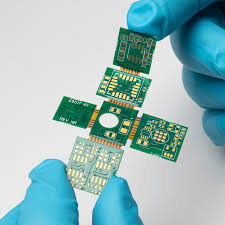
Can flex circuit boards be used in automotive applications?
The most popular flex circuit materials are polyester and polyimide. Polyimide is a strong, heat-resistant film that is ideal for high-temperature and high-density applications. Unlike standard rigid PCBs, which use epoxy resin to form the laminated layers, a flex circuit uses polyimide film as the dielectric. This makes it able to tolerate harsh environments and extreme temperatures, while still maintaining its strength and reliability.
Moreover, the thin substrate enables a flex circuit to be molded into different shapes for unique applications, allowing for space savings and reduced weight. Additionally, the material can accommodate a variety of connectors, including zero-insertion force (ZIF) and flexible flat cable (FFC) connectors, which allow for the connection of surface mount components to the conductive traces. For larger components, the flex circuit can be used in conjunction with a rigid section to create a hybrid rigid-flex board.
The flex PCB industry is constantly developing to meet the needs of a rapidly changing world. To keep up with this rapid growth, the flex circuit industry has developed several new technologies to support advanced electronics for a range of applications. These technologies include a variety of finishes and materials that are designed to reduce costs, improve flexibility, and extend the lifespan of the flexible circuit. These technologies are helping the flex circuit industry to achieve significant growth, especially in new energy vehicles and aerospace applications.