Say goodbye to Monstropolis and hello to Pandora — Disneyland Resort is shuttering its “Monsters, Inc.” ride to make way for a new “Avatar” experience inspired by the oceans of James Cameron’s sci-fi world.
Monsters, Inc. Mike & Sulley to the Rescue! will close in early 2026 to allow construction to begin on an “Avatar”-themed land in the Hollywood Backlot area of Disneyland California Resort, Disney announced Thursday.
Whereas the “Avatar”-themed ride at Disney’s Animal Kingdom in Florida is based on Cameron’s first “Avatar” film, the new Anaheim experience is shaped around the Pandora of “Avatar: The Way of Water.”
Imagineers first announced the “Avatar” destination at a fan convention last summer, describing it, in true Disney fashion, as “dynamic, intense and an emotional experience on a grand scale.”
Official details on what the attraction will entail and a timeline for construction remain under wraps.
Concept imagery shared on the Disney Parks Blog shows guests aboard a boat traveling through a bioluminescent lagoon and encountering a massive whale-like creature called a Tulkun that leaps from the ocean — hinting at the possibility of a water-based ride.
The closure of the “Monsters, Inc.” ride, which opened in 2006, marks the end of an era for fans of the Pixar classic. The family-friendly ride took guests on a fast-paced journey through the streets of Monstropolis, re-creating scenes from the original 2001 film as guests raced to help monsters Mike and Sulley rescue their human friend Boo.
In addition to creating the “Avatar” experience, the resort is working on a new “Coco”-themed attraction, two new “Avengers” attractions and a parking structure.
A “Coco”-themed attraction is among changes coming to Disneyland.
(Disney Parks Blog)
Disney announced Thursday that construction on the “Coco” adventure was set to begin in the fall.
“The attraction will be filled with the characters — and music! — you know and love from the beloved movie, as you join Miguel on a trip to the land of the dead,” said Disney in a blog post. “This marks the first-ever ‘Coco’ ride in a Disney park!”
No timeline is available for the construction of the attractions in the Avengers Campus at Disneyland California Adventure.
The new parking structure will be built on the east side of Disneyland Resort and provide around 6,000 parking spaces as well as shuttle and rideshare areas. A pedestrian bridge will be added to connect Harbor Boulevard to the transportation hub.
“This is just the beginning of exciting growth here at Disneyland Resort,” Disney said in a blog post. “We look forward to sharing more about all of these projects in the future.”
There is no containing a star of Belinda’s caliber.
In the making of her fifth studio album “Indómita,” the Mexican singer and actor began to understand that what made her hard to contain — in life, in love and in her career — was worth writing an album about.
“I was reading a book and all of a sudden the word ‘indómita’ appeared,” says Belinda in an audio call from her home in Mexico City. “For two days, I kept dreaming of that word. ‘Indómita, Indómita,’” says Belinda during a recent audio call from her home in Mexico City.
Out on June 5, “Indómita” is an assortment of corridos tumbados, reggaeton, rock and pop ballads with exciting collaborations — ranging from the American rock band Thirty Seconds to Mars to Latin stars like Tokischa and Tito Double P.
“This album is very special, not just for women but for everyone who feels untameable, who feels strong, who feels like a warrior,” she explains.
The title directly translates to indomitable, or untameable, a term that seems to perfectly suit the 35-year-old artist, whose long and prosperous career made her an international household name.
Born in Madrid, Spain, as Belinda Peregrín Schüll, but known widely by her mononym, Belinda began her legacy in Mexican television, taking on lead roles in early 2000’s childhood telenovelas like “Amigos x siempre,” “Aventuras en el tiempo,” and “Cómplices Al Rescate,” where she played a set of twins who has been separated at birth. She also broke through the Disney sphere, appearing in the popular 2006 sequel of “The Cheetah Girls 2” as Marisol, a Spanish pop star and competitor of the titular girl band.
Belinda’s music career has been equally as fruitful, including a stint as a singing coach on the TV competition “La Voz” and dozens of hit singles, such as the popular “Amor a Primera Vista,” a 2020 collaboration with Los Ángeles Azules and Lalo Ebratt. Her previous studio albums, 2003’s “Belinda,” 2006’s “Utopía,” 2010’s “Carpe Diem” and 2013’s “Catarsis” have all graced Billboard’s Top Latin Albums chart.
Her new LP marks a personal artistic triumph for the artist, given its unique regional Mexican edge. “300 Noches,” her 2024 corrido track with Natanael Cano, made No. 4 on the Mexican Billboard pop chart and appeared on the Billboard Global 200, making it Belinda’s first appearance on the chart. Other corridos tumbados, like the rugged “La Cuadrada” featuring Tito Double P and the blistering “Mírame Feliz” with Xavi, unleash a new alter ego of the famed singer known as “Beli bélica,” the latter of which means “warrior” in Spanish.
“With this album, I’d like to open up the door to more women to sing corridos tumbados of heartache,” says Belinda.
The record is already scorching hot, with songs like “Cactus” making a subtle, prickly nod to her past relationship with Mexican crooner Christian Nodal, who famously tattooed her eyes on his chest. There’s also the reggaeton-corrido fusion called “La Mala,” which coyly addresses the rumors that Belinda is a cold, calculated lover — which heightened in the wake of her high-profile relationship.
Still, her notoriety as a heartbreaker has simultaneously granted her sainthood status from fans, who created fake prayer cards of the enchanting star to bolster their own love life.
“This album was made up of things that we live every day,” says Belinda. “Someone breaks our heart, we feel better, we fall in love, they break our heart again and so forth. Life is like that.”
But “Indómita” is much more than Belinda’s foray into regional Mexican music; there’s also “Jackpot,” a dazzling club alongside Kenia Os, a tribute to lightning-fast cars in “Rayo McQueen” — and even her love of anime in “Death Note.”
“I’m a versatile artist and this record reflects that,” says Belinda.
This interview has been edited and shortened for clarity.
What motivated you to release this album over a decade after your last one, “Catarsis”? I know it might seem like it’s been a long time, but I never left. I’ve always been involved in music. I’ve done collaborations with Los Ángeles Azules, “Amor a Primera Vista,” that was super popular, with Ana Mena in “Las 12,” Lola Indigo and Tiny in “La Niña de la Escuela,” with Juan Magán and Lapiz Conciente in “Si No Te Quisiera.”
I’ve made a lot of music, but obviously this record means so much to me. It’s not the same to work on collaborations and music for other artists as it is to do it for myself. The album is full of collaborations with Thirty Seconds to Mars, who are one of my favorite bands of all time. It also has Kenia Os, Tito Double P, Neton Vega, who’s a hard-hitting act in the world of reggaeton and corridos tumbados, and Natanael Cano, who I can’t forget either. It’s a complete album, with lots of different styles.
Many of the songs on this album are corridos tumbados. Why did you dive into that style of music? It’s a really stigmatized genre, and a genre that is specifically for men and for certain kinds of lyrics. I wanted to break that [idea] and say that instruments used — like the trombone, the alto horn, tololoche — aren’t just for men or for specific lyrics or a specific market. There can be more romantic lyrics, a mixing of sounds like pop with urban music. The challenge was also getting my collaborators to believe in this too, since they are used to other topics, but everyone trusted me and believed in the song[s] since the beginning and it was organic.
Tell me more about your collaborations. What did you learn from them and what did you teach them? They’re so talented and play instruments very well, especially Natanael Cano — you can tell him to play any instrument. He’s very talented. We were in the studio and he started to play a Metallica song and I was like, “Wow!” Although we might pigeonhole them into this genre, they’re very versatile and talented. I admire them.
One of the singles of this album, “Cactus,” talks about your feelings toward an ex. How did it feel to release your emotions? And would you say that it helped you heal, as the song suggests? I love healing through music. The first phrase of the song goes: “Therapy helps, but music heals more bad-ass.” Perhaps I couldn’t express with words what I can through music. As a composer we express our emotions through our lyrics. But it’s also important that people remember that not everything is based on experiences. It’s music so that people can identify themselves in love or heartache. I never mention anyone by name, but people can make their own conclusions or deductions. At the end of the day, I make music for people who can relate to the lyrics.
You’ve been in the spotlight for so many years. Do you believe there are two Belindas that exist? As in, one that is for the public and one that’s just for close family members? Of course, I can guarantee it. There’s also a song where I express that idea that many times people have categorized me as a bad character, “La Mala.” At the end of the day, I know who I am and the people around me know the heart that I have — my feelings and intentions, my day-to-day. That’s what counts for me. If I paid attention to every comment [people made of me], my God, I’d be locked up in a room without an exit, which sometimes does happen to me.
How do you tune out those outside critics? I try not to see these things. Sometimes it’s inevitable but I’m also not going deep into the web to find what people are saying. I do other more productive things that nourish me.
Obviously it hurts, because even if certain comments are not true, they still hurt because they carry negative energy. I don’t want to give into these comments as truth, but that energy of negativity or insult or humiliation or anything that comes from a negative side, obviously has a consequence. So one has to be careful about how they express themselves, because there’s so much negativity that exists, so it would be nice if we could just throw a bit more of love.
I heard you’re a big anime fan, and you show that in your song “Death Note.” Why was it important to include that? I’m [an] otaku, even if people don’t believe it. I really like anime. I’m a fan of “One Piece,” “Death Note,” everything, “Attack on Titan,” but “Death Note” is my favorite. It’s pretty dark, but Ryuk is one of my favorite characters in life. I’ve always been a fan of terror, because within the darkness, there’s always some light.
You were born in Spain but were raised in Mexico. How have you navigated both identities? I can’t pick one or the other, but I’ve always considered myself Mexican, because I was raised in Mexico and my accent is Mexican. I’m very, very much Latina.
What advice would you give your younger self? Don’t take everything so personally and enjoy life. When I was little, I would think too much about what the world thought. I was always like, “do you like it? Oh you don’t, why?” and I would suffer. And now if I like it, OK, and if no one else likes it, then too bad, I like it!
Jaret Reddick remembers the first time he met Dan Povenmire and Jeff “Swampy” Marsh. He had flown to L.A. because Povenmire and Marsh were hoping Reddick, the lead singer of the pop-punk band Bowling for Soup, would sing the theme song for their new animated series, “Phineas and Ferb.”
The meeting went well and Reddick not only got to sing the show’s theme song, “Today’s Gonna Be a Great Day,” but he was also cast as the voice of Danny, the lead singer of the show’s fictional band Love Händel.
“I walked out of there going, ‘Man I love those guys. I really hope this show does well for them,’” Reddick recalls.
And done well it has. Since its premiere in 2007, “Phineas and Ferb” has become the most successful animated series for children and tweens in Disney Television Animation history. The series about two brothers — Phineas (Vincent Martella) and Ferb (David Errigo Jr.) — trying to make the most of their 104 days of summer vacation ran for four seasons and spawned multiple movies including 2020’s “Phineas and Ferb the Movie: Candace Against the Universe.”
Now, 10 years after the show’s fourth season ended, the series returns for a fifth season Thursday at 8 p.m. PT on the Disney Channel. The first 10 episodes of the new season will also debut Friday on Disney+. Most of the main voice cast has returned, including Martella, Ashley Tisdale — who voices the continually exasperated older sister, Candace — and Caroline Rhea, the boys’ ever serene mother, Linda.
Caroline Rhea and Ashley Tisdale, who voice Linda and Candace respectively, are back for Season 5 of “Phineas and Ferb.”
(Disney)
For this new batch of episodes, Povenmire and Marsh embraced the show’s successful formula where the boys come up with new and always increasingly creative ways to entertain themselves. “I think there’s probably a bunch of episodes this season that are going to be people’s favorite episodes that they have ever seen,” says Povenmire, who also voices the show’s inept nemesis Dr. Heinz Doofenshmirtz.
Just like how Phineas always knows what he and Ferb are going to do today, Marsh knew what Disney was expecting with the show’s return. “They really just wanted more of the same,” Marsh says. “The show always worked before and it was always sort of timeless. It was not anything that relied on current events or the current zeitgeist. We really just had to keep doing what we are doing and keep pushing the envelope into new areas and do it without violating the framework that we had set up.”
One thing that has changed for the new season is the writers’ room, which now includes writers who grew up watching the show. And Olivia Olson — you may remember her as Joanna, the little girl singing “All I Want for Christmas is You” at the end of “Love Actually” — who voices Vanessa Doofenshmirtz on the series, has also come on board as a writer. Olson says this new role formalizes the unofficial one she had shadowing her dad, Martin Olson, who wrote for the series during its original run. Now they’re a writing team on the series.
The “Phineas and Ferb” writers’ room. “We really just had to keep doing what we are doing and keep pushing the envelope into new areas and do it without violating the framework that we had set up,” Dan Povenmire says.
(Richard Harbaugh / Disney)
“There’s a lot more Vanessa in this new season,” she says with a laugh. “It’s really cool to write for my own character and see the stories I wanted to have for her play out and I just learned so much. To come back and write with my dad is really cool.”
Since the beginning, the show’s music has set the series apart. “Phineas and Ferb do something completely out of the box and different every day,” Olson says. “The music just mirrors that.”
Marsh recalls an early episode featuring the song “Let’s Take a Rocket Ship to Space,” which was an homage to Frank Sinatra. Executives were worried the show’s target audience wouldn’t get it, but that wasn’t the case. As the show grew in popularity, so did the music, which crosses multiple genres. “Country songs, rock songs, pop songs, operatics, big band, rap stuff — it’s all over the map,” Marsh says. “The songs move the story along, hopefully they bring humor as well as telling us something about the characters.”
Reddick says during Bowling for Soup concerts, in addition to the band’s biggest hits like “Girl All the Bad Guys Want” or “1985,” fans demand to hear the show’s theme song. “It’s so infectious,” he says. “We managed to record a song that is just accepted by everybody. Everyone loves it.”
“Phineas and Ferb” co-creators Dan Povenmire, left, and Jeff “Swampy” Marsh in the studio. “The songs move the story along, hopefully they bring humor as well as telling us something about the characters,” Marsh says.(Richard Harbaugh / Disney)
When the show was first starting out, Povenmire and Marsh would tell series composer and song producer Danny Jacob to not pick up the phone when they called so they could leave a message on his answering machine with their latest song. “We sounded like a bunch of college frat boys singing into a tape recorder,” Marsh says.
While the technology they use has improved, their approach to the show’s music has not changed. Jay Stutler, senior vice president of music at Disney Television Animation, has been with the show since the first episode. “That pilot was the most fun pilot I’ve ever worked on,” he says. Povenmire and Marsh brought a musical aesthetic that “took chances and leaned into some really obscure musical references from around the world.”
“What this show did better than any other show was establish that the song can be whatever it needs to be,” he adds.
One of the stories from this season’s sixth episode, “Lord of the Firesides,” finds the show’s Girl Scout-like troop, the Fireside Girls, going completely feral, like in the famous William Golding novel. It features the song “Watch It Burn.” “It’s a really thrashing screaming song for the sweetest little girls in the world,” Povenmire says. “It’s the hardest-rocking song that would ever be on the Disney Channel.”
Tisdale, who also starred in the “High School Musical” franchise, jokes that her new edict to her agent is “iconic stuff only please.” Tisdale, who lent her voice to some of the show’s most memorable songs including “Busted” and “Gitchee Gitchee Goo,” is delighted to be back voicing Candace. “She’s so fun. She’s just a crazy sister trying to bust her brothers. I truly just feel like she wants to be seen.”
In the fifth season, Candace is now 16, a year older than she was during the original run. In addition to her updated cellphone, the new season finds Candace getting her driver’s license and going to therapy, “which she totally needs to do,” Tisdale says.
In addition to the returning main voice cast, Povenmire and Marsh lined up many guest stars — they marvel at who they were able to get: Brendan Hunt, Alan Cumming, John Stamos, Leslie Jones, Anna Faris, Cristo Fernández, Megan Rapinoe, Meghan Trainor, Jonathan Banks, Rhys Darby, Ruth Negga and Michael Bublé. Bublé plays himself and serenades an audience during a beach concert. Povenmire recalls Bublé texting him, “You would have loved to have been a fly on the wall in the meeting with my manager when I told him what I really wanted to do at this point in my career is sing a song called ‘Tropey McTropeface.’”
The musical guest stars have always been a highlight of the show. Povenmire fondly recalls the time they wrote “I Believe We Can,” which featured performances from Clay Aiken and Chaka Khan for the 2010 episode “Summer Belongs to You,” and then realized they had to actually get Aiken and Khan for the joke to work. They did.
Although they joke around, the series’ return packs an emotional punch for the duo, who famously pitched the series for 13 years before Disney picked it up. “I watched the first episode and came back into the writers’ room and I was crying,” Povenmire says. “It feels like ‘Phineas and Ferb’ are back. That’s what I want people to feel. This show is back with a vengeance.”
Warner Bros. Discovery is the latest media company to shed employees from its cable TV channels, with several dozen positions jettisoned Wednesday.
The layoffs, confirmed by an executive not authorized to comment publicly, are aimed at improving efficiency across the company as cable TV revenues sink because of cord-cutting.
The moves at Warner Bros. Discovery come two days after the Walt Disney Co. implemented a bloodletting across its film and television marketing teams, television publicity, casting and development as well as corporate operations.
The cuts at Disney numbered in the hundreds. The figure for Warner Bros. Discovery is much smaller than that, though an exact number was not disclosed.
Warner Bros. Discovery’s movie and TV production studios and streaming operation, soon to go back to its earlier name, HBO Max, will not be hit by the cutbacks.
The cuts come as Warner Bros. Discovery is said to be pondering a possible spinoff of its declining cable TV assets, which include its Turner channels, Discovery Networks, HGTV and Food Network, similar to what Comcast is doing with its NBCUniversal cable outlets (with the exception of Bravo).
Comcast is putting MSNBC, CNBC, the Golf Channel, USA Network and other outlets into a new company called Versant, separating the mature businesses from the rest of the company as it focuses on streaming.
Warner Bros. Discovery recently reorganized into two business units. The entertainment giant last year took a $9.1-billion writedown to reflect the declining value of its TV networks.
The cuts at Warner Bros. Discovery come just a day after a rare shareholder rebuke of its executive pay packages, a sign of growing unhappiness with the company’s financial performance.
A majority of Warner Bros. Discovery shareholders voted against the 2024 compensation package given to Chief Executive David Zaslav and other executives at the company’s recent annual meeting, according to a regulatory filing.
Almost 60% of the votes cast came in against the 2024 executive pay package at the company, according to a regulatory filing Tuesday. The vote is nonbinding, and thus symbolic.
As an Emmy-winning director on “The Sopranos,” “Mad Men” and “Game of Thrones,” Alan Taylor has made a name for himself on some of television’s most highly regarded series. Still, when he learned that he would be helming the most consequential action sequence in the history of “House of the Dragon,” he took a moment to consider the enormity of the task at hand. “I hadn’t really realized what a big deal it needed to be,” Taylor said.
Action set pieces rarely come bigger than the three-way dragon battle that concludes “The Red Dragon and the Gold,” the fourth episode of the fantasy series’ second season. A landmark event in “Fire & Blood,” author George R.R. Martin’s fictional history of the royal Targaryen clan that inspired the show, the so-called Dance of the Dragons sees a trio of fire-breathing beasts clash in the sky, leading to the death of one major character, the hideous disfigurement of another and countless soldiers killed in the fallout.
Camera operator Claire Pie, left, with director Alan Taylor.
(Theo Whiteman / HBO | Max)
To bring the roughly 12-minute sequence to the screen required a serious battle plan, one that involved multiple departments and took more than a year to execute. “Everything I was doing with the dragons was trying to make them feel real and palpable and alive,” Taylor said. “Dragons have to be characters, not just transportation or weapons.”
The sequence begins with Ser Criston Cole (Fabien Frankel) leading an army toward the castle of Rook’s Rest. He intends to claim the territory on behalf of King Aegon II Targaryen (Tom Glynn-Carney), who is at war with his half-sister Rhaenyra (Emma D’Arcy). But the assault is really a strategic ruse. Cole and Aegon’s mercurial brother Aemond (Ewan Mitchell) expect Rhaenyra to launch an offensive of her own at the site and plan to use Aemond’s enormous dragon Vhagar to kill her.
Instead, Rhaenyra’s lieutenant Rhaenys Targaryen (Eve Best) arrives on her dragon Meleys to take on Cole’s forces. To her great surprise, the king himself rides his dragon Sunfyre into battle, hoping to prove his valor. Once Rhaenys orders Meleys to attack the king, Aemond rushes forward, commanding Vhagar to unleash a torrent of fire. The blast strikes Aegon and sends the young monarch and his dragon plummeting to the ground.
Locking talons, Meleys and Vhagar collide, but the larger beast gains the upper hand. Soon, Rhaenys, Meleys and Sunfyre are dead, while Aegon barely clings to life.
Alan Taylor directs actor Ewan Mitchell, who plays Aemond Targaryen.
(Theo Whiteman / HBO | Max)
“We had to dramatize this thing that everybody’s been so afraid of, which is dragon-on-dragon war,” said showrunner Ryan Condal, who wrote the episode. “You see how terrible it is, and also how stunning and spectacular, as these gods are fighting in the sky.”
Working with his longtime partner Jane Wu, director Taylor began storyboarding the sequence in the early weeks of 2023. During their research, the pair discovered footage of birds of prey engaging in midair, and they chose to incorporate those movements into the dragon fight. “One usually turns upside down, so they meet talon to talon,” Taylor said. “That means they’re locked together, so then it becomes a death spiral. The idea of doing that but with [creatures the size of] two 747s seemed like it would be appropriately big.”
Wu’s images became the foundation for the previsualization, or “previs,” of the Rook’s Rest battle. Serving as a kind of road map, the “previs” allowed the filmmakers to plot out every detail of every scene — from what camera angles would be used to how the CG dragons would move. Understanding precisely how and when each creature would bank, tilt, soar or nosedive was necessary for planning the dragon-riding scenes.
VFX production manager Adam Lawrence on set.
(Theo Whiteman / HBO | Max)
For those shots, largely filmed at Warner Bros. Studios Leavesden, the series’ production headquarters, the actors were seated on a buck atop a motion-controlled base surrounded by large blue screens. The base was then programmed to simulate the specific movements of each character’s dragon, while wind machines and special lighting re-created aerial conditions.
“Trying to find a way to make these clashes look as violent as they would really be while keeping the actors safe was a challenge,” said visual effects producer Thomas M. Horton. “How do we shoot this with a buck and a motion-controlled camera so it looks like they’re being spun around at 90 miles per hour but actually they’re not?”
It’s not the easiest environment in which to create authentic emotional moments, noted Taylor, who singled out Best for delivering heartbreaking work under difficult circumstances. “She’s doing a very intense, subtle performance while she’s being slammed around on this bucking bronco with wind machines and a robotic camera,” Taylor said. “She was a trouper.”
Mitchell described the buck work as something of a thrill ride that greatly informed his performance. “Having that feedback from what is effectively a machine, it really brings the scene to life,” the actor said. “It’s almost like a horse jockey. I’m leaning over as opposed to sitting back handling the reins, really putting all my body into it.”
Behind the scenes of “The Red Dragon and the Gold.”
(Theo Whiteman / HBO | Max)
To capture certain shots of Aemond and Vhagar against the Rook’s Rest tree line, a makeshift buck was brought to Bourne Woods in the English county of Surrey, where the physical battle was filmed — the first time the series attempted to do buck work on location. “To be suspended 30-40 feet up in the air? Nothing beats it,” Mitchell said. “It’s escapism to the max.”
During the roughly 10-day shoot, which took place in August 2023, drones approximated the dragons’ flight path so the actors on the ground knew where to look when they craned their necks toward the sky. Stunt performers posed as knights, donning layers of protective gear beneath their costumes so that they could safely be lighted on fire and burn for up to 15 seconds before being extinguished.
The ground was also littered with artificial burning bodies to simulate the dragons’ victims. “Obviously, there’s a safety issue with real fire, but for the most part, it’s a help because it motivates the ability to put lots of atmosphere through [the shots], and putting lots of atmos and smoke into the shot helps photographically,” said cinematographer P.J. Dillon.
The various elements of the sequence were stitched together during postproduction, with the final scenes completed just weeks before the episode aired. “Three dragons, buck shots, fire, we had to create the castle, the whole cliff and the sea, there was a big army enhancement as well — the ratio of super complex, very heavy-lift shots in that episode is off-the-charts high,” said VFX supervisor Daði Einarsson.
Baseball isn’t boring and the CW isn’t stupid, at least when it comes to the Savannah Bananas, the Georgia-based team that has rewritten the rules around the classic American pastime. The network has picked up rights to broadcast the July 27 Bananas game at Citizen’s Bank Park in Philadelphia.
“Banana Ball” incorporates humor, gymnastics, lip syncs and snappy dance choreography in a minor league baseball game with rules that definitely don’t match those of Major League Baseball — though many of the players once had MLB aspirations. This year the team has sold out 18 major league ballparks, plus three football stadiums with capacities of more than 70,000.
The CW in recent years has been leaning into live sports coverage, which has generally been delivering ratings results in a rapidly changing TV-viewing landscape. The network has the NASCAR Xfinity Series, WWE NXT on Tuesday nights, Grand Slam Track, AVP beach volleyball on summer Saturdays, ACC and Pac-12 football games in the fall and, starting next year, PBA professional bowling.
The Savannah Bananas come with a built-in audience earned via posts on TikTok, Facebook Reels and the like. The team has 10 million followers on TikTok alone.
The Savannah Bananas, a minor league baseball club, went on their first ever “World Tour” this year, taking their unique brand of baseball to various cities across America.
“We’ve always been very clear about our goal,” Bananas owner Jesse Cole told The Times in 2022. “We exist to make baseball fun.”
“It’s all about energy. We want to give people energy, delivering it every second, from the moment we open the gates at two o’clock until the last fan leaves at 11,” he added over the weekend, when the team played to a sellout crowd at Anaheim Stadium.
There’s definitely an audience appetite for the Savannah team: There are tickets available for games in August and September, but only through a lottery — and the wait list for the lottery is more than 3 million names long. Last season’s games drew a million fans total.
On Friday, the only way into the Anaheim game was through the resale market. Hours before the first pitch, the lowest price (fees and taxes included) for a pair of Bananas tickets on StubHub was $209.52, while it took a mere $171.72 to snag a pair of tickets to the Yankees-Dodgers series opener at Dodger Stadium the same night.
Who needs Shohei Ohtani and Aaron Judge anyway: Banana Ball has the Savannah team facing rival outfits the Texas Tailgaters, the Firefighters, the Party Animals and the Visitors.
And while Ohtani and Judge can be counted on for multiple home runs, only the Bananas deliver baby races, a dancing umpire and backflips before balls are caught in the outfield. Plus the games are limited to two hours max, something even the much-loved MLB pitch clock can’t deliver.
“The Savannah Bananas have taken the sports world by storm through their high-energy blend of baseball and entertainment that connects with viewers of all ages,” Mike Perman, senior vice president of CW Sports, said in a statement Tuesday.
“We are thrilled to partner with them for their broadcast television debut, and we cannot wait to bring our audience every unpredictable play in front of what promises to be an electric atmosphere in Philadelphia.”
“Banana Ball on The CW is a no-brainer,” Bananas owner Cole added in that news release. “After seeing their recent commitment to sports, we knew this could be a great partnership. With the speed and entertainment of Banana Ball, we look forward to creating new fans together in the years to come.”
Times staff writer David Wharton and Times fellow Anthony De Leon contributed to this report.
“Oh, Mary!” is poised to have a big night at the Tony Awards on Sunday. A campy melodrama by alt comic Cole Escola, the play conjures to the stage a vision of Mary Todd Lincoln as a harridan and drunk, who’s sick of the restraints being placed on her at the White House and desperate to return to her first love, cabaret.
As played by Escola, the First Lady is a tramp with a showbiz dream and an unslakable thirst for whiskey. Poor Mary has reason to be in a state of spiraling turmoil. Husband Abraham Lincoln (Conrad Ricamora), wary of Mary’s scandalous behavior, has placed her booze under lock and key.
The Civil War, which is jeopardizing his presidency, has turned him into an utter killjoy. Overcome with stress, he’s finding it harder than ever to resist his homosexual urges. He prays for willpower, but his assistant (Tony Macht) is all too willing to go above and beyond the call of duty.
The production, directed by Sam Pinkleton, plays this delirious situation to the comic hilt. Melodramatic tropes, from the striking of over-the-top poses to thunderous piano underscoring during moments of rising tension, situate “Oh, Mary!” in a bygone theatrical universe.
Escola’s Mary, dressed like a 19th century version of Wednesday Addams from “The Addams Family,” can’t contain herself. Don’t let the rouged cheeks and Shirley Temple curls fool you. That demonic glint in her eye isn’t a ruse.
Escola is part of a wave of comics, along with Megan Stalter, who built their fan bases by posting comic vignettes on social media during the pandemic. Both were crucial mental health resources during that dark time, and both found a wider embrace online for their niche comic sensibilities.
“Oh, Mary!,” which had its premiere off-Broadway at the Lucille Lortel Theatre last year, has become the mascot production of the Broadway season. It’s the unexpected hit that proves that, while there are no sure bets anymore on Broadway, success is more likely when artists are allowed the courage of their crackpot convictions.
I’m elated for “Oh, Mary!,” but I think it would be a mistake to reward the show’s giddy Broadway triumph with the Tony for best play. The category is too rich to be treated as a popularity contest this year. Artistic discernment is called for when deciding among works as good as these.
The cast of the Broadway production of “Purpose.”
(Marc J. Franklin)
The race includes two plays that received the Pulitzer Prize, the 2023 winner, Sanaz Toossi’s “English” and Branden Jacobs-Jenkins’ newly awarded “Purpose.” Jez Butterworth, who won the 2019 Tony for his play “The Ferryman,” has outdone himself with “The Hills of California,” the fall season’s best (and most intricately woven) drama, magisterially directed by Sam Mendes. And “John Proctor Is the Villain,” Kimberly Belflower’s reconsideration of Arthur Miller’s “The Crucible,” thrillingly staged by Danya Taymor, is perhaps the feat of playwriting that surprised me most in this group.
“Oh, Mary!” ought to receive a special citation. Not only is it in a category of its own, but it doesn’t bear comparison with the other nominees. And this point of view has nothing to do with any bias against camp. In fact, it’s my deep affection for the genre that has compelled me to raise what I assume will be an unpopular opinion.
In her landmark 1964 essay “Notes on ‘Camp’,” Susan Sontag observed that the “whole point of Camp is to dethrone the serious. Camp is playful, anti-serious. More precisely, Camp involves a new, more complex relation to ‘the serious.’ One can be serious about the frivolous, frivolous about the serious.”
The silliness of “Oh, Mary!” shouldn’t be held against it. Artistic worthiness isn’t measured by gravity of subject matter. But there’s something mainstream about Escola’s outrageous flamboyance — it’s camp for “The Carol Burnett Show” crowd.
Sontag noted that camp functions as “a private code, a badge of identity even.” I wasn’t sure who “Oh, Mary!” was pitched to, but it didn’t seem intended for someone whose camp sensibility was forged watching the plays of Charles Ludlam at the Ridiculous Theatrical Company in Greenwich Village or the drag headliners of East Village bars and clubs that made such an impression on me in the 1980s and 1990s.
That was a bleak period to be coming of age in New York. The AIDS crisis left the gay community in a state of mournful siege. Camp offered sanctuary, a mode of performance that didn’t suffer hypocritical fools gladly. There was something transgressive and liberating about an aesthetic that inverted not only good and bad taste but also conventional and unconventional morality.
“Oh, Mary!” is fearlessly raunchy but never is it truly dangerous. The show is both a novelty on Broadway and completely at home there. The audience members laughing the hardest on a recent visit to the Lyceum Theatre were the older married couples who found it risqué enough to enjoy but not so risqué that it might upend their thinking of right and wrong.
As a spoof of melodrama, it is sprightly, crisply executed and untaxingly entertaining. Part of the appeal of “Oh, Mary!” is that it just wants to give audiences a concentrated dose of hilarity. Escola recognizes the importance of not being earnest. But the mainstream success the show is enjoying is a sign of something more subversive being watered down.
The Tony nominating committee has demonstrated remarkable judgment this year. Let’s hope Tony voters follow suit and give one of the other four best play nominees the award. If forced to pick a winner, I would opt for “Purpose,” Jacobs-Jenkins’ engrossing family drama set in the household of a civil rights icon, whose personal and public morality haven’t always been aligned.
Any concise description of “Purpose” is bound to fail because the play is so multifarious and complex. Jacobs-Jenkins has written a domestic drama in the epic tradition of “Death of a Salesman,” “Long Day’s Journey Into Night,” “Cat on a Hot Tin Roof” and “August: Osage County.”
The playwright has pursued this line before in “Appropriate,” which won the Tony for best revival last year. But here the focus is on a Black family grappling both with the burdens and privileges of a father’s unique legacy and the difficulty of adapting to changing times and new frontiers of political struggle.
Whenever you think you know which way “Purpose” is heading, it veers off in an unexpected direction. The play leaves the mundane world to engage in spiritual questions between an old-school father (Harry Lennix) and his independent-minded youngest son, Nazareth (Jon Michael Hill), who left divinity school to become a nature photographer.
“Naz,” as he’s known, serves as the play’s narrator. And as someone who identifies as asexual and is possibly on the spectrum, he brings a bracingly original perspective to the classic homecoming play, updating the genre for the 21st century.
“Purpose” deserves an extensive life after Broadway, and a Tony would help its producing prospects. The Steppenwolf Theatre production at the Helen Hayes Theater, directed by Phylicia Rashad and featuring one of the best ensemble casts of the season, is intimidatingly good. (LaTanya Richardson Jackson, Lennix, Hill, Glenn Davis and Kara Young were all nominated for their work, but the company really deserves a collective award.)
It’s a long play (nearly three hours), and one you might not care to see performed with second-tier performers. A Tony would create more incentive for regional theaters to rise to the challenge, though with a Pulitzer, New York Drama Critics’ Award and Drama Desk Award, “Purpose” is hardly lacking in accolades.
There was a time not so long ago when the future of the Broadway play was in serious doubt. The threat hasn’t gone away, and Tony voters shouldn’t pass up an opportunity to honor true playwriting excellence.
With its sale to Skydance Media still beyond its reach, Paramount Global has nominated three new directors to bolster its small board, which has been racked with drama and churn since early last year.
The debt-laden New York-based company currently has only five board members, including controlling shareholder Shari Redstone, who serves as chairwoman. The Redstone family holds nearly 77% of Paramount’s voting shares, giving the heiress tremendous sway.
In a proxy filing Monday, Paramount asked shareholders to elect seven directors at its July 2 annual meeting. The slate includes Redstone and three recruits: attorney Mary Boies (a member of the firm led by her husband David Boies); Silicon Valley venture capital executive Charles E. Ryan ; and former Massachusetts trial court judge Roanne Sragow Licht.
In addition to Redstone, three longtime board members — Linda M. Griego, Susan Schuman and Barbara M. Byrne — will stand for reelection.
Board member Judith A. McHale has decided to step down.
The company has grappled with a series of setbacks since it announced its sale to tech scion David Ellison’s Skydance Media last July.
The company took a $6-billion write-down on its cable television networks business, in yet another sign that Hollywood is reckoning with the ongoing deterioration of the traditional television business.
Leading independent director Charles Phillips left the board in October. His exit came six months after three other directors — Rob Klieger, Nicole Seligman and Dawn Ostroff — abruptly departed as the panel was struggling over terms of Redstone’s planned Paramount sale.
In late October, President Trump filed a lawsuit in Texas over his dismay with edits of a “60 Minutes” interview of then-Vice President Kamala Harris in the closing weeks of the election. FCC Chairman Brendan Carr, a Trump appointee, opened an inquiry to determine whether the edits rose to the level of news distortion.
Trump doubled the amount of damages he was seeking to $20 billion.
Paramount has been defending against the lawsuit. In a court filing last week, Trump’s lawyers asserted the president suffered “mental anguish” due to the “60 Minutes” broadcast.
Redstone’s desire to settle Trump’s suit over the “60 Minutes” edits has carved deep divides within the company.
1st Amendment experts have called Trump’s lawsuit frivolous; CBS News executives and other journalists believe it is a shakedown to exploit the vulnerable company that is desperate to have the FCC approve the sale to Skydance.
The ruckus over the edits contributed to the departure of two top CBS News executives. Wendy McMahon, the president of CBS News and Stations, stepped down under pressure last month. In April, “60 Minutes” executive producer Bill Owens departed.
Redstone has expressed her dissatisfaction with CBS News’ coverage of the Israel-Hamas war.
Last month, three Democrat U.S. senators warned Redstone that the company could face allegations of bribery if they write a big check to mollify Trump in an effort to facilitate the FCC’s review of the Skydance takeover. The Wall Street Journal has reported that Paramount offered Trump $15 million to make the lawsuit go away, but he declined.
It’s been nearly 11 months since Paramount agreed to be sold to Skydance in an $8-billion deal that would inject $1.5 billion in capital into Paramount’s battered balance sheet.
Paramount has not revised its guidance on when it expects the deal to close — but the contractual deadline is early October.
As part of its proxy statement, the company again detailed the compensation packages — totaling $148 million to the top three executives and ousted Chief Executive Bob Bakish, who received compensation valued at $87 million. Co-CEO George Cheeks was paid $22.2 million. His counterparts Brian Robbins and Chris McCarthy were paid $19.6 million and $19.5 million, respectively, according to the filing.
For Metallica’s Kirk Hammett, there is one electric guitar that stands above the rest in his arsenal for the metal band’s ongoing M72 world tour. He thinks of it as his Excalibur, he says.
It is a 1959 Gibson Les Paul once owned by the late Peter Green, founding guitarist of Fleetwood Mac, and a former member of John Mayall’s Bluesbreakers. It later passed from Green to Gary Moore, who played it on Hammett’s favorite Thin Lizzy album, “Black Rose.”
The golden instrument is now part of Hammett’s vast collection of vintage and custom-made guitars, and even in that company, the guitar nicknamed “Greeny” is special. The Metallica lead guitarist is often on YouTube searching for old videos of Green, Moore and others playing it live across the decades.
“That guitar’s been through so much, and it’s hurt so much and sang so much,” Hammett says. “I just gotta try and keep it going in my own personal way.”
The guitar now has a prominent place in a new book dedicated to the Metallica guitarist’s stockpile of instruments, “The Collection: Kirk Hammett,” a 400-page coffee-table book from Gibson Publishing. It includes interviews with the heavy metal player, histories of the guitars, with vivid photography by Ross Halfin.
The book isn’t a catalog of his entire collection, but goes deep on individual instruments. (The chapter devoted to “Greeny” is 40 pages alone.) Hammett says he doesn’t know how many guitars he owns, and he doesn’t really want to know.
Now on the road with Metallica in support of their “72 Seasons” album, Hammett plays several guitars a night, but his attention often remains on “Greeny.” It’s the one guitar he carries with him everywhere— to and from the shows, to the hotel room, onto the band’s plane.
“I carry it with me, so I’m directly responsible for anything that happens to it,” he says. “Where I’m sleeping, ‘Greeny’ is usually 10 feet away.”
He’s also made a point of handing the guitar to other players to try out. In the book are several portraits of guitar heroes posing with Greeny: Pete Townshend of the Who, David Gilmour of Pink Floyd and ZZ Top’s Billy Gibbons. Green’s former bandmate, drummer Mick Fleetwood, is also pictured cradling the guitar. So is Aerosmith singer Steven Tyler.
All were part of a 2020 tribute to the late Fleetwood Mac co-founder at the London Palladium, and during that night Hammett played the solo on Green’s “The Green Manalishi (With the Two Prong Crown),” unfurling an elegant flow of blues melody very different from Metallica’s angular roar. Afterward, Fleetwood stood up and yelled, “Nailed it!”
Hammett pictured with his Gibson Flying V guitar, a “made-to-measure” instrument created for him by the specs he requested.
(Ross Halfin)
Hammett once handed the guitar to Jack White, who then played it for several songs during a concert. Melvins guitarist Buzz Osborne has also held it, and said in a podcast last year, “There’s so many other stupid things you could spend your money on, but that … is almost like finding the Holy Grail or the Arc of the Covenant.”
The new book is available on the Metallica website, at Gibson.com, and at stops on Hammett’s book tour, with upcoming appearances in Columbus, Ohio; Philadelphia; Tampa, Fla.; and Denver. It’s part of another busy period for his band, with a remastered box set of 1996’s “Load” album coming in June. Metallica is also set to join Black Sabbath for its final concert on July 5 in Birmingham, England.
In the book, one thing that is noticeable pretty quickly is that these are not museum pieces protected behind glass. They show the wear and tear of use in the studio and onstage, in many cases from generations of different players. Many are scuffed and scratched, chipped and stained. For Hammett, that’s how it should be.
“I can’t help but use them. I know people have to put on white gloves while you’re handling a [collectible] guitar: ‘Take off your belt, take off your leather jacket, no zippers.’ I’m like, ‘Huh?’” Hammett says, laughing.
“Literally, I take that guitar out of the case, I plug it in, I start playing it. I’m not precious with my guitars,” he adds, noting that an accidental nick to the surface of a pristine vintage instrument could instantly cost it thousands of dollars in value. “I have some serious issues with that kind of thinking. I just want to play the guitars, and if there’s a scratch or a bump, so what? I don’t go in for mint instruments because mint instruments don’t sound good. They have no soul, bro.”
Hammett was approached about doing a book by the Gibson guitar company, which had begun a publishing project, starting with a volume documenting the guitars of Slash. The author of the text for both books is Chris Vinnicombe, editor in chief at Gibson. For “Greeny” and other guitars, Hammett “sees himself as the custodian” of these rare instruments, he says.
“He loves the rarity and the romance behind them,” says Vinnicombe. “I don’t think he’s just trying to compile a kind of box-ticking collection of vintage classics just as an ownership project. He loves the chase and he loves the romance and the stories.”
Hammett pictured with his 1957 Gibson Flying V prototype guitar.
(Ross Halfin)
Hammett had already published a book from his collection of horror movie posters, 2017’s “It’s Alive.” His devotion to collecting horror and sci-fi memorabilia and movie props is second only to guitars, and those interests sometimes overlap. He has several custom-made ESP guitars with horror themes, including the classic 1930s films “Bride of Frankenstein,” “The Mummy” and “White Zombie.” And now that he’s just purchased a Bela Lugosi cape used in 1948’s “Abbott and Costello Meet Frankenstein,” he’s planning on a guitar with that theme as well.
Next will be a book of his vintage surfboard collection, he predicts. One of those boards dates back to 1970, and is decorated with drawings of ocean waves and flying saucers. Hammett was told it was made for Jimi Hendrix while the guitar icon was in Maui, though he can’t confirm it. “It’s still a cool story anyway,” he says with a laugh.
In “The Collection,” the metal guitarist goes deep into the history and sound of individual guitars. Sometimes the look of a guitar is as essential as the sound.
“The first time I saw an electric guitar as a teenager, it was love at first sight. I saw it from across the high school hallway,” Hammett recalls of his first in-person sighting of a guitar at about age 14. Some of the older kids at De Anza High School in Richmond, Calif., were holding a Fender Stratocaster, glowing with an orange sunburst design. “It looked like a hot rod to me. It looked like a rocket. It looked like you could get on it and just take off somewhere else.
“Guitars for me have always had a really uplifting quality to them just by the way they look. For me, guitars look so incredibly cool. Everything about the guitars — the wood, the shiny metal, the strings, the sound — I love it. For me, it’s the greatest American invention there ever was.”
He grew up in a Bay Area household where the soundtrack tended to be a mix of jazz and opera, salsa and show tunes. His older brother sometimes brought home a record by the Beatles or Hendrix. And Hammett was soon playing air guitar with his brother’s tennis racket.
Hammett finally got his first electric guitar, a low-budget Montgomery Ward model he traded in exchange for $10 and a Kiss album. He was inspired by the rock music of his adolescence: Kiss, Aerosmith, Led Zeppelin and UFO. “That’s what was fueling all of it,” he says, “and a total dysfunctional childhood, and not knowing where to turn, not having any safe places to go, especially in San Francisco growing up. Music was an emotional, mental relief from all the crap that was going on around me as a kid.”
In high school, he started a rock trio called Mesh, but Hammett and his friends could barely play. “Some of the funniest stories you ever hear are musicians when they first started out and how crappy they are and how bad their band names are,” he says with a laugh.
As his skills evolved, he formed a new band called Exodus, which would ultimately be an important player in the first wave of thrash metal in San Francisco. He eventually moved up to a Fender Stratocaster copy guitar. And as things got more serious, he saved money from his job at Burger King to buy a Gibson Flying V in 1979, a choice of weapon inspired by the example of guitarist Michael Schenker of UFO. The Scorpions and Accept also carried Flying V’s. Paul Stanley from Kiss played one.
“That was a game changer for me,” he says now of getting his first significant guitar, and the model remains important to him. He’s shown holding a Flying V on the front and back covers of his new book.
Hammett pictured with his Gibson 1959 Les Paul Standard guitar in factory black.
(Ross Halfin)
Hammett joined Metallica in 1983, just before the band recorded its debut album, “Kill ’Em All.” In hindsight, that was a wise and obvious career move, but at the time Exodus was as much of a viable young band with a following in the Bay Area. Even so, Exodus was at an impasse when Hammett got an unexpected call from Metallica. He packed up and drove east in time for the recording sessions in Rochester, N.Y.
“I can’t remember why we went on hiatus, but during that hiatus a kind of split happened,” Hammett recalls of his final days with Exodus. “I don’t know how else to put it, but we started doing different drugs. All of a sudden, I felt alienated from the rest of the guys.”
He points out that last month marked the 42nd anniversary of his first rehearsals as a member of Metallica. “When I first saw Metallica, I thought to myself, ‘Wow, these guys are great, but they’d be so much better with me in the band,’” Hammett says of his first time seeing the band. “That was a very conscious thought while I was sitting in the back of the room watching them.”
Together, Metallica led a thrash metal movement that began as an underground sensation but turned out to be more lasting than a lot of the more commercial metal then coming off the Sunset Strip. Decades later, and now one of the most successful rock bands ever, Metallica celebrated that revolutionary history with a series of “Big 4” festivals in 2010 and 2011, as one of four leading forces in that original movement, alongside Slayer, Megadeth and Anthrax.
In “The Collection” is a group portrait of Hammett and Metallica frontman James Hetfield posing with other guitarists from that tour: Slayer’s Kerry King, Megadeth’s Dave Mustaine and Anthrax’s Scott Ian.
“We all heard the same sound in our heads. All us guitar players gravitated to those same new wave of British heavy metal bands — gravitated to that hyper-aggressive, energetic sound, because that’s what our personalities kind of demanded,” Hammett explains of their shared movement, which collided the dual influences of U.K. heavy metal and punk rock. “You have to be a little bit ornery, a little bit passive-aggressive, a little bit dysfunctional, a little predatory, to write and record and perform this music. So it was a lot of the right personality types and the right personality disorders, when it was needed.”
In 2023, Metallica released “72 Seasons,” the third in a trilogy of albums that reached back to a modern take on that original sound. As they play the new songs in stadiums around the world, alongside career milestones like “Enter Sandman” and “Master of Puppets,” Hammett has many guitars at his disposal. And “Greeny” is always there.
“None of us thought this would be the sound of the future for decades to come,” he says of the thrash movement. “We thought we were all just outliers, having our little group of friends playing the music that we wanted to play and doing it because it was fun. We had no idea what it would become.”
When Domingo Hindoyan, the Venezuelan chief conductor of the Royal Liverpool Philharmonic, made his debut with L.A. Opera last November with “Roméo et Juliette,” Times classical music critic Mark Swed called it “a coup for the company.” Swed also wondered if it was a “signal that he is a candidate to succeed Music Director James Conlon, who steps down in 2026?”
It turns out Swed was right.
On Friday, L.A. Opera announced that Hindoyan has been named the company’s Richard Seaver Music Director. He will succeed Conlon, the longtime music director who joined the company in 2006 and announced last year that he will step down at the end of the 2026 season. Conlon will take on the newly created role of conductor laureate.
In a statement, Hindoyan said he was deeply honored to become only the third music director in the company’s nearly 40-year history. “From the first rehearsal, I felt a strong connection to the extraordinary musicians, staff, and spirit of this company,” he said. “It is a privilege to follow Maestro James Conlon, whose legacy has shaped L.A. Opera into what it is today — a dynamic and ambitious institution.”
After considering “dozens” of candidates from around the world, L.A. Opera President and CEO Christopher Koelsch said he was “struck by the fluidity of his technique and the clarity and command of his musical ideas” after seeing Hindoyan at the Berlin State Opera in 2016. “His deeply collaborative nature and generous spirit in rehearsal make him a favorite among singers, who are inspired by the space he creates for musical risk-taking and expressive freedom.” Koelsch also praised Hindoyan’s “deep rapport with musicians and audiences alike.”
Hindoyan, 45, is originally from Caracas, Venezuela, and began his career as a violinist. Like departing Los Angeles Philharmonic Music Director Gustavo Dudamel, he attended Venezuela’s renowned public music education program known as El Sistema.
In addition to his role as chief conductor of the Royal Liverpool Philharmonic Orchestra, a role he has held since 2021, Hindoyan has served as principal guest conductor for the Polish National Radio Symphony Orchestra; he has conducted opera productions at New York City’s Metropolitan Opera, Lyric Opera of Chicago, Berlin State Opera, Vienna State Opera, Paris Opera, Royal Swedish Opera, Dresden Semperoper, Madrid’s Teatro Real and Barcelona’s Gran Teatre del Liceu.
In a statement, Conlon said he was happy to pass the baton to someone who shares his passion for opera.
“Domingo is an artist of exceptional depth and imagination, and I know the company will welcome him warmly,” Conlon said.
Hindoyan’s five-year contract will begin July 1, 2026, and continue through the 2031 season. According to a Facebook post from Hindoyan, the new role in L.A. will run concurrently with his position with the Royal Liverpool Philharmonic Orchestra.
Hindoyan, son of Venezuelan violinist Domingo Garcia, a former president of the Orquesta Sinfónica Venezuela, is married to the soprano Sonya Yoncheva, who’s singing at the Metropolitan Opera in Tchaikovsky’s “The Queen of Spades.” (Performances are scheduled on Wednesday and Saturday.) The couple has two children and lives in Switzerland.
In late April, the album “Tchaikovsky: Souvenir de Florence & Symphony No. 6 ‘Pathetique,’” from Hindoyan and the Royal Liverpool Philharmonic Orchestra, was released.
It was the early 1980s when residents of a Pasadena neighborhood noticed something amiss at the nearby crematorium. The facility was suddenly operating round the clock, smoke billowing from its chimney well after business hours.
Fellow morticians were also alarmed at the uptick in the number of bodies cremated by the Lamb Funeral Home, a respected, family-run establishment and pillar of the Southern California mortuary business for generations. It wasn’t long before allegations of organ harvesting, mass incineration of bodies and murder made the local and national news. A new L.A. crime noir story was born.
Premiering Sunday and airing weekly, HBO’s three-part docuseries “The Mortician” chronicles the ghoulish offenses of David Sconce, great-grandson of the mortuary‘s founder and son of owners Jerry W. Sconce and Laurieanne Lamb Sconce. He was the picture of Southern California affluence and privilege: a blond-haired, blue-eyed high school quarterback with professional football aspirations until his hopes were dashed by a torn ligament.
Sconce found his calling running the family’s crematorium, where he maximized profits by incinerating multiple bodies in the same chamber. Unsuspecting survivors of the deceased were none the wiser when they scattered the ashes of a loved one at sea, but in fact the cremains were of several different people.
And that’s just the tip of the macabre in this docuseries from director and producer Joshua Rofé (“Lorena”).
Sconce also harvested organs and body parts for profit, pulled teeth to extract the gold from fillings, and was investigated for allegedly contracting a hit on a rival and poisoning another competitor who was trying to expose the crimes at the Lamb funeral home.
Sconce eventually pleaded guilty to 21 criminal counts — including for mutilating corpses, holding mass cremations and hiring hit men — and was sentenced in 1989 to five years in prison. However, he was released in 1991 after serving two and a half years, then sentenced to 25 years to life in 2013 after violating probation. He was released on parole in 2023.
“The Mortician” reveals fresh angles into the decades-old case via a bevy of interviews with those who were there. But it’s Sconce himself who provides the most insight into his crimes when he alternately denies and then brags about his transgressions (he appears proud of his ability to stuff as many bodies as possible into a crematory chamber, sometimes by breaking bones or cutting off limbs). Now 68, he’s speaks at length in the documentary about the events that landed him in jail, appearing more aggrieved than remorseful.
“I don’t put any value on anybody after they’re gone and dead,” he said of mixing remains. “As they shouldn’t when I’m gone and dead. Love ‘em when they’re here.” He then justifies his actions as a practical business decision: “I could cremate one guy in two hours, or you could put 10 of them in there and take two and a half hours. So what would be the difference? There is none.”
Also interviewed are former funeral home employees, former L.A. Times journalist Ashley Dunn and former Pasadena Star-News reporter David Geary. Several victims who were duped by Sconce also offer testimonials about the deception. Former law enforcement officials who busted Sconce’s second crematory facility in Hesperia — an old ceramics factory replete with kilns — recall the canals installed below the repurposed kiln doors that were used to catch the human fat drippings coming from the packed chambers.
“The Mortician” is not the cable network’s first series about a family of undertakers operating a Pasadena funeral home. The dark dramedy “Six Feet Under” also revolved around a dysfunctional family generations in the embalming business. But all similarities stop there. There is nothing remotely funny about the twisted world of the Lambs, but in “The Jinx” fashion, Sconce’s own words at the end of this docuseries may come back to burn him.
PBS filed a federal lawsuit Friday asking a court to block the May 1 executive order by the Trump White House to cut off funding to public media, calling the move a violation of the 1st Amendment.
The suit from the service that airs “Sesame Street,” Ken Burns documentaries and the “PBS NewsHour” for free to millions of American homes, said that Congress has repeatedly protected PBS from political interference by filtering its funds through the Corp. for Public Broadcasting, which is not a federal agency.
“The [executive order] makes no attempt to hide the fact that it is cutting off the flow of funds to PBS because of the content of PBS programming and out of a desire to alter the content of speech.”
NPR, which also receives CPB funding, filed a suit on similar grounds on Tuesday.
The White House alleges that PBS has “zero tolerance for non-leftist viewpoints.” Trump’s order called for an end to government dollars for CPB, the taxpayer-backed entity that has provided funding to NPR and PBS for decades through Congress.
Trump called the public media outlets “left wing propaganda.” The White House press release announcing the order — titled “Ending Taxpayer Subsidization of Biased Media” — contained 19 bullet points citing news coverage and other content by NPR and PBS that prompted the action.
The PBS suit says the data the White House cited to support that view are inaccurate and misrepresent the balanced range of viewpoints presented on PBS programs.
The White House has also asserted that government funding of broadcast media is no longer necessary in an era when consumers have a vast array of platforms for information and entertainment. PBS was founded when most of the country only had access to the three commercial broadcast networks and a handful of other TV stations.
PBS’ suit also says that, regardless of any policy disagreements the administration may have over the role of public television, “our Constitution and laws forbid the President from serving as the arbiter of content of PBS’s programming, including by attempting to defund PBS.”
Hailing from some of today’s funniest TV series, six actors gathered recently for an uninhibited conversation about what it takes to make people laugh at The Envelope’s Emmy Roundtable for comedy actors.
In Netflix’s “Running Point,” Kate Hudson plays Isla, a woman who becomes pro basketball’s first girl boss when she takes over the family franchise. In ABC’s “Abbott Elementary,” Lisa Ann Walter portrays Melissa Schemmenti, a tough grade school teacher in Philly’s underfunded public education system. With Hulu’s “Mid-Century Modern,” Nathan Lane takes on the role of Bunny, an aging gay man who brings together a chosen family when he invites two friends to reside in his Palm Springs home. “Hacks” co-creator Paul W. Downs does double duty as Jimmy, the manager to legendary comedian Deborah Vance (Jean Smart) in the Max series. Bridget Everett, creator of HBO’s “Somebody Somewhere,” plays Sam, a cabaret singer who moves back to her family’s sleepy Kansas town to take care of her dying sister. And David Alan Grier stars as Dr. Ron, a devoted physician and cranky veteran who’s seen it all in the overrun ER of a small-town hospital in NBC’s “St. Denis Medical.”
The talented group spoke with The Times about their respective shows, typecasting and the risks one takes to make great comedy. Read on for excerpts from our discussion — and watch video of the roundtable above.
The 2025 Emmy Comedy Roundtable: Kate Hudson, left, Paul W. Downs, Bridget Everett, Nathan Lane, Lisa Ann Walter and David Alan Grier.
The best comedy pushes boundaries, which means it can also skirt the edge of offensive. How do you know if you’ve gone too far, or haven’t pushed it enough?
Downs: In the “Hacks” pilot, Jean Smart’s character, Deborah Vance, says there is no line. I think there’s nothing off limits, because it’s really about execution and thoughtfulness. The thing that makes edgy comedy not funny is when it causes harm, when it’s something that’s punching down, when it’s not something that can bring people together. That, to me, isn’t worth it. But there’s nothing that’s too taboo, because that’s what comedy is for. It’s to examine things, explore things, get close to the edge.
Everett: I think that comedy is about making people feel good. I want to make people feel joy. So as long as I’m not hurting anybody’s feelings, I think everything’s on the table.
Grier: I don’t think you know the edge and that’s why it’s dangerous. I’ve done things where I thought, “This is too much,” and things where I thought, “We didn’t go far enough.” So you have to play that game. My intention is never to anger and offend, but you do have to put yourself in that position and take a chance, especially with comedy. You can prescreen it, but who are you prescreening it to? Sixty-year-old white women? High school kids? You have to take a chance.
Kate Hudson of “Running Point.”
Hudson: I’m not a stand-up [comedian], so it’s fun to watch people walk that line. It’s exciting. What are they going to say? Is it going to be offensive? Is it not? Is it going to be brilliant? That’s part of what’s fun about being an audience of adult comedy. But I don’t like mean comedy. It’s really hard for me to see. I’ve been asked to do roasts a million times, and I just can’t do it. It just doesn’t move me in any way.
Lane: I was asked. This was the biggest mistake of my life. … A Friars [Club] Roast that was going to happen. [Jerry Lewis] was going to be roasted. And Richard Belzer said to me, “Oh, Nathan, would you be a part of it? Would you do it? It would mean a lot to Jerry.” And I’m like, “Oh, yeah, sure. I’ll do the roast.” And then I’m suddenly there and I’m sitting next to Paul Shaffer and Jeff Ross, who apologized in advance for what he might say. And I realized then that, “Oh, you’re not getting up and just roasting this person. You’re attacked. You’re on the dais.” So I thought, “Oh, what have I gotten into?” And I had asked them, “Please let me go first.” And I had worked out jokes. I had a couple of writers help me, and there was an initial joke, which was, “The only reason I agreed to do this was because I thought by the time it happened, Jerry would be dead.”
Walter: I’m on a show that’s got a lot of kids, and families can watch it together, which was Lorraine Ali Quinta Brunson’s intention. But there are things that the kids won’t get and that adults get. Melissa Schemmenti gets bleeped out regularly because she curses. She’s South Philly! As a comic, I only am interested in edge, that’s where I want to live … It’s easier to make a point and get ears when you’re making people laugh. And we do that on the show quite frequently. They’ll do a storyline about the school-to-prison pipeline, but it’s not ham-fisted, it’s not preachy. It’s edgy and it’s all within jokes. Anytime you’re making people laugh, I think you can say whatever you want.
What’s the strangest or most difficult skill you’ve had to learn for a role?
Hudson: In “Almost Famous,” [director] Cameron [Crowe] wanted me to learn how to roll cigarettes fast with one hand. And so I was learning how to roll, and I got really good at it really fast. And then when we were doing camera tests, I was doing it and I was smoking. And he was like, “No.” And I was like, “What? I just spent months trying to learn how to do that!” Then I started rolling my own cigarettes and got into a really bad habit and then spent years trying to quit.
Paul W. Downs of “Hacks.”
Downs: On “Broad City,” I had to learn and do parkour. It’s high skill level and high risk. You know, when you jump off buildings and roll around … [leap] off chairs and over fire hydrants. I did it, but not a lot of it ended up onscreen. Just the most comedic moments. I jumped between buildings and they didn’t even put it in!
Lane: When I did “Only Murders in the Building,” they said, “So you have a deaf son and you’re going to have scenes with him in ASL [American Sign Language].” It was challenging. I had a coach and I would work with him. And the wonderful young actor, James Caverly, who is Deaf … he was very supportive. If I had to become fluent, it would’ve taken six months to a year to do it well. But I had an advantage; they said, “Oh, your character is embarrassed by having a deaf son, so he didn’t learn it until later in life. So he’s not that good at it.” But it was a great thing to learn. I loved it.
Grier: I did an episode of a sitcom in which it was assumed, unbeknownst to me, that I was very proficient playing an upright bass. This is not true. I played cello as a child. I had to play this upright bass and as a jazz musician. It was horrible. Your fingers swell and blister and bleed. Of course, I went along with it because that’s what we’re all supposed to do. But by Day 4, my fingers were in great pain. I never mastered it. But I did want to ask them, “Who told you I could play?”
Everett: I did a little trapeze work, but since the knee thing, I can’t anymore … [Laughs]
Lane: This was the independent film about the Wallendas, right?
Everett: The truth is I’ve never had to do anything. Really. I had to rollerblade once in a Moby video, but that doesn’t seem like it’s going to stack up against all this, so maybe we should just move on to the next person. I would do trapeze, though. I’ll do anything. Well, not anything. Can we just edit this part out in post?
Hudson: I’m in love with you.
Walter: In a movie I did where I started out as the nosy neighbor, I found out that I was going to be a cougar assassin and I had to stunt drive a Mustang and shoot a Glock. It was a surprise. Literally. When I got to set, I saw my wardrobe and went, “I think I’m playing a different character than what I auditioned for.” … They put the car on a chain and I got T-boned. I was terrified, but then I was like, “Let’s go again!” That was the most dangerous thing until I had to do a South Philly accent as Melissa, and do it good enough so that South Philly wouldn’t kill me. That was probably more dangerous.
David Alan Grier of “St. Denis Medical.”
Let’s talk about typecasting. What are the types of roles that frequently come to you, where you’re like “Oh, my God, not again!”
Lane: Oh, not another mysterious drifter.
Hudson: Rom-coms. If I can’t get a job doing anything else, I can get a job doing a romantic comedy. When you have major success in something, you realize the business is just so excited [that] they want you in them all the time. It really has nothing to do with anything other than that. It’s something that I’m very grateful for, but you’re constantly having to fight to do different things. I’d be bored if I was constantly doing the same thing over and over again. But it’s just how the business works. Once you’re in that machine, they just want to keep going until they go to somebody else.
Walter: I can’t tell you how bored I am with being the gorgeous object of men’s desire. I named my first production company Fat Funny Friend … But as a mother of four in Los Angeles, I didn’t really have the luxury of saying, “I want to branch out.” But I did say, “Can I play someone smart?” My father was a NASA physicist. My mother was brilliant. I was over doing things I could do in my sleep, always getting the part of the woman who sticks her head out of the trailer door and goes, “I didn’t kill him, but I ain’t sorry he’s dead!” … It’s like, “Can I play someone who has a college education?” And I did, finally, but it took Quinta to do it.
Grier: I’ve found that the older I’ve gotten, the roles I’m offered have broadened. And I’ve played a variety of really challenging great roles because I’m old now. That’s been a real joy because I didn’t really expect that. I just thought I’d be retired. I did. So it’s been awesome.
Nathan Lane of “Mid-Century Modern.”
Lane: There was an article written about me, it was sort of a career-assessment article. It was a very nice piece, but it referred to me as the greatest stage entertainer of the last decade. And as flattering as it was, I can find a dark cloud in any silver lining. I felt, “Oh, that’s how they see me?” As an “entertainer” because of musicals and things [I did] like “The Birdcage” or “The Lion King.” I’d been an actor for 35 years and I thought, “I have more to offer.” So I wound up doing “The Iceman Cometh” in Chicago … and that would change everything. It was the beginning of a process where I lucked out and got some serious roles in television, and that led to other things. But it was a concerted effort over a period of 10, 15 years, and difficult because everybody wants to put you in a box.
Is it difficult in the industry to make the move between drama and comedy?
Walter: It’s a lifelong consternation to me that there is an idea that if you are known comedically, that’s what you do. We are quite capable of playing all of the things.
Grier: I remember seeing Jackie Gleason in “The Hustler.” I loved it. He was so great. Robin Williams also did serious. I think it’s actually harder when you see serious actors try to be comedians.
As a mother of four in Los Angeles, I didn’t really have the luxury of saying, ‘I want to branch out.’ But I did say, ‘Can I play someone smart?’ My father was a NASA physicist. My mother was brilliant. I was over doing things I could do in my sleep, always getting the part of the woman who sticks her head out of the trailer door and goes, ‘I didn’t kill him, but I ain’t sorry he’s dead!’
— “Abbott Elementary” actor Lisa Ann Walter on being typecast
Downs: One of the things about making “Hacks” is we wanted to do something that was mixed tone, that it was funny and comedic but also let actors like myself, like Jean, all of these people, have moments. Because to us, the most funny things are right next to the most tragic things.
Hudson: And usually the most classic. When you think about the movies that people know generation after generation, they’re usually the ones that walk the line. And they’re the ones that you just want to go back and watch over and over and over again.
Bridget Everett of “Somebody Somewhere.”
Everett: I haven’t had a lot of experience with being typecast because I’ve been in the clubs for a long time doing cabaret. But on my show, Tim Bagley, who plays Brad … he’s been doing the same characters for I don’t know for how long. So we wrote this part for him, and one of the most rewarding things for me on this show was sitting behind the monitor and watching him get to have the moment he deserved … It’s one of the greatest gifts to me as a creator to have been part of that. It’s a whole thing in my show. We’re all getting this break together. We’ve all struggled to pay our rent well into our 40s. I waited tables into my 40s, but you don’t give up because you love doing it.
I’m sure many of you are recognized in public, but what about being mistaken for somebody else who’s famous?
Grier: I went to a performance of a David Mamet show on Broadway. I went backstage, and this particular day, it was when Broadway was raising money to benefit AIDS. There was a Midwestern couple there with their young son and they saw me, and the house manager said, “This couple, they’re going to give us an extra $1,000 if you take a picture with them. Would you mind?” I’m like, “Yeah, cool.” So I’m posing and the dad goes, “It is our honor to take a picture with you, Mr. LeVar Burton.” Now in that moment, I thought if I say no, people will die. So I looked at them and I went, “You liked me in ‘Roots?’” He said, “We loved you.” Click, we took the picture. I’m not going to be like, “How dare you?!”
Walter: Peg Bundy I got a couple of times. But as soon as I open my mouth, they know who I am. I can hide my hair, but as soon as I talk, I’m made.
Hudson: I’ve had a lot of Drew Barrymore. And then every other Kate. Kate Winslet, Katie Holmes … I’ve gotten all of them.
Walter: Do you correct them?
Hudson: Never. I just say yes and sign it “Cate Blanchett.”
Lisa Ann Walter of “Abbott Elementary.”
I’d love to know who everybody’s comedic inspiration was growing up.
Walter: My dad used to let me stay up and watch “The Smothers Brothers Comedy Hour” and “Laugh-In.” I got to see Ruth Buzzi, rest in peace, and Goldie Hawn and Lily Tomlin. Jo Anne Worley. All these funny women. That’s what made me think, “You can get a job doing this, the thing that I get in trouble for at school?!”
Grier: My comedy hero was Richard Pryor. I was this Black little boy in Detroit, and George Jessel would come on “The Mike Douglas Show” and he might as well have been speaking Russian. I’m like, “How can this be comedy?” Then I saw Richard Pryor, and he was the first comic who I just went, “Well, this guy’s hilarious.”
Downs: I remember one of the first comedies that my dad showed me was “Young Frankenstein.” I remember Teri Garr, Cloris Leachman and Madeline Kahn. All of these women. I was always like, “They’re the funniest ones.”
Hudson: My era growing up was Steve Martin, Martin Short, Albert Brooks, Mel Brooks. But women were, for me, the classics. Lucille Ball.
Walter: There was a time when I was growing up where women really dominated comedy. They were your mom [nods at Hudson, Hawn’s daughter], Whoopi [Goldberg], Bette Midler. The biggest stars of the biggest comedies were women, and then that all went away for a really long time. I think it found its way back with Judd Apatow and then he made “Bridesmaids.”
Hudson: I tried really hard to make edgy comedy and studios wouldn’t do it. They wouldn’t. It took Judd to convince the studio system that women are ready. That we can handle rated-R. In the ’70s and ’80s, there was a ton of rated-R comedy with women. But for some reason, it just all of a sudden became like, “Oh, there’s only 1½ demographics for women in comedy.” I always felt like it was an uphill battle trying to get them made. Then I remember when Jenji [Kohan] came in with “Orange Is the New Black.” That was really awesome.
Lane: Above all, it was always Jackie Gleason for me. He was such an influence. He was hilarious, and of course, very broadly funny, but then there was something so sad. It was such pathos with him. … He was this wonderful, serious actor, as well as being Ralph Kramden.
Everett: There’s nobody that taught me more about how to be funny than my mom. She just had this way of being that I have used in my live shows. It’s led to where I am now. She used to wet her pants [laughing] so she had to put towels down on all the chairs in the house. She just didn’t care. That shows you to not care, to go out there. I live in fear, but not when I feel like she’s with me.
Grier: That’s the edge. You’re either going to weep or you’re going to [laugh] until you urinate.
Loretta Swit, the Emmy-winning actor best known for her time as Maj. Margaret “Hot Lips” Houlihan on the TV version of “M*A*S*H,” died Friday in her New York City apartment, her representative confirmed to The Times. She was 87.
Swit was found by her housekeeper around 10 a.m., according to publicist Harlan Boll, who said he had been on the phone with her at 11 p.m. local time Thursday night — 2 a.m. Friday in New York. Her doorman saw her drop something in the mail at 4 a.m. Friday, New York time, Boll said, and six hours later, she was gone.
The actor — born Loretta Jane Szwed on Nov. 4, 1937, in Passaic, N.J. — loved playing Hot Lips so much that she was the only performer other than Alan Alda who stayed on the series from its pilot in 1972 through its much-watched finale in 1983. “M*A*S*H,” set during the Korean War, was a sitcom but also more than that to Swit.
“There is, I think, an intelligence behind the humor,” she told The Times in 1977. “The audience is huge, and they deserve to be entertained on the highest level we can achieve.”
Though her portrayal of the libido-driven blond in fatigues and Army boots catapulted Swit to household-name status, she had been in acting since before her 8th birthday in stage productions and musicals in New York. She left home at 17 to work in the theater, temping at secretarial jobs while studying at the American Academy of Dramatic Arts.
A confessed workaholic, Swit moved easily from comedy to drama, acting in “Same Time, Next Year,” “Mame” and “The Odd Couple” before moving to Los Angeles to star in “M*A*S*H.” She appeared in iconic series such as “Hawaii Five-O,” “Mission: Impossible” and “Mannix,” and had a productive television career until very recently.
Her most recent TV appearance was as herself in the 2024 Fox tribute special “M*A*S*H: The Comedy That Changed Television.”
Her theater work was plentiful, and in addition to Broadway, off-Broadway, regional and national work, included shows in Southern California. She joined Harry Hamlin in “One November Yankee” at the NoHo Arts Center in 2012, three years after doing a reading of the play with a different actor at the Pasadena Playhouse.
“M*A*S*H” filmed its outdoor scenes at Malibu Creek State Park, where the set was re-created for fans’ enjoyment in 2008.
“It’s thrilling to be honored in this way,” Swit told The Times that year. “I think if I had to sum it up, what we’re most proud of is that we made everybody come together. And I think this will also bring people together.”
Swit was nominated for 10 Emmys for her Hot Lips role and won for supporting actress in a comedy, variety or music series in 1980 and 1982. She garnered four Golden Globe nominations for her work on “M*A*S*H,” in the lead and supporting actress categories, but did not win.
She was given a star on Hollywood’s Walk of Fame in 1989, near what is now the home of Amoeba Music.
An animal lover, Swit set up the SwitHeart Animal Alliance to prevent cruelty and end animal suffering. The alliance worked with numerous nonprofit organizations and programs to protect, rescue, train and care for animals and preserve their habitat, while raising public awareness about issues that concern domestic, farm, exotic, wild and native animals.
She created an art book, “SwitHeart: The Watercolour Artistry & Animal Activism of Loretta Swit,” which includes 65 of her full-color paintings and drawings and 22 of her photographs. Proceeds went to animal causes, and the 2016 Betty White Award from the group Actors and Others for Animals was but one of the many honors she received for her philanthropic work.
Former freelance writer T.L. Stanley contributed to this report.
At the beginning of “Mountainhead,” written and directed by Jesse Armstrong of “Succession” fame and premiering Saturday on HBO, three multibillionaire tech bros make their way by private plane, helicopter and SUV caravan to join a fourth in a big modernist house on an isolated, snowy mountaintop for a weekend of poker and drugs — “no deals, no meals, no high heels.” One might wish for an avalanche, were there anything higher to fall on them.
Venis (Cory Michael Smith), the world’s richest man — imagine Musk, Bezos and Zuckerberg put in a blender, as perhaps you have — commands a social media site with, wait for it, four billion subscribers, and has just released new “content tools” that allow for super high-res “unfalsifiable deep fakes.” As a result, the sectarian world is going up in flames. Jeff (Ramy Youssef), a rival who had poached members of Venis’ team, has an AI algorithm capable of filtering out the bad information which Venis, closing the digital barn door after the cow is out, wants to acquire; but Jeff, for reasons of profit, power and/or ego, is not going to let it go.
Randall (Steve Carell), their gray-haired guru — they call him “Papa Bear,” though Jeff also dubs him “Dark Money Gandalf” — controls a lot of international infrastructure, including military. Preoccupied with his mortality — told by his latest oncologist that his cancer is incurable, he responds, “You are not a very intelligent person” — he’s hoping to upload his consciousness to the grid, a possibility Venis assures him is only five years off as long as he can get his hands on Jeff’s AI. The relatively inoffensive Hugo (Jason Schwartzman), whose house it is, hopes to expand the meditation app he created, into a lifestyle super app — offering “posture correction, therapy and a brand new color” — with his friends’ investment of “a b-nut,” i.e., a billion dollars. They call him “Souper,” for “soup kitchen,” because he is worth only $521 million. He’s the runt of the litter, and the comedy relief.
Jason Schwartzman plays Hugo, only worth half a million, who is the comedic relief in “Mountainhead.”
(Macall Polay / HBO)
For no given reason, they call themselves the Brewsters — perhaps just so they can crow “cock-a-doodle-brew.” They are full of themselves — “The great thing about me,” says Randall, “is that I know everyone and do everything” — and basically insecure.
They rewrite their fundamental nihilism into the belief that their business is good for mankind, whatever the actual human cost. “You’re always going to get some people dead,” Randall says. “Nothing means anything,” Venis says, “and everything’s funny and cool.” (But he does miss his mother and, in a particularly creepy interlude, his baby is brought up the mountain for an uncomfortable minute.) In the only scene to take them out of the house, the four travel to the crest of a mountain, where Hugo writes each man’s net worth in lipstick on his chest, they don hierarchical headgear and shout, “Mountain god accelerator legacy manifestation!” into the valley below, each adding a wish. It is, seemingly, something they have done before.
Randall name-checks philosophers — Hegel, Kant, Nietzsche, Plato, Marcus Aurelius — he misunderstands to his advantage and drops references to the Catiline Conspiracy and the Battle of Actium to make base actions sound important and dignified. He calls the president a “simpleton” — one assumes Armstrong is reflecting on the current one — but for all their power, money and influence, they all lack wisdom. And if recent years have taught us anything, it’s that these things are not mutually exclusive.
Venis thinks the violence engulfing the globe, which cannot touch him, may prove cathartic; Randall is “excited about these atrocities.” They discuss taking over “failing nations” to “show them how it’s done.” (In perhaps the film’s funniest line, Hugo, who has been working on his house, muses, “I don’t know if I want to run Argentina on my own — not on the back of a major construction project.”) They trade in gobbledygook phrases like “AI dooming and decelerationist alarmism,” “compound distillation effect” and “bootstrap to a corporate monarchy, cyber-state it to the singularity, eat the chaos,” which for all I know is just Armstrong quoting things people of this sort have actually said. It seems possible.
As the only one with a sense of humor and a semblance of perspective, Jeff is the most sympathetic of this toxic crew. He tracks the worsening world situation with some empathetic concern, but even though he holds the key to end the madness, he does not seem in a hurry to turn it. (Mostly he is concerned with his girlfriend, who is in Mexico, not so much because of the unrest, but because he fears she’s having sex.) Still, he stands a little apart, to his peril.
The first half of the film proceeds essentially as a play for four characters. Apart from Hugo’s asking for “help with the cold cuts” or inquiring whether everyone’s cool with reusing plates, there is a scarcely a line in which people talk like people; it is all theatrical declaration. To some extent it fits the coldness of the quartet — they hug and hoot and occasionally express a droplet of emotion, but the friendship on which they insist is competitive, transactional and illusory. They are not good company, but for those of us less than impressed by the whole “move fast and break things” thing, or not willing to bow down before ChatGPT and OpenAI or the actual tech billionaires deforming the world, there is some fun in watching them fall apart. In some ways, “Mountainhead” (rhymes with “Fountainhead”) feels as much a public service as an entertainment. So thanks for that, Jesse Armstrong.
When, in the farcical, action-oriented second half, some attempt to execute a … plot, they bumble and argue and push each other to the front. It is an old kind of movie comedy, and works pretty much as intended.
Renowned documentary filmmaker Marcel Ophuls, who, along with his family, fled Nazi Germany as a child and spent his formative years in Los Angeles before having a cinematic career which earned him both an Oscar as well as condemnation from some quarters, died Saturday in France, his adopted country. He was 97.
Ophuls’ death, first reported by news agencies, was confirmed by family members. He is survived by his wife, Regine, their three daughters and three grandchildren.
The director’s 1969 masterpiece, “The Sorrow and the Pity,” an intense, four-hour work that made Ophuls’ reputation, began as a project for a government-owned French broadcast network. Ultimately, though, it was banned and did not air on television until many years later, due to its searing indictment (or “explosion,” as Ophuls preferred to called it) of the myth of France’s heroic participation in the war — a false if popular version of events that ignored Vichy collaboration with the German occupiers.
Born in Frankfurt in 1927, Ophuls was the son of film director Max Ophüls (his father later dropped the umlaut) and Hildegard Wall, a theater actor. When the Nazis came to power in 1933, the Ophuls clan left Germany for Paris. Then, when France fell, they settled in Los Angeles in November 1941, where Max Ophuls would come to enjoy a significant moviemaking career (“Letter from an Unknown Woman”).
Citizens celebrate the liberation of France in Ophuls’ 1969 documentary “The Sorrow and the Pity.”
(Laemmle)
For young Marcel — German Jewish, a citizen of both France and the United States and fluent in three languages —the ethos and landscape of Southern California posed a very different and sometimes alienating experience.
After graduating from Hollywood High, he was drafted by the U.S. Army and later enrolled at Occidental College in Eagle Rock, but still found assimilation difficult, revealing to writer Studs Terkel in a 1981 interview that, even as a refugee, he was shocked by the prejudice he observed toward people of color in the divided communities of Los Angeles following Pearl Harbor.
“When I made movies,” he said, “one of the things that kept me from being too self-righteous is my memory of the Japanese kids who were in my class one day, then gone the next.”
While his father Max struggled at first to find work in Hollywood, Marcel felt destined, as he often said, for a career in the film industry. As he revealed in his 2013 documentary memoir “Ain’t Misbehavin,” he began his career as an actor, playing, ironically, a member of the Hitler Youth in Frank Capra’s 1942 War Department film “Prelude to War.”
Ultimately following his father to France in 1950, Ophuls turned to making nonfiction films for French television, after trying his hand in narrative cinema.
“My second film flopped, but it was a very bad film that deserved to flop,” he said frankly, speaking about his career in London in 2004.
His self-deprecating brand of humor, tinged with a touch of irony, was often apparent in the interviews he conducted for many of his films, confronting former Nazis and collaborators. Alternately, his tone was infused with contempt, sarcasm or genuine sympathy for his subjects who had been victims of brutality unleashed by the Gestapo or secret police of the Vichy regime.
Ophuls won the Academy Award for documentary feature in 1989 for “Hotel Terminus: The Life and Times of Klaus Barbie,” which depicted the crimes of the head of the Gestapo in Lyon who, after the war, escaped French prosecutors with the help of U.S. Army intelligence, evading justice and living in South America until he was extradited to France from Bolivia in 1983. Barbie died in prison in 1991.
Ophuls was also known for other documentaries, including 1976’s “The Memory of Justice,” about the legacy of the Nuremberg trials, and 1972’s “A Sense of Loss,” which dealt with the troubles of Northern Ireland.
About his famous confidence when seated face-to-face with intimidating subjects — one interview was with Albert Speer, Hitler’s chief architect and minister of armaments — Ophuls was characteristically candid and self-effacing.
“He was so fantastically cooperative,” he said of Speer. “He even offered to show me his home movies. It just seemed to me to be part of my job.”
“The Righteous Gemstones” turns back the clock to the Civil War in its final season premiere to reveal the origin story of the televangelist family, with Bradley Cooper guest starring as Elijah Gemstone, a drifter turned charlatan preacher. “I always had the idea that we would show a beginning of this connection to religion with this family,” says creator Danny McBride, who directed the episode. “Prepped to within an inch of its life” in order to capture the period setting convincingly, the episode owes much to an Oscar-winning referent, 1989’s “Glory,” and to production designer Richard A. Wright, says cinematographer Paul Daley. Catapulting Eli down a new path is a deadly church robbery. Its visual storytelling is near-monochromatic, juxtaposing light and darkness. “There’s this idea of this false sense of holiness and that this guy doesn’t belong here,” says McBride. “We came from the idea that instead of him emerging from the shadows, he rises from a pew.” After stealing the priest’s Bible and fabricating a letter to clear his name, Eli stands ominously over the dead body — an angelic glow bursting behind him. It’s a moment where fortune, or in this case fate, favors the bold.
Will Hoda Kotb replace Kelly Clarkson as a talk-show host, giving rise to “Hoda in the Afternoon”? The retired morning-show anchor quickly shut down that rumor Wednesday when she popped back up on “Today” for the first time since her January departure from the show.
“Do y’all think — I want to ask y’all a real question — do you think, if I ever came back to TV, do you know where the only place I would ever come back to is?” Kotb asked her former colleagues after replacement co-host Craig Melvin inquired about that rumor. “Right here. This is the spot.”
“Delete, not true,” she said of the Clarkson rumor.
Something that is true? Kotb revealed that she left “Today” in part to take care of 6-year-old daughter Hope, who was diagnosed about two years ago with Type 1 diabetes. Previously known as juvenile diabetes because it’s most often diagnosed in childhood, the autoimmune disorder can occur in adults as well.
Hope’s health issues arose more than two years ago, she said. Now the child has to use synthetic insulin regularly to stay well, since her condition prevents insulin production by her pancreas.
“As anyone with a child who has Type 1 [knows], especially a little kid, you’re constantly watching, you’re constantly monitoring, you’re constantly checking, which is what I did all the time when I was [at ‘Today’],” she told Melvin and Savannah Guthrie. “You’re distracted.”
Hope, however, is just like “every other kid” except for about five minute at breakfast, lunch, dinner and sometimes overnight, Kotb said.
But being there for her daughter had become nonnegotiable, she told People in a story published Wednesday, so “Today” had to become part of yesterday. No more alarms going off at 3:15 a.m. every morning.
Now she sleeps in until 4:30 a.m. She also just launched a new wellness venture, Joy 101. But her children remain her focus.
“I really wanted to and needed to be here to watch over [Hope]. So, whenever she needs anything, and it can happen at night, multiple times, I’m up — I’m up up up,” she said.
“But I would never, ever want Hope to one day grow up and say, ‘Oh, my mom left her job because [of me].’ It wasn’t that alone. But if you look at it cumulatively, it was a part of that decision.”
Kotb, 60, and ex-fiancé Joel Schiffman adopted Hope in 2019 and sister Haley in 2017. The couple split up in 2022 but remain friends and co-parents.
Hope, Kotb told People, “is a happy, healthy, rambunctious, amazing kid, and we have to watch her. Diabetes is a part of her, but not all of her. I hope it shapes her but never defines her.”
There has never been a shortage of TV series that take place in Los Angeles, the longtime hub of the American television industry and its players. But the 2025 Emmy season features such a wealth of shows set and shot in and around L.A. that we couldn’t resist spotlighting how several of them use the iconic locale we call home.
‘Shrinking’
Jason Segel, left, Jessica Williams, Christa Miller and Ted McGinley in “Shrinking.”
(Apple)
The Apple TV+ comedy, which follows an interconnected group of co-workers, friends and neighbors, is set mainly in Pasadena and Altadena. Location manager David Flannery, a fifth-generation Pasadena native, notes, “So often [these cities] play for everywhere else in the world. But we want to show exactly where we are — which is just a little more specific than general L.A. — and that the characters are grounded in very real places.” These sites have included the Rose Bowl, Pasadena City Hall, Pasadena’s Central Park (featuring the landmark Castle Green building) and the South Pasadena train station. The Laird and Bishop family homes, with their adjoining backyards, may look like a set but are actually neighboring Altadena houses, both of which survived the Eaton fire.
‘Only Murders in the Building’
Martin Short, left, Selena Gomez and Steve Martin in “Only Murders in the Building.”
(Eric McCandless / Disney)
Although Hulu’s Emmy-winning comic mystery is the ultimate New York tale, its Season 4 opener sent its crime-solving lead trio to Tinseltown to pursue a movie adaptation of their popular podcast. Co-creator and showrunner John Hoffman, calling in during the show’s Season 5 shoot, says, “Last season had to start in L.A. It really kicks off a season that is specific to cinema, to moving images.” Filming took place on the classic Paramount Studios lot, at the historic Il Borghese condo building in Hancock Park and at an “ultra-glamorous, deeply L.A.” Hollywood Hills home, which served as studio exec Bev Melon’s party house.
‘Nobody Wants This’
Kristen Bell and Adam Brody in “Nobody Wants This.”
(Adam Rose / Netflix)
Creator-showrunner Erin Foster can’t imagine her Netflix rom-com about a progressive rabbi and a gentile sex podcaster set anywhere but her native Los Angeles. “You have to write what you know, and that’s what I know,” she says by phone from her West Hollywood home. “In L.A., people are following their dreams, so it says a lot about who someone is. I think the same applies to locations in a TV show: They all signal where [the characters] are in their life and who they are.” Some of these illustrative locales have included Westwood’s Sinai Temple, the Wilshire Boulevard Temple in Koreatown, the Los Feliz 3 Theatre, Calamigos Ranch in Malibu and WeHo’s Pleasure Chest sex shop.
‘The Studio’
Seth Rogen and Catherine O’Hara in “The Studio.”
(Apple)
Seth Rogen and company’s raucous creation about a beleaguered movie studio chief is rooted in firsthand experience. “Seth knows this town very, very well,” says supervising location manager Stacey Brashear. “He and [co-creator] Evan Goldberg wrote in 90% of the locations, including the [John] Lautner-designed, Midcentury Modern houses that studio executives like to collect.” Among these eye-popping sites are the Silvertop house above the Silver Lake Reservoir and the Harvey House in the Hollywood Hills. Adds Brashear, “I feel like our locations are actual characters in the show.” Among the Apple TV+ series’ many other L.A. locations: the Warner Bros. studio lot, the Smoke House Restaurant in Burbank, Lake Hollywood Park and the Sunset Strip’s Chateau Marmont.
‘Monsters: The Lyle and Erik Menendez Story’
Chloë Sevigny and Javier Bardem in “Monsters: The Lyle Aand Erik Menendez Story.”
(Netflix)
This Netflix limited series revisits the 1989 murder of wealthy Beverly Hills couple José and Kitty Menendez by sons Erik and Lyle, a crime notoriously connected to Los Angeles. “It was such a period of decadence and grandeur, and Beverly Hills was kind of the poster child for that,” says production designer Matthew Flood Ferguson. “I wanted to recapture the [town’s] glamour and celebrity culture.” He also notes, of L.A.’s diverse architecture, “You can get quite a few different looks all in the same place.” These “looks” included a grand Hancock Park-area home standing in for the Mendendez mansion, Koreatown’s Wilshire Colonnade office complex, a 1970s-built Encino bank building, Beverly Hills’ Will Rogers Memorial Park and the former Sunset Strip site of Spago, restored to look as it did in its heyday.
‘Hacks’
Megan Stalter left, and Hannah Einbinder at the Americana at Brand in “Hacks.”
(Kenny Laubbacher / Max)
Unlike past seasons, in which L.A. often subbed for Las Vegas, Season 4 of “Hacks” is mostly shot and set in Los Angeles. Says Lucia Aniello, co-creator with Paul W. Downs and Jen Stasky, “Much of [the season] is getting back to the roots of L.A. comedy. It really is a love letter to Los Angeles — and to the comedy world.” Adds Downs, “The show is a lot about people outside of the industry looking in. By being in L.A., we got to really explore what that means.” Some key locations: CBS Television City, the Lenny Kravitz-designed Stanley House, the Americana at Brand and Echo Park’s Elysian Theater; the Altadena estate doubling for Deborah Vance’s Bel-Air mansion was lost in the Eaton fire.
‘Running Point’
Kate Hudson and Max Greenfield in “Running Point.”
(Katrina Marcinowski / Netflix)
Loosely based on the life of Lakers President Jeanie Buss, this Netflix comedy is “filled with a lot of L.A. DNA,” says co-creator and showrunner David Stassen. He adds that, like Buss, the show’s star, Kate Hudson, “is also part of a dynastic L.A. family. Plus, she knows Jeanie, she loves the Lakers and she grew up going to games.” Though much of the season was filmed downtown at Los Angeles Center Studios, location work included the Pacific Coast Highway south of Venice (where Cam, played by Justin Theroux, crashes his Porsche), downtown L.A.’s elegant Hotel Per La and homes in Sherman Oaks and Woodland Hills. The L.A. skyline gets quite the workout here as well.
‘Forever’
Lovie Simone in “Forever.”
(Elizabeth Morris / Netflix)
Netflix’s reimagining of Judy Blume’s 1975 novel unfolds in 2018 Los Angeles, where it evocatively explores first love between teens Justin and Keisha. Showrunner and L.A. native Mara Brock Akil considers her adaptation “a love letter to Los Angeles and to the idyllic life we’re all trying to live in this city, where dreams are not isolated to one particular neighborhood.” Key parts of the story take place around Keisha’s home in the View Park-Windsor Hills area, with the show’s many other L.A. locations including Ladera Park, St. Mary’s Academy in Inglewood, the Grove and the Original Farmers Market, Griffith Park and the Santa Monica Pier. Adds Akil, “A lot of people [in L.A.] are moving around on public transportation, which I wanted to shine a light on too.”
Mess with 50 Cent and he might come for your house — even if it takes him a few years to do it.
The rapper’s company Sire Spirits got the OK last week from a federal judge to seize the Connecticut home of former Sire executive Mitchell Green as partial payment toward a $7-million debt after a federal bankruptcy judge lifted an automatic stay that had prevented transfer of the property.
That took 50 Cent — real name Curtis Jackson III — and his legal team a little more than four years to accomplish, from when Green confessed to embezzling from his employer via a kickback scheme involving wholesalers until last week when the stay came off the house.
Branson Cognac and Chemin du Roi Champagne, both owned by Jackson, are managed through Sire Spirits. Green admitted in February 2020 that he had been raising prices and getting kickbacks from wholesalers that were labeled “agency fees,” the New York Post reported in 2022 and 2023.
Sire Spirits filed a request with the U.S. District Court, New York Southern, on Sept. 1, 2021, for confirmation of an arbitration agreement of a little less than $3.5 million in damages, according to court documents reviewed by The Times.
Green had been embezzling from 2018 into 2020, when someone attempted to blackmail him over the $2.2 million in kickbacks, according to AllHipHop. At that point, Green told his employer what he’d done. Sire Spirits fired him and went into arbitration, which was settled in Sire’s favor. With attorney fees and legal costs rolled in, the November 2022 final judgment totaled around $6.3 million.
In March 2023, the disgraced businessman filed for Chapter 7 bankruptcy protection, which was still going on when Sire Spirits’ legal team secured a judgment lien against Green’s home in Westport, Conn., according to the court documents.
Green’s legal team had been providing court-ordered updates on the status of the property, always stating that Green was still in bankruptcy proceedings and therefore still had that automatic stay protecting his home. But last week, Sire’s attorneys asked the bankruptcy judge to get rid of the stay, saying that Green had no equity in the home due to the size of the judgment against him and therefore the property didn’t need to be part of his liquidation.
The judge agreed and lifted the stay.
The Connecticut home was appraised in late April at $1 million. That value will ultimately be credited against the judgment plus pre- and post-judgment interest, which now totals around $7 million.
Although Jackson has mentioned Branson Cognac recently on social media, he hasn’t said anything about the legal victory. In the last week, the rapper has been enjoying himself by poking fun at Sean “Diddy” Combs, a.k.a. “Puffy,” who is mired in a federal sex trafficking and conspiracy trial, where prosecution witnesses have been testifying.
“Cut, CUT … Wait a minute PUFFY’s got a gun, I can’t believe this I don’t feel safe … LOL,” Jackson wrote Tuesday on social media, posting screen shots of new testimony from Combs’ former assistant Capricorn Clark. Clark told the court that Combs said something about guns that she took as him making a threat against Jackson.
“Oh my goodness itty bitty Diddy wants me Dead,” the entrepreneur and provocateur said in a follow-up post. “I have to lay low, I think I’m gonna hide out at the playoff game tonight LOL.” He posted a comical picture of himself looking completely freaked out.
The New York Knicks and the Indiana Pacers should be tipping off right about now.
The Trump administration’s decision to rescind or terminate National Endowment for the Arts grants is not only a threat to the survival of arts organizations.
It’s 6 a.m. in Brisbane, Australia, and Kaitlyn Dever is thinking about going to the beach. Except it’s pouring rain outside, which is the only reason she had the option to check out the waves in the first place. The deluge has delayed her call time for “Godzilla x Kong: Supernova,” the monster movie she’s been shooting for the past couple of months.
Just how hard is it raining? Like a normal downpour? Or is it the kind of deluge we see in the final minutes of the season finale of “The Last of Us”?
“It’s actually pouring like the finale of ‘The Last of Us,’” Dever says, laughing.
With the beach off the menu, we have plenty of time to settle in and talk about the bruising (and possibly confusing) season finale of “The Last of Us.” Anyone thinking that the finale might feature a showdown between Dever’s character, Abby Anderson, the young woman who killed Joel (Pedro Pascal) to avenge her father’s death, and Ellie (Bella Ramsey), who has been hunting Abby to exact her own revenge, might be disappointed.
Abby doesn’t turn up until the episode’s last three minutes. When she does finally arrive, she ambushes Ellie. It’s not a tender reunion.
“I let you live,” Abby hisses. “And you wasted it!”
Then we hear the sound of a gunshot and the screen goes black. After a reset, we see Abby lying on a sofa in an entirely different environment, being beckoned from her respite to meet with militia leader Isaac (Jeffrey Wright). She strides to a balcony in Seattle’s T-Mobile Park, the stadium now being used as a base for the Washington Liberation Front. Her entrance is positively papal, and as Abby surveys the scene, a graphic lands on the screen: Seattle Day One, a time frame we’ve already lived from Ellie’s point of view.
What the hell just happened?
[Laughs] I don’t know. I have no idea.
It looks like the show just reset and we’ll be starting Season 3 following Abby for three days, leading up to her confrontation with Ellie.
One would think, yes. But [“The Last of Us” co-creator] Craig [Mazin] hasn’t talked to me about what he’s doing. All he said to me was, “Just get ready for what’s to come because it’s going to be crazier.” He always said he wanted to make Season 2 bigger than Season 1, and he said Season 3 is going to be even bigger. I’m like, “OK. I’ll be ready.”
How did he pitch you on doing the show in the first place?
At my first meeting with Craig and Neil [Druckmann, co-creator of “The Last of Us” game] they told me that their plan for Season 2 was Abby’s introduction to “The Last of Us” world. They told me the number of episodes, so I wasn’t super surprised about that, though I wasn’t thinking that the entire season was going to end on me. [Laughs]
So when you got the script and read that ending …
I was like, “We’re really doing this. Wow.” It’s a lot of pressure. I always think about the times in my past when I’ve done things and I’ve had one line in a scene, and it’s the most nerve-racking thing to do. Everyone else has dialogue, and you’re just thinking about your one line and how you’re going to say it and if you screw it up, the whole scene is screwed up because of your one line. It’s pretty terrifying — but thrilling too.
You’re talking about Abby telling Ellie, “You wasted it”? You really spit it out with some heat.
That’s good to know. I was going back and forth between Vancouver and L.A., so I constantly had to recalibrate and get back into the emotional intensity of Abby. That was actually the last scene I shot.
How did you find your way back into Abby’s anger?
Well, the very first scene I shot was the killing of Joel. The light one. [Laughs] So getting back into it, I’d always go back to that and Abby’s monologue, what she says to Joel before shooting him. Those words are so visceral and heartbreaking and really paint a picture. So I just kept bringing myself back to that place, how I’d been thinking about saying those words for five years.
Abby’s brutal encounter with Ellie in Seattle was the last scene Dever shot on “The Last of Us” Season 2.
(Liane Hentscher / HBO)
Did you watch that Joel episode when it aired or had you already seen it?
I did watch it with my partner. But the first time I watched it, I was by myself. And before that, I had gone to do ADR [automated dialogue replacement] with Craig, and he asked, “Can I just show you a little bit of it?” And I was on the floor because I was so overwhelmed. That is the most intense episode of television I’ve ever seen. And then when I watched it later, I couldn’t believe it, even though I had experienced it myself.
You had experienced it, but you’ve said you don’t really remember filming it because it was four days after your mother’s funeral. [Dever’s mother, Kathy, died from breast cancer in February 2024.] In some ways, it must have been like you were watching it for the first time.
I had to fly out three days after her funeral. And the fourth day was that scene in the chalet with the Fireflies and Joel on the floor. So, yeah, it’s all a blur, and it felt like I got to experience it as a first-time viewer. I’d see things and go, “Oh, yeah.” Grief does a really interesting thing with your brain. It messes with your memory.
Filming the scene where you brutally kill one of the most beloved characters on television goes back to what you were saying about pressure. And to do it under those circumstances must have been overwhelming.
I was terrified. I had spent so much time contemplating my mom’s death before she died, thinking about how I wouldn’t be able to go on. I couldn’t imagine. And then it’s a heartbreaking thing to think about, how life moves on. And you have the choice to keep going or not go to Vancouver and do the show that she was so excited about me doing. And then after she passed, I realized there’s no part of me that couldn’t not do this. I had to do it for her.
How did you fight past the fear?
My dad really encouraged me. I really was terrified. And he was like, “You got this. Mom was so excited that you got to be in this show.” And luckily, the crew was so understanding and supportive. Everyone took care of me.
Then it’s 15 months later and the episode finally airs, which I’d imagine brings about a different set of worries. Did you go online to check out the reaction?
Of course I did! I kill everyone’s favorite character, the love of everyone’s life. I’d never been part of anything this massive before. Like, the whole world is watching this. I had no idea what to expect.
And what did you find?
It was more positive than I thought it would be.
I didn’t play the game, so one of my first thoughts after watching it was: Wow, gamers can keep a secret.
They can. I loved watching all those TikTok videos where people were filming their parents or partners watching and showing their reactions.
Having played the game, you’ve known about Abby and Joel for years.
My dad was playing the second game and handed me the controller and said, “Kaitlyn, you’ve got to see this.” In the game, it’s so jarring and shocking.
On TV too!
[Laughs] But with the game, after they kill Joel, all of a sudden you’re playing as a woman. And my first reaction was, “Is this Ellie? Am I playing as Ellie?” It is interesting how they take these two characters who are mirrors of each other in many ways.
Dever’s Abby surveys the action inside T-Mobile Park on “Seattle Day One.”
(Liane Hentscher / HBO)
I was thinking about how it’d be great if Season 3 would have an episode with Abby and her father that mirrored the one with Ellie and Joel.
That’s a really good idea. I hope we get to do something like that.
I have a feeling you might. Maybe you even know something about that. [Laughs]
Honestly, I can keep a secret too! I knew about Joel dying long before even Season 1 because I had met with Neil years ago when they were talking about making a movie from the game. And he was showing me the making of the second game and asked, “You want to know what happens?” And I’m like, “Oh, my God!” So I’ve been keeping this in a long time.
So you’re good at keeping a secret. Gamers know how Season 3 is likely to develop. You’ve played the game. Are you being coy?
[Laughs] We don’t know what Craig’s plans are. He has been playing with dynamics, even in that first episode of the season where we see Abby taking charge and being a leader.
She sure looks like she’s a leader in the finale’s last scene.
That scene plays at the idea that Abby is sitting in her power. And whatever that means, I will keep to myself for now. People who have played the game will have a few guesses.
When you went to work on “Godzilla x Kong: Supernova” the day after the Abby/Joel episode aired, did people treat you a little differently? Maybe keep their distance a bit? Hide the golf clubs?
It was pretty wild to go to work that day. Everyone wanted to talk about it. And all they could really get out was, “Oooooof, that episode.”
One thing I kept looking for all season was where they used CGI to remove a spider bite from your face. I couldn’t find it.
[Laughs] It’s in the first episode with the Fireflies. I had gone home for a few weeks and got a spider bite on my cheek. I thought it was a pimple. It was not a pimple. It was a huge spider bite and … I hate to use this word, but it was oozing. And the CGI is amazing. You can’t even tell it is there. I still have a scar on my face because they had to cut it out.
This story is full of spoilers for “The Last of Us” Season 2, especially the finale.
Season 2 of HBO’s “The Last of Us” ends with the ultimate cliffhanger (seriously, if you have not seen and do not want to know, please stop reading right now): An Abby (Kaitlyn Dever) vs. Ellie (Bella Ramsey) face-off in which only Abby has a weapon. As Ellie cries out, a gun goes off and … we are sent back in time to Day 1, Abby’s viewpoint.
So if any of y’all were looking for some kind of closure, emotional or narrative, well, you have got a bit of a wait.
The episode itself played out like a mini-epic. Picking up where last week’s mostly flashback episode ended, Ellie returns to the theater to find Jesse (Young Mazino) tending to Dina (Isabela Merced), who got an arrow through the leg, courtesy of the Seraphites, in Episode 5. When Dina refuses an anesthetic slug of alcohol during the proceedings, Jesse gets the wind up. As he and Ellie then set out to find Tommy (Gabriel Luna), he (kinda) tricks Ellie into revealing Dina’s pregnancy.
That admission only adds fuel to the tension between Ellie, with her obsessive need to make Abby pay for killing Joel, and Jesse, who is angry at Ellie for putting her personal desire for revenge above the needs of the community back in Jackson. High words are spoken before the two split up, with Jesse going to search for Tommy, Ellie to continue tracking Abby.
After a frankly weird hero’s journey in which she braves stormy seas and faces execution by the Seraphites, Ellie makes it to the abandoned aquarium to find Abby. There she surprises Mel (Ariela Barer) and Owen (Spencer Lord), two of the former Fireflies who were with Abby when she killed Joel (Pedro Pascal). When Owen reaches for a gun, Ellie fires, shooting him through the throat. The bullet also, alas, hits Mel, who reveals her advanced pregnancy and, as she bleeds out, begs Ellie to cut the baby out. Horrified, Ellie can do no such thing, and Mel dies even as Jesse and Tommy show up.
Ellie (Bella Ramsey) also has to battle the elements in “The Last of Us” Season 2 finale.
(Liane Hentscher / HBO)
It’s a powerful and terrible scene. Upon their return to the safety of the theater, Ellie is, understandably, very shaken and appears to be rethinking the wisdom of her revenge tour when Abby shows up and kills Jesse (sob). As Ellie takes responsibility for Mel and Owen’s deaths and struggles to explain, we see her original fury reflected in Abby’s face. She points the gun at Ellie, a shot rings out and the story resets on Day 1 of the outbreak.
The Times’ Lorraine Ali, Tracy Brown and Mary McNamara discuss the finale and the season that came before it.
McNamara: As someone who has not played the game but has watched a lot of television, I am going to make the wild guess that Ellie is not dead. Not that I expect to discover this for quite a while, as the final scene indicates that Season 3 will be giving us Abby’s backstory before bringing us (one hopes) back to the theater and the series’ present.
This finale, like much of what preceded it, felt both rushed and oddly slow. This season has been very much (and at times too obviously) focused on Ellie’s growth, as a person and a main character. And with the exception of her love for Dina, I’m not sure how much is there. That Ellie is relentless has been made abundantly clear; ditto the fact that she is confused about her purpose in life. But I admit I was relieved when Jesse read her the riot act about how this mission of vengeance put so many people in danger, including and especially the woman Ellie claims to love.
The stakes in Season 1 were very clear — get Ellie to where she can be used to make a cure — even if they were subverted in the end. This season, the main tension appears to be more about Ellie becoming mature enough to accept that not all heroes have to make dramatic sacrifices or win a blood feud.
That’s a fine message, but it required a lot of attention on her emotional growth, which honestly seemed to occur mostly in the final few minutes, while offering only tantalizing slivers of the larger forces around her. How do you introduce a crazy cult and not offer any real explanation for it? How do you enlist Jeffrey Wright (or for that matter, Hettienne Park) as WLF commanders and then give them so little to do? Not to mention poor Mel and Owen, who are sacrificed, apparently, merely to broaden Ellie’s worldview.
I realize that some of this is about staying true(ish) to the game, which I understand offers different viewpoints, but even with the action-packed finale, it’s hard not to feel like Season 2 was simply a preamble to Season 3. What do you think, “Last of Us” player Tracy Brown?
Isaac (Jeffrey Wright) remains a mystery in “The Last of Us” Season 2 finale.
(Liane Hentscher / HBO)
Brown: I have to agree with you, Mary — the finale’s pacing felt a bit awkward as it barreled its way toward the perspective shift into Abby’s side of the story that will likely be the focus of Season 3, while also trying to pack in familiar moments from the game. I also think you’re feeling a version of the confusion and frustration that “The Last of Us: Part II” players felt when Ellie and Abby’s showdown at the theater abruptly cut to something completely different and you’re suddenly being forced to play as the character you’ve spent hours trying to hunt down.
In the game, up until that cliffhanger, you’ve primarily been playing as Ellie outside of a few sequences before Joel’s death. Players don’t learn much about the Washington Liberation Front or the Seraphites or their conflict until they get to Abby’s side of the story. And when you’re playing a game, you’re used to knowing only as much as the character you’re playing as and learning more about any enemies as you go. You’re also much more mission-oriented — as great as a game’s story is, you’re main focus is gathering as much information as you can to accomplish your goal. The mission and the themes are a bit more straightforward in the first “Last of Us” game.
In “The Last of Us: Part II,” there’s a bait and switch. You start the game’s main storyline playing as Ellie, with the assumption that your mission is to get revenge, only to find yourself suddenly playing as Abby. Because “Part II” is more about an exploration of trauma and cycles of violence, Abby and her story have to be more than something you learn about as Ellie. In the game, the perspective shift is essential and revelatory because, navigating any discomfort while playing as Abby is part of the experience. It’s something dependent on the unique way players become attached to characters they play as.
In television, stories can unfold differently. Because audiences are not playing as Ellie, they can be introduced to Abby’s ties to the events in Salt Lake City and characters like Isaac (Wright) much sooner than in the game because we’re not locked into one point of view. And that freedom brings its own challenges. I should also mention that as acclaimed as the franchise is, “Part II” was a bit more divisive among players too. Lorraine, what did you think about the finale?
Ali: You’ve both expressed many of the same feelings I have about the finale and about Season 2 in general. Does that mean I can have the night off? If I took my cues from Ellie, I’d do just that. Ellie predictably put her own interests above everyone and everything else, which didn’t leave much room for an interesting story twist or character growth in the Season 2 finale. To Mary’s point about pacing, Episode 7 spent precious time hammering away on what we already know: Ellie’s need for revenge put everyone who cares about her in danger. Poor Dina. The only way Jesse was getting that crossbow bolt out of her leg was pulling it straight through. The credits are nearly ready to roll by the time Ellie realizes her single-minded quest is as barbaric as Abby’s killing of Joel, but not before she gunned down a pregnant woman.
Tracy, I wonder if the trouble the show had picking out where to spend its time is partly a game-to-TV adaptation problem. You mentioned the shifting perspectives in the game, of players seeing the world through Ellie’s and then Abby’s eyes. But serieswatchers are a passive audience and that left the show with a lot of options to tackle and/or leave out. The finale’s hopscotching from scenario to scenario appeared like it was born out of duty rather than purpose. Ellie’s choppy boat ride, the rogue wave washing her ashore, her capture and release at the hands of the cult — all were colorful and dramatic but felt abrupt and even extraneous to the story. That said, the decaying Costco storefront was a nice touch even if it was totally random.
Lastly, I loved the Seattle-centric soundtrack and poster choices of grunge bands like Nirvana, Pearl Jam and Soundgarden. But a lot of great female bands came out of the Pacific Northwest too, and I can’t help but feel the feral screams of 7 Year B— would have been a perfect soundtrack for Ellie’s rage. So what do we all think about the last moments of the finale, which set us up for Season 3?
Jesse (Young Mazino) is not too pleased with Dina (Isabela Merced) and Ellie (Bella Ramsey) in “The Last of Us” Season 2 finale.
McNamara: I love the granular music criticism, Lorraine! For the life of me, I could not figure out what to make of Ellie’s brief capture by the Seraphites, which felt a lot like finale padding — don’t forget the crazy cult in the woods about which we know nothing yet! — or even her “Twelfth Night”-like near-drowning. (“What country, friends, is this?”)
I can see how the switch from Ellie to Abby might work in the game — you’ll never understand your “enemy” until you walk a mile in her shoes — but for a series to flip viewpoints seasonally (as opposed to episodically) is a big ask for viewers, especially those not familiar with the game.
With the exception of Ellie and Dina’s burgeoning relationship, much of this season felt like a big teaser reel for Season 3. Ramsey is a talented actor, but the task of carrying the show by portraying a recognizable teen on a complicated existential journey in the middle of a life-or-death adventure tale is a formidable one, especially without the benefit of an older, wiser guide/co-star. But then no one said adapting a game to a series would be easy.
As for the final moments, well, as I said, I don’t think Ellie’s dead, though Jesse certainly is, which is tragic — he and Tommy were the real heroes of Season 2. I am intrigued by the “Day 1“-ness of the final scene. I always like when postapocalyptic tales take the time to explain how it all went down. So I will be counting the months to see what happens next, which I suppose is what every TV writer wants.
Brown: I’ll refrain from spoiling Ellie’s fate here, even though the game with the answer came out in 2020! But I don’t think it’s a spoiler to say that the cut to Abby’s “Seattle Day 1” signals the show is likely sticking to the structure of the game — meaning Season 3 will tell Abby’s story, following the former Firefly for the same three days that Ellie has spent in the Emerald City leading up to their violent reunion. If the show stays true to the game, we won’t be seeing what happens to Ellie following that cliffhanger gunshot until the story reaches that part of “Day 3” from Abby’s perspective. Sorry, Mary!
I was a bit surprised when I realized the show was going to follow this same route, especially after it introduced Abby’s backstory so early. One of the perks of television is that it’s possible to follow the multiple storylines of more than one character, so I thought the show might try weaving Ellie and Abby’s narratives a bit more. One benefit of following the game’s road map, though, is there are distinct breaks in the overall story to build seasons around. (I’m calling it now that the Season 3 finale will be around their clash at the theater again.)
Back to Lorraine’s point, I do think that some of the struggles of this season comes down to the choices around which game moments to give space to. Some game-to-TV moments were very successful, like Joel taking Ellie to the museum for her birthday in Episode 6. Others, like Ellie taking that boat to get to the aquarium, were a bit less successful. Ellie getting tossed around those waves was a great nod to that sequence in the game, but on the show, it wasn’t as clear why she even needed to hop on the boat to begin with.
We’ve all mentioned how Dina and Ellie’s relationship has been one of the highlights of this season. Without spoiling anything, what I am most curious about is how Ellie’s excitement around Dina’s pregnancy and becoming a dad is going to affect the story to come. How about you, Lorraine, is there hope for “The Last of Us” to win you back?
Ali: There is always hope, Tracy, even in the blighted, rotting, fungus-filled world of “The Last of Us.” My meager hope for the Season 3 opener? That Ellie emerges a survivor, and her comeback scene is set to Pearl Jam’s “Alive.”
Hannah Gutierrez, the weapons handler in the ill-fated Alec Baldwin western movie “Rust,” has been released from prison after serving 14 months for her conviction last year of involuntary manslaughter.
Gutierrez was released Friday from a New Mexico women’s prison after completing her sentence in the accidental shooting of cinematographer Halyna Hutchins in October 2021.
Gutierrez was one of three people charged in Hutchins’ death on the movie set south of Santa Fe, N.M., but the only one who received a felony conviction. A jury found her guilty of involuntary manslaughter in Hutchins’ death following a dramatic two-week trial last year in Santa Fe.
New Mexico prosecutors faulted the Arizona woman for reckless handling of firearms and ammunition in violation of gun safety rules.
The special prosecutor also argued that Gutierrez had unwittingly brought the live bullets with her to the popular western film location, Bonanza Creek Ranch, and mingled them with inert “dummy” bullets used on film sets.
Gutierrez has denied that allegation. There was no conclusive evidence presented about the origins of the live bullets.
Actor Alec Baldwin during his 2024 trial in Santa Fe for his role in the fatal shooting of cinematographer Halyna Hutchins.
(Ramsay de Give / Associated Press)
Baldwin, who pointed the gun at Hutchins during a rehearsal, also was charged. He pleaded not guilty to involuntary manslaughter for the shooting that killed the 42-year-old cinematographer, a rising star in the industry, and wounded the film’s director, Joel Souza.
The New Mexico judge overseeing the “Rust” criminal prosecutions, New Mexico 1st Judicial District Court Judge Mary Marlowe Sommer, dismissed the charge against Baldwin three days into his high-profile trial last July.
Marlowe Sommer found the prosecutor and Santa Fe County sheriff’s deputies had concealed evidence from Baldwin’s legal team, which the judge said prejudiced the case against Baldwin. At the time, the actor-producer’s team was exploring whether prosecutors and sheriff’s deputies botched the investigation into how the bullets made their way onto the set.
Assistant director David Halls was also charged in the shooting.
Halls pleaded no contest to negligent use of a deadly weapon and received a suspended six-month sentence, which ended in October 2023. Halls, who has since retired from the industry, agreed to pay a $500 fine, participate in a firearms safety class, refrain from taking drugs or alcohol and complete 24 hours of community service.
Gutierrez had received the maximum sentence for her role.
She was released on parole. She also is being supervised under terms of probation after pleading guilty to a separate charge of unlawfully carrying a gun into a Santa Fe bar that prohibited firearms a few days before the fatal shooting, according to the Associated Press.
Terms of her parole include mental health assessments and a ban on firearms possession.
Gutierrez, through her attorney, declined an interview request Sunday.
“When I took on ‘Rust,’ I was young and I was naive but I took my job as seriously as I knew how to,” Gutierrez told the judge during her April 2024 sentencing hearing.
Marlowe Sommer, who also presided over the armorer’s case, gave Gutierrez the maximum sentence, saying: “You were the armorer, the one that stood between a safe weapon and a weapon that could kill someone. .. You alone turned a safe weapon into a lethal weapon.”
With Gutierrez’s release, the criminal phase of the “Rust” saga has concluded.
Several civil lawsuits against Baldwin and the producers, including from Hutchins’ family members, remain unresolved.
Baldwin and other actors and crew members finished filming in Montana, 18 months after the fatal shooting in New Mexico. The movie was finally released in the U.S. this month on just a handful of screens.
The October 2021 shooting shined a harsh light on film set safety, particularly on low-budget productions.
“Rust” was racked with problems, including allegations of safety rules and hiring inexperienced crew members such as Gutierrez. “Rust” was just her second job as head armorer. She also was tasked with the job of prop assistant.
Hours before the fatal shooting, “Rust” camera crew members had walked off the job to protest safety concerns and a lack of housing near the film’s set. Crew members complained about earlier accidental gun discharges.
Gutierrez is the stepdaughter of well-known Hollywood armorer Thell Reed.
Marking an extraordinary reversal of fortune, including stints in prison and house arrest during years of clandestine work when he was forbidden by authorities from directing, Iran’s Jafar Panahi triumphed at the Cannes Film Festival on Saturday, winning the event’s top award, the Palme d’Or, for “It Was Just an Accident.”
Appearing to bask in the vindication, Panahi clasped his hands behind his head and leaned back seated in sunglasses, savoring the moment while those around him stood in an ovation.
“It Was Just an Accident,” a tense drama of retribution about a torturer’s abduction by his victims, will be released in 2025 on an as-yet-unannounced date by Neon, the distributor that can now claim an unprecedented six-Palme winning streak, after 2019’s “Parasite,” 2021’s “Titane,” 2022’s “Triangle of Sadness,” 2023’s “Anatomy of a Fall” and 2024’s “Anora” all prevailed. (There was no festival held in 2020 due to the COVID-19 pandemic.)
Through a translator, Panahi accepted his award humbly and spoke to the universal impulse to make art. “We don’t know why we do it,” he said. “It’s something I watch my small children do. They sing and dance before they can speak. But it’s another language. It could be a language of unification.”
This year’s Cannes jury was chaired by the veteran French star Juliette Binoche, who deliberated with a group sourced from several countries and disciplines. Jury members included the American actors Halle Berry and Jeremy Strong, India’s Payal Kapadia (director of “All We Imagine as Light”) and Korean filmmaker Hong Sang-soo.
Cannes’ runner-up award, the Grand Prix, went to “Sentimental Value,” a domestic drama about a family of artists directed by Norway’s Joachim Trier, who broke through in 2021 with “The Worst Person in the World,” which earned two Oscar nominations.
The festival’s Jury Prize — essentially third place — was shared by two movies: Oliver Laxe’s “Sirât” and Mascha Schilinski’s “Sound of Falling.” Ties are not unusual in this category; they’ve occurred as recently as 2022 and as far back as 1957, when Cannes honored both Ingmar Berman’s “The Seventh Seal” and Andrzej Wajda’s “Kanał.”
Taking both the directing prize and the award for best actor was Kleber Mendonça Filho’s “The Secret Agent,” a Brazilian crime thriller set in 1977 starring Wagner Maura (“Civil War”). In the hotly contested category of best actress, where on-the-ground predictions varied between Jennifer Lawrence (“Die, My Love), Elle Fanning (“Sentimental Value”) and Zoey Deutch (“Nouvelle Vague”), Nadia Melliti pulled off an upset for her turn in “The Little Sister,” about a French Algerian teen living in Paris and coming out to her Muslim family.
Leave it to Kelly Reichardt, who turned Michelle Williams into a seething sculptor with frenemy issues in “Showing Up,” to make the gentlest, most self-deprecating heist movie imaginable. As such, she’s invented a whole new genre. The year is 1970 but don’t expect anything Scorsesian to go down here. Rather, this one’s about a half-smart art thief (Josh O’Connor, leaning into loser vibes) who, after snatching canvases of a lesser-known modernist from an understaffed Massachusetts museum, suffers grievously as his plan unravels. Reichardt, herself the daughter of law enforcement, is more interested in the aftermath: hypnotically awkward kitchen conversations with disappointed family members who won’t lend him any more money and would rather he just clear out. (The exquisite period-perfect cast includes Alana Haim, Bill Camp, Hope Davis and John Magaro.) Danny Ocean types need not apply, but if you hear skittering jazz music as the soundtrack of desperation, your new favorite comedy is here. — JR
Academy Award winner Billy Bob Thornton, who plays chain-smoking crisis manager Tommy Norris in Taylor Sheridan’s latest hit “Landman,” seems like a guy who can’t be intimidated. But get him in a room with Allison Janney and the truth comes out.
“I was afraid of you,” he tells her sheepishly on The Envelope’s Emmy Roundtable for drama actors.
“Really?” says Janney, the Oscar-, Emmy- and Golden Globe-winning performer who appears as cunning Vice President Grace Penn on the Netflix political thriller “The Diplomat.”
“The first time I met Allison, it was at another press function thing,” he says to the room. “And just seeing you, as an actor, and parts you play … But also, you have this very dignified quality about you.”
“It’s my height, I think.”
“No,” he continues. “You just have the face of someone who is powerful and really intelligent. So some idiot like me comes in, and I’m like, ‘Maybe I shouldn’t talk to her.’”
This is what happens when you gather seven Emmy contenders whose performances so convincingly shape our perceptions of who they are in real life. This year’s group also included Sterling K. Brown, who plays Xavier Collins, a Secret Service agent seeking the truth in Hulu’s “Paradise”; Britt Lower, who plays both wealthy heiress Helena Eagan and defiant data refiner Helly R. in Apple TV+’s “Severance”; Jason Isaacs, who plays Timothy Ratliff, an American financier desperately trying to keep a secret from his family in HBO’s “The White Lotus”; Noah Wyle, who plays Dr. Michael “Robby” Robinavitch, a senior attending physician at a Pittsburgh trauma center in Max’s “The Pitt”; and Kaitlin Olson, who plays the underestimated but brilliant police consultant Morgan Gillory in ABC’s “High Potential.”
Read on for excerpts from our discussion about how they tap into their layered performances, navigate the business and more — and watch video of the roundtable below.
The 2025 Emmy Drama Roundtable. Back row from left: Britt Lower, Jason Isaacs, Noah Wyle and Kaitlin Olson. From row from left: Billy Bob Thornton, Allison Janney and Sterling K. Brown.
(Jason Armond/Los Angeles Times)
Tell me about an “Oh, my God, did that just happen?” moment — good or bad — from your early years on a Hollywood set. Kaitlin, your first credit was “Curb Your Enthusiasm.” I can’t imagine what it’s like making Larry David laugh.
Olson: Oh, you just have to scream in his face and insult him, and then he thinks that’s really, really funny. But yeah, there were no marks and there were no lines. So I didn’t really have an “Oh, my God” moment. You just talk and shut up when you should shut up.
Isaacs: On my first day [on 1989’s “The Tall Guy”], I remember I arrived first thing in the morning. I was playing Surgeon No. 2 in a dream sequence that Jeff Goldblum was in. The director, who’s hassled and busy, he goes, “OK, we’re going to start with you. We’re coming in on the dolly. But because I’m on a very wide lens, if you could start the eyeline somewhere near the bottom of the jib and then just go to the corner of bottle, then take it to the edge of the matte box when we’re getting close.” And I went, “Right … What the f— did any of those words mean?” Jeff is just out of frame. And he’s in his underpants, and it’s a dream sequence for him. And we’re just about to go and roll the cameras, and Jeff goes, “Hold on a second.” And he stands up and he starts standing on a chair reciting Byron love poems even though he was not in the shot. I’m like, “I don’t understand what the hell is going on here.” Years later, I sat next to him at a wedding and I said, “Do you remember that night?” He went, “Yeah.”
Jason Isaacs of “The White Lotus.”
Have there been moments where you fell out of love with acting or where you felt like, “This isn’t working out”?
Janney: My career didn’t start till I was 38 or something, because I’m so tall, and I was literally uncastable. I went to the Johnson O’Connor [Research Foundation]. And I did three days of testing to see what else I could possibly do.
Issacs: What is that?
Janney: It’s an aptitude testing place. They ask you to do all this stuff, and at the end of it they say, “This is what you should be.” And they told me I should be a systems analyst. I had no idea what that was. And the next day, I got cast understudying Faith Prince and Kate Nelligan in “Bad Habits,” a play at the Manhattan Theatre Club.
Allison Janney of “The Diplomat.”
Brown: I’ve never fallen out of love with it. I was an economics major in college who wound up switching to drama. When I got out of grad school and [was] hopping around through regional theater, I wound up booking a TV show, “Army Wives,” for six years, and a few years into the show, I was like, “I think I’ve done everything that I want to do with the character.” So when they came dangling the carrot for people to reup after Season 6, I was like, “I’m curious to see what else the universe has in store.” I was able to pay off student loans. We had our first child, I had a home and I was like, “Let’s take a gamble on Brown.” I did a pilot for AMC that didn’t get picked up; then had a recurring [role] on “Person of Interest” for six episodes. I was like, “Oh, man, I got a wife and a kid and a house. Did I mess up? Should I have stayed on the show or not?”
Then I auditioned for [“The People v. O.J. Simpson: American Crime Story”], and I didn’t hear anything for four months. I was down in New Mexico shooting this movie, “Whiskey Tango Foxtrot,” and I was having this really sort of morbid moment of going through my IMDb Pro account and looking at everybody who had booked all of the things that I had auditioned for. I was like, “Oh, Bokeem Woodbine booked Season 2 of ‘Fargo.’ Good for him.” And I got a call from my manager saying, “They want you to screen test with Sarah Paulson for this thing.” I was the only person that they brought in to audition for it.
Sterling K. Brown of “Paradise.”
Your series are largely confronting or commenting on real-world anxieties or subjects that are changing in our world in real time. Noah, with Dr. Robbie and what he says about what’s going on in the healthcare system — we’re seeing him cope with the aftermath of COVID-19. We’re seeing stories that are very timely about vaccinations. Talk about what was important to you with this series and what you wanted to show through these characters.
Wyle: “ER” was very much a patient-centric show in a lot of ways. And this was more of an exercise to be practitioner- and physician-centric, to really show the toll that the last five years since COVID has taken on that community. The thesis being that it is as fragile as the mental health of the people that we have in those jobs and the quality’s what we received. Even though we had to peer into a crystal ball and try to figure out a year ago what would be the topical cases of today, we were really more interested in how everybody’s coping mechanisms have allowed them to practice what they’ve been doing for the last five years. How they’ve compartmentalized the toll it’s taken on them personally, and explore that in real time. Aggregate tension on a shift where you’re just embedded with them without release. The outset was more about identifying the mental health of the practitioner than identifying the ills in society … Can I just say how effing cool it is to sit at this table with you all and be the uncool one to say that I feel like my impostor syndrome is off the rails right now?
Olson: No way.
Noah Wyle of “The Pitt.”
Hopefully you’ll all guest star on each other’s shows by the time this is over.
Janney: I would love that.
Britt, what really spoke to me about “Severance” was its exploration of grief, but within that too, there’s the corporate overreach and the work-life balance that I think all of us can appreciate. Did it show you anything about how you navigate your work-life balance or what you could do better?
Lower: The cast talks a lot about how the “Severance” procedure is kind of like what we do for a living. We go to work and put on a different outfit and assume a new identity. There were some moments where you’re walking down the corridors on the way to your job, and there’s kind of this meta quality of being inside of a show about compartmentalizing and switching into a different part of yourself. But I think it’s so relatable. I think we do that as humans. We show up differently in different spaces in our lives, whether it’s work or home or going home for the holidays, versus your baseball team. You just put on a different person really.
Britt Lower of “Severance.”
Isaacs: If I go away to do a job on location somewhere, I can actually — even at my ripe old age; I’m a father and I’m a husband — just park my life and forget that. Now I see that metaphor very clearly and it’s irresponsible. I’m so much more comfortable in the fictitious world than I am in the real world.
Do you feel like there’s a misconception that you guys are just all at the pool?
Isaacs: I’m not really an actor anymore; I just do “White Lotus” publicity for a job. And in the billions of interviews, people expect you to say, “It was a holiday. We were in this resort.” Well, we’re not really in the resort. So I’ve said a few times, “You make friends. You lose friends, romances or whatever; things happen between departments and all the backstage drama that we’re all used to.” Well, the online world went mad trying to deconstruct, trying to work out who knew who and who was [doing what]. Actually, I’m talking about all the crew and all the departments — not that it’s anyone’s business. But it’s trying to deconstruct what we all think of each other. And what happened there is so much less interesting than Mike White’s brilliant stories. You shouldn’t be interested in who went to dinner with who. I kind of wish I hadn’t opened my mouth about it, but I don’t want to pretend it was a holiday. Not just the way that the show blew up but also the level of microscopic interest in anything any of us said, tweeted, posted — there aren’t many new experiences for actors who’ve been around a long time, but this one has been shocking, and I’m quite glad that it’s abating now. I’d like to return to my normal life, but I don’t know how people who are uber-famous deal with it.
The level of microscopic interest in anything any of us said, tweeted, posted, is a new — there aren’t many new experiences for actors who’ve been around a long time, but this one has been shocking.
— Jason Isaacs, on fan attention to ‘The White Lotus’
Billy Bob, how did you come to navigate it? You’ve experienced the extreme effects of that.
Thornton: You mean in the world of Hollywood and all that?
Isaacs: Do you go to the supermarket, take the subway … Do you do the stuff I do?
Thornton: It depends on what year it is. I’ve gone through times where I couldn’t go anywhere. Once my life got bigger, and that really happened with … I mean, I was a working actor doing OK, but “Sling Blade” is the one that, literally overnight, it was a crazy thing. From that point on, it’s been pretty steady. What I’ve done to not get involved in all that is I don’t really go anywhere. I’m either working or I’m at home with the family or in a recording studio or on the road. You don’t see me in the [tabloid] magazines, at the parties and all that kind of stuff.
I’ll put it this way. Right now, with “Landman,” we thought it was going to be successful. We had no idea that it was going to be like this. I mean, we’ve got fans in Iceland and stuff. I can’t go to a Walmart in Texas. It’s literally impossible. I tried it. I would walk three feet at a time. Texans, their personalities are also very big, and they don’t really come up and go, “Excuse me, mister.” It’s not like that. It’s like, “Hey man, what’s going on? Get in a picture with me.”
I’ve had a reputation — weirdo. Angelina and I were vampires. We drank each other’s blood. You look on the internet, and there’s some kind of thing you’re trying to look up and, inevitably, it’ll show something else. So you go, “I hate this. I hate the internet, but I got to see it.”
Billy Bob Thornton of “Landman.”
Isaacs: There’s no good version of you. You either look much better on the screen or much better in real life. I wanted to say [looks at Allison], because I was a huge “West Wing” fan, I did some “West Wing,” I couldn’t break out of thinking that Bradley [Whitford] and Janel [Moloney] were, in fact, Josh and Donna. Did people think you were that political? People assumed you were that character?
Janney: I’ve been such a disappointment for people who think that I am C. J. [Cregg, her character on “The West Wing”], because I couldn’t be less like her. I’m not that person who’s able to verbally cut someone down in the second that she needs to. It was so great to play her, but I remember when they had the Democratic National [Convention] in California and there were more people who came up to me and asked me, “After this is over, will you come work for us? Will you come to…” I’m like, “You don’t understand. I’m so not like that.” And now on “The Diplomat,” playing the president of the United States and the smartest person in the room, it’s so much fun for me to play those kind of women because I’m not [like that]. I mean, I’m not an idiot, but I know nothing about being in the world of politics or being manipulative.
Kaitlin, “It’s Always Sunny in Philadelphia” is in its 17th season now. You’re on “Hacks.” When you’re signing on to something like “High Potential,” what factors do you consider when thinking about how long you want to commit to something?
Olson: I don’t ever want to play a character that starts to get old to me. “Sunny” doesn’t feel like that to me because it’s a satire and the world’s always providing us with new content. And we do eight to 10 episodes a season. So it’s 17 seasons, which is insane, but it’s not even 20 episodes. It’s so much fun, which is the reason I’m not sick of that character yet. But I feel the same way as you, [Allison], when I’m playing characters who are super-smart, and then I have to talk about it, I just go into panic mode.
How has it been getting into Morgan’s head?
Olson: I love the other characters that I play, but there’s heart to this, and she’s a good mom and she is very insecure but puts on a big show. I love that she’s scrappy and has to figure it out, and she trusts that she will and doesn’t rely on anybody else to help her figure it out. The most important thing are her kids. I think she’s just fascinating to play.
Kaitlin Olson of “High Potential.”
What’s the most impressive skill you picked up on the job? Noah, you know I’m going to start with you. You went to medical boot camp. You’ve done really well with sutures. You can intubate any one of us, I think.
Wyle: I’ve never performed one.
Isaacs: The night is young.
Wyle: I wish everybody an opportunity to slip into a role that you have such great muscle memory with from another aspect of your life when you play a musician or when you do circusing or whatever. When you do something you’ve done for so long, and then you get to do it again, it is just amazing how much it’s in your body and how you don’t have to worry about that stuff. There was a moment earlier where Sterling choked on the grape in the greenroom. I was so ready to intubate him, even if it wasn’t necessary.
Thornton: I went to air-traffic control school for “Pushing Tin,” so I can still say, “Delta 2376, turn left, 20-0-4-0” and “Clear the Alice approach one-four right, call the tower one-eight-three,” because you just don’t forget it. That’s not air-traffic control, that’s just a line. With Noah, he learns this skill that he has been doing over the years, and that kind of knowledge is invaluable. Anytime you have stuff to do, without just acting, like you’re doing busy work — you’re, like, here’s how you do an appendectomy — and you learn and when you’re picking up the right tools, you’re saying the right stuff, you’re making incisions — that stuff you’ve got to learn.
Isaacs: One of the great privileges of being an actor that maybe doesn’t show up onscreen is you get to walk in people’s shoes. I shadowed heart surgeons and plastic surgeons and politicians and criminals and soldiers, and it’s just an amazing privilege to be in people’s lives and talk about it. And there may be some tiny bit you pick up for the screen.
One may be the loneliest number, but No. 2 is what sent Shaquille O’Neal urgently mincing off the “Inside the NBA” stage last month while the cameras kept running.
O’Neal copped to the truth Thursday night during his 18th appearance on “The Tonight Show With Jimmy Fallon,” giving what might be more detail than anyone needed about that sudden departure in April.
First, he clung to the fib, saying, “I was drinking a lot of water that day. So I know I had the No. 2 run, but it was really a No. 1. So let’s just get that out of the way.”
He explained he was drinking olive oil at the time “to be sexy,” because he’d seen on Instagram that if he drank olive oil daily for 14 days, he would clean out his system and have a flat stomach. “So I was trying that.”
A laughing Fallon held his face in his hands.
“You know what,” O’Neal said. “I just made a mistake. I lied to you on national TV. It wasn’t a No. 1 run. It was a No. 2 run. I had to go bad. Oh, I had to go so bad.”
Fallon begged him to keep telling the lie. O’Neal asked whether the host had seen him squeezing his butt cheeks as he scooted away from the “Inside the NBA” desk.
Then Fallon showed a photo of what the crew did to O’Neal the next day: It put a blue porta-potty in studio on his side of the table.
Blessedly, the conversation then moved in a different direction.
Things were a bit more serious but no less amusing back in April when O’Neal got up while a co-host was in the middle of talking and — in a big hurry — walked awkwardly in front of his fellow panelists and out the stage door. Ernie Johnson Jr., Kenny Smith and Charles Barkley weren’t sure what was going on.
“You all right, big fella?” Barkley asked with a look of concern on his face.
As the camera (cruelly) followed him, O’Neal blurted to his co-hosts to “go ahead, keep talking” while one reminded him, “Hey, we’re on TV.”
“It’s that olive oil you’ve been drinking,” Barkley said. “Hey, take some matches with you.”
As the remaining hosts broke into giggles, Kenny Smith said, “After 40, you can’t hold it no more.”
“That wasn’t something planned, was it?” Ernie Johnson Jr. wondered.
Smith also noted that O’Neal had been drinking olive oil to clean out his system, saying, “Oh, he’s cleaning out his gut all right!”
“I did not like his gait as he left!” Johnson said.
And Barkley simply couldn’t move past the idea of the smell.
“Please turn his mic off, that’s all,” Smith quipped. Then, as Smith tried to return to talking about L.A. Clippers forward Kawhai Leonard, the team in TNT’s Studio J came through with the instant replay of Shaq bailing out. Instant. Freaking. Replay.
IN SLO-MO.
The three very professional analysts immediately began very professional analysis of O’Neal’s shambolic gait.
The big man returned fairly soon after that, mumbling something about drinking too much water and about Barkley talking way too long when he really needed to cut to a break.
“Sorry about that, America,” he said.
Seriously Shaq, you have absolutely no reason to apologize. As long as you remember the matches.
The murder heard around the world marks its fifth anniversary Sunday.
On May 25, 2020, Minneapolis police officer Derek Chauvin put his knee on the neck of George Floyd and held it there for nearly 90 seconds. The incident was filmed by 17-year-old Darnella Frazier and went viral. Chauvin was eventually found guilty of second-degree murder, third-degree murder and manslaughter.
The killing ignited international outrage and massive protests during a pandemic that had already rocked the nation. Floyd’s death further galvanized the grassroots Black Lives Matter movement, pivoted on a racial reckoning calling for remedies to the troubled history of justice for Black people in America. National news outlets extensively reported on numerous large and small corporations as they frantically scrambled to express solidarity with protesters, pledging reforms to address past shortfalls and improve diversity and equity.
While other noteworthy anniversaries of momentous events that have shaped the nation have often inspired documentaries and prime-time specials hosted by top news personalities, many TV news outlets are treating the Floyd anniversary with a more subdued tone.
That approach is taking place during another kind of urgent reckoning, propelled by the Trump administration’s assault on civil rights, which has been targeting diversity, equity and inclusion programs and policies established in the wake of Floyd’s murder.
Black Lives Matter protesters marching through the streets of downtown Los Angeles in 2020, days after the killing George Floyd.
(Myung J. Chun/Los Angeles Times)
Some examinations of the effect of Floyd’s death on the nation and the justice system have moved forward. PBS and NewsNation are among venues planning packages reflecting on Floyd’s legacy. KMSP Fox 9 Minneapolis-St. Paul has produced “After George Floyd,” which examines “what’s changed — and what hasn’t.” The hourlong documentary hosted by KMSP’s Symone Woolridge will be streamed on the Fox LiveNOW platform and will be available for Fox-owned-and-operated stations around the country. The report will air locally Friday and Sunday on KTTV Fox 11.
Other prominent media are taking more measured tones. Representatives for CBS, NBC and CNN said the outlets were planning some coverage but did not offer specific plans indicating a deeper dive into the incident and its effects. MSNBC, which is shaking up its programming after criticism by Trump for its left-leaning commentaries, did not respond to inquiries about their plans.
The Floyd anniversary arrives at the same time that MAGA conservatives and the Trump administration have engaged in relentless attacks on mainstream media outlets that have been critical of the president and his agenda. Fiery debates surrounding so-called wokeness have highlighted programs on CNN, MSNBC, Fox News and others.
Among the venues that have come under fire is CBS News and “60 Minutes.” CBS News and Stations President Wendy McMahon stepped down earlier this week, saying in a note to staff that it was “clear that the company and I do not agree on the path forward.” It’s the latest chapter between the company and its journalists over CBS’ handling of Trump’s lawsuit against the flagship news program.
Trump has also taken aim at ABC News, which agreed to pay $15 million to Trump’s presidential library to settle a lawsuit over anchor George Stephanopoulos’ inaccurate on-air assertion that the president-elect had been found civilly liable for raping writer E. Jean Carroll.
Speculating on the media coverage of the anniversary, Selwyn Jones, who is Floyd’s uncle, said in an interview that there are many people who believe “old systemic things” have not changed since his nephew’s death.
“It’s the reason why we still have escalated cases of police brutality and escalated cases of domestic violence,” he said. “George’s case completely shook up the whole world. It was the most catastrophic thing that people have ever seen, and it woke a lot of people up.”
Selwyn Jones, right, addressing the media in Minneapolis in 2020. “George’s case completely shook up the whole world,” he said, though he remains critical of the media and justice system.
(Jim Mone / Associated Press)
Jones, who co-founded the Justice 929 Organization, a charity devoted to promoting civil rights and social change in honor of Floyd, was critical of the media and the justice system. “What I can assure you is that there are more people engaged in the social movement than ever before. Has the media kept up the pace with that? Absolutely not,” he said. “Are we seeing drastic changes in the laws? Absolutely not. That’s the political climate.”
Phillip Atiba Solomon, a psychologist and chair of African American Studies at Yale University, said he’s skeptical of news coverage that would suggest there’s been dramatic change. “I am concerned that there will be a lot of stories making assumptions about what the effects of what happened with George Floyd’s death have been,” he said. “I would hope that we are a changed country, but I’m not sure what I would point to say that’s definitely true.”
Solomon is co-founder of the Center for Policing Equity, which is labeled as the nation’s leading organization focused on eliminating racism in public safety. The organization partnered with Time magazine in early May to produce a special issue featuring interviews and essays examining the continuing struggle for racial justice.
He feared some media stories about the anniversary might misrepresent the progress of the last five years: “It is not clear to me that there has been a wholesale change in public safety — for sure not nearly as much as the nation was asking for at that time.”
Much of the Floyd coverage will be locally based.
Emily Stone, vice president of digital content for Fox TV stations, called Floyd‘s death “a national, major and relevant story that was horrible. We know folks will be interested in seeing the coverage from Minneapolis that we are offering from Fox LiveNow. We have the ability to take that perspective from our local station and amplify that to a national audience.”
Kelly Bishop-Huffman, news director of Fox’s KMSP, was the station’s assistant news director when the story about Floyd‘s death broke.
“We all felt an overwhelming feeling from the get-go that we were facing an overdue moment on what was going on in our country,” Huffman said. “The second I saw that video, I knew this was a line-in-the-sand moment.”
Los Angeles police and protesters demonstrating in response to the death of George Floyd in 2020 in the Fairfax District.
(Gary Coronado/Los Angeles Times)
As for analyzing the current perspective of the killing, Huffman said raising awareness about the country’s racial reckoning shouldn’t stop. “There is progress in many areas, but maybe not as much as others,” she said. “We are trying to remain hyper-focused. You obviously have to look back, but we are concentrated on looking at the now and in looking forward, and that’s the concentration of our stories.”
For Jones, there is no such thing as too little coverage when it comes to Floyd’s death.
“If I could control all elements, we would be talking about George Floyd every day in the mass media,” Jones said. “Unfortunately, that can’t happen. But some things have a three-week shelf life. My nephew is going to have one weekend every year where everybody remembers the day that George Floyd changed the world.”
Here are other planned reports that could appear on national broadcasts in the coming days:
ABC News national correspondent Alex Perez, one of the first reporters on the scene after Floyd’s death, and who also covered the protests and the aftermath, will file a report from George Floyd Square in Minneapolis. ABC-owned television stations in Texas and North Carolina will sit down with Floyd’s loved ones as they reflect on his life and legacy.
CBS Minnesota is checking in with the Black community and Minnesotans to see how they are doing and feeling about the anniversary. Reporters will also interview local police, community members and city officials about the stalled plans to create a monument at George Floyd Square.
Fred de Sam Lazaro, special correspondent for the PBS News Hour, will report on the status of racial justice and police reforms in Minneapolis, conducting interviews with Floyd’s family members and Medaria Arradondo, the Minneapolis police chief at the time of the incident.
NewsNation is set to cover a commemorative walk at George Floyd Square on Saturday, with additional reporting during the weekend. “On Balance” anchor Leland Vittert, who covered the 2020 protests, will also offer his perspectives.
Who knows if Kendrick Lamar will sit for a formal deposition in Drake’s ongoing defamation lawsuit against Universal Music Group, after Lamar flambéed him on “Not Like Us.” But at SoFi Stadium on Wednesday, Lamar and his co-headliner SZA had a great recurring bit imagining what might happen.
In a fake video montage played between set changeovers, Lamar responded to mock-questioning like, “When you said you want the party to die, was that a metaphor or are you serious?” and “Don’t you think disappearing is a form of attention-seeking?” by blowing him off and phoning in a big order of takeout. SZA then lighted up an enormous joint in the lawyer’s office.
The pair’s Grand National Tour is a triumph of the unbothered. Wednesday’s set — the first of a three-night SoFi stand — was a bountiful, meticulous three-hour show that centered on the camaraderie between two of the most important acts in contemporary music. They had a wicked sense of humor about the performance too. At one point, SZA seduced a giant, slicked-up praying mantis dancer. If only we all had the same leeway when deposed.
Lamar, coming off a pair of Grammy wins for “Not Like Us” and a gleefully petty Super Bowl halftime show, is at perhaps the peak of his career. So it’s worth noting how inspiringly egalitarian this hometown show was — a hierarchy-free split with former TDE labelmate SZA, often fully meshing their sets together for their on-record collaborations. The format brought new energy and understanding into their catalogs, all while the pair gassed each other up as virtuoso live performers.
Kendrick Lamar and SZA at the 2016 Grammys.
(Lester Cohen / WireImage)
On Wednesday, SZA arguably made the most of the stadium-sized opportunity. SZA is a powerhouse vocalist and musical omnivore with a stoner’s comic timing (most recently seen in the charming comedy film “One of Them Days”). But she’s now honed her stagecraft to be on par with any pop royalty. Between “Snooze” and “Crybaby,” she was lifted on wires, revealing a gauze train in the shape of a chrysalis, to spellbinding effect. It took some real mettle to then perform her ballad “Nobody Gets Me” midair.
A surprise cameo from Lizzo paid alms to their long friendship, and a bawdy slice of her verse from Drake’s “Rich Baby Daddy” proved she can own even a nemesis’ material with her charisma. When she spun “Garden (Say It Like Dat)” into “Kitchen,” the dancers’ delightfully goopy, insectoid costumes and monolithic ant sculpture felt like H.R. Giger taking mushrooms on a warm afternoon in Kenneth Hahn State Recreation Area.
When she and Lamar shared the stage, as on the Oscar-nominated “All the Stars,” “30 for 30” and their respective solo cuts “Doves in the Wind” and “LOVE.,” there was an alchemy between two superfans, their physical presence across the diamond-shaped catwalks reinvigorating this long-beloved music.
At this point, Lamar’s case for being the best rapper alive is fully closed. Of course he is. Even if you thought the title was a little wobbly after the knotty, skeptical “Mr. Morale & the Big Steppers,” the acid-bath of “Not Like Us” and the L.A-embodying surprise release “GNX” slammed the debate shut as it spun off hit after hit. Who else could make a pitch-perfect indictment of the current American political climate onstage at the Super Bowl halftime show, while needling his most loathed enemy and spinning off memes with just a quick grin in bootcut jeans?
At SoFi, a few miles from his old Compton backyard, he drew from that monumental catalog and recontextualized it for this club-ready, venom-streaked era. The show’s format covered more than 50 songs between the two artists, so even when he only got to a verse or two, there was always something new or bracing. Here, “m.A.A.d. city,” one of his hardest and cruelest street cuts, became a meta-R&B number that made the song even more eerie. On “Humble.,” he was flanked by female dancers posing in vicious geometric forms, physically embodying the ego-check of the song’s chorus.
The Drake flame-war material was delicious fun, from the shots-fired kickoff verse on “Like That” to the relentless, merciless taunts on “Euphoria.” But the “GNX” segments, like the Tupac-conjuring “reincarnated” and the ice-cold “peekaboo” (and, obviously, the great Mustard-y howl of “tv off”) made the case for how this album will continue to reveal new textures and resonate in L.A. lore. There wasn’t room for a five-times-reprised “Not Like Us” like at his history-making 2024 “The Pop Out: Ken & Friends” set. But when he did play it, it was less about his archenemy than about L.A., a city with a new song in the canon, a definitive “Us” who were all alike in screaming it.
It felt poignant that Lamar and SZA reunited again for the set’s closers, the unexpectedly relentless Hot 100 fixture “luther” (now at 13 weeks at No. 1) and “gloria,” Lamar’s bait-and-switch about his complicated relationship to his own writing process. With SZA as his Greek chorus, he ended the night on a note about how all this relentless work was worth it to arrive at real self-understanding. An ally that will never fail, no matter who out there is deposing you.
“Conan O’Brien Must Go” wraps it’s three-episode second season on Thursday with a trip to Austria.
(Pamela Littky / Max)
If we had planned it better (and had the budget for it), this interview with Conan O’Brien would been better suited to happen in Vatican City rather than a Zoom room.
Our conversation coincided with the start of the papal conclave, the hush-hush assembly of cardinals who gathered to elect a successor to Pope Francis, and O’Brien can’t help but reference the event when explaining his slight delay: “Sorry, it took me a second to figure out there was a passcode to get into this secret room,” he says. “It felt like I was joining a conclave.”
“I think you and I should put our own vote in,” he continues. “Why can’t they listen to us? Are you paying attention? Are you rooting for somebody?”
“I’m not rooting for anyone except Stanley Tucci,” I tell him, referring to the actor’s turn as a shrewd and calculated cardinal in last year’s “Conclave.”
“I love that you want Tucci. I love that you blurred the line between reality and drama.” (As we know by now, Cardinal Robert Prevost was elected as the first U.S.-born pontiff, taking the name Pope Leo XIV. Sorry, Tucci.)
Absorbing the scene outside St. Peter’s Basilica alongside thousands of visitors from around the world is the sort of thing O’Brien and his crew might revel in on his Max travel show “Conan O’Brien Must Go.” The series, which will conclude its three-episode second season on Thursday, plays like a video postcard of silly and enlightening adventures as O’Brien travels around the world to meet with fans and experience different cultures. It carries on the tradition from his talk show era of international getaways and blends it with his podcast “Conan O’Brien Needs a Friend.”
Conan O’Brien and Javier Bardem in Season 2 of “Conan O’Brien Must Go.”
(Team Coco / Max)
After venturing to Norway, Ireland, Thailand and Argentina in the show’s debut season, the second landed him in Spain, where hijinx included cuddling with actor Javier Bardem and doing Spanish voice-overs, and New Zealand, where he got lessons from one of Aotearoa’s leading cultural advisors and attempted to break a haka world record with filmmaker and actor Taika Waititi. It culminates with this week’s finale, which was filmed in Austria.
At this moment, he’s not on the go. He is beaming in from his home in Pacific Palisades, which he recently returned to after months of living in a hotel while smoke remediation and other restorative measures took place in the wake of January’s wildfires.
“We were so lucky, crazy lucky,” he says. “We live far enough so that we don’t have that thing where you walk out your front door and it looks like you’re on the moon.”
It’s one reason why the season is truncated: “Initially we were going to do four [episodes], but between my parents passing away and the Oscars and the fires, we just were like, ‘We could do three.’ I hope it doesn’t feel too short to people, but this is what we could do this time around.”
O’ Brien discussed standout moments from this season of “Conan O’Brien Must Go,” which has been renewed for a third season, his plans for his Mark Twain Prize for American Humor and making his feature film debut.
You cuddled with Javier Bardem. You did Spanish voice–overs. You dressed as Freud. You went to the snow globe museum. What moment stood out for you from these trips?
You can’t cuddle with Javier Bardem and wipe it from your memory. Be you man, be you woman — I don’t care which. It doesn’t matter. He crosses over all gender barriers. It was really fun to be in these ridiculous pajamas. A highlight with him is, there’s a scene where we’re eating together in a restaurant and we’re doing improv together. I’ve done improv with all the best improvisers in entertainment, he’s as good as anybody.
I loved being on the hill where Julie Andrews did “The Sound of Music.” And one of our writers, Jose Arroyo, wrote — obviously, you can’t do that song — this song about how we can’t do the song, which I loved and it’s one of the things I love to do, is come close to the thing. Like on the Oscars, do a musical number called “I won’t waste your time” — I love doing the thing and making it about not doing the thing. I have to say, [dressing up as] Freud was a standout, because I think I went a little insane. Sometimes when you put me in makeup and dress me up, I become the thing that I’m pretending to be.
And doing the haka [a traditional dance form of the Māori people] in New Zealand with thousands and thousands of people. I thought we were just going to do it once. As we’re doing it, I’m finding out in real time — because, you know me, when I do something, I do it 110% whether it’s going on “Hot Ones” or dancing the haka, I will put all the dials to 11 — so when I start dancing, I’m going all out and I’ve got Taika and I’ve got this whole crowd with me. Then I realized they’re not stopping. They’re doing it over and over and over again and you can’t stop because you’re in a stadium. When that was done, I felt like I needed to go to the hospital.
Conan O’Brien in lederhosen in the season finale of “Conan O’Brien Must Go,” which has the host traveling to Austria.
(Max)
When you come up that hilltop in the lederhosen, I just thought, “What would Martin Short have to say about these shorts?”
Oh my God, you’re right. Marty Short would have 1,000 jokes about my legs: spam, freckles, pale. He would just be an immediate encyclopedia. I have to make sure that that episode does not air in Toronto, because I think he goes to Toronto for the summer.
A moment that killed me was at the snow globe museum when you asked about that life-size doll on the shelf, and the woman said it’s her father. But that wasn’t the best part. When you asked what his best advice for her was, and she said, to “f— around as much as possible as long as you’re not married.”
What’s fun is it reminds me of that thing that I’ve learned over and over and over again, and it’s one of the things that the travel show takes advantage of, and remotes [on location segments] in general take advantage of: You’re always on the hunt for a mistake. You’re always on the hunt for someone to say something you don’t expect. I couldn’t in a million years script what she said. The doll is so creepy that’s peeking out the window. I think one of the things that I really love about the travel show is I’m curious about other cultures. I’m curious about other people. I’m kind of on a mission to show Americans as humble and willing to be laughed at. But the ultimate treasure is someone saying something awkward or weird that I wasn’t expecting to me; once I get one of those, I’m like Gollum with the ring. I’m like [imitates Gollum voice], “Yes, yes, I can go back to my cave now,” and just “my precious, my precious.”
“Conan O’Brien Must Go” is essentially work trips. But how would your family describe your traveling persona?
I would say my wife, Liza, is the one who wants to be at the airport while they’re still building the plane. If she could, she’d be there days in advance. She’s the one who takes the lead on, “Here’s where we’re staying; I got a guide for this, I got a guide for that.” She is very organized about those things, which is a luxury. On the flight, I don’t sleep that much. My goal is show up in a country and get on their sleep schedule immediately — that I’m religious about. If that means I have to get a coffee enema, I’m getting a coffee enema. I’m going to do whatever I have to do, to stay up and get on their time zone.
I love to just wander. This is where my wife and I disagree — and it will be, eventually, the thing that destroys our marriage — is that she wants to go to the place that has the very best food. “Oh, it’s been written up in all these food magazines.” I don’t care about that. I want to go to the place where you sit outside and you see everybody. I love a tourist trap.
Conan O’Brien on finding a home for his recent Mark Twain Prize: “I’m weird about awards. I tend to put them in a closet. This one’s a little strange because it’s Mark Twain and he’s bare-chested.”
(Pamela Littky / Max)
The show has been renewed for a third season. Are you in the process of narrowing down the places you’ll visit?
Yes, we’re in the process of looking through [locations].
Are you worried about the Trump tariffs? What this will mean of how you’re received or what’s possible?
It’s possible. I went to Haiti during Trump’s first term, after he called them a “s—hole country.” We went there and, at one point, there was a group of men who seemed very hostile; our interpreter said, “They’re not happy. They know you’re American and they’re not happy about you being here.” My instinct is always to go toward the thing and not just, “Get in the van and let’s get out of here.” With my interpreter, we showed them clips of who I am and what I do. We looked at about three minutes of “Conan” clips, and they’re like, “OK, he’s harmless. He seems to have no dignity, so let’s leave him alone.” But it’s a changing world. We’re in a moment right now where we seem to have a leader or a government that’s terrified of the outside world and wants to say, “OK, let’s build a moat and America first.” My instinct is known. I mentioned it in the Twain award speech, but now more than ever, we need to be out there representing our country in a positive way and trying to spread positivity. I’m hoping that we won’t be affected by it, and if we are, if we encounter a hostility, if we encounter difficulty, that will be part of the show. And if it’s not particularly funny, the show can allow for me making an attempt to bridge a gap or make a friend.
Speaking of your speech for the Mark Twain Prize, have you found a spot for the award now that you’re back in your home?
I’m weird about awards. I tend to put them in a closet. This one’s a little strange because it’s Mark Twain and he’s bare-chested. It’s like, what? Why can’t he put on a shirt? I might buy a little shirt for him, a little white suit. I’ll do something. I’ll figure it out. I don’t like a bare-chested Mark Twain, I’m sorry. I think it stops right at the nipple.
Conan O’Brien receives the 26th Mark Twain Prize for American Humor.
(Clifton Prescod for Netflix)
You always look like you’re having fun. Does the work you do now gratify you any differently than it did when you were starting out?
I’ve been thinking about it a lot, and it’s not that I didn’t like what I did before, but you have to meet whatever age you are. You have to meet wherever you are in your life. When I started in 1993 behind a desk in that format, I loved it. It was terrifying at times and there were a lot of difficulties and we almost didn’t make it, but I loved going in there and living in Studio 6A; then I loved the different iterations of the show over the years, and even the brief time I was doing “The Tonight Show.” But then I got to a point where it became clear to me, “I’ve done this for 28 years. I need to go and explore these other things.” Because you can’t stay still. You have to, for lack of a better word, evolve. And there was a nice series of events — trying the podcast, which is now almost six years old, and realizing: Oh my God, I’ve talked to these people before for a total of seven minutes at a time and then I would have to throw to commercial, and the band would play. Now I’m talking to them for 45-50 minutes and it’s magical. That, of course, led to the travel show — also the previous travel shows had shown me that I had a real wanderlust. When you’re at a talk show desk, the idea of going to Geneva and getting into an altercation with somebody at a chocolate bunny factory just sounds amazing. I was doing that even before I had time to do it on the TBS show. And now being able to do it at Max affords us the ability to do it with drones. I love the open of our show because it’s sets just the right tone so solemn and self important and and also vicious towards me. All of that makes me really happy.
How about deciding to act in “If I Had Legs I’d Kick You”? Did it feel like you were pushing yourself out of your element?
I was definitely pushing myself out of my element. When I said yes to the Oscars, it was, “You get one life, try these things.” “Legs” happened because [the film’s writer and director] Mary Bronstein contacted me; she had a script and she said, “Please read the script. It’s an A24 script.” Adam Sandler also called me on behalf of the Safdies [Josh Safdie is a producer on the film] and said [launches into his Sandler impersonation], “Buddddy, buddddy … read the script.” I read the script and loved it. I have no aspirations to be an actor. I tried to talk to Mary Bronstein; I said, “You could get a real actor.” And she was like, “I’m telling you, I envision you doing this.” To her credit, she was tough. She said, “I’m going to come out to L.A. and I’m going to work with you.” And she trained me. It was like a “Rocky” montage. She would work with me. She would ask me, “Who is this character? Let’s dive deep on this character. Let’s rehearse these lines.” Then on set, she is such an impressive person, Mary. And I have to say, who isn’t in love with Rose Byrne? When I heard Rose was doing it, I was a little intimidated because I think she is a stellar actor. I realized all my scenes are with Rose, and they can get pretty intense. I don’t want to let her down. I have to be a good scene partner for Rose Byrne. I was scared. And there’s no audience. It’s not my show. It’s not me being me. I’m a very different person. I even look different. I saw the film and I think they did an amazing job. I’m so proud of Rose and Mary.
The night before your first day of shooting, could you sleep? Do you get stage fright?
I could sleep, but I will tell you … it was shot on a location in what might actually be a therapist’s office; very small room on the Upper West Side. There’s a lot of fussing around. Then everyone leaves the room and they shut the door, and it’s just me with Rose; and you hear way down the hall, “Action!” And the first time around, I was in my head. I knew it wasn’t good. But to her credit, Mary came back in and she was like, “Great, great, great.” And she said the subtlest thing. She didn’t say, “Conan, what the hell! I’ve made a mistake.” She just said, “On this next one, just a little more this way.” I realized, “Oh, you get a couple of chances.” She gave me a good note. By the second time, third time and the fourth time, I just wasn’t thinking about it. I was not in my head. I was just doing it.
You’re returning to host the Oscars; this time you have a little bit more runway. Do you have a sense of when you’ll start prep?
You really can’t get the room together and fully up until early January, just because that’s when you have the budget to really bring the writers in and everything. We need to wait to see what comes out — what’s the narrative? Who are the players? But I know me, I will start the process before we officially start the process. One idea is that I have radical facelifts now, so that people when I walk out in the next calendar year as the Oscar host, I want there to be an audible gasp from the audience, like, what has he done? I mean, I’ve got injections, fillers, things are pulled back, things are misaligned. Hairline is down, eyebrows are gone.
Or you can come out as Freud.
And psychoanalyze all the movies on a Freudian level. Hey, you’ve got good ideas. If you want in, I’ll get you in. You can give us some ideas.
Now we know what it takes for Jimmy Kimmel to skip a night of work: One of his babies has to have a baby.
Kimmel became a grandfather earlier this week when his oldest daughter gave birth to a girl. In his monologue Tuesday, he joked about his oldest daughter’s age.
“We were supposed to have a show last night, but we didn’t because my daughter had a baby last night. People don’t realize — people know I have two little kids,” he said. “I also have two older kids. My oldest daughter, she’s 83 years old, her name is Katie.”
He also praised Guillermo as a great doula, telling his sidekick, “You were reassuring, you were calm, your hands were so soft.” So you can tell how serious he was being.
Kimmel said it was only the second night, excluding planned vacations and the COVID-19 lockdowns, that he’d taken off in the show’s 22-year history.
Katie and Kevin Kimmel, 33 and 31, are Jimmy’s kids from his 14-year marriage to Gina Kimmel, which ended in 2002.
Kimmel’s kids from his marriage to writer Molly McNearney, whom he married in 2013, are Jane, 10, and Billy, 8. Billy was born with a heart condition that has been discussed regularly on “Jimmy Kimmel Live!” Katie wed Will Logsdon in 2021.
As for Katie Kimmel’s new baby, proud grandpa Jimmy said she’s “very healthy.” Then he went on to joke about her name, which he stated was Melania, then Melania Thee Stallion, then — in a phone call with his Aunt Chippy — Jo Mama, then Jo Mama Kevin Logsdon.
It was after that last one that Aunt Chippy said, “She didn’t name the baby that! You know, if you don’t stop busting my b—, I swear to God when I die I’m going to come back and haunt you!”
Kimmel then said the name was actually Brangelina, prompting Chippy to order him to hand the phone to his mother.
The baby’s actual name, though, is Patti Joan. “Joan” is in honor of Jimmy Kimmel’s mom, Katie’s paternal grandma.
The talk-show host also started riffing on things he’d learned from his grandfathers and brainstorming things he would have to teach little Patti Joan. Things like shoplifting, skipping traffic by impersonating law enforcement and shooting out one’s bottom dentures like a cash-register drawer.
“You know WD-40?” Kimmel asked the studio audience. “You have to teach them about that.”
Reigning champ and winner for each of “Hacks’” previous three seasons, Jean Smart is the favorite here, with Natasha Lyonne, star, executive producer and occasional writer and director of “Poker Face,” joining her as the only other performer named on every ballot in Round 1.
“I’d love to see if Natasha Lyonne can really compete this year with Smart and [Quinta] Brunson,” says Trey Mangum. “But also, Ayo Edebiri may continue to be an awards darling and stun them all.” Marveling at how Lyonne “makes it look effortless,” Glenn Whipp says the multiple threat “looks like she’s having the time of her life.”
Lorraine Ali says, “Bridget Everett, Natasha Lyonne and Uzo Aduba all deliver fantastic and nuanced performances as eccentric outsiders and in roles that capitalize on their unconventional appeal.” Tracy Brown writes that Kathryn Hahn’s selfish witch on “Agatha All Along” “is pretty much everything society tells you women aren’t supposed to be, but you can feel Hahn having a blast, playing her.”
Predicting it will again be Smart’s time to shine, Matt Roush declares, “In the spirit of ‘It’s an honor to be nominated,’ let’s hope Bridget Everett receives that honor for her poignant, soul-baring realism.”
And while Kristen Baldwin expects the final season of “What We Do in the Shadows” to get a series nom, “It still hurts that Natasia Demetriou [hasn’t been] nominated for her consistently batty (sorry) performance as the enterprising vampire Nadja of Antipaxos.”
More predictions: Comedy actor | Comedy series
1. Jean Smart, “Hacks” 2. Natasha Lyonne, “Poker Face” 3. Quinta Brunson, “Abbott Elementary” 4. Bridget Everett, “Somebody Somewhere” 5. Ayo Edebiri, “The Bear” 6. Kristen Bell, “Nobody Wants This” 7. Kathryn Hahn, “Agatha All Along” 8. Poorna Jagannathan, “Deli Boys” 9. Kate Hudson, “Running Point” 10 Uzo Aduba, “The Residence”
“Bridget Everett, Natasha Lyonne and Uzo Aduba all deliver fantastic and nuanced performances as eccentric outsiders and in roles that capitalize on their unconventional appeal. Kate Hudson brings it home as the first female owner of an NBA team, and Poorna Jagannathan is in her element as a mob boss.”
Entertainment Weekly
Kristen Baldwin
1. Jean Smart, “Hacks” 2. Quinta Brunson, “Abbott Elementary” 3. Bridget Everett, “Somebody Somewhere” 4. Ayo Edebiri, “The Bear” 5. Kristen Bell, “Nobody Wants This” 6. Natasha Lyonne, “Poker Face”
“While the comedy series nomination for ‘What We Do in the Shadows’ will take some of the sting away, it still hurts that Natasia Demetriou was never nominated for her consistently batty (sorry) performance as the enterprising vampire Nadja of Antipaxos.”
“Agatha Harkness is Kathryn Hahn at her finest — a bit hammy and extra but also sharp, smart and nuanced. Perhaps it’s because the character is pretty much everything society tells you women aren’t supposed to be, but you can feel Hahn having a blast playing her.”
Shadow and Act
Trey Mangum
1. Natasha Lyonne, “Poker Face” 2. Jean Smart, “Hacks” 3. Quinta Brunson, “Abbott Elementary” 4. Ayo Edebiri, “The Bear” 5. Natasha Rothwell, “How to Die Alone” 6. Uzo Aduba, “The Residence”
“Who is going to provide the most competition to Jean Smart and Quinta Brunson? Is it Bridget Everett? I’d love to see if Natasha Lyonne can really compete this year. But also, Ayo Edebiri may continue to be an awards darling and stun them all.”
TV Guide
Matt Roush
1. Jean Smart, “Hacks” 2. Kristen Bell, “Nobody Wants This” 3. Quinta Brunson, “Abbott Elementary” 4. Ayo Edebiri, “The Bear” 5. Natasha Lyonne, “Poker Face” 6. Bridget Everett, “Somebody Somewhere”
“Once again, this is ‘Hacks’ star Jean Smart’s time to shine. No argument here. And in the spirit of ‘It’s an honor to be nominated,’ let’s hope Bridget Everett receives that honor for her poignant, soul-baring realism in ‘Somebody Somewhere,’ a quiet gem that deserves Emmy respect.”
Los Angeles Times
Glenn Whipp
1. Natasha Lyonne, “Poker Face” 2. Jean Smart, “Hacks” 3. Ayo Edebiri, “The Bear” 4. Bridget Everett, “Somebody Somewhere” 5. Kristen Bell, “Nobody Wants This” 6. Quinta Brunson, “Abbott Elementary”
“Like many great comic turns, Natasha Lyonne makes it look effortless on ‘Poker Face,’ her character drifting from place to place, stumbling into mysteries and solving them almost by accident. The formula hasn’t grown stale, mostly because Lyonne looks like she’s having the time of her life.”
Standing in Hollywood actors guild SAG-AFTRA’s Los Angeles headquarters alongside a cavalcade of film industry players, Mayor Karen Bass pledged Tuesday to make it easier for productions to shoot in Los Angeles.
The mayor signed an executive directive to support local film and TV jobs — an action that she said will lower costs and streamline city processes for on-location filming, as well as increase access to legendary L.A. locations including Griffith Observatory, Central Library and the Port of Los Angeles. The move was cheered by representatives from the Screen Actors Guild-American Federation of Television and Radio Artists and other union leaders.
In the 115-odd years since D.W. Griffith shot the first film in the then-village of Hollywood, L.A. firmly established itself as the global capital of film production.
However, while the city remains internationally synonymous with movie magic, it has hemorrhaged production jobs to other states and countries that offer generous tax incentives, cheaper labor and more filming-friendly bureaucracies.
Now, amid a broader downturn in film and TV production, the local industry finds itself at an existential crossroads.
Will Los Angeles still be a place where middle class, below-the-line entertainment workers can make a living and new productions can pencil out, or has the city permanently ceded that ground?
The changes ordered by the mayor are relatively modest, but industry veterans are hopeful that they will ease some of the burdens faced by productions and smooth logistical issues.
“We’ve taken the industry for granted,” Bass said. “We know that the industry is a part of our DNA here. And sometimes, if you think it’s a part of your DNA, you can think it’s always going to be here.”
Bass, who said her own family had been involved in the film industry for three generations, also urged the state Legislature to pass legislation that would increase film and TV production tax credits to make the state more competitive. When he released his revised budget proposal last week, Gov. Gavin Newsom kept his pledge to double California’s film tax credit to $750 million next year.
Los Angeles’ signature industry has been battered by a series of compounding crises and headwinds in recent years, from the COVID-19 pandemic closures that shuttered then severely curtailed production to the twin Hollywood labor strikes in 2023 and protracted stagnation that followed.
The January 2025 fires were merely the latest blow. An estimated 30 film and television productions were briefly shut down due to the Palisades and Eaton fires, according to industry estimates.
In the first three months of this year, on-location production in the Greater Los Angeles area declined by nearly a quarter, compared with the same period a year earlier.
The pain has reverberated far beyond the studio backlots. Restaurants have struggled to keep their doors open and a stream of Hollywood workers have left the city.
Dwindling filming is having a broader “multiplier effect” on the local economy, said Councilmember Adrin Nazarian, who represents the eastern San Fernando Valley and introduced an earlier City Council proposal to streamline the city’s film permitting process.
“A lot of the folks that are impacted live in the district. So it’s their mortgages. If mortgages aren’t being paid, people are losing homes, if people aren’t spending disposable income at restaurants or on the costs of living — raising their kids, raising their families — those retail tax dollars aren’t coming to the city,” Nazarian said.
The industry’s challenges go far beyond productions not being adequately supported in Los Angeles.
In the post-peak TV era, the film and TV industry has, at least for the time being, significantly contracted.
The recent heyday of the streaming wars, when competing subscription services unleashed a firehose of cash and a glut of content to try and chip away at Netflix’s market dominance, has ended.
Studios are greenlighting fewer shows and shedding jobs. Generous tax incentive programs in other states and abroad have also made it far more difficult for L.A. productions to be economically feasible.
All this means that even if the mayor were to wave a magic wand and make it infinitely easier for productions to shoot on L.A.’s iconic streets, the jobs still wouldn’t automatically follow.
But Bass’ directive will “help the immediate productions that are already here,” said Teamsters Local 399 head Lindsay Dougherty, who represents more than 6,000 movie Teamsters in Hollywood, including drivers and location managers.
“All these things matter,” Dougherty said, while also citing the need for more funding for the state tax credit program and possible federal legislation. “When a production company is looking at budgeting, this is part of it.”
The mayor’s executive directive has a number of components that aim to lower production costs, including reducing the number of city staff required to be on-site at a filming location to a single staff member.
Bass is also directing all city departments to report back on how their current fees “associated with on-site staff or inspections” can be lowered.
The order also aims to make it easier to shoot at a number of particularly illustrious city-owned properties. The city will lower fees for filming at the Griffith Observatory, which film advocates say has become prohibitively expensive to use as a location. Filming will still be limited to times when the observatory is not otherwise open to the public.
Bass also pledged to unsnarl the lengthy insurance review waiting period that has prevented some productions from being able to film at the Port of Los Angeles and said she would reopen downtown’s Central Library to filming.
Industry advocates have been raising these issues with the mayor’s office for the last couple of years and some had previously expressed frustration that Bass had not been more proactive on filming.
Staff writer Samantha Masunaga contributed to this report.
In “A Doll’s House, Part 2,” playwright Lucas Hnath cheekily proposes an answer to a question that has haunted the theater for more than a century: Whatever happened to Nora after she walked out on her marriage at the end of Henrik Ibsen’s 1879 drama, “A Doll’s House”?
The door slam that concludes Ibsen’s play ushered in a revolution in modern drama. After Nora’s exit, anything was possible on the stages of respectable European playhouses. Conventional morality was no longer a choke hold on dramatic characters, who were allowed to set dangerous new precedents for audiences that may have been easily shocked but were by no means easily deterred.
Elizabeth Reaser and Jason Butler Harner in “A Doll’s House, Part 2” at Pasadena Playhouse.
(Jeff Lorch)
“A Doll’s House, Part 2,” which opened Sunday at Pasadena Playhouse under the direction of Jennifer Chang, is a sequel with a puckish difference. Although ostensibly set 15 years after Nora stormed out on Torvald and her three children, the play takes place in a theatrical present that has one antique-looking shoe in the late 19th century and one whimsical sneaker in the early 21st.
The hybrid nature of “A Doll’s House, Part 2” isn’t just reflected in the costume design. The language of the play moves freely from the declamatory to the profane, with some of its funniest moments occurring when fury impels a character to unleash some naughty modern vernacular.
More crucially, comedy and tragedy are allowed to coexist as parallel realities. Hnath has constructed “A Doll’s House, Part 2” as a modern comedy of ideas, divided into a series of confrontations in which characters get to thrash out different perspectives on their shared history.
Elizabeth Reaser in “A Doll’s House, Part 2” at Pasadena Playhouse.
(Jeff Lorch)
Chang stages the play like a courtroom drama, with a portion of the audience seated on the stage like a jury. The spare (if too dour) set by Wilson Chin, featuring the door that Nora made famous and a couple of rearranged chairs, allows for the brisk transit of testimony in a drama that lets all four characters have their say.
Nora (played with a touch too much comic affectation by Elizabeth Reaser) has become a successful author of controversial women’s books espousing radical ideas about the trap of conventional marriage. She has returned to the scene of her domestic crime out of necessity.
Torvald (portrayed with compelling inwardness by Jason Butler Harner), her stolid former husband, never filed the divorce papers. She’s now in legal jeopardy, having conducted business as an unmarried woman. And her militant feminist views have won her enemies who would like nothing more than to send her to prison.
Kahyun Kim in “A Doll’s House, Part 2” at Pasadena Playhouse.
(Jeff Lorch)
Nora needs Torvald to do what he was supposed to have done years ago: officially end their marriage. But not knowing how he might react to her reemergence, she makes arrangements to strategize privately with Anne Marie (Kimberly Scott), the old nanny who raised Nora’s children in her absence and isn’t particularly inclined to do her any favors.
After Torvald and Anne Marie both refuse to cooperate with her, Nora has no choice but to turn to her daughter, Emmy (crisply played by Kahyun Kim). Recently engaged to a young banker, Emmy has chosen the road that her mother abandoned, a distressing realization for Nora, who had hoped that her example would have inaugurated a new era of possibility for women.
Hnath works out the puzzle of Nora’s dilemma as though it were a dramatic Rubik’s Cube. The play hasn’t any ax to grind. If there’s one prevailing truth, it’s that relationships are murkier and messier than ideological arguments.
Jason Butler Harner in “A Doll’s House Part 2” at Pasadena Playhouse.
(Jeff Lorch)
Nora restates why she left her marriage and explains as best she can the reasons she stayed away from her children all these years. But her actions, however necessary, left behind a tonnage of human wreckage. “A Doll’s House, Part 2” offers a complex moral accounting. As each character’s forcefully held view is added to the ledger sheet, suspense builds over how the playwright will balance the books.
Each new production of “A Doll’s House, Part 2” works out the math in a slightly different way. The play had its world premiere at South Coast Repertory in 2017 in an elegant production that was somewhat more somber than the Broadway production that opened shortly after and earned Laurie Metcalf a well-deserved Tony for her performance.
The play found its voice through the Broadway developmental process, and Metcalf’s imprint is unmistakable in the rhythms of Nora’s whirligig monologues and bracing retorts. Metcalf is the rare actor who can lunge after comedy without sacrificing the raw poignancy of her character.
Elizabeth Reaser, left, and Kimberly Scott in “A Doll’s House, Part 2” at Pasadena Playhouse.
(Jeff Lorch)
Reaser adopts a humorous mode but it feels forced. More damagingly, it doesn’t seem as if Hnath’s Nora has evolved all that much from the skittishly coquettish wife of Ibsen’s play. The intellectual arc of “A Doll’s House, Part 2” suffers from the mincing way Reaser introduces the character, with little conviction for Nora’s feminist principles and only a superficial sense of the long, exhausting road of being born before your time.
The early moments with Scott’s Anne Marie are unsteady. Reaser’s Nora comes off as a shallow woman oblivious of her privilege, which is true but only partly so. Scott has a wonderful earthy quality, but I missed the impeccable timing of Jayne Houdyshell’s Anne Marie, who could stop the show with an anachronistic F-bomb. Chang’s staging initially seems like a work-in-progress.
The production is galvanized by the excellent performances of Harner and Kim. Harner reveals a Torvald changed by time and self-doubt. Years of solitude, sharpened by intimations of mortality, have cracked the banker’s sense of certainty. He blames Nora for the hurt he’ll never get over, but he doesn’t want to go down as the paragon of bad husbands. He too would like a chance to redeem himself, even if (as Harner’s canny performance illustrates) character is not infinitely malleable. Bad habits endure.
Kimberly Scott in “A Doll’s House, Part 2” at Pasadena Playhouse.
(Jeff Lorch)
Kim’s Emmy holds her own against Nora even as her proposed solution to her mother’s dilemma involves some questionable ethics. Nora may be disappointed that her daughter is making such conformist choices, but Emmy sees no reason why the mother she never knew should feel entitled to shape her life. The brusquely controlled way Kim’s Emmy speaks to Nora hints at the ocean of unresolved feelings between them.
The production is somewhat hampered by Anthony Tran’s cumbersome costumes and Chin’s grimly rational scenic design. Elizabeth Harper’s lighting enlivens the dull palette, but I missed the surreal notes of the South Coast Repertory and Broadway stagings. Hnath creates his own universe, and the design choices should reflect this wonderland quality to a jauntier degree.
But Chang realizes the play’s full power in the final scene between Nora and Torvald. Reaser poignantly plunges the depths of her character, as estranged husband and wife share what the last 15 years have been like for them.
“A Doll’s House” was considered in its time to be politically incendiary. Hnath’s sequel, without squelching the politics, picks up the forgotten human story of Ibsen’s indelible classic.
‘A Doll’s House, Part 2’
Where: Pasadena Playhouse, 39 S. El Molino Ave.
When: 8 p.m. Wednesdays and Fridays, 7 p.m. Thursdays, 2 and 8 p.m. Saturdays, 2 p.m. Sundays (check for exceptions); ends June 8
If you’re wondering why so many goths we’re wandering around Pasadena this weekend, look no further than Cruel World. The Goldenvoice celebration of all things postpunk, new wave and alternative landed at Brookside at the Rose Bowl on Saturday for its fourth installment, this time led by New Order and Nick Cave and the Bad Seeds.
It ran smoothly, even when the overcast turned into a hard drizzle, creating a vibe reminiscent of England’s famed Glastonbury Festival. Gen Xers and fans of the era flocked to the converted golf course to hear their favorite artists take the stage once again, with many only appearing occasionally over the course of decades.
But, as is the case with all festivals, some acts had it together, bringing their best to fans and entrancing them in a nostalgia-ridden high. And some just showed up. Here’s a list of the performances we saw at the fest, from best to not-so-great.
1. New Order In a recent chat with The Times, Bernard Sumner spoke lovingly about New Order’s revival and attributed it partially to the band’s newfound cohesion.
“In the early days, we used to get f— up quite a lot and that f— up the shows,” Sumner said. “We used to play a really good one, celebrate how great it was, and then the next one would be terrible because we celebrated too much.”
He was spot-on with this point, as the band’s performance at Cruel World illustrated. Across entire set, it seemed everything was in the right place for the new-wave icons, who delivered perfection to fans. From the get-go, “Age of Consent” had the entire crowd bouncing around — an impressive accomplishment considering that the band was the last to perform on a wet and muddy day.
But the sky seemingly opened for New Order, who looked all too cool and casual while shouting out, “This is a protest song, and it’s time for a protest song” before treating the audience to “State of the Nation.”
The set would have been incredible enough on its own, gracefully fitting “Sub-Culture,” “Bizarre Love Triangle,” “True Faith” and “Blue Monday” into a one-hour window, but the group brought more than that to the table. After Sumner bowed out to “Temptation,” a minute went by before the band was back out onstage to play Joy Division’s “Love Will Tear Us Apart.”
Emotions ran high in a celebratory and touching performance, as images of the late Ian Curtis and the words “Forever Joy Division” flashed on screens behind the band. Headliners are headliners for a reason, and there was no better group than New Order to lead festivalgoers on a victory lap during its stroll through the past.
Mark Mothersbaugh of Devo performs at Cruel World
(Dick Slaughter)
2. Devo
Devo was incredibly close to topping this list, as the band brought its signature wacky and whimsical show to Pasadena. After being pelted by rain, fans gathered around the festival’s Sad Girls stage to welcome the new-wave quintet.
A tape rolled on the screens, featuring returning character “Rod Rooter,” played by Michael W. Schwartz. In the footage, Rooter meets with the group, pitching the idea of Devo dolls: “We even got your jumpsuits!”
This was followed by another video, once again featuring Schwartz as Rooter, only years later.
“That was me 40 years ago, dispensing invaluable advice to the band that couldn’t shoot straight,” he said, sitting on an indoor bike and wearing a boldly colored tracksuit. “Now here they are, my biggest career regret, Devo.”
All four then danced out onto the stage, wearing all-black suits for “Don’t Shoot (I’m a Man).” It wasn’t long until the musicians donned their signature “devolution” caps, which were later thrown to the crowd as the band launched into “Whip It.” This was followed by a quick outfit change into those yellow jumpsuits, which frontman Mark Mothersbaugh tore off during “Uncontrollable Urge.”
Devo brought everything to the table and gave fans the show they deserved. It’s no wonder Goldenvoice invited the band back after it lighted up the Pasadena stage in 2022, and it likely won’t be the group’s last appearance on a Cruel World lineup.
3. Nick Cave and the Bad Seeds
It was always going to be a great performance from Nick Cave and his ensemble — it’s just their business. Over the entire course of the festival, no one was able to entice a crowd like they were. Throughout the entire set, it felt like gospel was ringing out across the Rose Bowl lawn, and Cave would extend a hand to his adoring worshippers at the stage’s front.
“You’re f— incredible,” he said. “Full of drugs and still able to clap.”
Throughout its one-hour set, the band played everything from lively, invigorating tracks like “Wild God” to mellow, meditative numbers like “Joy.” Of course, the group made sure to fit in “Red Right Hand,” which received an eruption of cheers. Cave would often make a mad dash between his piano and downstage, making a show of it as he danced his fingers across the keys.
But the perfomance’s peak likely came with a live debut of “Hollywood,” a 14-minute song (played in full) off 2019’s “Ghosteen.”
“We’re gonna try this song, we’ve never played it before,” Cave said. “It’s extremely long and it’s written for … Hollywood.”
The song, explained in a post to Cave’s 2018 project “The Red Hand Files,” is a tale referencing a series of images that came to him while sitting in the back seat of a car driving through Oslo, Texas. In it, a narrator finds himself on a beach, looking out at the sun.
Poetically and almost prophetically, the post said, “Malibu is on fire and the animals have been driven down from the hills to the shore.”
Shirley Manson of Garbage performing at Cruel World
(Dick Slaughter)
4. Garbage
Overlapping Garbage and Devo during Cruel World’s sets was a decision that left many attendees divided. It was no surprise that many larger groups split up around 7 p.m. and set off to either the Outsiders or Lost Boys stages.
Even lead singer Shirley Manson felt bummed about missing out on Devo and said she expected a much smaller crowd.
“I’m gonna be very honest with you … in rehearsal yesterday we were really freaking out because, of course, the great Devo!” Manson said. “We are so gutted that we’re playing at the same time as one of our hero bands.”
“We’re amazed that you’re here,” she continued, laughing. “Thank you so much.”
But Garbage put on an excellent performance — it was all smiles among those who had chosen the alt-rock group. A bonus was Manson’s outfit, which was undoubtedly the best of the day.
5. OMD
Orchestral Manoeuvres in the Dark was an unexpected favorite among the lineup. The group came out with high energy and maintained it throughout its entire set. This kept fans on the edge of their seats, as did just the right amount of commentary from the bandto engage them.
“Everybody put two hands up,” lead singer Andy McCluskey said before performing “Talking Loud and Clear.”
“You have to do it with two hands, otherwise you’ll look like Elon Musk!”
It was an expected yet hilarious quip from the band, which has never shied away from making a political statement. Years later, it still felt awkward dancing away to “Enola Gay,” and even more so after the group flashed images of the notorious aircraft and a mushroom cloud on screens.
During “If You Leave,” the screens showed images of Molly Ringwald as Andie Walsh in “Pretty in Pink,” which was a nice nod to the song’s inclusion in the film’s soundtrack.
6. Alison Moyet
A great performance from an incredible artist — it’s no wonder she received an MBE for music service in 2021. During the set, she floated back and forth between songs from her solo career and those she made with Yazoo alongside Vince Clarke, who had previously served as keyboardist for Depeche Mode.
Perhaps the most impressive part of her set was her vocals. It’s no secret that some of these singers’ voices have declined after 40 or so years. But Moyet, though not as crisp, still delivered on the main stage. In fact, the touch of grit to her voice only added to the songs, which she commanded with gravitas.
7. She Past Away
The Turkish postpunk duo took the stage around 2 p.m. and granted festivalgoers a pleasant peek of what was ahead of them. For a group that formed in 2006, it fit in comfortably in the lineup, entrancing listeners with sounds reminiscent of what its new-wave peers were creating in the ’80s. To put a cherry on top, bandmates Volkan Caner and İdris Akbulut adorned their classic black eye shadow and lipstick combo.
She Wants Revenge performing at Cruel World
(Dick Slaughter)
8. She Wants Revenge
Another postpunk outfit from the aughts, She Wants Revenge attracted quite the crowd. Lead singer Justin Warfield strutted around the stage in an all-black, all-leather outfit that featured a belt with golden ankhs hanging below it. As far as presence, the group had it down.
Its performance was solid, and fans applauded when the band whipped out a cover of the Psychedelic Furs’ “Sister Europe” mid-set. Hunter Burgan of AFI was brought out and introduced as not only “one of the raddest bass players ever ripping” but also “a mean sax player.” In a sentimental touch, the song was dedicated to the Furs’ late saxophonist Mars Williams.
9. Death Cult
This one was an odd one. As a preface, the Southern Death Cult was a Bradford, England-born band and a leader of the postpunk movement in the early ’80s. The group garnered a bit of attention, played about 20 shows, split after two years and released one album, titled “The Southern Death Cult.”
After the breakup, frontman Ian Astbury joined forces with guitarist Billy Duffy to form Death Cult in 1983. The band released one EP under this name, simply titled “Death Cult,” before becoming the Cult less than one year later. In 2023, Astbury and Duffy would revive Death Cult for a series of shows across the U.K. and a one-off performance at what was then the Theatre at Ace Hotel. For Cruel World, the pair followed suit and performed under the name Death Cult, while also celebrating the music of the Cult and the Southern Death Cult.
Going into the show, fans were confused about what they would possibly be hearing from the band, who walked out onstage to the theme from “A Clockwork Orange.” Needless to say, most attendees were fans of the Cult, the most well known of the three band iterations, and Astbury was seemingly frustrated that the crowd wasn’t more reactive to tunes from Death Cult and the Southern Death Cult.
It’s no surprise, then, that attendees rejoiced when they heard the Cult’s most popular song, “She Sells Sanctuary,” as well as others from the band.
It didn’t help that the sun had just gone down, leaving the small Lost Boys stage dimly lighted, and there were no visualizers to back the group. This meant fans could hardly make out the band unless they were close to the stage.
It’s not that Death Cult’s musicians were bad showmen. On the contrary, Astbury’s vocals were great, and everyone seemed to be on the same wave, except the crowd. Given all the factors at play, the set was just odd altogether.
10. The Go-Go’s
Fans arrived in droves, eager to hear their favorites from one of the biggest undercards on the lineup. I mean, it’s the Go-Go’s; you don’t want to miss “Our Lips Are Sealed” and “Vacation,” even if you’ve just spent hours in the rain, shelled out $20 on a cocktail and your soles are starting to scream at you.
It’s difficult to put a finger on what exactly went wrong for this performance; the hits were there and the crowd was packed. But every song felt uncoordinated, like the band could have spent a few more hours in rehearsal. The group was not only out of sync from the jump but the entire set was also plagued by feedback and sound mix issues.
“All right, I’m sitting back here motherf— … come on now, I’m working my f— a— off,” drummer Gina Schock said before diving into “Head Over Heels.” “I wanna see some movement out there, OK?”
But the crowd stood still. Even when the band finished off with “We Got The Beat,” the musicians’ attempt to lead a H-O-T-T-O-G-O chant — as they had done just weeks before at Coachella — fell flat on its face.
“You know that one,” Jane Wiedlin pleaded, to no avail.
By Madeleine Thien W.W. Norton & Co.: 368 pages, $29 If you buy books linked on our site, The Times may earn a commission from Bookshop.org, whose fees support independent bookstores.
In an era in which we’ve been told that mass data-mining and plagiarism will lead to a magical artificial intelligence that will solve all the great mysteries of life, “The Book of Records” is a reminder that human genius and the artistry of stunning prose are the antidote to AI’s codswallop. Madeleine Thien has penned an all-too-human novel that explores themes of collaboration and resistance, exile and community, and the banality of living in “interesting times.”
Physicists have long wrestled with a basic question: What are space and time? As human beings, we think of time as the span between the day we are born and the day we die. We understand intellectually that people have come before us and people will exist after us, but being able to grasp that time relies on empathy fostered by reading, viewing art or touching ancient buildings.
In “The Book of Records,” 7-year-old Lina and her computer scientist father are on board a 22nd-century ship carrying them into exile when he explains the basic structure of time and space to her. “He told me that everything would be obvious if I took a piece of string and folded it over and through itself to form a double-coin knot,” Lina recalls. “The string is time and the knot is space,” he concluded. “But they’re the same. See?”
Global climate change has caused the oceans to overwhelm the land, and the ship’s passengers are refugees in search of solid ground. The metaphor of the double-coin knot recurs throughout the novel; each passenger is on his or her journey through time and space.
Lina left her family library behind, except for three books about fellow voyagers: the Chinese poet Du Fu, Baruch Spinoza, the Portuguese Jewish philosopher exiled to the Netherlands, and Hannah Arendt, the German philosopher who, as as Jew, was forced to flee when the Nazis took power. Lina knows the contents of these books so intimately that when she encounters Jupiter, Bento and Blucher, who tell stories of that trio’s journeys, she becomes their wise companion.
And while Thien’s book is a novel of ideas, it’s much more visceral, tying together the sublime joys of being human and the horrors inflicted by those other humans who hate all of the things that make us imperfect but radiant beings. Du Fu, Baruch Spinoza and Hannah Arendt were all cast out of their communities by authorities who imposed narrow definitions of acceptable thought.
If we could stop thinking in such narrow definitions of time, Thien intimates, we would be capable of empathizing and understanding that even our most shattering experiences do not separate us from others. Instead, we would find meaningful community in the company of those who have been where we find ourselves now. Terence, a previously enslaved Roman playwright who wrote “I consider nothing human alien to me,” grasped that concept, as have the myriad artists and philosophers who have expanded on that thought. Human experience, even for those we may not have personal knowledge about, helps us understand our individual selves and form the empathetic communities so necessary during dark times.
Lina’s own exile begins with the loss of her mother and brother. Years later, when her father is dying, he finally reveals the secret that set them on their path: The massive project to link computers and humans to fix climate change failed, and now everyone faces extinction. What will happen to human time with no one there to record it?
Thien translates complex topics into art, making the esoteric deeply resonant. When Baruch gets his heart broken, she writes: “He closed his eyes, but it only made the world within him more vivid, so he tried to picture himself between the stars, unburdened of all sensory feeling,” time a whirlwind to him. “The world intervenes in everything we do,” she writes of his thinking, “and we turn and stumble in its innumerable fragments.”
We string together fragments to make sense of the senseless, Thien observes, “searching backwards for a cause.” She describes the “passionate indifference” that Arendt substitutes for love-making when her marriage becomes a broken clock that can’t be fixed. Reading Thien is to admire how she brush-strokes language to create beauty.
Exile is grief. And exile is set into motion by trauma, whether that be from a state set on genocide or climate change and the ravaging effects of colonialism that have stripped the land of all sustenance. Refugees from Central America, Jewish refugees from Nazi Germany, refugees cast out of their faith community for heresy, artists made refugee by the delusions of their patrons, and those left refugee on America’s streets because of economic disparity or domestic violence have all been torn away from what they love, all the things they’ve lost.
I’ve hesitated about giving away too much of the plot of “The Book of Records” for the same reason I don’t go on guided tours of a city I’m visiting. Thien’s book is full of unexpected moments of beauty and pleasure I don’t want to ruin for those about to enter its pages. Delight is in discovery.
In our own interesting times, it’s a great relief to be reminded that none of what is happening is alien. The individual insistence that “no one has ever faced this same moment” is the cause of so much pain, exacerbated by those governments that seek to erase the human history of betrayal and resistance and struggle, evoking a mythical, conflict-free path.
Destroying connections to time and community is the goal of authoritarianism. As one of the novel’s characters says, “Survival required disobedience, and each of them must become an outlaw. So be it.” Thien has written a brilliant outlaw novel.
CANNES, France — “The sun is my mortal enemy,” Ari Aster says, squinting as he sits on the sixth-floor rooftop terrace of Cannes’ Palais des Festivals, where most of the screenings happen. It’s an especially bright afternoon and we take refuge in the shade.
Aster, the 38-year-old filmmaker of “Hereditary” and “Midsommar,” wears an olive-colored suit and baseball cap. He’s already a household name among horror fans and A24’s discerning audiences, but the director is competing at Cannes for the first time with “Eddington,” a paranoid thriller set in a New Mexican town riven by pandemic anxieties. Like a modern-day western, the sheriff (Joaquin Phoenix) spars with the mayor (Pedro Pascal) in tense showdowns while protests over the murder of George Floyd flare on street corners. Too many people cough without their masks on. Conspiracy nuts, mysterious drones and jurisdictional tensions shift the film into something more Pynchonesque and surreal.
In advance of the movie’s July 18 release, “Eddington” has become a proper flash point at Cannes, dividing opinion starkly. Like Aster’s prior feature, 2023’s “Beau Is Afraid,” it continues his expansion into wider psychological territory, signaling a heretofore unexpressed political dimension spurred by recent events, as well as an impulse to explore a different kind of American fear. We sat down with him on Sunday to discuss the movie and its reception.
I remember what it was like in 2018 at Sundance with “Hereditary” and being a part of that first midnight audience where it felt like something special was happening. How does this time feel compared with that?
It feels the same. It’s just nerve-wracking and you feel totally vulnerable and exposed. But it’s exciting. It’s always been a dream to premiere a film in Cannes.
Have you ever been to Cannes before?
No.
So this must feel like living out that dream. How do you think it went on Friday?
I don’t know. How do you feel it went? [Laughs]
I knew you were going to turn it around.
That’s what everybody asks me. Everybody comes up saying [makes a pity face], “How are you feeling? How do you think it went?” And it’s like, I am the least objective person here. I made the film.
I know you’ve heard about those legendary Cannes premieres where audiences have extreme reactions and it feels like the debut of “The Rite of Spring.” Some people are loving it, some people are hating it. Those are the best ones, aren’t they?
Oh, yeah. But again, I don’t really have a picture of what the response is.
Do you read your reviews?
I’ve been staying away while I do press and talk to people. So I can speak to the film.
Makes sense. I felt great love in the room for Joaquin Phoenix, who was rubbing your shoulder during the ovation. Have you talked to the cast and how they think it went, or were they just having a good time?
I think that they’re all really proud of the film. That’s what I know and it’s been nice to be here with them.
Joaquin Phoenix, left, and Pedro Pascal in the movie “Eddington.”
(A24)
In the context of your four features, “Hereditary,” “Midsommar,” “Beau Is Afraid” and now “Eddington,” how easy was “Eddington” to make?
They’re all hard. We’re always trying to stretch our resources as far as they can go, and so they’ve all been just about equally difficult, in different ways.
Is it fair to say that your films have changed since “Hereditary” and “Midsommar” and now they’re more accommodating of a larger swath of sociopolitical material?
I am just following my impulses so I’m not thinking in that way. There’s very little strategy going on. It’s just: What am I interested in? And when I started writing, because I was in a real state of fear and anxiety about what was happening in the country and what was happening in the world, and I wanted to make a film about what it was feeling like.
This was circa what, 2020?
It was in June 2020 that I started writing it. I wanted to make a film about what it feels like to live in a world where nobody agrees about what is happening.
You mean no one agrees what is happening in the sense that we can’t even agree on the facts?
Yes. There’s this social force that has been at the center of mass liberal democracies for a very long time, which is this agreed-upon version of what is real. And of course, we could all argue and have our own opinions, but we all fundamentally agreed about what we were arguing about. And that is something that has been going away. It’s been happening for the last 20-something years. But COVID, for me, felt like when the last link was cut, this old idea of democracy, that it could be sort of a countervailing force against power, tech, finance. That’s gone now completely.
And at that moment it felt like I was kind of in a panic about it. I’m sure that I am probably not alone. And so I wanted to make a film about the environment, not about me. The film is very much about the gulf between politics and policy. Politics is public relations. Policy is things that are actually happening. Real things are happening very quickly, moving very quickly.
I think of “Eddington” as very much a horror film. It’s the horror of free-floating political anxiety. That’s what’s scaring you right now. And we don’t have any kind of control over it.
We have no control and we feel totally powerless and we’re being led by people who do not believe in the future. So we’re living in an atmosphere of total despair.
During the lockdown, I was just sitting on my phone doom-scrolling. Is that what you were doing?
Of course. There was a lot of great energy behind the internet, this idea of: It’s going to bring people together, it’s going to connect them. But of course then finance got involved, as it always does, and whatever that was curdled and was put on another track. It used to be something we went to. You went to your computer at home, you would maybe go to your email. Everything took forever to load. And then with these phones, we began living in cyberspace, so we are living in the internet.
It’s owned us, it’s consumed us and we don’t see it. The really insidious thing about our culture and about this moment is that it’s scary and it’s dangerous and it’s catastrophic and it’s absurd and ridiculous and stupid and impossible to take seriously.
Did that “ridiculous and stupid” part lead you aesthetically to make something that was an extremely dark comedy? I think “Eddington” sometimes plays like a comedy.
Well, I mean there’s something farcical going on. I wanted to make a good western too, and westerns are about the country and the mythology of America and the romance of America. They’re very sentimental. I’m interested in the tension between the idealism of America and the reality of it.
You have your western elements in there, your Gunther’s Pistol Palace and a heavily armed endgame that often recalls “No Country for Old Men.”
You’ve got Joe, who’s a sheriff, who loves his wife and cares about his community. And he’s 50 years old, so he grew up with those ’90s action movies and, at the end, he gets to live through one.
Let’s step backward for a second about where you were and what you were doing around the time you started writing this. You were finishing up “Beau Is Afraid,” right? What was your life like then? You were freaking out and watching the news and starting to write a script. What was that process like for you?
I was in New Mexico at the time. I was living in New York in a tiny apartment, but then I had to come back to New Mexico. There was a COVID scare in my family and I wanted to be near family. I was there for a couple months and just wanted to make a film about what the world felt like, what the country felt like.
Were you worried about your own health and safety during that time?
Of course. I’m a hyper-neurotic Jew. I’m always worried about my health.
And also the breakdown of truth. What were the reactions when you first started sharing your script with the people who ended up in your cast? What was Joaquin’s reaction like?
I just remember that he really took to the character and loved Joe and wanted to play him, and that was exciting to me. I loved working with him on “Beau” and I gave him the script hoping that he would want to do it. They all responded really quickly and jumped on. There was just a general excitement and a feeling for the project. I had a friendship with Emily [Emma Stone, whom Aster calls by her birth name] already and now we’re all friends. I really love them as actors and as people. It was a pretty fluid, nice process.
I haven’t seen many significant movies expressly about the pandemic yet. Did it feel like you were breaking new ground?
I don’t think that way, but I was wanting to see some reflection on what was happening.
Even in the seven years since “Hereditary,” do you feel like the business has changed?
Yeah, it is changing. I mean, everything feels like it’s changing. I think about [Marshall] McLuhan and how we’re in a stage right now where we’re moving from one medium to another. The internet has been the prominent, prevailing, dominant medium, and that’s changed the landscape of everything, and we’re moving towards something new. We don’t know what’s coming with AI. It’s also why we’re so nostalgic now about film and 70mm presentations.
Do you ever feel like you got into this business at the last-possible minute?
Definitely. I feel very fortunate that I’m able to make the films I want to make and I feel lucky to have been able to make this film.
There’s a lot of room in “Eddington” for any kind of a viewer to find a mirror of themselves and also be challenged. It doesn’t preach to the converted. Was that an intent of yours?
[Long pause] Sorry, I’m just thinking. I’m just starting to talk about the film. I guess I’m trying to make a film about how we’re all actually in the same situation and how similar we are. Which may be hard to see and I’m not a sociologist. But it was important to me to make a film about the environment.
I was asked recently, Do you have any hope? And I think the answer to that is that I do have hope, but I don’t have confidence.
It’s easy to be cynical.
But I do see that if there is any hope, we have to reengage with each other. And for me, it was important to not judge any of these characters. I’m not judging them. I’m not trying to judge them.
Ari Aster, left, and Pedro Pascal on the set of “Eddington.”
(Richard Foreman)
I love that you have a partner in A24 that is basically letting you go where you need to go as an artist.
They’ve been very supportive. It’s great because I’ve been able to make these films without compromise.
Do you have an idea for your next one?
I’ve got a few ideas. I’m deciding between three.
You can’t give me a taste of anything?
Not yet, no. They’re all different genres and I’m trying to decide what’s right.
Let’s hope we survive to that point. How are you personally, apart from movies?
I’m very worried. I’m very worried and I am really sad about where things are. And otherwise there needs to be another idea. Something new has to happen.
You mean like a new political paradigm or something?
Yeah. The system we’re in is a response to the last system that failed. And the only answer, the only alternative I’m hearing is to go back to that old system. I’ll just say even just the idea of a collective is just a harder thing to imagine. How can that happen? How do we ever come together? Can there be any sort of countervailing force to power? I feel increasingly powerless and impotent. And despairing.
Ari, it’s a beautiful day. It’s hard to be completely cynical about the world when you’re at Cannes and it’s sunny. Even in just 24 hours, “Eddington” has become a conversation film, debated and discussed. Doesn’t it thrill you that you have one of those kind of movies?
That’s what this is supposed to be. And you want people to be talking about it and arguing about it. And I hope it is something that you have to wrestle with and think about.
The theme park rivalry in Orlando, Fla. is heating up.
This week, Universal will open its latest park, Epic Universe, a reportedly $7 billion bet for the Comcast-owned company and the newest salvo in its ongoing push to expand its tourism and entertainment empire.
That puts pressure on Walt Disney Co., whose Walt Disney World Resort has long dominated the Orlando vacation landscape, but is now seeing increased competition, particularly from Universal.
Sprawled across 750 acres, Epic Universe represents the biggest Universal theme park expansion since the opening of the Wizarding World of Harry Potter 15 years ago.
It touts five different themed areas, four of which are tied to well-known franchises: “Harry Potter,” “How to Train Your Dragon,” Universal’s Dark Universe of classic movie monsters and Nintendo video game properties, in addition to a cosmic central Celestial Park hub.
The resort, which also includes three hotels, features technologically-advanced animatronics and detailed rides like Monsters Unchained: The Frankenstein Experiment, which showcases many of Universal’s monsters. Reviews of the park have been largely positive, with critics highlighting the immersive nature of the attractions.
“Comcast has come on so strong with what they’ve developed and brought forth in the Orlando market,” said Dennis Speigel, founder and chief executive of Cincinnati-based consulting firm International Theme Park Services Inc. “Over the last 15 years, they have brought that distance between Universal and Disney much closer, and it has really become a prize fight. It’s the most intense and competitive situation in the industry.”
Disney was the first of the two to the Orlando market back in 1971, when it opened the Magic Kingdom at Disney World. It wasn’t until 1990 that Universal opened its own Orlando park, giving Disney a nearly two-decade head start.
Today, Disney World has four theme parks and two water parks, while Universal Orlando will have three, including Epic Universe and Islands of Adventure (opened in 1999), and a water park, Volcano Bay (2017).
Though Universal was late to market, its 2010 opening of the Wizarding World of Harry Potter land across Universal Studios and Islands of Adventure in Orlando pushed the theme park competition to new heights. Building a land solely around a specific intellectual property — instead of a general theme — was novel at the time, and the concept would later show up in Disney parks, such as Cars Land in Anaheim and later, “Star Wars”-themed lands in California and Florida.
Demand at the time for the “Harry Potter”-themed land pushed Universal’s attendance up 36% compared with the previous year, Speigel said.
“They realized after ‘Harry Potter’ that it was a new world order,” he said. “They’ve just kept the pedal to the metal on everything they’ve done in terms of growth and internal experience.”
There’s good reason for that.
Both Universal and Disney have honed in on theme parks as a profit-generating part of their business that is less volatile than the ever-changing media, television and film markets. Disney’s experiences division, which includes its theme parks and cruise lines, has long brought in the lion’s share of the company’s profit, particularly as pay TV shrinks.
“Disney has been pretty steady and consistent, but Universal is very rapidly expanding,” said Carissa Baker, an assistant professor of theme park and attraction management at the University of Central Florida’s Rosen College of Hospitality Management. “They’re highly encouraging their theme park sector right now.”
Both companies have recently announced new properties — Disney in Abu Dhabi and Universal with a smaller kids resort in Texas, a theme park in Britain and a year-round Halloween Horror Nights-esque experience in Las Vegas.
“The plan is to keep driving growth in a business that we think we’re one of two players in a market that is, within media, not at all exposed to the shift in time on screens from one venue to another,” Comcast Corp. President Mike Cavanagh said during the company’s fiscal first quarter call with analysts last month. “Live experiences, parks experiences have been thrilling to people, and we think we lean into that and continue to do so.”
So far, he said, advance ticket sales and hotel bookings are “strong” for Epic Universe and the other Universal parks in Orlando. A one-day ticket starts at $139.
That’s why analysts have consistently flagged the upcoming park during earnings calls for rival Disney, querying executives about the potential pressure on Disney World and how the company plans to compete.
But if Disney is worried, it has shown little sign of it. Last week, Disney Chief Financial Officer Hugh Johnston said hotel bookings for the fiscal third quarter are up 4% compared with last year, with about 80% of available nights reserved. For the fourth quarter, bookings are up about 7%, with about 50% to 60% of capacity filled, he said.
That’s despite broader worries that concerns about a potential recession — spurred by President Trump’s tariffs on foreign goods — will dampen travel and consumer spending.
“Experiences is obviously a critical business for Disney and also an important growth platform,” company Chief Executive Bob Iger said on a recent earnings call. “Despite questions around any macro-economic uncertainty or the impact of competition, I’m encouraged by the strength and resilience of our business.”
The company has previously announced it is investing $30 billion into its parks in Florida and California, which will fund such additions as a “Monsters Inc.”-inspired land and a villains land in Disney World. The parks have also added attractions throughout the last 10 years, including the revamped Tiana’s Bayou Adventure ride (which replaced Splash Mountain).
Disney is betting that the influx of visitors coming to Florida for Epic Universe will still make a stop at its parks. Last year, Orlando tallied more than 75 million visitors, up 1.8% compared with 2023, according to the Visit Orlando trade association. Josh D’Amaro, chairman of Disney Experiences, said at an investor conference last week that Disney gets more tourists any time something new opens up in central Florida — even if it’s not a Disney property.
“If we just go back five or 10 years, and you think about what’s happened at Walt Disney World, we’ve always been on the offensive,” D’Amaro said. “If something is built new in Central Florida, like Epic Universe, and if it brings in additional tourists, I can almost guarantee you that new tourist coming into the market is going to have to visit the Magic Kingdom.”
For the second time in less than a year, Willie Nelson and Bob Dylan played the Hollywood Bowl on Friday night, bringing together two legends of American song on one stage. The concert — actually Nelson’s third recent visit to the Bowl after his 90th-birthday bash in 2023 — was part of the annual traveling Outlaw Music Festival, which will keep Nelson, now 92, and Dylan, who’ll turn 84 next week, on the road through mid-September. Here are nine highlights from the show:
1. Last year’s Outlaw tour stopped at the Bowl in late July, which at that time meant Nelson didn’t have to ward off the chilly May gray that inevitably settles after dark over the Cahuenga Pass. Here, a day after reportedly suffering from a cold in Chula Vista, Nelson kept warm in a stylish black puffer jacket to go with his signature red bandanna.
2. John Stamos played percussion in Nelson’s six-man band Friday — a somewhat lower-key role than the prominent guitar-and-vocals spot he often holds down these days in Mike Love’s touring Beach Boys. Yet the TV star looked pleased as punch to be back there, shaking a shaker as Nelson opened his set, as always, with “Whiskey River.” Also on hand, filling in for Nelson’s son Lukas was singer-guitarist Waylon Payne, who sang lead in a moving version of Kris Kristofferson’s “Help Me Make It Through the Night” — the folk-soul masterpiece made a hit in 1970 by Payne’s mother, the late Sammi Smith.
3. My favorite of Nelson’s styles to hear him do at this point in his career, with a voice and a soloing hand as free as they’ve ever been, is the spectral country-jazz mode of “Angel Flying Too Close to the Ground” and “Always on My Mind,” which gave him a pair of No. 1 country hits between March 1981 and May 1982. On Friday, he nailed high notes you might not have expected him to in the former and used the latter to show off the rhythmic daring of his line readings. Both were achingly beautiful.
4. Nelson didn’t perform anything from his latest album, “Oh What a Beautiful World,” which came out last month and collects his interpretations of a dozen Rodney Crowell tunes. (By some counts, it’s Nelson’s 77th solo studio LP — and the 15th he’s dropped since 2015.) He did, however, do a cut from his second-most-recent effort: a stately rendition of Tom Waits’ “Last Leaf,” in which he rhymes “They say I got staying power” with “I’ve been here since Eisenhower.” In fact, Nelson’s been here since FDR.
5. The big event in Dylanology between last year’s Outlaw tour and this year’s was, of course, James Mangold’s Oscar-nominated biopic, “A Complete Unknown,” which inspired a widespread resurgence of interest in Dylan’s music — particularly the early stuff Timothée Chalamet performs in the movie. Perhaps that’s why Dylan is singing “Don’t Think Twice, It’s All Right” on the road again for the first time in six years, including at the Bowl, where he gave the song a jaunty rockabilly vibe. (Anyone wondering why Chalamet wasn’t at Friday’s gig clearly hasn’t seen the TikToks of him wilding out after his beloved Knicks defeated the Celtics at New York’s Madison Square Garden.)
6. A rare-ish bit of stage banter from His Bobness, directed toward an audience member near the front row: “What are you eating down there? What is it?”
7. The whole point of going to see Dylan play is to be delighted — or to be outraged, or baffled — by his determination to reinvent songs so deeply etched into the history of rock music. Yet I was still thrilled by how radically he made over some of his classics here: “Desolation Row” was bright and frisky, while a sultry “All Along the Watchtower” sounded like Dire Straits doing ’80s R&B.
8. In addition to Nelson and Dylan, Outlaw’s West Coast leg also features two younger roots-music acts in Billy Strings and Sierra Hull. (Later in the summer, the tour will pick up the likes of Nathaniel Rateliff, Sheryl Crow, Waxahatchee and Wilco, depending on the city.) Strings, who’s been bringing bluegrass to arenas lately — and whose tattooed arms meshed seamlessly with the sleeves of his tie-dyed T-shirt — sang “California Sober,” which he recorded in 2023 as a duet with Nelson, and offered a haunting take on “Summertime” from “Porgy and Bess.”
9. A former child prodigy on the mandolin, Hull opened the evening flexing her Berklee-trained chops in a series of lickety-split bluegrass numbers that got early arrivers whistling with approval. But she also showed off a winsome pop sensibility in originals like “Muddy Water” and “Spitfire” — about “my spitfire granny back in Tennessee,” she said — and in a yearning cover of “Mad World” by Tears for Fears.
Original Sin: President Biden’s Decline, Its Cover-Up, and His Disastrous Choice to Run Again
By Jake Tapper and Alex Thompson Penguin Press: 352 pages, $32 If you buy books linked on our site, The Times may earn a commission from Bookshop.org, whose fees support independent bookstores.
Jake Tapper and Alex Thompson’s superbly reported “Original Sin: President Biden’s Decline, Its Cover-Up, and His Disastrous Choice to Run Again” reads like a Shakespearean drama on steroids. During his latter years as No. 46, Biden is portrayed as a lion in winter — shockingly frail and forgetful with a ferocious pride that blinds him to the fact that it’s time to exit the stage. He was assisted in that delusion, the authors claim, by the mythology his family erected around him — that he was indestructible — and by his zealously protective inner circle, dubbed “the Politburo.”
Though Tapper and Thompson’s mostly anonymous sources (it’s jarring that so few went on the record) suggest that the first disturbing signs of Biden’s diminished capacities emerged as early as 2015, many around him chalked them up to the “Bidenness” of it all: “He was known on the Hill for being congenitally prone to long stories, gaffes, and inappropriate comments,” the authors observe. “Even in tightly choreographed Zoom calls with friendly audiences, Biden could step on a rake.”
That propensity appeared to morph into something more worrisome even before Biden was elected president. An unnamed Democrat who witnessed candidate Biden being prepped for a taping prior to the 2020 convention in Milwaukee was startled by his incoherence, commenting that it “was like watching Grandpa who shouldn’t be driving.” Once in office, the White House staff “treated him as very delicate,” and the pandemic gave aides an excuse to build “barriers” around him so few could gain access. The news media and public were kept at arm’s length, as were many members of the Cabinet and Congress, which led to a “uniquely small and loyal inner circle.” “I’ve never seen a situation like this before, with so few people having so much power,” said one unidentified top official.
That elite quintet consisted of domestic policy advisor Bruce Reed, chief strategist Mike Donilon, legislative affairs guru Steve Ricchetti and chief of staff Ron Klain, each of whom had deep ties to Biden. “Five people were running the country, and Joe Biden was at best a senior member of the board,” offered one person familiar with the dynamic. As time went on and more grew concerned about Biden’s behavior, those who inquired were routinely told that everything was okay. One staffer who didn’t have regular access to Biden during this period said that when they did see him in person, they were “shocked, but the other people around him didn’t seem to be, so I didn’t say anything.”
It wasn’t until around the time Biden broke his one-term pledge to be a “bridge” president and made clear he intended to run again that some began to feel a sense of alarm. For example, in 2023, Congressman Mike Quigley (D-Ill.) was with Biden when he visited Ireland. Biden seemed to gain strength from the crowds that greeted him, but then appeared “sapped and not quite there.” The authors write that Quigley “realized why this all felt so familiar to him … This was how his father, Bill, had been before he died.” Similarly, Minnesota Congressman Dean Phillips was so disturbed by Biden’s reduced “speaking and walking skills” that he pressed Democratic officials as to whether the president was up to the job. Even those who admitted to having concerns offered the “yes, but,” as in, “Yes, Biden is in decline but can you imagine Trump winning?” Phillips could imagine such a scenario, “especially if Biden were the Democratic nominee.” Failing to get anyone to take his worries seriously, he declared his own candidacy. But “the whale who spouts gets harpooned,” Phillips later noted after the “Democratic machine” set out to quash his chances. He reluctantly pulled out of the race and “watched his party sleepwalk toward disaster.”
Alex Thompson, left, and Jake Tapper argue that there was a conspiracy to conceal President Biden’s “cognitive diminishment” from the press, public and top Democrats.
(Elliott O’Donovan)
Though some top Democratic supporters such as Hollywood mogul Ari Emanuel refused to support Biden’s bid for reelection — even shouting at Klain during a “power-player retreat” that, “Joe Biden cannot run for reelection! He needs to drop out!” — most remained in the president’s corner until his disastrous debate performance in late June 2024. Following that, the slow drip of Biden allies calling for him to withdraw became a downpour, with even loyalists like George Clooney remarking publicly in an op-ed that while he “loved” Joe Biden, “the one battle he cannot win is the fight against time.”
Was there a conspiracy to conceal Biden’s symptoms from the press, public and top Democrats? The authors conclude there was. “The original sin of Election 2024,” they write, “was Biden’s decision to run for reelection — followed by aggressive efforts to hide his cognitive diminishment.” The course Biden’s family and inner circle chose was tantamount to “gaslighting the American people.” Many other key Democratic officials and donors simply felt that even a weakened Biden was the best bet against the “existential threat” posed by Trump, until the debate shattered that rationalization. In any case, Biden allies “who voiced fears were flicked away like lint.”
In the end, I’m not convinced there was a coordinated campaign to hide the truth about Biden’s “condition,” but maybe that doesn’t matter. In the book’s final chapter, the authors quote former Watergate special prosecutor and law professor Archibald Cox on what lessons Americans should take away from the Watergate scandal. He observes that “we should be reminded of the corrupt influence of great power. … Perhaps it is inescapable that modern government vests extraordinary power in the President and puts around him a large circle of men and women whose personal status and satisfaction depends entirely on pleasing one man.”
But Biden isn’t Nixon. He is a man who generated intense love and loyalty, whose life has been filled with tragedy as well as opportunity; who adeptly and passionately served his country for decades. “Original Sin” is not a compassionate account of Biden’s last campaign — at times it’s even a painful, if necessary, piece of journalism. A great takeaway from 2024, according to political strategist David Plouffe, is that “never again can we as a party suggest to people that what they’re seeing is not true.” We don’t know if Trump could have been defeated had Biden opted not to run. But in the future, we can’t afford to be in denial.
Haber is a writer, editor and publishing strategist. She was director of Oprah’s Book Club and books editor for O, the Oprah Magazine.
After humans, and arguably before dogs and horses, there is no character more vital to the screen, and more vital onscreen, than the automobile.
Driven or driverless, the car is the most animated of inanimate objects, sometimes literally a cartoon, with a voice, a personality, a name. Even when not speaking, they purr, they roar. They are stars in their own right — the Batmobile, the Munster Koach, James Bond’s Aston Martin DB5, K.I.T.T. (the modified 1982 Pontiac Trans Am from “Knight Rider”), the Ford Grand Torino (nicknamed the Striped Tomato) driven by Starsky and Hutch. They might represent freedom, power, delinquency or even the devil. Whole movies have been built about them and the amazing things they can do, but even when they aren’t jumping and flipping and crashing, they play an essential role in helping flesh-and-blood characters take care of business.
Perhaps in some sort of reaction to our enlightened view of the effects of our gas-guzzling ways, two new series fetishizing the internal combustion engine arrive, Max’s “Duster,” now streaming, and Prime Video’s “Motorheads,” premiering Tuesday.
Created by J.J. Abrams and LaToya Morgan and named for the supernaturally shiny cherry-red Plymouth the hero drives, “Duster” is stupid fun, a comic melodrama steeped in 1970s exploitation flicks, with a lot of loving homage to period clothes, knickknacks and interior design. The driver is Jim Ellis, played by Josh Holloway, in what reads like a turn on Sawyer, his charming, criminal character from Abrams’ “Lost,” topped with a shot of Matthew McConaughey.
Jim, a man who has never bothered to make a three-point turn, works out of Phoenix for Southwest crime boss Ezra Saxton (Keith David, monumental as always), picking up this, delivering that. The first delivery we see turns out to be a human heart, picked up from a fast-food drive-through window, destined for Saxton’s ailing son, Royce (Benjamin Charles Watson). Along for the ride is little Luna (Adriana Aluna Martinez), who calls Jim “uncle,” though you are free to speculate; her mother, Izzy (Camille Guaty), is a big-rig trucker — trucking being another fun feature of ’70s pop culture — who will find cause to become a labor leader.
Keith David, left, as Ezra Saxton and Benjamin Charles Watson as his son, Royce.
(Ursula Coyote / Max)
The Ellises and the Saxtons, also including daughter Genesis (Sydney Elisabeth), have history — Jim’s father, Wade (Corbin Bernson), served with Ezra in World War II, and his late lamented brother had worked for him as well. Saxton is the sort of bad guy with whom you somehow sympathize in spite of the violence he employs; there’s genuine affection among the families, though one is never sure when or where a line will be drawn, only that one probably will be.
Into Jim’s low-rent but relatively settled, even happy world comes FBI agent Nina Hayes (Rachel Hilson, sparky), fresh out of Quantico and ambitious to make a mark. As a Black woman, she’s told, “No one’s clamoring for an agent like you,” but she’s been assigned to Phoenix “because we have no other options.” She’s partnered there with cheerful Navajo agent Awan (Asivak Koostachin), as if to corral the minorities into a manageable corner, and assigned the Saxton case, regarded as “cursed” and so intractable as to be not worth touching.
Which is to say, agents deemed not worth taking seriously — along with underestimated “girl Friday” Jessica (Sofia Vassilieva) — have been thrown a case deemed not worth taking seriously. This is a classic premise for a procedural and strikes some notes about racism and sexism in the bargain, not out of tune with the times in which it’s set, or the times in which we’re watching.
Nina, who has managed to gather evidence of Jim crossing state lines to deliver the heart, which was stolen, and that Saxton may have been responsible for his brother’s death, bullies and tempts him into becoming a confidential informant. Thus begins an uneasy partnership, though their storylines run largely on separate tracks in separate scenes.
“Lost” was not a show that bothered much with sense in order to achieve its effects, and “Duster,” though it involves a far-reaching conspiracy whose payoff plays like the end of a shaggy-dog story, is a show of effects, of set pieces and sequences, of car chases and fistfights, of left-field notions and characters. These include Patrick Warburton as an Elvis-obsessed mobster named Sunglasses; Donal Logue as a corrupt, perverse, evangelical policeman; Gail O’Grady as Jim’s stepmother, a former showgirl who doesn’t much like him; LSD experiments; absurd puzzles (also see: “Lost”); an airheaded version of Adrienne Barbeau (Mikaela Hoover), with the actual Barbeau, a queen of genre films, making an appearance; Richard Nixon (in a few creepy seconds of AI); an oddly jolly Howard Hughes (Tom Nelis) in his Kleenex-box slippers; and a “Roadrunner” pastiche. Though not devoid of genuine feeling, it’s best experienced as a collection of attitudes and energies, noises and colors. Don’t take it any more seriously than it takes itself.
The opening titles are super cool.
Zac (Michael Cimino), left, Caitlyn (Melissa Collazo) and Marcel (Nicolas Cantu) in Prime Video’s “Motoheads.”
(Keri Anderson / Prime Video)
“Motorheads” is a familiar sort of modern teenage soap opera but with cars. For reasons known only to series creator John A. Norris, the whole town is obsessed with them, and along with its human storylines, the series is a tour of automotive entertainments — drag racing, street racing, ATV racing, go-kart racing, classic car collecting. I have no idea whether this will resonate with the target demographic, but there is much I cannot tell you about kids these days.
As is common to the form, our young protagonists — Michael Cimino as Zac and Melissa Collazo as Caitlyn — are new to town, having been brought back from New York City by their mother, Samantha (Nathalie Kelly), to the oxymoronically named Rust Belt hamlet of Ironwood, where she was raised, and which is the last place anyone saw their father, Christian (Deacon Phillippe in flashbacks), 17 years earlier. He’s an infamous local legend, admired for his skill behind the wheel; aerial footage of Christian threading his way through a cordon of police cars as the getaway driver in a robbery keeps making its way into the show, though if you live in Los Angeles, you see this sort of thing on the news all the time. Marquee name Ryan Phillippe plays the kids’ Uncle Logan, who runs a garage that apparently does no business, but he has love and wisdom to spare.
Though at the center of the series, Zac’s storyline is a little shopworn, not just his wish to become, almost out of nowhere, Ironwood’s top speed racer, but his textbook interest in rich girl Alicia (Mia Healey), the girlfriend of rich boy Harris (Josh Macqueen), a Porsche-driving bully who is also hurting inside — so feel free to get a crush on him, if that’s your type. More interesting is sister Caitlyn, who prefers building cars to racing them and is perhaps the series’ most emotionally balanced character.
She becomes friends with shop classmate Curtis (Uriah Shelton), tall and good-looking, whose criminally inclined older brother, Ray (Drake Rodger), will become a sort of dark mentor to Zac. With the addition of Marcel (Nicolas Cantu), the archetypal “geek who becomes the hero’s best friend,” who works at the diner his father (grieving, drunk) used to own and dreams of designing cars, the four constitute the show’s outsider band of good guys.
They’ll have their not-always-happy business with each other — being teenagers, you know, things happen — and with their elders, as their elders will with one another. The past is not past in Ironwood; old feelings will resurface and old plots unravel. (And no one knows what happened to Christian.) Except for the cars sprinkled on top, it’s old stuff, not very deep, but produced with an engaging naturalism that rounds off the narrative extremes, enhances what’s commonplace and makes “Motorheads” easy to watch. (Colin Hoult is the sensitive director of photography, it’s worth mentioning.)
The ‘Final Destination’ franchise is back, with cleverly staged thrills, gore galore and Kaitlyn Santa Juana leading a ‘Bloodlines’ cast that includes the late, great Tony Todd.
Adam Sandler has no crocodile tears for “Happy Gilmore” co-star Morris the alligator — he has fond jokes instead.
The “Punch-Drunk Love” actor and comedian on Wednesday shared a playful tribute honoring his reptilian co-star who died Sunday of old age at a gator farm in southern Colorado. In the tribute, shared to Instagram and X (formerly Twitter), Sandler remembered the alligator’s time on the set of his quirky 1996 golf comedy.
“We are all gonna miss you. You could be hard on directors, make-up artists, costumers — really anyone with arms or legs,” Sandler captioned a movie still featuring himself and Morris, “but I know you did it for the ultimate good of the film.”
Jay Young, the owner and operator of Colorado Gator Farm, announced Morris’s death in an emotional video shared to Facebook. “He started acting strange about a week ago. He wasn’t lunging at us and wasn’t taking food,” Young said, stroking the reptile’s head.
“I know it’s strange to people that we get so attached to an alligator, to all of our animals,” Young added. “He had a happy time here, and he died of old age.”
In “Happy Gilmore,” Sandler’s unlikely golf star confronts the feisty gator played by Morris after a golf ball lands in his toothy jaws. After an unsuccessful attempt, Happy dives into the golf course pond where he pummels the reptile and retrieves the ball.
Morris was best known for “Happy Gilmore,” but also appeared in numerous screen projects including “Interview with the Vampire,” “Dr. Dolittle 2” and “The Tonight Show with Jay Leno” before he retired in 2006. He was found as an illegal pet in the backyard of a Los Angeles home and sent to the Colorado Gator Farm.
In his tribute, Sandler said he learned a “powerful lesson” from Morris on the set of their film after he refused to “come out of your trailer” without the bait of 40 heads of lettuce: “Never compromise your art.” The “Wedding Singer” and “50 First Dates” star also reminisced on totally real encounters with the gator including sharing a candy bar.
“You let me have the bigger half,” he joked. “But that’s who you were.”
According to Sandler, Morris was a Hollywood veteran with classy habits. The “Uncut Gems” star joked that the alligator, despite his character’s death in the first film, sent the “Happy Gilmore” team a “fruit basket and [a] hilarious note” ahead of the long-anticipated sequel, which premieres in July.
“I will miss the sound of your tail sliding through the tall grass, your cold, bumpy skin, but, most of all, I will miss your infectious laugh,” Sandler concluded his eulogy. “Thanks to Mr. Young for taking care of you all these years, and vaya con dios, old friend.”
Colorado Gator Farm announced on Monday that it decided to preserve Morris’ body via taxidermy “so that he can continue to scare children for years to come.”
“It’s what he would have wanted,” the farm said on Facebook.
If there’s one thing that can be said about the first half of this year, it’s that we had great television. We’re talking memorable, going-down-in history TV. Whether it was the return of “Severance” and “The White Lotus,” or the arrival of new series like “The Pitt” and “Dying for Sex,” it felt like appointment television had returned, and there was something for everyone — and everyone seemed to be watching.
Fortunately, there’s a lot of great television to look forward to this summer as well. In the coming months, we’ll see returning favorites, documentaries about old favorites — prehistoric in one case, new action-packed series and shows that will simply make you laugh. And in these times, we could all use some laughter and a good distraction. So get ready to be transported to old worlds, new worlds and present ones — we’re looking forward to these escapes.
‘Pee-wee as Himself’
(HBO, May 23)
Paul Reubens appears in “Pee-wee as Himself,” a two-part documentary coming to HBO that premiered at the Sundance Film Festival.
(Dennis Keeley / HBO)
“It turns out that you’re not really supposed to direct your own documentary; you’re not supposed to control your own documentary,” says Paul Reubens, who would have liked to. Nevertheless, he sat for 40 hours of interviews for this properly admiring, though not sanitized, two-part posthumous documentary. Matters of ambition, artistry and anonymity are discussed, along with certain public events and misconceptions, but above all the film reminds you what a gift Pee-wee was to the culture, and, I am ready to say, the mental health of the nation. “Death is so final,” Reubens tells director Matt Wolf, who did not know that the actor had cancer, “that to be able to get your message in at the last minute, or at some point, is incredible.” — Robert Lloyd
‘And Just Like That …’
Season 3 (Max, May 29)
Carrie (Sarah Jessica Parker) and Seema (Sarita Choudhury) in Season 3 of “And Just Like That …”
(Craig Blankenhorn / Max)
If you’re one of the many people who can’t help but wonder what a season of “And Just Like That …” will be like without Che Diaz (Sara Ramirez), this is your summer. The revival may lack the charm, energy and cultural impact of “Sex and the City,” but, like Carrie chasing Big, many of us keep coming back for more of its deranged and addictive shenanigans. The third season promises something new and unexpected as we check in with the women during a New York City summer. After years of writing about her sex life and of those in her orbit, Carrie (Sarah Jessica Parker) is branching out to pursue fiction. She’s also settling into her three-floor Gramercy Park home, which includes a rat problem and a flirty next-door neighbor, while trying to figure out her complicated relationship with Aidan (John Corbett). Meanwhile, Miranda (Cynthia Nixon) is hitting the dating scene after her split with Che, and Charlotte (Kristin Davis) is contending with her daughter Lily’s (Cathy Ang) new romance. I’m ready and seated like a supportive friend at a vent sesh trying not to judge questionable decisions. — Yvonne Villarreal
‘Walking With Dinosaurs’
(PBS, June 16)
A team unearthing fossilized bones at a dig site in “Walking With Dinosaurs.”
(Sam Wigfield / BBC)
I love dinosaurs. It’s a childhood affinity that started with “The Land Before Time” (1988), was solidified with “Jurassic Park” (1993) and had not at all waned by the time the original “Walking With Dinosaurs” series hit U.S. TVs in 2000. The original show gave the prehistoric reptiles the nature documentary treatment, offering glimpses of a world that was ruled by dinosaurs millions of years ago through the magic of CGI and animatronics. I still remember being wowed by a stegosaurus trying to fend off an allosaurus and being sad about a T. rex that died trying to protect her babies. All that is to say, I’m looking forward to more narrated adventures of how dinosaurs lived and died in this new reimagining with updated science and CG animation. Among the dinosaurs that have been teased to get a spotlight are triceratops, spinosaurus, Utahraptors, Albertosaurus, gorgosaurus and a Lusotitan. — Tracy Brown
‘Outrageous’
(Britbox, June 18)
Nancy (Bessie Carter), Joss (Will Attenborough), Pamela (Isobel Jesper Jones) and Tom (Toby Regbo) in BritBox’s “Outrageous.”
(Kevin Baker / BritBox)
The mixed-up antics of fictional British aristocrats are nothing compared with the real-life adventures and misadventures of England’s famous Mitford sisters — some celebrated, some notorious, some just getting on with things, relatively speaking — docu-dramatized in this six-part series, set between the world wars. Meet novelist Nancy (Bessie Carter, from “Bridgerton”); country girl Pamela (Isobel Jesper Jones); fascists Diana (Joanna Vanderham) and Unity (Shannon Watson), whose middle name was Valkyrie; progressive journalist Jessica (Zoe Brough) and Deborah (Orla Hill), a duchess. Plus clothes! Furniture! Cars! — R.L.
‘The Gilded Age’
Season 3 (HBO, June 22)
Dorothy (Audra McDonald) and Peggy (Denée Benton) in Season 3 of HBO’s “The Gilded Age.”
(Karolina Wojtasik / HBO)
As our modern times continue to become ever so unprecedented, you can find me frothing at the mouth for a star-studded period piece with low stakes and high fashion. Please, whisk me away to the drawing rooms and dining halls of 1880s Manhattan to hang out with railroad tycoons, socially ambitious women and a new generation of rule breakers, especially when they’re played by Morgan Spector, Carrie Coon, Christine Baranski, Cynthia Nixon, Nathan Lane, Audra McDonald and Donna Murphy. And of course, the show — from “Downton Abbey” creator Julian Fellowes — continues its tradition of stacking its cast with brilliant stage actors, this time adding Phylicia Rashad, Brian Stokes Mitchell, Victoria Clark, Bill Camp and Leslie Uggams, to name just a few. My only complaint: Like the second season, the third is only eight episodes. I guess I’ll have to cope by simply restarting the entire series from the very beginning — again. — Ashley Lee
‘Ironheart’
(Disney+, June 24)
Riri Williams (Dominique Thorne) in Marvel’s “Ironheart” on Disney+.
(Jalen Marlowe)
It’s been nearly five years since the “Ironheart” series was originally announced and I have been patiently waiting for Riri Williams to get her moment in the MCU spotlight since. In the comics, Riri is an engineering genius known for making her own Iron Man-inspired high tech suit of armor. Audiences got a glimpse of Riri (Dominique Thorne) in action in the 2022 film “Black Panther: Wakanda Forever,” where she is introduced as the whiz kid MIT student that gets pulled into the events of the film for inventing a vibranium detector and later helps build armored suits for the Wakandans. Her upcoming solo series is set after the events of “Wakanda Forever” and will dive more into Riri’s backstory as she returns to Chicago, her hometown. Within Riri’s orbit is Parker Robbins (Anthony Ramos), described as a mysterious yet charming misfit who possesses a magical hood that lets him tap into the dark arts. We’ll just have to wait to see whether science or magic comes out on top. — T.B.
‘The Bear’
Season 4 (FX on Hulu, June 25)
Sydney (Ayo Edebiri) and Carmy (Jeremy Allen White) in “The Bear.”
Whether the third season of “The Bear” lost some of its mojo as one of TV’s most compelling series may be up for debate, but it hasn’t diminished our anticipation to catch up with Carmy and company in Season 4. Last season ended with several challenges: The new fine-dining restaurant receives a harsh review, Sydney (Ayo Edebiri) considers leaving the restaurant, and the relationship between Carmy (Jeremy Allen White) and Richie (Ebon Moss-Bachrach) is on the outs. Those events seem to be setting up a season that can delve into the aftermath of how they’ll confront the good and the bad of restaurant life. And after making her directorial debut with last season’s stand-out episode “Napkins,” Edebiri has co-written an episode with co-star Lionel Boyce (Marcus) for Season 4. It’s a promising sign that we’ll be well-fed this summer. — Y.V.
‘It’s Always Sunny in Philadelphia’
Season 17 (FXX, July 9)
The gang from “It’s Always Sunny in Philadelphia” and the crew from “Abbott Elementary” are crossing over again. From left: Jacob (Chris Perfetti), Janine (Quinta Brunson), Barbara (Sheryl Lee Ralph), Mr. Johnson (William Stanford Davis), Dennis (Glenn Howerton), Mac (Rob McElhenney), Dee (Kaitlin Olson) and Charlie (Charlie Day).
(Steve Swisher / FX)
The gang from Paddy’s Pub is back for another season and this one is special for a couple of reasons: First, it’s the 20th anniversary of the series premiere — it’s the longest-running live-action comedy series — and second, we have another crossover episode on the horizon. Earlier this year, we got to see Sweet Dee (Kaitlin Olson), Dennis (Glenn Howerton), Charlie (Charlie Day), Mac (Rob McElhenney) and Frank (Danny DeVito) visit ABC’s “Abbott Elementary,” where they put in some volunteer hours, thanks to a court order. Now, the “Abbott Elementary” bunch will be featured in “Sunny,” where we’ll get to see things from the gang’s point of view. But that’s not all. This season’s theme is “The Gang Embraces the Corporate Era,” a fitting one considering the times we’re living in, where money rules everything. I, for one, welcome them as corporate overlords. — Maira Garcia
‘Too Much’
(Netflix, July 10)
Jessica (Megan Stalter) in Netflix’s “Too Much.”
(Ana Blumenkron / Netflix)
It’s been 13 years since the premiere of Lena Dunham’s HBO series “Girls,” an era-defining show that followed a group of messy 20-something New Yorkers. And in her latest project for Netflix, Dunham is focused on the next decade of life with “Too Much.” Co-created with her husband Luis Felber, this romantic comedy series aims to show that your 30s can be just as messy but also filled with joy. It stars Megan Stalter as Jessica, a workaholic who leaves New York for London after her life unravels when her boyfriend breaks up with her, and Will Sharpe as Felix, a Londoner who becomes Jessica’s love interest. Stalter has captivated viewers with her turn as Kayla in “Hacks,” the nepo baby assistant turned partner, and this series is likely to keep her star rising. — M.G.
‘Dexter: Resurrection’
(Paramount+ with Showtime, July 11)
Michael C. Hall as Dexter Morgan in “Dexter: Resurrection” on Paramount+ with Showtime.
(Zach Dilgard / Paramount+ with SHOWTIME)
You just can’t keep a beloved serial killer down. It certainly seemed that Dexter Morgan, the blood-splatter analyst and serial killer who headlined Showtime’s hugely popular “Dexter,” had finally run out of luck after being shot to death by his son Harrison in the 2022 reboot “Dexter: New Blood.” Michael C. Hall, who has portrayed the crafty killer with a code since 2006, clearly indicated in a Los Angeles Times interview that Dexter had met his maker, acknowledging that many fans would mourn his demise: “As upsetting as it might be, I hope audiences will appreciate the resonance of Dexter dying … at the hands of his son.” But it turns out that the end was not the end after all for Dexter, who has somehow survived the shooting by Harrison Morgan (Jack Alcott) and is returning for “Dexter: Resurrection,” a continuation of the “New Blood” sequel. The series finds Dexter awakening from a coma and discovering that Harrison has vanished. The cast includes Uma Thurman and David Zayas, reviving his portrayal of Det. Angel Batista from the original series. Also returning from “Dexter” is James Remar, who played Morgan’s father Harry Morgan. — Greg Braxton
‘Chief of War’
(Apple TV+, Aug. 1)
Jason Momoa stars as the warrior Ka‘iana in Apple TV+’s “Chief of War.”
(Apple)
Films or series about Native Hawaiians and their history have been few and far between, but this new historical drama aims to rectify that. The nine-episode miniseries centers on the story of Ka‘iana, a warrior who tries to unify the Hawaiian islands before colonization in the late 18th century. Jason Momoa leads the largely Polynesian ensemble cast that includes Luciane Buchanan (“The Night Agent”) and Temuera Morrison (“The Mandalorian”). In addition to starring, Momoa co-wrote the series with Thomas Pa’a Sibbett (“Aquaman and the Lost Kingdom”) and executive produces. Undoubtedly, there will be comparisons to “Shogun” because of its historical roots and battle sequences, and that’s not a bad thing, given its success. It’s also another step for on-screen representation and more inclusive epics. — M.G.
‘Wednesday’
Season 2, Part 1 (Netflix, Aug. 6)
The Addams family is back for Season 2 of “Wednesday.” From left: Lurch (Joonas Suotamo), Morticia (Catherine Zeta-Jones), Wednesday (Jenna Ortega), Pugsley (Isaac Ordonez), Thing and Gomez (Luis Guzmán).
(Helen Sloan / Netflix)
It’s been three years, but our favorite sleuthing goth teenager Wednesday Addams (Jenna Ortega) is finally back, as is the rest of her clan. In this season — which is split in two parts, the second arriving Sept. 3 — Pugsley (Isaac Ordonez), Wednesday’s little brother, is joining Nevermore Academy, and their parents, Morticia (Catherine Zeta-Jones) and Gomez (Luis Guzmán), will also have a presence on campus. While that development is enough to make any teenager want to die — metaphorically! — at least Wednesday will have Thing to keep her company, along with her sunny, polar opposite roommate Enid (Emma Myers) — they did embrace in the Season 1 finale, after all. Also returning is Fred Armisen as Uncle Fester and killer hyde Tyler, played by Hunter Doohan. We’ll meet some new faces too: Grandmama Hester Frump, played by “Absolutely Fabulous” star Joanna Lumley, and Steve Buscemi as Nevermore’s new principal Barry Dort. That’s plenty to keep me intrigued, and if the soundtrack is as good as last time — who can forget the dance scene with “Goo Goo Muck” — I can die happy. — M.G.
‘Outlander: Blood of My Blood’
(Starz, Aug. 8)
Brian Fraser (Jamie Roy) and Ellen MacKenzie (Harriet Slater) in “Outlander: Blood of My Blood” on Starz.
(Sanne Gault / Starz)
It’s hard to believe that “Outlander,” the time-traveling series that’s practically a Visit Scotland ad, premiered in 2014. In a world where many fine shows are lucky to make it to a fourth season, that is time travel indeed. Now, in anticipation of the series’ eighth and final season, which will premiere sometime this year or next, “Blood of My Blood” offers a prequel. Following the love stories of previous generations, namely the parents of “Outlander” mains, 20th-century born Claire (Caitriona Balfour) and 18th-century born Jamie (Sam Heughan), “Blood of My Blood” toggles between World War I and the zenith of the Highland culture, making it the ultimate period drama. “Outlander” fans will get to meet younger versions of the show’s supporting characters and, one hopes, gain some insight into how Claire came to be a time-traveler. More important, we all get to go back to Scotland. — Mary McNamara
‘Alien: Earth’
(FX on Hulu, Aug. 12)
Alex Lawther as Hermit, left, Diem Camille as Siberian and Moe Bar-El as Rashidi in FX’s “Alien: Earth.”
(Patrick Brown/FX)
More than four decades after it first crept onto movie screens, “Alien” remains one of the scariest films ever made, with scenes that continue to horrify and shock even after repeated viewings. With the exception of James Cameron’s “Aliens,” none of the numerous sequels have come close to matching the power of Ridley Scott’s original, though many fans admired 2024’s “Alien: Romulus.” The vicious extraterrestrial is now set to wreck havoc in “Alien: Earth,” which will premiere this summer. In the new series, a young woman (Sydney Chandler) and a group of tactical soldiers discover a mysterious vessel that crash-lands on Earth. The drama is created, written and directed by Noah Hawley, who has expanded the story of the 1996 film “Fargo,” transforming it into a popular and inventive anthology series. The cast includes Timothy Olyphant (“Justified”). — G.B.
‘Fixed’
(Netflix, Aug. 13)
Genndy Tartakovsky’s animated streaming film “Fixed” features the voices of Adam Devine and Kathryn Hahn.
(Netflix)
In this “Lady and the Tramp” for our less innocent times, the great Genndy Tartakovsky (“Dexter’s Laboratory,” “Samurai Jack,” “Primal”) animates an R-rated comedy, written with Jon Vitti (“The Simpsons”), about a dog who learns he’ll be neutered the next morning and sets off to spend the day on an adventure. This streaming film features glorious 2D animation, the best of all cartoon formats, with nods to Tex Avery and Chuck Jones. Adam Devine stars as the voice behind the targeted pup with Kathryn Hahn, Idris Elba, Bobby Moynihan, Fred Armisen, Michelle Buteau and Beck Bennett filling out the back. — R.L.
Imagine you’re on a cruise ship for a four-day excursion to the Bahamas. You’ve got your swimsuit, an adult beverage, and you’re ready to relax. As you make your way to the pool deck, you’re hit with the sound of distorted guitars and in-your-face vocals as legendary L.A. punk band X rips through “Johnny Hit and Run Paulene.”
That was the scene on Little Steven’s Underground Garage Cruise, which set sail from Miami on May 9-13 on board Norwegian Cruise Lines’ Norwegian Gem, and the 1,800 or so passengers were in punk rock heaven.
The lineup featured an array of SoCal-based bands, including Social Distortion, L7, Rocket From the Crypt, the Lords of Altamont and the Dollyrots. They were joined by dozens of other performers across the rock ’n’ roll spectrum, from the hard-stomping Fleshtones to the incorrigible Supersuckers, to Tommy Stinson’s Bash & Pop, to the ageless Linda Gail Lewis — younger sister of music icon Jerry Lee Lewis.
As John Doe of X said, “bands you never thought you’d see on a boat.”
The festival-at-sea concept isn’t new. Sixthman, the company that ran the cruise, has been organizing festivals since 2001 and offers more than 25 curated cruise experiences. Upcoming sailings include Keeping the Blues Alive at Sea Alaska, Chef’s Making Waves Boston, Rock the Bells Cruise and Headbangers Boat.
In many ways, the first Little Steven’s Underground Garage Cruise is an offshoot of Sixthman’s Outlaw Country Cruise, which completed its ninth sailing earlier this year. It was a somewhat somber celebration because both its architect, SiriusXM’s Jeremy Tepper, and its ambassador, Mojo Nixon, died suddenly in 2024.
That cruise drew an eclectic mix of performers such as Steve Earle, Lucinda Williams and Dave Alvin, who share musical DNA with many of the artists on the Underground Garage Cruise and vice versa. For example, Alvin’s former band the Blasters played alongside X during L.A.’s first wave of punk, and Social Distortion’s Mike Ness was often in the front row watching them play.
“Jeremy and Mojo were incredibly close,” Alvin said. “They were like soulmates in a weird way. Cultural, artistic soulmates.”
One surprise guest on the Outlaw Country Cruise was Jello Biafra, who released the album “Prairie Home Invasion” with Mojo Nixon in 1994. He played with Nixon’s backing band the Toadliquors during an emotional tribute to his late friend.
“It’s hard,” Biafra said, “because there is a little bit of a pall over this whole event, because Mojo isn’t here, and everybody’s got their memories bubbling up. I have plenty of that.”
Many of the performers, including some who’d never taken a cruise before, had reservations about what the Underground Garage Cruise would be like.
“I thought there was going to be a lot of crazy drunkenness,” said Donita Sparks of L7. “I was thinking it was a booze cruise, but I haven’t seen a whole lot of that. I haven’t seen a single fight. I’ve seen people laughing and hugging and rocking out to the music. I’ve just seen a lot of joyousness.”
John Reis, vocalist and guitarist of Rocket From the Crypt, was concerned about seasickness and feeling “trapped” but neither proved to be an issue, and he found it easy to “succumb to the vibe.”
“We don’t take certain things all that seriously,” Reis said of Rocket From the Crypt, “and festivals can be very regimented. There’s often a lot of stress involved, mainly with the people putting on the shows. The cruise isn’t like that at all. It’s way more casual.”
Even Ness of Social Distortion was seemingly won over by the cruising lifestyle. “Ease into the day, do what you want. No traffic, no hassles,” Ness said from the stage.
X performs on Little Steven’s Underground Garage Cruise
(Eli Johnson)
Punks of a certain age are all too familiar with the phenomenon of looking forward to a show but, once it’s time to actually leave the house, losing all enthusiasm to drive across town, find parking and wait for opening bands to wrap up their sets. On the Underground Garage Cruise, all shows are a short walk away and run from an hour to an hour and fifteen minutes. No openers. No encores.
Although some shows overlap, unlike most festivals, the bands play several times throughout the course of the cruise. So if you missed a band’s performance on the spacious pool deck, you could catch them later at the 850-seat Stardust Theater or one of the more intimate lounges that provide a clublike setting.
That means you can choose where and when you want to see the band — even early in the afternoon.
“We’ve been doing this a long time,” Eddie Spaghetti of the Supersuckers told the crowd at the band’s 1:15 p.m. gig. “But never this early,” quipped bandmate “Metal” Marty Chandler.
Fans cram the deck of the cruise to watch their favorite bands play on a trip sailing from Miami to the Bahamas
(Rich Johnson)
Performers participated in events offstage as well: autograph signings, a wine tasting with the Dictators, a poker tournament with the Slim Jim Phantom Trio and interview sessions that will eventually make their way to the Little Steven’s Underground Garage channel on SiriusXM. An interview with Mike Ness ended with a surprise short set by Social Distortion, accompanied by keyboardist Ben Alleman on the accordion.
There are, of course, drawbacks to the cruise experience. If you’re not having a good time at a festival, you can always leave and go home. Obviously, you can’t do that on a cruise ship. There are also larger concerns with the cruise industry itself, from the impact these behemoth ships have on the environment to the low wages paid to foreign workers, who do the bulk of the cooking and cleaning.
John Doe said he was conflicted about the gig. “As you grow up, you do things for love or money, right? This is for money. But I love the band X.”
Then there’s the elephant in the room: the perception that cruises aren’t for kids; they’re for elderly people.
A lot of these old punks are, well, old. And if you were in the pit with bands like X, Social Distortion and L7 when they were first making waves, then so are you.
That’s not necessarily a bad thing.
“Rock ’n’ roll is like jazz now,” said Eddie Spaghetti. “Essentially, it’s become a niche art form for older people because most kids don’t like rock ’n’ roll anymore.”
As fans age, their bodies may break down but their passion for the music of their youth remains the same. But a lot of music fans, this writer included, deal with disability, health and/or mobility issues that can put a damper on the typical festival experience. Sixthman, however, excelled at making sure every passenger felt welcome.
For instance, all of the venues on the Underground Garage Cruise had an abundance of ADA seating, with staff designated to assist those who requested it. One staff member I spoke with told me she scans the crowds during the shows and looks for people who might benefit from extra assistance.
That kind of personal attention goes a long way toward explaining why fans, performers and staff members alike think of these cruises as a community. There’s a camaraderie on these trips that you won’t find at your typical festival.
The people you meet at the show aren’t just festivalgoers; they’re your neighbors and sometimes your breakfast companions. The intimidating-looking punk rocker covered in tattoos is a lot more approachable when eating pancakes with his partner at the buffet.
This camaraderie isn’t what leads most fans to sail on a music cruise, but it’s one of the reasons they return year after year. During the Outlaw Country Cruise in February, passengers assembled for a group photo for those who’d sailed on all nine Outlaw Country Cruises.
That camaraderie is important to the musicians too. Everyone I talked to raved about the shows they’d seen. Jonny Two Bags of Social Distortion told me that when he received the schedule, he highlighted the bands he wanted to see — just like any fan. He was especially excited to see Bash & Pop, who he’d played with in the early ’90s.
L7 performs at Little Steven’s Underground Garage Cruise
(Rich Johnson)
Donita Sparks of L7 had fond memories of playing with the Supersuckers in the early ’90s. “We used to sleep on the Supersuckers’ floor in Seattle,” Sparks said, “and we would have a dance party every night.”
That excitement for what L7’s Jennifer Finch called “the buffet of bands” is infectious. It’s also why Little Steven’s Underground Garage Cruise will sail again next April, to Cozumel, Mexico.
“We’re all alive,” Sparks said. “We’re here and we’re still rocking.”
Jim Ruland is the L.A. Times bestselling author of “Corporate Rock Sucks: The Rise & Fall of SST Records” and of the novel “Make It Stop.”
Just north of Magic Mountain’s roller coasters, hidden within the vast, anonymous industrial parks of Valencia, lies the secret lab where the murderous doll M3GAN was born.
“Born” is putting it a touch dramatically — but only a touch. Though she’s taken on a prankish life of her own since the 2022 runaway horror hit made her dance moves iconic, M3GAN is a product of several teams, primarily the animatronic makeup and design company Morot FX Studio, but also a human actor, 15-year-old Amie Donald, several puppeteers and a swarm of technicians performing in concert like a group of modern dancers.
And while the nondescript row of beige offices I pull up to doesn’t scream “secret lab,” that’s not far off either. Just last night, Christian Bale was here, testing out some face-changing prosthetics for his forthcoming role in “Madden,” about the Oakland Raiders football legend. Nicolas Cage dropped in a day earlier. Both will be returning in the days ahead.
“You want a popcorn?” asks Adrien Morot, 54, the shop’s boyish proprietor in a baseball cap. It’s a Saturday in April — the only available time he has in a typically job-crammed week to show us some of the new work he’s done on “M3GAN 2.0,” due in theaters June 27.
There’s a noticeable pride Morot takes in touring me around his geek’s paradise: a two-level office crammed with shelves of scowling latex heads, furry creatures and a pair of giant gators overlooking it all. You see posters for horror movies like Eli Roth’s “Thanksgiving” as well as more elegant, perhaps unlikely gigs: Darren Aronofsky’s “mother!” and the Bale-starring “Vice,” for which the actor was transformed into Dick Cheney. (Morot’s task: turning Steve Carell into Donald Rumsfeld.)
At Morot FX Studio, makeup jobs from the company’s past productions are displayed.
(Carlin Stiehl / Los Angeles Times)
Scattered pizza boxes left on workbenches lend to the air of dorm-room fantasy but Morot is quick to open one up: no leftover slices, only delicate pieces of fabricated skin applications. Pizza boxes are perfect for those.
“I have to admit that, especially for somebody like me that grew up just doing this — this was my hobby, really — there’s never a day where you don’t come into the shop feeling: This is so cool,” Morot says.
Once upon a time, he was a kid in Montreal, horror-obsessed, making his own creations. “F/X,” the deliriously fun 1986 thriller about a special-effects man on the run, is one he watched as a “dumb 16-year-old, very cocky, like a teenager thinking that I was better than everything,” but also a movie he can recount beat for beat.
Also picking her way through the shop is Kathy Tse, Morot’s longtime creative partner and wife. Soft-spoken, with a mind for specifics that complements and protects Morot, her presence immediately makes the space feel more like a serious studio shared by two contemporary artists. She explains that Valencia was “family-friendly” and a better real-estate value.
“Because we have good chemistry — we have trust — we work well together,” Tse, 44, says. “That is so important when you are under duress, under stress. And because of that, they always end up calling us back.”
Morot puts the finishing touches on Brendan Fraser for “The Whale,” work that won his team an Oscar.
(Niko Tavernise / A24)
Hollywood has called back, noticing them in a big way. The Oscar they won for the fleshy organic work they did with Brendan Fraser on “The Whale” is nowhere to be seen. It’s in a closet somewhere, Morot admits, sheepishly.
“Winning an Oscar has never been in the list of accomplishments that I was seeking, truly ever,” he says. “My only goal that I was really dying for was to have one of our creations on the cover of Fangoria magazine. That’s the only thing.” (They line the shop’s business office.)
Tse steers us around to the notion of a certain intimacy they like to work at, a realist aesthetic that might be called the Morot house style.
“What was great about the Oscar that year was how Brendan and Adrien really bonded,” she adds. “They were like brothers, with the constant support and dirty jokes and texts going back and forth. I think that was such a nice, beautiful relationship. To this day, they still text.”
“That’s always how we saw our work,” Morot says. “We’re there to help the actor if we can with what we produce — to help them find the character.”
And with that, the pair take me up to the second level of their shop, followed by their border terrier, Jasper, and there she is, the girl of the hour.
Allison Williams and an animatronic M3GAN in a scene from the movie “M3GAN 2.0,” directed by Gerard Johnstone.
(Universal Pictures)
“M3GAN 2.0” is exactly the sequel fans will be wanting. It embraces the essential ridiculousness of the concept — a vicious AI in the robotic body of a pissed-off tween — as well as the folly of tech bros who would move fast and break things before heeding some fairly obvious warnings.
It’s more of a comedy. The laughs are constant (yes, M3GAN sings another of her awkward songs). Also, reading the room, the filmmakers realize that we’ve come to love her and want to root for her. To that end, she’s been turned into something of a force for good, drafted into doing battle against a military-grade AI called Amelia, also built into the body of a young woman.
For the sake of our visit, Morot and Tse have set up two full-size M3GANs, one from the first movie, another from the upcoming film, the latter more muscular and a good several inches taller. That change was motivated by the realities of their human actor.
“Amie, she keeps growing so quickly and within a year grew over two inches,” Tse says. “The first one she was yay high and then six months later, she grew. We had to readjust all of our dolls.”
Says Morot, “She is such a joy to work with — a real trouper. And I think that everybody was enamored with her and it just made sense to bring her back in the second movie. So I think that the script was altered or adapted to make sure that she would fit within the story.”
One of the several M3GAN masks at Morot FX Studio.
(Carlin Stiehl / Los Angeles Times)
When M3GAN is running or doing one of her viral swirly-arm dances, it’s performed by Donald, a young actor from New Zealand, wearing a mask designed by Team Morot. He shows me the mold. “That’s her face on the inside,” he says. “That’s a negative impression of her face. It’s quite heavy, actually.”
But when it’s a medium shot or close-up, you’re seeing an animatronic puppet operated by several people. Usually Morot is working the mechanisms in the eyes and lubricating them — he can speak excitedly at length about “eyeball pivot” — while Tse is manipulating arms and doing a fair amount of hand-acting.
“In my naiveté, I never quite understood just how much this was basically an elevated Muppet movie,” says “M3GAN” director Gerard Johnstone, calling from the editing suite at Blumhouse’s post-production facility in Koreatown, where he’s finalizing the sequel’s cut. He remembers learning about Morot and Tse’s skills in 2019 before the pandemic hit and being convinced by their commitment to lifelike illusion.
“I found that hugely inspiring,” the director says. “I thought, Why are we making something that looks like a toy when these guys can make things that look human? Wouldn’t that be really fun if we went further into the uncanny valley than we’ve ever gone before? And Adrien and Kathy were the perfect people to partner up with on that.”
Tse’s M3GAN designs, these days rendered by a phalanx of digital printers (a single head can take up to 50 hours), became proof of concept and helped green-light the first film, not an everyday occurrence.
In the room with us in Valencia, the dolls eyes’ are hypnotic, carrying a trace of malevolence. “There’s a presence,” Tse offers.
“I thought, Why are we making something that looks like a toy when these guys can make things that look human?” says “M3GAN 2.0” director Gerard Johnstone. “Wouldn’t that be really fun if we went further into the uncanny valley than we’ve ever gone before?”
(Carlin Stiehl / Los Angeles Times)
Watching them finesse each strand of M3GAN’s hair, every neck tilt and eye motion for our photo shoot, Morot and Tse look like nothing more than devoted stage parents, grooming a promising theater kid. It’s a natural thought that begs an obvious question.
“Oh, for sure,” Tse agrees, owning up to parental affection for her creations. “Look how we care about our dolls. There’s so much pride and you’re protective of making sure that they look good, that they’re well cared for.”
The pair have a 20-year relationship, tying the knot around the time they were working on the first “M3GAN,” a watershed moment for them.
“I was a young flower at the time when we first met,” Tse says without a trace of sarcasm. “He was doing a film and I was just graduating from university. I was working in banking and we met that way. So he was already working in film and he brought me into it, actually.”
“I could have went into banking,” Morot cracks.
Morot and Tse operating animatronics on the set of the first “M3GAN.”
(Geoffrey Short / Universal Pictures)
In each other, they found kindred spirits of perfectionism, going on to corner the Montreal makeup market, which was then booming with Hollywood shoots. Years of work came without days off or vacations.
But they knew a relocation to Los Angeles was inevitable. In the 1990s, Morot had given the town a shot, apprenticing with other designers, learning his craft and drinking in the city until he needed to move back to Canada for family reasons.
“I was really bummed when I had to move back,” he says. “For me, L.A. always felt like home. When I landed here at 21, I was like, oh, my God, everything is here.”
It’s not lost on them that their specialty has come to represent something increasingly rare: an actual craft with an emphasis on real-world tactility in a moment when digital spurts of blood are becoming the norm. Prosthetic makeup effects have become a last stand, a bastion of the old ways.
“This is a massive extinction of the entire movie industry,” Morot says, alarmed. “We’re losing the human process behind it. That’s going to be a tragedy because we’re going to lose the communal experience of movies. We’re already there with all the streaming platforms and YouTube, where people are all on their own, silo-watching. There’s no longer the watercooler discussion about what show is in right now because everybody’s watching their own thing.”
Tse strikes a more pragmatic tone. “I think you have to in a way embrace it,” she says of AI. “Some parts of the industry will unfortunately lose work, but then you’ll have to find your way into another area.”
Morot, right, and Tse prepare a metallic M3GAN for action in “M3GAN 2.0.”
(Geoffrey Short / Universal Pictures)
“M3GAN” and “M3GAN 2.0,” for all their enjoyable sci-fi nuttiness, are expressly about these questions of AI’s prominence. They may be horror movies with training wheels, but they’re also teaching PG-13 audiences to maintain a healthy skepticism about the future. Their lineage goes back to “2001: A Space Odyssey” and the prescient 1970 nightmare “Colossus: The Forbin Project,” about two AIs that take over the world’s nuclear arsenal, a plot that reemerges in the new “Mission: Impossible — The Final Reckoning.”
“The reason I did ‘M3GAN’ was out of frustration as a parent,” says Johnstone. “I was bringing my children up in this age of devices and trying to figure out where the balance lies and seeing everyone around me kind of accept it and thinking, Wait, there’s got to be a middle ground here. Why aren’t schools having a conversation?”
If Morot and Tse, both at the bleeding edge of their field, end up making AI palatable for a younger generation, with M3GAN as their mascot, they’re at least doing it the old-school way, with tools that inspired them from the start. They’ve brought out a mechanical head for me to see — it’s actually the first doll they ever built (just without the skin) and it has a rather large speaking cameo in the new movie: an unsettling scene about rebuilding in an underground bunker and saving the world before it’s too late.
“We were lucky,” Tse says — by which she means, lucky that they saved this prototype for the moment. The glistening jawline and lidless eyes are giving unmistakable Terminator vibes. Morot cradles the head, still that boy dreaming of Fangoria covers.
It’s the kind of thing you hold onto in a lab in Valencia.
Airbnb wants to do your hair, cook your dinner, massage your back and possibly photograph your honeymoon. All these services, and several more, are part of a new bid by the company to further expand beyond its roots as a lodging broker.
The company unveiled Airbnb Services — which includes 10 initial categories — while relaunching its experiences program and introducing a new app design at a media event in Los Angeles on Tuesday. Rather than heavily emphasizing lodging, the redesigned app more strongly integrates all of its offerings and encourages more interaction among guests and hosts.
This new approach opens new possibilities for the company and its customers, who could order services and experiences from home or on the road. But this step depends on a lot of behind-the-scenes work. The new services menu — which went live Tuesday with 10,500 offerings — will be offered in 260 cities, and Airbnb vows to protect consumers by carefully vetting those legions of service providers.
Airbnb, born in 2007, grew to challenge the hotel industry and became a giant in the world of hospitality. It first launched its Airbnb Experiences program in 2016, serving as a matchmaker between travelers and people offering their services as specialized tour guides and teachers. But that effort sputtered.
By 2022, many critics on Reddit and elsewhere were complaining that Airbnb experiences were unreliable, and industry website Skift reported that Airbnb had stopped adding new experiences and reduced emphasis on them on its homepage. With this relaunch, company representatives said, Airbnb is aiming to focus more narrowly on distinctive experiences that have been more closely vetted. The company also said it would include more experiences focused on meeting or spending time with celebrities.
To start, Airbnb would offer about 22,000 experiences in 650 cities in 22 categories. To announce the new moves, Airbnb co-founder and Chief Executive Brian Chesky convened hundreds of influencers, podcasters and media in a special-event space in Boyle Heights.
“What if you could Airbnb more than a place to stay?” Chesky asked the audience. “Today we are changing travel again.”
For instance, Chesky said, “Now you can book a professional chef to come right to your home.” The same goes for photographers, personal trainers, massage and spa treatments, hair-styling, makeup and nails. Moreover, “you don’t need to stay at an Airbnb to book these services. You can book them in your own city.”
Chesky said he expects to add thousands of more services over the course of 2025.
In the case of Airbnb Experiences, “we’ve learned a lot about how to make them better,” said Chesky, tacitly acknowledging the feature’s uneven history. As before, the goal is to give travelers an experience that reaches beyond the usual photo-op spots and bus-tour stops.
Stressing small groups, specific themes, Chesky said the new experiences will fall into five categories: history and culture; food and drink; nature and outdoors; art and design; and fitness and wellness. He encouraged anyone who is an expert in their city and has something to share to apply to be a host. Airbnb representatives said the vetting process, which can take up to two weeks, includes online scrutiny of a host’s work history, licensing, education and any awards — along with ongoing attention to guest reviews.
The renewed program also includes about 1,000 Airbnb Originals — adventures in the company of “the world’s most interesting people.” As examples, Chesky cited a mezcal-tasting session in Mexico City with an expert, a class with a ramen master in Tokyo, a dance with a K-pop performer in Seoul and a visit to Notre Dame with an architect who worked on the cathedral’s restoration.
Those offerings feature at least a few celebrity options, which include spending a Sunday with Kansas City Chiefs quarterback Patrick Mahomes, “learning to throw the perfect spiral” or an anime-intensive encounter called “Become an Otaku Hottie with Megan Thee Stallion.” Airbnb said those initial celebrity experiences are free, offered as a promotion, with guests chosen from applicants.
Malcolm Lives!: The Official Biography of Malcolm X for Young Readers
By Ibram X. Kendi Farrar, Straus & Giroux: 400 pages, $20 If you buy books linked on our site, The Times may earn a commission from Bookshop.org, whose fees support independent bookstores.
At a time when the federal government is conducting a radical erasure of Black history in the name of fighting diversity, equity and inclusion programs, and school libraries are banning books about race, Ibram X. Kendi is ready to introduce kids to Malcolm X.
This shouldn’t come as a surprise. Kendi, whose new book “Malcolm Lives!” is subtitled “The Official Biography of Malcolm X for Young Readers,” has made it his mission to promote antiracism. His previous books include “How to Be an Antiracist” (2019) and “Stamped From the Beginning: The Definitive History of Racist Ideas in America” (2016), which won the National Book Award for Nonfiction. As an academic — most recently at Boston University and soon to be at Howard University — and as a writer, he lives to spotlight the very history that the current administration would like to bury, especially where it potentially influences young minds.
He is well aware of the timing of his new book. In fact, he savors it.
“When people are trying to attack history, trying to kill our awareness of history, those are the moments we should be creating it,” he said in a recent interview. “Those are the moments in which we should be making it even more legible for people, so that they can understand why other people are actually trying to prevent us from having an awareness of history.”
(Farrar, Straus & Giroux)
And in Malcolm X, the complex street hustler turned Black nationalist firebrand worshipped by everyone from Stokely Carmichael to Clarence Thomas, Kendi believes he has the perfect subject for the moment.
“Malcolm’s life and story, and the ideas that he personally wrestled with, are ideas that we’re wrestling with now,” he said. “I think he can help adults and young people to better understand what’s going on.”
Kendi — the “X” stands for his middle name, Xolani, a Xhosa and Zulu word for peace — pulls no punches in making such connections. This is how he analyzes the Lansing, Mich., fire department’s indifference after a white mob set fire to Malcolm’s family home in 1929: “Racism is worse in times of tragedy. If you are Black, the agencies designed to help you will ignore you or hurt you. Ask Black residents of New Orleans who survived Hurricane Katrina in 2005. Ask houseless Black people near you. Ask Black people who called the police when their loved one was having a mental health crisis — and the police came and killed them.”
As Malcolm X’s centenary approaches on May 19, books about his life have been flowing fast, furious and by any means necessary. Two — Manning Marable’s “Malcolm X: A Life of Reinvention” (2011) and Les and Tamara Payne’s “The Dead Are Arising: The Life of Malcolm X” (2020) — won Pulitzer Prizes. Mark Whitaker’s “The Afterlife of Malcolm X: An Outcast Turned Icon’s Enduring Impact on America” arrives Tuesday.
“Malcolm Lives!” is different from the above in one obvious way: It is intended for readers between the ages of 10 and 14. It is disarmingly blunt and direct. Perhaps to the dismay of the censorious, it is also instructional.
In other words, it is a school library book banner’s worst nightmare.
“Malcolm has the ability to teach every young reader that no matter the challenges that they’re facing, the adversity that they’re facing in this moment, they have the potential and the capacity to become a great historical figure like Malcolm X,” Kendi said. “To me, that’s one of the most interesting aspects of his story. With everything he endured as a young person, he still was able to navigate everything and become this pivotal and influential figure.”
“Malcolm’s life and story, and the ideas that he personally wrestled with, are ideas that we’re wrestling with now,” says Ibram X. Kendi, who has a new book out about Malcolm X.
(Janice Checchio for Boston University Photography)
Kendi hopes “Malcolm Lives!” might find its way into the hands of readers not unlike the young Malcolm. As Malcolm Little, he was a petty crook who didn’t fully discover the power of reading until he was incarcerated — at which point he began devouring books like food. He memorized the dictionary. He studied Islamic texts and Black history. He read H.G. Wells, W.E.B. DuBois, Nietzsche and Kant. “He was a young person in prison heading nowhere,” Kendi said. “And it was books that led him to become the person that we know of to this day.”
So when Kendi approached the task of introducing Malcolm to today’s young readers, he thought about the impact “Malcolm Lives!” might have on someone encountering not just Malcolm for the first time, but exploring books for the first time. He knows books can unlock new worlds, which is one reason so many books, including those written by Kendi, have been banned. After all, it’s not the physical book that poses a threat, it’s the ideas contained therein and their capacity to provoke someone to think differently — and perhaps to hope.
“When I think about putting this book in the world, I think about how this book can be the book that allows a Black child to realize that they are important, that they have potential, even if that child is incarcerated,” he said. “Or it could be the book that allows a white child to realize the problem isn’t Black people, which then prevents that white child from going down a path in which they end up harming a Black child and therefore harming their own sort of life chances.
Near the end of an evening ruled by queens, a king was keeping Chaka Khan waiting.
“Stevie Wonder’s in the house tonight,” Khan said late Sunday as she stood in the spotlight at Inglewood’s Kia Forum. “I don’t know where he is.” The veteran soul-music star wandered over to the edge of the stage, the black fringe of her bedazzled cape swaying with every step, and peered out into the crowd. “Steve, you over there?”
Khan was in the middle of her set to close Sunday’s installment of a traveling R&B revue called “The Queens” that launched last week in Las Vegas and has her on the road through the fall with three fellow lifers in Patti LaBelle, Gladys Knight and Stephanie Mills. (One longs to have been in the room when they decided who plays last.) She’d come out singing “I Feel for You” — saucy, casual, effortlessly funky — then glided through “Do You Love What You Feel” and “What Cha’ Gonna Do for Me.” Now her would-be special guest was nowhere to be found.
Chaka Khan performs with Stevie Wonder.
(Carlin Stiehl/Los Angeles Times)
“Stevie Wonder!” she said again, attempting to summon him to the stage. “We go back a long, long way. I remember once we did a tour, he and I — must have been back in the ’80s, the ’70s or something. It was that long ago. We were on tour for dang near two years. Two friggin’ frack years.” Khan went on for a minute about a vexing old record deal then seemed wisely to think better of that. “Call him,” she instructed the crowd, which started up a “Stevie” chant.
“What?” boomed a voice at last over the sound system. It was Wonder, shuffling out from the wings wearing his signature shades and beret to join his old friend for — well, for what? Khan had set up Wonder’s cameo by saying they should do “I Feel for You” again since Wonder played harmonica on the original record in 1984. But Wonder didn’t appear to have gotten that note: After clasping hands with Khan, he started telling the story of writing “Tell Me Something Good” a decade earlier for her group Rufus, which led Khan to cue her backing band on that number instead.
And what a number it was. That slinky up-and-down riff still a marvel of rhythmic ingenuity that inspired Khan and Wonder to go off in a volley of ad libs like the seasoned pros they are.
Patti Labelle performs.
(Carlin Stiehl/Los Angeles Times)
Signs of life such as that one are precisely the reason to go to a concert like “The Queens,” in which the vast experience of the performers — Mills was the youngest at 68, LaBelle the oldest at 80 — serves not as a safeguard against the unexpected but as a guarantee that whatever might happen is fully roll-with-able.
Mills got up there Sunday and discovered an unwelcome climate situation — “I wish they would cut that air off,” she said, “it’s blowing so cold on me” — but went ahead and sang the bejesus out of “Home,” from “The Wiz.” LaBelle put out a call for willing men from the audience — “Black, white, straight, gay,” she made clear — then presided over an impromptu talent show as each guy did a bit of “Lady Marmalade” for her. And then there was Knight’s handler, who seemed to show up a few beats early to guide her offstage after “Midnight Train to Georgia.” No biggie: He could just stand there holding her arm gently for a minute while she traded “I’ve got to go’s” with her background singers.
Gladys Knight performs.
(Carlin Stiehl/Los Angeles Times)
Another reason to go to “The Queens,” especially on Mother’s Day, was to behold the finery displayed onstage (and in the crowd). Knight wore a crisp red pantsuit with glittering figure-eight earrings, Mills an off-the-shoulder mermaid gown. LaBelle showed off two outfits, emerging in a silky blue suit before changing into a long tunic-style dress. During “On My Own,” she kicked off her heels, sending them hurtling across the stage; later, she spritzed herself from a bottle of fragrance then spritzed the front row for good measure.
As a three-hour program — Knight opened at 7 p.m. on the dot — Sunday’s show moved quickly, with a rotating stage that whirred to life after each woman’s set. And of course nobody stuck around long enough to offer up anything but hits. The musical pleasures were the ripples of detail in all those familiar tunes: a little ha-ha-ha Knight used to punctuate “That’s What Friends Are For”; LaBelle’s frisky vocal runs in “When You Talk About Love,” which she sang as a stagehand came out to help put her in-ear monitor back in; the way Khan toyed with her phrasing in “Through the Fire,” slowing down when you thought she’d speed up and vice versa. (Nobody wants to start a fight here, but Khan was undoubtedly the night’s best singer.)
Stephanie Mills performs.
(Carlin Stiehl/Los Angeles Times)
After bringing the Mother’s Day audience to its feet with “I’m Every Woman” — somewhere out there was Khan’s own 91-year-old mom, she said — she started to make for the exit when her band revved up the throbbing synth lick from “Ain’t Nobody.”
“Oh, one more?” she said to no one in particular. “S—. One more!”
There are very few recorded interviews with Dame Agatha Christie, the world’s bestselling novelist and generally acknowledged doyenne of crime, for one simple reason: She hated speaking in public.
She often described herself as cripplingly shy — she agonized for days when a celebration for the 10th anniversary of her play “The Mousetrap” required her to give a speech — and she remained morbidly press-adverse after the media swarm that followed her famous 11-day disappearance. (Though in defense of the press, what could one expect when a notable crime writer goes missing for almost two weeks in the midst of a shattering divorce and then, when found, refuses to explain what had happened?)
In her autobiography, and through her literary avatar Ariadne Oliver, Christie often described taking great pains to avoid speaking in front of people and she (and Mrs. Oliver) particularly hated being asked questions about her writing. “I never know what to say,” Mrs. Oliver would wail, echoing sentiments expressed by Christie herself.
So when BBC Maestro announced, at the end of April, that it was launching a digital class in which an AI-resurrected Christie would offer lessons in writing, it was difficult not to be outraged. Never mind the whole “I see dead people”-ness of it all; here was a woman who was on record, multiple times and often at great length, about how much she loathed having to talk about how she did what she did in front of a bunch of people.
The creators of the series clearly anticipated such outrage. The prologue to the course features BBC Maestro Chief Executive Michael Levine and Christie’s great-grandson James Prichard, chairman and CEO of Agatha Christie Ltd., explaining the care put into the series. The script, we are assured, is rigorously based on Christie’s own words; the actor (Vivien Keene) was chosen after a year-and-a-half search; and the set (a library that houses a model of Christie’s own typewriter), the costume (a tweed suit accented by pearls, a brooch and duplicates of Christie’s engagement and wedding rings) and the hair are models of authenticity.
More important, the course has the family’s full support. “At the heart of this project was my father who knew Agatha Christie better than any person living,” Prichard says. “At times he was astounded by how similar to his grandmother this version was. And my view,” he adds with a mildly challenging air, “is that if he can enjoy this project, we can all enjoy it.”
Agatha Christie autographing French editions of her books, circa 1950.
(Hulton Archive / Getty Images)
Challenge accepted.
Keeping in mind Christie’s fascination with disguise and advanced technology, as well as a passage in her autobiography in which she wishes a friend with more confidence could step in as a substitute during author interviews, I put my fears aside and ponied up $89 for the two-and-a-half-hour class.
Which is so respectful I found myself, at more than a few points in the 12 sections, wanting to scream.
We meet Keene’s Christie behind a desk, and there she stays, smiling and nodding as she walks us through her thoughts on her craft (including, in the introduction, her aversion to offering them).
Christie’s autobiography is a doorstop. Thoughts about writing, her characters and her career run through it, but they rarely take up more than two consecutive pages. Christie historian Mark Aldridge has done a remarkable job of mining it, as well as other writings, to create a genuine tutorial with an admirable script.
Yes, Christie offers the typical anodyne advice — write what you know and the type of book you enjoy reading — but she also gets very granular. A murder mystery is best at 50,000 words, the murderer and important clues must be introduced very early on, settings should be described thoroughly but economically (“sometimes a map works best”) and one must never give into an editor who spells cocoa as “coco.”
In portions that include “characters,” “plots,” “settings” and “clues,” Christie assesses some of her work. She came to think that her first book, “The Mysterious Affair at Styles,” was over-stuffed with plot, but remained irritated by those who claimed that the twist in “The Murder of Roger Ackroyd” was a cheat. She wished she had introduced Hercule Poirot as a younger man, and was very happy to ditch Hastings for a while.
She discusses the importance of observation in everyday life, describing, among other things, how an encounter in front of a shop window led to one of her Parker Pyne stories, as well as the usefulness of isolated settings (“snow can also weigh down telephone wires”) and second (or third) murders.
In the opening minutes, it’s kind of neat to see what looks very much like a midlife Christie, smiling and talking in her very British way (the voice is not precise but close enough).
Still, there is no getting away from the fact that this is a two-and-a-half-hour lecture, delivered by a woman sitting behind a desk who, with the exception of a very few hand gestures, never moves. The camera moves, shooting her from this angle and that, and occasionally roving over various covers of Christie’s books. But Christie’s body remains as still as the late Queen Elizabeth II delivering her Christmas address.
I began to feel quite concerned for Keene — just how long were these takes? She delivers a vocally expressive performance and gives the digitally recreated face the necessary intelligence, wit and kindliness. The face itself looked fine — a bit glowy at times and immobile around the eyes — but its novelty quickly wore off. I would have happily traded what is essentially a parlor trick for a Christie who would get up and walk around a bit. Have a cup of tea, flip through a notebook.
Actor Vivien Keene’s voice and face were altered to create Agatha Christie’s likeness.
(BBC Maestro)
I realize that it is a course, and one I did not have to go through in one sitting. But as the first hour slid into the second, I found myself longing for someone, Aldridge perhaps, to mine Christie’s exquisite autobiography more broadly and create an entire one-woman play. An evening with Agatha, free of AI, in which Christie could reminisce about her extraordinary life, from her glorious Victorian childhood to her later years as an archaeologist.
Though known as the creator of the manor-house murder story, Christie was, as her books indicate, a voracious world traveler, learning how to surf before surfing was a thing, and dealing with adventures and misadventures (including a 14-hour honeymoon trek by camel and a hideous case of bed bugs on the Orient Express) that would give even the most intrepid travel influencer pause.
She lived through two world wars, experienced wildly unexpected success and deep personal loss. She endured a heartbreaking divorce and a nervous breakdown, while raising a daughter and writing books, only to rally again and find love again in the most unexpected place.
She wasn’t a saint — her work occasionally includes the racist, antisemitic and classist tropes of its time — but she avowed fascism as often as her more political contemporaries and believed, as she says in the course, that she lived in contract with her readers for whom she had the utmost respect.
She was a celebrity who never behaved as a celebrity, an artist who never admitted to art (and wrote her books on any steady surface, including orange crates and washstands), a novelist like no other who also wrote the longest-running play in history and whose work continues to sell while being adapted in film and television. Her contribution to the culture is literally incalculable.
So surely she deserves more than a course that makes news mainly because of its use of dreaded AI. She’s Agatha-freaking-Christie. Give her a movie, a miniseries, a play. Give her an actor who worries less about the face and more about the words, and the life that inspired them.
“Can you believe,” Jenny Lewis asked, “this is our third show in 17 years?”
Wearing the same outfit she’d worn at the first two — polka-dot mini-dress, white ruffle socks, a glittering tiara perched atop her head — Lewis was onstage Saturday night with her band Rilo Kiley at the Just Like Heaven festival in Pasadena.
“It’s truly amazing to be here with you all,” she told the crowd of thousands spread across the leafy grounds surrounding the Rose Bowl. “But mostly,” she added, turning to her bandmates, “it’s amazing to be here with you all.”
Jenny Lewis performs.
(Eric Thayer/For The Times)
One of the defining Los Angeles rock bands of the last quarter-century, Rilo Kiley formed in 1998 — both Lewis and the group’s other singer and songwriter, Blake Sennett, had been child actors — then spent the next decade steadily approaching the big time with clever if jaundiced songs about sex, bad decisions and the Hollywood dream machine. Yet just as the band was poised to blow up, Rilo Kiley split amid creative and personal tensions between Lewis and Sennett, who’d also been romantically involved. Now, for the first time since 2008, the group — rounded out by Pierre De Reeder and Jason Boesel — is on the road playing shows again; its reunion tour launched last week with gigs in San Luis Obispo and Ojai and is scheduled to run through the fall.
The timing makes sense, given that Lewis over the intervening years has become something of an older-sister figure for a subsequent generation or two of smart young musicians writing about all the ways the world can disappoint a woman in her 20s. (Think Phoebe Bridgers, think Haim, think Olivia Rodrigo.)
Then again, nostalgia is rarely required to justify itself, as Just Like Heaven made clear. A fixture of the Southern California festival landscape since 2019, this annual show brings together veterans of early-2000s indie rock to relive memories of an era before streaming and social media remade pop music; other acts high on the bill this year included Vampire Weekend, TV on the Radio, Bloc Party, the Drums and Toro y Moi.
Ezra Koenig of Vampire Weekend performs.
(Eric Thayer/For The Times)
Near the end of its headlining set on Saturday, Vampire Weekend offered up what frontman Ezra Koenig called “a salute to indie” — strung-together covers of period hits by Phoenix, Tame Impala, Beach House, Grizzly Bear and TV on the Radio — in a slot the band typically dedicates to audience requests for oldies like “Don’t Stop Believin’ ” or “Dancing in the Dark.” That Grizzly Bear’s “Two Weeks” now qualifies as a classic was a fact nobody seemed to need convincing.
Indeed, Lewis has said that part of what led her to reconvene Rilo Kiley was the huge success of a recent reunion tour by the Postal Service, the electro-pop side project that she and Death Cab for Cutie’s Ben Gibbard introduced in 2003 and which last year headlined Just Like Heaven after earlier selling out three nights at the Hollywood Bowl.
Yet if all that eagerness to reminisce made easy pickings of folks in Pasadena, Rilo Kiley played with more muscle and panache than it needed to on Saturday in an hour-long set that showcased the band’s impressive versatility.
Tunde Adebimpe performs with TV on the Radio.
(Eric Thayer/For The Times)
“The Execution of All Things” and “With Arms Outstretched” were crisp and strummy, while “The Moneymaker” rode a raunchy soul-rock groove and “Dreamworld” evoked the glossy menace of mid-’70s Fleetwood Mac. Now as during the group’s heyday, what elevated the performance was Lewis’ skill as a storyteller: the torch-song melancholy she found in “I Never,” about a woman betting too much on a relationship, and the perfectly soapy romantic drama of “Does He Love You?” in which she plays two of the three parts in a doomed love triangle. For the latter, she grabbed a video camera and roamed the stage, sending footage of her bandmates to the giant screen behind her — not just the star of the Rilo Kiley show but its director too.
On Spotify, the band’s biggest song is the coolly self-assured “Silver Lining,” from its darkly funny final LP, “Under the Blacklight,” and here Lewis delivered it with a swaggy nonchalance. But the true heads know that Rilo Kiley’s real should’ve-been-a-hit was 2004’s sly yet ebullient “Portions for Foxes” — “The talking leads to touching / And the touching leads to sex,” goes one key line — which is why the group finished with the song at Just Like Heaven.
As she sauntered offstage, Lewis blew a kiss to the crowd, then jumped back to her microphone, grabbed a Modelo she’d left behind and took a sip through a straw.
Fans at Saturday’s Just Like Heaven festival in Pasadena.
MEXICO CITY — In a packed nightclub in Mexico City, hundreds of young people sang along as a band played a popular song narrating the life of a foot soldier for the Sinaloa drug cartel.
I like to work/ And if the order is to kill / You don’t question it.
And for those who misbehave/ There’s no chance to explain/ I throw them into the grave.
Narcocorridos — or drug ballads — are more popular than ever in Mexico, where a new generation that came of age during the ongoing drug war has embraced songs that recount and often glamorize both the spoils and perils of organized crime.
But the genre is increasingly under attack. About a third of Mexico’s states and many of its cities have enacted some kind of ban on the performance of songs about narcos in recent years, with violators subject to heavy fines and jail time.
Mexico City may be next. Mayor Clara Brugada said she plans to introduce a law that would bar the songs from being played at government events and on government property.
“We can’t be promoting violence through music,” she said.
Musicians perform at the popular Los Guitarrazos event in Mexico City, where narcocorridos, or drug ballads, are common.
The bans, which come amid President Trump’s hyper-focus on drug trafficking in Mexico, have sparked debates here about freedom of expression and state censorship and have raised provocative questions: Do narcocorridos merely reflect reality in a nation gripped by powerful drug gangs? Or do they somehow shape it?
Said Amaya, the organizer of Guitarrazos, the event at the nightclub in Mexico City where multiple singers performed narcocorridos last week, said government focus should be on improving security, not persecuting young musicians.
“If you change the reality, the music might change,” Amaya said. “But you’re not going to change the reality by censoring songs.”
Drug ballads belong to the genre of corridos, a musical tradition born in the 1800s that helped chronicle life at a time when many people couldn’t read or write.
Each song told a story. There were corridos about the exploits of bandits and outlaws, some of them Robin Hood-esque characters who outwitted oafish authorities and helped the poor. Others narrated chapters of the Mexican Revolution or the U.S. invasion of Mexico in 1846.
In more recent years, as Mexico became a key gateway for the U.S. drug market, enriching some people and claiming the lives of hundreds of thousands of others, musicians have described that, too.
“The entire social history of Mexico is narrated through corridos,” said José Manuel Valenzuela Arce, a sociologist in Tijuana. “It’s an intangible part of our cultural heritage.”
1
2
1.An audience member wears a diamond chain on the dance floor at Los Guitarrazos.2.Drug ballads belong to the genre of corridos, a musical tradition born in the 1800s that helped chronicle life at a time when many people couldn’t read or write.
Valenzuela wrote a book about the newest version of drug ballads, known as corridos tumbados, which combine acoustic guitar, brassy horns and the aesthetic and lyrical content of U.S. gangster rap. Proponents of the music, like artist Peso Pluma, who performs in ballistic vests and sings of diamond-encrusted pistols and shipments of cocaine, have brought the genre to global audiences.
The 25-year-old musician, whose name translates to “Featherweight,” was the seventh most streamed artist in the world on Spotify last year. In 2023, former President Obama included in his top 10 songs of the year a Peso Pluma song that does not touch on drug trafficking.
Musicians dedicated to the genre have long faced backlash from the government, which since the 1980s has tried, at various times, to ban the music.
But the long-standing controversy exploded back into public life this year after a concert in Michoacan state by the band Los Alegres del Barranco, which displayed images of Nemesio Rubén Oseguera Cervantes, better known as El Mencho, who heads the Jalisco New Generation Cartel. The band played at a venue not far from a gruesome cartel training camp that authorities had just discovered.
The concert outraged many Mexicans, and Michoacan Gov. Alfredo Ramírez Bedolla soon announced a ban on public performances that glorify crime and violence. That was followed by similar measures in other states, including Aguascalientes, Queretaro and Mexico state.
A performer plays his guitar with a beer bottle at Los Guitarrazos, a Mexico City event featuring artists playing the northern Mexican genre corridos.
Days later, the Trump administration announced it was revoking the U.S. visas of the members of Los Alegres del Barranco.
“The last thing we need is a welcome mat for people who extol criminals and terrorists,” Deputy Secretary of State Chris Landau said on X.
I’m a firm believer in freedom of expression, but that doesn’t mean that expression should be free of consequences. A Mexican band, “Los Alegres del Barranco,” portrayed images glorifying drug kingpin “El Mencho” — head of the grotesquely violent CJNG cartel — at a recent concert… pic.twitter.com/neSIib7EC4
— Deputy Secretary Christopher Landau (@DeputySecState) April 2, 2025
President Claudia Sheinbaum says she does not support the bans, but also doesn’t support the music. She recently announced a national song competition for compositions about subjects other than drug trafficking.
“More than banning, it’s about educating, guiding, and getting young people to stop listening to that music,” she said.
But the bans have momentum — a recent poll found that 62% of those surveyed support prohibitions on narcocorridos — and they have put the genre’s stars in a tricky position. Their fans demand they play their hits, but doing so is increasingly risky.
Performing in one of the states that had banned the songs last month, artist Luis R. Conríquez refused to play his ballads that romanticize drug traffickers.
Audience members were enraged, forcing him off stage as they flung insults, beer bottles and chairs, and later destroyed his band’s instruments.
A singer performs at Los Guitarrazos, an event featuring artists playing the northern Mexican genre corridos, on Tuesday, May 6, 2025 in Mexico City, Mexico.
Others musicians, such as corridos tumbados star Natanael Cano, have pressed on despite the bans.
The 24-year-old performed at an annual fair in Aguascalientes state this month just days after the local authorities warned musicians not to play narco songs.
He began his set with songs from his repertoire that touch on love and other subjects. But soon fans were pleading for popular songs such as “Cuerno azulado,” which talks about blue-tinted AK-47s and pacts between drug traffickers and the government.
Cano first told audience members they should press their leaders to roll back the bans.
“You have to ask your government,” Cano said. “Don’t come here asking me for it.”
Audience members at a club in Mexico City where musicians performed narcocorridos, a genre many states are trying to outlaw.
But eventually he acquiesced, playing a song called “Pacas de Billete,” or “stacks of cash,” which alludes to “El Chapo,” the Sinaloa drug cartel kingpin Joaquín Guzmán. After the event’s organizers cut the sound, Cano’s team activated their own audio system. Eventually, though, the lights were turned out and the artist left the stage and headed directly to the airport. Local authorities have not pressed charges against him.
A few years ago, Cano was slapped with a $50,000 fine for performing narcocorridos in Chihuahua, one of the first states to enact a ban.
Los Alegres del Barranco, the band that flashed a picture of El Mencho in Michoacan, has tried to skirt the laws in recent days with karaoke events in which they play the music but project lyrics for the audience to sing.
For many stars, the bigger threat may be organized crime itself. Drug traffickers often pay to be featured in songs — Peso Pluma has acknowledged taking money from them — and dozens of the genre’s stars have been killed over the years, sometimes by rivals of the hit men and drug dealers they’ve portrayed. Peso Pluma canceled an appearance in Tijuana last year after he received death threats.
Those who support the bans say they are necessary to keep the next generation of young people from romanticizing violence, and to honor those who have lost loved ones to bloodshed.
“Will we tell the victims and their families that it is better to respect the freedom of expression of those who advocate violence than to take measures to safeguard the lives of Mexicans?” columnist Mauricio Farah Gebara wrote in Milenio newspaper.
But for the genre’s devotees, the bans smack of classicism.
A musician plays the double bass.
1
2
1.An audience member records the musicians play.2.An audience member wears a diamond chain bracelet.
It’s a double standard, said a musician named Rosul, who often performs narcocorridos and who attended the lively party in Mexico City last week.
“Netflix can release a series about drug traffickers and win awards and get applause,” she said. “But if somebody from the ‘hood sings about the same thing, it’s an apology for violence?”
Banning the genre, she said, is a losing battle. Young people, after all, hate being told what to do.
“This only makes it more appealing,” she said. “This will only make us stronger.”
Times special correspondent Cecilia Sánchez Vidal contributed to this report.
Liev Schreiber has plenty of pride for his daughter Kai, who he said came out as transgender with a simple request.
“The most profound moment was her asking us to change her pronouns,” the “Ray Donovan” star told Variety in an interview published Thursday.
The Emmy-nominated actor, 57, spoke about his support for his daughter ahead of their joint attendance at Friday’s spring gala for the Ali Forney Center, which works to support and provide shelter to homeless LGBTQ+ youth. He shares 16-year-old Kai and 17-year-old son Sasha with “Mulholland Drive” star Naomi Watts.
Schreiber, who said “Kai was always who Kai is,” recalled that his daughter coming out as trans “didn’t feel like that big of a deal to me” because she “had been so feminine for so long.” He praised her as “such a fighter” but did not specify when his daughter came out.
Kai is a model, who recently made her professional debut in Valentino’s Fall Winter ’25 campaign, according to her IMG Models profile. Though Schreiber said Kai’s coming out was relatively understated, he told the trade outlet, “It’s important that she goes, ‘Hey, I am trans,’ and ‘Look at me.’”
Schreiber is the latest in a handful of celebrity dads — including former NBA star Dwyane Wade, and actors Marlon Wayans and Robert De Niro — who have publicly voiced support for their trans children. Last week, “Raging Bull” star De Niro said he “loved and supported Aaron as my son, and now I love and support Airyn as my daughter,” after she went public with her transition in an April interview with Them.
“I don’t know what the big deal is,” added De Niro, who shares Airyn with actor Toukie Smith. “I love all my children.”
While some celebrities have detailed their experiences raising trans kids and offered advice to other parents, Schreiber steered clear from doing the same. “I don’t know the answer for your kid,” he told Variety, citing various factors including a parent’s upbringing or a family’s spirituality or religion. He did offer a kernel of wisdom for parents to consider: “Teenagers are a headache. They’re hard.
Naomi Watts, right, with daughter Kai Schreiber at the March 2025 premiere of “The Friend” in New York.
(Evan Agostini / Invision / Associated Press)
“It doesn’t matter whether they’re trans or not because you’ll come out of this,” he said. “But a trans teen is going to be a teen. They’re such a pain so much of the time, and Kai is as feisty and outspoken as they come.”
Schreiber and Watts were romantically linked from 2005 to 2016. Over the years, the exes have separately brought their children to moviepremieres and hyped them up on social media.
“Ladies and gentlemen the one, the only, the indomitable @kaischreiberr,” Liev Schreiber captioned an Instagram post of his daughter during her runway debut in March.
Taylor Swift’s voice may make a cameo in “It Ends With Us” — the 2024 film now embroiled in legal drama — but a representative for the pop star says that’s where her involvement in the movie ends.
Swift was reportedly subpoenaed by the legal team of the film’s director and star, Justin Baldoni, in his lawsuit against his co-star and Swift’s friend, Blake Lively, her husband, Ryan Reynolds, and Lively’s publicist, according to TMZ and other outlets.
The legal saga erupted late last year when Lively accused Baldoni, along with his team, of orchestrating a smear campaign against her after she reported on-set sexual harassment. Baldoni filed a countersuit alleging that Lively’s accusations are baseless and have caused serious harm to his career, reputation and personal life, further escalating the high-interest legal brawl.
In a statement to The Times on Friday, a spokesperson for Swift denied that the singer had any level of involvement in the film beyond agreeing to license her song “My Tears Ricochet” to be used in the trailer and a scene.
“Taylor Swift never set foot on the set of this movie, she was not involved in any casting or creative decisions, she did not score the film, she never saw an edit or made any notes on the film, she did not even see ‘It Ends With Us’ until weeks after its public release, and was traveling around the globe during 2023 and 2024 headlining the biggest tour in history,” the spokesperson said, alluding to her record-breaking Eras Tour.
“Given that her involvement was licensing a song for the film, which 19 other artists also did, this document subpoena is designed to use Taylor Swift’s name to draw public interest by creating tabloid clickbait instead of focusing on the facts of the case,” the statement continued.
Swift’s name became a part of the conversation when documents Baldoni’s team published online alluded to a “a famous, and famously close, friend of Reynolds and Lively.” Lively and Swift have been friends for more than a decade and have collaborated professionally in addition to making high-profile social appearances together, like at last year’s Super Bowl.
Baldoni’s team alleges that Reynolds and the unnamed “megacelebrity friend” “pressured” him to accept changes Lively made to the script.
Lively, according to the documents published online, allegedly sent a message to Baldoni referring to herself as the character “Khaleesi” from “Game of Thrones,” and Swift and Reynolds as her “dragons.”
“My dragons also protect those I fight for,” Lively allegedly texted Baldoni. “So really we all benefit from those gorgeous monsters of mine. You will too, I can promise you.”
The natural world is aswirl in “Life of Pi,” a marvelously inventive stage adaptation of Yann Martel’s 2002 Booker Prize-winning novel. This pageant of puppetry includes a flutter of butterflies, a goat with a plaintive bleat, a menagerie of wild animals and, at one point, a school of glowing fish.
Rather than try to compete with the technological thrills of the 2012 film that earned director Ang Lee an Academy Award, this national tour of “Life of Pi” succeeds through magical simplicity. My senses were dazzled when I first saw the show on Broadway in 2023, but my heart was completely won over at the Ahmanson Theatre, where this production opened on Wednesday.
Taha Mandviwala, left, Anna Leigh Gortner, Shiloh Goodin and Toussaint Jeanlouis in the national tour of Life of Pi” at the Ahmanson.
(Evan Zimmerman)
The story revolves around the survival at sea of a 17-year-old boy named Pi Patel (a mesmerizing Taha Mandviwala) after the Japanese cargo ship transporting his family sinks en route to Canada. The souls lost on board include Pi’s zookeeper father’s fantastical collection of animals. In a lifeboat with barely any supplies for 227 days, Pi somehow manages to escape the fate that leaves his parents, sister and most (but not all) of his bestial companions at the bottom of the Pacific Ocean.
How did he pull off the miracle? That is the question posed at the start of Lolita Chakrabarti’s adaptation by two visitors to Pi’s hospital room: Mr. Okamoto (Alan Ariano) from the Japanese Ministry of Transport and Lulu Chen (Mi Kang), from the Canadian Embassy, both of whom have traveled to Mexico, where the boy was washed ashore.
Pi, whose mathematical name is derived from Piscine, the French word for swimming pool, is recovering from his near-death journey. Mr. Okamoto, charged with preparing an official report, is determined to find out the exact circumstances of the shipwreck. But Pi is only able to relate the fanciful version of events that allowed him to survive for so long at sea without food or drinkable water.
Taha Mandviwala,left, and Sorab Wadia and the national tour cast of “Life of Pi” at the Ahmanson.
(Evan Zimmerman)
The staging transitions in dreamlike fashion from the hospital to Pondicherry, India, where Pi grew up in a happy, hectic ferment of adolescence. Chakrabarti turns Pi’s teasing older brother, Ravi, in the novel into an older sister named Rani (Sharayu Mahale), a math whiz, in the play. The institutional medical setting becomes the background for a tale that doesn’t finely distinguish between memory and imagination, one realm bleeding freely into the next.
Fortunately, the scenic design of Tim Hatley, who also did the costumes, isn’t bound by the traditional laws of physics. The perfectly adjudged video and animation design of Andrzej Goulding, the magnificent lighting of Tim Lutkin and Tim Deiling and the propulsive sound of Carolyn Downing puts time and space under the able command of director Max Webster.
Pi’s family is moving to escape an increasingly chaotic society. “This government shows us bad behavior has no consequences,” Pi’s father (Sorab Wadia) laments to his wife (Jessica Angleskhan), in a line that lands differently today than it did two years ago on Broadway.
Pragun Bhardwaj, left, Taha Mandviwala and the national tour cast of “Life of Pi” at the Ahmanson.
(Evan Zimmerman)
When the opportunity to relocate to Canada arrives, the choice is obvious but no less painful for being so. The animals, having no one else to care for them, will have to emigrate too, transforming the cargo vessel into a modern-day Noah’s Ark.
An orangutan named Orange Juice, a hyena beyond the reach of human feeling and, crucially, a royal Bengal tiger with an imperious mien named Richard Parker have prominent roles in Pi’s recollection of his harrowing voyage after the shipwreck. These animals, the creation of inspired puppet designer Nick Barnes and Finn Caldwell, are fluidly deployed by a team of graceful puppeteers, who preserve the essential dignity of these creatures without effacing their ferocity.
The sight of Richard Parker, a growling behemoth of musculature and whiskers, is the most fearsome. Pi, who feels at one with the natural world, has to be taught to be afraid of a creature that could end his life with a single swipe of his claw. (The harsh lesson, administered by his father, reaffirms Lord Tennyson’s image of nature as “red in tooth and claw.”)
Taha Mandviwala and the national tour cast of “Life of Pi.”
(Evan Zimmerman)
Although raised Hindu, Pi partakes of religious services from many sects. His mother is bemused to hear that her son attended mosque, temple and church on the same day. There’s a holy fool quality to the boy, who is the subject of teasing. But Pi is precociously enlightened, his innocence not a problem to be rectified but a quality to be reverenced.
In New York, Chakrabarti’s book struck me as clumsy in places, particularly in the first act. But I had no such misgiving at the Ahmanson, whether because of some slight editing or perhaps just a smoother handling of the setup moments.
Some might resist the work’s spiritual earnestness, but I’d say it’s an ideal time to consider more deeply our belief system. If “Life of Pi” has a moral to impart, it’s that what we choose to believe has as profound an effect on our experience of reality as what we rationally know to be true.
Puppeteers Anna Leigh Gortner, Shiloh Goodin and Toussaint Jeanlouis in the national tour of “Life of Pi” at the Ahmanson.
(Evan Zimmerman)
The play, following the novel’s lead, is a parable of overcoming. Pi confronts tragedy but refuses to lose what gives his life meaning. He makes sacrifices that he never thought he’d have to make. A devout vegetarian, he is forced to capture and kill a swimming turtle, then share the meat and blood with Richard Parker, a carnivore without conscience.
“Life of Pi” doesn’t dwell on the deaths of Pi’s loved ones. A cloak of magical realism is thrown over aspects of the story that might prove too disturbing. But the inexorable facts of mortality are glimpsed in the way the animals are depicted onstage.
As hunger overtakes Pi and Richard Parker, the tiger’s skeleton starts to call attention to itself. The turtle is devoured before our eyes in a way that, while cheekily theatricalized, doesn’t leave any doubt that the price of this meal is murder.
The national tour cast of “Life of Pi” at the Ahmanson.
(Evan Zimmerman)
But the darkness of the tale helps us see the shimmering beauty of the universe that keeps Pi from succumbing to a watery grave. The stage transforms into a planetarium of wonder. Are the meerkats that appear near the end of the story real or a hallucination? What difference does it make when Pi sees them as clearly as he holds a conversation with Richard Parker?
When he finally offers Mr. Okamoto a starker account of what happened to him, a chronicle affirming his father’s long-held view that man is the most dangerous animal of all, the lesson of “Life of Pi” is thrown into stark relief: Truth is not necessarily the same thing as wisdom.
Mandviwala’s performance as Pi makes this adventure tale both exhilarating and emotionally profound. In circumnavigating distant seas, this majestic production recovers some lost treasure of childhood.
‘Life of Pi’
LOS ANGELES Where: Ahmanson Theatre, 135 N. Grand Ave.
When: 8 p.m. Tuesdays-Fridays, 2 and 8 p.m. Saturdays, 1 and 6:30 p.m. Sundays; ends June 1
We keep hearing that we’re in a male-loneliness epidemic. The agonizing and hilarious “Friendship” makes it feel like the Black Death. Written and directed by debuting filmmaker Andrew DeYoung (TV’s “PEN15,” “Shrill”), this bromance trembles as guy meets man-child, guy dumps man-child and man-child burns everything down. It’s a reflection of the adult struggle to make new friends as seen through a spook-house mirror.
Tim Robinson plays Craig, a dad who is delighted to pal around with his new neighbor, Austin (Paul Rudd), until a boys’ night ends in a punch and, eventually, someone calling the cops. Craig’s grief over his lost BFF makes him fume with denial, anger, bargaining and depression. Acceptance is impossible. Spontaneous nose bleeds happen twice.
Elsewhere, Robinson has become the poster boy for male social anxiety: the pariah who is so flummoxed by the rules of polite chitchat that he crosses the line and bursts into tears. On his cult sketch show “I Think You Should Leave,” he’s won two consecutive Emmys for the way he layers vulnerability under anger, like the skit in which he gets himself kicked out of an adults-only ghost tour and blubbers, “I don’t know what is going on, but somehow our wires got crossed!” Robinson has never claimed that his characters are on the spectrum, but autistic viewers have made fan videos about how much they relate to his confusion.
Only 5’ 8”, Robinson can appear threateningly huge. Choices that would diminish other actors — oversized jackets, hunched shoulders, public mockery — only make him puff up bigger. When Craig senses humiliation on the horizon, he goes on the attack. He wants desperately to fit in, but he’d rather interrupt, challenge and correct than let the tension relax. “Friendship” looks and feels so much like a feature-length extension of “ITYSL” that it’s worth pointing out that DeYoung came up with the script idea in 2018 before that show existed. The movie would be a totally different animal if it starred, say, Adam Sandler or Will Ferrell. Perhaps working in television has trained DeYoung to adapt to other’s sensibilities before insisting on his own.
“Friendship” surrounds Robinson with normalcy: filler talk, obliging laughter and the kind of handsome lighting you’d see in a home-insurance commercial. Craig somehow has a lovely wife (Kate Mara) and believable son (the always engaging Jack Dylan Grazer). Mara’s sensible Tami sets up the tone in the opening scene, which takes place at a couples’ support group. She delivers the kind of halting, relatable monologue about sexual dysfunction and malaise that you could find in an earnest indie movie. Craig, naturally, quashes the mood. “I’m orgasming fine,” he blurts.
It’s impossible to imagine why Tami ever agreed to marry him in the first place, as she chooses to spend most of her time with her ex (Josh Segarra), a hunky and sensitive fireman. Meanwhile, Craig swoons over Austin, a local weatherman whose hang-out ideas — mushroom harvesting, urban spelunking, starting a punk rock garage band — give Craig genuine joy. No one’s ever wanted to be his friend before. (Craig is so tough to be around that we’re more likely to side with his bullies, like Eric Rahill, who has a great bit part as a nasty co-worker.) When Craig spots Austin cracking a corny one-liner on the nightly news, he smiles like Santa Claus is real.
Austin’s lush mustache and hammy Southern drawl aren’t quite in sync with the tone; Rudd seems stuck in the Ferrell version of the film. I’m fine with the idea that Austin is a bit of a phony who pretends he doesn’t own a cellphone. But when he admits to the lie, nothing happens. (At least the fib leads to several scenes at a phone store with Billy Bryk’s very funny clerk.) The film doesn’t really care about anyone else’s psychology; it wants to keep Craig marooned on Oddball Island. Empathy would be too easy.
Still, Rudd and Robinson’s scenes together are great. They get laughs even going through the ritual of ordering a sandwich at Subway. And Rudd’s made an inverted version of this movie before, 2009’s sweeter and raunchier “I Love You, Man,” where he played the wallflower with a buddy (Jason Segel) who teaches him to scream. There won’t be any learning here, although Craig tries and fails to mimic Austin in his absence.
Robinson didn’t invent this kind of cringe comedy. One of the most sublime examples of the form traces back to Anton Chekhov’s wordless short play, “The Sneeze,” a proto-“SNL” skit about a man who accidentally wheezes on the back of a government official’s neck and in his escalating desperation to normalize his oopsie suffers a breakdown and dies. But “Friendship” feels exactly right for exactly right now. Cultural norms are shifting just as in-person communities are breaking down. At any given second in public, you could go from invisible to starring in a viral video that puts you on blast.
It’s hard to be a human. No wonder Craig feels more like a bunch of possums in a skin suit. By everything I’ve seen of Robinson off-camera (he doesn’t seem to enjoy press), he’s a lovely man raising two teenagers with his high school sweetheart. He plays gauche on our behalf.
Although this is his first major movie role after his show’s breakout success, I can see him on that clown-to-thespian trajectory that ends with an Oscar to go with his Emmy. For now, however, I want to apologize to DeYoung. He won’t get the credit he deserves for this terrific comic torment because it just feels like another Tim Robinson masterclass in self-immolation. Maybe that’s an awkward thing to say. Maybe it’s fine.
A rape case against “Crash” Oscar winner Paul Haggis was dismissed Wednesday in Italy. On Thursday, his U.S. attorney suggested that the Italian allegations were planned to hurt his chances in a New York civil case that cost him $10 million.
A judge in the Italian city of Brindisi ruled that no sex acts took place without consent, Haggis’ lawyers told Reuters on Wednesday. The woman had accused the writer-director of raping her repeatedly over the course of two days in 2022 while they were both in town for Allora Fest, an entertainment-industry event.
“For Mr. Haggis, it is the end of a nightmare that has unfairly shattered the career of a film genius and 2006 Oscar winner,” lawyers Michele Laforgia and Daniele Romeo said in a statement to the wire service.
After the criminal allegations were made, Haggis was detained by police in June, then held under house arrest at his hotel until he was ordered released on July 4, 2022. He maintained he was innocent of the charges.
“Being accused of sexual violence, something that I did not do, was devastating and something I hope no innocent person will ever experience,” Haggis said in a translated interview with Italian news outlet La Repubblica in July 2022. An Englishwoman who was 30 at the time said he forced her to have sex with him over two days at a bed-and-breakfast in Puglia and then dropped her off at a nearby airport while she was in a state of confusion.
“As I told the judge, my first mistake was allowing someone who I hardly knew to come and visit me. It was foolish,” Haggis said in the July 12, 2022, interview. “The second mistake was on the last morning after an incident occurred that I personally found particularly unpleasant, I decided to end this situation; I took this person to the airport hours before her flight. I’m upset with myself for these errors in judgment but cannot comprehend that they resulted in false and damaging accusations against me.”
The “Million Dollar Baby” writer said in the interview that he lost at least two writing jobs because of his arrest. On Thursday, the attorney who represented him in the October 2022 New York civil case said the Italian case may have been aimed at sabotaging her client before that trial began.
“It was always obvious that Paul was completely innocent [in the Italian case] — and that this woman lied,” attorney Priya Chaudhry said in a statement to The Times. “The timing of the lie, and the inevitability that it would be exposed, strongly suggest her false accusation was planned to sabotage Paul’s other case on the eve of trial — deliberately engineered to inflict maximum damage and sway media and public opinion.
“Everyone should now question the credibility of a verdict delivered in the shadow of a false criminal allegation — one strategically timed to generate global headlines, inflame public opinion, and irreparably taint the course of justice.”
Haggis was found liable in the New York case and ordered to pay $10 million to Haleigh Breest, a former publicist who worked the red carpets at movie premieres in the early 2010s. Breest accepted a ride home from Haggis after a premiere in January 2013 and agreed to go to his apartment for a drink instead of her suggestion that they go to a bar. She accused him of making her perform oral sex and then raping her. Haggis maintains that the encounter was consensual. He was not criminally charged.
Chaudhry also told The Times in a statement in 2022 that a fair trial for Haggis was “impossible” once the judge admitted the statements of four additional women — three of whom didn’t appear in court — who didn’t go to the police with their complaints.
“I can’t live with lies like this. I will die clearing my name,” Haggis said as he left court after the verdict, the Associated Press reported at the time.
A civil suit filed by Haggis before Breest filed her claim alleged that she and her attorney had attempted to extort $9 million in “hush money” over what the director said was a false rape claim. An appeals court judge threw out Haggis’ case in July 2018, saying it had no specific allegation that Breest threatened to go public with her claim if she weren’t paid. The director abandoned his appeal of the decision in March 2019.
I ask my students: What would an essay be like if it were structured like a grid? What would it be like to structure it as a lopsided, organic shape?
I am teaching a class called “On Collage.” Every time I do, we make a new center of gravity for the course together. One or two students will explain collage each week, introducing a collage or an artist, but first I offer my own version: a slideshow I have no notes for. Depending on the way I’ve prepared for class that week, I’ll compose a narrative about the slides in a way that articulates what collage might offer us.
The slideshow begins with a black-and-white photograph of a man with light hair, a cap and glasses standing behind a tall rattan chair where an older woman is seated. She smiles broadly, her chest puffed out like a robin in early spring. His face is a bit more fluid, untraceable, tucked into itself, echoed by the arm he holds across his body, drawing his striped tie askew. His glasses hold a reflection that must include the photographer, but when I zoom in, the shadow and light become a bunch of shapes, and I get distracted by an unsettling look in the man’s eyes, which have an air of surprise or warning. His ears are quotation marks. His mouth is as close as a mouth can come to a sideways question mark, punctuated by a cautious smile line. I’ve watched enough documentaries to know that this is as likely a response to the photographer as it is to the woman whose shoulder he is grasping with his other hand. David Hockney and his mother.
In the 1980s, my father, Lester Sloan, was a photojournalist for Newsweek magazine assigned to photograph Hockney for a story about artists designing posters for the 1984 Olympics. Hockney made a poster of a swimmer underwater, captured through 12 Polaroid photographs arranged in a grid. Swimming figures ripple through Hockney’s early paintings as if swimming from one frame to another. When I read from an essay that I wrote on Hockney’s swimming pools once, two scholars wondered aloud about John Cheever’s “The Swimmer,” and I am often haunted by this moment, as if I should have known better than to write about swimming pools without reading more things great men had said about them. But what I notice now, looking literally over my shoulder as if I’ll see the memory, is that the essay as a genre favors the unique thread of one person’s associations. As Hockney puts it, “We always see with memory. Seeing each person’s memory is a bit different. We can’t be looking at the same things, can we?”
Art offers or asks us to sketch a thing that has moved through us too quickly to capture it completely. It should throw a shadow of chemical memory across our faces like the smell of chlorine.
On the day he took this photograph, my father went to Hockney’s California home, tucked into the Hollywood Hills. The artist wanted to show him the Polaroid collages — what he coined “joiners” — he had begun to make. My father has recalled Hockney’s sense of wonder at this new approach to artmaking so many times over the course of my life that I can see it — the sun-lit table on which Hockney laid those pieces. Hockney has said that he was so distracted by the joiners that he couldn’t sleep at night. “I used to get up in the middle of the night and sit and look at them to find out what I was doing,” he told Paul Joyce. He bought thousands of dollars’ worth of film and roamed his own house in search of compositions. “Time was appearing in the picture. And because of it, space, a bigger illusion of space.”
Some of the photographs are arranged in a grid, though the dissonance between them — one square depicting a table from inches away, another from across the room — creates an ethereality, a wind within the frame. Some of the photographs are arranged freely, as if to follow the line of sight as it traces figures in a space — wind-scattered. Overlapping, stuttering, arcing upward.
When I first asked my father about this day, he recalled the degree to which Hockney oriented toward his mother when he came to take this portrait. The painter was orbiting her, asking her thoughts on the conversation, nodding toward her with his body.
At this point in the slide show, I show some frames from the film “Blow-Up,” wherein a London photographer snaps some pictures of a couple kissing in the park. As he develops the film later, he tries to zoom in more and more on a particular frame. He realizes that there is a man with a gun in the bushes. There is, perhaps, at the heart of every composition, the door to a great mystery you might not even have realized you were bracketing.
The Hockney joiner that most haunts me is called “My Mother, Bolton Abbey.” This is not a grid but a scatter. The same woman my father met that afternoon is seated in a cemetery, and the Polaroids of her begin to spill downward, giving the whole frame a gravitational pull. Hockney’s sister describes their mother in the documentary “David Hockney: A Bigger Picture”: “She was a very great power. She had a very great emotional power that’s a bit hard to describe. That pulled you in.”
When I recently ask my father about the portrait he shot of Hockney and his mother, he begins to reminisce about his own late mother sitting on the porch of the house where he grew up. He recalls a man who would visit: “I asked him once, ‘What’s the deal with you coming around here, hanging around my mother?’ He said, ‘You know, when I was in jail, my mother died, and they wouldn’t let me out to come and see her. So I picked somebody to be a mother to me, and it was your mother.’” The image he took of Hockney has become a hall of mirrors, an entrance into the very notion of what a mother means. What it means to lose her.
The next slide is a quotation by Roland Barthes about his own mother in “Camera Lucida”: “I dream about her, I do not dream her. And confronted with the photograph, as in the dream, it is the same effort, the same Sisyphean labor: to reascend, straining toward the essence, to climb back down without having seen it, and to begin all over again.” In the first essay I wrote about collage, I talked about how they have an air of mistake. Like spilling something. Capturing the weird way that one moment is every moment, which is also death. Or as Hockney puts it in the “The Bigger Picture,” “It’s now that’s eternal, actually.”
I am writing this while visiting Santa Monica, which exists through the collage of memory since I left years ago. The first thing I do when I get here is drive through my old neighborhood, hungry to see the way time and distance have warped the familiar contours of buildings and trees and streets that served as the entirety of my early childhood world. I enter into my old neighborhood with a fluttering in my periphery where new construction or paint camouflages lines and angles and patches of scenery until the unmistakability of my childhood street reveals itself. I look for the jade plant in front of our apartment building, whose leaves I would press with my thumbnail while waiting for my parents to come downstairs. I look for the grate that would make a cha-choonk sound as the car passed over it on the way into the garage, signaling home when I was a child asleep in the backseat. I weep my ugliest, snottiest cry at an awkward intersection, looking for the place where Blockbuster used to be, happy that the library is still there. Parsing which businesses remain. Which left turns are the way I left them, framed by the corner of a blue-gray building I can only see when I’m dreaming.
Even though many of Hockney’s joiners were taken in his own California home, they blur with our own family photographs. They are the slippage of places and people, the grief you can feel for the way someone’s face was held by a particular slant of light only moments ago. If you tear yourself away from a place too quickly, the maw of memory will ask you to re-leave it over years and years.
My students and I end the semester by reading a book where poems and essays and operas arrange themselves across the page like children on a preschool floor. Some cup, some rove, some cascade.
Aisha Sabatini Sloan is an essayist and the author of four books, including “Dreaming of Ramadi in Detroit” and “Captioning the Archives,” which she co-authored with her father, photographer Lester Sloan.
With Paramount Global’s sale stuck before federal regulators and a potential settlement looming with President Trump in a dispute over CBS News’ “60 Minutes,” Paramount co-Chief Executive George Cheeks on Wednesday sought to project a sense of business as usual.
Cheeks and CBS Entertainment President Amy Reisenbach unveiled the network’s new prime-time schedule for reporters at Paramount’s Hollywood offices, trumpeting CBS’ prime-time winning streak of 17 consecutive seasons.
For the season that ends this month, CBS boasts eight of the top 10 prime-time shows in network TV. The broadcaster’s schedule of originals towers over competitors ABC and NBC. This past year, ratings grew 3% — a rare feat in an era of shrinking linear TV audiences.
But that strength has been undermined by the company’s high-profile tangles with Trump, who brought a $20-billion lawsuit over edits of a “60 Minutes” interview last fall with then-Vice President Kamala Harris.
First Amendment experts have described Trump’s lawsuit, which alleges the “60 Minutes” episode was fraudulent, as frivolous. But the president has remained defiant, saying CBS should be punished.
Representatives of Trump and Paramount met with a mediator last week, but there was no immediate resolution of the lawsuit. Controlling shareholder Shari Redstone’s desire to end the wrangling with a settlement remains a cloud hanging over the company and its sale.
Cheeks acknowledged the turmoil Wednesday.
“This is an unprecedented, challenging time for the industry and for our company in particular,” Cheeks told about a dozen reporters gathered in a CBS conference room. “For me, what’s most important as a leader is how you show up in a difficult time. …
“My biggest goal is to make sure that the team feels supported and that we recognize that we have to focus on what we can control,” Cheeks said. “We’re going to get through this.”
When asked whether CBS News and the group at “60 Minutes” would continue to enjoy his support, Cheeks said succinctly: “My entire team.”
George Cheeks the at Lincoln Center in New York in January.
(Kristina Bumphrey / Getty Images)
The struggles with Trump have reverberated throughout the company and prompted internal protests. The executive producer of “60 Minutes,” Bill Owens, resigned last month, citing increased corporate pressure over news coverage.
Correspondent Scott Pelley told “60 Minutes” viewers about Owens’ resignation in late April, noting that journalists had been facing increased corporate oversight.
Since Trump’s suit was filed last fall, “60 Minutes” has remained dogged in its coverage of the Trump administration’s policies.
On Sunday, Pelley reported on how Trump has used executive orders to target law firms that he accuses of “weaponizing” the justice system against him.
Redstone has expressed frustration with “60 Minutes” for months. She was unhappy with the program’s coverage of the Israel-Hamas war and its effects on Gaza. She reportedly has asked Cheeks whether there were more “60 Minutes” stories coming that could antagonize Trump.
A Redstone spokesperson declined to comment.
When asked how he would approach a potential uprising within CBS News should the company settle with Trump, Cheeks said, “I’m not going to answer that question.”
It’s been 10 months since Redstone agreed to sell Paramount, which includes the historic Melrose Avenue movie studio, Comedy Central, MTV and Paramount+, to David Ellison’s Skydance Media, a deal valued at $8 billion.
The deal would see the Redstone family vacating its perch in Hollywood after nearly 40 years. Ellison and executives with RedBird Capital Partners would take over control of the company. Cheeks is expected to stay on in a high-profile role, sources have said.
But the Federal Communications Commission has only begun preliminary steps to review the deal, which insiders had hoped would be finalized by early this spring.
The two sides face an early October deadline to gain approval and close the deal. Paramount needs the FCC to consent to the transfer of CBS station licenses to the Ellison family.
If the deal isn’t wrapped by mid-October, either side could back out. Paramount would owe a substantial breakup fee.
Early this year, FCC Chairman Brendan Carr, a Trump appointee, opened a public inquiry into the “60 Minutes” Harris interview to gauge whether the edits rose to the level of news distortion.
The results of the inquiry are pending.
During the presentation, neither Cheeks or Reisenbach addressed Trump’s bombshell announcement Sunday that he planned to impose 100% tariffs on movies that are filmed in foreign countries, saying it was premature to speculate.
Questions swirl about the feasibility of his proposal, and Trump did not say whether television shows would be included. CBS films several shows in Canada.
Cheeks and Reisenbach told reporters their team was trying to block out the “noise” to focus on developing the new fall schedule, a sense of normalcy that was welcomed within CBS’ ranks. Next week begins the annual upfront sales season when advertisers place bets on the various network schedules.
“George really creates an environment where we almost feel like we have the space and room to operate in a noise bubble,” Reisenbach said.
CBS announced eight new series, including “Marshals,” a western drama from hitmaker Taylor Sheridan. Other new shows include “CIA,” “Sheriff Country,” a comedy called “DMV” and a country music talent search show, “The Road,” with Keith Urban and Blake Shelton.
Donnie Wahlberg, who will reprise his role from the CBS hit “Blue Bloods” in the new show “Boston Blue,” made a cameo appearance at the presentation, along with Sonequa Martin-Green, who will co-star as a detective.
The Wahlberg show picks up from the beloved Tom Selleck original. “No ‘Blue Bloods’ fans will be disappointed,” Wahlberg said.
Joining them will be a bake-off called “America’s Culinary Cup” with Padma Lakshmi and “Harlan Coben’s Final Twist.”
This story contains spoilers for “Andor” Season 2, Episode 9.
Senator Mon Mothma is finally, openly, part of the rebellion.
In the ninth episode of “Andor” Season 2, the senator from Chandrila, played by Genevieve O’Reilly, publicly denounces the Empire in a speech from her pod in the Imperial Senate.
“The death of truth is the ultimate victory of evil,” says Mothma as she challenges the official narrative spun to cover up the “unprovoked genocide” on Ghorman. “When truth leaves us … when it is ripped from our hands, we become vulnerable to … whatever monsters scream the loudest.”
She then declares Emperor Palpatine is a monster and becomes the Empire’s most prominent public enemy.
In established “Star Wars” lore, this is a moment that will directly lead to the formal declaration of the Rebel Alliance. It’s also one, according to O’Reilly, that Mothma has always been ready for.
“That’s the fulcrum of who the woman is,” says O’Reilly while seated in a Beverly Hills hotel bar last month. With branches of flowers hanging from the ceiling, the room’s decor is almost reminiscent of that of the Chandrilan wedding seen in earlier “Andor” episodes this season. “Underneath everything, [Mothma is] a woman who was always ready to set fire to her life. To step out of the shadows and to risk it all on behalf of others, to stand up and use her voice against oppression.”
“This is a woman who doesn’t ever pick up a blaster,” she adds. “Her only weapon is her voice, and it’s really amazing to get an opportunity to see her use it and to be impactful.”
Genevieve O’Reilly says Mon Mothma has always been ready to “to stand up and use her voice against oppression.”
(Kyle Galvin)
O’Reilly shares that when she first read the script for the episode — written by “Nightcrawler” filmmaker Dan Gilroy, who also wrote Episodes 7 and 8 — it only included bits and pieces of the speech. “Andor” is a show about ordinary people living through (and fighting against) an increasingly oppressive regime, and it’s not uncommon for sequences to jump between multiple storylines at the same time. Mothma’s speech was intended to be interwoven with other scenes, so the script just featured the key lines that would be highlighted.
But showrunner Tony Gilroy understood the actor and her process enough to know that O’Reilly would want to see more. Even before she had a chance to bring it up on her own, he asked her if she wanted the whole speech written out. He returned with the entirety of the speech within a day of her responding, “Yes, please.”
“That was everything for me because there is such a musicality to that speech,” O’Reilly says. “It starts off and talks about her history. It talks about this holy place that she has grown up in. What she believes the Senate to be. And then it ends with her calling him [out].”
And when the episode’s director, Janus Metz, one of the few who had also been given the full text of the speech, asked if she would want to film the whole thing, her response was “of course.”
“I went back and I worked on it,” O’Reilly says. “You carve it, and you create specific moments. As an actor, you’re part of the musicality of the piece. And then they used it, so that felt really special.”
For O’Reilly, the structure of “Andor’s” second season helped build toward Mothma’s moment with the speech. During the season’s first three-episode arc, audiences see Mothma, wife and mother, navigating deeply personal moments and the strains in her relationships at her daughter Leida’s (Bronte Carmichael) traditional, extravagant, marathon wedding in her homeland.
“The most unexpected, dramatic, sometimes messy things happen at weddings,” she says, pointing to the conversation Mothma has with Leida just before the wedding ceremony about her mother at her own wedding. “It felt deeply personal … Mon Mothma, in that very moment, she’s just opened herself completely and Leida just kind of sticks the knife in. So she has to button herself back up, figuratively put the mask back on, and go back outside … There’s no tricks. It’s really about relationship. It was really special.”
Leida (Bronte Carmichael), left, and Mon Mothma (Genevieve O’Reilly) share a moment at the former’s wedding.
(Lucasfilm Ltd.)
The next arc, which spans from Episodes 4 to 6, shows Senator Mothma in action as she tries to build a coalition to fight problematic policy as well as maintain her mask while unexpectedly having to interact with Krennic (Ben Mendelsohn), a man who represents everything she is fighting against.
“I could certainly feel it in every fiber of my body that she really wants to take him down,” says O’Reilly of Mothma’s mindset during their exchange. “It’s all she wants, but she can’t. She must stand there and spar a tiny bit, but in the end, she has to swallow what he’s serving because of the power he wields. And if she is exposed there, it’s all for nothing.”
She explains that “there is great danger” for Mothma as she manages the many masks she has to live behind while in the public eye.
“She’s stuck, but I think what the speech reveals in Episode 9 was that all of that was worth it,” O’Reilly says. “You could see what she had been holding all that time. You can feel it fly from her body.”
Mothma is a character O’Reilly has been playing on and off in various “Star Wars” installments for 20 years. Originally cast to play the younger version of the Rebellion leader portrayed by Caroline Blakiston in the 1983 film “Return of the Jedi,” O’Reilly first stepped into the galaxy far, far away for 2005’s prequel film “Revenge of the Sith” — though most of her scenes landed on the cutting room floor. She was then brought back to reprise the character in “Rogue One: A Star Wars Story,” the 2016 spinoff film that takes place directly after the events of “Andor.” She’s since portrayed the character in “Ahsoka” as well as the animated “Star Wars Rebels” (the latter of which is set during the same years as “Andor”).
“I could never have expected that 20 years later I would be here playing the most fleshed out, dexterous, rich, enriched version of this woman,” says O’Reilly.
In addition to Gilroy and his writing team, O’Reilly credits “Andor’s” hair and makeup designer Emma Scott and costume designer Michael Wilkinson for helping bring Mothma to life, especially this season. With Mothma being someone that is very deliberate in her wardrobe, O’Reilly says Wilkinson has “revealed character within the armor she chooses to wear each day.”
Perrin Fertha (Alastair Mackenzie), Mon Mothma (Genevieve O’Reilly) and Luthen Rael (Stellan Skarsgård) in “Andor.”
(Lucasfilm Ltd.)
While Blakiston’s Mothma did not have much screen time, O’Reilly says what audiences do see is “a woman who has a weight, a gravitas, but also who has a deep empathy” and, just as significantly, was a female leader of a rebellion in a movie filmed in the 1980s. And she has always understood Mothma to be deeply socially conscious — whether that was what drove her to join the Galactic Senate or if it was her work representing people for so many years that awakened her social consciousness.
“I don’t know which way that happened, but I definitely feel that in her bones,” O’Reilly says. “I think the window into her history, into that orthodox culture that she has grown up in, probably helps you see what motivated that drive.”
And in the two seasons of “Andor,” O’Reilly — as well as the audience — has finally been able to see a fuller picture of Mothma and her backstory, as well as some of the pain the character endured to become the Rebel Alliance leader “Star Wars” fans know.
“To have had the opportunity to come back and to really play, discover, and put flesh and blood and sinew and heartbeat into this woman, to really fill her out,” O’Reilly says. “She feels so beautifully human and complicated, and it’s really a version of her that I could have only hoped for.”
Four former employees have sued Motown legend Smokey Robinson and his wife, alleging the singer sexually assaulted them on multiple occasions and failed to pay them properly for hours worked while claiming that Frances Robinson berated them.
According to the complaint filed May 6 in Los Angeles County Superior Court, the Robinsons are accused of negligence, sexual battery and sexual assault, false imprisonment, intentional and negligent infliction of emotional distress, gender violence, and hostile work environment, in addition to a host of labor violations related to wages, breaks, meal periods, and holiday and overtime pay.
The plaintiffs’ attorneys did not immediately respond Tuesday to The Times’ requests for comment. A former publicist for the singer said she was not currently working for Smokey Robinson; his talent agent did not respond immediately to The Times’ request for comment.
The women are suing under the pseudonyms Jane Doe 1 through 4 due to the sexual misconduct allegations, including rape, that are leveled against the 85-year-old singer, the lawsuit says. Three are former housekeepers and one was the singer’s personal assistant, cook and hairdresser, per court documents reviewed by The Times.
All four women allege in the lawsuit that Robinson summoned them to various places at his homes in Chatsworth, Ventura County’s Bell Canyon and Las Vegas when his wife wasn’t around. Sometimes emerging naked from a shower, he forced them to have various types of sex with them — vaginal, oral and digital — over a number of years, the lawsuit says.
They accuse Frances Robinson of “regularly screaming … in a hostile manner, using ethnically pejorative words and language” toward them and say in the documents that she knew what her husband was doing and failed to rein him in.
One plaintiff was “unwilling to report … Smokey Robinson’s unlawful acts to the authorities due to her fear of losing her livelihood, familial reprisal, public embarrassment, shame and humiliation to her and her family, the possible adverse effect on her immigration status, as well as being threatened and intimidated by Defendant Smokey Robinson’s well-recognized celebrity status and his influential friends and associates,” the lawsuit says.
That sentiment, with or without the immigration issue, was echoed by the other plaintiffs.
All four plaintiffs say they worked 10 hours a day, six days a week for the Robinsons but were not paid minimum wage or overtime. They also worked holidays without receiving a holiday rate, the lawsuit says. The housekeepers made between $10 and $18 an hour while the assistant made $15 an hour before getting a raise to $20 an hour.
Jane Doe 1 worked for the Robinsons from January 2023 until February 2024. Jane Doe 2 worked from May 2014 to February 2020. Jane Doe 3 worked from February 2012 to April 2024. Jane Doe 4 worked from October 2006 to April 2024.
Minimum wage in California was $6.75 per hour in 2006 and increased gradually over the years. In 2024, it was $16 per hour for those not working for large fast-food chains.
The plaintiffs say in the lawsuit that they quit because of the alleged sexual misconduct and hostile work environment.
In addition to legal fees and court costs, the lawsuit seeks general damages of “not less than $50 million” on most of the charges plus punitive damages to be determined at trial.
A man was detained by Los Angeles police after crashing his car through the gates of Jennifer Aniston’s Bel-Air mansion Monday afternoon, according to the police and property records. Police said the homeowner was at home during the incident.
The Los Angeles Police Department received a call regarding a crash in the 900 block of Airole Way at 12:20 p.m., according to department spokesperson Officer Tony Im. When officers arrived, a security guard was holding the suspect at gunpoint; the individual was lying on the ground.
The suspect, described as an adult man, was taken into police custody, Im said. Information on any booking charges was not immediately available.
Jennifer Aniston owns the 3.4-acre lot where someone crashed into the front gates Monday afternoon. Police said the homeowner was at home at the time.
(Myung J. Chun / Los Angeles Times)
Aniston is the owner of the 3.4-acre lot in Bel-Air, according to property records.
The 56-year-old “Morning Show” actor purchased the midcentury mansion for just under $21 million in 2012, according to reporting by Architectural Digest. The property, built in 1965, was designed by prestigious architect A. Quincy Jones and renovated by architect Frederick Fisher shortly before Aniston bought it.
Set on a promontory, the parcel has unobstructed ocean and city views, The Times reported in 2012. When Aniston bought it the grounds included a guesthouse, swimming pool and vineyards.
In 2015, Aniston married actor Justin Theroux in an intimate ceremony at the home. The couple lived in the property together before divorcing in 2018, according to Architectural Digest.
Shailene Woodley and “Emily in Paris” heartthrob Lucas Bravo are Instagram official, even if it may not look like it upon first glance.
The pair of actors soft-launched their relationship in separate posts documenting their recent trips to multiple Southern California destinations. Woodley, 33, and Bravo, 37, first sparked romance rumors in March when they were spotted getting cozy with each other during a stroll in Paris.
On Wednesday, Bravo posted a carousel of photos and videos capturing his time at the Stagecoach festival in Indio and his views during a pit stop at the vibrant landmarks of Slab City. Bravo included photos of his hand holding Woodley’s, snaps of the “Fault in Our Stars” actor with friends at Stagecoach and pictures of the environmental activist sitting and standing among Salvation Mountain’s eclectic artworks.
Woodley on Sunday offered her take at a soft launch and added some “Star Wars” flare. The “Big Little Lies” actor shared her own Instagram carousel of photos of a recent trip to Disneyland, specifically the attractions in the park’s Galaxy’s Edge area. “May the 4th be…” she captioned her photos of the park’s large set pieces, intricate facades — and a picture of Bravo walking in front of the Millennium Falcon.
In true soft-launch fashion, neither of the actors tagged the other nor made their romance the focal point of their respective posts.
Woodley and Bravo have kept their romance low-key for the most part, but in an April interview with People, the latter said “I’m really happy” about the new relationship. “Divergent” star Woodley was previously engaged to NFL quarterback Aaron Rodgers. That engagement broke off in February 2022.
This story contains spoilers for “Day One,” Episode 4 of “The Last of Us” Season 2.
One of the first places Ellie and Dina explore when they reach Seattle is Capitol Hill.
“What’s up with all the rainbows,” asks Dina, played by Isabela Merced, as the pair make their way through a desolate neighborhood decorated with tattered LGBTQ+ Pride flags on horseback.
“I don’t know, maybe they were all optimists,” responds Bella Ramsey’s Ellie as they pass by a mural of a rainbow heart.
It’s an early tease of how Ellie and Dina’s relationship will progress in Sunday’s episode of “The Last of Us.” The two of them have been dancing around each other — physically and emotionally — since sharing a kiss in the first episode that has constantly been played off as drunken antics. (Despite some viewers believing they were protesting a bit too much for it to not have meant anything.)
But after surviving harrowing encounters with an armed militia and a horde of infected — and revealing some personal secrets — the couple finally gets together and consummates their romance in “Day One,” the fourth episode of the HBO post-apocalyptic drama’s second season.
“We wanted the audience to be very worried at the beginning of that scene, right up until the kiss,” says Kate Herron, the episode’s director, during a recent video call. Before said kiss, Dina is holding Ellie at gunpoint, convinced she will have to kill her not-quite-girlfriend after being bitten by a fungal zombie. And while Herron wondered if audiences would be angry about all the changes around Ellie and Dina’s relationship from the game, “I love that [showrunner] Craig [Mazin] moved this [moment] to later in the series. I think it’s more impactful and more surprising because not everyone watching will know [they’re together] in the game,” she says.
Herron describes herself as “a massive fan” of “The Last of Us” games, which she played back-to-back after buying a PlayStation console during the COVID-19 lockdowns.
“It just blew my mind in terms of what a video game could be in terms of storytelling [and] how it commented on empathy,” she says. “I think it’s one of the best stories about empathy ever made. I was obsessed with it.”
Ellie (Bella Ramsey) finds a guitar and plays “Take On Me” in “The Last of Us.”
(Liane Hentscher / HBO)
The British filmmaker is no stranger to massive franchises. She’s familiar with bringing moments that recognize queer characters of these popular shows onscreen in different ways. Herron was the director and executive producer on Marvel Studios series “Loki” when the eponymous god of mischief confirmed his bisexuality during a conversation with Sylvie. She also co-wrote a 2024 episode British sci-fi staple “Doctor Who,” in which the show’s titular Time Lord falls in love with a bounty hunter.
“It’s a massive privilege to get to tell these stories,” says Herron. “It’s not lost on me that in general mainstream pop culture, we don’t see many stories like this. So there is definitely a sense of responsibility, but also massive gratefulness, in getting to tell these stories.”
While she had no clue which episode she would be directing when she landed “The Last of Us” job, she suspects how much she talked to co-creators Neil Druckmann and Mazin about Ellie and Dina contributed to the assignment.
“I didn’t ask for this episode, it was given to me,” says the queer filmmaker. “But I was so excited when I read it. The story was very meaningful, and I knew if it was meaningful for me, it would have to be meaningful for lots of other people.”
“ ‘The Last of Us’ story and the world is very harrowing,” she adds. “That’s why we really loved this episode because at least for this one hour, we get to see Ellie and Dina happy together.”
Herron, in a conversation edited for length and clarity, discusses Ellie and Dina’s relationship, filming the “Take on Me” scene and getting to tackle horror.
What were your thoughts on how Ellie and Dina‘s relationship had been progressing over the course of the season so far?
I haven’t been in an apocalypse like they have, but I found the situation very relatable. Is this person into me? Are they not into me? Are they queer? Are they not queer? Me and a lot of my friends have had similar experiences to this. But the thing I always came back to, beyond my own experience and what connected to me, is making sure it felt authentic and just making sure their love story felt earned. We wanted that moment in the theater to feel like a big moment. For me, it was just making sure to keep up the flirtation, but also the questioning around is it going to go in that direction, or is it not going to go in that direction. I think a lot of the time it can be like that when you’re first falling in love with someone and I was always trying to emotionally track it across the story.
Dina (Isabela Merced) watches as Ellie plays a guitar in “The Last of Us.”
(Liane Hentscher / HBO)
I appreciate that even in a scary mushroom zombie apocalypse, young people still get to experience the queer rite of passage of questioning what kind of feelings you have for a friend.
I think that’s what’s so important in a good genre story anyway. If you take everything away from a good genre story, what is it really about? I was always thinking about that with the episode. Yes, they’re in this terrible situation and thrust into this kind of revenge mission, essentially, on Ellie’s part. But I always wanted to make sure that the love story was about these two young people realizing, “Oh, actually, I think I’m in love with my friend” and that meaning something a bit deeper. The stories I love watching when they’re genre related are relatable stories embedded in those fantastical worlds. That’s the stuff that really hooks me in.
Their relationship plays out differently on the show than in the game.
That’s the joy with the TV episode of it all. Getting to focus on their relationship here, we really get to take our time so it does feel really earned by the time they kiss in the theater. Obviously, they’ve kissed before and it was very romantic and it was lovely, but then you are thrown into thinking maybe Dina was just having fun or that it didn’t mean anything. I loved that in this one you see, no, it kind of meant everything. Look, I’m queer. I didn’t ask for this episode. It was given to me. But I was so excited when I read it. The story was very meaningful, and I knew that if it was meaningful for me, it would have to be meaningful for lots of other people.
Capitol Hill is a location from the game, but it was fun to see Ellie and Dina exploring the neighborhood and not recognizing symbols of an LGBTQ+ community.
To us, obviously, the symbolism of the rainbow flag, it means something very specific. But to these two young people in the apocalypse, they don’t necessarily know what that meant and what Seattle meant. And that was the knowing nod and fun from us in making this story. Yes, we’re going to give you a relatable, emotional story, but just a reminder that these are not characters that are in our current day. I love that they’re talking about that because it sets you up for where our story is going to take you. But you’re still wondering, is that all we’re going to talk about in relation to that or is it actually building up to something that’s more meaningful? Hopefully by the later scene, when she’s serenading her, you’re like, “Oh, OK, maybe this is gonna be romantic.”
Ellie (Bella Ramsey) and Dina (Isabela Merced) in “The Last of Us.”
(HBO)
Since you mention the serenading, can you talk a little bit about your approach to the “Take on Me” scene?
Because the scripts are so brilliantly written, it was about honoring the script. And I love that moment in the game. We did a lot of different takes of it — we got some where she was listening to it, and she was really into the song. Some where it was a little bit more tentative from Ellie. I remember we did a take where I spoke to Bella and was like, “Let’s do one where you just make no eye contact.” Obviously we don’t use that take for the entire scene, but it’s interesting to have levels and see what felt best to us. It starts off as a private moment, Ellie’s playing guitar and then is interrupted. But I just love that scene because when I watch it, I can see Dina is in love with Ellie. This is not just a crush or being drunk, this is a real emotional thing for them both.
It really important to remind the audience that these are young people, and despite everything, they still can find romance in this backdrop of horror. That was always the balancing act for us, making sure that the danger never felt too far away, but also giving enough space for them to fall in love.
It’s also a nice reminder that despite everything, creativity and music can endure.
Since the dawn of time, when you see someone you like, you’re going to find a way to impress them. Whether that’s drawing or music or — I know I wrote fanfics for people to try and impress them. When you see someone who has a really good creative skill and they’re doing it really well, what is not attractive about that?
I asked if we could get a caterpillar for the scene and I was so thrilled when Craig said yes. Because I remember in the game, it’s that beautiful backdrop behind Ellie, and I wanted to have this overgrown garden sense to it, like the Earth taking back over, which is across all the designs of “The Last of Us.” But I wanted them to feel for just a moment in their own private space and isolated, because I think they had to be for it to have that moment of connectivity, and for it to be as impactful as it is when she sings to her.
It’s a big contrast to their moment later in the theater.
I loved how it played out because you’re coming out of this big adrenaline ride of going through the subway with them and you’re kind of in the same space with them. You also know that Dina does not know that Ellie is immune, and I think that’s such a crucial thing. They go into the theater, and you have this breath of relief, and then the adrenaline is right back up again because now Ellie could be in serious danger. And it’s even worse, because you’re thinking that can’t be what happens, she can’t get killed by Dina. I remember talking to Bella about it. We wanted people to feel complete tension up to the point they kissed. That was really important.
For Dina, clearly, there’s something deeper than friendship going on there, which we established with “Take On Me.” But so much happens between that point and the theater that you are a little bit on the fence about whether these two characters are going to get together. So it was making sure that the tension and the drama felt high enough so the kiss was like a relief, but also enough of a surprise.
Ellie (Bella Ramsey) and Dina (Isabela Merced) trying to escape a militia and a horde of infected in “The Last of Us.”
(Liane Hentscher / HBO)
We also get Dina’s coming out story afterwards.
I came out in my 30s, so I found that speech very relatable and beautiful. Some people don’t come out until much, much later in life and I think the more we hear these stories, the better. I know for me, it would have made me feel brave if I’d seen a character who I thought was kick ass on TV and saw “Oh, she feels like I feel.”
I remember when I first came out, I worked on the show “Sex Education,” and that definitely helped me work out what was going on with me. Because I was getting to tell these stories, and I thought, “these feel sort of connected to me, but I have to work out why.” When I was growing up, I didn’t get stories like this very often. I do think if I’d seen something like that, I would have just felt less alone. For me, that’s so important as a director. If I can tell stories that help people feel a little bit less alone, why would I not do that?
And in this story, it’s not like this utopia where they kiss in the first episode and everyone thinks it’s great. They do meet someone who’s being homophobic. He does apologize, but still. It’s not creating a fantasy world. It still shows that people have these obstacles. But it’s even more meaningful for me because you imagine this world they’re living in and they can still find some kind of joy in that and love. That always is going to give me hope, even though “The Last of Us” story and the world is very harrowing. That’s why we really loved this episode. Because at least for this one hour, we get to see Ellie and Dina happy together.
One of my favorite moments is after Dina tells Ellie she’s pregnant, Ellie says, “I’m going to be a dad.”
That’s how it was in the script and I just love it. I love that Ellie finds out and then immediately is “I’m all in.” I just found it so moving. A lot’s happened to them both. They needed just an hour to sit down and be still for a second and catch up. But that’s exactly how Craig wrote it. I love that line. It’s so sweet.
You’ve also been involved in other big queer moments in big franchises, like “Loki” and “Doctor Who.”
For me, it’s just a massive privilege to be honest. It’s been different with everything I’ve worked on. “Loki” was already a love story, and I asked when I was in my interview if we were going to acknowledge Loki’s sexuality in any way. They wanted to, so then that became part of the conversation as we worked on scripts. It’s just a moment in “Loki.” Whereas with “Doctor Who,” I was just pitching ideas to [showrunner] Russell [T Davies], because he asked if I would like to come write an episode. Because me and Russell spoke to each other initially about queer representation and queer romance in TV, I asked to do a story like that because this is how we’d become friends. And I love romance. With “Last of Us,” I didn’t know that I was going to get this script. I think I did talk a lot about Ellie and Dina, so they probably were like “give her Episode 4.” But it’s a massive privilege to get to tell these stories.
Jeffrey Wright reprises his video game role as Isaac in “The Last of Us” series.
(Liane Hentscher / HBO)
What were the moments that excited you when you read the script for this episode?
The love story. “Take on Me.” But the other bit I was excited about was the subway because I love horror. I wanted to really scare people. Like the train carriage, the first one they land in is in a weird angle and I remember hanging around in that surrounded by all these skeletons and I was so happy. I just feel like a lot of women, particularly in TV, will go meet for stuff and they won’t give you those episodes.
I wanted to capture how I felt when I was playing the game. Our story is slightly different but just that feeling of panic. I remember when I was planning it, I asked Craig if I could add a jump scare with a clicker. He said, “Sure.” When I was building out that with a previs artist, we added the jump scare, and Craig was really into it. I know that’s not all that makes a horror piece. It’s so much about tension and lots of other things, but getting to dip my toe into that genre, I was thrilled.
Something that was really fun that wasn’t planned was we didn’t know we’d have Josh [Peck] in the opening. Josh was someone that came up in our conversations, and he read for the role. He was fantastic and the best person. But I was also excited to get to do like a Drew Barrymore in “Scream” by having him in the opening. And what an interesting opening with Jeffrey Wright as well. Jeffrey, for me, is one of the best actors working. What we were filming together was very heavy, but it was such a joy to work with him on those scenes and be a part of that. This isn’t his first time in “The Last of Us” world. It felt like a massive privilege to be a part of launching Isaac on TV, so to speak.
They may not be the Avengers, but the motley crew of Marvel Studios’ “Thunderbolts” punched their way to the top of the box office this weekend, continuing a strong season for theaters as Hollywood’s summer movie season gets underway.
The movie, which stars Florence Pugh and Sebastian Stan as part of an antihero ensemble, opened in the U.S. and Canada to $76 million in ticket sales, according to studio estimates. Globally, “Thunderbolts” debuted with $162 million, including $86 million from outside the U.S. and Canada.
Before its release, “Thunderbolts” was expected to bring in about $70 million in its opening weekend, though some projections had pegged $80 million as the high end of its earning potential, according to analyst estimates.
The film’s reported budget is $180 million.
The opening weekend performance for “Thunderbolts” is in line with Marvel films such as 2021’s “Eternals,” which brought in $71 million, and “Shang-Chi and the Legend of the Ten Rings,” which made $75 million. The most recent Marvel film, “Captain America: Brave New World,” hauled in $89 million in its opening weekend in February.
Marvel’s past box office success raised the bar for the franchise, which has been difficult for every film to meet, especially given the pandemic and the dual writers and actors strikes in 2023, said Shawn Robbins, founder of film business analysis site Box Office Theory and director of analytics at Fandango.
After the 2019 blockbuster “Avengers: Endgame,” Walt Disney Co.-owned Marvel often seemed to struggle to find its footing, losing its consistency at the box office and with critics. “The Marvels” was a misfire, and movies including “Ant-Man and the Wasp: Quantumania” appeared to signal a drop-off in quality.
But the largely positive reviews for “Thunderbolts” could provide momentum for Marvel’s summer release,”The Fantastic Four: First Steps.”
“In any franchise, the next film performs as well as the previous film was treated by audiences,” Robbins said.
After a sluggish first quarter at the box office, theaters have seen a complete turnaround this spring. Warner Bros. Pictures’ “A Minecraft Movie” provided the first jolt in early April with a massive $157-million domestic opening weekend.
Then Ryan Coogler’s R-rated “Sinners” took a bite of the box office over the Easter weekend with a $48-million opening, and has continued to draw crowds.
“Sinners” came in second at the box office this weekend with $33 million domestically, down just 28% from the prior week. The acclaimed original period vampire movie has collected $180 million domestically so far, in a much-needed win for movie studio Warner Bros.
Video game-based blockbuster “A Minecraft Movie,” Ben Affleck’s “The Accountant 2” and Sony’s horror movie “Until Dawn” rounded out the top five.
The U.S.-Canada box office is now up 16% compared with the same time in 2024, a substantial improvement from earlier in the year when Hollywood fielded a number of flops.
This season’s diverse lineup, which includes family movies, R-rated horror films and now, a PG-13 superhero flick, gives audiences more reason to flock to theaters, Robbins said.
“It feels a little bit like the before times,” he said. “The fact that it’s been happening in April is a really encouraging sign going into the summer.”
When she appeared for the first time on “Saturday Night Live” a year ago, “Abbott Elementary” creator and star Quinta Brunson gave one of last year’s best hosting performances, bringing great comic timing and characters to the show.
It was no fluke. Returning to the show for her second outing, Brunson proved just as adept at bringing her comedic sensibilities to an episode that featured an overall strong lineup of new sketches. There was only one retread and even that one, a reprise of the standout “Traffic Altercation,” was worth revisiting.
It’s interesting to compare Brunson’s just-as-excellent second shot to two other comics who hosted in Season 49 and Season 50: Nate Bargatze and Shane Gillis. While Bartgatze’s return was good, it didn’t quite reach the peaks of the first appearance. And Gillis, inexplicably called back into service after a not-great debut as host, was much worse the second time around.
But Brunson didn’t lose a step since last year; she was funny playing a time-traveling Harriet Tubman who, along with Kenan Thompson as Frederick Douglass, didn’t want to go back to the past in a “Bill & Ted’s Excellent Adventure” parody; went daffy as one of several bad employees at a leadership summit; played a model in an ad for Forever 31’s sad, oversized clothing; and one of “Two B— vs. a Gorilla” (the other was Ego Nwodim), about trash-talking women facing off with a gorilla at the zoo.
If that wasn’t enough, she played a joke-spouting old-time boxer, Jerry “Jackrabbit” Tulane, who stops being so funny after getting beaten up multiple times in the ring, and one half of a feisty and unexpectedly sexy “OnlySeniors” couple in an insurance ad.
Bruson scored again and again and even sang in the monologue; she should have an open invitation to return next season.
Musical guest Benson Boone backflipped before performing, “Sorry I’m Here for Someone Else” and did not do a backflip before performing “Mystical Magical.” He briefly appeared on Weekend Update as an Applebee’s waiter, referencing his hit song “Beautiful Things,” which Boone didn’t perform.
Just as President Trump has dominated news cycle after news cycle this year, so has he commandeered the “SNL” cold open: once again, James Austin Johnson played the hard-charging POTUS, delivering a string of executive orders with creepy lord of darkness Stephen Miller (an increasingly vampiric Mikey Day). Trump signed orders to deport “Sesame Street” along with Elmo (“Brought to you by the letter L for El Salvador”), pardon J.K. Rowling for transphobic comments and bring back Columbus Day for Italian-Americans such as Tony Soprano, Benny Blanco (who is Jewish) and Childish Gambino (the stage name of Donald Glover, who is Black). Marco Rubio (Marcello Hernández) appeared for an order to keep Hispanic babies from getting their ears pierced, and Trump also made moves to make the New York Times Connections game easier, turn the word “Recession” into “Recess” and outlaw ghosts. “Every Christmas Eve, I get visited by three ghosts. I don’t know what the hell they’re talking about,” Trump said.
Brunson began her monologue with jokes about the time she worked for a phone sex line (“By the end of my first week, I had only made $1.38.”) before landing on the topic of her song and dance number: her height. The 4-foot-11 actress said, “They tried to cast me as a kid on ‘Abbott Elementary’ and I wrote that!” Eschewing a microphone that was too high, she sang about the great things about being small, such as being a cheap date with wine. She was soon joined by another diminutive star: pop singer Sabrina Carpenter, who compared notes with her, asking, “When you read short stories, do they feel like novels?” Former NBA star Dwyane Wade towered over the ladies, but insisted he’s still short compared to other basketball players at 6-foot-4. “I just really want to be in the song,” he said.
Best sketch of the night: Don’t ask your parents too many questions about ‘OnlySeniors’
Brunson and Thompson play elderly parents whose kids (Nwodim and Devon Walker) find out they’ve got life insurance through a service that requires them to have sex and spend a lot of time naked for online fans. “We set up our camera and do stuff to each other. And watch the money just start pouring in,” they’re told. When they’re not interacting with their “Filthy little chat babies,” they’re spending time with their also-naked neighbors and (checks notes) sitting on cakes? In these uncertain economic times, it’s a business model that seems very viable.
Also good: Now you now the traffic-altercation sign language for Iraq
Mikey Day and Brunson faced off again in separate cars (but didn’t seem to recognize each other from last time) to battle with a series of hand gestures and facial expressions over bad parking on a ferry. Day’s character can’t forgive the other driver for parking too close, saying he needs more than half an inch, which invites a devastating response from the woman in the other car. Day’s daughter Quinn (Chloe Fineman) participates with over-the-line sexual gestures, prompting Brunson’s character to make gestures for a gardening tool as she tells him who he raised. Sure, it’s a repeat, but again it’s executed perfectly on both ends, with the only disappointing note being an appearance by Colin Jost, who’s trying to sell the real-life ferry he bought with Pete Davidson. It’s not that Jost is bad, it’s just that it couldn’t possibly live up to Mellssa McCarthy’s appearance when they did a version of this sketch with Martin Short.
‘Weekend Update’ winner: And now a word from Michael Longfellow
Sarah Sherman and Bowen Yang played horny barflys at Applebee’s who are sad about chain restaurants closing down. But it was Michael Longfellow’s declaration of not getting a Real ID that won “Update” this week. Longfellow said, “You already gave me an ID. If it’s fake, you fix it. The Pope is dead, let me mourn.” It didn’t quite follow, but Longfellow went on to joke about his light work schedule of 12 hours a week at “SNL” (“I’m just not in that much stuff this season.”) before making up rules for air travel including, “If the TSA touches your crotch, they have to keep going until you climax.” It’s true, Longfellow has been a light presence this season, but in segments like this, it’s clear he’s got a great command of his delivery. It will be nice if he’s back for Season 51 and gets more screen time to show off his talents.
San Francisco — San Francisco Mayor Daniel Lurie had declared it Michael Tilson Thomas Day. City Hall glowed MTT’s trademark blue. Davies Symphony Hall, where Tilson Thomas presided over the San Francisco Symphony for an influential quarter century, was festooned with giant blue balloons.
For Tilson Thomas, it all was the culmination of what he declared in February: “We all get to say the old show business expression, ‘It’s a wrap.’”
Despite starting treatment for an aggressive form of brain cancer in summer 2021, Tilson Thomas astonishingly continued to conduct throughout the U.S. and even in Europe for the next three and a half years. But in February he learned that the tumor had returned, and the conductor declared last Saturday night’s San Francisco Symphony gala, billed as an 80th tribute to this native Angeleno, would be his last public appearance.
He was led to the podium by his husband, Joshua Robison, who remained seated on stage, keeping a watchful eye. Tilson Thomas started with Benjamin Britten’s Variations and Fugue on a Theme by Purcell, better known as “The Young Person’s Guide to the Orchestra.” After various tributes and performances in his honor, MTT, ever the great showman, went out with a bang, leading a triumphant and mystical and stunningly glorious performance of Respighi’s splashy “Roman Festivals.”
A song from Leonard Bernstein’s “On the Town” — including the line “Where has the time all gone to?” — followed as an encore, sung by guest singers and the San Francisco Symphony Chorus, just before balloons joyfully fell from above.
For six decades, beginning with his undergraduate years at USC — where he attracted the attention of Igor Stravinsky, Aaron Copland, Jascha Heifetz, Gregor Piatigorsky and the odd rock ‘n’ roll musician about town — Tilson Thomas has been a joy-making key figure in American music.
To pin MTT down is an unreasonable task. He saw a bigger picture than any great American conductor before him — his mentor and champion, Bernstein, included. With a pioneering sense of eclecticism, he connected the dots between John Cage and James Brown, between Mahler and MTT’s famous grandfather, Boris Thomashefsky, a star of the New York Yiddish theater.
Tilson Thomas has nurtured generations of young musicians and given voice to outsiders greatly responsible for American music becoming what it is. He treated mavericks as icons — Meredith Monk and Lou Harrison among them.
The San Francisco concert could touch on little of this, but it did reveal something of what makes MTT tick. In “Young Person’s Guide,” for instance, Tilson Thomas demonstrated an undying love of every aspect of the orchestra as well as his lifelong devotion to education. As a 25-year-old Boston Symphony assistant conductor, he was speaking to audiences, sharing enthusiasm that not all uptight Bostonians were quite ready for.
Not long after, he succeeded Bernstein in the New York Philharmonic Young People’s Concerts. He made television and radio documentaries. In 1987, he founded the New World Symphony in Miami Beach, training orchestra musicians. Alumni are now busy reinventing American orchestral life. In L.A., former New World violinist Shalini Vijayan curates the imaginative Koreatown new music series Tuesdays @ Monk Space.
With the young conductor Teddy Abrams at his side turning pages, Tilson Thomas treated “Young Person’s Guide” more as a seasoned player’s guide to the orchestra. A hallmark of Tilson Thomas’ tenure in San Francisco had been to encourage a degree of free expression typically stifled in ensemble playing. Britten’s score is a riot of solos, and this time around they all seemed to be saying, in so many notes: “This is for you Michael.”
Michael Tilson Thomas conduct’s Britten’s ‘Variations and Fugue on a Theme of Purcell’ to open his gala concert with the San Francisco Symphony at Davies Symphony Hall.
(Stefan Cohen / San Francisco Symphony)
This is for you, Michael, as was all else that followed. While Tilson Thomas sat in a chair at the front of the stage looking at the orchestra, Abrams — music director of the Louisville Orchestra and a Berkeley native who began studying at age 9 with Tilson Thomas — led the rousing overture to Joseph Rumshinsky’s Yiddish theater comedy, “Khantshe in Amerike.” Bessie Thomashefsky, Tilson Thomas’ grandmother, was the original Khantshe in 1915.
Throughout his career Tilson Thomas has been an active composer, but only in recent years had he finally began more actively releasing his pensive and wistful songs that served as informal entrees in a private journal. Mezzo soprano Sasha Cooke led off with “Immer Wieder” to a poem by Rilke. Frederica von Stade, still vibrant-sounding at 79, joined her for “Not Everyone Thinks I’m Beautiful.”
The two songs tenor Ben Jones turned to, “Drift Off to Sleep” and “Answered Prayers,” were moving odes to melancholy. The Broadway singer Jessica Vosk — whose career in show business was launched when Tilson Thomas picked her out of the San Francisco Symphony Chorus to be a soloist in “West Side Story” — lifted spirits with “Take Back Your Mink” from “Guys and Dolls,” but then reminded us why we were all there with Tilson Thomas’ “Sentimental Again.”
Cooke sang “Grace,” which Tilson Thomas wrote for Bernstein’s 70th birthday but which here took on a brave new meaning in its final stanza: “Make us grateful whatever comes next / In this life on earth we’re sharing / For the truth is / Life is good.”
Edwin Outwater, who got his start as an assistant conductor to Tilson Thomas in San Francisco, led the inspirational finale of Bernstein’s “Chichester Psalms” before Tilson Thomas returned to raise the roof with “Roman Festivals.”
Respighi’s evocations of gladiators at the Circus Maximus, of early Christian pilgrims and other scenes of ancient Roman life, seem a surprisingly odd epilogue to an all-American conductor’s storied career. But Tilson Thomas has always been an arresting programmer, even in his 20s when he served as music director of the Ojai festival. “Roman Festivals” has long been a Tilson Thomas favorite. He recorded it with the L.A. Phil in 1978, relishing the details of ancient Rome in all its intricate and realistic complexity.
This last time, Tilson Thomas offered an epic, yet longing, look back. Trumpets blared with startlingly loud majesty. Pilgrims were lost in stunning meditative refinement. In the last of the four festivals, “The Epiphany,” grace and grandeur merged as one, with final, firm orchestral punctuation massively powerful. It was as if Tilson Thomas was saying to the audience, “This one is for you. And I’m still here saying it.”
Tilson Thomas has made a practice of musing about what happens when the music stops. What is left? How long does the music stay with us, somewhere inside? Can it change us? Does it matter?
The San Francisco Symphony has reached a turning point. Respighi wrote of “The Epiphany” that he wanted frantic clamor and intoxicating noise, expressing the popular feeling “We are Romans, let us pass!” Tilson Thomas beat out those three emphatic staccato orchestral chords — Let! Us! Pass! — as though meant to ring and ring and ring, as lasting as centuries-old Roman monuments.
Beyoncé kicked off her highly anticipated “Cowboy Carter” tour this week in Los Angeles at the SoFi Stadium, where she’ll be gracing the stage five times through May 9.
Share via
As expected, the Beyhive (a.k.a. her most dedicated fans) showed out with their western-inspired outfits, which were heavily influenced by the Grammy Award-winning country album. Attendees wore bedazzled cowboy boots and hats; chaps; fringe and leather; red, white and blue; outfits inspired by Beyoncé’s past tours and video looks; and, of course, denim on denim on denim.
Before the second show on Thursday night, we caught up with some of Beyoncé’s fans to ask them about their outfit inspiration, why “Cowboy Carter” resonates with them and what cowboy culture means today. Here’s what they had to say. Responses have been lightly edited for length and clarity.
Kylia and Kyana Harrison, 24, of Santa Barbara
Tell us about your outfits.
Kylia: She actually bought our tickets Monday night and surprised me while I was at work and was like, “Are you down?” I was like, “OK, I’m so down.” And then we kind of just put this together.
Kyana: She had everything already. We do Stagecoach and Coachella, so we already had those pieces. So then we kind of just put everything together.
What is your favorite part of your look?
Kylia: Mine is definitely my cowboy hat. I’ve had it for two-ish years. I go to NFR [National Finals Rodeo] every year, so I wore it. I feel like it’s just kind of my thing.
Kyana: My body chain.
What song are you most excited to hear tonight?
Kylia: I want to hear “I’m That Girl.” It’s very sensual and just like that moment.
Kyana: I want to hear “Tyrant.” I feel like it puts me in a “bad girl” energy, like real boss. I love that song.
Cowboy and western culture have evolved significantly over the years, and it feels like Beyoncé is showcasing what it means to her and it’s history. What does cowboy culture mean to you?
Kyana: Personally, I love it because … I know that cowboys first were African American, so I think that she’s taking control of that and putting her twang on it.
Hope Smith, 31, of Vancouver, Wash.
Tell us about your outfits.
I love DIYing and I never learned my lesson on taking too big of a project, so I redid her Dolce & Gabbana outfit [from] “Renaissance.” I went for the hardest option. This is my favorite outfit that Beyoncé wore during “Renaissance.” She had a blue and a red [version]. It was hours and hours of rhinestoning, multiple seasons of “Love Is Blind” and a lot of podcasts. I was rhinestoning last night, actually, and there is glue in my purse and rhinestones just in case. I’m hoping it holds it together. So, yes, I loved “Renaissance” and I am overjoyed to be here. I turned 30 with Beyoncé at “Renaissance,” and it was like my my coming of age. Hopefully, [my outfit] makes it to D.C. in a few weeks.
What is your favorite part of your look?
This fan came to two “Renaissance” shows with me. It’s really cheesy. She’s inspired me as an artist. I’m a teacher and I’ve been pursuing art outside of teaching, and it’s, like, brought me into the person that I am. So this is designed after her opening screen for “Renaissance,” and she later sold a version of it online, so Beyoncé has copied me. Thank you, Beyoncé. You can credit me later with tickets, and so, yes, it is being held together with tape because I was clacking it too much in Vegas and Seattle.
What song are you most excited to hear tonight?
I feel like “II Hands II Heaven” is going to just kill it live, but I’m going to cry the whole time. I had to buy tissues on the way over because I will sob.
What does cowboy culture mean to you?
I feel like she’s tapping into the original cowboy culture. Like, as a white woman, I’ve learned a lot from this album, like Beyoncé has really tapped into the history. The origin of the word “cowboy” was used to be derogatory towards Black men and these are things that, like, we didn’t learn in school, especially growing up in Oklahoma, and I just have loved the history and the commentary through it. I have loved watching people’s responses and I’m really excited to see them respond more to this show certain parts of it on Monday were just amazing and I love her pushing against the norms and the white narrative that we tend to fall into. She’s forcing us to think — if you stop and think — but then a lot of people are coming to judgments without doing their research.
Johnathan Rojas, 34, and Oscar Saucedo, 32, of Orange County
Tell us about your outfits.
Rojas: My inspiration is like Amazon, but make it look like not Amazon. I love to sparkle. Cheap but not cheap. Expensive.
Saucedo: For me, I just went with the red, white and blue with the boots.
What is your favorite part of your look today?
Rojas: Definitely the shirt. Can’t get enough, and the pink Cubans on the wrist like get into it.
Saucedo: For me, definitely my hat with the rhinestones, and my boots have the American flag.
What song are you most excited to hear tonight?
Rojas: I love a good ol’ classic like “Diva.” You know, “female version of a hustler.” I love to hear the classics and then anything from “Renaissance.”
Rojas: It’s cool that Beyoncé, like, took it over, because it’s become more of like a mainstream and less conservative. We can all kind of can put our twist and our spin on it and really be creative with it.
Saucedo: Being Mexican, it comes from my culture. I’m glad that she’s making it part of it, that she’s making it more mainstream so everyone can see just other cultures and not just whatever is popular at the moment.
Ronny G., 28, of Salt Lake City
Tell us about your outfit.
I want to do a real country one, so I got the boots from Mexico, got the Levi bootcuts, fringe on the top and the back. I had to show off for Beyoncé. I love [her].
Which part of your outfit are you most proud of?
It took me 20 minutes to get these [bootcuts] on and I did it.
What song are you most excited to hear tonight?
All of them. I just don’t want her to point to me and say, “She ain’t no diva.” That’s all I am concerned about, honestly.
What does cowboy culture mean to you?
Just getting down and dirty.
Chris Golson, 32, of West Adams; Marquis Phifer, 36, of Houston; Jason Richardson, 39, of Los Angeles
Tell us about your outfits.
Richardson: As much of my personality is upbeat, I’m actually pretty severe with my look, so I love all black. [I have] an Ottolinger vest. I like a high, low [moment]. Cargos. The boots — I don’t know the actual brand, but I do know they hurt, so pray for me.
Golson: My look is giving “Renaissance” meets “Cowboy Carter.” I’m a little bit of cowboy on top, little bit of disco on the bottom, a little bit ghetto country on the bottom, on my feet.
Phifer: I’m giving rich plantation owner. I’m sorry, but in the terms of, like, “I’m from Texas,” so owning a farm, that’s kind of what you do. So it’s giving ownership.
Which part of your outfit are you most proud of?
Phifer: The jacket. It was flown in from Pakistan. I’m from Texas, so there’s like synergy, but I just wanted, like, a little bit of shimmy. [I planned my outfit] for only two weeks. I don’t think too much. Not too much thought. Just execution.
Richardson: My favorite part will probably be the cowboy hat. I mean, I know everybody’s going to have a cowboy hat, but, you know, sometimes you gotta lean into the theme. But I will say I’m a Texan as well. Born in Houston, then moved to Dallas, so we just need to let everybody know that Destiny’s Child has been wearing cowboy hats. They’ve been wearing the denim, been having the nod to country. So I will enjoy this tour because I am Black, I am country, I am from Texas, born and raised. So I’m super excited to enjoy the show.
Golson: My favorite part of my look is honestly the glow. It’s time for Beyoncé to shine. I’m here for it.
What song are you most excited to hear?
Richardson: It’s not even a full song but something about “Flamenco.” Ugh, [it] does something in my spirit. I love the the vocal acrobatics, you know, just reminding people that even though it’s a country genre, she could still skate on the track and get the vocals that she needs. If it’s a full song — let me stick to the theme — I’ma say “Texas Hold ’Em.”
Richardson: What I’ll say about cowboy culture is that she is democratizing the access to cowboys and that cowboy culture. More of a [reminder] that it has its roots across all the demographics, primarily in the South. And so for all those that have grown up in the South, that are fully acquainted with that cowboy culture, but don’t necessarily look the part of mainstream cowboy country music, we’re excited to lean into it. I’ve been called country for a large part of my life. I wish I didn’t lose some of the twang, but I’m super excited that she reminded people about the history of the genre, reminded of the roots and some of the complexions and different colors of country. So I’m excited to see the greatest artist of our living time do what she does best.
Phifer: I’m from Houston, Texas, and we still ride horses in the middle of the street, and that’s just the culture of Houston. I love that she’s able to take the culture and put it on a massive stage to be received. But we’ve been country. We’re gonna live country, die country, and that’s the country culture.
Golson: Honestly, as someone from Philly, I think, this tour, this album, and the magnitude that she’s been able to hit with this has spoken volumes to the amount that we have contributed to music in general, and there is no genre that could define us. It’s just music and it’s just love.
Camilo Aldrete, 21, of Pomona
Tell us about your outfit.
The inspiration was obviously “Cowboy Carter,” but I also pulled from “Renaissance.” I just wanted to be sparkly. I was like, “Silver, why not?” I still wanted to have that cowboy-ness and like a little belt buckle.
What is your favorite part of your look?
I think my shirt. I had to bedazzle it myself. It was fun. It was rewarding to see the outcome. It took me a few days, but I had help too, so it was easier.
I’m Mexican, so I view it from the Mexican point of view, and I think it’s about just being confident, being yourself, standing your ground, knowing what you want to do [and] living in your own vibe.
Maddison Walker, 9, of Carson
Tell us about your outfit.
My mom helped me pick it out, and I was able pick out my pants. I really like my heart pants, and they’re pretty.
What is your favorite part of your look?
I really like my purse. It’s the Marc Jacobs Tote Bag.
My outfit is all about animal prints. I love zebras, so you can tell I have the coat, the boots with the fringe, all with the black skirt and the blouse. This is a western-style blouse as you can see with the fringe, the lace and the buttons. What I love about this blouse is the lace. It’s showing a little skin. It’s sexy but at the same time very classy.
What is your favorite part of your look?
I love my boots. These are authentic western boots. There’s zebra print with the fringe, and if you look around, you really won’t see anybody else with the boots on, so I like to be an original person.
What song are you most excited to hear?
“16 Carriages” and, most importantly, “Blackbiird.” It really resonates with me because it was written by the Beatles regarding the Little Rock Nine, and my parents are from Little Rock, Arkansas, and so they lived through that moment and they actually know some of the Little Rock Nine. So it’s very personal for me, and I’m very inspired by that song.
What does cowboy culture mean to you?
When I think about cowboys, I even go back to the Lone Ranger. Bass Reeves was actually a Black man from Arkansas. As you can tell, that’s my roots. However, coming to Hollywood, it was kind of … he looked different. The Lone Ranger is actually a true story about Bass Reeves. When you think about the culture of cowboys, they were actually Black men, but they would not refer to them as men, so they called them “boys” — “cowboys.” However, it has just evolved into a culture that has always been a part of my family. I have relatives who were cowboys and actually worked with cattle in Texas, so it’s a culture that never left. It’s just coming back on the scene.
Josh Krantz, 40, of Long Beach
Tell us about your outfit.
What’s funny about the inspiration is that I had a whole ’nother outfit planned, and with the help of a friend, she’s stoning some things for me, but that didn’t come through today. So this is all random s— from my closet that I just pulled together for “Cowboy Carter.” I did not plan this months in advance. However, I did plan the other outfit months in advance, but it may happen on Sunday. I’m coming back for another show.
What is your favorite part of your look?
I did stone this sash myself. This is Beyoncé merch. I’m proud of that because that was a lot of hard work. It took a couple hours, maybe three. I love this fringy rhinestone madness. I love any kind of fringe, so I’m feeling it.
I love that. Beyoncé is bringing back that cowboy culture and really making all the white people in America realize it actually started with Black people, especially the house music too, with the “Renaissance” tour. She’s killing it. It’s so rad. I love that we’re all learning a whole new thing through her.
Anthony Pittman, 32, and Jose Mascorro, 32, of Compton
Tell us about your outfits.
Pittman: I painted this jacket when the album came out last year at the end of March. I painted another jacket for this tour as well, but I wore that to opening day, so I wore this one today. My look is basically vintage, mustard kind of vibes. I’ve been an artist for 15 years now. I started painting jackets for Beyoncé during the “On the Run” [tour] and then the Hive started commissioning me to paint jackets for them, so I’ve been doing that as well. I was featured in Vogue, Essence [and] USA Today last year for the “Renaissance” tour, so that’s why I’m back here at the “Cowboy Carter” tour to give you more looks.
Mascorro: For my look, I really just wanted to match with him, so I’m just wearing a Levi’s jacket and jeans, but I wanted to switch it up with the cream.
Pittman: My bandana. This was Grandma’s. It’s been around from like the 1970s, maybe, and it was in her drawer. She passed five years ago, so I’m wearing it just kind of as a token for my grandma.
Mascorro: My boots. I think is the first time I’ve ever really owned boots, so Beyoncé got us all buying boots. Kind of like how my family used to wear boots back in the day, so it’s kind of important to honor that.
What song are you most excited to hear?
Pittman: “Ameriican Requiem.” I love that that’s the opener. I was hoping it would be the opener, and it really sets the tone for the rest of the show. It’s just beautiful.
Mascorro: I think I’d have to agree with that. It’s a powerful song.
What does cowboy culture mean to you?
Pittman: I was born and raised in Compton, so we have the Compton farms. Not a lot of people know about it, but I basically grew up watching the cowboys ride down the block on their horses, and I still do every single day, so it reminds me of being home, and there’s also this ancestral memory that I have to it because my family is from the South, so I kind of feel more connected to my family’s background and where they came from.
Mascorro: My family is Mexican and a lot of them are from farms, and so it was really nice to kind of wear the same outfits that they wore back home but kind of make it my own vibe with my own twist on it.
Manny Bueno of West Hollywood and Quentin Smith, 30-something, San Diego
Smith: The inspiration for my outfit were the Compton Cowboys, so I wanted to do the flannel, I’ve got the cargos, the Margiela work boots and the cowboy hat.
Bueno: I was here opening night like a true fan [laughs]. I was giving trade the first night, but this is my distressed Y2K meets my version of rustic cowboy. It’s giving roadhouse.
What is your favorite part of your look?
Smith: I love this shirt. It drapes right, keeps me warm. And I love the hat. It’s by a [Latino] designer, René Mantilla. It’s my first time wearing this hat, so if not now, when?
Bueno: I love distressed leather.
What song are you most excited to hear today?
Bueno: I love “Diva.” It’s my favorite and “My House.”
Smith: I missed the “Renaissance” tour, so I’m kind of excited to hear those [songs] live, but of course “Texas Hold ’Em,” all the ones off “Cowboy Carter,” “Ameriican Requirem.” I love that one. Anything she wants to sing to me, I’m here to receive it.
What does cowboy culture means to you?
Bueno: Not to politicize, but [to] politicize, I think we need to take ownership of America and what truly is America. And it’s not Trump’s America. It’s not what’s being played out in the news.
Smith: To add on to that a little bit, a reclamation of not just America but, like, Black America and where our influence lies, and so many difference places that we don’t always think about. So I love see this subtle, quiet reclamation of not only what it means to be an American but what it means to be a Black American. So it’s interesting to see how she kind of plays around with that.
Peter Crawford, 54 and Pieter van Meeuwen, 52, of Santa Barbara
Tell us about your outfits.
Crawford: Obiviously, [the] “Lemonade” [album] inspired it, and I made this dress out of shower curtains, actually, and fishing line, which I made as a tribute to her. I also sewed two wigs together to make this.
Van Meeuwen: We saw the show on Monday, and this is a reference to one of the video looks that is on the background. I fell in love with it that night, and I knew I had to do it. Weirdly, I actually had the supplies ready to go. [laughs] We’ve been to every tour since “B’Day.” We met her at “B’Day” and got to do a meet-and-greet. We saw “Sasha Fierece,” we were in the second row, and she reached through and took my hand when she walked through the audience, so ever since that happened, I just can’t get enough Beyoncé.
What is your favorite part of your look?
Van Meeuwen: I love the sparkle [on my shirt]. I had it made by a young lady named Glittah Gal.
Crawford: The little fringe [on my dress] is made out of fishing line, and I wove every single one of them into the hem of this, so I’d have to say that’s my most special part of this outfit.
Van Meeuwen: I love when she does “Ameriican Requiem.” It’s great so I want to see it again.
What does cowboy culture mean to you?
Crawford: Chaps! Chaps! Chaps! Chaps are going to be everywhere. Chaps already are. There’s going to be short chaps. You’re going to see them on runways. That is what’s happening.
Van Meeuwen: I think cowboy culture is complicated. Whether it’s about Indigenous people and what they had to go through under cowboys, or reclaiming the cowboy spirit of what America was built on — this kind of rough-and-tumble existence. I think Beyoncé has done a beautiful job reclaiming it, making it her own and standing strong in the face of the current administration.
Crawford: And also reclaiming the American flag or reclaiming red, white and blue. Like it doesn’t below just Trumpers; it belongs to everybody. It belongs to the United States of America, and I love that she’s making it chic again.
Neil Torrefiel, 41, and Blake Keng, 38, of San Francisco
Tell us about your outfits.
Keng: I love denim on denim, so I wanted to do something that was flowy, and we love to complement looks with each other.
Torrefiel: Absolutely. And I love black on black, and I wanted to do a fulsome look that was really reminiscent of Beyoncé.
Keng: I’ve been planning [my outfit] for months, and I have a mood board [where] I put all these different outfits together. I come up with it kind of last minute, and then he will kind of vibe with whatever I have.
Torrefiel: I’m laughing cause it literally took me an hour.
Keng: We cannot be more opposite.
What song are you most excited to hear?
Torrefiel: I would really scream like a child if she did the Charlie’s Angels song [“Independent Women, Part 1”].
Keng: It’s like reclaiming what’s ours, and I think that’s what really drew me to her album was reclaiming what is [in] the communities and where it originated from. That spoke to me a lot.
Torrefiel: I think she’s doing a lot to redefine the genre and I deeply appreciate all the work that she’s doing around it. I’m just here to experience all of it.
Teauna Baker, 31, of San Diego and Jeanisha Rose, 34, of Houston
Tell us about your outfits.
Rose: It’s inspired by the song “My Rose” from the CD. It doesn’t say that on the digital version, but I like a rose and my favorite color is pink, so I adjusted it to my liking. It’s one of my favorite songs. It’s so tender. I [rhinestoned] my dress. This outfit was a b— to put together. It took forever.
Baker: I think my outfit is giving “America Has a Problem” … still has a problem. [laughs] I really liked the chaps. As soon as she dropped her picture with the plain white tee and the chaps, from there I was like I definitely need to have chaps. I just wanted to give “high fashion in a plain white tee.”
What is your favorite part of your look?
Baker: It’s the belt. I was a little bit chaotic trying to put this together, and I was on the internet last night looking up horse belts at like 11 p.m., and I was like, “I gotta find a belt to put this together,” and I found this [one] this morning at like 9 a.m. and it was the last one. There was this store in DTLA that had one, and I was like “We have to go first thing in the morning.”
Rose: My favorite part of my outfit are my boots. I got these Cavender’s [Boot City] in Texas. I’m from Texas. She got her boots from Texas too.
What song are you most excited to hear?
Baker: “Spaghettii,” “Ya Ya” or “Heated.” All of ’em to be honest. I’m ready to jam.
Rose: I’m ready to hear “Tyrant.” It’s my jam. I put that on repeat regularly — daily probably.
What does cowboy culture mean to you?
Rose: For me, it represents home. I’m used to going on trail rides and things like that since I was a kid, and it’s just a real good time. It just feels like a connection.
Baker: We’ve been here. We do this. This is where we kind of came from, and I feel like she’s taking the time to share what was ours with other people. But really it’s just freedom. I feel a sense of pride. I feel freedom. I feel happiness inside, so it’s really about enjoying African American culture and being able to share it other people, but other people respect it and enjoy it.
Zuri McPhail, 37, of Stockton
Tell us about your outfit.
I love the color pink, so I was like I want to do a pink theme, but I also don’t want to be like everybody else. I pieced this outfit together, and it’s pretty in pink. I like the rodeo. I have a pink horse.
What is your favorite part of your outfit?
My horse.
What song are you most excited to hear?
I looked at the setlist beforehand, and I’m not going to lie, I’m excited to hear the older songs that she’s going to play. I’ve been a Beyoncé fan since I was 13 or 14 so I’m looking forward to the older s— because I’m nostalgic. That’s my s—.
What does cowboy culture mean to you?
You can’t reclaim what is already yours. We were doing the s— before the s— was the s—. I have family who were Black cowboys. We are always the trendsetters. Black women. Black people. We started the s— and it kept getting built on. And I’m just grateful to be here and to see a Black woman do the s— bigger than anybody has ever done it. You can hate on it as much as you want to, but if Beyoncé is doing your genre, you made it. And Beyoncé is from Texas, so if you’re ever going to question like, “She can’t do a country album?” She’s f— country. That is who she is. She is from Texas. She can’t be mad that a Texas woman is tapping into her roots and showing you who she is and who were are.
The combination of adolescence’s slippery hedonism and the French Riviera’s languid air spurred the explosive popularity of Françoise Sagan’s 1954 novel “Bonjour Tristesse,” written when the author was herself a teenager. Otto Preminger’s 1958 adaptation, pairing the then-scandalous story with a luminous Jean Seberg, Deborah Kerr and David Niven — plus an experimental use of both Technicolor and monochrome — only burnished its appeal, inspiring the French New Wave to boot. Jean Luc-Godard once said he could have dissolved from that movie’s final shot to the opening of his “Breathless” with a simple transitional text: “Three years later.”
Six decades on, though, can a new movie from Sagan’s summer tale capture that same breezy intrigue? In the case of Canadian writer-director Durga Chew-Bose’s confidently composed debut feature, the answer is both yes and not quite. Some backdrops and scenarios are sturdy enough to keep their hot-and-cool appeal and this “Bonjour Tristesse,” with its dreamy seaside luxuriance and attractive cast, makes good use of that familiarity as it mixes vintage glamour with modern details.
But in Chew-Bose’s passion to dig deeper into the circumstances underpinning a young girl’s life-altering cruelty, there’s an over-intellectualization of motive, a need to continually crack the sleek surface of Sagan’s bourgeois characters with self-reflection. It ultimately undercuts a narrative whose strongest suit has always been its briskness.
Under the bluest sky and against shimmering waters, Cécile (Lily McInerny) is having a golden summer, spending quality time with her charming, handsome dad, Raymond (Claes Bang), and his cool, younger dancer girlfriend Elsa (Naïlia Harzoune) at their secluded villa, while enjoying a fling with attentive, good-looking local boy Cyril (Aliocha Schneider).
That dynamic shifts with the unexpected arrival of Anne (Chloë Sevigny), a brittle fashion designer and dear friend of Cécile’s deceased mother. With her pulled-back hair, buttoned-up shirts and long skirts, and a tone with Cécile that’s friendly yet auntie-ish, Anne brings to the frolicsome vibe a cooling maturity, a kind of watchfulness. But also, in the rekindling of a dormant closeness between Anne and Raymond, there’s an imminent future that Cécile isn’t ready for. Could she prevent that from happening and keep her brat summer going?
The novel and Preminger’s film relied on the device that its protagonist was looking back on monumental events from the perspective of that title sadness, so Chew-Bose’s defiantly in-the-moment telling, kissed by Maximilian Pittner’s sun-drenched imagery, feels like a bonus at first. The director also leans nicely into interstitial shots that orient us without attitude, while her choice of music, led by Lesley Barber’s lilting score, is a real mood-setter of romance and melancholy.
But when Chew-Bose reaches for interiority with hyperaware dialogue (democratically applied to every character), something is lost. “She’s imagining what she looks like to us,” Elsa comments to Raymond early on as they observe his daughter like a specimen. Later on, Cécile says to her dad, “Your silence is different — I’m not in on it.” These aren’t lines, they sound like an actor’s notes on how to play something wordlessly.
It’s as if everyone’s a budding essayist on psychology, which makes a situation that trades on recklessness and delusion harder to swallow. Everyone sounds too smart to be prone to error, although Sevigny comes closest, embodying someone in a precarious state of emotional susceptibility, whose obvious intelligence hides unspoken wounds.
There are ways of exposing the vulnerabilities of the wise and/or precocious when navigating matters of the heart. (Éric Rohmer has many fine examples.) But Chew-Bose’s approach eventually feels more clinical than revelatory. One can appreciate the effort behind this well-made “Bonjour Tristesse” without necessarily feeling its turmoil.
This story contains spoilers for “Thunderbolts*” and is meant to be read after seeing the film.
Marvel’s “Thunderbolts*” has been released into the world, which means it’s finally time for that other longstanding MCU tradition — discussing its post-credits scenes.
Directed by Jake Schreier, “Thunderbolts*” follows a group of villains-turned-antiheroes from disparate corners of the Marvel Cinematic Universe, led by Yelena Belova (Florence Pugh) and Bucky Barnes (Sebastian Stan), as they reluctantly join forces to help save the world.
The film is a return to familiar form for the ever-expanding superhero franchise. It’s a classic Marvel team-up featuring not-so-classic characters including John Walker (Wyatt Russell) from “The Falcon and the Winter Soldier,” Ava Starr a.k.a. Ghost (Hannah John-Kamen) from “Ant-Man and the Wasp,” Alexei Shostakov (David Harbour) from “Black Widow,” Antonia Dreykov a.k.a. Taskmaster (Olga Kurylenko) from “Black Widow” and new character Bob (Lewis Pullman).
In another return to form, “Thunderbolts*” features two end credits scenes. The first, a mid-credits scene, offers a glimpse of how life has changed for the newly minted superhero squad now that they aren’t disgraced former heroes or mercenaries operating in the shadows. Alexei, also known as Red Guardian, stops a customer in the cereal aisle of a grocery store in order to call attention to a box featuring the New Avengers. Alexei’s American dream of being on a box of Wheaties has finally come true. Whether the team has been accepted by the world, though, is another question.
The second scene, which is shown after the full credits finish rolling, is the more significant of the two as it teases what’s to come for the superhero squad as well as the MCU.
Set 14 months after the events of the main story, the team formerly informally known as the Thunderbolts* has hit a bit of a roadblock with its branding. While they had been dubbed the New Avengers by Valentina Allegra de Fontaine (Julia Louis-Dreyfus) by the end of the movie, Sam Wilson, the new Captain America, is not at all pleased that they have claimed the Avengers’ name.
Bucky Barnes (Sebastian Stan), middle, and John Walker (Wyatt Russell), left, Yelena Belova (Florence Pugh), Alexei Shostakov (David Harbour) and Ghost (Hannah John-Kamen) have a misunderstanding in “Thunderbolts*.”
(Chuck Zlotnick / Marvel Studios)
In “Captain America: Brave New World,” Sam had been given the go-ahead to assemble his own new team of Avengers. According to Yelena, Sam is threatening legal action to keep her team from using the name. This potentially sets up a tension between the two Avengers squads that could come into play whenever audiences finally see them cross paths, likely in the upcoming “Avengers: Doomsday.” The cast of the movie, slated for 2026, includes Chris Hemsworth (Thor), Anthony Mackie (Captain America), Paul Rudd (Ant-Man), Tom Hiddleston (Loki), Simu Liu (Shang-Chi), Danny Ramirez (Joaquín Torres), Letitia Wright (Black Panther) and Tenoch Huerta (Namor). But it has not yet been revealed which of these characters are officially members of the Avengers.
This second “Thunderbolts*” post-credits scene concludes with the appearance of a mysterious extradimensional spaceship with the number “4” displayed on its hull. The logo on the ship is that of the Fantastic Four, who are set to be introduced in July’s “The Fantastic Four: First Steps.”
The upcoming “Fantastic Four” film, which will kick off Phase 6 of the MCU, stars Pedro Pascal, Vanessa Kirby, Joseph Quinn and Ebon Moss-Bachrach as Reed Richards, Sue Storm, Johnny Storm and Ben Grimm, respectively. Also known as Marvel’s First Family, the team in the comics gained superpowers while on a mission in space. “First Steps,” which will be set on an alternate 1960s-inspired retrofuturistic earth, will see the Fantastic Four take on a giant planet-eating cosmic entity called Galactus and his herald, the Silver Surfer (Julia Garner). The movie will also presumably show just how and why the Fantastic Four end up in the Avengers’ corner of the multiverse.
The Fantastic Four are also set to appear in “Doomsday,” which will mark former “Iron Man” actor Robert Downey Jr.’s return to the MCU as Doctor Doom. While “Thunderbolts*” is the last film of the MCU’s current phase, Phase 5, which started with 2023’s “Ant-Man and the Wasp: Quantumania,” will officially wrap with the upcoming “Ironheart” series, premiering on Disney+ in June.
What does it take to break up a friendship? Perhaps a $5-million disagreement. Perhaps not.
Mary J. Blige is reportedly being sued by stylist Misa Hylton, her best friend for decades, over allegations that the singer undermined her business relationship with rapper Vado. The lawsuit alleges that Blige withheld Vado’s completed album to pressure him into leaving Hylton behind, according to AllHipHop.
Vado had an agreement with Hylton and her management company, M.I.S.A., entitling them to 20% of Vado’s income, the website said. Hylton is seeking $5 million.
But that dispute might be beside the point, depending on who you listen to.
According to Nicholas Ramcharitar, an attorney for Hylton who spoke Tuesday on “The Latest With Loren LoRosa” podcast, Misa wanted to handle the situation amicably with a settlement.
“It’s unbeknownst to us why Mary J. Blige and her camp completely cut off Miss Hylton,” he told LoRosa, who played the conversation Wednesday on the Breakfast Club. “And I can tell you, this Vado lawsuit isn’t why their friendship died.”
Publicists for Blige did not immediately respond to The Times’ request for comment.
Though Ramcharitar didn’t get specific about the reason, he stated that “Misa is confused, and we’ve tried, Misa’s tried, to reach out to Mary. We did not want this in the media. Misa just thought that Mary may have been busy.”
However, he said, when calls and texts stopped and Hylton was “not being included in the normal things that they do on a daily, weekly, monthly basis, her antennas went up and we tried to figure out what’s going on here. And that’s really when we started to figure out that the relationship wasn’t the same.”
“Why would Misa and Mary think that a Vado album would make them $5 million? I’m just asking respectfully from a business perspective,” Breakfast Club co-host Charlamagne tha God said on the show, suggesting that Vado — who signed with Blige’s label in 2024 — simply didn’t have that kind of drawing power. DJ Envy speculated that Team Hylton had “over-asked” because it was all part of a negotiation. LoRosa pointed out that court and attorney fees, plus emotional distress, might be rolled into the lawsuit.
“This is silly,” Charlamagne said. “I mean, for them to be such close friends, like it should never have gotten to this point.”
Hylton is “upset,” her attorney said “There’s a lot going on. I mean, at the end of the day, Sean Combs and what’s going on with him, it’s unfortunate but it affects everybody.”
Yup, there it is.
Combs, of course, is sitting behind bars for months now, awaiting trial on sex-trafficking and racketeering charges and more. Hylton is mother to Combs’ son Justin. Blige started off as a Combs protegé.
“Misa’s a wonderful woman … but she’s upset,” Ramcharitar said. “And again, she’s more upset [about] the relationship. It’s like all of a sudden you have a sister you’ve been with forever and 40 years later your sister stops talking to you and you have no reason why.”
Charlamagne noted that “you don’t escalate that with a lawsuit.” Later, he said, “This is obviously about something else.”
“She in her feelings,” co-host Jess Hilarious interjected. “She hurt her feelings.”
“All I do know,” DJ Envy said later, “is if Charlamagne’s not my friend anymore, I’m suing you.”
Come Thursday, Hilton herself got into the fray, in an interview — not recorded — that LoRosa talked about on “The Latest”: Hylton told LoRosa that the friendship wasn’t over because of the Vado album and the lawsuit wasn’t brought because they’re no longer friends. Rather, it was about a simple breach of contract with no communication for a year.
The $5-million figure appears to be based on work that Blige and Vado had collaborated on successfully, not work Vado released by himself, LoRosa relayed.
“‘Why won’t Mary J. Blige just resolve this and put this behind all of us?’” Hylton asked, per LoRosa. “‘That’s the bigger question. Judgment is too easy in this situation. It is shocking. However, this is screaming so many things on so many different levels. Just take a deeper look. God bless and thank you again.’”
Before the word “adult” attached to any form of media — books, movies, websites — became a synonym for “pornographic,” it meant a sort of entertainment that was made for people who had experienced a little bit of life. People who wanted to read or see things that reflected their experience in a grown-up way, in which they could recognize familiar challenges, rendered as comedy or tragedy. It was the opposite of “juvenile.”
There was definitely a market for such things, perhaps even a market dominated by them — films like “Kramer vs. Kramer,” “The Big Chill” and “An Unmarried Woman” pop to my aged mind. Even young(er) people, before they had the option of watching themselves exclusively, took an interest, if memory serves. (Maybe they still, do; let me know, young people.) The “49 and over” demographic may not be TV’s most prized, but it’s a fat slice of the population and many own televisions.
So there is something old-fashioned about “The Four Seasons,” a very watchable, breezy, bumpy new Netflix comedy from Tina Fey, Lang Fisher and Tracey Wigfield, remaking a super-successful 1981 movie about no-longer-young marrieds. (Alan Alda, who wrote, directed and starred in the film makes a cameo appearance here, so we may infer his approval.)
The TV version adds original twists and new scenes — the series lasts twice as long as the film, after all — but generally follows the shape of the original story and the character of its characters, who share names with their prototypes (though Claudia has become Claude).
It’s an adult entertainment in the original sense, notwithstanding a character “only” in her early 30s, with jokes about aches and pains, flagging energy, earlier bedtimes, the stresses of long relationships in longer lives, and here and there a sense of nostalgia for the people they used to be. Many will relate.
Steve Carell and Kerri Kenney-Silver also star as a couple, married 25 years, who separate.
(Jon Pack / Netflix)
The narrative gambit concerns three couples who meet for a holiday every three months, if you can imagine that. They are upper-middle class, upper-middle-age, and in such control of their lives that they can afford to take, like, a week off four times a year. Their vacation schedule brings them together in spring, summer, fall and winter — in that order, in the story — a plan that conveniently allows for Vivaldi’s well-known violin concerti to fill up the soundtrack.
Fey plays Kate, married to Jack (Will Forte), who is a history teacher; anyway, he is very hot on a biography of Napoleon. (It doesn’t really matter what anyone does for work; some of them have jobs, but all of them have money.) Jack briefly worked for hedge-fund guy Nick (Steve Carell), at whose upstate New York lake house, shared with wife Anne (Kerri Kenney-Silver), the first movement of this “Four Seasons” takes place. Danny (Colman Domingo), who was in college with Jack and Kate, is an interior designer, married to Claude (Marco Calvani), an emotional Italian, whose main (pre)occupation is worrying about Danny’s health. (Jack worries about his own health, but he is merely a hypochondriac.)
It begins a little slow — a little “why should we care about these people, with their abundant vacation time?” Perhaps it was just class resentment on my part. Soon enough, however, things start to percolate, with Nick’s announcement that he is leaving Anne; her replacement in their pod is his dental hygienist, Ginny (Erika Henningsen, from Fey’s “Mean Girls” musical), a lively young woman in her 30s. (Her age — that is to say, she’s an adult — will be pointed out.) No one speaks the words “midlife crisis” — maybe that’s not a thing anyone says anymore? (Research shows the term has been with us 60 years, long enough to have a midlife crisis of its own.) But both Nick and Ginny take pains to declare it’s not like that. And it’s true that Anne, currently addicted to playing some farm game on her iPad and not using the potting shed, complete with kiln, that Nick built her, has let joy leak from her life.
Erika Henningsen plays Ginny, Nick’s (Steve Carell) new love interest.
(Francisco Roman / Netflix)
Nick’s energized romantic do-si-do destabilizes the group, and gives them something new to gossip about and compare their own lives with as they wobble through the ensuing year. Ginny comes into view in the third (summer) episode, set in the Bahamas, where, indulged by Nick, she has booked the six of them into an uncomfortable vegan eco-resort. (Naturally, the writers will have some fun at the expense of eco-veganism, and of the older characters’ reaction to it.)
Fall is set during parents weekend at the New England college where Kate and Jack, and Anne and Nick, each have a daughter enrolled (Ashlyn Maddox and Julia Lester, respectively) and where Kate, Jack and Danny were students. Winter finds them in a chalet up a snowy mountain, with a return to the lake house for circular closure.
Dramatically, Carell’s storyline is dominant, and he’s sympathetic in a part that doesn’t hesitate to make him look silly. But Fey, being Fey — “SNL” headwriter, winner of the Mark Twain Prize for American Humor, named the best comedian of the 21st century by the Guardian, twice listed on the Time 100, four times chosen one of People magazine’s most beautiful people, and the series’ designated Least Quirky character — comes across as its hub, its central intelligence. (Which puts Forte’s definitely quirky character at something of a disadvantage.)
If one is as aware of watching famous faces like Fey and Carell and Forte and Domingo at work as following the people they’re playing, of course it’s nice to see them, and knowing them as actors doesn’t relieve the tension their characters create as they scrape against each other. (Everybody’s got problems.)
Across the course of the show we will learn that marriage is work, that not everybody believes in soulmates, that people in a new relationship might have more and noisier sex than those who have been together for many years, and that humans have the capacity to drive one another crazy, perhaps especially on vacation — a sad irony. There will be tension within and between the couples; some of their annoyance may in turn annoy the viewer.
But that, I suppose, is the desired effect, and when the characters do wake up to one another, “The Four Seasons” can be quite moving.
Katy Perry knows online critics have much to say about her recent Blue Origin field trip to space and her new live tour. Despite this, the pop star wants fans to “please know I am OK.”
“I have done a lot [of] work around knowing who I am, what is real and what is important to me,” the “Firework” and “California Gurls” singer said Tuesday on Instagram.
Perry, 40, wrote about how she moves past online scrutiny in a lengthy comment replying to a fan’s post on Instagram. Several fan accounts dedicated to the Grammy nominee shared a video of a Times Square billboard congratulating the singer on her Lifetimes tour, which launched on April 23 in Mexico City. In her comment, she thanked the fan groups for their support and addressed “the ‘online’ world” which she said “tries to make me a human piñata.”
The singer has faced heat on multiple fronts recently, notably for her participation in Blue Origin’s April space launch. On April 14, Blue Origin launched six women — including Perry, Lauren Sánchez and Gayle King — into space. The performer sang “What a Wonderful World” while in zero gravity, kissed the ground upon landing and said the launch made her feel “super connected to love.” Those moments quickly became fodder for internet memes — and backlash.
Critics, including model-actor Emily Ratajkowski, slammed the celebrity joyride as wasteful and performative. Fast food chain Wendy’s also shaded Perry, tweeting “Can we send her back” upon the pop star’s return to Earth. Singer Lily Allen said in an episode of her “Miss Me?” podcast that she found the flight “out of touch,” but she eventually walked back her criticism.
Scrutiny over Perry’s Blue Origin ride — which she did not directly reference in her comment — carried over to the launch of her Lifetimes tour the following week. Video featuring Perry’s stiff and low-energy “E.T.” choreography from the first night of her tour went viral on TikTok. “Should’ve spent less time in space and more in rehearsals,” one user commented.
On social media, the singer was also accused of using AI-generated background visuals on her tour. In his review of Perry’s “143” album, Times critic Mikael Wood raised a similar flag about her music: “‘143’ is an oddly cold dance-pop album with boring melodies, utilitarian grooves and vocal performances that feel vaguely AI-derived.”
Amid all the noise, the “Teenage Dream” singer on Tuesday explained that she takes backlash with “grace” and sends love to her critics. “I know so many people are hurting in so many ways and the internet is very much a dumping group for [the] unhinged and unhealed,” she wrote.
The “Woman’s World” performer continued: “What’s real is seeing your faces every night, singing in unison, reading your notes, feeling your warmth. I find people to lock eyes and sing with and I know we are healing each other in a small way.”
On her Instagram account, the former “American Idol” judge on Tuesday posted a video of a special moment she shared with a fan. “Never forgot this is the whole point,” reads text over the video.
Perry wrote in her comment that she is on a “human journey playing the game of life with an audience of many.” That journey, she said, can sometimes be imperfect, but “I get back up and go on and continue to play the game.”
“Somehow through my battered and bruised adventure I keep looking to the light,” she continued. “And in that light a new level UNLOCKS.”
Perry’s Lifetimes tour continues with three shows in Guadalajara before she comes stateside. She kicks off the U.S. leg of her tour with a show at Houston’s Toyota Center on May 7. Perry is set to perform at the Honda Center in Anaheim on July 13 and the Kia Forum in Inglewood on July 15.
As CBS-owner Paramount Global enters mediation this week to resolve President Trump’s $20-billion “60 Minutes” lawsuit, one question looms: How much should the company pay to settle a dispute that 1st Amendment experts have deemed frivolous?
Paramount’s board during an April 18 meeting agreed on parameters for a possible settlement with Trump, according to two people familiar with the discussions who were not authorized to comment.
Mediation sessions begin Wednesday, multiple sources have said, and the company is eager to put the “60 Minutes” controversy behind so that it can move forward with its sale to David Ellison’s Skydance Media.
The New York Times first reported Paramount’s board directors had agreed on settlement terms.
The knowledgeable people said board members acted to provide clear guidance to lawyers who will be representing them during the mediation process. A Paramount representative declined to comment.
Trump filed the lawsuit in Texas last October, alleging CBS deceptively edited a “60 Minutes” interview with then-Vice President Kamala Harris in an effort to prop up her election chances.
Early this year, the president doubled the amount of damages he was seeking to $20 billion. His updated lawsuit attempted to steer the case away from 1st Amendment issues and instead claim “60 Minutes” was a fraudulent product that harmed viewers in Texas.
Paramount’s controlling shareholder Shari Redstone has pushed for a settlement to facilitate Paramount’s sale to the family headed by billionaire tech mogul Larry Ellison. Redstone’s apparent willingness to appease Trump has sparked sharp protests within the company.
Last week, Bill Owens, the executive producer of “60 Minutes,” resigned, citing additional corporate pressure over coverage.
On Sunday, veteran CBS newsman Scott Pelley told “60 Minutes” viewers about Owens’ resignation. Pelley disclosed the show had been facing increased corporate oversight because of Paramount’s desire to win the Trump administration’s approval of the Skydance deal.
The Federal Communications Commission must approve the transfer of CBS television station licenses to the Ellison family.
“None of our stories has been blocked,” Pelley told viewers at the end of the broadcast. “But Bill felt he lost the independence that honest journalism requires.”
Redstone, who serves as Paramount’s chairwoman, recused herself from discussions about the settlement, the sources said. She has refrained from voting on certain Paramount matters related to the company’s sale due to a conflict of interest. Her family is expecting $1.75 billion as its part of the proceeds from the sale to Skydance.
Paramount, however, could face legal blowback if it shells out a huge amount to mollify Trump.
Paramount’s lawyers have pushed back against Trump’s arguments and CBS journalists have maintained they did not distort the Harris interview. The raw footage shows she was quoted accurately, although CBS had edited her response by using her most cogent sentence.
CBS has said the edits were made to pare the then-vice president’s interview to a broadcast length.
Board members are cognizant that a huge settlement could be viewed as something of a payoff to the president to move the Skydance merger over the finish line, knowledgeable sources have said.
Amid the controversy, Trump’s dismay with CBS and “60 Minutes” has continued.
He grew angry over two segments that aired in April, stories on the war in Ukraine and Trump’s desire to annex Greenland. Trump wrote on his Truth Social platform earlier this month that he wanted Brendan Carr, his appointee to head the FCC, to “ impose the maximum fines and punishment” on CBS.
Separately, after a long pause, the FCC reached out to Skydance in the last week to begin the merger review process.
Andrew Karpen, chief executive and founder of independent film distribution company Bleecker Street Media, died Monday of glioblastoma, a rare and aggressive form of brain cancer. He was 59.
Karpen founded the New York City-based Bleecker Street in 2014 with backing from 5-hour Energy founder Manoj Bhargava. In its first few years, Bleecker Street released such films as 2015’s “Trumbo,” starring Bryan Cranston and Helen Mirren, and the Viggo Mortensen-led “Captain Fantastic” in 2016.
Since its founding, Bleecker Street has released more than 75 films, including the 2017 Steven Soderbergh comedy “Logan Lucky,” 2024’s Oscar-nominated “Golda,” comedy-drama “Hard Truths” and, most recently, “The Wedding Banquet,” a remake of the 1993 Ang Lee romantic comedy starring Bowen Yang, Lily Gladstone and Kelly Marie Tran.
“Our industry has lost a giant,” Kent Sanderson, Bleecker Street president and Karpen’s longtime friend, said in a statement. “Andrew taught us all so much, foremost of which is the value of kindness, honesty, and family above all else. His leadership and courage will inspire all of us at Bleecker Street for the rest of our lives, and we are dedicated to continuing his passion for and legacy of championing cinema.”
Karpen began his career at Miramax before moving to Oxygen Media as its senior vice president of finance and planning. He then spent more than a decade at Focus Features, the specialty film arm of NBCUniversal, starting as its chief operating officer responsible for finance, strategic planning and operations before rising to president and then co-chief executive.
He left Focus Features in 2013, after Universal Pictures named a new head of the specialty imprint and relocated its headquarters from New York to the studio lot in California. Universal said at the time that the company asked Karpen to remain with the studio but that he opted to stay in New York with his family.
He is survived by his wife, Pam; sons Josh and Zack; daughter Sloan; and Josh’s wife, Kristen, who is expecting their first child.
Beyoncé opened her Cowboy Carter world tour Monday night with the first of five shows at Inglewood’s SoFi Stadium: a characteristically complicated pop spectacle that framed Black creativity as a wellspring — perhaps the wellspring — of American culture.
Kicking off a year and change after the release of Beyoncé’s country-inspired “Cowboy Carter” LP — which finally earned the singer a Grammy award for album of the year this past February after four previous losses — the new road show features virtually all of the music from “Cowboy Carter” yet also looks back over Beyoncé’s sizable catalog, in particular 2022’s clubby “Renaissance,” which spawned a blockbuster world tour of its own.
Monday’s show, which lasted 2 hours and 45 minutes, began as “Cowboy Carter” does, with renditions of Beyoncé’s churchy “Ameriican Requiem” and the Beatles’ “Blackbird”; then she sang “The Star-Spangled Banner” as a giant video screen behind her flashed a message: “Never ask permission for something that already belongs to you.” Beyoncé, dressed in fringed white cow-wrangler garb, did a bit of her song “Freedom” before segueing into “Ya Ya,” during which her 13-year-old daughter Blue Ivy was among her large crew of dancers. “Ya Ya” ended with the singer sitting in a throne as a giant robot arm poured her a drink.
After a costume change, the show’s second act began with “America Has a Problem,” which Beyoncé sang at a news podium festooned with microphones, then zoomed through “Spaghettii,” “Formation,” “My House” and “Diva.” Act III opened with relatively low-key versions of “Alliigator Tears” and “Just for Fun” before a tender reading of “Protector,” for which another of Beyoncé’s children — 7-year-old Rumi — appeared onstage and gave her mom a hug.
For “Desert Eagle,” Beyoncé wore a bedazzled bodysuit that she kept on for “Riiverdance,” “II Hands II Heaven” and “Sweet Honey Buckiin’” — a dance-heavy portion of the show that again prominently featured Blue Ivy. After a New Orleans-accented rendition of Dolly Parton’s “Jolene,” the singer strapped onto an enormous neon horseshoe and sang “Daddy Lessons” as the horseshoe flew around the stadium. A funky “Bodyguard” and a snippet of “II Most Wanted” then gave way to an ecstatic “Cuff It,” which Beyoncé performed on a small secondary stage near the rear of the venue. She rode the horseshoe back to the main stage and did “Tyrant” astride a golden mechanical bull accompanied by two bull heads on swiveling robot arms.
At about the two-hour mark, Beyoncé said, “Welcome back to the Renaissance, y’all,” which led into versions of “I’m That Girl,” “Cozy” and “Alien Superstar,” as well as a western-tinged take on the ballroom battle that Beyoncé’s dancers undertook every night on the Renaissance tour.
The singer started the show’s home stretch performing “Texas Hold ’Em” on a prop big rig dressed in denim short-shorts and furry thigh-high boots; she stayed in that outfit for a chopped-and-screwed “Crazy in Love,” which she followed with “Heated” and her cover of the late Frankie Beverly’s “Before I Let Go.” The concert ended with “16 Carriages,” a bluesy ballad about her life in show business that she sang from inside a flying convertible, and “Cowboy Carter’s” closer, “Amen,” for which she wore a fluffy stars-and-stripes gown. As the lights went up, a masked replica of the Statue of Liberty’s head was at the center of the stage.
R&B singer Kehlani remains firm on their views about Israel’s war on Gaza after they recently cost them an opportunity to perform at Cornell University.
The Grammy nominee, who has been an outspoken supporter for Palestinians, got frank about their stance in an Instagram video responding to Cornell’s recent decision to pull the plug on their concert. Kehlani was scheduled to headline the Ivy League school’s annual Slope Day celebration on May 7, but university president Michael Kotlikoff announced last week that he rescinded the invitation, citing concerns that the event “would feature a performer who has espoused antisemitic, anti-Israel sentiments in performances, videos, and on social media.”
In a video posted Sunday, the “After Hours” performer said, “I’m being asked and called to clarify and make a statement yet again for the millionth time that I am not antisemitic nor anti-Jew.”
“I am anti-genocide, I am anti the actions of the Israeli government,” they declared, adding “I am anti an extermination of an entire people, I am anti the bombing of innocent children, men, women. That’s what I’m anti.”
In their video, Kehlani highlighted their previous work with the organization Jewish Voices for Peace and said that they continue to “learn from and work alongside really impactful Jewish organizers against this genocide” of Palestinians.
It’s currently unclear who will replace Kehlani as a headliner for Cornell’s Slope Day celebration, which is just a little more than a week away. In their video, Kehlani didn’t seem to sweat Cornell’s decision too much. “I want to be very clear in stating that I do believe God has plans for me,” they said.
“That’s not gonna stop nothing that I have going on, but I’m asked to clarify because this keeps coming up as a means to silence me, as a means to stop things that happen in my career,” Kehlani added. “As a means to change the course of my life, and I just don’t believe that.”
In their caption, the “Gangsta” and “Nights Like This” artist said they are facing additional attempts at other cancellations. The singer urged critics seeking to cancel performing opportunities to “stand on it being because of your Zionism” instead of linking support for Palestinians to antisemitism.
“All this because we want people to stop dying,” Kehlani said.
This article contains spoilers for Episode 3 of Season 2 of “The Last of Us.”
“Give Sarah my love.”
Spoken in a voice inflected with exhaustion and grief, they’re the only words that Tommy, played by the actor Gabriel Luna, is able to muster to Joel (Pedro Pascal), whose lifeless body lies shrouded on a table in a makeshift morgue in Jackson.
As Tommy’s eyes well up and he runs a wet cloth against Joel’s skin, we get a close-up of Joel’s arm and the old, broken military watch on his wrist. It’s a poignant symbol that brings us back to the very beginning of “The Last of Us,” when we meet Joel, Tommy and Sarah. It was Sarah who repaired the watch as a birthday gift to her father, and her sudden death was central to Joel’s grief. And now that grief passes on to Tommy as he says goodbye to his brother.
For this scene that opens Episode 3 of the second season of HBO’s “The Last of Us,” Luna says he tapped into the grief that he’s experienced over the years after losing close family members, including his grandfather in 2013.
“I remember being the only one in that chapel, walking up to my grandfather’s coffin, and that’s what I had in my mind when I was shooting the scene … the young lady gives me the rag to wash [Joel’s] body, and she exits. Now I’m the only one in there,” he says. “But as I’m walking up to Joel’s body, that’s what I was thinking of — my grandpa and being the only one there.”
“I’ve been to a lot of funerals in my life so it felt very familiar,” he adds.
If Episode 2 was the depiction of fire and uncontrollable rage — with Tommy flaming down an unrelenting monster known as a bloater, and Abby (Kaitlyn Dever) torturing and killing Joel — Episode 3 is the opposite. It’s pensive and introspective about what was and what will be, much like Luna in this moment of his career on one of TV’s biggest shows.
“I’ve been to a lot of funerals in my life so it felt very familiar,” says Gabriel Luna about the opening scene of Episode 3 in the second season of “The Last of Us.”
(Liane Hentscher / HBO)
After appearing in small indie films and doing stage work, Luna was cast as the lead in the El Rey series “Matador.” Though “Matador” only lasted a season, the actor went on to join ABC’s lauded Marvel series “Agents of S.H.I.E.L.D.” as Robbie Reyes, a.k.a. Ghost Rider. In 2019, he starred in “Terminator: Dark Fate” as Rev-9, where he went head to head with the original cybernetic assassin played by Arnold Schwarzenegger. That led to a role in Netflix’s “FUBAR” with Schwarzenegger once again, and then “The Last of Us.” (Peacock’s “Devil in Disguise: John Wayne Gacy” and Season 2 of Prime Video’s “The Terminal List” are among his upcoming projects.)
Luna and I meet to talk about his role in the postapocalyptic series at Bludso’s BBQ on La Brea Avenue, a favorite restaurant of his for a simple reason: It reminds him of home. Luna was raised in Austin, Texas, and if you’ve ever been, smoked meats are practically a food group there. It’s two days after Episode 2 has aired, and he knows the shockwave it has sent to viewers. But he’s at ease, wearing a sharp outfit of dark Japanese denim and black leather boots that complement the Texas-themed dining room. He speaks softly but passionately about his work and the show as we converse before a meal of brisket, cornbread and an assortment of sides.
Here, in a conversation edited for length and clarity, Luna discusses the aftermath of Joel’s death, how the scene where he says goodbye evolved, and why as a Latino actor it matters that he avoids stereotypical roles.
There’s been a lot of reaction to Episode 2, where we see Tommy hold the fort and Joel die. Have you been following it?
It’s been a tornado of a couple of days. I was at WrestleMania when the episode aired. I left … a little early to catch a flight, and when I landed, my phone was absolutely lighting up like a Christmas tree, just everyone calling and saying, “Oh, that was amazing. Congratulations.” When you read the script, you knew that there was potential there for it to be something extraordinary. Then when you got there on the day — we spent almost two months shooting the second episode with Mark Mylod, our amazing director of [shows like] “Succession” and “Game of Thrones.” And then, of course, Craig Mazin and Neil [Druckmann], the geniuses behind the whole thing.
You start to see it come together. We might actually be doing something that’ll go down in history, not just the big battle sequence, but also just the iconography of that Joel scene at the end. All those things together were gonna make for a seismic reaction, or at least I hoped shooting this a year ago. I’m sitting here two days after that, and it all came to pass. Everybody reacted the way we thought they might, and people are still watching it. I’m sure if I check my phone there will be another dozen texts from folks.
[Later, Luna flashes his phone, which is filled with rows of notifications.]
For me, it’s unforgettable. I still think about those moments. Craig Mazin once said, “You know, this is the one that they’re going to remember us for.” I think he was right. And if this is one of the major things I’m remembered for — I couldn’t be more proud.
Gabriel Luna in the second episode of Season 2 of HBO’s “The Last of Us.” “If this is one of the major things I’m remembered for — I couldn’t be more proud,” he says.(Liane Hentscher / HBO)
Did Craig and Neil talk to you about the divergence from the video-game storyline for your character? [In the game, Tommy is with Joel when he’s killed.]
Towards the end of the first season, I told them, “You know, it always rubbed me the wrong way that Tommy was knocked out, completely incapacitated during Joel’s murder. Is there a possibility that we shift things around?” Craig’s like, “You know what? I got an idea.”
Right before the strike in 2023, Craig sends me a big, long text, explaining how it all is going to go down, how Tommy is replaced with Dina at the scene of Joel’s murder, and is now in Jackson with his wife, Maria. The entire town is trying to survive this onslaught and originally, in the text, there’s like two or three bloaters. We shot it as if we were being attacked by two or three. We had to shave a lot of it down. I just got goosebumps reading it. My heart was beating just reading this text.
The fact that this change was made based off of input from me and talking to Craig and everybody else — maybe they had designs of doing that before, but I just love them so much for being so open to the possibilities.
I feel that closeness shows. On the press tour, you guys seem to really get along.
To love the people you work with, that’s an incredible blessing. There’s real love there, even among the people who are onscreen nemeses, mortal enemies.
Have you talked to Pedro or anyone else in the cast since?
Craig has a text thread called “The Crazy of Us,” and so we’re all just talking to each other. It’s exciting now for the second episode, but we got a lot more to come, we’re just getting started. But we thought we’d give them a nice little shock to the heart right at the beginning.
“It’s exciting now for the second episode, but we got a lot more to come, we’re just getting started,” Gabriel Luna says.
(JSquared Photography / For The Times)
In Episode 3, you’re one of the first characters we see. What was going through your mind when you were filming?
We talked about my grandfather earlier in this interview. I remember when he passed away. Peter Hoar was the director for [this episode], and he did the Nick Offerman and Murray Bartlett episode [“Long, Long Time”] last season. I just breathed and let it happen.
Pedro was not actually there, it was the body double. They asked me,”Would you like to have him in full makeup?” “I would. Just to see all the damage, right?” And they put him in full makeup, his eyes swollen and bloody, so when I lift the shroud, I could see and have a physical reaction.
I will say one more thing regarding that. We had a lot of dialogue there that I’m glad they cut. Because all you really need to say is, “Give Sarah my love.”
Was that in the script?
That was in the script. There was a whole other bit in the script [about Ellie]. She’s OK, she’s hurt bad, but she’s going to be all right. And me promising to take care of her. Which didn’t need to be said because I’m the only thing she has left.
But from this point, it’s now Bella [Ramsey] and Kaitlyn’s dance. Me, in a supporting capacity, a little bit more central moving forward, but … these are the characters that start moving the story forward. It was also this interesting double meaning, as I was saying these words, it’s not only will I take care of Ellie, but we will take care of the show moving forward.
Rutina Wesley, who plays Tommy’s wife Maria, with Gabriel Luna in “The Last of Us.”
(Liane Hentscher / HBO)
This episode also shows the contrast between Tommy and Joel. You’re married, you have a kid, you’re the town leader. You’re trying to decide, do we go avenge him?
I love how much more torn Tommy has to be to make the choices he’s about to make. My responsibilities to my wife [Maria, played by Rutina Wesley], to my son, to this city, end up superseding my desire to go and help with my brother. You can see this different side of Tommy that you don’t see in the game, where he is a little bit more untethered, impulsive.
I got to have this really wonderful scene with Catherine O’Hara [who plays Gail, a psychotherapist] about what it means to inherit her [Ellie]. To have to understand what she’s going through and to love her, but also love my brother, but also, when does it stop? Could we choose right now to turn the other cheek [and] save a lot of people’s futures and a lot of people’s heartache? Sometimes you can’t. That’s the whole lesson of the story. It’s about forgiveness. But how much will you suffer along the way, until you learn that lesson?
Why do you think people connect with the series so much? There are some parallels to the real world, like the pandemic. There’s a lot of division in our country.
I think that those are great entry points for people. The diversity of the cast, not only in the show, but also in the game, gives people access points as well.
Everybody in “The Last of Us” is on the same plane because we’re all fighting this looming threat above us [and] we’re all contending with it in different ways, reaching to love and community, military force, religion — all these various ways of coping. There’s something to the diversity of it all but also to the sameness of everyone and that we’re all in this together. But also I think people like stories [that] put themselves in our boots … how would I deal with limited resources and no longer abide by the laws of man and laws of nature?
“That’s the whole lesson of the story. It’s about forgiveness,” says Gabriel Luna.
(JSquared Photography/For The Times)
As someone who is Latino, do you feel like your upbringing helped shape your career or have a hand in the roles that you’ve chosen?
The pride and the support and the love of a Mexican American family fortified me. The culture enriched my experience. On the other side of that coin, the representation within media and how they look at us was the opposite of that in a lot of ways. So it was something where I carried the culture and I carried my pride in my background … and it was that pride that won’t let me just take whatever they [the industry] wanted to give. You know, I wasn’t going to play a narcotraficante. I wasn’t going to play gangster, and even though I love our language, I wasn’t going to play characters that only have to speak Spanish because of the way we look.
I wanted to be everyone’s hero. I wanted Black, Asian, white, all of those kids to look to me and see them see themselves in me. I said no to a lot of things that were more traditional, which was what the industry was offering and it ended up being a good thing because I was available when the parts that subverted that came along, like Robbie Reyes/Ghost Rider, the “Terminator” film and this one, “The Last of Us.”
You have done quite a bit of genre work. Is it something that interested you?
I’m a child who grew up with all of that in ‘80s culture, comic books, Ninja Turtles, “Batman ‘89,” “Jurassic Park,” all that stuff … the precursors to all the Marvels and the video game adaptations.
Because of my physical ability, I’ve been able to go into these kind of roles that require a lot of action elements, which are a big staple of these genre pictures. I think that’s what I love. I’m lucky. I’m glad that I get to do these types of things that have these great followings and really passionate fans. I’ve always said it’s in good hands. I tried to ease their concerns by letting them know, maybe not directly before we ever committed to the screen, but certainly after the fact that I love this same way you do. And I love “The Last of Us.” I love the Ghost Rider. I love the 40-year history of the Terminator. I don’t want to mess it up just as much as you don’t want me to mess it up. I really hope that people can see that it is in the nurturing hands of somebody who really loves this type of storytelling.
NEW YORK — “Dead Outlaw,” the offbeat musical from the team behind the Tony-winning musical “The Band’s Visit,” isn’t mincing words with the title. The show, which had its official opening Sunday at Broadway’s Longacre Theatre, tells the story of the unsuccessful career of a real-life bandit, who achieved more fame as a corpse than as a man.
Born in 1880, Elmer McCurdy, a crook whose ambition exceeded his criminal skill, died in a shoot-out with the police after another botched train robbery in 1911. But his story didn’t end there. His preserved body had an eventful afterlife all its own.
“Dead Outlaw,” a critics’ darling when it premiered last year at Audible’s Minetta Lane Theatre, may be the only musical to make the disposition of a body an occasion for singing and dancing.
David Yazbek, who conceived the idea of turning this stranger-than-fiction tale into a musical, wrote the score with Erik Della Penna. Itamar Moses, no stranger to unlikely dramatic subjects, compressed the epic saga into a compact yet labyrinthine book. Director David Cromer, whose sensibility gravitates between stark and dark, endows the staging with macabre elegance.
Yet Yazbek, Moses and Cromer aren’t repeating themselves. If anything, they’ve set themselves a steeper challenge. “Dead Outlaw” is more unyielding as a musical subject than “The Band’s Visit,” which is to say it’s less emotionally accessible.
Andrew Durand stars in “Dead Outlaw.”
(Matthew Murphy)
It’s not easy to make a musical about a crook with a volatile temper, an unslakable thirst for booze and a record of fumbled heists. It’s even harder to make one out of a dead body that went on exhibition at traveling carnivals and freak shows before ending up on display in a Long Beach fun house, where the mummified remains were accidentally discovered by a prop man while working on an episode of “The Six Million Dollar Man” in 1976.
Stephen Sondheim might have enjoyed the challenge of creating a musical from such an outlandish premise. “Dead Outlaw” evokes at moments the droll perversity of “Sweeney Todd,” the cold-hearted glee of “Assassins” and the Brechtian skewering of “Road Show” — Sondheim musicals that fly in the face of conventional musical theater wisdom.
As tight as a well thought-out jam-session,”Dead Outlaw” also recalls “Bloody Bloody Andrew Jackson,” the Michael Friedman-Alex Timbers musical that created a satiric historical rock show around a most problematic president. And the show’s unabashed quirkiness had my theater companion drawing comparisons with “Hedwig and the Angry Inch.”
Andrew Durand, who plays Elmer, has just the right bad-boy frontman vibe. The hard-driving presence of bandleader and narrator Jeb Brown suffuses the production with Americana authenticity, vibrantly maintained by music director Rebekah Bruce and music supervisor Dean Sharenow.
Elmer moves through the world like an open razor, as the title character of Georg Büchner’s “Woyzeck” is aptly described in that play. A précis of Elmer’s early life in Maine is run through by members of the eight-person cast in the bouncy, no-nonsense manner of a graphic novel.
The character’s criminal path is tracked with similar briskness — a fateful series of colorful encounters and escapades as Elmer, a turbulent young man on the move, looks for his big opportunity in Kansas and Oklahoma. Destined for trouble, he finds it unfailingly wherever he goes.
Elmer routinely overestimates himself. Having acquired some training with nitroglycerin in the Army, he wrongly convinces himself that he has the know-how to effectively blow up a safe. He’s like a broke gambler who believes his next risky bet will bring him that long-awaited jackpot. One advantage of dying young is that he never has to confront his abject ineptitude.
Arnulfo Maldonado’s scenic design turns the production into a fun-house exhibit. The band is prominently arrayed on the box-like set, pounding out country-rock numbers that know a thing or two about hard living. The music can sneak up on you, especially when a character gives voice to feelings that they can’t quite get a handle on.
Thom Sesma in “Dead Outlaw.”
(Matthew Murphy)
Durand can’t communicate emotions that Elmer doesn’t possess, but he’s able to sharply convey the disquiet rumbling through the character’s short life. There’s a gruff lyricism to the performance that’s entrancing even when Elmer is standing up in a coffin. But I wish there were more intriguing depth to the character.
Elmer is a historical curiosity, to be sure. And he reveals something about the American moneymaking ethos, which holds not even a dead body sacred. But as a man he’s flat and a bit of a bore. And the creators are perhaps too enthralled by the oddity of his tale. The show is an eccentric wallow through the morgue of history. It’s exhilarating stylistically, less so as a critique of the dark side of the American dream.
Julia Knitel has a voice that breaks up the monochromatic maleness of the score. As Maggie, Elmer’s love interest for a brief moment, she returns later in the show to reflect on the stranger with the “broken disposition” who left her life with the same defiant mystery that he entered it. I wish Knitel had more opportunity to interweave Maggie’s ruminations. The unassuming beauty of her singing adds much needed tonal variety.
The musical takes an amusing leap into Vegas parody when coroner Thomas Noguchi (an electric Thom Sesma) is allowed to strut his medical examiner stuff. Ani Taj’s choreography, like every element of the production, makes the most of its minimalist means.
Wanderingly weird, “Dead Outlaw” retains its off-Broadway cred at the Longacre. It’s a small show that creeps up on you, like a bizarre dream that’s hard to shake.
Playing a gangster suits Pierce Brosnan. The actor, 71, is often best remembered for heroic characters like James Bond, but ruthless crime boss Conrad Harrigan on “MobLand” is quickly becoming a fan-favorite role. The series, created by Ronan Bennett and written with Jez Butterworth, follows Conrad and his fixer Harry Da Souza (Tom Hardy) as the Harrigan family becomes embroiled in a violent feud with the rival Stevensons. The first two episodes were directed by Guy Ritchie, who set the irreverent, fast-paced tone for the series.
“I read the first five episodes and just enjoyed it,” Brosnan says, speaking over Zoom from his home in Malibu. “I basically said, ‘I’m in.’ It was that easy.”
In the most recent episode, the clans form a temporary détente at the funeral of Tommy Stevenson (Felix Edwards), with Conrad’s devious wife Maeve (Helen Mirren) scheming to draw blood behind his back. Brosnan describes the tense scenes at the wake as “beautifully done,” both in the writing and the staging.
“The whole piece has a theatricality — it was like doing a play,” he says. “Helen made the choice of channeling Lady Macbeth, which was very appropriate. It has those Shakespearean undertones. But we had no idea where it was really going because the scripts were coming in at the 11th hour.”
Helen Mirren co-stars as Maeve Harrigan, Conrad’s wife. “Helen made the choice of channeling Lady Macbeth, which was very appropriate,” Pierce Brosnan says.
(Luke Varley / Paramount+)
Brosnan is already anticipating a second season of “MobLand” (it has yet to be greenlit) and finds it miraculous that he’s been given such a memorable part this late in his career.
“It’s been remarkable to see the impact it’s had on the audience,” he says. “People know me as James Bond and that will never go away, which is fine. But now it’s ‘MobLand.’ A long time ago, Sydney Pollack greeted me after a screening of ‘The Thomas Crown Affair.’ He said, ‘Congratulations. Enjoy it. They don’t come around that often.’ I’ve had a career and I’ve always managed to work and to enjoy the work. But every now and then you get a gift of gold dust like Conrad.”
Here, in a conversation edited for length and clarity, Brosnan discusses developing Conrad, returning to the spy genre in the Steven Soderbergh film “Black Bag” and why acting still thrills him.
What did you initially find attractive about Conrad as a character?
I love gangster movies. When I read [the script,] it wasn’t the Conrad we now see. But I enjoyed the writing and I enjoyed the family aspect of it, and it had meat on the bone. Then when Jez Butterworth came onboard, it transformed even into something more spectacular and it had a cohesion of characters that was very exciting. Conrad became more fleshed out when Jez began writing this outrageous character.
Was he written as Irish?
The Irish aspect of him happened on the day. I was going for a North London or South London accent. But on the very first day of shooting with Tom and myself, Guy said, “Go Irish.” I called up my dialect coach, Brendan Gunn, who I’ve worked with many, many times. I said, “Brendan, I’ve got 15 minutes. Give me a Kerry accent.” Brendan gave me a man who I based the voice on — he’s from Kerry and he’s a politician — and I jumped in with both feet. My own Irish accent is so diminished as an Englishman and a Californian. I wanted something that had a bite to it. I wanted something where you could take someone’s head off with the words.
Were you familiar with Guy Ritchie’s improvisational style before this show?
I’d heard about his style of working and it is very impromptu. You have to come prepared on any show. My teachers taught me you will never be directed, so you better come prepared knowing what to do and play it. Guy’s style is very loose, but he knows what he wants and he gives you great freedom. He gave me great freedom in finding Conrad in that he trusted me enormously with just my finding the character.
Did you know the complete arc of your character going in?
No, I was flying blind. Jez and I only had one conversation, really. I never spoke with Guy about the character — he just said, “Go Irish.” But I found it very exhilarating. It gave me freedom. And it was really fast. On that first day, it was a three-page scene outside my [character’s] country home, somewhat expositional, but also with great character nuance. We rehearsed it once and we shot it maybe two or three times. That’s how it started and that’s how it continued.
What did you discover about Conrad as you went along?
There’s a vulnerability to the character that I like. And there’s a great sense of humor to Conrad. He’s so brash and so bold and what he does is so audacious and he is quite terrifying and unhinged. He comes from a mangled life and he’s very cunning and very brutish. And he knows what’s going on. He knows what Maeve is doing and he loves her. She is his lifeline to some kind of sanity, but she is so damaged as well and he knows he’s been manipulated by her. That’s where the humor comes in for me because he doesn’t show all his cards. But after 10 episodes, I’m still finding out this man.
Helen Mirren, Pierce Brosnan and Anson Boon in Episode 5 of “MobLand.” “He comes from a mangled life and he’s very cunning and very brutish,” Brosnan says of his character.
(Luke Varley / Paramount+)
When you’re playing someone who does such bad things do you still need to find a way to humanize him?
That’s a really hard one to define when you’re playing someone this corrupt. You have to let the audience in. You have to do so in such a way that allows the audience to come in to you, to beguile them, to charm them. Then you pull out the stiletto. But that’s the joy of it.
You played another ambiguous character in “Black Bag.” What appealed to you about that role?
The play within the play — me being the head of the [spy] agency having been a former James Bond. The sheer delight of playing within that theatrical arena, just like when I was James Bond doing “The Tailor of Panama,” another film in the world of espionage. But it was tough because I was already on another movie called “Giant,” which is about the boxer Prince Naseem Hamed. I was five weeks into that movie, and I’d already said yes to Steven Soderbergh, so I had to do it. It was overwhelming because I had another week left on the boxer movie and the Soderbergh movie came in.
I got on the train down from Leeds on a Friday night and went to work with Steven Soderbergh on Monday morning, straight into a seven-page scene. It was a real shot in the arm and that week went by really fast, and I went back through Leeds and I finished off my boxing movie, and then went into “The Thursday Murder Club.” I finished that and went off to Munich for a remake of “Cliffhanger” with Lily James and then did “MobLand.”
That’s a lot.
It’s a lot of work, but it’s good. It’s exhilarating, especially when you have been on the other end, looking at a horizon which is rather flat and wondering what’s going to happen next. But I’ve always worked. I don’t like sitting around. I like to work. Once you commit to a project, you give it 100% and you honor the work no matter what.
Were you ever worried that if you returned to the espionage genre, you’d start getting a lot similar roles offered to you?
Oh no. That would be wonderful. I haven’t turned my back on that genre of work. There’s some classical piece I’d like to do. I’m not sure what shape or color that is, but something classical would be rather good to put in there at this point in the career.
Do you still feel a rush of excitement when you start a new project at this point in your career?
Yes. I love not knowing what’s going to happen next and then materializing something. Like with “MobLand,” it had all of the ingredients and then how do you do it? It gives you something to work on and you get away from yourself.
Pierce Brosnan, left, with Tom Hardy, who plays Conrad’s fixer, Harry Da Souza.
(Luke Varley / Paramount+)
Are you trying to get away from yourself?
Not necessarily, but it is a great contentment to have a character to work on, a script under your arm or script by the bed, sleeping with a great character, trying to figure [out how to] play him. Especially when you’re in the company of actors like Tom Hardy, Helen Mirren and Paddy Considine, and all the directors that we worked with. It was quite magical every day to see the work and to see the characters develop. That still excites me at 72. It still enthralls me and activates me. But there will be a time when I know enough is enough.
Are you someone who always wants to take big risks in your career?
“MobLand” definitely had its own strong sense of danger and required making choices that were shooting from the hip. But every job is always the same. There’s that wonderful exhilaration of being invited into a movie with a great director, great cast, great script and the euphoria of being asked to play in the company as an artist. And then the realization that you have do it. Then it becomes a very silent room of expectation within yourself: Can you do it? What form will it take?
How do you feel when a project is done?
I used to hold on. I now let go and I let go fast and I move on. However, with Conrad, having played him for five months and felt the resonance that it’s created, it makes me excited for more.
Is there anything you can tease about the rest of the season?
There’s a fair bit of blood. Not everyone is who they say they are. And there’s a particular rat in the pack. There’s quite a few surprises. All the scripts were consistent with what you’ve already seen. If anything, the writing gets stronger. And there’s an introduction of a particular character who alters the landscape. But don’t trust any of them.
Less than a week after Coachella concluded, the Stagecoach country-music festival has drawn another crowd in the tens of thousands to the now mostly grassless Empire Polo Club in Indio, Calif. The three-day event kicked off Friday and will run through Sunday night with headliners Zach Bryan, Jelly Roll and Luke Combs. I’ll be here all weekend to bring you the highs and the lows as they happen. Here’s what went down on Day 1:
Big stage, big show
Three years after he made his Stagecoach debut in 2022, Zach Bryan returned to headline the festival’s first night with a jumbo-sized performance in which he and a band of more than a dozen players ran through roughly 30 songs (and in the process blew way past his scheduled curfew ). The music was ragged but soulful, and as at every Bryan gig, it inspired folks in the crowd to scream his lyrics into each other’s faces.
Wearing what he said was the same sleeveless Indian Motorcycles T-shirt he wore last time at Stagecoach — “I thought it was cute,” he said — Bryan thanked the audience profusely, which felt inevitably like a bit of damage control after his ex-girlfriend, podcaster Brianna Chickenfry, went public last year with accusations that he had been emotionally abusive. (Bryan didn’t directly respond but wrote on Instagram that he was “unphased by the fake s— people say about me online.”)
But if his career seemed in danger just a few months ago, nothing about his reception here suggested that the enthusiasm about him has cooled. He even got away with doing a rollicking version of Warren Zevon’s “Lawyers, Guns and Money,” which he called his favorite song of all time — and which hardly anybody on the field seemed to know.
An unexpected revelation
The headline out of Lana Del Rey’s set — which came as she’s been teasing the release of a purported country album that may or may not drop next month — is that she once made out with Morgan Wallen, at least if the lyrics of one of her rootsy new songs are to believed.
“I kissed Morgan Wallen / I guess kissing me kind of went to his head,” she sang over strummy acoustic guitar (after telling the audience that this would be the last time she’d ever sing the lines), “If you want my secret to success / I suggest don’t go ATVing with him when you’re out west.”
OK!
Let’s not let that bombshell keep us from savoring some of the other peculiarities of this song, which evidently is called “57.5” after the number of monthly Spotify listeners Del Rey once had — “I got 57.5 million listeners on Spotify,” she sang — and which also had her revealing that she talks to Jesus, hates everybody and still flies commercial. “You need an autograph?” she sang with a little shrug. “S—, I don’t mind.”
Performing on a set made up to look like the porch of a backwoods country cabin, Del Rey debuted a couple of other new tunes, including one that appears to be about her alligator-boat captain of a husband, and one that fans online are calling “Quiet in the South.” She covered Tammy Wynette’s “Stand by Your Man” and John Denver’s “Take Me Home, Country Roads,” and she brought out the up-and-coming country hunk George Birge to do his “Cowboy Songs.”
She also sang lightly countrified versions of “Video Games” and “Summertime Sadness” that made you think about how durable Del Rey’s fame has been over the past decade and change even as she’s taken every available opportunity to test its bounds.
Maybe that’s why.
T.J. Osborne, left, and John Osborne of Brothers Osborne at Stagecoach on Friday.
(Scott Dudelson/Getty Images for Stagecoach)
Five minutes backstage with Brothers Osborne
How often do you shampoo your hair?
T.J. Osborne: Never.
John Osborne: Never?
T.J.:Never.
John: Wow. I’m once a week.
How many unread text messages do you have?
John: Six. And two unread emails. I try to keep it below 10.
Does anyone besides you know the passcode to your phone?
John: My wife. I don’t know the passcode to hers, though.
T.J.: Anybody that’s partied at my house and they’re like, “What’s the passcode? Gotta change the music.” I’m like, “OK, here you go.”
You don’t have to say with whom, but are you currently involved in a beef with anyone in music?
T.J.: Oh, always.
Would you rather be 10% more talented or 10% better looking?
John: I’ve got plenty of talent.
Name a country song you wish you could sing but you know you can’t.
John: Pretty much any Chris Stapleton song.
T.J.: Or Vince Gill. “Go Rest High on That Mountain” — it just needs that high tenor.
What’s an adult beverage you’ve sworn off?
T.J.: No cinnamon drinks. Fireball, Goldschläger, any cinnamon schnapps — won’t do it.
What’s the last thing you used ChatGPT for?
John: If you come in last in our fantasy football league, you have to do open-mic stand-up comedy. And I was nearly in last place, so I used it to help write jokes. It was so bad. ChatGPT is amazing — but a horrible comedian.
Did you come in last?
John: Fortunately, I didn’t have to use the jokes.
T.J.: The guy who did lose, one of our friends got on a Facebook group for the area we live in and told everyone that Nate Bargatze was gonna do a pop-up to get more strangers to come watch him.
Paris Hilton deejays at Stagecoach on Friday.
(Timothy Norris/Getty Images for Stagecoach)
The art(?) of the mix
Wearing bedazzled headphones to match the rest of her super-sparkly outfit, Paris Hilton took all of about eight seconds to bludgeon the crowd inside Diplo’s HonkyTonk with “We Found Love” by Rihanna and Calvin Harris, which she mixed into Whitney Houston’s “I Wanna Dance With Somebody” to open an almost charmingly obvious DJ set. Later, Hilton brought out Lizzo and the two shouted along to Icona Pop’s “I Love It.”
Best introduction of a song so far
Carter Faith, teeing up her feisty new single, “Grudge”: “This song’s about a stupid bitch that pissed me off.”
Cringiest product placement so far
Tucker Wetmore performed on the main stage in front of a digital mock-up of an old-timey saloon complete with a mounted deer head, several American flags — and a sign advertising the canned vodka seltzer sponsoring his summer tour. Womp-womp.
T-Pain performs at Stagecoach on Friday.
(Timothy Norris/Getty Images for Stagecoach)
Three for three
No one has been more visible on the polo grounds this month than T-Pain, who after playing both weekends of the Coachella Valley Music and Arts Festival capped Stagecoach Day 1 with a late-night set in the Palomino tent. The veteran R&B star said he initially had his doubts that he’d be welcomed by a country crowd when Jelly Roll brought him out for a surprise appearance at last year’s Stagecoach: “These people don’t wanna hear my s—,” he said he told Jelly Roll. Yet here, as at Coachella, his hits went over like the classics they are. Paying forward Jelly’s favor, as he put it, T-Pain brought out another country outsider in Kesha, who joined him to do their new single, “Yippee-Ki-Yay,” which unfortunately is very bad.
Still stomp-and-clapping
Just days after Winston Marshall published an essay in the Free Press about abandoning what he views as an immoral music industry, Marshall’s old bandmates in Mumford & Sons put in a last-minute appearance at Stagecoach that drew a gargantuan crowd to the Palomino. Did everybody but me know that Mumford & Sons was still this big?
Carly Pearce performs Friday at Stagecoach.
(Timothy Norris/Getty Images for Stagecoach)
Five minutes backstage with Carly Pearce
Would you rather drive or be driven?
Drive. I get very car sick.
What’s the last thing you cooked?
Spaghetti squash.
How often do you shampoo your hair?
Every day. I’m that person — I know it’s wrong.
Would you rather be 10% more talented or 10% better looking?
Ten percent better looking, for sure.
Name a country song you wish you could sing but you know you can’t.
Martina McBride, “Independence Day.” She just belts on a level I don’t belt.
What’s an adult beverage you’ve sworn off?
Beer.
A go-to indulgence?
Designer handbags.
You have a tattoo you regret?
I have a rainbow butterfly on my foot that I got to match all the colors in my outfits when I was 16. Now it’s a little trashy.
It was a night of literary excellence at the 45th Los Angeles Times Book Prizes ceremony Friday night at USC’s Bovard Auditorium.
As winners in 12 competitive categories and three special prizes took the stage, many addressed the fraught political climate in the U.S. as well as L.A. rebuilding after January’s devastating firestorms.
Writers also addressed the dire need to use their voice to reflect the present moment — from poetry winner Remica Bingham-Risher contemplating the abuse her grandmothers endured (in another time and place, their narrative would have been hers, she said), to current interest winner Jesse Katz urging the audience to recognize the individuality of often-stigmatized MacArthur Park residents.
Pico Iyer — who has written 15 books translated into 23 languages — accepted the Robert Kirsch Award for lifetime achievement, which honors a writer with a substantial connection to the American West. The author’s latest novel, “Aflame: Learning From Silence,” recounts his mother’s home in Santa Monica burning during a wildfire in 1990. The book was published on Jan. 14, in the immediate aftermath of the Palisades and Eaton fires.
“I know that many people in this room have been through tremendous losses in the last few months,” he said sharing that he lost handwritten drafts for three books in progress in the 1990 fire. “What initially presented itself mostly as loss began to open doors … and make possible many things that might have never happened otherwise. I really hope that might be the case for some of you.”
“Writing still seems the deepest way of inhabiting another soul and the very best way, therefore, of rescuing us from black and white,” he added.
Investigative journalist Emily Witt accepted the Christopher Isherwood Prize for Autobiographical Prose for her memoir “Health and Safety: A Breakdown,” about her exploration of New York’s nightlife scene.
In her acceptance speech, Witt cited Isherwood’s writing about pre-WWII Berlin as a major influence. Like his milieu, she said the characters of her memoir, which takes place in Brooklyn from 2016 to 2020, lived in acute awareness of the “ideological bankruptcy” of their time.
Celebrated L.A.-born poet Amanda Gorman accepted the Innovator’s Award for bringing “books, publishing and storytelling into the future.”
Amanda Gorman received the Innovator’s Award at the L.A. Time Book Prizes.
(Varon Panganiban)
“Love is no silent harbor, no haven,” Gorman recited. “Still, it is the roaring thing that tugs away from the very shores we clutch. There is no better compass than this compassion.”
Iyer and Gorman will speak Saturday at the Festival of Books about their respective books.
The biography prize went to Laura Beers for “Orwell’s Ghosts: Wisdom and Warnings for the Twenty-First Century.” The book, written on the 75th anniversary of “1984,” explores George Orwell’s prescient and radical teachings. Beers, who was surprised by the win, said the world “seems to become slightly more Orwellian with each passing day.”
Journalist Rebecca Boyle won the science and technology award for “Our Moon: How Earth’s Celestial Companion Transformed the Planet, Guided Evolution, and Made Us Who We Are,” which traces the moon’s role in our biological and cultural evolution.
“The moon, my subject, does remind us that there are cycles,” she said while accepting the prize. “Inherent in the meaning of a cycle or a phase is a return. Things go away and they come back. Fascism went away and now is back. Authoritarianism went away, we thought, and now it is back. But there’s a flip side to that. Every phase that leaves brings something new. There’s also hope and renewal. And I think part of our job — the most important job we have as writers — is to remind us of the positive phases, the return of good, the return of new cycles and hope.”
In her closing remarks, she quoted Pope Francis, whose funeral is tomorrow: “Hope is a gift and a task.”
Kim Johnson, whose “The Color of a Lie” won the award for young-adult literature, said she set her book, about a white-passing Black teen, in 1955 Levittown, Penn., after her first novel was banned in Bucks County, where Levittown is located.
“Writers write in a lot of spaces where we’re doing resistance,” she said. “I’m thinking about reckoning, trying to untangle the roots of racism and systemic factors in this country that are so embedded and baked in our society.”
Achievement in audiobook production went to Dominic Hoffman (narrator) and Linda Korn (producer) for “James: A Novel.” Presented in collaboration with Audible, the award — the ceremony’s newest — honors performance, production and innovation in storytelling.
Jiaming Tang took home the Art Seidenbaum Award for First Fiction for “Cinema Love.” The decades-spanning epic follows gay Chinese immigrants. The novel also has won the Edmund White Award for Debut Fiction and the Ferro-Grumley Award for LGBTQ+ Fiction.
Jesse Katz’s “The Rent Collectors: Exploitation, Murder, and Redemption in Immigrant L.A.” won the award for current interest. The book explores the exploitation of undocumented Angelenos by both gang overlords and local law enforcement.
The fiction award went to Jennine Capó Crucet for “Say Hello to My Little Friend.” Brimming with dark humor, the novel follows a failed Pitbull impersonator’s encounter with a captive orca at the Miami Seaquarium.
Danielle Trussoni’s “The Puzzle Box” received the award for mystery/thriller. The second of Trussoni’s Mike Brink series, the book follows a puzzle master invited to Tokyo to try his hand opening the legendary Dragon Box, which contains a priceless Imperial secret.
The ceremony, which opened with remarks by Times Executive Editor Terry Tang and was emceed by Times columnist LZ Granderson (who also provided updates from the Lakers playoff game), serves as a kickoff to this weekend’s Festival of Books.
“In a world that is now feeling so confusing and distressed, this weekend gives all of us a chance to find a sense of unity, purpose and support,” Tang said.
The 30th annual celebration brings more than 550 storytellers to the USC campus across seven outdoor stages and 15 indoor venues. While some panels are ticketed, general admission to the festival is free.
Saturday’s events include conversations and panels with Amor Towles, Jay Ellis, Claire Hoffman, Stacey Abrams, Joanna “JoJo” Levesque, Griffin Dunne, E.A. Hanks, Rebecca Yarros, Amanda Knox, Rachel Kushner, Krysten Ritter, Max Greenfield and “Giggly Squad” podcast hosts Hannah Berner and Paige DeSorbo, as well as a cooking demo from Roy Choi, a reading by Alison C. Rollins and a performance by singer Aspen Jacobsen.
Sunday’s authors and entertainers include Percival Everett, Jenny Slate, Steve Wasserman, Maureen Dowd, Wilmer Valderrama, Jon M. Chu, Rachel Lindsay, Chelsea Handler, Jennifer Haigh, Gretchen Whitmer, Attica Locke, Janelle Brown, Kristen Ciccarelli and Mike Campbell. A special screening of PBS series “Miss Austen” and an appearance by children’s entertainer Blippi are also among the highlights.
Here’s the full list of finalists and winners for the Book Prizes.
Robert Kirsch Award
Pico Iyer, “Aflame: Learning From Silence”
The Christopher Isherwood Prize for Autobiographical Prose
Emily Witt, “Health and Safety: A Breakdown”
Innovator’s Award
Amanda Gorman
The Art Seidenbaum Award for First Fiction
Jiaming Tang, “Cinema Love: A Novel”
Pemi Aguda, “Ghostroots: Stories”
Joseph Earl Thomas, “God Bless You, Otis Spunkmeyer: A Novel”
Jessica Elisheva Emerson, “Olive Days: A Novel”
Julian Zabalbeascoa, “What We Tried to Bury Grows Here”
Achievement in Audiobook Production, presented by Audible
Matt Bomer (narrator), Kelly Gildea (director, co-producer), Lauren Klein (producer); “Giovanni’s Room: A Novel”
Narrators: Andrew Garfield, Cynthia Erivo, Andrew Scott, Tom Hardy, Chukwudi Iwuji, Romesh Ranganathan, Natasia Demetriou, Francesca Mills, Alex Lawther, Katie Leung; Producers: Chris Jones, Mariele Runacre-Temple, Robin Morgan-Bentley, Nathan Freeman; “George Orwell’s 1984: An Audible Original adaptation”
Dominic Hoffman (narrator), Linda Korn (producer); “James: A Novel”
Michele Norris With a Full Cast (narrator), Mike Noble (producer); “Our Hidden Conversations: What Americans Really Think About Race and Identity”
Biography
Laura Beers, “Orwell’s Ghosts: Wisdom and Warnings for the Twenty-First Century”
Lar Park Lincoln, the actor known for her work in “Knots Landing” and “Friday the 13th Part VII” and establishing a studio to support upcoming talent, has died.
Lincoln died Tuesday, her Actors Audition Studios announced Thursday in a Facebookstatement. Additional details, including where the actor died and a cause of death, were not revealed. She was 63.
“Over her 45-year career, Lar left an unforgettable mark on Hollywood through her dynamic performances and dedication to mentoring aspiring actors,” the statement said.
The Dallas-born actor was best known for her “Knots Landing” tenure from 1987 to 1991 where she starred as Linda Fairgate. Linda, who earned a reputation among fans for her scheming ways, was the daughter-in-law of star Michele Lee’s Karen Fairgate and was brutally murdered in Season 13. During her time on the CBS drama, Lincoln also portrayed several minor characters and shared the screen with series stars William Devane and Kevin Dobson.
In addition to “Knots Landing,” Lincoln was known for her portrayal of Tina Shepard, the teenager whose special powers awaken Jason from his grave at the bottom of the lake, in the 1988 film “Friday the 13th Part VII: The New Blood.” She would later reprise the role in the fan film “Rose Blood” released in 2021, one of her final roles.
Lincoln’s acting credits also include TV series “Outlaws,” “Highway to Heaven,” “Beverly Hills, 90210” and “Murder, She Wrote.” She also appeared in films “The Princess Academy,” “From the Dark,” “Autumn Road” and the 2022 movie “Ghost Party,” her final acting credit.
Offscreen, Lincoln also sold her clothing line on QVC and returned to her home state to launch her Actors Audition Studios and raise a family. She published her book “Get Started, Not Scammed,” a guide for prospective actors and models, in 2008.
Under her leadership, Actors Audition Studios mentored several actors who would take their talents to the CW, Netflix, Nickelodeon, Disney, NBC and Disney, according to its website.
“It’s my passion to work with actors, speakers, coaches, and authors to create their best work and soar to success,” Lincoln said on her website. “As a person who understands just how rewarding it is to live out your wildest dreams, it’s equally rewarding for me to help others reach theirs.”
Laurie Park Lincoln was born May 12, 1961 and was married to husband Michael Martin Lincoln until his death in 1995. She is survived by her daughter Piper, her son Trevor, and her siblings Karen and Michael and four grandchildren.
Drag queen Jiggly Caliente, a fierce performer who competed on “RuPaul’s Drag Race,” will take time away from the spotlight to focus on her health after a portion of her right leg was recently amputated.
The “Pose” actor and “Drag Race Philippines” judge was hospitalized for a “severe” infection and lost “most of her right leg,” a family statement said Thursday on her Instagram page. The notice said the 44-year-old entertainer was “heartbroken” to share the health issue but did not provide additional details about the infection.
Jiggly Caliente (real name Bianca Castro) gained popularity for her time on the fourth season of “RuPaul’s Drag Race” in 2012. Though she placed eighth, the performer — who came out as trans in 2016 — earned a reputation for her humor and energetic dance moves. She later returned to showcase her drag chops in the sixth season of “RuPaul’s Drag Race All Stars” in 2021.
One of the most popular Filipino “Drag Race” stars, Jiggly Caliente has served as a judge for the spinoff series “Drag Race Philippines” since its premiere in 2022. However, she will leave that seat vacant for Season 4 due her health, her family announced.
She also will not move forward with any public engagements for the foreseeable future, her family said. “Her recovery will be extensive.”
“At this time, we kindly ask for privacy for Bianca and her family as they navigate this difficult journey together,” the statement said, adding that her fans and community are encouraged “to uplift her with messages of hope and love.”
In the comments, Jiggly got just that from fellow “Drag Race” alumni including Bob the Drag Queen, Manila Luzon, Sasha Velour, Jujubee and Raja. “Drag Race Philippines” stars Marina Summers and Eva Le Queen also voiced their support.
“Jiggly I love you so much. You always keep it so real,” Bob the Drag Queen wrote. “A true diva. Heal up sis.”
“We love you so much my sweet jiggles and we are praying with all we’ve got,” “Drag Race” staple Michelle Visage commented.
Broadway star Lea Salonga, “Loot” and “Pose” star Michaela Jaé Rodriguez and “Drag Race” production house World of Wonder also sent well wishes.
This article contains spoilers for the finale of Netflix’s “You.”
He has been Joe Goldberg, the well-read manager of a New York City bookstore. He’s been Will Bettelheim, a worker at a trendy Los Angeles health food market. He’s been Jonathan Moore, a literature professor at a London university. And he’s been Joe Goldberg — again — but as a married man, a father and a budding philanthropist. No matter the name, he was the seemingly perfect significant other whose charming and considerate exterior hid a delusional, disturbed and dangerous sociopath who goes to extreme lengths — like killing nearly two dozen people — to insert himself into the lives of the women who became his obsession.
Now, Penn Badgley has shed all of those identities. His journey on the Lifetime-turned-Netflix series “You” reached its conclusion Thursday with the release of the drama’s fifth and final season. Joe has been found guilty of the murders of Guinevere Beck (Elizabeth Lail) and Love Quinn (Victoria Pedretti). And in the last minutes of the final episode, we see Joe with a buzz cut and in a red jumpsuit, sitting in a prison cell, skimming a copy of Norman Mailer’s 1979 novel “The Executioner’s Song.” The last words of the series, fittingly, come in the form of Joe’s inner monologue. And they take aim at the viewer.
“Can you say them?” says Badgley, asking for a gentle reminder when we meet a few days before the episodes are released.
Still sporting the buzz cut, he is sitting in a holding room at Netflix’s offices on Vine Street, and as he’s about to reflect on his character’s parting thoughts, the piercing tone of an emergency alert notification begins blaring through his phone‘s speakers. “Earthquake detected,” he says, reading the message before showing his screen. “Drop, cover, hold on. Protect yourself.” It’s that sort of startling distraction, just as the tension has intensified, that’s helped Joe escape detection. Badgely, though, isn’t looking for an out.
With no imminent danger within our radius, he returns to Joe’s final words. (Narrating for the show’s unreliable narrator is a daunting assignment, by the way.)
“So in the end, my punishment is even worse than I imagined. The loneliness, oh my God, the loneliness. No hope of being held, knowing this is forever. It’s unfair putting all this on me. Aren’t we all just products of our environment? Hurt people, hurt people. I never stood a chance.” [An officer appears and slides a letter from an admirer through the bars of his cell. And Joe continues:] “Why am I in a cage when all these crazies write me all the depraved things they want me to do to them? Maybe we have a problem as a society. Maybe the problem isn’t me. Maybe it’s you.”
Here are edited excerpts from the conversation.
What are your thoughts on those final words? What he says is something you’ve talked a lot about over the run of the show.
Michael [Foley] and Justin [Lo, who took over as showrunners for the final season] had an incredibly difficult task for themselves to end this thing that is like, is it end-able? Is it really? I think it’s a satisfying ending. I think it’s the right ending. Thematically, that was where it had to go: him alone and alive. What I suppose you can’t see, what there isn’t time for, is to show him contending in real time with it. But I think he also shows us that he’s avoiding it. He’s like, “Well, it’s not me.”
We gave as much justice as the whole concept could take without breaking it. The show ends in a place where it’s like, what do you do with this? What do we do with with male violence? It’s a really serious question. It’s not at all simple to even approach an answer, if we’re really trying to consider the humanity of everybody and true justice. I think it ends in a place that we veer toward responsibility rather than away from it.
Elizabeth Lail and Penn Badgley in the first season of “You” on Netflix. (Netflix)
Madeline Brewer as Bronte and Penn Badgley as Joe in the final season of “You.”
Right. That’s what got me thinking, is he getting what he deserves, given what he says? Would death have been justice?
Honestly, what would [be justice]? There’s prison, there’s death, there’s torture and death or torture then prison; there’s not getting caught at all. There aren’t that many things that could happen. You go through the list. If he was to be murdered, well, that brings up a lot of questions — namely, is that fair to the person who has to kill him? That’s marring them, that’s leaving them, even if it’s totally justified, with an enormous burden to saddle on a woman’s shoulders, because it would presumably have been a woman [killing him]. That’s not right. There’s prison; we did that. The thing that makes it [work] — people think of the box as his weapon. That’s the thing he’s associated with. But if you think about it, he’s a romantic, seductive figure. And actually, where he does his most damage is really more in the bedroom, the proverbial bedroom. And that’s where he’s actually removed from the world.
It’s not torture, it’s not vengeance. She [Bronte, Joe’s new quasi-love interest played by Madeline Brewer] didn’t even technically mean to do it. That is the thing that makes it satisfying. I don’t even know if it’s satisfying ideologically. In the most practical sense, it’s satisfying. He’s not murdered and saved from misery. Somebody doesn’t have to do something to him that makes him think that he has a moral high ground above them. He’s just put in prison and that part of him is taken away so he literally can never do it again. There can never be a sixth or seventh or however many seasons.
Had you given much thought to what your protagonist deserved?
For years. The real ending is everything leading up to that. It’s the latter half of this last season and, in particular, the last episode. The box is the obvious thing. And, sure, how visually iconic and possibly satisfying would it be to have him killed in the box? He got stopped nearly naked and, for the first time in our eyes, he was becoming a sexual predator. That was what he was from the beginning and, whether right or wrong, what the show chose to do was withhold the viewer from being able to see that, make the visual connection. And if it was responsible, it was because it was making sure you do the work to realize: What do you need to see? Do you need to see a rape? Is that what you need to see in order to realize this man in a sexual predator? I don’t think we should need to see that. It was the one time in my life where I was adamant about being like, “No, I need to be in the least clothing possible.” The audience needs to feel that he is dangerously close to crossing a line, for us to see that moment. And to catch him there, for her to catch him there. For us to see it, to witness his deconstruction in that way — that’s what the ending is, not so much about the prison.
I think people will like it. But there’s gonna be so many people who are going to be like [rolls eyes and moans with disapproval]. OK, fair, fair. You might even have a point. But do you understand how much work a writers’ room has to [do] … you have to try and turn over every stone. What they did, I think, is remarkable.
What was it like shooting that sequence in the woods? It was difficult to watch for all the reasons you say. Joe turned into an animal.
To be honest, I loved it. First of all, hats off to all of our producers. They made sure that we had saved time and money by the time we got to the last episode so we could shoot that thing like a little movie. We had time to make it right. By the time we got there, I’d invested enough that I didn’t have to do a lot more work that I was really consciously aware of. I had some of the most fun I’ve had throughout the entire series. I spent a lot of time in my underwear and nothing else. At the beginning of every take, for a period of about two weeks or so, I had to be covered in some degree of blood, sweat, exhaustion. I was doing a lot of burpees, so it was just physically super demanding. But I got into a place where it was two weeks of this incredible endurance exercise. It was a beautiful way to end the show. We could take care. I should give Madeline [Brewer, who plays Bronte, Joe’s latest conquest], her flowers. She was an incredible creative partner to do that with. There was nothing that felt difficult for the wrong reasons. I spent a week and a half in my underwear in the woods at night — I didn’t get one bug bite!
After five seasons, Penn Badgley says goodbye to the narcissistic sociopath character he portrayed in “You.”(Matt Seidel / For The Times)
You’re lying.
I’m not. I wouldn’t say that. That would be crazy! I’m not even exaggerating. Not one.
How much distance have you had from Joe at this point?
We wrapped in August.
Did you still have the voiceover stuff after that?
Yes, I had enough that my job was not over. In fact, probably two months later or something, I had to go in. On the last day, I didn’t know it was my last day. And by the way, it’s almost always been remote, except for the first season. So, I’m alone. It’s just two post-producers in my ear and the engineer. It’s emblematic of what the experience is for me. It’s like, “I’m here alone.” Of course, there’s so many people supporting but, somehow, Joe is like a man alone in a box. We were doing something kind of unremarkable for voiceover that [last] day. Because of what it was, I said, “Is this it?” That was the highly anticlimactic ending for me.
So, it wasn’t the narration with Joe’s parting thoughts?
No. The final words you hear were the first take that I did months prior to it. My delivery, I think, was not emphatic as some might imagine it would be. The last word is “you.” So, I could really draw that out, and I was just like, “I’m literally not going to give you another one, because if I do, you will use it. I’m sorry, it’s very important to me. Fire me.” That was the one hill maybe I chose to die on.
The last thing [I filmed] was in prison. Actually, that was the same day I shot that “demure” TikTok. The funny thing is, Netflix is asking me to do something for it. I threw that together so fast because the first thing I had to do [for the show] was go in and shave my head. They were like, “Oh, you can do it after rehearsals.” I was like, “I can’t, guys. That’s a huge spoiler.”
That night [after wrapping] I drove all the way out to to Long Island [to spend two weeks at the beach with family]. I think I sat in a long silence. It was certainly surreal. It was a better part of my 30s — in a few months, I’ll be 39; it defines an era for me.
You started this journey with Sera Gamble. She stepped down from showrunning duties for the final season but remained a producer. Were you checking in with her?
Only in the beginning. She trusted Michael and Justin, and I trusted them. There wasn’t even a symbolic hand-holding. It was no longer her duty. Everybody was doing what they needed to do. I think we probably texted right towards the end. She probably had the closest experience to what I experienced but never in the same time and place.
There’s a three–year time jump at the start of the season. Joe returns to New York with Kate [Charlotte Ritchie], he gets his son back, and he’s been living a somewhat normal life, making a pact with Kate to abstain from his sociopathic tendencies.
I liked that there was a version of them trying to do this together. In the version where everything takes twice as long, that would have been cool to explore more. But we got two to three episodes where you do get to see [it]. Some of my most satisfying scene work is with her; he [Joe] was probably the closest to recognizing himself with her [Kate]. Her character bring these qualities that almost threaten to disrupt the entire charade. But then, of course, I suppose she’s also like him, all that stuff, blah, blah, blah. If I had, like a fantasy, like, [I’d like to] explore this more, it would be maybe that. Just a bit.
Penn Badgley, in filming the final episode of “You,” said of his character, Joe Goldberg: “In those last moments, he’s uninteresting. He’s like a lizard. He has nothing to offer … At that point, I was just like, ‘I can’t do this man anymore.’”
(Matt Seidel / For The Times)
The show was in the works for a while, but it arrived at the height of the #MeToo movement.
Technically, right before. When we were shooting, all the [Harvey] Weinstein allegations were coming out — then, they were allegations.
It felt, at least then, like there was a reckoning and a shift in trying to holding men accountable.
And we did it! [he says sarcastically] Didn’t we?
Exactly. There’s been reflection on where we stand today, the cultural progression or regression. So, “You” is leaving at an interesting time. How do you make sense of that?
Let me preface any answer by saying, I suppose I’m trying to make sense of it like anybody. But to me, there’s forces of disintegration and integration at all times. I think, culturally, we have this knee-jerk habit where everything is either-or. It’s such a binary. We’ve been needing to transcend that for a very long time. We’re actually getting there because so many people are recognizing that and wanting a different paradigm that includes a lot more complexity and, therefore, truth. When it comes to this show, I’m really glad we’re ending and not starting now. It’s a very different moment. It seems [that] probably people are more disillusioned now than they were at the outset. At least when it comes to gender inequality, in particular, women’s rights. I suppose that must mean we, as countless others, were on to something. The exercise of Joe as a protagonist wouldn’t have resonated if all of these really difficult truths weren’t difficult and true. Nobody thought this show would solve it and, guess what? It hasn’t.
I guess that speaks to the point of his final words.
Yes, which is true. What I love is that he breaks the fourth wall and it’s like, “I’m not real. OK? I’m not real. So, it’s you. It actually can’t be me because I don’t exist.” I love that. I think the show leaves one feeling strangely good. I think? I could be wrong.
Penn Badgley on his character’s final words: “What I love is that he breaks the fourth wall and it’s like, ‘I’m not real. OK? I’m not real. So, it’s you. It actually can’t be me because I don’t exist.’”
(Matt Seidel / For The Times)
Tell me why.
I don’t know that I have good reasons, but I know that when I watch it, the last 20 minutes feel good to me. Here’s the main reason: because, by the end, we’ve deconstructed him and made him less interesting. It’s like, do you want more of this man? Do you really want more? I’m sure there’s a way we can cook something up, but do you really? And so it passes the narrative voice to her [Bronte]. What a great device too. Again, it’s not about the box. It’s about the voice and the bedroom. Those are the tools he uses more than anything else. He seduces. And those are the things we gave to somebody else. Well, one of them we took away and the other one we gave to her. Also, by his last scene with her, where she got him at gunpoint, I found the muscles in my neck, which is where all of the rage has always come out, were giving out in ways I’ve never experienced in my life. I couldn’t speak or do anything other than force up my lines using my diaphragm alone. It was exceedingly difficult to say anything audibly above the rain. In those last moments, he’s uninteresting. He’s like a lizard. He has nothing to offer. I could only “say my lines like this” [he speaks in forced breaths]. I was tired. At that point, I was just like, ‘I can’t do this man anymore.” She has everything to say and all the dimension and complexity. She has all the bars to drop. Let’s just usher this man away, please.
Were there moments where you saw something in Joe, or comments that he made, and thought, “I’ve been that guy before” or “I’ve done something like that…” How was he a mirror for you?
Absolutely. That was my job as an actor, just to simply permit myself to make the connections and to understand how I am like him. Of course, I have similarities. Because someone like Joe is made — I suppose there’s aspects to predisposition, genetics, all this stuff — but really, a person like that is made, which is made more complex by the fact that they make choices. What I’ve always been doing with him is understanding how my own experiences of anything that I could perceive as traumatic [and] ultimately grappling with my own sadness. We all have losses and grief that is unacknowledged and unexpressed. I think just understanding where is the violence and rage in me? That’s a more intellectual way of saying what I think I was doing intuitively all along. And that was why at the end, I couldn’t do it anymore because I was like, this is just exhausting. Because I’m not thinking about it, I’m doing it. And, so, all the time I was connecting. He was me. I’m not him, but he’s me, in a way. I don’t know if that makes sense.
Sophie Nyweide, a former child actor whose brief career in the late aughts to early 2010s included roles in films “Mammoth,” “Noah” and “Bella,” has died.
Nyweide died April 14 in her home state of Vermont, her family announced in a Legacy.com obituary published last week. “Creative, athletic and wise beyond her years, Sophie accomplished so much in the time she danced upon earth,” her loved ones wrote. She was 24.
The obituary described Nyweide as a welcoming person who saw people other than relatives as family. “Her death has left a hole in all,” the obituary continued. “Sadness, loss, heartbreak and even anger is present for those who loved her and now will have to continue on with her laughter, infectious passion and zest — without those amazing blue eyes that could look directly into one’s soul.”
The family’s announcement did not disclose additional details about the actor’s death, including a cause, but her loved ones implied that the actor had been taken advantage of, refused professional help and self-medicated to cope with undisclosed “trauma and shame,” which led to her death. The Bennington Police Department said in a statement shared with The Times that it is investigating Nyweide’s death as a “possible unintentional overdose” and will conduct an investigation, including final autopsy and toxicology reports.
Police and rescue personnel responded to a 911 call about an unresponsive female early April 14, according to the statement. Officials arrived to a “wooded area along the banks of the Roaring Branch River” where first responders “attempted life saving measures” on Nyweide, who was pronounced dead at the scene less than an hour later. The person who called 911 was present with Nyweide at the time of her death and is cooperating with investigators, the statement said. Investigators will reportedly consider a range of possible causes, including foul play.
Nyweide was reportedly in the early stages of pregnancy when she died, according to severaloutlets citing her death certificate.
Nyweide was born July 8, 2000, in Burlington, Vt., and enjoyed a varied career that spanned from her screen debut in the 2006 film “Bella” to a 2015 episode of ABC’s beloved social experiment series “What Would You Do?” Nyweide was inspired by her mother, actor Shelly Gibson (“All My Children,” “Blood & Oil”), to pursue a career in Hollywood.
By the time she was 11, Nyweide appeared in a handful of films including the 2009 multilingual and country-hopping film “Mammoth.” In the film, directed by Lukas Moodysson, Nyweide appeared as the onsceen 8-year-old daughter of Michelle Williams and Gael García Bernal. Nyweide also shared the screen with James Franco and Julianne Nicholson in the 2010 feature “Shadows & Lies,” and appeared alongside Jessica Alba and Chris Messina as an elementary school student in “An Invisible Sign.”
Nyweide’s credits also include films “And Then Came Love,” “Noah” and “Margot at the Wedding,” TV series “Law & Order” and shorts “Mistakes Were Made” and “Born Again.”
“She seemed happiest on a movie set, becoming someone else,” her family said in the obituary, adding productions were a “safe place for her.”
The obituary continued: “She was an eager adventurer and picked up the customs and even languages of any place she visited. She made friends easily at her schools and saw the good in everyone.”
Before she became an actor, Nyweide took inspiration from her older brother and found a knack for snowboarding. She started competing in the sport at age 5, according to her obituary.
“A life ended too soon. May it not be in vain,” the obituary said. “May we all learn from her brief life on earth and do better. Yes, we must all protect our children and do better.”
The family asks that donations be made in Nyweide’s name to RAINN, an organization dedicated to supporting survivors of sexual violence.
Near the start of the fifth episode of “Étoile,” a highly enjoyable series premiering Thursday on Prime Video, Jack McMillan (Luke Kirby), executive director of the Metropolitan Ballet Theater, stands outside New York’s Film Forum, waiting for Geneviève Lavigne (Charlotte Gainsbourg), general director of Le Ballet National in Paris. The marquee reads “Frederick Wiseman’s Ballet & La Danse,” two real-world documentaries on the dance world by our greatest documentarian; the first, from 1995, looks at the American Ballet Theater and the second, from 2009, the Paris Opera Ballet, actual institutions whose shadows are cast on the wall of this comedy — with a dramatic turn or two — from Amy Sherman-Palladino and Dan Palladino.
The Wiseman reference betokens a certain seriousness on the part of the creators, an awareness that people might be watching who know a thing or two about the subject. (And documentary film.) Sherman-Palladino, who studied dance from a young age, is already well known to fans as the woman behind “Gilmore Girls,” “Bunheads” — which also had a dance theme — and “The Marvelous Mrs. Maisel,” which share with “Étoile” an innate theatricality; an interest in performance (apart from “Gilmore”); and the verbal rhythms of prewar screwball comedy.
There are scenes whose dialogue, with a little adjustment, could have served Irene Dunne and Cary Grant, or Carole Lombard and John Barrymore; it’s the world as once scripted by Ben Hecht and Charles MacArthur or Charles Brackett and Billy Wilder, if not quite to that level, and the combination of theatrical speech and location shooting — in and around New York’s Lincoln Center and the Palais Garnier and Salle Favart in Paris — makes for something interesting. Artificial in a way that paradoxically allows for something real and relatable, it’s also, for all its air of sophistication, corny, sentimental, sweet and sexual without being exactly sexy — all these people really care about is their work.
Yanic Truesdale as Raphael, left, and Charlotte Gainsbourg as Geneviève, the director of Le Ballet National. (Philippe Antonello / Prime)
Luke Kirby stars as Jack, the head of Metropolitan Ballet Theater. (Philippe Antonello / Prime)
Setting the series in motion is a proposal from Geneviève that, in order to combat their mutual afflictions — aging audiences, slow ticket sales post-pandemic and creeping cultural irrelevancy — her company and Jack’s would agree to swap some top talent, generating publicity and excitement on both sides of the Atlantic. The bill for whatever this costs will be picked up by Crispin Shamblee (Simon Callow), a wealthy balletomane whom Jack regards as “the devil” and whose exaggerated posh delivery belies the fact that he’s an arms manufacturer (and delivered the eulogy at Rush Limbaugh’s funeral); friend and/or foe, he will come in and out of the action as an unaccountable comical wild card.
Swapped to Paris is Mishi Duplessis (Taïs Vinolo), the daughter of the French cultural minister; having been cut from the French troupe’s ballet school, she’s become a featured soloist in New York and is now being repatriated, much to her displeasure — and that of the jumped-over ballerinas who regard her as a “nepo baby,” even if they can’t properly pronounce it. Also traded is Tobias Bell (Gideon Glick, a “Maisel” vet), a choreographer we are asked to accept as a groundbreaking genius, and whose thorough eccentricity Glick plays quietly and quizzically, as if the world around him, to the limited degree he understands it, is out of joint. Also appearing are a sort of Rosencrantz and Guildenstern, who are not the only characters to quickly disappear once a minor point has been made.
Heading west to Manhattan is Cheyenne Toussaint (Lou de Laâge), the Paris company’s star ballerina — its “étoile” — who earlier had made a splash as a guest artist in New York. (She, like Geneviève, has some old sub-romantic business with Jack.) We first meet her in a stormy sea as an ecowarrior, attacking a ship fishing illegally, then getting arrested herself. Cheyenne’s intensity, often indistinguishable from rage, can border on the comic, but de Laâge delivers an all-in, all-out performance; she sits and stands and walks like a dancer (though she also has a double for the dances) and makes you believe she’s who the show says she is. Whether actual star ballerinas are this serious and demanding and socially brutal, I don’t know, but this is a television show.
Cheyenne (Lou de Laage) is the étoile at the center of the exchange between dance companies.
(Philippe Antonello / Prime)
“Étoile” is not long on plot, in the sense that it is heading toward some obvious, definable goal — it has rivulets of plot, rather, involving different characters in different situations and settings, working out problems that have nothing necessarily to do with the series’ Big Idea, as the show moves toward its first-season irresolution. (New plotlines spark up near the end, making a second season a given.)
In an eight-episode series, such sidetracks can hardly be avoided, but it’s a show in any case more enjoyable in its details and performances than in the fate of the companies, or the future of dance. These plots and subplots and miniplots involving dancers and assistants, technicians and politicians, are not all equally rewarding — best of all is the relationship between Mishi and Cheyenne’s intimidating mother, Bruna (Marie Berto), who hammers on things, and with whom Mishi finds herself lodged — but together they create an attractive tapestry.
Kirby, whom I first noticed in the great Canadian series “Slings & Arrows,” a Shakespeare-themed backstage comedy not unlike “Étoile,” and who played a convincing Lenny Bruce in “Maisel,” rockets between nervous energy and being a nervous wreck as Jack; his flying up and down stairs is a motif here. Gainsbourg, in simply accessorized ninja black, is the picture of a woman who knows and means business.
David Haig claims a fair share of the show’s comedy lines as Jack’s closest friend, Nicholas Leutwylek, a former choreographer and dancer who now gets around on an electric scooter, though he remembers the good old days of cocaine and Quaaludes and when, as a guest artist at Stuttgart, hard-partying Germans “gave me so many petrochemicals I was technically a car for most of that season.” (Sleep aids seem to be the drug of choice for young and old here.)
Kelly Bishop, from “Gilmore” and “Bunheads,” plays Jack’s mother. David Byrne makes a funny appearance as David Byrne; choreographer Mark Morris and no doubt other real-world dance world figures I couldn’t identify lend authenticity. The dancers are good, naturally, even if the dances can sometimes feel less exciting than we’re meant to find them. More interesting is the placing of bodies in space when nobody’s dancing, lending a choreographic energy to ordinary conversations.
Those Wiseman films are streaming on Kanopy, by the way, accessible to anyone with a library card (they’re free, and you should have one). They’ll take you right into that rarefied world, without the extra comedy but with plenty of inherent drama. I can’t recommend them enough.
New York — An eerie, overpowering force has taken over the Marquis Theatre, home of “Stranger Things: The First Shadow,” which had its official Broadway opening on Tuesday.
This supernatural power is from a dimension even more intimidating than the Upside Down. The occult realm of Netflix, the streaming service that ensnares viewers in a maze of maybes, has joined forces with Sonia Friedman Productions to convert a piece of prime theatrical real estate into a zone of franchise extension.
Broadway denizens, beware: A portal into a fantasy universe has been established in the heart of the Theater District, unleashing a breed of supernatural creatures that makes the “Harry Potter” lot seem mild and mainstream by comparison. Disney musicals have been accused of turning Broadway into a theme park. “Stranger Things” hurls the art form into Dungeons & Dragons territory.
Louis McCartney as Henry Creel in “Stranger Things: The First Shadow” on Broadway.
(Matthew Murphy and Evan Zimmerman)
The good news is that a younger demographic is making the pilgrimage to the temple of their grandparents’ favorite show tunes. There were so many young faces at the Marquis, I had to remind myself that I was attending an evening press preview and not a student matinee.
The production, directed by Tony-winning veteran Stephen Daldry with co-director Justin Martin, is spectacular in the way that it combines the fluidity of the screen with the dynamism of the stage. The theater proves that it can do nearly anything the cinema can do with the right design team, directorial imagination and technological know-how.
Unfortunately, “Stranger Things: The First Shadow,” written by Kate Trefry from an original story she collaborated on with the Duffer Brothers (the series’ creators) and Jack Thorne, also shows that the theater can be just as careless as any hyperactive action movie when it comes to plot. While seemingly unlimited resources are lavished on visual effects, the drama is allowed to tie itself into impossible knots. (Thorne, who won a Tony for “Harry Potter and the Cursed Child” and obloquy for the Broadway bomb “King Kong,” achieves a Hegelian synthesis with this potential blockbuster of dubious artistic purpose.)
“Stranger Things: The First Shadow” at the Marquis Theatre in New York City,
(Matthew Murphy and Evan Zimmerman)
The problem with “Stranger Things: The First Shadow” is that it’s as if an entire new season of the series had been squeezed into a 2-hour, 45-minute stage play — roughly the length of three episodes. This is binge viewing on an expedited, don’t-worry-about-the-math timeline.
I barely made it through two seasons of the Netflix series, so I’m hardly an expert on “Stranger Things.” But I did notice that the Duffer Brothers didn’t worry all that much about leaving storytelling holes even when they had eight episodes to lay out their vision. Here, the gaps in narrative logic are so vast that it would take the most committed fans to fill in all the missing pieces from the realm of online mythology the series has accrued since its premiere in 2016.
Gabrielle Nevaeh as Patty Newby in “Stranger Things: The First Shadow.”
(Matthew Murphy and Evan Zimmerman)
The main character of “The First Shadow” is Henry Creel, an adolescent dweeb who looks like Pee-wee Herman but has a malevolent side that could give Carrie a run for her prom night money. Devoted fans will know Henry from Season 4 of the series, but anyone with an ounce of sense will pick up on his sociopath tendencies from the way he buttons the top button of his shirt and stares numbly into the middle distance.
The play is a prequel to the series, set in the same town but taking place in 1959, a generation before the 1980s hairstyles and New Wave mix tapes that made Season 1 such a Gen X trip. We meet Joyce Maldonado (Alison Jaye) and James Hopper Jr. (Burke Swanson) when they’re in high school, having clocked in Netflix hours with them already as adults played by Winona Ryder and David Harbour.
Louis McCartney as Henry Creel in “Stranger Things: The First Shadow.”
(Matthew Murphy and Evan Zimmerman)
Louis McCartney (who also starred in the Olivier Award-winning West End production) plays Henry, a forlorn misfit whose only real friend is the radio he clutches like a transistor security blanket. Wiry and dangerous, the character is also strangely endearing. McCartney’s shattered portrayal, blurring the line between victim and violator, elicits our sympathy without ever asking for it.
Henry’s parents are hoping for a fresh start after moving the family to Hawkins after some trouble in Nevada. Henry, who has psychokinetic powers and an unpredictable temper, apparently blinded a neighbor kid in a fit of pique, forcing the Creels to skedaddle to Indiana. They want to insulate their son, but it’s the community that really needs protection.
Henry Creel (Louis McCartney), center, with his parents, Victor (T.R. Knight) and Virginia (Rosie Benton).
(Matthew Murphy and Evan Zimmerman)
At Hawkins High, the other students sense Henry’s oddity the way sharks scent blood in the water. One of the rich ironies of “Stranger Things” is the way the cruelty of ordinary teenagers is made to seem as depraved as anything in the Upside Down, the alternate dimension in which humans occasionally get trapped and hunted by diabolical forces.
Patty Newby (Gabrielle Nevaeh), the principal’s daughter who feels like an outsider at home and at school, strikes up a friendship with Henry. They wind up getting cast, under strained dramatic circumstances, in the school musical, and a romance of sensitive oddballs blossoms. While Henry tries to resist the dark forces running riot inside him, Patty obsesses about finding the mother who abandoned her, or so she’s been led to believe.
Through his radio, Henry can eavesdrop on people in a way that’s not bound by time or space. He agrees to help Patty find her mother, but sinister things are happening in Hawkins. A rash of brutal pet murders raises fears that a sadistic maniac is on the loose. Henry’s classmates start their own investigation, which inevitably brings them to Henry’s front door.
The Broadway cast of “Stranger Things: The First Shadow.”
(Matthew Murphy and Evan Zimmerman)
As the Hawkins High musical gets underway and Patty’s long-lost Vegas showgirl mother zooms into paranormal view, Dr. Brenner (Alex Breaux) and his lab henchmen are vying to take control of Henry in what seems like a secret government plot but is part of an oceanic backstory that grows ever more convoluted. (The play opens with a naval ship under mysterious attack that may have something to do with the origin story of the Upside Down, but it would take a PhD in “Stranger Things” studies to unpack.)
Daldry and his crack production team move from one scenario to the other with breathtaking ease. There was a time when theater artists were encouraged to dig deeper into what made the stage unique as a form — most notably the palpable connection between actors and spectators.
“Stranger Things: The First Shadow” opens with a naval ship under mysterious attack.
(Matthew Murphy and Evan Zimmerman)
“Stranger Things: The First Shadow” demonstrates that theater doesn’t have to hold itself back from competing with film, television and video games. A play can move not only from place to place but also from medium to medium. But just because the theater can doesn’t mean that it should. All credit to Miriam Buether’s incredibly agile scenic design, Jon Clark’s dynamic lighting and, most especially, Paul Arditti’s spine-tingling sound design and DJ Walde’s ethereally commanding music for turning the Marquis into a mind-blowing funhouse. But what the production really needs is a script doctor capable of a miracle cure.
As Henry’s bad behavior goes from subliminal to gore-fest, the shifts from the blood-splattered lab to the Hawkins boppy musical seem beyond ludicrous. One of Henry’s powers is to prey on the traumatic fears of his perceived enemies, and “Stranger Things: The First Shadow” is able to summon a theater critic’s horrific vision of a Broadway age in which sense is utterly disregarded for violent sensation.
Perhaps the Hawkins drama club is the creative team’s hope that culture will somehow survive the tech apocalypse. The talented cast and inexhaustibly inventive design team make it hard to bet against the future of theater. But the campy Netflix branding reminders, from the series’ unmistakable musical theme to the Gothic scroll of the title to the jokey “next episode” or “watch credits” option that flashes at the show’s end, suggest that there really is an unstoppable force out there ready to make zombies of us all.
Ye, formerly Kanye West, was ranting early Tuesday on social media, continuing what he started Monday with a revelation of childhood sex acts allegedly performed on an unnamed male cousin.
The rapper rolled from that sentiment into pleas for more access to his children, claiming he hasn’t seen his son Saint “this year.” In the process, he accused A-list celebrities of “get[ting] the popcorn” and watching the show.
“Why are you all watching and letting Kim take my kids from me in real time,” he tweeted in the wee hours Tuesday morning. “Yall wanna say I’m acting out cause of things in my childhood. But I don’t get to be a dad.”
Ye was referring to ex-wife Kim Kardashian, who reportedly took steps toward gaining full custody of their four children, North, Saint, Chicago and Psalm in March. The status of that effort is unclear.
“You guys can make a difference,” Ye wrote Tuesday. “I’m f— shaking typing this I’ve had my rights stripped because I wore a f— red [MAGA] hat That’s when I had a breakdown and was put in the hospital.”
“I need a plan to exercise my rights with my kids,” he wrote in a separate tweet. “I figured out a lot of things but I haven’t figured this out.”
Ye gave an example of why he needed to be around to parent his children. On the day Kobe Bryant died, the family went to Kylie Jenner’s house where, he said, vintage Playboy magazines were “strategically placed within arms reach of every child in that house which was every half black baby.”
He suggested that people would know “who was behind that” and said that as a father, he had “wanted to change that for my kids.” He later tweeted that Kris Jenner didn’t hand out the magazines to the kids, as one X account had asserted, but said “they were just in reach like candy.”
He also went all-caps critical on Jewish attorneys, praised two allegedly “AMAZING BRILLIANT AND HONEST” Jewish employees, then tweeted, “I LOVE SOME JEWS AND I LOVE HITLER.”
Initially, Ye shook things up Monday with the release of a new song and apparent revelation that he and his younger male cousin had “acted out” what they saw in pornographic magazines.
“This song is called COUSINS about my cousin that’s locked in jail for life for killing a pregnant lady a few years after I told him we wouldn’t ‘look at dirty magazines together’ anymore,” Ye tweeted. “Perhaps in my self centered mess I felt it was my fault that I showed him those dirty magazines when he was 6 and then we acted out what we saw.”
He said his dad had Playboys, but his mother’s magazines were “different.” (This from the same performer who tweeted and deleted this month that his late mother Donda was a lesbian whom he’d caught hooking up with his babysitter.) Then he announced he had performed oral sex on his younger male cousin until he turned 14.
But on Tuesday, it was about the children. “I don’t need to just ‘SEE’ my kids,” Ye tweeted. “I need to raise them I’m a good dad I’m a great father to have.”
The rapper, who has been treated for bipolar disorder in the past, announced earlier this year that he had been misdiagnosed and was instead on the autism spectrum.
It seems Billy Ray Cyrus doesn’t have an achy breaky heart with his new flame: British actor-model Elizabeth Hurley.
The country music artist, 63, and the “Austin Powers” alum, 59, hard-launched their relationship over the weekend in a joint Instagram post. “Happy Easter,” Hurley captioned the Sunday photo. In the picture, Cyrus dons a pair of green bunny ears and gives Hurley a kiss on the cheek as they lean against a wooden fence in a lush pasture.
Hurley’s 23-year-old son Damian, whom she shares with late film financier-philanthropist Steve Bing, commented on the Instagram post with celebratory and heart emojis. It seems Cyrus is the latest star to give love a go with Hurley, whose romantic history also includes ex-husband Arun Nayar (they divorced in 2011), Bing, NBA athlete Steve Nash and Hugh Grant.
Before Hurley, Cyrus was recently romantically linked to Australian singer Firerose. Cyrus, father of “Flowers” singer and “Hannah Montana” actor Miley Cyrus, met Firerose on the set of the Disney Channel show in the early 2000s and married his “Plans” collaborator in October 2023.
That marriage lasted less than a year.
Cyrus filed to divorce Firerose in June 2024. They settled their divorce two months later after trading scathing allegations of fraud and abuse. At the time, a representative for Cyrus said the singer was “relieved to put this nightmare behind him.”
Cyrus shared a look into his love life months after his adopted son Trace, one of the five children he shares with ex-wife Tish Cyrus-Purcell, voiced concern over his father’s health.
“You’re not healthy Dad & everyone is noticing it,” Trace wrote in a January Instagram post, days after his dad delivered a shaky performance at an Inauguration Day event.
Despite Trace’s public plea and accusation that Cyrus has “pushed all of us away,” the country singer said in a YouTube video that he was “praying for my family” affected by the January wildfires. Since then, Cyrus has also publicly praised daughters Miley and Noah Cyrus for their various achievements and projects.
Cyrus and Hurley’s seemingly unexpected relationship sparked some confusion in the Instagram comments (“Little House on the Prairie” star Melissa Gilbert commented, “Wait….what?”), but the romance can reportedly be traced back to 2022. That’s when Hurley and Cyrus met on the set of the holiday film “Christmas in Paradise,” according to Page Six.
The former co-stars have “been friends for a long time and both found themselves single at the same time,” a source told the outlet. “The romantic side started only a few weeks ago.”
The outspoken Northern Irish hip-hop trio Kneecap is well-known for scathing criticism of Israel’s attacks on Gaza during its live sets. But the band says a few pointed moments from its two Coachella sets were cut from the fest’s official livestream, and wonders if its messaging played a role.
The band’s performance at the fest’s second weekend featured projections of text reading “Israel is committing genocide against the Palestinian people. It is being enabled by the U.S. government who arm and fund Israel despite their war crimes. F— Israel Free Palestine.”
The band said on social media that those messages were supposed to have appeared during their Weekend 1 set as well, but “our messaging on the US-backed genocide in Gaza somehow never appeared on screens either.”
Representatives for Goldenvoice, the fest’s promoter, did not immediately return a request for comment.
During its first weekend set, the band reportedly led a boisterous chant celebrating the 2013 death of former British prime minister Margaret Thatcher, which they said was cut from the livestream as well.
No sets from Coachella’s Sonora Tent — the indoor venue reserved for the punk-inspired acts that made Goldenvoice’s early reputation — were filmed for the livestream during the second weekend. There, the group reportedly said onstage that “the Irish are not so longer persecuted under the Brits, but we were never bombed under the f— skies with nowhere to go.”
“Some uncensored messaging to Coachella,” the band wrote after its Weekend 2 set, posting images of its projections.
Kneecap was far from alone in criticizing Israel’s attacks on Gaza during Coachella. Headliners Green Day altered the lyrics of “Jesus of Suburbia” to sing, “Runnin’ away from pain, like the kids from Palestine.” Other acts like Blonde Redhead and Bob Vylan displayed Palestinian flags during their sets.
Music manager and executive Scooter Braun, who organized a museum exhibition on the Nova festival massacre in Israel, said on Instagram that Coachella founder Paul Tollett “is a good man and has been an outspoken advocate on behalf of survivors of the Nova Music Festival.”
Not all heroes wear capes. This one is an impeccably dressed lawyer who is often armed with a tumbler of whiskey. And the new “Suits” spin-off has called him back for duty.
When NBC announced that it was capitalizing on the success of the glossy legal drama — which concluded its USA Network run nearly six years ago but became the most streamed show of 2023 with its arrival on Netflix — with “Suits LA,” a Los Angeles-set spin-off revolving around a new group of ambitious lawyers and their dealings within the entertainment industry, creator and showrunnner Aaron Korsh kept any plans for appearances by characters from the original series more tightly under wraps than the logistics of the mysterious can opener ritual.
Rather than play the odds, he played the man and got Gabriel Macht to play Harvey Specter again.
Across nine seasons and 134 episodes, Macht took viewers on the smug but charming corporate attorney’s journey of emotional and personal maturation as he teamed up with — for more most of the show’s run — wayward genius Mike (Patrick J. Adams), whom he hired to be his associate even though the young man had never attended law school. Between cases, Harvey confronted his demons and by the series’ 2019 finale was a married man headed to Seattle to reunite with his sidekick to do some legal good for the little guys. (Macht, meanwhile, intentionally stepped away from acting to focus on his family once the series wrapped.)
Now, it’s early March and Macht’s on the set of “Suits LA” on the NBCUniversal lot putting the finishing touches on his three-episode arc, which was crammed into roughly a week of filming: “I really thought I was shutting the door on this character at the end of the original,” says Macht, with a set of dark-framed glasses the only thing distinguishing him from his character during a break.
Harvey’s arc primarily occurs in flashbacks circa 2010, establishing his friendship with “Suits LA” frontman Ted Black (Stephen Amell) around the time the latter was wrapped up in a case involving notorious mobster John Pellegrini (Anthony Azizi) that ultimately triggered his move to the West Coast. Ted was prosecuting federal cases for the U.S. attorney’s office in New York City and on a mission to put the mafioso — who used various intimidation tactics on Ted, including extorting Ted’s corrupt father (Matt Letscher) and inadvertently having Ted’s brother (Carson A. Egan) killed — behind bars; Harvey worked in the district attorney’s office. Later, when the murder case fell apart, Harvey, who by this time was working in the corporate sector, clandestinely helped Ted convict Pellegrini on racketeering charges. But with the criminal set to be released from prison in the present day, Harvey makes a trip to L.A. to rally Ted so they can get Pellegrini back behind bars. The arc concluded with Sunday’s episode, titled “Bat Signal,” which finds the dynamic duo in New York City to (successfully) execute their plan.
But is this the last viewers will see of Harvey Specter? Macht has learned not to say no to anything.
“Look, if everything fails in my life, I think I can go to Times Square, put on the suit and just pose for pictures, maybe?” he says with a wide smile as he ambles his way back to shoot a scene in the present-day timeline.
Like the Naked Cowboy?
“Yeah, I’ll be right next to him.”
The Times checked in with Macht a few weeks later over a video call to discuss the reprising of his character. Here are excerpts from the conversation.
Gabriel Macht reprises his “Suits” character Harvey Specter for NBC’s spin-off “Suits LA.”
(Nicole Weingart/NBC)
Since the resurgence of “Suits,” you’ve been asked about reprising your role for a revival or even a movie of the OG series. You’ve largely had some playful responses quashing the likelihood of that happening. What was the initial reluctance and how did this way become appealing for you?
When I was finished with “Suits,” I was ready to be done. I feel like we told those stories and we really stuck the landing. We left with integrity. At that time in my personal life, I was ready to be done and move on and focus on different things. I wanted to travel the world, and I wanted to fill up the daddy well, and, you know, really spend time with my kids and make up for lost time. That was really the focus. That’s where maybe those responses [came from]. Jump a few years, when Netflix picked it up, it dominated the viewership in so many ways that it just felt like it was sort of bigger than anyone could really understand and imagine. I’m seeing that there’s a new generation. Who knows, there might be a “Suits: The Musical” on Broadway in 20 years. It created a bunch of opportunities for a lot of the players from the original show. And when Aaron [Korsh, the creator and showrunner of both series] came to me and said [mimics Korsh’s pitchy voice], “Hey, I know you haven’t wanted to get back in this … ,” I said, “What is it? What’s the story?” All I was interested in was how he was doing and how’s the show going and support the show. He said, “Look, there’s a character that might have been friends with Ted, and I can make his name in the script Harvey, if you’d be willing to consider …”
And over the next days, I started to think about the fans and how much the fans are really so committed to this show. That was my first instinct … if they can make it happen, I want to do it for the fans.
Did it take some time for you to feel like you were locked in? We don’t see Harvey in a suit right away and I would imagine that’s what helps you get there.
It kind of was like riding a bike, especially when you put the suit on. Aaron has this way of writing where he’s got a lot of double negatives. They gave me one or two speeches where I had to get into that dynamic and I was like, “Oh, my God, I’m gonna have a panic attack. This is not why I came back.”
On set you mentioned that the baseball scenes were shot at Rancho Park, which is where you used to practice for your high school baseball team. That must have felt like a surreal, full-circle moment to be coming back to this seminal character in your career while returning to a place that had meaning in real life.
It was nostalgic in so many ways. I played up until my freshman year of high school. They put me on the bench. I didn’t really play that much. I loved baseball and I still love baseball, but I was like, “Oh, God, I should really be thinking about my future. Maybe I should go into the drama class or something.” They happened at the same time, so I can either do baseball every day or do drama and acting.
Going back to Rancho Park and being in a uniform, playing shortstop, and actually seeing my dad [actor Stephen Macht, who had a recurring role in “Suits”] come out was nice. I said, “Dad, I’m shooting at Rancho, if you want to come and visit.” He comes out and he’s sitting in the stands; apparently he asked them, “Where’s Gabriel?” And someone was like, “Who are you?” And he’s like, “I’m his father!” It brought him right back to when I was in high school or little league. And they’re like, “Oh, he’s playing shortstop.” He’s been in the business 50 years. And he was like, “Well, when’s the game starting?” It was a real moment for me to see him in the stands. During one of the takes, I was like, “Dad, you’re sitting with background, you’re like an extra right now. Go behind video village! You can watch the scene there.” It was a full-circle moment for us.
Gabriel Macht, left, as Harvey Specter and Sarah Rafferty as Donna Paulsen in the 2019 series finale of “Suits.” (Shane Mahood / USA Network / NBCUniversal)
Patrick J. Adams, left, as Mike Ross and Gabriel Macht as Harvey Specter in a Season 2 scene from “Suits” (Steve Wilkie / USA Network)
When it was announced that you were returning, it quickly became clear that one of the key cameos fans were anticipating with your return is Harvey’s wedding band. The Darvey shippers, myself included, wanted some assurance that Aaron did not mess with their favorite TV couple. Did you see some of that? And were you curious where Harvey would be at in life?
Yes, I was curious to see what it was and what was going to happen and what the storyline is; it could have gone in so many different directions. There’s no reference that they’re married and still together, but there is a reference that there’s a child. I was moved by that moment. I was moved when I read it, I was like, “Oh, that’s cool.” I said “Guys, in the flashbacks, obviously I don’t have a ring, but I think I should have a ring for the present time.” And they were like, “Yeah, yeah, yeah.” So, that’s how we basically said that this [Harvey-Donna] relationship is still continuing. It was a nice moment. It was a really nice moment. Now why we never mentioned anyone with the name Ted in 134 episodes [of “Suits”], but these guys are really great friends and he names his son after him …
Wait. Do you think he really named their son after him? I thought he was just teasing.
I think he [Harvey] was just playing with him [Ted]. But you never know with Harvey; he keeps so many things close to the chest. He could have really connected with him years ago. With television, with characters, you don’t know.
I have to say, I always thought Harvey would be a girl dad. Maybe they have a daughter who just can’t text yet. My niece loves doing the voice to text on other people’s devices.
That’s very possible. Maybe he has a girl who’s of the age of texting but doesn’t have a phone? We don’t give our daughter a phone.
Fans on the show know that Harvey lost both his parents. With his appearance on “Suits LA,” we learn his only sibling, Marcus, has passed in the time since. [Actor Billy Miller, who portrayed Marcus, died in 2023.]Have you asked Aaron why he has made Harvey endure so much pain and loss? Can we have some assurance that Harvey is at least going to the doctor and getting himself checked out?
That’s a good question. How do I answer this? The human in me says, look, there’s tons of loss in in our lives and humans go through loss every day. There’s always been a real sense of abandonment issues that Harvey has had throughout his life, and I think that that has been a dramatic tool that has been helped by writing for that. I don’t think Harvey really plays a victim, but I think it’s a way to feel for him. If you look at any Disney movie, the parents die within five seconds and that’s to get you on the hook of feeling like you gotta feel for this character.
Gabriel Macht, left, as Harvey Specter and Stephen Amell as Ted Black in “Suits LA.”
(Nicole Weingart / NBC)
I know it was brief and we don’t get too much of present-day Harvey, but what was it like playing Harvey at this stage of his life and this stage in your life?
It was fun. He’s a little bit more settled. He’s a little bit more in touch with himself. He likes to still take the piss out of his friends and the people that are close to him. But what we love about Harvey is his sense of what’s right and making things right and his loyalty and his heart. There’s plenty of times he’s playing with the system. I think he’s doing what’s best. That was nice to play and just to be in in touch with that.
It’s interesting because there’s many versions of Harvey that I’m not a fan of and that I’m not crazy about and that I don’t like to engage in or support. I don’t like supporting the narcissistic elements of him. I don’t like supporting the aggressive, toxic masculinity that Harvey has in his toolbox. In these last six years, I have done a lot of work on myself and just seeing, what are the behaviors of Harvey that do align with me? There’s elements of behavior where, as the actor and as the character, you’re having to beat people down and manipulate and use so many negative behaviors that don’t align with me, or more so, align with the child in me, that I have been keenly aware that I need tend to.
What worked well for Harvey was my [inner] child. So, to be able to dismantle that or observe all the behaviors of the child — digging his heels in and saying, “This is what I need! This is how to do it!” — that selfish, sort of narcissistic coping mechanisms that you make as a kid, that’s the work to be done [on myself] to move away from him. I’d love to see a documentary where somebody takes characters where the actors have really lived in their shoes for so long that they become them in different ways, and how do they shake them at the end of the day and come back to themselves? I think it’d be really interesting
Could you see a day when you consider doing another TV series or returning to the screen?
I’m way more interested right now in this partnership that I’m doing with Bear Fight Whiskey. The small narrative stories where I can be creative are where my heart is right now. A television show is a big commitment. You’re basically owned by the show and the network and the stories and you really have to give up so much of your life. Maybe when my kids go to college or whatever, and there’s more time in my life that I can devote to that.
Your friends and “Suits” co-stars, Sarah Rafferty and Patrick J. Adams, recently wrapped re-watching the first season on their podcast. They’re on hiatus now, but do you think you’ll ever stop by as a guest? I need you on this podcast.
At some point, yeah. I don’t know when. The stars have to align. I think they’re doing great and I think they’re really enjoying it. I don’t know how I would go on there and talk — I have a bad memory as it is. I do not know if I would come in with much substance. I’ve seen clips [of “Suits”] here and there and I’m like, “I said that? I have no idea! I have no recollection of that!”
I do feel like Harvey has some explaining to do with Mike for using the whole Batman thing with Ted.
I think you’re right. You have to go after Aaron. He thought it was a little too meta and too much of a wink to the audience, but I’ll tell you, we said “Green Arrow” and “The Spirit.” [Amell played Oliver Queen in the CW’s “Arrow” and Macht portrayed the title character in Frank Miller’s 2008 film adaptation of Will Eisner’s “The Spirit.”] There’s a version of that that would have been gold, but [Aaron’s] a Batman guy, so you got to just say what’s on the page sometimes.
You grew up here. What’s the L.A. spot Gabriel would tell Harvey to visit?
Marty’s. I’m telling you, Marty’s burgers — it’s right near Rancho Park. It’s a greasy spoon. It’s the home of the combo. It’s where I used to eat all the time. I’m a vegetarian now, so I can’t go back there and eat there, but Harvey could.
“Sinners,” the highly anticipated period drama delivering a mashup of horror, music and vampires, scored a solid opening, topping the holiday box office with $45.6 million. The R-rated film starring Michael B. Jordan delighted critics and audiences who rewarded it with an “A” ranking on CinemaScore.
Coming in second was “A Minecraft Movie,” which continued its strong performance in earning $41.3 million a three-week total of $344.6 million.
The one-two punch of “A Minecraft Movie” and “Sinners” contributed 64% of the overall weekend box office, which was great news for Warner Bros., the studio behind both films.
“As we continue to strive to bring an array of films to moviegoers, we are thrilled to see how [director] Ryan Coogler’s original movie ‘Sinners’ and a movie based on the fan favorite Minecraft game, have resonated with audiences in such a stellar way,” Warner Bros. Motion Picture Group’s Mike De Luca & Pam Abdy said in a statement.
“Sinners” also marks the latest triumph for the partnership of Jordan and Coogler. The two first teamed up in 2013 for “Fruitvale Station” and reunited for 2015’s “Rocky” reboot “Creed” and the blockbuster Marvel epic “Black Panther.”
The film marks Coogler’s first directorial turn since 2022’s “Black Panther: Wakanda Forever.”
In “Sinners,” Jordan portrays twin brothers named Smoke and Stack, who return to their home in 1930s Mississippi to run a juke joint, encountering a variety of outrageous situations and adventures.
Days before its release, “Sinners” was already making headlines with reports of the film scoring 100% on Rotten Tomatoes (its latest score is 98%). Its success is already sparking awards buzz.
It’s also the first film to be shot with IMAX cameras since Christopher Nolan’s 2023 Oscar winner “Oppenheimer.” Coogler had heavily promoted the format, encouraging moviegoers to see “Sinners” in IMAX venues.
Michael B. Jordan as Smoke and as Stack in “Sinners.”
Precious few bands can fill a stadium 52 years into their career — let alone play to an audience heavily populated by parents and their children, both generations sporting red devil horn headbands and cheering for 77-year-old singer Brian Johnson and white-haired guitar icon Angus Young, 70.
But AC/DC did just that, playing 21 instantly recognizable sing-along tunes of considerable heaviness — the majority of them classic rock radio staples and cultural touchstones — rendered with a power and passion that belies their many decades of service. Kicking off with 1978’s “If You Want Blood (You’ve Got It),” Young, in his trademark schoolboy outfit (red velvet for this show) with the recognizable black and white Gibson SG, took the stage to thunderous appreciation.
Next was “Back in Black,” the song and album that marked Johnson’s 1980 entrée to the lineup. The frontman proved expressive and animated despite serious hearing issues that sidelined him for a few scary years, and a voice that, understandably, doesn’t always have the sustain and power of earlier days. The quintet played a few tracks from their latest, 2020’s “Power Up,” but as expected and appreciated, the hits ruled, from “Shot Down to Flames” to “Hells Bells” to latter-day crowd favorite “Thunderstruck.”
AC/DC lead singer Brian Johnson and guitarist Angus Young perform at the Rose Bowl on April 18, 2025 in Pasadena, Calif.
(Eric Thayer/For The Times)
The band’s set, despite the relentless, strident perfection and power of the rhythm section, wasn’t a quick flow, with fairly frequent darkened-stage breaks between songs. The second half of the two-hour-plus performance proved the stronger — Johnson’s energy seemingly renewed on this third show of 13 for this leg of the Power Up tour.
Fans cheer as AC/DC performs at the Rose Bowl on April 18, 2025 in Pasadena, Calif.
(Eric Thayer/For The Times)
The band’s hardcore devotees may wonder if AC/DC may be slightly callous or merely driven, as their career suggests. Other fans don’t know or care about the lineup’s backstory, which took its first devastating turn in February 1980 with the death of singer Bon Scott, 33. In less than six months, with new frontman Johnson, previously of Brit band Geordie, AC/DC released what would become one of the best-selling albums in history, “Back in Black,” their first of 11 LPs (to date) with Johnson.
Like a Dickensian Andy Capp, Johnson is an uber-charming rogue, an everyman bluesy belter whose winking humor with a hint of the scoundrel are not entirely unlike Scott’s demeanor, though each man’s vocals, inflection and stage presence are/were clearly their own. And beloved as such.
AC/DC lead singer Brian Johnson and guitarist Angus Young perform at the Rose Bowl on April 18, 2025 in Pasadena, Calif.
(Eric Thayer/For The Times)
However, on Feb. 28, 2016, in the midst of AC/DC’s Rock or Bust tour, doctors told Johnson that if he didn’t stop performing immediately, he risked total hearing loss. By May 17, 2016, Guns N’ Roses frontman Axl Rose joined AC/DC as a fill-in vocalist for two dozen shows, a move that shocked many and thrilled others. Seemingly nothing will stop the juggernaut that is AC/DC. They’re at once a band of brothers, literally — founded by Angus and late brother Malcolm Young — but also not. As the middle-aged concertgoer next to me noted: “Angus is all about the money and he and his brother [Malcom] own the band.” That said, it was the fan’s 10th show across several continents, though he purposely avoided seeing the Rose-fronted version of AC/DC.
Johnson, his hearing issues managed, was back in the fold by 2019, and post-pandemic, playing live with AC/DC by October 2023. Interestingly, one of the other bands still filling stadiums is indeed Guns N’ Roses. Even more titillating: Rose and guitarist Slash, the Johnson and Young of American rock, were in attendance at the Rose Bowl — their walk through the crowd inciting thousands to gasp and crane their necks for a look at the duo.
But all eyes were onstage for the two-hour-plus show. AC/DC have written winking songs about sexually transmitted diseases (“The Jack”); large women (“Whole Lotta Rosie”); voracious encounters (“You Shook Me All Night Long,” “She’s Got Balls”); and of course, Hell (in the abstract). The tunes are all exuberant, and even with a new era of political correctness, never offensive.
Despite any challenges of health and member attrition, AC/DC remain unstoppable and undeniable — Young’s own version of Chuck Berry’s duckwalk proved his preternatural energy, as did his expected and always lengthy (10 minutes? 15?) solo during “Let There Be Rock.”
At least six songs in the set were made infamous by Scott, including “Sin City,” “Dirty Deeds Done Dirt Cheap,” “Riff Raff,” “Let There Be Rock” and “Highway to Hell,” but they’re so much a part of the band’s oeuvre it matters not that Johnson has been singing them longer than Scott did. Another constant: AC/DC song titles are frequently convivial lowbrow bon mots — “Have a Drink on Me,” “Hells Bells,” “Stiff Upper Lip” — now so common in the vernacular that AC/DC might have invented the phrases. At this point, who knows; maybe they did.
One valid complaint leveled at the band, is also the (not-so) secret to AC/DC’s strength and continued, deserved worldwide success: they make the same record every time. If it ain’t broke, don’t fix it. And when things do “break,” they’re quickly fixed. Instead of hoped-for drummer Phil Rudd, rounding out the live lineup are drummer Matt Laug, with the band for two years; and skilled journeyman bassist Chris Chaney of Jane’s Addiction infamy. He replaced Cliff Williams, who first joined AC/DC in 1977. And there are two “Young people” on guitar; Angus and his nephew, Stevie, 68, who replaced his uncle Malcolm in the band in 2014.
A multigenerational sea of fans sporting glowing devil horns as AC/DC performs at the Rose Bowl on April 18, 2025 in Pasadena, Calif.
(Eric Thayer/For The Times)
So, will AC/DC keep going? Clearly, for as long as they can. It’s what they do. Will audiences, fans young and old, keep showing up? They will. It’s what they do. The world circa 2025 could use two hours of an ear-splitting sing-along with 70,000 like-minded denizens, celebrating the working-class joys of booze, broads and rock ‘n’ roll. AC/DC remain the band to deliver that joyful, bipartisan escapism. As Scott sang (and Johnson never has) on the bagpipe-belter “It’s a Long Way to the Top (If You Wanna Rock ‘n’ Roll),” AC/DC indeed hit that top, and remain ensconced there.
AC/DC did their audience a great service in having the Pretty Reckless as openers. Singer Taylor Momsen had a big presence on the massive stage, looking like the Runways’ Cherie Currie circa ’70s, her voice sultry pitch perfect, her commanding voice as genuine as her positively magnetic stage presence. Overheard from a nearby seat: “I was thoroughly blown away.”
Like AC/DC, the band is guitar-driven and write great songs, their approach the perfect blend between accessible rock with the danger, volume and power of metal. It’s a shame AC/DC are so by-the-book onstage, because a Momsen-Johnson duet would be a pairing for the ages.
Inside the club-like Sonora tent on the grounds of the Coachella Music and Arts Festival in Indio, Gary Tovar is inching closer to the stage. As ever, he’s snapping pictures on his phone, and shooting bits of video, to be shared online later.
Onstage on this opening weekend of the festival is the Los Angeles indie rock act Together Pangea, but for some astute music-lovers in the crowd, Tovar is as recognizable as anyone who will be on this stage. He’s the founder of Goldenvoice Productions, which launched Coachella in 1999, and was a crucial supporter of L.A.’s original punk rock concert scene in the 1980s.
Dressed in his usual plain white T-shirt, dark khaki shorts, with a blue bandana tied close to his throat, Tovar can barely get a few steps across the air-conditioned room before he’s greeted by another admirer. While Tovar no longer owns the company he founded in 1981, he remains its No. 1 fan, attending multiple concerts and club shows every week, sometimes two or three a night.
At Coachella, he is an especially active consumer of music, starting his day with breakfast in catering, and spending a full day going from stage to stage. He often travels in his own golf cart, but says he still gets 25,000 steps in a day. The heat, reaching above 100 degrees on opening weekend, does not slow him down.
“A lot of people stay in their era,” Tovar says of his ongoing music consumption. “There’s a lot of people complaining — they came here in 2009 — they still want MGMT, they want Yeah Yeah Yeahs, and they want time to stop. You have to be eternal. I don’t mean you’re gonna live forever. I mean, when the music moves, you move with it. You can’t pine for yesterday.”
Gary Tovar backstage at Coachella’s artist compound with Joe Escalante of the Vandals, center, and Greg Hetson of the Circle Jerks.
(Allen J. Schaben / Los Angeles Times)
That said, he maintains a lot of affection for the punk era that launched Goldenvoice in the early 1980s. While other local punk rock promoters came and went, Goldenvoice became an essential champion of punk, metal, goth, industrial and other revolutionary sounds of the time. Tovar also flew in acts from overseas for their first L.A. area shows.
Tovar saw himself as a patron of the arts, putting the likes of Black Flag, the Dead Kennedys, Siouxsie and the Banshees and Jane’s Addiction onstage at the Olympic Auditorium, Santa Monica Civic, John Anson Ford Amphitheatre and Fender’s Ballroom.
He survived where many others failed because he had the resources to follow his musical passions, even if the shows weren’t always profitable. The reason: Tovar was a marijuana smuggler, bringing contraband in from Colombia and then Thailand. He made millions, until a prison sentence took him away for seven years, and he handed the company over to his successors: Paul Tollett and the late Rick Van Santen.
While Coachella emerged during his time in prison for marijuana trafficking, the world-renowned festival is a lasting legacy of his nascent shows of the 1980s.
“This wouldn’t be here if it wasn’t for Gary,” says Circle Jerks singer Keith Morris, sitting in the band’s Coachella dressing room right after the band’s set. “It was more about him being a fan than it was about the business. He’s a total music freak.”
He was also a rock fan going back to the 1960s, as a teenager once seeing Jimi Hendrix perform in Maui. Tovar got his first taste of punk rock at the final Sex Pistols performance at San Francisco’s Winterland Ballroom in January 1978. While intrigued, Tovar didn’t imagine a place for himself in that world until his sister, an early fan of punk, mentioned that bands from the then-controversial genre were having trouble finding gigs to play.
Beginning with a TSOL show in Santa Barbara on Dec. 4, 1981, Tovar dove in, eventually focusing on Los Angeles.
He named the company after a favorite strain of Thai marijuana. “They said when you smoked it, it was like the angels sang to you in a golden voice,” Tovar recalls with a smile.
For a logo, he turned to Black Flag bassist and SST Records co-founder Chuck Dukowski, who spelled out the Goldenvoice name in “Chinese”-style lettering left over from the cover art for the Minutemen’s “Paranoid Time” EP. (That same font is now used in the Coachella logo.)
By 1983, things took off quickly for Goldenvoice, but soon went off the rails with a riot at a TSOL and Social Distortion concert at the original SIR Studios on Sunset Boulevard. There was another riot at an Exploited show in Huntington Park. Tovar had another concert lined up for Wilmington headlined by the aggressively radical Dead Kennedys that he was calling “Storming the Docks,” if he could get police to sign off. Tovar met with the San Pedro Police, and he was asked, “What type of band is the Dead Kennedys?” Tovar says he looked up and saw an official portrait of President Reagan on the wall. “My mind clicked in. I said, ‘The Dead Kennedys are a tribute band to John and Robert Kennedy. Where do we sign?’”
That show also ended as a riot. “Oh, they got so mad,” Tovar says now. “I had to go in there with a little trickery, man.”
After his third consecutive riot, Tovar turned to the Olympic Auditorium, the impenetrable concrete bunker in downtown Los Angeles where he’d hosted Black Flag a year before. The venue, with a 5,000-person capacity just on the ground floor, was large enough to absorb any number of punks and others who wanted to attend, without leaving anyone outside to loiter or get in trouble.
Tovar fully expected that initial wave of punk rock euphoria to fade within a couple of years, and it did. “Punk rock is like a shooting star. I knew it wasn’t going to last,” he says. “At the end of ‘85, it was showing cracks. Too much violence. Girls didn’t want to come.”
After two years at the Olympic, and as punk crowds began to diminish, he moved many of his shows to the smaller Fender’s in Long Beach, expanding to other venues in Southern California as needed.
The Circle Jerks perform at the Sonora Tent during the first weekend of Coachella 2025. Tovar was one of the first promoters in L.A. to champion the punk legends. “[Coachella] wouldn’t be here if it wasn’t for Gary,” says Circle Jerks singer Keith Morris. “It was more about him being a fan than it was about the business. He’s a total music freak.”
(Allen J. Schaben / Los Angeles Times)
As a leading proselytizer of punk and other alternative sounds, Tovar often partnered with promoters in other cities. It rarely meant a windfall for him. At one concert in Sacramento with the Ramones, he barely broke even. “I found a $20 bill in the parking lot,” he remembers. “That was my profit.”
His money was largely made elsewhere. “One of my hands was in punk rock, championing underground music that was on the fringe,” he says. “And my other hand was smuggling quality marijuana. We went for the quality.”
If anything, the pot business was accelerating. His role was to sail the marijuana from Colombia and Thailand to the U.S. When the drug trade in Colombia shifted away from marijuana to cocaine, Tovar turned toward Thailand.
“I did not believe in cocaine because marijuana is done with a handshake, and cocaine is done with a gun. I’m not a violent person,” Tovar recalls. “All the smuggling I did was done with diversionary tactics. I’ve still never shot a gun. I’m trying to go all the way.”
When one of his associates was arrested, Tovar knew it was only a matter of time before federal drug agents came to him. It turned out to be years, giving Tovar time to train his proteges Tollett and Van Santen. On March 8, 1991, the feds arrived at his home and arrested him, and he remained in custody until after his trial and the end of his sentence.
Ironically, by the end of 1991, music had shifted in his direction. “Eight months after I went in, Nirvana, Pearl Jam and Chili Peppers broke,” he says. “I remember being in prison and saying, ‘Wow, I almost made it.’ It took a long time for enough people to come around.”
He shows no bitterness about spending years in prison for selling something that is now widely and openly available across the state. While in prison in Nevada, he heard about the new festival Goldenvoice was going to host in the desert. Once he returned, he hasn’t missed a single edition of Coachella.
Tovar is now a consultant to Goldenvoice. (The company was eventually sold to AEG in 2001.) He was especially active in last year’s No Values festival, which celebrated generations of punk rock, with the Misfits, Social Distortion, Iggy Pop and dozens more. As an extremely active concertgoer, he has a more informed opinion than most.
Backstage before the Circle Jerks set on Coachella’s opening weekend, a lot of old friends and admirers greet Tovar warmly. Among them is booking agent Andy Somers, who frequently had bands playing Goldenvoice shows in the ‘80s, with a roster that included the Circle Jerks, GBH, Megadeth, the Exploited and Testament.
Somers still has fond memories of Goldenvoice during that early chaotic period. “It was so DIY and so disorganized, with heart in the right place,” Somers says. “That’s what made it work.”
Gary Tovar at the 2025 Coachella in Indio on April 13, 2025.
(Allen J. Schaben / Los Angeles Times)
As he gets into a conversation with Tovar, the Goldenvoice founder reminds him that just securing a venue could be difficult at a time when punk was seen by many as the latest threat to society.
“We had to try to look for places to put these bands on,” Tovar says to Somers. “The Circle Jerks had a rowdy crowd. I mean, not anything abnormal. But punk rock back then, it had its exuberance.”
Somers smiles in agreement, and adds, “It was shocking. It scared the mainstream a little bit. You see a mosh pit and you watch it and go, ‘Is that supposed to be fun?’”
Also backstage is Rene Contreras, who books the Sonora stage (which was named by Tovar) and came into the Goldenvoice fold as a next-generation promoter who grew up a SoCal music fanatic. He was in his early 20s when he first met Tovar about 15 years ago, and knew him mainly as another fan he saw at shows everywhere.
“When I didn’t have a car, he used to give me rides to shows,” Contreras says. “It took me a while to unravel his history and legacy that he had in music. He’s out every night. He’ll call me at least three times a week and we talk about shows that are happening, or sometimes he even fills me in: ‘Have you heard of this band?’”
During a seemingly normal school day, Basem (Saleh Bakri), a dedicated West Bank educator with hypnotizing eyes, encourages his student Yacoub (Mahmoud Bakri) to get back on track with his studies and to “regain control of his life.” But whatever autonomy the young man can re-assert seems futile in the face of the Israeli occupation that hinders any sense of normalcy. Yacoub’s aspirations for a future have been replaced by anger, all-consuming and warranted after spending two years in prison.
That conflicting, burning sentiment of wishing to move forward despite constantly being reminded that your existence is devalued propels Farah Nabulsi’s feature debut “The Teacher,” even as it occasionally stumbles through its more melodramatic aspects. Nabulsi’s Oscar-nominated 2020 short film “The Present” chronicled a Palestinian father’s negotiation through a dehumanizing Israeli checkpoint along with his young daughter. (Bakri also played the protagonist in that bite-size indictment.)
Within the first few minutes of “The Teacher,” Yacoub winds up dead at the hands of an Israeli settler, leaving his younger teenage brother Adam (Muhammad Abed Elrahman) behind. Yacoub’s defiance seems to transfer directly into Adam, whose worldview has been upended. “The Teacher” was shot on location in the West Bank and the arid landscapes and homes captured by cinematographer Gilles Porte feel true to Palestinian life, making for an arresting visual statement.
Nabulsi, unfortunately, muddles the story with multiple subplots, some inelegant acting and contrived English-language dialogue. There’s Lisa (Imogen Poots), a well meaning NGO worker who becomes romantically involved with Basem, and the Cohens, a Jewish couple whose American-born IDF soldier son has been kidnapped in pursuit of liberating imprisoned Palestinians. Basem is secretly part of this operation.
These add-ons make “The Teacher” unfocused on its way to a larger geopolitical picture. What remains consistent through all the tangents, though, is Bakri’s performance as Basem, radiating a sturdy tranquility, not the kind that comes naturally but an inner peace he forces himself to exude in order to save lives, his own and those of young men like Adam. If he surrenders to the fury that undoubtedly courses through him, then his personal suffering (revealed in flashbacks) would be in vain. The core of “The Teacher” is Basem’s relationship with his pupil, a surrogate child he must protect.
Halfway through the film, Basem and Adam share a grief-stricken embrace after the boy threatens to hurt his brother’s killer. From a wide shot, Nabulsi and editor Mike Pike cut to Adam’s desperate hands on Basem’s back. The intensity with which the teen hugs his teacher, a father figure, helps a viewer comprehend the depth of the sorrow, imbuing “The Teacher” with a moving potency.
But what can you teach someone when their daily reality is so painful? When they must stand simmering in rage as their home is demolished? What purpose can a teacher serve in the face of these agonizing circumstances? Plenty.
That spirit-crushing feeling of powerlessness is what director Nabulsi aims to fend off, admittedly through not always effective narrative means, but with emotional sincerity nonetheless. Basem’s concern is not whether these boys learn a single word of English, but his presence — the everyday reliability that he will be there regardless of how little strength they may have left — is resistance incarnate. Among the ruins, the most important school assignment left is to live despite it all.
‘The Teacher’
In English, Arabic and Hebrew, with subtitles
Not rated
Running time: 1 hour, 58 minutes
Playing: Opens Friday, April 18 at Landmark’s Nuart Theatre, West Los Angeles
Stewart Copeland is best known as one-third of the Police, the chart-topping trio that called it quits after five acclaimed albums released between 1978-1983 and launched Sting to solo stardom.
With the Police, which also included guitarist Andy Summers, out of the picture, the drummer-percussionist changed course and became an in-demand film and TV score composer, working on such notable films as “Rumble Fish” and “Wall Street” as well as TV’s “The Equalizer,” “Dead Like Me” and more.
After a worldwide Police reunion tour, which was the highest-grossing trek in 2007, Copeland again pivoted, scoring live orchestra music for the classic film “Ben-Hur” in 2014.
He later also reimagined the Police catalog with a pair of releases, 2023’s “Police Deranged for Orchestra” and the world music exploration “Police Beyond Borders” with collaborator Ricky Kej, whom he also worked with on the 2021 album “Divine Tides,” which won a Grammy for new age album.
Our chat with Copeland, 72, was originally tied to his speaking tour, “Have I Said Too Much? The Police, Hollywood and Other Adventures,” but the Los Angeles date was scrapped in wake of the Palisades and Altadena wildfires. Ever the raconteur, Copeland is taking the speaking tour to Europe this spring and fall.
He also has a new album, “Wild Concerto,” which is out April 18. We spoke to Copeland, first via Zoom and then a follow-up phone call, about his new project and his busy creative life outside of the Police.
Tell me about your new album. This isn’t the Beach Boys’ “Pet Sounds” or Pink Floyd’s “Animals” with just a few random animal sounds sprinkled in. You seem to be more committed.
Stewart Copeland: Well, yeah, the animals get a much bigger dressing room on this. It’s not just called animal sounds. It is animal sounds.
How did it come about?
Incoming phone call. Platoon Records, which is owned by Apple. They acquired this library from a naturalist, Martyn Stewart, who is like the [British biologist and TV host] David Attenborough of sound. That’s how he’s been described. He spent his life on his hands and knees out in the jungles and in the mountains recording mostly bird sounds, but all these other animals as well. He has this huge library of these sounds and they’re wondering what to do with it. They said, “How about we do some music?” So they called me and said, “Can you work with this?” And I said, “Why yes, I can. Perhaps the reason they called me was because I have been using found sound, beginning with “Rumble Fish,” where Francis [Ford Coppola]’s ears pricked up when I started talking about doing loops with machines, billiard ball breaks, with dogs barking, all kinds of sounds in 1984.”
So how did you compose music using the recordings of animal sounds?
The folders that Martyn would send me were from different locales where the birds might have stopped, ecospheres of these different zones. I’d start with the background sounds, which are just a forest-scape or a wind-scape, and then I would look for the rhythmic elements, certain birds, which are rhythmic, and I’d build rhythms out of that. I didn’t alter any of the sounds. I didn’t change the pitch. I didn’t change the rhythm, but I placed them all very carefully so I build up a rhythm with these rhythm animals, the rhythm section. And then I looked for the long lines, mostly birds, the wolves also have some very long soloistic melodic lines, which are on pitch. But I put a trombone next to those bad boys. And now we’ve got your [John] Coltrane wolves.
Interesting. So, you didn’t autotune any of the animal sounds?
No autotune. No time stretching.
You mentioned “Rumble Fish.” When I put on the album for the first time, I definitely felt those “Rumble Fish” vibes.
Well, that’s all the percussion that I did all by myself here in the studio.
L to R: Producer Ricky Kej, natural sound recordist Martyn Stewart, and Copeland in the studio during the making of “Wild Concerto.”
(Archie Brooksbank)
After doing two albums of reinterpretations of music by the Police was back to nature the only place to go from there?
I forgive myself for looking backwards and doing Police stuff because I’m confident in my forward motion. Right now, I’m running a gigantic opera I wrote and this album about animals, so I’m moving forward doing cool stuff, which makes me more relaxed about looking over my shoulder.
It seems like this is sort of a natural progression from your film composing and orchestrated work.
Yes, absolutely. The other love of my life is the orchestra and all the amazing things it can do. The orchestra has such a huge vocabulary. In my short lifespan, I probably won’t do more than scratch the surface of what an orchestra can do, but I’m working on it.
This album was produced by Ricky Kej, who you’ve worked with in the past. What did he bring to the project?
He’s an incredible musician and a great producer and he works way over there in Bangalore. He came to Abbey Road [in London], which is where we recorded the orchestra and produced a session. Having a producer is a very new thing for me. I went through my whole career never having a producer. The Police never had a producer. We just had recording engineers. And so recently I had an experience with a producer and, man, what took me so long? This is great. Somebody else to lean on, to carry the load and to hit me upside the head when I need to be hit upside the head.
But didn’t the Police have producers listed along with the band, like Hugh Padham on “Synchronicity”?
He was used to producing Genesis and other civilized, well-behaved, respectful musicians not to be stuck on an island with three a— going at it. He did know where to put the microphones while dodging pizza. He did actually get a good recording. If there was a [more] active producer, he could have helped sort of break up those fights or keep things civil, but maybe not.
Are you still playing polo? [Copeland’s logo on his website is a polo player riding a horse]
No. I traded all the horses in for children, and they turned out to be even more expensive. I’ve got seven kids, which is more expensive than 12 horses.
Wow. What’s the age spread of your kids?
[Starts to say 50 but slurs his words to make it undecipherable] down to 25. And then I’ve got five grandchildren. When you start lying about your kids’ age you know you’re getting up there.
What was the oldest? I didn’t quite make that out?
[Once again starts saying 50 but slurs his words].
Fifty-something?
Yeah, 50-something. We’ll go with that.
Copeland conducting during recording session for “Wild Concerto”
(Archie Brooksbank)
But you still seem young and spry.
My kids became middle-aged before I became decrepit. I could always outrun, out-climb, out-sport all of my kids. And then I started to get creaky around age 70.
Are any of your kids involved in music or showbiz?
Just one. He’s in London. He’s actually a filmmaker but he has the gift of music. He picks up any instrument and the music just falls out of his fingers. And one of my grandchildren, who is 8. Young Arthur hasn’t got any musical chops, but whenever they come over he goes straight to the grand piano and he’s looking for cool stuff on there. You can see that it’s just there in his DNA.
Demi Moore expected Mikey Madison to win the Academy Award for lead actress, she recently told Time magazine.
“I don’t know why I knew, but I did,” Moore said in the interview. “I was so centered and calm. I didn’t feel gutted. I didn’t feel any of those kinds of things. I just trusted, and am in trust of, whatever is going to unfold.”
An industry veteran, Moore had an impressive awards season run, winning the acting prize at the Golden Globes, the Critics Choice Awards and the Screen Actors Guild Awards for her performance as Elisabeth Sparkle in “The Substance,” a film about an actor filled with so much self-loathing that she takes a drug called “the substance” to create a younger version of herself.
Despite being the favorite to win (and despite the Academy of Motion Picture Arts and Sciences’ love for a redemption arc), Moore lost to newcomer Madison.
Moore acknowledged she was disappointed, but not hurt, by the loss. In fact, she said that during the commercial break before the award was announced, she whispered to her manager, “I think it’s going to Mikey.”
After the awards show, Moore wrote on Instagram, “As this awards season comes to a close, I’m so overwhelmed with gratitude for this journey. It’s been the ride of a lifetime and we’re just getting started! So grateful for my team, my fellow nominees, and everyone who has made this experience so full of joy and light. … And a huge congratulations to #MikeyMadison — can’t wait to see what you do next ♥️”
For her part, Madison told the Hollywood Reporter that after the awards show, “I texted with Demi, who I adore. She’s one of the sweetest, kindest women I’ve ever met, and I’m so grateful that I was able to meet her and witness her brilliance and talent in person.”
Despite the Oscars snub, Moore told Time that the success of “The Substance” ultimately increased her profile.
“To go from the beginning of this last year feeling like I was never part of the conversation to being acknowledged in a critical way for my work has just allowed me to open up my belief in greater possibilities,” she said.
At the moment, Moore is filming Season 2 of the Paramount+ drama series “Landman.” Her next feature will be Boots Riley’s “I Love Boosters,” also starring Keke Palmer and LaKeith Stanfield.
Gay marriage was illegal when Ang Lee released 1993’s “The Wedding Banquet,” a New York-set romantic dramedy about a queer Taiwanese man, his white male partner and the female Chinese immigrant he marries to placate his conservative parents. But Lee, wise to how the heart stutters, didn’t pander to audiences with bromides like love is love. That small, assured masterpiece (only Lee’s second film) insisted that love is also selfish, hurtful, short-sighted and confusing, and that many of its wounds come from worrying about what outsiders think.
Today, the cultural battle lines have been redrawn, so the director Andrew Ahn (“Spa Night,” “Fire Island”) has rebooted “The Wedding Banquet” with more characters and higher stakes. Teaming up with Lee’s longtime co-writer James Schamus, he’s concocted an out-there plot that’s all complications and little soul.
Instead of one couple, we now have two: boyfriends Chris (Bowen Yang) and Min (Han Gi-chan), and girlfriends Angela (Kelly Marie Tran) and Lee (Lily Gladstone). The foursome lives at Lee’s home in Seattle, with the women in the main house and the lads in a barn-like bunker in the yard. Over the course of the film they’ll fight, kiss and crack jokes, and ultimately walk down the aisle with the wrong person.
Chris and Angela have been codependent chums since college. They hooked up briefly as teenagers, presumably as part of freshman (dis)orientation, although their sexual fluidity is blurry. What’s clear is they’re twin souls, two flip and emotionally risk-adverse forever-children afraid of adulting, as the dialogue’s millennial parlance might put it. Today, each one can legally marry their significant others. They just don’t want to. The blame has shifted from society to personal inertia.
Their respective partners, however, want to settle down. Min, a fabric arts student, already has an engagement ring in his pocket. The scion of a billionaire Korean fashion conglomerate, Min cashes checks from his grandmother, Ja-Young (Youn Yuh-Jung), while dodging her request to take over as its creative director. “You are not working for the company — you are the company,” she insists.
Meanwhile, Lee is an earthy bohemian goddess who spends much of her screen time gardening. (Gladstone’s flowery knitted outfits are a fun contrast to Tran’s Metallica roadie duds — great work across the board by costumer Matthew Simonelli.) An aid-worker for LGBTQ+ youth on a ticking-clock quest to bear children of her own, Lee has endured two wrenching rounds of in vitro fertilization and, just as painfully, her partner’s ambivalence about having kids at all. Angela’s strained relationship with her own mother, May (Joan Chen, diva-fabulous), a showy ally who is closer to her PFLAG buddies, has made her unrehearsed in maternal warmth. The most credibly-written character, Angela is terrified to play mom herself; it’s improv without a net. (One great comic beat comes when May consoles her daughter by cooing that Angela might not be as awful of a mom — she could be worse.)
Min needs a green card. Lee needs cash for a third shot at IVF. Chris and Angela need more runway for their inertia. So Min and Lee brainstorm an unusual proposal: a partner swap that will solve one set of problems while creating a pile-up of others. For reasons too eye-rolling to explain, Min and Angela must marry and commit to the ruse when Ja-Young arrives to investigate whether her grandson’s fiancée is a gold-digger. The four leads are yanked not by their heart strings but by the machinations of a plot that steers them from one contrived scene to another, just so it can point to the skid marks and call them a sketch of the new American family.
Bowen Yang, front, and Han Gi-chan in the movie “The Wedding Banquet.”
(Luka Cyprian / Sundance Institute)
In 2025, unlike 1993, Ahn and Schamus don’t take it for granted that foreigners like Min want to live in America at all. “Your trains are so slow!” he groans. Rich, charming and pop star-pretty (his skincare regimen is a playful runner), Min only wants to stay in the states for Chris, which is too much pressure to put on Yang’s callow and underwritten role. Despite those limits, this is one of Yang’s best parts. Now that he’s established himself as larger than life on “Saturday Night Live,” he has the confidence to play a human being.
Han knows he must exaggerate Min’s daffy naivete to get us to buy into his zeal to live in a small shack with noncommittal Chris. He and Chen give the film’s least naturalistic and most delightful performances. (“My own daughter, marrying a man!” Chen’s preening progressive wails despondently.) They’re the only actors who’ve internalized that this is screwball stuff, despite the realistic cinematography that throws wet burlap on the nonsense.
The cast is strong enough to sell us on the movie’s idea of love, even when it bends conventionality into a balloon animal. But its conception of mega-wealth is truly phony. Min’s lack of ego would be unusual if he was merely upper-middle class, but as the sole heir of a lineage that makes headline news, it’s preposterous. I’m not saying that Min has to be a privileged twit. But if he can impulse-buy IVF as casually as a round of beers, then the film has to respect the viewer enough to answer the obvious follow-up questions: How unbalanced is this marriage-for-medical-treatment proposition? If Min is this desperate to escape his grandmother’s fashion business, why does he sew her an impressive jacket for her hanbok? And, at minimum, why can’t the guys rent their own house next door?
The overall tone feels like Ahn asking us to trust him to make this modern romance work. But he hardly includes any of the genuinely true stuff like tough conversations about mistakes and forgiveness. There are no bonding scenes between Min and Angela. These longterm friends suddenly act like the other has cooties. Odder still, Ahn has a too-clever tic of cutting away from big confrontations. It’s as though we’ve been invited into this home only to be ordered to butt out.
Lily Gladstone, left, and Kelly Marie Tran in the movie “The Wedding Banquet.”
(Luka Cyprian / Bleecker Street)
When the drama is at its most compelling, the camera instead chooses to focus on Youn’s grandmother staring at the youngsters from a window. The goings-on affect her Ja-Young least of all, but we’re stuck watching her and whatever thoughts she’s too reserved to express. I get that Youn, who won a supporting actress Oscar five years ago for “Minari,” is a lucky talisman. However, the way the film forces her into moments she doesn’t belong in makes her feel like an albatross — especially when it forgets that Gladstone’s Lee exists for an insultingly long stretch and never gives that more central character a chance to speak her peace.
There’s something about the homespun aesthetics, in the gravity of Gladstone and Youn’s expressions — trapped within scenes where the dead air is filled by the sound of birds — that make this good-hearted movie seem embarrassed that it’s a comedy. When the gags arrive, they’re clumsy and desperate: a discordant vomit explosion, some shenanigans at a court house. The humor comes off like a wallflower at a party who is racing with so many awkward thoughts that when it’s finally time to speak, they blurt out something rude.
How strange that everyone involved here loves the 1993 film so much that they’ve remade it — or in Schamus’s case, rewritten it — without much of its cultural and character-driven wit. Ahn gets a couple giggles in his depiction of a hasty, half-baked Korean marriage ceremony with Chris promenading around with a wooden duck and the unlucky couple getting pelted with chestnuts and dates, symbology that no one in attendance totally understands. It’s a neat way to make the point that traditions must be reexamined.
But I still prefer a punchline Ang Lee delivered personally in his original “The Wedding Banquet.” Playing a reception guest surrounded by drunken hijinks, he quips, “You’re witnessing 5,000 years of sexual repression.” Come to think of it, this redo doesn’t even have a banquet. There’s just leftovers.
‘The Wedding Banquet’
Rated: Rated R, for language and some sexual material/nudity
Amanda Bynes just wants to talk with her fans — at least with the ones willing to pay. The former child actor has joined OnlyFans.
“I’m on onlyfans now!” Bynes wrote in an Instagram story Tuesday. “Disclaimer: I’m doing onlyfans to chat with my fans through dm’s. I won’t be posting any sleazy content. Excited to join.” (Though it has created seven-figure income for some creators, OnlyFans does have a reputation for NSFW content.)
She has set her subscription rate at $50 a month and has yet to post anything on her account.
The 39-year-old, who did Nickelodeon’s “All That” sketch show from 1996 to 2002, has been trying to settle on a future path for a while now after announcing she was retiring from acting in June 2010 and then unannouncing it a week later.
“Being an actress isn’t as fun as it may seem,” said Bynes, then 24, in her retirement announcement. “If I don’t love something anymore, I stop doing it. I don’t love acting anymore, so I’ve stopped doing it.” Upon her return, she said simply, “I’m unretired.”
Soon after that, life began to spiral for the “She’s the Man” star.
Bynes went under conservatorship late in fall 2013, while she was undergoing court-ordered psychiatric care after reportedly starting a small fire in July in the driveway of a Thousand Oaks home.
Amanda Bynes in July 2015.
(David Livingston / Getty Images)
Prior to that, Bynes had engaged in a range of erratic behavior — including incidents involving alleged hit-and-run and DUI — before she was possibly diagnosed with mental illness in 2014. Her parents said in mid-2013 that she was paranoid, using drugs and had spent $1.2 million in only a few months. Bynes’ attorney denied that the former actor had been diagnosed with schizophrenia.
She accused her father of sexual and verbal abuse in October 2014, then recanted her allegations. At the time, mom Lynn Bynes told E! News through her attorney, “It saddens me beyond belief that my husband’s character could be slandered in such a way.”
“My clients are very concerned about their daughter,” Tamar Arminak, Lynn Bynes’ attorney, told ABC News in a statement at the time. “Despite what is being reported, they are doing everything they can to help Amanda.”
Amanda Bynes was soon released from a psychiatric facility where she’d been on involuntary hold and a month later said in a series of tweets, “I’m so mad at my parents. They are with holding my belongings and money from me so I don’t have new clothes or enough money to rent an apartment. We aren’t speaking. So until I get a different conservator ill look terrible because I don’t have enough to get new clothes or anything I need.”
Amanda Bynes as Viola at a debutante luncheon in the 2006 movie “She’s the Man.”
(DreamWorks Pictures)
A few weeks later, she apologized through her attorney for saying in leaked recordings that she wanted to kill her parents and burn down her mom’s house.
She has since gotten sober. In 2019, Bynes graduated from the Fashion Institute of Design and Merchandising with an associate’s degree in product management. She got engaged in 2020 to Paul Michael, whom she met in the context of rehab, though they broke up about two years later.
In 2022, she successfully removed herself from that conservatorship, which had control of her estate and her person — i.e. her money and her body — for almost nine years. “In the last several years, I have been working hard to improve my health so that I can live and work independently,” Bynes said in a statement to People, “and I will continue to prioritize my well-being in this next chapter.” She also thanked her attorney and her parents for their help.
However, in 2023 she came into contact with authorities twice. The first time, she was found roaming naked near downtown L.A. and placed on a psychiatric hold. The second time, police responded to a call from a woman in distress who TMZ said was later determined to be Bynes. She was taken in for a mental health evaluation.
Bynes launched a podcast with friend Paul Sieminski later that year, but that ground to a halt after only one episode. A promised reboot never manifested. Then in 2024 she told fans via social media that she had been struggling with depression. A few months later, in October, People reported that she had collaborated with a fashion designer, providing the original art that went on shirts and shorts. The capsule collection sold out.
Now to see if Bynes’ OnlyFans effort is as successful.
“Sinners,” Ryan Coogler’s newest film, supposes that music has the power to conjure spirits past, present and evil.
It’s a compelling hook, one that leads the story’s heroes, including Michael B. Jordan (playing twins), Hailee Steinfeld, Delroy Lindo and revelatory newcomer Miles Caton, into conflict with bloodsucking creatures of the night but also on a time-tripping tour of American musical history. This is a movie that features legendary bluesman Buddy Guy and, on the soundtrack, banjo evangelist Rhiannon Giddens and Metallica drummer Lars Ulrich. It’s a movie where music sizzles and wails out of every pore.
In one knockout set piece, Caton — baby-faced but with the time-stained voice of a 60-year-old railroad man — sings a new blues song (“I Lied to You”) at the film’s central juke joint. Positioned behind a gigantic Imax camera (Coogler literally had his hands on the operator’s hips), the director rips a time portal open and whirls through the crowded room where, suddenly, ancient African drummers and dancers share the floor with 1930s plantation workers, a rock guitarist, modern twerkers and DJs alike. The camera, airborne, rushes up through the roof, which bursts into flames.
“We actually lit the s— on fire, bro,” says Coogler, 38, proudly. His cast and crew gathered at the end of principal photography to watch the central building set ablaze for the shot. “It was almost, like, ritualistic.”
Michael B. Jordan in the movie “Sinners.”
(Warner Bros. Pictures)
In theaters Friday, “Sinners” is the latest lovechild between the writer-director and his longtime music man, Ludwig Göransson, the Oscar-winning composer who previously fused the nostalgic brass heroism of “Rocky” to modern hip-hop in “Creed” and who adapted traditional West African idioms to Marvel-sized blockbuster dimensions in Coogler’s “Black Panther” films. “Sinners” is a culmination of their unique creative partnership, a deeply personal celebration of their shared love of music and of each others’ families.
“Everybody had this sense of urgency,” says Coogler via Zoom from New York, “where we all knew that this might be the last time in our lives where we could make something like this, that requires this much of ourselves.”
The ex-footballer likened it to returning a kickoff and taking advantage of a fleeting hole in the defense. “I felt like that every day on this movie, like there might not ever be a time when Ludwig can just move to another town and uproot his whole family.”
Göransson, 40, is on the Zoom call too, albeit in a different box onscreen. He’s busy finishing up the “Sinners” soundtrack album at Electric Lady Studios. And even though Göransson is a white Swede with Samson locks and Coogler hails from Oakland and has cornrows, they talk with the easy fraternity of two guys who bonded over a mutual love of hip-hop at a pool table in USC’s student housing. Göransson has scored every Coogler picture since his 2009 student film “Locks,” and he never merely varnishes them with music in postproduction — he is truly Coogler’s co-author.
“I grew up with [my dad] always listening to those guitar heroes, having those records at home,” says composer Ludwig Göransson, inculcated with an appreciation of the blues from an early age.
(The Tyler Twins / For The Times)
He also is a partner in Coogler’s new production company, Proximity Media. And despite his background — growing up in Linköping, Sweden, in the 1980s — Göransson was practically baptized in American blues music. His father worshipped guitarists from the Delta and even wanted to name his son after the Mississippian Albert King but was outvoted by his wife, who named him after Beethoven.
“I grew up with [my dad] always listening to those guitar heroes, having those records at home,” says Göransson. “He filmed those concerts from the ’70s that he wanted me to watch, with Albert King playing guitar and smoking a pipe onstage in rainy Stockholm.”
Göransson absorbed his dad’s passions and mutated them into a personal obsession with Metallica, an electric descendant of the blues, in the process becoming a guitar player proficient in everything from thrash metal to jazz.
For “Sinners,” Coogler, per usual, started sending Göransson drafts of his ambitious script about two brothers (Jordan, seamlessly doubled) who open a juke joint in 1930s Mississippi and accidentally attract a trio of vampires. The story was first sparked by his uncle James, a blues-loving man from Mississippi who died when Coogler was in post on “Creed.” Listening to the blues became a way of “conjuring” his uncle, the director says.
After he made “Black Panther: Wakanda Forever,” Coogler was washing dishes one night and listening to “Wang Dang Doodle,” a 1960 blues song about a crazy all-night party with a colorful cast of characters, and lightning struck. Fueled by a lifetime love of horror, the filmmaker developed a plot that resurrected the life force of the early blues scene and merged it with the intriguing possibilities inherent in a vampire’s eternal lifespan.
He was excited that the guitar-shredding Göransson (who has played onstage at Coachella) could finally write a guitar score, and the director even took up the instrument himself while writing his script, receiving riff lessons from his friend.
In their unique collaboration, Ryan Coogler and Ludwig Göransson played music together during much of the prep for “Sinners.”
(Serena Göransson)
“If you’ve got the right type environment with the right type of people, you feel immortal,” says Coogler, awed by Göransson’s chops. “I’ve seen Ludwig on guitar, I’ve seen him shred, and I’m like: I don’t know that person.”
There was obviously going to be much source music in the film: blues tunes, Irish folk songs, church music, all of it performed onscreen. It seemed a fairly straightforward task, at first.
They asked Serena Göransson — Ludwig’s wife and a studio violinist whose playing had a starring role in his score for “Oppenheimer” — to produce all of the songs. She took one read of the script and had some direct advice.
“She was like, there’s no way you do this and just go down to New Orleans on weekends,” recalls the composer. “So, yeah, we rented a house, and it turned out that we stayed for three months, and the scope of the project was way bigger than I thought it was going to be.”
“If you’ve got the right type environment with the right type of people, you feel immortal,” says Coogler, who brought together a dream team for “Sinners.”
(The Tyler Twins / For The Times)
The Göranssons set up camp in the heat of a Louisiana summer with their two young children last year. Serena, a classically trained performer who “was taught that all music came from Bach,” says on a separate Zoom call from New York that she recognized that this uniquely southern Black music had to be handled with care and expert consultation.
“I feel like a steward of this project,” she says, “especially with the music. I just feel like it has a life of its own and the right artists are coming in to collaborate with us at the right time.”
They interviewed blues legends and ethnomusicologists, as well as the top singer of traditional Sean-nós vocal music in Ireland. Ludwig Göransson even got to take his father on the blues trail in Memphis as part of a research trip. He co-wrote original songs with Brittany Howard, onetime lead singer of the Alabama Shakes, and Raphael Saadiq, the R&B maestro from Oakland, which became key moments in the plot. He gave Lindo — who plays a scene-stealing old soak nicknamed Delta Slim — piano lessons.
The Göranssons rented a studio (converted from a church) in New Orleans and worked tirelessly with the supporting cast — Jack O’Connell, Lola Kirke and Peter Dreimanis as folk-singing vampires, Jayme Lawson as a seductive torch songstress — rehearsing their numbers again and again to the point where, as Serena Göransson says, “you could have woken them up in the middle of the night and they knew these songs like the back of their hands.”
After writing multiple songs and helping with the shoot (including the complex musical choreography of that space-time-shattering set piece), Göransson was now faced with the daunting task of writing a score. Weaving around the many period-rich diegetic songs, he took a 1932 Dobro resonator guitar — the same one that Caton’s character, Sammy, plays in the film — and channeled his father’s blues-loving DNA. Joined by a lyrical harmonica and Caton’s vocals, it’s music that almost lets the audience smell the cotton fields and country roads and smoke-filled hoodoo huts.
Peter Dreimanis, left, Jack O’Connell, Hailee Steinfeld and Lola Kirke in the movie “Sinners.”
(Warner Bros. Pictures)
Reflecting the historical continuum explored in the story, he then plugged into his Metallica love and wrote gleefully fun, neon power chords for Remmick (O’Connell) and his fanged companions, with drums authentically supplied by Ulrich. The score also cleverly exploits the pipe organ’s dual connotations with religion (Sammy is the son of a pastor) and gothic horror. When the blood really starts hitting the fan, Göransson asked his wife and a string orchestra to help escalate the drama, and he had violins bend notes just like his slide guitar.
“When I hear that last section,” Coogler says, “that’s the one where I’m just like: This is really good, but I don’t know if anybody outside of like me and maybe [my wife] Zinzi know how good this is.”
“I’m Ludwig’s biggest fan who’s, like, not married to him,” Coogler adds, his face beaming while Göransson blushes. The director, whose kids also hung out on set, has known Ludwig and Serena since they met cute at a scoring session in 2008; he officiated their wedding 10 years later. “I love this score because I think it’s infused with his love for music, his love for his dad, his love for his wife, his love for his kids. I can literally feel it in the music.”
The final scene in the film, technically a post-credits scene, was actually the first one shot chronologically. Coogler wanted to show a more recent link to the story’s century-old events, and he really wanted his uncle’s favorite blues musician, Buddy Guy, to be involved. But he quickly learned that Guy, now in his late 80s, hadn’t been to a theater since the “fish movie,” a.k.a. “Jaws,” and he despaired of his chances.
Still, he arranged to go see Guy play in Chicago.
“I get to the show,” says Coogler, “and his whole family is in the backstage room — his grandkids. And they’re like, ‘Oh, cool, we’re going to bring you to see our grandpa.’ And me and Zinzi go in there and sit down, and he’s like, ‘Yo, man.’”
“I’m not a movie guy,” the bluesman said, in Coogler’s retelling of this momentous meeting, “but my kids love your movies and they tell me that I gotta meet with you. So I’m here — whatever you need. You want me to sing? I’ll sing. You want me to act? I’m on for the work. But I got you.”
“I pitched him what the movie was,” Coogler continues, “and he told me his life story about being a sharecropper as a kid and going up to Chicago and trying to learn how to play. I broke down crying, because everything I had just written in the script, this dude lived.”
“Outside of the supernatural stuff,” Coogler clarifies.
Wink Martindale, the king of the television game show who hosted “Tic-Tac-Dough,” “Gambit,” “High Rollers” and a slew of other programs that became staples in living rooms across America, died Tuesday in Rancho Mirage. He was 91.
Martindale, a longtime voice of Los Angeles radio who had an unexpected hit record in the late 1950s, died surrounded by family and his wife of 49 years, Sandra Martindale, according to a news release from his publicity firm.
Throughout a long career in radio and television, Martindale was frequently asked how he came by his unusual first name.
As he would explain, one of his young friends in Jackson, Tenn., had trouble saying his given name, Winston, and it came out sounding like Winkie. The nickname, shortened to Wink after he got into radio, stuck — with one exception.
After Martindale signed to host his first national TV game show in 1964, NBC’s head of daytime programming felt that the name Wink sounded too juvenile. So, for its nearly one-year run, “What’s This Song?” was hosted by Win Martindale.
Not that he particularly minded having the “k” dropped from Wink.
“Not really, because I loved those checks [from NBC],” he said in a 2017 interview for the Television Academy Foundation. “They can call me anything they want to call me: Winkie-dinkie-doo, the Winkmeister, the Winkman, you name it.”
The genial, dapper TV host with the gleaming smile and perfectly coiffed hair had hosted two local TV game shows in L.A. before going national with “What’s This Song?”
Over the decades, according to his website, Martindale either hosted or produced 21 game shows, including “Words and Music,” “Trivial Pursuit,” “The Last Word” and “Debt.”
“That’s a lot of shows,” he acknowledged in a 1996 interview with the New York Daily News. “It either means everybody wants me to do their show or I can’t hold a job.”
Martindale was best known for hosting “Tic-Tac-Dough,” the revival of a late 1950s show, which aired on CBS for less than two months in 1978 but continued in syndication until 1986.
Unlike tic-tac-toe, in which two players simply try to get three Xs or three Os in a row in a nine-box grid, “Tic-Tac-Dough” required contestants to select a subject category in each of the nine boxes, everything from geography to song titles. Each correct answer earned the players their X or O in the chosen box.
“Tic-Tac-Dough” achieved its highest ratings in 1980 during the 88-game, 46-show run of Lt. Thom McKee, a handsome young Navy fighter pilot whose winning streak earned him $312,700 in cash and prizes and a spot in the Guinness Book of World Records.
“Our ratings were never as big until he came on and were never as big after he left,” Martindale said in his Television Academy Foundation interview.
As he saw it, the simplicity of “Tic-Tac-Dough” and other TV game shows helps explain their continued popularity.
People at home, he said, “gravitate to games that they know. They can sit there, and they say to themselves, ‘Man, I could have gotten that; I can play that game.’ And when you get that from a home viewer or a person in the audience, you’ve got them captured.”
Martindale left “Tic-Tac-Dough” in 1985, a year before it went off the air, to host a show that he had created. Alas, “Headline Chasers” lasted less than a year.
As Martindale told The Times in 2010, “There have been a lot of bombs between the hits.”
Born Winston Conrad Martindale on Dec. 4, 1933, in Jackson, Tenn., he was one of five children. His father was a lumber inspector and his mother a housewife.
While growing up, Martindale was a big fan of the popular radio shows of the day and early on dreamed of becoming a radio announcer. For years, he recalled in his Television Academy Foundation interview, he’d tear out advertisements from Life magazine and, behind a closed bedroom door, he’d ad-lib commercials as he pretended to be on the radio.
All that practice paid off. After repeatedly hounding the manager of a small, 250-watt local radio station in Jackson for a job, Martindale was offered an audition less than two months after graduating high school in 1951.
At 17, the former drugstore soda jerk was hired at $25 a week to work the 4-11 p.m. shift at radio station WPLI.
On-air jobs at two increasingly higher-wattage local radio stations followed before he landed his “dream” job in 1953: hosting the popular morning show “Clockwatchers” at WHBQ Radio in Memphis, Tenn.
For Martindale, working at WHBQ was a matter of being in the right place at the right time.
One night in July 1954, he later recalled, he was showing some friends around the station when popular DJ Dewey Phillips played a demonstration disc of a recently recorded song that had been given to him by Sam Phillips (no relation), the founder of Sun Records in Memphis.
The song was “That’s All Right” and the singer was a young Memphis electric company truck driver named Elvis Presley.
“Dewey put it on the turntable and the switchboard lit up,” Martindale said in a 2010 interview with The Times. “He kept playing it over and over.”
The song caused so much excitement that a call was made to Presley’s home to have him come in for an on-air interview. Elvis wasn’t home, so Gladys and Vernon Presley drove to a movie theater, where their son was watching a western, and drove him to the radio station for his first interview.
“That was the beginning of Presley mania,” said Martindale. “I think of that as the night when the course of popular music changed forever.”
After WHBQ launched a television station in Memphis in 1953, Martindale branched into TV, first hosting a daily half-hour children’s show called “Wink Martindale of the Mars Patrol.” The live show featured a costumed Martindale, who would interview half a dozen kids in a cheaply built spaceship set, and segue to five- or six-minutes of old Flash Gordon movie serials.
Then, influenced by the success of Dick Clark’s still-local teenage dance show “Bandstand” in Philadelphia, Martindale began co-hosting WHBQ-TV’s “Top 10 Dance Party.”
He scored a coup in June 1956 when he landed Elvis, by then a show-business phenomenon, for an appearance and interview with Martindale on his live show — for free.
Col. Tom Parker, Presley’s manager, “would never speak to me after that because he wanted to be paid for everything. We had no budget. They hardly paid me, for Pete’s sake,” Martindale told The Times in 2010.
Because of Martindale’s local popularity with his “Top 10 Dance Party,” a small Memphis record company, OJ Records, signed him to a recording contract.
His recording of “Thought It was Moonlove” led to his signing with Dot Records, for which he recorded well into the 1960s.
Martindale, who had a pleasant but not memorable singing voice, also played himself as the host of a teen TV dance show in the low-budget 1958 movie “Let’s Rock!,” in which he sang the mildly rocking “All Love Broke Loose.”
While working on radio and TV in Memphis, Martindale graduated from what is now the University of Memphis, where he majored in speech and drama.
In 1959, he moved to L.A. to become the morning DJ on radio station KHJ.
That same year, he scored a surprise hit in “Deck of Cards,” which reached No. 7 on the Billboard Hot 100 and No. 11 on its Hot Country Songs chart. Martindale, who received a gold record for the recording, performed the piece on Ed Sullivan’s popular Sunday-night variety show.
While working at KHJ Radio in 1959, he began hosting “The Wink Martindale Dance Party” on KHJ-TV on Saturdays. The popular show, broadcast from a studio, also began airing weekdays, live from Pacific Ocean Park in Santa Monica.
Over the years, in addition to KHJ, Martindale worked at L.A. radio stations KRLA, KFWB, KMPC and KGIL.
In 2006, he received a star on the Hollywood Walk of Fame. A year later, he became one of the first inductees into the American TV Game Show Hall of Fame in Las Vegas.
“I always loved games,” he said in his Television Academy Foundation interview. “Once I got into the world of games, I just seemed to glide from one to the other. … I never looked down upon the idea that I was branded as a game-show host, because most people like games.”
Martindale is survived by his wife, Sandra; sister Geraldine; his daughters Lisa, Lyn and Laura; and several grandchildren and great-grandchildren.
Brian Austin Green just got really lucky. Now he’s really grateful.
Last week, the former “Beverly Hills, 90210” star found himself experiencing pain in his abdomen — pain bad enough that he headed out looking for medical help.
“I started feeling some pain in my stomach,” he said in a video posted early Monday on Instagram. “I ended up going to the emergency room and I had a perforated appendix. Not quite burst, but just before it.”
Green held the thumb and forefinger of one hand maybe an inch apart to indicate how close. Appendicitis, especially with a perforated appendix, is dangerous and can lead to complications including septicemia and peritonitis, the Cleveland Clinic says. A burst appendix can be fatal if not treated quickly.
He said the emergency rooms around his home in the Valley were really crowded until he found himself at Providence Cedars-Sinai Tarzana Medical Center.
“They were fantastic. They got me in right away, got me right into surgery. The after-care was phenomenal,” he said. “I mean, when I tell you every single person that was there was incredibly kind and loving and supportive, and helpful, I mean it. Every single person.”
It was Green’s first major surgery, he said. “I’m on the road to recovery. It’s not an easy process.”
Still, he said, when you come across “great places with great people and they work really hard for you,” they deserve a shout-out. “So that’s what I’m doing.”
Green had begun the video by mentioning that he hadn’t posted on the socials for a couple of weeks, and now fans know why he was absent. Looks like one of the first steps on his road to recovery is swinging into Season 3 of his “Oldish” podcast with Sharna Burgess and Randy Spelling. That kicks off in a week.
Burgess and Green met when they competed on “Dancing With the Stars.” They got engaged in September 2023. Green was previously married to actor Megan Fox, who just had a baby with ex-for-now Machine Gun Kelly.
So far, Tarell Alvin McCraney’s inaugural season at the helm of the Geffen Playhouse has spanned a muscular revival of “The Brothers Size,” a co-production of “Noises Off” and a starry staging of “Waiting for Godot.”
Unbeknownst to the public, the playwright’s tenure at the city’s most prominent Westside theater has also included workshops of nearly every production scheduled for the 2025-26 season. It’s an effort intended to cement the Geffen as a lab for artistic development and a platform for creative experimentation and development of new works.
“It was a thought that became a dream that came to fruition,” the theater’s artistic director told The Times last week. “To have more time with the plays, and the writers and directors, beforehand — that may not seem unique, but so much of the development process [in the industry] has gone away, especially in the regions where theaters tend to program a play that’s already been done. They do the work in the rehearsal process, but that period of time is so focused on the production itself.
“Especially with world premieres, I was like, ‘We gotta slow down, we need time for writers to really get under the hood to the juicy part, where they can explore ideas or try things or figure out how something might work,’ “ he continued.
“We’re making sure that, for these artists, you’re feeling nourished and getting to know us as a producing entity, we’re getting to know you, and we’re creating, hopefully, lifelong relationships in this way. It’s kept us really busy but it feels very much like we’re harvesting some great things and then sharing it with our audiences and community, and we plan to keep doing that.”
The Geffen’s 2025-26 season, unveiled to the theater’s donors and subscribers on Monday night, begins with the world premiere of “Am I Roxie?” (Sept. 3 to Oct. 5), written and performed by Roxana Ortega. In the one-woman show, directed by Bernardo Cubría in the Gil Cates Theater, Ortega navigates the chaos of her mother’s mental decline with honesty, humor and strength of spirit, all while playing everything from a mermaid-obsessed aunt to a prickly Sherpa.
Next is the world premiere of Rudi Goblen’s “Littleboy/Littleman” (Oct. 1 to Nov. 2), a tale of two Nicaraguan brothers — one a steady telemarketer, the other an impulsive poet — who clash over their visions of the American Dream. The production, directed by Nancy Medina in the Audrey Skirball Kenis Theater, blends poetry, live music and ritual in its exploration of brotherhood and belonging.
“No first outing of anything should be its last, you always want it to be the start of something,” said McCraney of the season’s world premieres. “As a writer, I know that a first production can be hampered down if it’s overproduced or if it’s pushed in a way that it doesn’t have more space to grow. These pieces [in the season] have potential for growth, so we’re putting them with directors who love new work and setting these plays up for a kind of expansion, because we want other theaters to see these first productions and then want to be part of that growth as well.”
Douglas Lyons, whose play “Table 17” will make its West Coast premiere at the Geffen next season.
(Carlin Stiehl/For The Times)
The Gil Cates Theater then welcomes the West Coast premiere of Douglas Lyons’ “Table 17” (Nov. 5 to Dec. 7), the romantic comedy in which a previously engaged couple reunites at a restaurant to, casually but carefully, untangle the past. Zhailon Levingston again directs the production, having also helmed its twice-extended, off-Broadway world-premiere run last year.
The new year kicks off with the world premiere of Beth Hyland’s “Sylvia Sylvia Sylvia” (Feb. 4 to March 8, 2026), about a novelist who, grappling with writer’s block and her husband’s rising fame, seeks solace in the iconic Boston apartment once inhabited by Sylvia Plath and Ted Hughes. Directed by Jo Bonney in the Gil Cates Theater, the tragicomic thriller explores creativity, obsession and the cost of creating art.
The season continues with the Los Angeles premiere of Sara Porkalob’s “Dragon Mama” (March 4 to April 12, 2026), following this season’s hit run of her tour-de-force “Dragon Lady.” Andrew Russell directs this installment of the Dragon Cycle in the Audrey Skirball Kenis Theater; this time, the solo show with music centers on Porkalob’s mother who, forced to raise her four siblings, is presented with an opportunity to chase her own dreams.
“Sara brought a level of intimacy with our audiences with her production of ‘Dragon Lady’ that we don’t want to let go of,” said McCraney, who remains committed to programming Porkalob’s entire trilogy for Los Angeles. “We want our audiences to come in with a familiarity of, ‘She’s going to talk directly to us, make jokes to us and sing with us.’ ”
Sara Porkalob starring in “Dragon Lady” at Geffen Playhouse earlier this season. She will perform “Dragon Mama” next season.
(Jeff Lorch)
Then, a revival of Athol Fugard’s deeply personal drama “ ‘Master Harold’…and the Boys” (April 8 to May 10, 2026) takes over the Gil Cates Theater. Set in a South African tea shop during apartheid, the Tony-nominated play centers on the son of the shop’s white owner, the two Black waiters who helped raise him and the charged conversations that challenge their fragile, shared bond.
“It’s a play that I’ve loved and has been on my mind, and the moment we looked into the rights, we heard of Athol passing away,” said McCraney of the playwright, who died last month. “It was a sign that we have to do this very important play, the moment of the play is something we need to remember, and it’ll allow us to have deep conversations about the harder questions in our society — who we are in relation to each other, and how this system of oppression made it impossible for people to be loving to each other, because you need freedom to have love.”
The season concludes with the West Coast premiere of Pearl Cleage’s “Angry, Raucous, and Shamelessly Gorgeous” (June 10 to July 12, 2026), a sharp-witted and soulful comedy about a seasoned actress who, while launching a comeback, finds herself clashing a new generation of artists and activists. LaTanya Richardson Jackson directs the staging in the Gil Cates Theater, produced in association with Black Rebirth Collective and made possible in part by support from Cast Iron Entertainment.
“The first five to 10 minutes of the play pisses me off, tells me about myself and makes me see through another perspective in a way that I feel so nourished by,” said McCraney. “She wrote a play that talks to us, artists who have had careers, and how we need to make room for folks who are online native, who look at the world ever so differently but have so many creative instincts that can only help us. We are a city full of artists and full of generational artists, and because it is so fun and succinct and focused on performance, we think it’ll be a delicious way to end our season.”
British actor Aimee Lou Wood got the “Saturday Night Live” treatment over the weekend — and she was not a fan.
The “White Lotus” Season 3 fan favorite on Sunday aired her grievances about the latest episode of the NBC comedy show after it parodied her looks in a sketch that cast key players of the Trump administration in roles on the hit HBO series. Wood, whose pearly whites and “White Lotus” character were mocked, said in a since-expired Instagram story that she found the bit “mean and unfunny.”
In the pre-taped “White Potus” sketch, “SNL” celebrity host Jon Hamm portrayed Robert F. Kennedy Jr. in the style of Walton Goggins’ unhinged hotel guest Rick and “SNL” cast member Sarah Sherman appeared as Wood’s fictional Chelsea — not as anyone in Trump’s inner circle. The sketch pans to Sherman’s take on Chelsea (and Wood) after Hamm’s RFK Jr. speaks about removing fluoride from drinking water.
“Fluoride, what is that?” says Sherman, wearing a wig and large fake teeth. Sherman also mimics Wood’s voice and facial expressions on “White Lotus,” widening her eyes and pursing her lips behind those very prominent front teeth.
Over the course of “White Lotus” Season 3, “Sex Education” alumna Wood left an impression on viewers with her performance and her imperfect teeth, which she has publicly embraced amid the growing popularity of veneers. Earlier this month, Wood said in a podcast interview that the fan love for her teeth is “a real full-circle moment after being bullied for my teeth forever.”
After voicing her dismay, Wood said in later Instagram stories on Sunday “I’ve had apologies from ‘SNL’” and further explained why she took issue with the sketch. A representative for “SNL” did not immediately respond to The Times’ request for comment Monday.
Aimee Lou Wood stars as Chelsea in Season 3 of HBO’s “The White Lotus.”
(Fabio Lovino / HBO)
“I am not thin-skinned,” Wood, 31, said in one Instagram story. “I actually love being taken the piss out of when it’s clever and in good spirits.”
She continued: “But the joke was about fluoride. I have big gap teeth not bad teeth. I don’t mind caricature — I understand that’s what ‘SNL’ is. But the rest of the skit was punching up and I/Chelsea was the only one punched down on.”
The sketch, via the eclectic crew of “White Lotus” characters, mocked members of the first family, U.S. Homeland Security Secretary Kristi Noem, Atty. Gen. Pam Bondi and Secretary of State Marco Rubio among others.
Wood also clarified in another Instagram that she had no issue with Sherman, who performed the unflattering portrayal. “Hating on the concept,” Wood wrote.
Though Wood wasn’t a fan of the “White Potus,” co-star Goggins commented on the “SNL” Instagram post featuring the sketch that he thought it was “amazzzingggg.” Goggins praised “SNL” amid reports of an alleged behind-the-scenes feud with Wood. In a conversation with The Times published last week, Wood said her time on “The White Lotus” “has been so deep, so profound, so complicated.”
Wood also said she thought the bloody fate of her character in the season final was “perfect.”
“Her life force is so big, but her death drive is so big,” she said. “They’re both at full speed ahead at all times.”
Without a hugely popular HBO vacation-murder show to lean on, Jennie of Blackpink arguably had the harder job of her band’s two solo shows this weekend.
So it’s huge credit to her that she absolutely packed the Outdoor Theater for a set that went way beyond clubby pop, and showcased the genre twists and regal ballads that her solo career finally makes room for.
There’s no competition between her and bandmate Lisa at this festival, and K-Pop fans will surely have some pointed words if one is ever implied. So note: The two have comparable chart histories as solo artists and were given equally prominent slots this weekend—a strong vouch from Coachella that their solo stardoms stand distinct.
Jennie’s LP “Ruby” was touted as an uncommonly candid record leaning out of the strict K-Pop clampdown. Even if it didn’t quite shock or reveal too much in the end, it did make a powerful case for Jennie as a hugely rangy vocalist who swings through throwback R&B, clattering modern club music, vintage belters and misty atmospheres with grace.
But rather than lean into the limber, exultant club music native to the Sahara tent, Jennie and her very-present live band spent a lot of her set in a Lauryn Hill-adjacent lane, like on “With the IE (way up),” which sampled Jennifer Lopez’s millennial classic about essential Jenny-dom. She brought out Kali Uchis for “Damn Right,” swapping verses across cultures with an equal reverence for the song’s incandescent soul mood.
She sounded great belting “Handlebars” and sassing on “Mantra,” and while it’s not news that she’s an incredibly precise live performer, she covered a ton of ground as a dancer while singing this demanding live material with panache.
By the time she got to closers “Like Jennie” (an exercise in self-branding so comprehensive it becomes almost avant grade) and the ravey “Starlight,” which could have held its own with Charli XCX last night, she’d proved she could do pretty much anything as a solo act. Blackpink has a US stadium tour coming up, but for now, let’s relish these bracing, deeper dives into what else they’re capable of as individuals.
Without a hugely popular HBO vacation-murder show to lean on, Jennie of Blackpink arguably had the harder job of her band’s two solo shows this weekend.
So it’s huge credit to her that she absolutely packed the Outdoor Theater for a set that went way beyond clubby pop, and showcased the genre twists and regal ballads that her solo career finally makes room for.
There’s no competition between her and bandmate Lisa at this festival, and K-Pop fans will surely have some pointed words if one is ever implied. So note: The two have comparable chart histories as solo artists and were given equally prominent slots this weekend—a strong vouch from Coachella that their solo stardoms stand distinct.
Jennie’s LP “Ruby” was touted as an uncommonly candid record leaning out of the strict K-Pop clampdown. Even if it didn’t quite shock or reveal too much in the end, it did make a powerful case for Jennie as a hugely rangy vocalist who swings through throwback R&B, clattering modern club music, vintage belters and misty atmospheres with grace.
But rather than lean into the limber, exultant club music native to the Sahara tent, Jennie and her very-present live band spent a lot of her set in a Lauryn Hill-adjacent lane, like on “With the IE (way up),” which sampled Jennifer Lopez’s millennial classic about essential Jenny-dom. She brought out Kali Uchis for “Damn Right,” swapping verses across cultures with an equal reverence for the song’s incandescent soul mood.
She sounded great belting “Handlebars” and sassing on “Mantra,” and while it’s not news that she’s an incredibly precise live performer, she covered a ton of ground as a dancer while singing this demanding live material with panache.
By the time she got to closers “Like Jennie” (an exercise in self-branding so comprehensive it becomes almost avant grade) and the ravey “Starlight,” which could have held its own with Charli XCX last night, she’d proved she could do pretty much anything as a solo act. Blackpink has a US stadium tour coming up, but for now, let’s relish these bracing, deeper dives into what else they’re capable of as individuals.
Coachella’s first weekend may be coming to an end, but Weekend 2 is right around the corner.
As always, Coachella’s YouTube livestream will beam performances from all the stages at the fest onto screens around the world. Some noteworthy artists on Day 3 include Post Malone, Megan Thee Stallion, Shaboozey, Jennie, Zedd and Tiësto.
Coachella has also launched a livestream app where you can set reminders for sets and watch highlights from Day 2.
Here’s who you can watch on Sunday’s livestream feeds:
For some “Saturday Night Live” episodes, the promise of a first-time host brings excitement and anticipation, as it did a few weeks ago with Oscar-winner Mikey Madison.
Other times, it’s nice to expect a comfort-food episode where you know you’ll probably like what’s being served. In his fourth outing as host, “Mad Men” star Jon Hamm (promoting his new Apple TV+ show “Your Friends & Neighbors”) didn’t have to prove anything; he just had to be as solid as he’s been in past stints, not to mention the 14 (!) cameos he’s made since he last hosted in 2010, as he discussed in the monologue before being joined by Oscar winner Kieran Culkin.
This week’s cold open was a callback to a Last Supper sketch from two years ago in which President Trump stopped a Biblical sketch featuring Mikey Day as Jesus to deliver a rambling monologue while the rest of the cast remained frozen. This time, Trump (James Austin Johnson) discussed the state of the economy while comparing himself to the messiah, “Because of the mess-I-a made out of the economy.” Trump said the stock market died, rose from the dead on the third day, and on the fourth died again. “Jesus Christ is a name we’ve been saying a lot lately,” Trump said, “‘Look at my 401k, Jesus Christ, where did it all go!?’” As in the earlier Easter sketch, he chided frozen cast members individually, including Day, Emil Wakim, Sarah Sherman, Ego Nwodim and Kenan Thompson, the latter of whom said, “Yeah, I’m leaving,” and did so before receiving any of Trump’s ridicule.
In his monologue, Hamm played a self-obsessed version of himself who brought up his own Wikipedia entry, which cites 14 cameos on “SNL” since 2010. A brief clip played of those appearances, and Hamm said, “Anytime they call me to come on the show, I do it. I love watching myself.” Hamm said that cameos can liven up a sketch or prop up a flatlining monologue, and at that moment he was joined by Kieren Culkin, who recently won an Oscar for “A Real Pain.” They sparred about whether “Mad Men” is better than “Succession,” Hamm asked Culkin to give him his Oscar and Culkin referred to paparazzi photos of Hamm in sweatpants, which was a whole thing more than a decade ago.
Best sketch of the night: Cameos aplenty on “The White Potus”
“SNL’s” pre-taped take on the third season of HBO’s “The White Lotus” included former cast members and another dose of Trump, with Johnson as the president taking on the role of the Ratliff patriarch (spiraling thanks to a self-inflicted economic crisis) and Chloe Fineman as Melania Trump doing a thick North Carolina accent like Parker Posey’s.Trump’s sons, Don Jr. (Day) and Eric (Alex Moffat) make a blended shake out of a Rolex (Eric: “You said it’s about time”), and — in an apparent nod to the golfer’s recently announced relationship with Don Jr.’s ex-wife Vanessa — the sketch ends with Tiger Woods (Thompson) getting a sexual hand in bed. Other stars in the sketch included Scarlett Johansson,former cast members Punkee Johnson and Beck Bennett (who returned as a shirtless Vladimir Putin) and Hamm, playing a crazed Robert F. Kennedy, Jr. The sketch’s best surprise? A cameo from actual “White Lotus” cast member Jon Gries, who played Greg Hunt on the show. Did the sketch have much of a point? Not really, but it did a nice job capturing the visual vocabulary and tone of the show.
Also good: In this economy, candy bars went from “Sure, baby,” to “put that back”
On the Check-to-Check Business News Channel, two hosts (Hamm and Nwodim), one of whom is wearing a suit from Kohl’s, analyze news about the world’s financial crisis, but they really don’t understand it. “Sounds like gibberish to me,” Nwodim says of S&P 500 stats. Instead, they discuss the rising price of boxed Mac & Cheese, a “big-ass box of Bisquick” and candy bars, which are no longer viable to buy for kids. Thompson appears as a correspondent discussing ways to replace foreign imports like Perrier with American versions like “Uncle Bubble,” made from Tennessee tap water. And Andrew Dismukes is a Funko Pop figure collector who’s holding out for a big payday. Best joke of the sketch: the hosts cracking up with laughter at the thought of paying back student loans. “Never gonna get it, never gonna get it,” they sing in unison.
‘Weekend Update’ winner: Chen Biao is back with “Peasant Elegy”
This week’s “Update” had three guest segments, including Wakim discussing whether Americans should feel some guilt about their privilege and Sherman playing Colin Jost’s wacky accountant. But it was Bowen Yang’s return as Chinese trade minister Chen Biao that won the night, chiding Americans over Trump’s ongoing trade war. “145%, cool number, bro,” he said. “Which side is more willing to endure hardship for the glory of their nation? The one that’s been around thousands of years or the one that’s sending Katy Perry to space?” Biao said Americans can’t live without Chinese technology but China will be fine without American exports like Newman’s Own salad dressing. Biao concluded by congratulating Glenn Close for winning a “Chinese Oscar” for “Pleasant Elegy,” a dig at vice-president JD Vance’s book, “Hillbilly Elegy” (and recent comments about the Chinese people).
Peering out at the vast audience before her at Coachella on Friday night, the pop superstar paused about 45 minutes into her headlining performance to deliver a little speech — a royal address from Mother Monster to her loyal minions — from the second-story balcony of a crumbling gothic structure she’d built on the festival’s main stage.
“I wanted to make a romantic gesture to you this year in these times of mayhem,” she told the crowd. “I decided to build you an opera house in the desert — for all the love and all the joy and all the strength you’ve given me my whole life.” She paused, her long blond hair and frilly white gown rustling in the dry, dusty breeze.
“Sometimes I feel like I went into a dream when I was like 20 years old,” she continued. “I’ve been in a dream ever since then, and I didn’t know if I wanted to wake up, because what if you weren’t there?”
Think: Don’t cry for me, Coachella.
This wasn’t Gaga’s first time topping music’s most prestigious festival. In 2017, she stepped in at the last minute to replace Beyoncé when the latter pulled out after announcing that she was pregnant. But those circumstances meant that Gaga “didn’t have the time to totally do what I really wanted to do,” as she told The Times last year.
She made up for it Friday: Over two hours, 20 songs and as many costume changes as Coachella’s tightly managed livestream would allow, Gaga mounted a lavish spectacle built around this year’s “Mayhem” album, which has been widely received as the singer’s return to high-concept pop following a few years of acting and jazzing (and falling in love).
Would you say the production, which she broke into four acts and a finale, carried a coherent or easily discernible story? You would not — though a voiceover at the outset suggested it had something to do with two selves battling for control of a soul.
Yet the individual set pieces were so vivid and funny and weird that the tale became one about Gaga’s embrace of her role as music’s greatest kook.
For “Poker Face” she staged a chess battle with her dancers as living game pieces. “Perfect Celebrity” and “Disease” had her writhing in a shallow grave surrounded by the undead. For “Paparazzi” she donned pieces of chrome armor and strutted across the stage on a pair of crutches. “Zombieboy” was an elaborate dance number starring Gaga twirling lewdly with a skeleton.
The set list mixed new songs with old favorites: “Bloody Mary” into “Abracadabra” into “Judas” into the German-language “Sheiße,” which involved a bunch of oversize quill pens and a Last Supper-style tableau. After the ’80s pop-funk of “Shadow of a Man,” for which she dressed as a sexy military officer, she appeared to spot her fiancé, Michael Polansky and thanked the crowd “for bringing me my man.”
Gaga was backed by a live band and a small corps of string players; the French DJ and producer Gesaffelstein, who worked on “Mayhem,” joined her on keyboards for a throbbing rendition of the album’s “Killah.” Gaga accompanied herself on piano in “Die With a Smile” and “Shallow,” neither of which seemed to have much to do with the whole haunted-opera idea, but who was keeping track? (Gaga set up the latter by recalling that last time she was at Coachella, she filmed parts of “A Star Is Born” at the festival.)
Like virtually every headlining Coachella set in the years since Beyoncé came back in 2018, Gaga’s performance was carefully choreographed for YouTube’s livestream. There were cameras on drones and cameras on wires and cameras held by guys hustling backwards as they shot the singer stalking down a long runway connecting the main stage to a smaller platform out on the polo field. There was even a crotch cam in that graveyard sequence beaming grainy images of Gaga’s rhythmic thrusting to the enormous video screens flanking the stage.
But what came through even at the show’s most intricate was the charge Gaga still gets from performing in front of people — a queenly assertion of her star power, sure, but also a touching acknowledgment that she requires folks to do all this for. She sang live throughout the show, and her vocals were strong and gutsy; between songs she made no attempt to disguise the panting you could hear through her headset microphone. She finished her main set (before a welcome if inevitable encore of “Bad Romance”) with a yearning new tune, “Vanish Into You,” for which she jumped down from the stage to press the flesh of fans up against a barricade.
“I may not get to high-five each and every one of you, but I can sure as f— sing to you,” she said, and as she made her way past thousands of admirers, somebody handed her a black fake flower. She pretended it was a microphone and then used it — instinctively, charmingly, technically without need — for the rest of the song.
To think that Mike White didn’t know who Lisa was and had reservations about casting her.
The “White Lotus” creator might not have been a Blink right out of the gate, but if he happened to tune into the Sahara tent live stream on Friday night, he’d have seen one of his supporting cast come into solo stardom with full, pyrotechnic force.
“For the White Lotus fans, you might be surprised to see Mook onstage,”Lisa said, laughing at the whiplash between her recent roles. “This is her when she’s not working.”
Blackpink fans saw her on this stage in 2019 and the main stage as recently as 2023, but this is a newly assured Lisa blowing through her own lane. (She did not allow photographers to shoot this performance). Emerging on a monolithic pillar to “Thunder,” Lisa wore a bodysuit rippling with metal claws and singing some of the most virtuosic lead lines and, veering into the heaving trap of “FXCK Up the World,”double time rapping I’ve heard from a K-pop act at Coachella. Of course she’s great at this, but in this new setting, you could really, definitively hear it.
It’s a stock standard solo star move to emerge from a popular group with an edgier set of influences. But when she played the early solo cut “Money” too, a leering rap banger, she showed she’s always had this in her. This set was Blackpink shorn of any typical K-Pop melodic tricks and pivots. These songs have room to breathe, eeriness to spare and new muscle to kick with.
There were tender moments too to show her range like the throwback R&B of “When I’m With You.” And she showed she’s a close study of au courant Gen Z retro hits, slipping into the breezy disco of “Moonlit Floor,” her kinda-cover of Sixpence None The Richer. “Elastigirl” riffed off Ciara’s “Oh,” as did “Rockstar” for M.I.A.’s “Bad Girls,” allusive moves that might be hack if she wasn’t so expert at it. The artfully racy dancing in the latter was enough the leave the crowd howling.
The real smoker was her disco masterstroke “Born Again,” or maybe the drum-heaving “Lifestyle.” But the lighters up, lost-love ballad of “Dream “ was emblematic. In the lyrics she called back to the year of her band’s debut here, maybe the last good year before the world fell apart. K-pop moves so fast that six years ago feels like a lifetime, but Lisa has already evolved enough to have earned quick a look back. Mook would have loved to see it.
Bella Thorne is joining the “Big Brother” party in piling allegations of rude, unprofessional behavior on “The Wrestler” actor Mickey Rourke.
Rourke was given a warning this week on the U.K. incarnation of “Big Brother” after making comments about JoJo Siwa’s sexuality — the “Dance Moms” veteran came out in 2021 — asking her if she liked boys or girls and noting he would “vote the lesbian out real quick,” the BBC reported. He also used a homophobic slur that is British slang for a cigarette when he was in the show’s smoking area, pointing to Siwa and saying, “I’m not talking to you,” the outlet said.
Rourke apologized later to his 21-year-old housemate, but was still told by “Big Brother” that “further language or behavior of this nature could lead to you being removed from the Big Brother house.” The actor, 72, explained that he was “just talking smack, you know. I wasn’t taking it all so serious” and didn’t have “dishonorable intentions.”
However, that wasn’t enough to get outspoken “The DUFF” actor Thorne to rein in her thoughts.
“This f— dude,” the OnlyFans disrupter and Disney Channel alum wrote in her Instagram stories, reacting to an article about the “Big Brother” drama. “Gross. I had to work with this man — In a scene where I’m on my knees with my hands zip tied around my back. He’s supposed to take a metal grinder to my knee cap and instead he used it on my genitals thru my jeans. Hitting them over and over again. I had bruises on my pelvic bone — Working with Mickey was one of the all time worst experiences of my life working as an actress.”
A representative for Rourke did not respond immediately Friday to a request for comment.
The two were both in the 2020 movie “Girl,” about a daughter who comes back to her small hometown intent upon killing her abusive dad, only to discover someone whacked him the day before she got there. Thorne played the Girl and Rourke played the Sheriff, leaving one to wonder how the metal grinder and zip ties came into the picture.
“So many gross stories of things he made me go thru on that movie, including in his last scene to speed up and rev his engine so he could cover me completely in dirt,” she wrote in another story. “Idk I guess he thought it was funny to humiliate me in front of the entire crew.”
She said she had to go into the “Iron Man 2” actor’s trailer alone and persuade him to get to work so they could finish the film because he wouldn’t speak to the director or producers. Thorne said he shouted “crazy demands” of what he wanted from the producers while she was there with him.
“Since the movie could not be finished without him,” she wrote. “Everyone’s work would’ve just been lost and completely for nothing.”
Then again, this is the same Mickey Rourke who, according to “Iron Man 2” director John Favreau, once flew himself out to Moscow to research his role as villain Ivan Vanko and came back with requests that his character speak mostly Russian, have a pet bird and flash a lot of Eastern Province body ink.
This is also the same guy who in the mid-80s cultivated a bad-boy image to counter his looks and seemed on the brink of A-list stardom after roles in “Body Heat,” “Diner” and “9½ Weeks.”
“Ruggedly handsome before boxing and surgery took their toll, Rourke had a trio of movies in 1987 that represent the crest of his movie stardom,” The Times wrote in 2010. “Seen in order of their release, they’re a kind of Rorschach test on the essence of Rourke. You either see the same stringy haired guy growling his way through the three roles, or you appreciate the full spectrum of Mickeyness on display.”
The movies were “Angel Heart,” “A Prayer for the Dying” and “Barfly.” In the last one, Rourke’s character often sounded “like a cross between Mae West and Bob Dylan,” according to The Times’ review.
“The press would always like to portray Mickey as a crazy lunatic which he is not,” Rourke’s then-manager told The Times in 1992, responding to rumors of a spat between her client and a couple of writers — one that allegedly involved a sinister phone call from the actor. “He’s a generous, outgoing, good-hearted human being who is completely misrepresented.”
More than 30 years later? Rourke told Siwa on “Big Brother” that it took him “23 years of therapy to get almost normal” and the two now appear to have become some sort of friends.
This article contains spoilers for the Season 3 finale of “Yellowjackets.”
“I can hear you.”
The Season 3 finale of Showtime’s “Yellowjackets” on Friday ended with four significant words that have been out of reach but looming over the group of teenage survivors since the events of the plane crash that set the show in motion. Beneath the sound of Aerosmith’s “Livin’ on the Edge,” young Natalie (Sophie Thatcher), at long last, made contact with the outside world just as the chaos from shifting dynamics and power struggles back in the wilderness is becoming more severe.
“We’re out here. … Can anyone hear me?” she screams from a snowy mountain peak into a satellite phone, which belonged to the researchers who stumbled upon the group on a trip to study frogs and was repaired with a cord from the transponder that Misty had destroyed after the crash. She received the muffled four-word confirmation over static crackles.
But with some of the yellowjackets apprehensive about a return to home and normal life, is their rescue actually imminent? A fourth season has not officially been announced, but “Yellowjackets” creators and showrunners Ashley Lyle and Bart Nickerson have long said they pitched a five-season plan for the series.
“We are kind of banking on another season,” Nickerson says. “So, sorry, if we do get canceled; if we pulled a total ‘My So-Called Life’ where we’re just ending. But there are worse things than to go down in history as another ‘My So-Called Life.’”
The Times spoke with Lyle and Nickerson about Season 3’s dramatic conclusion. Here’s an edited excerpt of the conversation.
Ashley Lyle, who co-created and showruns “Yellowjackets” with Bart Nickerson, on set during the filming of the finale.
(Kailey Schwerman/Paramount+ with Showtime)
Was it always going to be Natalie making that triumphant call? And am I naive to think this is the triumphant call?
Lyle: I don’t think you’re naive. They very much are making contact officially with the outside world, and in this case, purposefully; obviously they made contact with the outside world earlier, and it goes very sideways. There’s a line very early on, I think it’s in Season 1, where the women say, “We wouldn’t be here if it wasn’t for Natalie.” So this was always something, in terms of their salvation, if you want to call it that — although what comes later, it might be up for debate — but [with] their rescue, we always knew that it would be Natalie who was the tip of the spear and the person who got them back home.
Nickerson: Just to clarify, while you are not naive to think that, I don’t know how straight a line from that moment to rescue, will be something that we’ll get to answer in Season 4.
The show, so far, has existed in two timelines — the past in the wilderness and the present as the past haunts them. I assume a third timeline, at some point, would touch on readjusting to life after the rescue. What interests you about that transition period and are those details you’ve known since the beginning to guide you, or are you figuring that out as you go? How relationships shift in that period?
Lyle: It’s something that we’ve talked about in the writers’ room and, from the very beginning, Bart and I knew that was a piece of the story we wanted to eventually explore. We always go back to the movie “Castaway” and how I found it a little bit frustrating. And I love that movie. He gets rescued and they kind of time jump; they just go right past the period of readjustment. Whereas, to our minds, that’s an incredibly fascinating story to tell. These girls have changed remarkably, for better or for worse, in their time out there, especially because of their age. They’re so malleable to begin with and they’ve become very different people. And to see those people readjust to a world that is almost — I wouldn’t say insignificant to them; it’s obviously very significant — foreign to them now in a way that we think would be really ripe for storytelling and to dig deeper into their characters.
Nickerson: Just trying to think of how to say this without giving any kind of spoilers, but there’s also something very interesting about getting the opportunity to do the end of a story that is actually the beginning. You’re always in the middle of your story to a certain extent, and getting to do what feels like the end of something that the audience is so in on the joke that, “Oh my God, this is actually just the beginning of this whole other story that we’ve now seen,” is a fun narrative challenge.
Bart Nickerson, left, who directed the Season 3 finale of “Yellowjackets,” on set with director of photography Michael Wale, actors Sophie Thatcher and Sophie Nélisse and crew members.
(Darko Sikman/Paramount+ with Showtime)
Who is Antler Queen — Sophie — and who is Pit Girl — Mar — have been questions since the pilot. Is it safe to say the finale of Season 3 answers that?
Lyle: That’s safe to say, yes.
Nickerson: Well. It answers half of it. Ash, do you disagree?
Lyle: It’s safe to say we have definitively answered who Pit Girl is.
Nickerson: Oh, sorry, you mean Antler Queen in the pilot, who was sitting there. Of course, I immediately went to the metaphoric. That’s my mistake.
We see how the brutality of the life they’ve had to live in the wilderness has affected them. They’re not all eager to be rescued. Some would rather stay. Unpack the psychological response to trauma that you were interested in exploring, and how you were guided by who was feeling what.
Lyle: The question that we pose in the pilot is: Can they put the past behind them? I think that where we find them in the very first episode is as a group of women who have really tried to put the past behind them, and what they have learned over the course of the show is that it is maybe not possible in the way that they had hoped. Each of them has had a very different kind of response. As we move forward in the present-day story, the way that those coping mechanisms fail and what replaces them will be equally different and hopefully complex and interesting to explore.
Nickerson: Obviously post-traumatic stress and trauma are these very complicated, multilayered things, but one thing that we’ve always been interested in is the extent to which people, on a psychological and physiological level, are able to adapt to these different high-stakes, dangerous situations. At least a part of post-traumatic stress is a positive adaptive strategy to survive. Part of that kind of wiring that gets flipped, being able to take in a wider spectrum of experience and not wanting to lose that, is also part of what we wanted to play with. There is a new normal and that’s a home and how boring regular life can appear to be; it was just a bit that we wanted to play with in the show at large.
It’s been interesting to see how fans react to Shauna now. Taissa, at one point, says that the worst of what they’ve gone through then and now is fueled by her.
Lyle: I think people forget that when we meet Shauna, in past and present, she is chasing transgressiveness. In the past, she’s cheating with her best friend’s boyfriend; in the present, she’s masturbating in her daughter’s room and killing rabbits in the garden. And Melanie [Lynskey, who plays older Shauna] is so game. When we got to Episodes 8 and 9, she was like, “Let’s go!” We’ve always been huge fans of “Breaking Bad.” It’s almost easy to forget that when “Breaking Bad” started, Bryan Cranston had been the dad in “Malcolm in the Middle”; he was so funny and so charming and so sweet and nice and sort of hapless-seeming. To take that actor and to turn him into The One Who Knocks is just such an exciting journey. So it’s been very satisfying to take [Melanie, through Shauna] to the point where we’re like, “Oh no, wait a second…”
It’s also been interesting to see, through her family, how much is passed down or absorbed through Callie. As we see in the finale, Callie is responsible for Lottie’s death. What intrigued you about the Shauna-Callie dynamic and Jeff’s decision to get himself and Callie some distance from Shauna?
Lyle: I think an important question is, how much are you beholden to your family? How much are you beholden to who you are genetically? It’s definitely a question that has risen to the forefront for Callie. Am I my mother? Am I my mother’s daughter? What does that mean?
Nickerson: [With Jeff], that really grew out of wanting to tell the Shauna story and to bring her to a point where the person that knows her the best in the world, has always been so accepting, to have that person, not turn on her, but no longer be able to extend that benefit of the doubt. That was really about trying to isolate Shauna. It was like, “Oh why, God. Et tu, Jeff?” He was also unable to co-sign this anymore.
Lyle: Shauna has lost something very, very important to her by the end of the season. But she’s also been freed in a way. In the beginning of this season, we see her really making a go of being a better wife and a better mother — and those are costumes or masks that just don’t really fit her. While I think the loss of her family is profound, and she will feel it profoundly, I think that she is being unburdened of, essentially, a role that she is not particularly capable of playing.
The body count is getting up there. How do you thread that needle? When does it become too much?
Lyle: It really is where the story wants to take us, where we always thought it would go, and where it feels like it wants to go. We’ve always known that there would be consequences and that was part of the design of the show. We open the series with a character dying. We wanted to announce very quickly that this was a show in which death would be a specter that is hanging over all of them.
I hope this doesn’t sound ridiculous, but I think we approach it — or at least I approach it — less as though we’re building something and more as though we’re excavating something. You want it to feel as though this story has happened and we’ve just uncovered it as opposed to we’re slowly building it piece by piece. Because then you run the risk of doing things to create a twist, to create a reaction, as opposed to finding a story in its totality and telling it.
Bart, you directed the finale. You also directed the premiere. What feeling did you want to evoke with this finale and what scene stressed you out the most?
Nickerson: I wanted a chaotic resolution. Something that creates the tension of discordance, but that feels like there is a sense of some kind of completion, even if it is like a bit of a sub-chapter. In terms of what stressed me out the most, the amount of actual snowy real estate we had for the rolling chases was very small, so figuring out how to make it look and feel expansive but connected and to give that all a sense of geographic movement and different flavors, it took a lot of work. But it’s also the fun part. Getting to direct was such an incredible experience that I’m so grateful for.
Alice Tan Ridley, a singer who shared her powerful vocals on the New York City subway before performing on “America’s Got Talent” and the mother of Oscar nominee Gabourey Sidibe, has died.
Ridley died March 25 in New York City, her family announced in an obituary published on the Sconiers Funeral Home website. A cause of death was not revealed. She was 72.
The obituary described Ridley, known among loved ones as “Tan,” as a “pillar of the New York City singing circuit.” Singing was Ridley’s “God-given” talent and she shared it throughout the city with performances at numerous subway stations, primarily at Herald Square, the obituary said. She was also a paid singer at the famous Cotton Club of Harlem.
Ridley, a former teacher, was best known for her time on the fifth season of “America’s Got Talent.” As daughter Gabourey received awards-season love for her moving performance in “Precious,” Ridley appeared on “AGT” at age 57 in pursuit of her own dreams. She wowed audiences and judges Sharon Osbourne, Howie Mandel and Piers Morgan with her soulful rendition of Etta James’ “At Last.” The trio of judges unanimously agreed to move Ridley forward, and throughout the competition she continued to showcase her vocal abilities by performing hits by Creedence Clearwater Revival and Gladys Knight.
To Osbourne, Ridley was a “natural performer” with a “powerhouse of a voice.” Ridley’s “America’s Got Talent” journey ended at the semifinals after she performed her rendition of Whitney Houston’s “I Have Nothing.”
While “America’s Got Talent” was the most popular platform for Ridley, it wasn’t her only one. After her “AGT” elimination, Ridley continued to bring her music to various stages including New York’s Highline Ballroom and the daytime space with an appearance on Harry Connick Jr.’s talk show “Harry.”
“I love to sing but, you know, I saw a need in the subway stations because people are sometimes sad about their jobs, about their day or whatever and they have a frown on their face,” she told the entertainer in 2017. “I like to turn that frown into a smile.”
After “AGT,” Ridley also released her debut album “Never Lost My Way” in 2016. Ridley was also a contestant on “Showtime at the Apollo,” appeared in the 2005 documentary “Rize” and the TV talent show “30 Seconds to Fame,” according to the obituary.
Ridley, born Dec. 21, 1952, in Lumpkin, Ga., was the second youngest of eight children to parents Melton Lee Ridley and Lessie B. Ridley. Her sister was activist Dorothy Pitman Hughes, who died in December 2022.
The singer graduated from Stewart County High School in 1969 and pursued education, eventually receiving her teaching license. She married Ibnou Sidibe in 1980 and they share two children: Gabourey and son Ahmed Sidibe. The “Empire” actor said in 2017 that her parents separated early in her childhood after it was revealed her father had a second family. Despite this, the ex-spouses remained cordial, the obituary said.
In addition to her children, Ridley is survived by brothers James D. “Jimmy” Ridley and Tommy Lee “Tom-Tom” Cherry; sisters Julia Van Mater-Miller and Mildred Ridley Dent; grandchildren Cooper and Maya, and several other relatives.
The family will host a funeral service Saturday in Georgia followed by a burial near her birthplace.
Set in Canada’s northernmost territory among the Indigenous Inuit people, “North by North,” premiering Thursday on Netflix, is a charming small town comedy, with — as is so often the case in small town comedies — a generous portion of rom-com stirred in.
From the first episode, given its bright tone — this is the Arctic of long sunny days rather than endless dark nights — one senses that the long arc will be predictable in just the ways one wants it to be, but unpredictable enough in the short run to keep things interesting. Big feelings, turbulence and life-changing dilemmas abound, but most of all the show wants to make its people, and you, happy.
We are in Ice Cove — “think of the furthest place north you’ve ever been, now keep going, keep going,” says our heroine, Siaja (Anna Lambe), 26, “a modern Inuk woman, whatever that means,” who, as spring breaks on the still snow-packed tundra, has decided to change her life: She married “town golden boy” Ting (Kelly William), right out of high school and had a daughter with him, Bun (Keira Bell Cooper), now a hyperkinetic 7-year-old, and after years of coming third in her life, tells us, “I’m putting myself first.” We’re given just enough reasons not to like Ting, or at least to understand why Siaja has outgrown him, and to understand that, in this narrative arrangement, he is toast. (She: “I’ve been dying inside for a long time and you never noticed.” He: “You really think you can do better than me?” — to which, of course, the implicit answer is yes.) But she admits he’s a good father.
Siaja also labors in the shadow of her mother, Neevee (Maika Harper), a recovered alcoholic and former wild child, whom one citizen calls “slutty,” “shameless” and godless, but Siaja’s friend Colin (Bailey Poching) — Maori, gay — considers a “legend.” Neevee, who runs a general store, is tough but likable, and an excellent, playful grandmother to Bun. (“Want to help me sort bullets?” she asks.)
Like its protagonist(s), Ice Cove struggles; it’s the poorer cousin to a better-heeled community down the road (think Pawnee vis-à-vis Eagleton in “Parks & Recreation”) with which it’s competing to become the site of a new “polar research center.” This brings on to the stage Alistair (Jay Ryan), a white “Southerner” up from Ottawa, on a contract to assess the suitability of the location, and his assistant Kuuk (Braeden Clarke), obviously shaped as a potential new romantic interest for Siaja, who has broken up with Ting. (“Is he single now?” the single ladies of Ice Cove want to know.)
“I just feel like we’re all a bit starved for connection, you know,” she tells Kuuk on their first meeting at a spring festival — she is circulating a petition to extend the festival into year-round “cultural programming” — and we see from his face that, yes, he is a bit starved for connection himself. Less easy to see is that Alistair, ruggedly handsome in a way common to northern-set comedies, will turn out to be the father that Siaja has never met, and beyond knowing she had to have one, knew nothing about. (There is some comic inverse Oedipus in their first encounter — briefly icky, but dealt with maturely.) His return to a place to which he’d promise he’d never return means that he and Neevee have some things to talk about — cue secondary rom-com thread — when not avoiding talking about them.
After a one-day job hauling large objects to the dump, and an underwater vision of the sea goddess Nuliajuk (Tanya Tagaq), Siaja becomes an executive assistant to piece-o-work town manager Helen (a marvelous Mary Lynn Rajskub), unaware that Helen runs through assistants like I run through similes. A cheerful credit grabber, Helen identifies with the community and as a Northerner, in ways that are comically ironic, given that she’s white — though in some ways, she’s closer to it than Siaja, who speaks Inuktitut with difficulty and, apart from oddball friends Colin and purple-haired Millie (Zorga Qaunaq), can seem a stranger in her own home town.
“Thanks, but only white people can get away with drinking on the job,” Siaja demurs when Helen suggests champagne to celebrate her hiring.
“I love that you feel safe enough to make white people jokes around me,” says Helen.
Apart from the evolving love and family stuff, as Siaja, Neevee, Kuuk, Alistair and Ting get along like bumper cars, it’s as episodic a series as, say, “Northern Exposure.” Across the season’s eight episodes, there’s partying, search-partying, dancing, drinking, some random sex (meet the term “Eskihumper”), a sort of baseball, and a fire at the dump that locals attend like a pop concert.
Along with shining star Lambe (previously seen in “True Detective: Night Country”), creators Stacey Aglok MacDonald and Alethea Arnaquq-Baril, hail from the Nunavut, the territory where “North of North” is set. (That Susan Coyne, from “Slings & Arrows,” is an executive producer and writer, is a bonus, for credit-reading fans of that show.) Produced in conjunction with the CBC and the Aboriginal People’s Television Network, it bears some comparison to “Reservation Dogs” as a multigenerational comedy set among Indigenous people, filmed in the evocative right place and made by people who know the neighborhood.
“I see life and beauty everywhere,” says Siaja, who has never held a job, to express her qualifications for one. Not the least pleasure of “North of North” is seeing the world through her eyes.
With his extraordinary acting prowess, it’s no surprise that Jeff Bridges made “the Dude” as iconic as the greatest rock stars. However, most fans of “The Big Lebowski” probably aren’t aware that Bridges is a real rocker in his own right, a gifted singer-songwriter who plays both guitar and piano. Beyond his acclaimed performances in classic films like “Starman” and “The Last Picture Show,” cult hits like “The Fisher King” and his unforgettable turn in “Crazy Heart,” the legendary actor boasts a music résumé that rivals most full-time musicians’.
Bridges released his debut album, “Be Here Soon,” in 2000. He also co-produced the record with Chris Pelonis and the Doobie Brothers’ Michael McDonald, who sang guest vocals, along with David Crosby. His 2011 self-titled follow-up album, produced by T Bone Burnett, made waves, landing on the Billboard 200 as well as country, folk and rock charts. Ahead of the album’s release, Bridges performed at the Troubadour, where he was introduced onstage by Quincy Jones, who told the star-studded crowd (Jackson Browne among them) that music is Bridges’ “true calling.” Bridges even has his own signature models of Breedlove guitars.
Now, Bridges is poised to release “Slow Magic, 1977-1978,” his first record since his 2015 spoken-word/ambient album, “Sleeping Tapes.” The 10-year gap between records might seem like a long time, but these songs actually have been waiting almost 50 years to make their debut. “Time is so bizarre. I can’t believe we recorded this half a century ago,” Bridges, 75, says during a Zoom call, wearing a brown cable-knit sweater, with his reading glasses perched on his nose, and sporting a bushy white beard.
Sitting in his garage-turned-ceramics studio that doubles as a jam space, at his home in Santa Barbara, surrounded by framed photos, artwork and various mementos, including a “The Big Lebowski”-themed bandanna, Bridges seems just as incredulous that “Slow Magic” is even coming out. He explains that the journey to release it was rather unexpected. He credits Keefus Ciancia, his “Sleeping Tapes” collaborator, for the record making its long-overdue public debut. Bridges had played the decades-old cassette of his songs for Ciancia, who, without Bridges’ knowledge, passed it along to Matt Sullivan, founder of indie label Light in the Attic, who was eager to release it. Bridges was stunned but delighted.
For fans of Bridges’ films, “Slow Magic” is a rare treat, offering a glimpse into a more personal side of his life that was previously hidden from the public eye. In his 20s, as his big-screen career was taking off — with two Oscar nominations, for “The Last Picture Show” and “Thunderbolt and Lightfoot,” already under his belt — Bridges would join a group of his high school friends for weekly nighttime jam sessions. Keeping the vibe loose and spontaneous, they drank whiskey and improvised instrumentals. “Occasionally we’d spout words,” Bridges recalls. “And people who didn’t play a particular instrument were encouraged to play that instrument.”
And, man, were they high. How high? “Pretty damn high,” Bridges says, laughing, recalling late-nights fueled by pot, quaaludes, cocaine and psychedelics. After all, he notes, it was the ’70s, a time of experimentation.
Inspired by these sessions, Bridges would write songs on his own, recording them between film shoots. To co-produce the tracks, he enlisted Ken Lauber, who had arranged and composed the music for 1975 film “Hearts of the West,” in which Bridges starred. It’s rumored that Lauber, who also had worked with Bob Dylan and the Band, contemplated the latter to back Bridges on the recordings, but instead chose Bridges’ crew of jammers due to their unique, irreplaceable chemistry.
Jeff Bridges, left, with fellow jam buddy Steve Baim.
(From Loretta Ayeroff)
Clocking in at approximately 40 minutes, “Slow Magic” offers an eclectic ride, reflecting Bridges’ diverse influences — spanning from Captain Beefheart and Motown to the Beatles, Moondog, the Rolling Stones and Dylan. The lead single, the self-satirizing “Obnoxious,” released in February, finds Bridges singing hilariously about self-indulgence, eating and drinking excessively, and popping pills. The album also features a pair of atmospheric instrumentals, “Space 1” and “Space 2,” co-written by the jammers.
The album’s highlights include the soulful, sax-infused title track, “Slow Magic”; the Band-esque “This Is the One”; a blissful love song Bridges wrote about his wife, Susan; and the upbeat, radio-friendly “You Could Be Ready.”
The record closes with the epic eight-minute “Kong,” which Bridges wrote after director John Guillermin rejected his idea for an alternate ending to the 1976 “King Kong” remake, in which Bridges starred. In his version, the giant monkey turns out to be a machine. The song features the disco-inspired chorus “Do the King Kong, baby,” with actor Burgess Meredith simulating the historic Hindenburg disaster radio broadcast as he narrates the massive ape-machine’s fiery crash to the ground.
The bananas track was detailed in Rolling Stone in 1977, when Bridges graced the magazine’s cover to promote the sci-fi fantasy blockbuster. Titled “What Is Jeff Bridges Afraid of?,” the article chronicles his relentless self-doubt and anxiety, which Bridges confesses still plague him to this day.
It’s an admission that seems curiously at odds with his laid-back demeanor, though. “I think maybe what you’re seeing these days is a version where I’ve covered a lot of that up. All of those fears are still going on, but I polish that shit out,” Bridges says. “I don’t think I’ve changed much. I feel about the same.”
While he acknowledges his “pretty good reputation of being well-liked,” he reveals, “Liking myself, having understanding, affection and empathy for myself — that’s what I could use some work on.”
What’s more, he shares that as an actor he’s imprisoned by his perfectionism, which he describes as “a self-imposed hell.” “Creatively, the sweet spot comes from getting out of the way and letting things come through you,” he says. “And my anxiety comes from feeling that I‘ve got to do it ‘just right,’ but I don’t know if I have the goods to come up with … so that’s what I struggle with.”
To illustrate his point, he references “The Big Lebowski.” “‘Sometimes you eat the bar and sometimes the bar eats you,’” Bridges says, laughing as he delivers the famous line just like actor Sam Elliott in the film, his Southern drawl turning “bear” into “bar.”
It’s humor that helps to alleviate his anxiety, he says, which includes laughing at himself “for being so ridiculous about it all.” What’s more, Bridges expresses gratitude for his wife’s frequent reminders to lighten up and have fun. “And then it’s like, oh yeah, I forgot — joy. The miracle is available. It’s right there, going on all the time,” he says.
It’s miraculous that Bridges is even alive. In 2020, he was diagnosed with non-Hodgkin lymphoma. Meanwhile, as he battled cancer, he contracted COVID, which, he says, left him “on death’s doorstep.” In remission since 2021, he says his latest CT scan showed no trace of the cancer, making it especially poignant that Bridges is currently learning to play Leonard Cohen’s “Waiting for the Miracle” on guitar.
Self-taught on the instrument, which he first picked up at 14, Bridges began writing songs soon after. When Bridges was 20, Quincy Jones put his song “Lost in Space” in the 1969 film “John and Mary,” starring Dustin Hoffman and Mia Farrow.
Bridges calls it an “amazingly cool” moment. Still, he says he didn’t fantasize about becoming a professional musician. Passionate about ceramics, painting, photography and music, he reveals that he was never particularly career-driven. “I’ve never really been an ambitious person. I never had that kind of drive,” he says.
Even acting was not initially a goal for Bridges, who admits he feared the scrutiny of following in the footsteps of his famous father, Lloyd, who was best known for starring in the TV series “Sea Hunt.” “I had a desire to share what I had to offer, but I didn’t want to be labeled … what do they call it? … ‘Nepo baby,’” Bridges says. “I could understand why people would resent that, and I didn’t want to be resented.”
Nonetheless, his father encouraged him to pursue acting, pointing out that it would bridge his various interests, allowing him to play a musician in a film someday.
Truer words were never spoken. In 1989, Bridges starred in the critically lauded “The Fabulous Baker Boys” alongside his older brother, Beau, as a waning lounge act duo of piano-playing siblings who hire a talented, beautiful singer, played by Michelle Pfeiffer, to revitalize their act.
After his success in “The Fabulous Baker Boys,” Bridges took a sharp turn in 2005 with his next musician character, embracing a darker role in “Tideland,” portraying an electric guitar-toting, drug-addled failed rock star in Terry Gilliam’s surreal tale.
But it was his captivating, starring turn as chainsmoking, alcoholic, washed-up country star Otis “Bad” Blake in the heart-stirring, redemptive “Crazy Heart” several years later that earned him Oscar gold, as well as a Golden Globe, Screen Actors Guild Award and an Independent Spirit Award.
Ironically, Bridges initially passed on the part. It felt too risky to play a role so personal to him. “Subconsciously, I think I was turning it down because playing something that was so dear to my heart … exploring my [kind of] music and stuff … if you keep it in the dream world, you’re safe,” he says. “But when it becomes real, you know you could easily fail, and all of your dreams could be shattered.”
The turning point came when Bridges ran into Burnett, who was set to oversee the film’s music, and encouraged him to take the role. “I thought, ‘Wow, this is too cool of an invitation,’” Bridges reflects. “So, I said, ‘F— it. I’m just gonna do it.’”
It was music to the ears of “Crazy Heart” director Scott Cooper. “Jeff changed my life by saying yes to a screenplay that I wrote specifically for him,” Cooper, who made his directorial debut with the film, tells The Times. “I was somewhat besieged by other actors to play the part — all of whom are great actors and movie stars — but which actor can portray an incredibly flawed character, make us see ourselves in that character and, in the end, uplift us? For me, it was only Jeff Bridges.”
Even when Bridges isn’t playing a musician, his cinematic path often intersects with music, whether it’s his cover of Johnny Cash’s “Ring of Fire” with Kim Carnes that plays over the opening scene of “The Contender” or his role in “Masked and Anonymous,” acting alongside his longtime musical hero, Dylan, who co-wrote the 2003 film.
Young Jeff Bridges.
(From Candy Clark)
Bridges recalls a particularly surreal moment when the music icon came knock-knock-knockin’ on his trailer door, guitar in hand, for an impromptu jam. Initially trembling with nerves, Bridges says he felt increasingly at ease playing music with Dylan, finding him to be disarmingly down to earth.
“It’s a great blessing to just be alive with that guy,” he says. “It’s like being alive during Shakespeare’s time.”
Bridges has crossed professional paths more than once with Dylan, whose song “The Man in Me” plays during the opening titles of “The Big Lebowski” and a later scene as well.
Soon, Bridges will host a series of “The Big Lebowski” screenings on the West Coast. “They’ll show the movie, and then I’ll do a talk and show my experience through the photographs that I took during [the making of] it,” he says.
In the meantime, as he contemplates what’s next after the cancellation of his TV series “The Old Man,” Bridges says “Slow Magic” has reignited his desire to make music. He’s thinking about getting in touch with “Kenny Lauber and some of the old guys” to reunite the group. As Bridges tells it, playing with a band allows him to act out his long-standing “Beatles fantasy,” and remains one of his most rewarding roles.
Elton John has had a lot to say about Madonna over the years, but recently he offered the fellow pop icon two simple words: “Forgive me.”
Madge announced Monday on Instagram that she and the “Don’t Go Breaking My Heart” singer have put an end to their public beef after more than two decades. The “Hung Up” hitmaker shared a photo of John wrapping his arms around her backstage after his latest “Saturday Night Live” gig. “We Finally Buried the Hatchet!!!” she said in a lengthy caption for the photo.
For years John has made his not-so-kind thoughts about Madonna very clear and very public. The “Rocket Man” singer, 78, began throwing shade at Madonna as early as 2002 when he bashed her James Bond theme, “Die Another Day,” as the “worst Bond tune ever.” Over the years, John also has taken swipes at the “Material Girl” artist’s live singing abilities and in 2012 dubbed her a “fairground stripper.”
In her Instagram post, Madonna explained how she had revered John since her teenage years and never understood why “someone I admired so much shared his dislike of me publicly as an artist.” When she learned that John would be returning to Studio 8H in New York to promote his new music with Brandi Carlile, Madonna said she “needed to go backstage and confront him.”
“When I met him, the first thing out of his mouth was, ‘Forgive Me,’ and the wall between us fell down,” the “La Isla Bonita” singer, 66, continued. “Forgiveness is a powerful tool. Within minutes. We were hugging.”
In the comments, John echoed Madonna’s enthusiasm for mending their relationship and thanked his fellow Grammy winner for paying him a visit and for “forgiving me and my big mouth.” John admitted he is “not proud” of his previous comments and praised Madonna for her “groundbreaking” career and her legacy, which he said has inspired generations of female artists.
He also commended her for her HIV/AIDS activism when she began her career in the 1980s. Like Madonna, John said he is “grateful we can move forward” amid a time of divisiveness that he said has left him feeling “distressed.”
John continued: “Both you and I have wholeheartedly been accepted and embraced by communities who are under threat around the world. By pulling together, I’m hopeful that we can make great things happen for those who really need support.”
In her post, Madonna hinted that she and John would soon become more than just friends: They will be collaborators. She said the “Tiny Dancer” singer-songwriter told her during her visit that he had written a song for her and wanted to collaborate.
“It was like everything came full circle,” Madonna said.
Madonna and John’s resolution comes months after the latter revealed his eyesight has been deteriorating after he had a severe eye infection last summer. He announced in September that the infection “unfortunately left me with only limited vision in one eye” and said he has been receiving care for his condition. Months later, John said, “I have lost my eyesight,” which made it difficult for him to watch a West End production of his “The Devil Wears Prada” musical adaptation.
Prior to “Saturday Night Live,” John opened up about his condition to the London Times in an interview published Friday. “I can’t see my boys playing rugby and soccer, and it has been a very stressful time because I’m used to soaking it all up,” he said.
“It’s distressing. you get emotional, but you have to get used to it because I”m lucky to have the life I have.”
Savannah Chrisley was missing her dad, Todd Chrisley, as his birthday rolled around for the third time since he and wife Julie Chrisley went to federal prison.
“Every year that passes without you home feels like another piece of my heart is missing,” the reality star and podcaster wrote Sunday on social media to mark her father’s 56th birthday. “I can’t help but think back to all the birthday adventures we’ve shared over the years…every laugh, every hug, every surprise. Celebrating you has always been one of my life’s greatest joys… one of my greatest adventures.”
The 27-year-old said the past three years have felt “frozen in time.”
“You’re three years older since you left home…and those are three years we’ve lost,” she wrote. “Three years of memories we’ll never get to make. Three years of heartbreak that time can never give back.”
Todd and Julie Chrisley, who were indicted in 2019, went from reality stars to federal convicts in June 2022 when they were found guilty of bank fraud and tax evasion. He was sentenced in November 2022 to 12 years behind bars while she got seven years. Both will serve 16 months of probation after their sentences. Julie Chrisley was resentenced in 2024 to the same amount of time behind bars, despite asking for a shorter sentence because of good behavior in prison.
Attorneys for the two appealed to President Trump for pardons in early February after Savannah — who has said that she had nothing to do with politics before her parents were imprisoned — was a speaker at the Republican National Convention last July and appeared at the Conservative Political Action Conference in Maryland in late February. No decision on the pardons had been made as of early April, though Savannah said the packet was sent to “everyone I know to send it to” for consideration.
At CPAC, Chrisley argued that the Bureau of Prisons should be moved from the Department of Justice to the Department of Homeland Security, saying that would be “the most brilliant move, in my opinion. Because I don’t believe the DOJ should be able to charge you, house you and sentence you too.”
On her “Unlocked” podcast in February, she noted that the family was “at a stage where one of my grandparents could easily pass away while my parents are in prison, and I can’t let that happen.” She said she was fine with her parents being convicted, but “convict them on the truth.” Their case, she said, is full of inconsistencies.
She read from the executive summary of the appeal, which states that her conservative parents were “targets of a politically motivated prosecution led by former colleagues of Fulton County D.A. Fani Willis … who built their case on illegally obtained evidence and permitted false testimony from an IRS officer regarding the Chrisleys’ tax obligations while relying heavily on an immunized witness with no credibility.”
In her birthday message to her dad, Savannah Chrisley promised, “I will NEVER stop fighting for you. I will NEVER stop telling the world who you are and what you mean to us. You are so much more than the walls that surround you.”
Brother Chase Chrisley chimed in as well, writing to their father on his page, “You’ve taught me so much, how to be a man, father, husband and friend. I pray God brings us all back together soon we can celebrate together!!! You’re the rock of the family and we need our rock back!! I love you.”
Chase posted a photo of himself with his dad that was so throwback that Todd Chrisley still had brown hair.
The Chrisley family rose to reality TV fame with the debut of USA Network’s “Chrisley Knows Best,” which premiered in 2013 and then got rolling in 2014. Success there inspired a reality TV empire that included the E! spinoff “Growing Up Chrisley” and Julie’s web cooking series, “What’s Cooking With Julie Chrisley.”
“Growing Up Chrisley,” which starred Savannah and Chase, ran from 2019 to 2022. “Chrisley Knows Best” wrapped up in 2023, with episodes that aired for weeks and weeks after the parents were incarcerated.
Jenna Ortega has finally spoken up about her departure from “Scream VII.”
In a recent interview with The Cut, the “Death of a Unicorn” star admitted that her decision to leave the slasher franchise “had nothing to do with pay or scheduling. The Melissa stuff was happening, and it was all kind of falling apart.”
In November 2023, Spyglass Media Group, the production company behind the films, fired Melissa Barrera after the actor made a series of social media posts surrounding the Israel-Hamas war.
“It wasn’t easy to be labeled as something so horrible when I knew that wasn’t the case,” the Mexican-born actress said at the time. “I did have opportunities taken away from me. But I always trusted God, trusted that everything was going to work out for me.”
A day after Barrera was fired, Ortega announced that she was also leaving the production. At the time, Deadline reported that Ortega’s departure was because of a scheduling conflict with shooting the second season of the Netflix hit show “Wednesday.”
A month after both leading stars left the franchise, director Christopher Landon, who was initially slated to direct “Scream VII,” announced his resignation from the project.
Ghostface and Jenna Ortega in 2022’s “Scream.”
(Brownie Harris / Paramount Pictures / Spyglass Media Group)
“I guess now is as good a time as any to announce I formally exited Scream 7 weeks ago,” Landon said in a post on X. “This will disappoint some and delight others. It was a dream job that turned into a nightmare. And my heart did break for everyone involved. Everyone. But it’s time to move on.”
“If ‘Scream VII’ wasn’t going to be with that team of directors and those people I fell in love with, then it didn’t seem like the right move for me in my career at the time,” Ortega told The Cut.
The “Scream” series dates back to the 1996 original, directed by Wes Craven and written by Kevin Williamson.
In March 2024, the screenwriter declared in an Instagram post that he will be taking over as director of “Scream VII” and will be bringing back the original “Scream” actress Neve Campbell to play Sidney Prescott.
“It’s been nearly 30 years since my very first script, Scream, was directed by the legendary Wes Craven,” Williamson wrote in an Instagram post. “I never would have predicted what it would become. Or that I would be directing the seventh installment of the franchise. I am overcome with gratitude and excitement, and I can’t wait to take this journey with Neve and the entire Scream family as we bring back Sidney Prescott in the next chapter of the Scream franchise.”
Times feature writer Mark Olsen, Fast Break reporter Summer Lin and former De Los staff writer Alejandra Molina contributed to this report.
Blondie drummer Clem Burke has died, the band announced Monday on social media. He was 70
“It is with profound sadness that we relay news of the passing of our beloved friend and bandmate Clem Burke following a private battle with cancer,” singer Debbie Harry and guitarist Chris Stein said in a statement on behalf of “the entire Blondie family.”
The specifics of Burke’s cancer were not revealed.
“Clem was not just a drummer; he was the heartbeat of Blondie,” the statement continued. “His talent, energy, and passion for music were unmatched, and his contributions to our sound and success are immeasurable. Beyond his musicianship, Clem was a source of inspiration both on and off the stage. His vibrant spirit, infectious enthusiasm and rock solid work ethic touched everyone who had the privilege of knowing him.”
Born Clement Anthony Bozewski on Nov. 24, 1954, Burke joined the band shortly after it was founded in 1974 by Harry and Stein and played on every Blondie album, including “Parallel Lines,” the 1979 release that included the hit single “Heart of Glass.”
The genre-crossing nature of that song upset some punk fans, but not Burke.
“Dance was as subversive as punk to me. Us doing ‘Heart of Glass’ was our way of pissing off people in our own circles,” he said at the SXSW Festival in 2014.
Burke was “a self proclaimed ‘Rock & Roll survivalist,’” the band said, who was undaunted when Blondie split up in 1982 years after the hits “Call Me,” “The Tide Is High” and “Rapture.” Blondie reunited periodically, in 1997 and beyond. In and around those times, he performed with musicians including Eurythmics, Ramones, Bob Dylan, Bob Geldof, Iggy Pop, Joan Jett, the Fleshtones, the Romantics, Dramarama and the Go-Go’s, to name a few.
Burke was inducted with his Blondie bandmates into the Rock and Roll Hall of Fame in March 2006.
In 2011, he was awarded an honorary doctorate from the U.K.’s University of Gloucestershire, the BBC reported, in recognition of his “groundbreaking work with students” tied to a research project he started to study the positive physical and psychological effects of drumming. The study tracked the heart rate, oxygen uptake and blood lactate levels of professional drummers in rehearsals and during live shows, the outlet said. It included the likes of Rush drummer Neil Peart and led to the conclusion that top rock drummers required the same stamina as elite-level soccer players.
“His influence and contributions have spanned decades and genres, leaving an indelible mark on every project he was a part of,” the band’s Monday statement continued.
“We extend our deepest condolences to Clem’s family, friends, and fans around the world. His legacy will live on through the tremendous amount of music he created and the countless lives he touched. As we navigate this profound loss, we ask for privacy during this difficult time. Godspeed, Dr. Burke.”
Al Barile, who played guitar in the influential Boston hardcore band SS Decontrol — a linchpin of the drink-and-drug-shunning straight-edge scene of the early 1980s that also encompassed Washington’s Minor Threat — died Sunday at Boston’s Brigham and Women’s Hospital. He was 63.
His death was announced on Instagram by his wife, Nancy Barile, who didn’t specify a cause but said that her husband had been diagnosed with colon cancer in 2022 and “passed away peacefully” with her at his side.
With songs that averaged about a minute in length, SS Decontrol — Society System Decontrol for long, SSD for short — railed furiously against what the members saw as the hypocrisy and the oppressive tendencies of government, the police and organized religion on albums such as 1982’s “The Kids Will Have Their Say,” which bore a cover photo depicting a group of young people storming the steps of the Massachusetts State House. The music was loud and fast, with pummeling guitar riffs that made the idea of a fourth chord seem like an immoral extravagance.
“’The Kids Will Have Their Say’ is so unsettling, so ugly, that SS Decontrol’s fans needn’t worry about their champs’ succumbing to creeping commercialism — not even accidentally,” Joyce Millman wrote admiringly in the Boston Phoenix in 1982. In the Trouser Press, Ian McCaleb and Ira Robbins called the band’s follow-up, 1983’s “Get It Away,” “a definitive hardcore classic.”
Alan Scott Barile was born Oct. 4, 1961, in Lynn, Mass., where he grew up playing hockey and “making Dracula movies,” as his wife said in a statement. Hearing the Ramones inspired him to start playing guitar, after which he formed SSD (while a mechanical-engineering student at Northeastern University) with bassist Jaime Sciarappa, drummer Chris Foley and singer David Spring, who was known as Springa.
“Al comes out and makes the big speech — and I remember this as clear as I remember my f— 8th birthday,” Springa said in a 2024 documentary about SSD. “‘OK, what this band is gonna be about — it’s not gonna be a groovy type of band where people go out on the dance floor and shake their ass. We’re making a statement here: It’s about anti-government, anti-society, anti-conformity and breaking down the barriers between the band and the audience.’”
In the documentary, Barile said he started SSD as a kind of response to famous Boston bands such as Aerosmith and the Cars. “It didn’t seem like it was real sincere, that kind of music — it didn’t seem like it had the kind of honesty and sincerity that I was after,” he said. The notion of spurning booze and drugs came from Minor Threat, which released its first EP in 1981 with a song called “Straight Edge,” in which singer Ian MacKaye sang, “I’m a person just like you / But I’ve got better things to do / Than sit around and f— my head / Hang out with the living dead.”
In her statement, Nancy Barile said the straight-edge philosophy “provided kids with a choice from the typical ’70s suburban party lifestyle.”
SSD put out “The Kids Will Have Their Say” as a joint release between the band’s Xclaim! Records and MacKaye’s Dischord label; for “Get It Away,” the band added guitarist Francois Levesque. The band put out two more heavy-metal-leaning LPs before breaking up in 1985. Barile later formed a group called Gage and worked as an engineer for General Electric. This year, SSD was inducted into the New England Music Hall of Fame.
“A Minecraft Movie” injected some much-needed life into the slumbering box office with a record-breaking $157-million domestic opening and $144 million overseas.
The movie, starring Jason Momoa, Jack Black and Jennifer Coolidge, shattered expectations, doubling some pre-weekend estimates. It took the top slot for a video game adaptation, eclipsing “The Super Mario Bros. Movie” launch in 2023, which grossed $146.4 million.
Based on the 2011 video game, the film has delivered a welcome hit for Warner Bros., giving the beleaguered studio the largest domestic opening of the year. It reportedly cost $150 million to make, excluding marketing expenses.
It is the first film of the year to gross over $100 million domestically.
“We’re absolutely overjoyed “A Minecraft Movie” has been so warmly received by audiences around the world,” said Warner Bros. Motion Picture Group co-CEOs Mike De Luca and Pam Abdy in a statement. He added that the movie’s “decade long journey to the screen was overseen with great care by WBP’s Jesse Ehrman and his team, and we are thrilled their efforts have resulted in such a tremendous response.”
Last month, domestic box office generated just $410 million, according to Comscore.
Given its strong showing, “A Minecraft Movie,” could “knock some 7 to 8 percentage points off the year-to-date deficit that heading into the weekend was running 13% behind 2024 and will wind up at around a 5% year-to-date deficit through today,” said Paul Dergarabedian, senior media analyst at Comscore.
The film reportedly cost $150 million to produce.
The Amazon-MGM action thriller “A Working Man,” starring Jason Statham, took in $7.2 million over the weekend, while Fathom Entertainment’s religious themed “The Chosen: The Last Supper,” (Season 5) Part 2, premiered this weekend, coming in third with a $7 million opening.
Disney’s live action “Snow White” continues to slide, with $6 million in receipts, its third weekend in theaters.
The Coachella Valley Music and Arts Festival posted its set times for both of its weekends, with a fresh smattering of Millennial guitar rock added.
With Lady Gaga, Green Day, Post Malone and Travis Scott still locked as headliners, the festival added a first weekend (April 11-13) set from Weezer in the Mojave Tent at 3:10 p.m. that Saturday. The band has been on the road playing its beloved self-titled (“Blue”) debut LP in full; the prolific rockers haven’t released an LP since 2021’s “Van Weezer” and 2022’s collection of “SZNZ” EPs, so it wouldn’t be a shock to hear them road-testing new material.
The fest’s second weekend (April 18-20) will feature a bright and early set from folk-pop superstar Ed Sheeran at 3 p.m on that Saturday in the Mojave. Sheeran just released “Azizam,” a single off his forthcoming eighth album, “Play.” Even though he’s got to be the most mainstream singer-songwriter guy to grace a Coachella stage since Jack Johnson, he’s a stadium-caliber act in one of Coachella’s more modest venues — probably the smallest SoCal set he’s played since his recent casino gig.
The fest had a bit of scheduling room to play with, as FKA Twigs recently announced that her North American shows in April were canceled due to visa troubles.
These additions continue a recent streak of first- and second-line acts playing last-minute, ultra early sets. Other recent Coachellas have seen daytime slots from Arcade Fire, Vampire Weekend and a two-thirds-reunited Fugees during YG Marley’s show.
You would think most people would need a break after spending 18 months in the military. But most people aren’t international pop stars such as Jung Ho-seok, better known as j-hope of BTS. It seemed like the international pop icon had barely changed out of his uniform in October of last year before he was boarding a plane to Los Angeles, ready to work on new material. It would be his first release since his critically acclaimed 2022 grunge-rock-meets boom bap hip-hop debut album “Jack in the Box.”
Although “Jack in the Box” was his first official album, his solo discography goes back further to “1 Verse,” his 2015 SoundCloud release which sampled The Game and Skrillex’s “El Chapo” released that same year.
The 2016 BTS album “Wings” was the first to feature solo works from all seven members. Up until then, the focus had been on j-hope’s swaggy, growling, rap delivery (he is undeniably BTS’s swagmaster) and dance ability rooted in his early days as a member of the Gwangju, South Korea-based Neuron dance crew.
With “MAMA” his solo effort contribution to Wings, he stretched himself as a vocalist leveraging the soulful qualities of his voice in a tribute to his mother.
2018 marked another turning point when he released “Hope World,” a six-track mix-tape. The following year, j-hope released “Chicken Noodle Soup.” Although the bouncy hip-hop track sampled a 2006 song by New York artists DJ Webstar and Young B, it featured Inglewood-raised vocalist Becky G and lyrics in Korean, English and Spanish. So it seemed fitting when he took a trip to L.A. to film its music video, with members of the L.A. dance community, performing its choreography in front of local joint Chicken Shack’s signature yellow car.
Since his group announced a temporary hiatus in 2022 to focus on solo work — based on the Western idea of boy bands this worried fans that they were breaking up (they’re not) — all of the members have released albums, to individual success, and even pre-recorded projects to be released during their departure.
While still in service, j-hope released “Hope on the Street: Vol. 1,” a soundtrack to his documentary series of the same name in which he explored street dance in different cities across the world. On that album, he worked with L.A.-based Benny Blanco and Blake Slatkin, two producers he turned to once again for his latest releases “Sweet Dreams” (featuring Miguel) and his latest, the catchy, viral dance-inducing hit “Mona Lisa.”
In January, j-hope announced his Hope On The Stage tour, his first as a soloist with North American dates in Brooklyn, Chicago, Mexico City, San Antonio and Oakland. The tour is divided into sections spanning the narrative of his career. The production includes a live band, and uses 28 moving lifts that reconfigure depending on the stage.
Both “Sweet Dreams” and “Mona Lisa” were surprisingly played on tour, and a third single is planned for the Asian leg, which kicks off in the Phillipines on April 12.
Each stop has included tailored engagement with “ARMY,” BTS’s famously diverse and passionate fandom. The experiences span regional food, site specific merchandise, some designed with input by the famously fashion-forward artist, and dance challenges. Fans also had the option to purchase a package where they could “send off” j-hope.
As the tour has gone along, Instagram’s “For You” pages have steadily yielded selfies with the famously upbeat star and cute interactions. With each successive city he seems to up the ante: dancing in cowboy hats and boots in San Antonio, speaking full sentences in Spanish in Mexico, even getting close enough at points to exchange hugs and hold hands.
Ahead of the last stops of the tour’s North American dates, Friday and Sunday at BMO Stadium, The Times caught up with the global star nearby the stadium downtown. In an intimate post-photo shoot conversation squeezed in between his promotional events on Thursday (he popped up at that night’s Lakers game shortly after), we talked about his relationship with the city, his artistry, love for ARMY and future ambitions.
“I’ve come to realize how many people are loving and connecting with my music, and at the same time, that pushes me to think about what kind of music I should create next as an artist,” j-hope said.
(Jason Armond/Los Angeles Times)
Congratulations—”Mona Lisa” is in the Billboard Hot 100 as of this week and it’s your seventh song as a solo artist to reach that milestone.
[laughs] It’s such an honor to have so many of my songs on the chart, and I’m incredibly grateful in so many ways. I’ve come to realize how many people are loving and connecting with my music, and at the same time, that pushes me to think about what kind of music I should create next as an artist. I feel that my life at the moment is filled with greater anticipation and excitement for what’s to come.
With “Jack in the Box” you weren’t necessarily concerned about charting, but you seem more ambitious with these releases. Is that true?
Yes, you’re very on point. I feel like this was a challenge that I needed to take on after my military service. And up until now, I focused on what I liked, but this time, I wanted to collaborate with great producers who have a deeper understanding of the culture. I was curious about their take on j-hope as an artist. Once I took that step forward, I felt it would open up new opportunities for me to experiment and take my music to the next level. I truly feel this is a great time for me.
“Jack in the Box” was incredible but “Sweet Dreams” and “Mona Lisa” have a different kind of sexy vibe and the ARMY is loving it. Have you been enjoying the response?
Well, you know I didn’t have too much of this on my mind when I was making these songs but I wanted to make a song that kind of expressed my maturity after the military service. So, it kind of came naturally. So, I wanted to show another visual side of me as j-hope and I want to show something new, a new facet of me for my fans.
Can we talk about Jay?
Jay? [laughs] Yes, ARMY calls.
It’s been kind of a fun thing between you and U.S. ARMY that you kind of turn into “Jay” when you land in the U.S. How would you describe him?
You know, I find it very funny too. I love the vibe in the U.S. I’m enjoying myself and having fun, and because of that, it allows me to show a more genuine side. Fans really seem to like it too and so I feel great about what I’ve been able to share here in the States.
“Of course I could not have imagined back then that I would have this kind of life and I really appreciate what I have currently,” j-hope said. “As time passes by, I’m really grateful to see more and more people listening to and enjoying my music.”
(Jason Armond/Los Angeles Times)
You seem to be having the time of your life on this tour. You’re interacting with the fans a lot more on a personal level, going out into the audience when you perform “=Equal Sign” picking someone [to interact with]. Has one of those moments stood out to you?
I think you know me inside out by now and I really appreciate that. I wanted to show something great for the fans who’ve been waiting for such a long time and I wanted to connect at a very personal level through these concerts and performances. There’s a song called “=Equal Sign.” and its first lyric is about how we view each other as equals — “There is no one above us/There is no one under us.” Staying true to that message, instead of me being on stage on a higher level with the audience below, I wanted to truly connect with my fans by engaging with them directly and seeing them eye-to-eye. This connection with my fans has been incredibly meaningful.
With these upcoming performances you become the first solo Korean artist to headline BMO Stadium (he is also the first Korean male artist to headline a stadium show in North America). Do you think the Jung Ho–seok of 2013 who seemed surprised to even receive a packet of fan mail could have envisioned this?
Of course I could not have imagined back then that I would have this kind of life and I really appreciate what I have currently. As time passes by, I’m really grateful to see more and more people listening to and enjoying my music. I feel like it’s their support and passion that allow me to be the artist I am today.
“Hope on the Stage” in part, is a tribute to your origins as a street dancer but you also do a lot of singing [in the show] with a live band. You’ve downplayed your vocal ability a little bit, but you have a great voice that’s really flexible. When did you first realize that you can sing? Was it a natural extension of rapping?
It’s an interesting question. As I pursue music, I think I’ve developed a style that embraces versatility. Throughout this process, I tried to explore and experiment with my voice in various ways and I believe that’s reflected in my vocals nowadays. I try to deliver my vocals in a natural way without forcing anything and it seems like the audience appreciates that. Are my vocals perfect? That’s something I need to think about, but I’m committed and striving to make it better. It’s a bit hard to pinpoint a specific moment. Before my debut, I had vocal lessons and as I started recording, my vocal style naturally began to develop. It’s difficult to say exactly when the shift occurred, but it was a gradual process.
While working here you went to In-N-Out, and had all the “L.A.” experiences. In the early days of BTS you filmed a reality show where you were mentored by Warren G and Coolio — they even took you to Long Beach’s VIP Records…
You watched this — wow [laughs].
Yeah…[laughs] American Hustle Life. Is there something you learned about hip-hop from that experience that you keep with you today?
It was more than just a musical influence. I was very young at that time, and if I had the chance to go back now, I think I could understand and take in a lot more. At the time, though, it was a process to adapt to a new culture, different from the one I grew up in. And I believe that those moments were crucial for my growth and shaped who I am today. That’s the most important lesson I took from that experience.
The latest installment of “The White Lotus” comes to an end on Sunday and everyone is speculating about how the series will wrap up its loose ends, who will die and how.
We asked readers to share their theories for how Season 3 will end.
Three ideas that people shared the most: Piper isn’t staying in that Buddhist monastery; Rick’s father is Jim Hollinger and Gaitok is going to confront the Russians over the robbery.
See below for more theories, broken up by character as well as a few general predictions. Responses have been edited for clarity.
Check back Sunday for more coverage of the Season 3 finale.
The Ratliff family
Timothy Ratliff will make a poison protein shake out of the forbidden fruit of the island so that Saxon will drink it and ultimately be blamed for the corruption of the company. Timothy will not be implicated. Piper decides the monastery is not for her after all, but the youngest brother, Lochlan, stays at the monastery. — Diana Perez, Granada Hills
Victoria Ratliff is going to die, unfortunately. The whole family is going to stay in Thailand in a fog for the rest of their lives while they do good things for other people. — Shelly, Highland Park
Victoria takes over the world, Piper ditches Buddhism for Duke, and Chelsea leaves Rick for Saxon. Lochlan stays behind in Thailand, taking Piper’s place. — Eva Sippel, L.A.
Timothy will not go to prison. After all of his worry on the entire trip and all of his criminal behavior, he will be another wealthy, middle-aged white man who somehow avoids hard time. And someone close to him will take the fall. Possibly his own son — who is completely losing his mind after the full moon party. — Allison Gold, L.A.
Timothy makes a poisonous shake for Victoria, Saxon and himself to drink. Piper and Lochlan accidentally start to drink it. Timothy breaks the glasses as the family discovers the truth, but not before Piper and Lochlan are sick. Piper returns home and Lochlan joins the monks. — Linda Weisbrod, Redondo Beach
Victoria Ratliff learns of what’s about to happen when she returns to America and about her youngest son’s sexuality. She does not agree with her daughter’s choice to stay at the monastery. She loses it, and kills herself and her family. She has said she would rather die than be poor, and her oldest son has said his entire life is tied to his dad’s business. — Michael Rogers, Edmonton, Alberta
Gaitok
Gaitok tries to stop the Russians from committing another robbery/crime at the resort but accidentally shoots a guest because he’s so incompetent. — Katie Den Bleyker, L.A.
Gaitok sees another robbery about to happen with the three Russians, chases them and is ambushed by one of the Russians who takes his gun and shoots him. He dies in Mook’s arms. — Cliff Klein, L.A.
Gaitok feels threatened by the Russian friends of Valentin who he is certain are the robbers. He confronts them and a struggle ensues, which culminates in the accidental shooting and death of Mook. — Myrna, Redondo Beach
Gaitok confronts Valentin and is disarmed. And Mook shoots Valentin to rescue Gaitok. — Andrew Katzenstein, L.A.
Gaitok protects the resort with his firearm. Gaitok reports the Russians as the robbers. [Fabian] is fired and Gaitok replaces him. — Shakti Newman, L.A.
Gaitok will show his girlfriend, Mook, that his compassion and preference for care over violence will not stand in his way in apprehending the robbers. Her life view is changed as a result. — Nick Panza, L.A.
Both Mook and Gaitok’s superior tell him he’s not strong enough. Gaitok spots the jewelry thieves and will show his strength by killing them. — Stephen Shapiro, L.A.
Mook Mook will be revealed to be in cahoots with the Russians and will get killed. — Ashley, L.A.
The messy besties (Jaclyn, Kate and Laurie)
Aleksei’s girlfriend shows up at the White Lotus and kills Kate, mistaking her for Laurie since no one could tell them apart since childhood. — Bea, California
The three friends bond over Laurie’s incident with the Russian thief. — Bill Nuss, L.A.
Rick
Rick will die because he enjoyed committing a violent act — and Hollinger is his father. — Sylvia, L.A.
I believe [Jim Hollinger] will send some gunmen as proxy to off [Rick]. But he could really be Hollinger’s love child — who knows? Remember they both drink whiskey like real men. — Cheryl Penn, L.A.
Jim Hollinger is Rick’s father, not the guy who killed his father. The mom meant that metaphorically and an 11-year-old kid took it too literally. The body had on a white shirt and had short, dark hair. Rick had a white shirt in Episode 7, but with 90 minutes in Episode 8, it could be someone else. — Angel Zobel-Rodriguez, San Fernando
Rick’s encounter and less-than-violent actions with Jim will involve the police. Police will go to the resort searching for Rick, and all characters will feel like the police are there for them, which may result in each character panicking to flee or deal with the situation. — Benjamin Cendejas, Glendora
Chelsea I think Gaitok accidentally shoots Chelsea and kills her. — Susan Scelfo, Hollywood, Fla.
Rick and Chelsea live happily ever after. — Nick Panza
Greg/Gary Greg/Gary comes to the villas looking for Belinda and gets bitten by the snake that’s been loose in her room — and he dies! (Yay!) — Jill Frank, L.A.
Greg/Gary finally gets his due. Gaitok must overcome his Buddhist desire for nonviolence and shoot him to defend Belinda. Fabian helps Gary get access to Belinda when he thinks she and Pornchai are conspiring to take over his job. — Marika, Marina del Rey
Gary/Greg is revealed to have a connection to the GM or the owner, which explains his easy access. — Bill Nuss
Belinda Belinda takes the money. I worry that Pornchai has alterior motives when he rushed to have her stay and open a spa in Thailand, but I think the Russians will corner the market on the grift. — Angel Zobel-Rodriguez
Belinda gets a gun and when she is about to shoot Gary in the dining room she accidentally shoots and kills Chelsea. As she is dying, Chelsea tells Rick to live a good life. He becomes a Buddhist. — Linda Weisbrod
Pornchai Pornchai, Belinda’s colleague and new friend, is going to die. He told her, “I will protect you.” He will do that, but only by losing his own life. — Allison Gold
Fabian Hotel director Fabian will finally have a big singing number that goes so badly that multiple guests start taking shots at him. — Chad McDonald, Saratoga Springs, Utah
Frank Frank continues his debauchery and gives up his sobriety for good. He ultimately starts working for Sritala, as she was charmed by him — even if he really wasn’t a producer. — Diana Perez
The theories that tie up everything
Two sets of killers will descend on the hotel — the Russians looking for their re-stolen necklace and Sritala’s guards looking for Rick. Both efforts will get stymied. Chelsea and Laurie will elude them by connecting with Gaitok. A cross fire will ensue, distracting Timothy from eating the suicide fruit long enough to reunite with his family. He will decide to stay at the temple with Lochlan, and the rest of the family will decide to go home. Belinda will find solace in the arms of Pornchai. Gaitok will aim to defend the hotel from the attackers, and succeed in killing a couple of them, but in the chaos, he will also accidentally kill Fabian and Greg, who will wander into the fracas on their personal missions to micromanage and control others. Saxon and Chelsea will go back to England. Rick and Frank will be too hungover to get back to the hotel, and will stay in Bangkok. Mook will be proud of Gaitok and he will get promoted by Sritala. — Louise Yarnall, La Selva Beach
Oh this is easy. Gaitok wins Mook’s heart by identifying Valentin as one of the robbers, securing his place among the detail of bodyguards to arrest the thieves. The hotel owner persuades the girls to invite Valentin and his buddies to a party the night before they are scheduled to leave. The plan is to arrest them there. The security guards include those of the owner’s husband who have arrived to exact revenge on Rick. Meanwhile in another part of the resort, Greg/Gary prepares to flee but tries one last time to persuade Belinda and doubles his offer. She resists, against the wishes of her son. Gary/Greg is desperate and reveals a gun. Meanwhile, at the party Valentin’s buddy seizes Mook as a human shield. It’s a stalemate, and at the moment of highest tension, Fabian intervenes to exchange positions with Mook, saving her. Gaitok tries to take a shot but only grazes Valentin’s shoulder. Greg/Gary is distracted by gunfire that breaks out between Valentin’s gang and the bodyguards. Greg/Gary decides to flee, and on the way out, he is intercepted by Rick, who takes the gun. Rick runs toward the gunfire. He finally has a chance to be a hero, but he misses when he shoots. The Ratliff family, trying to escape the mayhem, takes the bullet. It’s Piper who goes down. Mike: Next season, make it harder! — Alan Farago, L.A.
General predictions
A tsunami arrives. — Liz Wex, Woodland Hills
Those monkeys have had it! They’ve been watching bad human behavior — and we all know the security guard doesn’t keep a good eye on his gun. — Cherie Wasoff, L.A.
Blackpink will show up and save the day. — Jason Lew, L.A.
They were there for six months — enough time to film two seasons. I predict a cliffhanger to be continued in Season 4. — Kurt Beske, Gig Harbor, Wash.
“Freaky Tales,” a choppy curio from the writing-directing team of Anna Boden and Ryan Fleck (“Half Nelson,” “Captain Marvel”), is an ode to the Bay Area as a boy might remember it, showcasing three semi-true stories set on May 10, 1987, that gild facts into myth. “Oakland in ’87 was hella wild,” gloats rapper Too Short, the film’s narrator. Too Short is onscreen too, in a cameo as a cop. (There’s also a version of his younger self played by DeMario Symba Driver.) “Freaky Tales” gets its title from Too Short’s nine-minute song of sexual braggadocio from his 1987 gold record, here foreshadowing a gender-war comeuppance he deserves.
That summer, Fleck was a 10-year-old in Berkeley. He was too young to have experienced Too Short’s rap battles first-hand, but old enough to lug the energy of that time around as part of his own identity. Fleck and his longtime collaborator Boden translate the feeling of that excitement — that super-sized, should-have-been-there high — into snapshots of a beaten-down city that can, on occasion, fight back and win.
Most of the places and some of the people are real. But the star is the movie’s hyperactive, even overwhelmingly contradictory nostalgia. Not only does the film feign to be on VHS with white static tickling through the segment breaks, it also has cigarette burns on the upper corners of the frame to pretend we’re also simultaneously watching it on a 35mm reels at the local theater. Sometimes action scenes are juiced up with cartoonish doodles and sound effects; sometimes, the action is all cartoon. I’m sure the filmmakers know that Oakland’s Grand Lake Theater wasn’t showing “The Lost Boys” that May. (It wouldn’t open until July.) But I’m pretty sure they don’t care. It’s all about the vibes, dude.
The movie is divided into four sections with three groups of heroes: punks, rappers and the Golden State Warriors who were in the NBA playoffs against the Los Angeles Lakers, the “Showtime” team that would go on win the championship. On this particular night, however, game four of a potential Lakers sweep, Golden State point guard Sleepy Floyd (here played by Jay Ellis) refused to lose. He scored 29 points in the fourth quarter, a post-season record that still stands despite future Warriors like Stephen Curry and Kevin Durant trying their damnedest to knock it down.
Floyd’s big night is real and you can find archival footage of it online, including Floyd’s court side interview with a local sportscaster who describes the player’s success in mystical terms. Floyd, the newsman says, played so transcendently it was like he was “unconscious” — he went to “another realm,” “that other zone.”
The filmmakers have taken that idea of metaphysics and spun it into a phony religion with Floyd hosting TV commercials for Psytopics, a mindfulness camp where fellow Bay residents can train their brain to battle both “inner and outer demons.” For him, that presumably includes Magic Johnson and Kareem Abdul-Jabbar, although the script will eventually have its fictionalized Floyd beheading more hostile bad guys with a ninja sword.
Three of the story arcs follow a simple plan: An underdog fights and wins. The fourth section, wedged in the middle, is a fabricated tale about a hit man, Clint (Pedro Pascal), who tries to retire, assuring his pregnant wife (Natalia Dominguez) that his fist of fury is now “just a hand.” Pascal goes about it sincerely, but the mini-tale is so grim that it only accomplishes two things: getting Pascal on the poster, and totally scrambling the movie’s tone.
Otherwise, these interconnected plots are rousing pulp fictions — the Quentin Tarantino film is an obvious inspiration. Characters criss-cross each other’s paths in ways that are cute but don’t aspire to cosmic coincidence beyond Pascal’s Clint advising two punks, Tina and Lucid (Ji-young Yoo and Jack Champion), the most vulnerable place to aim a spiked bracelet.
Tina and Lucid’s segment is the opener and establishes that we’re in for chipper stories of success (with as much blood as possible). It’s inspired by a real-life showdown between the hardcore collective 924 Gilman Street, an all-ages music venue that’s still head-banging, and a group of racist rednecks. We’re hurled into the atmosphere with a great tracking shot down the club’s sidewalk and into a concert where teens and 20-somethings are moshing so hard that the camera gets knocked down and stumbles back to its feet. Later, when Tina and Lucid kiss, we soar above the action as pogo-ing dancers blur into a lovely romantic swirl.
The costume department must have used every safety pin in town. Still, these tough-looking kids abide by a principle of nonviolence — until they decide they’re so sick of getting attacked by neo-Nazis that they’re willing to fight back. There’s geysers of gore and a skinhead who gets turned into a tiki torch.
It’s rousing stuff and a bit glib. The film refuses to dampen the mood: all cheers and no arrests, even with Ben Mendelsohn’s loathsome police officer skulking around and harassing two Black girls, Entice and Barbie (Normani and Dominique Thorne), at the nearby ice cream shop where they work. In a smart detail, Mendelsohn’s unnamed racist shoots the other white guy in the store a complicit wink. That man is wearing a Jesse Jackson for President hat, but he’s too intimidated to step in.
Entice and Barbie’s section is the most realistic. It’s also my favorite, with the duo challenging Too Short to a rap battle in which both sides take hilarious verbal aim at each other’s genitals. (When the music kicks in, you might recognize Entice and Barbie from the Too Short track “Don’t Fight the Feelin’,” in which the actual girls, just 15 at the time, took down the more established artist with both barrels.) Normani and Thorne nail the performance, spitting the tight, overlapping insults about Too Short’s height, girth and dental hygiene with malicious glee.
Meanwhile on Floyd’s ads for Psytopics, green light beams from a believer’s eyeballs and goes on to light up all corners of the movie. Minty lightning bolts zap down in moments of tension. Pea-soup hues leak out of Entice’s microphone, the Oakland Coliseum and yes, that spiked bracelet. The green glow seems to imbue people with extra courage — or cause bloody noses. And it’s never acknowledged by the script. It’s for debate what it means. Over the course of the film, my guesses included telekinesis and algae blooms wafting from Lake Merritt. But the mystery adds to the sense that even though Boden and Fleck are pivoting away from Marvel and back to their indie roots, they’ve made a superhero movie, after all: a street-smart update on the Toxic Avenger.
Either way, they’ve done their research. The soundtrack of Evelyn “Champagne” King and Public Image Ltd. and modern punk acts reworking the classics is fantastic, as is the proper score by Raphael Saadiq of Tony! Toni! Toné! Every frame is filled with details, down to the T-shirts for small regional bands like Sewer Trout. There’s even a reference to rocky road ice cream, invented in Oakland in 1929.
So these “Freaky Tales” are fun, if not quite satisfying. You get why so many Bay Area-born stars agreed to pop into the film for a scene, from the real Too Short and Sleepy Floyd to other locals including Marshawn Lynch as a bus driver, Rancid’s Tim Armstrong as a Psytopics devotee and Angus Cloud in one of his last roles as a criminal thug. The biggest coup is a cameo from Concord native Tom Hanks, already kind of famous at the time even if none of the other characters remember his name. (“Big” would come out the following year.) What they do know about Hanks is that he used to sell hotdogs at the Oakland A’s ballpark. Here, he plays a garrulous video-store clerk named Hank who challenges customers to name the best movies about underdogs.
“The underdog believes we can achieve the impossible,” Hanks says with a grin. This film does it too, in bold neon, for a quick and cheap smile.
‘Freaky Tales’
Rated: R, for strong bloody violence, language throughout including slurs, sexual content and drug use
Michael Hurley, the eccentric singer and songwriter who pioneered the “freak-folk” movement and inspired generations of artists, has died. He was 83.
“It is with a resounding sadness that the Hurley family announces the recent sudden passing of the inimitable Michael Hurley,” Hurley’s family said in a statement to Rolling Stone. “The ‘Godfather of freak folk’ was for a prolific half-century the purveyor of an eccentric genius and compassionate wit. He alone was Snock. There is no other. Friends, family, and the music community deeply mourn his loss.”
The family did not offer cause of death or a list of survivors.
Hurley, born in Pennsylvania, honed his cracked perspective on bluegrass, blues and folk in the Greenwich Village folk scene in New York in the ‘60s, after producer and folklorist Fred Ramsey picked him up on a hitchiking ramble. He released his debut album, 1964’s “First Songs,” on Folkways, the acclaimed home of Woody Guthrie and curator Harry Smith’s “Anthology of American Folk Music.”
Hurley’s talents were manifold — he designed and illustrated most of his charming hand-drawn album art, and learned a diversity of instruments including banjo and fiddle. His songs had a stark, strange quality that could be both beautiful (as on “Be Kind to Me” and “Valley of Tears”) and surreal (“What Made My Hamburger Disappear?” or “You’re a Dog; Don’t Talk to Me”). He was a childhood friend of future Youngbloods singer Jesse Colin Young, who would champion Hurley’s skewed vision by releasing 1971’s “Armchair Boogie” and 1972’s “Hi Fi Snock Uptown” on his Warner Bros. imprint Raccoon.
1976’s “Have Moicy!” became an underground cult favorite, and his rapidly expanding catalog would grow to more than 30 LPs. Along the way, indie rockers and like-minded singer songwriters like Lucinda Williams and Cat Power (who hauntingly interpreted his single “Werewolf” on her classic 2003 LP “You Are Free”) would champion his work. Devendra Banhart released Hurley albums on his Gnomonsong label, and Hurley appeared in the 2018 film “Leave No Trace,” where he performed “O My Stars.”
“Calling me an outsider artist … yes, I think it’s apt,” he told the Guardian in 2021. “It’s taken me a long time to join the gang… I didn’t enjoy the process of applying for gigs, that determination to penetrate things, all this trouble you had to go through. I preferred playing parties. Little gatherings. Drinking with friends, hopping across the river.”
Hurley lived in rural Oregon in his final years, releasing his last album, “The Time of the Foxgloves,” in 2021. He continued to write and perform at gigs including the Big Ears festival in Tennessee just days before his death.
Rapper Young Thug, months after the end of his long-winding racketeering case, could soon find himself back behind bars.
Atlanta prosecutors on Wednesday filed a motion requesting a judge revoke the “Pushin P” artist’s probation and remand him into custody “without delay.” Prosecutors accused the 33-year-old rapper — born Jeffery Lamar Williams — of violating the terms of his probation by allegedly publicizing the identity of a witness in a “multi-defendant gang murder” hearing via social media.
“Since sentencing, the [Williams] has engaged in conduct that directly threatens the safety of witnesses and prosecutors, compromises ongoing legal proceedings, and warrants immediate revocation of probation,” said the motion, reviewed on Thursday by The Times.
Williams pleaded guilty to gang, drug and gun charges in October, bringing his turbulent RICO trial to an end after more than a year. At the time, a Fulton County Superior Court judge imposed a sentence of 40 years with the first five to be served in prison, but commuted to time served, followed by 15 years on probation. If he were to complete that probation without any violations, another 20 years would be commuted to time served. But if he violates the conditions, he will have to serve those 20 years.
The judge said in October that, among other terms of his sentence, Young Thug is not allowed to associate with gang members or the victims or other defendants of the case. He also cannot promote any criminal street gang or gang activity and can’t use hand signs or terminology that promotes a street gang.
According to the motion, the court previously ordered that the witness “should not be shown on television while testifying.” A “known blogger” allegedly violated that order and shared a social media post revealing the witness’ identity and appearance, according to a screenshot included in the motion.
Williams retweeted the blogger’s post on Tuesday, adding in his caption the witness “is the biggest liar in the DA’s office.” The motion also included a screenshot of the rapper’s post.
Prosecutors said the musician’s since-deleted post “quickly went viral,” garnering more than 2 million views and “thousands” of comments and retweets, many allegedly including “direct threats” to the witness and their family. Screenshots in the motion show that some X (formerly Twitter) users continued to spread the witness’ identity and personal details, including their home address. Another social media user also threatened to “personally make sure” that a prosecutor in Young Thug’s case “is assassinated,” according to another screenshot.
“The escalation from targeting a testifying witness to making a direct death threat against the elected district attorney of Fulton County is a grave and unprecedented attack on the justice system,” the motion said.
Prosecutors said the latest string of social media posts is “part of a calculated campaign of intimidation, harassment and misinformation to undermine the legal process” and alleged that Young Thug’s social media activity “mirror the established acts of criminal organizations.”
The motion added: “[Young Thug’s] probation should be immediately revoked to prevent further harm, ensure compliance with the law, and send a clear message that witness intimidation and threats against public officials will not be tolerated.”
A legal representative for Williams did not immediately respond to The Times’ request for comment, but the “Go Crazy” rapper seemingly took matters into his own hands Wednesday.
“I don’t make treats [sic] to people I’m a good person, I would never condone anyone threatening anyone or definitely participate in threatening anyone,” he tweeted Wednesday evening, about an hour before prosecutors filed their motion. “I’m all about peace and love.”
Checkout time is nearly here for “The White Lotus” Season 3, and based on the premiere — and the previous editions of Mike White’s dark comedy — someone will be leaving the Thai resort in a body bag when the season finale airs Sunday, April 6.
Who is it, whodunit and how? Does Gaitok really have a killer instinct? Will the messy besties’ friendship survive? What will be the most insane thing Parker Posey says as Victoria Ratliff? Does the whole Ratliff family decide to move into the Buddhist center only to be thrown out when Saxon interrupts meditation time with a very loud blender? Will Mook finally get a subplot? Will Greg/Gary ever stop being a weirdo? Is Chelsea right and bad things happen in threes? Will Rick and Frank ever come up with a plan?
We want to know your theories. Fill out the form below and tell us what you think will happen. We’ll share some of the best ones ahead of the finale.
Our team of writers will be on hand Sunday night to talk about the finale after the episode airs. And they may even answer some of your questions, so check back for updates.
Submit your theories by noon pacific on Friday, April 4, and in the meantime, catch up with all of our coverage of “The White Lotus.”
Jason Kelce and wife Kylie Kelce have welcomed their newest baby, making the retired Philadelpha Eagles center a girl-dad times four — and the infant has already been a surprise guest on the Kelce brothers’ podcast.
The birth announcement came Tuesday via social media where the parents posted photos and Kylie declared, “Whoop, there she is! Finnley ‘Finn’ Anne Kelce.”
“Does that first photo have a filter on it?” daddy Jason, who retired from the NFL in 2024, asked in the comments. He still does the “New Heights” podcast with brother Travis Kelce, the Kansas City Chiefs tight end and boyfriend of Taylor Swift.
Finn — who was reportedly born Monday — joins sisters Wyatt, 5, Elliote, 3, and Bennett, 2, in the Kelce clan and was celebrated in comments by her Uncle Trav.
“Finnley!!” he wrote, tagging on three heart-eyes emojis for good measure.
Travis got to meet Finn virtually Wednesday when the brothers were a few minutes into their podcast. “Hey, little muffin! Look at you,” he cooed as tiny Finn was toted into the picture, smoosh-face and all, carried by mama Kylie. “You hanging out with Mom? Tell Ky I said hello. I’m glad everything’s going great.”
Moments later, things got a little odd as Jason put the headphones on his yawning daughter and asked Travis what he wanted to say to Finn.
“Finn, you just look adorable. I have nothing to say to you,” Travis said. “You happy to be out?”
“How was Kylie’s uterus?” Jason asked his new daughter, earning a laugh from his brother.
“Too comfy, that’s why we had to evict her,” Kylie said.
“I’m sorry your father’s a weirdo,” Travis said, directing his words toward the infant.
Other famous congrats on the birth came in Instagram comments from the likes of Whitney Cummings, Kat Dennings, Erin Andrews and the Philadelphia Eagles. “Congratulations on your little one … Hope you and baby are doing well!,” the official Peppa Pig account commented.
“Congratulations! … Baby Shark doo do do do,” said Barbara Corcoran, the veteran “Shark Tank” investor. Retired NFL wide receiver Jerome Bettis offered his congrats as well.
The Kelces announced a fourth child was on the way in November, when Kylie Kelce posted a picture of their first three daughters in pink “Big Sister” sweaters, reacting to the news. Elliotte smiled, Wyatt looked shocked and Bennett — then only 21 months old — simply sobbed hysterically.
“I feel like we captured a very accurate representation of how each of the girls feel about getting another sister,” Kylie wrote. “At least Ellie, mom and dad are on the same page!”
Val Kilmer, a character actor as famous for his idiosyncrasies as he was for his widely lauded performances in hit films such as “Top Gun,” “Tombstone” and “Batman Forever,” has died at age 65.
A devout Christian Scientist who eschewed traditional medical treatment, Kilmer died Tuesday in Los Angeles, according to the New York Times. The actor’s daughter, Mercedes Kilmer, told the newspaper the cause of death was pneumonia. Kilmer had been treated for throat cancer, a procedure that largely left him voiceless. He said in 2021 that he was cancer-free.
The actor rose to fame in the 1980s as a Julliard-trained prodigy with leading-man potential on par with his “Top Gun” co-star Tom Cruise. At his peak, he courted Cher and Cindy Crawford, made $6 million per movie and earned a reputation for being all but impossible to work with.
Kilmer was exacting about his work, ambivalent about fame and disinclined to spend much time with the press. After his triumphant portrayal of Jim Morrison in Oliver Stone’s 1991 biopic “The Doors,” he moved to a vast New Mexico ranch where he rode horses, raised buffalo and wrote poetry.
On set, it was said he could be petulant and exhausting, an attitude that alienated directors and his co-stars, including Marlon Brando on the set of “The Island of Dr. Moreau.”
After director Joel Schumacher wrapped up “Batman Forever,” he said, “I don’t like Val Kilmer, I don’t like his work ethic, and I don’t want to be associated with him ever again.”
Kilmer’s reputation was such that the starring roles dwindled in the late 2000s after his last critically acclaimed lead performance, in the 2005 comedy “Kiss Kiss Bang Bang” opposite Robert Downey Jr.
Plagued by the Internal Revenue Service, disgruntled neighbors and bad PR, Kilmer had to sell his ranch to pay back taxes and overdue child support. After that, he devoted himself over the course of a decade to “Citizen Twain,” a touring one-man show that he wrote, directed and starred in as a resurrected Mark Twain. He took the show to more than 30 cities over the years.
Largely at the insistence of Tom Cruise, Kilmer reprised his role as Tom “Iceman” Kazansky in “Top Gun: Maverick.” It was the highest-grossing film of 2022 and generally applauded by critics. Though he had to use AI-based dubbing technology to speak his lines, his presence was enough for fans.
“In one fictional moment, he gives us something unmistakably, irreducibly real, partly by puncturing the fantasy of human invincibility that his co-star has never stopped trying to sell,” Times film critic Justin Chang said of Kilmer’s performance.
Born Dec. 31, 1959, in Los Angeles, Kilmer grew up in Chatsworth, one of three brothers. His Texas-born father was an industrialist and a San Fernando Valley real estate developer. His mother was from a Swedish family. His parents divorced when he was 9, and Kilmer and his brothers lived with their father.
As a boy, Kilmer performed in school plays and appeared in TV commercials. At 16, he was accepted to the Julliard drama program. But the night before he left for New York, his youngest brother had a seizure and fell in the family’s backyard pool and drowned. Kilmer went from his brother’s funeral straight to acting school. He said he never fully recovered from the loss.
In New York, Kilmer appeared off-Broadway with Kevin Bacon and Sean Penn in the 1983 play “The Slab Boys.” He made his TV debut in an “ABC Afterschool Special” about drunk driving, opposite a young Michelle Pfeiffer. Later, he self-published a book of poetry inspired by her, copies of which now sell for $400.
Even early in his film career, Kilmer’s choices were versatile and eccentric. He turned down a role in Francis Ford Coppola’s beloved 1983 adaptation of “The Outsiders” because he was committed to a play. He turned down David Lynch’s offer of a role in “Blue Velvet.”
Instead, he made his film debut as a 1950s rock star in the 1984 spy movie spoof “Top Secret!” and released an album covering the film’s songs. Then, without a word, he disappeared for more than a year to go backpacking around Europe.
When he returned, Kilmer broke through as Tom Cruise’s rival naval pilot in the 1986 hit “Top Gun.” He followed that by playing a disgraced knight in Ron Howard’s 1987 fantasy “Willow.” Howard later called Kilmer “childish” and “impossible.”
But it wasn’t until Kilmer portrayed Jim Morrison that he earned movie star status. Stone said at the time that he cast him because he liked his “implied arrogance.”
To prepare, Kilmer spent a year in Sunset Strip clubs dressed as a rock star and memorized the lyrics to all Morrison’s songs. In the film, he performed 15 songs so convincingly the remaining members of the Doors said they couldn’t distinguish his vocals from Morrison’s.
During the next few years, Kilmer was critically lauded as the alcoholic gunfighter Doc Holliday in the 1993 western “Tombstone.” Just before filming began, his father died of cancer.
Michael Biehn said his co-star dove so deeply into his character as Doc Holliday that Val Kilmer ceased to exist.
“People ask me what it’s like to work with Val Kilmer. I don’t know. Never met him. Never shook his hand. I know Doc Holliday, but I don’t know Kilmer.”
In 1995, Kilmer starred as the superhero in “Batman Forever,” which grossed $336 million. But later, director Schumacher called him “one of the most psychologically troubled people I’ve ever worked with.” That same year, he earned praise as Robert De Niro’s henchman in Michael Mann’s crime drama “Heat.”
But Kilmer’s reputation never fully recovered after the 1996 moviemaking disaster “The Island of Dr. Moreau.” Both directors of that film vowed never to work with him again.
Kilmer continued to appear in a range of films but mostly in cameos and minor roles. In 2020, he published his memoir, “I’m Your Huckleberry,” a raw and candid journey through the extremes of his life. The Washington Post described it as “a zigzaggging ride through Kilmer’s distinctive life and career, penned by a spiritual storyteller with no qualms about indulging in his eccentricities.”
He addressed his tattered reputation head on in the bestseller.
“In an unflinching attempt to empower directors, actors and other collaborators to honor the truth and essence of each project, an attempt to breathe Suzukian life into a myriad of Hollywood moments, I had been deemed difficult and alienated the head of every major studio,” he wrote.
He also opened Kamp Kilmer, an artistic collective in Hollywood that provided space and company for poets, painters, musicians and filmmakers. He often started and ended his days at the studio on Melrose Avenue.
“With little voice, my creative juices were boiling over and pouring out of me,” Kilmer wrote on the collective’s website. “I started creating again, painting, writing anything I could. I felt the art healing me.”
Kilmer’s survivors include daughter Mercedes and son Jack.
Piccalo is a former Los Angeles Times staff writer.
In 1707 George Frideric Handel, a 22-year-old radical composer working in Rome, startled the Vatican and the public with “Il Trionfo del Tempo e del Disinganno” (The Triumph of Time and Disillusion). An opera disguised as an oratorio to get around the church’s ban on profane opera, the impolitic work about past and present is formed as the conflict between extravagance and sanctity. Humanizing our obsession with beauty and obligation for council, Handel’s early masterpiece comes across as timely as it is titillating.
Exactly 240 years later, another radical 22-year-old, Pierre Boulez, began his Second Piano Sonata. This wild and impolitic work startled civilized Parisian salons with what sounded like sheer ugliness. Yet it took a sonata this complex and aggressive to seed the European post-World War II avant-garde and provide a basis for music that headed in new directions.
Boulez, who died nine years ago, would have been 100 last Wednesday. Among the universal celebrations of his work this season, a young and appropriately wild pianist with a taste for death metal, Thomas Mellan, impressively captured the aggression of Boulez’s Second Sonata on the composer’s birthday as part of the Piano Spheres series at the Colburn School. The next night, across the street at Walt Disney Concert Hall, the Los Angeles Philharmonic presented “Il Trionfo” to conclude a groundbreaking weeklong Handel Project, the first installment of French conductor and harpsichordist Emmanuelle Haïm’s new three-year role as the orchestra’s artist collaborator.
What are the odds of these rare works showing up back to back? Very great in most places but less surprising here. Boulez had close ties with Piano Spheres founder Leonard Stein (who gave the first L.A. performance of the Second Sonata in 1963) and with the L.A. Phil (which will be celebrating Boulez next month).
In her own right, Haïm has broken Baroque barriers. She made an arresting L.A. Phil debut in 2011, bringing an uninhibited lustiness to Handel, and with each successive appearance she has caused the Baroque to seem increasingly modern, almost as unpredictable and changeable as Boulez. Her appointment of artist collaborator follows that of opera director Yuval Sharon, who was better known as an artistic disruptor, a designation equally well suited to Haïm.
Nine years ago, Haïm was the conductor in a highly provocative staging of “Il Trionfo” at the summer Aix-en-Provence festival that included a filmed clip of the French theorist Jacques Derrida, who was sometimes accused of doing to literary studies what Boulez had done to music, and vice versa. Haïm furthermore recorded “Il Trionfo” back in 2004 at IRCAM, the computer music institute Boulez created in Paris.
Haïm framed “Il Trionfo” at Disney Hall with singular brilliance. Her Handel Project included three programs. For regular L.A. Phil subscription concerts the weekend of March 21-23, she conducted Bach’s Magnificat and Handel’s “Dixit Dominus.” This was followed by two programs with Haïm’s own ravishing period instrument ensemble, Le Concert d’Astrée. These consisted of a Rameau/Handel program, studies in luxuriant sonorities. “Il Trionfo” came last. The L.A. Phil, sparing little expense, also flew over Haïm’s 25-member d’Astrée choir from Paris along with eight extraordinary vocal soloists.
Handel’s “Dixit Dominus,” which was composed the same year as “Il Trionfo” and began Haïm’s L.A. Phil program, set the scene. It too is boldly operatic, especially for a sacred work. It avoids scandal, though, by being a seductive joy to hear and by not undertaking the riskier human desires of “Il Trionfo.” At Disney Hall it offered unalloyed joy. Haïm’s virtuosic d’Astrée choir dazzled. The L.A. Phil gave the best approximation of playing period instruments I’ve encountered. With Bach’s Magnificat and an encore of “Happy, Happy Shall We Be” from Handel’s “Semele,” “Dixit Dominus” made sure that happiness prevailed. Wonderful smiles all around, on stage and off.
In the next concert March 25, Handel’s “Ode for St. Cecilia’s Day,“ a setting of poetry by John Dryden, took even fewer risks, at least for anyone with a love for music. The “Ode” celebrates in exalted song and irresistibly vivid instrumental invention, the wonder of music in all its processes and measures. Handel delights in the blaring trumpet, the warbling flute, the miracle of harmony, the capacity of music to tame the savage beast and offer revelations of the beyond. Haïm seemed to have one instruction for her ensemble chorus and her soloists, soprano Elsa Benoit and tenor Eric Ferring: Find, in every utterance, ever more happiness.
This emotionally upbeat preparation made “Il Trionfo” appear all the more revolutionary with its allowances for disrupting musical formulas as well as psychological ones. Coping with truth and disillusion caused Handel to return again and again to the work over half a century, rewriting it twice (the last time at the end of his life) as the mature and stately “The Triumph of Time and Truth.” Even so, it is the freshness of allegorical audacity as a young genius looks ahead that has the most relevance.
The characters are Beauty, Pleasure, Time and Disillusion. Beauty is young and vain. Pleasure assures her that she can stay that way, so she might as well live it up as long as she can. Time says not so fast. Disillusion warns her that the road to salvation is to face the facts. It takes her 2 ½ stubborn hours to finally follow Disillusion.
But Pleasure cannot be defeated. She’s ready for the next victim. She lives for the moment and will not let it go. Time and Disillusion remain abstractions up to the point when we dare no longer fool ourselves.
Haïm’s inspired singers — Benoit (Beauty), Julia Lezhneva (Pleasure), Iestyn Davies (Disillusion) and Petr Nekoranec (Time) — each gave a convincing arguments. Pleasure is often presented as a sleazy male operator. Lezhneva’s enthralling Pleasure acted as a kind of ghost, a haunted wanderer seeking her own validation rather than victims.
Handel wrote for Pleasure one of his most famous and moving arias, “Lascia la spina.” Leave the thorn, Pleasure utters in lament, take the rose. Handel reused it later in his opera “Renaldo.” Haïm moved the Thursday performance along with an intensity that didn’t allow any room for applauding arias. The stunning impact of Lezhneva’s “Lascia” was the sound of a large audience withholding gasps of awe.
There is little equal in music to 22-year-old disruptors on the level of Handel and Boulez. We are in an age of gleeful disruption, particularly as we witness Silicon Valley strategies and the tearing down of the federal government. Handel and Boulez revealed a different strategy. Both may have been aggressive in their demands that the world be ready for a new direction. But they tore down worn-out classical structures in which they were deeply schooled, knowing already what worked and what needed replacement. They took the next step anticipating where the new freedom would take them. Both spent the next half century developing ideas they initiated in these two early works, making them matter, as they still do.
Las Vegas — Sony Pictures Entertainment has revealed more about its big bet on the Beatles.
The studio will release four films about the Beatles — each following a different member of the band — all in April 2028, director Sam Mendes and Sony film Chairman Tom Rothman said Monday during a presentation at the CinemaCon trade convention in Las Vegas.
“Hold on, did I agree to that?” Rothman joked onstage to Mendes.
“You said it would be the first binge-able theatrical experience,” Mendes replied.
The Culver City studio rounded out its presentation by announcing the cast of the films and brought all four on stage. Paul Mescal will play Paul McCartney, Joseph Quinn will play George Harrison, Barry Keoghan will play Ringo Starr and Harris Dickinson will play John Lennon.
The four came onstage in black pants and shirts and took the Beatles bow.
The cast and crew will be in principal photography for just over a year, Mendes said.
He nodded to the tough last few years for theater owners, who first weathered the pandemic, then the dual writers and actors strikes in 2023, which limited their options for films. They are also still grappling with the loss of casual moviegoers, as well as an audience that got used to watching films from their couch.
“We need big cinematic events to get people out of the house,” Mendes said to big applause from the audience, which was largely composed of theater owners and entertainment industry types. “I promise it will be worth the trip.”
Actor Kim Delaney, known for “General Hospital” and “NYPD Blue,” was arrested over the weekend on suspicion of a felony. James Morgan, her husband of 2½ years, was arrested as well on a misdemeanor charge.
The Los Angeles County Sheriff’s Department confirmed the arrests to The Times on Monday. The two were arrested Saturday morning in Marina del Rey, Delaney on suspicion of felony assault and Morgan on suspicion of a misdemeanor. It was not the first time law enforcement had been called to the couple’s home.
The charges are related to what TMZ described Sunday as “a heated argument that turned physical.” People reported that Morgan, 54, was arrested on suspicion of misdemeanor domestic violence while Delaney, 63, was arrested on suspicion of assault with a deadly weapon.
The Sheriff’s Department had no additional information Monday.
Representatives for Delaney did not respond immediately Monday to The Times’ request for comment.
Bail for Morgan was set at $20,000. No bail amount was listed for Delaney, who appears to remain in custody. Both are due in court Tuesday.
The couple married Oct. 11, 2022, but Delaney filed for divorce five months later, seeking a temporary restraining order against Morgan for alleged domestic violence, according to court documents reviewed by The Times.
In the TRO request, Delaney stated that they were at a hotel in Philadelphia when Morgan got angry, grabbed her by the arm and by the hair, and yelled at and pushed her. She said he threatened that she would “regret this.” In the application, she said she was afraid to return to her home because of Morgan, who she said had been arrested for abuse in the past. She also alleged that he asked her to buy a gun for him, as he could not, given his arrest record.
“Whenever James gets mad, which is often he will shout loudly, push me, hit me, pull my hair. Neighbors have heard the noise & intervened often in the past year. The Sheriff came in March 2022 and many times in 2023,” she said in the restraining order request. She also said that on the day in question, Morgan pushed her down on the sidewalk after dinner and cocktails, hurting her arm. Her neighbors had stated a petition to have them evicted because of him, Delaney said.
The TRO was issued April 7, 2023. However, nobody showed up in court that May for the hearing to formalize or extend it, so it was dropped. Delaney also didn’t appear at a June 2023 hearing related to the dissolution of marriage, so the divorce case was moved off the court calendar.
Two weeks ago, Delaney published a tight close-up photo of herself and Morgan with their faces nearly touching, captioning it “Pure love” with a red heart emoji and the hashtags #lucky and #grateful. The couple marked a second anniversary in October, when she posted “A beautiful 2nd wedding anniversary!!! 10/11. And now anniversary weekend! Great memories! I love you, hubby-your wife for life.”
Delaney has struggled with alcohol in the past. She pleaded no contest to misdemeanor reckless driving in 2002 after being arrested on suspicion of DUI in Malibu and refusing to take a breath test. At a 2011 event honoring former Secretary of Defense Robert Gates, the “Army Wives” actor was escorted off stage after delivering part of a bizarre and incoherent speech. She has reportedly been to rehab for alcohol abuse issues more than once.
Delaney was married to actor Charles Grant in the 1980s and to actor Joe Cortese from 1989 to 1994. She had a son, Jack, with Cortese, who was included for protection in her 2023 temporary restraining order request against Morgan.
“The White Lotus,” Mike White’s black comedy anthology series, is back on HBO for a third season. Times staffers love an escape, but since we can’t take a trip to Thailand to stay at a luxury resort, the next best thing is to immerse ourselves in the new season. Follow along with us for each episode as we discuss theories, observations and our favorite moments leading up to the finale. (Read our recaps: Episode 1, Episode 2, Episode 3, Episode 4, Episode 5, and Episode 6.)
The knockout blows and roundhouse kicks of Muay Thai fighting hit “The White Lotus” this week — with flashes of a fight spliced throughout the episode — but the more intense combat was happening outside of the ring for our gaggle of rattled characters.
The episode picks up with Rick (Walton Goggins) and Frank’s (Sam Rockwell) arrival at the Bangkok home Sritala (Lek Patravadi) shares with her husband Jim (Scott Glenn) — Rick’s target in the plan to avenge his father’s death. And it’s as hilariously unplanned as you’d expect from two dudes who can make a catch-up session between friends feel like a fever dream. Wearing a baseball cap with the Lowe’s logo, Steven (Frank’s alias as the fictional director in this Hollywood movie scheme) is totally winging this meeting. What has he directed? Uh … “What haven’t I directed? Mostly action films. ‘The Enforcer.’ ‘The Executor.’ ‘The Notary’ — that was a trilogy.” What’s the role in this so-called movie that he wants Sritala to portray? “She is a former prostitute, now a madam, and she owns a popular bordello.” Wait, isn’t the role supposed to be based on her? And has he seen any of her past work? Name ‘em!
It’s no wonder Frank quickly ditches the herbal tea and requests whiskey for the improv work he has to do. But was giving up his sobriety worth it? Then, when Chelsea’s 50-year-old child Rick does get Jim alone, he doesn’t make use of the gun he swore he wouldn’t bring. But closure can take many forms. An affected Rick carries out his revenge by simply knocking back a seated Jim to the floor. With that out of the way, Rick and Frank, who is ditching his performative Buddhist mindset for the evening, party. Chelsea’s calls, meanwhile, go unanswered.
Back in the hills of Thailand, Greg/Gary’s (Jon Gries) bash is unfolding. With some encouragement from her curious son, Belinda (Natasha Rothwell) makes the most insane decision ever and willingly places herself inside the home of the man she believes may be responsible for Tanya McQuoid’s death. Greg/Gary asks to speak to her in private, where he insists he isn’t involved in Tanya’s death. Really! To prove how much of a non-murderer he is, he offers Belinda $100,000 — because Tanya would have wanted that — to help fulfill her dream of opening a spa and in exchange, she’d honor “his peace.” Belinda tells him she’ll think about it. (To quote the great Oda Mae Brown: “You in danger, girl.”)
Belinda (Natasha Rothwell) gets an offer from Greg/Gary for $100,000 to honor “his peace.”
(Fabio Lovino / HBO)
Other party-goers were experiencing their own internal conflicts. Saxon (Patrick Schwarzenegger), flying solo while his siblings are spending the night at the Buddhist center, is there with his parents. After receiving a reality check from Chelsea (Aimee Lou Wood) about his future as a loser back home, Saxon pulls his dad aside to figure out why he’s been acting strange. Saxon asks whether things are OK at work, emphasizing that he has nothing else going for him because he doesn’t have any interests or hobbies — sorry you had to hear it from us, blender — a medicated Tim, knowing his wife would rather be dead than poor, says everything is fine. Meanwhile, Victoria (Parker Posey) tries to rescue a woman dating an LBH (loser back home) at the party, inviting her to North Carolina.
Things aren’t any more relaxing at the resort — no matter how much Fabian’s vocal cords worked to soothe guests. Our favorite trio couldn’t smile through another dinner, and a passive-aggressive showdown, reminiscent of the recent season finale of “The Real Housewives of Salt Lake City,” begins. The conversation is particularly tense between Jaclyn (Michelle Monaghan) and Laurie (Carrie Coon). Laurie storms off, determined to go to the Muay Thai fight Valentin invited them to. While there, she cozies up to one of Valentin’s friends and goes home with him, only to be propositioned for $10,000 post-coitus — to pay off the debts of his sick mom, you see.
At the same fight, Gaitok (Tayme Thapthimthong) — finally on his date with Mook (Lalisa Manobal), who expresses her disappointment at his indifference to ambition and power over dinner — has a light-bulb moment when he spots Valentin and his friends. He recognizes their features and tattoos as those of the masked men who raided the resort. Is this his shot to muster some courage and impress Mook?
Now it’s time for Greg Braxton, Mary McNamara and Yvonne Villarreal, platinum-status members of “The White Lotus” frequent guest program, to break it all down.
Gaitok (Tayme Thapthimthong) finally goes on a date with Mook.
(Fabio Lovino / HBO)
Who do we think is the corpse this week? Will Tim’s realization that the gun is missing be more foreboding than Gaitok possibly leveling up as a security guard?
McNamara: The corpse is me because I am done trying to pretend that it makes any sense at all that the Ratliffs are all still without their cellphones. I mean Chelsea is on her phone constantly so it’s clearly not a resort rule and there is NO WAY that Tim and Saxon, who clearly knows something is up at work, would not have retrieved theirs. But I am now very worried that the corpse is Rick because there is no way Jim is going to take being shoved over lying down. I mean, did you see all those bodyguards? Still, I‘m sticking with Gaitok, particularly after his recognition of the wily Russians as the robbers and Mook’s goading him toward violence. (Red flag, Gaitok. Big red flag.)
Braxton: I’ve been kind of non-committal for a while on the corpse question, but I will throw out a few theories. I think it’s a pretty safe bet that Jim is going to return with Sritala to the White Lotus and track down Rick. He is not the type to take his wife being humiliated and deceived lying down, pardon the pun. When you pull a gun on a guy like him, you better freaking use it, or there will be payback. Also you don’t hire Scott Glenn for one episode. Although he will want to kill Rick, he also might kill Chelsea, bringing to fruition her “bad things come in threes” prophecy.
Villarreal: This week’s episode also has me thinking Gaitok is surely the corpse. His desire to impress Mook is going to have a tragic outcome — or as our Greg loves to say, “it will all end in tears.” But how? I’m not sure. I know there are a lot of questionable characters this season, but there’s something about Fabian I just can’t shake. And it’s not just that he’s a terrible hotel manager or that I’d rather hear the sounds of Saxon’s blender than be serenaded by him. The man seems destined to do something shady or stupid or both.
Let’s talk about the Rick and Frank show. What did you think about their meeting at the Hollingers’ home and what followed afterward?
McNamara: Again, Rockwell steals the show (I am dying for a cinematic trilogy of “The Enforcer,” “The Executioner” and “The Notary.”) Again, I am struck by the lack of believability — I get that Sritala is supposed to be starstruck by Power of Hollywood etc., but when it becomes clear that Frank didn’t even bother to do a quick Google, her lack of suspicion is very much at odds with all those bodyguards. As is Rick and Frank’s lack of concern after they left — I mean, isn’t Rick a little worried that he has to go back to Sritala’s hotel? Maybe she shoots him. I’m also very sad that Frank lost his sobriety.
Braxton: So Rick has been obsessed with getting his revenge on the man who murdered his father. It’s the defining core of his grief and pain. The big moment is finally here, but instead of being prepared with a solid plan, he wings it, not even taking time to give Frank some advice or background on Sritala so he can play his filmmaker ruse convincingly. What did they talk about on the boat over? It makes no sense. Sritala and her husband seem smart enough to spot an impostor, but they do nothing. And what was the trigger behind Frank tossing aside his sobriety and Buddhist devotion so fast and diving back into depravity? I call it another case of Emmy bait.
Villarreal: First of all, the Lowe’s baseball cap that adorned Frank’s head had my full attention — that small detail left me wanting an entire backstory on how it came into his possession. But on to important matters: The lack of planning to carry out Rick’s grand plan was so hilariously perfect to me. I don’t know why I expected these dudes to deliver anything less than a terribly executed plan — Rick’s meeting with Sritala to set the home visit in the first place proved he was terrible at lying. Maybe his catch-up session with Frank left him too dazed to remember the need for a very basic Plan 101 conversation? Frank at least tried his best to improvise, but to see his sobriety quickly dissipate at the stress of it all was indeed bittersweet. Their ensuing escapade will surely reach doom levels. Am I as delusional as Chelsea to believe Rick will come to his senses before he gets in too deep?
Saxon (Patrick Schwarzenegger) has a heart to heart with Chelsea (Aimee Lou Wood). Could he be her next sad-boy soulmate?
(Fabio Lovino / HBO)
Chelsea made another sweet (or sad?) declaration of her love for Rick. But will he be her doom?Also, she and Saxon share some interesting moments in this episode. What’s going on there?
McNamara: Chelsea clearly likes her men damaged and brooding and Rick has become, quite frankly, a bore. So if tragedy strikes the Ratliff family, Saxon could become her next sad-boy soulmate. Or Tim, for that matter.
Braxton: Chelsea + Saxon = yawn. Chelsea’s constant whining and pining for Rick was getting old a few episodes ago. Now it just seems pathetic and doomed. She needs therapy.
Villarreal: I dunno. The parallels between Rick and Chelsea‘s reactions in last week’s episode — Rick in hearing Frank’s monologue; Chelsea in processing Saxon’s lack of memory over the activities he engaged in with his brother — has me believing they are soulmates. I know her declaration about wanting to heal Rick and her being the hope to his pain is the sort of thing that would cause a friend to tell her to run for the hills, but I hope they make it out alive and live happily ever after. And I hope Saxon reads the books and finds his soul.
Chloe’s wild story about Greg/Gary’s weird fetish — what is Mike White trying to say about sex with all these moments?
McNamara: Well, I didn’t believe Chloe’s story for one minute. I have no idea if or why Greg/Gary wanted them to have sex, but all of Saxon’s jaded alpha-maleness certainly fell away in this episode. Still, with the exception of Belinda (and by extension, her son), I don’t have much of an emotional connection with any of this season’s characters, so I have no idea what White is trying to say about anything. I am, however, very curious to see how he’s going to pull any of these threads together in the finale.
Braxton: The way she told the fetish story was so creepy. And Chelsea seemed to be approving of it. Once again, I feel there’s a lot of effort to be provocative this season without any real texture or meaning. I hope there’s something by the finale that will make it all make sense. But I’m losing hope.
Villarreal: The storytelling from some of these characters has me flashing back to “Are you Afraid of the Dark?” I love how Chelsea took it all in like it was a moderate level of crazy but not completely bonkers. I feel like Chloe is trying to set up a scenario that would set Greg/Gary off, but I don’t know why.
Jaclyn (Michelle Monaghan), left, Kate (Leslie Bibb) and Laurie (Carrie Coon) have a nice, uncomfortable dinner.
(Fabio Lovino / HBO)
The volcano of tension between the three frenemies finally erupted. But will it actually end their friendship?
McNamara: Well, I’m quite worried about Laurie at the moment — I’m not trusting that cab she jumped into. And should she survive the journey, I am wondering if Jaclyn will just stick her with the White Lotus bill.
Braxton: It’s really hard to root for a kumbaya moment with these three. And none of them seem to be having a good time.
Villarreal: If ever there was a moment to call a truce among friends, it’s to share the WTF moment of a guy asking for $10,000 after sex — and suggesting she can PayPal or Zelle it for ease, no less! If they all make it out of this trip alive, I don’t think this unpleasant excursion will end anything. It’ll just be another blip they’ll gloss over when recounting their stay and continue on like passive-aggressive besties until the next one. I, however, would like to know what happened with Dave!
And what did you think of Aleksei’s request for $10,000?
McNamara: I need to know if he asked Jaclyn for same and if she gave it to him.
Villarreal: Yes, I also wondered if this is a scheme with this guy group! How long before Tim considers this approach to rebuilding his fortune?
What did you think of the exchange between Greg/Gary and Belinda? Should she take the deal?
McNamara: Please call the police, Belinda. Like, now.
Braxton: First of all, Belinda should have played it much smarter: “First of all, make it $300,000, throw in that yacht and have your lawyer call my lawyer so we can get all this on paper. And if anything ever happens to me, my son will send all the dirt on you to the New York Times.” Not sure why she’s so concerned about what happened to Tanya, who was a neurotic mess, heartlessly crushing her dreams of owning a business.
Villarreal: I thought it was insane he was only offering her $100,000 in the year 2025. Like, hello? Maybe he went to the same University of Grand Planning that Rick attended. I did enjoy the way Natasha played that scene, clutching the purse and processing with eye blinks as he spoke. Belinda should definitely not take the deal — unless some more zeros are added to it. But, Greg B., if Belinda did accept Greg/Gary’s bid for her silence, and uses that money to open her spa, in a dark way, Tanya did help finance her dreams.
Lochy tells Piper he wants to join her in moving to Thailand — surprised? And, more importantly, what’s your take on Piper’s reaction to his decision?
McNamara: Piper wants to get away from her family and for Buddhism to be her thing. That was the most believable thing in the whole episode.
Braxton: Piper loves her brother, but she wants a break from her whole family. That is more important than the Buddhism thing.
Villarreal: This whole family needs distance from each other. I do find it a little weird how quickly Piper was set off by his proposal, considering how much she welcomes his company anytime else.
Who gets your Best Facial Expression award this week?
McNamara: Victoria, when the young woman protests that she actually loves her LBH husband. That incredulous double flinch/blink. Priceless.
Braxton: Gaitok’s “eureka” moment when he recognizes the thugs.
Villarreal: To avoid repeats, I’ll go with Frank’s reaction to watching a young Sritala perform. When he sincerely offers his thoughts on it — “I mean, it’s like MC Hammer, Peter Pan. It’s got a little Pippin.” — is pretty great, but it’s the way he tilts his head back with his sigh of “ahhh” as she says, “It’s the folk music and the rap music,” that’s gold.
Richard Chamberlain, who soared to fame as the handsome young Dr. Kildare on television in the early 1960s and two decades later reignited his TV stardom as a seasoned leading man in the highly rated miniseries “Shogun” and “The Thorn Birds,” has died. He was 90.
A Los Angeles native, Chamberlain died Saturday night in Waimanalo, Hawaii, of complications from a stroke, according to his publicist, Harlan Boll.
“Our beloved Richard is with the angels now. He is free and soaring to those loved ones before us,” Martin Rabbett, his lifelong partner, said in a statement reported by Associated Press. “How blessed were we to have known such an amazing and loving soul. Love never dies. And our love is under his wings lifting him to his next great adventure.”
In a six-decade career that spanned television, movies and theater, Chamberlain played a wide variety of roles — including Hamlet and Professor Henry Higgins on stage and a swashbuckling French musketeer and a frontier America trapper on screen.
“I need to do theater. If I don’t, I feel something is missing,” Chamberlain told The Times in 1984. “But I love doing television and movies too. And I think I’ve shown that an actor can do all three.
“As I’ve said before, the fun in acting is playing different roles. If you’re just going to play one role all your life, you might as well be selling insurance.”
Chamberlain was a virtual unknown with a limited number of TV guest shots and a low-budget movie to his credit when he was cast by MGM as Dr. Kildare in the hour-long medical drama. As Dr. James Kildare, an idealistic young intern at Blair General Hospital, Chamberlain starred opposite Raymond Massey as his wise medical mentor, Dr. Leonard Gillespie.
“The series may be among the solid hits of the season,” predicted Cecil Smith, The Times’ late TV columnist, shortly after “Dr. Kildare” made its debut in 1961. “Chamberlain is an agreeable, attractive young actor with great warmth; he’s an ideal foil for the expert Massey, one of the finest actors of our time.”
Overnight, the tall, blond, blue-eyed, 27-year-old former college sprinter, who later admitted to being “as green as grass” as an actor, became a teen idol and a fan-magazine favorite who was soon generating up to 12,000 fan letters a week.
“Dr. Kildare,” which premiered on NBC the same season as another popular medical drama on ABC, “Ben Casey,” starring Vince Edwards, ran for five years.
Raymond Massey as Dr. Gillespie, left, and Richard Chamberlain as Dr. Kildare with a patient in the 1960s NBC series “Dr. Kildare.”
(NBC)
During his time off from the series, Chamberlain starred in two movies: as a trial lawyer in the 1963 courtroom drama “Twilight of Honor,” and opposite Yvette Mimieux in the 1965 dramatic love story “Joy in the Morning.”
But his role as the noble TV doctor remained his greatest claim to fame at the time, his popularity generating comic books, trading cards, a board game, a doll and other merchandise bearing his white-coated “Kildare” likeness.
Chamberlain’s weekly TV exposure also led to a brief side career as a recording artist, one that revealed a pleasing baritone on releases that included the album “Richard Chamberlain Sings.”
“Kildare had been an incredible break for me, and a grand, if grueling, rocket ride,” the actor recalled in his 2003 memoir, “Shattered Love.” “Though I was considered more a heartthrob than a serious actor, it had put me on the map.”
That point was driven home during a luncheon gathering at Massey’s home when veteran English actor Cedric Hardwicke told him, “You know, Richard, you’ve become a star before you’ve had a chance to learn to act.”
After his five-season run on “Dr. Kildare,” Chamberlain turned down a number of new TV-series offers, preferring instead to concentrate on theater and film.
His first attempt on Broadway — in a troubled 1966 production of a musical version of “Breakfast at Tiffany’s” with Mary Tyler Moore — ended when producer David Merrick pulled the plug on the much-anticipated musical’s opening after only four preview performances in New York.
Chamberlain went on to appear in what he called his first serious film, playing Julie Christie’s occasionally violent husband in “Petulia,” a 1968 drama directed by Richard Lester.
Determined to obtain “some solid acting training,” he moved to England, where he immediately was cast in a 1968 six-hour BBC production of Henry James’ novel “The Portrait of a Lady.” Instead of joining an acting academy in London, as he had planned, Chamberlain received what he referred to as on-the-job training during his more than four years living in England.
Indeed, “The Portrait of a Lady” led to a challenging, most unlikely role for TV’s Dr. Kildare: Hamlet.
His performance in the BBC production of the James novel had drawn the attention of the well-known Birmingham Repertory Company, which was looking for a known actor who could fill seats for its upcoming production of the Shakespeare tragedy.
Richard Chamberlain, left, as Edward VIII, acts with Faye Dunaway, as Wallis Simpson, on the ABC Television Network’s re-creation of their love story in “Portrait: The Woman I Love” in November 1972.
(ABC)
After undergoing long and intensive rehearsals, Chamberlain said he was amazed when most of the London critics gave him “quite good” reviews. He later went on to play Hamlet in a different production for Hallmark Television.
“Having graduated from pretty boy to actor, I was at last taken seriously, and it was an exhilarating experience,” he wrote.
Chamberlain appeared in director Bryan Forbes’ 1969 film “The “Madwoman of Chaillot,” starring Katharine Hepburn, and he starred as the Russian composer Tchaikovsky opposite Glenda Jackson in director Ken Russell’s 1970 film “The Music Lovers.”
Among his other film credits in the ‘70s were “The Three Musketeers” (1973), “The Towering Inferno” (1974) and “The Last Wave” (1977).
Chamberlain’s early work on the American stage included starring in the Seattle Repertory Theater’s 1971 production of Shakespeare’s “Richard II,” a performance deemed by Times theater critic Dan Sullivan as “an astonishingly accomplished one.” And his 1973 starring role in “Cyrano de Bergerac” at the Ahmanson Theatre in Los Angeles earned him a Los Angeles Drama Critics’ Circle Award.
Over the years, Chamberlain starred on Broadway four times, all in revivals: as the Rev. T. Lawrence Shannon in “The Night of the Iguana” (1976-77), as Charles in “Blithe Spirit” (1987), as Professor Henry Higgins in “My Fair Lady” (1993-94) and as Captain Georg von Trapp in “The Sound of Music” (1999).
On television, his leading role in the 1975 TV movie “The Count of Monte Cristo” earned him the first of his four Emmy nominations.
But it was a string of TV miniseries that would give him his biggest post-“Dr. Kildare” career highs, beginning with his role as Alexander McKeag, a bearded Scottish trapper, in “Centennial,” a star-studded 12-episode historical epic that aired on NBC in 1978-79.
Richard Chamberlain, right, portrays John Blackthorne next to Frankie Sakai as Lord Yabu in the TV miniseries “Shogun.”
(NBC )
Then, in 1980, came his starring role in “Shogun,” an NBC miniseries set in feudal Japan in the year 1600. As John Blackthorne, a shipwrecked English navigator who is taken prisoner, he becomes involved in a battle among warlords seeking to become Japan’s supreme military ruler and falls in love with his married interpreter.
Chamberlain was unprepared for the response to his role in the critically acclaimed, highly rated miniseries.
“I’d forgotten about being besieged in supermarkets,” he told The Times in 1981. “I used to get it during my ‘Dr. Kildare’ days, but then it stopped and I forgot about it. Now it’s started all over again.”
In the 1983 ABC miniseries “The Thorn Birds,” he played Father Ralph, an ambitious Catholic priest who struggles with his vows after falling in love with the beautiful young niece (played by Rachel Ward) of the wealthy matriarch of a sprawling Australian sheep ranch (Barbara Stanwyck).
Dubbed the “king of the miniseries,” Chamberlain won Golden Globes and received Emmy nominations for his performances in both “Shogun” and “The Thorn Birds.”
He went on to earn another Emmy nomination as the star of the two-part “Wallenberg: A Hero’s Story” on NBC in 1985, in which he played a Swedish diplomat in Budapest who saved thousands of Hungarian Jews during World War II.
Actor Richard Chamberlain poses during his time at the Pasadena Playhouse while staring in “The Heiress” in 2012.
(Robert Gauthier / Los Angeles Times)
Born George Richard Chamberlain in Los Angeles on March 31, 1934, Chamberlain was named after his grandfather but was always called Dick or Richard. He and his older brother Bill grew up in Beverly Hills, in a three-bedroom house in what Chamberlain called “the wrong side of Wilshire Boulevard.”
His mother was a housewife. His father, a salesman for a small company that manufactured grocery-store fixtures, was an alcoholic whose periodic drinking binges devastated the family. When Chamberlain was about 9, his father joined Alcoholics Anonymous.
After graduating from Beverly Hills High School, where he was a four-year letterman in track, Chamberlain majored in art at Pomona College in Claremont. Despite being shy and inhibited, he began “moonlighting” in the drama department, where, he later wrote, he found himself “fast losing my heart to drama.”
Drafted into the Army after graduation, Chamberlain spent 16 months as an infantry company clerk in South Korea.
Intent on becoming an actor after his two-year stint in the Army, he returned to Los Angeles, where he was accepted into an acting workshop taught by blacklisted actor Jeff Corey and landed an agent.
Chamberlain quickly began doing guest roles on TV series such as “Gunsmoke,” “Bourbon Street Beat” and “Alfred Hitchcock Presents.”
Throughout most of his long career, Chamberlain took great pains to keep a secret from the public: He was gay.
Although his friends and people in show business knew, Chamberlain said he avoided talking about his private life in interviews, fearful of what it would do to a career built on his being a romantic lead opposite a woman.
But that changed with the publication of his candid memoir in 2003, a time in his life when, as he told the New York Times, he no longer had “an image to defend.”
By then, he had been in a more than two-decade-long relationship with Rabbett, an actor, producer and director. The two lived together in Hawaii until Chamberlain returned to Los Angeles in 2010 to resume his acting career.
Chamberlain had always hated himself for being gay, he told the Los Angeles Times in 2003. “I was as homophobic as the next guy,” he said. “I grew up thinking there was nothing worse.
“Sixty-eight years it took me to realize that I’d been wrong about myself. I wasn’t horrible at all. And now, suddenly, I’m free. Out of the prison I built for myself. It’s intoxicating. I can talk about it positively because I’m not afraid anymore.”
Actor Richard Chamberlain in 2003 in Los Angeles.
(Gary Friedman / Los Angeles Times)
Despite his concern over how the public would react, he found acceptance and warmth instead.
“Everyone has been so supportive, so positive ,” he said. “In New York, people walked up to me in the street, and in theaters. Strangers gave me the thumbs up, wished me well, said, ‘Good for you.’ I’m just awestruck by the change in the way I feel about life now.”
“We always try to make a place where we can constantly be creative in,” says Cypress Hill’s B-Real. He’s talking about his downtown studio, where the bandmates have done most of their recording for the last decade.
If anything, it’s certainly cozy. He’s huddled on a black leather couch alongside his longtime friends and group members during a Zoom interview. Eric Bobo leans into the camera from his right, donning a leather jacket and hiding his eyes beneath a bucket hat and black sunglasses combo. Sen Dog is on his left, looking as calm as ever and grinning from time to time. DJ Lord hangs over the couch’s edge, his hat leaning off to the side.
The walls behind them are adorned with photos and platinum records collected during their nearly 40-year-long careers. A lighter flick echoes as B-Real sparks up a joint and takes a puff.
The group’s latest endeavor takes them to the world of concert films, but with a twist.
Maybe you remember sinking into a recliner and kicking up your feet sometime during ‘95. You grab the remote, flick over to Fox, and tune into the latest episode of “The Simpsons.” This episode brings viewers to the summer music festival “Hullabalooza,” where Marge and Co. stumble upon some backstage shenanigans.
“Hello, bands,” shouts an impatient stage manager, “Who is playing with the London Symphony Orchestra?”
The camera pans to Cypress Hill, who whisper among themselves: “Aye man, did we order an orchestra?”
Eric Bobo, left, B-Real, DJ Lord and Sen Dog of Cypress Hill.
(Jason Armond/Los Angeles Times)
“Yeah, yeah, we think we did,” says a yellow-cartoon version of B-Real. “Do you know ‘Insane in the Brain’?”
“We mostly know classical… but we could give it a shot,” a violinist responds. What ensues is an iconic clip of them dancing around to a symphonic version of the song.
It’s a hilarious moment in television history that easily could have been lost to time. But thanks to DJ Muggs, the idea stuck with the members for a long time. It floated around for a while, but gained momentum after their East Coast peers, Wu-Tang Clan, took on an orchestral performance at Red Rocks Amphitheatre in 2021.
“We were kind of like, ‘Well, if they did it, let’s do it,’ ” B-Real joked. “We thank “The Simpsons” for writing that, because it became a part of our history, and now even more so.”
The group began gearing up for something special, performing “Black Sunday” in full with the Colorado Symphony in July 2023 for its 30th anniversary and going on to do four more symphonic shows. They also rehearsed with the LSO themselves, a “surreal” moment that “no rapper ever thinks they’re going to have.”
On July 10, 2024, their work led them to the Royal Albert Hall. In unfamiliar territory, the four stood dressed head-to-toe in black suits, accompanied by the London Symphony Orchestra, playing to a sold-out crowd of more than 5,000 fans.
“It was like one of those ‘what the f—” moments like, ‘Oh, my God, I can’t believe this is happening,’ ” B-Real said. “When we started over 30 years ago, there was no way you could tell me that we would ever be doing anything with a symphony, let alone LSO.”
The show was a huge success, and they got away with only one “f— up” that B-Real promises he covered up very well: “I won’t let no one know where that’s at!”
“We’re just glad that it worked,” he said, laughing. “Especially being in the suits and performing all this stuff and not being able to move around with the energy that we normally move around with.”
Translating it to the screen went smoothly, as members routinely received “dailies” of production to render their opinions on. But, as Bobo admits, “they really nailed it… we were blown away from the first cut.”
“When you’re working with a great team, it makes it a lot easier,” Lord chimes in, as Bobo takes a second to light up. “It was a mutual respect.”
The coordination and seamless production can really be seen in the final product. As was overheard during a restroom conversation at an early premier: “Holy s—, I should’ve canceled my trip to Tokyo and been there… but watching it feels like I’m there anyways!”
It’s an astonishing version of an already critically acclaimed album. B-Real and Sen Dog jam at the front of the stage, while DJ Lord rips away at his turntable and Bobo beats up on the drums. At the orchestra’s front is Troy Miller, who commands his musicians like an army. Noticeably, he can’t stop smiling while elegantly waving around his baton.
Fans are invited to stand up and dance along, which is equally admirable and hilarious. There’s something undeniably funny about watching people wriggle around beneath the red velvet curtains of their box seats, shouting back and forth with the group. In a 154-year-old venue that demands etiquette, it’s a testimony to Cypress Hill’s ever-alluring sound.
DJ Lord, left, B-Real, Sen Dog and Eric Bobo of Cypress Hill.
(Jason Armond/Los Angeles Times)
Core songs now sound completely different: Funky classics like “Dr. Greenthumb” turn dark and mysterious with a symphonic backing. Cypress Hill even performs “Cuban Necktie,” a relentless song that gets even more intense with violins carrying B-Real’s cadence between bars.
Perhaps the most amazing aspect of the performance, however, is that no member lighted up a joint during the entire show. B-Real chalks it up to the “prestige and history” of the venue and respecting its rules. Even during rehearsals, they’d make sure to go outside when smoking.
“During our first rehearsal together, when the LSO people were starting to come, they immediately smelled the weed and said, ‘Oh, they’re here!’ ” Bobo recalls, distinguishing their words in his attempt at a posh British accent.
Of course, in London where weed still remains illegal, they were sometimes “chastised” by passersby but “we didn’t give a f—, ‘cause this is what we do!”
Fans of the group can catch the entire performance as “ Black Sunday Live at the Royal Albert Hall” makes a limited theatrical run in the U.S. on March 30 and 31 and April 2. They’ll have to wait until June 6 to get their hands on its CD, LP and cassette physical release.
Someday, Angelenos might just be able to see it in person, as Cypress Hill has been actively conversing with the Los Angeles Philharmonic about bringing the show home. The two have struggled to actually lock anything in, but giving L.A. fans that experience “is the play.”
In the meantime, a Spanish-language album is seemingly on the horizon. Perhaps even another Cypress Hill album or EP, but “it won’t necessarily be hip-hop.”
“We feel like we’ve done enough hip-hop for a f—ing lifetime,” B-Real says. “We love it, but as a group, as a band, we feel like we can snap into anything. And that’s what we’re going to do, is snap into anything.”
From John McDermott’s fragile psyche to the sustained excellence of Jack Nicklaus and Tiger Woods — or Woods and Nicklaus; no spoiler here on who’s No. 1 — this countdown of the top golfers is less a list than an index of insightful, lively profiles rife with anecdotes centered on their most joyous and miserable moments.
“The Golf 100: A spirited ranking of the greatest players of all time” is the 16th title by author Michael Arkush, most of them from the sports realm including New York Times bestsellers “The Last Season” with Phil Jackson and “The Big Fight” with Sugar Ray Leonard. This one is all Arkush and displays his storytelling — some sweet, some savory, a few bitter — in bite-size pieces.
He includes greats from the early 20th century. He includes greats from other countries. He includes women. Why? Because their stories are compelling, even if ranking them became messy.
So, yes, there are 100 in all, spread over 366 pages.
Times sportswriter Houston Mitchell got more than 12,000 readers to respond in 2009 to a poll ranking golfers. The top five are among Arkush’s top 10, although not remotely in the same order.
Most rankings are based on point systems, assigning weighted numbers to categories such as total tournaments won, top-10 finishes, player of the year awards, career longevity and performance in the four majors — the U.S. Open, Masters, British Open and PGA Championship.
Arkush prioritized the majors, writing in the forward that they “feature the strongest fields and, more often than not, are staged on the most demanding courses. When history is on the line.”
Still, Arkush allowed himself license after covering professional golf for 30 years (he was an entertainment reporter for The Times from 1988 to 1995). Once the numbers were tabulated, he shuffled the deck by employing subjective criteria such as a golfer’s impact or contributions to the sport.
“I was similar to a juror who, despite a stern warning from the judge not to let evidence deemed inadmissible be a factor in the verdict, couldn’t help its affecting his thinking in one way or another,” Arkush wrote.
An example is his inclusion of Francis Ouimet, a name unfamiliar to all but the most serious golf history buffs. He won the 1913 U.S. Open at the tender age of 20 over Harry Vardon, a British golf titan credited with inventing the modern grip and swing. Bobby Jones, the epitome of class, came along next, and the pendulum soon swung to the U.S. side of the Atlantic.
Like so many writers, Arkush was loath to let numbers get in the way of a good yarn, beginning with ranking McDermott at No. 100. The cheeky son of a mailman became the first American to win the U.S. Open in 1911 — at age 19 — one year after he finished second to Scottish immigrant Alex Smith, telling him as they exited the course, “I’ll get you next year, you big tramp.”
McDermott’s penchant for popping off soon got him in trouble, and that was followed by a steep fall. He embarrassed the more genteel of his countrymen by bragging about his Open victories in the presence of Vardon. Then he was saved by a lifeboat after being a victim of a shipwreck. Then he lost a fortune in the stock market. Then he was committed to a sanitarium in 1916 and was never the same.
Arkush concludes the profile describing a chance meeting between an elderly McDermott and a gracious Arnold Palmer that provides a poignant connection between the infancy of professional golf in America and its elevation in stature to the “Arnie’s Army” level by 1970.
Only 99 to go.
The list includes 15 women, trailblazers and champions such as Mickey Wright, whose 82 Tour victories included 13 majors and whose swing was lauded as the best of anyone regardless of gender by no less than Ben Hogan.
Pioneers of the sport, firmly planted in the wellspring of 19th-century Scotland, are given their due. While the Union and Confederate armies were preparing for war across the pond, Willie Park Jr. and Old Tom Morris exuded geniality and competence on the green, dominating the British Open from its inception in 1860 through more than a decade.
Old Morris passed on his mashie niblick — an early term for a seven iron — to his equally talented son, Young Tom Morris, who won the British Open four times from 1868 to 1872. They are the only father-son combo among the 100.
Americans began to hold their own by the 1920s, and professional golf has increased in popularity as a spectator sport to this day. It’s also an endeavor that nearly anyone can try and many become passionate about.
One hundred is a somewhat arbitrary number to cap excellence, impact and irresistible storytelling. It’s plenty for Arkush to mine, though, and relate the history of golf through the very best golfers.
As for the thorny task of comparing golfers across generations and even centuries, Arkush leans on the wisdom of Jones, whose words can be extrapolated fairly to include women as well as men:
“I think we must agree that all a man can do is beat the people who are around at the same time he is. He cannot win from those who came before any more than he can from those who may come afterward.”
When the French Cinémathèque tried to show Bernardo Bertolucci’s 1972 film “Last Tango in Paris” last December as part of a Marlon Brando retrospective, the organizers eventually canceled the screening after vociferous protest from women’s rights groups.
Its infamous rape scene — simulated yet filmed without then-19-year-old star Maria Schneider’s knowledge or consent — has become a #MeToo flashpoint for abusive practices in a male-dominated industry. Decades after making the film, in an interview that stirred new outrage, Bertolucci said that by not telling his female co-lead what he and Brando had devised for the scene, he was ensuring a real response, not a rehearsed one. What went cruelly overlooked was the larger effect of such coercion: lasting trauma for Schneider, whose outspokenness over the years about her experience typically went unnoticed.
Foregrounding that viewpoint is the French film “Being Maria” from director-co-writer Jessica Palud, in which a memorable Anamaria Vartolomei plays Schneider from age 15 to 30-something, and from untested hopeful to jaded survivor. Drawing from a biographical memoir published by Schneider’s cousin seven years after the actor died in 2011, it’s a sensitively handled depiction of what she went through, even as it unsettles our notion of a feminist biopic by framing Schneider’s life as leading up to, and trying to live down, being manipulated and assaulted on camera for the sake of art.
That’s a tricky balancing act for any filmmaker (this is Palud’s second feature), exploring an incident’s psychological toll without further establishing it as the key reason we know someone. But there’s enough of an emotional intelligence inside the bumpier elements of “Being Maria” that the movie effectively acknowledges that it’s only one part of a complicated life story.
When teenage Maria’s interest in film sparks a burgeoning relationship with her distant birth father (movie star Daniel Gélin, played by Yvan Attal), her edgy, judgmental mother (Marie Gillain) kicks her out. At 19, with a few films under her belt, Maria meets white-hot auteur Bertolucci (Giuseppe Maggio), prepping his upcoming drama about anonymous sex between a young Parisian woman and a middle-aged American to be played by Brando. “You’re an actress, aren’t you?” he asks, a line Maggio imbues with enough charming provocation to suggest that the distinction bores him — it’s her woundedness he’s after.
On set, Maria warms to the playful vulnerability of her iconic co-star, played with soulful intuitiveness by a well-cast Matt Dillon. The “Tango” shoot, from its first hesitant laughs to the provoked tears and rage, is this movie’s longest sequence and it’s a paradoxically casual yet tense marvel of curdling atmosphere, showing how creativity and camaraderie can be warped without any checks on power. Palud, a onetime intern for Bertolucci who obtained an annotated copy of the “Tango” script, re-creates the filming of Schneider’s brazen mistreatment but with a reverse-shot angle, capturing the crew’s queasily placid expressions.
That private humiliation designed for public consumption, an incident that sparked notoriety but rarely any emotional support, is all over Vartolomei’s enveloping, subtly agonized portrayal: distracted, depressed, brittle, standing up for herself professionally when subsequent producers tried to exploit her, but cratering in her peripatetic personal life. A worsening heroin addiction eventually threatens Maria’s relationship with a female lover, Noor (Céleste Brunnquell), whose caring attention is welcome after all that’s transpired.
But the post-“Tango” timeline is also the movie’s choppiest, prone to cliched representations of falling apart (hedonistic club dancing, drug-fueled meltdowns) than what’s knotty or illuminating about Schneider’s particular struggle: to forge one’s own way as a bruised star, bearing a reputation not of one’s choosing.
Palud’s directorial emphasis on that internal experience, guided by a simple shooting style trained on Vartolomei, is what keeps “Being Maria” afloat on its turbulent seas. When Bertolucci filmed her in that awful moment, he was lying to himself about the truth he was after. Palud, on the other hand, by embracing a long-ignored perspective, becomes the intimacy coordinator Schneider never had.
‘Being Maria’
Not rated
In French and English, with subtitles
Running time: 1 hour, 40 minutes
Playing: Opens Friday, March 28 at Landmark’s Nuart Theatre, West Los Angeles
Role Model answered the phone while pacing around a Holiday Inn Express gym. The 27-year-old singer explained that he was trying to get a workout in before his Tampa, Fla., show later that night. Born Tucker Pillsbury, the in-demand musician was about two-thirds of the way through his tour’s North American leg. While talking about his sophomore album, “Kansas Anymore,” Pillsbury suddenly lost his train of thought and, through his phone’s camera, a panicked smile takes over his typically sarcastic composure.
“Oh my God. There are fans outside the window,” said the singer, who had a hoodie draped over his shoulders, barely covering his torso of patchwork tattoos. “This is the worst place I’d ever want to be seen.”
For the remainder of the Zoom call, he avoids the gym’s windows and steers clear of the fans prowling the hotel’s perimeter. Since the release of his album last summer, the Maine-raised singer has settled into a new pocket of fame — with TikTok virality and obsessed fans around each corner. Almost every night, fans line up for hours to see Pillsbury strum his guitar, sing his breakup songs and hope to be that night’s “Sally,” a tradition where he brings a fan (or famous friend) onstage to dance with him during “Sally, When the Wine Runs Out.”
The No Place Like tour kicked off in November and it’s now nearing its tail end, with only a handful of American dates left. But before closing the curtain, he is bringing his brokenhearted acoustics and cowboy hat to L.A.’s Wiltern for two sold-out shows on Tuesday and Wednesday.
In an effort to keep the tour “exciting,” Pillsbury released “Kansas Anymore (The Longest Goodbye),” last month. It’s an extended version of his folk-driven album with four brand-new tracks. He continues to mourn a previous relationship (with internet tastemaker Emma Chamberlain), yearns for his East Coast hometown and guides listeners through his stages of grief.
Originally, he thought he struck the right ending with the bittersweet ballad “Something, Somehow, Someday,” on the record’s standard release. But with the opportunity to make a deluxe and heighten his newfound country flair, the singer realized he had a slightly more final farewell in him. He landed on “The Longest Goodbye,” the revised final track, where Pillsbury still leaves the heartbreak album open-ended — singing, “I don’t think I love you anymore / But I don’t think I’ll ever be so sure,” as his last words.
“If I were to go therapy mode on myself, I think I just don’t like firm endings in life, like hard nos or hard yeses. I don’t like the black and white of certain things. Goodbyes are very hard for me and I think happy endings aren’t always realistic. It’s better to leave things open-ended,” said Pillsbury. “I don’t know, I’m weird. I like movies where they all die at the end.”
After finishing his headlining tour in April, Role Model is heading back out to join Gracie Abrams on the Secret of Us Deluxe tour this summer.
(Neema Sadeghi)
He begins to detail his tour regimen and mourns the lack of outside time on show days — being outdoors reminds him most of home. Heard in the warm, Americana twangs that complete “Kansas Anymore,” these sounds are an ode to his upbringing in Cape Elizabeth, Maine. He longs for its cobblestone streets, the town’s red brick buildings and its surrounding pockets of nature.
“I will say I miss Maine every single day. I mean, especially being in Tampa,“ says Pillsbury, as he looks out the window, describing a grim, rainy day in Florida. “Maine is just like one of those places that has a sound. When you look at it, it’s an easy place to score as if it’s like a movie.”
When Pillsbury first started working on his second album, following his 2022 full-length debut “Rx,” he wasn’t sure which sonic direction he’d head in. “Rx” was a pop-ridden menagerie of sensationalized sexual lyrics and lovestruck melodies. His previous EPs (“Arizona in the Summer,” “oh, how perfect” and “our little angel”) teeter the line of melancholic bedroom pop and moody rap. So, for his second album, he continued to test the waters with different influences like ‘80s synth-pop and electronic music. But nothing was sticking.
“It’s hard to write to weird electronic s—. I can’t do it. I tried and when listening you didn’t believe any of it,” said Pillsbury. “Then I just started playing acoustic guitar in my living room and trying to write songs like I used to, back in the day. It felt a lot more comfortable, believable and raw.”
As he sat on his couch, strumming a newly learned instrument and figuring out what he wanted to say, he was transported to being a college student at Pittsburgh’s Point Park University. In 2017, Pillsbury released his first EP, “Arizona in the Summer,” a four-track project he recorded on the floor of his bedroom closet. “Stolen Car,” a dejected pop track off that EP, is originally what caught the attention of late rapper Mac Miller, who first aided Pillsbury in landing a record deal and jump-starting his career.
Role Model says his shows now “feel like an actual concert,” as he plays guitar for 75% of the performance.
(Neema Sadeghi)
“It’s a full circle moment for me. I didn’t fully know what I was doing [on ‘Arizona in the Summer,’] and I think some of the best music can come from that,” said Pillsbury. “With ‘Kansas Anymore,’ I was able to start these songs in my living room on a guitar, not fully understanding how to play guitar very well. I just was like, let me try and do the bare minimum in my living room and get ideas out — that worked better.”
When he first got signed to Interscope in 2018, the singer was thrown into several recording sessions where songwriters would ask him, “What’s on your mind?” or “How are you doing?” as a way to open up. He says it takes him a lot of time to warm up to people and being vulnerable like this in the studio was a challenge for his first few projects. Nonetheless, he created earworms like the horn-powered “hello!” and the hypnotic “forever&more,” which individually have around 50 million Spotify streams.
“I just remember walking out of the room and crying in the bathroom. It just f—ed with my head a lot. It just made me question why I couldn’t be [writing music] by myself,” said Pillsbury. “Why was I being set up with songwriters in the first place, especially when I got signed off of songs that I wrote myself? It’s a confusing thing that happens and it can definitely f— with your head. I think it does for a lot of artists, which is why I just wanted to go secret mode on this album.”
By going “secret mode,” he says that he was able to create one of his most sincere and mature records to date. He’s done making tunes like “Masturbation Song” off “Rx” — what he describes as a track “about pleasuring myself and trying to make it into a cute love ballad.” He’s moved onto a more sobering look into how he deals with heartbreak and homesickness.
From the soft guitar strum of “Frances,” a track where he tries to figure out where he went wrong, to the self-deprecating upbeat “Scumbag” and “Something, Somehow, Someday” where he croons about still believing they’re “meant to be,” a majority of this album paints a painstakingly clear picture of a breakup. But Pillsbury promises the feeling doesn’t translate to his live shows. He says he’s good at separating the trauma of what he was going through when writing the song from his stage performance — where all he can think about is trying not to forget his lyrics.
“When I’m looking at people in the crowd, I’m not thinking about my past. I’m not trying to relive that on stage in front of people. I just don’t want to see a bunch of people crying. I’d rather lift people up,” said Pillsbury. “So I try to do things with a smile to kind of lighten the mood. It’s probably why I’m joking in between every song. Comedic relief.”
President Trump accused the Smithsonian Institution of propagating “divisive, race-based ideology” and issued an executive order Thursday demanding an end to federal funding for exhibitions and programs based on racial themes that “divide Americans.”
The order, titled “Restoring Truth and Sanity to American History,” directs Vice President JD Vance to remove “improper ideology” from the Smithsonian’s 19 museums and the National Zoo in Washington, D.C.
Trump’s order also seeks to restore Department of the Interior public monuments and statues that were removed or changed “to perpetuate a false reconstruction of American history, inappropriately minimize the value of certain historical events or figures, or include any other improper partisan ideology.”
Interior Secretary Doug Burgum is directed to look at all “monuments, memorials, statues and markers” that were removed or changed since Jan. 1, 2020. The bulk of public monuments in question honored Confederate leaders and were seen as offensive celebrations of the nation’s racist past. They were taken down after the racial justice protests following the murder of George Floyd by a Minnesota police officer.
The beginning of Trump’s order claims “a concerted and widespread effort” to rewrite American history, “replacing objective facts with a distorted narrative driven by ideology rather than truth.”
Several current exhibitions are listed in the order as evidence of the narrative the order seeks to eradicate, including a current show at the Smithsonian American Art Museum titled “The Shape of Power: Stories of Race and American Sculpture,” which, according to the museum’s website, “examines for the first time the ways in which sculpture has shaped and reflected attitudes and understandings about race in the United States.”
It’s unclear whether the Trump administration intends on censoring, for example, the Smithsonian National Museum of African American History and Culture’s exhibitions related to the history of slavery in America or the accomplishments of Mary McLeod Bethune, who established a school for Black girls during an era when they were not allowed to attend the same campuses as white children.
Thursday’s executive order also cited an upcoming exhibit at the Smithsonian American Women’s History Museum, which the order said will celebrate “the exploits of male athletes participating in women’s sports” — an apparent attempt to frame the inclusion of people who are nonbinary or transgender.
The Smithsonian Institution, American Art Museum and American Women’s History Museum have not yet responded to The Times’ requests for comment.
The order said Vance would work with Russell Vought, Trump’s director of the Office of Management and Budget, to make sure that future appropriations made through Congress “prohibit expenditure on exhibits or programs that degrade shared American values, divide Americans based on race, or promote programs or ideologies inconsistent with federal law and policy.”
This is not the first time a Trump executive order has affected the Smithsonian. In January, one of Trump’s first executive orders effectively banned any mention of diversity, equity and inclusion, prompting the Smithsonian to shutter its diversity offices.
In mid-February, Trump engineered the takeover of the John F. Kennedy Center for the Performing Arts by dismissing board members appointed by former President Biden and getting himself named chairman.
The Walt Disney Co. unit’s flagship sports highlights program will have its last edition from the ESPN Los Angeles Production Center, located near the Crypto.com Arena, in May.
ESPN will continue to produce the late night “SportsCenter” out of its headquarters in Bristol, Conn. ESPN’s L.A.-based studio coverage of soccer will move to Bristol as well.
The company cited “current business needs” as the reason for the move.
ESPN’s NBA studio shows will continue to air out of the Los Angeles site.
The 35 employees who work on the L.A. “SportsCenter” will have the option of moving east to remain with the program, which is currently co-anchored by Linda Cohn and Stan Varrett. The Los Angeles Production Center has a total of 229 employees.
The L.A.-based late-night “SportsCenter” was launched in 2009 and usually airs after Scott Van Pelt’s edition of the program.
“SportsCenter” was once the main choice for consumers looking for game results and highlights, and now competes with round-the-clock coverage available online.
ESPN has invested heavily in retaining its rights to live sports, including a new deal that will keep the NBA on the network for the next 11 years.
The company has also put more resources in its opinion-driven debate shows such as “First Take” with Stephen A. Smith, who recently signed a new deal that will reportedly pay him $20 million annually.
ESPN continues to face pressure from cord-cutting, which reduces the amount of pay TV subscription revenue it takes in.
Later this year ESPN will offer a direct-to-consumer product that will make its channels available for streaming without viewers having to sign up for cable or satellite TV.
Richard Carlson, a controversial fixture in West Coast TV journalism during the 1970s, died Monday at his Florida home after a long illness.
Carlson’s death was announced by his son Tucker, the conservative pundit and former Fox News host, in a post on X.
Richard Carlson, who started his award-winning career as a copy boy at the Los Angeles Times, became a familiar presence to Los Angeles TV viewers as an investigative reporter for KABC. He also worked at KGO in San Francisco and KFMB in San Diego.
While at KABC, Carlson aggressively reported on the fall of G. Elizabeth Carmichael, a transgender woman who developed a three-wheeled electric car when the country was dealing with skyrocketing gas prices. Carmichael never produced the car and was convicted for defrauding investors.
Carlson, whose reporting revealed that Carmichael was transgender, was featured prominently in a 2021 HBO documentary about the entrepreneur, “The Lady and the Dale.” Carlson remained unrepentant about outing Carmichael, telling her documentarians, “If Liz’s behavior is normal, then so too is Jeffrey Dahmer’s.”
While working at KFMB, he outed transgender professional tennis player Renée Richards after she won a women’s singles division title in a La Jolla tournament.
Carlson left journalism shortly after the Richards story, saying he was disillusioned by the global sensation it generated. “There are so many interesting things I think are important and interesting, but the media can be counted on to do handstands over that kind of scandal and sexual sensation,” he told The Times in 1984.
Richard Carlson was born on Feb. 10, 1941. His mother was a 15-year-old Swedish-speaking girl who placed him in an orphanage in Boston. After years in foster homes, Carlson was adopted by a family in Norwood, Mass.
Carlson’s adoptive father, a tannery manager, died when he was 12. He became a juvenile delinquent, arrested and jailed at 17 for car theft. He eventually enlisted in the Marine Corps and was a merchant seaman before pursuing a career in journalism, according to Tucker Carlson’s post.
After his military service, Richard Carlson joined The Times, where he became friends with Carl Brisson, the son of actress Rosalind Russell. They formed a journalistic partnership that included a Look magazine report that linked former San Francisco Mayor Joseph Alioto to organized crime, ending his political career.
Alioto called the article “character assassination for political purposes” and eventually won a $350,000 libel award. Carlson was not named as a defendant in the case.
In 1971, Carlson moved to TV station KABC, where he earned a Peabody Award for an investigative report on car promotion fraud. He moved to KFMB as a reporter and anchor in 1975.
Carlson’s first wife left him in 1975, leaving him as a single father to raise Tucker and his brother, Buckley. He remarried in 1979 to Patricia Swanson, the heiress to the frozen-food company, who died in 2023.
After leaving television, Carlson joined Great American Federal, a San Diego-based savings and loan. He toyed with a career in politics, making an unsuccessful bid to become mayor of San Diego in 1984 against incumbent Roger Hedgecock, who was under indictment for perjury at the time.
In 1985, Carlson moved to Washington to work for the Reagan administration. He spent five years as the director of the Voice of America, and then moved to the Seychelles as the U.S. ambassador. In 1992, he became the chief executive of the Corporation for Public Broadcasting, which provides federal funding to public media.
In 1997, Carlson joined King World, the syndication company that distributed “The Oprah Winfrey Show,” “Jeopardy!” and “Wheel of Fortune” before it was sold to CBS in 1999. He later served as vice chairman for the Foundation for the Defense of Democracies, a Washington-based neoconservative think tank.
Along with his two sons, Carlson is survived by five grandchildren.
Sublime is working on a new album with the son of the band’s late frontman.
The hugely influential Long Beach ska-punk trio — whose singer Bradley Nowell died in 1996 — said Wednesday that it’s writing and recording songs with Nowell’s 29-year-old son Jakob, who stepped into his father’s role with Sublime in late 2023. The band is working with producers Travis Barker (of Blink-182) and John Feldmann and plans to release the LP’s first single this summer.
“I grew up on Sublime,” Barker said in a statement, adding that the band’s 1992 album “40 Oz. to Freedom” “changed the way I listened to music.” Feldmann, known for his work with pop-punk acts including Good Charlotte and 5 Seconds of Summer, said working with Sublime “has been a highlight of my life.”
After performing with Sublime for the first time in public at a benefit concert for H.R. of the pioneering hardcore Bad Brains, Jakob Nowell fronted the band last year at Coachella then went on to play a series of festival dates with drummer Bud Gaugh and bassist Eric Wilson, who formed Sublime with Bradley Nowell in the late ’80s. Bradley Nowell’s death from an accidental heroin overdose came just two months before the release of the band’s first major-label album. Yet that self-titled LP went on to become a quintuple-platinum smash, spawning late-’90s alt-rock radio staples like “What I Got,” “Santeria” and “Wrong Way.”
After Nowell’s death, Gaugh and Wilson played together in the Long Beach Dub Allstars; in 2009, the two drafted the singer and guitarist Rome Ramirez to perform Sublime’s music under the name Sublime with Rome.
Last year, Jakob Nowell told The Times that people had pressured him for years to play with his dad’s former bandmates but that he’d always been reluctant, in part because he had his own musical interests and in part because of his complicated relationship with his father’s memory. He changed his mind after a “spiritual pilgrimage,” as he put it, to the theater in Petaluma where Bradley Nowell played his final gig.
Sublime has tour dates scheduled this summer including a May 3 stop at the BeachLife festival in Redondo Beach.
Shailene Woodley, actor and environmentalist, was featured in Outside magazine late last year beneath the headline “Here’s What It’s Like to Go Camping With Shailene Woodley.”
Actor Lucas Bravo looked like he could have told that same story as he and Woodley stepped out in Paris — she with a messy half-up, half-down ’do, no makeup and loose jeans and he with a beanie, fleece-lined jacket and forest-green sweater.
They looked ready for roasting marshmallows, which is appropriate because they are apparently sweet on each other. The Parisian PDA established their new coupledom.
According to her Outside interview, 33-year-old Woodley is an old hand at camping thanks to family outings at Leo Carrillo State Park in Malibu and other California coastal haunts. The “Divergent” star is a climate advocate, as Outside related, having worked with nonprofits and NGOs and taken part in the Standing Rock protest against the Dakota Access Pipeline.
She told the news outlet she’d had to pick up a new sleeping pad at REI: “I left my old one with my ex.” It’s not clear the ex to whom she is referring, but she famously dated and was engaged to NFL quarterback Aaron Rodgers — another brawny, bearded man. The former Green Bay Packer and “Big Little Lies” star broke off their engagement in February 2022.
Bravo, 37, plays swoon-worthy chef Gabriel on “Emily in Paris” and is a Paris denizen. But he talked with The Times in a September interview about his five years in Los Angeles as a struggling actor following a semester in law school.
“Every day, I would ask a different friend for a couple of bucks and go to Taco Bell and get the 99 cent cheesy double beef burrito,” he said.
Perhaps Woodley and Bravo will cozy up in L.A. next, grab a burrito and head over to Leo Carrillo.
Garcelle Beauvais is done with “The Real Housewives of Beverly Hills.”
“It’s been a wild ride. I mean, some of the most amazing things have happened, and some hard things have also happened. But it’s been a ride nevertheless,” she said in a video posted Tuesday on social media, adding later that she had “the most exciting projects” lined up for the future. “CHEERS TO THE NEXT CHAPTER,” she wrote in the caption.
The five-year show veteran was the first Black woman in the “RHOBH” cast when she joined in 2020. She leaves behind full-time cast members Erika Girardi, Dorit Kemsley, Kyle Richards, Sutton Stracke and Bozoma Saint John and part-time friends of the show Kathy Hilton and Jennifer Tilly.
After transitioning from modeling to acting in the mid-1980s, starting with minor roles in “Miami Vice” and “The Cosby Show,” Beauvais, 58, put together a robust career. She had recurring roles on “NYPD Blue,” “Franklin & Bash” and “The Jamie Foxx Show” plus parts in movies including “Coming 2 America” and “Spider-Man: Homecoming.” But when the “Housewives” offer came, her manager told her to stay away from it, she told The Times in November.
Instead, the single mother of three sons — one of whom is grown — jumped in with both feet.
“The reach of this show is so different and across the board. I didn’t realize the scope of it, of how the fans are invested. I remember my friend texted me [during my first season]. She’s like ‘You’re trending.’ For what? I’ve done so many things, I’ve worked with incredible people in the industry,” the Haitian actor-producer told The Times in November. “But it wasn’t until this show that everything blew up.”
That explosion has not been 100% unicorns and rainbows, of course. During the 2022 season, Jax, one of her twin teen sons, decided he was done with the spotlight and took a break. “Middle-aged women spamming me with racist and crude comments about my family is not what I expected for my first week of high school,” he posted on his mother’s Instagram account last August.
Still, Beauvais has managed to be herself on “RHOBH,” executive producer Andy Cohen told The Times in November.
“But also I really relate, as a viewer and as a parent, to what she shares about raising the boys,” he said. “And in terms of a group dynamic, she is someone who absolutely does not break a sweat when sharing her feelings and opinions, and that is the hallmark of a great Housewife.”
By the way, fans, Beauvais and Cohen appear to be parting ways on good terms.
“Andy says I can come back any time I want,” she said in Tuesday’s video. “The door will always be open.”
Times staff writer Yvonne Villarreal contributed to this report.
Filmmaker Hamdan Ballal, one of the two Palestinian co-directors behind the Oscar-winning documentary “No Other Land,” was detained Monday in the occupied West Bank by the Israeli military after he was allegedly brutally attacked by settlers.
Israeli journalist Yuval Abraham, who co-directed “No Other Land,” wrote Monday on X that “a group of settlers just lynched” his collaborator. “They beat him and he has injuries in his head and stomach, bleeding.”
“Soldiers invaded the ambulance he called, and took him,” Abraham added in his post, which was shared in English and Hebrew. “No sign of him since.”
Anna Lippman, a delegate for the activist group Center for Jewish Nonviolence who recorded and shared video of the attack Monday, told The Times via social media that more than a dozen settlers attacked the Palestinian village Susiya in the Masafer Yatta area, destroying property. During the attack Monday evening, Ballal was “injured by settlers.” He was receiving treatment in an ambulance for injuries to his head, which included swelling and bleeding, when “soldiers came and took him and two other Palestinian men from Susiya,” Lippman said.
“We do not know where he is or his condition,” she added Monday.
The Center for Jewish Nonviolence shared dashcam footage on Bluesky of someone shoving three people and punching one member of the group. The video later shows a person — whose face is covered by a mask — joined by several others, picking an object from the ground and hurling it at the vehicle, destroying the windshield. Video recorded and shared by Lippman shows an alternate angle of the confrontation.
Activist Josh Kimelman, who was present during the confrontation, told the Associated Press Monday, “We don’t know where Hamdan is because he was taken away in a blindfold.”
Abraham did not immediately respond to The Times’ request for additional comment.
In a statement shared to The Times, a spokesperson for the Israel Defense Forces said a “violent confrontation” broke out in Susiya after several people it described as “terrorists” allegedly hurled rocks at Israeli citizens and damaged their vehicles. The incident involved “mutual rock-hurling between Palestinians and Israelis at the scene,” the statement said. IDF said its members and Israel police responded “to disperse the confrontation,” and that the people it described as “terrorists” allegedly started hurling rocks their way.
IDF and Israel police detained three Palestinians and an Israeli person allegedly involved in the confrontation. The four detainees were taken for further questioning by Israel police and one Israeli person was evacuated to receive medical treatment, according to the statement. IDF also denied allegations that a Palestinian was detained from inside an ambulance.
The Times has confirmed that Ballal was indeed among the three people detained Monday evening. He was detained on suspicion of hurling rocks at IDF and police.
Support for Ballal poured in Monday afternoon as news of his detainment spread. Palestinian activist Basel Adra, who also co-directed and appears in “No Other Land,” tweeted about Ballal’s apprehension and shared a photo of a person with both hands behind their back being escorted into a vehicle adorned with an Israeli flag. He said his collaborator “is still missing after soldiers abducted him, injured and bleeding.”
He added: “This is how they erase Masafer Yatta.”
The International Documentary Assn. released a statement in support of Ballal, who they allege was “violently attacked and kidnapped in the West Bank,” and urged his release. The missive also demanded that the filmmaker’s family and community “be informed about his condition, location, and the justification for his detention.”
“No Other Land,” directed by Abraham, Ballal, Adra and Israeli filmmaker Rachel Szor, is a harrowing documentary that chronicles Israel’s demolition of Palestinian villages in Masafer Yatta to make way for an Israeli military training ground, displacing families and communities. The film won the documentary award at the 2025 Academy Awards.
Recently, “No Other Land” found itself in the center of tension in the Miami Beach cinema scene. Earlier this month, Miami Beach Mayor Steven Meiner threatened to pull grant funding from the O Cinema and end its lease on city-owned property if it screened the documentary. In a letter sent to the movie house, Meiner called the film “a one-sided propaganda attack on the Jewish people that is not consistent with the values of our City and residents.”
Meiner withdrew his threats last week.
In a statement, Abraham hit back at Meiner’s previous criticism that “No Other Land” was “egregiously antisemitic.”
“When the mayor uses the word ‘antisemitism’ to silence Palestinians and Israelis who proudly oppose occupation and apartheid together, fighting for justice and equality, he is emptying it out of meaning. I find that to be very dangerous.
“Censorship is always wrong,” Abraham added. “We made this film to reach U.S. audiences from a wide variety of political views. I believe that once you see the harsh reality of occupation in Masafer Yatta in the West Bank, it becomes impossible to justify it, and that’s why the mayor is so afraid of ‘No Other Land.’ It won’t work. Banning a film only makes people more determined to see it.”
Times staff writer Mark Olsen contributed to this report.
Conan O’Brien received the Mark Twain Prize for American Humor on Sunday night at the John F. Kennedy Center for the Performing Arts, drawing Sarah Silverman, Will Ferrell, David Letterman and Stephen Colbert to the center’s most high-profile event since President Trump staged a hostile takeover of the place in mid-February, firing board members and declaring himself chairman.
In the days leading up to O’Brien’s big night, a tantalizing question loomed large: With that many funny people packed into one of the most contested spaces in the country, will the joke be on Trump?
The answer — as pointed jokes at the president’s expense volleyed across the historic room, now a front line of the culture war — was an unequivocal yes.
When Letterman presented the prize to O’Brien at the end of the night, he said, “I’m not a historian, but I believe that history will show, in history for all time, this will have been the most entertaining gathering of the resistance, ever.”
David Letterman speaking at the Kennedy Center event honoring Conan O’Brien with the Mark Twain Prize for American Humor.
(Clifton Prescod / Netflix)
And at another point Silverman said to O’Brien, “I just really miss the days when you were America’s only orange … ” — finishing the sentence with a colorful word for the exit point of the human digestive system.
Colbert joked that the Kennedy Center had announced two new board members: Bashar Assad, the ousted president of Syria, and Skeletor, the Mattel character known as the Evil Lord of Destruction.
The evening was a test for comedy, decorum, free speech and what kind of comedic high jinks the new Trump-appointed administration of the Washington center would tolerate. Jokes abounded about whether the night’s festivities would be the last for the storied award — considered the comedy world’s top prize. Previous honorees have included Dave Chappelle, Adam Sandler, Letterman, Bill Murray, Kevin Hart and prominent Trump critic Jon Stewart.
Kennedy Center watchers who wondered if O’Brien would address the Republican elephant in the room during his acceptance speech got their answer when the comedian made this jab: “Twain was suspicious of populism, jingoism, imperialism, the money-obsessed mania of the Gilded Age and any expression of mindless American might or self-importance.”
O’Brien’s indirect but scathing comments about Trump echoed his approach as host of the Academy Awards this month, where he lobbed his Trump zinger without speaking the president’s name.
“‘Anora’ is having a good night, that’s great news, two wins already,” O’Brien said, referring to Sean Baker’s eventual best picture winner about a fiery sex worker who marries a capricious young Russian oligarch — and resists a campaign of intimidation and domination by her new in-laws. “I guess Americans are excited to see someone finally stand up to a powerful Russian.”
The Mark Twain prize was conceived of in 1997 as comedy’s answer to the Oscars and Grammys, and Richard Pryor received the inaugural award in 1998. The ceremony is typically a funny, feel-good love fest — with comedians who care about other comedians handing out the big award. Jerry Seinfeld celebrated Julia Louis-Dreyfus when she won in 2018; O’Brien was there to roast his friend Sandler in 2023.
Politics are typically not front and center, although it is not unprecedented for the winner to make a loaded comment. When Stewart won in 2023, he said: “Comedy doesn’t change the world. We’re the banana peel in the coal mine. When a society is under threat, comedians are the ones who get sent away first. It’s just a reminder to people that democracy isn’t the threat. Authoritarians are the threat to comedy, to art, to music, to thought, to poetry, to progress, to all those things.”
Will Ferrell takes the stage during the Kennedy Center event Sunday.
(Clifton Prescod / Netflix)
In 2025, politics have become the primary conversation about the Kennedy Center after Trump fired every appointee made by former President Biden. The new board installed Trump as chairman and named his ally Ric Grennell as the center’s interim president after firing longtime President Deborah Rutter.
It was Rutter who lauded O’Brien’s selection for the Mark Twain prize when it was first announced in January. In a statement she called the late-night host and globe-trotting comedian “a master of invention and reinvention, consistently pushing the envelope in search of new comedic heights.”
O’Brien respectfully tipped his hat to Rutter during the ceremony, saying, “My thanks to the people who invited me here, several months ago: David Rubenstein and Deborah Rutter. I don’t know why they aren’t here tonight. I lost Wi-Fi in January. I’m guessing they’re in traffic.”
O’Brien is no stranger to the Trump joke. In 2018, when he was hosting his eponymous talk show on TBS, he made fun of Trump for not watching his own impeachment hearings.
“Today the new evidence against President Trump was called ‘damning,’ and some say this could end his presidency,” O’Brien said during his opening monologue, before acting flustered and saying, “No, wait, that joke was from two years ago.”
After getting a round of applause, O’Brien kept riffing in his signature having-too-much-fun-despite-himself style.
“That joke is also from one year ago, and six months ago,” he said. “We’ve used that cue card, like, 15 times.”
The evening’s proceedings will air as a special May 4 on Netflix.
“The White Lotus,” Mike White’s black comedy anthology series, is back on HBO for a third season. Times staffers love an escape, but since we can’t take a trip to Thailand to stay at a luxury resort, the next best thing is to immerse ourselves in the new season. Follow along with us for each episode as we discuss theories, observations and our favorite moments leading up to the finale.
(Read our recaps: Episode 1, Episode 2, Episode 3, Episode 4 and Episode 5. Please note this week’s recap contains language about suicide attempts.)
Another blue-hued Ratfliff nightmare sets in motion an episode that delves into worst-case scenarios for some of the show’s characters.
The episode opens with Tim (Jason Isaacs) raising a gun to his head and pulling the trigger, leaving his wife and daughter in hysterics. But Tim comes out of his daydream, seated at the patio table where things left off in last week’s episode. He stashes the weapon he took from the guard booth in a nearby apothecary cabinet before popping another lorazepam and climbing into bed. Victoria (Parker Posey), thinking he’s preoccupied with Piper’s (Sarah Catherine Hook) recent news, attempts to ease his worry. But his panic only intensifies when Victoria makes it known, in no uncertain terms, that she’d rather die than live a potential life of poverty: “I just don’t think, at this age, I’m meant to live an uncomfortable life. I don’t have the will.” It prompts Tim to have another hallucination, this time a murder-suicide of him and his wife. But any gun action from Tim is now thwarted because Gaitok (Tayme Thapthimthong) successfully retrieved the gun from the cabinet while the Ratliff’s are away.
Piper, meanwhile, is trying to prove to her mother that she’s serious about her decision to move to Thailand. When Victoria challenges her spiritually curious daughter to spend the night at the Buddhist center to get a sense of what she’s in for long term, Piper hesitantly accepts.
Tim (Jason Isaacs) learns Victoria (Parker Posey) isn’t willing to give up a comfortable life.
(Stefano Delia / HBO)
But Tim’s secret and whatever shame Victoria has about Piper’s decision are hardly the biggest family scandals now. Saxon (Patrick Schwarzenegger) is grappling with whatever dirty deeds went on between him and his younger brother. The memories of his drug-fueled night hit him in spurts. It isn’t until Chloe (Charlotte Le Bon) and Chelsea (Aimee Lou Wood) fill him in on their escapades that Saxon learns he and Lochy (Sam Nivola) did more than kiss. Saxon tries to blame the drugs, which gives Chelsea the opportunity to say what we’re all thinking: “God, I don’t think there’s a drug in the world that would make me get with my brother.” Lochy, on the other hand, comes to his own realization about the extent of his full moon shenanigans while in a meditation session with Piper at the center.
And because this episode is really putting the question “What would be my worst nightmare?” to the test, over in Belinda’s (Natasha Rothwell) corner, her son Zion (Nicholas Duvernay) arrives to find her in bed with Pornchai (Dom Hetrakul). But there’s no time to worry about the imprint that’s left on his brain because Pornchai suggests they open a spa together in Thailand, and then Greg/Gary (Jon Gries) invites Belinda and her son to a party at his home. (The sketchy widower also encourages Chloe to invite Saxon after she denies anything happened between them.) If that’s not cause for a head massage, what is?
Zion (Nicholas Duvernay), Belinda’s son, arrives at an awkward moment.
(HBO)
Then there’s the matter of the three frenemies. After witnessing Valentin’s (Arnas Fedaravičius) walk of shame, Kate (Leslie Bibb) tells Laurie (Carrie Coon) about Jaclyn’s (Michelle Monaghan) late-night rendezvous. Noticeably peeved and continuing the trio’s vacay ritual of talking behind each other’s back, Laurie calls out the pick-me girl behavior: “She has not changed at all … It’s sad. She’s an aging actress. You saw her yesterday. She literally lives off male attention. It’s one thing when you’re 25. But now you’re 45, and guess what? It’s pathetic,” Laurie says. When she confronts Jaclyn about it, the actress denies anything happened. But the tension is set.
Meanwhile, our new favorite pair of friends, Rick (Walton Goggins) and Frank (Sam Rockwell), are about to give us the buddy comedy (or buddy true crime drama) that we didn’t know we needed. After last week’s truth bomb, Frank again delivers one of the most masterful moments in this week’s episode with his first spoken line — “That’s a brutal story, man” — as Rick shares the background on his father and why he’s concocted this plan about a fictional Hollywood movie to entice Sritala (Lek Patravadi) to give them access to the home she shares with her husband, who Rick is convinced is responsible for his father’s death. Frank reluctantly agrees to help play the fictitious producer, so long as things don’t get messy. The episode closes with their arrival at the home.
And surely things are about to get messy.
Now it’s time for Greg Braxton, Mary McNamara and Yvonne Villarreal, platinum-status members of “The White Lotus” frequent guest program, to break it all down.
Gaitok (Tayme Thapthimthong) works up the courage to retrieve the gun from the Ratliff’s room.
(Fabio Lovino / HBO)
Who do we think is the corpse this week? Does Gaitok’s retrieval of the gun change things?
McNamara: Between Tim’s suicidal ideation, Victoria’s “I’d rather be dead than poor” speech and the potentially life-ruining revelations of drunken incest between Saxon and Loch, it certainly feels like the Ratliff family is a “put the gun down” powder-keg. A struggle between Tim and Gaitok for said gun, now in Gaitok’s possession again, is certainly possible, but I still believe monkeys will be involved. The victims of the past two seasons have been beloved characters killed in tragically absurd circumstances, so I still think Tim is out. I was hoping White would leave the younger siblings alone, but I suppose Loch, especially after the incest thing, and Piper are fair game. But pending developments on the Rick front (please, please don’t let the body be Chelsea!), I’m going to go with Gaitok. Though the “do you think you’re a killer” comment by his boss during target practice could be key — if he winds up killing Mook (while shooting at monkeys), that would be sufficiently absurd and terrible.
Villarreal: We haven’t seen Pam (Morgana O’Reilly) lately and I’m worried that when we do, the resort wellness mentor will get caught in the crosshairs of one of the Ratliff scandals and meet her death.
Braxton: I’m going to continue my stance on not speculating about whose corpse it is. In the previous seasons, the characters were extremely flawed and troubled, but White’s genius was making them layered and even relatable. This season seems stacked with so many self-absorbed, one-dimensional characters it’s hard for me to root for most of them to survive. (Yes, I’m looking at you, Ratliff family.)
Saxon (Patrick Schwarzenegger), distraught from the night prior, tries to explain himself.
(Fabio Lovino / HBO)
What do we make of the Ratliff brothers’ flashbacks? And is Saxon soulless, as Chelsea suggests?
McNamara: Never mind the flashbacks. Chloe straight up told them what happened. Honestly, I have never felt worse for two TV characters in my life — cruel and unusual punishment by White! I mean, it even made me feel bad for Saxon — he didn’t want to take drugs in the first place. (And the moral, children, is … do not take rando pills handed to you by a stranger.) Saxon is a classic entitled frat boy a—, but even he doesn’t deserve this.
Villarreal: This is not the will they/won’t they I need from “White Lotus.” Even though I knew White would hit us with more than a kiss, and the red flags were there all along, I was not prepared for what appeared on my screen — and this is coming from someone who watched the recent birthing scene from “The Pitt.” I know the producers have said that this is not for shock value, and I believe them, but holy moly, someone better make sure Victoria is appropriately medicated by then.
Braxton: If there were truly an exploration of the Ratliff brothers dealing honestly with their feelings about each other, I think that could get beyond the “ick” factor and enter territory that could be risky but revelatory. But there are too many other traumas for this show to explore, so I’m not holding my breath for the series to go there. As for Saxon, I don’t necessarily find him “soulless,” just clueless, like the kind of guy at a party who would say, “Well, enough about me. What do you think of me?”
What are you expecting from Greg/Gary’s party? Do you think Belinda will show up? Would you?
McNamara: Absolutely not. And if she does, I will be very disappointed. Frankly, I’m already disappointed that she hasn’t called the police, Interpol or whichever agency is seeking Gary. What’s wrong with an anonymous tip? As for Gary’s motivations, well, he is, and always has been, the least believable character in the “White Lotus” universe so pretty much anything is on the table, including Tom Hollander, having somehow survived the Season 2 shootout, showing up to take revenge.
Villarreal: As a real estate voyeur, I am curious to see more of Greg/Gary’s posh pad up on the hills. But judging from his yacht party, whatever this shindig is won’t be very lively (unless Chloe is passing out more of her pills). I do think Belinda will be intrigued enough to engage in some detective work and scope it out. But I’m telling you now, if anyone puts their hands on Belinda, I will send White a box full of poisonous fruit from a pong pong tree.
Braxton: Are you asking whether Belinda, who almost collapsed in fright after seeing a lizard in her room, would attend a party hosted by a guy she suspects might be trying to kill her? Of course she would. Duh!
After spending the night together, Belinda (Natasha Rothwell) and Pornchai (Dom Hetrakul) talk, and he suggests that they open a spa together in Thailand.
(Fabio Lovino / HBO)
Does Pornchai’s suggestion to help Belinda open a spa seem suspicious?
McNamara: Not really. If anything, the fact that Tanya was, essentially, the reason Belinda asked Pornchai to spend the night would make it a wonderful way for Tanya to sort of deliver on her initial promise. And for Belinda to have a happy ending, which I think we all want.
Villarreal: I, too, want Belinda to enjoy some romance. But my head did tilt to the side when Pornchai brought up opening a spa together. I’m not saying it isn’t possible the man is down that hard for her after one night, but I would think he’d be more concerned with helping her reach authorities to tip them off on Greg/Gary. So, yes, I’m wary of his intentions.
Braxton: It wasn’t the most romantic “we had a wonderful night” morning-after convo. Plus, Belinda has the right to be suspicious of any business proposition after what happened with Tanya. Fool me once, shame on you, fool me twice …
Rick (Walton Goggins) arrives at Sritala’s home.
(HBO)
Beyond helping Rick carry out his plan, do you think there is more to Frank’s presence with that storyline?
McNamara: I certainly hope so — Sam Rockwell is too big a treasure to waste. I wonder if Jim Hollinger will turn out to be one of the men Frank encountered during his sexual escapades. It feels like someone should be; otherwise, why deliver that instantly iconic monologue?
Villarreal: Yes, I want to go down this rabbit hole. I have spent too much time trying to figure out what Frank’s head-spinning life update was trying to signal. I saw a theory that suggested it might be setting the stage for Rick to discover that his father might actually be Sritala.
Braxton: You mean Sam’s obvious Emmy-bait moment? I’m sorry. All the shock-and-awe hoopla over Frank’s “journey through Asian ladyboy hell and back” monologue skipped over a logical point. Frank has turned his decadent life around and has found peace with Buddhism and is so clean that he won’t let his lips touch alcohol, preferring chamomile tea. But securing a gun to Rick to commit a crime? No problemo, man. I don’t think that would be in the Buddhist guide of living a good life. Isn’t he concerned of his possible implication in a crime? When it comes to that exchange, I’ll stick with my “all for shock value” opinion.
Let’s dissect Victoria and the “fear of poverty” scene.
McNamara: First, let’s dissect her use of the term “comfortable life.” Talk about an understatement, but very revealing of the 1% mindset. I find Victoria very problematic — for an addict, she appears remarkably calm about her missing benzos. It would make more sense for her to be screaming down the place for a replacement prescription, not to mention a more thorough search of where they might have gone. Remember “Nurse Jackie” nearly tearing apart her car when her pills fell between the seats?
Villarreal: What struck me about this conversation was Tim’s reaction to it — as if he hadn’t been aware just how much his wife’s identity is tethered to their wealth and status, or at least their perceived wealth and status. I would have thought the pressure to maintain his grip on their lifestyle by engaging in fraudulent business dealings was at least partly motivated by that, so wouldn’t he expect their world crumbling down — especially with how she’s struggling to process Piper’s plan — to be so devastating that she’d take drastic measures, just as he’s tempted to do? And, sure, it could just be that her matter-of-fact, unequivocal delivery that she’d rather be dead than poor is so halting to him, considering his state of mind. There was also something both weirdly sinister and calming in how Victoria spoke while raising a bottle of essential oils to her nose — but maybe that’s just the Southern drawl at work.
After a wild night, Jaclyn (Michelle Monaghan) gets the side-eye from her friends.
(Fabio Lovino / HBO)
Do you think Jaclyn will finish the Barbra Streisand memoir on this trip?
McNamara: Like she’s reading it in the first place.
Villarreal: Maybe it’s the murder weapon we didn’t see coming?
Braxton: She’s just looking at the pictures.
Who gets your Best Facial Expression award this week?
McNamara: Chelsea, after the incestuous hand-job revelation. Never has the word “what?” been infused with such a broad spectrum of emotion.
Villarreal: With a book of Rumi’s poetry splayed across her stomach, no less. The bulging eyes truly carried the moment.
Braxton: Rick’s death-eyes glare when finally seeing his father’s suspected killer.
It was more of a “ho-hum” than a “heigh-ho” at the box office this weekend, as Walt Disney Co.’s latest live-action remake “Snow White” arrived in theaters.
The movie, which stars Rachel Zegler as the titular princess and Gal Gadot as the Evil Queen, opened in the U.S. and Canada to a lackluster $43 million in ticket sales, landing it in first place at the domestic box office, according to studio estimates. Prior to its release, “Snow White” was expected to haul in $45 million to $55 million in its opening weekend, according to analyst and pre-sale ticket estimates.
The film will have to have to do lots of business in the coming weeks to break even. It cost an estimated $250 million to make, before marketing expenses. The movie grossed $44 million overseas for a total global debut of $87 million.
The “Snow White” opening number is less than that of Tim Burton’s re-imagining of “Dumbo” in 2019, which went on to gross $353 million worldwide and was considered a disappointment. “Snow White” received a grade of “B+” from audience polling firm CinemaScore, indicating a tepid response from moviegoers.
It has been a slow first quarter at the box office. So far, there has been a downturn compared with results from last year, analysts have said. It’s likely that the full first-quarter box office numbers will finish lower compared with the same time period a year ago, which were already significantly weaker than the pre-pandemic norm.
Though the beginning of 2024 started off slowly, the latter part of the first quarter saw blockbuster hits like “Dune: Part Two” and “Godzilla x Kong: The New Empire,” each of which brought in at least $80 million in their opening weekends.
“To say that the stakes for ‘Snow White’ are only on Disney ignores the fact that this entire industry was expecting a better first quarter,” said Daniel Loria, senior vice president at the Boxoffice Co., which tracks theatrical data. “We really need to finish this month on the strongest note possible.”
“Snow White” faced a tough road to its opening weekend.
The film was hit with racist backlash after Zegler, who is of Colombian and Polish descent, was announced as the lead character. Then, die-hard fans criticized her for saying the new film would update tropes from the original 1937 animated movie, including the emphasis on Snow White’s romance with Prince Charming.
The film has also faced questions about its depiction of little people and its leading actors’ viewpoints on the Israel-Hamas war in Gaza; Zegler has been an outspoken advocate for Palestinians, while Gadot has voiced support for Israel, where she was born.
It’s unclear how much the external controversy around the film factored into its opening weekend results.
But Disney’s strategy of mining its animated film library for live-action remakes shows no signs of stopping. The Burbank media and entertainment company plans to release a live-action version of “Lilo & Stitch” in May.
The remakes are a risk-management plan of sorts — the films retell familiar stories while also giving Disney a chance, in some cases, to revise problematic aspects from the original animated movies, such as giving some of the princesses more agency and diversifying the casts.
Updating the original animated films also allows Disney to redirect attention to these characters. The company can then sell new merchandise from the live-action films and pump up interest and familiarity with the characters.
That translates to other parts of Disney’s vast empire, such as theme parks, streaming services and Broadway plays, said Peter Kunze, a professor of communication at Tulane University and author of “Staging a Comeback: Broadway, Hollywood, and the Disney Renaissance.”
“By doing these live-action remakes, it’s kind of like a defibrillator to the franchise,” he said. ”It’s not only the theatrical distribution revenue stream that is dependent on this film; it’s often feeding into these other aspects of the company.”
Though fans have sometimes complained about the frequency of live-action remakes compared with original stories, these films can be big money-makers. The 2017 “Beauty and the Beast” grossed more than $1 billion worldwide, as did 2010’s “Alice in Wonderland,” 2019’s “The Lion King,” and 2019’s “Aladdin.”
And even if opening weekend is slow, these films can have a longer tail with audiences. “Snow White,” for instance, is coming at a time when many children will be on spring break, which means harried parents may be looking for things for their kids to do.
There’s little competition in the family movie space right now, with Warner Bros. Pictures “A Minecraft Movie” still two weeks away. StudioCanal’s “Paddington in Peru” (distributed by Sony in the U.S.), and Universal Pictures’ “Dog Man” came out weeks ago.
Last year’s “Mufasa: The Lion King” opened in December to a so-so $35 million domestically, but ended up grossing more than $717 million at the global box office. Family films can take a while to build buzz, and often don’t have the same types of fans who will clamor to see it in theaters as soon as possible, Loria said.
“This weekend will only tell us part of the story of ‘Snow White,’ ” he said. “The true measure of a performance of a movie like this happens in week three, week four, week five.”
Who can’t wait to live on other planets? Second thoughts may be in order after seeing the woolly sci-fi-horror trip “Ash” from Grammy-winning L.A. music guru-turned-director Flying Lotus (a.k.a. Steven Ellison), who spins a bare-bones game of cosmic survival with true sound-and-image flair and an unbridled enthusiasm for the strange beauty of mutant gore.
That this modestly budgeted freak-out was assembled by a fusion artist, someone expert at scoring your daydreams and nightlife, is never in doubt. In fact, as we become oriented to the movie’s space station on the titular planet, where crew member Riya (Eiza González) awakens bloodied and confused by the grim reality that her colleagues have been brutally murdered, the sputtering fluorescent hues, jarring memory flashes and woozy electronic tones that accompany her tour of the premises suggest the remnants of a bad rave night as much as they do an interstellar mission gone terribly wrong.
Early on in Jonni Remmler’s screenplay, there’s a brief flashback to the outpost’s five-person team hanging out, teasing each other about what their Neil Armstrong-like statement is going to be and hinting at their exploratory aims for humankind. (Surprise, surprise: Earth’s becoming uninhabitable.) The men — stoic Capt. Adhi (Iko Uwais) and good-natured Kevin (Beulah Koale) and Davis (Ellison) — seem to take their task seriously, while hard-edged Clarke (Kate Elliott) appears to be the wisecracker and Riya appears simultaneously no-nonsense and cynical.
That’s it for movie chitchat, however. The director, in sync with his cinematographer, Richard Bluck, would much rather spend his energies pulling you through a moodily lighted, otherworldly gauntlet of aftermath menace, kaleidoscopic starscapes and flashbacks that hint at a suddenly amnesiac Riya’s role in the slaughter, than let you get too caught up in portrayal details or plot mechanics.
Still, the mystery of what went down increasingly animates Riya (and us), especially after a guy named Brion (Aaron Paul, reliably grave) suddenly shows up, having answered the distress call sent to his orbiting spacecraft. He wants to convince her to pay more attention to worsening oxygen levels and to salvage the mission by getting the hell out. But as her memories start to return, more is revealed about the real threat, which turns out to be very much the kind of penetrative threat an in-his-prime John Carpenter would have mightily enjoyed turning into the stuff of our crunchy, squishy nightmares.
The legacy of “Alien” is there, of course, in the Ripley parallels, but Carpenter nods are too — especially “The Thing” and a “Halloween”-like emergence from an out-of-focus background. (It may be why the terror titan warranted a place in the end-credits thank-yous.) The thrumming score too is decidedly influenced by the pulsating synth themes of Carpenter, with some of Angelo Badalamenti’s melodic melancholia thrown in for good measure. But the soundtrack is also its own evocative work of intoxicating techno-brood, one that could be piped from your car speakers to readily turn any routine neighborhood errand into a suddenly ominous excursion. (Just as playing parts of Bernard Herrmann’s “Vertigo” score instantly gives you the feeling you’re tailing the car ahead of you.)
“Ash” is categorically a vibe more than it is an especially unique story or illuminating character study, even if González’s steely beauty conveys plenty about the psychological stakes at hand. But in this age of expensive and overwrought world-building, it’s Ellison’s experiential care with well-worn material that delivers the goods. There’s also something resonant in an Afrofuturist take on colonialist sci-fi, one that marks its narrative space with such a potent mix of planetary wonder, identity peril and alien violence. It’s refreshing to be reminded by movies like this that we should always be asking: Who’s doing the invading, again?
A popular if snarky response to the horrible behavior of someone else’s kids goes a little like this: You need a license to own a pet, but they’ll let anybody have a child.
Bring on the cinema of conjecture. Taking that “what if” premise of state-mandated parental suitability to a dystopian extreme is the elegantly oddball if undercooked “The Assessment,” starring Elizabeth Olsen and Himesh Patel as a seemingly perfect couple in a decidedly imperfect future, who find their dream of parenthood a possible reality if they can survive a week of testing. Doing the observing in their ultra-modern seaside home is a severe-looking woman named Virginia (a powerhouse Alicia Vikander), whose unorthodox method of evaluation brings the well-intentioned Mia (Olsen) and Aaryan (Patel) to the brink of personality disintegration.
Isn’t rehearsing a good idea? Perhaps not in the artificial, sterile and bureaucratically ordered world created by screenwriters Dave Thomas and Nell Garfath-Cox (credited as Mrs. & Mr. Thomas) and John Connelly, and given palpable gravity by Fleur Fortuné, directing her first feature after establishing a name in music videos. And as with a lot of filmmakers transitioning to long-form narrative after success with bite-sized flash, “The Assessment” is a commanding mood piece until our thirst for deeper emotional and thematic resonance reveals its shortcomings.
A little mouth to feed is a privilege when there’s little left to feed on, even if groundbreaking pharmaceuticals have allowed a wealthy (and compliant) few to survive on a climate-ravaged, resource-scarce and population-regulated planet. Scientists Mia and Aaryan aren’t sitting idly in their coastally remote but achingly tasteful pocket of this world: She’s trying to solve sustainable food problems in a dense greenhouse and he’s got a cavernously dark, future-tech lab space wherein he’s creating virtual pets (gotta get the feel of the fur right) to offset that enforced mass culling of animals years ago. Responsible citizens who play by the rules should get to be parents, no?
Their mysterious assessor, however, who play-acts stages of childhood without a hint of where the borders lie, seems intent on disrupting their cautious hope. Vikander, perhaps recognizing how tantalizingly different this type of role is for her, turns Virginia into an unsettling tour de force of disciplined abandon. The days offer up challenges — handling a tantrum, building a playhouse, hosting a dinner (Minnie Driver excels playing an especially caustic guest) — that push the couple’s buttons and force deeper questions about not only their union but who they are inside and how they feel about what’s being asked of them.
The deadpan humor and psychological peril of it all is handled with prickly finesse for a good while, even as the darkness begins to set in on their desires and dreams. Olsen in particular registers the cracks in the veneer of a smart, good yet questioning soul with aplomb. But when the movie reaches an admirable capacity with its ideas about parenthood, authoritarianism, mortality and connection, it falters in bringing everything to the reverberating conclusion its discomfiting first two-thirds merits.
Considering how efficiently the movie sets up its rules, the filmmakers opt to shatter one of its central, compelling enigmas by attempting to explain it in a poorly written scene toward the end. The attempt at a heart-tugging twist feels divorced from the nervy balance of tones that Fortuné had achieved, helped in no small part by the cool yet layered cinematography of Magnus Jonck, Jan Houllevigue’s production design and, of course, the delicious inscrutability in Vikander’s playdate menace. She’d give Dr. Benjamin Spock nightmares.
‘The Assessment’
Rated: R, for sexual content, language, suicide, sexual assault and brief nudity
Ticket selling platform StubHub Holdings Inc. filed for an initial public offering disclosing revenue growth and a small annual loss for 2024.
StubHub had a loss of $2.8 million on revenue of $1.77 billion last year, compared with net income of $405 million on revenue of $1.37 billion in 2023, according to its filing Friday with the Securities and Exchange Commission. The company’s adjusted 2024 earnings before interest, taxes, depreciation and amortization of $299 million, though down from the previous year, contrasted with a $57-million loss in 2022.
The New York-based company won’t disclose the proposed size or price range for the share sale until a future filing when it’s ready to begin marketing the offering to investors.
StubHub had prepared for an IPO last year after sales boomed from Taylor Swift‘s The Eras Tour, only to postpone those plans citing unfavorable market conditions, Bloomberg News reported in July.
Chief Executive Eric Baker, one of StubHub’s co-founders, left before the business was sold in 2007 to eBay Inc. for $310 million. Baker later founded Viagogo in Europe. In 2019, Viagogo agreed to acquire StubHub for $4.05 billion. The deal was completed the following year, with the combined company continuing to do business under both names.
Baker holds 5.2% of the Class A shares and, with his Class B shares that carry 100 votes each, has more than 90% of the voting power in the company before the offering, the filing shows.
Across its ticketing platforms, StubHub and Viagogo, the ticket reselling operations span more than 200 countries, according to StubHub’s website.
The offering is being led by JPMorgan Chase & Co. and Goldman Sachs Group Inc. along with more than 10 other banks. The company plans for its shares to trade on the New York Stock Exchange under the symbol STUB.
Lipschultz and Roof write for Bloomberg, with assistance from Gillian Tan.
Alain Guiraudie’s marvelously unsentimental French thriller begins in a mood of death, one it never quite shakes as events pick up in a twisty way. A baker has died. He lived in the remote commune of Saint-Martial, making loaves for what appear to be a small number of neighbors. Jérémie (Félix Kysyl), at one time a teenage apprentice to this man but now a drifting, wan-faced adult with a lank crop of hair, has returned to stand by his corpse and grieve.
Or maybe he’s not grieving so much as thinking, back in the town of his boyhood where the baker’s widow, Martine (Catherine Frot), stirred by Jérémie’s presence, insists he stay a while in the empty bedroom of his ex-chum Vincent (Jean-Baptiste Durand), now grown up and moved out with his own family. There’s a backstory here, salty and suggestive, but Guiraudie sprinkles it on as sparingly as he can, waiting for his plot to rise to fullness. Jérémie may have loved his mentor, his wife, too, maybe more than that. And Vincent isn’t crazy about his homecoming.
“Misericordia,” both as a title and a film, would suggest a plunge into mourning or, to go by the Latin translation, something close to compassionate mercy. Delightfully, Guiraudie has no interest in making that movie. He launches Jérémie down the street like an inscrutable chaos agent in rumpled denim, tensely wrestling in the woods with Vincent and flirting with Walter (David Ayala), a slovenly layabout who doesn’t mind drinking with company. Every scene brings another layer to Kysyl’s performance, by turns curious, lonely and aggressive.
Jérémie is inserting himself where he doesn’t belong — you feel it before you see it. Guiraudie, best known for his 2013 erotic mystery “Stranger by the Lake,” has never chiseled his images with such Chabrolian tautness as he does here. A filmmaker with a queer focus, he writes characters that are especially liberated from morality, making them dimensional but also dangerous. “Misericordia” plays out in a stream of nighttime surprises (these are bakers with ungodly hours), including the repeated sight of Vincent hovering over the houseguest sleeping in his old bed.
Félix Kysyl, left, and Jacques Develay in “Misericordia,” a thriller that accommodates the vagaries of human behavior and leaves punishment aside as a secondary concern.
(Sideshow and Janus Films)
None of this gets churning cellos or the jump-scare treatment of most American thrillers (Marc Verdaguer’s score walks a tightrope of synthy suggestiveness). Even when there is a murder — it’s a real ouch — Guiraudie continues with his insistent, deliberate flow, a sophisticated touch that will either endear you to the film’s subversion or make you yearn for something more melodramatic.
Try to resist that impulse. You’ll miss the pair of awkward local cops (Sébastien Faglain and Salomé Lopes) who, in a welcome stretch of dark comedy, approach the case in such an unhurried, nonjudgmental manner, it feels more like a hobby for them. They, too, keep some strange midnight hours, as does a berobed local priest, Father Philippe (Jacques Develay), whose demeanor hides a bold streak and a penchant for showing up in the right place at the wrong time.
This isn’t the kind of puzzle thriller in which all the elements click into place with a thudding literalism that compliments an attentive eye. It’s one that accommodates the vagaries of human behavior, leaving punishment aside as a secondary concern. And like the community’s morel mushrooms that seem to grow well over shallow, hastily dug graves, there’s a sense of mulchy inevitability about it. You can go home again, “Misericordia” suggests, maybe with more of an agenda the second time. Packing guilt is optional.
‘Misericordia’
Not rated
In French with English subtitles
Running time: 1 hour, 44 minutes
Playing: Opens Friday, March 21 at Landmark’s Nuart Theatre, West Los Angeles
When I meet Sophie Castillo on a scorching, 93-degree afternoon in Austin, Texas, she takes a seat by the pool at the Fairmont hotel in a long leather blazer — and tells me she’s keeping it on.
“We went seven consecutive days without sunshine last month,” says the London-born singer-songwriter, who performed at the city’s annual South by Southwest Music Festival (SXSW). “I need to soak up the sun!”
The daughter of a Colombian mother and a Cuban father, Castillo is on a mission to amplify the Latin American diaspora in the U.K., primarily through her music: an elegant mélange of balmy electronic textures and Latin American heritage sounds like salsa, bachata and reggaeton. She hopes these genres can take off in the U.K., as did Afrobeats, ska, bhangra and other musical styles that immigrant communities helped integrate into British popular music.
“British people [don’t] get enough credit as to how open-minded they are,” she says. “Whenever I’ve seen people react to Latin music in the U.K., they’re excited. They’re not like, ‘Oh, I don’t want to listen to that because it’s in Spanish.’ They’re like, ‘This is cool, tell me more!’”
During the Amigo showcase at Rozco‘s on the night of March 12, Castillo, decked in a cowboy hat and a red velvet ensemble, introduced her new single, “The Betrayal.” A cut from her upcoming EP, due in April, “The Betrayal” is a sultry baile funk song that simmers with righteous indignation.
“I love Brazilian music, so I wanted to try out a funk fusion,” explains Castillo. “It all came together with this Shakira-esque Arabic scale. The drama was there, cinematic element was there, which is what I love.”
(Elana Marie / De Los; Photos by Leila Sophie Castillo)
Beyond Latinidad, music runs in Castillo’s blood. Her father, renowned salsa dancer and DJ Nelson Batista, studied dance at the Casa de Cultura in Havana before immigrating to London in the 1980s. He became the first known salsa instructor in the U.K. Sparks flew between him and Castillo’s mother, a salsa dancer who immigrated from Colombia.
Castillo’s uncles, Eddie and Lee, took young Sophie to see musicals as a child. And when she was old enough, they encouraged her to attend an after-school theater program. She then supplemented her musical education by learning how to produce songs using GarageBand at home.
“My uncle Eddie dropped off a CD of mine at Universal when I was 13,” she says. “It was so funny. I didn’t know anyone in the music industry, nor the Latin music industry. How do you make noise?”
Castillo built her audience organically on TikTok, where she test drove clips of her songs among fans of the Marías and Kali Uchis — two U.S.-based acts that were essential in her own development as a Latina artist between cultures. “I always wanted to sing in Spanish, but I was just a little bit shy,” says Castillo. “But Kali Uchis really laid out the path for the indie Latina by making English-language music with a bit of Spanish. I really have so much love and respect for that.”
In 2022, Castillo released the song, “Call Me By Your Name” — a dream-pop bachata tune sung in English. “POV: you’re listening to an indie bachata by a British Latina,” read the caption of her video. It was a viral sensation. “Americans were like, ‘What, you guys are over there?’” Castillo recalls. “They’d say, ‘I can’t believe [a] U.K. Latino is a thing!’”
While there exist demographic categories for Caribbean people from former U.K. colonies, an accurate count of the Latin American population is hard to find. In 2013, the census reported at least 250,000 Latin Americans living in the U.K. Yet according to a 2024 report, the population of Latin Americans increased by 406% in London and by 395% in England and Wales from 2001 to 2021.
Castillo performed small open-mic nights at restaurants and clubs in Brixton, often with the Latin alternative artist Desta French, who is Colombian and Italian. But Castillo landed her biggest gig in the summer of 2024, when she got an email from J Balvin’s team — inviting her to open for the Colombian superstar during his June 5 concert at the O2 Arena in London. She became the first U.K. Latina to perform at the venue.
“It’s amazing, you know — TikTok is like such a powerful tool,” she says of her experience. “I’ve been able to like be a completely independent artist and like have all the freedom and control to do whatever I wanted.”
In the latest twist in the high-stakes legal battle over “It Ends With Us,” Blake Lively has moved to dismiss Justin Baldoni’s defamation countersuit, citing a California law that protects individuals who report allegations of sexual misconduct from retaliatory lawsuits.
In a motion filed Thursday in federal court in New York, Lively’s attorneys argue that Baldoni’s claims should be dismissed under Assembly Bill 933, a 2023 amendment to California law that grants legal protection to individuals who make statements about harassment, assault or discrimination, shielding them from defamation claims unless they acted with actual malice. If the court grants the motion, Baldoni’s claims would be dismissed, and he could be required to cover Lively’s legal fees.
“The law prohibits weaponizing defamation lawsuits, like this one, to retaliate against individuals who have filed legal claims or have publicly spoken out about sexual harassment and retaliation,” the motion argues, specifically citing the “recently enacted California law” protecting accusers.
The motion argues that Baldoni’s countersuit is vindictive and legally baseless, calling it “a public relations instrument designed to further the Wayfarer Parties’ sinister campaign to ‘bury’ and ‘destroy’ Ms. Lively for speaking out about sexual harassment and retaliation.”
“This lawsuit is a profound abuse of the legal process that has no place in federal court,” Mike Gottlieb and Esra Hudson, attorneys for Lively, said in a statement. “California law now expressly prohibits suing victims who make the decision to speak out against sexual harassment or retaliation, whether in a lawsuit or in the press.”
Lively’s motion notes that AB 933 includes mandatory fee-shifting provisions, meaning Baldoni and his backers could be required to cover Lively’s legal costs if the court rules against them. “In other words, in an epic self-own, the Wayfarer Parties have created more liability for themselves by their malicious efforts to sue Ms. Lively ‘into oblivion,’ ” the motion reads.
Representatives for Baldoni did not immediately respond to a request for comment.
The filing marks the latest escalation in the bitter legal and public relations fight that began with Lively’s allegations against Baldoni, her co-star and director on last year’s romantic drama “It Ends With Us,” which he directed and in which they co-starred. On Dec. 20, Lively filed a complaint with the California Civil Rights Department, followed days later by a lawsuit in New York federal court, accusing Baldoni of sexual harassment and misconduct during the film’s production. In her suit, she alleged that he pressured her to perform more nudity than agreed upon, improvised intimate scenes and retaliated with a smear campaign after she raised concerns.
Baldoni denied the allegations and responded with a $250-million defamation suit against Lively and the New York Times, which had published her claims. Weeks later, he filed a $400-million countersuit against Lively, husband Ryan Reynolds and their publicist, Leslie Sloane, accusing them of conspiring to destroy his reputation and wrest control of the film from him. His countersuit alleges that Lively and her team orchestrated a campaign to discredit him, including making false misconduct allegations, spreading defamatory statements to the press and using their influence to pressure the studio to remove him from the movie.
The competing lawsuits have raised a key legal question: which state’s laws should apply. Baldoni’s attorneys have argued that California law should govern, citing the reputational and financial harm he claims to have suffered in the state, where he and his production company, Wayfarer Studios, are based. His countersuit also asserts claims such as false light invasion of privacy and civil extortion, which are recognized under California law but not in New York. In a court filing earlier this month opposing Sloane’s motion to dismiss the claims against her, Baldoni’s attorneys wrote, “California law should apply to remedy the wrongs suffered in California by California residents and their associates.”
By filing her lawsuit in the Southern District of New York, Lively indicated that she viewed it as the proper venue for her case. In her latest motion, however, she invokes California law as a defense against Baldoni’s defamation allegations.
AB 933, signed into law by Gov. Gavin Newsom in October 2023, was enacted to protect individuals from defamation lawsuits based on statements about sexual assault, harassment or discrimination provided they were made without malice — meaning the speaker did not knowingly make a false statement or act with reckless disregard for the truth.
The bill was backed by groups including Equal Rights Advocates and the California Employment Lawyers Assn., which argued that defamation lawsuits had been used as a tool to silence survivors. Supporters said the law was necessary to prevent powerful individuals from weaponizing the legal system against those who report misconduct.
Lively’s team framed the legal battle as part of that broader effort.
“The painful reality is that Ms. Lively is not alone in being sued for defamation after speaking up about being sexually harassed at work,” a spokesperson for Lively said. “That is entirely why California recently enacted AB 933… While Ms. Lively has suffered greatly by speaking up and pursuing legal claims, it is important for other people to know that they have protections, and that there is a specific law that expressly protects them from being silenced or financially ruined by a defamation lawsuit because they had the courage to speak up.”
AB 933 not only shields certain statements from defamation claims but also provides financial remedies for defendants in retaliatory lawsuits. Successful defendants may recover attorney’s fees and legal costs, and if a court finds the lawsuit was filed in retaliation, they may seek treble damages — up to three times the harm caused.
Although Baldoni has yet to directly challenge AB 933’s application, his legal team has already asserted in his countersuit that Lively acted with malice and knowingly made false statements. They further argue that her alleged decision to share her claims with The New York Times before filing a formal complaint demonstrates an intent to harm Baldoni’s career rather than simply report misconduct.
The court’s ruling on Lively’s motion could have broader legal implications beyond the feud. If the judge rules in her favor, it may set a precedent for how AB 933 is applied in future defamation battles — particularly in Hollywood, where legal fights over reputational damage have grown increasingly common in the post-#MeToo era.
Last year, Walt Disney Co.’s annual shareholder meeting was fraught with tension as a billionaire activist investor sought to shake up the boardroom and change the course of the company.
This year, by comparison, will be less charged.
The Burbank media and entertainment company is coming off a strong year for its studio business, with hit films “Inside Out 2,” “Deadpool & Wolverine” and “Moana 2” each grossing more than $1 billion globally. Disney movies grossed an overall worldwide box office of more than $5 billion in 2024.
Disney also reached profitability for the first time in its streaming businesses, which include Disney+, Hulu and ESPN+.
But the company faces questions about softer results in its theme parks division, which has become Disney’s main economic driver. Disney has also recently tried to stay out of political culture wars, particularly as the Trump administration has targeted diversity, equity and inclusion efforts within corporations.
Ahead of the company’s shareholder meeting Thursday morning, The Times spoke with analysts and investors about what they want the company to address.
The CEO succession plan
Though Disney has signaled it won’t name a successor to Chief Executive Bob Iger until early 2026, investors and analysts are eager for more details about how the search is progressing.
Disney Entertainment Co-Chair Dana Walden, fellow Entertainment Co-Chair Alan Bergman, parks, products and experiences Chair Josh D’Amaro and ESPN boss James Pitaro are all seen as potential internal successors.
Disney’s newly appointed chairman of the board, former Morgan Stanley executive chairman James P. Gorman, leads the CEO succession planning committee. The company said in its proxy statement that management succession planning “remains a top priority for the board.”
Finding the right successor for Iger, 74, is key to the company’s future stability. The firm fumbled in its last attempt to find a replacement for Iger; now-former CEO Bob Chapek lasted less than three years.
Brian Mulberry, client portfolio manager at Zacks Investment Management, began reducing the firm’s Disney shares after Iger’s departure. Though the firm’s portfolio does not currently include shares of Disney, Mulberry is keeping a close eye on the stock price and wants to get clarity on some of the company’s financial issues before coming to a new position.
“With Bob Iger on his way out, ‘Who’s going to right the ship’ is what we’re particularly looking for in the meeting,” he said.
The prolonged ambiguity about the succession plan is making investors antsy, said Laurent Yoon, senior analyst at Bernstein.
“Bob Iger already came back more than two years ago,” he said. “That uncertainty is not any clearer than before.”
Parks and recession fears
Disney’s experiences division, which includes its theme parks, cruise line and merchandise, ended 2024 with more muted growth due to inflation, expansion costs for the cruise line and softer results at its international parks.
The company will also face greater competition in Florida this summer when rival Comcast Corp. opens its Epic Universe theme park in Orlando — something analysts have frequently queried Disney executives about during earnings calls.
Disney said during its fourth-quarter earnings call in November that it expected to see 6% to 8% growth in operating income this year from its experiences division. But amid growing economic pessimism and fears of a recession, analysts and investors will be looking to see how the company addresses these potential threats to consumer spending.
“This summer is a very important season for Disney because [the parks business is] expected to recover, and if there’s a recession, then that’s a problem,” said Yoon, who maintains a “Buy” rating for the company’s stock. “There will be questions around what Disney would do in case there seems to be some macro headwinds.”
Even before concerns about an economic downturn took hold, there were growing questions about the affordability of a Disney vacation. Ticket prices at the parks have increased over the years.
Gavin Doyle, who has owned a small number of Disney shares since 2009, will be keeping an ear out for any mentions of discount offers, special promotions or even new details about expansions at the parks.
“There’s just a lot of levers they can pull … ways to bring people back in a time when demand may be softening,” said Doyle, founder of MickeyVisit.com, a parks affordability guide.
Handicapping ESPN’s flagship streamer
Live sports is a key attraction for consumers, and Disney has frequently mentioned its plans to launch its standalone ESPN flagship streaming product this summer.
But analysts and investors would like more information about pricing, the look of the product, how its experience will be different from the ESPN channel on linear television and how it will work with other services.
With Disney’s continued transition from linear television to streaming, the company will need to make sure “that transition is smooth,” said Yoon of Bernstein.
The company has already launched an ESPN tile on the Disney+ homepage to try to reduce churn and encourage new subscribers.
Culture wars
One proposal on the company’s proxy statement is an item from the National Center for Public Policy Research, a conservative think tank that is calling on Disney to reconsider its participation in the Human Rights Campaign’s corporate equality index.
The corporate equality index is an annual report that rates employers on their workplace inclusivity for LGBTQ+ workers.
The National Center for Public Policy Research, which often makes proposals at Disney’s shareholder meeting, said Disney’s participation in the index indicated that the company was involved in “partisan behavior” and that it should rethink that decision due to “fiduciary duty to its shareholders.”
Disney recommended its shareholders vote no on the proposal.
The proposal hints at the type of culture wars that Disney has recently started to shrink from. The company recently acknowledged that it removed a trans athlete storyline from a Pixar animated series, saying “many parents would prefer to discuss certain subjects with their children on their own terms and timeline.”
Disney has also softened some of its internal DEI policies, as have other Hollywood studios and businesses in other industries.
A series of showings of the documentary “No Other Land” at a single-screen art-house theater in Miami Beach has become a flash point of controversy.
Miami Beach Mayor Steven Meiner sent a letter dated March 5 to the O Cinema ahead of the screenings imploring the organization not to screen the film, which recently won the Academy Award for feature documentary. The mayor’s letter called it “a one-sided propaganda attack on the Jewish people that is not consistent with the values of our City and residents.”
When the theater decided to screen the film despite his protests, Meiner put forth a formal resolution to the city commission to discontinue grant funding from the theater and, more crucially, to terminate its lease from the theater’s current location on city-owned property.
But in an unexpected twist, the mayor withdrew his own resolution at a Wednesday morning city commission meeting before there was a vote.
“I viewed this as a public safety measure,” Meiner said during the meeting by way of explaining his initial response..
Meiner added, “I’m also very appreciative of my colleagues. I felt we were in unity. Unity doesn’t mean we agree on every policy decision. Unity means that we are striving for what’s best for our city and for our community. You know, a couple of individuals joke that I made the movie more popular by doing what I did than the Academy Awards did. And they might be right. That was not my intent. I knew this would create a dialogue.”
The mayor’s actions have brought intense media scrutiny to the fate of the Florida theater. In a news conference on Tuesday, Vivian Martel, chief executive of O Cinema, said, “O Cinema will not be silenced and neither will our community. This is about more than just a film. It’s about the fundamental right of free expression, artistic integrity and the role of independent cinemas in our community.”
In an interview last week, Kareem Tabsch, co-founder of O Cinema and chair of the board of directors, said of the mayor’s actions, “It’s shocking. I don’t even know what other words to use. In the decade and a half that O Cinema has existed, we’ve never heard from an elected official commenting or questioning our programming, and certainly never anyone threatening action on any film we showed. So it was alarming because we were doing the same thing that we’ve done for nearly 15 years.”
O Cinema has occupied its current space since 2019 and Tabsch said he did not believe the organization would be able to find another venue in Miami Beach.
“It violates the 1st Amendment,” said Erwin Chemerinsky, dean of the law school at UC Berkeley. “The city, generally the government, can’t react to speech based on its content. Does that then mean that the city could say your movies have a liberal bias, therefore we’re going to take away your ability to show it? Or your movies criticize or praise Donald Trump, therefore we’re going to take away your license to do it? The government can’t make choices based on what speech to allow or disallow based on the viewpoint or the topic that’s expressed.”
Made by a collective of two Israeli and two Palestinian filmmakers, “No Other Land” captures the struggles of daily life in an area of the West Bank known as Masafer Yatta, where Israeli settlers and soldiers attempt to force locals from their homes and land. The film also explores the budding friendship between two of the filmmakers, Basel Adra, a Palestinian, and Yuval Abraham, an Israeli.
The interior of the O Cinema in Miami Beach.
(Antoine Heusse / O Cinema)
Tabsch is also a filmmaker and co-directed “Mucho Mucho Amor: The Legend of Walter Mercado,” which premiered at the 2020 Sundance Film Festival. His co-director on that film, Cristina Costantini, along with producer Alex Fumero, organized an open letter to the city of Miami Beach in support of O Cinema that as of Tuesday had more than 750 signatures, including filmmakers Michael Moore, Barry Jenkins, Phil Lord, Laura Poitras, Ezra Edelman, Jimmy Chin, Elizabeth Chai Vassarhelyi and Alex Gibney.
“Especially in a city of refugees like Miami, a lot of people have escaped dictatorships and strongmen who’ve shut down dissenting opinions,” said Costantini in an interview Monday. “And so to see that happen there is truthfully shocking. And so anything we can do to fight it, I think is what we need to be doing.”
“This is a huge step in the wrong direction for that city,” said Fumero last week. “It has bigger implications than I think [the mayor] realizes. And it’s going to hurt not just O Cinema, but it’s going to hurt the people of Miami.”
Meiner had declared “No Other Land” to be “egregiously antisemitic” in a newsletter he released last week. Multiple attempts to contact the mayor were not responded to, including the specific question of where and when he watched the film.
In a statement, Abraham said, “When the mayor uses the word antisemitism to silence Palestinians and Israelis who proudly oppose occupation and apartheid together, fighting for justice and equality, he is emptying it out of meaning. I find that to be very dangerous.
“Censorship is always wrong,” Abraham’s statement continued. “We made this film to reach U.S. audiences from a wide variety of political views. I believe that once you see the harsh reality of occupation in Masafer Yatta in the West Bank, it becomes impossible to justify it, and that’s why the mayor is so afraid of ‘No Other Land.’ It won’t work. Banning a film only makes people more determined to see it.”
O Cinema was being represented in the proceedings by the American Civil Liberties Union of Florida and the Community Justice Project.
“I do think it’s unfortunate that the lesson that some politicians seem to be taking from our current moment is that they can take whatever lawless action they like without any consequence,” said Daniel Tilley, legal director of the ACLU of Florida.
“It’s not for me to tell someone how to feel about the film and neither does the government get to decide how someone must feel about the film,” said Tilley. “Of course, the government can state its own view but it is not for the government to tell someone how they must feel about a movie, which is what they’re doing when they decide someone is not allowed to hear a particular perspective.
“If the mayor wants to speak loudly against this movie and against the owner of the movie theater for showing it, the mayor can speak loudly for doing that,” said Chemerinsky, “but he can’t punish the movie theater for the speech that it exhibits.”
When the mayor first sent a letter to the theater not to show “No Other Land” before any of the screenings had occurred, Martel initially responded by saying the venue would pull the film. Almost immediately, upon further reflection and consultation with the board and others, the decision was made to push ahead with showing the film.
“It’s not my job to dictate how anyone views a film or the feelings they walk away with,” said Tabsch. “It’s our job as an arts organization to present films that are engaging, provocative, thoughtful, that foster dialogue, films that are lauded and that audiences would maybe otherwise not have an opportunity to see. ‘No Other Land’ fits all of those categories.”
Screenings of “No Other Land” that are currently scheduled for Wednesday and Thursday are still expected to move forward as planned. All screenings of the film at O Cinema have been sold out in advance.
Gwyneth Paltrow did not hold back when discussing intimate scenes with Timothée Chalamet in the upcoming movie “Marty Supreme.”
Paltrow, 52, put it bluntly: “I was like, ‘Okay, great. I’m 109 years old. You’re 14.’”
Paltrow and Chalamet, 29, star in the upcoming Josh Safdie-directed movie loosely based on the life of table tennis champ Martin “Marty” Reisman. The internet was buzzing after paparazzi photos of the two actors kissing in character made the rounds in October, when they were shooting in New York.
In an interview for Vanity Fair’s April cover, Paltrow divulged the first details about her character, saying she is “married to someone who is in the Ping-Pong mafia, as it were” and becomes entangled with Chalamet’s Marty. “They meet and she’s had a pretty tough life, and I think he breathes life back into her, but it’s kind of transactional for them both.”
She also said the “transactional” entanglement involves the two characters having “a lot of sex in this movie.”
“There’s a lot — a lot,” she added.
Paltrow, who became a defining figure of the #MeToo movement in 2017, also said she has been slow to embrace one of the changes to the industry that came out of that period: the rise of intimacy coordinators.
“There’s now something called an intimacy coordinator, which I did not know existed,” she said.
When the coordinator on set for “Marty Supreme” asked Paltrow if she’d be OK with a particular interaction, she recalled, “I was like, ‘Girl, I’m from the era where you get naked, you get in bed, the camera’s on.’”
“We said, ‘I think we’re good. You can step a little bit back,’” Paltrow continued. “I don’t know how it is for kids who are starting out, but … if someone is like, ‘Okay, and then he’s going to put his hand here,’ I would feel, as an artist, very stifled by that.”
Paltrow spoke highly of Chalamet, the latest leading man to play opposite the Oscar winner. He joins the company of Brad Pitt, Jude Law, Matt Damon, Robert Downey Jr. and more.
“He’s such a thinking man’s sex symbol,” she said. “He’s just a very polite, properly raised, I was going to say ‘kid.’ He’s a man who takes his work really seriously and is a fun partner.”
Paltrow’s role in the film marks her emergence from semiretirement, as she has been focused on parenting and her wellness and lifestyle brand Goop for much of the last decade. She said her role in the 2010 film “Country Strong” was her most recent serious acting venture, despite appearing in several Marvel movies and in a supporting role on the series “The Politician” since then.
“Marty Supreme” also stars musician Tyler, the Creator, Fran Drescher and Sandra Bernhard. The A24 title hits theaters Christmas Day.
Luck is a religion for Bert Kreischer. Try sitting with him for more than a few minutes without it coming up in conversation — especially as it relates to comedy. Walking through the halls of his Sherman Oaks compound that houses Berty Boy Productions, he rattles off moments of good fortune in the careers of the world’s biggest comics like a sports stat guru who knows the game better than anyone else. Because, honestly, he does. And it’s not because he thinks he’s the funniest man to ever hold a microphone, though his shirtless razzle-dazzle and talent for hilarious, heartfelt storytelling has obviously created an empire. It’s because he is in a constant state of identifying the luck in his life, which he says is half the battle when it comes to success. No surprise then that “Lucky” is the name of his latest special premiering Tuesday on Netflix.
Recently The Times spoke with Kreischer about the value of luck over hard work, the smartest thing he did to retain audiences who stream his comedy and his desire to return to the fun and creativity he had in comedy before his career blew up.
In your special you once again come out onstage in all your shirtless glory — congrats on looking much more svelte these days.
Sadly I’m still morbidly to the obese. That’s the craziest thing about the body, the BMI scale. Have you ever looked at yourself will be on my scale? My first time I ever did it was a long time ago, on a podcast with Tom [Segura] and I were fat-shaming each other, and we were so morbidly obese. And even at my skinniest, I am still morbidly obese.
What is the key thing to help you stay motivated with physical fitness and staying healthy on tour or preparing for a special?
It’s gonna sound so stupid — but it’s partying. I only work out so I can party. I look at guys who party and don’t work out and that kind of bums me out, and I go, “Hey, man, not allowed to do that. That’s not the way it works.” Every dad I ever knew growing up, if they had beers, they were very active. Maybe they have drinks on a night and out, but in the morning they wake you up and go play basketball, or go fishing in the morning. My dad ran marathons. So I just, it got ingrained in me, if you’re gonna go out and have fun and party, then you’ve got to pay the tax in the morning. I’m still fat, and I work out really freaking hard — I just benched 325 pounds. But I’m still just doing it so I feel better about myself when I wake up in the morning and I’m like, “last night was a long night, but I’m gonna go work out.”
How has it been allowing those elements of your life to co-exist between partying, working hard with comedy, having a family, etc?
I got a canary in the mine, and that’s my wife [LeeAnn]. There’s been times where she’s been like, “a;l right, let’s pull it back.” Two years ago in July, she was like, “I think we’re gonna pump the brakes on this one.” And then I didn’t drink for like, three months, and I lost 55 pounds. But my wife’s the same person who, if I’m not drinking, and we’re in Italy, she’ll be like “Have a glass of wine. Don’t be a fool. We’re only in Venice once. It’s snowing, let’s have a drink. Have some champagne.” My wife won’t let me be a teetotaler and won’t let me be an alcoholic.
“I only work out so I can party,” Kreischer said. “I look at guys who party and don’t work out and that kind of bums me out, and I go, ‘Hey, man, not allowed to do that. That’s not the way it works.’”
(Robert Gauthier / Los Angeles Times)
You’ve got a lot of jokes about LeeAnn in this new special. When you write jokes about your wife, do you have to run them by her before you hit the stage?
No, I just write them. Because you gotta remember, I still just do stand-up the way I did it when I was a kid, where you just write the stuff and say it, and if it didn’t work with the audience, then you stop doing it. But if it works for the audience, then you’d figure out the tax on your family, and you’ll be like, are you guys cool with this? But you got to find out if it works first. So I just tried them all, and then she came and saw it a few times.
And there was a little bit of a process in this one, because I wrote the material on the road, and I told it so much, I was on such an aggressive tour, that I kind of lost the smile in it. And so that material specifically, if you can’t tell that I am joking, if you think that I’m mean, or if I lose the little, in her words, “the rascal” in it, then all of a sudden it’s mean jokes about women. But if you know that I’m a loving husband who adores his wife, then it’s OK. And [my wife], my producer, and my director were all like, “we just want to make sure we see the smile in it.” And so I think we, I know we achieved that in the special. My wife edited it, she edits all my specials top to bottom. I gotta be honest with you, I look at like the first five minutes, and then if I like the first five minutes, I watch the whole special. But the first five minutes is what I’m really specific about. Streaming is like grabbing their attention right away and saying “Don’t leave, don’t go anywhere. I know you have a million options. Don’t leave, don’t go anywhere.”
When it comes to retaining an audience, whether you’re touring or doing specials, has that changed a lot since you started comedy?
Oh, f— yes, you have no idea. There used to be a thing called a closer. A closer would be something you’d put at the end of your act because you were done, and then Netflix showed up. And now audiences decide your closer for you. If they were bored, they were done. And it turned out that the majority of specials only got about 30 minutes of viewing. One comic said to me, he goes, I actually can still tell my closer because no one watched the whole special, so I’m still using my closer on the road. And I had this great closer about zip lining with my wife, it was in [my special 2018 special] “Secret Time.” That’s like my favorite joke of my whole set. Why would I put it at 48 minutes and have it close out my special? Why wouldn’t I put it at 22 minutes, so that, if you’re telling me they’re only gonna watch 30 minutes, then I put it at 22 minutes and you just watch my closer. If you’ve just watched my closer, then you’re gonna watch the rest of the special.
We got the notes back from [my 2018 special] “Secret Time,” and Netflix was like “your rate of retention was through the roof! People that started your special, 95% of them watched the entire thing, and that had not never happened.” And literally, they brought us in for a meeting, and they’re like, “what did you do?” And I said, I talked to some comics who did specials here and no one watches their whole special. So I just put my closer at 22 minutes. Literally, Netflix said to me, “is it cool if we give your special to other comics?” And I was like, “yeah, tell them what I did.”
And so for this one, I had a really great joke that was like that. I think it’s the phone sex joke. That little chunk was really great. And it’s at four minutes and 20 seconds. And I’m like, nice, and I knew I had a closer that could go nowhere else but the end, a story about my dog that passed away. So I was like, “dude, that belongs at the end.”
That part was so emotional. Anyone who has ever had a pet can relate to that bit.
For that bit I think I was in Utah, I was in a place where men are men — it’s not like, not like L.A. or New York — they’re “men,” the country. They’re men who lift things, but don’t lift weights, like, just strong dudes. And I told the story about my dog and I saw dudes crying in the audience, and I was like, “well, that’s weird.” And then I got so much feedback [on social media]. They’re like, “Bert’s show is amazing. But that dog story, man that killed me, man it was hilarious, and we just put our dog down.” I just, that kind of stuff and stand-up, you know, some comics look for the edgiest stuff, or the stuff that like is gonna be clickbait. For me, I look for the stuff that kind of brings us together and makes us all feel the same or equally as good about our broken parts. And I just thought that was a good bit to include in the special.
Comedian Bert Kreischer.(Robert Gauthier / Los Angeles Times)
When you laugh at your own jokes it almost sounds like you’re crying — it’s like a specific type of laughter that makes every joke seem to hit harder.
What’s so funny is a long time ago at a meeting with William Shatner, he said to me, sitting on my couch like this, he goes, “Can you cry?” I said, “Yeah.” He said, “Can I see it?” I said, “Yeah.” So I started crying. And then I started giggling, because I was like, “I’m crying in front of William Shatner.” He’s like, “I love it. I love it.” If you ever cry, as a man, you go into the bathroom. because you don’t want anyone to see you. If you ever catch a reflection of you crying, you turn into your high school buddies real quick. You’re like, “what are you, a p—!” and when I cry, I giggle sometimes.
I’ve never met your daughters, but I feel like I have after watching this special — they sound hilarious in all of your stories about them. Do you see the comedian gene in them? Would you ever want them to move into the family business?
I don’t, because they’ve seen how the sausage is made. I mean, you gotta remember, everyone you see trending on Netflix, they call uncle — it’s different. But they also see how tough comedy can be on a person and as an occupation. So I don’t think they’d ever get into comedy. I wouldn’t even want it for them. My daughter’s best friend, Daisy, that’s who I want to make a comedian. She’s funny as s—, and she doesn’t know she’s funny. Me and Whitney [Cummings] wrote an act for Daisy on the road. I’m like, “Daisy, just try stand-up.” She goes, “it’s 20,000 people. People don’t do stand-up for the first time in front of 20,000 people!”
The title of the special “Lucky” feels self-explanatory given the life that you lead, at least the life people see. But what made you want to make that the name of your special?
I believe in luck more than I do hard work. I really sincerely do. I had a moment in my career where I had to be resigned to the fact that I may just be a journeyman comic, that I may just be a guy who always does shows at Funny Bones and Improvs. And I was cool with that. I was very cool with that. I may never make more than, you know, $5,000 on a weekend. … So I was resigned to the fact that I may never be the person everyone runs into the room to go watch do stand-up, I may not be the guy that gets specials. I may have to do a workaround. I may have to work a little different to get the fans that I need to make the living and to keep my family above board.
And then my Machine story went viral, and one of my best friends [Joe Rogan] happened to become the biggest media personality in the world, and my other best friend [Segura] decided we should start a podcast. Now, all of a sudden, my podcast is blowing up. That’s luck, man. Everyone works hard. But sometimes you get lucky. If you look at my life, I’m the luckiest motherf— you’ll ever meet. I also believe that if you identify the luck in your life, you just start feeling lucky. Those dudes who are like, “man, I can’t catch a break,” it’s just like, stop. Start thinking of all this is luck.
For you it seems the next step has been keeping all your success going. Obviously you have your wife’s help with all that. But do you think about how to carry that into the future and how you want to continue to grow your empire?
You know what’s so funny — no. I’m actually trying to think how to go backwards a little bit into more fun creative play. I got so overwhelmed in the media company landscape of brand deals and producing other people’s specials and producing other podcasts and building and trying to keep all the plates spinning, that part of me was missing. LeeAnn said this to me: “I miss the days when you would come up with a promo idea and we would shoot it as a family, and it was so fun.” And that is what I’m trying to get back to — that fun. The fun in the early part of comedy, the fun in creating stuff, the fun in making stuff. What’s the point of a media company if it’s not fun?
Comedian Bert Kreischer.
(Robert Gauthier / Los Angeles Times)
By the end of the special, we’ve taken so many trips with you through your stories and your ups and downs. There’s an emotional core to this special that I don’t think I’ve seen in some of your previous work. What’s one thing you would want people to take away from this after watching it?
My one takeaway is sometimes with having a family, you’re so in the weeds of time that you can’t really enjoy the little stuff that one day you’ll laugh about. And I think that’s what my special is. It’s those things drive you nuts in the moment, those things where you act like an idiot in the moment with your family, and your wife’s pissed that you ordered 64 traffic cones, and she’s really upset because now she knows she has to return them. Try to enjoy those chaotic, hectic moments as a family, because you will be sharing them 20 years from now.
SAG-AFTRA is sticking with diversity, equity and inclusion, even as major forces in Hollywood distance themselves from such measures.
The Screen Actors Guild-American Federation of Television and Radio Artists’ national board adopted a resolution on Saturday that made clear the union is doubling down on its DEI efforts.
“[D]iversity, equity, and inclusion are not only moral imperatives but also crucial to the creative and economic vitality of our industry, ensuring that stories told on screen resonate with and reflect the lived experiences of all audiences,” the resolution stated. “[S]ystemic barriers to full and fair inclusion, equal employment opportunity, and accessibility persist, requiring continued vigilance and advocacy to ensure that progress is maintained and accelerated.”
The SAG-AFTRA board acknowledged that “substantial work” still needs to be done in order for people from all paths of life to feel “equitably represented both in front of and behind the camera.”
In 2020, amid repeated calls for racial justice, studios and entertainment companies committed to donating millions of dollars to civil rights and anti-racist organizations, established in-house talent development programs to nurture underrepresented creatives, and instituted new requirements for diverse hiring and inclusive business practices.
Saturday’s resolution stated that the union reaffirmed its “unwavering commitment to equal employment opportunity, diversity, equity, inclusion, and accessibility as fundamental to the mission of our union and the future of our industry.” It added that it longed to continue holding the entertainment industry accountable to abiding by contractual obligations that ensure DEI initiatives are met.
According to its website, SAG-AFTRA “represents approximately 160,000 actors, announcers, broadcast journalists, dancers, DJs, news writers, news editors, program hosts, puppeteers, recording artists, singers, stunt performers, voiceover artists and other entertainment and media professionals.”
SAG-AFTRA’s mission to “reflect the richness and depth of the American Scene in all its infinite diversity in infinite combinations,” comes at a time when other major players in the Hollywood studio system have gone in the other direction.
The reversals and restructuring of Hollywood’s DEI programs came after President Trump issued an executive order in January that tasked the U.S. attorney general with going after private-sector DEI programs that, according to the president, constitute illegal discrimination based on race and sex. Soon after the mandate, the Federal Communications Commission launched an inquiry into NBCUniversal owner Comcast Corp. to “root out” DEI-based initiatives.
In February, Walt Disney Co. announced it would be shifting its internal DEI policies by replacing a “diversity and inclusion” performance factor for executive compensation planning with a “talent strategies” standard. This move signaled a shift from when the company combated Florida Gov. Ron DeSantis after it raised objections to Florida’s anti-LGBTQ+ state legislation. Recently, Disney removed a trans athlete storyline from its Pixar animated series “Win or Lose,” saying at the time that “many parents would prefer to discuss certain subjects with their children on their own terms and timeline.”
Warner Bros. Discovery stepped into the DEI waters by announcing it would rebrand its DEI initiatives as just “inclusion.” Paramount Global reacted by dropping staffing goals related to gender, race, ethnicity and sex.
This move away from DEI programs is not one specific to the Hollywood machine. Retail stores such such as Target, Walmart and Lowe’s have pledged that they will either end or cut back on diversity initiatives, many of which were put into place just a few years ago. Major tech companies, including Meta (Facebook’s parent company), Google and Amazon, are also scaling back on DEI.
The Times’ Company Townsenior editor Ryan Faughnder and staff writer Samantha Masunaga contributed to this report.
Looks as if Justin Theroux and Nicole Brydon Bloom are married.
The actors were photographed long-distance Sunday on a beach in Tulum, Mexico, posing for photographs, TMZ reported. He wore a white tux and she wore a wedding dress, which almost certainly means they are married.
It also looks as if Theroux, who writes and directs in addition to acting, is a fan of these surprise weddings. He and ex-wife Jennifer Aniston pulled one off in 2015 when a birthday celebration for him turned out to be a wedding for both of them.
Representatives for Theroux and Brydon Bloom, 30, did not respond immediately Monday to The Times’ request for confirmation and additional information.
They were supposedly first spotted out together at a Netflix event in New York in February 2023. By summer, they were photographed smooching in public over dinner and by fall they were red-carpet official, posing together at events.
The “Beetlejuice Beetlejuice” actor, 53, proposed in Italy in 2024, where he was promoting the movie at the 81st Venice International Film Festival.
Theroux’s most recent acting work can be seen in the Netflix sitcom “Running Point,” while Brydon Bloom appears in Hulu’s thriller series “Paradise.”
Theroux and Aniston, 56, met while working on the movie “Wanderlust” in 2010, got engaged in 2012 and pulled off that surprise backyard wedding in August 2015. They separated in late 2017, finalized their divorce the next year and have remained friends.
“The White Lotus,” Mike White’s black comedy anthology series, is back on HBO for a third season. Times staffers love an escape, but since we can’t take a trip to Thailand to stay at a luxury resort, the next best thing is to immerse ourselves in the new season. Follow along with us for each episode as we discuss theories, observations and our favorite moments leading up to the finale. (Read our recaps: Episode 1, Episode 2, Episode 3 and Episode 4.)
It’s a full moon over on “The White Lotus” and several characters are grappling with their awakening, spiritual or otherwise.
Things begin with Gaitok (Tayme Thapthimthong), who after frantically poring over security camera footage for the missing handgun, concludes it’s Tim (Jason Isaacs) who swiped it. But his attempts to confront Duke’s finest white collar bandit are fumbled — Gaitok leaves the security kiosk unattended (again) and gets distracted by Mook (Lalisa Manobal) as she performs a traditional dance. (Gaitok, sweetie, a promotion is never going to happen this way!) When he does approach Tim in the bathroom, Gaitok lacks the imposing demeanor to intimidate him into fessing up to the theft, let alone returning the gun.
Victoria (Parker Posey), on the other hand, is concerned with a bullet that’s been fired at dinner. Piper (Sarah Catherine Hook) finally tells her parents the real intention for the trip was to check out a Buddhist meditation center she plans to join for a year. Tim is in a fog of lorazepam and dread, so the news barely registers, but its a SOO-NAH-ME of emotions for Victoria, who, unlike her husband, can’t temper her reaction with pills. It leads to another Grade A unchristian-like meltdown from the matriarch who is convinced the center could be a sex cult — ala NXIVM — and is not impressed that the monk who runs it has authored books: “So, Charles Manson wrote books! Bill Clinton wrote books. The list goes on. Hillary Clinton wrote five books … Look at the Catholics! Organized religion and deviant sex can go hand in hand.”
The other Ratliff members — Saxon (Patrick Schwarzenegger) and the little magician (aka Lochy, played by Sam Nivola) — are chasing their own highs, with blender boy trying to hype his younger brother into some escapades with their female companions. Chloe tries to gauge Chelsea’s willingness to cheat on their respective bald(ing) white guys, but Chelsea scoffs at the idea. Chloe isn’t so opposed, even while eerily acknowledging: “Gary might kill me. I honestly think he’s capable of it.” The foursome wind up high on some happy pills that, before long, results in an incestuous smooch that seemingly leaves Lochy in a state of content and Saxon … well, it’s hard to ever know what’s going on in that head.
As Chelsea processes the sibling make-out sesh, Rick (Walton Goggins) is in Bangkok on his quest to avenge his father’s murder. He first meets up with a mysterious pal (Sam Rockwell) — maybe its Frank? — for an incredibly head-spinning catch-up session that touches on his sobriety, sexuality and spirituality. It leaves Rick flummoxed but he also can’t dwell on it too long because he needs another favor from this nameless friend, who brought a duffle bag full of items (a gun, among its contents) at Rick’s request as he carries out his plan.
Elsewhere, seeking their own wild adventures far away from the water guns and AARP crowd, Jaclyn (Michelle Monaghan), Kate (Leslie Bibb) and Laurie (Carrie Coon) are on the loose with Val (Arnas Fedaravičius) and his Russian besties at a night club, making small talk about ballet and dead parents. After a good stretch of dancing and drinking, the Super Soaked Trio decide to head back to their villa. Jaclyn suggests the men join them, much to the dismay of our bob-haired Independent voter. Once the rollicking at their villa’s pool is over and everyone turns in for the night, Jaclyn reaches out to Val — despite her endless pushing for Laurie to pursue him — for a luxury resort booty call. Jaclyn’s not alone in her late night rendezvous. When Belinda (Natasha Rothwell) learns from hotel manager Fabian (Christian Friedel) that Greg/Gary (Jon Gries) has been inquiring about her, she worries she’s in danger. Pornchai (Dom Hetrakul) promises to keep her safe and lands in her bed in the process.
But distress was all Tim was experiencing in his corner of the White Lotus. Feeling the full weight of his situation, the former altar boy scrawls a short letter to his family — “I’m so sorry. I love you all.” — just before raising the handgun to his temple. But as a sleepy Victoria shuffles in, his plan is diverted. The episode closes out with Tim calling to a higher power: “Oh, please, God. Please. Tell me what to do.”
Now it’s time for Greg Braxton and Yvonne Villarreal, platinum-status members of “The White Lotus” frequent guest program, to break it all down. They’re joined by new charter member, Mary McNamara, who will ride out the rest of this season’s voyage.
Belinda (Natasha Rothwell) is on edge, but Pornchai comes to the rescue.
(Fabio Lovino/HBO)
Who do we think is the corpse this week? Does the gun in Rick’s possession change things?
McNamara: There were a lot of seemingly random shots in the opening scene, far too many for one handgun so it is possible that Rick’s gun makes it back to the hotel. The corpse in question appears to have dark hair and be dressed in gray or light blue. Zion flees from it, so it’s not Belinda. Tim has been rocking a lot of pastels (Isaacs in crisp linen is a high point of the series) and there would be irony in him contemplating suicide only to die in another way. But now I very much fear that it’s Pornchai; Belinda deserves a kind lover but this series is not big on happy endings. Either way, my scene-one theory remains fixed: Somehow a monkey gets hold of a gun (so many random shots) and some bright person (Gaitok?) is trying to play cowboy and shoot it. Result: mayhem.
Braxton: Although I had previously speculated that Chelsea was doomed because she felt she had cheated death twice during this vacation, I’m going to take a knee on any further predictions for now. In the previous two seasons, the victims seem to have been people who had made very poor choices which put them on a path to destruction. And almost every character in this episode makes some very, very horrible choices, so the field is wide open. Karma is coming.
Villarreal: I, too, have wondered if one of our monkey friends could be the gunslinger responsible for the shootout in the season’s opening scene. But I still think the floating corpse met death another way. I’m growing more suspicious of Saxon’s blender. Maybe someone whipped up a smoothie with the poisonous fruit to avoid detection? But I am also stuck on Victoria’s dependency on lorazepam and her mention of grand mal seizures. Could her withdrawal lead to her death?
Do you think Tim would feel this doomed about his involvement in a white-collar crime in 2025? What kind of life could the Ratliffs set up in Thailand if they never went back home?
McNamara: The fact that he’s so rattled leads me to believe he does not regularly commit fraud — he does not appear well lawyered-up — so yeah, maybe. If this were not “The White Lotus,” I would say Tim, and potentially the whole family, would join Piper on her monastic quest. But it is, so at this point, I’m assuming that Tim will somehow get away with whatever he’s done and they’ll all return home. Including Piper.
Braxton: Tim hit bottom at hyper-speed. It’s only been what, a couple of days at a lavish resort, and he’s gone from agreeable man on vacation to drug addiction to putting a gun to his head?
Villarreal: After last week’s episode and Victoria’s observation that the yacht was full of scammers and tax cheats — as her husband sat next to her, no less — it certainly feels like Piper’s grand plan to live in Thailand is signaling an extended family stay. Saxon will adjust to life fine if his blender is nearby. And Lochlan will be fine if Saxon is nearby. (Please don’t mistake my sarcasm for encouraging incest!) Tim can be some kind of boatie. Victoria would need to get her prescription refilled to keep her functioning in this setting for a prolonged time. I would demand a spin-off to see how this plays out. What if Victoria reaches enlightenment and helps that monk write a book?
What’s your read on Jaclyn’s behavior? Is it a midlife crisis?
McNamara: I don’t love the “forty-something actress needs to prove she’s still hot” storyline (possibly because we OD’d on it with “The Substance”), but I do like the simmering high-school tensions between the three women because high school is forever. One of my favorite images from this episode is Kate, sober in her jammies but trying to appear game while Jaclyn and Laurie cavort with the Russians before finally calling “bedtime.” I feel you, Kate!
Braxton: Both Jaclyn and Chelsea seem to crave validation from men for them to feel good about themselves, which is not terribly progressive. Chelsea is miserable without Rick, who is not nice to her, while Jaclyn is frustrated that she can’t get a call back from her significant other. They could both use a talking-to from Piper, who is trying to get to the essence of her identity without male validation. But in the end, what happens at the White Lotus stays at the White Lotus.
Villarreal: As someone who feels like I’ve been slapped by Mother Time when I learn someone was born in the 2000s, I get it. And, sure, the pressure is heightened for someone like Jaclyn because her job as an actress is to look young and glamorous. Plus, her younger hot husband is leaving her on read. It’s just funny to me that the woman who is lugging a ludicrously capacious Erewhon tote bag — by the way, that detail led me down this rabbit hole — to a nightclub is spiraling this much on vacation over that.
Jaclyn (Michelle Monaghan) takes the party home from the club.
(Fabio Lovino/HBO)
What do you make of the story Rick’s friend shared over chamomile tea? And how are you feeling about the addition of Rockwell to the cast?
McNamara: I have watched that scene like four times because it is such an off-the-chain exploration of privilege, not to mention addiction, and a master class in acting. Rockwell deserves an Emmy for best delivery of most bizarre over-drinks-catch-up in the history of television. Here’s hoping his character makes his way to the White Lotus (to maybe hook up with real-life wife Bibb?), in which case, I might have to ditch my “monkey with a gun” theory. Or not.
Braxton: Off the chain? In a season that has already highlighted jaw-dropping moments like Tim’s accidental “package” reveal, that whole sequence seemed so abruptly dark and extreme. I felt I was watching a different show. Hopefully there is a point to that interaction other than shock value and Rick reacting in slack-jawed silence. If I had been reconnecting over drinks with a friend I hadn’t seen in awhile, and he lays down a story out of the blue with the detail of how he’s hiring a strange woman watch him have drug-fueled bizarro sex, punctuated with the line, “I am her, and I’m f— me,” I would not be happy having that visual in my head. Not your usual, “I’m having a drink with the guys.” At that point, it would have been “Waiter, check!” or “Could I have another, and make it a double? Forget that. Just bring the bottle!” It’s a lot.
Villarreal: I immediately messaged our editor and told her it felt like I watched an entire season of “Severance” in that one scene. “White Lotus” is all about exaggerated stereotypes and cultural conflicts and prejudices. And this reveal from Rockwell’s character, which touched on his experience with kathoey, Thailand’s ladyboys, who have long been part of the country’s cultural landscape, as a privileged westerner grappling with existential sexual curiosity and identity (or is he?) left a striking impression — as it was undoubtedly meant to do. The pairing of Rockwell and Goggins, simply sipping on scotch and chamomile tea as it all unfolded, was stunning to watch.
Do you think Chloe knows more than we suspect about Greg/Gary? And why would Fabian downplay Belinda’s concerns about him?
McNamara: Well, she obviously knows enough to be a bit afraid of him, but not enough to, you know, get the hell out. Fabian remains a conundrum — is he just a “don’t rock the boat” ladder-climber or is it more sinister? I still find it hard to believe that no one at this White Lotus knows about Tanya’s death, or Gary’s potential involvement. I feel like there would have been a corporate seminar or at least a memo.
Braxton: I’m still trying to figure out why Chloe and Gary/Greg are hanging out at the White Lotus when he has a fabulous house? And why the massive yacht since they apparently have no one to hang out with other than strangers from the resort. As for Fabian, he does not strike me as the sharpest knife in the drawer. And is Belinda really that scared of Gary/Greg, or did she just want to find a clever excuse to get Pornchai into bed with her?
Villarreal: Greg, to your point, I feel like Greg/Gary may be some sort of secret investor in the White Lotus — because you’ll remember when that one retiree that repulsed Jaclyn at the other pool, she claimed she couldn’t get access to the White Lotus pool because she wasn’t a guest. If Gary/Greg isn’t a guest either, there has to be a reason they let him in … and maybe why Fabian is reluctant to assist Belinda in her suspicions about him? Or maybe he’s been given consolation vouchers after the death of Tanya? I don’t know how much Chloe knows about Greg/Gary’s past misdeeds, but I wonder if she’s clued in on his current plan and that’s where this awareness comes from? Are they scoping out the place, with Chloe always there to figure out its weak spots (Gaitok!) so they know where to make their grand move? It’s really getting hard carrying all these questions in my brain.
Is Gaitok more likely to get a promotion, land a date with Mook or die?
McNamara: Gaitok is absolutely the worst security guard ever. Despite the earlier robbery, he repeatedly abandons his post, not to mention leaving a loaded handgun out in the open. And then, when Tim stonewalls him about stealing a gun, Gaitok doesn’t respond with the obvious “dude, there’s video.” He just backs off. I mean, come on. Does he want blood on his hands? He doesn’t deserve any of these things but since “The White Lotus” is more about underlining injustice than resolving it, he might wind up achieving all three.
Braxton: Gaitok will wind up alone and working at the snake shop, driving snake-bitten customers to the hospital.
Villarreal: I need Gaitok to watch “Paul Blart: Mall Cop” to hype himself up in this role. The promotion will never happen. I can see him landing a date with Mook, only because it’ll be part of whatever grand plan she may be involved in. Because of the lack of screen time for Manobal, the Blackpink K-Pop singer and one of the most famous people in the world, it must mean there’s something up her sleeve that will reveal itself soon enough.
The Ratliff brothers (Sam Nivola, Patrick Schwarzenegger) get a little too close for comfort.
(Fabio Lovino/HBO)
Do you think the Internet will be OK after the brother smooch?
McNamara: Um, no. The ick factor between the siblings has been pretty high already. It’s easy to hate Saxon and love Loch but something about their opposing swagger and innocence spells trauma to me. I’d say everyone needs to stay away from Chloe, who clearly thrives on stirring up trouble, but it’s obviously too late.
Braxton: It was a riff on “Challengers.” Almost expected Zendaya to show up.
Villarreal: I’m scared and I’m scarred.
Who gets your Best Facial Expression award this week?
McNamara: Rick, during his friend’s insane sexual identity story. Frozen panic struggling with non-judgmental empathy. I would give anything to see all the takes from that scene.
Braxton: Jaclyn’s wide-eyed “I just hit the lottery” amazement lying in bed after Val unveils his six-pack abs.
Villarreal: I’m with Mary. I felt like I was looking in the mirror when the camera panned to the evolution of Rick’s reactions to his friend’s story. The shift in his delivery of “really?” over a five-second span was perfection.
In the program for “Beckett Briefs,” a bill of three short plays by Samuel Beckett at the Irish Repertory Theatre in New York City, three questions are posed: “Why these plays?” “Why now?” And “Why Beckett?”
The concise answers put forth by the production’s director, Ciarán O’Reilly, and Irish Rep Artistic Director Charlotte Moore are not my own, but I agree with them when they write that “there has never been a more consequential time to delve deeper and ask the fundamental questions: The Whys.”
On a recent short trip, while deciding what to see, I felt compelled to make room for Beckett in what was an impossible schedule. Yes, I was curious to see Oscar winner F. Murray Abraham in the play I consider Beckett’s masterpiece, “Krapp’s Last Tape.” And yes, I find I’m unable to pass up an opportunity of seeing “Play,” in which three characters — a man, his wife and his mistress — are potted in funeral urns in the hereafter, each retelling their side of a romantic triangle that hardly seems worth the everlasting discord.
F. Murray Abraham in “Krapp’s Last Tape,” part of Irish Rep’s “Beckett Briefs.”
(Carol Rosegg)
As for “Not I,” the briefest of the three pieces, I have been waiting for another chance to experience the spotlighted mouth of a woman talking a mile a minute in fragments that I have yet to be able to piece together. Sarah Street, who heroically performed the work at a hurtling pace, confirmed for me that coherent narrative sense wasn’t what Beckett was aiming for.
After I arranged tickets, it was announced that the League of Live Stream Theater will be streaming “Beckett Briefs” from March 16 through March 30. I had thought this bill would be an ideal streaming offering and wished I had known in advance, but I’m glad I got to experience the production in person for reasons that have to do with the “Why Beckett?” question.
Beckett is perennially timely because his works concern themselves with those eternal questions that the political emergencies of the day cannot override. Even as we confront impossible times, we remain planted in that greater impossibility — human existence.
Kate Forbes in “Play,” part of Irish Rep’s “Beckett Briefs.”
(Carol Rosegg)
But I was craving “Beckett Briefs” for other reasons. I want to be more mindful of where I place my attention. Our minds are being hijacked by Big Tech, and one of the ironies of our age is that, even as our access to information, entertainment and consumer goods has grown exponentially, our capacity to focus and extend ourselves cognitively has become severely impaired.
As an act of personal resistance, I’m tackling James Joyce’s “Ulysses” again. I’ll admit it’s a struggle. I read a chapter, browse through supporting materials online, and then listen to the chapter in an audio recording on YouTube. Tech isn’t all bad. The resources on the internet were not available to me when I read “Ulysses” for the first time as a student. But back then, I didn’t feel the need to read Joyce as a sociological corrective. And I was somewhat more comfortable with the idea of difficulty in art. I wasn’t conditioned to expect everything worthwhile to be predigested and readily exploitable.
Joyce was, of course, Beckett’s mentor, and though he went in the opposite direction of Joyce’s maximalism, he shares the same determination to start from scratch with artistic form. In whatever discipline Beckett happened to be working in, he reinvestigated not just the vocabulary but the grammar of that medium.
His plays demonstrate a fierce effort to get down to brass tacks. What is the least that is required to reveal the most? Audiences have no choice but to exist in the theatrical moment, without recourse to linear logic, sententious language or psychological epiphanies.
“Krapp’s Last Tape” creates a dialogue between an old man and his younger self, through audio diary tapes that reveal what the character was like 30 years earlier — to his everlasting disgust. Krapp eavesdrops, in effect, on his younger literary aspirations and his decision to end the relationship that turned out to be his last chance of love.
The play may be Beckett’s most personal, the one that brings you closest to the man. In less than an hour, it achieves what took Marcel Proust, another key literary influence, thousands of pages in “In Search of Lost Time” to convey — that we die not once but myriad times, being a succession of selves, recognizable yet discrete.
Abraham, adopting a dignified clown demeanor, has an embodied theatricality that is well suited to Beckett’s style. His exuberant acting benefits from the severity of Beckett’s concision. I recently showed my students the film of John Hurt’s performance in “Krapp’s Last Tape,” which I was lucky enough to see in person at the Kirk Douglas Theatre. It remains for me the high-water mark of Beckett acting. But I was grateful to experience the text through a different voice and countenance.
Sarah Street, left, Roger Dominic Casey and Kate Forbes in “Play,” part of Irish Rep’s “Beckett Briefs.”
(Carol Rosegg)
It tells you something about Beckett that an actor of Abraham’s stature wants to do this play off-Broadway at this time of his career. The cast of “Play” — Kate Forbes, Street (doing double duty after “Not I”) and Roger Dominic Casey — lends the astringent playfulness a fresh tone in a lucid, deliberate, perhaps a tad overcareful production. The audience at Irish Rep on the Sunday matinee I attended may have been Beckett veterans, but it’s vital that a new generation of artists stays in contact with the vision of this pathbreaking playwright.
Which brings me to the other reason I had for seeing “Beckett Briefs” — my complete fatigue with realism. Or should I say my exhaustion with a kind of TV realism that seems to believe the purpose of art is to offer a slice not so much of life but of idiosyncratic behavior. It’s not simply that the canvas has shrunk. Beckett worked on a rigorously compact scale. It’s that realism has been confused with reality, and I worry that actors and writers are losing sight of the experience of living by zooming in on psychological minutiae.
Beckett reminds us of the metaphysical vastness that the stage can contain. Luckily, his style, always so ahead of us, is amenable to the close scrutiny of streaming. Were he alive he would have designed a digital performance that would have made us rethink the possibilities of the form. But it’s heartening that more people will be able to experience through “Beckett Briefs” the aesthetic renewal of his example.
For streaming tickets to “Beckett Briefs,” click here.
Unlike his character Jackie Moreno in the Netflix sitcom “Running Point,” Fabrizio Guido wasn’t much of a basketball connoisseur before booking the gig. He’s more into pugilism.
“I constantly compare acting [to] boxing,” said the 25-year-old Angeleno about getting the call informing him that he would be portraying Moreno, a concessions worker for the fictional Los Angeles Waves who finds out he’s the product of an affair and, in turn, the youngest and newest member of a basketball family dynasty.
“I remember I just threw both hands up in the air like if I had just been boxing 12 rounds and it was the knockout I had been looking for.”
The comedy series, which premiered Feb. 27, stars Kate Hudson as Isla Gordon, the only sister in a family of brothers who is often overlooked but is unexpectedly appointed as the new Waves president.
The revelation that Jackie is a love child and the fifth Gordon sibling is one of the many blips Isla encounters as she looks to prove herself in a male-dominated industry.
Much like his new half-sister, 19 year-old Jackie is looking to prove himself as a new member of the Gordon clan. Though an outsider in the family, Jackie’s comedic chops have rendered him a fan favorite for his off-the-cuff lines and seamless delivery.
Humor is a skill Guido has crafted in previous roles as Mikey Gutierrez in Netflix’s series “Mr. Iglesias,” as Dennis (a.k.a. Baby Joker) in the Laura Steinel film “Family,” and Mr. Jensen in Paramount’s “Good Burger 2.”
De Los spoke to Guido following the announcement of “Running Point‘s” renewal for a second season.
The following Q&A has been lightly edited for clarity and length.
Tell me more about yourself. Where did you grow up?
I am L.A. born and raised. I was born in Montebello. To be honest with you, I’m at a point in my life where I can’t exactly claim anywhere ’cause I moved around a lot as a kid. I spent a lot of time in Whittier, Pico Rivera. I lived in Culver City at one point and in San Diego for a couple of years. My formative years were spent in Alhambra, near City Terrace, so that whole East [L.A.] community.
How did you land the role of Jackie Moreno?
It was a very traditional kind of process. An audition came my way from my team; it was “Running Point.” The role was Jackie Moreno, who was a 19-year-old kid from L.A., Boyle Heights specifically.
They wanted someone with very strong comedic chops. I feel like that was a big focus for the role. I read it and fell in love with this character. I felt like I could bring more to what the page had to offer, and that’s not a knock on our writers. This is an essence I’m familiar with, a culture I’m familiar with.
I was told the audition went really well. They said I was their top pick. I wake up a day later, and my phone is blowing up. My DMs are full of an open casting [call] that [co-creator] Mindy Kaling put out for the same role. I was like, “I thought we were tight!”
I just said thank you to everybody sending the casting call my way, and I was like, you know what, I’m happy. I’m actually really happy about this. I feel like it’s a perfect opportunity to just attack the impostor syndrome and get it out of the way. I was like, “I gotta feel like I earned it. Fine. This is perfect. Let’s go against the world. Let’s do this.” Bam. I sent [in the tape]. I just felt like the role was mine.
Walk me through the day when you got the news that you booked Jackie Moreno?
I can’t describe it, but I felt like a workhorse blocking out a lot of the noise.
I constantly compare acting to boxing. I’m not talking about getting beat up or it being a fight. When I say fight, I mean the beautiful sport that is boxing. I just felt like a fight for these 12 rounds. I remember I was home alone, and my agents had spoken to my mom.
The call came in from my mom. She’s on the other side of the phone crying, “They want you for this show.”
It was exactly the project I wanted.
What are some personal elements that resonate with you and your character?
For starters, it was definitely the cultural aspect. I knew Jackie might have to dabble in some Spanish and I was like, “perfect.” A huge part of this character’s life is his relationship with his mom and what it’s like to deal with her loss. I love the layers of that. I think everybody deals with loss. I’m slightly older than Jackie, so I had to dial it back to a younger part of me that I felt like was enthusiastic and ready to learn.
And you got to work with Keyla Monterroso Mejia in one of the first scenes. How was that?
I was just talking to her last week. She gave me a call. She’s the absolute best. I was so excited to get the chance to work with her ’cause I feel like you get to see a side that’s not always seen in that style of comedy.
Keyla Monterroso Mejia as Ana Moreno and Fabrizio Guido as Jackie in “Running Point.”
( Netflix)
Tell me how you were able to form an onscreen relationship with your older, rich and white siblings?
I think in the same way as Jackie — I don’t want to say I wanted to be accepted but I had a thirst to understand them. I feel like that thirst for me personally [was] as an artist. I would sit in, hearing them talk. I would listen to the life experience that they have. They’re so easy to get along with, so funny.
(Katrina Marcinowski/Netflix)
Oftentimes, we would schedule little lunches when we could get all together as a family. I had the opportunity to work with each one of them in one-on-one scenes. So that lent itself to get into more focused conversations with them.
Did the cast give you any advice?
I often found myself kind of seeking Brenda Song for advice on sports, ’cause she’s really, really knowledgeable, and I’m not as knowledgeable as Brenda.
So I would talk to her about trade rumors and stuff, and she served as a great guide, and that kind of transitioned into like, “Hey. How do you know when a project’s right for you? How do you know how to make these moves?” Brenda has just been amazing in giving me her opinion about things and how she’s moved through her career.
My other siblings, I love ’em because they’re a joy to be around. Their advice has just all been about life, relationships.
You’ve worked closely with comedian Gabriel “Fluffy” Iglesias on his show “Mr. Iglesias” and have also done some stand-up comedy yourself. Do you see yourself staying in the comedy realm?
[Stand-up] comedy is my newest passion thanks to Fluffy. I’m not exactly looking to do anything with this. I just wanna do it for my own fulfillment. I’m going to go up there and have fun. That’s my goal every time I go up. I get super nervous about something, and I’m like, “Hey, you have nothing to prove, nothing to gain.”
I would love to go on tour. I love every time I get invited to open for someone I admire. I love being out late at night with other comics and hearing their set, coming up with jokes, spending my days writing. It’s a huge and very important part of my life right now.
There’s this clip of you as Dennis, a.k.a.Baby Joker from the 2018 film “Family,” that has been circulating social media. I also notice it in the comment sections of “Running Point” promos. What do you think about that?
It came out of nowhere honestly. I had done that film a couple of years ago. It’s a fantastic film. It’s just been really cool to watch this video resurface. Now, anything that gets posted about “Running Point,” there’s always some sort of Baby joker comment. People love Dennis! I’m glad it’s bringing views to the film because I’ve always felt it’s such a strong comedic film, and I just want to give Laura her flowers.
What was your reaction to “Running Point‘s” Season 2 renewal?
I was asleep, and my phone just started going off with congratulations. I thought this may still be coming from people that are just watching. Then it was an article that revealed it got renewed for Season 2. It was a good, really exciting morning, but still, I was like, “Is this true? Like, what’s going on? How come Netflix hasn’t called?” But I guess they were just super open and ready to rock and roll with this one.
Grammy Award-winning rapper Jay Rock was arrested Thursday evening near the Watts public housing complex where he grew up and booked on suspicion of illegal firearm possession, authorities said.
The 39-year-old rapper, whose legal name is Johnny Reed McKinzie, was arrested by the Los Angeles Police Department at 5:20 p.m. in the 13000 block of East 115th Street, according to a department spokesperson.
The spokesperson said he was booked on suspicion of violating California Penal Code Section 29800(a)(1), which prohibits people with prior felony convictions, active felony warrants or certain misdemeanor convictions from possessing a firearm. It is a felony charge punishable by up to three years in jail.
Information on his next court appearance was not immediately available.
McKinzie was initially arrested in the Nickerson Gardens public housing apartment complex on suspicion of trespassing and drinking in public, police sources told NBC4. He ran from his vehicle and police then found a firearm inside, the news station reported.
In a video of the incident shared on social media, the rapper can be heard saying, “You don’t even know what I was drinking.”
McKinzie won a Grammy for rap performance in 2019 for the song “King’s Dead,” alongside Kendrick Lamar, Future and James Blake. In May of that year, he was awarded the key to his hometown of Watts by then-L.A. City Councilmember Joe Buscaino.
During the ceremony, Buscaino declared May 24 “Jay Rock Day” and said McKinzie had “contributed greatly to the success of future generations by giving back,” according to reporting by the radio station Power 106.
It had been a decade and a year since the Vienna Philharmonic came our way to remind us how, for this storied ensemble of like-minded musicians, the medium can be magically both the message and the massage. The orchestra produces a ravishment of sound both immaterial and downright tactile.
The orchestra’s pair of concerts this week at Renée and Henry Segerstrom Concert Hall in Costa Mesa were, as always, tradition-bound. The ensemble’s membership may have become slightly more international since last here. A few more women have been welcomed into its formerly misogynistic ranks. Old-timers’ fears of diversity diluting the unique Vienna affect — the blend of instruments being a wonder of the orchestral world — proved unsurprisingly unfounded.
The standard repertory, moreover, barely budges. Beethoven, Schubert, Dvorák and Richard Strauss were on the tour’s docket — nothing written in the last 125 years.
One way to maintain its hold on a glorious past is for the musicians to run the show. The orchestra has no music director to push it in this or that direction. Every conductor is, in effect, a guest of the manor invited by the musicians. No breaking the china. Every piece by Mozart or Beethoven, every Viennese waltz, remains a venerated relic.
Yet to be Viennese is to be inherently open to an occasional fling or three. And the orchestra has had notable affairs with the unlikely likes of Leonard Bernstein and Pierre Boulez. These days it shows fondness and respect for Esa-Pekka Salonen and downright love for Gustavo Dudamel. The Vienna Philharmonic sound is so sumptuous it takes a rare conductor to resist its advances. A Salonen or Dudamel is just as likely to get the Viennese to try something new.
Yannick Nézet-Séquin, who led the concerts at Segerstrom, is another who enjoys a long-term relationship with the Vienna Philharmonic. The French Canadian conductor, just turned 50, is a mainstay on the East Coast as music director of the Metropolitan Opera in New York and the Philadelphia Orchestra. He is prominent throughout Europe and much-recorded.
But he has had little exposure on the West Coast. Nézet-Séquin conducted the Los Angeles Philharmonic once, 16 years ago. That is not, though, to say that he doesn’t care about L.A. He did drop everything (namely a chamber music concert with musicians from his Met Opera orchestra at Carnegie Hall) to show up at the Hollywood premiere of “Maestro,” having contributed to the bland soundtrack of the Leonard Bernstein biopic.
Nézet-Séquin’s popularity, however, hardly derives from blandness. The Viennese fondness for him may well be that, in his exuberance, he lets them live it up, even when that might mean chipping the china a little in his lust for splashy spectacle. Then again, lust in music, art and literature is one of Vienna’s great gifts to the world.
At Segerstrom, Nézet-Séquin had an interesting advantage. The hall opened shortly after Philadelphia’s Marian Anderson (formerly Verizon) Hall with a similar, but improved, acoustic design by Russell Johnson. Now in his 14th season with the Philadelphia Orchestra, Nézet-Séquin knows how to exploit Johnson’s variable sound-enhancing devices.
He got remarkable results. Rather than the warm acoustical refinement of the famed Musikverein, the Vienna Philharmonic’s home, every orchestral utterance jumped out at the audience like a 3D special effect. That could be full orchestra climaxes louder than you ever thought possible without amplification. The very, very quiet violas, cellos and basses opening Dvorák’s “New World” Symphony had a soul-filling robustness that even the best headphones couldn’t match. At either extreme, it could be hard, as a listener, to catch your breath.
Each of the two programs contained an early 19th century classical period work and concluded with a late 19th century romantic period one. Sunday afternoon the opener was Beethoven’s Third Piano Concerto with Yefim Bronfman as the bold-toned, rhythmically precise, eloquent soloist. Where permitted, Nézet-Séquin added sharp orchestral punctuations but otherwise let the orchestra support without fuss a commanding pianist.
That was followed, in the second half, by Strauss’ “Ein Heldenleben” as sonic spectacular. There is nothing new to that. Decades ago, a young Zubin Mehta blew Angelenos’ minds with “Heldenleben,” and his Los Angeles Philharmonic recording of it still can. Daniel Barenboim led a grandiloquent “Heldenleben” at Segerstrom Center’s older, acoustically troubled hall on an earlier visit of the Vienna Philharmonic.
In Nézet-Séquin’s performance, Strauss’ hero proved still larger than life. Brass blared, winds squawked, timpani thundered as though this hero who conquers music critics and makes love to his wife were Captain Marvel. The real marvel, in this instance, being the avoidance of vulgarity. No matter how hard the orchestra was pushed, it never sounded strained.
Much of the same could be said for the second program, Tuesday night, with Schubert’s early Fourth Symphony and the ubiquitous “New World.” In the Schubert, Nézet-Séquin went for bold Beethovenian effects that strained Schubert’s score. In the Dvorak, Nézet-Séquin appeared to want to outdo everyone else, making this “New World” a louder, softer, slower, faster place. He had the means. He had the acoustics. He had the persuasive power to get the orchestra to give its incomparable all.
The audience jumped to its feet, thrilled by the bravura of it. But it was just that, an hour of bravura, not a new world.
Normani and D.K. Metcalf are engaged, the newly minted Pittsburgh Steeler announced Thursday.
“Hold that rock up, baby,” he said to the R&B singer, who was off camera during his introductory news conference.
Metcalf popped the question in Houston where both of their families were together.
“It was my sister’s spring break and just thought about getting the whole family together for a big kumbaya and joining our families with a ring,” he said before letting loose with the biggest smile.
Normani, 28, and Metcalf, 27, were introduced to each other in 2022 by singer Ciara, wife of NFL player Russell Wilson. Wilson was Metcalf’s quarterback on the Seattle Seahawks from 2019 to 2022. The two men will play on the same team again now that they’re both with the Steelers.
Ciara posted video late Thursday showing a peek at a Facetime exchange between the couples where Fifth Harmony alum Normani was showing off her ring.
“@RussellWilson and I knew when we introed yall 3yrs ago ..love was truly in the air!,” Ciara wrote. “Now yall gon be booed up forever!! This was the best news! @DK Metcalf @Normani we love yall so much!
A representative for Normani did not respond immediately Friday to The Times’ request for comment.
Before Gene Hackman died, his wife, Betsy Arakawa, was the 95-year-old’s primary caregiver. Bruce Willis’ wife, Emma Heming, has been the “Die Hard” star’s primary caregiver since he stepped away from acting in March 2022.
The deaths of Arakawa and Hackman, one after the other over the course of a week or so in February, are why Heming is speaking out this week about the importance of caring for caregivers — and anyone who has ever cared for a sick loved one can relate to her message.
“There is some learning in this story in regards to this tragic passing of Mr. and Mrs. Hackman,” Heming said this week on social media. “It’s just made me think of this broader story, and that is that caregivers need care too and that they are vital and that it is so important that we show up for them so that they can continue to show up for their person.”
Heming didn’t mention her situation during her video, choosing instead to make it about the bigger picture. But the unspoken vibe was there. Bruce Willis left acting after he was diagnosed with aphasia and, a while later, with frontotemporal dementia.
“I think that there’s this common misconception that, like, caregivers, they got it figured out, they got it covered, they’re good. I don’t subscribe to that,” Heming said in her Monday video before repeating herself: “I think that we need to show up for them so they can continue to show up for their person.”
Arakawa, who was 30 years younger than Hackman, was given her due after her death by his daughter Leslie Anne Allen. “I give credit to his wife, Betsy, for keeping him alive,” she told a British outlet last week. “[Betsy] took very, very good care of him and was always looking out for his health.” The two-time Oscar-winning actor died of heart disease and advanced Alzheimer’s.
Arakawa died of hantavirus pulmonary syndrome, a rare but frequently fatal disease spread by rodents. Reports have said recently that she was seen wearing a mask — implying she was ill — when she ran errands the last time she was seen in public. Heming was struggling with a cold in a video posted Thursday. Getting sick more often, the Cleveland Clinic says, can be a sign of “caregiver burnout,” a real condition with symptoms similar to stress and depression.
Since it was recently National Caregivers Day, marked annually on the third Friday in February, Heming has been calling attention to those who care for people with Alzheimer’s, advanced multiple sclerosis, cancer, stroke, Parkinson’s and a host of other conditions that can render people unable to care for themselves.
“Caregiving takes a village, yet most are doing it alone. And let me tell you — it’s not sustainable,” she wrote Tuesday on social media. “Check in on caregivers. Show up for them. Without them, none of this works.”
On Feb. 21, she captioned a photo, “Caregivers don’t have the bandwidth to make another decision — so take it off their plate. Tell them what you can do. It will make all the difference.” In the message that ran with that caption, she wrote, “Let’s stop saying, ‘Let me know if there is anything I can do to help,’ and start saying, ‘Here’s how I can help.’ ”
In another video, Heming chided doctors for not lining up resources in advance so they are ready to help support patients and their families on the day a diagnosis is made.
“Doctors really need to have a road map of just some support, which is exactly the reason why I wrote my book, because I was handed a pamphlet. I was not handed one resource, and we’ve got to put put an end to that,” she said, referring to “The Unexpected Journey: Finding Strength, Hope, and Yourself on the Caregiving Path,” due out this September. Then she asked her followers to tell her what materials they had received from their doctors, and their wishes for information that wasn’t provided.
“The thing that just boggles my mind,” Heming said, “is how do our doctors not already have a Rolodex of how to support caregivers? So that is something that I can’t wait to dig into.”
We all have an inner clown, a wild self whose yearning for delight is greater than the fear of failure. A little one who wants to play during nap time, convenience to others be damned. Underneath layers and layers of socialization, we each have a clown willing to risk heartbreak for joy. Or at least that’s the idea.
Clowning, an ancient art form that includes but is not limited to the red wigs and big shoes of the circus, is difficult to define. Filed under “physical comedy,” a clown communicates primarily through their body rather than words.
Yulissa wears Balenciaga jacket and skirt, talent’s own shoes.
All I’m sure of is that without an audience — to play with, to laugh or not laugh, and hopefully cry and transform — there is no clown. I’ll admit: When I started, I wanted the benefits of clowning, namely feeling comfortable and even coming to enjoy reading my work in public, without any of the scary bits (and clowns in America have quite a scary reputation). I had asked my first clown teacher for private (read: audience-free) lessons. She chuckled over the phone: “It doesn’t work that way.” Thus began my fool’s journey, if you will, from scared and lost to scared and lost with a dash more openness to being vulnerable.
I was glad I was wearing sneakers because I ended up running from the subway station to the midtown Manhattan building. I arrived at Room 315 on time and out of breath. It was a Saturday, and I was there for a two-day workshop, from noon to 5 p.m., with an hour break for lunch, with Christopher Bayes. His credentials, in a field where it feels funny to have them, include studying under clown masters Philippe Gaulier and Jacques Lecoq and working as the head of physical acting at Yale’s David Geffen School of Drama. While this all sounds technique-heavy, Bayes is known for valuing a heart-forward approach over an intellectual one. This was an honor for which I somehow justified paying $300.
We began with introductions — names, pronouns, why we were there. “I’m a writer,” I said, picking one job, out of the three I had, most suited to the moment. “And I’m writing a piece on clowning.” I scanned the room and my eyes landed on A, whom I recognized from another workshop. Our faces lighted up. We smiled — and clowns must smile only when they’re actually happy since, as I learned in workshop, a smile is a mask — and waved to each other. When it was A’s turn, they explained that whatever they were seeking from psychoanalysis, they were finding in clowning.
In this group of about 25 people, there was also a theater director who flew all the way to New York from San Francisco to take this workshop. There were a lot of people who loved theater and hoped a more honest connection with audiences would bring them back.
Next were the warm-up exercises. We started shaking our bodies, and I made another mental note: Actors and musicians all did warm-up exercises. What was the equivalent for writers? My thought was interrupted when Bayes instructed us to laugh very hard. It had been a confusing week, a mix of macro tragedy and micro wins. I cracked up, and it felt like sobbing. The group entered a frenzied state. I acclimated to the cacophony of primal sounds. We sounded like the animals we tend to forget we are.
Yulissa wears Rio shirt and vest, Elena Velez pants, Pskaufman… shoes.
“Now cry!” Bayes shouted. I wailed and made my ugliest face. I was screaming so loud my voice cracked and I had to cough to clear it. I said, “Why, oh why?” I slapped my hands down on my quads. I headed toward the floor. I curled into a ball and cried with my face hovering an inch above the wooden floor. I heard a voice from above: “Don’t hide your sadness.” I stood up awkwardly having just been reprimanded for crying the polite way. I needed to cry the clown way, that is, take up space. I balled my hands into fists and stretched my arms out and up. I turned my face toward the ceiling and blamed it for all that was wrong with the world. Sobbing from the belly and feeling like some sort of tragic figure, I doubled over in laughter and now I couldn’t tell the difference between the two.
Afterward, we separated into groups of four. We were given 10 minutes to devise a song, along with a dance. My group chose the chorus “I love it.” We all had solos when we sang about something we genuinely loved. I sang about my apartment, how I loved it. I got the instructions mixed up and tried to rhyme but learned I wasn’t supposed to, so I sang, “Ohhhhhh, that’s easieeeeerrrr.” My solo came to a dark end: I loved my apartment, but I couldn’t afford it on my own, without roommates, and even if I could, it would be selfish to live there alone because of the city’s housing crisis. I sang about how the rental vacancy rate was 1.4% and that 5% was considered an emergency. There was nowhere else to go, so I sang to the audience to think about that. Some of the faces in the audience looked scared. My group sang, all together, “I love it, I love this love, I love love love love, yeah I like it!” We broke for lunch, and someone added me to the “Clown NYC” WhatsApp group. It has 712 members, and there are multiple threads, including “Shows & Mics,” “Meetup & Hangouts,” “Prop/Costume Exchange” — and “Housing.”
When I saw my first clown show, Julia Masli’s “Ha Ha Ha Ha Ha Ha Ha,” my first words might have been, “What the f—?” Masli emerged on a blueish dark stage amid the haze of fog. I recall a Medusa-like nest of wires around her head with a light illuminating her face. A gold mannequin’s leg with an attached microphone substituted as Masli’s left arm. She was bundled in a witchy outfit resembling a duvet cover. Masli looked extraterrestrial, complete with the wide, innocent stare of a being looking upon our society and its problems from a fresh perspective.
As a clown, it’s ideal if you wear something so stupid, people laugh just glancing at you. A performer’s costume signals to the audience that they’re in a space operating outside of societal norms, a place of amplification. While a clown’s “look” can be idiosyncratic and interesting, what starts off as funny and absurd gives way to the profound. In this way, clowning appears light and gets deep. With the support of aesthetics, a clown communicates, “Isn’t being human with all of its striving for status and repression in order to fit in kind of ridiculous?”
In “Nothing Doing,” a work-in-progress, clown Alex Tatarsky announced at the top that they didn’t believe in work or progress. They entered the stage in a top hat, white sequined leotard, rhinestone heels, sporting a long, thick braid attached to their hair. When they turned around for the first time, I was treated to a grotesque mask at the back of Tatarsky’s head and prosthetic cleavage that might have also been the plastic molding of butt cheeks. By the close of their show, after having mimed chasing after the performance’s nonexistent plot, Tatarsky sat at the head of a table, facing the audience, eating Life cereal with milk, with their hands, out of an empty skull, and at one point chewed and swallowed a cigarette. They said something like, “Darling, I just want you to love me, but it’s repulsive when I’m this desperate.” This desperation, rather than repelling me, became a source of connection. I found myself falling in love with this clown and, in turn, with the parts of myself I tend to reject.
Yulissa wears Willy Chavarria shirt, Rio skirt, Pskaufman… shoes.
In the environment of a clown workshop, practicing loss of control (a clown can’t plan for an audience’s response) and being present with what is (a clown works with whatever they’ve got) can feel good. One eases off expecting specific results and being disappointed when things don’t turn out according to a rigid vision of success and delights in surprises no one could have imagined. If clowning is on the rise, and it certainly feels that way, it might be because it provides relief from having to keep it together.
On the second day of the workshop, we tried a different exercise. Two conventionally attractive men were onstage, and I was prepared to hate them both. Why? Because conventionally attractive men send me hurtling back in time to when I was an awkward preteen, and I’ve since developed an aversion. Bayes instructed them to get to know each other. They looked uncomfortable. One extended a handshake to the other. The crowd booed at the predictably masculine, business-like gesture. Then, Bayes told them to turn away from each other and walk to opposite ends of the room. One faced stage left, the other stage right.
They had to jump around to face each other and land at the exact same time. They kept failing. “Oh, come on,” I jeered. Ten minutes passed. The audience was exasperated. An eternity passed. One would turn around while the other didn’t move. Was I cursing them somehow? One wore a crisp white T-shirt that looked expensive with black wide-leg trousers. He had shoulder-length hair parted down the middle, like a model. The other, a white T-shirt that looked worn-in, black joggers and a delicate hoop earring. Both were barefoot. They kept missing even though they could technically cheat and set a pattern for the other to follow. It was agony. Bayes, who was sitting next to me, drew my attention to the man on the right. He was twitching. His eyebrows, his legs. The impulses were all confused. I laughed. I thanked the heavens that my performance of the same exercise didn’t go this badly.
Bayes told them, “You’re not getting it because you haven’t tucked in your shirts and raised your pants all the way up.” The two clowns followed the instructions. Now, they looked more ridiculous and endearing. We waited. We breathed. Finally. They jumped. They landed at the exact same time. People erupted in applause. A great tension was released. I rose from my seat along with others for a standing ovation. No matter how hopeless it seems, a clown can always win back the audience.
Yulissa wears Elena Velez shirt, pants, and hat, Pskaufman… shoes.
Now, the two men were facing each other. There were more boos. They lost us because they were “trying” again. I joined in, feeling like I was at a wrestling match where I wanted neither party to win. Now they were holding hands and squatting up and down vigorously. “Say, ‘Oh, yeah,’ ” shouted Bayes. They complied in unison. “Now say, ‘Oh, daddy,’ ” Bayes shouted. Again, the two complied, but they missed a beat and now they were saying “Daddy, O” in a guttural way as they continued holding hands and squatting up and down. I was laughing hard and clapping my hands. I was full of glee. In less than 30 minutes, I’d seen myself mirrored and altered. I could be someone who was afraid of being in front of others. Cocooned in the safety of a crowd, I could be cruel. I could be extravagantly generous. The clown wanted my love regardless. The clown was there to hold it all. I learned things that words fail to capture.
You had to be there. And that’s what I love most about clowning — it brings you into the now. Everything else fades away. It’s no longer about the shape something takes but about the attempt. No one is ever done as a clown.
Later that week, I found myself singing a stupid-sweet song from the workshop called “Open Like a Little Flower.” The next line was “Open like a different type of flower.” I remembered Bayes saying that when you go looking for beauty, you find it. I remembered too my pounding heart. Breathing hard from physical exertion. Buzzing with the high of a collective response, with the feeling of wholeness.
Priscilla Posada is a writer living in New York City. Her work can be found in the Los Angeles Review of Books, BOMB and the Brooklyn Rail, among other places.
Photography & Talent Yulissa Mendoza Styling Erik Ziemba Hair& Makeup Jaime Diaz Art Direction Jessica de Jesus Production Alexis de la Rocha Photography assistant Lily Soleil Lewites Styling assistant Nathan Alford Content assistant Perry Picasshoe Special thanks Ricardo Mendoza
Reggae singer and Jamaican national icon Cocoa Tea has died. He was 65.
The singer, born Calvin George Scott, died Tuesday of cardiac arrest in Fort Lauderdale, Fla. Malvia Scott, the singer’s wife, confirmed the death to the newspaper the Jamaica Gleaner. She told the paper that he was diagnosed with lymphoma and pneumonia in recent years.
“He was definitely very brave,” Malvia Scott told the Gleaner. “He was positive throughout it all. About three weeks ago when he was admitted in the hospital he asked if I was worried and I said ‘I am always worried’. He told me not to worry because everything was going to be all right. He was always very hopeful.”
The singer, born in the small village of Rocky Point, Jamaica, was known for his romantic, honey-sweet voice that shaped and shifted with generations of dancehall and lovers rock.
Singles “Rocking Dolly” and “I Lost My Sonia” were defining genre hits in the ’80s, and his debut LP “Weh Dem a Go Do…Can’t Stop Cocoa Tea” made him a superstar within Jamaican music and globally among reggae fans. Follow-ups like “The Marshall” and “Come Again” incorporated more spiritual Rastafarian lyrical themes, and he joined a supergroup with Shabba Ranks and Home T that scored a big hit with “Holding On.”
Cocoa Tea remained politically resonant and adaptable as dancehall turned grittier into the ’90s. After moving to New York, he released the searing social-critique single “Riker’s Island” in 1991, and anti-war tracks “No Blood for Oil” and “Oil Ting” that opposed the first Gulf War, leading to radio bans in Jamaica and the U.K.
He kept up his string of genre hits throughout the decade with releases on top reggae labels Greensleeves and VP, with Motown issuing a compilation “Holy Mt. Zion” in 1997. He founded his own label, Roaring Lion, which released records by top acts such as Buju Banton, Cutty Ranks and Sizzla, and paid tribute to America’s first Black president with a 2008 single “Barack Obama.”
He performed at Buju Banton’s Long Walk to Freedom concert in Kingston in 2019, and last performed three years ago on the Welcome to Jamrock cruise.
Jamaican Prime Minister Andrew Holness wrote on Instagram that “I extend condolences to the family, friends, and supporters of Calvin George Scott, affectionately known as Cocoa Tea. His smooth vocals and compelling lyrics gave us timeless classics like ‘Rocking Dolly’ and ‘I’ve Lost My Sonia,’ songs that have become anthems in our cultural landscape.”
“Beyond his musical genius,” Holness continued, “Cocoa Tea was a beacon of kindness and generosity, consistently uplifting the less fortunate and embodying the warmth of our nation. Cocoa Tea’s influence extended beyond our shores, touching hearts worldwide and solidifying Jamaica’s place on the global musical stage.”
Cocoa Tea is survived by wife Malvia and eight children.
New York — Theater lovers undaunted by astronomical ticket prices are flocking to the Brooklyn Academy of Music‘s Harvey Theater to see Paul Mescal as Stanley Kowalski in the Almeida Theatre Company’s production of Tennessee Williams’ “A Streetcar Named Desire.” The 29-year-old Irish actor, who shot to fame with the TV adaptation of “Normal People,” earned an Oscar nomination for his stunning work in “Aftersun” and became a global megastar with “Gladiator 2,” flashes his acting chops along with his abs in a revival that reignites Williams’ classic.
Marlon Brando’s watershed performance has seemingly set up all subsequent Stanleys for failure. A few have sneaked in a success, most notably Joel Edgerton, who starred opposite Cate Blanchett’s Blanche in the Liv Ullmann production that came to BAM in 2009.
But Brando’s ghost has a way of hovering over productions of “Streetcar.” No actor could vanquish the memory preserved for posterity in Elia Kazan’s film. Comparisons are inevitable as soon as Stanley starts bellowing his wife’s name as though his guts were pouring out of him.
Paul Mescal with the cast of “A Streetcar Named Desire.”
(Julieta Cervantes)
Mescal, shrewdly, doesn’t even try to compete. He gives us a Stanley preoccupied with his buddies. The women are accessories to a life lived first and foremost among men. The factory plant, the bowling alley and poker night are, along with the bedroom, the main points of his existence. He can’t live without Stella but he knows he has a hold on her when the lights are off.
The social context that formed Stanley’s character is rendered visible in Mescal’s performance. “Streetcar” presents a portrait of postwar America in which masculinity was testing how far it could outrun the determinations of class. Mescal’s Stanley is incontestably the leader of his pack, but he’s content to fade chummily into the background — a baseball star who’s happiest when surrounded by his team.
As a result, the balance of theatrical power shifts decidedly to Blanche’s advantage. Patsy Ferran, who plays Blanche, is the true revelation in the cast. Her performance restores her character’s centrality, so that not even Mescal at his roaring, shirtless best can threaten her standing.
Rebecca Frecknall, who directed the recent Broadway revival of “Cabaret” that made a choppy Atlantic crossing, has brought to Brooklyn the best revival of “A Streetcar Named Desire” of my lifetime. The production had two touted West Ends runs, but I didn’t expect to hear Williams’ play as if for the first time.
Patsy Ferran and Jabez Sykes in “A Streetcar Named Desire” at BAM.
(Julieta Cervantes)
Lines that I could recite alongside the actors resonated in ways that I never expected. The great majority of them are spoken by Ferran, who triumphs where such incandescent talents as Jessica Lange, Blanchett and Natasha Richardson could find only sporadic magic.
Until Ferran, the Blanche who left the most potent impression on me was Elizabeth Marvel in Ivo van Hove’s 1999 off-Broadway production at New York Theatre Workshop. That was an auteur take on the play that nearly drowned Marvel’s Blanche in a bathtub, but her performance was galvanized by the deconstructive assault.
What sets Ferran apart is the way she balances the play’s poetry and realism, moving with lightning reflexes from crushing naturalism to bold expressionism. Heralded for her Olivier-winning performance as Alma in Williams’ “Summer and Smoke,” Ferran, a Spanish British actress, is completely fluent in the playwright’s grand, streetwise lyricism. Accent and idiom are firmly in command as she transitions from Southern Gothic to surrealist horror, never losing sight of a character who’s as fragile as she is formidable.
Ferran’s ragged butterfly Blanche looks at first glance as if she might be blown to smithereens with one gust of Stanley’s ferocious lung power. But don’t let the wispiness fool you. Pound for theatrical pound, she pushes Mescal’s Stanley to the ropes, an apt metaphor for a production that takes place on a raised platform resembling a boxing ring.
Dwane Walcott and Gabriela Garcia in “A Streetcar Named Desire.”
(Julieta Cervantes)
Like Blanche, Frecknall doesn’t want banal realism. A percussionist (Tom Penn, who also plays the doctor in the play’s final stretch) and a singer (Gabriela García, who takes on the roles of the nurse and the flower seller) infuse the production with Angus Macrae’s moody, jazz-inflected compositions. The music endows the revival with a fluidity that is made all the more haunting by the otherworldly echoes of Peter Rice’s sound design.
Set pieces are minimal. Chairs are moved around by actors to create new geometric patterns in Madeleine Girling’s scenic design. A bottle of booze taunts Blanche on a stage that doesn’t give the characters (or the actors) any place to hide.
The cast is unshackled from literal realism. At the start of the production, when Blanche arrives at her sister’s dumpy apartment, a lithe young man (Jabez Sykes) contorts himself in abstract choreography. It’s the ghost of Blanche’s husband, who shot himself after she shamed him for his dalliance with another man. This interpolation of Blanche’s traumatic memory is one of Frecknall’s heavier-handed liberties. But the figure vanishes with the same dreamlike alacrity with which he arrives.
In an encounter I had last fall with “The Streetcar Project,” a bare-bones production of Williams’ play, the dramatic poetry was undermined by an exacting TV realism that only threw into relief the weirdness of the story. Frecknall’s synchronized ensemble, by contrast, respects the manifold variety of Williams’ playwriting.
Allegory and brute fact coexist on stage. The characters are grounded in recognizable emotions even as their conflicts are raised to a mythic level.
Anjana Vasan, left, and Patsy Ferran in “A Streetcar Named Desire.”
(Julieta Cervantes)
Anjana Vasan’s Stella doesn’t hold back when she tells Blanche about her sexual connection with Stanley. She boldly celebrates the Dionysian dimension of her marital bond. Yet Stella’s pregnancy isn’t merely a symbolic plot point. Vasan, who is as supple as she is solid, is costumed to accentuate the physical reality of a woman about to give birth. (Merle Hensel’s costume designs take inspiration from the play’s stylistic freedom.)
Dwane Walcott’s “Mitch,” as he is known to friends, has a diffidence that in Blanche’s eyes makes him seem almost gentlemanly among Stanley’s boorish friends. She’s desperate to find a refuge for herself, “a cleft in the rock of the world” that she could hide in, as she tells him after her secrets have been exposed. Walcott doesn’t play Mitch as a slab of granite. He’s soft, easily confused, Oedipally arrested and no saint himself. His masculinity, though less volatile, is as stunted as Stanley’s.
When Blanche levels with Mitch about her sordid past, Ferran drops the façade in a way I’ve never seen done before. Here, at BAM, it seems painfully true that the death of Blanche’s husband really did drive her to intimacies with strangers. She’s not just making excuses to hitch a husband. “I never lied in my heart,” she tells Mitch, in words that seem plucked from Williams’ own soul. Mitch’s cloddish rejection of her is all the more devastating after all that she has courageously bared to him.
The cast of “A Streetcar Named Desire” at BAM.
(Julieta Cervantes)
The clash with Stanley that topples Blanche’s mind after Stella has gone into labor is just as freshly conceived. Ferran’s Blanche puts up a vicious fight, but Mescal’s Stanley relishes the roughhousing. He crouches on all fours in his silk pajamas like a panther ready to pounce. No broken bottle is going to keep him from ravaging his prey. The rape scene marks the point of no return in Blanche’s tragedy.
Her famous parting words as the doctor leads her away, “Whoever you are — I have always depended on the kindness of strangers,” scalds anew. They are a sighed indictment of a broken world. Ferran, whose theatrical octave range is nothing short of astonishing, earns the sentiment in a way that I wasn’t sure was possible at this stage of the play’s existence.
Stella’s admission that she couldn’t believe Blanche’s “story” and continue to live with Stanley constitutes an epic betrayal. This self-serving denial, Frecknall’s revival suggests, doesn’t bode well for Stella’s own future. Those carnal delights hardly seem worth it given the violence and mendacity Stanley has shown himself capable of.
“Streetcar” is a domestic drama but also a national one. At BAM, Williams’ most famous play is once again diagnosing our spiritual rot.
Debuting a new magazine in an age where print media is collapsing, especially among Latinos, seems a little like stretching out on a lawn chair on the deck of the Titanic as it’s going down.
So imagine my surprise when I spotted one newly sprung to life last month while grabbing breakfast at a Mexican restaurant in Pacoima.
But let’s start at the beginning.
For decades, El Aviso and El Clasificado lorded over Southern California’s Spanish-language newspaper wars together — yet apart.
The former was a glossy free monthly that focused on dishy entertainment stories; the bare-bones latter was the Latino version of the PennySaver. The publications were rivals the way George Clooney and Brad Pitt are, each happy to stay in their lanes and appear alongside each other seemingly everywhere. Working-class Latinos grabbed them in tandem from racks at laundromats, grocery stores and strip malls.
The two started in the 1980s, mastered the wave of Spanish-language print media in the United States during the 1990s, weathered the digital media shift in the 2000s and were still going strong as recently as last year. But El Aviso hasn’t published since November; in January, its parent company declared Chapter 7 bankruptcy.
When El Aviso sputtered out, El Clasificado’s husband-and-wife owners, Martha de la Torre and Joe Badame, sensed an opportunity.
Enter VíveLA, a free, glossy Spanish-language monthly that literally translates as “Live L.A.” in Spanish but also offers an alternate meaning: “Live It.” It’s the magazine I first eyeballed at the Mexican restaurant. I grinned at the audacity of De la Torre and Badame.
I met the couple at El Clasificado’s two-story headquarters in Norwalk. They sit at modest desks at opposite ends of a large open newsroom; on the second floor is a small hall where the company used to hold community forums and concerts but now mostly sits empty. The office vibe is out of the 1990s, with silhouettes of random celebrities such as John Lennon and Juan Gabriel painted on walls alongside affirmations such as “Dive deep commit and execute” complete with a scuba diver doing said task.
“We’re going to stay with print as long as the demand is there,” the chipper De la Torre told me as we walked around the office. At its height, El Clasificado’s circulation was 500,000, making it the largest free Spanish-language weekly in the United States; it now stands at 265,000. Its parent company, which publishes other titles and helps Latino small-business owners create websites and social media campaigns, brought in $17 million in revenue last year, about 25% less than their best year in 2016.
“In the ‘90s, there was a lot of foot traffic everywhere that picked up El Clasificado,” said Badame, who’s more subdued than his wife but just as positive in countenance. Behind him was VíveLa managing editor Pablo Scarpellini. “We just don’t have it anymore.”
“But we still have some,” De la Torre added.
El Clasificado’s office in Norwalk. The parent company of the longtime Spanish-language monthly launched a new lifestyle magazine, VíveLA, this year.
(Christina House / Los Angeles Times)
We settled into a conference room so the three could talk about their vision for VíveLA and answer the most obvious question:
Why?
“This was not in our plans,” admitted De la Torre, 68. “I always wanted to do one more thing, but we said it was too late in our lives. But then when [El Aviso] went bankrupt —“
“Why not?” the 66-year-old Badame interjected. He then smiled. “I love keeping busy.”
“It’s not romantic or crazy,” De la Torre replied. “It makes sense.”
She said El Aviso’s advertisers asked them to do a similar publication once word got out that it was going under, so De la Torre and her husband — accountants by training who started El Clasificado in 1988 — ran the proverbial numbers. Changing El Clasificado’s format was out of the question because “its readers don’t want to see it changed,” Badame said. They tasked Scarpellini, who has been with them for 15 years and still writes for newspapers in his native Spain, to create something fast.
“We’re not a high-end publication, but whatever we do, we wanted to do it with respect to our readers,” said the polite but passionate Scarpellini, 50.
“There used to be weeklies in the South Bay that my relatives would pick up only for the sports,” responded De la Torre, who’s of Ecuadorian descent. “We want to do stuff like that. I don’t wanna compete with daily news. Let’s do deeper stories.”
“We’re not doing this to become mega millionaires,” Badame said. “And I want to say out loud: That we’re the only type of this magazine left in the city sounds amazing, but it’s sad.”
Jose Luis Benavides, a Cal State Northridge journalism professor who specializes in Spanish-language media, said the launch of VíveLA “is a sign of hope” for Latino-themed journalism in the Southland.
“These guys know where they need to be,” he said. “There’s an incredible need. It’s not a bad idea, and it has a possibility of success.”
Benavides added that if any media organization could pull off a new Spanish-language magazine in L.A., it was El Clasificado given its brand.
“This is not the time you’re thinking, ‘Let’s start some legacy news outlet out there,’” he said. “It seems like an impossibility but evidently they found a niche.”
The first issue of VíveLA looks like an El Aviso clone at first glance. There’s a focus on entertainment stories and health advice columns, with a horoscope and a crossword puzzle thrown in. But unlike their late rival, it also includes a good mix of L.A.-centric coverage and no news releases masquerading as journalism. Scarpellini compiled a list of local events, places to celebrate Valentine’s Day and commissioned features on new California laws and a dishwasher turned Mexican restaurant mogul. He also contributed an interview with VíveLA’s inaugural cover girl, Selena Gomez.
It’s a modest effort at just 44 pages. But in an era where most print publications are already forecasting the year where they’ll go online only, VíveLA’s birth is nothing less than a miracle.
Inside El Clasificado’s office in Norwalk.
(Christina House / Los Angeles Times)
“I don’t just want farándula [showbiz] articles,” De la Torre said. “Not just generic articles. Let’s tell deeper stories about L.A. Who’s telling the stories of Latino high school athletes from Garfield High [East Los Angeles]? No one.”
VíveLA is starting starting small, with a circulation of 40,000 distributed through the San Fernando Valley and Southeast L.A. County and the hope to expand into Santa Ana. But it’s already a financial success for its founders — they’ve sold enough ads to make the magazine profitable for 2025.
“I think it has legs for the next two years,” said Badame. “After that, we’ll see.”
Scarpellini wants to do community events to introduce VíveLA to readers. Already, staffers have done meet-and-greets at the Paramount Swap Meet.
“We don’t know how long we’ll last,” Scarpellini added, “but as long as we’re around, we’ll do it with integrity.”
De la Torre looked at both of them, then me.
“If it doesn’t make sense, it’ll break my heart,” she replied with a touch of sadness. Then came the sensibility.
John Mulaney is returning to late-night television after the success of his oddball, one-week-only show “Everybody’s in L.A.,” which debuted on Netflix last year.
Although he was clear that the first show was strictly a six-episode gig, it appears its popularity enticed both the streamer and the stand-up comedian to invest in a series with a more regular cadence. Titled “Everybody’s Live With John Mulaney,” the live show will premiere Wednesday at 7 p.m. PT and run for 12 consecutive weeks.
On Monday, Mulaney announced via social media that the first episode will feature actor Michael Keaton, legendary folk singer-songwriter Joan Baez, comedian pal Fred Armisen and personal finance columnist and former Times editor Jessica Roy as guests. Hip-hop group Cypress Hill will be the musical guest.
In an interview with “CBS Sunday Morning,” Mulaney said the live aspect of the show was what excited him the most. The stakes make it a fun challenge, he said.
“It’s a fun feeling to know that, hopefully, a lot of people are watching and it’s live globally with no delay, and you could really damage your career,” he said.
Mulaney is serving as host, co-showrunner and executive producer through his company, Multiple Camera Productions. Netflix’s tagline for the show jokingly dubs it “the first-ever celebrity sit-down talk show.”
“We will never be relevant. We will never be your source for news. We will always be reckless. Netflix will always provide us with data that we will ignore,” Mulaney told press after the show’s premiere date was revealed at a Netflix presentation in January.
The comedian, whose brand was, at one point, largely tied to being a New Yorker, now resides in Los Angeles. He showed off his interest in the city in “Everybody’s in L.A.,” highlighting local experts and issues and taking live calls from Angelenos.
“Everybody’s in L.A.” had a starkly ’70s aesthetic, from the living room decor adorning the stage to Mulaney’s suits. The show also drew upon the sketch humor of “Saturday Night Live,” where Mulaney worked as a writer for several years before making it big in stand-up.
A brief promo for “Everybody’s Live” shows Mulaney standing outside a studio lot next to an old car running with the door open, indicating that this series will match the randomness of its predecessor.
“Netflix just made a deal with the devil,” Mulaney says as the ultra-wide shot zooms in on him. “‘Everybody’s Live With John Mulaney’ starts March 12, Wednesday night. Talk show!”
The camera then shoots into a tight shot of him whipping his sunglasses off (it’s pitch black outside). A second teaser features the same wide shot as Mulaney asks off-camera crew to let him know when the shot is tight enough for him to start talking.
Beyond the aesthetic, other elements of “Everybody’s in L.A.” will bleed into “Everybody’s Live.” That includes his sidekick and emcee, Richard Kind, and the show’s delivery bot, Saymo.
“We’re having trouble finding Saymo, so we just keep ordering Shastas and ginger ales and hoping that he’ll roll up,” Mulaney said at the January presentation. “Richard and I met through a real-life ‘Baby Reindeer’ scenario. He kept showing up where I worked and I decided to incorporate him into my life.”
The new series also will feature a mix of celebrities, comedians, experts and academics, as “Everybody’s in L.A.” did. Many of Mulaney’s comedy peers made appearances, including Jon Stewart, Jerry Seinfeld, Nate Bargatze and Sarah Silverman. They joined seismologist Lucy Jones, paleontologist Emily Lindsey, hypnotherapist Kerry Gaynor and other specialists on Mulaney’s guest couches, creating some unexpected pairings and unpredictable conversations. Mulaney promised more odd couples will join him for the new show.
“Everybody’s Live” will be the latest in a long-standing collaboration between Mulaney and Netflix. The show will join his comedy specials, a 2019 variety special called “John Mulaney & the Sack Lunch Bunch” and other projects on the streaming service.
Three artists have been commissioned to create the first wave of installations for the Los Angeles County Museum of Art’s new David Geffen Galleries, scheduled to open in April next year. The expansive site-specific works will help to define the look and feel of the Peter Zumthor-designed building, and in the case of one artwork — a 75,000-square-foot stretch of embellished and brushed concrete — literally provide the ground on which visitors walk.
The artists — Mariana Castillo Deball, Sarah Rosalena and Shio Kusaka — were all picked based on their previous work at LACMA and for how themes espoused in their art, including land rights and a fascination with the cosmos, fit with the ethos of the new building’s modernist design.
“I have a rule in my life: If you get stuck, you ask people for advice. If you get really stuck, you ask an artist,” said LACMA President and Chief Executive Michael Govan during a recent visit to the site, where Castillo Deball was immersed in crafting her piece, “Feathered Changes.”
The idea for Castillo Deball’s commission rose from the question of what to do around the 900-foot-long concrete building, which curves over Wilshire Boulevard and is outfitted with floor-to-ceiling glass. Traditional landscape architecture wasn’t cutting it, Govan said, and he kept thinking about the idea of a map on the ground.
A detail of artist Mariana Castillo Deball’s “Feathered Changes,” a commission for LACMA’s David Geffen Galleries.
(Mariana Castillo Deball)
“Feathered Changes” serves as the museum plaza floor and occupies an area roughly the size of three football fields. It forms a series of concrete islands leading to various entrances and extends through the restaurant. The piece, which is characterized by an earth-colored mix of unfinished concrete that both complements and contrasts with the building, is imprinted with pieces of Castillo Deball’s feathered serpent drawings inspired by ancient murals from Teotihuacán, Mexico. Other areas are raked in patterns resembling a Zen garden, and some contain replica tracks of native animals, including coyotes, bears and snakes. Small stones have been cast into the mix, creating a rough, uneven color and texture.
“This is the biggest challenge I’ve had in my life,” Castillo Deball said after using a custom rake to carve wet concrete at the base of the building. Concrete workers swarmed around her in hardhats. “It’s a place that is gonna be totally public, so everybody can go in and step on it,” she said. “It’s a very democratic piece of art that is also in dialogue with this amazing building, with the collection, with the curators.”
Castillo Deball, who splits her time between Mexico City and Berlin, is no stranger to large-scale, L.A.-based projects. She created four landscape-focused collages for the concourse level of Metro’s Wilshire/La Cienega station. But the LACMA commission is by far the biggest piece of art she has made, and she said she’s learned a great deal from the process.
“I feel like an engineer,” she said, smiling from under her hardhat. “I never knew so much about concrete and rebar.”
Castillo Deball also relishes collaborating with the team of specialized workers employed to assist her in pouring — and taming — the tricky cement.
“They’re all Mexican. They come from Jalisco, and we communicate in Spanish,” she said. “And they always ask me, what am I doing? What does it mean? And then a lot of solutions, we also develop them together. And they’re so curious and proud that a Mexican artist is doing something like this.”
The building, which has asymmetrical overhead lighting resembling stars, represents the sky, Govan noted, and Castillo Deball’s artwork tethers the building to the land.
“All the other ground solutions seemed mechanical,” Govan said.
Sarah Rosalena, from left, Mariana Castillo Deball and Shio Kusaka were selected to create new works based, in part, on how themes espoused in their art fit with the ethos of the modernist design of the new David Geffen Galleries.
(Myung J. Chun / Los Angeles Times)
Govan had recently flown in from Tilburg in the Netherlands, where he visited the TextielMuseum’s TextielLab with interdisciplinary artist and weaver Sarah Rosalena. Her commission — an 11-by-26½-foot tapestry invoking the ethereal topography of Mars — was being woven on one of the largest Jacquard looms in the world. A few weeks later, a test swath of the tapestry was shipped to LACMA so Rosalena could see how colors and materials looked and felt.
“I was really interested in pushing the textile to really think about terrain,” said Rosalena, standing over the tapestry, which was laid out on a long conference table in a nearby office tower with a bird’s-eye view of the new building. “So that’s experimenting with different yarns. Some of it looks like clouds. Some of it almost looks like ocean or water. Some of it looks atmospheric, but definitely otherworldly.”
Rosalena is an Angeleno of Wixárika heritage whose practice merges ancient Indigenous craft with computer-driven science and technology to challenge colonial narratives and examine global problems such as climate change and cultural hegemony. She has fond memories of watching her grandmother weave on a backstrap loom while growing up in La Cañada Flintridge, and found that she was just as skilled at computer programming as she was at making textiles.
Sarah Rosalena’s 26-foot long weaving, “Omnidirectional Terrain” (2025), in progress on the jacquard-rapier loom at TextielLab in Tilburg, Netherlands.
(Alexandra Ross)
“My mother would also do a lot of weaving and beading,” said Rosalena, a professor at UC Santa Barbara. But it wasn’t until she got interested in photo and digital media processes that she saw their relationship to weaving.
When it’s complete, the tapestry, “Omnidirectional Terrain,” will hang on the 30-foot wall in the museum restaurant, where it will be visible through the glass that looks in from the courtyard and Castillo Deball’s “Feathered Changes.” The patterns that Castillo Deball will have created underfoot will run beneath Rosalena’s work — the earth beneath a mercurial red sky.
The third commission, by ceramicist Kusaka, will be around the corner from the first two, in a plaza. Kusaka laid out a series of drawings on small white pieces of paper on the conference table, tracing the evolution of her idea from a basic sketch to what she hopes will be its final iteration: a 12-foot-tall interactive sculpture featuring a flying saucer atop a cone of bright light, which children and adults can enter, ostensibly to be beamed up to the craft — if only for a fun photograph.
“When students are in the education center, they’re looking through glass at it, which will be a nice inspiration,” Govan said. “You’ll also see it as you’re on Wilshire. What is that interesting thing? So that was the idea.”
Preparatory sketches for Shio Kusaka’s LACMA-commissioned sculpture. The second includes a figure to show scale.
(Shio Kusaka)
Creating visitor attractions that can be shared on social media has proved a savvy marketing strategy at LACMA, where Chris Burden’s “Urban Light” installation of city streetlamps and Michael Heizer’s “Levitated Mass,” often referred to as the Rock, have grown from Instagram moments to beloved civic landmarks.
Kusaka’s playful forms are most commonly seen in her ceramic pots, vases and vessels, often glazed with bright colors and decorated with whimsical geometric patterns. Her obsession with space and space creatures finds its lineage in some pots she shows from a book of her work. Some have buttons resembling the control panel of a spaceship; others have little faces that could be alien.
“I don’t like making big things for no reason. I really like small things I can hold,” Kusaka said. “But it’s really fun to have a reason that I can go this big, which might be a part of why I want a person to go inside.”
Kusaka was born in Japan and learned traditional crafts from her grandparents. Her grandmother taught tea ceremonies, and her grandfather taught calligraphy.
“I never thought that I was gonna relate to what they did at the time. But I do see the relationship now,” said Kusaka, explaining how she began her study of ceramics in college in Boulder, Colo. “So I was touching ceramics a lot, and then I learned how to look at tools and to appreciate their functions.”
Her fanciful commission for LACMA charts a new course, but in a way, she said, it’s still a vessel.
“The White Lotus,” Mike White’s black comedy anthology series, is back on HBO for a third season. Times staffers love an escape, but since we can’t take a trip to Thailand to stay at a luxury resort, the next best thing is to immerse ourselves in the new season. Follow along with us for each episode as we discuss theories, observations and our favorite moments leading up to the finale. (Read our recaps: Episode 1, Episode 2 and Episode 3.)
From the opening moments of Episode 4, the characters telegraphed duress through some phone calls. Whatever Jaclyn (Michelle Monaghan) is feeling about her bestie Kate (Leslie Bibb), who might be a Trump supporter, takes a backseat when a call (and text) to her younger husband goes unanswered. Meanwhile, Belinda (Natasha Rothwell) connects with her son, Zion, as he prepares to board his flight to meet up with her: “Please be safe,” she tells him.
But it’s when genial hotel guard Gaitok (Tayme Thapthimthong) is given access to a gun and encouraged to familiarize himself with it after a robbery (and a lecture from his bosses) that the puzzle pieces seem to start locking into place.
This episode moves many of the characters outside the White Lotus resort. In an effort to keep from spiraling about her husband, Jaclyn rallies the ladies for a shift in scenery. But when another resort’s pool turns out, to Jaclyn’s extreme dismay, to be an oasis for older normies, she insists Valentin (Arnas Fedaravičius) take them on a better excursion. He obliges, leading them into the city center as Songkran, a celebration of the Thai New Year that involves water fights, is underway. In a moment crafted to provide us with endless GIFs, the friends are chased by kids armed with super soaker guns who hose the women in water, but you can’t wash away entitlement. They eventually meet up with Valentin and some of his friends at a party — what happens next remains to be seen.
However, the main event is a boat bash hosted by Greg/Gary (Jon Gries) and Chloe (Charlotte Le Bon), teased in last week’s episode. Despite Chelsea’s (Aimee Lou Wood) initial misgivings that something bad could await her there — “Things happen in threes. The robbery. The snake show. This could be some ‘Final Destination’ s—. Death is coming for me.” — she decides to attend after guilt-tripping Rick (Walton Goggins) into making an appearance before his flight to Bangkok. At the boat party, Chelsea manages to get Rick to share why he’s Bangkok-bound: “The dude who murdered my father owns this hotel,” he says.
Elsewhere, the Ratliff family continues to win the record for the most insane stories to share in therapy. Timothy (Jason Isaacs), who’s been self-medicating with Victoria’s Lorazepam, unintentionally flashes Piper (Sarah Catherine Hook) and Lochy (Sam Nivola) before breakfast — let this be a lesson to double-knot your robe belts, people. But the slip of skin didn’t derail the maritime festivities. At the boat party, Saxon (Patrick Schwarzenegger) continues to be an ick monster and Tim winds up swiping Victoria’s entire bottle of pills. We also learn that Tim’s grandfather was the governor of North Carolina, his father was a successful businessman, and both his parents are dead.
The Ratliff family heads to Greg/Gary and Chloe’s boat party.
(Stefano Delia / HBO)
Back on dry land, after Victoria (Parker Posey) stresses to Piper how lucky she is that, unlike the men on the boat, her father is a respectable man, Tim’s guilty conscience leads him to retrieve his phone from Pam. Messages come flooding in. And another phone call signaling doom takes place: Tim calls his attorney and learns that Kenny Nguyen, his associate in the scandal he is caught up in, is cooperating with the feds. Tim is advised to plead guilty to embezzlement and fraud so that he can cut a deal where, if he’s lucky, he’d only serve a few months in prison. “I would rather die. I would rather f—ing die. What am I supposed to tell my family?” he says. That’s when he spots the gun Gaitok left unattended in the nearby security shed.
Then there’s Belinda, who can’t shake the feeling she has about the ubiquitous rich bald guy. She does an internet search on Tanya McQuoid, which brings up news articles about her death and how authorities want to question Greg/Gary. In the episode’s closing moments, we see Greg/Gary scrolling through Belinda’s Instagram grid, stopping at a photo of her with her son. To quote Saxon, “S—’s about to get crazy!”
Before we begin this week’s analysis, we’re saying bon voyage to Meredith Blake, who has departed The Times after more than 12 years. Much like Tanya McQuoid, we won’t forget her. Now it’s time for Maira Garcia, this week’s sub-in, Greg Braxton and Yvonne Villarreal, platinum-status members of “The White Lotus” frequent guest program, to break it all down.
Who do we think is the corpse this week? Does the gun that’s loaned to Gaitok give us a clue?
Garcia: As much is at it would make sense to put my money down on someone from the Ratliff family, knowing how this show has played things in previous seasons, I’m not certain it’s one of them just yet. Tim is obviously experiencing a crisis, but Chelsea’s speech to Rick is awfully ominous. But that may also be too on the nose. Chelsea is very sweet and she appears to be benign compared to everyone else, but sadly, bad things happen to good people.
Braxton: I’m sticking with my previous pick of Victoria having a premonition. Although Chelsea’s mention of her possible “Final Destination” fear may ring true. It would be a cruel outcome. But those movies have no mercy.
Villarreal: I’m going to keep shifting my answer just so I can have a better shot of claiming that I guessed correctly. With that said, given all of poor Gaitok’s bad luck and this added detail about the gun, I thought maybe the dead body could be Mook in one of his blundered attempts to save the day. But with Tim taking possession of it, I don’t think that’s it. I also am skeptical the corpse was a victim of a gunshot. Maybe someone ate the fruit from the pong-pong tree, or suffered a snake bite, or a death glare from one of the monkeys was extra strong that morning.
It’s made clear again in this episode that Tim and Rick do not like each other. Is it just vibes or do you think there’s more to it?
Garcia: You know, I hadn’t given this much thought until you raised it, Yvonne. I think I’ve been more focused on the vibes between Rick and Greg/Gary, but I need to know what you think.
Braxton: Look at how Rick treats his girlfriend. Rick doesn’t like anybody unless they’re providing him with weed. He’s miserable, and sometimes misery does not love company.
Villarreal: Rick is very much the Hugh Grant of this trip — annoyed by everything around him in a way we can’t help but relate to — so I can see this tension stemming from something as slight as Tim breathing too loud or talking by speakerphone on his cell during that first boat trip to the resort. But it’s obvious we’re supposed to sense it, and I want to know why!
Sweet Chelsea (Aimee Lou Wood) learns why Rick (Walton Goggins) is so intent on escaping to Bangkok.
(Stefano Delia / HBO)
Speaking of Rick, what do you make of the story he tells Chelsea about his dad?
Garcia: It’s heartbreaking because I think he’s being truthful. As grouchy as Rick can be, he doesn’t seem like the type to lie, especially not to Chelsea. But you have to wonder whether his mother told him a tall tale as a child to comfort him. Trauma can be strange like that.
Braxton: That’s a hell of a burden to carry around all your life. I suspect the story is true, but I also suspect it goes deeper than that. That could definitely be revealed before we reach the end.
Villarreal: Not to throw his dead mother under the bus, but because this show makes me question everything it presents to me, I feel like maybe his mom told him that story on her deathbed to make him feel better about why his dad wasn’t in his life. Am I being too cynical?
Garcia: No, I’m with you on this.
Do you find it strange that Belinda hadn’t known about Tanya’s passing until now?
Garcia: Incredibly. Meredith raised this point in last week’s recap. Wouldn’t this have been news around work at least? I’d like to say most people scroll the news, but we know that’s not true [cries in falling subscription revenue]. That’s the only logical reasoning I can come up with.
Braxton: What’s bothering me even more is that Belinda recognizes Gary/Greg from two years ago. I can’t recall any significant interaction between then. One element of Jon Gries, which makes his acting and his character, is his physical ordinariness. Gary/Greg is a guy who could easily fade into the background in a crowded environment — there’s nothing distinctive about his look that would have set him apart from the hundreds of other ubiquitous bald guys who passed through the White Lotus where Belinda works. Walk into any supermarket and you’ll see at least five guys who look like Gary/Greg. Belinda’s nagging suspicion that she recognizes him is a stretch for me.
Villarreal: I don’t know that I agree with you on that, Greg. Women remember weird dudes. And Greg/Gary is a weird dude. I do find it strange that Belinda would not have heard about Tanya’s death through the work grapevine. I also definitely paused the screen. And the headlines about the death were from 2022, but there was one headline from CNN in the mix that was from 2024, which is clearly closer to when these events take place. So roughly two years have passed. And that CNN headline was about a Hollywood production company landing the rights to Tanya’s story — so I feel like that says this got enough public attention for that to happen? Maybe Belinda is just not doomscrolling like the rest of us. And if that’s the case, I need her master class on that now more than ever.
Belinda (Natasha Rothwell) learns to doomscroll — she’s just like us now!
(Fabio Lovino / HBO)
Jaclyn and her pals do not have a good experience when they finally venture outside the White Lotus. What is Mike White saying about culture clash and class?
Braxton: Although the women the trio meet at the other resort they visit are polite, they and the other guests are depicted as unattractive, almost grotesque. “Something is off,” Jacklyn whispers to her friends. They are way “above” these folks and can’t wait to get away from them. To me, it speaks to the elitism and shallowness of the trio that they are repelled by folks who are not as upscale as they are — they are repelled by “the great unwashed.” Their discomfort increases when they venture into town for Thai New Year. The native children sense their discomfort and escalate the watery attack, sending the women running for cover. Their horror indicates to me a rejection of the culture they have thousands of dollars to travel to. They are more comfortable being around the wealthy white tourists at the resort.
Garcia: And that scene at the other resort also reflects their ageism, a topic that came up in Episode 2 when Laurie and Kate talked about Jaclyn’s “waxy” face. We also know Jaclyn married a younger man, and she seemed aghast at being among older common folk. There are a few layers at work here, of course. These scenes were a vivid reflection of the show’s examination of race, culture and class.
Villarreal: Considering how much time White spent studying Thai culture and observing the kinds of tourists that visit, it’s exactly the depiction I’d expect of privileged travelers who want the photo op more than they want to explore the island and experience its offerings. They don’t care to actually understand another culture or truly bask in its surroundings, they just want to feel enough culture to post Instagram stories that will make you envious while you’re stuck at home.
Kate (Leslie Bibb), Jaclyn (Michelle Monaghan) and Laurie (Carrie Coon) drenched in privilege.
(Fabio Lovino / HBO)
Kate’s tight smile while being questioned about politics in last week’s episode was a masterclass in facial acting. But Chelsea’s sad face work with Rick over breakfast was just as inspiring. Do we need to start handing out Best Facial Expression awards?
Garcia: Only if I can give one to Mook for when she politely friend-zoned Gaitok.
Braxton: My candidate would be Amrita (Shalini Peiris), the spiritual counselor who always looks at Rick with interest and concern even as he is horribly rude to her. And when she tells him her story has touched his heart, it’s almost like she is smitten. If I were Chelsea, I’d keep a very close eye on her.
Villarreal: Chelsea’s pout to Rick was top-tier. But the one that had me cackling was Victoria’s reaction in taking stock of the odd couplings on the boat — the raised eyebrows, the sucking of her teeth and the sigh was an exquisite display of subtle judgment.
Greg/Gary somehow manages to feel even more dark and menacing. Why do you think he was looking at Belinda’s Instagram?
Garcia: OK, this gave me the heebie-jeebies. There was also that ominous shot of him on the boat looking down at the party. Dude’s nefarious and slimy and anything shady seems to have to do with him. With that said, Jon Gries’ talent is on full display in this role.
Braxton: Evil people often do research on their victims before laying the trap.
Villarreal: He’s definitely up to no good, trying to find her weak spot to keep her from gabbing to authorities. To quote Belinda, motherf—!
Who will party harder: our ladies Kate, Jaclyn and Laurie, or Saxon and Lochy?
Garcia: Nothing gives me more joy than seeing middle-aged women have fun, so I can’t wait to see how they party with Valentin and his crew.
Braxton: Girls just wanna have fun. They just wanna, they just wanna …
Villarreal: Let’s take notes for our next work lunch. Also, speaking of Saxon, how has Erewhon not announced a ridiculously priced smoothie in his honor by now?
Garcia: I hope you get a commission for this million-dollar idea.
Whose storyline do you find most compelling four episodes in?
Garcia: I’m going with Rick. He remains an enigma, though his revelation to Chelsea gives us more to look forward to. I want to know what he does, who he knows and whether he meets Sritala’s husband, who we’re being led to believe killed his father.
Braxton: I vote for Gaitok. He’s such a good guy, but a dark cloud is following him. The theft of the gun while he was out of the guardhouse will be another black mark. Things will not end well for him.
Villarreal: I’m with you, Greg. I want to protect Gaitok at all costs. But Rick’s troubled aura has me so intrigued. I want him to get the answers he needs to move on in life, but I worry he’ll get answers that will only do more to harden him.
AUSTIN, Texas — Although the video game “The Last of Us Part II” came out in 2020 — seven years after the blockbuster original — there are still enough viewers blissfully unaware of what’s to come on HBO’s Emmy-winning adaptation that the L.A. Times studio at SXSW was a strict spoiler-free zone on Saturday when the team behind the series stopped in for a visit.
Starring Pedro Pascal and Bella Ramsey as Joel and Ellie, the unlikely duo who in Season 1 make their way across a dangerous post-apocalyptic U.S. in search of a society-saving miracle, “The Last of Us” picks up for Season 2 five years later, after the pair have established a stable home in the rebuilt settlement of Jackson, Wyo. — if not a stable relationship. The sophomore run also adds Abby (Kaitlyn Dever), a young woman who goes in search of Joel and Ellie after her father is killed.
The group — which also included fellow cast members Isabela Merced, Gabriel Luna and Young Mazino, series creators Craig Mazin and Neil Druckmann and writer Halley Gross — talked about where we find the characters in Season 2, its political themes, and how hard they have to work to keep from spilling the beans while doing press. “The Last of Us” returns April 13. Watch the full video below.
Set in South L.A. somewhere in the not too near future, “Oh My God … Yes!” — subtitled not without reason “A Series of Extremely Relatable Circumstances” — is the devilish Afro-futurist surrealist animated action series you didn’t know you were waiting for. It premieres with two episodes Sunday on Adult Swim, home of the odd and sometimes, but not always, offensive.
Created by Adele “Supreme” Williams (“My Dad the Bounty Hunter”), it takes the “girlfriends in the city” premise and adds humanoid robots, anthropomorphic animals and gayliens (that’s “gay aliens,” their preferred term) to the cast, and spices up the action with apocalyptic violence, satanists, a teeth-pulling game show host and robots that on the basis of a glitchy video are determined to fulfill a prophecy from “the late, great rapper, turned martyr, who for some reason we revere as a god, Tupic [sic],” who they believe has instructed them to eat the rich. (The sonorous Keith David plays their leader.)
Sunny (Williams), Tulip (DomiNque Perry) and Ladi (Xosha Roquemore, Tamra from “The Mindy Project”) are our ordinary heroines, built on superhero frames (with a touch of Don Bluth, to my eye). Without much effort, one might find them vaguely analogous to the Powerpuff Girls: Tulip, the Bubbles, sweet, childlike, given to fits; pistol-packing Ladi, the Buttercup, more than ready for a fight; and Sunny (a “noted influencer”), the Blossom, if Blossom were less competent and more interested in money, and if they were not out to save the world, but only themselves — though in doing the latter, they might do the former. (And if they drank.)
Each episode runs 11 minutes, the classic length of the old Popeye and Bugs Bunny and Road Runner theatrical shorts — brief enough to not wear out an idea, long enough to express one, but timed to keep the gags coming fast. And like those shorts, in which characters were continually being pummeled, flattened, shot, blown up, run over and the like, “Oh My God” dives into “cartoon violence,” if more graphic and disturbing in the execution. Sex isn’t new to animation either if you know your gartered Betty Boop or the tongue-flapping Tex Avery Wolf; that sort of thing, too, is more explicitly expressed everywhere in the pop culture nowadays, as it is here. You’ll know your tolerance for either, and no shame if it is low.
The series is very much in the Adult Swim house style, where the extraordinary is stirred in with the extraordinarily banal, going back to “Space Ghost Coast to Coast,” “Aqua Teen Hunger Force” and “Harvey Birdman, Attorney at Law,” forward to “Metalocalypse” and “The Venture Bros.” and “Lazor Wulf” (a sort of slacker cousin to “Oh My God”). A line like, “The people of South Central will never embrace your Antichrist,” perfectly captures that aesthetic — you might even call it a philosophy. Certainly it is inspiring in its way.
For beyond such concepts as a President Vending Machine (feels timely), a badly rapping “Fervid Idealist Eating Hornswoggle” spider (Is that an acronymic reference to the Swedish neo-soul band Fieh? It seems unlikely, but not impossible.), a push broom boyfriend, a removable uterus, a “closure cookie” that instead of delivering closure only makes you want closure more and turns you into a monster in the bargain, the series is grounded in relationships and (somewhat extreme) feelings. Friendship, family, love, grief, self-acceptance — these concerns make it real, not just really strange.
AUSTIN, Texas — Spring has sprung in the Lone Star capital, the sign that another SXSW Film and TV Festival is here — and the Times team is set up in the heart of downtown throughout the weekend.
Follow our full coverage as we recommend titles to check out, report from the buzziest premieres, and visit with all the stars of the 2025 edition in our photo/video studio. Throughout the weekend, we’ll be updating our portrait gallery, which so far features the likes of Kevin Bacon, Kate Mara, Daveed Diggs and more. Happy festing!
Erik Oleson, left, and Kevin Bacon of “The Bondsman.”
Paige Bethmann of “Remaining Native.”
Paige Bethmann, from left, Misty Stevens, Kutoven Stevens, Delmar Stevens and Jessica Epstein of “Remaining Native.”
Daveed Diggs and Katie Aselton of “Magic Hour.”
Sara Chishti, left, and Nimco Sheikhaden of “Exodus.”
Kaspar Astrup Schroder of “Dear Tomorrow.”
Daisy Friedman and Arielle Friedman of “Unholy.”
Kate Hallett, Herman Tommeraas, Aya Furukawa (front row from left), Justin Chatwin, Emma Higgins and Amanda Brugel (back row from left) of “Sweetness.”
Kate Mara, from left, Jess Varley and Gabriel Luna of “The Astronaut.”
Lili Reinhart and Uta Brisewitz of “American Sweatshop.”
Front, Ashton James and from left to right, Soko Negash, Zoe Lewis, Viphusan Vani and Reza Dahya of “Boxcutter.”
Front to back, Hope Elliott Kemp, Ronan Corrigan and Roman Hayeck-Green of “Lifehack.”
Julie Forrest Wyman of “The Tallest Dwarf.”
Jack Forbes, from left, Fabrizio Alliata, Nyah Juliano, Hans Christopher, Rafael Leyva, Yana Alliata and Nikki DeParis of “Reeling.”
James Morosini and Cam Banfield of “How Was Your Weekend?”
Andew Lynch, from left, Ben Ayers and Sonam Choekyi Lama of “Snow Leopard Sisters.”
Craig Renaud of “Armed with Only a Camera.”
James Cusati-Moyer, from left, Zoë Chao, Pete Ohs, Jeremy O. Harris and Callie Hernandez of “The True Beauty of Being Bitten by a Tick.”
Jeremy O. Harris and Zoë Chao of “The True Beauty of Being Bitten by a Tick.”
Blayke Hoffman, from left, Richard Harris and Sarah Noonan of “Deeper.”
Helena Ganjalyan and Bartosz Szpak of “Glorious Summer.”
José Maria Cabral of “42nd Street.”
Mitchell Cole, Phinehas Yoon, Alexander Ullon, Noah Toth and Akira Jackson of “It Ends.”
AUSTIN, Texas — Any concerns that the recent legal wrangling involving star Blake Lively might overtake the world premiere of “Another Simple Favor” at SXSW were tucked away well before the film began on Friday. Lively bounded into the Paramount Theatre and greeted friends in the aisle and posed for pictures with fans, a security guard kneeling behind her to stay out of the shots. Lively then took her seat among the rest of the film’s cast and crew, with co-star Anna Kendrick sitting a row in front of her.
The film is a sequel to “A Simple Favor,” which was a modest hit when it was released in 2018 but has grown in popularity since due to its availability on streaming platforms. In the original film, directed by Paul Feig from a screenplay by Jessica Sharzer, Kendrick played Stephanie Smothers, a widowed mother who strikes up a friendship with glamorous Emily Nelson, who draws them both into a tale of intrigue, murder, cocktails, false identities, increasingly complicated backstories and fantastic hair.
In introducing “Another Simple Favor,” Feig said: “I don’t normally make sequels because I’m terrified of them, because most sequels aren’t great. And it was really scary, but we just kind of thought, ‘I just love these characters so much.’”
Feig, dressed in an elaborate western-themed outfit, complete with boots, hat and fringed jacket, added: “It just felt like there’s something more to be done with these characters. But if you don’t want to repeat the first movie, what can we do? Well, let’s take them to Italy. And so that’s what’s going to happen with this film. So I think you’ll have a great time. We had so much fun making it.”
From a screenplay credited to Sharzer and Laeta Kalogridis, the new film opens with Kendrick’s Stephanie under house arrest in Capri, accused of murdering the new husband of Lively’s Emily. The film then flashes back to show Emily, apparently freed from prison, reinserting herself into Stephanie‘s life and ready to jet off to a glamorous wedding in Italy to a mysterious, handsome and wealthy suitor Dante (Michele Morrone).
With Stephanie once again uncertain of Emily’s true motives, she takes in the gorgeous surroundings and finds the mystery deepening when she meets Emily’s mother (Elizabeth Perkins) and aunt (Allison Janney). When Dante ends up dead barely an hour after marrying Emily (and having impulsively set his prenup on fire), somehow Stephanie is blamed for the murder. And things only get more complicated from there.
After the screening, Feig came back onstage with Kendrick and Lively, along with Perkins, Morrone and fellow cast members Henry Golding, Andrew Rannells, Bashir Salahuddin and Alex Newell.
Lively said: “I love this character so much. It’s probably my favorite character I’ve ever been fortunate enough to play. And so when Paul asked us to come back, I was so excited. I was really nervous on the first one because we didn’t know if we were making a drama or a comedy. And when we asked Paul, he said ‘Yes,’ which is not really an answer to the question. But it worked out. So I was like, ‘OK, no nerves. I know what I’m doing this time.’ And then right before shooting he said, ‘I have a little bit of a curveball idea.’”
Without giving away one of the film’s big twists, Lively added: “It definitely upped the ante. It was very uncomfortable to watch in the theater with you guys.”
On returning to her character, Kendrick added: “Stephanie is, as the kids say, addicted to not serving. So I was like, ‘Can I just be not very well dressed but comfortable?’ I was really excited to play Stephanie, but in sneakers.”
Kendrick spoke about how she had recently rewatched “Kiss Kiss, Bang Bang” before shooting and based some of her performance on the blasé attitude to murder and mayhem of Robert Downey Jr.’s character. As she noted, “I think on this one I was like, ‘OK, if I’m going with her into certain peril, I think maybe I start out just not taking any of it that seriously.’”
Throughout the Q&A Kendrick and Lively were cautious about explicitly talking about some of the story’s bigger twists. When Feig pointed out that the audience had just seen the movie, Kendrick countered that there were countless cameras in the audience.
“There’s this thing called the internet, Paul,” Kendrick said to a great laugh from the crowd.
Some months before beginning his six-week Mahler Project in 2012, a 30-year Gustavo Dudamel said he was studying like crazy.
Just before the first concert on Jan. 13 that year, he said, “It’s crazy,” the craziness being that he was about to attempt something beyond reason: performing all nine completed Mahler symphonies and the first movement of the 10th with the Los Angeles Philharmonic and Simón Bolívar Youth Orchestra of Venezuela over three weeks in L.A. and then immediately repeating it in Caracas.
Asked how he felt at the end, a near-delirious Dudamel could barely blurt out “craaaazzzy.”
The Mahler Project may have been crazy-making, but it was not without a certain only-in-L.A. precedence and panache. For more than three decades — beginning at a time when live performances of these symphonies, each a psychical experience, were not commonplace — the local Mahler Society held annual “Mahlerthons.” From 8 a.m. to midnight, recordings of everything Mahler were played. You also could pick up a gray Mahler sweatshirt and a “Mahler Grooves” bumper sticker.
With sublime craziness, Dudamel is in the midst of another Mahler project with the L.A. Phil in Walt Disney Concert Hall that runs through Sunday. “Mahler Grooves” may not be as crazy-making for Dudamel, who leads only two complete symphonies, the Fifth and the Seventh. But neither this now-44-year-old mature Mahlerian nor the L.A. Phil have lost their audacity. Sunday, while the Oscars went on for nearly four hours, a 10-hour Mahlerthon, the first anywhere ever, took place at Disney Hall.
Six local student orchestras — high-schoolers along with college and conservatory musicians — performed movements from Symphonies Nos. 1, 3 and 4. The Second and Sixth were played complete. Hardly kids’ stuff, these symphonies prove some of the greatest musical and emotional challenges for even the greatest professional orchestras. But on Sunday, with astonishing enthusiasm and unbounding expertise, more than 500 young people from all over L.A. devoted themselves to finding, from Mahler’s example, the meaning of life.
The day began with the L.A. Phil’s YOLA, 150 young musicians strong, playing the last movement of Mahler’s First under Alan Mautner. A snafu with digital tickets kept me from reaching my seat in time, so I ended up hearing the performance in the hall’s upstairs listening room, where the sound is vibrantly funneled directly up from the stage but where you can’t see the orchestra. No matter, the exhilaration was contagious.
The Intercity Youth Orchestra of Los Angeles, conducted by Charles Dickerson III, took on the huge assignment of the first and last movements from Mahler’s Third, his longest symphony. This large ensemble of teens tackled Mahler’s search for peace and commonality among the chaos and beauty of nature and our own emotional chaos, with inspirational tenacity.
Santa Monica High School’s Chamber Orchestra brought a lovely, lyric sheen to Mahler’s string orchestra arrangement of Schubert’s “Death and the Maiden” string quartet. The school’s Symphony Orchestra next turned to the first movement of Mahler’s Fourth. So suavely sophisticated was the performance led by Jason Aiello, I had to blink a few times to remind myself these were high school students.
In the evening, Neal Stulberg led an intense, brilliant, riveting performance of Mahler’s most agitated symphony, the 80-minute Sixth (known as the “Tragic”). Later, the Colburn Orchestra ended the long day with a blazing performance of Mahler’s Second Symphony, “The Resurrection,” conducted with flare by Earl Lee. Madison Leonard and Kayleigh Decker were the two moving vocal soloists, while members of the Los Angeles Master Chorale provided a blazing ending.
It so happened that while half the Master Chorale was ringing the rafters of one of the world’s greatest concert halls, resurrecting Mahler’s message of hope for a new generation, the other half of the chorus was stuck in one of the world’s most dismal acoustical auditoriums giving mournful solace to the Oscars for its “In Memoriam” segment in Hollywood’s Dolby Theatre.
There is more significance to this than meets the ear. L.A., and Hollywood in particular, boast a unique Mahler heritage. It may be well known that many German emigrees to L.A. were closely associated with Mahler. They included conductors (Otto Klemperer and Bruno Walter), composers (notably Arnold Schoenberg) and writers (Thomas Mann), as well as Mahler’s widow, composer Alma Mahler, and their daughter, sculptor Anna Mahler.
But it turns out that two other émigré composers, Erich Wolfgang Korngold and Max Steiner, who were both influenced by Mahler, created the modern symphonic film score. And what better Hollywood connection than Anna Mahler (whose bust of Klemperer is one of the first things you see entering the Dorothy Chandler Pavilion) even appeared on Groucho Marx’s radio show, “You Bet Your Life.”
Mahler, indeed, grooves. I don’t know whether Dudamel has pasted a bumper sticker on his car (they’re for sale at Disney Hall’s shop), but his mastery of Mahler has grown immensely. He opened the festival with “Blumine,” which Mahler originally intended as a movement of the First Symphony but eliminated in a later revision, and the Adagio from his Tenth Symphony, his last.
Together, this bloom of a beginning and an end-of-life meditation created a sensation of incredible richness. Dudamel forced nothing. Mahler seemed to just be. Last week with the Seventh, “Song of the Night,” Dudamel reveled in soundscapes, capturing with startling immediacy Mahler’s weirdly evocative night music surrounded by tragedy and triumph, resonating overwhelmingly in fire-ravaged L.A.
But nothing symbolizes L.A. resilience like the Mahlerthon. Five hundred young musicians can’t be wrong.
While other 11-year-olds in the ’90s may have been preoccupied with cruising the mall or playing video games after wrapping up homework, precocious Meg Marinis was often hovering over the family’s clunky electronic word processor, punching out “ER” scripts like an inspired TV writer on deadline.
“Scripts” may be an overstatement, the current showrunner of “Grey’s Anatomy” clarifies. “It might better be called fan fiction,” she says inside her office on the Prospect Studios lot in Los Feliz. With two older sisters, Marinis often watched TV shows that were slightly inappropriate for her age — like “Friends,” “Beverly Hills, 90210,” “The X-Files.” But she really loved the workplace drama and the medical aspect of “ER,” often crafting her own flashback-heavy episodes and exploring the angsty romance potential between characters like Mark Greene (Anthony Edwards) and Susan Lewis (Sherry Stringfield) or Carol Hathaway (Julianna Margulies) and Doug Ross (George Clooney).
“I got so into the [medical] terminology. I thought it was so cool, I don’t know why,” she says. “And the way that everything was on the move and quick and alarms would be blaring. It was so exciting and, in the middle of it, there were love stories. It wasn’t just one thing.”
Maybe manifestation was at work. These days, she’s busy helming the current medical drama stalwart over on ABC. “Grey’s Anatomy” returned Thursday for the second half of its 21st season in dramatic style — an armed robbery at a convenience store threatened Jo’s (Camilla Luddington) pregnancy, while Teddy (Kim Raver) and Owen’s (Kevin McKidd) marriage is facing challenges. This week, Marinis has been putting the finishing touches on the season finale, which will begin shooting later this month.
Keeping the stories flowing on TV’s longest-running medical drama can be an intricate challenge, not unlike the procedures that take place at Grey Sloan Memorial Hospital, the show’s setting. The series also boasts a large ensemble cast, and the presence of its namesake character, played by Ellen Pompeo, was scaled back. But Marinis has trained for it. She’s been with the show nearly as long as the remaining original cast members. She was hired right out of college as a writers’ production assistant as the drama was heading into its third season. She worked her way up, becoming a writer’s assistant and medical researcher before being promoted to staff writer. She was tapped to oversee the show ahead of its 20th season, which launched in 2024.
At her office (and in a separate video call), Marinis spoke about Pompeo’s future with the show, the chatter surrounding new medical drama “The Pitt” and which “Grey’s” character will do something they’ve never done before. This interview has been edited for clarity and length.
Ellen Pompeo as Meredith Grey in “Grey’s Anatomy.”
(Anne Marie Fox / Disney)
Starting with Season 19, Ellen Pompeo’s screen time was scaled back as she pursued other projects, mainly Hulu’s upcoming “Good American Family.” It was announced she’d appear in at least seven episodes this season. Is that still the case and will we see more of her?
We’ve aired three with her, so you at least have four more and I’m just gonna let y’all continue to watch to see what else you get. With Ellen, we always want her to be here as much as she she can and she wants. That’s an open conversation moving forward. After this season, we have yet to have those conversations because her show is about to premiere. But we want her here as much as possible because she is the essence of the show; her voiceover, it is still in every episode. What we did this last season, we tried to look at her episodes as groups of episodes because it’s more fun to tell an arc with Meredith, rather than a bunch of different one-offs. Meredith’s relationship with Nick [Scott Speedman] is really important to me. I love her being able to find love after Derek [Patrick Dempsey]. Scott Speedman is amazing. He’s so game to come here and play with us whenever he’s able to. It’s just staying true to her character as she’s evolved over over 20 years and how she interacts with the new characters that we’ve brought, is really interesting to me.
But discussions haven’t started yet about how much she’d appear for a possible Season 22?
Those conversations haven’t quite started yet. I believe that there’s something in place [from her previous deal] for her already, but I’m not completely aware of it. My feeling is that it would probably be around the same amount as this season, and it also just depends on her schedule.
Can you imagine ”Grey’s” without Meredith? Her name is in the title, her story set this world in motion.
I hope that we don’t ever have to see a “Grey’s” without Meredith every now and then. We have an amazing cast alongside Ellen Pompeo. I think our episodes without her are are just as strong, but it’s just so nice to hear her voice with the voiceovers. But I also feel that even when she’s not in the episodes, it feels like she can be there. We constantly reference her. She’s obviously come out as a world-class surgeon out of this hospital. Bailey [Chandra Wilson] and Richard [James Pickens Jr.], when they’re dealing with a new class of interns, they invoke that spirit of Meredith that anytime they think that they’ve got a difficult intern, they remember who they brought up and what she became. We still have [Derek’s family] Amelia Shepherd [Caterina Scorsone] and Lucas Adams [Niko Terho]. The essence of Meredith never disappears.
What can you tease about Meredith’s Alzheimer’s research? It’s unclear how she’ll be involved after upsetting Catherine Fox (Debbie Allen) with her shift in focus.
We’re definitely going to pick that back up again in one of the first few episodes when we return. I think people are gonna be very happy to see where it goes. We wrote this a while ago, but we go into some of the issues that researchers are facing right now, with securing funding and what you choose to center your research on really has an effect on whether you get money or not. We’re going to see Meredith struggle with those challenges.
What about her personal life? Safe to assume that Nick is the one?
Well, he’s the one after Derek. A lot of discussion happens because everybody is always asking, “Will she get married again? Will she do this again?” And I don’t think it’s so much about marriage, but the fact that the two of them have now merged their lives together at the end of last season. I think that’s a sign for fans to think that he is the one. He also is somebody who respects the life that she had before him and he’s never going to try to replace that. He might like to get married, but he knows who Meredith is and he’s never going to push that on her. I also like how he challenges her in ways that people since Derek have not, which also makes me think that he is her equal. He’s going to push back when he feels like he’s being pushed away.
Niko Terho and Camilla Luddington in a scene from the mid-season premiere of “Grey’s Anatomy.”
(Tina Thorpe / Disney)
The show has tackled timely topics before, whether it’s immigration, abortion, COVID. When you see some of the healthcare-related headlines under this current administration, particularly Medicaid, are you thinking about whether these issues are worth exploring next season?
We always look at it from the doctor’s point of view. Our fans have all sorts of different perspectives and opinions and affiliations. We always take the stance of “what are doctors going through these days?” When we did the COVID season, we told that story completely from a doctor’s point of view. We didn’t talk about politics, we didn’t talk about who was right, who wasn’t right. We just showed the effect that the pandemic had on our doctors and the isolation and loneliness that they had to go through. We’ll do the same thing if we see headlines we want to explore.
Heading into this mid-season premiere, I was worried where this pregnancy scare was going to go because Jo has endured a lot. Her babies are fine. But was there a version where she lost one or both babies?
It was definitely pitched and I said, “No, she’s not losing those babies.” I’m interested in playing the reality of how difficult multiples are and so that’s why we did that story the way we did because that is a common procedure that many women go through. I want to also respect the reality. I don’t think it’s going to be a full-term pregnancy with those babies. Is she out of the woods? I wouldn’t say yes, because she’s a woman pregnant with twins.
What’s going on with Teddy, Owen and Cass Beckman (Sophia Bush)? Would you call it a love triangle?
I’m very excited for the fans to see the back half of the season because we follow that story more closely. I’m someone who loves to create the biggest mess possible in the stories and then I think the writers are like, “Oh great, she’s tangled us in some knot again that we can’t figure it out.” But it’s a 21-season show. We have to make mess in order to to keep it interesting and different. This is something we really haven’t done before on our show with a marriage, at least. I also think that the scenes that Kim and Kevin are performing are so real and vulnerable and raw, and they have no time in their lives to prioritize themselves and their relationship because they have kids and their jobs. We’re seeing kind of the consequences of that.
Your first season as showrunner was delayed and truncated as a result of the dual Hollywood strikes. In your second season at the helm, the recent wildfires in Los Angeles shut down production. How was it to lead a show in a time like that?
That Tuesday, we were all working here. Everyone was staring at their phone. A lot of people left before we wrapped on Tuesday that lived in Altadena and Pasadena to make sure everything was OK. Then at 4:00 in the morning, I was sitting there and I was watching the news and I thought, “We can’t go to work.” So, at 5 a.m. I started texting the line producer and I said, “Do we have a plan?” And they said, “What do you want to do?” I thought, I don’t think we can work. I called Shondaland at 5:00 in the morning. Luckily, I got my exec over there on the phone. They were all having conversations, but as we got closer to that 6:45 a.m. rehearsal, I was like, “I think I just have to say no.”
We quickly contacted everyone and stopped and we heard that other shows had done the same thing. There was this immense pressure of “am I all of a sudden blowing thousands and thousands of dollars by us not working?” But I can’t ask my crew to leave their homes and their families. Then we started getting reports that some of our crew members had lost their homes, which was awful. That Sunday, they said that people can return to work on Monday and I asked us to wait one more day because I just think we needed to mobilize and figure out how we could help our crew members who lost homes. Thankfully, we were [in a position where] it wasn’t about making air dates for us. We called the crew back the Tuesday [after the start of the fires]. We had an easy day. Debbie Allen and I spoke to the crew at the beginning of the day. We hired a therapist to come to set so that people could speak to her. I think it really helped calm everybody just to have normalcy.
Production on “Grey’s” was halted during the wildfires. “We hired a therapist to come to set so that people could speak to her. I think it really helped calm everybody just to have normalcy,” Meg Marinis said.
(Marcus Ubungen / Los Angeles Times)
What is the challenge of taking over a show that’s been on for two decades?
I feel better about it this year now that I’ve done one season. The pressure is immense. You’re taking Shonda Rhimes’ baby and taking care of it for her when she’s built it to be an industry icon. And also just the immense pressure from the fans — making the stories feel fresh and exciting after 20 years; not repeating yourself. And just the pressure of being the leader of the show because there’s not really a day where you can hide in your office and be sad about the fires. You have to build up all your strength because you really set the tone and if you seem in control, your crew’s going to feel safe.
Because of budget trims, you were tasked with having to slim the cast down and scale back screen time for some veteran cast members. How did you approach that?
It was several conversations with Shonda. She came here and spoke to the cast with me and helped explain what was going on. They completely understood that when she and I spoke to them together, they knew it wasn’t something that we wanted to do, that it was just the state of the industry. It was one of the worst moments of of my job, knowing the climate of what’s happening, and I love every single character here and nobody wants to make that phone call.
“Grey’s” has endured as others in the genre have come and gone. When you see something like “The Pitt” become this drama that has people talking, what do you take from that at this stage in “Grey’s” run?
There’s a couple of things — you can’t help but think, “Oh, what kind of stories are they telling? Are they telling cooler stories than we are?” I really want to watch “The Pitt,” I’m waiting until hiatus because I do love medical shows, but I try not to watch them when I’m writing just to stay completely focused on “Grey’s.” I don’t want to compete or compare. They’re all different. The interest means that people still like medical shows. They’re still relevant.
The life “Grey’s” has on TikTok is pretty amazing. I will never not stop to watch a video of someone filming their friend or significant other reaching the George O’Malley episode for the first time.
I think it’s a testament to Shonda Rhimes and what she created with those original characters — watching them grow through their career. Everybody can identify with starting your first job and not knowing what you’re doing and not making a lot of money and not having time for relationships and your best friend is your co-worker. It’s so fun to be able to see people relive those moments or live those moments for the first time. I think that there’s something comforting in a show that’s been on for so long, that you can always turn to “Grey’s Anatomy.” There is a writer’s thread where they text things [like the TikToks]. There was a meme that was like “we’re gonna see the end of democracy before the end of ‘Grey’s Anatomy.’”
You’re currently putting the finishing touches on the season finale. Is there something you can tease now that will make sense once we watch it?
South by Southwest has carved out a specific niche for itself on the festival circuit, a little rowdier and more spirited than the likes of Sundance or Cannes.
That off-kilter ethos is encapsulated in the opening-night lineup at the festival’s centerpiece venue, Austin’s Paramount Theatre. World-premiering Friday, Paul Feig’s “Another Simple Favor,” a sequel to the 2018 hit “A Simple Favor,” leads the way with returning stars Blake Lively and Anna Kendrick. Then comes Seth Rogen’s Apple TV+ series “The Studio,” a knowing satire of contemporary Hollywood with many celebrity cameos. And finally Michael Shanks’ buzzy Sundance premiere “Together,” a shocking body-horror movie starring Alison Brie and Dave Franco, will play at midnight.
Exactly how to describe what distinguishes SXSW from other festivals is another matter.
“I think the word is fun. The festival is about fun,” said filmmaker Jay Duplass, who has been to the event many times and will be there this year to premiere the low-key, character-driven dramedy “The Baltimorons.” “The intention is like, ‘Guys, everything’s so hard. Let’s try to have some fun,’” said Duplass. “Austin’s changed a ton over the years but it is kind of still the spirit of Austin.”
Part of the larger South by Southwest event, which also includes music, technology and a conference that draws boldface names from an array of disciplines, the film and TV festival has gained a reputation for splashy, celebrity-driven premieres such as “The Fall Guy” with Ryan Gosling and Emily Blunt last year or this year’s “The Accountant 2” with Ben Affleck, “Holland” starring Nicole Kidman and “The Death of a Unicorn” with Paul Rudd and Jenna Ortega. But the festival has long been a hotbed for the discovery of emerging talent.
Sean Baker, who just won four Oscars for “Anora,” premiered his first feature film, “Four Letter Words,” at SXSW in 2001. “Everything Everywhere All at Once,” whose directors Daniel Kwan and Daniel Scheinert had previously won music video prizes at the fest, premiered their film at SXSW in 2022 before going on to win seven Academy Awards. Other filmmakers who have had early works premiere here include Barry Jenkins, Greta Gerwig, Josh and Benny Safdie, Ti West, Destin Daniel Cretton and Lena Dunham
“For us this is the point of everything we do,” said Claudette Godfrey, the festival’s vice president of film and TV. “Finding people we think have an interesting voice or vision and [being] able to support them and be a stepping stone on their road. This is why I’m watching hundreds and hundreds of movies. This is why we are working so hard.”
SXSW was among the earliest festivals to spotlight episodic work; other notable TV premieres this year include showrunners Ramy Youssef and Pam Brady’s “#1 Happy Family USA,” showrunners Paul Hunter and Aeysha Carr’s “Government Cheese” and showrunner Jennifer Cacicio’s “Happy Face.”
On the documentary side, Giselle Bailey and Phil Bertelsen’s “Seen & Heard,” executive produced by Issa Rae, looks at the lives of Black creators in television. Xander Robin’s “The Python Hunt” examines a Florida contest to capture pythons in the Everglades. Margaret Brown’s “The Yogurt Shop Murders” covers the unsolved 1991 murder of four teenage girls in Austin. Dan Farah’s “The Age of Disclosure” explores what the U.S. government knows about the existence of nonhuman intelligent life.
Amanda Peet and Matthew Shear in “Fantasy Life.”
(Fantasy Life Productions LLC)
Feig previously premiered his films “Bridesmaids” and “Spy” at the festival, while Rogen is a reliable SXSW regular as an actor and producer, having been there with “Long Shot,” “Observe and Report,” “Knocked Up” and others. Affleck previously premiered “Air” at the festival.
“I think they all want the same thing,” said Godfrey of what draws filmmakers back to the festival, “which is to get to see their film on a big screen with a great audience. Their positive experiences here in the past is what makes them want to come back. I just think that in this time that is rarer than ever before. There’s just something intangible. It feels like a little bit of magic in there that’s hard to describe.”
Among titles poised to break out of this year’s festival are “Fantasy Life,” the debut for actor Matthew Shear as writer-director. He stars in the film as a depressive young man who falls into a job as babysitter to three young girls and develops a crush on their mother (Amanda Peet). Actress Amy Landecker also makes her feature debut as writer-director in “For Worse,” in which she stars as a recently divorced woman invited to a wedding with the much younger members of her new acting class.
“Baltimorons” is Jay Duplass’ first solo-directed movie without his brother and longtime creative partner, Mark Duplass. It is also the first movie Jay Duplass has directed in some 14 years, a period that has found him working in television as both an actor and a director. (Mark Duplass is an executive producer on the film.)
Co-written by Jay Duplass and Michael Strassner — the pair met on Instagram — the film stars Strassner as a newly sober comedian in Baltimore who breaks a tooth on Christmas Eve and sets off on a series of spontaneous adventures with the one dentist who would see him (Liz Larsen).
Michael Strassner and Liz Larsen in Jay Duplass’ “The Baltimorons.”
(SXSW)
Also premiering at the festival is the relationship drama “Magic Hour,” starring Daveed Diggs and Katie Aselton, who also directed and co-wrote the screenplay with Mark Duplass, her husband. (Jay Duplass is an executive producer on the film.)
Jay Duplass, who moved to Austin in the early 1990s and lived there for 12 years, recalled what it meant to see local filmmakers like Robert Rodriguez and Richard Linklater around town.
“Austin is like my spiritual home,” he said. “That’s really where I came of age being a filmmaker and learned how to do it and still use those methods. Even though we do really big stuff sometimes, I still use a very personal, handmade way of making art, especially with this movie. That’s the arts-and-crafts way of making things in Austin that I learned about.”
Chad Hartigan, director of “The Threesome,” has not been to SXSW in nine years but had previously attended many times even before his 2016 film “Morris From America” played the festival. He met Cherie Saulter, producer of his 2013 film “This Is Martin Bonner,” at the festival. It was also at SXSW that Hartigan met future Oscar winner Adele Romanski, who produced “Morris.”
“I don’t want to say it was networking, but it was really just going and meeting like-minded individuals that became your friends first,” said Hartigan. “And then when it came time to make movies, you had more talented friends to partner up with.
“There’s less of a feeding frenzy for press and buyers and things like that,” he added. “It’s more just focused on having a great screening, having a great time, and it usually always ends up that way. The audiences are really fun and, I mean, sometimes the lines to get food can be a little much, but otherwise no complaints.”
Ruby Cruz, left, Zoey Deutch and Jonah Hauer-King in Chad Hartigan’s “The Threesome.”
(Star Thrower Entertainment)
“The Threesome” stars Jonah Hauer-King as a young man pining for his spiky co-worker (Zoey Deutch) when one night they fall into a threesome with a woman they just met (Ruby Cruz), setting in motion a chain of unforeseen complications.
Making her feature debut as writer-director, Annapurna Sriram also stars in ‘F—toys,” a ribald, campy journey as a young woman attempts to lift a curse placed on her. Sriram first wrote the script some eight years ago, predating projects such as “Euphoria,” “Zola,” “Pleasure” and “Anora” that have similar gonzo vibes and open-minded attitudes toward sex work. Citing influences such as John Waters, Harmony Korine and Gregg Araki, Sriram always felt that SXSW could make a good home for the film, unconventional title and all.
“South-by was definitely our target festival,” said Sriram. “I think we kind of knew we were maybe a little bit too cuckoo-crazy for Sundance, but we were like, Austin is the right kind of weird for this type of cult art-house smutty cinema.”
Annapurna Sriram in “F—toys.”
(Trashtown Pictures)
And while the political realities of the present moment are hard to put completely out of mind in Austin, where the Texas Capitol Building is visible just blocks from the Paramount, Godfrey has no doubt that a little escapism is in order when times are bleak.
“It’s fun to do this, to be an artist and to just be in community,” she said. “You gotta live while you’re alive, man. Things are dark and terrible and I think that people are getting enough of that. To a certain extent, people have always felt like, ‘Oh, I’m going to go on this trip to SXSW and take a little break’ from whatever it is they’re being weighed down with. And I think also if we’re going to make anything better, then we’re going to have to get together and figure it out.”
KTLA has added a new anchor to its “Morning News” lineup: newscaster Melvin Robert.
The Los Angeles news channel confirmed Wednesday that Robert, a senior correspondent and weekend co-host for “Extra,” will join its morning programming as its new entertainment anchor and reporter. He will take over for late journalist and longtime KTLA personality Sam Rubin.
“I am overjoyed and humbled to join the KTLA 5 family,” Robert said in a statement. “This show carries such an iconic legacy, and I can’t wait to collaborate with so many people who I love, respect and admire. I believe so deeply in the power of connection and the transformative power that it holds to unite us all.”
He added: “That’s what morning television is all about, and that’s what the arts are all about, pulling us all together and giving us insight into our shared humanity. I can’t wait to start each and every morning with our Southern California viewers, and I am committed to earning their trust.”
Robert has big shoes to fill at KTLA. He joins the team less than a year after the news station lost veteran Rubin, who was the face of the news channel’s entertainment coverage for more than 30 years. Rubin was known among viewers and celebrities for his disarming interviews and warm personality. He died May 10 after a heart attack at age 64.
The anchor’s death rocked the KTLA newsroom as his former co-anchors shared emotional tributes on-air and with The Times. “Sam was a giant in the local news industry and the entertainment world, and a fixture of Los Angeles morning television for decades,” KTLA said at the time on social media.
With Robert set to begin his tenure later this month, KTLA news director Erica Hill-Rodriguez said Wednesday the channel is eager for audiences to get to know its newest anchor, who interned for the station in 2000.
“We can’t wait for our viewers to start their mornings with his insight into the world of entertainment,” she said, “and to experience the love he has for the community that has been his lifelong home.”
Robert will begin his KTLA run the week of March 17. The California native joined “Extra” in 2022 and in 2023 became an anchor for Fox 11 News’ “Good Day LA.” Robert, a Loyola Marymount University alum, was also among the original anchors at Spectrum News 1.
He officially signed off from his “Good Day L.A.” post last Friday, telling viewers he was leaving for a “really exciting, new and professional opportunity.”
1. James by Percival Everett (Doubleday: $28) An action-packed reimagining of “The Adventures of Huckleberry Finn.”
2. All Fours by Miranda July (Riverhead Books: $29) A woman upends her domestic life in this irreverent novel.
3. Three Days in June by Anne Tyler (Knopf: $27) A socially awkward mother of the bride navigates the days before and after her daughter’s wedding.
4. The Wedding People by Alison Espach (Henry Holt & Co.: $29) An unexpected wedding guest gets surprise help.
5. Intermezzo by Sally Rooney (Farrar, Straus & Giroux: $29) Two grieving brothers come to terms with their history.
6. The God of the Woods by Liz Moore (Riverhead Books: $30) Worlds collide when a teenager vanishes from her Adirondacks summer camp.
7. Deep Cuts by Holly Brickley (Crown: $28) A love story about two people pulled apart by the same force that draws them together: music.
8. Show Don’t Tell by Curtis Sittenfeld (Random House: $28) A story collection exploring marriage, friendship, fame and artistic ambition.
9. Isola by Allegra Goodman (The Dial Press: $29) A French noblewoman is marooned on an island in a tale inspired by a real-life 16th century heroine.
10. Onyx Storm by Rebecca Yarros (Entangled: Red Tower Books: $30) The third installment of the bestselling dragon rider series.
…
Hardcover nonfiction
1. The Let Them Theory by Mel Robbins (Hay House: $30) A guide on how to stop wasting energy on things you can’t control.
2. Golden State by Michael Hiltzik (Mariner Books: $33) The Pulitzer winner and L.A. Times columnist writes a definitive new history of California.
3. How We Learn to Be Brave by Mariann Edgar Budde (Avery: $28) A guide to navigating pivotal moments in life with faith and strength by the bishop of the Episcopal Diocese of Washington.
4. One Day, Everyone Will Have Always Been Against This by Omar El Akkad (Knopf: $28) A powerful reckoning with what it means to live in a West that betrays its fundamental values.
5. I’ll Have What She’s Having by Chelsea Handler (The Dial Press: $32) A collection of essays that captures the joyful life the comedian has built for herself.
6. The Creative Act by Rick Rubin (Penguin: $32) The music producer on how to be a creative person.
7. Lorne by Susan Morrison (Random House: $36) An authoritative biography of Lorne Michaels, the man behind “Saturday Night Live.”
8. On the Hippie Trail by Rick Steves (Rick Steves: $30) The travel writer recalls his 1978 journey from Istanbul to Kathmandu.
9. Be Ready When the Luck Happens by Ina Garten (Crown: $34) The Barefoot Contessa shares the story of her rise in the food world.
10. The Serviceberry by Robin Wall Kimmerer and John Burgoyne (illustrator) (Scribner: $20) The “Braiding Sweetgrass” author on gratitude, reciprocity and community, and the lessons to take from the natural world.
…
Paperback fiction
1. Martyr! by Kaveh Akbar (Vintage: $18)
2. Parable of the Sower by Octavia E. Butler (Grand Central: $20)
3. The Frozen River by Ariel Lawhon (Vintage: $18)
4. Orbital by Samantha Harvey (Grove Press: $17)
5. Fourth Wing by Rebecca Yarros (Entangled: Red Tower Books: $21)
6. Demon Copperhead by Barbara Kingsolver (Harper Perennial: $22)
7. I Who Have Never Known Men by Jacqueline Harpman (Transit Books: $17)
8. Funny Story by Emily Henry (Berkley: $19)
9. Tomorrow, and Tomorrow, and Tomorrow by Gabrielle Zevin (Vintage: $19)
10. The Handmaid’s Tale by Margaret Atwood (Anchor: $18)
…
Paperback nonfiction
1. On Tyranny by Timothy Snyder (Crown: $12)
2. The Wager by David Grann (Vintage: $21)
3. The Art Thief by Michael Finkel (Vintage: $18)
4. All About Love by bell hooks (Morrow: $17)
5. The Backyard Bird Chronicles by Amy Tan (Knopf: $35)
6. Eve by Cat Bohannon (Vintage: $20)
7. Grief Is for People by Sloane Crosley (Picador: $18)
8. The Body Keeps the Score by Dr. Bessel van der Kolk (Penguin: $19)
9. The Year of Magical Thinking by Joan Didion (Vintage: $18)
10. Crying in H Mart by Michelle Zauner (Vintage: $17)
This story contains spoilers for “Daredevil: Born Again” Episodes 1 and 2.
It’s been nearly seven years since audiences saw Wilson Fisk and Matt Murdock come to blows for the last time in Netflix’s “Daredevil.” The bloody brawl concluded with the crime lord heading back to prison after losing the fight to the Man Without Fear.
These longtime adversaries are reunited in “Daredevil: Born Again,” out now on Disney+, which continues their tangled story. And while the show starts with both men having seemingly given up their darker alter egos, it’s also clear that there has been no love lost between them.
“Fisk is on a journey,” says Vincent D’Onofrio, who portrays the man also known as Kingpin, during a recent phone interview. “He wants to expand his reach. … He’s going to get more control, and it’s going to be dangerous. It’s not going to be good for anybody.”
Since the conclusion of “Daredevil” in 2018, the mob boss has appeared in Marvel television shows “Hawkeye” (2021) and “Echo” (2024) as a mentor and father figure to Maya Lopez (Alaqua Cox), also known as Echo. But in “Born Again,” which picks up after the events of the two series, Fisk insists that his life of crime is behind him as he becomes the newly elected mayor of New York.
Murdock (Charlie Cox), meanwhile, also has hung up his horns, choosing to seek justice as a lawyer instead of as the masked vigilante Daredevil. (Murdock’s previous MCU appearances include 2021’s “Spider-Man: No Way Home” and the TV shows “She-Hulk: Attorney at Law” and “Echo.”)
During “Born Again’s” first season, audiences will be “reminded how cunning [Fisk is] and how much of a team Vanessa and him make,” says D’Onofrio. “There’s no stopping this guy. He’s a broken man with a lot of power; he’s not gonna stop.”
D’Onofrio discusses Fisk and Murdock’s reunion and Fisk’s marriage woes in the conversation (edited for clarity and length) below.
Matt Murdock (Charlie Cox), left, and Wilson Fisk (Vincent D’Onofrio) have seemingly given up their darker alter egos in the premiere of “Daredevil: Born Again.”
(Marvel Television)
What was it like shooting that diner scene and being opposite Matt Murdock again?
We were well prepared for that scene because we were involved in the writing of it with [showrunner] Dario [Scardapane]. Charlie and I, we work together on a lot of our notes — just overall notes for every episode kind of thing — and then we narrow in on our own parts. But mostly we collaborate on story, and then we take it to them together, to the writer and to everybody else. So we went into that scene with a big dialogue with Justin [Benson] and Aaron [Moorhead], the two directors, and Dario, and kind of just worked it out for a few hours and changed a bit of it here and there. We liked the levity in it. The fact that these two could have a weird laugh together and almost seem like friends, but there’s this underlying feeling that they’re not friends at all.
What about Fisk’s journey this season has been most interesting to you?
The most interesting thing for me as an actor — not just playing Kingpin but as an actor — is to take a character, a character written as well [as] they’ve written him in the past and up to now who’s just bats— crazy, a character that’s that broken and that narcissistic, and put him in typical domestic situations like a marriage, marriage therapy even. The metaphor would be a vampire trying to live in the daylight. It’s a struggle. It’s a really interesting situation to have a character like [Fisk] and put him in domestic situations where he has to struggle, because the only way that he can expand his reach is to participate in the world. It’s the most fun I’m having when we’ve tried to put this guy in domestic situations.
Speaking of domestic situations and marriage therapy, what can you say about Fisk and Vanessa’s relationship this season?
I think that he has a lot of explaining to do. The other shows that I did, “Hawkeye” and then “Echo,” led to an absence in my marriage. I disappeared without telling the character of Vanessa anything about where I was and what happened. So when he arrives back, he has some explaining to do, and she has some things to say.
The marriage therapy stuff is really fun. I’ve known Ayelet Zurer for a long time now. We’re like brother and sister. We’re both Cancers. We’ve always gotten along from the moment we met 10 years ago, and we’ve just remained really close. She’s so brilliant. I just think that she holds herself the way a modern woman should — she’s just so powerful and so smart, and the character that she’s playing is the same.
We trust each other a lot, so when she’s talking to me in a scene, all I have to do is just stay open and receive her, and I get emotional, like you would with a friend. It’s an intense marriage, this thing that they’ve written, so we have to play it as honest as we can, otherwise nobody will buy it. It’s a really intense, emotional time, and there’s a lot of tears and a lot of emotional reactions to each other. There were times when the cameras were rolling that I felt like I was in therapy with somebody that I cared about a lot, and I had some explaining to do.
Whether French Impressionist painter Gustave Caillebotte was gay is not known, although it is frequently noted that he never married. (The artist died young, at 45, in 1894 from what is thought to have been a stroke.) Certainly, however, Caillebotte was homosocial. Evidence of the importance to him of strong social interactions with other men, rather than women, is all over his work.
Workmen scraping wood floors in a room that would become the artist’s studio. A man leaning casually against a cafe table, other men across the bar reflected in the mirror behind him. Men rowing boats on the river, reading books or newspapers, playing the piano, working at a desk or merely sitting in a comfortable chair lost in thought. Men playing cards at home. Men looking out over the city from balconies or gazing at it through the crisscrossed steel girders of a bridge. Men toweling themselves dry after a bath.
The emphasis on men’s daily lives is very unusual, given the prominence of women as subject matter in scores of paintings of the period by Manet, Degas, Morisot, Monet, Renoir, Cassatt and more of his Impressionist friends and colleagues in Paris. Feminine activity as seen by artists both male and female is a primary focus of those artists’ works. But in Caillebotte’s art, it’s raining men.
At the J. Paul Getty Museum, the first Los Angeles museum survey of Caillebotte’s paintings in 30 years brings the atypical subject to the foreground in engrossing ways. The artist has been routinely positioned as “the forgotten” or “the unsung” Impressionist, his name hardly as familiar as so many others, although there has been no shortage of scholarly and museum attention to his art since the 1970s. He’s far from overlooked. But, oddly enough, his distinctive theme of masculinity emerging in a modern context has been largely unnoticed in museum exhibitions before now.
“Gustave Caillebotte: Painting Men” fixes that.
Gustave Caillebotte, “Young Man at His Window,” 1876, oil on canvas
(Getty Museum)
With more than 60 paintings and almost as many drawings and studies, the show shifts attention away from stylistic analysis of Impressionist painting’s formal structures and working methods, at which Caillebotte was not always adept, to issues of identity explored in subject matter. Forget close study of broken brushwork. In the French Republic’s revolutionary motto of Liberté, Égalité, Fraternité, which cracked open modernity, brotherhood’s place in ideas of freedom and social equality gets examined.
Caillebotte’s actual younger brother, René, was the model for “Young Man at His Window,” a terrific 1876 painting acquired by the Getty in 2021, and one spur to organizing this show. Getty curator Scott Allan worked with Paul Perrin, director of collections at Paris’ Musée d’Orsay, where the exhibition was seen last fall, and Gloria Groom, curator at the Art Institute of Chicago, where it concludes its international tour beginning in June.
René, shown from behind, face unseen, is anonymous in “Young Man at His Window,” a nearly 4-foot vertical painting. Elegantly dressed, he holds a firm, wide stance, hands thrust in pockets, as he looks out over a smart urban intersection from an upper floor of his wealthy family’s new home in Paris’ fashionable 8th arrondissement. A few carriages are passing by; near the center, a chic young female pedestrian about to arrive at the curb is a possible focus of his regard.
A plush, red velvet fauteuil tucked into the lower right corner of the picture is like an upscale launching pad, which has propelled the man to the balustrade along a tall French window. Opposing diagonals of the room and the opened right-hand window meet at a pointed angle where René stands, placing him smack at the center of a jutting space. It’s as if he’s plowing forward on the prow of a ship. The clever composition emphasizes his dynamic placement as a commander of the modern city, spreading out below.
Caillebotte’s best paintings exploit such savvy compositional drama, which signals a keen awareness of performing for a viewer standing in front of the canvas. “Floor Scrapers,” a personal favorite, assumes an intimate vantage point of looking down toward the workmen’s vigorous labor, which results in a floor that appears vertiginously tilted up. It’s as if the shirtless workmen might soon tumble into a viewer’s space.
Gustave Caillebotte, “Floor Scrapers,” 1875, oil on canvas.
(Musée d’Orsay / Patrice Schmidt)
“Paris Street, Rainy Day,” easily Caillebotte’s most famous (and largest) painting, is a push-pull extravaganza of male urban energy. A vertical lamppost splits the scene roughly into halves. In the closely cropped right half, a man confidently leads a woman toward us by the arm, while in the left half, mostly men bustle about in the space opened in a broad intersection created by dramatically thrusting buildings.
Way over to one side, the front end of a carriage miraculously — and impossibly — vanishes behind two pedestrians. The visual trick may have been created by the artist’s use of a common optical viewing aid called a camera lucida. If so, the painted visual surprise, which the painter surely knew, is one more nod to our status as keen observers.
The urban push-pull of “Paris Street, Rainy Day” becomes the recreational play of looking at art. The game continues in “Boating Party,” which puts us inside a rowboat right up close to a top-hatted rower whose exertion will paradoxically pull the boat away from where we stand. Our vision zooms in, while the rower is poised to zoom out.
In the rarely seen “Man at His Bath,” the tug assumes a culturally determined tension around male nudity. We unexpectedly find ourselves in an ordinary guy’s presence after he has just gotten out of the privacy of a bathtub and is toweling himself off. He’s nearly life-size. Caillebotte has jettisoned the usual classical trappings of Greek and Roman heroes, which typically cloak male nudes in sober history and myth. How closely should we — male or female — be examining this man’s lovingly painted buttocks?
At the Getty Museum, “Gustave Caillebotte: Painting Men” surveys the French Impressionist’s images of modern masculinity.
(Rebecca Vera-Martinez)
Sometimes the composition gets away from Caillebotte, despite the best of intentions. Another painting accomplishes a snappy cultural reversal by putting Charlotte Berthier, his longtime female companion (whom he chose not to marry), in the extreme foreground reading a newspaper, while a man in the background is stretched out on a sofa reading a book. It’s a pointed swap of the usual reading material shown in traditional Western pictures of women and men.
The composition portrays her alert perusal of a text connected to the public world of action, and him relaxing with a text connected to a contemplative interior life. Unlike the lovely woman, however, the man on the couch is awkwardly drawn, and the shift in scale is all wrong. Overwhelmed by big, floral-patterned cushions, he looks like a child or a doll. The clumsiness derails the scene.
Indeed, each of the show’s seven thematic sections is anchored by a single strong painting. The rest are subsidiary — helpful in fleshing out the period themes of masculinity based on family, work, friendships, sports and the like, but also evidence for why Caillebotte doesn’t rank in the top tier of Impressionist painters. Overall, with most paintings bland, unadventurous or ungainly, he just isn’t that good — perhaps unsurprising for a serious career that didn’t last much more than a decade.
That fact has been unmistakable since 1976, when Houston’s Museum of Fine Arts sparked the general revival of interest in his work with the artist’s first full retrospective exhibition in the U.S. (The Getty’s is the fourth.) Here was a fresh Impressionist face from America’s favorite modern art movement, but just a handful of pictures were top-notch. He made around 500 paintings during his lifetime, so the ratio is poor.
The date of the Houston show is revealing. It coincides with the efflorescence of 1970s feminist art history. Among the many benefits of feminist scholarship and its focus on the complex nature of identity has been the subsequent study of homosocial experience. For men, same-sex socialization must also deal with the conventional oppression against homosexuality — a categorizing term invented when Caillebotte was 20 and in common usage by the time he died. In modern life, men can get close to other men — just not too close.
Think again about “Young Man at His Window.” For all we know, Caillebotte’s brother René could be looking to see who’s riding in the far carriage passing by in the distance, or getting out of the carriage pulled up by the curb just below his window. Maybe it’s a man. Maybe the prominent placement of a lone young woman in the center intends to provide a protective shield, offering another ambiguous prospect. Painting men in late 19th century France meant that caution had to be taken. Today, when issues of marginalized identity are under massive political assault, the Getty show opens up tantalizing questions.
‘Gustave Caillebotte: Painting Men’
Where: J. Paul Getty Museum, 1200 Getty Center Drive, Brentwood When: Tuesday through Sunday, through May 25 Admission: Free Information: (310) 440-7300, getty.edu
The Oscars dropped nearly 8% to 18 million viewers Sunday, the first year-to-year decline for the ABC telecast since 2021.
The decrease is hardly a shock, as the majority of this year’s Oscars contenders were not box office hits, including “Anora,” which won for best picture and four other trophies.
Last year, the average audience was 19.5 million viewers when two blockbusters that accounted for nearly $2.3 billion in combined box office receipts — “Oppenheimer” and “Barbie” — were featured throughout the night.
“Anora,” director Sean Baker’s $6 million film about a sex worker’s impulsive, ill-fated romance with the son of a Russian oligarch, has taken in $16 million in domestic ticket sales. The 10 best pictures nominees collectively took in $1.6 billion.
Conan O’Brien, a former staple of late night network TV who is now a podcast mogul, was the first-time host of the ceremony.
The audience for the Oscars hit an all-time low of 10.5 million in 2021, when live awards shows were hampered by the COVID-19 pandemic.
The telecast — which attracted nearly 30 million viewers as recently as 2019 — has seen its audience shrink as younger viewers eschew live three hour-plus telecasts for clips on social media. It still attracts enough viewers to be one of the highest rated non-sports programs of the year.
The 2022 show bounced back from the low ratings when Will Smith walked up on stage and struck presenter Chris Rock. That was the year Sundance hit “CODA” won best picture.
ABC was hoping for an audience boost this year by making the ceremony from the Dolby Theatre available on the Walt Disney Co.-owned streaming platform Hulu. In previous years, the Oscars could only be streamed on the ABC website that required a pay TV subscription.
The Hulu stream experienced technical problems for some viewers, cutting out before “Anora” star Mikey Madison collected her lead actress trophy and her film was named best picture. The stream stopped at 10:30 p.m. Eastern, the scheduled end time for the telecast, which continued for another 20 minutes.
Disney did not break out how many people watched the Oscars on Hulu.
The Oscars are notorious for running well over the three-and-a-half-hour time period ABC allots for the telecast. The program began at 7 p.m. Eastern for the second time this year to stem the loss of viewers that typically occurs after 11 p.m.
Disney apologized for the service interruption and is offering the full telecast for on-demand viewing.
The show opened with Cynthia Erivo and Ariana Grande performing “Defying Gravity” from “Wicked,” the biggest commercial hit in contention. There was also a tribute to the first responders involved in the Los Angeles area fire rescue efforts, with two LAFD officers making showbiz gags onstage.
O’Brien was largely praised by critics for his stint as host.
Eugene Daniels, a White House correspondent for Politico, is joining MSNBC full-time as a host.
The Comcast Corp.-owned news channel announced Monday that Daniels, 36, will join the morning edition of “The Weekend,” a three-hour program airing Saturdays and Sundays. He will be joined by Washington Post journalist Jonathan Capehart and another co-host to be named soon.
The current hosts of “The Weekend” — Michael Steele, Alicia Menendez and Symone Sanders-Townsend — are moving to the 7 p.m. Eastern weekday time period vacated by Joy Reid. The new program will begin in late April.
Daniels also will be senior Washington correspondent for MSNBC, which is building its own news operation after being part of NBC News since its launch in 1996.
He is the first outside hire under MSNBC President Rebecca Kutler, who is leading the news network as it becomes part of a new company spun off from Comcast.
Daniels has been an MSNBC contributor since 2021, appearing regularly on “Morning Joe.” He will leave Politico to take on his new role.
Daniels joined Politico in 2018 and was co-author of its popular morning newsletter “Politico Playbook.” He currently serves as president of the White House Correspondents Assn., a post he was elected to last year.
A Texas native, Daniels is a graduate of Colorado State University, where he was a defensive end on the football team.
While Reid was considered the most left-leaning of MSNBC’s hosts, her departure does not portend a change in direction at the network, which has a tribal following among political progressives.
Capehart is joining “The Weekend” after having his own evening MSNBC program on Saturday and Sunday since 2020. His program will end, along with those hosted by Katie Phang and Ayman Mohyeldin, when the network’s new schedule takes effect.
Mohyeldin will be part of a new evening edition of “The Weekend.” Phang will remain with MSNBC as a legal analyst.
Sean Baker made Oscars history on Sunday by becoming the first person to win four Oscars in one night for the same movie. With his movie “Anora,” a bittersweet dramedy about a Brooklyn stripper who becomes entangled with the wayward son of a Russian oligarch, Baker won awards for best picture, director, original screenplay and editing.
“Emilia Pérez” filmmaker Jacques Audiard was also in contention for this historic feat, as he ended up with nominations for directing, adapted screenplay, original song and best picture. When the Oscar nominations were announced Jan. 23, the producer credits for “Emilia Pérez” were among those announced as “nominees to be determined.” Audiard was ultimately recognized as one of the film’s eligible producers, boosting his nominations from three to four.
In 1954, Walt Disney won four awards in one night, but for four different films, including feature documentary “The Living Desert” and three shorts. At the 2020 Oscars, Bong Joon Ho was photographed holding four Oscars, but technically only three of them were officially his. Bong’s film “Parasite” won for picture, director, original screenplay and international feature, but that last prize goes to the country, not to the filmmaker.
The group of winners who have taken three Oscars for a single film in one night includes James Cameron, Marvin Hamlisch, Peter Jackson, Fran Walsh, Francis Ford Coppola, Joel Coen, Ethan Coen, Daniel Kwan, Daniel Scheinert, Alejando González Iñarritu, James L. Brooks and Billy Wilder.
Warren Beatty is the only person to have been nominated for directing, producing, writing and acting in a single film — and he has done that twice, with “Heaven Can Wait” and “Reds.” Of those many nominations, he would win only for directing “Reds.”
Chloé Zhao and Alfonso Cuarón were recently each also personally nominated for four awards, both winning two. Zhao took home director and picture for “Nomadland,” losing adapted screenplay and editing, while Cuarón won director and cinematography for “Roma,” losing picture and original screenplay.
Baker’s impressive awards run with “Anora,” which also included wins from the DGA, PGA, WGA, Spirit Awards and Los Angeles Film Critics Assn., began with the Palme d’Or when the film premiered at the Cannes Film Festival last year.
If you’re “Saturday Night Live” and you just spent multiple weeks celebrating 50 years of comedy and music with star-studded live events, how do you follow all those festivities for your first regular episode back?
“SNL” counter-intuitively brought expectations back down to sea level by inviting Shane Gillis, the once-hired-then-fired comic who hosted last year, to return. Now that the novelty of seeing the comic on the show that once shunned him (and hearing him talk about it) has worn off, it was time to see what Gillis, the star of the ill-received streaming show “Tires,” could do.
Not a whole lot, it turns out. Though he had plenty of opportunities to play a variety of different characters in live sketches, a commercial parody, and a “Please Don’t Destroy” video, Gillis rarely broke out of playing a low-energy version of himself. But unlike another successful comic who’s hosted twice, Nate Bargatze, Gillis doesn’t seem to favor smart and surprising material. The sketches written for him (and which he presumably helped choose) were mostly premised around sexual acts or boorish, clueless men, like the depressing, divorced father in a PBS Kids show called “Dad’s House” or an ex-boyfriend who crashes a woman’s wedding to demand an open-eyed sexual act he was promised in a coupon from her.
Oof. The sketches weren’t all terrible; cast members including Gardner, Wakim, and the duo of Kenan Thompson and Ego Nwodim saved some of them, but nobody could really save GIllis from an episode that overall felt crude and gross.
This week’s cold open tackled the disastrous Oval Office meeting between President Trump (James Austin Johnson), Vice President J.D. Vance (Bowen Yang), and Ukraine President Volodymyr Zelensky (Mikey Day). With Secretary of State Marco Rubio (Marcello Hernández) disassociating nearby, Trump and Vance sprung their “big, beautiful trap,” criticizing Zelensky’s attire (“casual ‘Star Trek’”) and berating him for not thanking the United States and not calling the U.S. leaders “handsome.” Yang had the opportunity to really lock into his Vance impression, which has evolved into something like a “Real Housewives of Potomac” hopeful. Johnson’s impression of a scattered, ornery Trump was as accurate as ever, but the big surprise was a new Elon Musk: “SNL” vet Mike Myers took over from Dana Carvey. Myers looks the part and played Musk as a giggly, hopping, hyperactive South African toddler and/or glitchy robot.
For the monologue, Gillis pushed his luck early, starting with some jokes about how hilarious Trump has been in office, and how former President Biden was also funny. “In between teleprompters, his face would go back to being dead,” Gillis joked. It didn’t get the reaction he expected, perhaps, because he followed that with, “I get it… you guys are pretty liberal here…. Now I’m gonna lose you even more.” The rest of the monologue mostly centered on something Gillis acknowledged was racist. He said white men ask women on first dates if they’ve ever had sex with a Black guy. “It’s a shameful thing to ask. It’s weird. I’ve done it. I’m not proud,” he said. The monologue, which also included a Bill Cosby “tip,” did not get any better from there.
Best sketch of the night: It’s not a competition, but suddenly it is
In a sketch about a midday news show on local TV, four roundtable hosts (Gardner, Gillis, Nwodim and Thompson) start speculating on whether the criminals featured in the news stories they’re reading are Black or white. Meth ring? It’s a guy who looks like Walter White from “Breaking Bad.” Looters? Gillis’s character bets it’s Black perpetrators. Mayhem at a barbershop? Shaboozey-related story? TSA agents? The sketch escalates quickly and Nwodim and Thompson keep the sketch from derailing with their spot-on energy.
Also good: You look better in photos with an egg in your mouth
The show’s opening sketch featured Gardner and Gillis as a couple on a winery tour with his parents (Andrew Dismukes and Ashley Padilla). The young woman insists that her boyfriend take pictures of her in front of an orange tree and proceeds to humiliate him in front of his parents with her photography demands and her insistence that he not take pictures that make her look like Michael Cera. For Gardner, it’s the type of character she might otherwise play on “Weekend Update”: weird, specific and very unlikable. Her commitment to the bit makes the sketch.
‘Weekend Update’ winner: The trolley problem, but as a love song
Hernandez played a “Movie Guy” who actually hasn’t seen most of the Oscar-nominated movies he’s talking about, but it was Jane Wickline who charmed with her awkward dating advice in the form of romantic songs about the trolley problem, the ethical puzzle in which someone must choose between saving one person on a train track or saving five people on a separate track from a runaway trolley. Wickline pivots midway through when “Update” host Colin Jost tells her the song isn’t romantic enough, which leads to a creepy domestic detour that ends up coming right back to the trolley tracks. Wickline’s songs are always clever, but she’s also good at selling the emotional beats behind them, even when it’s as ridiculous as a love song themed to the trolley problem.
Inspired by a 2016 true-crime story, Sing L. Lee’s strong debut “The Accidental Getaway Driver” is a human-sized thriller set across several blue-black nights off the grid in Orange County. The main character is a 75-year-old unregistered taxi driver from Vietnam who scrapes together a living in the shadows, giving strangers rides in his battered beige Camry. One night after 10 p.m., Long (Hiep Tran Nghia) reluctantly agrees to chauffeur a desperate caller who promises to pay double. Slinging a sports coat over his pajamas, Long pulls up to a curb and finds Tay (Dustin Nguyen), the Vietnamese speaker, plus two silent brutes, Eddie (Phi Vu) and Aden (Dali Benssalah), who muscle into his car and take over everything: the seating arrangements, the air freshener and their driver. They’ve just broken out of Santa Ana’s Men’s Central Jail. Long is their now hostage and their means of escape. But with the cops looking for three men — not four — he’s their safeguard, too.
The names are fictional but the events are mostly real. (Lee and his co-screenwriter Christopher Chen based their script on a GQ article by Paul Kix and have pared the story down instead of jazzing it up.) You can feel the authenticity in the locations and the lack of action-hero quirks. Most of all, you feel it in the simple fact that the fugitives don’t have much of a master plan.
Aden, the ringleader, wears the mask-like machismo of a father who doesn’t want his kids to know that things aren’t under control. As the four of them drive between cheap California motels, a familial dynamic emerges: Aden, who once severed a victim’s penis, is the irritable patriarch; Eddie, a 20-year-old gang murderer, is the impulsive child; and Tay, a sensitive man caught up in the drug trade, is the nurturing empath with a surprising gift for psychology. As for Long, he’s the dog who will either be abandoned on the side of the road or put down.
This will not become a geezer gunslinger movie à la Liam Neeson. But in the downtime between threats, while the men fill time as the news always conveniently updates us on the reward money for turning in the convicts, we learn that Long was once a lieutenant colonel who fought alongside the Americans back home in Vietnam. Lee and Chen’s script is naturalistic — i.e., most of Long’s back story goes unsaid and exists simply in the wrinkles in Nghia’s face — but flashbacks give us glimpses of his years in a prisoner-of-war camp. In a grace note, the actor plays himself as a young man, too, as though his older self is still stuck in his past. Lee’s too subtle to say it out loud, but there’s a hushed irony in that Long attempted to rebuild a life halfway around the world only to wind up in the same place: captive at gunpoint.
Honestly, the script might be a bit too muted. Long isn’t willing to share much with his abductors. “Do I have to talk to you?” he says truculently to Tay, unwilling to do anything more than drive. Yet, he does refer to having lost 20 years of his own life, too, and was unable to make up the missing decades to his estranged wife and children. Having read Kix’s original reported piece, I know that he means the war, the camp and the time it took to get across the ocean to his family’s American home. But the film’s sense of time feels vague and screwy.
Dustin Nguyen, left, and Hiep Tran Nghia in the movie “The Accidental Getaway Driver.”
(Thunder Road Films)
Of course, poverty and loneliness are their own forms of imprisonment. Aden implies that Long should be on his side; the machine — cultural, economic — has crushed them both. (There’s a nice moment when the two stare impassively at a television huckster who preaches that poor folks just need to chant: “I can, I will, I must.”) Aden’s kind of logic might have swayed Bonnie over to Clyde, but Lee is aware of the language barrier that keeps them at odds. Once, when Aden’s in the middle of telling Long exactly how to behave, Lee takes us inside Long’s head and we hear muffled gibberish. Maybe Long is too jumpy to focus, maybe he’s just tuning Aden out. Either way, Aden can grandstand all he wants, but he can’t make Long understand.
The film is full of scenes like this that put our attention on their connection or lack of it: people talking English at Long, Long talking Vietnamese at them. (Sometimes the script itself stumbles into speaking the language of the chronically online: “I see you.” “I’m so tired.”) For a while, this question of how much anyone understands about each other feels like a sticky mystery, until you accept that it’s not going to lead up to any big reveal — the climax is purely, movingly emotional.
Then again, that ambiguity ties into how these escapees feel about this enigmatic stranger in their midst. Nghia spends the film with his mouth agape and his eyes wet and bleary behind thick prescription glasses. He never gets to change out of his pajamas. His Long looks so confused that some piece of it has to be an act — a way to get the gang to relax — a costume of decrepitude. But then we see scenes where Long’s vulnerability works against him, too. He only gets one chance to ask for help, and his pleas come out so haltingly that it’s easy to see how someone might just think that Grandpa needs to be put to bed.
The film looks incredible. It must have been made for pennies, but the visual details have impact. Among the credible, compelling locations, I’m partial to a shot where Long pulls into a weary strip mall and we see a bakery window crowded with model cakes. Cinematographer Michael Cambio Fernandez cuts through the darkness like Caravaggio, using flashlights and headlights to pull people out of the void and into the bright. Every one of them, even for a moment, earns a flicker of humanity. Maybe they don’t all deserve to escape punishment. But these otherwise overlooked lives deserve a spotlight.
A furious political leader shouting a message of hate to an adoring audience. A child crying over the massacre of her family. Emaciated men in prison uniforms, starved to the edge of death because of their identities. As you read each sentence, specific imagery likely appears in your mind, seared in your memory and our collective consciousness through documentaries and textbooks, news media and museum visits.
We understand the significance of important historical images like these — images that we must learn from in order to move forward — in large part because they captured something true about the world when we weren’t around to see it with our own eyes.
As archival producers for documentary films and co-directors of the Archival Producers Alliance, we are deeply concerned about what could happen when we can no longer trust that such images reflect reality. And we’re not the only ones: In advance of this year’s Oscars, Variety reported that the Motion Picture Academy is considering requiring contenders to disclose the use of generative AI.
While such disclosure may be important for feature films, it is clearly crucial for documentaries. In the spring of 2023, we began to see synthetic images and audio used in the historical documentaries we were working on. With no standards in place for transparency, we fear this commingling of real and unreal could compromise the nonfiction genre and the indispensable role it plays in our shared history.
In February 2024, OpenAI previewed its new text-to-video platform, Sora, with a clip called “Historical footage of California during the Gold Rush.” The video was convincing: A flowing stream filled with the promise of riches. A blue sky and rolling hills. A thriving town. Men on horseback. It looked like a western where the good guy wins and rides off into the sunset. It looked authentic, but it was fake.
OpenAI presented “Historical Footage of California During the Gold Rush” to demonstrate how Sora, officially released in December 2024, creates videos based on user prompts using AI that “understands and simulates reality.” But that clip is not reality. It is a haphazard blend of imagery both real and imagined by Hollywood, along with the industry’s and archives’ historical biases. Sora, like other generative AI programs such as Runway and Luma Dream Machine, scrapes content from the internet and other digital material. As a result, these platforms are simply recycling the limitations of online media, and no doubt amplifying the biases. Yet watching it, we understand how an audience might be fooled. Cinema is powerful that way.
Some in the film world have met the arrival of generative AI tools with open arms. We and others see it as something deeply troubling on the horizon. If our faith in the veracity of visuals is shattered, powerful and important films could lose their claim on the truth, even if they don’t use AI-generated material.
Transparency, something akin to the food labeling that informs consumers about what goes into the things they eat, could be a small step forward. But no regulation of AI disclosure appears to be over the next hill, coming to rescue us.
Generative AI companies promise a world where anyone can create audio-visual material. This is deeply concerning when it’s applied to representations of history. The proliferation of synthetic images makes the job of documentarians and researchers — safeguarding the integrity of primary source material, digging through archives, presenting history accurately — even more urgent. It’s human work that cannot be replicated or replaced. One only needs to look to this year’s Oscar-nominated documentary “Sugarcane” to see the power of careful research, accurate archival imagery and well-reported personal narrative to expose hidden histories, in this case about the abuse of First Nations children in Canadian residential schools.
The speed with which new AI models are being released and new content is being produced makes the technology impossible to ignore. While it can be fun to use these tools to imagine and test, what results is not a true work of documentation — of humans bearing witness. It’s only a remix.
In response, we need robust AI media literacy for our industry and the general public. At the Archival Producers Alliance, we’ve published a set of guidelines — endorsed by more than 50 industry organizations — for the responsible use of generative AI in documentary film, practices that our colleagues are beginning to integrate into their work. We’ve also put out a call for case studies of AI use in documentary film. Our aim is to help the film industry ensure that documentaries will deserve that title and that the collective memory they inform will be protected.
We are not living in a classic western; no one is coming to save us from the threat of unregulated generative AI. We must work individually and together to preserve the integrity and diverse perspectives of our real history. Accurate visual records not only document what happened in the past, they help us understand it, learn its details and — maybe most importantly in this historical moment — believe it.
When we can no longer accurately witness the highs and lows of what came before, the future we share may turn out to be little more than a haphazard remix, too.
Rachel Antell, Stephanie Jenkins and Jennifer Petrucelli are co-directors of the Archival Producers Alliance.
Before Joseph Wambaugh came along, the unofficial bard of the Los Angeles Police Department was Jack Webb, whose unsmiling Sgt. Joe Friday peppered every episode of “Dragnet” with homilies about moral weakness and crime.
“Marijuana is the flame, heroin is the fuse, LSD is the bomb,” Friday seethed to a suspect in a 1967 episode. “So don’t you try to equate liquor with marijuana, Mister. Not to me. … Don’t you con me with your mind-expansion slop!”
Then came Wambaugh, an LAPD veteran whose fictional cops would have had Joe Friday screaming for the California Penal Code and a bottle of disinfectant. Wambaugh’s characters were morally flexible, heroic, repugnant, compassionate, callous, deeply flawed, darkly comical — in a word, real.
Wambaugh, whose 16 novels and five nonfiction crime narratives transformed the portrayal of cops in America, paved the way for gritty TV shows such as “Hill Street Blues” and “N.Y.P.D. Blue” and inspired a new generation of crime writers, died Friday at his home in Rancho Mirage, Calif., according to Janene Gant, a longtime family friend. He was 88.
The cause of his death was esophageal cancer, Gant said. He had learned about his illness about 10 months ago. His wife of 69 years, Dee, was at his side, Gant said.
His bestselling novels included “The New Centurions,” “The Glitter Dome,” “The Choirboys” and “Black Marble.” The best known of his nonfiction works was “The Onion Field,” a chilling story that starts with a routine stop for an illegal U-turn and quickly leads to the execution of a Los Angeles police officer in a Kern County field.
Michael Connelly, a former Los Angeles Times police reporter who became an author of acclaimed crime novels, said he came to think of Wambaugh as a mentor 25 years before actually meeting him and becoming his friend.
Before Wambaugh, crime novelists often focused on “the loner detective who works outside the system he distrusts and even despises,” Connelly wrote in a preface to the 2008 edition of Wambaugh’s first novel, “The New Centurions.”
“It fell to Wambaugh to take the story inside the police station and patrol car where it truly belonged, to tell the story of the men who did the real work and risked their lives and sanity to do it. And to explore a different kind of corruption — the premature cynicism and tarnished nobility of the cop who has looked too often and too long into humanity’s dark abyss.”
Wambaugh put it simply.
“All I did was turn things around,” he told the San Diego Union-Tribune in 2019. “Instead of writing about how cops worked the job, I wrote about how the job worked on the cops.”
At every turn, Wambaugh broke with convention. Crimes might or might not be solved. Bad guys might or might not meet justice. And the cops themselves might be straight-arrow, tough-but-fair, square-jawed professionals — or maybe not.
Wambaugh, who after 14 years left the LAPD as a detective sergeant to pursue his writing career, was particularly tough on departmental bureaucrats and top brass.
In “The Choirboys,” a timid lieutenant fails at his assigned secret mission: sneaking into the department’s personnel files to change his ambitious boss’s IQ score from 107 to 141. However, he redeems himself as an administrator by writing impenetrable new rules on the size of officers’ sideburns and mustaches.
“It took Lieutenant Treadwell 13 weeks to compose the regulations,” Wambaugh wrote. “He was toasted and congratulated at a staff meeting. He beamed proudly. The regulations were perfect. No one could understand them.”
The gulf between Wambaugh’s working officers and their highest-ranking leaders was huge. The IQ-deficient Commander Moss “often said that if anyone organized those ignorant bastards, look out. Commander Moss was like a slaver who lived in fear of native footsteps on the decks in the night.”
Of course, some of Wambaugh’s street cops were demented.
In “The Delta Star,” an immense, perennially angry officer known as The Bad Czech chases down a petty thief in downtown L.A. and futilely tries to hang him from a fire escape.
Later in the story, he catches up to a violent serial mugger who had been stabbed and is clinging to life. The cop crouches beside him and vigorously “performs CPR,” pumping nearly all the blood from the dying miscreant’s body with every squeeze.
When an elderly witness thanks him for so valiantly trying to save a criminal’s life, he is appropriately modest.
“Thank you, ma’am,” The Bad Czech said shyly. “It don’t hurt to remember that we’re all God’s children.”
Even with the debauchery and depravity so vividly portrayed by Wambaugh, unsung acts of goodwill and tenderness emerge through the blue fog. The streets of Los Angeles — particularly Hollywood — are a backdrop not just for addicts, scammers, human traffickers and a cult that fetishizes amputees, but also for people in distress and the cops who help them.
In “Harbor Nocturne,” a perky 91-year-old woman calls for help in waking her husband Howard.
“He always takes an afternoon nap,” she tells Hollywood Nate Weiss, an officer who holds a SAG card and is always looking for his big break in movies. “It’s just a longer nap this time.”
Hollywood Nate and his shy young partner Britney Small had just been on patrol in their cruiser, discussing their terrible dreams. Nate has recurring visions of his slain partner, a woman with “a chuckle that sounded like wind chimes.” Britney is haunted by the assailant she shot to death and upset by the admiration it brought her from more seasoned cops.
Minutes later, they were comforting the stricken widow, holding her hand as she showed them old photos of a family trip to the Grand Canyon. Later, Britney wept, and softhearted, hardboiled Hollywood Nate soothed her: “Even gunfighters have to cry sometimes,” he said.
The two are among a handful of characters — like Flotsam and Jetsam, the surfer detectives — who reappear in Wambaugh’s work. In “Hollywood Hills,” Officer Small confronts a man talking to himself and pouring drinks into an urn at a once-elegant bar “where after a martini or two, aging patrons could appear to each other the way they used to be and not the way they currently were.”
The man, it turned out, was taking his father’s ashes out for a drink. Britney told him to keep his dad at a dark corner table where he wouldn’t upset other customers.
“Dad liked to stand at the bar with his foot on the rail,” the grieving son explained.
“I understand that, sir,” the officer said. “But he had feet then.”
Born Jan 22, 1937, Joseph Aloysius Wambaugh Jr. grew up in East Pittsburgh, Pa., where his father worked in a steel mill and, for a time, was the city’s police chief. When Joseph was 14, his family came to California for a funeral and decided to stay.
After high school in Ontario, , Wambaugh served in the Marines from 1954 to 1957 and then earned a bachelor’s degree in English from Cal State Los Angeles. He wanted to teach, but the LAPD paid better than the schools.
As he rose through the ranks, he earned a master’s degree from Cal State. He also tucked away notes about his experiences on the street and, defying department rules, turned them into his first novel, “The New Centurions.”
When Chief Ed Davis heard about the pending publication, he threatened to fire Wambaugh. The ACLU took up his cause and Jack Webb said he’d intervene with the chief if Wambaugh’s work was worthy.
“My homicide partner and I drove to Sunset Boulevard in Beverly Hills and dropped off the manuscript,” Wambaugh recalled in the Royal Canadian Mounted Police Quarterly. After a few weeks, Webb had read it and stuck a paper clip — about 500 in all — over every passage that might offend the higher-ups. “I kept the paper clips,’’ Wambaugh said, “and never met Webb.”
The 1971 novel was a Book of the Month Club selection and stayed on the New York Times bestseller list for 32 weeks. It was made into a movie with George C. Scott as benevolent older cop Andy Kilvinski, who shepherds prostitutes into a patrol wagon and buys them scotch just to provide a respite from the dangerous streets they walk. In retirement, Kilvinski kills himself.
Still a working officer — though “censured” instead of fired — Wambaugh came out with “The Blue Knight” in 1972 and “The Onion Field” in 1973. For the latter, he took a six-month leave of absence, interviewed 63 people and plowed through more than 40,000 pages of transcripts from one of the longest murder trials ever conducted in California.
The 1963 abduction of LAPD Officers Ian Campbell and Karl Hettinger became Wambaugh’s obsession. His gripping account of Campbell’s death and Hettinger’s crushing depression has been likened to Truman Capote’s “In Cold Blood,” with both authors applying a novelist’s storytelling techniques to cold fact.
“I was put on Earth to write ‘The Onion Field,’ ” Wambaugh told NPR. “That’s how I felt about it.”
But life at the LAPD was becoming increasingly difficult. People arrested by Wambaugh were asking him for roles on “Police Story,” a popular TV series he helped create for NBC. One suspect he was handcuffing turned to him and asked, “What’s George C. Scott really like?”
“Man, I’ve got to get out,” Wambaugh told himself.
Wambaugh left the LAPD in 1974. He abandoned his hopes of a pension but became one of America’s most popular writers, earning, by one early estimate, at least $1 million per book.
Wambaugh and his family moved around upscale neighborhoods in Southern California, from San Marino to Newport Beach to Rancho Mirage to Point Loma, near San Diego. Along the way, he wrote crime novels focused on the Orange County yachting set, upper-crust dog show fans, Palm Springs country clubs, the America’s Cup, and the Nobel Prize.
Instead of drawing exclusively on his own LAPD experiences, he would buy drinks for a half-dozen cops at a time and take copious notes as they told their stories. In the acknowledgments for “Hollywood Hills” alone, he thanks 51 officers from four departments.
In addition to “The Onion Field,” Wambaugh’s nonfiction includes `“Lines and Shadows,” about the San Diego Police Department’s undercover efforts to protect migrants from human predators; “Echoes in the Darkness,” about the murder of a Pennsylvania teacher and her two children; “The Blooding,” about the use of genetic fingerprinting to nab a killer in England; and “Fire Lover,” about a firefighter-arsonist in Glendale.
“If it’s nonfiction, I talk to the people who lived it,” he told the Los Angeles Times. “I’m getting out there. I’m not doing these interior monologues for 330 pages about my first experiences in the back seat of an Oldsmobile or something.”
Four of Wambaugh’s works were turned into feature films — a process so infuriating to the author that he helped finance two of them for greater control over the outcome. He was so incensed by the film version of “The Choirboys” that he bought a full-page ad in Daily Variety to lambaste Lorimar Productions and director Robert Aldrich.
At a UCLA panel discussion on the nature of evil in crime writing, Wambaugh recalled the day he came face to face with it. His first encounter with evil, he said, was “when I sold my first book to Columbia Pictures.”
Wambaugh’s survivors include his wife, Dee, the high school sweetheart he married in 1955; daughter Jeanette; and son David. Another son, Mark, died in a 1984 car crash in Mexico.
Asked how he’d like to be remembered, Wambaugh summed it up with the no-nonsense crispness of a patrolman handing out a speeding ticket.
For more than 20 years, Sherman Oaks florist Mark’s Garden has designed the towering greenery and blooming displays seen at the Oscars.
Getting that Hollywood awards-season work is key, particularly during the business’ typically slow first quarter of the year. And the free advertising that comes with your floral arrangements gracing the year’s biggest stage? Priceless.
“People love being associated with the florist that designs for the Oscars,” said owner Michael Uncapher. “It has shaped our reputation in a way no marketing campaign ever could.”
A report commissioned by the Academy of Motion Picture Arts and Sciences estimated that the economic impact of last year’s Oscars and related events was $134 million in Los Angeles County, when using conservative estimates for visitor counts, average hotel rates and personal spending.
Last year, the nonprofit reported that its “Academy Awards and related activities” brought in about $147 million in revenue, which includes the nonprofit’s TV licensing deal with Walt Disney Co.’s ABC.
But despite long-term pressure on the event’s TV ratings, the Oscars remains an important driver of business for local companies.
Scores of small businesses, including Mark’s Garden, limo and car services, hotels, stylists, restaurants, caterers, security companies, designers, jewelers and others who make money from Oscars week, the related activities and events and the show itself, which airs Sunday.
Beyond small businesses, broadcast network ABC also stands to benefit from airing the show — in 2020, a 30-second ad during the telecast cost $2.15 million, on average, according to marketing data firm Kantar. Total ad revenue for that year was about $150 million.
“It is really a huge operation,” said David Offenberg, an associate professor of entertainment finance at Loyola Marymount University. “It’s not just the people onstage, but so many people behind the scenes.”
Last year’s show was watched on ABC by an average audience of 19.5 million viewers, up 4% compared to 2023, according to Nielsen data. Viewer interest in the Oscars that year was piqued by the best picture face-off between theatrical blockbuster nominees “Oppenheimer” and “Barbie,” along with a highly anticipated performance of the song “I’m Just Ken” by star Ryan Gosling.
The 2024 telecast marked the third consecutive time the Oscars saw viewership growth after an all-time audience low of 10.5 million in 2021. But it still paled in comparison to the 30 million people who once tuned in to watch the awards show. Oscar pundits have worried about ratings for this year’s telecast because so many of the best picture front-runners are relatively obscure.
But as television viewing habits have changed, so should the metric for success for the Oscars, said academy Chief Executive Bill Kramer.
This year, the show will be streamed live on Hulu for the first time, and it has garnered an increasingly international audience in 200 markets around the world. The academy also said its social media presence has increased.
“Of course, night-of ratings on broadcast television have traditionally been how we’ve defined our success in the U.S., but we reach people in so many different ways,” Kramer said. “We really have to think about our reach in a variety of ways.”
On the ground in Hollywood, more than 1,000 production workers have been at work, creating sets for the show, working on lighting and building the red carpet, he said.
Speaking on Zoom earlier this week from a hotel room at Ovation Hollywood, Kramer said the show not only supports these direct workers and the businesses that economically benefit from the show’s presence in L.A. but the entertainment industry as a whole.
That was an important consideration for the academy as it considered how to steer the glitzy awards show in the aftermath of the recent fires in Southern California.
Though there were calls to cancel or not broadcast the Oscars from people including “Hacks” star Jean Smart, Kramer said the academy decided to move forward after consultation with its board of governors, academy members and city leaders. (The academy did delay its nomination announcement and rescheduled other related events.)
“There’s a huge business impact to our industry,” said Kramer, who has led the academy since 2022. “This is an industry that’s had a complex several years with COVID and the strikes, so we thought it was really important to keep a positive energy surrounding the Oscars and our industry.”
Keeping the Oscars on track was especially important to Uncapher of Mark’s Garden, particularly because many of his January events were canceled due to the Palisades and Eaton fires. He’s also recovering from an arson attack on his business two years ago that left him operating out of a pop-up until later this year, he said.
“We have to continue on and keep the economy moving,” Uncapher said.
The Oscars represent a stable and predictable source of revenue for marketing firm Distinctive Assets, which makes swag bags for the nominees for the acting and directing awards.
The Miracle Mile-based company, which connects brands with celebrities, has put together its “Everyone Wins” bags for 23 years.
This year, the gift bags are filled with products and offers from 61 brands and include a four-night stay at resorts in the Maldives, cosmetics and hair care products from L’Oreal and 10 one-year subscriptions to a disaster recovery support firm that can be gifted to anyone.
The bags are not affiliated with the Oscars or the academy and are delivered to nominees well before the telecast airs. Company founder Lash Fary declined to disclose revenue information but said this promotion is on target and perhaps slightly above average for what he’d want to make from any promotion he does.
The “Everyone Wins” gift bag is one of two big events Distinctive Assets works in the first quarter. The other is the Grammys.
“This is the Super Bowl of awards shows, at least from a film perspective,” Fary said. “That’s what the brands are looking to be part of.”
In the past, actor Viola Davis has shown up to the resort gifted to her, and director Ron Howard hosted his son’s wedding at a resort advertised in the bag. Amy Adams was once photographed in a T-shirt from the “Everyone Wins” package while walking to the gym.
It’s these kind of celebrity associations that brands pay for, Fary said, that “instant cachet that Oscar week has.”
Peppa Pig is about to become a bigger sister — and little brother George will finally be a big bro. Seems Mummy Pig is pregnant.
The cartoon British pig family, which hit TV screens as “Peppa Pig” more than 20 years ago, before the books, merchandise, movies and theme parks, shared the news Thursday through the U.K. Independent and on “Good Morning Britain.”
Mummy even shared a cartoon sonogram on the morning show, a sight seen infrequently in preschool programming.
“I’m due in the summer and we’re all so excited. … A little overwhelmed at the thought of having 3 children under 5 running around, but mostly just completely delighted,” Mummy told “GMB” as she showed off the image.
Mummy and Daddy Pig will introduce the idea of the pending piglet in the Season 10 episode airing March 31. The wee one won’t arrive until Season 11 when the adults will find themselves outnumbered by those three offspring, brand owner Hasbro said in a release.
“A transformative new era is unfolding for Peppa Pig and her family,” Esra Cafer, Hasbro’s senior VP of a lot of franchise-related stuff, said in the release. “As any family that has welcomed a new addition knows, everything is about to change. A baby brings a special dynamic that will warm hearts as fans celebrate this new exciting time alongside Peppa’s family.”
If “Peppa Pig” fan families haven’t yet explained to the kidlets where babies (and piglets) come from, this could be the perfect opportunity.
“Peppa Pig” streams, well, just about everywhere. Throw a dart and you’ll no doubt hit a five-minute episode.
Authorities are investigating the deaths of Oscar-winning actor Gene Hackman, his wife and their dog at their home in New Mexico but do not suspect foul play.
Their bodies were discovered in Santa Fe Wednesday afternoon during a welfare check, officials said.
Santa Fe County Sheriff’s Department said they discovered Hackman, 95, his wife, Betsy Arakawa, 63, and the dog.
The office said a full investigation is underway and that no cause of death has been established.
Santa Fe County Sheriff Adan Mendoza told the Santa Fe New Mexican that it was unclear when the couple died.
“All I can say is that we’re in the middle of a preliminary death investigation,” he told the paper.
“I want to assure the community and neighborhood that there’s no immediate danger to anyone,” he said.
The NBC station in New Mexico reported a neighbor had called authorities out of concern about their welfare.
Ursula Boschet, the iconic Hollywood costume designer, whose shop draped celebrities and civilians for more than half a century, has died. She was 90.
Boschet died Monday afternoon of pancreatic cancer surrounded by family at her home in Chatsworth, a spokesperson for the family confirmed.
In a career that defied the frequent churn and vagaries associated with the entertainment industry, Ursula’s Costumes became a local institution. Over five decades she estimated that she made more than 100,000 costumes for television, films, plays and private customers.
Boschet garnered a reputation for her well-crafted, creative threads — and for not making a fuss over celebrities.
“She was special. She was a really big part of my family’s life. She had a passion for creativity and she will be missed,” said Jamie Lee Curtis, who began coming to Ursula’s Costumes over 30 years ago, in an interview with The Times.
Kathleen Uris, a costumer who worked with Boschet for more than 20 years, described the experience as a “master class with a genius costumer.”
In addition to her entertainment work such as for the nearly seven-season duration of the 1980s television show “Cagney & Lacey,” Boschet was the go-to designer for a number of costume parties in Los Angeles, including the annual Labyrinth Masquerade Ball, held at the Biltmore Hotel.
For decades, people lined up around the block during the month of October, when the shop was open seven days a week to keep up with Halloween customers.
Many of her clients became like extended family members. The walls of her store are covered in framed autographed photos of scores of actors including Bruce Willis and Curtis, all addressed to her.
She made costumes for Arnold Schwarzenegger and Maria Shriver’s children. When Michael Keaton came to the shop with his little dog after starring in “Batman,” Boschet said she made a miniature Caped Crusader costume for the pooch.
Steve Martin, whom she met while working on his 1984 film “All of Me,” asked her to create hidden suit pockets from which he could pull things out for one of his magic acts. In the early 1990s, he appeared as the Great Flydini, who retrieved items such as scarves, eggs and a telephone from the fly in his pants.
Curtis recalled visiting the shop each year as early as April to begin consulting with Boschet about her family’s Halloween costumes.
“We had long discussions about what this year’s costumes were going to be and the accouterments,” Curtis said. “She had such a breadth of knowledge and how to build something out of nothing.”
Later, when Curtis’ youngest daughter became involved in gaming and cosplay, Boschet became an invaluable ally.
“When I think of teachers and those who appreciated and saw my children’s gifts and made a difference, Ursula is one of them,” Curtis said. “She is someone who made an impact on our family life through her work with our daughter. She was special.”
Despite a series of health troubles, up until recently, the diminutive nonagenarian continued to come to the store and workshop that bears her name in Santa Monica five days a week, working eight to 10 hours a day.
However, last summer Boschet announced that she planned to finally shut down following a storm of industry woes that included the pandemic and the labor strikes. She also cited her age and health, and the fact that she had no one to take over the business (her children were uninterested).
“There was no money coming in,” she told The Times. “I couldn’t pay the rent anymore. And I have bills to pay.”
The news left her legions of customers bereft. “I’m heartbroken,” Kate Beckinsale said last July, adding, “Ursula is one of my longest relationships in L.A., including my marriage.”
Kate Beckinsale, right, with Ursula Boschet at Ursula’s Costumes.
(Allen J. Schaben / Los Angeles Times)
Beckinsale came in about once a month to dress up and rent costumes for herself, friends and family.
Born in Stuttgart, Germany, in 1934, the daughter of a butcher and a homemaker, Boschet learned dressmaking and tailoring at 14. In 1952, at 18, she married her husband, a barber.
With postwar Germany still largely in rubble, they found it difficult to earn a living and in 1957 they emigrated to Canada.
For nearly five years in Toronto, Boschet worked at a large sock factory before the couple moved to Los Angeles, where she got a job working on various theater productions. She joined the Theatrical Wardrobe Union, which sent her around to the studios.
In 1973, she landed at Disney, which leased a space in what is now called the Culver Studios, primarily making costumes for Disney on Parade. Three years later, when the parade work ended, she decided to launch her own wardrobe and costume business.
After announcing the closure of Ursula’s Costumes last summer, Boschet began to sell off her inventory, which represented every possible period and type of costume and accessory. Many of her longtime customers made a pilgrimage to the shop to say goodbye and buy a piece of costume history.
The shop will close for good this Saturday.
Boschet is survived by her daughter, Ela Steere, and son, Richard Boschet; three grandchildren; and six great-grandchildren.



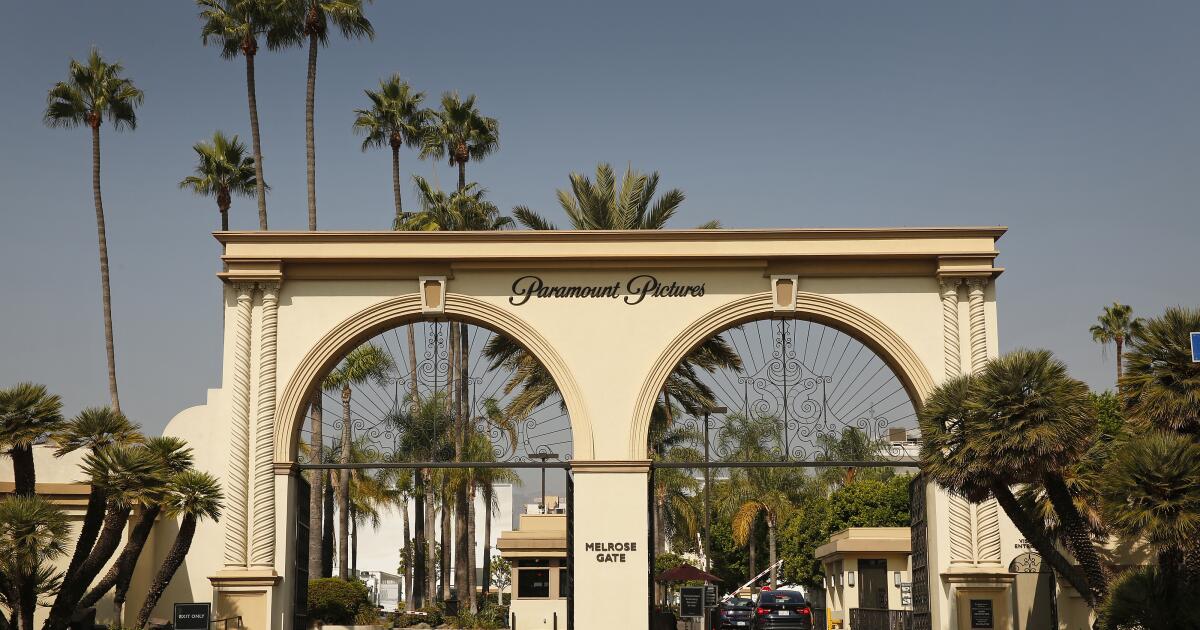
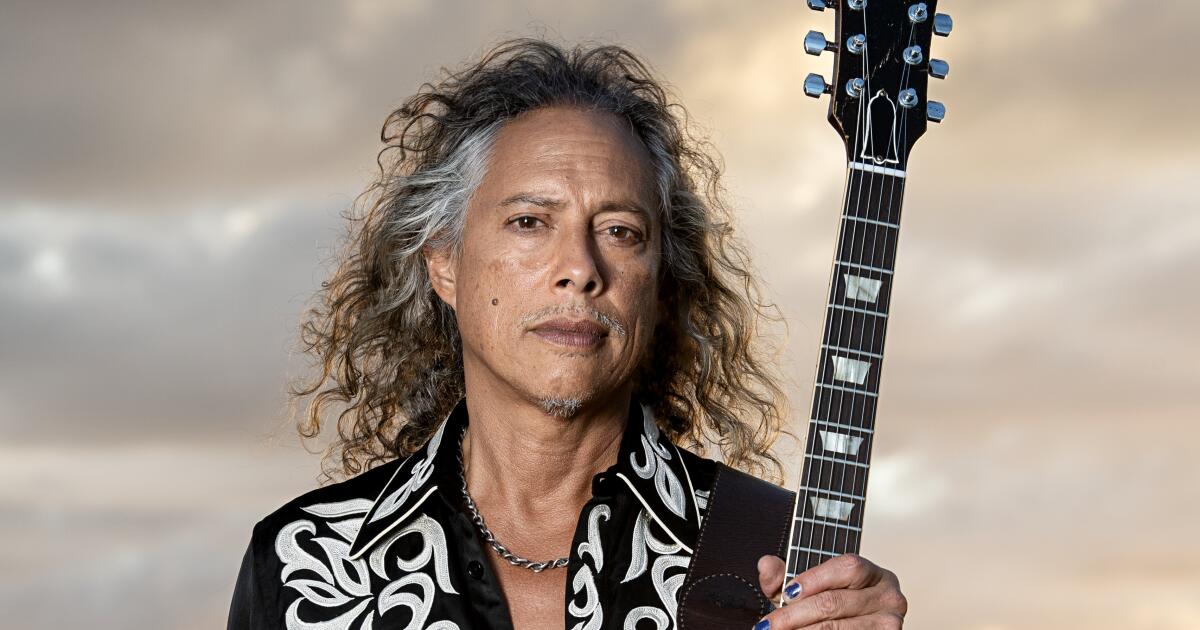


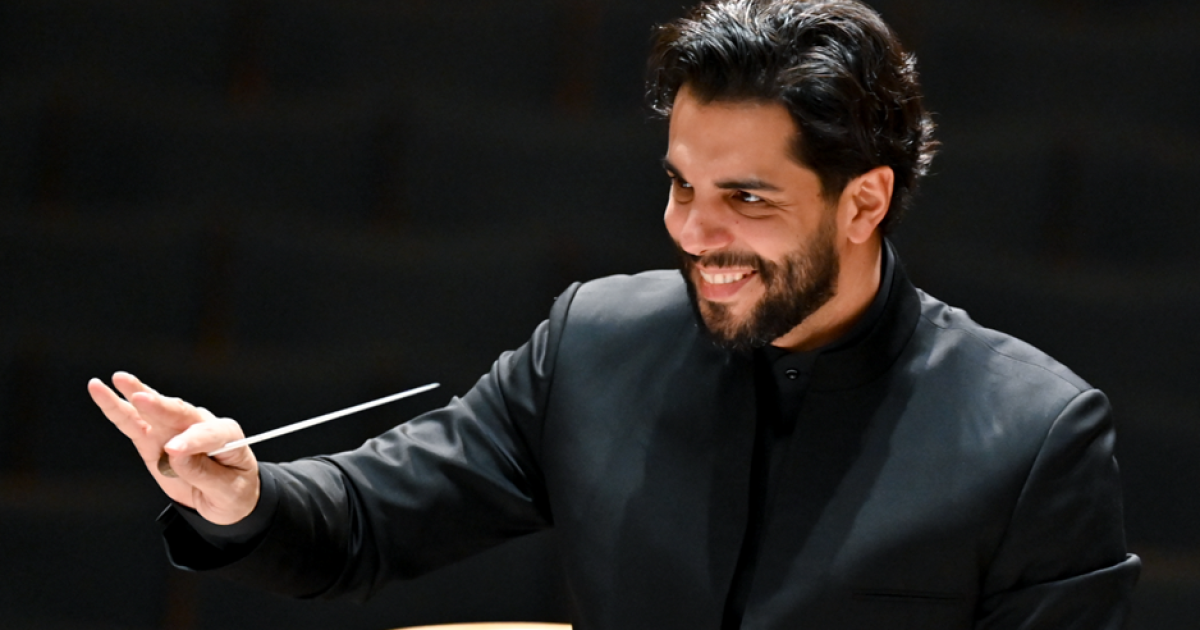




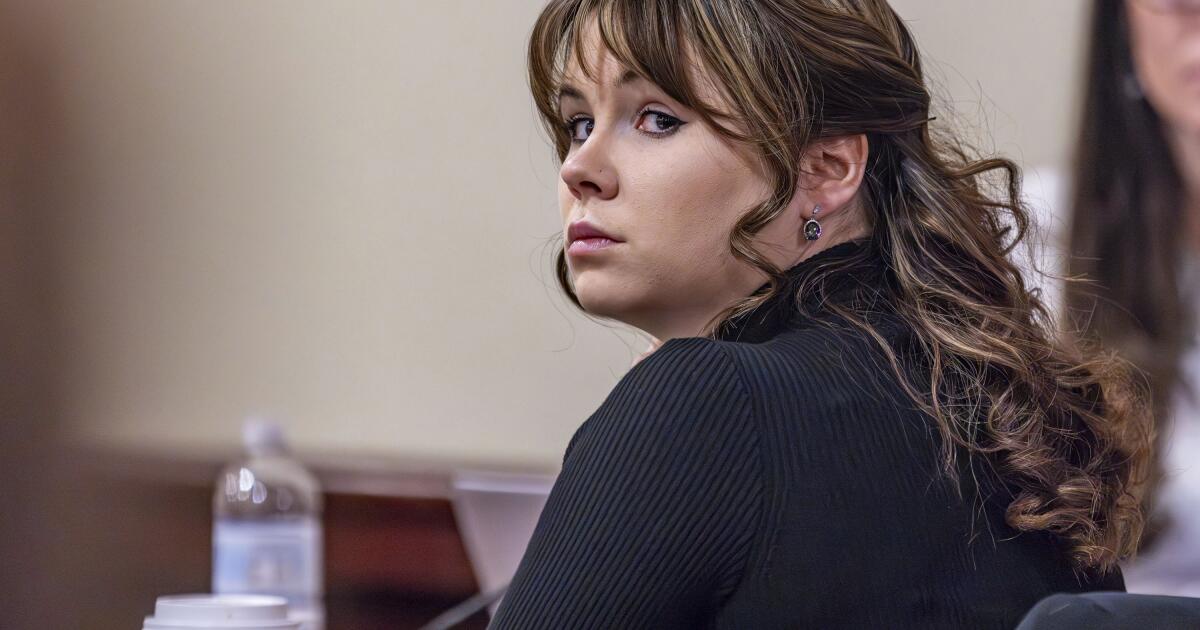
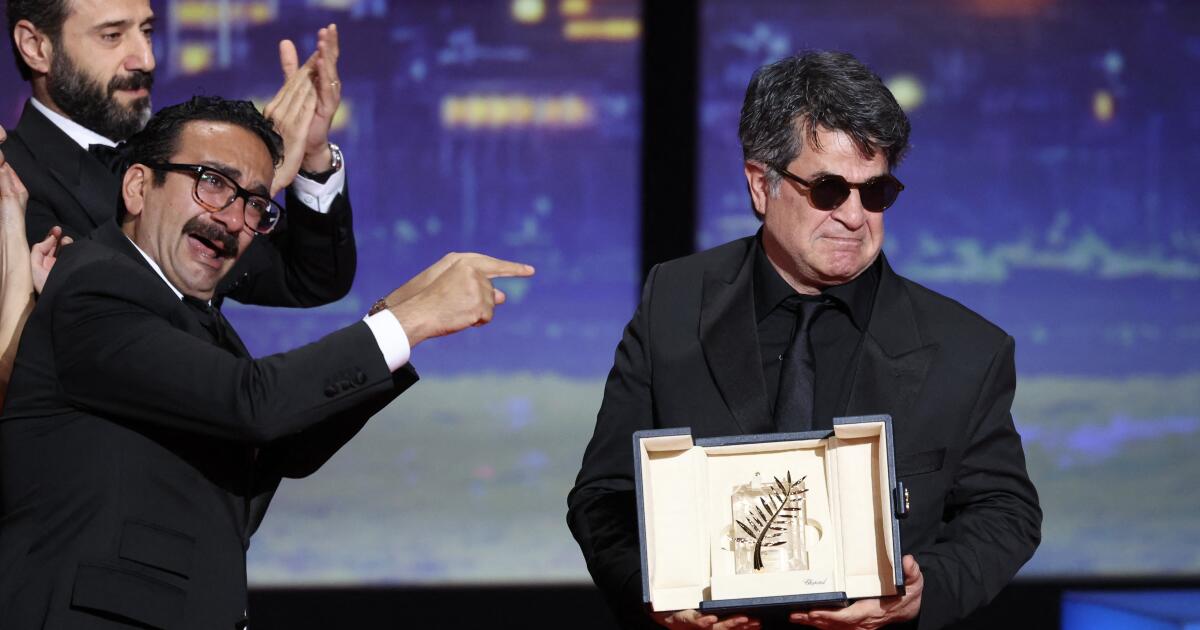


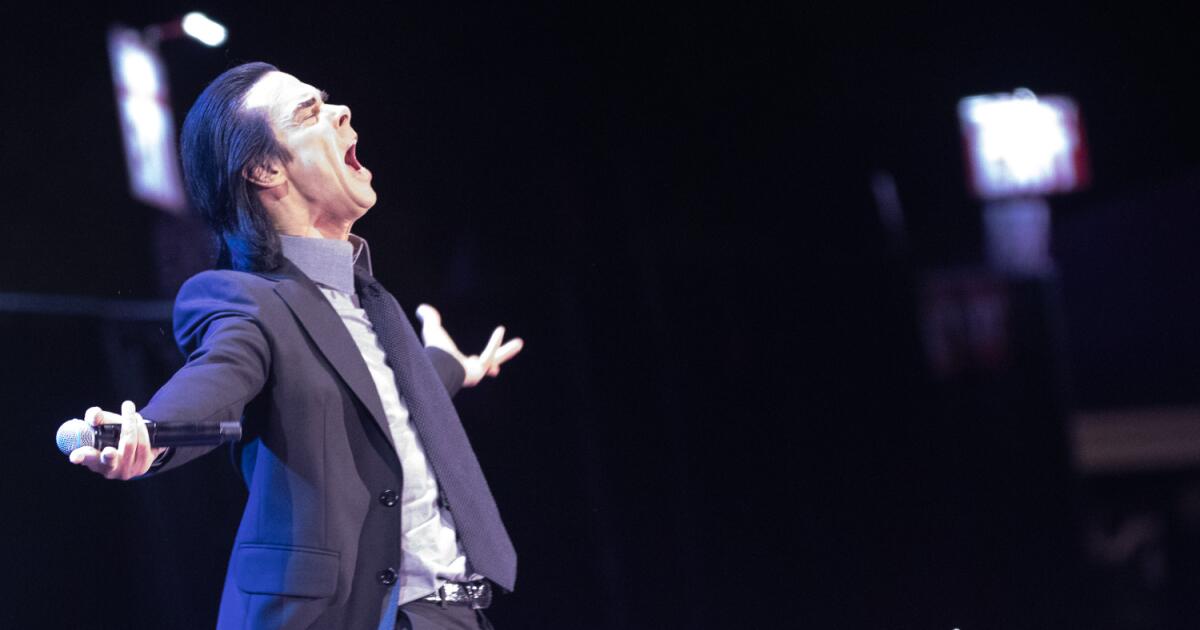


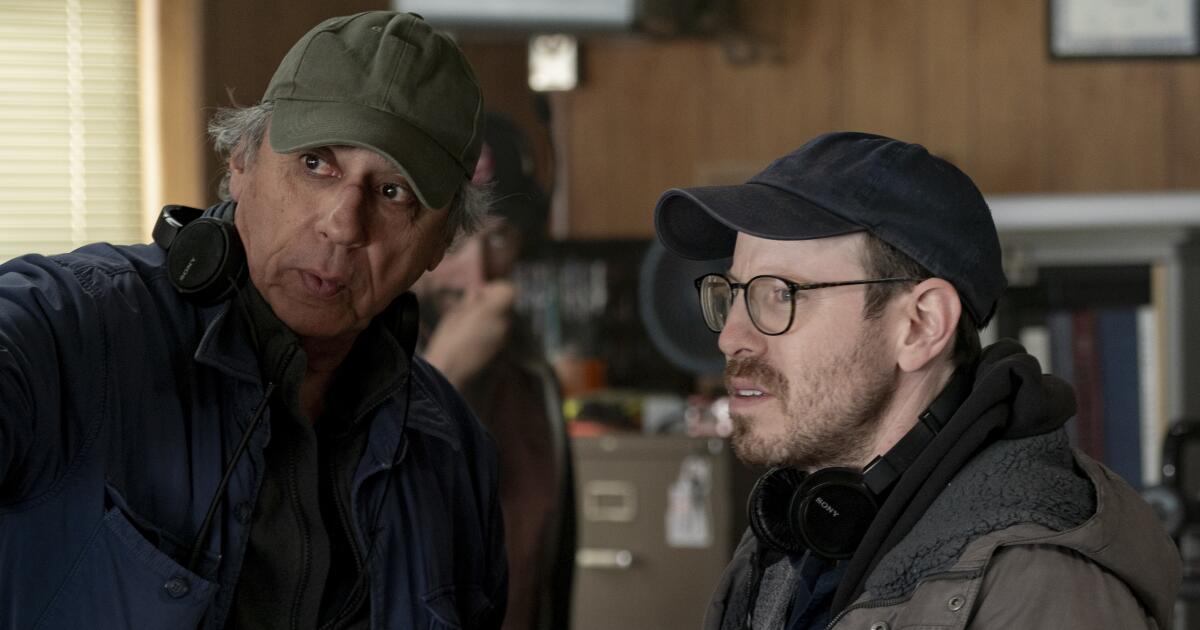


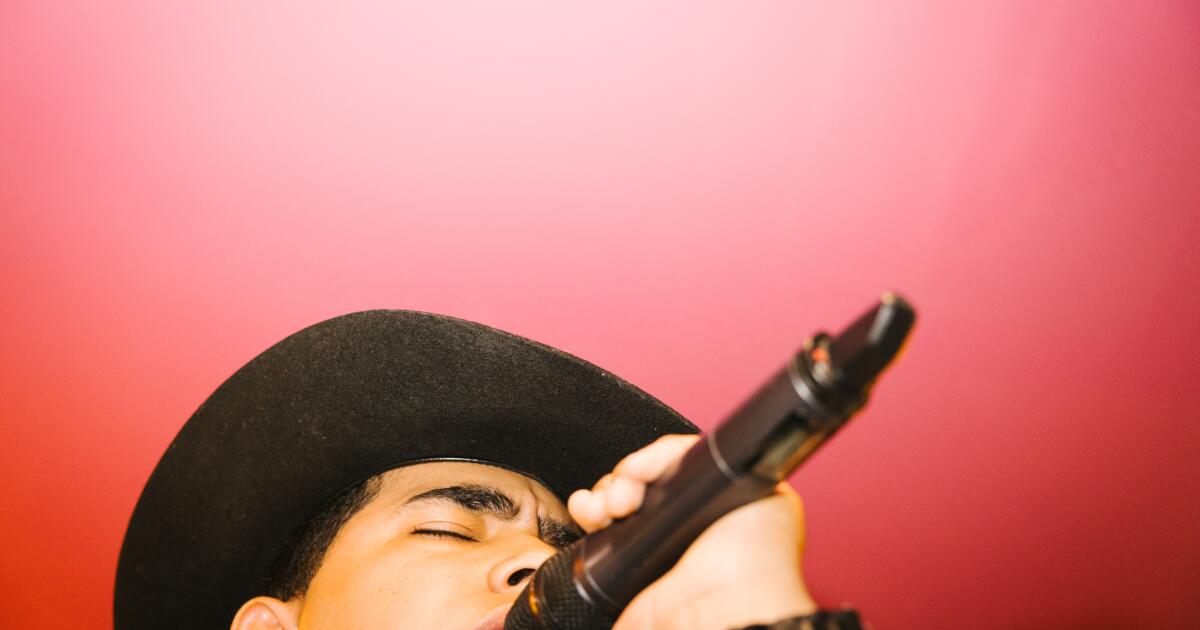


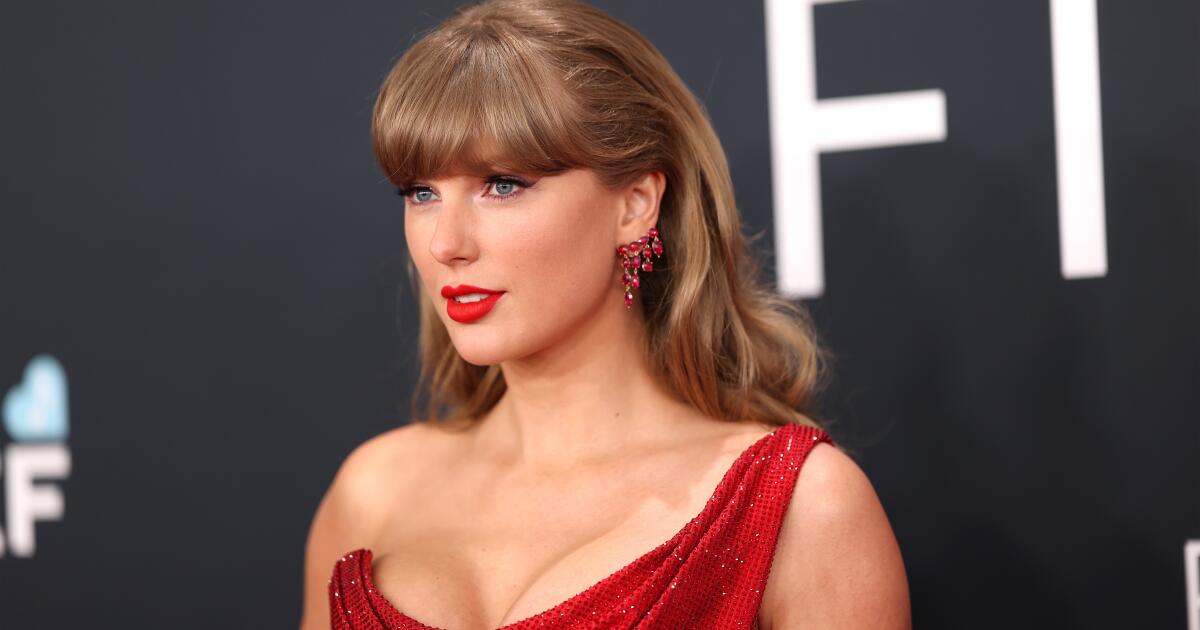






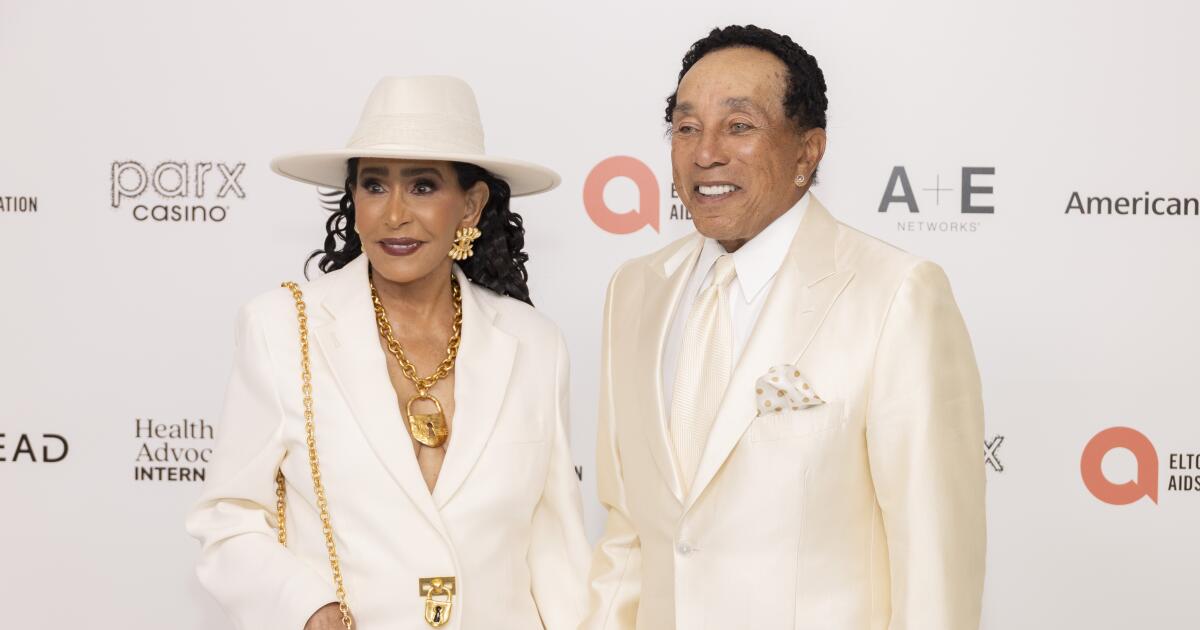








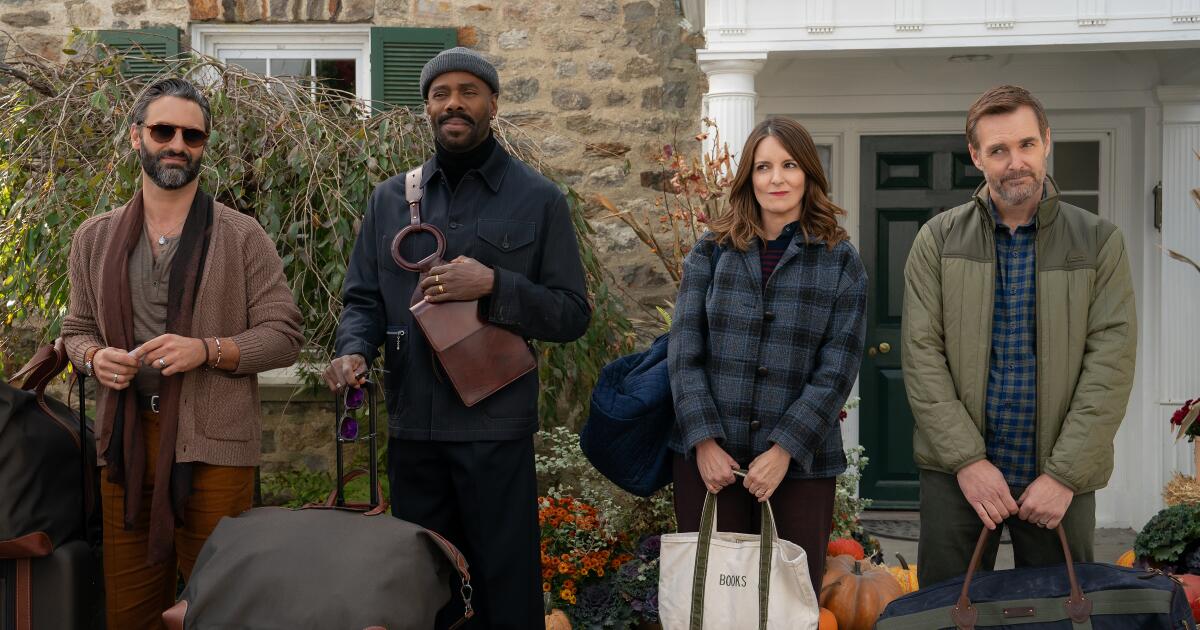


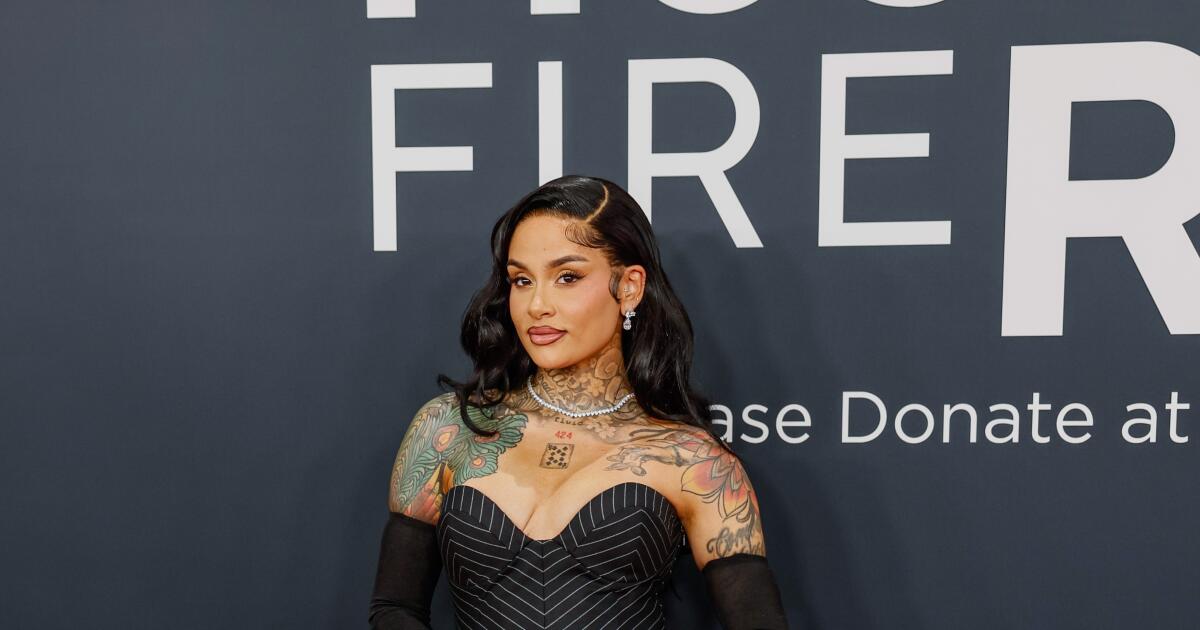





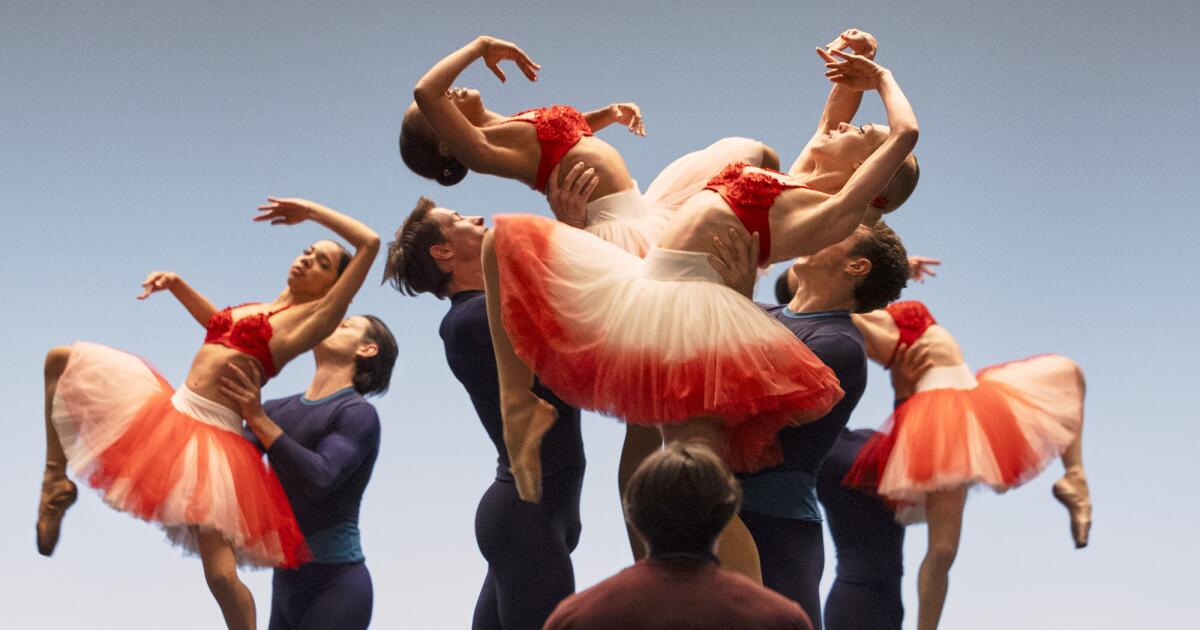





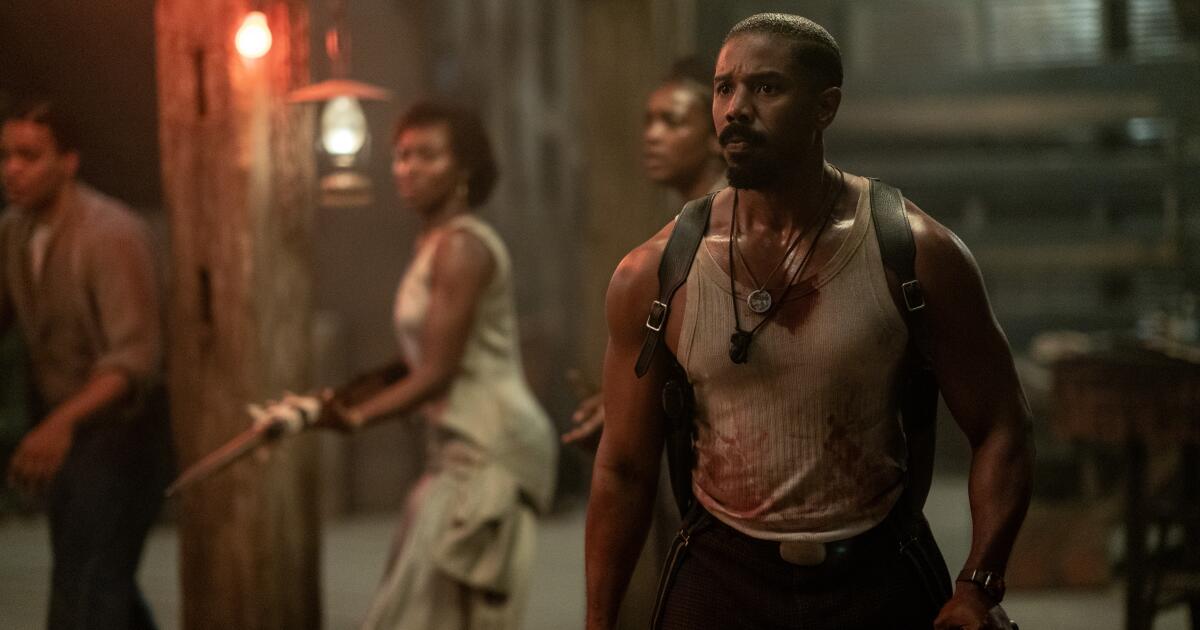


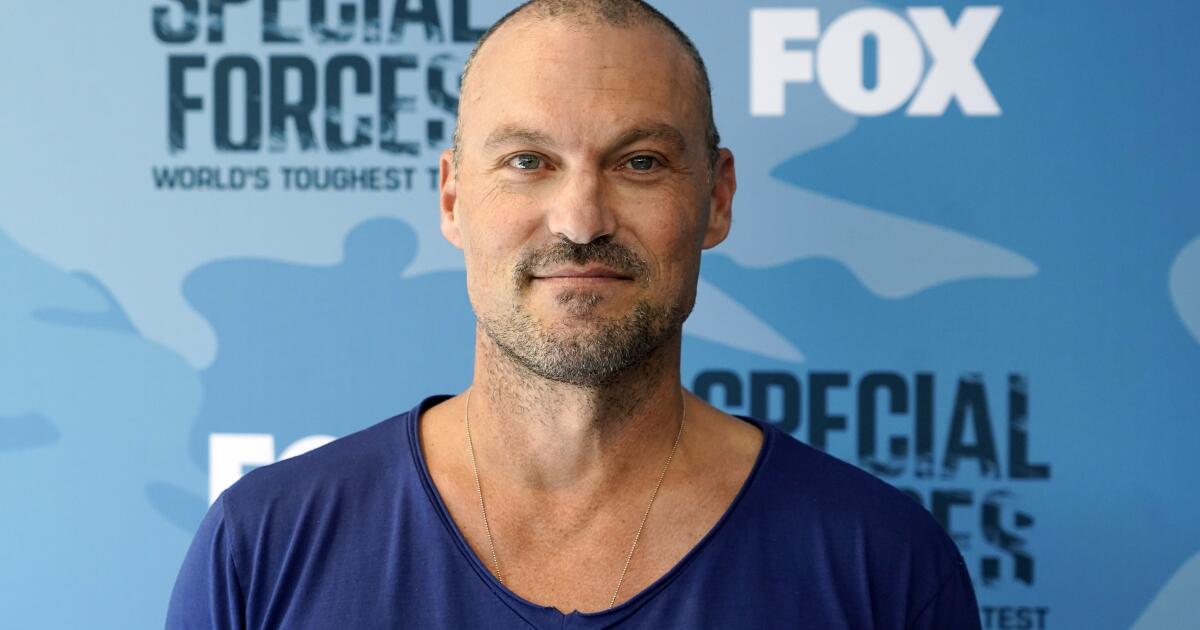








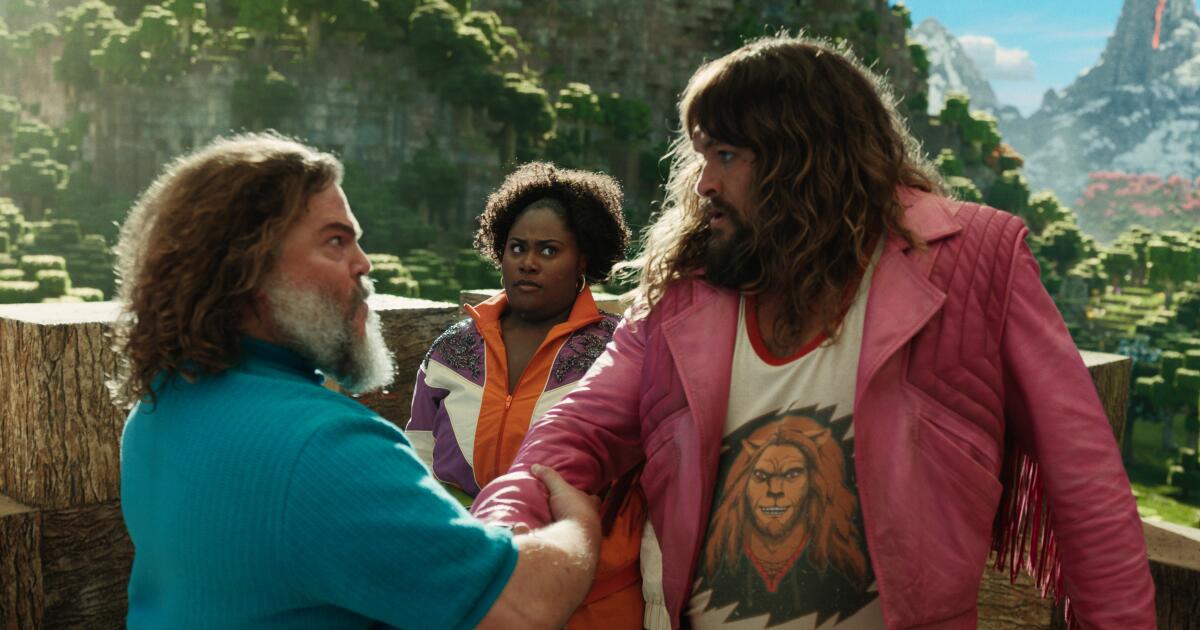
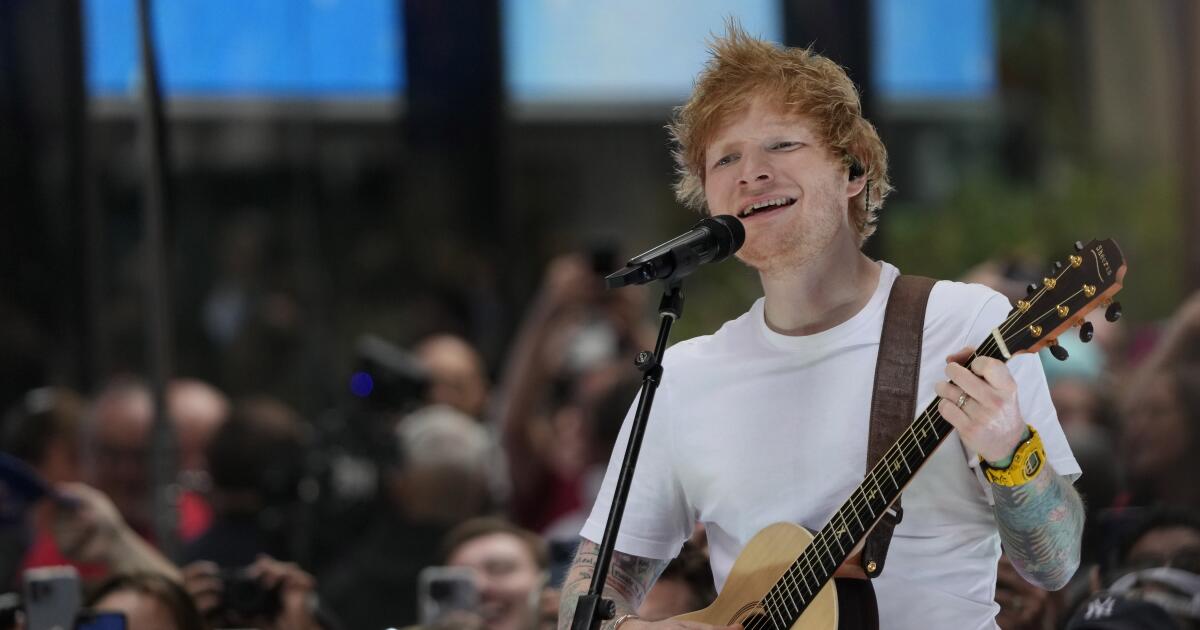
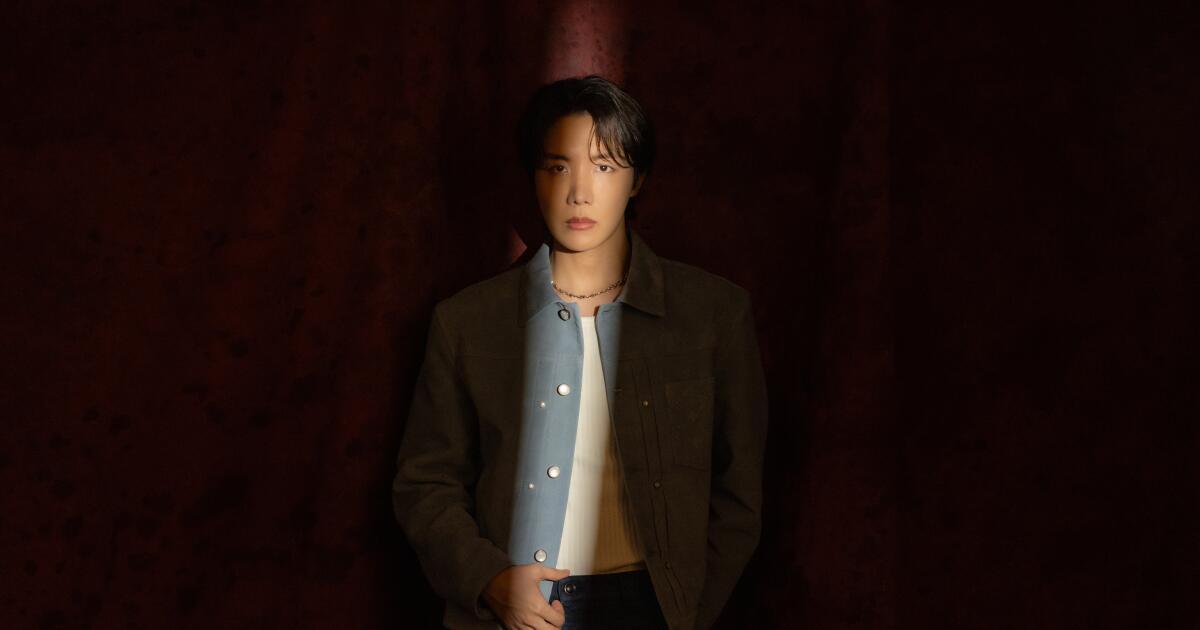





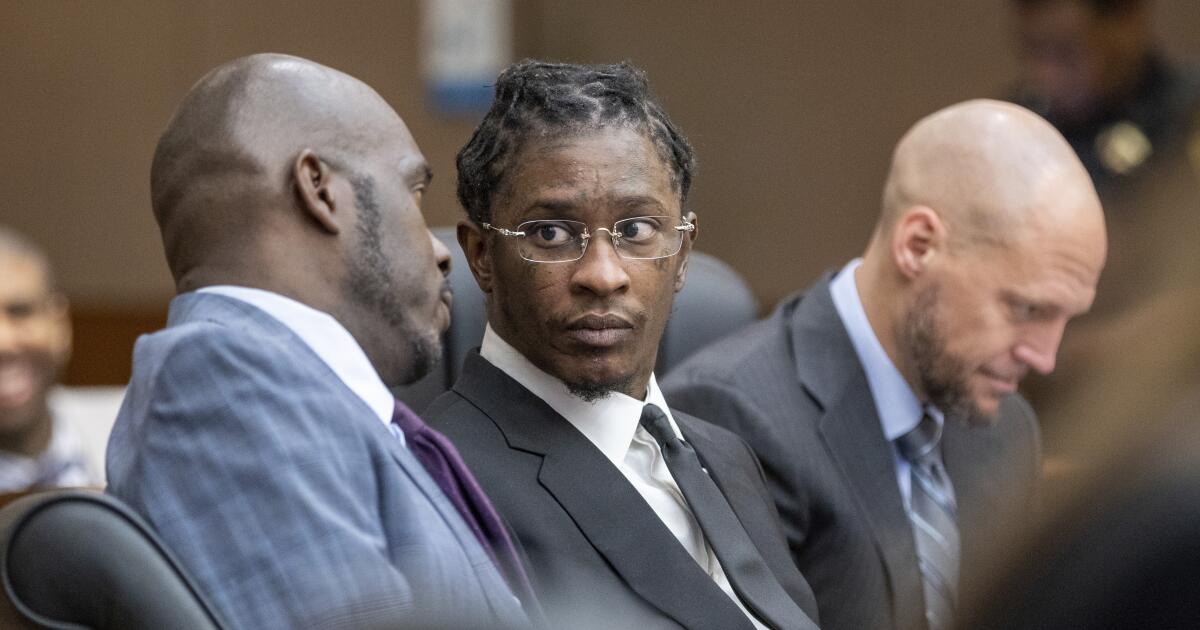




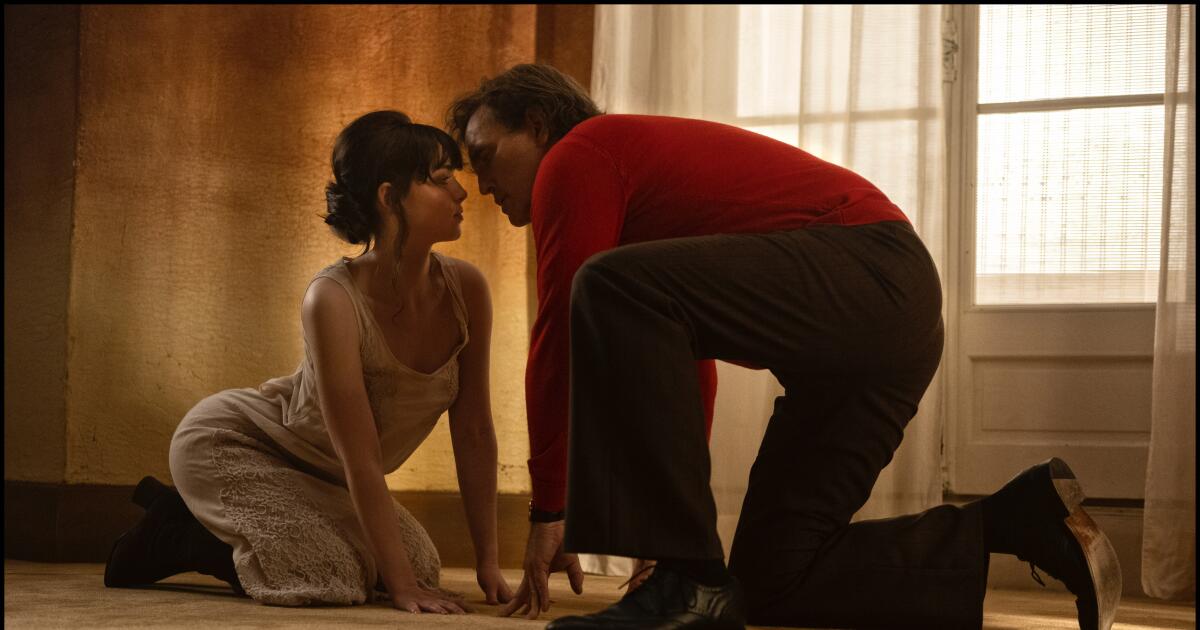







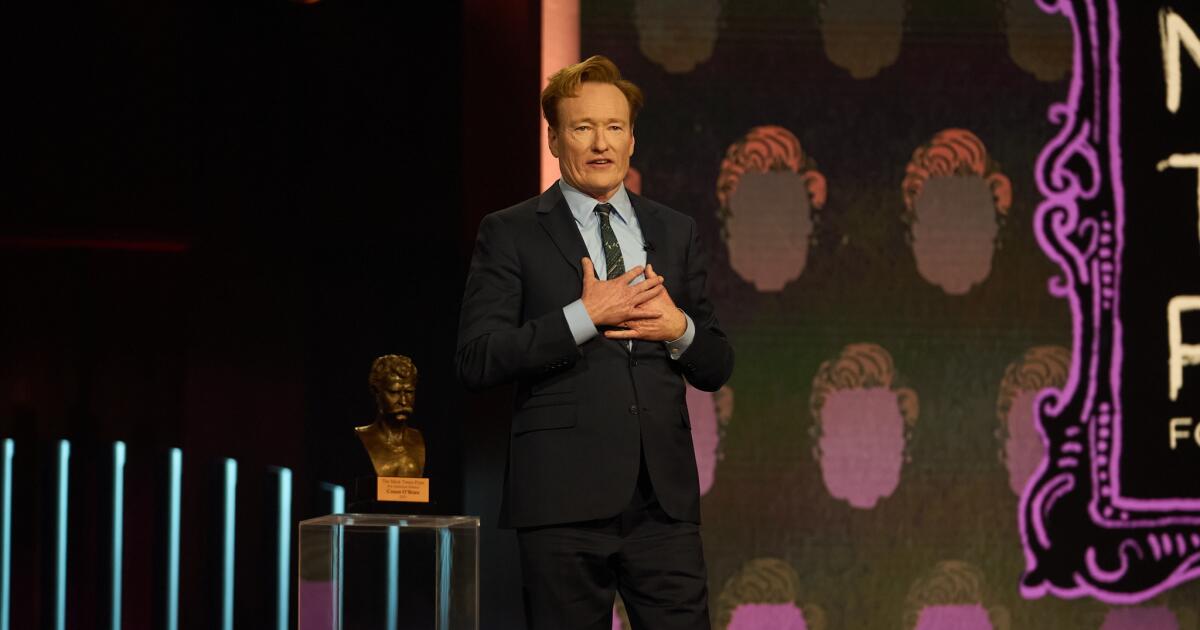















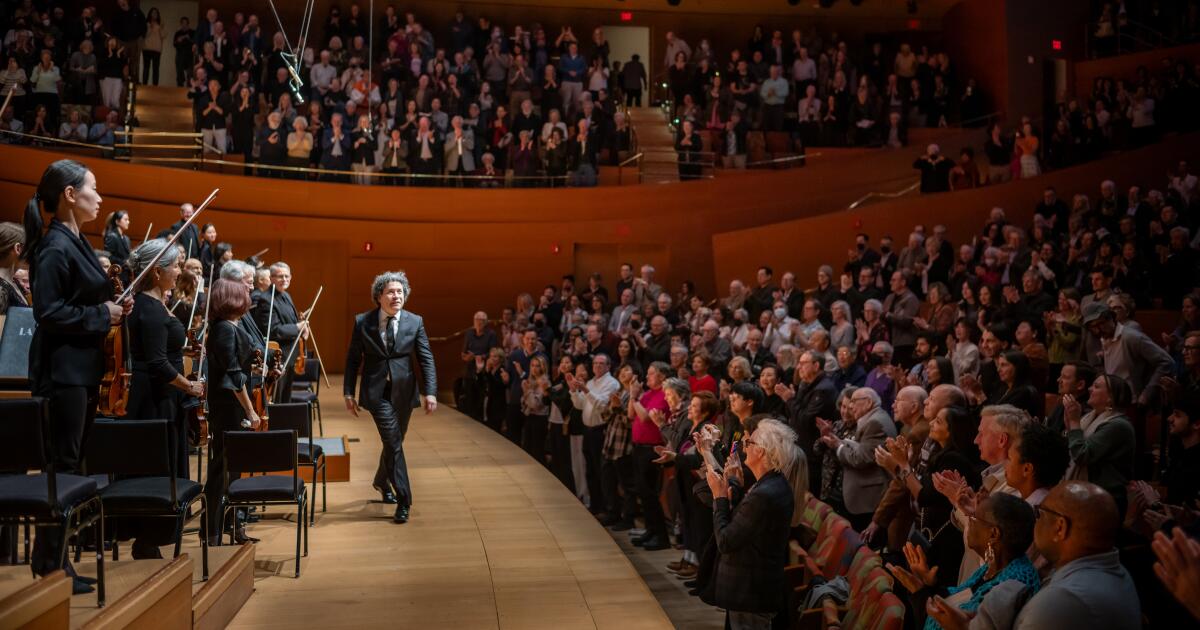


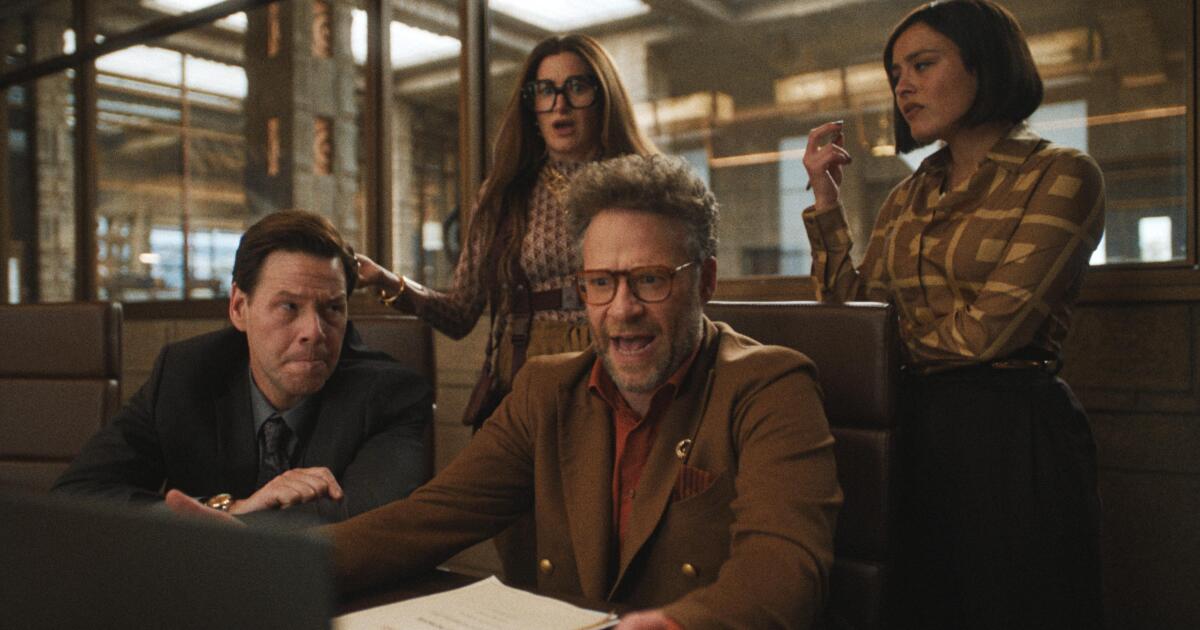


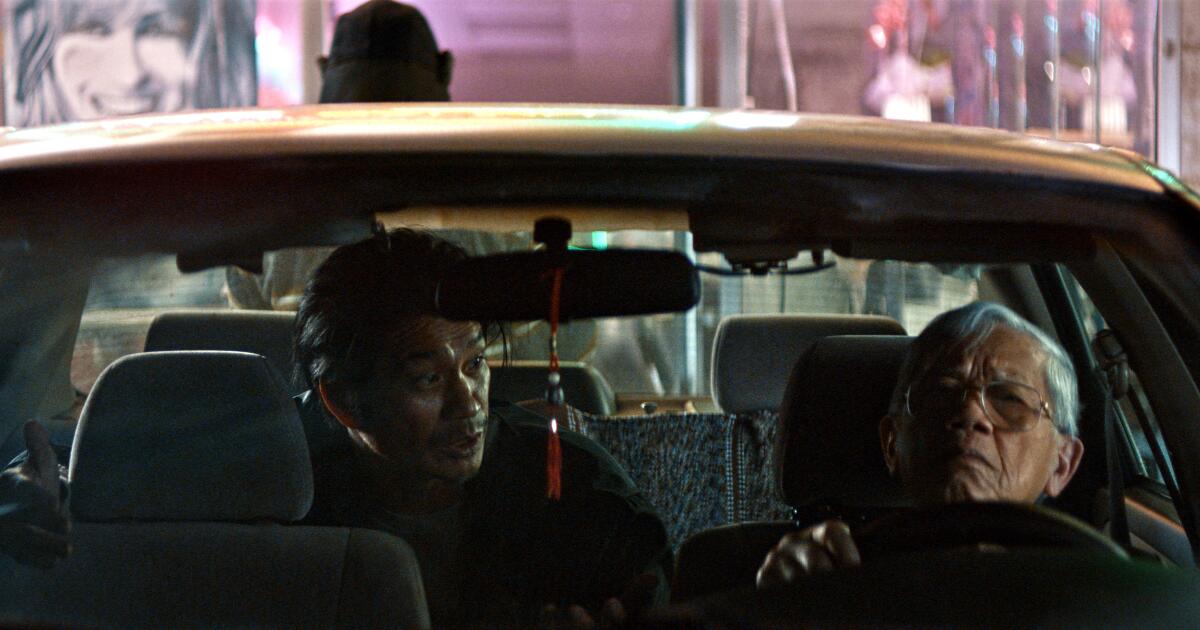
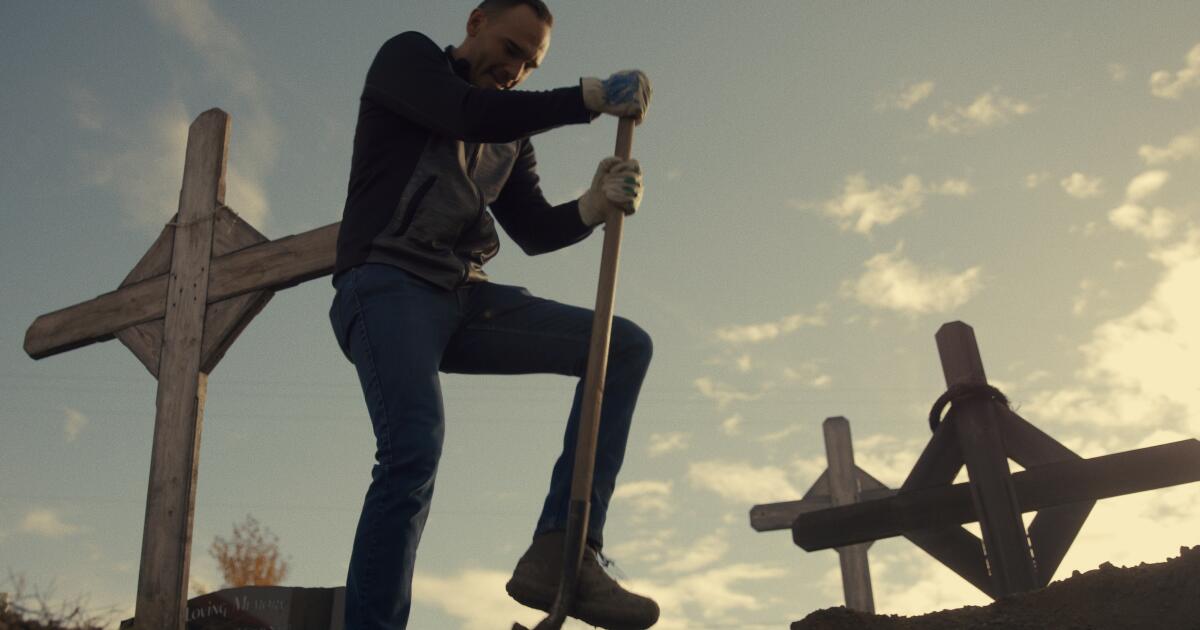


/gnvqgqke.JPG)
