Zimbabwe Introduces ZiG: A New Gold-Backed Currency

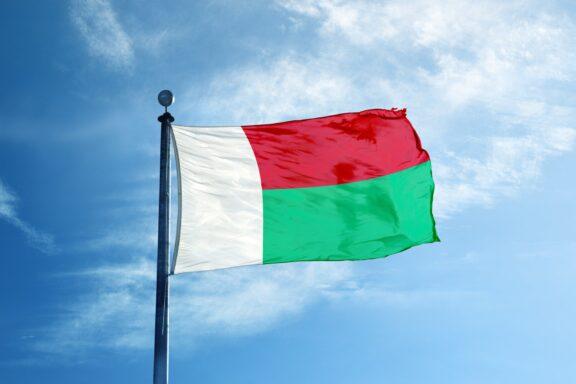
In an effort to stabilize its economy after years of turmoil, Zimbabwe has launched a new gold-backed currency called ZiG, an abbreviation for “Zimbabwe Gold.” This move comes as the country grapples with hyperinflation and a volatile financial landscape.

Key Features of ZiG

Under the leadership of central bank governor John Mushayavanhu, the ZiG currency will operate with a market-determined exchange rate, replacing the depreciating RTGS dollar. The new notes, ranging from denominations of 1 to 200, aim to restore confidence in the local currency. Additionally, coins will be introduced to alleviate the scarcity of US coins, which has led to unconventional forms of change.

Backing and Stability

To instill faith in the ZiG, Mushayavanhu assures that the currency will be backed by precious minerals, predominantly gold, or foreign exchange reserves. This measure aims to prevent the rampant devaluation experienced by previous iterations of the Zimbabwean dollar, addressing historic mistrust stemming from past currency crises.

Challenges and Skepticism

Despite the introduction of ZiG, the US dollar remains the dominant currency in transactions, reflecting deep-seated preferences among Zimbabweans. Skepticism persists due to previous failed attempts at currency stabilization, notably the bond note, which collapsed amid government overspending.

Moving Forward

With a 21-day window for exchanging old notes, the success of ZiG hinges on its ability to maintain stability and restore economic confidence. The government’s commitment to prudent monetary policies and effective oversight will be crucial in ensuring the viability of the new currency in the long term.

Who was the First Chief Minister of Nagaland?

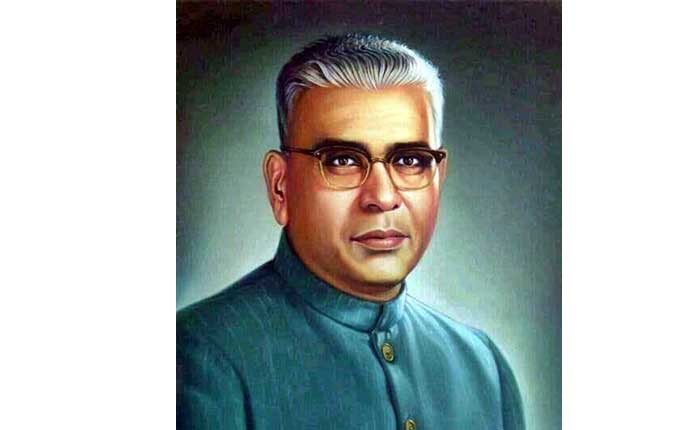
Nagaland, a land of diverse cultures and vibrant traditions, witnessed a historic moment on December 1, 1963, when it inaugurated its first Chief Minister, P. Shilu Ao. His ascension to this position marked not only a political milestone but also symbolized the beginning of a new era for the people of Nagaland. P. Shilu Ao’s journey, from a renowned educator to a political leader, continues to inspire generations, leaving an indelible mark on the socio-political landscape of Nagaland.

Who was the First Chief Minister of Nagaland?

The first Chief Minister of Nagaland was P. Shilu Ao. He assumed office on December 1, 1963, following the establishment of Nagaland as a separate state within India. Ao, a prominent figure in Naga politics, played a crucial role in negotiations leading to statehood and worked tirelessly for the welfare and development of the Naga people during his tenure.

First Chief Minister of Nagaland – Basic Details

Name: P. Shilu Ao
Date of birth: 24th December 1916
Birthplace: Naga Hills District, Assam Province, British India
Known for: 1st Chief Minister of Nagaland
Political Party: Naga People’s Convention
Death: 19th September 1988
Place of birth: Mokokchung, Mokokchung District, Nagaland, India

Inaugural Chief Minister of Nagaland – Early Life and Education

P. Shilu Ao, a towering figure in Nagaland’s political history, was born on December 24, 1916, in the Longjang village of the Mokokchung district. His early education at Impur Mission School laid the foundation for his academic journey. He excelled in his studies, achieving distinctions in various examinations, including his matriculation from Jorhat Mission School and a bachelor’s degree in Arts. Ao’s educational pursuits also extended to law, which he pursued at Cotton College, Guwahati, and Gauhati University.

Nagaland’s First Chief Minister – Transition to Politics

In 1960, Ao made a pivotal decision to transition from government service to politics by joining the Naga People’s Convention (NPC). This marked a significant shift in his career trajectory, as he embarked on a path dedicated to serving his community and advocating for their rights within the Indian political framework.

P. Shilu Ao as First Chief Minister of Nagaland

With the formation of Nagaland, P. Shilu Ao assumed office as its inaugural Chief Minister. His leadership during this formative period was characterized by a steadfast commitment to the welfare of the Naga people. Despite facing numerous challenges, including insurgency and political unrest, Ao worked tirelessly to establish the foundations of governance and development in the newly-formed state.

First Chief Minister of Nagaland – Challenges and Achievements

Ao’s tenure as Chief Minister was marked by both challenges and achievements. He bravely navigated through turbulent times, advocating for the integration of Naga-inhabited regions and negotiating ceasefire agreements with insurgent groups. His government passed resolutions aimed at promoting unity and development, laying the groundwork for future administrations to build upon.

Nagaland’s First Chief Minister – Legacy and Contributions

P. Shilu Ao’s legacy extends far beyond his tenure as Chief Minister. His contributions to Nagaland’s political evolution and his unwavering dedication to the welfare of the Naga people continue to inspire generations. Even after leaving office, Ao remained active in public service, serving in various capacities and advocating for tribal welfare and empowerment.

Inaugural Chief Minister of Nagaland – Final Years and Remembrance

Ao’s passing on September 19, 1988, marked the end of his era in Nagaland’s political landscape. His funeral, held with state honors, was a testament to the respect and admiration he garnered throughout his life. Despite his demise, Ao’s legacy endures, serving as a guiding light for future leaders and activists striving to uphold the values of integrity, service, and unity.

Sittwe Agreement Approved by MEA

In a strategic move to bolster its maritime presence and enhance regional connectivity, India has gained operational control over the Sittwe Port in Myanmar, following approval from the Ministry of External Affairs (MEA). The agreement allows India Ports Global (IPGL), a company fully owned by the Ministry of Ports, Shipping and Waterways, to manage the entire port on the Kaladan River, marking India’s second overseas port acquisition after Chabahar in Iran.

Key Details of the Sittwe Port Agreement

  • Full Operational Control: Unlike the limited control over terminals in Chabahar, India now possesses complete operational authority over the Sittwe Port, positioning it strategically in the Indian Ocean rivalry with China.
  • Long-Term Lease: The deal includes a long-term lease arrangement, subject to renewal every three years, enabling India to undertake substantial development initiatives at the port.
  • IPGL’s Role: India Ports Global Limited, a subsidiary of Sagarmala Development Company Limited under the Ministry of Ports, Shipping and Waterways, will spearhead the port’s development and operations.

Sittwe Port Development and Significance for India

  • Kaladan Multimodal Transit Transport Project: The port development is integral to the Kaladan project, aimed at enhancing connectivity between Sittwe in Myanmar and Mizoram in India, facilitated by waterways and road networks.
  • Connectivity to Northeastern States: The port’s development aligns with India’s strategy to uplift landlocked northeastern states by reducing transportation and logistic costs, thereby fostering economic growth and regional integration.
  • Connectivity to Mizoram and Tripura: The Kaladan project’s waterways and road networks will substantially improve connectivity to Mizoram and Tripura, furthering trade and commerce in the region.

Security Concerns and the Arakan Rebels Threat

  • Myanmar’s Internal Conflict: Amidst Myanmar’s civil unrest, particularly in the Rakhine state where Sittwe is situated, security concerns loom large due to ongoing conflicts between the Myanmar army and insurgent groups like the Arakan Army.
  • Potential Threat to Project: The escalating conflict poses a potential threat to the stability and continuity of the Sittwe project. If the rebels gain control over the Rakhine province, it could jeopardize the port’s operations and future prospects, highlighting the precarious geopolitical landscape in the region.

IPS Officer Love Kumar Appointed as IG in Special Protection Group

Indian Police Service (IPS) officer Love Kumar has been appointed as the Inspector General (IG) in the Special Protection Group (SPG) for a period of two years, according to an official notification issued by the Department of Personnel and Training (DoPT). The Appointments Committee of the Cabinet (ACC) has approved this proposal from the Office of the Secretary (Security), Cabinet Secretariat.

Officer’s Background

Love Kumar is a 2004-batch IPS officer from the Uttar Pradesh cadre. He is currently posted as a Deputy Inspector General (DIG) in the SPG, and his appointment to the IG position has been made by temporarily upgrading the post he currently holds.

Additional Appointment

Alongside Love Kumar’s appointment, the DoPT notification also states that Umesh Chander Datta (IPS) has been appointed as IG in the SPG for a period of two years from the date of assuming the charge of the post, or until further orders, whichever is earlier.

The Special Protection Group (SPG) is a special force in India responsible for providing security to the Prime Minister, former Prime Ministers, and their immediate families. The appointments of Love Kumar and Umesh Chander Datta as IGs in the SPG are aimed at strengthening the group’s leadership and enhancing its overall effectiveness in fulfilling its critical security mandate.

These high-level appointments underscore the importance the government places on the SPG’s role in safeguarding the country’s highest political leadership and ensuring their safety and security.

Olympic Champion Valerie Adams Named Ambassador for TCS World 10K Bengaluru 2024

Iconic shot putter and two-time Olympic medalist, Valerie Adams, has been named the International Event Ambassador for the 16th edition of the Tata Consultancy Services World 10K Bengaluru, to be held on April 28, 2024.

Valerie Adams’ Illustrious Career

The 39-year-old from New Zealand is arguably the most successful female shot putter of all time. Across her five Olympic appearances, she has won two gold medals (in 2008 and 2012), a silver (in 2016), and a bronze medal (in 2020). Adams is also a four-time World Champion, four-time World Indoor Champion, and three-time Commonwealth Games winner.

She is the only woman to have won world championships at the youth, junior, and senior levels, and the first woman to win four consecutive individual titles at the World Championships. In 2014, Adams was honored with the IAAF World Athlete of the Year title.

Valerie Adams’ Post-Retirement Contributions

Since retiring from competitive athletics, Adams has taken on the role of a spokesperson for women in sports, addressing various pertinent issues. She currently holds the esteemed position of Chair of the World Athletes Commission, where she continues to champion the rights and welfare of athletes globally.

Additionally, Valerie has immersed herself in coaching, focusing on the Paralympic sphere. She has been closely involved with her sister, Lisa Adams, and other athletes, providing support and guidance to contribute to the development and success of athletes beyond her remarkable career.

As the International Event Ambassador for the TCS World 10K Bengaluru 2024, Valerie Adams will bring her wealth of experience and dedication to inspire and engage with the participants, promoting the event and the sport of running on a global scale.

Top-10 Richest Countries in the World By April 2024

In the ever-evolving landscape of global economics, the financial prowess of nations serves as a barometer of their success and influence on the world stage. As of April 2024, the list of the top 10 wealthiest countries showcases a blend of economic powerhouses and smaller, resource-rich nations that have mastered the art of wealth accumulation through various means. Let’s delve into the top 10 richest countries and explore the factors that contribute to their economic prosperity.

Methodology for Ranking of Richest Countries in the World

Here is the methodology used to rank the richest countries in the world:

  • GDP Calculation: We start by calculating the gross domestic product (GDP) of each country, which represents the total value of goods and services produced within its borders.
  • Population Adjustment: Next, we divide the GDP by the population size of each country to obtain GDP per capita, providing insights into the economic well-being of its residents.
  • Purchasing Power Parity (PPP): To account for differences in living costs and inflation rates among nations, we adjust GDP per capita using purchasing power parity (PPP). This adjustment ensures a more accurate comparison of wealth across countries.
  • PPP Adjustment Rationale: PPP reflects the relative purchasing power of a country’s currency, helping to account for disparities in cost of living. By incorporating PPP, we aim to provide a more precise indication of the actual wealth held by a nation’s populace.
  • Limitations Consideration: While GDP per capita rankings based on PPP offer valuable insights, it’s important to acknowledge limitations such as potential distortions from tax havens and variations in economic structure and government policies.
  • Comprehensive Assessment: By employing a methodology that integrates GDP per capita adjusted for PPP, we aim to offer a comprehensive assessment of economic strength and wealth distribution within each nation.
  • Facilitating Comparison: This approach facilitates meaningful comparisons across the global economic landscape, enabling us to identify the wealthiest countries and understand the relative affluence of their populations.

World’s Richest Country by April 2024

Luxembourg, with a GDP of $89.1 billion and a population of 639 thousand, emerges as one of the world’s wealthiest nations by April 2024. Despite global challenges like the Covid-19 pandemic, Luxembourg remains relatively unscathed. Renowned for its commitment to enhancing living standards, healthcare, and education, the country boasts picturesque landscapes, historic castles, and charming canals, making it a premier tourist destination globally.

Top-10 Richest Countries in the World By April 2024

Luxembourg, with the GDP-PPP per capita of $140,312, holds the title of the richest country in the world by April 2024, followed by Ireland, Switzerland, Norway, and Singapore.

Here is the list of top-10 richest countries in the world by April 2024:

Top-10 Wealthiest Countries in the World By April 2024
Rank Country Continent GDP-PPP Per Capital (in USD)
1. Luxembourg Europe 140,312
2. Ireland Europe 117,988
3. Switzerland Europe 110,251
4. Norway Europe 102,465
5. Singapore Asia 91,733
6. Iceland Europe 87,875
7. Qatar Asia 84,906
8. United States North America 83,066
9. Denmark Europe 72,940
10. Macao SAR Asia 70,135

Wealthiest Country in the World – Luxembourg

Continent: Europe

GDP: $89.1 billion

Population: 639 thousand

Luxembourg, recognized as the richest countries globally, has navigated the Covid-19 pandemic relatively unscathed. Leveraging its wealth, the nation prioritizes enhancing living standards, healthcare, and education for its citizens. Furthermore, it stands as a top tourist destination, renowned for its enchanting castles, verdant landscapes, and picturesque canals, cementing its position as a beacon of prosperity and allure on the world stage.

Second Richest Country of the World – Ireland

Continent: Europe

GDP: $589.57 billion

Population: 5.03 billion

Ireland, standing as the world’s second richest country, underwent significant reforms in its banking sector following the 2008 financial crisis. Implementing measures such as reductions in public-sector wages, the nation steered its economy to its current prosperous state. Notably, Ireland serves as a major corporate tax haven globally, with multinational giants like Apple, Google, and Microsoft contributing substantially, accounting for over 50 percent of the Irish economy in recent years.

World’s Third Richest Country – Switzerland

Continent: Europe

GDP: $813 billion

Population: 8.70 thousand

Switzerland, ranking as the third wealthiest nation worldwide, stands as a premier tourist destination while boasting a thriving financial sector. Its economic strength is bolstered by exports of valuable commodities such as precious metals, precision instruments, and high-tech machinery like computers and medical devices. With a dominant services sector contributing 74 percent to its GDP, alongside a robust industrial base accounting for 25 percent, Switzerland maintains a diversified economy. Notably, it boasts the lowest Value Added Tax (VAT) rate in Europe, further solidifying its economic prowess.

List of Former Chief Ministers of Nagaland (1963-2024)

Nagaland, nestled in the northeastern region of India, has been governed by a succession of leaders who have played pivotal roles in shaping the state’s political landscape and addressing its unique challenges. As we trace the history of Nagaland’s governance, we encounter a diverse array of leaders who have navigated the complexities of regional identity, insurgency, and development. Here, we delve into the list of Chief Ministers who have steered the course of Nagaland’s journey since its inception.

Chief Ministers of Nagaland

Nagaland’s Chief Ministers have played pivotal roles in the state’s development. From P. Shilu Ao, the inaugural Chief Minister, to Neiphiu Rio, who serves currently, each leader has navigated challenges such as insurgency and socio-economic disparities. Their legacies include fostering peace, promoting infrastructure, and addressing the unique needs of Nagaland’s diverse communities, shaping the state’s trajectory over the years.

Inaugural Chief Minister of Nagaland

P. Shilu Ao, representing the Naga Nationalist Organisation, assumed office as Nagaland’s inaugural Chief Minister on December 1, 1963, serving until August 14, 1966. As the first leader of the newly formed state, Ao laid the groundwork for democratic governance, focusing on socio-economic development and fostering unity among Nagaland’s diverse communities.

Current Chief Minister of Nagaland

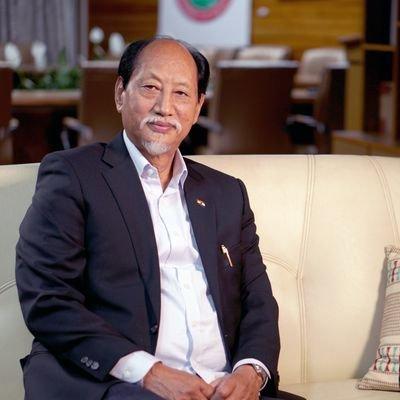
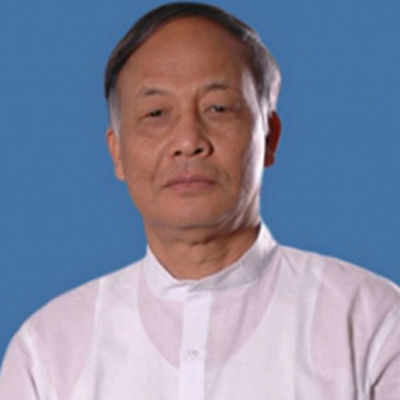
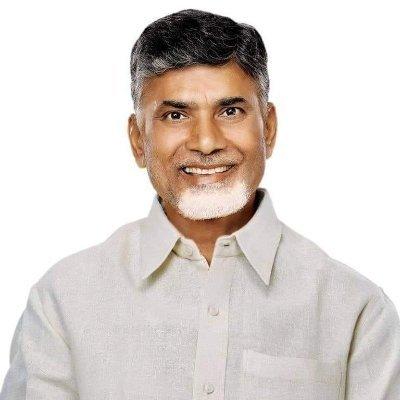
Neiphiu Rio (@Neiphiu_Rio) / X

Neiphiu Rio, representing the Nationalist Democratic Progressive Party, has been serving as Nagaland’s Chief Minister since March 8, 2018. Leading the state with a focus on sustainable development and peace-building efforts, Rio’s tenure emphasizes inclusive governance and economic growth to address the unique challenges and aspirations of Nagaland’s diverse populace.

Longest Serving Chief Minister of Nagaland

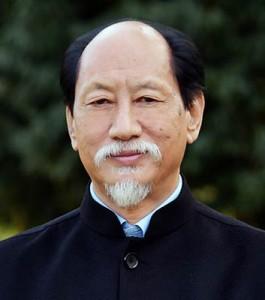
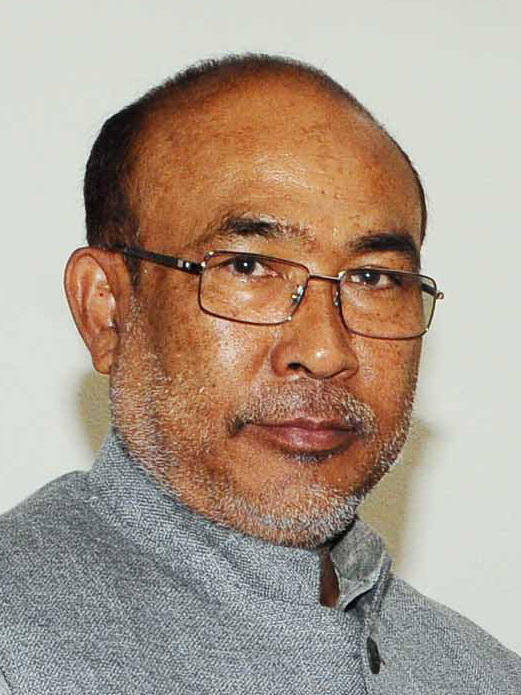
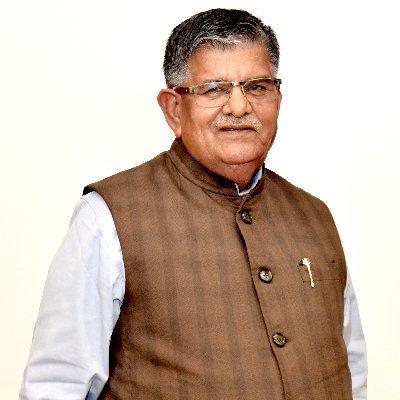
Biography | Chief Minister : Nagaland

Neiphiu Rio holds the distinction of being Nagaland’s longest-serving Chief Minister, having served for an unprecedented five terms. As the ninth Chief Minister of Nagaland, Rio’s enduring leadership underscores his commitment to the state’s development and governance. His tenure exemplifies stability and continuity, shaping Nagaland’s trajectory over an extended period.

Shortest Serving Chief Minister of Nagaland

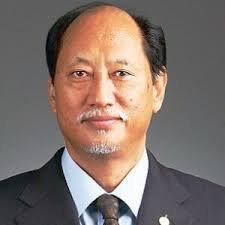
Chief Minister, Nagaland - Election MS

John Bosco Jasokie holds the record for the shortest tenure as Chief Minister of Nagaland, serving from March 10, 1975, to March 20, 1975. Despite his brief time in office, Jasokie’s leadership during a period of political transition reflects the challenges and dynamics of Nagaland’s governance. His short-lived tenure remains notable in the state’s political history.

List of Former Chief Ministers of Nagaland

Nagaland’s Chief Ministers have played pivotal roles in the state’s development. From P. Shilu Ao, the inaugural Chief Minister, to Neiphiu Rio, who serves currently, each leader has navigated challenges such as insurgency and socio-economic disparities.

Here is the complete list of former chief ministers of Nagaland:

List of Former Chief Ministers of Nagaland
S. No. Name From To
1. P. Shilu Ao 01 Dec 1963 14 Aug 1966
2. T. N. Angami 14 Aug 1966 22 Feb 1969
3. Hokishe Sema 22 Feb 1969 26 Feb 1974
4. Vizol Angami 26 Feb 1974 10 Mar 1975
5. John Bosco Jasokie 10 Mar 1975 20 Mar 1975
6. President’s Rule 20 Mar 1975 25 Nov 1977
7. Vizol Angami 25 Nov 1977 18 Apr 1980
8. S. C. Jamir 18 Apr 1980 05 Jun 1980
9. John Bosco Jasokie 05 Jun 1980 18 Nov 1982
10. S. C. Jamir 18 Nov 1982 28 Oct 1986
11. Hokishe Sema 29 Oct 1986 07 Aug 1988
12. President’s Rule 07 Aug 1988 25 Jan 1989
13. S. C. Jamir 25 Jan 1989 10 May 1990
14. K. L. Chishi 16 May 1990 19 Jun 1990
15. Vamuzo Phesao 19 Jun 1990 02 Apr 1992
16. President’s Rule 02 Apr 1992 22 Feb 1993
17. S. C. Jamir 22 Feb 1993 06 Mar 2003
18. Neiphiu Rio 06 Mar 2003 03 Jan 2008
19. President’s Rule 03 Jan 2008 12 Mar 2008
20. Neiphiu Rio 12 Mar 2008 24 May 2014
21. T. R. Zeliang 24 May 2014 22 Feb 2017
22. Shurhozelie Liezietsu 22 Feb 2017 19 Jul 2017
23. T. R. Zeliang 19 Jul 2017 08 Mar 2018
24. Neiphiu Rio 08 Mar 2018 Incumbent

Indian Navy at Exercise Cutlass Express 2024_80.1

List of Former Governors of Nagaland (1963-2024)

Nagaland, the picturesque northeastern state of India, has had the privilege of being governed by a cadre of distinguished individuals who have left an indelible mark on its history and governance. The office of the Governor holds immense significance in the administrative structure of the state, serving as a bridge between the central government and the local administration. As we delve into the annals of Nagaland’s political landscape, let us take a closer look at the list of former governors who have graced this pivotal position.

Governors of Nagaland

In Nagaland, the Governor serves as the chief executive and represents the central government within the state. As per the Indian Constitution, the Governor holds the position of the foremost citizen of the state. Presently, La. Ganesan holds the office of Governor in Nagaland. The primary responsibility of the Governor is to facilitate the effective operation of state administration and to serve as a crucial liaison between the state and the central government. This compilation presents a roster of all individuals who have served as Governors of Nagaland since its establishment, including their names and respective tenures.

Inaugural Governor of Nagaland

Vishnu Sahay, a member of the Indian Civil Service, assumed the role of Nagaland State’s inaugural governor. He served from 1963 to 1968, overseeing the nascent state’s formative years with dedication and commitment. Sahay’s tenure marked a crucial period of establishment and development for Nagaland.

Current Governor of Nagaland

At present, La. Ganesan serves as the esteemed Governor of Nagaland, assuming office on February 15, 2023. With a wealth of experience and dedication, Ganesan fulfills his duties with diligence, ensuring the smooth functioning of the state’s administration. As the head representative of the central government, he plays a pivotal role in facilitating communication and collaboration between Nagaland and the union government.

List of Former Governors of Nagaland

The Governor serves as the chief executive and represents the central government within the state. Here is the complete list of former Governors of Nagaland:

Former Governors of Nagaland
S. No. Name From To
1. Vishnu Sahay 01 Dec 1963 16 Apr 1968
2. B. K. Nehru 17 Apr 1968 18 Sep 1973
3. L.P. Singh 19 Sep 1973 09 Aug 1981
4. S. M. H. Burney 10 Aug 1981 12 Jun 1984
5. Gen. K. V. Krishna Rao 13 Jun 1984 19 Jul 1989
6. Dr. Gopal Singh 20 Jul 1989 03 May 1990
7. Dr. M. M. Thomas 09 May 1990 12 Apr 1992
8. Loknath Mishra 13 Apr 1992 01 Oct 1993
9. Lt. Gen. V. K. Nayar 02 Oct 1993 04 Aug 1994
10. O. N. Shrivastava 05 Aug 1994 11 Nov 1996
11. Om Prakash Sharma 12 Nov 1996 27 Jan 2002
12. Shyamal Datta 28 Jan 2002 02 Feb 2007
13. K. Sankaranarayanan 03 Feb 2007 28 Jul 2009
14. Gurbachan Jagat 28 Jul 2009 14 Oct 2009
15. Nikhil Kumar 15 Oct 2009 20 Mar 2013
16. Ashwani Kumar 21 Mar 2013 27 Jun 2014
17. Krishan Kant Paul 02 Jul 2014 19 Jul 2014
18. Padmanabha Acharya 19 Jul 2014 31 Jul 2019
19. R. N. Ravi 01 Aug 2019 17 Sep 2021
20. Jagdish Mukhi 17 Sep 2021 13 Feb 2023
21. La. Ganesan 15 Feb 2023 Incumbent

SJVN Awarded for Outstanding Corporate Social Responsibility

SJVN Limited, a leading public sector undertaking, has been honored with two prestigious awards at the 15th CIDC Vishwakarma Awards 2024. The awards were given by the Construction Industry Development Council (CIDC) in recognition of SJVN’s remarkable contributions to corporate social responsibility (CSR).

Achievements Recognized

SJVN has been conferred with the ‘Achievement Award for Creating Social Development & Impact’ and the ‘CIDC Partners in Progress Trophy’. These awards acknowledge the company’s unwavering commitment to driving positive change through innovative and sustainable CSR initiatives.

Three-peat for SJVN

This is the third consecutive year that SJVN has received these prestigious awards, further solidifying its reputation as a socially responsible corporate entity.

Chairperson’s Remarks

Geeta Kapur, the Chairperson and Managing Director of SJVN, expressed immense pride in the company’s achievements. She highlighted that these awards are a testament to SJVN’s dedication to creating a meaningful impact on the society it serves.

CSR Initiatives through SJVN Foundation

All of SJVN’s CSR activities are carried out through the registered trust, SJVN Foundation. The company has invested over ₹450 crores in a wide range of CSR initiatives, including:

Education and Skill Development Health and Hygiene Infrastructure Development and Community Asset Creation Sustainable Development Assistance during Natural Disasters Preservation and Promotion of Local Culture and Sports

Award Ceremony

The awards were received by Shri Baljeet Singh, the Chief General Manager (HR) of SJVN, during a ceremony held at the India Habitat Centre in New Delhi.

Significance of the CIDC Vishwakarma Awards

The CIDC Vishwakarma Awards have become a prestigious platform for recognizing organizations and individuals who have made significant contributions to the growth and sustainable development of the nation, particularly in the realm of corporate social responsibility.

About SJVN Limited

SJVN Limited is a Schedule-‘A’ Mini Ratna Category-I public sector undertaking under the Ministry of Power. Formerly known as Sutlej Jal Vidyut Nigam, SJVN is a joint venture between the Government of India and the Government of Himachal Pradesh, established in 1988.

SJVN’s flagship project is the 1,500 MW Nathpa Jhakri Hydropower Station, the largest hydroelectric project on the Sutlej River in Himachal Pradesh.

SRH vs CSK, IPL 2024 Match Highlights

SRH vs CSK, IPL 2024 Match Highlights

Chennai Super Kings (CSK), the defending IPL champions, will look to bounce back after a recent defeat when they take on Sunrisers Hyderabad (SRH) on Friday. With two wins and one loss so far, the five-time IPL winners have arrived in Hyderabad for the 18th match of IPL 2024. After MS Dhoni’s heroics in their previous fixture, CSK will be eager to upstage SRH in what promises to be a high-scoring encounter at the Rajiv Gandhi International Stadium.

Pitch Report: Favoring Big Hitters

The venue in Hyderabad is expected to produce a big-scoring match. However, the black soil pitch indicates that hitting through the line may not be an easy task for the batters.

Head-to-Head: CSK’s Dominance

Chennai have been the overwhelming favorites in the CSK vs SRH matchup in the IPL. CSK have won 14 out of the 19 games played between the two teams, resulting in a win percentage of 73.68% against SRH. However, the defending champions will be without their in-form bowler, Mustafizur Rahman, who is CSK’s leading wicket-taker in IPL 2024 with 7 scalps. For CSK, Shivam Dube has been the top scorer with 103 runs in three games, while SRH captain Pat Cummins has taken the most wickets (4) for the hosts this season.

Weather Forecast: Hot and Dry

The weather in Hyderabad during the match is expected to be hot, with temperatures ranging from 37-35 degrees Celsius. There is no chance of rain, and the humidity level will be around 23%.

RBI Monetary Policy, Repo Rate To Remain Steady For Seventh Time

RBI Monetary Policy Committee has decided by majority 5:1 to keep policy rates unchanged, Governor Shaktikanta Das announced on April 5.  He also that core inflation has declined steadily. It is the first bi-monthly monetary policy of 2024-25. The Reserve Bank of India (RBI) Governor also announced MSF & Bank rates to continue to be at 6.75%. The Reserve Bank of India (RBI) Governor has kept the policy rate unchanged at 6.5 per cent.

RBI Repo Rate are as under

  • Policy Repo Rate: 6.50% (Unchanged)
  • Standing Deposit Facility (SDF): 6.25% (Unchanged)
  • Marginal Standing Facility Rate:  6.75% (Unchanged)
  • Bank Rate: 6.75% (Unchanged)
  • Fixed Reverse Repo Rate: 3.35% (Unchanged)
  • CRR: 4.50% (Unchanged)
  • SLR: 18.00% (Unchanged)

Key Decisions From April MPC:

  • CPI inflation in Q1 was seen at 4.9%, Q2 at 3.8%, Q3 at 4.6%, and Q4 at 4.5%, said Shaktikanta Das.
  • Net FPI inflows stood at $41.6 billion, compared with outflows in FY22 and FY23, said the RBI Governor.
  • RBI will permit use of third-party UPI apps for making UPI payments from PPI wallets.
  • RBI will introduce mobile app to operate in retail direct portal for retail investors.
  • Total flow of resources to the commercial sector was at ₹31.2-lakh crore in FY24.

Real GDP growth for FY25 is projected at 7 per cent.

  • Q1 at 7.1 percent,
  • Q2 at 6.9 per cent and
  • Q3 and Q4 each at 7 percent

The meeting of RBI’s six-member panel are expected as follows:

  • June 5-7, 2024
  • August 6-8, 2024
  • October 7-9, 2024
  • December 4-6, 2024
  • February 5-7, 2025.

Who are members of the RBI MPC?

The RBI MPC is comprised of six members, including both external members and RBI officials. This includes the RBI Governor, 2 deputy governors, and 3 external members

  1. Shaktikanta Das, Governor of RBI
  2. Michael Debabrata Patra, Deputy Governor of RBI
  3. Rajiv Ranjan, Officer of RBI nominated by the Central Board, Member
  4. Prof. Ashima Goyal, Professor, Indira Gandhi Institute of Development Research, Member
  5. Prof. Jayanth R. Varma, Professor, Indian Institute of Management Ahmedabad, Member
  6. Dr. Shashanka Bhide, Senior Advisor, National Council of Applied Economic Research, Member.

RBI Repo Rate: Instruments of Monetary Policy

  • Repo Rate: The interest rate at which the Reserve Bank provides liquidity under the liquidity adjustment facility (LAF) to all LAF participants against the collateral of government and other approved securities.
  • Standing Deposit Facility (SDF) Rate: The rate at which the Reserve Bank accepts uncollateralised deposits, on an overnight basis, from all LAF participants. The SDF is also a financial stability tool in addition to its role in liquidity management. The SDF rate is placed at 25 basis points below the policy repo rate. With introduction of SDF in April 2022, the SDF rate replaced the fixed reverse repo rate as the floor of the LAF corridor.
  • Marginal Standing Facility (MSF) Rate: The penal rate at which banks can borrow, on an overnight basis, from the Reserve Bank by dipping into their Statutory Liquidity Ratio (SLR) portfolio up to a predefined limit (2 per cent). This provides a safety valve against unanticipated liquidity shocks to the banking system. The MSF rate is placed at 25 basis points above the policy repo rate.
  • Liquidity Adjustment Facility (LAF): The LAF refers to the Reserve Bank’s operations through which it injects/absorbs liquidity into/from the banking system. It consists of overnight as well as term repo/reverse repos (fixed as well as variable rates), SDF and MSF. Apart from LAF, instruments of liquidity management include outright open market operations (OMOs), forex swaps and market stabilisation scheme (MSS).
  • LAF Corridor: The LAF corridor has the marginal standing facility (MSF) rate as its upper bound (ceiling) and the standing deposit facility (SDF) rate as the lower bound (floor), with the policy repo rate in the middle of the corridor.
  • Main Liquidity Management Tool: A 14-day term repo/reverse repo auction operation at a variable rate conducted to coincide with the cash reserve ratio (CRR) maintenance cycle is the main liquidity management tool for managing frictional liquidity requirements.
  • Fine Tuning Operations: The main liquidity operation is supported by fine-tuning operations, overnight and/or longer tenor, to tide over any unanticipated liquidity changes during the reserve maintenance period. In addition, the Reserve Bank conducts, if needed, longer-term variable rate repo/reverse repo auctions of more than 14 days.
  • Reverse Repo Rate: The interest rate at which the Reserve Bank absorbs liquidity from banks against the collateral of eligible government securities under the LAF. Following the introduction of SDF, the fixed rate reverse repo operations will be at the discretion of the RBI for purposes specified from time to time.
  • Bank Rate: The rate at which the Reserve Bank is ready to buy or rediscount bills of exchange or other commercial papers. The Bank Rate acts as the penal rate charged on banks for shortfalls in meeting their reserve requirements (cash reserve ratio and statutory liquidity ratio). The Bank Rate is published under Section 49 of the RBI Act, 1934. This rate has been aligned with the MSF rate and, changes automatically as and when the MSF rate changes alongside policy repo rate changes.
  • Cash Reserve Ratio (CRR): The average daily balance that a bank is required to maintain with the Reserve Bank as a per cent of its net demand and time liabilities (NDTL) as on the last Friday of the second preceding fortnight that the Reserve Bank may notify from time to time in the Official Gazette.
  • Statutory Liquidity Ratio (SLR): Every bank shall maintain in India assets, the value of which shall not be less than such percentage of the total of its demand and time liabilities in India as on the last Friday of the second preceding fortnight, as the Reserve Bank may, by notification in the Official Gazette, specify from time to time and such assets shall be maintained as may be specified in such notification (typically in unencumbered government securities, cash and gold).
  • Open Market Operations (OMOs): These include outright purchase/sale of government securities by the Reserve Bank for injection/absorption of durable liquidity in the banking system.

List of Lakes in Bihar

Nestled in the heart of India, Bihar boasts a diverse landscape that encompasses everything from fertile plains to rugged mountains. Among its natural treasures, lakes stand out as serene sanctuaries, offering respite from the hustle and bustle of urban life. These bodies of water not only serve as crucial sources of irrigation and drinking water but also contribute to the state’s rich biodiversity. Here, we embark on a journey to uncover the beauty and significance of the lakes of Bihar.

Lakes in Bihar

Bihar boasts a diverse array of lakes, each with its own unique charm and significance. From the sprawling Kanwar Lake, a haven for migratory birds, to the serene Muchalinda Lake, where Buddha once meditated, these water bodies offer both natural beauty and cultural importance. Whether it’s the tranquil Ghora Katora Lake or the bustling Kharagpur Lake, Bihar’s lakes provide a respite from the chaos of urban life, inviting visitors to immerse themselves in nature’s splendor.

Largest Lake in Bihar

The largest lake in Bihar, Kanwar Lake, situated in Manjhol village, Begusarai district, spans an impressive 16 square kilometers. Formed by the overflow of the Gandak River, it’s renowned as a sanctuary for over 60 species of Central Asian birds, including Siberian visitors during November and December. This vast expanse is celebrated for its diverse avian population, hosting around 106 species, making it a paradise for birdwatchers.

Lakes in Bihar – Map

Bihar, a state rich in natural beauty and cultural heritage, is dotted with numerous lakes offering scenic vistas and recreational opportunities. From the expansive Kanwar Lake in Begusarai to the tranquil Ghora Katora Lake near Rajgir, each water body adds to the state’s charm. Whether you’re exploring Muchalinda Lake in Bodhgaya, Matsyagandha Lake in Saharsa, or the picturesque Kharagpur Lake in Darbhanga, Bihar’s lakes promise serene retreats amidst lush surroundings. Discover these hidden gems on the map of Bihar and embark on a journey of tranquility and natural splendor.

List of Lakes in Bihar

Bihar boasts a diverse array of lakes, each with its own unique charm and significance. From the sprawling Kanwar Lake, a haven for migratory birds, to the serene Muchalinda Lake, where Buddha once meditated, these water bodies offer both natural beauty and cultural importance.

Here is the list of lakes in Bihar:

Lakes in Bihar
S. No. Lake Location
1. Kanwar Lake Manjhol Village, Begusarai district
2. Muchalinda Lake Bodhgaya, Bihar
3. Ghora Katora Lake Near Rajgir, Nalanda district
4. Kusheshwar Asthan Lake Kusheshwar, Darbhanga
5. Gogabill Lake Kathithar district
6. Anupam Lake Kaimur, Bihar
7. Matsyagandha Lake Saharsa district
8. Kharagpur Lake Kusheshwar, Darbhanga
9. Ghogha Lake Manihari, Katihar
10. Simri- Bakhtiyarpur Lake Simri- Bakhtiyarpur Saharsa district

List of Cricket Stadiums in Andhra Pradesh_70.1

Who was the First Governor of Meghalaya?

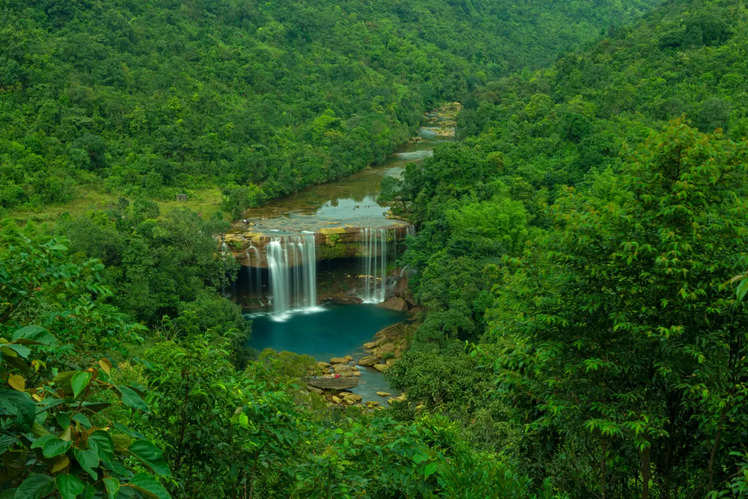
In the tapestry of India’s diverse states, Meghalaya stands out as a jewel in the northeast. Nestled amidst verdant hills and cascading waterfalls, this state holds a rich tapestry of cultures, languages, and traditions. However, behind the vibrant present of Meghalaya lies a history shaped by remarkable individuals, and one such luminary is Braj Kumar Nehru, the first Governor of Meghalaya.

Who was the First Governor of Meghalaya?

The first Governor of Meghalaya was Braj Kumar Nehru. Appointed on April 1, 1970, Nehru assumed the responsibility of steering the newly formed state through its formative years. His tenure was characterized by a commitment to fostering harmony among Meghalaya’s diverse communities and promoting socio-economic development. Nehru’s inclusive approach to governance laid the groundwork for democratic institutions and infrastructure development in the state.

First Governor of Meghalaya – Key Details

Name: Braj Kumar Nehru
Date of birth: 4th September 1909
Birthplace: Allahabad, United Provinces of Agra and Oudh, British India
Known for: 1st Governor of Meghalaya
Death: 31st October 2001
Place of death: Kasauli, Himachal Pradesh

Inaugural Governor of Meghalaya – Early Life and Education

Braj Kumar Nehru was born on September 4, 1909, in Allahabad, Uttar Pradesh, into a distinguished family with deep roots in Indian politics. Educated at prestigious institutions such as Allahabad University, the London School of Economics, and Oxford University, Nehru’s academic prowess laid the foundation for his illustrious career in public service.

Meghalaya’s First Governor – Diplomatic Career and National Leadership

Joining the Indian Civil Service in 1934, Nehru ascended to prominent roles within the Indian government, including serving as Governor of seven different states, including Gujarat, Assam, Jammu and Kashmir, Nagaland, Meghalaya, and Manipur. His tenure in these states was marked by a steadfast commitment to good governance, socio-economic development, and fostering harmonious relations among diverse communities.

Braj Kumar Nehru as First Governor of Meghalaya

Assuming office as Meghalaya’s first Governor on April 1, 1970, Nehru undertook the monumental task of laying the groundwork for the newly formed state’s administration. Meghalaya, with its diverse ethnic mosaic, presented unique challenges that Nehru addressed with characteristic diligence and empathy. He prioritized the establishment of democratic institutions, infrastructure development, and initiatives aimed at empowering marginalized communities.

Nehru’s tenure witnessed the consolidation of democratic processes and the promotion of participatory governance in Meghalaya. His inclusive approach to governance endeared him to the people, fostering a sense of belonging and collective progress among Meghalaya’s populace.

First Governor of Meghalaya – Legacy and Recognition

Braj Kumar Nehru’s legacy extends far beyond his tenure as Governor of Meghalaya. His contributions to Indian diplomacy, his role in shaping economic policies, and his advocacy for international cooperation earned him accolades both at home and abroad. Notably, he was honored with the Padma Vibhushan, one of India’s highest civilian awards, in 1999, in recognition of his exemplary service to the nation.

World’s Oldest Man, Juan Vicente Pérez, Dies at 114

Juan Vicente Pérez was a man from Venezuela who lived a very, very long life. He was born on May 27, 1909, in a town called El Cobre. This means he was alive for 114 years. Now that Pérez has passed away, the title of “world’s oldest man” is expected to go to a 112-year-old man from Japan named Gisaburo Sonobe. But this needs to be confirmed by Sonobe’s family first.

Officially the Oldest Man in the World

In February 2022, when Pérez was 112 years and 253 days old, the Guinness World Records officially said he was the oldest man in the whole world. This made him famous for living such a long life.

A Big Family

Pérez had a huge family. He had 11 children, which is a lot! His children were 6 sons and 5 daughters. By 2022, he also had 41 grandchildren, 18 great-grandchildren, and 12 great-great-grandchildren! That’s a lot of family members. Pérez was married to a woman named Ediofina del Rosario García for 60 years until she passed away in 1997.

Lived Through Major Events

In his very long life, Pérez lived through some major historical events. He was alive during World War I and World War II. He also lived through the Spanish Flu pandemic and the COVID-19 pandemic, which he caught but survived in 2020 when he was 111 years old. Pérez also saw some amazing inventions and achievements happen, like the television being invented and a man walking on the moon.

Worked as a Farmer and Sheriff

Pérez’s main job was being a farmer. But he also worked as a sheriff, which is a type of police officer. As a sheriff, he helped solve arguments about land and families in his community. In 2019, when Pérez turned 110 years old, he celebrated a big birthday. He was the first man from Venezuela to live to be 110 or older, which is called a “supercentenarian.”

Checking for Accurate Ages

To make sure the ages of very old people are correct, the Guinness World Records works with experts like the Gerontology Research Group and a man named Robert Young. They carefully check information about people who claim to be extremely old.

Juan Vicente Pérez lived a truly remarkable life by living to be 114 years old. He saw and experienced so many things in his very long lifetime. His family and the world will miss him, but his amazing story of longevity will be remembered.

List of National Parks in Karnataka

Karnataka, a state in southern India, boasts a rich tapestry of natural wonders, from verdant forests to sprawling plains. Among its prized possessions are its national parks, each a sanctuary of biodiversity and natural beauty. These protected areas serve as havens for diverse flora and fauna, offering visitors a chance to witness the untamed wilderness in its purest form. Let’s embark on a journey to discover the captivating national parks that grace the landscapes of Karnataka.

How many National Parks are there in Karnataka?

Karnataka, a state in southern India, boasts five national parks. These parks are Bandipur National Park, Nagarhole National Park, Anshi National Park, Bannerghatta National Park, and Kudremukh National Park. Each park is known for its unique biodiversity, ranging from lush forests to diverse wildlife habitats, contributing significantly to the conservation efforts and ecological diversity of the region.

List of National Parks in Karnataka

Karnataka is home to five stunning national parks, each offering a unique wilderness experience. Here is the list of national parks in Karnataka:

National Parks in Karnataka
S. No. National Park Location
1. Bandipur National Park Southern Karnataka, near Tamil Nadu border
2. Nagarhole National Park Kodagu district, Karnataka
3. Anshi National Park Uttara Kannada district, Karnataka, Western Ghats
4. Bannerghatta National Park Outskirts of Bangalore, Karnataka
5. Kudremukh National Park Chikmagalur district, Karnataka, Western Ghats

Bandipur National Park

Establishment: 1974

Area: 912.04 square kilometers

Bandipur National Park boasts a diverse array of timber trees, including teak, rosewood, sandalwood, and Indian laurel. Additionally, the park is home to various flowering and fruiting trees and shrubs such as the kadam tree, Indian gooseberry, flame of the forest, and golden shower tree. These lush vegetations provide essential habitat for the park’s wildlife inhabitants.

Nagarhole National Park

Establishment: 1988

Area: 642.39 square kilometers

Nagarhole National Park, nestled in Karnataka’s Kodagu and Mysore districts, holds the distinction of being India’s 37th Tiger Reserve since 1999. As part of the Nilgiri Biosphere Reserve, it’s under UNESCO consideration for World Heritage Site status. The park’s diverse landscape, encompassing forests, streams, hills, and waterfalls, shelters a variety of wildlife including Bengal tigers, Indian elephants, Indian leopards, and various deer species.

Anshi National Park

Establishment: 1987

Established in 1987 following the conversion of Dandeli Wildlife Sanctuary, Anshi National Park now forms part of the Anshi Dandeli Tiger Reserve, later renamed Kali Tiger Reserve in 2015. Located in Uttara Kannada district, it sprawls over 1300 square miles and houses a diverse array of wildlife including tigers, leopards, sloth bears, and the rare black panther. The reserve offers various recreational activities like hiking, safaris, and eco-tours.

Bannerghatta National Park

Establishment: 1974

Area: 260.51 square kilometers

Bannerghatta National Park, situated near Bangalore in Karnataka, India, has been a cherished natural reserve since its establishment in 1970. Initially founded as a national park and later augmented with a zoological garden in 2002, it stands as a testament to biodiversity conservation efforts. Despite challenges such as forest depletion, the park continues to allure visitors with its ancient temples, trekking trails, and diverse wildlife.

Kudremukh National Park

Establishment: 1987

Kudremukh National Park in Karnataka is celebrated for its diverse wildlife, including lion-tailed macaques, tigers, leopards, and sloth bears. Offering captivating hiking and trekking trails, visitors can immerse themselves in the park’s natural splendor while witnessing animals in their native environment. The park’s scenic tea and coffee plantations provide additional opportunities for exploration and photography, making it a popular destination for nature enthusiasts and adventurers alike.

List of Former Chief Ministers of Meghalaya (1970-2024)

Meghalaya, a state nestled in the northeastern region of India, has seen a succession of leaders guiding its path since its formation in 1970. From its inception, the Chief Minister’s office has been held by various stalwarts who have shaped the state’s political landscape and contributed to its development journey. Here’s a glimpse into the list of former Chief Ministers who have left an indelible mark on Meghalaya’s history.

Chief Ministers of Meghalaya

In the past five decades, Meghalaya has witnessed a total of 12 individuals assuming the role of Chief Minister, with Williamson A. Sangma inaugurating the list in 1970 and Conrad Sangma, currently serving since 2018 under the National People’s Party banner. Notably, six Chief Ministers have hailed from the Indian National Congress. Mukul Sangma holds the record for the lengthiest tenure, leading the state for eight consecutive years. Brief stints of President’s rule occurred twice. The dominant political force has largely been the All Party Hill Leaders Conference, alongside intermittent control by the INC.

Inaugural Chief Minister of Meghalaya

Williamson A. Sangma held the distinction of being Meghalaya’s inaugural Chief Minister, assuming office on April 2, 1970. His tenure lasted until January 21, 1972, marking the formative years of the state’s governance. Sangma’s leadership laid the groundwork for subsequent administrations, shaping Meghalaya’s political landscape during its nascent phase.

Current Chief Minister of Meghalaya

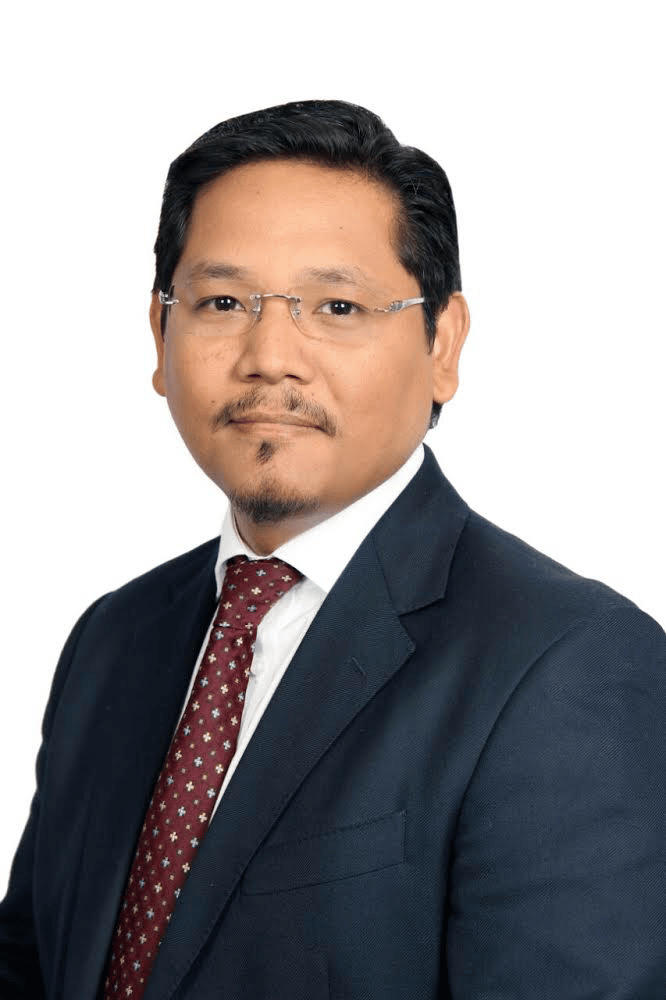
Conrad Kongkal Sangma | Chief Minister | Meghalaya | National People Party

Conrad Kongkal Sangma, born on January 27, 1978, serves as the 12th and present Chief Minister of Meghalaya, assuming office in 2018. A prominent figure in Indian politics, he represents the National People’s Party. Sangma’s leadership focuses on advancing the socio-economic development of Meghalaya, navigating the state through contemporary challenges with a vision for progress and prosperity.

Longest Serving Chief Minister of Meghalaya

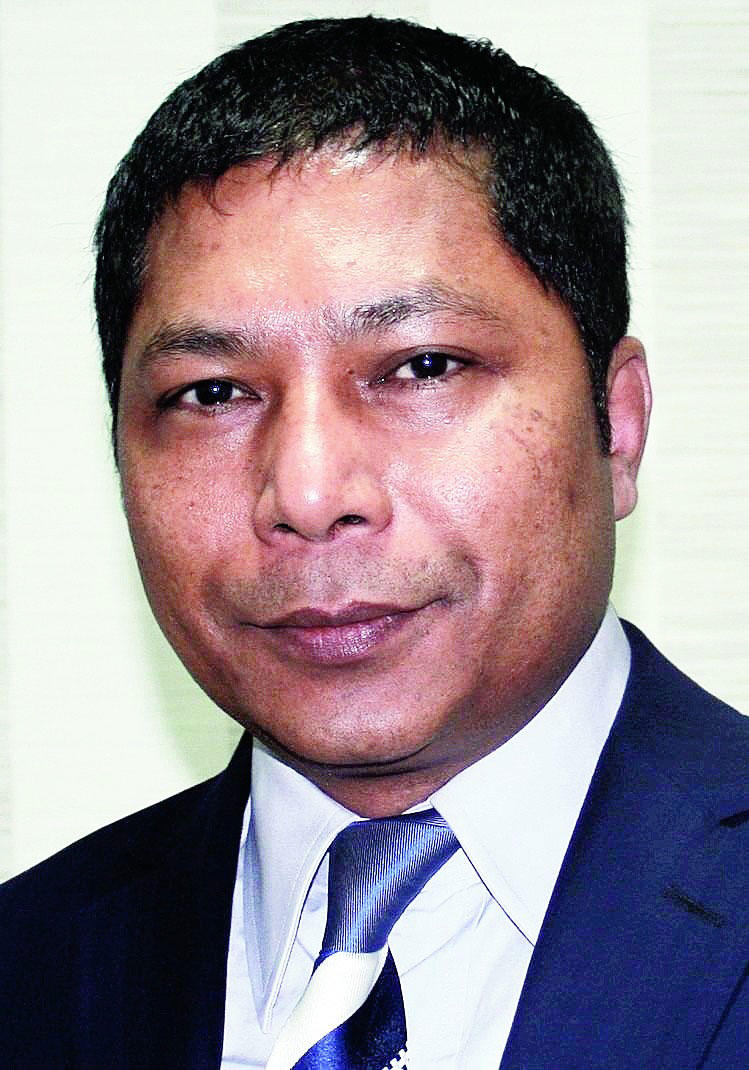
Meghalaya government | Cartel aids illegal coal trade: Mukul Sangma -  Telegraph India

Mukul Sangma holds the distinction of being the longest-serving Chief Minister of Meghalaya, with an impressive tenure spanning 8 years. His leadership was marked by notable strides in governance, emphasizing developmental initiatives and addressing the diverse needs of the state’s populace. Sangma’s legacy is characterized by his enduring commitment to Meghalaya’s progress and welfare.

List of Former Chief Ministers of Meghalaya

In the past five decades, Meghalaya has witnessed a total of 12 individuals assuming the role of Chief Minister, with Williamson A. Sangma inaugurating the list in 1970 and Conrad Sangma, currently serving since 2018 under the National People’s Party banner.

Here is the complete list of former Chief Ministers of Meghalaya:

List of Former Chief Ministers of Meghalaya
S. No. Name From To
1. Williamson A. Sangma 02 Apr 1970 21 Jan 1972
2. Williamson A. Sangma 21 Jan 1972 18 Mar 1972
3. Williamson A. Sangma 18 Mar 1972 21 Nov 1976
4. Williamson A. Sangma 22 Nov 1976 03 Mar 1978
5. Darwin Diengdoh Pugh 10 Mar 1978 21 Feb 1979
6. Darwin Diengdoh Pugh 21 Feb 1979 06 May 1979
7. B. B. Lyngdoh 07 May 1979 07 May 1981
8. Williamson A. Sangma 07 May 1981 24 Feb 1983
9. B. B. Lyngdoh 02 Mar 1983 31 Mar 1983
10. Williamson A. Sangma 02 Apr 1983 05 Feb 1988
11. P. A. Sangma 06 Feb 1988 25 Mar 1990
12. B. B. Lyngdoh 26 Mar 1990 10 Oct 1991
13. President’s Rule 11 Oct 1991 05 Feb 1992
14. D.D. Lapang 05 Feb 1992 19 Feb 1993
15. S. C. Marak 19 Feb 1993 27 Feb 1998
16. S. C. Marak 27 Feb 1998 10 Mar 1998
17. B. B. Lyngdoh 10 Mar 1998 08 Mar 2000
18. E. K. Mawlong 08 Mar 2000 08 Dec 2001
19. Flinder Anderson Khonglam 08 Dec 2001 04 Mar 2003
20. D.D. Lapang 04 Mar 2003 15 Jun 2006
21. J. D. Rymbai 15 Jun 2006 10 Mar 2007
22. D. D. Lapang 10 Mar 2007 04 Mar 2008
23. D. D. Lapang 04 Mar 2008 19 Mar 2008
24. Donkupar Roy 19 Mar 2008 18 Mar 2009
25. President’s Rule 18 Mar 2009 12 May 2009
26. D. D. Lapang 13 May 2009 19 Apr 2010
27. Mukul Sangma 20 Apr 2010 05 Mar 2013
28. Mukul Sangma 05 Mar 2013 06 Mar 2018
29. Conrad Sangma 06 Mar 2018 Incumbent

List of Cricket Stadiums in Andhra Pradesh_70.1

Veteran Dealmaker Atul Mehra Joins Axis Capital as MD & CEO

Axis Capital has appointed Atul Mehra as the new Managing Director (MD) and Chief Executive Officer (CEO). His appointment is waiting for final approval. Mehra will be overseeing both the investment banking and institutional equities businesses at Axis Capital.

Atul Mehra is an experienced dealmaker with over 30 years of experience in the industry. He was previously the Joint MD at JM Financial.

Other Key Appointments

In addition to Mehra, Axis Capital has also appointed:

  • Parag Gude as Chief Operating Officer (COO) of Institutional Equities
  • Dhaval Desai as Head – Cash Equities

Previous Departures

Mehra’s appointment comes after the departures of:

  • Salil Pitale, the current MD & co-CEO of Axis Capital
  • Chirag Negandhi, the former co-CEO who joined JM Financial in December

Regulatory Approvals

The market regulator Securities and Exchange Board of India (SEBI) has approved the Initial Public Offering (IPO) of two firms – Kross and Saraswati Saree Depot.

However, SEBI returned the draft IPO documents of Garuda Construction and Engineering and Polymatech Electronics in late March.

Who was the First Chief Minister of Madhya Pradesh?

Madhya Pradesh, often referred to as the heart of India due to its central location, has a rich political history marked by visionary leaders who shaped the state’s destiny. Among them stands the towering figure of Ravishankar Shukla, the first Chief Minister of Madhya Pradesh, whose legacy continues to inspire generations.

Who was the First Chief Minister of Madhya Pradesh?

The first Chief Minister of Madhya Pradesh was Pandit Ravishankar Shukla. He assumed office on November 1, 1956, following the reorganization of the state. A prominent leader of the Indian National Congress and a staunch freedom fighter, Pandit Shukla played a pivotal role in shaping the socio-political landscape of Madhya Pradesh. His visionary leadership laid the foundation for the state’s development and progress, leaving behind a lasting legacy of service and dedication.

First Chief Minister of Madhya Pradesh – Basic Details

Name: Pandit Ravishankar Shukla
Date of birth: 2nd August 1877
Birthplace: Saugor, Central Province, British India
Known for: 1st Chief Minister of Madhya Pradesh
Political Party: Indian National Congress
Death: 31st December 1956
Place of death: New Delhi

Inaugural Chief Minister of Madhya Pradesh – Early Life and Political Journey

Born on August 2, 1877, in Saugor, Central Provinces (present-day Madhya Pradesh), Ravishankar Shukla hailed from a distinguished Kanyakubja Brahmin family. His upbringing in a scholarly environment, coupled with exposure to Indian classics, laid the foundation for his future endeavors. After completing his education, Shukla delved into the realm of politics, finding inspiration in the Indian independence movement.

First Chief Minister of Madhya Pradesh – Struggle for Independence

Shukla’s involvement in the Indian National Congress marked the beginning of his journey as a freedom fighter. He participated in various movements and Congress sessions, advocating for India’s independence from British colonial rule. Shukla’s commitment to the cause earned him recognition as a leader, both within the Congress and among the masses.

Madhya Pradesh’s First Chief Minister – Role in Central Province and Berar

Prior to Madhya Pradesh’s formation, Shukla served as the Premier of the Central Provinces and Berar from April 27, 1946, to January 25, 1950. His tenure witnessed significant developments and initiatives aimed at improving governance and addressing socio-economic challenges in the region.

Pandit Ravi Shankar Shukla as First Chief Minister of Madhya Pradesh

With the reorganization of states in independent India, Madhya Pradesh emerged as a new entity on January 26, 1950. Ravishankar Shukla was appointed as its inaugural Chief Minister, tasked with leading the state towards progress and prosperity. Under his leadership, Madhya Pradesh witnessed remarkable advancements in various sectors.

Madhya Pradesh’s First Chief Minister – Achievements and Contributions

As Chief Minister, Shukla prioritized education, agriculture, and infrastructure development. He laid the groundwork for expanding educational institutions, enhancing agricultural practices, and improving connectivity through the construction of roads and bridges. Shukla’s visionary approach and administrative acumen played a pivotal role in shaping the state’s early trajectory.

Legacy of Inaugural Chief Minister of Madhya Pradesh

Despite his untimely demise on December 31, 1956, Ravishankar Shukla’s legacy continues to inspire generations. His contributions to nation-building, commitment to social justice, and unwavering dedication to the welfare of the people remain etched in the annals of history. Shukla’s leadership exemplified integrity, compassion, and a relentless pursuit of excellence, leaving an indelible mark on Madhya Pradesh’s political landscape.

Rohan Bopanna and Matt Ebden Triumph at Miami Open

The top-seeded duo of Rohan Bopanna from India and Matthew Ebden from Australia won the Men’s Doubles Title at the Miami Open, a prestigious ATP Masters tennis tournament. In an exciting final, they defeated the second seeds Ivan Dodig and Austin Krajicek with a score of 6-7(3), 6-3, [10-6].

Second Title of the Season

This Miami Open triumph marks the second title of the season for Bopanna and Ebden. Earlier this year, they won the Australian Open in Melbourne, making it a remarkable start to their partnership.

Thrilling Final

The final was a closely contested affair. Bopanna and Ebden missed three set points at 6-5 in the first set, eventually losing it in the tiebreak. However, they bounced back strongly, winning the last six points in a row to secure the title.

Previous Success at Indian Wells

This is the second ATP Masters title for Bopanna and Ebden as a pair. Last year, they won the prestigious Indian Wells tournament, further solidifying their partnership.

Stats and Prizes

  • The champion team collected $447,300 in prize money and 1000 ATP points.
  • They saved seven of eight break points in the match, showcasing their resilience.
  • Interestingly, Bopanna and Ebden won three of their five matches in the tournament after losing the first set, displaying their fighting spirit.

Other Indian Success

In the Challenger tournament in San Luis Potosi, Mexico, the Indian duo of Rithvik Bollipalli and Niki Poonacha won the doubles title. They defeated Antoine Bellier and Marc-Andrea Huesler in the final with a score of 6-3, 6-2. This was their first Challenger title as a pair, and they collected $4,665 in prize money and 75 ATP points.

Bopanna and Ebden’s triumph at the Miami Open further solidifies their position as one of the top doubles teams on the ATP Tour. Their consistent performances and ability to overcome adversity in matches make them a formidable force in the world of professional tennis.

Bihar Board 10th Result 2024 Out, BSEB Matric Result Link

The Bihar School Examination Board (BSEB) has announced the Bihar Board 10th Result 2024 Today March 31, 2024. Bihar Board Chairman Anand Kishor held a press conference to announce the BSEB Bihar Board 10th result topper list in the auditorium located at the Main Hall, Sinha Library, Patna.

This year Matric pass rate was recorded as 82.91% and girls overperformed than boys. This year, 51 students secured a place in the class 10 toppers list. Shivankar Kumar of Zilla School in Purnia was the statewide topper in the Annual Secondary Examination, 2024, with a total of 489 marks, an outstanding 97.80%.

Students can now download their results by visiting the Bihar Board’s official website – biharboardonline.bihar.gov.in. All students can get their Provisional BSEB class 10th mark sheet online by using their roll number and roll code. We are requesting students to check out the direct Bihar board 10th result link below to get the mark sheet quickly.

Bihar Board 10th Result 2024 Out

The Bihar Board held the the Annual Secondary Examination, 2024 conducted at 1,585 examination centers from February 15 to February 23, 2024. In the Annual Secondary Examination 2024, a total of 16,64,252 students took part, including 8,58,785 girls and 8,05,467 boys. In this examination, more girls than boys took part, indicating the success of the state government’s various initiatives to encourage females’ education.

This year, Out of appeared students, A total of 13,79,842 students (boys 6,80,293 and females 6,99,549) passed the exam. The overall pass rate for students is 82.91%.

Shankar Kumar took the top position with 489 marks, followed by Adarsh Kumar from Samastipur in second and Aditya Kumar, Palak Kumari, Suman Kumari, and Shadia Parveen in third.

This year, 4,52,302 students were passed in the first division, with 2,52,846 boys and 1,99,456 girls. Similarly, 5,24,965 students secured the second division, with 2,52,121 boys and 2,72,844 girls. A total of 3,80,732 students have got a third division of which 1,66,093 are boys and 2,14,639 girls.21,843 students are in the pass category in this examination.

Check: Bihar Board 10th Topper List 2024

Bihar Board Class 10th Result 2024 link

The Bihar Board 10th Result 2024 direct link is given in the box below. Access the download link and you will directly land on the login page. The BSEB class 10 result 2024 Marksheet includes the marks earned in various subjects and passing status. Students should be alert that the online BSEB 10th result mark sheet is provisional. Therefore, students must collect the original Bihar board class 10th result Marksheet from their respective schools.

BSEB 10th Result 2024

The Chairman stated that the results of over 16.64 lakh students were published in 31 days, resulting in the BSEB releasing the matric results in record speed and the fastest in the country for the sixth consecutive year.”The review of answer sheets began on March 1, 2024, and was finished in 31 days after checking more than 99 lakh copies and 99 lakh OMR sheets. Get a brief overview of the result stats below.

Bihar Board 10th Result 2024 – Overview
Examination Name

Bihar Board Matric Examination 2023-24

Examination Board

Bihar School Examination Board (BSEB)

Class 10th Class /Matric
Bihar Matric Exam dates

15 February to 23 February 2024

Bihar Board Class 10th Result date March 31, 2024
Pass Percentage 82.91%
Total Students 16,94,781
Total Students passed 13,79,842.
Bihar board Class 10th Result 2024 link Status  released
official website biharboard.ac.in

How to check the Bihar Board 10th Result 2024 Roll Number?

Students sometimes prefer to follow different ways to check their Bihar Board 10th result 2024. There are 3 ways you can get your marks from the BSEB Official website, via SMS or Digilocker. Please follow the way to check your Bihar Board Class 10 Result 2024 below

  • By visiting the official portal of the Bihar School Examination Board (BSEB).
  • Or by SMS on the mobile phone.
  • Or by digilocker

Websites the Bihar Board Class 10th results are published are-

  • www.biharboardonline.bihar.gov.in
  • www.results.biharboardonline.com
  • www.secondary.biharboardonline.com
  • www.biharboardonline.com

Bihar Board 10th Result 2024 Check online @biharboardonline.bihar.gov.in

If you all want to check the Bihar Class 10th Exam Results faster visit the official website by using the link given above. Or follow the detailed procedure outlined below to easily download your BSEB results.

Step 1: Go to results.biharboardonline.com.
Step 2: Now you need to enter your BSEB roll number and roll code.
Step 1: After that, enter given the captcha code.
Step 3: After that, click on the search results option.
Step 4: Following this, the 10th Bihar Board Result 2024 will appear on the screen.
Step 6: After that, you must download and print out your results.

Steps to Check Bihar Board Matric Result 2024 via SMS

BSEB offers an SMS service for checking Bihar Board 10th Result to avoid the rush on the official website. Checking Bihar Board Class 10 Results 2024 Using SMS is very easy, just follow the steps outlined below.
Step 1: Open the Message app on your phone.
Step 2: create a new message, and enter the number “56263”.
Step 3: Then, type BIHAR 10 Student Roll Number.

10th Result 2024 Bihar Board using Digilocker

To get to your Bihar Board Class 10th Mark Sheet online, use DigiLocker. the authorities have made the Bihar Board 10th result 2024 available on DigiLocker. Follow the steps below to check the results.

Step 1: DigiLocker is accessible through both the app and website. Download the application
Step 2: To access the Matric Marksheet of the Bihar School Examination Board, log in to DigiLocker.
Step 3: Navigate to the document section. Click on it.
Step 4: Clicking on it will display your Bihar Board Class 10th provisional mark sheet.

Bihar Board Matric Result 2024 Statistics

The Bihar School Examination Board (BSEB) has released the Class 10 results for 2024, which show a significant increase in the pass rate to 82.91%. In comparison to the previous six years, the total pass percentage has increased. Boys pass with an impressive rate of 84.45%, while girls pass at 81.4%. 4,52,302 students received first-division honors in the most recent examination cycle, with 2,52,846 boys and 1,99,456 girls. Check out the Bihar Board 10th result 2024 and previous years’ pass percentage comparison below.

BSEB Matric Result 2024 Statistics
82.91%
Total Students 16,94,781
Total Students passed 13,79,842.
Total Boys Appeared 8,05,467
Total Girls Appeared 8,58,785
Total Passed Students 13,79,842
First Division 4,52,302 students (boys: 2,52,846 and girls: 1,99,456)
Second Division 5,24,965 (2,52,121 boys and2,72,844 girls)
Third Division 3,80,732 (1,66,093 boys and 2,14,639 girls)
Pass Category 21,843

Bihar Matric Result: Years wise Pass rate

In 2024, The overall pass rate in class X of the Bihar School Examination Board (BSEB) was 82.91%, with 1.87% more students qualifying for the exam than the previous year (81.04%). Check out the year-wise Pass rate comparison given below.

BSEB Matric Result 2024: Years wise Pass rate
Year
2024 82.91% 
2023  81.04%
2022 79.88%
2021 78.17%
2020 80.59%
2019 80.73%
2018 68.89%
2017 50.12%
2016 46.66%
2015 75.17%

Bihar Board 10th Result 2024 Topper List

Chairman Anand Kishore announced the BSEB Class 10 toppers for the 2024 matriculation exam along with the results.The Annual Secondary Examination, 2024, highlighted the excellent efforts of 51 students who placed in the top ten ranking.

  • Shivankar Kumar of Zila School Purnia has emerged as the state topper, scoring 97.80 percent in the board exams and 489 out of 500 marks. Adarsh Kumar from V High School Mowbazidpur North, Samastipur finished in second place with 97.6%.
  • Aditya Kumar from Simultala Awasiya Vidyalaya, Jamui, Sumar Kumar Purve from New Upgrade High School Sidhap Parsahi Ladania, Madhubani, Palak Kumari from Uch Madhyamik Vidyalaya, Hussepur Ekma, and Sajiya Perween from SMT High School, Vaishali tied for third place with 97.2%.

Among these outstanding performers, 41 students achieved rankings from sixth to tenth place, while ten people held spots in the prestigious top five rankings. Check out the names of the top 51 toppers along with their obtained marks below.

S. No. Student Name Gender School Name Marks Rank
1 Shivankar Kumar Male Zila School, Purnea 489 1
2 Adarsh Kumar Male V High School Mowbazidpur North, Samastipur 488 2
3 Aditya Kumar Male Simultala Awasiya Vidyalaya, Jamui 486 3
4 Suman Kumar Purve Male New Upgrade High School, Sidhap Parsahi Ladania, Madhubani 486 3
5 Palak Kumar Feale Uchch Madhyamik Vidyalaya, Hussepur Ekma 486 3
6 Sajia Perween Feale S MtHigh School Vaishali 486 3
Ajeet Kuma Mae Sukdev Prasad Verma +2 High School Tehta, Jehanabad 485 4
8 Rahul Kumar Male Utkramit Uchcha Madhaymik Vidyalaya, Kewra 485 4
9 Hareram Kumar Male Utkramit Uchh Madhyamik School, Chakndra 484 5
10 Sejal Kumari Female High School Barun Aurangabad 484 5
11 Saniya Kumari Female Arya Kanya High School Khagaria 483 6
12 Anamika Kumari Female M P H/S Ramchandrapur, Lakhisarai 483 6
13 Vicky Kumar Male Simultala Awasiya Vidyalaya Jamui 483 6
14 Shalini Kumari Female S R High School Banhara, Munger 483 6
15 Saurabh Kumar Male Williams High School Supaul 483 6
16 Dipika Kumari Female High School Kishanpur, Supaul 483 6
17 Sapna Kumari Female Uchch Madhyamik Vidyalay Nawadih 483 6
18 Zohair Ahmad Male U.H.S.Basantnagar,Hasanpura, Siwan 483 6
19 Priya Kumari Female Universal 10 + 2 Public School Bihiya Bhojpur 482 7
20 Satyam Shivansh Male Utkramit Madhyamik School Sagara, Chausa, Buxar 482 7
21 Muskan Kumari Female Uchcha Madhyamik Vidyalaya Kamrauli Piprahi Sheohar 482 7
22 Shivam Kumar Choudhary Male Sarvoday H S Gangasagar Darbhanga 482 7
23 Suman Kumar Male High School Rupauli, Samastipur 482 7
24 Fatima Nesar Female Dav High School Gopalganj 482 7
25 Parvin Kumar Male High School Maldah, Samastipur 481 8
26 Ankit Kumar Male N High School Shamsher Nagar, Aurangabad 481 8
27 Kundan Kumar Yadav Male Uh S Gothani, Kusheshwar Asthan, Darbhanga 481 8
28 Satyam Kumar Chaurasiya Male Anoop High School Bhatsimari, Madhubani 481 8
2 Divya Kumari Female S K High School Jitwarpur, Samastipur 480 9
30 Niraj Kumar Male New Upgrade High Sch Sidhap Parsahi Ladania, Madhubani 480 9
31 Mital Kumar Male Simultala Awasiya Vidyalaya Jamui 480 9
32 Aman Kumar Male Simultala Awasiya Vidyalaya Jamui 480 9
33 Anjali Kumari Female P Pc M Vidyalaya Amjhore Rohtas 480 9
34 Anshu Kumar Male Rosera High School Rosera, Samastipur 480 9
35 Kumari Ranjana Female Llhigh School Sirsi, Samastipur 480 9
36 Smriti Kumari Female Uhs Rusulpur Mobarak 480 9
37 Shahina Praween Female Utkramit M S Dumar Sameli, Katihar 480 9
38 Khushi Kumari Female Uchcha Madhyamik Vidyalaya Kamrauli Piprahi Sheohar 479 10
39 Aarzoo Female High School Bharauli Bhojpur 479 10
40 Sushil Kumar Male Utkramit M S Rampur Ratan,Chatursi,Minapur, Muzaffarpur 479 10
41 Aditi Mayank Female Utkramit Madhyamik School Hirdaynagar, Supaul 479 10
42 Vicky Kumar Male Simultala Awasiya Vidyalaya Jamui 479 10
43 Savan Kumar Male Simultala Awasiya Vidyalaya Jamui 479 10
44 Mdasif Male National Public High School Bettiah, West Champaran 479 10
45 Rimjhim Kumari Female Dayanand Kanya Vidyalaya Mithapur, Patna 479 10
46 Shiv Kumar Prasad Sah Male High School Jaynagar, Imadhubani 479 10
47 Nitish Kumar Male High School Khutauna, Madhubani 479 10
48 Satish Kumar Male Magadh High School Oknawan, Nalanda 479 10
49 Kajal Kumari Female Ram Babu High School Hilsa, Nalanda 479 10
50 Sangam Kumari Female Uchch Madhyamik Vidyalaya Mahkhar Saharsa 479 10
51 Shikha Kumari Female J Bm A High School Karjain, Supaul 479 10

Bihar Board Class 10 Toppers Awards

The The top-ranked Bihar Board Class 10 student will receive Rs 1 lakh and a laptop. Similarly, the second-ranked student will receive Rs 75,000 and a laptop, while the third-ranked student will receive Rs 50,000 and a laptop.


National Parks in Himachal Pradesh, Know Their Names

Nestled amidst the majestic Himalayas, Himachal Pradesh, a state in Northern India, is blessed with pristine natural beauty and abundant biodiversity. Home to a plethora of flora and fauna, the state boasts several national parks that serve as havens for wildlife enthusiasts and nature lovers alike. Let’s embark on a journey to discover the 5 national parks in Himachal Pradesh:

How many National Parks in Himachal Pradesh?

Himachal Pradesh boasts a total of five national parks, each offering a unique and diverse landscape teeming with wildlife and natural beauty. From the UNESCO World Heritage Site of Great Himalayan National Park to the serene ambiance of Simbalbara National Park, these sanctuaries showcase the state’s rich biodiversity and serve as havens for nature enthusiasts and wildlife lovers alike.

List of National Parks in Himachal Pradesh

Himachal Pradesh boasts a total of five national parks, each offering a unique and diverse landscape teeming with wildlife and natural beauty.

Here is the complete list of national parks in Himachal Pradesh:

National Parks in Himachal Pradesh
S. No. Name Location Area
1. Great Himalayan National Park Banjaar, Kullu 1,171 square kilometers
2. Pin Valley National Park Lahaul and Spiti 807.36 square kilometers
3. Inderkilla National Park Kullu 104 sq. km
4. Khirganga National Park Kullu 710 sq. km
5. Simbalbara National Park Sirmour district 27.88 sq. km

Great Himalayan National Park

Location: Banjaar, Kullu

Area: 1,171 sq. km

Established in 1984 and recognized as a National Park in 1999, the Great Himalayan National Park in Himachal Pradesh is a UNESCO World Heritage Site since 2014. With over 10,000 plant species, it boasts diverse fauna including 31 mammal species and 209 bird species. Popular for its scenic beauty, it offers trekking paths amidst Deodar and Oak trees, attracting numerous visitors annually.

Pin Valley National Park

Location: Lahaul and Spiti

Area: 807.36 sq. km

Pin Valley National Park, established in 1987, sits majestically in the heart of Himachal Pradesh, within the serene confines of the Lahaul and Spiti District. This pristine sanctuary encapsulates a rich tapestry of biodiversity, spanning elevations from 3,500 meters to over 6,000 meters. Within its expanse lies a haven for endangered species, including the elusive Himalayan snow leopard and the noble Siberian ibex. But the park’s significance extends beyond its charismatic inhabitants; it serves as a sanctuary for rare Alpine vegetation and stands of Himalayan Cedar, lending an ethereal charm to its landscape. Furthermore, this sanctuary serves as a guardian for 22 endangered plant species, nurturing them amidst its rugged terrain. In the summertime, the park welcomes a vibrant array of unique bird species, adding a symphony of colors to its already captivating vista.

Inderkilla National Park

Location: Kullu

Area: 104 sq. km

Inderkilla National Park, established in 2010, graces the Kullu district of Himachal Pradesh, a mere 46.1 kilometers from Kullu Manali Airport. Encompassing a vast expanse of 104 square kilometers (40 square miles), it shelters a plethora of native and exotic plant and animal species, thriving within its mountainous terrain. Despite being one of India’s least visited parks, it harbors numerous rare and endangered species, offering a tranquil retreat for wildlife enthusiasts. A central track invites visitors to witness its rich biodiversity firsthand, while also showcasing plants with potent medicinal properties.

Khirganga National Park

Location: Kullu

Area: 710 sq. km

Khirganga National Park, nestled in Kullu, Himachal Pradesh, lies 50.5 kilometers from Kullu Manali Airport, within the sprawling Parvati Watershed spanning 710 square kilometers (270 square miles) at an altitude of approximately 5,500 meters. Established in 2010, it stands as a beacon of natural splendor, revered for its breathtaking beauty. Offering a mesmerizing landscape adorned with lush green hills, dense foliage, towering trees, and rustic rest houses, it hosts a diverse array of biological species. The park beckons adventurers, especially those embarking on the Kheerganga Trek, promising an unforgettable journey through its verdant embrace. Optimal visits occur from April to June or September to November, with October boasting favorable weather and fewer crowds. Encounter wildlife like wild bears in this cherished gem, counted among Himachal Pradesh’s premier national parks.

Simbalbara National Park

Location: Sirmour district

Area: 27.88 sq. km

Simbalbara National Park, nestled in the picturesque Paonta Valley of Sirmour District, Himachal Pradesh, was originally established as the Simbalbara Wildlife Sanctuary in 1958, spanning 19.03 square kilometers. Expanded in 2010 to encompass an additional 8.88 square kilometers, it now sprawls across 27.88 square kilometers of pristine wilderness. Managed by the Himachal Pradesh Travel and Tourism administration, this sanctuary-turned-national park remains a haven for migratory birds and diverse wildlife. Embraced by the natural beauty of the Shivaliks, it features sal woods, verdant grasslands, and meandering streams. Optimal visitation months, October and November, offer glimpses of Indian muntjacs, gorals, sambar deer, spotted deer, Himalayan black bears, and Hanuman langurs.

Important Days in April 2024, List of National and International

April 2024 arrives with a roster of significant dates, each carrying its own weight of historical, cultural, and social importance. From moments of celebration to occasions for reflection, this month offers a diverse array of observances that resonate globally. Let’s take a journey through the notable days that punctuate the April calendar, highlighting their significance and the themes they represent.

Special Days in April 2024

In April 2024, the month takes its name from the Greek goddess Aphrodite and the Latin term Aprilis, bestowed by ancient Romans. Known for its meteor showers under clear skies, April’s unpredictable weather may not please everyone. Nonetheless, as temperatures rise, the month offers a platform for observing both national and international events alongside regional festivals. From Odisha Foundation Day to Baisakhi and Chaitra Navratri, April boasts a rich tapestry of celebrated occasions, including World Health Day, World Hemophilia Day, Ayushman Bharat Diwas, and Cultural Unity Day.

Important Days in April 2024, List of National and International Days

April, the fourth month of the year, carry various important days from Odisha Foundation Day to Baisakhi. In April 2024, significant national and international days include World Health Day on April 7th, Earth Day on April 22nd, and International Jazz Day on April 30th. These observances raise awareness about global health, environmental conservation, and cultural diversity, encouraging collective efforts towards positive change.

Here is the list of important days in April 2024, national and international days:

Important Days in April 2024
Date Important Day
April 1, 2024 April Fool’s Day
April 1, 2024 Nature Day
April 1, 2024 Odisha Foundation Day
April 1, 2024 Prevention of Blindness Week
April 2, 2024 World Autism Awareness Day
April 3, 2024 Independent Artist Day
April 3, 2024 National Walking Day
April 4, 2024 International Day of Mine Awareness
April 5, 2024 National Maritime Day
April 6, 2024 National Handmade Day
April 6, 2024 National Library Day
April 7, 2024 World Health Day
April 8, 2024 Baby Massage Day
April 8, 2024 International Feng Shui Awareness Day
April 8, 2024 International Pageant Day
April 9, 2024 Tamil New Year
April 10, 2024 Chaitra Navratri
April 11, 2024 National Safe Motherhood Day
April 11, 2024 National Pet Day
April 13, 2024 Baisakhi
April 13, 2024 Jallianwala Massacre
April 14, 2024 BR Ambedkar Remembrance Day
April 15, 2024 World Art Day
April 15, 2024 McDonal’s Day
April 16, 2024 World Semicolon Day
April 17, 2024 National Banana Day
April 17, 2024 Ram Navami
April 17, 2024 World Circus Day
April 18, 2024 Adult Autism Awareness Day
April 18, 2024 National Exercise Day
April 19, 2024 National Garlic Day
April 20, 2024 Husband Appreciation Day
April 21, 2024 International Hemp Day
April 21, 2024 Mahavir Jayanti
April 21, 2024 Chickpea Day
April 21, 2024 National Tea Day
April 22, 2024 Earth Day
April 22, 2024 April Showers Day
April 23, 2024 National Lover’s Day
April 23, 2024 Shakespeare Day
April 23, 2024 World Book Day
April 23, 2024 World Table Tennis Day
April 24, 2024 National Skipping Day
April 25, 2024 World Malaria Day
April 25, 2024 National DNA Day
April 25, 2024 World Penguin Day
April 26, 2024 National AI Day
April 27, 2024 World Design Day
April 27, 2024 World Healing Day
April 27, 2024 World Veterinary Day
April 28, 2024 National Superhero
April 29, 2024 International Dance Day
April 29, 2024 World Wish Day
April 30, 2024 International Jazz Day

Important Days in April 2024 – Details

In April 2024, notable days include April Fool’s Day on the 1st, celebrated with practical jokes and hoaxes. Earth Day on the 22nd raises awareness about environmental issues. Additionally, Easter Sunday falls on the 14th, commemorating the resurrection of Jesus Christ, observed with religious services and festive gatherings. Let’s know about these significant days in April 2024 in brief:

April 1 – April Fool’s Day

April Fools’ Day, celebrated annually on April 1st, is characterized by playful pranks and hoaxes. Participants delight in tricking others, often revealing their antics with a triumphant cry of “April Fools!” Mass media frequently partake in these jests, sometimes disclosing the deception the next day. It’s a lighthearted tradition fostering laughter and good-natured fun among friends and communities.

April 1 – Odisha Foundation Day

Odisha Foundation Day, celebrated on April 1st, commemorates the formation of the state of Odisha in India. This significant occasion marks the establishment of Odisha as a separate province on linguistic grounds in 1936. It’s a day of pride for Odias, reflecting on the rich history, culture, and contributions of the state while embracing its diverse heritage.

April 1 -Prevention of Blindness Week

Prevention of Blindness Week, observed from April 1st to April 7th, aims to raise awareness about blindness prevention and the importance of eye health. This week-long campaign educates communities about preventive measures, regular eye check-ups, and access to eye care services, ultimately striving for a world with improved vision health for all.

April 2 – World Autism Awareness Day

World Autism Awareness Day, observed on April 2nd, promotes understanding and acceptance of autism spectrum disorder (ASD). Through educational initiatives and advocacy efforts, it seeks to foster inclusivity and support for individuals with autism, promoting their rights and highlighting the unique talents and contributions of those with ASD.

April 3 – Independent Artist Day

Independent Artist Day, celebrated on April 3rd, honors the creativity and passion of artists who pursue their craft outside traditional structures. It recognizes their entrepreneurial spirit, resilience, and contributions to culture and society, encouraging support and recognition for independent artists across various mediums worldwide.

April 4 – International Day of Mine Awareness

The International Day of Mine Awareness and Assistance in Mine Action, observed on April 4th each year, highlights the global efforts to eradicate landmines and support survivors. This day raises awareness about the devastating impact of landmines on communities and underscores the importance of mine clearance, risk education, and victim assistance programs in achieving a safer world.

April 5 – National Maritime Day

National Maritime Day, celebrated on April 5th in the United States, commemorates the inaugural voyage of the SS Savannah in 1819, marking the dawn of the modern era of maritime commerce. This day honors the contributions of the maritime industry to the nation’s economy and security, while also recognizing the sacrifices and achievements of seafarers throughout history.

April 7 – World Health Day

World Health Day, observed on April 7th annually, promotes global health awareness and initiatives. Led by the World Health Organization (WHO), it focuses on raising awareness about pressing health issues and advocating for universal healthcare access to improve people’s well-being worldwide.

April 9 – Tamil New Year

Tamil New Year, also known as Puthandu or Varusha Pirappu, marks the beginning of the Tamil calendar year. Celebrated in mid-April, it is a time for family gatherings, traditional rituals, feasting, and seeking blessings for prosperity and happiness in the year ahead.

April 11 – National Safe Motherhood Day

National Safe Motherhood Day, observed on April 11th in India, aims to raise awareness about the importance of maternal health and reduce maternal mortality. It emphasizes access to quality healthcare, safe delivery practices, and support for expectant mothers.

April 13 – Baisakhi

Baisakhi, celebrated on April 13th, marks the Sikh New Year and commemorates the formation of the Khalsa Panth by Guru Gobind Singh in 1699. It’s a vibrant festival featuring prayers, music, dance, and community feasts, symbolizing renewal and unity.

April 14 – BR Ambedkar Remembrance Day

B.R. Ambedkar Remembrance Day, observed on April 14th in India, honors the legacy of Dr. B.R. Ambedkar, the architect of the Indian Constitution and a champion of social justice and equality. It serves as a reminder of his contributions to nation-building and empowerment of marginalized communities.

April 15 – World Art Day

World Art Day, celebrated on April 15th, promotes awareness of creative endeavors worldwide. Inspired by Leonardo da Vinci’s birthday, it encourages artistic expression, cultural diversity, and appreciation of the transformative power of art in society.

April 16 – World Semicolon Day

World Semicolon Day, observed on April 16th, raises awareness about mental health struggles and suicide prevention. The semicolon symbolizes resilience and hope, encouraging individuals to keep going despite life’s challenges, just like in a sentence where the author chooses to continue instead of ending it.

April17 – National Banana Day

National Banana Day, celebrated on April 17th, highlights the nutritional value and versatility of bananas. It promotes awareness about the health benefits of this fruit, including its rich potassium content, and encourages creative ways to incorporate bananas into daily meals and snacks.

April 18 – Adult Autism Awareness Day

Adult Autism Awareness Day, observed on April 18th, sheds light on the experiences and needs of adults on the autism spectrum. It aims to increase understanding, acceptance, and support for individuals with autism, emphasizing their strengths and promoting inclusivity in society.

April 19 – National Garlic Day

National Garlic Day, celebrated on April 19th, honors the culinary and medicinal significance of garlic. It recognizes this versatile ingredient’s flavor-enhancing properties and its potential health benefits, including immune-boosting and anti-inflammatory effects.

April 21 – International Hemp Day

International Hemp Day, observed on April 21st, celebrates the versatility and sustainability of hemp as an eco-friendly resource. It raises awareness about the various uses of hemp, from textiles to food, and advocates for its legalization and widespread adoption for a greener future.

April 21 – Mahavir Jayanti

Mahavir Jayanti, celebrated on April 21st, marks the birth anniversary of Lord Mahavir, the 24th Tirthankara of Jainism. Devotees commemorate this day with prayers, processions, and charitable acts, reflecting on Lord Mahavir’s teachings of non-violence, compassion, and spiritual enlightenment.

April 21 – National Tea Day

National Tea Day, observed on April 21st, celebrates the cultural and social significance of tea worldwide. It honors this beloved beverage’s diversity, from traditional teas to herbal blends, and promotes tea appreciation through events, tastings, and educational activities.

April 22 – Earth Day

Earth Day, observed annually on April 22nd, promotes environmental awareness and action to protect the planet. It encourages individuals and communities to engage in sustainable practices, advocate for conservation, and address pressing environmental challenges for a healthier and greener future.

April 22- April Showers Day

April Showers Day, observed on April 22nd, celebrates the rejuvenating power of rainfall and its role in nourishing the earth. It encourages appreciation for the beauty of rain and reminds us of its importance in sustaining life and ecosystems.

April 23 – National Lover’s Day

National Lover’s Day, celebrated on April 23rd, honors romantic relationships and expressions of love. It’s a day for couples to cherish their bond, share special moments, and express affection through gestures, gifts, and heartfelt messages.

April 23 – World Book Day

World Book Day, observed on April 23rd, celebrates the joy of reading and promotes literacy worldwide. It encourages people of all ages to discover the magic of books, fostering a love for literature, imagination, and lifelong learning.

April 24 – National Skipping Day

National Skipping Day, observed on April 24th, encourages people to embrace skipping as a fun and effective form of exercise. It promotes the benefits of skipping for cardiovascular health, coordination, and overall fitness, inspiring individuals to jump rope and stay active.

April 25 – World Malaria Day

World Malaria Day, observed on April 25th, raises awareness about the global efforts to combat malaria and prevent its spread. It advocates for increased funding, research, and interventions to reduce malaria-related illness and deaths worldwide.

April 25 – World Penguin Day

World Penguin Day, celebrated on April 25th, honors these charismatic birds and raises awareness about their conservation needs. It highlights the unique behaviors and habitats of penguins, inspiring efforts to protect them and their environments.

April 26 – National AI Day

National AI Day, observed on April 29th, celebrates advancements in artificial intelligence (AI) technology and its impact on society. It recognizes the contributions of AI researchers, engineers, and innovators, fostering awareness and dialogue about the opportunities and challenges of AI.

April 27 – World Design Day

World Design Day, celebrated on April 27th, honors the power of design in shaping a better world. It highlights the role of design in addressing social, environmental, and economic challenges, promoting creativity, innovation, and sustainable solutions for a brighter future.

April 29 – International Dance Day

International Dance Day, observed on April 29th, celebrates the artistry and cultural significance of dance worldwide. It promotes dance as a universal language of expression, fostering appreciation for diverse dance forms and their role in connecting communities and enriching lives.

April 29 – World Wish Day

World Wish Day, observed on April 29th, commemorates the anniversary of the founding of Make-A-Wish Foundation. It honors the organization’s mission to fulfill the wishes of children with critical illnesses, spreading hope, joy, and strength around the world.

April 30 – International Jazz Day

International Jazz Day, celebrated on April 30th, honors the rich history and cultural significance of jazz music. It promotes peace, diversity, and intercultural dialogue through jazz performances, concerts, and educational programs worldwide, fostering appreciation for this uniquely American art form.

Income Tax Department Imposes ₹564.44 Crore Penalty on Bank of India

Bank of India (BoI) has disclosed the receipt of an order from the Income Tax Department, Assessment Unit, concerning the Assessment Year (AY) 2018-19. The order imposes a penalty of ₹564.44 crore on various disallowances made by the bank.

Penalty Details

  • The Income Tax department has levied a penalty of ₹564.44 crore on Bank of India.
  • The penalty pertains to disallowances made during AY 2018-19.

Appeal Process

  • Bank of India is initiating an appeal process before the Commissioner of Income Tax, National Faceless Appeal Centre (NFAC) against the order.
  • The bank believes it has adequate factual and legal grounds to substantiate its position in the matter based on precedence/orders of appellate authorities.

Expected Outcome

  • The bank anticipates the entire demand to subside.
  • Bank of India asserts that there will be no impact on its financial, operational, or other activities due to this penalty.

PR Sreejesh and Camila Caram Appointed Co-Chairs of FIH Athletes Committee

The International Hockey Federation (FIH) has appointed former Indian men’s hockey team captain and goalkeeper PR Sreejesh and Chile’s Camila Caram as co-chairs of the FIH Athletes Committee. This announcement was made by the FIH on March 27, 2024.

Roles and Responsibilities

  • Camila Caram has been assigned as the co-chair and athlete committee representative on the executive board.
  • PR Sreejesh, as the co-chair, will lead the planning and meetings along with Caram.
  • Sreejesh, aged 35, was first elected as a member of the FIH Athletes Committee in 2017 and has now been appointed as co-chair for the first time.

FIH Athletes Committee: Bridging Players and Governing Body

  • The FIH Athletes Committee comprises former and current hockey players.
  • It acts as a link between the players and the international governing body for hockey.
  • The committee makes recommendations to various FIH bodies, including the Executive Board, Committees, Advisory Panels, and others, for the development and betterment of hockey worldwide.
  • It liaises with the Athletes’ Commission of the International Olympic Committee (IOC) and other sporting organizations to share information and research to develop the game of hockey.

PR Sreejesh: Hockey Star from Kerala

  • PR Sreejesh was born into a family of farmers in Kizhakkambalam village, Ernakulam district of Kerala.
  • He made his Indian debut at the 2006 South Asian Games in Sri Lanka.
  • Sreejesh has represented India in three Summer Olympics.
  • He was part of the Indian team that won gold at the 2014 Asian Games and bronze at the 2015 FIH Hockey World League Final.
  • Sreejesh received the Arjuna Award in 2015 and the Padma Shri in 2017.
  • He was appointed as the captain of the Indian hockey team in 2016.

FIH: The Governing Body of Hockey

  • The Fédération Internationale de Hockey sur Gazon (FIH) was founded by Paul Léautey on January 7, 1924.
  • In 1982, the International Federation of Women’s Hockey Associations merged with the FIH.
  • After the merger, the FIH became the world governing body of men’s and women’s hockey.
  • The FIH has 140 member countries.
  • Its headquarters is located in Lausanne, Switzerland.
  • The current FIH President is Tayyab Ikram.

The appointment of PR Sreejesh and Camila Caram as co-chairs of the FIH Athletes Committee is a significant development, ensuring the voices of hockey players are represented at the highest levels of the sport’s governing body.

Core Industries Show Robust Growth in February 2024

The Index of Eight Core Industries (ICI) witnessed a significant 6.7% increase (provisional) in February 2024 compared to the same month in 2023. This growth was driven by positive performances across various sectors, including Coal, Natural Gas, Cement, Steel, Crude Oil, Electricity, and Refinery Products.

Overall Performance

  • The ICI measures the combined output of eight core industries: Cement, Coal, Crude Oil, Electricity, Fertilizers, Natural Gas, Refinery Products, and Steel.
  • These core industries contribute 40.27% of the weight in the Index of Industrial Production (IIP).
  • The cumulative growth rate of the ICI during April to February 2023-24 stood at an impressive 7.7% (provisional) compared to the corresponding period of the previous year.

Sector-wise Highlights

  1. Cement: Production increased by 10.2% in February 2024 compared to February 2023. The cumulative index rose by 9.1% during April to February 2023-24.
  2. Coal: Production witnessed an 11.6% increase in February 2024 compared to the same month last year. The cumulative index saw a 12.1% rise during April to February 2023-24.
  3. Crude Oil: Production increased by 7.9% in February 2024 compared to February 2023. The cumulative index grew by 0.5% during April to February 2023-24.
  4. Electricity: Generation increased by 6.3% in February 2024 compared to the same month last year. The cumulative index rose by 6.8% during April to February 2023-24.
  5. Fertilizers: Production declined by 9.5% in February 2024 compared to February 2023. However, the cumulative index increased by 4.1% during April to February 2023-24.
  6. Natural Gas: Production increased by 11.3% in February 2024 compared to February 2023. The cumulative index rose by 6% during April to February 2023-24.
  7. Petroleum Refinery Products: Production increased by 2.6% in February 2024 compared to February 2023. The cumulative index grew by 3.8% during April to February 2023-24.
  8. Steel: Production increased by 8.4% in February 2024 compared to February 2023. The cumulative index witnessed a remarkable 12.9% rise during April to February 2023-24.

The robust performance of the core industries in February 2024 is a positive indicator of the overall economic growth and industrial activity in the country.

List of Lakes in Assam

Nestled in the northeastern region of India, Assam is renowned for its lush landscapes, serene rivers, and abundant natural beauty. Among its many attractions, the lakes of Assam stand out as serene havens of tranquility, offering visitors a chance to immerse themselves in the region’s picturesque surroundings. Let’s embark on a journey to discover some of the most enchanting lakes that adorn the landscape of Assam.

How many Lakes are there in Assam?

Assam, in northeastern India, boasts 16 lakes adding to its picturesque landscape. While an exact count may vary, notable lakes include Chandubi Lake, Haflong Lake, Dipor Bil, and Son Beel, among others. These water bodies serve as tranquil retreats for locals and tourists alike, offering opportunities for boating, birdwatching, and enjoying the serene natural beauty of Assam.

List of Lakes in Assam

Assam, in northeastern India, boasts 16 lakes adding to its picturesque landscape. Here is the complete list of lakes in Assam:

Lakes in Assam
S. No. Lakes Location
1. Chandubi Lake Kamrup District
2. Dighalipukhuri Guwahati
3. Dipor Bil Guwahati, Kamrup district
4. Dora Beel Kamrup district
5. Gourisagar Pukhuri Sivsagar district
6. Haflong Lake Dima Hasao
7. Joysagar Lake Sivsagar district
8. Kapla Beel Barpeta district
9. Maguri Motapung Beel Tinsukia district
10. Mer Beel Nagaon district
11. Morikalang Beel Marigaon district
12. Samaguri Beel Nagaon district
13. Silsako Lake Guwahati, Kamrup district
14. Sivasagar Lake Sivsagar
15. Son Beel Karimganj district
16. Urpad Beel Goalpara district

Interesting Facts about Lakes in Assam

Here are some interesting facts about lakes in Assam:

  • Haflong Lake, known as the “Scotland of Assam,” offers stunning views and boating opportunities.
  • Son Beel transforms from farmland to a picturesque lake during winter, mesmerizing visitors with its night sky.
  • Chandubi Lake, formed by an earthquake, is surrounded by villages, forests, and tea gardens, offering fishing and rowing activities.
  • Deepor Beel, a Ramsar site and bird sanctuary, is one of the largest lakes in the Brahmaputra valley, ideal for birdwatching and boating.
  • Kumri Beel: A natural picnic spot and bird habitat, perfect for boating, located near Goalpara.
  • Morikalang Beel is a U-shaped lake located in Morigaon district of Assam.
  • Son Bil is one of the largest lakes in southern Assam in India

ILO Report Highlights Grim Employment Scenario in India

The International Labour Organization (ILO) in collaboration with the Institute of Human Development (IHD) has released the ‘India Employment Report 2024,’ shedding light on the challenges faced by the Indian job market as the financial year comes to a close. Chief Economic Adviser V. Anantha Nageswaran unveiled the report, which outlines significant shifts in employment patterns and trends in education levels among the unemployed, spanning two decades up to 2022.

India Employment Report 2024: Key Findings

1. Surge in Unemployed Youth with Higher Education:

  • The share of unemployed youth with secondary or higher education has nearly doubled from 35.2% in 2000 to 65.7% in 2022.
  • Youths now constitute nearly 83% of the country’s unemployed workforce.

2. Pandemic Impact on Employment:

  • Despite a consistent increase in employment and underemployment from 2000 to 2019, the years of the pandemic witnessed a decline.
  • Long-term deterioration in key labour market indicators until 2018, followed by a post-2019 improvement coinciding with economic distress periods, is noted.

3. Quality and Sustainability of Jobs:

  • The report raises questions about the quality and sustainability of jobs created during economic slowdowns, despite improvements in labour market indicators.
  • The paradoxical nature of India’s employment scenario over the past two decades is highlighted, indicating insufficient growth in non-farm sectors to absorb agricultural workers.

4. Challenges in Employment Transformation:

  • The report underscores ongoing challenges in transforming India’s employment landscape, despite some positive indicators.
  • Manufacturing, which needs to employ more people, has not grown as strongly as services, leaving approximately 90% of workers informally employed.

Largest Municipal Corporations in India 2024, List of Top-10

India, a land of diversity and contrasts, is home to numerous municipalities that serve as vital administrative units. In this article, we delve into the top 10 largest municipal corporations across the country, each playing a pivotal role in shaping urban landscapes, managing vast populations, and driving economic growth. From the bustling metropolis of Mumbai to the historic city of Jaipur, let’s explore the key features and significance of these dynamic administrative bodies.

What is a ‘Municipal Corporation’?

A Municipal Corporation is a local government body responsible for governing urban areas within a city or town. It manages various aspects of civic administration, including providing essential services like water supply, sanitation, roads, and waste management, as well as overseeing urban planning and development initiatives for the welfare of residents.

Largest Municipal Corporation in India

The Municipal Corporation of Greater Mumbai (MCGM) stands as the largest municipal corporation in India, maintaining its status since 1958 without any alterations to its boundaries. Despite its significant size, its population growth rate has been relatively stable compared to other cities, largely due to its limited expansion. Mumbai City district, forming the core, saw a decline in population from 2001 to 2011, potentially due to the availability of affordable housing in suburban areas. MCGM is often viewed as comprising Mumbai City, the western suburbs serviced by Western Railway, and the eastern suburbs serviced by Central Railway, collectively forming the Mumbai Suburban District (MSD).

List of Top-10 Largest Municipal Corporations in India 2024

Municipal Corporation of Greater Mumbai (MCGM) of Maharashtra stands as the largest municipal corporation in India, followed by Municipal Corporation of Delhi, Great Hyderabad, and Bruhat Bengaluru.

Here is the list of top-10 largest municipal corporations in India 2024:

Largest Municipal Corporations in India 2024
Rank Name State/ UT Population (in lakhs)
1. Greater Mumbai (MCGM) Maharashtra 124.4
2. Delhi (MCD) NCT of Delhi 110.3
3. Greater Hyderabad (GHMC) Telangana 69.93
4. Bruhat Bengaluru (BBMP) Karnataka 68
5. Ahmedabad Gujarat 55.77
6. Chennai Tamil Nadu 46.67
7. Kolkata West Bengal 45.80
8. Surat Gujarat 44.67
9. Pune Maharashtra 31.20
10. Jaipur Rajasthan 30.46

Largest Municipal Corporation of India – Municipal Corporation of Greater Mumbai

State: Maharashtra

Population: 124.4 lakhs

The Municipal Corporation of Greater Mumbai (MCGM) stands as the largest municipal corporation in India, maintaining its size since 1958 without any changes to its boundaries. Its population growth rate is comparatively lower due to limited expansion. Interestingly, the population in Mumbai City district decreased from 2001 to 2011, potentially due to the availability of affordable housing in suburban areas. MCGM comprises Mumbai City, western suburbs served by Western Railway, and eastern suburbs served by Central Railway, forming the Mumbai Suburban District (MSD). Comparisons between MCGM and the Municipal Corporation of Delhi (MCD) across the last three censuses underscore its significance as India’s largest municipal corporation.

Second Biggest Municipal Corporation of India – Municipal Corporation of Delhi

Municipal Corporation of Delhi - Wikipedia

State: Delhi

Population: 110.3 lakhs

The Municipal Corporation of Delhi (MCD) holds a unique status of second biggest municipal corporation of India, as it encompasses both urban and rural areas. Formed by merging Municipal Committees, Notified Area Committees, and the Delhi District Board, MCD served as both the Municipal Corporation and Zilla Parishad for Delhi. Despite being smaller than the NCT of Delhi, MCD remains significant, although village panchayats continue to exist.

India’s Third Biggest Municipal Corporation – Great Hyderabad

Greater Hyderabad Municipal Corporation helpline refuses to listen | Greater  Hyderabad Municipal Corporation helpline refuses to listen

State: Telangana

Population: 69.93 lakhs

The merger of Hyderabad and Secunderabad Municipal Corporations in 1955 laid the foundation for Greater Hyderabad, which expanded further in 2007 to include 12 municipal councils and 8 village panchayats. This expansion propelled Greater Hyderabad to become the third-largest municipal body in India, showcasing its rapid growth and development over the years.

List of Cricket Stadiums in Andhra Pradesh_70.1

World Theatre Day 2024, Date, History and Significance

World Theatre Day is a special day celebrated every year on March 27 to honour the art of theatre. It celebrates the importance of theatre and its role in the entertainment industry. This day is a reminder for everyone to recognize the value of theatre.

History of World Theatre Day

The International Theatre Institute (ITI) started World Theatre Day in 1961. Their aim was to promote World Theatre Day around the world and show how important and impactful theatre is.

Every year on March 27, the ITI asks a famous artist to write a message about theatre. This message shares the artist’s thoughts on the art of theatre and its future. This tradition began in 1962 with a message written by Jean Cocteau.

On this day, the ITI centers and many theatre organizations, theatres, theatre professionals, and universities celebrate in different ways. It also marks the start of the “Theatre of Nations” season in Paris from 1962.

Significance of World Theatre Day 2024

The International Message is translated into over 50 languages. It is given to tens of thousands of people before theatre performances all over the world. It is also published in hundreds of daily newspapers.

People in radio and television help by broadcasting the message to audiences across the five continents.

Theatre has played an important role in human history since ancient Greece. It is an art form that goes beyond language and culture. Theatre can educate, entertain, and inspire people.

The goals of World Theatre Day are:

  • To promote the art of theatre worldwide
  • To make people aware of the value of theatre
  • To allow theatre communities to promote their work widely
  • To enjoy the art of theatre itself

One key action is sharing the World Theatre Day International Message. A famous person shares their thoughts on “Theatre and a Culture of Peace”. The first message was by Jean Cocteau. The message is translated into many languages and shared widely.

Largest Municipal Corporation in Uttar Pradesh

Uttar Pradesh, one of India’s largest states both in terms of area and population, spans over 240,928 square kilometers. With a population exceeding 19.98 crore as of 2011, it holds the distinction of being the most populous state in India. Additionally, it boasts the highest number of districts in the country, some of which are facilitated by municipal corporations for urban governance. In this article, we will delve into the largest municipal corporation within the Uttar Pradesh state.

What is a Municipal Corporation?

Municipal corporations serve as the backbone of urban governance, responsible for an array of essential services crucial for citizens’ well-being. From public health to sanitation, from infrastructure development to property taxation, these bodies are entrusted with multifaceted responsibilities. Typically headed by a mayor, municipal corporations wield significant power in shaping the urban landscape.

Functions of a Municipal Corporation

Municipal corporations are local government bodies entrusted with various responsibilities aimed at ensuring the efficient functioning and development of urban areas. Here are the functions of a Municipal Corporation:

  • Urban planning and development.
  • Infrastructure development and maintenance.
  • Public health and sanitation services.
  • Environmental conservation and sustainability initiatives.
  • Property taxation and revenue generation.
  • Enforcement of regulations and bylaws.
  • Social welfare and community development programs.
  • Disaster management and emergency response.
  • Urban governance and administration.
  • Promotion of citizen participation and engagement in local governance.

How many Municipal Corporations are there in Uttar Pradesh

With 75 districts and numerous administrative divisions, Uttar Pradesh accommodates a diverse range of municipal corporations. Amidst its urban sprawl, 17 municipal corporations cater to the governance needs of various urban centers. These corporations, distributed across the state, oversee the development and maintenance of crucial urban infrastructure and services.

Municipal Corporations Across Districts

The following districts in Uttar Pradesh host municipal corporations:

  • Kanpur
  • Lucknow
  • Ghaziabad
  • Agra
  • Varanasi
  • Prayagraj
  • Meerut
  • Bareilly
  • Aligarh
  • Moradabad
  • Saharanpur
  • Gorakhpur
  • Firozabad
  • Mathura
  • Ayodhya
  • Jhansi
  • Shahjahanpur

Largest Municipal Corporations in Uttar Pradesh

Among these municipal corporations, the largest in Uttar Pradesh is the Kanpur Municipal Corporation. With a recorded population of 29,20,067 as of 2011, it stands as a significant urban center in the state. Established in 1959, Kanpur Municipal Corporation is one of the oldest among the three major municipal corporations in Uttar Pradesh, the other two being Lucknow and Prayagraj.

Modi Government Allocates Rs 6212.03 Crore for Strengthening Regional Rural Banks

The Modi government has allocated Rs 6212.03 crore to Regional Rural Banks (RRBs) as part of the recapitalization scheme on March 6. RRBs, established in 1975 and owned by the Indian government, function at the regional level across various states. They were set up with the objective of offering fundamental banking and financial services to rural regions, specifically targeting small and marginal farmers, agricultural laborers, artisans, and small entrepreneurs.

Notable Improvements in RRB Performance

Capitalization

  • Consolidated Capital to Risk-weighted Assets Ratio (CRAR) reached an all-time high of 13.83 percent by December 31, 2023, indicating strengthened financial position.

Profitability

  • Achieved highest-ever consolidated net profit of Rs 4,974 crores in FY22-23 and Rs 5,236 crore by the third quarter of FY 2023-24.

Credit Expansion

  • Consolidated credit-deposit ratio rose to 72.13 percent as of September 30, 2023, the highest in the past 15 years.

Implementation of Viability Plan (VP)

3-Year Plan

  • Board-approved viability plan (VP) initiated in the financial year 2022-23 aimed at ensuring sustainable viability.

Mechanism

  • Well-defined implementation mechanism to support the sustainability of RRBs.

Role and Reach of RRBs

Community Support

  • Crucial role in extending banking and financial services to rural communities.

Supporting Sectors

  • Support agricultural activities and nurture small businesses.

Current Status

  • 43 RRBs sponsored by 12 scheduled commercial banks in India.
Bina Agarwal and James Boyce awarded the first “Global Inequality Research Award”

Bina Agarwal and James Boyce have been awarded the first “Global Inequality Research Award” for their significant contributions to understanding global inequalities, specifically in the areas of social and environmental inequalities. The laureates will be invited to receive their awards and present an overview of their work at conferences in Paris in the fall and spring of 2024. These conferences will be organized in conjunction with Sciences Po’s Social-Ecological Transitions (SET) initiative.

Institutional Announcements

The announcement of the award was relayed by the institutions of the two winners:

  • The University of Manchester’s Global Development Institute (GDI) for Bina Agarwal.
  • The University of Massachusetts Amherst’s Political Economy Research Institute (PERI) for James Boyce.

Significance of the Award

The GiRA Award recognizes the importance of addressing global inequalities from diverse perspectives and disciplines. It highlights the need for comprehensive research and collaborative efforts to understand and mitigate the complex challenges posed by economic, social, and environmental inequalities worldwide.

By honoring outstanding researchers in this field, the award aims to inspire further work and promote a deeper understanding of global inequalities, ultimately contributing to the development of effective solutions and policies.

In recent decades, the study of global inequalities has experienced a remarkable growth. Economic, social, and environmental inequalities have become the subject of extensive theoretical and empirical research, with prominent visibility and influence worldwide.

To acknowledge significant contributions to understanding global inequalities, the World Inequality Lab (WIL) and Sciences Po’s Center for Research on Social Inequalities (CRIS) have joined forces to launch the first edition of the Global Inequality Research Award (GiRA).

Objectives of the GiRA Award

The GiRA Award aims to recognize researchers from all disciplines who have made outstanding contributions to the understanding of global inequalities. It will be awarded every two years.

The award seeks to acknowledge major scholarship in the field of global inequality from two key perspectives:

  1. Inequality research being conducted in all corners of the world.
  2. Inequality as a complex issue that requires examination from multiple angles to be fully understood and mitigated.

US Surgeons Perform First Pig-to-Human Kidney Transplant

In a groundbreaking medical achievement, surgeons from Massachusetts General Hospital in Boston have performed the first pig-to-human kidney transplant. A 62-year-old man with end-stage renal disease received a new kidney from a genetically modified pig.

Significance and Interest in Long-Term Results

Experts are keenly interested in the long-term results of this pioneering animal-to-human transplant. Dr. Jim Kim, director of kidney and pancreas transplantation at the USC Transplant Institute in Los Angeles, highlighted the importance of this milestone.

Recipient’s Medical History

The recipient, whose name has not been disclosed, had previously received a human kidney transplant at the same hospital in 2018 after seven years on dialysis. However, the organ failed after five years, and he had to resume dialysis treatments.

Genetically Modified Pig Kidney

The transplanted kidney was provided by eGenesis, a company based in Cambridge, Massachusetts. The pig from which the kidney was sourced had been genetically edited to remove genes harmful to a human recipient and add certain human genes to improve compatibility. Additionally, the company inactivated viruses inherent to pigs that could potentially infect humans.

Previous Successful Transplants in Monkeys

Prior to this human transplant, kidneys from similarly edited pigs raised by eGenesis had been successfully transplanted into monkeys. These monkeys were kept alive for an average of 176 days, with one case lasting for more than two years, according to researchers’ findings published in the journal Nature in October 2022.

Immunosuppressive Drugs and Experimental Antibody

To help prevent rejection of the pig organ by the patient’s immune system, doctors used a combination of immunosuppressive drugs and an experimental antibody called tegoprubart, developed by Eledon Pharmaceuticals.

Progress in Xenotransplantation

This surgery marks significant progress in the field of xenotransplantation – the transplanting of organs or tissues from one species to another. Dr. Robert Montgomery, director of the NYU Langone Transplant Institute, who was not involved in the case, stated that the field “is marching closer to becoming an alternative source of organs for the many hundreds of thousands suffering from kidney failure.”

Organ Shortage and Future Clinical Trials

According to the United Network for Organ Sharing, more than 100,000 people in the U.S. await an organ for transplant, with kidneys being in the greatest demand. Dr. Montgomery expressed that another significant step will be when the FDA authorizes clinical trials to better understand the most effective approaches for patients on waiting lists.

This groundbreaking achievement represents a promising step towards addressing the critical shortage of organs available for transplantation and potentially saving countless lives.

Bihar Board Inter Result 2024 Link, BSEB 12th Result Download Online

The Bihar School Examination Board (BSEB) has announced the Bihar Board 12th Result 2024 for all three streams (Science, Arts, and Commerce). This year, 1291684 students took the exam, and 1126439 passed, which results in an overall pass rate of 87.21 percent. Candidates can view their BSEB 12th results by entering their roll number on the official website, biharboardonline.bihar.gov.in.

Click Here to Download Bihar Board 12th Result 2024 Link

Bihar Board 12th Result 2024 Out

The Bihar Board 12th Result 2024 has been announced by Shri Anand Kishore, Chairman of the Bihar School Examination Committee, at the press conference at BSEB HQ at 01:30 P.M. Along with the results, the statistics and the toppers list are also released. Girls dominate boys in all streams this year in the Bihar Board 12th Result. Out of the 622217 female students who sat the Class 12 examinations, 552783 (88.84%) of them passed. Similarly, 669467 boys sat the BSEB 12th exam, while 573656 students (85.69%) completed the intermediate exam.

Check: Bihar Board 12th Topper List 2024 For All Streams

BSEB 12th Result 2024

This year, the Bihar Board class 12th exams were held from February 1 to February 12, 2024, in 1523 exam locations across the state. The total percentages for all the streams in the recent examination were impressive. Tushar Kumar achieved the highest score in Arts with 96.4% and 482 marks. Priya Kumari topped Commerce with an astounding 95.6% and 478 marks. Mrityunjay Kumar topped Science with a score of 481 and 96.2%.

Particulars Details
Examination Name Bihar Board Intermediate Examination 2024
Exam conducting Body Bihar School Examination Board (BSEB)
BSEB Inter Exam date 1st February to 12th February 2024
Mode of Result Online Mode
Result Status Released
BSEB 12th Result 2024 Date 23rd March 2024
Total Students Appeared 1291684
Total Students Passed 1126439
Passing percentage 87.21
Log in details Roll Number
Official website
  • biharboardonline.bihar.gov.in
  • results.biharboardonline.com

BSEB Inter Result 2024 Link

BSEB Inter Result 2024 Link is activated on the official website of BSEB after the completion of the Press conference. Students who appeared for Class 12 can download the results as well as the mark sheet by entering their roll numbers. The direct link to check the BSEB 12th Result 2024 Link is provided here for the convenience of the students.

BSEB Inter Result 2024 Link

How to Check Bihar Board Inter Result 2024 Online?

Students can access their BSEB Inter results 2024 on the official website using the processes outlined below:

Step 1: Visit the BSEB’s official website at biharboardonline.bihar.gov.in.
Step 2: From the homepage, select the BSEB 12th Result 2024 link.
Step 3: A new window will open on your screen.
Step 4: Enter the required information, such as your roll number, roll code, and the captcha presented on the screen.
Step 5: Click the “Submit” button.
Step 6: The findings will appear on the screen.
Step 7: Download and print the BSEB Intermediate result 2024 for future reference.

BSEB Inter Result 2024 via SMS

The Bihar School Examination Board (BSEB) offers SMS service to check BSEB inter results, as the official portal may become inaccessible due to high traffic on result dates. Students can follow the instructions below to receive their Bihar Board Inter results by SMS.

Step 1: Launch the SMS application on your smartphone.
Step 2: Enter the message in the following format: BIHAR12
Step 3: Send a message to 56263.
Step 4: You will receive an SMS alert with the BSEB class 12 result 2024.
Step 5: Take a screenshot of it for future reference.

Check Now Bihar Board 12th Commerce Result 2024

Bihar Board 12th Result 2024 Updates

Check out the latest updates on the Bihar Board 12th Result 2024 below:

Bihar Board 12th Commerce Result 2024

A total of 39,658 students took the Inter Commerce exams, including 26,338 boys and 13,320 girls. Commerce Inter examinations resulted in a passing rate of 94.88%, with 37,629 students. In Commerce, 96.91% of female students passed, while 93.86% of male students passed. Priya Kumari excelled in the Commerce stream, finishing first in the Inter exam with a score of 95.60%.

Bihar Board 12th Arts Result 2024

In the Arts, girls outperformed boys. The passing rate for female students is 88.07%, compared to 83.17% for male students.Tushar Kumar, a student at Patna College of Commerce, Arts, and Science, received the highest grade point average in the Arts stream with 96.40%. Nishi Sinha follows follow with an outstanding score of 94.60%, closely followed by Tanu Kumari (94.40%).

BSEB 12th Science Result 2024 Toppers

In Science Streams, 89.71% of female students passed, compared to 86.73% of male students. Mrityunjay Kumar excelled in Science, earning the highest score of 481 and a percentage of 96.2%. View the BSEB 12th Science Toppers List below.

  • Mritunjay Kumar (96.20%)
  • Simran Gupta, Varun Kumar (95.40%)
  • Prince Kumar (95.20%)

Scrutiny and Verification Date Out

The Bihar School Examination Board (BSEB) announced the Scrutiny and Verification Date for Bihar Intermediate Final Exam Results. Students who are displeased with their grades can request a review, verification, or re-count of their grades beginning March 28, 2024.

Over 5 lakh students get first division

According to official data, out of all passed students, 5,24,939 passed in the first division, 5,04,897 passed in the second division, and 96,595 passed in the third division.

BSEB 12th Result 2024 Toppers

There are 11 students in the top five in Science, five in Arts, and eight in Commerce. Meet the Toppers of BSE Intermediate Exams 2024

  • Science topper: Mrityunjay Kumar with 96.2 percent
  • Arts topper: Tushar Kumar with 96.4 percent
  • Commerce Topper: Priya Kumari with 95.6 percent

Bihar Board 12th Result 2024 Roll Number wise Pass percentage Increased

This year’s passing percentage has increased compared to last year’s 5-year pass percentage. This year 1252684 students appeared in all three streams out of 1126439 students passed. This year pass percentage was recorded as 87.21%

Bihar Board Officials Press Conference begins

The press conference was started by Hon’ble Shri Anand Kishore, Chairman of the Board at the Conference Hall, Main Building, Bihar School Examination Board, Sinha Library Road, Patna.

Bihar Board 12th Result 2024 Link Active

The link to check the BSEB 12th result is now accessible on the official website, biharboardonline.bihar.gov.in.

Bihar Board Inter Result 2024 links

BSEB Inter results Link is available on the official websites

  • biharboardonline.bihar.gov.in
  • biharboardonline.com
  • seniorsecondary.biharboardonline.com
GK Quiz on Shaheed Diwas 2024

Shaheed Diwas, or Martyrs Day, holds immense significance in Indian history, commemorating the sacrifices of the brave souls who laid down their lives for the nation’s freedom struggle. As we observe Shaheed Diwas 2024, let’s test your knowledge with this GK quiz dedicated to honoring the memory of India’s martyrs.

Shaheed Diwas 2024

On March 23, 2024, India observes Shaheed Diwas 2024, a day that holds profound significance in remembrance of the sacrifice made by three revered freedom fighters – Bhagat Singh, Shivaram Rajguru, and Sukhdev Thapar. It marks the solemn occasion when these courageous souls were martyred by the British Government. Their indomitable spirit and selfless devotion to the cause of independence continue to resonate through the corridors of Indian history, serving as a poignant reminder of the unwavering quest for freedom. Their sacrifice stands as a testament to the resilience and determination of the Indian people in their struggle against colonial oppression.

GK Quiz on Shaheed Diwas 2024

Shaheed Diwas 2024 falls on March 23, 2024, commemorating the day when three iconic freedom fighters – Bhagat Singh, Shivaram Rajguru, and Sukhdev Thapar – were martyred by the British Government. Test your knowledge about the Shaheed Diwas with our GK Quiz on Shaheed Diwas 2024.


Q1. When is Shaheed Diwas 2024 observed?

a) January 30

b) March 23

c) April 8

d) August 15

S1. Ans. (b)

Q2. Who were the three prominent freedom fighters martyred on Shaheed Diwas?

a) Mahatma Gandhi, Jawaharlal Nehru, Sardar Vallabhbhai Patel

b) Bhagat Singh, Chandrashekhar Azad, Ram Prasad Bismil

c) Bhagat Singh, Shivaram Rajguru, Sukhdev Thapar

d) Subhas Chandra Bose, Lala Lajpat Rai, Bal Gangadhar Tilak

S2. Ans. (c)

Q3. What significant event occurred on April 8, 1929, associated with Shaheed Diwas?

a) Quit India Movement

b) Salt Satyagraha

c) Bombing of the Central Legislative Assembly

d) Dandi March

S3. Ans. (c)

Q4. Which slogan was echoed during the attack on the Central Legislative Assembly on April 8, 1929?

a) Jai Hind

b) Vande Mataram

c) Inquilab Zindabad

d) Satyameva Jayate

S4. Ans. (c)

Q5. On which date were Bhagat Singh, Shivaram Rajguru, and Sukhdev Thapar executed by the British Government?

a) March 23, 1931

b) August 15, 1947

c) February 15, 1942

d) April 8, 1930

S5. Ans. (a)

Q6. What is the significance of Shaheed Diwas?

a) It celebrates India’s Independence Day

b) It honors the sacrifices of freedom fighters

c) It marks the birth anniversary of Mahatma Gandhi

d) It commemorates the signing of the Indian Constitution

S6. Ans. (b)

Q7. Why is Shaheed Diwas observed annually?

a) To celebrate military victories

b) To honor Nobel laureates

c) To remember the sacrifices of freedom fighters

d) To commemorate religious festivals

S7. Ans. (c)

Q8. What does the term “Shaheed” mean in the context of Shaheed Diwas?

a) Patriot

b) Revolutionary

c) Martyr

d) Leader

S8. Ans. (c)

Q9. How do people observe Shaheed Diwas in India?

a) By organizing cultural festivals

b) By conducting prayer ceremonies

c) By paying tributes at memorials and monuments

d) By distributing sweets and gifts

S9. Ans. (c)

Q10. What message does Shaheed Diwas convey to the people of India?

a) Unity in diversity

b) Patriotism and sacrifice

c) Economic prosperity

d) Scientific advancement

S10. Ans. (b)

Date, History, Significance and Celebrations

Holi 2024, celebrated on March 25th, marks the victory of good over evil and the arrival of spring. As the vibrant festival of colors, Holi, approaches in 2024, excitement fills the air as people eagerly anticipate celebrating this joyous occasion with family and friends. Rooted in Hindu tradition, Holi is one of India’s most cherished festivals, celebrated with exuberance and enthusiasm across the country.

Holi 2024 – Date and Timing

Holi, also known as the Festival of Colors, falls on Monday, March 25, 2024. The preceding day, March 24, marks Holika Dahan. According to Drik Panchang, auspicious timings for the festival are as follows:

  • Purnima Tithi Begins: 09:54 AM on March 24, 2024
  • Purnima Tithi Ends: 12:29 PM on March 25, 2024

Holi 2024 – Historical Significance

Holi carries profound historical and cultural significance, symbolizing the triumph of good over evil and the onset of spring. According to Hindu mythology, it commemorates the divine love shared between Lord Krishna and Radha. Legend has it that Lord Krishna playfully smeared colors on Radha’s face, thus initiating the tradition of applying colors during Holi.

Another significant tale associated with Holi is the story of King Hiranyakashipu, his son Prahlad, and his demon aunt Holika. Prahlad’s unwavering devotion to Lord Vishnu enraged Hiranyakashipu, leading him to conspire with Holika to eliminate Prahlad. However, divine intervention saw Holika perishing in the flames while Prahlad emerged unscathed, symbolizing the victory of righteousness over malevolence.

Significance of Holi 2024

Holi 2024 holds immense significance as it commemorates the triumph of good over evil and the arrival of spring. Rooted in Hindu mythology, it symbolizes the divine love between Lord Krishna and Radha. Beyond its religious connotations, Holi fosters unity, harmony, and the renewal of relationships. It’s a joyous occasion where people of all backgrounds come together to celebrate life, forgiveness, and the vibrant colors of the season.

How is Holi Celebrated?

Holi is celebrated with exuberance and joy across India, with special fervor in regions associated with Lord Krishna such as Mathura, Vrindavan, and Barsana. The festivities span over two days:

  • Holika Dahan: On the eve of Holi, people gather to light bonfires, signifying the burning of evil forces. This ritual is a symbolic representation of triumphing over negativity and heralding the onset of positivity and goodness.
  • Rangwali Holi (Dhulandi): The main day of Holi is marked by the playful smearing of vibrant colors, also known as gulal, on friends and family members. Water balloons, water guns, and other playful tools add to the joyous atmosphere as people revel in the spirit of camaraderie and laughter.
  • Traditional Customs: Special sweets and drinks like thandai are prepared for the occasion, adding to the festive mood. Children engage in water-based games while adults exchange greetings and blessings.
  • Regional Variations: Different regions in India have their unique customs and traditions associated with Holi. Phoolwali Holi in Vrindavan and Lathmar Holi in Barsana are renowned for their grandeur and cultural significance.

Holi 2024 – Wishes

  • Wishing you a Holi filled with vibrant colors and joyful moments!
  • May this festival of colors bring happiness and prosperity to your life.
  • Let’s celebrate the triumph of good over evil with love and laughter this Holi.
  • Sending you warm wishes for a colorful and bright Holi celebration!
  • May the spirit of Holi fill your heart with love, laughter, and positivity.
  • Here’s to a Holi filled with fun, frolic, and fond memories with loved ones.
  • Wishing you a Holi as colorful and joyous as you are!
  • May your life be painted with the hues of happiness and harmony this Holi.
  • Let’s splash away the worries and drench ourselves in the colors of joy this Holi.
  • Happy Holi! May the festival bring peace, prosperity, and endless moments of delight.

Richest Caste in India 2024, List of Top-10

In India, caste has historically played a significant role in shaping societal structures, including economic hierarchies. While the country progresses economically and socially, caste dynamics continue to influence wealth distribution. As of 2024, certain castes wield considerable financial power, showcasing the enduring impact of historical privileges and opportunities. Let’s delve into the top 10 richest castes in India and explore their economic prowess.

Richest Castes in India

As India progresses, the caste system diminishes, yet societal values persist. Some communities hold significant economic influence. Notably, Jains, Parsis, and Sikhs contribute substantially to India’s economic growth. According to a recent Business Insider report, 22% of upper caste Hindus possess 41% of private assets. Maharashtra, UP, and Kerala stand out as the wealthiest states, contributing nearly half of India’s wealth.

India’s Richest Caste 2024

The Sindhi community, with a population of 2,772,364 in India, stands as a notable and affluent group. Despite a challenging history of migration post-Partition, Sindhis thrive with a strong entrepreneurial culture. Forbes lists prominent Sindhi figures like the Hinduja and Vaswani groups among the richest Indians globally. Their resilience and business acumen have propelled them to prominence, solidifying their position as one of India’s wealthiest castes in 2024.

Top-10 Richest Castes in India By March 2024

Sindhi caste with the entrepreneurial culture, holds the distinction of being the richest caste in India, followed by Jain, Sikh, Baniya, Kayastha.

Here is the list of top-10 richest castes in India:

Richest Castes in India
Rank Caste Key Attributes
1. Sindhi Entrepreneurial culture, Forbes-listed wealth
2. Jain Wealthiest religion, Dominance in diamond trade
3. Sikh Hard-working, Significant overseas remittances
4. Baniya Strong business culture, Money management skills
5. Kayastha High-status occupations, Rich class category
6. Brahmin Access to education, Dominance in governance
7. Marwari Entrepreneurial heritage, Significant contributors to manufacturing
8. Punjabi Khatri Traditionally engaged in trade and banking
9. Christian Emphasis on education and professionalism
10. Rajput Rich cultural heritage, Investments in real estate and agriculture

Richest Caste in India – Sindhi

The Sindhi community, numbering around 2,772,364 in India, emerges as a formidable and affluent group despite their small population. With a strong ethos of entrepreneurship, Sindhis foster a culture that encourages business endeavors from a young age. Notable Sindhi figures like the Hinduja and Vaswani groups feature prominently among the world’s richest individuals, showcasing their enduring wealth and resilience despite the challenges of migration and loss.

Second Richest Caste in India – Jain

With just 0.4% of India’s population, Jainism stands out as the country’s second-richest community, as per Hindustan Times. Their dominance in textiles, diamond trading, and finance contributes significantly to India’s economy. Notable Jain personalities like Gautam Adani and Cyrus Poonawalla feature among the world’s wealthiest. Their high educational attainment, with 34% possessing college degrees, surpasses the national average, fueling their economic success.

India’s Third Richest Caste – Sikh

Sikhs, constituting the third wealthiest caste in India, exhibit remarkable prosperity, with 60% residing in the highest wealth quintile, as per NFHS data. Once predominantly agrarian, Sikhs now boast thriving industrial and business sectors, elevating both community and country. Overseas employment contributes significantly to their wealth, underscoring their renowned work ethic. Notably, the absence of Sikh beggars in India underscores their industrious spirit.

List of Former Chief Ministers of Manipur (1963

Manipur, a picturesque state nestled in the northeastern part of India, has had a dynamic political landscape shaped by various leaders over the years. As we delve into the annals of its political history, we encounter a diverse array of individuals who have served as Chief Ministers, leaving an indelible mark on the state’s socio-political fabric.

Chief Ministers of Manipur

Over the past decades since 1963, Manipur has witnessed the leadership of 12 Chief Ministers, commencing with Mairembam Koireng Singh and currently led by the first BJP Chief Minister, Nongthombam Biren Singh, who assumed office in 2017. Among these leaders, five have represented the Indian National Congress (INC). Additionally, Manipur has experienced periods of President’s rule on ten occasions within relatively short intervals. The state’s political landscape has been predominantly influenced by the Indian National Congress, the Manipur Peoples Party, and the Bharatiya Janata Party (BJP).

Inaugural Chief Minister of Manipur

Mairembam Koireng Singh, representing the Indian National Congress party, served as Manipur’s inaugural Chief Minister from July 1, 1963, to January 11, 1967. His tenure marked the dawn of Manipur’s statehood, laying the groundwork for its governance and development during its formative years.

Current Chief Minister of Manipur

List of Former Chief Ministers of Manipur (1963 - 2024)_50.1

Nongthombam Biren Singh, hailing from the Bharatiya Janata Party (BJP), assumed office as Manipur’s first BJP Chief Minister in 2017. Known for his dynamic leadership, Singh continues to spearhead the state’s governance, focusing on development initiatives and addressing pressing socio-economic challenges, marking a significant shift in Manipur’s political landscape.

Longest Serving Chief Minister of Manipur

List of Former Chief Ministers of Manipur (1963 - 2024)_60.1

Okram Ibobi Singh, a prominent Indian politician, holds the distinction of being the longest-serving Chief Minister of Manipur, leading the state from 2002 to 2017. His tenure spanning fifteen years was marked by a mix of achievements and controversies, focusing on infrastructure development, educational reforms, and grappling with security challenges in the region.

List of Former Chief Ministers of Manipur (1963-2024)

Over the past decades since 1963, Manipur has witnessed the leadership of 12 Chief Ministers. Check the complete list of former Chief Ministers of Manipur from 1963 to 2024:

List of Former Chief Ministers of Manipur (1963-2024)
S. No. Name From To
1. Mairembam Koireng Singh 01 Jul 1963 11 Jan 1967
2. President’s Rule 12 Jan 1967 19 Mar 1967
3. Mairembam Koireng Singh 20 March 1967 04 Oct 1967
4. Longjam Thambou Singh 13 Oct 1967 24 Oct 1976
5. President’s Rule 25 Oct 1967 18 Feb 1968
6. Mairembam Koireng Singh 19 Feb 1968 16 Oct 1969
7. President’s Rule 17 Oct 1969 22 Mar 1972
8. Mohammad Alimuddin 23 Mar 1972 27 Mar 1973
9. President’s Rule 28 Mar 1973 03 Mar 1974
10. Mohammad Alimuddin 04 Mar 1974 09 Jul 1974
11. Yangmasho Shaiza 10 Jul 1974 05 Dec 1974
12. Raj Kumar Dorendra Singh 06 Dec 1974 15 May 1977
13. President’s Rule 16 May 1977 28 Jun 1977
14. Yangmasho Shaiza 29 Jun 1977 13 Nov 1980
15. Raj Kumar Dorendra Singh 14 Jan 1980 26 Nov 1980
16. Rishang Keishing 27 Nov 1980 27 Feb 1981
17. President’s Rule 28 Feb 1981 18 Jun 1981
18. Rishang Keishing 19 Jun 1981 03 Mar 1988
19. Raj Kumar Jaichandra Singh 04 Mar 1988 22 Feb 1990
20. Raj Kumar Ranbir Singh 23 Feb 1990 06 Jan 1992
21. President’s Rule 07 Jan 1992 07 Apr 1992
22. Raj Kumar Dorendra Singh 08 Apr 1992 10 Apr 1993
23. President’s Rule 31 Dec 1993 13 Dec 1994
24. Rishang Keishing 14 Dec 1994 15 Dec 1997
25. Wahengbam Nipamacha Singh 16 Dec 1997 14 Feb 2001
26. Radhabinod Koijam 15 Feb 2001 01 Jun 2001
27. President’s Rule 02 Jun 2001 06 Mar 2002
28. Okram Ibobi Singh 07 Mar 2002 01 Mar 2007
29. Okram Ibobi Singh 02 Mar 2007 05 Mar 2012
30. Okram Ibobi Singh 06 Mar 2012 14 Mar 2017
31. Nongthombam Biren Singh 15 Mar 2017 21 Mar 2022
32. Nongthombam Biren Singh 21 Mar 2022 Incumbent

List of Former Chief Ministers of Manipur (1963 - 2024)_70.1

Naveen Jindal Takes Over as President of Indian Steel Association

Naveen Jindal, Chairman of Jindal Steel and Power, has been unanimously elected as the President of the Indian Steel Association (ISA) by the apex committee, which is the governing body of the ISA. He took charge on Thursday, succeeding Dilip Oommen, CEO of ArcelorMittal Nippon Steel India.

Key Responsibilities

As the President of the ISA, the apex body for steel producers in India, Naveen Jindal will play a crucial role in shaping the policies and strategies for the Indian steel industry.

Priorities and Challenges

In a statement, Jindal highlighted that for India to realize its development goals, the steel industry, along with its upstream and downstream manufacturing value chains, must grow in tandem. He also emphasized that decarbonization is a massive challenge and a key initiative for saving the planet.

Prominent Past Presidents

Naveen Jindal succeeds a line of distinguished industry leaders who have served as Presidents of the ISA. Some of the prominent past Presidents include:

  1. Sajjan Jindal, Chairman and Managing Director of JSW Steel
  2. TV Narendran, Managing Director and Chief Executive Officer of Tata Steel

About the Indian Steel Association (ISA)

The ISA is the apex body representing the interests of the Indian steel producers. It plays a vital role in promoting the growth and development of the steel industry in India, as well as addressing the challenges faced by the sector.

With Naveen Jindal’s extensive experience and leadership in the steel industry, the ISA is expected to continue its efforts in driving the industry’s growth, addressing key challenges like decarbonization, and aligning with India’s overall development goals.

COP28 President Wins Award for Sustainable Energy Leadership

Dr. Sultan Al Jaber, the President of COP28 (the 2023 United Nations Climate Change Conference), received the “CERAWeek Leadership Award for Building Global Consensus towards a Sustainable Energy Future” from CERAWeek by S&P Global. This prestigious award recognized his extraordinary leadership in delivering the UAE Consensus, a groundbreaking agreement that outlined concrete pathways for countries and industries to transition to sustainable energy systems and keep global warming within 1.5°C.

The UAE Consensus: A Landmark Climate Agreement

The UAE Consensus, achieved during COP28 in Dubai, was a historic achievement in global climate action. It secured several critical commitments from all participating countries, including:

  1. Transition away from fossil fuels: A commitment to transition away from fossil fuels in energy systems in a just, orderly, and equitable manner.
  2. Renewable energy targets: Time-bound targets to triple global renewable energy capacity and double energy efficiency by 2030.
  3. Inclusive approach: The consensus was reached through a spirit of multilateralism, inclusivity, and partnership, bringing together governments, industries, civil society, and other stakeholders.

The Oil and Gas Decarbonization Charter

During COP28, Dr. Al Jaber also launched the Oil and Gas Decarbonization Charter (OGDC), which aims to decarbonize the oil and gas industry. The charter has gained significant support, with 52 companies representing almost 40% of global oil production signing up. These companies have committed to achieving net-zero emissions by or before 2050, eliminating routine flaring by 2030, and reducing methane emissions to zero by 2030.

Commercializing Clean Technologies and Mobilizing Finance

Dr. Al Jaber emphasized the need for “smart policies to commercialize clean technologies” and stressed the importance of mobilizing finance to support the energy transition. He called for increased climate finance to ensure that renewable energy capacity is tripled by 2030 and that developing countries are not left behind.

A Massive Opportunity for Businesses and the Climate

While acknowledging the scale of the energy transition challenge, Dr. Al Jaber highlighted the enormous socio-economic opportunities it presents for businesses and the climate. He encouraged attendees to view climate action not as a burden but as a massive opportunity for decarbonized growth, leveraging the engineering know-how, capabilities, talent, technology, and resources of the energy industry.

The UAE Consensus and Dr. Al Jaber’s leadership in delivering this landmark agreement have set a clear roadmap for global climate action, bringing together diverse stakeholders and positioning the energy transition as a path to sustainable development and economic prosperity.

World Poetry Day 2024, Date, History and Significance

On March 21, people throughout the world celebrate World Poetry Day to honour an expression of language with which they can all identify. Every country’s past contains poetry, which unites people through shared humanity and values. Even the most simple poems can spark conversation.

World Poetry Day 2024 Theme

Standing on the Shoulders of Giants” is the celebratory theme for World Poetry Day 2024, marked annually on March 21st. The theme nods to iconic writers of the past whose trailblazing works enlarged poetry’s footprint across cultures. It simultaneously spotlights the young poets building freshly on that foundation today.

What Makes Poetry Special?

Poetry is a way of expressing feelings and ideas in a unique and beautiful manner. It has been around for a very long time. The first known poem, the “Epic of Gilgamesh,” appeared about 4,000 years ago in Babylon. Over the years, different types of poetry have developed, from structured sonnets to free-form expressions.

The Rich History of Poetry

Poetry has always been there, evolving with time. It has a rich history, with various types reflecting the changes in society. But the main purpose of poetry remains the same: exploring human experiences and making us feel things through words.

World Poetry Day: A Celebration of Diversity

Every year on March 21, we celebrate World Poetry Day. It’s a day to appreciate the beauty of language that connects people from different cultures. Poetry is a part of every nation’s history, bringing us together with shared values. UNESCO started this day to support poetry movements globally.

Significance of World Poetry Day 2024

Some people think poetry is difficult to understand, but there’s a poem for everyone. Whether you want something simple, triumphant, or just fun, there’s a poem out there for you. Poetry is for all ages and tastes.

If you love music, you secretly love poetry! The rhythms and beats of poetry are similar to your favorite songs. Both use creative writing techniques like metaphors and alliteration to express emotions and meanings.

List of Former Chief Ministers of Maharashtra (1960-2024)

Maharashtra, a state renowned for its vibrant culture, rich history, and economic prowess, has been governed by a succession of dynamic leaders who have shaped its political trajectory. From its inception in 1960, Maharashtra has witnessed the stewardship of several Chief Ministers, each leaving an indelible mark on the state’s governance and development. In this article, we embark on a journey through history to explore the list of former Chief Ministers of Maharashtra, highlighting their contributions and legacies.

Chief Ministers of Maharashtra

Maharashtra, formed on May 1, 1960, saw its first Chief Minister, Yashwantrao Chavan of the INC, tragically pass away in office, marking a somber milestone. Vasantrao Naik holds the record for the longest-serving Chief Minister, with over 11 years in office. Devendra Fadnavis, the sole BJP Chief Minister, completed a notable five-year term. Eknath Shinde, representing Shiv Sena, assumed office in June 2022. Maharashtra has faced President’s rule thrice, reflecting its political fluctuations among the INC, Shiv Sena, and BJP.

First Chief Minister of Maharashtra

Yashwantrao Chavan, previously serving as the Chief Minister of Bombay state since 1956, seamlessly transitioned into the role of the first Chief Minister of Maharashtra upon its formation in 1960. A stalwart of the INC, his leadership marked the early days of Maharashtra’s statehood, laying the groundwork for its governance and development.

Current Chief Minister of Maharashtra

List of Former Chief Ministers of Maharashtra (1960-2024)_50.1

Eknath Sambhaji Shinde, an Indian politician, assumed office as the 20th and current Chief Minister of Maharashtra on June 30, 2022. Representing the Shiv Sena party, Shinde brings a wealth of experience and leadership to the position, steering the state towards progress and development amidst contemporary challenges.

Longest Serving Chief Minister of Maharashtra

List of Former Chief Ministers of Maharashtra (1960-2024)_60.1

Vasantrao Naik, the longest-serving Chief Minister of Maharashtra, held office from December 1963 to February 1975, spanning over 11 years. Notably, he was the first and only Chief Minister to complete a full five-year term (1967-1972) until Devendra Fadnavis equaled it from 2014 to 2019, leaving a profound legacy of governance and leadership.

Shortest Serving Chief Minister of Maharashtra

List of Former Chief Ministers of Maharashtra (1960-2024)_70.1

Devendra Fadnavis holds the distinction of being the shortest-serving Chief Minister of Maharashtra, with a brief tenure lasting from November 23 to November 26, 2019, totaling just 80 hours. Despite the brevity of his term, Fadnavis’ leadership during this period reflects the rapid pace and intricacies of Maharashtra’s political landscape.

List of Former Chief Ministers of Maharashtra (1960-2024)

From its inception in 1960, Maharashtra has witnessed the stewardship of several Chief Ministers, each leaving an indelible mark on the state’s governance and development.

Here is the complete list of former Chief Ministers of Maharashtra from 1960 to 2024:

List of Former Chief Ministers of Maharashtra (1960-2024)
S. No. Name From To
1. Yashwantrao Chavan 01 May 1960 19 Nov 1962
2. Marotrao Kannamwar 20 Nov 1962 24 Nov 1963
3. P. K. Sawant 25 Nov 1963 04 Dec 1963
4. Vasantrao Naik 05 Dec 1963 01 Mar 1967
5. Vasantrao Naik 01 Mar 1967 13 Mar 1972
6. Vasantrao Naik 13 Mar 1967 20 Feb 1975
7. Shankarrao Chavan 21 Feb 1975 16 May 1977
8. Vasantdada Patil 17 May 1977 05 Mar 1978
9. Vasantdada Patil 05 Mar 1978 18 Jul 1978
10. Sharad Pawar 18 Jul 1978 17 Feb 1980
11. President’s Rule 17 Feb 1980 08 Jun 1980
12. Abdul Rehman Antulay 09 Jun 1980 12 Jan 1982
13. Babasaheb Bhosale 21 Jan 1982 01 Feb 1983
14. Vasantdada Patil 02 Feb 1983 01 Jun 1985
15. Shivajirao Patil Nilangekar 03 Jun 1985 06 Mar 1986
16. Shankarrao Chavan 12 Mar 1986 26 Jun 1988
17. Sharad Pawar 26 Jun 1988 03 Mar 1990
18. Sharad Pawar 04 Mar 1990 25 Jun 1991
19. Sudhakarrao Naik 25 Jun 1991 22 Feb 1993
20. Sharad Pawar 06 Mar 1993 14 Mar 1995
21. Manohar Joshi 14 Mar 1995 31 Jan 1999
22. Narayan Rane 01 Feb 1999 17 Oct 1999
23. Vilasrao Deshmukh 18 Oct 1999 16 Jan 2003
24. Sushilkumar Shinde 18 Jan 2003 30 Oct 2004
25. Vilasrao Deshmukh 01 Nov 2004 04 Dec 2008
26. Ashok Chavan 08 Dec 2008 15 Oct 2009
27. Ashok Chavan 07 Nov 2009 09 Nov 2010
28. Prithviraj Chavan 11 Nov 2010 26 Sep 2014
29. President’s Rule 28 Sep 2014 30 Oct 2014
30. Devendra Fadnavis 31 Oct 2014 08 Nov 2019
31. President’s Rule 12 Nov 2019 23 Nov 2019
32. Devendra Fadnavis 23 Nov 2019 29 Jun 2022
33. Eknath Shinde 30 Jun 2022 Incumbent

List of Former Chief Ministers of Maharashtra (1960-2024)_80.1

Prabha Varma Bags 33rd Saraswati Samman for ‘Roudra Sathwikam’

Noted Malayalam poet and author Prabha Varma has been selected for the prestigious 33rd Saraswati Samman for the year 2023. He won the award for his novel in verse ‘Roudra Sathwikam’ published in 2022.

The Saraswati Samman, instituted by the K.K. Birla Foundation in 1991, is one of the highest literary honors in India. It recognizes outstanding literary works in any of the Indian languages published in the last 10 years.

‘Roudra Sathwikam’ – A Philosophical Exploration

According to the Birla Foundation, Varma’s novel “Roudra Sathwikam, written in poetic verse in the Malayalam language, probes the conflict between power and politics, individual and state, and art and power in a unique way.”

The foundation stated that the work “transcends the concept of time and space as it addresses the predicament of dharma (righteousness) and adharma (unrighteousness) in a creatively philosophical way.”

The novel, through its profound poetic narration, delves into complex themes of morality, ethics, human nature and the constant struggle between good and evil forces.

Prabha Varma – An Iconic Literary Figure

Born in 1959 in Thiruvalla, Kerala, Prabha Varma is a towering figure in the Indian literary landscape. He is a prolific writer with over 30 published books across genres like poetry, novels, essays, and socio-political commentary.

Some of his notable works are the poetry collections ‘Souparnika’, ‘Arkkapoornima’, ‘Shyama Madhavam’, novels ‘Chandana Nazhi’, ‘Aardram’, and ‘Kanal Chilambu’. He writes in both English and Malayalam.

Varma has received several prestigious awards including the Kerala Sahitya Akademi Award, Kendra Sahitya Akademi Award, Vayalar Award, and State and Filmfare awards for best lyrics.

Selection Process and Past Winners

The Saraswati Samman awardee was chosen by a selection committee headed by former Supreme Court judge Justice Arjan Kumar Sikri.

The first Saraswati Samman in 1991 was awarded to the legendary writer Harivansh Rai Bachchan for his four-volume autobiography.

Last year’s 32nd awardee was Tamil writer Sivasankari for her novel ‘Surya Vamsam’.

With a cash prize of Rs 15 lakh, citation and plaque, the Saraswati Samman is a significant recognition of Prabha Varma’s immense contribution to Indian literature.

Top-10 Haunted Places in India

India, with its rich history and diverse culture, is home to numerous haunted places that have fascinated and frightened people for generations. From ancient forts to abandoned villages, these locations are steeped in eerie legends and spine-chilling tales. Let’s embark on a journey to uncover the top 10 haunted places in India.

Haunted Places in India

India boasts a myriad of haunted places, each steeped in eerie legends and chilling tales. From the cursed Bhangarh Fort to the ghostly ruins of Kuldhara Village, these locations evoke a sense of fear and fascination. Whether it’s the mysterious Dumas Beach or the haunted corridors of Shaniwarwada Fort, India’s haunted places continue to intrigue and terrify visitors with their paranormal phenomena and dark histories.

Top-10 Haunted Places in India

Bhangarh Fort, located in Rajasthan, holds the distinction of being the most haunted place in India, followed by Kuldhara Village, Dow Hill, and Dumas Beach.

Here is the list of top-10 haunted places in India:

Haunted Places in India
Rank Name Location
1. Bhangarh Fort Rajasthan
2. Kuldhara Village Rajasthan
3. Dow Hill Kurseong, West Bengal
4. Dumas Beach Gujarat
5. Jatinga Assam
6. Lambi Dehar Mines Mussoorie
7. Agrasen Ki Baoli New Delhi
8. Ramoji Film City Hyderabad
9. D’Souza Chawl Mumbai
10. Bombay High Court Mumbai

Most Haunted Place in India – Bhangarh Fort

Location: Rajasthan

Nestled in the Alwar region, Bhangarh, an abandoned town, stands as one of India’s most chilling sites, shrouded in tales of the paranormal. The eerie Bhangarh Fort, steeped in legend, is deemed so perilous that even the Archaeological Survey of India bans entry after nightfall. According to lore, the tragic love story of Princess Ratnavati and a tantric named Singhia led to a curse, condemning the palace to eternal misery. Locals warn that venturing into the fort after dark spells certain doom, adding to its reputation as India’s most haunted place.

Second Most Haunted Place in India – Kuldhara Village

Top-10 Haunted Places in India_50.1

Location: Rajasthan

Rajasthan is known for its eerie ghost towns, and Kuldhara near Jaisalmer stands out as one of the creepiest. Once home to Paliwal Brahmins, the village witnessed a mysterious event in 1825 when all residents vanished overnight. Legend has it that the state minister demanded marriage to a girl from the village, threatening heavy taxes if denied. To protect her honor, the villagers abandoned Kuldhara and cursed it to remain desolate forever. Today, it’s renowned as India’s second most haunted place.

India’s Third Most Haunted Place – Dow Hill

Top-10 Haunted Places in India_60.1

Location: Kurseong, West Bengal

In Kurseong, Darjeeling, the Victoria Boy’s High School and Dowhill Girl’s Boarding School are infamous for their ghostly residents. Visitors often hear eerie footsteps in the corridors, believed to be the spirits wandering. Surrounding woods have seen numerous bodies, and many claim to have been followed by a headless boy who vanishes mysteriously. It’s widely regarded as the third most haunted place in India.

Top-10 Haunted Places in India_70.1

Poonawalla Fincorp Appoints Arvind Kapil as MD & CEO

Poonawalla Fincorp, a notable NBFC, has chosen Arvind Kapil, a seasoned retail banking expert from HDFC Bank, as its new Managing Director & Chief Executive Officer. Kapil will commence his five-year term on June 24, 2024, succeeding Abhay Bhutada, who opted for early retirement.

Arvind Kapil’s Background

  • Kapil currently serves as HDFC Bank’s Group Head, managing the mortgage banking division with a substantial book size of ₹7.5 lakh crore.
  • With his extensive experience and expertise, Kapil is set to lead Poonawalla Fincorp into its next phase of growth and development.

Impact on Poonawalla Fincorp

  • Poonawalla Fincorp shares have shown a remarkable uptrend, rising over 10% in 2024 and more than 67% over the past year.
  • The appointment of Arvind Kapil signifies a strategic move by the NBFC to bolster its leadership and capitalize on his wealth of knowledge in the retail banking sector.

Transition from HDFC Bank

  • Kapil’s decision to transition from HDFC Bank to Poonawalla Fincorp highlights the attractiveness and potential of the latter in the financial market.
  • His appointment follows the departure of Abhay Bhutada, emphasizing a seamless leadership transition within the organization.

CSK vs RCB Head-to-Head IPL Records

The Indian Premier League (IPL) is one of the most awaited cricket tournaments of the year, and fans are excited for the 17th edition starting on March 22, 2024. Let’s take a look at the head-to-head statistics of two IPL giants – Chennai Super Kings (CSK) and Royal Challengers Bangalore (RCB).

CSK vs RCB Head-to-Head IPL Records

If we take an overview of the statistics of the clash between these two teams, CSK emerges at the top by a huge margin. Out of the 31 encounters so far, CSK has won 20, while RCB has managed to win only 10, and one match remained without any result.

CSK vs RCB Head-to-Head Stats

Matches Played Matches won by CSK Matches won by RCB No Result
31 20 10 1

CSK vs RCB Match Results

The article provides a detailed overview of the head-to-head records between CSK and RCB in the IPL, highlighting the rivalry, key encounters, and overall statistics through tables and clear language.

Date Winner Won by Venue
17 April 2023 Chennai Super Kings 8 runs Bengaluru
4 May 2022 Royal Challengers Bangalore 13 Runs Pune
12 April 2022 Chennai Super Kings 23 Runs Mumbai
24 September 2021 Chennai Super Kings 6 wickets Sharjah
25 April 2021 Chennai Super Kings 69 Runs Mumbai
25 October 2020 Chennai Super Kings 8 Wickets Dubai
10 October 2020 Royal Challengers Bangalore 37 Runs Dubai
21 April 2019 Royal Challengers Bangalore 1 Run Bengaluru
23 March 2019 Chennai Super Kings 7 Wickets Chennai
5 May 2018 Chennai Super Kings 6 Wickets Pune
25 April 2018 Chennai Super Kings 5 Wickets Bengaluru
21 May 2015 Chennai Super Kings 3 Wickets Ranchi
3 May 2015 Chennai Super Kings 24 Runs Chennai
21 April 2015 Chennai Super Kings 27 Runs Bengaluru
23 May 2014 Chennai Super Kings 8 Wickets Bengaluru
17 May 2014 Royal Challengers Bangalore 5 Wickets Ranchi
17 May 2013 Royal Challengers Bangalore 24 Runs Bengaluru
12 April 2013 Chennai Super Kings 4 Wickets Chennai
24 April 2012 No Result No Result Bengaluru
11 April 2012 Chennai Super Kings 5 Wickets Chennai
27 May 2011 Chennai Super Kings 58 Runs Chennai
23 May 2011 Chennai Super Kings 6 Wickets Mumbai
21 May 2011 Royal Challengers Bangalore 8 Wickets Bengaluru
15 April 2011 Chennai Super Kings 21 Runs Chennai
23 September 2010 Chennai Super Kings* 52 Runs Durban
30 March 2010 Chennai Super Kings 5 Wickets Chennai
22 March 2010 Royal Challengers Bangalore 36 Runs Bengaluru
22 May 2009 Royal Challengers Bangalore 6 Wickets Johannesburg
13 May 2009 Royal Challengers Bangalore 2 Wickets Durban
19 April 2009 Chennai Super Kings 92 Runs Port Elizabeth
20 May 2008 Royal Challengers Bangalore 14 Runs Chennai
27 April 2008 Chennai Super Kings 13 Runs Bengaluru

CSK vs RCB Head-to-Head Rivalry

CSK and RCB are two super giants of the IPL. The clash between these two teams is more than just a game of cricket. It is a rivalry so big that the match is also known as the Kaveri or Cauvery Derby, the South Indian Derby, or the Namma Derby. As of the 16th IPL edition in 2023, these two teams have faced each other 31 times.

CSK vs RCB First and Last Encounters

In their first encounter on April 28, 2008, CSK won by 13 runs at the M Chinnaswamy Stadium in Bangalore. Their last encounter yielded a different result – on April 17, 2023, CSK won by 8 runs at the same venue, with Devon Conway being adjudged the Player of the Match for his 83 off 45 balls.

India’s Ranking on the DHL Connectedness Index

India’s position on the DHL Global Connectedness Index has seen a notable rise, reflecting its burgeoning role in the global economy. From ranking 67th in 2022, India has advanced to the 62nd position in 2023, underscoring its increasing significance in the realm of globalization.

Key Highlights of the DHL Global Connectedness Report 2024

India’s Ranking and Trends:

  • India climbed to 62nd place in the DHL Connectedness Index for 2023, a significant improvement from its 67th position in 2022.
  • This upward trajectory underscores India’s increasing integration into global trade, capital flows, information exchange, and movement of people.

Global Rankings:

  • Singapore, the Netherlands, and Ireland lead the global rankings as the most connected countries, reflecting their robust participation in international trade and commerce.
  • Notably, 143 nations observed an uptick in global connectedness, signaling a broader trend towards increased globalization.
  • Conversely, only 38 countries experienced a decline in their levels of connectedness.

Regional Analysis:

  • Europe emerges as the most globally connected region, followed closely by North America, the Middle East (West Asia), and North Africa.
  • This regional breakdown underscores the diverse geographical distribution of global connectivity hotspots.

Corporate Globalization Trends:

  • The report identifies a global rise in corporate globalization, with more companies expanding their international presence and generating higher revenues from overseas markets.
  • This trend suggests a growing interdependence among economies and underscores the importance of cross-border collaboration.

India’s Role and Projections:

  • As the world’s fastest-growing major economy, India is poised to play a pivotal role in driving further globalization in the coming decade.
  • India ranks 9th globally in the breadth of its merchandise trade, showcasing its extensive reach in international import-export activities.
  • Predictions suggest that as India’s economy and trade continue to expand, it will become an increasingly vital partner for a growing number of countries across the globe.

Model Code of Conduct (MCC) Guidelines for Lok Sabha Elections 2024

With the announcement of the election schedule by the Election Commission of India (ECI), the Model Code of Conduct (MCC) has been enforced to ensure a fair electoral process in the world’s largest democracy.

Here are the specific guidelines to be followed during this period

1. Conduct at Places of Worship

  • Campaigning at places of worship (e.g., mosques, churches, temples) is strictly prohibited.
  • No appeals to caste or communal sentiments for securing votes.

2. Criticism and Personal Attacks

  • Criticism of other parties should be limited to policies, programs, and past records.
  • Avoid personal attacks or criticism unrelated to public activities.
  • Unverified allegations or distortions should be avoided.

3. Prohibition of Corrupt Practices

  • Parties and candidates must avoid all forms of corrupt practices such as bribing voters, intimidation, impersonation, and canvassing near polling stations.
  • Distribution of liquor on polling day or 48 hours before is strictly prohibited.

4. Respect for Private Property

  • Parties cannot use private property for campaign materials without permission.

5. Peaceful Political Activities

  • Ensuring peaceful political meetings and processions without obstructing those organized by other parties.
  • No removal of posters issued by other parties.

6. Regulation of Rallies

  • Procession routes and timings must be adhered to without deviation.
  • Authorities must be informed to ensure proper regulation.

7. Traffic Management

  • Organizers must ensure minimal disruption to road traffic during processions.
  • Long processions should be organized in manageable segments.

8. Prohibition of Effigy Burning

  • Carrying and burning effigies representing members of other political parties or leaders is not allowed.

9. Regulation of Candidate Camps

  • Avoiding large gatherings and serving food at candidate camps near booths.
  • Ruling parties cannot monopolize government facilities or accommodations for campaign purposes.

10. Election Manifesto and Freebies

  • While election manifestos are not considered corrupt practices, the distribution of freebies can influence voters and should be carefully considered.

These guidelines aim to maintain the integrity of the electoral process and ensure a level playing field for all participants.

First Lok Sabha Elections in India Date and Year

Lok Sabha elections in India held every five years to elect members of the lower house of Parliament. With millions of voters, diverse parties, and intense campaigns, these elections shape the nation’s leadership and policies for the upcoming term. In the annals of Indian democracy, the first Lok Sabha elections held in 1952 stand as a monumental milestone, marking the dawn of a new era in the nation’s political landscape. Following independence from British rule in 1947, India embarked on a journey towards establishing itself as the world’s largest democracy, with these elections serving as a defining moment in that quest.

First Lok Sabha Elections in India – Date and Year

The first Lok Sabha Elections of India, held from October 25, 1951, to February 21, 1952, marked a significant juncture in the nation’s democratic evolution. With the Indian National Congress emerging triumphant, Jawaharlal Nehru ascended to the helm as the inaugural democratically elected Prime Minister.

India’s First Lok Sabha Elections – Key Highlights

The inaugural Lok Sabha, elected in India’s first general elections after gaining independence in August 1947, marked a watershed moment in the nation’s democratic journey. Here are the key highlights of this historic event:

  • Transition from Interim Legislature: Prior to the elections, the country was governed by an interim legislature known as the Indian Constituent Assembly, which paved the way for the formation of a permanent legislative body through democratic elections.
  • Universal Adult Franchise: The elections were conducted on the basis of universal adult suffrage, enabling all citizens above the age of 21 to exercise their right to vote, regardless of gender, caste, or creed, thereby fostering inclusivity and democratic participation.
  • Multitude of Political Parties: A total of 53 political parties contested for 489 seats in the Lok Sabha, reflecting the diverse ideological spectrum and regional aspirations prevalent in post-colonial India. This vibrant electoral landscape showcased the pluralistic nature of Indian democracy.
  • Massive Voter Turnout: With approximately 17.32 crore eligible voters out of a total population of 36 crore, the elections witnessed a substantial turnout of 45%, underscoring the enthusiastic participation of the electorate in shaping the nation’s destiny through the ballot box.
  • Dominance of Indian National Congress (INC): The Indian National Congress emerged as the undisputed winner, securing a landslide victory by winning 364 seats, a testament to its widespread popularity and organizational prowess. The INC’s triumph underscored its pivotal role in the freedom struggle and its subsequent transition to governance.
  • Mock Election Preparations: In preparation for the elections, a mock election was conducted in September 1951 to familiarize the populace with the electoral process, given that many citizens were unfamiliar with the intricacies of voting in a democratic setup.
  • Appointment of Election Commissioner: Sukumar Sen was appointed as the first Election Commissioner of India, entrusted with the responsibility of overseeing the conduct of free and fair elections, thereby laying the foundation for the impartial administration of electoral processes in the country.
  • Representation of Anglo-Indian Community: Two members of the Anglo-Indian community were nominated to the Lok Sabha, ensuring their representation in the legislative body and upholding the principles of inclusivity and minority rights.
  • Prominent Winners and Notable Defeats: Eminent leaders such as Jawaharlal Nehru, Lal Bahadur Shastri, Sucheta Kripalani, and Shyama Prasad Mukherjee emerged victorious in the elections, while notable figures like B.R. Ambedkar faced defeat in their electoral bids, underscoring the unpredictable nature of democratic contests.
  • Timeline of Elections: Although the elections commenced in October 1951, the majority of the country voted in January-February 1952, culminating in the formation of the inaugural Lok Sabha and the establishment of Jawaharlal Nehru as India’s first democratically elected Prime Minister.

Significance of First General Elections of India

The significance of India’s first Lok Sabha elections in 1951-1952 lies in its establishment of democratic governance post-independence. With universal adult suffrage, diverse political participation, and the Indian National Congress’s resounding victory, these elections marked a pivotal step towards shaping the nation’s democratic identity, reaffirming its commitment to inclusive governance and political representation.

Highlights of Results of First Lok Sabha Elections in India

The table below outlines the major parties, their respective votes, and the seats they secured:

Major Parties No. of Votes Seats Won
Indian National Congress 47,665,875 364
Communist Party of India 3,484,401 16
Bhartiya Jana Singh 3,246,288 3
Socialist Party 11,266,779 12
Kisan Mazdoor Praja Party 6,156,558 9
Independents 16,817,910 37

First Lok Sabha – Facts and Figures

  • First Vote of this election was cast in Chini in Himachal Pradesh.
  • Tenure of First Lok Sabha: April 1952 to April 1957
  • Sitting record of First Lok Sabha: 677
  • Speaker of First Lok Sabha: G V Mavalankar
  • First Person to enter Parliament in Independent India: Ravi Narayana Reddy
  • Bharatiya Janta Party was led by Shyama Prasad Mukherjee
  • Socialist Party was led by Ram Manohar Lohia and Jayaprakash Narayan
  • Kisan Mazdoor Praja Party was led by Acharya Kripalani

Complete Team-wise Player List and Analysis

IPL 2024 Team Squad and Player List

The IPL 2024 auction saw a total of 332 players from 13 different countries participate. Out of these, 216 were Indian players. After retentions, releases, and trades, the 10 participating teams could fill a maximum of 77 slots, including 30 overseas player slots.

IPL 2024 squad-Chennai Super Kings (CSK)

Captain: MS Dhoni

CSK focused on strengthening their batting lineup. They bought New Zealand batters Daryl Mitchell and Rachin Ravindra. Mitchell was their most expensive purchase at Rs 14 crore.

Current squad
  • MS Dhoni,
  • Ravindra Jadeja,
  • Ruturaj Gaikwad,
  • Ajinkya Rahane,
  • Deepak Chahar,
  • Devon Conway,
  • Moeen Ali,
  • Shivam Dube,
  • Maheesh Theekshana,
  • Mitchell Santner,
  • Matheesha Pathirana,
  • Tushar Deshpande,
  • Rajvardhan Hangargekar,
  • Mukesh Choudhary,
  • Simarjeet Singh,
  • Shaik Rasheed,
  • Nishant Sindhu,
  • Prashant Solanki,
  • Ajay Mandal,
  • Rachin Ravindra,
  • Shardul Thakur,
  • Daryl Mitchell,
  • Sameer Rizvi,
  • Avanish Rao Aravelly,
  • Mustafizur Rahman

Key Buys

  • Rachin Ravindra (Rs 1.80 crore)
  • Shardul Thakur (Rs 4 crore)
  • Daryl Mitchell (Rs 14 crore)
  • Sameer Rizvi (Rs 8.4 crore)
  • Mustafizur Rahman (Rs 2 crore)
  • Avanish Rao Aravelly (Rs 20 lakh)

IPL 2024 squad-Delhi Capitals (DC)

Captain: Rishabh Pant

DC made a notable purchase by securing the uncapped Indian wicketkeeper Kumar Kushagra for Rs 7.2 crore. They also bought Australian pacer Jhye Richardson and English batter Harry Brook.

Current squad
  • Rishabh Pant (c),
  • Pravin Dubey,
  • David Warner,
  • Vicky Ostwal,
  • Prithvi Shaw,
  • Anrich Nortje,
  • Abishek Porel,
  • Kuldeep Yadav,
  • Axar Patel,
  • Lungi Ngidi,
  • Lalit Yadav,
  • Khaleel Ahmed,
  • Mitchell Marsh,
  • Ishant Sharma,
  • Yash Dhull,
  • Mukesh Kumar,
  • Harry Brook,
  • Tristan Stubbs,
  • Ricky Bhui,
  • Kumar Kushagra,
  • Rasikh Dar,
  • Jhye Richardson,
  • Sumit Kumar,
  • Shai Hope,
  • Swastik Chhikara

Key Buys

  • Kumar Kushagra (Rs 7.2 crore)
  • Jhye Richardson (Rs 5 crore)
  • Harry Brook (Rs 4 crore)
  • Sumit Kumar (Rs 1 crore)
  • Shai Hope (Rs 75 lakh)
  • Tristan Stubbs (Rs 50 lakh)

IPL 2024 squad-Gujarat Titans (GT)

Captain: Shubman Gill

GT focused on uncapped players. Their biggest buy was Brisbane Heat’s left-arm pacer Spencer Johnson for Rs 10 crore. They also bought uncapped batter Shahrukh Khan for Rs 7.4 crore.

Current squad
  • Shubman Gill,
  • Matthew Wade,
  • Wriddhiman Saha,
  • Kane Williamson,
  • David Miller,
  • Abhinav Manohar,
  • Sai Sudharsan,
  • Darshan Nalkande,
  • Vijay Shankar,
  • Jayant Yadav,
  • Rahul Tewatia,
  • Mohammed Shami,
  • Noor Ahmad,
  • R Sai Kishore,
  • Rashid Khan,
  • Josh Little,
  • Mohit Sharma,
  • Azmatullah Omarzai,
  • Umesh Yadav,
  • Manav Suthar,
  • Shahrukh Khan,
  • Sushant Mishra,
  • Kartik Tyagi,
  • Spencer Johnson,
  • Robin Minz

Key Buys

  • Spencer Johnson (Rs 10 crore)
  • Shahrukh Khan (Rs 7.4 crore)
  • Umesh Yadav (Rs 5.8 crore)
  • Sushant Mishra (Rs 2.2 crore)
  • Robin Minz (Rs 3.6 crore)

IPL 2024 squad-Kolkata Knight Riders (KKR)

Captain: Shreyas Iyer

KKR made IPL history by buying Australian pacer Mitchell Starc for a record Rs 24.75 crore, making him the most expensive purchase ever.

Current squad
  • Shreyas Iyer,
  • Nitish Rana,
  • Rinku Singh,
  • Rahmanullah Gurbaz,
  • Sunil Narine,
  • Jason Roy,
  • Suyash Sharma,
  • Anukul Roy,
  • Andre Russell,
  • Venkatesh Iyer,
  • Harshit Rana,
  • Vaibhav Arora,
  • Varun Chakravarthy,
  • KS Bharat,
  • Chetan Sakariya,
  • Mitchell Starc,
  • Angkrish Raghuvanshi,
  • Ramandeep Singh,
  • Sherfane Rutherford,
  • Manish Pandey,
  • Mujeeb Rahman,
  • Gus Atkinson,
  • Sakib Hussain

Key Buys

  • Mitchell Starc (Rs 24.75 crore)
  • KS Bharat (Rs 50 lakh)
  • Chetan Sakariya (Rs 50 lakh)
  • Sherfane Rutherford (Rs 1.5 crore)
  • Mujeeb Rahman (Rs 2 crore)

IPL 2024 squad-Lucknow Super Giants (LSG)

Captain: KL Rahul

LSG invested heavily in Indian bowlers, buying young pacer Shivam Mavi for Rs 6.4 crore and uncapped spinner M Siddharth for Rs 2.4 crore.

Current squad
  • KL Rahul (c),
  • Quinton de Kock,
  • Nicholas Pooran,
  • Ayush Badoni,
  • Kyle Mayers,
  • Marcus Stoinis,
  • Deepak Hooda,
  • Ravi Bishnoi,
  • Naveen-ul-Haq,
  • Krunal Pandya,
  • Yudhvir Singh,
  • Prerak Mankad,
  • Yash Thakur,
  • Amit Mishra,
  • Mark Wood,
  • Mayank Yadav,
  • Mohsin Khan,
  • Devdutt Padukone (Traded),
  • Shivam Mavi,
  • Arshin Kulkarni,
  • M Siddharth,
  • Ashton Turner,
  • David Willey,
  • Mohd. Arshad Khan

Key Buys

  • Shivam Mavi (Rs 6.4 crore)
  • M Siddharth (Rs 2.4 crore)
  • David Willey (Rs 2 crore)
  • Ashton Turner (Rs 1 crore)
  • Arshin Kulkarni (Rs 20 lakh)
  • Mohd. Arshad Khan (Rs 20 lakh)

IPL 2024 squad-Mumbai Indians (MI)

Captain: Hardik Pandya

MI focused on bowlers and all-rounders. Their biggest buy was South African pacer Gerald Coetzee for Rs 5 crore. Hardik Pandya will lead the team.

Current squad
  • Hardik Pandya (Traded from GT),
  • Rohit Sharma,
  • Dewald Brevis,
  • Suryakumar Yadav,
  • Ishan Kishan,
  • Tilak Varma,
  • Tim David,
  • Vishnu Vinod,
  • Arjun Tendulkar,
  • Shams Mulani,
  • Nehal Wadhera,
  • Jasprit Bumrah,
  • Kumar Kartikeya,
  • Piyush Chawla,
  • Akash Madhwal,
  • Jason Behrendorff,
  • Romario Shepherd (Traded from LSG),
  • Gerald Coetzee,
  • Dilshan Madhushanka,
  • Shreyas Gopal,
  • Nuwan Thushara,
  • Namandhir Singh,
  • Anshul Kamboj,
  • Mohammad Nabi,
  • Shivalik Sharma

Key Buys

  • Gerald Coetzee (Rs 5 crore)
  • Dilshan Madhushanka (Rs 4.6 crore)
  • Nuwan Thushara (Rs 4.8 crore)
  • Mohammad Nabi (Rs 1.5 crore)

IPL 2024 squad-Punjab Kings (PBKS)

Captain: Shikhar Dhawan

PBKS invested heavily in all-rounders. Their most expensive Indian buy was Harshal Patel for Rs 11.75 crore.

Current squad
  • Shikhar Dhawan (c),
  • Matthew Short,
  • Prabhsimran Singh (wk),
  • Jitesh Sharma (wk),
  • Sikandar Raza,
  • Rishi Dhawan,
  • Liam Livingstone,
  • Atharva Taide,
  • Arshdeep Singh,
  • Nathan Ellis,
  • Sam Curran,
  • Kagiso Rabada,
  • Harpreet Brar,
  • Rahul Chahar,
  • Harpreet Bhatia,
  • Vidwath Kaverappa,
  • Shivam Singh,
  • Harshal Patel,
  • Chris Woakes,
  • Ashutosh Sharma,
  • Vishwanath Pratap Singh,
  • Shashank Singh,
  • Tanay Thyagarajann,
  • Prince Choudhary,
  • Rilee Rossouw

Key Buys

  • Harshal Patel (Rs 11.75 crore)
  • Rilee Rossouw (Rs 8 crore)
  • Chris Woakes (Rs 4.2 crore)

IPL 2024 squad-Royal Challengers Bangalore (RCB)

Captain: Faf du Plessis

RCB focused on strengthening their bowling lineup. They bought overseas pacers Alzarri Joseph, Lockie Ferguson, and all-rounder Tom Curran.

Current squad
  • Faf du Plessis (c),
  • Glenn Maxwell,
  • Virat Kohli,
  • Rajat Patidar,
  • Anuj Rawat,
  • Dinesh Karthik,
  • Suyash Prabhudessai,
  • Will Jacks,
  • Mahipal Lomror,
  • Karn Sharma,
  • Manoj Bhandage,
  • Mayank Dagar (Traded),
  • Vyshak Vijay Kumar,
  • Akash Deep,
  • Mohammed Siraj,
  • Reece Topley,
  • Himanshu Sharma,
  • Rajan Kumar,
  • Cameron Green (Traded),
  • Alzarri Joseph,
  • Yash Dayal,
  • Tom Curran,
  • Lockie Ferguson,
  • Swapnil Singh,
  • Saurav Chauhan

Key Buys

  • Alzarri Joseph (Rs 11.5 crore)
  • Lockie Ferguson (Rs 2 crore)
  • Tom Curran (Rs 1.5 crore)
  • Yash Dayal (Rs 5 crore)

IPL 2024 squad-Rajasthan Royals (RR)

Captain: Sanju Samson

RR’s biggest buy was West Indies all-rounder Jason Holder for Rs 5.75 crore. They also bought Australian spinner Adam Zampa and England batter Joe Root.

Current squad
  • Sanju Samson (c) (wk),
  • Jos Buttler,
  • Shimron Hetmyer,
  • Yashasvi Jaiswal,
  • Dhruv Jurel,
  • Riyan Parag,
  • Donovan Ferreira,
  • Kunal Rathore,
  • Ravichandran Ashwin,
  • Kuldeep Sen,
  • Navdeep Saini,
  • Prasidh Krishna,
  • Sandeep Sharma,
  • Trent Boult,
  • Yuzvendra Chahal,
  • Adam Zampa,
  • Avesh Khan (Traded),
  • Rovman Powell,
  • Shubham Dubey,
  • Tom Kohler-Cadmore,
  • Abid Mushtaq,
  • Nandre Burger

Key Buys

  • Jason Holder (Rs 5.75 crore)
  • Adam Zampa (Rs 1.5 crore)
  • Joe Root (Rs 1 crore)
  • Donovan Ferreira (Rs 50 lakh)

IPL 2024 squad-Sunrisers Hyderabad (SRH)

Captain: Pat Cummins

SRH made a huge splash by buying Australian captain Pat Cummins for a massive Rs 20.5 crore, the second-most expensive purchase in IPL history.

Current squad
  • Aiden Markram Abdul Samad,
  • Rahul Tripathi,
  • Glenn Phillips,
  • Heinrich Klaasen,
  • Mayank Agarwal,
  • Anmolpreet Singh,
  • Upendra Yadav,
  • Nitish Reddy,
  • Shahbaz Ahmed (Traded from RCB),
  • Abhishek Sharma,
  • Marco Jansen,
  • Washington Sundar,
  • Sanvir Singh,
  • Bhuvneshwar Kumar,
  • Mayank Markande,
  • Umran Malik,
  • T Natarajan,
  • Fazahaq Farooqi,
  • Travis Head,
  • Wanindu Hasaranga,
  • Pat Cummins,
  • Jaydev Unadkat,
  • Akash Maharaj Singh,
  • Jhathavedh Subramanyam

Key Buys

  • Pat Cummins (Rs 20.5 crore)
  • Travis Head (Rs 6.8 crore)
  • Wanindu Hasaranga (Rs 1.5 crore)
  • Jaydev Unadkat (Rs 50 lakh)

The auction saw intense bidding wars as teams tried to assemble competitive squads for the upcoming IPL season.

Indian Navy Gets Its Own Headquarters Named ‘Nausena Bhawan’

Nausena Bhawan Inaugurated

The Indian Navy has finally got its own dedicated headquarters building. The newly constructed Nausena Bhawan located at Delhi Cantonment was formally inaugurated by Defence Minister Rajnath Singh on March 15th, 2024.

Nausena Bhawan Significance

  • This marks a significant milestone for the Indian Navy.
  • It establishes the Navy’s first independent headquarters in Delhi.
  • Previously, the Navy operated from 13 different locations, making it difficult to coordinate.

Nausena Bhawan Building Design

  • The architectural design of Nausena Bhawan was selected through an all-India competition.
  • It ensures the building’s functionality and aesthetic appeal.
  • The building has three wings across four stories.
  • It incorporates innovative construction technologies for efficiency and sustainability.

Nausena Bhawan Energy and Water Conservation

  • Efforts towards energy and water conservation are evident throughout the complex.
  • It has the integration of solar generation systems and advanced building materials.

Nausena Bhawan Facilities

  • Internally, Nausena Bhawan has a comfortable and congenial atmosphere.
  • It has a central heating, ventilation and air conditioning system using advanced oxidation plasma technology.
  • The complex is equipped with a state-of-the-art integrated building management system.
  • This ensures efficient coordination and monitoring of security services and utility systems.

Nausena Bhawan Green Rating and Security

The building has achieved Green Rating IV under the integrated habitability assessment. It features a comprehensive three-tier security system, including:

  • Automatic underbelly scanning of vehicles
  • Power fence
  • Face recognition cameras
  • Bollards
  • Vehicle stoppers
  • Access control
  • Security cameras

The inauguration of Nausena Bhawan marks a significant milestone for the Indian Navy, providing it with a dedicated and modern headquarters to enhance its operational efficiency and coordination.

General Knowledge (GK) Quiz on Hockey, Test Your Hockey IQ

Hockey, often hailed as the national sport of India and celebrated worldwide, is a game of skill, strategy, and adrenaline-pumping action. From the thundering slap shots to the finesse of stickhandling, hockey has captured the hearts of millions around the globe. Are you a true aficionado of this exhilarating sport? Let’s put your hockey knowledge to the test with this gripping General Knowledge (GK) quiz!

An Overview on Hockey Sport

Hockey encompasses a diverse family of team sports played on various surfaces, including fields, ice, and gymnasium floors. Whether it’s field hockey, ice hockey, roller hockey, or floor hockey, the essence remains the same: two teams compete to maneuver a ball or disk into the opponent’s goal using a stick. With variations like floor hockey and ringette, hockey continues to evolve, captivating players and fans worldwide.

General Knowledge (GK) Quiz on Hockey

Dive into the world of hockey with our GK quiz! From iconic players to historic events, put your knowledge to the test and see if you can score big. Whether you’re a die-hard fan or just curious about the sport, challenge yourself with questions covering all aspects of this thrilling game. Let’s check your Hockey IQ with our General Knowledge (GK) Quiz on Hockey.


Q1. Who is known as the ‘Wizard of Hockey’?

a) Dhanraj Pillay

b) Dhyan Chand

c) Balbir Singh Sr.

d) Roelant Oltmans

S1. Ans. (b)

Q2. In which year did field hockey make its debut in the Olympics?

a) 1896

b) 1908

c) 1924

d) 1936

S2. Ans. (b)

Q3. Which country has won the most Olympic gold medals in men’s field hockey?

a) India

b) Netherlands

c) Pakistan

d) Australia

S3. Ans. (a)

Q4. How many players are there on the field in a hockey team?

a) 10

b) 11

c) 12

d) 9

S4. Ans. (b)

Q5. What is the diameter of a field hockey ball?

a) 2.5 -3.4 inches

b) 3 -4 inches

c) 2.1-3.5 inches

d) 2.81- 2.94 inches

S5. Ans. (d)

Q6. Which Indian hockey player is popularly known as ‘The Goal Machine’?

a) Dhyan Chand

b) Dhanraj Pillay

c) Sandeep Singh

d) Ajit Pal Singh

S6. Ans. (a)

Q7. The Hockey World Cup was first held in which year?

a) 1968

b) 1971

c) 1975

d) 1982

S7. Ans. (b)

Q8. In which city is the International Hockey Federation (FIH) headquartered?

a) Lausanne

b) Brussels

c) Amsterdam

d) New Delhi

S8. Ans. (a)

Q9.  Which country won the first Women’s Hockey World Cup?

a) Netherlands

b) Australia

c) Argentina

d) Germany

S9. Ans. (c)

Q10. When was the Indian Hockey Federation Formed?

a) 15 August 1945

b) 7 November 1925

c) 23 January 2000

d) 26 January 1946

S10. Ans. (b)

Khelo India Rising Talent Identification (KIRTI) Programme Launched

The Union Minister for Youth Affairs and Sports, Shri Anurag Singh Thakur, has inaugurated a unique talent hunt event called KIRTI (Khelo India Rising Talent Identification) in Chandigarh. This nationwide programme, under the Khelo India mission, aims to identify talented athletes between the ages of 9 and 18 years, currently enrolled in schools across the country.

Neeraj Chopra’s Endorsement

Neeraj Chopra, the Olympic and World Javelin Throw Champion, has praised the initiative of the Union Sports Ministry in launching the KIRTI programme. He believes that this programme can potentially create the right balance between sports and studies.

Objectives of KIRTI

Nationwide Talent Identification:

  • KIRTI will conduct 20 lakh assessments across the country throughout the year to identify talent through notified Talent Assessment Centres.

Grassroots Talent Cultivation:

      • This scouting and training programme is the first of its kind in India, aimed at reaching the next level in global sports.
      • KIRTI will use IT tools to identify talent from every corner of the country and provide a common platform to showcase their abilities.

Hierarchical Structure for Excellence:

  • KIRTI’s fundamental aim is to establish a hierarchical structure that begins at the grassroots level and leads to the cultivation of top-tier athletes capable of achieving excellence on the global stage.
  • At the pinnacle of this structure lies the Target Olympic Podium Scheme, divided into two levels – core and developmental.

Scientific Approach

KIRTI plans to use scientific tools to identify talented athletes by collaborating with physical education teachers and experts. The program will focus on ten sports disciplines currently part of the Khelo India initiative, including archery, athletics, boxing, football, hockey, kabaddi, kho-kho, volleyball, weightlifting, and wrestling.

Khelo India Mission

The Khelo India Scheme is an essential program led by the Ministry of Youth Affairs & Sports, conceived by Hon’ble Prime Minister Shri Narendra Modi. The Khelo India Mission seeks to cultivate a sporting culture and advance athletic excellence throughout the country.

Through the “Talent Identification and Development” program, the Khelo India Scheme is working tirelessly to foster a thriving sports ecosystem in the nation, empowering individuals to harness the potential of sports.

The launch of the KIRTI programme marks a significant step towards identifying and nurturing talented athletes from the grassroots level, paving the way for India to shine on the global sports stage.

Top 10 Poorest Countries In the World By March 2024

Burundi is the poorest country in the world, with a GNI PPP of $840. The difference in GNI between the richest and poorest countries is a staggering $116,380 (Atlas method) and $101,670 (PPP). The average Atlas method GNI among all countries is $15,780, making the average country over 58 times richer than Burundi. The average GNI PPP is $23,329, making the average country over 26 times richer than Burundi.

Top 10 poorest countries in the world in table form

The following is a ranking that showcases the ten most impoverished nations around the globe, commencing with the country positioned at the tenth rank and gradually progressing towards the nation deemed the absolute poorest for the year 2023. For those interested in exploring the comprehensive ranking that orders all countries from the poorest to the wealthiest, the link is provided.

Rank Country/Territory GDP-PPP ($)
1 South Sudan 476
2 Burundi 890
3 Central African Republic 1,109
4 Democratic Republic of the Congo 1,579
5 Niger 1,579
6 Mozambique 1,584
7 Malawi 1,668
8 Liberia 1,789
9 Chad 1,807
10 Madagascar 1,907

Top 10 poorest countries in the world in Detail

Based on the table you provided, here’s a detailed breakdown of the ten poorest countries in the world in 2024, listed in ascending order of their GDP-PPP (Gross Domestic Product at Purchasing Power Parity) in USD.

1. South Sudan

  • GDP-PPP ($): 476
  • South Sudan, gaining independence in 2011, is the youngest nation in the world and the poorest according to this ranking. Its economy is overwhelmingly dependent on oil, but ongoing conflict, governance issues, and lack of infrastructure have severely limited economic growth and development.

2. Burundi

  • GDP-PPP ($): 890
  • Located in East Africa, Burundi’s economy is heavily reliant on agriculture, which is vulnerable to weather variations and soil erosion. Political instability and limited access to education and health services further complicate its development efforts.

3. Central African Republic (CAR)

  • GDP-PPP ($): 1,109
  • The CAR is a landlocked country in Central Africa. Despite its significant mineral deposits and other resources, it remains impoverished due to ongoing conflict, poor infrastructure, and governance challenges.

4. Democratic Republic of the Congo (DRC)

  • GDP-PPP ($): 1,579
  • The DRC, in Central Africa, is endowed with vast natural resources. However, prolonged conflict, political instability, and corruption have severely impacted its economy and infrastructure, making it one of the poorest countries globally.

5. Niger

  • GDP-PPP ($): 1,579
  • Niger, situated in West Africa, is characterized by its landlocked geography, desert landscapes, and reliance on agriculture. Security concerns and high population growth also pose challenges to its economic development.

6. Mozambique

  • GDP-PPP ($): 1,584
  • Mozambique, located along the southeast coast of Africa, has an economy that is improving but still faces significant challenges due to political instability, natural disasters, and a high debt burden.

7. Malawi

  • GDP-PPP ($): 1,668
  • In southeastern Africa, Malawi’s economy is largely agrarian, with a substantial portion of its population engaged in subsistence farming. The country faces challenges such as high population density, limited economic diversification, and vulnerability to climate change.

8. Liberia

  • GDP-PPP ($): 1,789
  • Liberia, located on the West African coast, has an economy primarily based on agriculture and mining. However, political instability, poor infrastructure, and the Ebola outbreak have significantly hindered its economic progress.

9. Chad

  • GDP-PPP ($): 1,807
  • Chad, situated in Central Africa, is ninth on the list. Its economy suffers from its landlocked position, reliance on agriculture, and the impact of internal conflicts and instability on its economic development.

10. Madagascar

  • GDP-PPP ($): 1,907
  • Madagascar, an island nation located off the southeast coast of Africa, ranks as the tenth poorest country in the world. The country’s economy is heavily reliant on agriculture, which is vulnerable to weather-related shocks, contributing to its low GDP-PPP.

The Struggle of the Poorest Nations

The five poorest countries face numerous challenges, including:

  • Rapid population growth, straining resources and services.
  • Reliance on subsistence agriculture, with limited economic diversification.
  • Lack of access to food, healthcare, and education.
  • Political instability and conflict.
  • High rates of poverty and malnutrition.

The Global Divide

Africa, where the majority of the world’s ten poorest countries are located, has a PPP of $6,825 and an Atlas method value of $2,570.56, making it the poorest continent in the world.

Addressing the vast disparities in GNI and overall development between the richest and poorest nations remains a significant global challenge, requiring concerted efforts from governments, international organizations, and civil society.

Indian Navy at Exercise Cutlass Express 2024

The Indian Navy recently took part in a major maritime exercise called Exercise Cutlass Express – 24 (CE-24). This exercise was held in Port Victoria, Seychelles from 26 February to 08 March 2024.

India’s Participation

The Indian Navy was represented by the ship INS Tir, which is the lead ship of the First Training Squadron. INS Tir was led by Senior Officer, First Training Squadron, Capt Anshul Kishore.

The exercise was inaugurated by the President of Seychelles, Wavel Ramkalawan, in the presence of dignitaries from India, USA, and African countries.

About Exercise Cutlass Express

Exercise Cutlass Express is a multinational maritime exercise sponsored by the U.S. Africa Command (AFRICOM) and led by U.S. Naval Forces Europe-Africa/U.S. Sixth Fleet.

The main goal of this exercise is to promote maritime security and cooperation in the strategic waters of the East African coast and the Western Indian Ocean.

The exercise brings together navies from friendly countries in East Africa, the West Indian Ocean region, Europe, North America, and several international organizations. It aims to increase interoperability (ability to work together) among participating nations.

Exercise Objectives

Exercise Cutlass Express is designed to:

  1. Strengthen maritime domain awareness (understanding of maritime activities)
  2. Counter illicit maritime activities (illegal activities at sea)
  3. Promote adherence to the rule of law (following maritime laws)

The exercise tests the participating countries’ naval forces’ capabilities in areas such as:

  • Maritime interdiction (stopping and boarding ships)
  • Information sharing
  • Visit, boarding, search and seizure of ships
  • Counter-illegal, unregulated and unreported fishing procedures
  • Enhancing Women, Peace, and Security initiatives

India’s Participation in CE-24

The Indian Navy has been participating in Exercise Cutlass Express since 2019. This year, navies from 16 countries took part in the exercise.

The exercise culminated with a closing ceremony held at Seychelles Defence Academy, Ile Perseverance on 08 March 2024.

Before the exercise, INS Tir undertook joint surveillance of the Exclusive Economic Zone (EEZ) of Seychelles with the Seychelles Coast Guard from 01 – 03 March 2024.

There were also professional exchanges, cross-deck visits, and friendly sports fixtures held with the Seychelles Defence Forces.

Exclusive Economic Zone (EEZ)

The Exclusive Economic Zone (EEZ) is an area of the ocean extending up to 200 nautical miles (370 Km) from a country’s land coast. The country has the exclusive right for exploration and exploitation of the natural resources in this area.

EEZs are different from a country’s territorial waters, which extend up to 12 nautical miles (22 km) from the coast. Territorial waters are considered the sea boundary of a country.

Republic of Seychelles

The Republic of Seychelles is an island country situated in the western Indian Ocean. It is an African country comprising around 115 islands with a large Indian population.

  • Capital: Victoria
  • President: Wavel Ramkalawan
  • Currency: Seychelles Rupee

The Indian Navy’s participation in Exercise Cutlass Express 2024 strengthens its cooperation with friendly nations and enhances its capabilities in maritime security operations.


Top 10 Richest Countries In The World By March 2024

Top 10 Richest Countries In The World By March 2024

When we think of the world’s richest countries, many may be surprised to find that some of the wealthiest nations are also among the smallest. Countries like San Marino, Luxembourg, Singapore, and Switzerland benefit from factors like sophisticated financial sectors, low tax rates that attract foreign investment, and natural resources like oil and gas reserves.

Measuring Wealth: GDP vs. PPP

While gross domestic product (GDP) measures a country’s economic output, a better way to determine a nation’s wealth is to look at purchasing power parity (PPP). PPP accounts for inflation and the cost of living, providing a more accurate picture of the average standard of living.

The Impact of the Pandemic

The COVID-19 pandemic exposed inequalities within even the wealthiest nations. While these countries had resources to support those in need, access to these resources was not equal. The pandemic hit low-paid workers harder, fueling a new kind of inequality between those who could work from home and those who risked their health by going to job sites.

Top 10 Richest Countries In The World By March 2024

Rank Country PPP per capita Key Points
1 Luxembourg $143,304 Known for banking secrecy and low tax rates, uses wealth for better housing, healthcare, and education.
2 Ireland $137,638 corporate tax haven with low 12.5% corporate tax rate attracting major U.S. companies.
3 Singapore $133,108 Thriving trademanufacturing, and financial hub attracting high-net-worth individuals.
4 Qatar $114,210 Large oil and gas reserves, but impacted by pandemic and falling energy prices.
5 Macao SAR $98,157 Once on its way to becoming the world’s richest nation due to booming gaming industry, but pandemic led to a significant drop in wealth.
6 Switzerland $89,537 Known for bankingtourism, and export of pharmaceuticalsgems, and precision instruments. Highest density of millionaires.
7 United Arab Emirates $88,962 Diversified economy including tourismconstructiontradefinance, and hydrocarbon sector.
8 San Marino $84,135 Oldest republic in Europe, benefits from low income tax rates attracting foreign investment.
9 Norway $82,655 Western Europe’s top petroleum producer, with $1.3 trillion sovereign wealth fund.
10 United States $80,412 Only large country in top 10, entry due to falling energy prices and pandemic-driven economic stimulus measures.

Challenges and Inequalities Despite their wealth, many of these countries face challenges like income inequality, the impact of the Russia-Ukraine war, and the need to address issues like corporate tax avoidance. Ensuring access to resources and opportunities for all remains a key concern.

Poshan Pakhwada 2024 from 9th to 23rd March

What is Poshan Pakhwada?

The Ministry of Women and Child Development will organize Poshan Pakhwada nationwide from March 9 to March 23, 2024. This 15-day celebration aims to spread awareness about nutrition, dietary practices, and women’s health.

Poshan Pakhwada 2024 Theme

The main focus theme’s for activities and awareness during Poshan Pakhwada 2024 will be:

  • Poshan Bhi Padhai Bhi (PBPB) – Promoting better Early Childhood Care & Education (ECCE)
  • Tribal, Traditional, Regional, Local dietary practices – Sensitizing about nutrition
  • Health of pregnant women & Infant and Young Child Feeding (IYCF) practices

Other important themes include:

  • Improving nutrition through Mission Life (water conservation, rainwater harvesting)
  • Promoting Millets & Poshan Vatikas (kitchen gardens) for sustainable food systems
  • Adopting healthy lifestyles through Ayush practices
  • Focus on Water, Sanitation and Hygiene (WaSH) and diarrhea management
  • Test, Treat, and Talk Anemia
  • Swasth Balak Spardha (SBS) to promote regular growth monitoring of children at Anganwadi Centres (AWCs)

Previous Poshan Pakhwadas

During the last Poshan Pakhwada in March-April 2023, over 4 crore sensitization activities were conducted. These focused on promoting Shree Anna (fortified rice), millets for nutrition, celebrating Swasth Balak Spardha, and popularizing Saksham Anganwadis.

Since the launch of POSHAN Abhiyaan in 2018, over 90 crore sensitization activities have been reported through 5 Poshan Pakhwadas and 6 Poshan Maahs (months).

Objectives of Poshan Pakhwada

Key objectives include achieving nutrition-linked behavioral change at individual and community levels through Jan Bhagidari (public participation).

The Pakhwada aims to raise awareness about the importance of nutrition and promote healthy eating habits through “Jan Andolan and Jan Bhagidari” (public movement and participation).

Poshan Abhiyaan, launched by PM Narendra Modi in 2018, has been instrumental in ensuring people’s participation and bringing the discourse on nutrition to the forefront.

How to download the Poshan Pakhwada app?

To download the POSHAN Abhiyaan app, you would typically need to visit the official POSHAN Abhiyaan website or find it on the Google Play Store for Android devices. However, it seems there was an issue accessing the official website just now.

Here’s a general guideline on how to proceed:

For Android Users:

  • Go to the Google Play Store on your Android device.
  • Use the search bar to search for “POSHAN Abhiyaan” or “Poshan Tracker,” as it may also be listed under this name.
  • Look for the official app published by the Ministry of Women and Child Development or the Government of India.
  • Click on “Install” to download and install the app on your device.

For iOS Users:

  • The availability of the POSHAN Abhiyaan app on the Apple App Store may vary, so you would need to search the App Store in a similar manner to see if it is available for iOS devices.
  • Remember to only download apps from official and verified publishers to ensure the security and authenticity of the application. If you’re unable to find the app, it could be helpful to check the official POSHAN Abhiyaan or the Ministry of Women and Child Development website for more information or any announcements related to the app’s availability.

What is POSHAN Abhiyaan?

POSHAN Abhiyaan, also known as the National Nutrition Mission, is a flagship program of the Government of India aimed at improving nutritional outcomes for children, pregnant women, and lactating mothers. Launched in March 2018 by the Prime Minister, the mission seeks to reduce levels of undernutrition, anemia, and low birth weight in children, as well as to focus on adolescent girls, pregnant women, and lactating mothers. The program harnesses technology, a targeted approach, and convergence to achieve its goals and has set specific targets to be achieved by 2022, which include:

  • Reducing stunting in children aged 0-6 years by 2% per annum.
  • Reducing undernutrition (underweight prevalence) in children aged 0-6 years by 2% per annum.
  • Reducing the prevalence of anemia among young children (6-59 months) by 3% per annum.
  • Reducing the prevalence of anemia among women (15-49 years) by 3% per annum.
  • Reducing low birth weight by 2% per annum.

Key Components of POSHAN Abhiyaan:

  • Convergence: Bringing together various ministries and departments at the national, state, district, and village levels to work towards common nutrition goals.
  • Use of Technology: The Abhiyaan employs technology for real-time monitoring and tracking of growth of children and the status of pregnant and lactating mothers. The Integrated Child Development Services-Common Application Software (ICDS-CAS) is an example of technology used for improving service delivery and program management.
  • Jan Andolan (People’s Movement): Encouraging public participation to create a mass movement (Jan Andolan) towards achieving nutrition goals. This involves engaging with local communities, self-help groups, and the use of mass media to spread nutritional awareness.
  • Capacity Building: Training and capacity-building of frontline workers such as Anganwadi Workers, ASHA workers, and ANMs who are directly involved in the community-level delivery of health and nutrition services.
  • Innovations and Incentives: Promoting local and innovative solutions to address malnutrition and incentivizing states and Union Territories to meet the targets.
  • Nutrition Resource Centers: Establishing Nutrition Resource Centers to help improve the implementation of dietary guidelines and promote healthy nutritional practices.

POSHAN Abhiyaan is designed to leverage existing programs and schemes such as the Integrated Child Development Services (ICDS), National Health Mission (NHM), Janani Suraksha Yojana (JSY), and Swachh Bharat Mission, among others, to achieve synergy and maximize impact on nutrition. The mission is a critical step towards addressing the multi-dimensional nature of malnutrition in India and achieving the Sustainable Development Goal (SDG) of ending all forms of malnutrition by 2030.


Poshan Pakhwada 2024 from 9th to 23rd March_50.1

Indian Writer Amitav Ghosh Awarded Prestigious Erasmus Prize 2024

The Praemium Erasmianum Foundation has awarded the Erasmus Prize 2024 to the Indian writer Amitav Ghosh. He receives this prestigious honour for his passionate contribution to the theme “imagining the unthinkable,” in which he explores the unprecedented global crisis of climate change through his literary works.

Giving Voice to an Existential Threat

Ghosh has delved deeply into the question of how to give justice to the existential threat of climate change, which defies our imagination. His work offers a remedy by making an uncertain future palpable through compelling stories about the past. He wields his pen to show that the climate crisis is a cultural crisis resulting from a lack of imagination.

A Vast Body of Work

Born in Kolkata in 1956, Ghosh has produced a vast body of work, including historical novels and journalistic essays that carry the reader across continents and oceans. His works are grounded in thorough archival research and transcend boundaries and time periods with literary eloquence.

Exploring Nature and Human Destiny

Nature has been an important character in Ghosh’s work, particularly after witnessing the ravaging effects of climate change and rising sea levels in the Sundarbans region while researching for his book “The Hungry Tide.” Drawing from the rich history of the Indian subcontinent, he describes how the effects of natural catastrophes have been inextricably linked with human destiny in that part of the world.

Tracing the Roots of the Climate Crisis

In his non-fiction book “The Nutmeg’s Curse,” Ghosh traces the current planetary crisis back to a disastrous vision that reduces the earth to raw material, soulless and mechanical. In his essay “The Great Derangement,” he challenges readers to view climate change through the geopolitical context of war and trade.

Propagating a New Humanism

Through understanding and imagination, Ghosh creates space for hope, a prerequisite for change. He propagates a new humanism in which not only are all people equal, but humanity also abandons the distinction between man and nature.

Accolades and Recognition

Ghosh has won various prizes, including the 2018 Jnanpith Award, the highest literary prize in India. In 2019, he received an honorary doctorate from Maastricht University and was ranked by “Foreign Policy” magazine as one of the most important global thinkers of our time.

The Erasmus Prize, awarded annually by the Praemium Erasmianum Foundation, recognizes exceptional contributions to the field of humanities or the arts. Amitav Ghosh’s recognition with this prestigious award highlights his significant role in giving voice to the existential threat of climate change through his literary works and promoting a new humanism that reconciles humanity with nature.

Which District of Uttar Pradesh is the Birthplace of Tulsidas Ji?

Uttar Pradesh, the fourth largest state in India, is not only known for its vast land area but also for its rich cultural and historical heritage. Among the many revered figures associated with the state, Goswami Tulsidas, the renowned poet who authored the epic Ramcharitmanas, holds a special place. In this article, we will delve into the details of Tulsidas’s birthplace, exploring the district that holds the honor of being the birthplace of this celebrated literary figure.

Uttar Pradesh – A Land of Diversity

Uttar Pradesh, comprising 7.33% of India’s land area, boasts 75 districts spread across 18 divisions. With a vibrant blend of culture, diversity, and history, the state attracts numerous tourists annually. Notably, Ayodhya, the birthplace of Lord Rama, is also located in Uttar Pradesh, further adding to its cultural significance.

Which district of Uttar Pradesh is the Birthplace of Goswami Tuslidas Ji

While Ayodhya stands as the birthplace of Lord Rama, another significant figure in Hindu literature, Goswami Tulsidas, was born in the village of Rajapur. This village is situated in the Chitrakoot district of Uttar Pradesh. The birthplace of Tulsidas holds profound significance for devotees, and the Uttar Pradesh government has recently announced plans to develop the site, making it more accessible to pilgrims and tourists alike.

Rajapur – The Birthplace of Tulsidas Ji

Rajapur, a town and tehsil located in the Chitrakoot district of Uttar Pradesh, India, sits gracefully along the banks of the Yamuna River. Known affectionately as “Tulsi Dhaam,” it pays homage to the esteemed Hindi poet Goswami Tulsidas, renowned for composing the revered epic “Ram Charit Manas” and numerous other Hindu religious texts. Within Rajapur lies a temple dedicated to Tulsidas, housing a portion of the original handwritten script of Ramcharitmanas, although some pages may have been lost over time. Rajapur shares its connection with the neighboring Kaushambi district, situated across the Yamuna River.

Who was Goswami Tuslidas?

Born in 1511 in Chitrakoot, Tulsidas emerged as a prolific poet and devout scholar in Hindi literature. In 1589, he married Ratnavali, a scholar from Badariya, and together they had a son named Tarak, who unfortunately did not live long. Besides his magnum opus, the Ramcharitmanas, Tulsidas also authored the Vinay Patrika in Braj Bhasha. His later years were spent in Assi Ghat, Varanasi, where he ultimately passed away in 1623, leaving behind a legacy of spiritual enlightenment and literary excellence.

Ramcharitmanas – Creation of Tulsidas Ji

Goswami Tulsidas, born in 1511, left an indelible mark on Hindi literature by composing the Ramcharitmanas in the 16th century. This epic, written in the Awadhi language, narrates the life of Lord Rama and is also known as the Tulsi Ramayana. The creation of this literary masterpiece has contributed significantly to the cultural heritage of Uttar Pradesh.

Tulsidas’s Life and Contributions

Goswami Tulsidas, a great devotee poet of Hindi literature, not only wrote the Ramcharitmanas but also authored the Vinay Patrika in Braj Bhasha. Born in Chitrakoot in 1511, Tulsidas spent his final days at Assi Ghat in Varanasi, where he passed away in 1623. His profound contributions to literature and devotion continue to resonate, making his birthplace in Chitrakoot a site of cultural and spiritual significance.

GOI Announces Implementation of Citizenship Amendment Act (CAA)

The Narendra Modi-led Bharatiya Janata Party (BJP) government has announced the implementation of the Citizenship Amendment Act (CAA) on 11, March 2024, bringing the law back into the spotlight. The CAA aims to provide a pathway to Indian citizenship for persecuted minority communities from neighbouring countries, but it has faced criticism and protests over the exclusion of Muslims.

Background and Purpose of Citizenship Amendment Act (CAA)

The Citizenship (Amendment) Act was passed by the Central Government in Parliament in 2019. Its purpose is to grant Indian citizenship to refugees belonging to six non-Muslim communities (Hindus, Christians, Sikhs, Jains, Buddhists, and Parsis) who have fled religious persecution from Pakistan, Bangladesh, and Afghanistan and entered India on or before December 31, 2014.

The CAA was an integral part of the BJP’s manifesto for the 2019 Lok Sabha elections, and Union Home Minister Amit Shah had previously stated that the law would be implemented before the upcoming Lok Sabha elections this year.

Citizenship Amendment Act (CAA) Eligibility Criteria and Process

According to the government’s clarification, the CAA does not automatically grant citizenship to anyone. Instead, it modifies the category of people who can apply for citizenship by exempting the applicants from the definition of “illegal migrant” under specific conditions:

  1. The applicant must belong to the Hindu, Sikh, Buddhist, Jain, Parsi, or Christian community and hail from Afghanistan, Bangladesh, or Pakistan.
  2. They must have entered India on or before December 31, 2014, due to fear of religious persecution in their home country.
  3. They will need to prove that they have lived in India for five years or more.
  4. They must demonstrate that they have fled their countries due to religious persecution.
  5. They must speak languages from the Eighth Schedule of the Constitution and fulfill the requirements of the Third Schedule of the Civil Code 1955.

After meeting these criteria, the applicants will be eligible to apply for Indian citizenship, but the final decision will rest with the Government of India.

Addressing Concerns and Clarifications of Citizenship Amendment Act (CAA)

The government has addressed several concerns and questions raised when the CAA was initially introduced:

  1. Muslim Refugees: The CAA does not cover Muslim refugees, as the government’s position is that when the situation becomes safe for them, they can and should return to their homes. However, Muslim refugees will continue to be protected under India’s ad-hoc refugee policy, under which long-term stay visas are issued to them.
  2. Non-Inclusion Policy: India’s policy has historically been non-inclusive towards certain groups of refugees, particularly those from countries that are constitutionally Islamic nations. The government argues that it makes sense to provide amnesty for non-Muslim refugees who face atrocities and constitutional problems in neighboring countries.
  3. Rohingya Issue: Regarding the Rohingya refugees from Myanmar (Burma), the government states that they have been living in India since the British colonial era when Burma was part of undivided India. Granting Rohingya the right to be naturalized in India could upset Burma, as they are not recognized as an ethnic group there. Therefore, while Rohingya have been granted refugee protection and long-term visas in India, they will not be eligible for citizenship under the CAA.
  4. Temporary Persecution: The government clarifies that refugees whose persecution is not permanent may be sent back to their home countries when the situation improves. However, if conditions do not improve for refugees over an extended period, additional ad-hoc constitutional legislation may be considered to increase their protection.

The Citizenship Amendment Act has been a contentious issue, with critics arguing that it discriminates against Muslims and undermines India’s secular principles. However, the government maintains that the law is not against Muslims but rather aims to provide a legal pathway for persecuted minority communities from neighbouring countries to acquire Indian citizenship while following a non-inclusion policy for certain groups based on the nature and permanence of their persecution.

“The Conspiracy” By Gotabaya Rajapaksa

Former Sri Lankan President Gotabaya Rajapaksa emerged from a long period of silence, unveiling a book in which he asserts that his removal from office was orchestrated by geopolitical tensions, particularly between China and other nations. Entitled The Conspiracy to Oust Me from the Presidency, Rajapaksa’s book hit the shelves without an official launch, shedding light on his perspective regarding the circumstances leading to his departure.

What the Book Reveals

In the pages of his book, Rajapaksa lays out his belief that external forces, motivated by geopolitical interests, played a significant role in his ousting. He alleges that a major foreign power exerted pressure to ensure his continued tenure, citing a determination to maintain Sri Lanka’s alignment with their strategic objectives. According to Rajapaksa, this foreign influence manifested in various forms, indicating a concerted effort to manipulate Sri Lanka’s internal affairs.

Context of Rajapaksa’s Resignation

The backdrop against which Rajapaksa’s resignation occurred is crucial to understanding his narrative. In mid-July 2022, amidst economic turmoil and widespread shortages, he fled the country for the Maldives following pressure to step down. India’s intervention, offering a substantial credit line of USD 4 billion, coincided with his departure, highlighting the precarious state of Sri Lanka’s economy at the time.

Geopolitical Dynamics with China

Rajapaksa’s book underscores the impact of Chinese-funded infrastructure projects on Sri Lanka’s political landscape, suggesting that these initiatives intensified geopolitical rivalries. By aligning with China through development projects initiated after 2006, Sri Lanka found itself entangled in global power struggles, a reality that Rajapaksa believes contributed to his downfall. He warns against overlooking the significance of foreign involvement in domestic affairs, particularly in the context of infrastructure investments.

Warnings from the United States

Amidst growing concerns over Sri Lanka’s indebtedness to China, the United States issued warnings regarding the risks associated with such arrangements. While Rajapaksa refrains from explicitly naming the countries involved in his ousting, his references to nations positioning themselves as arbiters of democracy and the rule of law suggest a veiled criticism aimed at Western powers, particularly the United States. This narrative underscores the complexity of Sri Lanka’s geopolitical positioning and the influence of competing global interests.

Shifting the Narrative of Political Upheaval

Gotabaya Rajapaksa’s book offers a provocative interpretation of his tenure as Sri Lanka’s president and subsequent ousting. By framing his resignation within the context of geopolitical rivalries, particularly between China and other nations, he challenges prevailing narratives surrounding his departure. Whether his assertions will reshape public perception or merely add fuel to existing debates remains to be seen, but his account adds another layer of complexity to Sri Lanka’s evolving political landscape.

CISF Raising Day 2024, Date, History and Signifiance

CISF Raising Day is celebrated every year on March 10. This day marks the establishment of the Central Industrial Security Force (CISF) in 1969. CISF is an important armed police force in India that provides security to many important places and projects across the country.

What is CISF?

CISF is under the Ministry of Home Affairs. It protects places like airports, seaports, power plants, and other infrastructure projects. CISF has special skills and training to handle difficult situations like terrorist attacks, hijackings, bomb threats, and hostage situations.

History of CISF

CISF was established on March 10, 1969, by an Act of Parliament. Initially, it had a few battalions. Over the years, CISF has grown bigger and stronger. It has now become a multi-skilled security force with specialized training.

CISF Roles and Responsibilities

The Central Industrial Security Force (CISF) is entrusted with a diverse range of duties that revolve around safeguarding crucial installations, assets, and personnel. These responsibilities encompass providing security to vital government infrastructure, maintaining law and order at sensitive locations like airports and seaports, protecting assets from sabotage, theft, and damage, responding to terrorist threats and emergencies, assisting in disaster management and rescue operations, and ensuring the safety of VIPs.

CISF Organizational Structure

The CISF operates under the leadership of a Director General, an Indian Police Service (IPS) officer holding the rank of Director General of Police (DGP). The force is structured into zones, sectors, and units, each assigned specific security mandates. Within the CISF, there are specialized units dedicated to handling specific tasks:

  1. Bomb Disposal Squad (BDS): Responsible for dealing with explosive devices and improvised explosive devices (IEDs).
  2. Sky Marshals: Tasked with providing security on board aircraft.
  3. VIP Security Unit: Ensures the safety of dignitaries and high-profile individuals.
  4. Industrial Security Unit: Secures industrial establishments and public sector undertakings.
  5. K9 Unit: Employs trained dogs for various security tasks, such as detection and tracking.

The CISF’s organizational structure and specialized units enable it to effectively carry out its diverse responsibilities and maintain a high level of security across critical installations and operations.

Significance of CISF Raising Day

CISF protects some of the most important and sensitive places in the country. Its role in safeguarding the country’s infrastructure and assets is crucial for national security. CISF Raising Day honors the bravery and dedication of the force in performing its duties, often in difficult situations.

Celebrations on CISF Raising Day

On CISF Raising Day, various events and programs are organized across the country. CISF personnel participate in parades, sports events, cultural programs, and other activities. The public can interact with CISF personnel and appreciate their service to the nation.

Different CISF units follow different traditions to mark the occasion. Some organize parades and ceremonies, while others hold cultural programs like music, dance, and drama performances. Other activities include blood donation camps, health check-up camps, and awareness programs.

CISF also awards and honours its outstanding personnel who have made exceptional contributions to the organization. This day serves as a reminder of CISF’s commitment to providing security and safeguarding the nation’s critical assets. It also provides an opportunity to promote public awareness and service.

Important takeaways for all competitive exams

  • IPS, DG CISF: Nina Singh;
  • Headquarters: New Delhi, India.

Miss World 2024, Krystyna Pyszkova from Czech Republic Wins the Crown

Krystyna Pyszkova from the Czech Republic was crowned as the new Miss World 2024 at a grand event in Mumbai, India. The previous Miss World 2022, Karolina Bielawska from Poland, crowned her successor in a magnificent ceremony.

Runners-Up and Continental Winners

  • First Runner-Up: Yasmina Zaytoun of Lebanon
  • Miss World Asia and Oceania: Yasmin Azaytoun of Lebanon
  • Miss World Europe: Krystyna Pyszková of Czech Republic
  • Miss World America and Caribbean: Aché Abrahams of Trinidad and Tobago
  • Miss World Africa: Lesego Chombo of Botswana

Humanitarian Award

The Miss World Humanitarian Award was given to Nita Ambani for her work at the Reliance Foundation, a non-profit organization. Julia Morley CBE, the Chairwoman of the Miss World Organization, presented her with the award.

Glamour and Excitement

The 71st Miss World pageant, held in India after 27 years, generated a lot of excitement and anticipation. It celebrated womanhood and diversity, and featured stunning outfits designed by Indian designer Archana Kochhar.

Judges and Hosts

The panel of judges included Bollywood actors Kriti Sanon and Pooja Hegde, along with other notable personalities. The event was co-hosted by former Miss World Megan Young and Indian film director Karan Johar. Indian singers Shaan, Neha Kakkar, and Tony Kakkar performed at the event.

Participants

Around 120 contestants from various countries participated in the Miss World 2024 contest. Sini Shetty represented India, the country that last won the Miss World title in 2017 with Manushi Chhillar.

List of Former Chief Ministers of Haryana (1966-2024)

Haryana, since its inception in 1966, has been steered by a diverse array of Chief Ministers who have left indelible marks on the state’s political and developmental landscape. These leaders have navigated Haryana through various challenges while spearheading initiatives aimed at fostering progress and prosperity. Let’s delve into the list of former Chief Ministers of Haryana and their contributions.

Chief Ministers of Haryana

Since its inception in 1966, Haryana has witnessed the leadership of 10 Chief Ministers. Bhagwat Dayal Sharma of the INC Party served as the inaugural Chief Minister. Presently, Manohar Lal Khattar of the BJP Party holds the position, assuming office in 2014. Notably, Bhajan Lal Bishnoi holds the record for the longest tenure, serving for 11 years and 10 months, followed by Bansi Lal for 11 years. Devi Lal, the fifth Chief Minister, also held the esteemed position of Deputy Prime Minister of India under Prime Ministers V. P. Singh and Chandra Shekhar. Additionally, Haryana has experienced President’s rule thrice for brief periods. The major ruling parties include BJP, INC, and Janata Dal.

First Chief Minister of Haryana

Bhagwat Dayal Sharma, affectionately known as Panditji, served as the inaugural Chief Minister of Haryana, assuming office in 1966 under the INC Party. As the state’s first leader, Sharma laid the groundwork for governance, setting a precedent for subsequent administrations. His leadership marked the dawn of Haryana’s independent journey, guiding its early development and progress.

Current Chief Minister of Haryana

List of Former Chief Ministers of Haryana (1966-2024)_50.1

Manohar Lal, born on May 5, 1954, in Nindana village of Rohtak district, currently serves as the Chief Minister of Haryana. His historic election from the Karnal Assembly constituency in 2014 marked the first time a Chief Minister from the Bharatiya Janata Party (BJP) assumed office in Haryana. Lal’s leadership underscores a commitment to propel the state’s development and governance initiatives forward.

Longest Serving Chief Minister of Haryana

List of Former Chief Ministers of Haryana (1966-2024)_60.1

Bhajan Lal Bishnoi holds the distinction of being Haryana’s longest-serving Chief Minister, with an impressive tenure of 11 years and 10 months. Following closely is Bansi Lal, who served for 11 years. Their prolonged leadership periods underscore their significant contributions to the state’s governance and development over extended periods, leaving lasting impacts on Haryana’s political landscape.

Shortest Serving Chief Minister of Haryana

List of Former Chief Ministers of Haryana (1966-2024)_70.1

Om Prakash Chautala’s stint as Haryana’s Chief Minister lasted a mere six days, from July 12 to July 17 in 1990. Despite its brevity, his term represented a unique chapter in the state’s political history. Chautala’s short-lived tenure underscores the fluidity and complexities of Haryana’s political landscape during that period, leaving a significant mark despite its brevity.

List of Former Chief Ministers of Haryana (1966-2024)

Since its inception in 1966, Haryana has witnessed the leadership of 10 Chief Ministers. Bhagwat Dayal Sharma of the INC Party served as the inaugural Chief Minister. Presently, Manohar Lal Khattar of the BJP Party holds the position, assuming office in 2014.

Here is the complete list of former Chief Ministers of Haryana from 1966 to 2024:

Former Chief Ministers of Haryana (1966-2024)
S. No. Name From To
1. Bhagwat Dayal Sharma 01 Nov 1966 23 Mar 1967
2. Rao Birendra Singh 24 Mar 1967 02 Nov 1967
3. President’s Rule 02 Nov 1967 22 May 1968
4. Bansi Lal 22 May 1968 30 Nov 1975
5. Bansari Das Gupta 01 Dec 1975 30 Apr 1977
6. President’s Rule 30 Apr 1977 21 Jun 1977
7. Chaudhary Devi Lal 21 Jun 1977 28 Jun 1979
8. Bhajan Lal 29 Jun 1979 22 Jan 1980
9. Bhajan Lal 22 Jan 1980 05 Jul 1985
10. Chaudhary Devi Lal 17 Jul 1987 02 Dec 1989
11. Om Prakash Chautala 02 Dec 1989 22 May 1990
12. Bansari Das Gupta 22 May 1990 12 Jul 1990
13. Om Prakash Chautala 12 Jul 1990 17 Jul 1990
14. Hukam Singh 17 Jul 1990 21 Mar 1991
15. Om Prakash Chautala 22 Mar 1991 06 Apr 1991
16. President’s Rule 06 Apr 1991 23 Jul 1991
17. Bhajan Lal 23 Jul 1991 09 May 1996
18. Bansi Lal 11 May 1996 23 Jul 1999
19. Om Prakash Chautala 24 Jul 1999 04 Mar 2005
20. Bhupinder Singh Hooda 05 Mar 2005 19 Oct 2014
21. Manohar Lal Khattar 26 Oct 2014 27 Oct 2019
22. Manohar Lal Khattar 27 Oct 2019 Incumbent

List of Former Chief Ministers of Haryana (1966-2024)_80.1

Bichom Becomes Arunachal Pradesh’s 27th District

Bichom, carved out of West and East Kameng, has been declared the 27th district of Arunachal Pradesh. Chief Minister Pema Khandu led the inauguration ceremony, marking a significant milestone for the region.

Inauguration and Foundation Stone

  • Chief Minister Pema Khandu inaugurated Bichom district and laid the foundation stone for its headquarters at Napangphung.

Legislative Support

  • In February, the state assembly passed the Arunachal Pradesh (Re-Organisation of Districts) (Amendment) Bill, 2024, facilitating the creation of Bichom and Keyi Panyor districts.

Territorial Composition

  • Bichom district encompasses 27 villages from West Kameng and 28 from East Kameng, contributing to its formation.

Development Initiatives

  • The Chief Minister flagged off vehicles distributed to self-help groups under the Arunachal Grameen Express Yojana.
  • Additionally, he laid the foundation for 18 projects and inaugurated an equal number of projects, marking a concerted effort towards infrastructural development.

Oldest Metro Station in the World, List of Top-10

Metro systems have become the lifelines of many modern cities, offering efficient transportation for millions of commuters daily. However, the roots of these underground networks trace back to the 19th century when the world’s first metro system was born. As urbanization progressed, so did the need for efficient transportation, leading to the development of underground railways in major cities around the globe. Let’s delve into the top 10 oldest metro systems in the world, each with its unique history and significance.

Metro System in the World

Subways, or metro systems, represent the pinnacle of urban rail networks, greatly enhancing the efficiency of urban transportation worldwide. Among these systems, the most expansive was constructed in China, boasting 16 subway lines covering a vast 705-kilometer expanse.

First Metro System in the World

The London Underground, inaugurated in 1863 for locomotive trains, transformed into the world’s premier metro system by 1890, pioneering electric train operations on its deep-level tube lines. Spanning 402km with 270 stations across 11 lines, it ranks as the globe’s third longest metro network. While only 45% operates underground, it handles five million passengers daily, supported by 540 trains at peak hours. Owned by Transport for London’s subsidiary, London Underground Limited, since 2007, it has a storied history, initially under private ownership until 1933, then transitioning to public control.

Top-10 Oldest Metro Stations in the World, Know the Names

London Metro System, inaugurated in 1863, holds the title of the oldest metro system in the world, followed by Istanbul, Chicago, Glasgow, and Budapest.

Here is the list of top-10 oldest metro systems in the world:

Oldest Metro Stations in the World
Rank Name Inauguration Highlights
1. London 1863 Oldest metro system, extensive coverage, essential for London transport
2. Istanbul 1875 First in continental Europe, short journey, historic significance
3. Chicago 1892 Third busiest in the US, some surface sections, integral to Chicago’s transportation
4. Glasgow 1896 Iconic circular railway, exclusive areas, reasonable fares
5. Budapest 1896 UNESCO World Heritage site, 52 stations, fancy stations, guided tours
6. Paris 1900 Influenced by Art Nouveau, historic center, free tours
7. Berlin 1902 175 stations, historical significance, used as bunkers during WWII
8. New York 1904 24-hour service, connects landmarks, massive construction effort
9. Philadelphia 1907 Sections above and below ground, 208 stations, history showcased at Museum of American Revolution
10. Madrid 1919 Spacious and fast, connects iconic places, built by King Alfonso XII

World’s Oldest Metro Station – London

Inauguration: 1863

Length: 408 km

The London Underground, inaugurated in 1863 for locomotives, evolved into the world’s first metro system in 1890 with electric trains on its deep-level tube lines. Spanning 402km with 270 stations across 11 lines, it’s the world’s third longest metro system. Handling five million passengers daily, it’s operated by Transport for London’s subsidiary, London Underground Limited, since 2007. Originally private, it transitioned to public ownership in 1933 under the London Passenger Transport Board, later to London Regional Transport in 1984.

Second Oldest Metro Station of the World – Istanbul

Built in: 1875

Length: 0.573 km

Constructed in 1875, this continental marvel stands as the second oldest metro station globally. Pioneering underground travel in continental Europe, it covered a modest distance of 573 meters. Despite its brevity, it proved revolutionary, ferrying approximately 12,000 passengers daily. This historic station marks a significant milestone in the evolution of metro systems, showcasing the early innovations that laid the foundation for modern urban transportation.

Third Oldest Metro System of the World – Chicago

Built in: 1892

Commencing in 1892, Chicago metro system emerged as the third oldest globally, heralding the end of the 19th century. Despite surfacing at certain points, it swiftly became the third busiest subway in the United States. With a staggering weekly ridership of nearly 600,000 passengers, it stands as a cornerstone of transportation in the Windy City, reflecting its enduring appeal and significance in urban mobility.

Important Days in March 2024, List of National and International

March, derived from ‘Martius’ honoring the Roman God ‘Mars’, is the third month in Julian and Gregorian Calendars. March, a month of transition from winter to spring in the Northern Hemisphere and from summer to autumn in the Southern Hemisphere, is marked by various significant national and international days. These days commemorate historical events, raise awareness about pressing issues, and celebrate achievements. Let’s explore some of the noteworthy days observed in March 2024.

Important Days in March 2024

March 2024 witnesses a plethora of significant national and international days. It begins with Zero Discrimination Day, emphasizing equality and dignity for all. World Wildlife Day and World Hearing Day follow, raising awareness about conservation and auditory health. Notable observances include International Women’s Day, Mahashivratri, and World Water Day, promoting gender equality, spiritual unity, and sustainable resource management. Various cultural and health-related events like Holi, World Sleep Day, and World Tuberculosis Day also highlight March’s calendar.

Significance of March’s Important Dates

March’s important dates hold diverse significance. Zero Discrimination Day advocates for universal dignity, while World Wildlife Day raises awareness on conservation. International Women’s Day emphasizes gender equality, and World Water Day spotlights sustainable water management. Holi symbolizes triumph over evil, and World Tuberculosis Day educates on global health. These events collectively promote equality, environmental consciousness, and well-being.

List of Important Days in March 2024, Both National and International

March 2024 witnesses a plethora of significant national and international days. It begins with Zero Discrimination Day, emphasizing equality and dignity for all. World Wildlife Day and World Hearing Day follow, raising awareness about conservation and auditory health.

Here is the list of Important Days in March 2024, National and International:

Important Days in March 2024
Dates Important and Specific Days
March 1, 2024 Zero Discrimination Day
March 3, 2024 World Wildlife Day
March 3, 2024 World Hearing Day
March 4, 2024 National Safety Day
March 5, 2024 International Day for Disarmament and Non-Proliferation Awareness 2024
March 8, 2024 International Women’s Day
March 9, 2024 No Smoking Day (Second Wednesday of March)
March 10, 2024 CISF Raising Day
March 12, 2024 Mauritius Day
March 12, 2024 Ramakrishna Jayanti
March 14, 2024 Pi Day
March 14, 2024 International Day of Action for Rivers
March 15, 2024 World Consumer Rights Day
March 16, 2024 National Vaccination Day
March 18, 2024 Ordnance Factories Day (India)
March 20, 2024 World Sparrow Day
March 21, 2024 World Forestry Day
March 21, 2024 World Down Syndrome Day
March 21, 2024 World Poetry Day
March 22, 2024 World Water Day
March 23, 2024 World Meteorological Day
March 24, 2024 World Tuberculosis (TB) Day
March 25, 2024 International Day of the Unborn Child
March 25, 2024 International Day of Solidarity with Detained and Missing Staff Members
March 26, 2024 Purple Day of Epilepsy
March 27, 2024 World Theatre Day

Details of Special Days in March 2024

March, derived from ‘Martius’ honoring the Roman God ‘Mars’, is the third month in Julian and Gregorian Calendars. In March 2024, notable events include International Women’s Day, Mahashivratri, Holi, Ramadan, and World Consumer Rights Day. Let’s know the purpose behind the celebration of these specific days in March 2024.

March 1 – Zero Discrimination Day

March 1 marks Zero Discrimination Day, observed worldwide to promote dignity for all irrespective of age, gender, ethnicity, or physical attributes. The symbol, a butterfly, signifies transformation. The UN initiated this celebration in 2014 to combat discrimination.

March 1 – World Civil Defence Day

On March 1st annually, World Civil Defence Day highlights the significance of civil protection globally. It honors the efforts and sacrifices of disaster response services. Established by the International Civil Defence Organisation (ICDO) in 1990, it underscores the importance of disaster preparedness and response.

March 1 – Self-Injury Awareness Day

March 1st is recognized worldwide to combat the stigma surrounding self-injury. The day aims to raise awareness among parents, educators, healthcare professionals, and families to identify signs of self-harm and create supportive environments.

March 3 – World Wildlife Day

World Wildlife Day, observed globally on March 3rd, aligns with Sustainable Development Goal 12, emphasizing the importance of marine species. It sheds light on critical issues facing marine wildlife and underscores their significance in everyday life. The 2023 theme, “Recovering key species for ecosystem restoration,” highlights efforts for biodiversity conservation.

March 3 – World Hearing Day

Every year on March 3rd, World Hearing Day aims to increase awareness about preventing deafness and promoting hearing health worldwide. The day emphasizes education on measures to prevent hearing loss and advocates for accessible hearing services globally.

March 4 – National Safety Day

On March 4th, India observes National Safety Day under the auspices of the National Safety Council. The day is dedicated to raising awareness about various safety concerns, including financial loss, health issues, and other life challenges, aiming to foster a safer environment for all individuals.

March 4 – Employee Safety Day

On March 4th, we celebrate Employee Appreciation Day, highlighting the vital role of fostering strong employer-employee relationships for business success. This day serves as a reminder of the significance of acknowledging and valuing the contributions of employees to organizational growth and prosperity.

March 8 – International Women’s Day

Globally celebrated on March 8th annually, International Women’s Day honors women’s social, economic, cultural, and political achievements while advocating for gender equality. The symbolic colors, purple, green, and white, represent justice, hope, and purity, respectively, originating from the Women’s Social and Political Union in the UK in 1908.

March 8 – Mahashivratri

Maha Shivratri stands as a significant Hindu festival, commemorating the sacred union of Lord Shiva and Goddess Parvati. This annual celebration symbolizes the unity and power of Shiva and Shakti, representing love and unity. The fusion of these divine energies is celebrated amidst rituals and reverence, particularly observed during the night.

March 10 – CISF Raising Day

On March 10th each year, the Central Industrial Security Force (CISF) observes its Raising Day. Established in 1969 under the Indian Parliament’s act, the CISF operates under the Union Ministry of Home Affairs, headquartered in New Delhi. Primarily tasked with safeguarding seaways, airways, and critical installations nationwide, the CISF also collaborates with state police to maintain law and order.

March 12 – Ramakrishna Jayanti

According to the Hindu lunar calendar, Ramakrishna’s birth falls on Dwitiya in the month of Phalguna during Shukla Paksha. Annually, his birth anniversary is commemorated across all Ramakrishna Maths, observed this year on March 4th. Ramakrishna emphasized that the primary purpose of human existence is to recognize and acknowledge God.

March 12 – Mauritius Day

Celebrated on March 12th each year, Mauritius Day commemorates two pivotal events in the country’s history—its independence from Britain in 1968 and the declaration of a republic in 1992. This annual celebration honors the nation’s sovereignty and historical milestones.

March 13 – No Smoking Day

No Smoking Day is an annual event observed globally on the second Wednesday of March. Its primary objective is to increase awareness about the detrimental health consequences associated with smoking tobacco and to inspire individuals worldwide to embark on the journey of quitting smoking.

March 14 – Pi Day

March 14th marks Pi Day, celebrated worldwide, where Pi, a mathematical symbol representing a constant, takes center stage. Pi is defined as the ratio of a circle’s circumference to its diameter, approximately equal to 3.14. This day commemorates the significance of Pi in mathematics and its applications in various fields.

March 14 – International Day of Action for Rivers

Annually on March 14th, the International Day of Action for Rivers is observed worldwide, serving as a platform to advocate for river protection and policy improvement. This day fosters awareness about the challenges confronting our rivers and encourages collaborative efforts to devise solutions for their conservation.

March 15 – World Consumer Rights Day

Every year on March 15th, World Consumer Rights Day is observed to elevate global consciousness regarding consumer rights and requirements. It serves as an opportunity to advocate for the respect and safeguarding of consumer rights, as well as to voice opposition against social injustices.

March 16 – National Vaccination Day

Annually, on March 15th, World Consumer Rights Day is commemorated to raise awareness worldwide about the rights and needs of consumers. It provides a platform to champion the protection and preservation of consumer rights while also serving as a forum to denounce social injustices.

March 17 – World Sleep Day

World Sleep Day occurs annually on the Friday preceding the Spring Vernal Equinox, with this year’s observance falling on March 17th. It serves as a rallying cry for addressing crucial sleep-related matters spanning medicine, education, social dynamics, and safe driving. The slogan “Sleep is essential for Health” underscores its significance.

March 18 – Ordnance Factories Day (India)

Every year on March 18th, Ordnance Factories Day is celebrated nationwide across India. This occasion is marked by recognition from entities like the Ordnance Factory, Field Gun Factory, Small Arms Factory, Ordnance Parachute Factory, and Ordnance Equipment Factory, acknowledging their contributions to the nation’s defense and production sectors.

March 20 – International Day of Happiness

Annually on March 20th, the International Day of Happiness is commemorated to acknowledge the significance of happiness in global well-being. Since 2013, the United Nations has recognized this day, underscoring the importance of happiness in people’s lives worldwide. The UN’s launch of the 17 Sustainable Development Goals in 2015 aims to address poverty, reduce inequality, and preserve the environment, all essential factors contributing to overall well-being and happiness.

March 20 – World Sparrow Day

March 20th marks World Sparrow Day, observed globally to promote the conservation of sparrows. This day highlights the special bond between humans and sparrows, fostering appreciation and awareness about their importance in our ecosystem and our lives.

March 20 – World Oral Health Day

On March 20th, World Oral Health Day is observed to promote awareness about the importance of oral health. The theme for World Oral Health Day 2023, “Be Proud of Your Mouth,” emphasizes the significance of valuing and caring for oral health.

March 21 – World Forestry Day

Every year on March 21st, World Forestry Day, also known as the International Day of Forests, is commemorated to enhance public understanding of the importance and contributions of forests to Earth’s ecological balance. Established in 1971 at the 23rd General Assembly of the European Confederation of Agriculture, this day emphasizes the value and significance of forests in sustaining life on our planet.

March 21 – World Down Syndrome Day

Each year on March 21st, World Down Syndrome Day is observed to raise awareness about Down syndrome, a chromosomal condition that occurs naturally in humans and can affect learning styles, physical traits, and health in various ways. Designated by the General Assembly in December 2011, this day highlights the importance of understanding and supporting individuals with Down syndrome.

March 21 – World Poetry Day

Every year on March 21st, World Poetry Day honors the extraordinary capacity of poetry to encapsulate the imaginative essence of the human intellect. This date for celebration was established during UNESCO’s 30th session in Paris in 1999, acknowledging poetry’s profound impact on human expression and creativity.

March 22 – Ugadi

Ugadi, a significant Hindu festival, falls on March 22nd this year. Also referred to as Yugadi, it signifies the New Year’s Day in Andhra Pradesh, commencing on the first day of the Hindu lunisolar month of Chaitra. This auspicious occasion marks the beginning of new beginnings and celebrations in the region.

March 22 – Gudi Padwa

On March 22nd, Maharashtra and Goa will celebrate Gudi Padwa with enthusiasm. This festival heralds the arrival of spring and signifies the start of a new year for the people indigenous to Maharashtra and Goa. It is a time of joyous festivities and fresh beginnings.

March 22 – Bihar Diwas

March 22nd commemorates Bihar Diwas, also known as Bihar Day, marking the establishment of the state of Bihar. It is a public holiday in Bihar, as it signifies the separation of Bihar from Bengal by the British in 1912. This year, the 110th Bihar Diwas will be celebrated fervently at Gandhi Maidan and Sri Krishna Memorial from March 22nd to March 24th.

March 22 – World Water Day

March 22nd marks World Water Day, an annual observance aimed at increasing awareness about the significance of freshwater and promoting sustainable management of water resources. The idea was proposed during the 1992 United Nations Conference on Environment and Development (UNCED) in Rio de Janeiro, with the first World Water Day celebrated in 1993.

March 23 – World Meteorological Day

Every year on March 23rd, World Meteorological Day is observed to draw focus to weather and climate issues for the welfare of society. Established on March 23rd, 1950, the World Meteorological Organization emerged into force. The theme for World Meteorological Day 2023 is “Early Warning and Early Action: Hydrometeorological and Climate Information for Disaster Risk Reduction,” emphasizing proactive measures for disaster mitigation.

March 23 – Martyr’s Day

Martyr’s Day, or Shaheed Diwas, is observed in India on various dates. March 23rd is significant as it marks the day when three courageous freedom fighters—Bhagat Singh, Shivaram Rajguru, and Sukhdev Thapar—were hanged by the British. Additionally, January 30th is commemorated as Martyr’s Day in honor of Mahatma Gandhi, who was also martyred for India’s independence.

March 24 – World Tuberculosis (TB) Day

Every year on March 24th, World TB Day is observed to honor the announcement made by Dr. Robert Koch in 1882 regarding his discovery of Mycobacterium tuberculosis, the bacterium responsible for tuberculosis (TB). This day serves as an educational platform to raise awareness about TB and its global implications.

March 25 – International Day of the Unborn Child

Observed on March 25th, it commemorates unborn fetuses and stands as an annual stance against abortion.

March 25 – International Day of Solidarity with Detained and Missing Staff Members

March 25th is annually observed by the United Nations to mark the anniversary of the abduction and death of Alec Collett, a journalist who was working for the UN at the time.

March 25 – Holi

Holi, a prominent Hindu festival, commemorates the profound love shared between the divine Radha and Krishna. It also symbolizes the victory of good over evil, as it marks the triumph of Lord Vishnu, also known as Narasimha Narayana, over the demon Hiranyakashipu.

March 26 – Purple Day of Epilepsy

March 26th is designated to raise awareness about epilepsy and its effects on individuals’ lives. It serves as a reminder to those with epilepsy that they are not alone in their journey.

March 27 – World Theatre Day

Since 1962, March 27th marks World Theatre Day, a global celebration emphasizing the significance of the theatrical arts. It serves as a reminder to governments, politicians, and institutions to recognize theatre’s value to society and its potential for economic development.

March 29 – World Piano Day

World Piano Day, celebrated worldwide with enthusiasm, provides a platform for piano-related activities aimed at promoting musical creativity and sharing the joy of playing the piano.

March 30 – Rajasthan Day

March 30th is celebrated statewide to commemorate the establishment of the state of Rajasthan. On this date in 1949, the amalgamation of Jodhpur, Jaipur, Bikaner, and Jaisalmer formed the United State of Rajasthan, leading to the inception of Greater Rajasthan.

March 31 – Eiffel Tower Day

Annually on March 31st, Eiffel Tower Day commemorates the unveiling of the iconic tower to the public in 1889. Even after 134 years, this architectural marvel captivates thousands of visitors daily with its timeless allure.

First Chief Minister of Gujarat, Know the Name

As Gujarat’s political landscape took shape in the aftermath of India’s independence, one figure emerged to lead the state into a new era of governance. Jivraj Narayan Mehta, the first Chief Minister of Gujarat, played a pivotal role in shaping the trajectory of the state and leaving an indelible mark on its history.

First Chief Minister of Gujarat – Early Life and Education

Born on August 29, 1887, in Amreli, Bombay Presidency, British India, Jivraj Narayan Mehta emerged as a towering figure in Indian politics and healthcare. Raised in a middle-class family, he was encouraged by Dr. Eduljee Rustomji Dadachandjee, a civil surgeon, to pursue medicine. Mehta’s journey led him to the prestigious Grant Medical College and Sir J. J. Hospital in Bombay, where he excelled in his studies and won numerous accolades.

Gujarat’s First Chief Minister – Medical Education in London

Jivraj Mehta’s pursuit of medical knowledge took him to London for postgraduate studies, supported by the Tata Education Foundation. During his time in London from 1909 to 1915, he not only obtained his MD and became a member of the Royal College of Physicians but also served as the president of the Indian Students Association. His academic achievements, including winning a university gold medal, laid the foundation for a distinguished medical career.

Inaugural Chief Minister of Gujarat – Political Awakening and Gandhian Era

Returning to India, Dr. Jivraj Mehta became a crucial figure in the Indian independence movement. He briefly served as Mahatma Gandhi’s personal doctor and actively participated in the Satyagraha movement. Despite facing incarceration by the British government twice (in 1938 and 1942), his commitment to India’s freedom remained unwavering.

Dr. Jivraj Mehta from Dewan to Chief Minister

After India gained independence in 1947, Mehta assumed various public offices. He served as the first “Dewan” (Prime Minister) of the Baroda state, director-general of health services, and secretary to the Ministry of Health during the challenging partition period. His responsibilities extended to being the Minister of Public Works, Finance, Industry, and Prohibition for the Bombay state.

In 1960, with the formation of the state of Gujarat, Jivraj Narayan Mehta was appointed as its inaugural Chief Minister, holding the position until September 1963. His tenure was marked by visionary leadership, laying the foundation for Gujarat’s development.

 Diplomatic Role and Political Legacy of Gujarat’s First Chief Minister

Beyond his contributions to Gujarat, Mehta also served as the Indian High Commissioner to the United Kingdom from 1963 to 1966, showcasing his diplomatic acumen on the global stage. His political legacy includes steering the state through its formative years and championing the principles of inclusive governance.

Contributions of Gujarat’s First Chief Minister to Medical Education

Jivraj Mehta’s impact extended beyond politics into the realm of medical education. As the founder of Seth Gordhandas Sunderdas Medical College and King Edward VII Memorial Hospital in Mumbai, he played a crucial role in shaping medical education in India. His emphasis on research and securing funds for medical institutes reflected his foresight and dedication to advancing healthcare.

Mehta’s involvement in establishing medical colleges and hospitals in cities like Pune, Ahmedabad, Nagpur, and Aurangabad, as well as his role in the creation of All India Institute of Medical Sciences (AIIMS) at Delhi, showcased his commitment to healthcare infrastructure development.

First Chief Minister of Gujarat – Lasting Legacy and Personal Life

Jivraj Narayan Mehta passed away on November 7, 1978, at the age of 91. His marriage to Hansabhan, despite being an inter-caste union, stood as a testament to his progressive ideals. Today, the Dr. Jivraj Mehta Awards, instituted in his honor, continue to recognize outstanding contributions to healthcare.

Jivraj Narayan Mehta’s multifaceted legacy remains embedded in the annals of Indian history – from being a freedom fighter and politician to a visionary healthcare reformer. His life’s work stands as an enduring inspiration for generations to come, shaping the trajectory of Gujarat and contributing significantly to the nation’s progress.

List of Former Chief Ministers (2000-2024)

Chhattisgarh, a central Indian state carved out of Madhya Pradesh in the year 2000, has seen a dynamic political landscape since its inception. With a rich history and diverse demographics, the state has been governed by several prominent leaders who have shaped its trajectory over the years. As we delve into the annals of Chhattisgarh’s political history, we encounter a roster of Chief Ministers who have left indelible marks on the state’s governance and development. Let’s take a journey through the list of former Chief Ministers of Chhattisgarh.

Chief Ministers of Chhattisgarh

Since its inception on November 1, 2000, Chhattisgarh, following the Madhya Pradesh Reorganisation Act, 2000, has seen the leadership of four Chief Ministers. Ajit Jogi, representing the INC Party, became the first Chief Minister in 2000. He was succeeded by Raman Singh of the Bharatiya Janata Party (BJP), who assumed office in 2003 and held the position for three consecutive terms until 2018, making him the longest-serving Chief Minister. The BJP has been the major ruling party in the state, followed by the INC Party.

First Chief Minister of Chhattisgarh

In the heart of central India, Chhattisgarh emerged as a state of historical significance on November 1, 2000, following its separation from Madhya Pradesh. Leading this pivotal moment in the state’s history was Ajit Jogi, a revered figure whose ascendancy marked the dawn of a new era. As the inaugural Chief Minister of Chhattisgarh, Jogi’s transition from bureaucratic circles to political leadership symbolized a profound shift in the region’s governance and aspirations. His journey remains a compelling narrative in the tapestry of Indian politics, reflecting the courage and vision required to navigate uncharted territories and shape the destiny of a burgeoning state.

Current Chief Minister of Chhattisgarh

List of Former Chief Ministers (2000-2024)_50.1

Vishnu Deo Sai, a prominent tribal leader within the BJP, assumed office as the Chief Minister of Chhattisgarh on December 13, 2023. His oath-taking ceremony marked a significant moment in the state’s political landscape, highlighting the party’s choice for leadership. Sai’s appointment underscores the BJP’s strategic vision and commitment to representation in Chhattisgarh’s governance.

Longest Serving Chief Minister of Chhattisgarh

List of Former Chief Ministers (2000-2024)_60.1

Raman Singh, a stalwart of the Bharatiya Janata Party (BJP), assumed office as Chief Minister of Chhattisgarh in 2003. His tenure, spanning three consecutive five-year terms until 2018, marked him as the longest-serving Chief Minister in the state’s history. Singh’s enduring leadership reflects his enduring commitment and the BJP’s formidable presence in Chhattisgarh’s political landscape.

List of Former Chief Ministers of Chhattisgarh (2000-2024)

Since its inception on November 1, 2000, Chhattisgarh, following the Madhya Pradesh Reorganisation Act, 2000, has seen the leadership of four Chief Ministers.

Here is the complete list of former Chief Ministers of Chhattisgarh from 2000 – 2024:

Former Chief Ministers of Chhattisgarh (2000-2024)
S. No. Name From To
1. Ajit Jogi 01 Nov 2000 05 Dec 2003
2. Raman Singh 07 Dec 2003 11 Dec 2008
3. Raman Singh 11 Dec 2008 11 Dec 2013
4. Raman Singh 12 Dec 2013 17 Dec 2018
5. Bhupesh Baghel 17 Dec 2018 12 Dec 2023
6. Vishnu Deo Sai 13 Dec 2023 Present

List of Former Chief Ministers (2000-2024)_70.1

List of Former Governors of Chhattisgarh (2000-2024)

Chhattisgarh, a state located in central India, has seen its share of transformation and growth since its inception in the early 21st century. Governed by a series of distinguished individuals, the state has navigated through various challenges and opportunities, shaping its socio-economic landscape and contributing to the fabric of Indian democracy. In this article, we delve into the list of former Governors of Chhattisgarh, highlighting their contributions and legacies.

Governors of Chhattisgarh

In Chhattisgarh, the Governor serves as the chief representative of the central government within the state and holds the esteemed position of the state’s top dignitary in accordance with the Indian Constitution. Currently, Biswabhusan Harichandan holds the prestigious office of Governor of Chhattisgarh. The Governor’s primary responsibility lies in ensuring the effective operation of state administration and serving as a vital bridge between the state government and the central government.

First Governor of Chhattisgarh

Dinesh Nandan Sahay holds the distinction of being the inaugural Governor of Chhattisgarh, assuming office on November 1, 2000, and serving until June 1, 2003. Notably, Sahay also served as the Governor of Tripura from 2003 to 2009. Before embarking on his gubernatorial journey, Sahay had a diverse career path. He initially served as an English lecturer at H.D. College and later transitioned into the Indian Police Service in 1960. Subsequently, Sahay ventured into politics, affiliating himself with the Samata Party.

Current Governor of Chhattisgarh

List of Former Governors of Chhattisgarh (2000-2024)_50.1

Biswabhusan Harichandan, born on August 3, 1934, is an esteemed Indian statesman who presently serves as the 8th and current Governor of Chhattisgarh. Prior to his tenure in Chhattisgarh, Harichandan held the prestigious position of Governor of Andhra Pradesh from 2019 until early 2023. Additionally, between 2004 and 2009, he served as the Minister of Law, Revenue, and Fisheries in the Government of Odisha, showcasing his extensive experience and commitment to public service.

List of Former Governors of Chhattisgarh (2000-2024)

The Governor serves as the chief representative of the central government within the state and holds the esteemed position of the state’s top dignitary in accordance with the Indian Constitution.

Here is the complete list of former Governors of Chhattisgarh from 2000-2024:

Former Governors of Chhattisgarh (2000-2024)
S. No. Name From To
1. D. N. Sahay 1 Nov 2000 1 Jun 2003
2. Krishna Mohan Seth 2 Jun 2003 25 Jan 2007
3. E. S. L. Narasimhan 25 Jan 2007 23 Jan 2010
4. Shekhar Dutt 23 Jan 2010 19 Jun 2014
5. Ram Naresh Yadav 19 Jun 2014 14 Jul 2014
6. Balram Das Tandon 18 Jul 2014 14 Aug 2018
7. Anandiben Patel 15 Aug 2018 28 Jul 2019
8. Anusuiya Uikey 29 Jul 2019 12 Feb 2023
9. Biswabhusan Harichandan 13 Feb 2023 Incumbent

List of Former Governors of Chhattisgarh (2000-2024)_60.1

Most Venomous Animal in the World 2024, List of Top-10

The natural world is filled with creatures of astonishing beauty and remarkable abilities. Among them, some possess venom so potent that even a small amount can be lethal to humans. From the depths of the ocean to the densest jungles, venomous animals have evolved various mechanisms to defend themselves and hunt for prey. Here’s a fascinating look at the top 10 most venomous animals on the planet.

Most Venomous Animals in the World

The Inland Taipan, also known as the dandaorabilla by Aboriginal Australians, holds the title for the most venomous animal to humans by volume. With just one bite, it can unleash enough venom to kill a staggering 100 adult individuals. These sleek and formidable creatures, measuring between six to eight feet in length, are renowned for their speed, precision, and the potency of their venom.

Despite their fearsome reputation, there’s reassuring news about the Inland Taipan: they are remarkably shy and elusive. Preferring to avoid human contact at all costs, they go to great lengths to steer clear of any encounters. Their reclusive nature is such that scientists struggled to find enough specimens for study between 1882, when they were first discovered, and 1972. Additionally, these serpents are primarily nocturnal, preferring to stay hidden during the day, further minimizing the chances of encountering them.

Top-10 Most Venomous Animals in the World

The Inland Taipan, also known as the dandaorabilla by Aboriginal Australians, holds the title for the most venomous animal to humans by volume, followed by Funnel-Web Spider, Box Jellyfish, and Saw-Scaled Viper.

Here is the list of top-10 most venomous animals in the world:

Most Venomous Animals in the World
Rank Animal Type
1. Funnel-Web Spider Spider
2. Box Jellyfish Jellyfish
3. Saw-Scaled Viper Snake
4. Maricopa Harvester Ant Insect
5. Inland Taipan Snake Snake
6. Red Scorpion Scorpion
7. Stonefish Fish
8. Cone Snail Mollusk
9. Mexican Beaded Lizard Lizard
10. Platypus Mammal

Most Venomous Spider in the World – Funnel-Web Spider

The Sydney funnel-web spider and tree-dwelling funnel-web spider, both in the family Atracidae, are renowned as the most venomous spiders globally. Found in Australia, their bites, primarily from males, can be fatal if untreated. Their defensive stance, flashing fangs, and repeated bites pose severe risks, often leading to excruciating pain, twitching, and disorientation within an hour. Fortunately, a highly effective antivenom has saved countless lives. Despite their glossy exteriors and medium size, these spiders remain a deadly threat to humans.

World’s Most Venomous Jellyfish – Box Jellyfish

Most Venomous Animal in the World 2024, List of Top-10_50.1

The Box Jellyfish stands as the world’s most venomous marine creature, capable of causing death within minutes of its sting. Among its 51 species, Chironex fleckeri, Carukia barnesi, Malo kingi, and Chironex yamaguchii pose significant threats to humans. Since 1883, hundreds have fallen victim to these gelatinous predators, with about 20 annual fatalities recorded in the Philippines alone. With bodies measuring around eight inches and tentacles extending up to 10 feet, each adorned with approximately 500,000 venom injectors, a single box jellyfish harbors about 30,000,000 venomous stingers.

Most Venomous Snake in the World – Inland Taipan Snake

Most Venomous Animal in the World 2024, List of Top-10_60.1

The Inland Taipan snake, known as dandaorabilla by Aboriginal Australians, holds the title of the world’s most venomous snake to humans based on venom volume. With a single bite capable of killing 100 adults, these six- to eight-feet long serpents are swift and precise, delivering venom with each bite. Fortunately, they are reclusive and avoid human contact, making encounters rare. Their elusive nature made them difficult to study until 1972, despite their discovery in 1882.

Most Venomous Animal in the World 2024, List of Top-10_70.1

List of Former Governors of Andhra Pradesh (1953-2024)

The state of Andhra Pradesh, nestled along the southeastern coast of India, has been steered by a succession of eminent personalities who have served as Governors over the years. Their leadership, vision, and contributions have left indelible marks on the socio-political landscape of the state. Let’s delve into the list of former Governors of Andhra Pradesh, each adding their unique imprint to the state’s history.

Governors of Andhra Pradesh

The Governor of Andhra Pradesh is the highest-ranking official in the Indian state of Andhra Pradesh. This list compiles the individuals who have served as governors in Andhra Pradesh, covering the periods of both Andhra State and united Andhra Pradesh, starting from 1953 up to the present time. The Raj Bhavan in Vijayawada serves as the official residence for the governor. Notably, E. S. L. Narasimhan holds the distinction of being the longest-serving governor in the state’s history. As of February 13, 2023, S. Abdul Nazeer currently holds the position of Governor of Andhra Pradesh.

First Governor of Andhra Pradesh

Chandulal Madhavlal Trivedi’s tenure as the inaugural Governor of Andhra State (1953-1956) and subsequently Andhra Pradesh (1956-1957) was instrumental in laying the administrative groundwork for both states. His leadership during this pivotal period played a crucial role in establishing the foundational structures of governance.

Current Governor of Andhra Pradesh State

List of Former Governors of Andhra Pradesh (1953-2024)_50.1

Abdul Nazeer, the 24th Governor of Andhra Pradesh, previously served as a judge in both the Supreme Court of India and the Karnataka High Court. His appointment to the governorship of Andhra Pradesh on February 12, 2023, underscores his distinguished legal career and commitment to public service at the highest levels of the judiciary and governance.

Longest Serving Governor of Andhra Pradesh

List of Former Governors of Andhra Pradesh (1953-2024)_60.1

E. S. L. Narasimhan holds the distinction of being the longest-serving Governor in India, having served in the position for slightly over 12 years. His remarkable tenure as the Governor of Andhra Pradesh reflects his enduring commitment to public service and governance, leaving a lasting impact on the state’s administrative landscape and governance framework.

List of Former Governors of Andhra Pradesh (1953-2024)

In Andhra Pradesh, successive Governors have been pivotal in shaping governance, policies, and development. Their role ensures law and order, upholds the Constitution, and facilitates the smooth functioning of the state government.

Here is the complete list of former Governors of Andhra Pradesh from 1953 – 2024:

Former Governors of Andhra Pradesh (1953-2024)
S. No. Name From To
1. Chandulal Madhavlal Trivedi 1 Oct 1953 1 Aug 1957
2. Bhin Sen Sachar 1 Aug 1957 8 Sep 1962
3. Satyawant Mallannah Shrinagesh 8 Sep 1962 4 May 1964
4. Pattom A. Thanu Pillai 4 May 1964 11 Apr 1968
5. Khandubhai Kasanji Desai 11 Apr 1968 25 Jan 1975
6. S. Obul Reddy 25 Jan 1975 10 Jan 1976
7. Mohanlal Sukhadia 10 Jan 1976 16 June 1976
8. Ramchandra Dhondiba Bhandare 16 Jun 1976 17 Feb 1977
9. B. J. Divan 17 Feb 1977 5 May 1977
10. Sharda Mukherjee 5 May 1977 15 Aug 1978
11. K.C. Abraham 15 Aug 1978 15 Aug 1983
12. Thakur Ram Lal 15 Aug 1983 29 Aug 1984
13. Shankar Dayal Sharma 29 Aug 1984 26 Nov 1985
14. Kumud Ben Joshi 26 Nov 1985 7 Feb 1990
15. Krishan Kant 7 Feb 1990 22 Aug 1997
16. Gopala Ramanujam 22 Aug 1997 24 Nov 1997
17. C. Rangarajan 24 Nov 1997 3 Jan 2003
18. Surjit Singh Barnala 3 Jan 2003 4 Nov 2004
19. Sushilkumar Shinde 4 Nov 2004 29 Jan 2006
20. Rameshwar Thakur 29 Jan 2006 22 Aug 2007
21. N. D. Tiwari 22 Aug 2007 27 Dec 2009
22. E.S.L. Narasimhan 28 Dec 2009 23 Jul 2019
23. Biswabhusan Harichandan 24 Jul 2019 12 Feb 2023
24. S. Abdul Nazeer 13 Feb 2023 Incumbent

List of Former Governors of Andhra Pradesh (1953-2024)_70.1

Iran launches ‘Pars 1’ satellite into orbit from Russia

Iran’s venture into space exploration and satellite deployment continues with the launch of the “Pars 1” satellite, facilitated by Russia from the Vostochny Cosmodrome. This event underscores the technological collaboration between Iran and Russia, occurring against a backdrop of heightened scrutiny and concern from Western nations.

Satellite Launch Details

  • Satellite Name: Pars 1
  • Launch Site: Vostochny Cosmodrome, Russia
  • Orbit Altitude: 310 miles (500km)
  • Purpose: Remote sensing and imaging, focused on scanning Iran’s topography

This launch is part of Iran’s broader efforts in space technology, following its claim of launching three satellites into orbit using its own rocket earlier in January. Such developments have sparked international debates over the dual-use nature of satellite launch technologies, which could be repurposed for ballistic missile capabilities, including those potentially carrying nuclear warheads.

International Reactions and Implications

Western nations, notably the United States, have expressed concerns over Iran’s satellite launches, citing the potential military applications of the technology involved. These apprehensions are situated within a larger context of tensions surrounding Iran’s nuclear ambitions and its compliance with international agreements designed to curb such capabilities.

Iran, facing sanctions from the United States, especially after the 2018 withdrawal from the nuclear deal by the US, maintains that its space activities are for civilian or defensive purposes and not for developing nuclear weapons.

Russo-Iranian Cooperation

The launch of Pars 1 follows the August 2022 deployment of Iran’s Khayyam satellite, also facilitated by Russia. This pattern of collaboration indicates a strengthening of scientific and technological ties between Iran and Russia, amidst broader geopolitical tensions. There’s speculation and concern about the potential military advantages such cooperation might afford Russia, particularly in the context of its military activities in Ukraine.

Moreover, Iran’s alleged support for Russia, including the provision of armed drones, has led to announcements of forthcoming sanctions by the US, aimed at penalizing Iran for its role in the Ukraine conflict.

Important takeaways for all competitive exams

  • Iran Capital: Tehran;
  • Iran Official language: Persian;
  • Iran President: Ebrahim Raisi.

List of Former Chief Ministers of Andhra Pradesh (1956-2024)

Andhra Pradesh, a state rich in history, culture, and political dynamism, has been shaped by visionary leaders who have helmed its affairs as Chief Ministers over the years. The journey of Andhra Pradesh’s political landscape is marked by significant milestones, challenges, and transformations, all under the stewardship of its esteemed leaders. Let’s delve into the annals of history and explore the list of former Chief Ministers who have left an indelible mark on the state.

Chief Ministers of Andhra Pradesh

Since 1956, Andhra Pradesh has witnessed the leadership of 17 Chief Ministers, beginning with Neelam Sanjiva Reddy and currently led by CM Y. S. Jaganmohan Reddy. The majority of these Chief Ministers hailed from the Indian National Congress party. Additionally, Andhra Pradesh has experienced three periods of President’s rule, with the most recent occurring in 2014.

First Chief Minister of Andhra Pradesh

Neelam Sanjiva Reddy, a prominent figure in Indian politics, commenced his career with the Indian National Congress Party during the independence movement. He served as Andhra Pradesh’s first Chief Minister after the state’s formation in 1956. Reddy’s leadership spearheaded pivotal rural development initiatives and key infrastructure projects, including transformative river valley schemes aimed at revolutionizing agriculture in the region.

Current Chief Minister of Andhra Pradesh

List of Former Chief Ministers of Andhra Pradesh (1956-2024)_50.1

Yeduguri Sandinti Jagan Mohan Reddy, widely referred to as Y. S. Jagan or simply Jagan, assumed office as the 17th Chief Minister of Andhra Pradesh in 2019. An influential Indian politician, Jagan has been steering the state with his leadership since then, overseeing various developmental initiatives and policy implementations aimed at fostering growth and prosperity across Andhra Pradesh.

Longest Serving Chief Minister of Andhra Pradesh

List of Former Chief Ministers of Andhra Pradesh (1956-2024)_60.1

Chandrababu Naidu, hailing from the Telugu Desam Party, holds the distinction of being Andhra Pradesh’s longest-serving Chief Minister. He assumed office as the first Chief Minister post the state’s bifurcation in 2014 and served for a total of 13 years across multiple tenures. Following him, Kasu Brahmananda Reddy held the second-longest tenure, succeeded by the Telugu Desam Party’s founder, N. T. Rama Rao, renowned as the second actor in India to become Chief Minister, who served for the third longest term.

Shortest Serving Chief Minister of Andhra Pradesh

List of Former Chief Ministers of Andhra Pradesh (1956-2024)_70.1

Bhaskara Rao holds the distinction of being the shortest-serving Chief Minister of Andhra Pradesh, with a tenure lasting merely 31 days. His brief stint in office marks one of the briefest terms in the state’s political history, highlighting the challenges and rapid changes within Andhra Pradesh’s political landscape during that period.

List of Former Chief Ministers of Andhra Pradesh (1956-2024)

Since 1956, Andhra Pradesh has witnessed the leadership of 17 Chief Ministers, beginning with Neelam Sanjiva Reddy and currently led by CM Y. S. Jaganmohan Reddy.

Here is the complete list of former Chief Ministers of Andhra Pradesh from 1956 to 2024:

Former Chief Minister of Andhra Pradesh
S. No. Name From To
1. Neelam Snajiva Reddy 01 Nov 1956 11 Jan 1960
2. Damodaram Sanjivayya 11 Jan 1960 12 Mar 1962
3. Neelam Sanjiva Reddy 12 Mar 1962 20 Feb 1964
4. Kasu Brahmananda Reddy 21 Feb 1964 20 Sep 1971
5. P. V. Narasimha Rao 30 Sep 1971 10 Jan 1973
6. President’s Rule 11 Jan 1973 10 Dec 1973
7. Jalagam Vengala Rao 10 Dec 1973 06 Mar 1978
8. Marri Chenna Reddy 06 Mar 1978 11 Oct 1980
9. Tanguturi Anjaiah 11 Oct 1980 24 Feb 1982
10. Bhavanam Venkatarami Reddy 24 Feb 1982 20 Sep 1982
11. Kotla Vijaya Bhaskara Reddy 20 Sep 1982 09 Jan 1983
12. N. T. Rama Rao 09 Jan 1983 16 Aug 1984
13. Nadendla Bhaskara Rao 16 Aug 1984 16 Sep 1984
14. N. T. Rama Rao 16 Sep 1984 02 Dec 1989
15. Marri Chenna Reddy 03 Dec 1989 17 Dec 1990
16. N. Janardhana Reddy 17 Dec 1990 09 Oct 1992
17. Kotla Vijaya Bhaskara Reddy 09 Oct 1992 12 Dec 1994
18. N. T. Rama Rao 12 Dec 1994 01 Sep 1995
19. N. Chandrababu Naidu 01 Sep 1995 14 May 2004
20. Y. S. Rajasekhara Reddy 14 May 2004 02 Sep 2009
21. K. Rosaiah 03 Sep 2009 24 Nov 2010
22. N. Kiran Kumar Reddy 25 Nov 2010 01 Mar 2014
23. President’s Rule 01 Mar 2014 08 Jun 2014
24. N. Chandrababu Naidu 08 Jun 2014 29 May 2019
25. Y. S. Jaganmohan Reddy 30 May 2019 Present

List of Former Chief Ministers of Andhra Pradesh (1956-2024)_80.1

PM Modi Inaugurates Rs 7,200 Crore Projects In West Bengal

Prime Minister Shri Narendra Modi dedicated to the nation and laid the foundation stone for multiple development projects worth Rs 7,200 crore in Arambagh, Hooghly, West Bengal. The developmental projects are associated with sectors like rail, ports, oil pipeline, LPG supply and wastewater treatment.

Empowerment through Development

  • The Prime Minister expressed confidence in the resolutions of Viksit Bharat being accomplished with the contributions of the people of West Bengal.
  • PM Modi praised India’s achievements in environmental harmony, citing the example of the Haldia Barauni crude pipeline which promotes safe and environmentally friendly transportation of crude oil.

Key Projects Inaugurated

1.Indian Oil’s Haldia-Barauni Crude Oil Pipeline

  • This pipeline, spanning 518 kilometers, was inaugurated at a cost of about Rs 2,790 crore.
  • It passes through Bihar, Jharkhand, and West Bengal, supplying crude oil to Barauni Refinery, Bongaigaon Refinery, and Guwahati Refinery.
  • The pipeline ensures safe, cost-efficient, and environment-friendly transportation of crude oil, contributing to the energy security of the region.

2.Indian Oil’s LPG Bottling Plant at Vidyasagar Industrial Park, Kharagpur

  • Developed at a cost of more than Rs 200 crore, this LPG bottling plant is the first of its kind in the region.
  • With a capacity of 120 TMTPA, it will supply LPG to about 14.5 lakh customers in West Bengal, addressing the growing demand for clean cooking fuel in the area.

3.Infrastructure Strengthening at Syama Prasad Mookerjee Port, Kolkata

  • Projects worth about Rs 1000 crore were dedicated to strengthening the infrastructure at the port.
  • This includes the reconstruction of Berth No. 8 NSD and the mechanization of berth no. 7 & 8 NSD of Kolkata Dock System.
  • Additionally, augmentation of the firefighting system at oil jetties of Haldia Dock Complex was inaugurated, equipped with state-of-the-art automated facilities for immediate hazard detection.
  • The third Rail Mounted Quay Crane (RMQC) of Haldia Dock Complex, with a lifting capacity of 40 Tonnes, was also dedicated, aimed at boosting the productivity of the port substantially.

4.Rail Projects

  • Inauguration of the third rail line connecting Jhargram – Salgajhari, spanning 90 kilometers.
  • Doubling of Sondalia – Champapukur rail line covering 24 kilometers.
  • Doubling of Dankuni – Bhattanagar – Baltikuri rail line, covering 9 kilometers.
  • These projects expand rail transport facilities in the region, improving mobility and facilitating seamless service of freight traffic, thereby fostering economic and industrial growth.

5.Wastewater Treatment and Sewerage Projects

  • Inauguration of projects related to wastewater treatment and sewerage in West Bengal, developed at a cost of about Rs 600 crore, funded by the World Bank.
  • Includes Interception and Diversion (I&D) works and Sewage Treatment Plants (STPs) at Howrah, Bally, Kamarhati & Baranagar, addressing environmental concerns and improving sanitation facilities in the region.

Driving Comprehensive Development in West Bengal

  • Inauguration and foundation laying signify a significant stride in West Bengal’s comprehensive development.
  • Initiatives prioritize infrastructure, environmental sustainability, and empowerment for enhanced economic growth and better quality of life.

PM Modi Inaugurates Rs 7,200 Crore Projects In West Bengal_50.1

First Governor of Andhra Pradesh, Know the Name

Andhra Pradesh, a state brimming with cultural diversity, historical richness, and vibrant traditions, owes a significant debt to its early leaders who shaped its destiny. Among these pioneers, one figure stands out: the first Governor of Andhra Pradesh, Sir Chandulal Madhavlal Trivedi. His legacy, marked by statesmanship, vision, and dedication, continues to inspire generations.

First Governor of Andhra Pradesh – Early Life and Education

Sir Chandulal Madhavlal Trivedi was born on July 2, 1893, in Kapadvanj, Kaira District, Bombay Presidency (present-day Kheda district, Gujarat, India). He completed his education at Bombay University and later pursued studies at St John’s College, Oxford. In 1916, he successfully passed the Indian Civil Service exams and began his distinguished career in the civil service.

Civil Service Career of Andhra Pradesh’s First Governor

Chandulal Trivedi started his civil service career in the Central Provinces, serving as an assistant commissioner and later as the provincial director of industries and registrar of cooperative societies. Over the years, he held various positions, including deputy commissioner and chief secretary of the Central Provinces.

During World War II, Trivedi was promoted to additional secretary (war) with the central government, showcasing his administrative capabilities. His tenure as the first Indian governor of Odisha and East Punjab (after Independence) demonstrated his leadership during challenging times.

First Governor of Andhra Pradesh – Governorship Years

Trivedi’s tenure as Governor spans several key regions and periods of transition:

Governor of Orissa (1946-1947)

Appointed as the first Indian Governor of Orissa in 1946, Trivedi provided steady leadership during the tumultuous pre-Independence era.

Governor of Punjab (1947-1953)

With India’s partition in 1947, Trivedi assumed the mantle of the first Governor of Punjab (then East Punjab). His tenure was marked by challenges stemming from communal tensions and the influx of refugees.

Governor of Andhra State (1953-1956) and Andhra Pradesh (1956-1957)

Trivedi’s role as the inaugural Governor of Andhra State and subsequently Andhra Pradesh was instrumental in shaping the nascent state’s administrative framework. His leadership during this crucial phase laid the groundwork for Andhra Pradesh’s governance structure.

Contributions and Legacy of First Governor of Andhra Pradesh

Trivedi’s contributions extend beyond his gubernatorial roles:

Nation-building: Trivedi’s administrative acumen and dedication to public service played a vital role in India’s nation-building efforts post-Independence.

Planning Commission: He served as a member of the Planning Commission of India, contributing to the country’s economic development strategies.

Bharat Scouts and Guides: Trivedi’s commitment to youth development and community service led him to serve as the President of the Bharat Scouts and Guides, fostering leadership and values among India’s youth.

First Governor of Andhra Pradesh – Personal Life and Honors

Chandulal Trivedi married Kusumben Chunilal Trivedi, and the couple had a union based on the traditions of arranged marriage. Kusumben was recognized for her contributions and was awarded the Kaisar-i-Hind Medal.

Throughout his career, Trivedi received several honors, including being appointed an Officer of the Order of the British Empire (OBE), a Companion of the Order of the Indian Empire (CIE), and a Knight Commander of the Order of the Star of India (KCSI). Post-independence, he was honored with the Padma Vibhushan, India’s second-highest civilian award, in 1956.

C-DOT and Qualcomm Sign MoU to Boost Make in India Vision

At the Mobile World Congress 2024 in Barcelona, Centre for Development of Telematics (C-DOT), supported by the Government of India, and Qualcomm Technologies have forged a strategic collaboration to advance Atmanirbhar Bharat and drive innovation within India’s telecom sector. This partnership aims to empower local developers, startups, academia, and industry partners through technological expertise and support.

Collaboration Highlights

1. Accelerated Indigenous Telecom Product Development:

  • Qualcomm Technologies will impart its expertise, cutting-edge technology, and intellectual property training to C-DOT.
  • This initiative aims to expedite the development of indigenous telecom products, aligning with the Make in India vision.

2. Empowering Local Ecosystem:

  • The collaboration seeks to facilitate access to foundational chip technologies for startups, OEMs, and academia.
  • By fostering innovation, it aims to support the commercialization of Indian telecom solutions, thereby strengthening the local ecosystem.

3. Support for Local Developers and Industry Partners:

  • Through knowledge sharing and technology transfer, the partnership intends to support local developers and industry partners.
  • This support is crucial for enhancing capabilities and fostering growth within the Indian telecom sector.

List of Former Governors of Assam (1946

Assam, the vibrant state nestled in the northeastern part of India, has a rich political history shaped by a succession of distinguished individuals who served as Governors. These eminent figures have played pivotal roles in the governance and development of the state, leaving an indelible mark on its trajectory. Let’s delve into the list of former Governors of Assam, each contributing uniquely to the state’s growth and prosperity.

Governors of Assam

Assam’s gubernatorial history spans a legacy of 10 British-origin governors. Sir Robert Neil Reid marked the onset, assuming the governorship on March 4, 1937. Transitioning from colonial to independent India, Sir Akbar Hydari held the distinction of being the inaugural Indian-appointed governor and the final British-appointed one in Assam. Since 1946 , the state has seen a total of 31 governors, reflecting a dynamic narrative of leadership evolution and historical continuity.

First Governor in Assam

Sir Muhammad Saleh Akbar Hydari, the inaugural Governor of Assam, embodies a significant chapter in Indian history, especially within the northeastern region. His leadership and fortitude guided Assam through a critical phase of change. As the first governor, Sir Hydari left an enduring mark on Assamese history, representing values of honesty, leadership, and a deep commitment to serving the public. His contributions resonate through time, shaping the trajectory of Assam’s development and identity.

Current Governor of Assam

List of Former Governors of Assam (1946 - 2024)_50.1

Gulab Chand Kataria, the 31st Governor of Assam, recently assumed office under the administration of Chief Justice Sandeep Mehta of the Gauhati High Court. Originating from Udaipur, Rajasthan, Kataria brings a wealth of experience, having served as the former Home Minister of Rajasthan and as a prominent leader of the opposition in the Rajasthan Legislative Assembly. His appointment as Governor signifies a new chapter in Assam’s governance, marked by leadership, experience, and dedication to public service.

List of Former Governors of Assam (1946-2024)

Since 1946, the state has seen a total of 31 governors, reflecting a dynamic narrative of leadership evolution and historical continuity. Here is the complete of former Governors of Assam from 1946 – 2024:

List of Former Governors of Assam (1946-2024)
S. No. Name Tenure
1. Muhammed Salek Akbar Hydari 15 Aug 1947 – 28 Dec 1948
2. Sir Ronald Francis Lodge (acting) 30 Dec 1948 – 16 Feb 1949
3. Sri Prakasa 16 Feb 1949 – 27 May 1950
4. Jairamdas Daulatram 27 May 1950 – 15 May 1956
5. Saiyid Fazal Ali 15 May 1956 – 22 Aug 1956
6. Chandreswar Prasad Sinha 23 Aug 1959 – 14 Oct 1959
7. General (retired) Satyavant Mallannah Shrinagesh 14 Oct 1959 – 12 Nov 1960
8. Vishnu Sahay 12 Nov 1960 – 13 Jan 1961
9. General (Retired) Satyavant Mallannah Shrinagesh 13 Jan 1961 – 7 Sep 1962
10. Vishnu Sahay 7 Sep 1962 – 17 Apr 1968
11. Braj Kumar Nehru 17 Apr 1968 – 19 Sep 1973
12. Justice P.K. Goswami 8 Dec 1970 – 4 Jan 1971
13. Lallan Prasad Singh 19 Sep 1973 – 10 Aug 1981
14. Prakash Mehrotra 10 Aug 1981 – 28 Mar 1984
15. Tribeni Sahai Misra 28 Mar 1984 – 15 Apr 1984
16. Bhishma Narain Singh 15 Apr 1984 – 10 May 1989
17. Harideo Joshi 10 May 1989 – 21 July 1989
18. Justice Anisetti Raghuvir 21 Jul 1989 – 2 May 1990
19. Justice Devi Das Thakur 2 May 1990 – 17 Mar 1991
20. Loknath Mishra 17 Mar 1991 – 1 Sep 1997
21. Lt. General (Retired) Srinivas Kumar Sinha 1 Sep 1997 – 21 Apr 2003
22. Arvind Dave 21 Apr 2003 – 5 June 2003
23. Lt. General (Retired) Ajai Singh 5 Jun2003 – 4 July 2008
24. Shiv Charan Mathur 4 Jul 2008 – 25 Jun 2009
25. K Sankaranarayanan 26 Jun 2009 – 27 July 2009
26. Syed Sibtey Razi 27 July 2009 – 10 Nov 2009
27. Janaki Ballabh Patnaik 11 Nov 2009 – 11 Dec 2014
28. Padmanabha Balakrishna Acharya Dec 2014 – 17 Aug 2016
29. Banwarilal Purohit 22 Aug 2016 – 10 Oct 2017
30. Prof. Jagdish Mukhi 10 Oct 2017 – 20 Feb 2023
31. Gulab Chand Kataria 22 Feb 2023 – Incumbent

List of Former Governors of Assam (1946 - 2024)_60.1

India and Nicaragua Sign Historic MoU on Pharmacopoeia Recognition

India and Nicaragua have forged a significant partnership in the field of pharmaceutical regulation through the signing of a Memorandum of Understanding (MoU) on Pharmacopoeia recognition. This milestone agreement marks Nicaragua as the first nation in the Spanish-speaking world to recognize the Indian Pharmacopeia, showcasing the growing global recognition of India’s pharmaceutical standards.

Key Highlights

MoU Signing

India’s Ambassador to Nicaragua, Dr. Sumit Seth, and Nicaragua’s Minister of Health, Dr. Martha Reyes, signed the MoU on Pharmacopoeia cooperation between the two nations. This MoU underscores the commitment of both countries to collaborate in regulating medicines and ensuring quality healthcare for their citizens.

Recognition of Indian Pharmacopeia

With this MoU, Nicaragua joins a select group of nations that recognize the Indian Pharmacopeia (IP). The IP, maintained by the Indian Pharmacopoeia Commission (IPC), sets standards for drugs in India, ensuring their quality, efficacy, and safety. The recognition of IP by Nicaragua reflects its adherence to global standards and its confidence in India’s regulatory framework.

Importance of Pharmacopoeias

Pharmacopoeias play a crucial role in regulating the quality of drugs manufactured and consumed within a country. They provide standards for drug composition, purity, and testing methods, guiding regulatory authorities and pharmaceutical industries in ensuring the safety and efficacy of medications. Major Pharmacopoeias in the world include the United States Pharmacopoeia (USP), British Pharmacopoeia (BP), European Pharmacopoeia (Ph Eur), and Japanese Pharmacopoeia (JP).

Indian Pharmacopeia (IP)

The IP, established in 1955, is the official book of standards for drugs in India. It defines specifications and testing methods for both crude drugs and finished formulations, ensuring uniformity and quality in the pharmaceutical sector. The IP holds legal status within the Drugs & Cosmetics Act, 1940, and compliance with its standards is mandatory for all drugs imported, manufactured, and distributed in India.

Global Recognition

The IP has gained recognition beyond India’s borders, with several nations acknowledging it as a book of standards for pharmaceuticals. Prior to Nicaragua, Afghanistan, Ghana, Nepal, Mauritius, and Suriname had recognized the IP. With Nicaragua’s inclusion, the IP now enjoys recognition in six nations, further enhancing India’s standing in the global pharmaceutical landscape.

Important Takeaways For All Competitive Exams

  • Nicaragua Capital: Managua;
  • Nicaragua Currency: Nicaraguan Córdoba;
  • Nicaragua President: Daniel Ortega;
  • Nicaragua Continent: North America.


First Chief Minister of Bihar, Know the Name

Shri Krishna Singh, affectionately known as Shri Babu, stands as a towering figure in the annals of Indian politics. Born on October 21, 1887, in the village of Maur, Barbigha, he carved an indelible mark as the first Chief Minister of Bihar, serving from 1946 until his demise in 1961. His leadership and contributions resonated far beyond his tenure, earning him the epithet “Architect of Modern Bihar.”

First Chief Minister of Bihar – Key Details

Date of Birth: 21st October 1887
Place of Birth: Sheikhpura, Bengal Presidency, British India
Nicknames: Bihar Kesari, Shri Babu
Occupation: Lawyer, Nationalist, Statesman, Educationist, Administrator
Political Party: Indian National Congress
Death: 31st January 1961
Place of Death: Patna, Bihar

First Chief Minister of Bihar – Early Life and Education

Hailing from a Bhumihar Brahmin family, Shri Krishna Singh’s journey began in humble surroundings. Despite the loss of his mother to plague at a tender age, he pursued education fervently. After schooling in Munger, he pursued higher studies at Patna College and later attained a doctorate of law from Patna University. His academic pursuits laid the foundation for his illustrious career.

Role of Shri Krishna Singh in the Independence Movement

Shri Krishna Singh’s rendezvous with Mahatma Gandhi in 1916 ignited his passion for India’s freedom struggle. He forayed into politics in 1921, abandoning his legal career to embrace Gandhian principles of non-cooperation. His indomitable spirit saw him endure imprisonment and adversity, emerging as a stalwart of the Indian National Congress.

First Chief Minister of Bihar – Political Career and Achievements

Assuming office as Bihar’s Premier in 1937, Shri Krishna Singh embarked on a transformative journey marked by relentless advocacy for social justice and agrarian reforms. Noteworthy among his accomplishments was the abolition of the zamindari system, heralding a new era of land reform in Bihar. His tenure witnessed the establishment of vital infrastructure projects and educational institutions, underscoring his commitment to holistic development.

Shri Krishna Singh Tenure as First Chief Minister of Bihar

Shri Krishna Singh’s ascendancy as the inaugural Chief Minister of Bihar marked a watershed moment in the state’s political landscape. Assuming office in 1946, he embarked on a journey of transformative governance characterized by visionary policies and unwavering commitment to the welfare of Bihar’s populace. As the pioneer in the realm of state leadership, Shri Krishna Singh laid the groundwork for subsequent administrations, setting high standards of integrity, inclusivity, and developmental fervor. His tenure as the inaugural Chief Minister remains a cornerstone in Bihar’s trajectory towards progress and prosperity.

Bihar’s First Chief Minister – Contributions to Governance

Shri Krishna Singh’s tenure exemplified integrity, compassion, and visionary governance. He championed the cause of marginalized communities and fostered an ethos of inclusivity in governance. His emphasis on meritocracy and equitable distribution of resources laid the groundwork for Bihar’s progress.

Bihar’s First Chief Minister – Legacy

Shri Krishna Singh’s legacy reverberates through the corridors of Bihar’s history and India’s freedom struggle. His unwavering dedication to public service and principled leadership earned him widespread acclaim. Posthumously, accolades such as the establishment of the Srikrishna Science Centre and the Rajendra Chatra Niwas stand testament to his enduring impact.

Amit Shah Inaugurates Swaminarayan Institute of Medical Science and Research in Gujarat

Union Home Minister Shri Amit Shah, along with Gujarat Chief Minister Shri Bhupendra Patel and other dignitaries, inaugurated the ‘Swaminarayan Institute of Medical Science and Research’ at the Shri Swaminarayan Vishwamangal Gurukul in Kalol, Gandhinagar, Gujarat. This significant development marks a pivotal moment in the advancement of medical education and healthcare services in the region.

A Milestone for Medical Education

During the inauguration, Shri Amit Shah highlighted the contributions of the Swaminarayan sect to society, emphasizing its role in education, social reform, and healthcare. The establishment of the Swaminarayan Institute of Medical Science and Research is seen as an extension of these efforts, aiming to provide top-notch medical education and healthcare facilities.

Enhancing Healthcare and Education

Shri Amit Shah pointed out the crucial role of the new institute in the healthcare sector, mentioning that 100 students have already taken admission. The institution plans to offer MD and MS postgraduate courses shortly, reflecting a significant step towards addressing the demand for qualified medical professionals in India.

A Tribute to Service and Education

The Union Home Minister underscored the philosophy of serving ‘Daridra Narayan’ (a term used to refer to serving the poor as equivalent to serving God) through healthcare. He praised the modern hospital built by the Swaminarayan Gurukul, which has been offering free services since the consecration of Ram Lalla in Ayodhya, showcasing a commitment to community service.
A Decade of Progress Under Modi’s Leadership

Shri Shah also reflected on the broader achievements in medical and higher education under Prime Minister Narendra Modi’s leadership. He highlighted the significant increase in the number of AIIMS, medical colleges, and MBBS seats in the past decade, illustrating the government’s commitment to enhancing India’s healthcare infrastructure.

Expanding the Educational Horizon

Furthermore, the Home Minister discussed the expansion of higher education institutions, including IITs, IIMs, and IIITs, under PM Modi’s tenure. This expansion has provided a platform for Indian youth to compete globally, particularly in the startup ecosystem, showcasing India’s growing influence on the world stage.
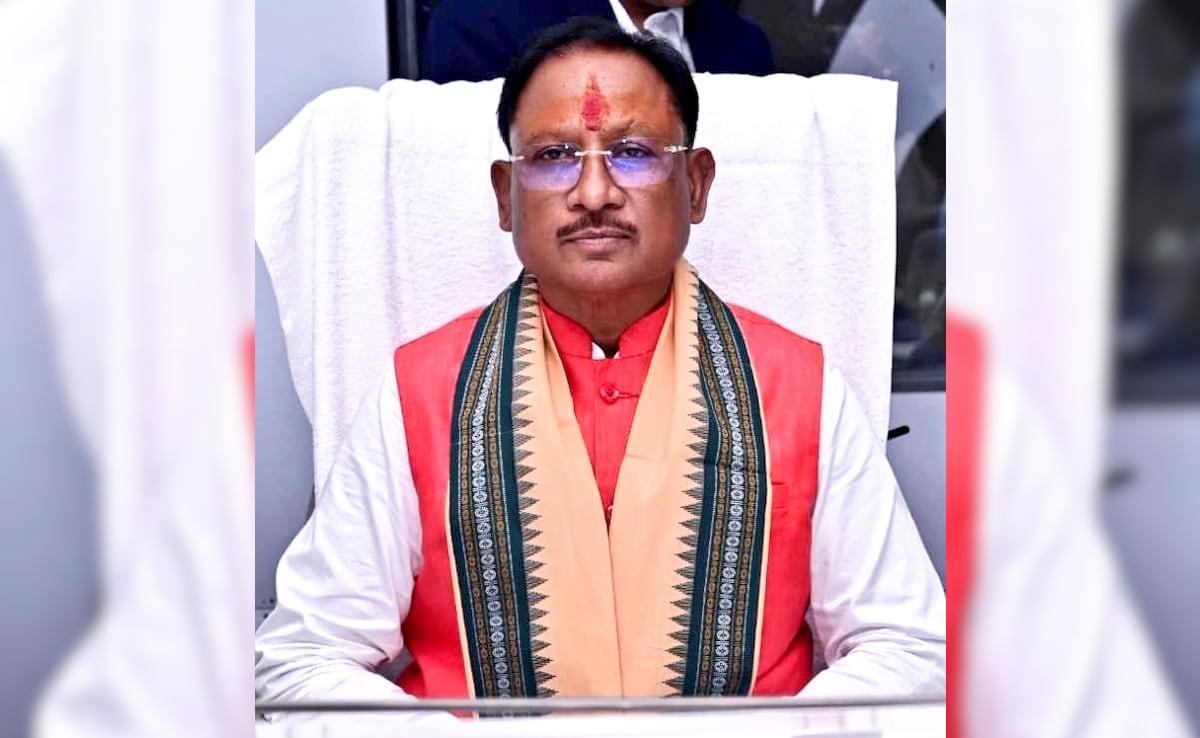
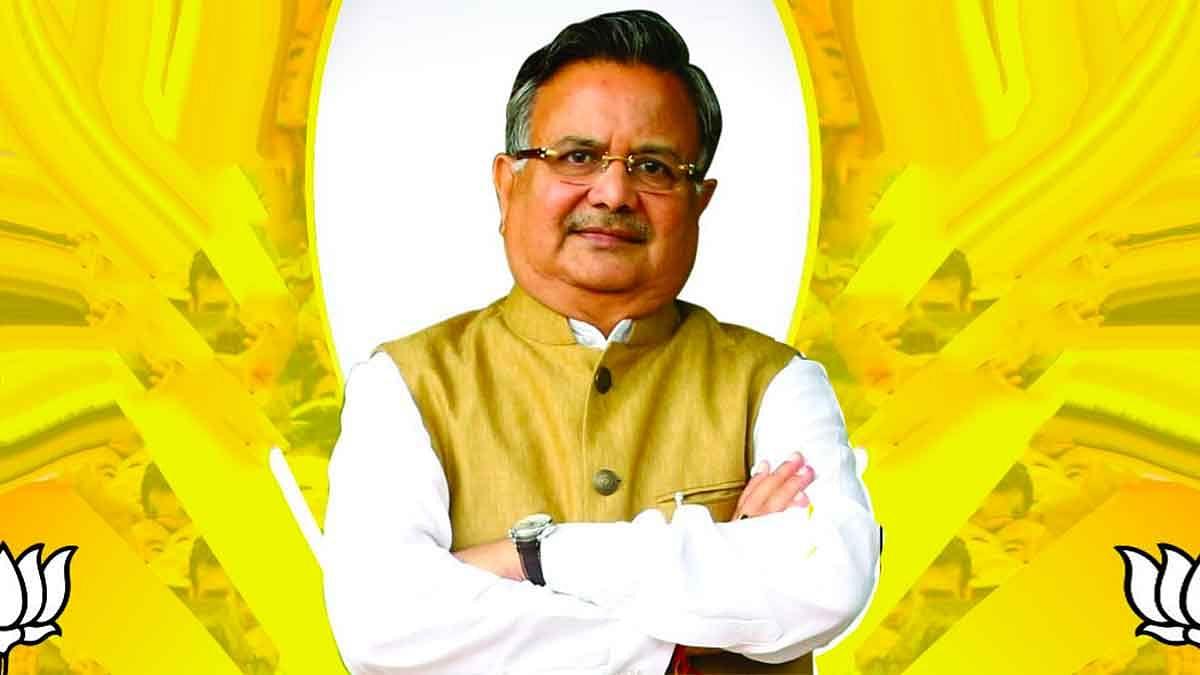
Embracing Indian Languages in Education

A groundbreaking initiative mentioned by Shri Shah was the introduction of medical and engineering studies in Indian languages, aiming to eliminate the language barrier in professional education. This move is expected to empower students from diverse linguistic backgrounds and promote national pride.

Cultural and Religious Revival

Shri Amit Shah also touched upon the government’s efforts in cultural and religious revival, citing the construction of the Ram Temple, Kashi Vishwanath Corridor, and other significant projects. These endeavors reflect a commitment to preserving India’s heritage and promoting its religious sites.

Vision for a Leading India

In conclusion, Shri Amit Shah expressed confidence in India’s youth and the country’s trajectory towards becoming a global leader by the centenary of its independence. The inauguration of the Swaminarayan Institute of Medical Science and Research symbolizes a step forward in realizing this vision, contributing to the nation’s progress in healthcare and education.

The establishment of the institute not only enhances the medical education landscape but also embodies the spirit of service and dedication to the welfare of society, resonating with the core values of the Swaminarayan sect and the broader objectives of the Indian government.

Amit Shah Inaugurates Swaminarayan Institute of Medical Science and Research in Gujarat_50.1

GK Quiz on Lakes in India, Questions and Answers

India is a land blessed with diverse natural landscapes, including an array of beautiful lakes scattered across its length and breadth. From serene high-altitude lakes nestled in the Himalayas to expansive ones adorning the peninsular plateau, each lake holds its own unique charm and significance. Test your knowledge about these stunning water bodies with this lakes quiz!

What is a Lake?

A lake is a large body of water that is surrounded by land. It is typically formed in depressions on the Earth’s surface, often by geological processes such as glaciation, tectonic activity, or volcanic activity. Lakes may be freshwater or saline and play vital roles in ecosystems, providing habitats for diverse flora and fauna while also serving as sources of drinking water and recreation.

Lakes in India

India boasts a rich tapestry of lakes, each offering its own unique beauty and significance. From the iconic Dal Lake in Kashmir to the serene Pangong Lake in Ladakh, and from the floating islands of Loktak Lake in Manipur to the sacred waters of Pushkar Lake in Rajasthan, the country’s lakes serve as vital ecosystems, cultural landmarks, and sources of livelihood for millions of people across diverse regions.

GK Quiz on Lakes in India, Questions and Answers

India hosts a myriad of lakes, ranging from the iconic Dal Lake in Kashmir to the serene Vembanad Lake in Kerala. These water bodies serve as vital ecosystems, cultural landmarks, and sources of livelihood across the country. Let’s boost your knowledge about the Indian Lakes with our GK Quiz on Lakes in India:


Q1. Which is the largest freshwater lake in India?

a) Chilika Lake

b) Dal Lake

c) Wular Lake

d) Vembanad Lake

S1. Ans. (c)

Q2. Which lake is famous for its floating islands known as ‘Phumdis’?

a) Loktak Lake

b) Pushkar Lake

c) Hussain Sagar Lake

d) Pichola Lake

S2. Ans. (a)

Q3. Which is India’s largest coastal lagoon and the world’s second-largest lagoon, situated on the east coast of India in Odisha?

a) Vembanad Lake

b) Chilika Lake

c) Umiam Lake

d) Salim Ali Lake

S3. Ans. (b)

Q4. Which lake in Rajasthan is considered one of the most sacred and is surrounded by 52 bathing ghats?

a) Lake Pichola

b) Ana Sagar Lake

c) Pushkar Lake

d) Fateh Sagar Lake

S4. Ans. (c)

Q5. Which lake, located in Odisha, is the largest coastal lagoon in India?

a) Chilika Lake

b) Lonar Lake

c) Sambhar Lake

d) Wular Lake

S5. Ans. (a)

Q6. Which lake in Gujarat is renowned as the country’s largest water bird sanctuary and was designated as a bird sanctuary in April 1969?

a) Nalsarover Lake

b) Bhimtal Lake

c) Sambhar Lake

d) Pushkar Lake

S6. Ans. (a)

Q7. Which lake in Maharashtra, dedicated to ornithologist Salim Ali, is known as Salim Ali Sarovar and is located near Delhi Gate in Aurangabad?

a) Salim Ali Lake

b) Hussain Sagar Lake

c) Bhimtal Lake

d) Sambhar Lake

S7. Ans. (a)

Q8. What unique feature makes Loktak Lake in Manipur famous?

a) Its abundance of migratory birds

b) Its turquoise-colored water

c) Its floating “phumdis” made from phragmites

d) Its volcanic origin

S8. Ans. (c)

Q9. _________ lake is known as the “Queen of Lakes” in Kerala?

a) Vembanad Lake

b) Ashtamudi Lake

c) Sasthamkotta Lake

d) Periyar Lake

S9. Ans. (c)

Q10. Sambhar Salt Lake is a major supplier of which mineral?

a) Iron ore

b) Salt

c) Coal

d) Gold

S10. Ans. (b)

National Science Day 2024, Date, Theme, Significance and History

National Science Day is celebrated annually on 28th February in India to commemorate the discovery of the ‘Raman Effect’ by Indian physicist Sir Chandrasekhara Venkata Raman. This day serves as a reminder of the pivotal role science plays in shaping our lives and society. Each year, National Science Day is celebrated with a specific theme, highlighting significant aspects of scientific progress and innovation.

National Science Day 2024 Theme

The theme for National Science Day 2024 is ‘Indigenous Technologies for Viksit Bharat’, emphasizing the importance of promoting scientific, technological, and innovation skills. It underscores the achievements of Indian scientists in addressing the country’s challenges through home-grown technologies. The theme also advocates for collaboration between the public and scientific community to contribute to India’s well-being and global welfare.

National Science Day 2024 History

National Science Day traces its origins to the discovery of the ‘Raman Effect’ by Sir C.V. Raman on 28th February 1928. This groundbreaking discovery marked a significant contribution to the field of physics, earning Sir C.V. Raman the Nobel Prize in Physics in 1930. The Raman Effect refers to the phenomenon of light scattering when passing through a transparent material, leading to a change in its wavelength and energy.

National Science Day 2024 Significance

National Science Day is highly significant as it serves various purposes. Firstly, it raises awareness about the significance of science and its practical applications in everyday life. It highlights the contributions and accomplishments of Indian scientists, serving as an inspiration for upcoming generations to pursue scientific pursuits. Additionally, National Science Day facilitates conversations on scientific matters, advocates for the adoption of new technologies, and promotes public involvement with science and technology.

Promoting Scientific Literacy and Collaboration

National Science Day aims to:

  • Raise public awareness: The day catalyzes igniting public interest in science and its applications in everyday life.
  • Celebrate scientific achievements: It provides a platform to acknowledge and celebrate the contributions of Indian scientists to various fields of science and technology.
  • Encourage scientific engagement: National Science Day encourages schools, universities, and research institutions to organize various activities, such as science fairs, exhibitions, and competitions, to nurture a spirit of scientific inquiry and innovation among the younger generation.
  • Foster collaboration: The theme for 2024 emphasizes the importance of collaboration between the scientific community, policymakers, and the public to develop indigenous technologies for addressing national and global challenges.


What is the Leap Year and When it Falls?

Leap Day, falling on February 29th, is a rare occurrence happening only once every four years, marking the inclusion of an extra day in the calendar known as a leap year. This phenomenon, while intriguing, often raises questions about its origins, significance, and impact on various aspects of our lives. Here are some frequently asked questions (FAQs) that shed light on Leap Day and Leap Year.

FAQs on Leap and Leap Year

Leap Day, occurring on February 29th in a Leap Year, adds an extra day to the calendar every four years to synchronize it with the solar year. This adjustment maintains alignment with Earth’s orbit around the sun.

Here are some frequently asked questions (FAQs) related to Leap Day and Leap Year which help you to enhance your knowledge:

What is a Leap Day?

A Leap Day is an additional day inserted into the calendar occurring once every four years on February 29th. It helps synchronize the calendar year with the solar year, ensuring that the calendar remains accurate over time by accounting for the slight discrepancy between the two.

What is a Leap Year?

A leap year, also known as an intercalary year or bissextile year, features an extra day compared to a common year, typically occurring every four years. This additional day, called a leap day, helps align the calendar year with the astronomical year. The 366th day is added to keep the calendar year synchronized with the astronomical year or seasonal year. By inserting this extra day, calendars can correct the drift that naturally occurs over time, ensuring synchronization between human dating systems and the solar system’s physical properties.

What is the Difference Between a Leap Day and a Leap Year?

A leap day occurs approximately every four years on February 29th, although slight adjustments are made due to a six-hour deviation in the calendar system. On the other hand, a leap year is characterized by the addition of an extra day, called a leap day, to the month of February. Leap years consist of 366 days instead of the usual 365 and occur nearly every four years. The distinction lies in leap years having one additional day, which is the leap day itself.

How Do Leap Years Affect Birthdays?

Individuals born on February 29th, known as “leaplings” or “leapers,” technically only celebrate their birthdays every four years. However, many leaplings choose to celebrate on February 28th or March 1st during non-leap years. Some communities also hold special events to honor leaplings and their unique birthdays.

What would happen if there was no leap year?

According to Younas Khan, a physics instructor at the University of Alabama at Birmingham, without leap years, the calendar would shift, causing Northern Hemisphere summers to fall in November. Consequently, Christmas would occur during summer, devoid of its traditional wintry atmosphere and snow.

How Do We Determine a Leap Year is a Leap Year?

We determine if a year is a leap year based on a specific rule: a year is a leap year if it is divisible by 4. However, there’s an exception to this rule: a year divisible by 100 is not a leap year unless it is also divisible by 400. For instance, the year 2000 was a leap year despite being divisible by 100 because it is also divisible by 400. This adjustment is crucial for maintaining the accuracy of the calendar system over longer periods, ensuring that our calendars stay aligned with the Earth’s orbit around the sun.

When was the Leap Year Introduced?

The leap year concept was introduced with the Julian Calendar in 45 BC by Julius Caesar. Inspired by the Egyptians, Caesar added an extra day annually to align the calendar with the solar year. However, his calculations slightly overestimated the solar year by approximately 11 minutes, resulting in an overcorrection of about eight days every millennium.

Do Every Country use the Leap Year System?

Different cultures utilize calendars with leap year rules distinct from those of the Gregorian calendar. For example, in the Iranian calendar, February 29 isn’t recognized as a leap day. Similarly, the Chinese calendar incorporates a leap month instead of a leap day. These variations reflect diverse cultural practices and methods of reconciling the discrepancies between calendar systems and astronomical events.

Are There Leap Year Superstitions or Traditions?

Leap years and Leap Day have inspired various superstitions and traditions across cultures. In some traditions, it is considered unlucky to get married or embark on new ventures during a leap year. However, others view Leap Day as a special occasion for unconventional proposals, gatherings, or charitable acts.

What Happens in Non-Leap Years?

In non-leap years, February has only 28 days, and the calendar proceeds as usual without the addition of an extra day. While leap years are relatively uncommon, they serve as reminders of the intricacies of timekeeping and the importance of maintaining synchronization between human-made calendars and the natural world.

Largest Employer in US 2024, List of Top-10

In the dynamic landscape of the United States job market, certain companies stand out as the largest employers, driving economic growth, innovation, and employment opportunities across various sectors. As of 2024, these companies continue to play a pivotal role in shaping the nation’s workforce and contributing to its overall prosperity.

US’s Largest Employers

In the United States, the largest employers represent diverse sectors and industries, driving economic activity and providing employment opportunities across the nation. Companies like Novo Nordisk, Garmin, and Kroger lead the pack with extensive retail and distribution networks. Technology giants such as Amazon and Google also feature prominently. Healthcare providers like CVS Health and insurers like UnitedHealth Group contribute significantly to the job market. These employers play a vital role in shaping the American workforce and economy.

Largest Employer in US 2024

As of 2024, Novo Nordisk stands as a major employer in the United States, particularly in New Jersey. With over 55,000 employees, Novo Nordisk, founded in 1923, is a prominent player in the pharmaceutical industry. Specializing in diabetes care, obesity treatment, and biopharmaceuticals, Novo Nordisk’s contributions to healthcare are significant. Founded in Denmark in 1925, the company’s research, development, and manufacturing operations underscore its commitment to improving global health outcomes.

Top-10 Largest Employers of US 2024

Novo Nordisk of New Jersey, with the 55,000 employees, holds the title of the largest employer in US 2024, followed by Garmin, Cook Children’s Health Care System, and Children’s Hospital Colorado.

Here is the list of top-10 biggest employers in US 2024:

Biggest Employers in US 2024
Rank Company State Industries Employees
1. Novo Nordisk New Jersey Drugs & Biotechnology 55,000
2. Garmin Kansas Semiconductors, Electronics, Electrical Eng. 19,000
3. Cook Children’s Health Care System Texas Healthcare and Social Services 9,000
4. Children’s Hospital Colorado Colorado Healthcare and Social Services 8,000
5. Delta Air Lines Georgia Transportation and Logistics 95,000
6. In-N-Out Burger California Restaurants 39,000
7. Houston Methodist Texas Healthcare and Social Services 29,700
8. eXp Realty Washington Business Services and Supplies 8,000
9. St. Jude Children’s Research Hospital Tennessee Healthcare and Social Services 5,001
10. The University of Kansas Health System Kansas Healthcare and Social Services 15,000

Largest Employer in US – Novo Nordisk

State: New Jersey

Industries: Drugs & Biotechnology

Employees: 55,000

Year Founded: 1923

Established in 1925 by Harald Pedersen and Thorvald Pedersen, Novo Nordisk A/S, headquartered in Bagsværd, Denmark, stands as a leading healthcare entity in the United States. Specializing in pharmaceutical research, development, manufacturing, and marketing, Novo Nordisk A/S operates across two key segments: Diabetes & Obesity Care, and Biopharmaceuticals. The former offers insulin, GLP-1, oral antidiabetic products, and obesity treatments, while the latter focuses on Haemophilia, growth hormone therapy, and hormone replacement therapy.

Second Largest Employer in US – Garmin

Largest Employer in US 2024, List of Top-10_50.1

State: Kansas

Industries: Semiconductors, Electronics, Electrical Engineering

Employees: 19,000

Year Founded: 1989

Garmin Ltd., established in 1989 with headquarters in Schaffhausen, Switzerland, ranks as the second largest employer in the US. Specializing in navigation, communication, and information devices, Garmin operates across five segments: Marine, Outdoor, Fitness, Auto, and Aviation. Its offerings range from recreational marine electronics and outdoor handhelds to fitness trackers, automotive navigation devices, and aviation solutions, catering to diverse consumer needs and interests.

US’s Third Largest Employer – Cook Children’s Health Care System

Largest Employer in US 2024, List of Top-10_60.1

State: Texas

Industries: Healthcare and Social Service

Employees: 9,000

Year Founded: 1918

In Fort Worth, Texas, Cook Children’s emerges as the third largest employer in the US, transcending conventional healthcare boundaries to become a familial support system for children. With a dedicated team of over 9,700 members, Cook Children’s delivers compassionate care, facilitating over two million patient encounters annually. Their expansive network includes medical centers, surgery centers, a physician network, home health services, and more, extending their influence nationwide and across 32 countries, all while embracing diversity and respect in their approach to healthcare.

Largest Employer in US 2024, List of Top-10_70.1

Top-10 Largest NGOs in India 2024

In the vast landscape of India’s non-profit sector, numerous organizations are tirelessly working towards addressing social, economic, and environmental challenges. As of 2024, several NGOs stand out for their remarkable contributions and wide-reaching impact across the nation. Let’s delve into the list of India’s top 10 largest NGOs, shedding light on their missions, accomplishments, and the communities they serve.

What are NGOs?

Non-Governmental Organizations (NGOs) are non-profit entities independent of government control, dedicated to addressing social, environmental, and humanitarian issues. They operate at local, national, and international levels, advocating for human rights, providing aid and services to marginalized communities, and fostering sustainable development. NGOs rely on donations, grants, and volunteer work to carry out their missions, serving as crucial agents of change and contributing to positive societal transformation.

Roles and Functions of Non-Governmental Organizations (NGOs)

Here are some functions of Non-Governmental Organizations (NGOs):

  • Improving Government performance and accountability through advocacy and policy recommendations.
  • Acting as social mediators to bring about behavioral change and awareness.
  • Facilitating communication between communities and the government.
  • Serving as pressure groups to mobilize public opinion against unfavorable policies.
  • Encouraging community participation and preserving cultural diversity.
  • Empowering women through advocacy and initiatives against gender-based discrimination.
  • Mobilizing local resources to prevent environmental degradation.
  • Providing education, training, and technical assistance to disadvantaged groups.
  • Bridging gaps in service delivery and reaching marginalized populations.
  • Monitoring and evaluating government policies for effective implementation.

Top-10 Largest NGOs in India 2024

NGOs in India drive social change, promote human rights, provide services, and advocate for marginalized communities through grassroots initiatives. Check the list of top-10 largest NGOs in India 2024:

Biggest NGOs in India 2024
S. No. NGO Focus Areas Establishment
1. HelpAge India Elderly care, pension, healthcare 1978
2. LEPRA India Healthcare for slum dwellers, leprosy 1989
3. The Akshaya Patra Foundation Mid-Day meals for School Children 2000
4. Pratham Education Fund Education for underprivileged children 1995
5. Nanhi Kali Girl’s Education 1996
6. Goonj Disaster relief, community development Unspecified
7. Care India Poverty alleviation, social justice 1946
8. CRY Child rights, healthcare, education 1979
9. Give India Fundraising platform for various causes Unspecified
10. Smile Foundation Education, Healthcare, women empowerment 2002

Largest NGO in India – HelpAge India

HelpAge India, established in 1978, champions the cause of elderly individuals, striving to enhance their quality of life. In 2020, it earned distinction as the sole Indian recipient of the ‘UN Population Award 2020’. Providing universal pension, healthcare, and combatting elder abuse are among its pivotal services, exemplifying its commitment to elderly welfare.

India’s Second Largest NGO – LEPRA India

Top-10 Largest NGOs in India 2024_50.1

LEPRA India, founded in 1989 in Hyderabad, focuses on delivering quality healthcare to marginalized communities, including slum dwellers and migrants. Stemming from BELRA’s leprosy prevention efforts dating back to 1925, LEPRA India has treated over 450,000 individuals for leprosy, provided protective footwear to 247,000 people, and assisted 95,000 individuals with disabilities, solidifying its position as the second-largest NGO in India.

Third Biggest NGO of India – Akshaya Patra Foundation

Top-10 Largest NGOs in India 2024_60.1

The Akshaya Patra Foundation, established in 2000 in Bengaluru, aims to eradicate classroom hunger by offering mid-day meals in government and government-aided schools. Remarkably, the organization has expanded its reach from feeding 1,500 students to serving 1.8 million students within two decades. This significant growth solidifies its position as the third-largest NGO in India, exemplifying its commitment to child welfare and education.

Top-10 Largest NGOs in India 2024_70.1


Legendary Ghazal Singer Pankaj Udhas Passes Away

The music world mourns the passing of legendary ghazal singer Pankaj Udhas, who died at the age of 72 after a prolonged illness.

A Life Dedicated to Ghazal Music

Born in Jetpur, Gujarat, in 1951, Udhas’ musical journey began early, surrounded by a family steeped in music. Influenced by his elder brother, Manhar Udhas, a renowned playback singer, Pankaj ventured into the world of music.

Udhas’ initial career involved Bollywood playback singing and even exploring Indian pop. However, his true passion lay in ghazals, a form of Urdu poetry set to music. In 1980, he released his debut ghazal album, “Aahat,” marking the beginning of a remarkable career that would span over 40 years.

A Voice That Transcended Genres

Udhas’ melodious voice and deep understanding of ghazal poetry resonated with audiences across generations. He played a pivotal role in popularizing ghazals, making them accessible to a wider audience beyond traditional enthusiasts. Tracks like “Chitthi Aai Hai” (Naam, 1986) and “Aa Gale Lag Ja” cemented his status as a household name and one of India’s leading ghazal singers.

Recognition and Legacy

Udhas’ exceptional talent was acknowledged through numerous prestigious awards, including the Filmfare Award, the Sangeet Natak Akademi Award for Ghazal Singing, and the Padma Shri, India’s fourth-highest civilian honor.

Beyond his musical genius, Udhas was known for his humility and down-to-earth personality. His dedication to ghazals and his captivating voice will forever be cherished by music lovers worldwide.

Pankaj Udhas’ legacy lives on through his timeless music, inspiring future generations and reminding us of the power of ghazals to touch the soul.

India Unveils Largest Solar-Battery Project, Pioneering Renewable Energy Innovation

The Solar Energy Corporation of India (SECI) has commissioned India’s largest solar-battery energy storage system (BESS) in Rajnandgaon, Chhattisgarh.

Project Highlights

  • Capacity: 40 MW / 120 MWh BESS
  • Solar PV Plant Capacity: 152.325 MW
  • Dispatchable Capacity: 100 MW AC (155.02 MW peak DC)
  • Beneficiary: State of Chhattisgarh

Project Significance

  • First-of-its-kind: This large-scale integration of solar and battery storage represents a pioneering leap in renewable energy generation and utilization in India.
  • Peak Power Management: The project addresses peak energy demand by storing solar energy during the day and releasing it during evening hours, ensuring grid stability and reliability.
  • Environmental Benefits: By utilizing renewable energy sources and adopting sustainable land-use practices, the project contributes significantly to reducing carbon emissions and promoting environmental responsibility.
  • Economic Viability: The project’s long-term power purchase agreement with the state electricity distribution company ensures economic sustainability and paves the way for future renewable energy endeavors.

Project Features

  • Innovative Technology: The project incorporates bifacial solar modules, generating more electricity compared to traditional models.
  • Land Utilization: The project demonstrates responsible land use by repurposing previously unused land through a collaborative agreement with the Chhattisgarh government.
  • Grid Integration: Seamless integration into the existing power grid is ensured through a dedicated 132 kV transmission line.
  • Financial Collaboration: The project is a testament to successful collaboration, receiving funding from the World Bank, Clean Technology Fund, and domestic lending agencies.

Looking Ahead

The successful commissioning of this project is expected to have a widespread positive impact:

  • Advancing renewable energy adoption in India and globally.
  • Promoting responsible and sustainable practices in the development of future energy projects.
  • Inspiring further innovation in the renewable energy sector.

This project serves as a beacon of hope for a sustainable future, demonstrating the immense potential of renewable energy to meet growing energy demands while safeguarding the environment.

Govt Unveils 4 Transformative Portals For Modernizing Media

In a move to redefine India’s media landscape, Union Minister Anurag Singh Thakur launched four portals aimed at fostering a more conducive business environment, enhancing transparency in government communication, and providing easy access to authentic government videos.

Government’s Recognition for Ease of Doing Business

  • Minister Thakur highlighted the government’s achievements in improving the ease of doing business, acknowledged by international indices such as the World Bank’s Ease of Doing Business Index and the Logistic Performance Index.
  • Platforms like the Government e-Marketplace (GeM) were cited as evidence of the government’s commitment to fostering competition for MSMEs and small businesses.

Revolutionary Portals for Efficiency

The four portals launched signify a leap towards enhancing efficiency and transparency in government operations.

  • Press Sewa Portal: Developed under the Press and Registration of Periodicals Act, 2023 (PRP Act, 2023), this portal automates the process for newspaper registration and related procedures. Its features include online application filing, real-time tracking, and a module for District Magistrates to manage applications.
  • Transparent Empanelment Media Planning and eBilling System: Introduced for the Central Bureau of Communication (CBC), this system streamlines media planning processes and offers an ERP solution for the media industry. Features include automated empanelment, media planning, billing, and a mobile app for partners.
  • NaViGate Bharat Portal: Developed by the New Media Wing of the Ministry, this portal serves as a unified bilingual platform hosting videos on the government’s development and citizen welfare measures. It offers navigation, categorization, video playback, and search functionality.
  • National Register for LCOs: This portal aims to centralize the registration of Local Cable Operators (LCOs), promising an organized cable sector. With online registration facilities and a national register for LCOs, it paves the way for service and convenience for cable operators.

A Leap Towards a Transparent and Efficient Future

  • The launch of these portals marks a milestone in India’s journey towards a more transparent, efficient, and business-friendly environment.
  • As India continues to make strides in governance and economic reforms, these initiatives reaffirm the government’s commitment to leveraging technology for the benefit of its citizens and businesses.

PM Narendra Modi Inaugurates India’s Longest Cable-Stayed Bridge, Sudarshan Setu

Prime Minister Narendra Modi inaugurated India’s longest cable-stayed bridge, Sudarshan Setu, in Gujarat’s Dwarka. This monumental infrastructure project, connecting Okha and Beyt Dwarka island, stands as a testament to the nation’s commitment to progress and connectivity. Let’s delve into the details of this remarkable feat:

Sudarshan Setu Project Overview

  • Sudarshan Setu, formerly known as the Signature Bridge, has been constructed at a cost of ₹979 crore.
  • Spanning an impressive 2.32 km, it is India’s longest cable-stayed bridge, serving as a vital link between the Okha mainland and Beyt Dwarka island.
  • Prime Minister Modi laid the foundation stone of this project in October 2017, envisioning it as a crucial connection between the old and new Dwarka.

Sudarshan Setu, Key Features

  • The bridge boasts a total width of 27.2 meters (89 ft) with four lanes, ensuring smooth traffic flow between the mainland and the island.
  • Adorned with verses from the Shrimad Bhagavad Gita and images of Lord Krishna, the footpaths on both sides of the bridge offer a unique cultural touch, reflecting the rich heritage of Dwarka.
  • Notably, solar panels installed on the footpath sides can generate one megawatt of electricity, showcasing a commitment to sustainable infrastructure.

Impact and Significance of Sudarshan Setu

  • Sudarshan Setu is poised to revolutionize connectivity in the region, significantly reducing travel time for devotees and tourists.
  • With an estimated two million pilgrims visiting the temples in the area, the bridge addresses transportation challenges previously faced by pilgrims who relied on boats, limited to daytime travel.
  • Beyond mere connectivity, Sudarshan Setu is expected to emerge as a major tourist attraction in Dwarka, further bolstering the region’s economy and tourism sector.

Empowering Communities of Sudarshan Setu

The inauguration of Sudarshan Setu isn’t just about infrastructure; it’s about empowering communities. The bridge aims to benefit approximately 8,500 residents on Beyt Dwarka island, facilitating easier access to essential services and opportunities.

Vision for the Future Sudarshan Setu

Sudarshan Setu exemplifies India’s vision for inclusive development and progress. As the nation strides towards becoming a global powerhouse, infrastructure projects like these play a pivotal role in fostering economic growth, connectivity, and cultural preservation.

Rainiest City in India 2024, List of Top-10

As the monsoon season sweeps across the Indian subcontinent, it brings relief from scorching temperatures and replenishes the land with life-giving water. In a country known for its diverse climates and landscapes, some cities receive an abundance of rainfall, contributing to their lush greenery and vibrant ecosystems. In 2024, let’s explore the top 10 rainiest cities in India, where the skies open up to nourish the earth and captivate the senses.

India’s Rainiest Place 2024

Mawsynram stands as India’s rainiest haven, nestled amidst the East Khasi Hills of Meghalaya. Welcoming travelers with its breathtaking landscapes and lush greenery, it receives a staggering 12 meters of rainfall annually. This picturesque hill station, enveloped by hills on three sides, beckons tourists worldwide to marvel at its exotic flora and fauna. With unexpected showers year-round, visitors are advised to carry rain gear for an unforgettable experience amidst nature’s bounty.

Top-10 Rainiest Cities in India 2024

Mawsynrum district of Meghalaya with the annual rainfall of 12 meters, holds the title of the rainiest city in India, followed by Mahabaleshwar, Cherrapunji, Agumbe, and Amboli.

Here is the list of top-10 rainiest cities in India 2024:

Rainiest Cities in India 2024
Rank City State
1. Mawsynrum Meghalaya
2. Mahabaleshwar Maharashtra
3. Cherrapunji Meghalaya
4. Agumbe Karnataka
5. Amboli Maharashtra
6. Gangtok Sikkim
7. Neriamangalam Kerala
8. Sitarganj Uttarakhand
9. Chinnakallar Tamil Nadu
10. Pasighat Arunachal Pradesh

Rainiest City in India – Mawsynrum

 Mawsynram, acclaimed as the rainiest city in India, entices travelers with its lush landscapes and unparalleled charm. Nestled in the East Khasi Hills of Meghalaya, it boasts an annual rainfall of approximately 12 meters, nurturing exotic flora and fauna. Surrounded by hills, Mawsynram beckons visitors worldwide, where unexpected showers grace the region year-round, urging tourists to carry rain gear for an unforgettable experience.

India’s Second Rainiest Place – Mahableshwar

Rainiest City in India 2024, List of Top-10_50.1

Mahabaleshwar, nestled in Maharashtra’s Satara district, stands as India’s second rainiest city. Renowned for its pilgrimage significance, it’s the origin of the Krishna river, revered in Hinduism. During British rule, it transformed into a developed hill station, serving as Bombay Presidency’s summer capital. Its lush landscapes and historical charm beckon travelers seeking the allure of abundant rainfall and spiritual sanctity.

Third Rainiest City in India – Cherrapunji

Rainiest City in India 2024, List of Top-10_60.1

Cherrapunji, locally known as ‘Sohra’, holds the distinction of being India’s third rainiest city. Situated in the northeastern region, it captivates with its high-altitude charm and renowned living root bridges crafted from rubber trees. Referred to as the “wet desert of India,” Cherrapunji experiences rapid cloud ascent, facilitating condensation and contributing to its abundant rainfall.

Rainiest City in India 2024, List of Top-10_70.1

First Chief Minister of Assam, Know the Name

In the annals of Indian political history, Gopinath Bordoloi stands as a monumental figure, recognized for his pivotal role in shaping the destiny of Assam. As the first Chief Minister of the state, Bordoloi’s legacy reverberates through the corridors of time, marked by his visionary leadership, unwavering commitment to social justice, and tireless efforts towards the upliftment of the people of Assam.

First Chief Minister of Assam

Gopinath Bordoloi, the inaugural Chief Minister of Assam (1946-1950), was a renowned Indian independence activist and politician. He chaired the North-East Frontier Tribal areas and Assam Excluded and Partially Excluded Areas Sub-Committee. Bordoloi’s adherence to Gandhian principles, particularly non-violence, shaped his political ideology. Recognized for his selfless service, he earned the title “Lokpriya” from the Governor of Assam, Jayram Das Doulatram, signifying his widespread popularity and devotion to the people of Assam.

Assam’s First Chief Minister – Early Life and Education

Born in Raha, Bordoloi’s journey began with humble origins. After completing his education at institutions like Cotton College and Scottish Church College, he embarked on a career in law. However, his commitment to public service soon eclipsed his legal pursuits, leading him to embrace the call of politics.

Political Life of Gopinath Bordoloi

Bordoloi’s foray into politics coincided with the burgeoning Indian nationalist movement. He ardently supported the Indian National Congress, actively participating in pivotal movements such as the Non-cooperation Movement. Despite facing incarceration and political adversity, Bordoloi remained steadfast in his pursuit of independence and social justice.

Gopinath Bordoloi as Assam’s First Chief Minster

Bordoloi’s ascent to the position of Chief Minister epitomized his political acumen and leadership prowess. His tenure, from 1946 to 1950, was characterized by astute governance and visionary policies aimed at fostering inclusive development. Notably, he championed the cause of indigenous communities, advocating for their rights and representation in the political sphere.

Role in Assam’s Political Landscape

Bordoloi’s tenure witnessed tumultuous events, including the partition of India and the subsequent influx of refugees. Amidst these challenges, he emerged as a beacon of stability and compassion, spearheading efforts to mitigate communal tensions and promote communal harmony. His unwavering commitment to Gandhian principles, particularly non-violence, underscored his approach to governance and conflict resolution.

First CM of Assam – Contributions and Legacy

Bordoloi’s contributions to Assam’s socio-economic fabric are manifold. He played a pivotal role in establishing key institutions such as Gauhati University, the High Court of Assam, and various medical and veterinary colleges. Moreover, his efforts in securing Assam’s sovereignty amidst geopolitical turmoil, including the 1971 Bangladesh Liberation War, underscored his statesmanship and foresight.

First Chief Minister of Assam – Awards and Recognition

Bordoloi’s legacy continues to reverberate through posthumous honors and recognition. In 1999, he was posthumously conferred with the Bharat Ratna, India’s highest civilian award, by former Prime Minister Atal Bihari Vajpayee. Additionally, his contributions were commemorated with the unveiling of a life-size statue in the Parliament House, symbolizing his enduring impact on the nation’s political landscape.

Shehbaz Sharif to be Pakistan PM and Asif Ali Zardari President

In Pakistan, two big-time political groups, the Pakistan Muslim League-Nawaz (PML-N) and the Pakistan Peoples Party (PPP), have decided to share power. This means Shehbaz Sharif is set to be the Prime Minister again, and Asif Ali Zardari will be the President. It’s like when two captains from different teams decide to work together to win the game.

Ending a Political Standoff

After the elections on February 8, Pakistan’s political scene was a bit stuck. No single party won enough seats in the National Assembly (that’s like the big group of people who make decisions for the country) to have a clear win. The PML-N got 79 seats, and the PPP was in third place with 54 seats. But with the help of the Muttahida Qaumi Movement Pakistan (MQM-P) and their 17 seats, they’ve got enough support to form a government.

Big Challenges Ahead

Now that they’ve figured out who’s in charge, they have some tough stuff to tackle. Pakistan’s money situation is pretty tight, and they just barely avoided running out of cash last year thanks to a big loan from the International Monetary Fund (IMF). They also need to deal with safety issues, especially with the group called the Taliban causing trouble next door in Afghanistan since 2021.

Focusing on What’s Important

Shehbaz Sharif and Asif Ali Zardari have a lot on their plate. They need to make sure the country’s economy gets better and that people feel safe. Last year’s loan was like a band-aid, so now they need to come up with a long-term plan to keep things stable.

Looking Ahead

With Sharif and Zardari teaming up, Pakistan is hoping to get through these tough times. Everyone’s watching to see if their plan to work together will help fix the economy and make sure everyone’s safe from threats. It’s a big job, but they’re ready to take it on.

Important takeaways for all competitive exams:

  • Pakistan Capital: Islamabad;
  • Pakistan Official languages: Urdu, English;
  • Pakistan Pakistani Rupee.

First General Election in India (1951-52), Know the Date and Key Facts

India’s journey towards democracy is marked by a pivotal milestone — the First General Election held in 1951-1952. This monumental event not only shaped the course of Indian politics but also laid the foundation for the world’s largest democratic experiment. Let’s delve into the significance, challenges, and triumphs of India’s inaugural democratic exercise.

First General Election in India

India’s journey towards establishing itself as a sovereign, socialist, secular, and democratic republic reached a significant milestone with the commencement of the First General Election on October 25, 1951. After years of struggle for independence, the nation was now poised to embrace the principles of universal adult suffrage and conduct a massive electoral exercise.

First General Election in India (1951-1952) – Key Events

Formation of the First Lok Sabha: The inaugural Lok Sabha was elected during the first general elections, marking a crucial step in shaping the democratic landscape of independent India.

Transition from Interim Legislature: Since August 1947, India had been governed by an interim legislature known as the Indian Constituent Assembly. The First General Election paved the way for a more representative and permanent legislative body.

Universal Adult Suffrage: A groundbreaking aspect of the election was the implementation of universal adult suffrage, allowing every citizen over the age of 21 to exercise their right to vote, irrespective of caste, creed, religion, gender, or socio-economic status.

Scale and Participants: A total of 53 political parties contested for 489 seats, with 1874 candidates vying for victory. The election covered 401 constituencies, some of which had multiple seats. Notably, the multi-seat constituencies were eliminated in the 1960s.

Voter Turnout and Representation:Out of a population of 36 crores, approximately 17.32 crores were eligible to vote, resulting in a noteworthy 45% turnout. The Indian National Congress (INC) dominated the elections, winning 364 seats, securing nearly 45% of the votes. The Communist Party of India (CPI) came second with 16 seats.

Mock Election and Election Commissioner: To familiarize citizens with the election process, a mock election was conducted in September 1951. Sukumar Sen served as the first Election Commissioner of India, overseeing the fair and efficient conduct of the electoral process.

Prominent Winners and Losses: Key figures like Jawaharlal Nehru, Lal Bahadur Shastri, Sucheta Kripalani, Gulzari Lal Nanda, and Shyama Prasad Mukherjee emerged as prominent winners. However, B.R. Ambedkar faced defeat in the Bombay (North-Central) seat, losing to INC candidate Narayan Sadoba Kajrolkar.

Highlights of the Results of First General Election of India

The table below outlines the major parties, their respective votes, and the seats they secured:

Major Parties No. of Votes Seats Won
Indian National Congress 47,665,875 364
Communist Party of India 3,484,401 16
Bhartiya Jana Singh 3,246,288 3
Socialist Party 11,266,779 12
Kisan Mazdoor Praja Party 6,156,558 9
Independents 16,817,910 37

Noteworthy Facts and Figures of First Lok Sabha (1852-1957)

  • The first Lok Sabha, lasting from April 1952 to April 1957, had a record 677
  • V. Mavalankar served as the Speaker of the first Lok Sabha.
  • Ravi Narayana Reddy, representing the People’s Democratic Front, was the first person to enter Parliament, outvoting even Nehru in the first general elections.

IPL 2024 Schedule Announced, Full list of Matches and Venue

IPL 2024 Schedule

The Indian Premier League (IPL) 2024 is gearing up to enthral cricket fans across the globe from March 22 to May 26, 2024. This 17th season, sponsored by TATA, is organized by the Board of Control for Cricket in India (BCCI) and promises an unprecedented cricketing spectacle with the participation of 10 teams, following the addition of two new franchises.

The tournament will start with an electrifying match between the Gujarat Titans and Chennai Super Kings (CSK) at the DY Patil Stadium in Mumbai, scheduled for March 22, 2024. Under the leadership of MS Dhoni for CSK and Hardik Pandya for the Gujarat Titans, the opening clash is set to set the tone for the rest of the tournament. The IPL 2024 start date is expected to be 22nd March 2024, with an exciting opening match between two power-packed teams at the Chepauk Stadium, Chennai.

IPL 2024 Schedule & Time Table

The IPL 2024 schedule, offers a clear view of the matches, dates, and times, ensuring fans don’t miss out on any action. The IPL 2024  Schedule for the initial 21 matches was unveiled on Thursday, while the fixtures for the remaining games will be disclosed at a later date.

Match No. Fixture Date Venue Time
1 CSK vs RCB March 22 Chennai 7:30 PM IST
2 PBKS vs DC March 23 Mohali 3:30 PM IST
3 KKR vs SRH March 23 Kolkata 7:30 PM IST
4 RR vs LSG March 24 Jaipur 3:30 PM IST
5 GT vs MI March 24 Ahmedabad 7:30 PM IST
6 RCB vs PBKS March 25 Bengaluru 7:30 PM IST
7 CSK vs GT March 26 Chennai 7:30 PM IST
8 SRH vs MI March 27 Hyderabad 7:30 PM IST
9 RR vs DC March 28 Jaipur 7:30 PM IST
10 RCB vs KKR March 29 Bengaluru 7:30 PM IST
11 LSG vs PBKS March 30 Lucknow 7:30 PM IST
12 GT vs SRH March 31 Ahmedabad 3:30 PM IST
13 DC vs CSK March 31 Visakhapatnam 7:30 PM IST
14 MI vs RR April 1 Mumbai 7:30 PM IST
15 RCB vs LSG April 2 Bengaluru 7:30 PM IST
16 DC vs KKR April 3 Visakhapatnam 7:30 PM IST
17 GT vs PBKS April 4 Ahmedabad 7:30 PM IST
18 SRH vs CSK April 5 Hyderabad 7:30 PM IST
19 RR vs RCB April 6 Jaipur 7:30 PM IST
20 MI vs DC April 7 Mumbai 3:30 PM IST
21 LSG vs GT April 7 Lucknow 7:30 PM IST

IPL Winners List From 2008 to 2024

IPL 2024 Schedule Info

The IPL 2024 season is set to commence on March 22 and conclude on May 29, featuring a total of 74 matches across various venues in India, with the grand finale scheduled to take place at the Narendra Modi Stadium.

IPL 2024 Details
IPL Starts March 22, 2024
IPL Ends on May 26, 2024
Year 2024
Total matches 74
IPL Hosting Country India
Grand finale will held inn Narendra Modi stadium
Total team will participate 10
IPL Time Table 2024 Status Released
Organizer BCCI & IPL Governing Council
Award Money 46.5 Crore
Updates on Topic IPL 2024
First match Venue Chepauk, Chennai

IPL Team List 2024

In the upcoming IPL match of 2024, a total of 10 teams are slated to participate. Below is the IPL Team List 2024 that will be competing in the IPL 2024 tournament.

IPL 2024 Teams List Captains
Mumbai Indians Hardik Pandya
Kolkata Knights Riders Shreyas Iyer
Chennai Super Kings (CSK) Mahendra Singh Dhoni
Punjab Kings Shikhar Dhawan
Delhi Capitals Rishabh Pant / David Warner
Rajasthan Royals Sanju Samson
Sunrisers Hyderabad Aiden Markram
Lucknow Super Joints KL Rahul
Royal Challengers Bangalore Virat Kohli
Gujrat Titans Shubman Gill

IPL 2024 Venue

In the year 2024, IPL matches will be held in 10 cities across India, following a home-and-away format for all participating teams. Below is the list of IPL venues 2024 season:

City  IPL Venue 2024
Delhi Arun Jaitley Stadium
Mumbai Wankhede Stadium
Hyderabad Rajiv gandhi International Cricket Stadium
Chennai M.A. ChidambaramChepauk Stadium
Kolkata Eden Garden
Ahmadabad Narendra Modi Stadium
Mohali Punjab Cricket Association Is Bindra Stadium
Bangalore M. Chinnaswamy Stadium
Guwahati Barsapara Cricket Stadium
Lucknow Bharat Ratna Shri Atal Bihari Vajpayee Ekana Cricket Stadium
Dharamsala Himachal Pradesh Cricket Association Stadium

IPL 2024 Team Squads 

Team Name Squads
Chennai Super Kings (CSK) MS Dhoni (c), Moeen Ali, Deepak Chahar, Devon Conway, Tushar Deshpande, Shivam Dube, Ruturaj Gaikwad, Rajvardhan Hangargekar, Ravindra Jadeja, Ajay Mandal, Mukesh Choudhary, Matheesha Pathirana, Ajinkya Rahane, Shaik Rasheed, Mitchell Santner, Simarjeet Singh, Nishant Sindhu, Prashant Solanki, Maheesh Theekshana, Rachin Ravindra, Shardul Thakur, Daryl Mitchell, Sameer Rizvi, Mustafizur Rahman, Avanish Rao Aravelly.
Gujarat Titans David Miller, Shubman Gill (c), Matthew Wade, Wriddhiman Saha, Kane Williamson, Abhinav Manohar, B. Sai Sudharsan, Darshan Nalkande, Vijay Shankar, Jayant Yadav, Rahul Tewatia, Mohammed Shami, Noor Ahmad, Sai Kishore, Rashid Khan, Joshua Little, Mohit Sharma, Azmatullah Omarzai, Umesh Yadav, Shahrukh Khan, Sushant Mishra, Kartik Tyagi, Manav Suthar, Spencer Johnson, Robin Minz.
Mumbai Indians Rohit Sharma, Dewald Brevis, Suryakumar Yadav, Ishan Kishan, N. Tilak Varma, Tim David, Vishnu Vinod, Arjun Tendulkar, Shams Mulani, Nehal Wadhera, Jasprit Bumrah, Kumar Kartikeya, Piyush Chawla, Akash Madhwal, Jason Behrendorff, Romario Shepherd, Hardik Pandya (c), Gerald Coetzee, Dilshan Madushanka, Shreyas Gopal, Nuwan Thushara, Naman Dhir, Anshul Kamboj, Mohammad Nabi, Shivalik Sharma.
Lucknow Super Giants KL Rahul (c), Quinton de Kock, Nicholas Pooran, Ayush Badoni, Kyle Mayers, Marcus Stoinis, Deepak Hooda, Devdutt Padikkal, Ravi Bishnoi, Naveen-ul-Haq, Krunal Pandya, Yudhvir Singh, Prerak Mankad, Yash Thakur, Amit Mishra, Mark Wood, Mayank Yadav, Mohsin Khan, K. Gowtham, Shivam Mavi, Arshin Kulkarni, M. Siddharth, Ashton Turner, David Willey, Mohd. Arshad Khan.
Royal Challengers Bangalore Faf du Plessis (c), Glenn Maxwell, Virat Kohli, Rajat Patidar, Anuj Rawat, Dinesh Karthik, Suyash Prabhudessai, Will Jacks, Mahipal Lomror, Karn Sharma, Manoj Bhandage, Mayank Dagar, Vijaykumar Vyshak, Akash Deep, Mohammed Siraj, Reece Topley, Himanshu Sharma, Rajan Kumar, Cameron Green, Alzarri Joseph, Yash Dayal, Tom Curran, Lockie Ferguson, Swapnil Singh, Saurav Chauhan.
Rajasthan Royals Sanju Samson (c), Jos Buttler, Shimron Hetmyer, Yashasvi Jaiswal, Dhruv Jurel, Riyan Parag, Donovan Ferreira, Kunal Rathore, Ravichandran Ashwin, Kuldeep Sen, Navdeep Saini, Prasidh Krishna, Sandeep Sharma, Trent Boult, Yuzvendra Chahal, Adam Zampa, Avesh Khan, Rovman Powell, Shubham Dubey, Tom Kohler-Cadmore, Abid Mushtaq, Nandre Burger.
Kolkata Knights Riders Nitish Rana, Rinku Singh, Rahmanullah Gurbaz, Shreyas Iyer (c), Jason Roy, Sunil Narine, Suyash Sharma, Anukul Roy, Andre Russell, Venkatesh Iyer, Harshit Rana, Vaibhav Arora, Varun Chakaravarthy, KS Bharat, Chetan Sakariya, Mitchell Starc, Angkrish Raghuvanshi, Ramandeep Singh, Sherfane Rutherford, Manish Pandey, Mujeeb Ur Rahman, Gus Atkinson, Sakib Hussain.
Punjab Kings Shikhar Dhawan (c), Matthew Short, Prabhsimran Singh, Jitesh Sharma, Sikandar Raza, Rishi Dhawan, Liam Livingstone, Atharva Taide, Arshdeep Singh, Nathan Ellis, Sam Curran, Kagiso Rabada, Harpreet Brar, Rahul Chahar, Harpreet Bhatia, Vidwath Kaverappa, Shivam Singh, Harshal Patel, Chris Woakes, Ashutosh Sharma, Vishwanath Pratap Singh, Shashank Singh, Tanay Thyagarajann, Prince Choudhary, Rilee Rossouw.
Delhi Capitals Rishabh Pant (c), Pravin Dubey, David Warner, Vicky Ostwal, Prithvi Shaw, Anrich Nortje, Abishek Porel, Kuldeep Yadav, Axar Patel, Lungi Ngidi, Lalit Yadav, Khaleel Ahmed, Mitchell Marsh, Ishant Sharma, Yash Dhull, Mukesh Kumar, Harry Brook, Tristan Stubbs, Ricky Bhui, Kumar Kushagra, Rasikh Dar, Jhye Richardson, Sumit Kumar, Shai Hope, Swastik Chhikara.
Sunrisers Hyderabad Abdul Samad, Abhishek Sharma, Aiden Markram (c), Marco Jansen, Rahul Tripathi, Washington Sundar, Glenn Phillips, Sanvir Singh, Heinrich Klaasen, Bhuvneshwar Kumar, Mayank Agarwal, T. Natarajan, Anmolpreet Singh, Mayank Markande, Upendra Singh Yadav, Umran Malik, Nitish Kumar Reddy, Fazalhaq Farooqi, Shahbaz Ahmed, Travis Head, Wanindu Hasaranga, Pat Cummins, Jaydev Unadkat, Akash Singh, Jhathavedh Subramanyan.

IPL 2024 Points Table

This table represents the initial standings of the teams before the start of the IPL 2024 tournament, with all teams having played 0 matches and thus having 0 wins, 0 losses, 0 points, and a net run rate (NRR) of 0.

Teams Matches Win Loss Points NRR
Mumbai Indians 0 0 0 0 0
Kolkata Knights Riders 0 0 0 0 0
Chennai Super Kings (CSK) 0 0 0 0 0
Punjab Kings 0 0 0 0 0
Delhi Capitals 0 0 0 0 0
Rajasthan Royals 0 0 0 0 0
Sunrisers Hyderabad 0 0 0 0 0
Lucknow Super Joints 0 0 0 0 0
Royal Challengers Bangalore 0 0 0 0 0
Gujrat Titans 0 0 0 0 0

Lok Sabha Elections 2024: Date, Month and Year

India, the world’s largest democracy, is gearing up for its 18th Lok Sabha election in 2024. The Lok Sabha, comprising 543 + 2  seats, plays a pivotal role in shaping the nation’s political landscape. With the Bharatiya Janata Party (BJP) led by Prime Minister Narendra Modi currently in power, the upcoming elections promise to be a contest of ideologies and visions for the future. In this article, will delve into the projected date of Lok Sabha Elections 2024.

In Which Month Lok Sabha Elections 2024 takes place?

The Election Commission of India (ECI) has set the stage for the 18th Lok Sabha Election, tentatively scheduled for April and May 2024. With the preliminary date announced as April 16, 2024, anticipation and excitement ripple across the nation as political parties gear up for a spirited electoral contest.

Lok Sabha Elections 2024 – Date

The Election Commission of India (ECI) has indicated that the 2024 Lok Sabha elections are likely to take place during April and May. An initial date of April 16, 2024, has been proposed, igniting considerable excitement and political engagement throughout the country.

Lok Sabha Elections 2024 – Key Players and Alliances

The National Democratic Alliance (NDA), spearheaded by the BJP, seeks to secure a third consecutive term in power. Prime Minister Narendra Modi remains a formidable figure, with the BJP launching its electoral campaign with a rally in Uttar Pradesh’s Bulandshahr. The NDA faces opposition from the newly formed INDIA (Indian National Developmental Inclusive coalition) alliance, comprising 26 parties united in their bid to challenge Modi’s leadership.

General Elections 2024 – Predictions and Projections

While predictions for the 2024 Lok Sabha election abound, many anticipate Narendra Modi and the BJP to emerge victorious once again. The BJP’s strong performance in previous elections, coupled with Modi’s popularity, present a formidable challenge to opposition parties. However, the opposition, led by the INDIA coalition, remains determined to unseat the incumbent government, setting the stage for a fiercely contested electoral battle.

Alliance Formation of Lok Sabha Elections 2024

The formation of alliances underscores the complex dynamics of Indian politics. While the NDA rallies behind Narendra Modi’s leadership, the INDIA coalition presents a diverse array of parties united by a common goal – to offer an alternative vision for India’s future. The question of leadership within the INDIA alliance remains unanswered, adding an element of intrigue to the electoral landscape.

18th Lok Sabha Elections 2024 – Parties and Candidates

A multitude of parties and candidates are vying for seats in the Lok Sabha. From the BJP and Congress to regional players like the Samajwadi Party and Bahujan Samaj Party, the electoral fray is marked by diversity and competition. The announcement of candidates, including notable figures such as Dimple Yadav and Akshay Yadav, underscores the significance of individual personalities within the broader political narrative.

An Overview of Election Commission of India (ECI)

Formation: 25th January 1950

Ministry: Ministry of Law and Justice

Headquarters: Nirvachan Sadan, Ashoka Road, New Delhi

The Election Commission of India (ECI) is a constitutional entity mandated by the Constitution of India to oversee and manage the electoral process nationwide. Article 324 of the Constitution confers upon the Election Commission the authority to supervise, guide, and regulate elections for parliamentary, state legislative, presidential, and vice-presidential offices. As such, the Election Commission is a unified body serving both the Central government and state governments across India.

What is the Capital of Andhra Pradesh? Amravati or Vishakhapatnam

What is the Capital of Andhra Pradesh?

The capital city of a state frequently mirrors its culture, legacy and ambitions. Amravati, the current capital of Andhra Pradesh, stands as a representation of the state’s forward-looking vision while honoring its profound heritage. This article explores Amravati, the present capital of Andhra Pradesh, Amravati and Vishakhapatnam which would be the new capital of Andhra Pradesh.

Historical Significance of Amravati

Amaravti has deep historical roots, dating back over two thousand years. The name “Amravati” itself is derived from the Amravati Stupa, a significant Buddhist monument located in the city. This ancient stupa is an architectural marvel and Satvahana dynasties. The city’s historical significance does not end there, as it has also been a major center of trade and culture throughout the centuries.

Geographical Overview of Amravati

Amravati, the capital of Andhra Pradesh, is a city located in the southeastern part of Andhra Pradesh near the Krishna River. Its geographical location makes it an ideal choice for the capital of the state. The city’s proximity to the Krishna River not only provides natural beauty but also plays a crucial role in the region’s agriculture and irrigation, ensuring a stable source of livelihood for the locals.

Key Features of Amravati

  • Greenfield Capital: Amravati is a greenfield capital, meaning it is being developed from scratch, allowing for meticulous planning and modern infrastructure.
  • Sustainable and Smart City: Amravati is designed as a sustainable and smart city. It aims to incorporate the latest technologies and eco-friendly practices to ensure a high quality of life for its residents.
  • Cultural Integration: The city’s design and planning are intertwined with its historical significance. It features a Buddhist Heritage Park, paying homage to its ancient roots, while also showcasing modern architectural wonders.
  • Infrastructure Development: A significant emphasis has been placed on creating world-class infrastructure, including efficient transportation, housing and healthcare facilities.
  • Economic Hub: Amravati is envisioned as an economic powerhouse, with a focus on attracting investments, businesses and industrial that will drive the state’s growth.

New Capital of Andhra Pradesh, Vishakhapatnam

In a significant turn of events, Andhra Pradesh Chief Minister YS Jagan Mohan Reddy’s government on 31st January 2023 has declared Vishakhapatnam would serve as the new capital of Andhra Pradesh. This decision marked the abandonment of previous plans to develop Amravati on the banks of the Krishna River as the capital city.

Key Points related to Vishakhapatnam

  • Vishakhapatnam, known as the “City of Destiny,” has a rich history of ancient trade relations with the Middle East and Rome.
  • The city’s Vishakhapatnam Port was inaugurated by Lord Willingdon, the Viceroy and Governor General of India, in 1933.
  • Vishakhapatnam gained performance when Prime Minister Indira Gandhi laid the foundation stone for a steel plant, which later became operational in 1992.
  • With a projected population growth to 30 lakh by 2035, Vishakhapatnam is on a path of rapid expansion from its 2021 population of 5 lakh.
  • The city boasts essential infrastructure, including an international airport, excellent and connectivity and a vital port, making it well-suited to be the state’s capital.
  • The Andhra Pradesh High Court had previously ruled against the proposal for multiple state capitals, adding complexity to the decision, with state government challenging this order in the Supreme Court.
  • Former Chairman of CREDAI Vishakhapatnam chamber, G.V. Satyanarayana, anticipates a promising future for the real estate industry as the capital is established in Vishakhapatnam.

Find More General Studies News Here

GK Quiz on ChatGPT, Questions and Answers

ChatGPT is an advanced language model developed by OpenAI, designed to understand and generate human-like text based on the input it receives. Powered by cutting-edge artificial intelligence technology, ChatGPT can engage in conversation, answer questions, generate creative content, and assist with various tasks. It has been trained on a vast dataset encompassing diverse topics, enabling it to provide valuable insights and assistance across a wide range of domains and applications. In this article, we will delve into some of the questions related to ChatGPT in the form of quiz.

What is ChatGPT?

ChatGPT, developed by OpenAI and launched in November 2022, is a chatbot powered by large language models like GPT-3.5 or GPT-4. It enables users to shape conversations in terms of length, style, and detail. By January 2023, it attracted over 100 million users, driving OpenAI’s valuation to $29 billion. Its success spurred the emergence of competitors like Gemini and Copilot. Despite concerns about its impact on human intelligence and misinformation, ChatGPT catalyzed the AI boom, fostering rapid advancements in artificial intelligence.

GK Quiz on ChatGPT

ChatGPT is an advanced language model developed by OpenAI, designed to understand and generate human-like text based on the input it receives. Let’s boost your knowledge about ChatGPT through our GK quiz on ChatGPT.

Q1. When was the initial release of ChatGPT?

a) November 30, 2021

b) November 30, 2022

c) November 30, 2023

d) November 30, 2024

S1. Ans. (b) November 30, 2022


Q2. What programming language is ChatGPT written in?

a) Java

b) Python

c) C++

d) JavaScript

S2. Ans. (b) Python


Q3. Which platform does ChatGPT primarily operate on?

a) Mobile devices

b) Desktop computers

c) Cloud computing platforms

d) Gaming consoles

S3. Ans. (c) Cloud computing platforms


Q4. What type of system is ChatGPT classified as?

a) Social media platform

b) Video streaming service

c) Chatbot

d) Online marketplace

S4. Ans. (c) Chatbot


Q5. What does the acronym “GPT” represent in the term ChatGPT?

a) Generative Pre-trained Transformer

b) Interactive Generative Prompting Tool

c) Global Purposeful Translation

d) Contextual Textual Processor

S5. Ans. (a) Generative Pre-trained Transformer


Q6. What is the primary function of ChatGPT?

a) Responding to factual inquiries

b) Initiating conversations on social media platforms

c) Managing customer service communications

d) Fostering creative writing and narrative building

S6. Ans. (d) Fostering creative writing and narrative building


Q7. Which capability does ChatGPT not possess?

a) Language translation

b) Generating diverse creative content

c) Solving intricate mathematical equations

d) Recognizing and addressing emotions

S7. Ans. (c) Solving intricate mathematical equations


Q8. What ethical considerations might arise from the use of ChatGPT?

a) Potential bias in responses

b) Dissemination of inaccurate information

c) Job displacement concerns

d) All of the above

S8. Ans. (d) All of the above


Q9. ChatGPT operates based on which type of artificial intelligence?

a) Rule-based AI

b) Narrow AI

c) General AI

d) Large Language Models (LLMs)

S9. Ans. (d) Large Language Models (LLMs)


Q10. What primary issue does ChatGPT aim to address in human interaction?

a) Executing complex mathematical operations

b) Extracting and processing data from the internet

c) Engaging in natural, meaningful conversations with humans

d) Automating repetitive tasks to enhance productivity

S10. Ans. (c) Engaging in natural, meaningful conversations with humans

WPL Schedule 2024, Teams, format and Players List

WPL Schedule 2024

The Women’s Premier League’s second season, a women’s T20 cricket championship, is scheduled to kick off on February 23, as previously disclosed by the Board of Control for Cricket in India (BCCI) on January 24. This prestigious event will commence on February 23 and conclude on March 17, featuring a total of 22 games – 20 regular season matches, one eliminator, and the championship match. All games are set to begin at 7:30 pm Indian Standard Time.

The M Chinnaswamy Stadium in Bengaluru will host all games up until March 4, after which the venue will shift to the Arun Jaitley Stadium in Delhi for the remaining fixtures. The opening game will see the Mumbai Indians, the reigning champions, go head-to-head with the previous year’s runner-up, the Delhi Capitals, in Bengaluru. Teams vying for the WOPL 2024 title include the Mumbai Indians, Delhi Capitals, Gujarat Giants, Royal Challengers Bangalore, and UP Warriorz.

WPL 2024 Full Schedule

This WPL 2024 Full Schedule provides a comprehensive overview of all matches, including their dates, matchups, and venues for the WPL 2024 season.

Date Match Venue
Feb 23 Mumbai Indians vs Delhi Capitals Bengaluru
Feb 24 Royal Challengers Bangalore vs UP Warriors Bengaluru
Feb 25 Gujarat Giants vs Mumbai Indians Bengaluru
Feb 26 UP Warriors vs Delhi Capitals Bengaluru
Feb 27 Royal Challengers Bangalore vs Gujarat Giants Bengaluru
Feb 28 Mumbai Indians vs UP Warriors Bengaluru
Feb 29 Royal Challengers Bangalore vs Delhi Capitals Bengaluru
Mar 1 UP Warriors vs Gujarat Giants Bengaluru
Mar 2 Royal Challengers Bangalore vs Mumbai Indians Bengaluru
Mar 3 Gujarat Giants vs Delhi Capitals Bengaluru
Mar 4 UP Warriors vs Royal Challengers Bangalore Bengaluru
Mar 5 Delhi Capitals vs Mumbai Indians Delhi
Mar 6 Gujarat Giants vs Royal Challengers Bangalore Delhi
Mar 7 UP Warriors vs Mumbai Indians Delhi
Mar 8 Delhi Capitals vs UP Warriors Delhi
Mar 9 Mumbai Indians vs Gujarat Giants Delhi
Mar 10 Delhi Capitals vs Royal Challengers Bangalore Delhi
Mar 11 Gujarat Giants vs UP Warriors Delhi
Mar 12 Mumbai Indians vs Royal Challengers Bangalore Delhi
Mar 13 Delhi Capitals vs Gujarat Giants Delhi
Mar 15 Eliminator Delhi
Mar 17 Final Delhi

WPL 2024, Teams And Squads

The Women’s Premier League (WPL) 2024 is set to showcase a spectacular array of talent with five dynamic teams ready to compete for the coveted title. The Delhi Capitals, Gujarat Giants, Mumbai Indians, Royal Challengers Bangalore, and UP Warriorz have meticulously assembled their squads, blending experienced international stars with promising domestic talent. Each team boasts a unique combination of all-rounders, batters, bowlers, and wicketkeepers, setting the stage for a fiercely competitive tournament. The diversity and strength of these squads promise to elevate women’s cricket to new heights, offering fans a thrilling display of skill, strategy, and sportsmanship. Let’s take a closer look at the players who will be making waves in this year’s edition of the WPL 2024.

WPL 2024, Delhi Capitals

Player Role
Alice Capsey All-rounder
Arundhati Reddy Bowler
Jemimah Rodrigues Batter
Jess Jonassen All-rounder
Laura Harris Batter
Marizanne Kapp All-rounder
Meg Lanning Batter
Minnu Mani All-rounder
Poonam Yadav Bowler
Radha Yadav Bowler
Shefali Verma Batter
Shikha Pandey Bowler
Sneha Deepthi Batter
Taniya Bhatia Wicketkeeper
Titas Sadhu Bowler
Annabel Sutherland All-rounder
Aparna Mondal Wicketkeeper
Ashwani Kumari Batter

WPL 2024, Gujarat Giants

Player Role
Ashleigh Gardner All-rounder
Beth Mooney Batter
Dayalan Hemalatha All-rounder
Harleen Deol All-rounder
Laura Wolvaardt Batter
Shabnam Shakil Bowler
Sneh Rana All-rounder
Tanuja Kanwar Bowler
Phoebe Litchfield Batter
Meghna Singh Bowler
Trisha Poojitha All-rounder
Kashvee Gautam Bowler
Priya Mishra Bowler
Lauren Cheatle Bowler
Kathryn Bryce All-rounder
Mannat Kashyap All-rounder
Veda Krishnamurthy Batter
Tarannum Pathan Bowler

WPL 2024, Mumbai Indians

Player Role
Amanjot Kaur All-rounder
Amelia Kerr All-rounder
Chloe Tryon All-rounder
Harmanpreet Kaur All-rounder
Hayley Matthews All-rounder
Humaira Kazi All-rounder
Issy Wong Bowler
Jintimani Kalita All-rounder
Nat Sciver-Brunt All-rounder
Pooja Vastrakar All-rounder
Priyanka Bala Wicketkeeper
Saika Ishaque Bowler
Yastika Bhatia Batter
Shabnim Ismail Bowler
S Sajana All-rounder
Amandeep Kaur All-rounder
Fatima Jaffer Bowler
Keerthana Balakrishnan Batter

WPL 2024, Royal Challengers Bangalore

Player Role
Asha Shobana All-rounder
Disha Kasat All-rounder
Ellyse Perry All-rounder
Heather Knight All-rounder
Indrani Roy Wicketkeeper
Kanika Ahuja All-rounder
Renuka Singh Bowler
Richa Ghosh Wicketkeeper
Shreyanka Patil All-rounder
Smriti Mandhana Batter
Sophie Devine All-rounder
Georgia Wareham Bowler
Kate Cross Bowler
Ekta Bisht Bowler
Shubha Satheesh All-rounder
S Meghana Batter
Simran Bahadur All-rounder
Sophie Molineux All-rounder

WPL 2024, UP Warriorz

Player Role
Alyssa Healy Wicketkeeper
Anjali Sarvani Bowler
Deepti Sharma All-rounder
Grace Harris All-rounder
Kiran Navgire Batter
Lauren Bell Bowler
Laxmi Yadav All-rounder
Parshavi Chopra Bowler
Rajeshwari Gayakwad Bowler
Soppadhandi Yashasri All-rounder
Shweta Sehrawat Batter
Sophie Ecclestone Bowler
Tahlia McGrath All-rounder
Danni Wyatt All-rounder
Vrinda Dinesh All-rounder
Poonam Khemnar All-rounder
Saima Thakor All-rounder
Gouher Sultana Bowler

GK Quiz on National Science Day 2024, Questions and Answers

National Science Day is celebrated in India on February 28th each year to mark the discovery of the Raman Effect by Indian physicist Sir C.V. Raman. It’s a day to honor the contributions of scientists and to promote scientific temper in society. In the spirit of celebrating science, let’s put your knowledge to the test with this National Science Day quiz!

National Science Day 2024

National Science Day, observed annually on February 28th in India, commemorates Sir C. V. Raman’s discovery of the Raman Effect in 1928, which won him the Nobel Prize in Physics. The theme for National Science Day 2024 is “Science for a Sustainable Future”, highlighting the pivotal role of science and technology in addressing global challenges and fostering a sustainable future for humanity. It serves as a reminder of the importance of scientific advancements in shaping our world.

GK Quiz on National Science Day 2024

National Science Day is celebrated in India on February 28th each year to mark the discovery of the Raman Effect by Indian physicist Sir C.V. Raman. Let’s boost your knowledge about the National Science Day through our GK (General Knowledge) Quiz on National Science Day 2024.


Q1. Who discovered the Raman Effect, which is celebrated on National Science Day?

A) Albert Einstein

B) Isaac Newton

C) Sir C. V. Raman

D) Marie Curie

S1. Ans. (C)

Sol. National Science Day is celebrated in India on February 28 each year to mark the discovery of the Raman effect by Indian physicist Sir C. V. Raman on 28 February 1928.


Q2. In which year was the Raman Effect discovered?

A) 1928

B) 1930

C) 1945

D) 1952

S2. Ans. (A)

Sol. National Science Day is celebrated in India on February 28 each year to mark the discovery of the Raman effect by Indian physicist Sir C. V. Raman on 28 February 1928.


Q3. National Science Day is celebrated in India on:

A) February 28

B) January 26

C) April 22

D) March 15

S3. Ans. (A)

Sol. National Science Day is celebrated in India on February 28 each year to mark the discovery of the Raman effect by Indian physicist Sir C. V. Raman on 28 February 1928.


Q4. What was the scientific significance of Sir C. V. Raman’s discovery?

A) Discovery of X-rays

B) Discovery of DNA structure

C) Discovery of electron

D) Discovery of change in wavelength of light

S4. Ans. (D)

Sol. Sir C. V. Raman discovered in 1928 that when a beam of coloured light entered a liquid, a fraction of the light scattered by that liquid was of a different color. Raman showed that the nature of this scattered light was dependent on the type of sample present.


Q5. What is the theme for National Science Day 2024?

A) Science for Innovation

B) Science for Sustainable Future

C) Science for Global Harmony

D) Science for Health and Wellness

S5. Ans. (B)

Sol. The theme for National Science Day 2024 is “Science for a Sustainable Future”.


Q6. Which Indian city is associated with the Indian Association for the Cultivation of Science, founded by Sir C. V. Raman?

A) Kolkata

B) Mumbai

C) Bangalore

D) Chennai

S6. Ans. (A)

Sol. Indian Association for the Cultivation of Science is Asia’s oldest research institute located at Jadavpur, South Kolkata near Jadavpur University, Central Glass and Ceramic Research Institute and Indian Institute of Chemical Biology.


Q7. When did Sir C.V. Raman pass away?

A) November 21, 1970

B) November 21, 1972

C) October 21, 1970

D) October 21, 1972

S7. Ans. (A)

Sol. Sir C.V. Raman passed away on 21st November 1970.


Q8. Sir C. V. Raman won the Nobel Prize in Physics in which year?

A) 1930

B) 1945

C) 1928

D) 1952

S8. Ans. (A)

Sol. Chandrasekhara Venkata Raman was an Indian physicist who won the 1930 Nobel prize for physics for his work on light scattering, known as the Raman effect.


Q9. The Raman Effect is concerned with the:

A) Reflection of light

B) Refraction of light

C) Scattering of light

D) Absorption of light

S9. Ans. (C)

Sol. The Raman effect involves scattering of light by molecules of gases, liquids, or solids. The Raman effect consists of the appearance of extra spectral lines near the wavelength of the incident light. The Raman lines in the scattered light are weaker than the light at the original wavelength.


Q10. Which organization in India promotes the celebration of National Science Day?

A) Indian Space Research Organisation (ISRO)

B) Council of Scientific and Industrial Research (CSIR)

C) Department of Science and Technology (DST)

D) Indian Council of Medical Research (ICMR)

S10. Ans. (A)

Sol. The Department of Science and Technology (DST) acts as a nodal agency to support, catalyse and coordinate celebration of the National Science Day throughout the country in scientific institutions, research laboratories and autonomous scientific institutions associated with the Department of Science and Technology.

AadiMahotsav – National Tribal Festival Concludes

The annual “Aadi Mahotsav – National Tribal Festival,” inaugurated by Hon’ble President, Smt. Droupadi Murmu, concluded on 18th February 2024. Held at the Major Dhyan Chand National Stadium, New Delhi, from February 10 to February 18, the 9-day festival organized by TRIFED (Tribal Co-operative Marketing Federation of India) showcased a vibrant tapestry of Tribal Entrepreneurship, Crafts, Culture, Cuisine, and Commerce.

Empowering Tribal Entrepreneurs: Launch of Venture Capital Fund

  • The launch of the Venture Capital Fund for Scheduled Tribes aimed at fostering startup culture and economic innovation among tribal entrepreneurs.
  • A commitment to nurturing indigenous talent and fostering economic growth within tribal communities.

Fostering Collaboration: B2B Workshop

  • Inaugural B2B workshop attracted representatives from prominent industry bodies, including CII, ASSOCHAM, IFCA, and more than 35 industry leaders and startups.
  • Facilitated collaborations and market linkages across various segments, opening new avenues for tribal entrepreneurs.

Government and Corporate Partnerships

  • Signing of MoU between TRIFED and ITC exemplifies successful corporate engagement in tribal empowerment.
  • Convergence with various government departments and organizations enriched the experience for participants, covering areas such as finance, healthcare, skill development, and entrepreneurship.

Cultural Showcase: Artistic Brilliance of Tribal Communities

  • Approximately 1100 tribal artisans, artists, healers, chefs, and cultural troupes from 27 States and Union Territories showcased their work.
  • From handicrafts and handloom textiles to paintings and jewelry, each masterpiece showcased exceptional craftsmanship and untold stories woven into tribal culture.

PM JAN MAN Pavilion and Van Dhan Products

  • Highlighted the unique cultural heritage of 21 Particularly Vulnerable Tribal Groups.
  • Provided a platform for sustainable livelihoods and entrepreneurship among tribal communities through the Van Dhan products pavilion.

Cultural Extravaganza and Evening Performances

  • More than 400 tribal artists presented captivating rituals, harvest festivals, and unique traditions rooted in tribal culture.
  • Added vibrancy to the event, celebrating the diversity and richness of India’s tribal landscape.

Digital Transformation and Business Expansion

  • Generated cash sales of over Rs 1.80 crores and onboarded 170 tribal artisans onto the ONDC network for the first time.
  • Training sessions on social media platforms and workshops on product design aimed to enhance the digital presence and marketability of tribal products.

Government Support and Holistic Development

  • Various government ministries and organizations collaborated to provide comprehensive support to tribal artisans and entrepreneurs.
  • Workshops, on-spot services, and schemes aimed at finance, healthcare, skill development, postal services, and entrepreneurship underscored the event’s commitment to holistic socio-economic development and empowerment of tribal communities.

How Many Lok Sabha Constituencies Are There in Madhya Pradesh?

Madhya Pradesh, the heartland of India, is not only known for its rich cultural heritage and historical significance but also for its vibrant political landscape. With its diverse population and vast geographical expanse, Madhya Pradesh holds considerable importance in the country’s political arena, particularly in the context of the Lok Sabha, the lower house of the Parliament of India.

Lok Sabha Constituencies in Madhya Pradesh

The distribution of Lok Sabha constituencies in Madhya Pradesh is aimed at ensuring equitable representation and effective governance at the national level. Each constituency serves as a platform for the electorate to voice their concerns, aspirations, and expectations, thereby playing a crucial role in shaping the democratic process of the country.

How many Lok Sabha Constituencies are there in Madhya Pradesh?

Madhya Pradesh, a central state in India, comprises a total of 29 Lok Sabha constituencies. These constituencies represent the diverse population and geographic regions of the state. Through the electoral process, citizens of Madhya Pradesh elect their representatives to the Lok Sabha, contributing to the democratic governance of the country. The allocation of Lok Sabha constituencies ensures fair and proportional representation of the state’s interests at the national level.

How Lok Sabha Seats in MP Determined?

Madhya Pradesh, with a population of 72,626,809 residents, is represented by 29 Members of Parliament (MPs) in the Lok Sabha. The allocation of Lok Sabha seats among states is based on population size, ensuring that states like Madhya Pradesh, with larger populations and significant political sway, receive a proportional number of seats to enable effective representation in the Indian Parliament.

Lok Sabha Constituencies in Madhya Pradesh, Name List

Madhya Pradesh, a central state in India, comprises a total of 29 Lok Sabha constituencies. Here is the complete list of Lok Sabha Constituencies in Madhya Pradesh, along with the Members of Parliament.

Lok Sabha Constituencies in Madhya Pradesh
S. No. Constituency MPs Party
1. Ujjain Anil Firojiya BJP
2. Dhar Chattarsingh Darbar BJP
3. Balaghat Dr Dhal Singh Bisen BJP
4. Tikamgarh Dr Virendra Kumar BJP
5. Betul Durga Das (d.d.) Uikey BJP
6. Mandla Faggan Singh Kulsate BJP
7. Khargone Gajendra Umrao Singh Patel BJP
8. Satna Ganesh Singh BJP
9. Ratlam Guman Singh Damor BJP
10. Shahdol Himadri Singh BJP
11. Rewa Janardan Mishra BJP
12. Guna Krishna Pal Singh/ Dr. K.P. Yadav BJP
13. Dewas Mahendra Singh Solanki BJP
14. Chhindwara Nakul Kamal Nath INC
15. Khandwa Nandkumar Singh Chouhan BJP
16. Morena Narendra Singh Tomar BJP
17. Damoh Prahalad Singh Patel BJP
18. Sagar Rajbahadur Singh BJP
19. Jabalpur Rakesh Singh BJP
20. Vidisha Ramakant Bhargava BJP
21. Sidhi Riti Pathak BJP
22. Rajgarh Rodmal Nagar BJP
23. Bhopal Sadhvi Pragya Singh Thakur BJP
24. Bhind Sandhya Ray BJP
25. Indore Shankar Lalwani BJP
26. Mandsour Sudheer Gupta BJP
27. Hoshangabad Uday Pratap Singh BJP
28. Khajraho V. D. Sharma BJP
29. Gwalior Vivek Narayan Shejwalkar BJP

ISRO’s New Weather Satellite, INSAT-3DS, Launched from Sriharikota

Introduction to INSAT-3DS

The Indian Space Research Organisation (ISRO) has once again marked its presence in the space arena with the successful launch of its advanced meteorological satellite, INSAT-3DS. Launched on Saturday at 5:35 pm from the Satish Dhawan Space Centre – SHAR, Sriharikota, Andhra Pradesh, the INSAT-3DS mission symbolizes a significant leap in the field of meteorology. This satellite, serving as a successor to the Third Generation Meteorological Satellite, underscores ISRO’s commitment to enhancing weather forecasting and environmental monitoring capabilities.

Launch Details-INSAT-3DS

The GSLV-F14/INSAT-3DS mission, financed entirely by the Ministry of Earth Sciences, is a pivotal moment for ISRO. It marks the 16th mission of the GSLV (Geosynchronous Satellite Launch Vehicle) series, aiming to place the INSAT-3DS meteorological satellite into the Geosynchronous Transfer Orbit (GTO). The ultimate goal is to position the satellite in a Geo-stationary Orbit through orbit-raising maneuvers, ensuring a stable platform for advanced meteorological observations.

Cutting-Edge Technology and Payloads

INSAT-3DS comes equipped with state-of-the-art payloads, including a 6-channel Imager and a 19-channel Sounder. This advanced instrumentation is designed to provide unparalleled meteorological data collection, facilitating detailed and accurate weather forecasts. The inclusion of these sophisticated payloads underscores ISRO’s dedication to employing the latest technology in its missions, aiming to provide significant benefits to various sectors including agriculture, disaster management, and environmental monitoring.

Mission Objectives-INSAT-3DS

The primary objectives of the INSAT-3DS mission are multifaceted, focusing on enhancing Earth observation capabilities:

  • Surface and Ocean Monitoring: By keeping a vigilant eye on Earth’s surface and oceans, INSAT-3DS will provide crucial data for environmental monitoring, helping in the assessment of climate change impacts and aiding in sustainable resource management.
  • Atmospheric Condition Analysis: The satellite is designed to offer valuable information on atmospheric conditions through vertical profiles. This will play a critical role in improving weather prediction models, thus aiding in better planning and preparedness for weather-related phenomena.
  • Data Collection and Sharing: INSAT-3DS will manage the collection and dissemination of data from Data Collection Platforms (DCPs). This will ensure the seamless exchange of meteorological information among various national and international agencies, enhancing global collaboration in weather forecasting and environmental monitoring.
  • Support for Search and Rescue Services: The mission also aims to bolster search and rescue operations. By providing timely and accurate data, INSAT-3DS will enhance the efficiency of search and rescue services, potentially saving lives during natural disasters and other emergencies.

Important takeaways for all competitive exams:

  • ISRO Headquarters: Bengaluru;
  • ISRO Founder: Vikram Sarabhai;
  • ISRO Founded: 15 August 1969;
  • ISRO Officeholder: S. Somanath (Chairperson).

Young ‘Dangal’ Star Suhani Bhatnagar Passes Away at 19

Aamir Khan’s Dangal co-star, Suhani Bhatnagar passed away. Suhani Bhatnagar, the young actress who brought to life the character of Babita Phogat in the critically acclaimed film “Dangal.” At the tender age of 19, Suhani’s promising journey was cut short, leaving her fans and co-stars in profound grief.

Suhani Bhatnagar: The Spark in “Dangal”

Suhani Bhatnagar, a name that became synonymous with young Babita Phogat, showcased an extraordinary talent in “Dangal,” a film that narrates the inspiring story of the Phogat sisters. Under the direction of Nitesh Tiwari and the production of Aamir Khan and Kiran Rao, “Dangal” not only became a monumental success in Indian cinema but also highlighted the struggles and triumphs of female wrestlers in India. Aamir Khan’s portrayal of Mahavir Singh Phogat, alongside Sakshi Tanwar, Zaira Wasim, Fatima Sana Shaikh, and Sanya Malhotra, created a powerful narrative. Yet, it was the performance of the younger cast, including Suhani, that added depth and authenticity to the film.

A Promising Talent Gone Too Soon

After her remarkable performance in “Dangal,” Suhani appeared in several commercials, leaving a lasting impression with her charm and talent. Her decision to take a break from acting to focus on her studies was a testament to her dedication and ambition. However, fate had other plans. Reports suggest that Suhani’s untimely demise was due to fluid accumulation in her body, a reaction to medication following an accident. This sudden loss has left a void in the hearts of those who knew her and appreciated her work.

Legacy of a Young Star

While Suhani Bhatnagar’s career in the film industry was brief, her impact was significant. “Dangal” not only showcased her acting abilities but also served as a platform for her to inspire young girls across the country. Her portrayal of Babita Phogat was not just a role but a symbol of determination and resilience, mirroring the qualities of the character she played.

Gulzar and Jagadguru Rambhadracharya Awarded Prestigious Jnanpith Award 2023

The Jnanpith Award, India’s most prestigious literary accolade, has announced its recipients for the year 2023, marking a momentous occasion in the annals of Indian literature. This year, the honour is bestowed upon two luminaries from the world of letters: celebrated Urdu poet and Bollywood personality Gulzar, and the distinguished Sanskrit scholar and spiritual leader Jagadguru Rambhadracharya. Their selection for the 58th edition of the award underscores the rich diversity and depth of Indian literary traditions, spanning the classical to the contemporary.

Gulzar: A Versatile Literary Genius

Gulzar, born Sampooran Singh Kalra, has etched his name in the realms of Urdu poetry and Hindi cinema with an indelible ink. As one of the finest Urdu poets of his generation, Gulzar’s contributions extend beyond the poetic to include significant works as a writer and director in Bollywood. His achievements have been recognized with numerous accolades, including the Sahitya Akademi Award for Urdu, the Dadasaheb Phalke Award, the Padma Bhushan, and several National Film Awards. Notably, his song “Jai Ho” from the film “Slumdog Millionaire” has won both an Oscar and a Grammy, showcasing his international acclaim.

Gulzar’s directorial ventures such as “Koshish,” “Parichay,” and “Mausam,” among others, are considered classics. His creation of the ‘Triveni,’ a unique genre of non-rhyming three-line poetry, and his focus on children’s poetry in recent years, highlight his innovative spirit and versatility.

Jagadguru Rambhadracharya: A Scholar of Sanskrit and Spirituality

Jagadguru Rambhadracharya stands as a towering figure in the world of Sanskrit scholarship and Hindu spirituality. As the founder and head of Tulsi Peeth in Madhya Pradesh, his contributions to education, literature, and spiritual discourse are unparalleled. Authoring over 240 books and texts, including four epics, Rambhadracharya’s prolific output spans a variety of themes and forms. His receipt of the Padma Vibhushan in 2015 attests to his significant impact on Indian culture and scholarship.

A polyglot fluent in 22 languages, Rambhadracharya’s influence extends across linguistic and sectarian boundaries, embodying the universal appeal of Indian spiritual and literary traditions.

Jnanpith Award 2023 Committee

The awardees were selected by a committee headed by Odia writer Pratibha Rai. Other members of the selection committee included Madhav Kaushik, Damodar Mauzo, Suranjan Das, Purushottam Bilmale, Praful Shiledar, Harish Trivedi, Prabha Verma, Janaki Prasad Sharma, A. Krishna Rao and Jnanpith director Madhusudan Anand.

The Jnanpith Award, A Legacy of Literary Excellence

Established in 1965 by the Bharatiya Jnanpith, the Jnanpith Award recognizes outstanding contributions to Indian literature. With a legacy spanning over five decades, the award has celebrated the works of authors across various Indian languages, reflecting the country’s rich linguistic and cultural tapestry. The award includes a cash prize of ₹11 lakh, a statue of Vagdevi, and a citation, symbolizing the highest honour in Indian literature.

This year’s selection of Gulzar and Jagadguru Rambhadracharya for their contributions to Urdu and Sanskrit literature, respectively, marks the second time Sanskrit and the fifth time Urdu has been recognized, highlighting the inclusive nature of the award.

India Achieves Global Digitalization Milestone as Third Largest Digital Economy

India has cemented its position as the third-largest digitalized nation in the world, trailing only behind the technological powerhouses of the United States of America (USA) and China. This significant finding is part of the “State of India’s Digital Economy Report, 2024,” unveiled by the Indian Council for Research on International Economic Relations (ICRIER), a renowned Delhi-based think tank. The report paints a comprehensive picture of India’s digital landscape, comparing it favorably with some of the world’s most developed economies, yet highlighting areas for improvement in user-level digital engagement.

A Comprehensive Analysis: The ‘CHIPS’ Framework

ICRIER’s study employs the innovative ‘CHIPS’ framework to evaluate the digital prowess of nations across five critical dimensions: connect, harness, innovate, protect, and sustain. This methodology offers a holistic view of the digital ecosystem, allowing for a nuanced understanding of India’s digital economy relative to global standards.

India’s Global Digital Standing

The report’s findings underscore India’s formidable presence on the digital stage. Surpassing developed nations like the United Kingdom, Germany, and Japan in aggregate levels of digitalization, India has showcased its ability to leverage digital technology for economic and social advancement. However, the country’s rank as the 12th in terms of individual user digitalization among G20 nations points to a disparity between overall digital infrastructure and the personal digital engagement of its citizens.

The Significance of Digital Infrastructure

India’s digital infrastructure has been a key driver of its third-place ranking. Investments in connectivity, digital services, and technology innovation have paid dividends, positioning the country as a significant player in the global digital economy. The government’s focus on digital initiatives, such as the Digital India campaign, has been instrumental in this growth, expanding digital access and literacy across diverse demographics.

Bridging the User Engagement Gap

While India’s digital infrastructure sets a global benchmark, the report highlights a crucial gap in individual digital engagement. Ranking 12th among G20 countries in this aspect indicates room for improvement in making digital advancements more inclusive and accessible to all segments of the population. Efforts to enhance digital literacy, affordability, and usability can bridge this gap, ensuring that the benefits of digitalization are equitably distributed.

India Achieves Global Digitalization Milestone as Third Largest Digital Economy_50.1

List of Payment Banks in India and their Headquarters (2024)

In the dynamic landscape of India’s banking sector, Payment Banks and Small Finance Banks play pivotal roles in catering to the diverse financial needs of the population, particularly the unbanked and underbanked segments. As of 2024, several such banks operate across the country, each with its unique focus and headquarters. Let’s delve into the list of Payment and Small Finance Banks in India and their respective headquarters.

What are Payment Banks?

Payments banks are a unique category of banks in India that offer a limited range of banking services primarily focused on digital and mobile-based transactions. These banks cannot issue loans or credit cards but provide services such as savings accounts, remittances, and payment transfers. With a mandate to promote financial inclusion, payments banks cater to the needs of unbanked and underbanked segments of society, leveraging technology to offer convenient and accessible banking solutions.

First Payment Bank in India

Airtel Payment Bank, established in January 2017 by Bharti Airtel, marks India’s pioneering foray into the realm of Payment Banks. Operating under the aegis of India’s largest telecom provider, Airtel Payment Bank is integral to the nation’s burgeoning cashless movement, as endorsed by the Government of India. With a primary objective of fostering equitable, efficient, and reliable banking services, Airtel Payment Bank endeavors to democratize access to financial services for every Indian.

List of Payment Banks in India and Their Headquarters

There are 6 active Payment Banks in India at present. Here is the list of Payment Banks in India along with their headquarters:

Payment Banks in India
S. No. Name   Headquarters
1. Airtel Payments Bank Limited New Delhi
2. India Post Payments Bank Limited New Delhi
3. Fino Payments Bank Limited Navi Mumbai
4. Paytm Payments Bank Limited Noida, UP
5. Jio Payments Bank Limited Navi Mumbai
6. NSDL Payments Bank Limited Mumbai

Payment Banks in India

As of now, India boasts six Payment Banks, including Airtel Payment Bank, India Post Payment Bank, Fino Payments Bank, Paytm Payment Bank, NSDL Payment Bank, and Jio Payment Bank.

Airtel Payments Bank

Headquarter: New Delhi

Airtel Payments Bank, the first payments bank licensed by the RBI, began its operations in September 2015, marking a significant milestone in India’s banking landscape. Established through a partnership between Bharti Airtel and Kotak Mahindra Bank, with the latter holding a 19.9 percent stake, Airtel Payments Bank expanded its services by collaborating with Bharti AXA General Insurance by 2019. The bank launched its pilot services in Rajasthan in November 2016 under the motto ‘Banking Is Now at Your Fingertips – India’s First Payment Bank.’ With its headquarters in New Delhi, Airtel Payments Bank set a benchmark in the payments banking sector.

Fino Payments Bank

List of Payment Banks in India and their Headquarters (2024)_50.1

Headquarter: Mumbai

Fino Payments Bank embarked on its journey on April 4, 2017, with a network of more than 400 branches and 25,000 banking points. Formerly known as Fino Paytech Limited, a leading payment solutions provider since 2006, it evolved into a payments bank in 2017. With its headquarters situated in Mumbai, the bank proudly embraces the tagline ‘Qadar Aapki Mehnat Ki’ as it strives to serve its customers diligently.

Indian Post Payments Bank (IPPB)

List of Payment Banks in India and their Headquarters (2024)_60.1

Headquarter: New Delhi

Managed by the Ministry of Communications and the Department of Posts, India Post Payments Bank (IPPB) operates under the Indian government. Launched on September 1, 2018, IPPB utilizes India’s extensive network of 155,015 post offices to expand banking access. By January 4, 2020, it had amassed over 1.5 crore users. IPPB focuses on delivering banking services directly to people’s doorsteps through postmen and Grameen Dak Sewaks, following the ethos of ‘Aapka Bank Aapka Dwar.’ Its headquarters in Delhi reflect its dedication to ensuri

Jio Payments Bank

List of Payment Banks in India and their Headquarters (2024)_70.1

Headquarter: New Delhi

Founded in November 2016, Jio Payments Bank Limited, backed by Reliance, seeks to transform India’s financial inclusion scenario. Its goal is to establish a platform that offers simple, accessible, and affordable banking services, particularly targeting the financially marginalized. Jio Payments Bank endeavors to digitize payment systems comprehensively and operates from its New Delhi headquarters, driven by the mantra ‘YOUR EVERYDAY BANK catering to all your payment, banking, and financial requirements’.

Paytm Payments Bank

List of Payment Banks in India and their Headquarters (2024)_80.1

Headquarter: New Delhi

After receiving approval from the RBI in August 2015, Paytm Payments Bank officially commenced operations in November 2017 as a separate entity from its parent company. Founder Vijay Shekhar Sharma holds a majority stake of 51% in the bank. Although it aimed to establish more than 100,000 banking access points by the end of 2018, the bank did not achieve this target by 2019. Headquartered in Noida, Paytm is recognized for its extensive e-commerce payment network and operates under the slogan ‘Simplifying Payments for India.’

NSDL Payments Bank

List of Payment Banks in India and their Headquarters (2024)_90.1

Headquarter: Mumbai

National Securities Depository Limited (NSDL) Payments Bank, one of India’s functioning payment banks, began its operations on October 29, 2018. NSDL Payments Bank operates as a non-governmental organization and is structured as ‘a company limited by shares’. The bank’s authorized capital exceeds $29 million (200 crores). Headquartered in Mumbai, Maharashtra, NSDL Payments Bank emphasizes its commitment to technology, trust, and outreach through its tagline.

List of Payment Banks in India and their Headquarters (2024)_100.1


Haryana Launches ‘Van Mitra’ Scheme to Boost Green Cover

In a significant move towards environmental conservation, Haryana Chief Minister Manohar Lal Khattar inaugurated the ‘Van Mitra’ scheme and its accompanying portal. This innovative initiative is designed to foster community engagement in afforestation efforts, specifically targeting non-forest areas across the state. The scheme aims to empower local communities to play an active role in expanding the state’s green cover, thereby enhancing the survival rate of newly planted trees and promoting the planting of trees outside traditional forest zones.

Scheme Eligibility and Incentives

Eligibility Criteria

The ‘Van Mitra’ scheme extends an invitation to members of families with an annual income of less than Rs 1.80 lakh to participate in this green initiative. Eligible individuals aged between 18 and 60 years can register to become ‘Van Mitras,’ embarking on a mission to contribute to the state’s afforestation efforts.

Financial Incentives

Participants in the ‘Van Mitra’ scheme stand to receive monetary incentives based on the maintenance of the plants. The scheme allows each ‘Van Mitra’ to plant up to 1,000 saplings, offering a structured incentive program that rewards the care and growth of these plants over time. In the first year, participants will receive Rs 20 for each prepared pit, verified through geo-tagging and photograph uploads. Subsequently, Rs 30 will be awarded for each sapling planted, with additional payments for ongoing maintenance and security of the saplings at different rates over the subsequent three years.

Implementation Phases

Phase One

The initial phase of the ‘Van Mitra’ scheme will see the selection of 7,500 participants through the scheme’s portal. These ‘Van Mitras’ will have the flexibility to choose non-forest lands within their localities for tree planting, including lands in their villages, towns, or cities. Notably, if a ‘Van Mitra’ plants a tree on their property, they will retain ownership of the tree, underscoring the personal investment and benefit of participating in the scheme.

Training and Execution

In its first year, the scheme will focus on registering ‘Van Mitras,’ providing them with necessary training, and commencing the tree planting activities. This approach ensures that participants are well-equipped with the knowledge and skills required to successfully contribute to the scheme’s objectives.

Financial Structure and Exit Plan

The ‘Van Mitra’ scheme offers a detailed financial incentive plan to encourage the sustained maintenance of planted trees. Participants will receive payments for the initial preparation of pits, planting, and subsequent maintenance of the saplings. The payment structure is designed to reward long-term commitment, with decreasing monthly payments over a four-year period to incentivize the ongoing care of the plants.

Should a ‘Van Mitra’ decide to withdraw from the scheme, the Forest Department will assume responsibility for the trees, ensuring their continued growth and contribution to the state’s green cover.

Important takeaways for all competitive exams:

  • Haryana Capital: Chandigarh;
  • Haryana Chief minister: Manohar Lal Khattar;
  • Haryana Governor: Bandaru Dattatreya;
  • Haryana Flower: Lotus;
  • Haryana Formation: 1 November 1966.

CTET Result 2024 Released at ctet.nic.in, Paper 1 and 2 Score Card

The CTET Result 2024 typically contains the following details:

  1. Candidate’s Name: The full name of the candidate who appeared for the CTET exam.
  2. Roll Number: The unique identification number assigned to each candidate for the examination.
  3. Date of Birth: The candidate’s date of birth as provided during the registration.
  4. Category: The category of the candidate (e.g., General, OBC, SC, ST).
  5. Subject-wise Scores: Marks obtained by the candidate in each subject/paper of the CTET exam.
  6. Total Marks: The total marks secured by the candidate across all subjects.
  7. Percentage: The percentage of marks obtained by the candidate.
  8. Qualifying Status: Indicates whether the candidate has qualified for the CTET exam or not.
  9. Qualifying Marks: The minimum marks required to qualify for the CTET exam.

It’s crucial for candidates to carefully check all the details mentioned on the CTET Result 2024 and ensure their accuracy. In case of any discrepancies, candidates should contact the exam authorities promptly for resolution.

CTET Passing Marks

The CTET passing marks are the minimum scores that candidates need to obtain to qualify for the Central Teacher Eligibility Test (CTET). The passing marks for CTET are determined by the Central Board of Secondary Education (CBSE), which conducts the exam. Here are the key points regarding CTET passing marks:

  1. Minimum Qualifying Percentage: To qualify for CTET, candidates need to secure at least 60% marks in the exam. This means candidates from all categories, including General, OBC, SC, and ST, must score a minimum of 60%.
  2. Relaxation for Reserved Categories: While the general category requires a minimum of 55%, there is a relaxation for candidates belonging to reserved categories. Reserved category candidates, including SC/ST/OBC, may get certain relaxations as per the rules and regulations of CBSE.
  3. Validity of CTET Certificate: Once a candidate qualifies in CTET, the eligibility certificate issued to them is valid for seven years. This certificate allows the candidate to apply for teaching positions in various schools across India.

CTET Sarkari Result 2024

The CTET Result 2024 has been declared on the official website, and candidates can check their scores on the Sarkari Result platform. Conducted by CBSE, the Central Teacher Eligibility Test (CTET) took place on January 21, 2024. Aspirants can download the CTET Result PDF by logging in with their credentials on the Sarkari Result website. The result includes essential details such as candidate names, roll numbers, and subject-wise scores. Candidates securing a minimum of 60% are eligible for CTET qualification. The Sarkari Result platform provides a convenient and accessible way for candidates to access and download their CTET 2024 results.

ctet.nic.in result 2024

The CTET 2024 results have been declared on the official website ctet.nic.in, bringing relief and anticipation for aspiring teachers. Candidates can now check their performance in the Central Teacher Eligibility Test (CTET) by logging into the website. The results showcase the culmination of diligent preparation and hard work put in by candidates aspiring to excel in the teaching profession.

Union Minister Rupala Launches Updated AHIDF Scheme

Union Minister of Fisheries, Animal Husbandry & Dairying, Shri Parshottam Rupala, unveiled the realigned Animal Husbandry Infrastructure Development Fund (AHIDF) scheme and introduced a Radio Jingle for AHIDF in New Delhi. The Minister highlighted the significance of the scheme, especially during the challenging times of the COVID-19 pandemic, and emphasized its realignment and extension for another three years.

Realignment of AHIDF Scheme

  • The Cabinet, in its meeting approved the realignment of AHIDF with a substantial outlay of ₹29,610 crore, significantly higher than the previous ₹15,000 crore.
  • The realigned scheme will be in effect for an additional three-year period from March 31, 2023, until 2025-26.
  • The realigned scheme incorporates the Dairy Infrastructure Development Fund and offers enhanced benefits, such as a 3% interest subvention and Credit Guarantee support to Dairy Cooperatives.

Stakeholder Participation

  • The inaugural event witnessed the participation of various stakeholders, including industry associations, NDDB, Dairy Cooperatives, Farmer Producer Organizations (FPOs), and officials from the North Eastern States.
  • Several entities lauded the scheme for its role in infrastructural development within the livestock sector and pledged investments, exemplified by ABIS Export Private Limited’s commitment of ₹2,000 crore.

Key Benefits of the Realigned Scheme

  • Interest Subvention of 3% for up to 8 years
  • Coverage for Individuals, FPOs, Dairy Cooperatives, Private Companies, MSMEs
  • Credit guarantee cover up to 25% of the term loan
  • No ceiling on the loan amount
  • Loan coverage of up to 90% of the estimated/actual project cost
  • Integration with capital subsidy schemes of other ministries or state-level schemes
  • Simplified application process through the online portal www.ahidf.udaymimitra.in.

Achievements and Impact

  • Since its launch on 24th June 2020 under the Atmanirbhar Bharat Abhiyan Initiative, AHIDF has garnered significant response nationwide, receiving over 5000 project proposals.
  • Notable achievements include the creation of substantial capacities in dairy and meat processing, animal feed production, breed improvement, and veterinary vaccine manufacturing.
  • The scheme has leveraged investments amounting to Rs. 8,903 crore and generated around 15 lakh employment opportunities.

Transparency and Implementation

  • To ensure transparent implementation, the Department of Animal Husbandry & Dairying (DAHD) has developed the portal www.ahidf.udyamimitra.in for application and request processing.
  • This initiative has facilitated a hassle-free and transparent execution of the scheme, benefiting numerous small and marginal farmers alongside industries.

AHIDF: A Boost for Livestock and Rural Livelihoods

The realigned AHIDF scheme stands as a testament to the government’s commitment to bolstering the livestock sector and promoting rural livelihoods. With enhanced funding and extended support, it aims to catalyze infrastructural development, technological advancement, and economic growth across the dairy and animal husbandry landscape in India.


Prime Minister Narendra Modi Inaugurates Abu Dhabi’s First Hindu Stone Temple

In a historic event on February 14, Prime Minister Narendra Modi inaugurated Abu Dhabi’s first Hindu stone temple, marking a significant milestone in the UAE’s cultural and religious inclusivity. The inauguration ceremony was imbued with devotional chants and witnessed the presence of spiritual leaders from the Swaminarayan sect, highlighting the temple’s importance to the global Hindu community.

Global Aarti: A Spiritual Unison

A highlight of the event was the “Global Aarti,” performed simultaneously at over 1,200 temples of the Swaminarayan sect worldwide. This act of global spiritual unity was orchestrated by the Bochasanwasi Shri Akshar Purushottam Swaminarayan Sanstha (BAPS), illustrating the widespread reverence and support for the newly inaugurated temple.

A Meeting of Faiths

Prior to the inauguration, Prime Minister Modi engaged with individuals from various faiths who played a crucial role in the temple’s construction, emphasizing the collaborative spirit that underpinned the project. This interaction underscored the temple’s ethos of unity and the bridging of cultural divides.

Temple Architecture: A Blend of Tradition and Technology

Located on a 27-acre site near Al Rahba off the Dubai-Abu Dhabi Sheikh Zayed Highway, the temple was constructed at a cost of approximately Rs 700 crore. It stands as a testament to ancient architectural principles derived from Hindu scriptures, the Shilpa and Sthapathya Shastras, which guide mandir design and construction. The temple’s architecture harmonizes traditional methods with modern scientific techniques, incorporating over 300 high-tech sensors to monitor temperature, pressure, and seismic activity. This innovative approach allows for ongoing research and ensures the temple’s safety and sustainability.

Eco-Friendly Construction

Remarkably, the temple’s construction involved no metal use, with fly ash replacing a significant portion of cement in the concrete mix, thereby reducing the carbon footprint. The use of heat-resistant nano tiles and heavy glass panels merges traditional aesthetics with modern functionality, catering to the UAE’s extreme temperatures and ensuring visitor comfort.

Craftsmanship and Global Collaboration

Constructed in the Nagara style of architecture, similar to the Ram Temple in Ayodhya, the temple required 18 lakh bricks, seven lakh man-hours, and 1.8 lakh cubic metres of Rajasthan-sourced sandstone. The intricate carvings and the marble used in the interiors, mined from Italy and carved in India, showcase the global effort and craftsmanship invested in the temple’s creation.

A Landmark of Hindu Faith in the Gulf

The temple’s establishment, supported by the land donated by the UAE government, marks a new era for the Hindu community in the Gulf region. It joins three other Hindu temples in Dubai but stands out for its size and traditional stone architecture, symbolizing a significant cultural and religious landmark.

Prime Minister Modi’s UAE Visit

This visit, Prime Minister Modi’s seventh to the UAE since 2015 and his third in the last eight months underscores the deepening ties between India and the UAE. The inauguration of the temple during this visit highlights the mutual respect and acknowledgement of cultural and religious diversity between the two nations.

The Abu Dhabi Hindu temple not only serves as a place of worship but also as a beacon of cultural harmony, architectural innovation, and environmental consciousness. It signifies the growing inclusivity within the UAE and strengthens the bond between India and the Emirates, promising a future of shared values and mutual respect.

Important takeaways for all competitive exams:

  • UAE Capital: Abu Dhabi;
  • UAE Currency: United Arab Emirates Dirham;
  • UAE Prime Minister: Mohammed bin Rashid Al Maktoum;
  • UAE President: Mohammed bin Zayed Al Nahyan.

Longest River in Asia 2024, List of Top-10

Asia, the largest continent on Earth, is home to some of the world’s most majestic and expansive rivers. From the snow-capped peaks of the Himalayas to the vast plains of Siberia, these waterways have shaped landscapes, cultures, and civilizations for millennia. Here, we delve into the top 10 longest rivers in Asia, each with its own unique characteristics and significance.

Longest Rivers of Asia

Asia boasts some of the world’s longest rivers, including the Yangtze, Yellow, and Ob rivers. The Yangtze stretches over 6,300 kilometers, serving as a vital lifeline in China. The Yellow River, at 5,400 kilometers, is known as the “Mother River of China.” Siberia’s Ob River winds 5,410 kilometers through vast landscapes, reflecting the continent’s rich hydrological diversity.

Asia’ Longest River 2024

Asia’s longest river, the Yangtze River, spans approximately 3,915 miles, making it a colossal waterway rivaled only by the Amazon. It traverses through China, culminating at the East China Sea. Renowned for the monumental Three Gorges Dam, it boasts a vast drainage basin covering nearly 700,000 square miles. The Yangtze not only powers cities with hydroelectricity but also facilitates crucial trade routes, defining itself as an indispensable lifeline for transportation and commerce.

Top-10 Longest Rivers in Asia By 2024

Yangtze River, with the length of 3,915 miles holds the title of the longest river in Asia, followed by Yellow River, Mekong River, and Lena River.

Here is the list of top-10 longest rivers in Asia:

Longest Rivers in Asia 2024
Rank River Length (in miles) Location
1. Yangtze River 3,915 China
2. Yellow River 3,395 China
3. Mekong River 3,050 China, Laos, Myanmar, Cambodia, Thailand, Vietnam
4. Lena River 2,668 Russia
5. Irtysh River 2,640 China, Kazakhstan, Russia, Mongolia
6. Brahmaputra River 2,391 China, Bangladesh, India
7. Ob River 2,268 Russia
8. Indus River 2,245 Pakistan, China, India
9. Yenisey River 2,167 Russia, Mongolia
10. Nizhnyaya Tunguska River 1,857 Russia

Longest River in Asia – Yangtze River

Length: 3,915 miles

Location: China

Mouth: The East China Sea

Spanning over 6,300 kilometers (3,915 miles) through China, the Yangtze River stands as Asia’s longest and the world’s third-longest river. Revered as the “cradle of Chinese civilization,” its basin has been home to communities for thousands of years. Functioning as a lifeline for agriculture, industry, and transportation, the Yangtze River hosts bustling metropolises like Shanghai and Chongqing along its route.

Second Longest River of Asia – Yellow River

Longest River in Asia 2024, List of Top-10_50.1

Length: 3,395 miles

Location: China

Mouth: Bohai Sea

Dubbed the “Mother River of China,” the Yellow River spans approximately 5,464 kilometers (3,395 miles), making it Asia’s second-longest river. Much like the Yangtze, it has played a pivotal role in shaping Chinese civilization. Throughout history, its erratic floods have earned it the somber moniker “China’s Sorrow.” Presently, extensive dam networks and flood management strategies have been implemented to curb the devastation caused by flooding and secure water resources for irrigation and daily use.

Asia’s Longest River – Mekong River

Longest River in Asia 2024, List of Top-10_60.1

Length: 3,050 miles

Location: China, Laos, Myanmar, Cambodia, Thailand, Vietnam

Mouth: Mekong Delta

Flowing from its source in the Tibetan Plateau and traversing through China, Myanmar, Laos, Thailand, Cambodia, and Vietnam, the Mekong River stretches approximately 3,050 miles. This majestic waterway serves as a vital lifeline for millions, offering sustenance for agriculture, facilitating crucial transportation routes, and providing abundant fishing grounds. Renowned for its lush biodiversity and fertile landscapes, the Mekong Delta, where the river converges with the South China Sea, stands as one of the planet’s most productive and diverse regions.

Longest River in Asia 2024, List of Top-10_70.1

How Many Lok Sabha Constituencies Are There in Jharkhand?

Jharkhand, a state located in the eastern part of India, holds significant political importance due to its rich cultural heritage and diverse demographics. Understanding the dynamics of its Lok Sabha constituencies is crucial in comprehending the state’s political landscape. In this article, we delve into the number of Lok Sabha constituencies in Jharkhand and explore the significance they hold in the realm of Indian democracy.

How many Lok Sabha Constituencies are there in Jharkhand?

Jharkhand boasts a political landscape with 14 Lok Sabha Constituencies. The representatives of these constituencies, hailing from the heartland of India, are instrumental in advocating for the state’s unique concerns and aspirations on the national stage. Delving into their constituencies and political backgrounds, they significantly shape the nation’s trajectory.

How Seats of Jharkhand in Lok Sabha determined?

Jharkhand, housing around 3.29 crore residents, is represented by 14 Members of Parliament (MPs) in the Lok Sabha. The distribution of Lok Sabha seats is contingent upon a state’s population, and Jharkhand’s 14 seats align with its substantial populace, emphasizing its political prominence on the national stage. This allocation ensures that the state’s citizens are adequately represented in the Indian Parliament in proportion to their demographic size.

Lok Sabha Constituencies in Jharkhand, Name and Member of Parliament, List

Jharkhand’s 14 Members of Parliament (MPs) present a rich tapestry of political diversity, representing various constituencies across the state. Hailing from different political affiliations, they actively participate in shaping policies both at the state and national levels.

Here is the list of Lok Sabha Constituencies in Jharkhand, Member of Parliament and the party to which they belong:

Lok Sabha Constituencies in Jharkhand
S. No. Constituency Name Member of Parliament Party
1. Kodarma Annpurma Devi BJP
2. Khunti Arjun Munda BJP
3. Jamshedpur Bidyut Baran Mahato BJP
4. Giridih Chandra Prakash Choudhary AJSUP
5. Singhbhum Geeta Kora INC
6. Hazaribagh Jayant Sinha BJP
7. Godda Nishikant Dubey BJP
8. Dhanbad Pashupati Nath Singh BJP
9. Ranchi Sanjay Seth BJP
10. Lohardaga Sudarshan Bhagat BJP
11. Chatra Sunil Kumar Singh BJP
12. Dumka Sunil Soren BJP
13. Raajmahal Vijay Kumar Hansdak JMM
14. Palamau Vishnu Dayal Ram BJP

Sonam Losar, The New Year of the Tamang Community Residing in Nepal

Nepal is a tapestry of cultures and traditions, each contributing to the rich mosaic of its heritage. Among these, the Tamang community holds a significant place, celebrating their identity and history through the vibrant festival of Sonam Losar. Sonam Losar, the New Year according to the Tamang calendar, is not just a festivity but a profound expression of the community’s culture, spirituality, and ancestral bonds.

The Essence of Sonam Losar

Sonam Losar is more than just the beginning of a new year; it is a time for the Tamang people to honour their gods and ancestors, celebrate their rich cultural heritage, and strengthen community bonds. Falling typically in January or February, according to the lunar calendar, this festival ushers in the new year with joy, hope, and renewal. It is a period marked by rituals, traditional music, dances, and, most importantly, the gathering of families and communities.

Historical Significance and Cultural Richness

The history of Sonam Losar is as old as the Tamang community itself, tracing back centuries. The Tamangs, one of the indigenous tribes of Nepal, follow a lunar calendar that categorizes years into 12 cycles, each represented by a specific animal sign, much like the Chinese zodiac. Sonam Losar is celebrated on the first day of the new moon in the month of Magh, heralding the start of a year that promises prosperity, happiness, and good health.

The celebrations are a spectacle of cultural richness, showcasing traditional Tamang costumes, music played on indigenous instruments like the damphu and tungna and dances that narrate folklore and ancestral tales. Homes and public spaces are cleaned and decorated, symbolizing the sweeping away of misfortunes and welcoming good luck and positivity.

Rituals and Celebrations

The festivities of Sonam Losar begin with rituals to discard the negativities of the past year and to welcome the forthcoming year with a clean slate. Offerings are made to deities and ancestors, highlighting the community’s spiritual depth. The exchange of wishes among family members, friends, and neighbours reinforces social ties and communal harmony.

A distinctive feature of the Sonam Losar celebration is the lavish feasts prepared in every household. Traditional dishes, each carrying significance, are shared amongst families and visitors. The meals often include delicacies like sel roti (a traditional rice flour doughnut), various meat dishes, and homemade brews, which are enjoyed amidst tales of yore and aspirations for the year ahead.

The Role of Sonam Losar

In contemporary times, Sonam Losar serves not just as a bridge to the Tamang’s ancestral past but also as a means to showcase their rich culture to the world. It is a time when the younger generations learn about their heritage, ensuring the continuation of traditions. Furthermore, Sonam Losar has transcended ethnic boundaries, becoming a celebration embraced by other communities in Nepal, fostering a sense of unity and national pride.

World Unani Day 2024, Date, History and Significance

World Unani Day is celebrated annually on February 11, marking the birth anniversary of Hakim Ajmal Khan, a renowned Unani practitioner and visionary who made significant contributions to the field of Unani medicine. This day is dedicated to raising awareness about the Unani system of medicine, one of the oldest healthcare systems in the world, which originated in Greece and was further developed in the Middle East and South Asia. The celebration of World Unani Day underscores the importance of traditional medicine in contemporary healthcare and its potential to promote health, wellness, and sustainable healthcare solutions globally.

Historical Background

The Unani system of medicine, also known as Greco-Arab medicine, has its roots in the teachings of Greek physicians such as Hippocrates and Galen. It was later enriched by Arab and Persian scholars during the medieval period, notably by the works of Avicenna (Ibn Sina), who significantly contributed to its theoretical and practical knowledge base. The system arrived in India around the 12th century and flourished under the patronage of the Mughal Empire, blending with Indian traditional medicine and practices.

The Legacy of Hakim Ajmal Khan

Hakim Ajmal Khan (1868-1927) was a pivotal figure in the history of Unani medicine in India. He was not only a practitioner but also a passionate advocate for the integration of Unani with other forms of traditional medicine. His efforts led to the establishment of institutions such as the Jamia Hamdard and the Ayurvedic and Unani Tibbia College in Delhi, which played crucial roles in the education and research in Unani medicine. Celebrating World Unani Day on his birth anniversary is a tribute to his contributions and legacy in revitalizing and promoting Unani medicine.

Principles of Unani Medicine

Unani medicine is based on the principles of the four humors: blood, phlegm, yellow bile, and black bile. It emphasizes the balance between these elements within the body to maintain health and treat diseases. The Unani approach to health is holistic, considering physical, mental, and environmental factors in diagnosis and treatment. Treatments in Unani medicine include the use of herbal remedies, dietary practices, and lifestyle modifications.

Significance of World Unani Day

World Unani Day serves multiple purposes: it raises awareness about the Unani system of medicine, encourages the integration of traditional knowledge with modern healthcare practices, and promotes natural and holistic approaches to health and wellness. The day also highlights the need for research and development in traditional medicine systems to validate their practices and integrate them into mainstream healthcare.

Celebrations and Activities

World Unani Day is celebrated by organizing seminars, workshops, and awareness programs by educational institutions, healthcare organizations, and practitioners of Unani medicine. These events aim to educate the public about the benefits and practices of Unani medicine, its historical significance, and its relevance in today’s healthcare scenario. Additionally, efforts are made to promote research in the field of Unani medicine, encouraging collaboration between traditional practitioners and modern medical researchers.

Costliest Painting in the World 2024, List of Top-10

In the world of fine art, the price tags attached to paintings often reach astronomical figures, reflecting not only the intrinsic value of the artwork but also the cultural and historical significance it holds. As we delve into the realm of art collecting in 2024, the list of the costliest paintings continues to evolve, with each acquisition shattering previous records and setting new benchmarks. Here, we present the top 10 costliest paintings in the world as of 2024, a testament to the enduring allure and investment potential of masterpieces:

World Costliest Painting 2024

Leonardo da Vinci’s “Salvator Mundi” reigns as the costliest painting in the world in 2024, having fetched an astounding $450.3 million. The ethereal masterpiece, unveiled in 2017 after meticulous restoration and debates over authenticity, depicts Jesus Christ draped in a celestial blue robe, blessing with his right hand while cradling an orb in his left, symbolizing the world. This record-breaking sale underscores the enduring allure and value placed on this enigmatic work of art.

Top-10 Costliest Paintings in the World By 2024

Salvator Mundi, with the cost of $450.3 million, claims the title of the costliest painting in the world, followed by Interchange Painting, The Card Players, and Nafea Faa Ipoipo.

Here is the list of top-10 costliest paintings in the world 2024:

Costliest Paintings in the World 2024
Rank Painting Artist Price
1. Salvator Mundi Leonardo da Vinci $450.3 million
2. Interchange Willem de Kooning $300 million
3. The Card Players Paul Cezanne $250 million
4. Nafea Faa Ipoipo (When Will You Marry?) Paul Gauguin $210 million
5. Number 17 A Jackson Pollock $200 million
6. The Standard Bearer Rembrandt van Rijn $198 million
7. Shot Sage Blue Marilyn Andy Warhol $195 million
8. ‘No. 6 Violet, Green and Red’ Mark Rothko $186 million
9. Portraits of Maerten Soolmans and Oopjen Coppit Rembrandt van Rijn $180 million
10. Les Femmes d’Alger Version O Pablo Picasso $179.4 million

World’s Expensive Painting – Salvator Mundi

Artist: Leonardo da Vinci

Price: $450.3 million

Unveiled in 2017 after extensive restoration and authenticity debates, Leonardo da Vinci’s “Salvator Mundi” commands a staggering $450.3 million. Draped in celestial blue, Jesus Christ’s blessing hand holds the world symbolically. Its record-breaking auction price underscores its enigmatic allure and cultural significance as the world’s most expensive painting.

Second Costliest Painting in the World – Interchange

Costliest Painting in the World 2024, List of Top-10_50.1

Artist: Willem de Kooning

Price: $300 million

Willem de Kooning’sInterchange” captivates with vibrant energy and bold strokes, embodying abstract expressionism at its finest. Sold privately in 2015 for a staggering $300 million, it stands as a testament to the enduring power and value of abstract art, marking it as the world’s second most expensive painting.

World’s Third Costliest Painting: The Card Players

Costliest Painting in the World 2024, List of Top-10_60.1

Artist: Paul Cezanne

Price: $250 million

Paul Cézanne’s “The Card Players” portrays five men immersed in a card game, showcasing his distinctive geometric style. Acquired by the Royal Family of Qatar in 2011 for $250 million, its renowned composition and psychological depth affirm its status as the world’s third most expensive painting, enriching their esteemed art collection.

Costliest Painting in the World 2024, List of Top-10_70.1

U19 World Cup 2024 Final, Australia beats India by 79 runs

Australia U19 win the U19 World Cup 2024 Final by 79 runs. With the massive win over India, Australia has secured its fourth World Cup title in U-19 cricket. Australia added to their triumphs in 2002, 2010, and 2020. Their consistent performance throughout the tournament showcased their depth and talent, making them deserving champions. India, aiming for a record-extending sixth title, was left heartbroken but can hold their heads high for a commendable campaign.

U19 World Cup 2024 Australia vs India Final Score

  • AUSU19 253/7 (50)
  • INDU19 174 (43.5)

Venue: Willowmoore Park, Benoni

U19 World Cup 2024, Awards

  • Kwena Maphaka named U19 Cricket World Cup Player of the Tournament
  • Player of the Match: Mahli Beardman

U19 World Cup 2024 Final, Key Takeaways

  • Australia’s strong batting performance, spearheaded by Harjas Singh and Oliver Peake, laid the foundation for their victory.
  • India’s bowling attack lacked penetration, failing to restrict the flow of runs consistently.
  • The Indian batting line-up faltered under pressure, unable to chase down the imposing target.
  • This win marks Australia’s dominance in the U19 World Cup, solidifying their position as a powerhouse in youth cricket.

The U19 World Cup 2024 final provided a fitting culmination to a thrilling tournament. It showcased the future stars of cricket and emphasized the importance of teamwork, adaptability, and pressure handling. Congratulations to Australia for their well-deserved win, and to India for their spirited performance.


Smallest District in Gujarat, Know the District Name

Gujarat, a vibrant state in western India, is renowned for its rich cultural heritage, historical significance, and diverse landscapes. Amidst the vast expanse of this dynamic state lies a petite gem – the smallest district that often goes unnoticed on the map. In this article, we embark on a journey to discover the charm and uniqueness of Gujarat’s tiniest district.

Smallest District in Gujarat, Name

Dang district, situated in the southeastern part of the state of Gujarat, holds a unique position as the smallest district in the region. With its administrative headquarters located in Ahwa, this district encompasses an area of 1,764 km² and had a population of 228,291 as of the 2011 census, making it the least populous among Gujarat’s 33 districts.

Smallest District of Gujarat – Demographics and Population

Dang district, as of the 2011 census, has a population of 228,291, making it the least populous among Gujarat’s 33 districts. Approximately 94% of the population belongs to scheduled tribes. The district exhibits a diverse religious landscape, with Hinduism being the predominant faith, followed by Christianity, Islam, and other religions.

Historical Significance of Gujarat’s Smallest District

The origin of the name “Dang” remains uncertain, though it is commonly associated with hilly villages or bamboo forests. According to Hindu mythology, Dang is linked to the Dandakaranya region mentioned in the Ramayana, through which Lord Rama is said to have passed during his exile.

King of Dang

Dang boasts a unique historical legacy with its five Royal Bhil Kings, who are the only hereditary rulers in India. These kings have played pivotal roles in the region’s history, engaging in conflicts with the British before eventually reaching agreements, such as the treaty of 1842, which allowed the kings certain privileges and political pensions.

Smallest District in Gujarat – Economy and Development

Despite its historical significance, Dang faces economic challenges and is recognized as one of India’s economically distressed districts. However, efforts are underway to address these issues, including government initiatives such as the Backward Regions Grant Fund Programme (BRGF) aimed at supporting the district’s development.

Culture and Language of Dang, Gujarat’s Smallest District

Dang’s cultural landscape is rich and diverse, reflected in its linguistic diversity. The primary languages spoken include Dangi, Gujarati, Gamit, Marathi, and Hindi, with Dangi being the most prevalent among the population.

Smallest District in Gujarat – Ecology and Wildlife

Dang district is home to diverse ecosystems, including forests and wildlife sanctuaries. The Purna Wildlife Sanctuary and Vansda National Park are notable conservation areas within the district, harboring a variety of flora and fauna, including endangered species.

Administrative Divisions and Geography of Dang

Dang district is subdivided into talukas, including Subir, Waghai, and Ahwa, each with its own distinct features and attractions. The district is traversed by several rivers, including the Purna, Ambika, Gira, Khapri, and Dhodad rivers, contributing to its ecological richness.

Himachal Pradesh State At a Glance

  • Country: India
  • Region: West India
  • Formation: 1 May 1960 (by bifurcation)
  • Capital: Gandhinagar
  • Largest city: Ahmedabad
  • Largest metro: Ahmedabad
  • Districts: 33
  • Government: Government of Gujarat
  • Governor: Acharya Devvrat
  • Chief minister: Bhupendrabhai Patel (BJP)
  • State Legislature: Unicameral
  • Assembly: Gujarat Legislative Assembly (182 seats)
  • National Parliament: Parliament of India
  • Rajya Sabha seats: 11
  • Lok Sabha seats: 26
  • High Court: Gujarat High Court
  • Total Area: 196,024 km2 (75,685 sq mi) (5th rank)
  • Length: 590 km (370 mi)
  • Width: 500 km (300 mi)
  • Elevation: 137 m (449 ft)
  • Population (2011): 60,439,692 (9th rank)
  • Population Density: 308/km2 (800/sq mi)
  • Urban Population: 42.6%
  • Rural Population: 57.4%
  • Demonym: Gujarati
  • Official Languages: Gujarati, Hindi
  • Official Scripts: Gujarati script, Devanagari script
  • Literacy Rate (2011): 78.03% (17th rank)
  • Sex ratio (2011): 919 females per 1000 males (16th rank)

GK Quiz on Microsoft Word, Questions and Answers

Microsoft Word, developed by Microsoft Corporation, is a leading word processing software that revolutionized document creation. Launched in 1983, it offers users a versatile platform for creating, editing, formatting, and sharing documents with ease. With a user-friendly interface, rich formatting options, spell check, grammar correction, and collaborative features, Microsoft Word remains an indispensable tool for students, professionals, and individuals seeking efficient document management solutions.

GK Quiz on Microsoft Word

Are you a Microsoft Word enthusiast? Think you know everything there is to know about this ubiquitous word processing software? Well, it’s time to put your knowledge to the test! In this article, we’ve curated a challenging General Knowledge (GK) quiz focused on Microsoft Word. Whether you’re a student, a professional, or just someone who enjoys tinkering with technology, this quiz is sure to pique your interest and perhaps even teach you a thing or two about Microsoft Word.


Q1. What year was the first version of Microsoft Word released?

a) 1985

b) 1990

c) 1983

d) 1979

S1. Ans. (a) 1985

Sol. The first ever version of Microsoft Word – Word 1.0 – was launched in October 1983 and developed by former Xerox programmers, Charles Simonyi and Richard Brodie.

Q2. Which file format is the default for saving documents in Microsoft Word?

a) .docx

b) .txt

c) .pdf

d) .doc

S2. Ans. (a) .docx

Sol. The Open XML format (. docx/. xlsx/. pptx) is the default format in all supported versions of Microsoft Office and, unless you have a specific reason to use a different format, it’s the format we recommend using for your Office files.

Q3. What is the shortcut key to undo the last action in Microsoft Word?

a) Ctrl + Z

b) Ctrl + X

c) Ctrl + U

d) Ctrl + A

S3. Ans. (a) Ctrl + Z

Sol. To undo an action press Ctrl+Z on your keyboard, or select Undo on the Quick Access Toolbar. You can press Undo (or Ctrl+Z) repeatedly if you want to undo multiple steps.

Q4. Which feature in Microsoft Word allows you to view two documents side by side?

a) Split View

b) Side-by-Side View

c) Dual Mode

d) Parallel View

S4. Ans. (b) Slide-by-Slide View

Sol. Select View > View Side by Side. If you scroll up or down, the other scrolls as well. If you want them to scroll separately, select Synchronous Scrolling to turn it off.

Q5. What is the function of the ‘Find and Replace’ feature in Microsoft Word?

a) To locate specific words or phrases in a document and replace them with another word or phrase.

b) To find grammatical errors in the document.

c) To change the font style and size of selected text.

d) To insert hyperlinks into the document.

S5. Ans. (a) To locate specific words or phrases in a document and replace them with another word or phrase.

Sol. Find and Replace helps you to find words or formats in a document and can let you replace all instances of a word or format.

Q6. Which of the following is NOT a font style in Microsoft Word?

a) Bold

b) Italic

c) Underline

d) Shadow

S6. Ans. (d) Shadow

Sol. Shadow is not a font style in Microsoft Word.

Q7. Which function key is used to spell check a document in Microsoft Word?

a) F7

b) F8

c) F9

d) F10

S7. Ans.(a)

Sol. The F7 key is commonly used to spell check and grammar check a document in Microsoft programs such as Microsoft Excel, Microsoft Word, Microsoft Outlook, and other Office products. Shift + F7 runs a Thesaurus check on the highlighted word.

Q8. Which ribbon tab in Microsoft Word is used to insert tables and illustrations?

a) Insert

b) Home

c) Design

d) View

S7. Ans. (a) Insert

Sol. The Insert tab is used to insert or add extra features to the document, such as pictures, shapes, pages, symbols, etc.

Q9. What type of software is Microsoft Word?

a) Database Management System (DBMS)

b) Spreadsheet Application

c) Word Processor

d) Operating System

S9. Ans. (c) Word Processor

Sol. Microsoft Word is a Word Processor type of software application. The first ‘word-processing’ device was patented by Henry Mill. The mail merge feature is commonly associated with the word processor. Files created in MS Word are known as Document.

Q10. Which keyboard shortcut inserts a new page break?

a) Ctrl + B

b) Alt + P

c) Shift + Enter

d) Ctrl + Enter

S10. Ans. (d) Ctrl + Enter

Sol. Ctrl+Enter is used as a shortcut key to insert a new page break.

Most Ethnically Diverse Country in the World 2024, List of Top-10

Diversity in culture, language, and ethnicity is a hallmark of human society, enriching nations and fostering unique experiences. In 2024, the world continues to celebrate the richness of diversity, with several countries standing out for their vibrant multicultural landscapes. Here’s a glimpse into the top 10 most ethnically diverse countries in the world.

Most Ethnically Diverse Countries in the World 2024

In 2024, the global population of 8.1 billion reflects extraordinary diversity in languages, customs, religions, races, ethnicities, values, and traditions. This vast array of differences highlights the presence of multiple cultures and ethnicities in numerous countries worldwide. However, pinpointing the most ethnically diverse nations proves intricate, as diversity manifests diversely in terms of forms and intensities across various regions.

Most Ethnically Diverse Country in the World 2024

With 93.02% of its population comprised of various ethnic groups, Uganda stands as the most ethnically diverse country in the world in 2024. This East African nation boasts a rich tapestry of cultural backgrounds and traditions, contributing to its vibrant societal fabric. The diverse ethnic landscape underscores Uganda’s commitment to inclusivity and tolerance, making it a beacon of multiculturalism on the African continent.

Top-10 Most Ethnically Diverse Country in the World By 2024

Fractionalization, as described by German researcher Erkan Gören in his 2013 study titled ‘Economic Effects of Domestic and Neighbouring Countries’ Cultural Diversity’, indicates the probability that two randomly chosen individuals from a country’s various groups do not share membership in the same group, be it based on ethnicity, religion, or other defining criteria.

Here is the list of top-10 most ethnically diverse countries by 2024:

Most Ethnically Diverse Country By 2024
Rank Country Ethnic Fractionalisation
1. Uganda 93.2%
2. Liberia 90.84%
3. Madagascar 87.91%
4. DR Congo 87.47%
5. Republic of the Congo 87.47%
6. Cameroon 86.35%
7. Chad 86.20%
8. Kenya 85.88%
9. Nigeria 85.05
10. Central African Republic 82.95%

Most Ethnically Diverse Country in the World – Uganda

Uganda, with 93.2% of its population representing a plethora of ethnicities, holds the distinction of being the most ethnically diverse country globally. This East African nation celebrates a mosaic of cultures and traditions, fostering a vibrant and inclusive society. Its rich ethnic tapestry underscores Uganda’s unique position as a beacon of diversity and unity on the African continent.

Second Most Ethnically Diverse Country of the World – Liberia

Most Ethnically Diverse Country in the World 2024, List of Top-10_50.1

Liberia emerges as the second most ethnically diverse country globally, with 90.84% of its populace originating from various ethnic backgrounds. Situated in West Africa, Liberia showcases a remarkable blend of cultures and heritage. Its diverse ethnic composition reflects a history of migration and integration, fostering a unique national identity rooted in inclusivity and mutual respect among its people.

World’s Third Most Ethnically Diverse Country in the World – Madagascar

Most Ethnically Diverse Country in the World 2024, List of Top-10_60.1

Madagascar ranks as the third most ethnically diverse country worldwide, with 87.91% of its population hailing from diverse ethnic groups. Located off the southeastern coast of Africa, Madagascar showcases a vibrant array of cultures and traditions. Its rich ethnic tapestry reflects centuries of migration and cultural exchange, contributing to the island’s unique identity and colorful societal fabric.

Most Ethnically Diverse Country in the World 2024, List of Top-10_70.1

Early Life, Political Career, Contributions and Awards

Pamulaparthi Venkata Narasimha Rao, commonly known as P.V. Narasimha Rao, was a prominent Indian lawyer, statesman, and politician who served as the 9th Prime Minister of India from 1991 to 1996. Born on June 28, 1921, in Laknepalli village, Warangal district, present-day Telangana, he rose to prominence for his pivotal role in steering India through significant economic and political transformations.

P.V. Narsimha Rao – Key Details

Date of Birth: 28 June 1921
Birth Place: Laknepalli, Hyderabad State, British India
Political Party: Indian National Congress
Spouse: Satyamma
Children: 8
Occupation: Lawyer, Politician, Writer
Death: 23rd December 2004
Place of Death: New Delhi, India

PV Narsimha Rao – Early Life and Education

P.V. Narasimha Rao was born into a Telugu Niyogi Brahmin family and was adopted by Pamulaparthi Ranga Rao and Rukminamma at a young age. He pursued his education diligently, completing his primary education in various villages and obtaining a master’s degree in law from Fergusson College in Pune. He was a part of the Indian Independence movement and actively participated in the Vande Mataram movement in the late 1930s.

Political Career of Pamulaparthi Venkata Narasimha Rao

Rao’s political journey began after India gained independence, as a member of the Indian National Congress. He served in various ministerial positions in the Andhra Pradesh government and rose to prominence for his astute handling of diverse portfolios at both the state and national levels. Rao’s political acumen and administrative skills led to his appointment as the Chief Minister of Andhra Pradesh in 1971, where he implemented significant land reforms and secured political representation for lower castes.

His tenure as a member of Parliament, Lok Sabha, saw him handling crucial ministerial positions in the cabinets of both Indira Gandhi and Rajiv Gandhi, including Home, Defence, and Foreign Affairs. Despite nearly retiring from politics in 1991, the assassination of Rajiv Gandhi compelled him to make a comeback, leading to his historic tenure as Prime Minister.

Prime Ministerial Tenure of PV Narsimha Rao

P.V. Narasimha Rao’s term as Prime Minister from 1991 to 1996 marked a period of profound economic and diplomatic reforms in India. Facing an impending economic crisis in 1991, his government initiated sweeping liberalization measures aimed at dismantling the restrictive License Raj and opening India’s economy to foreign investment.

Under Rao’s leadership, India witnessed significant reforms in capital markets, trade regulations, and foreign investment policies. His collaboration with Finance Minister Manmohan Singh paved the way for India’s globalization efforts and helped rescue the nation from the brink of economic collapse.

PV Narsimha Rao – Economic Reforms

Rao’s economic policies focused on reducing fiscal deficits, privatizing public sectors, and promoting investment in infrastructure. His tenure saw a substantial increase in foreign investment, marked by the liberalization of trade policies and the establishment of the National Stock Exchange.

Legacy of PV Narsimha Rao

Despite facing criticism and political challenges, Rao’s legacy as the architect of India’s economic liberalization remains indelible. His tenure witnessed the emergence of the Bharatiya Janata Party (BJP) as a formidable political alternative and set the stage for future economic reforms under subsequent governments.

PV Narsimha Rao – Later Life

Following his retirement from national politics, P.V. Narasimha Rao remained active in literary pursuits, publishing his autobiography, “The Insider,” which reflected on his experiences in politics. He faced financial difficulties in his later years but continued to be revered for his contributions to Indian governance and diplomacy.

Death of PV Narsimha Rao

Rao passed away on December 23, 2004, in New Delhi, leaving behind a rich legacy of economic transformation and political leadership. His funeral was attended by dignitaries from across the political spectrum, underscoring the widespread recognition of his significant contributions to Indian society.

PV Narsimha Rao – Legacy and Recognition

P.V. Narasimha Rao’s centenary celebrations in 2020 and various biographical works have highlighted his enduring impact on Indian politics and economics. Despite facing challenges and controversies during his tenure, Rao’s role in unleashing economic reforms and steering India towards globalization remains widely acknowledged.

His ability to navigate complex political landscapes and implement transformative policies earned him praise as one of India’s most influential statesmen. P.V. Narasimha Rao’s legacy continues to inspire future generations of leaders and remains integral to India’s narrative of economic progress and political evolution.

PV Narsimha Rao – Awards

P.V. Narasimha Rao was awarded the Bharat Ratna on February 9, 2024, alongside the Pratibha Murthy Lifetime Achievement Award. Support for Rao’s Bharat Ratna nomination came from various political figures, including Telangana Chief Minister K. Chandrashekhar Rao and BJP leader Subramanian Swamy. Despite Prime Minister Manmohan Singh’s desire to confer the Bharat Ratna on Rao during his tenure, it did not materialize. In September 2020, the Telangana Legislative Assembly passed a resolution advocating for Rao to receive the Bharat Ratna and suggested renaming the University of Hyderabad in his honor.

Important Questions Related to Exams

Q1. Who was P.V. Narasimha Rao?
Q2. What was P.V. Narasimha Rao’s early life and education like?
Q3. What awards and recognition were bestowed upon P.V. Narasimha Rao, and what political support did he receive for the Bharat Ratna nomination?
Q4. What were the key economic reforms initiated by P.V. Narasimha Rao?

Check your knowledge and try to answer the questions in the comment section.

Google Rebrands Its Chatbot, Bard, As Gemini

Alphabet’s Google has made significant strides in the realm of artificial intelligence (AI), recently rebranding its chatbot and introducing a new subscription plan. This move places Google in direct competition with its rival OpenAI, signaling a pivotal moment in the ongoing AI race.

Introducing Gemini: Google’s Enhanced Chatbot

Formerly known as Bard, Google’s chatbot has undergone a transformation and is now dubbed Gemini. This rebranding effort coincides with the launch of a new subscription plan, offering users access to Google’s most advanced AI model, the Ultra 1.0, within the Gemini family.

The Power of Ultra 1.0

Google’s Ultra 1.0 model boasts enhanced capabilities, particularly excelling in complex tasks like coding and logical reasoning. This advancement underscores Google’s commitment to pushing the boundaries of AI technology and providing users with cutting-edge tools.

Integration with Google Ecosystem

Gemini will seamlessly integrate with popular Google products like Gmail and Google Docs, offering users a cohesive AI experience across various platforms. This integration sets Google apart from its competitors and enhances user convenience.

Multi-Modal Interaction

Gemini supports interaction via text, speech, and images, enhancing its versatility and usability. Google’s commitment to developing a comprehensive AI assistant is evident in Gemini’s multi-modal capabilities.

Accessibility and Expansion

Gemini will initially be available in the US in English, with plans for expansion into more languages and countries. The rollout strategy reflects Google’s ambition to make AI accessible to a global audience.

GK Quiz on Fintech, Questions and Answers

In today’s rapidly evolving financial landscape, one of the most transformative forces is Financial Technology, or Fintech. Fintech encompasses a wide array of innovations that aim to revolutionize traditional financial services through technology-driven solutions. From mobile payment platforms to blockchain-based cryptocurrencies, Fintech has reshaped how we interact with money, investments, and banking.

What is Fintech?

Fintech, short for Financial Technology, refers to innovative digital solutions that enhance and streamline financial services. It encompasses a diverse range of technologies such as mobile payments, blockchain, robo-advisors, and peer-to-peer lending. Fintech innovations aim to make financial transactions more accessible, efficient, and secure, disrupting traditional banking and investment practices while empowering consumers and businesses alike.

GK Quiz on FinTech, Questions and Answers

Fintech, short for Financial Technology, refers to innovative digital solutions that enhance and streamline financial services. Let’s boost your knowledge about Fintech through our GK (General Knowledge) Quiz on Fintech.

Q1. What does the term “Fintech” stand for?

a) Financial Techniques

b) Financial Technologies

c) Financial Transactions

d) Financial Terminologies

S1. Ans. (b) Financial Technologies

Sol. Fintech is a portmanteau of the words “financial” and “technology”. It refers to any app, software, or technology that allows people or businesses to digitally access, manage, or gain insights into their finances or make financial transactions.


Q2. Which of the following is NOT a common application of Fintech?

a) Online Banking

b) Cryptocurrency Trading

c) Agriculture Techniques

d) Robo-Advisors

S2. Ans. (c) Agriculture Techniques

Sol. Agriculture Techniques is not a common application of Fintech.


Q3. Which technology is often used for secure authentication in Fintech applications?

a) Blockchain

b) Artificial Intelligence

c) Biometrics

d) Virtual Reality

S3. Ans. (c) Biometrics

Sol. Biometric Authentication: Fintech embraced biometric authentication methods like fingerprint recognition, facial recognition, and voice recognition. These technologies offered more secure and user-friendly ways of verifying identity, often used in mobile banking apps.


Q4. What is the term for using smartphones to make contactless payments?

a) NFC

b) QR code

c) POS terminal

d) ATM transactions

S4. Ans. (a) NFC

Sol. According to FIS Global, “NFC is a method of wireless data transfer that allows smartphones, laptops, tablets and other devices to share data when in close proximity. NFC technology powers contactless payments via mobile wallets like Apple Pay and Google Pay, as well as contactless cards.”


Q5. What is the primary purpose of robo-advisors in Fintech?

a) Virtual Banking

b) Financial Planning

c) Cryptocurrency Mining

d) Social Media Marketing

S5. Ans. (b) Financial Planning

Sol. A robo-advisor (also sometimes spelled as roboadvisor) is a digital platform that provides automated, algorithm-driven financial planning and investment services with little to no human supervision.


Q6. Which Fintech technology enables quick and secure cross-border money transfers?

a) Distributed Ledger Technology

b) Artificial Intelligence

c) Internet of Things

d) Near Field Communication

S6. Ans. (a) Distributed Ledger Technology

Sol. These often rely on blockchain technology, which is a distributed ledger technology (DLT) that maintains records on a network of computers but has no central ledger.


Q7. What is the main benefit of using blockchain technology in Fintech?

a) Lower transaction fees

b) Faster internet speed

c) Enhanced cybersecurity

d) Better user interface

S7. Ans. (c) Enhanced cybersecurity

Sol. Within the Finance industry, this technology would allow for the transfer of currency with high security and reliability. It also helps to increase security and reduce the risk of fraud, while also making financial transactions faster and more efficient.


Q8. Which country boasts the highest consumer FinTech adoption rate globally?

a) China

b) India

c) United States

d) United Kingdom

S8. Ans. (a) China

Sol. China boasts an 87% FinTech adoption rate, according to reports like Tipalti’s Fintech Adoption Hotspots. China’s strong digital infrastructure, dominance of mobile payment platforms like WeChat Pay and Alipay, and a tech-savvy population contribute to this widespread adoption.


Q9. What is the term for the process of using algorithms to analyze financial data and make investment decisions?

a) Algorithmic Trading

b) Digital Marketing

c) Cloud Computing

d) Augmented Reality

S9. Ans. (a) Algorithmic Trading

Sol. Algorithmic trading is the use of process- and rules-based algorithms to employ strategies for executing trades.


Q10. Which regulatory technology is used by financial institutions to comply with regulations?

a) Insurtech

b) Regtech

c) Wealthtech

d) Biotech

S10. Ans. (b) Regtech

Sol. RegTech industry helps financial institutions comply with regulations by offering solutions that automate and streamline compliance processes. These solutions help financial institutions to reduce costs and minimize risks associated with non-compliance.


Q11. Which Fintech innovation offers microloans to individuals and small businesses?

a) Crowdfunding

b) Crowdsourcing

c) Peer-to-Peer Lending

d) Cryptocurrency Mining

S11. Ans. (c) Peer-to-Peer Lending

Sol. With the introduction of peer-to-peer (P2P) lending in the financial industry, platforms such as Prosper Marketplace or Upstart have transformed the lending environment. These platforms enable individuals and small business owners to get loans straight from people who give micro loans to them.


Q12. What is the main purpose of Insurtech?

a) Providing financial advice

b) Facilitating insurance processes

c) Conducting stock market analysis

d) Managing cryptocurrency transactions

S12. Ans. (b) Facilitating insurance processes

Sol. Insurtech refers to technological innovations that are created and implemented to improve the efficiency of the insurance industry. Insurtech powers the creation, distribution, and administration of the insurance business.


Q13. Which Fintech service allows individuals to invest in a diversified portfolio with small amounts of money?

a) Robo-Advisors

b) Cryptocurrency Exchanges

c) Equity Crowdfunding

d) Mobile Banking

S13. Ans. (a) Robo-Advisors

Sol. Investors with a small net worth can get professional financial management through a robo-advisory service.


Q14. Which technology enables the creation of smart contracts in Fintech applications?

a) Virtual Reality

b) Augmented Reality

c) Blockchain

d) Machine Learning

S14. Ans. (c) Blockchain

Sol. Smart contracts are code written into a blockchain that executes the terms of an agreement or contract from outside the chain.


Q15. What is the term for the practice of using technology to streamline and automate financial processes?

a) Financial Automation

b) Financial Integration

c) Financial Technology

d) Financial Disruption

S15. Ans. (c) Financial Technology

Sol. Financial technology (better known as fintech) is used to describe new technology that seeks to improve and automate the delivery and use of financial services. ​​​

Most Valuable Soccer Team in the World 2024, List of Top-10

Soccer, the world’s most beloved sport, not only captivates audiences with its exhilarating matches but also drives significant financial investments. As of 2024, the soccer landscape is replete with powerhouse clubs whose value transcends borders. Here’s a glimpse into the top 10 most valuable soccer teams in the world:

World’s Valuable Soccer Teams

The soccer industry is witnessing a significant rise in value, with the world’s 30 most valuable teams now averaging a commendable worth of $2.17 billion. Compared to last year’s evaluation of 20 teams, which had an average valuation of $2.53 billion, this year’s top 20 teams stand out with an impressive average value of $2.89 billion. This marks a notable 14% increase in value, highlighting the growing financial strength of elite soccer clubs.

World’s Most Valuable Soccer Team 2024

Sitting at the pinnacle is Real Madrid, the undisputed leader of the Spanish LaLiga. With a commanding current valuation of $6.07 billion, Real Madrid’s financial dominance is unparalleled. Despite a modest 19% one-year value change, the club boasts a robust revenue of $807 million. While the operating income remains at -$38 million, it barely tarnishes Real Madrid’s status as the ultimate champion of financial value in global football.

Top-10 Most Valuable Soccer Clubs of the World By 2024

Real Madrid of Spain with the current value of $6.07 Billion holds the title of the most valuable soccer team in the world, followed by Manchester United, Barcelona, Liverpool, and Manchester City.

Here is the list of top-10 most valuable soccer clubs of the world by 2024:

Most Valuable Soccer Clubs of the World 2024
Rank Team League Country Current Value 1-year Value Change (%) Revenue Operating Income
1. Real Madrid Spanish La Liga Spain $6.07 B 19 $807 M $-38 M
2. Manchester United EPL England $ 6 B 30 $779 M $108 M
3. Barcelona Spanish La Liga Spain $5.51 B 10 $721 M $53 M
4. Liverpool EPL England $5.29 B 19 $793 M $129 M
5. Manchester City EPL England $4.99 B 18 $815 M $175 M
6. Bayem Munich German Bundesliga Germany $4.86 B 14 $739 M $133 M
7. Paris Saint-Germain French Ligue 1 France $4.21 B 32 $739 M $-219 M
8. Chelsea EPL England $3.1 B 0 $642 M $35 M
9. Tottenham Hotspur EPL England $2.8 B 19 $591 M $152 M
10. Arsenal EPL England $2.26 B 10 $490 M $108 M

Most Valuable Soccer Team in the World – Real Madrid

Real Madrid stands as the most valuable soccer team globally, dominating the Spanish LaLiga. With a formidable current value of $6.07 billion, the club’s financial strength is unparalleled. Despite a modest 19% one-year value change, Real Madrid boasts a robust revenue of $807 million. The operating income at -$38 million hardly diminishes the club’s stature as the unrivaled champions of financial value in world football.

Second Most Valuable Soccer Team in the World – Manchester United

Most Valuable Soccer Team in the World 2024, List of Top-10_50.1


Manchester United secures the runner-up spot, matching Real Madrid’s value at $6 billion. The Red Devils exhibit a notable 30% one-year value change, showcasing financial prowess. With $779 million in revenue and an impressive $108 million operating income, Manchester United emerges as a formidable financial force in global soccer.

World’s Third Most Valuable Soccer Team – Barcelona

Most Valuable Soccer Team in the World 2024, List of Top-10_60.1

Barcelona secures the third spot, maintaining its financial prowess in the Spanish La Liga. With a value of $5.51 billion, Barcelona demonstrates a solid 10% one-year value change. The club’s revenue of $721 million and operating income of $53 million underscore its sustained financial dominance on the global soccer stage.

Most Valuable Soccer Team in the World 2024, List of Top-10_70.1

Most Corrupt County in the World 2024, List of Top-10

Corruption is a cancer that gnaws at the very core of societal integrity, obstructing progress, undermining trust in institutions, and impeding economic development. While corruption exists in varying degrees across the globe, some nations grapple with it more profoundly than others. Transparency International, a global anti-corruption organization, annually assesses and ranks countries based on perceived levels of corruption within their public sectors. Here, we delve into the top 10 most corrupt countries in the world.

What Is Corruptions Perception Index?

The Corruption Perceptions Index (CPI) is a tool used to rank countries based on their perceived levels of corruption within the public sector. Corruption, as defined by the CPI, involves the abuse of entrusted power for personal gain. This index, published annually since 1995 by the non-governmental organization Transparency International, relies on expert assessments and opinion surveys to gauge corruption levels.

Most and Least Corrupt Countries in the World 2024

In the latest 2023 CPI, released in January 2024, 180 countries are ranked on a scale from 0 (highly corrupt) to 100 (very clean), reflecting the situation between May 1, 2022, and April 30, 2023. Countries such as Denmark, Finland, New Zealand, Norway, Singapore, and Sweden consistently emerge as the least corrupt nations, enjoying high scores in international financial transparency.

On the other end of the spectrum, Syria, South Sudan, and Venezuela have the lowest scores, each receiving 13 points, indicating significant corruption within their public sectors. Somalia, with a score of 11, also ranks among the most corrupt countries in the world according to the CPI.

These rankings provide crucial insights into the global landscape of corruption, highlighting both progress and challenges in combating unethical practices within governance and public administration.

India’s Position in Corruption Perception Index 2024

According to the latest Transparency International report, India has been placed 93rd in the Corruption Perceptions Index (CPI), with a score of 39. This represents a slight change from its 2022 position, where it secured the 85th spot with a score of 40. Notably, India’s overall score has remained relatively stable.

Ranking of India’s Neighboring Counties in CPI 2024

In the same vein, the report highlights that Pakistan, scoring 29, and Sri Lanka, with a score of 34, struggled with the burden of their respective debt levels, compounded by political instability. Looking at India’s neighboring countries, Afghanistan and Myanmar received scores of 20, China obtained a score of 42, Japan achieved a score of 73, and Bangladesh received a score of 24 in the CPI.

The rankings are based on the Corruption Perceptions Index, which assesses 180 countries and territories worldwide regarding perceptions of corruption within their public sectors. The scores are derived from data provided by 13 external sources, including the World Bank, World Economic Forum, private risk and consulting firms, think tanks, and others. These scores reflect the viewpoints of experts and business professionals rather than the general public.

Top-10 Most Corrupt Countries in the World 2024

The Rule of Law Index highlights a concerning trend of declining effectiveness in justice systems worldwide. Countries that score poorly on this index also tend to have low rankings on the Corruption Perceptions Index (CPI), indicating a clear correlation between access to justice and the pervasiveness of corruption.

Here is the list of top-10 most corrupt countries of the world 2024:

MOST CORRUP COUNTRIES OF THE WORLD 2024
Rank Country Score
1. Somalia 11
2. Venezuela 13
3. Syria 13
4. South Sudan 13
5. Yemen 13
6. Nicaragua 17
7. Haiti 17
8. Equatorial Guinea 17
9. Turkmenistan 18
10. Libya 18

What is Monkey Fever? Symptoms, Prevention, and Treatment

What is Monkey Fever?

Kyasanur Forest Disease (KFD), also known as Monkey Fever, has emerged as a significant health concern in Karnataka, India. With two fatalities reported this year and 49 positive cases, the state’s health department is on high alert. Originating from the Kyasanur Forest in 1957, KFD is caused by the Kyasanur Forest Disease Virus (KFDV), belonging to the Flaviviridae family. This article delves into the essentials of KFD, from transmission and symptoms to diagnosis, treatment, and prevention.

Monkey Fever, Recent Outbreaks in Karnataka

The resurgence of KFD has put the spotlight back on Karnataka, particularly in districts like Uttara Kannada, Shivamogga, and Chikkamagaluru. The state has witnessed 49 confirmed cases this year, leading to heightened efforts by health officials to contain the spread. The first death was an 18-year-old from Hosanagar taluk, followed by a 79-year-old man from Sringeri taluk. The majority of cases have been reported in the Uttara Kannada district, signalling a concentrated outbreak zone.

Transmission Mechanisms of Monkey Fever

KFDV transmission to humans primarily occurs through tick bites or contact with infected animals, notably sick or recently deceased monkeys. While large animals can harbor the virus, their role in transmitting KFD to humans is considered minimal. Crucially, no evidence suggests person-to-person transmission or through consuming unpasteurized milk from infected animals.

Signs and Symptoms of Monkey Fever

The clinical manifestation of KFD begins with symptoms typical of viral infections, including chills, fever, headache, and severe muscle pain, progressing to gastrointestinal symptoms and bleeding disorders. The disease takes a biphasic course for some, with a second wave of symptoms, including neurological impairments, surfacing in the third week. The case-fatality rate hovers between 3% to 5%, underscoring the disease’s severity.

Diagnosis and Treatment of Monkey Fever

Early diagnosis of KFD is achievable through PCR or virus isolation from blood samples. Serological testing via ELISA can be performed in later stages. However, there’s no specific treatment for KFD; supportive therapy focused on hydration maintenance and managing bleeding disorders is crucial. Early hospitalization can significantly improve patient outcomes.

Prevention and Control Measures of Monkey Fever

A vaccine against KFD is available and recommended in endemic regions of India. Preventative strategies also include the use of insect repellents and protective clothing to minimize tick exposure. These measures are especially important for residents and travellers in endemic areas to prevent disease transmission.

Important Questions Related to Exams

  1. What is Kyasanur Forest Disease (KFD), commonly known as Monkey Fever?
  2. How many fatalities and positive cases of Monkey Fever have been reported in Karnataka this year?
  3. When was KFD first identified, and what virus causes it?
  4. Which districts in Karnataka have witnessed recent outbreaks of Monkey Fever?
  5. How is Monkey Fever primarily transmitted to humans?
  6. What are the typical symptoms of KFD?
  7. What is the biphasic nature of the disease, and when does it occur?
  8. How can Monkey Fever be diagnosed in its early stages?
  9. Is there a specific treatment for KFD, and what supportive therapy is recommended?
  10. What preventive measures can be taken to control the spread of Monkey Fever?

Kindly share your responses in the comment section.

Best Movie of 2023 Bollywood, Actor and Actress

The world of Bollywood cinema has once again dazzled audiences in 2023, delivering a captivating array of films that span genres, emotions, and storytelling techniques. From gripping dramas to heartwarming tales and edge-of-the-seat thrillers, the industry has left an indelible mark on the hearts of movie enthusiasts. Let’s delve into the best Bollywood movies of 2023 that have set the silver screen ablaze with their compelling narratives and stellar performances.

Bollywood Movies of 2023

In 2023, Bollywood delivered a captivating lineup of films, offering a blend of genres and compelling narratives. From the uplifting journey of “Dhak Dhak” to the thrilling espionage tale of “Khufiya,” each movie brought unique storytelling to the screen. “Goldfish” explored poignant relationships, while “Jawan” made waves with its powerful performances and gripping storyline. These films, alongside others like “12th Fail” and “Ghoomer,” contributed to a memorable year in Bollywood cinema, captivating audiences worldwide.

Best Bollywood Movie in 2023

In 2023, “Jawan” made history in Bollywood, shattering box office records worldwide. Shah Rukh Khan’s remarkable dual portrayal, embodying both father and son, contributed significantly to its success. The film’s grand scale, marked by a stellar cast and elaborate sets, underscored Khan’s star power. However, beyond its spectacle, “Jawan” delved into the intricacies of political corruption, leaving a lasting impact. Undoubtedly, it emerged as the pinnacle of Bollywood in 2023, destined to be remembered among the greatest cinematic achievements of the year.

Top-10 Best Movies of Bollywood 2023, Actor, Actress

Jawan movie, directed by Atlee, is the best movie of Bollywood in 2023, followed by Ghoomer, 12th Fail, Bheed, and Farrey.

Here is the list of top-10 best movies of Bollywood in 2023 along with their director and actor/ actress:

Best Movies of Bollywood 2023
Rank Movie Director
1. Jawan Atlee
2. Ghoomer R. Balki
3. 12th Fail Vidhu Vinod Chopra
4. Bheed Anubhav Sinha
5. Farrey Soumendra Padhi
6. Mast Mein Rehna Ka Vijay Maurya
7. Goldfish Pushan Kriplani
8. Kathal: A Jackfruit Mystery Yashowardhan Mishra & Inderjeet Singh
9. Khufiya Vishal Bhardwaj
10. Dhak Dhak Tarun Dudeja

Best Movie of Bollywood in 2023 – Jawan

Director: Atlee

Jawan shattered box office records worldwide, largely attributed to Shah Rukh Khan’s stellar performance. As one of Bollywood’s leading actors, Khan masterfully portrays both father and son, enriching the dual narrative. Despite its grand cast and spectacular scenes, the film’s essence lies in exposing political corruption. Undoubtedly, Jawan emerges as the finest and most unforgettable Bollywood movie of the year, destined for timeless acclaim.

Second Best Movie in Bollywood 2023 – Ghoomer

Best Movie of 2023 Bollywood, Actor and Actress_40.1

Director: R. Balki

Ghoomer, though labeled as a sports film, transcends cricket to delve into the emotional journey of its characters. Anina, played by Saiyami Kher, finds herself on a new path after losing her arm, guided by Padam Singh Sodi (Abhishek Bachchan). It celebrates the resilience found in sports, portraying how adversity can strengthen individuals. Through powerful performances, Ghoomer shines as a testament to the transformative power of mentorship and perseverance.

Bollywood’s Third Best Movie 2023 – 12th Fail

Best Movie of 2023 Bollywood, Actor and Actress_50.1

Director: Vidhu Vinod Chopra

12th Fail narrates the life of Manoj Kumar Sharma, portrayed by Vikrant Massey, blending elements of biography, drama, and romance. Caught cheating in an exam, Manoj undergoes a transformative journey, striving to become an IPS officer. Encouraged by Shraddha Joshi (Medha Shankar), he finds strength in perseverance and love, showcasing the resilience of the human spirit amidst challenges. It’s a poignant portrayal of honesty and triumph against odds.

Best Movie of 2023 Bollywood, Actor and Actress_60.1

Jammu and Kashmir gets $14 billion from interim budget

India’s Interim Budget for Jammu and Kashmir

India has taken a significant step towards the economic development of the Union Territory of Jammu and Kashmir by announcing an interim Budget of $14 billion for fiscal year 2024-25. This financial commitment is noteworthy, as it is approximately 4.5 times greater than the total amount Pakistan is seeking from the International Monetary Fund (IMF) to address its ongoing economic challenges. The allocation of such a substantial sum underscores India’s dedication to fostering growth and development in Jammu and Kashmir.

Pakistan’s IMF Bailout

Meanwhile, Pakistan is navigating through its economic difficulties with the help of the IMF. In January, the Washington-based financial body approved a $3 billion bailout package for Pakistan, struggling with financial constraints. A recent tranche of $700 million was released under this bailout package after the IMF completed its first review of Pakistan’s economic reforms. This review focused on the country’s performance during the initial three months of the fiscal year, from July to September 2023, allowing for continued support from the IMF.

Comparison of Economic Commitments

The disparity in financial commitments between India’s budget for Jammu and Kashmir and Pakistan’s IMF bailout highlights the contrasting approaches to economic development and support. India’s investment in Jammu and Kashmir is part of a broader strategy to promote decentralized governance, inclusive development, enhanced revenue generation, and infrastructure development within the Union Territory. These efforts have been made possible due to the path-breaking reforms undertaken since 2019.

Significance of the Budget Announcement

Finance Minister Nirmala Sitharaman unveiled the interim budget on a symbolic day, as Pakistan observed “Kashmir Solidarity Day.” The timing of the announcement not only reflects India’s resolve to prioritize the economic upliftment of Jammu and Kashmir but also serves as a message of commitment to its integral territories.


Jammu and Kashmir gets $14 billion from interim budget_50.1

Largest Districts in India, Statewise List

India, a diverse nation known for its rich cultural heritage and vast geographical expanse, comprises numerous districts, each with its own unique characteristics and significance. Among these districts, several stand out for their sheer size and territorial expanse. Let’s take a journey through the largest districts in each state across the country.

States of India

India, a diverse nation known for its cultural richness, comprises 28 states and 8 Union territories. From the snow-capped peaks of Jammu and Kashmir to the tropical beaches of Kerala, each state offers a unique blend of traditions, languages, and landscapes. From the bustling metropolises of Maharashtra to the serene backwaters of Tamil Nadu, India’s states embody the country’s vibrant mosaic of cultures and identities.

Largest Districts in India, Statewise

The largest districts in each state of India hold significant importance due to their expansive territorial coverage and diverse landscapes. They serve as microcosms of their respective states, embodying unique cultural, historical, and ecological features. These districts play pivotal roles in shaping the socio-economic fabric, preserving indigenous heritage, and fostering regional development across the nation.

Statewise List of Largest Districts in India

Here is the list of 28 states in India along with their largest districts:

States with Largest Districts
S. No. State Largest District
1. Andhra Pradesh Prakasam
2. Arunachal Pradesh Dibang Valley
3. Assam Karbi Anglong
4. Bihar Paschim Champaran
5. Chhattisgarh Sarguja
6. Goa South Goa
7. Gujarat Kutch
8. Haryana Sirsa
9. Himachal Pradesh Lahaul & Spiti
10. Jharkhand West Singhbum
11. Karnataka Belagavi
12. Kerala Palakkad
13. Madhya Pradesh Chhindwara
14. Maharashtra Ahmednagar
15. Manipur Churachandpur
16. Meghalaya West Khasi Hills District
17. Mizoram Lunglei
18. Nagaland Tuensang
19. Odisha Mayurbhanj
20. Punjab Ludhiana
21. Rajasthan Jaisalmer
22. Sikkim North District
23. Tamil Nadu Viluppuram
24. Telangana Bhadradri Kothagudem
25. Tripura Dhalai
26. Uttar Pradesh Lakhimpur Kheri
27. Uttarakhand Chamoli
28. West Bengal South 24 Parganas


Jharkhand Cabinet Ministers List 2024 Updated

The cabinet ministers of Jharkhand hold pivotal roles in steering the state’s trajectory towards progress and prosperity. With portfolios ranging from finance to education, agriculture to infrastructure, each minister plays a significant role in shaping policies, implementing reforms, and addressing the diverse needs of the population. Their collective efforts aim to foster inclusive development, empower communities, and ensure a brighter future for the people of Jharkhand.

Chief Minister of Jharkhand

Champai Soren’s appointment marks him as the sixth Chief Minister hailing from the Kolhan region of Jharkhand. The Jharkhand Assembly comprises 81 members, with the majority alliance consisting of 47 MLAs: 29 from the JMM, 17 from the Congress, and one from the RJD. Additionally, the BJP and AJSU hold 26 and three MLAs respectively, while the NCP and CPI (ML) each possess one MLA, and two members are Independents.

Jharkhand Cabinet Ministers 2024

The present roster of Cabinet Ministers in Jharkhand for 2024 consists of 10 members, headed by Chief Minister Hemant Soren. Hemant Soren has been at the helm of Jharkhand’s administration since December 29, 2019, marking his second tenure after previously serving from July 2013 to December 2014. Reflecting a coalition government in Jharkhand, the Cabinet Ministers of 2024 hail from three distinct political parties, collaborating to govern the state.

Cabinet Ministers of Jharkhand 2024, Ministers Name List

Here is the list of Current Cabinet Ministers of Jharkhand 2024, consists of 10 cabinet ministers and headed by CM Hemant Soren, along with their portfolios:

Jharkhand Cabinet Ministers 2024
Name Department Took Office
Hemant Soren

(Chief Minister)

·         Ministry of Home, Jail and disaster management.

·         Ministry of Personnel, Administrative Reforms and Raj Bhasha.

·         Ministry of cabinet secretariat and Vigilance

·         Ministry of Cabinet election

·         Ministry of Information and public relations

·         Ministry of Law

·         Ministry of Industries

·         Ministry of Forest, Environment and climate change

·         Ministry of Higher and Technical Education

·         Other departments not allocated to any Minister.

29 December 2019
Rameshwar Oraon ·         Ministry of Finance

·         Ministry of Planning and Development

·         Ministry of Commercial Tax

·         Ministry of Food, Public Distribution and Consumer Affairs

29 December 2019
Champai Soren ·         Ministry of Transport.

·         Ministry of Scheduled Tribe, scheduled Caste, Minority & Backward class welfare.

28 January 2020
Banna Gupta ·         Ministry Health, Medical Education & Family Welfare.

·         Ministry of Home, jail and Disaster Management.(disaster management)

28 January 2020
Jagarnath Mahto ·         Ministry of School Education & its Literacy Development.

·         Ministry of Excise & Prohibition.

28 January 2024
 Badal Patralekh ·         Ministry of Agriculture, Animal husbandry and cooperatives 28 January 2020
Mithilesh Kumar Thakur ·         Ministry of drinking water and Sanitation 28 January 2020
Satyanand Bhogta ·         Ministry of Labour, employment, training and skill development 29 December 2019
Joba Majhi ·         Ministry of women child development and social security 28 January 2020
Alamgir Alarm Ministry of Parliamentary Affairs.

·         Ministry of Rural Development.

29 December 2019
Hafizul Hasan ·         Ministry of Tourism, arts, culture, Sports & Youth Affairs

·         Ministry of Scheduled Tribe, Scheduled Caste, Minority and backwards Welfare. (Minority Affairs)

5 February 2021


Cabinet Ministers of Jharkhand 2024 – Responsibilities

Let’s took a look on the various responsibilities of Jharkhand Cabinet Ministers:

  • Overseeing portfolios such as finance, education, agriculture, and infrastructure.
  • Formulating policies and implementing reforms for the state’s development.
  • Allocating resources and managing budgets effectively.
  • Addressing the needs of the population, including healthcare and social welfare.
  • Collaborating with the Chief Minister to steer the state towards progress and equitable growth. Ensuring the effective functioning of government departments and agencies.
  • Promoting economic growth and industrial development.
  • Enhancing education standards and accessibility across the state.
  • Implementing agricultural initiatives to support farmers and rural communities.
  • Improving infrastructure, transportation networks, and urban development.
  • Addressing environmental concerns and promoting sustainable practices.
  • Upholding transparency, accountability, and good governance in all endeavors.

Justice Pradeep Kumar Srivastava Appointed Permanent Judge At Jharkhand High Court

The Ministry of Law and Justice has officially appointed Justice Pradeep Kumar Srivastava as a permanent judge at the Jharkhand High Court. Here’s a concise breakdown of the key points:

Appointment Confirmation

  • The Ministry of Law and Justice’s notification confirms Justice Pradeep Kumar Srivastava’s appointment as a permanent judge at the Jharkhand High Court.
  • This appointment, under the authority of Article 217(1) of the Indian Constitution, solidifies Justice Srivastava’s role on the bench.
  • Endorsement from the President has been granted for Justice Pradeep Kumar Srivastava’s transition from an Additional Judge to a Permanent Judge at the Jharkhand High Court.
  • The appointment will be effective from the date Justice Srivastava assumes his new responsibilities, as recommended by the Supreme Court Collegium on January 18.

Constitutional Mandate

  • The appointment process for the Chief Justice and Judges of High Courts is governed by Article 217(1) of the Indian Constitution.
  • The President’s consultation with the Chief Justice of India and the Governor of the respective state is integral to appointing the Chief Justice, while the Chief Justice of the concerned High Court is also consulted for other judicial appointments.
  • In cases where a High Court serves multiple states, consultations with the governors of all relevant states are mandatory.

Jharkhand High Court Overview

  • Established in 2000, the Jharkhand High Court is a relatively new addition to India’s judicial landscape.
  • Tasked with overseeing legal matters within the state of Jharkhand, the High Court plays a crucial role in upholding justice.
  • Currently, Justice Chandrashekhar serves as the Chief Justice of the Jharkhand High Court, having assumed office on February 20, 2023.

This announcement signifies a significant milestone in Justice Pradeep Kumar Srivastava’s career and underscores the adherence to constitutional protocols in judicial appointments, ensuring the effective functioning of the Jharkhand High Court.

Important questions related to exams

Q1. Who is currently serving as the Chief Justice of the Jharkhand High Court?

Q2. What authority governs the appointment of judges at the Jharkhand High Court?

Kindly comment on your answers!!!

Largest District in Assam, List of Districts of Assam

Assam, known for its rich cultural heritage, diverse landscapes, and tea gardens, is home to several unique districts. Among them, Karbi Anglong stands out as the largest district in the state, encompassing a blend of natural beauty, historical significance, and economic prominence. This article delves into the captivating facets of Karbi Anglong, providing a glimpse into its geographical expanse, cultural heritage, and economic contributions.

How many Districts are there in Assam?

In 2024, Assam currently comprises 31 districts, a decrease from the previous count of 35. This reduction came about following an announcement by the Assam Cabinet on December 31, 2022, wherein four newly established districts were integrated into four pre-existing ones. As a result, the total number of districts in the state was streamlined to 31.

Largest District in Assam, Name

Karbi Anglong district, nestled in the picturesque landscapes of Assam, stands as the largest administrative district in the state. With its rich cultural heritage, diverse flora and fauna, and unique history, Karbi Anglong offers a tapestry of experiences for visitors and residents alike. This article explores the various aspects of Karbi Anglong, shedding light on its geographical, historical, cultural, and economic significance.

Key Facts Related to Assam’s Largest Districts

Here are some key facts related to Karbi Anglong, the largest district of Assam:

  • Karbi Anglong District, the largest in Assam, was established in 1951 as United Mikir and North Cachar Hills District, later bifurcated into Mikir Hills and North Cachar Hills, and renamed Karbi Anglong in 1976.
  • West Karbi Anglong district, formed in 2016, comprises the former Hamren Civil Sub-division and operates under the Karbi Anglong Autonomous Council.
  • The district experiences diverse climates due to its varied topography, with winters lasting from October to February and summer temperatures ranging from 23°C to 32°C.
  • Predominantly tribal, the population includes Karbis, Bodos, Kukis, Dimasas, Hmars, Garos, Rengma Nagas, Tiwas, and Man (Tai Speaking) communities.
  • Karbi Anglong is rich in rivers like Dhansiri, Dikharu, Deopani, Nambor, and Jamuna, along with significant forest cover spanning 4,922.019 sq. km.
  • The highest peak is Singhason at 1360 meters above sea level, with notable minerals including limestone, china-clay, feldspar, and coal.
  • Agriculture is the primary occupation, with paddy being the main crop, cultivated mainly through the jhum system.
  • The district is well-connected by road via NH-36 and NH-39, with distances of 259 km from Guwahati and 55 km from Dimapur to Diphu.
  • The F. Railways passes through the district, touching points like Borlangphar, Langsoliet, Nilalung, Diphu, and others.
  • The nearest airport is in Dimapur, located 2 km away from Diphu.
  • Industries include the Bokajan Cement Plant, Karbi Chemical Mini Cement Plant (under construction), food processing units, rubber and citronella plantation industries, and 15 tea gardens in the district.

Largest District in Assam By Population

Nagaon stands as the largest district in Assam by population, boasting a significant populace of 2,823,768 individuals. Located in the central part of the state, Nagaon is renowned for its rich cultural heritage, diverse demographics, and historical significance. With its vibrant communities and bustling towns, Nagaon contributes significantly to the social and economic fabric of Assam.

Districts of Assam, List

Here is the list of 31 districts of Assam along with the area and population:

Districts of Assam
S. No. District Area (in sq km) Population (2011)
1) Baksa 2,457 950,075
2) Barpeta 3182 1,693,622
3) Bongaigaon 1,093 738,804
4) Cachar 3,786 1,736,319
5) Charaideo 1,069 471,418
6) Chirang 1,170 482,162
7) Darrang 1,585 928,500
8) Dhemaji 3,237 686,133
9) Dhubri 1,608 1,394,144
10) Dibrugarh 3,381 1,326,335
11) Dima Hasao 4,890 214,102
12) Goalpara 1,824 1,008,183
13) Golaghat 3,502 1,066,888
14) Hailakandi 1,327 659,296
15) Jorhat 2,851 924,952
16) Kamrup 3,105 1,517,542
17) Kamrup Metropolitan 1,528 1,253,938
18) Karbi Anglong 7,366 660,955
19) Karimganj 1,809 1,228,686
20) Kokrajhar 3,169 887,142
21) Lakhimpur 2,277 1,042,137
22) Majuli 880 167,304
23) Morigaon 1,704 957,423
24) Nagaon 3,973 2,823,768
25) Nalbari 2,257 771,639
26) Sivasagar 2,668 679,632
27) Sonitpur 3,176 1,924,110
28) South Salmara-Mankachar 568 555,114
29) Tinsukia 3,790 1,327,929
30) Udalguri 1,852 831,688
31) West Karbi Anglong 3,035 295,358

Justice Pradeep Kumar Srivastava Appointed Permanent Judge At Jharkhand High Court

The Ministry of Law and Justice has officially appointed Justice Pradeep Kumar Srivastava as a permanent judge at the Jharkhand High Court. Here’s a concise breakdown of the key points:

Appointment Confirmation

  • The Ministry of Law and Justice’s notification confirms Justice Pradeep Kumar Srivastava’s appointment as a permanent judge at the Jharkhand High Court.
  • This appointment, under the authority of Article 217(1) of the Indian Constitution, solidifies Justice Srivastava’s role on the bench.
  • Endorsement from the President has been granted for Justice Pradeep Kumar Srivastava’s transition from an Additional Judge to a Permanent Judge at the Jharkhand High Court.
  • The appointment will be effective from the date Justice Srivastava assumes his new responsibilities, as recommended by the Supreme Court Collegium on January 18.

Constitutional Mandate

  • The appointment process for the Chief Justice and Judges of High Courts is governed by Article 217(1) of the Indian Constitution.
  • The President’s consultation with the Chief Justice of India and the Governor of the respective state is integral to appointing the Chief Justice, while the Chief Justice of the concerned High Court is also consulted for other judicial appointments.
  • In cases where a High Court serves multiple states, consultations with the governors of all relevant states are mandatory.

Jharkhand High Court Overview

  • Established in 2000, the Jharkhand High Court is a relatively new addition to India’s judicial landscape.
  • Tasked with overseeing legal matters within the state of Jharkhand, the High Court plays a crucial role in upholding justice.
  • Currently, Justice Chandrashekhar serves as the Chief Justice of the Jharkhand High Court, having assumed office on February 20, 2023.

This announcement signifies a significant milestone in Justice Pradeep Kumar Srivastava’s career and underscores the adherence to constitutional protocols in judicial appointments, ensuring the effective functioning of the Jharkhand High Court.

Important questions related to exams

Q1. Who is currently serving as the Chief Justice of the Jharkhand High Court?

Q2. What authority governs the appointment of judges at the Jharkhand High Court?

Kindly comment on your answers!!!

Cabinet Ministers of Chhattisgarh 2024, Minister Name List

As Chhattisgarh embarks on a new chapter of governance and development in 2024, the composition of its cabinet ministers reflects the state’s commitment to inclusive growth, social welfare, and sustainable progress. Led by Chief Minister (CM) Vishno Deo Sai, the cabinet ministers of Chhattisgarh bring a wealth of experience, expertise, and dedication to their respective portfolios, poised to address the diverse needs and aspirations of the state’s populace.

Cabinet Ministers of Chhattisgarh 2024

Vishnu Deo Sai, the former union minister of steel, labour, and employment, along with Deputy CMs Arun Sao and Vijay Sharma, were sworn in as Chhattisgarh’s Chief Minister and Deputy Chief Ministers, respectively. Nine new MLAs also joined the Chhattisgarh cabinet, including Brijmohan Agrawal, Ramvichar Netam, Kedar Kashyap, Dayaldas Baghel, OP Choudhary, Tank Ram Verma, Laxmi Rajwade, Shyam Bihari Jaiswal, and Lakhanlal Dewangan. The portfolios of the ministers are yet to be announced after the ceremony at Raj Bhavan in Raipur, administered by Governor Biswabhusan Harichandan on December 22.

Names of Cabinet Ministers of Chhattisgarh 2024

Nine newly sworn-in MLAs await portfolio assignments in Chhattisgarh, including Brijmohan Agrawal, Ramvichar Netam, Kedar Kashyap, Dayaldas Baghel, OP Choudhary, Tank Ram Verma, Laxmi Rajwade, Shyam Bihari Jaiswal, and Lakhanlal Dewangan.

Here is the list of Cabinet Ministers of Chhattisgarh 2024:

Cabinet Ministers of Chhattisgarh 2024
Position Minister Portfolio
Chief Minister Vishnu Deo Sai General Administration, Mining, Energy, Public Relations, Commercial Taxes (Excise), Transport, and other departments not allocated to any minister
Deputy Chief Minister Arun Sao Public Works, Public Health Engineering, Law and Legislative Affairs, and Urban Administration Department
Deputy Chief Minister Vijay Sharma Home and Jail, Panchayat and Rural Development, Technical Education and Employment, Science and Technology Department
Minister Brijmohan Agrawal School Education, Higher Education, Parliamentary Affairs, Religious Trusts and Endowments, Tourism and Culture Department
Minister Ramvichar Netam Tribal Development, Scheduled Caste Development, Backward Classes and Minority Development, Agriculture Development and Farmer Welfare Department
Minister Dayaldas Baghel Food Civil Supplies and Consumer Protection Department
Minister Kedar Kashyap Forest and Climate Change, Water Resources, Skill Development and Cooperation Department
Minister Lakhanlal Dewangan Commerce and Industry, and Labor Department
Minister Shyam Bihari Jaiswal Public Health and Family Welfare, Medical Education, Twenty-Point Program Department
Minister O.P. Choudhary Finance, Commercial Taxes, Housing and Environment, Planning, Economic and Statistical Department
Minister Laxmi Rajwade Women and Child Development and Social Welfare Department
Minister Tank Ram Verma Sports and Youth Welfare, Revenue and Disaster Management Department

Tamil actor Vijay announced the formation of his political party, ‘Tamilaga Vettri Kazhagam,’

Popular Tamil actor Vijay announced the formation of his political party, ‘Tamilaga Vettri Kazhagam,’ on February 2. This announcement comes as a pivotal moment ahead of the 2024 Lok Sabha elections, marking Vijay’s official entry into the political arena.

The Announcement

Vijay announced during a press conference, unveiling ‘Tamilaga Vettri Kazhagam’ as the name of his newly formed party. While he disclosed that his party would not contest in the upcoming 2024 Lok Sabha elections, he expressed his intention to run in the 2026 Tamil Nadu Assembly polls. This strategic move has sparked widespread discussions and speculations about the actor’s future role in state politics.

The actor also confirmed that his party will not contest the upcoming Lok Sabha elections, nor would it support anyone, as decided in its recently held General Council and Executive Council meetings.

The actor also confirmed that his party will not contest the upcoming Lok Sabha elections, nor would it support anyone, as decided in its recently held General Council and Executive Council meetings.

The announcement prompted spontaneous celebrations from his fans, even as speculations were rife for some time about the actor taking the political plunge in a state known for stars graduating from cinema to politics, including the late veterans M G Ramachandran and J Jayalalithaa.

Important Questions Related to Exams

  1. What is the name of Vijay’s newly formed political party?
  2. Will Vijay’s party contest in the 2024 Lok Sabha elections?
  3. In which elections does Vijay plan to run for office in 2026?

Kindly share your responses in the comment section.

Largest District in Arunachal Pradesh, Know the Names of All Districts

Arunachal Pradesh, India’s northeastern jewel, is renowned for its pristine landscapes, diverse cultures, and vibrant traditions. Within this enchanting realm lies Dibang Valley, the largest district in Arunachal Pradesh, where nature’s majesty unfolds in all its glory. With its awe-inspiring landscapes, vibrant festivals, and abundant biodiversity, this district offers a captivating glimpse into the heart of India’s eastern frontier.

How many districts are there in Arunachal Pradesh?

Arunachal Pradesh comprises 26 districts. Initially designated as a Union Territory in 1972, it attained full statehood in India on 20 February 1987. Calls for the creation of new districts have been prevalent in the region. To maintain law and order within these districts, the government appoints Deputy Commissioners or District Magistrates, supported by Superintendents of Police, to oversee administrative matters.

Largest District in Arunachal Pradesh, Name

Dibang Valley stands as a testament to Arunachal Pradesh’s majestic beauty and cultural vibrancy. As the largest district in the state, it embodies the essence of the region – a land of unspoiled wilderness, ancient traditions, and boundless possibilities. With its awe-inspiring landscapes and warm hospitality, Dibang Valley beckons travelers and explorers to embark on a journey of discovery, embracing the wonders of nature and the richness of indigenous heritage.

Key Facts Related to the Biggest District of Arunachal Pradesh

Here are the key facts you must know about Dibang Valley district of Arunachal Pradesh which is its biggest district by land area:

  • Established on June 1st, 1980, Dibang Valley District was carved out from Lohit District.
  • Named after the Dibang River, it comprises three major rivers: Dri, Mathun, and Talon, along with smaller rivers like Ahi, Awa, and Emra.
  • Bounded by Lohit, Lower Dibang Valley, East Siang, and Upper Siang districts, as well as China.
  • Spans an area of 9129 sq. kms with a population of 8004 (2011 census).
  • Bifurcated into Upper Dibang Valley and Lower Dibang Valley districts on December 16th, 2001.
  • Features undulated-rugged mountains, green valleys, deep gorges, enchanting waterfalls, and natural lakes.
  • Boasts a temperate climate, heavy rainfall, and diverse wildlife.
  • Rich in flora and fauna, with medicinal plants like Coptis Teeta (Eroh) and Taxux Bacata.
  • Celebrates festivals like Reh (1st February) and Ke-Meh-Ha (24th September)
  • Located in the northeasternmost corner of Arunachal Pradesh, bound by international borders with Tibet and China.
  • District headquarters situated in Anini, at an altitude of 1968 meters above sea level.
  • Offers potential tourist spots like Mipi, Alinye (ALG), Angrim Valley, and more.
  • Ideal for trekking, picnicking, angling, paragliding, and rock climbing.
  • Paragliding introduced for the first time in Anini on January 17th, 2003, by the parachuting team of 29 Assam Rifles.

Largest District in Arunachal Pradesh By Population

Papumpare stands as the most populous district in Arunachal Pradesh, with a population of 176,573. Situated in the heart of the state, Papumpare district encompasses vibrant communities, bustling towns, and cultural diversity. Its significant population reflects the district’s central role in the socio-economic landscape of Arunachal Pradesh, contributing to its dynamic and evolving character.

List of Districts of Arunachal Pradesh

Here is the list of 26 districts of Arunachal Pradesh:

Districts of Arunachal Pradesh
S. No. District Area (in sq. km) Formation
1. Anjaw 6,190 2004
2. Changlang 4,662 1987
3. Kamle 200 2017
4. Kra Daadi 2,202 2015
5. Kurung Kumey 8,818 2001
6. Lepa-Rada 2018
7. Lohit 2,402 1980
8. Longding 1,200 2012
9. Namsai 1,587 2014
10. Pakke-Kessang 2018
11. Papum Pare 2,875 1992
12. Shi-Yomi 2,875 2018
13. Siang 2,919 2015
14. Tawang 2,085 1984
15. Tirap 2,362 1965
16. Lower Dibang Valley 3,900 2001
17. Dibang Valley 9,129 2001
18. East Kameng 4,134 1980
19. West Kameng 7,422 1980
20. East Siang 4,005 1980
21. Lower Siang 2017
22. Upper Siang 6,188 1994
23. West Siang 8,325 1980
24. Lower Subansiri 3,460 1980
25. Upper Subansiri 7,032 1980
26. Itanagar 200 2022

GK Quiz on Union Budget and Economic Survey, Questions and Answers

The Union Budget and Economic Survey of India are pivotal documents that shape the country’s fiscal policies and economic trajectory. The Union Budget, presented annually by the Finance Minister, outlines the government’s revenue and expenditure plans for the upcoming fiscal year, influencing various sectors and industries. On the other hand, the Economic Survey provides a comprehensive analysis of India’s economic performance, challenges, and policy recommendations, offering insights crucial for informed decision-making and understanding the nation’s economic health.

GK Quiz on Union Budget and Economic Budget

Test your understanding of the Union Budget and Economic Survey of India through the General Knowledge (GK) quiz related to Union Budget and Economic Survey. These annual documents are crucial for understanding the fiscal and economic policies of the Indian government. Let’s see how well you know about them!

Q1.Which of the following is not a component of government budget?
A) Revenue Budget
B) Capital Budget
C) Surplus Budget
D) None of the above
S1. Ans. (C)

Q2. What is the term for the difference between government’s total receipts (excluding borrowing) and total expenditure called?
A) Fiscal Deficit
B) Revenue Deficit
C) Primary Deficit
D) Budgetary Deficit
S2. Ans. (A)

Q3. Which of the following accurately describes a Budget?
I. It serves as a projection of financial activities for an upcoming period, outlining planned spending and methods for funding it.
II. Article 111 of the Constitution mandates that the government must submit to Parliament an outline of anticipated income and expenses for each fiscal year.
A) Only I
B) Only II
C) Both I and II
D) None of the above
S3. Ans. (A)

Q4. Which of the following statements accurately pertain to the annual financial statement (Budget)?
I. The annual financial statement is segmented into three sections: consolidated fund, contingency fund, and public account.
II. All government revenues generated, borrowed funds, and proceeds from loans extended by the government are channeled into the consolidated fund of India.
III. Article 112 of the Constitution mandates that the government must provide Parliament with an outline of projected income and expenditure for each fiscal year.
Options:
A) Only I and II
B) Only II and III
C) All of the Above
D) None of the above
S4. Ans. (D)

Q5. Which of the following statements accurately describes the concepts of budget, budgeting, and budgetary control?
I. Budget entails the formulation of business estimates.
II. Budgetary control serves as a mechanism to attain performance objectives outlined in the budget.
Options:
A) Only I
B) Only II
C) Both I and II
D) None of the above
S5. Ans. (B)

Q6. Which of the following statements accurately distinguishes between budget, budgeting, and budgetary control?
I. Budgetary control encompasses broader aspects compared to Budget and budgeting, which are narrower in scope.
II. Budget involves the preparation of business estimates.
Which statement(s) is/are correct regarding budget, budgeting, and budgetary control?
Options:
A) Only I
B) Only II
C) Both I and II
D) None of the above
S6. Ans. (A)

Q7. What do you understand by the term “Fiscal Federalism”?
A) It signifies the transfer of authority and obligations among national, sub-national, and local governments.
B) It denotes the monetary interactions among governmental entities within a federal system.
C) It represents the disposable income households retain after deducting income taxes.
D) It posits that as per capita income surpasses a certain threshold, population tends to rise.
S7. Ans. (B)

Q8. Identify the incorrect phase of the budget process in India.

A) Budget formulation: creating estimates of expenditure and revenue for the upcoming fiscal year.
B) Budget enactment: the Legislature’s endorsement of the proposed Budget via the enactment of Finance Bill and Appropriation Bill.
C) Budget execution: implementing the provisions outlined in the Finance Act and Appropriation Act by the government, including revenue collection and expenditure allocation as authorized by the Legislature.
D) Judicial scrutiny of budget implementation: evaluations of government financial activities conducted on behalf of the Legislature.
S8. Ans. (D)

Q9. Who was the first finance minister of India?
A) John Mithai
B) C.D. Deshmukh
C) Shanmukhan Chetty
D) Liaquat Ali Khan
S9. Ans. (A)

Q10. Identify the correct definition of Capital payments.

A) It denotes capital expenditures on the construction of capital projects and procurement of assets such as land, buildings, machinery, and equipment.
B) It signifies capital revenue generated from the construction of capital projects and acquisition of assets such as land, buildings, machinery, and equipment.
C) It represents the expenditure allocated to the daily operations of the Government and its diverse departments, along with the services it delivers.
D) None of the options provided correctly define Capital payments.
S10. Ans. (A)

Q11. In which section of the Indian Constitution is the provision for the Union Budget mentioned?
A) Article 110
B) Article 268
C) Article 112
D) Article 356
S11. Ans. (C)

Q12. What is the main purpose of a government budget?
A) To control inflation
B) To manage public debt
C) To allocate resources efficiently
D) To increase government revenue
S12. Ans. (C)

Q13. Which of the following statements accurately describe Zero-Based Budgeting (ZBB)?
I. Zero-Based Budgeting was initially introduced in India during the Union Budget of 1987.
II. Zero-Based Budgeting entails the prioritization of all government expenditures.
III. Zero-Based Budgeting involves conducting a cost-benefit analysis of all programs, ensuring that those deemed most crucial remain operational if they are yielding positive results.
Which statement(s) among the options provided are correct?
Options:
A) Only I and II
B) Only II
C) Only III
D) All the above
S13. Ans. (A)

Q14. What distinguishes a ‘vote-on-account’ from an ‘interim budget’?
I. The utilization of a vote-on-account is customary for a functioning government, while an interim budget is typically employed by an interim or caretaker government.
II. A vote-on-account pertains solely to the government’s expenditure, whereas an interim budget encompasses both expenditure and receipts.
Which of the given statements accurately describes the difference between a ‘vote-on-account’ and an ‘interim budget’?
Options:
A) Only I
B) Only II
C) Both I and II
D) None of the above
S14. Ans. (C)

Q15. Regarding Indian Public Finance, which of the following statements are correct?
I. Disbursements from the Public Account of India are subject to the Vote of Parliament.
II. The Indian Constitution provides for the establishment of a Consolidated Fund, a Public Account, and a Contingency Fund for each State.
III. Appropriations and disbursements under the Railways Budget are subject to the same form of parliamentary control as other appropriations and disbursements.
A) I and II
B) II and III
C) I and III
D) I, II, and III
S15. Ans. (B)

Q16. Who authorizes the withdrawal of funds from the Consolidated Fund of India?
A) The President of India
B) The Parliament of India
C) The Prime Minister of India
D) The Union Finance Minister
S16. Ans. (B)

Q17. What happens if the Lok Sabha fails to pass the annual budget?
A) The Budget is modified and presented again.
B) The Budget is referred to the Rajya Sabha for suggestions.
C) The Union Finance Minister is asked to resign.
D) The Prime Minister submits the resignation of the Council of Ministers.
S17. Ans. (D)

Q18. When is the Vote on Account passed?
A) After the voting of demands
B) Before the general discussion
C) After the general discussion
D) Either after the voting of the demands or after the general discussion.
S18. Ans. (C)

Q19. Arrange the following stages in the enactment of the budget in the correct order:
I. General discussion
II. Appropriation Bill
III. Finance Bill
IV. Voting of the demands for grants
V. Presentation to the legislature
Options:
A) I, II, III, IV, V
B) V, I, II, III
C) V, I, IV, III, II
D) V, I, III, IV, II
S19. Ans. (B)

Q20. Which documents are presented to the legislature along with the budget?
I. An explanatory memorandum on the budget
II. A summary of demands for grants
III. An Appropriation Bill
IV. A Finance Bill
V. The Economic Survey
Code:
A) I, III, and V
B) I, II, and III
C) II, III, and V
D) I, II, III, and IV
S20. Ans. (D)

Q21. When was the budget formally introduced in India?
A) 1860
B) 1947
C) 1950
D) 1868
S21. Ans. (A)

Q22. Which statements about the Public Account of India are correct?
I. The public account is the fund to which all public money received by or on behalf of the government are credited.
II. No legislative appropriation is required for payments from the Public Account of India.
III. Legislative appropriation is required for payments from the Public Account of India.
IV. All public money, other than those credited to the Consolidated Fund of India, which are received by or on behalf of the government is credited to the Public Account of India.
V. It is operated by executive action.
Options:
A) I, II, and V
B) I, III, and V
C) II, IV, and V
D) II and IV
S22. Ans. (C)

Q23. Which statements about the Appropriation Bill and the Finance Bill are incorrect?
I. Appropriation Bill cannot be amended while the Finance Bill can be amended.
II. Finance Bill cannot be amended while Appropriation Bill can be amended.
III. Same procedure governs both the Appropriation Bill and the Finance Bill.
IV. Appropriation Bill and the Finance Bill are governed by different procedures.
V. Appropriation bill cannot be rejected by the Rajya Sabha while Finance Bill can be rejected by it.
Options:
A) II and IV
B) II, IV, and V
C) I and III
D) I, III, and V
S23. Ans. (B)

Q24. In the Constitution of India, the term ‘Budget’ is mentioned in which Article?
A) Art. 266
B) Art. 112
C) Art. 265
D) None
S24. Ans. (D)

Q25. Consider the following statements regarding Zero-Based Budgeting (ZBB):
I. Zero-Based Budgeting was initially introduced in India during the Union Budget of 1987.
II. Zero-Based Budgeting involves prioritizing all government expenditures.
III. It includes a cost-benefit analysis of all schemes, and those deemed most important are retained if they are functioning effectively.
Which of the statements above are accurate?
A) Statement I and II
B) Statement I and III
C) Statement II and III
D) All of the statements
S25. Ans. (A)

PIB Highlights Of The Interim Union Budget 2024-25

PIB Highlights Of The Interim Union Budget 2024-25

In a significant move, Union Finance and Corporate Affairs Minister Smt. Nirmala Sitharaman presented the Interim Union Budget 2024-25 in Parliament, underlining the government’s commitment to inclusive growth with the mantra of ‘Sabka Saath, Sabka Vikas, and Sabka Vishwas’ coupled with the ‘Sabka Prayas’ approach. This budget aims to address the upliftment of key societal segments and propel the nation towards a comprehensive developmental trajectory.

Part A

Social Justice

  • Prime Minister to focus on the upliftment of four major castes, that is, ‘Garib’ (Poor), ‘Mahilayen’ (Women), ‘Yuva’ (Youth) and  ‘Annadata’(Farmer).

‘Garib Kalyan, Desh ka Kalyan’

  • The government assisted 25 crore people out of multi-dimensional poverty in last 10 years.
  • DBT of Rs. 34 lakh crore using PM-Jan Dhan accounts led to savings of Rs. 2.7 lakh crore for the Government.
  • PM-SVANidhi provided credit assistance to 78 lakh street vendors. 2.3 lakh have received credit for the third time.
  • PM-JANMAN Yojana to aid the development of particularly vulnerable tribal groups (PVTG).
  • PM-Vishwakarma Yojana provides end-to-end support to artisans and crafts people engaged in 18 trades.

Welfare of ‘Annadata’

  • PM-KISAN SAMMAN Yojana provided financial assistance to 11.8 crore farmers.
  • Under PM Fasal BimaYojana, crop insurance is given to 4 crore farmers
  • Electronic National Agriculture Market (e-NAM) integrated 1361 mandis, providing services to 1.8 crore farmers with trading volume of Rs. 3 lakh crore.

Momentum for Nari Shakti

  • 30 crore Mudra Yojana loans given to women entrepreneurs.
  • Female enrolment in higher education gone up by 28%.
  • In STEM courses, girls and women constitute 43% of enrolment, one of the highest in the world.
  • Over 70% houses under PM Awas Yojana given to women from rural areas.

PM Awas Yojana (Grameen)

  • Despite COVID challenges, the target of three crore houses under PM Awas Yojana (Grameen) will be achieved soon.
  • Two crore more houses to be taken up in the next five years.

Rooftop solarization and muft bijli

  • 1 crore households to obtain 300 units free electricity every month through rooftop solarization.
  • Each household is expected to save Rs.15000 to Rs.18000 annually.

Ayushman Bharat

  • Healthcare cover under Ayushman Bharat scheme to be extended to all ASHA workers, Anganwadi Workers and Helpers.

Agriculture and food processing

  • Pradhan Mantri Kisan Sampada Yojana has benefitted 38 lakh farmers and generated 10 lakh employment.
  • Pradhan Mantri Formalisation of Micro Food Processing Enterprises Yojana has assisted 2.4 lakh SHGs and 60000 individuals with credit linkages.

Research and Innovation for catalyzing growth, employment and development

  • A corpus of Rs.1 lakh crore to be established with fifty-year interest free loan to provide long-term financing or refinancing with long tenors and low or nil interest rates.
  • A new scheme to be launched for strengthening deep-tech technologies for defence purposes and expediting ‘atmanirbharta’.

Infrastructure

  • Capital expenditure outlay for Infrastructure development and employment generation to be increased by 11.1 per cent to Rs.11,11,111 crore, that will be 3.4 per cent of the GDP.

Railways

3 major economic railway corridor programmes identified under PM Gati Shakti to be implemented to improve logistics efficiency and reduce cost

    • Energy, mineral and cement corridors
    • Port connectivity corridors
    • High traffic density corridors
  • Forty thousand normal rail bogies to be converted to Vande Bharat standards.

Aviation Sector

  • Number of airports in the country doubled to 149.
  • Five hundred and seventeen new routes are carrying 1.3 crore passengers.
  • Indian carriers have placed orders for over 1000 new aircrafts.

Green Energy

  • Coal gasification and liquefaction capacity of 100 MT to be set up by 2030.
  • Phased mandatory blending of compressed biogas (CBG) in compressed natural gas (CNG) for transport and piped natural gas (PNG) for domestic purposes to be mandated.

Tourism sector

  • States to be encouraged to take up comprehensive development of iconic tourist centres including their branding and marketing at global scale.
  • Framework for rating of the tourist centres based on quality of facilities and services to be established.
  • Long-term interest free loans to be provided to States for financing such development on matching basis.

Investments

  • FDI inflow during 2014-23 of USD 596 billion was twice of the inflow during 2005-14.

Reforms in the States for ‘Viksit Bharat’

  • A provision of Rs.75,000 crore rupees as fifty-year interest free loan is proposed to support milestone-linked reforms by the State Governments.

Revised Estimates (RE) 2023-24

  • RE of the total receipts other than borrowings is Rs.27.56 lakh crore, of which the tax receipts are Rs.23.24 lakh crore.
  • RE of the total expenditure is Rs.44.90 lakh crore.
  • Revenue receipts at Rs.30.03 lakh crore are expected to be higher than the Budget Estimate, reflecting strong growth momentum and formalization in the economy.
  • RE of the fiscal deficit is 5.8 per cent of GDP for 2023-24.

Budget Estimates 2024-25

  • Total receipts other than borrowings and the total expenditure are estimated at Rs.30.80 and Rs.47.66 lakh crore respectively.
  • Tax receipts are estimated at Rs.26.02 lakh crore.
  • Scheme of fifty-year interest free loan for capital expenditure to states to be continued this year with total outlay of Rs.1.3 lakh crore.
  • Fiscal deficit in 2024-25 is estimated to be 5.1 per cent of GDP
  • Gross and net market borrowings through dated securities during 2024-25 are estimated at Rs.14.13 and Rs.11.75 lakh crore respectively.


Part B

Direct taxes

  • FM proposes to retain same tax rates for direct taxes
  • Direct tax collection tripled, return filers increased to 2.4 times, in the last 10 years

Government to improve taxpayer services

    • Outstanding direct tax demands upto Rs 25000 pertaining to the period upto FY 2009-10 withdrawn
    • Outstanding direct tax demands upto Rs 10000 for financial years 2010-11 to 2014-15 withdrawn
    • This will benefit one crore tax payers
  • Tax benefits to Start-Ups, investments made by Sovereign wealth funds or pension funds extended to 31.03.2025
  • Tax exemption on certain income of IFSC units extended by a year to 31.03.2025 from 31.03.2024

Indirect taxes

  • FM proposes to retain same tax rates for indirect taxes and import duties

GST unified the highly fragmented indirect tax regime in India

    • Average monthly gross GST collection doubled to Rs 1.66 lakh crore this year
    • GST tax base has doubled
    • State  SGST revenue buoyancy (including compensation released to states) increased to 1.22  in post-GST period(2017-18 to 2022-23) from 0.72 in the pre-GST period (2012-13 to 2015-16)
    • 94% of industry leaders view transition to GST as largely positive
    • GST led to supply chain optimization
    • GST reduced the compliance burden on trade and industry
    • Lower logistics cost and taxes  helped reduce prices of goods and services, benefiting the consumers

Tax rationalization efforts over the years

  • No tax liability for income upto Rs 7 lakh, up from Rs 2.2 lakh in  FY 2013-14
  • Presumptive taxation threshold for retail businesses increased to Rs 3 crore from Rs 2 crore
  • Presumptive taxation threshold for professionals increased to Rs 75 lakh from Rs 50 lakh
  • Corporate income tax decreased to 22% from 30% for existing domestic companies
  • Corporate income tax rate at 15% for new manufacturing companies

Achievements in tax-payer services

  • Average processing time of tax returns has reduced to 10 days from 93 days in 2013-14
  • Faceless Assessment and Appeal introduced for greater efficiency
  • Updated income tax returns, new form 26AS and prefilled tax returns for simplified return filing

Reforms in customs leading to reduced Import release time

    • Reduction by 47% to 71 hours at Inland Container Depots
    • Reduction by 28% to 44 hours at  Air Cargo complexes
    • Reduction by 27% to 85 hours at Sea Ports

Economy-then and now

In 2014 there was a responsibility to mend the economy and put governance systems in order. The need of the hour was to:

    • Attract investments
    • Build support to the much-needed reforms
    • Give hope to the people
  •  The government succeeded with a strong belief of ‘nation-first’
  • “It is now appropriate to look at where we were till 2014 and where we are now”: FM
    • The Government will lay a White Paper on the table of the house.

RBI Imposes Major Restrictions on Paytm Payments Bank: Operations Limited Post-February 29

In a significant move, the Reserve Bank of India (RBI) has imposed major business restrictions on Paytm Payments Bank, effective from February 29. The regulatory action comes in response to persistent non-compliances and material supervisory concerns identified during a comprehensive external audit of the bank’s systems.

RBI Imposes Restrictions on Paytm Payments Bank: Key Developments

  1. Prohibitions on Banking Operations: The RBI directive prohibits Paytm Payments Bank from accepting fresh deposits, credit transactions, or top-ups in customer accounts, including prepaid instruments such as wallets and FASTags, after February 29.
  2. Continued App Operation, Limited Paytm Bank Services: While the Paytm app is expected to continue normal operations, services linked to the Paytm Bank will only be available until February 29 or until the exhaustion of the available balance.
  3. Termination of Nodal Accounts: The nodal accounts of Paytm’s parent company, One97 Communications Ltd., and Paytm Payments Bank Ltd., have been terminated by the central bank as part of the regulatory measures.
  4. Background: Previous Regulatory Actions: This latest action follows a previous RBI order in March 2022, instructing Paytm Payments Bank to halt onboarding new customers immediately. The decision was prompted by concerns over the bank’s compliance with regulatory standards.
  5. Comprehensive System Audit Findings: The RBI’s decision is rooted in the findings of a Comprehensive System Audit report and subsequent compliance validation report by external auditors, highlighting persistent non-compliances and ongoing supervisory concerns.
  6. Withdrawal and Utilization of Balances: Customers are permitted to withdraw or utilize balances from their accounts, including savings and current accounts, prepaid instruments, FASTags, National Common Mobility Cards, etc., without any restrictions, up to their available balance.
  7. Restrictions on Banking Services: After February 29, 2024, Paytm Payments Bank is restricted from providing any banking services beyond the withdrawal or utilization of balances. This includes fund transfers, BBPOU, and UPI facilities.
  8. Termination of Nodal Accounts: The RBI has directed the immediate termination of the Nodal Accounts of One97 Communications Ltd and Paytm Payments Services Ltd., ensuring completion no later than February 29, 2024.
  9. Settlement of Pipeline Transactions: The payments bank is mandated to settle all pipeline transactions and nodal accounts by March 15, with no further transactions permitted beyond this date.
  10. Company Response: As of now, neither Paytm Payments Bank nor its founder/CEO, Vijay Shekhar Sharma, has issued a response to the RBI’s actions.

WHO Honors Countries For The First Time For Eliminating Industrially Produced Trans Fats

In a significant milestone, the World Health Organization (WHO) has issued its first-ever certificates acknowledging advancements in eliminating trans fatty acids (TFA), both industrially produced and naturally occurring. Five countries—Denmark, Lithuania, Poland, Saudi Arabia, and Thailand—have been commended for their pioneering efforts in demonstrating effective policies and robust monitoring and enforcement mechanisms in their TFA elimination strategies.

Progress Through WHO’s Global Initiative

Despite the challenges, WHO’s global initiative to eliminate TFA has shown remarkable progress. While the ambitious target set in 2018 to fully eradicate TFA from the global food supply by the end of 2023 was not met, significant strides have been made globally. The results from the first five years of WHO’s initiative highlight substantial advancements towards this goal.

Understanding Trans Fatty Acids

Trans fatty acids (TFA) pose significant health risks, including increased vulnerability to heart attacks and heart disease-related mortality. TFA, found in both industrially produced and naturally occurring forms, offer no known health benefits and are often present in processed foods, such as fried items, cakes, and ready meals.

Global Impact of WHO’s Initiative

Currently, 53 countries have enacted best-practice policies to combat TFA in food, vastly enhancing food safety for 3.7 billion people worldwide. These proactive measures represent a substantial improvement from just 5 years ago and are projected to save approximately 183,000 lives annually.

WHO’s Call to Action

Dr. Tedros Adhanom Ghebreyesus, WHO Director-General, emphasized the urgent need for countries to implement and enforce TFA elimination policies effectively. While congratulating the pioneering countries, he urged other nations to follow suit, stressing the importance of not only introducing but also rigorously implementing these policies.

Maximizing Impact Through Rigorous Monitoring

WHO’s validation program recognizes countries that go beyond mere policy introduction by ensuring rigorous monitoring and enforcement mechanisms. This emphasis on compliance is crucial for maximizing and sustaining the health benefits of TFA elimination.

Recommended Best Practices

WHO recommends two primary best-practice policy options for TFA elimination: mandating a national limit of 2 grams of TFA per 100 grams of total fat in all foods or imposing a national ban on the production or use of partially hydrogenated oils, a major source of TFA. Optimal programs may combine both policies based on specific national contexts.

Towards a Healthier Future

Despite significant strides, over half of the global population remains vulnerable to the adverse effects of TFA. Therefore, WHO proposes a revised target for virtual elimination of TFA globally by 2025, aiming for comprehensive policy adoption in countries representing at least 90% of the total global TFA burden.

Commitment to Support

As countries continue their efforts towards TFA elimination, WHO reaffirms its commitment to providing support and celebrating achievements. The forthcoming application cycle for the TFA elimination validation program underscores WHO’s ongoing dedication to this critical public health endeavor.

Important Questions Related to Exams

1. What organization recently recognized progress in eliminating trans fatty acids?

2. How many countries were awarded certificates for progress in eliminating TFA?

3. What is WHO’s proposed timeline for virtual elimination of TFA globally?

Kindly share your responses in the comment section!!

Finance Ministry Issues ‘Indian Economy – A Review’ Report Instead of Economic Survey

No Economic Survey On January 31?

In 2024, India will not have the usual Economic Survey traditionally presented before the Union Budget. Instead, Finance Minister Nirmala Sitharaman will present an interim budget, known as a vote-on-account, on February 1. The reason for not presenting the Economic Survey this year is the election context. 2024 is an election year in India, and presenting the Economic Survey could lead to politicization due to the potential change in government after the elections. This could disrupt the regular Budget process.

However, the Ministry of Finance has released an alternative report titled “Indian Economy – A Review,” prepared by the office of Chief Economic Advisor (CEA) V Anantha Nageswaran. This report does not replace the official Economic Survey but provides valuable insights into the Indian economy’s trajectory and prospects over the past decade and its future outlook. It’s important to note that the official Economic Survey is expected to be presented after the general elections and the formation of the new government. The Review consists of two chapters and takes stock of the state of the Indian economy and its journey in the last 10 years and offers a brief sketch of the outlook for the economy in the coming years. 

Key points from “Indian Economy – A Review” include

  1. India’s projected growth to a $5 trillion economy in the next 3 years and a potential to reach $7 trillion by 2030.
  2. The review focuses on structural reforms undertaken in the past decade and their positive impact.
  3. It offers a cautious outlook on future growth and inflation, acknowledging global uncertainties and challenges.
  4. India is expected to surpass a GDP growth rate of 7.2% in FY24, outpacing the global economy.
  5. For the third consecutive year, the Indian economy is set to achieve a growth rate exceeding 7%.
  6. There has been a rise in public sector investment, a robust financial sector, and substantial non-food credit growth over the past decade.
  7. India is now the third-largest fintech economy globally, after the USA and the UK.
  8. India has become the fourth-largest stock market worldwide, surpassing Hong Kong.
  9. The PM Jan Dhan Yojana has significantly increased the percentage of women holding bank accounts.
  10. There has been a surge in the female labour force participation rate and initiatives like the Skill India Mission, Start-Up India, and Stand-Up India are contributing to this increase.
  11. A significant increase in the Gross Enrolment Ratio (GER) for females in higher education.
  12. The report highlights the dynamism in the MSME sector due to government support.
  13. The implementation of GST and the integration of domestic markets have improved economic efficiency and lowered logistics costs.

Mother of Democracy’ clinches First Spot at Republic Day Parade 2024

The Republic Day Parade 2024 witnessed a remarkable tableau that captured the essence of India as the ‘Mother of Democracy.’ This stunning representation not only enthralled the audience but also clinched the first spot in the parade, symbolizing India’s rich democratic heritage.

India: Mother of Democracy

The winning tableau was based on the theme ‘India: Mother of Democracy,’ showcasing the country’s long-standing tradition of democratic values and practices. The tableau highlighted India’s journey through the ages as a cradle of democratic principles, reflecting the diverse and inclusive nature of its political system.

Design and Elements of the Tableau

The tableau was a visual masterpiece, creatively blending historical and cultural elements to portray India’s democratic ethos. It featured symbols and figures from ancient Indian texts and practices that underscored the roots of democratic thought in Indian civilization.

Significance of the Theme

The theme ‘India: Mother of Democracy’ resonates deeply with India’s identity as the world’s largest democracy. It underlines the country’s commitment to democratic ideals and its role in shaping democratic discourse globally.

Reception and Impact

The tableau was widely appreciated for its artistic excellence and powerful message. It served as a reminder of the democratic spirit that has guided India through its journey as an independent nation.

Reflection on Republic Day Celebrations

The Republic Day Parade is not just a display of India’s military might and cultural diversity; it is also an occasion to reflect on the nation’s democratic values. The 2024 parade, with its winning tableau, was a testament to the strength and vibrancy of Indian democracy.

Khelo India Youth Games 2024, Full Medal Tally (Updated)

The Khelo India Youth Games 2024 has kicked off in Tamil Nadu, showcasing the nation’s young sporting talent in a celebration of skill, determination, and sportsmanship. With over 5,600 athletes nationwide, this sixth edition of KIYG promises to be a spectacular event, running from January 19 to 31. Hosted in four vibrant cities – Chennai, Madurai, Trichy, and Coimbatore – the games are a testament to India’s commitment to nurturing sports at the grassroots level. The Khelo India Youth Games 2024 is not just a platform for athletic competition but also a celebration of India’s diverse and rich sporting culture.

Khelo India Youth Games 2024, Full Medal Tally

The Khelo India Youth Games 2024 have showcased remarkable performances and spirited competition among young athletes from across the nation. The event has become a breeding ground for India’s future sports stars, with each state vying for supremacy in the overall medal tally.

Here is the full medal tally of the Khelo India Youth Games 2024:

Rank State Gold Silver Bronze Total medals
1 Maharashtra 37 32 40 109
2 Tamil Nadu 29 18 30 77
3 Haryana 29 16 39 84
4 Telangana 10 2 5 17
5 Punjab 9 11 12 32
6 Rajasthan 8 14 12 34
7 Delhi 8 13 15 36
8 Uttar Pradesh 8 11 12 31
9 West Bengal 8 5 8 21
10 Kerala 7 8 13 28
11 Manipur 7 6 9 22
12 Madhya Pradesh 6 9 8 23
13 Gujarat 6 5 9 20
14 Odisha 6 5 6 17
15 Uttarakhand 5 2 6 13
16 Andhra Pradesh 4 5 7 16
17 Chandigarh 4 4 7 15
18 Karnataka 3 10 12 25
19 Jharkhand 3 2 2 7
20 Assam 2 5 4 11
21 Jammu and Kashmir 1 4 1 6
22 Bihar 1 2 1 4
23 Chhattisgarh 0 6 2 8
24 Himachal Pradesh 0 4 6 10
25 Tripura 0 1 1 2
25 Puducherry 0 1 1 2
27 Arunachal Pradesh 0 0 2 2
28 Dadra and Nagar Haveli and Daman and Diu 0 0 1 1
28 Mizoram 0 0 1 1

Khelo India Youth Games State’s Participation

This year’s KIYG witnesses the participation of athletes from all 36 States and Union Territories of India, reflecting the diverse and widespread engagement in sports across the nation. Tamil Nadu, as the host, boasts the largest contingent with 559 athletes, setting the stage for an exciting competition.

Khelo India Youth Games, the Medal Hunt

The stakes are high at KIYG 2024, with 933 medals up for grabs, including 278 gold, 278 silver, and 377 bronze. The athletes will compete fiercely across various disciplines, each vying for glory and contributing to their state or Union Territory’s medal tally.

Who won the last Khelo India Youth Games?

Maharashtra won the last edition of the KIYG held in Bhopal, Madhya Pradesh with a total medals count of 161 – 56 gold, 55 silver and 50 bronze.

K.M. Cariappa Janayati 2024, Know Everything About Him

K.M. Cariappa Jayanti 2024

On January 28, we celebrate the birth anniversary of Field Marshal Kodandera M. Cariappa, the inaugural Commander-in-Chief of the Indian Army. Recognized as a national hero, Cariappa’s pivotal role in shaping the Indian military from colonial to independent India remains revered. His leadership during a crucial transitional phase established a robust and efficient military establishment. Cariappa’s election marked a significant milestone in the evolution of India’s defense sector. His enduring legacy serves as a beacon of inspiration, emphasizing the values of discipline, leadership, and unwavering dedication to the nation. Explore more about K.M. Cariappa below.

Who was K.M. Cariappa?

Field Marshal K.M. Cariappa was born on January 28, 1899, in Shanivarsanthe, Coorg province, into a farming family of the Kodava clan. Known affectionately as ‘Chimma,’ he pursued his education at Central High School in Madikeri and later attended Presidency College in Chennai. Inspired by the opportunity to serve in the army, Cariappa applied for training and was admitted to the Daly Cadet College in Indore, graduating seventh in his class.

K.M. Cariappa’s Illustrious Career

Cariappa’s military career spanned nearly three decades, beginning with his service in the British Indian Army post-World War I. He rose through the ranks, becoming the first Indian officer to attend the Staff College in Quetta and later commanding the 1/7 Rajputs, the first Indian to lead a battalion.

During World War II, Cariappa distinguished himself in the Middle East and Burma, becoming the first Indian to command an Indian Army battalion. Following Independence, he served as the Deputy Chief of the General Staff and orchestrated strategic operations to reclaim key areas in Kashmir.

Legacy and Contributions

Cariappa’s legacy extends beyond his military achievements. He advocated for the welfare of ex-servicemen, establishing the Indian Ex-Servicemen’s League (IESL) in 1964 and playing a crucial role in resettlement initiatives. His commitment to national security and the welfare of soldiers remained unwavering throughout his life.

K.M. Cariappa’s Passing and Posthumous Honors

After retiring in 1953, Cariappa served as the Indian High Commissioner to Australia and New Zealand until 1956. He passed away on May 15, 1993, leaving behind a legacy of dedication and service. In recognition of his outstanding contributions, the Government of India posthumously conferred upon him the rank of Field Marshal on April 28, 1986.

Awards and Decorations

  • General Service Medal 1947
  • Indian Independence Medal
  • Order of the British Empire
  • Burma Star
  • War Medal 1939-1945
  • Indian Service Medal
  • Legion of Merit (Chief Commander)

Important Questions Related to Exams

Q1. When was Field Marshal K.M. Cariappa born?

Q2. Which military college did K.M. Cariappa attend?

Q3. What were some of K.M. Cariappa’s notable achievements during his military career?

Q4. When did K.M. Cariappa pass away?

Q5. What honors and awards were conferred upon K.M. Cariappa posthumously?

Check your knowledge and try to answer the questions in the comment section.


K.M. Cariappa Janayati 2024, Know Everything About Him_50.1

Who is the Bihar Current Governor? बिहार का राज्यपाल कौन है?

On July 6, 2021, Rajendra Arlekar was designated as the Governor of Himachal Pradesh, succeeding Bandaru Dattatreya, who had been appointed as the Governor of Haryana. Arlekar expressed gratitude to the party, highlighting the BJP as an organization where the contributions of every member are acknowledged and valued.

बिहार का राज्यपाल कौन है?

The Current Governor of the Bihar is Shri Rajendra Vishwanath Arlekar. The Governor of Bihar serves as the Constitutional Head of the State and wields powers outlined in the Constitution of India. Additionally, the Governor holds the position of the ex-officio Chancellor for universities within the state. The Governor’s Secretariat plays a crucial role in providing administrative support to the Governor, facilitating the execution of constitutional, ceremonial, and other state-related duties, including responsibilities as the Chancellor of state universities.

Air India Fined Rs 1.1 Crore by Regulator For Safety Rule Violation


Air India, a subsidiary of the Tata Group, incurred a hefty fine of Rs 1.1 crore from the Directorate General of Civil Aviation (DGCA), the country’s aviation regulator, for safety breaches. This penalty was imposed following a pilot’s report concerning insufficient emergency oxygen supply on Air India’s B777 aircraft, which are crucially utilized for long-range flights.

Allegations and Investigation

In October last year, a pilot filed a complaint with the DGCA, alleging that Air India, a Tata Group-run airline, failed to provide sufficient emergency oxygen on its B777 aircraft. Subsequent investigations by the DGCA confirmed the validity of the pilot’s concerns, leading to the imposition of the fine.

Air India’s Response

An Air India spokesperson contested the DGCA’s decision, asserting that thorough examinations by internal and external experts found no compromise on safety. The spokesperson emphasized the airline’s commitment to safety and announced plans to explore appeal options.

Importance of Safety Compliance

The DGCA’s action underscores the importance of strict adherence to safety regulations in the aviation industry. Adequate emergency oxygen is essential for ensuring passenger and crew safety, particularly on long-range flights where access to emergency facilities may be limited. This fine is part of a series of regulatory interventions targeting Air India’s safety and operational practices.

Previous Penalties and Suspensions

Air India, a Tata Group entity, has faced fines and penalties for various infractions, including inadequate pilot rostering during low visibility conditions and delays in compensating passengers. The suspension of its Approved Training Organisation (ATO) license further highlights regulatory concerns over safety and compliance.

Ensuring Operational Integrity

The DGCA’s actions serve as a reminder to all airlines, including Tata Group’s Air India, of the critical importance of maintaining safety standards and regulatory compliance. It is imperative for airlines to prioritize safety measures to ensure the well-being of passengers and crew.

Important Questions Related to Exams

1. Which regulatory body fined Air India for safety violations?

2. What type of aircraft was involved in the safety violation by Air India?

Kindly share your responses in the comment section!!


Air India Fined Rs 1.1 Crore by Regulator For Safety Rule Violation_50.1

Maersk Reveals World’s Largest Ship Fueled by Methanol

In a monumental stride towards sustainability, maritime titan Maersk unveils its latest marvel: the Ane Maersk, a revolutionary container vessel powered by green methanol derived from green hydrogen.

Green Hydrogen-Powered Revolution

The Ane Maersk represents a bold leap into a greener future, boasting the title of the world’s largest container vessel fueled by green methanol, a derivative of green hydrogen. This innovative propulsion system heralds a new era of eco-friendly maritime transportation.

Setting Sail with Sustainable Solutions

With an unprecedented capacity to carry 16,000 20ft shipping containers (TEU), the Ane Maersk eclipses its predecessor, the Laura Maersk, by nearly eightfold. This remarkable feat not only underscores Maersk’s commitment to sustainability but also signifies a paradigm shift in the scale and efficiency of container shipping.

Charting a Course for Sustainability

Scheduled to embark on its maiden voyage on February 9th from Ulsan, South Korea, the Ane Maersk will traverse global waters, calling at ports in China, Malaysia, Sri Lanka, and beyond. This voyage symbolizes Maersk’s unwavering dedication to global connectivity and sustainable maritime practices.

Building a Fleet for the Future

Maersk’s commitment to sustainability extends beyond the Ane Maersk, with plans to equip 24 container vessels with dual-fuel engines capable of burning green methanol. These vessels, ranging in size and capacity, will cater to diverse shipping needs while advancing Maersk’s vision of a greener maritime industry.

Harnessing the Power of Green Methanol

Central to Maersk’s sustainability strategy is the utilization of green methanol, sourced from green hydrogen and biogas. By prioritizing the procurement of green and biomethanol, Maersk is leading the charge towards carbon-neutral shipping, mitigating the environmental impact of maritime transportation.

Pioneering Climate Action

Vincent Clerc, Maersk’s CEO, champions the transformative impact of the Ane Maersk and its sister vessels on the company’s climate ambitions. By offering sustainable shipping solutions, Maersk empowers businesses worldwide to reduce emissions and embrace environmentally conscious logistics practices.

Honoring a Legacy of Innovation

Named after Ane Mærsk Mc-Kinney Uggla, chairman of AP Moller Holding, the Ane Maersk pays homage to a legacy of innovation and leadership. As a beacon of sustainability, this vessel embodies Maersk’s dedication to shaping a more sustainable future for the maritime industry.

Important Questions Related to Exams

1. What is the propulsion system of Maersk’s new container vessel, Ane Maersk?

2. How many container vessels with dual-fuel engines has Maersk ordered in total?

Kindly share your responses in the comment section!!


Maersk Reveals World's Largest Ship Fueled by Methanol_50.1

Nirmala Sitharaman To Become 2nd FM To Present 6 Consecutive Union Budgets


Finance Minister Nirmala Sitharaman is on the brink of etching her name in history books as she gears up to present her sixth consecutive Budget (Five consecutive annual Budgets and one interim Budget), an unparalleled feat in Indian parliamentary annals. Building upon her legacy of fiscal stewardship, Sitharaman’s tenure resonates with the tenure of former Prime Minister Morarji Desai, who previously held the finance portfolio during 1959-1964.

Prime Minister Morarji Desai, who holds the distinction of presenting 10 Budgets—the highest by any Finance Minister—had consecutively presented six of them, including one interim Budget, in a row.

Interim Budget 2024-25: A Prelude to Elections

Sitharaman’s impending presentation on February 1, 2024, marks the interim Budget for the fiscal year 2024-25. This interim Budget, commonly referred to as a vote-on-account, is pivotal in authorizing government expenditures until the advent of a new administration following the general elections slated for April-May.

A Pre-Election Stance

In light of the impending general elections, Sitharaman’s interim Budget is anticipated to maintain continuity rather than ushering in sweeping policy changes. Echoing her sentiments expressed at a recent industry event, Sitharaman reaffirmed the interim Budget’s procedural role as a vote-on-account, downplaying expectations of groundbreaking announcements.

Tradition and Transition

Sitharaman’s tenure as Finance Minister has been characterized by a blend of tradition and innovation. Notably, her departure from conventional practices, such as adopting a ‘bahi-khata’ in lieu of the traditional briefcase for Budget presentations, symbolizes a departure from the norm. Furthermore, her adept handling of economic challenges amidst the COVID-19 pandemic underscores India’s resilience amidst global uncertainties.

Continuity and Change

The Modi government’s economic trajectory, spanning across successive Budgets, reflects a blend of continuity and innovation. From Arun Jaitley’s tenure, marked by the shift in Budget presentation dates, to Piyush Goyal’s interim Budget in 2019, featuring significant tax reforms, each phase underscores the government’s adaptability to evolving economic landscapes.

Path to Economic Resurgence

As India aspires to achieve ambitious economic milestones, Sitharaman’s Budgetary focus is expected to prioritize sectors such as agriculture, pivotal for revitalizing rural economies. Against the backdrop of projections indicating a slowdown in agricultural growth, Sitharaman’s Budget assumes critical importance in charting a course for inclusive and sustainable economic resurgence.

Anticipating the Budgetary Landscape

Industry experts, cognizant of the impending elections, anticipate a Budget emphasizing immediate fiscal imperatives over long-term reforms. Rakesh Nangia, Chairman of Nangia Andersen India, underscores the strategic imperative of balancing short-term fiscal exigencies with enduring economic objectives, laying the groundwork for post-election economic trajectories.

Important Questions Related to Exams

1. How many consecutive Union Budgets is Nirmala Sitharaman set to present?

2. Which Finance Minister previously presented six consecutive Union Budgets?

Kindly share your responses in the comment section!!

Gallantry Award Winners Announced By President Draupadi Murmu on 25th January

Gallantry Award Winners 2024

President Droupadi Murmu announced 80 gallantry awards for the Indian armed forces on Thursday, January 25. Among them are six Kirti Chakra and 16 Shaurya Chakra recipients. These awards recognize the exceptional bravery and valor displayed by members of the armed forces in the line of duty.

What are Gallantry Awards?

Gallantry awards in India are prestigious honors bestowed upon individuals for exceptional acts of bravery and valor. Kirti Chakra stands as the nation’s second-highest peacetime gallantry award, following the Ashok Chakra, while the Shaurya Chakra ranks third in peacetime recognition.

In times of conflict, the Param Vir Chakra, Maha Vir Chakra, and Vir Chakra are the three highest wartime gallantry awards conferred upon personnel who display extraordinary bravery and determination in the face of adversity. These awards serve as symbols of the nation’s deep appreciation for the courage and sacrifice demonstrated by individuals in both peacetime and wartime situations.

Categories of Gallantry Awards

Gallantry Awards are categorized into two main groups:

1. Gallantry in the Face of Enemy:

  • Param Vir Chakra (PVC)
  • Mahavir Chakra (MVC)
  • Vir Chakra

2.  Gallantry Other than in the Face of Enemy:

  • Ashok Chakra
  • Kirti Chakra
  • Shaurya Chakra

These distinctions acknowledge acts of valor and courage exhibited in the face of enemy forces as well as instances where bravery is displayed in other challenging situations. The awards symbolize the nation’s appreciation for individuals who exhibit extraordinary courage and selflessness in the line of duty.

Kirti Chakra Awardees 2024

Kirti Chakra stands as the nation’s second-highest peacetime gallantry award. Check the names of the Kirti Chakra award winners:

  1. Major Digvijay Singh Rawat of the 21st Battalion (Parachute Regiment, Special Forces)
  2. Major Deependra Vikram Basnet from the Sikh Regiment’s fourth battalion
  3. Havildar Pawan Kumar Yadav from the 21st battalion of the Mahar Regiment
  4. Captain Anshuman Singh from the 26th Battalion of the Punjab Regiment (Army Medical Corps
  5. Havildar Abdul Majid of the Parachute Regiment’s ninth battalion (special forces)
  6. Sepoy Pawan Kumar from the 55th Battalion of Rashtriya Rifles

Shaurya Chakra Awardees 2024

Here are the names of the Shaurkya Chakra Award winners:

  1. Major Maneo Francis of the Parachute Regiment’s 21st battalion
  2. Major Amandeep Jakhar from the Sikh Regiment’s fourth battalion
  3. Naib Subedar Baria Sanjay Kumar Bhamar Singh of the Mahar Regiment
  4. Havildar Sanjay Kumar from 9 Assam Rifles
  5. Parshotam Kumar (civilian) from the Rashtriya Rifles
  6. Lieutenant Bimal Ranjan Behera of the Indian Navy
  7. Wing Commander Shailesh Singh (pilot) of the Indian Air Force
  8. Flight Lieutenant Hrishikesh Jayan Karuthedath (pilot) of the Indian Air Force
  9. Assistant Commandant Bibhor Kumar Singh of CRPF
  10. Mohan Lal from the Jammu and Kashmir Police
  11. Amit Raina from the Jammu and Kashmir Police
  12. Faroz Ahmad Dar from Jammu and Kashmir Police
  13. Varun Singh from the Jammu and Kashmir Police
  14. Captain MV Pranjal of the 63rd Battalion of Rashtriya Rifles
  15. Rifleman Alok Rao of 18 Assam Rifles

Apart from these awards, 53 Sena Medals (seven posthumous), one Nao Sena Medal (gallantry) and four Vayu Sena Medals (gallantry) were conferred upon the personnel by President Murmu.

Important Questions Related to Exams

Q1. Who announced the Gallantry Awards for the Indian armed forces in 2024?
Q2. How many Kirti Chakra recipients were there in the Gallantry Awards of 2024?
Q3. Name the categories of Gallantry Awards in India.
Q4. Who are the recipients of Kirti Chakra in 2024?
Q5. Which armed forces personnel received the Nao Sena Medal (gallantry) in 2024?
Q6. Who received the Vayu Sena Medals (gallantry) in 2024?

Check your knowledge and try to answer the questions in the comment section.

Republic Day 2024: Key Highlights

Republic Day 2024 marks India’s 75th anniversary of the Republic, celebrated with fervor and pride nationwide on 26th January, 2024. French President Emmanuel Macron attends as the Chief Guest, emphasizing strong diplomatic ties. Highlights include the debut of an all-women tri-services group, French military participation, cultural showcases, AI demonstrations, ISRO’s Chandrayaan-3 tribute, and a spectacular flypast. Special guests, representing diverse achievements, enrich the occasion.

Republic Day 2024: Key Highlights

Republic Day 2024 showcases India’s 75th Republic anniversary with French President Macron as Chief Guest, debut of all-women tri-services group, and diverse cultural and technological displays. Know more about the celebrations of Republic Day 2024 in the form of key highlights of 75th Republic Day of India:

Chief Guest of 75th Republic Day – French President Emmanuel Macron

French President Emmanuel Macron’s presence adds a significant international flavor to the Republic Day celebrations. His visit underscores the strong diplomatic ties between India and France, marking the sixth occasion of a French leader gracing this prestigious event.

President’s Address at Republic Day 2024

In her Republic Day eve speech, President Murmu urged citizens to dedicate themselves to serving the nation and fellow citizens. She emphasized the historic significance of the 75th year of the Republic and likened it to the celebratory spirit witnessed during the Azadi ka Amrit Mahotsav. Prime Minister Narendra Modi extended his greetings to the nation, emphasizing the importance of the day as the Constitution came into effect on January 26, 1950.

75th Republic Day – Parade

The much-anticipated 90-minute parade, commenced at 10:30 am, showcased several remarkable features. Notably, it will showcase an all-women tri-services contingent for the first time, highlighting the theme of ‘nari shakti’ or woman power. The parade route, spanning from Rashtrapati Bhavan to India Gate and culminating at the Red Fort, will witness over 100 women artists playing traditional Indian musical instruments instead of military bands. Additionally, 15 women pilots will participate in the Indian Air Force’s flypast, symbolizing ‘nari shakti’ in the skies.

All-Women Tri-Services Group Debut

In a historic moment, an all-women tri-services group will participate in the Republic Day Parade for the first time. This groundbreaking contingent includes women troops from the Army’s military police, reflecting India’s commitment to gender inclusivity and empowerment.

French Military Contingent Participation

A 95-member marching contingent from France, accompanied by a 33-member band contingent, exemplifies the burgeoning defense cooperation between India and France. The French Foreign Legion’s role and the inclusion of six Indian individuals in the French military team underscore the strengthening bilateral relations.

Cultural Showcase at 75th Republic Day of India

The Ministry of Culture’s ‘Anant SutraThe Endless Thread’ exhibition promises a visual feast for attendees. Featuring around 1,900 sarees and drapes from diverse Indian states and union territories, the installation pays homage to India’s rich cultural heritage and craftsmanship.

Republic Day 2024 – Focus on Artificial Intelligence (AI)

The Ministry of Electronics and Information Technology’s tableau highlights the transformative potential of artificial intelligence (AI) across sectors. From education to logistics and healthcare, AI’s role in shaping India’s future is showcased, aligning with Prime Minister Narendra Modi’s vision for technological innovation.

ISRO’s Chandrayaan-3 Tribute

The Indian Space Research Organization’s (ISRO) tableau commemorates the success of the Chandrayaan-3 mission, emphasizing India’s strides in space exploration. The tableau’s depiction of Chandrayaan-3’s journey reflects the nation’s scientific prowess and ambitions.

Spectacular Flypast

The flypast featuring a French refuel aircraft and two Rafale fighters, alongside indigenous aircraft and helicopters, adds grandeur to the celebrations. Noteworthy aircraft like ALH Dhruv Rudra and LCH Prachand, along with 15 women aviators, showcase India’s aerial prowess.

Republic Day 2024 – Special Guests

Approximately 13,000 special guests, including top performers across various government schemes and beneficiaries, grace the occasion. This diverse assembly, representing India’s achievements and aspirations, embodies the spirit of Jan Bhagidari and national pride.

Important Questions Related to Exams

Q1. What is the theme of the all-women tri-services contingent debuting at the Republic Day parade?
Q2. Which ministry’s tableau focuses on Artificial Intelligence (AI) during the parade?
Q3. Name one aircraft featured in the spectacular flypast during Republic Day 2024.
Q4. Who is the Chief Guest at India’s 75th Republic Day celebrations in 2024?
Q5. What cultural exhibition is featured at the Republic Day celebrations, and how many sarees does it include?

Check your knowledge and try to answer the questions in the comment section.

Padma Awards 2024, Full List Padma Shri Awardees

Padma Awards 2024, Full List

The Padma Awards, among India’s highest civilian honours, are given in three categories: Padma Vibhushan, Padma Bhushan, and Padma Shri. These awards recognize outstanding service in various areas like arts, social work, public affairs, science, trade, medicine, education, sports, and civil service. The Padma Vibhushan is for exceptional service, the Padma Bhushan is for high-order service, and the Padma Shri is for distinguished service in any area. These awards are announced on Republic Day each year.

The President of India presents these awards in special ceremonies at Rashtrapati Bhawan, typically in March or April. For 2024, the President has approved 132 Padma Awards, including 2 joint awards (counted as one). The list includes 5 Padma Vibhushan, 17 Padma Bhushan, and 110 Padma Shri Awards. Among the awardees, 30 are women, and there are also 8 people from the Foreigners/NRI/PIO/OCI category and 9 posthumous awardees. Full list of winners of this year’s Padma Awards 2024 –

Detailed List of Padma Vibhushan Awardees 2024

The Padma Vibhushan is one of India’s highest civilian honors, awarded for exceptional and distinguished service in various fields. The list of Padma Vibhushan awardees for 2024 includes notable personalities from the fields of art, public affairs, and social work.

S.No. Awardee Name Field State
1. Ms. Vyjayantimala Bali Art Tamil Nadu
2. Shri Konidela Chiranjeevi Art Andhra Pradesh
3. Shri M Venkaiah Naidu Public Affairs Andhra Pradesh
4. Shri Bindeshwar Pathak Social Work Bihar
5. Ms. Padma Subrahmanyam Art Tamil Nadu

Detailed List of Padma Bhushan Awardees 2024

The Padma Bhushan, India’s third-highest civilian award, recognizes distinguished service of high order in various fields. The 2024 Padma Bhushan awardees include eminent personalities from fields like public affairs, literature, art, trade, medicine, and spirituality.

S.No. Awardee Name Field State/Country
1. Ms. M Fathima Beevi Public Affairs Kerala
2. Shri Hormusji N Cama Literature & Education Maharashtra
3. Shri Mithun Chakraborty Art West Bengal
4. Shri Sitaram Jindal Trade & Industry Karnataka
5. Shri Young Liu Trade & Industry Taiwan
6. Shri Ashwin Balachand Mehta Medicine Maharashtra
7. Shri Satyabrata Mookherjee Public Affairs West Bengal
8. Shri Ram Naik Public Affairs Maharashtra
9. Shri Tejas Madhusudan Patel Medicine Gujarat
10. Shri Olanchery Rajagopal Public Affairs Kerala
11. Shri Dattatray Ambadas Mayaloo alias Rajdutt Art Maharashtra
12. Shri Togdan Rinpoche Others – Spiritualism Ladakh
13. Shri Pyarelal Sharma Art Maharashtra
14. Shri Chandreshwar Prasad Thakur Medicine Bihar
15. Ms. Usha Uthup Art West Bengal
16. Shri Vijaykanth Art Tamil Nadu
17. Shri Kundan Vyas Literature & Education – Journalism Maharashtra

Detailed List of Padma Shri Awardees 2024

The Padma Shri Awards 2024 have been announced, honouring 110 distinguished individuals across various fields for their exceptional service. The award recognizes contributions in areas including art, social work, sports, medicine, literature, education, science, and more.

SN Name Field State/Region/Country
1 Shri Khalil Ahamad Art Uttar Pradesh
2 Shri Badrappan M Art Tamil Nadu
3 Shri Kaluram Bamaniya Art Madhya Pradesh
4 Ms. Rezwana Choudhury Bannya Art Bangladesh
5 Ms. Naseem Bano Art Uttar Pradesh
6 Shri Ramlal Bareth Art Chhattisgarh
7 Ms. Gita Roy Barman Art West Bengal
8 Ms. Parbati Baruah Social Work Assam
9 Shri Sarbeswar Basumatary Others – Agriculture Assam
10 Shri Som Datt Battu Art Himachal Pradesh
11 Ms. Takdira Begum Art West Bengal
12 Shri Sathyanarayana Beleri Others – Agriculture Kerala
13 Shri Drona Bhuyan Art Assam
14 Shri Ashok Kumar Biswas Art Bihar
15 Shri Rohan Machanda Bopanna Sports Karnataka
16 Ms. Smriti Rekha Chakma Art Tripura
17 Shri Narayan Chakraborty Science & Engineering West Bengal
18 Shri A Velu Ananda Chari Art Telangana
19 Shri Ram Chet Chaudhary Science & Engineering Uttar Pradesh
20 Ms. K Chellammal Others – Agriculture Andaman & Nicobar Islands
21 Ms. Joshna Chinappa Sports Tamil Nadu
22 Ms. Charlotte Chopin Others – Yoga France
23 Shri Raghuveer Choudhary Literature & Education Gujarat
24 Shri Joe D Cruz Literature & Education Tamil Nadu
25 Shri Ghulam Nabi Dar Art Jammu & Kashmir
26 Shri Chitta Ranjan Debbarma Others – Spiritualism Tripura
27 Shri Uday Vishwanath Deshpande Sports Maharashtra
28 Ms. Prema Dhanraj Medicine Karnataka
29 Shri Radha Krishan Dhiman Medicine Uttar Pradesh
30 Shri Manohar Krishana Dole Medicine Maharashtra
31 Shri Pierre Sylvain Filliozat Literature & Education France
32 Shri Mahabir Singh Guddu Art Haryana
33 Ms. Anupama Hoskere Art Karnataka
34 Shri Yazdi Maneksha Italia Medicine Gujarat
35 Shri Rajaram Jain Literature & Education Uttar Pradesh
36 Shri Jankilal Art Rajasthan
37 Shri Ratan Kahar Art West Bengal
38 Shri Yashwant Singh Kathoch Literature & Education Uttarakhand
39 Shri Zahir I Kazi Literature & Education Maharashtra
40 Shri Gaurav Khanna Sports Uttar Pradesh
41 Shri Surendra Kishore Literature & Education – Journalism Bihar
42 Shri Dasari Kondappa Art Telangana
43 Shri Sridhar Makam Krishnamurthy Literature & Education Karnataka
44 Ms. Yanung Jamoh Lego Others – Agriculture Arunachal Pradesh
45 Shri Jordan Lepcha Art Sikkim
46 Shri Satendra Singh Lohia Sports Madhya Pradesh
47 Shri Binod Maharana Art Odisha
48 Ms. Purnima Mahato Sports Jharkhand
49 Ms. Uma Maheshwari D Art Andhra Pradesh
50 Shri Dukhu Majhi Social Work West Bengal
51 Shri Ram Kumar Mallick Art Bihar
52 Shri Hemchand Manjhi Medicine Chhattisgarh
53 Shri Chandrashekhar Mahadeorao Meshram Medicine Maharashtra
54 Shri Surendra Mohan Mishra (Posthumous) Art Uttar Pradesh
55 Shri Ali Mohammed & Shri Ghani Mohammed* (Duo) Art Rajasthan
56 Ms. Kalpana Morparia Trade & Industry Maharashtra
57 Ms. Chami Murmu Social Work Jharkhand
58 Shri Sasindran Muthuvel Public Affairs Papua New Guinea
59 Ms. G Nachiyar Medicine Tamil Nadu
60 Ms. Kiran Nadar Art Delhi
61 Shri Pakaravur Chithran Namboodiripad (Posthumous) Literature & Education Kerala
62 Shri Narayanan E P Art Kerala
63 Shri Shailesh Nayak Science & Engineering Delhi
64 Shri Harish Nayak (Posthumous) Literature & Education Gujarat
65 Shri Fred Negrit Literature & Education France
66 Shri Hari Om Science & Engineering Haryana
67 Shri Bhagabat Padhan Art Odisha
68 Shri Sanatan Rudra Pal Art West Bengal
69 Shri Shankar Baba Pundlikrao Papalkar Social Work Maharashtra
70 Shri Radhe Shyam Pareek Medicine Uttar Pradesh
71 Shri Dayal Mavjibhai Parmar Medicine Gujarat
72 Shri Binod Kumar Pasayat Art Odisha
73 Ms. Silbi Passah Art Meghalaya
74 Ms. Shanti Devi Paswan & Shri Shivan Paswan* (Duo) Art Bihar
75 Shri Sanjay Anant Patil Others – Agriculture Goa
76 Shri Muni Narayana Prasad Literature & Education Kerala
77 Shri K S Rajanna Social Work Karnataka
78 Shri Chandrashekar Channapatna Rajannachar Medicine Karnataka
79 Shri Bhagwatilal Rajpurohit Literature & Education Madhya Pradesh
80 Shri Romalo Ram Art Jammu & Kashmir
81 Shri Navjivan Rastogi Literature & Education Uttar Pradesh
82 Ms. Nirmal Rishi Art Punjab
83 Shri Pran Sabharwal Art Punjab
84 Shri Gaddam Sammaiah Art Telangana
85 Shri Sangthankima Social Work Mizoram
86 Shri Machihan Sasa Art Manipur
87 Shri Omprakash Sharma Art Madhya Pradesh
88 Shri Eklabya Sharma Science & Engineering West Bengal
89 Shri Ram Chander Sihag Science & Engineering Haryana
90 Shri Harbinder Singh Sports Delhi
91 Shri Gurvinder Singh Social Work Haryana
92 Shri Godawari Singh Art Uttar Pradesh
93 Shri Ravi Prakash Singh Science & Engineering Mexico
94 Shri Seshampatti T Sivalingam Art Tamil Nadu
95 Shri Somanna Social Work Karnataka
96 Shri Kethavath Somlal Literature & Education Telangana
97 Ms. Shashi Soni Trade & Industry Karnataka
98 Ms. Urmila Srivastava Art Uttar Pradesh
99 Shri Nepal Chandra Sutradhar (Posthumous) Art West Bengal
100 Shri Gopinath Swain Art Odisha
101 Shri Laxman Bhatt Tailang Art Rajasthan
102 Ms. Maya Tandon Social Work Rajasthan
103 Ms. Aswathi Thirunal Gouri Lakshmi Bayi Thampuratty Literature & Education Kerala
104 Shri Jagdish Labhshanker Trivedi Art Gujarat
105 Ms. Sano Vamuzo Social Work Nagaland
106 Shri Balakrishnan Sadanam Puthiya Veetil Art Kerala
107 Shri Kurella Vittalacharya Literature & Education Telangana
108 Shri Kiran Vyas Others – Yoga France
109 Shri Jageshwar Yadav Social Work Chhattisgarh
110 Shri Babu Ram Yadav Art Uttar Pradesh

Celebrating the Achievements of the Awardees

The Padma Shri Awards 2024 highlight the exceptional achievements of individuals across diverse fields. These awardees, from India’s first female elephant mahout to tribal welfare workers and folk artists, have dedicated their lives to their passions and causes, contributing immensely to India’s cultural, social, and environmental landscape. Their work not only preserves traditional practices but also addresses contemporary challenges, making them true heroes in their respective domains.

Important Questions Related to Exams

  1. Who is recognized as India’s first female elephant mahout in the Padma Shri Awards 2024?
  2. Which awardee is a renowned tribal environmentalist known for contributions to conservation?
  3. Who received the Padma Shri for outstanding social work in Mizoram?
  4. Recognized for tribal welfare work, who is the Padma Shri awardee from Mysuru?
  5. Which artist is acknowledged for contributions as a Divyang social worker from Sirsa?
  6. Who is the rice farmer from Kasaragod honoured for achievements in sustainable agriculture?
  7. Which Padma Shri awardee is a tribal environmentalist from Sindri village?
  8. Who is the organic farmer from Andaman recognized for promoting sustainable farming?
  9. Which awardee from Narayanpur is acknowledged as a medicinal practitioner?
  10. Who received the Padma Shri for being an herbal medicine expert from Arunachal Pradesh?

Kindly share your responses in the comment section!!


Sreeja Akula Secures First Global Table Tennis Title At WTT Feeder Corpus Christi 2024

Indian table tennis player Sreeja Akula achieved a significant milestone in her career by securing her maiden international title at the WTT Feeder Corpus Christi 2024 in Texas, USA. The 25-year-old athlete displayed exceptional skill and determination in the women’s singles event, culminating in a remarkable victory.

Dominant Performance in the Final

Sreeja Akula faced a formidable opponent in the final, going up against world No. 46 Lily Zhang of the USA, a three-time Olympian. In a convincing display of prowess, Sreeja defeated Lily Zhang 3-0 (11-6, 18-16, 11-5) to claim the top spot on the podium. The final lasted just over 30 minutes, showcasing Sreeja’s command over the game.

Sreeja’s Reflection on the Triumph

Expressing her joy and satisfaction, Sreeja remarked, “I am immensely pleased, and my efforts got me where I wanted to be.” As one half of the reigning Commonwealth Games champions in mixed doubles, she emphasized the significance of this victory as her maiden international title. Sreeja acknowledged the challenges she faced in the quarter-finals and semi-finals but highlighted her resilience in overcoming higher-ranked players.

Path to Victory: Conquering Higher-Ranked Opponents

Sreeja’s journey to the championship involved notable victories over higher-ranked opponents. In the semi-finals, she triumphed over Jiangshan Guo of the USA with a close 3-2 scoreline (9-11, 11-5, 11-6, 10-12, 11-9). The quarter-finals witnessed another impressive performance as Sreeja defeated top seed Amy Wang of the USA, ranked 37th, with a 3-2 scoreline (11-9, 9-11, 11-1, 6-11, 11-9).

Earlier Triumphs in the Tournament

Before reaching the final stages, Sreeja showcased her skills by beating world No. 122 Stephanie Ouellette of France 3-0 in the round of 16 and Yao Tang of the USA 3-0 in the round of 32. These victories underscored her consistency and determination throughout the tournament.

Indian Contingent at WTT Feeder Corpus Christi 2024

While Sreeja Akula basked in her glory, Indian players Manav Thakkar and Harmeet Desai also participated in the tournament. Thakkar reached the men’s singles semi-finals, while Desai made it to the quarters. Despite not clinching titles, their presence showcased India’s growing prominence in the international table tennis scene.

Understanding the WTT Feeder Series

The WTT Feeder Series serves as a vital platform for lower-ranked and grassroots players to compete on the international stage regularly. Positioned below the Contender, Champions, Grand Smashes, and Cup Finals events, this series provides valuable exposure and opportunities for emerging talents. Sreeja Akula’s triumph at the WTT Feeder Corpus Christi 2024 highlights the significance of such platforms in nurturing and showcasing table tennis talent.

Important Questions Related to Exams

1. Who did Sreeja Akula defeat in the final to secure her maiden international title at WTT Feeder Corpus Christi 2024?

2. What rank is Sreeja Akula in women’s singles according to the latest information?

Kindly share your responses in the comment section!!

Republic Day 2024 GK Quiz, Questions And Answers

As India gears up to celebrate its 75th Republic Day on January 26, 2024, the spirit of patriotism and pride swells across the nation. This year, the Republic Day celebrations are marked with unique themes, distinguished guests, and a rich display of the country’s cultural and democratic heritage. To enhance your understanding and appreciation of this significant day, we have compiled a special quiz that delves into various aspects of the Republic Day 2024 celebrations. From the esteemed Chief Guest gracing the occasion to the thematic focus of the parade, this quiz offers an engaging way to test your knowledge and learn more about India’s grand Republic Day festivities.

Q1. Who will be the Chief Guest for the Republic Day celebrations in India in 2024?
(a) Emmanuel Macron
(b) Joe Biden
(c) Boris Johnson
(d) Justin Trudeau

Q2. What will be the theme of Republic Day in India for the year 2024?
(a) Unity in Diversity
(b) Digital India
(c) India – Mother of Democracy
(d) Youth Empowerment

Q3. In which year was the first Republic Day parade held in India?
(a) 1950
(b) 1955
(c) 1947
(d) 1960

Q4. Why was January 26 chosen as Republic Day in India?
(a) It’s the date when Indian National Congress declared Purna Swaraj in 1930
(b) It marks the end of British Rule in 1947
(c) It’s the birth date of Mahatma Gandhi
(d) It’s the date when the first general elections were held in India

Q5. How many states and union territories will participate in the tableaux during the Republic Day 2024 parade?
(a) 15
(b) 16
(c) 17
(d) 18

Solutions

S1. Ans.(a)
Sol. The Chief Guest for the Republic Day celebrations in India in 2024 was Emmanuel Macron, the President of France. This visit symbolized the strong diplomatic ties and strategic partnership between India and France.

S2. Ans.(c)
Sol. The theme for the 2024 Republic Day parade is “India – Mother of Democracy” and “Viksit Bharat” (Developed India), reflecting the nation’s democratic values and aspirations for progress.

S3. Ans.(a)
Sol. The first Republic Day parade in India was held in the year 1950. This was the first major national event after India became a republic on January 26, 1950, following the adoption of its Constitution.

S4. Ans.(a)
Sol. January 26 was chosen as Republic Day in India because it’s the date when the Indian National Congress declared Purna Swaraj (complete independence) in 1930, as opposed to the dominion status offered by the British Regime.

S5. Ans.(c)
Sol. Defence Minister Rajnath Singh announced that 17 states and Union Territories including West Bengal, Assam, Arunachal Pradesh, Tripura, and Jammu & Kashmir, will display their tableaux at Kartavya Path for the Republic Day parade, depicting the geographical and rich cultural diversity of the country.

Competition Commission of India Greenlights JSW Group’s 38% stake buy in MG Motor India

The Competition Commission of India (CCI) has given the nod to significant business transactions, signaling a shifting landscape in the corporate sector. Among the approved deals is the JSW Group’s strategic move to acquire a substantial 38% stake in MG Motor India. Facilitated through JSW Ventures Singapore, a newly established subsidiary of JSW International Tradecorp Pte Ltd, the acquisition is poised to reshape the dynamics of the automotive industry.

1. JSW Group’s 38% Stake Acquisition in MG Motor India

  • JSW Group, led by Sajjan Jindal, has secured CCI approval for its proposed acquisition of up to 38% stake in MG Motor India.
  • The stake purchase is facilitated through JSW Ventures Singapore, a newly formed entity under JSW International Tradecorp Pte Ltd.

2. Tata’s Full Ownership of Wistron Infocomm

  • Tata Electronics has received CCI approval for the complete acquisition of Wistron Infocomm Manufacturing (India) Pvt Ltd.

3. Burman Family Entities’ Shareholding in Religare Enterprises

  • CCI has granted approval for Burman Family entities, namely Puran Associates, M.B Finmart, VIC Enterprises, & Milky Investment, to acquire shareholding in Religare Enterprises.
  • The approval is granted while acknowledging potential legal proceedings under specified sections of the Competition Act 2002.

4. Merger of Fincare Small Finance Bank and AU Small Finance Bank

  • CCI has approved the merger between Fincare Small Finance Bank Limited and AU Small Finance Bank, designating AU Small Finance Bank as the surviving entity.

Important Questions Related to Exams

  1. What percentage of stake is JSW Group acquiring in MG Motor India?
  2. Who is acquiring Wistron Infocomm Manufacturing (India) Pvt Ltd?
  3. Which family entities are acquiring shareholding in Religare Enterprises?
  4. In the merger of Fincare Small Finance Bank and AU Small Finance Bank, which entity is the surviving one?
  5. What is the newly incorporated entity through which JSW Group is making the stake acquisition?
  6. Which regulatory body granted approval for these acquisitions and mergers in India?

Kindly share your responses in the comment section!!

List of Bharat Ratna Award Winners from 1954 to 2024 (Updated List)

Bharat Ratna Award Winners

The Bharat Ratna award is the highest civilian award in India which was instituted in the year 1954. The Bharat Ratna award is awarded to people for their exceptional public service and performance of the highest order in any field of human activity like literature science and art.

Any person in any occupation sex or position is eligible for the Bharat Ratna award. In a year, a maximum of 3 people is awarded the Bharat Ratna award. The Bharat Ratna award is presented by the President of India. This award is also awarded posthumously, till now 16 people are awarded Bharat Ratna posthumously.

Bharat Ratna Award Winners Name

In a year only three Bharat Ratna awards are awarded. According to the constitution, the Bharat Ratna cannot be used as a prefix or suffix to the recipient’s name. The recipient of the award is facilitated with a sanad or certificate signed by the president and a medal.

The medal is in the form of a peepal leaf which is 5.8 cm long, 4.7 cm wide, and 3.1 mm thick. It is a bronze medal and in the middle of the medal, the image of the sun is embossed which is 1.6 cm in diameter. On the other side of the medal state emblem and the Moto of the country are written in Devnagri script.

First Recipient of Bharat Ratna Awards

The first Bharat Ratna award was awarded to politician C.Rajagopalachari, philosopher Sarvepalli Radhakrishnan, and scientist CV Raman in the year 1954.

Bharat Ratna Award Winner 2024

Karpoori Thakur, a renowned socialist leader and former Chief Minister of Bihar, is set to be posthumously conferred with the Bharat Ratna, India’s highest civilian award. The announcement of this prestigious honor coincides with the eve of his 100th birth anniversary.

List of Bharat Ratna award winners

Bharat Ratna award is received by 48 persons and 17 were awarded posthumously. A list of all the people who were facilitated with the Bharat Ratna award is listed below with their contributions to society.

Year Recipients About
 Bharat Ratna 1954 C. Rajagopalachari Activist, statesman, and lawyer
 Sarvapalli Radhakrishnan  India’s first Vice-President and second President
C. V. Raman Physicists, mathematicians, and scientists
 Bharat Ratna 1955 Bhagwan Das Activist, philosopher, and educationist
M. Visvesvaraya Civil engineer, statesman, and Diwan of Mysore
Jawaharlal Nehru Activist and author served as the Prime Minister of India
Bharat Ratna 1957 Govind Ballabh Pant Activist and first Chief Minister of Uttar Pradesh
Bharat Ratna 1958 Dhondo Keshav Karve Social reformer and educator
Bharat Ratna 1961 Bidhan Chandra Roy Physician, political leader, philanthropist, educationist, and social worker
Purushottam Das Tandon Activist and speaker of the United Provinces Legislative Assembly
Bharat Ratna 1962 Rajendra Prasad Activist, lawyer, statesman, and scholar
Bharat Ratna 1963 Zakir Husain Activist, economist, and education philosopher served as a Vice-Chancellor of Aligarh Muslim University and the Governor of Bihar
Pandurang Vaman Kane Indologist and Sanskrit scholar, known for his five-volume literary work
Bharat Ratna 1966 Lal Bahadur Shastri Activist and served as the second Prime Minister of India
Bharat Ratna 1971 Indira Gandhi  First women Prime Minister of India
Bharat Ratna 1975 V. V. Giri Trade Unionist
Bharat Ratna 1976 K. Kamaraj Independence activist and statesman, former Chief Minister of Tamil Nadu
Bharat Ratna 1980 Mother Teresa  Catholic nun and the founder of the Missionaries of Charity.
1983 Vinoba Bhave  Activist, social reformer, and a close associate of Mahatma Gandhi
Bharat Ratna 1987 Khan Abdul Ghaffar Khan First noncitizen, independence activist
Bharat Ratna 1988 M. G. Ramachandran Actor turned politician, Chief Minister of Tamil Nadu
Bharat Ratna 1990 B.R. Ambedkar Social reformer and leader of the Dalits
Nelson Mandela Leader of the Anti-Apartheid Movement in South Africa, President of South Africa
Bharat Ratna 1991 Rajiv Gandhi Gandhi was the ninth Prime Minister of India serving from 1984 to 1989.
Vallabhbhai Patel Activist and first Deputy Prime Minister of India
Morarji Desai Activist, and Prime Minister of India
Bharat Ratna 1992 Abul Kalam Azad Activist and first Minister of education
J. R. D. Tata Industrialist, philanthropist, and aviation pioneer
Satyajit Ray Director, filmmaker, writer, novelist
Bharat Ratna 1997 Gulzarilal Nanda Activist, and interim Prime Minister of India.
Aruna Asaf Ali Activist
A.P.J Abdul Kalam Aerospace and defense scientist
Bharat Ratna 1998 M. S. Subbulakshmi Carnatic classical vocalist
Chidambaram Subramaniam Activist and former Minister of Agriculture of India
Bharat Ratna 1999 Jayaprakash Narayan  Activist, and social reformer
Amartya Sen Economist
Gopinath Bordoloi Activist
Ravi Shankar Musician, sitar player
Bharat Ratna 2001 Lata Mangeshkar Singer
Bismillah Khan Hindustani classical shehnai player
Bharat Ratna 2009 Bhimsen Joshi Hindustani classical vocalist
Bharat Ratna 2014 C. N. R. Rao  Chemist and professor, author
Sachin Tendulkar Cricketer
Bharat Ratna 2015 Madan Mohan Malaviya Scholar and educational reformer.
Atal Bihari Bajpayee Elected nine times to the Lok Sabha, twice to the Rajya Sabha, and served as the Prime Minister of India for three terms.
Bharat Ratna 2019 Pranab Mukherjee Indian politician, and senior leader in the Indian National Congress.
Nanaji Deshmukh A social activist from India, education, health, and rural self-reliance.
Bhupen Hazarika  Indian playback singer, lyricist, musician, singer, poet, and filmmaker from Assam.
Bharat Ratna 2024 (Posthumously) Karpoori Thakur A renowned socialist leader and former Chief Minister of Bihar


Youngest Recipient of Bharat Ratna Award

The youngest Bharat Ratna recipe in India was Sachin Tendulkar who received this award in the year 2014 when he was 40 years old. He is one of the finest Indian cricketers of all time and is considered a legend in the history of Cricket.

Oldest Recipient of Bharat Ratna Award

Dhondo Keshav Karve was the oldest person to receive the Bharat Ratna Award. He was a social reformer and was awarded on his 100th birthday in 1958

FAQs Related to Bharat Ratna Award

1. Who are the recipients of the Bharat Ratna award 2019?
Ans. The recipe and soft Bharat Ratna awards for the year 2019 are activist Nanaji Deshmukh, who was a social activist, Pranab Mukherjee, was a politician and the President of India from 2012 to 2017 and Bhupen Hazarika who was Indian playback, singer, lyricist, singer, poet, filmmaker, and musician.

2. How many Bharat Ratna awards can be given in a year?
Ans. In a year maximum of three Bharat Ratna awards are given to the people who have exceptional public service performance in the society.

3. Who is the first posthumous recipient of the Bharat Ratna award?
Ans. The first posthumous recipient of the Bharat Ratna award was former prime minister Lal Bahadur Shastri, who was a social activist.

4. when was the Bharat Ratna Award introduced?
Ans. The Bharat Ratna Award was introduced in the year 1954.

5. Who received the first-ever Bharat Ratna Award?
Ans. The first Bharat Ratna Award was received by C.V. Raman for his contribution to science.

Buy Prime Test Series for all Banking, SSC, Insurance & other exams

Find More Awards News Here

Parakram Diwas 2024, Tribute to Netaji on His 127th Birth Anniversary

Parakram Diwas, observed on January 23rd, 2024, marks the birth anniversary of Netaji Subhas Chandra Bose, a prominent figure in India’s freedom struggle. This day is celebrated to honour his indomitable spirit and invaluable contribution to India’s independence. This year nation observe the 127th edition of Parakram Diwas 2024.

Parakram Diwas 2024 Significance

Parakram Diwas 2024 is a national event celebrated annually in India since 2021. It commemorates Netaji’s birth anniversary and is a tribute to his brave legacy. The day serves as a reminder of the courage and determination of one of India’s most revered freedom fighters.

Parakram Diwas 2024 Celebrations at Red Fort

The 2024 Parakram Diwas celebrations were inaugurated by Prime Minister Narendra Modi at the Red Fort on the evening of January 23, extending till January 31. Organized by the Ministry of Culture in collaboration with various institutions, the event presented a multifaceted celebration blending historical reflections and vibrant cultural expressions.

Parakram Diwas Historical Context

The Genesis of Parakram Diwas

The Government of India, recognizing the need to honour Netaji’s heroic legacy, officially declared January 23 as Parakram Diwas in 2021. This day is an embodiment of Bose’s courage and determination, inspiring future generations to uphold the values of patriotism and sacrifice.

Netaji Subhas Chandra Bose: A Brief Overview

Netaji, born on January 23, 1897, was a charismatic leader whose contribution to India’s independence movement was unparalleled. His call for “Purna Swaraj” (complete independence) and his leadership of the Azad Hind Fauj (Indian National Army) galvanized the Indian masses against colonial rule.

Bharat Parv and Republic Day Tableaux

Digital Launch of Bharat Parv

A highlight of Parakram Diwas 2024 was the digital launch of ‘Bharat Parv’ by the Prime Minister. This event, showcasing the nation’s diversity through Republic Day Tableaux and cultural exhibits, was a vibrant display of India’s rich heritage.

Showcasing India’s Diversity

Bharat Parv, organized by the Ministry of Tourism, featured initiatives promoting Vocal for Local and diverse tourist attractions. It was a platform for global engagement, enabling people worldwide to engage with and celebrate the resurgent spirit of the nation.

Educational and Inspirational Impact

Engaging Youth and Educators

Parakram Diwas served as an educational platform, particularly for young students and educators. The event provided an opportunity to learn about Netaji’s life, his strategies, and his unwavering commitment to India’s freedom.

Inspirational Quotes and Sayings of Netaji

Netaji’s famous quotes like “Freedom is not given, it is taken” and “It is our duty to pay for our liberty with our own blood” were highlighted, serving as a source of inspiration and reflection for the attendees.

Important Questions Related to Exams

  1. When was Parakram Diwas officially declared by the Government of India?
  2. Who inaugurated the 2024 Parakram Diwas celebrations at the Red Fort?
  3. What was Netaji Subhas Chandra Bose’s call for during the independence movement?
  4. Who organized Bharat Parv, and what was its digital launch about?
  5. How did Bharat Parv showcase India’s diversity?
  6. In what ways did Parakram Diwas engage and educate the youth and educators?
  7. Can you mention one of Netaji’s famous quotes highlighted during the event?

Kindly share your responses in the comment section!!

EMRS Result 2023-24 Out, Direct Download Link For Teaching and Non Teaching

Below is the download link for the EMRS Result 2024. Candidates are required to click on the provided link for convenient access to download the EMRS Result 2024. To retrieve the Teaching & Non-Teaching Result for 2024 on emrs.tribal.gov.in, please visit the official website.

EMRS Result 2023-24 Download Link

EMRS Result 2024 PDF Subject Wise

In the below table, we have added the EMRS Result 2024 subject-wise according to your subject you can download. By following the below link you can download the EMRS Result 2023-24 PDF subject wise like Hindi, Politics, English etc.

How to Download EMRS Result 2023-24

By following the below steps you can download the EMRS Result 2024 for all posts.

Share Your Result with Us to Get Exciting Prizes !!

  1. Navigate to the official website by visiting emrs.tribal.gov.in.
  2. Look for the section related to results or the specific examination category.
  3. Locate the EMRS Result 2024 download link and click on it.
  4. You may be prompted to enter your credentials such as roll number, registration number, or other details. Provide the required information accurately.
  5. Once the details are submitted, the result will be displayed on the screen.
  6. Check the result carefully for your name and other relevant information.
  7. Find and click on the download button or link provided on the page.
  8. Save the EMRS Result 2024 PDF file to your device.

EMRS Selection Process 2024

Applicants who successfully pass the examination will proceed to the subsequent stage of the selection procedure, namely, EMRS for document verification. During this process, candidates must present their original certificates validating their eligibility and reservation assertions, including age, educational qualifications, category (SC, ST, OBC, EWS, PwBD, ESM), and other pertinent documents. It is advisable for candidates to have these documents readily available for the document verification phase.

Details Mentioned on EMRS Result 2024

The EMRS Result 2024 will contain these below important information regarding the candidates’ performance. Here are the typical details you can expect to find in the result:

  1. Candidate’s Name: The full name of the candidate who appeared for the examination.
  2. Roll Number/Registration Number: A unique identification number assigned to each candidate for tracking purposes.
  3. Exam Date and Session: The specific date and session in which the candidate took the EMRS examination.
  4. Subject-wise Scores: Marks obtained by the candidate in each subject or section of the exam.
  5. Total Marks: The overall score obtained by the candidate in the EMRS exam.
  6. Qualifying Status: Indication of whether the candidate has qualified for the next round or not.
  7. Cut Off Marks: If applicable, the minimum marks required to qualify for the next stage may be mentioned.
  8. Instructions for Further Rounds: Any specific instructions or details about the next stage of the selection process.

EMRS Merit List 2024

The EMRS Merit List 2024, a compilation of top-performing candidates, showcases those who have excelled in the examination. This list ranks candidates based on their scores, emphasizing excellence in various subjects. Inclusion in the merit list is a testament to the candidate’s outstanding academic performance and positions them favorably in the selection process.

What is the Pran Pratisha in Ayodhya Ram Mandir and Its Time

Pran Pratishtha is a fundamental and deeply spiritual ritual in Hinduism, especially significant in the context of the much-awaited inauguration of the Ram Mandir in Ayodhya. This ancient ceremony involves the consecration of a deity’s idol, in this case, Lord Ram, infusing it with divine energy and life. The Pran Pratishtha of Ram Lalla at the Ram Mandir is not just a ritual; it’s a historic moment that resonates with millions of devotees worldwide.

Date and Time of Pran Pratishtha at Ram Mandir

The Pran Pratishtha ceremony at Ayodhya’s Ram Mandir is scheduled for January 22, 2024. The precise timing for this sacred event is meticulously set between 12:15 pm and 12:45 pm. This time frame is selected based on auspicious moments as per Hindu astrology and is believed to be the most favorable for invoking divine presence in the idol.

The Process of Pran Pratishtha

Pran Pratishtha is an elaborate ritual that involves several steps, each imbued with spiritual significance. The process begins with a purification ceremony of the idol, which is then adorned with sacred clothes and ornaments. Following this, the idol is installed at the sanctum sanctorum of the temple.

The main part of the Pran Pratishtha involves chanting of Vedic mantras and offering of various items like flowers, fruits, incense, and holy water. These offerings are made to invoke the deity’s presence and infuse the idol with life force or ‘prana.’ The ritual symbolizes the divine spirit descending into the idol, making it a living embodiment of the deity.

The Importance of Pran Pratishtha in Hindu Worship

In Hinduism, the idol is not just a representation of the deity but is believed to embody the deity’s actual presence. Through Pran Pratishtha, an idol becomes a medium for devotees to connect with the divine. It transforms from a mere symbolic figure to a sacred entity that can receive prayers and offerings.

The Role of Devotees in Pran Pratishtha

Devotees play a crucial role in the Pran Pratishtha ceremony. Their faith and devotion are considered essential in invoking the deity’s presence. The congregation of devotees, with their collective energy and prayers, contributes significantly to the spiritual ambience of the ceremony.


What is the Pran Pratisha in Ayodhya Ram Mandir and Its Time_50.1

Biggest Mall in Kolkata 2024, Know the Names of Top-10

Kolkata, the cultural capital of India, boasts a thriving shopping scene that combines traditional markets with modern shopping malls. These sprawling complexes not only offer a vast array of shopping options but also provide entertainment, dining, and recreational experiences. Let’s delve into the retail extravaganza and explore the top 10 biggest malls in Kolkata.

Biggest Malls in Kolkata 2024

Kolkata, the cultural hub of India, hosts a diverse range of shopping extravaganzas. The top malls include Quest Mall, known for luxury brands, South City Mall, a hotspot for shopping and entertainment, and City Centre Salt Lake, strategically located in the IT hub. Acropolis Mall, Mani Square, Forum Courtyard, Diamond Plaza, Metropolis Mall, Avani Riverside Mall, and Diamond Arcade complete the list, offering a plethora of retail, dining, and entertainment options for residents and visitors alike.

Largest Mall in Kolkata 2024

As of 2024, South City Mall in Kolkata stands as the city’s largest shopping haven, captivating visitors since its inception in 2008. Boasting a sprawling gross leasable area of approximately 1,000,000 sq feet, it hosts major lifestyle brands like Shoppers Stop, Spencer’s, and Pantaloons. The Food Talk court satisfies culinary cravings with outlets from beloved restaurant chains such as Mainland China and Cafe Coffee Day. Additionally, the mall’s INOX multiplex, featuring six screens, provides a perfect entertainment complement. Located in South City Complex, Jadavpur, Kolkata, the mall welcomes shoppers daily from 10:00 am to 10:00 pm.

Top-10 Biggest Malls in Kolkata By January 2024

South City Mall, located Jadavpur, Kolkata, claims the title of the biggest mall in Kolkata, followed by City Centre I, City Centre II, Quest Mall, and Acropolis Mall.

Here is the list of largest malls in Kolkata by January 2024:

LARGEST MALLS IN KOLKATA 2024
Rank Mall Location
1. South City Mall South City Complex, Jadavpur, Kolkata
2. City Centre I Sector I, Salt Lake City, Kolkata
3. City Centre II Action Area II, Newtown, Kolkata
4. Quest Mall Syed Amir Ali Avenue, Park Circus, Kolkata
5. Acropolis Mall Sector 1, East Kolkata Township, Kolkata
6. Mani Square Mall Kadapara, Phool Bagan, Block A, Kolkata
7. Avani Riverside Mall Jagat Banerjee Ghat Road, Howrah, Kolkata
8. Lake Mall Rash Behari Avenue, Kalighat, Kolkata
9. Forum Courtyard Mall Sreepally, Bhowanipore, Kolkata
10. Gariahat Mall Ekdalia, Ballygunge, Kolkata

Biggest Mall of Kolkata – South City Mall

Location: Jadavpur, Kolkata

Opened: 2008

South City Mall, Kolkata, unveiled in 2008, stands as the largest shopping destination in the city with a vast leasable area of around 1,000,000 sq feet. Hosting major lifestyle brands like Shoppers Stop and Pantaloons, it features the Food Talk court with favorite restaurant chains like Mainland China. Additionally, the INOX multiplex, boasting six screens, offers a complete entertainment experience.

Second Biggest Mall in Kolkata – City Centre I

Biggest Mall in Kolkata 2024, Know the Names of Top-10_50.1

Location: Salt Lake City, Kolkata

Opened: 2004

City Centre I, Kolkata, though not primarily known for retail stores, stands as the second-largest mall in the city. Its main attraction is Kund, a stepped plaza with a central waterbody, where the youth gathers for hours of socializing. Hosting various promotions and events, the mall also features the Kolkata Store, offering products reflecting the city’s rich culture, including a horse-drawn carriage dating back to the 1880s.

Third Largest Mall in Kolkata – City Centre II

Biggest Mall in Kolkata 2024, Know the Names of Top-10_60.1

Location: Newtown, Kolkata

Opened: 2005

City Centre II, Kolkata, emerging as the third-largest mall in the city, has swiftly gained recognition. Boasting regular events at Celebration Square, accommodating nearly 10,000 attendees, it offers an extensive shopping experience with over 240 stores. The mall features individual restaurants, a spacious food court named Hangout, and a four-screen INOX movie theatre. For added exploration, visitors can also venture to the captivating Kolkata Museum of Modern Art nearby.

Biggest Mall in Kolkata 2024, Know the Names of Top-10_70.1

Defence Minister Unveils 35 BRO Projects In Border Regions


Defence Minister Rajnath Singh, during a recent event, emphasized the pivotal role played by residents living near the borders in serving the nation. He equated their contributions to that of soldiers, asserting that while soldiers protect the country in uniform, border-area residents contribute in their own unique way. The occasion marked the inauguration of 35 projects, including 29 bridges and six roads, constructed by the Border Roads Organisation (BRO) across seven states and union territories, with a total cost of ₹670 crore.

Enhancing Connectivity Across Border States

  • The Defence Minister inaugurated 35 crucial projects, comprising 29 bridges and six roads, strategically positioned across seven states and union territories.
  • These include eleven projects in Jammu and Kashmir, nine in Ladakh, eight in Arunachal Pradesh, three in Uttarakhand, two in Sikkim, and one each in Mizoram and Himachal Pradesh.
  • The challenging weather conditions and inhospitable terrains make these projects a testament to the dedication of the Border Roads Organisation.

Dhak Bridge Inauguration

  • The event centered around the inauguration of Dhak Bridge, a state-of-the-art 93-meter long Class 70R bridge over Dhak Nallah.
  • This bridge showcases the engineering prowess of the BRO and symbolizes the commitment to infrastructure development in border areas.
  • The remaining 34 projects, virtually inaugurated by Mr. Singh, include significant initiatives like the Ragini-Ustad-Pharkian Gali Road in Jammu and Kashmir, a 38.25-km long CL-9 road enhancing all-weather connectivity between Tangdhar and Keren sector, crucial for military operational readiness.

Changing Perspective on Border Infrastructure Development

  • Highlighting a shift in mentality, Mr. Singh noted that there was a time when border infrastructure development wasn’t a priority.
  • Governments often viewed developments near the borders with suspicion, fearing they might be exploited by adversaries.
  • However, under the leadership of Prime Minister Modi, the current government is committed to the holistic development of border areas, considering them an integral part of the nation’s mainstream.

Climate Change and National Security

  • Addressing the increasing instances of natural disasters in border states due to climate change, Mr. Singh stressed the serious implications of climate change on national security.
  • He expressed the Defence Ministry’s commitment to addressing this issue and seeking cooperation from friendly countries.
  • The minister also pointed out the steps taken to ensure risk and hardship allowances for BRO personnel, as well as increased compensation for casual laborers, emphasizing the importance of their contributions.

Important Questions Related to Exams

1. What is the total cost of the 35 inaugurated projects?

2. How many bridges were among the 35 projects inaugurated?

3. In which state is the Ragini-Ustad-Pharkian Gali Road, a part of the inaugurated projects?

Kindly share your responses in the comment section!!

Biggest Stock Exchange in the World 2024, List of Top-10

The global financial landscape is marked by the presence of stock exchanges, crucial hubs where companies go public, and investors trade securities. As economic powerhouses and centers of financial activity, stock exchanges play a pivotal role in shaping the world economy. In this article, we delve into the top 10 biggest stock exchanges globally, exploring their significance and impact on the financial realm.

What are Stock Exchanges?

Stock exchanges are financial markets where buyers and sellers trade stocks and other securities. These exchanges provide a platform for companies to raise capital by issuing shares to the public, and for investors to buy and sell these shares. Stock exchanges play a crucial role in the global economy, facilitating investment, determining stock prices, and contributing to overall financial market stability.

Functions of Stock Exchanges

The stock exchange serves several crucial functions in the financial system:

  • Facilitates Trading: It provides a centralized marketplace for buying and selling securities, ensuring liquidity and fair pricing.
  • Capital Formation: Companies raise capital by issuing stocks to the public through initial public offerings (IPOs), fostering economic growth.
  • Market Information: Acts as a source of real-time information on stock prices, enabling investors to make informed decisions.
  • Price Discovery: Through the continuous trading of securities, stock exchanges determine fair market prices based on supply and demand.
  • Risk Mitigation: Provides a regulated environment with measures like clearing and settlement systems to reduce counterparty risk in transactions.
  • Corporate Governance: Establishes transparency and accountability standards for listed companies, promoting good corporate governance.
  • Investor Protection: Implements regulations and safeguards to protect investors from fraudulent activities and ensure market integrity.
  • Benchmarking Indices: Stock exchanges create market indices, such as the S&P 500, providing benchmarks to measure overall market performance.
  • Liquidity Enhancement: Facilitates the buying and selling of securities, ensuring a liquid market that benefits both investors and companies.
  • Diversification of Investments: Offers a diverse array of securities, allowing investors to create portfolios tailored to their risk tolerance and investment goals.

World’s Biggest Stock Exchange 2024

The New York Stock Exchange (NYSE), situated at 11 Wall Street, New York City, continues to reign as the world’s largest stock exchange in 2024. Boasting an impressive market capitalization of $26.2 trillion and hosting over 2400 companies, including renowned blue-chip entities spanning diverse sectors, NYSE holds a pivotal position in global finance. Established in 1792, its historical significance is matched by its substantial average trading volume, ranging from 2 to 6 billion shares. NYSE’s influence extends globally, impacting various stock market indices, with notable indices like DJIA, S&P 500, and NASDAQ Composite reflecting its widespread reach.

Top-10 Biggest Stock Exchanges in the World By January 2024

New York Stock Exchange of USA, with the market capitalization of $26.2 trillion, is the biggest stock exchange in the world, followed by National Association of Securities Dealers Automated Quotations (NASDAQ), Shanghai Stock Exchange (SSE), and European New Exchange Technology (EURONEXT).

Here is the list of top-10 largest stock exchanges in the world by January 2024:

LARGEST STOCK EXCHANGES IN THE WORLD 2024
Rank Stock Exchange Country Establishment Market Capitalization
1. New York Stock Exchange (NYSE) USA 1792 $26.2 trillion
2. National Association of Securities Dealers Automated Quotations (NASDAQ) USA 1971 $28.28 billion
3. Shanghai Stock Exchange (SSE) China 1866 $6.87 trillion
4. European New Exchange Technology (EURONEXT) Europe 2000 $6.65 trillion
5. Hong Kong Stock Exchange (HKEX) Hong Kong 1891 $4.1 trillion
6. Tokyo Stock Exchange (TSE) Japan 1898 $5.67 trillion
7. Shenzhen Stock Exchange (SZSE) China 1990 $4.38 trillion
8. London Stock Exchange (LSE) United Kingdom 1801 $4.13 trillion
9. Toronto Stock Exchange (TSX) Canada 1861 $3.1 trillion
10. Bombay Stock Exchange (BSE) India 1875 $3.59 trillion

World’s Largest Stock Exchange – New York Stock Exchange (NYSE)

Country: USA

Establishment: 1792

Market Capitalization: $26.2 trillion

The New York Stock Exchange (NYSE) stands as the world’s largest stock exchange, situated at 11 Wall Street, New York City. With a staggering market capitalization of $26.2 trillion and over 2400 listed companies, including prominent blue-chip entities, NYSE, established in 1792, holds unparalleled global influence. Boasting an average trading volume between 2 to 6 billion shares, it significantly impacts stock market indices across multiple countries. Key indices on NYSE, such as DJIA, S&P 500, and NASDAQ Composite, reflect its substantial role in shaping the financial landscape worldwide.

Second Biggest Stock Exchange in the World – National Association of Securities Dealers Automated Quotations (NASDAQ)

Biggest Stock Exchange in the World 2024, List of Top-10_50.1

Country: USA

Establishment: 1971

Market Capitalization: $28.28 billion

The NASDAQ, positioned at 151 W, 42nd Street, New York City, secures its status as the world’s second-largest stock exchange. Pioneering electronic trading since its establishment in 1971, NASDAQ commands a total market capitalization of $28.28 billion, boasting over 3000 listed companies. Focused on technology, healthcare, and consumer services, it hosts industry giants like Microsoft, Google, Facebook, Amazon, Tesla, and Apple. Notably absent from oil, gas, or utility sectors, NASDAQ’s influence extends through key indices like NASDAQ Composite, NASDAQ 100, and NASDAQ Non-Financial.

Third Largest Stock Exchange in the World – Shanghai Stock Exchange (SSE)

Biggest Stock Exchange in the World 2024, List of Top-10_60.1

Country: China

Establishment: 1866

Market Capitalization: $6.87 trillion

The Shanghai Stock Exchange (SSE), established in 1866 and reinstated in 1990 after adjournment during Chinese revolutions, stands as the world’s third-largest stock exchange and the largest in Asia. Housing over 1500 public limited companies with a combined market capitalization of $6.87 trillion, SSE’s shares include Class ‘A’ for domestic investment and Class ‘B’ for both foreign and domestic investors. Key indices, such as SSE Composite, SSE 50, and SSE 180, capture the exchange’s vast market dynamics, featuring major stocks like PetroChina, Industrial and Commercial Bank of China, and Agriculture Bank of China.

Biggest Stock Exchange in the World 2024, List of Top-10_70.1

Solar Power Stations Inaugurated at Egyptian World Heritage Sites

In a landmark initiative for sustainable energy and environmental conservation, Egypt has taken a significant step forward. In a ceremony at the Manial Palace, the Ministry of Tourism and Antiquities, represented by the Supreme Council for Antiquities (SCA), in collaboration with the Industrial Modernization Center and the United Nations Development Programme (UNDP) in Egypt, officially inaugurated solar power stations at five renowned Egyptian world heritage sites and museums.

The Egypt PV Project: Pioneering Sustainable Energy

This initiative is part of the Egypt PV project, a groundbreaking effort aimed at fostering the market for rooftop small-scale photovoltaic (PV) systems in Egypt. Funded by the Global Environment Facility (GEF) and the European Union, the project operates under the auspices of the UNDP in partnership with Egypt’s COP27 Presidency. It represents a strategic move towards Egypt’s energy transition, in line with Sustainable Development Goals 7 (Affordable and Clean Energy) and 13 (Climate Action), as well as Egypt’s Vision 2023.

Locations and Capacities

The solar power stations are installed at strategically significant locations:

Giza Plateau’s Visitor Center: A landmark site for Egypt’s tourism, the Giza Plateau is home to the iconic Pyramids and the Sphinx.
Manial Palace, Cairo: This historical palace is a fusion of Ottoman, Moorish, Persian and European Rococo styles.
Sharm El Sheikh Museum: Located in one of Egypt’s major tourist destinations, known for its beaches and clear waters.
National and Royal Jewelry Museums in Alexandria: These museums are cultural treasures showcasing Egypt’s rich history.

These stations boast a total capacity of 325 kW, with the photovoltaic systems estimated to generate 520 MW.hr/year. This is expected to reduce around 295 tons/year of carbon dioxide equivalent in greenhouse gas emissions, marking a significant environmental impact.

Environmental Impact and Carbon Footprint Reduction

The implementation of these solar power stations is a major stride in reducing the carbon footprint of Egypt’s key cultural and historical sites. It not only represents an advancement in the use of renewable energy sources but also demonstrates a commitment to preserving the environment while maintaining the integrity of these heritage sites.

Promoting Small-Scale Renewable Energy

The Egypt PV project focuses on promoting small-scale renewable energy systems and energy-efficient appliances. This initiative is instrumental in achieving national Nationally Determined Contribution (NDC) targets and renewable energy goals. It opens avenues for similar projects across other sectors in Egypt, setting a precedent for integrating renewable energy in heritage conservation.

Important Questions Related to Exams

  1. What is the name of the project responsible for installing solar power stations at Egyptian world heritage sites and museums?
  2. Which global and European organizations funded the Egypt PV project?
  3. How does the Egypt PV project align with Egypt’s Vision 2023?
  4. What is the total capacity of the solar power stations installed under the Egypt PV project?
  5. What are the names of the locations where the solar power stations have been installed?
  6. What are the Sustainable Development Goals associated with the Egypt PV project?
  7. How does the Egypt PV project exemplify the integration of renewable energy in heritage conservation?

Kindly share your responses in the comment section.


PM Modi Inaugurates Boeing’s Global Engineering & Technology Centre Campus near Bengaluru

On January 19, Prime Minister Narendra Modi inaugurated Boeing’s state-of-the-art global engineering and technology centre campus near Bengaluru. The Boeing India Engineering and Technology Centre (BIETC) campus, situated at Hightech Defence and Aerospace Park in Devanahalli, boasts a significant investment of Rs 1,600 crore, positioning it as Boeing’s largest such venture outside the United States.

Key Features of BIETC Campus

  1. Strategic Location: The campus, strategically located on the city outskirts, spans 43 acres and is expected to serve as a pivotal hub for collaborations with startups, the private sector, and government entities in India. It is envisioned to play a crucial role in the development of next-generation products and services for the global aerospace and defence industry.
  2. Catalyst for Innovation: BIETC is poised to be a cornerstone for fostering innovation, bringing together diverse stakeholders from India’s dynamic aerospace ecosystem. The aim is to drive advancements in aerospace technology and contribute to the nation’s standing in the global aerospace sector.

Boeing Sukanya Programme Launch

In addition to inaugurating the BIETC campus, Prime Minister Modi launched the Boeing Sukanya Programme during the event. This initiative is designed to facilitate the entry of more girls from across India into the burgeoning aviation sector. The Boeing Sukanya Programme comprises several components aimed at supporting and empowering girls and women in STEM fields and aviation careers.

Boeing Sukanya Programme Highlights

  1. STEM Learning Opportunities: The programme will establish STEM Labs at 150 planned locations, targeting young girls to spark interest in science, technology, engineering, and math (STEM) careers.
  2. Scholarships for Aspiring Pilots: Boeing will provide scholarships to women undergoing pilot training, covering aspects such as flight training curriculum, obtaining certifications, simulator training, and career development programs.
  3. Addressing Gender Disparities: By actively promoting the entry of girls and women into the aviation sector, the Boeing Sukanya Programme aims to address gender disparities in STEM-related fields and foster a more inclusive workforce.

Boeing’s Growing Presence in India

As of December 2023, Boeing India has seen substantial growth, boasting the largest team of engineering and R&D talent outside the United States, with a workforce exceeding 6,000 employees. The establishment of the BIETC campus and the launch of the Sukanya Programme reinforce Boeing’s commitment to India’s aerospace development and its efforts to contribute to a skilled and diverse workforce in the aviation industry.

Biggest Army in the World 2024, List of Top-10

Military power is a crucial aspect of national security, and countries around the world invest heavily in building and maintaining robust armed forces. The size of a country’s military is often measured by the number of active-duty troops, reserve forces, and the overall strength of its defense capabilities. In this article, we will explore the top 10 largest armies in the world, highlighting the nations that have the military might to defend their interests and contribute to global stability.

Largest Army in the World

The possession of the world’s largest army signifies unparalleled deterrence, regional influence, and global power projection. With substantial negotiating strength, strategic alliances, and technological advancements, nations with massive military forces play a pivotal role in shaping international affairs. Moreover, a formidable army fosters national pride and stands ready for emergency response and disaster relief, underscoring its multifaceted significance in geopolitics and national identity.

World’s Biggest Army By January 2024

The People’s Republic of China, boasting a colossal military force of 2,035,000 personnel, holds the title of the world’s largest army in 2024. The People’s Liberation Army (PLA), representing China’s military prowess, spans the army, navy, air force, and strategic missile units. Beyond national defense, China’s military, supported by the world’s second-largest defense budget, serves as a global symbol of influence. Significant investments have propelled the modernization of its armed forces, fostering the development of cutting-edge weaponry and technology. This expansion sparks global interest, particularly concerning China’s activities in the South China Sea, highlighting its impactful role on the international stage.

Top-10 Biggest Armies in the World By January 2024

The People’s Republic of China, with the military force of 2,035,000 personnel, holds the title of the biggest army in the world, followed by Indian Army, Amry of United States of America and North Korean Army.

Here is the list of top-10 largest armies in the world by January 2024:

LARGEST ARMIES IN THE WORLD 2024
Rank Army No. of Active Personnel
1. People’s Republic of China 2,035,000
2. India 1,460,350
3. United States of America 1,395,350
4. North Korea 1,280,000
5. Russia 900,000
6. Pakistan 651,800
7. Iran 610,000
8. South Korea 555,000
9. Vietnam 482,000
10. Egypt 438,500

World’s Biggest Amry – People’s Republic of China

No. of Active Personnel: 2,035,000

As the world’s largest army, China, with over 2 million military personnel, projects unwavering military might. The People’s Liberation Army (PLA), spanning army, navy, air force, and strategic missile units, symbolizes not just national defense but also global influence. A colossal defense budget, second only to the U.S., fuels China’s military strength, enabling modernization and advanced technology. This expansion sparks global interest, particularly in the South China Sea, prompting close scrutiny from nations worldwide.

Second Strongest Army in the World – India

Biggest Army in the World 2024, List of Top-10_50.1

No. of Active Personnel: 1,460,350

Ranked as the world’s second-largest army, India, a prominent force in Asia, commands a military strength of 1.46 million personnel. With the Indian Army, Indian Navy, and Indian Air Force forming its backbone, India exerts significant influence in South Asia. Engaging in conflicts and peacekeeping missions underscores its commitment to both domestic security and global stability, while ongoing military modernization initiatives reinforce its standing on the international platform.

Third Largest Army in the World – United States of America

Biggest Army in the World 2024, List of Top-10_60.1

No. of Active Personnel: 1,395,350

As the world’s third-largest army, the United States fields a military force exceeding 1.39 million personnel. Comprising the U.S. Army, U.S. Navy, U.S. Air Force, U.S. Marine Corps, and U.S. Space Force, this formidable might underscores America’s global influence. Beyond defense, the U.S. military, with a widespread network of bases and alliances, contributes significantly to peacekeeping, disaster relief, and international power projection, exemplifying its role as a major global player.

Biggest Army in the World 2024, List of Top-10_70.1

Hrithik Roshan Onboards as Brand Ambassador

The RuPay Prime Volleyball League (PVL) has taken a significant stride in its marketing and promotion efforts by appointing the acclaimed Bollywood actor Hrithik Roshan as the brand ambassador for its third season. This development marks a notable merger of sports and entertainment, promising to enhance the visibility and appeal of the league.

The Appointment of Hrithik Roshan

Hrithik Roshan, renowned for his commitment to fitness and athleticism, has been chosen to represent the RuPay Prime Volleyball League in its upcoming season. Roshan’s passion for sports and his prominence in fitness make him an ideal fit for the role. His involvement is expected to draw more attention to the league, leveraging his substantial influence and appeal.

League Details

The RuPay Prime Volleyball League Season 3 is scheduled to commence on February 15, 2024, and will be telecast live on Sony Sports Network. The league, co-owned and marketed by Baseline Ventures, features nine franchises: Hyderabad Black Hawks, Ahmedabad Defenders, Kolkata Thunderbolts, Calicut Heroes, Kochi Blue Spikers, Chennai Blitz, Bengaluru Torpedoes, Mumbai Meteors, and the new addition, Delhi Toofans.

Growth and Impact

The league has witnessed significant growth, with the second season garnering a cumulative viewership of 206 million, a substantial increase from the 133 million in Season 1. The league’s presence on social media and digital platforms has also been robust, indicating a growing interest in volleyball in India.

Important Questions Related to Exams

  1. Who has been appointed as the brand ambassador for the RuPay Prime Volleyball League (PVL) Season 3?
  2. When is the scheduled commencement date for the RuPay Prime Volleyball League Season 3?

Kindly share your responses in the comment section.


LIC overtakes SBI to become the most valuable PSU

In a significant turn of events, the Life Insurance Corporation of India (LIC) has not only staged an impressive comeback but has also surpassed the market capitalization of the State Bank of India (SBI). This article explores the recent surge in LIC’s share price, its journey since listing, and the factors contributing to its remarkable revival.

Milestone Achievement

LIC’s share price gained over 2% in morning trades, propelling its market capitalization to cross the ₹5.8 Lakh Crore mark. Touching 52-week highs of ₹919.45 a piece, LIC’s market cap now stands higher than that of the State Bank of India (SBI), signalling a significant milestone for the insurance giant.

Resilient Uptrend Since November

Post-listing, LIC faced downward pressure until March 2023, reaching an all-time low of ₹530. However, a remarkable turnaround occurred from November, witnessing a gain of over 50%. December saw an impressive surge of 22.66%, and the positive momentum continued into 2024, with a gain of over 10%.

Analysts’ Conviction Picks

LIC remained a favoured pick among analysts, trading at a discount to its Embedded Value, providing substantial value comfort. Despite its colossal size, LIC’s market share is on the rise, and regulatory changes in the participating (PAR) and non-participating (Non PAR) businesses are expected to enhance profitability in the long run.

Strategic Moves

The PAR and Non-PAR business segments have been strategic focus areas for LIC. The participating life insurance plan (PAR) allows policyholders to share in the company’s profits, enhancing overall margins. Analysts believe that an increase in the Non PAR segment’s share can further contribute to LIC’s profitability.

Financial Performance Highlights

In the first half of FY24, LIC reported a net profit of ₹17,469 crore, showcasing a growth from ₹16,635 crore in the same period the previous year. The new business premium (individual) for H1FY24 witnessed a 2.65% jump to ₹25,184 crore, reflecting the company’s resilience and growth trajectory.

Market Perception and Future Outlook

LIC’s recent achievements and robust financial performance have reinforced its standing as a stalwart in the insurance sector. Market analysts and investors are closely watching the stock, which is now just around 4% away from its IPO price. The positive momentum and strategic initiatives position LIC favourably for sustained growth in the foreseeable future.

Important Questions Related to Exams

1. What recent milestone did LIC achieve in terms of market capitalization?

2. What percentage gain did LIC’s share price witness in December 2023?

3. What is the strategic focus area for LIC in terms of business segments?

4. What does the participating life insurance plan (PAR) allow policyholders to do?

5. How much did LIC’s net profit grow in the first half of FY24 compared to the same period the previous year?

6. What is the percentage jump in the new business premium (individual) for H1FY24?

7. What is LIC’s standing in the insurance sector, according to recent achievements and financial performance?

8. How far is LIC’s stock currently from its IPO price?

Kindly share your responses in the comment section.

Ayodhya’s Lata Mangeshkar Chowk Illuminates Ahead of Ram Temple Inauguration

The city of Ayodhya is witnessing a significant transformation with the upcoming inauguration of the Ram temple. A key highlight in this transformation is the Lata Mangeshkar Chowk, which has recently been illuminated, drawing attention both nationally and internationally.

The Significance of Lata Mangeshkar Chowk

  • A New Attraction: The Chowk, named after the legendary Indian playback singer Lata Mangeshkar, has become a popular selfie hotspot for locals and tourists alike​​.
  • Location and Features: Situated near the Naya Ghat, at the intersection of Ram Path and Dharm Path, the chowk features a giant Saraswati
  • Veena sculpture. This bronze sculpture, weighing 14 tonnes and made by renowned sculptor Ram Sutar, stands as a symbol of Lata Mangeshkar’s musical legacy​​.
  • Developmental Costs: The sculpture, 40 feet long and 12 meters high, was developed at an estimated cost of Rs 7.9 crore. It is set amidst a pond with 92 ‘lotus’ representing Mangeshkar’s life span of 92 years​​.
  • Inauguration and Recognition: The Chowk was inaugurated by Prime Minister Narendra Modi virtually on September 28, 2022. Notable figures including Uttar Pradesh Chief Minister Yogi Adityanath have visited, further elevating its prominence​.

Broader Developments in Ayodhya

  • Development Projects: Under the leadership of Prime Minister Narendra Modi, Ayodhya is undergoing significant development with projects worth over Rs 15,700 crore. This includes about Rs 11,100 crore for Ayodhya and its surroundings, emphasizing the government’s aim to make Ayodhya a smart city​​.
  • Improved Connectivity: The inauguration of the Ayodhya Dham railway station and Maharishi Valmiki International Airport is a step towards enhancing connectivity. The railway station’s capacity will be increased to accommodate 60,000 people daily​​.
  • Economic and Spiritual Hub: Union Civil Aviation Minister Jyotiraditya Scindia remarked that Ayodhya is now on both India’s and the world’s map, recognizing its emerging status as an economic and spiritual centre​.

Important Questions Related to Exams

Q1. Who is the Indian sculptor responsible for creating the giant Saraswati Veena sculpture at Lata Mangeshkar Chowk in Ayodhya?
Q2. What is the weight of the bronze Saraswati Veena sculpture at Lata Mangeshkar Chowk?
Q3. What is the total estimated developmental cost for the projects in Ayodhya, as led by Prime Minister Narendra Modi?
Q4. What is the estimated cost of the Saraswati Veena sculpture at Lata Mangeshkar Chowk?
Q5. Which international airport was inaugurated by Prime Minister Narendra Modi in Ayodhya?
Q6. What is the height of the Saraswati Veena sculpture at Lata Mangeshkar Chowk?

Kindly share your responses in the comment section.

ICC Players of the Month for December 2023, Pat Cummins and Deepti Sharma Shine

The cricketing world witnessed outstanding performances in December 2023, and the International Cricket Council (ICC) duly recognized the brilliance of Australia’s Pat Cummins and India’s Deepti Sharma. In a month that showcased cricketing prowess across formats, Cummins and Sharma stood out, earning the prestigious ICC Men’s and Women’s Player of the Month awards.

1. Pat Cummins: A Bowling Maestro

Australia’s skipper, Pat Cummins, capped off a stellar year with the ICC Men’s Player of the Month award for December. Cummins played a pivotal role in Australia’s Test series triumph against Pakistan, displaying exceptional leadership and bowling prowess.

  • Dominant Test Series Performance: Cummins led from the front in Australia’s Test series victory over Pakistan, contributing significantly to their successful campaign in 2023.
  • Inspiring Melbourne Spell: The highlight of Cummins’ month came in the second Test against Pakistan in Melbourne, where he showcased his bowling mastery by taking ten wickets. His crucial five-for in the second innings, including the prized wicket of Mohammed Rizwan, secured a dramatic victory for Australia.
  • Accolades and Nominations: Cummins, who played a key role in Australia winning the World Test Championship and the Men’s Cricket World Cup in 2023, is now nominated for the prestigious Sir Garfield Sobers Trophy in the ICC Awards 2023.

2. Deepti Sharma: Multi-Format Brilliance

India’s Deepti Sharma made history by winning her maiden ICC Women’s Player of the Month award for December. Sharma’s exceptional performances across all three formats, especially against England and Australia, earned her this well-deserved recognition.

  • T20I and Test Brilliance: Sharma began the month with solid contributions in T20Is against England, setting the stage for a remarkable Test performance. In the Test against England, she scored 67 runs and showcased her bowling prowess with a stunning nine-wicket haul.
  • Test Triumph Against Australia: Deepti continued her exceptional run in the Test against Australia, top-scoring with a crucial 78 runs, contributing significantly to India’s eight-wicket victory.
  • Consistent ODI Performances: The subsequent ODI matches against Australia witnessed more brilliance from Sharma, including a remarkable five-for in one encounter.

Important Questions Related to Exams

Q1. Which Australian cricketer won the ICC Men’s Player of the Month award for December 2023?

Q2. Who won the ICC Women’s Player of the Month award for December 2023?

Kindly share your responses in the comment section.

US Air Force Officer Madison Marsh Becomes First Active-Duty Winner Of Miss America 2024


In a groundbreaking moment, Second Lt. Madison Marsh, an officer in the U.S. Air Force, was crowned Miss America, marking the first time an active-duty service member has clinched this prestigious title, as confirmed by the Air Force.

Representing the Air Force Academy

Hailing from Colorado, the home of the U.S. Air Force Academy, Marsh proudly represented her state in the pageant. Her academic background is just as impressive, having graduated from the academy with a degree in physics, according to details provided in her Miss Colorado biography.

A Pageant Enthusiast

Marsh’s foray into pageantry began during her time at the Air Force Academy. Inspired by her cousin, who had a longstanding involvement in pageants, Marsh was drawn to the community service aspect and the focus on public speaking that these competitions offered. In an interview with the Air Force Institute of Technology in November, Marsh highlighted the values she cherished within the pageant community.

Philanthropy and Personal Loss

Since 2018, Marsh has been actively involved in raising awareness and funds for pancreatic cancer research. She co-founded the Whitney Marsh Foundation with her father and sister in honor of her mother, who succumbed to the disease. Through events like 5K and 10K runs in her hometown of Fort Smith, Arkansas, the foundation has successfully raised over a quarter-million dollars.

A Scholarly Pursuit

Beyond the glitz and glamour of the pageant world, Marsh is continuing her academic journey. Despite her Miss America commitments, she has enrolled as a graduate student at the prestigious Harvard Kennedy School. Pursuing a master’s degree in public policy, Marsh is poised to make a significant impact beyond the runway, bringing her dedication to service into the realm of public policy.

Important Questions Related to Exams

1.Where did Madison Marsh represent in the Miss America pageant?

2. What foundation did Madison Marsh co-found in honor of her mother?

Kindly share your responses in the comment section.


US Air Force Officer Madison Marsh Becomes First Active-Duty Winner Of Miss America 2024_50.1

Union Budget: A Historical Overview

The Union Budget, as per Article 112 of the Indian Constitution, serves as the financial blueprint of the government, outlining estimated revenue and expenditure for the fiscal year spanning April 1 to March 31. This comprehensive financial statement is divided into the revenue budget and capital budget.

Key Changes in the 2017-18 Budget

The 2017-18 Union Budget marked a pivotal moment by shifting the presentation date to the first day of February, integrating the Railway Budget with the Union Budget.

Historical Evolution

India’s inaugural budget was presented on April 7, 1860, during British colonial rule, by Finance Minister James Wilson. Post-independence, the first Union Budget was introduced on November 26, 1947, by Finance Minister Sir R.K. Shanmugham Chetty amid the challenges of partition.

Printing and Secrecy

Budget documents are treated with utmost secrecy to avoid leaks that could have catastrophic effects. The Blue Sheet, containing crucial data, is so confidential that even the Finance Minister cannot retain it. The Halwa Ceremony, marking the start of budget document printing, is a notable tradition.

Lesser-Known Facts

  • The Railway Budget was presented separately for 92 years until its merger with the Union Budget in 2017.
  • Indira Gandhi, the only woman Prime Minister and Finance Minister, presented a budget.
  • The 1997-98 budget was termed the “Dream Budget” for its economic reform roadmap.
  • The 1973-74 budget was dubbed the “Black Budget” due to a significant deficit of Rs550 crore.

Budgets Shaping India’s Future

The 1991-92 Budget under Finance Minister Dr. Manmohan Singh ushered in economic reforms, opening India to foreign investment. The 1997-98 Budget, presented by P. Chidambaram, was pivotal for income tax rate reductions and customs duty easing. The 2000-01 “Millennium Budget” by Yashwant Sinha catalyzed India’s tech transformation.

Important Questions Related to Exams

1. When was India’s first budget presented?

    • A) 1947
    • B) 1860
    • C) 1950
    • D) 1980

2. What marked a significant change in the 2017-18 Union Budget?

    • A) Shifting presentation date
    • B) Integration of Railway Budget
    • C) Both A and B
    • D) None of the above

3. Who presented the Union Budget of 1991-92, leading to economic reforms?

    • A) P. Chidambaram
    • B) Yashwant Sinha
    • C) Dr. Manmohan Singh
    • D) Indira Gandhi

4. What event signifies the start of printing budget documents?

    • A) Budget Day
    • B) Republic Day
    • C) Independence Day
    • D) Halwa Ceremony

Kindly share your responses in the comment section!!

Real Madrid Wins Against Barcelona in Spanish Super Cup

Real Madrid played against Barcelona and won 4-1. This big game was part of the Spanish Super Cup final and happened on January 14, 2024. It took place in Riyadh, Saudi Arabia.

What Happened in the Game?

  • Real Madrid’s Big Win: Real Madrid scored four goals against Barcelona. Vinicius Junior was the hero of the game. He scored three goals (a hat-trick) for Real Madrid.
  • Barcelona’s Single Goal: Barcelona scored one goal in the game. It was scored by Robert Lewandowski.
  • Important Moments: Barcelona’s Ronald Araújo got a red card, which means he had to leave the game. This made it harder for Barcelona.

Key Highlights

  • Vinicius Junior’s Hat-trick: Vinicius Junior was the star of the match, scoring a hat-trick with goals in the 7th, 10th, and 39th (penalty) minutes.
  • Additional Goal by Rodrygo: Real Madrid’s victory was further cemented by Rodrygo, who scored in the 64th minute.
  • Goal by Robert Lewandowski: Barcelona’s sole goal came from Robert Lewandowski in the 33rd minute.
  • Ronald Araújo’s Red Card: Barcelona’s defence was weakened after Ronald Araújo was sent off with a red card in the 71st minute.

Important Questions Related to Exams

Q1. What was the final score in the Spanish Super Cup final between Real Madrid and Barcelona in 2024?
a) 3-1
b) 4-1
c) 2-1
d) 5-2

Q2. Who scored a hat-trick for Real Madrid in this match?
a) Karim Benzema
b) Luka Modric
c) Vinicius Junior
d) Eden Hazard

Q3. Which player scored Barcelona’s only goal in the game?
a) Lionel Messi
b) Ansu Fati
c) Sergio Busquets
d) Robert Lewandowski

Q4. In which city was the Spanish Super Cup final played?
a) Madrid
b) Barcelona
c) Riyadh
d) Doha

Check your knowledge and try to answer the questions in the comment section.


Real Madrid Wins Against Barcelona in Spanish Super Cup_50.1

International Camel Festival Kicked Off in Bikaner, Rajasthan


The three-day International Camel Festival kicked off with great fervor in the culturally rich district of Bikaner, Rajasthan. The festival commenced with an enthralling Heritage Walk, setting the stage for a celebration of folk culture that captivated both domestic and foreign tourists.

A Tapestry of Tradition: Day One Unfolds with Cultural Extravaganza

On the inaugural day of the festival, the streets came alive with the vibrant hues of decorated camels, traditional robes, and women adorned in colorful costumes. The Heritage Walk, starting from Rampuriya Haveli, saw the enthusiastic participation of folk artists, adding a touch of authenticity to the cultural fiesta. Local folk artists mesmerized the onlookers with traditional songs, Rammats, and captivating dances, offering a glimpse into the rich local culture.

Warm Welcomes and Floral Showers: City Residents Embrace the Celebration

As the Heritage Walk traversed through the main roads of the city, the residents warmly welcomed the participants. Flowers adorned the path, and rangolis decorated various places, creating an atmosphere of joy and festivity. The city park became a focal point of the celebration, attracting a large number of tourists and locals who eagerly gathered early in the morning to witness the cultural spectacle.

From Rampuriya Haveli to Rao Bikaji ki Tekri: The Journey Unfolds

The Heritage Walk embarked from Rampuriya Haveli, weaving through the bustling main roads of the city, and culminated at Rao Bikaji ki Tekri. The journey not only showcased the grandeur of the festival but also provided a unique opportunity for participants to immerse themselves in the cultural tapestry of Bikaner.

Creative Competitions: Rangoli, Mehndi, and Drawing Add a Splash of Artistry

Bikaji ki Tekri became the hub of creativity with competitions organized by the Tourism Department. Participants engaged in spirited Rangoli, Mehndi, and drawing competitions, showcasing their artistic talents. The Tourism Department added to the excitement by rewarding the winners with mementos, encouraging a spirit of healthy competition and artistic expression.

A Tapestry of Tradition Unveiled

As the first day of the International Camel Festival unfolded, it not only celebrated the majestic camels but also became a testament to the enduring cultural heritage of Bikaner. The Heritage Walk, with its amalgamation of traditional music, vibrant costumes, and artistic expressions, set the tone for the ensuing days of festivities, promising an unforgettable experience for all attendees.

Important Questions Related to Exams

1. Where did the Heritage Walk culminate on the first day of the festival?
A) Bikaner City Park
B) Rampuriya Haveli
C) Rao Bikaji ki Tekri

2. What artistic competitions were organized at Bikaji ki Tekri?
A) Sculpture Making
B) Rangoli, Mehndi, and Drawing
C) Street Graffiti

3. What did the Heritage Walk symbolize besides celebrating camels?
A) Fashion Show
B) Cultural Heritage Showcase
C) Camel Race

Kindly share your responses in the comment section.

‘Yuva Nidhi’ Scheme Launched For Jobless Youth In Shivamogga, Karnataka


Karnataka Chief Minister Siddaramaiah recently unveiled the fifth and final poll guarantee of the Congress party, named the ‘Yuva Nidhi’ scheme. Launched at Freedom Park in Shivamogga, this initiative aims to provide unemployment assistance to graduates and diploma holders who completed their degrees during the academic year 2022-23.

Key Features of the ‘Yuva Nidhi’ Scheme

Financial Support for Unemployed Graduates and Diploma Holders

Under the scheme, the government has committed to providing Rs 3,000 per month to degree holders and Rs 1,500 per month to diploma holders who have been unable to secure employment in the last six months and are not pursuing higher studies.

Cheque Distribution Ceremony

During the launch event, Chief Minister Siddaramaiah personally issued cheques to unemployed graduates who had traveled from various parts of the state. This symbolic gesture aimed to emphasize the government’s commitment to supporting the youth in the state.

Domicile Requirement

Sharanaprakash Patil, the minister responsible for implementing the ‘Yuva Nidhi’ scheme, clarified that the assistance is applicable exclusively to graduates and diploma holders whose domicile is Karnataka. This condition ensures that the benefits of the scheme are directed towards the state’s residents.

Deputy Chief Minister and Ministers’ Presence

Deputy Chief Minister D K Shivakumar, along with ministers Sharana Prakash Patil, Madhu Bangarappa, Mankale Vaidya, MC Sudhakar, and others, were present at the launch event. Their participation highlighted the collective effort of the government in addressing the issue of unemployment among the youth.

Context within the Five Congress Guarantees

Previous Guarantees

The ‘Yuva Nidhi’ scheme joins the four previously launched guarantees, namely ‘Shakti,’ ‘Anna Bhagya,’ ‘Gruha Jyoti,’ and ‘Gruha Lakshmi.‘ These guarantees cover a range of issues, from women’s empowerment and food security to electricity access and financial assistance for women heads of families.

Important Questions Related to Exams

1. What is the primary focus of the ‘Yuva Nidhi’ scheme recently launched in Karnataka?
A) Providing free electricity
B) Offering financial assistance to unemployed graduates and diploma holders
C) Offering free rides to women in non-luxury government buses

2. How much monthly support does the ‘Yuva Nidhi’ scheme promise to provide to degree holders who have been unemployed for the past six months?
A) Rs 3,000
B) Rs 2,000
C) Rs 1,500

3. Which department is responsible for implementing the ‘Yuva Nidhi’ scheme in Karnataka?
A) Department of Women and Child Development
B) Department of Agriculture
C) Department associated with Minister Sharanaprakash Patil

Kindly share your responses in the comment section.

Biggest Glacier in the World, List of Top-10

Glaciers, massive rivers of ice, stand as some of the Earth’s most awe-inspiring natural wonders. Carving through landscapes and shaping the terrain over millennia, these colossal ice formations captivate with their sheer size and beauty. In this article, we embark on a journey to discover the top 10 largest glaciers in the world.

World’s Largest Glacier 2024

The Lambert Fisher Glacier, situated in Antarctica, proudly holds the title of the world’s largest glacier. Covering an extensive area of 400 kilometers in length and 100 kilometers in width, this colossal ice giant accounts for about 8% of the Arctic Ice Sheet. Its sheer magnitude is such that it is visible from space, showcasing evidence of ongoing glacial activity. Recognized for its remarkable speed, the Lambert Glacier is also the fastest-moving glacier globally, with speeds reaching 1,200 meters per year at its outlet. Despite its grandeur, the glacier has been undergoing rapid retreat, contributing to rising sea levels. This alarming trend raises concerns among scientists who believe that the ongoing loss of ice from the Lambert Fisher Glacier could have significant repercussions on global climate patterns. While the glacier’s awe-inspiring beauty attracts visitors, the journey to this remote location is often considered arduous and costly, resulting in relatively few tourists venturing to witness its grandeur.

Top-10 Biggest Glaciers in the World

Lambert Fisher, located in Antarctica with the area of 400 km, claims the title biggest glacier in the world, followed by Hubbard Glacier, Fedchenko Glacier and Siachen Glacier.

Here is the list of top-10 largest glaciers in the world:

LAREGEST GLACIERS IN THE WORLD
S. No. Glacier Location Area
1. Lambert Fisher Glacier Antarctica 400 km
2. Hubbard Glacier Alaska, USA 122 km
3. Fedchenko Glacier Tajikistan 77 km
4. Siachen Glacier India & Pakistan 75 km
5. Biafo Glacier Pakistan 67 km
6. Bruggen Glacier Chile 66 km
7. Baltoro Glacier Pakistan 62 km
8. South Inylchek Glacier Kyrgyzstan & China 61 km
9. Jostedal Glacier Norway 60 km
10. Batura Glacier Pakistan 56 km

World’s Biggest Glacier – Lambert Fisher Glacier

Location: Antarctica

Area: 400 km

Lambert Fisher Glacier, the world’s largest, resides in Antarctica, visible from space, showcasing evidence of glacial activity. Boasting dimensions of 400 km in length and 100 km in width, it constitutes 8% of the Arctic Ice Sheet. Despite its grandeur, the glacier’s retreat raises environmental concerns, contributing to rising sea levels and potential global climate impacts.

Second Biggest Glacier in the World – Hubbard Glacier

Biggest Glacier in the World, List of Top-10_50.1

Location: Alaska, USA

Area: 122 km

Hubbard Glacier in Alaska, the world’s second-largest glacier, spans 122 km and holds the title of North America’s largest tidewater glacier. This extraordinary ice giant, known as the “galloping glacier,” defies global warming trends, presenting a unique spectacle for onlookers. Visitors can embark on boat cruises, getting remarkably close to witness the daily calving, creating a stunning display of ice crashing into the sea. Teeming with wildlife like seals, walruses, and polar bears, Hubbard Glacier offers unforgettable experiences through boat tours or edge-hiking, leaving an enduring impact on all who witness its grandeur.

Third Largest Glacier in the World – Fedchenko Glacier

Biggest Glacier in the World, List of Top-10_60.1

Location: Tajikistan

Area: 77 km

Tajikistan hosts the world’s third-largest glacier, the Fedchenko Glacier, spanning 77 km in the non-polar Karakoram Mountain Range. Renowned for its breathtaking beauty, this colossal glacier straddles the Tajikistan-Afghanistan border in the Pamir Mountains, offering an unforgettable experience for nature enthusiasts. Activities like hiking, mountain biking, and camping provide visitors with opportunities to explore the majestic surroundings. Fedchenko Glacier’s rapid movement, reaching up to 67 cm per day, feeds into the Surkhob River and the Amu Darya, contributing to the region’s dynamic landscape.

Biggest Glacier in the World, List of Top-10_70.1

Biggest Crocodile in the World

Crocodiles, the ancient predators that have roamed our planet for millions of years, are renowned for their formidable size and strength. These reptilian giants, often lurking in the waters of rivers and estuaries, have captured the fascination and, at times, fear of humans. Here’s a captivating exploration into the world of the largest crocodiles, featuring the top 10 behemoths that command the waters.

World’s Largest Crocodile 2024

The Sarcosuchus imperator, arguably the world’s largest crocodile, sparks ongoing scientific debate due to its colossal dimensions. With a skull spanning five feet six inches and a total length of around 41 feet, this ancient giant likely weighed an astounding 17,600 pounds. Fossil findings primarily originate from the Tenere Desert in Niger, offering a glimpse into its massive scale. Sporting about 100 teeth, this crocodile’s distinctive overbite suggests a diverse diet, possibly dominated by fish. Its annual growth of armor plates, serving as a defense mechanism, and a unique snout shape add to the allure of this prehistoric behemoth.

Top-8 Biggest Crocodiles in the World

Sarcosuchus imperator, with the 41 feet of length, claims the title of the biggest crocodile in the world, followed by Purussaurus brasilensis, Mourasuchus, and Rhamphosuchus.

Here is the list of top-8 biggest crocodiles in the world:

LARGEST CROCODILES IN THE WORLD
S. No. Crocodile Length
1. Sarcosuchus imperator 41 Feet
2. Purussaurus brasilensis 41 feet
3. Mourasuchus 39 Feet four Inches
4. Rhamphosuchus 36 Feet
5. Deinosuchus 35 Feet
6. Gryposuchus croizati 33 feet
7. Euthecodon brumpti 33 feet
8. Purussaurus mirandai 32 feet nine Inches

World’s Biggest Crocodile – Sarcosuchus imperator


Length: 41 feet

The Sarcosuchus imperator, possibly the largest crocodile ever, remains a topic of scientific debate. With a skull spanning 5 feet 6 inches and a total length of around 41 feet, it’s a colossal creature. Sporting approximately 100 teeth in a distinctive overbite, it likely preyed on animals, primarily fish. Fossil evidence, mainly from the Sahara’s Tenere Desert, suggests a weight of about 17,600 pounds. This ancient giant grew armor plates annually, providing defense, and scientists estimate it took around 55 years to reach full size. Its uniquely shaped snout hints at a specialized sense of smell due to its inflexible neck.

Second Biggest Crocodile in the World – Purussaurus brasilensis

Biggest Crocodile in the World_50.1

Length: 41 feet

The Purussaurus brasiliensis, our runner-up for the world’s largest crocodile, weighed approximately 18,500 pounds during the Late Miocene in South America. With a length comparable to a tour bus, it was a formidable carnivore, equipped with giant teeth that likely deterred potential threats. Scientists estimate its bite force at an astounding 15,500 pounds. Residing near the present-day Amazon River, changes in the ecosystem possibly led to its extinction. This colossal croc, ranking second globally, was a dominant predator consuming up to 88 pounds of diverse prey daily, marking it among the largest reptiles post-dinosaur extinction.

Third Largest Crocodile in the World – Mourasuchus

Biggest Crocodile in the World_60.1

Length: 39 feet 4 inches

The Mourasuchus, potentially consisting of up to 10 subspecies, ranks as the third-largest crocodile globally, reaching lengths of about 39 feet four inches. Inhabiting Venezuela and Brazil around six million years ago, these crocs boasted a distinctive duck-like face. Unlike their counterparts, they exhibited weak, small teeth, suggesting a unique diet. Fossils propose their massive size, up to 16,000 pounds, resulted from consuming a distinct menu, utilizing wide mouths to scoop and swallow prey whole, setting them apart in the ancient crocodile hierarchy.

Biggest Crocodile in the World_70.1

Fresh Oil Discovery in Krishna-Godavari Basin by ONGC

The recent announcement by the Indian government regarding a fresh oil discovery in the Krishna-Godavari Basin signifies a major breakthrough in the country’s energy sector. The discovery, led by the state-owned Oil and Natural Gas Corporation (ONGC), is located near Kakinada’s coastline in the Bay of Bengal.

Key Details of the Discovery

  • Location and Scope: The oil has been extracted from the Krishna Godavari Deep-Water Block 98/2, approximately 30 kilometers off the coast of Kakinada in Andhra Pradesh. This new crude discovery in the Krishna-Godavari Basin is a pivotal moment in India’s energy landscape.
  • Operational Status: As of January 2024, four of the 26 wells in the basin are operational, with plans to increase this number significantly.
  • Production Capacity: Union Petroleum Minister Hardeep Singh Puri announced that the production is expected to reach 45,000 barrels per day by mid-2024, which will account for about 7% of India’s total crude oil production.
  • Project Phases: The project is nearing the completion of Phase-2, with Phase-3, aimed at peak oil and gas production, underway and expected to conclude by June 2024.
  • Impact on ONGC’s Production: This project is anticipated to increase ONGC’s total oil and gas production by 11% and 15%, respectively.

Significance and Impact

  • Energy Security: India, as the world’s third-largest oil importer and consumer, heavily relies on global markets for crude oil. This discovery is a significant step towards energy self-reliance and reduces dependency on imported oil.
  • Economic Implications: The successful extraction and production of oil in the Krishna-Godavari Basin enhance India’s position in the global oil market and fortify its energy security.
  • Resilience Amid Challenges: The project showcases resilience in the face of global challenges, such as the COVID-19 pandemic, which had caused some delays in the project that initially started in 2016-17.
  • National Pride and Strategic Importance: The discovery aligns with India’s growing needs for energy security and marks a pivotal moment in the nation’s pursuit of reducing oil import dependence.

Future Outlook

  • With the Krishna Godavari Basin’s potential for peak production, India’s journey towards energy self-reliance receives a major boost. The strategic exploration and operational efficiency of ONGC highlight the importance of deep-water oil exploration in India’s energy landscape.
  • The discovery is a testament to national pride and the country’s capability to overcome global challenges like the COVID-19 pandemic.

Important Questions Related to Exams

Q1. Where is the newly discovered oil field in the Krishna-Godavari Basin located?
a) 10 kilometres off the coast of Mumbai
b) 30 kilometres off the coast of Kakinada
c) 50 kilometres off the coast of Chennai
d) 20 kilometres off the coast of Vishakhapatnam

Q2. Which Indian government-owned corporation is leading the oil discovery project in the Krishna-Godavari Basin?
a) Bharat Petroleum Corporation Limited (BPCL)
b) Indian Oil Corporation Limited (IOCL)
c) Oil and Natural Gas Corporation (ONGC)
d) Hindustan Petroleum Corporation Limited (HPCL)

Q3. As of January 2024, how many wells in the Krishna-Godavari Basin are operational?
a) 10
b) 26
c) 4
d) 15

Q4. What is the expected production capacity of the Krishna-Godavari Basin project by mid-2024?
a) 10,000 barrels per day
b) 30,000 barrels per day
c) 45,000 barrels per day
d) 60,000 barrels per day

Q5. What percentage of India’s total crude oil production is expected to be contributed by this new discovery by mid-2024?
a) 3%
b) 5%
c) 7%
d) 10%

Kindly share your responses in the comment section.

Biggest Mall in Delhi, List of Top-10

Delhi, the vibrant capital city of India, is not only known for its rich history and cultural heritage but also for its modern and dynamic lifestyle. One prominent aspect of Delhi’s contemporary urban landscape is its impressive array of shopping malls. These mega complexes not only serve as retail hubs but also as social and recreational spaces. In this article, we’ll take a closer look at the top 10 biggest malls in Delhi that have redefined the city’s shopping experience.

Delhi’s Largest Mall 2024

Select City Walk in Saket, New Delhi, stands out as the largest and most opulent mall in the city. Hosting esteemed foreign fashion brands like H&M, Dior, Chanel, and more, it’s a haven for the fashion-forward. Beyond being a mere shopping destination, it’s a place for shared experiences—whether it’s celebrating, dining, or creating lasting memories. With a plethora of in-house restaurants and a diverse food court, the mall caters to varied culinary tastes. The outdoor area hosts lively flea markets, events, and music shows regularly, enhancing the overall vibrant ambiance of this fashionable hotspot.

Key Facts Related to Biggest Mall in Delhi

Here are the key facts related to Select City Walk, the biggest mall in Delhi:

  • Select CITYWALK in Saket, New Delhi, opened on October 12, 2007, covering 3 million sq ft with 600,000 sq ft of retail space.
  • Developed by Select Infrastructure Pvt. Ltd, the mall features 170 stores, 8 anchor tenants, and an outdoor plaza, Sanskriti, spanning 100,000 sq ft.
  • The mall, strategically located in Saket District Centre, is one of the first major shopping centers in South Delhi, near Malviya Nagar metro station.
  • Select CITYWALK includes a 10,000 sq ft multi-cuisine food court, specialty fine dining restaurants, and Delhi’s first IMAX theatre with six screens.
  • The mall houses PVR Cinemas multiplex, comprising 2 gold classes and a total seating capacity of 1,235.
  • Sanskriti, the outdoor plaza, offers space for art festivals, fairs, exhibitions, performances, and al fresco dining.
  • The plaza is landscaped extensively with timber, water, stone, and steel, featuring an open-air amphitheater and various water features.

Top-10 Biggest Malls in Delhi

Select Citywalk Mall, located in Saket, Pushp Vihar, Delhi, holds the title of the biggest mall in Delhi with an area of 13,00,000 square feet, followed by DLF Emporio Mall, DLF Promenade Mall and Pacific Mall.

Here is the list of top-10 biggest malls in Delhi:

Largest Malls in Delhi
Rank Malls Location Area (in sq. ft.)
1. Select Citywalk Mall Saket District Centre, Pushp Vihar, Delhi 13,00,000
2. DLF Emporio Mall Vasant Kunj, Delhi 8,70,000
3. DLF Promenade Mall Vasant Kunj, Delhi 4,60,000
4. Pacific Mall Tagore Garden, Delhi 4,50,000
5. Ambience Mall Vasant Kunj, Delhi 8,70,000
6. DLF Avenue Mall Saket, Delhi 4,00,000
7. Metro Walk Mall Rohini, Delhi 2,20,000
8. Ansal Plaza Mall Andrews Ganj, Delhi 1,50,000
9. City Square Mall Shivaji Place, Delhi 1,20,000
10. The Chanakya Mall Chanakyapuri, Delhi 1,00,000

Delhi’s Biggest Mall – Select Citywalk

Location: Saket District Centre, Pushp Vihar, Delhi

Area: 13,00,000 sq. feet

Opened: October 2007

No. of stores: 170

Select City Walk, Delhi’s largest mall, exudes opulence with renowned foreign brands like H&M, Dior, Chanel, and more. It transcends the typical shopping experience, inviting visitors to celebrate, dine, and create lasting memories. Beyond its chic in-house restaurants, the mall offers a diverse food court and an outdoor space hosting flea markets, events, and music shows regularly, making it a multifaceted destination for a vibrant and memorable experience.

Second Largest Mall in Delhi – DLF Emporio Mall

Biggest Mall in Delhi, List of Top-10_50.1

Location: Vasant Kunj, Delhi

Area: 8,70,000 sq. feet

Opened: August 2008

DLF Emporio Mall in Vasant Kunj stands as Delhi’s second-largest mall, spanning an impressive 8.7 lakh square feet. Renowned for redefining luxury, it caters to connoisseurs of high-end fashion with brands like Dior, Jimmy Choo, and Burberry. Offering an exclusive shopping experience, the opulence extends to cinematic indulgence at the multiplex (PVR), delightful flavors at the food court, BluO bowling, and an exhilarating adventure on the ice skating rink (iSkate). It’s a haven for those seeking unparalleled sophistication and entertainment in Delhi.

Third Biggest Mall in Delhi – DLF Promenade Mall

Biggest Mall in Delhi, List of Top-10_60.1

Location: Vasant Kunj, Delhi

Area: 4,60,000 sq. feet

Opened: 2009

DLF Promenade Mall, the third-largest in Delhi, spans 4.6 lakh square feet and stands as a perfect complement to its luxurious neighbor, DLF Emporio Mall. Boasting popular brands like Marks & Spencer, Zara, and Chanel Beauty, the mall caters to diverse tastes in fashion, home decor, and beauty. With a vibrant ambiance, trendy atmosphere, a PVR multiplex, diverse food court, and a lively kids’ zone, DLF Promenade Mall is an ideal destination for fashion enthusiasts and families alike in South Delhi.

Biggest Mall in Delhi, List of Top-10_70.1

New Republic Day Pact Allows States One Tableau Every Three Years


In recent years, the selection of tableaux for the Republic Day parade has been marred by controversies, with complaints from various States about the exclusion of their representations. The Defence Ministry has responded to these concerns by proposing a comprehensive rollover plan to address the issue.

The Proposal for Equitable Distribution

Official sources reveal that the Defence Ministry has proposed a rollover plan to give every State and Union Territory (UT) an opportunity to showcase their tableaux within a three-year cycle. Approximately 15 tableaux are selected for the Republic Day parade each year, making it challenging to accommodate every State annually. The proposed plan aims at ensuring equitable distribution and fair representation for all.

Three-Year Memorandum of Understanding

Discussions have taken place with Resident Commissioners from different States and UTs, chaired by the Defence Secretary. A three-year memorandum of understanding (MoU) has been proposed to facilitate the implementation of the rollover plan. As of now, 28 States have signed the draft agreement.

Fast-Tracking Participation

To expedite the participation process, States and UTs were approached in advance for their willingness to participate in the Republic Day Parade for the next three years (2024, 2025, and 2026). Most States/UTs have expressed their willingness for all three years, demonstrating a positive response to the proposed plan.

Encouraging Fresh Talent

The Ministry of Culture has played a role in encouraging new and fresh talent by empanelling 30 agencies for the design and fabrication of tableaux. These agencies were selected through an open selection process, and States/UTs were advised to engage them following appropriate procedures.

Selection Process and Bharat Parv

After four rounds of meetings, 16 States and UTs were selected for the 2024 Republic Day parade. However, States that did not secure a spot were invited to showcase their tableaux at Bharat Parv, held from January 23 to 31, 2024, at Red Fort. The list highlights the inclusion of tableaux from Opposition-ruled States and notable exclusions.

Opposition Claims and Centre’s Response

Recent criticisms from Punjab Chief Minister Bhagwant Mann and Karnataka CM Siddaramaiah regarding the non-inclusion of their State’s tableaux have sparked debates. The Defence Ministry, in its written replies in Parliament, emphasized the well-established system for tableau selection, involving a committee of distinguished persons from various artistic fields.

Expert Committee and Theme Finalization

The Defence Ministry has established an expert committee comprising artists and Padma awardees to finalize themes and aesthetics for the Republic Day parade tableaux. This committee operates independently, with no involvement from the government, Minister, or Secretary.

Important Questions Related to Exams

1. What is the primary purpose of the proposed rollover plan for Republic Day parade tableaux?
A) To ensure equitable distribution
B) To exclude certain States
C) To prioritize Union Territories

2. What is the timeframe covered by the proposed three-year Memorandum of Understanding (MoU)?
A) 2023-2025
B) 2024-2026
C) 2022-2024

3. How many agencies were empanelled by the Ministry of Culture for the design and fabrication of tableaux?
A) 20
B) 25
C) 30

Kindly share your responses in the comment section.


New Republic Day Pact Allows States One Tableau Every Three Years_50.1

Biggest Bird in the World, List of Top-10

Birds come in a fascinating array of shapes and sizes, but when it comes to sheer size, none can rival the majestic ostrich. Renowned as the largest bird in the world, the ostrich is a remarkable creature that captivates with its impressive stature, unique features, and fascinating behaviors. In this article, we will delve into the world of the ostrich, exploring its physical characteristics, and the top-10 biggest birds in the world.

World’s Largest Bird – Ostrich

The common ostrich, scientifically known as Struthio camelus, holds the prestigious title of being the largest bird globally, a remarkable feat given the vast diversity of approximately 10,000 bird species on Earth. From the petite bee hummingbird to the colossal ostrich, birds exhibit an astonishing range of sizes and shapes.

Special Features About Ostrich, the Largest Bird of the World

Here are some of the special features or facts about Ostrich, the biggest bird of the world:

  • The common ostrich holds the title of the largest and heaviest living bird globally.
  • Males stand 2.1 to 2.75 m tall, weighing 100 to 130 kg, while females are75 to 1.9 m tall, with a weight of 90 to 120 kg.
  • Exceptional male ostriches can weigh up to 8 kg, but regional variations exist, with some South African specimens weighing between 59.5 to 81.3 kg.
  • New chicks are fawn-colored with dark brown spots, transitioning to juvenile plumage after three months and reaching adult height by 18 months.
  • Adult males boast mostly black feathers with white primaries and tail, while females and young males are grayish-brown and white.
  • Both male and female ostriches have nearly bare heads and necks, adorned with a thin layer of down.
  • The skin color of the female’s neck and thighs is pinkish-gray, while the male’s neck and thighs vary between gray and pink depending on the subspecies.

Top-10 Biggest Birds in the World

Common Ostrich, with the average height and weight of up to 2.7 meters and 130 kg respectively, holds the title of the biggest birds in the world, followed by Somali Ostrich, Emu, and Southern Cassowary.

Here is the list of top-10 biggest birds in the world:

Largest Birds of the World
S. No. Birds Scientific Name Height Weight
1. Common Ostrich Struthio camelus Up to 2.7 meters Up to 130 kg
2. Somali Ostrich Struthio molybdophanes Up to 2.7 meters Up to 130 kg
3. Emu Dromaius novaehollandiae Up to 2 meters Up to 70 kg
4. Southern Cassowary Casuarius casuarius Up to 2 meters Up to 76 kg
5. Dalmatian Pelican Pelecanus crispus Up to 2 meters Up to 15 kg
6. Northern Cassowary Casuarius unappendiculatus Up to 2 meters Up to 76 kg
7. Mute Swan Cygnus olor Up to 1.7 meters Up to 14 kg
8. Trumpeter Swan Cygnus buccinator Up to 1.7 meters Up to 14 kg
9. Greater Rhea Rhea americana Up to 1.7 meters Up to 40 kg
10. Marabou Stork Leptoptilos crumenifer Up to 1.7 meters Up to 9 kg

Biggest Bird in the World – Common Ostrich

Scientific Name: Struthio camelus

Height: Up to 2.7 meters

Weight: Up to 130 kg

Speed: 45 mph (72 km/h)

Habitat/ Region: Varied, including Africa

The common ostrich, scientifically known as Struthio camelus, holds the title of being the largest and heaviest bird currently existing on Earth. These impressive birds can reach towering heights of up to 9 feet (2.7 meters), boasting long necks and legs.

What sets them apart is their remarkable running prowess, achieving impressive speeds of 45 miles per hour (72 kilometers per hour). In addition to their size and speed, common ostriches are noteworthy for their omnivorous diet and are recognized for their inquisitive and social behaviors.

World’s Second Largest World – Somali Ostrich

Biggest Bird in the World, List of Top-10_50.1

Scientific Name: Struthio molybdophanes

Height: Up to 2.7 meters

Weight: Up to 130 kg

Habitat/ Region: Eastern Africa

Formerly classified as a subspecies of the common ostrich, the Somali ostrich, scientifically named Struthio molybdophanes, underwent a significant reclassification in 2014, now acknowledged as a distinct species. Often referred to as the blue-necked ostrich, this bird stands out as the second largest in the world.

Ecologically distinct from its common ostrich counterpart, the Somali ostrich captivates with its remarkable running capabilities. A testament to its agility, it can cover an impressive distance of 5 meters in a single stride, showcasing its unique and notable features as the second-largest bird on the planet.

Third Biggest Bird in the World – Emu

Biggest Bird in the World, List of Top-10_60.1

Scientific Name: Dromaius novaehollandiae

Height: Up to 2 meters

Weight: Up to 70 kg

Speed: 48 km/h

Habitat/ Region: Australia

The Emu, scientifically known as Dromaius novaehollandiae, takes its place as the third-largest bird globally, resembling a majestic, sizable counterpart to the ostrich. Much like ostriches, emus are flightless birds not built for aerial travel.

Distinguished by their impressive size, with females surpassing males in stature at around 2 meters, emus exhibit notable speed, reaching up to 48 kilometers per hour. Their swift movement is facilitated by three-toed feet, and surprisingly small wings play a crucial role in maintaining stability while running. As the third-largest bird on Earth, the emu captivates with both its grandeur and remarkable running abilities.

Biggest Bird in the World, List of Top-10_70.1

Complete List of Matches, Venues, and Stadiums

The ICC T20 World Cup 2024 schedule announced on 05 January, with the first game on June 1 and final on June 29 in Barbados, where final played. Indian Team is schedule to play against Pakistan in New York, USA on June 9.

Facts of ICC T20 World Cup 2024

A total of 3 venues in the USA and 6 in the Caribbean will be used for the ICC Men’s T20 World Cup 2024 as the groups and fixtures for the ninth edition of the 20-over showcase were confirmed on Friday, January 5.

  • Ten out of 20 teams will play their first match of the 29-day tournament in the USA, with 16 contests to be held in Lauderhill, Dallas and New York and the blockbuster clash between India and Pakistan scheduled for the new Nassau County International Cricket Stadium in Long Island on 9 June.
  • 41 matches will be played in the Caribbean across six different islands, with semifinals in Trinidad and Tobago and Guyana and the Final match to be played in Barbados.
  • The T20 World Cup 2024 will commence on 1 June with co-hosts USA taking on arch-rival Canada, while fellow hosts the West Indies will play Papua New Guinea in Guyana on the second day of group play.

Group Stage of T20 World Cup 2024 Schedule

Here is the group stage schedule of ICC T20 world Cup 2024 Matches started from June 1 to June 17. Check the Complete list of Matches along with Date and Venue.

Date Match Venue
June 1 USA vs Canada Dallas
June 2 West Indies vs Papua New Guinea Guyana
June 2 Namibia vs Oman Barbados
June 3 Sri Lanka vs South Africa New York
June 4 Afghanistan vs Uganda Guyana
June 4 England vs Scotland Barbados
June 5 India vs Ireland New York
June 5 Papua New Guinea vs Uganda Guyana
June 5 Australia vs Oman Barbados
June 6 USA vs Pakistan Dallas
June 6 Namibia vs Scotland Barbados
June 7 Canada vs Ireland New York
June 7 New Zealand vs Afghanistan Guyana
June 7 Sri Lanka vs Bangladesh Dallas
June 8 Netherlands vs South Africa New York
June 8 Australia vs England Barbados
June 8 West Indies vs Uganda Guyana
June 9 India vs Pakistan New York
June 9 Oman vs Scotland Antigua & Barbuda
June 10 South Africa vs Bangladesh New York
June 11 Pakistan vs Canada New York
June 11 Sri Lanka vs Nepal Lauderhill
June 11 Australia vs Namibia Antigua & Barbuda
June 12 USA vs India New York
June 12 West Indies vs New Zealand Trinidad and Tobago
June 13 England vs Oman Antigua & Barbuda
June 13 Bangladesh vs Netherlands Saint Vincent and the Grenadines
June 13 Afghanistan vs Papua New Guinea Trinidad and Tobago
June 14 USA vs Ireland Lauderhill
June 14 South Africa vs Nepal Saint Vincent and the Grenadines
June 14 New Zealand vs Uganda Trinidad and Tobago
June 15 India vs Canada Lauderhill
June 15 Namibia vs England Antigua & Barbuda
June 15 Australia vs Scotland Saint Lucia
June 16 Pakistan vs Ireland Lauderhill
June 16 Bangladesh vs Nepal Saint Vincent and the Grenadines
June 16 Sri Lanka vs Netherlands Saint Lucia
June 17 New Zealand vs Papua New Guinea Trinidad and Tobago
June 17 West Indies vs Afghanistan Saint Lucia

Super 8 Schedule of ICC T20 World Cup 2024:

After group stage matches of T20 World Cup, here is the complete table of super 8 matches of ICC t20 world cup 2024, begins on June 19 to June 24.

Date Match Venue
June 19 A2 vs D1 Antigua & Barbuda
June 19 BI vs C2 Saint Lucia
June 20 C1 vs A1 Barbados
June 20 B2 vs D2 Antigua & Barbuda
June 21 B1 vs D1 Saint Lucia
June 21 A2 vs C2 Barbados
June 22 A1 vs D2 Antigua & Barbuda
June 22 C1 vs B2 Saint Vincent and the Grenadines
June 23 A2 vs B1 Barbados
June 23 C2 vs D1 Antigua & Barbuda
June 24 B2 vs A1 Saint Lucia
June 24 C1 vs D2 Saint Vincent and the Grenadines

Knockout Matches of ICC T20 World Cup 2024 Schedule

Now at last when the tournament ends you see the final encourt but 4 teams in semi-finals and two in final of ICC T20 World Cup 2024

Date Match Venue
June 26 Semifinal 1 Guyana
June 27 Semifinal 2 Trinidad and Tobago
June 29 Final Barbados


Largest Ship in the World, List of Top-10

In the vast expanse of the world’s oceans, technological marvels known as ships traverse the waters, transporting goods and people across continents. As we step into 2024, these colossal vessels have reached unprecedented sizes and capacities. This article explores the top 10 largest ships in the world, showcasing the engineering feats and maritime innovations that define the maritime landscape.

World’s Biggest Ship 2024

As of 2024, the Seawise Giant stands as the largest ship in the world, holding records for length, displacement, and deadweight tonnage. Originally commissioned in 1979 as the Happy Giant oil tanker with a length of 458 meters, it gained worldwide recognition following an extensive jumboization process in 1988-1989, significantly expanding its dimensions. Today, the Seawise Giant remains an unparalleled maritime giant, symbolizing the extraordinary feats of engineering in the world of seafaring vessels.

Key Facts About Seawise Giant, the World’s Largest Ship

Here are some of the key points related to the Seawise Giant, the largest ship of the world:

  • The Seawise Giant, world’s largest ship in 2024, underwent jumboization by cutting it in half and inserting a 5-meter block amidships.
  • This process expanded its length to an astonishing 458.45 meters, making it the longest moving man-made object in history.
  • As a very large crude carrier (VLCC), it boasted a record deadweight tonnage of 564,763 metric tons, capable of transporting over 4.5 million barrels of oil in a single voyage.
  • The colossal ship required a crew of over 60 personnel for safe operation.
  • Despite its remarkable career spanning three decades, the Seawise Giant was sold for scrap in 2009 due to escalating operational costs.

Largest Ship of the World – Historical Significance

Originally ordered in 1974 as an unnamed Ultra Large Crude Carrier (ULCC) with a 418,611-ton capacity, the Seawise Giant faced delays in naming due to disputes between the Greek owner and Japanese builder. Hong Kong businessman C.Y. Tung acquired it, leading to its transformation into the largest ship globally through jumboization, adding 146,000 tons. Renamed Seawise Giant, it began operations in 1981 as the longest and largest ship ever built, measuring 458 meters with a deadweight capacity of 564,763 tons. Damaged in the 1988 Iran-Iraq war, it underwent repairs, changed ownership multiple times, and was eventually scrapped in 2010.

Top-10 Largest Ships in the World

Seawise Giant with the total length of 458.46 meters, holds the title of the largest ship in the world, followed by Batillus class, Esso Atlantic/Esso Pacific, Valemax and Oasis class.

Here is the list of top-10 largest ships in the world:

Largest Ships in the World
S. No. Ship Name Length (in m) Type Constructed
1. Seawise Giant 458.46 Oil tanker 1979
2. Batillus class 414.22 Oil tanker 1976-1978
3. Esso Atlantic/Esso Pacific 406.57 Oil tanker 1977
4. Valemax 360-362 Bulk carrier 2011
5. Oasis class 360-362 Passenger Ship 2009
6. Pioneering Spirit 382 Crane vessel 2013
7. Quantum class 347.06-348 Passenger ship 2014
8. Queen Mary 2 345.03 Passenger Ship 2003
9. Berge Stahl 342 Bulk carrier 1986
10. MOL Triumph Class 400 Container Ship 2017

Biggest Ship in the World – Seawise Giant

Length: 458.46

Type: Oil Tanker

Built in: 1979

The Seawise Giant, a colossal oil tanker, initially constructed in 1979 as an unnamed vessel, achieved its status as the world’s largest ship through ‘jumboization’ in 1981. This process, involving the addition of a new mid-section, propelled its overall length to an astounding 458 meters and increased its capacity to a record-breaking 564,763 deadweight tons (DWT). Notably, the Seawise Giant holds the title as the largest ship ever built, surpassing all others in overall length, deadweight tonnage, and gross tonnage.

Second Largest Ship of the World – Batillus Class

Largest Ship in the World, List of Top-10_50.1

Length: 414.22

Type: Oil tanker

Built in: 1976-78

The Batillus class, comprising four oil tankers built from 1976 to 1978, stands as the second-largest ships globally. Originally designed with a capacity exceeding 550,000 deadweight tons (DWT) each, these ultra-large crude carriers were considered the largest and longest vessels at the time of construction. Their record held until the conversion of the Seawise Giant, marking a significant era in maritime history.

World’s Third Largest Ship – Esso Atlantic/Esso Pacific

Largest Ship in the World, List of Top-10_60.1

Length: 406.57

Type: Oil tanker

Built in: 1977

The Esso Atlantic and Esso Pacific, twin oil tankers introduced in 1977, hold the distinction as the third-largest ships in the world. These identical sister vessels boasted a remarkable capacity exceeding 516,000 deadweight tons (DWT) each. Notably, they reigned as the longest ships afloat until the arrival of the Batillus class in the late 1970s, representing a pivotal period in maritime engineering and capacity.

Largest Ship in the World, List of Top-10_70.1

Biggest Mall in Bangalore India, List of Top-10

Bangalore, known as the Silicon Valley of India, is not only a hub for technology and innovation but also a city that boasts a vibrant shopping culture. In 2024, the city continues to thrive with an array of sprawling shopping malls that cater to the diverse tastes and preferences of its residents. Let’s take a closer look at the top 10 biggest malls in Bangalore, where shopping, entertainment, and dining converge to provide an unparalleled retail experience.

Bangalore’s Biggest Mall 2024

Explore the grandeur of Bangalore’s biggest mall in 2024 – Phoenix Market City. With renowned brands like ZARA, Mac, and Sephora, this centrally located shopping haven invites you to indulge in chic apparel and accessories. From Fab India’s home textiles to delectable dining options like Copper Chimney and Krispy Kreme, the mall offers a diverse experience. With a nine-screen multiplex for movie enthusiasts and a sprawling area filled with shopping delights, Phoenix Market City is the go-to destination for a day of stylish indulgence. Where: Mahadevapura, Bangalore, When: 10.30 am – 10.00 pm.

Key Facts About the Biggest Mall in Bangalore, India

Here are some of the key facts related to the biggest mall in Bangalore, India, which helps you to know more about this largest mall in Bangalore:

  • Phoenix Marketcity in Bengaluru, Karnataka, is the largest mall in Bangalore, covering 1,000,000 sq ft with 296+ stores and 15+ anchor tenants.
  • Developed by Island Star Mall Developers Private Limited, it opened in October 2011, featuring a nine-screen PVR Cinemas multiplex and a diverse food court.
  • The mall, designed by architect Benoy, has four floors, including a basement, and offers parking for 1700 cars.
  • In 2013, the PVR multiplex and 54 other shops were briefly sealed for lacking trade licenses, later reopening.
  • In 2016, Phoenix Mall faced a raid for violating the plastic bag ban, resulting in the seizure of over 1,000 kg of plastic bags and fines.

Top-10 Biggest Malls in Bangalore

Phoenix Marketcity, located in Bengaluru, Karnataka, holds the title of the biggest mall in Bangalore, followed by Mantri Square Mall, UB City Mall, Orion Mall and VR Bengaluru.

Here is the list of top-10 biggest malls in Bangalore, Karnataka:

Biggest Malls in Bengaluru
S. No. Mall Name Location Key Attractions
1. Phoenix Market City Mahadevapura, Bangalore Chic apparel, accessories, dining, nine-screen multiplex
2. Mantri Square Mall Malleswaram, Bangalore 1.3 million sq ft space, 10,000+ brands, INOX multiplex, bowling alley
3. UB City Mall Ashok Nagar, Bangalore Luxury brands, upscale restaurants, art at Sublime Galleria
4. Orion Mall Rajaji Nagar, Bangalore Apparel brands, events, waterside promenade, bowling alley, spas, food court
5. VR Bengaluru Krishnarajapura, Bangalore Designer labels, fashion houses, boutique hotel, co-working spaces, nine-screen multiplex
6. Forum Mall Koramangala, Bangalore Books, stationery, music, branded apparel, Timezone for interactive entertainment
7. Garuda Mall Ashok Nagar, Bangalore Trendy outfits, Scary House experience, various eateries, gelato
8. Bangalore Central Mall Bellandur, Bangalore Home décor, furniture, luxury brand apparel, multiple dining options
9. Inorbit Mall Whitefield, Bangalore Branded apparel, accessories, handcrafted goods, fine dine restaurants
10. 1 MG Mall MG Road, Bangalore Dining variety, apparel brands, quirky décor items, Smaaash interactive sports entertainment

Biggest Mall in Bangalore – Phoenix Market City

Location: Mahadevapura, Bangalore

Opened: October 2011

Developer: Island Star Mall Developers Private Limited

No. of Stores: 296+

No. of Floors: 4

Phoenix Marketcity, situated in Bengaluru, Karnataka, is crafted by The Phoenix Mills Co. Ltd. It stands as the most expansive mall in Bangalore, encompassing a vast area of 1,000,000 square feet across four floors. Within its spacious confines, the mall accommodates 296 stores, a nine-screen PVR Cinemas multiplex, and a vibrant food court, making it a comprehensive and sprawling retail destination.

Bengaluru’s Second Largest Mall – Mantri Square Mall

Biggest Mall in Bangalore India, List of Top-10_50.1

Location: Malleswaram, Bangalore

Opened: 2010

Developer: Mantri Developers

No. of Stores: 252

No. of Floors: 3

Mantri Square, located in the Malleswaram area of Bangalore, Karnataka, is recognized as one of the largest malls in India. Renowned for its extensive retail offerings, it also boasts metro rail connectivity through the Sampige Road metro station. In terms of size, it stands as the second-largest mall in Bangalore.

Third Largest Mall in Bangalore – UB City Mall

Biggest Mall in Bangalore India, List of Top-10_60.1

Location: Ashok Nagar, Bangalore

Opened: 2008

For those seeking a lavish shopping experience, UB City Mall in Bangalore stands out as the go-to destination. As the third-largest mall in the city, it offers an unparalleled level of luxury with an exclusive section housing over 40 of the finest international brands. Shoppers are treated to a diverse array of choices, ranging from Burberry to Louis Vuitton, creating a haven for fashion enthusiasts. The opulent ambiance extends beyond shopping, with multi-cuisine restaurants providing a relaxing space to indulge in delicacies and take a break from the routine of everyday life.

Biggest Mall in Bangalore India, List of Top-10_70.1

PM Modi Inaugurates ₹1,156 Crore Projects in Lakshadweep

In a significant development, Prime Minister Narendra Modi inaugurated projects worth ₹1,156 crore during his visit to the Lakshadweep islands. Among these projects is the Kochi-Lakshadweep Islands Submarine Optical Fibre Cable, a ₹1,072-crore initiative providing 100 Gbps internet connectivity to the islands.

Enhancing Connectivity and Internet Speeds

The undersea cable link, executed by Japanese firm NEC and laid by BSNL, promises 100 times faster internet for the residents of Lakshadweep. Covering 1,868 kilometers, it connects Kavaratti, Agatti, Amini, Kadmat, Chetlet, Kalpeni, Minicoy, Androth, Kiltan, Bangaram, and Bitra. This initiative allows telecom companies to offer 4G, 5G, and high-speed broadband for the first time in the archipelago.

Multi-Faceted Development Initiatives

Apart from the internet cable, other projects include a thermal desalination plant, tap connections under Jan Jeevan Mission, a solar power plant, and the headquarters of Indian Reserve Battalion. The PM also laid the foundation for healthcare facility renovation and Nand Ghar model Anganwadis on different islands.

Empowering Youth through Education and Infrastructure

Highlighting the absence of higher education institutions in the past, PM Modi emphasized recent steps to address this issue. Initiatives include launching educational institutions for arts and science on Andrott and Kadmat islands and a Polytechnic College in Minicoy. The PM also distributed laptops to college students, bicycles to girl school students, Kisan Credit Cards, and PMJAY Cards, showcasing a holistic approach towards the socio-economic development of Lakshadweep.

Important Questions Related to Exams

  1. What is the primary objective of the Kochi-Lakshadweep Submarine Optical Fibre Cable project?

  2. Which company executed the undersea cable project, and what is its significance for the residents of Lakshadweep?
  3. Highlight two key infrastructure projects inaugurated by PM Modi in Lakshadweep, contributing to the socio-economic development of the islands.
  4. How is the government addressing the lack of higher education institutions in Lakshadweep, according to PM Modi’s statements during the visit?

Please provide your answers in the comment section!!

UGC NET Answer Key 2023 Out at ugcnet.nta.ac.in, Download Response Sheet Here

UGC NET Answer Key 2023 Out: The National Testing Agency has released the UGC NET Answer Key 2023 on the official website ugcnet.nta.ac.in. The examination took place from December 6 to 14, 2023, at different centers. Candidates can find the direct link to download the UGC NET December answer key on the official website and in this article.

UGC NET Answer Key 2023

UGC NET Answer Key 2023 has been announced by NTA on its official website. Aspirants can download their UGC NET Answer Key 2023 and its scorecard. The validation of challenges submitted by candidates will be conducted by a panel of subject experts. If a candidate’s challenge is deemed accurate, the Answer Key will undergo revision, and the changes will be implemented for all candidates. The final result will be prepared and announced based on the revised Final Answer Key. Candidates will not receive individual notifications regarding the acceptance or rejection of their challenges. The Answer Key, as finalized by the expert panel post-challenge, will be considered conclusive. Stay updated on this information for the latest developments in the UGC NET 2023 examination process.

UGC NET Answer Key 2023 Download Link

Candidates can conveniently access and download the UGC NET Answer Key 2023 by clicking on the provided direct link below. The UGC NET Answer Key PDF download link is also accessible for effortless retrieval. To obtain the answer key, applicants can simply click on the designated UGC NET Answer Key Link. Retrieving the UGC NET Answer Key for December 2023 requires the use of their login credentials. Furthermore, we will provide direct links for candidates to easily download both the UGC NET Answer Key and Response Sheet.

UGC NET Answer Key 2023 Link

Share Your Response Sheet at Whatsapp Number- 87500 44828 or [email protected]

How to Download UGC NET Answer Key 2023?

  • Visit the official website of the National Testing Agency (NTA) at ugcnet.nta.ac.in.
  • Look for the section related to the UGC NET December 2023 examination.
  • Locate and click on the link that leads to the “Answer Key.”
  • You may be required to log in using your credentials, such as application number and password.
  • Once logged in, find the UGC NET Answer Key link for December 2023 and click on it.
  • The Answer Key will be displayed on the screen in PDF format.
  • Download the UGC NET Answer Key PDF to your device for future reference.
  • Additionally, make sure to check for any official instructions or announcements regarding the Answer Key download process on the website.
Ravindra Kumar Tyagi Appointed as CMD of Power Grid Corporation

Power Grid Corporation, a leading state-owned enterprise, announced a significant change in its leadership on January 1. Ravindra Kumar Tyagi has been appointed as the new Chairman and Managing Director (CMD), succeeding Sreekant Kandikuppa who retired upon reaching the age of superannuation.

Educational and Professional Background

Tyagi, aged 57, brings a wealth of knowledge and experience to his new role. He is an alumnus of Punjab Engineering College (PEC), Chandigarh, holding a degree in Electrical Engineering. Furthering his expertise, he completed his M.Tech in Energy Studies from the prestigious IIT Delhi. His academic credentials are further bolstered by his status as a ‘Fulbright Scholar’ from Carnegie Mellon University, USA.

Diverse Experience in the Power Sector

With over 33 years of experience in the power sector, Tyagi has held various key positions in central public sector undertakings (CPSUs). His tenure at POWERGRID is marked by his expertise in handling multidisciplinary work across different business areas, including Asset Management, Engineering, and Business Development, both domestically and overseas.

Contributions as Director (Operations)

Before ascending to the role of CMD, Tyagi served as the Director (Operations) at POWERGRID. In this capacity, he played a pivotal role in the company’s operations, contributing significantly to its growth and success. His leadership in POWERGRID’s North Eastern Region is particularly noteworthy.

Academic Contributions

Tyagi is not just a seasoned professional but also an active contributor to the academic field. He is an author of over 50 technical papers presented at various national and international conferences. This aspect of his career highlights his commitment to knowledge-sharing and innovation in the power sector.

2024 Leap Year, What is Leap Year and When does it Come?

The year 2024 is a leap year, adding one extra day to February. While many are aware that a leap year occurs every four years, the concept might not be fully understood. This article delves into the intricacies of leap years, their historical origin, and the significance of the extra day.

What is a Leap Year?

A leap year consists of 366 days, as opposed to the regular 365 days in a standard year. The additional day is added to the shortest month of the year, February, as February 29.

Why was a Leap Year Introduced?

The concept of a leap year was introduced to account for the extra time it takes the Earth to complete one orbit around the Sun. A solar year is approximately 365 days, 5 hours, 48 minutes, and 46 seconds. To address this, an extra day is added every fourth year, totaling 366 days. Without this adjustment, crop cycles and seasons would gradually drift out of sync, leading to confusion.

Leap Year 2024: Historical Background

The leap year was introduced by scholars engaged by Julius Caesar in 46 BC and further refined in 12 AD. The Julian calendar, which followed a 365-day year with an additional day every four years, was an early attempt to synchronize the calendar with the solar year. However, it was not perfect, leading to additional adjustments in the 16th century.

Gregorian Calendar Reforms

In 1582, Pope Gregory XIII initiated significant reforms to address the discrepancies in the Julian calendar. Recognizing a cumulative error, 10 days were dropped from the calendar. October 4, 1582, was followed by October 15, 1582. This drastic step aimed to realign the calendar with the solar year.

Why Not Every Fourth Year?

While the Julian calendar attempted to rectify the error, it wasn’t sufficient. To fine-tune the system, a decision was made to omit some leap years, specifically about one leap year every century. The chosen years for omission were those ending with 00. However, a blanket exclusion of all years ending with 00 would create new inaccuracies. In the Gregorian calendar, the compromise was to consider years ending with 00 as leap years only if they were divisible by 400. This led to the exclusion of the leap year in 1900 but its inclusion in 2000.

Leap Year Traditions and Superstitions

  • Leap day isn’t just a numerical adjustment; it carries interesting traditions and superstitions:
  • Sadie Hawkins Day: Originating from a 1937 comic strip, this day encourages women to break gender norms by proposing or asking men out on dates.
  • Marriage Superstitions: Some cultures associate leap day with bad luck for marriages. In Scotland, it was believed to be a day of mischief caused by witches, while in Greece, tying the knot during a leap year, especially on leap day, was discouraged.
  • Special Events and Festivals: Leap day is celebrated by some unique events and festivals. The Honor Society of Leap Year Day Babies, for example, is a club for individuals born on February 29.

Important Questions Related to Exams

Q1. What is a leap year, and how many days does it consist of?

Q2. Why was the concept of a leap year introduced?

Q3. When was the leap year introduced, and by whom?

Q4. What is Sadie Hawkins Day, and when did it originate?

Check your knowledge and try to answer the questions in the comment section.

Recap 2023- Important Bills passed by the Parliament in 2023

As per the Ministry of Parliamentary Affairs, 47 Bills were introduced this year, including the Finance Bills and the Appropriation Bills annually introduced by the Finance Ministry which form part of the Budget. As many as 30 Bills have been passed by both the Houses of Parliament. The remaining are pending and are likely to be passed in 2024, given that the government enjoys a majority in both Houses.

The Bill aims to curb film piracy by penalising offenders with up to three years in prison and 5% of production costs. The legislation also expands the number of age ratings available to the Central Board of Film Certification (CBFC). However, the government has chosen to retain the censorship powers of the CBFC, even though the film fraternity has been saying that the Board’s role should be to determine the maturity of content, not to recommend cuts.

The Multi-State Cooperative Societies Bill August 01

In a bid to curb nepotism in cooperative societies and ensure fair elections, this legislation seeks to establish a ‘Cooperative Election Authority’ to bring electoral reforms in the sector. There are about 8.6 lakh cooperatives in the country, out of which active Primary Agricultural Cooperatives (PACs) are around 63,000.

The Press and Registration of Periodicals Bill August 03

Another Act to replace an old colonial law, this legislation decriminalises certain provisions in the old law to aid ease of doing business. The Bill seeks to simplify the online process of title verification and registration of periodicals by the Press Registrar General of Registrar of Newspapers for India (RNI). The Bill has provisions related to the circulation and verification of newspapers. It also provides for prior approval of the Central Government for the publication of facsimile editions of foreign periodicals in India.

The National Dental Commission Bill August 08

This key health legislation that aims to overhaul the dental education and dentistry landscape was passed sans debate. With this legislation the government can prescribe fees for 50% of seats in private dental colleges, raising hopes for an affordable dental education.

The National Nursing and Midwifery Commission Bill August 08

A legislation that aims to bring in a Commission and autonomous boards to regulate the nursing profession, did not get a positive response from nurses, who claim it takes away the autonomy of the nursing unions. Curiously, the Bill was passed without debate in both the Houses as the Opposition were protesting against what they deemed the government’s apathy in handling the ethnic violence in Manipur.

The Govt of National Capital Territory of Delhi (Amendment) Bill, 2023 August 08

It seeks to amend the Government of National Capital Territory of Delhi Act, 1991. It empowers the Central Government to make rules in connection with the affairs of the Government of National Capital Territory of Delhi, including the functions, terms and other conditions of service of officers and employees. It also provides for the constitution of the National Capital Civil Service Authority, which consists of the Delhi Chief Minister, the Chief Secretary of Delhi, and the Principal Home Secretary of Delhi.

The Digital Personal Data Protection Bill August 09

About six years after the Supreme Court held privacy to be a fundamental right under the Constitution, the government brought in the Digital Personal Data Protection Bill, which requires companies to better protect digital data obtained from individuals. Firms are liable to pay a fine up to ₹250 crore for failing to protect user data or for defaulting on disclosure requirements.

Nari Shakti Vandan Adhiniyam September 22

Call it The Narishakti Vandan Adhiniyam or women’s reservation Bill or by its official name, The Constitution (One Hundred and Twenty Eighth) Amendment Bill, 2023, this key amendment ensures 33% reservation to women in parliament and State Assemblies. However, the provisions of this Bill are unlikely to see the light in the upcoming general elections as it will come into effect only after the delimitation exercise.

The Post Office Bill December 04

The Bill replaces the colonial-era Indian Post Office Act, 1898. While the government claims the new legislation will improve the efficiency of the Postal Department, the Opposition has raised concern over privacy and state surveillance. Per the provisions of the Bill, an officer-in-charge can open, intercept or detain any postal article if they suspect that it could be a threat to security or public safety.

The Jammu and Kashmir Reorganisation (Amendment) Bill, 2023 December 11

This Bill amends the Jammu and Kashmir Reorganisation Act, 2019. The 2019 Act amended the Second Schedule of the 1950 Act to specify the total number of seats in the Jammu and Kashmir Legislative Assembly to be 83. This Bill increases the total number of seats to 90. It also reserves seven seats for Scheduled Castes and nine seats for Scheduled Tribes.

The Jammu and Kashmir Reservation (Amendment) Bill, 2023 December 11

The Bill seeks to amend the Jammu and Kashmir Reservation Act, 2004. The Act provides reservation in jobs and admission in professional institutions to members of Scheduled Castes, Scheduled Tribes, and other socially and educationally backward classes. The Bill substitutes weak and under-privileged classes with other backward classes as declared by the UT of Jammu and Kashmir.

The Chief Election Commissioner and other Election Commissioners (Appointment Conditions of Service and Term of Office) Bill December 12

Another controversial amendment that changes the way the Chief Election Commissioner and other Election Commissioners are appointed. Since 1991, when the original Act came into existence, the appointment of election commissioners was an executive decision. However, the government has now amended the Act making the selection process similar to Information Commissioners; these officials will now be selected by the Prime Minister, a Union Cabinet Minister, and Leader of Opposition/leader of the largest opposition party in Lok Sabha.

Criminal Law Amendments December 20

The Bharatiya Nyaya (Second) Sanhita Bill, 2023; the Bharatiya Nagarik Suraksha (Second) Sanhita, 2023 and the Bharatiya Sakshya (Second) Bill, 2023 – together will replace the legacy Indian Penal Code of 1860, Code of Criminal Procedure of 1973, and the Indian Evidence Act of 1872. The ambitious Bills from the Union Home Ministry went through a Parliamentary Standing Committee, amid dissent notes from Opposition, ranging from not having equivalent English names to grammatical errors and questions about the haste with which the new laws were brought.

Telecom Bill December 20

Introduced by the Communications and IT Ministry, the Bill replaces the Indian Telegraph Act, 1885 and the Indian Wireless Telegraphy Act, 1933. While the purpose of the Bill was to update the extant regulatory framework in keeping with modern-day advancements and challenges in the telecom sector, its ambit also raises concerns about privacy and surveillance.

Recap 2023- List of Awards Given to PM Modi by Different Countries

1. Order of the Nile (Egypt) – June 25, 2023:

Order of the Nile (Egypt): This prestigious award, adorned with a five-pointed star, recognizes exceptional contributions to Egypt and its relations with other nations. It’s one of the highest honors Egypt bestows upon foreign dignitaries.

2. Legion of Honour (France) – July 14, 2023:

Recap 2023- List of Awards Given to PM Modi by Different Countries_50.1

Legion of Honour (France): Established by Napoleon Bonaparte in 1802, this renowned award recognizes outstanding military or civil achievements. It boasts five ranks, with PM Modi receiving the Grand Cross, the highest rank given to foreign heads of state.

3. Order of Honour (Greece) – August 25, 2023:

Recap 2023- List of Awards Given to PM Modi by Different Countries_60.1

Order of Honour (Greece): Instituted in 1975, this award acknowledges distinguished service to Greece and its people. PM Modi was granted the Grand Cross, the highest degree bestowed upon foreign personalities.

4. Companion of the Order of Logohu (Papua New Guinea) – May 22, 2023:

Recap 2023- List of Awards Given to PM Modi by Different Countries_70.1

Companion of the Order of Logohu (Papua New Guinea): This esteemed award, featuring a traditional warrior figure, honors remarkable contributions to Papua New Guinea. PM Modi was granted the highest rank, Companion, for his advocacy for regional unity and support for the Global South.

5. Ebakl Award (Republic of Palau) – May 22, 2023:

Recap 2023- List of Awards Given to PM Modi by Different Countries_80.1

Ebakl Award (Republic of Palau): Named after a legendary Palauan leader, this award signifies exemplary leadership and dedication to public service. PM Modi was presented with this unique honor in recognition of his distinguished leadership and unwavering support for Palau.

Recap 2023- Newly Elected Chief Ministers

Revanth Reddy Named Telangana’s New Chief Minister

In a historic move, the Congress central leadership has officially announced A. Revanth Reddy as the new Chief Minister of Telangana. This decision marks a significant milestone for the party as Mr. Reddy is set to become the first Congress Chief Minister of the state since its formation in 2014. The announcement comes after two days of suspense and intense speculation regarding the leadership transition. A. Revanth Reddy has been appointed as the leader of the Congress Legislature Party (CLP), solidifying his position as the face of the party in Telangana.

Bhajan Lal Sharma newly elected Chief Minister of Rajasthan

Recap 2023- Newly Elected Chief Ministers_50.1

Bhajan Lal Sharma, a prominent figure in Rajasthan’s political landscape, is set to become the state’s next Chief Minister. At 56 years old, he brings a wealth of political experience and accomplishments to the position. This article delves into his background, political journey, recent electoral victory, and key details about the upcoming leadership in Rajasthan. Hailing from Rajasthan’s Bharatpur, Sharma has been actively involved with the Rashtriya Swayamsevak Sangh (RSS) and the Akhil Bhartiya Vidyarthi Parishad (ABVP), showcasing his deep-rooted commitment to ideological and organizational aspects.

Mohan Yadav is the newly elected Chief Minister of Madhya Pradesh

Recap 2023- Newly Elected Chief Ministers_60.1

The Bharatiya Janata Party (BJP) has officially announced Mohan Yadav as the chief minister-elect for Madhya Pradesh, solidifying its victory in the November 17 polls. The decision came after BJP observers held discussions with the newly elected MLAs in the state. The BJP successfully retained power in Madhya Pradesh, securing 163 seats out of the 230-member assembly. This resounding victory left the Congress trailing far behind with only 66 seats.

Recap 2023- Newly Elected Chief Ministers_70.1

In a significant political development, Lalduhoma, the Zoram People’s Movement (ZPM) leader and legislature party leader, is poised  sworn in as the new Chief Minister of Mizoram on December 8. A Raj Bhavan official confirmed that Lalduhoma, along with other members of his council of ministers, will take the oath of office at 11 am in a ceremony at the Raj Bhavan. Earlier, Lalduhoma met with Governor Hari Babu Khambampati at the Raj Bhavan and formally staked claim to form the government. Following the meeting, the governor extended an invitation to Lalduhoma to take charge and form the new government.

Vishnu Deo Sai Is New Chhattisgarh Chief Minister

Recap 2023- Newly Elected Chief Ministers_80.1

In a strategic move ahead of the 2024 general elections, the Bharatiya Janata Party (BJP) has selected Vishnu Deo Sai, a tribal leader and former Union Minister, as its candidate for the Chief Minister’s position in Chhattisgarh. This decision was formalized during a meeting of the 54 newly-elected MLAs, where Vishnu Deo Sai was elected as the leader of the BJP’s legislature party. In the recent Chhattisgarh assembly elections, Vishnu Deo Sai secured victory from the Kunkuri Tribal seat with a substantial margin of over 25,000 votes.

Recap 2023- List of Cyclones Held in 2023

Cyclone Jasper

Cyclone Jasper made landfall in northeastern Australia on December 13, 2023, bringing damaging winds of up to 113 kilometers (70 miles) per hour and heavy rainfall that triggered flash flooding. While it has since weakened into a low-pressure system, it’s important to stay informed and vigilant about the ongoing impacts.

Here’s a summary of the situation:

Impact:

  • Thousands of homes and businesses were left without power, with some areas still experiencing outages.
  • Flash flooding and damaged infrastructure disrupted transportation and communication in affected regions.
  • There were no reported casualties, but residents are urged to remain cautious due to potential hazards like fallen trees and debris.

Cyclone Michaung

Cyclone Michaung did indeed impact Andhra Pradesh on December 5th, 2023, it has since weakened and transitioned into a depression. It’s important to note that today is December 29th, 2023, and the cyclone is no longer an active threat.

Impact of Cyclone Michaung:

  • Made landfall near Bapatla coast on December 5th, bringing strong winds (up to 110 kmph) and heavy rainfall.
  • Caused inundation of 25 villages, damage to 770 kilometers of roads, and uprooting of trees.
  • Unfortunately, 9 people lost their lives during the storm and its aftermath.
  • Power supply and communication were disrupted in several areas.

Cyclone ‘Midhili’

“Cyclone ‘Midhili’ Makes Landfall” sounds like a current event, it actually occurred back in November 2023. Cyclone Midhili made landfall on the Bangladesh coast on November 17th, 2023, bringing heavy rain and winds of up to 80 kmph.

Is there anything specific you’d like to know about Cyclone Midhili, such as its impact, path, or resources available at the time? Knowing your specific interest will help me provide you with the most relevant information.

It’s important to note that today is December 29th, 2023, and there are currently no active cyclones in the Bay of Bengal region.

Cyclone ‘Hamoon’

Cyclone Hamoon, a severe weather phenomenon, struck the southeastern coast of Bangladesh on the 25th October 2023, causing widespread concern and necessitating the evacuation of thousands of people. The storm, originating from the Bay of Bengal, has further raised questions about the increasing frequency and intensity of such weather events in the region, driven by the impacts of climate change. This meteorological event is being closely monitored by the India Meteorological Department (IMD) and is expected to weaken in the hours to come.

Cyclone Tej

The Indian Meteorological Department (IMD) has issued a cautionary notice regarding a potential cyclonic storm forming in the Arabian Sea. This impending weather event, likely to be named ‘Cyclone Tej‘, has the potential to impact MumbaiPune, and other regions of Maharashtra and the Konkan area. The IMD predicts that the low-pressure system currently developing over the Arabian Sea will intensify into a depression by October 21. However, the possibility of this system evolving into a full-fledged cyclonic storm remains uncertain at this stage.

Cyclone Biparjoy

A cyclone named Biparjoy made landfall in Gujarat, India on June 15, 2023. The cyclone had maximum sustained winds of 167 kilometers per hour (103 miles per hour) and gusts up to 200 kilometers per hour (124 miles per hour). The cyclone brought heavy rains and strong winds to Gujarat, causing widespread damage. At least 22 people were killed and 940 villages were plunged into darkness. The cyclone also caused extensive damage to crops and infrastructure.

Cyclone Fabien

Tropical Cyclone Fabien moved southeast of Diego Garcia on Wednesday morning, 17th April 2023. At 5:00 p.m. EDT on Wednesday, the center of Tropical Cyclone Fabien was located at latitude 9.0°S and longitude 73.6°E, approximately 145 miles (235 km) southeast of Diego Garcia. Fabien was moving toward the southwest at a speed of 6 mph (10 km/h). The maximum sustained wind speed was 110 mph (175 km/h), with wind gusts reaching 130 mph (210 km/h). The minimum surface pressure was recorded at 959 mb.

Cyclone Mocha

Cyclone Mocha was a very severe cyclonic storm that formed in the Bay of Bengal on May 10, 2023. The storm intensified rapidly, reaching peak winds of 160 kilometers per hour (100 miles per hour) before making landfall in Bangladesh on May 14. The storm caused widespread damage in Bangladesh and Myanmar, killing at least 100 people and displacing millions more. Cyclone Mocha was named on the basis of a suggestion made by Yemen. 

Mengxiang Sets Sail for Earth’s Mantle Exploration

China has introduced its groundbreaking ocean drilling vessel, Mengxiang, signifying a pivotal moment in scientific exploration. Developed by the China Geological Survey in collaboration with 150 research institutes and companies, the vessel is named “dream” in Chinese, reflecting its ambitious mission. The Mengxiang aims to penetrate Earth’s crust and delve into the mysteries of the mantle, marking humanity’s inaugural foray into this uncharted territory.

A Marvel of Engineering

Weighing an impressive 33,000 tonnes and stretching 179 meters (590 feet), Mengxiang is a colossal ship with exceptional capabilities. It boasts a range of 15,000 nautical miles and can operate for 120 days per port call. Engineered to withstand powerful tropical cyclones, it stands as a testament to advancements in deep-sea drilling technology. The vessel’s drilling prowess is unmatched, with the capacity to reach depths of 11,000 meters below the sea’s surface.

Beyond the Crust: Unveiling the Mantle’s Secrets

Traditionally confined to the Earth’s crust, scientific exploration now eyes the mantle, a crucial layer connecting the surface to the core. The Mengxiang seeks to breach the Mohorovicic discontinuity, or Moho, the final frontier for human exploration into the mantle. While American scientists have pursued this goal since the 1960s, Mengxiang’s cutting-edge technology represents a new chapter in the quest for understanding Earth’s structure.

Trials and Challenges

Mengxiang recently underwent trials, primarily focusing on its propulsion system. However, the details of its core drilling operations remain shrouded in mystery. Overcoming challenges, such as high temperatures and pressures beyond 7,000 meters, poses a significant hurdle, as acknowledged by experts like Wan Buyan, a leading figure in seabed engineering.

Questions Related to Exams

  1. What is the primary purpose of China’s ocean drilling vessel Mengxiang?

  2. How does Mengxiang stand out in terms of its engineering and capabilities for deep-sea exploration?
  3. What specific milestones does Mengxiang aim to achieve in terms of Earth exploration, and what challenges does it face?
  4. Can you elaborate on the significance of breaching the Mohorovicic discontinuity (Moho) and exploring Earth’s mantle?
  5. What role does Mengxiang play in advancing our understanding of geological structures and Earth’s composition?

Please Try to Answer in the Comment Section!!

Biggest Library in India, List of Top-10

India, a land known for its rich cultural heritage and diverse history, is home to one of the largest repositories of knowledge in the world – the National Library of India. Situated in Kolkata, West Bengal, this iconic institution stands as a testament to India’s commitment to preserving its intellectual treasures and fostering a love for learning.

India’s Biggest Library 2023

As of 2023, the National Library of India, situated in Kolkata, stands as the nation’s largest and the world’s seventh-largest library. Established in 1836, it houses an impressive collection of over 2.2 million books, including rare manuscripts and the personal library of Rabindranath Tagore. Open to the public for reference and research, this iconic institution continues to be a beacon of knowledge and cultural heritage. Other notable libraries in India include the Asiatic Society Library in Mumbai, renowned for its ancient Sanskrit manuscripts, and the S. R. Ranganathan Memorial Library in Bangalore, dedicated to library science and information technology.

Key Facts Related to Biggest Library of India

Here are some of the interesting facts related to the National Library of India, the biggest library of India:

  • Location: The National Library of India is situated in Belvedere Estate, Alipore, Kolkata.
  • Size and Scope: It is India’s largest library by volume and public record, boasting a collection in excess of 2.5 million books and records.
  • Government Oversight: The National Library operates under the Ministry of Culture, Government of India.
  • Director General: As of 2020, Dr. Prof. Ajay Pratap Singh serves as the Director General (additional), also heading the Raja Ram Mohan Roy Library Foundation, Kolkata.
  • Historical Significance: Originally the residence of the Governor General of Bengal and India during British rule, it later became the Lt. Governor’s residence.
  • Merger of Libraries: The National Library is a result of the merging of the public library with the Imperial Library and several other government libraries.
  • Multilingual Collection: It collects books, periodicals, and titles in virtually all Indian languages, with special collections housing at least fifteen languages.
  • Imperial Library Origins: The Imperial Library, formed in 1891, housed many books from East India College, Fort William, and the East India Board in London.
  • Name Change: After independence, the Imperial Library was renamed the National Library by the Imperial Library (Change of Name) Act, 1948.
  • Public Opening: On February 1, 1953, the National Library was officially opened to the public by Maulana Abul Kalam Azad.
  • Name Change (1976): The name was further changed to the National Library of India by the National Library of India Act, 1976.
  • Hidden Chamber Discovery (2010): During restoration in 2010, a previously unknown room was discovered, leading to speculation about its purpose and historical use.
  • Visiting Hours: The National Library is open from 9 am to 8 pm on working days and 9:30 am to 6:00 pm on Saturdays, Sundays, and Government of India holidays.
  • Closure on National Holidays: It remains closed on Republic Day (January 26), Independence Day (August 15), and Gandhi Jayanti (October 2).

Check This: Biggest Library in the World

List of Top-10 Biggest Libraries in India

National Library of India, located in Kolkata, holds the title of the biggest library in India with the collection size of 2.2 million, followed by Raza Library, Saraswati Mahal Library and Anna Centenary Library.

Here is the list of top-10 biggest libraries in India:

Biggest Libraries in India
Rank Library Name Location Establishment Collection Size
1. National Library of India Kolata, West Bengal 1836 2.2 million
2. Raza Library Rampur, Uttar Pradesh 1951 30,000 +
3. Saraswati Mahal Library Thanjavur, Tamil Nadu 16th century 49,000 +
4. Anna Centenary Library Kotturpuram, Chennai 2010 500,000 +
5. Krishnadas Shama Central Library Panaji, Goa 1832 180,000 +
6. Trivandrum Public Library Thiruvananthapuram, Kerala 1829 300,000+
7. Smt. Hansa Mehta Library Vadodara, Gujarat 1950
8. The Asiatic Society Mumbai, Maharashtra 1804 15,000 +
9. Delhi Public Library New Delhi 1951 1.8 million
10. Seshadri Memorial Library Bengaluru 1915 300,000 +

Biggest Library in India – National Library of India

The National Library of India, based in Kolkata, is India’s largest and the world’s seventh-largest library. Established in 1836, it houses over 2.2 million books, featuring rare manuscripts and a diverse collection in various Indian and foreign languages. Notably, it preserves Rabindranath Tagore’s personal library and offers a spacious reading room for public reference and research.

India’s Second Biggest Library – Raza Library

Biggest Library in India, List of Top-10_50.1

Ranked as India’s second-largest library, the Raza Library in Rampur, Uttar Pradesh, resides within a palace. Founded by Nawaz Faizullah Khan, this expansive repository boasts rare Islamic calligraphy, historic documents, palm leaf manuscripts, and miniature paintings. Housing over 30,000 books, it stands as a rich treasure trove of knowledge and history.

India’s Third Largest Library – Saraswati Mahal Library

Biggest Library in India, List of Top-10_60.1

As India’s third-largest library, the Saraswathi Mahal Library, founded as a royal repository for the Nayak Kings of Thanjavur, stands among the country’s oldest. Its unparalleled collection of palm-leaf manuscripts in diverse regional languages reflects India’s cultural richness. A vital destination for history and culture enthusiasts, it preserves a unique slice of the nation’s heritage.

Biggest Library in India, List of Top-10_70.1

Ayodhya Ram Mandir, Structure, location, Area, Height and Photo

The Ayodhya Ram Temple, one of the largest temples built in India post-independence, combines modern technological conveniences with ancient Indian traditions. The temple is designed in the Nagara style by chief architect Chandrakant Bhai Sompura, following Vastu Shastra principles. The entrance on the east is in the Gopuram style, reminiscent of southern temples. The walls depict artworks showcasing the life of Lord Ram.

The Consecration Ceremony of Ayodhya Ram Mandir

The consecration ceremony of the Ayodhya Ram Temple is scheduled for January 22, 2024, with Prime Minister Narendra Modi, UP Chief Minister Yogi Adityanath, and RSS Chief Mohan Bhagwat set to address the event. Approximately 8,000 invitees, including 1,500-1,600 eminent guests, are expected. Invitations have been extended to former prime ministers, national party chiefs, Sonia Gandhi, Mukesh Ambani, Gautam Adani, Dalai Lama, and prominent actors. PM Modi’s itinerary includes inaugurating the redeveloped Ayodhya railway station, a new airport, and addressing a rally. The Shri Ram Janmabhoomi Teerth Kshetra trust has spent Rs 900 crore on the temple’s construction.

Ayodhya Ram Mandir- Location

The temple is situated in Ayodhya, Uttar Pradesh, on the 2.77 acres of disputed land accepted by the Supreme Court as the birthplace of Lord Ram. The Ayodhya Airport provides convenient air travel, and the city is well-connected by road and rail.

Ram Mandir of Ayodhya – Area

Spanning 54,700 sq ft, the temple complex covers nearly 2.7 acres of land. The entire Ram Mandir Complex, spanning nearly 70 acres, is equipped to host about a million devotees at any given time.

Ayodhya Ram Mandir – Height

The temple is an impressive 360 ft long, 235 ft wide, and 161 ft high. It stands three times the height of existing structures in the old city. The structure includes five domes and a tower with a Garbh Griha (sanctum) built to allow sunlight to fall on the idol of Ram Lalla.

Timeline of Ayodhya Ram Mandir

  • 1528-1529: Babur builds Babri Masjid
  • 1850s: Communal violence begins
  • 1949: Ram Idol found, intensifying tension
  • 1992: Babri Masjid demolished
  • 2019: SC declares Ayodhya as the birthplace, hands over land for temple
  • 2020: PM Modi performs Bhumi Poojan and lays the foundation stone
  • 2023-24: The consecration ceremony of the Ayodhya Ram Temple is scheduled for January 22, 2024, with Prime Minister Narendra Modi, UP Chief Minister Yogi Adityanath, and RSS Chief Mohan Bhagwat set to address the event.

Construction Details of Ram Mandir of Ayodhya

  • Builders: Larsen & Toubro for the main structure, Tata Consultancy Engineers Ltd for allied facilities.
  • Building Material: Carved Rajasthan Bansi Paharpur stone, known for beauty and strength.
  • Interior: Designed by Chandrakant Bhai Sompura, the temple features an octagonal-shaped sanctum and a circular structure perimeter.

Lifespan

Built to last over 1,000 years, the temple materials and designs undergo rigorous testing, including stability tests by IIT Chennai and Central Research Building Institute.

Over 50,000 people visit the temple daily, with expectations to reach 100,000 after the inauguration.

Impact on Real Estate

The construction has significantly impacted real estate in Ayodhya, with land rates rising up to 10 times in the past decade. Big developers have shown interest, bringing land rates comparable to the state capital, Lucknow.

Ayodhya Ram Mandir – Photo

The Ayodhya Ram Mandir, a symbol of cultural and religious significance, stands tall in architectural grandeur. Scheduled for consecration on January 22, 2024, the grand event will witness addresses from Prime Minister Narendra Modi, UP Chief Minister Yogi Adityanath, and RSS Chief Mohan Bhagwat. The majestic temple reflects a blend of modern technology and ancient Indian traditions.


Ayodhya Ram Mandir, Structure, location, Area, Height and Photo_50.1

Ram Mandir Inauguration Date 2023, Time and Location

Ram Mandir Inauguration Date and Time

  • Date: January 22, 2024
  • Time: The exact time is yet to be officially announced, but it’s expected to be a grand ceremony held throughout the day.

The inauguration ceremony promises to be a confluence of tradition and grandeur. The auspicious date of Makar Sankranti, coinciding with the beginning of the harvest season, further elevates the significance of the event. Elaborate rituals, overseen by renowned priests, will invoke divine blessings upon the temple and its devotees. The air will resonate with devotional chants, the rhythmic clanging of temple bells, and the joyous fervor of millions who have waited generations for this day.

Ram Mandir Location

  • Place: Ram Janmabhoomi, Ayodhya, Uttar Pradesh, India

The grand Ram Mandir is located in Ayodhya, Uttar Pradesh, India, a city steeped in the rich tapestry of Hindu mythology and sacred to millions of devotees.

Specific Site: Ram Janmabhoomi, a holy site believed to be the birthplace of Lord Rama, the seventh avatar of the Hindu deity Vishnu.

Accessibility of Ram Mandir

Ayodhya is well-connected by various modes of transportation, making it easily accessible for pilgrims and tourists:

  • Air: Ayodhya Airport, located about 6 kilometers from the city center, offers domestic flights from major Indian cities.
  • Train: Ayodhya Junction Railway Station connects the city to major railway lines across India.
  • Road: National highways and state roads provide convenient road access to Ayodhya from various parts of the country.

Ram Mandir Details

  • The ceremony will mark the installation of the idol of Lord Ram Lalla in the sanctum sanctorum of the newly constructed Ram Mandir.
  • The Shri Ram Janmabhoomi Teerth Kshetra Trust, the body responsible for managing the temple construction, is overseeing the preparations for the ceremony.
  • The ceremony is expected to be attended by thousands of devotees, religious leaders, dignitaries, and political figures.
  • Elaborate security arrangements are being made to ensure the safety of all attendees.

Ram Mandir Additional Information

  • The construction of the Ram Mandir began in 2020 after the Supreme Court of India ruled in favor of the Hindu parties in the Ayodhya land dispute case.
  • The temple is being built on the site where Hindus believe Lord Ram was born.
  • The construction is expected to be completed by December 2023, paving the way for the grand inauguration in January 2024.

Vita Dani Makes History As First Indian On ITTF Governing Board


In a groundbreaking achievement, Vita Dani, a prominent sports entrepreneur, has etched her name in history by becoming the first Indian to be appointed as a governing board member of the International Table Tennis Federation’s (ITTF) Foundation.

The ITTF Foundation, established in 2018, aims to enhance the appeal of table tennis and attract a more diverse audience to the sport.

A Vision for Growth

  • Commenting on her remarkable achievement, Vita Dani expressed her excitement, stating, “It is a great feeling to be inducted into an organization that aligns perfectly with my vision for the growth of table tennis and its impact on the community.”
  • She emphasized the inclusivity of table tennis, describing it as a sport that anybody can play, with significant mental and physical benefits. Vita’s overarching goal is to spread this message and make the game accessible to everyone.

Passionate Leadership Recognized

  • ITTF and ITTF Foundation President Petra Sorling warmly welcomed Vita Dani to the ITTF family, acknowledging her passion for the sport’s growth and its potential as a catalyst for development.
  • Sorling described Vita as a valuable addition to the ITTF Foundation Governing Board, recognizing the significant role she has played in advancing table tennis.

Dani Foundation’s Impact on Indian Table Tennis

  • Vita Dani, through her organization, Dani Foundation, has been instrumental in shaping the upward trajectory of table tennis in India.
  • Her commitment to the sport extends beyond the international stage, with a focus on nurturing talent and creating opportunities for aspiring players within the country.

Multifaceted Entrepreneurial Spirit

  • In addition to her contributions to table tennis, Vita Dani is also known as the co-owner of the Chennaiyin Football Club, a prominent team in the Indian Super League (ISL).
  • Her involvement in football and table tennis showcases a multifaceted entrepreneurial spirit, contributing to the development and popularity of diverse sports in India.

Summary

  • Vita Dani creates history by becoming the first Indian to join the ITTF Foundation Governing Board, a significant milestone for Indian sports.
  • Dani Foundation, under Vita Dani’s leadership, plays a pivotal role in elevating Indian table tennis, contributing to the sport’s upward trajectory in the country.
  • Beyond table tennis, Vita Dani’s multifaceted entrepreneurial spirit is evident as the co-owner of the Chennaiyin Football Club, showcasing her commitment to the diverse development of sports in India.

Longest Railway Platform in the World, List of Top-10

Railway stations have played a pivotal role in connecting people and facilitating transportation across the globe. Among these, some stand out for their sheer size and capacity. In this article, we will delve into the longest railway station in the world and also explore the top 10 longest railway platforms in the world that exemplify the grandeur and efficiency of rail transportation.

World’s Longest Railway Platform 2023, Name

The Hubballi railway station in Karnataka, India, has recently achieved a remarkable feat by entering the Guinness Book of World Records for having the longest railway platform globally. The platform, inaugurated by Prime Minister Narendra Modi, spans an impressive 1,507 meters and is a crucial part of the ongoing remodelling efforts at the Hubballi yard. This development addresses the increasing demand for train services in the Hubballi-Dharwad region of Karnataka.

Key Features of the World’s Largest Railway Platform 2023

1. Length and Inauguration: The platform’s length of 1,507 meters secures its position as the longest railway platform globally. Prime Minister Narendra Modi officially inaugurated the platform, emphasizing its significance in enhancing railway infrastructure in the region.

2. Cost and Purpose: Constructed at a cost of approximately Rs 20 crore, the platform is a pivotal component of the broader Hubballi yard remodelling project. The investment aims to accommodate the anticipated growth in train services and address the future needs of the Hubballi-Dharwad region.

3. Operational Efficiency: Southern Railways reported that the extended length of the platform enables the simultaneous dispatch or reception of two trains from two different directions. This operational efficiency enhances the overall functionality of the Hubballi railway station.

List of Top-10 Longest Railway Platforms in the World

Hubali Railway Station of Karnataka, India, with the total length 1.5 km, holds the title of the longest railway platform in the world, followed by Gorakhpur Railway Station, Kollam Junction, and Kharagpur Railway Station.

Here is the list of longest railway platforms in the world 2023:

Longest Railway Platforms in the World 2023
S. No. Railway Platform Length ( in km) Location Country
1. Hubali Railway Station 1.5 km Karnataka India
2. Gorakhpur Railway Station 1.36 km Uttar Pradesh India
3. Kollam Junction 1.18 km Kerala India
4. Kharagpur Railway Station 1.17 km West Bengal India
5. State Street Subway 1.06 km Chicago USA
6. Chennai Egmore 925.22 meters Tamil Nadu India
7. Pilibhit Junction 900 meters Uttar Pradesh India
8. Autu Club Speedway 815 meters Chhattisgarh India
9. Bilaspur Station 802 meters Chhattisgarh India
10. Cheriton Shuttle 791 meters Kent UK

Longest Railway Platform in the World – Hubali Railway Station

Length: 1.5km
Location: Karnataka, India
Huballi Junction, located in Karnataka, stands as a testament to railway engineering marvels with the world’s longest platform, spanning an impressive 1,505 meters or 1.50 kilometers. Officially known as Shree Siddharoodha Swamiji Hubballi Junction or SSS Hubali Junction, this station is a crucial part of the South Western Railway network.

World’s Second Biggest Railway Platform – Gorakhpur Railway Station

Longest Railway Platform in the World, List of Top-10_50.1

Length: 1.36 km
Location: Uttar Pradesh, India
Gorakhpur Railway Station in Uttar Pradesh, India, boasts the world’s second-longest platform since October 2013. Handling over 189 daily trains and connecting ten local stations, Gorakhpur underwent a transformative shift from meter-gauge to a unified broad-gauge system in 1981, solidifying its role as a pivotal railway junction.

Third Biggest Railway Platform of the World – Kollam Junction

Longest Railway Platform in the World, List of Top-10_60.1

Length: 1.18 km
Location: Kerala, India
Kollam Junction, located in Kerala, India, is the world’s third-largest railway platform by area. Spanning 3,873 feet, it holds the distinction of having the world’s third-longest platform. Established in the 1900s through collaboration between South Indian Railway, Travancore state, and Madras Presidency, the station connects major Indian cities like New Delhi, Bangalore, Chennai, and Mumbai, contributing significantly to regional and national connectivity.

World’s Fourth Largest Railway Station – Kharagpur Railway Station

Longest Railway Platform in the World, List of Top-10_70.1

Length: 1.17 km
Location: West Bengal, India
Situated in West Bengal, India, Kharagpur railway station boasts the world’s fourth-largest platform, stretching 3,519 feet. Once recognized as the longest, it underwent remodeling and was inaugurated on October 6, 2013. The station features platforms 1, 2, 3, and 4, contributing to its significance in the global ranking of expansive railway stations.

Fifth Longest Railway Platform in the World- State Street Subway

Longest Railway Platform in the World, List of Top-10_80.1

Length: 1.06 km
Location: Chicago, USA
Found in Chicago, Illinois, the State Street Subway stands as the world’s fifth-longest railway platform, stretching 3,501 feet. Commencing construction in December 1938, it secured federal funds from the Works Progress Administration. Today, this bustling platform is renowned for its efficiency, handling substantial daily passenger traffic and ranking among the globe’s lengthiest railway stations. Other notable lengthy platforms include Bilaspur Railway Station, Cheriton Shuttle Terminal, Jhansi, East Perth Railway Station, Kalgoorlie Railway Station, and Sonepur Railway Station.

Sixth Longest Railway Platform in the World – Chennai Egmore

Longest Railway Platform in the World, List of Top-10_90.1

Length: 925.22 meters
Location: Tamil Nadu, India
Chennai Egmore, formerly Madras Egmore, stands as a historic railway station in Chennai, Tamil Nadu, India. Established in 1906–1908 as the South Indian Railway Company terminus, it’s one of the city’s four intercity terminals. The Gothic-style structure, a landmark since its inception, is located in the Egmore neighborhood, with entrances on Gandhi-Irwin Road and Poonamallee High Road.

Seventh Biggest Railway Platform in the World – Pilibhit Junction

Longest Railway Platform in the World, List of Top-10_100.1

Length: 900 meters
Location: Uttar Pradesh, India
Pilibhit Junction, a significant railway station in the Izzatnagar railway division with station code PBE, features five platforms. However, lacking amenities such as escalators and a coach indicator system, it faces connectivity challenges to major Indian cities. With a 900-meter platform, it ranks as India’s fourth longest. Administered by North Eastern Railways, the station offers computerized reservation services, but its global ranking places it as the seventh-largest railway platform in the world.

Eighth Lagrest Railway Platform in the World – Autu Club Speedway

Longest Railway Platform in the World, List of Top-10_110.1

Length: 815 meters
Location: Chhattisgarh, India
Auto Club Speedway, situated in unincorporated San Bernardino County, California, was a prominent 2.000-mile D-shaped oval superspeedway hosting NASCAR events annually from 1997 to 2023. Located 47 miles east of Los Angeles, it served as a major racing venue near the former sites of Ontario Motor Speedway and Riverside International Raceway. Owned and operated by NASCAR, the speedway, with convenient freeway access, is recognized as the eighth-largest railway platform globally.

World’s Ninth Longest Railway Platform – Bilaspur Station

Longest Railway Platform in the World, List of Top-10_120.1

Length: 802 meters
Location: Chhattsgarh, India
Bilaspur Junction Railway Station (station code BSP), located in Chhattisgarh, India, is a significant railway hub serving Bilaspur in Bilaspur district. Established in 1889 as part of the Nagpur Chhattisgarh Railway, it became pivotal in 1900 as a station on the Howrah–Nagpur–Mumbai line. Electrified in stages from 1969 to 1981, Bilaspur is the ninth-largest railway junction globally and serves as the headquarters for the South East Central Railway.

Tenth Longest Railway Platform in the World – Cheriton Shuttle

Longest Railway Platform in the World, List of Top-10_130.1

Length: 791 meters
Location: Kent, UK
The Eurotunnel Folkestone Terminal stands as one of the world’s expansive railway stations, designed for transporting road vehicles through the Channel Tunnel on specialized trains. Situated in Cheriton, a northern suburb of Folkestone in Kent, it serves as the United Kingdom’s terminal. Its French counterpart is the Eurotunnel Calais Terminal in Coquelles, near Calais. The passenger service facility, known as the Victor Hugo Terminal, pays homage to the renowned British author Victor

Longest Railway Platform in the World, List of Top-10_140.1


Good Governance Day 2023: Date, History and Significance

December 25, 2023, is celebrated as Good Governance Day 2023 in honor of the birth anniversary of former Prime Minister Atal Bihari Vajpayee. This day pays tribute to Vajpayee’s leadership and contributions to society, marked by his three terms as the Prime Minister of India.

Good Governance Day 2023 – History

The genesis of Good Governance Day can be traced back to December 23, 2014, when Atal Bihari Vajpayee was awarded the Bharat Ratna, along with Pandit Madan Mohan Malaviya (posthumously). In recognition of this prestigious honor, the Narendra Modi-led government declared December 25 as Good Governance Day, aiming to celebrate Vajpayee’s enduring legacy.

Atal Bihari Vajpayee

Born on December 25, 1924, in Gwalior, Atal Bihari Vajpayee’s political journey was marked by distinction. Serving as the Prime Minister of India thrice, he held office during critical junctures in the country’s history. Beyond politics, Vajpayee was a prolific poet and writer, leaving an indelible mark on Indian literature. His leadership, marked by statesmanship and vision, paved the way for several transformative initiatives.

Objectives of Good Governance Day

The core objectives of Good Governance Day extend beyond mere celebration. It serves as a platform to educate citizens about their roles and responsibilities in a democratic setup. By fostering awareness about government accountability and administration, the day aims to create an informed citizenry capable of holding the government responsible for its actions. In the spirit of good governance, December 25 is not just a day off but a day of active participation in nation-building.

Significance of Good Governance Day 2023

The day serves as a platform to educate citizens about the responsibilities and duties of the government. Its primary objective is to bridge the gap between citizens and the government, fostering active participation from both parties and promoting good governance principles.

Check This: Important Days in December 2023

Good Governance Day 2023 – Celebrations

The Good Governance Week (Sushasan Saptah) celebrations commenced on December 19, extending until December 25. The Department of Administrative Reforms & Public Grievances (DARPG) orchestrated various events and seminars throughout the week.

Inaugural Ceremony Highlights

The inaugural ceremony, held at the Dr. Ambedkar International Centre, New Delhi, saw Union Minister Dr. Jitendra Singh releasing a special booklet on the Journey of 25 Regional Conferences from 2014-2023 and the Annual Report 2023 of CPGRAMS.

E-Office Advanced Analytics Dashboard

On the first day of the Good Governance Week, the e-Office Advanced Analytics dashboard was launched. This innovative dashboard aims to facilitate in-depth data analysis and strengthen decision-making processes in the Central secretariat.

CPGRAMS Mobile App

A new mobile app, CPGRAMS Mobile App, is set to be launched, empowering citizens to conveniently file grievances, including through voice-based filing.

Coffee Table Book Release

According to the official statement from PIB, a coffee table book capturing the outcomes of the campaign will be launched during the week-long celebration.

Quotes by Atal Bihari Vajpayee

  • To encapsulate Atal Bihari Vajpayee’s philosophy, some of his notable quotes are worth reflecting upon:
  • “We are unnecessarily wasting our precious resources in wars… we have to do it on unemployment, disease, poverty, and backwardness.”
  • “You can change our friends but not neighbors.”
  • “You can’t separate peace from freedom because no one can be at peace unless he has his freedom.”
  • “It is easy to win elections by raising the slogan of ‘garibi hatao,’ but slogans do not remove poverty.”
  • “Our nuclear weapons are meant purely as a deterrent against nuclear adventure by an adversary.”

Important Questions Related to Exams

Q1. When was Good Governance Day first observed, and what event led to its establishment?

Sol. Good Governance Day was first observed on December 25. It was established in 2014 after Atal Bihari Vajpayee was awarded the Bharat Ratna on December 23.

Q2. Why did the Narendra Modi-led government choose December 25 as Good Governance Day?

Sol. December 25 was chosen to honor the birth anniversary of former Prime Minister Atal Bihari Vajpayee and celebrate his contributions to society.

Q3. When did the Good Governance Week celebrations commence, and when do they conclude?

Sol. The celebrations commenced on December 19 and extend until December 25.

Q4. What were the highlights of the inaugural ceremony held at the Dr Ambedkar International Centre?

Sol. The inaugural ceremony featured Union Minister Dr Jitendra Singh releasing a booklet on regional conferences and the Annual Report 2023 of CPGRAMS.


Know the History & Significance

Christmas, a beloved festival celebrated around the world, brings with it a wave of joy, warmth, and goodwill. Every year on December 25th, homes are adorned with twinkling lights, Christmas trees stand tall adorned with ornaments, and the air is filled with the aroma of freshly baked cookies and the melodious tunes of carols. It’s a time for families to gather, exchange gifts, indulge in delicious feasts, and reflect on the year gone by.

The History and Significance of Christmas

The word “Christmas” originates from the Old English phrase “Cristes Mæsse,” meaning “Christ’s Mass.” It commemorates the birth of Jesus Christ, believed to be born in Bethlehem to Mary and Joseph. While the exact date of Jesus’ birth remains unknown, December 25th became widely accepted in the 4th century. Early Christians celebrated the first Christmas in 336 AD during the reign of Constantine the Great, the first Christian Roman emperor.

Different cultures across the globe have unique names for this special holiday. In Spanish, it’s known as “Navidad,” while in Italian, it’s called “Natale.” Germans celebrate “Yuletide,” and the French have “Noel.” Interestingly, some Christian communities, particularly in Armenia and Eastern Europe, celebrate Jesus’ birth on January 6th, marking the day of his baptism.

For Christians, Christmas holds immense religious significance. It’s a day to remember and celebrate the teachings and sacrifices of Jesus Christ, who brought hope, love, and forgiveness to the world. Many attend special church services to offer gratitude and prayers, while others participate in nativity plays or carol singing, reflecting on the essence of the holiday.

Festive Traditions and Celebrations

Christmas wouldn’t be complete without its charming traditions and customs! Decorating Christmas trees is a cherished ritual, with families carefully selecting ornaments and twinkling lights to transform their homes into winter wonderlands. Stockings hung by the fireplace, waiting to be filled with goodies by Santa Claus, add to the excitement, especially for children.

The festive spirit extends to the kitchen as well, with delectable dishes gracing the table. From roast turkey and gingerbread houses to plum cakes and eggnog, the aroma of Christmas feasts fills the air with warmth and comfort. Singing carols, exchanging gifts, and spending quality time with loved ones are all integral parts of the Christmas experience.

Beyond the Religious Aspect

While Christmas holds deep religious significance for Christians, it has evolved into a much broader cultural phenomenon. Even those who don’t observe the religious aspects of the holiday often participate in the festive traditions, cherishing the opportunity to connect with family and friends, spread cheer, and indulge in the spirit of giving.

Christmas markets and festive light displays add to the magic of the season, while Secret Santa exchanges and gift-giving bring joy to both young and old. It’s a time for spreading kindness, volunteering in communities, and expressing gratitude for the blessings in life.

A Time for Reflection and Hope

As the year draws to a close, Christmas serves as a moment for reflection. We look back on the past year, cherish the memories made, and learn from the experiences. It’s also a time to look ahead with hope and optimism, setting intentions for the New Year and embracing the possibilities that lie ahead.

Merry Christmas!

1. What is the true meaning of Christmas?

Ans. While Christmas is widely celebrated with festive traditions, its core meaning lies in the celebration of Jesus Christ’s birth for Christians. It’s a day to commemorate his teachings of love, hope, and forgiveness, and to reflect on his sacrifices for humanity.

2. Why do we celebrate Christmas on December 25th?

Ans.  The exact date of Jesus’ birth is unknown, but December 25th became widely accepted for celebrating Christmas in the 4th century. Early Christians held the first Christmas celebration in 336 AD.

3. How is Christmas celebrated around the world?

Ans.  Christmas traditions vary greatly across cultures. While the core message of love and goodwill remains constant, unique customs and festive practices add to the diversity and richness of the holiday. From Christmas markets in Europe to nativity plays in Latin America, each region brings its own special touch to the celebration.

4. What are some popular Christmas traditions?

  • Decorating Christmas trees: Families choose ornaments and lights to transform their homes into winter wonderlands.
  • Exchanging gifts: Gift-giving is a joyful tradition, symbolizing love and appreciation for loved ones.
  • Singing carols: Spreading festive cheer through carols is a popular tradition, bringing people together and filling the air with music.
  • Sharing Christmas feasts: Delicious meals, often featuring roast turkey, gingerbread houses, and other festive treats, are a highlight of the holiday.
  • Attending church services: Christians participate in special church services to offer prayers and gratitude for Jesus’ teachings and sacrifices.

5. How can I make Christmas more meaningful?

  • Focus on spending quality time with loved ones: Put away distractions and cherish the moments of connection and shared joy.
  • Spread kindness and generosity: Volunteer in your community, donate to a worthy cause, or simply perform acts of kindness to make others feel special.
  • Reflect on the past year and set intentions for the future: Take time to appreciate the good things in your life and set goals for the coming year.
  • Remember the true meaning of Christmas: Reflect on the message of love, hope, and forgiveness brought by Jesus Christ, and let it guide your actions throughout the year.
A Champion for Women’s Rights Passes Away at 86

Dr. V Mohini Giri, a well-known advocate for women’s rights, passed away at the age of 86 after a brief illness. She made significant contributions to empowering women and was recognized for her efforts.

Life and Achievements

Dr. Giri served as the Chair of the National Commission for Women (NCW) from 1995 to 1998 and led the Central Social Welfare Board. She was also the head of the Guild of Service, an organization in New Delhi that supports women’s and children’s rights, focusing on education, employment, and financial security.

In 1972, Dr. Giri founded the War Widows Association, dedicated to supporting women who lost their spouses in wars. Her commitment to women’s rights earned her the prestigious Padma Bhushan award in 2007.

Legacy of Service

Beyond her role as a women’s rights activist, Dr. Mohini Giri was the daughter-in-law of former President Dr. V V Giri. She leaves behind a son and daughter. Dr. Giri was involved in various organizations, including being the founder and trustee of Women’s Initiative for Peace in South Asia. She also served as a trustee for Navdanya, Justice Sunanda Bhandare Foundation, and Foundation for Academic Excellence and Access (FAEA).

Tributes to a Trailblazer

Dr. V Mohini Giri’s passing has left a void in the realm of women’s empowerment and social service. Her dedication to uplifting women, especially war widows, has left an indelible mark on society. As we bid farewell to this champion for change, let’s remember and celebrate the positive impact she made in the lives of many.


Dr. V Mohini Giri: A Champion for Women's Rights Passes Away at 86_50.1

BPSC TRE 2.0 Result 2023 Out (Live) Download PDF For All Subjects

The Bihar TRE 2.0 Result 2023 has been announced on its official website. The Bihar Public Service Commission (BPSC) officially announced the results for the TRE 2 Exam 2023 on December 22, which are now accessible on the official website bpsc.bih.nic.in. The results pertain to Classes 6 to 8 in subjects such as Mathematics & Science, Sangeet/Kala, as well as for the Headmaster Posts. To obtain the Bihar Teacher Headmaster Selection List in PDF format, you can visit the provided direct link.

BPSC TRE 2.0 Result 2023

The documents submitted online during the application process must be downloaded and presented to the competent authority or administrative department during the verification process. All documents downloaded by candidates will bear a watermark indicating automatic registration.

Candidates who did not upload specific educational or qualification-related certificates during the online application must submit these documents from a Gazetted Authority. Such candidates need to validate and cross-verify the required certificates according to the specifications outlined by the Education Department, Bihar, Patna.

BPSC TRE 2 Result PDF Download Link

The Bihar Public Service Commission (BPSC) has announced the results for Middle Teachers in the Music/Arts category for OBC & BC Department, Class 9-10, on December 22, 2023. Individuals who participated in the Bihar TRE 2.0 Exam 2023 for Secondary Teachers in Music/Arts for OBC & BC Department, Class 9-10, held on December 7, 2023, can now access their Bihar TRE 2 results 2023 and the Department Allocation List. This information is available through the provided link and on the official website of BPSC.

How to Download BPSC TRE 2 Result 2023?

Below we have provided an easy and simple way to download the BSPC Teacher result and scorecard pdf.

Visit the Official Website: Navigate to the authorized website of the Bihar Public Service Commission (BPSC) to ensure you are on the correct and official platform.

Locate the Result Section: Search for a dedicated section on the website’s homepage specifically designated for BPSC TRE 2.0 Result 2023. This section is typically situated in the navigation menu or prominently displayed on the main page.

Choose the Teacher Recruitment Exam: Within the BPSC Shikshak Result 2023 segment, you will find a list of recently conducted exams. Identify the specific Teacher Recruitment Exam (Primary Teacher, TGT, PGT) for which you wish to verify the result.

Provide Necessary Details: Click on the relevant link corresponding to the BPSC Teacher Recruitment Exam. You may be prompted to input specific details like your roll number, registration number, date of birth, etc. Ensure accurate entry of the required information.

View or Download Result: After entering the necessary details, click on the “Submit” or “View Result” option. Subsequently, the BPSC Teacher Result 2023 will be presented on the screen.

Download and Print: Download the result in the form of a BPSC Teacher Result PDF or obtain a printout for record-keeping purposes. It is advisable to retain a copy for future reference.

Check Cut Off Marks (If Available): Explore the same section to access information on cut-off marks or the merit list for the examination. This will offer insights into the qualifying criteria.

Contact Support (if needed): If any challenges arise or if you have inquiries about the result, consider reaching out to BPSC’s support or helpline for assistance.