
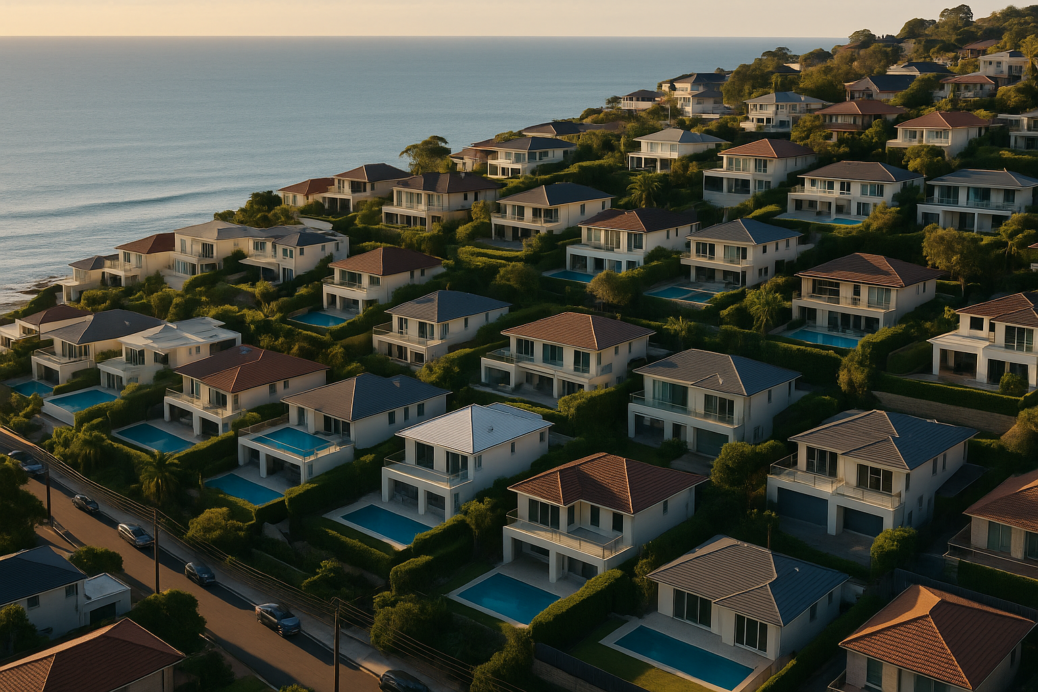
What They Reveal About Our Broken Housing System
Key takeaways
Nearly 200 Australian suburbs saw median property prices rise by more than $500/day between May 2020 and May 2025.
19 suburbs surpassed $1,000/day, with top performers like Wollstonecraft and Surfers Paradise doubling in value.
Australia needs ~250,000 new homes/year to keep up with population growth, yet we only approved 181,643 in the past year.
One year into the National Housing Accord, we’re already 60,000 homes behind target.
The suburbs with strong fundamentals—scarcity, location, amenities—continue to outperform.
The best time to invest was yesterday. The next best time is before the market prices in the next wave of growth.
Imagine waking up every day for the past five years and discovering your home just earned you over $1,000 in the last 24 hours.
For homeowners in nearly 20 Australian suburbs, that wasn’t fantasy; it was reality.
Recent data from PropTrack has highlighted an astonishing trend: nearly 200 suburbs across the country saw median home prices increase by more than $500 a day between May 2020 and May 2025.
And in 19 of these suburbs, price growth averaged over $1,000 per day.
Obviously, there are both good and bad sides to this story.
On the one hand, this is good news for home owners and property investors who already own the properties in the right locations.
But on the other hand, this phenomenal growth rate reveals something much more problematic: a housing system stretched to its limits, strained by chronic undersupply, record population growth, and political paralysis.
A crisis fueled by demand, delays, and demographics
Let’s be honest: this price surge wasn’t just due to market enthusiasm or investor speculation.
It’s the consequence of a perfect storm:
-
Population pressures: Since the pandemic’s end, migration numbers have rebounded, and then some. We’re welcoming more than double the pre-COVID-19 average of new arrivals. That’s great for our economy in the long term, but it’s put extraordinary pressure on our already strained housing system.
-
Construction bottlenecks: The National Housing Accord aimed to build 1.2 million new homes by 2029. Yet we’re already 60,000 homes behind just one year in. The ABS reported 181,643 new homes were approved last year. That’s better than the year prior, but still far short of the 250,000 homes needed annually to meet demand.
-
Planning inertia: Many of the high-growth suburbs are areas flagged for increased density. But approvals lag, land-use rules remain rigid, and developers are hamstrung by rising construction costs and planning delays. Projects aren’t financially viable, even when zoning allows them.

Note: In short, we’re not building enough. Not fast enough. Not in the right places.
The $1,000-a-Day Club: a snapshot
Here are just a few examples that stand out:
-
Wollstonecraft, NSW: House prices doubled from $2.8M to $5.7M—an average rise of $1,547 a day.
-
Warrawee, NSW: Up from $2.45M to $4.9M—$1,338 a day.
-
Surfers Paradise, QLD: Leapt from $1.78M to $4M—$1,212 per day.
-
Unley Park, SA: Adelaide’s top performer, with $1,237 per day in growth.
These aren’t just prestige suburbs, they’re tightly held, undersupplied, and in many cases, centrally located or lifestyle-rich, with good access to infrastructure.
That combination is gold for long-term capital growth… and poison for affordability.
Why this matters for property investors
As always, I encourage strategic, long-term thinking, meaning for savvy investors, this surge presents both a warning and an opportunity.
The warning: If you’re sitting on the sidelines waiting for “the crash” or “the right time” before getting in, you may be waiting forever. Despite relatively high interest rates, despite economic headwinds, values in tightly held suburbs have soared. Why? Because demand is structural, and supply is broken.
The opportunity: These data points highlight where the real scarcity is. Not every suburb will grow at $1,000 a day, but those with similar fundamentals (proximity, amenities, lifestyle, and limited future supply) are likely to outperform. Smart investors will be using this information to position themselves now, before the next wave of growth.
Policy failures are driving this.
Let’s be blunt, governments of all levels have failed to address Australia’s housing crisis.
Economist Tim Reardon was spot-on when he said governments “taxed the capital, not the people.”
Stamp duty hikes on foreign buyers, along with endless planning delays and overregulation, have choked off supply, particularly for higher-density projects.
Ironically, the very investors and developers we need to build more homes have been driven away.
Meanwhile, migration continues at a brisk pace, and it’s unlikely to slow any time soon.
Where to from here?
Here’s what I believe needs to happen:
-
Planning reform: Fast-track medium and high-density approvals in appropriate areas. Cut the red tape.
-
Incentivise development: Remove punitive taxes on foreign investment in new housing supply. Encourage private capital to return to the market.
-
Think long term: Recognise housing as critical infrastructure. Please treat it with the same urgency as transport or energy.
-
Smart investing: For investors, now is the time to focus on scarcity, quality, and long-term demographic trends. There’s opportunity in the chaos, if you know where to look.
Final thoughts
Yes, $1,000-a-day growth sounds sensational, but it also screams system failure.
Australia doesn’t just have a housing affordability issue; we have a housing supply crisis driven by a political system that talks a big game but moves too slowly.
For investors who already own in these top-performing suburbs, congratulations.
For those seeking to grow their wealth safely and strategically, the lesson is clear: buy well, hold for the long term, and focus on areas where demand is expected to continue outstripping supply.
Because in today’s market, standing still means falling behind.
If you’re like many property investors, you’re probably wondering what’s the right thing to do at present.
Should you buy, should you sell, or should you just wait?
You can trust the team at Metropole to provide you with direction, guidance, and results.
Whether you’re a beginner or an experienced investor, at times like we are currently experiencing you need an advisor who takes a holistic approach to your wealth creation and that’s exactly what you get from the multi-award-winning team at Metropole.
We help our clients grow, protect and pass on their wealth through a range of services including:
- Strategic property advice – Allow us to build a Strategic Property Plan for you and your family. Planning is bringing the future into the present so you can do something about it now! Click here to learn more
- Buyer’s agency – As Australia’s most trusted buyers’ agents we’ve been involved in over $4Billion worth of transactions creating wealth for our clients and we can do the same for you. Our on the ground teams in Melbourne, Sydney, and Brisbane bring you years of experience and perspective – that’s something money just can’t buy. We’ll help you find your next home or an investment-grade property. Click here to learn how we can help you.
- Property Development – We enable you to become an “armchair developer” and get all the benefits of property development without getting your hands dirty. We take the hassles out of your investment by assisting you with all the expertise you need, from concept to completion, including construction. Click here to see if it’s the right way for you to grow your portfolio.
- Wealth Advisory – We can provide you with strategic tailored financial planning and wealth advice. Click here to learn more about we can help you.
- Property Management – Our stress-free property management services help you maximise your property returns. Click here to find out why our clients enjoy a vacancy rate considerably below the market average, our tenants stay an average of 3 years, and our properties lease 10 days faster than the market average.